CH2_Foundations_of_Business-Slides for biz schools
1.
Chapter 2
The Foundationsof
(c) Virginia Tech, Department of Management, Pamplin College of Business.
CC BY NC SA 4.0.
Available from: http://hdl.handle.net/10919/105157
2.
Objectives
● Describe theconcept of stakeholders and identify the stakeholder groups relevant to an
organization
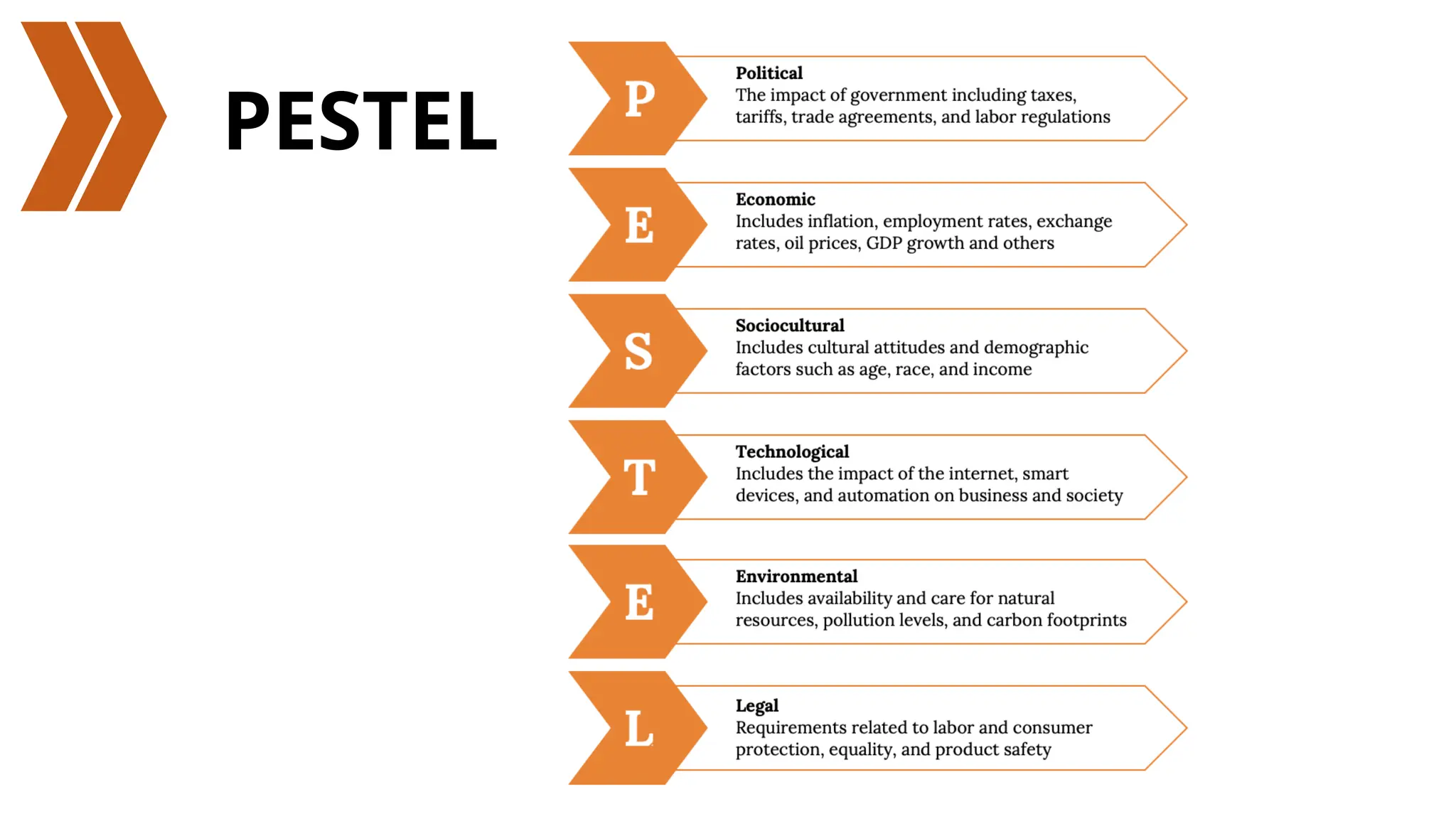
● Discuss and be able to apply the PESTEL macro-business-environment model to an
industry or emerging technology
● Explain other key terms related to this chapter including entrepreneur; profit; revenue
3.
Why is AppleSuccessful?
“Steve Jobs.” (2011). Flickr. CC BY 2.0. Retrieved from:
https://www.flickr.com/photos/8010717@N02/6216457030
4.
Dynamic Business
Environment
Business: Anyactivity that seeks to provide goods and services to others while operating at
a profit.
Goods: Tangible products
Services: Intangible products
Entrepreneur: A person who risks time and money to start and manage a business.
What is the purpose of a
business?
5.
Revenue vs. Profit
Revenuerepresents the funds an
enterprise receives in exchange for its
goods or services.
Profit is what’s left (hopefully) after all
the bills are paid or the COST of doing
business.
6.
Types of Businesses
Goods
Appleproduces and sells
goods
● Mac
● iPhone
● iPod
● iPad
● Apple Watch
Services
Many businesses provide services
● Hotels
● Airlines
● Law Firms
● Movie Theaters
● Hospitals
Goods and Services
Car Dealership
● Sells Goods (Cars)
● Provides Services
(Automobile Repairs)
Not-for-Profit (Nonprofit)
● United Way of America
● Habitat for Humanity
● The Boys and Girls Clubs
● American Red Cross
● Colleges and Universities
Stakeholders
Stakeholders --All thepeople who stand to gain or lose by the policies and
activities of a business and whose concerns the businesses need to add
Who are Stakeholders?
- Customers
- Employees
- Shareholders
- Suppliers
- Dealers
- Community Members
- Banks
- Media
- Elected Officials
- Environmentalist
9.
Goals: Explore theWorld of
Business
Introduction to the various activities in which businesspeople engage.
Functional Areas
● Accounting
● Finance Information
● Business Technology
● Management
● Marketing
● Operations
Understand the roles that these activities play in an organization and show you how they
work together.
Reviewing the interactions of these functional areas will help you decide whether business
is right for you and, if so, what areas of business you’d like to study further
10.
Functional Areas ofBusiness
Management
Managers are responsible for the work performance of other people.
Management involves:
● Planning for,
● Organizing,
● Leading, and
● Controlling a company’s resources so that it can achieve its goals.
Management Examples
Purchasing, Human Resources, Engineering, Administration
11.
Functional Areas ofBusiness
Operations
The person who designs and oversees the transformation of resources into
goods or services is called an operations manager.
Career Examples
Operations, Manufacturing, Quality, Project Manager
12.
Functional Areas ofBusiness
Marketing
Marketing consists of everything that a company does to identify customers’ needs (i.e.
market research) and design products to meet those needs. They manage relationships
with customers and make them aware of the organization’s desire and ability to satisfy
their needs.
Marketing establishes the Four P’s:
● Price
● Product
● Promotion
● Place
Career Examples
Brand, Digital, Product, Research, Communications, Channel, Sales
13.
Functional Areas ofBusiness
Accounting
Managers need accurate, relevant and timely financial information, which is provided by
accountants.
Accountants measure, summarize, and communicate financial and managerial
information and advice other managers on financial matters.
● Financial accountants prepare financial statements to help users, both inside and
outside the organization, assess the financial strength of the company.
● Managerial accountants prepare information, such as reports on the cost of
materials used in the production process, for internal use only
14.
Functional Areas ofBusiness
Finance
Finance involves
● Planning for,
● Obtaining, and
● Managing a company’s funds.
Financial managers address such questions as the following:
● How much money does the company need?
● How and where will it get the necessary money?
● How and when will it pay the money back?
● What investments should be made in plant and equipment?
● How much should be spent on research and development
Career examples: Audit, Planning, Analyst, Budget, Consultant
Takeaways
● The mainparticipants in a business are its
owners, employees, and customers.
● Every business must consider its
stakeholders, and their sometimes-conflicting
interests, when making decisions.
● The activities needed to run a business can be
divided into functional. The business functions
correspond closely to many majors found
within a typical college of business.
● Businesses are influenced by such external
factors as the economy, government, and
other forces external to the business. The
PESTEL model is a useful tool for analyzing
17.
Q & A
(c)Virginia Tech, Department of Management, Pamplin College of Business.
CC BY NC SA 4.0.










![OSX_FinancialAccounting_Ch01_PPT[1].pptx](https://cdn.slidesharecdn.com/ss_thumbnails/osxfinancialaccountingch01ppt1-240911052827-3b2cc781-thumbnail.jpg?width=640&height=640&fit=bounds)


