Foundational Literacy
and Numeracy
Prof. Anup Kumar Rajput
Department of Elementary Education
NCERT
Foundational Literacy and
Numeracy
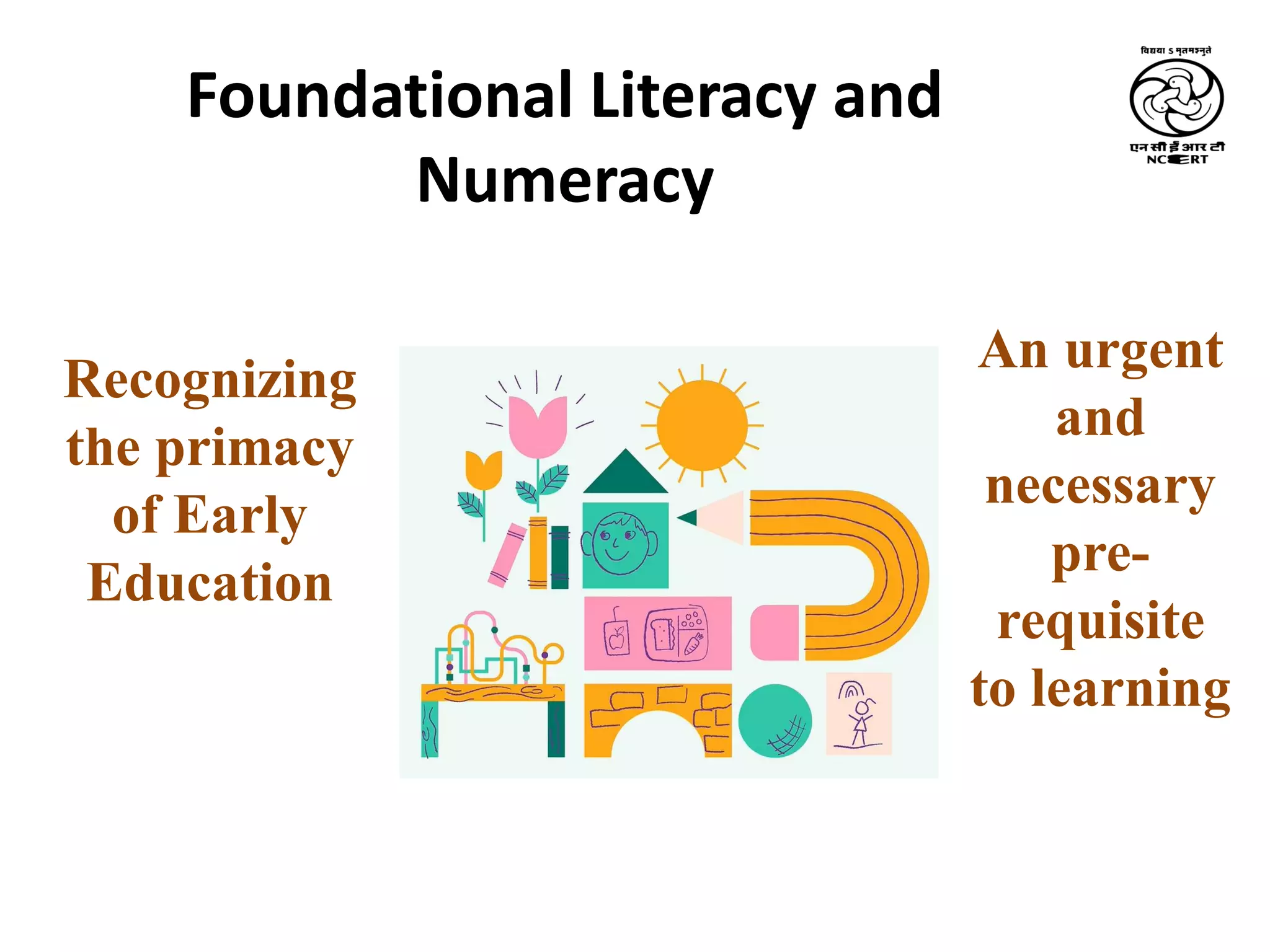
Recognizing
the primacy
of Early
Education
An urgent
and
necessary
pre-
requisite
to learning
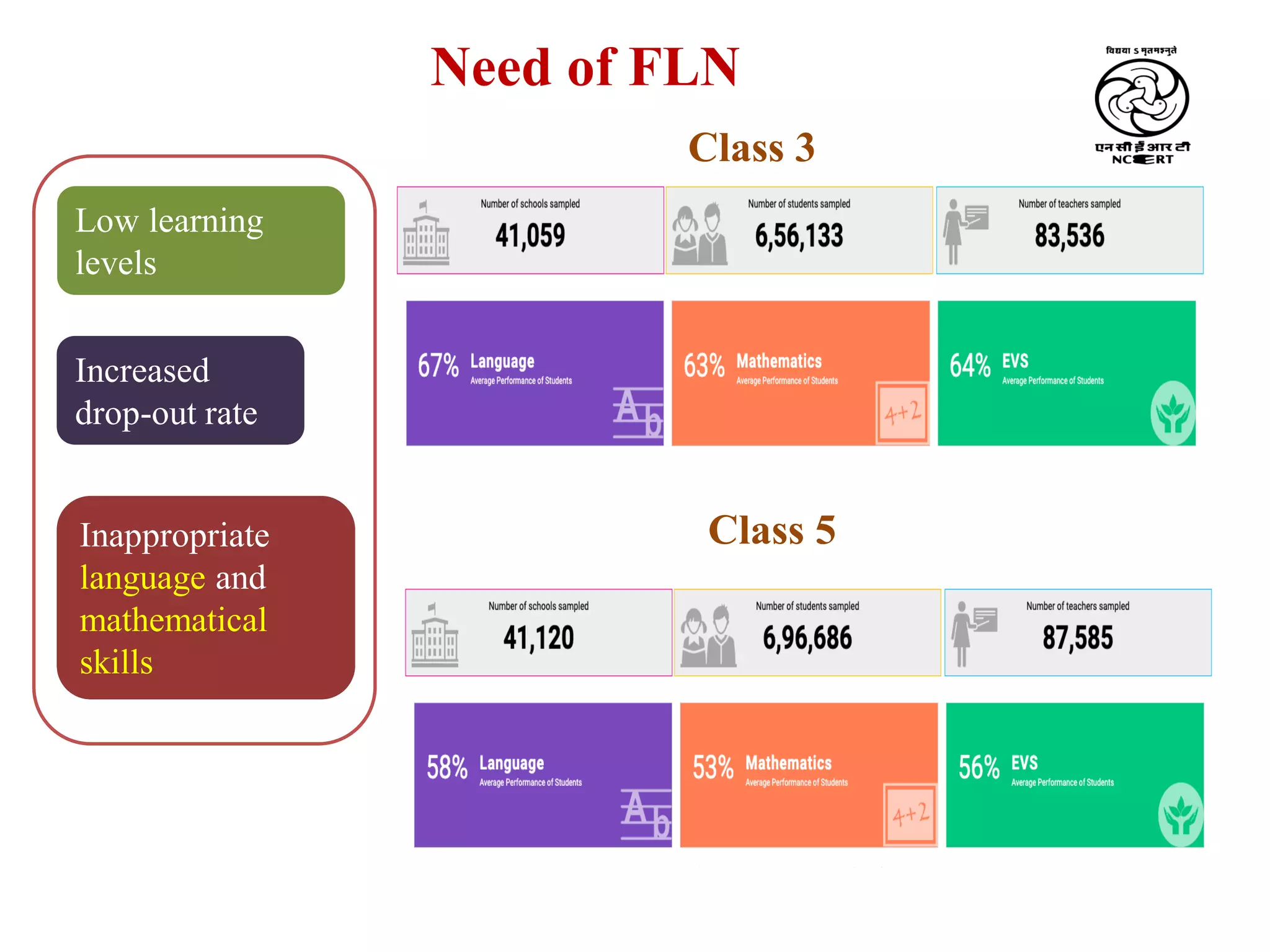
Need of FLN
Low learning
levels
Inappropriate
language and
mathematical
skills
Increased
drop-out rate
Class 3
Class 5
Universal FLN - Objectives
• Making learners competent in doing meaningful reading and
writing by the time they enter grade 3.
• Developing the basic understanding and competencies related
to numeracy and its related concepts among young learners
till grade 2.
• Developing skills among the learners to amalgamate their
outside school experiences in their classroom learning to
attain foundational literacy and numeracy in a better way.
Curricular Expectations
MATHEMATICAL
THINKING
FORMATIVE ASSESSMENT
ADAPTIVE ASSESSMENT
PEDAGOGY
(should include
play-way and
experiential
ACTIVITIES)
RESOURCES Locally
developed as per National
Guidelines
Curriculum
Development
• Numeracy
• Number sense
• Spatial understanding
• Reading with
comprehension
• Writing with
understanding
• Speaking with
coherent thought
Reading
For joy
Foundational Literacy
Reading is
comprehension
Listening and Speaking
with comprehension
Writing
reflects child’s
experiences
Writing for various purposes
Foundational Numeracy
Development of
Mathematical
Thinking
Application
Basic
Operations
on Numbers
for problem
solving
Development of Number sense
Understanding
about
Numberness
S
E
V
E
N
Competent in Counting
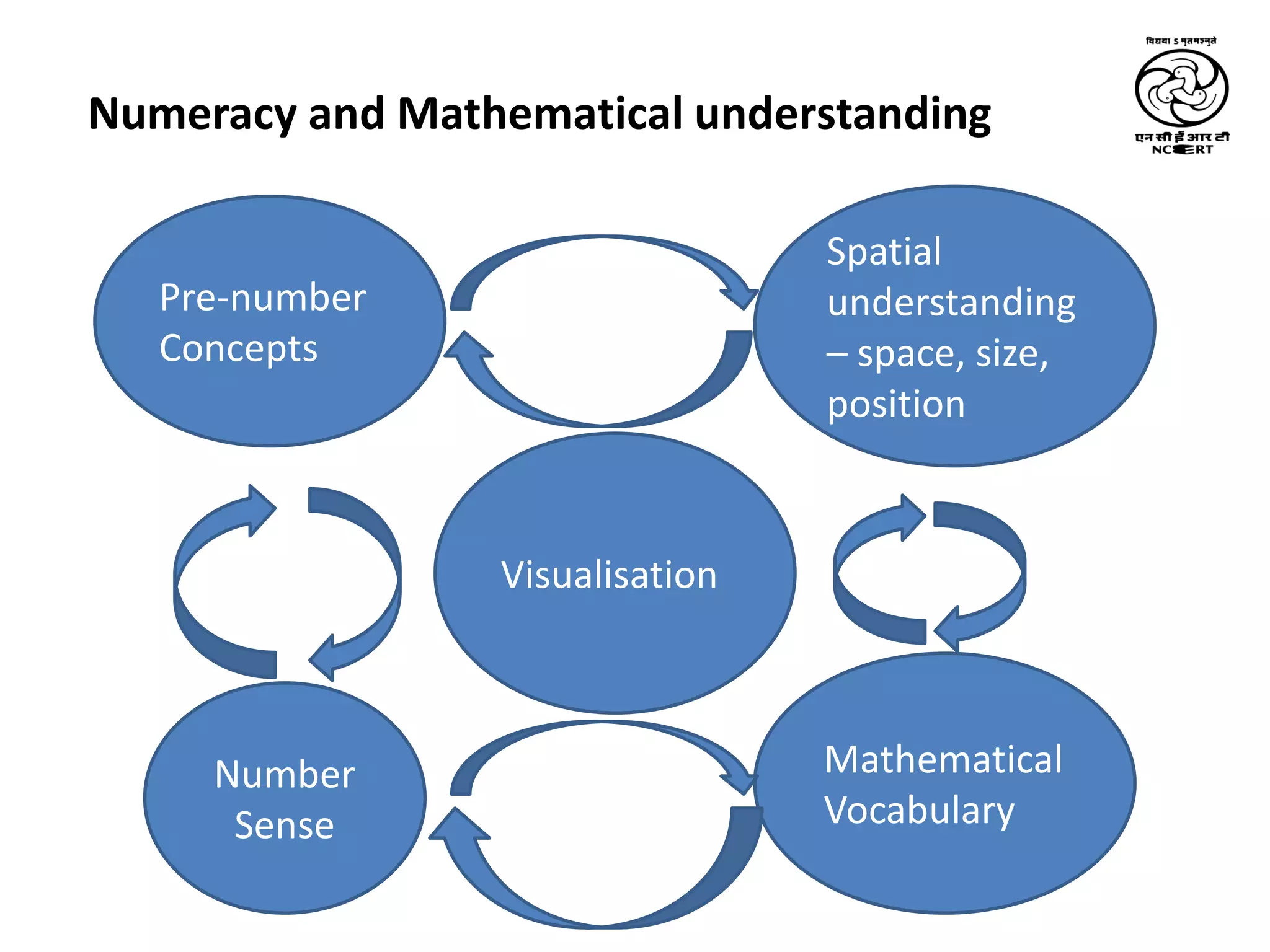
Numeracy and Mathematical understanding
Pre-number
Concepts
Spatial
understanding
– space, size,
position
Visualisation
Number
Sense
Mathematical
Vocabulary
ELPS Approach
E– Experience with physical objects/भौतिक वस्तुओं क
े साथ अनुभव
L – spoken Language that describes the experience/ बोली जाने
वाली भाषा जो अनुभव का वर्णन करिी है
P– pictures that represent the experience/ तित्र जो प्रतितनतित्व करिे हैं
अनुभव
S – written symbols that generalize the experience/ तलखिि प्रिीक जो अनुभव का
सामान्यीकरर् करिे हैं
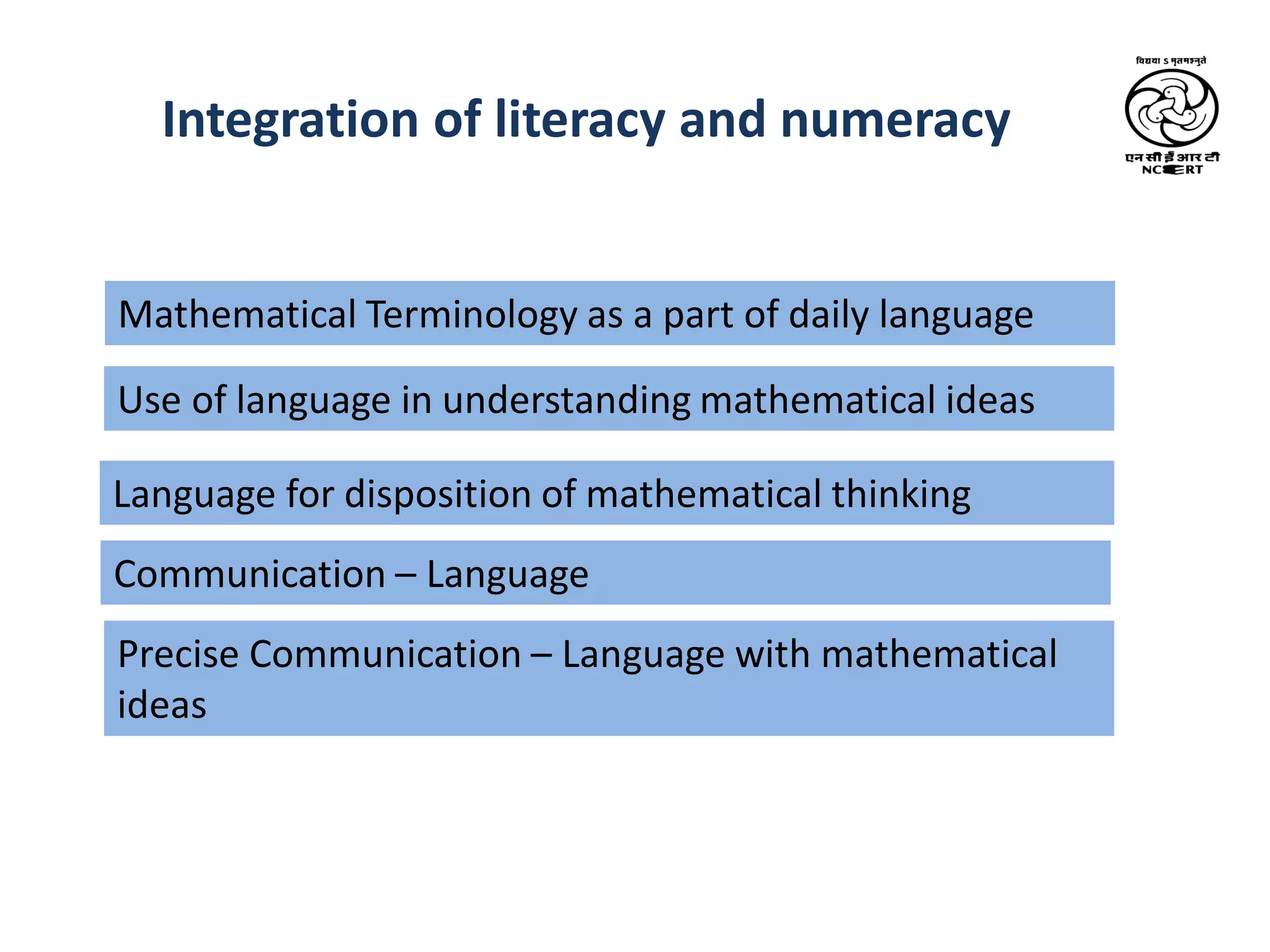
Integration of literacy and numeracy
Mathematical Terminology as a part of daily language
Use of language in understanding mathematical ideas
Language for disposition of mathematical thinking
Communication – Language
Precise Communication – Language with mathematical
ideas
SPM – School Preparation Module
Preparatory Class or ‘ BALVATIKA’
Module
• 3 months play-
based learning
for all Grade 1
students.
"Balvatika”
Elements
of SPM
• Activities and workbooks around
• Sounds,
• words,
• Alphabets,
• Colors, Shapes and Numbers
involving collaborations with peers
and parents.
Material
Where?
• To be developed
by NCERT &
SCERT
SCERT
s/ SIEs
• Stand alone
Anganwadis
• Anganwadis co-located
with schools
• Pre-primary schools
• Standalone pre-schools
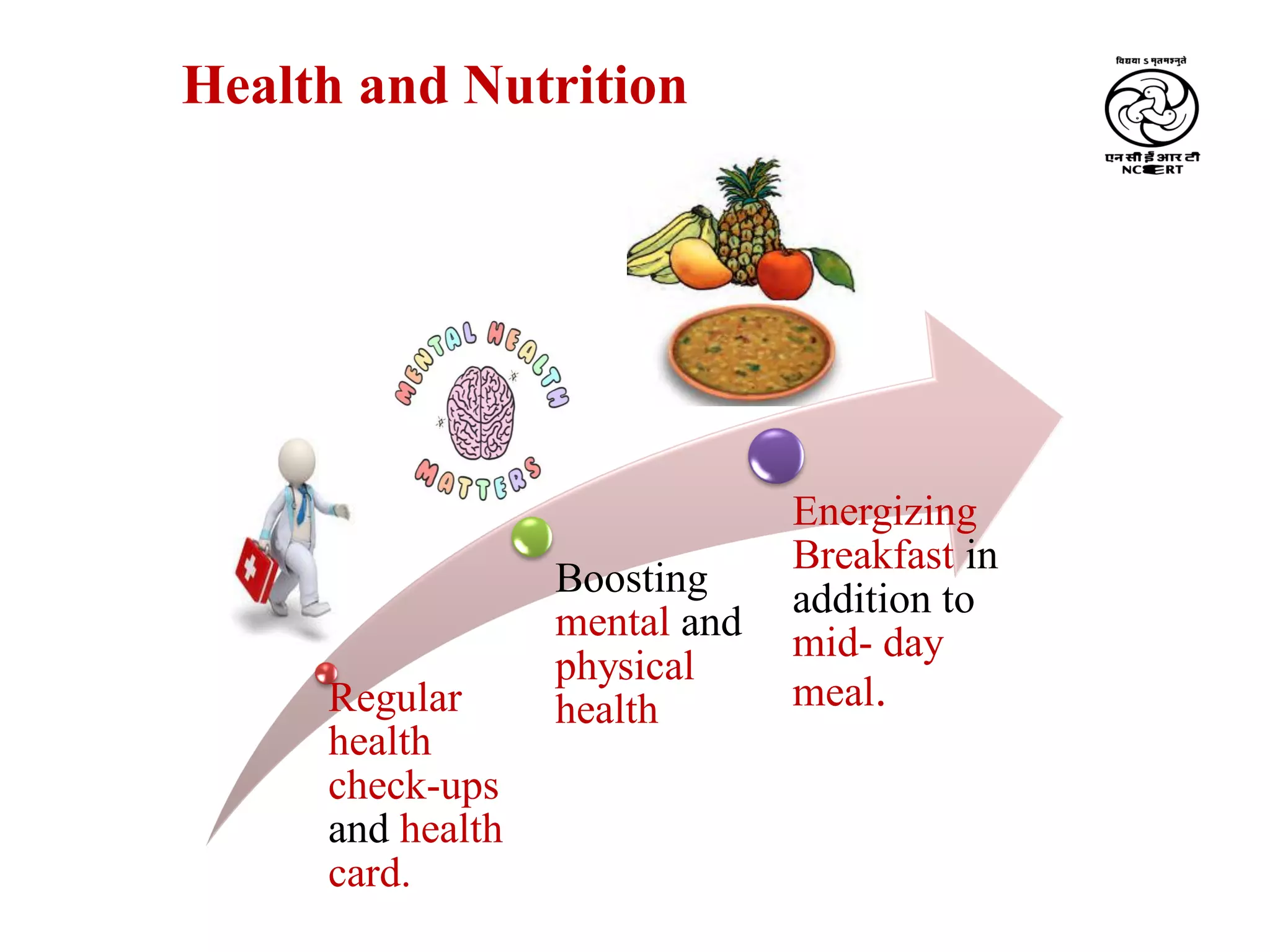
Health and Nutrition
Regular
health
check-ups
and health
card.
Boosting
mental and
physical
health
Energizing
Breakfast in
addition to
mid- day
meal.
National
Book
Promotion
Policy
Workbooks
and activity
material
Digital
Libraries
for all
Setting up of
School and
Public
Libraries in
remote areas
Resources
To ensure the
availability,
accessibility, quality and
readership of books.
• Learning Kit
• Play-based
material
• DIKSHA
• e-pathshala
• NROER
•By Schools
•By community
•By local
Government
Peer Tutoring
All viable method will be explored to support teachers in the mission of attaining
universal FLN
One-to-one peer tutoring is
extremely effective for learning
not just for the learner but also for
the tutor.
It can be taken as a voluntary and
joyful activity for fellow students
under the supervision of trained
teacher.
Every literate member of the
community could commit to
teaching one student how to read, it
would change the county’s
landscape very quickly.
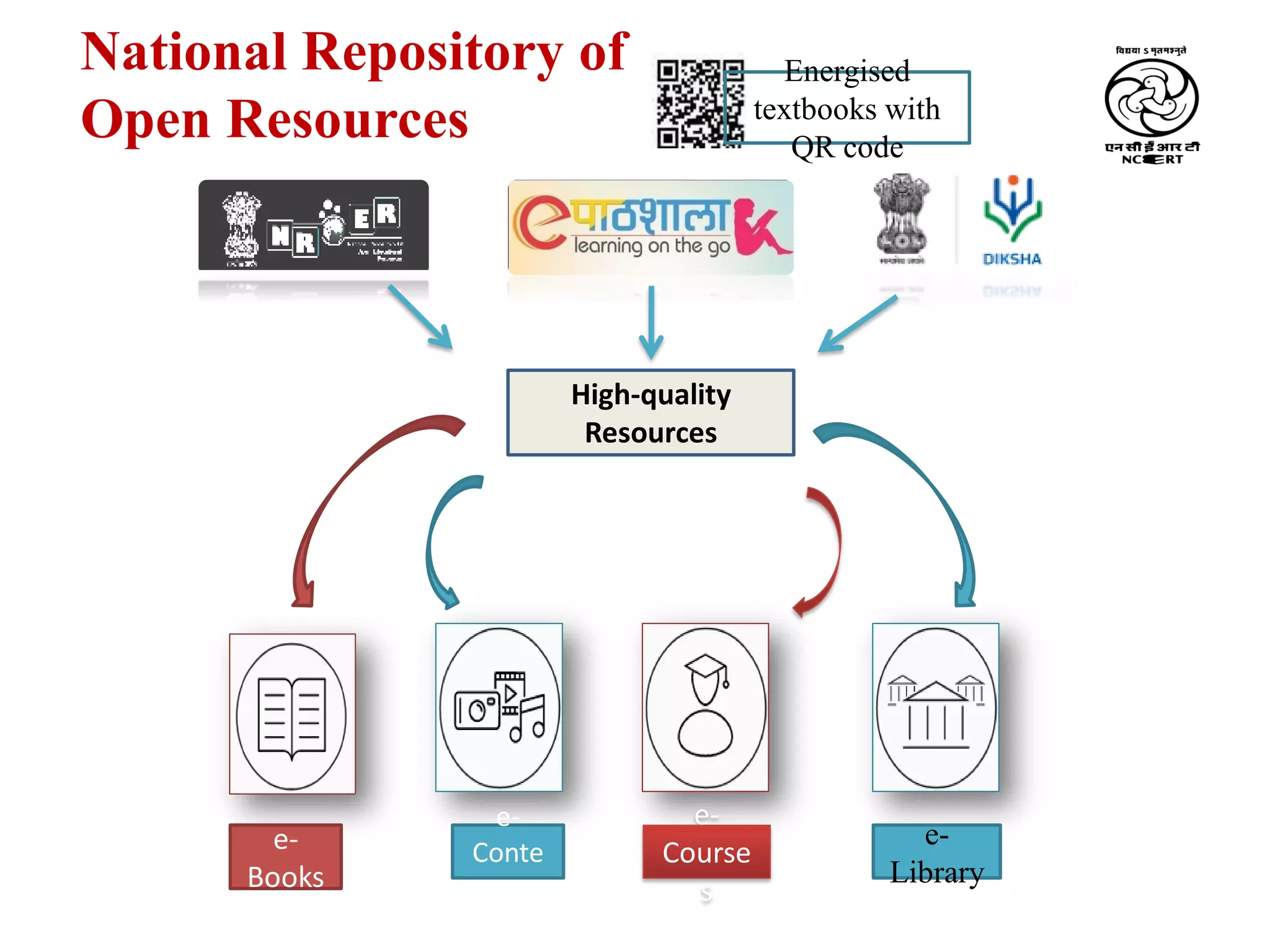
High-quality
Resources
e-
Books
e-
Conte
nt
e-
Course
s
e-
Library
National Repository of
Open Resources
Energised
textbooks with
QR code
Learning outcomes
Assessment is joyful
and integrated to
pedagogy
Assessment
Adaptive Assessment
Formative Assessment
School Based Assessment
Purpose of Assessment
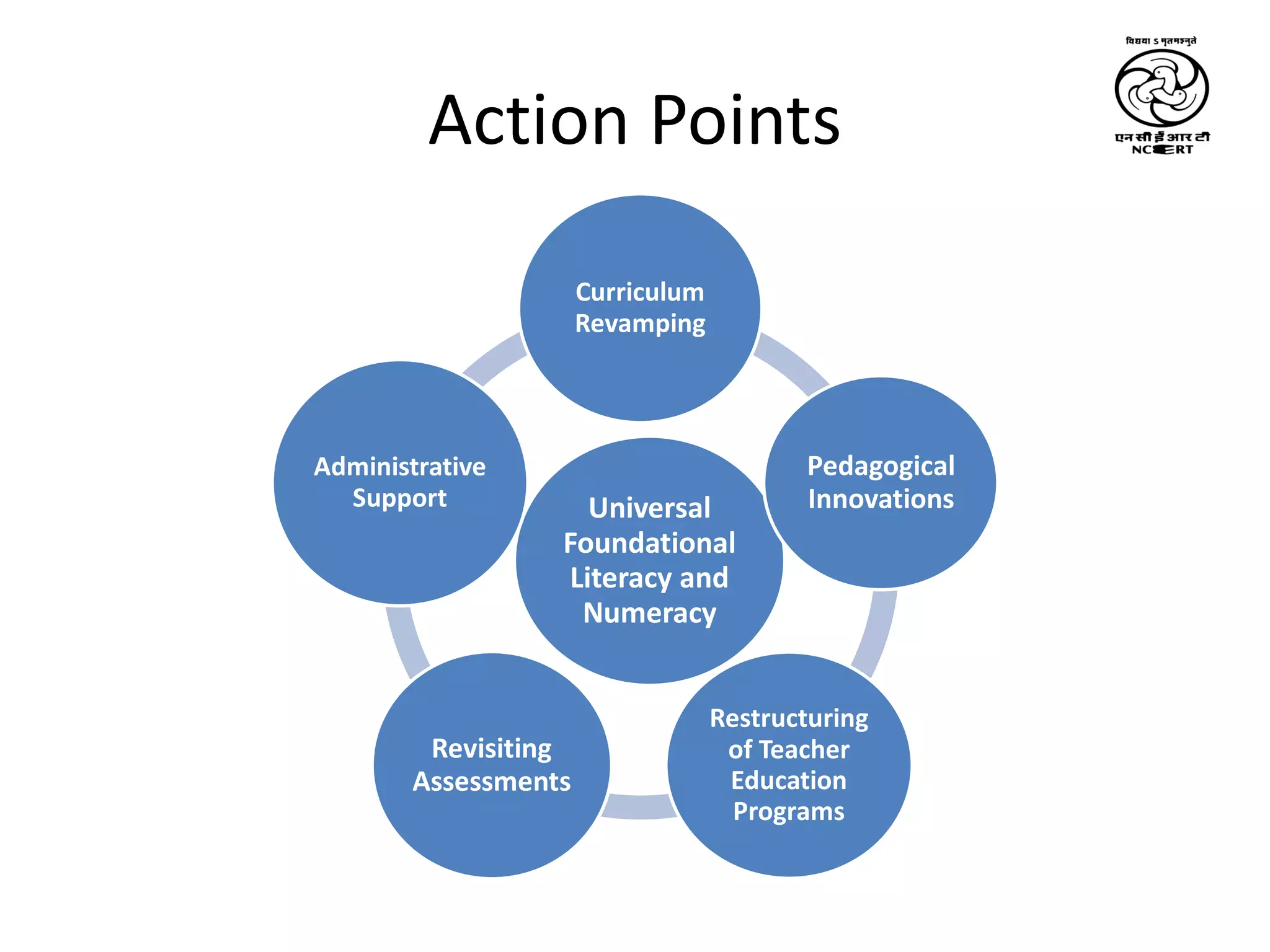
Action Points
Universal
Foundational
Literacy and
Numeracy
Curriculum
Revamping
Pedagogical
Innovations
Restructuring
of Teacher
Education
Programs
Revisiting
Assessments
Administrative
Support
Implementation of Universal FLN
Highest
Priority to
Universal
FLN
Setting up of
National Mission
by MHRD
To be prepared
by State/UT
governments
Universal
FLN by
2025
Team
PLAN
Thank you
You can contact me at
anupncert@yahoo.co.in
9868255775

Foundational literacy and numeracy

  • 1.
    Foundational Literacy and Numeracy Prof.Anup Kumar Rajput Department of Elementary Education NCERT
  • 2.
    Foundational Literacy and Numeracy Recognizing theprimacy of Early Education An urgent and necessary pre- requisite to learning
  • 3.
    Need of FLN Lowlearning levels Inappropriate language and mathematical skills Increased drop-out rate Class 3 Class 5
  • 4.
    Universal FLN -Objectives • Making learners competent in doing meaningful reading and writing by the time they enter grade 3. • Developing the basic understanding and competencies related to numeracy and its related concepts among young learners till grade 2. • Developing skills among the learners to amalgamate their outside school experiences in their classroom learning to attain foundational literacy and numeracy in a better way.
  • 5.
    Curricular Expectations MATHEMATICAL THINKING FORMATIVE ASSESSMENT ADAPTIVEASSESSMENT PEDAGOGY (should include play-way and experiential ACTIVITIES) RESOURCES Locally developed as per National Guidelines Curriculum Development • Numeracy • Number sense • Spatial understanding • Reading with comprehension • Writing with understanding • Speaking with coherent thought
  • 6.
    Reading For joy Foundational Literacy Readingis comprehension Listening and Speaking with comprehension Writing reflects child’s experiences Writing for various purposes
  • 7.
    Foundational Numeracy Development of Mathematical Thinking Application Basic Operations onNumbers for problem solving Development of Number sense Understanding about Numberness S E V E N Competent in Counting
  • 8.
    Numeracy and Mathematicalunderstanding Pre-number Concepts Spatial understanding – space, size, position Visualisation Number Sense Mathematical Vocabulary
  • 9.
    ELPS Approach E– Experiencewith physical objects/भौतिक वस्तुओं क े साथ अनुभव L – spoken Language that describes the experience/ बोली जाने वाली भाषा जो अनुभव का वर्णन करिी है P– pictures that represent the experience/ तित्र जो प्रतितनतित्व करिे हैं अनुभव S – written symbols that generalize the experience/ तलखिि प्रिीक जो अनुभव का सामान्यीकरर् करिे हैं
  • 10.
    Integration of literacyand numeracy Mathematical Terminology as a part of daily language Use of language in understanding mathematical ideas Language for disposition of mathematical thinking Communication – Language Precise Communication – Language with mathematical ideas
  • 11.
    SPM – SchoolPreparation Module Preparatory Class or ‘ BALVATIKA’ Module • 3 months play- based learning for all Grade 1 students. "Balvatika” Elements of SPM • Activities and workbooks around • Sounds, • words, • Alphabets, • Colors, Shapes and Numbers involving collaborations with peers and parents. Material Where? • To be developed by NCERT & SCERT SCERT s/ SIEs • Stand alone Anganwadis • Anganwadis co-located with schools • Pre-primary schools • Standalone pre-schools
  • 12.
    Health and Nutrition Regular health check-ups andhealth card. Boosting mental and physical health Energizing Breakfast in addition to mid- day meal.
  • 13.
    National Book Promotion Policy Workbooks and activity material Digital Libraries for all Settingup of School and Public Libraries in remote areas Resources To ensure the availability, accessibility, quality and readership of books. • Learning Kit • Play-based material • DIKSHA • e-pathshala • NROER •By Schools •By community •By local Government
  • 14.
    Peer Tutoring All viablemethod will be explored to support teachers in the mission of attaining universal FLN One-to-one peer tutoring is extremely effective for learning not just for the learner but also for the tutor. It can be taken as a voluntary and joyful activity for fellow students under the supervision of trained teacher. Every literate member of the community could commit to teaching one student how to read, it would change the county’s landscape very quickly.
  • 15.
  • 16.
    Learning outcomes Assessment isjoyful and integrated to pedagogy Assessment Adaptive Assessment Formative Assessment School Based Assessment Purpose of Assessment
  • 17.
  • 18.
    Implementation of UniversalFLN Highest Priority to Universal FLN Setting up of National Mission by MHRD To be prepared by State/UT governments Universal FLN by 2025 Team PLAN
  • 19.
    Thank you You cancontact me at anupncert@yahoo.co.in 9868255775