Simon Forrest
School of Medicine, Pharmacy and Health
Durham University
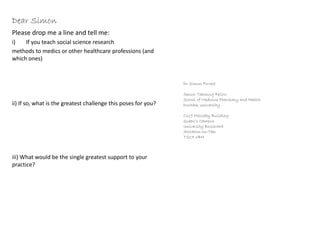
Please write me a postcard
Do you teach social science research methods outside your
?
What challenges does this pose for you?
What would be the single greatest support to your practice?
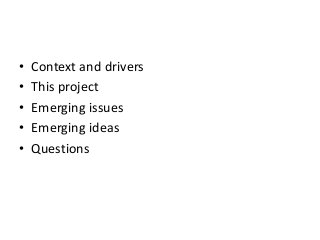
• Context and drivers
• This project
• Emerging issues
• Emerging ideas
• Questions
Context
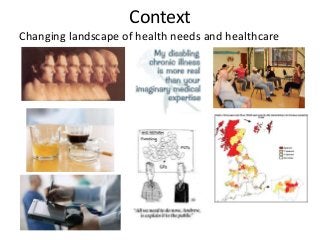
Changing landscape of health needs and healthcare
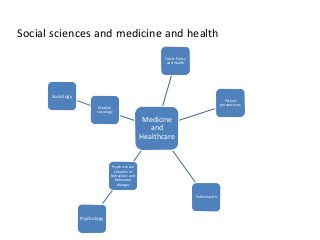
Social sciences and medicine and health
Medicine
and
Healthcare
Public Policy
and Health
Patient
perspectives
Public health
Psycho-social
theories of
behaviour and
behaviour
changes
Psychology
Medical
sociology
Sociology
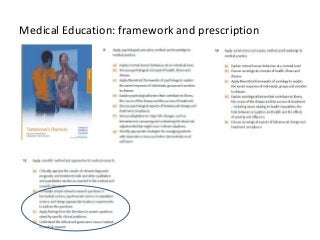
Medical Education: framework and prescription
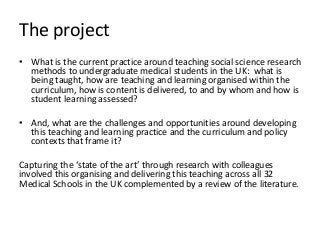
The project
• What is the current practice around teaching social science research
methods to undergraduate medical students in the UK: what is
being taught, how are teaching and learning organised within the
curriculum, how is content is delivered, to and by whom and how is
student learning assessed?
• And, what are the challenges and opportunities around developing
this teaching and learning practice and the curriculum and policy
contexts that frame it?
Capturing u u
involved this organising and delivering this teaching across all 32
Medical Schools in the UK complemented by a review of the literature.
Emerging issues
Defining methods: used for or borrowed from
social science? Method, approach to analysis,
choice of topic?
Parachute – paradigms and epistemologies –
determinism, postivism, interpretivism,
constructivism, identities/subjectivities, (super)
structural relationships of biological and psycho-
, &
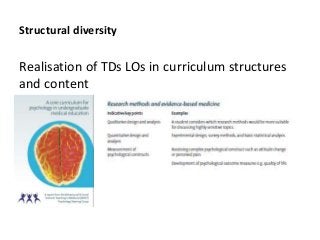
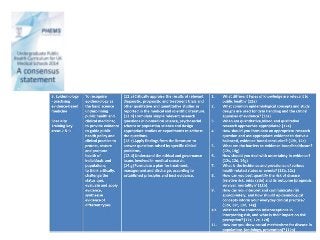
Structural diversity
Realisation of TDs LOs in curriculum structures
and content
Organisation of teaching and learning
• EBM, PH, BSS etc.
• T P j
• The elective model
• The intercalation (into medical education)
model
• UG versus PG
Working away from home
• Weakened or absent collegial support
• Disciplinary support and currency of
knowledge
• Teaching versus research
• Research context (Clinical, PH, Med Ed.)
• Status and career trajectorie
Student engagement
• N u
• Clinical (ir)relevance
• Programme learning relevance (assessment)
• Students as partners in research
Impact on practice
• Evidential wilderness
– Where we would expect to see the impact?
• Proximal – performance in assessment
• Medial – future activities as medics
• Distal – Patient benefit
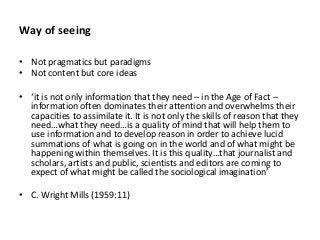
Way of seeing
• Not pragmatics but paradigms
• Not content but core ideas
• – in the Age of Fact –
information often dominates their attention and overwhelms their
capacities to assimilate it. It is not only the skills of reason that they
… … qu
use information and to develop reason in order to achieve lucid
summations of what is going on in the world and of what might be
v . I qu … j u
scholars, artists and public, scientists and editors are coming to
• C. Wright Mills (1959:11)
Ways of knowing
• Reflexivity
• Subject-object relations
• Knowledge acts and acts of knowledge are
situated in Structure – culture – agency
Questions
• W u -social
scientist to be competent/safe/appropriate to
engage in empirical research?
• What might social scientists gain from
engagement with medics? (which way does
the traffic run?)
• What happens to the social scientist who
( u )?

‘Working away from home’: the state of the art in teaching and learning of social science research methods in medical education - Simon Forrest

  • 1.
    Simon Forrest School ofMedicine, Pharmacy and Health Durham University
  • 2.
    Please write mea postcard Do you teach social science research methods outside your ? What challenges does this pose for you? What would be the single greatest support to your practice?
  • 3.
    • Context anddrivers • This project • Emerging issues • Emerging ideas • Questions
  • 4.
    Context Changing landscape ofhealth needs and healthcare
  • 5.
    Social sciences andmedicine and health Medicine and Healthcare Public Policy and Health Patient perspectives Public health Psycho-social theories of behaviour and behaviour changes Psychology Medical sociology Sociology
  • 6.
  • 7.
    The project • Whatis the current practice around teaching social science research methods to undergraduate medical students in the UK: what is being taught, how are teaching and learning organised within the curriculum, how is content is delivered, to and by whom and how is student learning assessed? • And, what are the challenges and opportunities around developing this teaching and learning practice and the curriculum and policy contexts that frame it? Capturing u u involved this organising and delivering this teaching across all 32 Medical Schools in the UK complemented by a review of the literature.
  • 8.
    Emerging issues Defining methods:used for or borrowed from social science? Method, approach to analysis, choice of topic? Parachute – paradigms and epistemologies – determinism, postivism, interpretivism, constructivism, identities/subjectivities, (super) structural relationships of biological and psycho- , &
  • 9.
    Structural diversity Realisation ofTDs LOs in curriculum structures and content
  • 11.
    Organisation of teachingand learning • EBM, PH, BSS etc. • T P j • The elective model • The intercalation (into medical education) model • UG versus PG
  • 12.
    Working away fromhome • Weakened or absent collegial support • Disciplinary support and currency of knowledge • Teaching versus research • Research context (Clinical, PH, Med Ed.) • Status and career trajectorie
  • 13.
    Student engagement • Nu • Clinical (ir)relevance • Programme learning relevance (assessment) • Students as partners in research
  • 14.
    Impact on practice •Evidential wilderness – Where we would expect to see the impact? • Proximal – performance in assessment • Medial – future activities as medics • Distal – Patient benefit
  • 15.
    Way of seeing •Not pragmatics but paradigms • Not content but core ideas • – in the Age of Fact – information often dominates their attention and overwhelms their capacities to assimilate it. It is not only the skills of reason that they … … qu use information and to develop reason in order to achieve lucid summations of what is going on in the world and of what might be v . I qu … j u scholars, artists and public, scientists and editors are coming to • C. Wright Mills (1959:11)
  • 16.
    Ways of knowing •Reflexivity • Subject-object relations • Knowledge acts and acts of knowledge are situated in Structure – culture – agency
  • 17.
    Questions • W u-social scientist to be competent/safe/appropriate to engage in empirical research? • What might social scientists gain from engagement with medics? (which way does the traffic run?) • What happens to the social scientist who ( u )?