Formic Acid Poisoning
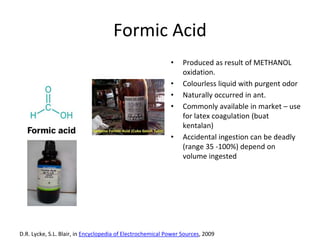
Formic Acid
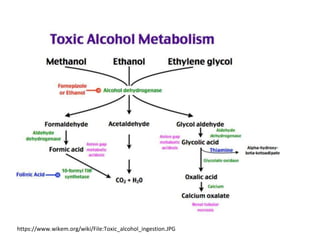
• Produced as result of METHANOL
oxidation.
• Colourless liquid with purgent odor
• Naturally occurred in ant.
• Commonly available in market – use
for latex coagulation (buat
kentalan)
• Accidental ingestion can be deadly
(range 35 -100%) depend on
volume ingested
D.R. Lycke, S.L. Blair, in Encyclopedia of Electrochemical Power Sources, 2009
https://www.wikem.org/wiki/File:Toxic_alcohol_ingestion.JPG
Cellular Mechanism
• High formic acid concentration > saturate
tetrahydrofolate synthase> prevent further
conversion to water and carbon dioxide
• Formic acid bind with mitochondria (bind with
cytochrome C oxidase) > histotoxic hypoxia>
generate more acid (lactic acid) > hasten cellular
injury
• Formic acid > formate + H> metabolic acidosis
• Lactate produced by prevent cellular respiration
• pH reduced> formic acid less dissociate > enter
CNS > alter hemodynamic status, mental status
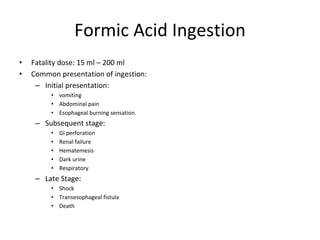
Formic Acid Ingestion
• Fatality dose: 15 ml – 200 ml
• Common presentation of ingestion:
– Initial presentation:
• vomiting
• Abdominal pain
• Esophageal burning sensation.
– Subsequent stage:
• GI perforation
• Renal failure
• Hematemesis
• Dark urine
• Respiratory
– Late Stage:
• Shock
• Transesophageal fistula
• Death
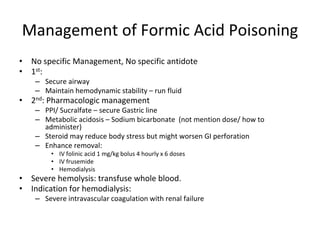
Management of Formic Acid Poisoning
• No specific Management, No specific antidote
• 1st:
– Secure airway
– Maintain hemodynamic stability – run fluid
• 2nd: Pharmacologic management
– PPI/ Sucralfate – secure Gastric line
– Metabolic acidosis – Sodium bicarbonate (not mention dose/ how to
administer)
– Steroid may reduce body stress but might worsen GI perforation
– Enhance removal:
• IV folinic acid 1 mg/kg bolus 4 hourly x 6 doses
• IV frusemide
• Hemodialysis
• Severe hemolysis: transfuse whole blood.
• Indication for hemodialysis:
– Severe intravascular coagulation with renal failure
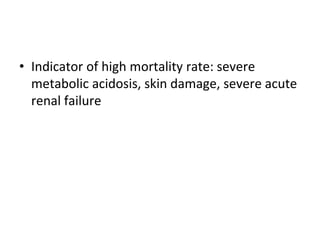
• Indicator of high mortality rate: severe
metabolic acidosis, skin damage, severe acute
renal failure
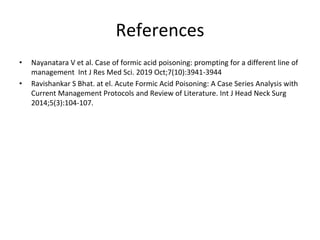
References
• Nayanatara V et al. Case of formic acid poisoning: prompting for a different line of
management Int J Res Med Sci. 2019 Oct;7(10):3941-3944
• Ravishankar S Bhat. at el. Acute Formic Acid Poisoning: A Case Series Analysis with
Current Management Protocols and Review of Literature. Int J Head Neck Surg
2014;5(3):104-107.

Formic Acid Poisoning.pptx

  • 1.
  • 2.
    Formic Acid • Producedas result of METHANOL oxidation. • Colourless liquid with purgent odor • Naturally occurred in ant. • Commonly available in market – use for latex coagulation (buat kentalan) • Accidental ingestion can be deadly (range 35 -100%) depend on volume ingested D.R. Lycke, S.L. Blair, in Encyclopedia of Electrochemical Power Sources, 2009
  • 3.
  • 4.
    Cellular Mechanism • Highformic acid concentration > saturate tetrahydrofolate synthase> prevent further conversion to water and carbon dioxide • Formic acid bind with mitochondria (bind with cytochrome C oxidase) > histotoxic hypoxia> generate more acid (lactic acid) > hasten cellular injury • Formic acid > formate + H> metabolic acidosis • Lactate produced by prevent cellular respiration • pH reduced> formic acid less dissociate > enter CNS > alter hemodynamic status, mental status
  • 5.
    Formic Acid Ingestion •Fatality dose: 15 ml – 200 ml • Common presentation of ingestion: – Initial presentation: • vomiting • Abdominal pain • Esophageal burning sensation. – Subsequent stage: • GI perforation • Renal failure • Hematemesis • Dark urine • Respiratory – Late Stage: • Shock • Transesophageal fistula • Death
  • 6.
    Management of FormicAcid Poisoning • No specific Management, No specific antidote • 1st: – Secure airway – Maintain hemodynamic stability – run fluid • 2nd: Pharmacologic management – PPI/ Sucralfate – secure Gastric line – Metabolic acidosis – Sodium bicarbonate (not mention dose/ how to administer) – Steroid may reduce body stress but might worsen GI perforation – Enhance removal: • IV folinic acid 1 mg/kg bolus 4 hourly x 6 doses • IV frusemide • Hemodialysis • Severe hemolysis: transfuse whole blood. • Indication for hemodialysis: – Severe intravascular coagulation with renal failure
  • 7.
    • Indicator ofhigh mortality rate: severe metabolic acidosis, skin damage, severe acute renal failure
  • 8.
    References • Nayanatara Vet al. Case of formic acid poisoning: prompting for a different line of management Int J Res Med Sci. 2019 Oct;7(10):3941-3944 • Ravishankar S Bhat. at el. Acute Formic Acid Poisoning: A Case Series Analysis with Current Management Protocols and Review of Literature. Int J Head Neck Surg 2014;5(3):104-107.