Unit 5
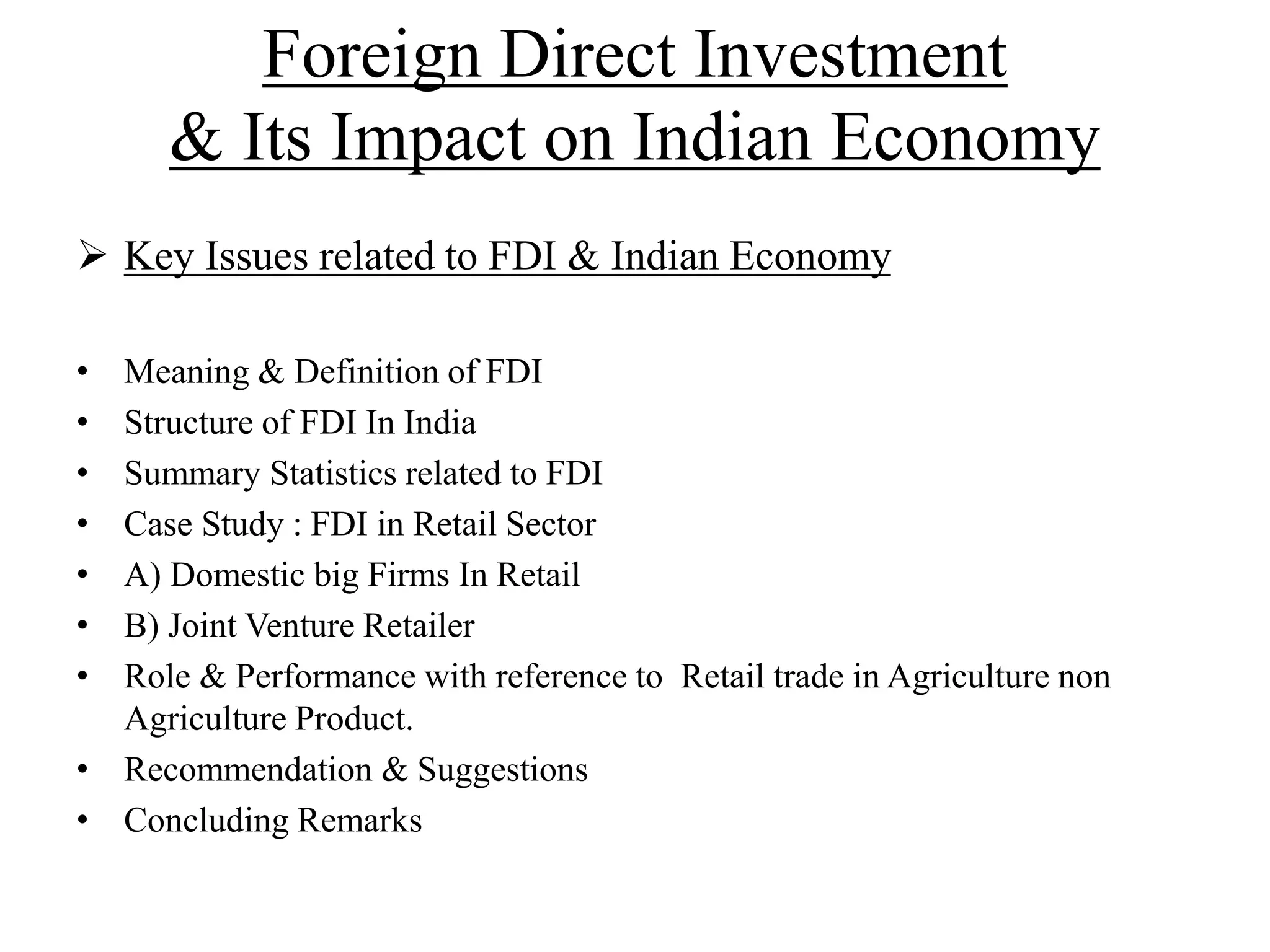
Foreign Direct Investment
& Its Impact on Indian Economy
Foreign Direct Investment
& Its Impact on Indian Economy
 Key Issues related to FDI & Indian Economy
• Meaning & Definition of FDI
• Structure of FDI In India
• Summary Statistics related to FDI
• Case Study : FDI in Retail Sector
• A) Domestic big Firms In Retail
• B) Joint Venture Retailer
• Role & Performance with reference to Retail trade in Agriculture non
Agriculture Product.
• Recommendation & Suggestions
• Concluding Remarks
Meaning & Definition of FDI
 IMF Definition
• FDI refers to the net inflows of investment to acquire a lasting
management interest (10 percent or more of voting stock) in an enterprise
operating in an economy other than that of the investor. It is the sum of
 Department of Industrial Policy & Promotion (DIPP)
• FDI‘ means investment by non-resident entity/person resident outside India
in the capital of an Indian company under Schedule 1 of Foreign Exchange
Management Regulations 2000”.
Equity Capital
Reinvested
Earnings
Direct Capital
Structure of FDI
Foreign Direct Investment
Flows
Inflow
Outflow
Entry
Modes
Mergers &
Acquisitions
Green Field
Investment
Licensing
Joint
venture
Types
Horizontal FDI
Vertical FDI
Complex FDI
Entry Route
Automatic
Government
Foreign Investment
Promotion Board
(FIPB)
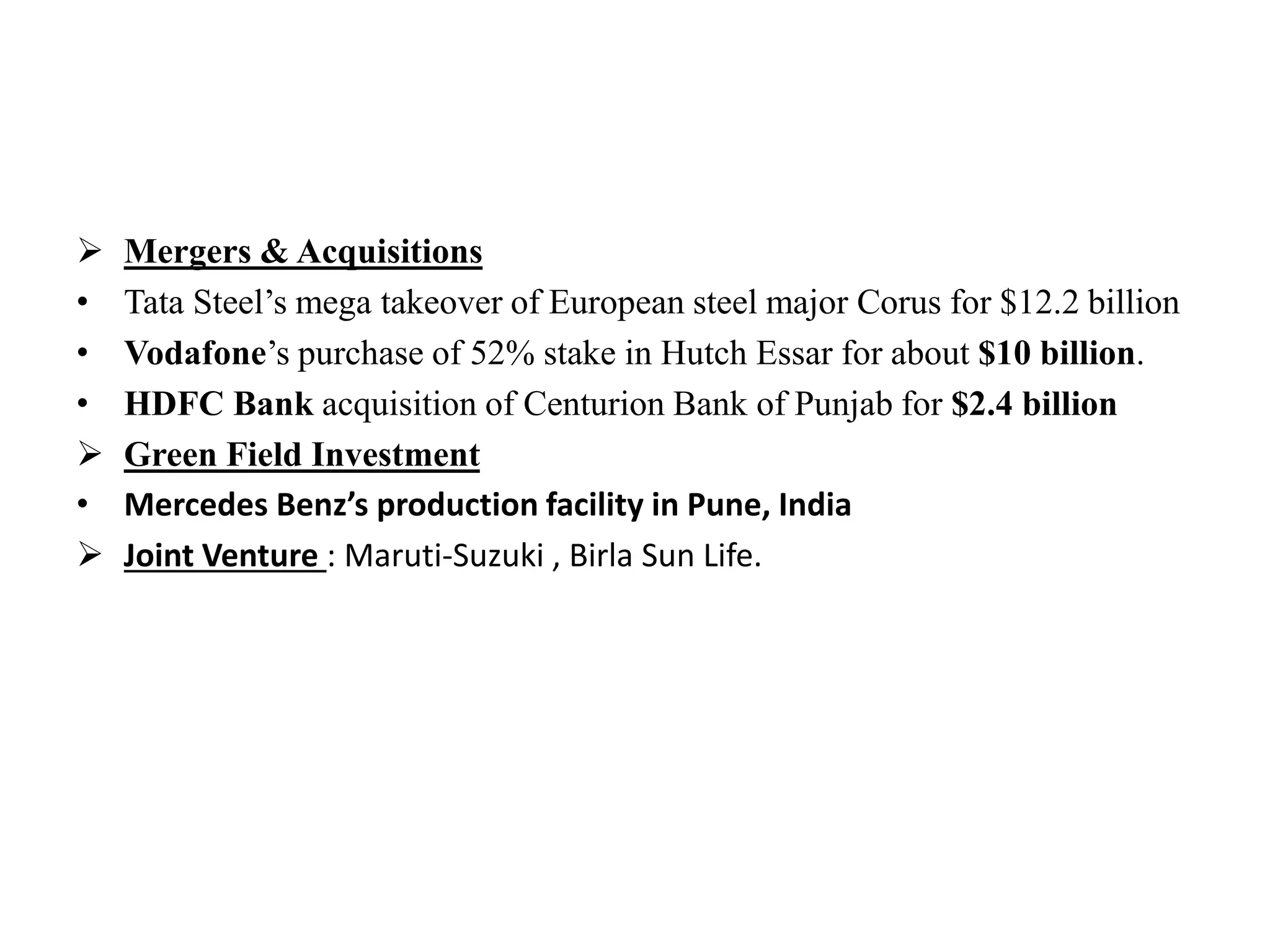
 Mergers & Acquisitions
• Tata Steel’s mega takeover of European steel major Corus for $12.2 billion
• Vodafone’s purchase of 52% stake in Hutch Essar for about $10 billion.
• HDFC Bank acquisition of Centurion Bank of Punjab for $2.4 billion
 Green Field Investment
• Mercedes Benz’s production facility in Pune, India
 Joint Venture : Maruti-Suzuki , Birla Sun Life.
Summary Statistics
0
2
4
6
8
10
12
0
5000
10000
15000
20000
25000
30000
35000
40000
45000
50000
2000 2001 2002 2003 2004 2005 2006 2007 2008 2009 2010 2011
G
D
P
(
%
)
U
S
$
M
i
l
l
i
o
n
TIME
FDI & GDP
FDI Inflow
FDI Out Flow
GDP(%)
Key Statistics
MAURITIUS
38%
SINGAPORE
10%
U.K
9%
JAPAN
7%
USA
6%
Others
30%
Top Five Investing Countriesin Inida
% of total Inflows
Service Sector,
19%
Construction
Development,
12%
Telecommunica
tions, 7%
Computer
Software &
Hardware, 6%Drugs &
pharmaceutical
s, 6%
Others, 50%
Top Five Sectors Attracting FDI
% Of Total Inflow
Source : Factsheet on FDI, June 2012, DIPP
14
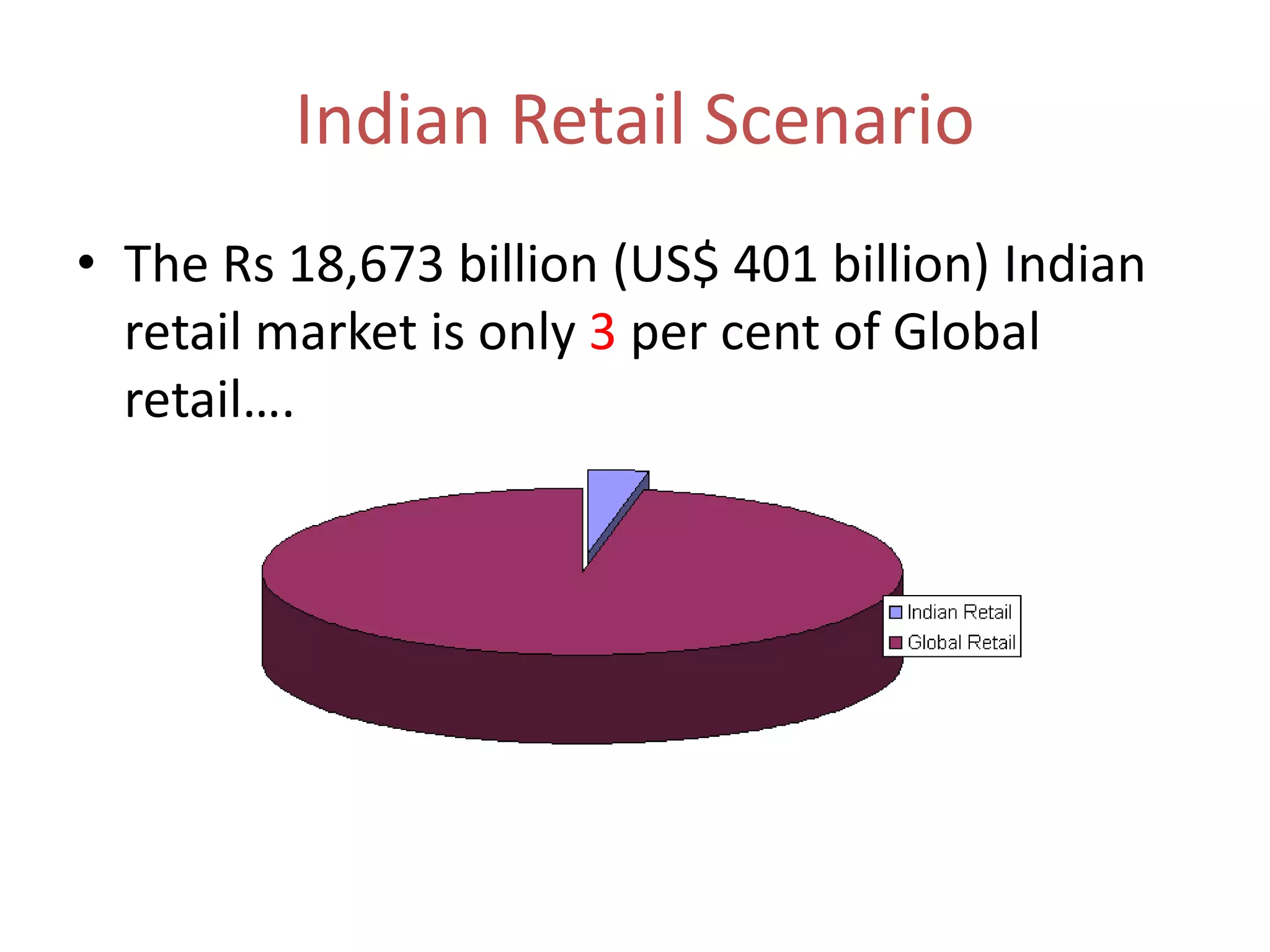
Indian Retail Scenario
• The Rs 18,673 billion (US$ 401 billion) Indian
retail market is only 3 per cent of Global
retail….
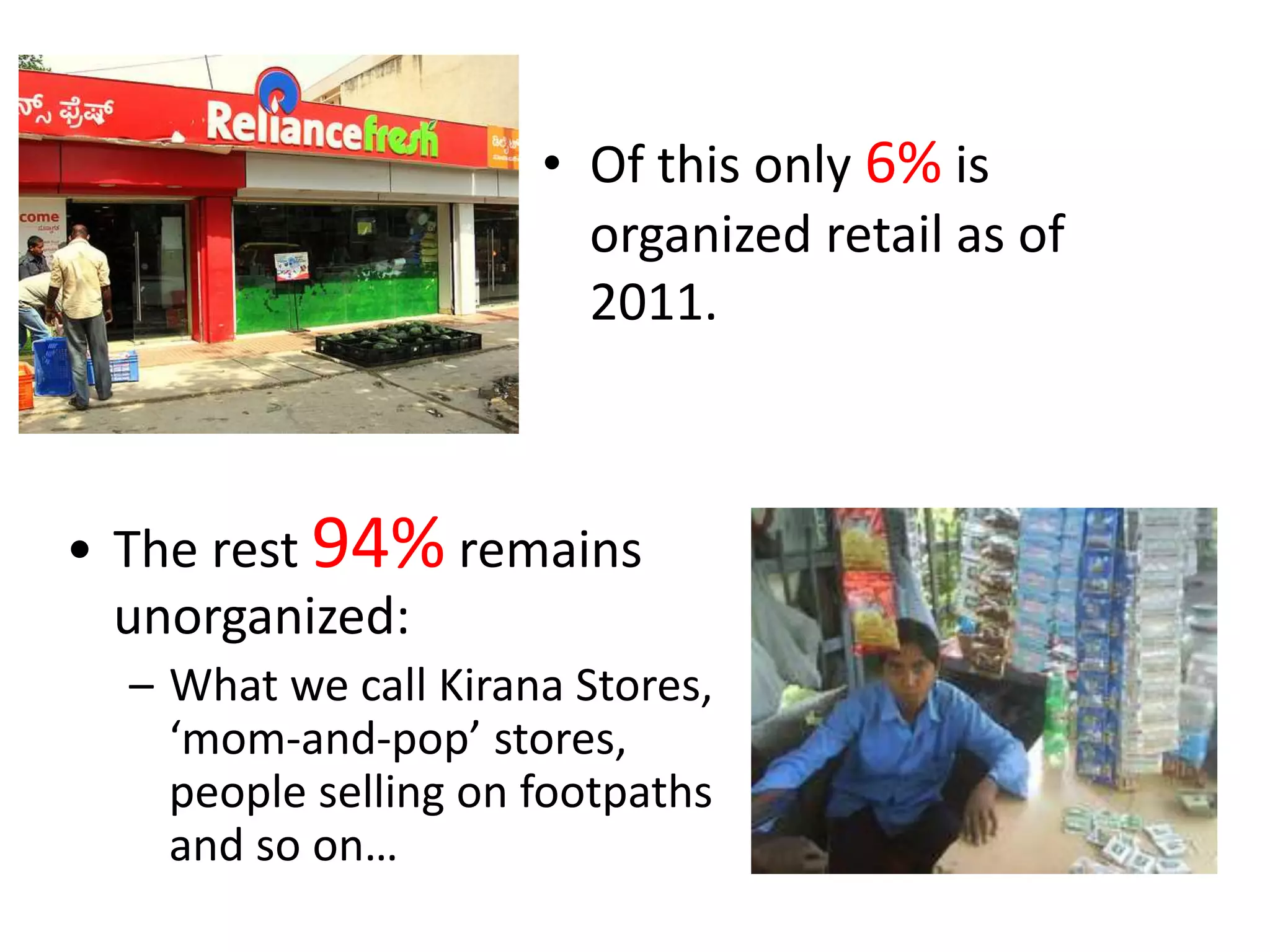
• Of this only 6% is
organized retail as of
2011.
• The rest 94% remains
unorganized:
– What we call Kirana Stores,
‘mom-and-pop’ stores,
people selling on footpaths
and so on…
Indian Government
(comprised of a coalition of political parties called the UPA)
has announced (Sept. 2012):
51 % FDI in multi-brand retail..
100 % FDI in single brand retail
Present Policy Framework & Riders
 Foreign investor should make Minimum investment of $100 million.
 50% of the investment is to be in backend infrastructure
development.(Investments made to wards processing, manufacturing,
distribution, design improvement, quality-control, cold chain, warehouses
and packaging, will constitute back-end.
 30% of all raw materials has to be procured from India's small and
medium industries.
 Permission to set up malls only in cities with a minimum population of 10
lakh.
 Government has the first right to procure material from the farmers.
 Products should be sold under the same brand internationally.
 Foreign investor should be the owner of the brand.
So, what are the THREATS
of allowing global retailers in
India..?
Some key concerns are
 With 51% equity interest, foreign retailers can control the Indian operations and
consolidate the financials with the parent company.
 The minimum amount fixed for foreign investment is only $100.
 The foreign retailer can purchase locally all agricultural produce, and sell them in
their stores. Thus they can virtually corner the market and trade in these
products.
 Domination in warehouse infrastructure business (“back-end infrastructure clause)
 Policy of 30% of the procurement of manufactured and processed products
should be sourced from “small industry”. Critics point out that the Indian retail
trade sources far more than 30% currently from small industry. So this is no
concession.
 The policy states that retail locations should be restricted to cities with one million
plus population. This is to protect the smaller cities and rural areas from the
predatory practices of the foreign retailers (which means the small retailers in the
cities are sacrificed).
 It will lead to Huge Unemployment Situation as it is the second largest
employment providing sector after Agriculture.
But let us take a look at the other side of the coin..
Some Advantage of Allowing FDI
 It will increase competition which is always beneficial for the customer.
 It will remove the middleman from the equation. It will reduce costs which in turn
will reduce prices. It will create 1.5 million more jobs in 5 years. Apart from the
huge number of indirect employment.
 More choices for consumers.
 Global retailers are bound to bring in global best practices and technology that
will lead to a more competitive marketplace benefiting the consumers.
 The sourcing clause (30%) will lead to a direct benefit for the Small Medium
enterprises (SME) sector.
 With better infrastructure investment the wastage in food produce can be
minimized and thus it will help control food inflation. We are the second
highest producer of fruits and vegetables in the world but still we are not
able to utilize it properly because of inadequate infrastructure facilities.
Existing Public Distribution System may not be sufficient to solve the
food crisis.
• With around 20 to 30 crore Indians sleeping hungry every night and over
7000 Indians dying of hunger every day, such waste is not less than a
criminal offence.
• Food wasted in FCI godowns could have fed 2500 lakh families for 10 years!!!
Concluding Remarks
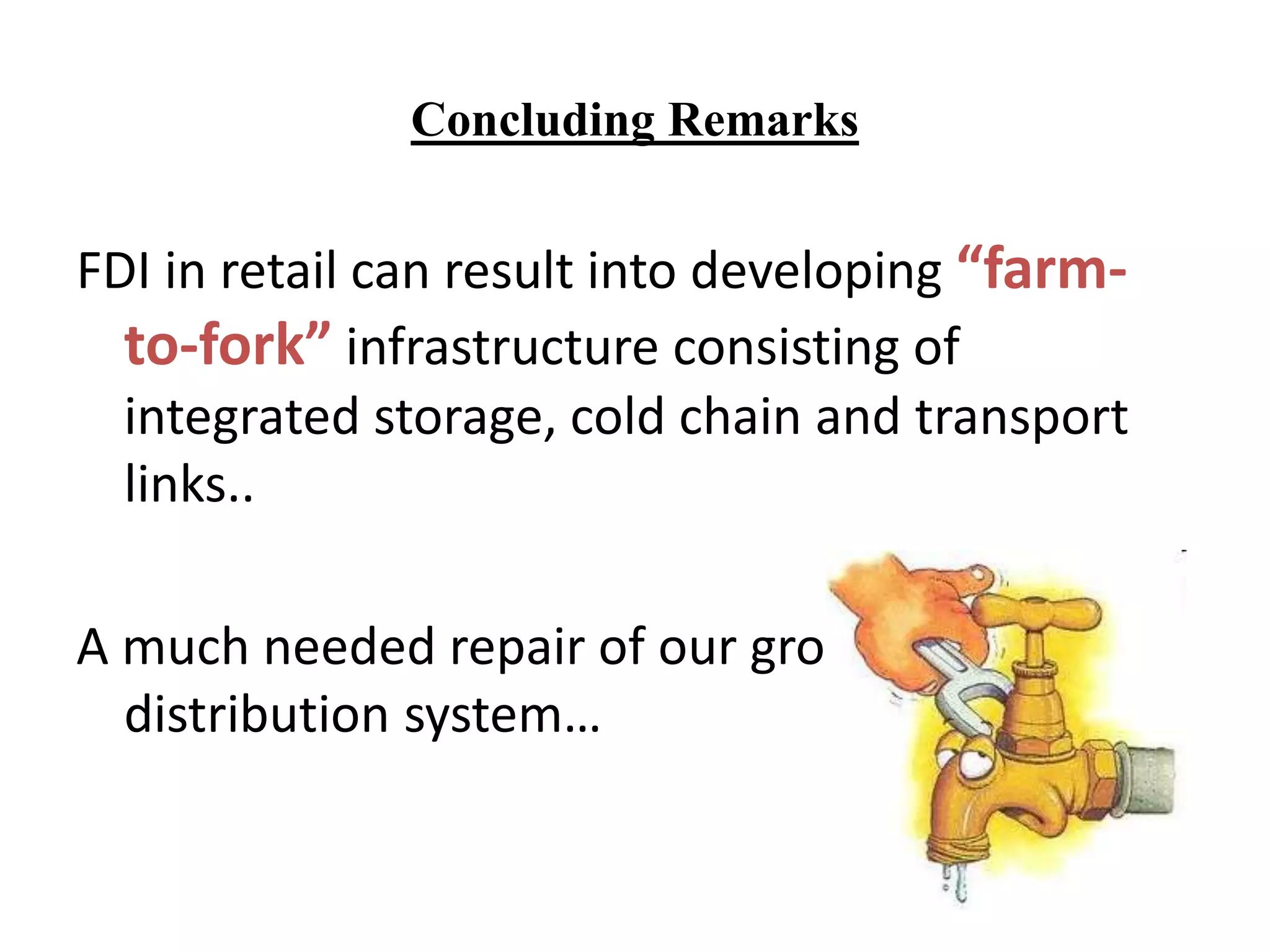
FDI in retail can result into developing “farm-
to-fork” infrastructure consisting of
integrated storage, cold chain and transport
links..
A much needed repair of our grossly leaking
distribution system…
• What ultimately matters is :
– Operational efficiencies..
– Best deal to the final customer..
– True globalization…
The big fussover
FDI in INDIAN RETAIL..
So that’s it about..
And, doesn’t this big fussover
liberalization in retail industry
remind us of..
• The big fuss before 1991 reforms…?
• The big fuss before letting global
telecom players enter Indian Telecom
Industry before 2000…?
We know very well that
these have actually
fuelled
The Great India Growth Story*
*Not factoring in the great Indian 2G Scam…
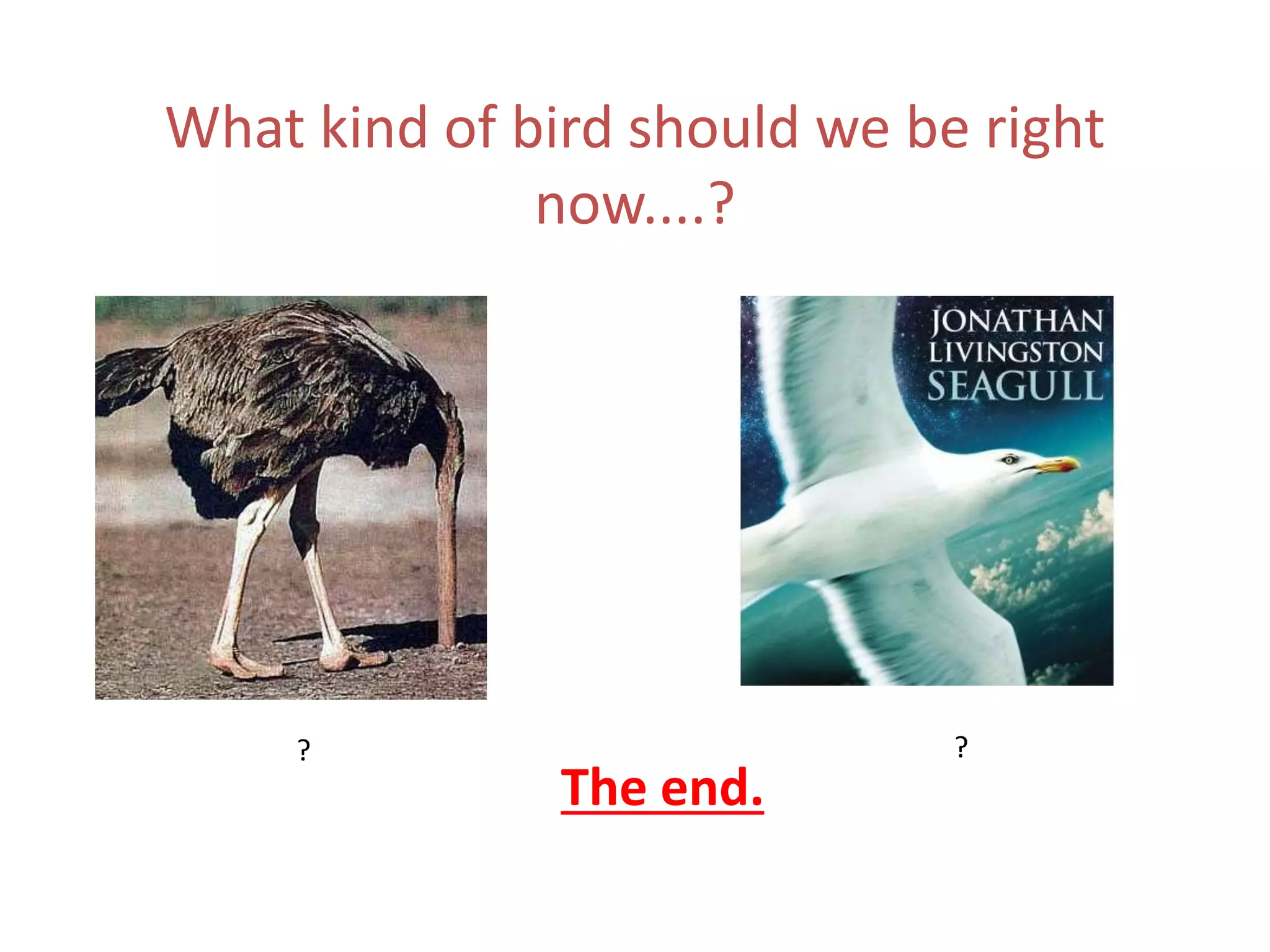
with all these angry birds around..
What kind of bird should we be right
now....?
The end.
? ?

Foreign direct investment by Neeraj Bhandari ( Surkhet.Nepal )

  • 1.
    Unit 5 Foreign DirectInvestment & Its Impact on Indian Economy
  • 2.
    Foreign Direct Investment &Its Impact on Indian Economy  Key Issues related to FDI & Indian Economy • Meaning & Definition of FDI • Structure of FDI In India • Summary Statistics related to FDI • Case Study : FDI in Retail Sector • A) Domestic big Firms In Retail • B) Joint Venture Retailer • Role & Performance with reference to Retail trade in Agriculture non Agriculture Product. • Recommendation & Suggestions • Concluding Remarks
  • 3.
    Meaning & Definitionof FDI  IMF Definition • FDI refers to the net inflows of investment to acquire a lasting management interest (10 percent or more of voting stock) in an enterprise operating in an economy other than that of the investor. It is the sum of  Department of Industrial Policy & Promotion (DIPP) • FDI‘ means investment by non-resident entity/person resident outside India in the capital of an Indian company under Schedule 1 of Foreign Exchange Management Regulations 2000”. Equity Capital Reinvested Earnings Direct Capital
  • 4.
    Structure of FDI ForeignDirect Investment Flows Inflow Outflow Entry Modes Mergers & Acquisitions Green Field Investment Licensing Joint venture Types Horizontal FDI Vertical FDI Complex FDI Entry Route Automatic Government Foreign Investment Promotion Board (FIPB)
  • 5.
     Mergers &Acquisitions • Tata Steel’s mega takeover of European steel major Corus for $12.2 billion • Vodafone’s purchase of 52% stake in Hutch Essar for about $10 billion. • HDFC Bank acquisition of Centurion Bank of Punjab for $2.4 billion  Green Field Investment • Mercedes Benz’s production facility in Pune, India  Joint Venture : Maruti-Suzuki , Birla Sun Life.
  • 6.
    Summary Statistics 0 2 4 6 8 10 12 0 5000 10000 15000 20000 25000 30000 35000 40000 45000 50000 2000 20012002 2003 2004 2005 2006 2007 2008 2009 2010 2011 G D P ( % ) U S $ M i l l i o n TIME FDI & GDP FDI Inflow FDI Out Flow GDP(%)
  • 7.
    Key Statistics MAURITIUS 38% SINGAPORE 10% U.K 9% JAPAN 7% USA 6% Others 30% Top FiveInvesting Countriesin Inida % of total Inflows Service Sector, 19% Construction Development, 12% Telecommunica tions, 7% Computer Software & Hardware, 6%Drugs & pharmaceutical s, 6% Others, 50% Top Five Sectors Attracting FDI % Of Total Inflow Source : Factsheet on FDI, June 2012, DIPP
  • 8.
  • 9.
    Indian Retail Scenario •The Rs 18,673 billion (US$ 401 billion) Indian retail market is only 3 per cent of Global retail….
  • 10.
    • Of thisonly 6% is organized retail as of 2011. • The rest 94% remains unorganized: – What we call Kirana Stores, ‘mom-and-pop’ stores, people selling on footpaths and so on…
  • 11.
    Indian Government (comprised ofa coalition of political parties called the UPA) has announced (Sept. 2012): 51 % FDI in multi-brand retail.. 100 % FDI in single brand retail
  • 12.
    Present Policy Framework& Riders  Foreign investor should make Minimum investment of $100 million.  50% of the investment is to be in backend infrastructure development.(Investments made to wards processing, manufacturing, distribution, design improvement, quality-control, cold chain, warehouses and packaging, will constitute back-end.  30% of all raw materials has to be procured from India's small and medium industries.  Permission to set up malls only in cities with a minimum population of 10 lakh.  Government has the first right to procure material from the farmers.  Products should be sold under the same brand internationally.  Foreign investor should be the owner of the brand.
  • 13.
    So, what arethe THREATS of allowing global retailers in India..?
  • 14.
    Some key concernsare  With 51% equity interest, foreign retailers can control the Indian operations and consolidate the financials with the parent company.  The minimum amount fixed for foreign investment is only $100.  The foreign retailer can purchase locally all agricultural produce, and sell them in their stores. Thus they can virtually corner the market and trade in these products.  Domination in warehouse infrastructure business (“back-end infrastructure clause)  Policy of 30% of the procurement of manufactured and processed products should be sourced from “small industry”. Critics point out that the Indian retail trade sources far more than 30% currently from small industry. So this is no concession.  The policy states that retail locations should be restricted to cities with one million plus population. This is to protect the smaller cities and rural areas from the predatory practices of the foreign retailers (which means the small retailers in the cities are sacrificed).  It will lead to Huge Unemployment Situation as it is the second largest employment providing sector after Agriculture.
  • 15.
    But let ustake a look at the other side of the coin..
  • 16.
    Some Advantage ofAllowing FDI  It will increase competition which is always beneficial for the customer.  It will remove the middleman from the equation. It will reduce costs which in turn will reduce prices. It will create 1.5 million more jobs in 5 years. Apart from the huge number of indirect employment.  More choices for consumers.  Global retailers are bound to bring in global best practices and technology that will lead to a more competitive marketplace benefiting the consumers.  The sourcing clause (30%) will lead to a direct benefit for the Small Medium enterprises (SME) sector.
  • 17.
     With betterinfrastructure investment the wastage in food produce can be minimized and thus it will help control food inflation. We are the second highest producer of fruits and vegetables in the world but still we are not able to utilize it properly because of inadequate infrastructure facilities. Existing Public Distribution System may not be sufficient to solve the food crisis. • With around 20 to 30 crore Indians sleeping hungry every night and over 7000 Indians dying of hunger every day, such waste is not less than a criminal offence. • Food wasted in FCI godowns could have fed 2500 lakh families for 10 years!!!
  • 18.
    Concluding Remarks FDI inretail can result into developing “farm- to-fork” infrastructure consisting of integrated storage, cold chain and transport links.. A much needed repair of our grossly leaking distribution system…
  • 19.
    • What ultimatelymatters is : – Operational efficiencies.. – Best deal to the final customer.. – True globalization…
  • 20.
    The big fussover FDIin INDIAN RETAIL.. So that’s it about..
  • 21.
    And, doesn’t thisbig fussover liberalization in retail industry remind us of..
  • 22.
    • The bigfuss before 1991 reforms…? • The big fuss before letting global telecom players enter Indian Telecom Industry before 2000…?
  • 23.
    We know verywell that these have actually fuelled The Great India Growth Story* *Not factoring in the great Indian 2G Scam…
  • 24.
    with all theseangry birds around..
  • 25.
    What kind ofbird should we be right now....? The end. ? ?