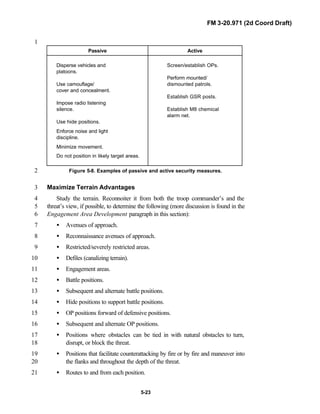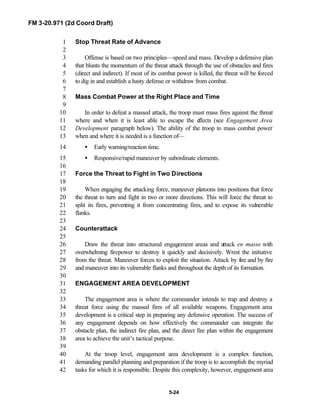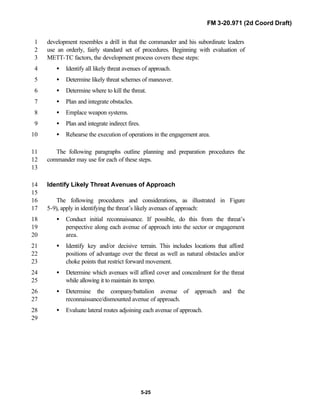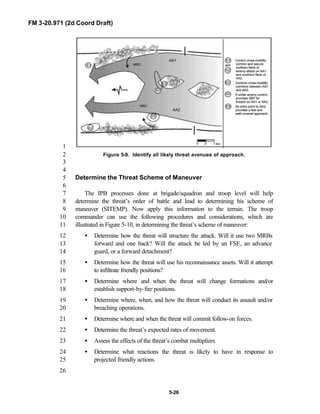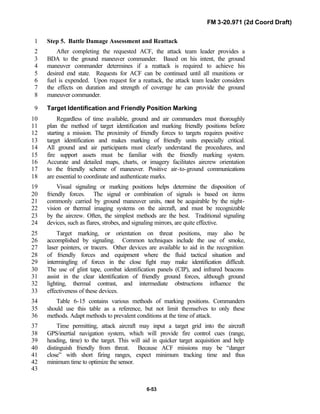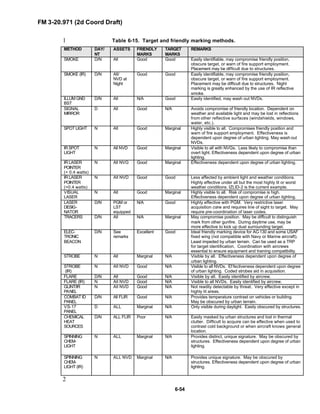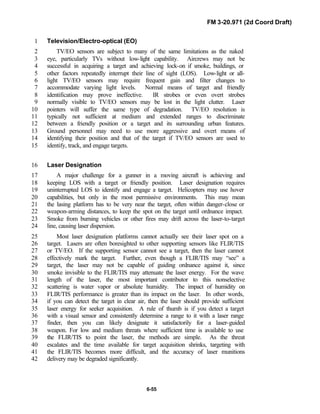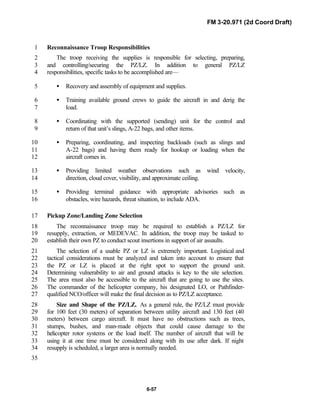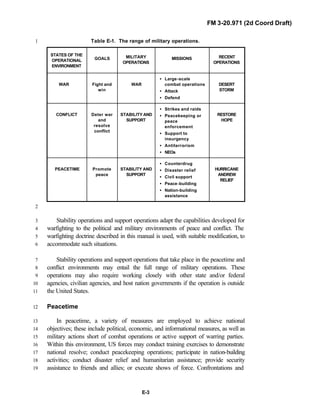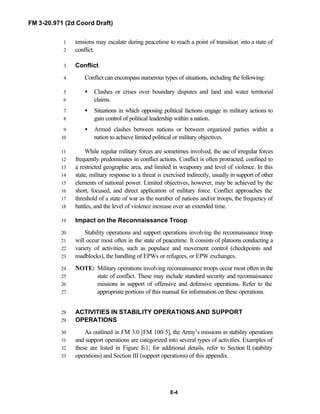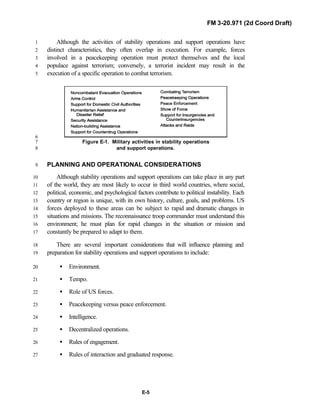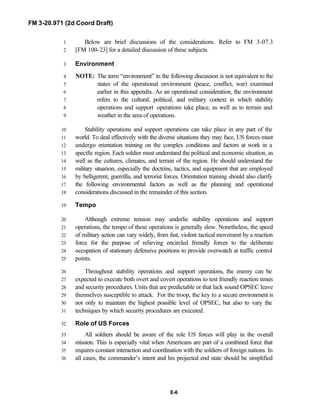
2D Coordinating Draft FM 3-20.9711
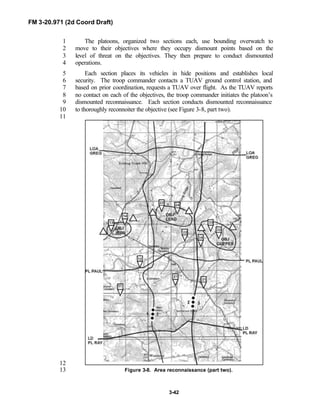
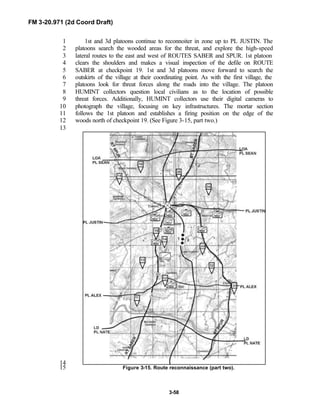
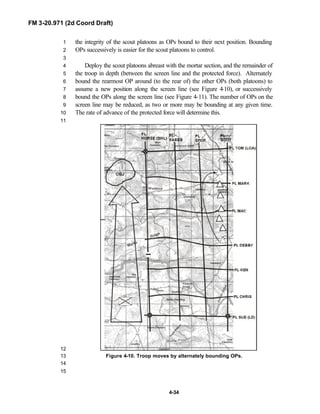
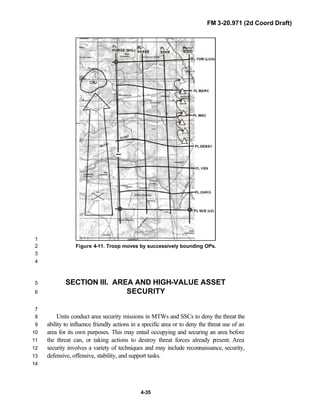
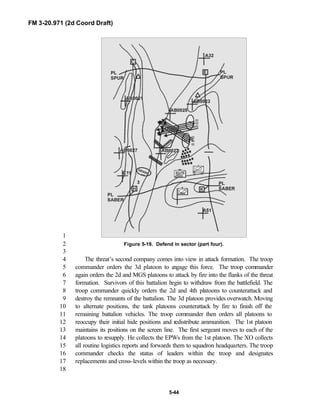
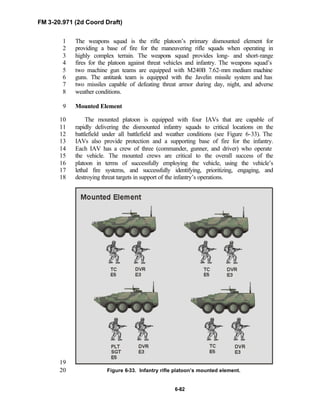
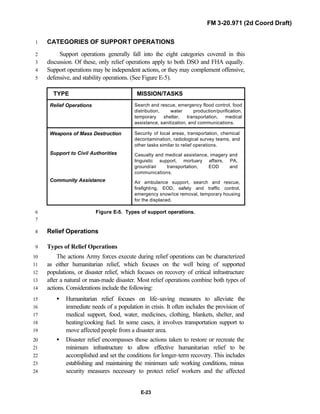
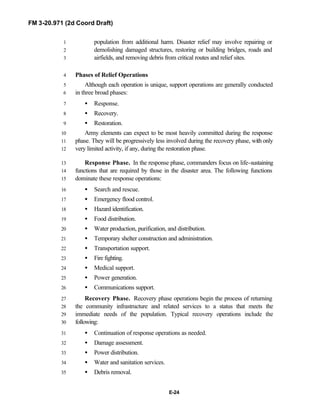
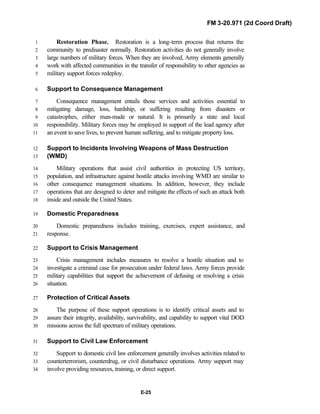
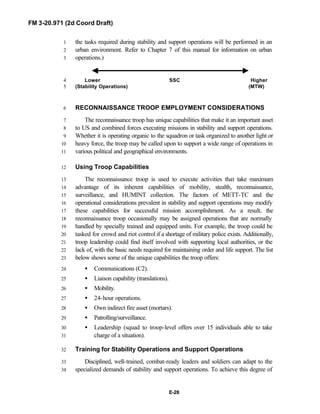
Field Manual HEADQUARTERS2
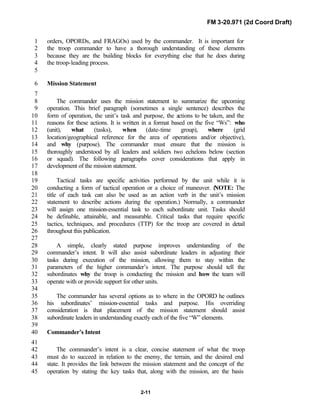
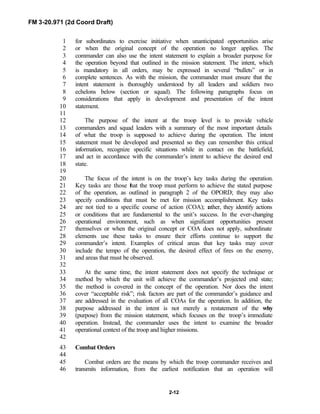
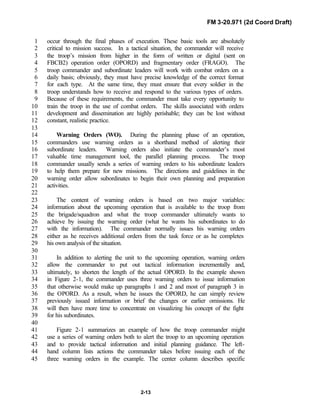
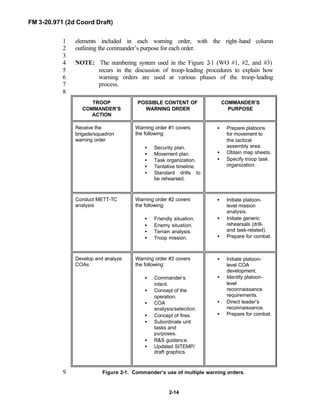
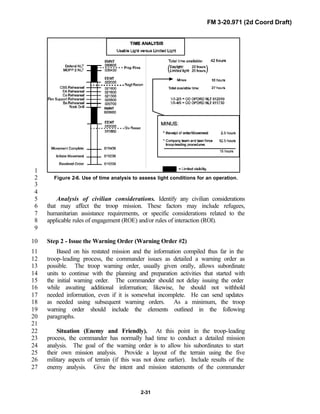
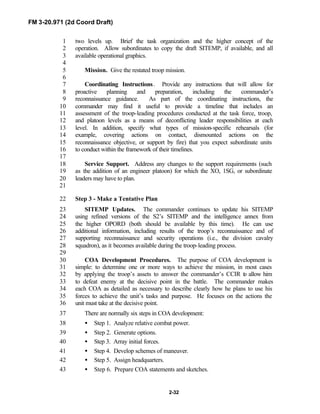
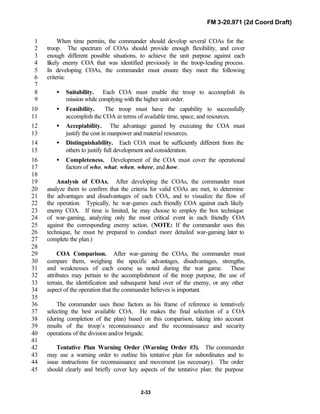
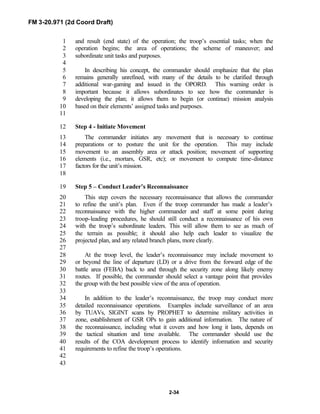
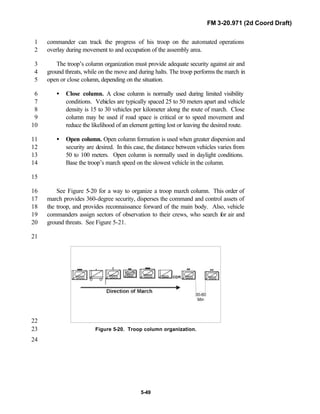
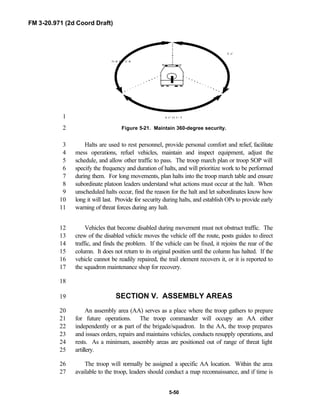
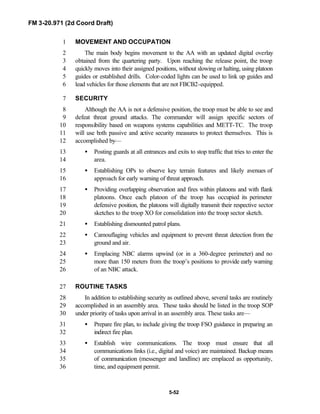
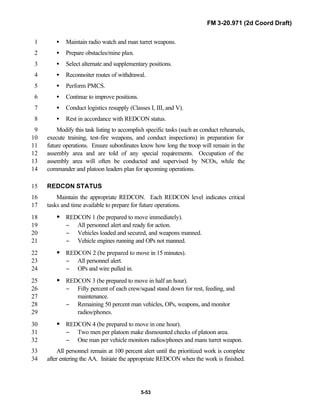
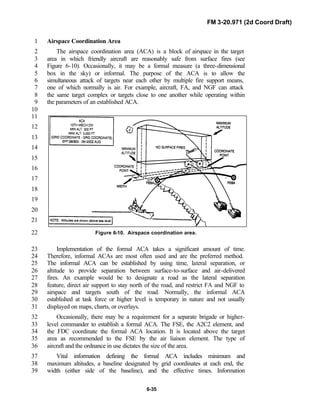
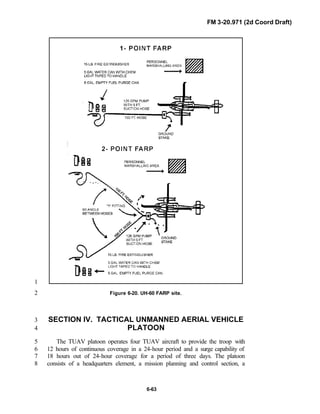
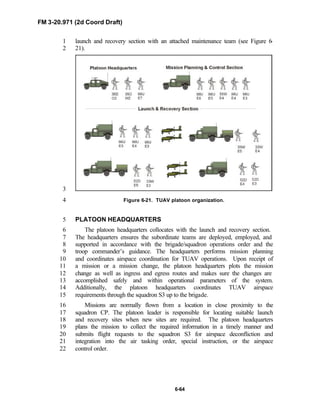
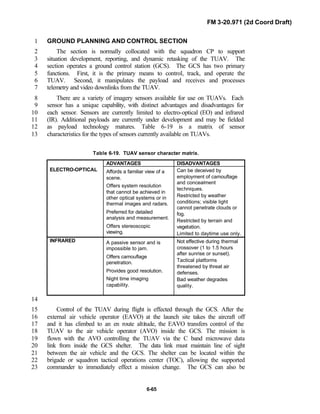
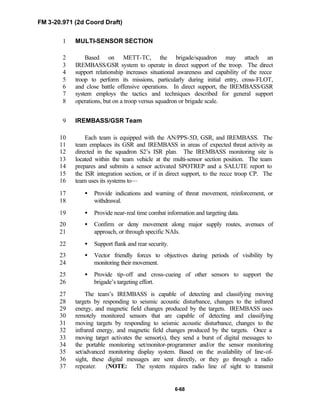
No 3-20.971 US ARMY ARMOR CENTER3
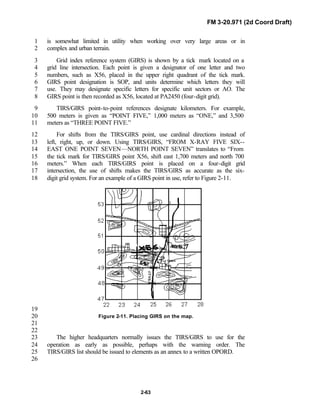
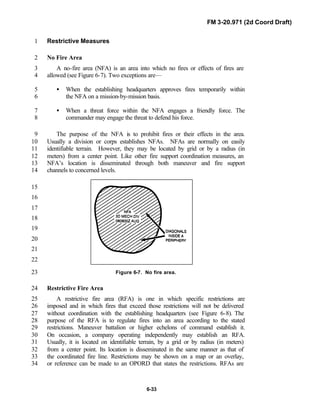
Fort Knox, KY 1 May 20014
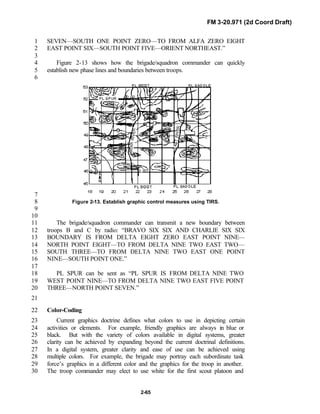
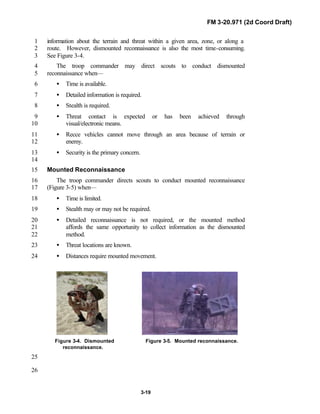
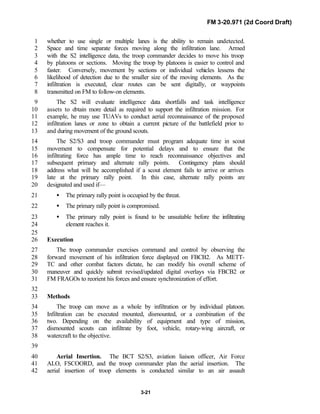
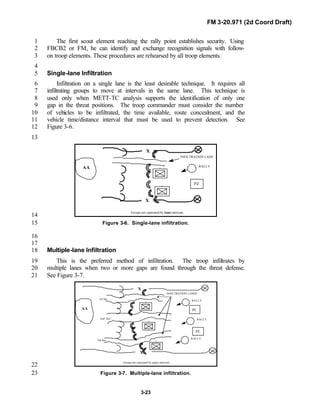
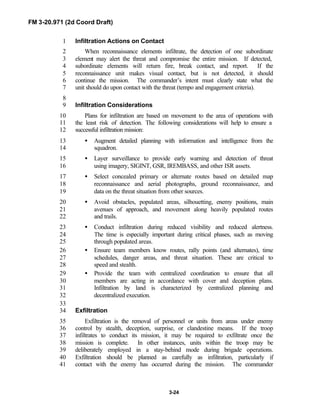
5
6
RECONNAISSANCE TROOP7
Recce Troop and Brigade Reconnaissance Troop8
9
10
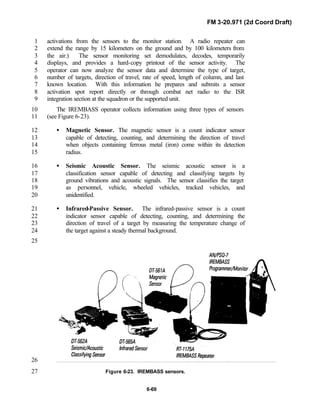
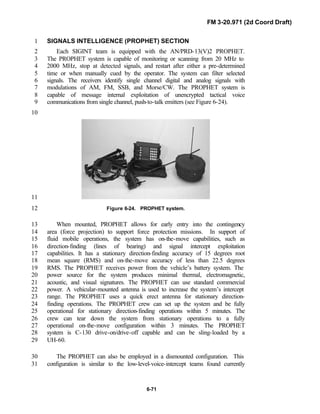
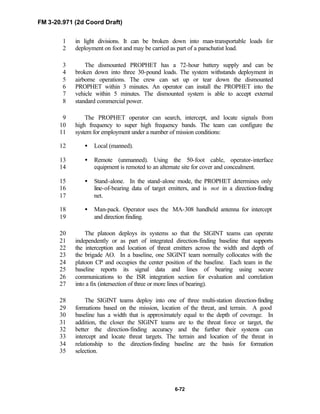
TABLE OF CONTENTS11
12
Page13
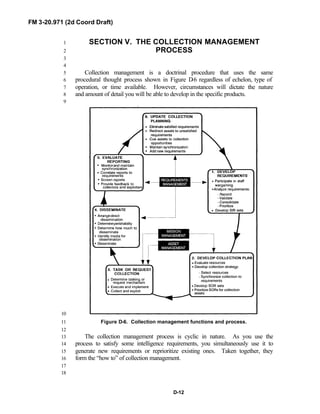
14
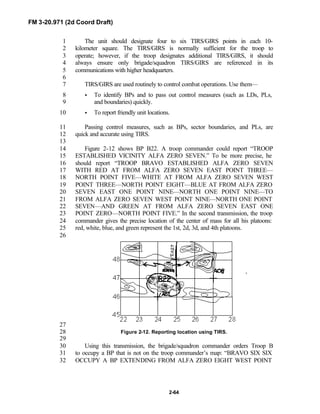
Preface ......................................................................................................... iii15
Chapter 1 INTRODUCTION.................................................................... 1-116
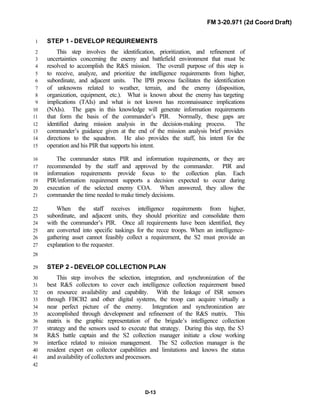
Operational Environment........................................................ 1-317
Organizations ....................................................................... 1-1418
Missions, Capabilities, and Limitations ................................... 1-2419
Responsibilities .................................................................... 1-2520
Chapter 2 BATTLE COMMAND............................................................. 2-121
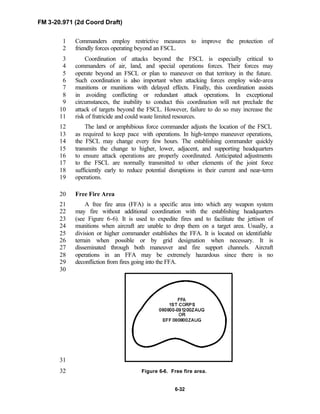
Command and Control........................................................... 2-322
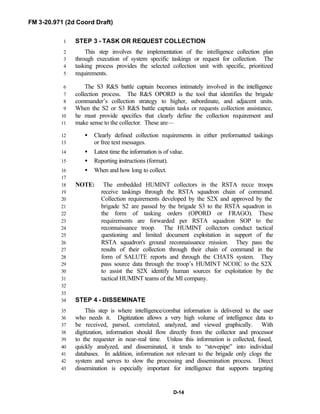
Command, Control, Communications, Computers,23
and Intelligence Architectures ............................................. 2-4624
Techniques of Tactical Control................................................ 2-5725
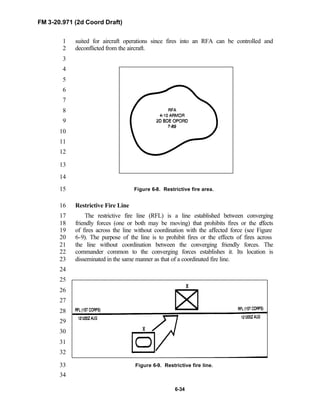
Command Guidance and Organizational Control ...................... 2-5726
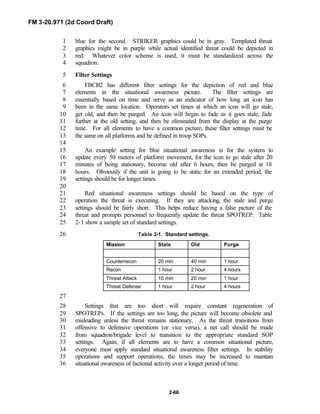
Tactical Movement ................................................................ 2-6927
Chapter 3 RECONNAISSANCE/SURVEILLANCE ................................... 3-128
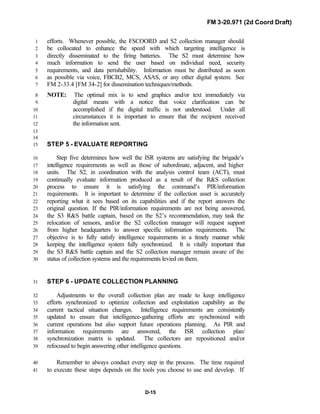
Fundamentals....................................................................... 3-229
Reconnaissance Planning...................................................... 3-1330
Area Reconnaissance ........................................................... 3-3831
Route Reconnaissance.......................................................... 3-5332
Zone Reconnaissance........................................................... 3-5933
Surveillance Fundamentals, Capabilities,34
and Limitations .................................................................. 3-7035
Surveillance Planning, Methods, and36
Considerations................................................................... 3-7237
Chapter 4 SECURITY ........................................................................... 4-138
Fundamentals and Capabilities............................................... 4-239
Screen................................................................................. 4-840
Area and High-Value Asset Security....................................... 4-3541
Convoy Security.................................................................... 4-4042
43
DISTRIBUTION RESTRICTION: Distribution authorized to U.S. Government agencies and44
their contractors only to protect technical or operational information that is for official45
government use. This determination was made on 12 March 2001. Other requests for this46
document will be referred to Commander, US Army Armor Center, ATTN: ATZK-TDD-C,47
Fort Knox, Kentucky 40121-5000.48
49
DESTRUCTION NOTICE: Destroy by any method that will protect disclosure of contents or50
reconstruction of the document.51
FM 3-20.971 (2d Coord Draft)
ii
Chapter 5 OTHER TACTICAL OPERATIONS ....................................... 5-11
Direct Fire Planning............................................................ 5-12
Offense............................................................................. 5-123
Defend as an Economy of Force.......................................... 5-214
Tactical Road Marches....................................................... 5-455
Assembly Areas ................................................................ 5-496
Reconnaissance Handover.................................................. 5-537
Linkup Operations.............................................................. 5-568
Battle Handover and Passage of Lines ................................. 5-639
Covert Breach Operations ................................................... 5-7010
Target Acquisition .............................................................. 5-7111
NBC Defensive Operations.................................................. 5-7612
13
Chapter 6 COMBAT SUPPORT.......................................................... 6-114
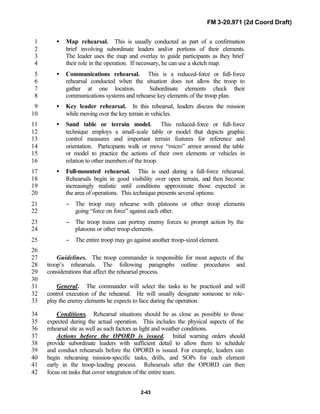
Intelligence........................................................................ 6-115
Fire Support/Target Acquisition ........................................... 6-1616
Army Aviation .................................................................... 6-3617
Tactical Unmanned Aerial Vehicle Platoon ........................... 6-6318
Multi-Sensor Platoon.......................................................... 6-6719
IBCT Infantry Rifle Company................................................ 6-7320
Mobile Gun System Platoon ............................................... 6-8321
Infantry Battalion Reconnaissance Platoon........................... 6-8622
Antitank Platoon/Company ................................................. 6-8823
NBC Reconnaissance ........................................................ 6-9224
IBCT Engineer Company..................................................... 6-9325
Air Defense ....................................................................... 6-9826
27
Chapter 7 URBAN OPERATIONS....................................................... 7-128
Understanding the Urban Environment.................................. 7-229
Planning............................................................................ 7-830
Execution.......................................................................... 7-1931
32
Chapter 8 COMBAT SERVICE SUPPORT........................................... 8-133
Fundamentals.................................................................... 8-134
Organization...................................................................... 8-635
Logistics ........................................................................... 8-1536
Personnel Service Support.................................................. 8-2837
Enemy Prisoners of War..................................................... 8-3238
39
Appendix A OPORD GUIDE ............................................................... A-140
Appendix B NUCLEAR, BIOLOGICAL, AND CHEMICAL41
OPERATIONS .............................................................. B-142
Appendix C FORCE PROTECTION ..................................................... C-143
Appendix D RECONNAISSANCE AND SURVEILLANCE44
PLAN........................................................................... D-145
Appendix E STABILITY OPERATIONS AND46
SUPPORT OPERATIONS.............................................. E-147
Appendix F AIRLIFT OPERATIONS..................................................... F-148
Appendix G COMMAND POST OPERATIONS ..................................... G-149
Glossary............................................................................................ Glossary-150
51
52
FM 3-20.971 (2d Coord Draft)
iii
PREFACE1
2
3
FM 3-20.971 describes the tactical employment and operations of4
reconnaissance troops of armored and mechanized infantry brigades (BRTs)5
and the recce troops of the Reconnaissance Surveillance and Target6
Acquisition (RSTA) squadrons. It specifically addresses operations for7
brigades organized under the Army of Excellence, the Limited Conversion8
Division force designs, and the Interim Brigade Combat Team (IBCT). FM 3-9
20.971 is the doctrinal foundation that governs the development of equipment,10
training, and structure for both types of reconnaissance troops.11
12
Because not all units are digitally equipped, this manual addresses analog13
and digital operations, technology applications, and equipment. Tactical14
fundamentals do not change with the fielding of new equipment; however, the15
integration of new equipment and organizations may require changes in16
related techniques and procedures. This manual provides guidance in the17
form of combat-tested concepts and ideas modified to exploit emerging Army18
and Joint capabilities.19
20
FM 3-20.971 is written for the recon troop commander and his key leaders21
within the troop. The manual reflects and supports the Army operations22
doctrine as stated in FM 3-0. Readers should be familiar with FM 3-91.3 [FM23
71-3], FM 3-20-97 [FM 17-97], FM 3-100.40 [FM 100-40], FM 3-71 [FM 71-24
100], FM 3-55 [FM 100-55], FM 102 [FM 101-5-1], and FM 3-20.98 [FM 17-25
98]. Examples and graphics are provided to illustrate principles and concepts,26
not to serve as prescriptive responses to tactical situations. This publication27
provides units with the doctrinal foundation to train leaders, guide tactical28
planning, and develop standing operating procedures (SOP). The publication29
applies to all reconnaissance troops in the active component (AC) and reserve30
component (NG/RC) force.31
32
Unless otherwise stated, masculine nouns and pronouns do not refer33
exclusively to men.34
35
US Army Armor Center is the proponent for this publication. Submit36
comments and recommended changes and the rational for those changes on37
DA Form 2028 (Recommended Changes to Publications and Blank Forms) to:38
Commander, US Army Armor Center, ATTN: ATZK-TDD-C, Fort Knox, KY39
40121-5000, or e-mail the DA Form 2028 to Chief, Cavalry Branch, from the40
Doctrine Division web site at41
http://147.238.100.101/center/dtdd/doctrine/armordoc.htm. (After accessing42
the web site, select “Organization” from the menu on the left side of the43
screen to reach the Cavalry Branch site.)44
45
FM 3-20.971 (2d Coord Draft)
1-1
CHAPTER 11
2
INTRODUCTION3
4
5
The significance of reconnaissance cannot be overstated. History and6
training show that the winner of the reconnaissance fight will usually be the7
winner of the subsequent battle. The maneuver commander requires accurate,8
complete, and timely reconnaissance for success. The degree to which he9
correctly understands the threat situation, his own force’s situation, and the10
terrain heavily influences his battlefield success. This issue has been11
characterized as see the terrain, see the threat, and see yourself. Emerging12
command and control systems do a great deal to help a commander know his13
own forces situation, but the burden of obtaining real time information about14
the threat and terrain falls on his tactical reconnaissance units.15
The need for reconnaissance in Army operations remains unchanged.16
The fundamentals of reconnaissance and security are unaltered; however, the17
organization, equipment and techniques of the troop are now based on the unit18
it supports. While the troop’s primary missions are reconnaissance and19
security, the reconnaissance troop may be called upon to execute a myriad of20
additional missions. These missions range from route and area security to21
convoy escort and checkpoint duties. A reconnaissance troop’s operational22
environment spans the full spectrum of operations—from smaller-scale23
contingency to major theater of war operations. Regardless of the24
environment or mission, the troop’s primary function is always the same: Be25
the eyes and ear of the maneuver commander and provide the necessary26
information to allow him to make timely and accurate decisions.27
CONTENTS28
Page29
SECTION I. Operational Environment.........................................1-330
SECTION II. Organizations...........................................................1-1431
SECTION III. Missions, Capabilities, and Limitations....................1-2432
SECTION IV. Responsibilities........................................................1-2533
34
35
Based on its commander’s intent and guidance, the troop conducts36
reconnaissance in support of other friendly forces to provide current, accurate37
information about the threat, terrain, weather, society, physical resources, and38
the infrastructure within a specified area of operations. This provides the39
follow-on forces with an opportunity to maneuver freely and rapidly to their40
objective. Reconnaissance troops perform three types of reconnaissance:41
route, zone, and area.42
FM 3-20.971 (2d Coord Draft)
1-2
Additionally, higher headquarters and the troop endeavor to link the1
purpose of reconnaissance to—2
• Answer commander’s critical information requirements (CCIR),3
and/or4
• Answer voids in the unit’s IPB through intelligence requirements (IR),5
and/or6
• Support targeting through target acquisition.7
8
As a part of the Army’s transformation process, the brigade9
reconnaissance troop (BRT) and the recce troop of the reconnaissance,10
surveillance, and target acquisition (RSTA) squadron have filled the historic11
gap in reconnaissance. Both organizations are designed to provide their12
respective commanders an increased number of tools for executing13
intelligence, surveillance, and reconnaissance (ISR) operations. Tactical14
unmanned aerial vehicles (TUAV), artillery radars and observers, air defense15
radars, and satellite tracking systems all contribute to the effort. However, the16
brigade’s primary source of intelligence remains its organic reconnaissance17
units. Successful reconnaissance operations permit the brigade commander18
freedom of maneuver in order to concentrate combat power and apply assets19
deliberately at the decisive time and place of his choosing. Only through20
reconnaissance can he determine which routes are suitable for maneuver,21
where the threat is strong and weak, and where gaps exist.22
The purpose of this chapter is—23
• To depict the operational environment of the troop and its supported24
brigade.25
• To depict organizations of the reconnaissance troop.26
– Recce Troop: The Reconnaissance, Surveillance and Target27
Acquisition (RSTA) Squadron (IAV and TUAV equipped).28
– Brigade Reconnaissance Troop (BRT): The Limited Conversion29
Division (LCD) XXI Brigade (HMMWV equipped).30
• To outline missions each troop performs.31
• To establish responsibilities of key personnel in combat.32
33
FM 3-20.971 (2d Coord Draft)
1-3
SECTION l. OPERATIONAL ENVIRONMENT1
2
DIMENSIONS3
Reconnaissance troops support brigade operations by conducting4
reconnaissance and security missions in5
an operational environment consisting of6
six dimensions. Each dimension affects7
how the brigade combines, sequences,8
and conducts military operations.9
Commanders tailor forces, employ10
diverse capabilities, and support11
different missions to succeed in this12
environment.13
14
Threat Dimension. Multiple threats to US interests exist. Adversaries15
will continue to seek every opportunity to gain an advantage over US and16
multinational forces. When countered, they will adapt to the changing17
conditions and pursue all available options to avoid destruction or defeat.18
This environment and its wide array of threats present significant challenges.19
Army forces must simultaneously defeat an adversary while protecting20
noncombatants and the infrastructure on which they depend.21
Political Dimension. Successful military operations in any form require22
that commanders have a clear sense of strategic policy goals and objectives.23
They must understand how the use of military force fits into the national24
security strategy and the desired military conditions required to meet policy25
objectives. In addition, commanders must be able to articulate this26
understanding in a clear, concise way to the US and international media. Each27
political decision during the conduct of operations has strategic, operational,28
and tactical implications. Likewise, each strategic, operational, and tactical29
action directly or indirectly impacts the political dimension.30
Unified Action Dimension. Combatant commanders synchronize air,31
land, sea, space, and special operations forces to accomplish missions.32
Brigades can expect to operate in a unified command structure both in a major33
theater of war (MTW) and more commonly in smaller-scale contingencies34
(SSC). The brigade may work with multinational and interagency partners in35
order to accomplish the full spectrum of missions assigned to them. Brigades36
committed to SSCs can expect to protect American lives and interests, support37
political initiatives, facilitate diplomacy, promote fundamental ideals, and38
disrupt illegal activities. Close coordination is the foundation of successful39
unified action.40
Land Combat Operations Dimension. Land combat continues to be the41
salient feature of combat and is the brigades’ primary function. Land combat42
Dimensions of the Operational
Environment
• Threat
• Political
• Unified Action
• Land Combat Operations
• Information
• Technology
FM 3-20.971 (2d Coord Draft)
1-4
usually involves destroying or defeating threat forces or taking land objectives1
that reduce the threat’s will to fight. Four characteristics distinguish land2
combat:3
• Scope. Land combat involves direct and indirect combat with a threat4
throughout the depth of an operational area. Commanders maneuver5
forces to seize and retain key and decisive terrain. They use maneuver,6
fires, and other elements of combat power to defeat or destroy threat7
forces.8
• Duration. Land combat is repetitive and continuous. This involves9
rendering a threat incapable or unwilling to conduct further action. It10
may require destroying it.11
• Terrain. Land combat takes place among a complex variety of natural12
and manmade features. Plans for land combat must account for the13
visibility and clutter provided by the terrain and the effects of weather14
and climate.15
• Permanence. Land combat frequently requires seizing or securing16
terrain. With control of terrain comes control of populations and17
productive capacity. Thus, land combat makes the temporary effects18
of other operations permanent.19
Information Dimension. Decisive operations historically have been20
enabled by information superiority. Information superiority provides21
commanders with accurate, timely information that enables them to make22
superior decisions and act faster than their adversaries. Information23
superiority, derived from ISR; information management; and information24
operations (IO), provide one common framework on how to plan, task, and25
control assets; how and where to report information; and how to use26
information. The information environment also includes information derived27
from nongovernmental individuals and organizations, such as the media, who28
produce and disseminate information that affects public opinion, which can29
alter the conduct of and perceived legitimacy of military operations.30
Technology Dimension. Technology enhances leader, unit, and soldier31
performance and impacts how Army forces plan, prepare, and execute full32
spectrum operations in peace, conflict, and war. Technology has significantly33
increased the ability to conduct ISR operations. It greatly enhances the ability34
to conduct battle command through modern telecommunications and micro35
processing. Munitions are increasingly lethal and target acquisition systems36
are more precise. The proliferation of advanced technology systems requires37
commanders to integrate the capabilities of highly modernized organizations38
and less-modernized and multinational units. Commanders must also realize39
that they do not have a monopoly on advanced technology. Even adversaries40
lacking any research and development program can purchase sophisticated41
systems in the global marketplace, and gain selected parity or superiority to42
US systems.43
FM 3-20.971 (2d Coord Draft)
1-5
Offensive operations aim at
destroying or defeating a threat.
Their purpose is to impose the will
of the US on the threat for
decisive victory.
Defensive operations defeat a
threat attack, buy time, economize
forces, or develop conditions
favorable for offensive operations.
Defensive operations alone
normally cannot achieve a
decision. Their purpose is to
create conditions for a
counteroffensive that regains the
initiative.
FULL SPECTRUM OPERATIONS1
Full spectrum operations include offensive, defensive, stability operations,2
and support operations. Offensive and defensive missions normally dominate3
MTWs and some SSCs. Stability and support missions are conducted in SSC4
operations and to a lesser extent in MTW. Missions in any environment5
require brigades to conduct or be prepared to conduct any combination of6
these primary operations. Reconnaissance troops assigned to brigades are7
trained and equipped to support these operations. While the Army’s heavy8
brigades are optimized for operations in an MTW, they retain the ability to9
conduct SSC operations. The interim brigade combat team (IBCT) is10
organized and equipped to rapidly deploy to SSC operations, but is capable of11
conducting MTW operations if reinforced.12
Characteristics of Major Theater of War13
Major theaters of war have the greatest potential of occurring in regions14
containing moderate to well-developed infrastructure (especially roads, rail,15
and bridges), complex and urban terrain with large urban areas, and diverse16
weather patterns. Humanitarian issues, such as overpopulation; resource17
shortages; natural disasters; and inadequate local, regional, and global18
response capabilities, complicate these operations in much the same way as19
they do in smaller-scale contingencies.20
Brigades will usually conduct only one21
type of operation at a time, and then transition22
to another type as the strategic and operational23
requirements change. The recce troop and the24
BRT conduct reconnaissance and security25
operations in support of their assigned26
brigade’s offensive or defensive operations. The type of mission will depend27
on the commander’s requirements. For example, the troop will be assigned a28
reconnaissance mission if the brigade needs information on the terrain and29
threat in the AO to set the conditions for an attack. The troop may be30
assigned a security mission if the brigade wants to ensure their mission31
preparations are not observed by the threat’s reconnaissance.32
Military threats in MTW usually contain33
advanced industrial-age forces, with some34
high technology niches, characterized by both35
heavy and mechanized forces as well as36
motorized/light infantry. These forces are37
mostly equipped with newer generation tanks38
and infantry fighting vehicles, and have39
significant numbers of MANPADs, ATGMs,40
missiles, rockets, artillery mortars, and mines.41
They possess an integrated air defense system42
and a robust military and civilian communications capability. In addition, they43
FM 3-20.971 (2d Coord Draft)
1-6
possess advanced fixed-/rotary-wing aviation assets. Most threats capable of1
initiating an MTW possess weapons capable of mass destruction. These2
threats are capable of long-term, sustained, high-tempo brigade/division-level3
operations. They can also conduct sustained unconventional combat4
operations and limited duration/objective attacks.5
The ability to conduct information operations is increasing among the6
various threat forces in MTW. Our opponents of the future will first read our7
doctrine and then engage us in areas we identify as our pillars and combat8
multipliers. They will seek ways to manipulate the commanders’ trust in the9
veracity of data, information, and knowledge. They will attempt to take away10
the collaboration that leads to situational understanding (a key component of11
information superiority). They will seek to disrupt just-in-time logistics by12
attacking knowledge workers and disrupting the time-phased force13
deployment synchronization, which will affect the operation’s lines of14
communications and aerial ports and seaports of debarkation. Present and15
future trends indicate the acquisition of more sophisticated and advanced16
technology; greater, more capable and secure C3; and increased use of urban17
areas for operating bases and for sanctuary. See Figure 1-1.18
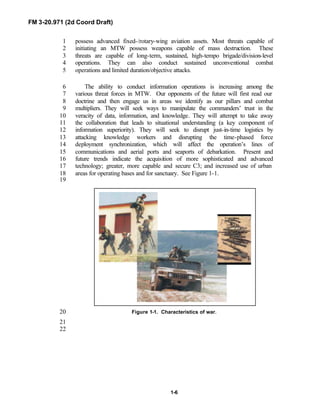
19
Figure 1-1. Characteristics of war.20
21
22
FM 3-20.971 (2d Coord Draft)
1-7
Asymmetric threats seek and
strike weaknesses, attack in
areas in which they are strong,
count on intelligence and
deception, and work the fine
lines of psychological
operations (PSYOPS) and
deception. Asymmetric
operations are nonlinear and
cellular in an organizational
sense. Asymmetric operations
involve information
operations, weapons of mass
destruction, and indirect
attacks against soldiers,
knowledge workers and their
families.
Characteristics of Smaller-Scale Contingencies1
Historically, smaller-scale contingencies3
like those in Panama, Haiti, and Kosovo have5
occurred in regions with weak infrastructure7
(especially roads, rail, bridges), complex9
terrain with large urban areas, and diverse11
weather patterns. Humanitarian issues, such as13
overpopulation; resource shortages; natural15
disasters; and inadequate local, regional, and17
global response capabilities, complicate19
operations in these areas. Threats in these21
environments usually contain mid- to low-end23
industrial-age forces characterized by limited25
heavy forces, mainly equipped with small27
numbers of early generation tanks, and some29
mechanized but mostly motorized infantry.31
There is a pervasive presence of guerilla,33
terrorist, paramilitary, special purpose forces, special police, and militia34
organizations. These forces are equipped with MANPADs, ATGMs, mortars,35
mines, explosives, and machine guns. There are limited fixed- and rotary-36
wing aviation assets. These forces can be expected, however, to have robust37
communications utilizing conventional military devices augmented by38
commercial equipment such as cell phones. Asymmetric warfare is a perfect39
strategy for operating in this environment due to its operations, which are40
nonlinear and cellular in an organizational sense. Asymmetric foes will seek41
and strike weaknesses, attack in areas in which they are strong, count on42
intelligence and deception, en route and in the objective area. Asymmetric43
foes are weaker than US forces and seek off-sets against our military and44
technical prowess by using indirect approaches, attacking or manipulating our45
vulnerabilities, and often making use of low-tech strategies, techniques, and46
procedures to obtain temporary advantages.47
Threats that use an asymmetric strategy include terrorists, Serbian-type48
paramilitary forces, drug gangs, and criminal groups. These groups are not49
capable of long-term, sustained, high-tempo combat operations. They are50
capable of limited duration and limited objective brigade- and division-level51
operations; i.e., destruction of a weaker force, seizure of an area or region, or52
seizure of an urban center, often emphasizing the use of decentralized and53
distributed operations. They are also capable of conducting defensive operations54
in complex and urban terrain. Forces in this environment are adept at conducting55
long-term, sustained, unconventional terrorist and guerrilla operations. Present56
and future trends indicate the presence of more sophisticated and advanced57
technology; greater, more capable, and secure C3; increased use of urban areas as58
sanctuary for conventional capability and as operating bases; and tactics oriented59
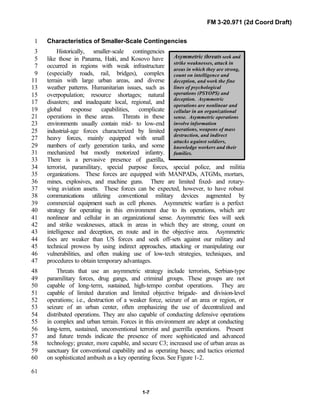
on sophisticated ambush as a key operating focus. See Figure 1-2.60
61
FM 3-20.971 (2d Coord Draft)
1-8
Support operations employ Army
forces to assist civil authorities,
foreign or domestic, as they prepare
for or respond to crisis and relieve
suffering. Domestically, Army forces
respond only when directed by the
National Command Authority. Army
forces operate under the lead federal
agency, and comply with provisions of
US law.
Stability operations promote and
protect US national interests by
influencing the diplomatic, civil, and
military environments. Regional
security is supported by a balanced
approach that enhances regional
stability and economic prosperity
simultaneously. Army force presence
promotes a stable environment.
1
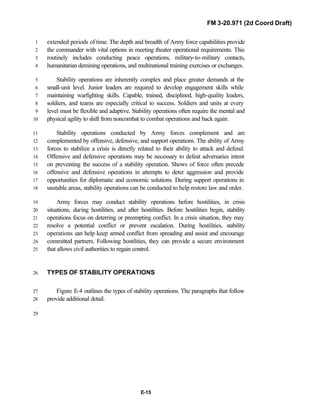
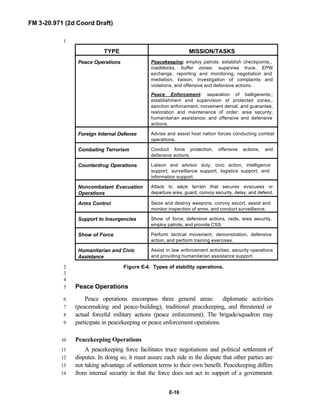
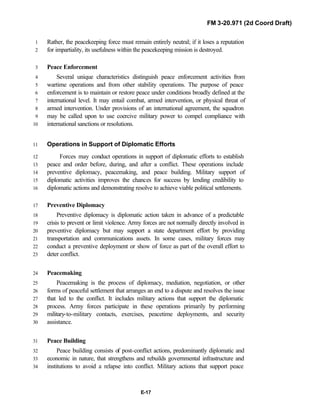
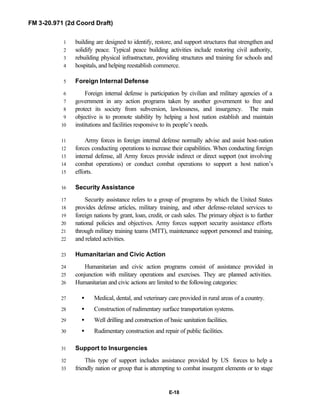
The characteristics of SSC, and to a lesser extent MTW, require the2
execution of stability operations and support operations. The troop’s primary3
responsibility is reconnaissance, but it must be prepared to conduct other4
missions in support of stability operations and support operations (see5
Appendix E).6
It is essential that stability operations not be confused with support7
operations, as these two actions have different and distinct types of missions8
and tasks. While the tasks are unique,9
they are not mutually exclusive and will10
often overlap. The one stability11
operation the brigade will most probably12
perform is peace operations. It is13
probable that many other types of14
stability missions will be integrated into15
peace operations, to include combat16
missions and nontraditional tasks (see17
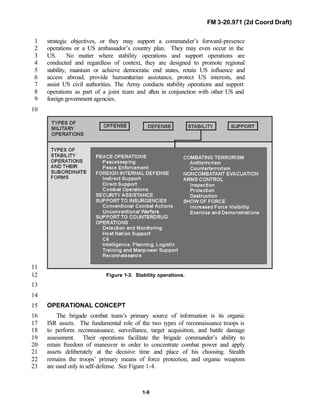
Figure 1-3).18
19
Stability operations and support20
operations may precede and/or follow21
war, or occur simultaneously in the same22
theater. These actions may be conducted23
in conjunction with wartime operations24
to complement the achievement of25
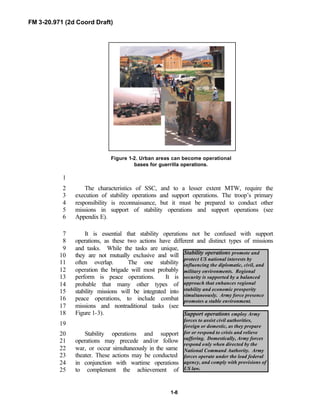
Figure 1-2. Urban areas can become operational
bases for guerrilla operations.
FM 3-20.971 (2d Coord Draft)
1-9
strategic objectives, or they may support a commander’s forward-presence1
operations or a US ambassador’s country plan. They may even occur in the2
US. No matter where stability operations and support operations are3
conducted and regardless of context, they are designed to promote regional4
stability, maintain or achieve democratic end states, retain US influence and5
access abroad, provide humanitarian assistance, protect US interests, and6
assist US civil authorities. The Army conducts stability operations and support7
operations as part of a joint team and often in conjunction with other US and8
foreign government agencies.9
10
11
Figure 1-3. Stability operations.12
13
14
OPERATIONAL CONCEPT15
The brigade combat team’s primary source of information is its organic16
ISR assets. The fundamental role of the two types of reconnaissance troops is17
to perform reconnaissance, surveillance, target acquisition, and battle damage18
assessment. Their operations facilitate the brigade commander’s ability to19
retain freedom of maneuver in order to concentrate combat power and apply20
assets deliberately at the decisive time and place of his choosing. Stealth21
remains the troops’ primary means of force protection, and organic weapons22
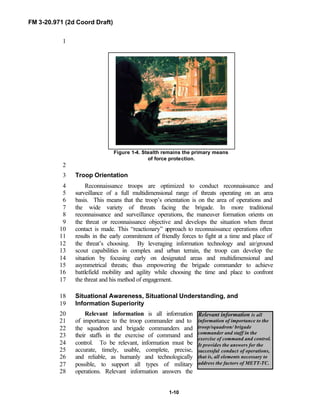
are used only in self-defense. See Figure 1-4.23
FM 3-20.971 (2d Coord Draft)
1-10
Relevant information is all
information of importance to the
troop/squadron/ brigade
commander and staff in the
exercise of command and control.
It provides the answers for the
successful conduct of operations,
that is, all elements necessary to
address the factors of METT-TC.
1
2
Troop Orientation3
Reconnaissance troops are optimized to conduct reconnaissance and4
surveillance of a full multidimensional range of threats operating on an area5
basis. This means that the troop’s orientation is on the area of operations and6
the wide variety of threats facing the brigade. In more traditional7
reconnaissance and surveillance operations, the maneuver formation orients on8
the threat or reconnaissance objective and develops the situation when threat9
contact is made. This “reactionary” approach to reconnaissance operations often10
results in the early commitment of friendly forces to fight at a time and place of11
the threat’s choosing. By leveraging information technology and air/ground12
scout capabilities in complex and urban terrain, the troop can develop the13
situation by focusing early on designated areas and multidimensional and14
asymmetrical threats; thus empowering the brigade commander to achieve15
battlefield mobility and agility while choosing the time and place to confront16
the threat and his method of engagement.17
Situational Awareness, Situational Understanding, and18
Information Superiority19
Relevant information is all information20
of importance to the troop commander and to21
the squadron and brigade commanders and22
their staffs in the exercise of command and23
control. To be relevant, information must be24
accurate, timely, usable, complete, precise,25
and reliable, as humanly and technologically26
possible, to support all types of military27
operations. Relevant information answers the28
Figure 1-4. Stealth remains the primary means
of force protection.
FM 3-20.971 (2d Coord Draft)
1-11
Situational awareness is the ability
to maintain a constant, clear mental
picture of relevant information and
the tactical situation. This picture
includes a knowledge of both the
friendly and threat situations and of
relevant terrain.
questions that dictate the successful execution of military operations. Simply,1
what do I need to know about the threat? What do I need to know about2
friendly forces? What do I need to know about myself? What do I need to3
know about the terrain and weather? Succinctly, what do I need to know for4
command and control? These questions constitute information requirements.5
Information requirements consist of all information elements required by the6
commander for the successful execution of operations; that is, all elements7
necessary to address the factors of METT-TC. Outfitted with Force XXI8
Battle Command Brigade and Below (FBCB2) and given clear information9
requirements, the troop is capable of providing high-quality relevant10
information.11
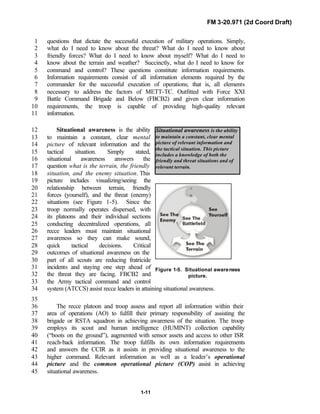
Situational awareness is the ability12
to maintain a constant, clear mental13
picture of relevant information and the14
tactical situation. Simply stated,15
situational awareness answers the16
question what is the terrain, the friendly17
situation, and the enemy situation. This18
picture includes visualizing/seeing the19
relationship between terrain, friendly20
forces (yourself), and the threat (enemy)21
situations (see Figure 1-5). Since the22
troop normally operates dispersed, with23
its platoons and their individual sections24
conducting decentralized operations, all25
recce leaders must maintain situational26
awareness so they can make sound,27
quick tactical decisions. Critical28
outcomes of situational awareness on the29
part of all scouts are reducing fratricide30
incidents and staying one step ahead of31
the threat they are facing. FBCB2 and32
the Army tactical command and control33
system (ATCCS) assist recce leaders in attaining situational awareness.34
35
The recce platoon and troop assess and report all information within their36
area of operations (AO) to fulfill their primary responsibility of assisting the37
brigade or RSTA squadron in achieving awareness of the situation. The troop38
employs its scout and human intelligence (HUMINT) collection capability39
(“boots on the ground”), augmented with sensor assets and access to other ISR40
reach-back information. The troop fulfills its own information requirements41
and answers the CCIR as it assists in providing situational awareness to the42
higher command. Relevant information as well as a leader’s operational43
picture and the common operational picture (COP) assist in achieving44
situational awareness.45
Figure 1-5. Situational awareness
picture.
FM 3-20.971 (2d Coord Draft)
1-12
Situational understanding is the product
of applying analysis and judgments to the
unit’s situation awareness and/or the COP
to determine the relationships among the
factors of METT-TC. Situational
understanding enhances commanders’
decision making by identifying opportunities
for mission accomplishment, threats to the
force or mission accomplishment, and gaps
in information.
An operational picture is a single display of relevant information within a1
commander’s/leader’s area of interest. This information is a display of2
information such as status charts, overlays, and friendly and threat icons. This3
display can be analog (such as a map with acetate overlay) or digital (FBCB24
display). By collaborating, sharing, and tailoring information, separate5
echelons create a common operational picture. A COP is an operational6
picture tailored to the user’s requirements, based on common data and7
information shared by more than one command (troop to platoons,8
brigade/squadron to troop). The troop commander and the brigade/squadron9
commander and his staff merge all relevant information into a COP of the10
commander’s area of interest. The COP allows collaborative interaction and11
real time sharing of information among the commander and his troop12
leadership and the higher commander and his staffs. The COP assists the13
commander in achieving situational awareness; however, it is not a14
requirement. The commander applies his analysis and judgment to his15
situational awareness and the COP to determine the relationships among the16
factors of METT-TC, thereby achieving situational understanding.17
18
Situational awareness based on19
reports (relevant information,20
operational picture, COP) from the21
platoon and the troop and other22
elements are the key components of23
situational understanding at the24
troop, brigade and/or squadron level.25
Situational understanding is the26
product of applying analysis and27
judgments to the unit’s situational28
awareness and/or the COP to determine the relationships among the factors of29
METT-TC. Simply stated, situational understanding answers the question30
what it means. When the commander attains situational understanding, he can31
make sound decisions (see Figure 1-6).32
33
34
35
36
37
38
39
40
41
FM 3-20.971 (2d Coord Draft)
1-13
Information superiority is a
significant information advantage
gained by collecting, processing, and
disseminating an uninterrupted flow
of relevant information in support of
military operations while exploiting or
denying a threat or adversary the
ability to do the same.
1
Figure 1-6. Flow of relevant information into2
situational understanding.3
4
Information superiority is the5
operational advantage derived from the6
ability to collect, process, and disseminate7
an uninterrupted flow of information8
while exploiting or denying an adversary’s9
ability to do the same. Commanders10
exploit information superiority to impact11
threat perceptions, attitudes, decisions,12
and actions to accomplish mission objectives. During the course of13
operations, all sides attempt to gain information superiority to secure an14
operational advantage while denying it to adversaries. (NOTE: See FM 3-015
[FM 100-5] for more information on information superiority.)16
17
Visualizing the Battlefield18
The greatest challenge leaders face during operations is seeing, or more19
accurately, “visualizing” the battlefield in both real time and in the future.20
Normally their physical view is limited to brief segments of the battlefield.21
They must develop an art of visualizing what is occurring or might occur22
within their area of interest. For some, this comes almost naturally. For most,23
however, it requires a great deal of experience to adequately visualize the24
complexities of the battlefield. Enhanced analog and digital communications25
(FBCB2), computers, and command/control (C4) systems in the troop portray26
key relevant threat information so that commanders and staffs can better27
visualize the battlefield and be situationally aware. Not only will these28
FM 3-20.971 (2d Coord Draft)
1-14
systems fuse standard threat information (location, composition, and1
disposition) but also multidimensional aspects—psychological, physical,2
allegiance, intent, underground and above-ground infrastructure—that must3
now be considered. High technology facilitates analysis of this information4
through digital systems and the transmitting and receiving of intelligence5
(vertically and horizontally) rapidly enhances the brigade’s situational6
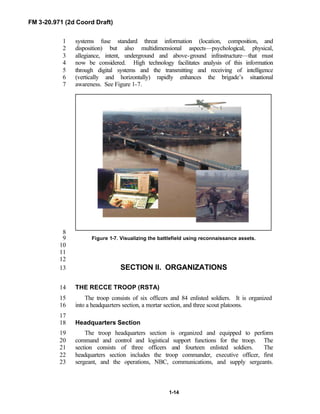
awareness. See Figure 1-7.7
8
Figure 1-7. Visualizing the battlefield using reconnaissance assets.9
10
11
12
SECTION II. ORGANIZATIONS13
THE RECCE TROOP (RSTA)14
The troop consists of six officers and 84 enlisted soldiers. It is organized15
into a headquarters section, a mortar section, and three scout platoons.16
17
Headquarters Section18
The troop headquarters section is organized and equipped to perform19
command and control and logistical support functions for the troop. The20
section consists of three officers and fourteen enlisted soldiers. The21
headquarters section includes the troop commander, executive officer, first22
sergeant, and the operations, NBC, communications, and supply sergeants.23
FM 3-20.971 (2d Coord Draft)
1-15
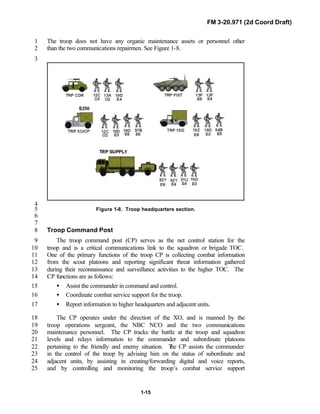
The troop does not have any organic maintenance assets or personnel other1
than the two communications repairmen. See Figure 1-8.2
3
4
Figure 1-8. Troop headquarters section.5
6
7
Troop Command Post8
The troop command post (CP) serves as the net control station for the9
troop and is a critical communications link to the squadron or brigade TOC.10
One of the primary functions of the troop CP is collecting combat information11
from the scout platoons and reporting significant threat information gathered12
during their reconnaissance and surveillance activities to the higher TOC. The13
CP functions are as follows:14
• Assist the commander in command and control.15
• Coordinate combat service support for the troop.16
• Report information to higher headquarters and adjacent units.17
The CP operates under the direction of the XO, and is manned by the18
troop operations sergeant, the NBC NCO and the two communications19
maintenance personnel. The CP tracks the battle at the troop and squadron20
levels and relays information to the commander and subordinate platoons21
pertaining to the friendly and enemy situation. The CP assists the commander22
in the control of the troop by advising him on the status of subordinate and23
adjacent units, by assisting in creating/forwarding digital and voice reports,24
and by controlling and monitoring the troop’s combat service support25
FM 3-20.971 (2d Coord Draft)
1-16
activities. The CP continuously monitors the situational awareness picture to1
alert elements to threat, terrain conditions, or obstacles. The CP coordinates2
and integrates actions with supporting and adjacent units. The primary3
concern when positioning the troop CP is its ability to communicate with the4
controlling unit command post and the subordinate elements of the troop.5
During reconnaissance or offensive operations, the CP should remain at6
least one terrain feature behind the troop combat elements, positioned to7
maintain communications with the platoons and the controlling brigade8
command post (TAC or main). During security or defensive operations, the9
CP should be positioned in sufficient depth to avoid contact with the threat10
while maintaining communications with the forward scout sections.11
NOTE: The previous example portrays the troop CP location in a linear12
environment. For noncontiguous environments, the troop is13
positioned to facilitate command, control, and communications and14
to provide local security. See Appendix G for more detailed15
information on the troop command post.16
17
HUMINT NCO (97B)18
The HUMINT NCOIC is responsible for the training of the HUMINT19
collectors. He advises the reconnaissance troop commander on the optimal20
utilization of the HUMINT collectors. He provides technical support and21
advice to the HUMINT collectors concerning HUMINT collection and22
reporting methodology. He reviews HUMINT reporting for format and23
completeness. He reviews HUMINT collector recommendations, identifying24
sources for further exploitation by the tactical HUMINT platoon of the MI25
Company. During tactical operations, he is located in the troop CP. He acts26
as the troop intelligence oversight NCO and is the troop POC with the S2X for27
technical support to HUMINT collection operations.28
29
The Fire Support Team30
The fire support team (FIST) is responsible for coordinating indirect fires31
for the troop. The FIST consists of one fire support officer (FSO), one NCO32
(team chief), one enlisted fire support specialist, and one enlisted radio33
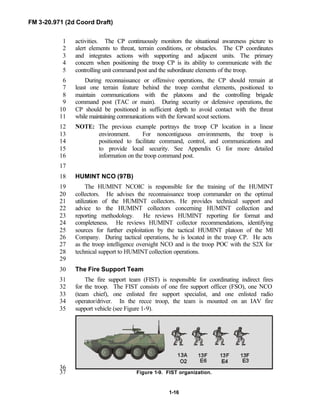
operator/driver. In the recce troop, the team is mounted on an IAV fire34
support vehicle (see Figure 1-9).35
36
Figure 1-9. FIST organization.37
FM 3-20.971 (2d Coord Draft)
1-17
Human Intelligence is the
intelligence derived from the analysis
of information obtained from a human
source or a related document by a
HUMINT collector. The HUMINT
discipline includes those personnel
and organizations directed toward the
collection, processing, analysis, and
production of human intelligence.
Recce Platoon1
The recce platoon’s primary missions are reconnaissance/surveillance,2
execution of security missions, and in some METT-TC conditions, to conduct3
offensive or defensive missions. Serving as the commander’s eyes and ears,4
recce platoons provide current battlefield information to help the troop5
commander plan and conduct tactical operations. They are critical in painting6
the picture of the enemy situation, using both FM and digital communications7
(FBCB2). Additionally, the scouts can be expected to execute target8
acquisition missions and battle damage assessment.9
10
11
The recce platoons are organized and equipped to conduct reconnaissance12
and screening in support of the troop. They may conduct an economy-of-13
force role, or offensive, defensive, and retrograde operations based on METT-14
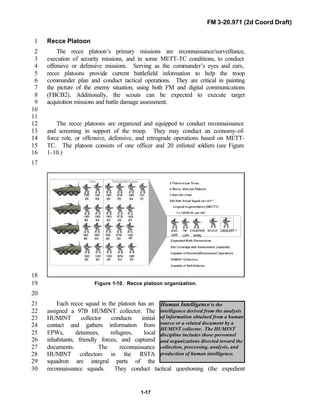
TC. The platoon consists of one officer and 20 enlisted soldiers (see Figure15
1-10.)16
17
18
Figure 1-10. Recce platoon organization.19
20
Each recce squad in the platoon has an21
assigned a 97B HUMINT collector. The22
HUMINT collector conducts initial23
contact and gathers information from24
EPWs, detainees, refugees, local25
inhabitants, friendly forces, and captured26
documents. The reconnaissance27
HUMINT collectors in the RSTA28
squadron are integral parts of the29
reconnaissance squads. They conduct tactical questioning (the expedient30
FM 3-20.971 (2d Coord Draft)
1-18
initial questioning of a HUMINT source directed toward the collection of1
priority tactical information) and limited document exploitation in support of2
the RSTA squadron’s ground reconnaissance mission. They pass their3
collection results through their chain of command in the form of SALUTE4
reports. They do not have the expertise, experience, or organizational support5
to conduct contact operations, nor will they be tasked with conducting6
counterintelligence operations. They will, however, pass source data through7
the HUMINT NCOIC to the S2X to help the S2X identify human sources for8
exploitation by the tactical HUMINT teams of the MI Company.9
10
The recce platoon may operate with attached STRIKER teams, TUAV11
teams, IREMBASS-equipped MI teams, or attached engineer elements. The12
platoon can organize into various configurations, but is usually employed as13
two scout sections, depending on factors of METT-TC.14
15
16
Mortar Section17
The mortar section is organized and equipped to provide immediate18
indirect fires in support of troop operations. Such supporting fires are usually19
suppression, screening, obscuration, or illumination. The section consists of20
10 enlisted soldiers. It is equipped with two 120-mm mortars mounted in two21
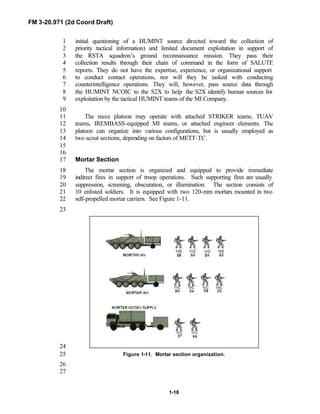
self-propelled mortar carriers. See Figure 1-11.22
23
24
Figure 1-11. Mortar section organization.25
26
27
FM 3-20.971 (2d Coord Draft)
1-19
THE BRIGADE RECONNAISSANCE TROOP1
The BRT consists of four officers and 45 enlisted soldiers. It is organized2
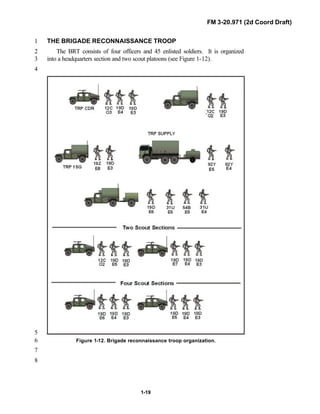
into a headquarters section and two scout platoons (see Figure 1-12).3
4
5
Figure 1-12. Brigade reconnaissance troop organization.6
7
8
FM 3-20.971 (2d Coord Draft)
1-20
Headquarters Section1
The BRT headquarters section is organized and equipped to perform2
command and control and logistical support functions for the BRT. The3
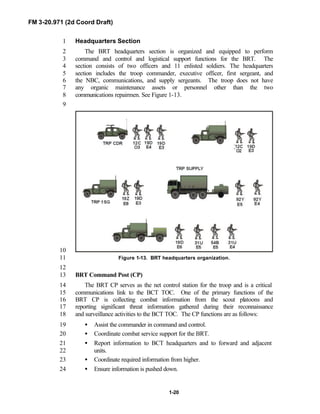
section consists of two officers and 11 enlisted soldiers. The headquarters4
section includes the troop commander, executive officer, first sergeant, and5
the NBC, communications, and supply sergeants. The troop does not have6
any organic maintenance assets or personnel other than the two7
communications repairmen. See Figure 1-13.8
9
10
Figure 1-13. BRT headquarters organization.11
12
BRT Command Post (CP)13
The BRT CP serves as the net control station for the troop and is a critical14
communications link to the BCT TOC. One of the primary functions of the15
BRT CP is collecting combat information from the scout platoons and16
reporting significant threat information gathered during their reconnaissance17
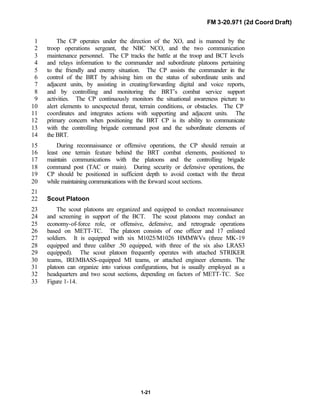
and surveillance activities to the BCT TOC. The CP functions are as follows:18
• Assist the commander in command and control.19
• Coordinate combat service support for the BRT.20
• Report information to BCT headquarters and to forward and adjacent21
units.22
• Coordinate required information from higher.23
• Ensure information is pushed down.24
FM 3-20.971 (2d Coord Draft)
1-21
The CP operates under the direction of the XO, and is manned by the1
troop operations sergeant, the NBC NCO, and the two communication2
maintenance personnel. The CP tracks the battle at the troop and BCT levels3
and relays information to the commander and subordinate platoons pertaining4
to the friendly and enemy situation. The CP assists the commander in the5
control of the BRT by advising him on the status of subordinate units and6
adjacent units, by assisting in creating/forwarding digital and voice reports,7
and by controlling and monitoring the BRT’s combat service support8
activities. The CP continuously monitors the situational awareness picture to9
alert elements to unexpected threat, terrain conditions, or obstacles. The CP10
coordinates and integrates actions with supporting and adjacent units. The11
primary concern when positioning the BRT CP is its ability to communicate12
with the controlling brigade command post and the subordinate elements of13
the BRT.14
During reconnaissance or offensive operations, the CP should remain at15
least one terrain feature behind the BRT combat elements, positioned to16
maintain communications with the platoons and the controlling brigade17
command post (TAC or main). During security or defensive operations, the18
CP should be positioned in sufficient depth to avoid contact with the threat19
while maintaining communications with the forward scout sections.20
21
Scout Platoon22
The scout platoons are organized and equipped to conduct reconnaissance23
and screening in support of the BCT. The scout platoons may conduct an24
economy-of-force role, or offensive, defensive, and retrograde operations25
based on METT-TC. The platoon consists of one officer and 17 enlisted26
soldiers. It is equipped with six M1025/M1026 HMMWVs (three MK-1927
equipped and three caliber .50 equipped, with three of the six also LRAS328
equipped). The scout platoon frequently operates with attached STRIKER29
teams, IREMBASS-equipped MI teams, or attached engineer elements. The30
platoon can organize into various configurations, but is usually employed as a31
headquarters and two scout sections, depending on factors of METT-TC. See32
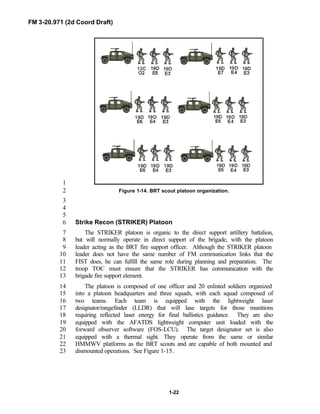
Figure 1-14.33
FM 3-20.971 (2d Coord Draft)
1-22
1
Figure 1-14. BRT scout platoon organization.2
3
4
5
Strike Recon (STRIKER) Platoon6
The STRIKER platoon is organic to the direct support artillery battalion,7
but will normally operate in direct support of the brigade, with the platoon8
leader acting as the BRT fire support officer. Although the STRIKER platoon9
leader does not have the same number of FM communication links that the10
FIST does, he can fulfill the same role during planning and preparation. The11
troop TOC must ensure that the STRIKER has communication with the12
brigade fire support element.13
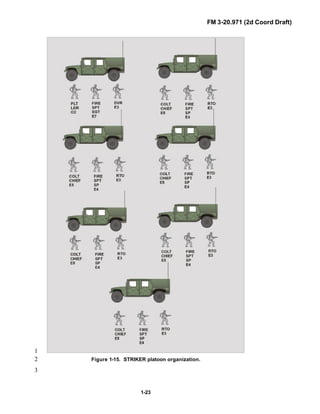
The platoon is composed of one officer and 20 enlisted soldiers organized14
into a platoon headquarters and three squads, with each squad composed of15
two teams. Each team is equipped with the lightweight laser16
designator/rangefinder (LLDR) that will lase targets for those munitions17
requiring reflected laser energy for final ballistics guidance. They are also18
equipped with the AFATDS lightweight computer unit loaded with the19
forward observer software (FOS-LCU). The target designator set is also20
equipped with a thermal sight. They operate from the same or similar21
HMMWV platforms as the BRT scouts and are capable of both mounted and22
dismounted operations. See Figure 1-15.23
FM 3-20.971 (2d Coord Draft)
1-23
1
Figure 1-15. STRIKER platoon organization.2
3
FM 3-20.971 (2d Coord Draft)
1-24
SECTION III. MISSIONS, CAPABILITIES, AND1
LIMITATIONS2
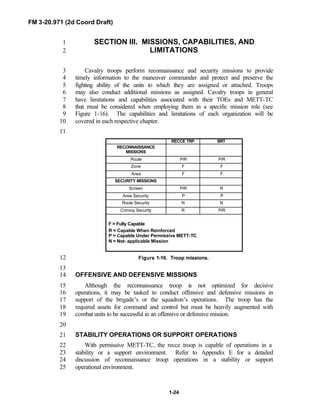
Cavalry troops perform reconnaissance and security missions to provide3
timely information to the maneuver commander and protect and preserve the4
fighting ability of the units to which they are assigned or attached. Troops5
may also conduct additional missions as assigned. Cavalry troops in general6
have limitations and capabilities associated with their TOEs and METT-TC7
that must be considered when employing them in a specific mission role (see8
Figure 1-16). The capabilities and limitations of each organization will be9
covered in each respective chapter.10
11
RECCE TRP BRT
RECONNAISSANCE
MISSIONS
Route P/R P/R
Zone F F
Area F F
SECURITY MISSIONS
Screen P/R R
Area Security P P
Route Security N N
Convoy Security R P/R
F = Fully Capable
R = Capable When Reinforced
P = Capable Under Permissive METT-TC
N = Not- applicable Mission
Figure 1-16. Troop missions.12
13
OFFENSIVE AND DEFENSIVE MISSIONS14
Although the reconnaissance troop is not optimized for decisive15
operations, it may be tasked to conduct offensive and defensive missions in16
support of the brigade’s or the squadron’s operations. The troop has the17
required assets for command and control but must be heavily augmented with18
combat units to be successful in an offensive or defensive mission.19
20
STABILITY OPERATIONS OR SUPPORT OPERATIONS21
With permissive METT-TC, the recce troop is capable of operations in a22
stability or a support environment. Refer to Appendix E for a detailed23
discussion of reconnaissance troop operations in a stability or support24
operational environment.25
FM 3-20.971 (2d Coord Draft)
1-25
SECTION IV. RESPONSIBILITIES1
TROOP COMMANDER2
The troop commander is responsible to his higher commander for the3
discipline, combat readiness, and training of the troop, and for the4
maintenance of its equipment. He must be proficient in the tactical5
employment of the troop and its assigned and attached CSS elements. He must6
also know the capabilities and limitations of the troop’s personnel and7
equipment as well as those of CSS elements attached to him.8
The troop commander’s responsibility in combat is twofold. He will—9
• Accomplish all missions assigned to the troop in accordance with the10
higher commander’s intent.11
• Preserve the fighting capability of the troop.12
13
EXECUTIVE OFFICER14
The troop XO is second in command. He supervises the troop TOC, and15
stays attuned to the tactical situation in the troop’s AO. He receives, verifies,16
and consolidates digital and voice tactical reports from the platoons and17
forwards them to the squadron, adjacent, and following units. When elements18
are in contact and at night when light discipline limits FBCB2 use, the XO19
and personnel in the troop CPs convert FM threat SPOTREPs into digital20
reports to generate the red situational awareness picture. During all operations,21
he monitors the situational awareness picture to warn elements of unexpected22
threat, obstacles, or terrain. Assisted by the troop 1SG and the supply23
sergeant, the XO plans and coordinates CSS operations. The XO assists the24
commander in performing PCI checks, and he should ensure all voice and25
digital communications are properly functioning to support combat26
operations. He assists the commander in planning, integrating, and27
coordinating operations and in the integration of attached or task organized28
elements. The XO must be an expert in IPB. He assists the commander in the29
development and continual management of the IPB for the troop.30
31
FIRST SERGEANT32
The 1SG is the troop’s senior NCO and normally is its most experienced33
soldier. He is an expert in individual and NCO skills. The primary34
responsibility of the troop 1SG is sustaining the troop’s ability to fight. He is35
the commander’s primary tactical advisor. He is the troop’s primary CSS36
operator; he helps the commander to plan, coordinate, and supervise all37
logistical activities that support the tactical mission. He operates where the38
commander directs or where his duties require him.39
FM 3-20.971 (2d Coord Draft)
1-26
The 1SG’s specific duties include the following:1
• Execute and supervise routine operations. This may include enforcing2
the tactical SOP; planning and coordinating training; coordinating and3
reporting personnel and administrative actions; and supervising4
supply, maintenance, communications, and field hygiene operations.5
• Supervise, inspect, and/or observe all matters designated by the6
commander. For example, the 1SG may observe and report on a7
portion of the troop’s sector.8
• Plan, rehearse, and supervise key logistical actions in support of the9
tactical mission. These activities include resupply of Class I, III, and V10
products and materials; maintenance and recovery; medical treatment11
and evacuation; and replacement/RTD processing.12
• Assist and coordinate with the XO in all critical functions.13
• As necessary, serve as quartering party NCOIC.14
• Conduct training and ensure proficiency in individual and NCO skills15
and small-unit collective skills that support the troop’s METL.16
• In conjunction with the commander, establish and maintain the17
foundation for troop discipline.18
TROOP FIRE SUPPORT OFFICER19
The troop fire support officer (FSO) assists the commander in planning,20
coordinating, and executing the troop’s fire support requirements and target21
acquisition tasks (target acquisition tasks are discussed in Chapter 6). During22
operational planning, he develops and refines a fire support plan based on the23
commander’s concept and guidance. He then coordinates the plan with the24
squadron FSO. The troop FSO may control and position the mortars during25
combat operations. The FSO also has these responsibilities:26
• Advise the commander on the capabilities and current status of all27
available fire support assets.28
• Serve as the commander’s primary advisor on the threat’s indirect fire29
capabilities.30
• Assist the commander in developing the OPORD to ensure full31
integration of fires.32
• Recommend targets and fire control measures, and determine methods33
of engagement and responsibility for firing the targets.34
• Determine the specific tasks and instructions required to conduct and35
control the fire plan.36
• Develop an observation plan, with limited visibility contingencies, that37
supports the troop and squadron missions.38
FM 3-20.971 (2d Coord Draft)
1-27
• Brief the fire support plan to the troop commander and the squadron1
FSO.2
• Refine and integrate the troop target worksheet; submit the completed3
worksheet to the squadron fire support element.4
• Assist the commander in incorporating execution of the indirect fire5
and target acquisition plan into each rehearsal. This includes6
integrating indirect fire observers into the rehearsal plan.7
• In tactical situations, alert the commander if a request for fires against8
a target has been denied.9
• In tactical situations, monitor the location and capabilities of friendly10
units and assist the commander in clearance of indirect fires.11
• Request counterbattery support in response to threat artillery and/or12
mortar attacks.13
14
PLATOON LEADER15
The platoon leader is responsible to the troop commander for the16
discipline, combat readiness, and training of the platoon, and for the17
maintenance of its equipment. He must be proficient in the tactical18
employment of the platoon and know the capabilities and limitations of the19
platoon’s personnel and equipment.20
21
The platoon leader’s responsibility in combat is twofold. He must—22
• Accomplish all missions assigned to the platoon in accordance with23
the troop commander’s intent.24
• Preserve the fighting capability of the platoon.25
26
PLATOON SERGEANT27
The platoon sergeant (PSG) leads elements of the platoon as directed by28
the platoon leader, and assumes command of the platoon in his absence. The29
PSG assists the platoon leader in maintaining discipline, conducting training,30
and exercising control. He supervises platoon CSS, which includes supply and31
equipment maintenance.32
33
34
FM 3-20.971 (2d Coord Draft)
1-28
MORTAR SECTION SERGEANT1
The mortar section sergeant is responsible for providing responsive2
indirect fires to support the troop commander’s concept of the operation. He3
is also the principal advisor to the commander and FSO on the tactical4
employment of mortars. He performs the following functions:5
• Recommends task organization, employment techniques, and6
positioning of the mortars to support the scheme of maneuver.7
• Assists in developing the troop fire support plan; determines the best8
type and amount of mortar ammunition to fire, based on the factors of9
METT-TC.10
• Is responsible for training the platoon to ensure technical and tactical11
proficiency and combat lifesaver skills; cross-trains personnel within12
the platoon on key tasks to ensure continuous operations.13
• Selects and reconnoiters new positions and routes for the platoon;14
controls the movements of the section.15
• Keeps abreast of the enemy situation and locations of friendly units to16
ensure the best use of ammunition and the safety of friendly troops.17
• Supervises the execution of orders; ensures that priority targets are18
covered at all times; establishes the amount and type of ammunition19
set aside for priority targets.20
• Coordinates the fires and displacement of the mortar section with the21
action of other units.22
• Anticipates needs and ensures timely ammunition resupply,23
maintenance, and refuel requests are submitted to sustain combat24
operations.25
26
SUPPLY SERGEANT27
The supply sergeant picks up, transports, and issues supplies and28
equipment to the troop. He works closely with the 1SG to accomplish these29
tasks. He also evacuates enemy prisoners of war and assists in the evacuation30
of soldiers who are killed in action to the graves registration collection point.31
32
NUCLEAR, BIOLOGICAL, CHEMICAL (NBC) NCO33
The troop NBC NCO is responsible for troop NBC defense activities. He34
supervises radiological monitoring, chemical detection, and decontamination35
operations. He assists in maintaining NBC equipment and training NBC36
equipment operators and decontamination teams.37
38
FM 3-20.971 (2d Coord Draft)
2-1
Battle command is the exercise of
command in operations against a hostile,
thinking opponent. It combines
leadership and the art and science of
battlefield decision making to
successfully accomplish assigned
missions.
CHAPTER 21
BATTLE COMMAND2
Battle command is the art and3
science of decision making, leading,4
and motivating soldiers and5
organizations into action to6
accomplish missions. Battle command7
entails visualizing the operation, from8
start to finish and formulating a9
concept of operation to get from the10
current state to the desired end state. In addition to visualizing and11
formulating concepts, battle command encompasses assigning missions;12
prioritizing and allocating resources; selecting the critical time and place to13
act; and knowing how and when to make adjustments in the fight. By14
integrating command and control, communications, computer technology, and15
intelligence (C4I), the brigade’s battle command systems enable the16
commander to have accurate and timely information upon which to base his17
decisions.18
The reconnaissance troop supports the brigade’s battle command by—19
• Facilitating the commander’s ability to visualize the operation by20
answering information requirements (IR and CCIR) and providing21
detailed information on the terrain and threat in his AO and AI22
(components of METT-TC).23
• Defining portions of METT-TC to allow the commander to describe24
the operation with his intent and specified tasks to his subordinates.25
• Assisting the commander’s ability to direct forces by facilitating26
situational awareness (SA) and contributing in the brigade’s situational27
understanding (SU).28
29
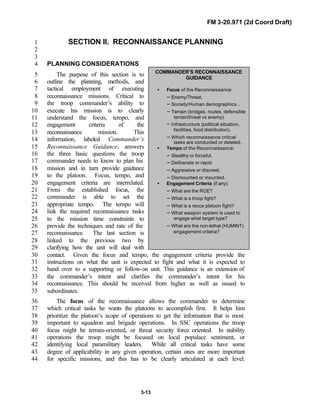
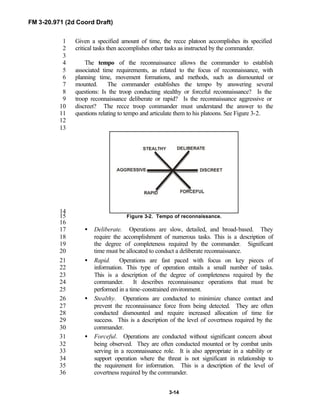
30
CONTENTS31
Page32
SECTION I. Command and Control .................................................... 2-333
SECTION II. Command, Control, Communications, Computers, and34
Intelligence Architectures.............................................. 2-4635
SECTION III. Techniques of Tactical Control........................................ 2-5736
SECTION IV. Command Guidance and Organizational Control............ 2-5737
SECTION V. Tactical Movement .......................................................... 2-6938
39
40
Battle command is the art of decision making and leading on the41
battlefield. It covers the knowledge, techniques, and procedures necessary to42
FM 3-20.971 (2d Coord Draft)
2-2
control operations and to motivate soldiers and their organizations into action1
to accomplish assigned missions. As part of battle command, commanders2
visualize the current state of the battlefield as well as future states at different3
points in the operation; they then formulate concepts of operations that allow4
their units to progress from one state to the other at the least cost. Other5
elements of the battle command process include assigning missions,6
prioritizing and allocating resources, selecting the critical times and places to7
act, and knowing how and when to make adjustments during the fight.8
9
10
Battle command of reconnaissance units is typically decentralized due to11
the size of the area of operation (AO) and the nature of reconnaissance12
missions. The reconnaissance troop is a vital element in developing13
information on the terrain and threat within the brigade’s battlespace, which14
may extend over 65 x 100 kilometers. Operating widely disbursed over15
extended space places the burden of sound, timely decision making at the16
lowest levels. Intensive, challenging training in reconnaissance, reporting,17
and communications techniques is essential for the troop, and ultimately the18
brigade, to be successful.19
20
21
The reconnaissance commander employs a variety of means to prepare for22
operations, issue orders, employ the troop, and communicate. The success of23
this command and control process rests mainly on effective training; thorough24
(and thoroughly understood) SOPs; accurate, timely communications; and,25
most of all, decisive leadership.26
27
28
The advent and continual development of digital systems facilitates battle29
command at all echelons. The troop clearly gains from the digital displays of30
friendly and reported threat forces as well as the navigational aids that Force31
XXI Battle Command Brigade and Below (FBCB2) provides. Continual32
development of FBCB2 will improve the ability of troop personnel to analyze33
terrain, report quickly and accurately, and maneuver over increasingly large34
sectors.35
36
Effective battle command begins in the planning phase and continues37
through the consolidation phase. This chapter outlines the digital tools and38
techniques a troop commander needs to effectively command and control (C2)39
his unit in combat. It also addresses aspects of situational awareness, planning,40
and C2 procedures in a digital environment.41
42
FM 3-20.971 (2d Coord Draft)
2-3
Command and control is the
exercise of authority and direction
by a properly designated
commander over assigned and
attached forces in the
accomplishment of the mission.
SECTION I. COMMAND AND CONTROL1
The command and control (C2) system is2
the arrangement of personnel, information3
management, procedures, equipment, and4
facilities essential to the commander to plan,5
prepare, execute, and assess operations. The6
C2 system supports the commander in three7
ways:8
• Creating and maintaining the common operational picture.9
• Supporting decision making by improving its speed and accuracy.10
• Supporting preparation and communication of execution of11
information.12
A commander cannot exercise command and control alone except in the13
simplest and smallest organizations. Even at the lowest levels, however, a14
commander needs some support to exercise C2 effectively. At the troop level,15
the C2 system—integrating key personnel, FBCB2, FM communications,16
doctrinal procedures, and unit SOPs—provides that support.17
DISTRIBUTION OF COMMAND AND CONTROL18
Troop Commander19
20
The commander is responsible for everything the troop does, or fails to do.21
His responsibilities include leadership, discipline, tactical employment,22
training, administration, personnel management, supply, maintenance,23
communications, and sustainment activities. These duties require the24
commander to understand the capabilities of his soldiers and their equipment25
and to know how to employ them to best tactical advantage. At the same time,26
he must be well versed in enemy organizations, doctrine, and equipment.27
28
Using this knowledge, the commander prepares his unit for combat29
operations using troop-leading procedures. Ultimately, he must know how to30
exercise command effectively and decisively. He must be flexible, using31
sound judgment to make correct decisions quickly and at the right time based32
on the higher commander’s intent and the tactical situation. He must be able to33
issue instructions to his subordinate leaders in the form of clear, accurate34
combat orders; he then must ensure that the orders are executed.35
36
37
FM 3-20.971 (2d Coord Draft)
2-4
The troop commander’s responsibilities in the tactical environment are—1
• Serving as the subject matter expert in reconnaissance and security2
fundamentals and critical tasks.3
• Planning and executing fires to support the troop’s missions.4
• Synchronizing operations with adjacent units and supporting units.5
• Synchronizing and planning the use of additional ISR assets (TUAV,6
IREMBASS, GSR, PROPHET, CI, etc).7
• Understanding brigade combat team (BCT) doctrine.8
• Synchronizing and planning the use of additional combat arms assets9
(infantry platoon, MGS platoon, tank or mechanized platoon).10
• Accomplishing all missions assigned to the troop in accordance with11
the higher commander’s intent and scheme of maneuver.12
• Preserving the reconnaissance capability of the troop.13
Executive Officer14
15
In combat, the troop executive officer (XO) is second in command. He16
supervises the troop command post (CP), where he stays abreast of the tactical17
situation in the troop’s area of operations (AO). He manages the flow of18
combat information, both FM and digital, between the troop and the higher19
unit from the troop CP.20
21
The XO’s other duties are:22
• Ensure accurate, timely tactical reports are sent to the23
brigade/squadron.24
• Assume command of the troop, as required.25
• In conjunction with the 1SG, plan and supervise the troop’s CSS effort26
prior to the battle.27
• Assist in preparation of the OPORD, especially paragraph 4 (service28
support).29
• Conduct tactical coordination with higher, adjacent, and supporting30
units.31
• As required, assist the commander in issuing orders to the troop32
headquarters and attachments.33
• Conduct additional missions, as required. These may include serving34
as OIC for a quartering party or as the leader of the detachment left in35
contact (DLIC) in a withdrawal.36
• Assist the commander in preparations for follow-on missions.37
FM 3-20.971 (2d Coord Draft)
2-5
Troop Command Post1
The troop CP serves as the net control station for the troop and is a critical2
communications link to the squadron or brigade TOC. One of the primary3
functions of the troop CP is collecting combat information from the scout4
platoons and reporting significant threat information gathered during their5
reconnaissance and surveillance activities to the higher TOC. The CP6
functions are as follows:7
• Assist the commander in command and control.8
• Coordinate combat service support for the troop.9
• Report information to higher headquarters and adjacent units.10
NOTE: Refer to Appendix G, Command Post Operations, for more detailed11
discussion.12
First Sergeant13
The primary responsibility of the troop 1SG is sustaining the troop’s14
ability to conduct continued operations. He supervises the procurement and15
distribution of—16
• All classes of supplies.17
• Personnel replacements.18
• Actions of the maintenance section, to include recovery and19
evacuation of damaged combat equipment.20
• Medical, KIA, and EPW evacuation.21
22
Using the FBCB2 system, he consolidates the platoon’s logistical status23
(LOGSTAT) and personnel status (PERSTAT) reports and digitally sends24
them to the squadron S4/S1. He assists the troop commander and XO in C225
and digital reporting.26
Reconnaissance Platoon Leader27
The platoon leader is responsible to the troop commander for the28
discipline and combat readiness of the platoon. He must be proficient in the29
use of his digital equipment and tactical employment of the platoon. He must30
know the capabilities and limitations of the platoon’s personnel and31
equipment. He must remain cognizant of all attached elements operating in32
his sector of responsibility, and continually update plans for their security and33
logistical support as required. The platoon leader’s responsibilities in combat34
are—35
• To accomplish all missions assigned to the platoon in accordance with36
the troop commander’s intent.37
FM 3-20.971 (2d Coord Draft)
2-6
• To preserve the reconnaissance capability of the platoon, and inform1
the commander and XO of the tactical situation via FM and digitized2
contact and spot reports.3
• To lead an integrated scout/STRIKER platoon in executing both fire4
support and R&S missions.5
Reconnaissance Platoon Sergeant6
The platoon sergeant is the senior NCO in the platoon. He leads elements7
of the platoon as directed by the platoon leader and assumes command of the8
platoon in the platoon leader’s absence. He assists the platoon leader in9
maintaining discipline and exercising control. He supervises platoon CSS, to10
include supply requirements and equipment maintenance, and monitors the11
platoon’s logistics status and submits FBCB2 LOGSTAT reports.12
Fire Support Team13
The fire support team (FIST) is the critical link with the supporting14
artillery and is responsible for coordinating indirect fires (mortar, field15
artillery [FA], close air support [CAS]) for the troop. The team processes16
calls for fire from the platoons and allocates the appropriate indirect-fire17
system based on the commander’s guidance for fire support. The FIST can18
also assist the brigade/squadron with the employment of joint fires.19
NOTE: In the brigade reconnaissance troop (BRT), the STRIKER platoon20
leader may fill the role of the FIST.21
The FIST operates on three radio nets:22
• Troop command.23
• Troop fire direction.24
• Squadron fire support element digital/voice.25
26
The FIST monitors at least one of the following nets:27
• Squadron command.28
• Squadron operations and intelligence (OI).29
• Firing battery (supporting artillery headquarters in the heavy and light30
division).31
32
The fire support team vehicle also may serve as the alternate troop CP.33
The fire support officer has ready access to the higher-level situation and the34
radio systems to replicate the troop CP if it becomes damaged or destroyed.35
36
Command guidance to the FIST should include the following:37
• Purpose of indirect fires. How does the commander intend to use FA38
and mortar fires to support his maneuver?39
FM 3-20.971 (2d Coord Draft)
2-7
− Screening.1
− Suppression.2
− Disengagement.3
• Engagement/attack criteria. How many rounds and of what type and4
mix will be fired at a particular target? Which targets will be engaged5
with artillery and which with mortars?6
• Control of troop mortars. If the FIST controls movement of troop7
mortars, how far forward of the scouts will the mortars be able to8
range? Where are the mortars going to move? When are the mortars9
going to move?10
The primary considerations when positioning the FIST are security of the11
team and the ability to communicate with the squadron fire support element,12
howitzer battery, or direct support artillery. The FIST is not the forward13
observer team for the troop; the troop has 19Ds that act as forward observers.14
The five techniques to maneuvering the FIST are—15
• Maneuvers with the commander.16
• Maneuvers with or near the mortar section.17
• Maneuvers with the troop CP.18
• Maneuvers alone to maintain communications.19
• Maneuvers with the scouts to directly control fires or to use the ground20
laser designator (GLD).21
See Chapter 6 for a more in-depth discussion of troop fire support C222
techniques.23
Mortar Section Sergeant (Recce Troop Only)24
The mortar section sergeant is responsible for providing responsive25
indirect fires to support the commander’s concept of the operation. The26
section sergeant assists the troop commander in indirect mortar fire planning.27
He assists in establishing movement control, triggers for movement, triggers28
for shifting targets, and mortar caches. As a rule of thumb the section29
maintains two-thirds maximum range of mortar fire forward of the30
reconnaissance elements. The section sergeant is charged with maintaining31
discipline, conducting training, and exercising control over his mortar section.32
He supervises the section’s CSS, which includes supply and equipment33
maintenance.34
Supply Sergeant35
Working closely with the 1SG, the supply sergeant assumes responsibility36
for troop logistical support. Using his position navigation capability and37
FM 3-20.971 (2d Coord Draft)
2-8
established checkpoint data, he leads the LOGPAC to the linkup point, or if1
the situation dictates, moves it forward to the supported unit’s location. He2
also evacuates EPWs and assists in the evacuation of soldiers killed in action3
to the mortuary affairs collection point.4
Communications Sergeant5
The communications sergeant assists in all aspects of tactical6
communications. He locates with the XO or 1SG per SOP and may operate7
the troop net control station (NCS). He receives and distributes signal8
operating instructions (SOI) and COMSEC encryption keys. He ensures the9
troop receives the appropriate database for FBCB2, SINCGARS-SIP, EPLRS,10
very high-speed integrated circuit (VHSIC), and other systems operating on11
the tactical internet. He ensures operators are properly trained in initialization12
and re-initialization of the systems and maintains the troop addressing and13
routing schemes. He troubleshoots troop digital communications equipment14
and ensures that necessary repairs are completed.15
Nuclear, Biological, Chemical Sergeant16
The troop NBC sergeant is responsible for troop NBC defense activities.17
He supervises radiological monitoring, chemical detection, and18
decontamination operations. He assists in maintaining NBC equipment and19
training NBC equipment operators and decontamination teams. He operates20
from the troop CP and assists the XO in executing C2 operations. He is the21
NBC expert and advises the commander in the employment of the NBC22
reconnaissance section/platoon troop, if augmented with this asset.23
Troop HUMINT NCO (Recce Troop only)24
The troop HUMINT collection NCO advises the troop commander on25
HUMINT collection operations, provides assessment and quality control of26
HUMINT collection and source spotting, and ensures that HUMINT training27
is conducted to standard. He operates from the troop CP and assists the XO in28
executing C2 operations. (See Chapter 6, Section I, for more information on29
HUMINT collection personnel.)30
COMMAND AND CONTROL PROCEDURES31
32
Whether a unit is digital or analog, command and control procedures33
provide effective guidelines for planning and preparing a unit for operations.34
Techniques for utilizing digital systems to aid in the execution of these35
procedures are included.36
37
38
FM 3-20.971 (2d Coord Draft)
2-9
Mission-Oriented Command and Control1
This method of directing military operations encourages and assists2
subordinates in taking action consistent with the intent and concept of higher3
headquarters. Mission-oriented command and control requires a clear4
understanding by subordinate elements of the unit purpose; at the same time,5
it provides them with the freedom to react to enemy actions without further6
guidance. The following paragraphs outline the underlying principles of this7
type of command and control.8
9
Expect Uncertainty. The commander must understand the environment10
of combat. The operation will be dynamic and the enemy uncooperative.11
Communications may be degraded, and the chaos of battle may prevent the12
commander from knowing what is happening beyond the reach of his own13
senses. The situation the unit anticipates during the planning phase will14
inevitably change before and during execution.15
16
Reduce Leader Intervention. When soldiers expect the commander to17
make every decision or initiate every action, they may become reluctant to act.18
To counter this tendency, the commander must plan and direct operations in a19
manner that requires a minimum of intervention. He operates on the principle20
that some loss of precision is better than inactivity.21
22
The commander still must be prepared to provide subordinates with the23
criteria and guidance for making decisions when precise control is required24
for synchronization. During the planning process, he should identify those25
few critical decisions that will absolutely be required during the operation and26
then determine the criteria for initiation of actions associated with these27
decisions. Examples include the use of engagement criteria, bypass criteria,28
and disengagement criteria. The commander then disseminates the decision29
criteria throughout the troop.30
31
NOTE: The commander must keep in mind that changing conditions and32
unexpected situations will require him to make decisions33
continuously once the operation begins. His preparations related to34
critical decisions will allow him, and his subordinates, to react more35
effectively when changes become necessary.36
37
Optimize Planning Time for Subordinates. The commander must38
ensure that the timelines he develops for mission planning and preparation39
provide adequate troop-leading time for the subordinate elements. An40
effective way to optimize the use of the available time, no matter how short, is41
to conduct training of the troop orders process under tough, realistic42
conditions at every available opportunity.43
44
Allow Maximum Freedom of Action for Subordinates. Given the45
expected battlefield conditions, leaders at every level must avoid placing46
FM 3-20.971 (2d Coord Draft)
2-10
unnecessary limits on their soldiers’ freedom of action. The leader at the1
point of decision must have the knowledge, training, and freedom necessary to2
make the correct choice in support of the commander’s intent. This concept3
must be emphasized at every opportunity at every level of leadership.4
Soldiers win battles; their leaders can only place them in a position where they5
are able to seize the opportunity to do so. Subordinates will be successful on6
the battlefield only if their commanders and leaders have fostered the7
necessary confidence and initiative before the battle begins.8
9
Encourage Cross-Talk. Subordinate leaders do not always require10
guidance from the commander to address a change in the situation. In some11
instances, because of their position on the battlefield, two or more12
subordinates, working together, may have the clearest view of what is13
happening and may be better suited than the commander to develop a tactical14
solution. This type of problem solving, involving direct coordination between15
subordinate elements, is critical to mission-oriented command and control. In16
addition to its obvious impact on mission accomplishment, it empowers17
subordinates to take decisive action and teaches them the value of close18
cooperation in achieving the unit’s overall purpose.19
20
Command and Lead Well Forward. The commander positions himself21
where he can best command his troop and make critical decisions to influence22
the outcome of the mission. This position is normally with the main effort to23
allow the commander to exert his leadership and to shift or retask the main24
effort as necessary. He must be far enough forward to “see” the battlefield25
using all available resources; these assets include not only visual observation26
but also radio reports and, in digitized units, information provided over digital27
systems.28
29
Plans and Orders30
31
Plans are the basis for any mission. The troop commander develops his32
concept of the operation summarizing how best to accomplish his mission33
within the scope of the commanders’ intents (two levels up). The troop34
commander uses troop-leading procedures to turn the concept into a fully35
developed plan and to prepare a concise, accurate OPORD. He assigns36
additional tasks (and outlines their purpose) for subordinate elements,37
allocates available resources, and establishes priorities to make the concept38
work.39
40
The following discussion, covering important aspects of orders41
development, serves as an introduction to the discussion of troop-leading42
procedures. The first portion focuses on the mission statement and the43
commander’s intent, which provide the doctrinal foundation for the OPORD.44
Also included are basic discussions of the three types of orders (warning45
FM 3-20.971 (2d Coord Draft)
2-11
orders, OPORDs, and FRAGOs) used by the commander. It is important for1
the troop commander to have a thorough understanding of these elements2
because they are the building blocks for everything else that he does during3
the troop-leading process.4
5
Mission Statement6
7
The commander uses the mission statement to summarize the upcoming8
operation. This brief paragraph (sometimes a single sentence) describes the9
form of operation, the unit’s task and purpose, the actions to be taken, and the10
reasons for these actions. It is written in a format based on the five “Ws”: who11
(unit), what (tasks), when (date-time group), where (grid12
location/geographical reference for the area of operations and/or objective),13
and why (purpose). The commander must ensure that the mission is14
thoroughly understood by all leaders and soldiers two echelons below (section15
or squad). The following paragraphs cover considerations that apply in16
development of the mission statement.17
18
Tactical tasks are specific activities performed by the unit while it is19
conducting a form of tactical operation or a choice of maneuver. (NOTE: The20
title of each task can also be used as an action verb in the unit’s mission21
statement to describe actions during the operation.) Normally, a commander22
will assign one mission-essential task to each subordinate unit. Tasks should23
be definable, attainable, and measurable. Critical tasks that require specific24
tactics, techniques, and procedures (TTP) for the troop are covered in detail25
throughout this publication.26
27
A simple, clearly stated purpose improves understanding of the28
commander’s intent. It will also assist subordinate leaders in adjusting their29
tasks during execution of the mission, allowing them to stay within the30
parameters of the higher commander’s intent. The purpose should tell the31
subordinates why the troop is conducting the mission and how the team will32
operate with or provide support for other units.33
34
The commander has several options as to where in the OPORD he outlines35
his subordinates’ mission-essential tasks and purpose. His overriding36
consideration is that placement of the mission statement should assist37
subordinate leaders in understanding exactly each of the five “W” elements.38
39
Commander’s Intent40
41
The commander’s intent is a clear, concise statement of what the troop42
must do to succeed in relation to the enemy, the terrain, and the desired end43
state. It provides the link between the mission statement and the concept of the44
operation by stating the key tasks that, along with the mission, are the basis45
FM 3-20.971 (2d Coord Draft)
2-12
for subordinates to exercise initiative when unanticipated opportunities arise1
or when the original concept of the operation no longer applies. The2
commander can also use the intent statement to explain a broader purpose for3
the operation beyond that outlined in the mission statement. The intent, which4
is mandatory in all orders, may be expressed in several “bullets” or in5
complete sentences. As with the mission, the commander must ensure that the6
intent statement is thoroughly understood by all leaders and soldiers two7
echelons below (section or squad). The following paragraphs focus on8
considerations that apply in development and presentation of the intent9
statement.10
11
The purpose of the intent at the troop level is to provide vehicle12
commanders and squad leaders with a summary of the most important details13
of what the troop is supposed to achieve during the operation. The intent14
statement must be developed and presented so they can remember this critical15
information, recognize specific situations while in contact on the battlefield,16
and act in accordance with the commander’s intent to achieve the desired end17
state.18
19
The focus of the intent is on the troop’s key tasks during the operation.20
Key tasks are those that the troop must perform to achieve the stated purpose21
of the operation, as outlined in paragraph 2 of the OPORD; they may also22
specify conditions that must be met for mission accomplishment. Key tasks23
are not tied to a specific course of action (COA); rather, they identify actions24
or conditions that are fundamental to the unit’s success. In the ever-changing25
operational environment, such as when significant opportunities present26
themselves or when the original concept or COA does not apply, subordinate27
elements use these tasks to ensure their efforts continue to support the28
commander’s intent. Examples of critical areas that key tasks may cover29
include the tempo of the operation, the desired effect of fires on the enemy,30
and areas that must be observed.31
32
At the same time, the intent statement does not specify the technique or33
method by which the unit will achieve the commander’s projected end state;34
the method is covered in the concept of the operation. Nor does the intent35
cover “acceptable risk”; risk factors are part of the commander’s guidance and36
are addressed in the evaluation of all COAs for the operation. In addition, the37
purpose addressed in the intent is not merely a restatement of the why38
(purpose) from the mission statement, which focuses on the troop’s immediate39
operation. Instead, the commander uses the intent to examine the broader40
operational context of the troop and higher missions.41
42
Combat Orders43
44
Combat orders are the means by which the troop commander receives and45
transmits information, from the earliest notification that an operation will46
FM 3-20.971 (2d Coord Draft)
2-13
occur through the final phases of execution. These basic tools are absolutely1
critical to mission success. In a tactical situation, the commander will receive2
the troop’s mission from higher in the form of written or digital (sent on3
FBCB2) operation order (OPORD) and fragmentary order (FRAGO). The4
troop commander and subordinate leaders will work with combat orders on a5
daily basis; obviously, they must have precise knowledge of the correct format6
for each type. At the same time, they must ensure that every soldier in the7
troop understands how to receive and respond to the various types of orders.8
Because of these requirements, the commander must take every opportunity to9
train the troop in the use of combat orders. The skills associated with orders10
development and dissemination are highly perishable; they can be lost without11
constant, realistic practice.12
13
Warning Orders (WO). During the planning phase of an operation,14
commanders use warning orders as a shorthand method of alerting their15
subordinate leaders. Warning orders also initiate the commander’s most16
valuable time management tool, the parallel planning process. The troop17
commander usually sends a series of warning orders to his subordinate leaders18
to help them prepare for new missions. The directions and guidelines in the19
warning order allow subordinates to begin their own planning and preparation20
activities.21
22
The content of warning orders is based on two major variables:23
information about the upcoming operation that is available to the troop from24
the brigade/squadron and what the troop commander ultimately wants to25
achieve by issuing the warning order (what he wants his subordinates to do26
with the information). The commander normally issues his warning orders27
either as he receives additional orders from the task force or as he completes28
his own analysis of the situation.29
30
In addition to alerting the unit to the upcoming operation, warning orders31
allow the commander to put out tactical information incrementally and,32
ultimately, to shorten the length of the actual OPORD. In the example shown33
in Figure 2-1, the commander uses three warning orders to issue information34
that otherwise would make up paragraphs 1 and 2 and most of paragraph 3 in35
the OPORD. As a result, when he issues the OPORD, he can simply review36
previously issued information or brief the changes or earlier omissions. He37
will then have more time to concentrate on visualizing his concept of the fight38
for his subordinates.39
40
Figure 2-1 summarizes an example of how the troop commander might41
use a series of warning orders both to alert the troop to an upcoming operation42
and to provide tactical information and initial planning guidance. The left-43
hand column lists actions the commander takes before issuing each of the44
three warning orders in the example. The center column describes specific45
FM 3-20.971 (2d Coord Draft)
2-14
elements included in each warning order, with the right-hand column1
outlining the commander’s purpose for each order.2
3
NOTE: The numbering system used in the Figure 2-1 (WO #1, #2, and #3)4
recurs in the discussion of troop-leading procedures to explain how5
warning orders are used at various phases of the troop-leading6
process.7
8
TROOP
COMMANDER’S
ACTION
POSSIBLE CONTENT OF
WARNING ORDER
COMMANDER’S
PURPOSE
Receive the
brigade/squadron
warning order
Warning order #1 covers
the following:
• Security plan.
• Movement plan.
• Task organization.
• Tentative timeline.
• Standard drills to
be rehearsed.
• Prepare platoons
for movement to
the tactical
assembly area.
• Obtain map sheets.
• Specify troop task
organization.
Conduct METT-TC
analysis
Warning order #2 covers
the following:
• Friendly situation.
• Enemy situation.
• Terrain analysis.
• Troop mission.
• Initiate platoon-
level mission
analysis.
• Initiate generic
rehearsals (drill-
and task-related).
• Prepare for combat.
Develop and analyze
COAs
Warning order #3 covers
the following:
• Commander’s
intent.
• Concept of the
operation.
• COA
analysis/selection.
• Concept of fires.
• Subordinate unit
tasks and
purposes.
• R&S guidance.
• Updated SITEMP/
draft graphics.
• Initiate platoon-
level COA
development.
• Identify platoon-
level
reconnaissance
requirements.
• Direct leader’s
reconnaissance.
• Prepare for combat.
Figure 2-1. Commander’s use of multiple warning orders.9
FM 3-20.971 (2d Coord Draft)
2-15
Operation Order (OPORD). When time and information are available,1
the troop commander will normally issue a complete OPORD as part of his2
troop-leading procedures. As noted, he does not need to repeat information3
covered previously in his warning orders. The commander may also issue an4
execution matrix, either to supplement the OPORD or as a tool to aid in the5
execution of the mission; however, the matrix order does not replace a five-6
paragraph OPORD.7
8
Fragmentary Order (FRAGO). The FRAGO is a brief oral or written9
order that can serve any of the following purposes:10
• Implement timely changes to existing orders.11
• Provide pertinent extracts from more detailed orders.12
• Provide instructions until a detailed order is developed.13
• Provide specific instructions to subordinates who do not require a14
complete order.15
A written FRAGO follows the five-paragraph OPORD structure; however,16
it includes only the information required for subordinates to accomplish their17
mission. To enhance understanding of voice FRAGOs, digitally equipped18
units can quickly develop hasty graphics and transmit digital overlays.19
20
During the execution of an operation, FRAGOs are the medium of battle21
command. The troop commander uses them to communicate changes in the22
enemy or friendly situation and to retask his subordinate elements based on23
changes in the situation (see Figure 2-2). The FRAGO normally includes the24
following information:25
• Updated enemy or friendly situation.26
• Changes to troop or platoon tasks and/or purposes.27
• Changes to the scheme of maneuver.28
• Specific instructions as necessary.29
30
31
FM 3-20.971 (2d Coord Draft)
2-16
1
TYPE/PURPOSE
OF ORDER
RADIO TRANSMISSION
Alert “GUIDONS, THIS IS BLACK 6; FRAGO FOLLOWS.”
Situation “J-STARS REPORTS, “TEN BMPs, AND SUPPORTING
VEHICLES VICINITY CP 17, MOVING EAST TOWARD CP
11.”
Mission “WE WILL CONTINUE TO SCREEN AND GAIN CONTACT
WITH THE ENEMY VICINITY CP 17 AND CONDUCT A
SECURITY DRILL FROM PL BLUE TO PL RED AND THE
TASK FORCE WHICH IS MOVING TO OUR SOUTH.”
Intent “I WANT FA FIRES TO INITIALLY INTERDICT AND
HARRASS THE ENEMY’S MOVEMENT VIC OF NAI 5.”
“I WANT TO MAINTAIN CONTACT WITH RED AND I WANT
WHITE TO ASSIST THE XO IN CONDUCTING RECON
HAND OVER WITH THE TASK FORCE SCOUTS.”
“I THEN WANT THE STRIKERS TO ASSIST IN THE
DESTUCTION OF THE ENEMY BY ATTACKING HIM WITH
PRECISION FIRES.”
Tasks to
subordinate units
“RED AND WHITE, CONDUCT SECURITY DRILLS IOT
MAINTAIN CONTACT AND REPOSITION IN SECTOR.”
“RED, FIRE TAI 5 ONCE TARGET HITS TRIGGER.”
“WHITE SET SUBSEQUENT POSITIONS ALONG PL
GREEN ASSUME CONTACTS FOR RED.”
“BLACK 5, CONDUCT INITIAL RECON HAND OVER
COORDINATION, PLAN TO RPOL ON LANES TIN AND
COPPER.”
“REDLEG, MOVE TO A POSITION VICINITY CP 8 FROM
WHICH TO DESIGNATE FIRES TO ASSIST THE TASK
FORCE.”
Coordinating
instructions
“I WANT TO INITIATE FIRES WHEN FIVE OR SIX
VEHICLES HAVE CROSSED PL ABRAMS.”
“BEGIN THE SECURITY DRILL WHEN ENEMY IS AT CP 17
OR IF THE ENEMY BEGINS MOVEMENT SOUTH TOWARD
CP 10.”
CSS “TROOP TRAINS MOVE TO CP 4.”
Command and
signal
“I WILL BE WITH RED.”
Acknowledgment “ACKNOWLEDGE. OVER.”
Figure 2-2. Example troop FRAGO.2
3
FM 3-20.971 (2d Coord Draft)
2-17
Troop-leading Procedures1
2
Troop-leading procedures are the basis of the dynamic process (see Figure3
2-3) by which units develop plans and orders at every level of leadership. The4
process, although discussed here with the eight steps in traditional order, is not5
rigid, and the steps are not necessarily sequential. The tasks involved in some6
steps (such as initiate movement, issue the warning order, and conduct7
reconnaissance) may recur several times during the process. Although listed8
as the last step, activities associated with supervising and refining the plan and9
other preparations occur throughout troop leading. Conversely, in some10
situations, time constraints and other factors may prevent leaders from11
conducting steps as thoroughly as they would like.12
13
Regardless of the time available, leaders must always remember this14
principle: “See the terrain, see the enemy, see yourself.” Only after they view15
and evaluate the terrain and the enemy can they determine what their own16
actions should be in that given situation. They update this visualization17
continuously throughout the troop-leading process, basing this new “picture”18
of the battlefield on their own refinements to the plan, additional information19
from the task force and other sources, or developments in the reconnaissance20
and security fight.21
22
Troop-leading procedures begin when the leader receives the first23
indication of an upcoming operation (often a warning order from higher24
headquarters) and continue throughout the planning, preparation, and25
execution phases of the mission. Starting as the first bit of information26
becomes available allows the leader to maximize the available planning time.27
28
The warning order is the most important time-management tool the29
commander has and is also his most effective means of delegating30
responsibility. In addition, by immediately passing information to subordinate31
leaders through the use of warning orders, he can ensure that they develop32
their plans concurrently with his. Under no circumstances should leaders33
delay the start of the troop-leading process, even if initial information is34
incomplete or vague.35
36
NOTE: The following discussion provides a step-by-step overview of troop-37
leading procedures. Figure 2-3 illustrates the process, along with38
some of the considerations and procedures involved in the eight39
steps.40
41
42
FM 3-20.971 (2d Coord Draft)
2-18
1
Figure 2-3. Troop-leading procedures and the military decision-making2
process.3
4
5
Step 1 - Receive and Analyze the Mission6
7
This step normally begins with the receipt of an initial warning, although8
it may begin when the commander receives the OPORD. If he receives an9
OPORD, he will normally be required to give a confirmation brief to his10
commander to ensure that he understands the higher commander’s concept of11
the operation and his intent for the troop. The troop commander must also, as12
necessary, obtain clarification of the information from the higher headquarters13
and conduct initial coordination with other units.14
15
FM 3-20.971 (2d Coord Draft)
2-19
Collect Initial Information. Although mission analysis is continuously1
refined throughout the troop-leading process, the troop commander’s initial2
analysis is normally based only on the initial warning order. During this step,3
the commander conducts his initial METT-TC analysis, collecting information4
about the terrain and the friendly and enemy situations. Additionally, he5
conducts his initial time analysis, develops his initial security plan, and issues6
an initial warning order to provide guidance and planning focus for his7
subordinates.8
9
NOTE: The initial analysis is normally conducted as quickly as possible to10
allow the commander to issue the initial warning order in a timely11
manner. He then conducts a more detailed METT-TC analysis after12
the initial warning order is put out.13
14
Issue the Initial Warning Order (Warning Order #1). The step begins15
with the commander and his subordinate leaders gathering information about16
enemy and friendly forces, terrain, and weather as they prepare to receive the17
brigade/squadron plan. They should focus on available information of all18
types: details provided in the warning order; terrain and weather data; their19
knowledge of the enemy’s doctrine. As the brigade/squadron develops its20
plans, the troop commander remains proactive, contacting the TOC to obtain21
information, such as updated SITEMPs and graphics, as it becomes available.22
With each piece of information, he and his leaders continue to build and refine23
the troop plan. (NOTE: In many instances, the tactical situation will still be24
vague because the reconnaissance and security plan has not been executed,25
because the squadron or brigade has not received its orders, or because the26
unit has just arrived in the area of operations.)27
28
Upon receipt of the initial warning order, the commander immediately29
passes on the information to the troop’s subordinate leaders. At a minimum,30
the initial troop warning order should include the following:31
32
• Enemy situation as stated in the OPORD (if available).33
• Friendly situation (usually the type of operation, higher unit mission34
statement, task organization, and boundaries).35
• Movement instructions (such as routes to the tactical assembly area,36
movement times, and formations).37
• Coordinating instructions, including an initial timeline, map38
requirements, and an initial security plan. (NOTE: The security plan39
should cover initial movement to and occupation of the assembly area40
and address the readiness condition (REDCON) levels applicable at41
various times during the planning and preparation phases.)42
43
Analyze the Mission. The commander conducts mission analysis using44
the factors of METT-TC: mission, enemy, terrain (and weather), troops, time45
FM 3-20.971 (2d Coord Draft)
2-20
available, and civilian considerations. Mission analysis is a continuous1
process. The commander constantly receives information (during the planning2
phase, or en route to the reconnaissance objective) and must decide if the3
information affects his mission. If it does, he then decides how to adjust his4
plan to meet this new situation. METT-TC is not necessarily analyzed5
sequentially. How and when the commander analyzes each factor depends on6
when information is made available to him. The following discussion covers7
the six factors of METT-TC in detail.8
9
NOTE: The acronym METT-TC is a common mnemonic device for the10
factors of mission analysis; the following discussion presents these11
elements in the traditional order (mission, enemy, terrain, troops,12
time available, and civilian considerations). Mission is always the13
first factor to be analyzed. The second factor in the analysis,14
however, should be terrain rather than the enemy. By analyzing the15
terrain first, the leader gains a clear picture of factors that influence16
the enemy situation; this enables him to develop a better17
understanding of the enemy’s capabilities and limitations.18
19
Mission analysis. After receiving an essential task and purpose, either in20
a warning order or the OPORD, the commander can begin the analysis of his21
own mission. He may use a refined product, such the modified combined22
obstacle overlay (MCOO) and/or the SITEMP (if available), to better23
visualize the interrelationships of the terrain, the enemy, and friendly forces.24
His goal in this analysis is to clarify what the unit is to accomplish, why the25
unit is to accomplish it, and what COAs it will take to achieve its overall26
purpose.27
28
Analysis of higher unit mission and intent. Leaders at every echelon must29
have a clear understanding of the intent and concept of operation of the30
commander two levels higher. For additional details on intent and concept,31
refer to the discussion of mission statements and commander’s intent earlier in32
this chapter.33
34
Analysis of own mission. Once he understands the operation two levels35
up, the commander can analyze the troop mission. Key considerations in this36
analysis include the following:37
• Purpose. Identify the troop’s purpose. Determine how the troop’s38
purpose relates to the purposes of the brigade and/or its other troops in39
the squadron and attached elements.40
• Specified tasks. What tasks (such as reconnoiter a route or assist a41
passage of lines) does the OPORD specify for the troop to42
accomplish?43
• Implied tasks. What tasks not specified in the OPORD must the troop44
execute to successfully accomplish its specified tasks?45
FM 3-20.971 (2d Coord Draft)
2-21
• Essential tasks. What essential tasks specified in the OPORD must be1
accomplished for mission success? Are any implied tasks essential?2
What specific results must the team achieve in terms of the terrain and3
the enemy and/or friendly forces?4
• Limitations. What limitations does the OPORD place on the troop’s5
freedom of action?6
NOTE: There are two types of limitations: constraints and restrictions.7
Constraints dictate actions that the unit must take (such as retain8
one platoon in reserve). Restrictions specify actions or areas from9
which the unit is prohibited (such as no direct fires beyond PHASE10
LINE DOG).11
12
Restated mission. The commander writes his restated mission, ensuring13
that it includes the five “W” elements: who, what, when, where, and why. If14
the unit must accomplish more than one essential task, he lists them as on-15
order missions in the order in which they will occur. For an in-depth16
discussion of the mission statement and its components, refer to the discussion17
earlier in this chapter.18
19
Enemy analysis. The following paragraphs examine areas the commander20
should cover in his analysis of the enemy.21
22
Doctrinal analysis. This step normally begins with a study of the enemy’s23
tactical doctrine, his weapons and equipment, and his supporting battlefield24
functional systems. The result of this evaluation is a doctrinal template25
illustrating how the enemy force might look and act without the effects of26
weather and terrain (see Figure 2-4). Early in the planning process, the27
commander reviews the enemy’s doctrine. He looks at specific enemy actions28
during a given operation (such as defense out of contact, security zone29
defense, or movement to contact). It is not enough simply to know the number30
and types of vehicles the enemy has. The commander and his subordinate31
leaders must thoroughly understand when, where, and how the enemy will use32
all assets down to squad level.33
34
Composition (order of battle). Determine the number and types of threat35
vehicles and equipment in the troop’s area of operations. Analyze how the36
enemy organizes for combat, reviewing such areas as doctrinal formations and37
distances between units. Where does the enemy place his tanks and PCs38
within a formation or within a defense? Where and how many dismounted39
infantrymen and hand-held antitank systems does the enemy have, and how40
will he employ them? What CS and CSS assets does he have, where are they41
located, and how will he use them? How, when, and where does he use his42
reserve?43
FM 3-20.971 (2d Coord Draft)
2-22
1
Figure 2-4. Doctrinal template for a Motorized Infantry Company (MIC) defense.2
3
4
Capabilities. Study the planning ranges for each threat weapon system.5
Assess the impact of doctrinal march rates and timelines. (NOTE: One6
technique is to have these capabilities listed in the leader’s books of the7
troop’s key subordinate elements.)8
9
Doctrinal objectives. Based on the expected threat mission, identify the10
enemy’s projected doctrinal objectives. In doctrinal terms, why will he11
conduct this type of operation? Is the enemy oriented on the terrain (for12
example, a forward detachment), on his own force (such as an advance guard),13
or on friendly forces (as in a security zone)? What effect will this have on the14
way the enemy fights?15
16
FM 3-20.971 (2d Coord Draft)
2-23
Anticipated enemy COAs. To identify potential enemy COAs, the1
commander weighs the results of his initial analysis of terrain and weather2
against the enemy’s composition, capabilities, and doctrinal objectives. The3
end product is a SITEMP that depicts graphically how he believes the enemy4
will fight under the specific conditions expected on the battlefield.5
6
The S2 should have developed his own SITEMP at this point in the troop-7
leading process. The troop commander should obtain a copy to assist him in8
developing the threat COAs; he should not develop the troop SITEMP9
independently of the S2’s product. If there are differences between the troop10
and higher products, he must resolve them before continuing with his analysis11
of the enemy.12
13
The commander must apply his own analysis of the specific force the14
troop will face to the existing product. As an example, the S2’s SITEMP15
might identify the location of MRPs on the objective area and provide generic16
weapons range lines. The commander would apply his knowledge of the17
enemy and terrain to identify individual vehicle positions and, based on18
intervisibility lines around the objective area, to determine when and where19
enemy vehicles can engage the troop.20
21
Factors influencing COAs. The following paragraphs examine key22
factors the commander should consider in refining (or developing) an accurate23
SITEMP for the enemy’s likely COAs.24
25
• Mission. Based on threat doctrine and knowledge of the situation,26
determine what the enemy’s likely mission will be. Why is the enemy27
conducting this operation? Identify his likely task or objective. Is he28
trying to protect another threat unit, deceive friendly forces, allow29
another unit to bypass them, or prevent them from seizing terrain? Is30
the operation oriented on the terrain, on the enemy force, or on31
friendly forces? Specifically, what key terrain, enemy force, or32
friendly element is involved? How will this affect the enemy?33
34
• Objectives. Based on the SITEMP and the projected threat mission,35
identify the enemy’s march objectives (offense) or the terrain or force36
he intends to protect (defense).37
38
• Avenues of approach. Reanalyze the avenues of approach. If the39
enemy is attacking, which avenues will he use to reach his objectives40
in executing his likely COAs? How will terrain affect his speed and41
formations? How will he use the key terrain and locations with clear42
observation and fields of fire during the fight? Which avenues should43
friendly forces deny him or divert him from? If the enemy is in the44
FM 3-20.971 (2d Coord Draft)
2-24
defense, which avenues provide the most direct or fastest access to the1
terrain the enemy is defending or to the enemy force itself? How will2
that affect positioning of the enemy forces? From the enemy3
perspective, what is the most dangerous approach for friendly units4
(this is where he may weight his effort)?5
6
• Known enemy locations. Plot all known enemy positions in the task7
force area of operations (if not already provided on the S2’s SITEMP).8
9
• Assumed enemy locations. In planning an attack on an objective,10
identify all threat platoons, down to the vehicle level, in the troop area11
of interest; plot their locations on applicable templates. Using the S2’s12
SITEMP as a framework, consider the situation from the enemy13
commander’s perspective. Given his mission, where will he place14
vehicles in his position? How will he employ them? If it becomes15
necessary, where will he reposition his forces? Use the MCOO to16
assist in identifying such features as observation, fields of fires, and17
maneuver space. One technique is to draw a line representing the18
maximum engagement range for each enemy weapon system in the19
troop’s area of interest based on the fields of fire. In planning a screen20
operation, consider where the threat commander will deploy his21
reconnaissance, where he will position overwatch elements, and where22
he will move to observe avenues of approach to avoid friendly23
observation.24
25
• Boundaries, CPs, and reserves. Identify likely boundaries, seams, or26
time separations between platoon-, troop-, and battalion-size elements.27
Determine the location of the enemy’s CPs and other command and28
control assets. Calculate the time required for reserves or reinforcing29
elements to influence the battle based on their initial positions.30
31
• Engineer obstacles and fortifications. Plot the likely locations of32
obstacles and fortifications based on the enemy’s weapons ranges,33
fields of fires, and engineering capabilities.34
35
Terrain and weather analysis. In this step of mission analysis, the36
commander focuses not only on the impact of terrain and weather on the troop37
and other friendly forces, but also on how they will affect enemy operations.38
39
Terrain Analysis. Normally, the task force staff will provide the troop40
with a MCOO, which depicts the physical effects of the battlefield on military41
operations. Ideally, the MCOO is developed early in the troop-leading process42
FM 3-20.971 (2d Coord Draft)
2-25
to allow leaders at all levels to take advantage of the information. In1
developing this product, the task force staff applies the five military aspects of2
terrain, known as OCOKA. These factors, summarized later in this3
discussion, are the following:4
5
• Observation and fields of fire.6
• Cover and concealment.7
• Obstacles.8
• Key terrain.9
• Avenues of approach.10
11
NOTE: The acronym OCOKA is a common mnemonic device for the12
military aspects of terrain. The following discussion presents these13
factors in the traditional order as listed in the previous paragraph;14
however, leaders should evaluate them in the order that best supports15
their terrain analysis.16
17
Because the MCOO is focused at the brigade/squadron level, the troop18
commander must further refine it using considerations that are applicable at19
his level. As noted, key terrain for the brigade may not be as critical to the20
battalion and vice versa. For example, an intervisibility line near an objective21
area may be key terrain for an assault force within a company, but may not be22
considered as key by the BRT target acquisition operation. In the absence of a23
task force MCOO, the troop commander can develop his own product.24
25
The commander normally must prioritize his analysis of the terrain based26
on time constraints that influence orders development at the troop level. For27
example, in the conduct of an assault, his priority may be the area around the28
objective, followed by analysis of the troop’s specific axis leading to the29
objective. Time permitting, he might then analyze the rest of the task force30
area of operations.31
32
The following discussion examines OCOKA in detail.33
34
Observation and fields of fire. The commander must determine what35
locations along each avenue of approach provide clear observation and fields36
of fire for both the attacker and the defender. He analyzes the area37
surrounding key terrain, objectives, and obstacles. He locates intervisibility38
lines (terrain that allows observation from one point to another) and assesses39
the ability of the attacking force to overwatch or support (with direct fire) the40
movement of its elements.41
42
In analyzing fields of fire, the commander focuses on the ability of43
friendly and enemy units to cover terrain with direct fires from known or44
FM 3-20.971 (2d Coord Draft)
2-26
likely positions. In addition, he must identify positions that afford clear1
observation, allowing them to employ indirect fires effectively.2
3
Cover and concealment. The commander looks at the terrain, foliage,4
structures, and other features on the avenues of approach to identify sites that5
offer cover and concealment. In a security mission, AT weapon and vehicle6
positions must be both lethal and survivable, with effective cover and7
concealment just as vital as clear fields of fire.8
9
Obstacles. In analyzing the terrain, the commander first identifies existing10
and reinforcing obstacles that may limit mobility (affecting such features as11
objectives, avenues of approach, and mobility corridors) and affect the troop’s12
counter mobility effort.13
14
Existing obstacles include, but are not limited to, the following:15
16
• Gullies, ravines, gaps, and ditches over 3 meters wide.17
• Streams, rivers, and canals over 1 meter deep.18
• Mountains or hills with a slope in excess of 60 percent.19
• Lakes, swamps, and marshes over 1 meter deep.20
• Tree stumps and large rocks over 18 inches high.21
• Forests or jungles with trees 8 inches or more in diameter and with less22
than 4 meters of space between trees.23
• Man-made existing obstacles, including built-up areas such as towns,24
cities, or railroad embankments.25
26
Reinforcing obstacles include, but are not limited to, the following:27
• Minefields (conventional and situational).28
• Antitank ditches.29
• Road craters.30
• Abatises and log cribs.31
• Wire obstacles.32
• Infantry strongpoints.33
34
Based on the degree of obstruction posed by obstacles, terrain is further35
classified in one of the following categories:36
37
• Unrestricted. This is terrain free of any restriction to movement; no38
actions are required to enhance mobility. For armored and mechanized39
forces, unrestricted terrain is typically flat or moderately sloped, with40
FM 3-20.971 (2d Coord Draft)
2-27
scattered or widely spaced obstacles such as trees or rocks. This type1
of terrain generally allows wide maneuver and offers unlimited travel2
over well-developed road networks.3
4
• Restricted. This terrain hinders movement to some degree. Little5
effort is needed to enhance mobility, but units may have to zigzag or6
make frequent detours. They may have difficulty maintaining optimum7
speed, moving in some types of combat formations, or transitioning8
from one formation to another. For armor and mechanized forces,9
restricted terrain typically encompasses moderate to steep slopes10
and/or moderate to dense spacing of obstacles such as trees, rocks, or11
buildings. Swamps and rugged ground are examples of restricted12
terrain for dismounted infantry forces. Logistical or rear area13
movement may be hampered by poorly developed road systems.14
15
• Severely restricted. This terrain severely hinders or slows movement16
in combat formations unless some effort is made to enhance mobility.17
It may require commitment of engineer forces to improve mobility or18
deviation from doctrinal tactics, such as using a column rather than a19
line formation or moving at speeds much lower than otherwise20
preferred. For armor and mechanized forces, steep slopes, densely21
spaced obstacles, and/or the virtual absence of a developed road22
system typically characterize severely restricted terrain.23
24
Friendly and enemy elements will usually take advantage of unrestricted25
terrain in situations requiring rapid movement. In other instances, such as26
when security is the paramount concern, they may move in more restricted27
terrain, which may provide more cover and concealment.28
29
Key terrain. Key terrain is any location or area whose seizure, retention, or30
control affords a marked advantage to either combatant. As an example, a31
prominent hilltop overlooking an avenue of approach may or may not be key32
terrain. Even if the hill offers clear observation and fields of fire, it will be of33
no marked advantage to the unit that controls it if the opposition can easily34
bypass it on another avenue of approach. On the other hand, if the hilltop can35
influence the area through which a force must pass regardless of which avenue36
of approach it uses, the unit that controls the higher terrain has a definite37
advantage.38
39
Designation of an area as key terrain depends largely on the characteristics40
of the avenue of approach (such as the width or length and the restrictiveness41
of terrain along the avenue) and the size of the unit required controlling it.42
Other contributing factors include maneuver space, fields of fire, and cover43
and concealment afforded by the key terrain itself. For example, an area where44
FM 3-20.971 (2d Coord Draft)
2-28
several trails converge may be key terrain for a troop, whereas an area in1
which several battalion-size avenues of approach join may prove key for a2
brigade.3
4
At the troop level, the commander must assess what terrain is key to his5
mission accomplishment. An example of key terrain for a troop conducting a6
zone reconnaissance could be a small hill or tree line that overlooks the7
enemy’s reverse slope defense. Securing this area may be critical in8
establishing a support by fire position to protect the breach force.9
10
The troop commander must also identify decisive terrain, which is key11
terrain that will have an extraordinary impact on the mission. Decisive terrain12
is relatively rare; it will not be present in every situation. By designating13
terrain as decisive, the commander recognizes that seizing and/or retaining it14
is an absolute requirement for successful accomplishment of the mission.15
16
Figure 2-5 illustrates a sample MCOO with restricted terrain, avenues of17
approach, key terrain, and graphic control measures.18
19
Avenues of approach. These are areas through which a unit can maneuver.20
The definition of an avenue of approach is an area that provides sufficient21
ease of movement and enough width (for dispersion) to allow passage of a22
force large enough to significantly affect the outcome of the battle. In turn,23
avenues of approach are composed of mobility corridors, which are areas24
through which the force will be canalized by terrain features and constrictions.25
In making his terrain analysis, the troop commander can use the following26
process to identify avenues of approach:27
28
• Identify mobility corridors.29
• Categorize each corridor by the size or type of force it will30
accommodate.31
• Group mobility corridors to form avenues of approach.32
33
The commander must identify mounted, dismounted, and air avenues of34
approach within the sector or area of operations. Mounted forces may move35
on avenues along unrestricted or restricted terrain (or both). Dismounted36
avenues and avenues used by reconnaissance elements normally include37
restricted terrain and, at times, severely restricted terrain. In addition, the38
terrain analysis must identify avenues of approach for both friendly and39
enemy units.40
41
After identifying avenues of approach, the commander must evaluate each42
avenue. He determines the size and/or type of force that could use the avenue43
and evaluates the terrain that the avenue traverses as well as the terrain that44
bounds or otherwise influences it.45
46
FM 3-20.971 (2d Coord Draft)
2-29
1
Figure 2-5. MCOO showing restricted terrain, avenues of approach, and key2
terrain.3
4
Weather analysis. Consideration of the effects of weather conditions is an5
essential part of the mission analysis. The commander should review the6
results of his terrain analysis and determine the impact of the following factors7
on terrain, personnel, and equipment and on the projected friendly and enemy8
COAs.9
10
Light data. At what times are beginning of morning nautical twilight11
(BMNT), sunrise, sunset, end of evening nautical twilight (EENT), moonrise,12
and moonset? Is the sun to the back of friendly forces or the enemy? What13
effect will this have on either force’s ability to see? Will friendly forces have14
to remove or install driver’s night periscopes during movement? When during15
FM 3-20.971 (2d Coord Draft)
2-30
the operation will they have to use night vision goggles? What effect will1
long periods of darkness (such as during winter nights) have on soldiers’2
ability to stay awake and alert?3
4
Precipitation. How will precipitation affect the terrain along each avenue5
of approach? Will some restricted terrain become severely restricted if it rains6
or snows? Will moist air cause foggy conditions? Will lack of precipitation7
cause extremely dusty conditions? How will fog, dust, or stormy conditions8
affect visibility?9
10
Temperature. What will the temperature be during the operation and what11
effect will this have on soldiers? Will they be able to sustain a long fight in12
extreme conditions? Will the ground freeze or thaw during the operation?13
What effect will this have on trafficability? How will extreme heat or cold14
affect the optical images in the vehicle sights? Are temperature dispersions15
favorable for the use of smoke or chemicals?16
17
Wind speed and direction. What is the expected wind speed and direction18
during the operation? What effect will wind conditions have on use of smoke,19
flares, or chemical agents? Will the wind affect dust, fog, and other battlefield20
conditions?21
22
Visibility. How will weather conditions (including light conditions,23
precipitation, temperature, and wind speed and direction) affect visibility?24
Will friendly forces have the sun in their eyes? Will the wind blow dust or25
smoke away from the route of march (making it easier to see) or back toward26
friendly forces? Under such conditions, what is the maximum observation27
range? How will that range affect the enemy?28
29
Troop analysis (available assets). Analyze the combat readiness of30
soldiers and equipment task organized to the troop, including attachments.31
Direct subordinate leaders to outline the readiness status of their elements; if32
possible, inspect each element to verify readiness. Compile updates of each33
vehicle’s maintenance, fuel, ammunition, and personnel status. Determine the34
anticipated readiness status, as of the time the operation is to start, of vehicles35
and equipment that are currently nonmission-capable (NMC).36
37
Time analysis. Identify the specific and implied times governing actions38
that must occur throughout the planning, preparation, and execution phases of39
the operation. Assess the impact of limited visibility conditions (including40
darkness) on the troop-leading process and other time-sensitive preparations41
for the troop and its subordinate elements. (NOTE: Figure 2-6 illustrates a42
method of analyzing usable light and limited light conditions.) Analyze the43
timing for the execution phase in terms of the terrain and enemy and friendly44
forces. Update previous timelines, listing all events that affect the troop and45
all subordinate elements.46
FM 3-20.971 (2d Coord Draft)
2-31
1
Figure 2-6. Use of time analysis to assess light conditions for an operation.2
3
4
Analysis of civilian considerations. Identify any civilian considerations5
that may affect the troop mission. These factors may include refugees,6
humanitarian assistance requirements, or specific considerations related to the7
applicable rules of engagement (ROE) and/or rules of interaction (ROI).8
9
Step 2 - Issue the Warning Order (Warning Order #2)10
Based on his restated mission and the information compiled thus far in the11
troop-leading process, the commander issues as detailed a warning order as12
possible. The troop warning order, usually given orally, allows subordinate13
units to continue with the planning and preparation activities that started with14
the initial warning order. The commander should not delay issuing the order15
while awaiting additional information; likewise, he should not withhold16
needed information, even if it is somewhat incomplete. He can send updates17
as needed using subsequent warning orders. As a minimum, the troop18
warning order should include the elements outlined in the following19
paragraphs.20
21
Situation (Enemy and Friendly). At this point in the troop-leading22
process, the commander has normally had time to conduct a detailed mission23
analysis. The goal of the warning order is to allow his subordinates to start24
their own mission analysis. Provide a layout of the terrain using the five25
military aspects of terrain (if this was not done earlier). Include results of the26
enemy analysis. Give the intent and mission statements of the commander27
FM 3-20.971 (2d Coord Draft)
2-32
two levels up. Brief the task organization and the higher concept of the1
operation. Allow subordinates to copy the draft SITEMP, if available, and all2
available operational graphics.3
4
Mission. Give the restated troop mission.5
6
Coordinating Instructions. Provide any instructions that will allow for7
proactive planning and preparation, including the commander’s8
reconnaissance guidance. As part of the coordinating instructions, the9
commander may find it useful to provide a timeline that includes an10
assessment of the troop-leading procedures conducted at the task force, troop,11
and platoon levels as a means of deconflicting leader responsibilities at each12
level. In addition, specify what types of mission-specific rehearsals (for13
example, covering actions on contact, dismounted actions on the14
reconnaissance objective, or support by fire) that you expect subordinate units15
to conduct within the framework of their timelines.16
17
Service Support. Address any changes to the support requirements (such18
as the addition of an engineer platoon) for which the XO, 1SG, or subordinate19
leaders may have to plan.20
21
Step 3 - Make a Tentative Plan22
SITEMP Updates. The commander continues to update his SITEMP23
using refined versions of the S2’s SITEMP and the intelligence annex from24
the higher OPORD (both should be available by this time). He can use25
additional information, including results of the troop’s reconnaissance and of26
supporting reconnaissance and security operations (i.e., the division cavalry27
squadron), as it becomes available during the troop-leading process.28
29
COA Development Procedures. The purpose of COA development is30
simple: to determine one or more ways to achieve the mission, in most cases31
by applying the troop’s assets to answer the commander’s CCIR to allow him32
to defeat enemy at the decisive point in the battle. The commander makes33
each COA as detailed as necessary to describe clearly how he plans to use his34
forces to achieve the unit’s tasks and purpose. He focuses on the actions the35
unit must take at the decisive point.36
There are normally six steps in COA development:37
• Step 1. Analyze relative combat power.38
• Step 2. Generate options.39
• Step 3. Array initial forces.40
• Step 4. Develop schemes of maneuver.41
• Step 5. Assign headquarters.42
• Step 6. Prepare COA statements and sketches.43
FM 3-20.971 (2d Coord Draft)
2-33
When time permits, the commander should develop several COAs for the1
troop. The spectrum of COAs should provide enough flexibility, and cover2
enough different possible situations, to achieve the unit purpose against each3
likely enemy COA that was identified previously in the troop-leading process.4
In developing COAs, the commander must ensure they meet the following5
criteria:6
7
• Suitability. Each COA must enable the troop to accomplish its8
mission while complying with the higher unit order.9
• Feasibility. The troop must have the capability to successfully10
accomplish the COA in terms of available time, space, and resources.11
• Acceptability. The advantage gained by executing the COA must12
justify the cost in manpower and material resources.13
• Distinguishability. Each COA must be sufficiently different from the14
others to justify full development and consideration.15
• Completeness. Development of the COA must cover the operational16
factors of who, what, when, where, and how.17
18
Analysis of COAs. After developing the COAs, the commander must19
analyze them to confirm that the criteria for valid COAs are met, to determine20
the advantages and disadvantages of each COA, and to visualize the flow of21
the operation. Typically, he war-games each friendly COA against each likely22
enemy COA. If time is limited, he may choose to employ the box technique23
of war-gaming, analyzing only the most critical event in each friendly COA24
against the corresponding enemy action. (NOTE: If the commander uses this25
technique, he must be prepared to conduct more detailed war-gaming later to26
complete the plan.)27
28
COA Comparison. After war-gaming the COAs, the commander must29
compare them, weighing the specific advantages, disadvantages, strengths,30
and weaknesses of each course as noted during the war game. These31
attributes may pertain to the accomplishment of the troop purpose, the use of32
terrain, the identification and subsequent hand over of the enemy, or any other33
aspect of the operation that the commander believes is important.34
35
The commander uses these factors as his frame of reference in tentatively36
selecting the best available COA. He makes the final selection of a COA37
(during completion of the plan) based on this comparison, taking into account38
results of the troop’s reconnaissance and the reconnaissance and security39
operations of the division and/or brigade.40
41
Tentative Plan Warning Order (Warning Order #3). The commander42
may use a warning order to outline his tentative plan for subordinates and to43
issue instructions for reconnaissance and movement (as necessary). The order44
should clearly and briefly cover key aspects of the tentative plan: the purpose45
FM 3-20.971 (2d Coord Draft)
2-34
and result (end state) of the operation; the troop’s essential tasks; when the1
operation begins; the area of operations; the scheme of maneuver; and2
subordinate unit tasks and purposes.3
4
In describing his concept, the commander should emphasize that the plan5
remains generally unrefined, with many of the details to be clarified through6
additional war-gaming and issued in the OPORD. This warning order is7
important because it allows subordinates to see how the commander is8
developing the plan; it allows them to begin (or continue) mission analysis9
based on their elements’ assigned tasks and purposes.10
11
Step 4 - Initiate Movement12
The commander initiates any movement that is necessary to continue13
preparations or to posture the unit for the operation. This may include14
movement to an assembly area or attack position; movement of supporting15
elements (i.e., mortars, GSR, etc); or movement to compute time-distance16
factors for the unit’s mission.17
18
Step 5 – Conduct Leader’s Reconnaissance19
This step covers the necessary reconnaissance that allows the commander20
to refine the unit’s plan. Even if the troop commander has made a leader’s21
reconnaissance with the higher commander and staff at some point during22
troop-leading procedures, he should still conduct a reconnaissance of his own23
with the troop’s subordinate leaders. This will allow them to see as much of24
the terrain as possible; it should also help each leader to visualize the25
projected plan, and any related branch plans, more clearly.26
27
At the troop level, the leader’s reconnaissance may include movement to28
or beyond the line of departure (LD) or a drive from the forward edge of the29
battle area (FEBA) back to and through the security zone along likely enemy30
routes. If possible, the commander should select a vantage point that provides31
the group with the best possible view of the area of operation.32
33
In addition to the leader’s reconnaissance, the troop may conduct more34
detailed reconnaissance operations. Examples include surveillance of an area35
by TUAVs, SIGINT scans by PROPHET to determine military activities in36
zone, establishment of GSR OPs to gain additional information. The nature of37
the reconnaissance, including what it covers and how long it lasts, depends on38
the tactical situation and time available. The commander should use the39
results of the COA development process to identify information and security40
requirements to refine the troop’s operations.41
42
43
FM 3-20.971 (2d Coord Draft)
2-35
Step 6 - Complete the Plan1
Completion of the plan includes several steps that transform the2
commander’s intent and concept into a fully developed OPORD. These steps,3
examined in detail here, are the following:4
5
Select a COA. The troop commander makes this selection based on his6
comparison of the alternative COAs (conducted earlier as part of troop-7
leading step 4, make a tentative plan), results of the troop’s leader’s8
reconnaissance, and information gained through division and brigade9
reconnaissance and security operations.10
11
Conduct Detailed War-Gaming. This is normally a more time-intensive12
process than the initial war-gaming of the COAs. By war-gaming the plan13
again, this time in more detail, the commander can better visualize how the14
operation will occur, determine when and where he will need to make15
decisions, and identify when and where he must employ CS and CSS assets.16
The end result of war-gaming is a fully integrated plan that includes a detailed17
operations overlay, a detailed direct fire plan, an integrated indirect fire plan,18
refined obstacle plan, and a complete troop CSS plan.19
20
The commander uses the detailed war-gaming process to assist him in21
accomplishing these planning and preparation objectives:22
23
• Build additional flexibility into the plan by developing branch plans24
based on likely enemy COAs, or refine the COA so it addresses all25
likely enemy COAs.26
• Develop graphic control measures (such as checkpoints (TIRS/GIRS),27
contact points, and TRPs) that facilitate control and flexibility.28
• Integrate operating system assets (including fire support, engineers,29
ADA, and NBC) with maneuver elements to support troop tasks and30
purposes identified in the scheme of maneuver.31
• Conduct a bottom-up review of the higher headquarters’ plan,32
including integration of additional ISR system assets at troop level.33
This step may entail identifying required refinements, additions, and34
deletions to higher’s plan and developing recommendations for later35
submission to the higher staff.36
• Develop coordinating instructions.37
• Complete paragraphs 3, 4, and 5 of the OPORD (as well as selected38
annexes if required).39
• Assess on-order and be-prepared missions.40
• Identify projected CSS expenditures.41
• Identify projected casualties and resulting medical requirements.42
43
FM 3-20.971 (2d Coord Draft)
2-36
The commander and subordinate leaders should use the following1
procedures and considerations in conducting detailed war-gaming:2
3
• The essential tasks identified during COA development can be used to4
drive the progress of the war game.5
• Include all appropriate personnel in the war-gaming process; these6
may be the XO, 1SG, FSO/STRIKER platoon leader, maintenance7
team chief, and others.8
• Evaluate the COAs using a map, accurate sketch, or terrain model.9
• Carefully consider actions on contact.10
• As the war game continues, identify when and where to integrate CS11
and CSS assets.12
• As necessary, make refinements to supplementary plans, such as those13
for fire support and obstacles.14
• Use additional graphic control measures to add clarity to the scheme of15
maneuver.16
17
The commander can choose among three basic war-gaming techniques18
(the box, the belt, and avenue in depth) in the analysis of friendly COAs. He19
and the subordinate leaders can use any one technique or a combination to20
help them visualize the battlefield or look at the operation in a logical21
sequence. In doing this, they should avoid becoming unduly concerned with22
the structure of the war game. Rather, they should remain focused on its23
purpose, adapting the war-gaming techniques as necessary to accomplish the24
purpose.25
26
• Box technique. The box method focuses the war game on a specific27
area of the battlefield. This may be the objective area, the enemy28
security zone, or some other critical location where the decisive action29
will take place. Determine the size of the box based on the specific30
situation; it should include all of the units, friendly and enemy, that31
will have a direct impact on the decisive action. This technique is a32
good one to use when time is limited because of its focus on the33
decisive action. A key disadvantage, however, is that in considering34
only actions at the decisive point the commander may overlook other35
critical actions or events that could have a significant impact on the36
troop’s mission.37
38
• Belt technique. The belt technique allows the commander to divide39
the COA into phases or belts. This may be done in several ways, such40
as from phase line to phase line or by significant event. Each phase is41
then war-gamed in sequence. This approach is most effective for42
reconnaissance COAs. As an example, a reconnaissance operation can43
be divided into these phases or belts:44
FM 3-20.971 (2d Coord Draft)
2-37
− Movement from tactical assembly areas to the LD or attack1
position.2
− Movement from the LD to the forward edge of the enemy security3
zone.4
− Actions through the security zone to the reconnaissance objective.5
− Establishment of observation on the objective.6
− Target acquisition or reconnaissance handover of enemy.7
8
• Avenue in depth technique. This method is most effective during9
war-gaming of a defensive COA, especially when there are several10
avenues of approach to consider. Using the enemy’s most probable11
COA, the commander and subordinate leaders analyze friendly and12
enemy actions along one avenue of approach at a time.13
14
In addition to the selected war-gaming technique, several other factors will15
have an impact on how the commander and subordinate leaders carry out the16
war game. The following discussion focuses on the participants, procedures,17
and other considerations for conducting the process.18
19
• Participants. As noted, the troop’s subordinate leaders should assist20
the commander in conducting the war game. Participants may include21
the XO, 1SG, platoon leaders, PSGs, FSO, engineer platoon leader,22
supporting ISR section leaders, and troop master gunner. Ensure that23
everyone who takes part thoroughly understands all projected friendly24
and enemy COAs and is ready to contribute to the process. At a25
minimum, the commander should conduct the war game with the XO26
playing the role of the enemy commander. (NOTE: Based on the27
troop’s priorities of work, some leaders listed here may not be28
available for the war-gaming session.)29
30
• Terrain. Incorporate the results of the leader’s reconnaissance into the31
MCOO. Reevaluate the terrain to ensure that the classification32
(severely restricted, restricted, or unrestricted) is correct.33
34
• Enemy Capabilities. Update the SITEMP with new enemy35
information. Ensure that each participant thoroughly understands the36
enemy’s capabilities and limitations and that each knows the37
difference between known and suspected enemy positions. One38
technique is to make leaders of the team’s CS attachments responsible39
for learning and reporting their enemy counterparts’ capabilities; for40
example, the FSO is responsible for threat artillery systems, and so41
forth. Evaluate how and when the enemy can affect the troop using the42
eight forms of contact:43
FM 3-20.971 (2d Coord Draft)
2-38
− Visual contact.1
− Physical contact (direct fire contact).2
− Indirect fire contact.3
− Contact with obstacles of enemy or unknown origin.4
− Contact with enemy or unknown aircraft.5
− Situations involving NBC conditions.6
− Situations involving electronic warfare tactics (such as jamming,7
interference, and imitative deception).8
− Non-hostile.9
10
NOTE: Refer to chapter 3 for a detailed discussion of actions on contact.11
12
• Friendly forces. Assess current maintenance and personnel status13
reports to determine whether the combat power of any adjacent units14
will affect the troop plan.15
16
• Assumptions. Specify assumptions that were made during the COA17
development process so that participants understand the underlying18
doctrinal principles and objectives.19
20
Finalize the Plan. After concluding the war-gaming process, the21
commander takes the actions outlined in the following paragraphs to complete22
the plan (including any branch plans) and wrap up preparations for the23
upcoming operations. He includes any additional activities that he and the24
troop’s subordinate leaders believe will contribute to unit readiness.25
26
Begin bottom-up refinement. This process includes developing27
refinements, additions, and deletions to the task force plan and submitting28
them to the appropriate member of the squadron/brigade staff. For example, if29
the fire support plan allocates a smoke target to screen troop movement, the30
commander may discover during war-gaming that the target is not in a correct31
position to support the troop. He would then direct the troop FSO to submit a32
change to the target list.33
34
Finalize CSS integration. After estimating how many casualties and35
disabled vehicles the troop will incur and pinpointing expected locations for36
these losses, the commander integrates the troop’s CSS requirements into37
paragraph 4 of the OPORD. This includes (but is not limited to) such factors38
as the location of unit casualty and maintenance collection points, times when39
troop assets will occupy them, routes to higher CSS sites, and security40
procedures for CSS assets.41
NOTE: Refer to Chapter 8 for a more detailed discussion of CSS planning.42
FM 3-20.971 (2d Coord Draft)
2-39
Identify command and control requirements. Based on their visualization1
of the fight, the commander and subordinate leaders identify other command2
and control requirements that will be necessary to ensure the success of the3
mission. Covered in paragraph 5 of the OPORD, these include graphic control4
measures, signals, locations of the commander and XO, and communications5
during the operation with other units and/or commanders.6
7
Finalize graphics. The commander must be sure to add troop graphics to8
the task force overlay. (NOTE: One technique is to use a different color to9
distinguish the troop’s operational graphics from existing higher headquarters’10
graphics.)11
12
Prepare the OPORD. The troop commander begins this step by13
finalizing his orders products. Examples include the following items:14
15
• The SITEMP.16
• Supporting plans, including those covering R&S, maneuver, fire17
support, and CSS.18
• Operational graphics.19
• “Visualization” products, such as maps, overlays, sketches, models,20
and matrices.21
22
The commander must decide how these products will be produced and23
distributed to the troop’s subordinate elements. One technique is to employ24
personnel from the troop CP and headquarters section in production and25
distribution tasks, such as building terrain models and copying graphics or26
matrices. The commander must also establish a quality control system to27
ensure that all products are complete and accurate. (NOTE: Refer to the28
discussion of the functions of the troop CP.)29
30
When time is short, the commander must weigh the need for a lengthy,31
thoroughly detailed written OPORD against the value of a relatively brief, but32
still well-developed, plan that he can explain orally and visualize through the33
use of maps and models. At the troop and platoon levels, there often is not34
enough time to write out every single detail of a thorough five-paragraph35
OPORD. Also, subordinates will find it difficult to copy pertinent information36
and still listen as the commander issues the order. It is advisable, therefore, to37
provide a detailed, but concise, document that summarizes the essentials of38
the order. Subordinates can then listen carefully as the commander explains39
(and illustrates) the details of the order, writing down only the most essential40
items.41
42
43
FM 3-20.971 (2d Coord Draft)
2-40
Step 7 - Issue the Order1
The OPORD should precisely explain, both verbally and visually, the2
commander’s intent, providing enough information to ensure that all3
subordinate elements work toward the desired end state. When the4
commander has finished issuing the order, subordinate leaders should walk5
away with a clear mental picture of what he expects their elements to do.6
7
OPORD Format. The format of the five-paragraph OPORD is organized8
to help the commander paint a picture of all aspects of the operation, from the9
terrain to the enemy and finally to the unit’s own actions from higher to lower.10
The format assists him in deciding what relevant details he must include and11
in providing subordinates with a smooth flow of information from beginning12
to end. At the same time, the commander must ensure that the order is not13
only clear and complete but also as brief as possible. If he has already14
addressed an item adequately in a previous warning order, he then can simply15
state “no change” or provide any necessary updates.16
17
NOTE: Refer to Appendix A for a discussion of OPORD format.18
19
Location and Time. The commander should select a location from which20
to issue the OPORD that is secure and will help enhance understanding of the21
order. An ideal site, when time and security factors allow, is one that22
overlooks the area of operations. Whenever possible, the commander should23
avoid issuing the order during hours of darkness. If he must issue the order at24
night, he chooses a location (such as inside the troop CP) that allows25
subordinates to see visual materials clearly. In daylight hours, he then takes26
the order group to a favorable vantage point to clarify the plan.27
28
Presentation Techniques. During the orders briefing, the commander29
may make use of the visual materials developed earlier to help paint the30
picture of how the fight will unfold. Subordinates will better comprehend31
complex ideas and situations with the aid of a sketch, diagram, or model. The32
commander should further ensure that subordinates keep their maps, with33
graphics posted, on hand for reference. As noted, he may furnish copies of34
the written order (or a summary of key details). He then must present the plan35
clearly and logically, providing only updates (not complete restatement) of36
items he has covered in earlier warning orders or FRAGOs.37
38
Confirmation Brief Techniques. At the conclusion of the OPORD39
briefing, the commander answers any questions, and then conducts a walk-40
through confirmation brief (this is not a rehearsal) on a terrain model that41
provides accurate representations of the terrain, the enemy, and friendly42
graphics. The focus of the confirmation brief is on the elements of what, why,43
and how for execution of the troop’s mission; it covers subordinates’ specific44
tasks within the plan. The commander should avoid questioning subordinates45
specifically how they will execute their tasks because they have not yet46
FM 3-20.971 (2d Coord Draft)
2-41
formulated their own plans. Rather, he uses the confirmation brief to further1
clarify the scheme of maneuver for them and to give them a feel for how they2
will work in concert with one another to achieve the unit purpose.3
Subordinate leaders should use the confirmation brief to discuss issues related4
to the troop timeline and their own timelines.5
6
Step 8 - Supervise and Refine7
The best plan may fail if it is not managed effectively and efficiently.8
Throughout the troop-leading process, the commander must continue to refine9
the plan, conduct coordination with adjacent units, and supervise combat10
preparation and execution. Inspections and rehearsals are critical elements of11
this step.12
13
Precombat Training. During continuous combat operations, units at all14
levels should have either formal or informal combat zone training programs to15
convert new ideas into actual practice. This allows soldiers to practice a16
variety of skills that will enhance their protection and endurance during17
extended combat. For example, after receiving his mission, the troop18
commander should assess the troop’s proficiency in the individual, leader, and19
collective tasks required for the upcoming mission. If he feels the troop, or a20
subordinate element, cannot perform a task properly, he can then conduct21
precombat training during the planning and preparation phases.22
23
Inspections. Inspections allow the commander to check the troop’s24
operational readiness. The key goal is to ensure that soldiers and vehicles are25
fully prepared to execute the upcoming mission. Inspections also contribute26
to improved morale.27
28
The entire troop chain of command must know how to conduct precombat29
checks (PCC) and precombat inspections (PCI) in accordance with applicable30
unit SOPs and guidelines from the troop MTP.31
32
Rehearsals. Rehearsals are practice sessions conducted to prepare units33
for an upcoming operation or event. They are essential in ensuring thorough34
preparation, coordination, and understanding of the commander’s plan and35
intent. Troop commanders should never underestimate the value of36
rehearsals.37
38
Effective rehearsals require leaders and, when time permits, other troop39
soldiers to perform required tasks, ideally under conditions that are as close as40
possible to those expected for the actual operation. At their best, rehearsals41
are interactive; participants maneuver their actual vehicles or use vehicle42
models or simulations while verbalizing their elements’ actions. During every43
rehearsal, the focus is on the how element, allowing subordinates to practice44
the actions called for in their individual scheme of maneuver. (NOTE: A45
FM 3-20.971 (2d Coord Draft)
2-42
rehearsal is different from the process of talking through what is supposed to1
happen. For example, in a rehearsal, platoon leaders should actually send2
SPOTREPs when reporting enemy contact, rather than simply saying, “I3
would send a spot report now.”)4
5
The commander uses well-planned, efficiently run rehearsals to6
accomplish the following:7
8
• Reinforce training and increase proficiency in critical tasks.9
• Reveal weaknesses or problems in the plan, leading to further10
refinement of the plan or development of additional branch plans.11
• Integrate the actions of subordinate elements.12
• Confirm coordination requirements between the troop and adjacent13
units.14
• Improve each soldier’s understanding of the concept of the operation,15
the direct fire plan, anticipated contingencies, and possible actions and16
reactions for various situations that may arise during the operation.17
18
The troop commander can choose among several approaches in19
conducting rehearsals. He must decide on the scope of the rehearsal in terms20
of participation and on the specific rehearsal technique to be used. As a21
general guideline, rehearsals should follow the crawl-walk-run training22
methodology to prepare the troop and subordinate elements for increasingly23
difficult conditions.24
25
Scope. The troop can prepare for operations using reduced-force26
rehearsals and/or full-force rehearsals. These considerations apply:27
• The commander conducts reduced-force rehearsals when time is28
limited or when the tactical situation does not permit everyone to29
attend. Troop members who can take part practice their actions on30
mock-ups, sand tables, or actual terrain (usually over a smaller area31
than in the actual operation).32
• The full-force rehearsal is the most effective, but consumes the most33
time and resources. It involves virtually every soldier who will34
participate in the operation. If possible, it should be conducted under35
the same conditions (such as weather, time of day, and terrain) that the36
team can expect to encounter during actual operations.37
Techniques. Rehearsal techniques include the following:38
• Special rehearsal. This rehearsal covers tasks that will be critical to39
the success of the operation at individual, crew, or element level. The40
commander may initiate special rehearsals when he issues the warning41
order early in the troop-leading process.42
FM 3-20.971 (2d Coord Draft)
2-43
• Map rehearsal. This is usually conducted as part of a confirmation1
brief involving subordinate leaders and/or portions of their elements.2
The leader uses the map and overlay to guide participants as they brief3
their role in the operation. If necessary, he can use a sketch map.4
• Communications rehearsal. This is a reduced-force or full-force5
rehearsal conducted when the situation does not allow the troop to6
gather at one location. Subordinate elements check their7
communications systems and rehearse key elements of the troop plan.8
• Key leader rehearsal. In this rehearsal, leaders discuss the mission9
while moving over the key terrain in vehicles.10
• Sand table or terrain model. This reduced-force or full-force11
technique employs a small-scale table or model that depicts graphic12
control measures and important terrain features for reference and13
orientation. Participants walk or move “micro” armor around the table14
or model to practice the actions of their own elements or vehicles in15
relation to other members of the troop.16
• Full-mounted rehearsal. This is used during a full-force rehearsal.17
Rehearsals begin in good visibility over open terrain, and then become18
increasingly realistic until conditions approximate those expected in19
the area of operations. This technique presents several options:20
− The troop may rehearse with platoons or other troop elements21
going “force on force” against each other.22
− The troop trains can portray enemy forces to prompt action by the23
platoons or other troop elements.24
− The entire troop may go against another troop-sized element.25
26
Guidelines. The troop commander is responsible for most aspects of the27
troop’s rehearsals. The following paragraphs outline procedures and28
considerations that affect the rehearsal process.29
30
General. The commander will select the tasks to be practiced and will31
control execution of the rehearsal. He will usually designate someone to role-32
play the enemy elements he expects to face during the operation.33
Conditions. Rehearsal situations should be as close as possible to those34
expected during the actual operation. This includes the physical aspects of the35
rehearsal site as well as such factors as light and weather conditions.36
Actions before the OPORD is issued. Initial warning orders should37
provide subordinate leaders with sufficient detail to allow them to schedule38
and conduct rehearsals before the OPORD is issued. For example, leaders can39
begin rehearsing mission-specific tasks, drills, and SOPs for each element40
early in the troop-leading process. Rehearsals after the OPORD can then41
focus on tasks that cover integration of the entire team.42
FM 3-20.971 (2d Coord Draft)
2-44
Progression of rehearsal activities. Rehearsals begin with soldier and1
leader confirmation briefs to ensure understanding of individual and unit2
tasks. Individual elements and the troop as a whole then use sand tables or3
sketches to talk through the execution of the plan. This is followed by walk-4
through exercises and full-speed mounted rehearsals.5
6
Rehearsal priorities. The troop commander establishes a priority of7
rehearsals based on the time available and the relative importance of the8
actions to be rehearsed. As with COA development, the priority should begin9
at the decisive point of the operation and move on to actions that are less10
critical to the plan. As an example, the commander’s priorities could call for11
rehearsal of tasks and drills in this order: actions on the objective, actions on12
contact, reaction to an air attack, movement formations and techniques,13
medical treatment and evacuation, and resupply operations.14
15
Refinement. At all times, the troop commander must ensure that the16
troop has an accurate picture of the enemy situation and that the plan to defeat17
the enemy is relevant to the enemy’s current disposition. This means that the18
troop plan must continue to evolve as the enemy situation develops.19
20
As discussed previously, the troop will receive a constant stream of21
additional information about the enemy before the operation starts through a22
combination of different levels of reconnaissance and/or security operations.23
The commander uses this information to continually adjust the plan as24
necessary. Changes to the plan and the enemy situation must be disseminated25
down to the lowest organizational level. Although these constant updates may26
cause some disruption of troop-leading procedures at the platoon level, the27
refinement process is critical to the success of the troop plan.28
29
NOTE: Refinement of the plan does not stop when the troop crosses the LD.30
Once the operation is under way, the commander continues to adjust31
the plan based on the enemy’s actions and the terrain on which the32
troop is operating. The commander gains additional information33
through reports and the troop’s own development of the situation.34
He uses FRAGOs to update the troop on refinements to the plan.35
36
Additional Preparation Tasks. To assure himself of adequate time to37
focus on his own critical troop-leading tasks, the troop commander must38
effectively delegate the numerous preparation tasks that are part of the troop-39
leading process. One technique is to use members of the troop headquarters to40
assist in completion of these activities. Available personnel may include the41
troop master gunner, NBC NCO, and communications specialist and the crews42
from the commander’s, XO’s, and 1SG’s vehicles. Additional preparations43
delegated by the commander may include, but are not limited to, the following44
tasks:45
46
FM 3-20.971 (2d Coord Draft)
2-45
• Build terrain models.1
• Create visualization products such as sketches, strip maps, and2
overlays.3
• Copy analog orders, graphics, and matrices.4
• Create digital products based on other materials (including the5
SITEMP, orders, overlays, and reports).6
• Record incoming information such as status reports, warning orders,7
and FRAGOs.8
• Continuously refine the SITEMP using the latest intelligence.9
• Distribute the updated SITEMP to all troop elements.10
• Enforce the troop timeline.11
• Receive standard reports from troop elements.12
• Pass required reports to the task force.13
• Track unit battle preparations and logistical and maintenance status.14
15
Abbreviated Troop-leading Procedures16
When there is not enough time to conduct all eight troop-leading steps in17
detail, such as when a change of mission occurs after an operation is in18
progress, the troop commander must understand how to trim the procedures to19
save time. Most steps of these abbreviated troop-leading procedures are done20
mentally, but the commander skips none of the steps. Once the order is21
received, he conducts a quick map reconnaissance, analyzes the mission using22
the factors of METT-TC, and sends for the subordinate leaders. He makes23
sure each leader posts the minimum required control measures on his maps,24
then issues a FRAGO covering the key elements of the enemy and friendly25
situations, mission, commander’s intent, and concept of the operation. The26
service support and command and signal paragraphs can be deleted if they are27
unchanged or covered by SOP. The commander and subordinate leaders may28
also conduct a quick walk-through rehearsal of critical elements of the29
maneuver plan using a hastily prepared terrain model or sand table.30
31
In some cases, there may not be enough time even for these shortened32
procedures. The troop may have to move out and receive FRAGOs from the33
squadron/brigade by FBCB2 or radio. It then becomes critical for the troop34
commander to send FRAGOs of his own to the subordinate leaders explaining35
the troop’s purpose within the overall maneuver plan.36
37
At all times, the commander, XO, 1SG, and subordinate leaders share the38
responsibility for keeping the troop informed of the ever-changing enemy and39
friendly situations. They accomplish this by monitoring the task force net and40
issuing frequent updates to their elements using available communications41
FM 3-20.971 (2d Coord Draft)
2-46
assets. Digital information systems (such as FBCB2, EPLRS, and appliqué)1
and global positioning systems (GPS) are valuable tools when the troop is2
forced to use abbreviated troop-leading procedures and FRAGOs. These3
systems allow the commander to communicate information quickly and4
accurately.5
6
Other keys to success when abbreviated procedures are in effect include a7
well-trained troop; clearly developed, thoroughly understood SOPs; and an8
understanding by all members of the troop of the current tactical situation9
(situational awareness). Whenever time is available, however, there is no10
substitute for effective, thorough troop-leading procedures. The odds of11
success increase still further when detailed planning and rehearsals are12
conducted prior to an operation, even if time is limited. Successful13
commanders and leaders make the most of every available minute.14
15
16
17
SECTION II. COMMAND, CONTROL,18
COMMUNICATIONS, COMPUTERS, AND19
INTELLIGENCE ARCHITECTURES20
21
Command, control, communications, computers, intelligence,22
surveillance, and reconnaissance (C4ISR) is an integrated system of doctrine,23
procedures, organizational structures, personnel, equipment, facilities and24
communications designed to—25
• Collect, evaluate, and interpret the information needed to develop26
situational awareness in support of a commander’s mission.27
• Support a commander’s exercise of C2 across the range of military28
operations through regulation of forces and functions in accordance29
with commander’s intent.30
31
The C4ISR system will allow the commander and staff to plan, execute,32
collect, control, exploit, disseminate, present, and protect information using a33
resilient voice and data communications network to enable effective C2 on the34
battlefield. This includes conducting operations from alert through35
redeployment and conducting counterintelligence operations to exploit or36
deny the adversary’s ability to do the same. Every reconnaissance vehicle in37
the troop will be equipped to support all aspects of operations—maneuver,38
fires, logistics, force protection, information operations, and intelligence (see39
Figures 2-7 and 2-8).40
41
FM 3-20.971 (2d Coord Draft)
2-47
1
2
Figure 2-7. Recce troop command posts.3
4
FM 3-20.971 (2d Coord Draft)
2-48
1
Figure 2-8. BRT command posts.2
FM NETS3
The troop operates on the following external nets and transmits or receives4
information by either voice or digital means.5
• Brigade/Squadron Operations and Intelligence (OI) Net. This net6
is used primarily to share threat and friendly information. All routine7
and recurring reports are transmitted on this net.8
• Brigade/Squadron Command Net. This net is used to pass C29
information from one commander to another.10
• Administrative and Logistics (A/L) Net. This net is used for the11
exchange of logistical information and unit status reports, as required.12
• Troop Command Net. This net is used to pass C2 information as13
well as critical reports within the troop.14
FM 3-20.971 (2d Coord Draft)
2-49
The troop commander and the CP normally monitor the brigade/squadron1
command net, and operate on the brigade/squadron OI net and the troop2
command net. The 1SG normally operates on the troop command net and the3
troop and squadron A/L nets (see Figures 2-7 and 2-8).4
Figures 2-7 and 2-8 also depict how the troop command net links the troop5
commander with his subordinate units. The number of operators on the net6
will vary with mission and task organization and may include engineer7
reconnaissance, NBC reconnaissance elements, or remote multi-sensor teams.8
Platoon leaders and platoon sergeants operate on the troop command net and9
their own platoon nets. The FIST elements operate on three radio nets:10
• The troop command net.11
• The troop fire direction net.12
• The brigade/squadron fire support element digital/voice net.13
14
The FIST also monitors at least one of the following nets:15
• The brigade/squadron command net.16
• The brigade/squadron OI net.17
• The firing battery net (supporting artillery headquarters in the heavy18
and light division).19
Elements of the troop may frequently move to the command nets of the20
maneuver battalions or adjacent units operating in their sector to transmit21
information and coordinate operations directly. Those nets should be22
identified prior to executing an operation and the frequencies included in the23
troop order coordinating instructions.24
COMPUTERS25
The following paragraphs provide information on the digital C2 systems26
and architecture that supports C2 operations.27
Army Battle Command System Components28
The Army battle command system (ABCS) is made up of the Army29
tactical command and control system (ATCCS) sub-components, the Force30
XXI Battle Command Brigade and Below (FBCB2) System, and the tactical31
internet (TI). The ATCCS, including the maneuver control system (MCS), all-32
source analysis system (ASAS), advanced field artillery data system33
(AFATDS), forward area air defense command, control, communications, and34
intelligence system (FAADC31), the combat service support control system35
(CSSCS), and the global command and control system-Army (GCCS-A) are36
the primary digital communication systems between CPs. FBCB2 is the37
primary digital system for communication and transmission of situational38
awareness data at squadron and below. The functions these elements provide39
are discussed in the following paragraphs.40
41
FM 3-20.971 (2d Coord Draft)
2-50
FBCB2 Message Interface1
FBCB2 (hardware) is at the individual vehicle level. Embedded battle2
command (EBC) is FBCB2 background software operating on ATCC3
systems. It enables command posts to receive and display situational4
awareness (SA) and C2 information from the tactical level on any ATCC5
system. Figure 2-9 shows an example of the ATCCS message interfaces.6
7
8
Figure 2-9. ATCCS message interfaces.9
10
Force XXI Battle Command, Brigade and Below11
FBCB2 is the foundation system for ABCS and the TI. Mounted on most12
of the vehicles in the squadron, each system is linked to a PLGR and a13
SINCGARS or enhanced position location reporting system (EPLRS) radio.14
Each FBCB2 generates and transmits its own position location. Collectively,15
the FBCB2 systems generate the Blue SA picture. Operators utilize FBCB216
to generate threat spot reports which creates the majority of the Red picture at17
the tactical level. The messaging, reporting, and orders/graphics capabilities18
of the system support battle command for each battlefield functional area.19
FM 3-20.971 (2d Coord Draft)
2-51
FBCB2 receives data across the TI via the internet controller (INC). The1
INC is a tactical router built into the SINCGARS radio system. The EPLRS2
data radio and the SINCGARS data/voice radio transmit/receive digital3
information between vehicles. This communication architecture is discussed4
in greater detail in the TI paragraph of this section.5
NOTE: The ATCCS discussed below has EBC software that allows interface6
with FBCB2.7
8
Maneuver Control System (S3 Functions)9
MCS is the hub of the ABCS components in a CP. It is the primary10
system for the creation and dissemination of orders, graphics, and operations-11
related reports. MCS automatically receives friendly forces positioning data12
generated by FBCB2-equipped systems of subordinate units resulting in the13
Blue (friendly) picture. There are limitations in the automatic generation of14
Blue SA. Obviously, forces that are not equipped with FBCB2 or are not15
transmitting to the TI will not automatically appear in the SA picture and must16
be manually input into MCS by the operations section. Operators may also17
manually input blue icons via FBCB2. At the squadron, MCS performs these18
primary functions:19
• Receives orders and graphics from higher and adjacent units.20
• Creates and disseminates orders and graphics to subordinate, higher,21
and adjacent units. Near-term ability to interface graphics and orders22
to FBCB2 is limited.23
• Extracts information from other systems to display a picture of the24
battlefield which may include—25
− Blue and Red SA.26
− Terrain.27
− Friendly graphics.28
− Artillery range fans.29
− ADA umbrellas.30
− Obstacles and contaminated areas.31
− Weather.32
− Logistics status.33
• Sends and receives reports.34
35
Future system capabilities should allow for MCS to support COA analysis36
and wargaming as well as digital rehearsals.37
FM 3-20.971 (2d Coord Draft)
2-52
All-Source Analysis System (S2 Functions)1
ASAS supports intelligence operations, providing linkage to strategic and2
tactical intelligence sensors and sources. ASAS primary functions include—3
• Data access, data basing, and correlation capabilities.4
• Creation and dissemination of intelligence reports, templates, and5
annexes.6
• Receipt of intelligence reports from a variety of sources, including7
FBCB2 and other digital systems; display and management of the Red8
SA picture.9
• Collection management.10
• Support of targeting functions.11
• Linkage to JSTARS and TUAV.12
The squadron has two ASAS systems located in the S2 section at the main13
CP. The S2 utilizes ASAS to receive intelligence reports from all sources and14
to create and manage the correlated Red SA picture, which the other ATCC15
systems in the CP can access. Additionally, the S2 routinely sends the threat16
SA picture he generates down to subordinate units who receive it on FBCB2.17
He also sends the threat SA picture to brigade where it is integrated into the18
brigade-level threat SA picture by the brigade S2 section.19
Advanced Field Artillery Tactical Data System (FSO Functions)20
AFATDS provides automated capabilities to control fire support21
operations. Located at the FSE in the main CP as well as the command group22
and TAC CP, the system provides the ability to—23
• Create and disseminate fire support orders, graphics, and control24
measures.25
• Receive and process calls for fire from other digital systems and target26
acquisition radars.27
• Manage mission allocation.28
• Monitor firing unit status and locations.29
• Transmit and receive reports and free text messages.30
• Display the Red and Blue SA pictures from MCS and ASAS.31
• In conjunction with ASAS, provide integrated fires/IEW management.32
Forward Area Air Defense Command, Control, Communications, and33
Intelligence System (ADA Functions)34
FAADC3I is the collection of computer and communication systems that35
serve to control air defense elements and create the air battle picture. It serves36
to integrate sensors (AWACS, Patriot, Sentinel) with SHORAD weapons37
FM 3-20.971 (2d Coord Draft)
2-53
systems. The long-range air picture is created from information received from1
AWACS aircraft transmitted on Joint Tactical Information Distribution2
System (JTIDS) radios, and from the division’s Sentinel air acquisition radars3
transmitted through the ground based sensor (GBS). Air track data is sent via4
EPLRS and SINCGARS radios to individual firing elements (Linebacker,5
Avenger, and STINGER teams). The total FAADC3I system provides real6
time threat air engagement operations, airspace situational awareness, and air7
threat early warning.8
There are no FAADC3I systems in the brigade headquarters. Information9
on the air battle picture is accessed via MCS, through the brigade, from the10
division.11
Combat Service Support Control System (S4 Functions)12
CSSCS provides logistics status and information in support of CSS13
planning and operations. The system receives subordinate unit logistical14
reports from FBCB2 and other CSSCS terminals, and transmits reports and15
requirements to echelons above brigade support elements. The S1/S4 section16
in the CTCP will be equipped with a CSSCS terminal and with FBCB2 to17
receive digital logistical and situation reports from units within the squadron.18
The CSSCS network does not provide any requisition functions. Logisticians19
continue to rely on GCCS-A and SIDPERS to request, coordinate, and receive20
supplies and to conduct personnel transactions.21
Global Command and Control System-Army (Movement Planning,22
Division and Higher)23
GCCS-A provides logistics ordering and management functions for all24
classes of supply and replaces the ULLS-G and ULLS-S4 systems.25
Tactical Operations Center Server26
27
The main CP server is a software program that acts as a router for the CP,28
distributing any C2 messages to the appropriate ATCCS component in the CP.29
Main CP server software is normally resident on an MCS or ASAS.30
Integrated Meteorological System (SWO and S2 Functions)31
32
Integrated meteorological system (IMETS) is a software program that33
provides the capability to do detailed analysis of weather effects on terrain and34
equipment. It normally will reside on an ASAS terminal at division level for35
use by the division staff weather officer and the G2 section. The staff can36
access IMETS data or request specific information or analysis through the37
S2/G2 channels.38
39
FM 3-20.971 (2d Coord Draft)
2-54
Automated Nuclear, Biological and Chemical Information System1
(ANBACIS) (Chemical [NBC] Functions)2
This software is used to report NBC strikes/warnings and to predict the3
contamination areas associated with such strikes. The software is loaded on4
select MCS computers.5
6
Digital Topographic Support System (Engineer Functions)7
This system is used by the division engineer to create topographic and8
terrain analysis products that can easily be accessed via the MCS.9
CHATS (HUMINT Collector Functions)10
This system is a portable or vehicle mounted computer system used by the11
HUMINT intelligence collectors assigned throughout the squadron to report12
HUMINT operations and maintain an operational database.13
Army Battle Command System Communications Links14
While each component of the ABCS is a powerful C2 tools individually,15
they reach their full potential when linked by a local area network (LAN), a16
wide area network (WAN), or the TI.17
Local Area Network18
A LAN network is a data communications network that interconnects19
digital devices and other peripherals. Individual systems are linked and20
distributed over a localized area to allow communication between computers21
and sharing resources. Two or more computers linked by software and22
connected by cable are considered a LAN. A LAN includes—23
• Digital devices (computers, scanners, printers, and other peripherals).24
• A communications medium that exchanges data from one device to25
another.26
• Network adapters that provide devices with an interface to the27
communications medium.28
Digital systems within a CP are normally connected on a LAN. However,29
routers on the LAN allow addressees to change as needed for jump and/or30
split operations. A tactical LAN is configured to interconnect various main CP31
shelters. Staff leaders must ensure the LAN cables are properly connected to32
their shelter/system and to the previous and next shelter/system. The S6 is the33
LAN manager for the squadron and has approval authority over all systems34
connected to the LAN. The LAN manager is responsible for physically35
establishing, connecting, and maintaining the operation and for36
troubleshooting the LAN. He is also responsible for ensuring the LAN is37
connected to the WAN. See FM 6-24.7 [FM 24-7] for additional information.38
FM 3-20.971 (2d Coord Draft)
2-55
Wide Area Network1
A WAN connects several LANs and allows for the transmission of large2
amounts of data over extended distances. Digital CPs use the WAN to3
connect to higher, adjacent, and subordinate unit LANs using one of the4
following types of communications systems:5
• MSE network.6
• Global broadcast service.7
• Near-term data radio (NTDR).8
The LAN connects to the WAN at a gateway. The gateway is located in a9
small extension node (SEN) or large extension node (LEN). The brigade S610
and supporting signal troop are responsible for connectivity to the SEN and11
WAN operations.12
Tactical Internet13
The TI consists of tactical radios (SINCGARS and EPLRS) linked by14
routers, which allow digital systems to inter-operate in a dynamic battlefield15
environment. The purpose of the TI is to provide timely, reliable, and secure16
battlespace information. The TI provides seamless communications17
connectivity that is necessary to deliver situational awareness and C2 data to18
digital battlefield systems. FBCB2 communicates with ATCCS systems via19
the TI. Two distinct subnetworks comprise the TI: the lower TI and the upper20
TI.21
22
Lower Tactical Internet. The lower TI provides for the digital23
communications for echelons at brigade and below. It is composed of three24
primary components—EPLRS, SINCGARS, and INCs (see Figure 2-10). The25
function of each in relation to the TI is listed below:26
• EPLRS provides data-only communication (vehicle position27
information, network coordination, and data communication)28
capability.29
• SINCGARS provides data and voice communications capability.30
• INC is the internet controller that is built into the SINCGARS radio31
mount. It provides routing interface between EPLRS and SINCGARS.32
The INC controls information traffic routing. EPLRS are ‘servers’ in33
the TI. All systems are associated with a server in order to pass digital34
traffic. Systems not equipped with EPLRS pass data via the INC35
through SINCGARS to their EPLRS server. If the server is degraded,36
the SINCGARS automatically searches for a quality server and will37
jump servers if necessary. This is invisible to the operator.38
FM 3-20.971 (2d Coord Draft)
2-56
1
Figure 2-10. Lower tactical internet.2
3
4
Upper Tactical Internet. The upper TI (or WIN-T [Warfighter5
Information Network-Terrestrial]) provides SA and C2 dissemination between6
brigade and squadron CPs and echelons above brigade CPs.7
8
9
Security10
The information architecture on the battlefield contributes significantly to11
the warfighting capabilities of units on the battlefield. The digitized12
battlefield brings a new threat—computer network attack (CNA). CNA13
includes operations the threat undertakes to disrupt, deny, degrade, or destroy14
information resident in computers and networks. To protect against CNA,15
security architecture is being developed which will involve security16
technologies, such as firewalls, intrusion detection systems, in-line network17
encryptors, and host security. The digital security requirements are defined in18
AR 380-19 and the PEO Command, Control and Communications Systems19
(PEO C3S) Security Policy.20
21
FM 3-20.971 (2d Coord Draft)
2-57
SECTION III. TECHNIQUES OF TACTICAL CONTROL1
2
PLANNING PROCESS3
FBCB2 provides significant enhancements to the troop planning process.4
With digitization, minimal time is lost in mission planning and preparation.5
The squadron commander and his staff can digitally issue a warning order and6
draft operations overlay. With this information in hand, the troop commander7
and his subordinate leaders may begin their troop-leading procedures,8
rehearsals, and reconnaissance operations, as required, or they may initiate9
movement from their assembly areas to forward locations and develop the10
initial screen line. Upon receipt of the OPORD, they can reorient their11
reconnaissance or surveillance as required.12
REPORTING PROCESS13
Since reconnaissance and surveillance are stealthy operations, digital14
communication will often be the primary method used for C2 and reporting.15
However, sending digital reports when moving, when in contact, and often at16
night is generally not possible.17
Reporting procedures at the troop level must be well thought out and18
addressed in the unit SOP. The troop commander must determine when and19
what reports will be transmitted via voice or digital means and under what20
conditions these reports will be rendered. For example, if reports from the21
scouts must be transmitted via FM voice due to the tactical situation, the troop22
commander must determine who at the troop CP is responsible for the23
transcription and translation of this information into FBCB2 formats and24
further transmission to the squadron TOC. This duty may be assigned to the25
troop XO or troop operations NCO per unit SOP.26
The troop commander, the XO, the S6, and the S2 must determine the27
reporting process and procedures for troops using digital systems. Once28
determined, the process and procedures must be integrated into the overall29
troop SOP and OPORDs.30
SECTION IV. COMMAND GUIDANCE AND31
ORGANIZATIONAL CONTROL32
33
This section addresses techniques and procedures for C2 of a digital unit34
equipped with FBCB2. As much as possible, the section focuses on35
techniques that are not software-version specific, and is not limited to only36
digital systems.37
FM 3-20.971 (2d Coord Draft)
2-58
FM VERSUS DIGITAL COMMUNICATIONS1
The decision whether to use FM or FBCB2 communications is based on2
the situation and SOP. Digital communications should not be viewed as a3
replacement for FM; both are viable C2 tools. FBCB2 provides many4
benefits; however, in some circumstances, it is not the right tool to use to5
communicate. An FM alert should accompany some digital message traffic to6
prompt the recipient(s) to check their message cues and act on the message.7
The troop and brigade SOPs should define what traffic will be sent8
digitally and what traffic will be transmitted on FM, and the conditions for9
each. OPORDs should establish triggers for switching from digital to FM10
communications as contact with the threat commences.11
12
When to Use Digital Messages13
At troop and platoon levels, digital message communications should be14
used for—15
• Transmitting graphics, orders, and FRAGOs when the situation16
permits.17
• Routine reporting, such as logistical status or routine requests for18
logistical support.19
• Threat SPOTREPs. This is critical since the SPOTREP is the means20
by which a threat icon is created and displayed across the brigade net.21
The observer of the threat may not always be able to create the digital22
SPOTREP. In that case, he should report by FM and some other23
platform in the platoon or the troop CP should create the digital report.24
• Planned call-for-fire missions. The digital call for fire should be25
accompanied by an FM alert to the fire support element at the TOC or26
the supporting artillery to whom the message was sent. This is27
discussed in greater detail in the fire support section in Chapter 6.28
• NBC-1 reports. NBC-1 reports should be sent digitally to create the29
contaminated area icon across the network. An FM report on troop30
and brigade command nets should also be transmitted.31
32
When to Use FM Radio33
FM radio remains the primary communication means during contact. It is34
quick for both the transmitter and receiver, multiple stations can eavesdrop on35
the net and receive the information, and it is a medium that can convey36
emotion—a critical aspect in assessing and understanding a battlefield37
situation. At night, light discipline will require most elements of the troop to38
use FM radio. As a result, the troop CP must convert FM traffic into the39
appropriate digital reports. FM radio is normally the primary means of40
communication in the following situations:41
FM 3-20.971 (2d Coord Draft)
2-59
• Contact reports should be initially sent on FM.1
• Calls for fire on targets of opportunity should be sent by FM in order2
to get timely fire support. This is particularly true for moving targets.3
There are situations for planned targets or when the observer is out of4
FM range but has digital connectivity that calls for fire and subsequent5
adjustments will be sent digitally.6
• Urgent MEDEVAC requests should be initially transmitted on FM. A7
follow-up digital report should be sent to provide an accurate reference8
for the recipients.9
VARIABLE MESSAGE FORMATS AND FREE TEXT MESSAGES10
FBCB2 has extensive variable message formats (VMF) as well as the11
capability for creating free text (unformatted) messages. To the maximum12
extent possible, operators should use the VMF messages in order to minimize13
the volume of traffic on the tactical internet and to interface with other14
systems in the ABCS in the most effective manner. When a VMF message is15
transmitted, only the data in the filled-in fields is sent. When a free text16
message is transmitted, all the text is transmitted, generally creating a greater17
transmission load.18
Some VMF reports interface with other systems in the ABCS to add to19
database information or to expand communications. For example, a digital20
threat SPOTREP sends a text message to the addressees and creates an icon of21
the threat in the situational awareness picture that is transmitted across the22
brigade network. Additionally, the report automatically enters into the23
intelligence database of the ASAS, populating the intelligence database at24
brigade, the other subordinate units in the brigade combat team, and division.25
Message Distribution26
The database in FBCB2 contains the tactical internet addresses of all27
FBCB2-equipped platforms and the CPs in the brigade, and some select28
platforms at division level. Messages, orders, and overlays can be sent to29
desired addressees by two methods—unicast and multicast.30
Unicast Transmission31
A unicast transmission is one sent to individual addressees from the32
address list. As a general rule, unless orders, overlays, and logistical status33
reports are short and carefully crafted, they will have to be transmitted by34
unicast. While this may seem arduous and time consuming, it is considerably35
faster than manually copying overlays or reproducing orders, then having36
personnel drive to the CP to pick them up.37
Multicast Groups38
Multicast groups are set groupings of addressees that are established in the39
address database. The benefit of multicast groups is that an operator can40
FM 3-20.971 (2d Coord Draft)
2-60
transmit a file to a group of people in a single action rather than having to go1
through the process of sending it to each individual. The message is not sent2
to all addressees at once, but to each one sequentially.3
An example of a multicast group is the squadron command group, which4
includes the brigade commander, XO, S3, and brigade TAC. There are a5
variety of multicast groups for each unit and battlefield functional area, such6
as fire support or intelligence. Operators can create or tailor multicast groups7
to fit their special requirements. For example, the troop commander can8
create two multicast groups. The first might be for key leaders and include9
the XO, 1SG, platoon leaders and platoon sergeants, and the troop CP. The10
second might be for all platforms in the troop. The troop 1SG could create a11
supply multicast group that would include the platoon sergeants, the supply12
sergeant, the XO, and the squadron S4. The squadron and troop SOPs should13
define the addressees in the most common multicast groups.14
15
FBCB2 has transmission settings that can be set for the number of retries16
the system will automatically execute to get a message to a platform that does17
not receive it the first time. This should be a standard SOP setting across the18
unit. As a rule, the setting should be for a one-time transmission with no19
retries to reduce the volume of traffic on the tactical internet.20
Orders21
FBCB2 provides formats for the creation and transmission of orders. The22
formats largely mirror the doctrinal five-paragraph order format. Some23
considerations when utilizing these formats are listed below.24
• Each field has a limit on the number of characters that can be input.25
The field limitations in version 3.1 are—26
− Situation—4,000.27
− Mission—2,000.28
− Commander’s intent—2,000.29
− Execution—6,000.30
− Comments—200.31
− Service support—6,000.32
− Command and signal—2,000.33
− Annex—6,000.34
• FBCB2 does not currently have a print capability. Order recipients35
will need time to take notes on the order when received.36
• FBCB2 can save an order to the system hard drive, but does not37
currently have the capability to save a file to a disk.38
• The larger the order, the longer it takes to transmit. Orders larger than39
576 bytes must be transmitted by unicast addressing.40
41
FM 3-20.971 (2d Coord Draft)
2-61
The commander’s goal should be to provide a complete order in writing to1
his subordinates. As a minimum, he must provide critical coordinating2
information. Subordinates should have this information before the orders3
brief begins so they can study it beforehand and make notes during the4
briefing. The ability to rapidly create and transmit orders digitally is a5
tremendous capability, but it is still not as effective as a face-to-face order6
brief and rehearsal. FBCB2 does, however, provide an excellent warning7
order and FRAGO capability. When an order has been digitally transmitted to8
subordinates, accompany it with an FM radio call to alert them to check9
FBCB2 for receipt and to acknowledge that they have read and understand the10
order.11
Graphics and Overlays12
The ability to create and transmit digital graphics, coupled with automatic13
friendly force situational awareness, is altering the traditional doctrinal14
application of graphics. Simplicity is a principal consideration—less is better15
since it reduces overlay transmission times and screen clutter (having too16
many objects on the screen making the display hard to read or illegible). A17
key point is maps are still required and still must have graphics posted on18
them. Soldiers will find that a map is easier and more appropriate to use when19
referencing a large terrain area, when moving, and when fighting.20
The following paragraphs address some of the considerations in creating21
and using graphics.22
Object Size23
Digital graphic object size is an important consideration in creating24
overlays. The larger the overall size of an overlay, the longer it will take to25
transmit. Below are some references to help in considering the size of26
graphical objects.27
• A single character (letter or number) is eight bits; 100 bits equals one28
byte.29
• A single straight line, no matter how long, consists of two points,30
equaling 30 bytes of information. Adding another point (by clicking31
the mouse or touching the screen) increases the size of the object by 732
bytes.33
• A single point icon, such as an unlabelled target symbol, is 21 bytes.34
The label for an object can be up to 21 bytes. A target symbol with a35
five-character alphanumeric designator equals 23 bytes.36
• Message headers are 17 to 18 bytes; date/time group is 4 bytes.37
• A single object can have no more than 50 points. A circle or oval has38
a lot of points, and is a large amount of information to transfer, no39
matter how big it appears on the screen. On the other hand, a square40
or rectangle is only four points, or about 80 bytes. Consequently,41
FM 3-20.971 (2d Coord Draft)
2-62
digital units draw objective and position areas using squares instead of1
the traditional goose egg graphics to reduce file size, speed2
transmission times, and reduce the volume of digital traffic on the3
tactical internet.4
Boundaries5
Current doctrine establishes that boundaries are used to define a unit’s6
area of responsibility and to act as restrictive fire control measures to prevent7
fratricide. With units conducting noncontiguous operations in expanded8
battlespace and with the capabilities of automated situational awareness and9
digital systems, the manner in which boundaries are used is changing. Digital10
units may use boundaries to convey the general operational concept and to11
generally define a unit’s AO. Frequently, the boundaries are not drawn12
relative to identifiable terrain, often because it is easier to create and transmit13
the overlays that way, and because situational awareness allows for easier14
tracking and visibility of friendly units. This works relatively well at echelons15
above brigade, but at brigade and below, units can experience problems when16
they try to clear and coordinate fires and positions. To the maximum extent17
possible, keep boundaries along identifiable terrain for the purpose of clearing18
fires and preventing fratricide. Remember that there may be elements on the19
battlefield that do not have FBCB2 or whose system is inoperative, forcing20
them to operate with traditional analog graphics and FM radios.21
Phase Lines22
Like boundaries, the use of phase lines (PL) is altered by digital system23
capabilities. PLs are primarily used for coordinating the movement of forces24
and for reporting locations. With automated situational awareness, the need25
for PLs is almost eliminated. Digital units rarely use PLs, which eases26
creation/transmission of overlays and reduces screen clutter. Again,27
consideration must be given to C2 of units that do not have FBCB2. If the28
squadron includes PLs in its graphics, the troop should include those in its29
overlays to ensure they are known and can be referenced if required during the30
course of operations. The troop commander should consider using additional31
PLs only if it will assist in controlling the unit or if he has subordinate32
elements without FBCB2.33
Terrain Index Reference System/Grid Index Reference System34
Terrain index reference system (TIRS) is a numbered reference point35
drawn relative to identifiable terrain. Graphically it is usually a cross with a36
number. Some units may use TIRS in lieu of most other graphics. This works37
well in digital units, since TIRS overlays are easily created and transmitted38
and screen clutter is minimized. FRAGOs can be given quickly and easily39
with great clarity using TIRS. Additionally, TIRS can function as a fire40
support overlay if it is created with that in mind, again reducing screen clutter41
and the number of overlays that must be created and transmitted. The system42
FM 3-20.971 (2d Coord Draft)
2-63
is somewhat limited in utility when working over very large areas or in1
complex and urban terrain.2
Grid index reference system (GIRS) is shown by a tick mark located on a3
grid line intersection. Each point is given a designator of one letter and two4
numbers, such as X56, placed in the upper right quadrant of the tick mark.5
GIRS point designation is SOP, and units determine which letters they will6
use. They may designate specific letters for specific unit sectors or AO. The7
GIRS point is then recorded as X56, located at PA2450 (four-digit grid).8
TIRS/GIRS point-to-point references designate kilometers. For example,9
500 meters is given as “POINT FIVE,” 1,000 meters as “ONE,” and 3,50010
meters as “THREE POINT FIVE.”11
For shifts from the TIRS/GIRS point, use cardinal directions instead of12
left, right, up, or down. Using TIRS/GIRS, “FROM X-RAY FIVE SIX--13
EAST ONE POINT SEVEN—NORTH POINT SEVEN” translates to “From14
the tick mark for TIRS/GIRS point X56, shift east 1,700 meters and north 70015
meters.” When each TIRS/GIRS point is placed on a four-digit grid16
intersection, the use of shifts makes the TIRS/GIRS as accurate as the six-17
digit grid system. For an example of a GIRS point in use, refer to Figure 2-11.18
19
Figure 2-11. Placing GIRS on the map.20
21
22
The higher headquarters normally issues the TIRS/GIRS to use for the23
operation as early as possible, perhaps with the warning order. The24
TIRS/GIRS list should be issued to elements as an annex to a written OPORD.25
26
FM 3-20.971 (2d Coord Draft)
2-64
The unit should designate four to six TIRS/GIRS points in each 10-1
kilometer square. The TIRS/GIRS is normally sufficient for the troop to2
operate; however, if the troop designates additional TIRS/GIRS, it should3
always ensure only brigade/squadron TIRS/GIRS are referenced in its4
communications with higher headquarters.5
6
TIRS/GIRS are used routinely to control combat operations. Use them—7
• To identify BPs and to pass out control measures (such as LDs, PLs,8
and boundaries) quickly.9
• To report friendly unit locations.10
Passing control measures, such as BPs, sector boundaries, and PLs, are11
quick and accurate using TIRS.12
13
Figure 2-12 shows BP B22. A troop commander could report “TROOP14
ESTABLISHED VICINITY ALFA ZERO SEVEN.” To be more precise, he15
should report “TROOP BRAVO ESTABLISHED ALFA ZERO SEVEN16
WITH RED AT FROM ALFA ZERO SEVEN EAST POINT THREE—17
NORTH POINT FIVE—WHITE AT FROM ALFA ZERO SEVEN WEST18
POINT THREE—NORTH POINT EIGHT—BLUE AT FROM ALFA ZERO19
SEVEN EAST ONE POINT NINE—NORTH ONE POINT NINE—TO20
FROM ALFA ZERO SEVEN WEST POINT NINE—NORTH ONE POINT21
SEVEN—AND GREEN AT FROM ALFA ZERO SEVEN EAST ONE22
POINT ZERO—NORTH POINT FIVE.” In the second transmission, the troop23
commander gives the precise location of the center of mass for all his platoons:24
red, white, blue, and green represent the 1st, 2d, 3d, and 4th platoons.25
26
27
Figure 2-12. Reporting location using TIRS.28
29
Using this transmission, the brigade/squadron commander orders Troop B30
to occupy a BP that is not on the troop commander’s map: “BRAVO SIX SIX31
OCCUPY A BP EXTENDING FROM ALFA ZERO EIGHT WEST POINT32
FM 3-20.971 (2d Coord Draft)
2-65
SEVEN—SOUTH ONE POINT ZERO—TO FROM ALFA ZERO EIGHT1
EAST POINT SIX—SOUTH POINT FIVE—ORIENT NORTHEAST.”2
3
Figure 2-13 shows how the brigade/squadron commander can quickly4
establish new phase lines and boundaries between troops.5
6
7
Figure 2-13. Establish graphic control measures using TIRS.8
9
10
The brigade/squadron commander can transmit a new boundary between11
troops B and C by radio: “BRAVO SIX SIX AND CHARLIE SIX SIX12
BOUNDARY IS FROM DELTA EIGHT ZERO EAST POINT NINE—13
NORTH POINT EIGHT—TO FROM DELTA NINE TWO EAST TWO—14
SOUTH THREE—TO FROM DELTA NINE TWO EAST ONE POINT15
NINE—SOUTH POINT ONE.”16
17
PL SPUR can be sent as “PL SPUR IS FROM DELTA NINE TWO18
WEST POINT NINE—TO FROM DELTA NINE TWO EAST FIVE POINT19
THREE—NORTH POINT SEVEN.”20
21
Color-Coding22
Current graphics doctrine defines what colors to use in depicting certain23
activities or elements. For example, friendly graphics are always in blue or24
black. But with the variety of colors available in digital systems, greater25
clarity can be achieved by expanding beyond the current doctrinal definitions.26
In a digital system, greater clarity and ease of use can be achieved using27
multiple colors. For example, the brigade may portray each subordinate task28
force’s graphics in a different color and the graphics for the troop in another.29
The troop commander may elect to use white for the first scout platoon and30
FM 3-20.971 (2d Coord Draft)
2-66
blue for the second. STRIKER graphics could be in gray. Templated threat1
graphics might be in purple while actual identified threat could be depicted in2
red. Whatever color scheme is used, it must be standardized across the3
squadron.4
Filter Settings5
FBCB2 has different filter settings for the depiction of red and blue6
elements in the situational awareness picture. The filter settings are7
essentially based on time and serve as an indicator of how long an icon has8
been in the same location. Operators set times at which an icon will go stale,9
get old, and then be purged. An icon will begin to fade as it goes stale, fade10
further at the old setting, and then be eliminated from the display at the purge11
time. For all elements to have a common picture, these filter settings must be12
the same on all platforms and be defined in troop SOPs.13
14
An example setting for blue situational awareness is for the system to15
update every 50 meters of platform movement, for the icon to go stale after 2016
minutes of being stationary, become old after 6 hours, then be purged at 1817
hours. Obviously if the unit is going to be static for an extended period, the18
settings should be for longer times.19
20
Red situational awareness settings should be based on the type of21
operation the threat is executing. If they are attacking, the stale and purge22
settings should be fairly short. This helps reduce having a false picture of the23
threat and prompts personnel to frequently update the threat SPOTREP. Table24
2-1 show a sample set of standard settings.25
Table 2-1. Standard settings.26
Mission Stale Old Purge
Counterrecon 20 min 40 min 1 hour
Recon 1 hour 2 hour 4 hours
Threat Attack 10 min 20 min 1 hour
Threat Defense 1 hour 2 hour 4 hours
27
Settings that are too short will require constant regeneration of28
SPOTREPs. If the settings are too long, the picture will become obsolete and29
misleading unless the threat remains stationary. As the threat transitions from30
offensive to defensive operations (or vice versa), a net call should be made31
from squadron/brigade level to transition to the appropriate standard SOP32
settings. Again, if all elements are to have a common situational picture,33
everyone must apply standard situational awareness filter settings. In stability34
operations and support operations, the times may be increased to maintain35
situational awareness of factional activity over a longer period of time.36
FM 3-20.971 (2d Coord Draft)
2-67
Creating Red Situational Awareness1
The hardest and most critical aspect of creating the situational awareness2
picture is creating the picture of the threat. It starts with an observer3
identifying a threat element, then creating and transmitting a digital4
SPOTREP. The SPOTREP must be as accurate as possible in order for the5
intelligence picture at troop and higher levels to be correct, and to achieve the6
appropriate analysis and decisions. When transmitted, the text of the report7
will be sent to all the platforms in the address group. It will also create a red8
icon that will be displayed on all platforms in the brigade network.9
10
When the SPOTREP is transmitted, it should be addressed to a multicast11
group that includes the squadron S2. This not only keeps him informed but12
also automatically enters the report into the ASAS database where it becomes13
part of the higher echelon intelligence picture.14
15
As the threat moves or his strength changes, the observer must update the16
SPOTREP. A key point is that only the originator of the SPOTREP or the S217
can delete an icon from the entire network. To update the report, the observer18
deletes the original report, which will delete the icon across the network, and19
then he generates a new SPOTREP. Ideally, an observer maintains20
responsibility for keeping that report and its associated icon updated and21
accurate until the threat is eliminated or he is forced to move. In some22
situations, an observer will pass observation and responsibility to another23
observer, a following scout element for example. That handover should be24
made only after the new element verifies it has the threat under observation.25
When that occurs, the initial observer deletes his report and icon, and the new26
observer initiates a new SPOTREP, assuming responsibility for observation27
and reporting.28
The S2 may delete icons from the network picture as he gets redundant29
reports or gets new information that allows him to refine the threat picture.30
He also can create a threat picture in ASAS, using all the information sources31
available to him plus the FBCB2 reports. He can send this ASAS picture to32
all FBCB2-equipped platforms.33
NOTE: This ASAS report will add to, not replace, the existing red34
situational awareness shown on FBCB2. This can create confusion35
and a false picture of the threat situation. To prevent this, settings36
on FBCB2 for threat situational awareness allow an operator to37
select only the FBCB2 reported icons, only the ASAS-transmitted38
picture, or both. At troop level and below, the best technique is to39
use the FBCB2 SPOTREP setting, and occasionally switch on the40
ASAS picture to check for additional information, and then turn41
the ASAS picture off.42
43
FM 3-20.971 (2d Coord Draft)
2-68
Fratricide1
FBCB2 significantly contributes to fratricide reduction by allowing all2
platforms to have visibility of FBCB2-equipped forces in their network.3
Vehicle commanders can quickly check their displays to see if friendly forces4
are operating in an area as they prepare to execute direct or indirect fires.5
However, there are some limitations to the system that operators must take6
into consideration.7
First, not all systems will be equipped with FBCB2 or have operational8
systems. Also, elements operating outside the squadron’s communication9
architecture will not be visible on FBCB2. When leaders know there are10
elements without FBCB2 or with inoperable FBCB2 in the area, they should11
alert their soldiers to that situation. For example, the troop might be executing12
a rearward passage of lines when some of the unit’s FBCB2 or associated13
radios become inoperative. In this situation, troop leaders should alert the unit14
that they are passing through and that some platforms are not able to transmit15
situational awareness data. They should identify where they are and what16
route they are returning on. This information should then be distributed to the17
appropriate elements in the unit being passed through.18
Second, there is no dismounted system for FBCB2. This is critical for the19
troop when its dismounted observers are out, particularly as units begin calling20
for artillery fire. Fire support elements may check digital displays and see no21
blue icons in the target area, and be unaware that dismounted soldiers are22
operating in the area. FBCB2’s situational awareness display may be used for23
denying fires, but not for clearing fires. FBCB2 can speed the clearance of fires24
by quickly identifying if there are FBCB2-equipped elements in the target area.25
If a blue icon is in a target area, obviously artillery should not be fired there.26
The absence of a blue icon should not be the basis for assuming the area is free27
of friendly forces. Dismounted elements, elements without operational FBCB2,28
or elements that are not part of the squadron network could be present.29
30
Third, depending on the blue situational awareness filter setting, an31
operator may not have all blue units displayed. For example, if the filter32
setting is for display of only armor and infantry elements, the operator will not33
have visibility on all other blue assets such as artillery, air defense, and CSS34
vehicles. The same is true for the echelon filter setting. If only company and35
higher echelons are selected, the operator will not have visibility on the36
majority of the systems on the battlefield.37
Fourth, the nature of tactics and capabilities is constantly evolving, with38
an increase in maneuvering forces and the use of rapidly emplaced obstacles.39
These changes can increase the chances of obstacle fratricide. FBCB2 can40
help reduce these chances if CPs keep obstacle overlays current and rapidly41
disseminate changes, and if operators keep current, critical overlays posted on42
their systems. Transmission of updated overlays should be accompanied by43
FM 3-20.971 (2d Coord Draft)
2-69
net-wide FM alerts to ensure system operators know new obstacle information1
has been disseminated and they are to display the new overlay(s).2
Finally, the increase in maneuvering forces, the increased forward3
presence and maneuvering of artillery units, and the decrease in control4
graphics being employed can lead to fratricide incidents. To avoid such5
incidents, operators must utilize their FBCB2 screens to track friendly6
elements and conduct the essential FM cross-talk to clear fires and maintain7
their total situational awareness.8
SECTION V. TACTICAL MOVEMENT9
The troop commander must consider all aspects of the three-dimensional10
battle space and use standard control measures to organize his assets in the11
operational environment within his area of operation. The operational12
environment may be linear, but for the troop, the environment often times will13
be noncontiguous (see Figure 2-14).14
15
16
17
CONTIGUOUS NONCONTIGUOUS
Adjacent, subordinate unit areas of operations
share boundaries. In this case, the higher
headquarters allocated all assigned areas of
operations to subordinate units.
Subordinate units receive areas of operations
that do not share boundaries. The higher
headquarters retains responsibilities for the
unassigned portion of its area of operations.
18
Figure 2-14. Contiguous vs. noncontiguous environment.19
FM 3-20.971 (2d Coord Draft)
2-70
During tactical operations, the troop’s AO may be spread over extended1
distances that do not support close troop formations. Due to this noncontiguous2
operational environment, the troop will be forced to conduct decentralized3
operations. As a result it will conduct nontraditional troop movements that are4
characterized by platoons being forced to conduct missions that may or may not5
be mutually supportive. Many times the platoons within the troop will be6
moving in different directions. Some platoons may be stationary (conducting7
surveillance) while others are conducting active reconnaissance missions. Some8
elements of the troop may be conducting dismounted operations while others9
are mounted. During a majority of the time, the bulk of the troop will be10
conducting dismounted movement. Maximum control measures are a must to11
manage this type of movement. The troop must ensure to place the mortars in a12
position that best supports the majority or high-risk platoon missions.13
14
NOTE: See Chapter 3 for discussion on tactical employment.15
16
17
FORMATIONS18
The troop commander and the XO in the troop CP should place themselves in19
the best position to support the entire troop mission. This may require separation20
of the commander and the CP by tremendous distances. The troop must make the21
necessary coordination with friendly elements within their AO as well as adjacent22
units. The troop combat trains is placed in a position that best supports the23
majority of the missions or in a position to support the more high-risk missions.24
The troop must endeavor to maximize the use of all reconnaissance assets as it25
moves. This will require additional support from the squadron as well as ISR26
feeds from higher through FBCB2 (see Figure 2-15).27
FM 3-20.971 (2d Coord Draft)
2-71
1
Figure 2-15. Example of nontraditional troop formation.2
3
During traditional linear operations or as part of squadron noncontiguous4
operations that support a troop formation, the troop will normally move in one5
of three movement formations: troop column, troop line, or troop vee.6
7
FM 3-20.971 (2d Coord Draft)
2-72
Troop Column1
Use the troop column when moving on a designated route, when speed is2
essential, and when contact with the threat is not expected. This formation3
moves the troop quickly and efficiently from one place to another. Control of4
the troop while moving in column is eased, but the troop is vulnerable to5
threat air or ground attack.6
The troop usually moves at a designated speed and with a set distance7
between vehicles when moving in column formation. The march speed and8
distance between vehicles are designated by the troop SOP, based on the9
situation. (See Chapter 5 for more discussion of column formation.)10
11
Troop Line12
The troop line formation is used during reconnaissance operations when13
the threat is minimal and speed is not essential. This formation is used to14
maximize troop frontage. It utilizes dismounts and other ISR assets scouting15
ahead of the troop to make contact with the threat or other reconnaissance16
objectives, with the vehicles following the dismounts and providing17
overwatch. The vehicles trail the dismounted scouts at a distance to prevent18
compromising their reconnaissance and to maintain stealth. This may be19
within LRAS3 observation range or a terrain feature behind (METT-TC). This20
formation may also be used when conducting defensive or retrograde21
operations (see Figure 2-16).22
FM 3-20.971 (2d Coord Draft)
2-73
1
Figure 2-16. Recce troop line.2
Troop Vee3
The troop vee formation is used to conduct reconnaissance when threat4
contact is likely or during multidimensional aspects of reconnaissance (see5
Figure 2-17). The purpose of the vee formation is to provide reconnaissance6
forward, while allowing a trailing reconnaissance element to conduct more7
detailed or specific information collection. The trail element may also be the8
reaction force to contact (physical or nonhostile) of the lead elements.9
Missions for the trail element may include rear security for the main body,10
route reconnaissance, or detailed HUMINT collection by the CI teams (see11
Figure 2-18). The vee is used in smaller-scale contingencies or major theaters12
of war to create flexibility for the commander with a platoon/section to react13
to contact (see Figure 2-19).14
15
FM 3-20.971 (2d Coord Draft)
2-74
1
Figure 2-17. Recce troop vee route reconnaissance focused in a low threat2
environment.3
4
5
FM 3-20.971 (2d Coord Draft)
2-75
1
Figure 2-18. Recce troop vee route reconnaissance focused in medium threat2
environment (one route).3
4
FM 3-20.971 (2d Coord Draft)
2-76
1
Figure 2-19. BRT troop vee - route reconnaissance.2
3
4
Personnel Placement in Movement Formations5
The troop commander usually places himself where he can best control the6
troop’s actions. Usually this is trailing the lead platoon or the element he7
expects to make contact. He must determine where he can best see the8
battlefield without getting decisively engaged and losing focus on the troop9
fight. In nontraditional formations, the troop commander may place himself10
with the main effort or collocate with the troop TOC to facilitate command11
and control.12
The XO is usually located at the troop CP controlling its movement and13
reporting information to higher. The commander can also position the XO14
with the supporting effort to assist him in command and control of the troop.15
In a multidimensional reconnaissance environment (see Chapter 3), the troop16
FM 3-20.971 (2d Coord Draft)
2-77
commander may place the XO with the lead platoons conducting zone1
reconnaissance while he controls their movement from the trail platoon and2
assists with the specific HUMINT mission of meeting local leaders.3
The troop 1SG and the medics usually follow the troop’s trail elements by4
one kilometer or terrain feature. The 1SG controls the medics while they are5
operating in the troop’s AO. If the threat warrants the use of a trail platoon6
providing security during reconnaissance, the 1SG should position himself7
between the lead platoons and the rear security platoon.8
Position the mortars in or near the center of the troop zone/sector to9
provide indirect-fire support across the troop front. Keep them positioned to10
fire about two-thirds and no less than one-third of their maximum effective11
range (about 3 to 5 kilometers, terrain dependent) beyond the scouts, so the12
scouts can engage threat forces at long range with indirect fires.13
NOTE: Line of sight is the determining factor in range forward of the scouts.14
In densely wooded terrain, the scout’s visibility may be only 100 to15
200 meters forward of their front line trace, so mortar range need not16
always be 3,000 meters forward of the scouts.17
18
FM 3-20.971 (2d Coord Draft)
3-1
CHAPTER 31
2
3
RECONNAISSANCE/SURVEILLANCE4
5
For the recce troop and the BRT, reconnaissance and surveillance are6
operations undertaken to obtain information by visual observation, tactical7
questioning, or other detection methods related to—8
• The activities and resources of an enemy or threat.9
• The meteorology, hydrographic, or geographic characteristics of a10
particular area.11
• The infrastructure and social facet of an area.12
Rarely will the troop fight for this information. The troop will primarily13
use passive surveillance, technical means, and human interaction to gain14
information. The primary missions the troop will conduct are area, route, and15
zone reconnaissance.16
Reconnaissance and surveillance produce information that assists in17
developing situational awareness (see Chapter 1, Section I) needed by the18
brigade commander to support his command, control, and decision making.19
Reconnaissance is a focused collection effort performed prior to, in advance20
of, and during military operations to provide the commander with information21
he can use to confirm or modify his concept and to make decisions. The22
reconnaissance troop is the squadron/brigade commander’s principal23
reconnaissance organization. The troop conducts surveillance as a primary24
task in support of its reconnaissance mission(s).25
26
CONTENTS27
Page28
SECTION I. Fundamentals..........................................................3-229
SECTION II. Reconnaissance Planning........................................3-1330
SECTION III. Area Reconnaissance ..............................................3-3831
SECTION IV. Route Reconnaissance.............................................3-5432
SECTION V. Zone Reconnaissance ..............................................3-5933
SECTION VI. Surveillance Fundamentals, Capabilities, and34
Limitations............................................................3-7035
SECTION VII. Surveillance Planning, Methods, and36
Considerations......................................................3-7237
38
39
40
FM 3-20.971 (2d Coord Draft)
3-2
Asymmetric effects occur
when one opponent takes the
lead by initiating operations
against which the other
opponent cannot respond
effectively due to dissimilar
values, organization, training,
or equipment.
The troop commander has an increased number of ISR tools available for1
executing reconnaissance and surveillance operations. The troop’s ability to2
fuse these assets into a synchronized reconnaissance effort helps compound3
the capabilities of each asset. Capitalizing on the strengths of a particular4
system mitigates the weaknesses of another system. Tactical unmanned aerial5
vehicles (TUAV), intelligence sensors, and satellite tracking systems all6
contribute to the synchronized ISR effort; however, the best reconnaissance7
tool remains the individual scouts. They provide detailed reconnaissance and8
are not as vulnerable to threat spoofing techniques. Scouts can assess changes9
in the environment, allowing them to adapt and execute within the10
commander’s intent.11
The troop’s ability to assess the situation in its AO and its link to the12
intelligence/analysis at the squadron/brigade (squadron S2, brigade S2, MI13
Company) helps the troop anticipate events within the brigade’s AO and area14
of interest. The recce troop is the brigade combat team (BCT) and RSTA15
squadron commanders’ most valuable and effective reconnaissance and16
surveillance asset.17
18
19
SECTION I. FUNDAMENTALS20
21
22
RECONNAISSANCE OPERATIONAL ENVIRONMENT23
24
To date, the Army has focused its efforts on traditional combat—open,25
force-on-force, and symmetrical enemy formations. The standard26
reconnaissance approach to this environment has been simply to focus on27
gaining information on the enemy and terrain. The Army's thinking must28
expand to include nontraditional environmental variables that could influence29
its operations. In the future, the Army won't habitually face conventional30
forces in open areas. The millennium with the information age has brought31
upon the Army the specter of asymmetric33
warfare—a strategy in which a weak opponent35
successfully engages a stronger opponent by37
using a variety of offsets for gaining advantage39
in hopes of achieving its objectives and goals.41
The asymmetric threats include regional43
military forces, paramilitary forces, guerrillas45
and insurgents, terrorists, criminal groups, and47
certain civilian groups and individuals. Threat49
asymmetric approaches involve information operations, weapons of mass50
destruction, hugging complex (mainly urban) terrain, civilian involvement and51
evasive attacks against US forces and soldiers, to name a few (see Chapter 1,52
Section I).53
FM 3-20.971 (2d Coord Draft)
3-3
The troop must be ready to concentrate on both the traditional approach to1
reconnaissance of gathering information on enemy forces and terrain as well2
as focus on the asymmetric aspects of an operational environment that impact3
military operations.4
Additionally, of all the environments in which the Army may be called5
upon to conduct operations, the urban environment confronts commanders6
with a combination of difficulties rarely found in other environments. The7
distinct characteristics of the urban environment are primarily a function of8
the following factors:9
• The increasing size and global prevalence of urban areas.10
• The combinations of manmade features and supporting infrastructure11
superimposed on the existing natural terrain.12
• The density of civilians in close proximity to combat forces.13
14
Of these, the third, and the human dimension it represents, is potentially15
the most important and perplexing for commanders to understand and16
evaluate. The urban environment is, first of all, a human environment. That17
makes it different from all other forms of environment. An urban environment18
is not defined by its structures or systems but by the people who compose it.19
An urban environment reacts and interacts with an army in a way that no20
natural environment could.21
22
Although complex, understanding the urban terrain is relatively23
straightforward in comparison to comprehending the multifaceted nature of24
urban society. Military operations often require Army forces to operate in25
close proximity to a high density of civilians and their presence, attitudes,26
actions, and needs affect the conduct of operations. As urban areas increase in27
size, they become less and less homogenous; therefore, commanders must28
understand and account for the characteristics of a diverse population whose29
beliefs may vary based on many factors (see Society and Infrastructure30
subparagraphs in the Focus of Reconnaissance paragraph below). The31
behavior of civilian populations within an urban area is dynamic and poses a32
special challenge to commanders conducting military operations. Civilian33
populations continually influence, to varying degrees, military operations34
conducted within an area of operation.35
36
The center of gravity during a military operation, particularly in stability37
operations and support operations, may be the civilian inhabitants themselves.38
The side that enjoys the support of the population retains many advantages.39
To gain and/or retain the support of the population, commanders must first40
understand (through reconnaissance) the complex nature and character of the41
urban society and its infrastructure. Second, they must understand and42
accept that every military action (or inaction) may influence, positively or43
negatively, the relationship between the urban population and Army forces,44
and by extension, mission success. With this awareness, commanders45
FM 3-20.971 (2d Coord Draft)
3-4
visualize decisions they must make, plan operations, implement programs,1
and/or take immediate action to maintain support of a friendly populace, or2
neutralize or gain the support of hostile or neutral factions.3
4
Understanding how operations affect the urban society (and vice versa)5
normally begins with reconnaissance of the society and its infrastructure.6
These two elements allow commanders to determine the proximity and7
numbers of civilians as well as the infrastructure in relation to decisive points8
within their area of operations. Commanders can then decide whether civilian9
presence and/or density represent a significant risk to the accomplishment of10
their mission. Through reconnaissance of the society and infrastructure, the11
commander then can visualize and decide what actions he must take to12
influence and/or exploit the society and its infrastructure. It should be13
emphasized that the society may assist friendly military operations by14
providing information on threat forces or by supporting friendly forces with15
its infrastructure resources. If civilians are the primary focus of the operation,16
as in many stability and support operations, this same analysis may help to17
determine the decisive points.18
19
In the broader mission of providing information for situational20
understanding of the operational environment, the troop must direct its21
reconnaissance on a myriad of dimensions—demographics, political, social,22
cultural, economic, infrastructures, open terrain, and complex terrain—as well23
as military factors. This multidimensional reconnaissance approach expands24
on the traditional focus of reconnaissance by concentrating on additional25
asymmetric threats, urban environment, society, infrastructure, and other26
aspects that can influence military operations. There are a myriad of ISR27
assets (see Chapter 6) that fused at the lowest level to assist in this28
multidimensional approach to reconnaissance. Multidimensional29
reconnaissance is not a mission; it is an expansion of the focus of30
reconnaissance as well as the fusion of ISR assets that will direct information31
collection by the troop for the purpose of fulfilling information requirements32
for the brigade. In order for the troop to make contributions to the brigade,33
they must clearly understand the focus of reconnaissance in its operational34
environment. See Section III for more information on multidimensional35
reconnaissance.36
37
38
FOCUS OF RECONNAISSANCE39
40
Based on the future operational environment, reconnaissance is focused on41
more then just the enemy and terrain. The focus defines on what the troop42
needs to concentrate its information gathering and allows the troop43
commander to select which critical tasks must be accomplished and with what44
asset(s). Focus, when applied to the fundamentals of reconnaissance,45
enhances the troop’s ability to fully understand its environment and conduct a46
FM 3-20.971 (2d Coord Draft)
3-5
more detailed, comprehensive reconnaissance and surveillance mission.1
Understanding the multiple dimensions of the focus of reconnaissance is2
paramount in the troop’s understanding of the operational environment.3
Reconnaissance focus should be centered on reducing the unknowns of the4
environment based on the intelligence preparation of the battlefield (IPB)5
process and integrally connected to and fulfilling the commander’s CCIR. The6
focus of reconnaissance is characterized in these broader terms: enemy/threat,7
social/human (demographics), infrastructure, and terrain.8
9
Enemy/Threat10
11
The troop no longer faces a single, monolithic, or well-defined threat.12
During the cold war, planning centered on confronting numerically superior13
armored opposing forces in Europe, the Far East, or Southwest Asia. Today’s14
reconnaissance units must be able to conduct operations across the range of15
military operations (major theater of war [MTW], smaller-scale contingencies16
[SSC], and stability operations and support operations) against threats ranging17
in size from major regional powers to asymmetric threats. These may include18
conventional threat forces, insurgents, paramilitary forces, guerrillas, criminal19
groups, and certain civilian groups and individuals. Because of the diversity of20
the threat, the IPB process becomes even more important at the brigade,21
squadron, and troop levels. No longer will the threat always fit into a neat22
time-distance scenario. Potential adversaries may use a variety of doctrine,23
tactics, and equipment. It is extremely important to quickly identify who the24
enemy/threat is in an operational area. This will continually be the major25
focus of reconnaissance for the troop. However, reconnaissance focus may be26
the identification of the unknown threat as well. That is why the27
understanding of the society and infrastructures of an area are also an28
important focus for reconnaissance.29
30
Society (Social/Human Demographics)31
32
The focus of reconnaissance may be the society of a given area. Gaining33
an awareness of how the society impacts military operations and how military34
operations impact the local society may be critical to the commander in order35
for him and his stuff to make decisions.36
37
The center of gravity during operations may be the civilian inhabitants38
themselves. To gain and/or retain the support of the population, commanders39
must first understand the complex nature and character of the society. Second,40
they must understand and accept that every military action (or inaction) may41
influence, positively or negatively, the relationship between the urban42
population and Army forces, and by extension, mission success. Without the43
support of the society or understanding its needs, the society may become a44
threat to the brigade/military operations. With this awareness, commanders45
can plan operations, implement programs, and/or take immediate action to46
FM 3-20.971 (2d Coord Draft)
3-6
maintain support of a friendly populace, or neutralize or gain the support of1
hostile or neutral factions. Understanding how operations affect the society2
(and vice versa) normally begins with gaining information on the size,3
location, and composition of the society. Having understanding of the society4
(gained by reconnaissance) gives the commander vital information to shape5
the operational environment.6
7
The troop must be aware of the demographics in its area of operation. The8
traditional reconnaissance is mainly focused on conventional forces. Both9
traditional threat and unconventional threat military forces impact the society.10
Threat conventional and unconventional forces are still a part of11
understanding the civilian demographics; understanding how threat operations12
affect the society (and vice versa) will have an impact on military operations.13
The troop must understand the different cultural and economic backgrounds of14
the people it encounters. The troop must clearly understand the threat—be it15
conventional forces, paramilitary, terrorist, or organized crime—that16
undermines the stability of the society. The troop leadership must become17
familiar with the factional leaders, such as mayors, police chiefs, and local18
military commanders. These relationships, while important in stability19
operations or support operations, are also critical in smaller-scale20
contingencies and major theaters of war. The troop should be very concerned21
with understanding the needs of the local populace. Refugee situations are a22
part of the demographic makeup of an environment. Understanding the full23
dimension of demographic framework of a society is the basis of the24
characteristics of an environment and determines much of the reconnaissance25
objectives/focus.26
27
Elements of a society may itself be a threat to the brigade. A mob28
demonstrating against US military presence could impact military operations29
and consequently be a specific focus for reconnaissance. Refugees clogging30
routes the brigade may want to use for combat operations may pose a threat. A31
focus may then be to identify these groups to allow the brigade to make a32
decision to use non-lethal effects to deal with the problem. The examples are33
endless, but these should indicate how society-focused reconnaissance will34
help the brigade shape its operational environment.35
36
The following are examples of social/human dimensions of37
reconnaissance focus on an AO:38
• Population demographics: Race, sex, age, religion, language, national39
origin, tribe, clan, class, party affiliation, education, or any significant40
social grouping.41
• History.42
• Government.43
• Factional leaders.44
- Mayors.45
FM 3-20.971 (2d Coord Draft)
3-7
- Local police chief.1
- Local political leaders.2
- Local military commanders.3
- Local religious leaders.4
• Nongovernmental organization.5
• Economy.6
• Media.7
- Organizations.8
- Reporters.9
- Publications.10
- Broadcasts.11
Infrastructure12
The infrastructures are those systems that support the inhabitants and their13
economy and government. Destroying, controlling, or protecting vital parts of14
the infrastructure can isolate the threat from potential sources of support.15
Because these systems are inextricably linked, destroying or disrupting any16
portion of the urban infrastructure can have a cascading effect (either17
intentional or unintentional) on the other elements of the infrastructure.18
To successfully operate in an area, the troop must understand the local19
infrastructure. The troop must understand it physically in terms of utilities,20
transportation, and food availability as well as the many other products that21
make a community run. The troop must understand the infrastructure22
financially. What is the monetary base of the different communities, the23
income demographics, and the black market trade? Additionally, who can24
provide the friendly force with CSS needs? The troop must also understand25
the local community, political, and governmental structure. This includes26
religious, military, and paramilitary, such as local security and police forces27
that work independently from one another. The troop must develop a general28
understanding of these organizations—how they fit into the community at29
large and how they relate to one another. A reconnaissance mission focused30
on infrastructure might look at these dimensions—31
• Communications. (Wireless, telegraphs, radios, television, computers,32
newspapers, magazines, etc.)33
• Transportation and distribution. (Highways and railways [to include34
bridges, tunnels, ferries, and fords]; cableways and tramways; ports,35
harbors, and inland waterways; airports, seaplane stations, and36
heliports; mass transit; and the trucking companies and delivery37
services that facilitate the movement of supplies, equipment, and38
people.)39
• Energy. (System that provides the power to run the urban area and40
consists of the industries that produce, store, and distribute electricity,41
FM 3-20.971 (2d Coord Draft)
3-8
coal, oil, and natural gas. This area also encompasses alternate energy1
sources such as nuclear, solar, hydroelectric, and geothermal.)2
• Commerce. (Area includes business and financial centers [stores,3
shops, restaurants, marketplaces, banks, trading centers, and business4
offices] and outlying industrial/agricultural features [strip malls, farms,5
food storage centers, and mills] as well as environmentally sensitive6
areas [mineral extraction areas and chemical/biological facilities].)7
• Human services. (Includes hospitals, water supply systems, waste and8
hazardous material storage and processing, emergency services9
[police, fire, rescue, and emergency medical services], and10
governmental services [embassies, diplomatic organizations,11
management of vital records, welfare systems, and the judicial12
system]. The loss of any of these often has an immediate,13
destabilizing, and life-threatening impact on the inhabitants.)14
Terrain15
16
The best terrain analysis is based on a focused reconnaissance of the area17
of operation. Identifying the gaps in knowledge of the terrain that a map18
analysis cannot satisfy is the first step in terrain-focused reconnaissance. The19
troop must see the terrain as it pertains to friendly forces as well as threat20
military operations. Terrain reconnaissance includes the effect of weather on21
the military aspects of the terrain. Terrain-focused reconnaissance evaluates22
the military aspects of the terrain (OCOKA) and provides valuable23
information back to the commander to support his decisions. The side that can24
best understand and exploit the effects of terrain has the best chance of25
success.26
27
To date, cavalry and reconnaissance forces have not focused on urban28
terrain. In fact, doctrine has supported and focused on the identification of29
bypasses around urban terrain. Because of the nature of asymmetric warfare,30
threat elements will further exploit terrain to try and gain an advantage over31
US forces. In the future the troop must become more familiar with the aspects32
of complex and urban terrain. The troop must also see terrain not only in its33
traditional role but also as it might apply in a stability, support, and SSC34
environment. In a stability, support, or SSC environment, key terrain may be35
a religious or cultural monument, or an historic geographical boundary or36
town.37
38
Urban areas include some of the world's most difficult terrain in which to39
conduct military operations. Unlike deserts, forests, and jungles, which40
confront the commander with a limited variety of uniform, recurring terrain41
features, urban operations are conducted within an ever-changing mix of42
natural and manmade features. Urban areas vary immensely depending on43
their history, the cultures of their inhabitants, their economic development, the44
local climate, available building materials, and many other factors. This45
FM 3-20.971 (2d Coord Draft)
3-9
The reconnaissance objective must be
focused at a minimum on:
• Enemy/threat.
• Society.
• Infrastructure.
• And/or Terrain feature.
• Control measure.
The troop and higher headquarter must
endeavor to link the reconnaissance
object and the focus of reconnaissance
to:
• Commander’s critical
information requirements.
• And/or filling voids in the IPB.
• And/or supporting targeting.
variety exists not only among different urban areas but also within any1
particular area. Urban areas present an extraordinary blend of horizontal,2
vertical, interior, exterior, and subterranean forms superimposed upon the3
landscape's natural relief, drainage, and vegetation. The troop must become4
familiar with conducting terrain reconnaissance and evaluating the military5
aspects of urban terrain (OCOKA) as much as forest, desert, and jungle6
terrain. Reconnaissance leaders must become familiar with urban IPB found7
in FM 2-01.3 [FM 34-130], Intelligence Preparation of the Battlefield, and in8
FM 3-06 [FM 90-10], Urban Operations.9
10
FUNDAMENTALS OF RECONNAISSANCE11
Successful reconnaissance operations are planned and performed with the12
following six fundamentals in mind:13
• Orient on the reconnaissance objective.14
• Maximize reconnaissance assets.15
• Gain and maintain contact.16
• Develop the situation.17
• Report all information rapidly and accurately.18
• Maintain the ability to maneuver freely.19
Orient on the Reconnaissance Objective20
The commander focuses the22
efforts of the unit with a24
reconnaissance objective. This26
objective may be a terrain feature,28
control measure, enemy/threat,30
society, and or the infrastructure32
within an area of operation. During34
the IPB process, the S2 will identify36
additional intelligence requirements38
related to the enemy/threat, society,40
infrastructure and terrain. These42
intelligence requirements combined44
with the commander’s critical46
information requirements48
(CCIR)/priority intelligence50
requirements (PIR) are used as tools52
to direct the reconnaissance efforts54
of the troop. This is where the focus56
of reconnaissance is addressed in order to fill in the gaps of information and57
assist in answering the CCIR. Additionally the troop may orient its58
reconnaissance to support targeting for the squadron/brigade. This is linked to59
FM 3-20.971 (2d Coord Draft)
3-10
higher CCIR or may just support the targeting process. METT-TC, especially1
time, will influence which critical reconnaissance tasks can be executed2
during the conduct of the mission. Reconnaissance efforts may be focused on3
all multidimensional aspects (enemy/threat, society [human demographics],4
terrain, or the infrastructure) of an area. If reconnaissance efforts are oriented5
mainly on a threat force, the commander must specify the terrain and6
maneuverability data for the troop to gather as well as social and infrastructure7
aspects. In a stability or support operations environment, several things might8
reflect the multidimensional reconnaissance objective. In Bosnia, the9
reconnaissance objective was complying with the Dayton Peace Accord, as10
indicated by compliance with inspectors at weapons storage site facilities, the11
disbanding of illegal factional checkpoints, or the absence of police activity in12
the zone of separation.13
14
Maximize Reconnaissance Assets15
Scouts are the “eyes and ears” of the commander. With their digitized16
capabilities, scouts can provide the early warning the brigade commander17
needs to maneuver and apply his combat power as required at points of his18
choosing. Previous reconnaissance doctrine focused on maximum19
reconnaissance forward, which may still be appropriate in many situations;20
but with the increasing likelihood of noncontiguous operations,21
reconnaissance and security operations may be oriented in multiple directions.22
The troop must integrate a wide range of sensors, to include TUAVs and23
ground sensors, to ensure maximum effectiveness and survivability of ground24
scouts (see Figure 3-1). Other assets to assist the troop gain better situational25
awareness include JSTARS/U2 (imagery) and SOF intelligence operations,26
which are fed through the brigade/squadron’s Trojan system to the troop via27
reports on FBCB2. Maximizing reconnaissance is applying the right28
reconnaissance asset to the reconnaissance objective and providing29
redundancy when necessary as well as the ability to maintain contact30
throughout the depth of an OA. In most cases, the entire troop will be required31
to operate along a traditional linear front, but planning must consider the32
troop’s ability to conduct sustained operations in depth. Operating with two33
platoons oriented forward and one trailing platoon oriented rearward may be34
appropriate in some situations. In stability operations, an example would be35
maximum scout and HUMINT assets among the local populace to gather36
information.37
38
FM 3-20.971 (2d Coord Draft)
3-11
1
Figure 3-1. Reconnaissance assets.2
3
Gain and Maintain Contact4
TUAVs provide the scouts maximum standoff range and limit their5
exposure to threat acquisition systems. Contact with the threat should be6
gained through use of the scouts’ long-range acquisition capability rather than7
a chance meeting. Once contact is established, surveillance of the threat force8
is not broken unless reconnaissance handover occurs, higher headquarters9
orders such an action, or the break is IAW higher’s OPORD and commander’s10
intent. The troop plans how to maintain contact with troop assets, but should11
also plan the integration of supporting ISR assets. Gaining and maintaining12
contact in stability operations may require HUMINT assets to maintain13
frequent contact with the local populace and factional leaders.14
Develop the Situation15
Situational awareness throughout the force is a critical aspect of achieving16
information superiority over the threat. Situational awareness includes—17
• A common understanding of the commander’s assessment of the18
situation.19
• The commander’s intent.20
• The commander’s concept of the operation, combined with a clear21
picture of friendly and threat force dispositions and capabilities.22
During reconnaissance operations, situational awareness must be rapidly23
obtained. How this is accomplished is METT-TC dependent. For example,24
the scouts may need time to maneuver or relocate to better observe an NAI or25
to determine the exact size, composition, disposition, and activity of a threat26
force. (A means of maneuvering to gain situational awareness is27
accomplished through well-rehearsed battle drills.) Of greater importance is28
the rapid transmission of information to the troop/squadron TOC. Creating29
the situational awareness picture through digital spot reports is critical to30
FM 3-20.971 (2d Coord Draft)
3-12
providing a common, accurate picture for focusing combat power against the1
threat (also see Chapter 1, Section I).2
Report All Information Rapidly and Accurately3
The squadron/brigade commander bases his planning and tactical4
decisions on the battlefield information obtained through the troop’s5
reconnaissance efforts. Intelligence loses its relevance as it ages. The troop6
must accurately report what it observes in a timely manner. Digitization7
promotes the accuracy of the intelligence information gathered as well as the8
timeliness with which it can be sent. Using FBCB2 and FM, the troop can9
transmit this vital combat information in near-real time. At night and during10
contact, FM radios are used as the primary means of reporting, except for the11
troop CP.12
Maintain the Ability to Maneuver Freely13
14
The troop’s elements are lightly armed and conduct their reconnaissance15
from lightly armored vehicles. They are “scouts” in the truest sense of the16
word and are not capable of surviving protracted engagements with a threat17
force. The scouts must not become decisively engaged; otherwise their18
survivability and ability to maneuver to execute their reconnaissance missions19
are at risk. The layering of ISR assets minimizes chance contact. With the20
precision movement capability offered by FBCB2 and GPS, the recce21
platoons can maximize the use of cover and concealed routes based on their22
pre-mission analysis of the terrain and enemy location/disposition updates.23
24
25
26
FM 3-20.971 (2d Coord Draft)
3-13
SECTION II. RECONNAISSANCE PLANNING1
2
3
PLANNING CONSIDERATIONS4
The purpose of this section is to5
outline the planning, methods, and6
tactical employment of executing7
reconnaissance missions. Critical to8
the troop commander’s ability to9
execute his mission is to clearly10
understand the focus, tempo, and11
engagement criteria of the12
reconnaissance mission. This13
information, labeled Commander’s14
Reconnaissance Guidance, answers15
the three basic questions the troop16
commander needs to know to plan his17
mission and in turn provide guidance18
to the platoon. Focus, tempo, and19
engagement criteria are interrelated.20
From the established focus, the21
commander is able to set the22
appropriate tempo. The tempo will23
link the required reconnaissance tasks24
to the mission time constraints to25
provide the techniques and rate of the26
reconnaissance. The last section is27
linked to the previous two by28
clarifying how the unit will deal with29
contact. Given the focus and tempo, the engagement criteria provide the30
instructions on what the unit is expected to fight and what it is expected to31
hand over to a supporting or follow-on unit. This guidance is an extension of32
the commander’s intent and clarifies the commander’s intent for his33
reconnaissance. This should be received from higher as well as issued to34
subordinates.35
The focus of the reconnaissance allows the commander to determine36
which critical tasks he wants the platoons to accomplish first. It helps him37
prioritize the platoon’s scope of operations to get the information that is most38
important to squadron and brigade operations. In SSC operations the troop39
focus might be terrain-oriented, or threat security force oriented. In stability40
operations the troop might be focused on local populace sentiment, or41
identifying local paramilitary leaders. While all critical tasks have some42
degree of applicability in any given operation, certain ones are more important43
for specific missions, and this has to be clearly articulated at each level.44
COMMANDER’S RECONNAISSANCE
GUIDANCE
• Focus of the Reconnaissance:
− Enemy/Threat.
− Society/Human demographics. .
− Terrain (bridges, routes, defensible
terrain/threat vs enemy).
− Infrastructure (political situation,
facilities, food distribution).
− Which reconnaissance critical
tasks are conducted or deleted.
• Tempo of the Reconnaissance:
− Stealthy or forceful.
− Deliberate or rapid.
− Aggressive or discreet.
− Dismounted or mounted.
• Engagement Criteria (if any):
− What are the ROE?
− What is a troop fight?
− What is a recce platoon fight?
− What weapon system is used to
engage what target type?
− What are the non-lethal (HUMINT)
engagement criteria?
FM 3-20.971 (2d Coord Draft)
3-14
Given a specified amount of time, the recce platoon accomplishes its specified1
critical tasks then accomplishes other tasks as instructed by the commander.2
3
The tempo of the reconnaissance allows the commander to establish4
associated time requirements, as related to the focus of reconnaissance, with5
planning time, movement formations, and methods, such as dismounted or6
mounted. The commander establishes the tempo by answering several7
questions: Is the troop conducting stealthy or forceful reconnaissance? Is the8
troop reconnaissance deliberate or rapid? Is the reconnaissance aggressive or9
discreet? The recce troop commander must understand the answer to the10
questions relating to tempo and articulate them to his platoons. See Figure 3-2.11
12
13
14
Figure 3-2. Tempo of reconnaissance.15
16
• Deliberate. Operations are slow, detailed, and broad-based. They17
require the accomplishment of numerous tasks. This is a description of18
the degree of completeness required by the commander. Significant19
time must be allocated to conduct a deliberate reconnaissance.20
• Rapid. Operations are fast paced with focus on key pieces of21
information. This type of operation entails a small number of tasks.22
This is a description of the degree of completeness required by the23
commander. It describes reconnaissance operations that must be24
performed in a time-constrained environment.25
• Stealthy. Operations are conducted to minimize chance contact and26
prevent the reconnaissance force from being detected. They are often27
conducted dismounted and require increased allocation of time for28
success. This is a description of the level of covertness required by the29
commander.30
• Forceful. Operations are conducted without significant concern about31
being observed. They are often conducted mounted or by combat units32
serving in a reconnaissance role. It is also appropriate in a stability or33
support operation where the threat is not significant in relationship to34
the requirement for information. This is a description of the level of35
covertness required by the commander.36
FM 3-20.971 (2d Coord Draft)
3-15
• Aggressive. Operations have very permissive engagement criteria, and1
allow the reconnaissance commander to engage in combat in order to2
meet his information requirements. This is a description of the3
potential for engagement.4
• Discreet. Operations have very restrictive engagement criteria, and5
restrain the reconnaissance forces from initiating combat to gain6
information. This is a description of the potential for engagement.7
The engagement criteria establish what the troop is expected to engage8
and what they are expected to hand over to the brigade. Conversely, by9
understanding what the squadron commander requires the troop to destroy,10
coupled with his understanding of the threat’s most likely course of action, he11
is able to identify the platoon’s engagement criteria. This enables the platoon12
leader to focus certain weapons systems or to develop engagement areas and13
plan for the destruction of these specified threat vehicles if encountered.14
Additionally it allows the platoon leader to anticipate what his bypass criteria15
are and to develop a plan to keep eyes on bypassed threat positions.16
17
Additional Considerations18
When planning a reconnaissance mission, the troop commander must19
consider the following:20
• Time available from mission receipt to completion.21
• Threat size, composition, disposition, and will to fight.22
• Terrain and weather effects on the troop’s ability to maneuver.23
• Task organization or reinforcements. What will trigger the brigade’s24
employment of the antitank company or additional resources?25
26
Based on the considerations above, the troop commander determines the27
following:28
• Commander’s reconnaissance guidance to platoons (focus, tempo,29
engagement criteria).30
• How the critical tasks must be accomplished within the constraints of31
time and terrain.32
• Higher headquarters requirements for information.33
• Specified or implied missions associated with the end state.34
NOTE 1: If given a limit of advance (LOA), plan to screen along it (see35
Chapter 4).36
NOTE 2: Consider employment of attached tank or antitank assets.37
• How to use mortars and artillery to support his maneuver.38
• How he will task organize and how attachments will be integrated into39
the reconnaissance.40
FM 3-20.971 (2d Coord Draft)
3-16
Attachments1
The troop must plan for attachments they may receive. These assets may2
be under troop control or they may be attached to a platoon for their use in the3
execution of the platoon’s specified reconnaissance tasks. Augmentation may4
include elements from the RSTA squadron’s surveillance troop (TUAVs,5
ground sensors, chemical reconnaissance elements). The following6
paragraphs provide an overview of these elements, their mission capabilities,7
and special digitized equipment. Refer to Chapter 6 for more specific8
information on the capabilities, limitations, and organization of these assets.9
10
TUAVs11
Air reconnaissance platoons perform aerial reconnaissance to confirm12
suspected threat positions in terrain inaccessible to ground forces. Aerial13
reconnaissance is often coordinated closely with a ground reconnaissance14
troop. The air and ground forces complement each other. The TUAVs move15
forward of the ground unit and reconnoiter key pieces of terrain or restrictive16
terrain, allowing the ground troop to concentrate its efforts in other areas or to17
increase the tempo of its reconnaissance. TUAVs provide the ground troop18
with added security by clearing the ground forward of the scouts, thereby19
facilitating movement of the ground force and quickening the pace of the20
operation. The ground troop can move rapidly mounted to the areas of21
interest within its area of operations and have the time to dismount and collect22
detailed information (see Figure 3-3).23
24
25
Figure 3-3. Recce troop conducts coordinated26
zone reconnaissance with TUAVs.27
28
FM 3-20.971 (2d Coord Draft)
3-17
Multi-Sensor Assets1
2
The multi-sensor section is equipped with the improved remotely3
monitored battlefield sensor system (IREMBASS), PROPHET, and/or ground4
surveillance radar (GSR). IREMBASS is a set of unattended sensors capable5
of detecting, classifying, and determining the direction of movement of6
personnel and vehicles. Information collected using IREMBASS is7
transmitted to the intelligence team via a handheld monitor. This combat8
information is subsequently transmitted to the troop commander or controlling9
element (i.e., recce platoon leader) via FM voice or through FBCB2. When10
the IREMBASS ground-based station is collocated with the analysis and11
control team (ACT), it automatically sends collected information to the ASAS12
intelligence database. The troop commander should give clear guidance for13
the positioning and orientation of the intelligence team.14
The PROPHET provides the troop commander with an enhanced15
capability for electronic IPB, battlespace visualization, target development,16
and force protection throughout the troop’s width and depth. Through its17
electronic attack, PROPHET provides nonlethal fires and presents the18
commander with his own intelligence and electronic warfare (IEW) asset.19
The GSR detects, locates, identifies, and tracks moving ground threats in20
an area under surveillance. It allows the troop to remain stealthy by providing21
advance warning to preclude the troop from stumbling into the threat.22
23
NBC Reconnaissance Element24
25
A chemical reconnaissance section may assist the troop in the26
identification and reporting of nuclear, chemically, or biologically27
contaminated areas. (Refer to Appendix B for a detailed discussion.)28
29
Engineers30
31
An engineer combat mobility platoon from the brigade engineer company32
may be assigned a mission of route classification while the recce platoons33
move ahead and reconnoiter terrain on either side. This engineer element may34
be equipped with the handheld digital reconnaissance system (DRS) that35
enables the engineer reconnaissance section to record terrain data and transmit36
the data to the divisional digital topographical support system (DTSS).37
Additionally, the engineer mobility support platoon is equipped with38
lightweight bridging assets that can provide the troop with enhanced mobility39
for limited dry- and wet-gap crossing.40
41
42
FM 3-20.971 (2d Coord Draft)
3-18
CAPABILITIES1
METT-TC governs the troop’s ability to conduct reconnaissance. The2
troop can—3
• Reconnoiter one route per platoon in a permissive no-threat4
environment. Reconnoiter up to two routes in a low-threat environment.5
Reconnoiter one route in a medium- to high-threat environment.6
• Conduct a detailed zone reconnaissance at a rate dependent on the7
terrain and execution of all the critical tasks associated with the8
mission. (A properly performed zone reconnaissance takes9
considerable time, typically about one kilometer per hour.)10
• When faced with a light-equipped threat, conduct either aggressive or11
stealthy reconnaissance, depending on the higher commander’s guidance.12
• Provide all-weather, around-the-clock, accurate, and timely13
reconnaissance in complex, close, and urban terrain.14
• With organic counterintelligence (CI) assets, conduct detailed MOUT-15
dominant reconnaissance in stability operations and smaller-scale16
contingencies.17
18
19
LIMITATIONS20
The lightly armored vehicles of the troop are severely limited in their21
ability to move through emplaced reconnaissance/counterreconnaissance22
elements of a mechanized threat.23
24
RECONNAISSANCE METHODS25
26
There are two methods for conducting reconnaissance at troop level:27
dismounted and mounted. The troop commander may use either method or a28
combination of methods to accomplish the reconnaissance mission based on29
the factors of METT-TC and the higher commander’s intent and guidance.30
31
Though a reconnaissance operation may be primarily mounted,32
dismounted activities will probably be required during the operation to33
achieve stealth and security. Stealth is paramount in most reconnaissance34
operations. Recce platoons should exploit the technical advantages of their35
digital equipment while using camouflage, discipline, and stealth to help avoid36
detection. To be effective, a stealthy reconnaissance must rely primarily on37
mounted/dismounted reconnaissance, long-range acquisition, and maximum38
use of cover and concealment.39
40
Dismounted Reconnaissance41
Dismounted reconnaissance is the primary means of reconnaissance for42
ground troops. This method permits the troop to collect the most detailed43
FM 3-20.971 (2d Coord Draft)
3-19
information about the terrain and threat within a given area, zone, or along a1
route. However, dismounted reconnaissance is also the most time-consuming.2
See Figure 3-4.3
The troop commander may direct scouts to conduct dismounted4
reconnaissance when—5
• Time is available.6
• Detailed information is required.7
• Stealth is required.8
• Threat contact is expected or has been achieved through9
visual/electronic means.10
• Recce vehicles cannot move through an area because of terrain or11
enemy.12
• Security is the primary concern.13
14
Mounted Reconnaissance15
The troop commander directs scouts to conduct mounted reconnaissance16
(Figure 3-5) when—17
• Time is limited.18
• Stealth may or may not be required.19
• Detailed reconnaissance is not required, or the mounted method20
affords the same opportunity to collect information as the dismounted21
method.22
• Threat locations are known.23
• Distances require mounted movement.24
25
26
Figure 3-4. Dismounted Figure 3-5. Mounted reconnaissance.
reconnaissance.
FM 3-20.971 (2d Coord Draft)
3-20
TACTICAL EMPLOYMENT1
Infiltration2
Infiltration is a form of maneuver that entails movement by small groups3
or individuals at extended or irregular intervals through or into an area4
occupied by an enemy or a friendly force in which contact with the enemy is5
avoided. The troop infiltrates through the area of operations to orient on the6
reconnaissance objective without having to engage the enemy or fight through7
prepared defenses. This form of maneuver is slow and often accomplished8
under reduced visibility conditions. Aerial reconnaissance provides additional9
security for the troop by locating enemy positions and identifying routes on10
which to vector ground elements to avoid enemy contact.11
If contact is necessary to force a gap in enemy defenses, the troop must be12
augmented by infantry forces, MGS, or AT offensive assets to force the13
opening in the threat’s security zone to allow the troop to infiltrate. Another14
technique is for a maneuver team to conduct a probe of threat positions and15
allow the troop to maneuver through the gap that is created. Still another16
technique is to have TUAVs, layered with SIGINT, GSR, and IREMBASS to17
locate openings through threat positions and assist the troop in infiltrating.18
Prior to infiltration, the troop commander will select individual zones or19
routes for the platoons. He will also specify actions on contact. Although the20
intent of the troop scouts is to avoid threat direct fire contact, they must know21
what actions to take upon being engaged. The troop commander establishes22
engagement criteria and issues them in his OPORD. If detected, an23
infiltration element should return fire, break contact, and report (IAW troop24
order, actions on contact, and SOPs). The troop commander will decide25
whether that element should continue the mission or return to friendly lines.26
NOTE: Refer to FM 3-20.98 [FM 17-98] for more detailed discussion of27
infiltration.28
29
Planning30
Infiltration is one of the most difficult missions the lightly armed scouts of31
the troop can accomplish. To maximize the success of the infiltration and32
enhance survivability, scouts need a detailed knowledge of the terrain and up-33
to-date information about the threat. A detailed terrain analysis can be34
conducted with the S2, using the capabilities of ASAS, DTSS, and FBCB2.35
The analysis and control team (ACT) and ASAS data bases can provide36
details related to threat locations and dispositions during infiltration planning,37
and TUAV reconnaissance flights can support both planning and execution.38
The squadron S2 and reconnaissance troop commander will review terrain39
analysis and threat data to locate threat positions and gaps in threat lines. This40
analysis also determines if the commander will move his elements on single or41
multiple infiltration lanes or zone. The overriding factor in determining42
FM 3-20.971 (2d Coord Draft)
3-21
whether to use single or multiple lanes is the ability to remain undetected.1
Space and time separate forces moving along the infiltration lane. Armed2
with the S2 intelligence data, the troop commander decides to move his troop3
by platoons or sections. Moving the troop by platoons is easier to control and4
faster. Conversely, movement by sections or individual vehicles lessens the5
likelihood of detection due to the smaller size of the moving elements. As the6
infiltration is executed, clear routes can be sent digitally, or waypoints7
transmitted on FM to follow-on elements.8
The S2 will evaluate intelligence data shortfalls and task intelligence9
assets to obtain more detail as required to support the infiltration mission. For10
example, he may use TUAVs to conduct aerial reconnaissance of the proposed11
infiltration lanes or zone to obtain a current picture of the battlefield prior to12
and during movement of the ground scouts.13
The S2/S3 and troop commander must program adequate time in scout14
movement to compensate for potential delays and to ensure that the15
infiltrating force has ample time to reach reconnaissance objectives and16
subsequent primary and alternate rally points. Contingency plans should17
address what will be accomplished if a scout element fails to arrive or arrives18
late at the primary rally point. In this case, alternate rally points are19
designated and used if—20
• The primary rally point is occupied by the threat.21
• The primary rally point is compromised.22
• The primary rally point is found to be unsuitable before the infiltrating23
element reaches it.24
25
Execution26
The troop commander exercises command and control by observing the27
forward movement of his infiltration force displayed on FBCB2. As METT-28
TC and other combat factors dictate, he can modify his overall scheme of29
maneuver and quickly submit revised/updated digital overlays via FBCB2 or30
FM FRAGOs to reorient his forces and ensure synchronization of effort.31
32
Methods33
The troop can move as a whole by infiltration or by individual platoon.34
Infiltration can be executed mounted, dismounted, or a combination of the35
two. Depending on the availability of equipment and type of mission,36
dismounted scouts can infiltrate by foot, vehicle, rotary-wing aircraft, or37
watercraft to the objective.38
39
Aerial Insertion. The BCT S2/S3, aviation liaison officer, Air Force40
ALO, FSCOORD, and the troop commander plan the aerial insertion. The41
aerial insertion of troop elements is conducted similar to an air assault42
FM 3-20.971 (2d Coord Draft)
3-22
operation. Recovery, resupply, and MEDEVAC support are critical planning1
aspects for aerial insertions. Deception inserts should be made en route to and2
when returning from the insertion. (See FM 3-97.4 [FM 90-4],3
FM 3-20.98 [FM 17-98], and Chapter 6, Section III, for more information4
related to aerial insertions.)5
Dismounted Infiltration. The troop commander may direct scouts to6
conduct dismounted infiltration when—7
• Time is available.8
• Stealth is required.9
• Enemy contact is expected or has been achieved through visual means.10
• Scout vehicles cannot move through an area because of terrain or11
enemy.12
• Security is the primary concern.13
Mounted Infiltration. The troop commander directs scouts to conduct14
mounted infiltration when—15
• Time is limited.16
• Enemy locations are known.17
• Distances require mounted movement.18
Though an infiltration may be primarily mounted, dismounted activities19
may be required during the operation to achieve stealth and security.20
Employment by Echelon. This technique lends itself to the flexibility21
required by a reconnaissance organization. The troop can move subordinates22
mounted and dismounted, enter the zone at different times and locations, and23
conduct different reconnaissance missions. An example of employment by24
echelon is described below.25
The brigade has a requirement to conduct surveillance of critical NAIs 3626
hours prior to the LD time. The employment of the BRT would create a27
reconnaissance gap. To solve this dilemma, the BRT commander tasks one28
platoon to infiltrate and establish surveillance of the brigade NAIs, while the29
balance of his troop prepares to conduct a zone reconnaissance forward of the30
brigade (prior to its LD).31
Checkpoints32
Checkpoints (or TIRS) should be chosen for all infiltrations/exfiltrations33
to control movement and provide command and control flexibility.34
Checkpoints can be used as a rallying point if a scout element should become35
misoriented, or the threat forces the scout element off the infiltration route or36
OP. These checkpoints should be entered on the FBCB2 systems.37
FM 3-20.971 (2d Coord Draft)
3-23
The first scout element reaching the rally point establishes security. Using1
FBCB2 or FM, he can identify and exchange recognition signals with follow-2
on troop elements. These procedures are rehearsed by all troop elements.3
4
Single-lane Infiltration5
Infiltration on a single lane is the least desirable technique. It requires all6
infiltrating groups to move at intervals in the same lane. This technique is7
used only when METT-TC analysis supports the identification of only one8
gap in the threat positions. The troop commander must consider the number9
of vehicles to be infiltrated, the time available, route concealment, and the10
vehicle time/distance interval that must be used to prevent detection. See11
Figure 3-6.12
13
AA
X
RALLY
X
INFILTRATION LANE
Groups are seperated by time intervals.
PZ
14
Figure 3-6. Single-lane infiltration.15
16
17
Multiple-lane Infiltration18
This is the preferred method of infiltration. The troop infiltrates by19
multiple lanes when two or more gaps are found through the threat defense.20
See Figure 3-7.21
AA
RALLY
X
INFILTRATION LANES
Groups are seperated by space intervals.
X
RALLY
RALLY
2nd Sec
1st Sec
3rd Sec
PZ
PZ
22
Figure 3-7. Multiple-lane infiltration.23
FM 3-20.971 (2d Coord Draft)
3-24
Infiltration Actions on Contact1
When reconnaissance elements infiltrate, the detection of one subordinate2
element may alert the threat and compromise the entire mission. If detected,3
subordinate elements will return fire, break contact, and report. If the4
reconnaissance unit makes visual contact, but is not detected, it should5
continue the mission. The commander’s intent must clearly state what the6
unit should do upon contact with the threat (tempo and engagement criteria).7
8
Infiltration Considerations9
Plans for infiltration are based on movement to the area of operations with10
the least risk of detection. The following considerations will help to ensure a11
successful infiltration mission:12
• Augment detailed planning with information and intelligence from the13
squadron.14
• Layer surveillance to provide early warning and detection of threat15
using imagery, SIGINT, GSR, IREMBASS, and other ISR assets.16
• Select concealed primary or alternate routes based on detailed map17
reconnaissance and aerial photographs, ground reconnaissance, and18
data on the threat situation from other sources.19
• Avoid obstacles, populated areas, silhouetting, enemy positions, main20
avenues of approach, and movement along heavily populated routes21
and trails.22
• Conduct infiltration during reduced visibility and reduced alertness.23
The time is especially important during critical phases, such as moving24
through populated areas.25
• Ensure team members know routes, rally points (and alternates), time26
schedules, danger areas, and threat situation. These are critical to27
speed and stealth.28
• Provide the team with centralized coordination to ensure that all29
members are acting in accordance with cover and deception plans.30
Infiltration by land is characterized by centralized planning and31
decentralized execution.32
33
Exfiltration34
Exfiltration is the removal of personnel or units from areas under enemy35
control by stealth, deception, surprise, or clandestine means. If the troop36
infiltrates to conduct its mission, it may be required to exfiltrate once the37
mission is complete. In other instances, units within the troop may be38
deliberately employed in a stay-behind mode during brigade operations.39
Exfiltration should be planned as carefully as infiltration, particularly if40
contact with the enemy has occurred during the mission. The commander41
FM 3-20.971 (2d Coord Draft)
3-25
must plan for contingency measures should conditions force the1
reconnaissance unit to conduct an unplanned exfiltration.2
The OPORD must also address contingencies and actions the3
reconnaissance unit will take for both planned and unplanned exfiltration.4
5
Exfiltration Considerations6
The principles of route selection, movement formations, and movement7
security are observed during movement to the extraction site. The following8
considerations will help to ensure a successful exfiltration mission:9
• The time that a team remains in the urban AO depends on its mission,10
composition, and equipment. The exfiltration is critical from a11
standpoint of morale and mission accomplishment. Plans for extraction12
are made before the operation, with alternate plans for contingencies,13
such as the evacuation of sick or injured personnel. During the14
mission, the team leader may be faced with an unforeseen situation15
that may demand the utmost flexibility, discipline, and leadership.16
• When a team has missed a certain number of required transmissions,17
the command assumes that the team has a communication problem, is18
in trouble, or both. At that time, a no-communication resupply and19
exfiltration plan is used.20
• Exfiltration of the team may be by means other than link up with their21
vehicles. The operation order may specify dismounted exfiltration or22
link up with friendly forces in an offensive operation. Any of these23
means may also be planned as an alternative if the team cannot be24
extracted by their vehicles or if capture is imminent.25
• Teams must be trained in exfiltration techniques so they can walk out26
either singly or in groups.27
28
Pick-up Points29
Exfiltration pick-up points for dismounts should be far enough away from30
the OPs to ensure the threat does not hear vehicle or helicopter noises.31
Mountains, dense foliage, and other similar terrain features can screen these32
noises. Under normal conditions, in flat, open terrain on a clear night, rotary-33
wing aircraft lose most of their audio signature at approximately a five-34
kilometer distance. Movement routes are planned that put ridgelines, rivers,35
and other restrictive terrain between the unit and threat forces. Primary and36
alternate linkup points should never be on a single azimuth leading away from37
the OP of an exfiltration route. Exfiltration operations require additional time38
to build in a buffer against unforeseen circumstances, such as inadvertent39
contact with threat forces or unexpected restrictive terrain.40
41
FM 3-20.971 (2d Coord Draft)
3-26
Methods of Exfiltration1
Exfiltration can be accomplished via land, air, or water. In the event that2
dismounted scouts are utilized in a stay-behind mode (withdrawal or delay),3
exfiltration by land with its organic vehicles is the most preferable method.4
Exfiltration by land is used when—5
• Friendly lines are close.6
• No other method is feasible.7
• Areas along the route are largely uninhabited.8
• Threat forces are widely dispersed.9
• Threat forces are not conducting aggressive/active10
counterreconnaissance and security.11
• Terrain degrades threat’s ability to maneuver against exfiltration unit.12
13
Extraction by air is favored when the resources are available and its use14
will not compromise the mission. These methods are used when—15
• Long distances must be covered.16
• Time of return is essential.17
• Cover and concealment are lacking.18
• The threat does not have air superiority.19
• The threat has not employed ADA assets in the AO.20
• Heavily populated hostile areas obstruct ground exfiltration.21
22
ACTIONS ON CONTACT23
The goal of the troop is to facilitate situational understanding for the BCT.24
Its operations facilitate the brigade commander’s ability to retain freedom of25
maneuver in order to concentrate combat power and apply assets deliberately26
at the decisive time and place of his choosing. For the BCT, there is a new27
actions on contact paradigm, which consists of the following steps:28
• Make contact with sensors (alert received through ATCCS/FBCB2) or29
other ISR assets.30
• Evaluate/develop the situation (situational awareness and31
understanding) out of contact.32
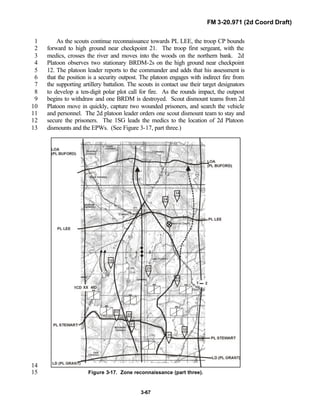
• Maneuver the force out of contact (choose/recommend a course of33
action).34
• Make contact on your own terms; deploy and report (execute a course35
of action).36
FM 3-20.971 (2d Coord Draft)
3-27
EIGHT FORMS OF
CONTACT
• Visual
• Direct Fire
• Indirect Fire
• Obstacles
• Aircraft
• NBC
• Electronic
• Non-hostile
No longer does the brigade have to rely on chance contact to deploy its1
combat forces. The reconnaissance troop and assigned ISR assets develop the2
situation for the BCT and in effect pull the BCT combat forces to the decisive3
point of the BCT commander’s choosing.4
5
With all the additional information and intelligence from the BCT and the6
ARFOR/division resources, the reconnaissance troop and its subordinate7
elements have to adjust the way they make contact as well. These additional8
ISR resources result in fewer chance contacts within the initial phases of an9
operation (reconnaissance). Certain considerations should be made in10
planning and executing actions on contact.11
12
Forms of Contact13
In both reconnaissance and security operations, contact occurs when a14
member of the troop encounters any situation that requires an active or passive15
response to the threat. Contact is described in terms of the threat or friendly16
forces gaining contact through eight forms of contact. These situations may17
entail one or more of the following forms of contact:18
• Visual contact (friendly elements may19
or may not be observed by the threat).20
Examples of visual contact include:21
− Scout observes using binoculars or22
other optics.23
− TUAVs have visual contact.24
• Physical contact (direct fire) with a25
threat force.26
• Indirect fire contact.27
• Contact with threat obstacles or ones of unknown origin.28
• Contact with threat or unknown aircraft.29
• Situations involving NBC conditions.30
• Situations involving electronic warfare tactics. Examples of electronic31
contact include:32
− GSR or IREMBASS from surveillance troop.33
− SIGINT assets from surveillance troop.34
− Radios jammed by threat force.35
• Non-hostile (civilians or other events that may affect the mission).36
Examples of non-hostile contact include:37
- Refugee traffic on assigned routes.38
- Peaceful demonstrations in assigned NAIs.39
FM 3-20.971 (2d Coord Draft)
3-28
- Local or US media contact.1
- Disruption of electrical power or other vital services in AO.2
- Local government services (i.e., police, fire, postal) suspended.3
Leaders at echelons from platoon through squadron conduct actions on4
contact when they or a subordinate element recognizes one of the forms of5
contact or receives a report of threat contact. The squadron/troop may conduct6
actions on contact in response to a variety of circumstances, including the7
following:8
• Subordinate platoon(s)/section(s) conducting actions on contact.9
• Reports from the squadron or BCT.10
• Reports from GSR/IREMBASS (surveillance troop or BCT MI11
Company).12
• Reports from SIGINT/PROPHET (surveillance troop or BCT MI13
Company).14
• Reports from TUAV (surveillance troop or BCT MI Company).15
• Reports from or actions of an adjacent unit.16
17
18
Developing Actions on Contact19
Troop commanders and platoon leaders analyze the enemy throughout the20
troop-leading process to identify all likely contact situations that may occur21
during an operation. Intelligence reports from higher help to clarify the22
threat’s COAs and likelihood of contact. Through the planning and rehearsals23
conducted during troop-leading procedures, leaders develop and refine COAs24
to deal with the probable threat actions/contact. The COAs will eventually25
become the foundation for the troop’s scheme of maneuver.26
During the troop-leading process, leaders must evaluate a number of27
factors to determine their impact on the unit’s actions on contact. For28
example, the commander needs to consider how the likelihood of contact will29
affect his choice of movement techniques and formations. In doing this, he30
can begin preparing the unit for actions on contact; for example, he may31
outline procedures for the transition to more secure movement techniques32
before a contact situation.33
Time Requirements for Actions on Contact34
Commanders must understand that properly executed actions on contact35
require time at both platoon and troop levels. To fully develop the situation, a36
platoon or team may have to execute extensive lateral movement, dismount37
and remount scout squads, and/or call for and adjust indirect fires. Each of38
these activities requires time. The commander must balance the time required39
for subordinate elements to conduct actions on contact with the need of the40
FM 3-20.971 (2d Coord Draft)
3-29
higher unit to maintain tempo and momentum. In terms of slowing the tempo1
of an operation, however, the loss of a platoon or team is normally much more2
costly than the additional time required to allow the subordinate element to3
properly develop the situation.4
5
Steps for Actions on Contact6
The troop should execute actions on contact using a logical, well-7
organized process of decision making. There are two types of contact the unit8
can expect and prepare for—known and chance. Known contact entails9
information and intelligence on known locations or positions of threat forces.10
Known contact actions entail these seven steps:11
• Make contact through sensors and other ISR assets.12
• Develop the situation out of contact (evaluate the situation [update the13
IPB process]).14
• Maneuver the force out of contact (choose how, with what, and where15
to make contact).16
• Make contact on your own terms (deploy and report).17
• Reevaluate and develop the situation.18
• Choose and/or recommend a COA.19
• Execute the selected COA.20
When there is no intelligence about the threat’s location, chance contact21
may be made. Chance contact actions consist of the same last four steps in22
known contact actions.23
• Deploy and report.24
• Reevaluate and develop the situation.25
• Choose and/or recommend a COA.26
• Execute the selected COA.27
28
The seven- (or four) step process is not intended to generate a rigid,29
lockstep response to the threat. Rather, the goal is to provide an orderly30
framework that enables the unit and its subordinates to survive the initial31
contact, and then apply sound decision making and timely actions to complete32
the operation. Ideally, the unit will acquire the threat (visual contact) before33
being sighted by the threat/enemy; then it can continue with visual contact or34
initiate indirect contact or physical contact on its own terms by executing the35
designated COA. It is also essential for the troop commander to understand36
the higher commander’s intent of the reconnaissance to recommend COAs for37
the brigade/squadron to react to the threat contact.38
FM 3-20.971 (2d Coord Draft)
3-30
Make Contact Through Sensors and Other ISR Assets1
Ideally there will be information and intelligence on the threat in the troop2
area of operations. For the troop, contact information may come from other3
troop assets, TUAV, GSR/IREMBASS, or SIGINT resources. The squadron4
may receive contact information from the brigade, which has access through5
reach-back capabilities to JSTARS, SOF intelligence operations, satellite6
imagery, Guardrail, and other ISR assets. The troop will make this contact7
through FBCB2 or radio reports.8
Develop the Situation out of Contact9
With the Army tactical command and control system (ATCCS), the10
brigade down to the scout will have situational awareness of the threat via11
information appearing on FBCB2. Empowered with this information, chance12
contact is minimized. This information will flow within the troop and13
squadron as well as from the BCT and ARFOR/DIV higher intelligence14
sources. Based on the current situation of the unit, leaders must evaluate this15
information and understand the potential threat COA. The troop must16
determine if it will gain contact with this threat element to further develop the17
situation, or pass the contact to other ISR assets or follow-on elements. (Refer18
to Chapter 5, Section VI, Reconnaissance Handover.)19
20
Make Contact on Your Own Terms (Deploy and Report—if chance21
contact)22
Based on the threat information, the current plan, and the other METT-TC23
considerations, the troop must decide how it will gain contact with the threat24
element. Depending on the situation and the resources available to the25
commander, the troop determines if visual contact is needed; if electronic26
contact is best; or on the high end, based on the ROE and engagement criteria,27
if direct fire or indirect fire is warranted. Based on mission and troops28
available, the commander determines which subordinate element will make29
contact. He must consider employing overlapping assets to effectively make30
contact and minimize risk. Finally, based on terrain and the threat’s probable31
COA, he determines where to make contact. The troop commander in the32
area that contact is made must take responsibility for maintaining contact until33
ordered to break contact or handover can occur. (Refer to Chapter 5, Section34
VI, Reconnaissance Handover.)35
Deploy and report if there is chance contact. The subordinate platoons and36
sections react to chance contact by conducting the immediate action battle37
drill. Battle drills are established through solid SOPs and IAW the OPORD.38
They must be well rehearsed prior to the operation.39
40
FM 3-20.971 (2d Coord Draft)
3-31
Reevaluate and/or Develop the Situation1
While the troop is deploying, the commander must reevaluate the situation2
and, as necessary, continue to maneuver to develop it. The commander3
quickly gathers as much information as possible, either visually, or more4
likely, through reports from the platoon(s) in contact. He analyzes the5
information to determine critical operational considerations, including these:6
• The size of the threat/enemy element.7
• Location, composition, activity, and orientation of the threat force.8
• The impact of obstacles and terrain.9
• Threat/enemy capabilities (especially antiarmor capability).10
• Probable threat/enemy intentions.11
• How to gain positional advantage over the enemy (from the troop’s12
and the BCT’s perspective).13
• The friendly situation (location, strength, and capabilities).14
• Possible friendly COAs to achieve the specified end state.15
After evaluating the situation, the commander may discover that he does16
not have enough information to identify the necessary operational17
considerations. To make this determination, he must further develop the18
situation in accordance with the higher commander’s intent, using a19
combination of the following techniques:20
• Surveillance, employing recce scout squads/teams in a recon patrol,21
dismounted vehicle operators, and/or IAV commanders (using22
binoculars and other optical aids).23
• Mounted and/or dismounted maneuver (this includes lateral maneuver24
to gain additional information by viewing the threat from another25
perspective).26
• Joint/indirect fire.27
• Reconnaissance by fire (only with augmentation, with permissive28
engagement criteria, and with better than 5:1 odds).29
Once the commander determines the size of the threat/enemy force the30
troop has encountered, he sends a report to higher.31
32
Recommend/Choose a COA33
After developing the situation and determining that he has enough34
information to make a decision, the troop commander selects a COA that35
meets the requirements of the higher commander’s intent and is within the36
troop’s capabilities. Mindful of the commander’s intent, the troop commander37
FM 3-20.971 (2d Coord Draft)
3-32
may recommend a BCT COA if his contact has bearing on the BCT’s CCIR1
(PIR) as part of the reconnaissance pull method.2
Nature of Contact. The nature of the contact (known or chance) may3
have a significant impact on how long it takes a commander to develop and4
select a COA. As an example, in preparing to conduct a reconnaissance5
mission, the troop commander determines that the team will encounter a threat6
dismounted OP along its axis of advance; consequently, during troop-leading7
procedures, he develops a scheme of maneuver to defeat the outpost with8
indirect fires. When the troop’s platoon makes contact with five threat9
dismounts, the commander can quickly assess that this is the anticipated10
contact and direct the troop to execute his plan. On the other hand, unexpected11
contact with a well-concealed threat force may require time to develop the12
situation at platoon and team levels. As it recons for critical information that13
will eventually allow the commander to make a sound decision, the platoon14
and/or troop may have to employ several of the techniques for developing the15
situation.16
COA Procedures. The commander has several options in how he selects17
a COA. These options include the following:18
• The troop commander can direct the team to execute the original plan19
if the situation reveals no need for change.20
• If his analysis shows that the original plan is still valid but some21
refinement is necessary, the troop commander should inform his22
commander (prior to execution, if possible) and issue a FRAGO to23
refine the plan.24
• If his analysis shows that the original plan needs to be changed, but the25
selected COA will still comply with the commander’s intent, the troop26
commander should inform his commander (prior to execution, if27
possible) and issue a FRAGO to retask his subordinate elements.28
• If his analysis shows that the original plan deviates from the29
commander’s intent and needs to be changed, the troop commander30
must report the situation and recommend an alternative COA to his31
commander.32
• If the battlefield picture is still vague, the troop commander must33
direct a subordinate element to continue to develop the situation. He34
then uses one of the first four options to report the situation and choose35
a COA and/or to direct further action.36
37
Execute the Selected COA38
In executing a COA, the troop transitions to maneuver. It then continues to39
maneuver throughout execution, either as part of a tactical task or to advance40
while in contact to reach the point on the battlefield from which it executes its41
tactical task. The team can employ a number of tactical tasks as COAs, any of42
FM 3-20.971 (2d Coord Draft)
3-33
which may be preceded (and/or followed) by additional maneuver. Refer to1
sections of this chapter and Chapters 4 and 6 for detailed descriptions of these2
tasks. These are a few tasks that may be chosen:3
• Reconnaissance and surveillance (with possible multidimensional4
focus).5
• Screen.6
• Withdraw.7
• Bypass.8
• Delay.9
• Defend.10
• Hasty attack.11
As execution continues, more information will become available to the12
troop commander. Based on the emerging details of the threat/enemy13
situation, he may have to alter his COA during execution. For example, as the14
troop maneuvers with mortar and field artillery to destroy a target acquisition15
radar hidden in a barn, it discovers a motorized infantry platoon in prepared16
positions in and around the farm house. The commander must analyze and17
develop the new situation. He then selects and recommends an alternate COA18
to the higher unit, such as establishing a surveillance position to support an19
infantry company team’s maneuver against the newly discovered threat force.20
Actions at Obstacles21
How the scout approaches an obstacle is highly dependent on METT-TC22
factors. However, the process of conducting this type of reconnaissance can23
be reduced to five steps that under most METT-TC conditions will ensure an24
organized and efficient operation. These steps are still connected to the steps25
discussed in actions on contact.26
• Detection.27
• Deploy and report.28
− Local security and reconnaissance.29
• Evaluate and develop the situation.30
− Obstacle/danger area reconnaissance.31
• Selection of a course of action.32
• Recommendation/execution of a course of action.33
34
Detection35
During reconnaissance operations, scouts must locate and evaluate mines,36
obstacles, and man-made and natural restrictions to support the movement of37
FM 3-20.971 (2d Coord Draft)
3-34
their parent unit. Detection of obstacles and restrictions begins in the planning1
phase of an operation when the S2 conducts IPB. The scouts combine the S2’s2
work with the reconnaissance conducted during the troop-leading procedures3
(normally a map reconnaissance only) to identify all possible obstacles and4
restrictions within their area of operations. The scouts then plan their5
reconnaissance based on the orders they receive, the S2’s IPB, and their own6
map reconnaissance and refined IPB.7
The scouts use visual and physical means to detect mines and obstacles8
while conducting their mission. They visually inspect terrain for signs of mine9
emplacement and reinforcing obstacles. They also must be alert to dangerous10
battlefield debris such as bomblets from cluster bomb units (CBU) or dual-11
purpose improved conventional munitions (DPICM). Mines and other types12
of obstacles can be difficult for mounted scouts to detect. They may need to13
dismount their vehicles several hundred meters short of a suspected obstacle14
and approach it on foot to conduct their reconnaissance. Scouts look for15
disturbed earth, unusual or out-of-place features, surface-laid mines, tilt rods,16
and tripwires. MELIOS (mini eye-safe laser infrared observation set) and17
GPS (global positioning system) devices are used to assist in acquiring and18
determining precise locations of obstacles.19
Physical detection methods include detonating, probing, and using a mine20
detector. Detection occurs when a vehicle, soldier, or countermine system21
physically encounters a mine. This method does not indicate the boundaries of22
the obstacle. The scouts may have to probe or conduct additional visual23
inspection to define the extent of the minefield.24
Local Security and Reconnaissance25
Threat forces cover their obstacles with observation and fires. Whenever26
scouts encounter an obstacle, they must proceed with their reconnaissance27
assuming the threat can observe and engage them. The scout element that28
detects the obstacle or minefield establishes overwatch and sends an initial29
obstacle report before it proceeds with the reconnaissance. The scouts in30
overwatch look for signs of threat forces in and around the obstacle or in31
positions that allow observation of the obstacle. They visually search the32
dominant terrain on the far side of the obstacle for evidence of threat positions33
or ambushes. Once they confirm the enemy situation from the near side, the34
scouts not in overwatch move mounted and/or dismounted to find bypasses35
around the obstacle. If they find a bypass, they move around the obstacle and36
establish OPs on the far side to provide 360-degree security of the obstacle. If37
the scouts are unable to find a bypass, they conduct their reconnaissance from38
the near side under the security of the overwatch elements.39
40
Obstacle Reconnaissance41
Once security is established, scouts move dismounted to the obstacle. The42
scouts must be cautious when reconnoitering the obstacle. Tripwires or other43
FM 3-20.971 (2d Coord Draft)
3-35
types of wire may indicate the threat is using booby traps or command-1
detonated mines to prevent friendly forces from determining—2
• Location and orientation of the obstacle.3
• Types of mines in the minefield or types of obstacles.4
• Length and width of the obstacle area.5
• Threat coverage, including threat strength, equipment, and fire6
support.7
• Breaching requirements. The scout reconnoitering the obstacle8
prepares an obstacle report with this information and forwards a digital9
report through the platoon leader or platoon sergeant to the10
commander.11
12
Selection of a Course of Action13
The troop commander analyzes the situation and the factors of METT-TC14
to determine what course of action to select. He has a choice of three courses15
of action: bypass, breach, or continue the mission.16
17
Bypass. A bypass is the preferred method when it offers a quick, easy,18
and tactically sound means of avoiding the obstacle. A good bypass allows the19
entire force to avoid the primary obstacle without risking further exposure to20
threat ambush and without diverting the force from its objective. Bypassing21
conserves breaching assets and maintains the momentum of the moving unit.22
If the platoon leader decides to bypass and his commander approves, scouts23
mark the bypass and report it to their commander. A digital graphic of the24
bypass with waypoints should be sent on FBCB2, if possible. Guides may be25
required if the bypass is difficult to locate or visibility conditions are poor.26
In some cases, bypassing is not possible and breaching may be the best, or27
only, tactical solution. These situations might include the following:28
• The obstacle is integrated into a prepared defensive position and the29
only available bypass canalizes friendly forces into a fire sack or30
ambush.31
• The mission specifically tasks the platoon to ensure mobility along the32
original route for follow-on forces.33
• The best available bypass route will not allow follow-on forces to34
maintain an acceptable rate of movement.35
• Improving the bypass may require more time and assets and create36
greater risk than breaching the primary obstacle(s).37
38
Breach. A breach of an obstacle significantly degrades the platoon’s39
ability to maintain the momentum of either the reconnaissance or the40
FM 3-20.971 (2d Coord Draft)
3-36
follow-on forces. Obstacles within the scouts’ breaching capability include1
small minefields, simple wire, hasty roadblocks, craters, and similar point-2
type obstacles. For more complex obstacles, the scouts can support the3
breaching efforts conducted by other elements by identifying the type and4
dimensions of the obstacle(s), feasible breach points, reporting where the5
threat is, and executing artillery observer tasks.6
Continuing the Mission. When the scouts encounter a restriction, such as7
a bridge or defile, they may find that the restriction is not an obstacle to8
movement and is not covered by threat fire or observation. Scouts may also9
discover dummy minefields or obstacles that are incomplete and easily passed10
through. Under these conditions, the scouts’ course of action may be to report11
and then continue the reconnaissance mission.12
13
Recommending/Executing a Course of Action14
Once the scout has determined the course of action best suited to the15
situation, he either executes it or recommends it to his higher headquarters for16
approval. Generally, the scout will execute a particular course of action17
without specific approval if it is addressed in the OPORD he received from18
higher or in his unit SOP. In such a case, the scout will execute and then19
inform his commander of his actions. If the situation the scout discovered is20
not covered by previous guidance, he determines the best course of action and21
recommends it to his commander prior to execution. The near-real time22
exchange of combat information provided to the troop commander via FBCB223
and FM provides them with an advantage in overcoming threat obstacles.24
With FBCB2, the scouts can precisely identify and report bypasses or breach25
sites and quickly report other pertinent combat information related to threat26
activity in the vicinity of the obstacle.27
Displaying this information in FBCB2 is a great help in executing the28
complex command and control associated with obstacle reduction. Once the29
scouts have completed the reconnaissance of the obstacle, the troop30
commander or operations sergeant prepares an updated digitized obstacle31
overlay. The information presented on the digitized overlay is a graphic32
depiction of the following:33
• Known threat locations.34
• Type and limits of the obstacle.35
• Appropriate breach sites.36
• Waypoint routing to the obstacle or breach point.37
Providing this information to the appropriate units via FBCB2 enables the38
breach and assault forces to move rapidly through the breach without a39
corresponding loss in command and control or orientation. Following40
elements can rapidly locate the established breach lanes, continuing operations41
with little or no loss of momentum.42
FM 3-20.971 (2d Coord Draft)
3-37
ACTIONS AT DANGER AREAS1
Open Areas2
Open areas permit easy observation or engagement of the reconnaissance3
element and should therefore be treated as a danger area. Under no4
circumstance should reconnaissance elements be forced through an open area.5
Using good cover and concealment, a reconnaissance of the flanks and far6
side of the open area should be conducted before moving into an open area.7
Open areas within the troop’s zone or area of operations may force the troop8
commander to coordinate crossing of certain control measures (boundaries) to9
facilitate flank and rear reconnaissance of the open area.10
11
Built-up Areas12
The troop can expect to conduct reconnaissance of built-up areas. Built-13
up area reconnaissance missions are very dangerous for mobile forces, and14
should be bypassed when possible. If a reconnaissance must be conducted,15
the troop commander should ensure that the reconnaissance is conducted at a16
distance from covered and concealed positions or dismounted (see Chapter 717
for more information on urban operations).18
The troop commander determines whether or not to bypass a built-up area19
based on the following considerations:20
• Can the built-up areas be bypassed without interfering with the21
squadron mission?22
• Can the threat in the built-up areas influence the squadron’s mission?23
If a built-up area is bypassed, the threat must be kept under observation at24
all times.25
26
The following are guidelines for planning and executing reconnaissance in27
built-up areas:28
• Be alert for mines and booby traps. Dirt roads, alleys, and curves in29
paved roads are excellent places to employ mines. Structures in built-30
up areas are excellent places to employ booby traps.31
• Obtain detailed street maps of all major built-up areas the troop might32
encounter during an operation. These are more useful than the33
standard 1:50,000 military maps.34
• Clearly define platoon and section zones. Do not divide responsibility35
for a street between subordinate units.36
• Observe built-up areas from outside for signs of threat activity prior to37
entering them.38
FM 3-20.971 (2d Coord Draft)
3-38
• Approach main roads cautiously. Main roads through towns normally1
have features such as open areas, parks, traffic circles, and medians.2
The threat may use these same open areas for logistics elements,3
concentrations of armored vehicles, artillery positions, and combat4
support vehicle locations.5
• Consider collateral damage constraints that may limit the ability to6
employ some types of weapon systems.7
8
Without augmentation, the troop is not capable of performing the following9
in built-up areas:10
• Reconnoitering each building and street.11
• Reconnoitering underground structures (basements and sewers).12
• Determining the strength of dug-in threat units.13
• Determining the detailed disposition of dismounted threat units.14
• Conducting hasty attacks against dismounted threat units larger than15
platoon size.16
17
When operating in built-up areas, the troop must expect and plan for a18
serious degradation of FM and digital communications. The situational19
awareness picture will rapidly become degraded. Blue filter settings should20
be set for frequent updates unless elements will be relatively stationary for21
extended periods.22
23
24
25
SECTION III. AREA RECONNAISSANCE26
27
An area reconnaissance is conducted to gain detailed information about28
threat forces and terrain features within a specified area. The commander29
assigns an area reconnaissance mission before he sends his forces into or near30
an area to avoid being surprised by actual terrain conditions or unexpected31
threat forces. The reconnaissance may be enemy-oriented, terrain-oriented, or32
a combination of the two. The commander may focus the reconnaissance33
effort (i.e., locate the threat’s reserve forces, or locate river crossing sites,34
approach routes, and holding areas in a specific area). In these cases, the35
troop commander must identify which critical tasks he wants the troop to36
execute.37
38
FM 3-20.971 (2d Coord Draft)
3-39
CRITICAL TASKS1
2
During an area reconnaissance, the following critical tasks must be3
accomplished unless the troop commander directs otherwise:4
• Reconnoiter all terrain within the area.5
• Inspect and classify all bridges within the area.6
• Locate fords or crossing sites near all bridges within the area.7
• Inspect and classify all overpasses, underpasses, and culverts.8
• Locate and clear all mines, obstacles, and barriers in the area (within9
its capability).10
• Locate a bypass around BUAs, obstacles, and contaminated areas.11
• Find and report all threats within the area.12
• Report reconnaissance information.13
14
In addition to the primary tasks, the troop must be prepared to conduct15
other tasks as directed by the commander. These additional tasks may include16
the following:17
18
• Recognize threat and countermeasures (identify threat activities and19
recommend threat probable COAs).20
• Find all threat that can affect the mission.21
• Determine the size, location, and composition of the society22
demographics (e.g., race, sex, age, religion, language, tribe, clan, class,23
education, history, government, and/or factions).24
• Establish and maintain contact with local civilian and military25
leadership.26
• Reconnoiter the society to determine the regional, local, and27
neighborhood situations.28
• Determine the needs of the society to determine operation/actions29
needed to support a friendly populace, or to neutralize or gain support30
of a hostile or neutral faction.31
• Identify key municipal infrastructure that can affect military operations32
(utilities, sewage, communications).33
• Determine media activities.34
• Clarify organizations and methods of operation for terrorists,35
transnational groups, and ethnic centers of power.36
• Identify local populous allegiances to factions, religious groups, or37
other organizations.38
FM 3-20.971 (2d Coord Draft)
3-40
TECHNIQUES1
2
When the troop receives an area reconnaissance mission, the assigned area3
is identified as the terrain inside a solid, continuous boundary. Planning the4
movement to the area is the first step. Select the route(s), establish a march5
order on each route, and specify a start point, checkpoints, and a release point.6
Use a movement technique that keeps the troop moving quickly and securely.7
If possible, avoid contact with the threat while en route. Report and bypass.8
Be careful when approaching the area to begin the reconnaissance. Use9
common sense. Avoid known threat forces outside of the area where10
reconnaissance will be conducted; start somewhere else.11
12
Enclose the area within a troop boundary. Draw a line of departure, an13
LOA, and lateral boundaries. Divide the troop area into three platoon areas.14
Add phase lines along identifiable terrain to control movement through the15
area. Place contact points at the intersection of the platoon boundaries and all16
phase lines. Use graphic control measures, checkpoints, TIRS, and TRPs to17
facilitate command and control.18
19
Use a troop vee or line formation to conduct an area reconnaissance.20
Recce platoons deploy abreast from the release points to accomplish all the21
reconnaissance tasks. They move across the line of departure first. The mortar22
section moves through the center of the troop zone, remaining in position to23
range from 3 to 3.5 kilometers forward of the lead elements in the recce24
platoons. The mortar section may also follow one of the recce platoons,25
depending on where initial threat contact is expected. The troop CP displaces26
through the zone, using terrain that affords effective and continuous27
communication with troop elements and squadron. The troop commander28
positions himself well forward to observe the action of his main effort. The29
location usually depends on where initial threat contact or problem situations30
are expected.31
32
33
EXAMPLE OF AN AREA RECONNAISSANCE (RECCE TROOP)34
35
NOTE: This example features a recce troop; however, the techniques apply36
to the BRT as well.37
38
In this example, the troop has been given the mission of performing an39
area reconnaissance of OBJ LEAD, OBJ COPPER, and OBJ IRON. The40
troop has not been assigned a specific route, and threat dispositions are vague.41
The focus and tempo of the operation allow the troop to move to dismount42
points close to its reconnaissance objectives. A TUAV over flew the troop43
area of operation prior to LD and reported no threat vehicles in zone. The44
troop commander assigns 1st platoon NAIs on OBJ IRON, 2d platoon NAIs45
on OBJ COPPER, and 3d platoon NAIs on OBJ LEAD.46
FM 3-20.971 (2d Coord Draft)
3-41
The troop commander decides that he will move with 2d platoon to1
provide close control of the reconnaissance of OBJ COPPER. The XO2
remains with the CP, which will not cross the LD. The troop commander3
moves the platoons, using checkpoints that make maximum use of cover and4
concealment between the LD and the objectives. The troop crosses PL RAY5
at the time specified in the OPORD simultaneously (see Figure 3-8, part one).6
7
8
Figure 3-8. Area reconnaissance (part one).9
10
11
FM 3-20.971 (2d Coord Draft)
3-42
The platoons, organized two sections each, use bounding overwatch to1
move to their objectives where they occupy dismount points based on the2
level of threat on the objectives. They then prepare to conduct dismounted3
operations.4
Each section places its vehicles in hide positions and establishes local5
security. The troop commander contacts a TUAV ground control station, and6
based on prior coordination, requests a TUAV over flight. As the TUAV reports7
no contact on each of the objectives, the troop commander initiates the platoon’s8
dismounted reconnaissance. Each section conducts dismounted reconnaissance9
to thoroughly reconnoiter the objective (see Figure 3-8, part two).10
11
12
Figure 3-8. Area reconnaissance (part two).13
FM 3-20.971 (2d Coord Draft)
3-43
Upon completion of their reconnaissance, the platoons submit reports and1
establish OPs overwatching their objective areas. The XO collects the reports2
and forwards them to higher headquarters. The platoons establish dismounted3
OPs and continue to monitor their respective NAIs and send updates as4
necessary. The troop continues to observe its objectives until relieved or5
assigned subsequent tasks by the squadron commander.6
7
MULTIDIMENSIONAL ASPECTS OF AREA/ZONE8
RECONNAISSANCE9
Multidimensional area/zone reconnaissance is the directed effort to obtain10
detailed information concerning all threat forces (military, paramilitary,11
civilian, etc), obstacles, civilian demographics, infrastructure (utilities,12
transportation systems, etc) routes, and other terrain within an area/zone (see13
Techniques for Multidimensional Aspects of Area/Zone Reconnaissance14
subparagraph in this section). The reconnaissance may be threat/enemy-15
oriented, terrain-oriented, civilian, infrastructure, or a combination.16
Additionally, the troop commander may focus the reconnaissance effort on a17
specific threat force, such as the threat’s reserve. The troop commander in18
conjunction with the higher headquarters’ staff will identify which critical19
tasks the troop must execute. Commanders must be aware that when the20
area/zone reconnaissance is focused on threat, infrastructure, and terrain, the21
speed of the operation will be extremely slow, especially in complex terrain.22
Multidimensional aspects of area/zone reconnaissance tasks are assigned23
when the threat and civilian situation is vague or when information24
concerning cross-country trafficability as well as other specific terrain25
information is desired. It is appropriate when previous knowledge of the26
terrain is limited or when combat operations have altered the terrain.27
Multidimensional area reconnaissance tasks expand the traditional forms of28
reconnaissance by enculturating soldiers with the local populace throughout29
the area of operations. Understanding the human dimension of the30
environment (political, religious, ethnic, criminal, and transnational) is a31
conduit for decisive actions and analysis of threat center(s) of gravity.32
HUMINT collectors and scouts within the RSTA squadron’s recce troop33
collect and analyze information through contact with community leaders and34
the local populace to assist in developing situational awareness. Although the35
BRT is not fielded with HUMINT collectors, it may be assigned additional36
multidimensional reconnaissance tasks, especially in a SSC or in a stability or37
support operation.38
NOTE: See Figure 3-13, parts one through four, at the end of this section for39
an example scout report for urban areas.40
The ability to conduct multidimensional area/zone reconnaissance will41
assist in defeating or countering asymmetrical threats. Not only must the42
troop investigate terrain characteristics of an area but it must also assess43
demographics, infrastructures, centers of influence, flash-points, and44
personalities, in addition to the traditional missions of area, route, and zone45
FM 3-20.971 (2d Coord Draft)
3-44
Human Intelligence is the
intelligence derived from the
analysis of information
obtained from a human
source or a related
document by a HUMINT
reconnaissance. This will assist higher headquarters in determining what1
military action (or inaction) may influence, positively or negatively, the2
relationship between the society and Army forces. This will provide3
situational understanding to higher headquarters to determine or decide what4
action to take to maintain support of friendly populace, or neutralize or gain5
the support of hostile or neutral factions.6
Rather than avoid urban and other complex terrain, the troop commander,7
augmented with TUAVs from the surveillance troop, has the right package to8
accomplish his primary mission of providing continuous, accurate, and timely9
information in these situations. Recce troops and sensors working in tandem10
with TUAVs provide unprecedented situational awareness and knowledge11
developed throughout a large area of operation, empowering the squadron to12
anticipate, forestall, and dominate threats. Technologies coupled with human13
assessment (scout/HUMINT collectors) provide real time intelligence for14
targeting with precision munitions.15
Multidimensional area/zone reconnaissance16
requires the commander and other leaders within17
the troop, specifically the troop HUMINT18
collectors, to develop relationships with local19
leaders to determine information that may be20
pertinent to the overall operation. The HUMINT21
collectors are the subject matter experts in dealing with civilian personnel. They22
provide training to the scouts so they can operate effectively in largely23
populated areas where multidimensional information is key to the unit’s24
success. Soldier-based, human-intensive intelligence compensates for the25
limitations of equipment-based sensors, which are optimized to provide26
situational awareness in open and rolling terrain for conventional force-on-force27
operations.28
29
Critical Tasks for Multidimensional Aspects of Area/Zone30
Reconnaissance31
Multidimensional area/zone reconnaissance is a deliberate, time-32
consuming process if not specifically focused (see Commander’s33
Reconnaissance Guidance earlier in this chapter). During a multidimensional34
area/zone reconnaissance, the troop accomplishes the critical tasks listed35
below, unless directed otherwise by the squadron commander. The squadron36
commander, depending on the conditions of METT-TC, may select specific37
critical tasks for the troop to accomplish.38
• Find all threat that can affect the mission.39
• Recognize threat and countermeasures (identify threat activities and40
recommend threat probable COAs).41
• Determine the size, location, and composition of the society42
demographics (e.g., race, sex, age, religion, language, tribe, clan, class,43
education, history, government, and/or factions).44
FM 3-20.971 (2d Coord Draft)
3-45
• Establish and maintain contact with local civilian and military1
leadership.2
• Reconnoiter the society to determine the regional, local, and3
neighborhood situations.4
• Determine the needs of the society to determine operation/actions5
needed to support a friendly populace, or to neutralize or gain support6
of a hostile or neutral faction.7
• Identify key municipal infrastructure that can affect military operations8
(utilities, sewage, communications).9
• Determine media activities.10
• Clarify organizations and methods of operation for terrorists,11
transnational groups, and ethnic centers of power.12
• Identify local populous allegiances to factions, religious groups, or13
other organizations.14
• Report all reconnaissance information.15
• Reconnoiter specific terrain (see area, zone, route reconnaissance16
critical tasks).17
Techniques for Multidimensional Aspects of Area/Zone18
Reconnaissance19
When the troop receives area/zone reconnaissance tasks, the assigned area is20
identified as the terrain inside a solid, continuous boundary (see Figure 3-9).21
Phase lines may also be used to identify the troop’s operational area (see Figure22
3-10). The troop may have unit boundaries that also identify its operational23
area in a multidimensional reconnaissance mission (see Figure 3-11).24
25
Figure 3-9. Troop
reconnaissance defined
by one continuous
boundary; platoon
defined by boundaries.
Figure 3-10. Troop
reconnaissance defined
by phase line; platoon
defined by phase line.
Figure 3-11. Troop
reconnaissance defined
by boundary; platoon
defined by NAI.
26
FM 3-20.971 (2d Coord Draft)
3-46
Ensure the troop has all the known information and intelligence of the1
operational environment. Expect to be supported by surveillance troop assets.2
TUAV(s) may support infiltration and reconnaissance to provide early3
warning and reconnaissance of areas that are restricted to the ground troop.4
Always prepare for TUAVs to recon NAIs should they become available.5
MASINT assets should be focused on restricted terrain or high-speed avenues6
of approach to provide early warning of potential threat movements. Always7
request additional SIGINT and IMINT support found at squadron and higher8
ISR links through the ATCCS tactical internet. This will tremendously9
support the troops TLP and IPB as it plans and executes its multidimensional10
area/zone reconnaissance. (See Chapter 6 for ISR capabilities.)11
Conduct detailed map reconnaissance as well as imagery analysis (when12
available, always request imagery or video) to plan the reconnaissance13
mission. Study the terrain to determine how it will support movement. View14
the terrain to determine how it supports not only friendly mission but also the15
threat. Detailed IPB is the foundation for a successful mission.16
Planning the movement to the area is the first step. Select the route(s),17
establish a march order on each route, and specify a start point, checkpoints,18
and a release point. Since dismounted movement is the preferred method of19
reconnaissance, identify suitable concealed locations to position vehicles prior20
to conducting the reconnaissance. If practical, position vehicles to allow the21
crew to utilize the onboard optics, such as LRAS3, to assist in observation and22
provide overwatch. Identify the dismount point when necessary. If using an23
infiltration route(s), identify the route, start and release points, rally points24
along the route, and establish an order of march (see Infiltration paragraph in25
Section II of this chapter). Use a movement technique that keeps the troop26
moving securely. If possible, avoid contact with the threat while en route.27
Report and bypass (IAW commander’s intent). Be careful when approaching28
the area to begin the reconnaissance. Under most situations, conduct29
dismounted movement and reconnaissance patrols. Use common sense; avoid30
known threat forces outside the area where the reconnaissance will be31
conducted.32
Enclose the area within the troop’s area of responsibility with phase lines,33
continuous boundary, or unit boundary. Draw a line of departure, an LOA,34
and lateral boundaries to facilitate movement and terrain responsibility.35
Divide the troop area/zone into platoon zones (if necessary) to establish36
responsibility and to facilitate movement and control. Establish platoon areas37
of responsibility by assigning platoon areas defined by a solid continuous38
boundary, zones defined by boundaries or phase lines, or establish NAIs to39
focus the platoon’s reconnaissance. Add phase lines along identifiable terrain40
to control movement through the area. Place contact points at the intersection41
of the platoon boundaries and all phase lines. Place TIRS or checkpoints on42
the map to identify specific areas or features for reference. TIRS/checkpoints43
help focus reconnaissance, identify danger areas, control movement, orient44
observation, and control fires, for example. The more TIRS/checkpoints the45
FM 3-20.971 (2d Coord Draft)
3-47
better it is to control the mission and issue FRAGOs when necessary. TIRS1
are the best control measure for FBCB2 since they do not clutter the screen.2
Determine if the troop will move in a troop formation. There may be3
certain situations that prohibit troop formation. Platoons may need to move4
independently for infiltration, for example. Additionally, the platoon’s5
reconnaissance objectives may be specific and dispersed over a large area that6
does not support a troop formation. The troop may be given specific NAIs to7
reconnoiter and the squadron is not concerned with the rest of the area8
between the given NAIs. In this case, the troop merely has to plan how to9
move to those specific NAIs based on the threat and terrain. Infiltration routes10
are determined if there is a high threat. Routes are established for tactical11
movement if there is a low threat.12
If the area/zone for which the troop is responsible supports a troop13
formation (6 to 10 kilometers), the troop commander may use several14
formation techniques (see Chapter 2 for movement formations). Platoon and15
troop reconnaissance formations are used especially if detailed reconnaissance16
is needed throughout the troop’s assigned operational environment. Use a17
troop vee or line formation to conduct an area reconnaissance if the threat is18
high and the trail platoon is needed to react to contact from the lead platoons.19
Troop vee is used if the lead platoons are focused on terrain and identification20
of HUMINT and infrastructure reconnaissance intelligence requirements21
while the trail platoon concentrates on the HUMINT and infrastructure22
intelligence requirements. Platoons deploy abreast from the release points to23
accomplish all the reconnaissance tasks. They move out across the line of24
departure first.25
The mortar section moves through the center of the troop’s26
reconnaissance, remaining in position to range from 3 to 3.5 kilometers27
forward of the lead elements in the recce platoons. The mortar section may28
also follow one of the recce platoons, depending on where initial threat29
contact is expected. The troop CP displaces through the zone, using terrain30
that affords effective and continuous communication with troop elements and31
squadron. The troop commander positions himself well forward to observe32
the action of his main effort. The location usually depends on where initial33
threat contact or problem situations are expected.34
35
36
EXAMPLE OF AN AREA RECONNAISSANCE WITH37
MULTIDIMENSIONAL RECONNAISSANCE ASPECTS (SSC)38
The troop conducts its area reconnaissance in an area defined by PL SPUR39
to PL PISTOL between PL PONY and PL QUARTER (see Figure 3-12). The40
purpose of the reconnaissance is to determine how the brigade will best attack41
without interdiction from the enemy/threat and civilians. It is also important to42
determine what infrastructure can support friendly forces.43
FM 3-20.971 (2d Coord Draft)
3-48
The focus of the mission is threat, terrain, society, and infrastructure. The1
troop will determine the threat forces in the area, particularly the urban terrain2
vicinity of NAI 2 (OBJ BULL) and NAI 1. OBJ BULL is an infantry battalion3
(supporting effort) objective. The infantry battalion will be seizing this4
objective (key road intersection) to support the movement of a coalition force5
into this war-torn country. The troop will identify where and which factional6
elements support US and coalition forces in the area and determine the best7
route for the battalion’s axis of attack. It will conduct focused HUMINT8
collection of NAIs 1, 2, and 4 and determine if the water utilities in Dyer (NAI9
1) will support friendly CSS needs. If possible, it will liaison with local officials10
in NAIs 1 and 2. The unit has reports from SOF that Dyer (NAI 1) supports US11
forces. Hostile paramilitary forces occupy the town of Custer (NAI 2). (See12
Figure 3-13, parts one through four, for an example of information requirements13
given to the platoon to conduct HUMINT collection.)14
The tempo is stealthy, deliberate and there is time available to conduct15
dismounted recon patrols. The engagement criteria are IAW ROE. Only use16
direct fire for self-defense, mortars to suppress threat contact, and joint fires17
for HPTs.18
19
Figure 3-12. Multidimensional area reconnaissance.20
21
FM 3-20.971 (2d Coord Draft)
3-49
TUAVs reconnoiter the infiltration lane to identify possible threat1
dismounted/mounted forces to support infiltration of 1st platoon into the area.2
MASINT section from surveillance troop establishes OP vicinity of TIRS 313
oriented towards NAI 2 to detect threat forces in the area and to support the4
reece troop’s reconnaissance.5
1st platoon conducts dismounted reconnaissance of infiltration lane into6
the area of operations during limited visibility 24 hours prior to the rest of the7
troop. The platoon establishes surveillance of NAI 2 from OPs 1 and 2, and8
conducts infiltration during hours of limited visibility and area reconnaissance9
of NAI 2 with dismounted reconnaissance patrols; focus is on determining10
where paramilitary forces are defending. The platoon determines the11
demographics of OBJ BULL.12
2d platoon conducts a combination of mounted and dismounted zone13
reconnaissance from PL SPUR to PL PISTOL between PL PONY and PL14
COLT. Focus is to determine threat in area, factional demographics, and15
potential route (terrain) that would support the infantry battalion’s attack on16
OBJ BULL. Once reconnaissance is complete, 2d platoon establishes a screen17
with OPs vicinity of OP 6, oriented north to determine threat forces moving18
from the north, and OP 5, oriented west (NAIs 4 and 6).19
3d platoon conducts a detailed HUMINT-oriented area reconnaissance of20
NAI 1 to determine disposition of factional forces in the town of Dyer. It will21
determine if their water utilities will support CSS needs of the brigade. Once22
reconnaissance is complete, the platoon establishes a screen with OPs vicinity23
of OP 4, oriented north to determine threat forces moving from the north, and24
OP 3, oriented east (NAIs 4 and 6).25
The platoons will determine locations to move vehicles to minimize26
detection as they conduct their reconnaissance. Headquarters will follow 3d27
platoon and establish position vicinity of TIRS 50. Mortars establish mortar28
firing point vicinity TIRS 60 and prepare to move to 41, 43, 45, 50, and 53.29
Troop CP (XO) remains at TAA BUFORD to track and report reconnaissance30
information and to link up with infantry battalion prior to their attack. The XO31
will coordinate and pass the information/intelligence determined in the area32
reconnaissance to the infantry, facilitating our reconnaissance pull of the33
battalion.34
35
FM 3-20.971 (2d Coord Draft)
3-50
1
Figure 3-13. Example scout report that supports information requirements for2
urban areas (part one).3
4
FM 3-20.971 (2d Coord Draft)
3-51
1
Figure 3-13. Example scout report that supports information requirements for2
urban areas (part two).3
4
FM 3-20.971 (2d Coord Draft)
3-52
1
Figure 3-13. Example scout report that supports information requirements for2
urban areas (part three).3
FM 3-20.971 (2d Coord Draft)
3-53
1
Figure 3-13. Example scout report that supports information requirements for2
urban areas (part four).3
4
FM 3-20.971 (2d Coord Draft)
3-54
SECTION IV. ROUTE RECONNAISSANCE1
2
3
Route reconnaissance is a directed effort to gain detailed information4
about a specific route and the terrain on either side of the route that the threat5
could use to influence movement along the route. In a permissive6
environment, a route may be assigned to each platoon, depending on the7
terrain. If threat contact is likely, as in a smaller-scale contingency or a major8
theater of war, only one route may be reconnoitered. A route reconnaissance9
is often a specified or implied task in a zone or area reconnaissance mission.10
11
12
CRITICAL TASKS13
During a route reconnaissance, the following critical tasks must be14
accomplished unless the troop commander directs otherwise:15
• Reconnoiter and determine trafficability of the route.16
• Reconnoiter all terrain the threat can use to place direct fires on the17
route.18
• Reconnoiter all built-up areas along the route.19
• Reconnoiter all lateral routes in the area of responsibility.20
• Inspect and classify all bridges along the route.21
• Locate fords or crossing sites near all bridges along the route.22
• Inspect and classify all overpasses, underpasses, and culverts.23
• Reconnoiter all defiles along the route; possibly clear all defiles of24
enemy and obstacles within its capability, or locate a bypass.25
• Locate mines, obstacles, and barriers, and within its capability, clear26
the route.27
• Locate a bypass around obstacles and contaminated areas.28
• Locate a bypass around or, if the mission requires, routes through29
built-up areas.30
• Report route information.31
• Find and report all threats that can influence movement along the32
route.33
34
35
TECHNIQUES36
The troop commander directs the troop to conduct a route reconnaissance37
as a mission or as a specific task in another mission. This section discusses38
route reconnaissance in the context of an assigned troop mission.39
FM 3-20.971 (2d Coord Draft)
3-55
The troop commander considers several factors in formulating his concept.1
• Start point, release point, and designation of the route.2
• Mission to be performed at the start point and after reaching the3
release point.4
• Time the mission is to start, and if required, be completed.5
• Critical points along the route identified as checkpoints.6
• Any constraints or restrictions.7
• IPB information on the route. IPB provides critical information on the8
enemy and terrain. Threats may be encountered in two basic forms:9
− Ambushes along the route in close or restricted terrain or tied to10
obstacles along the route.11
− Attack by long-range direct or indirect fires from dominating12
terrain along the route.13
14
Using IPB results and an analysis of the terrain, the troop commander will15
gain an appreciation of the danger areas within his zone and the nature of the16
potential threat. From this information, he can determine how much terrain on17
each flank of the route must be reconnoitered and his task organization. Any18
constraints or restrictions may also influence how much terrain is19
reconnoitered.20
21
Lateral boundaries, LD, LOA, route, and a single phase line are used along22
with TIRS for graphic control on FBCB2. (Map grid lines cannot be23
completely suppressed for printing.) The troop commander’s graphical24
control measures for a route reconnaissance should incorporate the key troop25
graphics (boundaries, checkpoints, TIRS and phase lines) in order for the26
troop to report effectively and clearly to the troop commander and CP. The27
graphics should be kept as simple as possible to avoid screen clutter. The28
troop commander may elect to draw a boundary from 2 to 5 kilometers on29
either side of the route to define how wide a reconnaissance of the adjacent30
terrain he desires. Checkpoints or TIRS are used for referencing key points.31
A line of departure may be depicted if needed, and normally a limit of32
advance is shown from 3 to 5 kilometers beyond the route release point.33
Again, simplicity is key. See Figure 3-14.34
35
FM 3-20.971 (2d Coord Draft)
3-56
1
Figure 3-14. Sample FBCB2 route recon overlay.2
The troop normally performs a tactical road march to the line of departure3
and deploys to execute the reconnaissance of the route. Based on the amount4
of intelligence known about the threat, the troop commander determines how5
much security is required for the move forward to the line of departure. Also6
the commander should consider the effect his final disposition of forces will7
have on the troop’s follow-on mission.8
9
EXAMPLE OF A ROUTE RECONNAISSANCE10
In a stability operations scenario, a recce troop has been ordered to11
conduct a route reconnaissance of two routes in its sector. The troop12
commander has organized the troop into a split vee. Two platoons are moving13
abreast, conducting an area reconnaissance, with one platoon following,14
focusing on the two routes. 1st and 3d platoons cross the LD (PL NATE)15
abreast, using the two-section organization, and reconnoiter the terrain on16
either side of ROUTE SABER and ROUTE SPUR, up to PL ALEX. The17
platoons have a multidimensional reconnaissance focus and are looking for18
illegal factional checkpoints, displaced persons, and propaganda hostile19
towards US forces. The troop commander maneuvers behind 1st platoon, with20
the mortars located nearby. 3d platoon conducts reconnaissance around the21
outskirts of the village in its zone, and explores routes into the village that22
intersect ROUTE SPUR. Additionally the HUMINT teams from 3d platoon23
meet several of the local civilians in the village and collect HUMINT to be24
forwarded to the troop CP. 1st platoon scouts search the woods near25
checkpoints 11 and 12 for threat activity. The platoons scan the terrain north26
FM 3-20.971 (2d Coord Draft)
3-57
of PL ALEX and report set. The troop commander initiates the route1
reconnaissance by 2d platoon.2
2d platoon conducts a detailed route reconnaissance and classifies the bridges3
north of PL NATE. When 2d platoon is within a kilometer of the lead platoon,4
the commander initiates movement of 1st and 3d platoons across PL ALEX. 2d5
platoon classifies the route through the village in 3d platoon’s sector. The troop6
commander bounds closely behind 1st platoon and observes its actions. He7
controls the tempo of the lead platoons to prohibit them from leaving the route8
reconnaissance platoon behind. He ensures that mortar fires can range three to9
four kilometers in front of all scouts. The troop CP, first sergeant, and medics10
bound forward to concealed positions. (See Figure 3-15, part one.)11
12
13
Figure 3-15. Route reconnaissance (part one).14
FM 3-20.971 (2d Coord Draft)
3-58
1st and 3d platoons continue to reconnoiter in zone up to PL JUSTIN. The1
platoons search the wooded areas for the threat, and explore the high-speed2
lateral routes to the east and west of ROUTES SABER and SPUR. 1st platoon3
clears the shoulders and makes a visual inspection of the defile on ROUTE4
SABER at checkpoint 19. 1st and 3d platoons move forward to search the5
outskirts of the village at their coordinating point. As with the first village, the6
platoons look for threat forces along the roads into the village. The platoon7
HUMINT collectors question local civilians as to the location of possible8
threat forces. Additionally, HUMINT collectors use their digital cameras to9
photograph the village, focusing on key infrastructures. The mortar section10
follows the 1st platoon and establishes a firing position on the edge of the11
woods north of checkpoint 19. (See Figure 3-15, part two.)12
13
14
Figure 3-15. Route reconnaissance (part two).15
FM 3-20.971 (2d Coord Draft)
3-59
2d platoon continues classifying ROUTES SABER and SPUR. At the1
defile near checkpoint 19, scouts use mine detectors to check shoulders of the2
route to ensure it is free of mines. The troop CP moves to a concealed3
position on high ground near checkpoint 12. The first sergeant moves the4
medics into covered and concealed positions in the village south of checkpoint5
16. The mission is complete when the troop reaches the LOA, PL SEAN. The6
platoons forward all reports to the troop CP where the XO consolidates them7
and forwards them to higher8
9
10
11
SECTION V. ZONE RECONNAISSANCE12
13
14
Zone reconnaissance is the directed effort to obtain detailed information15
concerning all threat forces, routes, obstacles, and terrain within a zone16
defined by boundaries. A zone reconnaissance is assigned when the enemy17
situation is vague or when information concerning cross-country trafficability18
is desired. It is appropriate when previous knowledge of the terrain is limited19
or when combat operations have altered the terrain. The reconnaissance may20
be enemy-oriented, terrain-oriented, or a combination of the two.21
Additionally, the troop commander may focus the reconnaissance effort on a22
specific threat force such as the reserve. The commander must identify which23
critical tasks the troop must execute. Commanders must be aware that when24
the reconnaissance is focused on both enemy and terrain, the speed of the25
operation will be extremely slow, especially in complex terrain.26
27
28
CRITICAL TASKS29
30
Zone reconnaissance is a deliberate, time-consuming process if not31
specifically focused. During a zone reconnaissance, the troop accomplishes32
the critical tasks listed below unless specifically directed otherwise by the33
squadron commander. The brigade/squadron commander, depending on the34
conditions of METT-TC, may select specific critical tasks for the troop to35
accomplish.36
• Reconnoiter all terrain within the zone.37
• Inspect and classify all bridges within the zone.38
• Locate fords or crossing sites near all bridges in the zone.39
• Inspect and classify all overpasses, underpasses, and culverts.40
• Locate and possibly clear all mines, obstacles, and barriers in the zone41
within its capability.42
• Locate a bypass around BUAs, obstacles, and contaminated areas.43
FM 3-20.971 (2d Coord Draft)
3-60
• Locate and report all threat forces within the zone.1
• Report reconnaissance information.2
3
In addition to the critical tasks, the troop must be prepared to conduct4
other tasks as directed by the commander. These additional tasks may include5
the following:6
7
• Recognize threat and countermeasures (identify threat activities and8
recommend threat probable COAs).9
• Determine the size, location, and composition of the society10
demographics (e.g., race, sex, age, religion, language, tribe, clan, class,11
education, history, government, and/or factions).12
• Establish and maintain contact with local civilian and military13
leadership.14
• Reconnoiter the society to determine the regional, local, and15
neighborhood situations.16
• Determine the needs of the society to determine operation/actions17
needed to support a friendly populace, or to neutralize or gain support18
of a hostile or neutral faction.19
• Identify key municipal infrastructure that can affect military operations20
(utilities, sewage, communications).21
• Determine media activities.22
• Clarify organizations and methods of operation for terrorists,23
transnational groups, and ethnic centers of power.24
• Identify local populous allegiances to factions, religious groups, or25
other organizations.26
27
28
TECHNIQUES29
30
The troop can effectively reconnoiter a zone from 6 to 10 kilometers wide.31
If stretched any farther, the troop quickly exceeds its ability to accomplish the32
critical tasks. The troop may be responsible for a 10-15 kilometer frontage, so33
guidance concerning focus and tempo is critical. One technique is to conduct34
an area reconnaissance of critical places identified by the commander.35
36
When the troop receives a zone reconnaissance mission, the zone is usually37
identified by lateral boundaries. The line of departure and a reconnaissance38
objective or LOA are specified. The commander should divide the troop zone39
into platoon zones. Use caution when drawing the platoon boundaries. Make40
FM 3-20.971 (2d Coord Draft)
3-61
sure they are on easily identifiable terrain and not a high-speed avenue of1
approach. The number of critical tasks within the troop zone and terrain2
restrictions should guide the commander in determining the location of the3
platoon boundaries. Doctrinal distances are not always the best solution if one4
platoon will be overtasked.5
Add phase lines every 5 to 8 kilometers on easily identifiable terrain to6
control progress of the troop through the zone. Place contact points near the7
intersection of the boundary and all phase lines. Ensure the contact points8
provide, at a minimum, the potential for concealment from threat observation to9
allow the exchange of information between flank units. Use checkpoints to focus10
the efforts of platoons and to assist in maneuvering the troop (see Figure 3-16).11
Use a troop vee or line to conduct zone reconnaissance. As dismounted12
scouts reconnoiter the zone, their vehicles follow and provide overwatch,13
keying their movement off the dismounts’ forward progress. Place vehicles in14
positions they can use their optics to observe forward of the dismounts. The15
distance from the scouts is determined by the terrain and enemy situation. If16
the terrain permits, the scouts work in a platoon-vee, allowing the platoon17
leader or platoon to overwatch their wingmen and dismounts conducting18
reconnaissance forward.19
20
21
Figure 3-16. Sample zone reconnaissance graphics using TIRS.22
23
FM 3-20.971 (2d Coord Draft)
3-62
Troop lateral boundaries, platoon boundary, and limit of advance are1
defined along with templated threat locations and two reconnaissance2
objective areas. (Map grid lines cannot be completely suppressed for printing.)3
4
If assigned to the troop, move the mortar section center of the troop zone5
to range forward of the scouts. The range forward of the scouts is determined6
by the scouts’ ability to acquire the threat. The mortars may move under the7
control of the FIST, or eavesdrop on the troop net and key their movement off8
the progress of the platoons. Regardless of who controls mortar movement,9
the CP and the FIST track the mortar position constantly to ensure they can10
support the scouts. The BRT XO must maintain constant communications11
with the brigade’s supporting artillery. He, in conjunction with the STRIKER12
platoon leader, is responsible for ensuring timely fire support.13
NOTE: If the mortar section is busy firing missions and computing fire data,14
they may not be able to stay abreast of the friendly situation.15
Therefore, the FIST or XO should be ready to control the mortars16
displacement.17
18
The XO displaces the troop CP through the zone using terrain that affords19
effective and continuous communications with troop elements and higher20
headquarters. The 1SG is prepared to move the troop trains forward if the scouts21
require medical evacuation. The troop commander positions himself well forward22
to observe the actions of one platoon or the other. His position usually depends on23
where he expects initial enemy contact or problems to occur.24
25
Any commander who orders a zone reconnaissance mission must26
remember the number and complexity of the tasks to be accomplished. If he27
wants a faster tempo, he must prioritize reconnaissance tasks for the troop.28
Commanders must guard carefully against overtasking the29
reconnaissance assets. The width of the zone that the troop can effectively30
reconnoiter is not clearly defined. It is dependent on the time available, the31
depth of the zone, the complexity of the terrain, the nature of the threat, the32
troop’s task organization, other intelligence assets being integrated, and the33
critical tasks the troop is being directed to perform. Because the enemy34
situation is vague and knowledge of the terrain is limited, the course of action35
selected must also provide a good measure of protection for the troop as it36
executes the mission. When considering techniques for conducting a zone37
reconnaissance, the scheme of maneuver has to be flexible. The troop38
commander must convey his intent to subordinates so they can act quickly and39
without orders.40
41
42
EXAMPLE OF A BRT ZONE RECONNAISSANCE43
The brigade has deployed to a major theater of war and is opposed by a44
conventional threat. The brigade is planning to conduct an attack and is45
preceded in its AO by a troop from the division cavalry squadron. The46
FM 3-20.971 (2d Coord Draft)
3-63
division cavalry conducted a zone reconnaissance and destroyed the threat’s1
security zone and identified the main defensive belt. It provided initial2
information on the terrain in the brigade’s zone and identified two possible3
axes of attack.4
5
The troop commander has been tasked to conduct a zone reconnaissance.6
The brigade commander’s reconnaissance guidance was formulated to support7
the brigade’s attack within the next 24 hours. The troop’s focus is to establish8
early observation on brigade target areas of interest (TAI), confirm battalion-9
size axes of advance, and locate any remaining threat security posts that can10
affect the brigade’s mission. The troop’s engagement criteria allow it to use11
indirect fire against up to squad-size threat dismounts and stationary vehicles.12
13
The BRT commander will employ the troop by echelon. 1st Platoon,14
reinforced with a STRIKER section, will infiltrate to observe the brigade’s15
TAIs. Initially, the tempo will be stealthy; the engagement criteria are16
necessarily limited to avoiding contact. The remainder of the troop will17
conduct a traditional zone reconnaissance to ascertain the best axis of attack18
for the brigade. The tempo, for this phase, is aggressive, with engagement19
criteria that support it. The troop commander will mass platoons to destroy20
individual vehicles and OPs.21
22
The troop executive officer coordinates forward passage of lines and23
infiltration lane for 1st Platoon. He also ensures the brigade has pre-24
positioned artillery support and additional ISR assets to support the25
infiltration. Due to the depth of the zone, the platoon conducts a mounted26
infiltration. The infiltration is conducted by section. The platoon is27
augmented by the troop’s 31U, communications specialist. He will assist in28
establishing a retransmission site to support the infiltrating platoon. The troop29
commander has positioned the remaining platoon in an attack position to serve30
as a QRF for the infiltration phase. The troop CP is constantly updated by the31
supporting ISR assets; they are monitoring movement and signal traffic along32
the infiltration lane. The ISR assets will provide early warning if threat is33
likely (see Figure 3-17, part one).34
FM 3-20.971 (2d Coord Draft)
3-64
1
Figure 3-17. Zone reconnaissance (part one).2
FM 3-20.971 (2d Coord Draft)
3-65
Under the cover of darkness, 1st Platoon begins its infiltration with the1
Alpha section leading. The section moves along Lane SNAKE; a lane plotted2
to provide the greatest amount of cover and concealment. Alpha section has3
the task to emplace the retransmission site and ensure it is operational. The4
platoon leader in Charlie section departs next. He has positioned himself to5
best command and control the platoon. The platoon sergeant with the Bravo6
section is last in order of movement. The platoon sergeant is positioned to7
provide CASEVAC back to the LD. As the platoon progresses along the8
infiltration lane, the supporting PROPHET systems intercept radio9
transmissions within the military bandwidth. The troop conducts actions on10
contact. The commander orders the platoon to cease movement, and awaits a11
triangulation of the transmitter’s location. This is quickly accomplished and12
sent to the troop. The threat unit has passed across the infiltration lane13
without gaining contact with 1st Platoon. The platoon continues the mission14
and the QRF stands down to REDCON 2.15
1st Platoon continues to its templated dismount points and prepares to16
establish its surveillance of assigned TAIs. The dismount sections conduct17
precombat checks and move to their observation points. Once the dismounted18
squads, augmented by the STRIKER teams, occupy positions, they develop19
their observation cards (both the trigger and the target of the TAI are20
observed). The troop FIST establishes no fire areas around each OP. The21
troop CP ensures the dismounted OPs and the vehicle locations are passed22
higher and updated in FBCB2 and maneuver control system (MCS). The23
platoon begins its observation and refines the brigade’s targets. The refined24
targets are passed digitally to the troop CP and the FIST via FBCB2. The25
troop FIST updates the targets in the advanced field artillery tactical data26
system (AFATDS) and the brigade FSO approves the target refinements and27
passes the list to the field artillery battalion.28
Once 1st Platoon reports set in their OPs, the troop lowers its REDCON29
status to REDCON 4 and conducts its rest plan. The troop CP continues to30
monitor the situation and update the brigade. The troop XO contacts the lead31
task force and coordinates with the task force’s scout platoon. The BRT will32
“pull” the lead task force to best axis of attack. FM communications and33
FBCB2 will link the task force scouts to the BRT. This method will ensure a34
smooth and rapid reconnaissance handover to the brigade’s lead task force.35
After stand-to, the troop deploys along the LD to covered and concealed36
positions. The troop crosses the LD, PL GRANT, abreast with the troop37
commander and FIST moving with Charlie section of 2d Platoon. The platoon38
maneuvers through the zone in a zigzag pattern, oriented on the two identified39
axes of attack. This method ensures the zone is properly reconnoitered to40
accomplish all critical tasks specified by the troop commander. The platoon41
determines both the open terrain and the trafficability of the attack routes42
within the sections’ zone. The troop CP, first sergeant, and medics hold in43
place.44
FM 3-20.971 (2d Coord Draft)
3-66
The scout platoon continues reconnaissance up to the river (PL1
STEWART). They take a close look at the dominant terrain near checkpoint2
21. As the platoons approach the river, scouts move into covered and3
concealed positions, dismount, and visually search the dominant terrain on the4
north side of the river. The scouts inspect the bridge at checkpoint 11 and5
determine that it will support only up to 40 tons. Bravo section confirms there6
is a fording site with a rock bottom just east of the blown bridge at checkpoint7
32. It will support heavy armored traffic. Scouts from Charlie section verify8
that a good fording site exists near checkpoint 22. (See Figure 3-17, part9
two.)10
11
12
Figure 3-17. Zone reconnaissance (part two).13
FM 3-20.971 (2d Coord Draft)
3-67
As the scouts continue reconnaissance towards PL LEE, the troop CP bounds1
forward to high ground near checkpoint 21. The troop first sergeant, with the2
medics, crosses the river and moves into the woods on the northern bank. 2d3
Platoon observes two stationary BRDM-2s on the high ground near checkpoint4
12. The platoon leader reports to the commander and adds that his assessment is5
that the position is a security outpost. The platoon engages with indirect fire from6
the supporting artillery battalion. The scouts in contact use their target designators7
to develop a ten-digit polar plot call for fire. As the rounds impact, the outpost8
begins to withdraw and one BRDM is destroyed. Scout dismount teams from 2d9
Platoon move in quickly, capture two wounded prisoners, and search the vehicle10
and personnel. The 2d platoon leader orders one scout dismount team to stay and11
secure the prisoners. The 1SG leads the medics to the location of 2d Platoon12
dismounts and the EPWs. (See Figure 3-17, part three.)13
14
Figure 3-17. Zone reconnaissance (part three).15
FM 3-20.971 (2d Coord Draft)
3-68
The troop continues reconnaissance while moving toward PL LEE. The1
troop has continually reported reconnaissance information to higher. The2
troop has updated the FBCB2 and recommended to the brigade commander to3
use axis BLUE. The task force scouts have established traffic control points4
along axis BLUE to facilitate rapid movement. The troop determines the5
dominant terrain near checkpoint 33 is clear of threat forces. The XO6
recovers the dismounts as he moves the CP forward. The troop commander7
requests a SITREP from the platoons. Once complete, the commander orders8
2d Platoon to complete its reconnaissance up to the LOA. The XO continues9
to collect and transmit reconnaissance reports to the brigade.10
11
As 2d Platoon coordinates with the task force scouts, 1st Platoon observes12
movement around TAIs 1 and 3. 1st Platoon has confirmed the division13
cavalry troop’s report of the location of the threat’s main defensive positions.14
1st Platoon conducted dismounted patrols to locate the enemy’s obstacle belt15
and possible breach sites. The OPs, while conducting their surveillance,16
observe two mechanized infantry companies moving into prepared positions,17
overwatching the obstacles. The platoon immediately reports contact across18
the FM command net to the troop commander. The 1st platoon leader19
confirms the SIR, target criteria, and calls for indirect fire on the threat. The20
troop CP compiles the SITREP and sends a FBCB2 message to the brigade.21
The brigade S2 confirms the TAI attack criteria and recommends firing the22
targets. The STRIKERs observe the targets and adjust the fires for maximum23
effect. (See Figure 3-17, part four.)24
FM 3-20.971 (2d Coord Draft)
3-69
1
Figure 3-17. Zone reconnaissance (part four).2
3
Under this protection, the remainder of the troop, primarily dismounted,4
reconnoiters to the flanks and rear to develop the situation. The troop5
FM 3-20.971 (2d Coord Draft)
3-70
commander acknowledges the report, and moves immediately to link up with1
the 2d platoon leader. The troop commander orders 2d Platoon to continue its2
reconnaissance to locate the threat’s flank. 2d Platoon is organized in a three-3
section, two-vehicle configuration; the platoon leader is with the Charlie4
section. The platoon leader sends his Bravo section forward on the threat’s5
right and his Alpha section on the left to determine if other forces from the6
flanks or rear mutually support the threat. The Bravo section sergeant with a7
two-man dismount team moves in closer and confirms that the threat consists of8
six BMP-2s, three T-72s, and three squad-sized positions of dismounted9
soldiers. The scouts from Alpha section identify the left flank of the threat10
position and discover the flank is protected by obstacles and is exposed to direct11
fires.12
While en route, the troop commander tells the 2d Platoon to continue13
reconnaissance forward of PL BUFORD and determine if other threat forces14
are moving to support the threat in zone. The troop commander directs 2d15
Platoon to position scouts and STRIKERs to observe likely threat avenues of16
approach. 1st Platoon scouts move to checkpoint 24, link up with the lead17
task force platoon scouts, and guide them into positions to observe the threat.18
The troop is positioned to conduct reconnaissance handover to the lead19
task force of the brigade and to provide early warning of threat reinforcement.20
1st Platoon is supporting the battle handover by direct coordination with the21
task force scouts and continuing target acquisition on the objective. 2d22
Platoon has established OPs observing AAs for the approach of the threat’s23
combined arms reserve.24
25
26
SECTION VI. SURVEILLANCE FUNDAMENTALS,27
CAPABILITIES, AND LIMITATIONS28
29
Surveillance is maintaining observation of the threat or named area of30
interest. Information about the threat is always critical. Losing contact with a31
threat force can have a decisive impact on friendly operations. Once under32
surveillance, threat activities are monitored continuously unless observers33
conduct handover or are ordered to break contact. An entire platoon can be34
utilized to maintain contact or a dismounted scout who first makes contact35
with the threat can be assigned to maintain contact. In either case, close36
coordination is required in passing the threat from one scout to another or37
having one scout team maintain constant surveillance. When responsibility for38
observation is passed from one element to another, so is the responsibility for39
maintaining the associated icon in FBCB2. Additionally, the troop may be40
required to hand over threat targets to another unit, such as task force scouts,41
TUAVs, Army aviation, GSR, and IREMBASS.42
43
44
FM 3-20.971 (2d Coord Draft)
3-71
FUNDAMENTALS1
2
Prior to execution of the surveillance mission, the squadron S2 should3
provide the troop commander with detailed information related to the terrain4
where the surveillance mission will be conducted. Extracting data from his5
terrain analysis conducted using ASAS, MCS, and DTSS, the S2 can focus the6
troop surveillance efforts on specific terrain locations and objectives. He can7
identify exact locations that can be used to monitor NAIs.8
Successful surveillance operations are planned and performed with the9
following three fundamentals in mind:10
• Maximize surveillance assets.11
• Maintain continuous surveillance of all assigned NAIs/TAIs.12
• Report all information rapidly and accurately.13
14
Maximize Surveillance Assets15
16
Scouts are the “eyes and ears” of the commander. Previous surveillance17
doctrine focused on surveillance as part of a reconnaissance mission that may18
still be appropriate in some situations. But with the increasing likelihood of19
noncontiguous operations and expansion of the unit’s battlespace, troop20
surveillance operations may be oriented in multiple directions over large21
areas. One platoon may be utilized in a highly visible show of force22
checkpoint, while another conducts mounted surveillance of an intersection,23
or while it conducts a covert surveillance mission of a suspected weapons24
storage facility. The troop must integrate a wide range of sensors, to include25
TUAVs and ground sensors, to ensure maximum effectiveness and26
survivability of these platoons.27
28
Maintain Continuous Surveillance of all Assigned NAIs29
30
During the IPB process, the S2 will identify surveillance requirements31
related to the enemy and terrain. These requirements, combined with the32
CCIR/PIR, are used as tools to direct the surveillance efforts of the troop.33
Surveillance efforts may be focused on terrain features, a specific area (such34
as a built-up area or intersection), or a threat force. If surveillance is35
conducted on a threat force, contact with the threat should be gained through36
use of the scouts’ long-range acquisition capability rather than a chance37
meeting with the threat. TUAVs provide the scouts maximum stand-off range38
and limit their exposure to threat acquisition systems. Once contact is39
established, surveillance of the threat force is not broken unless ordered by40
higher headquarters.41
42
FM 3-20.971 (2d Coord Draft)
3-72
Report All Information Rapidly and Accurately1
The brigade commander may base his battle planning and tactical2
decisions on information obtained through the troop’s surveillance efforts.3
Intelligence loses its relevance as it ages. The troop must accurately report4
what it observes in a timely manner. Digitization speeds both the accuracy of5
the intelligence information gathered as well as the timeliness with which it6
can be sent. Using FBCB2 and FM, the troop can transmit this vital combat7
information in near-real time.8
CAPABILITIES9
The troop can—10
• Conduct mounted and dismounted surveillance for extended periods of11
time.12
• Maintain 12 separate short-term OPs simultaneously (less than 1213
hours).14
• Conduct stealthy or high-visibility surveillance.15
LIMITATIONS16
The lightly armored vehicles of the reconnaissance troop are severely17
limited in their ability to move through emplaced reconnaissance/-18
counterreconnaissance elements of a mechanized threat. Therefore, the troop19
should be augmented by armor or an antitank defensive system asset to20
penetrate the threat security zone to allow the troop to move into its area of21
operations. Another technique may be for a maneuver team to conduct a probe22
of threat positions and allow the troop to maneuver through the gap created.23
Still another technique is to have TUAVs locate openings through threat24
positions and assist the troop in infiltrating. Infiltration is the preferred method25
because it does not draw the threat’s attention to scouts entering its area.26
27
28
29
SECTION VII. SURVEILLANCE PLANNING, METHODS,30
AND CONSIDERATIONS31
32
The purpose of this section is to outline the planning, methods, and tactical33
employment for executing surveillance operations.34
35
PLANNING36
37
Considerations38
When planning a surveillance operation, the troop commander must39
consider the following:40
FM 3-20.971 (2d Coord Draft)
3-73
• The higher commander’s intent and guidance.1
• Critical tasks to be accomplished IAW the reconnaissance and2
surveillance plans.3
• Task organization and attachments.4
• Troop personnel and equipment strengths and weaknesses.5
• Operational tempo (how long surveillance must be maintained).6
Based on the above considerations, the troop commander determines:7
• Primary and alternate routes to NAIs.8
• Infiltration/LD locations.9
• The surveillance focus per OP.10
• Specified and implied tasks.11
• Actions on contact/discovery.12
• Communications plan (architecture and required support).13
Augmentation14
The troop may receive attachments. These assets may be under troop15
control or they may be attached to a platoon for their use in the execution of16
the platoon’s specified surveillance tasks. Attachments may include TUAV17
sections or ground sensor sections. See an explanation of these attachments in18
Section II.19
SURVEILLANCE METHODS20
There are two methods for conducting surveillance at troop level—21
dismounted and mounted. The troop commander may use either method or a22
combination of both to accomplish the surveillance based on the factors of23
METT-TC and the higher commander’s intent and guidance.24
25
Dismounted Surveillance26
When directed, scouts conduct dismounted surveillance when—27
• Stealth is required.28
• Detailed information is required.29
• Surveillance target is a stationary threat, fixed site, or terrain feature.30
• Vehicles cannot move through an area because of terrain or threat.31
• Security is the primary concern.32
33
Dismounted surveillance permits a troop to collect detailed information34
about a fixed site or threat from a close proximity. However, dismounted35
reconnaissance is the most time-consuming in terms of OP preparation. The36
FM 3-20.971 (2d Coord Draft)
3-74
troop is also limited in the number of dismounted scouts it can employ at any1
time. A minimum of nine soldiers is required to operate a long-duration OP.2
Mounted Surveillance3
When directed, scouts conduct mounted surveillance when—4
• Surveillance target allows vehicles to approach (terrain feature or road5
intersection in stability or support operations).6
• Threat contact is not likely.7
• Stealth and security are not primary concerns.8
Mounted surveillance allows the troop to use the high magnification9
vehicle sights to observe NAIs from a greater distance. Though a surveillance10
operation may be primarily mounted, dismounted activities will probably be11
required during the operation for security reasons.12
NOTE: Mounted and dismounted surveillance may be used simultaneously.13
This technique provides flexibility and capitalizes on the strengths of14
both methods.15
CONSIDERATIONS16
Once inside threat territory, the troop must be constantly alert to avoid17
detection while en route to the area of operation. If the scouts become aware of18
threat presence, they try to move away undetected. The scouts fight only when19
there is no alternative, and then they break contact as quickly as possible.20
Following threat contact, the senior scout, with guidance, decides whether to21
abort or continue the mission. Following threat contact, the troop may have to22
establish a temporary position for resupply or evacuation of wounded.23
FM 3-20.971 (2d Coord Draft)
4-1
CHAPTER 41
SECURITY2
3
Security operations are designed to obtain information about the threat and to4
provide reaction time, maneuver space, and protection to the main body. These5
operations are characterized by continuous reconnaissance and surveillance to6
reduce terrain and threat unknowns and to gain and maintain contact with the threat7
(IAW commander’s intent). As a result, the protected force receives early,8
continuous information so it can decide whether to engage or avoid the threat.9
10
Security is an essential part of all offensive and defensive operations.11
Traditionally the reconnaissance troop provides security for the commander along12
an exposed front, flank, or rear of the main body where a threat may exist. In13
noncontiguous operations, the troop may provide security throughout the depth of14
an area with 360-degree orientation. Even during security operations that involve15
fighting the threat, the scouts’ primary task remains gathering information.16
17
18
19
CONTENTS20
Page21
SECTION I. Fundamentals and Capabilities...............................4-222
SECTION II. Screen .....................................................................4-823
SECTION III. Area and High Value Asset Security ........................4-3524
SECTION IV. Convoy Security.......................................................4-4025
26
27
28
The reconnaissance troop may perform limited security operations in smaller-29
scale contingencies (SSC). Under specific circumstances (permissive METT-TC),30
the troop may conduct limited/short-duration security operations in a major theater31
of war (MTW). Dependent upon the threat, the troop may require augmentation,32
such as a medium assault gun, main battle tank, attack aviation, and other joint33
platforms.34
35
36
FM 3-20.971 (2d Coord Draft)
4-2
SECTION I. FUNDAMENTALS AND CAPABILITIES1
Security missions include screen, guard, area security, convoy security, and2
route security. The reconnaissance troop performs screen, area/high-value asset3
(HVA) security, and convoy security missions independently or as part of its parent4
unit.5
6
With augmentation, reconnaissance troops also participate in guard and route7
security missions as part of a larger force. Troops will normally perform8
reconnaissance, screen, defend, delay, attack, or a combination of these missions in9
support of the RSTA squadron and/or brigade (see the applicable section of10
Chapters 3, 5, and 6 for specifics).11
FUNDAMENTALS12
Five fundamentals are common to all security operations:13
• Orient on the main body.14
• Perform continuous reconnaissance.15
• Provide early and accurate warning.16
• Provide reaction time and maneuver space.17
• Maintain threat contact.18
Orient on the Main Body19
The reconnaissance troop considers terrain, threat, and friendly forces as it20
develops its area of responsibility. During security operations, the brigade and/or21
RSTA squadron may operate within a large area of operations. It will focus its22
operation on information requirements stated by the brigade commander to provide23
the brigade with continuous situational understanding. As a security force, the troop24
will be operating at a specified distance from a main body, between it and amongst25
a known or suspected threat force. If the main body (protected force) moves, the26
troop also moves or shifts its orientation. The troop commander must know how the27
main body commander intends to maneuver his forces and where he wants the28
troop in relation to his movement. The troop commander maneuvers his troop to29
positions that provide the observation necessary for security.30
Perform Continuous Reconnaissance31
The troop’s local security and the security of the main body (protected force)32
come in large measure from knowing everything about the terrain and the threat33
within the troop’s AO. Situational awareness/understanding through reconnaissance34
provides a level of security. Hence, the reconnaissance troop, synchronized with a35
host of ISR assets, will conduct continuous reconnaissance, surveillance, and36
patrolling to reduce or isolate unknowns and provide timely and accurate37
information. Surveillance and patrolling tasks required in security operations use the38
FM 3-20.971 (2d Coord Draft)
4-3
same techniques as in reconnaissance operations. If the security mission involves1
movement, reconnaissance is necessary. With air and ground assets working in2
tandem within the RSTA squadron, the troop can perform continued3
reconnaissance throughout the brigade’s area of operation. Reconnaissance and4
continuous patrolling go hand in hand with security operations. Determine what the5
terrain will allow the troop and the threat to do.6
Provide Early and Accurate Warning7
Early and accurate warning of threat approach is the cornerstone of security8
operations. The main body commander needs as much time as possible to shift and9
concentrate his forces to meet and defeat an unexpected threat attack. Put10
observers in positions that afford long-range observation of expected threat avenues11
of approach. Use TUAVs and ground surveillance radar (GSR), if available, to12
enhance their ability to see. Place remote sensors in the ground to monitor avenues13
of approach that cannot be easily observed. When possible, send dismounted or14
mounted patrols forward of OPs to extend their ability to see, providing additional15
reaction time for the main body commander. TUAVs, working in tandem with16
ground sensor units and the reconnaissance troop, when possible, acquire17
information and early warning on threat forces without initial endangerment of18
ground forces.19
Provide Reaction Time and Maneuver Space20
All security operations are designed to provide reaction time and maneuver21
space for the main body so it can deal effectively with an unexpected threat attack.22
The reconnaissance troop can operate effectively within the brigade’s battlespace.23
ISR assets, working with the reconnaissance troop, locate the threat at a distance24
that provides the commander the reaction time and maneuver space needed for the25
brigade’s combat forces to attack the threat early with precision fires from artillery26
and aviation while maneuvering to decisively apply combat power. With increased27
long-range observation capabilities, reconnaissance elements can remain in covered28
and concealed positions with less chance of discovery by the threat. With the29
troop’s organic mortar support, the scouts can use indirect fires to suppress and30
assist their survivability and disengagement if caught in close combat with the threat.31
Digital technologies and communications enhance timely and accurate reporting of32
natural and man-made obstacles and threat activity in near-real time, and provide33
the situational awareness needed to facilitate the brigade’s movement.34
Maintain Threat Contact35
The troop has tremendous capabilities to continually maintain contact with threat36
forces or reconnaissance objectives through its myriad of surveillance ISR assets. It37
is essential for the survivability of other friendly forces that information is gathered38
on the threat. This requires continuous observation, the ability to use indirect fires,39
and not becoming decisively engaged. ISR assets provide overlapping coverage to40
FM 3-20.971 (2d Coord Draft)
4-4
ensure contact is maintained, unless otherwise directed. Ground sensors may1
identify threat movement and TUAVs and/or scouts can maintain contact. The2
reconnaissance troop may use a security drill to maintain threat contact throughout3
the depth of its assigned sector, or it may use other attached assets (i.e., TUAV or4
aerial scouts) to pass the contact back to the brigade or squadron.5
CAPABILITIES6
Capabilities of the RSTA recce troop include—7
• Screen up to a nine-kilometer-wide sector.8
• Maintain continuous surveillance of up to six avenues of approach (through9
six OPs).10
• Can establish up to 12 short-duration and six long-duration OPs.11
12
Capabilities of the BRT include—13
• Screen up to a ten-kilometer-wide sector.14
• Maintain continuous surveillance of up to six avenues of approach (through15
six OPs/NAIs [named areas of interest]).16
• Can establish up to 12 short-duration OPs (less than 12 hours in duration).17
NOTE: The maximum six long-duration OPs the troop can occupy is a function of18
personnel required to perform the following tasks:19
• Man the actual OP.20
• Maintain radio communications.21
• Provide local security.22
• Conduct dismounted patrols, as required.23
• Conduct resupply.24
• Perform maintenance.25
• Sleep/rest.26
27
COUNTERRECONNAISSANCE28
29
Counterreconnaissance is an inherent task in all security operations.30
Counterreconnaissance is not a mission. It is the sum of actions taken at all echelons31
to counter threat reconnaissance and surveillance (R&S) efforts through the depth32
of the AO. Counterreconnaissance denies the threat information about friendly units.33
It is both active and passive and includes combat action to destroy or repel threat34
FM 3-20.971 (2d Coord Draft)
4-5
reconnaissance elements. If the reconnaissance troop conducts1
counterreconnaissance as part of its security mission, it may require augmentation.2
Planning3
The commander’s guidance must specifically define the role of the troop in4
counterreconnaissance operations (troop engagement/destruction criteria). Once he5
has a thorough understanding of his commander’s intent, the troop commander must6
consider four factors when planning to acquire threat reconnaissance elements:7
• Threat reconnaissance avenues of approach.8
• When and under what conditions threat reconnaissance forces are likely to9
be encountered.10
• The likely composition of the threat reconnaissance in terms of size,11
organization, and equipment.12
• The identity and location of friendly reconnaissance-killing forces.13
14
Threat reconnaissance forces are not likely to use primary reconnaissance15
avenues of approach to execute their mission. To gain threat contact, the scouts16
must be oriented on trails, rough terrain, and dead space that allow mounted17
movement, but only for small teams of vehicles. They must also realize that threat18
reconnaissance is most likely to move during darkness and periods of limited19
visibility. The troop can maximize its ability to acquire the threat by incorporating20
additional ISR assets in its screen mission. Focus these assets to acquire the threat21
deep and on restrictive terrain that the ground scout does not have access.22
23
The IPB should focus on identifying the type, quantity, and avenues of approach24
for threat security forces. A thorough understanding of the composition of threat25
reconnaissance elements will allow the scout to more accurately determine what26
their likely reconnaissance avenues of approach are and how best to acquire them.27
This will subsequently drive the task organization and positioning of forces. The28
troop commander and XO should work closely with the staff, particularly the S2 on29
terrain and avenue of approach analysis.30
31
The counterreconnaissance force should be composed of a surveillance or32
“looker” force, and a killer force. The troop will normally be the surveillance force,33
augmented with mechanized/armor platoons or aviation (Kiowas, Apaches,34
Comanches) acting as a killing force.35
36
Since counterreconnaissance operations normally require a relatively unique37
task organization, communications architecture, reporting flow and C238
responsibilities must be clearly defined and addressed in detail in the39
counterreconnaissance operations order. Particular attention is required in setting40
up digital connectivity, and communications with supporting assets. The troop41
FM 3-20.971 (2d Coord Draft)
4-6
commander should consider having killer elements operate on the same FM nets or1
OPCON to the scout platoons they are operating behind. Message addressing2
groups should be tailored prior to the start of an operation to ensure proper3
message routing.4
5
Force positioning should start with the IPB identification of the type of threat6
reconnaissance force and the approaches that allow individual vehicles to infiltrate7
into sector to templated observation posts linked to the S2 threat analysis/template.8
Scout and STRIKER teams should be positioned in depth, essentially the same as in9
a screening mission, focused on those identified threat avenues of approach. Fields10
of observation should be overlapping to ensure threat reconnaissance elements are11
identified and continuously tracked until destroyed. Attention must be given to air12
infiltration routes and positions where dismounted reconnaissance elements can be13
air inserted. The killer force should be positioned for maximum response time and14
mobility to allow it to be vectored to positions where it can intercept and destroy15
the threat reconnaissance.16
17
The troop commander, S2, S3, and FSO should plan fire support operations18
with great detail. They must ensure the fire support plan is linked to the appropriate19
NAIs/TAIs. The troop commander assigns assets to observe each NAI/TAI and20
ensures redundancy is created for each assigned area. Observation plans linked to21
triggers are critical. They must cover both mounted and dismounted avenues of22
approach. Artillery is usually not used extensively during counterreconnaissance23
operations due to the difficulty of targeting individual vehicles. This is rectified by the24
planning and use of precision munitions. The FBCB2 friendly situational awareness25
display will aid in avoiding fratricide, but it cannot be the sole method for clearing26
fires. Elements of the counterreconnaissance force that do not have operational27
FBCB2, such as dismounts, must be consistently tracked at the TOC and the BRT28
command post (CP) to avoid fratricide.29
30
The brigade S2 should coordinate with the J2/G2 for identification and31
disruption of threat reconnaissance C2 nets.32
33
The counterreconnaissance force should be logistically prepared to operate for34
as long as possible (24-72 hours) without resupply, though elements of the killer35
force will require refueling, probably on a daily basis. Resupply should be planned36
to prevent the threat from learning of security force locations, and the forward37
movement of resupply vehicles should be restricted. Much of the troop may be38
able to remain in place for extended periods, and elements of the killer force rotated39
to resupply points to the rear of the counterreconnaissance zone.40
41
Casualty evacuation planning should address the location of all aid stations and42
methods for ground and air evacuation. Since the force is frequently deployed43
FM 3-20.971 (2d Coord Draft)
4-7
across the brigade combat team (BCT) sector, the IP addresses of all aid stations in1
the BCT should be available to all personnel so they can find and navigate to the2
nearest aid station using FBCB2 (in order or SOP item).3
4
Rehearsals will increase the probability of a successful counterreconnaissance5
operation, just as they do with any other complex mission. If practical, units should6
rehearse acquiring threat reconnaissance patrols and guiding killing force elements7
into positions to engage them. To vector killers using FBCB2 requires that8
observation of the threat be maintained and the icon location frequently updated by9
the observer or the troop CP. This process ensures positive tracking of the threat10
and reduces the communication required between the surveillance elements and the11
killers.12
Execution13
The counterreconnaissance force should be positioned as soon as the BCT14
moves into sector, or begins transitioning to a new mission. Often this will require15
the troop to move elements into position with minimal planning, and refine the16
positioning and planning details during the early execution of the operation.17
18
The troop commander should position himself where he can best control the19
operation. This may be from his CP, where he can maintain communications with his20
forward elements and with the controlling brigade CP. This also allows him to more21
easily monitor FBCB2 displays at night to track forces and to keep digital22
communications flowing to brigade. The commander may position himself with the23
killer force, especially if it is attached and unfamiliar with counterreconnaissance24
missions.25
26
At night, light discipline will usually not allow counterreconnaissance elements to27
send digital messages. Light discipline measures should be taken to allow vehicle28
commanders to periodically check their situational awareness display without giving29
away their position. FM will be the normal method of communication between all30
elements for reporting and coordinating. The troop CP must translate FM threat31
spot reports into digital spot reports, and keep the red situational awareness picture32
current based on FM reporting.33
34
As the operation transitions to a main battle area fight, some of the surveillance35
force may remain in forward positions to monitor NAIs/TAIs and to execute tasks36
in support of the brigade’s fire support plan. The remainder of the37
counterreconnaissance force (killers) will normally withdraw into the main battle38
area to perform a subsequent mission, or move to another part of the BCT sector to39
continue counterreconnaissance/security operations.40
41
FM 3-20.971 (2d Coord Draft)
4-8
Withdrawing to the main battle area should be planned and executed as a1
rearward passage of lines under threat pressure. Too often, units underestimate the2
speed of a threat attack and withdraw too late. Critical execution aspects include3
ensuring all elements have updated digital overlays of obstacles and friendly forces;4
transmitting the troop’s situational awareness data to the forces they are passing5
through; coordinating recognition signals, passage points, and return routes and6
depicting them in a digital operations overlay; planning indirect fires to cover the7
withdrawal. (NOTE: Withdrawing vehicles whose FBCB2 is inoperative should8
notify the controlling headquarters that they cannot send situational awareness data9
and will not appear on FBCB2. Those vehicles should try to link up and move with10
a vehicle that is transmitting situational awareness data to reduce the possibility of11
fratricide.)12
SECTION II. SCREEN13
Screen is the most common security mission reconnaissance troops conduct.14
Troops conduct screen missions for their parent units or other forces to—15
• Provide early warning of threat approach.16
• Provide real-time information, reaction time, and maneuver space to the17
protected force.18
• Destroy or repel threat reconnaissance elements (perform19
counterreconnaissance) within their capability (may require augmentation).20
• Impede and harass the threat.21
22
The screen mission provides the least amount of protection of any security23
mission. It is appropriate when operations have created extended flanks, when24
gaps between forces exist and cannot be secured in force, or when required to25
provide early warning over gaps that are not considered critical enough to require26
security in greater strength. The troop normally conducts a screen when the brigade27
commander wants to ensure time to respond to an unexpected threat attack and28
cannot afford to commit other forces to the task.29
30
While zone reconnaissance missions are offensive in nature, the screen mission31
is defensive in nature. This should not be confused with a security mission having a32
stationary orientation. As such, reconnaissance troops screen the front, flanks, and33
rear of a stationary force, but only to the flanks or rear of a moving force. Screening34
operations are not performed forward of a moving force. In noncontiguous brigade35
operations, the troop and squadron may be screening in depth within the brigade’s36
battle space.37
38
FM 3-20.971 (2d Coord Draft)
4-9
Screening is largely accomplished by establishing a series of OPs and1
conducting patrols to ensure adequate surveillance of the assigned sector. Screens2
are active operations. Stationary OPs are only one part of the mission. Employing3
patrols (mounted and dismounted), aerial reconnaissance (TUAV), ground-based4
sensors (GSR, IREMBASS), intelligence from space-based sensor systems, and5
OPs relocated on an extended screen ensure that continuous overlapping6
surveillance occurs. Inactivity in an immobile screen promotes complacency.7
Critical Tasks8
To achieve the intent of a screen mission, the troop must accomplish the9
following critical tasks:10
• Maintain continuous surveillance of all assigned NAIs or avenues of11
approach in sector (IAW the commander’s critical information requirements12
[CCIR] and the R&S plan) with organic assets and, when augmented, with13
TUAVs and ground sensors. METT-TC and IPB will establish the time14
requirements for how and when NAIs and avenues of approach are15
observed.16
• Destroy or repel all threat reconnaissance elements within capabilities and17
based on the commander’s guidance (engagement/destruction criteria).18
Identify threat reconnaissance units and, in coordination with other combat19
elements, destroy them with reach-back precision munitions or attached20
units while not compromising scouts or the brigade.21
• Locate the lead elements that indicate the threat’s main attack orientation22
and direction prescribed in the threat’s order of battle based off the S2’s23
IPB. Provide early warning of threat approach by acquiring information24
deep, in coordination with aerial reconnaissance and ground surveillance25
sensors to be handed over to reconnaissance OPs when necessary.26
• Maintain contact with the threat’s lead element and be prepared to displace27
and report its activities (security drill).28
29
FM 3-20.971 (2d Coord Draft)
4-10
PLANNING CONSIDERATIONS/GUIDANCE TO SUBORDINATES1
2
Command Guidance3
Critical to the troop4
commander’s ability to execute his5
mission is to clearly understand the6
focus, tempo, and engagement7
criteria of the mission. From the8
established focus, the commander is9
able to set the appropriate tempo.10
The tempo will link the required11
tasks to the mission time constraints.12
Engagement criteria are linked to13
focus and tempo by clarifying how14
the unit will deal with contact. Given15
the focus and tempo, the16
engagement criteria provide the17
instructions on what the unit is18
expected to fight and what it is19
expected to hand over to a20
supporting or follow-on unit.21
22
The threat situation is often23
vague when planning a screen. The24
troop should develop plans that are25
flexible enough to react to any threat26
course of action, particularly the worst case. Planning should include a detailed27
description of how contact with the threat reconnaissance will be gained, then how28
and where it will be destroyed. Planning should also cover the method of29
displacement (security drill) once the main body of the threat force has been30
identified and how that force will be handed over to the main body. Because of the31
need for flexibility, screen operations will often begin to mirror the characteristics of32
defense or delay missions. To cover the displacement of scouts, some elements of33
the troop may be required to execute missions such as delay or defend.34
35
Screen operations at troop level usually occur in four phases:36
• Movement to and occupation of the screen.37
• Surveillance and counterreconnaissance.38
• Gaining and maintaining contact with the threat main body during39
displacement of a screen (security drill).40
• Rearward passage of lines.41
COMMANDER’S RECON
(SECURITY) GUIDANCE
Security Missions
• Destruction Criteria (if any):
− What must the troop/platoons destroy in
counterreconnaissance fight.
• Displacement Criteria:
− What actions/criteria cause the collapse of
the screen.
− What actions cause displacement in
contact vs. out of contact.
Continued Reconnaissance
• Focus of the reconnaissance:
− Terrain, threat, or civilian.
− What reconnaissance critical tasks are
conducted or deleted.
• Tempo of the reconnaissance:
− Is it stealthy or forceful.
− Is it deliberate or rapid.
− Is it aggressive or discreet.
• Engagement Criteria (if any):
− What is a troop fight.
− What is a platoon fight.
− What weapon system is used to engage
what type targets.
FM 3-20.971 (2d Coord Draft)
4-11
Command guidance should address each phase of the operation and cover at1
least the following:2
• Location/orientation/width of the screen.3
• Depth of troop sector.4
• Duration of the screen.5
• Method of movement to and occupation of the screen.6
• Location and disposition of the friendly force being screened.7
• Engagement/destruction criteria.8
• Displacement/disengagement criteria.9
• Follow-on missions.10
• Positioning and orientation guidance for GSRs, TUAVs, or other sensors (if11
attached).12
• Positioning and orientation guidance for the FIST and /or STRIKERs.13
Considerations14
15
In conjunction with the commander’s guidance, the following paragraphs16
describe the issues that must be considered when developing and completing the17
plan and executing the screen mission.18
19
Time Screen Must Be Established. The time the screen must be set and20
established will influence the troop’s method of deploying to and occupying the21
screen.22
23
Movement to Screen. If the screen mission is the result of a previous tactical24
maneuver such as zone reconnaissance, the troop will essentially be postured to25
begin screening from present positions. This situation occurs frequently, and may be26
the result of a FRAGO to halt at a specified phase line.27
If the troop is not currently set on the screen, obviously deployment to the28
screen must occur before actually beginning the screen mission. Time determines the29
method of occupying the screen. Thorough analysis of METT-TC will determine30
which deployment technique or combination of techniques best meets mission31
requirements.32
33
Trace and Orientation of Screen. The initial screen is depicted as a phase34
line and often represents the forward line of own troops (FLOT). As such, the35
screen may be a restrictive control measure for movement (limit of advance36
[LOA]); coordination/permission would be necessary to move beyond the line to37
establish OPs or to perform reconnaissance. When occupied, OPs are established38
on or behind the phase line. OPs are given specific orientation and observation39
guidance.40
FM 3-20.971 (2d Coord Draft)
4-12
1
Initial OP Locations. The squadron/brigade or troop commander may2
determine tentative initial OP locations to ensure effective surveillance of the sector3
and designated NAIs. At a minimum, the troop commander designates a primary4
orientation of observation for the scouts during the conduct of the screen. Scouts,5
once established on the screen, will report their location to the troop CP and verify6
they are in compliance with the commander’s orientation and surveillance guidance.7
The scouts who occupy each OP always retain the responsibility to modify the8
location to achieve the commander’s intent and guidance for surveillance. The OPs9
are positioned along or behind the screen.10
11
OPs may be either mounted or dismounted. Mounted OPs maximize use of12
vehicular optics, weapon systems, and speed of displacement, but are more readily13
detected by the threat. Dismounted OPs provide maximum stealth at the expense of14
speed of displacement and vehicle-mounted optics and weapons. Dismounted and15
mounted OPs may be used together to provide depth and mutual security.16
17
OPs are generally categorized as either short-duration (less than 12 hours) or18
long-duration (more than 12 hours) based on their expected duration of19
employment. A reconnaissance troop can occupy up to 12 short-duration OPs20
(one per squad). For extended periods of time, the troop can occupy six long-21
duration OPs (one per section).22
23
Width and Depth of the Screened Sector. The troop sector is defined by24
lateral boundaries extending out to a limit of advance (the initial screen), forward of25
a rear boundary. The troop sector is established by its higher headquarters. The26
troop boundaries may be a squadron/brigade phase line and may serve as a27
reconnaissance handover (RHO) line to control passing of responsibility for the28
threat to another force. The troop’s ability to gain depth decreases as screened29
frontage increases.30
31
Extended Screens. Reconnaissance troops normally screen a sector up to32
nine kilometers wide (10 kilometers for BRT). However, METT-TC may dictate an33
extended screen across frontages in excess of the norm. A troop’s ability to34
accomplish its critical tasks, or its ability to screen in depth, can diminish rapidly as35
frontages increase. Examples of extended screens are as follows:36
• Troop screens 20 kilometers of southern bank of unfordable river crossed37
by four bridges in sector.38
• Troop screens 25 kilometers of desert terrain from dominant ridge.39
40
Depth. Depth is also important in a screen. The term screen is descriptive only41
of the forward trace along which security is provided. Depth allows a threat contact42
FM 3-20.971 (2d Coord Draft)
4-13
to be passed from one element to another without requiring displacement. Depth is1
advantageous in the following situations:2
• Destroying or repelling a threat reconnaissance patrol without compromising3
critical OPs.4
• Preventing a threat from penetrating the screen too easily.5
• Preventing gaps from occurring when OPs displace or are lost.6
• Maintaining contact with moving threat without compromising OPs.7
• Preventing threat templating of the screen.8
Depth is achieved primarily by positioning OPs, particularly where there are9
limited avenues of approach. Antitank sections, the mortar section, and attached10
elements positioned behind the screen establish local security and provide11
surveillance. The degree to which depth can be attained is a function of many12
factors, which include the commander’s intent and concept as expressed in—13
• Graphical trace of the screen (LOA).14
• Engagement criteria.15
• Destruction criteria.16
• Displacement/disengagement criteria.17
• Width of the sector.18
• Depth of the troop sector.19
• Terrain and avenues of approach it will support.20
• Attachments and detachments.21
22
Locations of Subsequent Screens. The troop commander uses additional23
phase lines to control the operation. These phase lines may serve as subsequent24
screens. Displacement to subsequent screens is event-driven. The troop25
commander may also use the terrain index reference system (TIRS) or checkpoints26
to control the troop’s movement to a subsequent screen.27
28
Reconnaissance Platoon Sectors. Assign clear responsibility of identified29
avenues of approach and designated NAIs. The nature of a screen normally30
requires platoons to deploy abreast.31
32
AT/MGS/Tank Sections/Platoons. Position antitank assets (scouts with33
Javelins) in likely ambush sites along threat armor avenues of approach. They are34
the primary armor direct-fire killing assets. Again, the troop commander establishes35
tentative battle positions or engagement areas that support the troop’s36
counterreconnaissance fight. Graphic control measures depict the emplacement of37
the supporting battle positions and report exact positions. Time permitting,38
troop/platoons rehearse these types of engagements. OP locations must support39
these engagements. OPs identify the threat and hand them over to the element in the40
ambush site.41
FM 3-20.971 (2d Coord Draft)
4-14
Force to be Screened. The troop must orient on the force it is securing. If the1
main body is moving, the troop may move to maintain the screen’s position relative2
to the main body. The troop commander must understand the protected force’s3
scheme of maneuver in order to maintain the proper security posture and anticipate4
the troop’s reaction to friendly and threat actions.5
Attachments. GSR and engineers are common attachments at troop level.6
• GSR/Improved Remotely Monitored Battlefield Sensor System7
(IREMBASS). Sensors are used during screen operations to augment8
reconnaissance OPs and to add depth to the screen. They should be9
attached to platoons, and the commander should provide the10
reconnaissance platoon leader with positioning and orientation guidance.11
The commander ensures that the GSR/IREMBASS elements are integrated12
into the troop’s security plan, that they are integrated into the displacement13
plan (security drill), and that they are integrated into the CSS plan.14
• Engineers. If engineers are attached to the troop, the troop commander15
should assign them with priority of mission and priority of effort in support16
of commander’s guidance. During screen operations, engineers will normally17
dig survivability positions for scouts. Also engineers emplace obstacles in18
support of the counterreconnaissance battle or assist the troop with19
displacement of the screen once contact has been established with the threat20
body.21
• TUAVs. If attached, TUAVs can provide depth to the troop screen. They22
can be positioned forward of the troop scouts and maintain contact with23
elements attempting to penetrate the screen. If the troop is extended over a24
large distance, TUAVs can assist in identifying gaps in the reconnaissance25
platoon’s surveillance. TUAVs also may assist the troop in displacing.26
While the TUAV maintains contact with the approaching threat main27
elements, the reconnaissance troop may execute its security drill, reducing28
the risk of scouts becoming decisively engaged as they attempt to maintain29
contact as they displace.30
31
Indirect Fire Planning. Fire planning integrates artillery and mortar fires.32
Position the troop mortars to fire up to two-thirds of their maximum range, but no33
less than one-third of the range forward of the FLOT. A wide sector may require34
the troop commander to position them to provide effective coverage of the most35
likely avenue of approach determined by IPB. The troop FSO plans artillery fires to36
adequately cover any gaps in mortar coverage. Position the FIST/STRIKERs along37
the avenues of approach that best support the brigade’s essential fire support tasks38
(EFST). Leaders at all levels must ensure that each assigned target has an identified39
trigger and an assigned primary and alternate shooter. (Refer to Chapter 6 for a40
detailed discussion of fire support and target acquisition.)41
FM 3-20.971 (2d Coord Draft)
4-15
Direct Fire Planning. Based on his analysis of the terrain and the threat, the1
troop commander determines where to engage the threat (engagement areas). He2
also determines the location of BPs that provide observation, fields of fire, and3
cover and concealment that support each engagement area. Refer to Chapter 5,4
Section I, for more information on direct fire planning.5
Positioning of C2, CS, and CSS Assets. The troop commander positions6
himself to observe the most dangerous threat avenue of approach. The troop CP7
positions itself in depth to provide continuous control and reporting during initial8
movements. After the screen has been reestablished in depth following displacement9
from the initial screen, the CP can reposition. The first sergeant and the medics are10
positioned behind masking terrain close enough for rapid response. They are best11
sited along routes providing good mobility laterally and in depth.12
Patrol Requirements. Patrols are required to cover gaps between OPs. The13
troop commander tasks the platoon leaders to perform specific patrols. Platoons14
report any information on executed patrols with a patrol report.15
FBCB2 Filter Settings. Achieving an operational picture begins at the16
platform level as users set up their FBCB2 filters. There are filters that apply to the17
user’s own system and those that apply to how the user sees other friendly18
platforms. There are also red filters that depict how red icons will be viewed. Filters19
allow the user to set the icons, overlays, labels, and geo-referenced graphics that20
are displayed as part of the overall situational awareness (SA) picture. Filter21
settings are driven by METT-TC. The brigade S3 or TACSOP should dictate SA22
filter settings to all units under operational control, attached, or assigned, to achieve23
a common operational picture.24
25
Friendly SA Filter Settings. Friendly SA filter settings allow the user to set26
the elapsed time before blue icons begin to fade on the map screen. Operators set27
the times at which an icon goes stale, gets old, and then is purged from their28
displays. The system measures the purge time values from the last time the FBCB229
received a position report from another platform. The user can choose to view or30
filter friendly platforms according to currency, dimension (air, land or sea platforms),31
unit type, and echelon. These settings depend on the user’s echelon, mission, and32
platform. The TACSOP should dictate the settings.33
34
Red SA Settings. Digital enemy C2 spot and contact/engagement reports are35
usually input at the company and below level (FBCB2). It is critical to pass spot36
reports via FBCB2 as this creates an enemy icon that is transmitted network wide.37
The report from FBCB2 should only describe numbers of personnel and equipment.38
Senders should not annotate whether or not the element is a39
squad/platoon/company, etc. The sender will address the report to the S2 at40
battalion, or if a member of the brigade recon troop or STRIKERs, to the brigade41
FM 3-20.971 (2d Coord Draft)
4-16
S2 (see below). The spot report automatically creates red SA icons on the brigade1
area network. FBCB2 red SA is more timely and focused than ASAS-2
disseminated SA. Therefore it should be displayed exclusively when monitoring the3
close fight. (See Figure 4-1.)4
Figure 4-1. FBCB2 spot report.5
6
Movement to the Screen7
In deploying to the screen, the troop commander must deal with the competing8
requirements to establish the screen quickly to meet mission requirements and to9
provide the necessary level of security for the troop in doing so. The troop moves to10
the screen using one of three basic methods—tactical road march, zone11
reconnaissance, or infiltration, which is discussed in Chapter 3.12
Tactical Road March13
The troop conducts a tactical road march to the release point behind the screen.14
From the release point, platoons deploy to occupy initial positions. This method of15
deploying to the screen is the fastest, but least secure. It is appropriate when threat16
contact is not expected and time is critical. Additional assets, such as the TUAV17
platoon and ground sensor platoon, will assist the movement, providing early18
warning as the troop moves to screen. Refer to Chapter 5 for greater detail on19
tactical road march.20
Zone Reconnaissance21
The troop conducts a zone reconnaissance from the line of departure to the22
initial screen. Given adequate time, this method is preferred because the troop can23
reconnoiter the zone for any threat and platoons can become thoroughly familiar24
with the terrain. For example, the troop can reconnoiter potential subsequent OP25
locations, battle and hide positions, and mortar firing positions as they move to the26
FM 3-20.971 (2d Coord Draft)
4-17
screen. A zone reconnaissance is appropriate when time is available and information1
about the threat or terrain is unknown. Again, maximum use of the additional assets2
(TUAVs and ground sensors) during the reconnaissance and screen is a must.3
Refer to Chapter 3 for greater detail on zone reconnaissance.4
Security Drill5
A security drill is a series of rehearsed actions a platoon or troop takes to6
maintain contact with the advancing threat force throughout the depth of its assigned7
sector (IAW commander’s guidance). It is used when collapsing the screen to8
subsequent OP positions or when transitioning from a screen mission to a delay or9
defend mission. These displacement criteria are established in the commander’s10
guidance and OPORD and must be clearly understood at all echelons.11
At platoon level, OPs gain contact with the threat main body, then report and12
prepare to displace to a subsequent position. When the threat force reaches the OP13
break point or trigger point (point where the OP must displace or his14
position/movement will compromise him to the threat), the OP passes off the15
responsibility to track the threat to another OP in depth. The platoon displaces its16
OPs to subsequent positions in depth while maintaining contact with the threat. If17
attached, TUAVs and ground sensors enhance the ability of the troop to maintain18
contact without compromising the ground scouts.19
At troop level, the security drill combines the collapse of the initial screen with20
the actions of the antitank section (Javelin sections within the platoons) or attached21
AT/MGS or tank/mechanized sections/platoons from the brigade. Recce or scout22
platoons may perform platoon security drills initially, consolidating some or all of23
their combat power at a battle position to aid execution of a troop-level24
engagement. This is based on engagement/disengagement criteria and METT-TC.25
Additionally, the troop mortars and the fires from higher tremendously enhance26
the troop’s ability to conduct security drills. A detailed indirect fire plan must be27
established to assist in the displacement of the troop. A cache of mortar ammunition28
must be considered at primary and subsequent mortar firing positions. Fires29
rehearsal is a must.30
Security drills are some of the more difficult tasks the troop/platoons will31
execute. Rehearsals are paramount for successful execution. The security drill must32
be rehearsed without augmentation (displacement in contact) and with augmentation33
from TUAV and ground sensors that may allow displacement out of contact. As the34
TUAVs maintain contact, the troop conducts the security drill out of contact. If the35
troop is augmented with AT/MGS, it is also necessary for the troop and36
reconnaissance platoons to rehearse the hunter-killer techniques with the scouts or37
TUAVs acquiring threat targets and handing off these targets to the killing systems.38
FM 3-20.971 (2d Coord Draft)
4-18
At platoon and troop levels, conduct of security drills is tempered by the1
commander’s overall concept, intent, and scheme of maneuver. Threat actions2
(events) drive security drill execution (response) (see Figure 4-2).3
4
5
Figure 4-2. Reconnaissance troop security drill.6
7
STATIONARY SCREEN8
The following paragraphs describe techniques for conducting a stationary9
screen.10
Identify avenues of approach into the sector in accordance with the threat’s11
timeline. Divide the sector into platoon sectors. Make sure the platoon boundaries12
are on easily identifiable terrain. Do not split avenues of approach with a platoon13
FM 3-20.971 (2d Coord Draft)
4-19
boundary or place the boundary on a road. Place NAIs, TIRS, or checkpoints1
beyond the screen to focus surveillance and assist in the establishment of OPs. As2
the threat’s mission shifts from reconnaissance to attack, change the focus of3
observation (if necessary, change positions) to gain contact with the new threat4
formations entering the sector. If needed, add additional phase lines to control5
displacement of the troop at five-to-eight kilometer intervals. Place contact points6
at the intersection of the platoon boundary and all phase lines. Place TIRS on the7
map or overlay as described in Chapter 2.8
9
Deploy the reconnaissance platoons abreast and, as terrain allows, establish a10
series of OPs (that provide the greatest observation without compromising11
survivability) along or behind the initial screen, but never forward of it without12
permission. Make it clear to the reconnaissance platoon leaders which avenues of13
approach (depicted as NAIs or checkpoints) they are to observe. Areas between14
OPs need to be routinely checked. When this occurs, have the reconnaissance15
platoon leaders prepare patrol plans for approval and subsequent execution.16
17
When augmented with ground sensors, place these assets to observe avenues of18
approach that are out of visual observation to maximize early detection of the19
threat’s approach. Additionally these assets can be oriented on dismounted avenues20
of approach in restricted terrain. TUAVs should be oriented to look deep to gain21
contact with suspected or detected threat movement. Once the threat main elements22
are identified, TUAVs also assist in the displacement and repositioning of ground23
scouts. The TUAVs maintain contact as the platoons conduct security drills IAW24
the commander’s displacement criteria. TUAVs provide a tremendous target25
acquisition capability for indirect and joint fires. TUAVs and ground sensors can be26
used to develop the situation and hand off targets to the ground scout without27
unexpected contact. The troop commander must plan for and maximize the use of28
additional ISR assets in the surveillance troop. This includes information the29
squadron/brigade will receive from division/corps assets as well as joint and national30
assets (joint surveillance target attack radar system [JSTARS], Guardrail, and other31
imagery intelligence [IMINT] and signal intelligence [SIGINT]).32
33
Position the mortar section to fire from one-third to two-thirds of its maximum34
firing range forward of the initial screen, oriented on the expected threat avenue of35
approach. Establish subsequent firing positions for the mortar section back through36
the sector. Plan positions for the FIST/FSO to best execute fires in support of the37
troop’s counterreconnaissance fight and then to harass and impede the threat’s main38
elements.39
40
Identify positions to deploy scouts in an antiarmor role. Scouts should determine41
ambush locations for their antiarmor assets for defense of their OPs and for42
counterreconnaissance (IAW the commander’s destruction/ engagement criteria).43
FM 3-20.971 (2d Coord Draft)
4-20
These positions are planned then confirmed and reported by the platoons once the1
screen is established. Establish subsequent positions for antitank sections back2
through the sector to support the scheme of maneuver. If augmented with MGS or3
tank platoon(s) from the brigade, the troop will plan its ambush or battle positions in4
the same manner.5
Ensure placement of HUMINT collection assets with antiarmor sections to6
assist in possible EPW and captured materiel collection. The remainder of the7
troop’s HUMINT collection assets are placed to maximize their unique intelligence-8
gathering capabilities.9
10
Have the XO position the CP on terrain that affords good FM radio11
communications with troop elements and squadron/brigade headquarters. If this is12
not possible, the XO must coordinate for retrans. If higher retrans assets are not13
available, the troop must plan retrans using internal assets. If possible, the CP14
should be positioned behind subsequent screen positions. This allows it to remain in15
position during the initial collapse of the screen. Establish tentative subsequent CP16
sites back through the troop sector. The XO retains the authority to adjust the17
actual CP location to maintain effective communications. The XO or the first18
sergeant must be in a position sometime during the screen to coordinate rearward or19
forward passage of lines of protected friendly forces.20
21
The first sergeant positions the troop trains (medics) within 5 to 8 kilometers of22
the initial screen, then he identifies troop casualty collection points throughout the23
troop sector. The troop commander positions himself well forward where he can24
best observe and control the actions of the troop (see Figure 4-3).25
26
Finally, the troop commander must plan for possible withdrawal, delay, or27
defend in sector if METT-TC dictates a change of mission. He must also plan28
platoon and troop engagement area or battle positions to support this type of fight29
(see Chapter 5 for more detailed information).30
31
FM 3-20.971 (2d Coord Draft)
4-21
1
Figure 4-3. Recce troop screening position.2
3
FM 3-20.971 (2d Coord Draft)
4-22
Example of a Recce Troop Screen Forward of a Stationary Main1
Body2
The reconnaissance platoons deploy abreast along PL NATE, the initial screen,3
and establish OPs to maintain continuous surveillance of the high-speed avenues of4
approach into the troop sector. Route 220 in the 1st platoon sector is the most5
likely route of threat approach. Reconnaissance platoons execute their approved6
patrol plans between OPs, and periodically check the areas that cannot be7
observed. The mortar section lays its guns in a centrally located position about three8
kilometers behind the initial screen and orients on Route 220. The troop CP9
positions south of TIRS A21. The first sergeant positions the troop medics in the10
woods just north of contact point 8, which is near a good lateral road network. The11
troop commander and FIST collocate well forward with the 1st platoon leader,12
overlooking Route 220 (see Figure13
4-4, part one).14
15
The 1st platoon leader reports one BRDM bounding across the open terrain,16
moving southwest astride Route 220 about 2,000 meters east of PL NATE. He17
maintains contact with the patrol as it crosses PL NATE and enters the troop18
sector. The troop commander orders 1st platoon to attack the patrol by direct fire.19
The 1st platoon AT team waits until the BRDM is in range then ambushes it. The20
vehicle is hit and damaged. The 1st platoon leader sends the platoon sergeant and21
the platoon sergeant’s HUMINT collector to capture the surviving BRDM crew22
members and to search the vehicle for unit symbols, maps, sketches, and any other23
items of intelligence value. The HUMINT collector will assist the platoon sergeant in24
ensuring that all relevant intelligence materials are collected. The platoon sergeant25
links up with the first sergeant, who has moved forward. He hands over the26
prisoners and material, and returns to his position on the screen. The first sergeant27
will have the troop’s senior HUMINT NCO scan all captured materials and28
personnel to make sure any time-sensitive information is forwarded to the troop29
commander and XO. The first sergeant evacuates the prisoners and captured30
material to the squadron combat trains. The 2d and 3d platoons report no contact in31
their sectors. The XO reports the situation to the squadron.32
33
The troop commander tells the troop to be alert for other divisional34
reconnaissance patrols in the sector, and to expect brigade reconnaissance within35
the next hour. The XO eavesdrops on the squadron OI net and monitors reports36
from Troop B that indicate it has encountered several divisional reconnaissance37
patrols. The XO passes this information to the troop commander (see Figure 4-38
4, part two).39
40
The troop commander orders the 3d platoon to regain contact with the41
damaged BRDM. The 3d platoon leader sends Bravo section to locate the42
FM 3-20.971 (2d Coord Draft)
4-23
damaged BRDM. Bravo section moves into the wooded area and quickly finds and1
destroys the vehicle.2
3
4
Figure 4-4. Recce troop screen (part one).5
6
7
FM 3-20.971 (2d Coord Draft)
4-24
1
Figure 4-4. Recce troop screen (part two).2
3
The squadron TOC reports that TUAVs have identified large concentrations of4
threat vehicles moving southeast along Route 220. The troop commander orders5
2d and 3d platoons to displace one of their reconnaissance sections back in sector6
in anticipation of the arrival of threat reconnaissance elements and execution of a7
rearward passage of lines. The reconnaissance platoons reposition one8
reconnaissance section back towards PL ALEX while the troop commander shifts9
the mortar section (see Figure10
4-4, part three).11
FM 3-20.971 (2d Coord Draft)
4-25
1
Figure 4-4. Recce troop screen (part three).2
3
4
The 1st platoon later reports a BMP moving southwest along Route 220. The5
1st platoon continues to observe the BMP and reports its progress to the troop.6
The BMP is outside of the troop’s direct fire engagement criteria, so the troop7
commander coordinates with the unit to his rear to hand over the BMP. The mortar8
section sergeant engages the threat with high explosive (HE) and smoke rounds to9
disrupt its movement and to keep the BMP crew buttoned up. The squadron10
FM 3-20.971 (2d Coord Draft)
4-26
commander designates a TUAV to maintain contact with the BMP as it moves1
through the screen. The threat BMP accelerates its movement through the sector2
and is handed over from the troop to the TUAV to the brigade south of PL3
JUSTIN.4
5
6
As the BMP exits the troop sector, heavy artillery begins to impact along PL7
ALEX. The 1st platoon scouts report a tank platoon followed by six BTR-60s8
moving west along Route 220. The troop commander reports this information9
directly to the squadron commander. He orders the troops to fall back to PL10
ALEX, and to begin coordination for battle handover and passage of lines. The11
troop commander orders the 2d and 3d platoons to begin to bound back to PL12
ALEX. He tells the 1st platoon to maintain contact with the threat lead company as13
it falls back to PL ALEX.14
15
16
The 1st platoon leader bounds his reconnaissance sections back to PL ALEX17
as he maintains contact with the lead company. The FSO engages the MRC with18
mortar and artillery fires to slow and disrupt its advance. The XO keeps the19
squadron informed of the situation in the troop sector.20
21
22
The troop XO moves back to the contact point to begin coordination for battle23
handover and passage of lines. The troop continues to maintain contact with the24
lead MRC as it maneuvers back in sector, while the FSO coordinates for the use of25
mortar and artillery fires to engage the vehicles (see26
Figure 4-4, part four).27
28
FM 3-20.971 (2d Coord Draft)
4-27
1
Figure 4-4. Recce troop screen (part four).2
3
MOVING FLANK SCREEN4
The troop may conduct a moving flank screen by itself or as part of the5
squadron/brigade. It may be tasked to screen the exposed flank of the brigade as it6
conducts a movement to contact or hasty attack. The troop may also participate in7
a brigade/squadron mission to screen another combined arms force.8
FM 3-20.971 (2d Coord Draft)
4-28
A moving flank screen uses the same techniques as when screening a stationary1
unit. Position the platoons to maintain continuous surveillance on the avenues of2
approach and the mortar section to cover likely avenues of approach with indirect3
fire.4
Applying Graphic Control Measures5
Because of the inherent dual orientation of a moving flank screen (direction of6
movement versus orientation of the screen), control of the operation poses7
numerous challenges. Control measures must facilitate both orientations (see Figure8
4-5).9
10
11
Figure 4-5. Troop moving flank screen graphics.12
13
FM 3-20.971 (2d Coord Draft)
4-29
Follow the procedures below when applying graphic control measures to a1
moving flank screen.2
• Use phase lines to control the reconnaissance platoon’s movement (placed3
perpendicular to the screen). Plan to use these phase lines as on-order4
boundaries for subordinate platoons if threat contact is gained. Place phase5
lines no more than 2 to 3 kilometers apart (corresponding to the width of a6
reconnaissance platoon’s screen frontage). Do not divide avenues of7
approach with them.8
• Use additional phase lines rearward of (parallel to) the initial screen to9
control retrograde movement (toward the protected force). Plan to use10
these phase lines as subsequent (on-order) screens.11
• Use mortar firing positions or checkpoints to control movement of the12
mortar section. Position these firing positions rearward of the screen where13
they allow the mortars to fire two-thirds maximum range forward or cover14
likely avenues of approach. Plan subsequent (on-order) mortar firing15
positions between the screen and the protected force.16
17
While this number of graphic control measures and required planning may seem18
excessive, they provide maximum flexibility in terms of mission execution. The troop19
commander can issue simple FRAGOs to adjust the plan to the threat situation.20
21
Repositioning the Screen22
The troop must reposition to stay oriented on the force it is securing. Movement23
along the screen is determined by the speed of the protected force. Movement is24
conducted by one of the following techniques (see also25
Figure 4-6):26
• Continuous marching.27
• Bounding by platoons (alternately or successively).28
• Bounding by OPs (alternately or successively).29
30
FM 3-20.971 (2d Coord Draft)
4-30
1
TECHNIQUE CONSIDERATIONS ADVANTAGES DISADVANTAGES
Continuous
Marching
Main body movement
very fast;
Perform as route recon;
Contact not likely;
Air screen active on
flank.
Fast;
Maintains unit
integrity.
Least secure.
Alternate
Bounds
Main body movement is
faster;
Bound rear to front by
platoons;
Contact possible.
Fast;
Good surveillance;
Maintains unit
integrity.
May leave temporary
gaps.
Successive
Bounds
Main body movement is
slow;
Bound simultaneous or
in succession by
platoon or troop.
Enemy contact
possible;
Most secure;
Maintains maximum
surveillance;
Maintains unit
integrity.
Slowest method;
Less secure during
simultaneous move;
May leave temporary
gaps.
Alternate
Bounds by OP
Main body movement is
faster;
Enemy contact
possible;
Execute bounds from
rear to front.
Very secure;
Maintains maximum
surveillance.
Slow;
Disrupts unit integrity.
Figure 4-6. Screen movement techniques.2
Continuous Marching3
4
This technique is appropriate when the protected force is moving quickly and5
contact is not likely. It is the least secure movement technique.6
7
Deploy the platoons abreast with the mortar section, and the remainder of the8
troop in depth (between the screen and the protected force). The trace of the9
screen is essentially the route of advance for the reconnaissance platoons in column.10
Have the remainder of the troop move along a designated route or axis of advance11
(see Figure 4-7).12
13
FM 3-20.971 (2d Coord Draft)
4-31
1
Figure 4-7. Troop repositions the screen by continuous marching.2
3
Bounding by Platoons4
5
This technique is appropriate when the protected force requires greater6
protection than afforded by continuous marching, is not moving quickly, or knows7
threat contact is possible. Bounding platoons alternately may leave temporary gaps8
in the screen as they move. Bounding platoons successively is more secure but9
slower than bounding platoons alternately.10
FM 3-20.971 (2d Coord Draft)
4-32
Deploy the reconnaissance platoons abreast with the mortar section, and the1
remainder of the troop in depth (between the screen and the protected force).2
Alternately bound one reconnaissance platoon around (to the rear of) the other to3
assume new positions along the screen (see Figure 4-8), or successively bound the4
reconnaissance platoons along the screen (see5
Figure 4-9).6
7
8
Figure 4-8. Troop repositions the screen by alternately bounding platoons.9
10
FM 3-20.971 (2d Coord Draft)
4-33
1
Figure 4-9. Troop repositions the screen by successively bounding platoons.2
3
4
Bounding by OPs5
6
This technique is appropriate when the main body is moving slowly, contact is7
possible, and maximum security is required. Bounding OPs alternately will disrupt8
FM 3-20.971 (2d Coord Draft)
4-34
the integrity of the scout platoons as OPs bound to their next position. Bounding1
OPs successively is easier for the scout platoons to control.2
3
Deploy the scout platoons abreast with the mortar section, and the remainder of4
the troop in depth (between the screen line and the protected force). Alternately5
bound the rearmost OP around (to the rear of) the other OPs (both platoons) to6
assume a new position along the screen line (see Figure 4-10), or successively7
bound the OPs along the screen line (see Figure 4-11). The number of OPs on the8
screen line may be reduced, as two or more may be bounding at any given time.9
The rate of advance of the protected force will determine this.10
11
12
Figure 4-10. Troop moves by alternately bounding OPs.13
14
15
FM 3-20.971 (2d Coord Draft)
4-35
1
Figure 4-11. Troop moves by successively bounding OPs.2
3
4
SECTION III. AREA AND HIGH-VALUE ASSET5
SECURITY6
7
Units conduct area security missions in MTWs and SSCs to deny the threat the8
ability to influence friendly actions in a specific area or to deny the threat use of an9
area for its own purposes. This may entail occupying and securing an area before10
the threat can, or taking actions to destroy threat forces already present. Area11
security involves a variety of techniques and may include reconnaissance, security,12
defensive, offensive, stability, and support tasks.13
14
FM 3-20.971 (2d Coord Draft)
4-36
Area security is a form of security that includes reconnaissance and security of1
designated personnel, airfields, unit convoys, facilities, main supply routes, lines of2
communications, equipment, and critical points. The reconnaissance troop may3
conduct the following in support of area security:4
• Area, route, zone reconnaissance.5
• Screen.6
• Offense and defense tasks (within capability based off METT-TC).7
• Convoy security.8
• High-value asset security.9
10
NOTE: The reconnaissance troop and the RSTA squadron rely on the brigade to11
provide combat assets to perform offense and defense actions if the12
enemy situation dictates.13
14
The troop may conduct the following additional tasks in stability operations and15
support operations:16
• Liaison.17
• Compliance inspections.18
• Presence patrols.19
• Support to platoon checkpoints.20
• Roadblocks.21
22
NOTE: See Appendix E for a more detailed discussion of troop missions23
supporting stability and support operations.24
25
An area security force neutralizes or defeats enemy operations in a specified26
area. It operates in an area delineated by the headquarters assigning the area27
security mission. It screens, reconnoiters, attacks, defends, and delays (within28
capability) as necessary to accomplish its mission. Area security operations may be29
offensive or defensive in nature and focus on the enemy/threat , the force/element30
being protected, or a combination of the two. Commanders may balance the level31
of security measures with the type and level of threat posed in the specific area;32
however, all-around security is essential.33
34
Area security operations are conducted to deny the enemy/threat the ability to35
influence friendly actions in a specific area or to deny the enemy use of an area for36
his own purposes. This may entail occupying and establishing a 360-degree37
perimeter around the area being secured, or taking actions to destroy or neutralize38
enemy forces already present. The area to be secured may range from specific39
FM 3-20.971 (2d Coord Draft)
4-37
points (bridges, defiles) to areas such as terrain features (ridgelines, hills) to large1
population centers and adjacent areas.2
3
Proper IPB is vital to provide adequate security for the assigned area. The4
factors of METT-TC and unit capability will determine specific unit missions.5
Factors are as follows:6
• The natural defensive characteristics of the terrain.7
• Existing roads and waterways for military lines of communication and8
civilian commerce.9
• The control of land and water areas and avenues of approach surrounding10
the area to be secured extending to a range beyond that of enemy artillery,11
rockets, and mortars.12
• The control of airspace.13
• The proximity to critical sites such as airfields, power generation plants, and14
civic buildings.15
16
Due to the possibility of commanders tying their forces to fixed installations or17
sites, these types of security missions may become defensive in nature. This must be18
carefully balanced with the need for offensive action. Early warning of enemy19
activity is paramount in the conduct of area security missions and provides the20
commander with time to react to any threat. Proper reconnaissance and surveillance21
planning coupled with dismounted/mounted patrols and aerial reconnaissance is key22
to successful operations.23
24
A perimeter is established when a unit must secure an area where the defense is25
not tied into an adjacent unit. Perimeters vary in shape depending on METT-TC. If26
the commander determines the most probable direction of enemy attack, he may27
weight that part of the perimeter to cover that approach. The perimeter shape28
conforms to the terrain features that best use observation and fields of fire.29
30
Perimeters are divided into troop/platoon sectors with boundaries and contact31
points. Mutual support and coordination between defensive elements (usually32
combat elements within the brigade) require careful planning, positioning, and33
coordination due to the circular aspects of the perimeter. A screen line is34
established, integrating OPs, ground surveillance radar, and patrols. Tanks/MGS35
and antiarmor weapons systems are placed on armor-restrictive terrain and high-36
speed avenues of approach. Likely enemy/threat drop zones, landing zones or37
bases are identified and kept under observation. Air assets, if available, are38
integrated into the reconnaissance and surveillance plan. See Figure 4-12 for a39
graphic example.40
41
FM 3-20.971 (2d Coord Draft)
4-38
1
Figure 4-12. Area security operations.2
3
4
AREA SECURITY TECHNIQUES5
6
When deploying for area security, the troop establishes a perimeter around the7
point, area, or asset to be secured. Vehicle positions are adjusted to orient on likely8
threat avenues of approach. The headquarters element is positioned in the center of9
the perimeter to facilitate command and control and to ensure enhanced protection.10
Vehicle and dismounted positions are selected to provide effective protection and11
observation/fields of fire on mounted and dismounted avenues of approach. Direct12
and indirect fire planning and obstacle planning are initiated as survivability and13
fighting position preparation begins.14
15
Reconnaissance teams dig two-man fighting positions and, if engineer support is16
available, vehicle positions. If engineer support is not available, vehicles occupy17
hasty fighting positions. An automatic weapon is placed in each two-man position;18
these weapons complement vehicle-mounted plunging fire with ground-mounted19
grazing fire, which is more effective against dismounted threats. Javelin teams are20
FM 3-20.971 (2d Coord Draft)
4-39
positioned to cover likely armor avenues of approach. To further improve the1
positions, the troop employs hasty protective minefields, wire, and other obstacles2
as appropriate and available. Consideration should be given to employing chain link3
fencing around hasty vehicle positions to assist in thwarting threat light antitank4
weapons.5
6
If assigned, the mortar section occupies a fire point in the center of the7
perimeter. The section lays its mortars on the priority target established by the8
troop commander, but is prepared to shift fires 360 degrees. The section will9
continue to improve its position and plan and emplace ammunition prestocks as time10
allows.11
12
The troop coordinates for and emplaces supporting ISR assets, such as GSR13
and IREMBASS. If available, it coordinates for TUAV coverage of NAIs and14
along avenues of approach. These ISR assets are positioned to provide depth to15
the troop’s observation and surveillance plan. In addition to setting up around the16
asset to be secured, the troop also employs patrols and OPs to enhance security.17
As needed, reconnaissance patrols and combat ambush patrols are employed to18
become familiar with the AOs, to gain information on threat forces, and to destroy19
small threat dismounted reconnaissance elements (IAW commander’s engagement/20
destruction criteria). OPs are deployed to observe likely avenues of approach, to21
provide early warning of threat activity, and to assist in controlling indirect fires.22
23
24
HIGH-VALUE ASSET SECURITY CONSIDERATIONS25
New systems and communications equipment have resulted in a significant26
increase in the number of critical systems on the battlefield that have no defense or27
security capability. Commonly called high-value assets (HVA), these may include28
artillery and air defense radars, multiple launch rocket system (MLRS) units, TUAV29
launch and recovery sites, C2 nodes, and intelligence acquisition systems. The30
troop or some of its subordinate elements may be assigned a mission to provide31
security for HVAs, particularly when in a refit/recovery phase.32
33
When assigned an HVA security mission, some questions the commander needs34
to have answered are—35
• What are the IP address, FM frequency, location, and linkup point of the36
HVA and quick reaction force (QRF)?37
• What is the mission and movement/positioning plan of the HVA?38
• What is the threat? What are its capabilities?39
FM 3-20.971 (2d Coord Draft)
4-40
• Can the HVA be easily detected and subjected to indirect fires? If so, the1
security force needs to consider its own survivability and maintain adequate2
standoff from the HVA.3
• What is the expected duration of the security mission, and who will4
determine security force change of mission?5
• What other forces are in the area that can assist if needed or need to be6
aware of the presence of the HVA and the security force? Consider other7
HVA security forces, MPs, engineers, and logistics base clusters.8
• Is there a QRF? If so, consider the following:9
- Current location and time required to reinforce.10
- Unit’s capabilities.11
- Graphic control measures (including restrictive fire measures).12
• Are there any triggers to leave the security mission to enter the close fight?13
Is there an implied reserve mission for the security force?14
• What is the mission/movement plan for the parent unit of the security force?15
The security force needs to maintain situational awareness on the parent16
force to facilitate linkup or to react to orders to join the close fight.17
• Who will be the security force’s higher headquarters (brigade, squadron,18
HVA headquarters)? What are its IP address, location, FM frequency,19
movement plan?20
• Who provides logistical security?21
22
23
SECTION IV. CONVOY SECURITY24
25
Convoy security missions are conducted when insufficient friendly forces are26
available to continuously secure lines of communication in an AO. They may also be27
conducted in conjunction with route security missions. A convoy security force28
operates to the front, flanks, and rear of a convoy element moving along a29
designated route. Convoy security missions are offensive in nature and orient on the30
force being protected.31
32
Convoy security missions are performed by the entire troop with augmentation33
unless performed under permissive METT-TC. The reconnaissance troop should be34
reinforced with engineers to reduce obstacles along the route. METT-TC35
FM 3-20.971 (2d Coord Draft)
4-41
considerations, such as restrictive terrain and limited time, may dictate a coordinated1
effort with TUAVs or aerial reconnaissance.2
3
Critical Tasks4
5
A convoy security mission has certain critical tasks that guide planning and6
execution. To protect a convoy, the security force must accomplish the following7
critical tasks:8
• Reconnoiter and determine the trafficability of the route the convoy will9
travel.10
• Clear the route of obstacles or positions from which the threat could11
influence movement along the route.12
• Provide early warning and prevent the threat from impeding, harassing,13
containing, seizing, or destroying the convoy.14
Convoy Security Elements15
16
The convoy security force is organized into three or four elements.17
• Reconnaissance element. The reconnaissance element performs tasks18
associated with zone and route reconnaissance forward of the convoy.19
• Screen element. The screen element provides early warning and security20
to the convoy’s flanks and rear (troop may utilize outposts).21
• Escort element. The escort element provides close-in protection to the22
convoy. May also provide a reaction force to assist in repelling or23
destroying threat contact.24
• Reaction force. Provides firepower and support to the elements above in25
order to assist in developing the situation or conducting a hasty attack. May26
also perform duties of the escort element.27
Techniques28
The troop commander organizes and coordinates the efforts of his unit to fulfill29
the critical tasks associated with the convoy security mission (see Figure 4-13).30
Tasks of the reconnaissance element can usually be fulfilled by a single platoon.31
The troop commander ensures the reconnaissance element focuses on trafficability32
of the route and threat forces that may influence movement along the route. METT-33
TC may dictate the use of engineers to assist in reconnoitering and clearing the34
route. Convoy speed is determined by the pace of reconnaissance (METT-TC35
dependent). As a guide, the reconnaissance element should operate from 3 to 436
kilometers ahead of the main body of the convoy.37
FM 3-20.971 (2d Coord Draft)
4-42
1
Figure 4-13. Reconnaissance troop conducts convoy security.2
3
Tasks of the screen element can usually be fulfilled by a single platoon also. The4
troop commander, through the use of graphic control measures, ensures the moving5
screen is kept centered on the convoy. The screen element’s primary purpose is to6
acquire the threat and direct reaction forces or indirect fire to destroy it.7
8
The troop may utilize outposting, a technique used during route security to9
screen the route after it has been reconnoitered (see Figure 4-14 ). Its use is similar10
to the technique for covering lateral and boundary routes in reconnaissance11
operations. Outposting as part of route security, however, is generally done by all12
elements of a platoon for the specific purpose of assisting to secure a route or13
convoy. It involves employing OPs on critical portions of the route or on key14
avenues of approach to the route to provide early warning of threat elements15
attempting to interdict the route or convoy.16
17
18
19
FM 3-20.971 (2d Coord Draft)
4-43
1
Figure 4-14. BRT platoon conducts outposting of a route.2
3
Outposting differs from a conventional screen in that the outposts are oriented4
on the route rather than on the friendly main body. Normally, the outposting5
element follows the element that is executing the route reconnaissance (see Figure6
4-15). Outposts have a limited ability to destroy small threat forces attempting to7
influence the route. Their primary purpose is to acquire the threat and then to direct8
the employment of reaction forces or indirect fire to destroy him.9
10
Figure 4-15. Recce troop conducts convoy security mission11
with outposting.12
FM 3-20.971 (2d Coord Draft)
4-44
Tasks of the escort element can be performed with one platoon. The troop1
commander ensures the escort element is positioned to provide security throughout2
the length of the convoy. This requires elements of the platoon to be dispersed3
throughout the convoy order of march. If there is no reaction force available or4
designated, a task of the escort element may be to provide reaction forces that5
respond to threat forces identified by the reconnaissance or screening elements.6
7
FM 3-20.971 (2d Coord Draft)
5-1
CHAPTER 51
2
OTHER TACTICAL OPERATIONS3
4
5
Several combat operations are routinely associated with successfully6
accomplishing the missions described in Chapters 3 and 4. These operations7
require special planning, training considerations, and techniques because of their8
complexity. At troop level, these operations are based on standing operating9
procedures (SOP) to ensure they can be conducted quickly and efficiently.10
11
CONTENTS12
Page13
SECTION I. Direct Fire Planning....................................................5-114
SECTION II. Offense........................................................................5-1215
SECTION III. Defend as an Economy of Force .................................5-2116
SECTION IV. Tactical Road Marches................................................5-4517
SECTION V. Assembly Areas...........................................................5-4918
SECTION VI. Reconnaissance Handover..........................................5-5319
SECTION VII. Linkup Operations.......................................................5-5620
SECTION VIII Battle Handover and Passage of Lines.......................5-6321
SECTION IX. Covert Breach Operations...........................................5-7022
SECTION X. Target Acquisition.......................................................5-7123
SECTION XI. NBC Defensive Operations..........................................5-7624
25
26
27
28
SECTION I. DIRECT FIRE PLANNING29
30
31
PRINCIPLES OF FIRE CONTROL32
33
Effective fire control requires a unit to rapidly acquire the threat and mass the34
effects of fires to achieve decisive results in the close fight. When planning and35
executing direct fires, the commander and subordinate leaders must know how to36
apply several fundamental principles. The purpose of these principles of direct fire is37
not to restrict the actions of subordinates. Applied correctly, they help the troop to38
accomplish its primary goal in any direct fire engagement: to bothacquire first and39
FM 3-20.971 (2d Coord Draft)
5-2
shoot first; they give subordinates the freedom to act quickly upon acquisition of1
the threat. This discussion focuses on the following principles:2
• Mass the effects of fire.3
• Destroy the greatest threat first.4
• Avoid target overkill.5
• Employ the best weapon for the target.6
• Minimize friendly exposure.7
• Prevent fratricide.8
• Plan for extreme limited visibility conditions.9
• Develop contingencies for diminished capabilities.10
11
Mass the Effects12
13
The troop must mass its fires to achieve decisive results. Massing entails14
focusing fires at critical points and distributing the effects. Leaders at each level must15
utilize control measures and other techniques to control and rapidly mass fires at the16
desired point. Random application of fires is unlikely to have a decisive effect. For17
example, concentrating the troop’s fires at a single target may ensure its destruction18
or suppression; however, that fire control COA will probably not achieve a decisive19
effect on the threat formation or position.20
Destroy the Greatest Threat21
22
The order in which the troop engages threat forces is in direct relation to the23
danger they present. The danger posed by the threat depends on his weapons,24
range, and positioning. Presented with multiple targets, a unit will, in almost all25
situations, initially concentrate fires to destroy the greatest threat, and then distribute26
fires over the remainder of the threat force.27
28
Avoid Target Overkill29
30
Use only the amount of fire required to achieve necessary effects. Target31
overkill wastes ammunition and ties up weapons that are better employed acquiring32
and engaging other targets. The idea of having every weapon engage a different33
target must be tempered by the requirement to destroy the greatest threats first. In34
most situations it is necessary for the troop to overwhelm the threat with a35
tremendous volume of fire to compensate for its lack of direct fire assets.36
37
FM 3-20.971 (2d Coord Draft)
5-3
Employ the Best Weapon for the Target1
Using the appropriate weapon for the target increases the probability of rapid2
threat destruction or suppression; at the same time, it saves ammunition. The troop3
has many weapons with which to engage the threat. Target type, range, and4
exposure are key factors in determining the weapon and ammunition that should be5
employed. Other factors are weapons and ammunition availability and desired target6
effects. Additionally, leaders should consider individual crew capabilities when7
deciding on the employment of weapons. The commander task organizes and arrays8
his forces based on the terrain, threat, and desired effects of fires. As an example,9
when he expects a threat dismounted assault in restricted terrain, the commander10
should employ his dismounted scout squads, taking advantage of their ability to11
engage numerous, fast-moving targets.12
13
Minimize Friendly Exposure14
Units increase their survivability by exposing themselves to the threat only to the15
extent necessary to engage it effectively. Natural or manmade defilade provides the16
best cover from kinetic-energy direct fire munitions. Crews and squads minimize17
their exposure by constantly seeking effective available cover, attempting to engage18
the threat from the flank, remaining dispersed, firing from multiple positions, and19
limiting engagement times.20
21
Prevent Fratricide22
The commander must be proactive in reducing the risk of fratricide and23
noncombatant casualties. He has numerous tools to assist him in this effort:24
identification training for combat vehicles and aircraft; the unit’s weapons safety25
posture; the weapons control status; recognition markings; FBCB2 (situational26
awareness). Knowledge and employment of applicable ROE are the primary means27
of preventing noncombatant casualties. (NOTE: Because of the difficulty in28
distinguishing between dismounted friendly and threat soldiers, the commander must29
constantly monitor the position of friendly dismounted squads.)30
NOTE: Refer to Appendix C for a detailed discussion on fratricide.31
32
33
Plan for Extreme Limited Visibility Conditions34
At night, limited visibility fire control equipment enables the troop to engage35
threat forces at nearly the same ranges that are applicable during the day.36
Obscurants such as dense fog, heavy smoke, and blowing sand, however, can37
reduce the capabilities of thermal and infrared (IR) equipment. The commander38
should therefore develop contingency plans for such extreme limited visibility39
conditions. Although decreased acquisition capabilities have minimal effect on area40
fire, point target engagements will likely occur at decreased ranges. Typically, firing41
FM 3-20.971 (2d Coord Draft)
5-4
positions, whether offensive or defensive, must be adjusted closer to the area or1
point where the commander intends to focus fires. Another alternative is the use of2
visual or IR illumination when there is insufficient ambient light for passive light3
intensification devices. (NOTE: Vehicles equipped with thermal sights can assist4
dismounted scout and infantry squads in detecting and engaging threat infantry5
forces in conditions such as heavy smoke and low illumination.)6
7
8
Develop Contingencies for Diminished Capabilities9
10
Leaders initially develop plans based on their units’ maximum capabilities; they11
make backup plans for implementation in the event of casualties or weapon damage12
or failure. While leaders cannot anticipate or plan for every situation, they should13
develop plans for what they view as the most probable occurrences. Building14
redundancy into these plans, such as having two systems observe the same sector,15
is an invaluable asset when the situation (and the number of available systems)16
permits. Designating alternate sectors of fire provides a means of shifting fires if17
adjacent elements are knocked out of action.18
19
20
FIRE CONTROL PROCESS21
22
To successfully bring direct fires against a threat force, commanders and leaders23
must continuously apply the steps of the fire control process. At the heart of this24
process are two critical actions: rapid, accurate target acquisition and the massing25
of fire to achieve decisive effects on the target. Target acquisition is the detection,26
identification, and location of a target in sufficient detail to permit the effective27
employment of weapons. Massing entails focusing fires at critical points and then28
distributing the fires for optimum effect. Target acquisition is an inherent function of29
the recce troop. The fundamentals and critical tasks associated with reconnaissance30
and security missions (see Chapters 3 and 4) are the basis of target acquisition and31
should be applied. However, the following discussion examines target acquisition32
and how it applies to massing of fires. Use these basic steps of the fire control33
process:34
• Identify probable threat locations and determine the threat scheme of35
maneuver.36
• Determine where and how to mass (focus and distribute) fire effects.37
• Orient forces to speed target acquisition.38
• Shift fires to refocus or redistribute their effects.39
NOTE: Refer to FM 3-91.3 [FM 71-1] for detailed direct fire control information.40
FM 3-20.971 (2d Coord Draft)
5-5
1
2
Identify Probable Threat Locations and Determine the Threat3
Scheme of Maneuver4
5
Acquiring the threat is a precursor to direct fire engagement; however, units will6
not always be able to see the threat and they will not always have additional sensor7
assets to give early warning of the threat’s advance. Rather, the acquisition of the8
threat will often be dependent on recognition of very subtle indicators that may be9
especially difficult to see while moving. Examples include exposed antennas,10
reflections from the vision blocks of threat vehicles, small dust clouds, smoke from11
vehicle engines, or fires from ATGMs or tanks.12
13
Because of the difficulty of target acquisition, the troop commander must14
develop unit surveillance plans to assist the team in acquiring the threat. He must15
also be prepared to apply these techniques to help orient other friendly forces.16
Techniques for unit surveillance, target acquisition, and orientation of subordinate17
elements are discussed in detail in this chapter and on a larger scale in Chapters 318
and 4. Target acquisition at the crew level and crew gunnery techniques are19
discussed in detail in FM 3-20.98 [FM 17-98-2], the reconnaissance platoon20
manual, and applicable gunnery manuals.21
22
The commander and subordinate leaders plan and execute direct fires based on23
their estimate of the situation. An essential part of this estimate is the analysis of the24
terrain and the threat force, which aids the commander in visualizing how the threat25
will attack or defend a particular piece of terrain. A defending threat’s defensive26
positions or an attacking threat’s support positions are normally driven by27
intervisibility. Typically, there are limited points on a piece of terrain that provide28
both good fields of fire and adequate cover for a defender. Similarly, an attacking29
threat will have only a limited selection of avenues of approach that provide30
adequate cover and concealment. Coupled with available intelligence, an31
understanding of the effects of a specific piece of terrain on maneuver will assist the32
commander in identifying probable threat locations and likely avenues of approach33
both before and during the fight. Figure 5-1 illustrates the commander’s analysis of34
threat locations and scheme of maneuver; he may use any or all of the following35
products or techniques in developing and updating the analysis:36
• A SITEMP based on the analysis of terrain and threat.37
• A spot or contact report on threat locations and activities.38
• Reconnaissance of the area of operations.39
40
FM 3-20.971 (2d Coord Draft)
5-6
1
Figure 5-1. Example of identifying probable threat locations2
and determining threat scheme of maneuver.3
4
Determine Where and How to Mass Fires5
6
To achieve decisive effects, friendly forces must mass their fires. Effective7
massing requires the commander to focus the fires of subordinate elements and to8
distribute the effects of the fires. Based on his estimate of the situation and his9
concept of the operation, the commander identifies points where he wants to, or10
must, focus the unit’s fires. Most often, these are locations he has identified as11
probable threat positions or points along likely avenues of approach where the unit12
can mass fires. The commander plans the focus of fires by placing control measures13
on and beyond the identified position or point. Because subordinate elements may14
not initially be oriented on the point where the commander wants to mass fires, he15
may issue a fire command utilizing the added control measures to focus the fires. At16
the same time, the commander must use direct fire control measures to effectively17
FM 3-20.971 (2d Coord Draft)
5-7
distribute the fires of his elements, which are now focused on the same point. Figure1
5-2 illustrates how the commander masses fires against the threat.2
3
4
5
Figure 5-2. Example of determining where and how to mass (focus and6
distribute) fire effects to kill the threat.7
8
9
Orient Forces to Speed Target Acquisition10
11
To effectively engage the threat with direct fires, friendly forces must rapidly and12
accurately acquire threat elements. Orienting friendly forces on probable threat13
locations and likely avenues of approach will speed target acquisition. Conversely,14
failure to orient subordinate elements will result in slower acquisition; this greatly15
increases the likelihood that threat forces will be able to engage first. The clock16
direction orientation method, which is prescribed in most unit SOPs, is good for17
achieving all-around security; however, it does not ensure that friendly forces are18
most effectively oriented to detect the threat. To achieve this critical orientation, the19
FM 3-20.971 (2d Coord Draft)
5-8
commander typically designates TRPs on or near probable threat locations and1
avenues of approach. He then orients his subordinate elements using directions of2
fire or sectors of fire. Normally, the gunners on crew-served weapons scan the3
designated direction, sector, or area while other crewmembers observe alternate4
sectors or areas to provide all-around security. Figure 5-3 illustrates how the5
commander orients the troop for quick, effective acquisition of the threat force.6
7
8
9
Figure 5-3. Example of orienting forces to speed target acquisition.10
11
Shift Fires to Refocus and Redistribute12
13
As the engagement proceeds, leaders must shift fires to refocus and redistribute14
the effects based on their evolving estimate of the situation. (See Figure 5-4 for an15
illustration of this process.) Situational awareness becomes an essential part of the16
fire control process at this point. The commander and subordinate leaders apply the17
same techniques and considerations, including fire control measures that they used18
FM 3-20.971 (2d Coord Draft)
5-9
earlier to focus and distribute fires. A variety of situations dictate shifting of fires,1
including the following:2
• Appearance of a threat force posing a greater threat than the one currently3
being engaged.4
• Extensive attrition of the threat force being engaged, creating the possibility5
of target overkill.6
• Attrition of friendly elements that are engaging the threat force.7
• Change in the ammunition status of the friendly elements that are engaging8
the threat force.9
• Maneuver of threat or friendly forces resulting in terrain masking.10
• Increased fratricide risk as a maneuvering friendly element closes with the11
threat force being engaged.12
13
14
Figure 5-4. Example of shifting to refocus and redistribute fires.15
FM 3-20.971 (2d Coord Draft)
5-10
DIRECT FIRE PLANNING TECHNIQUES1
2
The commander plans direct fires in conjunction with development of his3
estimate of the situation and completion of the plan. Determining where and how the4
troop can and will mass fires is also an essential step as the commander develops5
his concept of the operation.6
7
After identifying probable threat locations, the commander determines points or8
areas where he will focus combat power. His visualization of where and how the9
threat will attack or defend will assist him in determining the volume of fires he must10
focus at particular points to have a decisive effect. In addition, if he intends to mass11
the fires of more than one subordinate element, the commander must establish the12
means for distributing fires effectively.13
14
Based on where and how they want to focus and distribute fires, the15
commander and subordinate leaders can then establish the weapons ready postures16
for troop elements as well as triggers for initiating fires. Additionally, the commander17
must evaluate the risk of fratricide and establish controls to prevent it; these18
measures include designation of recognition markings, weapons control status, and19
weapons safety posture.20
21
Having determined where and how they will mass and distribute fires, the22
commander and subordinate leaders orient elements so they can rapidly and23
accurately acquire the threat. They also war-game the selected COA or concept of24
the operation to determine probable requirements for refocusing and redistributing25
fires and to establish other required controls. Also during mission preparation, the26
commander plans and conducts rehearsals of direct fires (and the fire control27
process) based on his estimate of the situation.28
29
The commander and his subordinate leaders must continue to apply planning30
procedures and considerations throughout execution. They must be able to adjust31
direct fires based on a continuously updated estimate of the situation, combining32
situational awareness with the latest available intelligence. When necessary, they33
must also apply effective direct fire SOPs.34
35
36
DIRECT FIRE SOP37
38
If the commander does not issue any other instructions, the troop begins an39
engagement using the direct fire SOP. A well-rehearsed SOP ensures quick,40
predictable actions by all members of the troop. The commander bases the various41
elements of the SOP on the capabilities of his force and on anticipated conditions42
and situations. SOP elements should include standing means for focusing fires,43
FM 3-20.971 (2d Coord Draft)
5-11
distributing their effects, orienting forces, and preventing fratricide; these elements1
are examined later in this discussion. The commander should adjust the direct fire2
SOP whenever changes to anticipated and actual METT-TC factors become3
apparent.4
5
The following paragraphs discuss specific SOP provisions for focusing fires,6
distributing fires, orienting forces, and preventing fratricide.7
8
9
SOP Element for Focusing Fires10
11
TRPs are a common means of focusing fires. One technique is to establish a12
standard respective position for TRPs in relation to friendly elements and then to13
consistently number the TRPs, such as from left to right. This allows leaders to14
quickly determine and communicate the location of the TRPs.15
SOP Element for Distributing Fires16
17
Two useful means of distributing the troop’s fires are engagement priorities and18
target array. One technique is to assign an engagement priority, by type of threat19
vehicle or weapon, for each type of friendly weapon system. The target array20
technique can assist in distribution by assigning specific friendly elements to engage21
threat elements of approximately similar capabilities. The following are example22
SOP elements for distributing the fires of a troop moving in a vee or line formation.23
Tanks engage tanks first, then PCs.24
• Dismounted Javelin reaction squads engage tanks then PCs. (See25
appropriate gunnery manuals for a detailed discussion.)26
• If the troop masses fires at the same target, the Javelin teams engage tanks;27
the left flank platoon engages the left half of the threat formation and works28
to center; and the right flank platoon engages the right half of the threat29
formation and works its way to the center. Center platoon fires in depth30
near to far.31
• Platoon not in contact prepares to conduct hasty attack/defense in support32
of platoon(s) in contact.33
34
SOP Element for Orienting Forces35
36
FM 3-20.971 (2d Coord Draft)
5-12
A standard means of orienting friendly forces is to assign a primary direction of1
fire, using a TRP, to orient each element on a probable threat position or likely2
avenue of approach. To provide all-around security, the SOP can supplement the3
primary direction of fire with sectors using a friendly-based quadrant. The following4
example SOP elements illustrate the use of the following techniques:5
• The center (front) platoon’s primary direction of fire is TRP 2 (center) until6
otherwise specified; the platoon is responsible for the front two quadrants.7
• The left flank platoon’s primary direction of fire is TRP 1 (left) until8
otherwise specified; the platoon is responsible for the left two friendly9
quadrants (overlapping with the center platoon).10
• The right flank platoon’s primary direction of fire is TRP 3 (right) until11
otherwise specified; the platoon is responsible for the right two friendly12
quadrants (overlapping with the center platoon).13
14
SOP Element for Preventing Fratricide15
16
A primary means of minimizing fratricide risk is to establish a standing weapons17
control status of WEAPONS TIGHT, which requires positive threat identification18
prior to engagement. The SOP must also cover means for identifying friendly19
dismounted scout squads and other dismounted elements. Techniques include using20
arm bands, medical heat pads, or an IR light source or detonating a smoke grenade21
of a designated color at the appropriate time. SOP must address FBCB2 and how22
it enhances fratricide prevention and where it has limitations.23
24
At the bottom line, the SOP must address the most critical requirement of25
fratricide prevention—maintaining situational awareness. It must direct subordinate26
leaders to inform the commander, adjacent elements, and subordinates whenever a27
friendly force is moving or preparing to move.28
29
30
SECTION II. OFFENSE31
32
The troop usually performs reconnaissance and security missions in support of33
brigade offensive operations. The troop may perform certain offensive missions as34
part of a squadron or other combined arms force. If required, troops may perform35
offensive operations within an economy-of-force role for a higher headquarters.36
37
PURPOSE38
39
The main purpose of the offense is to defeat, destroy, or neutralize the threat40
force. Offensive operations are also undertaken to secure decisive terrain, to41
FM 3-20.971 (2d Coord Draft)
5-13
deprive the threat of resources, to gain information, to deceive and divert the threat,1
to hold the threat in position, to disrupt a threat attack, and to set up conditions for2
future successful operations.3
4
FUNDAMENTALS5
6
Successful offensive operations have four fundamentals.7
• Surprise. Strike the threat at the time and place or in a manner that is least8
expected.9
• Concentration. Mass available forces; strive for overwhelming superiority10
in men, weapons, and firepower. With concentration, however, vulnerability11
becomes a factor. A force that is dispersed is much more survivable. The12
commander must maintain a high sense of situational awareness to anticipate13
the conditions of battle that will allow him to mass at the critical point, kill14
the threat, and quickly disperse to survive.15
• Tempo. Tempo is the rate of speed of military action. Controlling or altering16
the rate is essential for maintaining the initiative. Tempo can be fast or slow,17
depending on the capabilities of the troop relative to those of the threat.18
Commanders must adjust tempo to ensure synchronization.19
• Audacity. Boldness in the plan’s execution is key to success in offensive20
operations. Commanders should understand when and where they are21
taking risks, but must not become tentative when executing their plan.22
23
HASTY ATTACK24
25
A hasty attack is conducted with a minimum of preparation to defeat a threat26
force that is not prepared or deployed to fight. It is a course of action routinely27
employed in reconnaissance operations to seize or retain the initiative, or to sustain28
the tempo of operations. A hasty attack can be executed while the troop is engaged29
in a zone reconnaissance mission.30
31
Critical Tasks32
33
To successfully execute a hasty attack, the following critical tasks must be34
accomplished:35
• Reconnoiter and determine the size, composition, and orientation of the36
threat force (with tactical unmanned aerial vehicles [TUAV], ground37
surveillance radar [GSR], mounted and dismounted scouts).38
• Determine if the objective threat force is supported by other units nearby39
(using TUAV, GSR, scouts).40
FM 3-20.971 (2d Coord Draft)
5-14
• Find a high-speed, covered and concealed approach into the threat’s1
flank(s) (using TUAV, GSR, scouts).2
• Establish a maneuver element (usually an armored element attached from3
the brigade) to move to a position of advantage and attack the threat by4
fire.5
• Establish a base-of-fire element (usually one or, if possible, two platoons) to6
defeat or suppress all observed threat AT weapons with long-range direct7
and indirect fires before the maneuver force deploys into its attack.8
• Isolate the objective threat force from other mutually supporting units with9
indirect fires (usually with smoke and HE mortar/FA ammunition, or a scout10
platoon).11
• Attack the threat by fire or by fire and maneuver, and defeat it.12
• Once the attack is completed, immediately establish hasty defensive13
positions and OPs on high-speed avenues of approach into the troop14
position.15
Techniques16
17
Each critical task has a time at which it will be accomplished in relation to all18
other critical tasks. A good hasty attack depends on the commander’s sense of19
timing and on his ability to employ his forces to accomplish the tasks in the proper20
sequence. The commander has to synchronize—concentrate and apply different21
forms of combat power against the threat at the right times and places. The decision22
to conduct a hasty attack is usually made after a reconnaissance of a threat force,23
and dispositions show that winning requires a quick strike with little preparation.24
Under no circumstances should a hasty attack be ordered unless the threat position25
has been thoroughly reconnoitered and the individual positions are known. Tactics26
for conducting a hasty attack have three features:27
• Known or suspected threat AT weapons are suppressed and destroyed28
with direct and/or indirect fires before the maneuver force is committed.29
• The threat is forced to fight in two directions.30
• The threat is suppressed and unable to react.31
32
Establishing the Conditions for a Hasty Attack33
34
While conducting other missions, scouts will often make contact with a threat35
force. In developing the situation (based on the engagement criteria from36
commander’s reconnaissance guidance [see Chapter 3], what is a troop fight versus37
a platoon fight), a scout platoon may recommend hasty attack as a course of action38
to the troop commander, who decides to execute the recommended course of39
FM 3-20.971 (2d Coord Draft)
5-15
action. The troop commander issues FRAGOs that will position forces to execute1
an attack simply and effectively.2
The scout platoon in contact continues to reconnoiter the threat’s position and3
begins to transition to a hasty attack. One section of the scout platoon remains in4
contact with the threat. The other scout platoon continues its reconnaissance to5
gather information to support the hasty attack. The platoons continue to develop the6
situation further by looking to the flanks or rear for the presence of other threat units7
supporting the threat contact. The platoons not directly involved with the hasty8
attack may be utilized to provide security for the attacking forces. The scouts9
identify routes moving on and off the objective and good support-by-fire positions.10
11
The FIST moves to a good position to see the battlefield and to control the12
indirect fires. The FSO places the mortar section on terrain where it establishes a13
firing position and prepares to suppress the threat position.14
15
The size and strength of the threat may require the use of brigade tank or AT16
platoons. The commander may choose one of the following options:17
• The scouts determine a good attack position and attack-by-fire position for18
the tank/AT platoon(s). Dismounted scouts from the scout platoon in19
contact move to a link-up point with the tank/AT platoon(s) to guide them20
into the attack position.21
• The troop commander moves to collocate with the scout platoon in22
overwatch. The first sergeant moves medics close to the battlefield. The XO23
assists the commander in control of the troop and keeps the higher24
commander informed.25
Indirect Fires in Support of a Hasty Attack26
27
Indirect fires complement the troop’s scheme of maneuver. Depending on the28
availability of supporting indirect-fire systems, indirect fires may prove to be the best29
weapon of destruction in the troop; however, indirect fires must also be controlled30
to prevent fratricide. The troop can acquire and engage the threat with indirect fire31
from positions offering good protection from threat direct/indirect fire. Before32
employing indirect fire, the troop commander must determine the following:33
• Who will control the indirect fires during the hasty attack?34
• Who will initiate indirect fires onto the objective?35
• Who will shift the indirect fires to subsequent targets?36
• What will the signal be for shifting indirect fires?37
FM 3-20.971 (2d Coord Draft)
5-16
• Are there any restrictive fire measures or restrictive fire areas?1
• Are there any restrictions of DPICM munitions on the objective if friendly2
forces are to cross it.3
4
There are many answers to these questions. METT-TC will determine which5
answer works best. Under most conditions the commander or the FSO will be in6
the best position to control the engagement of indirect fire systems.7
8
The troop commander should use available indirect fires from mortars and9
supporting artillery to—10
• Suppress the threat while scouts are maneuvering to develop the situation.11
• Obscure threat observation of scouts or assault element with smoke during12
the conduct of the hasty attack.13
• Isolate the threat contact by firing HE and smoke between the threat force14
and any possible supporting positions.15
• Shift indirect fires off the objective to block threat withdrawal routes.16
17
Direct Fires During a Hasty Attack18
19
When executing the hasty attack, the troop must combine indirect fires with20
direct fires. The troop commander should strive to engage the threat with21
combinations of weapons. Using the bounding technique and move-set drills by22
platoons, the troop commander can place effective suppressive and destructive fires23
into the objective area.24
25
Like indirect fires, direct fires must be controlled (see Section I for fire control26
planning). The commander must determine the following before executing a hasty27
attack:28
29
• What is the trigger and who will initiate direct fires into the objective area30
and from where will they be initiated?31
• What is the aim point for the support element? What is the trigger and32
when and to where do they shift fires?33
• What is the limit of advance for the assault force?34
35
To determine the answers to these questions, the commander must look at the36
threat he is facing, the terrain he is operating in, and the forces he has to bring to37
bear against the threat.38
39
40
FM 3-20.971 (2d Coord Draft)
5-17
Actions After a Hasty Attack1
2
Once the troop has initiated its attack and threat resistance in the objective area3
has ceased, the troop may begin consolidating in preparation of continuing its4
mission. Have dismount scouts clear the area quickly for prisoners and other items5
of tactical value. Immediately establish a hasty defense oriented on high-speed6
approaches into the troop position. Position the mortar section and have the guns7
lay on the most likely threat avenue of approach. Redistribute ammunition and8
balance crews as time allows. Replace key leaders quickly. If time is available and9
threat counterattack unlikely, begin resupply operations.10
11
Example of a Hasty Attack12
13
A troop with an attached MGS platoon is conducting a zone reconnaissance14
moving toward its limit of advance (LOA). As the 3d platoon moves around a15
danger area south of PL SUE, a scout section is hit by threat cannon and heavy16
machine-gun fire from concealed positions near17
checkpoint 2. The platoon immediately takes cover and reports contact to the troop18
commander. The troop commander acknowledges and immediately moves to link19
up with the platoon leader. The platoon sergeant calls for indirect fire to suppress20
the threat force. Under this protection, the platoon leader orders dismounted21
reconnaissance through the woods on the threat’s right to find his flank. He then22
sends his bravo scout section forward on the threat’s right to find his other flank and23
to determine if the threat is mutually supported by other threat forces near24
checkpoint 2. Dismounted scouts move in closer and determine the threat force25
consists of two BMPs, in a hasty defensive position. Scouts report what appears to26
be minefields forward and to the flanks of the threat position. The alpha section27
dismounts identify the right flank of the threat position and discover the flank is not28
protected by obstacles and not covered by direct fire weapons (see Figure 5-5).29
The dismounted alpha section sergeant continues to call for and adjust fire.30
31
FM 3-20.971 (2d Coord Draft)
5-18
1
Figure 5-5. Develop the situation.2
3
En route to the 3d platoon’s zone, the troop commander tells the 1st platoon to continue4
reconnaissanceforwardtotheLOAandfindoutifotherthreatforcesareprovidingmutualsupport5
to the threat platoon in the 3d platoon’s zone. He also tells the platoon leader to establish a screen6
along the LOA in his platoon zone. He then tells the MGS platoon to join the 2d platoon near7
checkpoint 23, using the ridgeline to cover its move, and prepare to conduct a hasty attack.He8
outlinesaroutethatrunsfromcheckpoint23aroundtheeasternedgeofthevillagetoapositionfrom9
whichitcanengagethethreatonitsmostvulnerableflank(seeFigure5-6).10
11
FM 3-20.971 (2d Coord Draft)
5-19
1
Figure 5-6. Set for hasty attack.2
3
After a first-hand look at the situation in the 3d platoon’s zone, the troop4
commander decides to attack. He tells the FSO to continue suppressing the threat.5
Next, he tells the 3d platoon leader to establish a base of fire from covered6
positions near checkpoint 23. The 3d platoon is tasked to suppress all AT weapons7
observed. While heavy suppressive fires are raining on the threat force, the8
commander joins the MGS platoon at checkpoint 12 and leads them into the attack.9
The troop commander tells the FSO to shift his fires on routes of withdrawal behind10
FM 3-20.971 (2d Coord Draft)
5-20
the threat position. The MGS platoon goes around the woodline, deploys abreast,1
and attacks by fire (see Figure 5-7).2
3
Figure 5-7. MGS platoon moves into position for the hasty attack.4
One tank in the MGS platoon is hit and damaged; one soldier is killed and three5
are injured. Once threat resistance on the objective has stopped, the MGS platoon6
consolidates in covered and concealed positions. Scouts from the 3d platoon move7
in quickly, capture several wounded prisoners, and search the vehicles and dead for8
anything of intelligence value. The 3d platoon leader orders one scout squad to stay9
and secure the prisoners, and then takes the rest of the platoon forward to finish a10
zone reconnaissance up to the LOA.11
FM 3-20.971 (2d Coord Draft)
5-21
1
The first sergeant coordinates recovery assets for the damaged MGS and leads2
the medics to the MGS platoon’s casualties. Additionally the first sergeant picks up3
the prisoners the 3d platoon secured. The XO coordinates with the S4 for4
immediate resupply, then collects and transmits final reconnaissance reports to the5
squadron.6
7
8
9
10
11
SECTION III. DEFEND AS AN ECONOMY OF FORCE12
13
14
15
The troop will normally perform security missions during brigade defensive16
operations. When required, the troop may also perform a defensive economy-of-17
force mission, if adequately augmented. More often, the troop will be conducting a18
counterreconnaissance-focused security mission for a larger force executing a19
defensive economy-of-force mission.20
21
Defending against a mechanized force requires that the troop be augmented with22
tank or mechanized forces or defend in close terrain that hampers mechanized23
movement and allows the troop to use obstacles, fires, and Javelins to defeat the24
threat. If the defensive zone has adequate depth and supporting assets, the troop25
could defend using indirect fires and obstacles; however, this may not be sufficient26
against a well-equipped and determined threat. Generally, the troop should not be27
committed to defensive operations, but used for security purposes (screen missions28
and area or point security).29
30
PURPOSE31
Defensive operations are conducted with the immediate purpose of causing a32
threat attack to fail and to create conditions or opportunities that permit a33
resumption of offense operations. Defensive operations may also be conducted34
to—35
• Allow the higher units to mass combat power at the decisive point.36
• Gain time.37
• Wear down threat forces as a prelude to offensive operations.38
• Control key or decisive terrain.39
• Retain tactical, strategic, or political objectives.40
41
FM 3-20.971 (2d Coord Draft)
5-22
FUNDAMENTALS1
2
Eight fundamentals are common to defensive operations. These are—3
• Position platoons/obstacles in depth.4
• Disperse subordinate elements.5
• Employ security measures.6
• Maximize terrain advantages.7
• Stop threat rate of advance.8
• Mass combat power at the right place and time.9
• Force the threat to fight in two directions.10
• Counterattack.11
Position Platoons/Obstacles in Depth12
13
Depth allows the troop to—14
• Gain threat contact early.15
• Perform counterreconnaissance tasks.16
• Ascertain threat direction of attack/intentions.17
• Develop the situation, providing reaction time and maneuver space to18
concentrate combat power when and where it is needed.19
20
Disperse Subordinate Elements21
22
Deploy subordinate elements as far apart as possible without losing their ability23
to concentrate (mass) firepower against the threat and to mutually support each24
other. The more dispersed the troop, the harder it is for the threat to mass fires25
against it as a whole. However, do not allow the threat to concentrate its forces or26
fires against isolated elements.27
28
Employ Security Measures29
30
The troop may employ passive or active measures, or a combination of31
techniques. All must be considered in the defensive plan. See Figure 5-8 for32
examples of passive and active security measures.33
34
35
FM 3-20.971 (2d Coord Draft)
5-23
1
Passive Active
Disperse vehicles and Screen/establish OPs.
platoons.
Perform mounted/
Use camouflage/ dismounted patrols.
cover and concealment.
Establish GSR posts.
Impose radio listening
silence. Establish M8 chemical
alarm net.
Use hide positions.
Enforce noise and light
discipline.
Minimize movement.
Do not position in likely target areas.
Figure 5-8. Examples of passive and active security measures.2
Maximize Terrain Advantages3
Study the terrain. Reconnoiter it from both the troop commander’s and the4
threat’s view, if possible, to determine the following (more discussion is found in the5
Engagement Area Development paragraph in this section):6
• Avenues of approach.7
• Reconnaissance avenues of approach.8
• Restricted/severely restricted areas.9
• Defiles (canalizing terrain).10
• Engagement areas.11
• Battle positions.12
• Subsequent and alternate battle positions.13
• Hide positions to support battle positions.14
• OP positions forward of defensive positions.15
• Subsequent and alternate OP positions.16
• Positions where obstacles can be tied in with natural obstacles to turn,17
disrupt, or block the threat.18
• Positions that facilitate counterattacking by fire or by fire and maneuver into19
the flanks and throughout the depth of the threat.20
• Routes to and from each position.21
FM 3-20.971 (2d Coord Draft)
5-24
Stop Threat Rate of Advance1
2
Offense is based on two principles—speed and mass. Develop a defensive plan3
that blunts the momentum of the threat attack through the use of obstacles and fires4
(direct and indirect). If most of its combat power is killed, the threat will be forced5
to dig in and establish a hasty defense or withdraw from combat.6
7
Mass Combat Power at the Right Place and Time8
9
In order to defeat a massed attack, the troop must mass fires against the threat10
where and when it is least able to escape the effects (see Engagement Area11
Development paragraph below). The ability of the troop to mass combat power12
when and where it is needed is a function of—13
• Early warning/reaction time.14
• Responsive/rapid maneuver by subordinate elements.15
16
Force the Threat to Fight in Two Directions17
18
When engaging the attacking force, maneuver platoons into positions that force19
the threat to turn and fight in two or more directions. This will force the threat to20
split its fires, preventing it from concentrating fires, and to expose its vulnerable21
flanks.22
23
Counterattack24
25
Draw the threat into structured engagement areas and attack en masse with26
overwhelming firepower to destroy it quickly and decisively. Wrest the initiative27
from the threat. Maneuver forces to exploit the situation. Attack by fire and by fire28
and maneuver into its vulnerable flanks and throughout the depth of its formation.29
30
ENGAGEMENT AREA DEVELOPMENT31
32
The engagement area is where the commander intends to trap and destroy a33
threat force using the massed fires of all available weapons. Engagement area34
development is a critical step in preparing any defensive operation. The success of35
any engagement depends on how effectively the commander can integrate the36
obstacle plan, the indirect fire plan, and the direct fire plan within the engagement37
area to achieve the unit’s tactical purpose.38
39
At the troop level, engagement area development is a complex function,40
demanding parallel planning and preparation if the troop is to accomplish the myriad41
tasks for which it is responsible. Despite this complexity, however, engagement area42
FM 3-20.971 (2d Coord Draft)
5-25
development resembles a drill in that the commander and his subordinate leaders1
use an orderly, fairly standard set of procedures. Beginning with evaluation of2
METT-TC factors, the development process covers these steps:3
• Identify all likely threat avenues of approach.4
• Determine likely threat schemes of maneuver.5
• Determine where to kill the threat.6
• Plan and integrate obstacles.7
• Emplace weapon systems.8
• Plan and integrate indirect fires.9
• Rehearse the execution of operations in the engagement area.10
The following paragraphs outline planning and preparation procedures the11
commander may use for each of these steps.12
13
Identify Likely Threat Avenues of Approach14
15
The following procedures and considerations, as illustrated in Figure16
5-9), apply in identifying the threat’s likely avenues of approach:17
• Conduct initial reconnaissance. If possible, do this from the threat’s18
perspective along each avenue of approach into the sector or engagement19
area.20
• Identify key and/or decisive terrain. This includes locations that afford21
positions of advantage over the threat as well as natural obstacles and/or22
choke points that restrict forward movement.23
• Determine which avenues will afford cover and concealment for the threat24
while allowing it to maintain its tempo.25
• Determine the company/battalion avenue of approach and the26
reconnaissance/dismounted avenue of approach.27
• Evaluate lateral routes adjoining each avenue of approach.28
29
FM 3-20.971 (2d Coord Draft)
5-26
1
Figure 5-9. Identify all likely threat avenues of approach.2
3
4
Determine the Threat Scheme of Maneuver5
6
The IPB processes done at brigade/squadron and troop level will help7
determine the threat’s order of battle and lead to determining his scheme of8
maneuver (SITEMP). Now apply this information to the terrain. The troop9
commander can use the following procedures and considerations, which are10
illustrated in Figure 5-10, in determining the threat’s scheme of maneuver:11
• Determine how the threat will structure the attack. Will it use two MRBs12
forward and one back? Will the attack be led by an FSE, an advance13
guard, or a forward detachment?14
• Determine how the threat will use his reconnaissance assets. Will it attempt15
to infiltrate friendly positions?16
• Determine where and when the threat will change formations and/or17
establish support-by-fire positions.18
• Determine where, when, and how the threat will conduct its assault and/or19
breaching operations.20
• Determine where and when the threat will commit follow-on forces.21
• Determine the threat’s expected rates of movement.22
• Assess the effects of the threat’s combat multipliers.23
• Determine what reactions the threat is likely to have in response to24
projected friendly actions.25
26
FM 3-20.971 (2d Coord Draft)
5-27
1
Figure 5-10. Determine the threat’s scheme of maneuver.2
3
4
Determine Where to Kill the Threat5
6
The following steps (illustrated in Figure 5-11) apply in identifying and marking7
where the troop will engage the threat:8
• Identify TRPs that match the threat’s scheme of maneuver, allowing the9
troop to identify where it will engage threat forces through the depth of the10
sector.11
• Identify and record the exact location of each TRP.12
• Determine how many weapon systems will focus fires on each TRP to13
achieve the desired end state.14
• Determine which platoons will mass fires on each TRP.15
• Establish engagement areas around TRPs.16
• Develop the direct fire planning measures necessary to focus fires at each17
TRP. (NOTE: For additional information applicable to this step, refer to18
the discussion of direct fire control in Section I.)19
NOTE: In marking TRPs, use thermal sights to ensure visibility at the appropriate20
range under varying conditions, including daylight and limited visibility21
(darkness, smoke, dust, or other obscurants).22
FM 3-20.971 (2d Coord Draft)
5-28
1
Figure 5-11. Determine where to kill the threat.2
3
4
Plan and Integrate Obstacles5
6
The following steps apply in planning and integrating obstacles in the defense7
(see Figure 5-12):8
• In cooperation with the engineer platoon leader, identify, site, and mark task9
force tactical obstacles and troop protective obstacles.10
• Ensure coverage of all obstacles with direct fires.11
• Assign responsibility for guides and lane closure, as required.12
13
14
Figure 5-12. Plan and integrate obstacles.15
16
FM 3-20.971 (2d Coord Draft)
5-29
Emplace Weapon Systems1
The following steps apply in selecting and improving battle positions (BP) and2
emplacing the recce troop’s vehicles, crew-served weapon systems, and3
dismounted scout positions (see Figure 5-13):4
• Select tentative platoon BPs. (NOTE: When possible, select these while5
moving in the engagement area. Using the threat’s perspective enables the6
commander to assess survivability of the positions.)7
• Conduct a leader’s reconnaissance of the tentative BPs.8
• Drive the engagement area to confirm that selected positions are tactically9
advantageous.10
• Confirm and mark the selected BPs.11
• Ensure that BPs do not conflict with those of adjacent units and that they12
are effectively tied in with adjacent positions.13
• Select primary, alternate, and supplementary fighting positions to achieve14
the desire effect for each TRP.15
• Ensure that platoon leaders, PSGs, vehicle commanders, and/or dismounted16
scout squad leaders position weapon systems so that each TRP is17
effectively covered by the required number of weapons, vehicles, and/or18
platoons.19
• Ensure that positions allow vehicle commanders, loaders, and/or gunners20
(as applicable for each vehicle) to observe the engagement area from the21
turret-down position and engage threat forces from the hull-down position.22
• Stake vehicle positions in accordance with unit SOP so engineers (when23
augmented) can dig in the positions while vehicle crews perform other tasks.24
• Proof all vehicle positions.25
• Locate hide positions. Mark and time routes from hide positions to the BP.26
Ensure the hide is positioned within the time space required to set the BP27
from the last possible identification of the threat entering the sector.28
29
Plan and Integrate Indirect Fires30
The following steps, as illustrated in Figure 5-13, apply in planning and31
integrating indirect fires:32
• Determine the purpose of fires and develop a fire support plan that supports33
the brigade’s EFSTs.34
• Determine where and when that purpose will achieve the best results.35
FM 3-20.971 (2d Coord Draft)
5-30
• Establish the observation plan, with redundancy for each target. Observers1
will include the FIST as well as members of maneuver elements with fire2
support responsibilities (such as PSGs).3
• Establish triggers based on threat movement rates. Mark triggers and4
ensure that observers understand the engagement criteria for each target set.5
(NOTE: It is more important for the observers to see the trigger than the6
target location.)7
• Obtain accurate target locations using survey and/or navigational equipment.8
• Refine target locations to ensure coverage of obstacles.9
• Adjust artillery and mortar targets.10
• Plan final protective fires.11
• Request critical fire zones for protection of maneuver elements and no fire12
areas for protection of OPs and forward positions.13
14
15
Figure 5-13. Emplace weapon systems and plan and integrate indirect fires.16
17
18
Figure 5-14 illustrates the completed scheme of maneuver for a troop defense in19
sector; refer to the discussion of defense in sector in this chapter.20
FM 3-20.971 (2d Coord Draft)
5-31
1
Figure 5-14. Example of a troop defense in sector.2
3
Conduct an Engagement Area Rehearsal4
5
The purpose of this rehearsal is to ensure that every leader and soldier6
understand the plan and that elements are prepared to cover their assigned areas7
with direct and indirect fires. Although the troop commander has several options,8
the most common and most effective type is the mounted rehearsal. One technique9
for the mounted rehearsal in the defense is to have the troop trains, under the10
control of the troop XO, move through the engagement area to depict the threat11
force while the commander and subordinate platoons rehearse the battle from the12
team BP. The rehearsal should cover these actions:13
• Rearward passage of security forces (as required).14
• Closure of lanes (as required).15
• Movement from the hide position to the BP.16
• Use of fire commands, triggers, and/or maximum engagement lines to initiate17
direct and indirect fires.18
• Shifting of fires to refocus and redistribute fire effects.19
• Preparation and transmission of critical reports using FM and digital systems20
(as applicable).21
• Assessment of the effects of threat weapon systems.22
FM 3-20.971 (2d Coord Draft)
5-32
• Displacement to alternate, supplementary, or successive OPs/BPs.1
• Cross-leveling or resupply of Class V.2
•• Evacuation of casualties.3
NOTE: The troop commander should coordinate the troop rehearsal with the4
squadron to ensure other units’ rehearsals are not planned for the same5
time and/or location. Coordination will lead to more efficient use of6
planning and preparation time for all the squadron’s units. It will also7
eliminate the danger of misidentification of friendly forces in the rehearsal8
area, which could result in fratricide.9
10
11
DEFENSIVE SCHEMES OF MANEUVER12
13
There are three basic schemes of maneuver the commander can use in14
designating a course of action for a defensive mission:15
• Defend from a troop battle position.16
• Defend in troop sector.17
• Delay.18
19
These schemes of maneuver center on the use of battle positions and sectors for20
subordinate platoons, or a combination of the two. For a detailed discussion of21
defensive operations, see FM 3-40 [FM 100-40 (draft)] or FMs 3-20.95 [FM 17-22
95] and 3-20.97 [FM 17-97].23
24
Defend From a Troop Battle Position25
26
When properly augmented, the troop may defend from a battle position. This is27
usually done when the threat situation is clear and there is only one avenue of28
approach. In this scheme of maneuver, the troop commander retains most of the29
authority for fighting the battle. The troop commander must understand his higher30
commander’s intent and concept to prevent holding the troop in place and risking its31
destruction. This mission is normally assigned when the higher commander elects to32
concentrate the direct fires of the troop or squadron/brigade within an engagement33
area. The troop cannot maneuver outside the position without the higher34
commander’s permission. Within the battle position, the troop commander positions35
his platoons to concentrate all direct fires where the squadron has specified. The36
troop fights to retain the position unless ordered by the higher commander to37
counterattack or withdraw.38
39
40
FM 3-20.971 (2d Coord Draft)
5-33
Critical Tasks1
2
To successfully defend from a troop battle position (BP), the following critical3
tasks must be accomplished:4
• Decide where the threat will be killed and designate the engagement area5
(see Engagement Area Development paragraph earlier in this section).6
• Establish OPs oriented forward and to the flanks of the BP to gain contact7
with the threat force and provide early warning.8
• Establish primary and alternate platoon BPs to concentrate direct fires9
within the engagement area as directed by the higher commander.10
• Designate supplementary platoon BPs to cover other routes of threat11
approach.12
• Establish sectors of fire for each platoon.13
• Reconnoiter and establish platoon routes from hide positions to platoon BPs14
and for withdrawal to subsequent platoon/troop BPs.15
16
Techniques17
18
The troop commander assigns platoon battle positions when he can mass the19
fires of two or more platoons in an engagement area. The size of a troop battle20
position can vary, but it should provide enough depth and space for platoons to21
maneuver into alternate/supplementary positions and execute local counterattacks.22
23
The troop commander conducts a thorough terrain study before positions are24
occupied, keeping in mind where the higher commander wants the troop to25
concentrate its fires.26
27
The troop commander will also—28
• Designate primary and alternate positions for each platoon.29
• Position the FIST to observe targets in the engagement area. Ensure the30
FIST is first in priority for dig assets.31
• Position platoons to achieve flanking fires along the avenue of approach.32
Consider the effective range of each platoon’s weapon systems.33
• Position platoons to mass direct fires within the engagement area and to34
provide mutual support.35
• Position platoons to cover any dead space in the engagement area. If not36
possible, plan indirect fires to cover the dead space.37
• Position platoons to force the threat to fight in two directions.38
FM 3-20.971 (2d Coord Draft)
5-34
• Use TRPs to control fires and orient weapon systems for each platoon.1
• Occupy the BPs from the rear. Establish OPs to support the2
squadron/brigade plan. Allow platoon leaders time to reconnoiter and3
position vehicles to place effective direct fires within their sectors of fire. If4
better defensive terrain lies outside the BP, call the S3 or commander for5
approval to adjust the boundaries.6
• Once platoons are set, inspect them to make sure each platoon is properly7
oriented and has good fields of fire. When satisfied, have the platoons8
reconnoiter routes to subsequent positions and select firing positions for9
each vehicle. If time and engineer support are available, dig prepared10
positions for vehicles. Have the platoon leaders prepare platoon fire plans11
for approval.12
• After preparing the BP, have all elements except OPs move to hide13
positions to reduce the risk of threat observation and to decrease their14
vulnerability to threat fires.15
• Maintain security. Position the command post where it has FM16
communications with subordinate elements and the squadron/brigade.17
Position the troop trains behind good cover that is out of direct fire range18
and allows quick access to each platoon position. The troop commander is19
positioned where he can observe the engagement area and control the20
troop. The FSO should be nearby to ensure coordinated fire support.21
• Identify trigger points/lines.22
− When the threat reaches what terrain feature does the troop initiate23
indirect fires? Direct fires?24
− When the threat reaches what terrain feature does the troop displace to25
prevent decisive engagement?26
• If the troop has to disengage and displace under fire to a subsequent27
position, bound the troop back by platoon(s), consistent with the28
squadron/brigade scheme of maneuver. If the troop disengagement and29
displacement are covered by another element, the troop may move as a30
whole to a subsequent position.31
32
See Figure 5-15 for an illustration of the techniques described above.33
34
FM 3-20.971 (2d Coord Draft)
5-35
1
Figure 5-15. Troop engagement area.2
3
Defend in Sector4
5
This method may be used when the sector has adequate depth, when the threat6
situation is vague, when there is more than one avenue of approach, or when7
subordinate platoons require more freedom of action. In this scheme of maneuver,8
the focus is on emplacing obstacles and utilizing indirect fires to disrupt and destroy9
the threat attack. The troop commander delegates much of the responsibility for10
fighting the battle to his subordinate platoon leaders. The troop commander focuses11
on coordinating fire support and engineer assets, and moving his subordinate12
elements before they become fixed in position or destroyed.13
METT-TC considerations determine optimal troop sector width; however, the14
troop is normally allocated a sector oriented on a single battalion-size avenue of15
approach.16
17
Troops may defend in sector when—18
• The squadron/brigade cannot concentrate its fires due to the following:19
− Extended frontages.20
− Defending along a cross compartment.21
− Multiple avenues of approach.22
• Retention of specific terrain features is not necessary.23
FM 3-20.971 (2d Coord Draft)
5-36
• The depth of the sector is needed to dissipate the threat’s attack.1
• Maximum flexibility to maneuver is desired.2
3
Critical Tasks4
5
To successfully defend in troop sector, the following critical tasks must be6
accomplished:7
• Maintain continuous surveillance of all avenues of approach into the troop8
sector (screen).9
• Destroy or repel all threat reconnaissance elements forward of the troop’s10
initial defensive positions (counterreconnaissance).11
• Shape the battlefield by utilizing obstacles and indirect fire to canalize the12
threat into manageable avenues of approach.13
• Structure engagement areas (see Engagement Area Development14
paragraph earlier in this section).15
• Position platoon battle positions to support engagement areas.16
• Engage the threat from more than one direction.17
• Determine criteria for initiating fires, counterattack, and disengagement.18
• Prevent the threat from penetrating the troop rear boundary or designated19
NPL (no penetration line).20
21
Techniques22
23
Graphic Control Measures. When given the order to defend in sector, the24
squadron/brigade will usually provide the following graphic control measures:25
• Troop boundaries.26
• Initial screen line.27
• Rear boundary.28
• Phase lines.29
• Contact points between troops.30
• Coordinating points at locations where platoons/troops plan to engage with31
direct fire.32
• TIRS/GIRS.33
• TRPs that support any engagement areas.34
• Fire support graphic control measures.35
36
FM 3-20.971 (2d Coord Draft)
5-37
NOTE: The higher commander may designate boundaries and/or phase lines as1
the reconnaissance handover line.2
3
Terrain. Study the terrain in the sector. Identify terrain near the initial screen4
line from which OPs can maintain continuous long-range surveillance of threat5
avenues of approach. Determine where platoons can be positioned astride or on the6
threat avenues of approach. Look for positions that provide good observation and7
fields of fire into the avenues of approach, and good cover and concealment for8
hide and defilade positions. Take a look at proposed platoon battle positions and9
determine where troop fires can be massed on the avenues of approach. Use this10
portion of the avenues of approach to structure a troop engagement area(s).11
12
Establish a series of TRPs and use them to assign sectors of fire to each13
platoon. This allows the commander to control the fires of the troop and to achieve14
overlapping platoon fires.15
16
Identify rally points behind the battle positions. Crews or troop elements that17
become separated or disorganized during battle move to these identified rally points18
to reassemble or reorganize.19
20
Obstacle Emplacement. With the assistance of supporting engineers, plan21
obstacles within the sector to support the defensive plan. Reinforce existing22
obstacles within engagement areas, and plan more obstacles to slow, canalize, or23
turn the threat. Obstacles can buy the troop time to engage the threat and increase24
the effectiveness of indirect fires in the engagement area by compressing threat25
formations, slowing them down, and detaining them in the engagement area.26
Obstacles can give the commander time to maneuver platoons to counterattack or27
to move to subsequent positions. Plan obstacles in depth so the threat is held or28
delayed in the engagement area and is confronted with a series of breaching29
operations. Make sure the troop can observe and place fires on all obstacles in the30
sector. Place the obstacles to achieve different effects. Obstacles emplaced on the31
reverse side of a hill or depression will cause the threat to pile into them before it32
sees them. Strategically emplaced obstacles will cause the threat to turn when it sees33
them, exposing its flanks to direct fires.34
35
Fire Support. Give the FSO planning guidance so he can develop the troop36
indirect fire support plan for the mission. Plan fires to support the scouts on the37
screen line forward of the troop. The scouts need indirect fire support to engage38
threat reconnaissance forces, to disrupt threat lead echelon formations, and to39
attack follow-on forces. Plan indirect fires to engage threat forces in the engagement40
area when they are slowed by obstacles. These fires suppress, disrupt, and confuse41
the threat and allow platoons to set up the direct fire engagement. Plan indirect fires42
behind the engagement area to isolate the threat. In addition, plan fires forward of43
FM 3-20.971 (2d Coord Draft)
5-38
the troop’s positions to help the troop disengage from the threat if it cannot be1
stopped from initial positions.2
3
Position the FIST where it can maintain good digital FM communications with4
the supporting artillery unit. If possible, keep the FIST where it can use the laser5
designator to designate high-priority targets in the engagement area for Copperhead6
or other laser-guided munitions. The FIST should be positioned at a point where its7
observation will not be affected by the threat’s use of obscuration.8
9
Reconnaissance Platoons. Position platoons to maximize the effectiveness of10
their weapons and crew/vehicle survivability based on the given terrain and the11
capabilities of the threat. Platoons positioned at the base and along one or both12
flanks of the engagement area will force the threat to fight in two or more directions.13
14
Determine how to employ the platoons. Although the primary role of15
recce/scout platoons is to conduct reconnaissance and screening in support of the16
troop, the troop commander may need to use their firepower to support troop17
defensive missions. Depending on sector width and number of avenues of approach,18
one recce platoon may be employed in a screen mission forward of the troop during19
a mission to defend in sector. It may fall back to a battle position after identifying the20
attacking threat force (security drill), or it may stay forward of the troop, continuing21
to screen to identify follow-on forces. The other platoons may fight the attacking22
force from a battle position. The placement of the recce/scout platoons’ BP23
depends on the role the commander wants the platoons to play in the troop fight.24
25
After making final adjustments to initial battle positions with the platoon leaders,26
plan alternate positions and subsequent positions in depth. Give platoon leaders time27
to reconnoiter covered and concealed withdrawal routes to their alternate28
subsequent positions.29
30
Troop Mortars. Position the troop mortars where they can support the scouts31
on the screen line. Ensure they can engage targets from 3 to 3.5 kilometers beyond32
the screen line, or as far as the scouts can observe. Plan other mortar positions to33
support the troop fight as the threat enters the engagement area. Also, plan positions34
throughout the sector.35
36
Command Group. The first sergeant locates the troop medics behind the initial37
troop battle positions where they can be responsive to troop needs but not38
vulnerable to direct fires. The first sergeant or the senior NCO conducts CSS39
rehearsals with the medics. Rehearsals include reconnoitering and marking routes to40
platoon BPs and aid stations, mass casualty evacuation using non-standard41
CASEVAC assets, recovery of vehicles from BPs to the logistics release point or42
the forward support company (FSC). The XO positions the command post behind43
FM 3-20.971 (2d Coord Draft)
5-39
the initial platoon BPs on terrain that affords good FM radio communications with1
the troop elements and higher headquarters. If possible, the XO positions the2
command post behind the subsequent troop positions; this reduces its vulnerability3
to fires, and allows it to remain stationary and maintain good FM communications4
while the troop displaces to other positions. The XO and first sergeant plan5
subsequent positions throughout the sector.6
7
Engagement Area. The first critical task for a defend mission is to destroy or8
repel the threat reconnaissance. The platoons on the screen line will be responsible9
for identifying threat reconnaissance forces, engaging them with indirect fire, and10
defeating them if possible.11
12
After destroying or repelling threat reconnaissance forces, the troop is prepared13
to take on the lead echelon of the threat force. The commander may reposition14
forces to change his focus and orientation from counterreconnaissance to the main15
body fight. Remember the scheme of maneuver. Let the threat enter the16
engagement area and then mass the effects of direct and indirect fires of the troop to17
strike a decisive blow. The integration of direct and indirect fires will force the18
threat into an untenable position. Depending on how the obstacles are set up, the19
troop commander may want to strike the threat just before it reaches the obstacles;20
then, as the threat deploys in reaction to troop fires, it hits the minefields and tank21
ditches. The commander may wish to wait until the threat gets into the obstacles,22
and strike when it is confused and its formations are compressed.23
24
Continue the fight by maneuvering platoons into alternate or supplementary25
positions while counterattacking by fire to complete the destruction of the lead26
echelon forces. If the troop is unable to defeat the threat in the initial engagement27
area, it must be prepared to displace to subsequent positions. Do not allow the28
troop to become decisively engaged. Use the disengagement criteria from the29
scheme of maneuver to ensure adequate time to bound the troop back to30
subsequent positions by platoon(s). Keep one or two platoons in contact with the31
threat, engaging him with direct and/or indirect fires. The other platoons move back32
in sector to subsequent positions. Once they are set, they engage the threat with33
indirect fires or Javelin shots so the remainder of the troop can break contact and34
move to its subsequent positions.35
36
Once the platoons are in their subsequent positions, make adjustments to their37
positions or orientations based on what the threat is doing. Finish off the threat from38
these positions, and then move forward and reoccupy initial or alternate positions, if39
possible.40
41
FM 3-20.971 (2d Coord Draft)
5-40
Example of a Defend in Troop Sector1
2
The troop is given a mission to defend in sector and hold the threat forward of3
PL SABER. To increase the troops antiarmor-defeating capability, it has been4
augmented with an MGS platoon from the brigade. The troop commander5
completes his plan and issues the order. The 1st platoon moves forward and6
establishes a screen along PL SPUR. The 3d platoon prepares BP 30 at the base of7
the initial engagement area and occupies a hide position to the rear. BP 30 is about8
2,500 meters away from the base of EA BEAR. The platoons’ fires are9
concentrated in the direction of TRP 25. The MGS platoon prepares BP 40, the10
eastern flank of EA BEAR, and occupies a hide position to the rear. The 2d11
platoon occupies BP 20 on the eastern flank of EA BEAR and occupies a hide12
position to the rear. The MGS and 2d platoon orient on TRPs 21 and 2313
respectively. The western flank is protected by a steep ridgeline. The troop14
command post is on high ground, 2 to 3 kilometers behind the initial defensive15
positions. The troop medics are just south of BP 30. The troop commander16
positions himself between BP 20 and BP 30, where he has a good view of all17
platoon positions and the engagement area (see Figure 5-16).18
19
FM 3-20.971 (2d Coord Draft)
5-41
Figure 5-16. Defend in sector (part one).1
A threat reconnaissance BMP approaches the screen line, moving along the2
flanks of the high-speed route into the troop sector. As the BMP crosses PL3
SPUR, a 1st platoon scout element quickly ambushes and kills the BMP with4
Javelin fire. One scout squad immediately searches the BMP for intelligence5
information and captures two wounded prisoners. The troop commander tells the6
1st platoon leader to expect additional reconnaissance elements within an hour. The7
rest of the troop stays in hide positions away from terrain most likely targeted by8
threat artillery units (see Figure 5-17).9
10
11
Figure 5-17. Defend in sector (part two).12
13
About 45 minutes later, heavy concentrations of artillery and rocket fire begin14
falling along areas of high ground that dominate the avenue of approach near EA15
BEAR. Troop elements button up. When the suppression lifts, they immediately test16
for chemical agents. No chemicals are detected and the TCs unbutton. The 1st17
platoon reports an MRC advancing abreast in prebattle formation about 218
kilometers forward of the screen line. The platoon sergeant contacts the FSO.19
Using the technique of fire “AT MY COMMAND,” the platoon sergeant times the20
impact of artillery to coincide with the arrival of threat formations at preplanned21
TRPs. Threat formations are disrupted, several vehicles sustain suspension damage,22
FM 3-20.971 (2d Coord Draft)
5-42
and the advance slows down. Threat leaders scramble to restore order, company1
formations are reformed, and the advance continues. The 1st platoon does not2
engage the advancing force, but maintains contact and reports the threat’s location3
and activity to the troop commander. The 1st platoon maintains its positions along4
PL SPUR to identify follow-on forces. It reports seeing a second MRC about5
1,500 meters behind the lead companies. The troop commander now has a fairly6
clear picture of the threat situation.7
8
The platoon leaders and troop commander move into hide positions to observe9
the threat approach. The FSO continues to fire smoke and to suppress the threat10
lead companies with mortar fire, which keeps them buttoned up and slows their rate11
of advance. The troop commander orders the 3d platoon to move into firing12
positions and to prepare to fire at his command. The 3d platoon moves into hull-13
down positions. The 2d and MGS platoons remain in hide positions. Their platoon14
leaders stay up and continue to observe. The lead threat MRCs appear about15
2,800 meters away, with tanks leading platoon columns. The troop commander16
orders the 3d platoon to engage. The 3d platoon sends Javelin missiles downrange,17
targeting mine-roller tanks and the threat platoon leader’s BMPs (see Figure 5-18).18
The threat force detects the antitank missile fire and moves toward the 3d platoon,19
which quickly backs into defilade.20
21
FM 3-20.971 (2d Coord Draft)
5-43
1
Figure 5-18. Defend in sector (part three).2
The threat continues to advance through EA BEAR, piling into a minefield and3
tank ditch hidden on the reverse slope of a long, shallow draw. Several threat4
vehicles are caught in the obstacle. As the FSO observes this development, he5
concentrates all available fires on group targets that cover the obstacle. With the6
advance disrupted and stalled at the obstacle, the troop commander orders the 2d7
and MGS platoons to attack by fire into the flanks of the threat’s lead echelon (see8
Figure 5-19). The concentrated firepower of the two platoons quickly destroys9
most of the two lead companies.10
11
FM 3-20.971 (2d Coord Draft)
5-44
1
Figure 5-19. Defend in sector (part four).2
3
The threat’s second company comes into view in attack formation. The troop4
commander orders the 3d platoon to engage this force. The troop commander5
again orders the 2d and MGS platoons to attack by fire into the flanks of the threat6
formation. Survivors of this battalion begin to withdraw from the battlefield. The7
troop commander quickly orders the 2d and 4th platoons to counterattack and8
destroy the remnants of the battalion. The 3d platoon provides overwatch. Moving9
to alternate positions, the tank platoons counterattack by fire to finish off the10
remaining battalion vehicles. The troop commander then orders all platoons to11
reoccupy their initial hide positions and redistribute ammunition. The 1st platoon12
maintains its positions on the screen line. The first sergeant moves to each of the13
platoons to resupply. He collects the EPWs from the 1st platoon. The XO collects14
all routine logistics reports and forwards them to squadron headquarters. The troop15
commander checks the status of leaders within the troop and designates16
replacements and cross-levels within the troop as necessary.17
18
FM 3-20.971 (2d Coord Draft)
5-45
Delay1
2
The troop may defend using a combination of battle positions and sectors3
(delay). A delay is a continuous series of defensive actions over successive4
positions in depth that trades the threat space for time while retaining freedom of5
action. It is an economy-of-force operation that buys time to permit something else6
to happen at a more critical place on the battlefield. Delay is the most common7
method of defense for the recce troop as it provides the troop commander8
maximum flexibility to maneuver and mass fires throughout the depth of the sector9
when changes in METT-TC dictate.10
11
Critical Tasks12
13
The critical tasks for delay include all the tasks associated with defend in sector14
as well as—15
• Preserve freedom to maneuver.16
• Cause the threat to deploy from march or prebattle formation into attack17
formation as the troop moves to the rear.18
19
Techniques20
21
Planning and tactics for delay are identical to those for defend in sector, and22
vary only in their purpose. The flow of a delay resembles a “hit hard, then move”23
technique. The troop commander and subordinate platoon leaders must be very24
aware of disengagement criteria. The troop must mass the effects of fires to25
temporarily stop the threat advance, then disengage and move to subsequent26
positions in depth. The troop cannot become decisively engaged. It must maintain a27
mobility advantage over the threat. This means taking advantage of terrain, being28
familiar with high-speed routes of withdrawal, and rehearsing engagements and29
movements. The commander may have to use one or two platoons to assist30
disengagement of the other.31
32
33
FM 3-20.971 (2d Coord Draft)
5-46
SECTION IV. TACTICAL ROAD MARCHES1
The troop commander plans and conducts tactical road marches for relocation2
purposes and for positioning the troop for future operations. FBCB2 enhances this3
process since the troop commander can depict the desired routing with digitized4
overlays and selected waypoints. This provides a graphic reference for the vehicle5
commanders as they move along the designated route and the situational awareness6
leaders need for command and control.7
The troop will most often use a column to move the entire troop as a whole8
from point to point. The basic considerations in planning a road march are listed9
below:10
• Time available.11
• Distance of the move.12
• Current threat situation.13
• Availability and condition of routes.14
• Size of the unit.15
• Types, numbers, and characteristics of vehicles that must move.16
A tactical road march is composed of three elements: the quartering party17
(advance party), the main body, and the trail element.18
• Quartering party. A quartering party is used to reconnoiter and prepare a19
position before the main body arrives. It consists of the XO or 1SG as the20
leader of the party, guides from each platoon, and additional personnel21
needed to clear the area.22
• Main body. The troop normally moves as a single march unit in column23
formation when conducting a tactical road march. To ensure dispersion and24
prevent congestion, the unit uses march columns based on the commander’s25
METT-TC assessment and situational requirements.26
• Trail element. The trail element, under the supervision of the 1SG or XO27
with the CP, is made up of personnel and equipment normally from the28
troop trains. This party handles emergency vehicle repair, recovery, medical29
aid and evacuation, and immediate refueling. The trail element moves just30
forward of the last maneuver section in the main body. Depending on the31
logistical support available to the troop, there may not be a trail element.32
33
FM 3-20.971 (2d Coord Draft)
5-47
PREPARATION1
If time permits, the sequence of events listed below is normally followed:2
• Prepare and issue a warning order, using FBCB2, FM, or oral3
communication, giving the troop’s movement mission and any follow-on4
missions. Give the platoon leaders time to execute troop-leading5
procedures in preparation for the movement.6
• Analyze the situation to determine if any of the movement factors (i.e., order7
of march, rate of march, or interval) specified in the troop SOP must be8
altered to meet mission requirements.9
• Conduct a map reconnaissance of the route (if assigned) or determine the10
best available route.11
• Organize and dispatch reconnaissance and quartering parties (if occupying12
an assembly area).13
• Prepare detailed movement plans, FBCB2 overlays, strip maps for non-14
FBCB2 equipped vehicles, and/or overlays based on mission requirements15
and reconnaissance information.16
• Establish the readiness condition (REDCON).17
• Issue the movement order.18
CONTROL MEASURES19
The movement order should contain the following information:20
• March order.21
• Start point.22
• Designated route of march, including waypoint data.23
• March speed.24
• Formations.25
• Intervals.26
• Weapons orientation.27
• Actions at halts.28
• Release point.29
• Actions at release point.30
• Final positions.31
• Critical points (choke points, fords, ambush sites, etc.)32
• Threat situation.33
• TIRS/GIRS.34
FM 3-20.971 (2d Coord Draft)
5-48
• Rally points.1
Digital Overlays2
The troop commander will prepare a digital overlay that depicts the designated3
route of march, start point, selected checkpoints, scheduled halts, and release point.4
The start point should be near recognizable terrain and far enough away from the5
march unit’s initial position to allow it time to deploy into march formation while6
moving to the start point. Time permitting, the troop commander should conduct a7
reconnaissance from the initial position to the start point to determine travel time.8
Scheduled halts can be designated on the digital overlay along the route of march.9
Map with Overlay10
Traditional acetate overlays should be prepared and used as backups to the11
digital overlays in the event of digital failure or the attachment of non-digitized units.12
These acetate overlays will have at a minimum the route, start point, scheduled halts,13
and release point reflected on them.14
Critical Points15
Critical points are key areas that may cause congestion, canalization, or timing16
problems along the route of march. These should be marked as checkpoints (TIRS)17
or designated with the appropriate FBCB2 symbol.18
Additional Control Measures19
The troop may have non-digitized elements attached or under its operational20
control. Strip maps and traffic control points help control such units. The strip map21
should contain the same information that is displayed on the digital and/or22
conventional overlay, to include the distances between points. Detailed sketches of23
the scheduled halts and potentially confusing areas should be provided to each24
driver and included in the movement order.25
ACTIONS DURING THE MARCH26
The troop commander positions himself where he can best control the27
movement of the troop. He will usually be well forward in the column, behind the28
lead platoon, to respond to contingencies while on the move. As a security29
measure, the troop CP should be positioned farther back in the column to disperse30
command and control.31
During the road march, the troop command group and the TOC monitor the32
progress of the troop on tactical displays, reviewing FBCB2 reports as required.33
This technique results in a significant reduction in FM communication. The troop34
FM 3-20.971 (2d Coord Draft)
5-49
commander can track the progress of his troop on the automated operations1
overlay during movement to and occupation of the assembly area.2
The troop’s column organization must provide adequate security against air and3
ground threats, while on the move and during halts. The troop performs the march in4
open or close column, depending on the situation.5
• Close column. A close column is normally used during limited visibility6
conditions. Vehicles are typically spaced 25 to 50 meters apart and vehicle7
density is 15 to 30 vehicles per kilometer along the route of march. Close8
column may be used if road space is critical or to speed movement and9
reduce the likelihood of an element getting lost or leaving the desired route.10
• Open column. Open column formation is used when greater dispersion and11
security are desired. In this case, the distance between vehicles varies from12
50 to 100 meters. Open column is normally used in daylight conditions.13
Base the troop’s march speed on the slowest vehicle in the column.14
15
See Figure 5-20 for a way to organize a troop march column. This order of16
march provides 360-degree security, disperses the command and control assets of17
the troop, and provides reconnaissance forward of the main body. Also, vehicle18
commanders assign sectors of observation to their crews, who search for air and19
ground threats. See Figure 5-21.20
21
22
Figure 5-20. Troop column organization.23
24
FM 3-20.971 (2d Coord Draft)
5-50
T C
D R I V E R
S C O U T1
Figure 5-21. Maintain 360-degree security.2
Halts are used to rest personnel, provide personal comfort and relief, facilitate3
mess operations, refuel vehicles, maintain and inspect equipment, adjust the4
schedule, and allow other traffic to pass. The troop march plan or troop SOP will5
specify the frequency and duration of halts, and will prioritize work to be performed6
during them. For long movements, plan halts into the troop march table and ensure7
subordinate platoon leaders understand what actions must occur at the halt. When8
unscheduled halts occur, find the reason for the halt and let subordinates know how9
long it will last. Provide for security during halts, and establish OPs to provide early10
warning of threat forces during any halt.11
Vehicles that become disabled during movement must not obstruct traffic. The12
crew of the disabled vehicle moves the vehicle off the route, posts guides to direct13
traffic, and finds the problem. If the vehicle can be fixed, it rejoins the rear of the14
column. It does not return to its original position until the column has halted. If the15
vehicle cannot be readily repaired, the trail element recovers it, or it is reported to16
the squadron maintenance shop for recovery.17
18
SECTION V. ASSEMBLY AREAS19
An assembly area (AA) serves as a place where the troop gathers to prepare20
for future operations. The troop commander will occupy an AA either21
independently or as part of the brigade/squadron. In the AA, the troop prepares22
and issues orders, repairs and maintains vehicles, conducts resupply operations, and23
rests. As a minimum, assembly areas are positioned out of range of threat light24
artillery.25
The troop will normally be assigned a specific AA location. Within the area26
available to the troop, leaders should conduct a map reconnaissance, and if time is27
FM 3-20.971 (2d Coord Draft)
5-51
available, an advance party should conduct a ground reconnaissance. The troop1
SOP should have a standard assembly area occupation drill and layout.2
QUARTERING PARTY3
Special care is taken to ensure that FBCB2 communication is possible between4
the quartering party OIC and the troop CP. Prior to quartering party movement,5
the vehicles within the quartering party will display the automated operations overlay6
on their tactical displays. This overlay typically includes the movement route,7
waypoints, specific critical points, and the assembly area. Additional control8
measures, such as contact points, coordination points, observation points, and9
screen lines, may be included to enhance control and/or security. If fire support,10
obstacle, and threat overlays are also available, quartering party members should11
study and store these in their FBCB2.12
During movement, the quartering party leader passes critical information to the13
troop CP via FBCB2 or FM voice. The quartering party annotates changes to the14
published route on the FBCB2 overlays and updates the troop CP by forwarding15
overlay updates.16
17
Normally, the XO or 1SG will lead the quartering party into the AA. When the18
quartering party arrives at the forward AA, they must—19
• Reconnoiter the area. If the area is not suitable, report immediately and20
provide recommendations.21
• Organize the area. Select locations for all elements of the troop based on22
the commander’s instructions or as terrain, cover, and concealment dictate.23
Select general locations for vehicles. Vehicle commanders and the chain of24
command refine these positions when they arrive.25
• Improve and mark entrances, exits, and internal routes.26
• Update the overlay to reflect any changes in the location of the assembly27
area and any obstacles encountered.28
• Perform guide duties as required. Platoon representatives guide their29
elements into position after clearing the release point.30
NOTE: Refer to FM 3-20.98 [FM 17-98] for a detailed discussion of quartering31
party activities.32
33
34
FM 3-20.971 (2d Coord Draft)
5-52
MOVEMENT AND OCCUPATION1
The main body begins movement to the AA with an updated digital overlay2
obtained from the quartering party. Upon reaching the release point, the troop3
quickly moves into their assigned positions, without slowing or halting, using platoon4
guides or established drills. Color-coded lights can be used to link up guides and5
lead vehicles for those elements that are not FBCB2-equipped.6
SECURITY7
Although the AA is not a defensive position, the troop must be able to see and8
defeat threat ground attacks. The commander will assign specific sectors of9
responsibility based on weapons systems capabilities and METT-TC. The troop10
will use both passive and active security measures to protect themselves. This is11
accomplished by—12
• Posting guards at all entrances and exits to stop traffic that tries to enter the13
area.14
• Establishing OPs to observe key terrain features and likely avenues of15
approach for early warning of threat approach.16
• Providing overlapping observation and fires within platoons and with flank17
platoons. Once each platoon of the troop has occupied its perimeter18
defensive position, the platoons will digitally transmit their respective sector19
sketches to the troop XO for consolidation into the troop sector sketch.20
• Establishing dismounted patrol plans.21
• Camouflaging vehicles and equipment to prevent threat detection from the22
ground and air.23
• Emplacing NBC alarms upwind (or in a 360-degree perimeter) and no24
more than 150 meters from the troop’s positions to provide early warning25
of an NBC attack.26
ROUTINE TASKS27
In addition to establishing security as outlined above, several tasks are routinely28
accomplished in an assembly area. These tasks should be listed in the troop SOP29
under priority of tasks upon arrival in an assembly area. These tasks are—30
• Prepare fire plan, to include giving the troop FSO guidance in preparing an31
indirect fire plan.32
• Establish wire communications. The troop must ensure that all33
communications links (i.e., digital and voice) are maintained. Backup means34
of communication (messenger and landline) are emplaced as opportunity,35
time, and equipment permit.36
FM 3-20.971 (2d Coord Draft)
5-53
• Maintain radio watch and man turret weapons.1
• Prepare obstacles/mine plan.2
• Select alternate and supplementary positions.3
• Reconnoiter routes of withdrawal.4
• Perform PMCS.5
• Continue to improve positions.6
• Conduct logistics resupply (Classes I, III, and V).7
• Rest in accordance with REDCON status.8
Modify this task listing to accomplish specific tasks (such as conduct rehearsals,9
execute training, test-fire weapons, and conduct inspections) in preparation for10
future operations. Ensure subordinates know how long the troop will remain in the11
assembly area and are told of any special requirements. Occupation of the12
assembly area will often be conducted and supervised by NCOs, while the13
commander and platoon leaders plan for upcoming operations.14
REDCON STATUS15
Maintain the appropriate REDCON. Each REDCON level indicates critical16
tasks and time available to prepare for future operations.17
• REDCON 1 (be prepared to move immediately).18
− All personnel alert and ready for action.19
− Vehicles loaded and secured, and weapons manned.20
− Vehicle engines running and OPs not manned.21
• REDCON 2 (be prepared to move in 15 minutes).22
− All personnel alert.23
− OPs and wire pulled in.24
• REDCON 3 (be prepared to move in half an hour).25
− Fifty percent of each crew/squad stand down for rest, feeding, and26
maintenance.27
− Remaining 50 percent man vehicles, OPs, weapons, and monitor28
radios/phones.29
• REDCON 4 (be prepared to move in one hour).30
− Two men per platoon make dismounted checks of platoon area.31
− One man per vehicle monitors radios/phones and mans turret weapon.32
All personnel remain at 100 percent alert until the prioritized work is complete33
after entering the AA. Initiate the appropriate REDCON when the work is finished.34
FM 3-20.971 (2d Coord Draft)
5-54
As the time for execution of a mission nears, increase the REDCON in accordance1
with guidance from brigade, achieving REDCON 1 before the troop must move.2
3
SECTION VI. RECONNAISSANCE HANDOVER4
5
Reconnaissance handover occurs when two units, who are initially separated6
across time and space, coordinate transfer of information and/or responsibility for7
observation (reconnaissance and surveillance) of an assigned area or contact from8
one unit to the other. This operation provides information connection, overlapping9
communications, and focus on their commander’s CCIR and reconnaissance10
objectives (which may be a different focus for each echelon). Reconnaissance11
handover is normally associated with a designated area or reconnaissance handover12
line (phase line); it may be of a sector/zone, NAI, TAI, and/or threat contact.13
Reconnaissance handover can be visual, electronic, digital, or analog.14
15
While the reconnaissance handover shares many critical tasks with battle16
handover, relief in place, linkup, and passage of lines, it focuses on the passing of17
information and the related responsibility for it from one unit to another. The recce18
troop may conduct a reconnaissance handover while conducting an area19
reconnaissance in urban terrain mission. As a recce squad moves through the area,20
it makes casual contact with a potential source with information that is relevant to21
the brigade. The squad reports and begins to exploit the source through tactical22
questioning. The troop CP disseminates the reports and the brigade tasks the23
HUMINT platoon to further develop the contact. The recce squad conducts a24
reconnaissance handover of the source and all the information collected to this point25
to the HUMINT platoon.26
27
28
PLANNING CONSIDERATIONS29
30
The troop commander makes a tentative plan for the conduct of the operation,31
giving consideration to the following:32
33
• Pertinent control measures related to the passage of lines on the operations34
overlay (routes, passage lanes, passage points, contact points, and battle35
handover line).36
• Collocation of unit’s C2 vehicle with the stationary unit to allow use of37
FBCB2 to update and distribute changes to the plan.38
FM 3-20.971 (2d Coord Draft)
5-55
• Task reconnaissance and/or surveillance troops to screen between the1
threat and the passing unit to provide early warning to the main body.2
• Ensure the coordination of FM and EPLRS frequencies, IP addresses,3
COMSEC key, and nets so the tactical internet is established to support4
situational awareness. Additionally, battlefield combat identification system5
(BCIS) information is shared between units as they pass through each other.6
7
Establishing liaison with the forward unit consists of collocating command and8
control nodes as well as attaching scouts to the forward maneuver units. The troop9
scouts are OPCON to the forward unit. Every effort should be made to establish a10
face-to-face liaison. If a face-to-face linkup is not possible, establish a reliable11
digital and/or voice linkup to exchange critical information. As the distance closes12
between the forces, the requirement to maintain close liaison and exchange13
information increases.14
15
The communication plan includes radio frequencies, net IDs, EPLRS needlines,16
host files required to conduct the linkup (if units are from different maneuver control17
systems), and COMSEC variables for communication between the two forces.18
Establish recognition signals to prevent friendly troops from exchanging fires. These19
signals may be pyrotechnics, armbands, vehicle markings, panels, colored smoke,20
distinctive light patterns, and passwords. Using the BCIS and situational awareness21
via FBCB2 greatly enhances friendly recognition.22
23
24
CRITICAL TASKS25
26
The following critical tasks must be achieved to perform a successful27
reconnaissance handover.28
• Immediately link the brigade and its lead task force by establishing29
communications with the forward unit. Enter its command, operations and30
intelligence (OI), and fire support nets.31
• If possible, collocate a command post with the TAC CP or TOC of the32
forward unit as soon as possible to enhance communications and unity of33
effort.34
• Continuously report to the lead task force and brigade the location, size,35
and composition of all threat forces. Report the threat’s current activity.36
− If the threat is attacking, report its direction of movement, movement37
formation, and estimated rate of advance.38
− If the threat is defending, report its locations, orientation, composition,39
fire sacks, reserves (if known), obstacle system, proposed breach sites40
(if any), or flanks.41
FM 3-20.971 (2d Coord Draft)
5-56
• Continuously report to all linked units the location, size, and activity of all1
elements in the brigade’s AO.2
• If the forward unit has established surveillance of the threat, coordinate to3
relieve at the forward unit’s OPs to allow them to continue mission.4
• Once the conditions have been met for battle handover, the troop conducts5
linkup with the lead task force and guides them to the appropriate location.6
• If the forward unit is stationary, coordinate passage of lines with7
representatives of the forward unit.8
9
10
EXAMPLE OF A RECONNAISSANCE HANDOVER11
12
In this example, the division cavalry squadron is conducting a zone13
reconnaissance forward of the brigade. The brigade’s BRT has been given a14
mission to conduct area reconnaissance missions behind the squadron to develop15
attack positions and then conduct surveillance of TAIs in support of the brigade’s16
attack. This technique allows the BRT to conduct a thorough reconnaissance while17
taking advantage of the security the division ground cavalry troop provides them.18
The reconnaissance troop has been assigned a zone to move to its assigned areas.19
The BRT conducts physical and FM/digital linkup with the division cavalry troop20
directly to its front and the lead task force’s scout platoon following it.21
22
En route to their OPs, the BRT scouts maneuver into the divisional scouts’ AO.23
They report real time information to the brigade and its lead maneuver battalion.24
Once the conditions are set, the BRT conducts a reconnaissance handover with the25
division cavalry troop to its front. The division cavalry troop reports that it26
bypassed a threat OP consisting of two BRDM-type vehicles and provide27
additional information concerning the terrain and enemy on the brigade’s objective.28
The division cavalry troop and the BRT also coordinate passage of lines for the29
BRT to move into OPs that observe their assigned TAIs. The BRT accepts the30
handover from the division cavalry troop and reports the contact to the brigade and31
the follow-on task force; it also updates the FBCB2 overlay with the OP contact32
and updates the threat template on the objective. The brigade accepts responsibility33
for the threat OP contact and directs the BRT to bypass the OP and continue the34
mission.35
36
The BRT establishes OPs to observe TAIs and support the brigade’s attack.37
The troop XO begins reconnaissance handover with the lead task force scout38
platoon. The TF scout platoon leader collocates with the troop CP and gathers the39
relevant information for his task force. The BRT directs a section to establish a40
linkup point for the lead TF scouts. The BRT provides the best routes of attack for41
the task force from its own observations and information gained from the division42
FM 3-20.971 (2d Coord Draft)
5-57
cavalry troop. The location of passage lanes through the division cavalry troop’s1
and the threat’s security zone are provided as well as the latest update on the2
threat’s posture on the objective. The BRT scouts provide an “eyes on” SITREP3
and then lead the task force scouts to the position of advantage, using a covered4
and concealed route identified en route to their linkup point. The scout platoon5
leader now has enough information to physically point out the reconnaissance6
handover line (RHOL) on the ground, enemy/friendly locations, routes to the flank7
and rear of the enemy, and then physically lead the formation to the RHOL. The8
BRT is positioned to support the BCT fight with scouts and STRIKERs conducting9
target acquisition.10
11
12
SECTION VII. LINKUP OPERATIONS13
14
A linkup is a meeting of friendly ground forces. One or both forces may be15
moving. The threat normally separates the forces. The squadron can participate in a16
linkup as part of a larger force or as one of the forces involved.17
18
Linkup can occur in the following situations:19
• Brigade deploys to assume positions or mission from the forced entry unit.20
• Advancing force reaches an objective that has been previously seized by an21
airborne or air assault force.22
• An encircled element breaks out to rejoin friendly forces.23
• Converging friendly forces meet.24
25
Prior to commencing a linkup operation, the headquarters elements of the26
stationary force and the linkup force must share situational awareness data,27
including:28
• Digital graphic overlays consisting of—29
− Primary and alternate linkup points.30
− Checkpoints/waypoints information.31
− Unit disposition and activity (friendly and threat).32
− Location and types of obstacles.33
− Fire control measures, including restrictive fire line (RFL).34
− Fire support plans.35
• Manual/digital identification procedures.36
• Manual/digital recognition signals.37
FM 3-20.971 (2d Coord Draft)
5-58
• Communications security (COMSEC) procedures.1
2
Positive control and situational awareness must be maintained between both the3
stationary and linkup force during linkup operations to prevent fratricidal4
engagements. This is accomplished using the Army battle command system5
(ABCS) and FM voice systems, as required, to share situational awareness and6
combat information.7
The signal officers of the two linkup units are integral to successful linkup8
operations when both units are digitally equipped. These officers must ensure that9
both primary and alternate forms of communication are addressed during planning,10
and both manual and digital systems used in support of the linkup operation are11
synchronized and integrated into the linkup plan. Special requirements related to12
digital operations must be identified. Examples are—13
• Exchange of unit IP addresses.14
• SINCGARS and EPLRS hop set data.15
• COMSEC requirements.16
• Positioning of EPLRS position server links.17
• Modifications to digital communications structure.18
19
The troop has certain missions to perform in support of a brigade linkup. As20
part of a stationary force, the troop can screen. In that mission, the troop may be21
the first unit to establish contact with the approaching force. As part of a moving22
force, the troop performs reconnaissance for the main body to facilitate rapid23
movement. If conducting the linkup on its own as the moving force, the squadron24
performs the mission as zone reconnaissance. If speed is paramount in making the25
linkup, certain reconnaissance critical tasks can be deleted. Utilizing TUAVs to26
reconnoiter routes or areas for advancing units also helps increase the tempo of the27
reconnaissance.28
29
30
PLANNING31
32
The headquarters directing the linkup establishes the command relationship33
between the forces involved and the responsibilities of each force. Normally both34
forces remain under the control of the headquarters directing the linkup. If this35
headquarters cannot adequately control the operation, responsibility is delegated to36
one of the forces involved. Operational control (OPCON) is the normal command37
relationship used. Often the moving unit is placed under OPCON of the stationary38
unit, or the unit out of contact is placed under OPCON of the unit in contact.39
40
FM 3-20.971 (2d Coord Draft)
5-59
When possible, the commanders of the units involved establish liaison. If the1
threat is between the forces conducting a linkup, this liaison may not occur and2
coordination is then accomplished by radio or through FBCB2. During the3
operation, the two units attempt to maintain continuous radio contact with each4
other or the higher headquarters. As a minimum, the units exchange the following5
information:6
• Threat and friendly situation.7
• Locations and types of obstacles.8
• Fire support plans (especially RFL and coordinated fire line [CFL]).9
• Possible routes to the objective.10
• Communications.11
• Recognition signals.12
• Contingency plans.13
14
Every effort should be made to establish a face-to-face liaison. If a face-to-15
face linkup is not possible, establish a reliable digital and/or voice linkup to16
exchange critical information. As the distance closes between the forces, the17
requirement to maintain close liaison and exchange information increases. Linkup18
operations frequently require a passage of lines. Once through, the troop moves to19
the linkup. The action is characterized by speed, aggressiveness, and boldness.20
Threat forces that threaten the successful accomplishment of the mission are21
destroyed. Others are bypassed and reported.22
23
The communication plan includes radio frequencies, net IDs, EPLRS needlines,24
host files required to conduct the linkup (if units are from different maneuver control25
systems), and COMSEC variables for communication between the two forces. It26
must prescribe day and night identification procedures, including primary and27
alternate means. Visual signals such as flares or panels may be used during daylight,28
and flashlights or infrared devices may be employed during darkness. To prevent29
friendly troops from exchanging fires, recognition signals must be established. They30
may be pyrotechnics, armbands, vehicle markings, panels, colored smoke,31
distinctive light patterns, and passwords. Using the BCIS and situational awareness32
via FBCB2 greatly enhances friendly recognition.33
34
Logistical requirements may be greater during linkup operations than during35
other offensive actions. Additional considerations for linkup include—36
• Distance to the linkup.37
• Time the objective area is to be held.38
FM 3-20.971 (2d Coord Draft)
5-60
• Planned operations or movement out of the objective area.1
• Resupply of the linkup force.2
• Movement of support assets involved in the linkup.3
• Whether follow-on units will secure lines of communication.4
5
Supply requirements for a linkup operation will likely exceed the haul capability6
of the squadron; therefore, the S4 may have to request additional vehicles or7
resupply by air. Supplies for the linkup forces normally move by land8
transportation. However, when the objective area is to be defended jointly by the9
linkup and airborne or air assault force, supplies for the linkup force may be flown10
into the objective area and stockpiled.11
12
Evacuation of equipment and EPWs may create major problems. If supply13
routes are open, normal evacuation procedures apply. When ground routes are not14
secure, evacuate wounded by helicopters and move damaged equipment forward15
with the linkup forces until a suitable opportunity for evacuation is available.16
17
18
FORMS OF LINKUP19
20
Regardless of the purpose of the linkup, executing the operation takes one of21
two forms—moving and stationary or two moving forces.22
Linkup of a Moving Force with a Stationary Force23
24
To ensure the forces join without engaging one another, linkup points are25
selected at locations where the axis of advance of the linkup force intersects the26
security elements of the stationary force. These points must be readily recognizable27
to both forces. Alternate points are chosen in the event threat activities cause linkup28
at places other than those planned. The number of linkup points selected depends29
on the terrain and number of routes used by the linkup force. Personnel in the30
linkup force must be thoroughly familiar with mutual identification procedures and31
plans for rapid passage of lines. Stationary forces assist in the linkup; they open32
lanes in minefields, breach or remove selected obstacles, furnish guides, and design33
assembly areas. Use of FBCB2 enhances coordination and responsiveness34
between executing forces. (See Figure 5-22.)35
36
37
38
FM 3-20.971 (2d Coord Draft)
5-61
1
Figure 5-22. Linkup of a moving force with a stationary force.2
3
Linkup of Two Moving Units4
5
Linkup between two moving units is one of the most difficult operations to6
execute. It is normally conducted to complete the encirclement of a threat force.7
Primary and alternate linkup points for two moving forces are established on8
boundaries where the two forces are expected to converge. As linking units move9
closer, positive control must be coordinated to ensure they avoid firing on one10
another and to ensure the threat does not escape between the two forces. Leading11
elements of each force must have exchanged IP addresses and COMSEC to12
conduct coordination during the linkup operation via the digital net. FBCB213
enhances linkup operations as it provides a means to exchange near-real time14
disposition of units, operations overlays and control measures, and other reports to15
help reduce fratricide. Units can track each other’s movement using FBCB2 when16
proper digital communication procedures have been established. (See Figure 5-23.)17
18
FM 3-20.971 (2d Coord Draft)
5-62
1
Figure 5-23. Linkup of two moving units.2
3
4
Actions Following Linkup5
6
When the linkup is made, the linkup force may join the stationary force or may7
pass through or around to continue the attack. If the linkup force is to continue8
operations with the stationary force, the headquarters of both units should designate9
a single commander for the overall force. Plans for these operations must be made10
in advance. The squadron may immediately pass through the perimeter of the11
stationary forces, be assigned objectives within the perimeter, or be assigned12
objectives outside the perimeter, depending on the mission. When a headquarters13
directs a linkup operation, it normally establishes an RFL for both forces. RFLs are14
adjusted as one force moves toward the other until one RFL is established between15
the forces when necessary, usually at the point where the two forces plan to16
establish contact.17
18
PREPARATION19
20
Due to the time-sensitive nature of the operation, the commander issues his21
order and attempts to at least walk the platoon leaders through the operation. He22
particularly stresses the linkup and the coordination required to effect the linkup23
FM 3-20.971 (2d Coord Draft)
5-63
without confusion. The commander’s major concern is that his leaders do not lose1
sight of their objective—the linkup.2
The FSO ensures that his counterpart force in the linkup operation, whether3
moving or stationary, has the troop’s fire support plan. Specifically, he ensures all4
fire support coordination measures (FSCM) are completely understood by both5
forces. Further, if any control measures are changed during the operation, the6
conditions and signals under which the change takes place must be coordinated.7
8
CSS elements organize as for any offensive operation; however, they may hug9
the rear of the combat forces for security on the move up to the linkup. They may10
carry additional supplies if required for the other force.11
12
13
EXECUTION14
15
The initial conduct of the linkup is similar to a zone reconnaissance, depending16
on the threat situation. Through the use of digital intelligence information-gathering17
systems, the relationship of friendly forces to threat forces should be clearer. This18
allows the commander to better prepare or react to the current threat situation. As19
the troop begins its maneuver, it attempts to establish and maintain contact with its20
corresponding friendly force. Each force monitors the progress of the other, making21
adjustments to the plan as necessary. For example, if the linkup force is unable to22
travel at a speed commensurate with the plan, yet the breakout force is making a23
very rapid advance, the location of the linkup point may be moved closer to the24
linkup force. Similarly, FSCM are also moved.25
26
As the two forces draw closer, the momentum of the operation slows to help27
prevent fratricide. The tradeoff may be that some threat forces may slip between28
the two closing forces. Coordination signals are used to identify each force as they29
approach the linkup point. The forces should be able to monitor each other’s30
location via FBCB2 and take the appropriate actions. If possible, the forces31
attempt to establish contact on a predesignated FM frequency to control the actual32
linkup.33
34
FSCM are changed based on the progress of the forces and the threat situation.35
An RFL is placed into effect to prevent fratricide between the converging forces.36
Once the linkup has occurred, the fire support units supporting the squadron and its37
linkup force is organized in accordance with the higher headquarters plan for future38
operations.39
40
41
FM 3-20.971 (2d Coord Draft)
5-64
SECTION VIII. BATTLE HANDOVER AND PASSAGE OF1
LINES2
3
BATTLE HANDOVER4
5
The three key players involved in a battle handover are the initial unit/element in6
contact, the subsequent unit/element that will receive the contact, and their common7
commander. Each element has certain responsibilities. The common commander8
ensures assets are available to maintain contact until handover can occur, identifies9
any specific tasks, and monitors the execution. The initial unit/element making10
contact notifies the common commander and hands over the contact to the11
subsequent unit/element identified by the common commander. The subsequent12
unit/element maneuvers to gain visual contact and maintains contact until it is able to13
continue the handover process or is ordered to break contact. The commander’s14
essential guidance dictates when a unit should break contact. FBCB2 greatly15
enhances the ability to track targets for a faster and more reliable means of16
handover. Handover is complete once the subsequent unit acknowledges it has17
positive visual contact.18
19
Coordination for handover should include—20
21
• Established communication/digital links.22
• Updates on both friendly and threat situations.23
• Target location, activity, and/or direction of movement.24
• Brief description of terrain within the area of contact.25
26
PASSAGE OF LINES27
28
A passage of lines is normally associated with battle handover. It consists of the29
controlled movement of one unit through positions of another stationary unit that30
does not interfere with either unit’s scheme of maneuver. A passage of lines is often31
used because the combat situation does not permit one unit to bypass another unit’s32
positions.33
Passage of lines is often integrated into—34
• Reconnaissance and security operations.35
• Offensive operations.36
• Raids.37
FM 3-20.971 (2d Coord Draft)
5-65
Prior to conducting a passage of lines, the passing unit will upload pertinent1
SOI, IP addresses, and COMSEC information into their FBCB2 systems to2
establish digital communication with the stationary unit.3
4
Prior to conducting the reconnaissance, the troop commander requests the5
FBCB2 operations and obstacle overlays. The revised operation overlay is sent6
digitally to the troop’s leaders. This technique allows them to familiarize themselves7
with contact points, routes, passage lanes, passage points, and obstacles in the8
stationary unit’s AO during the reconnaissance. Although the troop does not9
normally perform all of these operations, it may participate in them as part of a10
larger force.11
12
The troop may be required to assist the passage of another unit. Tasks may13
include—14
• Providing liaison to the passing unit.15
• Providing digitally equipped escorts to nondigital units to assist in16
maintaining situational awareness of those units and to prevent fratricide.17
• Manning link-up or passage points.18
• Providing guides.19
• Providing surveillance and security during the passage.20
21
22
PLANNING CONSIDERATIONS23
24
The commander of the passing unit makes a tentative plan for the conduct of the25
operation. While formulating the tentative plan, consideration includes—26
27
• Pertinent control measures related to the passage of lines on the operations28
overlay (routes, passage lanes, passage points, contact points, and BHL).29
• Collocation of unit’s C2 vehicle with the stationary unit to allow use of30
FBCB2 to update and distribute changes to the plan.31
• Task reconnaissance and/or surveillance troops to screen between the32
threat and the passing unit to provide early warning to the main body.33
• Ensure the coordination of FM and EPLRS frequencies, IP addresses,34
COMSEC key, and nets so the tactical internet is established to support35
situational awareness. Additionally, BCIS information is shared between36
units as they pass through each other.37
38
FM 3-20.971 (2d Coord Draft)
5-66
CRITICAL TASKS1
Battle handover and passage of lines involve the stationary unit, the passing unit,2
and the commander exercising command authority over both these units (common3
commander). Each has critical tasks to perform to achieve smooth and efficient4
execution of the operation.5
Critical tasks of the common commander are as follows:6
• Establish where battle handover will occur by designating a phase line7
forward of the forward edge of the battlefield area (FEBA) as the battle8
handover line (BHL). The BHL, in effect, establishes a boundary between9
the ground owned and controlled by the stationary unit and the ground10
controlled by the passing unit. The stationary unit normally recommends the11
BHL and contact point locations to the common commander. It remains12
the responsibility of the common commander to establish the BHL and13
contact points. These control measures must be reflected graphically on an14
FBCB2 overlay and identified in the appropriate operation plan (OPLAN),15
OPORD, or FRAGO issued to subordinate units. The stationary unit16
commander controls the ground forward of the FEBA up to the BHL. He17
can place security forces, obstacles, and direct and indirect fires into this18
area to support his scheme of maneuver within the constraints and intent of19
the higher commander.20
• Designate contact points just forward of the BHL at which stationary and21
passing units are required to conduct physical coordination (only in22
defensive operations).23
• Ensure the passing unit is provided indirect fire support while its artillery is24
displacing during battle handover and passage of lines.25
• Order the initiation of the battle handover.26
− In defensive operations, battle handover from the rearward-passing unit27
to the stationary unit is not complete until the passing unit is clear of the28
FLOT (forward line of own troops).29
− In offensive operations, battle handover from the stationary unit to the30
forward-passing unit is complete when the majority of the combat31
forces of the passing unit are forward of the stationary unit and the32
passing unit commander determines he can assume control of the battle33
area.34
35
36
FM 3-20.971 (2d Coord Draft)
5-67
Passing unit critical tasks are as follows:1
• Immediately establish digital and voice communications with the stationary2
unit. Enter the command, operations and intelligence (OI), and fire support3
nets.4
• Collocate TOCs as soon as possible to enhance synchronization.5
• Continuously report the following to the stationary unit:6
− Current threat activity (i.e., location, size, and composition).7
− Friendly activity (i.e., location, size, and activity of subordinate combat,8
CS, and CSS elements).9
• Send a FRAGO with an FBCB2 overlay to each subordinate unit specifying10
where they will physically coordinate passage with the stationary unit.11
Confirm recognition signals that must be displayed during passage12
(defensive operations).13
• Dispatch representatives to assigned contact points and coordinate passage14
for their units. At the contact point, confirm recognition signals and15
exchange required information (defensive operations).16
• Maintain visual contact with all threat units and delay back to the BHL,17
avoiding decisive engagement (defensive operations).18
• Display correct recognition signals and use correct challenge and password19
as specified in the SOI during passage.20
• Maintain proper weapons orientation.21
Stationary unit critical tasks are as follows:22
• Establish digital or voice communications with the passing unit.23
• Ensure contact points are manned and subordinate commanders have24
personal communications with their representatives.25
• Ensure representatives at the contact point—26
− Assign each passing unit a passage point into the area of operations and27
a route that extends from the passage points to the rear boundary or to28
an assembly area (defensive operations).29
− Exchange required information with the passing unit. If security forces30
are employed, position them along the BHL to observe threat avenues31
of approach.32
• Ensure routes through obstacles are clearly marked and physically33
controlled by guides, or provide an escort to the passing unit.34
• Ensure that all routes of withdrawal are unobstructed and facilitate rapid35
movement to the release point (defensive operations).36
FM 3-20.971 (2d Coord Draft)
5-68
• Ensure routes of advance, attack positions, and routes to the BHL are1
unobstructed and permit rapid movement (offensive operations).2
• Provide CS and CSS as required or within capabilities.3
GRAPHIC CONTROL MEASURES4
5
Control measures normally used in a battle handover and passage of lines6
include the following:7
8
• Assembly area. An assembly area in the rear area of the stationary unit9
allows the passing unit to conduct hasty reorganization and emergency CSS10
actions. This assembly area is temporary in nature.11
• BHL. The BHL is an easily identifiable location where the stationary force12
assumes control of the battle (used for a rearward passage of lines). This13
location must permit the stationary force to engage the threat with direct and14
indirect fire systems. It must be portrayed on the operations overlay as a15
phase line.16
• Passage points. Passage points should be concealed from threat17
observation. Stationary unit guides may meet the passing unit at the passage18
point.19
• Passage lanes. Passage lanes are established by the stationary unit that20
allows the passing unit to move quickly and uniformly through the stationary21
unit’s AO. This could include passing through gaps in friendly obstacles and22
moving near friendly engagement areas. The passage lane begins at the23
passage point and ends at the rear of the stationary unit positions. The24
passage is considered complete when the moving unit exits the lanes.25
• Passage routes. Routes are not as restrictive as lanes. Routes allow a26
passing unit to move more rapidly through the stationary unit area. If a27
passage route is used in conjunction with a passage lane, it begins where the28
passage lane ends. The number of lanes/routes designated will vary based29
on METT-TC considerations, but as a general rule, multiple lanes/routes30
should be planned to facilitate the rapid passage of the moving units and to31
avoid unnecessary massing of units. The stationary unit may escort the32
passing unit along the lane/route.33
• Release points. A well-defined point on a route at which the elements34
composing a march column return under the authority of their respective35
commanders; each one of these elements continues its movement toward its36
own appropriate destination.37
FM 3-20.971 (2d Coord Draft)
5-69
• Infiltration points. Units should plan infiltration points for personnel not1
able to complete the passage with the unit. The passing unit’s LOs may2
remain located with stationary unit CPs to serve as a point of contact for3
infiltrating personnel/equipment. The key is that personnel attempting to4
infiltrate must have some way of contacting the stationary unit prior to5
attempting to cross into friendly territory.6
7
Figure 5-24 and Figure 5-25 show the graphic control measures that support8
battle handover and rearward and forward passage of lines.9
10
11
Figure 5-24. Rearward passage of lines.12
13
Figure 5-25. Forward passage of lines.14
FM 3-20.971 (2d Coord Draft)
5-70
TECHNIQUES1
At troop level, the passage of lines may be forward (e.g., passing through a2
defending unit to conduct a reconnaissance or establish security), or rearward (e.g.,3
withdrawing through units in the main battle area). The troop is particularly4
vulnerable during a passage of lines. The unit may be concentrated and the fires of5
the stationary unit may be temporarily masked. Thorough reconnaissance and6
detailed coordination are critical to a successful operation.7
8
During reconnaissance for the passage, the troop commander must confirm the9
following:10
• Location of contact points where both units are required to make physical11
contact at a specified time.12
• Location of passage points on the BHL through which friendly forces will13
pass.14
• Locations of passage lanes that provide clear routes through a friendly15
position, and also facilitate a smooth and continuous passage. Areas16
selected for passage should be unoccupied or on the flanks of units in17
position. If possible, use multiple routes to reduce vulnerability during the18
operation.19
• Obstacle locations.20
• Lane/route marking.21
• Location of an attack position (for forward passage) or assembly area. This22
position should provide cover and concealment and be located where the23
passing unit will not interfere with the stationary unit.24
• Initial location for combat support and combat service support elements.25
• Fire support plan and fire support control measures.26
Based on the reconnaissance, the troop commander coordinates and plans for27
the following:28
• Supporting fires. The stationary force supports the passing unit with direct29
and indirect fires up to the BHL. In a forward passage, the stationary force30
supports the passing unit’s move through the passage and until it crosses the31
BHL. In a rearward passage, the stationary unit supports the passing unit’s32
move back across the BHL and through the passage of lines. The brigade33
FSE should assist in coordinating indirect fire support.34
• Time of transfer of responsibility for control of the sector and handover of35
the threat.36
FM 3-20.971 (2d Coord Draft)
5-71
• Troop density. The passing troop commander should plan for multiple1
routes of passage to ensure rapid movement and to avoid congestion.2
• Traffic control. Guides from the stationary unit pick up passing elements at3
each contact point and guide them through the position. The passing unit4
commander tells the stationary unit the type, number, and order of vehicles5
passing through each contact point.6
• Communications. Leaders exchange SOI and FBCB2 IP address7
information and mutually agreed upon recognition signals.8
• CSS. The troop commander submits the required digital reports to effect9
the evacuation of casualties, EPWs, vehicles, and resupply of fuel and10
ammunition. The stationary unit usually provides immediate CSS only.11
(Usually the troop commander will coordinate a forward passage of lines12
and the XO coordinates a rearward passage. If the troop commander or13
XO is not available, a platoon leader or platoon sergeant should perform14
these liaison functions. In this case, the liaison officer must be thoroughly15
briefed on the situation and follow the checklist in the troop SOP.)16
17
18
SECTION IX. COVERT BREACH OPERATIONS19
The covert breach is a special breaching operation conducted by scouts,20
engineers, or dismounted infantry during limited visibility. It relies on stealth, quiet21
lane reduction techniques, and dismounted maneuver to achieve surprise and to22
minimize casualties. The limited dismounted capability of the troop must be weighed23
during breach operations to determine if surprise can be achieved. FM 3-34.2 [FM24
90-13-1] outlines the doctrine for combined arms breaching operations and covers25
all four types of breaches in explicit detail.26
The engineer reconnaissance element placed OPCON to the troop aids in27
breach operations. This element provides the commander technical advice as to the28
effort and equipment required to breach obstacles. The actual breaching abilities of29
the engineer reconnaissance element are limited to manual methods.30
31
A covert breach may be executed when stealthy reconnaissance is key to the32
infiltration efforts of the troop and surprise is integral to the assault of a position or33
follow-on attack. The covert breach will also be conducted during climatic34
conditions that support such operations (e.g., limited visibility). The commander will35
also use a covert breach when his available combat power is not needed to support36
a follow-on assault.37
38
FM 3-20.971 (2d Coord Draft)
5-72
Obstacles at the breach site are normally reduced by a reduction team using1
silent techniques, such as:2
• Marking mines.3
• Cutting wire.4
• Reshaping an antitank ditch with shovels.5
• Setting explosive charges and waiting for a signal or trigger to detonate6
them.7
The difference between the covert breach and other breaching operations is8
execution of the breaching fundamentals (i.e., SOSR—suppress, obscure, secure,9
reduce). Suppression is planned, but remains “on call” until the assault begins.10
Obscuration is achieved through the use of smoke or conducting the operations11
under limited visibility. Security is provided by the security team of the breach force12
and includes early warning and covering the withdrawal of the reduction team. See13
FM 3-11.50 [FM 3-50] for more detailed information on smoke operations.14
15
SECTION X. TARGET ACQUISITION16
17
Target acquisition (TA) is the detection, identification, and location of a target in18
sufficient detail to permit the effective employment of weapons. With the advances19
of precision munitions and the systems to rapidly deliver them from relatively safe20
locations, the likelihood of the troop’s reconnaissance mission being focused on21
target acquisition is increased exponentially. The process itself is embedded in all22
reconnaissance operations.23
24
Target acquisition, development through execution, is a critical task in all troop25
missions. The information that supports the troop and its higher headquarters26
targeting and fire support plan is a major portion of the information passed during a27
reconnaissance handover. Target acquisition may be an objective or a focus of a28
reconnaissance mission. ISR assets gather targeting information and targets by29
using all available means. These means include, but are not limited to:30
31
• OH-58A/C and OH-58D helicopters.32
• TUAV.33
• STRIKERs.34
• FISTs.35
• Scouts.36
FM 3-20.971 (2d Coord Draft)
5-73
• AN/TPQ-36 and AN/TPQ-37 radars.1
• PROPHETs.2
3
The fundamentals are the same as those of reconnaissance operations.4
Commanders provide target acquisition objective guidance by focusing5
reconnaissance. CCIR/PIR will assist in refining and generating reporting6
requirements, but commander’s guidance/intent remains the principal tool(s) to7
focus the troop’s mission. The following reconnaissance missions or objectives8
relate to target acquisition:9
10
• Area Assessment. The collection of specific information requirements11
(SIR) prescribed by the commander to commence immediately after12
insertion. It is a continuous operation, and it confirms, corrects, refutes, or13
adds to intelligence acquired from area studies and other sources (e.g.,14
SOF) prior to infiltration.15
• Execute Fire Support (Acquisition). The collective and coordinated16
integration and synchronization of the fire and the effects of armed aircraft,17
land-based and sea-based indirect fire systems, IEW systems, and non-18
lethal systems that support combat forces against ground targets to delay,19
disrupt, destroy, divert, damage, and limit threat actions in pursuit of tactical20
and operational objectives.21
• Target Analysis. An examination of potential targets to determine military22
importance, priority of attack, and weapons required to obtain desired level23
of damage or effect (non-lethal). The technical inspection to determine the24
structural strengths and the required material to destroy it.25
• Post Strike Analysis (BDA). The timely and accurate estimate of damage26
resulting from the application of military force, either lethal or non-lethal,27
against a predetermined objective. It is primarily anISR responsibility with28
required inputs and coordination from the brigade and higher. It is29
composed of physical damage assessment, functional damage assessment,30
and target system assessment.31
32
33
TARGETING AND THE COMMAND DECISION CYCLE34
35
The decide, detect, deliver, and assess targeting methodology depicted in36
Figure 5-26 below is an integral part of the command decision cycle from receipt of37
the mission through OPORD execution. Each part of the methodology occurs at38
FM 3-20.971 (2d Coord Draft)
5-74
the same time and sequentially. As decisions are made in planning future1
operations, current operations staff elements execute detection and attack of targets2
on the basis of prior decisions. Staff elements are also involved in detecting and3
attacking targets on the basis of prior decisions.4
5
6
Figure 5-26. Targeting methodology.7
8
Decide9
10
The decide function is the most important and requires close interaction11
between the commander and the intelligence, plans, operations, and fire support12
cells. The following must be clearly understood:13
• Unit mission.14
• Commander’s intent and concept of the operation (scheme of maneuver15
and scheme of fires).16
• Commander’s initial planning guidance.17
18
With this information, the staff officers can prepare their respective estimates.19
From the standpoint of targeting, the fire support, intelligence, and operations20
estimates are interrelated and must be closely coordinated among the cells. Key21
FM 3-20.971 (2d Coord Draft)
5-75
staff products include the IPB, target value analysis, and the intelligence estimate.1
The operations officer, intelligence officer, and fire support coordinator2
(FSCOORD) participate in war-gaming and develop the products of the decide3
function.4
5
The intelligence collection plan supports target acquisition; it develops collection6
strategies that support the commander’s concept of operations with available7
resources. Collection management orchestrates the intelligence system of systems8
to focus the intelligence effort in support of military operations. If battle damage9
assessment (BDA) is needed, collection is planned to satisfy that requirement as10
well.11
12
The collection plan provides a framework that collection managers use to13
determine, evaluate, and satisfy intelligence needs. Because of the diversity of14
missions, capabilities, and requirements, the collection plan has no prescribed15
doctrinal format. However, a dynamic collection plan should:16
• Have as its basis the commander’s priority intelligence requirements, to17
include those HPTs approved as PIRs.18
• Help the commander see his area of interest.19
• Provide synchronized coverage of the commander’s area of operations.20
• Have a five-dimensional battlefield approach: width, length, depth or21
altitude, time, and electromagnetic spectrum.22
• Cover the collection capabilities of higher and adjacent units. Identify assets23
for acquiring and tracking HPTs and determining BDA on HPTs.24
• Be flexible enough to allow response to changes as they occur.25
• Cover only priority requirements.26
• Be a working document.27
• Contain precise and concise information.28
29
The intelligence collection plan work sheet is a valuable aid in planning and30
directing the collection effort.31
32
Detect33
34
The detect targeting function is conducted during the execution of the OPORD.35
During detection, the collection manager supervises the execution of the collection36
plan, focusing on the commander’s PIRs. Scouts, STRIKERs, and additional target37
acquisition assets gather information and report their findings back to troop, which38
in turn passes pertinent information to the tasking agency. Some collection assets39
FM 3-20.971 (2d Coord Draft)
5-76
provide actual targets, while other assets must have their information processed to1
produce valid targets. Not all of the information reported will benefit the targeting2
effort, but it may be valuable to the development of the overall situation. The target3
priorities developed in the decide function are used to expedite the processing of4
targets. Situations arise where the attack of a target, upon location and5
identification, is either impossible (for example, out of range) or undesirable (outside6
of, but moving toward an advantageous location for the attack). Critical targets that7
cannot be attacked, or are not chosen to be, in accordance with the attack guidance8
must be tracked to ensure they are not lost. Tracking suspected targets expedites9
execution of the attack guidance. Tracking suspected targets keeps them in view10
while they are validated. Planners and executers must keep in mind that assets used11
for target tracking may be unavailable for target acquisition. As targets are12
developed, appropriate attack systems are tasked in accordance with the attack13
guidance and location requirements of the system.14
15
Deliver16
17
The main objective of this function is the attack of targets in accordance with the18
attack guidance. The tactical solution (the selection of an attack system or a19
combination of systems) leads to a technical solution for the selected systems. The20
technical solution includes the following:21
• Specific attack unit.22
• Type of ordnance.23
• Time of attack.24
• Coordinating instructions.25
26
Assess27
28
The commander and staff assess the results of mission execution. If combat29
assessment reveals that the commander’s guidance has not been met, the detect30
and deliver functions of the targeting process must continue to focus on the targets31
involved. This feedback may result in changes to original decisions made during the32
decide function.33
34
These changes must be provided to subordinate units as appropriate, because35
they impact on continued execution of the plan.36
37
The targeting process is continuous and crucial to the synchronization of combat38
power. The identification and subsequent development of targets, the attack of the39
targets, and the combat assessment of the attacks give the commander vital40
feedback on the operation.41
FM 3-20.971 (2d Coord Draft)
5-77
1
SECTION XI. NBC DEFENSIVE OPERATIONS2
3
NBC defensive operations reduce casualties and damage to equipment and4
materiel, and minimize confusion and interruption of the troop’s mission in the event5
of threat NBC attacks. These operations are performed concurrently with all6
combat operations to preserve the fighting strength of the troop.7
8
The troop’s NBC defense personnel are an NBC trained officer (usually the9
platoon leader), an MOS-qualified NBC NCO, and an enlisted alternate.10
11
The NBC officer supervises troop NBC defense activities and assists the12
commander in training NBC equipment operators. The NBC NCO and his13
alternate directly supervise radiological monitoring, chemical detection, and14
decontamination operations. During combat operations, the NBC NCO is located15
in the troop CP where he—16
• Receives, prepares, evaluates, and digitally disseminates information and17
reports threat and friendly NBC attacks via FBCB2 and FM.18
• Supervises employment of detection, monitoring, and surveying operations.19
• Maintains unit radiation exposure status records.20
• Assists the troop commander in analyzing guidance from the21
brigade/squadron for mission, threat, and weather as they affect NBC22
operations and recommends appropriate MOPP level based on this23
information.24
To facilitate operations in an NBC environment, all soldiers must be proficient in25
operating the assigned NBC detection equipment. The troop SOP may designate26
teams for NBC operations based on MTOE equipment authorizations. See FM 3-27
11 [FM 3-100] for detailed discussions on NBC techniques and procedures for28
operations in an NBC environment.29
30
31
NOTE: Refer to Appendix B for a detailed discussion of troop NBC operations.32
33
FM 3-20.971 (2d Coord Draft)
6-1
CHAPTER 61
COMBAT SUPPORT2
The troop commander must know the capabilities and limitations of CS3
assets, how to properly employ them, effectively integrate them into his4
overall scheme of maneuver, and ensure they are synchronized during5
operations.6
With digitization, CS elements possess greater situational awareness and7
are better able to support troop tactical situations. The interoperability of8
these maneuver and CS digital systems enhances the brigade/squadron and9
troop commander’s ability to quickly synchronize operations and apply10
superior combat power at the decisive place and time on the battlefield.11
12
CONTENTS13
Page14
SECTION I. Intelligence ....................................................................6-115
SECTION II. Fire Support/Target Acquisition .....................................6-1616
SECTION III. Army Aviation ................................................................6-3617
SECTION IV. Tactical Unmanned Aerial Vehicle Platoon ...................6-6318
SECTION V. Multi-Sensor Platoon......................................................6-6719
SECTION VI. IBCT Infantry Rifle Company..........................................6-7320
SECTION VII. Mobile Gun System Platoon...........................................6-8321
SECTION VIII. Infantry Battalion Reconnaissance Platoon ...................6-8622
SECTION IX. Antitank Platoon/Company ............................................6-8823
SECTION X. NBC Reconnaissance .....................................................6-9224
SECTION XI. IBCT Engineer Company................................................6-9325
SECTION XII. Air Defense ....................................................................6-9826
27
SECTION I. INTELLIGENCE28
While only the recce troop has 97Bs (human intelligence [HUMINT]29
collectors) assigned, the BRT utilizes HUMINT as well. Reconnaissance30
organizations have used information gained from locals and prisoners from31
the beginning of organized warfare. HUMINT operations are an integral part32
of the troop’s reconnaissance effort. The operational environment of the troop33
offers a wide array of human intelligence sources, to include enemy prisoners34
of war (EPW), detained persons, refugees, local inhabitants, and friendly35
FM 3-20.971 (2d Coord Draft)
6-2
forces. Troop, squadron, and brigade operations and the emphasis on1
HUMINT have required changes in the employment and reporting procedures2
of the HUMINT collectors to ensure that their contribution to the common3
operating picture is timely and relevant. During entry and combat operations,4
the HUMINT collection assets provide combat information obtained from5
human sources and documents. During stability or support operations,6
HUMINT collection is the primary contributor to intelligence support for7
force protection. HUMINT contributes to the development of a situational8
understanding and the common tactical picture through the interrogation and9
debriefing of HUMINT sources and the exploitation of documents in response10
to the division’s intelligence, surveillance, and reconnaissance plan.11
As illustrated from our experience in the former Yugoslavia,12
reconnaissance squads with assigned HUMINT collectors can enhance the13
effectiveness of traditional operations. This is because of the large amount of14
incidental contact between a reconnaissance and surveillance (R&S) patrol15
and the civilian population in the course of routine missions. The immediate16
employment of an intelligence specialist who is trained in soliciting combat17
information via interrogations/interviews greatly expands the value of the18
R&S patrol. HUMINT collectors can assist the recce troop commander in19
assessing his operating environment by their knowledge of the following:20
• Attitude of local populace.21
• Ability of local populace to take care of itself.22
• Capability of local government to function.23
• Civilian chain of command.24
• Populations of major towns and villages in the AO.25
• Number and demographics of displaced civilians.26
• Origin and flow of displaced civilians.27
• Location of collection points, assembly areas, and displaced civilian28
camps.29
• Expected increase or decrease in number of displaced civilians in the30
next 24 hours and their direction and means of travel.31
• Terrorist or guerrilla activity in the same AO.32
• Status of planned/on-going civil-military operations.33
FM 3-20.971 (2d Coord Draft)
6-3
With this new appreciation of HUMINT collection, the recce troop has a1
robust organic HUMINT collection capability. The troop contains thirteen2
HUMINT collection specialists—one at the troop headquarters and four3
pushed down to each platoon. Placing a HUMINT specialist organic to each4
recce squad will institutionalize this capability and place a trained HUMINT5
collector where he can best interface with the local populace on a day-to-day6
basis. This additional asset will elevate the traditional R&S mission to a new7
dimension of gathering combat information. If the imbedded language8
capability within the recce troop does not match the contingency language,9
linguists will be attached to the unit during deployment. The recce troop10
leadership must make provisions to integrate these linguists into their concept11
of operation.12
HUMINT MISSION AND ORGANIZATION (RECCE TROOP ONLY)13
The four HUMINT collectors in each recce platoon provide the recce14
troop an organic trained HUMINT collection capability. The HUMINT15
collectors will normally be distributed as one per reconnaissance squad, but16
can be task organized based on METT-TC to concentrate HUMINT collection17
capability as needed to meet specific mission parameters. The HUMINT18
collectors could be task organized as a team within the platoon to focus efforts19
on a specific checkpoint, or task organized as a twelve-man team to focus on20
an urban area. The HUMINT collector’s mission is to—21
• Collect information of immediate tactical value from EPWs, civilian22
detainees, refugees, and civilians on the battlefield.23
• Collect information of immediate tactical value from foreign24
documents.25
• Assist in the debriefing of friendly forces, such as patrols.26
• Identify individuals for potential detailed exploitation by the HUMINT27
collectors in the brigade’s MI Company.28
The senior HUMINT collection NCO at the platoon level will advise the29
platoon leader on HUMINT collection operations, provide initial assessment30
and quality control of HUMINT collection and source spotting, and act as the31
platoon HUMINT trainer. The HUMINT collection NCO at troop level will32
advise the troop commander on HUMINT collection operations, provide33
assessment and quality control of HUMINT collection and source spotting,34
and ensure the training is conducted to standard.35
FM 3-20.971 (2d Coord Draft)
6-4
HUMINT COLLECTION OPERATIONS1
HUMINT collection is an integral part of all recce troop operations. The2
synchronization of the information collected from human sources is vital to3
troop mission success.4
HUMINT Collection in Support of Offensive Operations5
During offensive operations, the HUMINT collectors are focused on the6
integration of EPWs and civilians on the battlefield. The commander will7
determine, based on METT-TC, when and if the scouts should attempt to8
make contact with civilians or to capture prisoners. The commander must9
weigh the benefits of information gained against exposing the HUMINT10
collector and scouts to threat forces.11
HUMINT Collection in Support of Defensive Operations12
HUMINT missions in defensive operations include interrogation of EPWs,13
to specifically include EPWs captured and brought back by patrols; refugee14
debriefing; assisting in friendly force patrol debriefing; and limited force15
protection source operations.16
HUMINT Collection in Support of MOUT Operations17
In military operations in urban terrain (MOUT), people (EPWs and18
civilians) are the preeminent source of information. HUMINT collection19
provides information, such as descriptions of building interiors, not otherwise20
available through signal or imagery intelligence. In MOUT, the HUMINT21
collectors can be deployed at the squad level, or consolidated for focused22
mass HUMINT collection. Maintaining the HUMINT collectors at the squad23
level achieves dispersed collection operations and increases the opportunities24
for chance contact with either an EPW or displaced civilian. Massing the25
HUMINT collectors at the troop may be applicable during a stability or a26
support operation where there is a diminished need for the recce platoons to27
provide security. During smaller-scale contingency (SSC) operations, the28
HUMINT collectors are able to interrogate EPWs, to persuade holdouts to29
surrender, and to help with the questioning and evacuation of noncombatants30
that are encountered in buildings. They also collect information concerning31
floor plans, defensive plans, locations of combatants and noncombatants in32
buildings and the surrounding neighborhood, and other pertinent information.33
The collected information is passed both vertically and horizontally, based on34
unit SOP.35
FM 3-20.971 (2d Coord Draft)
6-5
HUMINT Collection in Support of Stability Operations or Support1
Operations2
The primary focus of the HUMINT collectors during stability operations3
or support operations is intelligence support for force protection. Centralized4
management and databases are key to successful HUMINT operations in5
support of force protection. The HUMINT collectors organic to the recce6
troop will normally be allocated to individual reconnaissance squads, as7
necessary, to provide a language and tactical questioning ability, to translate8
and exploit foreign documents, and to identify individuals as potential9
counterintelligence (CI) sources to be more fully exploited by the HUMINT10
platoon in the MI Company. The HUMINT teams establish a network of11
force protection sources, debrief casual sources, and interview/debrief local12
national employees to increase the security posture of US forces, to provide13
information in response to command collection requirements, and to provide14
early warning of threats to US forces. The HUMINT collectors develop both15
the overall HUMINT picture and the more specific threat intelligence16
collection (CI) picture. Additionally, the HUMINT collector is in the position17
to articulate the friendly force’s position and draw commonality with the local18
populace while dispelling antifriendly propaganda.19
DOCUMENT EXPLOITATION OPERATIONS20
Document exploitation (DOCEX) is the extraction and exploitation of21
information with intelligence value from documents, to include all types of22
written or recorded media. The HUMINT teams perform limited exploitation23
of documents for information of immediate tactical interest dealing primarily24
with documents found on or in immediate association with EPWs, civilian25
detainees, refugees, and other HUMINT sources. In their traditional role,26
HUMINT collectors review captured orders and maps. In stability operations,27
as an example, they monitor election posters in different ethnic areas.28
The exploitation of documents captured on or in association with29
HUMINT sources is performed in conjunction with the initial tactical30
questioning of these individuals. Documents that cannot be exploited by the31
HUMINT teams in a timely fashion (due to their size or technical nature) are32
scanned and transmitted to higher for translation and exploitation.33
See FM 2-22.3 [FM 34-52] and FM 2-00.5 [FM 34-5] for more detailed34
information on HUMINT operations.35
TACTICAL QUESTIONING36
When conducted properly, tactical questioning elicits valuable, timely and37
accurate information from the local populace. When conducted improperly,38
you will confuse the subject, waste time, and receive inaccurate information.39
Tactical questioning must answer who, what, where, when, how, and why.40
FM 3-20.971 (2d Coord Draft)
6-6
Effective Questioning1
Questioning is more than just asking questions. You must maintain2
control and not lose the initiative. Since you are conducting a3
hasty/unconventional interrogation, tailor your questions to fit the source. A4
civilian may not understand if you use jargon or speak too quickly. There are5
four types of effective questioning:6
• Direct. What is your name? Who is your organization’s leader?7
• Follow-up. These are used to exploit a topic of interest. Questions8
usually flow from one to another based on the answer to the previous9
question.10
• Control. Used to maintain control and to check the accuracy and11
truthfulness of the source’s statements. Control questions should be12
mixed with normal questions throughout the interview/interrogation.13
• Repeat. A technique to ensure accuracy, particularly when you14
suspect the source is lying. Since a lie is more difficult to remember15
than the truth, you can discover errors by rephrasing or disguising the16
same questions that the source has already answered.17
Principles of good questioning include the following:18
• Ask questions that are simple, brief, and to the point.19
• Ask for narrative responses.20
• Use follow-up questions.21
22
The following are types of questions to avoid:23
• Negative. Questions that contain not, no, or none.24
• Leading. These tend to prompt the source to give the reply he25
believes you want to hear, or they may simply answer yes or no, which26
requires you to ask more leading questions to complete the facts.27
• Compound. A compound really asks two or more questions. The28
source may either become confused or intentionally provide29
incomplete responses.30
• Vague. Vague questions elicit very broad and general answers. The31
source may answer a question totally unrelated to your topic. This32
may lead to tangents or false and misleading information.33
FM 3-20.971 (2d Coord Draft)
6-7
Vague statements made by sources must be clarified. Never take anything1
for granted. You must ask the obvious. Ambiguity is something that can be2
interpreted more than one way. Therefore, statements that include words like3
possible, always, everywhere, everything, a few, far, and near should be4
clarified. If a point is still unclear, have the source make a drawing. Annotate5
the drawing with the source, i.e., what the drawing represents, where the6
drawing was made (such as hilltop looking south), north directional arrow,7
and date-time group.8
Effective Listening9
Along with effective questioning, reconnaissance soldiers must learn the10
skill of effective listening. Soldiers need to remain calm, gather the facts, and11
exploit all leads completely. Do not let the excitement of the source divulging12
information fog your judgment. Showing excitement may only indicate to the13
source what you are actually attempting to exploit. Secondly, don’t jump the14
gun. Cutting off the source before he finishes answering may cost you a15
valuable lead. Ask the question and observe the source. If the source answers16
and then pauses, you should wait. He or she may have more to say. Silence17
can also be a strong weapon. Do not put words in the source’s mouth; let him18
finish his thoughts.19
Understanding Human Reactions20
Along with effective questioning and listening, understanding human21
reactions provides valuable information about the source’s responses. During22
an interaction, people will often break eye contact and avert their eyes23
momentarily as they access information to answer a question or to think about24
what they are going to say. We all have a unique pattern of accessing internal25
information. Generally, individuals will shift their eyes according to the26
internal system they are accessing. The model below is a generalization and27
unreliable in some cases.28
NOTE: This model is for a right-handed person. The cues are reversed for a29
left-handed person.30
• Subject looks up and to the right, indicating he is visualizing31
something that has not been seen before, i.e., creating images.32
• Subject looks up and to the left, indicating he is recalling something33
seen before, i.e., a visual memory.34
• Eyes staring into space. Not focused with some pupil dilation; either35
visual recall or visualizing something that has not been seen before.36
• Subject looks directly right, indicating he is imagining sounds and37
creating spoken language.38
FM 3-20.971 (2d Coord Draft)
6-8
• Subject looks directly left, indicating he is recalling sounds from1
memory.2
3
In addition to watching eye movements, the following behavior should be4
observed:5
• Gestures.6
• Posture.7
• Muscle tension.8
• Skin color.9
• Breathing.10
• Voice tone/tempo/volume.11
DEBRIEFING12
As soon as a team returns to an assembly area, it is directed to a secure13
area to prepare for debriefing. In preparing for a debriefing, the team—14
• Accounts for all team and individual equipment.15
• Reviews and discusses the events listed in the team notebook, from16
infiltration to return to the assembly area, including the details of each17
threat sighting.18
• Prepares overlays of the team’s route, AO, infiltration point,19
exfiltration point, and sighting locations.20
Operations and intelligence (OI) personnel or the troop commander21
normally conducts the debriefing. A communication representative debriefs22
the team members separately after the team debriefing to develop the23
communications architecture within the urban area. The team leader gives a24
step-by-step discussion of every event listed in the team notebook, from the25
infiltration until the return to the assembly area. When the debriefing is over,26
the team is released for equipment maintenance and recovery.27
ASSESSMENT OF AREA OF OPERATIONS28
The troop commander receives and analyzes the information gathered by29
the R&S teams. The commander then assesses the AO according to the30
mission and intent of higher. The assessment will include, but is not limited31
to—32
• Threat composition and activity.33
• Areas of vulnerability to friendly forces.34
FM 3-20.971 (2d Coord Draft)
6-9
• Key terrain.1
• Approach routes for mounted and dismounted forces.2
• Entry points or points of penetration.3
• Support positions for direct and indirect systems.4
• Civilian disposition.5
• Density and composition of urban area.6
• Hazard areas (fuel storage, natural gas lines, chemical production7
sites).8
• Communication facilities.9
• Retransmission sites.10
• Intent of civilian populace (stay or flee).11
BRIGADE MILITARY INTELLIGENCE COMPANY12
The MI Company consists of a small headquarters element, an13
Intelligence, Surveillance, Reconnaissance (ISR) Analysis Platoon, an ISR14
Integration Platoon, a Tactical HUMINT Platoon, and a squadron weather15
officer (SWO). The company provides ISR analysis and integration support to16
the brigade S2 section. It also coordinates and executes tactical HUMINT17
operations. In all actions, the brigade commander’s CCIR, as articulated in18
his PIR, drives the ISR integration effort. Optimized for the SSC environment,19
the MI Company provides the brigade commander with the organic capability20
to plan and execute ISR operations in one of the military’s most complex and21
challenging operational environments.22
ISR Analysis Platoon23
The MI Company’s ISR Analysis Platoon conducts threat analysis,24
situation development, target development, and battle damage assessment in25
support of the brigade S2 section. The platoon gathers, analyzes, and fuses26
information from multiple echelons and sources to produce intelligence27
products that meet the brigade commander’s decision making and planning28
requirements. The platoon uses combat information, targeting data, and29
intelligence from all of the brigade’s ISR resources—combat, CS, and CSS—30
to develop an accurate and timely intelligence assessment of the threat and the31
environment. It has the organic processing and communications systems to32
collaborate with external analytic elements of the brigade S2 section,33
subordinate battalion S2’s, and the ISR Integration Platoon to continuously34
FM 3-20.971 (2d Coord Draft)
6-10
update and refine the threat portion of the brigade’s common operating1
picture. The platoon pulls and receives intelligence and other relevant2
information from nonorganic ISR organizations to enhance the analysis and3
reporting of organic ISR assets.4
The ISR Analysis Platoon consists of the Situation Development Team,5
the Disposition Development Team, the Target Development Team, the6
Imagery Analysis Team, and the Database Management Team.7
Situation Development Team8
The Situation Development Team develops the current threat picture for9
the common operating picture of the brigade AO and area of interest. It does10
this through the distributed analysis and fusion of combat information and11
multi-disciplined intelligence using collaborative analytic, development, and12
visualization tools. The brigade S2 Operations Team uses the Situation13
Development Team’s current situation picture coupled with the brigade S214
Plans Team’s planning product to verify predicted threat COAs and15
intentions. The Situation Development Team works with the Disposition16
Development Team and the ISR Integration Platoon to ensure all elements are17
aware of the current threat situation.18
Disposition Development Team19
The Disposition Development Team develops a common understanding of20
the current and future situations. To do this, it fuses external collection and21
analysis products using collaborative tools like desktop video teleconferencing22
and electronic white boards resident on analysts’ workstations. The team23
exchanges the results of analysis and discusses issues with external regional24
experts to enhance its products and support to the brigade S2 Plans Team.25
The Disposition Development Team conducts continuous IPB and near-real26
time all-source analysis of threat information wherever it resides to eliminate27
latency and loss of context in support of situational understanding, targeting,28
and force protection. The team also conducts trend and pattern analysis as a29
means of providing predictive intelligence support to future operations.30
Target Development Team31
The Target Development Team conducts target development and battle32
damage assessment (BDA) in support of the brigade S2 section and the fire33
support elements. The team serves as the intelligence focal point for target34
development during the execution of operations by working directly with the35
FSO to execute targeting missions and coordinate changes.36
For target development, the team uses the intelligence and staff planning37
products developed within the ISR Analysis Platoon and the brigade S2 Plans38
Team to identify high-value targets. Target development requires the team to39
receive and process information on threat forces, facilities, and capabilities,40
FM 3-20.971 (2d Coord Draft)
6-11
place the information in an accessible database, and present it in graphic form.1
To facilitate development and execution of the brigade’s fire support plan, the2
team disseminates this information to other elements within the MI Company,3
to the S2 section, and to the brigade CP. The team develops the most accurate4
BDA by leveraging multiple sources and the results of all-source analysis.5
Although producing BDA is primarily a Target Development Team6
responsibility, the team must conduct extensive coordination with the S27
section, the FSE, and other teams within the MI Company to be effective.8
Effective BDA also requires that common procedures and methodology be9
established to synchronize and integrate Army BDA with that at joint and10
national levels. Success in the BDA process and the combat assessment11
function of the targeting process is achieved when the commander has the12
information necessary to quickly make decisions about COAs and fire13
support.14
Imagery Analysis Team15
The Imagery Analysis Team develops tailored imagery products to16
support the analysis, targeting development, and S2 presentation. The team17
maintains the imagery product library and retrieves imagery products from18
multiple sources to satisfy the brigade’s imagery requirements.19
The joint deployable intelligence support system (JDISS) allows the ISR20
Analysis Platoon to access, focus, and tailor the broader technical and21
analytical products from national and theater analysis centers to meet the22
brigade’s intelligence needs. Through the JDISS, the platoon can gain access,23
using organic communications and processing systems, to existing databases,24
products, and analytic expertise resident in service, joint, and national25
surveillance and reconnaissance resources. These split-based operations and26
“reachback” capabilities facilitate collaboration, task sharing, and access to27
higher echelon databases (virtual databases in the future) as well as to IPB28
products and focused analysis. The JDISS terminal also allows the platoon to29
leverage national weather centers to produce weather effects products that30
support current and future operations.31
Database Management Team32
The Database Management Team maintains the technical health of the33
platoon’s ASAS correlated database. The team receives and processes34
incoming data. It updates database files based on the direction of the35
Disposition Development Team’s senior analyst. The Database Management36
Team exports portions of the database to subordinate S2s and other37
intelligence activities as required.38
FM 3-20.971 (2d Coord Draft)
6-12
ISR Integration Platoon1
The MI Company’s ISR Integration Platoon conducts ISR requirements2
management; HUMINT collection, planning, and deconfliction; and3
multisensor visualization (through the common ground station [CGS]) for the4
brigade commander and staff in support of the brigade S2 section. The platoon5
consists of an ISR Management Team, an S2X Team, and a CGS team. This6
organization allows continuous and dynamic control of the brigade’s ISR7
assets with special capabilities to direct tactical HUMINT operations through8
the S2X and access nonorganic sensors via the CGS.9
ISR Management Team10
The ISR Management Team is responsible for developing, monitoring,11
and dynamically adjusting the brigade’s ISR collection effort. It participates12
in the brigade staff wargaming and synchronization session to extract ISR13
requirements that answer the commander’s decision making and targeting14
needs. The team also works closely with the brigade S2 Operations Team to15
identify shortcomings in current and near-term ISR support. With ISR16
requirements for both current and future operations, the team develops and17
adjusts ISR collection plans, orders, and requests to position ISR assets to18
deliver combat information, targeting data, and intelligence to the commander19
and staff.20
By simultaneously monitoring the current situation and future planning,21
the team can rapidly recognize and redirect ISR assets to respond to situations22
that are significantly divergent from the assumed threat COAs that led to the23
current concept of maneuver, fires, or information operations. Collaboration,24
both virtual and analyst-to-analyst, between the ISR Management Team and25
the S2 section is essential to the synchronization of the ISR effort and26
presentation of the most current intelligence possible to the brigade27
commander and staff. Some specific ISR Management Team tasks are to—28
• Develop and recommend PIR for the brigade commander’s approval.29
• Develop specific information requirements for each PIR.30
• Develop multidiscipline, multiechelon, and cross-battlefield operating31
system-specific orders and requests.32
• Coordinate the development and inclusion of ISR tasks into Paragraph33
3 (Execution) of the OPORD.34
• Maintain the ISR collection plan in Annex B (Intelligence) of the35
OPORD.36
• Coordinate the development and dissemination of Annex L (R&S) of37
the OPORD.38
FM 3-20.971 (2d Coord Draft)
6-13
• Manage requests for information to ARFOR, JTF, or higher echelon1
intelligence organizations.2
• Provide technical control of selected ISR assets.3
• Provide the capability to surge ISR collection to detect and assess the4
effects of targeting on selected HPTs.5
• Receive and display TUAV video.6
• Ensure the intelligence architecture supports collaboration, timely7
tasking and reporting, and multimedia presentation of ISR data.8
S2X Team9
The S2X Team provides the ISR Integration Platoon with a dedicated10
mission management function for tactical HUMINT collection, a critical11
intelligence capability in SSC operations. The S2X ensures the HUMINT12
collection, analysis, and dissemination effort is conducted in concert with the13
commander’s requirements and the intelligence is delivered, when needed, in14
a usable format, and in time to influence his decision making. Working in15
conjunction with the ISR Management Team, the S2X Team develops16
HUMINT-specific information requirements, orders, and requests for17
information based on the brigade commander’s priority intelligence18
requirements. The team works closely with the G2X at the ARFOR and the19
J2X at the JTF to ensure HUMINT efforts within the theater are20
complementary and supportive of the brigade commander’s intelligence21
requirements. The S2X team provides collection focus, technical support, and22
technical control for subordinate CI agents and HUMINT collectors. It also23
provides tactical HUMINT support to situation development, information24
operations, and force protection. Other specific tasks for the S2X Team are—25
• Synchronize the HUMINT collection effort in the brigade’s AO.26
• Manage source registration and deconfliction.27
• Manage the intelligence contingency fund and source incentive28
program.29
• Access the national source database through the Migration Defense30
Intelligence Threat Data System.31
• Access national and theater HUMINT reports and products through the32
supporting ARFOR ACE.33
• Provide HUMINT link and pattern analysis support to the ISR34
Analysis Platoon.35
FM 3-20.971 (2d Coord Draft)
6-14
Common Ground Station1
The CGS provides the brigade with a fully adjustable, deployable, mobile,2
and responsive intelligence processing capability. The CGS can receive and3
store secondary imagery. It is capable of providing full imagery, message, and4
analytical interface with the ASAS. The processing system allows its5
operators to maintain and manipulate related IEW databases as well as display6
threat situation, sensor data, and database information in a graphic format.7
The communications components of the CGS enable the system to8
simultaneously receive, process, and display data (annotated imagery, text,9
graphics) from multiple tactical, operational, and strategic collection assets.10
Sensor links and connectivity available through the CGS include—11
• Joint surveillance target attack radar system (JSTARS) moving target12
indicators (MTI).13
• JSTARS synthetic aperture radar imagery.14
• US Air Force U2 electronic MTI.15
• US Air Force RC-135 SIGINT reporting via the joint tactical terminal.16
• Guardrail common sensor SIGINT reporting via the joint tactical17
terminal.18
The Trojan Spirit system is organic to the signal company, but operates19
under the control of the ISR Integration Platoon and is manned by its20
intelligence analysts. The intelligence analysts can access the dedicated,21
multilevel secure, high-capacity communications link between brigade CPs,22
national centers, and other intelligence organizations outside the brigade’s AO23
to pull intelligence products, receive and analyze routed direct downlinks, and24
access external databases to fuse with organically collected information. The25
ISR Integration Platoon also provides access to TUAV imagery and the joint26
worldwide intelligence communications system (JWICS) through its JDISS.27
Tactical HUMINT Platoon28
The Tactical HUMINT Platoon’s design takes advantage of the robust29
HUMINT collection environment in which the brigade operates. The platoon30
conducts HUMINT collection and exploits documents in support of the31
commander’s information requirements in the brigade’s AO. The tactical32
HUMINT platoon consists of two operational management teams and eight33
tactical HUMINT teams.34
35
FM 3-20.971 (2d Coord Draft)
6-15
The Operations Management Team (OMT) tasks are to—1
• Provide technical guidance and control to the tactical HUMINT teams2
in operating in direct support of the brigade’s maneuver battalions and3
reconnaissance squadron.4
• Coordinate HUMINT collection requirements and operations of5
supported units with the S2X Team.6
• Augment the ISR Integration Platoon’s S2X Team when not7
controlling HUMINT Teams in direct support.8
The Tactical HUMINT Teams provide general support to the brigade or9
direct support to subordinate units based on METT-TC. In general support,10
the teams respond directly to tasking and mission guidance from the S2X11
Team. In direct support, the teams respond to tasking and mission of the12
Operational Management Team. Regardless of support relationship, the13
Tactical HUMINT Teams report all operational information, to include source14
data, directly or via the Operational Management Team to the S2X Team in15
the ISR Integration Platoon. The teams use interrogation, debriefing, and16
elicitation techniques, as applicable, as well as a limited document17
exploitation capability to collect actionable combat information. These18
HUMINT collection techniques support current and future operations19
through—20
• Low-level source operations.21
• Interrogation of detained persons and EPWs.22
• Debriefing of displaced persons, refugees, and local civilians.23
• Debriefing of US, allied, or coalition militarypersonnel.24
• Exploitation of foreign documents.25
• Liaison with local law enforcement and foreign military security and26
intelligence services.27
• Conduct of force protection source operations.28
• Collection and dissemination of hand-held digital imagery.29
SPECIAL CONSIDERATIONS30
The SSC environment is the most difficult, complex, and challenging31
environment for ISR integration/operations. Ambiguous and difficult-to-32
identify threats characterize this environment. SSC operations require detailed33
intelligence on equipment and facilities not normally considered military34
targets, diverse augmentation requirements, and intense political pressures, to35
FM 3-20.971 (2d Coord Draft)
6-16
include demands to minimize friendly and threat casualties. Such operations1
might often be in urban areas where it is extremely difficult to predict terrain,2
health, and criminal factors that affect the employment of soldiers and3
weapons. The heavy reliance on HUMINT sources, coupled with the4
continuing demand for traditional technical collection means used in the5
MTW environment, demand a more robust analytic and collection effort than6
in the traditional intelligence organizations. The ISR capabilities resident in7
the brigade are capable of meeting the challenge of ISR operations across the8
spectrum of conflict.9
SECTION II. FIRE SUPPORT/TARGET ACQUISITION10
Digital systems greatly enhance the commander’s ability to focus both11
direct and indirect fires. However, their lethality is a by-product of effective12
planning, integration, and synchronization. These systems provide the13
commander improved situational awareness that enhances his ability to14
visualize his battlespace and subsequently tailor fire missions and essential15
fire support tasks (EFST) to meet a variety of needs. In the case of indirect16
fires, FBCB2 provides a basic call-for-fire capability, linking an FBCB2-17
equipped observer to a supporting FIST who further transmits the call-for-fire18
via an AFATDS handheld terminal unit to the supporting fire direction center.19
As an alternative, a scout may send a call for fire via FM voice to the FIST, a20
platoon leader, or to the troop CP.21
While the advent of digitization enhances the focusing of fires, it does not22
increase the lethality of munitions or the ammunition allocations. Digitization23
allows the commander to rapidly exploit his battlespace by both lethal and24
nonlethal fires. It also improves his ability to tailor fire missions to meet a25
variety of critical fire support tasks.26
ROLES AND RESPONSIBILITIES27
The fire support system is the collective body of target acquisition;28
weapons/ammunition; and digitized command, control, communications,29
computers, intelligence, surveillance, and reconnaissance (C4ISR) systems,30
facilities, and personnel required to manage, integrate, and synchronize fire31
support. Scouts, FISTs, and unit leaders are the primary acquisition element32
of the fire support system. The troop commander and his fire support officer33
must know the capabilities and limitations of the systems available.34
Fire Support Coordinator35
At troop level, the fire support coordinator (FSCOORD) is the fire support36
officer (FSO). As such, he advises and assists the troop commander in all37
aspects of fire support planning and coordination, to include fires planned in38
FM 3-20.971 (2d Coord Draft)
6-17
support of troop missions. He coordinates indirect fires based on the troop1
commander’s focus and intent and the directives from higher. The troop2
commander must ensure the FSO/FIST understands the fire support plan and3
his responsibilities as specified in the brigade/squadron OPORD and ensure4
they are briefed on the following:5
• Target responsibilities.6
• Reconnaissance responsibilities (if applicable).7
• Location of proposed OPs.8
• Routes.9
• Concept of fires, including fires to support troop operations.10
• Current threat dispositions.11
• Logistical and administrative requirements.12
• Operational frequencies and nets.13
• FBCB2 IP addresses.14
• Attack criteria.15
• When/where the commander wants to mass indirect fires.16
Fire Support Team (Recce Troop Only)17
The troop commander has overall responsibility for the integration of fires18
and maneuver for his unit. However, he has an element within his19
headquarters to assist with the planning, coordination, and integration of all20
the fire support assets that may support the troop. This fire support21
organization is called the fire support team (FIST) and is supervised by the22
troop FSO (see Figure 6-1). On the basis of the commander’s guidance, the23
FSO develops a fire support plan and presents it to the commander for24
approval. Some of the responsibilities of the FSO/FIST include—25
• Plan, coordinate, and execute fire support.26
• Advise the commander on all aspects of fire support.27
• Request, adjust, and direct all types of fire support assets.28
• Advise the commander on the positioning and employment of the29
troop mortars.30
FM 3-20.971 (2d Coord Draft)
6-18
• Provide emergency control of CAS missions in the absence of1
qualified Air Force personnel.2
• Provide emergency control of naval gunfire (NGF) missions in the3
absence of qualified USMC personnel.4
The FIST element also assists in target acquisition, calls for fire, and fire5
control through digital links established with the FSE. The squadron FSO, S2,6
and S3 coordinate closely to focus and synchronize fires that will support the7
scheme of maneuver by taking advantage of near-real time targeting8
information provided by intelligence acquisition and targeting systems.9
Information provided by AFATDS is often useful to the S2 in preparing and10
analyzing situational templates. Additionally, FA target acquisition systems11
and the ASAS-RWS provide targeting information that the scout and FIST12
elements use during R&S missions.13
The squadron FSO and FSCOORD develop the squadron fire support14
plan. Once developed, the squadron FSO assigns responsibility for each of15
the targets to a FIST team, troop scouts, or a subordinate task force. In doing16
so, he will specifically task the troop, through the S3, for positioning of FIST17
teams and execution of fire support tasks.18
The FIST element operates on two radio nets:19
• Troop net or FIST platoon net.20
• Supporting artillery call for fire net 1 (CFN-1).21
22
23
Figure 6-1. Fire support team organization.24
Planning and Coordination25
To provide the troop commander with the necessary support, the FIST26
must conduct planning specific to the type of operation that the troop is27
conducting.28
FM 3-20.971 (2d Coord Draft)
6-19
Fire support planning and coordination begins on receipt of a mission and1
continues throughout planning and execution. The troop FSO should be2
positioned with the troop commander, at the troop CP, or where he can best3
maintain situational awareness and provide support in executing the squadron4
and troop fire support plan as well as control the positioning of the FIST.5
NOTE: Planning and coordination aspects apply to both troops except where6
indicated.7
Offensive Operations8
The following actions and considerations apply for fire support planning,9
coordination, and execution when the troop conducts offensive operations:10
• Determine when and how to shift priorities of fires.11
• Specify the trigger for shifting priorities of fire.12
• Plan fires en route to the line of departure/line of contact.13
− Plan fires to support hasty defense if attack stalls.14
− Plan fires in support of the unit assembly area.15
• Plan fires from the line of departure/line of contact to the objective.16
− Provide priority of fires to lead elements.17
− Consider smoke to limit threat observation of friendly elements.18
− Consider smoke in support of breach sites, screening movements,19
and deception operations.20
− Plan fires on exposed flanks to disrupt counterattacks.21
− Consider task organization of observers to ensure all critical targets22
are observed.23
− Consider preparatory fires.24
• Plan fires on the objective.25
− Plan fires that isolate the objective.26
− Consider fires to delay threat reinforcements and resupply.27
− Plan fires to suppress threat direct fire weapons.28
− Consider the use of smoke to screen or obscure.29
− Plan signals for shifting fires.30
− Plan fires in support of a hasty defense upon successful attack of31
the objective.32
FM 3-20.971 (2d Coord Draft)
6-20
• Plan fires beyond the objective.1
− Plan fires to divert, delay, or limit threat reinforcements.2
− Plan fires on likely counterattack avenues of approach.3
− Plan fires to disrupt or delay threat retreat.4
Defensive Operations5
The following actions and considerations apply for fire support planning,6
coordination, and execution when the troop conducts defensive operations:7
• Mass fires on threat direct and indirect fire systems.8
• Attack threat forces that have penetrated the defensive area.9
• Plan fires to impede threat reserves.10
• Plan alternate positions for mortars.11
• Plan SEAD in support of CAS missions.12
• Plan for priority of fires.13
• Plan fire support early and throughout the entire defensive sector.14
• Plan final protective fires (FPF).15
• Plan fires forward of the main battle area (MBA).16
− Consider augmenting forward units with observers and laser17
devices.18
− Plan counterreconnaissance fires.19
− Plan fires to force the threat commander to deploy his forces early.20
− Position observers on templated avenues of approach.21
− Plan fires on key choke points.22
− Plan FASCAM and smoke to separate lead elements from follow-23
on forces.24
− Plan counter preparation fires.25
• Plan fires in the MBA.26
− Mass to disrupt, delay, and destroy the threat.27
− Plan fires on key obstacles and assign redundant observers to28
execute fire plan.29
− Know the engineer obstacle plan and types of obstacles.30
FM 3-20.971 (2d Coord Draft)
6-21
− Consider the terrain when targeting obstacles.1
− Consider the use of smoke to support the obstacle plan.2
• Plan fires in support of engagement areas (EA).3
− Use fires to canalize the threat.4
− Plan groups and series for simultaneous engagements.5
− Mass fires in EAs.6
− Plan coordinated attacks with close air support.7
− Consider use of special munitions (illumination, smoke,8
Copperhead).9
• Ensure fires are in strict accordance with the rules of engagement.10
Nonlethal fires may be the primary means in these types of operations.11
• Plan and rehearse clearance of fires drill.12
• Plan for employment of radars, e.g., critical friendly zones (CFZ).13
• Plan for employment of precision munitions to limit collateral damage.14
15
STRIKE RECONNAISSANCE (STRIKER) PLATOON OF THE BRT16
The STRIKER platoon is organic to the direct support artillery battalion,17
but will normally operate attached to the BRT. The platoon leader acts as the18
BRT fire support officer (FSO). The squads perform fire support and19
reconnaissance missions as directed by the platoon headquarters. Squads also20
assist in tactical control and coordination.21
A squad is composed of two teams; each team consists of a team leader22
(who may also be a squad leader) and two soldiers. Each team is equipped23
with the lightweight laser designator/rangefinder (LLDR) that will designate24
targets for those munitions requiring reflected laser energy for final ballistics25
guidance. They are also equipped with the AFATDS lightweight computer26
unit loaded with the forward observer software (FOS-LCU). The target27
designator set is also equipped with a thermal sight. The STRIKER platoon28
operates from the same or similar HMMWV platforms as the BRT scouts and29
are capable of both mounted and dismounted operations.30
31
32
33
FM 3-20.971 (2d Coord Draft)
6-22
The STRIKER platoon can operate as squads, as separate teams under1
platoon control, or be tasked organized with the scouts. The decision to work2
as squad or team is based on METT-TC factors. The STRIKER platoon3
leader considers those factors while making his estimate of the situation. Fire4
support and reconnaissance may require the platoon to be more tactically5
mobile than the parent brigade. The STRIKERs are equipped with HMMWVs6
to provide this mobility and can conduct dismounted airmobile operations.7
The focus of effort for the platoon is essential fire support tasks established by8
the brigade commander and his staff. The purpose of the fire support effort9
must be clearly stated. This prevents the STRIKER platoon from wasting10
precious time. The platoon’s ability to conduct continuous surveillance is11
limited due to personnel. METT-TC dictates the extent of operations the12
platoon can conduct.13
The distance that the STRIKER platoon operates from the main body is14
restricted by the capability of its communications equipment. With its organic15
equipment, the platoon operates three nets—brigade operations and16
intelligence net, brigade fire support net, and the platoon net.17
The training of STRIKERs should parallel that received by scouts, as their18
roles are similar and overlap. Scouts exist to conduct reconnaissance and19
surveillance (R&S), and small-scale tactical operations in support of the20
higher headquarters plan. STRIKERs can be tasked to support the R&S plan,21
but this is not their primary mission. Their primary mission is the execution of22
fires in support of the brigade battle plan, but in doing so will usually be23
positioned to provide surveillance and intelligence. Like scouts, the24
STRIKERs rely on stealth and communications to be successful and survive.25
See ST 6-20-92, The Strike Recon Platoon, for more information on26
STRIKER platoon training and operations.27
Task Organization28
The structure of the BRT as described above provides some unique29
capabilities and some challenges in task organization. There are essentially30
three task organization options the troop commander should consider for31
tactical employment: pure platoons, integrated platoons, and attached32
STRIKER teams. Which option to use is primarily dependent on—33
• Brigade commander’s reconnaissance guidance.34
• The width of the sector the troop is covering.35
• Threat situation.36
• Whether the mission is weighted more toward reconnaissance or37
executing the brigade fire support plan.38
• Distances for communications and impact on command and control.39
• Security requirements for the BRT and attachments.40
FM 3-20.971 (2d Coord Draft)
6-23
Pure Platoons. Although employing pure platoons will probably not be1
the normal method of operation, some conditions or missions require pure2
platoon employment. Some conditions that might require this are—3
• A large portion of the troop conduct reconnaissance or surveillance4
operations to the flanks and/or rear of the brigade while the5
STRIKERs are required forward of the BCT.6
• The STRIKER platoon is required to operate under the direct control7
of the BCT FSCOORD.8
• There are no additional assets to task organize with the scout platoons,9
and the STRIKER platoon is operating under artillery control.10
Integrated Platoons. Probably the most common way to employ the11
platoons is to integrate the scouts and STRIKER platoons together, creating12
two platoons, each with a platoon headquarters, two scout sections, and two to13
four STRIKER teams. This method of employment is best utilized when the14
troop must cover an extended sector, requiring both reconnaissance and fire15
support observation capabilities throughout the area.16
Attached STRIKER Teams. The situation may dictate that the best task17
organization is to attach two or three STRIKER teams to the scout platoons.18
The remainder of the STRIKERs is left under the control of the STRIKER19
platoon leader to focus on execution of the brigade fire support plan. This20
might be used when one or both of the scout platoons require some fire21
support augmentation, and when execution of the fire support plan requires22
some STRIKER assets to remain under artillery control focused on artillery23
observation missions.24
No matter what task organization is employed, success will be achieved25
only if the scouts and STRIKERs have habitually trained together on the same26
critical reconnaissance, surveillance, and artillery observer tasks. The unit27
cannot achieve full potential and the ability to be flexibly employed if they28
focus only on their individual artillery or scout MOS tasks. They must29
constantly work and train with the mindset that they are both scouts and30
artillery observers, equally versed in both missions.31
32
FIRE SUPPORT ASSETS AND CAPABILITIES33
34
Fire support assets include field artillery (FA), mortars, close air support35
(CAS), naval surface fire support (NSFS), and intelligence and electronic36
warfare (IEW). These assets support operations by disrupting, delaying,37
diverting, limiting, and destroying threat forces. Lethal means, non-lethal38
means, or combinations of both are employed to accomplish this support. Fire39
support lethal means include FA, mortars, NSFS, and air support. Non-lethal40
means include IEW, illumination, smoke, communications jammers, and41
psychological operations.42
FM 3-20.971 (2d Coord Draft)
6-24
The troop leadership must be aware of the capabilities of the available1
radar systems (see Table 6-1). Radars will play a significant role in the2
detection of threat artillery/mortar systems and provide valuable location3
information to the troop.4
Table 6-1. Radars.5
Range-Meters Scan Sector *1
MIN MAX MIN MAX
Emplacement
Time*2
Displacement
Time*2
General
Location
AN/TPQ
36
750 m 12K-
Arty &
Mort
24K-
Rockets
230
mils
1,600 mils 20 minutes 10 minutes 3-6 km
behind the
FLOT
AN/TPQ
37
3,000 m 30K-
Arty
50K-
Rockets
300
mils
1,600 mils 30 minutes 15 minutes 8-12 km
behind the
FLOT
*1
- Can scan 6,400 mils by using extended azimuth search function; however, this is not common practice.
*2
- Time does not include set-up or take down of camouflage systems.
6
Field Artillery7
The brigade, RSTA squadron, and hence the troop, is supported by a field8
artillery battalion. As part of its unit basic load, this FA battalion has several9
different munitions available to support the troop. It has lethal munitions such10
as high explosive (HE), dual purpose improved conventional munitions11
(DPICM), Copperhead, white phosphorous (WP), and scatterable mines12
(ADAM/RAAMS). It also has non-lethal munitions that include smoke and13
illumination. Table 6-2 lists some capabilities of the various munitions.14
Table 6-2. Munitions capabilities.15
CONVENTIONAL MUNITIONS
MAX RANGES (M198)
FPF
WIDTH RATES OF FIRE
HE/DPICM ERDPICM RAP SUSTAINED MAX
18,100 28,400 30,000 400m varies 4 rounds/min
ILLUMINATION
MAX RANGE BURN TIME RATE OF FIRE
CONTINUOUS ILLUM
ILLUM
DIAMETER
17,500 2 minutes 1 round/min 1,000m
SMOKE
TYPE TIME TO BUILD
EFFECTIVE SMOKE
AVG BURN TIME
(MINUTES)
WP 30 SECS 1 to 1½
SMOKE 30 SECS 5 to 10
16
FM 3-20.971 (2d Coord Draft)
6-25
In addition to the supporting cannon units, multiple launch rocket system1
(MLRS) elements may also provide either rocket or missile fires. Unlike2
cannon artillery, MLRS units do not fire a variety of munitions. The3
maximum range of MLRS rockets is 32,000 meters. The planning range for4
MLRS missiles is 100,000 meters. Both of these munitions are DPICM.5
Naval Surface Fire Support6
Destroyers and cruisers are the predominant ships used in NGF roles.7
Both ships utilize five-inch guns to provide fires. In the event augmentation to8
conduct NGF missions does not occur, the NGF call-for-fire procedures are9
listed step by step in Figure 6-2. Table 6-3 provides naval gunfire data for the10
available types of munitions.11
12
13
Figure 6-2. Naval gunfire call-for-fire form.14
15
FM 3-20.971 (2d Coord Draft)
6-26
1
Figure 6-2. Naval gunfire call-for-fire form (continued).2
3
Table 6-3. Naval gunfire capabilities.4
Ammunition RANGE
High Explosive Full Charge: 23,127M; Reduced Charge:
12,200M
Illumination Full Charge: 23,127M; Reduced Charge:
12,200M
White Phosphorous Full Charge: 23,127M; Reduced Charge:
12,200M
FM 3-20.971 (2d Coord Draft)
6-27
Close Air Support1
The Air Force, Navy, and Marine Corps provide the Army with the2
following five types of fixed-wing air support:3
• CAS.4
• Combat air reconnaissance.5
• Tactical airlift.6
• Electronic combat.7
• Air interdiction.8
CAS missions are the most common type of mission flown in support of9
the troop. CAS is defined as air attacks on hostile surface forces that are in10
close proximity of friendly troops. CAS can be employed to blunt a threat11
attack, support the momentum of the ground attack, or provide cover for12
friendly movements. For best results while avoiding mutual interference or13
fratricide, aircraft are kept under “detailed integration” (part of the Air Force’s14
combat air system). Until the USAF achieves air superiority, competing15
demands between CAS and counterair operations may limit sorties16
apportioned for the CAS role. Nomination of CAS targets is the responsibility17
of the commander, air liaison officer (ALO), and S3 at each level.18
In most cases, these CAS sorties are planned by the squadron S2, S3, and19
FSCOORD and requested through the squadron ALO. It is quite possible that20
the troop may have a tactical air control party (TACP) attached to it for21
security and positioning to execute planned CAS missions. FISTs attached to22
the troop are also trained in controlling close air support and may have control23
of a CAS mission as part of an essential fire support task. CAS flown24
specifically in support of the troop is normally an on-call mission and takes25
the form of an immediate CAS request that can be controlled by a fire support26
officer or TACP. In other cases, Army aviation aircraft (OH-58D and AH-27
64D aircraft) and USAF or USMC aircraft may perform joint air attack team28
(JAAT) operations.29
Tables 6-4 and 6-5 depict the aviation assets most likely to be available to30
support the troop. US Air Force, US Navy, and US Marine Corps aircraft are31
listed within the same charts to save space. US Air Force and US Marine32
Corps personnel are the primary means for requesting and controlling their33
respective service’s aircraft. However, if no personnel augmentation by the34
other services is available, then the organic fire support personnel are the35
primary means for coordinating and controlling CAS aircraft. In the event36
USAF or USMC personnel do not augment the troop to assist in controlling37
CAS, a CAS briefing form is located at Figure 6-3.38
39
FM 3-20.971 (2d Coord Draft)
6-28
Table 6-4. Fixed-wing aircraft.1
AIRCRAFT SERVICE CHARACTERISTICS (Typical Munitions)
AV-8B1 USMC, USN VSTOL CAS aircraft; subsonic; typical load 4,000
lbs. Maximum load 9,200 lbs; 25-mm Gatling gun.
A-10 or
O/A-10
1
USAF, USAF
Res, USAF NG
Specialized CAS aircraft; subsonic; typical load
6,000 lbs. Maximum load 16,000 lbs; 30-mm gun.
F-15E USAF Multi-role aircraft; priority is air-to-ground;
supersonic; maximum load 24,500 lbs; 20-mm
cannon w/ 512 rounds.
F-16
1
USAF, USAF
Res, USAF NG
Multi-role aircraft; complements the F-15 in an air-
to-air role; most accurate air to ground delivery
system in the inventory; supersonic; typical load
6,000 lbs. Maximum load 10,500 lbs.
F/A-18
1
USN, USMC Multi-role fighter; wide variety of air-to-surface
weapons; typical load 7,000 lbs. Maximum load
17,000 lbs; 20-mm gun mounted in the nose and
air-to-air missiles.
AC-130
1
USAF, USAF
Res
Specialized CAS/RACO aircraft, propeller driven,
two models. The A model is equipped with two 40-
mm guns, two 20-mm guns, and two 7.62-mm
miniguns. The H model is similar, except it has no
7.62 miniguns and one of the 40-mm guns is
replaced with a 105-mm howitzer. Both models
have advanced sensors and target acquisition
system including FLIR and low-light TV. Weapons
employment accuracy is outstanding. This aircraft
is vulnerable to threat air defense systems and
must operate in a low ADA threat environment.
1
Aircraft with FM communications.
NOTE: Typical load is average load for typical support mission; maximum load is the amount
the aircraft can carry in an ideal situation.
2
Table 6-5. Rotary-wing aircraft.3
AIRCRAFT SERVICE CHARACTERISTICS (Typical Munitions)
AH-1
AH-1W
US Army
USMC
20-mm gun (750 rounds); 8 TOW or 8 Hellfire
missiles; 76 2.75-inch FFAR; Capable of carrying
limited fuel-air explosives.
OH-58D
(Kiowa Warrior)
US Army 4 Hellfire missiles, 14 2.75-inch FFAR; 524 .50
caliber machine gun rounds; 4 air-to-air Stinger
missiles (if only weapon system used, or 2 in
combination with another weapon system).
AH-64D US Army 30-mm gun (1200 rounds); 16 Hellfire missiles;
76 2.75-inch FFAR
NOTE: FFAR- Folding Fin Aerial Rockets.
FM 3-20.971 (2d Coord Draft)
6-29
1
Figure 6-3. Close air support briefing form.2
FIRE SUPPORT COORDINATION MEASURES3
Once established, fire support coordination measures (FSCM) are4
displayed on maps, firing charts, overlays, and stored in computers. Graphic5
portrayal includes, as a minimum, the visual code, the abbreviation for the6
FM 3-20.971 (2d Coord Draft)
6-30
measure, the establishing headquarters, and the effective date-time group1
(DTG). Often, the DTG is shown as a from-to time. Usually, coordination2
measures are labeled at each end of a line or within the graphic, space3
permitting. Both the graphics and the lettering are in black for all measures.4
With the exception of boundaries, FSCM are either permissive or5
restrictive. In essence, the primary purpose of a permissive measure is to6
facilitate the attack on targets. A restrictive measure imposes certain7
requirements for specific coordination before the engagement of those targets8
affected by the measure. Therefore, the primary purpose of a restrictive9
measure is to safeguard friendly forces.10
Permissive Measures11
Coordinated Fire Line12
A coordinated fire line (CFL) is a line beyond which conventional or13
improved conventional indirect fire (surface-to-surface fires only) means14
(mortars, field artillery, and NGF) may fire at any time within the zone of the15
establishing headquarters without additional coordination. The purpose of the16
CFL is to expedite the attack on targets beyond it. Usually, a brigade or a17
division establishes the CFL, but a maneuver battalion may establish it. It is18
located as close to the establishing unit as possible, without interfering with19
maneuver forces, to open up the area beyond to fire support. There is no20
requirement for the CFL to be placed on identifiable terrain. However,21
additional considerations include the limits of ground observation, the location22
of the initial objectives in the offense, and the requirement for maximum23
flexibility of both maneuver and the delivery of supporting fires. Higher24
headquarters may consolidate subordinate CFLs.25
The CFL is graphically portrayed by a dashed black line followed by the26
establishing headquarters (brigade or division) in parentheses above the line27
and a date-time group below the line (see Figure 6-4). Locations for CFLs are28
disseminated by message and/or overlay through both maneuver and fire29
support channels to higher, lower, adjacent maneuver, and supporting units.30
31
32
Figure 6-4. Coordinated fire line.33
Fire Support Coordination Line34
A fire support coordination line (FSCL) is a line established and adjusted35
by the appropriate land or amphibious force commander within his unit’s36
FM 3-20.971 (2d Coord Draft)
6-31
boundaries in consultation with superior, subordinate, supporting, and affected1
commanders (see Figure 6-5). Forces attacking targets beyond an FSCL must2
inform all affected commanders in sufficient time to allow necessary reaction3
to avoid fratricide, both in the air and on the ground. FSCLs facilitate the4
rapid attack of targets of opportunity beyond the coordination measure.5
Supporting elements may attack targets beyond the FSCL, provided the attack6
will not produce adverse effects on, or to the rear of, the line that may affect7
current tactical operations. The FSCL is used to coordinate all fires of air,8
ground, or sea weapons systems using any type of ammunition against surface9
targets.10
11
12
Figure 6-5. Fire support coordination line.13
The FSCL is not a boundary. The synchronization of operations on either14
side of the FSCL is the responsibility of the establishing commander out to the15
limits of the land or amphibious force boundary.16
The decision on where to place or even whether to use an FSCL requires17
careful consideration. If used, its location is based on estimates of the situation18
and concept of operations. Location of threat forces, anticipated rates of19
movement, weapons capabilities, and tempo of the operation, as well as other20
factors deemed appropriate, are considered in the commander’s estimate. The21
FSCL is normally positioned closer to the FLOT in the defense than in the22
offense. The exact positioning of the FSCL is situation dependent; however,23
the FSCL should follow well-defined terrain features to ease identification24
from the air.25
Establish an FSCL at sufficient depth to not limit high-tempo maneuver26
operations. FSCLs established at sufficient depth assist land or amphibious27
force commanders in easing the coordination requirements for attack28
operations within their AO by forces not under their control, such as naval29
gunfire. The FSCL is a term oriented to air-land operations; there is no30
similar term used at sea.31
An associated benefit of employing an FSCL is the reduction in potential32
for fratricide. Short of an FSCL, the appropriate land or amphibious force33
commander controls all air-to-ground and surface-to-surface attack operations.34
FM 3-20.971 (2d Coord Draft)
6-32
Commanders employ restrictive measures to improve the protection of1
friendly forces operating beyond an FSCL.2
Coordination of attacks beyond the FSCL is especially critical to3
commanders of air, land, and special operations forces. Their forces may4
operate beyond an FSCL or plan to maneuver on that territory in the future.5
Such coordination is also important when attacking forces employ wide-area6
munitions or munitions with delayed effects. Finally, this coordination assists7
in avoiding conflicting or redundant attack operations. In exceptional8
circumstances, the inability to conduct this coordination will not preclude the9
attack of targets beyond the FSCL. However, failure to do so may increase the10
risk of fratricide and could waste limited resources.11
The land or amphibious force commander adjusts the location of the FSCL12
as required to keep pace with operations. In high-tempo maneuver operations,13
the FSCL may change every few hours. The establishing commander quickly14
transmits the change to higher, lower, adjacent, and supporting headquarters15
to ensure attack operations are properly coordinated. Anticipated adjustments16
to the FSCL are normally transmitted to other elements of the joint force17
sufficiently early to reduce potential disruptions in their current and near-term18
operations.19
Free Fire Area20
A free fire area (FFA) is a specific area into which any weapon system21
may fire without additional coordination with the establishing headquarters22
(see Figure 6-6). It is used to expedite fires and to facilitate the jettison of23
munitions when aircraft are unable to drop them on a target area. Usually, a24
division or higher commander establishes the FFA. It is located on identifiable25
terrain when possible or by grid designation when necessary. It is26
disseminated through both maneuver and fire support channels. Aircraft27
operations in an FFA may be extremely hazardous since there is no28
deconfliction from fires going into the FFA.29
30
31
Figure 6-6. Free fire area.32
FM 3-20.971 (2d Coord Draft)
6-33
Restrictive Measures1
No Fire Area2
A no-fire area (NFA) is an area into which no fires or effects of fires are3
allowed (see Figure 6-7). Two exceptions are—4
• When the establishing headquarters approves fires temporarily within5
the NFA on a mission-by-mission basis.6
• When a threat force within the NFA engages a friendly force. The7
commander may engage the threat to defend his force.8
The purpose of the NFA is to prohibit fires or their effects in the area.9
Usually a division or corps establishes NFAs. NFAs are normally on easily10
identifiable terrain. However, they may be located by grid or by a radius (in11
meters) from a center point. Like other fire support coordination measures, an12
NFA’s location is disseminated through both maneuver and fire support13
channels to concerned levels.14
15
16
17
18
19
20
21
22
Figure 6-7. No fire area.23
Restrictive Fire Area24
A restrictive fire area (RFA) is one in which specific restrictions are25
imposed and in which fires that exceed those restrictions will not be delivered26
without coordination with the establishing headquarters (see Figure 6-8). The27
purpose of the RFA is to regulate fires into an area according to the stated28
restrictions. Maneuver battalion or higher echelons of command establish it.29
On occasion, a company operating independently may establish an RFA.30
Usually, it is located on identifiable terrain, by a grid or by radius (in meters)31
from a center point. Its location is disseminated in the same manner as that of32
the coordinated fire line. Restrictions may be shown on a map or an overlay,33
or reference can be made to an OPORD that states the restrictions. RFAs are34
FM 3-20.971 (2d Coord Draft)
6-34
suited for aircraft operations since fires into an RFA can be controlled and1
deconflicted from the aircraft.2
3
4
5
6
7
8
9
10
11
12
13
14
Figure 6-8. Restrictive fire area.15
Restrictive Fire Line16
The restrictive fire line (RFL) is a line established between converging17
friendly forces (one or both may be moving) that prohibits fires or the effects18
of fires across the line without coordination with the affected force (see Figure19
6-9). The purpose of the line is to prohibit fires or the effects of fires across20
the line without coordination between the converging friendly forces. The21
commander common to the converging forces establishes it. Its location is22
disseminated in the same manner as that of a coordinated fire line.23
24
25
26
27
28
29
30
31
32
Figure 6-9. Restrictive fire line.33
34
FM 3-20.971 (2d Coord Draft)
6-35
Airspace Coordination Area1
The airspace coordination area (ACA) is a block of airspace in the target2
area in which friendly aircraft are reasonably safe from surface fires (see3
Figure 6-10). Occasionally, it may be a formal measure (a three-dimensional4
box in the sky) or informal. The purpose of the ACA is to allow the5
simultaneous attack of targets near each other by multiple fire support means,6
one of which normally is air. For example, aircraft, FA, and NGF can attack7
the same target complex or targets close to one another while operating within8
the parameters of an established ACA.9
10
11
12
13
14
15
16
17
18
19
20
21
Figure 6-10. Airspace coordination area.22
Implementation of the formal ACA takes a significant amount of time.23
Therefore, informal ACAs are most often used and are the preferred method.24
The informal ACA can be established by using time, lateral separation, or25
altitude to provide separation between surface-to-surface and air-delivered26
fires. An example would be to designate a road as the lateral separation27
feature, direct air support to stay north of the road, and restrict FA and NGF to28
airspace and targets south of the road. Normally, the informal ACA29
established at task force or higher level is temporary in nature and not usually30
displayed on maps, charts, or overlays.31
Occasionally, there may be a requirement for a separate brigade or higher-32
level commander to establish a formal ACA. The FSE, the A2C2 element, and33
the FDC coordinate the formal ACA location. It is located above the target34
area as recommended to the FSE by the air liaison element. The type of35
aircraft and the ordnance in use dictates the size of the area.36
Vital information defining the formal ACA includes minimum and37
maximum altitudes, a baseline designated by grid coordinates at each end, the38
width (either side of the baseline), and the effective times. Information39
FM 3-20.971 (2d Coord Draft)
6-36
concerning the ACA is disseminated in the same way that it is for the1
coordinated fire line.2
SECTION III. ARMY AVIATION3
AIR CAVALRY4
Air cavalry may be under operational control of the brigade or the RSTA5
squadron to augment reconnaissance troop operations. Troops and platoons6
must therefore be prepared to establish a close working relationship with air7
cavalry troops. Through its mobility and speed, air cavalry gives the troop8
commander added flexibility, increasing the speed with which reconnaissance9
is conducted. Refer to FM 3-20.95 [FM 17-95] and FM 3-04.114 [FM 1-114]10
for doctrine on air cavalry operations. See Figure 6-11 for air cavalry troop11
organization.12
13
14
Figure 6-11. Air cavalry troop organization.15
Employment Considerations16
The aeroscout platoon consists of four aircraft, led by a lieutenant. It17
includes a flight examiner, instructor pilot, and individual aircraft pilots. Its18
primary mission is to conduct armed R&S missions.19
The primary aircraft in air cavalry units is the OH-58D(I) Kiowa Warrior.20
This helicopter provides the maneuver commander with a versatile platform; it21
can be armed with various weapon systems and is suitable for employment in22
numerous types of situations and operations.23
The aircraft features a stabilized mast mounted sight (MMS) with a low-24
light TV camera, thermal imaging system, and laser range finder/designator.25
The aircrew of the Kiowa Warrior can detect a heat source in day or night26
conditions at a range up to 15 kilometers and is capable of providing laser27
FM 3-20.971 (2d Coord Draft)
6-37
designation of targets for laser-guided munitions. In optimal conditions the1
Kiowa Warrior can detect targets at 15 kilometers, acquire targets at 10-152
kilometers, and identify targets at 5-8 kilometers. Figure 6-12 illustrates the3
aircraft’s armaments.4
5
Figure 6-12. OH-58D(I) Kiowa Warrior.6
NOTE: The Kiowa Warrior’s detection and identification capabilities and its7
maximum operational and weapons ranges can be significantly8
affected by such factors as terrain, weather, and crew experience.9
FM 3-20.971 (2d Coord Draft)
6-38
Air-Ground Integration1
Effective integration of air and ground assets is required to successfully2
conduct cavalry operations. Each element (air and ground) brings unique3
capabilities and limitations to the cavalry commander. Integration starts at4
home station with the implementation of effective SOPs, habitual5
relationships, and air-ground team training. It continues through planning,6
preparation, and execution of the operation.7
Fundamentals8
To ensure effective integration, commanders and staffs must consider9
some basic fundamentals for air-ground integration. These fundamentals10
provide the framework for enhancing the effectiveness of both air and ground11
maneuver assets. In all cases, the cavalry commander must employ air12
cavalry assets as a maneuver force. This basic premise, when coupled with13
the fundamentals of air-ground integration, will ensure air cavalry is14
synchronized in the squadron operation. The fundamentals are—15
• Understanding capabilities and limitations.16
• Use of SOPs.17
• C2.18
• Maximizing available assets.19
• Employment methods.20
• Synchronization.21
Tactics, Techniques, And Procedures22
Figures 6-13 through 6-18 show TTPs for integrated reconnaissance and23
stationary flank screen operations.24
25
FM 3-20.971 (2d Coord Draft)
6-39
1
...
5 4
AIR GROUND INTEGRATIONAIR GROUND INTEGRATION
ROUTE RECONNAISSANCEROUTE RECONNAISSANCE
- As an air ground team a recce trp
and ACT conduct coordinated route
reconnaissance opns.
- The ACT establishes a platoon
boundary to separate thezone.
- The ACT operates with two ACTMs
conducting bounding overwatch
with the cdr’s team back.
- Checkpoints, NAIs and
PLs are used to ID critical recon
objectives and to control maneuver.
- ACTMs recon adjacent terrain/routes,
BUAs, ford sites, provide security, and
assist the maneuver of the ground
scout platoons. The ACTMs are operating
on the ground platoon internal nets.
- The ACT commander cross talks with the
recce cdr on the recce trp command net to
coordinate the recon effort. The ACT cdr
conducts face to face cross talk (as required),
and assists the recce cdr with C2.
- The ACT is primarily force oriented, focused on
security and hasty route reconnaissance, while
the recce trp conducts a deliberate route.
reconnaissance.
- The ACT provides far side security, locates
bypasses and provides early warning to the
recce trp at chokepoint obstacles.
- During actions on contact the ACT conducts target
handover to the recce trp and develops the
situation to the flanks and forward of the recce trp.
- To maintain tempo and maximum reconnaissance
forward the ACT cdr’s team temporarily relieves
forward ACTMs for FARP rotation. As the cdr’s team
rotates to the FARP the senior platoon leader
takes over C2 for the ACT.
- Recce trp mortar section positions in the
center of the zone to provide suppressive fires
for the forward ACTMs.
...
NAI A1
PL BOB
PL JACK
2
6
3
1
...
...
..
2
Figure 6-13. Air-ground integration—route reconnaissance.3
4
FM 3-20.971 (2d Coord Draft)
6-40
1
...
...
OBJ CATOBJ CAT
...
...
PL KILL
PL HIT
AIR GROUND INTEGRATIONAIR GROUND INTEGRATION
AREA RECONNAISSANCEAREA RECONNAISSANCE
TECHNIQUE # 1TECHNIQUE # 1
- As an AGT a recce trp and ACT
conduct a coordinated area
reconnaissance of OBJ CAT.
- PLs, checkpoints, and
screen lines are used to
control movement and
focus the reconnaissance
and security effort.
- The ACT first conducts a hasty
route recon of the recce trp route of
march to the objective. The ACTs
initial focus is to get the recce trp
to the objective quickly, without losses.
- At PL Hit ACTM 1 bounds forward to
conduct a force oriented recon of the
area. Once ACTM 1 clears the area, ACTM 2
bounds along the flank to establish a
screen on the farside of the objective.
Based on METT-TC the screen is placed
to provide early warning and reaction
time while the recce trp executes the area
reconnaissance. ACTMs report on the ACT
command net. The ACT cdr cross
talks on the recce trp command net.
- ACTM 3 (ACT cdr’s TM) continues to
conduct hasty route recon to facilitate
the continued movement of the recce
trp to objective.
- As the recce trp closes on the area
reconnaissance objective, ACTM 3 assumes
overwatchoverwatch of the objective. ACTM 1
starts the FARP rotation or moves to
the screen line to assist ACTM 2.
- If contact is made on the screen line
ACTM 2 reports, maintains contact, and
develops the situation. Based on METT-TC,
ACTM 2 may engage with indirect (mortars/
artillery), direct fires, or conduct target handover
to the recce trp or another ACTM.
- Upon completion of the area reconnaissance the
AGT departs the area on a different route. The ACT
continues to conduct route reconnaissance and
screens to protect the recce trpduring movement.
1
2
3
4
5
6
7
8
9
..
ACTM 3
ACTM 2
ACTM 1
..
2
Figure 6-14. Air-ground integration—area reconnaissance (technique 1).3
4
FM 3-20.971 (2d Coord Draft)
6-41
1
...
...
OBJ CATOBJ CAT
ACTM 3
...
...
PL KILL
PL HIT
AIR GROUND INTEGRATIONAIR GROUND INTEGRATION
AREA RECONNAISSANCEAREA RECONNAISSANCE
TECHNIQUE # 2TECHNIQUE # 2
- As an AGT, a recce trp and ACT
conduct a coordinated area
reconnaissance of OBJ CAT.
- PLs, checkpoints and
screen lines are used to
control movement and focus
the reconnaissance and
security effort.
- The ACT first conducts a hasty route
recon of the recce trp route of march
to the objective. The ACT uses a “V”
formation, 2 ACTMs up, 1 ACTM back. The
ACTs initial focus is to get the recce trp
to the objective quickly, without losses.
- At PL Hit ACTM 1 and 2 bound forward to
conduct a force oriented recon of the area.
After the area is cleared, ACTM 1 bounds
along the left flank and ACTM 2 bounds
along the right flank to establish a screen
on the far side of the objective. Based on
METT-TC, the screen is placed to provide
early warning and reaction time while
the recce trp executes the area
reconnaissance. ACTMs report on the ACT
commandnet. The ACT cdr cross talks on the
recce trp command net.
- ACTM 3 (ACT cdr’s TM) continues to
conduct hasty route recon to facilitate
the continued movement of the recce
trp to objective.
- As the recce trp closes on the area
reconnaissance objective, ACTM 3 ssumes
overwatch of the objective. ACTM 1 and 2
conducts team FARP rotations. ACTM 3
conducts team internal FARP rotation.
- If contact is made on the screen line ACTM 1 or
2 reports, maintains contact, and develops
the situation. Based on METT-TC, ACTM 1 or 2
may engage with indirect (mortars/artillery), direct
fires, or conduct target handover to the recce trp
or another ACTM. The out of contact ACTM on the
screen displaces to maintain contact in depth.
- Upon completion of the area reconnaissance,
the ACT departs the area on a different route. The
ACT continues to conduct route reconnaissance and
screens to protect the recce trp during movement.
1
2
3
4
5
6
7
8
9
..
ACTM 2
ACTM 1
..
2
Figure 6-15. Air-ground integration—area reconnaissance (technique 2).3
4
FM 3-20.971 (2d Coord Draft)
6-42
1
...
...
...
...
PL KILL
(LOA)
PL HIT
ATCM 2
ACTM 1
PL STRIKE
(LD)
PL STAB
1
2
4
R
O
U
TE
R
E
AIR GROUND INTEGRATIONAIR GROUND INTEGRATION
ZONE RECONNAISSANCEZONE RECONNAISSANCE
TECHNIQUE #1TECHNIQUE #1
- As an AGT a recce trp and ACT
conduct a coordinated zone recon.
- The ACT establishes a platoon
boundary, with troop, platoon, and
team graphics to facilitate C2.
- PLs, OPs, checkpoints, NAIs
and TIRS are used to control
movement and focus the
reconnaissance effort.
- The ACT operates with three
ACTMs , two in zone conducting
bounding overwatch, with the
third as a relief on station
(ROS) team.
- FARP rotations are conducted by
team. If METT-TC forces the teams
to conduct internal FARP rotations,
the zone recon effort stops and the
ACTM establishes a screen.
- The troop cdr operates
independent of the the ACTMs in
order to better facilitate C2.
- When working as part of a AGT
the reconnaissance effort for the
ACT is usually force oriented
versus terrain oriented.
- The ACTMs move forward of the
recce trp focusing on key terrain,
routes in zone, bypass of
obstacles, and maintaining contact
with large enemy formations.
- Bypass criteria must be clearly
defined. The ACT must not
become decisively engaged by
ancillary enemy forces and
distracted from their primary
reconnaissance focus.
- During actions on contact the
ACT develops the situation,
conducts a target hand-off with the
recce trp, and continues the
reconnaissance effort.
- The ACT commander passes
spot reports to the recce trp cdr
on the recce trp command net.
- Once the ACT reaches the LOA
they establish and maintain a
screen until relieved by the
squadron or the recce trp. An air
LOA forward of the LOA may
be used to provide additional
early warning.
ACTM 3
ACT CDR
PL BASH
(ALOA)
6
7
8
NAI A1
NAI A2
1
2
5
3
2
Figure 6-16. Air-ground integration—zone reconnaissance (technique 1).3
4
5
FM 3-20.971 (2d Coord Draft)
6-43
1
...
...
...
PL KILL
(LOA)
PL HIT
ACTM 2
ACTM 1
PL STRIKE
(LD)
PL STAB
R
O
U
TE
R
E
AIR GROUND INTEGRATIONAIR GROUND INTEGRATION
ZONE RECONNAISSANCEZONE RECONNAISSANCE
TECHNIQUE #2TECHNIQUE #2
- As an AGT a recce trp and ACT
conduct a coordinated zone
reconnaissance.
- PLs, OPs, checkpoints, NAIs
and TIRS are used to control
movement and focus the
reconnaissance effort.
- The ACT operates with three
ACTMs. The platoon on the left
iis designated the main effort and
is task organized with 3 aircraft.
The platoon on the right is the
supporting effort and is task
organized with 2 aircraft forward
with 1 aircraft providing security
for the ACT commander.
- FARP rotation for the main effort
platoon(ME) platoon is team internal. The
cdr’s security aircraft assists with
relief on station in the supporting
effort (SE) platoon. The ME platoon
leader C2 the ACT when the
ACT cdr conducts FARP rotation.
- The ACT cdr’s team centrally
locates to facilitate C2.
- The ME platoon conducts force
oriented zone recon with two aircraft
forward. The third aircraft focuses on
the route of march for the recce trp.
- The SE PLT conducts force
oriented zone recon and may screen
battalion avenues of approach (in
conjunction with a Gnd Sct platoon) to
provide security as the recce trp
main body moves along the route.
- Bypass criteria must be clearly
defined. The ACT must not become
decisively engaged by ancillary
enemy forces and distracted from
their primary reconnaissance focus.
- During actions on contact the ACT
develops the situation, conducts a
target hand-off with the recce trp, and
and continues reconnaissance effort.
- The ACT cdr passes recon
information to the recce trp cdr on
the recce trp command net.
- Once the ACT reaches the LOA
they screen until relieved by the
squadron or the recce trp. An air
LOA forward of the LOA may be used
to provide additional early warning.
PL BASH
(ALOA)
6
NAI A1
NAI A2
1
2
...
CDR’s TM
2
8
7
5
4
1
3
2
3
Figure 6-17. Air-ground integration—zone reconnaissance (technique 2).4
5
FM 3-20.971 (2d Coord Draft)
6-44
1
AIR-GROUND INTEGRATION
STATIONARY FLANK SCREEN
- An ACT and recce trp conduct a
coordinated stationary screen of
the right flank of the main body.
- The ACT establishes OPs,team
boundaries, and other control
measures to facilitate C2 and
depth to the screen line.
- The ACT operates with 3 ACTMs
set in OPs to maintain maximum
eyes forward and provide security
within the team. OPs are not placed
linearly along the screen, but placed
In depth to allow contact to be
maintained with enemy force and to
cover multiple avenues of approach.
ACTM integrity is maintained to
facilitates security and reconnaissance
through the depth of the sector.
- The ACT cdr operates independent
of the ACTMs, when possible,
positioninghimself where he can
best C2, the troop coordinate with the
recce trp, and pass intel to squadron.
- The rear boundary of the ACT is
established as a BHL to facilitate
rapid target handovers to the recce
trp without losing enemycontact.
- ATCMs conduct internal relief on
station to maximize reconnaissance
forward. FARPs should be positioned
as close to the screen as METT-TC allows
times to minimize FARP turn around.
- The recce trp positions scout sections
sections in depth to provide redundant
coverage in depth and to facilitate
battle handover to the two tank
platoons that are defending BPs.
- The two tank platoons defend BPs to
destroy enemy reconnaissance forces
that penetrate the ACT and ground
scout platoon screens.
- Based on the SCO’s engagement and
bypass criteria, the ACT should maintain
contact with enemy forces and conduct
target handovers for destruction by
the recce trp. This allows the ACT to
to maintain the screen without being
decisively engaged.
ACTM 1
ACTM 2
5
4
3
2
1
6
BHOL
10
9
8
7
...
..
...
11
ACTM 1
..
CDR
..
2
Figure 6-18. Air-ground integration—stationary flank screen.3
4
FM 3-20.971 (2d Coord Draft)
6-45
ATTACK HELICOPTER SUPPORT1
Techniques, Tactics, and Procedures for Air-Ground Integration2
in the Close Fight3
A hasty attack in the close fight typically lacks proper coordination4
between air and ground elements to ensure mission success. Effective5
coordination between ground maneuver units and attack aviation assets will6
maximize the capabilities of the combined arms team, while minimizing the7
risk of fratricide. The key to enhancing air-ground coordination and the8
subsequent execution of the tasks involved begins with standardizing9
techniques and procedures. The end state is a detailed SOP for air and ground10
maneuver units that addresses hasty attacks in a close combat situation.11
Effective integration of air and ground assets begins with the ground12
maneuver brigade. When the aviation brigade or task force receives a mission13
to provide assistance to a ground unit engaged in close combat and planning14
time is minimal, the initial information provided by the brigade in contact15
should be sufficient to get the aviation attack team out of the aviation tactical16
assembly area to a holding area for direct coordination. The attack teams17
employed in this procedure will be placed under operational control of the unit18
in contact. The air-ground coordination procedure contains five major steps.19
• Maneuver brigade planning requirements.20
• Unit close fight SITREP.21
• Attack team check-in.22
• Employment of aviation close fires (ACF).23
• BDA/reattack.24
The following discussion of this procedure includes sections on aviation25
employment considerations and maneuver brigade LO coordination26
requirements, all which are pertinent to the employment of attack aviation in27
the close fight.28
Step 1. Maneuver Brigade Planning Requirements29
The maneuver brigade, through its aviation LO, provides the necessary30
planning requirements to the aviation brigade headquarters (see Table 6-6).31
The initial planning and information to be passed to the aviation brigade32
headquarters includes the location of the holding area, along with an air axis,33
route, or corridor for entry and exit through the brigade and subordinate units’34
sectors.35
The holding area should be in the sector of the unit involved in close36
combat. The holding area may be a concealed position or an aerial holding37
area that allows for final coordination between the attack team leader and the38
ground unit leader before the attack begins. It must be located within FM39
FM 3-20.971 (2d Coord Draft)
6-46
radio range of all units involved. Alternate holding areas, along with ingress1
and egress routes, must be designated if occupation is expected to last longer2
than 15 minutes.3
The brigade also provides the call signs and frequencies or SINCGARS4
hop sets and/or COMSEC information regarding the battalion in contact. If5
the unit is SINCGARS-equipped, the attack team must also have the common6
“time,” which may be taken from global positioning systems (GPS). In7
addition, the brigade provides a current situation update for its AO, and8
specifically, for the supported battalion’s AO. This will include a9
recommended EA, which will allow for initial planning for BPs or attack-by-10
fire/support-by-fire (ABF/SBF) positions and could possibly prevent11
unintentional overflight of threat positions.12
Table 6-6. Minimum brigade planning requirements.13
Current situation should include friendly forces location and situation, threat situation14
highlighting known ADA threat in the AO, and tentative EA coordinates.15
16
Brigade/squadron-level graphics can be updated via MCS-P or radio17
communications. Update critical items, such as LOA, fire control measures, base18
maneuver graphics, to better integrate into the friendly scheme of maneuver.19
20
Fire support coordination information, such as location of direct support artillery and21
organic mortars and call signs and frequencies.22
23
Ingress/egress routes into the AO. This includes passage points into sector or zone,24
and air routes to the holding area.25
26
Holding area for face-to-face coordination between the attack team and the27
brigade/squadron/unit in contact. A holding area equates to an assault position. It28
must be adequate in size to accommodate the number of aircraft assigned the29
mission and out of range of threat direct fire systems. It should also be out of threat30
mortar range.31
32
Call signs/frequencies of the brigade/squadron in contact down to the unit in contact.33
Air-ground coordination must be done on command frequencies to provide situational34
awareness for all elements involved.35
36
SINCGARS time hack.37
38
Step 2. Unit Close Fight SITREP39
En route to the holding area, the attack team leader contacts the unit on its40
FM command net to receive a close fight SITREP (see Table 6-7). This41
SITREP is used to verify the location of the holding area and to conduct42
additional coordination. The attack team leader receives an update from the43
unit on the threat and friendly situations. The unit also verifies frequencies44
and call signs of the unit in contact. By this time, the unit has contacted the45
troop commander to inform him that attack aviation is en route to conduct a46
hasty attack.47
FM 3-20.971 (2d Coord Draft)
6-47
Table 6-7. Close fight SITREP.1
2
3
4
5
6
7
8
9
10
11
12
Table 6-8 shows simulated radio traffic as an example of what may occur13
during this step.14
Table 6-8. Example close fight SITREP.15
ATTACK TEAM SQUADRON
“Bulldog 06, this is Blackjack 26,
over”
“Blackjack 26, this is Bulldog 06, L/C, over”
“Bulldog 06, Blackjack 26 en route to
HA at grid VQ 98454287, request
SITREP, over”
“Blackjack 26, this is Bulldog 06, threat
situation follows, Hardrock 06 is taking
direct fire from a platoon-size armor
element at grid VQ 96204362, Hardrock 06
elements are established on PL Nevada
center mass VQ 96000050, holding area
VQ 94004000 expect radio coordination
only, contact Hardrock 06 on FH 478, over”
16
Upon receiving the required information from the squadron, the attack17
team leader changes frequency to the troop’s FM command net to conduct18
final coordination before ingressing on attack routes to BPs or ABF/SBF19
positions (see Table 6-9 for example). Coordination begins with the troop20
commander and ends with the leader of the lowest-level unit in contact21
(platoon).22
Regardless of which key leader the attack team leader conducts23
coordination with, the troop command net is the most suitable net on which24
Threat situation, focusing on ADA in the AO, type of threat vehicles/equipment
position (center mass), and direction of movement. If dispersed, provide front
line trace.
Friendly situation, including location of troop in contact, its mission, and method of
marking its position.
Call sign/frequency verification.
Holding area verification, if face-to-face coordination is used. A sign counter sign
must be agreed upon, such as using a light/heat source to provide a recognizable
signature, answered by either aircraft IR lights or visible light flashes to signify which
aircraft to approach.
FM 3-20.971 (2d Coord Draft)
6-48
both air and ground elements can conduct the operation. It allows all key1
leaders on the ground, to include the FIST chief and the attack team leader2
and his attack crews, to communicate on one common net throughout the3
operation. Operating on the command net also allows the attack team to4
request responsive mortar fire for either suppression or immediate suppression5
of the threat. The AH-64 and the AH-1 Cobra are limited to only one FM6
radio because of the aircraft configuration. The OH-58 is dual-FM capable,7
which allows the attack team leader to maintain communications with the8
troop as well as its higher headquarters or a fire support element.9
Table 6-9. Example radio frequency change.10
ATTACK TEAM TROOP
“Hardrock 06, this is Blackjack 26 on
FH 478, over”
“Blackjack 26, this is Hardrock 06,
L/C over”
Step 3. Attack Team Check-in11
Upon making initial radio contact with the ground maneuver unit in12
contact, the attack team leader executes a check-in consisting of its present13
location, which is normally the attack team ground or aerial holding area; the14
composition of the attack team; the armament load and weapons15
configuration; total station time; and the night-vision device capability of the16
attack team (see Table 6-10). In the event a ground holding area is not used17
due to METT-TC considerations, the attack team will select and occupy an18
aerial holding area within FM communications range until all required19
coordination is complete.20
The attack team leader and ground unit’s key leaders must consider the21
effects on friendly forces of the various weapons carried by the attack aircraft22
prior to target selection and engagement. Weapon systems and munitions23
selection for a given engagement is METT-TC dependent. Point target24
weapon systems, such as Hellfire or TOW, are the preferred system for25
engaging armor or hardened targets in the close fight. The gun systems and26
the 2.75-inch rockets are the preferred system/munitions for engaging troops27
in the open and soft targets, such as trucks and trench works. These area fire28
weapon systems pose a danger to friendly soldiers who may be in the lethality29
zone of the rounds or rockets. In this case, the leader on the ground must be30
very precise in describing the target he wants the aircraft to engage.31
32
FM 3-20.971 (2d Coord Draft)
6-49
Table 6-10. Example check-in transmission.1
ATTACK TEAM TROOP
“Hardrock 06, Blackjack 26 is
currently holding at grid VQ
98454287, 2 Kiowa Warriors with
450 rounds of .50 cal, 2 Hellfires
each, half hour station time, all
aircraft are NVG and FLIR
capable, over”
“Blackjack 26, Hardrock 06, stand
by, over”
“Blackjack 26, roger”
Step 4. Employing Aviation Close Fires2
There are two methods of employing aviation close fires (ACF). ACF can3
be preplanned, using a face-to-face coordination method (see Table 6-11), or4
conducted as an immediate ACF (see Table 6-12), using only radio5
communications. Face-to-face coordination between the commander in6
contact and the attack team leader is preferred, but METT-TC will dictate the7
final method of coordination. A major benefit to face-to-face coordination is8
the ability to talk to the ground commander with a map available and to9
integrate into the ground scheme of maneuver. This also provides an10
opportunity for the members of the attack team to update their maps with the11
maneuver squadron’s latest graphics.12
Table 6-11. Face-to-face method of employing ACF.13
PREPLANNED AVIATION CLOSE FIRES CHECKLIST14
Threat situation, including specific target identification.15
Friendly situation, including location and method of marking friendly positions.16
Planned EA and BP and/or ABF/SBF positions.17
Ground maneuver mission/scheme of maneuver.18
Attack aircraft scheme of maneuver.19
Fire coordination and fire restrictions.20
Map graphics update.21
Method of designating targets.22
Request for ACF.23
24
25
FM 3-20.971 (2d Coord Draft)
6-50
Table 6-12. Immediate method of employing ACF.1
2
3
4
5
6
7
8
9
10
11
12
13
14
15
Preplanned Aviation Close Fires. When employing preplanned ACF,16
the reconnaissance troop commander and attack team leader meet at the17
holding area and plan their attack after the flight check-in is received. To be18
considered preplanned, certain elements of coordination must be completed at19
the holding area. The target must be identified and its activity explained. The20
friendly force’s positions must be identified on a map, with a method of21
visually marking those positions passed to the attack team. If not previously22
done, the EA must be verified or defined. After defining the EA, the attack23
team leader will establish BPs and/or ABF/SBF positions. The scheme of24
maneuver for the ground elements must be explained, including the25
commander’s intent and description of what is considered the decisive point26
on the battlefield. With that information, the attack team will provide a27
supporting scheme of maneuver. Existing or required fire control measures28
must be planned for and used to minimize the potential for fratricide. Then29
key maneuver graphics that are required to support or understand the scheme30
of maneuver are passed between the ground commander and attack team31
leader. A method of designating targets, such as laser pointers or tracers, will32
also be discussed. After completing this coordination, the synchronized attack33
plan can be executed. Targets of opportunity will be attacked on a case-by-34
case basis, using the request for immediate ACF. Consideration of the time35
available for this planning is critical; ground and air commanders accept36
increased risk of holding area compromise if the position is maintained for37
greater than 15 minutes. METT-TC will dictate the extent of preplanning that38
may be accomplished and the length of time the holding area may be39
occupied.40
REQUEST FOR AVIATION CLOSE FIRES
Friendly location (individual/unit requesting support).
Heading to target (MAG).
Distance to target (kilometers).
Target description.
Target coordinates.
Target designation method.
Flight hazards.
Restrictive fire control measures.
Threats, such as ADA.
Clearance for fires authority.
Remarks, as necessary.
FM 3-20.971 (2d Coord Draft)
6-51
Immediate Aviation Close Fires. Use a request for ACF when1
employing immediate ACF (see Table 6-13). With immediate ACF, portions2
of the preplanned ACF checklist are omitted to provide fires in a timely3
manner. A basic update is provided and the attack aircraft are called forward4
from their holding area or aerial holding area with the request for aviation5
close fires. Whether the attack team uses a holding area or aerial holding area6
will be dictated by its ability to maintain FM communication with the ground7
element in contact. Once the flight check-in has been received, the ground8
maneuver leader provides a situation update, METT-TC permitting,9
containing essential elements from the preplanned ACF checklist. The attack10
team maintains position at an aerial holding area or within a holding area. The11
ground maneuver leader succinctly outlines the concept of his ground tactical12
plan. This includes updates on threat composition, disposition, and most13
recent activities, particularly the location of air defense weapons. He also14
provides an update on the friendly situation, to include the composition,15
disposition, and location of his forces and supporting artillery or mortar16
positions. After providing this information, the ground maneuver leader uses17
the ACF request format for attack and for subsequent reattacks.18
NOTE: To employ immediate ACF, essential elements from the planning19
checklist should be briefed via radio as a SITREP by the ground20
commander prior to a request for ACF.21
22
Table 6-13. Example request for ACF.23
ATTACK TEAM TROOP
“Blackjack 26, Hardrock 06, stand by for
update, friendly platoon in contact
located at VQ 96000050, marked by IR
strobes, threat platoon-size armor
element is 800 meters due north, there
has been sporadic heavy machine gun
fire and main tank gun fire into our
position, fire appears to be coming from
road intersection vic VQ 96204362,
negative knowledge on disposition of
threat ADA, I’ll be handing you down to
Hardrock 16 for the ACF request, over”
“Hardrock 06, Blackjack 26, good
copy, standing by at HA for ACF
request, over”
“Roger Blackjack 26, Hardrock 16
request follows, friendly location
VQ96000050, 360 degrees to target,
800 meters, 2 T-80s at the road
intersection, target location
VQ96000850, PAQ-4 spot on, no
friendlies north of the 00 grid line, low
wires directly over our position, over”
24
FM 3-20.971 (2d Coord Draft)
6-52
After receiving a request for ACF, the attack team leader informs the1
ground unit leader of the BP and/or ABF/SBF position, or the series of2
positions his team will occupy to gain the best observation and fields of fire3
into the EA or target area. The BP or ABF/SBF position is a position from4
which the attack aircraft will engage the threat with direct fire. It includes a5
number of individual aircraft firing positions. It may be preplanned or6
established as the situation dictates. Size will vary depending on the number7
of aircraft using the position, the size of the EA, and the type of terrain. The8
BP and/or ABF/SBF position is normally offset from the flank of the friendly9
ground position, but close to the position of the requesting unit to facilitate10
efficient target handoff. This also ensures that rotorwash, ammunition casing11
expenditure, and the general signature of the aircraft does not interfere with12
operations on the ground. The offset position also allows the aircraft to engage13
the threat on its flanks rather than its front, and reduces the risk of fratricide14
along the helicopter gun-target line.15
The attack team leader provides the ground maneuver unit leader with his16
concept for the team’s attack on the objective. This may be as simple as17
relaying the direction the aircraft will be coming from or the attack route, time18
required to move forward from their current position, and the location of the19
BP. Only on completion of coordination with the lowest unit in contact does20
the flight depart the holding area for the BP. As the attack team moves out of21
the holding area, it uses nap of the earth (NOE) flight along attack routes to22
mask itself from ground threat observation and threat direct fire systems. The23
attack team leader maintains FM communications with the ground unit leader24
while he maintains internal communications on either his very high frequency25
(VHF) or ultra high frequency (UHF) net (see Table 6-14).26
Table 6-14. Example transmission during attack.27
ATTACK TEAM PLATOON
“Hardrock 16, Blackjack elements will
attack from the southeast, turn on IR
strobes at this time, we will establish a
BP the west of your position 50
meters, over”
“Blackjack 26, Hardrock 16, strobes on
at this time, over”
“Roger Hardrock, Blackjack has your
position, en route for attack 30
seconds, over”
“Hardrock 16, roger”
“Hardrock 16, Blackjack 26,
engagement complete, 2 T-80s
destroyed, over”
“Blackjack 26, Hardrock 16, roger 2 T-
80s destroyed, end of mission, out”
NOTE: This scenario was written without friction, as though in perfect conditions.
Grid locations may be difficult for the ground maneuver element to
determine, depending on the intensity of the ongoing engagement. Actual
FM communications between the ground and air may not work this well.
FM 3-20.971 (2d Coord Draft)
6-53
Step 5. Battle Damage Assessment and Reattack1
After completing the requested ACF, the attack team leader provides a2
BDA to the ground maneuver commander. Based on his intent, the ground3
maneuver commander determines if a reattack is required to achieve his4
desired end state. Requests for ACF can be continued until all munitions or5
fuel is expended. Upon request for a reattack, the attack team leader considers6
the effects on duration and strength of coverage he can provide the ground7
maneuver commander.8
Target Identification and Friendly Position Marking9
Regardless of time available, ground and air commanders must thoroughly10
plan the method of target identification and marking friendly positions before11
starting a mission. The proximity of friendly forces to targets requires positive12
target identification and makes marking of friendly units especially critical.13
All ground and air participants must clearly understand the procedures, and14
fire support assets must be familiar with the friendly marking system.15
Accurate and detailed maps, charts, or imagery facilitates aircrew orientation16
to the friendly scheme of maneuver. Positive air-to-ground communications17
are essential to coordinate and authenticate marks.18
Visual signaling or marking positions helps determine the disposition of19
friendly forces. The signal or combination of signals is based on items20
commonly carried by ground maneuver units, must be acquirable by the night-21
vision or thermal imaging systems on the aircraft, and must be recognizable22
by the aircrew. Often, the simplest methods are the best. Traditional signaling23
devices, such as flares, strobes, and signaling mirrors, are quite effective.24
Target marking, or orientation on threat positions, may also be25
accomplished by signaling. Common techniques include the use of smoke,26
laser pointers, or tracers. Other devices are available to aid in the recognition27
of friendly forces and equipment where the fluid tactical situation and28
intermingling of forces in the close fight may make identification difficult.29
The use of glint tape, combat identification panels (CIP), and infrared beacons30
assist in the clear identification of friendly ground forces, although ground31
lighting, thermal contrast, and intermediate obstructions influence the32
effectiveness of these devices.33
Table 6-15 contains various methods of marking positions. Commanders34
should use this table as a reference, but not limit themselves to only these35
methods. Adapt methods to prevalent conditions at the time of attack.36
Time permitting, attack aircraft may input a target grid into the aircraft37
GPS/inertial navigation system, which will provide fire control cues (range,38
heading, time) to the target. This will aid in quicker target acquisition and help39
distinguish friendly from threat. Because ACF missions may be “danger40
close” with short firing ranges, expect minimum tracking time and thus41
minimum time to optimize the sensor.42
43
FM 3-20.971 (2d Coord Draft)
6-54
Table 6-15. Target and friendly marking methods.1
METHOD DAY/
NT
ASSETS FRIENDLY
MARKS
TARGET
MARKS
REMARKS
SMOKE D/N All Good Good Easily identifiable, may compromise friendly position,
obscure target, or warn of fire support employment.
Placement may be difficult due to structures.
SMOKE (IR) D/N All/
NVD at
Night
Good Good Easily identifiable, may compromise friendly position,
obscure target, or warn of fire support employment.
Placement may be difficult due to structures. Night
marking is greatly enhanced by the use of IR reflective
smoke.
ILLUM GND
BST
D/N All N/A Good Easily identified, may wash out NVDs.
SIGNAL
MIRROR
D All Good N/A Avoids compromise of friendly location. Dependent on
weather and available light and may be lost in reflections
from other reflective surfaces (windshields, windows,
water, etc.).
SPOT LIGHT N All Good Marginal Highly visible to all. Compromises friendly position and
warn of fire support employment. Effectiveness is
dependent upon degree of urban lighting. May wash out
NVDs.
IR SPOT
LIGHT
N All NVD Good Marginal Visible to all with NVGs. Less likely to compromise than
overt light. Effectiveness dependent upon degree of urban
lighting.
IR LASER
POINTER
(< 0.4 watts)
N All NVG Good Marginal Effectiveness dependent upon degree of urban lighting.
IR LASER
POINTER
(>0.4 watts)
N All NVD Good Good Less affected by ambient light and weather conditions.
Highly effective under all but the most highly lit or worst
weather conditions. IZLID-2 is the current example.
VISUAL
LASER
N All Good Marginal Highly visible to all. Risk of compromise is high.
Effectiveness dependent upon degree of urban lighting.
LASER
DESIG-
NATOR
D/N PGM or
LST
equipped
N/A Good Highly effective with PGM. Very restrictive laser
acquisition cone and requires line of sight to target. May
require pre-coordination of laser codes.
TRACERS D/N All N/A Marginal May compromise position. May be difficult to distinguish
mark from other gunfire. During daytime use, may be
more effective to kick up dust surrounding target.
ELEC-
TRONIC
BEACON
D/N See
remarks
Excellent Good Ideal friendly marking device for AC-130 and some USAF
fixed wing (not compatible with Navy or Marine aircraft).
Least impeded by urban terrain. Can be used as a TRP
for target identification. Coordination with aircrews
essential to ensure equipment and training compatibility.
STROBE N All Marginal N/A Visible by all. Effectiveness dependent upon degree of
urban lighting.
STROBE
(IR)
N All NVD Good N/A Visible to all NVDs. Ef fectiveness dependent upon degree
of urban lighting. Coded strobes aid in acquisition.
FLARE D/N All Good N/A Visible by all. Easily identified by aircrew.
FLARE (IR) N All NVD Good N/A Visible to all NVDs. Easily identified by aircrew.
GLINT/IR
PANEL
N All NVD Good N/A Not readily detectable by threat. Very effective except in
highly lit areas.
COMBAT ID
PANEL
D/N All FLIR Good N/A Provides temperature contrast on vehicles or building.
May be obscured by urban terrain.
VS-17
PANEL
D ALL Marginal N/A Only visible during daylight. Easily obscured by structures.
CHEMICAL
HEAT
SOURCES
D/N ALL FLIR Poor N/A Easily masked by urban structures and lost in thermal
clutter. Difficult to acquire can be effective when used to
contrast cold background or when aircraft knows general
location.
SPINNING
CHEM-
LIGHT
N ALL Marginal N/A Provides distinct, unique signature. May be obscured by
structures. Effectiveness dependent upon degree of urban
lighting.
SPINNING
CHEM-
LIGHT (IR)
N ALL NVD Marginal N/A Provides unique signature. May be obscured by
structures. Effectiveness dependent upon degree of urban
lighting.
2
FM 3-20.971 (2d Coord Draft)
6-55
Television/Electro-optical (EO)1
TV/EO sensors are subject to many of the same limitations as the naked2
eye, particularly TVs without low-light capability. Aircrews may not be3
successful in acquiring a target and achieving lock-on if smoke, buildings, or4
other factors repeatedly interrupt their line of sight (LOS). Low-light or all-5
light TV/EO sensors may require frequent gain and filter changes to6
accommodate varying light levels. Normal means of target and friendly7
identification may prove ineffective. IR strobes or even overt strobes8
normally visible to TV/EO sensors may be lost in the light clutter. Laser9
pointers will suffer the same type of degradation. TV/EO resolution is10
typically not sufficient at medium and extended ranges to discriminate11
between a friendly position or a target and its surrounding urban features.12
Ground personnel may need to use more aggressive and overt means of13
identifying their position and that of the target if TV/EO sensors are used to14
identify, track, and engage targets.15
Laser Designation16
A major challenge for a gunner in a moving aircraft is achieving and17
keeping LOS with a target or friendly position. Laser designation requires18
uninterrupted LOS to identify and engage a target. Helicopters may use hover19
capabilities, but only in the most permissive environments. This may mean20
the lasing platform has to be very near the target, often within danger-close or21
weapon-arming distances, to keep the spot on the target until ordnance impact.22
Smoke from burning vehicles or other fires may drift across the laser-to-target23
line, causing laser dispersion.24
Most laser designation platforms cannot actually see their laser spot on a25
target. Lasers are often boresighted to other supporting sensors like FLIR/TIS26
or TV/EO. If the supporting sensor cannot see a target, then the laser cannot27
effectively mark the target. Further, even though a FLIR/TIS may “see” a28
target, the laser may not be capable of guiding ordnance against it, since29
smoke invisible to the FLIR/TIS may attenuate the laser energy. For the wave30
length of the laser, the most important contributor to this nonselective31
scattering is water vapor or absolute humidity. The impact of humidity on32
FLIR/TIS performance is greater than its impact on the laser. In other words,33
if you can detect the target in clear air, then the laser should provide sufficient34
laser energy for seeker acquisition. A rule of thumb is if you detect a target35
with a visual sensor and consistently determine a range to it with a laser range36
finder, then you can likely designate it satisfactorily for a laser-guided37
weapon. For low and medium threats where sufficient time is available to use38
the FLIR/TIS to point the laser, the methods are simple. As the threat39
escalates and the time available for target acquisition shrinks, targeting with40
the FLIR/TIS becomes more difficult, and the accuracy of laser munitions41
delivery may be degraded significantly.42
FM 3-20.971 (2d Coord Draft)
6-56
ASSAULT (UTILITY) AND CARGO (LIFT) HELICOPTER SUPPORT1
Resupply Operations2
Aerial resupply operations provide the squadron/BRT commander with a3
flexible, responsible means to resupply his force. Although limited by4
weather and threat air defense systems, aerial resupply enables the5
commander to bypass congested supply routes, destroyed bridges, and most6
terrain obstacles to deliver supplies where they are most needed. At brigade7
level and below, aerial resupply is generally confined to helicopters.8
9
Planning Considerations10
Close coordination between all players must occur. The entire mission is11
reviewed and all limitations and problem areas resolved. If a particular12
problem cannot be resolved, another mode of transport should be considered13
for the item of equipment that presents the problem.14
Planning for aerial resupply must consider the following factors:15
• Type/amount of cargo to be carried.16
• Helicopter assets available.17
• Sling/cargo net/cargo container requirements.18
• Ground crew training requirements.19
• Selection of the PZ/LZ.20
• Integration into the tactical plan.21
• Priorities of cargo/unit resupply.22
• PZ/LZ security.23
24
Helicopter resupply assets are limited. Internal to the division, the combat25
aviation company of the combat aviation brigade (CAB) provides the only26
organic utility helicopter support. Normally, corps aviation assets provide27
aerial resupply support. Requests for support are routed through the squadron28
S3 to the division G3 for action. See brigade or division SOP for request29
format and procedures. Refer to FM 3-04.113 [FM 1-113] for additional30
information.31
32
FM 3-20.971 (2d Coord Draft)
6-57
Reconnaissance Troop Responsibilities1
The troop receiving the supplies is responsible for selecting, preparing,2
and controlling/securing the PZ/LZ. In addition to general PZ/LZ3
responsibilities, specific tasks to be accomplished are—4
• Recovery and assembly of equipment and supplies.5
• Training available ground crews to guide the aircraft in and derig the6
load.7
• Coordinating with the supported (sending) unit for the control and8
return of that unit’s slings, A-22 bags, and other items.9
• Preparing, coordinating, and inspecting backloads (such as slings and10
A-22 bags) and having them ready for hookup or loading when the11
aircraft comes in.12
• Providing limited weather observations such as wind velocity,13
direction, cloud cover, visibility, and approximate ceiling.14
• Providing terminal guidance with appropriate advisories such as15
obstacles, wire hazards, threat situation, to include ADA.16
Pickup Zone/Landing Zone Selection17
The reconnaissance troop may be required to establish a PZ/LZ for18
resupply, extraction, or MEDEVAC. In addition, the troop may be tasked to19
establish their own PZ to conduct scout insertions in support of air assaults.20
The selection of a usable PZ or LZ is extremely important. Logistical and21
tactical considerations must be analyzed and taken into account to ensure that22
the PZ or LZ is placed at the right spot to support the ground unit.23
Determining vulnerability to air and ground attacks is key to the site selection.24
The area must also be accessible to the aircraft that are going to use the sites.25
The commander of the helicopter company, his designated LO, or Pathfinder-26
qualified NCO/officer will make the final decision as to PZ/LZ acceptance.27
Size and Shape of the PZ/LZ. As a general rule, the PZ/LZ must provide28
for 100 feet (30 meters) of separation between utility aircraft and 130 feet (4029
meters) between cargo aircraft. It must have no obstructions such as trees,30
stumps, bushes, and man-made objects that could cause damage to the31
helicopter rotor systems or the load itself. The number of aircraft that will be32
using it at one time must be considered along with its use after dark. If night33
resupply is scheduled, a larger area is normally needed.34
35
FM 3-20.971 (2d Coord Draft)
6-58
Surface Condition. The surface condition should be solid enough to1
prevent a helicopter or load from bogging down. Blowing dust, sand, gravel,2
or loose debris can cause injury to people as well as damage to equipment or3
aircraft. If the site has a slope of 15 degrees or more, a helicopter cannot land4
on it. Obstacles can be no more than 18 inches tall. Immovable obstacles5
must be clearly marked with a VS-17 panel or red chemlite.6
Approach/Departure Direction. When carrying an external load,7
helicopters should use gradual approach and departure angles (not a vertical8
ascent or descent). The avenues of approach and departure for a PZ/LZ9
should be over the lowest obstacle in the direction of the prevailing winds.10
Arrival and departure obstacle clearance and wind direction are especially11
important when visibility is reduced. Table 6-16 shows an example of a12
terminal guidance radio transmission.13
Table 6-16. Terminal guidance radio transmission.14
AIRCRAFT TROOP
“Hardrock 06, Comanchero 06 is 30
seconds inbound to your location,
request terminal guidance, over”
“Comanchero 06, Hardrock 06, signal
is displaced, over”(use prearranged
signal method if possible)
“Roger Hardrock, Comanchero has red
smoke, over”
“Hardrock 06, roger green smoke, be
advised there is a large bolder at the
far end of the LZ and a suspected ZSU
23-4 four kilometers to the east, over”
15
Medical Evacuation Operations16
The reconnaissance troop will contact the brigade support battalion (BSB)17
medical company on the medical company command frequency for all18
ambulance requests. If unable to contact the medical company on its19
frequency, relay the request through the troop command frequency, using the20
standard nine-line air MEDEVAC request (Table 6-17). The medical21
company will prioritize the troop’s request with all others to determine if air22
MEDEVAC is possible.23
24
FM 3-20.971 (2d Coord Draft)
6-59
Table 6-17. Air medical evacuation request (nine line).1
2
The following information is required when requesting a MEDEVAC for3
casualties:4
• Location. Grid coordinates will contain the six-digit grid location and be5
preceded by the 100,000-meter grid identification.6
• Radio/Frequency/Call Sign. The frequency and call sign should be that of7
the radio at the site of the unit requesting the MEDEVAC.8
• Patient Category of Precedence. Be prepared to classify the casualty’s9
priority to be evacuated10
− Urgent: Within two hours to save life or limb.11
− Priority: When casualty’s medical condition will deteriorate and become12
urgent within four hours.13
− Routine: Requires evacuation, but when casualty’s condition is not14
expected to deteriorate for several hours.15
− Tactical immediate: Evacuation needed, tactical situation permitting.16
• Special Equipment/Emergency Medical Supplies. List requirements.17
• Number and Type of Casualties. Self-explanatory.18
• Security of Pickup Site. Describe conditions of security.19
• Site Marking. Describe marking method used.20
• Patient Nationality and Status. Self-explanatory.21
• NBC Contamination Area. Give location of NBC contamination area.22
23
24
25
The reconnaissance troop must—26
• Prepare a suitable LZ for the MEDEVAC aircraft.27
• Secure the LZ.28
• Provide terminal guidance for the MEDEVAC aircraft.29
The initial contact and terminal guidance transmission in Table 6-18 is an30
example of what may occur during a MEDEVAC operation.31
32
33
FM 3-20.971 (2d Coord Draft)
6-60
Table 6-18. MEDEVAC transmission.1
MEDEVAC AIRCRAFT GROUND MANEUVER PLATOON
“Hardrock 06, Dustoff 26 is 30 seconds
inbound to your location, request
terminal guidance, over”
“Dustoff 26, Hardrock 06, signal is
displayed, over”(use method in 9 line
request)
“Roger Hardrock, Dustoff has green
smoke, over”
“Hardrock 06, roger green smoke,
over”
Forward Arming and Refueling Point Operations2
Establishing a forward arming and refueling point (FARP), using UH-60s3
and CH-47s in the Fat Hawk/Fat Cow mode, is a viable refueling and4
rearming option for the brigade/squadron to support the troop. A FARP5
operation should not be considered for routine fuel and ammunition resupply.6
It should be used for emergency situations only. FM 3-04.111 [FM 1-111]7
provides complete details on FARP operations.8
A FARP can be used by the squadron as a temporary arming and refueling9
facility that is organized, equipped, and deployed by an aviation unit10
commander to support the squadron’s mission. The FARP provides fuel and11
ammunition resupply for the squadron/troop when it is conducting cross-12
FLOT operations. The fluid situation of the battlefield demands that it be13
austere, transitory, and able to support specific mission objectives. The FARP14
is a lucrative target and must be secured with squadron assets. Threat15
observation and engagement must be avoided. The FARP is operated and16
organized according to the factors of METT-TC.17
The utility or cargo helicopter’s ability to move combat assets quickly18
throughout the battlefield makes it a unique and valuable resource to the19
maneuver commander. However, there are advantages and disadvantages to20
using UH-60s and CH-47s for refueling and/or rearming.21
22
Advantages include—23
• Easy access for the supported unit.24
• Extended range due to extended range fuel supply (ERFS).25
• Rapid repositioning capability.26
• Ability to be inserted into areas inaccessible to ground vehicles (rough27
terrain, cross-FLOT).28
29
FM 3-20.971 (2d Coord Draft)
6-61
Disadvantages include—1
• Noncrashworthy fuel systems (ERFS).2
• No ballistic protection (ERFS).3
• Reduced single-engine capability for the UH-60 and CH-47.4
• Limited by adverse weather conditions.5
• Requirement that aircraft must shut down to the APU (UH-60).6
• Limited FARP security (especially cross-FLOT).7
CH-47D FARP (Fat Cow)8
The CH-47D is the primary aircraft used for air transportable FARPs. The9
CH-47D has the capability to transport and pump up to 2,320 gallons of JP810
fuel. This fuel is contained in up to four 600-gallon, noncrashworthy tanks.11
Each 600-gallon tank holds only 580 gallons, hence the 2,320 gallons (4 x12
580) available total. The respective totals are 580, 1,160, 1,740, or 2,32013
gallons, depending on the number of tanks carried by a single CH-47D14
aircraft.15
Each CH-47D is a complete package by itself, with no additional aircraft16
required. See Figure 6-19 for a CH-47D FARP site.17
18
19
20
Figure 6-19. CH-47D FARP site.21
FM 3-20.971 (2d Coord Draft)
6-62
UH-60 FARP (Fat Hawk)1
The UH-60 has become a viable tool in FARP operations with the2
employment of the Fat Hawk system. The Fat Hawk is a UH-60 configured3
for refueling and rearming. The Fat Hawk consists of a UH-60 with the ERFS,4
a micro-FARE system to pump fuel, two fuel handlers, and ammunition. The5
type of ammunition carried by the aircraft will be METT-TC dependent. The6
ERFS allows the UH-60 to carry either 230-gallon or 450-gallon external fuel7
tanks, so the amount of fuel available for the refueling operation is dependent8
on the aircraft configuration. Additionally, aircraft configuration will affect9
the amount of ammunition that the UH-60 can carry (based on weight).10
The system operates from the micro-FARE system carried aboard the11
aircraft. Once set at the refueling point, the fuel handlers will set up the pumps12
and hoses and prepare for refueling operations. On the UH-60, refueling13
occurs by pumping fuel out of the main fuel tanks, which are replenished by14
fuel transfer from the external tanks. A disadvantage of the Fat Hawk is that15
fuel transfer occurs at a slower rate than fuel pumping. As a result, the aircraft16
must shut down to idle for refueling operations, and delays may occur17
between vehicle refuelings to allow the UH-60 to replenish the main fuel18
tanks.19
Excess seats are removed to make room for the FARE equipment and20
ammunition. Aircraft load configuration is based on METT-TC.21
Personnel requirements consist of two crew chiefs per aircraft, three fuel22
handlers (single-point refueling) or four fuel handlers (dual-point refueling),23
three rearming personnel, a combat lifesaver or medic, and security personnel24
(as required based on METT-TC).25
A minimum of two aircraft should be used for the most efficient and rapid26
operation. Figure 6-20 shows single- and dual-point UH-60 FARPs.27
28
FM 3-20.971 (2d Coord Draft)
6-63
1
Figure 6-20. UH-60 FARP site.2
SECTION IV. TACTICAL UNMANNED AERIAL VEHICLE3
PLATOON4
The TUAV platoon operates four TUAV aircraft to provide the troop with5
12 hours of continuous coverage in a 24-hour period and a surge capability of6
18 hours out of 24-hour coverage for a period of three days. The platoon7
consists of a headquarters element, a mission planning and control section, a8
FM 3-20.971 (2d Coord Draft)
6-64
launch and recovery section with an attached maintenance team (see Figure 6-1
21).2
3
Figure 6-21. TUAV platoon organization.4
PLATOON HEADQUARTERS5
The platoon headquarters collocates with the launch and recovery section.6
The headquarters ensures the subordinate teams are deployed, employed, and7
supported in accordance with the brigade/squadron operations order and the8
troop commander’s guidance. The headquarters performs mission planning9
and coordinates airspace coordination for TUAV operations. Upon receipt of10
a mission or a mission change, the platoon headquarters plots the mission11
change as well as ingress and egress routes and makes sure the changes are12
accomplished safely and within operational parameters of the system.13
Additionally, the platoon headquarters coordinates TUAV airspace14
requirements through the squadron S3 up to the brigade.15
Missions are normally flown from a location in close proximity to the16
squadron CP. The platoon leader is responsible for locating suitable launch17
and recovery sites when new sites are required. The platoon headquarters18
plans the mission to collect the required information in a timely manner and19
submits flight requests to the squadron S3 for airspace deconfliction and20
integration into the air tasking order, special instruction, or the airspace21
control order.22
FM 3-20.971 (2d Coord Draft)
6-65
GROUND PLANNING AND CONTROL SECTION1
The section is normally collocated with the squadron CP to support2
situation development, reporting, and dynamic retasking of the TUAV. The3
section operates a ground control station (GCS). The GCS has two primary4
functions. First, it is the primary means to control, track, and operate the5
TUAV. Second, it manipulates the payload and receives and processes6
telemetry and video downlinks from the TUAV.7
There are a variety of imagery sensors available for use on TUAVs. Each8
sensor has a unique capability, with distinct advantages and disadvantages for9
each sensor. Sensors are currently limited to electro-optical (EO) and infrared10
(IR). Additional payloads are currently under development and may be fielded11
as payload technology matures. Table 6-19 is a matrix of sensor12
characteristics for the types of sensors currently available on TUAVs.13
Table 6-19. TUAV sensor character matrix.
ADVANTAGES DISADVANTAGES
ELECTRO-OPTICAL Affords a familiar view of a
scene.
Offers system resolution
that cannot be achieved in
other optical systems or in
thermal images and radars.
Preferred for detailed
analysis and measurement.
Offers stereoscopic
viewing.
Can be deceived by
employment of camouflage
and concealment
techniques.
Restricted by weather
conditions; visible light
cannot penetrate clouds or
fog.
Restricted by terrain and
vegetation.
Limited to daytime use only.
INFRARED A passive sensor and is
impossible to jam.
Offers camouflage
penetration.
Provides good resolution.
Night time imaging
capability.
Not effective during thermal
crossover (1 to 1.5 hours
after sunrise or sunset).
Tactical platforms
threatened by threat air
defenses.
Bad weather degrades
quality.
14
Control of the TUAV during flight is effected through the GCS. After the15
external air vehicle operator (EAVO) at the launch site takes the aircraft off16
and it has climbed to an en route altitude, the EAVO transfers control of the17
TUAV to the air vehicle operator (AVO) inside the GCS. The mission is18
flown with the AVO controlling the TUAV via the C band microwave data19
link from inside the GCS shelter. The data link must maintain line of sight20
between the air vehicle and the GCS. The shelter can be located within the21
brigade or squadron tactical operations center (TOC), allowing the supported22
commander to immediately effect a mission change. The GCS can also be23
FM 3-20.971 (2d Coord Draft)
6-66
located up to several kilometers away from the TOC. Communications1
between the GCS and the TOC is by landline or radio as provided by the2
supported unit.3
The TUAV platoon can also utilize the TROJAN SPIRIT tactical satellite4
system to send TUAV video over extended ranges or from locations where the5
area communications networks are immature. When the GCS is not located6
with the TOC, a remote video terminal (RVT) is placed in the TOC. The RVT7
is a receiver-only terminal that allows the supported commander to view the8
down-linked video from the TUAV. When the GCS is not collocated with a9
supported unit TOC, mission changes must be requested through the platoon10
headquarters via the supported unit to the GCS.11
Reporting is normally performed through voice or data messages detailing12
observed activity. Reports are produced in the GCS and sent to the ASAS or13
other consumers as directed. The report flow will be through normal14
intelligence reporting channels and will be in the size, activity, location, unit,15
time, and equipment (SALUTE) report format. This format is compatible with16
ASAS requirements and will facilitate correlation and dissemination. Imagery17
analysts at the brigade S2 perform detailed analysis of TUAV products as18
needed.19
LAUNCH AND RECOVERY SECTION20
The launch and recovery section is located at a site (road, soccer field, etc)21
suitable for the launch and recovery of the TUAVs. The section assembles22
and disassembles the air vehicle from storage containers. It performs the23
launch procedures for remote site rocket assist takeoff launches as well as24
normal launch preparation and recovery operations and maintenance of the25
runway areas and arresting cables.26
Launch and recovery must be from an area easily accessible to the27
commanders, with rapid set up and tear down times, enabling it to keep up28
with the brigade’s movement. To safely operate in the airspace within the29
brigade’s AO and interest, it is necessary to coordinate the use of the airspace30
and deconflict any potential problems with all other users and potential users.31
MAINTENANCE TEAM32
The maintenance team is collocated with the launch and recovery section.33
It is responsible for all major maintenance and repairs of the air vehicles,34
sensors, and support vehicles and generators. The team also performs normal35
fueling and defueling tasks as dictated by mission requirements.36
See FM 3-55.1 [FM 34-25-2] for addition information on the capabilities,37
limitations, tactics, techniques, and procedures of TUAV systems.38
FM 3-20.971 (2d Coord Draft)
6-67
SECTION V. MULTI-SENSOR PLATOON1
The multi-sensor platoon consists of a headquarters element and four2
IREMBASS/GSR sections, and four PROPHET sections (see Figure 6-22).3
The platoon depends on the ISR integration section located at the squadron CP4
for SIGINT mission management, technical support, and direction-finding5
analysis. See FM 2-00.21 [FM 34-2-1] or FM 3-20.96 [FM 17-96] for6
addition information on the capabilities, limitations, tactics, techniques, and7
procedures of IREMBASS, GSR and SIGINT systems.8
9
Figure 6-22. Multi-sensor platoon.10
HEADQUARTERS ELEMENT11
The platoon headquarters consists of a platoon leader and a platoon12
sergeant. The element is integrated into the platoon during tactical operations.13
They work together to ensure the subordinate sections are deployed,14
employed, and supported in accordance with the squadron operation order and15
the surveillance troop commander’s guidance. In accordance with standard16
troop-leading procedures, the platoon leader is responsible for coordinating17
the movement and link-up of platoon elements that the surveillance troop18
might attach to the recce troop.19
FM 3-20.971 (2d Coord Draft)
6-68
MULTI-SENSOR SECTION1
Based on METT-TC, the brigade/squadron may attach an2
IREMBASS/GSR system to operate in direct support of the troop. The direct3
support relationship increases situational awareness and capability of the recce4
troop to perform its missions, particularly during initial entry, cross-FLOT,5
and close battle offensive operations. In direct support, the IREMBASS/GSR6
system employs the tactics and techniques described for general support7
operations, but on a troop versus squadron or brigade scale.8
IREMBASS/GSR Team9
Each team is equipped with the AN/PPS-5D, GSR, and IREMBASS. The10
team emplaces its GSR and IREMBASS in areas of expected threat activity as11
directed in the squadron S2’s ISR plan. The IREMBASS monitoring site is12
located within the team vehicle at the multi-sensor section position. The team13
prepares and submits a sensor activated SPOTREP and a SALUTE report to14
the ISR integration section, or if in direct support, to the recce troop CP. The15
team uses its systems to—16
• Provide indications and warning of threat movement, reinforcement, or17
withdrawal.18
• Provide near-real time combat information and targeting data.19
• Confirm or deny movement along major supply routes, avenues of20
approach, or through specific NAIs.21
• Support flank and rear security.22
• Vector friendly forces to objectives during periods of visibility by23
monitoring their movement.24
• Provide tip-off and cross-cueing of other sensors to support the25
brigade’s targeting effort.26
The team’s IREMBASS is capable of detecting and classifying moving27
targets by responding to seismic acoustic disturbance, changes to the infrared28
energy, and magnetic field changes produced by the targets. IREMBASS uses29
remotely monitored sensors that are capable of detecting and classifying30
moving targets by responding to seismic acoustic disturbance, changes to the31
infrared energy, and magnetic field changes produced by the targets. Once a32
moving target activates the sensor(s), they send a burst of digital messages to33
the portable monitoring set/monitor-programmer and/or the sensor monitoring34
set/advanced monitoring display system. Based on the availability of line-of-35
sight, these digital messages are sent directly, or they go through a radio36
repeater. (NOTE: The system requires radio line of sight to transmit37
FM 3-20.971 (2d Coord Draft)
6-69
activations from the sensors to the monitor station. A radio repeater can1
extend the range by 15 kilometers on the ground and by 100 kilometers from2
the air.) The sensor monitoring set demodulates, decodes, temporarily3
displays, and provides a hard-copy printout of the sensor activity. The4
operator can now analyze the sensor data and determine the type of target,5
number of targets, direction of travel, rate of speed, length of column, and last6
known location. With this information he prepares and submits a sensor7
activation spot report directly or through combat net radio to the ISR8
integration section at the squadron or the supported unit.9
The IREMBASS operator collects information using three types of sensors10
(see Figure 6-23).11
• Magnetic Sensor. The magnetic sensor is a count indicator sensor12
capable of detecting, counting, and determining the direction of travel13
when objects containing ferrous metal (iron) come within its detection14
radius.15
• Seismic Acoustic Sensor. The seismic acoustic sensor is a16
classification sensor capable of detecting and classifying targets by17
ground vibrations and acoustic signals. The sensor classifies the target18
as personnel, vehicle, wheeled vehicles, tracked vehicles, and19
unidentified.20
• Infrared-Passive Sensor. The infrared-passive sensor is a count21
indicator sensor capable of detecting, counting, and determining the22
direction of travel of a target by measuring the temperature change of23
the target against a steady thermal background.24
25
26
Figure 6-23. IREMBASS sensors.27
FM 3-20.971 (2d Coord Draft)
6-70
The team hand-emplaces a string of three or more IREMBASS sensors1
along likely avenues of approach, choke points, and obstacles. The number of2
sensor strings depends on the area being covered. The first sensor is normally3
a seismic acoustic sensor for early warning and classification. The second4
sensor is normally a count indicator of the expected type of target—a5
magnetic sensor for vehicles and an infrared-passive sensor for personnel.6
The count indicator sensor provides the number of targets and direction of7
travel. A third sensor, also a count indicator, provides the rate of speed and8
length of column.9
Ground Surveillance Radar Team10
The team’s AN/PPS-5D detects, locates, identifies, and tracks moving11
ground targets in an area under surveillance. The GSR detects moving ground12
targets only and cannot distinguish between threat and friendly targets. The13
team uses radar to search an area by using one of four different modes of14
operation:15
• Search-Auto. This mode is used for sector surveillance, with16
continuous scanning occurring automatically at a sector width of 80017
to 1,000 mils or 1,600 to 2,000 mils. When operating in this mode, the18
radar set detects all targets within the surveillance area.19
• Search-Manual. This mode is used to locate and track targets in any20
desired azimuth. Using a control switch, the operator can rotate the21
radar set to the left or right and stop it at any azimuth. When operating22
in this mode, the radar set detects all targets within the surveillance23
area.24
• Search-Range. This mode is used to locate and determine the range25
of selected targets. Operation of the RANGE control enables26
determination of target range.27
• Range Gate. This mode is used to determine the precise range of28
targets detected in the other modes of operation. Only targets within29
20 meters of the range displayed will be detected.30
The team can operate the system up to nine meters from the vehicle or its31
battery power source. The operator evaluates the radar data to determine the32
type of target, number of targets, direction of travel, rate of speed, length of33
column, and last known location. With this information he prepares and34
submits a spot report to the ISR integration section at the squadron or the35
supported unit.36
FM 3-20.971 (2d Coord Draft)
6-71
SIGNALS INTELLIGENCE (PROPHET) SECTION1
Each SIGINT team is equipped with the AN/PRD-13(V)2 PROPHET.2
The PROPHET system is capable of monitoring or scanning from 20 MHz to3
2000 MHz, stop at detected signals, and restart after either a pre-determined4
time or when manually cued by the operator. The system can filter selected5
signals. The receivers identify single channel digital and analog signals with6
modulations of AM, FM, SSB, and Morse/CW. The PROPHET system is7
capable of message internal exploitation of unencrypted tactical voice8
communications from single channel, push-to-talk emitters (see Figure 6-24).9
10
11
Figure 6-24. PROPHET system.12
When mounted, PROPHET allows for early entry into the contingency13
area (force projection) to support force protection missions. In support of14
fluid mobile operations, the system has on-the-move capabilities, such as15
direction-finding (lines of bearing) and signal intercept exploitation16
capabilities. It has a stationary direction-finding accuracy of 15 degrees root17
mean square (RMS) and on-the-move accuracy of less than 22.5 degrees18
RMS. The PROPHET receives power from the vehicle’s battery system. The19
power source for the system produces minimal thermal, electromagnetic,20
acoustic, and visual signatures. The PROPHET can use standard commercial21
power. A vehicular-mounted antenna is used to increase the system’s intercept22
range. The PROPHET uses a quick erect antenna for stationary direction-23
finding operations. The PROPHET crew can set up the system and be fully24
operational for stationary direction-finding operations within 5 minutes. The25
crew can tear down the system from stationary operations to a fully26
operational on-the-move configuration within 3 minutes. The PROPHET27
system is C-130 drive-on/drive-off capable and can be sling-loaded by a28
UH-60.29
The PROPHET can also be employed in a dismounted configuration. This30
configuration is similar to the low-level-voice-intercept teams found currently31
FM 3-20.971 (2d Coord Draft)
6-72
in light divisions. It can be broken down into man-transportable loads for1
deployment on foot and may be carried as part of a parachutist load.2
The dismounted PROPHET has a 72-hour battery supply and can be3
broken down into three 30-pound loads. The system withstands deployment in4
airborne operations. The crew can set up or tear down the dismounted5
PROPHET within 3 minutes. An operator can install the PROPHET into the6
vehicle within 5 minutes. The dismounted system is able to accept external7
standard commercial power.8
The PROPHET operator can search, intercept, and locate signals from9
high frequency to super high frequency bands. The team can configure the10
system for employment under a number of mission conditions:11
• Local (manned).12
• Remote (unmanned). Using the 50-foot cable, operator-interface13
equipment is remoted to an alternate site for cover and concealment.14
• Stand-alone. In the stand-alone mode, the PROPHET determines only15
line-of-bearing data of target emitters, and is not in a direction-finding16
net.17
• Man-pack. Operator uses the MA-308 handheld antenna for intercept18
and direction finding.19
The platoon deploys its systems so that the SIGINT teams can operate20
independently or as part of integrated direction-finding baseline that supports21
the interception and location of threat emitters across the width and depth of22
the brigade AO. In a baseline, one SIGINT team normally collocates with the23
platoon CP and occupies the center position of the baseline. Each team in the24
baseline reports its signal data and lines of bearing using secure25
communications to the ISR integration section for evaluation and correlation26
into a fix (intersection of three or more lines of bearing).27
The SIGINT teams deploy into one of three multi-station direction-finding28
formations based on the mission, location of the threat, and terrain. A good29
baseline has a width that is approximately equal to the depth of coverage. In30
addition, the closer the SIGINT teams are to the threat force or target, the31
better the direction-finding accuracy and the further their systems can32
intercept and locate threat targets. The terrain and location of the threat in33
relationship to the direction-finding baseline are the basis for formation34
selection.35
FM 3-20.971 (2d Coord Draft)
6-73
• Convex Baseline is a multi-station formation used when the threat1
forces are operating along a broad, deep front. This formation supports2
intercept coverage over a larger front, but not a precision location.3
• Concave Baseline is a multi-station formation used when the threat is4
operating in a compact, narrow but deep area like a salient. The5
direction-finding accuracy of this formation is excellent at short ranges6
and satisfactory at longer ranges.7
• Lazy-W Baseline is a multi-station formation that uses four or more8
systems and combines the characteristics of the convex and concave9
baselines. This formation is the most effective formation for situations10
where the location of threat or its main effort is unknown.11
In reconnaissance operations the PROPHET could be tasked to support12
forward reconnaissance patrolling. In these types of missions, the PROPHET13
would be primarily in an electronic support role to protect the patrolling assets14
and to provide possible electronic order of battle in support of the15
reconnaissance effort. Reconnaissance assets normally operate very slowly.16
The PROPHET would also operate very slowly and in a blackout condition.17
When a signal of interest is detected, the operator would note the essential18
elements of information, and depending on immediacy, the vehicle19
commander would report this information to the leader of the reconnaissance20
mission, or this information would be held until completion of the mission.21
The bottom line in this type of operation is that the PROPHET will operate22
very slowly either close to or across the FLOT in support of the23
reconnaissance effort.24
SECTION VI. IBCT INFANTRY RIFLE COMPANY25
26
NOTE: This section focuses on the newly formed IBCT infantry rifle27
company. Refer to FM 3-91.1 [FM 71-1] for information on the28
heavy brigade company/team organization and capabilities.29
30
The IBCT infantry rifle company’s mission is to close with the threat by31
means of fire and maneuver to destroy or capture him, or to repel his assault32
by fire, close combat, and counterattack. It is capable of executing any33
tactical mission, to include attack and defend, in close and urban terrain34
during an SSC or MTW operation and in a variety of stability operations or35
support operations.36
The infantry rifle company is employed primarily to defeat threat combat37
forces in close, complex, and urban terrain in an SSC. Its organic mobility,38
FM 3-20.971 (2d Coord Draft)
6-74
training, equipment, and weapons enable it to move and act very quickly.1
Agility and flexibility are inherent in its design and operation. In an SSC2
scenario, the company would operate as a subordinate unit of its parent3
battalion. While it focuses on defeating threat forces, it can also retain, seize,4
secure, and control terrain. In stability operations or support operations, its5
flexible, versatile nature and superior mobility and communication equipment6
enable it to operate separated from its battalion headquarters in noncontiguous7
situations for extended periods of time. Its infantry structure also gives it a8
great capacity to control terrain and to work with local inhabitants in stability9
or support operations.10
ORGANIZATION AND FUNCTIONS11
The infantry rifle company is part of an infantry rifle battalion and fights12
as part of the infantry battalion. Each of the three rifle companies is organized13
with a company headquarters section, three rifle platoons, a mobile gun14
system platoon, a mortar section, and a three-man sniper team (see Figure15
6-25). It is best suited to conduct tactical operations during daylight, night, or16
conditions of limited visibility (smoke, haze, and fog). When required to17
fight, the company can achieve surprise and use direct and indirect fires to18
defeat the threat. It is best suited to—19
• Destroy threat personnel, equipment, and resources.20
• Seize or secure key or decisive terrain.21
• Gain information.22
• Deceive and divert the threat.23
• Hold the threat in position.24
• Disrupt a threat attack.25
• Operate in complex terrain.26
27
FM 3-20.971 (2d Coord Draft)
6-75
1
Figure 6-25. IBCT infantry rifle company organization.2
3
Company Headquarters4
The company headquarters section provides command, control, and5
supervision. The headquarters consists of the company commander, XO,6
1SG, effects coordination team platoon leader, and 17 enlisted men that7
includes a STRIKER and attachments (see Figure 6-26).8
FM 3-20.971 (2d Coord Draft)
6-76
The company commander is in charge of the company headquarters1
section and operates it forward at critical locations during a battle. The2
commander must always be close enough to observe the battlefield’s critical3
points and actions and to communicate orders and guidance to his individual4
maneuver platoon leaders. The company headquarters section is assigned two5
interim armored vehicles (IAV) for command and control, coordination,6
protection, and transportation to the battlefield. Each IAV has a crew of7
three—commander, gunner, and driver—who operate the vehicle.8
9
Figure 6-26. Company headquarters.10
The effects coordination team (ECT) consists of the effects coordination11
(EC) team officer, the EC NCO, and two EC radio operators (see Figure12
6-27). The ECT assists the commander plan, integrate, coordinate, and13
execute all types of available supporting fires and non-lethal effects during14
tactical operations. The ECT is the commander’s primary fire support15
coordinator and provides the commander with a direct link to the battalion16
indirect fire support systems.17
FM 3-20.971 (2d Coord Draft)
6-77
1
Figure 6-27. Effects coordination team.2
The medic and his driver ensure that the company is physically capable of3
conducting tactical operations, as required (see Figure 6-28). The medic4
assists the commander in planning and executing company and platoon5
medical training and monitoring the health and hygiene of the company6
personnel. During tactical operations the medic organizes and coordinates7
casualty treatment and evacuation operations.8
9
Figure 6-28. Company medical evacuation team.10
11
The tactical air effects controller assists the commander with the planning,12
integration and the execution of CAS operations (see Figure 6-29). He is the13
commander’s primary link to brigade level air assets available to support the14
infantry battalion’s mission.15
FM 3-20.971 (2d Coord Draft)
6-78
1
Figure 6-29. Tactical air effects controller.2
MGS Platoon (See Section VII)3
Rifle Company Mortar Section4
The rifle company mortar section consists of 10 soldiers organized in two5
four-man crews (see Figure 6-30). The section is equipped with two mortar6
IAV carriers and with two 81-mm turret-mounted medium mortars and two7
60-mm light mortars. The IAVs increase indirect fire availability and8
responsiveness of the section by allowing it to maneuver quickly in support of9
the companies. The IAVs also improve crew and equipment survivability by10
providing the platoon increased flexibility and redeployment capabilities.11
12
Figure 6-30. Mortar section.13
FM 3-20.971 (2d Coord Draft)
6-79
The Company Sniper Team1
The three-man sniper team provides the infantry with a full spectrum of2
sniper support (see Figure 6-31). One team member is a sharpshooter3
equipped with a match grade M-16 rifle with scope to provide accurate fires4
out to 300 meters. The second member is a trained sniper equipped with an5
M24 7.62-mm rifle to provide lethal and accurate fires out to 800 meters. The6
third team member is a trained sniper equipped with the caliber .50 XM 1077
rifle to provide lethal and accurate fires beyond 800 meters and to support the8
countersniper role. Company snipers are employed to support maneuver, kill9
essential threat leadership command personnel, protect high-value targets,10
protect the force, and provide lethal accurate fires during urban operations.11
12
Figure 6-31. Sniper team.13
The Rifle Platoon14
The infantry rifle platoon has one officer and 52 enlisted soldiers in four15
mounted and dismounted elements (see Figure 6-32). The rifle platoon leader,16
platoon sergeant, radio operator make up the platoon headquarters. The17
platoon leader employs the platoon and its crew-served weapons. The rifle18
platoon sergeant, the senior NCO in the platoon, or a member of the mounted19
element is second in command. He assists and advises the platoon leader and20
leads the platoon in the platoon leader’s absence.21
FM 3-20.971 (2d Coord Draft)
6-80
1
Figure 6-32. Rifle platoon organization.2
Dismounted Element3
The dismounted element consists of the platoon leader and radio operator,4
the forward observer and his radio operator, three rifle squads, a weapons5
squad, and an attached medical specialist.6
7
Rifle Squad. The three rifle squads are nine-man elements consisting of a8
rifle squad leader and eight soldiers. The rifle squad leader is the senior9
tactical leader of the squad and controls the squad’s movement and fires. He10
conducts squad training and maintains the squad’s ability to successfully11
FM 3-20.971 (2d Coord Draft)
6-81
conduct tactical missions. The rifle squad leader is equipped with an M161
rifle.2
Each rifle squad has two four-man fire teams consisting of a team leader, a3
grenadier, and an automatic rifleman. The fourth member on one fire team is4
the squad anti-tank specialist and the other fire team member is the squad5
sniper. The fire team leader assists the squad leader, as required, and controls6
the movement of his team and placement of fires against threat soldiers. The7
fire team leader is also equipped with an M16 rifle.8
Additional duties and responsibilities within the rifle squad are described9
in the following paragraphs.10
The squad grenadier employs the 40-mm grenade launcher to fire high-11
explosive rounds to suppress and destroy threat infantry and light-skin12
vehicles. He can also employ smoke to screen and cover his squad’s13
movement, fire, and maneuver. During night and adverse weather conditions,14
the grenadier may employ illumination rounds to increase his squad’s15
visibility and mark threat or friendly positions. The grenadier provides the16
fire team with an indirect fire capability out to 350 meters. The grenadier is17
equipped with an M16 rifle with an attached M203 40-mm grenade launcher.18
The squad automatic rifleman employs the squad’s automatic weapon19
(SAW) to provide the squad with a high volume of sustained long-range20
suppressive and lethal fires far beyond the range of the M16 rifle. The21
automatic rifleman employs the SAW to suppress threat infantry and threat22
bunkers, destroy threat automatic rifle and antitank teams, and to support23
maneuver.24
The squad antitank specialist is armed with a fire-and-forget, man-25
portable, top-attack Javelin missile system. The squad antitank specialist26
destroys threat armor threats that may impede the squad’s ability to27
accomplish its mission.28
The squad sniper, armed with the M24 7.62-mm sniper rifle, is employed29
at the direction of the squad leader or reorganized to a platoon sniper section.30
The squad sniper defeats threat personnel targets at ranges out to 800 meters.31
The sniper protects high-value targets, kills key/essential threat command32
personnel, and assists the movement of the infantry squad during tactical33
missions. He locates, engages, and destroys threat automatic rifle teams,34
antitank teams, and threat snipers.35
Weapons Squad. The weapons squad consists of nine soldiers—a squad36
leader, two three-man machine gun teams, and one two-man antitank team.37
FM 3-20.971 (2d Coord Draft)
6-82
The weapons squad is the rifle platoon’s primary dismounted element for1
providing a base of fire for the maneuvering rifle squads when operating in2
highly complex terrain. The weapons squad provides long- and short-range3
fires for the platoon against threat vehicles and infantry. The weapons squad’s4
two machine gun teams are equipped with M240B 7.62-mm medium machine5
guns. The antitank team is equipped with the Javelin missile system and has6
two missiles capable of defeating threat armor during day, night, and adverse7
weather conditions.8
Mounted Element9
The mounted platoon is equipped with four IAVs that are capable of10
rapidly delivering the dismounted infantry squads to critical locations on the11
battlefield under all battlefield and weather conditions (see Figure 6-33). The12
IAVs also provide protection and a supporting base of fire for the infantry.13
Each IAV has a crew of three (commander, gunner, and driver) who operate14
the vehicle. The mounted crews are critical to the overall success of the15
platoon in terms of successfully employing the vehicle, using the vehicle’s16
lethal fire systems, and successfully identifying, prioritizing, engaging, and17
destroying threat targets in support of the infantry’s operations.18
19
Figure 6-33. Infantry rifle platoon’s mounted element.20
FM 3-20.971 (2d Coord Draft)
6-83
Duties and Responsibilities. The vehicle commander is responsible for1
the overall employment of the IAV. In addition to directing the vehicle’s2
movements, the vehicle commander identifies and prioritizes threat targets for3
the gunner to engage and destroy. The gunner operates the IAV’s primary and4
secondary weapon systems. He acquires and engages threat targets at the5
vehicle commander’s direction. The driver operates the vehicle in all6
conditions. At the vehicle commander’s direction, the driver negotiates the7
vehicle through all terrain and obstacles to safely deliver the infantry riflemen8
on the battlefield. The platoon sergeant is a vehicle commander on one of the9
IAVs and serves as the C2 element of the mounted section.10
IAV Employment. The IAVs provide close-in lethal suppressive and11
destructive fires to allow the infantry squads the freedom of maneuver needed12
to close with and destroy the threat. The IAV is employed to destroy all types13
of light-skinned threat vehicles (such as trucks, light-armored vehicles, and14
medium assault gun vehicles) as well as to defeat bunkers and destroy threat15
personnel at stand off distances of the threat’s weapons.16
Because of their assigned tasks, their relative positions (with respect to17
each other and the threat), and their inherent capabilities, the platoon’s18
vehicles provide mutual support to each other. Mutual support is established19
by employing the IAVs by section or by platoon, with overlapping sectors of20
fire between sections. If one element is attacked or forced to displace, the21
other units can continue to cover the assigned sector. To achieve this, the22
platoon positions itself so that fires directed at one element do not suppress23
the other units.24
SECTION VII. MOBILE GUN SYSTEM PLATOON25
The fundamental mission of the MGS platoon is to provide medium-armor26
support to the infantry. The platoon’s ability to move, shoot, and27
communicate—and do so with armored protection—is a decisive factor on the28
modern battlefield. It moves, attacks, defends, and performs other essential29
tasks to support the company’s mission. In accomplishing its assigned30
missions, the MGS platoon employs firepower, maneuver, and shock effect,31
synchronizing its capabilities with those of other maneuver elements and with32
CS and CSS assets. When properly supported, the platoon is capable of33
conducting sustained operations against any sophisticated threat.34
35
The MGS platoon can survive and win in battle, however, only if it is well36
trained, effectively led, and highly motivated. Crews must be aggressive, and37
their tactics must reflect the tempo and intensity of maneuver warfare.38
Platoon training must prepare them to operate effectively in hostile territory39
with the threat to their front, flanks, and rear.40
41
FM 3-20.971 (2d Coord Draft)
6-84
By itself, any vehicle, including the MGS, can be vulnerable in the face of1
diverse battlefield hazards (such as threat forces or unfavorable terrain) and2
situations. These vulnerabilities, however, are significantly reduced when3
MGSs are employed as units.4
5
ORGANIZATION6
7
The MGS platoon is organic to the rifle company. It consists of three8
MGSs. They are the platoon leader’s MGS, a wingman MGS, and the platoon9
sergeant’s MGS (see Figure 6-34). In most cases, the wingman will be10
attached to the platoon leader’s MGS.11
12
Figure 6-34. MGS platoon organization.13
14
Under battlefield conditions, the wingman concept may be used. This15
concept requires that one MGS orient on another MGS on either its left or right16
side (see Figure 6-35).17
FM 3-20.971 (2d Coord Draft)
6-85
1
Figure 6-35. The MGS wingman concept.2
To win in battle, leaders must have a clear understanding of the3
capabilities and limitations of their equipment. This knowledge will assist the4
MGS platoon leader in evaluating transportability, sustainment, and mobility5
considerations for his vehicles and for those with which the platoon may6
operate as part of a company.7
CAPABILITIES8
The MGS offers an impressive array of capabilities on the modern9
battlefield: cross-country mobility, sophisticated communications, enhanced10
target acquisition, lethal firepower, and medium-strength armor protection. In11
combination, these factors produce the shock effect that allows the MGS12
platoon to close with and destroy the threat in most weather and light13
conditions.14
The MGS can move rapidly under a variety of terrain conditions,15
negotiating soft ground, shallow trenches, small trees, and limited obstacles.16
In addition, the global positioning system (GPS) allows the MGS to move to17
virtually any designated location quickly and accurately. Use of visual signals18
and SINCGARS facilitates rapid and secure communication of orders and19
instructions. This capability allows MGS crews to quickly mass the effects of20
their weapon systems while remaining dispersed to limit the effects of the21
threat’s weapons.22
FM 3-20.971 (2d Coord Draft)
6-86
On-board optics and sighting systems enable MGS crews to acquire and1
destroy threat tanks, armored vehicles, and fortifications using the main gun2
or to use machine guns to suppress threat positions, personnel, and lightly3
armored targets. The armor on the MGS protects crew members from small-4
arms fire, some artillery, and some antiarmor systems.5
LIMITATIONS6
The MGS requires proficient operators, skilled mechanics, and a moderate7
level of maintenance as well as daily resupply of petroleum, oils, and8
lubricants (POL) products. The vehicle is vulnerable to the weapons effects9
of tanks and other medium to heavy assault vehicles, attack helicopters,10
mines, ATGMs, antitank guns, and close attack aircraft. When the MGS11
operates in built-up areas, dense woods, or other restricted terrain, reduced12
visibility leaves it vulnerable to dismounted infantry attacks as well. In such13
situations, it is usually restricted to trails, roads, or streets; this severely limits14
maneuverability and observation. Existing or reinforcing obstacles can also15
restrict or stop MGS movement.16
NOTE: Refer to FM 3-20.151 (Draft) for more detailed information on the17
MGS platoon.18
19
SECTION VIII. INFANTRY BATTALION20
RECONNAISSANCE PLATOON21
The infantry battalion reconnaissance platoon serves as the forward “eyes22
and ears” of the infantry battalion commander as it reconnoiters to determine23
threat locations, orientation, and dispositions. It is employed to best support24
the brigade commander’s decision making.25
PERSONNAL AND ORGANIZATION26
The platoon has one officer and 22 enlisted soldiers. The reconnaissance27
platoon leader employs the platoon and its individual reconnaissance teams.28
The reconnaissance platoon sergeant is the senior NCO in the platoon and is29
second in command. He assists and advises the platoon leader and leads the30
platoon in the platoon leader’s absence.31
The reconnaissance platoon is equipped with four IAVs to provide force32
protection, a supporting base of fire and transportation for the infantry scouts33
to critical locations on the battlefield. Each IAV has a crew of two34
FM 3-20.971 (2d Coord Draft)
6-87
(commander and driver) who operate the vehicle (see Figure 6-36). The four1
IAV vehicles are organized into two two-IAV maneuver sections.2
3
Figure 6-36. Reconnaissance platoon.4
Each section has a section reconnaissance leader, assistant section5
reconnaissance leader, two infantry scouts and one infantry reconnaissance6
radio operator. The reconnaissance leader is the senior tactical leader of the7
section and is needed to control the section’s movement, intelligence8
FM 3-20.971 (2d Coord Draft)
6-88
collection abilities and fires, as required. He reports critical intelligence1
information to the reconnaissance platoon leader.2
The assistant reconnaissance section leader assists the reconnaissance3
section leader, as required, with the employment of the two-reconnaissance4
infantrymen and radio operator. The two infantry scouts are the primary5
intelligence-collecting personnel. They provide the reconnaissance section6
leader with pertinent intelligence information. The reconnaissance radio7
operator ensures pertinent intelligence information is clearly articulated to the8
reconnaissance platoon leader and back to the battalion headquarters staff.9
OFFENSIVE AND DEFENSIVE ROLES10
During offensive operations, the commander deploys his reconnaissance11
platoon in a screening or reconnaissance role for the moving force. Their12
primary mission in the offense is reconnaissance.13
In the defense the battalion scouts can screen the infantry battalion’s front,14
flank, or rear. They can occupy outposts from which they can relay critical15
threat information to the commander. Once contact is established, scouts can16
be deployed throughout the threat’s position to provide information that17
allows the commander to “see” deep throughout the threat’s axis of advance.18
The commander deploys his scouts as his primary counterreconnaissance19
asset and will use them as a framework for the integration of other assets.20
Reconnaissance is continuous; the battlefield is an ever-changing21
environment.22
SECTION IX. ANTITANK PLATOON/COMPANY23
The mission of the antitank company is to provide accurate, long-range24
antiarmor fire support to enhance the BCT’s lethality and survivability in any25
assigned battlespace. It can operate in an SSC, executing the tactical missions26
of offense and defense, or in a stability or support operation. Employed27
correctly, it can operate effectively in an MTW scenario as part of a larger28
force.29
CONCEPT OF THE OPERATION30
Within the framework of the higher unit mission, the AT company will31
reduce the threat’s ability to interfere with the movement of the maneuver32
force and assist in the destruction of the threat’s ability to fight. The AT33
company will do this by first analyzing the terrain and finding the threat’s34
armor avenues of approach. Once the avenues of approach are determined,35
the commander will build engagement areas that optimize the ability of his36
AT systems to destroy threat armor while maintaining the security of his37
FM 3-20.971 (2d Coord Draft)
6-89
force. He will do this by employing his AT systems in covered and concealed1
positions and by engaging the threat with flank shots to the vulnerable areas of2
the threat vehicles. When tasked to conduct operations in SSC or MTW, the3
recce troop may be augmented with an AT platoon, depending on the threat or4
engagement criteria.5
The antitank platoon is a highly mobile, agile and effective organization.6
Its ability to provide its vehicles or its structure does not encumber effective7
antiarmor fires. Its stand-off fires against threat armor can enhance the troop’s8
ability to destroy the threat in any given mission or any assigned terrain.9
Reconnaissance10
The AT platoon may serve as the armor-defeating force during a11
reconnaissance in an SSC or MTW environment. It can provide overwatch or12
support-by-fire as the recce platoons maneuver from positions chosen by the13
troop commander. The AT platoon places destructive fires on known or14
suspected threat positions.15
Security16
The troop commander, while planning a security operation, can position17
the AT platoon forward with scouts or as the counterreconnaissance force for18
antiarmor ambushes. As the threat closes, the commander moves his AT19
forces to subsequent in-depth positions.20
Considerations for Urban and Complex Terrain21
Within urban and complex terrain, the AT platoon is best employed along22
major thoroughfares and high terrain to provide long-range fields of fire.23
During the attack of an urban area, the AT company provides long-range24
destructive fires in support of the recce troop. They will also prevent the25
threat’s counterattack from stand-off distances by destroying threat armor as it26
attempts to regain the initiative.27
ORGANIZATION AND FUNCTIONS28
The brigade’s AT company is organized with a company headquarters29
section and three AT platoons (see Figure 6-37). The AT company fights as30
part of the brigade or augments the brigade’s infantry battalions. It is best31
suited to conduct tactical operations during daylight, night, or during32
conditions of limited visibility (smoke, haze, and fog). It is designed to—33
• Destroy threat armored vehicles.34
• Seize or secure key or decisive terrain.35
• Gain information.36
FM 3-20.971 (2d Coord Draft)
6-90
• Deceive and divert the threat.1
• Hold the threat in position.2
• Disrupt a threat attack.3
4
Figure 6-37. Antitank company organization.5
Company Headquarters6
The company headquarters section provides command, control, and7
supervision. The headquarters consist of the company commander, XO, and8
1SG, the effects coordination team, platoon leader, and seventeen enlisted9
soldiers that include a FIST and attachments.10
The company commander is in charge of the command section and11
operates it forward at critical locations during a battle. He must always be12
close to observe the battlefield’s critical points and actions and to13
communicate his orders and guidance to his individual maneuver platoon14
leaders.15
The company headquarters is equipped with two IAVs for command and16
control, coordination, protection, and transportation to the battlefield (see17
Figure 6-38). Each IAV has a crew of three (commander, gunner, and driver)18
who operate the vehicle.19
FM 3-20.971 (2d Coord Draft)
6-91
1
Figure 6-38. Company headquarters organization.2
AT Platoons3
Each of the three AT platoons consists of four IAVs mounting an adjunct4
TOW weapon system (see Figure 6-39). The TOW provides the battalion5
with direct fires against armor or other hard targets out to 3,750 meters. These6
fires can be delivered with great accuracy in daylight, at night, and during7
other conditions of limited visibility (smoke, haze, and fog). The AT platoon8
will defeat the heavy armor targets the battalion may encounter.9
10
Figure 6-39. AT platoon organization.11
FM 3-20.971 (2d Coord Draft)
6-92
SECTION X. NBC RECONNAISSANCE1
The NBC reconnaissance platoon provides a special reconnaissance2
capability. The platoon locates and identifies life-threatening chemical and3
radiological contaminants and some forms of biological warfare. It also4
performs extensive planning and analysis to determine threat weapons of mass5
destruction (WMD) capabilities in the brigade’s AO. This enables the brigade6
commander to anticipate and counter WMD threats before they materialize.7
See Figure 6-40 for NBC reconnaissance platoon organization.8
9
10
Figure 6-40. NBC reconnaissance platoon organization.11
12
The NBC reconnaissance platoon possesses a limited capability to provide13
warning and to enhance protection against a “low-tech” NBC threat, to include14
accidental or deliberate release of industrial hazards and terrorism. Some15
significant limitations exist with respect to area coverage, staff planning, and16
organic decontamination capabilities. The size of the AO in which the17
squadron is expected to operate presents a challenge to the ability of the18
platoon to provide full coverage. Any determined effort by an adversary to19
employ NBC capabilities against the squadron will require chemical staff and20
unit augmentation.21
FM 3-20.971 (2d Coord Draft)
6-93
The troop may be required to conduct NBC reconnaissance of routes or1
specific terrain features, using attached NBC reconnaissance sections.2
Security for this critical asset is always a concern, as is fratricide. Soldiers3
should always receive an FM warning when an NBC reconnaissance vehicle4
is entering their area.5
6
For detailed discussion of NBC operations, refer to FM 3-11.3 [FM 3-3]7
and FM 3-11.4 [FM 3-4].8
SECTION XI. IBCT ENGINEER COMPANY9
On order, as part of an SSC response, the engineer company rapidly10
deploys and provides mobility and force protection support to a medium11
combat brigade. On order and with augmentation, the company provides12
additional mobility (lines of communications), countermobility, survivability,13
and sustainment engineering support MTW and/or stability or support14
operations.15
CAPABILITIES16
The IBCT engineer company provides organic mobility, force protection,17
and topographic support to designated units within the brigade to include the18
RSTA squadron and recce troop. Limited countermobility, survivability, and19
sustainment engineering capability are made possible using the same force20
structure required for the mobility mission. The engineer company provides21
mobility support to mounted maneuver, dismounted assault, and urban22
operations. The company is equipped with reduction assets for existing,23
natural, and reinforcing obstacles in open rolling terrain, and in challenging24
complex and urban terrain. Lightweight bridging assets provide the brigade25
with enhanced mobility for limited dry- and wet-gap crossing. The26
company’s force protection capability reduces the brigade’s exposure to direct27
and indirect fires. Topographic capabilities assist the brigade in acquiring28
situational awareness. Limited countermobility assets enhance the brigade’s29
ability to preserve and protect friendly forces, to shape threat maneuver, and30
to gain, retain, or secure the positional advantage. The company’s limited31
survivability capability preserves the brigade’s combat power during assembly32
area and base camp operations and while in a transition to the defense.33
Limited sustainment capabilities provide the brigade with enhanced34
movement, maneuver, and force protection throughout the brigade area of35
responsibility. The engineer company has no dedicated reconnaissance assets,36
but with measured risk to organic mobility and force protection support, it can37
provide engineer reconnaissance teams to augment the RSTA squadron.38
FM 3-20.971 (2d Coord Draft)
6-94
CONCEPT OF OPERATIONS1
The engineer company is rapidly deployable with the organic capability2
embedded to maintain freedom of maneuver through high tactical mobility3
and situational awareness. Engineers support decisive actions from deliberate4
maneuver to dismounted assault in terrain ranging from open to urban and5
complex. Prototype and interim equipment/systems are on common platforms,6
modular, and C-130 transportable. These systems support force effectiveness7
by allowing the commander to choose the time and place of decisive8
engagement. Topographic assets integrated with reach-back enhancements9
provide each echelon of command with a detailed engineer analysis. These10
analyses enable the maneuver commander to visualize his battlespace and to11
anticipate, forestall, and dominate threats, thus ensuring mission12
accomplishment.13
Maneuver14
Brigade engineers support the movement of combat forces to achieve a15
position of advantage with respect to threat forces. Mobility operations16
maintain freedom of movement for personnel and equipment within the AO17
without delay due to terrain, barriers, obstacles, or mines. Combat mobility18
platoons are task organized to maneuver battalions to provide mobility support19
to mounted maneuver, dismounted assault, and in urban operations. A20
mobility support platoon consists of three sections and provides the enabling21
equipment to facilitate freedom of maneuver, reduce force exposure to direct22
and indirect fires, and increase force effectiveness in complex and urban23
terrain. This platoon is used to enhance mobility capabilities based on METT-24
TC. The platoon may be used to weight the main effort. Sections can be25
tasked organized to the combat mobility platoons, or the mobility support26
platoon may be employed as an integral unit based on METT-TC.27
Limited organic countermobility capabilities support planning, integration,28
and construction of reinforcing obstacles to attack the maneuver of a threat29
force, to increase time for target acquisition, and to mass and increase weapon30
effectiveness. Scatterable mines and submunitions assets provide capabilities31
in obstacle integration for close-in force protection, flank protection, and32
battlefield shaping in the decisive fight. Obstacle protection measures focus33
on counterreconnaissance to prevent the threat from gathering obstacle34
intelligence and obstacle reduction. Robotic capabilities provide enhanced35
movement and maneuver while protecting the tactical mounted and36
dismounted force’s combat power. Robotic capability can also be used to37
remove the soldier from the loop during mounted obstacle breaching. IAVs38
with rollers/plows/mine clearing charges (MICLIC)/scatterable mines39
(VOLCANO) and assault bridging provide for high tactical mobility and40
dominant maneuver.41
FM 3-20.971 (2d Coord Draft)
6-95
Intelligence1
Future operations will be executed in some of the most varied ecologically2
devastated environments, against diverse opponents, in theaters of operation3
known to have asymmetric views and to employ mines. Brigade engineers4
provide a threat engineer and terrain knowledge in both asymmetric and5
symmetric environments. Topographical and engineer reconnaissance6
capabilities generate knowledge of products portraying the threat and7
environmental features needed for development of the real time visualization8
of the battlefield. Topographical and reconnaissance capabilities include the9
collection and analysis of environmental information (weather and terrain and10
their impacts) on both friendly and threat operations. Ultimately, engineer11
intelligence capabilities integrated with RSTA assets provide tools to rapidly12
and accurately visualize the battlespace environments and their dynamics.13
Combat Service Support14
Brigade engineer sustainment capability enhances force mobility in the15
forward AO through construction/repair of combat roads, trails, forward16
airfields, and landing zones. Organic engineer capabilities for the construction17
and maintaining of sustainment lines of communications are limited and18
require augmentation. This includes construction and maintenance of19
roads/trails, ports, and airfields, which connect forces with supply lines and20
reinforces movement. Organic engineer forces provide limited support for the21
construction or renovation of facilities. Echelons above division (EAD)22
engineer forces are needed as augmentation for real estate support in23
identifying private and public property for use.24
Offense25
The engineer company provides a significant offensive capability to the26
force. The engineer company’s primary mission is to provide enhanced27
mobility on the battlefield for the maneuver forces. To accomplish this,28
engineers conduct obstacle reduction and fortification reduction with organic29
systems, to include false signature generators, explosives, and mechanical30
(mounted plows and rollers) and dismounted combat engineer soldier31
equipment. The engineer company normally task organizes its combat32
mobility platoons to the combined arms battalion. Engineers at all levels find33
or create a weak point in the threat’s defensive obstacles and assist in34
suppressing the threat’s fires, isolating the threat, maneuvering against weak35
points, and exploiting success.36
The engineer company has no dedicated reconnaissance assets, but with37
accepted risk in mobility, can augment the RSTA squadron. The engineer38
company assists in reconnaissance by developing a detailed threat obstacle39
template and ensuring that obstacle intelligence requirements are included in40
FM 3-20.971 (2d Coord Draft)
6-96
the R&S plan. Engineer reconnaissance teams or individual engineers with1
other reconnaissance elements can observe specific NAIs to gain information2
on terrain, obstacles, and areas for exploitation by maneuver forces.3
In the offense, engineer elements can be task organized either with the4
security force, advance guard, main body, flank, or rear guard. Engineers5
support the attack by reducing obstacles to allow the advance guard to move6
into position to fix the threat. As the main body maneuvers, engineers emplace7
obstacles (VOLCANO, MOPMS, RAPTOR) to protect the flanks and reduce8
obstacles to allow the main body to attack into the threat’s position. The9
engineer company will be employed with the forward elements of the main10
attack. Engineer elements will accompany the combined arms battalion’s11
breaching force and assist in reducing and crossing all obstacles encountered.12
Dismounted engineers conduct covert breaching to attack the threat’s obstacle13
system (before the main attack) to gain surprise. Situational obstacles can be14
used behind the threat to prevent repositioning, to delay threat counterattacks,15
or to fix the threat in his defensive positions.16
The engineer company supports the exploitation as part of the combined17
arms effort. The engineer company’s organization is similar to that of an18
attack with a responsive, flexible organization that can rapidly overcome any19
obstacle. Planning and preparation time will be very limited and will require20
an extremely versatile engineer force that can change its organization on the21
move. In an urban environment, engineers need to provide mounted and22
dismounted engineer teams based on METT-TC to ensure freedom of23
maneuver to the support forces.24
Defense25
The brigade’s operations are offensive in nature, centered on dismounted26
infantry assault supported by organic vehicle weapons and integrated27
combined arms and joint force effects. When or if the combined arms28
battalion transitions into a defensive posture, its purpose is to conserve combat29
power for use elsewhere. The brigade’s organic engineer company has30
limited capability to provide defensive support. Defensive security operations31
focus on providing early warning and disrupting the threat attack early and32
continuously. With inherent risk, engineers integrated with the RSTA33
squadron provide security through identification of threat engineer forces,34
assisting with friendly deception operations, and construction of friendly35
protective obstacles.36
ORGANIZATION AND FUNCTIONS37
IBCT Engineer Company38
The engineer company supports the maneuver force. It is ideally suited39
for integration into the maneuver operations at all levels. It is an agile40
FM 3-20.971 (2d Coord Draft)
6-97
organization that assures the freedom to maneuver on the battlefield within the1
combined-arms team framework. Its structure and operational characteristics2
enhance force momentum and lethality and increase the synchronization of3
engineer actions within the maneuver battle space. The company consists of a4
company headquarters, three combat mobility platoons, and a mobility5
support platoon. The company can be organized to operate as an engineer-6
pure element, or task organized with platoons supporting maneuver forces7
(see Figure 6-41). For a review of the engineer company in support of a8
heavy organization and capabilities, refer to FM 3-91.2 [FM 71-2].9
10
11
Figure 6-41. Engineer company organization.12
Engineer Company Headquarters13
The company headquarters commands and controls the unit’s tactical14
employment and administrative operations. The company headquarters15
includes the commander, operations officer (also known as the XO), 1SG,16
operations NCO, supply sergeant, NBC sergeant, two communications17
specialists, two drivers, and four combat medics. The communication18
specialists and the medics are task organized to provide support to the19
platoons. All additional CSS is required through the FSB or the supported20
maneuver forces to which engineers are tasked organized. This includes all21
classes of supply, maintenance, administrative, recovery, and area medical22
evacuation.23
FM 3-20.971 (2d Coord Draft)
6-98
Combat Mobility Platoon1
The combat mobility platoon is normally the lowest-level engineer unit2
that can effectively accomplish independent missions and tasks. It is a basic3
unit capable of maneuvering during combat operations, and it can fight as part4
of the engineer company or as part of the maneuver company/team. The5
combat mobility platoon consists of a platoon headquarters section and three6
eight-man combat engineer squads. On the battlefield, the platoon can7
facilitate rapid and frequent movement. It is capable of fighting, both8
mounted and dismounted, during various situations. The combat mobility9
platoon frequently receives augmentation in the form of special equipment10
from the mobility support platoon. With risk to mobility, engineer squads can11
be task organized for specific missions such as engineer reconnaissance12
missions. Specific platoon equipment includes IAV with mountable13
rollers/blades and associated engineer equipment, demolitions, and weapons.14
The eight-man sapper squad is the minimum force required to provide15
effective dismounted maneuver support.16
Mobility Support Platoon17
The mobility support platoon consists of a platoon headquarters section18
and three equipment-based mobility sections. Like the combat mobility19
platoon, the mobility support platoon is not organized to operate20
independently on the offense. Each section is structured for mobility missions,21
focused on reducing threat obstacles and fortifications that inhibit friendly22
maneuver. The platoon provides the commander with specialized equipment23
capabilities to weight the main effort. Each section has in-stride breaching,24
gap-crossing, lane-obstacle reduction capabilities as well as specialized25
vehicle-mounted tools and heavy blades. The same task organization and26
equipment required for mobility operations provide a limited capability for27
countermobility, survivability, and sustainment operations.28
29
30
SECTION XII. AIR DEFENSE31
Air defense actions include the passive and active measures employed by32
the troop to protect themselves from aerial attack. The commander must33
decide whether to engage threat aircraft (active air defense) based upon his34
assigned mission and the tactical situation. The following paragraphs are an35
overview of the passive and active air defense measures the troop may36
employ. Refer to FM 3-01.8 [FM 44-8] for further discussion on both passive37
and active air defense, and the techniques involved with each.38
FM 3-20.971 (2d Coord Draft)
6-99
PASSIVE AIR DEFENSE1
Passive air defense measures are the troop’s best defense against hostile2
aircraft. These measures are of two types—attack avoidance and damage-3
limiting measures. Both include the use of cover, concealment, camouflage,4
and deception.5
Attack Avoidance6
Attack avoidance means taking the actions necessary to avoid being seen7
by the threat—concealment and, lacking concealment, camouflage. The8
techniques, procedures, and materials used for concealment from aerial9
observation are the same as used for concealment from ground observation.10
There are three concealment principles employed to minimize recognition.11
• Siting. Siting means selecting the most advantageous position in12
which to hide a man, an object, or an activity.13
• Discipline. Success in any concealment effort is the strict14
maintenance of concealment discipline by both the unit and by the15
individual soldier.16
• Construction. Adding natural materials to blend with the surrounding17
terrain augments this type of concealment.18
There are three fundamental methods of concealing installations and19
activities.20
• Hiding. Hiding is the complete concealment of an object by some21
form of physical screen.22
• Blending. Blending is the arrangement or application of camouflage23
materials on, over, and around the object so that it appears to be part of24
the background.25
• Disguising. Clever disguises can often mislead the threat concerning26
identity, strength, and intention, and may draw its fire from real assets.27
The difference between concealment and camouflage is that concealment28
uses terrain to hide, and camouflage is constructing concealment. In addition29
to hiding equipment, camouflage glass surfaces and windshields with mud and30
unfilled sandbags.31
Damage-Limiting Measures32
Damage-limiting measures are an attempt to limit any damages if the33
threat detects friendly forces. These measures are used when the troop or its34
platoons are located in a static position, such as an assembly area, or when35
maneuvering. If caught in the open, vehicles should immediately execute36
FM 3-20.971 (2d Coord Draft)
6-100
battle drills and move to positions of cover and concealment that reduce the1
ability to be acquired or engaged. The same measures taken to limit damage2
from artillery attack are used—dispersion, protective construction, and cover.3
• Dispersion. Dispersed troops, vehicles, and equipment will force the4
attacker to concentrate on a single small target that will likely be5
missed. While maneuvering, maintain safe distances among vehicles6
to reduce the effects of threat actions.7
• Protective Construction. Protective construction is the use of cover,8
natural or manmade, to reduce damage and casualties. Digging in or9
sandbagging of natural or manmade cover can offer additional10
protection from attack.11
• Cover. Cover is the shelter or protection from threat observation that12
reduces the effects of threat direct or indirect fires. While stationary13
or maneuvering, select the available cover that will mitigate the effects14
of attack. Folds in the earth, natural depressions, trees, buildings and15
walls all offer damage-limiting cover.16
ACTIVE AIR DEFENSE17
Although passive measures are the first line of defense against an air18
attack, the troop must be prepared to engage attacking threat aircraft. The19
decision to fight an air threat is based on the immediate situation and weapon20
system capabilities. Based on the mission, the troop will not typically engage21
aircraft except for self-preservation or as directed by the troop commander.22
Right of Self-Defense23
The right of self-defense is never denied. You may defend your unit from24
direct attack, but do not engage aerial platforms that are not attacking you25
except on the command of the next higher authority.26
Crew-Served and Vehicle Weapon Systems27
Crew-served weapons and vehicle weapon systems provide a large volume28
and lethal means of engaging threat aircraft. When different munitions are29
available, use the currently loaded munition, and then reload with the30
appropriate munition to engage the aircraft.31
Small Arms Used for Air Defense32
Small arms used for air defense incorporate the use of volume fire and33
proper aiming points according to the target. The key to success in engaging34
threat air is to put up a high volume of fire. The commander must decide35
FM 3-20.971 (2d Coord Draft)
6-101
whether to engage and issue the command for the entire troop to fire upon the1
attacking aircraft, not just individual soldiers firing at the aircraft.2
Football Field Technique3
The football field technique is a simple method of estimating lead4
distance. This technique is used to lead the target by a common distance (the5
length of a football field as the base). The aircraft will then fly into the volume6
of fire. Aiming points for jets and helicopters are summarized in Table 6-20.7
TUAVs should be engaged using the helicopter aiming points.8
Table 6-20. Football field technique of estimating lead.9
10
Heliborne Infantry and Paratroopers11
Infantry repelling from a hovering helicopter should be engaged by first12
destroying the helicopter with volume fire. Airborne troops are more difficult13
to engage because of their rapid descent. When engaging paratroopers, lead14
two body lengths below their feet. The Geneva Convention of 1949 and our15
rules of engagement prohibit engaging crewmen parachuting from a disabled16
aircraft.17
FM 3-20.971 (2d Coord Draft)
7-1
CHAPTER 71
2
URBAN OPERATIONS3
4
5
Throughout history, military planners have viewed cities as centers of6
gravity and sources of national strength. Cities are population centers;7
transportation and communication hubs; key nodes of industrial, financial, and8
information systems; seats of government; and repositories of wealth.9
Because the US has worldwide interests that directly relate to global security,10
deployments into urban environments will most likely become more frequent11
in order to neutralize or stabilize extremely volatile political situations, to12
defeat a threat force that has sought protection afforded by urban terrain, or to13
provide assistance to allies in need of support. Reconnaissance troops are14
essential to provide real time information and situational awareness to defeat15
threat forces in the urban environment.16
17
CONTENTS18
Page19
SECTION I. Understanding the Urban Environment ....................7-220
SECTION II. Planning ..................................................................7-821
SECTION III. Execution.................................................................7-1922
23
24
This chapter provides the tools necessary for planning and executing25
missions in an urban environment. The phases of urban reconnaissance are26
shown in Figure 7-1.27
28
PHASES OF URBAN RECONNAISSANCE29
30
Planning31
P Collect and analyze existing intelligence.32
P Develop plan.33
Execution34
P Approach/Enter the urban AO.35
P Employ surveillance teams (mounted and/or dismounted).36
P Conductreconnaissance.*37
P Conduct AO assessment.38
Figure 7-1. Phases of urban reconnaissance.39
40
41
*NOTE: The multidimensional aspect of reconnaissance is also conducted in42
permissive and semi-permissive environments if executed by recce43
platoons or reconnaissance platoons augmented with supporting44
ISR assets for this mission focus.45
FM 3-20.971 (2d Coord Draft)
7-2
SECTION I. UNDERSTANDING THE URBAN1
ENVIRONMENT2
3
Reconnaissance troops conduct multidimensional reconnaissance in urban4
environments to gain critical information for the brigade. Reconnaissance5
troops must have a clear understanding of their information requirements and6
how they relate to the higher headquarters intent and its approach to urban7
operations (see Figure 7-2).8
9
10
12
14
16
18
20
22
24
26
28
30
Figure 7-2. Infantry phase of urban operations.31
32
Crucial to planning urban operations is the urban IPB. Reconnaissance33
units must identify all relevant forces, their strengths and critical34
vulnerabilities, and identify the critical nodes of the urban area that may35
provide leverage if controlled. IPB must consider the impact of the36
noncombatants, whose presence in the urban area may be substantial and37
dynamic. Determining the ethnic and religious composition of the population,38
and if possible, their intent (to flee or remain in the urban areas) may prove39
crucial (see FM 2-01.3 [FM 34-130]).40
41
If combat operations in the urban environment are necessary, then the42
mission of the troop focuses on achieving informational and situational43
understanding for the brigade. Determining trafficability of routes and lateral44
routes, identifying subterranean entry points and systems, developing the45
communications architecture, and providing the framework for C2 are some46
of the tasks the troop may perform in shaping the battlefield for the brigade.47
48
Once the urban environment has been understood and shaped, the brigade49
can begin operations. Refer to the FM 3-91.3 [FM 71-3] for specifics on50
brigade framework for urban operations.51
52
Entering or operating within an urban environment poses a significant53
threat to the reconnaissance troop if proper planning and preparation are not54
INFANTRY PHASES OF URBAN OPERATIONS
Reconnoiter the Objective Phase.
Move to the Objective Phase.
Isolate the Objective Phase.
Secure a Foothold Phase.
Clear a Built-up Area Phase.
Consolidate Phase.
Reorganize Phase.
FM 3-20.971 (2d Coord Draft)
7-3
conducted. The urban environment and the threat must be thoroughly1
analyzed prior to beginning reconnaissance operations.2
3
Although each environment has its own distinct characteristics, urban4
areas are the most complex. The two primary factors that influence the5
complexity of urban operations are—6
• The manmade terrain and supporting infrastructure.7
• The density of noncombatants in close proximity to combat forces.8
9
Of these two factors, noncombatants and the human dimension are the10
most important and potentially confusing to reconnaissance units. Gaining an11
understanding of how the people feel towards friendly and threat forces is a12
major focus of the troop. The HUMINT focus of the recce troop is discussed13
later in this chapter.14
PHYSICAL ENVIRONMENT15
Urban terrain presents an extraordinary mix of horizontal, vertical,16
interior, exterior, and subterranean forms. The four physical dimensions that17
must be considered are airspace over the city, buildings, streets, and18
subterranean systems.19
20
Airspace over the City. Airspace provides a rapid avenue of approach21
into the urbanized area. While aviation assets are unaffected by obstacles22
such as rubble, they must consider towers, signs, power lines, and other23
obstructions to flight. Scouts should locate these obstructions, determine how24
they can serve as passive air defense measures and where to mark landing25
zones, and provide a hazard overlay for the air recon platoon and surveillance26
troop (see Figure 7-3).27
28
29
30
31
32
33
34
Figure 7-3. Urban airspace.35
36
FM 3-20.971 (2d Coord Draft)
7-4
Buildings. Buildings provide cover1
and concealment, limit or enhance fields2
of fire, and restrict or block movement3
of ground forces. Rooftops must be4
considered a threat in themselves.5
Whenever possible, TUAV or aviation6
reconnaissance of rooftops should be7
used to identify threats, preempting8
threat contact. Scouts must identify9
buildings that serve as key terrain10
(communications node, dominant11
vantage points) throughout the urban area.12
13
Streets. Streets afford avenues of approach and are the primary means for14
rapid ground movement in an urban area. Forces traveling along streets,15
however, are often canalized by buildings and have little space for maneuver16
off the main thoroughfares. Scouts must identify trafficability of streets17
(lateral and parallel) within the AO. Width and weight capabilities of the18
streets must be determined throughout the urban area to assist follow on forces19
in their planning. These should be identified on the urban operations sketch20
(see Figure 7-4).21
22
23
24
25
Figure 7-3.26
27
28
Figure 7-4. Rubble effects in the urban area.29
30
Subterranean Systems. Subterranean systems can be easily employed as31
avenues of approach and supply routes for dismounted elements. Subways,32
sewers, cellars, and utility systems must be identified in order to understand33
how the threat may use them to conduct ambushes, counterattacks, infiltration,34
and sustainment operations. Entrances and exits to these areas should be35
mapped as part of an overlay for the urban operations sketch.36
37
The urban area is classified into six types of urban terrain as described in38
FM 2-01.3 [FM 34-130] (see Table 7-1).39
40
41
“Most of the buildings in the city
are equipped with concrete
basements,” said Zumrud Alieva,
52, a refugee who recently fled
Grozny. “We used to hide there
during the first war. Sometimes we
lived there for weeks. Many of the
cellars are equipped with a water
supply. We kept food stocks there
and some of the citizens even had
electric generators.”
FM 3-20.971 (2d Coord Draft)
7-5
Table 7-1. Six types or urban terrain.1
LAYOUT (TYPE) DEFINITIONS
Dense, random
construction
Typical old inner-city pattern with narrow, winding streets radiating
from a central area in an irregular manner. Buildings are closely
located and frequently close to the edge of a roadway.
Closed-orderly
block
Wider streets generally form rectangular patterns. Buildings
frequently form a continuous front along the blocks. Inner-block
courtyards are common.
Dispersed
residential area
Normally contiguous to closed-orderly block areas in Europe. The
pattern consists of row houses or single-family dwellings with
yards, gardens, trees, and fences. Street patterns are normally
rectangular or curving.
High-rise area Typical of modern construction in larger cities and towns. It
consists of multistoried apartments, separated open areas, and
single-story buildings. Wide streets are laid out in rectangular
patterns. These areas are often contiguous to industrial or
transportation areas or interspersed with closed-orderly block
areas.
Industrial-
Transportation
Generally located on or along major rail and highway routes in
urban complexes. Older complexes may be located within dense,
random construction or closed-orderly block areas. New
construction normally consists of low, flat-roofed factory and
warehouse buildings. High-rise areas providing worker housing is
normally located adjacent to these areas throughout the orient.
Identification of transportation facilities within these areas is
critical. These facilities, especially rail facilities, pose significant
obstacles to military movement.
Permanent or
fixed
fortifications and
other military
installations
Any of several different types and may be considered as isolated
forts such as the Hue Citadel and the German fortifications that
surrounded Metz or as part of a fortified line (Siegfried and
Maginot Lines). While such fortifications are found mostly in
Western Europe, a number can be found in the Balkans, Middle
East, Asia, Africa, and South America. Those in the US are
mostly of the coast defense type. Permanent type fortifications are
made of earth, wood, rock, brick, concrete, steel-reinforced
concrete, or any combination of these materials. Some of the
latest variants have been built underground and employ heavy
tank or warship armor, major caliber and other weapons, internal
communications, service facilities, and NBC overpressure
systems. This category also includes other military installations
(examples, Camp Lejeune, Fort Huachuca, Travis Air Force Base,
and Norfolk Navy Base).
THREAT2
Trends indicate an increasing availability and integration of more3
sophisticated technology and unorthodox operational approaches by potential4
opponents. Offsetting their inherent weaknesses, threat forces will seek5
advantage in urban and complex terrain to remain dispersed and decentralized,6
FM 3-20.971 (2d Coord Draft)
7-6
adapting their tactics to provide them the best success in countering a US1
response. Threats, in addition to conventional forces, may consist of—2
• Unconventional forces.3
• Paramilitary forces.4
• Militia and special police organizations.5
• Organized criminal organizations.6
7
These forces are equipped with small8
arms, mortars, machine guns, anti-armor9
weapons, and mines to very capable10
mechanized and armored forces11
equipped with current generation12
equipment. They seek to counter the13
technological and numerical advantages14
of US joint systems and forces, and to15
exploit constraints placed on US forces16
due to cultural bias, media presence,17
ROE, and distance from the crisis18
location. Urban environments also19
provide many passive dangers, such as disease from unsanitary conditions and20
psychological illnesses.21
22
While the active threats will vary widely, many techniques will be23
common to all. The following paragraphs are sets of tactical tenets that may24
be used against US forces in the urban environment.25
26
Use the Population to Its Advantage. The populace of a given urban27
area represents key terrain; the side that manages it best has a distinct28
advantage. Threat forces will use the population to provide camouflage,29
concealment, and deception for their operations. Guerilla and terrorist30
elements will look no different from any other member of the community.31
Even conventional and paramilitary forces will often adopt a civilian look to32
confuse friendly forces. The civil population will also provide cover for threat33
forces, enhancing their mobility in proximity to US positions. Threat forces34
will take advantage of US moral responsibilities and attempt to make the civil35
population a burden on friendly logistical and force protection resources. The36
civilian population will also serve as a key intelligence source for threat37
forces. They will attempt to use civilians with access to US bases or38
perimeters to gain information on dispositions, readiness, and intent.39
40
Win the Information War. Threat forces will take advantage of the41
media presence to turn the sentiments of other countries against US forces.42
Video cameras, media reporters, internet websites, and cellular phones are43
examples of tools the threat will use to sway popular opinion.44
“We have seen amazing things in
Grozny,” said Pavel, a 21-year-old
Russian soldier wounded in Grozny.
“The guerrillas were hiding in pits
covered by reinforced concrete
plates camouflaged under masses of
rubbish. They lifted the plates with
jacks and shot at us. When our
attack jets appeared, the bandits
drew the plate down. Sometimes
they let us pass over them and then
(jumped out and) hit our backs.”
FM 3-20.971 (2d Coord Draft)
7-7
Manipulate Key Facilities. Threat forces will identify and use key1
facilities to shape the AO in their favor. Telecommunication sites, water2
treatment plants, and power generation and transmission sites are typical3
facilities threat forces will target to gain a position of advantage against US4
forces.5
6
Use All Dimensions of the Physical Environment. Threat forces will7
use all dimensions of the urban environment to attack US forces. Rooftops8
and tall buildings afford the threat with vantage points and ambush positions9
that exceed many weapons’ maximum elevation. Top attack positions allow10
the threat to strike at vehicle vulnerable points and to use enfilading fire11
against exposed, dismounted soldiers. Basement and other subterranean areas12
provide covered and concealed positions that allow access throughout the AO.13
Many positions will be below minimum depression elevations of vehicles.14
15
The most dangerous potential opponents will remain those who have the16
capacity to prosecute full-scale combat actions escalating to a major theater of17
war (MTW). Weapons of mass destruction will be present and used where18
possible. Special operations forces, state controlled terrorist organizations,19
paramilitary and guerilla forces will be a part of a strategy of simultaneous,20
distributed operations both inside and outside of the AO. Mines and21
unexploded ordinance will be used to demoralize and hamper US forces.22
CIVILIAN CONSIDERATIONS23
The troop collects information the squadron will use to determine what24
civilian considerations the brigade will encounter through multidimensional25
reconnaissance. Information requirements for the troop consists of the26
following:27
• Political affiliations and grievances.28
• Ethnicity.29
• Factions.30
• Cultural distinctions.31
• Living conditions.32
• Religious beliefs.33
• Attitude toward US forces (friendly, neutral, hostile).34
35
Analyzing the information gained on the civilian populace will be an36
important factor in determining COAs for the brigade. The commander37
analyzes the information collected and assesses what actions are necessary to38
control the impact of civilians. Various options that the commander can39
recommend to higher are screening civilians, prohibition of unauthorized40
movement, diverting or controlling refugee movements, and evacuation.41
FM 3-20.971 (2d Coord Draft)
7-8
SECTION II. PLANNING1
P Collect and analyze existing intelligence.2
P Develop the plan.3
4
COLLECT AND ANALYZE EXISTING INTELLIGENCE5
During the planning phase, the reconnaissance troop will6
determine/identify reconnaissance objectives and conduct urban IPB. They7
begin evaluation the situation by collecting and analyzing existing8
intelligence, to include map and aerial images (such as IMINT) as well as all9
HUMINT (such as SOF, NSA).10
11
Prior to entering an urban environment, reconnaissance troops develop12
urban operations sketches (see Figure 7-5). (Units should attempt to gain13
access to city planner or civil engineer maps to provide detailed information14
of the urban area.) The urban operations sketches will include a reference15
system to identify buildings and streets. Naming conventions should be16
simple, allowing for ease of navigation and orientation in the urban17
environment (odd number buildings on left side of street, even numbers on18
right street). Street names should not be used as references as the signs can be19
missing or changed to confuse friendly forces. Each soldier must have an20
understanding of the sketch and reference system as individual vehicles and21
squads may execute operations.22
23
Initial map and aerial photograph reconnaissance is conducted to pinpoint24
key terrain and other important locations in the AO. These areas include—25
• Safe havens.26
• Hospitals.27
• Police stations.28
• Embassies.29
• Other (friendly) facilities.30
• Hazardous areas.31
− Construction sites.32
− Dangerous intersections.33
− Bridges.34
− Criminal areas.35
• Major terrain features.36
− Parks.37
− Industrial complexes.38
− Airports.39
FM 3-20.971 (2d Coord Draft)
7-9
Figure 7-5. Initial photo reconnaissance in urban operations.1
2
The reconnaissance troop will create overlays for urban sketches, as most3
maps do not show the level of detail necessary to obtain situational awareness.4
The sketches must be consistent with those used at squadron level. The5
sketches will be confirmed and given more detail after the troop conducts6
reconnaissance. Leaders can use the sketch to track their elements with greater7
detail and to give precise location updates to higher headquarters. The8
ultimate goal is to handoff the sketches to the brigade for use by their leaders9
and soldiers (see Figures 7-6 and 7-7).10
11
HOME OF MOUNTED WARFAREHOME OF MOUNTED WARFAREHOME OF MOUNTED WARFARE
XXI
U S A A R M O R C E N T E R
K
1
3
5
7
9
17
11
13
15
P L A L P H A
RTBLUE
RTWHITE
RTRED
PL CHARLIE
2
4
6
8
10
12
A D A
CITY
HALL
PL BRAVO
K
HOSPITAL
21
23
25
2 7
29
31
33
12
Figure 7-6. Refinement of urban operations photo reconnaissance.13
HOSPITAL
CITY HALL
FM 3-20.971 (2d Coord Draft)
7-10
1
1
3
5
7
9
11
13
15
17
2
4
BRIDGE – CLASS 70
6
8
10
12
14 CITY
HALL
HOSPITAL21
23
25
27
29
31
33
PL ALPHA
PL BRAVO
PL CHARLIE
ADA
RTEBLUE
RTEWHITE
RTERED
URBAN SKETCH
GOAL: HANDOFF THE URBAN
SKETCH TO BDE FOR USE DOWN TO
SQD LEVEL TO ASSIST IN C2
23
Figure 7-7. Urban operations sketch.4
5
6
DEVELOP THE PLAN7
Reconnaissance8
If the troop commander is tasked to conduct reconnaissance operations, he9
must decide on stealthy or aggressive methods. He will make this decision10
based on METT-TC and the higher commander’s reconnaissance guidance.11
Reconnaissance patrols, either mounted or dismounted, are used in12
conjunction with ISR assets, such as TUAVs, to gain information. The air and13
ground reconnaissance plans must be synchronized to be effective.14
Aggressive reconnaissance allows the troop to continue to conduct HUMINT15
collection, although this method is obvious to threat forces. (Urban patrols are16
discussed later in this chapter.) Although reconnaissance can be conducted17
with stealth during limited visibility, the human density within an urban area18
makes it difficult to remain undetected.19
Surveillance20
If METT-TC forces the troop commander to conduct only surveillance21
operations, the troops focus must be clearly defined. HUMINT operations22
will be at a minimal, and local patrols will not be conducted. Locating23
surveillance positions within the urban area requires thorough planning to24
ensure that teams are not compromised and that the troop can assist in25
extraction if necessary. Communications are of vital importance to the26
surveillance team, therefore, redundancy must be incorporated into the27
collection plan. Security considerations, such as exfiltration routes, immediate28
FM 3-20.971 (2d Coord Draft)
7-11
support (direct or indirect), and evasion corridors, are essential. Surveillance1
positions should be placed in low-activity areas and occupied during limited2
visibility to reduce possibility of compromise. The duration of the surveillance3
mission must also be considered for sustainment of the team, such as food,4
water, and batteries. The selection of the hide site and surveillance site(s) is5
METT-TC dependent. Considerations for site selection are—6
• Can the team place the designated surveillance target(s) under7
continuous and effective observation and within the range of8
surveillance devices?9
• Will the surveillance site have to move if weather and light conditions10
change?11
• Does the area provide concealment and entrance and exit routes?12
• Are there dominant or unusual terrain features nearby?13
• Is the area wet; is there adequate drainage; or is the area prone to14
flooding?15
• Is the area a place the threat would want to occupy?16
• Is the site silhouetted against the skyline or a contrasting background?17
• Are there roads or trails nearby?18
• Are there other natural lines of movement nearby (gullies, draws, any19
terrain easy for foot movement)?20
• Could the team be easily trapped in the site?21
• Are there any obstacles to prevent vehicle movement nearby (roadside22
ditch, fence, wall, stream, river)?23
• Are there any inhabited areas in the prevailing downwind area?24
• Are there any suitable communication sites nearby?25
• Is the site(s) in the normal line of vision of threat personnel in the26
area?27
• Is there a source of water in the area?28
Human Intelligence Collection Plan29
The HUMINT collection plan begins by obtaining all existing information,30
including that from national and SOF sources. Specifically, information is31
sought on locations of reliable sources near the urban area that can be used to32
gain the most current situation within the AO. In diverse multi-ethnic areas it33
is important for soldiers in the troop to have an understanding of how the34
different factions of the local populace are going to react to them during the35
course of operations. Using these sources, the commander determines the best36
approach route for movement into the urban area, what locations or obstacles37
FM 3-20.971 (2d Coord Draft)
7-12
must be avoided, location of friendly forces within the area, and any specific1
areas of interest. Tactical questioning (described in Chapter 6, Section I) is2
invaluable in extracting information. Dependent on the mission and3
information gained, the troop may have to infiltrate surveillance teams to4
observe NAIs.5
6
After analyzing the mission and intent from the brigade and squadron, the7
troop commander determines how to gain the information required within its8
AO. The information-gathering process is conducted progressively from9
outside the urban area to inside the urban area. As information is gained from10
the outer ring of the AO, the focus of the collection plan is updated and11
reconnaissance objectives within the urban area are refined. It is essential that12
reconnaissance units continuously maintain situational awareness as the urban13
situation can change quickly, leading to compromise or attack. The troop14
continues to collect and corroborate information as it approaches the urban15
area. The commander then determines the best technique, stealthy or16
aggressive reconnaissance versus covert surveillance, to gather information on17
or in the objective areas. The preferred option is to utilize a combination of18
these techniques.19
20
Communications21
Communications in the urban environment requires detailed planning that22
will allow units freedom of movement while maintaining C2 at the troop23
level. Terrain is identified along the approach route and in the urban AO that24
supports line of sight (LOS) communications. Retransmission (retrans) sites25
are then established on supporting terrain or structures to facilitate C2 during26
the units’ initial entry into the urban area.27
28
Platoons will continue to identify structures within the urban area that can29
support retrans sites as they move further into the AO. If retrans teams are not30
available, unit vehicles must position themselves to maintain communications31
with all elements. Additional retrans capabilities should be requested and32
coordinated for redundancy. Also, request and coordinate use of aviation33
assets and TUAV for C2 and retrans if available.34
35
A general rule is if you cannot communicate where you are, move until36
you can. The unit must plan for redundant communications because of the37
effects of urban terrain. Manmade structures can create problems for single-38
channel radios. These structures inhibit LOS radio communications by39
absorbing or reflecting transmitted signals. However, the urban environment40
may have exploitable advantages, such as the availability of electrical power41
and commercial telecommunications networks. Electrical power generation42
stations and other emergency power systems are normally found in protected43
structures and are probably usable. Enclosed areas offer excellent concealment44
FM 3-20.971 (2d Coord Draft)
7-13
and protection of communications and other C2 support equipment.1
Extensive commercial communications networks, composed of miles of2
underground protected cable connecting central telephone exchanges, are3
likely to be available as well as a multitude of public service radio nets (e.g.,4
police, fire, civil defense, taxi). These systems have existing antennas and5
retransmission stations. To communicate effectively and continuously,6
leaders must minimize limitations imposed by the urban environment and7
maximize the advantage of existing civil communications.8
Fire Support9
At the troop level, there must be a plan for the employment of indirect10
fires. Due to the effect of tall buildings and other structures, mortars and11
artillery fired in high-angle mode are best suited for urban environments12
because of their high trajectory. The troop leadership must consider numerous13
factors when coordinating and planning targets that will support operations in14
an urban environment. The most likely mission that troops must coordinate is15
for targets that will support disengagement from unexpected contact. The16
following are some fire support considerations for urban operations (they are17
by no means all-inclusive):18
• Determine who controls each fire support asset.19
• Exchange fire plan and observer plan with adjacent units.20
• Develop observer plan, to include OPs in buildings, location of laser21
designators, and overwatch of trigger points.22
• Identify location of hazardous sites—above and below ground fuel and23
industrial storage tanks, gas distribution lines—and any other area24
where incendiary effects of detonating artillery and mortar rounds will25
start fires.26
• Identify the general construction or composition of the buildings and27
road surfaces (may impact the type of munitions used).28
• Determine where building masking, overhead power lines, or towers29
degrade GPS and compass functioning.30
• Determine if use of obscurants and illumination favor friendly units or31
the threat.32
• Determine if buildings or structures require fire support personnel to33
carry/use equipment not normally carried (e.g., field expedient34
antennas, climbing rope, wire gloves, axes or sledgehammers).35
• Determine the requirements for radar coverage? Do radar zones need36
to be established? If so, where? For how long?37
38
The troop commander must also plan how to employ mortars to provide39
maximum coverage for teams that may be dispersed at greater distances than40
FM 3-20.971 (2d Coord Draft)
7-14
the range of the guns. In addition to the use of conventional munitions,1
precision-guided munitions (PGM) must also be carefully considered. The2
biggest consideration for using PGMs is that some sort of laser or IR3
designator equipment must be available. In the event these assets are not4
available, personnel augmentation may be required.5
Helicopter Support6
Attack and Reconnaissance Helicopters7
Reconnaissance platoons may receive support from a variety of attack8
helicopters ranging from fully modernized AH-64s to lightly armed but agile9
OH-58Ds. Regardless of the specific type of attack helicopter available, the10
inherent flexibility of Army aviation units allows them to accomplish the11
same missions and tasks in a variety of situations. Because of the increased12
risk of small arms and MANPAD engagements, aviation forces normally13
support urban operations by operating away from built-up areas; their key role14
usually is isolation of the objective. If risk analysis determines that the payoff15
is higher than the risk, however, aviation forces can be employed in and16
around the urban area.17
18
Primary Missions. The most common missions assigned to attack19
helicopters during urban operations are the following:20
• Escort troop-carrying aircraft during air assaults.21
• Conduct overwatch and support attacks integrated with the ground22
commander’s maneuver.23
• Interdict and destroy threat armored vehicles moving against friendly24
forces.25
• Isolate urban objectives.26
• Conduct reconnaissance.27
• Conduct security operations for friendly locations.28
• Conduct convoy escort.29
• Conduct precision engagement of hardened point targets.30
• Participate in show of force operations.31
• Escort mission aircraft during NEOs.32
33
Other Missions. In addition to their primary missions, attack helicopters34
may be called upon to perform additional, nontraditional roles during urban35
operations. This is particularly true during stability operations and support36
FM 3-20.971 (2d Coord Draft)
7-15
operations in urban areas. These additional missions may include the1
following:2
• Provide assistance for limited periods in the control and coordination3
of fires in support of the maneuver of ground forces.4
• Provide limited relay of radio messages from isolated ground units.5
• Identify and/or mark specific buildings and areas using smoke, fires, or6
targeting lasers.7
• Videotape routes or objectives for later analysis by ground8
commanders.9
• Provide navigational and directional assistance to ground units.10
• Provide limited area illumination using infrared or white light from11
either on-board sources or illumination rockets.12
• Conduct armed reconnaissance patrol operations around friendly unit13
locations to provide countersniper and countermortar support.14
15
Weapons Limitations. Urban terrain limits the effectiveness of weapons16
employment in a number of ways, including the following:17
• The short arming and/or slant ranges available in the urban area may18
limit employment and effectiveness of helicopter weapons. Precision19
weapons, such as TOW and Hellfire missiles, require a minimum20
range of about 500 meters to reliably arm and stabilize on the intended21
target. Often, fire from longer ranges actually improves accuracy.22
• In urban structures, the shaped charge of the Hellfire produces less23
damage and overpressurization than the TOW HE round. Window24
engagements are generally not recommended, since the missile will25
usually strike the far wall of the structure, expending its blast energy26
away from the structure. Missile impact on the facing structure will27
normally cause overpressurization inside that structure (in the vicinity28
of impact) as well as secondary fragmentation of wood/concrete,29
which can neutralize or stun occupants in the vicinity of the impact.30
• Extensive use of precision weapons by several units in close proximity31
may cause coordination problems in terms of target identification and32
designation.33
• The laser designation capability of either ground or aerial systems may34
be degraded by the large expanses of polished, flat reflective surfaces35
common in many urban areas. In addition, high volumes of smoke and36
dust, associated with burning buildings and other conditions of urban37
combat, can hinder accurate laser designation, a necessity in precision38
engagements.39
FM 3-20.971 (2d Coord Draft)
7-16
• Aircraft cannon fire against buildings can be devastating. These fires1
provide excellent suppression and can drive threat forces away from2
firing positions or fix them in place until ground maneuver forces can3
destroy them. On the other hand, threat forces often are able to quickly4
reoccupy positions that have been struck by fire. In addition, it is5
common for aircraft-fired rounds to ricochet off urban structures,6
causing additional collateral damage and posing a danger to nearby7
friendly forces.8
• Target identification and marking may be difficult because of heavy9
smoke and dust rising from urban fires and explosions. Some smoke10
from fires in industrial areas may be highly toxic or irritating. Pilots11
may have to don chemical protective equipment that hinders target12
detection and engagement. Friendly unit locations and personnel can13
be marked with colored panels, glint tape, strobe lights, and colored14
smoke. Targets can be marked with infrared laser pointers (such as the15
GCP-1 ground commander pointer/illuminator), colored M203 smoke16
rounds, M203 or mortar flares burning on the ground, or tracer fires. In17
some situations, improvised spotlights can also be used.18
• Although firing from stationary positions is more accurate, running19
fire is normally safer for the aircraft because of threat ground fires. If20
possible, ground commanders should avoid directing pilots along a21
gun-target line that passes over friendly troops. Gun-target runs that22
are perpendicular to the friendly unit’s front are normally best.23
• Aircraft-fired 2.75-inch rockets with HE warheads (area fire) have a24
burst radius in excess of 50 meters; they are effective in destroying25
structures, thin-skinned vehicles, and ADA positions and in damaging26
and/or breaching concrete and wood structures. When fired in pairs or27
more, however, the rockets have a large dispersion pattern and can28
pose problems in terms of accuracy and fratricide.29
30
Assault and Lift Helicopters31
The reconnaissance platoon may receive support from a variety of assault32
and/or lift helicopters, most commonly the UH-60 and CH-47. These assets33
can be crucial to effective C2 and in the flexible and responsive movement of34
troops and supplies.35
36
Primary Missions. The most common missions assigned to assault37
and/or lift helicopters during urban operations are the following:38
• Conduct air assault operations.39
• Conduct CASEVAC/MEDEVAC operations.40
• Conduct air movement of troops and supplies.41
FM 3-20.971 (2d Coord Draft)
7-17
• Emplace logistical resupply points.1
• Conduct C2 operations.2
• Conduct NEOs.3
4
Other Missions. In addition to their primary missions, assault and lift5
helicopters may be called upon during urban operations to perform additional,6
nontraditional roles, including some that require special mission equipment.7
These additional missions may include the following:8
• Conduct EW operations.9
• Conduct combat search and rescue (CSAR) operations.10
• Emplace Volcano mines.11
• Emplace large and/or heavy obstacles (such as abandoned vehicles or12
concrete dividers).13
Aircraft Limitations14
The need to deliver hovering fires from temporary BPs may require the15
aircraft to carry less than a full load of munitions or fuel. This is especially16
true in hot climates and high altitudes. Reduced loads mean more frequent17
trips to forward area refuel and rearm points (FARP) and less time on station.18
In addition, long route distances during air movements may require the19
establishment of FARPs along the route prior to operations. Climate will also20
affect the number of troops and/or amount of supplies the aircraft can21
transport.22
Combat Service Support23
Teams normally carry all required equipment and supplies into the AOs.24
When resupply of deployed surveillance teams is required, a drop point is25
established well away from the hide site and the surveillance site. Resupply26
operations for teams are planned and coordinated during the planning phase.27
28
Caches should be used for missions requiring additional supplies that29
cannot be carried on the vehicles. Units should standardized the contents of30
caches so all teams understand what is available. Example items for a cache31
are—32
• Emergency Class I.33
• Batteries (radio/NVG).34
• Class VIII items, to include IV bags.35
• Nonsensitive mission specific items.36
FM 3-20.971 (2d Coord Draft)
7-18
Maintenance1
In the urban AO, self-recovery within the troop will be necessary.2
Vehicles should have towing cables and shackles attached and configured for3
immediate recovery. A secured maintenance collection point outside the4
urban area is identified during planning and coordinated with the squadron for5
maintenance support.6
Medical7
Organic medical support in the troop is limited to self and buddy aid. Due8
to the remote placement of teams, primary care is not readily available.9
Reconnaissance soldiers should attend combat lifesaver and emergency10
medical technician training.11
12
Additional medical support is requested as needed. When possible,13
medical evacuation of team members is delayed until the whole team is14
evacuated from the AO. Wounded team members are sent directly to the15
nearest medical facility that can provide definitive care and treatment.16
Combat stress is another medical aspect with which scout teams must cope.17
Due to the nature of troop operations, the scouts are subjected to stress in18
many ways. Some of these contributors are—19
• Limited visibility (such as darkness, smoke, fog, rain, snow, ice, and20
glare). This requires the extended use of NVGs.21
• Disrupted sleep cycles. Performance suffers from the disruption of the22
normal sleep schedule.23
• Mental fatigue. Results from having to make decisions of serious24
consequences in too little time, with too little information, and while25
exposed to danger.26
• Physical fatigue. This results from conducting physical activity27
excessive to current conditioning or at a strenuous level without rest.28
29
Combat stress, however, is not solely a medical problem. It is also a30
command problem in terms of reduced performance and personnel lost from31
duty. It is a command responsibility to take actions to increase the individual32
team member’s resistance to stress. This can be done by extensive training33
under simulated combat conditions and a high level of physical training.34
35
36
37
38
39
40
41
FM 3-20.971 (2d Coord Draft)
7-19
1
2
3
4
5
6
7
8
9
10
11
NOTE: Refer to FM 3-20.98 [FM 17-98] for additional urban planning and12
reconnaissance TTPs.13
14
SECTION III. EXECUTION15
16
P Approach/enter the urban AO.17
P Employ surveillance teams (mounted/dismounted).18
P Conduct reconnaissance.19
P Assess the AO.20
21
APPROACH/ENTER THE URBAN AREA OF OPERATIONS22
The troop conducts reconnaissance and HUMINT collection (recce troop)23
outside of the urban area to gain information on the objective. Depending on24
the time available, the troop develops the urban situation progressively from25
the surrounding area toward the city. The commander refines objectives and26
routes as he gains and analyzes information (see Figure 7-8). If available,27
TUAVs or aerial reconnaissance assets are employed to conduct aerial28
reconnaissance of routes and objective areas. TUAVs are focused on unit29
entry points to determine the threat situation, such as obstacles in the urban30
area, ambush positions on rooftops, or movement of personnel and vehicles as31
units approach. As discussed earlier, the aerial and ground reconnaissance32
plans must be synchronized to be effective (see Figure 7-9).33
34
PLANNING PHASE CHECKLIST
ü Develop HUMINT collection plan.
ü Determine R&S objectives.
ü Plan infiltration and exfiltration routes.
ü Synchronize aerial and ground reconnaissance plans.
ü Develop communications and sustainment plan.
ü Coordinate for fire support.
ü Continue improving urban operations sketch.
FM 3-20.971 (2d Coord Draft)
7-20
1
Figure 7-8. Approach of the urban area.2
The reconnaissance troop surrounds the objective by occupying and/or3
observing key terrain and threat avenues of approach. The scout platoons can4
use their sights, including thermals, to conduct long-range surveillance and to5
locate enemy positions and/or vehicles prior to forces entering the urban area.6
In addition to surveillance, the troop may conduct security tasks, which7
includes the following:8
• Calling for and adjusting indirect fires.9
• Identifying and preventing enemy forces from escaping (within unit’s10
capability).11
• Identifying and providing early warning of threat reinforcement of the12
built-up area.13
• Identifying and providing early warning of threat counterattack.14
FM 3-20.971 (2d Coord Draft)
7-21
12
Figure 7-9. Entering the urban area.3
EMPLOY SURVEILLANCE TEAMS (MOUNTED/DISMOUNTED)4
The primary method of employing surveillance teams is in a hide or5
surveillance site. However, the terrain, mission, and location of the site may6
dictate that the teams establish a separate surveillance site(s) to effectively7
observe the area. A minimum of two soldiers is required to conduct8
surveillance. One observes while the other records the information in the9
surveillance log. Because observer efficiency decreases rapidly after 3010
minutes, the observer and the recorder switch duties about every 30 minutes.11
When using night vision devices, the observer’s initial period of viewing is 1012
minutes followed by a 15-minute rest period. After several periods of viewing,13
the period is extended to 15 to 20 minutes. Hide site personnel should be14
rotated every 24 hours.15
16
During limited visibility, two to three (normally three) members may be17
required to set up a new surveillance site. The site is near the target area so18
that information may be collected through close-in observation and sound19
detection. The remainder of the team stays in the hide site. The surveillance20
site and the route to and from it are selected during good visibility. Members21
go in and out of the surveillance site during limited visibility. One member22
observes, one records, and one maintains security to the rear and flanks. Only23
passive night vision devices are used to help prevent detection.24
25
FM 3-20.971 (2d Coord Draft)
7-22
The hide site may not be suitable for transmitting reports. When this is the1
case, a separate communication site is needed. A minimum of two personnel2
is required at the communication site: one to send the message and erect an3
antenna, if necessary, and one to provide security. The communication site is4
occupied long enough to transmit the message and conceal any signs of the5
team’s presence.6
7
Hasty sites are used when the team plans to occupy for a short period8
(generally less than six hours). This most often occurs during target-9
acquisition missions. The team makes the best use of natural cover and10
concealment. It uses man-made camouflage materials to improve11
concealment, as required, keeping movement to a minimum.12
13
Generally, two or three members are positioned forward to observe the14
target area and record information. The hasty hide site is positioned far15
enough to the rear so it is out of the direct line of threat observation. The16
distance normally depends on terrain and vegetation. It must be far enough17
away from the surveillance element so that if a threat force discovers one of18
the two elements, the other element has enough standoff to prevent its19
members from being discovered also. The position will allow them to fire on20
the threat, and enable one or both elements to break contact. The team21
members in the hasty hide site maintain rear and flank security.22
Communication is normally conducted after the team moves away from the23
area.24
Infiltration25
Depending on the mission and the information gained initially, the troop26
may have to conduct infiltration using surveillance teams to observe areas of27
interest or conduct target acquisition. Plans for infiltration are based on the28
requirement for conducting movement to the area of operations with the least29
risk of detection. Infiltration considerations are the following:30
• Concealed primary or alternate routes are selected based on detailed31
map reconnaissance and aerial photographs, ground reconnaissance,32
and threat information from other sources.33
• Infiltrating elements must avoid obstacles, populated areas,34
silhouetting locations, threat positions, main avenues of approach, and35
movement on heavily populated routes and trails.36
• Infiltration should be during periods of reduced visibility and reduced37
threat alertness. The time is especially important during critical phases38
such as moving through populated areas.39
• Scouts must know routes, rally points (primary and alternate), time40
schedules, danger areas, and the threat situation. These are critical to41
an optimum balance of speed and stealth.42
FM 3-20.971 (2d Coord Draft)
7-23
• The team should be provided with centralized coordination to ensure1
that all scouts are acting in accordance with cover and deception plans.2
Infiltration by land is characterized by centralized planning and3
decentralized execution.4
Exfiltration5
The principles of route selection, movement formations, and movement6
security are observed during movement to the extraction site. Exfiltration7
considerations are the following:8
• The amount of time that a team remains in the urban area of operations9
depends on its mission, composition, and equipment. The exfiltration10
is critical from a standpoint of morale and mission accomplishment.11
Plans for extraction are made before the operation, along with alternate12
plans for contingencies such as the evacuation of sick or injured13
personnel. During the mission, the team leader may be faced with an14
unforeseen situation that may demand the utmost flexibility, discipline,15
and leadership.16
• Each team is given code words in the OPORD for use during17
exfiltration. For example, one code word may mean that the team is at18
its pickup zone. Another may mean that both the primary and alternate19
pickup zones are compromised and to abort the extraction.20
• When a team has missed a certain number of required transmissions,21
the command assumes that the team has a communications problem, is22
in trouble, or both. At that time, a no-communication resupply and23
exfiltration plan is used.24
• Exfiltration of the team may be by means other than linkup with the25
team’s vehicles. The OPORD may specify dismounted exfiltration or26
linkup with friendly forces in an offensive operation. Any of these27
means may also be planned as alternatives in the event the team cannot28
be extracted by its vehicles or must take action to avoid capture.29
• Teams must be trained in exfiltration techniques so they can walk out30
singly or in groups.31
NOTE: Infiltration and exfiltration are discussed in greater detail in Chapter32
3 of this manual.33
Urban Surveillance Site34
Surveillance teams can construct fixed urban hide sites in occupied and35
abandoned buildings, water tanks, shrubbery, on warehouse rooftops, or in36
attics of multistory buildings or other tall structures. If possible, teams should37
avoid wooden buildings and buildings in a significantly deteriorated condition38
because of the risk of injury from fire and structural failure. Fixed sites39
should not be in buildings that attract the threat’s attention, but should be in40
FM 3-20.971 (2d Coord Draft)
7-24
rubble, yards and gardens. If the site is set up in an undamaged part of the1
urban area, teams should select buildings of solid construction with2
serviceable stairs and basements that can be equipped for the rest and shelter3
of personnel during artillery bombardments.4
5
Site construction may consist simply of taking a position by a suitable6
viewing port, or it can be much more elaborate, time being a crucial factor.7
Windows, doors and other openings (like bullet holes not used for8
observation) are filled with bricks, fragments of building materials, or9
sandbags if available. Flammable objects are removed from the premises.10
Supplies of water and sand are assembled for fighting fires. If the threat has11
previously occupied the building, the team takes precautions against booby12
traps and mines. When the threat is near, several places in the building are13
prepared for observation and departure.14
Hasty Subsurface Site15
A hasty subsurface site is constructed when there is not enough time to16
construct a complete subsurface site. The site is especially useful when there17
is little natural cover and concealment.18
19
CONDUCT RECONNAISSANCE20
Although the fundamentals of reconnaissance described in Chapter 3 are21
applicable in an urban environment, the type of information and the method22
by which it is collected takes on a new form. Reconnaissance troops will23
develop an understanding of the regional, local, and neighborhood level24
situation. The reconnaissance troop soldiers and leaders generate a sense for25
their AO similar to the awareness of a “cop on the beat” or street detective.26
Reconnaissance soldiers must learn how the urban area operates and who are27
the sources of power or influence. Examples of these include—28
• The formal and informal political power structure.29
• Police/secret police/intelligence agencies.30
• Criminal organizations.31
• The military and paramilitary structures.32
• Key terrain.33
• Sensitivities of the populace.34
35
This is the key to multidimensional reconnaissance. Although each vehicle36
contains a human intelligence soldier, every soldier must possess the ability to37
gain information on the local area. The most common technique for gaining38
this information is tactical questioning (see Chapter 6, Section I).39
FM 3-20.971 (2d Coord Draft)
7-25
Urban Patrolling1
Reconnaissance troops will not normally perform building-to-building2
clearing in urban areas. However, they may perform urban patrolling to3
accomplish reconnaissance missions. As discussed previously, detailed4
planning is accomplished prior to execution of a patrol. Using maps, aerial5
photography, and any known intelligence, leaders will determine the6
following:7
• Preliminary route reconnaissance.8
• Insertion and extraction routes.9
• Choke points along the routes.10
• Escape and evasion directions or corridors.11
12
Urban patrols may be conducted mounted or dismounted with vehicles13
supporting. Patrols should never be conducted lower than section level.14
15
NOTE: For detailed discussion on employment methods of dismounted and16
mounted reconnaissance in urban terrain, see FM 3-20.9817
[FM 17-98], Chapter 7.18
19
Mounted Patrolling20
Mounted patrols capitalize on the mobility of the unit’s vehicles. Mounted21
urban patrolling principles include the following:22
• Ensure mutual support and depth by maintaining constant observation23
among vehicles.24
• Coordinate a supporting fire plan with any dismounted units in the25
area.26
• Maintain all-around security.27
• Develop a reliable communications plan for mounted and dismounted28
elements.29
• Adjust patrol routes and speed to promote deception and avoid30
repetitive patterns.31
• Maintain situational awareness.32
33
Mounted patrols never enter an area via the route they will use to exit it34
(see Figure 7-10). Vehicles should travel at moderate speeds, with the lead35
vehicle stopping only to investigate those areas that pose a potential threat or36
support the essential tasks of the patrol. Use a vehicle speed of 15 to 20 miles37
per hour to allow for adequate observation and quick reaction. Slower speeds38
FM 3-20.971 (2d Coord Draft)
7-26
may allow noncombatants or a more aggressive group to impede movement.1
On the other hand, vehicles should move at high speeds only when responding2
to an incident. Equipment stored externally on the vehicle should be secured3
high enough to prevent locals from snatching equipment and weapons.4
5
When vehicles must stop, designated crewmembers dismount to provide6
security. The vehicle gunner is at the ready, and the driver remains in his seat7
with the engine running. It is imperative that units maintain situational8
awareness during patrols; this includes orientation on other patrols in the9
urban area. If an element takes fire, it should be capable of communicating10
with other patrols to obtain assistance and support.11
12
13
Figure 7-10. Mounted urban patrol.14
FM 3-20.971 (2d Coord Draft)
7-27
Dismounted Patrolling1
During multidimensional reconnaissance, dismounted patrolling is used to2
collect HUMINT (see Figures 7-11 and 7-12). At a minimum, patrols are3
organized at squad level (three soldiers). Section-size patrols (six soldiers) are4
the preferred organization for security purposes; a section-size patrol can5
maintain both an information-gathering team and a security team.6
Leaders of dismounted patrols must maintain communications with7
vehicles and the patrol headquarters throughout the mission. In the8
reconnaissance platoon, vehicles must be prepared to react to any situation the9
dismounted element may encounter. Patrols should avoid areas with large10
masses of civilians, who could quickly turn against the presence of foreign11
soldiers. As with mounted patrols, dismounted patrol leaders must be ready to12
contact other patrols or supporting elements for support in unfavorable or13
dangerous situations.14
15
SCOUT
HUMINT
SCOUT
SCOUT
HUMINT
LINGUIST
SCOUT
SCOUT
SCOUT
16
Figure 7-11. Dismounted urban patrol with vehicle supporting.17
FM 3-20.971 (2d Coord Draft)
7-28
HUMINT
LINGUIST
SQUAD LDR
HUMINT
SCOUT
SCOUT SECTION LDR
SECURITY CONTROL
INFORMATION GATHERING
1
Figure 7-12. Dismounted urban patrol.2
Subterranean patrolling3
Reconnaissance of subterranean systems is accomplished to determine4
threat use of the passageway, capabilities, or in support of isolating the urban5
area. The team leader organizes his patrol with one soldier tasked with6
security to the front, point man, and one tasked with rear security. If available,7
an engineer should assist the team leader in classifying the passageway or8
demining obstacles. The team leader navigates and records data through the9
passage. Two soldiers are left as a security post at the point of entry. They10
are responsible for detecting any threats that come upon the unit’s rear and as11
a communications link between the team leader and higher.12
13
The team leader should carry a map or sketch, compass, street plan, and14
information requirements. A team member should carry the tools needed to15
open manhole covers. The point man is equipped with night vision goggles16
FM 3-20.971 (2d Coord Draft)
7-29
and a feeler for trip wires. All soldiers entering the passageway should carry a1
sketch of the sewer system, to include magnetic north, azimuths, distances,2
and manholes. They should also have protective masks, flashlights, gloves,3
and chalk for marking features along the route. The team should be equipped4
with a 120-foot safety rope to which each man is tied. The safety rope assists5
the team in retrieving members who may slip or fall.6
7
A constant concern to troops conducting a subterranean patrol is chemical8
defense. Chemical agents, if used in tunnels, are normally encountered in9
dense concentrations with no chance of dissipating. The point man should10
carry a suitable NBC detection system (such as detector paper or a CAM) to11
be able to warn team members to don their masks.12
13
In addition to chemical agents, noxious gases from decomposing sewage,14
especially methane gas, can pose a threat. These gases are not detected by15
NBC detection systems nor are they completely filtered out by the protective16
mask. Physical signs that indicate their presence in harmful quantities are17
nausea and dizziness. Team leaders should be constantly alert to these signs18
and know the shortest route to the surface for fresh air.19
20
Once the team is organized and equipped, it moves to the entrance of the21
tunnel, which is usually a manhole. Once the manhole is removed, the team22
waits 15 minutes to allow any gases to dissipate. The point man then23
descends into the tunnel to determine whether the air is safe to breathe and if24
movement is restricted. The point man should remain in the tunnel for 1025
minutes before the rest of the team follows. If he becomes ill or is exposed to26
danger, he can be pulled out by the safety rope.27
28
When the patrol is moving through the tunnel, the point man moves about29
10 meters in front of the team leader. Other team members maintain five-30
meter intervals. If the water in the tunnel is flowing fast or if the sewer31
contains slippery obstacles, the intervals should be increased to prevent all32
members from falling if one man slips.33
34
The team leader should note the azimuth and pace count of each turn he35
takes in the tunnel. When the team encounters a manhole to the surface, the36
point man should open it and determine the location, which the team leader37
then records. Recognition signals with friendly troops must be coordinated to38
prevent fratricide as the point man opens the manhole.39
40
Once the patrol has returned and submitted its report, the commander41
decides how to use the tunnel. Sealing off manhole covers and emplacing42
obstacles in the tunnel are options to the commander. The patrols report is43
converted into an overlay for the urban operations sketch and sent higher.44
45
FM 3-20.971 (2d Coord Draft)
7-30
Reconnaissance Patrol Actions on Contact1
Reconnaissance troops always resist becoming decisively engaged.2
However, rehearsed actions on contact are essential to the survivability of the3
unit and success of the mission. All soldiers must have a clear understanding4
of the ROE; however, ROE does not prevent a soldier from protecting him or5
his unit members. Figure 7-13 illustrates an approach to a battle drill when6
encountering a sniper or antiarmor weapons.7
• Upon contact, make positive confirmation of the position or direction8
from which the fire came.9
• Move the vehicles quickly out of the line of direct fire while returning10
fire if the threat position can be identified.11
• Use other vehicles to envelop or cut off a sniper/antiarmor gunner’s12
avenue of escape.13
• If vehicles are caught in an area where they become decisively14
engaged, the vehicles must suppress the threat while moving out of the15
potential kill zone as quickly as possible.16
17
For obstacles and barricades, patrols will move rapidly to an alternate18
route and report obstacles/barricades to higher headquarters. Do not try to19
clear an obstacle or barricade. These are usually covered by threat fire,20
mined, or booby trapped.21
22
PL
CHARLIE
PL
BRAVO
PL
ALPHA
23
Figure 7-13. Actions on contact.24
Urban Swarm25
Urban swarm is similar to the tactic used by police forces responding to an26
emergency that requires backup. The swarm concept considers numerous27
FM 3-20.971 (2d Coord Draft)
7-31
teams operating in a dispersed, noncontiguous fashion in the urban1
environment. As the units patrol their assigned area, they must be prepared to2
respond rapidly to a call for assistance by neighboring teams. Whether they3
can respond to a call for assistance will depend on their current situation and4
distance from those making the request.5
6
A call for assistance should include an estimate of the support required.7
This request is transmitted to all other teams on the platoon and troop net.8
The commander directs the appropriate teams to respond and adjusts other9
teams to fill or cover gaps that are created. Alternative methods may include10
the teams closest to the requesting unit responding without direction, rather11
reporting their intention to respond. Situational awareness is critical in12
avoiding fratricide.13
14
Command of the teams responding can be accomplished in several ways.15
The leader of the requesting unit who has the best situational awareness could16
assume tactical command of responding units. Another option is to have the17
commander or XO command and control responding teams. Having too many18
leaders on the ground in one area is too risky and must be avoided.19
20
The key to this tactic is speed and flexibility. The requesting group has to21
be able to quickly and concisely inform the responding units of the situation22
and maneuver them to positions of advantage as they arrive. Again, the need23
for an urban operations sketch is of the utmost importance for C2. The24
responding units also need to have the flexibility and training to enter an25
emerging situation effectively. Implicit in this concept is the capability of26
junior leaders to assume increased levels of responsibility and command.27
28
Reconnaissance troops should be cautious of establishing easily targetable29
patterns. If units respond to crises in similar patterns, threat forces will30
quickly identify them and deliberately create crises in order to lure responding31
units into ambushes or exploit the temporary void created in the AO by32
responding units.33
ASSESS THE AREA OF OPERATIONS34
The troop commander receives and analyzes the information gathered by35
the platoons. The commander then assesses the AO according to the mission36
and intent of higher. The assessment will include, but is not limited to—37
• Threat composition and activity.38
• Areas of vulnerability to friendly forces.39
• Key terrain.40
• Approach routes for mounted and dismounted forces.41
• Entry points or points of penetration.42
• Support positions for direct and indirect systems.43
FM 3-20.971 (2d Coord Draft)
7-32
• Civilian disposition.1
• Density and composition of urban area.2
• Hazard areas (fuel storage, natural gas lines, chemical production3
sites).4
• Communication facilities.5
• Retrans sites.6
• Intent of civilian populace (stay or flee).7
8
EN9
D10
ST11
AT12
E13
T14
he15
end16
stat17
e18
of19
the20
reconnaissance troop’s effort is allowing the commander to answer the two21
critical questions for the brigade: Is it essential to conduct operations in the22
urban environment, and if so, how can they employ combat power in the most23
efficient manner?24
25
The troop conducts reconnaissance handover to provide the brigade with26
the following support:27
• Production of urban operations sketches.28
• Recommendation of entry points and routes.29
• Surveillance of key objectives.30
• Target acquisition.31
• Assistance in isolating the AO by screening (or checkpoints) on the32
perimeter.33
• Performing continuous HUMINT collection during the operation34
(reece troop focus).35
36
The troop can continue to assist during the brigade operation by assisting37
in the isolation of the AO and collecting valuable HUMINT on personnel38
attempting to leave or enter the area.39
EXECUTION PHASE CHECKLIST
ü Conduct reconnaissance and HUMINT collection outside of the
urban area to gain information on objective.
ü Conduct TUAV reconnaissance of infiltration routes and
objective areas.
ü Isolate and observe urban area to identify objectives and threat
operations.
ü Infiltrate surveillance teams.
ü Begin reconnaissance in AO.
ü Confirm or deny brigade information requirements.
ü Debrief.
ü Continue updating urban operations sketch.
ü AO assessment.
FM 3-20.971 (2d Coord Draft)
8-1
CHAPTER 81
2
COMBAT SERVICE SUPPORT3
4
5
The reconnaissance troop’s ability to continue its mission for extended6
periods of time depend on the parent unit’s ability to obtain, transport, and7
distribute fighting resources such as fuel, ammunition, replacement personnel,8
and rations. Likewise the troop must develop rapid, dependable ways to treat9
and evacuate wounded soldiers, and repair combat equipment to sustain troop10
moral, combat power and the readiness to fight. The troop must deploy with a11
minimum of three days of supply to sustain initial operations.12
13
14
CONTENTS15
Page16
17
SECTION I. Fundamentals................................................................8-118
SECTION II. Organization ..................................................................8-619
SECTION III. Logistics.........................................................................8-1520
SECTION IV. Personnel Service Support ............................................8-2821
SECTION V. Enemy Prisoners of War.................................................8-3222
23
24
25
SECTION I. FUNDAMENTALS26
27
28
The combat support system will be challenged to sustain the troop in the29
fast-paced, non-linear area of operations. The CSS structure throughout the30
brigade or squadron is extremely austere allowing for quicker deployability31
and a reduction of the support footprint in the area of operations. Utilization32
of the latest technological advances in CSS, such as the Global Command and33
Control System-Army (GCCS-A) computer system, Movement Tracking34
System (MTS), Combat Service Support Control System (CSSCS), and35
FBCB2, increases the parent unit’s support-related situational awareness,36
allowing for effective support of the troop. This austere CSS organization37
will be significantly challenged to support the troop’s wide ranging and, in38
some situations, decentralized missions.39
40
Logistics is planned in advance and aggressively pushed forward to the41
troops without the delay imposed by reacting to requests. FBCB2 provides42
CSS functionality by having logistics SITREPs, personnel SITREPs, logistical43
call for support and logistics task order messaging, situational awareness, and44
task management capabilities. This functionality affects the synchronization45
FM 3-20.971 (2d Coord Draft)
8-2
of all logistics support on the battlefield between the supported and the1
supporter.2
3
TACTICAL CSS FUNCTIONS4
5
Tactical CSS involves six essential functions: manning, arming, fueling,6
fixing, moving, and sustaining soldiers and their systems.7
8
Manning9
10
Manning involves the personnel support activities that ensure the11
commander has the personnel required to accomplish the mission. It involves12
the management of personnel readiness, replacements, and casualties. Platoon13
leaders/platoon sergeants must quickly and accurately report personnel status14
to the troop XO/1SG, who in turn sends the information to the CTCP via FM15
or digital systems (GCCS-A or FBCB2). Troop 1SGs ensure soldiers are in-16
processed into the unit and receive initial training on unit SOPs.17
18
Arming19
20
Arming the troop is important to ensure it can protect itself when it21
physically contacts a threat force. The brigade support battalion transports22
ammunition during LOGPAC and may utilize aerial supply and airdrops,23
when available, to resupply the squadron/troop. Maintaining the unit basic24
load (UBL) of ammunition according to load plans on all combat and support25
vehicles within the troop is key to ensuring it is properly armed. Commanders26
must ensure that the UBL reflects the operational requirements based on the27
current mission. Basic loads may be adjusted for urban operations, stability28
operations, or in a high armor threat environment. The arming system must be29
able to meet the needs of the troop through integration of supply,30
transportation, and maintenance functions.31
32
Fueling33
34
Fueling is the provision of petroleum, oils, and lubricants (POL) to the35
troop. Due to the brigade support battalion’s limited ability to distribute fuel36
to the squadron/troop, maintaining POL UBL according to vehicle load plans37
will ensure the troop has adequate fuel. All operations depend on movement38
of personnel, equipment, and supplies as well as the operation of equipment.39
Those activities are possible if logisticians are able to accurately forecast and40
effectively provide the fuel to meet these needs when required.41
42
Fixing43
44
Fixing the force is a vital component of ensuring maximum availability of45
scarce equipment to the commander. Fixing entails maintaining, recovering,46
FM 3-20.971 (2d Coord Draft)
8-3
repairing, and evacuating equipment. The troop’s ability to conduct1
maintenance is limited to BDAR, controlled substitution, extremely limited2
component replacement, and the use of any available floats. The RSTA3
squadron does have limited communications, missile, line replaceable units4
(LRU), electronics, and power generation repair. The BRT is normally5
supported by the brigade support company of the brigade’s FSB. Operator6
preventive maintenance checks and services (PMCS) cannot be stressed7
enough, and is essential to sustaining equipment and maintaining the troop’s8
operational readiness. Prompt recovery and repair by organizational and unit-9
level maintenance elements and the operators are critical to keeping systems10
operational and to reducing turnaround time. Battle damage assessment and11
evacuation keep the troop effort focused within its capabilities and12
recoverable equipment in the support system. Managing the limited repair13
parts is another critical part of fixing.14
15
Moving16
Moving is inherent in all operations. Moving the force specifically relates17
to the planning and execution of the movement of soldiers, equipment, and18
supplies to and from the squadron. It includes movement within the19
squadron/troop as well as to and from the support echelons. The limited20
transportation assets and the road networks they use must be managed with21
maximum efficiency. All vehicle movements should be planned in advance to22
ensure it is being used to maximize time and cargo space, to include tactical and23
support vehicles.24
25
Sustaining26
Sustaining soldiers involves the provision of a wide range of services and27
supplies. Quality of life for the soldier is a command responsibility. It affects28
the soldier’s readiness and willingness to conduct missions. It is associated29
with services that directly ease his personal concerns, including personnel30
service, combat health, field service, and general supply support. Quality of31
life also depends on the knowledge that a soldier’s family is receiving care.32
Soldier sustainment involves the following systems:33
• Personnel services support. This support enhances soldier34
performance by providing services that bolster his morale and his35
sense of well-being. Specific functions include personnel services,36
religious support, legal service support, finance services, and resource37
management.38
• Combat health support (CHS). CHS provides a continuum of health39
care from all locations throughout a theater to the CONUS base.40
• Field service support. This consists of a variety of capabilities41
designed to provide essential services and enhance a soldier’s quality42
of life during operations. It includes food preparation, water43
FM 3-20.971 (2d Coord Draft)
8-4
purification, mortuary affairs support, airdrop support, laundry and1
shower services, and clothing and light textile repair.2
3
FM 3-0 [FM 100-5] and FM 4-0 [FM 100-10] discuss these functions in4
detail.5
6
7
CSS CHARACTERISTICS8
9
Sustainment enables the troop commander to accomplish the wide range10
of tasks he may be assigned. The logistics tail must not needlessly inhibit the11
operations of the squadron/troop. To meet this challenge, CSS leaders are12
guided by the following five imperatives when planning or executing:13
• Anticipation.14
• Integration.15
• Continuity.16
• Responsiveness.17
• Improvisation.18
19
Anticipation20
21
CSS leaders must not only support the ongoing operation, but also22
anticipate future events and requirements. The troop XO and 1SG must23
anticipate the needs of the unit as an operation is occurring, coordinate to push24
support forward, keep the commander abreast of CSS status and capabilities,25
and keep the support echelons informed of requirements. If CSS becomes26
reactive, support will be too late. The XO and 1SG, in conjunction with the27
S4, must immediately begin planning when he receives the warning order and28
FRAGOs. He must determine support requirements, coordinate changes to29
support relationships, and alert the supporting units to new trains positions to30
maintain the flow of support.31
32
Integration33
34
Commanders and staffs must integrate CSS into the planning process. At35
troop level, the commander, XO, and 1SG perform this function. At squadron36
level, the S4 has staff responsibility and works with the squadron commander,37
XO, S3, and HHT commander, and the brigade support battalion staff to38
ensure integration occurs. CSS leaders must identify sustainment problems39
during the estimate process and before the operation starts. Discussing CSS in40
maneuver and in fire support rehearsals is a highly recommended method to41
ensure the CSS plan is integrated and all planners and executors outside of the42
CSS arena (commanders, battle captains, S2, etc) know of the plan.43
44
45
FM 3-20.971 (2d Coord Draft)
8-5
Continuity1
2
Sustainment efforts are continuous. CSS is never in reserve. Support is3
continuous during preparations before an operation begins, during the4
operation, and afterwards as the troop reconstitutes or prepares for another5
mission. Operator and organizational maintenance and repair work is done6
whenever the opportunity exists. Repairing and returning damaged equipment7
to the fight requires early diagnosis and identification of faults and is done as8
far forward as possible. Immediate resupply is conducted when needed, but9
routine resupply (LOGPAC) is the standard. Vulnerability and limited cross-10
country mobility of CSS vehicles dictate the predominant use of road and trail11
networks. Continuous CSS operations require careful personnel management12
to provide sustained effort. Local security, routine details, and operator13
maintenance all compete for time with CSS operations. Fatigue can quickly14
degrade the effectiveness of soldiers who must simultaneously provide15
continuous support to the squadron and maintain their own equipment.16
Carefully planned and strictly enforced rest plans help to ensure continuous17
support.18
19
Responsiveness20
21
Responsiveness is the ability to meet changing or unforeseen requirements22
on short notice. The CSS system must be as agile as the maneuver system to23
allow the commander to successfully seize opportunities or exploit tactical24
success.25
26
Improvisation27
28
Improvising is essential as CSS leaders seek to solve significant, often29
unanticipated problems. These problems may be caused by threat action30
against the support system, mass casualties and destruction of maneuver31
assets, environmental conditions of the area of operations, or disruptions of32
command and control. Normal operating procedures may be suspended and33
extraordinary measures taken to overcome the problem. Agility, initiative,34
and ingenuity on the part of CSS leaders are essential.35
36
These imperatives should be encompassed in SOPs as they establish the37
focus for organization and operations of the CSS system. FM 3-0 [FM 100-5]38
and FM 4-0 [FM 100-10] provide background on these imperatives.39
40
41
42
FM 3-20.971 (2d Coord Draft)
8-6
SECTION II. ORGANIZATION1
2
Troop trains are made up of immediate battlefield service support systems.3
The remainder of the troop CSS elements is collocated with its parent unit’s4
CSS assets in the brigade or squadron combat trains. The troop CSS team5
consists of the troop XO, 1SG, supply sergeant, communications soldier, NBC6
sergeant, armorer, and the troop senior medic. In addition to the senior medic,7
a medical/evacuation team may be attached to the troop for combat operations8
from the squadron medical platoon.9
10
There is no dedicated service support radio net at troop level. All logistical11
reports and initial requests for logistical support are conducted on the troop12
command net. Additional coordination is conducted on the platoon radio nets.13
Routine reports are sent before and after combat operations, and are delivered14
by FBCB2. All service support coordination with the brigade or squadron is15
conducted on the administration and logistics (A/L) net and by FBCB216
LOGSTAT reports. The 1SG operates on the A/L net. The command post17
monitors the A/L net, but uses it when necessary to forward reports and to18
conduct logistical coordination. The troop’s CSS team uses FBCB2 to manage19
the CSS requirements for the troop.20
21
22
FBCB2 LOGSTAT REPORTING23
24
LOGSTAT reports are divided into two categories with respect to their25
routing requirements—individual platform reports and unit roll-up reports.26
The report will show the amount units have in their classes of supplies Class I,27
II, III, IV, V, and VIII. It reports what is on-hand and serviceable. For28
Classes VII and IX, the LOGSTAT reports whether what is on hand is fully29
mission capable or not.30
31
The LOGSTAT reporting chain is as follows:32
• Individual platform LOGSTATs are prepared and submitted by all33
platforms. Addressed to sending platform platoon sergeant for action34
and platoon leader/OIC for information.35
• Platoon roll-up LOGSTATs are prepared and submitted by all platoon36
sergeants. Addressed to sender’s team/company 1SG for action and to37
the platoon leader/OIC for information.38
• Company roll-up LOGSTATs are prepared and submitted by all39
company 1SGs. Addressed to the battalion S4 ALOC FBCB2 for40
information and brigade S1/S4 ALOC for action. The brigade ALOC41
will forward to the CSSCS company level LOGSTATs; i.e., not rolled42
up above company level. CSSCS cannot process battalion or brigade43
rolled-up reports.44
45
FM 3-20.971 (2d Coord Draft)
8-7
FBCB2 LOGISTICS CALL FOR SUPPORT1
2
Call for support (CFS) is used in accordance with unit SOP to send digital3
requests for support to either the supporting FSC, brigade ALOC, or FSB.4
When a CFS message is received, the logistics task order (LTO) thread is5
initiated by the tasking authority. The LTO thread is composed of the CFS,6
the LTO message, the task synchronization message, and the task status7
message. Once a CFS has been sent, the rest of the LOG messages are8
accessed through either the Logistics Task Management application or the9
long form reports screen. All active CFS will appear on the LTO matrix. (See10
Figure 8-1 below for the CFS thread in FBCB2.)11
Figure 8-1. CFS thread in FBCB2.12
13
14
TROOP TRAINS15
16
The troop trains provide CSS for the troop during combat operations. The17
1SG directs movement and employment of the troop trains. He receives18
logistical reports directly from the platoon sergeants or through the troop19
command post, coordinates logistical matters with the XO, and assists the XO20
in ensuring the troop is logistically ready for battle. During operations, the21
1SG coordinates and directs the evacuation of casualties and equipment to22
designated troop or squadron logistic release points (LRP) (graphically23
FM 3-20.971 (2d Coord Draft)
8-8
depicted by checkpoints), leads the troop LOGPAC forward from the LRP to1
resupply the troop and then leads it back to the LRP, and organizes the2
LOGPAC to conduct troop resupply operations. Depending on METT-TC,3
platoon sergeants may assume the 1SG’s role for their platoon and may have4
to coordinate with the CTCP for the platoon’s logistical support.5
6
The troop trains may be collocated with the troop CP or operate separately7
under the control of the 1SG. Threat situation and distances between the8
platoons are some of the major determining factors. The troop trains may9
consolidate or coordinate with an infantry battalion trains or TOC, if locations10
and distances allow for collocation. This method alleviates stress on the11
squadron’s limited CSS assets and maximizes the brigade support area’s12
(BSA) assets.13
14
Local Security15
16
Trains must provide their own local security. They do not have the17
manpower or equipment to clear large areas, so they should move into areas18
that have already been cleared by scouts. The trains’ best defense is to avoid19
detection. The trains should disperse their vehicles and camouflage the20
positions by using natural concealment like a wooded area or a small built-up21
area. A built-up area is best, because there are a limited number of approaches22
and the thermal signature of the trains is concealed. Enforce strict noise and23
light discipline. Hide vehicles in barns or garages, if available. The buildings24
in a built-up area and the trees in a wooded area provide some protection25
against the effects of indirect fires and air-delivered munitions. Dispersion26
also limits the damaging effects of these weapons.27
Establish OPs around the trains to provide early warning of threat28
movement toward the position. Put them where they can cover major avenues29
of approach. An OP has at least two soldiers, a crew-served weapon (if30
available), a map, binoculars, a night observation device, and a radio or field31
phone. The OP must immediately report, by radio or phone, threat ground and32
air attacks so the trains can take appropriate actions.33
Passive defense is the trains’ best defense against air attack. The steps taken34
to locate them properly, disperse vehicles, camouflage positions, and use the35
cover and concealment of built-up or wooded areas help prevent the threat from36
detecting and attacking, and limit the effects of threat munitions if attacked.37
Air attacks cannot always be avoided. If attacked, take active air defense38
measures. The 1SG or senior soldier present must coordinate the small arms39
fires of the trains for them to be effective against an air threat. Refer to40
Chapter 6, Section XII, Air Defense, for more information on passive and41
active air defense.42
Collocation with the troop CP or another trains element provides43
additional personnel for security for both the CP and trains.44
45
FM 3-20.971 (2d Coord Draft)
8-9
Planning1
2
CSS planning must be fully integrated into all operations planning; it is the3
primary responsibility of the troop XO and 1SG. Logistics support must be4
synchronized with the concept of operations. CSS planning is continuous and5
concurrent with ongoing support execution, and is conducted to ensure6
support during all phases of an operation. Troop orders should address only7
specific support matters for the operation and any deviations from SOP. The8
troop SOP should be based on the squadron’s CSS operations.9
10
At troop level, CSS planning is informal; it is normally formulated in11
terms of the following considerations:12
• Current and projected unit status of maintenance and supply.13
• Quantities and types of logistics needed to support the troop’s14
operation.15
• How it will be transported.16
• When it must be on hand.17
• Required displacement of CSS assets.18
• Shortfalls and impact on the operation. Supportable courses of action19
in priority.20
• Availability of medical evacuation and treatment.21
The information to address many of these considerations should be found22
in the higher unit’s OPORD. Troops frequently use the “push” concept of23
resupply. Under this concept, standard loads of supply are brought forward to24
platoons unless a specific request is made otherwise. Thus, LOGSTAT25
reports are used by the parent unit to preconfigure supply loads and anticipate26
future demands.27
28
Supporting Offensive and Reconnaissance Operations29
30
During operations that are mobile, such as a zone reconnaissance,31
establishing troop LRPs or using squadron LRPs throughout the zone or area32
is essential to supporting the troop. These LRPs may either be casualty33
collection points, vehicle recovery points, or a combination of both. Unit34
SOPs must be specific about who (section leader/PSG/1SG) evacuates35
casualties and equipment and where they are taken (troop/squadron LRPs or36
MSR). If trains are augmented with maintenance, medical, or emergency37
resupply vehicles, position the troop trains in the center of the troop zone and38
about two kilometers or one terrain feature behind the trail element. Use the39
established road network, if possible, to move the trains. Bound the trains40
forward to successive concealed positions, based on the movement of the41
troop, to keep them in position to support the troop.42
FM 3-20.971 (2d Coord Draft)
8-10
The availability of adequate supplies and transportation to sustain the1
reconnaissance operation becomes more critical as the operation progresses.2
Main supply routes lengthen, communications are strained, and requirements3
for repair and replacement of weapon systems increase. The availability of4
adequate supplies and transportation to sustain the operation becomes more5
critical as the operation progresses. Additional reconnaissance planning6
considerations are listed below.7
• Echelon trains to ensure they remain mobile.8
• Ensure basic loads remain replenished.9
• Plan for an increased consumption of POL.10
• Use push packages of preplanned and preconfigured essential logistics11
items.12
• Plan for increased vehicular maintenance, especially when operating13
over rough terrain.14
• Use maintenance support teams well forward.15
• Use captured threat supplies and equipment, particularly support16
vehicles and POL. Test POL for contamination before using.17
• Vehicles must be well marked to prevent misidentification and18
engagement by friendly units.19
• Test natural water sources before using.20
• Select supply routes, logistics release points, and subsequent trains21
locations for the entire operation. Plan alternate routes and means.22
• Plan and coordinate EPW operations. Anticipate greater numbers of23
EPWs.24
• Plan for increased casualties, use of casualty collection points, and use25
of aeromedical evacuation resources.26
• Upload logistics required for the operation in advance as much as27
possible.28
• Plan for increasing distances and longer turn-around times for main29
supply route operations.30
• Do not compromise the operation with CSS preparations.31
32
Supporting Defensive, Surveillance, and Security Operations33
34
During operations that are static in nature, such as screen missions, the35
same considerations for mobile missions apply. If the trains are augmented36
with maintenance, medical, or emergency resupply vehicles, position the troop37
trains about three kilometers behind the troop’s defensive positions in the38
center of the troop sector. If possible, hide the trains in a small built-up area,39
FM 3-20.971 (2d Coord Draft)
8-11
which provides cover and concealment, and use an established road network1
to facilitate the movement of the trains. The trains must be ready to move to2
support the troop or displace to a new location. The XO and 1SG plan3
subsequent locations, and as the situation requires, the 1SG or maintenance4
sergeant moves the trains to the next location.5
6
Defensive-oriented security missions and defensive missions assigned as7
economy of force have similar general planning considerations. These8
missions tend to be dynamic in nature, involving substantial maneuver. As9
they become more dynamic, certain planning considerations for10
reconnaissance apply. The most important consideration for security11
operations is best use of available preparation time and front-loading of the12
CSS effort. As with reconnaissance, emphasis on any particular consideration13
varies with the mission assigned and shifts during mission execution. Planning14
considerations include the following actions:15
• Plan for increased use of Class IV and Class V.16
• Pre-position limited amounts of ammunition, POL, and barrier17
material in centrally located forward positions.18
• Pre-position ammunition and other critical supplies on subsequent19
positions in depth.20
• Use push packages of critical supplies on a scheduled basis. Continue21
resupply until the last possible moment.22
• Resupply during limited visibility to reduce the chance of threat23
interference.24
• Prepare to conduct emergency resupply on short notice well forward25
during lulls in the battle or as required.26
• Plan to compensate for lost CSS capability.27
• Plan displacement of CSS assets so uninterrupted support continues.28
• Select main supply routes that do not interfere with movement of units29
or a reserve force. Plan alternate routes and means.30
• Plan mobility operations to maintain main supply routes.31
• Plan alternate means of evacuation for casualties.32
• Emphasize recovery and evacuation of equipment over forward repair33
to preclude loss to the threat. Use all available noncombat vehicles to34
tow disabled vehicles.35
RSTA SQUADRON COMBAT SERVICE SUPPORT36
To ensure responsive CSS for the squadron, the S4 organizes the squadron37
support into echeloned trains and establishes a main supply route (MSR), a38
UMCP, and an LRP. These trains are made up of combat trains (which39
provide immediate recovery, maintenance, medical, and emergency resupply40
FM 3-20.971 (2d Coord Draft)
8-12
support), and field trains (which provide the remainder of the squadron service1
support and limited direct-support maintenance). The UMCP is established to2
provide maintenance support for combat operations. It is collocated with the3
squadron combat trains, and is the closest point to which damaged or failed4
equipment and systems are recovered. The UMCP is the focal point of the5
squadron maintenance effort. The MSR links troop trains to the squadron6
combat trains and the field trains. LRPs are established along the MSR to7
facilitate the handover of LOGPACs and equipment between the troops and8
the squadron. An example of a squadron support plan is shown in Figure 8-2.9
10
11
Figure 8-2. Squadron combat service support plan.12
13
Squadron Combat Trains14
15
The combat trains are located between the BSA and the Reconnaissance16
troops. Combat trains are the forward CSS element of the squadron. The17
squadron S4 and S1 with their personnel run the combat trains from the18
combat trains CP (CTCP). The combat trains also include the medical platoon19
headquarters, two medical treatment teams, five medical evacuation teams, the20
medical supply vehicle, and the combat repair team (CRT).21
The combat trains are responsible for coordinating all classes of supply,22
personnel, and maintenance support to include evacuation of casualties and23
equipment from the troops to the combat trains, for further evacuation to the BSA.24
The combat trains can establish operations in various locations throughout the25
area of operations. The level and capabilities of the threat (security), and the26
FM 3-20.971 (2d Coord Draft)
8-13
dispersion/distance of the troops and squadron TOC determine positioning of the1
combat trains. The combat trains can locate/collocate in either of these areas:2
• Independent/not collocated. The threat is low, or not capable of3
finding small, hidden, and dispersed elements. Dispersion between4
troops is great and the combat trains need to move forward to provide5
better support.6
• Collocated with squadron, infantry or artillery battalion TOC.7
Collocation affords better security and C2 within an area.8
• Consolidated trains. This method is used when the forward elements9
of the squadron are within a closer supporting distance of the BSA10
(less than 30 kilometers). Consolidated trains afford better command11
and control of the squadron’s CSS assets.12
• Collocation with infantry or artillery battalion trains. Provides13
additional security, assists in deconfliction of areas of operations, and14
maximizes the limited CSS assets of the brigade.15
16
The troop supply sergeant, shown in Figure 8-3, is the troop representative17
in the squadron combat trains.18
19
20
Figure 8-3. Troop supply sergeant.21
22
23
The supply sergeant is responsible for the following tasks:24
• Maintaining records of troop clothing and equipment.25
• Processing or forwarding requests for all Classes I, II, III, IV, V, VI,26
and VII. He also assists the maintenance section in ordering Class IX27
repair parts and the medics in resupplying Class VIII (medical).28
• Transport personnel to and from the field trains, when required.29
• Assisting the 1SG in organizing the LOGPAC site for troop resupply30
and in evacuating soldiers who are killed in action, enemy prisoners of31
war, and disabled vehicles; and in medically evacuating wounded and32
injured soldiers.33
• Delivering mail, when available, via the troop LOGPAC.34
FM 3-20.971 (2d Coord Draft)
8-14
At the squadron combat trains, the supply sergeant coordinates with the S41
and the squadron field trains (located in or near the BSA) via radio, FBCB2,2
or GCCS-A to ensure the LOGPAC meets the troop’s CSS requirements. The3
squadron’s LOGPAC meeting serves to coordinate the requirements for the4
next LOGPAC.5
The supply sergeant coordinates with the S4 for parts and maintenance6
and with the squadron personnel and administration center (PAC) section for7
mail, promotions, awards, Standardization Installation/Division Personnel8
System (SIDPERS), and other personnel actions. The supply sergeant must9
frequently check with the HHT command post in the field trains for any10
additional troop requests reported on the A/L net.11
The squadron combat trains is responsible for its own local security. The12
supply sergeant will be tasked to assist the S4 in maintaining security of the13
combat trains. He must execute and supervise security operations in14
accordance with the S4’s plan. During the movement through nonsecure areas,15
the supply sergeant should ensure that all crew-served and individual weapons16
are manned and ready. He should also ensure that all members of the troop17
combat trains are briefed on immediate action drills for threat contact or18
vehicle breakdowns.19
20
Squadron Field Trains21
22
The squadron field trains is the primary direct coordination element23
between the squadron and the BSA. The field trains may collocate with the24
BSA, operate independently between the BSA and combat trains, collocate25
with the squadron trains, or with the nearest trains of the infantry battalions.26
Field trains location is determined by the level and capabilities of the threat27
and the distances between the forward elements of the squadron and the BSA.28
The field trains will normally consist of the HHT commander, XO, 1SG, NBC29
NCO, and supply sergeant. The field trains ensure the LOGPACs are30
organized and configured per the unit’s requests and that the LOGPAC makes31
it forward, at a minimum, to the combat trains and back to the BSA.32
33
34
COMBAT SERVICE SUPPORT TO THE RECONNAISSANCE35
TROOP36
37
The BRT has no organic logistics capability and requires detailed planning38
for support by the brigade staff. The brigade support company (BSC) of the39
FSB normally supports the BRT. If the situation permits, the BSC pushes40
assets forward to designated LRPs to meet the BRT’s needs. Alternately, the41
brigade assigns subordinate task forces the responsibility to support the42
logistics requirements of the troop. Reference FM 3-91.3 [FM 71-3] for the43
capabilities and organization of the brigade’s CSS assets. Regardless of the44
FM 3-20.971 (2d Coord Draft)
8-15
arrangement, the BRT ensures that the brigade staff considers the following1
items during planning:2
• Passage lanes and coordination points to move logistics assets safely3
through the main battle area (MBA) into the brigade’s security zone.4
• Casualty collection points for the troop to conduct self-evacuation.5
• Positioning of AXPs and aid stations to support CASEVAC.6
• Medical air evacuation plan.7
• LRPs and LOGPAC schedule for Classes I, III, and V resupply.8
• Designating a combat force to fight to extract brigade ISR assets, if9
required.10
• Planning for logistical refit of the BRT between operations.11
12
The BRT supply sergeant, shown in Figure 8-4, is the troop representative13
in the brigade’s combat trains.14
15
16
17
Figure 8-4. BRT supply sergeant.18
19
20
The BRT supply sergeant’s duty and responsibilities are the same as the21
RSTA recce troop’s supply sergeant. Since the BRT has no supporting22
combat trains, the BRT coordinates directly with the BSC.23
24
25
SECTION III. LOGISTICS26
27
SUPPLY OPERATIONS28
29
The supply sergeant is responsible for getting supplies and delivering them30
to the troop. He delivers small items, but is largely dependent on BSA assets31
to deliver bulky or high expenditure items. The commander establishes32
priorities for delivery, but the demands of combat normally dictate Classes I,33
III, V, VIII, and IX as most critical.34
35
FM 3-20.971 (2d Coord Draft)
8-16
Class I (Rations)1
2
Meals ready to eat (MRE) are stocked on each troop vehicle in a basic3
load prescribed by SOP (three-day supply). Class I is delivered daily by the4
supply sergeant as part of the LOGPAC from the squadron field trains. Hot5
meals (B or tray-pack rations) are served when possible, but the normal ration6
cycle is M-M-M during combat operations. This requires resupply of at least7
34 cases of MRE per day per troop. Water is a critical item, and must be8
resupplied daily. Soldiers may require up to five gallons of water per soldier9
per day, or more than 600 gallons for the entire troop. The troop can transport10
only 400 gallons of water on the water trailer. Soldiers should top off their11
water cans when possible. The supply sergeant should carry five-gallon cans12
of water on his truck to supplement the needs of the troop. When he resupplies13
the troop, he exchanges the full cans for empty ones.14
15
Class II (Supplies and Equipment)16
17
Class II items are requisitioned through the S4 and delivered by the supply18
sergeant as needed. The troop also maintains the following supplies, as a19
minimum:20
• One case of BA-30s.21
• One mile of WD-1 wire.22
• Additional batteries as necessary for night-vision devices and other23
equipment.24
• Five sets of TA-50, to include personal clothing of various sizes,25
stored in duffel bags.26
• Fifteen body bags.27
• Map cases, grease pencils, permanent markers, etc.28
29
Class III (POL)30
31
Class III is delivered by BSA assets both as part of the troop LOGPAC32
and on an as-needed basis. Platoon sergeants report their Class III status to the33
command post daily, when status is requested, or when any Class III item is34
below a certain percentage, usually 59 percent.35
36
Each troop vehicle carries a small basic load of packaged products as37
prescribed by SOP, and the fuel carriers normally have only small amounts of38
packaged products on board. Requests for large quantities of packaged39
products must be requested through the S4.40
41
42
FM 3-20.971 (2d Coord Draft)
8-17
Class IV (Construction Materials)1
2
Class IV supplies are requested through the CTCP (combat trains3
command post) and delivered by the supply sergeant with the LOGPAC. Class4
IV supplies needed at troop level may include concertina wire, sandbags, and5
lumber.6
7
Class V (Ammunition)8
9
The troop deploys with a basic load of Class V as prescribed by the unit10
for each type of vehicle. Ammunition status is reported by platoon sergeants11
to the command post daily, upon completion of threat contact, or as needed.12
Normal resupply of Class V is delivered with the LOGPAC. Emergency13
resupply is requested through the 1SG to the S4, and is delivered from the14
combat trains if it is available. Emergency resupply of Class V will normally15
consist of ammunition for major weapon systems.16
17
Class VI (Personal Demand Items)18
19
Class VI items (such as soap, toothpaste, and cigarettes) are requested20
through the S4 by the 1SG. They are usually delivered as part of the21
LOGPAC.22
23
Class VII (Major End Items)24
25
Class VII items, such as vehicles and night-vision devices, are26
automatically requested based on equipment shortages and battle losses. Items27
are delivered to the field trains, which notifies the troop of the availability of28
the equipment. The equipment is delivered with a LOGPAC or brought29
forward immediately to an LRP where the 1SG meets it and delivers it to the30
troop.31
32
Class VIII (Medical Supplies)33
34
The recce troop’s Class VIII is provided by the squadron medical platoon.35
The troop senior medic requests supplies through the squadron aid station.36
During intense combat, supplies may be pushed forward. They are then37
delivered to the combat trains where the troop medic picks them up from the38
squadron aid station, or they are brought forward on ambulances. The BRT’s39
Class VIII is coordinated through the brigade HHC. It is provided by the40
Brigade Support Company (BSC) and delivered to the troop via LOGPACs.41
42
Class IX (Repair Parts)43
44
The troop XO consolidates DA Forms 2404 and/or 5988E and sends them45
to the S4 and/or the CRT auto repair supervisor, also known as the motor46
FM 3-20.971 (2d Coord Draft)
8-18
sergeant. The CRT motor sergeant requisitions, receives, and maintains1
records for all Class IX items through the CSSCS for the troop. When the2
troop XO needs a repair part, the request is sent through the CTCP/S4 to the3
CRT motor sergeant. The CRT motor sergeant determines if the part is4
available through the maintained combat spares and fills the request if5
possible. If the part is not in the combat spares, he requests it through the6
maintenance control section of the brigade support battalion (BSB) in the7
BSA, using CSSCS. When the requisition is filled, the part is delivered8
through the combat trains, using LOGPAC when feasible. The motor sergeant9
updates the records to reflect the requisition.10
11
Maps12
13
Maps are requested through the troop command post to the S4. As maps14
are available, the supply sergeant picks them up in the field trains and delivers15
them to the troop as part of a LOGPAC. The S2 also has access to digital16
mapping products and special maps developed by the topographic engineers.17
18
19
RESUPPLY OPERATIONS20
21
Resupply of combat resources is accomplished using standardized22
procedures to rearm, refuel, and refit the troop as fast as possible to sustain its23
combat potential.24
25
Routine resupply operations include daily resupply of Classes I, III, V, IX;26
mail; and other items needed by the troop. Routine resupply takes place when27
the troop is not in contact, or when the troop commander decides the risk of28
not conducting resupply outweighs the risk of interrupting on-going29
operations. Resupply may be conducted in an assembly area or behind troop30
positions when the troop is deployed in sector or zone.31
32
Routine resupply is conducted using the LOGPAC from the field trains33
and the troop trains. The LOGPAC is organized in the BSA. Its composition is34
based on the troop’s needs as reported to the S4, on requisitions, and on the35
availability of supplies. Field trains personnel ensure that all available36
supplies are picked up and organized by troop. If personnel are to be brought37
forward, the supply sergeant should be informed so he can go to the field38
trains and pick them up if no transportation assets are available in the BSA.39
The designated field trains representative leads the LOGPAC to the LRP,40
where the 1SGs meet them. Each 1SG leads his LOGPAC to the troop41
resupply site. When it arrives, members of the troop trains guide the LOGPAC42
vehicles into position. Once the LOGPAC is established, the 1SG reports to43
the command post that he is set. The troop commander or the XO coordinates44
resupply operations, and ensures all platoons and sections are resupplied.45
Security of the LOGPAC is extremely important. Crew-served weapons46
FM 3-20.971 (2d Coord Draft)
8-19
should be mounted and manned on all support vehicles. When available,1
combat vehicles should provide escort service.2
3
Resupply is conducted by one of two basic methods—tailgate issue or4
service station. Either method may be performed at troop or platoon level,5
depending on dispersion of the platoons.6
7
Tailgate Issue Method8
The tailgate method is used in static positions such as assembly areas.9
Class III and V supply vehicles and other bulk-issue vehicles move from10
vehicle to vehicle to conduct resupply. The rest of the service support vehicles11
are centrally located in the troop area. Little or no movement is required by12
the combat vehicles. Personnel move to a centralized location to receive13
supplies, Class I, and mail. This method provides 360-degree security14
throughout the resupply operation; however, it is very time-consuming and15
requires an adequate road network for the wheeled supply vehicles to reach16
each vehicle. An example of this method is shown in Figure 8-5.17
18
19
Figure 8-5. Tailgate issue method in a troop assembly area.20
21
22
The following takes place during tailgate resupply:23
• Combat vehicles remain in place. POL and ammunition trucks travel24
in a clockwise direction around the assembly area to each vehicle25
position, in turn, to conduct resupply.26
• Crewmen rotate through the feeding area and pick up supplies, water,27
and mail.28
FM 3-20.971 (2d Coord Draft)
8-20
• The 1SG and platoon sergeants arrange for pickup of those killed in1
action (KIA) and their personal effects. The KIA are brought to a2
GRREG holding area near the medical aid station, but kept out of3
view.4
• Ambulances pick up, treat, and evacuate seriously wounded soldiers.5
Other wounded soldiers are carried to the ambulance or walk to it for6
emergency medical treatment.7
• Prisoners are kept together and guarded. As soon as possible, they are8
moved to the squadron trains on a returning supply vehicle.9
• The troop armorer, the radio repairman, and the organizational10
mechanics repair known problems and spot-check other vehicles.11
• Vehicles needing maintenance are brought to the maintenance area.12
• The 1SG and platoon sergeants closely monitor the resupply operation.13
• Empty LOGPAC vehicles are moved to a holding area, where they are14
loaded with KIA, prisoners of war (PW) and inoperative equipment.15
• The supply sergeant moves the LOGPAC back to an LRP to link up16
with the support platoon leader and return to the field trains.17
Due to the limited assets in the brigade, tailgate issue is the least preferred18
method, and will occur only if it allows for faster service than using the19
service station method or better OPSEC.20
21
22
Service Station Method23
Service station resupply is used during tactical operations. It is most24
effective when the troop is positioned in a zone or sector no more than 3 to 525
kilometers wide, such as is found in a defend in sector or defend from a troop26
BP mission. Platoons or sections are resupplied at the LOGPAC while the rest27
of the troop stays in position. The 1SG sets up the LOGPAC as shown in28
Figure 8-6. LOGPAC security is provided by soldiers from the combat trains29
who are not involved in the resupply, and by platoon vehicles that have30
completed or are awaiting resupply.31
32
FM 3-20.971 (2d Coord Draft)
8-21
1
Figure 8-6. Service station method.2
The following takes place during service station resupply:3
• Vehicles of the first platoon or section enter the LOGPAC at a4
designated location and follow one-way traffic flow.5
• The vehicle carrying the KIA in body bags moves to the holding area,6
out of view of the troop, and leaves the remains and personal effects.7
• Soldiers requiring medical attention are delivered to medics and8
treated or prepared for evacuation.9
• The platoon sergeant supervises the operation and coordinates face-to-10
face with the 1SG for any special requirements.11
• The platoon leader dismounts his vehicle and uses the 1SG’s vehicle12
and radio to contact the troop commander for orders and situation13
reports.14
• Crews requiring unit-level maintenance remain in the maintenance15
holding area.16
• Vehicles rotate through stations.17
• Unit-level mechanics, the armorer, and the radio repairman repair18
known problems and spot-check other vehicles.19
• Crews rotate to the supply truck to pick up mail, supplies, and Class I.20
FM 3-20.971 (2d Coord Draft)
8-22
• The platoon leader and platoon sergeant conduct precombat1
inspection.2
• When the platoon or section has completed resupply, it moves to its3
designated position.4
• The rest of the platoons rotate individually through the LOGPAC for5
resupply.6
7
Combination Method8
9
The reconnaissance troop can vary the specifics of the two basic10
techniques, or it can use them in combination. During a screening mission, for11
example, it may use the tailgate method for its most forward OPs and the12
service station method for its OPs in depth. (See Figure 8-7.)13
14
15
Figure 8-7. Combination of resupply techniques.16
FM 3-20.971 (2d Coord Draft)
8-23
At the end of the resupply operation, the troop LOGPAC returns to the1
LRP to link up with the representative (combat or field trains representative)2
who led the LOGPAC forward, and returns to the BSA.3
4
Aerial Resupply5
6
Helicopters can be a vital lifeline when reconnaissance troops are forced7
to operate forward of friendly lines for extended periods. Aerial resupply8
operations may reduce the risks associated with conducting ground resupply9
operations under such conditions; however, they require significant planning10
and entail a different set of risks to consider. Aerial assets are also useful in11
resupplying dismounted reconnaissance troops in OPs in restricted terrain. On12
the other hand, aerial resupply sometimes will not be feasible because13
helicopters are not available. In addition, the signature of resupply helicopters14
can compromise troop positions. Careful choice of resupply routes and15
landing zones helps to minimize this risk. See FARP Operations paragraph in16
Chapter 6, Section III, for more information on aerial resupply.17
18
Troop Prestock or Cache19
20
Resupply techniques; also called prestock resupply, differ in the level of21
security provided for the supplies. In pre-positioning, supplies are generally22
left unattended, without security, although steps should be taken to prevent23
detection of the location by threat elements. When the unit resupplies by24
cache, it should leave security personnel to guard the site.25
26
Both pre-positioning and cache can be used in a variety of reconnaissance27
or security operations. During reconnaissance, prestock positions can be28
established along the intended route of advance or near the objective by29
advance elements. In security operations, the reconnaissance platoon can set30
up prestock points throughout the area of operations. These points should be31
in each alternate or supplementary OP, in addition to other locations32
throughout the depth of the sector. Scouts can also use prestock to provide33
resupply for patrols.34
35
Prestock operations must be carefully planned and executed at every level.36
Prestock points should be placed where they can be located by simple37
instructions that are clear to someone who has never visited the site. All38
leaders, down to vehicle commander and squad leader, must know the exact39
locations of prestock points. As noted, the troop CSS team must take steps to40
ensure security and survivability of pre-positioned supplies by digging in41
prestock positions, selecting covered and concealed positions, and considering42
the effects of weather and terrain. The CSS team must also have a plan to43
remove or destroy prestock supplies to prevent the threat from capturing them.44
45
NOTE: Refer to FM 3-20.98 [FM 17-98] for additional information.46
FM 3-20.971 (2d Coord Draft)
8-24
Emergency Resupply1
2
Emergency resupply normally involves only fuel and ammunition and is3
conducted while in contact with the threat. The resupply begins at section and4
platoon level by redistributing ammunition between vehicles to cross-level5
loads. The platoon sergeant reports his need for emergency resupply to the6
1SG, who relays the request to the S4. The unit’s combat trains may maintain7
a small load of Class III and V for these situations. The BRT may need to8
coordinate with a task force for emergency resupply. The S4 or support9
platoon leader coordinates a linkup between the combat trains and the troop10
1SG. The 1SG meets the resupply trucks and moves back to the troop area.11
The 1SG and troop XO choose a resupply point that is just behind the troop12
position and masked by terrain from threat direct fire and observation. If fuel13
is needed, the fuel truck is moved to the resupply point and vehicles or14
sections go there to refuel. Emergency resupply should occur only because15
the rate of fuel and ammunition expended is greater than expected, and not16
due to lack of CSS planning and operations.17
18
Resupply Site Selection19
20
The LOGPAC site must be carefully chosen to provide responsive support21
for the troop, to support the movement of wheeled resupply vehicles, and to22
limit exposure to threat fires. The 1SG selects the exact location to be used by23
the LOGPAC. He knows about the current tactical situation, and can24
determine what the troop will be doing in the next couple of hours. The 1SG25
selects the exact LOGPAC site based on map and ground reconnaissance. He26
selects a site that provides—27
28
• Cover and concealment.29
30
• Proximity to the platoon positions, from 3 to 8 kilometers behind the31
FLOT and center of the sector.32
33
• A road or trail network that supports the wheeled resupply vehicles34
and the heaviest troop vehicles and allows one-way traffic flow to the35
LOGPAC.36
37
• Enough room to disperse the vehicles.38
39
• Reduction of thermal signature.40
41
• Level enough to allow refueling.42
43
44
45
FM 3-20.971 (2d Coord Draft)
8-25
MAINTENANCE AND RECOVERY OPERATIONS1
2
The decrease in the CSS footprint has caused a shift to a “replace forward/3
fix rear” system. Replace forward means a soldier performs “on system”4
maintenance. On system refers to replacing components or subcomponents at5
the point of repair, breakdown site, or unit maintenance collection point6
(UMCP). Replace forward/fix rear is a maintenance conservation concept for7
replacing line replaceable units (LRUs) or modules instead of attempting to8
repair the LRUs or modules. Repair rear means that soldiers perform “off9
system” maintenance. Off system maintenance refers to those actions taken to10
return components or subcomponents of weapons systems to serviceable11
condition. These actions occur at designated places throughout the battlefield.12
13
The troop XO and 1SG are responsible for the coordination and conduct of14
maintenance in the troop. The troop armorer is responsible for unit-level15
maintenance and repair of the troop’s small arms weapons. Position him in the16
combat trains where he can provide battlefield support.17
18
Maintenance Operations19
20
Maintenance responsibilities begin at crew level. Operator-level PMCS21
must be performed before, during, and after operations. During operations, the22
crew begins the maintenance process when it identifies the fault. Once a23
problem develops, the vehicle commander determines support requirements,24
to include self-recovery, assistance from another vehicle, or assistance from25
the CRT, and takes the following actions:26
27
• Reports the situation to the platoon sergeant, providing condition(s),28
location, and circumstances.29
• Attempts to self-recover, if mired.30
• Uses another vehicle to move to a secure location if exposed to threat31
observation and fire. Uses smoke to screen the area between the mired32
vehicle and the threat.33
34
When repairs are beyond the capability of the crew (replace forward), the35
platoon sergeant uses the troop command net to notify the 1SG of the situation36
and to request assistance. The crew must maintain radio contact (if the radio is37
operational) on the platoon net and maintain local security. The 1SG contacts38
the CTCP with an FM message and follows it up with an FBCB2 free text39
message. The CTCP needs the following information:40
• Identification of the troop.41
• Equipment involved.42
• Location of equipment.43
FM 3-20.971 (2d Coord Draft)
8-26
• Nature of damage.1
• Pertinent information about the tactical situation, and any other2
necessary information.3
4
CRT mechanics are dispatched to evaluate the situation. The CRT checks5
whether the problem can be corrected in place within the time criteria6
established in unit SOPs. If repairs will take more than the allowable time,7
evacuate the equipment to squadron UMCP (fix rear).8
9
Based on the information above, the S4 will designate a time and place for10
equipment handover.11
12
Recovery Operations13
14
When a vehicle cannot be repaired within the allowable time or is15
damaged beyond repair, the troop trains recovers the vehicle to the UMCP,16
nearest MSR, or LRP based on SOP or the OPORD if the vehicle is17
repairable. The use of FBCB2 enables crews to accurately report the exact18
location of the inoperable vehicle, assuming that the vehicle still has19
communications and system power. Otherwise, an accurate report must be20
given by the chain of command. The CRT will pull the vehicle to the UMCP21
or the field trains. When the decision is made to repair the vehicle at the BSA,22
the CTCP requests recovery support from the recovery section in the BSA.23
Equipment that cannot be repaired at the BSA support unit is normally24
evacuated and replaced with a float (if available).25
26
If a vehicle is catastrophic, or not able to be recovered based on the threat27
situation, the commander may authorize the destruction of the vehicle. Before28
using thermite grenades to destroy a vehicle, remove as many valuable items29
as time permits, such as—30
• Classified equipment and documents.31
• Communications equipment.32
• Weapons.33
• Ammunition.34
Controlled Exchange35
36
Controlled exchange is the removal of serviceable parts from a non-37
mission capable (NMC) vehicle to install on a vehicle that can be more38
quickly or easily rendered mission capable. Due to the commonality of the39
vehicles throughout the brigade, the brigade commander has the authority to40
direct controlled exchanges, but will normally delegate the authority to the41
squadron commander, who further delegates to the XO or S4. Controlled42
FM 3-20.971 (2d Coord Draft)
8-27
exchanges must be closely monitored and tracked. Controlled exchange is1
performed on site or at the UMCP.2
3
Cannibalization4
5
Cannibalization is the authorized removal for reuse of parts or components6
from uneconomically repairable or disposable end items or assemblies. It is a7
supply source for authorized low mortality or difficult to obtain repair parts,8
components, and assemblies. It is a source for high priority items when9
delivery cannot be made by the required delivery date. It is performed in10
strict compliance with the SOP and in close coordination with maintenance11
support team personnel. The authorization process is the same as for12
controlled exchange, and it also must be closely monitored. Cannibalization13
is a major source of repair parts in a combat environment and should be14
aggressively used to keep the maximum number of combat systems15
operational.16
17
Communications Security Maintenance18
19
COMSEC equipment is evacuated through normal Class VII channels to20
the signal company. All direct support maintenance is performed in the BSA.21
22
23
FIELD SERVICES24
25
GRREG is performed by the field services platoon from corps, located in26
the BSA. The initial collection, identification, safeguarding of personal27
effects, and evacuation of the dead is the troop’s responsibility.28
29
When remains are discovered, be careful to preserve all items that may be30
used for identification. If metal identification tags (dog tags) are on the31
remains, do not remove them. Secure all personal effects in a bag or poncho32
and tie it to the remains. Place each casualty in a body bag, poncho, or shelter33
half and evacuate with the first available means of transportation, such as34
LOGPAC vehicles or disabled vehicles, to the squadron field trains. The35
supply sergeant receives all remains, and is responsible for turning them over36
to the GRREG collection point.37
38
If the tactical and logistical situation makes evacuation impossible,39
emergency on-site burial is performed. On-site burial requires the permission40
of the squadron commander. If an on-site burial is performed, do the41
following:42
43
• Complete two copies of DD Forms 551 and 1077 for each body. These44
forms are available through the squadron PAC. The 1SG and supply45
sergeant should carry them.46
FM 3-20.971 (2d Coord Draft)
8-28
• If there are several remains, engineer support may be needed to dig1
trenches.2
• Dig a trench 6-1/2 feet wide and 3-1/2 feet deep. The number of3
remains determines the length.4
• Remove one identification tag from each body, and string the tags on a5
wire in the order in which the remains are buried.6
• Place the remains in the grave shoulder to shoulder.7
• Bury all personal effects with the remains.8
• Mark the ends of each row with a stake. Tag each stake to identify the9
marker as a grave. Indicate the length of the grave.10
• Prepare an overlay that shows the location of the grave site.11
• Cover the grave with earth removed from the trench.12
• Forward the completed forms, overlay, and identification tags to13
squadron.14
15
If the remains are contaminated, the grave site must be clearly marked and16
separated from noncontaminated grave sites. This must also be indicated on17
the grave-site overlay.18
19
20
BATH AND LAUNDRY SERVICES21
22
Bath and laundry services are provided by supply and service units from23
the corps support command. When available, these services are coordinated24
through the S4.25
26
27
28
SECTION IV. PERSONNEL SERVICE SUPPORT29
30
31
PERSONNEL AND ADMINISTRATIVE32
33
The squadron PAC in the field trains handles all troop administrative and34
personnel actions. The troop chain of command is responsible for ensuring35
that soldiers receive passes, leaves, promotions, awards, mail, legal assistance,36
financial services, and other personnel and welfare services on a fair and37
prompt basis. The 1SG interfaces with PAC daily through the supply sergeant,38
at the administrative/logistics operations center with the S1/S4, or at the LRP.39
40
Casualties and missing personnel are reported on DA Forms 1155 and41
1156. These forms are initiated by the individual who witnessed the incident42
FM 3-20.971 (2d Coord Draft)
8-29
and are forwarded to the 1SG. This action is the basis for notification of the1
next of kin and awarding benefits such as Serviceman’s Group Life Insurance2
(SGLI), so accuracy is a must.3
4
The commander should continuously manage the troop personnel situation5
to ensure trained personnel are manning key positions, crew shortages are6
filled with available personnel, and replacement personnel are trained and7
incorporated into crews. During combat, platoon leaders and platoon sergeants8
must balance their crews after casualties are evacuated. They must fill key9
positions on vehicles with the most qualified soldier. If necessary the10
commander may direct cross-leveling of personnel within the troop.11
12
The troop submits daily personnel reports to the brigade/squadron as13
prescribed by SOP. The personnel reports are important because they allow14
the squadron commander to make tactical decisions for the employment of the15
troop. The reports also allow the S1, with the squadron commander’s16
guidance, to properly distribute personnel replacements. The supply sergeant17
in the field trains receives replacement personnel. The sergeant in-processes18
the soldier into the troop, ensures he has the proper equipment, and then19
delivers him to the 1SG during the troop LOGPAC.20
21
22
COMBAT HEALTH SUPPORT23
24
First Aid25
26
First aid is the responsibility of all soldiers; they use first aid, self-aid,27
buddy-aid, and combat lifesavers. All must be trained to take action after a28
soldier is wounded to keep him breathing, stop the bleeding, prevent shock,29
and dress the wound until medical personnel are available to treat the soldier.30
Training must include treatment of NBC casualties and crew evacuation drills31
to get soldiers out of a vehicle without creating further injury. Selected32
soldiers from each platoon will be trained in advanced medical skills in the33
combat lifesaver program.34
35
Treatment36
37
The 1SG should position troop medical aid and evacuation teams on the38
battlefield where they can be most responsive. They will usually operate under39
the control and direction of the 1SG in the troop combat trains. The medics40
must know the locations of and routes to each platoon, the troop combat41
trains, the squadron combat trains, and each casualty collection point (CCP).42
43
44
FM 3-20.971 (2d Coord Draft)
8-30
Evacuation1
2
To receive medical assistance, a platoon leader or platoon sergeant calls3
the 1SG on the troop command net. The medic team monitors the call and4
goes to the platoon frequency to make any other necessary coordination. The5
platoon and the troop 1SG coordinate for link-up at the appropriate casualty6
collection point (CCP). The 1SG and medic team (if attached) move to the7
reported location to treat the soldier(s). The 1SG coordinates for transport of8
wounded to an established AXP. If attached, medics transport as many9
wounded soldiers as possible in their armored ambulance. Do not transport the10
dead with the wounded; evacuate them separately. If the medics determine the11
soldiers are seriously wounded, they either transport them directly to the12
squadron combat trains, or coordinate to hand them over to squadron at a13
collection point. Soldiers with slight wounds should not be evacuated unless it14
is necessary. They should be treated and returned to duty. Secure the seriously15
wounded soldiers on their litters to prevent any further injury during the16
evacuation.17
18
As a general rule, do not use combat vehicles to evacuate the wounded;19
this reduces combat strength. Use combat vehicles only if absolutely20
necessary, and no other transportation is available. Aerial evacuation, if it is21
available, is preferred because of its speed. The Reconnaissance platoon22
coordinates with the troop then changes to the designated frequency to23
coordinate directly with the MEDEVAC or CASEVAC aircraft. They must24
pick a relatively flat, open, and covered and concealed position for the25
aircraft’s landing zone (LZ). The location should be given to the aircraft by26
radio and marked with colored smoke as the aircraft approaches the area. The27
Reconnaissance platoon provides local security of the LZ until the evacuation28
is complete. Additionally, infiltration and exfiltration routes may be used to29
support CASEVAC operations.30
31
Weapons and military equipment (except NBC protective equipment) of32
personnel being evacuated are secured with the platoon sergeant, 1SG, or33
supply sergeant. Ensure the soldier keeps his protective mask and over34
garments. When the situation permits, all equipment that was secured by the35
1SG or platoon sergeant is turned over to the supply sergeant.36
37
Casualties are evacuated to the nearest aid station to the troop. This may38
be the squadron aid station located at the combat trains. It is possible that the39
troop may be working in the area of operations of one of the infantry40
battalions and should coordinate to evacuate to that battalion’s aid station.41
42
Combat Stress Control43
44
The psychological effects of combat on soldiers influence their ability to45
execute their missions. Individual self-control and self-discipline in the face of46
FM 3-20.971 (2d Coord Draft)
8-31
danger are maintained through unit discipline and firm leadership. The1
commander and his subordinate leaders are key to the mental toughness of2
soldiers. Commanders should be visible to soldiers and share their hardships3
with them. They should talk to their soldiers individually and as a troop to4
keep them informed. The commander’s tone of voice on the radio must5
indicate that he has the situation under control. He should transmit the6
successful accomplishments of the troop and tell the soldiers they are doing a7
good job. Keep details about any casualties in the troop off the radio and8
ensure that soldiers who are killed in action are covered up and kept out of9
view of the troop. The chaplain can be a great asset in maintaining troop10
morale. Do not neglect the mental fitness of soldiers, because uncontrolled11
fear is contagious and can quickly lead to chaos.12
13
Disease and Nonbattle Injuries14
More soldiers are lost in combat to illness and disease than to combat-15
related wounds. Maintaining the health and fighting fitness of the troop is a16
leadership responsibility. Disease can quickly spread through the troop and17
incapacitate its soldiers. Watch for symptoms and ensure the soldiers’18
immunizations are current. Personal hygiene, field sanitation, and rest must19
be incorporated into all troop operations. If these are ignored, the combat20
effectiveness of the troop will decrease rapidly.21
The personal hygiene of the troop’s soldiers is a leader’s responsibility.22
Rules of hygiene must be observed to ward off disease and improve troop23
morale. Ensure soldiers wash and change their socks and underwear daily, if24
possible. All soldiers should shower as time and resources are available. The25
senior medic plays a big part in personal hygiene by educating soldiers and by26
checking for signs of trench foot or immersion foot and frostbite.27
Field sanitation is vital to the prevention of the spread of disease. The28
troop medics must assist in this effort by checking troop water supplies to29
ensure they are potable, and by ensuring mess utensils and equipment are30
properly cleaned. In static situations, such as when in assembly areas, soldiers31
will use slit trenches or latrines; at other times soldiers will use cat holes. Slit32
trenches and cat holes must be covered up after use to prevent the spread of33
disease.34
Rest is extremely important for both commanders and their soldiers. When35
the troop is at REDCON 3 or 4, troop leadership should ensure a sleep plan is36
planned and executed.37
38
39
UNIT MINISTRY TEAM40
41
The unit ministry team (UMT), consisting of an appropriate number of42
chaplains and chaplain assistants, is assigned to provide unit, area, and43
denominational coverage to all troops in the cavalry squadron. UMT provides44
the following eight subfunctions of worship opportunities:45
FM 3-20.971 (2d Coord Draft)
8-32
• Administration of sacraments, rites, and ordinances.1
• Pastoral care and counseling.2
• Development and management of the UMT.3
• Management of material resources.4
• Advising the commander on matters of religion, morale, and morals as5
affected by religion.6
• Ministry in support of soldiers suffering from battle fatigue.7
• Development of programs that enhance the total well-being of the8
soldier.9
• Development of activities to enhance unit cohesion.10
11
12
13
SECTION V. ENEMY PRISONERS OF WAR14
15
16
CAPTURE AND HANDLING17
18
Maps, military documents, letters, and diaries obtained on the battlefield,19
as well as EPWs, are valuable sources of combat intelligence. Reconnaissance20
platoons usually obtain information while searching the battlefield in the21
conduct of reconnaissance operations or after contact with the threat. They22
should rapidly report this information to the troop commander for evacuation23
instructions. The scouts may be ordered to take the documents to the troop24
command post or to rendezvous with the 1SG at a specific location to turn25
over the documents. Proper handling and evacuation of captured documents26
and equipment are important. The materials must be immediately turned over27
to trained intelligence personnel. In most cases, captured documents lose their28
value over time.29
30
EVACUATION TECHNIQUES31
32
In most situations, returning supply vehicles, aircraft, or troop33
headquarters vehicles can be used to evacuate EPWs from the troop combat34
trains to the squadron collection point. The troop is responsible for guarding35
EPWs until they are turned over to the S1. Wounded EPWs are treated36
through normal medical channels, but are kept separate from US soldiers.37
38
When support vehicles are not readily available and the troop must39
continue its operation, secure the EPWs in a holding area such as a basement40
or compound. Notify the 1SG and the S1 of the EPW location and continue41
the mission. The 1SG will pick up the EPWs and complete their evacuation to42
the collection point.43
FM 3-20.971 (2d Coord Draft)
A-1
APPENDIX A1
2
OPORD GUIDE3
4
5
POSTED ITEMS6
- Higher’s and your graphics: OPs map board.7
- Threat SITEMP: Intel map board.8
- Phase or critical event sketches: 1x butcher paper = entire op, 1x butcher paper9
= actions on objective.10
- Agenda: Large size.11
- Mission, intent, and concept two levels up.12
- Mission, intent, and concept one level up.13
- Commander’s intent: Large size.14
- Commander’s Reconnaissance Guidance (Focus/Tempo/Engagement15
Criteria)16
- Tactical Timeline: Friendly and Threat, indicate day and night. Large size17
- CCIR Chart: Large size.18
- Task Organization: Large size.19
- Issues/notes by recorder: Butcher paper.20
- Wind Direction on map board and sketches (North).21
- Threat Task Organization Chart: Large size.22
- Weather/Light Chart: Large size.23
- Mission: Large size.24
- Assumptions.25
- Obstacle Matrix: For defense only.26
27
At troop level, the commander begins the briefing.28
29
30
FM 3-20.971 (2d Coord Draft)
A-2
XO begins briefing: Higher’s graphics posted.1
- Ensure personnel and charts are organized around the map: Briefers on one2
side organized in the order they will brief. Use BOS/name plates. Organize charts around the3
map/sketch. Think about the logical flow.4
- Conduct roll call: Identify personnel to attend the brief.5
- The purpose is to brief OPORD # ________, (state mission).6
- References we will use throughout this briefing are ______: Identify7
everything you will reference.8
- Products you should have in front of you are ______: Identify all your9
handouts.10
- Time zone used throughout this operation is ______: If the operation crosses11
several time zones, use Zulu.12
- The recorder for issues/notes is ______: Identify by name.13
- Backbriefs will follow 15 minutes after the order. The format is ______:14
Your task organization, commander’s intent, commander’s essential guidance, your specified15
tasks, the threat you will see, your mission, your concept, questions.16
- The outline is ______: Identify and give the audience time to review it.17
- Assumptions we made in planning this OPORD are ______: Ensure they are18
valid and necessary.19
- I will now orient you to the ______(map, sketch, terrain model): North, wind, your20
location. Orient all references at this time.21
- Our AO is ______: Identify boundaries, cities, major roads, cities, and rivers and22
anything else significant (control measures).23
- Our AI is ______: Explain why.24
- Task Organization is as follows ______: Review each element.25
- Each briefer will ask for questions.26
- I will be followed by ______:27
28
FM 3-20.971 (2d Coord Draft)
A-3
Copy _____ of _____copies1
Issuing headquarters2
Place of issue3
Date-time group of signature4
Message reference number5
6
OPERATION PLAN (ORDER)____________(code name)7
(number)8
References: What map sheet, charts, datum, or other documents are required to understand the order.9
Time Zone Used Throughout the Plan (Order): Use Zulu for operations spanning more than10
one time zone.11
* Task Organization: One level down pure, task organize two levels down. Include BOS that are task12
organized; i.e., engineer, ADA, and intel assets (see example below). List major systems. Ensure units13
are sequenced properly: type, size, numerically, alphabetically.14
* Task Organization Effective (DTG):15
* Squadron Task Organization Example:16
* Terrain and Weather: Post MCOO over higher’s graphics. MCOO must contain: Obstacles17
(manmade and natural), restricted and severely restricted terrain, key terrain, avenues of approach (AA)18
and mobility corridors (MC), unit boundaries.19
(a) Terrain: OAKOC F and E, REF 1: 50 map with AO/AI identified, using higher’s graphics. Refer20
to21
FM 2-00.21 [FM 34-2-1].22
* The terrain favors__________.23
* Obstacles: What are they: severely restricted, restricted, manmade, natural, and dirty24
battlefield. Obstacles identify MCs, which identify AAs. Name cities, major roads, and25
rivers.26
- F: Effects of foot, wheeled, and tracked movement.27
- E: Effects of foot, wheeled, and tracked movement.28
- C:29
* Avenues of Approach/Mobility Corridors: State up front: There are ___ AAs in30
our AO. What are they: number them by priority, ground (mounted and dismounted), and air.31
Enemy (Threat) AAs are red and friendly AAs are blue.32
- Avenues of Approach: One level down; discuss the size force it can support.33
- Mobility Corridors: Two levels down; discuss the size force it can support, linkage34
to AA or bypass; i.e., MC #1 is a ___ size MC that runs North to South and links AA1 to35
AA2.36
- Air AA: Fixed or rotary wing, or TUAV.37
* Key Terrain: There are ____ pieces of key terrain in our AO. What are they: circle with38
a purple K and number them by priority of importance. Describe the facts of each and how39
each affects friendly and enemy:40
FM 3-20.971 (2d Coord Draft)
A-4
- K1:1
* Observation/Fields of Fire: How is it: identify possible engagement areas, BP, firing2
lines, and discuss the ranges and/or standoff from each. Consider weapon sights, laser range3
finders, radars, jammers, radios/retrans. Discuss along AAs or in BPs.4
- F:5
- E:6
7
For these last two: Define
characteristics as they apply to each
AA.
FM 3-20.971 (2d Coord Draft)
A-5
* Cover/Concealment: How is it; discuss along AAs or in BPs.1
- F:2
- E:3
(b) Weather: Describe weather and its effects. Ref MCOO placed over ops map. Discuss use of4
smoke, NODs, chemical, and fog and how they will affect recon, surveillance, and air operations.5
Refer to6
FM 2-00.21 [FM 34-2-1].7
* The weather favors__________.8
* Visibility/Illum:What is it: use of nods, fog facts.9
- F:10
- E:11
* Wind speed and direction: What is it: smoke, chemical, and dust.12
- F:13
- E:14
* Precipitation: What is it: smoke, chemical, dust, streams.15
- F:16
- E:17
* Cloud Cover: What is it: air.18
- F:19
- E:20
* Temp and humidity: What is it: smoke, chemical, fog.21
- F:22
- E:23
* Other: Reference the weather/light data chart24
DATE
SUN
RISE
SUN
SET EENT BMNT
MOON
RISE
MOON
SET
MOON
PHASE
%
ILLUM TEMP HUMID
1. SITUATION: Post higher’s SITEMP with higher’s graphics.25
a. Enemy (Threat) Forces: SITEMPs include: firesack, OPs, main body, reserves (CAR, AT,26
tank) with routes and time-phase lines, indirect fire assets, obstacles in green, key weapon system27
ranges, AAs (ground and air), CATK routes, unit positions, paramilitary forces, terrorists. Refer28
to FM 2-00.21 [FM 34-2-1] for ROM.29
(1) Threat Activity Overview (how he got there): Ref SITEMP, mission, current30
activity (the big picture). State the size and type of unit(s).31
(2) Disposition (Fact): Post your most probable COA SITEMP. Intelligence has confirmed32
the following locations (must have a grid): (offense = TAA; defense = basic force array of33
confirmed locations, units, and anything else confirmed). State the generic size (no numbers)34
of the unit, if known. Refer to SITEMP.35
FM 3-20.971 (2d Coord Draft)
A-6
THREAT PHASES IN OFFENSE
*Fire support for the movement
forward.
*Fire Preparation for the attack.
*Fire support of the attack.
*Fire Accompaniment (Attack into the
depth).
THREAT PHASES IN DEFENSE
*Fire interdiction.
*Fire to repel enemy attack.
*Fire support of defending troops.
*Fire destruction of threat counter
attack.
(3) Composition (Fact): The _____ is at _____ % strength. The threat force we are facing1
is T-80 / BMP2-equipped at 80% strength. Refer to the Threat Forces Available Chart or2
look in the order for a smaller version of the Threat Forces Available Chart. I will give you a3
minute to review that; later I will brief the most probable COA task organization.4
ELEMENT SYMBOL SYSTEM WPN / RANGE
(4) Capabilities / Limitations:5
(5) Threat most probable COA (how you think he will fight [best guess]):6
(a) The general pattern of his operation is: discuss his force array in the7
order that the BLUEFOR will see them.8
(b) The _____ is task organized with ______ (refer to the Threat most9
probable COA Task Organization Chart: As you move through the elements, identify their10
location on the map and then give the system and characteristics.11
ELEMENT SYMBOL SYSTEM WPN / RANGE
(c) The threat’s most probable COA statement is:12
* Phase 1:13
- Observation:14
- Indirect:15
- Obstacles:16
- Direct:17
- Air:18
- Chemical:19
- Reserves:20
* Repeat this same process for each of the threat’s four phases:21
Tell your subordinates one level down exactly what they will see and give task,22
purpose, and location x 2 for each threat element. Include discussion of the23
movement of his HVTs, triggers, and threat’s decision points. The paragraphs are24
broken down within the threat four phases of indirect fire, which is the logical25
sequence of events that we would see, by OIODACR. Refer to SITEMP. What is26
confirmed (solid lines) and suspected (dashed lines) is discussed. Reserve location27
and commitment criteria. Use correct symbology. Discuss immediate and28
subsequent objectives and discuss time/distance factors. Ensure you discuss obstacle29
belts, MOD, and the MSD.30
(6) Threat Decision Points / Triggers.31
The Threat COA will change as the mission
continues.
Refer to the timeline that contains both
friendly and threats actions on it. Blue =
Friendly and Red = Threat.
Sequence of Enemy Contact = OIODACR
(observation, indirect, obstacles, direct,
air, chemical, reserves)
FM 3-20.971 (2d Coord Draft)
A-7
(7) High-Value Targets: State the threat HVTs are ___ and why. They are marked with an1
asterisk on the Task Organization Chart.2
(8) High-Payoff Targets: State the threat HPTs are ___ and why. They are the Threat’s3
HVTs.4
(9) Threat most dangerous COA (best guess): Highlight the differences from the5
most probable COA, i.e., task organization and force array. Explain why it is the most dangerous.6
(10) Threat Timeline:7
8
FM 3-20.971 (2d Coord Draft)
A-8
Size
Composition
Location
Proximity
Beliefs
Needs
Actions
Interact
Influence
Control
b. Civilian Considerations:1
(1) Society Overview: (The center of gravity during operations may be the civilian2
inhabitants themselves. To gain and/or retain the support of the population, commanders3
must first understand the complex nature and character of the society. Second, they must4
understand and accept that every military action (or inaction) may influence, positively or5
negatively, the relationship between the urban population and Army forces, and by6
extension, mission success. With this7
awareness, commanders can plan8
operations, implement programs,9
and/or take immediate action to10
maintain support of a friendly11
populace, or neutralize or gain the12
support of hostile or neutral factions.13
Understanding how operations affect14
the society (and vice versa) normally15
begins with analyzing the size, location,16
and composition of the urban society.17
This allows commanders to determine18
the proximity and numbers of civilians in relation to decisive points within their area of19
operations. Commanders can then decide whether civilian presence and/or density represent a20
significant risk to the accomplishment of their mission. If civilians are the primary focus of21
the operation, this same analysis may help to determine the decisive points.22
- Population demographics.23
- Language.24
- Religions.25
- Government.26
- Ethnic/cultural considerations.27
- History.28
- Economy.29
- Politics.30
- Key individuals.31
(2) Infrastructure. (Urban infrastructures are those systems that support the inhabitants and32
their economy and government. Destroying, controlling, or protecting vital parts of the33
infrastructure can isolate the threat from potential sources of support. Because these systems34
are inextricably linked, destroying or disrupting any portion of the urban infrastructure can35
have a cascading effect (either intentional or unintentional) on the other elements of the36
infrastructure.)37
- Communications. (Wireless, telegraphs, radios, television, computers, newspapers,38
magazines, etc.)39
- Transportation and distribution. (Highways and railways (to include bridges,40
tunnels, ferries, and fords); cableways and tramways; ports, harbors, and inland waterways;41
airports, seaplane stations, and heliports; mass transit; and the trucking companies and42
delivery services that facilitate the movement of supplies, equipment, and people.)43
- Energy. (System that provides the power to run the urban area and consists of the44
industries that produce, store, and distribute electricity, coal, oil, and natural gas. This45
area also encompasses alternate energy sources such as nuclear, solar, hydroelectric, and46
geothermal.)47
FM 3-20.971 (2d Coord Draft)
A-9
- Commerce. (Area includes business and financial centers (stores, shops, restaurants,1
marketplaces, banks, trading centers, and business offices) and outlying2
industrial/agricultural features [strip malls, farms, food storage centers, and mills], as well3
as environmentally sensitive areas [mineral extraction areas and chemical/biological4
facilities].)5
- Human services. (Include hospitals, water supply systems, waste and hazardous6
material storage and processing, emergency services [police, fire, rescue, and emergency7
medical services], and governmental services [embassies, diplomatic organizations,8
management of vital records, welfare systems, and the judicial system]. The loss of any of9
these often has an immediate, destabilizing, and life-threatening impact on the10
inhabitants.)11
(3) Negative Effects:12
- Food and water shortages.13
- Refugees.14
- Urban elite (groups that carry more power than the local or state government and have15
major power over the areas politics and economic activities).16
- Disease and pollution.17
- Insurgencies.18
- Crime.19
c. Friendly Forces: Orient, read, and reference.20
(1) Two levels higher mission:21
(2) Two levels higher intent:22
(3) Two levels higher concept of the operation:23
(4) One level higher mission:24
(5) One level higher intent:25
(6) Commander’s reconnaissance guidance (focus, tempo, engagement criteria):26
(7) One level higher concept of the operation:27
(8) Flank Units T and P: Units that have a bearing on the issuing headquarters. Identify28
using cardinal directions.29
(9) Reserve Unit: Purpose and any planning guidance and any be-prepared missions/tasks.30
d. Units Supporting Higher Headquarters:31
e. Attachments / Detachments: When not addressed in task organization, by phase.32
2. MISSION: who, what, where, when, why. No more than two o/o missions. Reference graphics.33
3. EXECUTION: Squadron and below has one main effort per mission. O/O can change.34
* Commander’s Intent: Key tasks, purpose (?), and end state.35
* Key Tasks: Those that must be performed or conditions that must be met to achieve the36
purpose. Not tied to a specific COA. The operation’s tempo, duration, effect on the threat, and37
terrain that must be controlled are examples of key tasks.38
* Broader Purpose, if needed, to expand on the purpose in the mission statement.39
FM 3-20.971 (2d Coord Draft)
A-10
* End state: Commander’s vision of end state: Include relation of friendly, threat, (civilians) and1
terrain / location. Define the task in the mission statement.2
a. Concept of the Operation: Must be understood two levels down.3
* The purpose of this operation is: State your purpose first and then next higher’s4
purpose.5
* Commander’s reconnaissance guidance: The focus of this operation is ______.6
The tempo of the operation is _______. The engagement criteria are (what is a squadron7
fight, what is a troop fight, what size threat or event will cause the commitment of the brigade8
assets).9
* We will accomplish this by conducting a: Form of maneuver or defensive pattern10
and the general pattern of forces.11
* This will be a _____ phase operation.12
* State when each phase begins and when it ends: Phase I begins when _____,13
Phase I ends when ______. Phase II begins when ______. Phase II ends when and so on until14
you have defined each phase. The operation does not have to be phased.15
* State commander’s reconnaissance guidance for each phase if there is a16
change.17
* The decisive point to this operation is: The point at which you will accomplish18
your purpose.19
* At the decisive point:20
* Deep operations task and purpose by unit/asset:21
* Reconnaissance Operations: Include any recon and surveillance that supports the22
squadron’s maneuver.23
* Security Operations: Identify the unit and task: Screen or Guard. Generally a security24
operation begins when a reconnaissance operation culminates in surveillance on an NAI.25
* Identify each maneuver unit, (recce troop, surveillance troop, MGS,26
infantry, etc) main effort or supporting effort, with their task, purpose,27
and location (x 2).28
* Identify the reserve location at the decisive point and its be-prepared29
missions.30
* Indirect fires EFST, purpose, location (x 2), and POF at the decisive31
point for each asset.32
* Rear operations task and purpose by unit / asset:33
* Significant to this operation is: List all critical events.34
* We must be prepared to: List any be-prepared missions, branches, and/or sequels.35
(1) Maneuver: Discuss branch plans and sequels after the maneuver paragraph. Reference36
them in CCIR with parenthesis indicating Branch Plan __. By phase, fires will include:37
EFST/task, purpose, system, POF, triggers, and target numbers. For a security operation,38
ensure you brief engineer at the end of each phase on the following: Engineer personnel task,39
purpose, POE and POS; Engineer Equipment task, purpose, POE, and POS; FASCAM40
employment; and any restrictions. Think of each task and explain your subordinate’s actions41
in broad terms. In reconnaissance, this may include: line of departure, passage of lines,42
movement throughput, breach/bypass operation, actions on the reconnaissance objective,43
FM 3-20.971 (2d Coord Draft)
A-11
consolidate and reorganize, and any be-prepared missions. In security, this may include:1
occupation, battle handover, counterreconnaissance, defense, displacement, brigade2
counterattack, consolidate and reorganize, and any be-prepared missions.3
* Phase I (what is it) begins when _________.4
* Deep fight: Maneuver unit, task and purpose, location (x 2), orientation and5
triggers, fire control measures, and then fires and other assets/units.6
* Close fight:7
- Reconnaissance: Maneuver unit, task and purpose, location (x 2), orientation8
and triggers, fire control measures and then fires and other assets/units.9
Explain the entire reconnaissance fight to include shifting and lifting of fires and battle10
handoff. Reconnaissance is to look and move on. Surveillance is to sit and look for a11
designated period of time and is associated with reconnaissance and security.12
- Security: Screen, Guard, Area, or Convoy.13
- Reserve: (generally no reconnaissance is held in reserve) Maneuver14
(infantry/armor) unit, location (x 2) and then fires and other15
assets/units. Reserves are committed to: weight the main effort, maintain16
momentum, provide security, defeat threat reconnaissance or counterattack.17
* Rear fight: Maneuver unit, task and purpose, location (x 2), orientation and18
triggers, fire control measure and then fires and other assets/units.19
* Phase I ends when _________.20
Notes about the maneuver paragraph:21
- Begin each phase with how the phase begins, explain it, and end each phase with how it ends.22
- Within each phase address the battlefield organization. Critical BOS, if needed.23
- Fires will include: EFST, purpose, system, location (x 2), POF, observer and alternate,24
triggers, target numbers, HPTs, FSCMs (CFZs / CFLs).25
- For a security operation, ensure you brief engineer at the end of each phase. Include: engineer26
personnel task and purpose, POE and POS; engineer equipment task and purpose, POE, and27
POS; FASCAM employment; and any restrictions.28
- Only give task and purpose in phases where needed; i.e., the movement phase does not require29
task and purpose. You will give the order of march, the movement technique, and the30
movement formation. Explain the operation addressing the battlefield organization.31
- Discuss sequentially and how the units move; i.e., order of march, formation, and technique32
within the battlefield organization.33
- Deep and rear fights are generally brigade (squadron) and higher.34
- Deep assets include: EW (C&J), TUAV, ADA teams, STRIKERs, LRSD, SF, and any reach-35
back assets supporting the brigade and squadron.36
- R&S assets include: Recce elements, HUMINT, GSR, STRIKERs, FISTs, ADA teams.37
- Rear assets include: MPs.38
(a) DST/DSM:39
(b) Contingency Plans, i.e., Phase IIIA: Determined during the wargame or after40
deciding on a course of action. Then war-game the threat’s most dangerous course of41
action to develop branches (be-prepared missions to execute during the current42
operation) and sequels (be-prepared missions to execute based on the end state of the43
current operation.44
FM 3-20.971 (2d Coord Draft)
A-12
(2) Fires: Always plan for smoke and illum, ref fire support overlay / target list. Do not brief if1
briefed during maneuver2
(a) Commander’s Guidance for fires: In general terms.3
The following information is by phase.4
* Phase 1: (what is it) Fires: In each phase, brief task, purpose, method, and5
effects for each task.6
* EFST/Task: State the EFST for this phase or state there are no EFSTs for7
this phase, or state the tasks for this phase if any. The tasks are: disrupt,8
divert, limit, destroy, delay, and damage.9
* Purpose: How it relates to maneuver, what the effect will accomplish. For10
example, to allow our advance guard to destroy the FSE with direct fires before11
the AGMB arrives.12
* Method:13
- System: CAS, FA, mortars.14
- Observer: primary and alternate.15
- Triggers: initiate, lift, shift.16
- Target numbers: higher and lower.17
* Effects: The desired end state the observer should report to higher.18
* Phase 1:19
(b) POF.20
(c) High-Payoff Targets.21
(d) Restrictions: FSCL, CFL, DPICM, FASCAM.22
(e) Locations of firing units.23
(f) CFZ allocations by phase and radar locations.24
(3) Reconnaissance and Surveillance: State task and purpose of each NAI,25
who is responsible, triggers/time, and how it is linked to squadron26
CCIR and the brigade CCIR. Refer to the R&S overlay and identify NAIs using the27
R&S matrix. The event template drives the R&S plan and is the basis of the five-paragraph28
squadron OPORD. R&S overlay contains: NAIs, assets, R&S LOA, positions of sensors,29
routes to and from locations, and purpose. Not in the standard brief, only if the commander30
wants an update or to inform subordinate commanders. This would be the time to lay out the31
collection (ISR) plan so all can see the synchronization of the collection effort.32
(4) Intelligence: Describe the POE for each phase: Situational development, targeting, and or33
BDA. Describe the POS: units, assets include GSR, STRIKER, GLD, SCOUTS (LRAS3), Q36,34
Q37, HUMINT, CI teams, REMBASS, TUAV, Avenger, others by phase.35
PHASE I PHASE II PHASE III PHASE IV PHASE V
POE
POS
(5) Engineer: For each phase, personnel (Sappers), equipment (A & O platoon), FASCAM36
employment, and restrictions. Do not brief if briefed during maneuver. If all assets are task37
organized, just give the POE, POS, FASCAM employment and any engineer restrictions.38
FM 3-20.971 (2d Coord Draft)
A-13
(a) Task organization:1
(b) Phase ___:2
* ENG Personnel: Sappers.3
- Task and Purpose:4
- POE: Higher and lower. Mobility, countermobility, survivability.5
- POS: Higher and lower. To what unit?6
* ENG Equipment: Assault and obstacle.7
- Task and Purpose:8
- POE: Higher and lower. Mobility, countermobility, survivability.9
- POS: Higher and lower. To what unit?10
(c) FASCAM employment:11
(d) Engineer Employment Restrictions:12
(6) Air Defense: By phase.13
(a) Task Organization:14
(b) Task and Purpose:15
(c) POE: To which air AA, rotary or fixed wing?16
(d) POS:17
(e) Local ADA Warning (Snowman/White, Lookout/Yellow, Dynamite/Red) and18
WCS (Free, Tight, Hold).19
(7) Information Operations:20
b. Tasks to Maneuver Units: State be-prepared tasks here. These tasks can be specified or21
implied. Ensure all elements are listed. Always state task and purpose as best as possible. Units22
must be listed in the same sequence as in task organization.23
(1) Unit:24
(2) Unit:25
c. Tasks to Combat Support Units: These tasks can be specified or implied. State as task26
and purpose as much as possible. If elements are under control of the issuing HQ, they will need27
tasks. Do not task if task organized.28
(1) Intelligence: (Intelligence assets attached to the squadron).29
(2) Engineer:30
(a) Engineer units, priorities of work.31
(b) Environmental considerations.32
(3) Fire Support: BDE and lower include fire support info here rather than in an annex.33
(a) Air Support: Allocation of CAS sorties.34
FM 3-20.971 (2d Coord Draft)
A-14
(b) Field Artillery Support: Priorities (counterfires/interdiction),1
organization for combat, command and support relationships if not2
clear in task organization.3
(c) Naval Gun Fire Support.4
(d) Fire Support Coordination Measures.5
(4) Air Defense:6
(a) Organization for combat.7
(b) Missions.8
(c) Priorities for protection.9
(5) Signal:10
(a) Organization for combat.11
(b) POE.12
(c) POS.13
(d) Priority of work14
(6) NBC:15
(a) Organization for combat.16
(b) POE.17
(c) POS.18
(d) Priority of work.19
(e) Tasks to decon or smoke units.20
(7) Provost Marshal:21
(8) Psychological Operations:22
(9) Civil Military:23
(10) As Required:24
d. Coordinating Instructions: Applies to two or more units. Many determined during war-25
gaming. Think by phase if it applies. Highlight key things during the brief. The first five are26
mandatory.27
(1) Time or condition when a plan or order becomes effective:28
(2) CCIR: All CCIR is linked to a decision or answer higher’s CCIR. Identify by phase and29
assign a number to link with the DST. May have a separate CCIR chart listing higher’s CCIR.30
Identified on the DSM as P1, E1, F1, etc, under criteria.31
- PIR: Linked to targeting or a maneuver branch plan or sequel. P1, P2 etc.32
- EEFI: Linked to force protection, security (counter recon), or deception. If any of your33
measures fail, you need a branch plan. E1, E2, etc.34
- FFIR: Linked to culmination that generates the commitment of the reserve, add assets, or35
a branch plan. F1, etc.36
FM 3-20.971 (2d Coord Draft)
A-15
(3) Risk Reduction Control Measures: Identify hazards, preventative measures for1
those hazards, acceptable risk. MOPP level, OEG, vehicle recognition signals, fratricide2
prevention measures. Tactical Risks are threat related and Accident Risks are friendly,3
terrain, and weather related.4
(4) Rules of Engagement (ROE): Can be W/I own annex. IAW the Laws of War, ADA5
Warn and WCS.6
(5) Environmental Considerations: Digging next to water sources, fuel spills.7
(6) Movement: By phase if not addressed in the maneuver paragraph. AA to end of mission,8
order of movement, movement technique, movement formation, routes, SP and RP times9
and locations, rate of march, catch-up speed. Add compass directions when describing routes.10
(7) Engagement Priority: By weapon system.11
(8) Engagement Criteria/triggers: Direct fire weapons only, when and where, if not in12
the maneuver paragraph.13
(9) Bypass Criteria:14
(10) Displacement Criteria: Favorable / unfavorable.15
(11) Timeline: LD, screen NLT, earliest time of move, (maneuver, CSS, and fires rehearsals),16
LOGPAC, backbriefs, boresight complete, PCCs complete, PCIs complete, wake up and17
stand-to, occupy staging area, intel updates, BUBs, plan OPORDs and rehearsals one level18
down, target list, commander’s huddle, control measures, recon LD, quartering party,19
occupy, TOC rehearsal, task organize effective, recon set, SP TAA, commander’s rest,20
XO’s rest, movement to TAA, receive engineers, etc.21
TIME LIGHT ACTION / EVENT
* Time Saving Techniques:22
- Backwards plan from earliest time of move, 1/3 - 2/3.23
- Plan use of daylight in timeline.24
- Monitor timeline progress in TOC.25
- Use warning orders.26
- Parallel plan with higher and adjacent units.27
- Determine what you can do during limited visibility.28
(12) Priorities of Work:29
(13) Actions on Contact: Based on the eight forms of contact (see FM 3-20.971, Chapter30
3).31
During the tactical road march, etc.32
(14) EPWs: Handling: 5S: Search, segregate, silence, speed, safeguard.33
(15) Civilians: Handling.34
(16) Passage of Lines: Lane name and location, PP number and location, recognition35
signals, and vehicle markings.36
(17) As Required:37
FM 3-20.971 (2d Coord Draft)
A-16
4. SERVICE SUPPORT: Brief by phase: Asset location, POS, and highlights.1
a. Support Concept (SAFFMM): Brief the concept of support in general terms before, during,2
after: Important things during each phase.3
(1) Before Phase: Prior to LD of main body, include the recon fight. Discuss the location4
of trains, LOGPAC operations, POS, and any highlights.5
(a) Sustain: Echeloned or consolidated support, location of trains, ration cycle, priority6
of support, order of movement during resupply. Last LOGPAC time and type.7
(b) Arm: Prestock guidance, priority.8
(c) Fix/Maintenance: Critical shortages, priority.9
(d) Fuel: Priority.10
(e) Manning/MEDEVAC: Priority for replacements, personnel shortages, strength11
reports.12
(f) Move/Transportation: MSR, supply route security, priority of movement13
(reference cardinal direction), ASR.14
(g) Decontaminate.15
(h) Task to CSS Units:HHT cdr, HHT XO, MED plt, CTCP, MAINT element, and16
NBC sect.17
(2) During Phase: LD to consolidation and reorganization; break this phase into the phases18
of the operation.19
(a) Sustain: Echeloned or consolidated support, location of support elements (FLE,20
trains) and what it contains, priority of support, emergency resupply location and21
what’s available, destruction criteria, resupply type: LRP, tailgate, or service station,22
priority of transportation, evac priority, LOGPAC, order of movement during resupply,23
discuss MPPs. Collection points lower, exchange points higher.24
(b) Arm: Prestock guidance, controlled supply rate per weapon system, emergency Class25
V locations and how to get it, MPP for mortars and SBF.26
(c) Fix: Maintenance repair timeline, evac vehicles begin attack with POS units, then27
reposition at the exchange points after first evac.28
(d) Fuel: Conduct of ROM or hot refuel, emergency Class III location and how to get it.29
(e) Manning: Priority for replacements, aeromedevac instruct, CASEVAC instruct, KIA30
evac instruct, contaminated KIA evac instruct, evac vehicles begin attack with the POS31
unit.32
(f) Move: MSR, ASR, supply route security, priority of movement (reference cardinal33
direction), dirty route.34
(g) Decon:35
(h) Task to CSS Units: HHT CDR/XO, MED plt, CTCP, MAINT plt, NBC sect.36
37
38
CTCP39
TRP collects40
UMCP41
AXP
1 LCP
1
AXP
1
CO
CCP /
MCP
FM 3-20.971 (2d Coord Draft)
A-17
1
2
3
4
5
6
(3) After Phase: Consolidation and reorganization.7
(a) Sustain: Echeloned or consolidated support, location of support elements (FLE,8
trains) and what it contains, priority of support, resupply type: LRP, tailgate, or9
service station, priority of movement (reference cardinal direction), evac priority,10
LOGPAC, order of movement during resupply, execution of first LOGPAC.11
b) Arm: Priority of resupply.12
(c) Fix: Priority.13
(d) Fuel: Conduct of ROM or hot refuel. Priority.14
(e) Manning: Priority for replacements, aeromedevac instruct, CASEVAC instruct, KIA15
evac instruct, contaminated KIA evac instruct.16
(f) Move: MSR, supply route security, priority of movement, dirty route.17
(g) Decon:18
(h) Task to CSS Units: HHT CDR/XO, MED plt, CTCP, MAINT plt, NBC sect.19
20
MXP
1
AXP
1
FM 3-20.971 (2d Coord Draft)
A-18
b. Service Support Scheme of Maneuver:1
PHASE I PHASEII PHASE III PHASE IV PHASE V REMARKS
TRIGGER Trigger that
sends you to
this phase.
Trigger that
sends you to
this phase.
Trigger that
sends you to
this phase.
Trigger that
sends you to
this phase.
Trigger that
sends you to
this phase.
CCP/MCP # / GRID
AXP/MXP # / GRID
EPW PT / GRID
CTCP / LOC
AS1 / LOC MAS
AS2 / LOC FAS
UMCP / LOC
LRP # / GRID
DECON SITE # /
GRID
LCP #, GRID,
CONTENTS
Class 4 & 5 pts
BDE establishes
Mine Dumps:
MSR
ASR
DIRTY ROUTE
BSA
FLE
EVAC SQDs
TREAT SQDs
POS: List units
2
c. Material and Services: Refer to Annex I (Service Support).3
d. Medical Evacuation and Hospitalization: Refer to Annex I (Service4
Support).5
e. Personnel Support: Refer to Annex I (Service Support).6
f. Civil Military: Refer to Annex I (Service Support).7
g. As Required: Refer to Annex I (Service Support).8
5. COMMAND AND SIGNAL:9
a. Command:10
- Chain of command: Higher’s and yours.11
- Other.12
13
Collect
lower /
exchange
higher
Think water
& wind, down
wind of MSR.
Down wind of
MSR
FM 3-20.971 (2d Coord Draft)
A-19
1
C2 locations
by Phase:
Give Grids
C2 Assets
PHASE I PHASE II PHASE III PHASE IV PHASE V REMARKS
CDR
TOC
TAC
HIGHER CDR
RETRANS
b. Signal:2
- SOI ___ in effect.3
- GPS time in effect.4
- COMSEC guidelines and radio communications restrictions.5
- Code words.6
- Visual and Pyrotechnic Signals: For example, red smoke marks the7
friendly line of own troops for CAS.8
- Methods of communication by priority.9
- Freq time changes.10
- Retrans in effect:11
- Day 1 Challenge _____, Day 1 Password _____.12
- Day 2 Challenge _____, Day 2 Password _____.13
- Day 3 Challenge _____, Day 3 Password _____.14
- Hopset series_____.15
- Radio Frequencies: as needed.16
- Required reports, formats, and time to submit.17
- Review issues / notes:18
- Time now:_____: Sync watches.19
- Backbriefs in 15 minutes.20
- Next hard time.21
- Questions.22
23
ACKNOWLEDGE: Instructions for the acknowledgment of the plan or order by addresses.24
25
NAME (Commander’s last name)26
RANK (Commander’s rank)27
(Original signed; copy remains in the HQ file)28
OFFICIAL: If not signed by the commander, authentication is required by the preparing staff officer29
(name and position).30
ANNEXES: (Doctrinal reference FM 5-0 [FM 101-5].)31
FM 3-20.971 (2d Coord Draft)
A-20
1
DISTRIBUTION: Those who are to receive the order.2
NOTE: The security classification must appear centered at the top and bottom of3
each page.4
5
ANNEXES6
Annex A Task Organization7
Annex B Intelligence8
Appendix 1 Weather and Terrain9
Tab A Modified Combined Obstacle Overlay (MCOO).10
Appendix 2 Enemy Most Probable COA Situation Template11
Appendix 3 Enemy Most Dangerous COA SITEMP12
Appendix 4 Krasnovian Order of Battle13
Appendix 5 Enemy Doctrinal Composition14
Appendix 6 Enemy Most Probable COA Task Organization15
Annex C Operations Overlay16
Annex D Fire Support17
Appendix 1 HPT List/TGT SYNC Matrix18
Appendix 2 Target List (TBP)*19
Appendix 3 Field Artillery Support Plan20
Appendix 4 Target Number Assignments21
Annex E Rules of Engagement (ROE)22
Annex F Engineer23
Appendix 1 Obstacle Overlay24
Tab A Obstacle Matrix25
Tab B Enemy Engineer Capabilities (NOT USED)**26
Appendix 2 Survivability Matrix27
Appendix 3 Enemy Engineer Assets28
Appendix 4 Report Formats/Obstacle and Lane Marking SOP29
Annex G Air Defense30
Annex H Signal31
Annex I Service Support32
Appendix 1 Service Support Overlay33
Appendix 2 Traffic Circulation and Control (NOT USED)**34
Tab A Traffic Circulation (Overlay) (NOT USED)**35
FM 3-20.971 (2d Coord Draft)
A-21
Tab B Road Movement Table (NOT USED)**1
Tab C Highway Regulations (NOT USED)**2
Appendix 3 Personnel (NOT USED)**3
Appendix 4 Legal (NOT USED)**4
Appendix 5 Religious Support (NOT USED)**5
Annex J Nuclear, Biological, and Chemical (NBC) Operations6
Annex K Airspace Command and Control (AC2) (NOT USED)**7
Annex L Reconnaissance and Surveillance Operations (NOT USED)**8
Annex M Deep Operations (NOT USED)**9
Annex N Rear Operations (NOT USED)**10
Annex O Military Police11
Appendix 1 EPW12
Appendix 2 Battlefield Circulation Control (NOT USED)**13
Annex P Command and Control Warfare (C2W) (NOT USED)**14
Annex Q Operations Security (OPSEC) (NOT USED)**15
Annex R PSYOP (NOT USED)**16
Annex S Deception (NOT USED)**17
Annex T Electronic Warfare (EW)18
Annex U Civil-Military Operations (CMO) (NOT USED)**19
Annex V Public Affairs (NOT USED)**20
Annex W Miscellaneous (NOT USED)**21
22
* Unit will publish this annex upon its completion.23
** Unit in this case chose not to use these annexes.24
25
26
27
FM 3-20.971 (2d Coord Draft)
A-22
PLANS AND ORDERS1
General (Doctrinal) Information2
1. Marginal data is located on the top left of the overlay and should include: type3
of overlay, OPORD name and #, unit/date, map name and series, map scale,4
legend, classification.5
2. Characteristics of good OPORDs: simplicity, brevity, clarity, completeness,6
coordination, flexibility, clear, centralized planning, decentralized execution, wise use7
of all resources, timeliness.8
3. Show all paragraph headings on written orders. A paragraph heading with no9
text will state "None," "See Annex ___," or "See Overlay ___."10
4. Use abbreviations to save space and time if not confusing, except for Joint or11
Combined Operations.12
5. Describe locations or points on the ground using the military grid reference13
system.14
6. Designate directions one of three ways:15
a. By using two locations or places.16
b. As a point of the compass.17
c. As a magnetic, grid, or true bearing.18
7. When a place or feature on a map is mentioned for the first time in an order,19
print the name in capital letters and show its grid coordinates in parenthesis after it.20
8. When a control measure such as a contact point or supply point is used for the21
first time in an order, print the name or designation of the point followed by its grid22
coordinates in parenthesis.23
9. Describe areas by naming the northernmost (12 o’clock) point first and the24
remaining points in clockwise order within the TAA or AA.25
10. Describe BP/OP positions from left to right and from front to rear, facing the26
threat.27
11. Use compass points to describe flanks, rather than right or left of the friendly28
force (adjacent units).29
12. Always add compass points for clarity when describing a route.30
13. Designate trails, roads, and railroads by the names of the places near their31
locations.32
FM 3-20.971 (2d Coord Draft)
A-23
14. Describe riverbanks using cardinal directions or as either near or far in crossing1
operations.2
15. Describe boundaries and phase lines by easily distinguishable terrain features.3
16. When the boundary is between units, identify who has responsibility for it by4
stating inclusive or exclusive to the unit. (For example, 1st Bn, exclusive crossroad5
lb621352.)6
17. During the AO/AI brief, list boundaries and phase lines in the order from left to7
right or front to rear facing the threat.8
18. Establish an SOP for naming. For example, colors for objectives and cavalry9
commanders for phase lines.10
19. Place classification markings at the top and bottom of each page. If the entire11
plan or order is unclassified, no classification markings are required.12
20. When using a time event other than days, spell it out (D + 3 months); use the13
same technique for H-hour.14
21. Include the time zone suffix in the heading data and in the mission statement.15
Use the 24-hour clock system of four digits and the time zone suffix.16
22. When daylight savings time is in effect, the local time is ROMEO suffix;17
otherwise it’s Sierra.18
23. For operations across several time zones, use ZULU time.19
24. Express dates in the sequence day, month, and year (6-9 August 1998).20
25. Number pages consecutively, beginning on the first page.21
26. Center the security classification at the top and bottom of the overlay.22
27. Place the title of the overlay in the upper left margin below the classification.23
28. Place the map reference of the overlay in the upper left corner below the title.24
29. Place two map reference points on opposite corners of the overlay, bottom25
left, top right.26
30. Provide a coordinate appendix with the overlay: List of C2 points, unit27
locations, etc.28
31. When storing overlays, roll or fold so that the marginal data (classification, title,29
map reference) is visible on the outside.30
TECHNIQUES, TACTICS, AND PROCEDURES31
FM 3-20.971 (2d Coord Draft)
A-24
1. Do not read grids during the OPORD brief.1
2. Ensure everyone is prepared to copy.2
3. Ensure sketches are complete.3
4. Reference the terrain model and or sketches often.4
5. Use colored post-its / tabs for friendly and threat units during the brief.5
6. Use assistants to help brief.6
7. At a minimum, use 3 x 5 or 5 x 8 cards for briefing notes.7
8
9
Sketch includes: (standard names)10
- Threat positions.11
- Civilian points of interest.12
- Obstacles.13
- AA: ground and air.14
- CATK routes.15
- Weapon system MELs.16
- Terrain features.17
- Key terrain.18
- Unit boundaries.19
- Control measures: TAA, SP, RP, routes, CP, lanes, PPs, LD/LC, PLs, axis20
of advance, LOA, CFL, RFL, OP, BP, threat strong points, EA, enemy fire21
sack, TRPs, breach sites, dismount point, remount point, hide positions,22
objective.23
- Indirect targets.24
- Wind.25
- North.26
FM 3-20.971 (2d Coord Draft)
B-1
APPENDIX B1
NUCLEAR, BIOLOGICAL, AND CHEMICAL2
OPERATIONS3
4
Because many potential adversaries have the capability to employ biological,5
chemical, and nuclear weapons, scouts must prepare to fight in an NBC6
environment. Collecting, processing, and disseminating needed NBC hazard7
information is also vital. To survive and remain effective on the integrated battlefield,8
the reconnaissance troop must be proficient in the three fundamentals of NBC9
defense: contamination avoidance, NBC protection, and decontamination.10
Additional-duty NBC personnel should be designated by the platoon SOP for11
operations in an NBC environment. The crews of the section leaders’ vehicles12
should be designated and trained as chemical agent detection and radiological13
survey and monitoring teams. The squad leaders’ crews should be designated as14
decontamination teams and trained to operate all decontamination equipment15
organic to the brigade or squadron.16
NOTE: See FM 3-20.98 [FM 17-98] for more detailed information on NBC17
procedures and equipment.18
19
CONTENTS20
Page21
SECTION I. Contamination Avoidance..............................................B-122
SECTION II. NBC Protection...............................................................B-423
SECTION III. Symptoms and Treatment of NBC Casualties.................B-824
SECTION IV. Marking Contamination..................................................B-1025
SECTION V. Decontamination............................................................B-1326
SECTION VI. Reconnaissance and Surveillance in an27
NBC Environment........................................................B-1528
29
30
SECTION I. CONTAMINATION AVOIDANCE31
32
Avoidance is the most important fundamental of NBC defense because the best33
way to survive is to avoid being the object of an NBC attack. Avoiding34
contaminated areas minimizes the risk of additional casualties and the degradation of35
FM 3-20.971 (2d Coord Draft)
B-2
combat power caused by operating in MOPP level 3 or 4 for extended periods of1
time. In addition, the unit is not required to spend the time and resources needed for2
decontamination. Contamination avoidance measures include using passive3
avoidance measures, locating contaminated areas, identifying NBC agents, warning4
other members of the platoon as well as other units, and reporting NBC threats to5
higher headquarters. If the tactical situation does not allow avoidance, the unit must6
be prepared to operate in a contaminated environment.7
Passive avoidance measures can decrease the possibility of NBC attack or8
reduce the effects of an attack already under way. Effective use of concealment,9
dispersion, prepared positions, OPSEC, and signal security lessen the chances of10
being acquired as a target. The reconnaissance troop should continually analyze its11
vulnerability to NBC attack and take appropriate protective measures.12
Attacks and contamination must be detected quickly and reported to adjacent13
units and headquarters elements. The troop must have an effective method of14
quickly passing the alarm in the event of an NBC attack. The alarm can be passed15
by radio, audible signals, or hand-and-arm signals. The SOP should specify16
automatic procedures for employing detection teams and submitting the required17
NBC reports after an NBC attack or when contamination is encountered.18
All movement routes and future positions should be reconnoitered for nuclear19
and chemical contamination whenever possible. Reconnaissance and quartering20
parties should be prepared to encounter, detect, identify, report, and mark21
contamination. By finding the location and type of hazard (nuclear radiation or22
chemical agent), the scout platoon can determine the best plan for bypassing,23
crossing, or operating in the hazard. The troop must be prepared to locate and24
evaluate the hazard based on available information from fallout predictions25
(simplified and detailed), chemical downwind hazard predictions, monitoring data,26
and contamination overlays. Based on the situation, the troop commander must be27
able to implement protective measures specified in the SOP to minimize personnel28
losses and limit the spread of contamination.29
DEFENSE BEFORE A NUCLEAR ATTACK30
The best defense against a nuclear attack is to dig in. Unit defensive positions,31
which vary from individual foxholes to improved positions, should be prepared32
whenever the tactical situation permits.33
Scouts should keep their individual weapons, equipment, clothing, and other34
issue items in their vehicles. Equipment must be secured because the blast wave will35
convert unsecured items into lethal missiles. Supplies, explosives, and flammable36
materials should be dispersed and protected.37
FM 3-20.971 (2d Coord Draft)
B-3
Reverse slopes of hills and mountains give some nuclear protection. The initial1
radiation and the heat and light from the fireball of a nuclear blast tend to be2
absorbed by hills and mountains. Use of gullies, ravines, ditches, natural3
depressions, fallen trees, and caves can reduce nuclear casualties.4
BIOLOGICAL DEFENSE5
The key protective measure against a biological attack is maintaining a high6
order of health, personal hygiene, and sanitation discipline. Biological attacks are7
hard to detect. If an attack occurs, chances of survival are better if crewmembers8
are healthy and physically fit and maintain good personal hygiene. Keeping the body9
clean helps to prevent ingestion of biological agents. Keep small cuts or scratches10
covered and germ-free by using soap, water, and first-aid measures. Since insects11
carry biological agents, prevent insect bites by keeping clothes buttoned and12
covering the skin.13
Do not eat food or drink water that may be contaminated. After an attack, you14
must assume that all surfaces have been exposed to germs. Eat or drink only food15
that has remained sealed; consume it only after you have washed and cleaned the16
outside of the container. All water must be boiled at least 15 minutes.17
DEFENSE BEFORE A CHEMICAL ATTACK18
Protective Procedures19
Make sure all personnel have their protective masks available, and make sure20
each mask fits and functions properly. All personnel should wear the proper21
protective clothing in accordance with the MOPP level designated by the22
commander. Protect all equipment and supplies from liquid chemical contamination23
by keeping them organized and covered.24
Emplacing the M8A1 Automatic Chemical Agent Alarm25
In the troop, the M8A1 is the primary means of detecting an upwind chemical26
attack. The system provides two essential elements of survival: detection of a toxic27
agent cloud and early warning to troops in the monitored position. The platoon28
leader decides where to place the chemical alarm. The detector units should be29
placed no more than 150 meters from the platoon’s perimeter or position. Space30
the available detector units approximately 300 meters apart, and make sure each31
detector unit is connected to the alarm unit by telephone cable (WD-1). Position the32
alarm units near radiotelephone assets; this makes it easy to alert the unit of an33
attack. Blowing sand or dust, rain, sleet, snow, temperatures below 40 degrees34
Fahrenheit, and tropical conditions can affect operation of the alarm.35
36
FM 3-20.971 (2d Coord Draft)
B-4
SECTION II. NBC PROTECTION1
2
If an NBC hazard cannot be avoided, the troop must be prepared to protect3
personnel and equipment from the effects of exposure. The type and degree of4
protection required will be based on the unit’s mission and the hazard. Note that the5
line between contamination avoidance and protection is not distinct; many actions6
contribute equally to both.7
8
MOPP LEVELS, ALARMS, AND SIGNALS9
Soldiers on the integrated battlefield will face a combination of nuclear,10
biological, chemical, and conventional attacks. The key to effective protection in an11
NBC environment is the troop’s proficiency in automatically and correctly12
implementing an effective NBC defense SOP. Individual and unit protection against13
chemical attack or contamination hinges on effective use of the MOPP and on14
individual proficiency in basic NBC skills. All soldiers in the troop must be familiar15
with the standard MOPP levels shown in Table B-1.16
When an NBC attack is recognized, every soldier must receive the warning and17
assume the appropriate MOPP level (see Table B-1). Those in immediate danger18
need warnings they can see or hear. The alarm or signal must be simple and19
unmistakable for quick and correct reaction. Units not immediately affected need20
the information to prepare for the hazard or to change plans.21
If an NBC hazard has been located, the contaminated area should be marked.22
The NBC warning and reporting system (NBCWRS) and contamination markers23
contribute to the warning procedures for follow-on forces. In the immediate area of24
contamination, several methods (or a combination of methods) will allow quick25
reaction by all soldiers. These methods include vocal alarms (shout of “GAS”), the26
M8A1 alarm, nonvocal alarms (horn blast or banging of metal-to-metal objects),27
and visual alarms (most commonly, hand-and-arm signals). The tactical situation28
may not allow for audible alarms; therefore, the platoon SOP should clearly detail29
the visual signals for contamination.30
31
32
FM 3-20.971 (2d Coord Draft)
B-5
Table B-1. MOPP levels and equipment requirements.1
2
3
DEFENSE DURING A NUCLEAR ATTACK4
Dismounted Defensive Actions5
Never run for cover! Immediately drop flat on the ground (face down) or to the6
bottom of a foxhole, with head toward the blast. Cover exposed skin as much as7
possible. Close your eyes. Remain down until the blast wave has passed and debris8
has stopped falling. Stay calm, check for injury, check weapons and equipment for9
damage, and prepare to continue the mission.10
FM 3-20.971 (2d Coord Draft)
B-6
Mounted Defensive Actions1
As time permits, mounted scouts take the following actions:2
• Position the vehicle with the front slope facing the blast and the main weapon3
system pointed away from the blast.4
• Lock the brakes.5
• Secure loose equipment inside the vehicle to prevent injuries and equipment6
damage.7
• Secure all exterior components that could be damaged by the blast (such as8
water cans, duffel bags, and antennas) inside the vehicle.9
• Turn off all radios as well as turret and master power.10
• Close and lock all hatches, including ballistic shields.11
• Wear the proper helmet and eye protection.12
13
DEFENSE AFTER A NUCLEAR ATTACK14
Once the attack ends, forward an NBC-1 nuclear report, organize the15
survivors, secure and organize equipment, repair and reinforce the BP, assist16
casualties, improve protection against possible fallout, and begin continuous17
monitoring. If the radiation dose rate reaches a hazardous level after fallout is18
complete, be prepared to move, on order, to a less hazardous area.19
Fallout Warning20
The first person to detect the arrival of fallout is usually the radiological monitor21
operating a radiacmeter. As soon as he notes a dose rate of 1 centigray per hour22
(cGy/hr) or higher, he warns unit personnel. All personnel hearing the warning relay23
it to others. If the mission allows, soldiers should move into a shelter with overhead24
cover and stay there until given an “ALL CLEAR” signal or until otherwise directed25
to move. If the mission does not allow the unit to take cover, decontamination26
becomes more important and perhaps more difficult.27
Supervision of Radiological Monitoring28
Radiological monitoring is performed routinely to determine the presence and29
intensity of a radiation hazard. It is conducted using the IM-174 or AN/VDR-230
radiacmeter. Soldiers must be properly trained on this equipment. There are two31
types of monitoring, periodic and continuous.32
Periodic monitoring assures the platoon that the area is not contaminated or, if33
applicable, provides a warning when contamination is detected after the platoon34
FM 3-20.971 (2d Coord Draft)
B-7
arrives. Readings are taken once every hour. Periodic monitoring is initiated under1
the following conditions:2
• After first use of nuclear weapons in theater.3
• When the platoon is out of contact with higher headquarters.4
• When ordered by higher headquarters.5
• When the platoon stops continuous monitoring.6
Continuous monitoring is the surveillance for radiation in the platoon’s area or7
position. Continuous monitoring will be initiated when any of the following situations8
occur:9
• When a nuclear detonation is observed or reported in the area of operations.10
• When an NBC-3 report is received and the platoon is in the predicted area11
of contamination.12
• When ordered by higher headquarters.13
• When a dose rate of 1 cGy/hr is recorded in periodic monitoring.14
15
Supervision of Tactical Dosimetry Operations16
Check all dosimeters to be used for the operation; any that do not read zero17
should be turned in for recharging. If a charger is not available, note the original18
reading. Make sure dosimeter readings are reported accurately. Collect readings at19
least once daily. Average these readings, round to the nearest 10, and report this20
average and the radiation exposure status (RES) to higher headquarters.21
When operating in or crossing radiologically contaminated areas, use the22
individual actions for nuclear defense. Vehicles should be closed tightly; cargoes23
should be covered by tarps or tenting. Mission permitting, speed should be kept24
down to prevent dust, and vehicles should maintain adequate following distances to25
stay out of the dust raised by preceding vehicles.26
After the unit exits a contaminated area, personnel, equipment, and cargo27
should be checked for contamination and decontaminated, if necessary. Dose rates28
should be monitored closely to ensure compliance with operational exposure29
guidance (OEG). The RES should be updated, if appropriate.30
DEFENSE DURING A CHEMICAL ATTACK31
Give the alarm. Have all unmasked soldiers put on their protective masks and32
other MOPP gear. All personnel should move inside their vehicles and close all33
hatches (if applicable); this will aid in the protection from gross liquid contamination.34
The scout platoon’s use of M256 detector kits to determine the type of agent and35
FM 3-20.971 (2d Coord Draft)
B-8
submits an NBC-1 report. The platoon then continues the mission based on the1
commander’s guidance.2
DEFENSE AFTER A CHEMICAL ATTACK3
Forward an NBC-1 chemical report, treat casualties, perform emergency4
decontamination as required, and mark the contaminated area.5
6
7
SECTION III. SYMPTOMS AND TREATMENT OF NBC8
CASUALTIES9
10
Potential adversaries may have access to a wide variety of biological and11
chemical agents on the modern battlefield. These agents can be dispensed alone or12
with other carriers or agents. Casualties resulting from exposure to biological or13
chemical agents require medical treatment as quickly as possible.14
The first step in the treatment process is usually appropriate self-aid and buddy-15
aid measures. These vary depending on the agent. Soldiers should first mask to16
prevent them from either inhaling or ingesting additional agents; then they should17
remove agents from exposed skin, either by washing with soap and water or by18
using the M291 kit. Soldiers use buddy-aid procedures to observe each other for19
early symptoms of toxic exposure and to request medical assistance.20
The troop commander should select separate casualty collection points for both21
contaminated and noncontaminated casualties to prevent cross-contamination. The22
1SG should rehearse movement to and from these sites in MOPP 4. Additionally23
the commander should designate vehicles to be used in a dirty casualty evacuation.24
All contaminated casualties should be decontaminated as thoroughly as the situation25
allows before being evacuated. The platoon must include in its casualty evacuation26
request the number of contaminated patients; this will allow the evacuation team to27
send the proper number of vehicles for pickup.28
Chemical agents fall into four major categories: nerve, blister, blood, and29
choking. Their primary routes of attack on the body are through the respiratory30
system and the skin. These agents are especially dangerous because they can kill or31
incapacitate quickly. The first, and most important, step in dealing with them32
effectively is to recognize symptoms so proper treatment can be administered. Table33
B-2 lists protection and detection measures, symptoms, and treatment and34
decontamination procedures for chemical agents.35
36
FM 3-20.971 (2d Coord Draft)
B-9
Table B-2. Chemical agent protection procedures.1
2
3
AGENT TYPE NERVE BLISTER BLOOD CHOKING
Protection Protective
mask and suit
Protective
mask and
suit
Protective
mask
Protective
mask
Detection M8A1,
M256A1,
CAM, M8/M9
paper
M256A1,
M8/M9
paper,
CAM
M256A1 Odor only
(resembles
new-mown hay
or green corn)
Symptoms Difficult
breathing,
drooling,
nausea,
vomiting,
convulsions,
blurred vision
Burning
eyes,
stinging
skin,
irritated
nose (no
symptoms
with
mustard or
nitrogen
mustard)
Convulsions
and coma
Coughing,
choking,
nausea,
headache,
tightness in
chest
Effects Incapacitates Blisters
skin and
damages
respiratory
tract
Incapacitates Floods and
damages lungs
First aid Mark 1
NAAK, CANA
Same as
for second-
and third-
degree
burns
NONE Avoid
movement
and keep warm
Decontamination Use M291 kit
and flush
eyes with
water
Use M291
kit and
flush eyes
with water
NONE NONE
FM 3-20.971 (2d Coord Draft)
B-10
SECTION IV. MARKING CONTAMINATION1
Contamination must be marked so unsuspecting personnel will not be exposed2
to it. When platoon detection, monitoring, or reconnaissance teams detect or3
suspect NBC hazards, they mark all likely entry points into the area and report the4
contamination to higher headquarters.5
The only exception to this policy occurs when marking the area would help the6
enemy. If the commander makes this exception, the hazard must still be reported to7
protect friendly units.8
MARKING PROCEDURES9
Markers should always face away from the contamination. For example, if10
markers are placed on the edge of a contaminated area to mark a radiological hot11
spot, they face away from the point of the highest contamination reading. Markers12
are placed at roads, trails, and other likely points of entry. When time and mission13
permit, additional markers should be emplaced. The distance between signs varies.14
In open terrain, they can be placed farther apart than in hilly or wooded areas.15
Soldiers should be able to stand in front of a marker and see the markers to the left16
and right of it.17
Units discovering a marked contaminated area do not have to conduct18
elaborate, time-consuming surveys. The new unit checks the extent of contamination19
and alters its plans, if necessary. If the size of the hazard has either expanded or20
decreased, they relocate the signs. If the hazard is gone, they remove the signs.21
Changes are reported to higher headquarters.22
TYPES OF MARKERS23
US forces use standard NATO markers to make it easier for allies to recognize24
the hazards (see Figure B-1). These markers are in the standard NBC marking set.25
Colors and inscriptions on a marker indicate the type of hazard. Other26
contamination information is written on the front of the sign.27
FM 3-20.971 (2d Coord Draft)
B-11
1
Figure B-1. NBC marking devices.2
UNMASKING PROCEDURES3
Soldiers should unmask as soon as possible except when a biological or4
chemical attack is expected. Use the procedures outlined in the following5
paragraphs to determine if unmasking is safe.6
If an M256/M256A1 detector kit is available, use it to supplement unmasking7
procedures. The kit does not detect all agents; therefore, proper unmasking8
procedures, which take approximately 15 minutes, must still be used. If all tests with9
the kit (including a check for liquid contamination using M8 detector paper) have10
been performed and the results are negative, use the following procedures:11
• The senior person should select one or two soldiers to start the unmasking12
procedures. If possible, they move to a shady place; bright, direct sunlight13
can cause pupils in the eyes to constrict, giving a false symptom.14
• The selected soldiers unmask for 5 minutes, then clear and reseal their15
masks.16
• Observe the soldiers for 10 minutes. If no symptoms appear, request17
permission from higher headquarters to signal “ALL CLEAR.”18
• Watch all soldiers for possible delayed symptoms. Always have first-aid19
treatment immediately available in case it is needed.20
If an M256/M256A1 kit is not available, the unmasking procedures take21
approximately 35 minutes. When a reasonable amount of time has passed after the22
FM 3-20.971 (2d Coord Draft)
B-12
attack, find a shady area; use M8 paper to check the area for possible liquid1
contamination. Conduct unmasking using these procedures:2
• The senior person selects one or two soldiers. They take a deep breath and3
break their mask seals, keeping their eyes wide open.4
• After 15 seconds, the soldiers clear and reseal their masks. Observe them5
for 10 minutes.6
• If no symptoms appear, the same soldiers break the seals, take two or three7
breaths, and clear and reseal their masks. Observe them for 10 minutes.8
• If no symptoms appear, the same soldiers unmask for 5 minutes, then9
remask.10
• If no symptoms appear in 10 minutes, request permission from higher11
headquarters to signal “ALL CLEAR.” Continue to observe all soldiers in12
case delayed symptoms develop.13
14
ALL-CLEAR SIGNAL15
The all-clear signal is given by word of mouth through the chain of command. It16
is initiated by higher headquarters after testing for contamination proves negative. If17
required, standard sound signals may be used, such as a continuous, sustained blast18
on a siren, vehicle horn, or similar device. When “ALL CLEAR” is announced on19
the radio, it must be authenticated before compliance. The commander designates20
the specific all-clear signal and includes it in his SOP.21
WARNING AND REPORTING SYSTEMS22
The NBCWRS is a rapid means of sending reports of an NBC attack. The23
reports inform other affected units of clean areas and possible contamination. They24
are also used to report contaminated areas up and down the chain of command and25
to adjacent units. Each report has a specific purpose and uses standard codes to26
shorten and simplify the reporting process. Refer to FKSM 17-98-3 for the formats27
and letter codes of standard NBC reports. The scout platoon’s priority should be to28
pass detailed information, in the form of SPOTREPs, to the battalion/squadron29
NBC NCO. The platoon NBC NCO should then send the proper NBC report to30
higher headquarters.31
32
FM 3-20.971 (2d Coord Draft)
B-13
SECTION V. DECONTAMINATION1
Since continued operation in the presence of nuclear or chemical contamination2
will cause casualties and severe combat degradation, decontamination is essential.3
To get the maximum benefit of the time and resources available, the scout platoon4
should conduct decontamination using the following guidelines:5
• Conduct it as soon as possible.6
• Conduct it only to the extent necessary to ensure safety and operational7
readiness.8
• Conduct it as far forward as possible.9
• Conduct it by priority.10
These principles are consistent with doctrine that places the burden of11
decontamination at battalion or troop level. For this reason, the scout platoon must12
use all of the available decontamination assets to maximum benefit and develop a13
thorough SOP covering decontamination methods and priorities. Refer to FM 3-14
11.5 [FM 3-5] for more detailed information on NBC decontamination.15
IMMEDIATE DECONTAMINATION16
Immediate decontamination is a basic soldier survival skill carried out by17
soldiers as soon as possible after they discover they are contaminated. Its basic18
purposes are to minimize casualties, save lives, and limit the further spread of19
contamination. Any contact between chemical or biological agents and bare skin20
should be treated as an emergency. Some agents can kill if they remain on the skin21
for longer than a minute. The best technique for removing or neutralizing these22
agents is to use the M291 skin decontamination kit. Leaders must ensure that their23
soldiers are trained to execute this technique automatically, without waiting for24
orders.25
Personal wipedown should begin within 15 minutes of contamination. The26
wipedown removes or neutralizes contamination on the hood, mask, gloves, and27
personal weapon. For chemical and biological contamination, soldiers use mitts28
from the M295 individual equipment decontamination kit (IEDK). For radiological29
contamination, they wipe off the contamination with a cloth or simply brush or shake30
it away.31
Operator’s spraydown of equipment should begin immediately after completion32
of personal wipedown. The spraydown removes or neutralizes contamination on the33
surfaces operators must touch frequently to perform their mission. For chemical and34
biological contamination, operators can use on-board decontamination apparatuses,35
such as the M11/M13, or the M295 IEDK to decontaminate surfaces to which36
DS2 cannot be applied. (NOTE: DS2 must be washed off surfaces no more than37
FM 3-20.971 (2d Coord Draft)
B-14
30 minutes after application. If necessary, use 5-gallon water cans or other water1
sources to assist in removing DS2.) For radiological contamination, they brush or2
scrape away the contamination with whatever is at hand or flush it with water and3
wipe it away.4
OPERATIONAL DECONTAMINATION5
Operational decontamination allows a force to continue fighting and sustain its6
mission after being contaminated. It limits the hazard of transferring contamination7
by removing most of the gross contamination on equipment and nearly all the8
contamination on soldiers. This speeds the weathering process and allows clean9
areas (people, equipment, and terrain) to stay clean. Following operational10
decontamination, soldiers who have removed sources of vapor contamination from11
their clothing and equipment can use hazard-free areas to unmask temporarily to12
eat, drink, and rest.13
Operational decontamination is accomplished using assets of the parent unit. It14
makes use of two decontamination techniques: vehicle washdown and MOPP gear15
exchange. These procedures are conducted at the same time and are best16
performed at squad level. Vehicles and personnel that are not contaminated should17
not go through either technique.18
Vehicle washdown, conducted as far forward as possible, is performed by the19
task force power-driven decontamination equipment (PDDE) crew with assistance20
from the squad decontamination crew. It is most effective if started within 1 hour21
after contamination. There are two steps in vehicle washdown:22
• Step 1. Button up the vehicle and secure equipment.23
• Step 2. Wash down the vehicle and equipment with hot, soapy water for 224
to 3 minutes.25
Because speed is important, do not check vehicles for contamination after26
vehicle washdown. Remove only gross contamination.27
THOROUGH DECONTAMINATION28
Thorough decontamination reduces contamination to negligible risk levels. It29
restores combat power by removing nearly all contamination from unit and30
individual equipment. This allows troops to operate equipment safely for extended31
periods at reduced MOPP levels. A contaminated unit conducts detailed troop32
decontamination under supervision of the chemical unit. Ordinarily, the chemical unit33
selects a site, sets it up, and performs the detailed equipment decontamination with34
assistance from the contaminated unit. A small risk from residual contamination35
remains, so periodic contamination checks must be made after this operation.36
FM 3-20.971 (2d Coord Draft)
B-15
Thorough decontamination is conducted as part of an extensive reconstitution1
effort in brigade, division, and corps support areas; support sites at lower levels2
cannot provide the quantities of decontamination resources (such as water,3
decontaminants, and time) required for such an extensive process. In some cases, a4
contaminated unit could conduct a thorough decontamination operation with organic5
decontamination assets, but support from a chemical unit is usually required.6
After thorough decontamination, the unit moves into an adjacent assembly area7
for reconstitution. Support elements from the brigade, division, or corps support8
areas replenish combat stocks, refit equipment, and replace personnel and9
equipment. The newly reconstituted unit leaves the assembly area fully operational10
and fit to return to battle.11
Thorough decontamination does the most thorough job of getting rid of12
contamination and its hazards, but it often is not possible. It requires large quantities13
of valuable resources that may not be immediately available. The next best solution14
is to decontaminate only what is necessary to sustain the force and continue to fight.15
16
SECTION VI. RECONNAISSANCE AND SECURITY IN AN17
NBC ENVIRONMENT18
In an ideal situation, all NBC reconnaissance will be performed by an NBC19
reconnaissance platoon. Given the very limited number of these platoons available20
and the likelihood of chemicals being used on the battlefield, the scout platoon not21
only must be able to perform its own missions in a contaminated environment, but22
also must have the capability of conducting NBC reconnaissance.23
RELATIONSHIP OF THE NBC RECONNAISSANCE ELEMENT AND24
THE SCOUT PLATOON25
The NBC reconnaissance platoon, particularly in the division and cavalry26
regiment, often works closely with either battalion or cavalry scout platoons. When27
the two organizations are working together, their capabilities should be used to28
complement each other. The command relationship between the platoons, which29
should be based on METT-TC factors, can be one of the following:30
• The scout platoon OPCON to the NBC reconnaissance platoon.31
• The NBC reconnaissance platoon OPCON to the scout platoon.32
• The two platoons working together under the control of a common33
commander.34
35
FM 3-20.971 (2d Coord Draft)
B-16
As an example, if the primary focus of the platoons’ reconnaissance mission is1
to locate contaminated areas, the NBC reconnaissance platoon leader may be2
selected to lead the operation. On the other hand, the scout platoon leader may be3
selected to lead and coordinate the mission if enemy presence is significant, if4
extensive dismounted operations are anticipated, or if the mission is oriented on the5
enemy force.6
In all cases when the two types of platoons are operating together, the NBC7
platoon’s primary task should be NBC reconnaissance. The scout platoon has8
capabilities for which it is better equipped or organized; it should perform tasks9
related to those capabilities, such as the following:10
• Overwatch and security for NBC reconnaissance elements.11
• Dismounted operations in concert with NBC reconnaissance.12
• Reconnaissance of bypasses once a contaminated area is identified.13
• Initial location of contaminated areas, followed by handoff to the NBC14
reconnaissance platoon for detailed reconnaissance and marking.15
• Liaison or command and control linkup between the NBC reconnaissance16
platoon and the commander of the scouts.17
RECONNAISSANCE OPERATIONS18
In the event that NBC reconnaissance assets are not available, the scout19
platoon may be required to conduct NBC reconnaissance. The platoon must be20
aware of where on the battlefield the enemy may place chemical agents and21
understand the impact on maneuver forces if that area is contaminated. The scout22
platoon must be aware of the large volume of munitions required to place a chemical23
strike on the ground. Understanding the enemy’s doctrine will allow the scout24
platoon to quickly report potential contamination, allowing commanders to make25
timely critical decisions.26
Crossing a Contaminated Area27
As with other combat elements, one of the basic requirements for the scout28
platoon is to be able to move tactically across a contaminated area. Upon29
identifying a contaminated area, each scout section makes preparations to cross.30
While one vehicle provides security, the other vehicle, positioned in a covered and31
concealed location, removes all externally stowed equipment. The crew mounts and32
tests M8A1 alarms and M9 paper. The crew adopts MOPP level 4. Once33
preparations are complete, the vehicle moves into an overwatch position; the other34
vehicle moves to a covered and concealed position and follows the same35
procedures.36
When both vehicles have been prepared, they use standard tactical movement37
techniques (such as bounding overwatch) to cross the contaminated area. During38
FM 3-20.971 (2d Coord Draft)
B-17
this movement, the driver’s and gunner’s hatches remain closed, and the crew1
continuously monitors the M8A1 alarm and the M9 paper. As much as possible,2
drivers and vehicle commanders attempt to avoid low ground, overhanging3
branches, and brushy areas. Dismounted operations are still conducted, but they are4
kept to the absolute minimum necessary to perform the mission while maintaining5
security. While the section is in the contaminated area, all personnel observe each6
other for signs of chemical poisoning.7
When the section has successfully crossed the contaminated area, it temporarily8
halts. During this halt, each squad in turn executes operational decontamination of its9
vehicle and, with higher headquarters’ approval, unmasking procedures. Once this10
is complete, the scouts continue the mission.11
Detecting and Marking a Contaminated Area12
US doctrine requires that combat missions be accomplished quickly and13
effectively, under all conditions and at any time. One of the reasons an enemy would14
use persistent and nonpersistent chemicals is to cause confusion and thus slow down15
the tempo of friendly operations. The effectiveness of these agents can be reduced if16
the friendly commander knows the exact location of contaminated areas. Within a17
division or regiment, specialized NBC reconnaissance platoons can accomplish this;18
however, as noted, very few of these platoons exist. All scout platoons must19
therefore understand how to systematically locate and mark suspected20
contaminated areas.21
Preparation22
When assigned a mission or task to locate and mark a suspected contaminated23
area, the troop will usually be augmented with NBC reconnaissance vehicles form24
the sensor troop. Each element of the troop should however be prepared for an25
NBC reconnaissance mission. At a minimum each platoon should have on hand the26
following equipment:27
• M8 paper.28
• M9 paper.29
• M256/M256A1 detector kit.30
• M8A1 alarm.31
• Chemical agent monitor (CAM).32
• Marking kit.33
• M13 decontamination apparatus (DAP).34
• M291 decontamination kit.35
• MOPP gear.36
• Mark 1 nerve agent autoinjector kit (NAAK).37
• VS-17 marking panels.38
FM 3-20.971 (2d Coord Draft)
B-18
In addition to ensuring that the proper equipment is on hand, leaders must1
ensure that alarms and paper are properly mounted and functional and that all2
external equipment is stowed. Rehearsal of NBC reconnaissance techniques down3
to squad level is recommended. The troop will coordinate with the squadron4
chemical officer for any special instructions, ensuring that thorough decontamination5
support is available at the conclusion of the mission.6
Movement to the Contaminated Area7
Once mission preparation is complete the platoon and NBC reconnaissance8
vehicle will move to the suspected contaminated area (designated as a9
reconnaissance objective) using movement techniques and organization appropriate10
to the tactical situation. If augmented with an NBC reconnaissance vehicle, the11
platoon will provide security while the NBC personnel conduct the reconnaissance.12
If the platoon has now been augmented with a NBC reconnaissance vehicle, the13
platoon will stop short of the reconnaissance objective and reorganize in to a three-14
section organization.15
The sections are deployed on line, with no more than 400 meters between16
vehicles and no more than 400 meters between sections. All elements assume17
MOPP 4. The platoon leader directs the platoon to close hatches and begin18
movement in the direction of the contaminated area.19
Initiation of Monitoring20
The platoon moves by bounding overwatch within sections. Lead vehicles21
bound no more than 200 meters. As they move forward, they move slowly to avoid22
stirring up dust and running over or under foliage. The lead elements move to the23
limit of their bound, halt, and sample the soil and air for contamination. Air sampling24
is conducted automatically by the functioning M8A1 alarm. Ground sampling is25
done without dismounting, using M8 paper mounted on a stick or using the CAM.26
The section leaders report their results to the platoon leader; they do not proceed27
further without permission.28
The platoon leader strictly controls the movement of the sections. If all sections29
report negative samples, the platoon leader gives permission for the overwatch30
vehicles to move up. As long as the results remain negative, the platoon continues to31
move in this manner through the suspected contaminated area and up to 332
kilometers beyond it. The platoon leader reports the negative results of the33
reconnaissance to his higher headquarters. Figure B-2 illustrates initial movement for34
reconnaissance of a suspected area of contamination.35
FM 3-20.971 (2d Coord Draft)
B-19
1
Figure B-2. Platoon movement to locate contaminated area.2
3
Procedures When Contamination Is Detected4
If a squad makes positive contact with contamination, it immediately reports to5
the platoon leader. As the platoon leader sends his initial report to higher6
headquarters, the squad leader rechecks to confirm the positive sampling and7
determine the type of contamination; he sends an updated report.8
Upon confirmation of the sample, the platoon leader designates the squad with9
the positive sample as the base vehicle; its direction of movement becomes the10
reconnaissance direction of travel. The platoon leader also designates the initial near11
side line from the base vehicle’s last negative sample location. The platoon leader12
then sends an NBC-4 report to his commander. This report includes type of agent,13
location, and time.14
Upon report of a positive sample, all elements of the platoon halt in place and15
await confirmation of the sample. Once this is completed, the platoon leader16
reorganizes the platoon to conduct reconnaissance to define the boundaries of the17
contaminated area. This operation requires a single three-vehicle section (organized18
around the base vehicle’s section) that includes either the platoon leader or PSG.19
Other elements of the platoon will not participate in this task; they can be used20
to reconnoiter a bypass, provide security, or execute other tactical missions under21
the control of the platoon leader or PSG. Once the platoon leader has issued a22
FRAGO that reorganizes the platoon, the vehicles that are no longer needed in the23
FM 3-20.971 (2d Coord Draft)
B-20
NBC reconnaissance make a 180-degree turn, move to a secure rally point, and1
reorganize for their next task.2
The three-vehicle section charged with reconnoitering the contaminated area3
uses a line formation, with a 400-meter lateral distance between vehicles. The4
section, supervised by either the platoon leader or PSG, then begins a systematic5
reconnaissance to locate the limits of the contaminated area.6
The goal of the reconnaissance is to define the contaminated area only to the7
degree necessary to provide the scouts’ commander with the information he needs8
to maneuver the main body. The minimum information the commander needs is a9
four-sided box enclosing the contaminated area. The following discussion focuses in10
detail on the steps the section takes to complete the reconnaissance.11
12
Step-by-Step Reconnaissance Procedures13
The process used to ensure that the contaminated area is completely14
reconnoitered is fairly complicated and requires flawless execution. Therefore,15
detailed rehearsals are absolutely essential. The process includes these steps:16
• The reconnaissance team assumes a line formation with the base vehicle in17
the center.18
• The base vehicle moves in bounds and takes a sample every 200 meters.19
The vehicle commander resets the M8A1 after every bound, if applicable.20
• The base vehicle moves across the contaminated area in the direction of21
travel until it takes a negative sample (this establishes the baseline). When a22
negative sample is reported, the following actions take place:23
− The vehicle commander rechecks to verify the negative sample.24
− The base vehicle bounds 200 additional meters and takes another25
sample.26
− If the new sample is negative, the base vehicle halts and reports to the27
platoon leader or PSG.28
− If the sample is positive, the base vehicle continues until it takes two29
consecutive negative samples.30
− The platoon leader or PSG designates the initial far side limit at the31
second consecutive negative sample (refer to Figure B-3).32
• Left and right wing vehicles bound and sample every 200 meters in the33
direction of travel until they take a positive sample or reach the initial far34
side limit.35
• If a wing vehicle takes a positive sample, the vehicle commander rechecks36
the reading and reports it to the platoon leader or PSG. The following37
actions take place, as directed by the vehicle commander:38
FM 3-20.971 (2d Coord Draft)
B-21
− Step A. The driver turns 90 degrees away from the baseline, moves 2001
meters, and takes a sample.2
− Step B. If the new sample is negative, the driver turns 90 degrees back3
to the direction of travel and continues to bound and sample every 2004
meters until again taking a positive sample or reaching the initial far side5
limit. If the vehicle takes another positive sample, the vehicle commander6
repeats Step A.7
− Step C. If the new sample is positive, the driver turns 90 degrees again,8
now opposite the direction of travel, and then continues to bound and9
sample every 200 meters until taking a negative sample. If this movement10
takes the vehicle past the initial near side limit, the platoon leader or PSG11
adjusts the near side limit back through the new negative sample location.12
The vehicle then repeats Step A.13
14
Figure B-3. Employing reconnaissance team to designate15
far side limit and adjust near side limit.16
• Once the wing vehicles reach the far side limit, they report to the platoon17
leader or PSG. The following actions take place:18
− Step A. The platoon leader or PSG projects a line from each wing19
vehicle location back to the near side limit and designates these as the20
initial left and right limits.21
− Step B. The platoon leader or PSG directs wing vehicles to turn 9022
degrees back toward the baseline and sample every 200 meters along23
the initial far side limit until reaching the base vehicle.24
FM 3-20.971 (2d Coord Draft)
B-22
− Step C. If all samples are negative, the reconnaissance team has boxed1
in the contaminated area and the reconnaissance is complete. It skips2
steps D through J and begins the concluding process.3
− Step D. If a wing vehicle takes a positive sample, the vehicle4
commander backs up to his last negative sample location, turns 905
degrees back in the direction of travel, moves 200 meters, and samples.6
− Step E. If the sample is negative, the vehicle commander repeats steps7
B, C, and D until reaching the base vehicle. In this case, the base vehicle8
must also bound and sample in the direction of travel for each bound of9
the wing vehicles. The platoon then skips step F through J and begins the10
concluding process.11
− Step F. If the sample is positive, the vehicle commander directs his12
driver to turn 90 degrees away from the baseline, bounds, and samples13
every 200 meters until taking a negative sample.14
− Step G. The vehicle commander then directs the driver to turn 9015
degrees back in the direction of travel, bounds 200 meters, and samples.16
− Step H. If the new sample is negative, the vehicle commander repeats17
the process starting with Step B.18
− Step I. If the sample is positive, the vehicle commander repeats the19
process starting with step F.20
− Step J. The platoon leader or PSG adjusts the initial far side limit and21
the respective initial right or left limit farther out (not in) for every bound22
of the wing vehicles. This process continues until the contaminated area is23
boxed in. The adjustment process is illustrated in Figure B-4.24
• Concluding process. Once the contaminated area is located and its limits25
determined, the reconnaissance team takes the following actions:26
− The platoon leader or PSG sends a follow-up NBC-4 report, including27
type of agent, locations of the four box corners, and time.28
− The platoon leader or PSG recommends a suitable bypass to the29
commander.30
− The team marks the area and bypass with appropriate tactical markings31
or VS-17 panels. Chem lights can be used to mark the area during32
periods of limited visibility.33
− The team conducts operational decontamination, if required.34
− The team may be directed to conduct a screen mission for security or to35
provide guides to assist in the bypass of the contaminated area.36
− If no further tasks are required of the team, it can move to a thorough37
decontamination site, if required.38
FM 3-20.971 (2d Coord Draft)
B-23
1
Figure B-4. Adjusting the limits of the contaminated area.2
SECURITY OPERATIONS3
Screen missions are not usually conducted in known contaminated areas;4
however, an area may become contaminated after the platoon has already occupied5
it. The enemy may contaminate an area with two general categories of chemicals:6
persistent or nonpersistent.7
The use of persistent chemicals may indicate that the enemy force does not plan8
to move through that area; this should prompt the platoon to reposition out of the9
contaminated area and to begin decontamination.10
The use of nonpersistent chemicals should trigger maximum alertness on the part11
of the scout platoon. Nonpersistent chemicals may signal that the enemy is12
attempting to degrade friendly combat capability prior executing an offensive action.13
In addition, the enemy may use nonpersistent chemicals to degrade the troops’14
performance during a screen mission.15
To ensure maximum readiness, OPs must be positioned and occupied in such a16
way that they can react quickly to a chemical attack. These preparations include the17
following:18
• Position M8A1 alarms to cover both the OP site and the hide position.19
• Ensure that soldiers occupying OPs have complete MOPP equipment20
regardless of MOPP status.21
FM 3-20.971 (2d Coord Draft)
B-24
• Ensure that both the OP and supporting vehicles have a complete set of1
NBC equipment, to include M8 paper, M9 paper, M256 chemical agent2
detector kits, M8A1 alarms, M13 decontamination apparatus, M258A13
personal decontamination kit, and Mark I NAAKs.4
These precautions are necessary for several reasons: the OP may be the first5
element to experience and react to a chemical attack; there may not be time to6
obtain needed equipment from the vehicles; and the tactical situation could cause the7
OP to become separated from its vehicles. In the event of a chemical attack, the8
following actions must occur at the OP:9
• All personnel go to MOPP 4.10
• All dismounted personnel, except OP teams, remount.11
• Vehicles button up and start.12
• Appropriate reports are sent to higher headquarters as quickly as possible.13
The section leader, based on his knowledge of the troop commanders guidance,14
must evaluate the situation and decide if it is appropriate to remount the OP team15
and move vehicles into observation positions as mounted OPs. He bases this16
decision on a number of factors. As a minimum, he must consider and evaluate the17
following:18
• What is the enemy situation? Is the OP currently in contact?19
Is it receiving indirect fire?20
• Is there effective cover and concealment for the vehicles?21
• What are the visibility conditions?22
Once the section leader makes his decision, he reports the recommended COA23
to the platoon leader and continues to execute the screen mission in accordance24
with the troop plan.25
FM 3-20.971 (2d Coord Draft)
C-1
APPENDIX C11
FORCE PROTECTION22
33
Force protection is one of the four primary elements that combine to create44
combat power. The primary objective of force protection is to help units protect55
their combat power through accident prevention, enabling them to win the battle66
quickly and decisively, with minimum losses. This appendix will focus on two77
aspects of force protection, safety or risk management, and the avoidance of88
fratricide. Risk is the chance of injury or death for individuals and damage to or loss99
of vehicles and equipment. Risks, and/or the potential for risks, are always present1100
in every combat and training situation the recce troop faces. Risk management must1111
take place at all levels of the chain of command during each phase of every1122
operation; it is an integral part of all tactical planning. The recce troop commander,1133
his platoon leaders, his NCOs, and all other soldiers must know how to use risk1144
management, coupled with fratricide reduction measures, to ensure that the mission1155
is executed in the safest possible environment within mission constraints. For1166
additional information on risk management, refer to FM 3-100.14 [FM 100-14].1177
1188
1199
CONTENTS2200
Page2211
SECTION I. Risk Management ........................................................... C-12222
SECTION II. Fratricide ........................................................................ C-72233
2244
2255
2266
SECTION I. RISK MANAGEMENT2277
2288
This section outlines the five steps of risk management. Leaders in the recce2299
troop must always remember that the effectiveness of the process depends on3300
situational awareness. They should never approach risk management with “one size3311
fits all” solutions to the hazards the troop will face. Rather, in performing the steps,3322
they must keep in mind the essential tactical and operational factors that make each3333
situation unique.3344
STEP 1 – IDENTIFY HAZARDS3355
A hazard is a source of danger. It is any existing or potential condition that3366
could entail injury, illness, or death of personnel; damage to or loss of equipment3377
and property; or some other sort of mission degradation. Tactical and training3388
operations pose many types of hazards.3399
FM 3-20.971 (2d Coord Draft)
C-2
The recce troop commander must identify the hazards associated with all11
aspects and phases of the troop’s mission, paying particular attention to the factors22
of METT-TC. Risk management must never be an afterthought; leaders must begin33
the process during their troop-leading procedures and continue it throughout the44
operation.55
Figure C-1 lists possible sources of risk that the recce troop might face during a66
typical tactical operation. The list is organized according to the factors of METT-77
TC.88
SOURCES OF BATTLEFIELD RISK
MISSION
• Duration of the operation.
• Complexity/clarity of the plan. (Is the plan well developed and easily
understood?)
• Proximity and number of maneuvering units.
ENEMY
• Knowledge of the threat situation.
• Threat capabilities.
• Availability of time and resources to conduct reconnaissance.
TERRAIN AND WEATHER
• Visibility conditions, including light, dust, fog, and smoke.
• Precipitation and its effect on mobility.
• Extreme heat or cold.
• Additional natural hazards (broken ground, steep inclines, water
obstacles).
TROOPS
• Equipment status.
• Experience the units conducting the operation have working
together.
• Danger areas associated with the troop’s weapon systems.
• Soldier/leader proficiency.
• Soldier/leader rest situation.
• Degree of acclimatization to environment.
• Impact of new leaders and/or crewmembers.
TIME AVAILABLE
• Time available for troop-leading procedures and rehearsals by
subordinates.
• Time available for PCCs/PCIs.
CIVILIAN CONSIDERATIONS
• Applicable ROE and/or ROI.
• Potential stability and/or support operations involving contact with
civilians (such as NEOs, refugee or disaster assistance, or
counterterrorism).
• Potential for media contact/inquiries.
Figure C-1. Examples of potential hazards.99
1100
FM 3-20.971 (2d Coord Draft)
C-3
STEP 2 – ASSESS HAZARDS TO DETERMINE RISKS11
Hazard assessment is the process of determining the direct impact of each22
hazard on an operation (in the form of hazardous incidents). Use the following steps:33
• Determine which hazards can be eliminated or avoided.44
• Assess each hazard that cannot be eliminated or avoided to determine the55
probability that the hazard can occur.66
• Assess the severity of hazards that cannot be eliminated or avoided.77
Severity, defined as the result or outcome of a hazardous incident, is88
expressed by the degree of injury or illness (including death), loss of or99
damage to equipment or property, environmental damage, or other mission-1100
impairing factors (such as unfavorable publicity or loss of combat power).1111
• Taking into account both the probability and severity of a hazard, determine1122
the associated risk level (extremely high, high, moderate, and low). Table1133
C-1 summarizes the four risk levels.1144
• Based on the factors of hazard assessment (probability, severity, and risk1155
level, as well as the operational factors unique to the situation), complete the1166
risk management worksheet. Figure C-2 shows an example of a completed1177
risk management worksheet.1188
Table C-1. Risk levels and impact on mission execution.1199
RISK LEVEL MISSION EFFECTS
Extremely high
(E)
Mission failure if hazardous incidents occur in
execution.
High (H)
Significantly degraded mission capabilities in
terms of required mission standards. Not
accomplishing all parts of the mission or not
completing the mission to standard (if hazards
occur during mission).
Moderate (M)
Expected degraded mission capabilities in terms
of required mission standards. Reduced mission
capability (if hazards occur during the mission).
Low (L) Expected losses have little or no impact on
mission success.
2200
FM 3-20.971 (2d Coord Draft)
C-4
1.OrganizationandUnitLocation:
EchoTroop,1st
Squadron,16th
CavalryRegiment;FortKnox,KY40121
2.Page
1
of
3
3.Mission/Task:
SwimSiteSet-up
4.BeginDate:
000103
5.EndDate:
000104
6.DatePrepared:
991201
7.OperationalPhaseinwhichtheMission/Taskwillbeconducted:
8.Preparedby:(Name/Rank/DutyPosition)
9.IdentifyHazards10.Assessthe
Hazards&Determine
InitialRiskLevel
11.DevelopControls&MakeDecisions(Specific
measurestakentoreducetheprobabilityandseverity
ofahazard)
12.Determine
ResidualRiskLevel
13.Implement
Controls(Include
SOPs,References,
OPORD,etc.)
14.SuperviseandEvaluate
(Continuous,Leader
Checks,BuddySystem,
AAR,etc.)
(BeSpecific)LMHE(BeSpecific)LMHE(BeSpecific)(BeSpecific)
X1a.Safetybrief-coveringroute,marchspeed,catch
upspeed,intervals,useofseatbelts
1b.Driversproperlylicensedtooperatetheirvehicle
1c.Routereconnedtoreducechanceofaccidents
1d.Vehicledispatchedtoensureitgoesthrough
QA/QCandisIAW–10
1e.Winterdriver’scourseconductedfocusingonsafe
operationofvehicleinawinterenvironment
1f.Vehiclespreparedforwinterdrivingconditions:
chains,heatersfunctional,tires,spotcheckedwith
depthgauge
X1a.Safetybrief
conductedat0600
priortoSPon000104
&000105
1b.Licenseschecked
duringPCIon991229
1c.Routereviewed
duringsafetybrief
1d.Vehicledispatch
checkedduringPCI
1e.991220winter
driverscourse
conductedformission
personnelbySSGPoe
1f.Vehicle5988and
mechanicalsoundness
verifiedduringPCIon
991229
1a.Safetybriefverified
byCOCuponcompletion
1b.Licensesverifiedas
validbyCOC@
conclusionofPCI
1c.Stripmapandroute
verifiedandreconedby
COCpriorto991229
1d.Dispatchesvalid,
verifiedbyCOC@
completionofPCI
1e.VerificationbyCOC
uponcompletionof
courseon991220
1f.Verification
conductedbyCOC@
conclusionofPCI
15.RemainingRiskLevelAfterCountermeasuresAreImplemented:
(CIRCLEHIGHESTREMAININGRISKLEVEL)è
LOWMEDIUMHIGHEXTREMELYHIGH
16.RISKDECISIONAUTHORITY:(ApprovalAuthoritySignatureBlock)
1.Collisionbetweenvehiclesduringtroop
Movementtoswimsite.
11
Figure C-2. Example risk management worksheet.22
STEP 3 – DEVELOP CONTROLS AND MAKE RISK DECISIONS33
Developing Controls44
After assessing each hazard, develop one or more controls that will either55
eliminate the hazard or reduce the risk (probability and/or severity) of potential66
hazardous incidents. When developing controls, consider the reason for the hazard,77
not just the hazard by itself.88
FM 3-20.971 (2d Coord Draft)
C-5
Making Risk Decisions11
A key element in the process of making a risk decision is determining whether22
accepting the risk is justified or, conversely, is unnecessary. The decision-maker33
(the recce troop commander, if applicable) must compare and balance the risk44
against mission expectations. He alone decides if the controls are sufficient and55
acceptable and whether to accept the resulting residual risk. If he determines the66
risk is unnecessary, he directs the development of additional controls or alternative77
controls; as another option, he can modify, change, or reject the selected COA for88
the operation.99
STEP 4 – IMPLEMENT CONTROLS1100
Controls are the procedures and considerations the unit uses to eliminate1111
hazards or reduce their risk. Implementing controls is the most important part of the1122
risk management process; this is the chain of command’s contribution to the safety1133
of the unit. Implementing controls includes coordination and communication with1144
appropriate superior, adjacent, and subordinate units and with individuals executing1155
the mission. The recce troop commander must ensure that specific controls are1166
integrated into OPLANs, OPORDs, SOPs, and rehearsals. The critical check for1177
this step is to ensure that controls are converted into clear, simple execution orders1188
understood by all levels.1199
If the leaders have conducted a thoughtful risk assessment, the controls will be2200
easy to implement, enforce, and follow. Examples of risk management controls2211
include the following:2222
• Thoroughly brief all aspects of the mission, including related hazards and2233
controls.2244
• Conduct thorough PCCs and PCIs.2255
• Allow adequate time for rehearsals at all levels.2266
• Drink plenty of water, eat well, and get as much sleep as possible (at least 42277
hours in any 24-hour period).2288
• Use buddy teams.2299
• Enforce speed limits, use of seat belts, and driver safety.3300
• Establish recognizable visual signals and markers to distinguish maneuvering3311
units.3322
• Enforce the use of ground guides in assembly areas and on dangerous3333
terrain.3344
• Establish marked and protected sleeping areas in assembly areas.3355
• Limit single-vehicle movement.3366
• Establish SOPs for the integration of new personnel.3377
3388
FM 3-20.971 (2d Coord Draft)
C-6
STEP 5 – SUPERVISE AND EVALUATE11
During mission execution, it is imperative for leaders to ensure that risk22
management controls are properly understood and executed. Leaders must33
continuously evaluate the unit’s effectiveness in managing risks to gain insight into44
areas that need improvement.55
Supervision66
Leadership and unit discipline are the keys to ensuring that effective risk77
management controls are implemented. All leaders are responsible for supervising88
mission rehearsals and execution to ensure standards and controls are enforced. In99
particular, NCOs must enforce established safety policies as well as controls1100
developed for a specific operation or task. Techniques include spot checks,1111
inspections, SITREPs, confirmation briefs, buddy checks, and close supervision.1122
During mission execution, leaders must continuously monitor risk management1133
controls, both to determine whether they are effective and to modify them as1144
necessary. Leaders must also anticipate, identify, and assess new hazards. They1155
ensure that imminent danger issues are addressed on the spot and that ongoing1166
planning and execution reflect changes in hazard conditions.1177
Evaluation1188
Whenever possible, the risk management process should also include an after-1199
action review (AAR) to assess unit performance in identifying risks and preventing2200
hazardous situations. Leaders should then incorporate lessons learned from the2211
process into unit SOPs and plans for future missions.2222
The recce troop commander gives the platoon’s direction, sets priorities, and2233
establishes the command climate (values, attitudes, and beliefs). Successful2244
preservation of combat power requires him to embed risk management into2255
individual behavior. To fulfill this commitment, the troop commander must exercise2266
creative leadership, innovative planning, and careful management. Most important,2277
he must demonstrate support for the risk management process. The recce troop2288
commander and others in the troop chain of command can establish a command2299
climate favorable to risk management integration by taking the following actions:3300
• Demonstrate consistent and sustained risk management behavior through3311
leading by example and by stressing active participation throughout the risk3322
management process.3333
• Provide adequate resources for risk management. Every leader is3344
responsible for obtaining the assets necessary to mitigate risk and for3355
providing them to subordinate leaders.3366
FM 3-20.971 (2d Coord Draft)
C-7
• Understand their own and their soldier’s limitations, as well as their unit’s11
capabilities.22
• Allow subordinates to make mistakes and learn from them.33
• Prevent a “zero defects” mindset from creeping into the troop’s culture.44
• Demonstrate full confidence in subordinates’ mastery of their trade and their55
ability to execute a chosen COA.66
• Keep subordinates informed.77
• Listen to subordinates.88
For the troop commander, his subordinate leaders, and individual soldiers alike,99
responsibilities in managing risk include the following:1100
• Make informed risk decisions; establish and then clearly communicate risk1111
decision criteria and guidance.1122
• Establish clear, feasible risk management policies and goals.1133
• Train the risk management process. Ensure that subordinates understand the1144
who, what, when, where, and why of managing risk and how these factors1155
apply to their situation and assigned responsibilities.1166
• Accurately evaluate the troop’s effectiveness, as well as subordinates’1177
execution of risk controls during the mission.1188
• Inform higher headquarters when risk levels exceed established limits.1199
2200
2211
2222
SECTION II. FRATRICIDE2233
Fratricide can be broadly defined as the employment of friendly weapons and2244
munitions, with the intent to kill the enemy or destroy his equipment or facilities, that2255
results in unforeseen and unintentional death or injury to friendly personnel. This2266
appendix focuses on actions leaders can take with current resources to reduce the2277
risk of fratricide. The modern battlefield is more lethal than any in history. The2288
tempo of operations is rapid, and the nonlinear nature of the battlefield creates2299
command and control challenges for all unit leaders. The accuracy and lethality of3300
modern weapons make it possible to engage and destroy targets at these extended3311
acquisition ranges. At the same time, however, the ability of US forces to acquire3322
targets using thermal imagery and other sophisticated sighting systems exceeds our3333
ability to accurately identify these targets as friend or foe. As a result, friendly3344
elements can be engaged unintentionally and destroyed in a matter of seconds.3355
3366
FM 3-20.971 (2d Coord Draft)
C-8
Added to this is the problem of battlefield obscuration, which becomes a critical11
consideration whenever thermal sights are the primary source of target identification.22
Rain, dust, fog, smoke, and snow degrade identification capability by reducing the33
intensity and clarity of thermal images.44
55
On the battlefield, positive visual identification cannot be the sole engagement66
criteria at ranges beyond 1,000 meters. Situational awareness is the key; it must be77
maintained throughout an operation.88
99
1100
RISK IDENTIFICATION AND PREVENTIVE MEASURES1111
Reduction of fratricide risk begins during the planning phase of an operation and1122
continues throughout preparation and execution. Risk identification must be1133
conducted at all levels during each phase, and the results clearly communicated up1144
and down the chain of command so risk assessment can begin. This section covers1155
considerations that influence risk identification; it also focuses on measures the troop1166
commander can implement both to make the identification process more effective1177
and to help prevent friendly fire incidents from occurring.1188
1199
Planning Phase2200
A plan that is thoroughly developed and understood helps to minimize fratricide2211
risk. The following considerations help indicate the potential for fratricide in a given2222
operation:2233
• The clarity of the enemy situation.2244
• The clarity of the friendly situation.2255
• The clarity of the commander’s intent.2266
• The complexity of the operation.2277
• The planning time available at each level.2288
2299
Graphics are a basic tool that commanders at all levels use to clarify their intent,3300
add precision to their concept, and communicate their plan to subordinates. As3311
such, graphics can be a very useful tool in reducing the risk of fratricide.3322
Commanders at all levels must understand the definitions and purpose of operational3333
graphics and the techniques of their employment.3344
3355
NOTE: See FM 6-99.1 [FM 101-5-1] for the definitions of each type of graphic3366
control measure.3377
3388
Preparation Phase3399
FM 3-20.971 (2d Coord Draft)
C-9
The following factors may cause fratricide risks to become evident during11
rehearsals:22
• Number and type of rehearsals.33
• Training and proficiency levels of units and individuals.44
• The habitual relationships between units conducting the operation.55
• The physical readiness (endurance) of the troops conducting the operation.66
77
Backbriefs and rehearsals are primary tools in identifying and reducing fratricide88
risk during the preparation phase. The following are some considerations for their99
use:1100
1111
• Backbriefs ensure subordinates understand the commander’s intent. They1122
often highlight areas of confusion, complexity, or planning errors.1133
1144
• The type of rehearsal conducted determines what types of risks are1155
identified.1166
1177
• Rehearsals should extend to all levels of command and involve all key1188
players.1199
2200
2211
Execution Phase2222
During execution, in-stride risk assessment and reaction are necessary to2233
overcome unforeseen fratricide risk situations. The following are factors to consider2244
when assessing fratricide risks:2255
• Intervisibility between adjacent units.2266
• Amount of battlefield obscuration.2277
• Ability or inability to positively identify targets.2288
• Similarities and differences in equipment, vehicles, and uniforms among2299
friendly and enemy forces.3300
• Vehicle density on the battlefield.3311
• The tempo of the battle.3322
3333
Maintaining situational awareness at all levels and at all times is another key to3344
fratricide reduction as an operation progresses. Units must develop and employ3355
effective techniques and SOPs to aid leaders and crewmen in this process. These3366
techniques include—3377
3388
FM 3-20.971 (2d Coord Draft)
C-10
• Monitoring on the next higher net.11
22
• Radio cross-talk between units.33
44
• Accurate position reporting and navigation.55
66
• Training and use/exchange of liaison officers (LO).77
88
The following measures are provided as a guide to actions that can reduce99
fratricide risk. They are not directive in nature, nor are they intended to restrict1100
initiative. Apply them as appropriate based on the specific situation and METT-TC1111
factors.1122
• Identify and assess potential fratricide risks in the estimate of the situation.1133
Express these risks in the OPORD or FRAGO.1144
• Maintain situational awareness, focusing on such areas as current1155
intelligence; unit locations and dispositions; denial areas1166
(minefields/FASCAM); contaminated areas, such as ICM and NBC;1177
SITREPs; and METT-TC factors.1188
• Ensure positive target identification. Review vehicle/weapon ID cards.1199
Know at what ranges and under what conditions positive identification of2200
friendly vehicles/weapons is possible.2211
• Establish a command climate that stresses fratricide prevention. Enforce2222
fratricide prevention measures, emphasize the use of doctrinally sound2233
tactics, techniques, and procedures. Ensure constant supervision in the2244
execution of orders and the performance of all tasks and missions to2255
standard.2266
• Recognize the signs of battlefield stress. Maintain unit cohesion by taking2277
quick, effective action to alleviate it.2288
• Conduct individual, leader, and collective (unit) training covering fratricide2299
awareness, target identification and recognition, and fire discipline.3300
• Develop a simple, decisive plan.3311
• Give complete and concise mission orders.3322
• Use SOPs that are consistent with doctrine to simplify mission orders.3333
Periodically review and change SOPs as needed.3344
• Strive for maximum planning time for you and your subordinates.3355
FM 3-20.971 (2d Coord Draft)
C-11
• Use common language/vocabulary and doctrinally correct standard11
terminology and control measures, such as fire support coordination line,22
zone of engagement, and restrictive fire lines.33
• Ensure thorough coordination is conducted.44
• Plan for and establish effective communications.55
• Plan for collocation of command posts whenever it is appropriate to the66
mission, such as during a passage of lines.77
• Designate and employ LOs as appropriate.88
• Ensure rules of engagement are clear.99
• Include fratricide risk as a key factor in terrain analysis (OCOKA).1100
• Conduct rehearsals whenever the situation allows time to do so.1111
• Be in the right place at the right time. Use position location/navigation1122
devices (GPS and POSNAV); know your location and the locations of1133
adjacent units (left, right, leading, and follow-on); and synchronize tactical1144
movement.1155
• Include discussion of fratricide incidents in after-action reports.1166
1177
1188
Fatricide Risk assesssment Figure C-3 is an example of a risk assessment1199
worksheet for evaluating fratricide risk in the context of mission requirements. The2200
worksheet lists six mission-accomplishment factors that affect the risk of fratricide,2211
along with related considerations for each factor. Leaders should assess the2222
potential risk in each area (low, medium, or high) and assign a point value to each2233
(one point for low risk, two for medium risk, three for high risk). They then add the2244
point values to calculate the overall fratricide assessment score.2255
The resulting score is used only as a guide, however. The leader’s final2266
assessment must be based both on observable risk factors, such as those listed on2277
the worksheet, and on his “feel” for the intangible factors affecting the operation.2288
Note that descriptive terms are listed only in the low- and high-risk columns of the2299
worksheet. The assessment of each factor will determine whether the risk matches3300
one of these extremes or lies somewhere between them as a medium risk.3311
3322
3333
FM 3-20.971 (2d Coord Draft)
C-12
Potential risk categories
(with variable conditions and point values)
Factors affecting
fratricide
Low risk
(1 point)
Medium
risk
(2 points)
High risk
(3 points)
UNDERSTANDING OF THE PLAN
Commander’s intent
Complexity
Threat situation
Friendly situation
ROE/ROI
Clear
Simple
Known
Clear
Clear
Vague
Complex
Unknown
Unclear
Unclear
ENVIRONMENTAL FACTORS
Intervisibility
Obscuration
Battle tempo
Positive target ID
Favorable
Clear
Slow
100 %
Unfavorable
Obscured
Fast
None (0 %)
CONTROL MEASURES
Command relationships
Audio communications
Visual communications
Graphics
SOPs
Liaison personnel
Location/navigation
Organic
Loud / clear
Easily seen
Standard
Standard
Proficient
Sure
Joint/combined
Jammed
Obscured
Not understood
Not used
Untrained
Unsure
EQUIPMENT (compared to US equipment)
Friendly
Threat
Similar
Different
Different
Similar
TRAINING
Individual proficiency
Unit proficiency
Rehearsals
Habitual relationships
Endurance
MOS-qualified
Trained
Realistic
Yes
Alert
Untrained
Untrained
None
No
Fatigued
PLANNING TIME (based on 1/3 - 2/3 rule)
Higher headquarters
Own unit
Subordinate elements
Adequate
Adequate
Adequate
Inadequate
Inadequate
Inadequate
Overall risk assessment
(by total point value)
Low risk
26 - 46 points
Medium risk
42 - 62 points
High risk
58 - 78 points
NOTE: Point values alone may not accurately reflect fratricide risk. The
commander must tailor his assessment to the unit’s requirements.
Figure C-3. Fratricide risk assessment worksheet.11
FM 3-20.971 (2d Coord Draft)
C-13
11
22
FM 3-20.971 (2d Coord Draft)
D-1
APPENDIX D1
2
RECONNAISSANCE AND SURVEILLANCE PLAN3
4
5
The complex nature of reconnaissance operations, which includes gathering6
information on adaptive threat, integrating a wide variety of information7
collection systems, and ensuring information is passed in a timely manner,8
mandates the need for a thorough and detailed reconnaissance and surveillance9
(R&S) plan. This requirement is equally as applicable to the commander and10
his staff, who dispatch a reconnaissance unit to gather information, as it is for11
the chain of command within the reconnaissance unit itself.12
13
14
15
CONTENTS16
Page17
SECTION I. R&S Planning Fundamentals.............................................D-118
SECTION II. The Military Decision-making Process...............................D-319
SECTION III. Intelligence Preparation of the Battlefield ........................D-520
SECTION IV. R&S OPLAN Development and Execution .........................D-821
SECTION V. The Collection Management Process ................................D-1222
SECTION VI. Battle Tracking RSTA ........................................................D-1623
24
25
26
27
SECTION I. R&S PLANNING FUNDAMENTALS28
29
In order to support the commander’s critical information requirements30
(CCIR), the initial R&S plan is developed early during the decision-making31
process. A warning order (WO #2) for intelligence, surveillance, and32
reconnaissance (ISR) assets should be issued at the conclusion of the decision33
brief. The R&S plan for the next operation should be developed for34
implementation as the last phase of the current operation. Time is the critical35
factor. FBCB2, ASAS, MCS, and other digital systems greatly enhance the36
brigade’s ability to conduct parallel planning to assist in overcoming the time37
limitations placed on the staff. The troop and other assets must receive the38
R&S plan early enough to conduct their own planning and rehearsal to39
achieve the desired results.40
41
The brigade commander charges the XO, S3, S2, and other key staff42
officers with preparing the R&S plan and developing and disseminating the43
FM 3-20.971 (2d Coord Draft)
D-2
WO #2. Once the R&S plan is formulated and executed, the CCIR/PIR1
(priority intelligence requirements) drives modifications needed to answer2
intelligence requirements. If required, the S2 will identify modifications to3
WO #2 and the S3 will execute them in the BCT OPORD.4
From an ISR perspective, planners must know what intelligence assets5
(i.e., sensors) are available as well as their capabilities/limitations in fulfilling6
needed intelligence requirements since these assets must be synchronized with7
the BRT.8
9
10
R&S PLANNING CELL (BRT ONLY)11
12
R&S planning must be accomplished quickly and efficiently so that the13
brigade’s ISR assets have sufficient time to conduct troop-leading procedures14
(TLP). Because of time constraints and the necessity to deploy reconnaissance15
forces as early as possible, the staff must not wait until receipt of the higher16
headquarters order. Planning for reconnaissance must occur in parallel with17
the higher headquarters planning process. Because of this, the brigade may18
establish a separate cell devoted to reconnaissance planning. The19
reconnaissance planning cell, except for the BRT commander, is a temporary20
planning organization that meets for the specific purpose of planning and21
coordinating the R&S operation. The members of the cell return to their usual22
duties at the completion of the reconnaissance planning process. Members of23
this cell may include:24
25
• BRT commander.26
• S3 and/or S3 planner.27
• S2.28
• FSO.29
• CSS representative (S1/S4).30
• Aviation LO.31
• S6 representative.32
• Other battle staff representatives, as required.33
34
In order for the reconnaissance-planning cell to be effective, the division35
of labor and duties and responsibilities must be defined well in advance of any36
tactical mission or deployment. Planning cell procedures must be formed into37
a cohesive and well-drilled SOP. This group must train regularly and exercise38
the reconnaissance planning process to ensure that it can produce39
reconnaissance plans in a timely fashion.40
41
FM 3-20.971 (2d Coord Draft)
D-3
SECTION II. THE MILITARY DECISION-MAKING1
PROCESS2
3
The military decision-making process revolves around an established,4
proven analytical procedure (see Figure D-1). Commanders and staffs use the5
decision-making process to select a course of action (COA) and develop an6
OPLAN, OPORD, or FRAGO that implements it. It is a dynamic, continuous,7
and sequential process that allows the commander and his staff to examine the8
battlefield and reach logical decisions.9
10
The commander must give clear reconnaissance guidance to prevent the11
reconnaissance planning from diverging from the main OPLAN. However,12
the commander and staff must recognize that in order for reconnaissance to be13
effective, the main OPLAN will be based on information that comes from the14
ISR assets and the answers to the brigade’s PIR. During reconnaissance15
planning, the brigade S3/XO must participate in, or at least supervise, the16
planning process to ensure synchronization with the main plan. The17
commander, in coordination with the S2 and S3, must also ensure that the18
brigade’s reconnaissance plan includes specific tasks and instructions to the19
subordinate units to ensure continuous reconnaissance coverage across the20
brigade’s AO, avoid fratricide, and minimize redundancy of reconnaissance21
assets.22
23
IPB is the cornerstone of the decision-making process. It constantly24
integrates new information into the initial set of facts and assumptions related25
to friendly and enemy COAs. The R&S plan is an initial product of the26
decision-making process. It is developed to gather information required to27
allow the brigade to complete its mission planning.28
FM 3-20.971 (2d Coord Draft)
D-4
Staff
Estimates
3
5
2
1
7
9
10
2
4
6
8
Feedback Feedback
STAFF ACTIONS
COMMANDER’S
ACTIONS
NOTE: In time-critical situations, the commander may be forced to complete
his estimate based on his personal knowledge of the situation and issue oral
orders to his subordinate units.
Mission
Received
Information
to Staff
Information to
Commander
Mission Analysis
Restated Msn & Cdrs
Planning Gudiance
Issue WO
Cdrs Estimate to
Include Decision &
Concept
Issue WO (if required)
Prepare R&S
Plans & Orders
Supervision
Issuance of R&S
Plans & Orders
Approval of R&S
Plans & Orders
11
Mission
Execution
Modify R&S
OPORD
Feedback
Feedback
Feedback
Feedback
1
Figure D-1. The R&S decision-making process.2
3
Both the commander and his staff prepare an estimate of the situation by4
assessing facts about the battlefield and friendly and threat force COAs.5
Friendly and threat COAs are inputted and war-gamed in ASAS, AFATDS,6
FAADC3I, and CSSCS to determine supportability and likelihood of enemy7
implementation of these COAs. The commander selects a friendly COA using8
information derived from his staff’s estimates and his experience.9
Through wargaming the commander identifies specific decision points10
within the COA selected to assist in focusing R&S efforts. The S2 identifies11
the best collection resource to answer the commander’s combat12
information/intelligence requirements (CCIR) and incorporates them into the13
ISR tasking matrix. The S2 must ensure that the collection asset identified14
functionally matches the collection requirement and geographical15
considerations. (See Figure D-2.)16
FM 3-20.971 (2d Coord Draft)
D-5
1
Figure D-2. CCIR linkage (Draft picture).2
3
A detailed discussion of the decision-making process is outlined in4
FM 5.0 [FM 101-5]. The staff estimates discussed in FM 5.0 [FM 101-5]5
should be reviewed and the processes incorporated into digital procedures to6
speed and enhance the wargaming, COA development and decision-making7
processes.8
9
SECTION III. INTELLIGENCE PREPARATION OF THE10
BATTLEFIELD11
12
13
IPB is a systematic, continuous process of analyzing the effects of the14
threat and the environment on the unit. It is a dynamic process, driven by the15
FM 3-20.971 (2d Coord Draft)
D-6
commander that continually integrates new information into the unit’s1
operational framework. The IPB is conducted in detail at squadron level by2
the S2, but every leader needs to conduct an IPB of his own AO.3
4
IPB identifies facts and clarifies assumptions about the threat and the5
battlefield environment. The commander uses the IPB process to analyze the6
threat, weather, and terrain to determine and evaluate the threat’s capabilities,7
vulnerabilities, and probable COAs. The resulting information serves the8
Fm 3-20.97 the-recce_and_brt_troop_draft

Fm 3-20.97 the-recce_and_brt_troop_draft

  • 2.
    2D Coordinating DraftFM 3-20.9711 Field Manual HEADQUARTERS2 No 3-20.971 US ARMY ARMOR CENTER3 Fort Knox, KY 1 May 20014 5 6 RECONNAISSANCE TROOP7 Recce Troop and Brigade Reconnaissance Troop8 9 10 TABLE OF CONTENTS11 12 Page13 14 Preface ......................................................................................................... iii15 Chapter 1 INTRODUCTION.................................................................... 1-116 Operational Environment........................................................ 1-317 Organizations ....................................................................... 1-1418 Missions, Capabilities, and Limitations ................................... 1-2419 Responsibilities .................................................................... 1-2520 Chapter 2 BATTLE COMMAND............................................................. 2-121 Command and Control........................................................... 2-322 Command, Control, Communications, Computers,23 and Intelligence Architectures ............................................. 2-4624 Techniques of Tactical Control................................................ 2-5725 Command Guidance and Organizational Control ...................... 2-5726 Tactical Movement ................................................................ 2-6927 Chapter 3 RECONNAISSANCE/SURVEILLANCE ................................... 3-128 Fundamentals....................................................................... 3-229 Reconnaissance Planning...................................................... 3-1330 Area Reconnaissance ........................................................... 3-3831 Route Reconnaissance.......................................................... 3-5332 Zone Reconnaissance........................................................... 3-5933 Surveillance Fundamentals, Capabilities,34 and Limitations .................................................................. 3-7035 Surveillance Planning, Methods, and36 Considerations................................................................... 3-7237 Chapter 4 SECURITY ........................................................................... 4-138 Fundamentals and Capabilities............................................... 4-239 Screen................................................................................. 4-840 Area and High-Value Asset Security....................................... 4-3541 Convoy Security.................................................................... 4-4042 43 DISTRIBUTION RESTRICTION: Distribution authorized to U.S. Government agencies and44 their contractors only to protect technical or operational information that is for official45 government use. This determination was made on 12 March 2001. Other requests for this46 document will be referred to Commander, US Army Armor Center, ATTN: ATZK-TDD-C,47 Fort Knox, Kentucky 40121-5000.48 49 DESTRUCTION NOTICE: Destroy by any method that will protect disclosure of contents or50 reconstruction of the document.51
  • 3.
    FM 3-20.971 (2dCoord Draft) ii Chapter 5 OTHER TACTICAL OPERATIONS ....................................... 5-11 Direct Fire Planning............................................................ 5-12 Offense............................................................................. 5-123 Defend as an Economy of Force.......................................... 5-214 Tactical Road Marches....................................................... 5-455 Assembly Areas ................................................................ 5-496 Reconnaissance Handover.................................................. 5-537 Linkup Operations.............................................................. 5-568 Battle Handover and Passage of Lines ................................. 5-639 Covert Breach Operations ................................................... 5-7010 Target Acquisition .............................................................. 5-7111 NBC Defensive Operations.................................................. 5-7612 13 Chapter 6 COMBAT SUPPORT.......................................................... 6-114 Intelligence........................................................................ 6-115 Fire Support/Target Acquisition ........................................... 6-1616 Army Aviation .................................................................... 6-3617 Tactical Unmanned Aerial Vehicle Platoon ........................... 6-6318 Multi-Sensor Platoon.......................................................... 6-6719 IBCT Infantry Rifle Company................................................ 6-7320 Mobile Gun System Platoon ............................................... 6-8321 Infantry Battalion Reconnaissance Platoon........................... 6-8622 Antitank Platoon/Company ................................................. 6-8823 NBC Reconnaissance ........................................................ 6-9224 IBCT Engineer Company..................................................... 6-9325 Air Defense ....................................................................... 6-9826 27 Chapter 7 URBAN OPERATIONS....................................................... 7-128 Understanding the Urban Environment.................................. 7-229 Planning............................................................................ 7-830 Execution.......................................................................... 7-1931 32 Chapter 8 COMBAT SERVICE SUPPORT........................................... 8-133 Fundamentals.................................................................... 8-134 Organization...................................................................... 8-635 Logistics ........................................................................... 8-1536 Personnel Service Support.................................................. 8-2837 Enemy Prisoners of War..................................................... 8-3238 39 Appendix A OPORD GUIDE ............................................................... A-140 Appendix B NUCLEAR, BIOLOGICAL, AND CHEMICAL41 OPERATIONS .............................................................. B-142 Appendix C FORCE PROTECTION ..................................................... C-143 Appendix D RECONNAISSANCE AND SURVEILLANCE44 PLAN........................................................................... D-145 Appendix E STABILITY OPERATIONS AND46 SUPPORT OPERATIONS.............................................. E-147 Appendix F AIRLIFT OPERATIONS..................................................... F-148 Appendix G COMMAND POST OPERATIONS ..................................... G-149 Glossary............................................................................................ Glossary-150 51 52
  • 4.
    FM 3-20.971 (2dCoord Draft) iii PREFACE1 2 3 FM 3-20.971 describes the tactical employment and operations of4 reconnaissance troops of armored and mechanized infantry brigades (BRTs)5 and the recce troops of the Reconnaissance Surveillance and Target6 Acquisition (RSTA) squadrons. It specifically addresses operations for7 brigades organized under the Army of Excellence, the Limited Conversion8 Division force designs, and the Interim Brigade Combat Team (IBCT). FM 3-9 20.971 is the doctrinal foundation that governs the development of equipment,10 training, and structure for both types of reconnaissance troops.11 12 Because not all units are digitally equipped, this manual addresses analog13 and digital operations, technology applications, and equipment. Tactical14 fundamentals do not change with the fielding of new equipment; however, the15 integration of new equipment and organizations may require changes in16 related techniques and procedures. This manual provides guidance in the17 form of combat-tested concepts and ideas modified to exploit emerging Army18 and Joint capabilities.19 20 FM 3-20.971 is written for the recon troop commander and his key leaders21 within the troop. The manual reflects and supports the Army operations22 doctrine as stated in FM 3-0. Readers should be familiar with FM 3-91.3 [FM23 71-3], FM 3-20-97 [FM 17-97], FM 3-100.40 [FM 100-40], FM 3-71 [FM 71-24 100], FM 3-55 [FM 100-55], FM 102 [FM 101-5-1], and FM 3-20.98 [FM 17-25 98]. Examples and graphics are provided to illustrate principles and concepts,26 not to serve as prescriptive responses to tactical situations. This publication27 provides units with the doctrinal foundation to train leaders, guide tactical28 planning, and develop standing operating procedures (SOP). The publication29 applies to all reconnaissance troops in the active component (AC) and reserve30 component (NG/RC) force.31 32 Unless otherwise stated, masculine nouns and pronouns do not refer33 exclusively to men.34 35 US Army Armor Center is the proponent for this publication. Submit36 comments and recommended changes and the rational for those changes on37 DA Form 2028 (Recommended Changes to Publications and Blank Forms) to:38 Commander, US Army Armor Center, ATTN: ATZK-TDD-C, Fort Knox, KY39 40121-5000, or e-mail the DA Form 2028 to Chief, Cavalry Branch, from the40 Doctrine Division web site at41 http://147.238.100.101/center/dtdd/doctrine/armordoc.htm. (After accessing42 the web site, select “Organization” from the menu on the left side of the43 screen to reach the Cavalry Branch site.)44 45
  • 5.
    FM 3-20.971 (2dCoord Draft) 1-1 CHAPTER 11 2 INTRODUCTION3 4 5 The significance of reconnaissance cannot be overstated. History and6 training show that the winner of the reconnaissance fight will usually be the7 winner of the subsequent battle. The maneuver commander requires accurate,8 complete, and timely reconnaissance for success. The degree to which he9 correctly understands the threat situation, his own force’s situation, and the10 terrain heavily influences his battlefield success. This issue has been11 characterized as see the terrain, see the threat, and see yourself. Emerging12 command and control systems do a great deal to help a commander know his13 own forces situation, but the burden of obtaining real time information about14 the threat and terrain falls on his tactical reconnaissance units.15 The need for reconnaissance in Army operations remains unchanged.16 The fundamentals of reconnaissance and security are unaltered; however, the17 organization, equipment and techniques of the troop are now based on the unit18 it supports. While the troop’s primary missions are reconnaissance and19 security, the reconnaissance troop may be called upon to execute a myriad of20 additional missions. These missions range from route and area security to21 convoy escort and checkpoint duties. A reconnaissance troop’s operational22 environment spans the full spectrum of operations—from smaller-scale23 contingency to major theater of war operations. Regardless of the24 environment or mission, the troop’s primary function is always the same: Be25 the eyes and ear of the maneuver commander and provide the necessary26 information to allow him to make timely and accurate decisions.27 CONTENTS28 Page29 SECTION I. Operational Environment.........................................1-330 SECTION II. Organizations...........................................................1-1431 SECTION III. Missions, Capabilities, and Limitations....................1-2432 SECTION IV. Responsibilities........................................................1-2533 34 35 Based on its commander’s intent and guidance, the troop conducts36 reconnaissance in support of other friendly forces to provide current, accurate37 information about the threat, terrain, weather, society, physical resources, and38 the infrastructure within a specified area of operations. This provides the39 follow-on forces with an opportunity to maneuver freely and rapidly to their40 objective. Reconnaissance troops perform three types of reconnaissance:41 route, zone, and area.42
  • 6.
    FM 3-20.971 (2dCoord Draft) 1-2 Additionally, higher headquarters and the troop endeavor to link the1 purpose of reconnaissance to—2 • Answer commander’s critical information requirements (CCIR),3 and/or4 • Answer voids in the unit’s IPB through intelligence requirements (IR),5 and/or6 • Support targeting through target acquisition.7 8 As a part of the Army’s transformation process, the brigade9 reconnaissance troop (BRT) and the recce troop of the reconnaissance,10 surveillance, and target acquisition (RSTA) squadron have filled the historic11 gap in reconnaissance. Both organizations are designed to provide their12 respective commanders an increased number of tools for executing13 intelligence, surveillance, and reconnaissance (ISR) operations. Tactical14 unmanned aerial vehicles (TUAV), artillery radars and observers, air defense15 radars, and satellite tracking systems all contribute to the effort. However, the16 brigade’s primary source of intelligence remains its organic reconnaissance17 units. Successful reconnaissance operations permit the brigade commander18 freedom of maneuver in order to concentrate combat power and apply assets19 deliberately at the decisive time and place of his choosing. Only through20 reconnaissance can he determine which routes are suitable for maneuver,21 where the threat is strong and weak, and where gaps exist.22 The purpose of this chapter is—23 • To depict the operational environment of the troop and its supported24 brigade.25 • To depict organizations of the reconnaissance troop.26 – Recce Troop: The Reconnaissance, Surveillance and Target27 Acquisition (RSTA) Squadron (IAV and TUAV equipped).28 – Brigade Reconnaissance Troop (BRT): The Limited Conversion29 Division (LCD) XXI Brigade (HMMWV equipped).30 • To outline missions each troop performs.31 • To establish responsibilities of key personnel in combat.32 33
  • 7.
    FM 3-20.971 (2dCoord Draft) 1-3 SECTION l. OPERATIONAL ENVIRONMENT1 2 DIMENSIONS3 Reconnaissance troops support brigade operations by conducting4 reconnaissance and security missions in5 an operational environment consisting of6 six dimensions. Each dimension affects7 how the brigade combines, sequences,8 and conducts military operations.9 Commanders tailor forces, employ10 diverse capabilities, and support11 different missions to succeed in this12 environment.13 14 Threat Dimension. Multiple threats to US interests exist. Adversaries15 will continue to seek every opportunity to gain an advantage over US and16 multinational forces. When countered, they will adapt to the changing17 conditions and pursue all available options to avoid destruction or defeat.18 This environment and its wide array of threats present significant challenges.19 Army forces must simultaneously defeat an adversary while protecting20 noncombatants and the infrastructure on which they depend.21 Political Dimension. Successful military operations in any form require22 that commanders have a clear sense of strategic policy goals and objectives.23 They must understand how the use of military force fits into the national24 security strategy and the desired military conditions required to meet policy25 objectives. In addition, commanders must be able to articulate this26 understanding in a clear, concise way to the US and international media. Each27 political decision during the conduct of operations has strategic, operational,28 and tactical implications. Likewise, each strategic, operational, and tactical29 action directly or indirectly impacts the political dimension.30 Unified Action Dimension. Combatant commanders synchronize air,31 land, sea, space, and special operations forces to accomplish missions.32 Brigades can expect to operate in a unified command structure both in a major33 theater of war (MTW) and more commonly in smaller-scale contingencies34 (SSC). The brigade may work with multinational and interagency partners in35 order to accomplish the full spectrum of missions assigned to them. Brigades36 committed to SSCs can expect to protect American lives and interests, support37 political initiatives, facilitate diplomacy, promote fundamental ideals, and38 disrupt illegal activities. Close coordination is the foundation of successful39 unified action.40 Land Combat Operations Dimension. Land combat continues to be the41 salient feature of combat and is the brigades’ primary function. Land combat42 Dimensions of the Operational Environment • Threat • Political • Unified Action • Land Combat Operations • Information • Technology
  • 8.
    FM 3-20.971 (2dCoord Draft) 1-4 usually involves destroying or defeating threat forces or taking land objectives1 that reduce the threat’s will to fight. Four characteristics distinguish land2 combat:3 • Scope. Land combat involves direct and indirect combat with a threat4 throughout the depth of an operational area. Commanders maneuver5 forces to seize and retain key and decisive terrain. They use maneuver,6 fires, and other elements of combat power to defeat or destroy threat7 forces.8 • Duration. Land combat is repetitive and continuous. This involves9 rendering a threat incapable or unwilling to conduct further action. It10 may require destroying it.11 • Terrain. Land combat takes place among a complex variety of natural12 and manmade features. Plans for land combat must account for the13 visibility and clutter provided by the terrain and the effects of weather14 and climate.15 • Permanence. Land combat frequently requires seizing or securing16 terrain. With control of terrain comes control of populations and17 productive capacity. Thus, land combat makes the temporary effects18 of other operations permanent.19 Information Dimension. Decisive operations historically have been20 enabled by information superiority. Information superiority provides21 commanders with accurate, timely information that enables them to make22 superior decisions and act faster than their adversaries. Information23 superiority, derived from ISR; information management; and information24 operations (IO), provide one common framework on how to plan, task, and25 control assets; how and where to report information; and how to use26 information. The information environment also includes information derived27 from nongovernmental individuals and organizations, such as the media, who28 produce and disseminate information that affects public opinion, which can29 alter the conduct of and perceived legitimacy of military operations.30 Technology Dimension. Technology enhances leader, unit, and soldier31 performance and impacts how Army forces plan, prepare, and execute full32 spectrum operations in peace, conflict, and war. Technology has significantly33 increased the ability to conduct ISR operations. It greatly enhances the ability34 to conduct battle command through modern telecommunications and micro35 processing. Munitions are increasingly lethal and target acquisition systems36 are more precise. The proliferation of advanced technology systems requires37 commanders to integrate the capabilities of highly modernized organizations38 and less-modernized and multinational units. Commanders must also realize39 that they do not have a monopoly on advanced technology. Even adversaries40 lacking any research and development program can purchase sophisticated41 systems in the global marketplace, and gain selected parity or superiority to42 US systems.43
  • 9.
    FM 3-20.971 (2dCoord Draft) 1-5 Offensive operations aim at destroying or defeating a threat. Their purpose is to impose the will of the US on the threat for decisive victory. Defensive operations defeat a threat attack, buy time, economize forces, or develop conditions favorable for offensive operations. Defensive operations alone normally cannot achieve a decision. Their purpose is to create conditions for a counteroffensive that regains the initiative. FULL SPECTRUM OPERATIONS1 Full spectrum operations include offensive, defensive, stability operations,2 and support operations. Offensive and defensive missions normally dominate3 MTWs and some SSCs. Stability and support missions are conducted in SSC4 operations and to a lesser extent in MTW. Missions in any environment5 require brigades to conduct or be prepared to conduct any combination of6 these primary operations. Reconnaissance troops assigned to brigades are7 trained and equipped to support these operations. While the Army’s heavy8 brigades are optimized for operations in an MTW, they retain the ability to9 conduct SSC operations. The interim brigade combat team (IBCT) is10 organized and equipped to rapidly deploy to SSC operations, but is capable of11 conducting MTW operations if reinforced.12 Characteristics of Major Theater of War13 Major theaters of war have the greatest potential of occurring in regions14 containing moderate to well-developed infrastructure (especially roads, rail,15 and bridges), complex and urban terrain with large urban areas, and diverse16 weather patterns. Humanitarian issues, such as overpopulation; resource17 shortages; natural disasters; and inadequate local, regional, and global18 response capabilities, complicate these operations in much the same way as19 they do in smaller-scale contingencies.20 Brigades will usually conduct only one21 type of operation at a time, and then transition22 to another type as the strategic and operational23 requirements change. The recce troop and the24 BRT conduct reconnaissance and security25 operations in support of their assigned26 brigade’s offensive or defensive operations. The type of mission will depend27 on the commander’s requirements. For example, the troop will be assigned a28 reconnaissance mission if the brigade needs information on the terrain and29 threat in the AO to set the conditions for an attack. The troop may be30 assigned a security mission if the brigade wants to ensure their mission31 preparations are not observed by the threat’s reconnaissance.32 Military threats in MTW usually contain33 advanced industrial-age forces, with some34 high technology niches, characterized by both35 heavy and mechanized forces as well as36 motorized/light infantry. These forces are37 mostly equipped with newer generation tanks38 and infantry fighting vehicles, and have39 significant numbers of MANPADs, ATGMs,40 missiles, rockets, artillery mortars, and mines.41 They possess an integrated air defense system42 and a robust military and civilian communications capability. In addition, they43
  • 10.
    FM 3-20.971 (2dCoord Draft) 1-6 possess advanced fixed-/rotary-wing aviation assets. Most threats capable of1 initiating an MTW possess weapons capable of mass destruction. These2 threats are capable of long-term, sustained, high-tempo brigade/division-level3 operations. They can also conduct sustained unconventional combat4 operations and limited duration/objective attacks.5 The ability to conduct information operations is increasing among the6 various threat forces in MTW. Our opponents of the future will first read our7 doctrine and then engage us in areas we identify as our pillars and combat8 multipliers. They will seek ways to manipulate the commanders’ trust in the9 veracity of data, information, and knowledge. They will attempt to take away10 the collaboration that leads to situational understanding (a key component of11 information superiority). They will seek to disrupt just-in-time logistics by12 attacking knowledge workers and disrupting the time-phased force13 deployment synchronization, which will affect the operation’s lines of14 communications and aerial ports and seaports of debarkation. Present and15 future trends indicate the acquisition of more sophisticated and advanced16 technology; greater, more capable and secure C3; and increased use of urban17 areas for operating bases and for sanctuary. See Figure 1-1.18 19 Figure 1-1. Characteristics of war.20 21 22
  • 11.
    FM 3-20.971 (2dCoord Draft) 1-7 Asymmetric threats seek and strike weaknesses, attack in areas in which they are strong, count on intelligence and deception, and work the fine lines of psychological operations (PSYOPS) and deception. Asymmetric operations are nonlinear and cellular in an organizational sense. Asymmetric operations involve information operations, weapons of mass destruction, and indirect attacks against soldiers, knowledge workers and their families. Characteristics of Smaller-Scale Contingencies1 Historically, smaller-scale contingencies3 like those in Panama, Haiti, and Kosovo have5 occurred in regions with weak infrastructure7 (especially roads, rail, bridges), complex9 terrain with large urban areas, and diverse11 weather patterns. Humanitarian issues, such as13 overpopulation; resource shortages; natural15 disasters; and inadequate local, regional, and17 global response capabilities, complicate19 operations in these areas. Threats in these21 environments usually contain mid- to low-end23 industrial-age forces characterized by limited25 heavy forces, mainly equipped with small27 numbers of early generation tanks, and some29 mechanized but mostly motorized infantry.31 There is a pervasive presence of guerilla,33 terrorist, paramilitary, special purpose forces, special police, and militia34 organizations. These forces are equipped with MANPADs, ATGMs, mortars,35 mines, explosives, and machine guns. There are limited fixed- and rotary-36 wing aviation assets. These forces can be expected, however, to have robust37 communications utilizing conventional military devices augmented by38 commercial equipment such as cell phones. Asymmetric warfare is a perfect39 strategy for operating in this environment due to its operations, which are40 nonlinear and cellular in an organizational sense. Asymmetric foes will seek41 and strike weaknesses, attack in areas in which they are strong, count on42 intelligence and deception, en route and in the objective area. Asymmetric43 foes are weaker than US forces and seek off-sets against our military and44 technical prowess by using indirect approaches, attacking or manipulating our45 vulnerabilities, and often making use of low-tech strategies, techniques, and46 procedures to obtain temporary advantages.47 Threats that use an asymmetric strategy include terrorists, Serbian-type48 paramilitary forces, drug gangs, and criminal groups. These groups are not49 capable of long-term, sustained, high-tempo combat operations. They are50 capable of limited duration and limited objective brigade- and division-level51 operations; i.e., destruction of a weaker force, seizure of an area or region, or52 seizure of an urban center, often emphasizing the use of decentralized and53 distributed operations. They are also capable of conducting defensive operations54 in complex and urban terrain. Forces in this environment are adept at conducting55 long-term, sustained, unconventional terrorist and guerrilla operations. Present56 and future trends indicate the presence of more sophisticated and advanced57 technology; greater, more capable, and secure C3; increased use of urban areas as58 sanctuary for conventional capability and as operating bases; and tactics oriented59 on sophisticated ambush as a key operating focus. See Figure 1-2.60 61
  • 12.
    FM 3-20.971 (2dCoord Draft) 1-8 Support operations employ Army forces to assist civil authorities, foreign or domestic, as they prepare for or respond to crisis and relieve suffering. Domestically, Army forces respond only when directed by the National Command Authority. Army forces operate under the lead federal agency, and comply with provisions of US law. Stability operations promote and protect US national interests by influencing the diplomatic, civil, and military environments. Regional security is supported by a balanced approach that enhances regional stability and economic prosperity simultaneously. Army force presence promotes a stable environment. 1 The characteristics of SSC, and to a lesser extent MTW, require the2 execution of stability operations and support operations. The troop’s primary3 responsibility is reconnaissance, but it must be prepared to conduct other4 missions in support of stability operations and support operations (see5 Appendix E).6 It is essential that stability operations not be confused with support7 operations, as these two actions have different and distinct types of missions8 and tasks. While the tasks are unique,9 they are not mutually exclusive and will10 often overlap. The one stability11 operation the brigade will most probably12 perform is peace operations. It is13 probable that many other types of14 stability missions will be integrated into15 peace operations, to include combat16 missions and nontraditional tasks (see17 Figure 1-3).18 19 Stability operations and support20 operations may precede and/or follow21 war, or occur simultaneously in the same22 theater. These actions may be conducted23 in conjunction with wartime operations24 to complement the achievement of25 Figure 1-2. Urban areas can become operational bases for guerrilla operations.
  • 13.
    FM 3-20.971 (2dCoord Draft) 1-9 strategic objectives, or they may support a commander’s forward-presence1 operations or a US ambassador’s country plan. They may even occur in the2 US. No matter where stability operations and support operations are3 conducted and regardless of context, they are designed to promote regional4 stability, maintain or achieve democratic end states, retain US influence and5 access abroad, provide humanitarian assistance, protect US interests, and6 assist US civil authorities. The Army conducts stability operations and support7 operations as part of a joint team and often in conjunction with other US and8 foreign government agencies.9 10 11 Figure 1-3. Stability operations.12 13 14 OPERATIONAL CONCEPT15 The brigade combat team’s primary source of information is its organic16 ISR assets. The fundamental role of the two types of reconnaissance troops is17 to perform reconnaissance, surveillance, target acquisition, and battle damage18 assessment. Their operations facilitate the brigade commander’s ability to19 retain freedom of maneuver in order to concentrate combat power and apply20 assets deliberately at the decisive time and place of his choosing. Stealth21 remains the troops’ primary means of force protection, and organic weapons22 are used only in self-defense. See Figure 1-4.23
  • 14.
    FM 3-20.971 (2dCoord Draft) 1-10 Relevant information is all information of importance to the troop/squadron/ brigade commander and staff in the exercise of command and control. It provides the answers for the successful conduct of operations, that is, all elements necessary to address the factors of METT-TC. 1 2 Troop Orientation3 Reconnaissance troops are optimized to conduct reconnaissance and4 surveillance of a full multidimensional range of threats operating on an area5 basis. This means that the troop’s orientation is on the area of operations and6 the wide variety of threats facing the brigade. In more traditional7 reconnaissance and surveillance operations, the maneuver formation orients on8 the threat or reconnaissance objective and develops the situation when threat9 contact is made. This “reactionary” approach to reconnaissance operations often10 results in the early commitment of friendly forces to fight at a time and place of11 the threat’s choosing. By leveraging information technology and air/ground12 scout capabilities in complex and urban terrain, the troop can develop the13 situation by focusing early on designated areas and multidimensional and14 asymmetrical threats; thus empowering the brigade commander to achieve15 battlefield mobility and agility while choosing the time and place to confront16 the threat and his method of engagement.17 Situational Awareness, Situational Understanding, and18 Information Superiority19 Relevant information is all information20 of importance to the troop commander and to21 the squadron and brigade commanders and22 their staffs in the exercise of command and23 control. To be relevant, information must be24 accurate, timely, usable, complete, precise,25 and reliable, as humanly and technologically26 possible, to support all types of military27 operations. Relevant information answers the28 Figure 1-4. Stealth remains the primary means of force protection.
  • 15.
    FM 3-20.971 (2dCoord Draft) 1-11 Situational awareness is the ability to maintain a constant, clear mental picture of relevant information and the tactical situation. This picture includes a knowledge of both the friendly and threat situations and of relevant terrain. questions that dictate the successful execution of military operations. Simply,1 what do I need to know about the threat? What do I need to know about2 friendly forces? What do I need to know about myself? What do I need to3 know about the terrain and weather? Succinctly, what do I need to know for4 command and control? These questions constitute information requirements.5 Information requirements consist of all information elements required by the6 commander for the successful execution of operations; that is, all elements7 necessary to address the factors of METT-TC. Outfitted with Force XXI8 Battle Command Brigade and Below (FBCB2) and given clear information9 requirements, the troop is capable of providing high-quality relevant10 information.11 Situational awareness is the ability12 to maintain a constant, clear mental13 picture of relevant information and the14 tactical situation. Simply stated,15 situational awareness answers the16 question what is the terrain, the friendly17 situation, and the enemy situation. This18 picture includes visualizing/seeing the19 relationship between terrain, friendly20 forces (yourself), and the threat (enemy)21 situations (see Figure 1-5). Since the22 troop normally operates dispersed, with23 its platoons and their individual sections24 conducting decentralized operations, all25 recce leaders must maintain situational26 awareness so they can make sound,27 quick tactical decisions. Critical28 outcomes of situational awareness on the29 part of all scouts are reducing fratricide30 incidents and staying one step ahead of31 the threat they are facing. FBCB2 and32 the Army tactical command and control33 system (ATCCS) assist recce leaders in attaining situational awareness.34 35 The recce platoon and troop assess and report all information within their36 area of operations (AO) to fulfill their primary responsibility of assisting the37 brigade or RSTA squadron in achieving awareness of the situation. The troop38 employs its scout and human intelligence (HUMINT) collection capability39 (“boots on the ground”), augmented with sensor assets and access to other ISR40 reach-back information. The troop fulfills its own information requirements41 and answers the CCIR as it assists in providing situational awareness to the42 higher command. Relevant information as well as a leader’s operational43 picture and the common operational picture (COP) assist in achieving44 situational awareness.45 Figure 1-5. Situational awareness picture.
  • 16.
    FM 3-20.971 (2dCoord Draft) 1-12 Situational understanding is the product of applying analysis and judgments to the unit’s situation awareness and/or the COP to determine the relationships among the factors of METT-TC. Situational understanding enhances commanders’ decision making by identifying opportunities for mission accomplishment, threats to the force or mission accomplishment, and gaps in information. An operational picture is a single display of relevant information within a1 commander’s/leader’s area of interest. This information is a display of2 information such as status charts, overlays, and friendly and threat icons. This3 display can be analog (such as a map with acetate overlay) or digital (FBCB24 display). By collaborating, sharing, and tailoring information, separate5 echelons create a common operational picture. A COP is an operational6 picture tailored to the user’s requirements, based on common data and7 information shared by more than one command (troop to platoons,8 brigade/squadron to troop). The troop commander and the brigade/squadron9 commander and his staff merge all relevant information into a COP of the10 commander’s area of interest. The COP allows collaborative interaction and11 real time sharing of information among the commander and his troop12 leadership and the higher commander and his staffs. The COP assists the13 commander in achieving situational awareness; however, it is not a14 requirement. The commander applies his analysis and judgment to his15 situational awareness and the COP to determine the relationships among the16 factors of METT-TC, thereby achieving situational understanding.17 18 Situational awareness based on19 reports (relevant information,20 operational picture, COP) from the21 platoon and the troop and other22 elements are the key components of23 situational understanding at the24 troop, brigade and/or squadron level.25 Situational understanding is the26 product of applying analysis and27 judgments to the unit’s situational28 awareness and/or the COP to determine the relationships among the factors of29 METT-TC. Simply stated, situational understanding answers the question30 what it means. When the commander attains situational understanding, he can31 make sound decisions (see Figure 1-6).32 33 34 35 36 37 38 39 40 41
  • 17.
    FM 3-20.971 (2dCoord Draft) 1-13 Information superiority is a significant information advantage gained by collecting, processing, and disseminating an uninterrupted flow of relevant information in support of military operations while exploiting or denying a threat or adversary the ability to do the same. 1 Figure 1-6. Flow of relevant information into2 situational understanding.3 4 Information superiority is the5 operational advantage derived from the6 ability to collect, process, and disseminate7 an uninterrupted flow of information8 while exploiting or denying an adversary’s9 ability to do the same. Commanders10 exploit information superiority to impact11 threat perceptions, attitudes, decisions,12 and actions to accomplish mission objectives. During the course of13 operations, all sides attempt to gain information superiority to secure an14 operational advantage while denying it to adversaries. (NOTE: See FM 3-015 [FM 100-5] for more information on information superiority.)16 17 Visualizing the Battlefield18 The greatest challenge leaders face during operations is seeing, or more19 accurately, “visualizing” the battlefield in both real time and in the future.20 Normally their physical view is limited to brief segments of the battlefield.21 They must develop an art of visualizing what is occurring or might occur22 within their area of interest. For some, this comes almost naturally. For most,23 however, it requires a great deal of experience to adequately visualize the24 complexities of the battlefield. Enhanced analog and digital communications25 (FBCB2), computers, and command/control (C4) systems in the troop portray26 key relevant threat information so that commanders and staffs can better27 visualize the battlefield and be situationally aware. Not only will these28
  • 18.
    FM 3-20.971 (2dCoord Draft) 1-14 systems fuse standard threat information (location, composition, and1 disposition) but also multidimensional aspects—psychological, physical,2 allegiance, intent, underground and above-ground infrastructure—that must3 now be considered. High technology facilitates analysis of this information4 through digital systems and the transmitting and receiving of intelligence5 (vertically and horizontally) rapidly enhances the brigade’s situational6 awareness. See Figure 1-7.7 8 Figure 1-7. Visualizing the battlefield using reconnaissance assets.9 10 11 12 SECTION II. ORGANIZATIONS13 THE RECCE TROOP (RSTA)14 The troop consists of six officers and 84 enlisted soldiers. It is organized15 into a headquarters section, a mortar section, and three scout platoons.16 17 Headquarters Section18 The troop headquarters section is organized and equipped to perform19 command and control and logistical support functions for the troop. The20 section consists of three officers and fourteen enlisted soldiers. The21 headquarters section includes the troop commander, executive officer, first22 sergeant, and the operations, NBC, communications, and supply sergeants.23
  • 19.
    FM 3-20.971 (2dCoord Draft) 1-15 The troop does not have any organic maintenance assets or personnel other1 than the two communications repairmen. See Figure 1-8.2 3 4 Figure 1-8. Troop headquarters section.5 6 7 Troop Command Post8 The troop command post (CP) serves as the net control station for the9 troop and is a critical communications link to the squadron or brigade TOC.10 One of the primary functions of the troop CP is collecting combat information11 from the scout platoons and reporting significant threat information gathered12 during their reconnaissance and surveillance activities to the higher TOC. The13 CP functions are as follows:14 • Assist the commander in command and control.15 • Coordinate combat service support for the troop.16 • Report information to higher headquarters and adjacent units.17 The CP operates under the direction of the XO, and is manned by the18 troop operations sergeant, the NBC NCO and the two communications19 maintenance personnel. The CP tracks the battle at the troop and squadron20 levels and relays information to the commander and subordinate platoons21 pertaining to the friendly and enemy situation. The CP assists the commander22 in the control of the troop by advising him on the status of subordinate and23 adjacent units, by assisting in creating/forwarding digital and voice reports,24 and by controlling and monitoring the troop’s combat service support25
  • 20.
    FM 3-20.971 (2dCoord Draft) 1-16 activities. The CP continuously monitors the situational awareness picture to1 alert elements to threat, terrain conditions, or obstacles. The CP coordinates2 and integrates actions with supporting and adjacent units. The primary3 concern when positioning the troop CP is its ability to communicate with the4 controlling unit command post and the subordinate elements of the troop.5 During reconnaissance or offensive operations, the CP should remain at6 least one terrain feature behind the troop combat elements, positioned to7 maintain communications with the platoons and the controlling brigade8 command post (TAC or main). During security or defensive operations, the9 CP should be positioned in sufficient depth to avoid contact with the threat10 while maintaining communications with the forward scout sections.11 NOTE: The previous example portrays the troop CP location in a linear12 environment. For noncontiguous environments, the troop is13 positioned to facilitate command, control, and communications and14 to provide local security. See Appendix G for more detailed15 information on the troop command post.16 17 HUMINT NCO (97B)18 The HUMINT NCOIC is responsible for the training of the HUMINT19 collectors. He advises the reconnaissance troop commander on the optimal20 utilization of the HUMINT collectors. He provides technical support and21 advice to the HUMINT collectors concerning HUMINT collection and22 reporting methodology. He reviews HUMINT reporting for format and23 completeness. He reviews HUMINT collector recommendations, identifying24 sources for further exploitation by the tactical HUMINT platoon of the MI25 Company. During tactical operations, he is located in the troop CP. He acts26 as the troop intelligence oversight NCO and is the troop POC with the S2X for27 technical support to HUMINT collection operations.28 29 The Fire Support Team30 The fire support team (FIST) is responsible for coordinating indirect fires31 for the troop. The FIST consists of one fire support officer (FSO), one NCO32 (team chief), one enlisted fire support specialist, and one enlisted radio33 operator/driver. In the recce troop, the team is mounted on an IAV fire34 support vehicle (see Figure 1-9).35 36 Figure 1-9. FIST organization.37
  • 21.
    FM 3-20.971 (2dCoord Draft) 1-17 Human Intelligence is the intelligence derived from the analysis of information obtained from a human source or a related document by a HUMINT collector. The HUMINT discipline includes those personnel and organizations directed toward the collection, processing, analysis, and production of human intelligence. Recce Platoon1 The recce platoon’s primary missions are reconnaissance/surveillance,2 execution of security missions, and in some METT-TC conditions, to conduct3 offensive or defensive missions. Serving as the commander’s eyes and ears,4 recce platoons provide current battlefield information to help the troop5 commander plan and conduct tactical operations. They are critical in painting6 the picture of the enemy situation, using both FM and digital communications7 (FBCB2). Additionally, the scouts can be expected to execute target8 acquisition missions and battle damage assessment.9 10 11 The recce platoons are organized and equipped to conduct reconnaissance12 and screening in support of the troop. They may conduct an economy-of-13 force role, or offensive, defensive, and retrograde operations based on METT-14 TC. The platoon consists of one officer and 20 enlisted soldiers (see Figure15 1-10.)16 17 18 Figure 1-10. Recce platoon organization.19 20 Each recce squad in the platoon has an21 assigned a 97B HUMINT collector. The22 HUMINT collector conducts initial23 contact and gathers information from24 EPWs, detainees, refugees, local25 inhabitants, friendly forces, and captured26 documents. The reconnaissance27 HUMINT collectors in the RSTA28 squadron are integral parts of the29 reconnaissance squads. They conduct tactical questioning (the expedient30
  • 22.
    FM 3-20.971 (2dCoord Draft) 1-18 initial questioning of a HUMINT source directed toward the collection of1 priority tactical information) and limited document exploitation in support of2 the RSTA squadron’s ground reconnaissance mission. They pass their3 collection results through their chain of command in the form of SALUTE4 reports. They do not have the expertise, experience, or organizational support5 to conduct contact operations, nor will they be tasked with conducting6 counterintelligence operations. They will, however, pass source data through7 the HUMINT NCOIC to the S2X to help the S2X identify human sources for8 exploitation by the tactical HUMINT teams of the MI Company.9 10 The recce platoon may operate with attached STRIKER teams, TUAV11 teams, IREMBASS-equipped MI teams, or attached engineer elements. The12 platoon can organize into various configurations, but is usually employed as13 two scout sections, depending on factors of METT-TC.14 15 16 Mortar Section17 The mortar section is organized and equipped to provide immediate18 indirect fires in support of troop operations. Such supporting fires are usually19 suppression, screening, obscuration, or illumination. The section consists of20 10 enlisted soldiers. It is equipped with two 120-mm mortars mounted in two21 self-propelled mortar carriers. See Figure 1-11.22 23 24 Figure 1-11. Mortar section organization.25 26 27
  • 23.
    FM 3-20.971 (2dCoord Draft) 1-19 THE BRIGADE RECONNAISSANCE TROOP1 The BRT consists of four officers and 45 enlisted soldiers. It is organized2 into a headquarters section and two scout platoons (see Figure 1-12).3 4 5 Figure 1-12. Brigade reconnaissance troop organization.6 7 8
  • 24.
    FM 3-20.971 (2dCoord Draft) 1-20 Headquarters Section1 The BRT headquarters section is organized and equipped to perform2 command and control and logistical support functions for the BRT. The3 section consists of two officers and 11 enlisted soldiers. The headquarters4 section includes the troop commander, executive officer, first sergeant, and5 the NBC, communications, and supply sergeants. The troop does not have6 any organic maintenance assets or personnel other than the two7 communications repairmen. See Figure 1-13.8 9 10 Figure 1-13. BRT headquarters organization.11 12 BRT Command Post (CP)13 The BRT CP serves as the net control station for the troop and is a critical14 communications link to the BCT TOC. One of the primary functions of the15 BRT CP is collecting combat information from the scout platoons and16 reporting significant threat information gathered during their reconnaissance17 and surveillance activities to the BCT TOC. The CP functions are as follows:18 • Assist the commander in command and control.19 • Coordinate combat service support for the BRT.20 • Report information to BCT headquarters and to forward and adjacent21 units.22 • Coordinate required information from higher.23 • Ensure information is pushed down.24
  • 25.
    FM 3-20.971 (2dCoord Draft) 1-21 The CP operates under the direction of the XO, and is manned by the1 troop operations sergeant, the NBC NCO, and the two communication2 maintenance personnel. The CP tracks the battle at the troop and BCT levels3 and relays information to the commander and subordinate platoons pertaining4 to the friendly and enemy situation. The CP assists the commander in the5 control of the BRT by advising him on the status of subordinate units and6 adjacent units, by assisting in creating/forwarding digital and voice reports,7 and by controlling and monitoring the BRT’s combat service support8 activities. The CP continuously monitors the situational awareness picture to9 alert elements to unexpected threat, terrain conditions, or obstacles. The CP10 coordinates and integrates actions with supporting and adjacent units. The11 primary concern when positioning the BRT CP is its ability to communicate12 with the controlling brigade command post and the subordinate elements of13 the BRT.14 During reconnaissance or offensive operations, the CP should remain at15 least one terrain feature behind the BRT combat elements, positioned to16 maintain communications with the platoons and the controlling brigade17 command post (TAC or main). During security or defensive operations, the18 CP should be positioned in sufficient depth to avoid contact with the threat19 while maintaining communications with the forward scout sections.20 21 Scout Platoon22 The scout platoons are organized and equipped to conduct reconnaissance23 and screening in support of the BCT. The scout platoons may conduct an24 economy-of-force role, or offensive, defensive, and retrograde operations25 based on METT-TC. The platoon consists of one officer and 17 enlisted26 soldiers. It is equipped with six M1025/M1026 HMMWVs (three MK-1927 equipped and three caliber .50 equipped, with three of the six also LRAS328 equipped). The scout platoon frequently operates with attached STRIKER29 teams, IREMBASS-equipped MI teams, or attached engineer elements. The30 platoon can organize into various configurations, but is usually employed as a31 headquarters and two scout sections, depending on factors of METT-TC. See32 Figure 1-14.33
  • 26.
    FM 3-20.971 (2dCoord Draft) 1-22 1 Figure 1-14. BRT scout platoon organization.2 3 4 5 Strike Recon (STRIKER) Platoon6 The STRIKER platoon is organic to the direct support artillery battalion,7 but will normally operate in direct support of the brigade, with the platoon8 leader acting as the BRT fire support officer. Although the STRIKER platoon9 leader does not have the same number of FM communication links that the10 FIST does, he can fulfill the same role during planning and preparation. The11 troop TOC must ensure that the STRIKER has communication with the12 brigade fire support element.13 The platoon is composed of one officer and 20 enlisted soldiers organized14 into a platoon headquarters and three squads, with each squad composed of15 two teams. Each team is equipped with the lightweight laser16 designator/rangefinder (LLDR) that will lase targets for those munitions17 requiring reflected laser energy for final ballistics guidance. They are also18 equipped with the AFATDS lightweight computer unit loaded with the19 forward observer software (FOS-LCU). The target designator set is also20 equipped with a thermal sight. They operate from the same or similar21 HMMWV platforms as the BRT scouts and are capable of both mounted and22 dismounted operations. See Figure 1-15.23
  • 27.
    FM 3-20.971 (2dCoord Draft) 1-23 1 Figure 1-15. STRIKER platoon organization.2 3
  • 28.
    FM 3-20.971 (2dCoord Draft) 1-24 SECTION III. MISSIONS, CAPABILITIES, AND1 LIMITATIONS2 Cavalry troops perform reconnaissance and security missions to provide3 timely information to the maneuver commander and protect and preserve the4 fighting ability of the units to which they are assigned or attached. Troops5 may also conduct additional missions as assigned. Cavalry troops in general6 have limitations and capabilities associated with their TOEs and METT-TC7 that must be considered when employing them in a specific mission role (see8 Figure 1-16). The capabilities and limitations of each organization will be9 covered in each respective chapter.10 11 RECCE TRP BRT RECONNAISSANCE MISSIONS Route P/R P/R Zone F F Area F F SECURITY MISSIONS Screen P/R R Area Security P P Route Security N N Convoy Security R P/R F = Fully Capable R = Capable When Reinforced P = Capable Under Permissive METT-TC N = Not- applicable Mission Figure 1-16. Troop missions.12 13 OFFENSIVE AND DEFENSIVE MISSIONS14 Although the reconnaissance troop is not optimized for decisive15 operations, it may be tasked to conduct offensive and defensive missions in16 support of the brigade’s or the squadron’s operations. The troop has the17 required assets for command and control but must be heavily augmented with18 combat units to be successful in an offensive or defensive mission.19 20 STABILITY OPERATIONS OR SUPPORT OPERATIONS21 With permissive METT-TC, the recce troop is capable of operations in a22 stability or a support environment. Refer to Appendix E for a detailed23 discussion of reconnaissance troop operations in a stability or support24 operational environment.25
  • 29.
    FM 3-20.971 (2dCoord Draft) 1-25 SECTION IV. RESPONSIBILITIES1 TROOP COMMANDER2 The troop commander is responsible to his higher commander for the3 discipline, combat readiness, and training of the troop, and for the4 maintenance of its equipment. He must be proficient in the tactical5 employment of the troop and its assigned and attached CSS elements. He must6 also know the capabilities and limitations of the troop’s personnel and7 equipment as well as those of CSS elements attached to him.8 The troop commander’s responsibility in combat is twofold. He will—9 • Accomplish all missions assigned to the troop in accordance with the10 higher commander’s intent.11 • Preserve the fighting capability of the troop.12 13 EXECUTIVE OFFICER14 The troop XO is second in command. He supervises the troop TOC, and15 stays attuned to the tactical situation in the troop’s AO. He receives, verifies,16 and consolidates digital and voice tactical reports from the platoons and17 forwards them to the squadron, adjacent, and following units. When elements18 are in contact and at night when light discipline limits FBCB2 use, the XO19 and personnel in the troop CPs convert FM threat SPOTREPs into digital20 reports to generate the red situational awareness picture. During all operations,21 he monitors the situational awareness picture to warn elements of unexpected22 threat, obstacles, or terrain. Assisted by the troop 1SG and the supply23 sergeant, the XO plans and coordinates CSS operations. The XO assists the24 commander in performing PCI checks, and he should ensure all voice and25 digital communications are properly functioning to support combat26 operations. He assists the commander in planning, integrating, and27 coordinating operations and in the integration of attached or task organized28 elements. The XO must be an expert in IPB. He assists the commander in the29 development and continual management of the IPB for the troop.30 31 FIRST SERGEANT32 The 1SG is the troop’s senior NCO and normally is its most experienced33 soldier. He is an expert in individual and NCO skills. The primary34 responsibility of the troop 1SG is sustaining the troop’s ability to fight. He is35 the commander’s primary tactical advisor. He is the troop’s primary CSS36 operator; he helps the commander to plan, coordinate, and supervise all37 logistical activities that support the tactical mission. He operates where the38 commander directs or where his duties require him.39
  • 30.
    FM 3-20.971 (2dCoord Draft) 1-26 The 1SG’s specific duties include the following:1 • Execute and supervise routine operations. This may include enforcing2 the tactical SOP; planning and coordinating training; coordinating and3 reporting personnel and administrative actions; and supervising4 supply, maintenance, communications, and field hygiene operations.5 • Supervise, inspect, and/or observe all matters designated by the6 commander. For example, the 1SG may observe and report on a7 portion of the troop’s sector.8 • Plan, rehearse, and supervise key logistical actions in support of the9 tactical mission. These activities include resupply of Class I, III, and V10 products and materials; maintenance and recovery; medical treatment11 and evacuation; and replacement/RTD processing.12 • Assist and coordinate with the XO in all critical functions.13 • As necessary, serve as quartering party NCOIC.14 • Conduct training and ensure proficiency in individual and NCO skills15 and small-unit collective skills that support the troop’s METL.16 • In conjunction with the commander, establish and maintain the17 foundation for troop discipline.18 TROOP FIRE SUPPORT OFFICER19 The troop fire support officer (FSO) assists the commander in planning,20 coordinating, and executing the troop’s fire support requirements and target21 acquisition tasks (target acquisition tasks are discussed in Chapter 6). During22 operational planning, he develops and refines a fire support plan based on the23 commander’s concept and guidance. He then coordinates the plan with the24 squadron FSO. The troop FSO may control and position the mortars during25 combat operations. The FSO also has these responsibilities:26 • Advise the commander on the capabilities and current status of all27 available fire support assets.28 • Serve as the commander’s primary advisor on the threat’s indirect fire29 capabilities.30 • Assist the commander in developing the OPORD to ensure full31 integration of fires.32 • Recommend targets and fire control measures, and determine methods33 of engagement and responsibility for firing the targets.34 • Determine the specific tasks and instructions required to conduct and35 control the fire plan.36 • Develop an observation plan, with limited visibility contingencies, that37 supports the troop and squadron missions.38
  • 31.
    FM 3-20.971 (2dCoord Draft) 1-27 • Brief the fire support plan to the troop commander and the squadron1 FSO.2 • Refine and integrate the troop target worksheet; submit the completed3 worksheet to the squadron fire support element.4 • Assist the commander in incorporating execution of the indirect fire5 and target acquisition plan into each rehearsal. This includes6 integrating indirect fire observers into the rehearsal plan.7 • In tactical situations, alert the commander if a request for fires against8 a target has been denied.9 • In tactical situations, monitor the location and capabilities of friendly10 units and assist the commander in clearance of indirect fires.11 • Request counterbattery support in response to threat artillery and/or12 mortar attacks.13 14 PLATOON LEADER15 The platoon leader is responsible to the troop commander for the16 discipline, combat readiness, and training of the platoon, and for the17 maintenance of its equipment. He must be proficient in the tactical18 employment of the platoon and know the capabilities and limitations of the19 platoon’s personnel and equipment.20 21 The platoon leader’s responsibility in combat is twofold. He must—22 • Accomplish all missions assigned to the platoon in accordance with23 the troop commander’s intent.24 • Preserve the fighting capability of the platoon.25 26 PLATOON SERGEANT27 The platoon sergeant (PSG) leads elements of the platoon as directed by28 the platoon leader, and assumes command of the platoon in his absence. The29 PSG assists the platoon leader in maintaining discipline, conducting training,30 and exercising control. He supervises platoon CSS, which includes supply and31 equipment maintenance.32 33 34
  • 32.
    FM 3-20.971 (2dCoord Draft) 1-28 MORTAR SECTION SERGEANT1 The mortar section sergeant is responsible for providing responsive2 indirect fires to support the troop commander’s concept of the operation. He3 is also the principal advisor to the commander and FSO on the tactical4 employment of mortars. He performs the following functions:5 • Recommends task organization, employment techniques, and6 positioning of the mortars to support the scheme of maneuver.7 • Assists in developing the troop fire support plan; determines the best8 type and amount of mortar ammunition to fire, based on the factors of9 METT-TC.10 • Is responsible for training the platoon to ensure technical and tactical11 proficiency and combat lifesaver skills; cross-trains personnel within12 the platoon on key tasks to ensure continuous operations.13 • Selects and reconnoiters new positions and routes for the platoon;14 controls the movements of the section.15 • Keeps abreast of the enemy situation and locations of friendly units to16 ensure the best use of ammunition and the safety of friendly troops.17 • Supervises the execution of orders; ensures that priority targets are18 covered at all times; establishes the amount and type of ammunition19 set aside for priority targets.20 • Coordinates the fires and displacement of the mortar section with the21 action of other units.22 • Anticipates needs and ensures timely ammunition resupply,23 maintenance, and refuel requests are submitted to sustain combat24 operations.25 26 SUPPLY SERGEANT27 The supply sergeant picks up, transports, and issues supplies and28 equipment to the troop. He works closely with the 1SG to accomplish these29 tasks. He also evacuates enemy prisoners of war and assists in the evacuation30 of soldiers who are killed in action to the graves registration collection point.31 32 NUCLEAR, BIOLOGICAL, CHEMICAL (NBC) NCO33 The troop NBC NCO is responsible for troop NBC defense activities. He34 supervises radiological monitoring, chemical detection, and decontamination35 operations. He assists in maintaining NBC equipment and training NBC36 equipment operators and decontamination teams.37 38
  • 33.
    FM 3-20.971 (2dCoord Draft) 2-1 Battle command is the exercise of command in operations against a hostile, thinking opponent. It combines leadership and the art and science of battlefield decision making to successfully accomplish assigned missions. CHAPTER 21 BATTLE COMMAND2 Battle command is the art and3 science of decision making, leading,4 and motivating soldiers and5 organizations into action to6 accomplish missions. Battle command7 entails visualizing the operation, from8 start to finish and formulating a9 concept of operation to get from the10 current state to the desired end state. In addition to visualizing and11 formulating concepts, battle command encompasses assigning missions;12 prioritizing and allocating resources; selecting the critical time and place to13 act; and knowing how and when to make adjustments in the fight. By14 integrating command and control, communications, computer technology, and15 intelligence (C4I), the brigade’s battle command systems enable the16 commander to have accurate and timely information upon which to base his17 decisions.18 The reconnaissance troop supports the brigade’s battle command by—19 • Facilitating the commander’s ability to visualize the operation by20 answering information requirements (IR and CCIR) and providing21 detailed information on the terrain and threat in his AO and AI22 (components of METT-TC).23 • Defining portions of METT-TC to allow the commander to describe24 the operation with his intent and specified tasks to his subordinates.25 • Assisting the commander’s ability to direct forces by facilitating26 situational awareness (SA) and contributing in the brigade’s situational27 understanding (SU).28 29 30 CONTENTS31 Page32 SECTION I. Command and Control .................................................... 2-333 SECTION II. Command, Control, Communications, Computers, and34 Intelligence Architectures.............................................. 2-4635 SECTION III. Techniques of Tactical Control........................................ 2-5736 SECTION IV. Command Guidance and Organizational Control............ 2-5737 SECTION V. Tactical Movement .......................................................... 2-6938 39 40 Battle command is the art of decision making and leading on the41 battlefield. It covers the knowledge, techniques, and procedures necessary to42
  • 34.
    FM 3-20.971 (2dCoord Draft) 2-2 control operations and to motivate soldiers and their organizations into action1 to accomplish assigned missions. As part of battle command, commanders2 visualize the current state of the battlefield as well as future states at different3 points in the operation; they then formulate concepts of operations that allow4 their units to progress from one state to the other at the least cost. Other5 elements of the battle command process include assigning missions,6 prioritizing and allocating resources, selecting the critical times and places to7 act, and knowing how and when to make adjustments during the fight.8 9 10 Battle command of reconnaissance units is typically decentralized due to11 the size of the area of operation (AO) and the nature of reconnaissance12 missions. The reconnaissance troop is a vital element in developing13 information on the terrain and threat within the brigade’s battlespace, which14 may extend over 65 x 100 kilometers. Operating widely disbursed over15 extended space places the burden of sound, timely decision making at the16 lowest levels. Intensive, challenging training in reconnaissance, reporting,17 and communications techniques is essential for the troop, and ultimately the18 brigade, to be successful.19 20 21 The reconnaissance commander employs a variety of means to prepare for22 operations, issue orders, employ the troop, and communicate. The success of23 this command and control process rests mainly on effective training; thorough24 (and thoroughly understood) SOPs; accurate, timely communications; and,25 most of all, decisive leadership.26 27 28 The advent and continual development of digital systems facilitates battle29 command at all echelons. The troop clearly gains from the digital displays of30 friendly and reported threat forces as well as the navigational aids that Force31 XXI Battle Command Brigade and Below (FBCB2) provides. Continual32 development of FBCB2 will improve the ability of troop personnel to analyze33 terrain, report quickly and accurately, and maneuver over increasingly large34 sectors.35 36 Effective battle command begins in the planning phase and continues37 through the consolidation phase. This chapter outlines the digital tools and38 techniques a troop commander needs to effectively command and control (C2)39 his unit in combat. It also addresses aspects of situational awareness, planning,40 and C2 procedures in a digital environment.41 42
  • 35.
    FM 3-20.971 (2dCoord Draft) 2-3 Command and control is the exercise of authority and direction by a properly designated commander over assigned and attached forces in the accomplishment of the mission. SECTION I. COMMAND AND CONTROL1 The command and control (C2) system is2 the arrangement of personnel, information3 management, procedures, equipment, and4 facilities essential to the commander to plan,5 prepare, execute, and assess operations. The6 C2 system supports the commander in three7 ways:8 • Creating and maintaining the common operational picture.9 • Supporting decision making by improving its speed and accuracy.10 • Supporting preparation and communication of execution of11 information.12 A commander cannot exercise command and control alone except in the13 simplest and smallest organizations. Even at the lowest levels, however, a14 commander needs some support to exercise C2 effectively. At the troop level,15 the C2 system—integrating key personnel, FBCB2, FM communications,16 doctrinal procedures, and unit SOPs—provides that support.17 DISTRIBUTION OF COMMAND AND CONTROL18 Troop Commander19 20 The commander is responsible for everything the troop does, or fails to do.21 His responsibilities include leadership, discipline, tactical employment,22 training, administration, personnel management, supply, maintenance,23 communications, and sustainment activities. These duties require the24 commander to understand the capabilities of his soldiers and their equipment25 and to know how to employ them to best tactical advantage. At the same time,26 he must be well versed in enemy organizations, doctrine, and equipment.27 28 Using this knowledge, the commander prepares his unit for combat29 operations using troop-leading procedures. Ultimately, he must know how to30 exercise command effectively and decisively. He must be flexible, using31 sound judgment to make correct decisions quickly and at the right time based32 on the higher commander’s intent and the tactical situation. He must be able to33 issue instructions to his subordinate leaders in the form of clear, accurate34 combat orders; he then must ensure that the orders are executed.35 36 37
  • 36.
    FM 3-20.971 (2dCoord Draft) 2-4 The troop commander’s responsibilities in the tactical environment are—1 • Serving as the subject matter expert in reconnaissance and security2 fundamentals and critical tasks.3 • Planning and executing fires to support the troop’s missions.4 • Synchronizing operations with adjacent units and supporting units.5 • Synchronizing and planning the use of additional ISR assets (TUAV,6 IREMBASS, GSR, PROPHET, CI, etc).7 • Understanding brigade combat team (BCT) doctrine.8 • Synchronizing and planning the use of additional combat arms assets9 (infantry platoon, MGS platoon, tank or mechanized platoon).10 • Accomplishing all missions assigned to the troop in accordance with11 the higher commander’s intent and scheme of maneuver.12 • Preserving the reconnaissance capability of the troop.13 Executive Officer14 15 In combat, the troop executive officer (XO) is second in command. He16 supervises the troop command post (CP), where he stays abreast of the tactical17 situation in the troop’s area of operations (AO). He manages the flow of18 combat information, both FM and digital, between the troop and the higher19 unit from the troop CP.20 21 The XO’s other duties are:22 • Ensure accurate, timely tactical reports are sent to the23 brigade/squadron.24 • Assume command of the troop, as required.25 • In conjunction with the 1SG, plan and supervise the troop’s CSS effort26 prior to the battle.27 • Assist in preparation of the OPORD, especially paragraph 4 (service28 support).29 • Conduct tactical coordination with higher, adjacent, and supporting30 units.31 • As required, assist the commander in issuing orders to the troop32 headquarters and attachments.33 • Conduct additional missions, as required. These may include serving34 as OIC for a quartering party or as the leader of the detachment left in35 contact (DLIC) in a withdrawal.36 • Assist the commander in preparations for follow-on missions.37
  • 37.
    FM 3-20.971 (2dCoord Draft) 2-5 Troop Command Post1 The troop CP serves as the net control station for the troop and is a critical2 communications link to the squadron or brigade TOC. One of the primary3 functions of the troop CP is collecting combat information from the scout4 platoons and reporting significant threat information gathered during their5 reconnaissance and surveillance activities to the higher TOC. The CP6 functions are as follows:7 • Assist the commander in command and control.8 • Coordinate combat service support for the troop.9 • Report information to higher headquarters and adjacent units.10 NOTE: Refer to Appendix G, Command Post Operations, for more detailed11 discussion.12 First Sergeant13 The primary responsibility of the troop 1SG is sustaining the troop’s14 ability to conduct continued operations. He supervises the procurement and15 distribution of—16 • All classes of supplies.17 • Personnel replacements.18 • Actions of the maintenance section, to include recovery and19 evacuation of damaged combat equipment.20 • Medical, KIA, and EPW evacuation.21 22 Using the FBCB2 system, he consolidates the platoon’s logistical status23 (LOGSTAT) and personnel status (PERSTAT) reports and digitally sends24 them to the squadron S4/S1. He assists the troop commander and XO in C225 and digital reporting.26 Reconnaissance Platoon Leader27 The platoon leader is responsible to the troop commander for the28 discipline and combat readiness of the platoon. He must be proficient in the29 use of his digital equipment and tactical employment of the platoon. He must30 know the capabilities and limitations of the platoon’s personnel and31 equipment. He must remain cognizant of all attached elements operating in32 his sector of responsibility, and continually update plans for their security and33 logistical support as required. The platoon leader’s responsibilities in combat34 are—35 • To accomplish all missions assigned to the platoon in accordance with36 the troop commander’s intent.37
  • 38.
    FM 3-20.971 (2dCoord Draft) 2-6 • To preserve the reconnaissance capability of the platoon, and inform1 the commander and XO of the tactical situation via FM and digitized2 contact and spot reports.3 • To lead an integrated scout/STRIKER platoon in executing both fire4 support and R&S missions.5 Reconnaissance Platoon Sergeant6 The platoon sergeant is the senior NCO in the platoon. He leads elements7 of the platoon as directed by the platoon leader and assumes command of the8 platoon in the platoon leader’s absence. He assists the platoon leader in9 maintaining discipline and exercising control. He supervises platoon CSS, to10 include supply requirements and equipment maintenance, and monitors the11 platoon’s logistics status and submits FBCB2 LOGSTAT reports.12 Fire Support Team13 The fire support team (FIST) is the critical link with the supporting14 artillery and is responsible for coordinating indirect fires (mortar, field15 artillery [FA], close air support [CAS]) for the troop. The team processes16 calls for fire from the platoons and allocates the appropriate indirect-fire17 system based on the commander’s guidance for fire support. The FIST can18 also assist the brigade/squadron with the employment of joint fires.19 NOTE: In the brigade reconnaissance troop (BRT), the STRIKER platoon20 leader may fill the role of the FIST.21 The FIST operates on three radio nets:22 • Troop command.23 • Troop fire direction.24 • Squadron fire support element digital/voice.25 26 The FIST monitors at least one of the following nets:27 • Squadron command.28 • Squadron operations and intelligence (OI).29 • Firing battery (supporting artillery headquarters in the heavy and light30 division).31 32 The fire support team vehicle also may serve as the alternate troop CP.33 The fire support officer has ready access to the higher-level situation and the34 radio systems to replicate the troop CP if it becomes damaged or destroyed.35 36 Command guidance to the FIST should include the following:37 • Purpose of indirect fires. How does the commander intend to use FA38 and mortar fires to support his maneuver?39
  • 39.
    FM 3-20.971 (2dCoord Draft) 2-7 − Screening.1 − Suppression.2 − Disengagement.3 • Engagement/attack criteria. How many rounds and of what type and4 mix will be fired at a particular target? Which targets will be engaged5 with artillery and which with mortars?6 • Control of troop mortars. If the FIST controls movement of troop7 mortars, how far forward of the scouts will the mortars be able to8 range? Where are the mortars going to move? When are the mortars9 going to move?10 The primary considerations when positioning the FIST are security of the11 team and the ability to communicate with the squadron fire support element,12 howitzer battery, or direct support artillery. The FIST is not the forward13 observer team for the troop; the troop has 19Ds that act as forward observers.14 The five techniques to maneuvering the FIST are—15 • Maneuvers with the commander.16 • Maneuvers with or near the mortar section.17 • Maneuvers with the troop CP.18 • Maneuvers alone to maintain communications.19 • Maneuvers with the scouts to directly control fires or to use the ground20 laser designator (GLD).21 See Chapter 6 for a more in-depth discussion of troop fire support C222 techniques.23 Mortar Section Sergeant (Recce Troop Only)24 The mortar section sergeant is responsible for providing responsive25 indirect fires to support the commander’s concept of the operation. The26 section sergeant assists the troop commander in indirect mortar fire planning.27 He assists in establishing movement control, triggers for movement, triggers28 for shifting targets, and mortar caches. As a rule of thumb the section29 maintains two-thirds maximum range of mortar fire forward of the30 reconnaissance elements. The section sergeant is charged with maintaining31 discipline, conducting training, and exercising control over his mortar section.32 He supervises the section’s CSS, which includes supply and equipment33 maintenance.34 Supply Sergeant35 Working closely with the 1SG, the supply sergeant assumes responsibility36 for troop logistical support. Using his position navigation capability and37
  • 40.
    FM 3-20.971 (2dCoord Draft) 2-8 established checkpoint data, he leads the LOGPAC to the linkup point, or if1 the situation dictates, moves it forward to the supported unit’s location. He2 also evacuates EPWs and assists in the evacuation of soldiers killed in action3 to the mortuary affairs collection point.4 Communications Sergeant5 The communications sergeant assists in all aspects of tactical6 communications. He locates with the XO or 1SG per SOP and may operate7 the troop net control station (NCS). He receives and distributes signal8 operating instructions (SOI) and COMSEC encryption keys. He ensures the9 troop receives the appropriate database for FBCB2, SINCGARS-SIP, EPLRS,10 very high-speed integrated circuit (VHSIC), and other systems operating on11 the tactical internet. He ensures operators are properly trained in initialization12 and re-initialization of the systems and maintains the troop addressing and13 routing schemes. He troubleshoots troop digital communications equipment14 and ensures that necessary repairs are completed.15 Nuclear, Biological, Chemical Sergeant16 The troop NBC sergeant is responsible for troop NBC defense activities.17 He supervises radiological monitoring, chemical detection, and18 decontamination operations. He assists in maintaining NBC equipment and19 training NBC equipment operators and decontamination teams. He operates20 from the troop CP and assists the XO in executing C2 operations. He is the21 NBC expert and advises the commander in the employment of the NBC22 reconnaissance section/platoon troop, if augmented with this asset.23 Troop HUMINT NCO (Recce Troop only)24 The troop HUMINT collection NCO advises the troop commander on25 HUMINT collection operations, provides assessment and quality control of26 HUMINT collection and source spotting, and ensures that HUMINT training27 is conducted to standard. He operates from the troop CP and assists the XO in28 executing C2 operations. (See Chapter 6, Section I, for more information on29 HUMINT collection personnel.)30 COMMAND AND CONTROL PROCEDURES31 32 Whether a unit is digital or analog, command and control procedures33 provide effective guidelines for planning and preparing a unit for operations.34 Techniques for utilizing digital systems to aid in the execution of these35 procedures are included.36 37 38
  • 41.
    FM 3-20.971 (2dCoord Draft) 2-9 Mission-Oriented Command and Control1 This method of directing military operations encourages and assists2 subordinates in taking action consistent with the intent and concept of higher3 headquarters. Mission-oriented command and control requires a clear4 understanding by subordinate elements of the unit purpose; at the same time,5 it provides them with the freedom to react to enemy actions without further6 guidance. The following paragraphs outline the underlying principles of this7 type of command and control.8 9 Expect Uncertainty. The commander must understand the environment10 of combat. The operation will be dynamic and the enemy uncooperative.11 Communications may be degraded, and the chaos of battle may prevent the12 commander from knowing what is happening beyond the reach of his own13 senses. The situation the unit anticipates during the planning phase will14 inevitably change before and during execution.15 16 Reduce Leader Intervention. When soldiers expect the commander to17 make every decision or initiate every action, they may become reluctant to act.18 To counter this tendency, the commander must plan and direct operations in a19 manner that requires a minimum of intervention. He operates on the principle20 that some loss of precision is better than inactivity.21 22 The commander still must be prepared to provide subordinates with the23 criteria and guidance for making decisions when precise control is required24 for synchronization. During the planning process, he should identify those25 few critical decisions that will absolutely be required during the operation and26 then determine the criteria for initiation of actions associated with these27 decisions. Examples include the use of engagement criteria, bypass criteria,28 and disengagement criteria. The commander then disseminates the decision29 criteria throughout the troop.30 31 NOTE: The commander must keep in mind that changing conditions and32 unexpected situations will require him to make decisions33 continuously once the operation begins. His preparations related to34 critical decisions will allow him, and his subordinates, to react more35 effectively when changes become necessary.36 37 Optimize Planning Time for Subordinates. The commander must38 ensure that the timelines he develops for mission planning and preparation39 provide adequate troop-leading time for the subordinate elements. An40 effective way to optimize the use of the available time, no matter how short, is41 to conduct training of the troop orders process under tough, realistic42 conditions at every available opportunity.43 44 Allow Maximum Freedom of Action for Subordinates. Given the45 expected battlefield conditions, leaders at every level must avoid placing46
  • 42.
    FM 3-20.971 (2dCoord Draft) 2-10 unnecessary limits on their soldiers’ freedom of action. The leader at the1 point of decision must have the knowledge, training, and freedom necessary to2 make the correct choice in support of the commander’s intent. This concept3 must be emphasized at every opportunity at every level of leadership.4 Soldiers win battles; their leaders can only place them in a position where they5 are able to seize the opportunity to do so. Subordinates will be successful on6 the battlefield only if their commanders and leaders have fostered the7 necessary confidence and initiative before the battle begins.8 9 Encourage Cross-Talk. Subordinate leaders do not always require10 guidance from the commander to address a change in the situation. In some11 instances, because of their position on the battlefield, two or more12 subordinates, working together, may have the clearest view of what is13 happening and may be better suited than the commander to develop a tactical14 solution. This type of problem solving, involving direct coordination between15 subordinate elements, is critical to mission-oriented command and control. In16 addition to its obvious impact on mission accomplishment, it empowers17 subordinates to take decisive action and teaches them the value of close18 cooperation in achieving the unit’s overall purpose.19 20 Command and Lead Well Forward. The commander positions himself21 where he can best command his troop and make critical decisions to influence22 the outcome of the mission. This position is normally with the main effort to23 allow the commander to exert his leadership and to shift or retask the main24 effort as necessary. He must be far enough forward to “see” the battlefield25 using all available resources; these assets include not only visual observation26 but also radio reports and, in digitized units, information provided over digital27 systems.28 29 Plans and Orders30 31 Plans are the basis for any mission. The troop commander develops his32 concept of the operation summarizing how best to accomplish his mission33 within the scope of the commanders’ intents (two levels up). The troop34 commander uses troop-leading procedures to turn the concept into a fully35 developed plan and to prepare a concise, accurate OPORD. He assigns36 additional tasks (and outlines their purpose) for subordinate elements,37 allocates available resources, and establishes priorities to make the concept38 work.39 40 The following discussion, covering important aspects of orders41 development, serves as an introduction to the discussion of troop-leading42 procedures. The first portion focuses on the mission statement and the43 commander’s intent, which provide the doctrinal foundation for the OPORD.44 Also included are basic discussions of the three types of orders (warning45
  • 43.
    FM 3-20.971 (2dCoord Draft) 2-11 orders, OPORDs, and FRAGOs) used by the commander. It is important for1 the troop commander to have a thorough understanding of these elements2 because they are the building blocks for everything else that he does during3 the troop-leading process.4 5 Mission Statement6 7 The commander uses the mission statement to summarize the upcoming8 operation. This brief paragraph (sometimes a single sentence) describes the9 form of operation, the unit’s task and purpose, the actions to be taken, and the10 reasons for these actions. It is written in a format based on the five “Ws”: who11 (unit), what (tasks), when (date-time group), where (grid12 location/geographical reference for the area of operations and/or objective),13 and why (purpose). The commander must ensure that the mission is14 thoroughly understood by all leaders and soldiers two echelons below (section15 or squad). The following paragraphs cover considerations that apply in16 development of the mission statement.17 18 Tactical tasks are specific activities performed by the unit while it is19 conducting a form of tactical operation or a choice of maneuver. (NOTE: The20 title of each task can also be used as an action verb in the unit’s mission21 statement to describe actions during the operation.) Normally, a commander22 will assign one mission-essential task to each subordinate unit. Tasks should23 be definable, attainable, and measurable. Critical tasks that require specific24 tactics, techniques, and procedures (TTP) for the troop are covered in detail25 throughout this publication.26 27 A simple, clearly stated purpose improves understanding of the28 commander’s intent. It will also assist subordinate leaders in adjusting their29 tasks during execution of the mission, allowing them to stay within the30 parameters of the higher commander’s intent. The purpose should tell the31 subordinates why the troop is conducting the mission and how the team will32 operate with or provide support for other units.33 34 The commander has several options as to where in the OPORD he outlines35 his subordinates’ mission-essential tasks and purpose. His overriding36 consideration is that placement of the mission statement should assist37 subordinate leaders in understanding exactly each of the five “W” elements.38 39 Commander’s Intent40 41 The commander’s intent is a clear, concise statement of what the troop42 must do to succeed in relation to the enemy, the terrain, and the desired end43 state. It provides the link between the mission statement and the concept of the44 operation by stating the key tasks that, along with the mission, are the basis45
  • 44.
    FM 3-20.971 (2dCoord Draft) 2-12 for subordinates to exercise initiative when unanticipated opportunities arise1 or when the original concept of the operation no longer applies. The2 commander can also use the intent statement to explain a broader purpose for3 the operation beyond that outlined in the mission statement. The intent, which4 is mandatory in all orders, may be expressed in several “bullets” or in5 complete sentences. As with the mission, the commander must ensure that the6 intent statement is thoroughly understood by all leaders and soldiers two7 echelons below (section or squad). The following paragraphs focus on8 considerations that apply in development and presentation of the intent9 statement.10 11 The purpose of the intent at the troop level is to provide vehicle12 commanders and squad leaders with a summary of the most important details13 of what the troop is supposed to achieve during the operation. The intent14 statement must be developed and presented so they can remember this critical15 information, recognize specific situations while in contact on the battlefield,16 and act in accordance with the commander’s intent to achieve the desired end17 state.18 19 The focus of the intent is on the troop’s key tasks during the operation.20 Key tasks are those that the troop must perform to achieve the stated purpose21 of the operation, as outlined in paragraph 2 of the OPORD; they may also22 specify conditions that must be met for mission accomplishment. Key tasks23 are not tied to a specific course of action (COA); rather, they identify actions24 or conditions that are fundamental to the unit’s success. In the ever-changing25 operational environment, such as when significant opportunities present26 themselves or when the original concept or COA does not apply, subordinate27 elements use these tasks to ensure their efforts continue to support the28 commander’s intent. Examples of critical areas that key tasks may cover29 include the tempo of the operation, the desired effect of fires on the enemy,30 and areas that must be observed.31 32 At the same time, the intent statement does not specify the technique or33 method by which the unit will achieve the commander’s projected end state;34 the method is covered in the concept of the operation. Nor does the intent35 cover “acceptable risk”; risk factors are part of the commander’s guidance and36 are addressed in the evaluation of all COAs for the operation. In addition, the37 purpose addressed in the intent is not merely a restatement of the why38 (purpose) from the mission statement, which focuses on the troop’s immediate39 operation. Instead, the commander uses the intent to examine the broader40 operational context of the troop and higher missions.41 42 Combat Orders43 44 Combat orders are the means by which the troop commander receives and45 transmits information, from the earliest notification that an operation will46
  • 45.
    FM 3-20.971 (2dCoord Draft) 2-13 occur through the final phases of execution. These basic tools are absolutely1 critical to mission success. In a tactical situation, the commander will receive2 the troop’s mission from higher in the form of written or digital (sent on3 FBCB2) operation order (OPORD) and fragmentary order (FRAGO). The4 troop commander and subordinate leaders will work with combat orders on a5 daily basis; obviously, they must have precise knowledge of the correct format6 for each type. At the same time, they must ensure that every soldier in the7 troop understands how to receive and respond to the various types of orders.8 Because of these requirements, the commander must take every opportunity to9 train the troop in the use of combat orders. The skills associated with orders10 development and dissemination are highly perishable; they can be lost without11 constant, realistic practice.12 13 Warning Orders (WO). During the planning phase of an operation,14 commanders use warning orders as a shorthand method of alerting their15 subordinate leaders. Warning orders also initiate the commander’s most16 valuable time management tool, the parallel planning process. The troop17 commander usually sends a series of warning orders to his subordinate leaders18 to help them prepare for new missions. The directions and guidelines in the19 warning order allow subordinates to begin their own planning and preparation20 activities.21 22 The content of warning orders is based on two major variables:23 information about the upcoming operation that is available to the troop from24 the brigade/squadron and what the troop commander ultimately wants to25 achieve by issuing the warning order (what he wants his subordinates to do26 with the information). The commander normally issues his warning orders27 either as he receives additional orders from the task force or as he completes28 his own analysis of the situation.29 30 In addition to alerting the unit to the upcoming operation, warning orders31 allow the commander to put out tactical information incrementally and,32 ultimately, to shorten the length of the actual OPORD. In the example shown33 in Figure 2-1, the commander uses three warning orders to issue information34 that otherwise would make up paragraphs 1 and 2 and most of paragraph 3 in35 the OPORD. As a result, when he issues the OPORD, he can simply review36 previously issued information or brief the changes or earlier omissions. He37 will then have more time to concentrate on visualizing his concept of the fight38 for his subordinates.39 40 Figure 2-1 summarizes an example of how the troop commander might41 use a series of warning orders both to alert the troop to an upcoming operation42 and to provide tactical information and initial planning guidance. The left-43 hand column lists actions the commander takes before issuing each of the44 three warning orders in the example. The center column describes specific45
  • 46.
    FM 3-20.971 (2dCoord Draft) 2-14 elements included in each warning order, with the right-hand column1 outlining the commander’s purpose for each order.2 3 NOTE: The numbering system used in the Figure 2-1 (WO #1, #2, and #3)4 recurs in the discussion of troop-leading procedures to explain how5 warning orders are used at various phases of the troop-leading6 process.7 8 TROOP COMMANDER’S ACTION POSSIBLE CONTENT OF WARNING ORDER COMMANDER’S PURPOSE Receive the brigade/squadron warning order Warning order #1 covers the following: • Security plan. • Movement plan. • Task organization. • Tentative timeline. • Standard drills to be rehearsed. • Prepare platoons for movement to the tactical assembly area. • Obtain map sheets. • Specify troop task organization. Conduct METT-TC analysis Warning order #2 covers the following: • Friendly situation. • Enemy situation. • Terrain analysis. • Troop mission. • Initiate platoon- level mission analysis. • Initiate generic rehearsals (drill- and task-related). • Prepare for combat. Develop and analyze COAs Warning order #3 covers the following: • Commander’s intent. • Concept of the operation. • COA analysis/selection. • Concept of fires. • Subordinate unit tasks and purposes. • R&S guidance. • Updated SITEMP/ draft graphics. • Initiate platoon- level COA development. • Identify platoon- level reconnaissance requirements. • Direct leader’s reconnaissance. • Prepare for combat. Figure 2-1. Commander’s use of multiple warning orders.9
  • 47.
    FM 3-20.971 (2dCoord Draft) 2-15 Operation Order (OPORD). When time and information are available,1 the troop commander will normally issue a complete OPORD as part of his2 troop-leading procedures. As noted, he does not need to repeat information3 covered previously in his warning orders. The commander may also issue an4 execution matrix, either to supplement the OPORD or as a tool to aid in the5 execution of the mission; however, the matrix order does not replace a five-6 paragraph OPORD.7 8 Fragmentary Order (FRAGO). The FRAGO is a brief oral or written9 order that can serve any of the following purposes:10 • Implement timely changes to existing orders.11 • Provide pertinent extracts from more detailed orders.12 • Provide instructions until a detailed order is developed.13 • Provide specific instructions to subordinates who do not require a14 complete order.15 A written FRAGO follows the five-paragraph OPORD structure; however,16 it includes only the information required for subordinates to accomplish their17 mission. To enhance understanding of voice FRAGOs, digitally equipped18 units can quickly develop hasty graphics and transmit digital overlays.19 20 During the execution of an operation, FRAGOs are the medium of battle21 command. The troop commander uses them to communicate changes in the22 enemy or friendly situation and to retask his subordinate elements based on23 changes in the situation (see Figure 2-2). The FRAGO normally includes the24 following information:25 • Updated enemy or friendly situation.26 • Changes to troop or platoon tasks and/or purposes.27 • Changes to the scheme of maneuver.28 • Specific instructions as necessary.29 30 31
  • 48.
    FM 3-20.971 (2dCoord Draft) 2-16 1 TYPE/PURPOSE OF ORDER RADIO TRANSMISSION Alert “GUIDONS, THIS IS BLACK 6; FRAGO FOLLOWS.” Situation “J-STARS REPORTS, “TEN BMPs, AND SUPPORTING VEHICLES VICINITY CP 17, MOVING EAST TOWARD CP 11.” Mission “WE WILL CONTINUE TO SCREEN AND GAIN CONTACT WITH THE ENEMY VICINITY CP 17 AND CONDUCT A SECURITY DRILL FROM PL BLUE TO PL RED AND THE TASK FORCE WHICH IS MOVING TO OUR SOUTH.” Intent “I WANT FA FIRES TO INITIALLY INTERDICT AND HARRASS THE ENEMY’S MOVEMENT VIC OF NAI 5.” “I WANT TO MAINTAIN CONTACT WITH RED AND I WANT WHITE TO ASSIST THE XO IN CONDUCTING RECON HAND OVER WITH THE TASK FORCE SCOUTS.” “I THEN WANT THE STRIKERS TO ASSIST IN THE DESTUCTION OF THE ENEMY BY ATTACKING HIM WITH PRECISION FIRES.” Tasks to subordinate units “RED AND WHITE, CONDUCT SECURITY DRILLS IOT MAINTAIN CONTACT AND REPOSITION IN SECTOR.” “RED, FIRE TAI 5 ONCE TARGET HITS TRIGGER.” “WHITE SET SUBSEQUENT POSITIONS ALONG PL GREEN ASSUME CONTACTS FOR RED.” “BLACK 5, CONDUCT INITIAL RECON HAND OVER COORDINATION, PLAN TO RPOL ON LANES TIN AND COPPER.” “REDLEG, MOVE TO A POSITION VICINITY CP 8 FROM WHICH TO DESIGNATE FIRES TO ASSIST THE TASK FORCE.” Coordinating instructions “I WANT TO INITIATE FIRES WHEN FIVE OR SIX VEHICLES HAVE CROSSED PL ABRAMS.” “BEGIN THE SECURITY DRILL WHEN ENEMY IS AT CP 17 OR IF THE ENEMY BEGINS MOVEMENT SOUTH TOWARD CP 10.” CSS “TROOP TRAINS MOVE TO CP 4.” Command and signal “I WILL BE WITH RED.” Acknowledgment “ACKNOWLEDGE. OVER.” Figure 2-2. Example troop FRAGO.2 3
  • 49.
    FM 3-20.971 (2dCoord Draft) 2-17 Troop-leading Procedures1 2 Troop-leading procedures are the basis of the dynamic process (see Figure3 2-3) by which units develop plans and orders at every level of leadership. The4 process, although discussed here with the eight steps in traditional order, is not5 rigid, and the steps are not necessarily sequential. The tasks involved in some6 steps (such as initiate movement, issue the warning order, and conduct7 reconnaissance) may recur several times during the process. Although listed8 as the last step, activities associated with supervising and refining the plan and9 other preparations occur throughout troop leading. Conversely, in some10 situations, time constraints and other factors may prevent leaders from11 conducting steps as thoroughly as they would like.12 13 Regardless of the time available, leaders must always remember this14 principle: “See the terrain, see the enemy, see yourself.” Only after they view15 and evaluate the terrain and the enemy can they determine what their own16 actions should be in that given situation. They update this visualization17 continuously throughout the troop-leading process, basing this new “picture”18 of the battlefield on their own refinements to the plan, additional information19 from the task force and other sources, or developments in the reconnaissance20 and security fight.21 22 Troop-leading procedures begin when the leader receives the first23 indication of an upcoming operation (often a warning order from higher24 headquarters) and continue throughout the planning, preparation, and25 execution phases of the mission. Starting as the first bit of information26 becomes available allows the leader to maximize the available planning time.27 28 The warning order is the most important time-management tool the29 commander has and is also his most effective means of delegating30 responsibility. In addition, by immediately passing information to subordinate31 leaders through the use of warning orders, he can ensure that they develop32 their plans concurrently with his. Under no circumstances should leaders33 delay the start of the troop-leading process, even if initial information is34 incomplete or vague.35 36 NOTE: The following discussion provides a step-by-step overview of troop-37 leading procedures. Figure 2-3 illustrates the process, along with38 some of the considerations and procedures involved in the eight39 steps.40 41 42
  • 50.
    FM 3-20.971 (2dCoord Draft) 2-18 1 Figure 2-3. Troop-leading procedures and the military decision-making2 process.3 4 5 Step 1 - Receive and Analyze the Mission6 7 This step normally begins with the receipt of an initial warning, although8 it may begin when the commander receives the OPORD. If he receives an9 OPORD, he will normally be required to give a confirmation brief to his10 commander to ensure that he understands the higher commander’s concept of11 the operation and his intent for the troop. The troop commander must also, as12 necessary, obtain clarification of the information from the higher headquarters13 and conduct initial coordination with other units.14 15
  • 51.
    FM 3-20.971 (2dCoord Draft) 2-19 Collect Initial Information. Although mission analysis is continuously1 refined throughout the troop-leading process, the troop commander’s initial2 analysis is normally based only on the initial warning order. During this step,3 the commander conducts his initial METT-TC analysis, collecting information4 about the terrain and the friendly and enemy situations. Additionally, he5 conducts his initial time analysis, develops his initial security plan, and issues6 an initial warning order to provide guidance and planning focus for his7 subordinates.8 9 NOTE: The initial analysis is normally conducted as quickly as possible to10 allow the commander to issue the initial warning order in a timely11 manner. He then conducts a more detailed METT-TC analysis after12 the initial warning order is put out.13 14 Issue the Initial Warning Order (Warning Order #1). The step begins15 with the commander and his subordinate leaders gathering information about16 enemy and friendly forces, terrain, and weather as they prepare to receive the17 brigade/squadron plan. They should focus on available information of all18 types: details provided in the warning order; terrain and weather data; their19 knowledge of the enemy’s doctrine. As the brigade/squadron develops its20 plans, the troop commander remains proactive, contacting the TOC to obtain21 information, such as updated SITEMPs and graphics, as it becomes available.22 With each piece of information, he and his leaders continue to build and refine23 the troop plan. (NOTE: In many instances, the tactical situation will still be24 vague because the reconnaissance and security plan has not been executed,25 because the squadron or brigade has not received its orders, or because the26 unit has just arrived in the area of operations.)27 28 Upon receipt of the initial warning order, the commander immediately29 passes on the information to the troop’s subordinate leaders. At a minimum,30 the initial troop warning order should include the following:31 32 • Enemy situation as stated in the OPORD (if available).33 • Friendly situation (usually the type of operation, higher unit mission34 statement, task organization, and boundaries).35 • Movement instructions (such as routes to the tactical assembly area,36 movement times, and formations).37 • Coordinating instructions, including an initial timeline, map38 requirements, and an initial security plan. (NOTE: The security plan39 should cover initial movement to and occupation of the assembly area40 and address the readiness condition (REDCON) levels applicable at41 various times during the planning and preparation phases.)42 43 Analyze the Mission. The commander conducts mission analysis using44 the factors of METT-TC: mission, enemy, terrain (and weather), troops, time45
  • 52.
    FM 3-20.971 (2dCoord Draft) 2-20 available, and civilian considerations. Mission analysis is a continuous1 process. The commander constantly receives information (during the planning2 phase, or en route to the reconnaissance objective) and must decide if the3 information affects his mission. If it does, he then decides how to adjust his4 plan to meet this new situation. METT-TC is not necessarily analyzed5 sequentially. How and when the commander analyzes each factor depends on6 when information is made available to him. The following discussion covers7 the six factors of METT-TC in detail.8 9 NOTE: The acronym METT-TC is a common mnemonic device for the10 factors of mission analysis; the following discussion presents these11 elements in the traditional order (mission, enemy, terrain, troops,12 time available, and civilian considerations). Mission is always the13 first factor to be analyzed. The second factor in the analysis,14 however, should be terrain rather than the enemy. By analyzing the15 terrain first, the leader gains a clear picture of factors that influence16 the enemy situation; this enables him to develop a better17 understanding of the enemy’s capabilities and limitations.18 19 Mission analysis. After receiving an essential task and purpose, either in20 a warning order or the OPORD, the commander can begin the analysis of his21 own mission. He may use a refined product, such the modified combined22 obstacle overlay (MCOO) and/or the SITEMP (if available), to better23 visualize the interrelationships of the terrain, the enemy, and friendly forces.24 His goal in this analysis is to clarify what the unit is to accomplish, why the25 unit is to accomplish it, and what COAs it will take to achieve its overall26 purpose.27 28 Analysis of higher unit mission and intent. Leaders at every echelon must29 have a clear understanding of the intent and concept of operation of the30 commander two levels higher. For additional details on intent and concept,31 refer to the discussion of mission statements and commander’s intent earlier in32 this chapter.33 34 Analysis of own mission. Once he understands the operation two levels35 up, the commander can analyze the troop mission. Key considerations in this36 analysis include the following:37 • Purpose. Identify the troop’s purpose. Determine how the troop’s38 purpose relates to the purposes of the brigade and/or its other troops in39 the squadron and attached elements.40 • Specified tasks. What tasks (such as reconnoiter a route or assist a41 passage of lines) does the OPORD specify for the troop to42 accomplish?43 • Implied tasks. What tasks not specified in the OPORD must the troop44 execute to successfully accomplish its specified tasks?45
  • 53.
    FM 3-20.971 (2dCoord Draft) 2-21 • Essential tasks. What essential tasks specified in the OPORD must be1 accomplished for mission success? Are any implied tasks essential?2 What specific results must the team achieve in terms of the terrain and3 the enemy and/or friendly forces?4 • Limitations. What limitations does the OPORD place on the troop’s5 freedom of action?6 NOTE: There are two types of limitations: constraints and restrictions.7 Constraints dictate actions that the unit must take (such as retain8 one platoon in reserve). Restrictions specify actions or areas from9 which the unit is prohibited (such as no direct fires beyond PHASE10 LINE DOG).11 12 Restated mission. The commander writes his restated mission, ensuring13 that it includes the five “W” elements: who, what, when, where, and why. If14 the unit must accomplish more than one essential task, he lists them as on-15 order missions in the order in which they will occur. For an in-depth16 discussion of the mission statement and its components, refer to the discussion17 earlier in this chapter.18 19 Enemy analysis. The following paragraphs examine areas the commander20 should cover in his analysis of the enemy.21 22 Doctrinal analysis. This step normally begins with a study of the enemy’s23 tactical doctrine, his weapons and equipment, and his supporting battlefield24 functional systems. The result of this evaluation is a doctrinal template25 illustrating how the enemy force might look and act without the effects of26 weather and terrain (see Figure 2-4). Early in the planning process, the27 commander reviews the enemy’s doctrine. He looks at specific enemy actions28 during a given operation (such as defense out of contact, security zone29 defense, or movement to contact). It is not enough simply to know the number30 and types of vehicles the enemy has. The commander and his subordinate31 leaders must thoroughly understand when, where, and how the enemy will use32 all assets down to squad level.33 34 Composition (order of battle). Determine the number and types of threat35 vehicles and equipment in the troop’s area of operations. Analyze how the36 enemy organizes for combat, reviewing such areas as doctrinal formations and37 distances between units. Where does the enemy place his tanks and PCs38 within a formation or within a defense? Where and how many dismounted39 infantrymen and hand-held antitank systems does the enemy have, and how40 will he employ them? What CS and CSS assets does he have, where are they41 located, and how will he use them? How, when, and where does he use his42 reserve?43
  • 54.
    FM 3-20.971 (2dCoord Draft) 2-22 1 Figure 2-4. Doctrinal template for a Motorized Infantry Company (MIC) defense.2 3 4 Capabilities. Study the planning ranges for each threat weapon system.5 Assess the impact of doctrinal march rates and timelines. (NOTE: One6 technique is to have these capabilities listed in the leader’s books of the7 troop’s key subordinate elements.)8 9 Doctrinal objectives. Based on the expected threat mission, identify the10 enemy’s projected doctrinal objectives. In doctrinal terms, why will he11 conduct this type of operation? Is the enemy oriented on the terrain (for12 example, a forward detachment), on his own force (such as an advance guard),13 or on friendly forces (as in a security zone)? What effect will this have on the14 way the enemy fights?15 16
  • 55.
    FM 3-20.971 (2dCoord Draft) 2-23 Anticipated enemy COAs. To identify potential enemy COAs, the1 commander weighs the results of his initial analysis of terrain and weather2 against the enemy’s composition, capabilities, and doctrinal objectives. The3 end product is a SITEMP that depicts graphically how he believes the enemy4 will fight under the specific conditions expected on the battlefield.5 6 The S2 should have developed his own SITEMP at this point in the troop-7 leading process. The troop commander should obtain a copy to assist him in8 developing the threat COAs; he should not develop the troop SITEMP9 independently of the S2’s product. If there are differences between the troop10 and higher products, he must resolve them before continuing with his analysis11 of the enemy.12 13 The commander must apply his own analysis of the specific force the14 troop will face to the existing product. As an example, the S2’s SITEMP15 might identify the location of MRPs on the objective area and provide generic16 weapons range lines. The commander would apply his knowledge of the17 enemy and terrain to identify individual vehicle positions and, based on18 intervisibility lines around the objective area, to determine when and where19 enemy vehicles can engage the troop.20 21 Factors influencing COAs. The following paragraphs examine key22 factors the commander should consider in refining (or developing) an accurate23 SITEMP for the enemy’s likely COAs.24 25 • Mission. Based on threat doctrine and knowledge of the situation,26 determine what the enemy’s likely mission will be. Why is the enemy27 conducting this operation? Identify his likely task or objective. Is he28 trying to protect another threat unit, deceive friendly forces, allow29 another unit to bypass them, or prevent them from seizing terrain? Is30 the operation oriented on the terrain, on the enemy force, or on31 friendly forces? Specifically, what key terrain, enemy force, or32 friendly element is involved? How will this affect the enemy?33 34 • Objectives. Based on the SITEMP and the projected threat mission,35 identify the enemy’s march objectives (offense) or the terrain or force36 he intends to protect (defense).37 38 • Avenues of approach. Reanalyze the avenues of approach. If the39 enemy is attacking, which avenues will he use to reach his objectives40 in executing his likely COAs? How will terrain affect his speed and41 formations? How will he use the key terrain and locations with clear42 observation and fields of fire during the fight? Which avenues should43 friendly forces deny him or divert him from? If the enemy is in the44
  • 56.
    FM 3-20.971 (2dCoord Draft) 2-24 defense, which avenues provide the most direct or fastest access to the1 terrain the enemy is defending or to the enemy force itself? How will2 that affect positioning of the enemy forces? From the enemy3 perspective, what is the most dangerous approach for friendly units4 (this is where he may weight his effort)?5 6 • Known enemy locations. Plot all known enemy positions in the task7 force area of operations (if not already provided on the S2’s SITEMP).8 9 • Assumed enemy locations. In planning an attack on an objective,10 identify all threat platoons, down to the vehicle level, in the troop area11 of interest; plot their locations on applicable templates. Using the S2’s12 SITEMP as a framework, consider the situation from the enemy13 commander’s perspective. Given his mission, where will he place14 vehicles in his position? How will he employ them? If it becomes15 necessary, where will he reposition his forces? Use the MCOO to16 assist in identifying such features as observation, fields of fires, and17 maneuver space. One technique is to draw a line representing the18 maximum engagement range for each enemy weapon system in the19 troop’s area of interest based on the fields of fire. In planning a screen20 operation, consider where the threat commander will deploy his21 reconnaissance, where he will position overwatch elements, and where22 he will move to observe avenues of approach to avoid friendly23 observation.24 25 • Boundaries, CPs, and reserves. Identify likely boundaries, seams, or26 time separations between platoon-, troop-, and battalion-size elements.27 Determine the location of the enemy’s CPs and other command and28 control assets. Calculate the time required for reserves or reinforcing29 elements to influence the battle based on their initial positions.30 31 • Engineer obstacles and fortifications. Plot the likely locations of32 obstacles and fortifications based on the enemy’s weapons ranges,33 fields of fires, and engineering capabilities.34 35 Terrain and weather analysis. In this step of mission analysis, the36 commander focuses not only on the impact of terrain and weather on the troop37 and other friendly forces, but also on how they will affect enemy operations.38 39 Terrain Analysis. Normally, the task force staff will provide the troop40 with a MCOO, which depicts the physical effects of the battlefield on military41 operations. Ideally, the MCOO is developed early in the troop-leading process42
  • 57.
    FM 3-20.971 (2dCoord Draft) 2-25 to allow leaders at all levels to take advantage of the information. In1 developing this product, the task force staff applies the five military aspects of2 terrain, known as OCOKA. These factors, summarized later in this3 discussion, are the following:4 5 • Observation and fields of fire.6 • Cover and concealment.7 • Obstacles.8 • Key terrain.9 • Avenues of approach.10 11 NOTE: The acronym OCOKA is a common mnemonic device for the12 military aspects of terrain. The following discussion presents these13 factors in the traditional order as listed in the previous paragraph;14 however, leaders should evaluate them in the order that best supports15 their terrain analysis.16 17 Because the MCOO is focused at the brigade/squadron level, the troop18 commander must further refine it using considerations that are applicable at19 his level. As noted, key terrain for the brigade may not be as critical to the20 battalion and vice versa. For example, an intervisibility line near an objective21 area may be key terrain for an assault force within a company, but may not be22 considered as key by the BRT target acquisition operation. In the absence of a23 task force MCOO, the troop commander can develop his own product.24 25 The commander normally must prioritize his analysis of the terrain based26 on time constraints that influence orders development at the troop level. For27 example, in the conduct of an assault, his priority may be the area around the28 objective, followed by analysis of the troop’s specific axis leading to the29 objective. Time permitting, he might then analyze the rest of the task force30 area of operations.31 32 The following discussion examines OCOKA in detail.33 34 Observation and fields of fire. The commander must determine what35 locations along each avenue of approach provide clear observation and fields36 of fire for both the attacker and the defender. He analyzes the area37 surrounding key terrain, objectives, and obstacles. He locates intervisibility38 lines (terrain that allows observation from one point to another) and assesses39 the ability of the attacking force to overwatch or support (with direct fire) the40 movement of its elements.41 42 In analyzing fields of fire, the commander focuses on the ability of43 friendly and enemy units to cover terrain with direct fires from known or44
  • 58.
    FM 3-20.971 (2dCoord Draft) 2-26 likely positions. In addition, he must identify positions that afford clear1 observation, allowing them to employ indirect fires effectively.2 3 Cover and concealment. The commander looks at the terrain, foliage,4 structures, and other features on the avenues of approach to identify sites that5 offer cover and concealment. In a security mission, AT weapon and vehicle6 positions must be both lethal and survivable, with effective cover and7 concealment just as vital as clear fields of fire.8 9 Obstacles. In analyzing the terrain, the commander first identifies existing10 and reinforcing obstacles that may limit mobility (affecting such features as11 objectives, avenues of approach, and mobility corridors) and affect the troop’s12 counter mobility effort.13 14 Existing obstacles include, but are not limited to, the following:15 16 • Gullies, ravines, gaps, and ditches over 3 meters wide.17 • Streams, rivers, and canals over 1 meter deep.18 • Mountains or hills with a slope in excess of 60 percent.19 • Lakes, swamps, and marshes over 1 meter deep.20 • Tree stumps and large rocks over 18 inches high.21 • Forests or jungles with trees 8 inches or more in diameter and with less22 than 4 meters of space between trees.23 • Man-made existing obstacles, including built-up areas such as towns,24 cities, or railroad embankments.25 26 Reinforcing obstacles include, but are not limited to, the following:27 • Minefields (conventional and situational).28 • Antitank ditches.29 • Road craters.30 • Abatises and log cribs.31 • Wire obstacles.32 • Infantry strongpoints.33 34 Based on the degree of obstruction posed by obstacles, terrain is further35 classified in one of the following categories:36 37 • Unrestricted. This is terrain free of any restriction to movement; no38 actions are required to enhance mobility. For armored and mechanized39 forces, unrestricted terrain is typically flat or moderately sloped, with40
  • 59.
    FM 3-20.971 (2dCoord Draft) 2-27 scattered or widely spaced obstacles such as trees or rocks. This type1 of terrain generally allows wide maneuver and offers unlimited travel2 over well-developed road networks.3 4 • Restricted. This terrain hinders movement to some degree. Little5 effort is needed to enhance mobility, but units may have to zigzag or6 make frequent detours. They may have difficulty maintaining optimum7 speed, moving in some types of combat formations, or transitioning8 from one formation to another. For armor and mechanized forces,9 restricted terrain typically encompasses moderate to steep slopes10 and/or moderate to dense spacing of obstacles such as trees, rocks, or11 buildings. Swamps and rugged ground are examples of restricted12 terrain for dismounted infantry forces. Logistical or rear area13 movement may be hampered by poorly developed road systems.14 15 • Severely restricted. This terrain severely hinders or slows movement16 in combat formations unless some effort is made to enhance mobility.17 It may require commitment of engineer forces to improve mobility or18 deviation from doctrinal tactics, such as using a column rather than a19 line formation or moving at speeds much lower than otherwise20 preferred. For armor and mechanized forces, steep slopes, densely21 spaced obstacles, and/or the virtual absence of a developed road22 system typically characterize severely restricted terrain.23 24 Friendly and enemy elements will usually take advantage of unrestricted25 terrain in situations requiring rapid movement. In other instances, such as26 when security is the paramount concern, they may move in more restricted27 terrain, which may provide more cover and concealment.28 29 Key terrain. Key terrain is any location or area whose seizure, retention, or30 control affords a marked advantage to either combatant. As an example, a31 prominent hilltop overlooking an avenue of approach may or may not be key32 terrain. Even if the hill offers clear observation and fields of fire, it will be of33 no marked advantage to the unit that controls it if the opposition can easily34 bypass it on another avenue of approach. On the other hand, if the hilltop can35 influence the area through which a force must pass regardless of which avenue36 of approach it uses, the unit that controls the higher terrain has a definite37 advantage.38 39 Designation of an area as key terrain depends largely on the characteristics40 of the avenue of approach (such as the width or length and the restrictiveness41 of terrain along the avenue) and the size of the unit required controlling it.42 Other contributing factors include maneuver space, fields of fire, and cover43 and concealment afforded by the key terrain itself. For example, an area where44
  • 60.
    FM 3-20.971 (2dCoord Draft) 2-28 several trails converge may be key terrain for a troop, whereas an area in1 which several battalion-size avenues of approach join may prove key for a2 brigade.3 4 At the troop level, the commander must assess what terrain is key to his5 mission accomplishment. An example of key terrain for a troop conducting a6 zone reconnaissance could be a small hill or tree line that overlooks the7 enemy’s reverse slope defense. Securing this area may be critical in8 establishing a support by fire position to protect the breach force.9 10 The troop commander must also identify decisive terrain, which is key11 terrain that will have an extraordinary impact on the mission. Decisive terrain12 is relatively rare; it will not be present in every situation. By designating13 terrain as decisive, the commander recognizes that seizing and/or retaining it14 is an absolute requirement for successful accomplishment of the mission.15 16 Figure 2-5 illustrates a sample MCOO with restricted terrain, avenues of17 approach, key terrain, and graphic control measures.18 19 Avenues of approach. These are areas through which a unit can maneuver.20 The definition of an avenue of approach is an area that provides sufficient21 ease of movement and enough width (for dispersion) to allow passage of a22 force large enough to significantly affect the outcome of the battle. In turn,23 avenues of approach are composed of mobility corridors, which are areas24 through which the force will be canalized by terrain features and constrictions.25 In making his terrain analysis, the troop commander can use the following26 process to identify avenues of approach:27 28 • Identify mobility corridors.29 • Categorize each corridor by the size or type of force it will30 accommodate.31 • Group mobility corridors to form avenues of approach.32 33 The commander must identify mounted, dismounted, and air avenues of34 approach within the sector or area of operations. Mounted forces may move35 on avenues along unrestricted or restricted terrain (or both). Dismounted36 avenues and avenues used by reconnaissance elements normally include37 restricted terrain and, at times, severely restricted terrain. In addition, the38 terrain analysis must identify avenues of approach for both friendly and39 enemy units.40 41 After identifying avenues of approach, the commander must evaluate each42 avenue. He determines the size and/or type of force that could use the avenue43 and evaluates the terrain that the avenue traverses as well as the terrain that44 bounds or otherwise influences it.45 46
  • 61.
    FM 3-20.971 (2dCoord Draft) 2-29 1 Figure 2-5. MCOO showing restricted terrain, avenues of approach, and key2 terrain.3 4 Weather analysis. Consideration of the effects of weather conditions is an5 essential part of the mission analysis. The commander should review the6 results of his terrain analysis and determine the impact of the following factors7 on terrain, personnel, and equipment and on the projected friendly and enemy8 COAs.9 10 Light data. At what times are beginning of morning nautical twilight11 (BMNT), sunrise, sunset, end of evening nautical twilight (EENT), moonrise,12 and moonset? Is the sun to the back of friendly forces or the enemy? What13 effect will this have on either force’s ability to see? Will friendly forces have14 to remove or install driver’s night periscopes during movement? When during15
  • 62.
    FM 3-20.971 (2dCoord Draft) 2-30 the operation will they have to use night vision goggles? What effect will1 long periods of darkness (such as during winter nights) have on soldiers’2 ability to stay awake and alert?3 4 Precipitation. How will precipitation affect the terrain along each avenue5 of approach? Will some restricted terrain become severely restricted if it rains6 or snows? Will moist air cause foggy conditions? Will lack of precipitation7 cause extremely dusty conditions? How will fog, dust, or stormy conditions8 affect visibility?9 10 Temperature. What will the temperature be during the operation and what11 effect will this have on soldiers? Will they be able to sustain a long fight in12 extreme conditions? Will the ground freeze or thaw during the operation?13 What effect will this have on trafficability? How will extreme heat or cold14 affect the optical images in the vehicle sights? Are temperature dispersions15 favorable for the use of smoke or chemicals?16 17 Wind speed and direction. What is the expected wind speed and direction18 during the operation? What effect will wind conditions have on use of smoke,19 flares, or chemical agents? Will the wind affect dust, fog, and other battlefield20 conditions?21 22 Visibility. How will weather conditions (including light conditions,23 precipitation, temperature, and wind speed and direction) affect visibility?24 Will friendly forces have the sun in their eyes? Will the wind blow dust or25 smoke away from the route of march (making it easier to see) or back toward26 friendly forces? Under such conditions, what is the maximum observation27 range? How will that range affect the enemy?28 29 Troop analysis (available assets). Analyze the combat readiness of30 soldiers and equipment task organized to the troop, including attachments.31 Direct subordinate leaders to outline the readiness status of their elements; if32 possible, inspect each element to verify readiness. Compile updates of each33 vehicle’s maintenance, fuel, ammunition, and personnel status. Determine the34 anticipated readiness status, as of the time the operation is to start, of vehicles35 and equipment that are currently nonmission-capable (NMC).36 37 Time analysis. Identify the specific and implied times governing actions38 that must occur throughout the planning, preparation, and execution phases of39 the operation. Assess the impact of limited visibility conditions (including40 darkness) on the troop-leading process and other time-sensitive preparations41 for the troop and its subordinate elements. (NOTE: Figure 2-6 illustrates a42 method of analyzing usable light and limited light conditions.) Analyze the43 timing for the execution phase in terms of the terrain and enemy and friendly44 forces. Update previous timelines, listing all events that affect the troop and45 all subordinate elements.46
  • 63.
    FM 3-20.971 (2dCoord Draft) 2-31 1 Figure 2-6. Use of time analysis to assess light conditions for an operation.2 3 4 Analysis of civilian considerations. Identify any civilian considerations5 that may affect the troop mission. These factors may include refugees,6 humanitarian assistance requirements, or specific considerations related to the7 applicable rules of engagement (ROE) and/or rules of interaction (ROI).8 9 Step 2 - Issue the Warning Order (Warning Order #2)10 Based on his restated mission and the information compiled thus far in the11 troop-leading process, the commander issues as detailed a warning order as12 possible. The troop warning order, usually given orally, allows subordinate13 units to continue with the planning and preparation activities that started with14 the initial warning order. The commander should not delay issuing the order15 while awaiting additional information; likewise, he should not withhold16 needed information, even if it is somewhat incomplete. He can send updates17 as needed using subsequent warning orders. As a minimum, the troop18 warning order should include the elements outlined in the following19 paragraphs.20 21 Situation (Enemy and Friendly). At this point in the troop-leading22 process, the commander has normally had time to conduct a detailed mission23 analysis. The goal of the warning order is to allow his subordinates to start24 their own mission analysis. Provide a layout of the terrain using the five25 military aspects of terrain (if this was not done earlier). Include results of the26 enemy analysis. Give the intent and mission statements of the commander27
  • 64.
    FM 3-20.971 (2dCoord Draft) 2-32 two levels up. Brief the task organization and the higher concept of the1 operation. Allow subordinates to copy the draft SITEMP, if available, and all2 available operational graphics.3 4 Mission. Give the restated troop mission.5 6 Coordinating Instructions. Provide any instructions that will allow for7 proactive planning and preparation, including the commander’s8 reconnaissance guidance. As part of the coordinating instructions, the9 commander may find it useful to provide a timeline that includes an10 assessment of the troop-leading procedures conducted at the task force, troop,11 and platoon levels as a means of deconflicting leader responsibilities at each12 level. In addition, specify what types of mission-specific rehearsals (for13 example, covering actions on contact, dismounted actions on the14 reconnaissance objective, or support by fire) that you expect subordinate units15 to conduct within the framework of their timelines.16 17 Service Support. Address any changes to the support requirements (such18 as the addition of an engineer platoon) for which the XO, 1SG, or subordinate19 leaders may have to plan.20 21 Step 3 - Make a Tentative Plan22 SITEMP Updates. The commander continues to update his SITEMP23 using refined versions of the S2’s SITEMP and the intelligence annex from24 the higher OPORD (both should be available by this time). He can use25 additional information, including results of the troop’s reconnaissance and of26 supporting reconnaissance and security operations (i.e., the division cavalry27 squadron), as it becomes available during the troop-leading process.28 29 COA Development Procedures. The purpose of COA development is30 simple: to determine one or more ways to achieve the mission, in most cases31 by applying the troop’s assets to answer the commander’s CCIR to allow him32 to defeat enemy at the decisive point in the battle. The commander makes33 each COA as detailed as necessary to describe clearly how he plans to use his34 forces to achieve the unit’s tasks and purpose. He focuses on the actions the35 unit must take at the decisive point.36 There are normally six steps in COA development:37 • Step 1. Analyze relative combat power.38 • Step 2. Generate options.39 • Step 3. Array initial forces.40 • Step 4. Develop schemes of maneuver.41 • Step 5. Assign headquarters.42 • Step 6. Prepare COA statements and sketches.43
  • 65.
    FM 3-20.971 (2dCoord Draft) 2-33 When time permits, the commander should develop several COAs for the1 troop. The spectrum of COAs should provide enough flexibility, and cover2 enough different possible situations, to achieve the unit purpose against each3 likely enemy COA that was identified previously in the troop-leading process.4 In developing COAs, the commander must ensure they meet the following5 criteria:6 7 • Suitability. Each COA must enable the troop to accomplish its8 mission while complying with the higher unit order.9 • Feasibility. The troop must have the capability to successfully10 accomplish the COA in terms of available time, space, and resources.11 • Acceptability. The advantage gained by executing the COA must12 justify the cost in manpower and material resources.13 • Distinguishability. Each COA must be sufficiently different from the14 others to justify full development and consideration.15 • Completeness. Development of the COA must cover the operational16 factors of who, what, when, where, and how.17 18 Analysis of COAs. After developing the COAs, the commander must19 analyze them to confirm that the criteria for valid COAs are met, to determine20 the advantages and disadvantages of each COA, and to visualize the flow of21 the operation. Typically, he war-games each friendly COA against each likely22 enemy COA. If time is limited, he may choose to employ the box technique23 of war-gaming, analyzing only the most critical event in each friendly COA24 against the corresponding enemy action. (NOTE: If the commander uses this25 technique, he must be prepared to conduct more detailed war-gaming later to26 complete the plan.)27 28 COA Comparison. After war-gaming the COAs, the commander must29 compare them, weighing the specific advantages, disadvantages, strengths,30 and weaknesses of each course as noted during the war game. These31 attributes may pertain to the accomplishment of the troop purpose, the use of32 terrain, the identification and subsequent hand over of the enemy, or any other33 aspect of the operation that the commander believes is important.34 35 The commander uses these factors as his frame of reference in tentatively36 selecting the best available COA. He makes the final selection of a COA37 (during completion of the plan) based on this comparison, taking into account38 results of the troop’s reconnaissance and the reconnaissance and security39 operations of the division and/or brigade.40 41 Tentative Plan Warning Order (Warning Order #3). The commander42 may use a warning order to outline his tentative plan for subordinates and to43 issue instructions for reconnaissance and movement (as necessary). The order44 should clearly and briefly cover key aspects of the tentative plan: the purpose45
  • 66.
    FM 3-20.971 (2dCoord Draft) 2-34 and result (end state) of the operation; the troop’s essential tasks; when the1 operation begins; the area of operations; the scheme of maneuver; and2 subordinate unit tasks and purposes.3 4 In describing his concept, the commander should emphasize that the plan5 remains generally unrefined, with many of the details to be clarified through6 additional war-gaming and issued in the OPORD. This warning order is7 important because it allows subordinates to see how the commander is8 developing the plan; it allows them to begin (or continue) mission analysis9 based on their elements’ assigned tasks and purposes.10 11 Step 4 - Initiate Movement12 The commander initiates any movement that is necessary to continue13 preparations or to posture the unit for the operation. This may include14 movement to an assembly area or attack position; movement of supporting15 elements (i.e., mortars, GSR, etc); or movement to compute time-distance16 factors for the unit’s mission.17 18 Step 5 – Conduct Leader’s Reconnaissance19 This step covers the necessary reconnaissance that allows the commander20 to refine the unit’s plan. Even if the troop commander has made a leader’s21 reconnaissance with the higher commander and staff at some point during22 troop-leading procedures, he should still conduct a reconnaissance of his own23 with the troop’s subordinate leaders. This will allow them to see as much of24 the terrain as possible; it should also help each leader to visualize the25 projected plan, and any related branch plans, more clearly.26 27 At the troop level, the leader’s reconnaissance may include movement to28 or beyond the line of departure (LD) or a drive from the forward edge of the29 battle area (FEBA) back to and through the security zone along likely enemy30 routes. If possible, the commander should select a vantage point that provides31 the group with the best possible view of the area of operation.32 33 In addition to the leader’s reconnaissance, the troop may conduct more34 detailed reconnaissance operations. Examples include surveillance of an area35 by TUAVs, SIGINT scans by PROPHET to determine military activities in36 zone, establishment of GSR OPs to gain additional information. The nature of37 the reconnaissance, including what it covers and how long it lasts, depends on38 the tactical situation and time available. The commander should use the39 results of the COA development process to identify information and security40 requirements to refine the troop’s operations.41 42 43
  • 67.
    FM 3-20.971 (2dCoord Draft) 2-35 Step 6 - Complete the Plan1 Completion of the plan includes several steps that transform the2 commander’s intent and concept into a fully developed OPORD. These steps,3 examined in detail here, are the following:4 5 Select a COA. The troop commander makes this selection based on his6 comparison of the alternative COAs (conducted earlier as part of troop-7 leading step 4, make a tentative plan), results of the troop’s leader’s8 reconnaissance, and information gained through division and brigade9 reconnaissance and security operations.10 11 Conduct Detailed War-Gaming. This is normally a more time-intensive12 process than the initial war-gaming of the COAs. By war-gaming the plan13 again, this time in more detail, the commander can better visualize how the14 operation will occur, determine when and where he will need to make15 decisions, and identify when and where he must employ CS and CSS assets.16 The end result of war-gaming is a fully integrated plan that includes a detailed17 operations overlay, a detailed direct fire plan, an integrated indirect fire plan,18 refined obstacle plan, and a complete troop CSS plan.19 20 The commander uses the detailed war-gaming process to assist him in21 accomplishing these planning and preparation objectives:22 23 • Build additional flexibility into the plan by developing branch plans24 based on likely enemy COAs, or refine the COA so it addresses all25 likely enemy COAs.26 • Develop graphic control measures (such as checkpoints (TIRS/GIRS),27 contact points, and TRPs) that facilitate control and flexibility.28 • Integrate operating system assets (including fire support, engineers,29 ADA, and NBC) with maneuver elements to support troop tasks and30 purposes identified in the scheme of maneuver.31 • Conduct a bottom-up review of the higher headquarters’ plan,32 including integration of additional ISR system assets at troop level.33 This step may entail identifying required refinements, additions, and34 deletions to higher’s plan and developing recommendations for later35 submission to the higher staff.36 • Develop coordinating instructions.37 • Complete paragraphs 3, 4, and 5 of the OPORD (as well as selected38 annexes if required).39 • Assess on-order and be-prepared missions.40 • Identify projected CSS expenditures.41 • Identify projected casualties and resulting medical requirements.42 43
  • 68.
    FM 3-20.971 (2dCoord Draft) 2-36 The commander and subordinate leaders should use the following1 procedures and considerations in conducting detailed war-gaming:2 3 • The essential tasks identified during COA development can be used to4 drive the progress of the war game.5 • Include all appropriate personnel in the war-gaming process; these6 may be the XO, 1SG, FSO/STRIKER platoon leader, maintenance7 team chief, and others.8 • Evaluate the COAs using a map, accurate sketch, or terrain model.9 • Carefully consider actions on contact.10 • As the war game continues, identify when and where to integrate CS11 and CSS assets.12 • As necessary, make refinements to supplementary plans, such as those13 for fire support and obstacles.14 • Use additional graphic control measures to add clarity to the scheme of15 maneuver.16 17 The commander can choose among three basic war-gaming techniques18 (the box, the belt, and avenue in depth) in the analysis of friendly COAs. He19 and the subordinate leaders can use any one technique or a combination to20 help them visualize the battlefield or look at the operation in a logical21 sequence. In doing this, they should avoid becoming unduly concerned with22 the structure of the war game. Rather, they should remain focused on its23 purpose, adapting the war-gaming techniques as necessary to accomplish the24 purpose.25 26 • Box technique. The box method focuses the war game on a specific27 area of the battlefield. This may be the objective area, the enemy28 security zone, or some other critical location where the decisive action29 will take place. Determine the size of the box based on the specific30 situation; it should include all of the units, friendly and enemy, that31 will have a direct impact on the decisive action. This technique is a32 good one to use when time is limited because of its focus on the33 decisive action. A key disadvantage, however, is that in considering34 only actions at the decisive point the commander may overlook other35 critical actions or events that could have a significant impact on the36 troop’s mission.37 38 • Belt technique. The belt technique allows the commander to divide39 the COA into phases or belts. This may be done in several ways, such40 as from phase line to phase line or by significant event. Each phase is41 then war-gamed in sequence. This approach is most effective for42 reconnaissance COAs. As an example, a reconnaissance operation can43 be divided into these phases or belts:44
  • 69.
    FM 3-20.971 (2dCoord Draft) 2-37 − Movement from tactical assembly areas to the LD or attack1 position.2 − Movement from the LD to the forward edge of the enemy security3 zone.4 − Actions through the security zone to the reconnaissance objective.5 − Establishment of observation on the objective.6 − Target acquisition or reconnaissance handover of enemy.7 8 • Avenue in depth technique. This method is most effective during9 war-gaming of a defensive COA, especially when there are several10 avenues of approach to consider. Using the enemy’s most probable11 COA, the commander and subordinate leaders analyze friendly and12 enemy actions along one avenue of approach at a time.13 14 In addition to the selected war-gaming technique, several other factors will15 have an impact on how the commander and subordinate leaders carry out the16 war game. The following discussion focuses on the participants, procedures,17 and other considerations for conducting the process.18 19 • Participants. As noted, the troop’s subordinate leaders should assist20 the commander in conducting the war game. Participants may include21 the XO, 1SG, platoon leaders, PSGs, FSO, engineer platoon leader,22 supporting ISR section leaders, and troop master gunner. Ensure that23 everyone who takes part thoroughly understands all projected friendly24 and enemy COAs and is ready to contribute to the process. At a25 minimum, the commander should conduct the war game with the XO26 playing the role of the enemy commander. (NOTE: Based on the27 troop’s priorities of work, some leaders listed here may not be28 available for the war-gaming session.)29 30 • Terrain. Incorporate the results of the leader’s reconnaissance into the31 MCOO. Reevaluate the terrain to ensure that the classification32 (severely restricted, restricted, or unrestricted) is correct.33 34 • Enemy Capabilities. Update the SITEMP with new enemy35 information. Ensure that each participant thoroughly understands the36 enemy’s capabilities and limitations and that each knows the37 difference between known and suspected enemy positions. One38 technique is to make leaders of the team’s CS attachments responsible39 for learning and reporting their enemy counterparts’ capabilities; for40 example, the FSO is responsible for threat artillery systems, and so41 forth. Evaluate how and when the enemy can affect the troop using the42 eight forms of contact:43
  • 70.
    FM 3-20.971 (2dCoord Draft) 2-38 − Visual contact.1 − Physical contact (direct fire contact).2 − Indirect fire contact.3 − Contact with obstacles of enemy or unknown origin.4 − Contact with enemy or unknown aircraft.5 − Situations involving NBC conditions.6 − Situations involving electronic warfare tactics (such as jamming,7 interference, and imitative deception).8 − Non-hostile.9 10 NOTE: Refer to chapter 3 for a detailed discussion of actions on contact.11 12 • Friendly forces. Assess current maintenance and personnel status13 reports to determine whether the combat power of any adjacent units14 will affect the troop plan.15 16 • Assumptions. Specify assumptions that were made during the COA17 development process so that participants understand the underlying18 doctrinal principles and objectives.19 20 Finalize the Plan. After concluding the war-gaming process, the21 commander takes the actions outlined in the following paragraphs to complete22 the plan (including any branch plans) and wrap up preparations for the23 upcoming operations. He includes any additional activities that he and the24 troop’s subordinate leaders believe will contribute to unit readiness.25 26 Begin bottom-up refinement. This process includes developing27 refinements, additions, and deletions to the task force plan and submitting28 them to the appropriate member of the squadron/brigade staff. For example, if29 the fire support plan allocates a smoke target to screen troop movement, the30 commander may discover during war-gaming that the target is not in a correct31 position to support the troop. He would then direct the troop FSO to submit a32 change to the target list.33 34 Finalize CSS integration. After estimating how many casualties and35 disabled vehicles the troop will incur and pinpointing expected locations for36 these losses, the commander integrates the troop’s CSS requirements into37 paragraph 4 of the OPORD. This includes (but is not limited to) such factors38 as the location of unit casualty and maintenance collection points, times when39 troop assets will occupy them, routes to higher CSS sites, and security40 procedures for CSS assets.41 NOTE: Refer to Chapter 8 for a more detailed discussion of CSS planning.42
  • 71.
    FM 3-20.971 (2dCoord Draft) 2-39 Identify command and control requirements. Based on their visualization1 of the fight, the commander and subordinate leaders identify other command2 and control requirements that will be necessary to ensure the success of the3 mission. Covered in paragraph 5 of the OPORD, these include graphic control4 measures, signals, locations of the commander and XO, and communications5 during the operation with other units and/or commanders.6 7 Finalize graphics. The commander must be sure to add troop graphics to8 the task force overlay. (NOTE: One technique is to use a different color to9 distinguish the troop’s operational graphics from existing higher headquarters’10 graphics.)11 12 Prepare the OPORD. The troop commander begins this step by13 finalizing his orders products. Examples include the following items:14 15 • The SITEMP.16 • Supporting plans, including those covering R&S, maneuver, fire17 support, and CSS.18 • Operational graphics.19 • “Visualization” products, such as maps, overlays, sketches, models,20 and matrices.21 22 The commander must decide how these products will be produced and23 distributed to the troop’s subordinate elements. One technique is to employ24 personnel from the troop CP and headquarters section in production and25 distribution tasks, such as building terrain models and copying graphics or26 matrices. The commander must also establish a quality control system to27 ensure that all products are complete and accurate. (NOTE: Refer to the28 discussion of the functions of the troop CP.)29 30 When time is short, the commander must weigh the need for a lengthy,31 thoroughly detailed written OPORD against the value of a relatively brief, but32 still well-developed, plan that he can explain orally and visualize through the33 use of maps and models. At the troop and platoon levels, there often is not34 enough time to write out every single detail of a thorough five-paragraph35 OPORD. Also, subordinates will find it difficult to copy pertinent information36 and still listen as the commander issues the order. It is advisable, therefore, to37 provide a detailed, but concise, document that summarizes the essentials of38 the order. Subordinates can then listen carefully as the commander explains39 (and illustrates) the details of the order, writing down only the most essential40 items.41 42 43
  • 72.
    FM 3-20.971 (2dCoord Draft) 2-40 Step 7 - Issue the Order1 The OPORD should precisely explain, both verbally and visually, the2 commander’s intent, providing enough information to ensure that all3 subordinate elements work toward the desired end state. When the4 commander has finished issuing the order, subordinate leaders should walk5 away with a clear mental picture of what he expects their elements to do.6 7 OPORD Format. The format of the five-paragraph OPORD is organized8 to help the commander paint a picture of all aspects of the operation, from the9 terrain to the enemy and finally to the unit’s own actions from higher to lower.10 The format assists him in deciding what relevant details he must include and11 in providing subordinates with a smooth flow of information from beginning12 to end. At the same time, the commander must ensure that the order is not13 only clear and complete but also as brief as possible. If he has already14 addressed an item adequately in a previous warning order, he then can simply15 state “no change” or provide any necessary updates.16 17 NOTE: Refer to Appendix A for a discussion of OPORD format.18 19 Location and Time. The commander should select a location from which20 to issue the OPORD that is secure and will help enhance understanding of the21 order. An ideal site, when time and security factors allow, is one that22 overlooks the area of operations. Whenever possible, the commander should23 avoid issuing the order during hours of darkness. If he must issue the order at24 night, he chooses a location (such as inside the troop CP) that allows25 subordinates to see visual materials clearly. In daylight hours, he then takes26 the order group to a favorable vantage point to clarify the plan.27 28 Presentation Techniques. During the orders briefing, the commander29 may make use of the visual materials developed earlier to help paint the30 picture of how the fight will unfold. Subordinates will better comprehend31 complex ideas and situations with the aid of a sketch, diagram, or model. The32 commander should further ensure that subordinates keep their maps, with33 graphics posted, on hand for reference. As noted, he may furnish copies of34 the written order (or a summary of key details). He then must present the plan35 clearly and logically, providing only updates (not complete restatement) of36 items he has covered in earlier warning orders or FRAGOs.37 38 Confirmation Brief Techniques. At the conclusion of the OPORD39 briefing, the commander answers any questions, and then conducts a walk-40 through confirmation brief (this is not a rehearsal) on a terrain model that41 provides accurate representations of the terrain, the enemy, and friendly42 graphics. The focus of the confirmation brief is on the elements of what, why,43 and how for execution of the troop’s mission; it covers subordinates’ specific44 tasks within the plan. The commander should avoid questioning subordinates45 specifically how they will execute their tasks because they have not yet46
  • 73.
    FM 3-20.971 (2dCoord Draft) 2-41 formulated their own plans. Rather, he uses the confirmation brief to further1 clarify the scheme of maneuver for them and to give them a feel for how they2 will work in concert with one another to achieve the unit purpose.3 Subordinate leaders should use the confirmation brief to discuss issues related4 to the troop timeline and their own timelines.5 6 Step 8 - Supervise and Refine7 The best plan may fail if it is not managed effectively and efficiently.8 Throughout the troop-leading process, the commander must continue to refine9 the plan, conduct coordination with adjacent units, and supervise combat10 preparation and execution. Inspections and rehearsals are critical elements of11 this step.12 13 Precombat Training. During continuous combat operations, units at all14 levels should have either formal or informal combat zone training programs to15 convert new ideas into actual practice. This allows soldiers to practice a16 variety of skills that will enhance their protection and endurance during17 extended combat. For example, after receiving his mission, the troop18 commander should assess the troop’s proficiency in the individual, leader, and19 collective tasks required for the upcoming mission. If he feels the troop, or a20 subordinate element, cannot perform a task properly, he can then conduct21 precombat training during the planning and preparation phases.22 23 Inspections. Inspections allow the commander to check the troop’s24 operational readiness. The key goal is to ensure that soldiers and vehicles are25 fully prepared to execute the upcoming mission. Inspections also contribute26 to improved morale.27 28 The entire troop chain of command must know how to conduct precombat29 checks (PCC) and precombat inspections (PCI) in accordance with applicable30 unit SOPs and guidelines from the troop MTP.31 32 Rehearsals. Rehearsals are practice sessions conducted to prepare units33 for an upcoming operation or event. They are essential in ensuring thorough34 preparation, coordination, and understanding of the commander’s plan and35 intent. Troop commanders should never underestimate the value of36 rehearsals.37 38 Effective rehearsals require leaders and, when time permits, other troop39 soldiers to perform required tasks, ideally under conditions that are as close as40 possible to those expected for the actual operation. At their best, rehearsals41 are interactive; participants maneuver their actual vehicles or use vehicle42 models or simulations while verbalizing their elements’ actions. During every43 rehearsal, the focus is on the how element, allowing subordinates to practice44 the actions called for in their individual scheme of maneuver. (NOTE: A45
  • 74.
    FM 3-20.971 (2dCoord Draft) 2-42 rehearsal is different from the process of talking through what is supposed to1 happen. For example, in a rehearsal, platoon leaders should actually send2 SPOTREPs when reporting enemy contact, rather than simply saying, “I3 would send a spot report now.”)4 5 The commander uses well-planned, efficiently run rehearsals to6 accomplish the following:7 8 • Reinforce training and increase proficiency in critical tasks.9 • Reveal weaknesses or problems in the plan, leading to further10 refinement of the plan or development of additional branch plans.11 • Integrate the actions of subordinate elements.12 • Confirm coordination requirements between the troop and adjacent13 units.14 • Improve each soldier’s understanding of the concept of the operation,15 the direct fire plan, anticipated contingencies, and possible actions and16 reactions for various situations that may arise during the operation.17 18 The troop commander can choose among several approaches in19 conducting rehearsals. He must decide on the scope of the rehearsal in terms20 of participation and on the specific rehearsal technique to be used. As a21 general guideline, rehearsals should follow the crawl-walk-run training22 methodology to prepare the troop and subordinate elements for increasingly23 difficult conditions.24 25 Scope. The troop can prepare for operations using reduced-force26 rehearsals and/or full-force rehearsals. These considerations apply:27 • The commander conducts reduced-force rehearsals when time is28 limited or when the tactical situation does not permit everyone to29 attend. Troop members who can take part practice their actions on30 mock-ups, sand tables, or actual terrain (usually over a smaller area31 than in the actual operation).32 • The full-force rehearsal is the most effective, but consumes the most33 time and resources. It involves virtually every soldier who will34 participate in the operation. If possible, it should be conducted under35 the same conditions (such as weather, time of day, and terrain) that the36 team can expect to encounter during actual operations.37 Techniques. Rehearsal techniques include the following:38 • Special rehearsal. This rehearsal covers tasks that will be critical to39 the success of the operation at individual, crew, or element level. The40 commander may initiate special rehearsals when he issues the warning41 order early in the troop-leading process.42
  • 75.
    FM 3-20.971 (2dCoord Draft) 2-43 • Map rehearsal. This is usually conducted as part of a confirmation1 brief involving subordinate leaders and/or portions of their elements.2 The leader uses the map and overlay to guide participants as they brief3 their role in the operation. If necessary, he can use a sketch map.4 • Communications rehearsal. This is a reduced-force or full-force5 rehearsal conducted when the situation does not allow the troop to6 gather at one location. Subordinate elements check their7 communications systems and rehearse key elements of the troop plan.8 • Key leader rehearsal. In this rehearsal, leaders discuss the mission9 while moving over the key terrain in vehicles.10 • Sand table or terrain model. This reduced-force or full-force11 technique employs a small-scale table or model that depicts graphic12 control measures and important terrain features for reference and13 orientation. Participants walk or move “micro” armor around the table14 or model to practice the actions of their own elements or vehicles in15 relation to other members of the troop.16 • Full-mounted rehearsal. This is used during a full-force rehearsal.17 Rehearsals begin in good visibility over open terrain, and then become18 increasingly realistic until conditions approximate those expected in19 the area of operations. This technique presents several options:20 − The troop may rehearse with platoons or other troop elements21 going “force on force” against each other.22 − The troop trains can portray enemy forces to prompt action by the23 platoons or other troop elements.24 − The entire troop may go against another troop-sized element.25 26 Guidelines. The troop commander is responsible for most aspects of the27 troop’s rehearsals. The following paragraphs outline procedures and28 considerations that affect the rehearsal process.29 30 General. The commander will select the tasks to be practiced and will31 control execution of the rehearsal. He will usually designate someone to role-32 play the enemy elements he expects to face during the operation.33 Conditions. Rehearsal situations should be as close as possible to those34 expected during the actual operation. This includes the physical aspects of the35 rehearsal site as well as such factors as light and weather conditions.36 Actions before the OPORD is issued. Initial warning orders should37 provide subordinate leaders with sufficient detail to allow them to schedule38 and conduct rehearsals before the OPORD is issued. For example, leaders can39 begin rehearsing mission-specific tasks, drills, and SOPs for each element40 early in the troop-leading process. Rehearsals after the OPORD can then41 focus on tasks that cover integration of the entire team.42
  • 76.
    FM 3-20.971 (2dCoord Draft) 2-44 Progression of rehearsal activities. Rehearsals begin with soldier and1 leader confirmation briefs to ensure understanding of individual and unit2 tasks. Individual elements and the troop as a whole then use sand tables or3 sketches to talk through the execution of the plan. This is followed by walk-4 through exercises and full-speed mounted rehearsals.5 6 Rehearsal priorities. The troop commander establishes a priority of7 rehearsals based on the time available and the relative importance of the8 actions to be rehearsed. As with COA development, the priority should begin9 at the decisive point of the operation and move on to actions that are less10 critical to the plan. As an example, the commander’s priorities could call for11 rehearsal of tasks and drills in this order: actions on the objective, actions on12 contact, reaction to an air attack, movement formations and techniques,13 medical treatment and evacuation, and resupply operations.14 15 Refinement. At all times, the troop commander must ensure that the16 troop has an accurate picture of the enemy situation and that the plan to defeat17 the enemy is relevant to the enemy’s current disposition. This means that the18 troop plan must continue to evolve as the enemy situation develops.19 20 As discussed previously, the troop will receive a constant stream of21 additional information about the enemy before the operation starts through a22 combination of different levels of reconnaissance and/or security operations.23 The commander uses this information to continually adjust the plan as24 necessary. Changes to the plan and the enemy situation must be disseminated25 down to the lowest organizational level. Although these constant updates may26 cause some disruption of troop-leading procedures at the platoon level, the27 refinement process is critical to the success of the troop plan.28 29 NOTE: Refinement of the plan does not stop when the troop crosses the LD.30 Once the operation is under way, the commander continues to adjust31 the plan based on the enemy’s actions and the terrain on which the32 troop is operating. The commander gains additional information33 through reports and the troop’s own development of the situation.34 He uses FRAGOs to update the troop on refinements to the plan.35 36 Additional Preparation Tasks. To assure himself of adequate time to37 focus on his own critical troop-leading tasks, the troop commander must38 effectively delegate the numerous preparation tasks that are part of the troop-39 leading process. One technique is to use members of the troop headquarters to40 assist in completion of these activities. Available personnel may include the41 troop master gunner, NBC NCO, and communications specialist and the crews42 from the commander’s, XO’s, and 1SG’s vehicles. Additional preparations43 delegated by the commander may include, but are not limited to, the following44 tasks:45 46
  • 77.
    FM 3-20.971 (2dCoord Draft) 2-45 • Build terrain models.1 • Create visualization products such as sketches, strip maps, and2 overlays.3 • Copy analog orders, graphics, and matrices.4 • Create digital products based on other materials (including the5 SITEMP, orders, overlays, and reports).6 • Record incoming information such as status reports, warning orders,7 and FRAGOs.8 • Continuously refine the SITEMP using the latest intelligence.9 • Distribute the updated SITEMP to all troop elements.10 • Enforce the troop timeline.11 • Receive standard reports from troop elements.12 • Pass required reports to the task force.13 • Track unit battle preparations and logistical and maintenance status.14 15 Abbreviated Troop-leading Procedures16 When there is not enough time to conduct all eight troop-leading steps in17 detail, such as when a change of mission occurs after an operation is in18 progress, the troop commander must understand how to trim the procedures to19 save time. Most steps of these abbreviated troop-leading procedures are done20 mentally, but the commander skips none of the steps. Once the order is21 received, he conducts a quick map reconnaissance, analyzes the mission using22 the factors of METT-TC, and sends for the subordinate leaders. He makes23 sure each leader posts the minimum required control measures on his maps,24 then issues a FRAGO covering the key elements of the enemy and friendly25 situations, mission, commander’s intent, and concept of the operation. The26 service support and command and signal paragraphs can be deleted if they are27 unchanged or covered by SOP. The commander and subordinate leaders may28 also conduct a quick walk-through rehearsal of critical elements of the29 maneuver plan using a hastily prepared terrain model or sand table.30 31 In some cases, there may not be enough time even for these shortened32 procedures. The troop may have to move out and receive FRAGOs from the33 squadron/brigade by FBCB2 or radio. It then becomes critical for the troop34 commander to send FRAGOs of his own to the subordinate leaders explaining35 the troop’s purpose within the overall maneuver plan.36 37 At all times, the commander, XO, 1SG, and subordinate leaders share the38 responsibility for keeping the troop informed of the ever-changing enemy and39 friendly situations. They accomplish this by monitoring the task force net and40 issuing frequent updates to their elements using available communications41
  • 78.
    FM 3-20.971 (2dCoord Draft) 2-46 assets. Digital information systems (such as FBCB2, EPLRS, and appliqué)1 and global positioning systems (GPS) are valuable tools when the troop is2 forced to use abbreviated troop-leading procedures and FRAGOs. These3 systems allow the commander to communicate information quickly and4 accurately.5 6 Other keys to success when abbreviated procedures are in effect include a7 well-trained troop; clearly developed, thoroughly understood SOPs; and an8 understanding by all members of the troop of the current tactical situation9 (situational awareness). Whenever time is available, however, there is no10 substitute for effective, thorough troop-leading procedures. The odds of11 success increase still further when detailed planning and rehearsals are12 conducted prior to an operation, even if time is limited. Successful13 commanders and leaders make the most of every available minute.14 15 16 17 SECTION II. COMMAND, CONTROL,18 COMMUNICATIONS, COMPUTERS, AND19 INTELLIGENCE ARCHITECTURES20 21 Command, control, communications, computers, intelligence,22 surveillance, and reconnaissance (C4ISR) is an integrated system of doctrine,23 procedures, organizational structures, personnel, equipment, facilities and24 communications designed to—25 • Collect, evaluate, and interpret the information needed to develop26 situational awareness in support of a commander’s mission.27 • Support a commander’s exercise of C2 across the range of military28 operations through regulation of forces and functions in accordance29 with commander’s intent.30 31 The C4ISR system will allow the commander and staff to plan, execute,32 collect, control, exploit, disseminate, present, and protect information using a33 resilient voice and data communications network to enable effective C2 on the34 battlefield. This includes conducting operations from alert through35 redeployment and conducting counterintelligence operations to exploit or36 deny the adversary’s ability to do the same. Every reconnaissance vehicle in37 the troop will be equipped to support all aspects of operations—maneuver,38 fires, logistics, force protection, information operations, and intelligence (see39 Figures 2-7 and 2-8).40 41
  • 79.
    FM 3-20.971 (2dCoord Draft) 2-47 1 2 Figure 2-7. Recce troop command posts.3 4
  • 80.
    FM 3-20.971 (2dCoord Draft) 2-48 1 Figure 2-8. BRT command posts.2 FM NETS3 The troop operates on the following external nets and transmits or receives4 information by either voice or digital means.5 • Brigade/Squadron Operations and Intelligence (OI) Net. This net6 is used primarily to share threat and friendly information. All routine7 and recurring reports are transmitted on this net.8 • Brigade/Squadron Command Net. This net is used to pass C29 information from one commander to another.10 • Administrative and Logistics (A/L) Net. This net is used for the11 exchange of logistical information and unit status reports, as required.12 • Troop Command Net. This net is used to pass C2 information as13 well as critical reports within the troop.14
  • 81.
    FM 3-20.971 (2dCoord Draft) 2-49 The troop commander and the CP normally monitor the brigade/squadron1 command net, and operate on the brigade/squadron OI net and the troop2 command net. The 1SG normally operates on the troop command net and the3 troop and squadron A/L nets (see Figures 2-7 and 2-8).4 Figures 2-7 and 2-8 also depict how the troop command net links the troop5 commander with his subordinate units. The number of operators on the net6 will vary with mission and task organization and may include engineer7 reconnaissance, NBC reconnaissance elements, or remote multi-sensor teams.8 Platoon leaders and platoon sergeants operate on the troop command net and9 their own platoon nets. The FIST elements operate on three radio nets:10 • The troop command net.11 • The troop fire direction net.12 • The brigade/squadron fire support element digital/voice net.13 14 The FIST also monitors at least one of the following nets:15 • The brigade/squadron command net.16 • The brigade/squadron OI net.17 • The firing battery net (supporting artillery headquarters in the heavy18 and light division).19 Elements of the troop may frequently move to the command nets of the20 maneuver battalions or adjacent units operating in their sector to transmit21 information and coordinate operations directly. Those nets should be22 identified prior to executing an operation and the frequencies included in the23 troop order coordinating instructions.24 COMPUTERS25 The following paragraphs provide information on the digital C2 systems26 and architecture that supports C2 operations.27 Army Battle Command System Components28 The Army battle command system (ABCS) is made up of the Army29 tactical command and control system (ATCCS) sub-components, the Force30 XXI Battle Command Brigade and Below (FBCB2) System, and the tactical31 internet (TI). The ATCCS, including the maneuver control system (MCS), all-32 source analysis system (ASAS), advanced field artillery data system33 (AFATDS), forward area air defense command, control, communications, and34 intelligence system (FAADC31), the combat service support control system35 (CSSCS), and the global command and control system-Army (GCCS-A) are36 the primary digital communication systems between CPs. FBCB2 is the37 primary digital system for communication and transmission of situational38 awareness data at squadron and below. The functions these elements provide39 are discussed in the following paragraphs.40 41
  • 82.
    FM 3-20.971 (2dCoord Draft) 2-50 FBCB2 Message Interface1 FBCB2 (hardware) is at the individual vehicle level. Embedded battle2 command (EBC) is FBCB2 background software operating on ATCC3 systems. It enables command posts to receive and display situational4 awareness (SA) and C2 information from the tactical level on any ATCC5 system. Figure 2-9 shows an example of the ATCCS message interfaces.6 7 8 Figure 2-9. ATCCS message interfaces.9 10 Force XXI Battle Command, Brigade and Below11 FBCB2 is the foundation system for ABCS and the TI. Mounted on most12 of the vehicles in the squadron, each system is linked to a PLGR and a13 SINCGARS or enhanced position location reporting system (EPLRS) radio.14 Each FBCB2 generates and transmits its own position location. Collectively,15 the FBCB2 systems generate the Blue SA picture. Operators utilize FBCB216 to generate threat spot reports which creates the majority of the Red picture at17 the tactical level. The messaging, reporting, and orders/graphics capabilities18 of the system support battle command for each battlefield functional area.19
  • 83.
    FM 3-20.971 (2dCoord Draft) 2-51 FBCB2 receives data across the TI via the internet controller (INC). The1 INC is a tactical router built into the SINCGARS radio system. The EPLRS2 data radio and the SINCGARS data/voice radio transmit/receive digital3 information between vehicles. This communication architecture is discussed4 in greater detail in the TI paragraph of this section.5 NOTE: The ATCCS discussed below has EBC software that allows interface6 with FBCB2.7 8 Maneuver Control System (S3 Functions)9 MCS is the hub of the ABCS components in a CP. It is the primary10 system for the creation and dissemination of orders, graphics, and operations-11 related reports. MCS automatically receives friendly forces positioning data12 generated by FBCB2-equipped systems of subordinate units resulting in the13 Blue (friendly) picture. There are limitations in the automatic generation of14 Blue SA. Obviously, forces that are not equipped with FBCB2 or are not15 transmitting to the TI will not automatically appear in the SA picture and must16 be manually input into MCS by the operations section. Operators may also17 manually input blue icons via FBCB2. At the squadron, MCS performs these18 primary functions:19 • Receives orders and graphics from higher and adjacent units.20 • Creates and disseminates orders and graphics to subordinate, higher,21 and adjacent units. Near-term ability to interface graphics and orders22 to FBCB2 is limited.23 • Extracts information from other systems to display a picture of the24 battlefield which may include—25 − Blue and Red SA.26 − Terrain.27 − Friendly graphics.28 − Artillery range fans.29 − ADA umbrellas.30 − Obstacles and contaminated areas.31 − Weather.32 − Logistics status.33 • Sends and receives reports.34 35 Future system capabilities should allow for MCS to support COA analysis36 and wargaming as well as digital rehearsals.37
  • 84.
    FM 3-20.971 (2dCoord Draft) 2-52 All-Source Analysis System (S2 Functions)1 ASAS supports intelligence operations, providing linkage to strategic and2 tactical intelligence sensors and sources. ASAS primary functions include—3 • Data access, data basing, and correlation capabilities.4 • Creation and dissemination of intelligence reports, templates, and5 annexes.6 • Receipt of intelligence reports from a variety of sources, including7 FBCB2 and other digital systems; display and management of the Red8 SA picture.9 • Collection management.10 • Support of targeting functions.11 • Linkage to JSTARS and TUAV.12 The squadron has two ASAS systems located in the S2 section at the main13 CP. The S2 utilizes ASAS to receive intelligence reports from all sources and14 to create and manage the correlated Red SA picture, which the other ATCC15 systems in the CP can access. Additionally, the S2 routinely sends the threat16 SA picture he generates down to subordinate units who receive it on FBCB2.17 He also sends the threat SA picture to brigade where it is integrated into the18 brigade-level threat SA picture by the brigade S2 section.19 Advanced Field Artillery Tactical Data System (FSO Functions)20 AFATDS provides automated capabilities to control fire support21 operations. Located at the FSE in the main CP as well as the command group22 and TAC CP, the system provides the ability to—23 • Create and disseminate fire support orders, graphics, and control24 measures.25 • Receive and process calls for fire from other digital systems and target26 acquisition radars.27 • Manage mission allocation.28 • Monitor firing unit status and locations.29 • Transmit and receive reports and free text messages.30 • Display the Red and Blue SA pictures from MCS and ASAS.31 • In conjunction with ASAS, provide integrated fires/IEW management.32 Forward Area Air Defense Command, Control, Communications, and33 Intelligence System (ADA Functions)34 FAADC3I is the collection of computer and communication systems that35 serve to control air defense elements and create the air battle picture. It serves36 to integrate sensors (AWACS, Patriot, Sentinel) with SHORAD weapons37
  • 85.
    FM 3-20.971 (2dCoord Draft) 2-53 systems. The long-range air picture is created from information received from1 AWACS aircraft transmitted on Joint Tactical Information Distribution2 System (JTIDS) radios, and from the division’s Sentinel air acquisition radars3 transmitted through the ground based sensor (GBS). Air track data is sent via4 EPLRS and SINCGARS radios to individual firing elements (Linebacker,5 Avenger, and STINGER teams). The total FAADC3I system provides real6 time threat air engagement operations, airspace situational awareness, and air7 threat early warning.8 There are no FAADC3I systems in the brigade headquarters. Information9 on the air battle picture is accessed via MCS, through the brigade, from the10 division.11 Combat Service Support Control System (S4 Functions)12 CSSCS provides logistics status and information in support of CSS13 planning and operations. The system receives subordinate unit logistical14 reports from FBCB2 and other CSSCS terminals, and transmits reports and15 requirements to echelons above brigade support elements. The S1/S4 section16 in the CTCP will be equipped with a CSSCS terminal and with FBCB2 to17 receive digital logistical and situation reports from units within the squadron.18 The CSSCS network does not provide any requisition functions. Logisticians19 continue to rely on GCCS-A and SIDPERS to request, coordinate, and receive20 supplies and to conduct personnel transactions.21 Global Command and Control System-Army (Movement Planning,22 Division and Higher)23 GCCS-A provides logistics ordering and management functions for all24 classes of supply and replaces the ULLS-G and ULLS-S4 systems.25 Tactical Operations Center Server26 27 The main CP server is a software program that acts as a router for the CP,28 distributing any C2 messages to the appropriate ATCCS component in the CP.29 Main CP server software is normally resident on an MCS or ASAS.30 Integrated Meteorological System (SWO and S2 Functions)31 32 Integrated meteorological system (IMETS) is a software program that33 provides the capability to do detailed analysis of weather effects on terrain and34 equipment. It normally will reside on an ASAS terminal at division level for35 use by the division staff weather officer and the G2 section. The staff can36 access IMETS data or request specific information or analysis through the37 S2/G2 channels.38 39
  • 86.
    FM 3-20.971 (2dCoord Draft) 2-54 Automated Nuclear, Biological and Chemical Information System1 (ANBACIS) (Chemical [NBC] Functions)2 This software is used to report NBC strikes/warnings and to predict the3 contamination areas associated with such strikes. The software is loaded on4 select MCS computers.5 6 Digital Topographic Support System (Engineer Functions)7 This system is used by the division engineer to create topographic and8 terrain analysis products that can easily be accessed via the MCS.9 CHATS (HUMINT Collector Functions)10 This system is a portable or vehicle mounted computer system used by the11 HUMINT intelligence collectors assigned throughout the squadron to report12 HUMINT operations and maintain an operational database.13 Army Battle Command System Communications Links14 While each component of the ABCS is a powerful C2 tools individually,15 they reach their full potential when linked by a local area network (LAN), a16 wide area network (WAN), or the TI.17 Local Area Network18 A LAN network is a data communications network that interconnects19 digital devices and other peripherals. Individual systems are linked and20 distributed over a localized area to allow communication between computers21 and sharing resources. Two or more computers linked by software and22 connected by cable are considered a LAN. A LAN includes—23 • Digital devices (computers, scanners, printers, and other peripherals).24 • A communications medium that exchanges data from one device to25 another.26 • Network adapters that provide devices with an interface to the27 communications medium.28 Digital systems within a CP are normally connected on a LAN. However,29 routers on the LAN allow addressees to change as needed for jump and/or30 split operations. A tactical LAN is configured to interconnect various main CP31 shelters. Staff leaders must ensure the LAN cables are properly connected to32 their shelter/system and to the previous and next shelter/system. The S6 is the33 LAN manager for the squadron and has approval authority over all systems34 connected to the LAN. The LAN manager is responsible for physically35 establishing, connecting, and maintaining the operation and for36 troubleshooting the LAN. He is also responsible for ensuring the LAN is37 connected to the WAN. See FM 6-24.7 [FM 24-7] for additional information.38
  • 87.
    FM 3-20.971 (2dCoord Draft) 2-55 Wide Area Network1 A WAN connects several LANs and allows for the transmission of large2 amounts of data over extended distances. Digital CPs use the WAN to3 connect to higher, adjacent, and subordinate unit LANs using one of the4 following types of communications systems:5 • MSE network.6 • Global broadcast service.7 • Near-term data radio (NTDR).8 The LAN connects to the WAN at a gateway. The gateway is located in a9 small extension node (SEN) or large extension node (LEN). The brigade S610 and supporting signal troop are responsible for connectivity to the SEN and11 WAN operations.12 Tactical Internet13 The TI consists of tactical radios (SINCGARS and EPLRS) linked by14 routers, which allow digital systems to inter-operate in a dynamic battlefield15 environment. The purpose of the TI is to provide timely, reliable, and secure16 battlespace information. The TI provides seamless communications17 connectivity that is necessary to deliver situational awareness and C2 data to18 digital battlefield systems. FBCB2 communicates with ATCCS systems via19 the TI. Two distinct subnetworks comprise the TI: the lower TI and the upper20 TI.21 22 Lower Tactical Internet. The lower TI provides for the digital23 communications for echelons at brigade and below. It is composed of three24 primary components—EPLRS, SINCGARS, and INCs (see Figure 2-10). The25 function of each in relation to the TI is listed below:26 • EPLRS provides data-only communication (vehicle position27 information, network coordination, and data communication)28 capability.29 • SINCGARS provides data and voice communications capability.30 • INC is the internet controller that is built into the SINCGARS radio31 mount. It provides routing interface between EPLRS and SINCGARS.32 The INC controls information traffic routing. EPLRS are ‘servers’ in33 the TI. All systems are associated with a server in order to pass digital34 traffic. Systems not equipped with EPLRS pass data via the INC35 through SINCGARS to their EPLRS server. If the server is degraded,36 the SINCGARS automatically searches for a quality server and will37 jump servers if necessary. This is invisible to the operator.38
  • 88.
    FM 3-20.971 (2dCoord Draft) 2-56 1 Figure 2-10. Lower tactical internet.2 3 4 Upper Tactical Internet. The upper TI (or WIN-T [Warfighter5 Information Network-Terrestrial]) provides SA and C2 dissemination between6 brigade and squadron CPs and echelons above brigade CPs.7 8 9 Security10 The information architecture on the battlefield contributes significantly to11 the warfighting capabilities of units on the battlefield. The digitized12 battlefield brings a new threat—computer network attack (CNA). CNA13 includes operations the threat undertakes to disrupt, deny, degrade, or destroy14 information resident in computers and networks. To protect against CNA,15 security architecture is being developed which will involve security16 technologies, such as firewalls, intrusion detection systems, in-line network17 encryptors, and host security. The digital security requirements are defined in18 AR 380-19 and the PEO Command, Control and Communications Systems19 (PEO C3S) Security Policy.20 21
  • 89.
    FM 3-20.971 (2dCoord Draft) 2-57 SECTION III. TECHNIQUES OF TACTICAL CONTROL1 2 PLANNING PROCESS3 FBCB2 provides significant enhancements to the troop planning process.4 With digitization, minimal time is lost in mission planning and preparation.5 The squadron commander and his staff can digitally issue a warning order and6 draft operations overlay. With this information in hand, the troop commander7 and his subordinate leaders may begin their troop-leading procedures,8 rehearsals, and reconnaissance operations, as required, or they may initiate9 movement from their assembly areas to forward locations and develop the10 initial screen line. Upon receipt of the OPORD, they can reorient their11 reconnaissance or surveillance as required.12 REPORTING PROCESS13 Since reconnaissance and surveillance are stealthy operations, digital14 communication will often be the primary method used for C2 and reporting.15 However, sending digital reports when moving, when in contact, and often at16 night is generally not possible.17 Reporting procedures at the troop level must be well thought out and18 addressed in the unit SOP. The troop commander must determine when and19 what reports will be transmitted via voice or digital means and under what20 conditions these reports will be rendered. For example, if reports from the21 scouts must be transmitted via FM voice due to the tactical situation, the troop22 commander must determine who at the troop CP is responsible for the23 transcription and translation of this information into FBCB2 formats and24 further transmission to the squadron TOC. This duty may be assigned to the25 troop XO or troop operations NCO per unit SOP.26 The troop commander, the XO, the S6, and the S2 must determine the27 reporting process and procedures for troops using digital systems. Once28 determined, the process and procedures must be integrated into the overall29 troop SOP and OPORDs.30 SECTION IV. COMMAND GUIDANCE AND31 ORGANIZATIONAL CONTROL32 33 This section addresses techniques and procedures for C2 of a digital unit34 equipped with FBCB2. As much as possible, the section focuses on35 techniques that are not software-version specific, and is not limited to only36 digital systems.37
  • 90.
    FM 3-20.971 (2dCoord Draft) 2-58 FM VERSUS DIGITAL COMMUNICATIONS1 The decision whether to use FM or FBCB2 communications is based on2 the situation and SOP. Digital communications should not be viewed as a3 replacement for FM; both are viable C2 tools. FBCB2 provides many4 benefits; however, in some circumstances, it is not the right tool to use to5 communicate. An FM alert should accompany some digital message traffic to6 prompt the recipient(s) to check their message cues and act on the message.7 The troop and brigade SOPs should define what traffic will be sent8 digitally and what traffic will be transmitted on FM, and the conditions for9 each. OPORDs should establish triggers for switching from digital to FM10 communications as contact with the threat commences.11 12 When to Use Digital Messages13 At troop and platoon levels, digital message communications should be14 used for—15 • Transmitting graphics, orders, and FRAGOs when the situation16 permits.17 • Routine reporting, such as logistical status or routine requests for18 logistical support.19 • Threat SPOTREPs. This is critical since the SPOTREP is the means20 by which a threat icon is created and displayed across the brigade net.21 The observer of the threat may not always be able to create the digital22 SPOTREP. In that case, he should report by FM and some other23 platform in the platoon or the troop CP should create the digital report.24 • Planned call-for-fire missions. The digital call for fire should be25 accompanied by an FM alert to the fire support element at the TOC or26 the supporting artillery to whom the message was sent. This is27 discussed in greater detail in the fire support section in Chapter 6.28 • NBC-1 reports. NBC-1 reports should be sent digitally to create the29 contaminated area icon across the network. An FM report on troop30 and brigade command nets should also be transmitted.31 32 When to Use FM Radio33 FM radio remains the primary communication means during contact. It is34 quick for both the transmitter and receiver, multiple stations can eavesdrop on35 the net and receive the information, and it is a medium that can convey36 emotion—a critical aspect in assessing and understanding a battlefield37 situation. At night, light discipline will require most elements of the troop to38 use FM radio. As a result, the troop CP must convert FM traffic into the39 appropriate digital reports. FM radio is normally the primary means of40 communication in the following situations:41
  • 91.
    FM 3-20.971 (2dCoord Draft) 2-59 • Contact reports should be initially sent on FM.1 • Calls for fire on targets of opportunity should be sent by FM in order2 to get timely fire support. This is particularly true for moving targets.3 There are situations for planned targets or when the observer is out of4 FM range but has digital connectivity that calls for fire and subsequent5 adjustments will be sent digitally.6 • Urgent MEDEVAC requests should be initially transmitted on FM. A7 follow-up digital report should be sent to provide an accurate reference8 for the recipients.9 VARIABLE MESSAGE FORMATS AND FREE TEXT MESSAGES10 FBCB2 has extensive variable message formats (VMF) as well as the11 capability for creating free text (unformatted) messages. To the maximum12 extent possible, operators should use the VMF messages in order to minimize13 the volume of traffic on the tactical internet and to interface with other14 systems in the ABCS in the most effective manner. When a VMF message is15 transmitted, only the data in the filled-in fields is sent. When a free text16 message is transmitted, all the text is transmitted, generally creating a greater17 transmission load.18 Some VMF reports interface with other systems in the ABCS to add to19 database information or to expand communications. For example, a digital20 threat SPOTREP sends a text message to the addressees and creates an icon of21 the threat in the situational awareness picture that is transmitted across the22 brigade network. Additionally, the report automatically enters into the23 intelligence database of the ASAS, populating the intelligence database at24 brigade, the other subordinate units in the brigade combat team, and division.25 Message Distribution26 The database in FBCB2 contains the tactical internet addresses of all27 FBCB2-equipped platforms and the CPs in the brigade, and some select28 platforms at division level. Messages, orders, and overlays can be sent to29 desired addressees by two methods—unicast and multicast.30 Unicast Transmission31 A unicast transmission is one sent to individual addressees from the32 address list. As a general rule, unless orders, overlays, and logistical status33 reports are short and carefully crafted, they will have to be transmitted by34 unicast. While this may seem arduous and time consuming, it is considerably35 faster than manually copying overlays or reproducing orders, then having36 personnel drive to the CP to pick them up.37 Multicast Groups38 Multicast groups are set groupings of addressees that are established in the39 address database. The benefit of multicast groups is that an operator can40
  • 92.
    FM 3-20.971 (2dCoord Draft) 2-60 transmit a file to a group of people in a single action rather than having to go1 through the process of sending it to each individual. The message is not sent2 to all addressees at once, but to each one sequentially.3 An example of a multicast group is the squadron command group, which4 includes the brigade commander, XO, S3, and brigade TAC. There are a5 variety of multicast groups for each unit and battlefield functional area, such6 as fire support or intelligence. Operators can create or tailor multicast groups7 to fit their special requirements. For example, the troop commander can8 create two multicast groups. The first might be for key leaders and include9 the XO, 1SG, platoon leaders and platoon sergeants, and the troop CP. The10 second might be for all platforms in the troop. The troop 1SG could create a11 supply multicast group that would include the platoon sergeants, the supply12 sergeant, the XO, and the squadron S4. The squadron and troop SOPs should13 define the addressees in the most common multicast groups.14 15 FBCB2 has transmission settings that can be set for the number of retries16 the system will automatically execute to get a message to a platform that does17 not receive it the first time. This should be a standard SOP setting across the18 unit. As a rule, the setting should be for a one-time transmission with no19 retries to reduce the volume of traffic on the tactical internet.20 Orders21 FBCB2 provides formats for the creation and transmission of orders. The22 formats largely mirror the doctrinal five-paragraph order format. Some23 considerations when utilizing these formats are listed below.24 • Each field has a limit on the number of characters that can be input.25 The field limitations in version 3.1 are—26 − Situation—4,000.27 − Mission—2,000.28 − Commander’s intent—2,000.29 − Execution—6,000.30 − Comments—200.31 − Service support—6,000.32 − Command and signal—2,000.33 − Annex—6,000.34 • FBCB2 does not currently have a print capability. Order recipients35 will need time to take notes on the order when received.36 • FBCB2 can save an order to the system hard drive, but does not37 currently have the capability to save a file to a disk.38 • The larger the order, the longer it takes to transmit. Orders larger than39 576 bytes must be transmitted by unicast addressing.40 41
  • 93.
    FM 3-20.971 (2dCoord Draft) 2-61 The commander’s goal should be to provide a complete order in writing to1 his subordinates. As a minimum, he must provide critical coordinating2 information. Subordinates should have this information before the orders3 brief begins so they can study it beforehand and make notes during the4 briefing. The ability to rapidly create and transmit orders digitally is a5 tremendous capability, but it is still not as effective as a face-to-face order6 brief and rehearsal. FBCB2 does, however, provide an excellent warning7 order and FRAGO capability. When an order has been digitally transmitted to8 subordinates, accompany it with an FM radio call to alert them to check9 FBCB2 for receipt and to acknowledge that they have read and understand the10 order.11 Graphics and Overlays12 The ability to create and transmit digital graphics, coupled with automatic13 friendly force situational awareness, is altering the traditional doctrinal14 application of graphics. Simplicity is a principal consideration—less is better15 since it reduces overlay transmission times and screen clutter (having too16 many objects on the screen making the display hard to read or illegible). A17 key point is maps are still required and still must have graphics posted on18 them. Soldiers will find that a map is easier and more appropriate to use when19 referencing a large terrain area, when moving, and when fighting.20 The following paragraphs address some of the considerations in creating21 and using graphics.22 Object Size23 Digital graphic object size is an important consideration in creating24 overlays. The larger the overall size of an overlay, the longer it will take to25 transmit. Below are some references to help in considering the size of26 graphical objects.27 • A single character (letter or number) is eight bits; 100 bits equals one28 byte.29 • A single straight line, no matter how long, consists of two points,30 equaling 30 bytes of information. Adding another point (by clicking31 the mouse or touching the screen) increases the size of the object by 732 bytes.33 • A single point icon, such as an unlabelled target symbol, is 21 bytes.34 The label for an object can be up to 21 bytes. A target symbol with a35 five-character alphanumeric designator equals 23 bytes.36 • Message headers are 17 to 18 bytes; date/time group is 4 bytes.37 • A single object can have no more than 50 points. A circle or oval has38 a lot of points, and is a large amount of information to transfer, no39 matter how big it appears on the screen. On the other hand, a square40 or rectangle is only four points, or about 80 bytes. Consequently,41
  • 94.
    FM 3-20.971 (2dCoord Draft) 2-62 digital units draw objective and position areas using squares instead of1 the traditional goose egg graphics to reduce file size, speed2 transmission times, and reduce the volume of digital traffic on the3 tactical internet.4 Boundaries5 Current doctrine establishes that boundaries are used to define a unit’s6 area of responsibility and to act as restrictive fire control measures to prevent7 fratricide. With units conducting noncontiguous operations in expanded8 battlespace and with the capabilities of automated situational awareness and9 digital systems, the manner in which boundaries are used is changing. Digital10 units may use boundaries to convey the general operational concept and to11 generally define a unit’s AO. Frequently, the boundaries are not drawn12 relative to identifiable terrain, often because it is easier to create and transmit13 the overlays that way, and because situational awareness allows for easier14 tracking and visibility of friendly units. This works relatively well at echelons15 above brigade, but at brigade and below, units can experience problems when16 they try to clear and coordinate fires and positions. To the maximum extent17 possible, keep boundaries along identifiable terrain for the purpose of clearing18 fires and preventing fratricide. Remember that there may be elements on the19 battlefield that do not have FBCB2 or whose system is inoperative, forcing20 them to operate with traditional analog graphics and FM radios.21 Phase Lines22 Like boundaries, the use of phase lines (PL) is altered by digital system23 capabilities. PLs are primarily used for coordinating the movement of forces24 and for reporting locations. With automated situational awareness, the need25 for PLs is almost eliminated. Digital units rarely use PLs, which eases26 creation/transmission of overlays and reduces screen clutter. Again,27 consideration must be given to C2 of units that do not have FBCB2. If the28 squadron includes PLs in its graphics, the troop should include those in its29 overlays to ensure they are known and can be referenced if required during the30 course of operations. The troop commander should consider using additional31 PLs only if it will assist in controlling the unit or if he has subordinate32 elements without FBCB2.33 Terrain Index Reference System/Grid Index Reference System34 Terrain index reference system (TIRS) is a numbered reference point35 drawn relative to identifiable terrain. Graphically it is usually a cross with a36 number. Some units may use TIRS in lieu of most other graphics. This works37 well in digital units, since TIRS overlays are easily created and transmitted38 and screen clutter is minimized. FRAGOs can be given quickly and easily39 with great clarity using TIRS. Additionally, TIRS can function as a fire40 support overlay if it is created with that in mind, again reducing screen clutter41 and the number of overlays that must be created and transmitted. The system42
  • 95.
    FM 3-20.971 (2dCoord Draft) 2-63 is somewhat limited in utility when working over very large areas or in1 complex and urban terrain.2 Grid index reference system (GIRS) is shown by a tick mark located on a3 grid line intersection. Each point is given a designator of one letter and two4 numbers, such as X56, placed in the upper right quadrant of the tick mark.5 GIRS point designation is SOP, and units determine which letters they will6 use. They may designate specific letters for specific unit sectors or AO. The7 GIRS point is then recorded as X56, located at PA2450 (four-digit grid).8 TIRS/GIRS point-to-point references designate kilometers. For example,9 500 meters is given as “POINT FIVE,” 1,000 meters as “ONE,” and 3,50010 meters as “THREE POINT FIVE.”11 For shifts from the TIRS/GIRS point, use cardinal directions instead of12 left, right, up, or down. Using TIRS/GIRS, “FROM X-RAY FIVE SIX--13 EAST ONE POINT SEVEN—NORTH POINT SEVEN” translates to “From14 the tick mark for TIRS/GIRS point X56, shift east 1,700 meters and north 70015 meters.” When each TIRS/GIRS point is placed on a four-digit grid16 intersection, the use of shifts makes the TIRS/GIRS as accurate as the six-17 digit grid system. For an example of a GIRS point in use, refer to Figure 2-11.18 19 Figure 2-11. Placing GIRS on the map.20 21 22 The higher headquarters normally issues the TIRS/GIRS to use for the23 operation as early as possible, perhaps with the warning order. The24 TIRS/GIRS list should be issued to elements as an annex to a written OPORD.25 26
  • 96.
    FM 3-20.971 (2dCoord Draft) 2-64 The unit should designate four to six TIRS/GIRS points in each 10-1 kilometer square. The TIRS/GIRS is normally sufficient for the troop to2 operate; however, if the troop designates additional TIRS/GIRS, it should3 always ensure only brigade/squadron TIRS/GIRS are referenced in its4 communications with higher headquarters.5 6 TIRS/GIRS are used routinely to control combat operations. Use them—7 • To identify BPs and to pass out control measures (such as LDs, PLs,8 and boundaries) quickly.9 • To report friendly unit locations.10 Passing control measures, such as BPs, sector boundaries, and PLs, are11 quick and accurate using TIRS.12 13 Figure 2-12 shows BP B22. A troop commander could report “TROOP14 ESTABLISHED VICINITY ALFA ZERO SEVEN.” To be more precise, he15 should report “TROOP BRAVO ESTABLISHED ALFA ZERO SEVEN16 WITH RED AT FROM ALFA ZERO SEVEN EAST POINT THREE—17 NORTH POINT FIVE—WHITE AT FROM ALFA ZERO SEVEN WEST18 POINT THREE—NORTH POINT EIGHT—BLUE AT FROM ALFA ZERO19 SEVEN EAST ONE POINT NINE—NORTH ONE POINT NINE—TO20 FROM ALFA ZERO SEVEN WEST POINT NINE—NORTH ONE POINT21 SEVEN—AND GREEN AT FROM ALFA ZERO SEVEN EAST ONE22 POINT ZERO—NORTH POINT FIVE.” In the second transmission, the troop23 commander gives the precise location of the center of mass for all his platoons:24 red, white, blue, and green represent the 1st, 2d, 3d, and 4th platoons.25 26 27 Figure 2-12. Reporting location using TIRS.28 29 Using this transmission, the brigade/squadron commander orders Troop B30 to occupy a BP that is not on the troop commander’s map: “BRAVO SIX SIX31 OCCUPY A BP EXTENDING FROM ALFA ZERO EIGHT WEST POINT32
  • 97.
    FM 3-20.971 (2dCoord Draft) 2-65 SEVEN—SOUTH ONE POINT ZERO—TO FROM ALFA ZERO EIGHT1 EAST POINT SIX—SOUTH POINT FIVE—ORIENT NORTHEAST.”2 3 Figure 2-13 shows how the brigade/squadron commander can quickly4 establish new phase lines and boundaries between troops.5 6 7 Figure 2-13. Establish graphic control measures using TIRS.8 9 10 The brigade/squadron commander can transmit a new boundary between11 troops B and C by radio: “BRAVO SIX SIX AND CHARLIE SIX SIX12 BOUNDARY IS FROM DELTA EIGHT ZERO EAST POINT NINE—13 NORTH POINT EIGHT—TO FROM DELTA NINE TWO EAST TWO—14 SOUTH THREE—TO FROM DELTA NINE TWO EAST ONE POINT15 NINE—SOUTH POINT ONE.”16 17 PL SPUR can be sent as “PL SPUR IS FROM DELTA NINE TWO18 WEST POINT NINE—TO FROM DELTA NINE TWO EAST FIVE POINT19 THREE—NORTH POINT SEVEN.”20 21 Color-Coding22 Current graphics doctrine defines what colors to use in depicting certain23 activities or elements. For example, friendly graphics are always in blue or24 black. But with the variety of colors available in digital systems, greater25 clarity can be achieved by expanding beyond the current doctrinal definitions.26 In a digital system, greater clarity and ease of use can be achieved using27 multiple colors. For example, the brigade may portray each subordinate task28 force’s graphics in a different color and the graphics for the troop in another.29 The troop commander may elect to use white for the first scout platoon and30
  • 98.
    FM 3-20.971 (2dCoord Draft) 2-66 blue for the second. STRIKER graphics could be in gray. Templated threat1 graphics might be in purple while actual identified threat could be depicted in2 red. Whatever color scheme is used, it must be standardized across the3 squadron.4 Filter Settings5 FBCB2 has different filter settings for the depiction of red and blue6 elements in the situational awareness picture. The filter settings are7 essentially based on time and serve as an indicator of how long an icon has8 been in the same location. Operators set times at which an icon will go stale,9 get old, and then be purged. An icon will begin to fade as it goes stale, fade10 further at the old setting, and then be eliminated from the display at the purge11 time. For all elements to have a common picture, these filter settings must be12 the same on all platforms and be defined in troop SOPs.13 14 An example setting for blue situational awareness is for the system to15 update every 50 meters of platform movement, for the icon to go stale after 2016 minutes of being stationary, become old after 6 hours, then be purged at 1817 hours. Obviously if the unit is going to be static for an extended period, the18 settings should be for longer times.19 20 Red situational awareness settings should be based on the type of21 operation the threat is executing. If they are attacking, the stale and purge22 settings should be fairly short. This helps reduce having a false picture of the23 threat and prompts personnel to frequently update the threat SPOTREP. Table24 2-1 show a sample set of standard settings.25 Table 2-1. Standard settings.26 Mission Stale Old Purge Counterrecon 20 min 40 min 1 hour Recon 1 hour 2 hour 4 hours Threat Attack 10 min 20 min 1 hour Threat Defense 1 hour 2 hour 4 hours 27 Settings that are too short will require constant regeneration of28 SPOTREPs. If the settings are too long, the picture will become obsolete and29 misleading unless the threat remains stationary. As the threat transitions from30 offensive to defensive operations (or vice versa), a net call should be made31 from squadron/brigade level to transition to the appropriate standard SOP32 settings. Again, if all elements are to have a common situational picture,33 everyone must apply standard situational awareness filter settings. In stability34 operations and support operations, the times may be increased to maintain35 situational awareness of factional activity over a longer period of time.36
  • 99.
    FM 3-20.971 (2dCoord Draft) 2-67 Creating Red Situational Awareness1 The hardest and most critical aspect of creating the situational awareness2 picture is creating the picture of the threat. It starts with an observer3 identifying a threat element, then creating and transmitting a digital4 SPOTREP. The SPOTREP must be as accurate as possible in order for the5 intelligence picture at troop and higher levels to be correct, and to achieve the6 appropriate analysis and decisions. When transmitted, the text of the report7 will be sent to all the platforms in the address group. It will also create a red8 icon that will be displayed on all platforms in the brigade network.9 10 When the SPOTREP is transmitted, it should be addressed to a multicast11 group that includes the squadron S2. This not only keeps him informed but12 also automatically enters the report into the ASAS database where it becomes13 part of the higher echelon intelligence picture.14 15 As the threat moves or his strength changes, the observer must update the16 SPOTREP. A key point is that only the originator of the SPOTREP or the S217 can delete an icon from the entire network. To update the report, the observer18 deletes the original report, which will delete the icon across the network, and19 then he generates a new SPOTREP. Ideally, an observer maintains20 responsibility for keeping that report and its associated icon updated and21 accurate until the threat is eliminated or he is forced to move. In some22 situations, an observer will pass observation and responsibility to another23 observer, a following scout element for example. That handover should be24 made only after the new element verifies it has the threat under observation.25 When that occurs, the initial observer deletes his report and icon, and the new26 observer initiates a new SPOTREP, assuming responsibility for observation27 and reporting.28 The S2 may delete icons from the network picture as he gets redundant29 reports or gets new information that allows him to refine the threat picture.30 He also can create a threat picture in ASAS, using all the information sources31 available to him plus the FBCB2 reports. He can send this ASAS picture to32 all FBCB2-equipped platforms.33 NOTE: This ASAS report will add to, not replace, the existing red34 situational awareness shown on FBCB2. This can create confusion35 and a false picture of the threat situation. To prevent this, settings36 on FBCB2 for threat situational awareness allow an operator to37 select only the FBCB2 reported icons, only the ASAS-transmitted38 picture, or both. At troop level and below, the best technique is to39 use the FBCB2 SPOTREP setting, and occasionally switch on the40 ASAS picture to check for additional information, and then turn41 the ASAS picture off.42 43
  • 100.
    FM 3-20.971 (2dCoord Draft) 2-68 Fratricide1 FBCB2 significantly contributes to fratricide reduction by allowing all2 platforms to have visibility of FBCB2-equipped forces in their network.3 Vehicle commanders can quickly check their displays to see if friendly forces4 are operating in an area as they prepare to execute direct or indirect fires.5 However, there are some limitations to the system that operators must take6 into consideration.7 First, not all systems will be equipped with FBCB2 or have operational8 systems. Also, elements operating outside the squadron’s communication9 architecture will not be visible on FBCB2. When leaders know there are10 elements without FBCB2 or with inoperable FBCB2 in the area, they should11 alert their soldiers to that situation. For example, the troop might be executing12 a rearward passage of lines when some of the unit’s FBCB2 or associated13 radios become inoperative. In this situation, troop leaders should alert the unit14 that they are passing through and that some platforms are not able to transmit15 situational awareness data. They should identify where they are and what16 route they are returning on. This information should then be distributed to the17 appropriate elements in the unit being passed through.18 Second, there is no dismounted system for FBCB2. This is critical for the19 troop when its dismounted observers are out, particularly as units begin calling20 for artillery fire. Fire support elements may check digital displays and see no21 blue icons in the target area, and be unaware that dismounted soldiers are22 operating in the area. FBCB2’s situational awareness display may be used for23 denying fires, but not for clearing fires. FBCB2 can speed the clearance of fires24 by quickly identifying if there are FBCB2-equipped elements in the target area.25 If a blue icon is in a target area, obviously artillery should not be fired there.26 The absence of a blue icon should not be the basis for assuming the area is free27 of friendly forces. Dismounted elements, elements without operational FBCB2,28 or elements that are not part of the squadron network could be present.29 30 Third, depending on the blue situational awareness filter setting, an31 operator may not have all blue units displayed. For example, if the filter32 setting is for display of only armor and infantry elements, the operator will not33 have visibility on all other blue assets such as artillery, air defense, and CSS34 vehicles. The same is true for the echelon filter setting. If only company and35 higher echelons are selected, the operator will not have visibility on the36 majority of the systems on the battlefield.37 Fourth, the nature of tactics and capabilities is constantly evolving, with38 an increase in maneuvering forces and the use of rapidly emplaced obstacles.39 These changes can increase the chances of obstacle fratricide. FBCB2 can40 help reduce these chances if CPs keep obstacle overlays current and rapidly41 disseminate changes, and if operators keep current, critical overlays posted on42 their systems. Transmission of updated overlays should be accompanied by43
  • 101.
    FM 3-20.971 (2dCoord Draft) 2-69 net-wide FM alerts to ensure system operators know new obstacle information1 has been disseminated and they are to display the new overlay(s).2 Finally, the increase in maneuvering forces, the increased forward3 presence and maneuvering of artillery units, and the decrease in control4 graphics being employed can lead to fratricide incidents. To avoid such5 incidents, operators must utilize their FBCB2 screens to track friendly6 elements and conduct the essential FM cross-talk to clear fires and maintain7 their total situational awareness.8 SECTION V. TACTICAL MOVEMENT9 The troop commander must consider all aspects of the three-dimensional10 battle space and use standard control measures to organize his assets in the11 operational environment within his area of operation. The operational12 environment may be linear, but for the troop, the environment often times will13 be noncontiguous (see Figure 2-14).14 15 16 17 CONTIGUOUS NONCONTIGUOUS Adjacent, subordinate unit areas of operations share boundaries. In this case, the higher headquarters allocated all assigned areas of operations to subordinate units. Subordinate units receive areas of operations that do not share boundaries. The higher headquarters retains responsibilities for the unassigned portion of its area of operations. 18 Figure 2-14. Contiguous vs. noncontiguous environment.19
  • 102.
    FM 3-20.971 (2dCoord Draft) 2-70 During tactical operations, the troop’s AO may be spread over extended1 distances that do not support close troop formations. Due to this noncontiguous2 operational environment, the troop will be forced to conduct decentralized3 operations. As a result it will conduct nontraditional troop movements that are4 characterized by platoons being forced to conduct missions that may or may not5 be mutually supportive. Many times the platoons within the troop will be6 moving in different directions. Some platoons may be stationary (conducting7 surveillance) while others are conducting active reconnaissance missions. Some8 elements of the troop may be conducting dismounted operations while others9 are mounted. During a majority of the time, the bulk of the troop will be10 conducting dismounted movement. Maximum control measures are a must to11 manage this type of movement. The troop must ensure to place the mortars in a12 position that best supports the majority or high-risk platoon missions.13 14 NOTE: See Chapter 3 for discussion on tactical employment.15 16 17 FORMATIONS18 The troop commander and the XO in the troop CP should place themselves in19 the best position to support the entire troop mission. This may require separation20 of the commander and the CP by tremendous distances. The troop must make the21 necessary coordination with friendly elements within their AO as well as adjacent22 units. The troop combat trains is placed in a position that best supports the23 majority of the missions or in a position to support the more high-risk missions.24 The troop must endeavor to maximize the use of all reconnaissance assets as it25 moves. This will require additional support from the squadron as well as ISR26 feeds from higher through FBCB2 (see Figure 2-15).27
  • 103.
    FM 3-20.971 (2dCoord Draft) 2-71 1 Figure 2-15. Example of nontraditional troop formation.2 3 During traditional linear operations or as part of squadron noncontiguous4 operations that support a troop formation, the troop will normally move in one5 of three movement formations: troop column, troop line, or troop vee.6 7
  • 104.
    FM 3-20.971 (2dCoord Draft) 2-72 Troop Column1 Use the troop column when moving on a designated route, when speed is2 essential, and when contact with the threat is not expected. This formation3 moves the troop quickly and efficiently from one place to another. Control of4 the troop while moving in column is eased, but the troop is vulnerable to5 threat air or ground attack.6 The troop usually moves at a designated speed and with a set distance7 between vehicles when moving in column formation. The march speed and8 distance between vehicles are designated by the troop SOP, based on the9 situation. (See Chapter 5 for more discussion of column formation.)10 11 Troop Line12 The troop line formation is used during reconnaissance operations when13 the threat is minimal and speed is not essential. This formation is used to14 maximize troop frontage. It utilizes dismounts and other ISR assets scouting15 ahead of the troop to make contact with the threat or other reconnaissance16 objectives, with the vehicles following the dismounts and providing17 overwatch. The vehicles trail the dismounted scouts at a distance to prevent18 compromising their reconnaissance and to maintain stealth. This may be19 within LRAS3 observation range or a terrain feature behind (METT-TC). This20 formation may also be used when conducting defensive or retrograde21 operations (see Figure 2-16).22
  • 105.
    FM 3-20.971 (2dCoord Draft) 2-73 1 Figure 2-16. Recce troop line.2 Troop Vee3 The troop vee formation is used to conduct reconnaissance when threat4 contact is likely or during multidimensional aspects of reconnaissance (see5 Figure 2-17). The purpose of the vee formation is to provide reconnaissance6 forward, while allowing a trailing reconnaissance element to conduct more7 detailed or specific information collection. The trail element may also be the8 reaction force to contact (physical or nonhostile) of the lead elements.9 Missions for the trail element may include rear security for the main body,10 route reconnaissance, or detailed HUMINT collection by the CI teams (see11 Figure 2-18). The vee is used in smaller-scale contingencies or major theaters12 of war to create flexibility for the commander with a platoon/section to react13 to contact (see Figure 2-19).14 15
  • 106.
    FM 3-20.971 (2dCoord Draft) 2-74 1 Figure 2-17. Recce troop vee route reconnaissance focused in a low threat2 environment.3 4 5
  • 107.
    FM 3-20.971 (2dCoord Draft) 2-75 1 Figure 2-18. Recce troop vee route reconnaissance focused in medium threat2 environment (one route).3 4
  • 108.
    FM 3-20.971 (2dCoord Draft) 2-76 1 Figure 2-19. BRT troop vee - route reconnaissance.2 3 4 Personnel Placement in Movement Formations5 The troop commander usually places himself where he can best control the6 troop’s actions. Usually this is trailing the lead platoon or the element he7 expects to make contact. He must determine where he can best see the8 battlefield without getting decisively engaged and losing focus on the troop9 fight. In nontraditional formations, the troop commander may place himself10 with the main effort or collocate with the troop TOC to facilitate command11 and control.12 The XO is usually located at the troop CP controlling its movement and13 reporting information to higher. The commander can also position the XO14 with the supporting effort to assist him in command and control of the troop.15 In a multidimensional reconnaissance environment (see Chapter 3), the troop16
  • 109.
    FM 3-20.971 (2dCoord Draft) 2-77 commander may place the XO with the lead platoons conducting zone1 reconnaissance while he controls their movement from the trail platoon and2 assists with the specific HUMINT mission of meeting local leaders.3 The troop 1SG and the medics usually follow the troop’s trail elements by4 one kilometer or terrain feature. The 1SG controls the medics while they are5 operating in the troop’s AO. If the threat warrants the use of a trail platoon6 providing security during reconnaissance, the 1SG should position himself7 between the lead platoons and the rear security platoon.8 Position the mortars in or near the center of the troop zone/sector to9 provide indirect-fire support across the troop front. Keep them positioned to10 fire about two-thirds and no less than one-third of their maximum effective11 range (about 3 to 5 kilometers, terrain dependent) beyond the scouts, so the12 scouts can engage threat forces at long range with indirect fires.13 NOTE: Line of sight is the determining factor in range forward of the scouts.14 In densely wooded terrain, the scout’s visibility may be only 100 to15 200 meters forward of their front line trace, so mortar range need not16 always be 3,000 meters forward of the scouts.17 18
  • 110.
    FM 3-20.971 (2dCoord Draft) 3-1 CHAPTER 31 2 3 RECONNAISSANCE/SURVEILLANCE4 5 For the recce troop and the BRT, reconnaissance and surveillance are6 operations undertaken to obtain information by visual observation, tactical7 questioning, or other detection methods related to—8 • The activities and resources of an enemy or threat.9 • The meteorology, hydrographic, or geographic characteristics of a10 particular area.11 • The infrastructure and social facet of an area.12 Rarely will the troop fight for this information. The troop will primarily13 use passive surveillance, technical means, and human interaction to gain14 information. The primary missions the troop will conduct are area, route, and15 zone reconnaissance.16 Reconnaissance and surveillance produce information that assists in17 developing situational awareness (see Chapter 1, Section I) needed by the18 brigade commander to support his command, control, and decision making.19 Reconnaissance is a focused collection effort performed prior to, in advance20 of, and during military operations to provide the commander with information21 he can use to confirm or modify his concept and to make decisions. The22 reconnaissance troop is the squadron/brigade commander’s principal23 reconnaissance organization. The troop conducts surveillance as a primary24 task in support of its reconnaissance mission(s).25 26 CONTENTS27 Page28 SECTION I. Fundamentals..........................................................3-229 SECTION II. Reconnaissance Planning........................................3-1330 SECTION III. Area Reconnaissance ..............................................3-3831 SECTION IV. Route Reconnaissance.............................................3-5432 SECTION V. Zone Reconnaissance ..............................................3-5933 SECTION VI. Surveillance Fundamentals, Capabilities, and34 Limitations............................................................3-7035 SECTION VII. Surveillance Planning, Methods, and36 Considerations......................................................3-7237 38 39 40
  • 111.
    FM 3-20.971 (2dCoord Draft) 3-2 Asymmetric effects occur when one opponent takes the lead by initiating operations against which the other opponent cannot respond effectively due to dissimilar values, organization, training, or equipment. The troop commander has an increased number of ISR tools available for1 executing reconnaissance and surveillance operations. The troop’s ability to2 fuse these assets into a synchronized reconnaissance effort helps compound3 the capabilities of each asset. Capitalizing on the strengths of a particular4 system mitigates the weaknesses of another system. Tactical unmanned aerial5 vehicles (TUAV), intelligence sensors, and satellite tracking systems all6 contribute to the synchronized ISR effort; however, the best reconnaissance7 tool remains the individual scouts. They provide detailed reconnaissance and8 are not as vulnerable to threat spoofing techniques. Scouts can assess changes9 in the environment, allowing them to adapt and execute within the10 commander’s intent.11 The troop’s ability to assess the situation in its AO and its link to the12 intelligence/analysis at the squadron/brigade (squadron S2, brigade S2, MI13 Company) helps the troop anticipate events within the brigade’s AO and area14 of interest. The recce troop is the brigade combat team (BCT) and RSTA15 squadron commanders’ most valuable and effective reconnaissance and16 surveillance asset.17 18 19 SECTION I. FUNDAMENTALS20 21 22 RECONNAISSANCE OPERATIONAL ENVIRONMENT23 24 To date, the Army has focused its efforts on traditional combat—open,25 force-on-force, and symmetrical enemy formations. The standard26 reconnaissance approach to this environment has been simply to focus on27 gaining information on the enemy and terrain. The Army's thinking must28 expand to include nontraditional environmental variables that could influence29 its operations. In the future, the Army won't habitually face conventional30 forces in open areas. The millennium with the information age has brought31 upon the Army the specter of asymmetric33 warfare—a strategy in which a weak opponent35 successfully engages a stronger opponent by37 using a variety of offsets for gaining advantage39 in hopes of achieving its objectives and goals.41 The asymmetric threats include regional43 military forces, paramilitary forces, guerrillas45 and insurgents, terrorists, criminal groups, and47 certain civilian groups and individuals. Threat49 asymmetric approaches involve information operations, weapons of mass50 destruction, hugging complex (mainly urban) terrain, civilian involvement and51 evasive attacks against US forces and soldiers, to name a few (see Chapter 1,52 Section I).53
  • 112.
    FM 3-20.971 (2dCoord Draft) 3-3 The troop must be ready to concentrate on both the traditional approach to1 reconnaissance of gathering information on enemy forces and terrain as well2 as focus on the asymmetric aspects of an operational environment that impact3 military operations.4 Additionally, of all the environments in which the Army may be called5 upon to conduct operations, the urban environment confronts commanders6 with a combination of difficulties rarely found in other environments. The7 distinct characteristics of the urban environment are primarily a function of8 the following factors:9 • The increasing size and global prevalence of urban areas.10 • The combinations of manmade features and supporting infrastructure11 superimposed on the existing natural terrain.12 • The density of civilians in close proximity to combat forces.13 14 Of these, the third, and the human dimension it represents, is potentially15 the most important and perplexing for commanders to understand and16 evaluate. The urban environment is, first of all, a human environment. That17 makes it different from all other forms of environment. An urban environment18 is not defined by its structures or systems but by the people who compose it.19 An urban environment reacts and interacts with an army in a way that no20 natural environment could.21 22 Although complex, understanding the urban terrain is relatively23 straightforward in comparison to comprehending the multifaceted nature of24 urban society. Military operations often require Army forces to operate in25 close proximity to a high density of civilians and their presence, attitudes,26 actions, and needs affect the conduct of operations. As urban areas increase in27 size, they become less and less homogenous; therefore, commanders must28 understand and account for the characteristics of a diverse population whose29 beliefs may vary based on many factors (see Society and Infrastructure30 subparagraphs in the Focus of Reconnaissance paragraph below). The31 behavior of civilian populations within an urban area is dynamic and poses a32 special challenge to commanders conducting military operations. Civilian33 populations continually influence, to varying degrees, military operations34 conducted within an area of operation.35 36 The center of gravity during a military operation, particularly in stability37 operations and support operations, may be the civilian inhabitants themselves.38 The side that enjoys the support of the population retains many advantages.39 To gain and/or retain the support of the population, commanders must first40 understand (through reconnaissance) the complex nature and character of the41 urban society and its infrastructure. Second, they must understand and42 accept that every military action (or inaction) may influence, positively or43 negatively, the relationship between the urban population and Army forces,44 and by extension, mission success. With this awareness, commanders45
  • 113.
    FM 3-20.971 (2dCoord Draft) 3-4 visualize decisions they must make, plan operations, implement programs,1 and/or take immediate action to maintain support of a friendly populace, or2 neutralize or gain the support of hostile or neutral factions.3 4 Understanding how operations affect the urban society (and vice versa)5 normally begins with reconnaissance of the society and its infrastructure.6 These two elements allow commanders to determine the proximity and7 numbers of civilians as well as the infrastructure in relation to decisive points8 within their area of operations. Commanders can then decide whether civilian9 presence and/or density represent a significant risk to the accomplishment of10 their mission. Through reconnaissance of the society and infrastructure, the11 commander then can visualize and decide what actions he must take to12 influence and/or exploit the society and its infrastructure. It should be13 emphasized that the society may assist friendly military operations by14 providing information on threat forces or by supporting friendly forces with15 its infrastructure resources. If civilians are the primary focus of the operation,16 as in many stability and support operations, this same analysis may help to17 determine the decisive points.18 19 In the broader mission of providing information for situational20 understanding of the operational environment, the troop must direct its21 reconnaissance on a myriad of dimensions—demographics, political, social,22 cultural, economic, infrastructures, open terrain, and complex terrain—as well23 as military factors. This multidimensional reconnaissance approach expands24 on the traditional focus of reconnaissance by concentrating on additional25 asymmetric threats, urban environment, society, infrastructure, and other26 aspects that can influence military operations. There are a myriad of ISR27 assets (see Chapter 6) that fused at the lowest level to assist in this28 multidimensional approach to reconnaissance. Multidimensional29 reconnaissance is not a mission; it is an expansion of the focus of30 reconnaissance as well as the fusion of ISR assets that will direct information31 collection by the troop for the purpose of fulfilling information requirements32 for the brigade. In order for the troop to make contributions to the brigade,33 they must clearly understand the focus of reconnaissance in its operational34 environment. See Section III for more information on multidimensional35 reconnaissance.36 37 38 FOCUS OF RECONNAISSANCE39 40 Based on the future operational environment, reconnaissance is focused on41 more then just the enemy and terrain. The focus defines on what the troop42 needs to concentrate its information gathering and allows the troop43 commander to select which critical tasks must be accomplished and with what44 asset(s). Focus, when applied to the fundamentals of reconnaissance,45 enhances the troop’s ability to fully understand its environment and conduct a46
  • 114.
    FM 3-20.971 (2dCoord Draft) 3-5 more detailed, comprehensive reconnaissance and surveillance mission.1 Understanding the multiple dimensions of the focus of reconnaissance is2 paramount in the troop’s understanding of the operational environment.3 Reconnaissance focus should be centered on reducing the unknowns of the4 environment based on the intelligence preparation of the battlefield (IPB)5 process and integrally connected to and fulfilling the commander’s CCIR. The6 focus of reconnaissance is characterized in these broader terms: enemy/threat,7 social/human (demographics), infrastructure, and terrain.8 9 Enemy/Threat10 11 The troop no longer faces a single, monolithic, or well-defined threat.12 During the cold war, planning centered on confronting numerically superior13 armored opposing forces in Europe, the Far East, or Southwest Asia. Today’s14 reconnaissance units must be able to conduct operations across the range of15 military operations (major theater of war [MTW], smaller-scale contingencies16 [SSC], and stability operations and support operations) against threats ranging17 in size from major regional powers to asymmetric threats. These may include18 conventional threat forces, insurgents, paramilitary forces, guerrillas, criminal19 groups, and certain civilian groups and individuals. Because of the diversity of20 the threat, the IPB process becomes even more important at the brigade,21 squadron, and troop levels. No longer will the threat always fit into a neat22 time-distance scenario. Potential adversaries may use a variety of doctrine,23 tactics, and equipment. It is extremely important to quickly identify who the24 enemy/threat is in an operational area. This will continually be the major25 focus of reconnaissance for the troop. However, reconnaissance focus may be26 the identification of the unknown threat as well. That is why the27 understanding of the society and infrastructures of an area are also an28 important focus for reconnaissance.29 30 Society (Social/Human Demographics)31 32 The focus of reconnaissance may be the society of a given area. Gaining33 an awareness of how the society impacts military operations and how military34 operations impact the local society may be critical to the commander in order35 for him and his stuff to make decisions.36 37 The center of gravity during operations may be the civilian inhabitants38 themselves. To gain and/or retain the support of the population, commanders39 must first understand the complex nature and character of the society. Second,40 they must understand and accept that every military action (or inaction) may41 influence, positively or negatively, the relationship between the urban42 population and Army forces, and by extension, mission success. Without the43 support of the society or understanding its needs, the society may become a44 threat to the brigade/military operations. With this awareness, commanders45 can plan operations, implement programs, and/or take immediate action to46
  • 115.
    FM 3-20.971 (2dCoord Draft) 3-6 maintain support of a friendly populace, or neutralize or gain the support of1 hostile or neutral factions. Understanding how operations affect the society2 (and vice versa) normally begins with gaining information on the size,3 location, and composition of the society. Having understanding of the society4 (gained by reconnaissance) gives the commander vital information to shape5 the operational environment.6 7 The troop must be aware of the demographics in its area of operation. The8 traditional reconnaissance is mainly focused on conventional forces. Both9 traditional threat and unconventional threat military forces impact the society.10 Threat conventional and unconventional forces are still a part of11 understanding the civilian demographics; understanding how threat operations12 affect the society (and vice versa) will have an impact on military operations.13 The troop must understand the different cultural and economic backgrounds of14 the people it encounters. The troop must clearly understand the threat—be it15 conventional forces, paramilitary, terrorist, or organized crime—that16 undermines the stability of the society. The troop leadership must become17 familiar with the factional leaders, such as mayors, police chiefs, and local18 military commanders. These relationships, while important in stability19 operations or support operations, are also critical in smaller-scale20 contingencies and major theaters of war. The troop should be very concerned21 with understanding the needs of the local populace. Refugee situations are a22 part of the demographic makeup of an environment. Understanding the full23 dimension of demographic framework of a society is the basis of the24 characteristics of an environment and determines much of the reconnaissance25 objectives/focus.26 27 Elements of a society may itself be a threat to the brigade. A mob28 demonstrating against US military presence could impact military operations29 and consequently be a specific focus for reconnaissance. Refugees clogging30 routes the brigade may want to use for combat operations may pose a threat. A31 focus may then be to identify these groups to allow the brigade to make a32 decision to use non-lethal effects to deal with the problem. The examples are33 endless, but these should indicate how society-focused reconnaissance will34 help the brigade shape its operational environment.35 36 The following are examples of social/human dimensions of37 reconnaissance focus on an AO:38 • Population demographics: Race, sex, age, religion, language, national39 origin, tribe, clan, class, party affiliation, education, or any significant40 social grouping.41 • History.42 • Government.43 • Factional leaders.44 - Mayors.45
  • 116.
    FM 3-20.971 (2dCoord Draft) 3-7 - Local police chief.1 - Local political leaders.2 - Local military commanders.3 - Local religious leaders.4 • Nongovernmental organization.5 • Economy.6 • Media.7 - Organizations.8 - Reporters.9 - Publications.10 - Broadcasts.11 Infrastructure12 The infrastructures are those systems that support the inhabitants and their13 economy and government. Destroying, controlling, or protecting vital parts of14 the infrastructure can isolate the threat from potential sources of support.15 Because these systems are inextricably linked, destroying or disrupting any16 portion of the urban infrastructure can have a cascading effect (either17 intentional or unintentional) on the other elements of the infrastructure.18 To successfully operate in an area, the troop must understand the local19 infrastructure. The troop must understand it physically in terms of utilities,20 transportation, and food availability as well as the many other products that21 make a community run. The troop must understand the infrastructure22 financially. What is the monetary base of the different communities, the23 income demographics, and the black market trade? Additionally, who can24 provide the friendly force with CSS needs? The troop must also understand25 the local community, political, and governmental structure. This includes26 religious, military, and paramilitary, such as local security and police forces27 that work independently from one another. The troop must develop a general28 understanding of these organizations—how they fit into the community at29 large and how they relate to one another. A reconnaissance mission focused30 on infrastructure might look at these dimensions—31 • Communications. (Wireless, telegraphs, radios, television, computers,32 newspapers, magazines, etc.)33 • Transportation and distribution. (Highways and railways [to include34 bridges, tunnels, ferries, and fords]; cableways and tramways; ports,35 harbors, and inland waterways; airports, seaplane stations, and36 heliports; mass transit; and the trucking companies and delivery37 services that facilitate the movement of supplies, equipment, and38 people.)39 • Energy. (System that provides the power to run the urban area and40 consists of the industries that produce, store, and distribute electricity,41
  • 117.
    FM 3-20.971 (2dCoord Draft) 3-8 coal, oil, and natural gas. This area also encompasses alternate energy1 sources such as nuclear, solar, hydroelectric, and geothermal.)2 • Commerce. (Area includes business and financial centers [stores,3 shops, restaurants, marketplaces, banks, trading centers, and business4 offices] and outlying industrial/agricultural features [strip malls, farms,5 food storage centers, and mills] as well as environmentally sensitive6 areas [mineral extraction areas and chemical/biological facilities].)7 • Human services. (Includes hospitals, water supply systems, waste and8 hazardous material storage and processing, emergency services9 [police, fire, rescue, and emergency medical services], and10 governmental services [embassies, diplomatic organizations,11 management of vital records, welfare systems, and the judicial12 system]. The loss of any of these often has an immediate,13 destabilizing, and life-threatening impact on the inhabitants.)14 Terrain15 16 The best terrain analysis is based on a focused reconnaissance of the area17 of operation. Identifying the gaps in knowledge of the terrain that a map18 analysis cannot satisfy is the first step in terrain-focused reconnaissance. The19 troop must see the terrain as it pertains to friendly forces as well as threat20 military operations. Terrain reconnaissance includes the effect of weather on21 the military aspects of the terrain. Terrain-focused reconnaissance evaluates22 the military aspects of the terrain (OCOKA) and provides valuable23 information back to the commander to support his decisions. The side that can24 best understand and exploit the effects of terrain has the best chance of25 success.26 27 To date, cavalry and reconnaissance forces have not focused on urban28 terrain. In fact, doctrine has supported and focused on the identification of29 bypasses around urban terrain. Because of the nature of asymmetric warfare,30 threat elements will further exploit terrain to try and gain an advantage over31 US forces. In the future the troop must become more familiar with the aspects32 of complex and urban terrain. The troop must also see terrain not only in its33 traditional role but also as it might apply in a stability, support, and SSC34 environment. In a stability, support, or SSC environment, key terrain may be35 a religious or cultural monument, or an historic geographical boundary or36 town.37 38 Urban areas include some of the world's most difficult terrain in which to39 conduct military operations. Unlike deserts, forests, and jungles, which40 confront the commander with a limited variety of uniform, recurring terrain41 features, urban operations are conducted within an ever-changing mix of42 natural and manmade features. Urban areas vary immensely depending on43 their history, the cultures of their inhabitants, their economic development, the44 local climate, available building materials, and many other factors. This45
  • 118.
    FM 3-20.971 (2dCoord Draft) 3-9 The reconnaissance objective must be focused at a minimum on: • Enemy/threat. • Society. • Infrastructure. • And/or Terrain feature. • Control measure. The troop and higher headquarter must endeavor to link the reconnaissance object and the focus of reconnaissance to: • Commander’s critical information requirements. • And/or filling voids in the IPB. • And/or supporting targeting. variety exists not only among different urban areas but also within any1 particular area. Urban areas present an extraordinary blend of horizontal,2 vertical, interior, exterior, and subterranean forms superimposed upon the3 landscape's natural relief, drainage, and vegetation. The troop must become4 familiar with conducting terrain reconnaissance and evaluating the military5 aspects of urban terrain (OCOKA) as much as forest, desert, and jungle6 terrain. Reconnaissance leaders must become familiar with urban IPB found7 in FM 2-01.3 [FM 34-130], Intelligence Preparation of the Battlefield, and in8 FM 3-06 [FM 90-10], Urban Operations.9 10 FUNDAMENTALS OF RECONNAISSANCE11 Successful reconnaissance operations are planned and performed with the12 following six fundamentals in mind:13 • Orient on the reconnaissance objective.14 • Maximize reconnaissance assets.15 • Gain and maintain contact.16 • Develop the situation.17 • Report all information rapidly and accurately.18 • Maintain the ability to maneuver freely.19 Orient on the Reconnaissance Objective20 The commander focuses the22 efforts of the unit with a24 reconnaissance objective. This26 objective may be a terrain feature,28 control measure, enemy/threat,30 society, and or the infrastructure32 within an area of operation. During34 the IPB process, the S2 will identify36 additional intelligence requirements38 related to the enemy/threat, society,40 infrastructure and terrain. These42 intelligence requirements combined44 with the commander’s critical46 information requirements48 (CCIR)/priority intelligence50 requirements (PIR) are used as tools52 to direct the reconnaissance efforts54 of the troop. This is where the focus56 of reconnaissance is addressed in order to fill in the gaps of information and57 assist in answering the CCIR. Additionally the troop may orient its58 reconnaissance to support targeting for the squadron/brigade. This is linked to59
  • 119.
    FM 3-20.971 (2dCoord Draft) 3-10 higher CCIR or may just support the targeting process. METT-TC, especially1 time, will influence which critical reconnaissance tasks can be executed2 during the conduct of the mission. Reconnaissance efforts may be focused on3 all multidimensional aspects (enemy/threat, society [human demographics],4 terrain, or the infrastructure) of an area. If reconnaissance efforts are oriented5 mainly on a threat force, the commander must specify the terrain and6 maneuverability data for the troop to gather as well as social and infrastructure7 aspects. In a stability or support operations environment, several things might8 reflect the multidimensional reconnaissance objective. In Bosnia, the9 reconnaissance objective was complying with the Dayton Peace Accord, as10 indicated by compliance with inspectors at weapons storage site facilities, the11 disbanding of illegal factional checkpoints, or the absence of police activity in12 the zone of separation.13 14 Maximize Reconnaissance Assets15 Scouts are the “eyes and ears” of the commander. With their digitized16 capabilities, scouts can provide the early warning the brigade commander17 needs to maneuver and apply his combat power as required at points of his18 choosing. Previous reconnaissance doctrine focused on maximum19 reconnaissance forward, which may still be appropriate in many situations;20 but with the increasing likelihood of noncontiguous operations,21 reconnaissance and security operations may be oriented in multiple directions.22 The troop must integrate a wide range of sensors, to include TUAVs and23 ground sensors, to ensure maximum effectiveness and survivability of ground24 scouts (see Figure 3-1). Other assets to assist the troop gain better situational25 awareness include JSTARS/U2 (imagery) and SOF intelligence operations,26 which are fed through the brigade/squadron’s Trojan system to the troop via27 reports on FBCB2. Maximizing reconnaissance is applying the right28 reconnaissance asset to the reconnaissance objective and providing29 redundancy when necessary as well as the ability to maintain contact30 throughout the depth of an OA. In most cases, the entire troop will be required31 to operate along a traditional linear front, but planning must consider the32 troop’s ability to conduct sustained operations in depth. Operating with two33 platoons oriented forward and one trailing platoon oriented rearward may be34 appropriate in some situations. In stability operations, an example would be35 maximum scout and HUMINT assets among the local populace to gather36 information.37 38
  • 120.
    FM 3-20.971 (2dCoord Draft) 3-11 1 Figure 3-1. Reconnaissance assets.2 3 Gain and Maintain Contact4 TUAVs provide the scouts maximum standoff range and limit their5 exposure to threat acquisition systems. Contact with the threat should be6 gained through use of the scouts’ long-range acquisition capability rather than7 a chance meeting. Once contact is established, surveillance of the threat force8 is not broken unless reconnaissance handover occurs, higher headquarters9 orders such an action, or the break is IAW higher’s OPORD and commander’s10 intent. The troop plans how to maintain contact with troop assets, but should11 also plan the integration of supporting ISR assets. Gaining and maintaining12 contact in stability operations may require HUMINT assets to maintain13 frequent contact with the local populace and factional leaders.14 Develop the Situation15 Situational awareness throughout the force is a critical aspect of achieving16 information superiority over the threat. Situational awareness includes—17 • A common understanding of the commander’s assessment of the18 situation.19 • The commander’s intent.20 • The commander’s concept of the operation, combined with a clear21 picture of friendly and threat force dispositions and capabilities.22 During reconnaissance operations, situational awareness must be rapidly23 obtained. How this is accomplished is METT-TC dependent. For example,24 the scouts may need time to maneuver or relocate to better observe an NAI or25 to determine the exact size, composition, disposition, and activity of a threat26 force. (A means of maneuvering to gain situational awareness is27 accomplished through well-rehearsed battle drills.) Of greater importance is28 the rapid transmission of information to the troop/squadron TOC. Creating29 the situational awareness picture through digital spot reports is critical to30
  • 121.
    FM 3-20.971 (2dCoord Draft) 3-12 providing a common, accurate picture for focusing combat power against the1 threat (also see Chapter 1, Section I).2 Report All Information Rapidly and Accurately3 The squadron/brigade commander bases his planning and tactical4 decisions on the battlefield information obtained through the troop’s5 reconnaissance efforts. Intelligence loses its relevance as it ages. The troop6 must accurately report what it observes in a timely manner. Digitization7 promotes the accuracy of the intelligence information gathered as well as the8 timeliness with which it can be sent. Using FBCB2 and FM, the troop can9 transmit this vital combat information in near-real time. At night and during10 contact, FM radios are used as the primary means of reporting, except for the11 troop CP.12 Maintain the Ability to Maneuver Freely13 14 The troop’s elements are lightly armed and conduct their reconnaissance15 from lightly armored vehicles. They are “scouts” in the truest sense of the16 word and are not capable of surviving protracted engagements with a threat17 force. The scouts must not become decisively engaged; otherwise their18 survivability and ability to maneuver to execute their reconnaissance missions19 are at risk. The layering of ISR assets minimizes chance contact. With the20 precision movement capability offered by FBCB2 and GPS, the recce21 platoons can maximize the use of cover and concealed routes based on their22 pre-mission analysis of the terrain and enemy location/disposition updates.23 24 25 26
  • 122.
    FM 3-20.971 (2dCoord Draft) 3-13 SECTION II. RECONNAISSANCE PLANNING1 2 3 PLANNING CONSIDERATIONS4 The purpose of this section is to5 outline the planning, methods, and6 tactical employment of executing7 reconnaissance missions. Critical to8 the troop commander’s ability to9 execute his mission is to clearly10 understand the focus, tempo, and11 engagement criteria of the12 reconnaissance mission. This13 information, labeled Commander’s14 Reconnaissance Guidance, answers15 the three basic questions the troop16 commander needs to know to plan his17 mission and in turn provide guidance18 to the platoon. Focus, tempo, and19 engagement criteria are interrelated.20 From the established focus, the21 commander is able to set the22 appropriate tempo. The tempo will23 link the required reconnaissance tasks24 to the mission time constraints to25 provide the techniques and rate of the26 reconnaissance. The last section is27 linked to the previous two by28 clarifying how the unit will deal with29 contact. Given the focus and tempo, the engagement criteria provide the30 instructions on what the unit is expected to fight and what it is expected to31 hand over to a supporting or follow-on unit. This guidance is an extension of32 the commander’s intent and clarifies the commander’s intent for his33 reconnaissance. This should be received from higher as well as issued to34 subordinates.35 The focus of the reconnaissance allows the commander to determine36 which critical tasks he wants the platoons to accomplish first. It helps him37 prioritize the platoon’s scope of operations to get the information that is most38 important to squadron and brigade operations. In SSC operations the troop39 focus might be terrain-oriented, or threat security force oriented. In stability40 operations the troop might be focused on local populace sentiment, or41 identifying local paramilitary leaders. While all critical tasks have some42 degree of applicability in any given operation, certain ones are more important43 for specific missions, and this has to be clearly articulated at each level.44 COMMANDER’S RECONNAISSANCE GUIDANCE • Focus of the Reconnaissance: − Enemy/Threat. − Society/Human demographics. . − Terrain (bridges, routes, defensible terrain/threat vs enemy). − Infrastructure (political situation, facilities, food distribution). − Which reconnaissance critical tasks are conducted or deleted. • Tempo of the Reconnaissance: − Stealthy or forceful. − Deliberate or rapid. − Aggressive or discreet. − Dismounted or mounted. • Engagement Criteria (if any): − What are the ROE? − What is a troop fight? − What is a recce platoon fight? − What weapon system is used to engage what target type? − What are the non-lethal (HUMINT) engagement criteria?
  • 123.
    FM 3-20.971 (2dCoord Draft) 3-14 Given a specified amount of time, the recce platoon accomplishes its specified1 critical tasks then accomplishes other tasks as instructed by the commander.2 3 The tempo of the reconnaissance allows the commander to establish4 associated time requirements, as related to the focus of reconnaissance, with5 planning time, movement formations, and methods, such as dismounted or6 mounted. The commander establishes the tempo by answering several7 questions: Is the troop conducting stealthy or forceful reconnaissance? Is the8 troop reconnaissance deliberate or rapid? Is the reconnaissance aggressive or9 discreet? The recce troop commander must understand the answer to the10 questions relating to tempo and articulate them to his platoons. See Figure 3-2.11 12 13 14 Figure 3-2. Tempo of reconnaissance.15 16 • Deliberate. Operations are slow, detailed, and broad-based. They17 require the accomplishment of numerous tasks. This is a description of18 the degree of completeness required by the commander. Significant19 time must be allocated to conduct a deliberate reconnaissance.20 • Rapid. Operations are fast paced with focus on key pieces of21 information. This type of operation entails a small number of tasks.22 This is a description of the degree of completeness required by the23 commander. It describes reconnaissance operations that must be24 performed in a time-constrained environment.25 • Stealthy. Operations are conducted to minimize chance contact and26 prevent the reconnaissance force from being detected. They are often27 conducted dismounted and require increased allocation of time for28 success. This is a description of the level of covertness required by the29 commander.30 • Forceful. Operations are conducted without significant concern about31 being observed. They are often conducted mounted or by combat units32 serving in a reconnaissance role. It is also appropriate in a stability or33 support operation where the threat is not significant in relationship to34 the requirement for information. This is a description of the level of35 covertness required by the commander.36
  • 124.
    FM 3-20.971 (2dCoord Draft) 3-15 • Aggressive. Operations have very permissive engagement criteria, and1 allow the reconnaissance commander to engage in combat in order to2 meet his information requirements. This is a description of the3 potential for engagement.4 • Discreet. Operations have very restrictive engagement criteria, and5 restrain the reconnaissance forces from initiating combat to gain6 information. This is a description of the potential for engagement.7 The engagement criteria establish what the troop is expected to engage8 and what they are expected to hand over to the brigade. Conversely, by9 understanding what the squadron commander requires the troop to destroy,10 coupled with his understanding of the threat’s most likely course of action, he11 is able to identify the platoon’s engagement criteria. This enables the platoon12 leader to focus certain weapons systems or to develop engagement areas and13 plan for the destruction of these specified threat vehicles if encountered.14 Additionally it allows the platoon leader to anticipate what his bypass criteria15 are and to develop a plan to keep eyes on bypassed threat positions.16 17 Additional Considerations18 When planning a reconnaissance mission, the troop commander must19 consider the following:20 • Time available from mission receipt to completion.21 • Threat size, composition, disposition, and will to fight.22 • Terrain and weather effects on the troop’s ability to maneuver.23 • Task organization or reinforcements. What will trigger the brigade’s24 employment of the antitank company or additional resources?25 26 Based on the considerations above, the troop commander determines the27 following:28 • Commander’s reconnaissance guidance to platoons (focus, tempo,29 engagement criteria).30 • How the critical tasks must be accomplished within the constraints of31 time and terrain.32 • Higher headquarters requirements for information.33 • Specified or implied missions associated with the end state.34 NOTE 1: If given a limit of advance (LOA), plan to screen along it (see35 Chapter 4).36 NOTE 2: Consider employment of attached tank or antitank assets.37 • How to use mortars and artillery to support his maneuver.38 • How he will task organize and how attachments will be integrated into39 the reconnaissance.40
  • 125.
    FM 3-20.971 (2dCoord Draft) 3-16 Attachments1 The troop must plan for attachments they may receive. These assets may2 be under troop control or they may be attached to a platoon for their use in the3 execution of the platoon’s specified reconnaissance tasks. Augmentation may4 include elements from the RSTA squadron’s surveillance troop (TUAVs,5 ground sensors, chemical reconnaissance elements). The following6 paragraphs provide an overview of these elements, their mission capabilities,7 and special digitized equipment. Refer to Chapter 6 for more specific8 information on the capabilities, limitations, and organization of these assets.9 10 TUAVs11 Air reconnaissance platoons perform aerial reconnaissance to confirm12 suspected threat positions in terrain inaccessible to ground forces. Aerial13 reconnaissance is often coordinated closely with a ground reconnaissance14 troop. The air and ground forces complement each other. The TUAVs move15 forward of the ground unit and reconnoiter key pieces of terrain or restrictive16 terrain, allowing the ground troop to concentrate its efforts in other areas or to17 increase the tempo of its reconnaissance. TUAVs provide the ground troop18 with added security by clearing the ground forward of the scouts, thereby19 facilitating movement of the ground force and quickening the pace of the20 operation. The ground troop can move rapidly mounted to the areas of21 interest within its area of operations and have the time to dismount and collect22 detailed information (see Figure 3-3).23 24 25 Figure 3-3. Recce troop conducts coordinated26 zone reconnaissance with TUAVs.27 28
  • 126.
    FM 3-20.971 (2dCoord Draft) 3-17 Multi-Sensor Assets1 2 The multi-sensor section is equipped with the improved remotely3 monitored battlefield sensor system (IREMBASS), PROPHET, and/or ground4 surveillance radar (GSR). IREMBASS is a set of unattended sensors capable5 of detecting, classifying, and determining the direction of movement of6 personnel and vehicles. Information collected using IREMBASS is7 transmitted to the intelligence team via a handheld monitor. This combat8 information is subsequently transmitted to the troop commander or controlling9 element (i.e., recce platoon leader) via FM voice or through FBCB2. When10 the IREMBASS ground-based station is collocated with the analysis and11 control team (ACT), it automatically sends collected information to the ASAS12 intelligence database. The troop commander should give clear guidance for13 the positioning and orientation of the intelligence team.14 The PROPHET provides the troop commander with an enhanced15 capability for electronic IPB, battlespace visualization, target development,16 and force protection throughout the troop’s width and depth. Through its17 electronic attack, PROPHET provides nonlethal fires and presents the18 commander with his own intelligence and electronic warfare (IEW) asset.19 The GSR detects, locates, identifies, and tracks moving ground threats in20 an area under surveillance. It allows the troop to remain stealthy by providing21 advance warning to preclude the troop from stumbling into the threat.22 23 NBC Reconnaissance Element24 25 A chemical reconnaissance section may assist the troop in the26 identification and reporting of nuclear, chemically, or biologically27 contaminated areas. (Refer to Appendix B for a detailed discussion.)28 29 Engineers30 31 An engineer combat mobility platoon from the brigade engineer company32 may be assigned a mission of route classification while the recce platoons33 move ahead and reconnoiter terrain on either side. This engineer element may34 be equipped with the handheld digital reconnaissance system (DRS) that35 enables the engineer reconnaissance section to record terrain data and transmit36 the data to the divisional digital topographical support system (DTSS).37 Additionally, the engineer mobility support platoon is equipped with38 lightweight bridging assets that can provide the troop with enhanced mobility39 for limited dry- and wet-gap crossing.40 41 42
  • 127.
    FM 3-20.971 (2dCoord Draft) 3-18 CAPABILITIES1 METT-TC governs the troop’s ability to conduct reconnaissance. The2 troop can—3 • Reconnoiter one route per platoon in a permissive no-threat4 environment. Reconnoiter up to two routes in a low-threat environment.5 Reconnoiter one route in a medium- to high-threat environment.6 • Conduct a detailed zone reconnaissance at a rate dependent on the7 terrain and execution of all the critical tasks associated with the8 mission. (A properly performed zone reconnaissance takes9 considerable time, typically about one kilometer per hour.)10 • When faced with a light-equipped threat, conduct either aggressive or11 stealthy reconnaissance, depending on the higher commander’s guidance.12 • Provide all-weather, around-the-clock, accurate, and timely13 reconnaissance in complex, close, and urban terrain.14 • With organic counterintelligence (CI) assets, conduct detailed MOUT-15 dominant reconnaissance in stability operations and smaller-scale16 contingencies.17 18 19 LIMITATIONS20 The lightly armored vehicles of the troop are severely limited in their21 ability to move through emplaced reconnaissance/counterreconnaissance22 elements of a mechanized threat.23 24 RECONNAISSANCE METHODS25 26 There are two methods for conducting reconnaissance at troop level:27 dismounted and mounted. The troop commander may use either method or a28 combination of methods to accomplish the reconnaissance mission based on29 the factors of METT-TC and the higher commander’s intent and guidance.30 31 Though a reconnaissance operation may be primarily mounted,32 dismounted activities will probably be required during the operation to33 achieve stealth and security. Stealth is paramount in most reconnaissance34 operations. Recce platoons should exploit the technical advantages of their35 digital equipment while using camouflage, discipline, and stealth to help avoid36 detection. To be effective, a stealthy reconnaissance must rely primarily on37 mounted/dismounted reconnaissance, long-range acquisition, and maximum38 use of cover and concealment.39 40 Dismounted Reconnaissance41 Dismounted reconnaissance is the primary means of reconnaissance for42 ground troops. This method permits the troop to collect the most detailed43
  • 128.
    FM 3-20.971 (2dCoord Draft) 3-19 information about the terrain and threat within a given area, zone, or along a1 route. However, dismounted reconnaissance is also the most time-consuming.2 See Figure 3-4.3 The troop commander may direct scouts to conduct dismounted4 reconnaissance when—5 • Time is available.6 • Detailed information is required.7 • Stealth is required.8 • Threat contact is expected or has been achieved through9 visual/electronic means.10 • Recce vehicles cannot move through an area because of terrain or11 enemy.12 • Security is the primary concern.13 14 Mounted Reconnaissance15 The troop commander directs scouts to conduct mounted reconnaissance16 (Figure 3-5) when—17 • Time is limited.18 • Stealth may or may not be required.19 • Detailed reconnaissance is not required, or the mounted method20 affords the same opportunity to collect information as the dismounted21 method.22 • Threat locations are known.23 • Distances require mounted movement.24 25 26 Figure 3-4. Dismounted Figure 3-5. Mounted reconnaissance. reconnaissance.
  • 129.
    FM 3-20.971 (2dCoord Draft) 3-20 TACTICAL EMPLOYMENT1 Infiltration2 Infiltration is a form of maneuver that entails movement by small groups3 or individuals at extended or irregular intervals through or into an area4 occupied by an enemy or a friendly force in which contact with the enemy is5 avoided. The troop infiltrates through the area of operations to orient on the6 reconnaissance objective without having to engage the enemy or fight through7 prepared defenses. This form of maneuver is slow and often accomplished8 under reduced visibility conditions. Aerial reconnaissance provides additional9 security for the troop by locating enemy positions and identifying routes on10 which to vector ground elements to avoid enemy contact.11 If contact is necessary to force a gap in enemy defenses, the troop must be12 augmented by infantry forces, MGS, or AT offensive assets to force the13 opening in the threat’s security zone to allow the troop to infiltrate. Another14 technique is for a maneuver team to conduct a probe of threat positions and15 allow the troop to maneuver through the gap that is created. Still another16 technique is to have TUAVs, layered with SIGINT, GSR, and IREMBASS to17 locate openings through threat positions and assist the troop in infiltrating.18 Prior to infiltration, the troop commander will select individual zones or19 routes for the platoons. He will also specify actions on contact. Although the20 intent of the troop scouts is to avoid threat direct fire contact, they must know21 what actions to take upon being engaged. The troop commander establishes22 engagement criteria and issues them in his OPORD. If detected, an23 infiltration element should return fire, break contact, and report (IAW troop24 order, actions on contact, and SOPs). The troop commander will decide25 whether that element should continue the mission or return to friendly lines.26 NOTE: Refer to FM 3-20.98 [FM 17-98] for more detailed discussion of27 infiltration.28 29 Planning30 Infiltration is one of the most difficult missions the lightly armed scouts of31 the troop can accomplish. To maximize the success of the infiltration and32 enhance survivability, scouts need a detailed knowledge of the terrain and up-33 to-date information about the threat. A detailed terrain analysis can be34 conducted with the S2, using the capabilities of ASAS, DTSS, and FBCB2.35 The analysis and control team (ACT) and ASAS data bases can provide36 details related to threat locations and dispositions during infiltration planning,37 and TUAV reconnaissance flights can support both planning and execution.38 The squadron S2 and reconnaissance troop commander will review terrain39 analysis and threat data to locate threat positions and gaps in threat lines. This40 analysis also determines if the commander will move his elements on single or41 multiple infiltration lanes or zone. The overriding factor in determining42
  • 130.
    FM 3-20.971 (2dCoord Draft) 3-21 whether to use single or multiple lanes is the ability to remain undetected.1 Space and time separate forces moving along the infiltration lane. Armed2 with the S2 intelligence data, the troop commander decides to move his troop3 by platoons or sections. Moving the troop by platoons is easier to control and4 faster. Conversely, movement by sections or individual vehicles lessens the5 likelihood of detection due to the smaller size of the moving elements. As the6 infiltration is executed, clear routes can be sent digitally, or waypoints7 transmitted on FM to follow-on elements.8 The S2 will evaluate intelligence data shortfalls and task intelligence9 assets to obtain more detail as required to support the infiltration mission. For10 example, he may use TUAVs to conduct aerial reconnaissance of the proposed11 infiltration lanes or zone to obtain a current picture of the battlefield prior to12 and during movement of the ground scouts.13 The S2/S3 and troop commander must program adequate time in scout14 movement to compensate for potential delays and to ensure that the15 infiltrating force has ample time to reach reconnaissance objectives and16 subsequent primary and alternate rally points. Contingency plans should17 address what will be accomplished if a scout element fails to arrive or arrives18 late at the primary rally point. In this case, alternate rally points are19 designated and used if—20 • The primary rally point is occupied by the threat.21 • The primary rally point is compromised.22 • The primary rally point is found to be unsuitable before the infiltrating23 element reaches it.24 25 Execution26 The troop commander exercises command and control by observing the27 forward movement of his infiltration force displayed on FBCB2. As METT-28 TC and other combat factors dictate, he can modify his overall scheme of29 maneuver and quickly submit revised/updated digital overlays via FBCB2 or30 FM FRAGOs to reorient his forces and ensure synchronization of effort.31 32 Methods33 The troop can move as a whole by infiltration or by individual platoon.34 Infiltration can be executed mounted, dismounted, or a combination of the35 two. Depending on the availability of equipment and type of mission,36 dismounted scouts can infiltrate by foot, vehicle, rotary-wing aircraft, or37 watercraft to the objective.38 39 Aerial Insertion. The BCT S2/S3, aviation liaison officer, Air Force40 ALO, FSCOORD, and the troop commander plan the aerial insertion. The41 aerial insertion of troop elements is conducted similar to an air assault42
  • 131.
    FM 3-20.971 (2dCoord Draft) 3-22 operation. Recovery, resupply, and MEDEVAC support are critical planning1 aspects for aerial insertions. Deception inserts should be made en route to and2 when returning from the insertion. (See FM 3-97.4 [FM 90-4],3 FM 3-20.98 [FM 17-98], and Chapter 6, Section III, for more information4 related to aerial insertions.)5 Dismounted Infiltration. The troop commander may direct scouts to6 conduct dismounted infiltration when—7 • Time is available.8 • Stealth is required.9 • Enemy contact is expected or has been achieved through visual means.10 • Scout vehicles cannot move through an area because of terrain or11 enemy.12 • Security is the primary concern.13 Mounted Infiltration. The troop commander directs scouts to conduct14 mounted infiltration when—15 • Time is limited.16 • Enemy locations are known.17 • Distances require mounted movement.18 Though an infiltration may be primarily mounted, dismounted activities19 may be required during the operation to achieve stealth and security.20 Employment by Echelon. This technique lends itself to the flexibility21 required by a reconnaissance organization. The troop can move subordinates22 mounted and dismounted, enter the zone at different times and locations, and23 conduct different reconnaissance missions. An example of employment by24 echelon is described below.25 The brigade has a requirement to conduct surveillance of critical NAIs 3626 hours prior to the LD time. The employment of the BRT would create a27 reconnaissance gap. To solve this dilemma, the BRT commander tasks one28 platoon to infiltrate and establish surveillance of the brigade NAIs, while the29 balance of his troop prepares to conduct a zone reconnaissance forward of the30 brigade (prior to its LD).31 Checkpoints32 Checkpoints (or TIRS) should be chosen for all infiltrations/exfiltrations33 to control movement and provide command and control flexibility.34 Checkpoints can be used as a rallying point if a scout element should become35 misoriented, or the threat forces the scout element off the infiltration route or36 OP. These checkpoints should be entered on the FBCB2 systems.37
  • 132.
    FM 3-20.971 (2dCoord Draft) 3-23 The first scout element reaching the rally point establishes security. Using1 FBCB2 or FM, he can identify and exchange recognition signals with follow-2 on troop elements. These procedures are rehearsed by all troop elements.3 4 Single-lane Infiltration5 Infiltration on a single lane is the least desirable technique. It requires all6 infiltrating groups to move at intervals in the same lane. This technique is7 used only when METT-TC analysis supports the identification of only one8 gap in the threat positions. The troop commander must consider the number9 of vehicles to be infiltrated, the time available, route concealment, and the10 vehicle time/distance interval that must be used to prevent detection. See11 Figure 3-6.12 13 AA X RALLY X INFILTRATION LANE Groups are seperated by time intervals. PZ 14 Figure 3-6. Single-lane infiltration.15 16 17 Multiple-lane Infiltration18 This is the preferred method of infiltration. The troop infiltrates by19 multiple lanes when two or more gaps are found through the threat defense.20 See Figure 3-7.21 AA RALLY X INFILTRATION LANES Groups are seperated by space intervals. X RALLY RALLY 2nd Sec 1st Sec 3rd Sec PZ PZ 22 Figure 3-7. Multiple-lane infiltration.23
  • 133.
    FM 3-20.971 (2dCoord Draft) 3-24 Infiltration Actions on Contact1 When reconnaissance elements infiltrate, the detection of one subordinate2 element may alert the threat and compromise the entire mission. If detected,3 subordinate elements will return fire, break contact, and report. If the4 reconnaissance unit makes visual contact, but is not detected, it should5 continue the mission. The commander’s intent must clearly state what the6 unit should do upon contact with the threat (tempo and engagement criteria).7 8 Infiltration Considerations9 Plans for infiltration are based on movement to the area of operations with10 the least risk of detection. The following considerations will help to ensure a11 successful infiltration mission:12 • Augment detailed planning with information and intelligence from the13 squadron.14 • Layer surveillance to provide early warning and detection of threat15 using imagery, SIGINT, GSR, IREMBASS, and other ISR assets.16 • Select concealed primary or alternate routes based on detailed map17 reconnaissance and aerial photographs, ground reconnaissance, and18 data on the threat situation from other sources.19 • Avoid obstacles, populated areas, silhouetting, enemy positions, main20 avenues of approach, and movement along heavily populated routes21 and trails.22 • Conduct infiltration during reduced visibility and reduced alertness.23 The time is especially important during critical phases, such as moving24 through populated areas.25 • Ensure team members know routes, rally points (and alternates), time26 schedules, danger areas, and threat situation. These are critical to27 speed and stealth.28 • Provide the team with centralized coordination to ensure that all29 members are acting in accordance with cover and deception plans.30 Infiltration by land is characterized by centralized planning and31 decentralized execution.32 33 Exfiltration34 Exfiltration is the removal of personnel or units from areas under enemy35 control by stealth, deception, surprise, or clandestine means. If the troop36 infiltrates to conduct its mission, it may be required to exfiltrate once the37 mission is complete. In other instances, units within the troop may be38 deliberately employed in a stay-behind mode during brigade operations.39 Exfiltration should be planned as carefully as infiltration, particularly if40 contact with the enemy has occurred during the mission. The commander41
  • 134.
    FM 3-20.971 (2dCoord Draft) 3-25 must plan for contingency measures should conditions force the1 reconnaissance unit to conduct an unplanned exfiltration.2 The OPORD must also address contingencies and actions the3 reconnaissance unit will take for both planned and unplanned exfiltration.4 5 Exfiltration Considerations6 The principles of route selection, movement formations, and movement7 security are observed during movement to the extraction site. The following8 considerations will help to ensure a successful exfiltration mission:9 • The time that a team remains in the urban AO depends on its mission,10 composition, and equipment. The exfiltration is critical from a11 standpoint of morale and mission accomplishment. Plans for extraction12 are made before the operation, with alternate plans for contingencies,13 such as the evacuation of sick or injured personnel. During the14 mission, the team leader may be faced with an unforeseen situation15 that may demand the utmost flexibility, discipline, and leadership.16 • When a team has missed a certain number of required transmissions,17 the command assumes that the team has a communication problem, is18 in trouble, or both. At that time, a no-communication resupply and19 exfiltration plan is used.20 • Exfiltration of the team may be by means other than link up with their21 vehicles. The operation order may specify dismounted exfiltration or22 link up with friendly forces in an offensive operation. Any of these23 means may also be planned as an alternative if the team cannot be24 extracted by their vehicles or if capture is imminent.25 • Teams must be trained in exfiltration techniques so they can walk out26 either singly or in groups.27 28 Pick-up Points29 Exfiltration pick-up points for dismounts should be far enough away from30 the OPs to ensure the threat does not hear vehicle or helicopter noises.31 Mountains, dense foliage, and other similar terrain features can screen these32 noises. Under normal conditions, in flat, open terrain on a clear night, rotary-33 wing aircraft lose most of their audio signature at approximately a five-34 kilometer distance. Movement routes are planned that put ridgelines, rivers,35 and other restrictive terrain between the unit and threat forces. Primary and36 alternate linkup points should never be on a single azimuth leading away from37 the OP of an exfiltration route. Exfiltration operations require additional time38 to build in a buffer against unforeseen circumstances, such as inadvertent39 contact with threat forces or unexpected restrictive terrain.40 41
  • 135.
    FM 3-20.971 (2dCoord Draft) 3-26 Methods of Exfiltration1 Exfiltration can be accomplished via land, air, or water. In the event that2 dismounted scouts are utilized in a stay-behind mode (withdrawal or delay),3 exfiltration by land with its organic vehicles is the most preferable method.4 Exfiltration by land is used when—5 • Friendly lines are close.6 • No other method is feasible.7 • Areas along the route are largely uninhabited.8 • Threat forces are widely dispersed.9 • Threat forces are not conducting aggressive/active10 counterreconnaissance and security.11 • Terrain degrades threat’s ability to maneuver against exfiltration unit.12 13 Extraction by air is favored when the resources are available and its use14 will not compromise the mission. These methods are used when—15 • Long distances must be covered.16 • Time of return is essential.17 • Cover and concealment are lacking.18 • The threat does not have air superiority.19 • The threat has not employed ADA assets in the AO.20 • Heavily populated hostile areas obstruct ground exfiltration.21 22 ACTIONS ON CONTACT23 The goal of the troop is to facilitate situational understanding for the BCT.24 Its operations facilitate the brigade commander’s ability to retain freedom of25 maneuver in order to concentrate combat power and apply assets deliberately26 at the decisive time and place of his choosing. For the BCT, there is a new27 actions on contact paradigm, which consists of the following steps:28 • Make contact with sensors (alert received through ATCCS/FBCB2) or29 other ISR assets.30 • Evaluate/develop the situation (situational awareness and31 understanding) out of contact.32 • Maneuver the force out of contact (choose/recommend a course of33 action).34 • Make contact on your own terms; deploy and report (execute a course35 of action).36
  • 136.
    FM 3-20.971 (2dCoord Draft) 3-27 EIGHT FORMS OF CONTACT • Visual • Direct Fire • Indirect Fire • Obstacles • Aircraft • NBC • Electronic • Non-hostile No longer does the brigade have to rely on chance contact to deploy its1 combat forces. The reconnaissance troop and assigned ISR assets develop the2 situation for the BCT and in effect pull the BCT combat forces to the decisive3 point of the BCT commander’s choosing.4 5 With all the additional information and intelligence from the BCT and the6 ARFOR/division resources, the reconnaissance troop and its subordinate7 elements have to adjust the way they make contact as well. These additional8 ISR resources result in fewer chance contacts within the initial phases of an9 operation (reconnaissance). Certain considerations should be made in10 planning and executing actions on contact.11 12 Forms of Contact13 In both reconnaissance and security operations, contact occurs when a14 member of the troop encounters any situation that requires an active or passive15 response to the threat. Contact is described in terms of the threat or friendly16 forces gaining contact through eight forms of contact. These situations may17 entail one or more of the following forms of contact:18 • Visual contact (friendly elements may19 or may not be observed by the threat).20 Examples of visual contact include:21 − Scout observes using binoculars or22 other optics.23 − TUAVs have visual contact.24 • Physical contact (direct fire) with a25 threat force.26 • Indirect fire contact.27 • Contact with threat obstacles or ones of unknown origin.28 • Contact with threat or unknown aircraft.29 • Situations involving NBC conditions.30 • Situations involving electronic warfare tactics. Examples of electronic31 contact include:32 − GSR or IREMBASS from surveillance troop.33 − SIGINT assets from surveillance troop.34 − Radios jammed by threat force.35 • Non-hostile (civilians or other events that may affect the mission).36 Examples of non-hostile contact include:37 - Refugee traffic on assigned routes.38 - Peaceful demonstrations in assigned NAIs.39
  • 137.
    FM 3-20.971 (2dCoord Draft) 3-28 - Local or US media contact.1 - Disruption of electrical power or other vital services in AO.2 - Local government services (i.e., police, fire, postal) suspended.3 Leaders at echelons from platoon through squadron conduct actions on4 contact when they or a subordinate element recognizes one of the forms of5 contact or receives a report of threat contact. The squadron/troop may conduct6 actions on contact in response to a variety of circumstances, including the7 following:8 • Subordinate platoon(s)/section(s) conducting actions on contact.9 • Reports from the squadron or BCT.10 • Reports from GSR/IREMBASS (surveillance troop or BCT MI11 Company).12 • Reports from SIGINT/PROPHET (surveillance troop or BCT MI13 Company).14 • Reports from TUAV (surveillance troop or BCT MI Company).15 • Reports from or actions of an adjacent unit.16 17 18 Developing Actions on Contact19 Troop commanders and platoon leaders analyze the enemy throughout the20 troop-leading process to identify all likely contact situations that may occur21 during an operation. Intelligence reports from higher help to clarify the22 threat’s COAs and likelihood of contact. Through the planning and rehearsals23 conducted during troop-leading procedures, leaders develop and refine COAs24 to deal with the probable threat actions/contact. The COAs will eventually25 become the foundation for the troop’s scheme of maneuver.26 During the troop-leading process, leaders must evaluate a number of27 factors to determine their impact on the unit’s actions on contact. For28 example, the commander needs to consider how the likelihood of contact will29 affect his choice of movement techniques and formations. In doing this, he30 can begin preparing the unit for actions on contact; for example, he may31 outline procedures for the transition to more secure movement techniques32 before a contact situation.33 Time Requirements for Actions on Contact34 Commanders must understand that properly executed actions on contact35 require time at both platoon and troop levels. To fully develop the situation, a36 platoon or team may have to execute extensive lateral movement, dismount37 and remount scout squads, and/or call for and adjust indirect fires. Each of38 these activities requires time. The commander must balance the time required39 for subordinate elements to conduct actions on contact with the need of the40
  • 138.
    FM 3-20.971 (2dCoord Draft) 3-29 higher unit to maintain tempo and momentum. In terms of slowing the tempo1 of an operation, however, the loss of a platoon or team is normally much more2 costly than the additional time required to allow the subordinate element to3 properly develop the situation.4 5 Steps for Actions on Contact6 The troop should execute actions on contact using a logical, well-7 organized process of decision making. There are two types of contact the unit8 can expect and prepare for—known and chance. Known contact entails9 information and intelligence on known locations or positions of threat forces.10 Known contact actions entail these seven steps:11 • Make contact through sensors and other ISR assets.12 • Develop the situation out of contact (evaluate the situation [update the13 IPB process]).14 • Maneuver the force out of contact (choose how, with what, and where15 to make contact).16 • Make contact on your own terms (deploy and report).17 • Reevaluate and develop the situation.18 • Choose and/or recommend a COA.19 • Execute the selected COA.20 When there is no intelligence about the threat’s location, chance contact21 may be made. Chance contact actions consist of the same last four steps in22 known contact actions.23 • Deploy and report.24 • Reevaluate and develop the situation.25 • Choose and/or recommend a COA.26 • Execute the selected COA.27 28 The seven- (or four) step process is not intended to generate a rigid,29 lockstep response to the threat. Rather, the goal is to provide an orderly30 framework that enables the unit and its subordinates to survive the initial31 contact, and then apply sound decision making and timely actions to complete32 the operation. Ideally, the unit will acquire the threat (visual contact) before33 being sighted by the threat/enemy; then it can continue with visual contact or34 initiate indirect contact or physical contact on its own terms by executing the35 designated COA. It is also essential for the troop commander to understand36 the higher commander’s intent of the reconnaissance to recommend COAs for37 the brigade/squadron to react to the threat contact.38
  • 139.
    FM 3-20.971 (2dCoord Draft) 3-30 Make Contact Through Sensors and Other ISR Assets1 Ideally there will be information and intelligence on the threat in the troop2 area of operations. For the troop, contact information may come from other3 troop assets, TUAV, GSR/IREMBASS, or SIGINT resources. The squadron4 may receive contact information from the brigade, which has access through5 reach-back capabilities to JSTARS, SOF intelligence operations, satellite6 imagery, Guardrail, and other ISR assets. The troop will make this contact7 through FBCB2 or radio reports.8 Develop the Situation out of Contact9 With the Army tactical command and control system (ATCCS), the10 brigade down to the scout will have situational awareness of the threat via11 information appearing on FBCB2. Empowered with this information, chance12 contact is minimized. This information will flow within the troop and13 squadron as well as from the BCT and ARFOR/DIV higher intelligence14 sources. Based on the current situation of the unit, leaders must evaluate this15 information and understand the potential threat COA. The troop must16 determine if it will gain contact with this threat element to further develop the17 situation, or pass the contact to other ISR assets or follow-on elements. (Refer18 to Chapter 5, Section VI, Reconnaissance Handover.)19 20 Make Contact on Your Own Terms (Deploy and Report—if chance21 contact)22 Based on the threat information, the current plan, and the other METT-TC23 considerations, the troop must decide how it will gain contact with the threat24 element. Depending on the situation and the resources available to the25 commander, the troop determines if visual contact is needed; if electronic26 contact is best; or on the high end, based on the ROE and engagement criteria,27 if direct fire or indirect fire is warranted. Based on mission and troops28 available, the commander determines which subordinate element will make29 contact. He must consider employing overlapping assets to effectively make30 contact and minimize risk. Finally, based on terrain and the threat’s probable31 COA, he determines where to make contact. The troop commander in the32 area that contact is made must take responsibility for maintaining contact until33 ordered to break contact or handover can occur. (Refer to Chapter 5, Section34 VI, Reconnaissance Handover.)35 Deploy and report if there is chance contact. The subordinate platoons and36 sections react to chance contact by conducting the immediate action battle37 drill. Battle drills are established through solid SOPs and IAW the OPORD.38 They must be well rehearsed prior to the operation.39 40
  • 140.
    FM 3-20.971 (2dCoord Draft) 3-31 Reevaluate and/or Develop the Situation1 While the troop is deploying, the commander must reevaluate the situation2 and, as necessary, continue to maneuver to develop it. The commander3 quickly gathers as much information as possible, either visually, or more4 likely, through reports from the platoon(s) in contact. He analyzes the5 information to determine critical operational considerations, including these:6 • The size of the threat/enemy element.7 • Location, composition, activity, and orientation of the threat force.8 • The impact of obstacles and terrain.9 • Threat/enemy capabilities (especially antiarmor capability).10 • Probable threat/enemy intentions.11 • How to gain positional advantage over the enemy (from the troop’s12 and the BCT’s perspective).13 • The friendly situation (location, strength, and capabilities).14 • Possible friendly COAs to achieve the specified end state.15 After evaluating the situation, the commander may discover that he does16 not have enough information to identify the necessary operational17 considerations. To make this determination, he must further develop the18 situation in accordance with the higher commander’s intent, using a19 combination of the following techniques:20 • Surveillance, employing recce scout squads/teams in a recon patrol,21 dismounted vehicle operators, and/or IAV commanders (using22 binoculars and other optical aids).23 • Mounted and/or dismounted maneuver (this includes lateral maneuver24 to gain additional information by viewing the threat from another25 perspective).26 • Joint/indirect fire.27 • Reconnaissance by fire (only with augmentation, with permissive28 engagement criteria, and with better than 5:1 odds).29 Once the commander determines the size of the threat/enemy force the30 troop has encountered, he sends a report to higher.31 32 Recommend/Choose a COA33 After developing the situation and determining that he has enough34 information to make a decision, the troop commander selects a COA that35 meets the requirements of the higher commander’s intent and is within the36 troop’s capabilities. Mindful of the commander’s intent, the troop commander37
  • 141.
    FM 3-20.971 (2dCoord Draft) 3-32 may recommend a BCT COA if his contact has bearing on the BCT’s CCIR1 (PIR) as part of the reconnaissance pull method.2 Nature of Contact. The nature of the contact (known or chance) may3 have a significant impact on how long it takes a commander to develop and4 select a COA. As an example, in preparing to conduct a reconnaissance5 mission, the troop commander determines that the team will encounter a threat6 dismounted OP along its axis of advance; consequently, during troop-leading7 procedures, he develops a scheme of maneuver to defeat the outpost with8 indirect fires. When the troop’s platoon makes contact with five threat9 dismounts, the commander can quickly assess that this is the anticipated10 contact and direct the troop to execute his plan. On the other hand, unexpected11 contact with a well-concealed threat force may require time to develop the12 situation at platoon and team levels. As it recons for critical information that13 will eventually allow the commander to make a sound decision, the platoon14 and/or troop may have to employ several of the techniques for developing the15 situation.16 COA Procedures. The commander has several options in how he selects17 a COA. These options include the following:18 • The troop commander can direct the team to execute the original plan19 if the situation reveals no need for change.20 • If his analysis shows that the original plan is still valid but some21 refinement is necessary, the troop commander should inform his22 commander (prior to execution, if possible) and issue a FRAGO to23 refine the plan.24 • If his analysis shows that the original plan needs to be changed, but the25 selected COA will still comply with the commander’s intent, the troop26 commander should inform his commander (prior to execution, if27 possible) and issue a FRAGO to retask his subordinate elements.28 • If his analysis shows that the original plan deviates from the29 commander’s intent and needs to be changed, the troop commander30 must report the situation and recommend an alternative COA to his31 commander.32 • If the battlefield picture is still vague, the troop commander must33 direct a subordinate element to continue to develop the situation. He34 then uses one of the first four options to report the situation and choose35 a COA and/or to direct further action.36 37 Execute the Selected COA38 In executing a COA, the troop transitions to maneuver. It then continues to39 maneuver throughout execution, either as part of a tactical task or to advance40 while in contact to reach the point on the battlefield from which it executes its41 tactical task. The team can employ a number of tactical tasks as COAs, any of42
  • 142.
    FM 3-20.971 (2dCoord Draft) 3-33 which may be preceded (and/or followed) by additional maneuver. Refer to1 sections of this chapter and Chapters 4 and 6 for detailed descriptions of these2 tasks. These are a few tasks that may be chosen:3 • Reconnaissance and surveillance (with possible multidimensional4 focus).5 • Screen.6 • Withdraw.7 • Bypass.8 • Delay.9 • Defend.10 • Hasty attack.11 As execution continues, more information will become available to the12 troop commander. Based on the emerging details of the threat/enemy13 situation, he may have to alter his COA during execution. For example, as the14 troop maneuvers with mortar and field artillery to destroy a target acquisition15 radar hidden in a barn, it discovers a motorized infantry platoon in prepared16 positions in and around the farm house. The commander must analyze and17 develop the new situation. He then selects and recommends an alternate COA18 to the higher unit, such as establishing a surveillance position to support an19 infantry company team’s maneuver against the newly discovered threat force.20 Actions at Obstacles21 How the scout approaches an obstacle is highly dependent on METT-TC22 factors. However, the process of conducting this type of reconnaissance can23 be reduced to five steps that under most METT-TC conditions will ensure an24 organized and efficient operation. These steps are still connected to the steps25 discussed in actions on contact.26 • Detection.27 • Deploy and report.28 − Local security and reconnaissance.29 • Evaluate and develop the situation.30 − Obstacle/danger area reconnaissance.31 • Selection of a course of action.32 • Recommendation/execution of a course of action.33 34 Detection35 During reconnaissance operations, scouts must locate and evaluate mines,36 obstacles, and man-made and natural restrictions to support the movement of37
  • 143.
    FM 3-20.971 (2dCoord Draft) 3-34 their parent unit. Detection of obstacles and restrictions begins in the planning1 phase of an operation when the S2 conducts IPB. The scouts combine the S2’s2 work with the reconnaissance conducted during the troop-leading procedures3 (normally a map reconnaissance only) to identify all possible obstacles and4 restrictions within their area of operations. The scouts then plan their5 reconnaissance based on the orders they receive, the S2’s IPB, and their own6 map reconnaissance and refined IPB.7 The scouts use visual and physical means to detect mines and obstacles8 while conducting their mission. They visually inspect terrain for signs of mine9 emplacement and reinforcing obstacles. They also must be alert to dangerous10 battlefield debris such as bomblets from cluster bomb units (CBU) or dual-11 purpose improved conventional munitions (DPICM). Mines and other types12 of obstacles can be difficult for mounted scouts to detect. They may need to13 dismount their vehicles several hundred meters short of a suspected obstacle14 and approach it on foot to conduct their reconnaissance. Scouts look for15 disturbed earth, unusual or out-of-place features, surface-laid mines, tilt rods,16 and tripwires. MELIOS (mini eye-safe laser infrared observation set) and17 GPS (global positioning system) devices are used to assist in acquiring and18 determining precise locations of obstacles.19 Physical detection methods include detonating, probing, and using a mine20 detector. Detection occurs when a vehicle, soldier, or countermine system21 physically encounters a mine. This method does not indicate the boundaries of22 the obstacle. The scouts may have to probe or conduct additional visual23 inspection to define the extent of the minefield.24 Local Security and Reconnaissance25 Threat forces cover their obstacles with observation and fires. Whenever26 scouts encounter an obstacle, they must proceed with their reconnaissance27 assuming the threat can observe and engage them. The scout element that28 detects the obstacle or minefield establishes overwatch and sends an initial29 obstacle report before it proceeds with the reconnaissance. The scouts in30 overwatch look for signs of threat forces in and around the obstacle or in31 positions that allow observation of the obstacle. They visually search the32 dominant terrain on the far side of the obstacle for evidence of threat positions33 or ambushes. Once they confirm the enemy situation from the near side, the34 scouts not in overwatch move mounted and/or dismounted to find bypasses35 around the obstacle. If they find a bypass, they move around the obstacle and36 establish OPs on the far side to provide 360-degree security of the obstacle. If37 the scouts are unable to find a bypass, they conduct their reconnaissance from38 the near side under the security of the overwatch elements.39 40 Obstacle Reconnaissance41 Once security is established, scouts move dismounted to the obstacle. The42 scouts must be cautious when reconnoitering the obstacle. Tripwires or other43
  • 144.
    FM 3-20.971 (2dCoord Draft) 3-35 types of wire may indicate the threat is using booby traps or command-1 detonated mines to prevent friendly forces from determining—2 • Location and orientation of the obstacle.3 • Types of mines in the minefield or types of obstacles.4 • Length and width of the obstacle area.5 • Threat coverage, including threat strength, equipment, and fire6 support.7 • Breaching requirements. The scout reconnoitering the obstacle8 prepares an obstacle report with this information and forwards a digital9 report through the platoon leader or platoon sergeant to the10 commander.11 12 Selection of a Course of Action13 The troop commander analyzes the situation and the factors of METT-TC14 to determine what course of action to select. He has a choice of three courses15 of action: bypass, breach, or continue the mission.16 17 Bypass. A bypass is the preferred method when it offers a quick, easy,18 and tactically sound means of avoiding the obstacle. A good bypass allows the19 entire force to avoid the primary obstacle without risking further exposure to20 threat ambush and without diverting the force from its objective. Bypassing21 conserves breaching assets and maintains the momentum of the moving unit.22 If the platoon leader decides to bypass and his commander approves, scouts23 mark the bypass and report it to their commander. A digital graphic of the24 bypass with waypoints should be sent on FBCB2, if possible. Guides may be25 required if the bypass is difficult to locate or visibility conditions are poor.26 In some cases, bypassing is not possible and breaching may be the best, or27 only, tactical solution. These situations might include the following:28 • The obstacle is integrated into a prepared defensive position and the29 only available bypass canalizes friendly forces into a fire sack or30 ambush.31 • The mission specifically tasks the platoon to ensure mobility along the32 original route for follow-on forces.33 • The best available bypass route will not allow follow-on forces to34 maintain an acceptable rate of movement.35 • Improving the bypass may require more time and assets and create36 greater risk than breaching the primary obstacle(s).37 38 Breach. A breach of an obstacle significantly degrades the platoon’s39 ability to maintain the momentum of either the reconnaissance or the40
  • 145.
    FM 3-20.971 (2dCoord Draft) 3-36 follow-on forces. Obstacles within the scouts’ breaching capability include1 small minefields, simple wire, hasty roadblocks, craters, and similar point-2 type obstacles. For more complex obstacles, the scouts can support the3 breaching efforts conducted by other elements by identifying the type and4 dimensions of the obstacle(s), feasible breach points, reporting where the5 threat is, and executing artillery observer tasks.6 Continuing the Mission. When the scouts encounter a restriction, such as7 a bridge or defile, they may find that the restriction is not an obstacle to8 movement and is not covered by threat fire or observation. Scouts may also9 discover dummy minefields or obstacles that are incomplete and easily passed10 through. Under these conditions, the scouts’ course of action may be to report11 and then continue the reconnaissance mission.12 13 Recommending/Executing a Course of Action14 Once the scout has determined the course of action best suited to the15 situation, he either executes it or recommends it to his higher headquarters for16 approval. Generally, the scout will execute a particular course of action17 without specific approval if it is addressed in the OPORD he received from18 higher or in his unit SOP. In such a case, the scout will execute and then19 inform his commander of his actions. If the situation the scout discovered is20 not covered by previous guidance, he determines the best course of action and21 recommends it to his commander prior to execution. The near-real time22 exchange of combat information provided to the troop commander via FBCB223 and FM provides them with an advantage in overcoming threat obstacles.24 With FBCB2, the scouts can precisely identify and report bypasses or breach25 sites and quickly report other pertinent combat information related to threat26 activity in the vicinity of the obstacle.27 Displaying this information in FBCB2 is a great help in executing the28 complex command and control associated with obstacle reduction. Once the29 scouts have completed the reconnaissance of the obstacle, the troop30 commander or operations sergeant prepares an updated digitized obstacle31 overlay. The information presented on the digitized overlay is a graphic32 depiction of the following:33 • Known threat locations.34 • Type and limits of the obstacle.35 • Appropriate breach sites.36 • Waypoint routing to the obstacle or breach point.37 Providing this information to the appropriate units via FBCB2 enables the38 breach and assault forces to move rapidly through the breach without a39 corresponding loss in command and control or orientation. Following40 elements can rapidly locate the established breach lanes, continuing operations41 with little or no loss of momentum.42
  • 146.
    FM 3-20.971 (2dCoord Draft) 3-37 ACTIONS AT DANGER AREAS1 Open Areas2 Open areas permit easy observation or engagement of the reconnaissance3 element and should therefore be treated as a danger area. Under no4 circumstance should reconnaissance elements be forced through an open area.5 Using good cover and concealment, a reconnaissance of the flanks and far6 side of the open area should be conducted before moving into an open area.7 Open areas within the troop’s zone or area of operations may force the troop8 commander to coordinate crossing of certain control measures (boundaries) to9 facilitate flank and rear reconnaissance of the open area.10 11 Built-up Areas12 The troop can expect to conduct reconnaissance of built-up areas. Built-13 up area reconnaissance missions are very dangerous for mobile forces, and14 should be bypassed when possible. If a reconnaissance must be conducted,15 the troop commander should ensure that the reconnaissance is conducted at a16 distance from covered and concealed positions or dismounted (see Chapter 717 for more information on urban operations).18 The troop commander determines whether or not to bypass a built-up area19 based on the following considerations:20 • Can the built-up areas be bypassed without interfering with the21 squadron mission?22 • Can the threat in the built-up areas influence the squadron’s mission?23 If a built-up area is bypassed, the threat must be kept under observation at24 all times.25 26 The following are guidelines for planning and executing reconnaissance in27 built-up areas:28 • Be alert for mines and booby traps. Dirt roads, alleys, and curves in29 paved roads are excellent places to employ mines. Structures in built-30 up areas are excellent places to employ booby traps.31 • Obtain detailed street maps of all major built-up areas the troop might32 encounter during an operation. These are more useful than the33 standard 1:50,000 military maps.34 • Clearly define platoon and section zones. Do not divide responsibility35 for a street between subordinate units.36 • Observe built-up areas from outside for signs of threat activity prior to37 entering them.38
  • 147.
    FM 3-20.971 (2dCoord Draft) 3-38 • Approach main roads cautiously. Main roads through towns normally1 have features such as open areas, parks, traffic circles, and medians.2 The threat may use these same open areas for logistics elements,3 concentrations of armored vehicles, artillery positions, and combat4 support vehicle locations.5 • Consider collateral damage constraints that may limit the ability to6 employ some types of weapon systems.7 8 Without augmentation, the troop is not capable of performing the following9 in built-up areas:10 • Reconnoitering each building and street.11 • Reconnoitering underground structures (basements and sewers).12 • Determining the strength of dug-in threat units.13 • Determining the detailed disposition of dismounted threat units.14 • Conducting hasty attacks against dismounted threat units larger than15 platoon size.16 17 When operating in built-up areas, the troop must expect and plan for a18 serious degradation of FM and digital communications. The situational19 awareness picture will rapidly become degraded. Blue filter settings should20 be set for frequent updates unless elements will be relatively stationary for21 extended periods.22 23 24 25 SECTION III. AREA RECONNAISSANCE26 27 An area reconnaissance is conducted to gain detailed information about28 threat forces and terrain features within a specified area. The commander29 assigns an area reconnaissance mission before he sends his forces into or near30 an area to avoid being surprised by actual terrain conditions or unexpected31 threat forces. The reconnaissance may be enemy-oriented, terrain-oriented, or32 a combination of the two. The commander may focus the reconnaissance33 effort (i.e., locate the threat’s reserve forces, or locate river crossing sites,34 approach routes, and holding areas in a specific area). In these cases, the35 troop commander must identify which critical tasks he wants the troop to36 execute.37 38
  • 148.
    FM 3-20.971 (2dCoord Draft) 3-39 CRITICAL TASKS1 2 During an area reconnaissance, the following critical tasks must be3 accomplished unless the troop commander directs otherwise:4 • Reconnoiter all terrain within the area.5 • Inspect and classify all bridges within the area.6 • Locate fords or crossing sites near all bridges within the area.7 • Inspect and classify all overpasses, underpasses, and culverts.8 • Locate and clear all mines, obstacles, and barriers in the area (within9 its capability).10 • Locate a bypass around BUAs, obstacles, and contaminated areas.11 • Find and report all threats within the area.12 • Report reconnaissance information.13 14 In addition to the primary tasks, the troop must be prepared to conduct15 other tasks as directed by the commander. These additional tasks may include16 the following:17 18 • Recognize threat and countermeasures (identify threat activities and19 recommend threat probable COAs).20 • Find all threat that can affect the mission.21 • Determine the size, location, and composition of the society22 demographics (e.g., race, sex, age, religion, language, tribe, clan, class,23 education, history, government, and/or factions).24 • Establish and maintain contact with local civilian and military25 leadership.26 • Reconnoiter the society to determine the regional, local, and27 neighborhood situations.28 • Determine the needs of the society to determine operation/actions29 needed to support a friendly populace, or to neutralize or gain support30 of a hostile or neutral faction.31 • Identify key municipal infrastructure that can affect military operations32 (utilities, sewage, communications).33 • Determine media activities.34 • Clarify organizations and methods of operation for terrorists,35 transnational groups, and ethnic centers of power.36 • Identify local populous allegiances to factions, religious groups, or37 other organizations.38
  • 149.
    FM 3-20.971 (2dCoord Draft) 3-40 TECHNIQUES1 2 When the troop receives an area reconnaissance mission, the assigned area3 is identified as the terrain inside a solid, continuous boundary. Planning the4 movement to the area is the first step. Select the route(s), establish a march5 order on each route, and specify a start point, checkpoints, and a release point.6 Use a movement technique that keeps the troop moving quickly and securely.7 If possible, avoid contact with the threat while en route. Report and bypass.8 Be careful when approaching the area to begin the reconnaissance. Use9 common sense. Avoid known threat forces outside of the area where10 reconnaissance will be conducted; start somewhere else.11 12 Enclose the area within a troop boundary. Draw a line of departure, an13 LOA, and lateral boundaries. Divide the troop area into three platoon areas.14 Add phase lines along identifiable terrain to control movement through the15 area. Place contact points at the intersection of the platoon boundaries and all16 phase lines. Use graphic control measures, checkpoints, TIRS, and TRPs to17 facilitate command and control.18 19 Use a troop vee or line formation to conduct an area reconnaissance.20 Recce platoons deploy abreast from the release points to accomplish all the21 reconnaissance tasks. They move across the line of departure first. The mortar22 section moves through the center of the troop zone, remaining in position to23 range from 3 to 3.5 kilometers forward of the lead elements in the recce24 platoons. The mortar section may also follow one of the recce platoons,25 depending on where initial threat contact is expected. The troop CP displaces26 through the zone, using terrain that affords effective and continuous27 communication with troop elements and squadron. The troop commander28 positions himself well forward to observe the action of his main effort. The29 location usually depends on where initial threat contact or problem situations30 are expected.31 32 33 EXAMPLE OF AN AREA RECONNAISSANCE (RECCE TROOP)34 35 NOTE: This example features a recce troop; however, the techniques apply36 to the BRT as well.37 38 In this example, the troop has been given the mission of performing an39 area reconnaissance of OBJ LEAD, OBJ COPPER, and OBJ IRON. The40 troop has not been assigned a specific route, and threat dispositions are vague.41 The focus and tempo of the operation allow the troop to move to dismount42 points close to its reconnaissance objectives. A TUAV over flew the troop43 area of operation prior to LD and reported no threat vehicles in zone. The44 troop commander assigns 1st platoon NAIs on OBJ IRON, 2d platoon NAIs45 on OBJ COPPER, and 3d platoon NAIs on OBJ LEAD.46
  • 150.
    FM 3-20.971 (2dCoord Draft) 3-41 The troop commander decides that he will move with 2d platoon to1 provide close control of the reconnaissance of OBJ COPPER. The XO2 remains with the CP, which will not cross the LD. The troop commander3 moves the platoons, using checkpoints that make maximum use of cover and4 concealment between the LD and the objectives. The troop crosses PL RAY5 at the time specified in the OPORD simultaneously (see Figure 3-8, part one).6 7 8 Figure 3-8. Area reconnaissance (part one).9 10 11
  • 151.
    FM 3-20.971 (2dCoord Draft) 3-42 The platoons, organized two sections each, use bounding overwatch to1 move to their objectives where they occupy dismount points based on the2 level of threat on the objectives. They then prepare to conduct dismounted3 operations.4 Each section places its vehicles in hide positions and establishes local5 security. The troop commander contacts a TUAV ground control station, and6 based on prior coordination, requests a TUAV over flight. As the TUAV reports7 no contact on each of the objectives, the troop commander initiates the platoon’s8 dismounted reconnaissance. Each section conducts dismounted reconnaissance9 to thoroughly reconnoiter the objective (see Figure 3-8, part two).10 11 12 Figure 3-8. Area reconnaissance (part two).13
  • 152.
    FM 3-20.971 (2dCoord Draft) 3-43 Upon completion of their reconnaissance, the platoons submit reports and1 establish OPs overwatching their objective areas. The XO collects the reports2 and forwards them to higher headquarters. The platoons establish dismounted3 OPs and continue to monitor their respective NAIs and send updates as4 necessary. The troop continues to observe its objectives until relieved or5 assigned subsequent tasks by the squadron commander.6 7 MULTIDIMENSIONAL ASPECTS OF AREA/ZONE8 RECONNAISSANCE9 Multidimensional area/zone reconnaissance is the directed effort to obtain10 detailed information concerning all threat forces (military, paramilitary,11 civilian, etc), obstacles, civilian demographics, infrastructure (utilities,12 transportation systems, etc) routes, and other terrain within an area/zone (see13 Techniques for Multidimensional Aspects of Area/Zone Reconnaissance14 subparagraph in this section). The reconnaissance may be threat/enemy-15 oriented, terrain-oriented, civilian, infrastructure, or a combination.16 Additionally, the troop commander may focus the reconnaissance effort on a17 specific threat force, such as the threat’s reserve. The troop commander in18 conjunction with the higher headquarters’ staff will identify which critical19 tasks the troop must execute. Commanders must be aware that when the20 area/zone reconnaissance is focused on threat, infrastructure, and terrain, the21 speed of the operation will be extremely slow, especially in complex terrain.22 Multidimensional aspects of area/zone reconnaissance tasks are assigned23 when the threat and civilian situation is vague or when information24 concerning cross-country trafficability as well as other specific terrain25 information is desired. It is appropriate when previous knowledge of the26 terrain is limited or when combat operations have altered the terrain.27 Multidimensional area reconnaissance tasks expand the traditional forms of28 reconnaissance by enculturating soldiers with the local populace throughout29 the area of operations. Understanding the human dimension of the30 environment (political, religious, ethnic, criminal, and transnational) is a31 conduit for decisive actions and analysis of threat center(s) of gravity.32 HUMINT collectors and scouts within the RSTA squadron’s recce troop33 collect and analyze information through contact with community leaders and34 the local populace to assist in developing situational awareness. Although the35 BRT is not fielded with HUMINT collectors, it may be assigned additional36 multidimensional reconnaissance tasks, especially in a SSC or in a stability or37 support operation.38 NOTE: See Figure 3-13, parts one through four, at the end of this section for39 an example scout report for urban areas.40 The ability to conduct multidimensional area/zone reconnaissance will41 assist in defeating or countering asymmetrical threats. Not only must the42 troop investigate terrain characteristics of an area but it must also assess43 demographics, infrastructures, centers of influence, flash-points, and44 personalities, in addition to the traditional missions of area, route, and zone45
  • 153.
    FM 3-20.971 (2dCoord Draft) 3-44 Human Intelligence is the intelligence derived from the analysis of information obtained from a human source or a related document by a HUMINT reconnaissance. This will assist higher headquarters in determining what1 military action (or inaction) may influence, positively or negatively, the2 relationship between the society and Army forces. This will provide3 situational understanding to higher headquarters to determine or decide what4 action to take to maintain support of friendly populace, or neutralize or gain5 the support of hostile or neutral factions.6 Rather than avoid urban and other complex terrain, the troop commander,7 augmented with TUAVs from the surveillance troop, has the right package to8 accomplish his primary mission of providing continuous, accurate, and timely9 information in these situations. Recce troops and sensors working in tandem10 with TUAVs provide unprecedented situational awareness and knowledge11 developed throughout a large area of operation, empowering the squadron to12 anticipate, forestall, and dominate threats. Technologies coupled with human13 assessment (scout/HUMINT collectors) provide real time intelligence for14 targeting with precision munitions.15 Multidimensional area/zone reconnaissance16 requires the commander and other leaders within17 the troop, specifically the troop HUMINT18 collectors, to develop relationships with local19 leaders to determine information that may be20 pertinent to the overall operation. The HUMINT21 collectors are the subject matter experts in dealing with civilian personnel. They22 provide training to the scouts so they can operate effectively in largely23 populated areas where multidimensional information is key to the unit’s24 success. Soldier-based, human-intensive intelligence compensates for the25 limitations of equipment-based sensors, which are optimized to provide26 situational awareness in open and rolling terrain for conventional force-on-force27 operations.28 29 Critical Tasks for Multidimensional Aspects of Area/Zone30 Reconnaissance31 Multidimensional area/zone reconnaissance is a deliberate, time-32 consuming process if not specifically focused (see Commander’s33 Reconnaissance Guidance earlier in this chapter). During a multidimensional34 area/zone reconnaissance, the troop accomplishes the critical tasks listed35 below, unless directed otherwise by the squadron commander. The squadron36 commander, depending on the conditions of METT-TC, may select specific37 critical tasks for the troop to accomplish.38 • Find all threat that can affect the mission.39 • Recognize threat and countermeasures (identify threat activities and40 recommend threat probable COAs).41 • Determine the size, location, and composition of the society42 demographics (e.g., race, sex, age, religion, language, tribe, clan, class,43 education, history, government, and/or factions).44
  • 154.
    FM 3-20.971 (2dCoord Draft) 3-45 • Establish and maintain contact with local civilian and military1 leadership.2 • Reconnoiter the society to determine the regional, local, and3 neighborhood situations.4 • Determine the needs of the society to determine operation/actions5 needed to support a friendly populace, or to neutralize or gain support6 of a hostile or neutral faction.7 • Identify key municipal infrastructure that can affect military operations8 (utilities, sewage, communications).9 • Determine media activities.10 • Clarify organizations and methods of operation for terrorists,11 transnational groups, and ethnic centers of power.12 • Identify local populous allegiances to factions, religious groups, or13 other organizations.14 • Report all reconnaissance information.15 • Reconnoiter specific terrain (see area, zone, route reconnaissance16 critical tasks).17 Techniques for Multidimensional Aspects of Area/Zone18 Reconnaissance19 When the troop receives area/zone reconnaissance tasks, the assigned area is20 identified as the terrain inside a solid, continuous boundary (see Figure 3-9).21 Phase lines may also be used to identify the troop’s operational area (see Figure22 3-10). The troop may have unit boundaries that also identify its operational23 area in a multidimensional reconnaissance mission (see Figure 3-11).24 25 Figure 3-9. Troop reconnaissance defined by one continuous boundary; platoon defined by boundaries. Figure 3-10. Troop reconnaissance defined by phase line; platoon defined by phase line. Figure 3-11. Troop reconnaissance defined by boundary; platoon defined by NAI. 26
  • 155.
    FM 3-20.971 (2dCoord Draft) 3-46 Ensure the troop has all the known information and intelligence of the1 operational environment. Expect to be supported by surveillance troop assets.2 TUAV(s) may support infiltration and reconnaissance to provide early3 warning and reconnaissance of areas that are restricted to the ground troop.4 Always prepare for TUAVs to recon NAIs should they become available.5 MASINT assets should be focused on restricted terrain or high-speed avenues6 of approach to provide early warning of potential threat movements. Always7 request additional SIGINT and IMINT support found at squadron and higher8 ISR links through the ATCCS tactical internet. This will tremendously9 support the troops TLP and IPB as it plans and executes its multidimensional10 area/zone reconnaissance. (See Chapter 6 for ISR capabilities.)11 Conduct detailed map reconnaissance as well as imagery analysis (when12 available, always request imagery or video) to plan the reconnaissance13 mission. Study the terrain to determine how it will support movement. View14 the terrain to determine how it supports not only friendly mission but also the15 threat. Detailed IPB is the foundation for a successful mission.16 Planning the movement to the area is the first step. Select the route(s),17 establish a march order on each route, and specify a start point, checkpoints,18 and a release point. Since dismounted movement is the preferred method of19 reconnaissance, identify suitable concealed locations to position vehicles prior20 to conducting the reconnaissance. If practical, position vehicles to allow the21 crew to utilize the onboard optics, such as LRAS3, to assist in observation and22 provide overwatch. Identify the dismount point when necessary. If using an23 infiltration route(s), identify the route, start and release points, rally points24 along the route, and establish an order of march (see Infiltration paragraph in25 Section II of this chapter). Use a movement technique that keeps the troop26 moving securely. If possible, avoid contact with the threat while en route.27 Report and bypass (IAW commander’s intent). Be careful when approaching28 the area to begin the reconnaissance. Under most situations, conduct29 dismounted movement and reconnaissance patrols. Use common sense; avoid30 known threat forces outside the area where the reconnaissance will be31 conducted.32 Enclose the area within the troop’s area of responsibility with phase lines,33 continuous boundary, or unit boundary. Draw a line of departure, an LOA,34 and lateral boundaries to facilitate movement and terrain responsibility.35 Divide the troop area/zone into platoon zones (if necessary) to establish36 responsibility and to facilitate movement and control. Establish platoon areas37 of responsibility by assigning platoon areas defined by a solid continuous38 boundary, zones defined by boundaries or phase lines, or establish NAIs to39 focus the platoon’s reconnaissance. Add phase lines along identifiable terrain40 to control movement through the area. Place contact points at the intersection41 of the platoon boundaries and all phase lines. Place TIRS or checkpoints on42 the map to identify specific areas or features for reference. TIRS/checkpoints43 help focus reconnaissance, identify danger areas, control movement, orient44 observation, and control fires, for example. The more TIRS/checkpoints the45
  • 156.
    FM 3-20.971 (2dCoord Draft) 3-47 better it is to control the mission and issue FRAGOs when necessary. TIRS1 are the best control measure for FBCB2 since they do not clutter the screen.2 Determine if the troop will move in a troop formation. There may be3 certain situations that prohibit troop formation. Platoons may need to move4 independently for infiltration, for example. Additionally, the platoon’s5 reconnaissance objectives may be specific and dispersed over a large area that6 does not support a troop formation. The troop may be given specific NAIs to7 reconnoiter and the squadron is not concerned with the rest of the area8 between the given NAIs. In this case, the troop merely has to plan how to9 move to those specific NAIs based on the threat and terrain. Infiltration routes10 are determined if there is a high threat. Routes are established for tactical11 movement if there is a low threat.12 If the area/zone for which the troop is responsible supports a troop13 formation (6 to 10 kilometers), the troop commander may use several14 formation techniques (see Chapter 2 for movement formations). Platoon and15 troop reconnaissance formations are used especially if detailed reconnaissance16 is needed throughout the troop’s assigned operational environment. Use a17 troop vee or line formation to conduct an area reconnaissance if the threat is18 high and the trail platoon is needed to react to contact from the lead platoons.19 Troop vee is used if the lead platoons are focused on terrain and identification20 of HUMINT and infrastructure reconnaissance intelligence requirements21 while the trail platoon concentrates on the HUMINT and infrastructure22 intelligence requirements. Platoons deploy abreast from the release points to23 accomplish all the reconnaissance tasks. They move out across the line of24 departure first.25 The mortar section moves through the center of the troop’s26 reconnaissance, remaining in position to range from 3 to 3.5 kilometers27 forward of the lead elements in the recce platoons. The mortar section may28 also follow one of the recce platoons, depending on where initial threat29 contact is expected. The troop CP displaces through the zone, using terrain30 that affords effective and continuous communication with troop elements and31 squadron. The troop commander positions himself well forward to observe32 the action of his main effort. The location usually depends on where initial33 threat contact or problem situations are expected.34 35 36 EXAMPLE OF AN AREA RECONNAISSANCE WITH37 MULTIDIMENSIONAL RECONNAISSANCE ASPECTS (SSC)38 The troop conducts its area reconnaissance in an area defined by PL SPUR39 to PL PISTOL between PL PONY and PL QUARTER (see Figure 3-12). The40 purpose of the reconnaissance is to determine how the brigade will best attack41 without interdiction from the enemy/threat and civilians. It is also important to42 determine what infrastructure can support friendly forces.43
  • 157.
    FM 3-20.971 (2dCoord Draft) 3-48 The focus of the mission is threat, terrain, society, and infrastructure. The1 troop will determine the threat forces in the area, particularly the urban terrain2 vicinity of NAI 2 (OBJ BULL) and NAI 1. OBJ BULL is an infantry battalion3 (supporting effort) objective. The infantry battalion will be seizing this4 objective (key road intersection) to support the movement of a coalition force5 into this war-torn country. The troop will identify where and which factional6 elements support US and coalition forces in the area and determine the best7 route for the battalion’s axis of attack. It will conduct focused HUMINT8 collection of NAIs 1, 2, and 4 and determine if the water utilities in Dyer (NAI9 1) will support friendly CSS needs. If possible, it will liaison with local officials10 in NAIs 1 and 2. The unit has reports from SOF that Dyer (NAI 1) supports US11 forces. Hostile paramilitary forces occupy the town of Custer (NAI 2). (See12 Figure 3-13, parts one through four, for an example of information requirements13 given to the platoon to conduct HUMINT collection.)14 The tempo is stealthy, deliberate and there is time available to conduct15 dismounted recon patrols. The engagement criteria are IAW ROE. Only use16 direct fire for self-defense, mortars to suppress threat contact, and joint fires17 for HPTs.18 19 Figure 3-12. Multidimensional area reconnaissance.20 21
  • 158.
    FM 3-20.971 (2dCoord Draft) 3-49 TUAVs reconnoiter the infiltration lane to identify possible threat1 dismounted/mounted forces to support infiltration of 1st platoon into the area.2 MASINT section from surveillance troop establishes OP vicinity of TIRS 313 oriented towards NAI 2 to detect threat forces in the area and to support the4 reece troop’s reconnaissance.5 1st platoon conducts dismounted reconnaissance of infiltration lane into6 the area of operations during limited visibility 24 hours prior to the rest of the7 troop. The platoon establishes surveillance of NAI 2 from OPs 1 and 2, and8 conducts infiltration during hours of limited visibility and area reconnaissance9 of NAI 2 with dismounted reconnaissance patrols; focus is on determining10 where paramilitary forces are defending. The platoon determines the11 demographics of OBJ BULL.12 2d platoon conducts a combination of mounted and dismounted zone13 reconnaissance from PL SPUR to PL PISTOL between PL PONY and PL14 COLT. Focus is to determine threat in area, factional demographics, and15 potential route (terrain) that would support the infantry battalion’s attack on16 OBJ BULL. Once reconnaissance is complete, 2d platoon establishes a screen17 with OPs vicinity of OP 6, oriented north to determine threat forces moving18 from the north, and OP 5, oriented west (NAIs 4 and 6).19 3d platoon conducts a detailed HUMINT-oriented area reconnaissance of20 NAI 1 to determine disposition of factional forces in the town of Dyer. It will21 determine if their water utilities will support CSS needs of the brigade. Once22 reconnaissance is complete, the platoon establishes a screen with OPs vicinity23 of OP 4, oriented north to determine threat forces moving from the north, and24 OP 3, oriented east (NAIs 4 and 6).25 The platoons will determine locations to move vehicles to minimize26 detection as they conduct their reconnaissance. Headquarters will follow 3d27 platoon and establish position vicinity of TIRS 50. Mortars establish mortar28 firing point vicinity TIRS 60 and prepare to move to 41, 43, 45, 50, and 53.29 Troop CP (XO) remains at TAA BUFORD to track and report reconnaissance30 information and to link up with infantry battalion prior to their attack. The XO31 will coordinate and pass the information/intelligence determined in the area32 reconnaissance to the infantry, facilitating our reconnaissance pull of the33 battalion.34 35
  • 159.
    FM 3-20.971 (2dCoord Draft) 3-50 1 Figure 3-13. Example scout report that supports information requirements for2 urban areas (part one).3 4
  • 160.
    FM 3-20.971 (2dCoord Draft) 3-51 1 Figure 3-13. Example scout report that supports information requirements for2 urban areas (part two).3 4
  • 161.
    FM 3-20.971 (2dCoord Draft) 3-52 1 Figure 3-13. Example scout report that supports information requirements for2 urban areas (part three).3
  • 162.
    FM 3-20.971 (2dCoord Draft) 3-53 1 Figure 3-13. Example scout report that supports information requirements for2 urban areas (part four).3 4
  • 163.
    FM 3-20.971 (2dCoord Draft) 3-54 SECTION IV. ROUTE RECONNAISSANCE1 2 3 Route reconnaissance is a directed effort to gain detailed information4 about a specific route and the terrain on either side of the route that the threat5 could use to influence movement along the route. In a permissive6 environment, a route may be assigned to each platoon, depending on the7 terrain. If threat contact is likely, as in a smaller-scale contingency or a major8 theater of war, only one route may be reconnoitered. A route reconnaissance9 is often a specified or implied task in a zone or area reconnaissance mission.10 11 12 CRITICAL TASKS13 During a route reconnaissance, the following critical tasks must be14 accomplished unless the troop commander directs otherwise:15 • Reconnoiter and determine trafficability of the route.16 • Reconnoiter all terrain the threat can use to place direct fires on the17 route.18 • Reconnoiter all built-up areas along the route.19 • Reconnoiter all lateral routes in the area of responsibility.20 • Inspect and classify all bridges along the route.21 • Locate fords or crossing sites near all bridges along the route.22 • Inspect and classify all overpasses, underpasses, and culverts.23 • Reconnoiter all defiles along the route; possibly clear all defiles of24 enemy and obstacles within its capability, or locate a bypass.25 • Locate mines, obstacles, and barriers, and within its capability, clear26 the route.27 • Locate a bypass around obstacles and contaminated areas.28 • Locate a bypass around or, if the mission requires, routes through29 built-up areas.30 • Report route information.31 • Find and report all threats that can influence movement along the32 route.33 34 35 TECHNIQUES36 The troop commander directs the troop to conduct a route reconnaissance37 as a mission or as a specific task in another mission. This section discusses38 route reconnaissance in the context of an assigned troop mission.39
  • 164.
    FM 3-20.971 (2dCoord Draft) 3-55 The troop commander considers several factors in formulating his concept.1 • Start point, release point, and designation of the route.2 • Mission to be performed at the start point and after reaching the3 release point.4 • Time the mission is to start, and if required, be completed.5 • Critical points along the route identified as checkpoints.6 • Any constraints or restrictions.7 • IPB information on the route. IPB provides critical information on the8 enemy and terrain. Threats may be encountered in two basic forms:9 − Ambushes along the route in close or restricted terrain or tied to10 obstacles along the route.11 − Attack by long-range direct or indirect fires from dominating12 terrain along the route.13 14 Using IPB results and an analysis of the terrain, the troop commander will15 gain an appreciation of the danger areas within his zone and the nature of the16 potential threat. From this information, he can determine how much terrain on17 each flank of the route must be reconnoitered and his task organization. Any18 constraints or restrictions may also influence how much terrain is19 reconnoitered.20 21 Lateral boundaries, LD, LOA, route, and a single phase line are used along22 with TIRS for graphic control on FBCB2. (Map grid lines cannot be23 completely suppressed for printing.) The troop commander’s graphical24 control measures for a route reconnaissance should incorporate the key troop25 graphics (boundaries, checkpoints, TIRS and phase lines) in order for the26 troop to report effectively and clearly to the troop commander and CP. The27 graphics should be kept as simple as possible to avoid screen clutter. The28 troop commander may elect to draw a boundary from 2 to 5 kilometers on29 either side of the route to define how wide a reconnaissance of the adjacent30 terrain he desires. Checkpoints or TIRS are used for referencing key points.31 A line of departure may be depicted if needed, and normally a limit of32 advance is shown from 3 to 5 kilometers beyond the route release point.33 Again, simplicity is key. See Figure 3-14.34 35
  • 165.
    FM 3-20.971 (2dCoord Draft) 3-56 1 Figure 3-14. Sample FBCB2 route recon overlay.2 The troop normally performs a tactical road march to the line of departure3 and deploys to execute the reconnaissance of the route. Based on the amount4 of intelligence known about the threat, the troop commander determines how5 much security is required for the move forward to the line of departure. Also6 the commander should consider the effect his final disposition of forces will7 have on the troop’s follow-on mission.8 9 EXAMPLE OF A ROUTE RECONNAISSANCE10 In a stability operations scenario, a recce troop has been ordered to11 conduct a route reconnaissance of two routes in its sector. The troop12 commander has organized the troop into a split vee. Two platoons are moving13 abreast, conducting an area reconnaissance, with one platoon following,14 focusing on the two routes. 1st and 3d platoons cross the LD (PL NATE)15 abreast, using the two-section organization, and reconnoiter the terrain on16 either side of ROUTE SABER and ROUTE SPUR, up to PL ALEX. The17 platoons have a multidimensional reconnaissance focus and are looking for18 illegal factional checkpoints, displaced persons, and propaganda hostile19 towards US forces. The troop commander maneuvers behind 1st platoon, with20 the mortars located nearby. 3d platoon conducts reconnaissance around the21 outskirts of the village in its zone, and explores routes into the village that22 intersect ROUTE SPUR. Additionally the HUMINT teams from 3d platoon23 meet several of the local civilians in the village and collect HUMINT to be24 forwarded to the troop CP. 1st platoon scouts search the woods near25 checkpoints 11 and 12 for threat activity. The platoons scan the terrain north26
  • 166.
    FM 3-20.971 (2dCoord Draft) 3-57 of PL ALEX and report set. The troop commander initiates the route1 reconnaissance by 2d platoon.2 2d platoon conducts a detailed route reconnaissance and classifies the bridges3 north of PL NATE. When 2d platoon is within a kilometer of the lead platoon,4 the commander initiates movement of 1st and 3d platoons across PL ALEX. 2d5 platoon classifies the route through the village in 3d platoon’s sector. The troop6 commander bounds closely behind 1st platoon and observes its actions. He7 controls the tempo of the lead platoons to prohibit them from leaving the route8 reconnaissance platoon behind. He ensures that mortar fires can range three to9 four kilometers in front of all scouts. The troop CP, first sergeant, and medics10 bound forward to concealed positions. (See Figure 3-15, part one.)11 12 13 Figure 3-15. Route reconnaissance (part one).14
  • 167.
    FM 3-20.971 (2dCoord Draft) 3-58 1st and 3d platoons continue to reconnoiter in zone up to PL JUSTIN. The1 platoons search the wooded areas for the threat, and explore the high-speed2 lateral routes to the east and west of ROUTES SABER and SPUR. 1st platoon3 clears the shoulders and makes a visual inspection of the defile on ROUTE4 SABER at checkpoint 19. 1st and 3d platoons move forward to search the5 outskirts of the village at their coordinating point. As with the first village, the6 platoons look for threat forces along the roads into the village. The platoon7 HUMINT collectors question local civilians as to the location of possible8 threat forces. Additionally, HUMINT collectors use their digital cameras to9 photograph the village, focusing on key infrastructures. The mortar section10 follows the 1st platoon and establishes a firing position on the edge of the11 woods north of checkpoint 19. (See Figure 3-15, part two.)12 13 14 Figure 3-15. Route reconnaissance (part two).15
  • 168.
    FM 3-20.971 (2dCoord Draft) 3-59 2d platoon continues classifying ROUTES SABER and SPUR. At the1 defile near checkpoint 19, scouts use mine detectors to check shoulders of the2 route to ensure it is free of mines. The troop CP moves to a concealed3 position on high ground near checkpoint 12. The first sergeant moves the4 medics into covered and concealed positions in the village south of checkpoint5 16. The mission is complete when the troop reaches the LOA, PL SEAN. The6 platoons forward all reports to the troop CP where the XO consolidates them7 and forwards them to higher8 9 10 11 SECTION V. ZONE RECONNAISSANCE12 13 14 Zone reconnaissance is the directed effort to obtain detailed information15 concerning all threat forces, routes, obstacles, and terrain within a zone16 defined by boundaries. A zone reconnaissance is assigned when the enemy17 situation is vague or when information concerning cross-country trafficability18 is desired. It is appropriate when previous knowledge of the terrain is limited19 or when combat operations have altered the terrain. The reconnaissance may20 be enemy-oriented, terrain-oriented, or a combination of the two.21 Additionally, the troop commander may focus the reconnaissance effort on a22 specific threat force such as the reserve. The commander must identify which23 critical tasks the troop must execute. Commanders must be aware that when24 the reconnaissance is focused on both enemy and terrain, the speed of the25 operation will be extremely slow, especially in complex terrain.26 27 28 CRITICAL TASKS29 30 Zone reconnaissance is a deliberate, time-consuming process if not31 specifically focused. During a zone reconnaissance, the troop accomplishes32 the critical tasks listed below unless specifically directed otherwise by the33 squadron commander. The brigade/squadron commander, depending on the34 conditions of METT-TC, may select specific critical tasks for the troop to35 accomplish.36 • Reconnoiter all terrain within the zone.37 • Inspect and classify all bridges within the zone.38 • Locate fords or crossing sites near all bridges in the zone.39 • Inspect and classify all overpasses, underpasses, and culverts.40 • Locate and possibly clear all mines, obstacles, and barriers in the zone41 within its capability.42 • Locate a bypass around BUAs, obstacles, and contaminated areas.43
  • 169.
    FM 3-20.971 (2dCoord Draft) 3-60 • Locate and report all threat forces within the zone.1 • Report reconnaissance information.2 3 In addition to the critical tasks, the troop must be prepared to conduct4 other tasks as directed by the commander. These additional tasks may include5 the following:6 7 • Recognize threat and countermeasures (identify threat activities and8 recommend threat probable COAs).9 • Determine the size, location, and composition of the society10 demographics (e.g., race, sex, age, religion, language, tribe, clan, class,11 education, history, government, and/or factions).12 • Establish and maintain contact with local civilian and military13 leadership.14 • Reconnoiter the society to determine the regional, local, and15 neighborhood situations.16 • Determine the needs of the society to determine operation/actions17 needed to support a friendly populace, or to neutralize or gain support18 of a hostile or neutral faction.19 • Identify key municipal infrastructure that can affect military operations20 (utilities, sewage, communications).21 • Determine media activities.22 • Clarify organizations and methods of operation for terrorists,23 transnational groups, and ethnic centers of power.24 • Identify local populous allegiances to factions, religious groups, or25 other organizations.26 27 28 TECHNIQUES29 30 The troop can effectively reconnoiter a zone from 6 to 10 kilometers wide.31 If stretched any farther, the troop quickly exceeds its ability to accomplish the32 critical tasks. The troop may be responsible for a 10-15 kilometer frontage, so33 guidance concerning focus and tempo is critical. One technique is to conduct34 an area reconnaissance of critical places identified by the commander.35 36 When the troop receives a zone reconnaissance mission, the zone is usually37 identified by lateral boundaries. The line of departure and a reconnaissance38 objective or LOA are specified. The commander should divide the troop zone39 into platoon zones. Use caution when drawing the platoon boundaries. Make40
  • 170.
    FM 3-20.971 (2dCoord Draft) 3-61 sure they are on easily identifiable terrain and not a high-speed avenue of1 approach. The number of critical tasks within the troop zone and terrain2 restrictions should guide the commander in determining the location of the3 platoon boundaries. Doctrinal distances are not always the best solution if one4 platoon will be overtasked.5 Add phase lines every 5 to 8 kilometers on easily identifiable terrain to6 control progress of the troop through the zone. Place contact points near the7 intersection of the boundary and all phase lines. Ensure the contact points8 provide, at a minimum, the potential for concealment from threat observation to9 allow the exchange of information between flank units. Use checkpoints to focus10 the efforts of platoons and to assist in maneuvering the troop (see Figure 3-16).11 Use a troop vee or line to conduct zone reconnaissance. As dismounted12 scouts reconnoiter the zone, their vehicles follow and provide overwatch,13 keying their movement off the dismounts’ forward progress. Place vehicles in14 positions they can use their optics to observe forward of the dismounts. The15 distance from the scouts is determined by the terrain and enemy situation. If16 the terrain permits, the scouts work in a platoon-vee, allowing the platoon17 leader or platoon to overwatch their wingmen and dismounts conducting18 reconnaissance forward.19 20 21 Figure 3-16. Sample zone reconnaissance graphics using TIRS.22 23
  • 171.
    FM 3-20.971 (2dCoord Draft) 3-62 Troop lateral boundaries, platoon boundary, and limit of advance are1 defined along with templated threat locations and two reconnaissance2 objective areas. (Map grid lines cannot be completely suppressed for printing.)3 4 If assigned to the troop, move the mortar section center of the troop zone5 to range forward of the scouts. The range forward of the scouts is determined6 by the scouts’ ability to acquire the threat. The mortars may move under the7 control of the FIST, or eavesdrop on the troop net and key their movement off8 the progress of the platoons. Regardless of who controls mortar movement,9 the CP and the FIST track the mortar position constantly to ensure they can10 support the scouts. The BRT XO must maintain constant communications11 with the brigade’s supporting artillery. He, in conjunction with the STRIKER12 platoon leader, is responsible for ensuring timely fire support.13 NOTE: If the mortar section is busy firing missions and computing fire data,14 they may not be able to stay abreast of the friendly situation.15 Therefore, the FIST or XO should be ready to control the mortars16 displacement.17 18 The XO displaces the troop CP through the zone using terrain that affords19 effective and continuous communications with troop elements and higher20 headquarters. The 1SG is prepared to move the troop trains forward if the scouts21 require medical evacuation. The troop commander positions himself well forward22 to observe the actions of one platoon or the other. His position usually depends on23 where he expects initial enemy contact or problems to occur.24 25 Any commander who orders a zone reconnaissance mission must26 remember the number and complexity of the tasks to be accomplished. If he27 wants a faster tempo, he must prioritize reconnaissance tasks for the troop.28 Commanders must guard carefully against overtasking the29 reconnaissance assets. The width of the zone that the troop can effectively30 reconnoiter is not clearly defined. It is dependent on the time available, the31 depth of the zone, the complexity of the terrain, the nature of the threat, the32 troop’s task organization, other intelligence assets being integrated, and the33 critical tasks the troop is being directed to perform. Because the enemy34 situation is vague and knowledge of the terrain is limited, the course of action35 selected must also provide a good measure of protection for the troop as it36 executes the mission. When considering techniques for conducting a zone37 reconnaissance, the scheme of maneuver has to be flexible. The troop38 commander must convey his intent to subordinates so they can act quickly and39 without orders.40 41 42 EXAMPLE OF A BRT ZONE RECONNAISSANCE43 The brigade has deployed to a major theater of war and is opposed by a44 conventional threat. The brigade is planning to conduct an attack and is45 preceded in its AO by a troop from the division cavalry squadron. The46
  • 172.
    FM 3-20.971 (2dCoord Draft) 3-63 division cavalry conducted a zone reconnaissance and destroyed the threat’s1 security zone and identified the main defensive belt. It provided initial2 information on the terrain in the brigade’s zone and identified two possible3 axes of attack.4 5 The troop commander has been tasked to conduct a zone reconnaissance.6 The brigade commander’s reconnaissance guidance was formulated to support7 the brigade’s attack within the next 24 hours. The troop’s focus is to establish8 early observation on brigade target areas of interest (TAI), confirm battalion-9 size axes of advance, and locate any remaining threat security posts that can10 affect the brigade’s mission. The troop’s engagement criteria allow it to use11 indirect fire against up to squad-size threat dismounts and stationary vehicles.12 13 The BRT commander will employ the troop by echelon. 1st Platoon,14 reinforced with a STRIKER section, will infiltrate to observe the brigade’s15 TAIs. Initially, the tempo will be stealthy; the engagement criteria are16 necessarily limited to avoiding contact. The remainder of the troop will17 conduct a traditional zone reconnaissance to ascertain the best axis of attack18 for the brigade. The tempo, for this phase, is aggressive, with engagement19 criteria that support it. The troop commander will mass platoons to destroy20 individual vehicles and OPs.21 22 The troop executive officer coordinates forward passage of lines and23 infiltration lane for 1st Platoon. He also ensures the brigade has pre-24 positioned artillery support and additional ISR assets to support the25 infiltration. Due to the depth of the zone, the platoon conducts a mounted26 infiltration. The infiltration is conducted by section. The platoon is27 augmented by the troop’s 31U, communications specialist. He will assist in28 establishing a retransmission site to support the infiltrating platoon. The troop29 commander has positioned the remaining platoon in an attack position to serve30 as a QRF for the infiltration phase. The troop CP is constantly updated by the31 supporting ISR assets; they are monitoring movement and signal traffic along32 the infiltration lane. The ISR assets will provide early warning if threat is33 likely (see Figure 3-17, part one).34
  • 173.
    FM 3-20.971 (2dCoord Draft) 3-64 1 Figure 3-17. Zone reconnaissance (part one).2
  • 174.
    FM 3-20.971 (2dCoord Draft) 3-65 Under the cover of darkness, 1st Platoon begins its infiltration with the1 Alpha section leading. The section moves along Lane SNAKE; a lane plotted2 to provide the greatest amount of cover and concealment. Alpha section has3 the task to emplace the retransmission site and ensure it is operational. The4 platoon leader in Charlie section departs next. He has positioned himself to5 best command and control the platoon. The platoon sergeant with the Bravo6 section is last in order of movement. The platoon sergeant is positioned to7 provide CASEVAC back to the LD. As the platoon progresses along the8 infiltration lane, the supporting PROPHET systems intercept radio9 transmissions within the military bandwidth. The troop conducts actions on10 contact. The commander orders the platoon to cease movement, and awaits a11 triangulation of the transmitter’s location. This is quickly accomplished and12 sent to the troop. The threat unit has passed across the infiltration lane13 without gaining contact with 1st Platoon. The platoon continues the mission14 and the QRF stands down to REDCON 2.15 1st Platoon continues to its templated dismount points and prepares to16 establish its surveillance of assigned TAIs. The dismount sections conduct17 precombat checks and move to their observation points. Once the dismounted18 squads, augmented by the STRIKER teams, occupy positions, they develop19 their observation cards (both the trigger and the target of the TAI are20 observed). The troop FIST establishes no fire areas around each OP. The21 troop CP ensures the dismounted OPs and the vehicle locations are passed22 higher and updated in FBCB2 and maneuver control system (MCS). The23 platoon begins its observation and refines the brigade’s targets. The refined24 targets are passed digitally to the troop CP and the FIST via FBCB2. The25 troop FIST updates the targets in the advanced field artillery tactical data26 system (AFATDS) and the brigade FSO approves the target refinements and27 passes the list to the field artillery battalion.28 Once 1st Platoon reports set in their OPs, the troop lowers its REDCON29 status to REDCON 4 and conducts its rest plan. The troop CP continues to30 monitor the situation and update the brigade. The troop XO contacts the lead31 task force and coordinates with the task force’s scout platoon. The BRT will32 “pull” the lead task force to best axis of attack. FM communications and33 FBCB2 will link the task force scouts to the BRT. This method will ensure a34 smooth and rapid reconnaissance handover to the brigade’s lead task force.35 After stand-to, the troop deploys along the LD to covered and concealed36 positions. The troop crosses the LD, PL GRANT, abreast with the troop37 commander and FIST moving with Charlie section of 2d Platoon. The platoon38 maneuvers through the zone in a zigzag pattern, oriented on the two identified39 axes of attack. This method ensures the zone is properly reconnoitered to40 accomplish all critical tasks specified by the troop commander. The platoon41 determines both the open terrain and the trafficability of the attack routes42 within the sections’ zone. The troop CP, first sergeant, and medics hold in43 place.44
  • 175.
    FM 3-20.971 (2dCoord Draft) 3-66 The scout platoon continues reconnaissance up to the river (PL1 STEWART). They take a close look at the dominant terrain near checkpoint2 21. As the platoons approach the river, scouts move into covered and3 concealed positions, dismount, and visually search the dominant terrain on the4 north side of the river. The scouts inspect the bridge at checkpoint 11 and5 determine that it will support only up to 40 tons. Bravo section confirms there6 is a fording site with a rock bottom just east of the blown bridge at checkpoint7 32. It will support heavy armored traffic. Scouts from Charlie section verify8 that a good fording site exists near checkpoint 22. (See Figure 3-17, part9 two.)10 11 12 Figure 3-17. Zone reconnaissance (part two).13
  • 176.
    FM 3-20.971 (2dCoord Draft) 3-67 As the scouts continue reconnaissance towards PL LEE, the troop CP bounds1 forward to high ground near checkpoint 21. The troop first sergeant, with the2 medics, crosses the river and moves into the woods on the northern bank. 2d3 Platoon observes two stationary BRDM-2s on the high ground near checkpoint4 12. The platoon leader reports to the commander and adds that his assessment is5 that the position is a security outpost. The platoon engages with indirect fire from6 the supporting artillery battalion. The scouts in contact use their target designators7 to develop a ten-digit polar plot call for fire. As the rounds impact, the outpost8 begins to withdraw and one BRDM is destroyed. Scout dismount teams from 2d9 Platoon move in quickly, capture two wounded prisoners, and search the vehicle10 and personnel. The 2d platoon leader orders one scout dismount team to stay and11 secure the prisoners. The 1SG leads the medics to the location of 2d Platoon12 dismounts and the EPWs. (See Figure 3-17, part three.)13 14 Figure 3-17. Zone reconnaissance (part three).15
  • 177.
    FM 3-20.971 (2dCoord Draft) 3-68 The troop continues reconnaissance while moving toward PL LEE. The1 troop has continually reported reconnaissance information to higher. The2 troop has updated the FBCB2 and recommended to the brigade commander to3 use axis BLUE. The task force scouts have established traffic control points4 along axis BLUE to facilitate rapid movement. The troop determines the5 dominant terrain near checkpoint 33 is clear of threat forces. The XO6 recovers the dismounts as he moves the CP forward. The troop commander7 requests a SITREP from the platoons. Once complete, the commander orders8 2d Platoon to complete its reconnaissance up to the LOA. The XO continues9 to collect and transmit reconnaissance reports to the brigade.10 11 As 2d Platoon coordinates with the task force scouts, 1st Platoon observes12 movement around TAIs 1 and 3. 1st Platoon has confirmed the division13 cavalry troop’s report of the location of the threat’s main defensive positions.14 1st Platoon conducted dismounted patrols to locate the enemy’s obstacle belt15 and possible breach sites. The OPs, while conducting their surveillance,16 observe two mechanized infantry companies moving into prepared positions,17 overwatching the obstacles. The platoon immediately reports contact across18 the FM command net to the troop commander. The 1st platoon leader19 confirms the SIR, target criteria, and calls for indirect fire on the threat. The20 troop CP compiles the SITREP and sends a FBCB2 message to the brigade.21 The brigade S2 confirms the TAI attack criteria and recommends firing the22 targets. The STRIKERs observe the targets and adjust the fires for maximum23 effect. (See Figure 3-17, part four.)24
  • 178.
    FM 3-20.971 (2dCoord Draft) 3-69 1 Figure 3-17. Zone reconnaissance (part four).2 3 Under this protection, the remainder of the troop, primarily dismounted,4 reconnoiters to the flanks and rear to develop the situation. The troop5
  • 179.
    FM 3-20.971 (2dCoord Draft) 3-70 commander acknowledges the report, and moves immediately to link up with1 the 2d platoon leader. The troop commander orders 2d Platoon to continue its2 reconnaissance to locate the threat’s flank. 2d Platoon is organized in a three-3 section, two-vehicle configuration; the platoon leader is with the Charlie4 section. The platoon leader sends his Bravo section forward on the threat’s5 right and his Alpha section on the left to determine if other forces from the6 flanks or rear mutually support the threat. The Bravo section sergeant with a7 two-man dismount team moves in closer and confirms that the threat consists of8 six BMP-2s, three T-72s, and three squad-sized positions of dismounted9 soldiers. The scouts from Alpha section identify the left flank of the threat10 position and discover the flank is protected by obstacles and is exposed to direct11 fires.12 While en route, the troop commander tells the 2d Platoon to continue13 reconnaissance forward of PL BUFORD and determine if other threat forces14 are moving to support the threat in zone. The troop commander directs 2d15 Platoon to position scouts and STRIKERs to observe likely threat avenues of16 approach. 1st Platoon scouts move to checkpoint 24, link up with the lead17 task force platoon scouts, and guide them into positions to observe the threat.18 The troop is positioned to conduct reconnaissance handover to the lead19 task force of the brigade and to provide early warning of threat reinforcement.20 1st Platoon is supporting the battle handover by direct coordination with the21 task force scouts and continuing target acquisition on the objective. 2d22 Platoon has established OPs observing AAs for the approach of the threat’s23 combined arms reserve.24 25 26 SECTION VI. SURVEILLANCE FUNDAMENTALS,27 CAPABILITIES, AND LIMITATIONS28 29 Surveillance is maintaining observation of the threat or named area of30 interest. Information about the threat is always critical. Losing contact with a31 threat force can have a decisive impact on friendly operations. Once under32 surveillance, threat activities are monitored continuously unless observers33 conduct handover or are ordered to break contact. An entire platoon can be34 utilized to maintain contact or a dismounted scout who first makes contact35 with the threat can be assigned to maintain contact. In either case, close36 coordination is required in passing the threat from one scout to another or37 having one scout team maintain constant surveillance. When responsibility for38 observation is passed from one element to another, so is the responsibility for39 maintaining the associated icon in FBCB2. Additionally, the troop may be40 required to hand over threat targets to another unit, such as task force scouts,41 TUAVs, Army aviation, GSR, and IREMBASS.42 43 44
  • 180.
    FM 3-20.971 (2dCoord Draft) 3-71 FUNDAMENTALS1 2 Prior to execution of the surveillance mission, the squadron S2 should3 provide the troop commander with detailed information related to the terrain4 where the surveillance mission will be conducted. Extracting data from his5 terrain analysis conducted using ASAS, MCS, and DTSS, the S2 can focus the6 troop surveillance efforts on specific terrain locations and objectives. He can7 identify exact locations that can be used to monitor NAIs.8 Successful surveillance operations are planned and performed with the9 following three fundamentals in mind:10 • Maximize surveillance assets.11 • Maintain continuous surveillance of all assigned NAIs/TAIs.12 • Report all information rapidly and accurately.13 14 Maximize Surveillance Assets15 16 Scouts are the “eyes and ears” of the commander. Previous surveillance17 doctrine focused on surveillance as part of a reconnaissance mission that may18 still be appropriate in some situations. But with the increasing likelihood of19 noncontiguous operations and expansion of the unit’s battlespace, troop20 surveillance operations may be oriented in multiple directions over large21 areas. One platoon may be utilized in a highly visible show of force22 checkpoint, while another conducts mounted surveillance of an intersection,23 or while it conducts a covert surveillance mission of a suspected weapons24 storage facility. The troop must integrate a wide range of sensors, to include25 TUAVs and ground sensors, to ensure maximum effectiveness and26 survivability of these platoons.27 28 Maintain Continuous Surveillance of all Assigned NAIs29 30 During the IPB process, the S2 will identify surveillance requirements31 related to the enemy and terrain. These requirements, combined with the32 CCIR/PIR, are used as tools to direct the surveillance efforts of the troop.33 Surveillance efforts may be focused on terrain features, a specific area (such34 as a built-up area or intersection), or a threat force. If surveillance is35 conducted on a threat force, contact with the threat should be gained through36 use of the scouts’ long-range acquisition capability rather than a chance37 meeting with the threat. TUAVs provide the scouts maximum stand-off range38 and limit their exposure to threat acquisition systems. Once contact is39 established, surveillance of the threat force is not broken unless ordered by40 higher headquarters.41 42
  • 181.
    FM 3-20.971 (2dCoord Draft) 3-72 Report All Information Rapidly and Accurately1 The brigade commander may base his battle planning and tactical2 decisions on information obtained through the troop’s surveillance efforts.3 Intelligence loses its relevance as it ages. The troop must accurately report4 what it observes in a timely manner. Digitization speeds both the accuracy of5 the intelligence information gathered as well as the timeliness with which it6 can be sent. Using FBCB2 and FM, the troop can transmit this vital combat7 information in near-real time.8 CAPABILITIES9 The troop can—10 • Conduct mounted and dismounted surveillance for extended periods of11 time.12 • Maintain 12 separate short-term OPs simultaneously (less than 1213 hours).14 • Conduct stealthy or high-visibility surveillance.15 LIMITATIONS16 The lightly armored vehicles of the reconnaissance troop are severely17 limited in their ability to move through emplaced reconnaissance/-18 counterreconnaissance elements of a mechanized threat. Therefore, the troop19 should be augmented by armor or an antitank defensive system asset to20 penetrate the threat security zone to allow the troop to move into its area of21 operations. Another technique may be for a maneuver team to conduct a probe22 of threat positions and allow the troop to maneuver through the gap created.23 Still another technique is to have TUAVs locate openings through threat24 positions and assist the troop in infiltrating. Infiltration is the preferred method25 because it does not draw the threat’s attention to scouts entering its area.26 27 28 29 SECTION VII. SURVEILLANCE PLANNING, METHODS,30 AND CONSIDERATIONS31 32 The purpose of this section is to outline the planning, methods, and tactical33 employment for executing surveillance operations.34 35 PLANNING36 37 Considerations38 When planning a surveillance operation, the troop commander must39 consider the following:40
  • 182.
    FM 3-20.971 (2dCoord Draft) 3-73 • The higher commander’s intent and guidance.1 • Critical tasks to be accomplished IAW the reconnaissance and2 surveillance plans.3 • Task organization and attachments.4 • Troop personnel and equipment strengths and weaknesses.5 • Operational tempo (how long surveillance must be maintained).6 Based on the above considerations, the troop commander determines:7 • Primary and alternate routes to NAIs.8 • Infiltration/LD locations.9 • The surveillance focus per OP.10 • Specified and implied tasks.11 • Actions on contact/discovery.12 • Communications plan (architecture and required support).13 Augmentation14 The troop may receive attachments. These assets may be under troop15 control or they may be attached to a platoon for their use in the execution of16 the platoon’s specified surveillance tasks. Attachments may include TUAV17 sections or ground sensor sections. See an explanation of these attachments in18 Section II.19 SURVEILLANCE METHODS20 There are two methods for conducting surveillance at troop level—21 dismounted and mounted. The troop commander may use either method or a22 combination of both to accomplish the surveillance based on the factors of23 METT-TC and the higher commander’s intent and guidance.24 25 Dismounted Surveillance26 When directed, scouts conduct dismounted surveillance when—27 • Stealth is required.28 • Detailed information is required.29 • Surveillance target is a stationary threat, fixed site, or terrain feature.30 • Vehicles cannot move through an area because of terrain or threat.31 • Security is the primary concern.32 33 Dismounted surveillance permits a troop to collect detailed information34 about a fixed site or threat from a close proximity. However, dismounted35 reconnaissance is the most time-consuming in terms of OP preparation. The36
  • 183.
    FM 3-20.971 (2dCoord Draft) 3-74 troop is also limited in the number of dismounted scouts it can employ at any1 time. A minimum of nine soldiers is required to operate a long-duration OP.2 Mounted Surveillance3 When directed, scouts conduct mounted surveillance when—4 • Surveillance target allows vehicles to approach (terrain feature or road5 intersection in stability or support operations).6 • Threat contact is not likely.7 • Stealth and security are not primary concerns.8 Mounted surveillance allows the troop to use the high magnification9 vehicle sights to observe NAIs from a greater distance. Though a surveillance10 operation may be primarily mounted, dismounted activities will probably be11 required during the operation for security reasons.12 NOTE: Mounted and dismounted surveillance may be used simultaneously.13 This technique provides flexibility and capitalizes on the strengths of14 both methods.15 CONSIDERATIONS16 Once inside threat territory, the troop must be constantly alert to avoid17 detection while en route to the area of operation. If the scouts become aware of18 threat presence, they try to move away undetected. The scouts fight only when19 there is no alternative, and then they break contact as quickly as possible.20 Following threat contact, the senior scout, with guidance, decides whether to21 abort or continue the mission. Following threat contact, the troop may have to22 establish a temporary position for resupply or evacuation of wounded.23
  • 184.
    FM 3-20.971 (2dCoord Draft) 4-1 CHAPTER 41 SECURITY2 3 Security operations are designed to obtain information about the threat and to4 provide reaction time, maneuver space, and protection to the main body. These5 operations are characterized by continuous reconnaissance and surveillance to6 reduce terrain and threat unknowns and to gain and maintain contact with the threat7 (IAW commander’s intent). As a result, the protected force receives early,8 continuous information so it can decide whether to engage or avoid the threat.9 10 Security is an essential part of all offensive and defensive operations.11 Traditionally the reconnaissance troop provides security for the commander along12 an exposed front, flank, or rear of the main body where a threat may exist. In13 noncontiguous operations, the troop may provide security throughout the depth of14 an area with 360-degree orientation. Even during security operations that involve15 fighting the threat, the scouts’ primary task remains gathering information.16 17 18 19 CONTENTS20 Page21 SECTION I. Fundamentals and Capabilities...............................4-222 SECTION II. Screen .....................................................................4-823 SECTION III. Area and High Value Asset Security ........................4-3524 SECTION IV. Convoy Security.......................................................4-4025 26 27 28 The reconnaissance troop may perform limited security operations in smaller-29 scale contingencies (SSC). Under specific circumstances (permissive METT-TC),30 the troop may conduct limited/short-duration security operations in a major theater31 of war (MTW). Dependent upon the threat, the troop may require augmentation,32 such as a medium assault gun, main battle tank, attack aviation, and other joint33 platforms.34 35 36
  • 185.
    FM 3-20.971 (2dCoord Draft) 4-2 SECTION I. FUNDAMENTALS AND CAPABILITIES1 Security missions include screen, guard, area security, convoy security, and2 route security. The reconnaissance troop performs screen, area/high-value asset3 (HVA) security, and convoy security missions independently or as part of its parent4 unit.5 6 With augmentation, reconnaissance troops also participate in guard and route7 security missions as part of a larger force. Troops will normally perform8 reconnaissance, screen, defend, delay, attack, or a combination of these missions in9 support of the RSTA squadron and/or brigade (see the applicable section of10 Chapters 3, 5, and 6 for specifics).11 FUNDAMENTALS12 Five fundamentals are common to all security operations:13 • Orient on the main body.14 • Perform continuous reconnaissance.15 • Provide early and accurate warning.16 • Provide reaction time and maneuver space.17 • Maintain threat contact.18 Orient on the Main Body19 The reconnaissance troop considers terrain, threat, and friendly forces as it20 develops its area of responsibility. During security operations, the brigade and/or21 RSTA squadron may operate within a large area of operations. It will focus its22 operation on information requirements stated by the brigade commander to provide23 the brigade with continuous situational understanding. As a security force, the troop24 will be operating at a specified distance from a main body, between it and amongst25 a known or suspected threat force. If the main body (protected force) moves, the26 troop also moves or shifts its orientation. The troop commander must know how the27 main body commander intends to maneuver his forces and where he wants the28 troop in relation to his movement. The troop commander maneuvers his troop to29 positions that provide the observation necessary for security.30 Perform Continuous Reconnaissance31 The troop’s local security and the security of the main body (protected force)32 come in large measure from knowing everything about the terrain and the threat33 within the troop’s AO. Situational awareness/understanding through reconnaissance34 provides a level of security. Hence, the reconnaissance troop, synchronized with a35 host of ISR assets, will conduct continuous reconnaissance, surveillance, and36 patrolling to reduce or isolate unknowns and provide timely and accurate37 information. Surveillance and patrolling tasks required in security operations use the38
  • 186.
    FM 3-20.971 (2dCoord Draft) 4-3 same techniques as in reconnaissance operations. If the security mission involves1 movement, reconnaissance is necessary. With air and ground assets working in2 tandem within the RSTA squadron, the troop can perform continued3 reconnaissance throughout the brigade’s area of operation. Reconnaissance and4 continuous patrolling go hand in hand with security operations. Determine what the5 terrain will allow the troop and the threat to do.6 Provide Early and Accurate Warning7 Early and accurate warning of threat approach is the cornerstone of security8 operations. The main body commander needs as much time as possible to shift and9 concentrate his forces to meet and defeat an unexpected threat attack. Put10 observers in positions that afford long-range observation of expected threat avenues11 of approach. Use TUAVs and ground surveillance radar (GSR), if available, to12 enhance their ability to see. Place remote sensors in the ground to monitor avenues13 of approach that cannot be easily observed. When possible, send dismounted or14 mounted patrols forward of OPs to extend their ability to see, providing additional15 reaction time for the main body commander. TUAVs, working in tandem with16 ground sensor units and the reconnaissance troop, when possible, acquire17 information and early warning on threat forces without initial endangerment of18 ground forces.19 Provide Reaction Time and Maneuver Space20 All security operations are designed to provide reaction time and maneuver21 space for the main body so it can deal effectively with an unexpected threat attack.22 The reconnaissance troop can operate effectively within the brigade’s battlespace.23 ISR assets, working with the reconnaissance troop, locate the threat at a distance24 that provides the commander the reaction time and maneuver space needed for the25 brigade’s combat forces to attack the threat early with precision fires from artillery26 and aviation while maneuvering to decisively apply combat power. With increased27 long-range observation capabilities, reconnaissance elements can remain in covered28 and concealed positions with less chance of discovery by the threat. With the29 troop’s organic mortar support, the scouts can use indirect fires to suppress and30 assist their survivability and disengagement if caught in close combat with the threat.31 Digital technologies and communications enhance timely and accurate reporting of32 natural and man-made obstacles and threat activity in near-real time, and provide33 the situational awareness needed to facilitate the brigade’s movement.34 Maintain Threat Contact35 The troop has tremendous capabilities to continually maintain contact with threat36 forces or reconnaissance objectives through its myriad of surveillance ISR assets. It37 is essential for the survivability of other friendly forces that information is gathered38 on the threat. This requires continuous observation, the ability to use indirect fires,39 and not becoming decisively engaged. ISR assets provide overlapping coverage to40
  • 187.
    FM 3-20.971 (2dCoord Draft) 4-4 ensure contact is maintained, unless otherwise directed. Ground sensors may1 identify threat movement and TUAVs and/or scouts can maintain contact. The2 reconnaissance troop may use a security drill to maintain threat contact throughout3 the depth of its assigned sector, or it may use other attached assets (i.e., TUAV or4 aerial scouts) to pass the contact back to the brigade or squadron.5 CAPABILITIES6 Capabilities of the RSTA recce troop include—7 • Screen up to a nine-kilometer-wide sector.8 • Maintain continuous surveillance of up to six avenues of approach (through9 six OPs).10 • Can establish up to 12 short-duration and six long-duration OPs.11 12 Capabilities of the BRT include—13 • Screen up to a ten-kilometer-wide sector.14 • Maintain continuous surveillance of up to six avenues of approach (through15 six OPs/NAIs [named areas of interest]).16 • Can establish up to 12 short-duration OPs (less than 12 hours in duration).17 NOTE: The maximum six long-duration OPs the troop can occupy is a function of18 personnel required to perform the following tasks:19 • Man the actual OP.20 • Maintain radio communications.21 • Provide local security.22 • Conduct dismounted patrols, as required.23 • Conduct resupply.24 • Perform maintenance.25 • Sleep/rest.26 27 COUNTERRECONNAISSANCE28 29 Counterreconnaissance is an inherent task in all security operations.30 Counterreconnaissance is not a mission. It is the sum of actions taken at all echelons31 to counter threat reconnaissance and surveillance (R&S) efforts through the depth32 of the AO. Counterreconnaissance denies the threat information about friendly units.33 It is both active and passive and includes combat action to destroy or repel threat34
  • 188.
    FM 3-20.971 (2dCoord Draft) 4-5 reconnaissance elements. If the reconnaissance troop conducts1 counterreconnaissance as part of its security mission, it may require augmentation.2 Planning3 The commander’s guidance must specifically define the role of the troop in4 counterreconnaissance operations (troop engagement/destruction criteria). Once he5 has a thorough understanding of his commander’s intent, the troop commander must6 consider four factors when planning to acquire threat reconnaissance elements:7 • Threat reconnaissance avenues of approach.8 • When and under what conditions threat reconnaissance forces are likely to9 be encountered.10 • The likely composition of the threat reconnaissance in terms of size,11 organization, and equipment.12 • The identity and location of friendly reconnaissance-killing forces.13 14 Threat reconnaissance forces are not likely to use primary reconnaissance15 avenues of approach to execute their mission. To gain threat contact, the scouts16 must be oriented on trails, rough terrain, and dead space that allow mounted17 movement, but only for small teams of vehicles. They must also realize that threat18 reconnaissance is most likely to move during darkness and periods of limited19 visibility. The troop can maximize its ability to acquire the threat by incorporating20 additional ISR assets in its screen mission. Focus these assets to acquire the threat21 deep and on restrictive terrain that the ground scout does not have access.22 23 The IPB should focus on identifying the type, quantity, and avenues of approach24 for threat security forces. A thorough understanding of the composition of threat25 reconnaissance elements will allow the scout to more accurately determine what26 their likely reconnaissance avenues of approach are and how best to acquire them.27 This will subsequently drive the task organization and positioning of forces. The28 troop commander and XO should work closely with the staff, particularly the S2 on29 terrain and avenue of approach analysis.30 31 The counterreconnaissance force should be composed of a surveillance or32 “looker” force, and a killer force. The troop will normally be the surveillance force,33 augmented with mechanized/armor platoons or aviation (Kiowas, Apaches,34 Comanches) acting as a killing force.35 36 Since counterreconnaissance operations normally require a relatively unique37 task organization, communications architecture, reporting flow and C238 responsibilities must be clearly defined and addressed in detail in the39 counterreconnaissance operations order. Particular attention is required in setting40 up digital connectivity, and communications with supporting assets. The troop41
  • 189.
    FM 3-20.971 (2dCoord Draft) 4-6 commander should consider having killer elements operate on the same FM nets or1 OPCON to the scout platoons they are operating behind. Message addressing2 groups should be tailored prior to the start of an operation to ensure proper3 message routing.4 5 Force positioning should start with the IPB identification of the type of threat6 reconnaissance force and the approaches that allow individual vehicles to infiltrate7 into sector to templated observation posts linked to the S2 threat analysis/template.8 Scout and STRIKER teams should be positioned in depth, essentially the same as in9 a screening mission, focused on those identified threat avenues of approach. Fields10 of observation should be overlapping to ensure threat reconnaissance elements are11 identified and continuously tracked until destroyed. Attention must be given to air12 infiltration routes and positions where dismounted reconnaissance elements can be13 air inserted. The killer force should be positioned for maximum response time and14 mobility to allow it to be vectored to positions where it can intercept and destroy15 the threat reconnaissance.16 17 The troop commander, S2, S3, and FSO should plan fire support operations18 with great detail. They must ensure the fire support plan is linked to the appropriate19 NAIs/TAIs. The troop commander assigns assets to observe each NAI/TAI and20 ensures redundancy is created for each assigned area. Observation plans linked to21 triggers are critical. They must cover both mounted and dismounted avenues of22 approach. Artillery is usually not used extensively during counterreconnaissance23 operations due to the difficulty of targeting individual vehicles. This is rectified by the24 planning and use of precision munitions. The FBCB2 friendly situational awareness25 display will aid in avoiding fratricide, but it cannot be the sole method for clearing26 fires. Elements of the counterreconnaissance force that do not have operational27 FBCB2, such as dismounts, must be consistently tracked at the TOC and the BRT28 command post (CP) to avoid fratricide.29 30 The brigade S2 should coordinate with the J2/G2 for identification and31 disruption of threat reconnaissance C2 nets.32 33 The counterreconnaissance force should be logistically prepared to operate for34 as long as possible (24-72 hours) without resupply, though elements of the killer35 force will require refueling, probably on a daily basis. Resupply should be planned36 to prevent the threat from learning of security force locations, and the forward37 movement of resupply vehicles should be restricted. Much of the troop may be38 able to remain in place for extended periods, and elements of the killer force rotated39 to resupply points to the rear of the counterreconnaissance zone.40 41 Casualty evacuation planning should address the location of all aid stations and42 methods for ground and air evacuation. Since the force is frequently deployed43
  • 190.
    FM 3-20.971 (2dCoord Draft) 4-7 across the brigade combat team (BCT) sector, the IP addresses of all aid stations in1 the BCT should be available to all personnel so they can find and navigate to the2 nearest aid station using FBCB2 (in order or SOP item).3 4 Rehearsals will increase the probability of a successful counterreconnaissance5 operation, just as they do with any other complex mission. If practical, units should6 rehearse acquiring threat reconnaissance patrols and guiding killing force elements7 into positions to engage them. To vector killers using FBCB2 requires that8 observation of the threat be maintained and the icon location frequently updated by9 the observer or the troop CP. This process ensures positive tracking of the threat10 and reduces the communication required between the surveillance elements and the11 killers.12 Execution13 The counterreconnaissance force should be positioned as soon as the BCT14 moves into sector, or begins transitioning to a new mission. Often this will require15 the troop to move elements into position with minimal planning, and refine the16 positioning and planning details during the early execution of the operation.17 18 The troop commander should position himself where he can best control the19 operation. This may be from his CP, where he can maintain communications with his20 forward elements and with the controlling brigade CP. This also allows him to more21 easily monitor FBCB2 displays at night to track forces and to keep digital22 communications flowing to brigade. The commander may position himself with the23 killer force, especially if it is attached and unfamiliar with counterreconnaissance24 missions.25 26 At night, light discipline will usually not allow counterreconnaissance elements to27 send digital messages. Light discipline measures should be taken to allow vehicle28 commanders to periodically check their situational awareness display without giving29 away their position. FM will be the normal method of communication between all30 elements for reporting and coordinating. The troop CP must translate FM threat31 spot reports into digital spot reports, and keep the red situational awareness picture32 current based on FM reporting.33 34 As the operation transitions to a main battle area fight, some of the surveillance35 force may remain in forward positions to monitor NAIs/TAIs and to execute tasks36 in support of the brigade’s fire support plan. The remainder of the37 counterreconnaissance force (killers) will normally withdraw into the main battle38 area to perform a subsequent mission, or move to another part of the BCT sector to39 continue counterreconnaissance/security operations.40 41
  • 191.
    FM 3-20.971 (2dCoord Draft) 4-8 Withdrawing to the main battle area should be planned and executed as a1 rearward passage of lines under threat pressure. Too often, units underestimate the2 speed of a threat attack and withdraw too late. Critical execution aspects include3 ensuring all elements have updated digital overlays of obstacles and friendly forces;4 transmitting the troop’s situational awareness data to the forces they are passing5 through; coordinating recognition signals, passage points, and return routes and6 depicting them in a digital operations overlay; planning indirect fires to cover the7 withdrawal. (NOTE: Withdrawing vehicles whose FBCB2 is inoperative should8 notify the controlling headquarters that they cannot send situational awareness data9 and will not appear on FBCB2. Those vehicles should try to link up and move with10 a vehicle that is transmitting situational awareness data to reduce the possibility of11 fratricide.)12 SECTION II. SCREEN13 Screen is the most common security mission reconnaissance troops conduct.14 Troops conduct screen missions for their parent units or other forces to—15 • Provide early warning of threat approach.16 • Provide real-time information, reaction time, and maneuver space to the17 protected force.18 • Destroy or repel threat reconnaissance elements (perform19 counterreconnaissance) within their capability (may require augmentation).20 • Impede and harass the threat.21 22 The screen mission provides the least amount of protection of any security23 mission. It is appropriate when operations have created extended flanks, when24 gaps between forces exist and cannot be secured in force, or when required to25 provide early warning over gaps that are not considered critical enough to require26 security in greater strength. The troop normally conducts a screen when the brigade27 commander wants to ensure time to respond to an unexpected threat attack and28 cannot afford to commit other forces to the task.29 30 While zone reconnaissance missions are offensive in nature, the screen mission31 is defensive in nature. This should not be confused with a security mission having a32 stationary orientation. As such, reconnaissance troops screen the front, flanks, and33 rear of a stationary force, but only to the flanks or rear of a moving force. Screening34 operations are not performed forward of a moving force. In noncontiguous brigade35 operations, the troop and squadron may be screening in depth within the brigade’s36 battle space.37 38
  • 192.
    FM 3-20.971 (2dCoord Draft) 4-9 Screening is largely accomplished by establishing a series of OPs and1 conducting patrols to ensure adequate surveillance of the assigned sector. Screens2 are active operations. Stationary OPs are only one part of the mission. Employing3 patrols (mounted and dismounted), aerial reconnaissance (TUAV), ground-based4 sensors (GSR, IREMBASS), intelligence from space-based sensor systems, and5 OPs relocated on an extended screen ensure that continuous overlapping6 surveillance occurs. Inactivity in an immobile screen promotes complacency.7 Critical Tasks8 To achieve the intent of a screen mission, the troop must accomplish the9 following critical tasks:10 • Maintain continuous surveillance of all assigned NAIs or avenues of11 approach in sector (IAW the commander’s critical information requirements12 [CCIR] and the R&S plan) with organic assets and, when augmented, with13 TUAVs and ground sensors. METT-TC and IPB will establish the time14 requirements for how and when NAIs and avenues of approach are15 observed.16 • Destroy or repel all threat reconnaissance elements within capabilities and17 based on the commander’s guidance (engagement/destruction criteria).18 Identify threat reconnaissance units and, in coordination with other combat19 elements, destroy them with reach-back precision munitions or attached20 units while not compromising scouts or the brigade.21 • Locate the lead elements that indicate the threat’s main attack orientation22 and direction prescribed in the threat’s order of battle based off the S2’s23 IPB. Provide early warning of threat approach by acquiring information24 deep, in coordination with aerial reconnaissance and ground surveillance25 sensors to be handed over to reconnaissance OPs when necessary.26 • Maintain contact with the threat’s lead element and be prepared to displace27 and report its activities (security drill).28 29
  • 193.
    FM 3-20.971 (2dCoord Draft) 4-10 PLANNING CONSIDERATIONS/GUIDANCE TO SUBORDINATES1 2 Command Guidance3 Critical to the troop4 commander’s ability to execute his5 mission is to clearly understand the6 focus, tempo, and engagement7 criteria of the mission. From the8 established focus, the commander is9 able to set the appropriate tempo.10 The tempo will link the required11 tasks to the mission time constraints.12 Engagement criteria are linked to13 focus and tempo by clarifying how14 the unit will deal with contact. Given15 the focus and tempo, the16 engagement criteria provide the17 instructions on what the unit is18 expected to fight and what it is19 expected to hand over to a20 supporting or follow-on unit.21 22 The threat situation is often23 vague when planning a screen. The24 troop should develop plans that are25 flexible enough to react to any threat26 course of action, particularly the worst case. Planning should include a detailed27 description of how contact with the threat reconnaissance will be gained, then how28 and where it will be destroyed. Planning should also cover the method of29 displacement (security drill) once the main body of the threat force has been30 identified and how that force will be handed over to the main body. Because of the31 need for flexibility, screen operations will often begin to mirror the characteristics of32 defense or delay missions. To cover the displacement of scouts, some elements of33 the troop may be required to execute missions such as delay or defend.34 35 Screen operations at troop level usually occur in four phases:36 • Movement to and occupation of the screen.37 • Surveillance and counterreconnaissance.38 • Gaining and maintaining contact with the threat main body during39 displacement of a screen (security drill).40 • Rearward passage of lines.41 COMMANDER’S RECON (SECURITY) GUIDANCE Security Missions • Destruction Criteria (if any): − What must the troop/platoons destroy in counterreconnaissance fight. • Displacement Criteria: − What actions/criteria cause the collapse of the screen. − What actions cause displacement in contact vs. out of contact. Continued Reconnaissance • Focus of the reconnaissance: − Terrain, threat, or civilian. − What reconnaissance critical tasks are conducted or deleted. • Tempo of the reconnaissance: − Is it stealthy or forceful. − Is it deliberate or rapid. − Is it aggressive or discreet. • Engagement Criteria (if any): − What is a troop fight. − What is a platoon fight. − What weapon system is used to engage what type targets.
  • 194.
    FM 3-20.971 (2dCoord Draft) 4-11 Command guidance should address each phase of the operation and cover at1 least the following:2 • Location/orientation/width of the screen.3 • Depth of troop sector.4 • Duration of the screen.5 • Method of movement to and occupation of the screen.6 • Location and disposition of the friendly force being screened.7 • Engagement/destruction criteria.8 • Displacement/disengagement criteria.9 • Follow-on missions.10 • Positioning and orientation guidance for GSRs, TUAVs, or other sensors (if11 attached).12 • Positioning and orientation guidance for the FIST and /or STRIKERs.13 Considerations14 15 In conjunction with the commander’s guidance, the following paragraphs16 describe the issues that must be considered when developing and completing the17 plan and executing the screen mission.18 19 Time Screen Must Be Established. The time the screen must be set and20 established will influence the troop’s method of deploying to and occupying the21 screen.22 23 Movement to Screen. If the screen mission is the result of a previous tactical24 maneuver such as zone reconnaissance, the troop will essentially be postured to25 begin screening from present positions. This situation occurs frequently, and may be26 the result of a FRAGO to halt at a specified phase line.27 If the troop is not currently set on the screen, obviously deployment to the28 screen must occur before actually beginning the screen mission. Time determines the29 method of occupying the screen. Thorough analysis of METT-TC will determine30 which deployment technique or combination of techniques best meets mission31 requirements.32 33 Trace and Orientation of Screen. The initial screen is depicted as a phase34 line and often represents the forward line of own troops (FLOT). As such, the35 screen may be a restrictive control measure for movement (limit of advance36 [LOA]); coordination/permission would be necessary to move beyond the line to37 establish OPs or to perform reconnaissance. When occupied, OPs are established38 on or behind the phase line. OPs are given specific orientation and observation39 guidance.40
  • 195.
    FM 3-20.971 (2dCoord Draft) 4-12 1 Initial OP Locations. The squadron/brigade or troop commander may2 determine tentative initial OP locations to ensure effective surveillance of the sector3 and designated NAIs. At a minimum, the troop commander designates a primary4 orientation of observation for the scouts during the conduct of the screen. Scouts,5 once established on the screen, will report their location to the troop CP and verify6 they are in compliance with the commander’s orientation and surveillance guidance.7 The scouts who occupy each OP always retain the responsibility to modify the8 location to achieve the commander’s intent and guidance for surveillance. The OPs9 are positioned along or behind the screen.10 11 OPs may be either mounted or dismounted. Mounted OPs maximize use of12 vehicular optics, weapon systems, and speed of displacement, but are more readily13 detected by the threat. Dismounted OPs provide maximum stealth at the expense of14 speed of displacement and vehicle-mounted optics and weapons. Dismounted and15 mounted OPs may be used together to provide depth and mutual security.16 17 OPs are generally categorized as either short-duration (less than 12 hours) or18 long-duration (more than 12 hours) based on their expected duration of19 employment. A reconnaissance troop can occupy up to 12 short-duration OPs20 (one per squad). For extended periods of time, the troop can occupy six long-21 duration OPs (one per section).22 23 Width and Depth of the Screened Sector. The troop sector is defined by24 lateral boundaries extending out to a limit of advance (the initial screen), forward of25 a rear boundary. The troop sector is established by its higher headquarters. The26 troop boundaries may be a squadron/brigade phase line and may serve as a27 reconnaissance handover (RHO) line to control passing of responsibility for the28 threat to another force. The troop’s ability to gain depth decreases as screened29 frontage increases.30 31 Extended Screens. Reconnaissance troops normally screen a sector up to32 nine kilometers wide (10 kilometers for BRT). However, METT-TC may dictate an33 extended screen across frontages in excess of the norm. A troop’s ability to34 accomplish its critical tasks, or its ability to screen in depth, can diminish rapidly as35 frontages increase. Examples of extended screens are as follows:36 • Troop screens 20 kilometers of southern bank of unfordable river crossed37 by four bridges in sector.38 • Troop screens 25 kilometers of desert terrain from dominant ridge.39 40 Depth. Depth is also important in a screen. The term screen is descriptive only41 of the forward trace along which security is provided. Depth allows a threat contact42
  • 196.
    FM 3-20.971 (2dCoord Draft) 4-13 to be passed from one element to another without requiring displacement. Depth is1 advantageous in the following situations:2 • Destroying or repelling a threat reconnaissance patrol without compromising3 critical OPs.4 • Preventing a threat from penetrating the screen too easily.5 • Preventing gaps from occurring when OPs displace or are lost.6 • Maintaining contact with moving threat without compromising OPs.7 • Preventing threat templating of the screen.8 Depth is achieved primarily by positioning OPs, particularly where there are9 limited avenues of approach. Antitank sections, the mortar section, and attached10 elements positioned behind the screen establish local security and provide11 surveillance. The degree to which depth can be attained is a function of many12 factors, which include the commander’s intent and concept as expressed in—13 • Graphical trace of the screen (LOA).14 • Engagement criteria.15 • Destruction criteria.16 • Displacement/disengagement criteria.17 • Width of the sector.18 • Depth of the troop sector.19 • Terrain and avenues of approach it will support.20 • Attachments and detachments.21 22 Locations of Subsequent Screens. The troop commander uses additional23 phase lines to control the operation. These phase lines may serve as subsequent24 screens. Displacement to subsequent screens is event-driven. The troop25 commander may also use the terrain index reference system (TIRS) or checkpoints26 to control the troop’s movement to a subsequent screen.27 28 Reconnaissance Platoon Sectors. Assign clear responsibility of identified29 avenues of approach and designated NAIs. The nature of a screen normally30 requires platoons to deploy abreast.31 32 AT/MGS/Tank Sections/Platoons. Position antitank assets (scouts with33 Javelins) in likely ambush sites along threat armor avenues of approach. They are34 the primary armor direct-fire killing assets. Again, the troop commander establishes35 tentative battle positions or engagement areas that support the troop’s36 counterreconnaissance fight. Graphic control measures depict the emplacement of37 the supporting battle positions and report exact positions. Time permitting,38 troop/platoons rehearse these types of engagements. OP locations must support39 these engagements. OPs identify the threat and hand them over to the element in the40 ambush site.41
  • 197.
    FM 3-20.971 (2dCoord Draft) 4-14 Force to be Screened. The troop must orient on the force it is securing. If the1 main body is moving, the troop may move to maintain the screen’s position relative2 to the main body. The troop commander must understand the protected force’s3 scheme of maneuver in order to maintain the proper security posture and anticipate4 the troop’s reaction to friendly and threat actions.5 Attachments. GSR and engineers are common attachments at troop level.6 • GSR/Improved Remotely Monitored Battlefield Sensor System7 (IREMBASS). Sensors are used during screen operations to augment8 reconnaissance OPs and to add depth to the screen. They should be9 attached to platoons, and the commander should provide the10 reconnaissance platoon leader with positioning and orientation guidance.11 The commander ensures that the GSR/IREMBASS elements are integrated12 into the troop’s security plan, that they are integrated into the displacement13 plan (security drill), and that they are integrated into the CSS plan.14 • Engineers. If engineers are attached to the troop, the troop commander15 should assign them with priority of mission and priority of effort in support16 of commander’s guidance. During screen operations, engineers will normally17 dig survivability positions for scouts. Also engineers emplace obstacles in18 support of the counterreconnaissance battle or assist the troop with19 displacement of the screen once contact has been established with the threat20 body.21 • TUAVs. If attached, TUAVs can provide depth to the troop screen. They22 can be positioned forward of the troop scouts and maintain contact with23 elements attempting to penetrate the screen. If the troop is extended over a24 large distance, TUAVs can assist in identifying gaps in the reconnaissance25 platoon’s surveillance. TUAVs also may assist the troop in displacing.26 While the TUAV maintains contact with the approaching threat main27 elements, the reconnaissance troop may execute its security drill, reducing28 the risk of scouts becoming decisively engaged as they attempt to maintain29 contact as they displace.30 31 Indirect Fire Planning. Fire planning integrates artillery and mortar fires.32 Position the troop mortars to fire up to two-thirds of their maximum range, but no33 less than one-third of the range forward of the FLOT. A wide sector may require34 the troop commander to position them to provide effective coverage of the most35 likely avenue of approach determined by IPB. The troop FSO plans artillery fires to36 adequately cover any gaps in mortar coverage. Position the FIST/STRIKERs along37 the avenues of approach that best support the brigade’s essential fire support tasks38 (EFST). Leaders at all levels must ensure that each assigned target has an identified39 trigger and an assigned primary and alternate shooter. (Refer to Chapter 6 for a40 detailed discussion of fire support and target acquisition.)41
  • 198.
    FM 3-20.971 (2dCoord Draft) 4-15 Direct Fire Planning. Based on his analysis of the terrain and the threat, the1 troop commander determines where to engage the threat (engagement areas). He2 also determines the location of BPs that provide observation, fields of fire, and3 cover and concealment that support each engagement area. Refer to Chapter 5,4 Section I, for more information on direct fire planning.5 Positioning of C2, CS, and CSS Assets. The troop commander positions6 himself to observe the most dangerous threat avenue of approach. The troop CP7 positions itself in depth to provide continuous control and reporting during initial8 movements. After the screen has been reestablished in depth following displacement9 from the initial screen, the CP can reposition. The first sergeant and the medics are10 positioned behind masking terrain close enough for rapid response. They are best11 sited along routes providing good mobility laterally and in depth.12 Patrol Requirements. Patrols are required to cover gaps between OPs. The13 troop commander tasks the platoon leaders to perform specific patrols. Platoons14 report any information on executed patrols with a patrol report.15 FBCB2 Filter Settings. Achieving an operational picture begins at the16 platform level as users set up their FBCB2 filters. There are filters that apply to the17 user’s own system and those that apply to how the user sees other friendly18 platforms. There are also red filters that depict how red icons will be viewed. Filters19 allow the user to set the icons, overlays, labels, and geo-referenced graphics that20 are displayed as part of the overall situational awareness (SA) picture. Filter21 settings are driven by METT-TC. The brigade S3 or TACSOP should dictate SA22 filter settings to all units under operational control, attached, or assigned, to achieve23 a common operational picture.24 25 Friendly SA Filter Settings. Friendly SA filter settings allow the user to set26 the elapsed time before blue icons begin to fade on the map screen. Operators set27 the times at which an icon goes stale, gets old, and then is purged from their28 displays. The system measures the purge time values from the last time the FBCB229 received a position report from another platform. The user can choose to view or30 filter friendly platforms according to currency, dimension (air, land or sea platforms),31 unit type, and echelon. These settings depend on the user’s echelon, mission, and32 platform. The TACSOP should dictate the settings.33 34 Red SA Settings. Digital enemy C2 spot and contact/engagement reports are35 usually input at the company and below level (FBCB2). It is critical to pass spot36 reports via FBCB2 as this creates an enemy icon that is transmitted network wide.37 The report from FBCB2 should only describe numbers of personnel and equipment.38 Senders should not annotate whether or not the element is a39 squad/platoon/company, etc. The sender will address the report to the S2 at40 battalion, or if a member of the brigade recon troop or STRIKERs, to the brigade41
  • 199.
    FM 3-20.971 (2dCoord Draft) 4-16 S2 (see below). The spot report automatically creates red SA icons on the brigade1 area network. FBCB2 red SA is more timely and focused than ASAS-2 disseminated SA. Therefore it should be displayed exclusively when monitoring the3 close fight. (See Figure 4-1.)4 Figure 4-1. FBCB2 spot report.5 6 Movement to the Screen7 In deploying to the screen, the troop commander must deal with the competing8 requirements to establish the screen quickly to meet mission requirements and to9 provide the necessary level of security for the troop in doing so. The troop moves to10 the screen using one of three basic methods—tactical road march, zone11 reconnaissance, or infiltration, which is discussed in Chapter 3.12 Tactical Road March13 The troop conducts a tactical road march to the release point behind the screen.14 From the release point, platoons deploy to occupy initial positions. This method of15 deploying to the screen is the fastest, but least secure. It is appropriate when threat16 contact is not expected and time is critical. Additional assets, such as the TUAV17 platoon and ground sensor platoon, will assist the movement, providing early18 warning as the troop moves to screen. Refer to Chapter 5 for greater detail on19 tactical road march.20 Zone Reconnaissance21 The troop conducts a zone reconnaissance from the line of departure to the22 initial screen. Given adequate time, this method is preferred because the troop can23 reconnoiter the zone for any threat and platoons can become thoroughly familiar24 with the terrain. For example, the troop can reconnoiter potential subsequent OP25 locations, battle and hide positions, and mortar firing positions as they move to the26
  • 200.
    FM 3-20.971 (2dCoord Draft) 4-17 screen. A zone reconnaissance is appropriate when time is available and information1 about the threat or terrain is unknown. Again, maximum use of the additional assets2 (TUAVs and ground sensors) during the reconnaissance and screen is a must.3 Refer to Chapter 3 for greater detail on zone reconnaissance.4 Security Drill5 A security drill is a series of rehearsed actions a platoon or troop takes to6 maintain contact with the advancing threat force throughout the depth of its assigned7 sector (IAW commander’s guidance). It is used when collapsing the screen to8 subsequent OP positions or when transitioning from a screen mission to a delay or9 defend mission. These displacement criteria are established in the commander’s10 guidance and OPORD and must be clearly understood at all echelons.11 At platoon level, OPs gain contact with the threat main body, then report and12 prepare to displace to a subsequent position. When the threat force reaches the OP13 break point or trigger point (point where the OP must displace or his14 position/movement will compromise him to the threat), the OP passes off the15 responsibility to track the threat to another OP in depth. The platoon displaces its16 OPs to subsequent positions in depth while maintaining contact with the threat. If17 attached, TUAVs and ground sensors enhance the ability of the troop to maintain18 contact without compromising the ground scouts.19 At troop level, the security drill combines the collapse of the initial screen with20 the actions of the antitank section (Javelin sections within the platoons) or attached21 AT/MGS or tank/mechanized sections/platoons from the brigade. Recce or scout22 platoons may perform platoon security drills initially, consolidating some or all of23 their combat power at a battle position to aid execution of a troop-level24 engagement. This is based on engagement/disengagement criteria and METT-TC.25 Additionally, the troop mortars and the fires from higher tremendously enhance26 the troop’s ability to conduct security drills. A detailed indirect fire plan must be27 established to assist in the displacement of the troop. A cache of mortar ammunition28 must be considered at primary and subsequent mortar firing positions. Fires29 rehearsal is a must.30 Security drills are some of the more difficult tasks the troop/platoons will31 execute. Rehearsals are paramount for successful execution. The security drill must32 be rehearsed without augmentation (displacement in contact) and with augmentation33 from TUAV and ground sensors that may allow displacement out of contact. As the34 TUAVs maintain contact, the troop conducts the security drill out of contact. If the35 troop is augmented with AT/MGS, it is also necessary for the troop and36 reconnaissance platoons to rehearse the hunter-killer techniques with the scouts or37 TUAVs acquiring threat targets and handing off these targets to the killing systems.38
  • 201.
    FM 3-20.971 (2dCoord Draft) 4-18 At platoon and troop levels, conduct of security drills is tempered by the1 commander’s overall concept, intent, and scheme of maneuver. Threat actions2 (events) drive security drill execution (response) (see Figure 4-2).3 4 5 Figure 4-2. Reconnaissance troop security drill.6 7 STATIONARY SCREEN8 The following paragraphs describe techniques for conducting a stationary9 screen.10 Identify avenues of approach into the sector in accordance with the threat’s11 timeline. Divide the sector into platoon sectors. Make sure the platoon boundaries12 are on easily identifiable terrain. Do not split avenues of approach with a platoon13
  • 202.
    FM 3-20.971 (2dCoord Draft) 4-19 boundary or place the boundary on a road. Place NAIs, TIRS, or checkpoints1 beyond the screen to focus surveillance and assist in the establishment of OPs. As2 the threat’s mission shifts from reconnaissance to attack, change the focus of3 observation (if necessary, change positions) to gain contact with the new threat4 formations entering the sector. If needed, add additional phase lines to control5 displacement of the troop at five-to-eight kilometer intervals. Place contact points6 at the intersection of the platoon boundary and all phase lines. Place TIRS on the7 map or overlay as described in Chapter 2.8 9 Deploy the reconnaissance platoons abreast and, as terrain allows, establish a10 series of OPs (that provide the greatest observation without compromising11 survivability) along or behind the initial screen, but never forward of it without12 permission. Make it clear to the reconnaissance platoon leaders which avenues of13 approach (depicted as NAIs or checkpoints) they are to observe. Areas between14 OPs need to be routinely checked. When this occurs, have the reconnaissance15 platoon leaders prepare patrol plans for approval and subsequent execution.16 17 When augmented with ground sensors, place these assets to observe avenues of18 approach that are out of visual observation to maximize early detection of the19 threat’s approach. Additionally these assets can be oriented on dismounted avenues20 of approach in restricted terrain. TUAVs should be oriented to look deep to gain21 contact with suspected or detected threat movement. Once the threat main elements22 are identified, TUAVs also assist in the displacement and repositioning of ground23 scouts. The TUAVs maintain contact as the platoons conduct security drills IAW24 the commander’s displacement criteria. TUAVs provide a tremendous target25 acquisition capability for indirect and joint fires. TUAVs and ground sensors can be26 used to develop the situation and hand off targets to the ground scout without27 unexpected contact. The troop commander must plan for and maximize the use of28 additional ISR assets in the surveillance troop. This includes information the29 squadron/brigade will receive from division/corps assets as well as joint and national30 assets (joint surveillance target attack radar system [JSTARS], Guardrail, and other31 imagery intelligence [IMINT] and signal intelligence [SIGINT]).32 33 Position the mortar section to fire from one-third to two-thirds of its maximum34 firing range forward of the initial screen, oriented on the expected threat avenue of35 approach. Establish subsequent firing positions for the mortar section back through36 the sector. Plan positions for the FIST/FSO to best execute fires in support of the37 troop’s counterreconnaissance fight and then to harass and impede the threat’s main38 elements.39 40 Identify positions to deploy scouts in an antiarmor role. Scouts should determine41 ambush locations for their antiarmor assets for defense of their OPs and for42 counterreconnaissance (IAW the commander’s destruction/ engagement criteria).43
  • 203.
    FM 3-20.971 (2dCoord Draft) 4-20 These positions are planned then confirmed and reported by the platoons once the1 screen is established. Establish subsequent positions for antitank sections back2 through the sector to support the scheme of maneuver. If augmented with MGS or3 tank platoon(s) from the brigade, the troop will plan its ambush or battle positions in4 the same manner.5 Ensure placement of HUMINT collection assets with antiarmor sections to6 assist in possible EPW and captured materiel collection. The remainder of the7 troop’s HUMINT collection assets are placed to maximize their unique intelligence-8 gathering capabilities.9 10 Have the XO position the CP on terrain that affords good FM radio11 communications with troop elements and squadron/brigade headquarters. If this is12 not possible, the XO must coordinate for retrans. If higher retrans assets are not13 available, the troop must plan retrans using internal assets. If possible, the CP14 should be positioned behind subsequent screen positions. This allows it to remain in15 position during the initial collapse of the screen. Establish tentative subsequent CP16 sites back through the troop sector. The XO retains the authority to adjust the17 actual CP location to maintain effective communications. The XO or the first18 sergeant must be in a position sometime during the screen to coordinate rearward or19 forward passage of lines of protected friendly forces.20 21 The first sergeant positions the troop trains (medics) within 5 to 8 kilometers of22 the initial screen, then he identifies troop casualty collection points throughout the23 troop sector. The troop commander positions himself well forward where he can24 best observe and control the actions of the troop (see Figure 4-3).25 26 Finally, the troop commander must plan for possible withdrawal, delay, or27 defend in sector if METT-TC dictates a change of mission. He must also plan28 platoon and troop engagement area or battle positions to support this type of fight29 (see Chapter 5 for more detailed information).30 31
  • 204.
    FM 3-20.971 (2dCoord Draft) 4-21 1 Figure 4-3. Recce troop screening position.2 3
  • 205.
    FM 3-20.971 (2dCoord Draft) 4-22 Example of a Recce Troop Screen Forward of a Stationary Main1 Body2 The reconnaissance platoons deploy abreast along PL NATE, the initial screen,3 and establish OPs to maintain continuous surveillance of the high-speed avenues of4 approach into the troop sector. Route 220 in the 1st platoon sector is the most5 likely route of threat approach. Reconnaissance platoons execute their approved6 patrol plans between OPs, and periodically check the areas that cannot be7 observed. The mortar section lays its guns in a centrally located position about three8 kilometers behind the initial screen and orients on Route 220. The troop CP9 positions south of TIRS A21. The first sergeant positions the troop medics in the10 woods just north of contact point 8, which is near a good lateral road network. The11 troop commander and FIST collocate well forward with the 1st platoon leader,12 overlooking Route 220 (see Figure13 4-4, part one).14 15 The 1st platoon leader reports one BRDM bounding across the open terrain,16 moving southwest astride Route 220 about 2,000 meters east of PL NATE. He17 maintains contact with the patrol as it crosses PL NATE and enters the troop18 sector. The troop commander orders 1st platoon to attack the patrol by direct fire.19 The 1st platoon AT team waits until the BRDM is in range then ambushes it. The20 vehicle is hit and damaged. The 1st platoon leader sends the platoon sergeant and21 the platoon sergeant’s HUMINT collector to capture the surviving BRDM crew22 members and to search the vehicle for unit symbols, maps, sketches, and any other23 items of intelligence value. The HUMINT collector will assist the platoon sergeant in24 ensuring that all relevant intelligence materials are collected. The platoon sergeant25 links up with the first sergeant, who has moved forward. He hands over the26 prisoners and material, and returns to his position on the screen. The first sergeant27 will have the troop’s senior HUMINT NCO scan all captured materials and28 personnel to make sure any time-sensitive information is forwarded to the troop29 commander and XO. The first sergeant evacuates the prisoners and captured30 material to the squadron combat trains. The 2d and 3d platoons report no contact in31 their sectors. The XO reports the situation to the squadron.32 33 The troop commander tells the troop to be alert for other divisional34 reconnaissance patrols in the sector, and to expect brigade reconnaissance within35 the next hour. The XO eavesdrops on the squadron OI net and monitors reports36 from Troop B that indicate it has encountered several divisional reconnaissance37 patrols. The XO passes this information to the troop commander (see Figure 4-38 4, part two).39 40 The troop commander orders the 3d platoon to regain contact with the41 damaged BRDM. The 3d platoon leader sends Bravo section to locate the42
  • 206.
    FM 3-20.971 (2dCoord Draft) 4-23 damaged BRDM. Bravo section moves into the wooded area and quickly finds and1 destroys the vehicle.2 3 4 Figure 4-4. Recce troop screen (part one).5 6 7
  • 207.
    FM 3-20.971 (2dCoord Draft) 4-24 1 Figure 4-4. Recce troop screen (part two).2 3 The squadron TOC reports that TUAVs have identified large concentrations of4 threat vehicles moving southeast along Route 220. The troop commander orders5 2d and 3d platoons to displace one of their reconnaissance sections back in sector6 in anticipation of the arrival of threat reconnaissance elements and execution of a7 rearward passage of lines. The reconnaissance platoons reposition one8 reconnaissance section back towards PL ALEX while the troop commander shifts9 the mortar section (see Figure10 4-4, part three).11
  • 208.
    FM 3-20.971 (2dCoord Draft) 4-25 1 Figure 4-4. Recce troop screen (part three).2 3 4 The 1st platoon later reports a BMP moving southwest along Route 220. The5 1st platoon continues to observe the BMP and reports its progress to the troop.6 The BMP is outside of the troop’s direct fire engagement criteria, so the troop7 commander coordinates with the unit to his rear to hand over the BMP. The mortar8 section sergeant engages the threat with high explosive (HE) and smoke rounds to9 disrupt its movement and to keep the BMP crew buttoned up. The squadron10
  • 209.
    FM 3-20.971 (2dCoord Draft) 4-26 commander designates a TUAV to maintain contact with the BMP as it moves1 through the screen. The threat BMP accelerates its movement through the sector2 and is handed over from the troop to the TUAV to the brigade south of PL3 JUSTIN.4 5 6 As the BMP exits the troop sector, heavy artillery begins to impact along PL7 ALEX. The 1st platoon scouts report a tank platoon followed by six BTR-60s8 moving west along Route 220. The troop commander reports this information9 directly to the squadron commander. He orders the troops to fall back to PL10 ALEX, and to begin coordination for battle handover and passage of lines. The11 troop commander orders the 2d and 3d platoons to begin to bound back to PL12 ALEX. He tells the 1st platoon to maintain contact with the threat lead company as13 it falls back to PL ALEX.14 15 16 The 1st platoon leader bounds his reconnaissance sections back to PL ALEX17 as he maintains contact with the lead company. The FSO engages the MRC with18 mortar and artillery fires to slow and disrupt its advance. The XO keeps the19 squadron informed of the situation in the troop sector.20 21 22 The troop XO moves back to the contact point to begin coordination for battle23 handover and passage of lines. The troop continues to maintain contact with the24 lead MRC as it maneuvers back in sector, while the FSO coordinates for the use of25 mortar and artillery fires to engage the vehicles (see26 Figure 4-4, part four).27 28
  • 210.
    FM 3-20.971 (2dCoord Draft) 4-27 1 Figure 4-4. Recce troop screen (part four).2 3 MOVING FLANK SCREEN4 The troop may conduct a moving flank screen by itself or as part of the5 squadron/brigade. It may be tasked to screen the exposed flank of the brigade as it6 conducts a movement to contact or hasty attack. The troop may also participate in7 a brigade/squadron mission to screen another combined arms force.8
  • 211.
    FM 3-20.971 (2dCoord Draft) 4-28 A moving flank screen uses the same techniques as when screening a stationary1 unit. Position the platoons to maintain continuous surveillance on the avenues of2 approach and the mortar section to cover likely avenues of approach with indirect3 fire.4 Applying Graphic Control Measures5 Because of the inherent dual orientation of a moving flank screen (direction of6 movement versus orientation of the screen), control of the operation poses7 numerous challenges. Control measures must facilitate both orientations (see Figure8 4-5).9 10 11 Figure 4-5. Troop moving flank screen graphics.12 13
  • 212.
    FM 3-20.971 (2dCoord Draft) 4-29 Follow the procedures below when applying graphic control measures to a1 moving flank screen.2 • Use phase lines to control the reconnaissance platoon’s movement (placed3 perpendicular to the screen). Plan to use these phase lines as on-order4 boundaries for subordinate platoons if threat contact is gained. Place phase5 lines no more than 2 to 3 kilometers apart (corresponding to the width of a6 reconnaissance platoon’s screen frontage). Do not divide avenues of7 approach with them.8 • Use additional phase lines rearward of (parallel to) the initial screen to9 control retrograde movement (toward the protected force). Plan to use10 these phase lines as subsequent (on-order) screens.11 • Use mortar firing positions or checkpoints to control movement of the12 mortar section. Position these firing positions rearward of the screen where13 they allow the mortars to fire two-thirds maximum range forward or cover14 likely avenues of approach. Plan subsequent (on-order) mortar firing15 positions between the screen and the protected force.16 17 While this number of graphic control measures and required planning may seem18 excessive, they provide maximum flexibility in terms of mission execution. The troop19 commander can issue simple FRAGOs to adjust the plan to the threat situation.20 21 Repositioning the Screen22 The troop must reposition to stay oriented on the force it is securing. Movement23 along the screen is determined by the speed of the protected force. Movement is24 conducted by one of the following techniques (see also25 Figure 4-6):26 • Continuous marching.27 • Bounding by platoons (alternately or successively).28 • Bounding by OPs (alternately or successively).29 30
  • 213.
    FM 3-20.971 (2dCoord Draft) 4-30 1 TECHNIQUE CONSIDERATIONS ADVANTAGES DISADVANTAGES Continuous Marching Main body movement very fast; Perform as route recon; Contact not likely; Air screen active on flank. Fast; Maintains unit integrity. Least secure. Alternate Bounds Main body movement is faster; Bound rear to front by platoons; Contact possible. Fast; Good surveillance; Maintains unit integrity. May leave temporary gaps. Successive Bounds Main body movement is slow; Bound simultaneous or in succession by platoon or troop. Enemy contact possible; Most secure; Maintains maximum surveillance; Maintains unit integrity. Slowest method; Less secure during simultaneous move; May leave temporary gaps. Alternate Bounds by OP Main body movement is faster; Enemy contact possible; Execute bounds from rear to front. Very secure; Maintains maximum surveillance. Slow; Disrupts unit integrity. Figure 4-6. Screen movement techniques.2 Continuous Marching3 4 This technique is appropriate when the protected force is moving quickly and5 contact is not likely. It is the least secure movement technique.6 7 Deploy the platoons abreast with the mortar section, and the remainder of the8 troop in depth (between the screen and the protected force). The trace of the9 screen is essentially the route of advance for the reconnaissance platoons in column.10 Have the remainder of the troop move along a designated route or axis of advance11 (see Figure 4-7).12 13
  • 214.
    FM 3-20.971 (2dCoord Draft) 4-31 1 Figure 4-7. Troop repositions the screen by continuous marching.2 3 Bounding by Platoons4 5 This technique is appropriate when the protected force requires greater6 protection than afforded by continuous marching, is not moving quickly, or knows7 threat contact is possible. Bounding platoons alternately may leave temporary gaps8 in the screen as they move. Bounding platoons successively is more secure but9 slower than bounding platoons alternately.10
  • 215.
    FM 3-20.971 (2dCoord Draft) 4-32 Deploy the reconnaissance platoons abreast with the mortar section, and the1 remainder of the troop in depth (between the screen and the protected force).2 Alternately bound one reconnaissance platoon around (to the rear of) the other to3 assume new positions along the screen (see Figure 4-8), or successively bound the4 reconnaissance platoons along the screen (see5 Figure 4-9).6 7 8 Figure 4-8. Troop repositions the screen by alternately bounding platoons.9 10
  • 216.
    FM 3-20.971 (2dCoord Draft) 4-33 1 Figure 4-9. Troop repositions the screen by successively bounding platoons.2 3 4 Bounding by OPs5 6 This technique is appropriate when the main body is moving slowly, contact is7 possible, and maximum security is required. Bounding OPs alternately will disrupt8
  • 217.
    FM 3-20.971 (2dCoord Draft) 4-34 the integrity of the scout platoons as OPs bound to their next position. Bounding1 OPs successively is easier for the scout platoons to control.2 3 Deploy the scout platoons abreast with the mortar section, and the remainder of4 the troop in depth (between the screen line and the protected force). Alternately5 bound the rearmost OP around (to the rear of) the other OPs (both platoons) to6 assume a new position along the screen line (see Figure 4-10), or successively7 bound the OPs along the screen line (see Figure 4-11). The number of OPs on the8 screen line may be reduced, as two or more may be bounding at any given time.9 The rate of advance of the protected force will determine this.10 11 12 Figure 4-10. Troop moves by alternately bounding OPs.13 14 15
  • 218.
    FM 3-20.971 (2dCoord Draft) 4-35 1 Figure 4-11. Troop moves by successively bounding OPs.2 3 4 SECTION III. AREA AND HIGH-VALUE ASSET5 SECURITY6 7 Units conduct area security missions in MTWs and SSCs to deny the threat the8 ability to influence friendly actions in a specific area or to deny the threat use of an9 area for its own purposes. This may entail occupying and securing an area before10 the threat can, or taking actions to destroy threat forces already present. Area11 security involves a variety of techniques and may include reconnaissance, security,12 defensive, offensive, stability, and support tasks.13 14
  • 219.
    FM 3-20.971 (2dCoord Draft) 4-36 Area security is a form of security that includes reconnaissance and security of1 designated personnel, airfields, unit convoys, facilities, main supply routes, lines of2 communications, equipment, and critical points. The reconnaissance troop may3 conduct the following in support of area security:4 • Area, route, zone reconnaissance.5 • Screen.6 • Offense and defense tasks (within capability based off METT-TC).7 • Convoy security.8 • High-value asset security.9 10 NOTE: The reconnaissance troop and the RSTA squadron rely on the brigade to11 provide combat assets to perform offense and defense actions if the12 enemy situation dictates.13 14 The troop may conduct the following additional tasks in stability operations and15 support operations:16 • Liaison.17 • Compliance inspections.18 • Presence patrols.19 • Support to platoon checkpoints.20 • Roadblocks.21 22 NOTE: See Appendix E for a more detailed discussion of troop missions23 supporting stability and support operations.24 25 An area security force neutralizes or defeats enemy operations in a specified26 area. It operates in an area delineated by the headquarters assigning the area27 security mission. It screens, reconnoiters, attacks, defends, and delays (within28 capability) as necessary to accomplish its mission. Area security operations may be29 offensive or defensive in nature and focus on the enemy/threat , the force/element30 being protected, or a combination of the two. Commanders may balance the level31 of security measures with the type and level of threat posed in the specific area;32 however, all-around security is essential.33 34 Area security operations are conducted to deny the enemy/threat the ability to35 influence friendly actions in a specific area or to deny the enemy use of an area for36 his own purposes. This may entail occupying and establishing a 360-degree37 perimeter around the area being secured, or taking actions to destroy or neutralize38 enemy forces already present. The area to be secured may range from specific39
  • 220.
    FM 3-20.971 (2dCoord Draft) 4-37 points (bridges, defiles) to areas such as terrain features (ridgelines, hills) to large1 population centers and adjacent areas.2 3 Proper IPB is vital to provide adequate security for the assigned area. The4 factors of METT-TC and unit capability will determine specific unit missions.5 Factors are as follows:6 • The natural defensive characteristics of the terrain.7 • Existing roads and waterways for military lines of communication and8 civilian commerce.9 • The control of land and water areas and avenues of approach surrounding10 the area to be secured extending to a range beyond that of enemy artillery,11 rockets, and mortars.12 • The control of airspace.13 • The proximity to critical sites such as airfields, power generation plants, and14 civic buildings.15 16 Due to the possibility of commanders tying their forces to fixed installations or17 sites, these types of security missions may become defensive in nature. This must be18 carefully balanced with the need for offensive action. Early warning of enemy19 activity is paramount in the conduct of area security missions and provides the20 commander with time to react to any threat. Proper reconnaissance and surveillance21 planning coupled with dismounted/mounted patrols and aerial reconnaissance is key22 to successful operations.23 24 A perimeter is established when a unit must secure an area where the defense is25 not tied into an adjacent unit. Perimeters vary in shape depending on METT-TC. If26 the commander determines the most probable direction of enemy attack, he may27 weight that part of the perimeter to cover that approach. The perimeter shape28 conforms to the terrain features that best use observation and fields of fire.29 30 Perimeters are divided into troop/platoon sectors with boundaries and contact31 points. Mutual support and coordination between defensive elements (usually32 combat elements within the brigade) require careful planning, positioning, and33 coordination due to the circular aspects of the perimeter. A screen line is34 established, integrating OPs, ground surveillance radar, and patrols. Tanks/MGS35 and antiarmor weapons systems are placed on armor-restrictive terrain and high-36 speed avenues of approach. Likely enemy/threat drop zones, landing zones or37 bases are identified and kept under observation. Air assets, if available, are38 integrated into the reconnaissance and surveillance plan. See Figure 4-12 for a39 graphic example.40 41
  • 221.
    FM 3-20.971 (2dCoord Draft) 4-38 1 Figure 4-12. Area security operations.2 3 4 AREA SECURITY TECHNIQUES5 6 When deploying for area security, the troop establishes a perimeter around the7 point, area, or asset to be secured. Vehicle positions are adjusted to orient on likely8 threat avenues of approach. The headquarters element is positioned in the center of9 the perimeter to facilitate command and control and to ensure enhanced protection.10 Vehicle and dismounted positions are selected to provide effective protection and11 observation/fields of fire on mounted and dismounted avenues of approach. Direct12 and indirect fire planning and obstacle planning are initiated as survivability and13 fighting position preparation begins.14 15 Reconnaissance teams dig two-man fighting positions and, if engineer support is16 available, vehicle positions. If engineer support is not available, vehicles occupy17 hasty fighting positions. An automatic weapon is placed in each two-man position;18 these weapons complement vehicle-mounted plunging fire with ground-mounted19 grazing fire, which is more effective against dismounted threats. Javelin teams are20
  • 222.
    FM 3-20.971 (2dCoord Draft) 4-39 positioned to cover likely armor avenues of approach. To further improve the1 positions, the troop employs hasty protective minefields, wire, and other obstacles2 as appropriate and available. Consideration should be given to employing chain link3 fencing around hasty vehicle positions to assist in thwarting threat light antitank4 weapons.5 6 If assigned, the mortar section occupies a fire point in the center of the7 perimeter. The section lays its mortars on the priority target established by the8 troop commander, but is prepared to shift fires 360 degrees. The section will9 continue to improve its position and plan and emplace ammunition prestocks as time10 allows.11 12 The troop coordinates for and emplaces supporting ISR assets, such as GSR13 and IREMBASS. If available, it coordinates for TUAV coverage of NAIs and14 along avenues of approach. These ISR assets are positioned to provide depth to15 the troop’s observation and surveillance plan. In addition to setting up around the16 asset to be secured, the troop also employs patrols and OPs to enhance security.17 As needed, reconnaissance patrols and combat ambush patrols are employed to18 become familiar with the AOs, to gain information on threat forces, and to destroy19 small threat dismounted reconnaissance elements (IAW commander’s engagement/20 destruction criteria). OPs are deployed to observe likely avenues of approach, to21 provide early warning of threat activity, and to assist in controlling indirect fires.22 23 24 HIGH-VALUE ASSET SECURITY CONSIDERATIONS25 New systems and communications equipment have resulted in a significant26 increase in the number of critical systems on the battlefield that have no defense or27 security capability. Commonly called high-value assets (HVA), these may include28 artillery and air defense radars, multiple launch rocket system (MLRS) units, TUAV29 launch and recovery sites, C2 nodes, and intelligence acquisition systems. The30 troop or some of its subordinate elements may be assigned a mission to provide31 security for HVAs, particularly when in a refit/recovery phase.32 33 When assigned an HVA security mission, some questions the commander needs34 to have answered are—35 • What are the IP address, FM frequency, location, and linkup point of the36 HVA and quick reaction force (QRF)?37 • What is the mission and movement/positioning plan of the HVA?38 • What is the threat? What are its capabilities?39
  • 223.
    FM 3-20.971 (2dCoord Draft) 4-40 • Can the HVA be easily detected and subjected to indirect fires? If so, the1 security force needs to consider its own survivability and maintain adequate2 standoff from the HVA.3 • What is the expected duration of the security mission, and who will4 determine security force change of mission?5 • What other forces are in the area that can assist if needed or need to be6 aware of the presence of the HVA and the security force? Consider other7 HVA security forces, MPs, engineers, and logistics base clusters.8 • Is there a QRF? If so, consider the following:9 - Current location and time required to reinforce.10 - Unit’s capabilities.11 - Graphic control measures (including restrictive fire measures).12 • Are there any triggers to leave the security mission to enter the close fight?13 Is there an implied reserve mission for the security force?14 • What is the mission/movement plan for the parent unit of the security force?15 The security force needs to maintain situational awareness on the parent16 force to facilitate linkup or to react to orders to join the close fight.17 • Who will be the security force’s higher headquarters (brigade, squadron,18 HVA headquarters)? What are its IP address, location, FM frequency,19 movement plan?20 • Who provides logistical security?21 22 23 SECTION IV. CONVOY SECURITY24 25 Convoy security missions are conducted when insufficient friendly forces are26 available to continuously secure lines of communication in an AO. They may also be27 conducted in conjunction with route security missions. A convoy security force28 operates to the front, flanks, and rear of a convoy element moving along a29 designated route. Convoy security missions are offensive in nature and orient on the30 force being protected.31 32 Convoy security missions are performed by the entire troop with augmentation33 unless performed under permissive METT-TC. The reconnaissance troop should be34 reinforced with engineers to reduce obstacles along the route. METT-TC35
  • 224.
    FM 3-20.971 (2dCoord Draft) 4-41 considerations, such as restrictive terrain and limited time, may dictate a coordinated1 effort with TUAVs or aerial reconnaissance.2 3 Critical Tasks4 5 A convoy security mission has certain critical tasks that guide planning and6 execution. To protect a convoy, the security force must accomplish the following7 critical tasks:8 • Reconnoiter and determine the trafficability of the route the convoy will9 travel.10 • Clear the route of obstacles or positions from which the threat could11 influence movement along the route.12 • Provide early warning and prevent the threat from impeding, harassing,13 containing, seizing, or destroying the convoy.14 Convoy Security Elements15 16 The convoy security force is organized into three or four elements.17 • Reconnaissance element. The reconnaissance element performs tasks18 associated with zone and route reconnaissance forward of the convoy.19 • Screen element. The screen element provides early warning and security20 to the convoy’s flanks and rear (troop may utilize outposts).21 • Escort element. The escort element provides close-in protection to the22 convoy. May also provide a reaction force to assist in repelling or23 destroying threat contact.24 • Reaction force. Provides firepower and support to the elements above in25 order to assist in developing the situation or conducting a hasty attack. May26 also perform duties of the escort element.27 Techniques28 The troop commander organizes and coordinates the efforts of his unit to fulfill29 the critical tasks associated with the convoy security mission (see Figure 4-13).30 Tasks of the reconnaissance element can usually be fulfilled by a single platoon.31 The troop commander ensures the reconnaissance element focuses on trafficability32 of the route and threat forces that may influence movement along the route. METT-33 TC may dictate the use of engineers to assist in reconnoitering and clearing the34 route. Convoy speed is determined by the pace of reconnaissance (METT-TC35 dependent). As a guide, the reconnaissance element should operate from 3 to 436 kilometers ahead of the main body of the convoy.37
  • 225.
    FM 3-20.971 (2dCoord Draft) 4-42 1 Figure 4-13. Reconnaissance troop conducts convoy security.2 3 Tasks of the screen element can usually be fulfilled by a single platoon also. The4 troop commander, through the use of graphic control measures, ensures the moving5 screen is kept centered on the convoy. The screen element’s primary purpose is to6 acquire the threat and direct reaction forces or indirect fire to destroy it.7 8 The troop may utilize outposting, a technique used during route security to9 screen the route after it has been reconnoitered (see Figure 4-14 ). Its use is similar10 to the technique for covering lateral and boundary routes in reconnaissance11 operations. Outposting as part of route security, however, is generally done by all12 elements of a platoon for the specific purpose of assisting to secure a route or13 convoy. It involves employing OPs on critical portions of the route or on key14 avenues of approach to the route to provide early warning of threat elements15 attempting to interdict the route or convoy.16 17 18 19
  • 226.
    FM 3-20.971 (2dCoord Draft) 4-43 1 Figure 4-14. BRT platoon conducts outposting of a route.2 3 Outposting differs from a conventional screen in that the outposts are oriented4 on the route rather than on the friendly main body. Normally, the outposting5 element follows the element that is executing the route reconnaissance (see Figure6 4-15). Outposts have a limited ability to destroy small threat forces attempting to7 influence the route. Their primary purpose is to acquire the threat and then to direct8 the employment of reaction forces or indirect fire to destroy him.9 10 Figure 4-15. Recce troop conducts convoy security mission11 with outposting.12
  • 227.
    FM 3-20.971 (2dCoord Draft) 4-44 Tasks of the escort element can be performed with one platoon. The troop1 commander ensures the escort element is positioned to provide security throughout2 the length of the convoy. This requires elements of the platoon to be dispersed3 throughout the convoy order of march. If there is no reaction force available or4 designated, a task of the escort element may be to provide reaction forces that5 respond to threat forces identified by the reconnaissance or screening elements.6 7
  • 228.
    FM 3-20.971 (2dCoord Draft) 5-1 CHAPTER 51 2 OTHER TACTICAL OPERATIONS3 4 5 Several combat operations are routinely associated with successfully6 accomplishing the missions described in Chapters 3 and 4. These operations7 require special planning, training considerations, and techniques because of their8 complexity. At troop level, these operations are based on standing operating9 procedures (SOP) to ensure they can be conducted quickly and efficiently.10 11 CONTENTS12 Page13 SECTION I. Direct Fire Planning....................................................5-114 SECTION II. Offense........................................................................5-1215 SECTION III. Defend as an Economy of Force .................................5-2116 SECTION IV. Tactical Road Marches................................................5-4517 SECTION V. Assembly Areas...........................................................5-4918 SECTION VI. Reconnaissance Handover..........................................5-5319 SECTION VII. Linkup Operations.......................................................5-5620 SECTION VIII Battle Handover and Passage of Lines.......................5-6321 SECTION IX. Covert Breach Operations...........................................5-7022 SECTION X. Target Acquisition.......................................................5-7123 SECTION XI. NBC Defensive Operations..........................................5-7624 25 26 27 28 SECTION I. DIRECT FIRE PLANNING29 30 31 PRINCIPLES OF FIRE CONTROL32 33 Effective fire control requires a unit to rapidly acquire the threat and mass the34 effects of fires to achieve decisive results in the close fight. When planning and35 executing direct fires, the commander and subordinate leaders must know how to36 apply several fundamental principles. The purpose of these principles of direct fire is37 not to restrict the actions of subordinates. Applied correctly, they help the troop to38 accomplish its primary goal in any direct fire engagement: to bothacquire first and39
  • 229.
    FM 3-20.971 (2dCoord Draft) 5-2 shoot first; they give subordinates the freedom to act quickly upon acquisition of1 the threat. This discussion focuses on the following principles:2 • Mass the effects of fire.3 • Destroy the greatest threat first.4 • Avoid target overkill.5 • Employ the best weapon for the target.6 • Minimize friendly exposure.7 • Prevent fratricide.8 • Plan for extreme limited visibility conditions.9 • Develop contingencies for diminished capabilities.10 11 Mass the Effects12 13 The troop must mass its fires to achieve decisive results. Massing entails14 focusing fires at critical points and distributing the effects. Leaders at each level must15 utilize control measures and other techniques to control and rapidly mass fires at the16 desired point. Random application of fires is unlikely to have a decisive effect. For17 example, concentrating the troop’s fires at a single target may ensure its destruction18 or suppression; however, that fire control COA will probably not achieve a decisive19 effect on the threat formation or position.20 Destroy the Greatest Threat21 22 The order in which the troop engages threat forces is in direct relation to the23 danger they present. The danger posed by the threat depends on his weapons,24 range, and positioning. Presented with multiple targets, a unit will, in almost all25 situations, initially concentrate fires to destroy the greatest threat, and then distribute26 fires over the remainder of the threat force.27 28 Avoid Target Overkill29 30 Use only the amount of fire required to achieve necessary effects. Target31 overkill wastes ammunition and ties up weapons that are better employed acquiring32 and engaging other targets. The idea of having every weapon engage a different33 target must be tempered by the requirement to destroy the greatest threats first. In34 most situations it is necessary for the troop to overwhelm the threat with a35 tremendous volume of fire to compensate for its lack of direct fire assets.36 37
  • 230.
    FM 3-20.971 (2dCoord Draft) 5-3 Employ the Best Weapon for the Target1 Using the appropriate weapon for the target increases the probability of rapid2 threat destruction or suppression; at the same time, it saves ammunition. The troop3 has many weapons with which to engage the threat. Target type, range, and4 exposure are key factors in determining the weapon and ammunition that should be5 employed. Other factors are weapons and ammunition availability and desired target6 effects. Additionally, leaders should consider individual crew capabilities when7 deciding on the employment of weapons. The commander task organizes and arrays8 his forces based on the terrain, threat, and desired effects of fires. As an example,9 when he expects a threat dismounted assault in restricted terrain, the commander10 should employ his dismounted scout squads, taking advantage of their ability to11 engage numerous, fast-moving targets.12 13 Minimize Friendly Exposure14 Units increase their survivability by exposing themselves to the threat only to the15 extent necessary to engage it effectively. Natural or manmade defilade provides the16 best cover from kinetic-energy direct fire munitions. Crews and squads minimize17 their exposure by constantly seeking effective available cover, attempting to engage18 the threat from the flank, remaining dispersed, firing from multiple positions, and19 limiting engagement times.20 21 Prevent Fratricide22 The commander must be proactive in reducing the risk of fratricide and23 noncombatant casualties. He has numerous tools to assist him in this effort:24 identification training for combat vehicles and aircraft; the unit’s weapons safety25 posture; the weapons control status; recognition markings; FBCB2 (situational26 awareness). Knowledge and employment of applicable ROE are the primary means27 of preventing noncombatant casualties. (NOTE: Because of the difficulty in28 distinguishing between dismounted friendly and threat soldiers, the commander must29 constantly monitor the position of friendly dismounted squads.)30 NOTE: Refer to Appendix C for a detailed discussion on fratricide.31 32 33 Plan for Extreme Limited Visibility Conditions34 At night, limited visibility fire control equipment enables the troop to engage35 threat forces at nearly the same ranges that are applicable during the day.36 Obscurants such as dense fog, heavy smoke, and blowing sand, however, can37 reduce the capabilities of thermal and infrared (IR) equipment. The commander38 should therefore develop contingency plans for such extreme limited visibility39 conditions. Although decreased acquisition capabilities have minimal effect on area40 fire, point target engagements will likely occur at decreased ranges. Typically, firing41
  • 231.
    FM 3-20.971 (2dCoord Draft) 5-4 positions, whether offensive or defensive, must be adjusted closer to the area or1 point where the commander intends to focus fires. Another alternative is the use of2 visual or IR illumination when there is insufficient ambient light for passive light3 intensification devices. (NOTE: Vehicles equipped with thermal sights can assist4 dismounted scout and infantry squads in detecting and engaging threat infantry5 forces in conditions such as heavy smoke and low illumination.)6 7 8 Develop Contingencies for Diminished Capabilities9 10 Leaders initially develop plans based on their units’ maximum capabilities; they11 make backup plans for implementation in the event of casualties or weapon damage12 or failure. While leaders cannot anticipate or plan for every situation, they should13 develop plans for what they view as the most probable occurrences. Building14 redundancy into these plans, such as having two systems observe the same sector,15 is an invaluable asset when the situation (and the number of available systems)16 permits. Designating alternate sectors of fire provides a means of shifting fires if17 adjacent elements are knocked out of action.18 19 20 FIRE CONTROL PROCESS21 22 To successfully bring direct fires against a threat force, commanders and leaders23 must continuously apply the steps of the fire control process. At the heart of this24 process are two critical actions: rapid, accurate target acquisition and the massing25 of fire to achieve decisive effects on the target. Target acquisition is the detection,26 identification, and location of a target in sufficient detail to permit the effective27 employment of weapons. Massing entails focusing fires at critical points and then28 distributing the fires for optimum effect. Target acquisition is an inherent function of29 the recce troop. The fundamentals and critical tasks associated with reconnaissance30 and security missions (see Chapters 3 and 4) are the basis of target acquisition and31 should be applied. However, the following discussion examines target acquisition32 and how it applies to massing of fires. Use these basic steps of the fire control33 process:34 • Identify probable threat locations and determine the threat scheme of35 maneuver.36 • Determine where and how to mass (focus and distribute) fire effects.37 • Orient forces to speed target acquisition.38 • Shift fires to refocus or redistribute their effects.39 NOTE: Refer to FM 3-91.3 [FM 71-1] for detailed direct fire control information.40
  • 232.
    FM 3-20.971 (2dCoord Draft) 5-5 1 2 Identify Probable Threat Locations and Determine the Threat3 Scheme of Maneuver4 5 Acquiring the threat is a precursor to direct fire engagement; however, units will6 not always be able to see the threat and they will not always have additional sensor7 assets to give early warning of the threat’s advance. Rather, the acquisition of the8 threat will often be dependent on recognition of very subtle indicators that may be9 especially difficult to see while moving. Examples include exposed antennas,10 reflections from the vision blocks of threat vehicles, small dust clouds, smoke from11 vehicle engines, or fires from ATGMs or tanks.12 13 Because of the difficulty of target acquisition, the troop commander must14 develop unit surveillance plans to assist the team in acquiring the threat. He must15 also be prepared to apply these techniques to help orient other friendly forces.16 Techniques for unit surveillance, target acquisition, and orientation of subordinate17 elements are discussed in detail in this chapter and on a larger scale in Chapters 318 and 4. Target acquisition at the crew level and crew gunnery techniques are19 discussed in detail in FM 3-20.98 [FM 17-98-2], the reconnaissance platoon20 manual, and applicable gunnery manuals.21 22 The commander and subordinate leaders plan and execute direct fires based on23 their estimate of the situation. An essential part of this estimate is the analysis of the24 terrain and the threat force, which aids the commander in visualizing how the threat25 will attack or defend a particular piece of terrain. A defending threat’s defensive26 positions or an attacking threat’s support positions are normally driven by27 intervisibility. Typically, there are limited points on a piece of terrain that provide28 both good fields of fire and adequate cover for a defender. Similarly, an attacking29 threat will have only a limited selection of avenues of approach that provide30 adequate cover and concealment. Coupled with available intelligence, an31 understanding of the effects of a specific piece of terrain on maneuver will assist the32 commander in identifying probable threat locations and likely avenues of approach33 both before and during the fight. Figure 5-1 illustrates the commander’s analysis of34 threat locations and scheme of maneuver; he may use any or all of the following35 products or techniques in developing and updating the analysis:36 • A SITEMP based on the analysis of terrain and threat.37 • A spot or contact report on threat locations and activities.38 • Reconnaissance of the area of operations.39 40
  • 233.
    FM 3-20.971 (2dCoord Draft) 5-6 1 Figure 5-1. Example of identifying probable threat locations2 and determining threat scheme of maneuver.3 4 Determine Where and How to Mass Fires5 6 To achieve decisive effects, friendly forces must mass their fires. Effective7 massing requires the commander to focus the fires of subordinate elements and to8 distribute the effects of the fires. Based on his estimate of the situation and his9 concept of the operation, the commander identifies points where he wants to, or10 must, focus the unit’s fires. Most often, these are locations he has identified as11 probable threat positions or points along likely avenues of approach where the unit12 can mass fires. The commander plans the focus of fires by placing control measures13 on and beyond the identified position or point. Because subordinate elements may14 not initially be oriented on the point where the commander wants to mass fires, he15 may issue a fire command utilizing the added control measures to focus the fires. At16 the same time, the commander must use direct fire control measures to effectively17
  • 234.
    FM 3-20.971 (2dCoord Draft) 5-7 distribute the fires of his elements, which are now focused on the same point. Figure1 5-2 illustrates how the commander masses fires against the threat.2 3 4 5 Figure 5-2. Example of determining where and how to mass (focus and6 distribute) fire effects to kill the threat.7 8 9 Orient Forces to Speed Target Acquisition10 11 To effectively engage the threat with direct fires, friendly forces must rapidly and12 accurately acquire threat elements. Orienting friendly forces on probable threat13 locations and likely avenues of approach will speed target acquisition. Conversely,14 failure to orient subordinate elements will result in slower acquisition; this greatly15 increases the likelihood that threat forces will be able to engage first. The clock16 direction orientation method, which is prescribed in most unit SOPs, is good for17 achieving all-around security; however, it does not ensure that friendly forces are18 most effectively oriented to detect the threat. To achieve this critical orientation, the19
  • 235.
    FM 3-20.971 (2dCoord Draft) 5-8 commander typically designates TRPs on or near probable threat locations and1 avenues of approach. He then orients his subordinate elements using directions of2 fire or sectors of fire. Normally, the gunners on crew-served weapons scan the3 designated direction, sector, or area while other crewmembers observe alternate4 sectors or areas to provide all-around security. Figure 5-3 illustrates how the5 commander orients the troop for quick, effective acquisition of the threat force.6 7 8 9 Figure 5-3. Example of orienting forces to speed target acquisition.10 11 Shift Fires to Refocus and Redistribute12 13 As the engagement proceeds, leaders must shift fires to refocus and redistribute14 the effects based on their evolving estimate of the situation. (See Figure 5-4 for an15 illustration of this process.) Situational awareness becomes an essential part of the16 fire control process at this point. The commander and subordinate leaders apply the17 same techniques and considerations, including fire control measures that they used18
  • 236.
    FM 3-20.971 (2dCoord Draft) 5-9 earlier to focus and distribute fires. A variety of situations dictate shifting of fires,1 including the following:2 • Appearance of a threat force posing a greater threat than the one currently3 being engaged.4 • Extensive attrition of the threat force being engaged, creating the possibility5 of target overkill.6 • Attrition of friendly elements that are engaging the threat force.7 • Change in the ammunition status of the friendly elements that are engaging8 the threat force.9 • Maneuver of threat or friendly forces resulting in terrain masking.10 • Increased fratricide risk as a maneuvering friendly element closes with the11 threat force being engaged.12 13 14 Figure 5-4. Example of shifting to refocus and redistribute fires.15
  • 237.
    FM 3-20.971 (2dCoord Draft) 5-10 DIRECT FIRE PLANNING TECHNIQUES1 2 The commander plans direct fires in conjunction with development of his3 estimate of the situation and completion of the plan. Determining where and how the4 troop can and will mass fires is also an essential step as the commander develops5 his concept of the operation.6 7 After identifying probable threat locations, the commander determines points or8 areas where he will focus combat power. His visualization of where and how the9 threat will attack or defend will assist him in determining the volume of fires he must10 focus at particular points to have a decisive effect. In addition, if he intends to mass11 the fires of more than one subordinate element, the commander must establish the12 means for distributing fires effectively.13 14 Based on where and how they want to focus and distribute fires, the15 commander and subordinate leaders can then establish the weapons ready postures16 for troop elements as well as triggers for initiating fires. Additionally, the commander17 must evaluate the risk of fratricide and establish controls to prevent it; these18 measures include designation of recognition markings, weapons control status, and19 weapons safety posture.20 21 Having determined where and how they will mass and distribute fires, the22 commander and subordinate leaders orient elements so they can rapidly and23 accurately acquire the threat. They also war-game the selected COA or concept of24 the operation to determine probable requirements for refocusing and redistributing25 fires and to establish other required controls. Also during mission preparation, the26 commander plans and conducts rehearsals of direct fires (and the fire control27 process) based on his estimate of the situation.28 29 The commander and his subordinate leaders must continue to apply planning30 procedures and considerations throughout execution. They must be able to adjust31 direct fires based on a continuously updated estimate of the situation, combining32 situational awareness with the latest available intelligence. When necessary, they33 must also apply effective direct fire SOPs.34 35 36 DIRECT FIRE SOP37 38 If the commander does not issue any other instructions, the troop begins an39 engagement using the direct fire SOP. A well-rehearsed SOP ensures quick,40 predictable actions by all members of the troop. The commander bases the various41 elements of the SOP on the capabilities of his force and on anticipated conditions42 and situations. SOP elements should include standing means for focusing fires,43
  • 238.
    FM 3-20.971 (2dCoord Draft) 5-11 distributing their effects, orienting forces, and preventing fratricide; these elements1 are examined later in this discussion. The commander should adjust the direct fire2 SOP whenever changes to anticipated and actual METT-TC factors become3 apparent.4 5 The following paragraphs discuss specific SOP provisions for focusing fires,6 distributing fires, orienting forces, and preventing fratricide.7 8 9 SOP Element for Focusing Fires10 11 TRPs are a common means of focusing fires. One technique is to establish a12 standard respective position for TRPs in relation to friendly elements and then to13 consistently number the TRPs, such as from left to right. This allows leaders to14 quickly determine and communicate the location of the TRPs.15 SOP Element for Distributing Fires16 17 Two useful means of distributing the troop’s fires are engagement priorities and18 target array. One technique is to assign an engagement priority, by type of threat19 vehicle or weapon, for each type of friendly weapon system. The target array20 technique can assist in distribution by assigning specific friendly elements to engage21 threat elements of approximately similar capabilities. The following are example22 SOP elements for distributing the fires of a troop moving in a vee or line formation.23 Tanks engage tanks first, then PCs.24 • Dismounted Javelin reaction squads engage tanks then PCs. (See25 appropriate gunnery manuals for a detailed discussion.)26 • If the troop masses fires at the same target, the Javelin teams engage tanks;27 the left flank platoon engages the left half of the threat formation and works28 to center; and the right flank platoon engages the right half of the threat29 formation and works its way to the center. Center platoon fires in depth30 near to far.31 • Platoon not in contact prepares to conduct hasty attack/defense in support32 of platoon(s) in contact.33 34 SOP Element for Orienting Forces35 36
  • 239.
    FM 3-20.971 (2dCoord Draft) 5-12 A standard means of orienting friendly forces is to assign a primary direction of1 fire, using a TRP, to orient each element on a probable threat position or likely2 avenue of approach. To provide all-around security, the SOP can supplement the3 primary direction of fire with sectors using a friendly-based quadrant. The following4 example SOP elements illustrate the use of the following techniques:5 • The center (front) platoon’s primary direction of fire is TRP 2 (center) until6 otherwise specified; the platoon is responsible for the front two quadrants.7 • The left flank platoon’s primary direction of fire is TRP 1 (left) until8 otherwise specified; the platoon is responsible for the left two friendly9 quadrants (overlapping with the center platoon).10 • The right flank platoon’s primary direction of fire is TRP 3 (right) until11 otherwise specified; the platoon is responsible for the right two friendly12 quadrants (overlapping with the center platoon).13 14 SOP Element for Preventing Fratricide15 16 A primary means of minimizing fratricide risk is to establish a standing weapons17 control status of WEAPONS TIGHT, which requires positive threat identification18 prior to engagement. The SOP must also cover means for identifying friendly19 dismounted scout squads and other dismounted elements. Techniques include using20 arm bands, medical heat pads, or an IR light source or detonating a smoke grenade21 of a designated color at the appropriate time. SOP must address FBCB2 and how22 it enhances fratricide prevention and where it has limitations.23 24 At the bottom line, the SOP must address the most critical requirement of25 fratricide prevention—maintaining situational awareness. It must direct subordinate26 leaders to inform the commander, adjacent elements, and subordinates whenever a27 friendly force is moving or preparing to move.28 29 30 SECTION II. OFFENSE31 32 The troop usually performs reconnaissance and security missions in support of33 brigade offensive operations. The troop may perform certain offensive missions as34 part of a squadron or other combined arms force. If required, troops may perform35 offensive operations within an economy-of-force role for a higher headquarters.36 37 PURPOSE38 39 The main purpose of the offense is to defeat, destroy, or neutralize the threat40 force. Offensive operations are also undertaken to secure decisive terrain, to41
  • 240.
    FM 3-20.971 (2dCoord Draft) 5-13 deprive the threat of resources, to gain information, to deceive and divert the threat,1 to hold the threat in position, to disrupt a threat attack, and to set up conditions for2 future successful operations.3 4 FUNDAMENTALS5 6 Successful offensive operations have four fundamentals.7 • Surprise. Strike the threat at the time and place or in a manner that is least8 expected.9 • Concentration. Mass available forces; strive for overwhelming superiority10 in men, weapons, and firepower. With concentration, however, vulnerability11 becomes a factor. A force that is dispersed is much more survivable. The12 commander must maintain a high sense of situational awareness to anticipate13 the conditions of battle that will allow him to mass at the critical point, kill14 the threat, and quickly disperse to survive.15 • Tempo. Tempo is the rate of speed of military action. Controlling or altering16 the rate is essential for maintaining the initiative. Tempo can be fast or slow,17 depending on the capabilities of the troop relative to those of the threat.18 Commanders must adjust tempo to ensure synchronization.19 • Audacity. Boldness in the plan’s execution is key to success in offensive20 operations. Commanders should understand when and where they are21 taking risks, but must not become tentative when executing their plan.22 23 HASTY ATTACK24 25 A hasty attack is conducted with a minimum of preparation to defeat a threat26 force that is not prepared or deployed to fight. It is a course of action routinely27 employed in reconnaissance operations to seize or retain the initiative, or to sustain28 the tempo of operations. A hasty attack can be executed while the troop is engaged29 in a zone reconnaissance mission.30 31 Critical Tasks32 33 To successfully execute a hasty attack, the following critical tasks must be34 accomplished:35 • Reconnoiter and determine the size, composition, and orientation of the36 threat force (with tactical unmanned aerial vehicles [TUAV], ground37 surveillance radar [GSR], mounted and dismounted scouts).38 • Determine if the objective threat force is supported by other units nearby39 (using TUAV, GSR, scouts).40
  • 241.
    FM 3-20.971 (2dCoord Draft) 5-14 • Find a high-speed, covered and concealed approach into the threat’s1 flank(s) (using TUAV, GSR, scouts).2 • Establish a maneuver element (usually an armored element attached from3 the brigade) to move to a position of advantage and attack the threat by4 fire.5 • Establish a base-of-fire element (usually one or, if possible, two platoons) to6 defeat or suppress all observed threat AT weapons with long-range direct7 and indirect fires before the maneuver force deploys into its attack.8 • Isolate the objective threat force from other mutually supporting units with9 indirect fires (usually with smoke and HE mortar/FA ammunition, or a scout10 platoon).11 • Attack the threat by fire or by fire and maneuver, and defeat it.12 • Once the attack is completed, immediately establish hasty defensive13 positions and OPs on high-speed avenues of approach into the troop14 position.15 Techniques16 17 Each critical task has a time at which it will be accomplished in relation to all18 other critical tasks. A good hasty attack depends on the commander’s sense of19 timing and on his ability to employ his forces to accomplish the tasks in the proper20 sequence. The commander has to synchronize—concentrate and apply different21 forms of combat power against the threat at the right times and places. The decision22 to conduct a hasty attack is usually made after a reconnaissance of a threat force,23 and dispositions show that winning requires a quick strike with little preparation.24 Under no circumstances should a hasty attack be ordered unless the threat position25 has been thoroughly reconnoitered and the individual positions are known. Tactics26 for conducting a hasty attack have three features:27 • Known or suspected threat AT weapons are suppressed and destroyed28 with direct and/or indirect fires before the maneuver force is committed.29 • The threat is forced to fight in two directions.30 • The threat is suppressed and unable to react.31 32 Establishing the Conditions for a Hasty Attack33 34 While conducting other missions, scouts will often make contact with a threat35 force. In developing the situation (based on the engagement criteria from36 commander’s reconnaissance guidance [see Chapter 3], what is a troop fight versus37 a platoon fight), a scout platoon may recommend hasty attack as a course of action38 to the troop commander, who decides to execute the recommended course of39
  • 242.
    FM 3-20.971 (2dCoord Draft) 5-15 action. The troop commander issues FRAGOs that will position forces to execute1 an attack simply and effectively.2 The scout platoon in contact continues to reconnoiter the threat’s position and3 begins to transition to a hasty attack. One section of the scout platoon remains in4 contact with the threat. The other scout platoon continues its reconnaissance to5 gather information to support the hasty attack. The platoons continue to develop the6 situation further by looking to the flanks or rear for the presence of other threat units7 supporting the threat contact. The platoons not directly involved with the hasty8 attack may be utilized to provide security for the attacking forces. The scouts9 identify routes moving on and off the objective and good support-by-fire positions.10 11 The FIST moves to a good position to see the battlefield and to control the12 indirect fires. The FSO places the mortar section on terrain where it establishes a13 firing position and prepares to suppress the threat position.14 15 The size and strength of the threat may require the use of brigade tank or AT16 platoons. The commander may choose one of the following options:17 • The scouts determine a good attack position and attack-by-fire position for18 the tank/AT platoon(s). Dismounted scouts from the scout platoon in19 contact move to a link-up point with the tank/AT platoon(s) to guide them20 into the attack position.21 • The troop commander moves to collocate with the scout platoon in22 overwatch. The first sergeant moves medics close to the battlefield. The XO23 assists the commander in control of the troop and keeps the higher24 commander informed.25 Indirect Fires in Support of a Hasty Attack26 27 Indirect fires complement the troop’s scheme of maneuver. Depending on the28 availability of supporting indirect-fire systems, indirect fires may prove to be the best29 weapon of destruction in the troop; however, indirect fires must also be controlled30 to prevent fratricide. The troop can acquire and engage the threat with indirect fire31 from positions offering good protection from threat direct/indirect fire. Before32 employing indirect fire, the troop commander must determine the following:33 • Who will control the indirect fires during the hasty attack?34 • Who will initiate indirect fires onto the objective?35 • Who will shift the indirect fires to subsequent targets?36 • What will the signal be for shifting indirect fires?37
  • 243.
    FM 3-20.971 (2dCoord Draft) 5-16 • Are there any restrictive fire measures or restrictive fire areas?1 • Are there any restrictions of DPICM munitions on the objective if friendly2 forces are to cross it.3 4 There are many answers to these questions. METT-TC will determine which5 answer works best. Under most conditions the commander or the FSO will be in6 the best position to control the engagement of indirect fire systems.7 8 The troop commander should use available indirect fires from mortars and9 supporting artillery to—10 • Suppress the threat while scouts are maneuvering to develop the situation.11 • Obscure threat observation of scouts or assault element with smoke during12 the conduct of the hasty attack.13 • Isolate the threat contact by firing HE and smoke between the threat force14 and any possible supporting positions.15 • Shift indirect fires off the objective to block threat withdrawal routes.16 17 Direct Fires During a Hasty Attack18 19 When executing the hasty attack, the troop must combine indirect fires with20 direct fires. The troop commander should strive to engage the threat with21 combinations of weapons. Using the bounding technique and move-set drills by22 platoons, the troop commander can place effective suppressive and destructive fires23 into the objective area.24 25 Like indirect fires, direct fires must be controlled (see Section I for fire control26 planning). The commander must determine the following before executing a hasty27 attack:28 29 • What is the trigger and who will initiate direct fires into the objective area30 and from where will they be initiated?31 • What is the aim point for the support element? What is the trigger and32 when and to where do they shift fires?33 • What is the limit of advance for the assault force?34 35 To determine the answers to these questions, the commander must look at the36 threat he is facing, the terrain he is operating in, and the forces he has to bring to37 bear against the threat.38 39 40
  • 244.
    FM 3-20.971 (2dCoord Draft) 5-17 Actions After a Hasty Attack1 2 Once the troop has initiated its attack and threat resistance in the objective area3 has ceased, the troop may begin consolidating in preparation of continuing its4 mission. Have dismount scouts clear the area quickly for prisoners and other items5 of tactical value. Immediately establish a hasty defense oriented on high-speed6 approaches into the troop position. Position the mortar section and have the guns7 lay on the most likely threat avenue of approach. Redistribute ammunition and8 balance crews as time allows. Replace key leaders quickly. If time is available and9 threat counterattack unlikely, begin resupply operations.10 11 Example of a Hasty Attack12 13 A troop with an attached MGS platoon is conducting a zone reconnaissance14 moving toward its limit of advance (LOA). As the 3d platoon moves around a15 danger area south of PL SUE, a scout section is hit by threat cannon and heavy16 machine-gun fire from concealed positions near17 checkpoint 2. The platoon immediately takes cover and reports contact to the troop18 commander. The troop commander acknowledges and immediately moves to link19 up with the platoon leader. The platoon sergeant calls for indirect fire to suppress20 the threat force. Under this protection, the platoon leader orders dismounted21 reconnaissance through the woods on the threat’s right to find his flank. He then22 sends his bravo scout section forward on the threat’s right to find his other flank and23 to determine if the threat is mutually supported by other threat forces near24 checkpoint 2. Dismounted scouts move in closer and determine the threat force25 consists of two BMPs, in a hasty defensive position. Scouts report what appears to26 be minefields forward and to the flanks of the threat position. The alpha section27 dismounts identify the right flank of the threat position and discover the flank is not28 protected by obstacles and not covered by direct fire weapons (see Figure 5-5).29 The dismounted alpha section sergeant continues to call for and adjust fire.30 31
  • 245.
    FM 3-20.971 (2dCoord Draft) 5-18 1 Figure 5-5. Develop the situation.2 3 En route to the 3d platoon’s zone, the troop commander tells the 1st platoon to continue4 reconnaissanceforwardtotheLOAandfindoutifotherthreatforcesareprovidingmutualsupport5 to the threat platoon in the 3d platoon’s zone. He also tells the platoon leader to establish a screen6 along the LOA in his platoon zone. He then tells the MGS platoon to join the 2d platoon near7 checkpoint 23, using the ridgeline to cover its move, and prepare to conduct a hasty attack.He8 outlinesaroutethatrunsfromcheckpoint23aroundtheeasternedgeofthevillagetoapositionfrom9 whichitcanengagethethreatonitsmostvulnerableflank(seeFigure5-6).10 11
  • 246.
    FM 3-20.971 (2dCoord Draft) 5-19 1 Figure 5-6. Set for hasty attack.2 3 After a first-hand look at the situation in the 3d platoon’s zone, the troop4 commander decides to attack. He tells the FSO to continue suppressing the threat.5 Next, he tells the 3d platoon leader to establish a base of fire from covered6 positions near checkpoint 23. The 3d platoon is tasked to suppress all AT weapons7 observed. While heavy suppressive fires are raining on the threat force, the8 commander joins the MGS platoon at checkpoint 12 and leads them into the attack.9 The troop commander tells the FSO to shift his fires on routes of withdrawal behind10
  • 247.
    FM 3-20.971 (2dCoord Draft) 5-20 the threat position. The MGS platoon goes around the woodline, deploys abreast,1 and attacks by fire (see Figure 5-7).2 3 Figure 5-7. MGS platoon moves into position for the hasty attack.4 One tank in the MGS platoon is hit and damaged; one soldier is killed and three5 are injured. Once threat resistance on the objective has stopped, the MGS platoon6 consolidates in covered and concealed positions. Scouts from the 3d platoon move7 in quickly, capture several wounded prisoners, and search the vehicles and dead for8 anything of intelligence value. The 3d platoon leader orders one scout squad to stay9 and secure the prisoners, and then takes the rest of the platoon forward to finish a10 zone reconnaissance up to the LOA.11
  • 248.
    FM 3-20.971 (2dCoord Draft) 5-21 1 The first sergeant coordinates recovery assets for the damaged MGS and leads2 the medics to the MGS platoon’s casualties. Additionally the first sergeant picks up3 the prisoners the 3d platoon secured. The XO coordinates with the S4 for4 immediate resupply, then collects and transmits final reconnaissance reports to the5 squadron.6 7 8 9 10 11 SECTION III. DEFEND AS AN ECONOMY OF FORCE12 13 14 15 The troop will normally perform security missions during brigade defensive16 operations. When required, the troop may also perform a defensive economy-of-17 force mission, if adequately augmented. More often, the troop will be conducting a18 counterreconnaissance-focused security mission for a larger force executing a19 defensive economy-of-force mission.20 21 Defending against a mechanized force requires that the troop be augmented with22 tank or mechanized forces or defend in close terrain that hampers mechanized23 movement and allows the troop to use obstacles, fires, and Javelins to defeat the24 threat. If the defensive zone has adequate depth and supporting assets, the troop25 could defend using indirect fires and obstacles; however, this may not be sufficient26 against a well-equipped and determined threat. Generally, the troop should not be27 committed to defensive operations, but used for security purposes (screen missions28 and area or point security).29 30 PURPOSE31 Defensive operations are conducted with the immediate purpose of causing a32 threat attack to fail and to create conditions or opportunities that permit a33 resumption of offense operations. Defensive operations may also be conducted34 to—35 • Allow the higher units to mass combat power at the decisive point.36 • Gain time.37 • Wear down threat forces as a prelude to offensive operations.38 • Control key or decisive terrain.39 • Retain tactical, strategic, or political objectives.40 41
  • 249.
    FM 3-20.971 (2dCoord Draft) 5-22 FUNDAMENTALS1 2 Eight fundamentals are common to defensive operations. These are—3 • Position platoons/obstacles in depth.4 • Disperse subordinate elements.5 • Employ security measures.6 • Maximize terrain advantages.7 • Stop threat rate of advance.8 • Mass combat power at the right place and time.9 • Force the threat to fight in two directions.10 • Counterattack.11 Position Platoons/Obstacles in Depth12 13 Depth allows the troop to—14 • Gain threat contact early.15 • Perform counterreconnaissance tasks.16 • Ascertain threat direction of attack/intentions.17 • Develop the situation, providing reaction time and maneuver space to18 concentrate combat power when and where it is needed.19 20 Disperse Subordinate Elements21 22 Deploy subordinate elements as far apart as possible without losing their ability23 to concentrate (mass) firepower against the threat and to mutually support each24 other. The more dispersed the troop, the harder it is for the threat to mass fires25 against it as a whole. However, do not allow the threat to concentrate its forces or26 fires against isolated elements.27 28 Employ Security Measures29 30 The troop may employ passive or active measures, or a combination of31 techniques. All must be considered in the defensive plan. See Figure 5-8 for32 examples of passive and active security measures.33 34 35
  • 250.
    FM 3-20.971 (2dCoord Draft) 5-23 1 Passive Active Disperse vehicles and Screen/establish OPs. platoons. Perform mounted/ Use camouflage/ dismounted patrols. cover and concealment. Establish GSR posts. Impose radio listening silence. Establish M8 chemical alarm net. Use hide positions. Enforce noise and light discipline. Minimize movement. Do not position in likely target areas. Figure 5-8. Examples of passive and active security measures.2 Maximize Terrain Advantages3 Study the terrain. Reconnoiter it from both the troop commander’s and the4 threat’s view, if possible, to determine the following (more discussion is found in the5 Engagement Area Development paragraph in this section):6 • Avenues of approach.7 • Reconnaissance avenues of approach.8 • Restricted/severely restricted areas.9 • Defiles (canalizing terrain).10 • Engagement areas.11 • Battle positions.12 • Subsequent and alternate battle positions.13 • Hide positions to support battle positions.14 • OP positions forward of defensive positions.15 • Subsequent and alternate OP positions.16 • Positions where obstacles can be tied in with natural obstacles to turn,17 disrupt, or block the threat.18 • Positions that facilitate counterattacking by fire or by fire and maneuver into19 the flanks and throughout the depth of the threat.20 • Routes to and from each position.21
  • 251.
    FM 3-20.971 (2dCoord Draft) 5-24 Stop Threat Rate of Advance1 2 Offense is based on two principles—speed and mass. Develop a defensive plan3 that blunts the momentum of the threat attack through the use of obstacles and fires4 (direct and indirect). If most of its combat power is killed, the threat will be forced5 to dig in and establish a hasty defense or withdraw from combat.6 7 Mass Combat Power at the Right Place and Time8 9 In order to defeat a massed attack, the troop must mass fires against the threat10 where and when it is least able to escape the effects (see Engagement Area11 Development paragraph below). The ability of the troop to mass combat power12 when and where it is needed is a function of—13 • Early warning/reaction time.14 • Responsive/rapid maneuver by subordinate elements.15 16 Force the Threat to Fight in Two Directions17 18 When engaging the attacking force, maneuver platoons into positions that force19 the threat to turn and fight in two or more directions. This will force the threat to20 split its fires, preventing it from concentrating fires, and to expose its vulnerable21 flanks.22 23 Counterattack24 25 Draw the threat into structured engagement areas and attack en masse with26 overwhelming firepower to destroy it quickly and decisively. Wrest the initiative27 from the threat. Maneuver forces to exploit the situation. Attack by fire and by fire28 and maneuver into its vulnerable flanks and throughout the depth of its formation.29 30 ENGAGEMENT AREA DEVELOPMENT31 32 The engagement area is where the commander intends to trap and destroy a33 threat force using the massed fires of all available weapons. Engagement area34 development is a critical step in preparing any defensive operation. The success of35 any engagement depends on how effectively the commander can integrate the36 obstacle plan, the indirect fire plan, and the direct fire plan within the engagement37 area to achieve the unit’s tactical purpose.38 39 At the troop level, engagement area development is a complex function,40 demanding parallel planning and preparation if the troop is to accomplish the myriad41 tasks for which it is responsible. Despite this complexity, however, engagement area42
  • 252.
    FM 3-20.971 (2dCoord Draft) 5-25 development resembles a drill in that the commander and his subordinate leaders1 use an orderly, fairly standard set of procedures. Beginning with evaluation of2 METT-TC factors, the development process covers these steps:3 • Identify all likely threat avenues of approach.4 • Determine likely threat schemes of maneuver.5 • Determine where to kill the threat.6 • Plan and integrate obstacles.7 • Emplace weapon systems.8 • Plan and integrate indirect fires.9 • Rehearse the execution of operations in the engagement area.10 The following paragraphs outline planning and preparation procedures the11 commander may use for each of these steps.12 13 Identify Likely Threat Avenues of Approach14 15 The following procedures and considerations, as illustrated in Figure16 5-9), apply in identifying the threat’s likely avenues of approach:17 • Conduct initial reconnaissance. If possible, do this from the threat’s18 perspective along each avenue of approach into the sector or engagement19 area.20 • Identify key and/or decisive terrain. This includes locations that afford21 positions of advantage over the threat as well as natural obstacles and/or22 choke points that restrict forward movement.23 • Determine which avenues will afford cover and concealment for the threat24 while allowing it to maintain its tempo.25 • Determine the company/battalion avenue of approach and the26 reconnaissance/dismounted avenue of approach.27 • Evaluate lateral routes adjoining each avenue of approach.28 29
  • 253.
    FM 3-20.971 (2dCoord Draft) 5-26 1 Figure 5-9. Identify all likely threat avenues of approach.2 3 4 Determine the Threat Scheme of Maneuver5 6 The IPB processes done at brigade/squadron and troop level will help7 determine the threat’s order of battle and lead to determining his scheme of8 maneuver (SITEMP). Now apply this information to the terrain. The troop9 commander can use the following procedures and considerations, which are10 illustrated in Figure 5-10, in determining the threat’s scheme of maneuver:11 • Determine how the threat will structure the attack. Will it use two MRBs12 forward and one back? Will the attack be led by an FSE, an advance13 guard, or a forward detachment?14 • Determine how the threat will use his reconnaissance assets. Will it attempt15 to infiltrate friendly positions?16 • Determine where and when the threat will change formations and/or17 establish support-by-fire positions.18 • Determine where, when, and how the threat will conduct its assault and/or19 breaching operations.20 • Determine where and when the threat will commit follow-on forces.21 • Determine the threat’s expected rates of movement.22 • Assess the effects of the threat’s combat multipliers.23 • Determine what reactions the threat is likely to have in response to24 projected friendly actions.25 26
  • 254.
    FM 3-20.971 (2dCoord Draft) 5-27 1 Figure 5-10. Determine the threat’s scheme of maneuver.2 3 4 Determine Where to Kill the Threat5 6 The following steps (illustrated in Figure 5-11) apply in identifying and marking7 where the troop will engage the threat:8 • Identify TRPs that match the threat’s scheme of maneuver, allowing the9 troop to identify where it will engage threat forces through the depth of the10 sector.11 • Identify and record the exact location of each TRP.12 • Determine how many weapon systems will focus fires on each TRP to13 achieve the desired end state.14 • Determine which platoons will mass fires on each TRP.15 • Establish engagement areas around TRPs.16 • Develop the direct fire planning measures necessary to focus fires at each17 TRP. (NOTE: For additional information applicable to this step, refer to18 the discussion of direct fire control in Section I.)19 NOTE: In marking TRPs, use thermal sights to ensure visibility at the appropriate20 range under varying conditions, including daylight and limited visibility21 (darkness, smoke, dust, or other obscurants).22
  • 255.
    FM 3-20.971 (2dCoord Draft) 5-28 1 Figure 5-11. Determine where to kill the threat.2 3 4 Plan and Integrate Obstacles5 6 The following steps apply in planning and integrating obstacles in the defense7 (see Figure 5-12):8 • In cooperation with the engineer platoon leader, identify, site, and mark task9 force tactical obstacles and troop protective obstacles.10 • Ensure coverage of all obstacles with direct fires.11 • Assign responsibility for guides and lane closure, as required.12 13 14 Figure 5-12. Plan and integrate obstacles.15 16
  • 256.
    FM 3-20.971 (2dCoord Draft) 5-29 Emplace Weapon Systems1 The following steps apply in selecting and improving battle positions (BP) and2 emplacing the recce troop’s vehicles, crew-served weapon systems, and3 dismounted scout positions (see Figure 5-13):4 • Select tentative platoon BPs. (NOTE: When possible, select these while5 moving in the engagement area. Using the threat’s perspective enables the6 commander to assess survivability of the positions.)7 • Conduct a leader’s reconnaissance of the tentative BPs.8 • Drive the engagement area to confirm that selected positions are tactically9 advantageous.10 • Confirm and mark the selected BPs.11 • Ensure that BPs do not conflict with those of adjacent units and that they12 are effectively tied in with adjacent positions.13 • Select primary, alternate, and supplementary fighting positions to achieve14 the desire effect for each TRP.15 • Ensure that platoon leaders, PSGs, vehicle commanders, and/or dismounted16 scout squad leaders position weapon systems so that each TRP is17 effectively covered by the required number of weapons, vehicles, and/or18 platoons.19 • Ensure that positions allow vehicle commanders, loaders, and/or gunners20 (as applicable for each vehicle) to observe the engagement area from the21 turret-down position and engage threat forces from the hull-down position.22 • Stake vehicle positions in accordance with unit SOP so engineers (when23 augmented) can dig in the positions while vehicle crews perform other tasks.24 • Proof all vehicle positions.25 • Locate hide positions. Mark and time routes from hide positions to the BP.26 Ensure the hide is positioned within the time space required to set the BP27 from the last possible identification of the threat entering the sector.28 29 Plan and Integrate Indirect Fires30 The following steps, as illustrated in Figure 5-13, apply in planning and31 integrating indirect fires:32 • Determine the purpose of fires and develop a fire support plan that supports33 the brigade’s EFSTs.34 • Determine where and when that purpose will achieve the best results.35
  • 257.
    FM 3-20.971 (2dCoord Draft) 5-30 • Establish the observation plan, with redundancy for each target. Observers1 will include the FIST as well as members of maneuver elements with fire2 support responsibilities (such as PSGs).3 • Establish triggers based on threat movement rates. Mark triggers and4 ensure that observers understand the engagement criteria for each target set.5 (NOTE: It is more important for the observers to see the trigger than the6 target location.)7 • Obtain accurate target locations using survey and/or navigational equipment.8 • Refine target locations to ensure coverage of obstacles.9 • Adjust artillery and mortar targets.10 • Plan final protective fires.11 • Request critical fire zones for protection of maneuver elements and no fire12 areas for protection of OPs and forward positions.13 14 15 Figure 5-13. Emplace weapon systems and plan and integrate indirect fires.16 17 18 Figure 5-14 illustrates the completed scheme of maneuver for a troop defense in19 sector; refer to the discussion of defense in sector in this chapter.20
  • 258.
    FM 3-20.971 (2dCoord Draft) 5-31 1 Figure 5-14. Example of a troop defense in sector.2 3 Conduct an Engagement Area Rehearsal4 5 The purpose of this rehearsal is to ensure that every leader and soldier6 understand the plan and that elements are prepared to cover their assigned areas7 with direct and indirect fires. Although the troop commander has several options,8 the most common and most effective type is the mounted rehearsal. One technique9 for the mounted rehearsal in the defense is to have the troop trains, under the10 control of the troop XO, move through the engagement area to depict the threat11 force while the commander and subordinate platoons rehearse the battle from the12 team BP. The rehearsal should cover these actions:13 • Rearward passage of security forces (as required).14 • Closure of lanes (as required).15 • Movement from the hide position to the BP.16 • Use of fire commands, triggers, and/or maximum engagement lines to initiate17 direct and indirect fires.18 • Shifting of fires to refocus and redistribute fire effects.19 • Preparation and transmission of critical reports using FM and digital systems20 (as applicable).21 • Assessment of the effects of threat weapon systems.22
  • 259.
    FM 3-20.971 (2dCoord Draft) 5-32 • Displacement to alternate, supplementary, or successive OPs/BPs.1 • Cross-leveling or resupply of Class V.2 •• Evacuation of casualties.3 NOTE: The troop commander should coordinate the troop rehearsal with the4 squadron to ensure other units’ rehearsals are not planned for the same5 time and/or location. Coordination will lead to more efficient use of6 planning and preparation time for all the squadron’s units. It will also7 eliminate the danger of misidentification of friendly forces in the rehearsal8 area, which could result in fratricide.9 10 11 DEFENSIVE SCHEMES OF MANEUVER12 13 There are three basic schemes of maneuver the commander can use in14 designating a course of action for a defensive mission:15 • Defend from a troop battle position.16 • Defend in troop sector.17 • Delay.18 19 These schemes of maneuver center on the use of battle positions and sectors for20 subordinate platoons, or a combination of the two. For a detailed discussion of21 defensive operations, see FM 3-40 [FM 100-40 (draft)] or FMs 3-20.95 [FM 17-22 95] and 3-20.97 [FM 17-97].23 24 Defend From a Troop Battle Position25 26 When properly augmented, the troop may defend from a battle position. This is27 usually done when the threat situation is clear and there is only one avenue of28 approach. In this scheme of maneuver, the troop commander retains most of the29 authority for fighting the battle. The troop commander must understand his higher30 commander’s intent and concept to prevent holding the troop in place and risking its31 destruction. This mission is normally assigned when the higher commander elects to32 concentrate the direct fires of the troop or squadron/brigade within an engagement33 area. The troop cannot maneuver outside the position without the higher34 commander’s permission. Within the battle position, the troop commander positions35 his platoons to concentrate all direct fires where the squadron has specified. The36 troop fights to retain the position unless ordered by the higher commander to37 counterattack or withdraw.38 39 40
  • 260.
    FM 3-20.971 (2dCoord Draft) 5-33 Critical Tasks1 2 To successfully defend from a troop battle position (BP), the following critical3 tasks must be accomplished:4 • Decide where the threat will be killed and designate the engagement area5 (see Engagement Area Development paragraph earlier in this section).6 • Establish OPs oriented forward and to the flanks of the BP to gain contact7 with the threat force and provide early warning.8 • Establish primary and alternate platoon BPs to concentrate direct fires9 within the engagement area as directed by the higher commander.10 • Designate supplementary platoon BPs to cover other routes of threat11 approach.12 • Establish sectors of fire for each platoon.13 • Reconnoiter and establish platoon routes from hide positions to platoon BPs14 and for withdrawal to subsequent platoon/troop BPs.15 16 Techniques17 18 The troop commander assigns platoon battle positions when he can mass the19 fires of two or more platoons in an engagement area. The size of a troop battle20 position can vary, but it should provide enough depth and space for platoons to21 maneuver into alternate/supplementary positions and execute local counterattacks.22 23 The troop commander conducts a thorough terrain study before positions are24 occupied, keeping in mind where the higher commander wants the troop to25 concentrate its fires.26 27 The troop commander will also—28 • Designate primary and alternate positions for each platoon.29 • Position the FIST to observe targets in the engagement area. Ensure the30 FIST is first in priority for dig assets.31 • Position platoons to achieve flanking fires along the avenue of approach.32 Consider the effective range of each platoon’s weapon systems.33 • Position platoons to mass direct fires within the engagement area and to34 provide mutual support.35 • Position platoons to cover any dead space in the engagement area. If not36 possible, plan indirect fires to cover the dead space.37 • Position platoons to force the threat to fight in two directions.38
  • 261.
    FM 3-20.971 (2dCoord Draft) 5-34 • Use TRPs to control fires and orient weapon systems for each platoon.1 • Occupy the BPs from the rear. Establish OPs to support the2 squadron/brigade plan. Allow platoon leaders time to reconnoiter and3 position vehicles to place effective direct fires within their sectors of fire. If4 better defensive terrain lies outside the BP, call the S3 or commander for5 approval to adjust the boundaries.6 • Once platoons are set, inspect them to make sure each platoon is properly7 oriented and has good fields of fire. When satisfied, have the platoons8 reconnoiter routes to subsequent positions and select firing positions for9 each vehicle. If time and engineer support are available, dig prepared10 positions for vehicles. Have the platoon leaders prepare platoon fire plans11 for approval.12 • After preparing the BP, have all elements except OPs move to hide13 positions to reduce the risk of threat observation and to decrease their14 vulnerability to threat fires.15 • Maintain security. Position the command post where it has FM16 communications with subordinate elements and the squadron/brigade.17 Position the troop trains behind good cover that is out of direct fire range18 and allows quick access to each platoon position. The troop commander is19 positioned where he can observe the engagement area and control the20 troop. The FSO should be nearby to ensure coordinated fire support.21 • Identify trigger points/lines.22 − When the threat reaches what terrain feature does the troop initiate23 indirect fires? Direct fires?24 − When the threat reaches what terrain feature does the troop displace to25 prevent decisive engagement?26 • If the troop has to disengage and displace under fire to a subsequent27 position, bound the troop back by platoon(s), consistent with the28 squadron/brigade scheme of maneuver. If the troop disengagement and29 displacement are covered by another element, the troop may move as a30 whole to a subsequent position.31 32 See Figure 5-15 for an illustration of the techniques described above.33 34
  • 262.
    FM 3-20.971 (2dCoord Draft) 5-35 1 Figure 5-15. Troop engagement area.2 3 Defend in Sector4 5 This method may be used when the sector has adequate depth, when the threat6 situation is vague, when there is more than one avenue of approach, or when7 subordinate platoons require more freedom of action. In this scheme of maneuver,8 the focus is on emplacing obstacles and utilizing indirect fires to disrupt and destroy9 the threat attack. The troop commander delegates much of the responsibility for10 fighting the battle to his subordinate platoon leaders. The troop commander focuses11 on coordinating fire support and engineer assets, and moving his subordinate12 elements before they become fixed in position or destroyed.13 METT-TC considerations determine optimal troop sector width; however, the14 troop is normally allocated a sector oriented on a single battalion-size avenue of15 approach.16 17 Troops may defend in sector when—18 • The squadron/brigade cannot concentrate its fires due to the following:19 − Extended frontages.20 − Defending along a cross compartment.21 − Multiple avenues of approach.22 • Retention of specific terrain features is not necessary.23
  • 263.
    FM 3-20.971 (2dCoord Draft) 5-36 • The depth of the sector is needed to dissipate the threat’s attack.1 • Maximum flexibility to maneuver is desired.2 3 Critical Tasks4 5 To successfully defend in troop sector, the following critical tasks must be6 accomplished:7 • Maintain continuous surveillance of all avenues of approach into the troop8 sector (screen).9 • Destroy or repel all threat reconnaissance elements forward of the troop’s10 initial defensive positions (counterreconnaissance).11 • Shape the battlefield by utilizing obstacles and indirect fire to canalize the12 threat into manageable avenues of approach.13 • Structure engagement areas (see Engagement Area Development14 paragraph earlier in this section).15 • Position platoon battle positions to support engagement areas.16 • Engage the threat from more than one direction.17 • Determine criteria for initiating fires, counterattack, and disengagement.18 • Prevent the threat from penetrating the troop rear boundary or designated19 NPL (no penetration line).20 21 Techniques22 23 Graphic Control Measures. When given the order to defend in sector, the24 squadron/brigade will usually provide the following graphic control measures:25 • Troop boundaries.26 • Initial screen line.27 • Rear boundary.28 • Phase lines.29 • Contact points between troops.30 • Coordinating points at locations where platoons/troops plan to engage with31 direct fire.32 • TIRS/GIRS.33 • TRPs that support any engagement areas.34 • Fire support graphic control measures.35 36
  • 264.
    FM 3-20.971 (2dCoord Draft) 5-37 NOTE: The higher commander may designate boundaries and/or phase lines as1 the reconnaissance handover line.2 3 Terrain. Study the terrain in the sector. Identify terrain near the initial screen4 line from which OPs can maintain continuous long-range surveillance of threat5 avenues of approach. Determine where platoons can be positioned astride or on the6 threat avenues of approach. Look for positions that provide good observation and7 fields of fire into the avenues of approach, and good cover and concealment for8 hide and defilade positions. Take a look at proposed platoon battle positions and9 determine where troop fires can be massed on the avenues of approach. Use this10 portion of the avenues of approach to structure a troop engagement area(s).11 12 Establish a series of TRPs and use them to assign sectors of fire to each13 platoon. This allows the commander to control the fires of the troop and to achieve14 overlapping platoon fires.15 16 Identify rally points behind the battle positions. Crews or troop elements that17 become separated or disorganized during battle move to these identified rally points18 to reassemble or reorganize.19 20 Obstacle Emplacement. With the assistance of supporting engineers, plan21 obstacles within the sector to support the defensive plan. Reinforce existing22 obstacles within engagement areas, and plan more obstacles to slow, canalize, or23 turn the threat. Obstacles can buy the troop time to engage the threat and increase24 the effectiveness of indirect fires in the engagement area by compressing threat25 formations, slowing them down, and detaining them in the engagement area.26 Obstacles can give the commander time to maneuver platoons to counterattack or27 to move to subsequent positions. Plan obstacles in depth so the threat is held or28 delayed in the engagement area and is confronted with a series of breaching29 operations. Make sure the troop can observe and place fires on all obstacles in the30 sector. Place the obstacles to achieve different effects. Obstacles emplaced on the31 reverse side of a hill or depression will cause the threat to pile into them before it32 sees them. Strategically emplaced obstacles will cause the threat to turn when it sees33 them, exposing its flanks to direct fires.34 35 Fire Support. Give the FSO planning guidance so he can develop the troop36 indirect fire support plan for the mission. Plan fires to support the scouts on the37 screen line forward of the troop. The scouts need indirect fire support to engage38 threat reconnaissance forces, to disrupt threat lead echelon formations, and to39 attack follow-on forces. Plan indirect fires to engage threat forces in the engagement40 area when they are slowed by obstacles. These fires suppress, disrupt, and confuse41 the threat and allow platoons to set up the direct fire engagement. Plan indirect fires42 behind the engagement area to isolate the threat. In addition, plan fires forward of43
  • 265.
    FM 3-20.971 (2dCoord Draft) 5-38 the troop’s positions to help the troop disengage from the threat if it cannot be1 stopped from initial positions.2 3 Position the FIST where it can maintain good digital FM communications with4 the supporting artillery unit. If possible, keep the FIST where it can use the laser5 designator to designate high-priority targets in the engagement area for Copperhead6 or other laser-guided munitions. The FIST should be positioned at a point where its7 observation will not be affected by the threat’s use of obscuration.8 9 Reconnaissance Platoons. Position platoons to maximize the effectiveness of10 their weapons and crew/vehicle survivability based on the given terrain and the11 capabilities of the threat. Platoons positioned at the base and along one or both12 flanks of the engagement area will force the threat to fight in two or more directions.13 14 Determine how to employ the platoons. Although the primary role of15 recce/scout platoons is to conduct reconnaissance and screening in support of the16 troop, the troop commander may need to use their firepower to support troop17 defensive missions. Depending on sector width and number of avenues of approach,18 one recce platoon may be employed in a screen mission forward of the troop during19 a mission to defend in sector. It may fall back to a battle position after identifying the20 attacking threat force (security drill), or it may stay forward of the troop, continuing21 to screen to identify follow-on forces. The other platoons may fight the attacking22 force from a battle position. The placement of the recce/scout platoons’ BP23 depends on the role the commander wants the platoons to play in the troop fight.24 25 After making final adjustments to initial battle positions with the platoon leaders,26 plan alternate positions and subsequent positions in depth. Give platoon leaders time27 to reconnoiter covered and concealed withdrawal routes to their alternate28 subsequent positions.29 30 Troop Mortars. Position the troop mortars where they can support the scouts31 on the screen line. Ensure they can engage targets from 3 to 3.5 kilometers beyond32 the screen line, or as far as the scouts can observe. Plan other mortar positions to33 support the troop fight as the threat enters the engagement area. Also, plan positions34 throughout the sector.35 36 Command Group. The first sergeant locates the troop medics behind the initial37 troop battle positions where they can be responsive to troop needs but not38 vulnerable to direct fires. The first sergeant or the senior NCO conducts CSS39 rehearsals with the medics. Rehearsals include reconnoitering and marking routes to40 platoon BPs and aid stations, mass casualty evacuation using non-standard41 CASEVAC assets, recovery of vehicles from BPs to the logistics release point or42 the forward support company (FSC). The XO positions the command post behind43
  • 266.
    FM 3-20.971 (2dCoord Draft) 5-39 the initial platoon BPs on terrain that affords good FM radio communications with1 the troop elements and higher headquarters. If possible, the XO positions the2 command post behind the subsequent troop positions; this reduces its vulnerability3 to fires, and allows it to remain stationary and maintain good FM communications4 while the troop displaces to other positions. The XO and first sergeant plan5 subsequent positions throughout the sector.6 7 Engagement Area. The first critical task for a defend mission is to destroy or8 repel the threat reconnaissance. The platoons on the screen line will be responsible9 for identifying threat reconnaissance forces, engaging them with indirect fire, and10 defeating them if possible.11 12 After destroying or repelling threat reconnaissance forces, the troop is prepared13 to take on the lead echelon of the threat force. The commander may reposition14 forces to change his focus and orientation from counterreconnaissance to the main15 body fight. Remember the scheme of maneuver. Let the threat enter the16 engagement area and then mass the effects of direct and indirect fires of the troop to17 strike a decisive blow. The integration of direct and indirect fires will force the18 threat into an untenable position. Depending on how the obstacles are set up, the19 troop commander may want to strike the threat just before it reaches the obstacles;20 then, as the threat deploys in reaction to troop fires, it hits the minefields and tank21 ditches. The commander may wish to wait until the threat gets into the obstacles,22 and strike when it is confused and its formations are compressed.23 24 Continue the fight by maneuvering platoons into alternate or supplementary25 positions while counterattacking by fire to complete the destruction of the lead26 echelon forces. If the troop is unable to defeat the threat in the initial engagement27 area, it must be prepared to displace to subsequent positions. Do not allow the28 troop to become decisively engaged. Use the disengagement criteria from the29 scheme of maneuver to ensure adequate time to bound the troop back to30 subsequent positions by platoon(s). Keep one or two platoons in contact with the31 threat, engaging him with direct and/or indirect fires. The other platoons move back32 in sector to subsequent positions. Once they are set, they engage the threat with33 indirect fires or Javelin shots so the remainder of the troop can break contact and34 move to its subsequent positions.35 36 Once the platoons are in their subsequent positions, make adjustments to their37 positions or orientations based on what the threat is doing. Finish off the threat from38 these positions, and then move forward and reoccupy initial or alternate positions, if39 possible.40 41
  • 267.
    FM 3-20.971 (2dCoord Draft) 5-40 Example of a Defend in Troop Sector1 2 The troop is given a mission to defend in sector and hold the threat forward of3 PL SABER. To increase the troops antiarmor-defeating capability, it has been4 augmented with an MGS platoon from the brigade. The troop commander5 completes his plan and issues the order. The 1st platoon moves forward and6 establishes a screen along PL SPUR. The 3d platoon prepares BP 30 at the base of7 the initial engagement area and occupies a hide position to the rear. BP 30 is about8 2,500 meters away from the base of EA BEAR. The platoons’ fires are9 concentrated in the direction of TRP 25. The MGS platoon prepares BP 40, the10 eastern flank of EA BEAR, and occupies a hide position to the rear. The 2d11 platoon occupies BP 20 on the eastern flank of EA BEAR and occupies a hide12 position to the rear. The MGS and 2d platoon orient on TRPs 21 and 2313 respectively. The western flank is protected by a steep ridgeline. The troop14 command post is on high ground, 2 to 3 kilometers behind the initial defensive15 positions. The troop medics are just south of BP 30. The troop commander16 positions himself between BP 20 and BP 30, where he has a good view of all17 platoon positions and the engagement area (see Figure 5-16).18 19
  • 268.
    FM 3-20.971 (2dCoord Draft) 5-41 Figure 5-16. Defend in sector (part one).1 A threat reconnaissance BMP approaches the screen line, moving along the2 flanks of the high-speed route into the troop sector. As the BMP crosses PL3 SPUR, a 1st platoon scout element quickly ambushes and kills the BMP with4 Javelin fire. One scout squad immediately searches the BMP for intelligence5 information and captures two wounded prisoners. The troop commander tells the6 1st platoon leader to expect additional reconnaissance elements within an hour. The7 rest of the troop stays in hide positions away from terrain most likely targeted by8 threat artillery units (see Figure 5-17).9 10 11 Figure 5-17. Defend in sector (part two).12 13 About 45 minutes later, heavy concentrations of artillery and rocket fire begin14 falling along areas of high ground that dominate the avenue of approach near EA15 BEAR. Troop elements button up. When the suppression lifts, they immediately test16 for chemical agents. No chemicals are detected and the TCs unbutton. The 1st17 platoon reports an MRC advancing abreast in prebattle formation about 218 kilometers forward of the screen line. The platoon sergeant contacts the FSO.19 Using the technique of fire “AT MY COMMAND,” the platoon sergeant times the20 impact of artillery to coincide with the arrival of threat formations at preplanned21 TRPs. Threat formations are disrupted, several vehicles sustain suspension damage,22
  • 269.
    FM 3-20.971 (2dCoord Draft) 5-42 and the advance slows down. Threat leaders scramble to restore order, company1 formations are reformed, and the advance continues. The 1st platoon does not2 engage the advancing force, but maintains contact and reports the threat’s location3 and activity to the troop commander. The 1st platoon maintains its positions along4 PL SPUR to identify follow-on forces. It reports seeing a second MRC about5 1,500 meters behind the lead companies. The troop commander now has a fairly6 clear picture of the threat situation.7 8 The platoon leaders and troop commander move into hide positions to observe9 the threat approach. The FSO continues to fire smoke and to suppress the threat10 lead companies with mortar fire, which keeps them buttoned up and slows their rate11 of advance. The troop commander orders the 3d platoon to move into firing12 positions and to prepare to fire at his command. The 3d platoon moves into hull-13 down positions. The 2d and MGS platoons remain in hide positions. Their platoon14 leaders stay up and continue to observe. The lead threat MRCs appear about15 2,800 meters away, with tanks leading platoon columns. The troop commander16 orders the 3d platoon to engage. The 3d platoon sends Javelin missiles downrange,17 targeting mine-roller tanks and the threat platoon leader’s BMPs (see Figure 5-18).18 The threat force detects the antitank missile fire and moves toward the 3d platoon,19 which quickly backs into defilade.20 21
  • 270.
    FM 3-20.971 (2dCoord Draft) 5-43 1 Figure 5-18. Defend in sector (part three).2 The threat continues to advance through EA BEAR, piling into a minefield and3 tank ditch hidden on the reverse slope of a long, shallow draw. Several threat4 vehicles are caught in the obstacle. As the FSO observes this development, he5 concentrates all available fires on group targets that cover the obstacle. With the6 advance disrupted and stalled at the obstacle, the troop commander orders the 2d7 and MGS platoons to attack by fire into the flanks of the threat’s lead echelon (see8 Figure 5-19). The concentrated firepower of the two platoons quickly destroys9 most of the two lead companies.10 11
  • 271.
    FM 3-20.971 (2dCoord Draft) 5-44 1 Figure 5-19. Defend in sector (part four).2 3 The threat’s second company comes into view in attack formation. The troop4 commander orders the 3d platoon to engage this force. The troop commander5 again orders the 2d and MGS platoons to attack by fire into the flanks of the threat6 formation. Survivors of this battalion begin to withdraw from the battlefield. The7 troop commander quickly orders the 2d and 4th platoons to counterattack and8 destroy the remnants of the battalion. The 3d platoon provides overwatch. Moving9 to alternate positions, the tank platoons counterattack by fire to finish off the10 remaining battalion vehicles. The troop commander then orders all platoons to11 reoccupy their initial hide positions and redistribute ammunition. The 1st platoon12 maintains its positions on the screen line. The first sergeant moves to each of the13 platoons to resupply. He collects the EPWs from the 1st platoon. The XO collects14 all routine logistics reports and forwards them to squadron headquarters. The troop15 commander checks the status of leaders within the troop and designates16 replacements and cross-levels within the troop as necessary.17 18
  • 272.
    FM 3-20.971 (2dCoord Draft) 5-45 Delay1 2 The troop may defend using a combination of battle positions and sectors3 (delay). A delay is a continuous series of defensive actions over successive4 positions in depth that trades the threat space for time while retaining freedom of5 action. It is an economy-of-force operation that buys time to permit something else6 to happen at a more critical place on the battlefield. Delay is the most common7 method of defense for the recce troop as it provides the troop commander8 maximum flexibility to maneuver and mass fires throughout the depth of the sector9 when changes in METT-TC dictate.10 11 Critical Tasks12 13 The critical tasks for delay include all the tasks associated with defend in sector14 as well as—15 • Preserve freedom to maneuver.16 • Cause the threat to deploy from march or prebattle formation into attack17 formation as the troop moves to the rear.18 19 Techniques20 21 Planning and tactics for delay are identical to those for defend in sector, and22 vary only in their purpose. The flow of a delay resembles a “hit hard, then move”23 technique. The troop commander and subordinate platoon leaders must be very24 aware of disengagement criteria. The troop must mass the effects of fires to25 temporarily stop the threat advance, then disengage and move to subsequent26 positions in depth. The troop cannot become decisively engaged. It must maintain a27 mobility advantage over the threat. This means taking advantage of terrain, being28 familiar with high-speed routes of withdrawal, and rehearsing engagements and29 movements. The commander may have to use one or two platoons to assist30 disengagement of the other.31 32 33
  • 273.
    FM 3-20.971 (2dCoord Draft) 5-46 SECTION IV. TACTICAL ROAD MARCHES1 The troop commander plans and conducts tactical road marches for relocation2 purposes and for positioning the troop for future operations. FBCB2 enhances this3 process since the troop commander can depict the desired routing with digitized4 overlays and selected waypoints. This provides a graphic reference for the vehicle5 commanders as they move along the designated route and the situational awareness6 leaders need for command and control.7 The troop will most often use a column to move the entire troop as a whole8 from point to point. The basic considerations in planning a road march are listed9 below:10 • Time available.11 • Distance of the move.12 • Current threat situation.13 • Availability and condition of routes.14 • Size of the unit.15 • Types, numbers, and characteristics of vehicles that must move.16 A tactical road march is composed of three elements: the quartering party17 (advance party), the main body, and the trail element.18 • Quartering party. A quartering party is used to reconnoiter and prepare a19 position before the main body arrives. It consists of the XO or 1SG as the20 leader of the party, guides from each platoon, and additional personnel21 needed to clear the area.22 • Main body. The troop normally moves as a single march unit in column23 formation when conducting a tactical road march. To ensure dispersion and24 prevent congestion, the unit uses march columns based on the commander’s25 METT-TC assessment and situational requirements.26 • Trail element. The trail element, under the supervision of the 1SG or XO27 with the CP, is made up of personnel and equipment normally from the28 troop trains. This party handles emergency vehicle repair, recovery, medical29 aid and evacuation, and immediate refueling. The trail element moves just30 forward of the last maneuver section in the main body. Depending on the31 logistical support available to the troop, there may not be a trail element.32 33
  • 274.
    FM 3-20.971 (2dCoord Draft) 5-47 PREPARATION1 If time permits, the sequence of events listed below is normally followed:2 • Prepare and issue a warning order, using FBCB2, FM, or oral3 communication, giving the troop’s movement mission and any follow-on4 missions. Give the platoon leaders time to execute troop-leading5 procedures in preparation for the movement.6 • Analyze the situation to determine if any of the movement factors (i.e., order7 of march, rate of march, or interval) specified in the troop SOP must be8 altered to meet mission requirements.9 • Conduct a map reconnaissance of the route (if assigned) or determine the10 best available route.11 • Organize and dispatch reconnaissance and quartering parties (if occupying12 an assembly area).13 • Prepare detailed movement plans, FBCB2 overlays, strip maps for non-14 FBCB2 equipped vehicles, and/or overlays based on mission requirements15 and reconnaissance information.16 • Establish the readiness condition (REDCON).17 • Issue the movement order.18 CONTROL MEASURES19 The movement order should contain the following information:20 • March order.21 • Start point.22 • Designated route of march, including waypoint data.23 • March speed.24 • Formations.25 • Intervals.26 • Weapons orientation.27 • Actions at halts.28 • Release point.29 • Actions at release point.30 • Final positions.31 • Critical points (choke points, fords, ambush sites, etc.)32 • Threat situation.33 • TIRS/GIRS.34
  • 275.
    FM 3-20.971 (2dCoord Draft) 5-48 • Rally points.1 Digital Overlays2 The troop commander will prepare a digital overlay that depicts the designated3 route of march, start point, selected checkpoints, scheduled halts, and release point.4 The start point should be near recognizable terrain and far enough away from the5 march unit’s initial position to allow it time to deploy into march formation while6 moving to the start point. Time permitting, the troop commander should conduct a7 reconnaissance from the initial position to the start point to determine travel time.8 Scheduled halts can be designated on the digital overlay along the route of march.9 Map with Overlay10 Traditional acetate overlays should be prepared and used as backups to the11 digital overlays in the event of digital failure or the attachment of non-digitized units.12 These acetate overlays will have at a minimum the route, start point, scheduled halts,13 and release point reflected on them.14 Critical Points15 Critical points are key areas that may cause congestion, canalization, or timing16 problems along the route of march. These should be marked as checkpoints (TIRS)17 or designated with the appropriate FBCB2 symbol.18 Additional Control Measures19 The troop may have non-digitized elements attached or under its operational20 control. Strip maps and traffic control points help control such units. The strip map21 should contain the same information that is displayed on the digital and/or22 conventional overlay, to include the distances between points. Detailed sketches of23 the scheduled halts and potentially confusing areas should be provided to each24 driver and included in the movement order.25 ACTIONS DURING THE MARCH26 The troop commander positions himself where he can best control the27 movement of the troop. He will usually be well forward in the column, behind the28 lead platoon, to respond to contingencies while on the move. As a security29 measure, the troop CP should be positioned farther back in the column to disperse30 command and control.31 During the road march, the troop command group and the TOC monitor the32 progress of the troop on tactical displays, reviewing FBCB2 reports as required.33 This technique results in a significant reduction in FM communication. The troop34
  • 276.
    FM 3-20.971 (2dCoord Draft) 5-49 commander can track the progress of his troop on the automated operations1 overlay during movement to and occupation of the assembly area.2 The troop’s column organization must provide adequate security against air and3 ground threats, while on the move and during halts. The troop performs the march in4 open or close column, depending on the situation.5 • Close column. A close column is normally used during limited visibility6 conditions. Vehicles are typically spaced 25 to 50 meters apart and vehicle7 density is 15 to 30 vehicles per kilometer along the route of march. Close8 column may be used if road space is critical or to speed movement and9 reduce the likelihood of an element getting lost or leaving the desired route.10 • Open column. Open column formation is used when greater dispersion and11 security are desired. In this case, the distance between vehicles varies from12 50 to 100 meters. Open column is normally used in daylight conditions.13 Base the troop’s march speed on the slowest vehicle in the column.14 15 See Figure 5-20 for a way to organize a troop march column. This order of16 march provides 360-degree security, disperses the command and control assets of17 the troop, and provides reconnaissance forward of the main body. Also, vehicle18 commanders assign sectors of observation to their crews, who search for air and19 ground threats. See Figure 5-21.20 21 22 Figure 5-20. Troop column organization.23 24
  • 277.
    FM 3-20.971 (2dCoord Draft) 5-50 T C D R I V E R S C O U T1 Figure 5-21. Maintain 360-degree security.2 Halts are used to rest personnel, provide personal comfort and relief, facilitate3 mess operations, refuel vehicles, maintain and inspect equipment, adjust the4 schedule, and allow other traffic to pass. The troop march plan or troop SOP will5 specify the frequency and duration of halts, and will prioritize work to be performed6 during them. For long movements, plan halts into the troop march table and ensure7 subordinate platoon leaders understand what actions must occur at the halt. When8 unscheduled halts occur, find the reason for the halt and let subordinates know how9 long it will last. Provide for security during halts, and establish OPs to provide early10 warning of threat forces during any halt.11 Vehicles that become disabled during movement must not obstruct traffic. The12 crew of the disabled vehicle moves the vehicle off the route, posts guides to direct13 traffic, and finds the problem. If the vehicle can be fixed, it rejoins the rear of the14 column. It does not return to its original position until the column has halted. If the15 vehicle cannot be readily repaired, the trail element recovers it, or it is reported to16 the squadron maintenance shop for recovery.17 18 SECTION V. ASSEMBLY AREAS19 An assembly area (AA) serves as a place where the troop gathers to prepare20 for future operations. The troop commander will occupy an AA either21 independently or as part of the brigade/squadron. In the AA, the troop prepares22 and issues orders, repairs and maintains vehicles, conducts resupply operations, and23 rests. As a minimum, assembly areas are positioned out of range of threat light24 artillery.25 The troop will normally be assigned a specific AA location. Within the area26 available to the troop, leaders should conduct a map reconnaissance, and if time is27
  • 278.
    FM 3-20.971 (2dCoord Draft) 5-51 available, an advance party should conduct a ground reconnaissance. The troop1 SOP should have a standard assembly area occupation drill and layout.2 QUARTERING PARTY3 Special care is taken to ensure that FBCB2 communication is possible between4 the quartering party OIC and the troop CP. Prior to quartering party movement,5 the vehicles within the quartering party will display the automated operations overlay6 on their tactical displays. This overlay typically includes the movement route,7 waypoints, specific critical points, and the assembly area. Additional control8 measures, such as contact points, coordination points, observation points, and9 screen lines, may be included to enhance control and/or security. If fire support,10 obstacle, and threat overlays are also available, quartering party members should11 study and store these in their FBCB2.12 During movement, the quartering party leader passes critical information to the13 troop CP via FBCB2 or FM voice. The quartering party annotates changes to the14 published route on the FBCB2 overlays and updates the troop CP by forwarding15 overlay updates.16 17 Normally, the XO or 1SG will lead the quartering party into the AA. When the18 quartering party arrives at the forward AA, they must—19 • Reconnoiter the area. If the area is not suitable, report immediately and20 provide recommendations.21 • Organize the area. Select locations for all elements of the troop based on22 the commander’s instructions or as terrain, cover, and concealment dictate.23 Select general locations for vehicles. Vehicle commanders and the chain of24 command refine these positions when they arrive.25 • Improve and mark entrances, exits, and internal routes.26 • Update the overlay to reflect any changes in the location of the assembly27 area and any obstacles encountered.28 • Perform guide duties as required. Platoon representatives guide their29 elements into position after clearing the release point.30 NOTE: Refer to FM 3-20.98 [FM 17-98] for a detailed discussion of quartering31 party activities.32 33 34
  • 279.
    FM 3-20.971 (2dCoord Draft) 5-52 MOVEMENT AND OCCUPATION1 The main body begins movement to the AA with an updated digital overlay2 obtained from the quartering party. Upon reaching the release point, the troop3 quickly moves into their assigned positions, without slowing or halting, using platoon4 guides or established drills. Color-coded lights can be used to link up guides and5 lead vehicles for those elements that are not FBCB2-equipped.6 SECURITY7 Although the AA is not a defensive position, the troop must be able to see and8 defeat threat ground attacks. The commander will assign specific sectors of9 responsibility based on weapons systems capabilities and METT-TC. The troop10 will use both passive and active security measures to protect themselves. This is11 accomplished by—12 • Posting guards at all entrances and exits to stop traffic that tries to enter the13 area.14 • Establishing OPs to observe key terrain features and likely avenues of15 approach for early warning of threat approach.16 • Providing overlapping observation and fires within platoons and with flank17 platoons. Once each platoon of the troop has occupied its perimeter18 defensive position, the platoons will digitally transmit their respective sector19 sketches to the troop XO for consolidation into the troop sector sketch.20 • Establishing dismounted patrol plans.21 • Camouflaging vehicles and equipment to prevent threat detection from the22 ground and air.23 • Emplacing NBC alarms upwind (or in a 360-degree perimeter) and no24 more than 150 meters from the troop’s positions to provide early warning25 of an NBC attack.26 ROUTINE TASKS27 In addition to establishing security as outlined above, several tasks are routinely28 accomplished in an assembly area. These tasks should be listed in the troop SOP29 under priority of tasks upon arrival in an assembly area. These tasks are—30 • Prepare fire plan, to include giving the troop FSO guidance in preparing an31 indirect fire plan.32 • Establish wire communications. The troop must ensure that all33 communications links (i.e., digital and voice) are maintained. Backup means34 of communication (messenger and landline) are emplaced as opportunity,35 time, and equipment permit.36
  • 280.
    FM 3-20.971 (2dCoord Draft) 5-53 • Maintain radio watch and man turret weapons.1 • Prepare obstacles/mine plan.2 • Select alternate and supplementary positions.3 • Reconnoiter routes of withdrawal.4 • Perform PMCS.5 • Continue to improve positions.6 • Conduct logistics resupply (Classes I, III, and V).7 • Rest in accordance with REDCON status.8 Modify this task listing to accomplish specific tasks (such as conduct rehearsals,9 execute training, test-fire weapons, and conduct inspections) in preparation for10 future operations. Ensure subordinates know how long the troop will remain in the11 assembly area and are told of any special requirements. Occupation of the12 assembly area will often be conducted and supervised by NCOs, while the13 commander and platoon leaders plan for upcoming operations.14 REDCON STATUS15 Maintain the appropriate REDCON. Each REDCON level indicates critical16 tasks and time available to prepare for future operations.17 • REDCON 1 (be prepared to move immediately).18 − All personnel alert and ready for action.19 − Vehicles loaded and secured, and weapons manned.20 − Vehicle engines running and OPs not manned.21 • REDCON 2 (be prepared to move in 15 minutes).22 − All personnel alert.23 − OPs and wire pulled in.24 • REDCON 3 (be prepared to move in half an hour).25 − Fifty percent of each crew/squad stand down for rest, feeding, and26 maintenance.27 − Remaining 50 percent man vehicles, OPs, weapons, and monitor28 radios/phones.29 • REDCON 4 (be prepared to move in one hour).30 − Two men per platoon make dismounted checks of platoon area.31 − One man per vehicle monitors radios/phones and mans turret weapon.32 All personnel remain at 100 percent alert until the prioritized work is complete33 after entering the AA. Initiate the appropriate REDCON when the work is finished.34
  • 281.
    FM 3-20.971 (2dCoord Draft) 5-54 As the time for execution of a mission nears, increase the REDCON in accordance1 with guidance from brigade, achieving REDCON 1 before the troop must move.2 3 SECTION VI. RECONNAISSANCE HANDOVER4 5 Reconnaissance handover occurs when two units, who are initially separated6 across time and space, coordinate transfer of information and/or responsibility for7 observation (reconnaissance and surveillance) of an assigned area or contact from8 one unit to the other. This operation provides information connection, overlapping9 communications, and focus on their commander’s CCIR and reconnaissance10 objectives (which may be a different focus for each echelon). Reconnaissance11 handover is normally associated with a designated area or reconnaissance handover12 line (phase line); it may be of a sector/zone, NAI, TAI, and/or threat contact.13 Reconnaissance handover can be visual, electronic, digital, or analog.14 15 While the reconnaissance handover shares many critical tasks with battle16 handover, relief in place, linkup, and passage of lines, it focuses on the passing of17 information and the related responsibility for it from one unit to another. The recce18 troop may conduct a reconnaissance handover while conducting an area19 reconnaissance in urban terrain mission. As a recce squad moves through the area,20 it makes casual contact with a potential source with information that is relevant to21 the brigade. The squad reports and begins to exploit the source through tactical22 questioning. The troop CP disseminates the reports and the brigade tasks the23 HUMINT platoon to further develop the contact. The recce squad conducts a24 reconnaissance handover of the source and all the information collected to this point25 to the HUMINT platoon.26 27 28 PLANNING CONSIDERATIONS29 30 The troop commander makes a tentative plan for the conduct of the operation,31 giving consideration to the following:32 33 • Pertinent control measures related to the passage of lines on the operations34 overlay (routes, passage lanes, passage points, contact points, and battle35 handover line).36 • Collocation of unit’s C2 vehicle with the stationary unit to allow use of37 FBCB2 to update and distribute changes to the plan.38
  • 282.
    FM 3-20.971 (2dCoord Draft) 5-55 • Task reconnaissance and/or surveillance troops to screen between the1 threat and the passing unit to provide early warning to the main body.2 • Ensure the coordination of FM and EPLRS frequencies, IP addresses,3 COMSEC key, and nets so the tactical internet is established to support4 situational awareness. Additionally, battlefield combat identification system5 (BCIS) information is shared between units as they pass through each other.6 7 Establishing liaison with the forward unit consists of collocating command and8 control nodes as well as attaching scouts to the forward maneuver units. The troop9 scouts are OPCON to the forward unit. Every effort should be made to establish a10 face-to-face liaison. If a face-to-face linkup is not possible, establish a reliable11 digital and/or voice linkup to exchange critical information. As the distance closes12 between the forces, the requirement to maintain close liaison and exchange13 information increases.14 15 The communication plan includes radio frequencies, net IDs, EPLRS needlines,16 host files required to conduct the linkup (if units are from different maneuver control17 systems), and COMSEC variables for communication between the two forces.18 Establish recognition signals to prevent friendly troops from exchanging fires. These19 signals may be pyrotechnics, armbands, vehicle markings, panels, colored smoke,20 distinctive light patterns, and passwords. Using the BCIS and situational awareness21 via FBCB2 greatly enhances friendly recognition.22 23 24 CRITICAL TASKS25 26 The following critical tasks must be achieved to perform a successful27 reconnaissance handover.28 • Immediately link the brigade and its lead task force by establishing29 communications with the forward unit. Enter its command, operations and30 intelligence (OI), and fire support nets.31 • If possible, collocate a command post with the TAC CP or TOC of the32 forward unit as soon as possible to enhance communications and unity of33 effort.34 • Continuously report to the lead task force and brigade the location, size,35 and composition of all threat forces. Report the threat’s current activity.36 − If the threat is attacking, report its direction of movement, movement37 formation, and estimated rate of advance.38 − If the threat is defending, report its locations, orientation, composition,39 fire sacks, reserves (if known), obstacle system, proposed breach sites40 (if any), or flanks.41
  • 283.
    FM 3-20.971 (2dCoord Draft) 5-56 • Continuously report to all linked units the location, size, and activity of all1 elements in the brigade’s AO.2 • If the forward unit has established surveillance of the threat, coordinate to3 relieve at the forward unit’s OPs to allow them to continue mission.4 • Once the conditions have been met for battle handover, the troop conducts5 linkup with the lead task force and guides them to the appropriate location.6 • If the forward unit is stationary, coordinate passage of lines with7 representatives of the forward unit.8 9 10 EXAMPLE OF A RECONNAISSANCE HANDOVER11 12 In this example, the division cavalry squadron is conducting a zone13 reconnaissance forward of the brigade. The brigade’s BRT has been given a14 mission to conduct area reconnaissance missions behind the squadron to develop15 attack positions and then conduct surveillance of TAIs in support of the brigade’s16 attack. This technique allows the BRT to conduct a thorough reconnaissance while17 taking advantage of the security the division ground cavalry troop provides them.18 The reconnaissance troop has been assigned a zone to move to its assigned areas.19 The BRT conducts physical and FM/digital linkup with the division cavalry troop20 directly to its front and the lead task force’s scout platoon following it.21 22 En route to their OPs, the BRT scouts maneuver into the divisional scouts’ AO.23 They report real time information to the brigade and its lead maneuver battalion.24 Once the conditions are set, the BRT conducts a reconnaissance handover with the25 division cavalry troop to its front. The division cavalry troop reports that it26 bypassed a threat OP consisting of two BRDM-type vehicles and provide27 additional information concerning the terrain and enemy on the brigade’s objective.28 The division cavalry troop and the BRT also coordinate passage of lines for the29 BRT to move into OPs that observe their assigned TAIs. The BRT accepts the30 handover from the division cavalry troop and reports the contact to the brigade and31 the follow-on task force; it also updates the FBCB2 overlay with the OP contact32 and updates the threat template on the objective. The brigade accepts responsibility33 for the threat OP contact and directs the BRT to bypass the OP and continue the34 mission.35 36 The BRT establishes OPs to observe TAIs and support the brigade’s attack.37 The troop XO begins reconnaissance handover with the lead task force scout38 platoon. The TF scout platoon leader collocates with the troop CP and gathers the39 relevant information for his task force. The BRT directs a section to establish a40 linkup point for the lead TF scouts. The BRT provides the best routes of attack for41 the task force from its own observations and information gained from the division42
  • 284.
    FM 3-20.971 (2dCoord Draft) 5-57 cavalry troop. The location of passage lanes through the division cavalry troop’s1 and the threat’s security zone are provided as well as the latest update on the2 threat’s posture on the objective. The BRT scouts provide an “eyes on” SITREP3 and then lead the task force scouts to the position of advantage, using a covered4 and concealed route identified en route to their linkup point. The scout platoon5 leader now has enough information to physically point out the reconnaissance6 handover line (RHOL) on the ground, enemy/friendly locations, routes to the flank7 and rear of the enemy, and then physically lead the formation to the RHOL. The8 BRT is positioned to support the BCT fight with scouts and STRIKERs conducting9 target acquisition.10 11 12 SECTION VII. LINKUP OPERATIONS13 14 A linkup is a meeting of friendly ground forces. One or both forces may be15 moving. The threat normally separates the forces. The squadron can participate in a16 linkup as part of a larger force or as one of the forces involved.17 18 Linkup can occur in the following situations:19 • Brigade deploys to assume positions or mission from the forced entry unit.20 • Advancing force reaches an objective that has been previously seized by an21 airborne or air assault force.22 • An encircled element breaks out to rejoin friendly forces.23 • Converging friendly forces meet.24 25 Prior to commencing a linkup operation, the headquarters elements of the26 stationary force and the linkup force must share situational awareness data,27 including:28 • Digital graphic overlays consisting of—29 − Primary and alternate linkup points.30 − Checkpoints/waypoints information.31 − Unit disposition and activity (friendly and threat).32 − Location and types of obstacles.33 − Fire control measures, including restrictive fire line (RFL).34 − Fire support plans.35 • Manual/digital identification procedures.36 • Manual/digital recognition signals.37
  • 285.
    FM 3-20.971 (2dCoord Draft) 5-58 • Communications security (COMSEC) procedures.1 2 Positive control and situational awareness must be maintained between both the3 stationary and linkup force during linkup operations to prevent fratricidal4 engagements. This is accomplished using the Army battle command system5 (ABCS) and FM voice systems, as required, to share situational awareness and6 combat information.7 The signal officers of the two linkup units are integral to successful linkup8 operations when both units are digitally equipped. These officers must ensure that9 both primary and alternate forms of communication are addressed during planning,10 and both manual and digital systems used in support of the linkup operation are11 synchronized and integrated into the linkup plan. Special requirements related to12 digital operations must be identified. Examples are—13 • Exchange of unit IP addresses.14 • SINCGARS and EPLRS hop set data.15 • COMSEC requirements.16 • Positioning of EPLRS position server links.17 • Modifications to digital communications structure.18 19 The troop has certain missions to perform in support of a brigade linkup. As20 part of a stationary force, the troop can screen. In that mission, the troop may be21 the first unit to establish contact with the approaching force. As part of a moving22 force, the troop performs reconnaissance for the main body to facilitate rapid23 movement. If conducting the linkup on its own as the moving force, the squadron24 performs the mission as zone reconnaissance. If speed is paramount in making the25 linkup, certain reconnaissance critical tasks can be deleted. Utilizing TUAVs to26 reconnoiter routes or areas for advancing units also helps increase the tempo of the27 reconnaissance.28 29 30 PLANNING31 32 The headquarters directing the linkup establishes the command relationship33 between the forces involved and the responsibilities of each force. Normally both34 forces remain under the control of the headquarters directing the linkup. If this35 headquarters cannot adequately control the operation, responsibility is delegated to36 one of the forces involved. Operational control (OPCON) is the normal command37 relationship used. Often the moving unit is placed under OPCON of the stationary38 unit, or the unit out of contact is placed under OPCON of the unit in contact.39 40
  • 286.
    FM 3-20.971 (2dCoord Draft) 5-59 When possible, the commanders of the units involved establish liaison. If the1 threat is between the forces conducting a linkup, this liaison may not occur and2 coordination is then accomplished by radio or through FBCB2. During the3 operation, the two units attempt to maintain continuous radio contact with each4 other or the higher headquarters. As a minimum, the units exchange the following5 information:6 • Threat and friendly situation.7 • Locations and types of obstacles.8 • Fire support plans (especially RFL and coordinated fire line [CFL]).9 • Possible routes to the objective.10 • Communications.11 • Recognition signals.12 • Contingency plans.13 14 Every effort should be made to establish a face-to-face liaison. If a face-to-15 face linkup is not possible, establish a reliable digital and/or voice linkup to16 exchange critical information. As the distance closes between the forces, the17 requirement to maintain close liaison and exchange information increases. Linkup18 operations frequently require a passage of lines. Once through, the troop moves to19 the linkup. The action is characterized by speed, aggressiveness, and boldness.20 Threat forces that threaten the successful accomplishment of the mission are21 destroyed. Others are bypassed and reported.22 23 The communication plan includes radio frequencies, net IDs, EPLRS needlines,24 host files required to conduct the linkup (if units are from different maneuver control25 systems), and COMSEC variables for communication between the two forces. It26 must prescribe day and night identification procedures, including primary and27 alternate means. Visual signals such as flares or panels may be used during daylight,28 and flashlights or infrared devices may be employed during darkness. To prevent29 friendly troops from exchanging fires, recognition signals must be established. They30 may be pyrotechnics, armbands, vehicle markings, panels, colored smoke,31 distinctive light patterns, and passwords. Using the BCIS and situational awareness32 via FBCB2 greatly enhances friendly recognition.33 34 Logistical requirements may be greater during linkup operations than during35 other offensive actions. Additional considerations for linkup include—36 • Distance to the linkup.37 • Time the objective area is to be held.38
  • 287.
    FM 3-20.971 (2dCoord Draft) 5-60 • Planned operations or movement out of the objective area.1 • Resupply of the linkup force.2 • Movement of support assets involved in the linkup.3 • Whether follow-on units will secure lines of communication.4 5 Supply requirements for a linkup operation will likely exceed the haul capability6 of the squadron; therefore, the S4 may have to request additional vehicles or7 resupply by air. Supplies for the linkup forces normally move by land8 transportation. However, when the objective area is to be defended jointly by the9 linkup and airborne or air assault force, supplies for the linkup force may be flown10 into the objective area and stockpiled.11 12 Evacuation of equipment and EPWs may create major problems. If supply13 routes are open, normal evacuation procedures apply. When ground routes are not14 secure, evacuate wounded by helicopters and move damaged equipment forward15 with the linkup forces until a suitable opportunity for evacuation is available.16 17 18 FORMS OF LINKUP19 20 Regardless of the purpose of the linkup, executing the operation takes one of21 two forms—moving and stationary or two moving forces.22 Linkup of a Moving Force with a Stationary Force23 24 To ensure the forces join without engaging one another, linkup points are25 selected at locations where the axis of advance of the linkup force intersects the26 security elements of the stationary force. These points must be readily recognizable27 to both forces. Alternate points are chosen in the event threat activities cause linkup28 at places other than those planned. The number of linkup points selected depends29 on the terrain and number of routes used by the linkup force. Personnel in the30 linkup force must be thoroughly familiar with mutual identification procedures and31 plans for rapid passage of lines. Stationary forces assist in the linkup; they open32 lanes in minefields, breach or remove selected obstacles, furnish guides, and design33 assembly areas. Use of FBCB2 enhances coordination and responsiveness34 between executing forces. (See Figure 5-22.)35 36 37 38
  • 288.
    FM 3-20.971 (2dCoord Draft) 5-61 1 Figure 5-22. Linkup of a moving force with a stationary force.2 3 Linkup of Two Moving Units4 5 Linkup between two moving units is one of the most difficult operations to6 execute. It is normally conducted to complete the encirclement of a threat force.7 Primary and alternate linkup points for two moving forces are established on8 boundaries where the two forces are expected to converge. As linking units move9 closer, positive control must be coordinated to ensure they avoid firing on one10 another and to ensure the threat does not escape between the two forces. Leading11 elements of each force must have exchanged IP addresses and COMSEC to12 conduct coordination during the linkup operation via the digital net. FBCB213 enhances linkup operations as it provides a means to exchange near-real time14 disposition of units, operations overlays and control measures, and other reports to15 help reduce fratricide. Units can track each other’s movement using FBCB2 when16 proper digital communication procedures have been established. (See Figure 5-23.)17 18
  • 289.
    FM 3-20.971 (2dCoord Draft) 5-62 1 Figure 5-23. Linkup of two moving units.2 3 4 Actions Following Linkup5 6 When the linkup is made, the linkup force may join the stationary force or may7 pass through or around to continue the attack. If the linkup force is to continue8 operations with the stationary force, the headquarters of both units should designate9 a single commander for the overall force. Plans for these operations must be made10 in advance. The squadron may immediately pass through the perimeter of the11 stationary forces, be assigned objectives within the perimeter, or be assigned12 objectives outside the perimeter, depending on the mission. When a headquarters13 directs a linkup operation, it normally establishes an RFL for both forces. RFLs are14 adjusted as one force moves toward the other until one RFL is established between15 the forces when necessary, usually at the point where the two forces plan to16 establish contact.17 18 PREPARATION19 20 Due to the time-sensitive nature of the operation, the commander issues his21 order and attempts to at least walk the platoon leaders through the operation. He22 particularly stresses the linkup and the coordination required to effect the linkup23
  • 290.
    FM 3-20.971 (2dCoord Draft) 5-63 without confusion. The commander’s major concern is that his leaders do not lose1 sight of their objective—the linkup.2 The FSO ensures that his counterpart force in the linkup operation, whether3 moving or stationary, has the troop’s fire support plan. Specifically, he ensures all4 fire support coordination measures (FSCM) are completely understood by both5 forces. Further, if any control measures are changed during the operation, the6 conditions and signals under which the change takes place must be coordinated.7 8 CSS elements organize as for any offensive operation; however, they may hug9 the rear of the combat forces for security on the move up to the linkup. They may10 carry additional supplies if required for the other force.11 12 13 EXECUTION14 15 The initial conduct of the linkup is similar to a zone reconnaissance, depending16 on the threat situation. Through the use of digital intelligence information-gathering17 systems, the relationship of friendly forces to threat forces should be clearer. This18 allows the commander to better prepare or react to the current threat situation. As19 the troop begins its maneuver, it attempts to establish and maintain contact with its20 corresponding friendly force. Each force monitors the progress of the other, making21 adjustments to the plan as necessary. For example, if the linkup force is unable to22 travel at a speed commensurate with the plan, yet the breakout force is making a23 very rapid advance, the location of the linkup point may be moved closer to the24 linkup force. Similarly, FSCM are also moved.25 26 As the two forces draw closer, the momentum of the operation slows to help27 prevent fratricide. The tradeoff may be that some threat forces may slip between28 the two closing forces. Coordination signals are used to identify each force as they29 approach the linkup point. The forces should be able to monitor each other’s30 location via FBCB2 and take the appropriate actions. If possible, the forces31 attempt to establish contact on a predesignated FM frequency to control the actual32 linkup.33 34 FSCM are changed based on the progress of the forces and the threat situation.35 An RFL is placed into effect to prevent fratricide between the converging forces.36 Once the linkup has occurred, the fire support units supporting the squadron and its37 linkup force is organized in accordance with the higher headquarters plan for future38 operations.39 40 41
  • 291.
    FM 3-20.971 (2dCoord Draft) 5-64 SECTION VIII. BATTLE HANDOVER AND PASSAGE OF1 LINES2 3 BATTLE HANDOVER4 5 The three key players involved in a battle handover are the initial unit/element in6 contact, the subsequent unit/element that will receive the contact, and their common7 commander. Each element has certain responsibilities. The common commander8 ensures assets are available to maintain contact until handover can occur, identifies9 any specific tasks, and monitors the execution. The initial unit/element making10 contact notifies the common commander and hands over the contact to the11 subsequent unit/element identified by the common commander. The subsequent12 unit/element maneuvers to gain visual contact and maintains contact until it is able to13 continue the handover process or is ordered to break contact. The commander’s14 essential guidance dictates when a unit should break contact. FBCB2 greatly15 enhances the ability to track targets for a faster and more reliable means of16 handover. Handover is complete once the subsequent unit acknowledges it has17 positive visual contact.18 19 Coordination for handover should include—20 21 • Established communication/digital links.22 • Updates on both friendly and threat situations.23 • Target location, activity, and/or direction of movement.24 • Brief description of terrain within the area of contact.25 26 PASSAGE OF LINES27 28 A passage of lines is normally associated with battle handover. It consists of the29 controlled movement of one unit through positions of another stationary unit that30 does not interfere with either unit’s scheme of maneuver. A passage of lines is often31 used because the combat situation does not permit one unit to bypass another unit’s32 positions.33 Passage of lines is often integrated into—34 • Reconnaissance and security operations.35 • Offensive operations.36 • Raids.37
  • 292.
    FM 3-20.971 (2dCoord Draft) 5-65 Prior to conducting a passage of lines, the passing unit will upload pertinent1 SOI, IP addresses, and COMSEC information into their FBCB2 systems to2 establish digital communication with the stationary unit.3 4 Prior to conducting the reconnaissance, the troop commander requests the5 FBCB2 operations and obstacle overlays. The revised operation overlay is sent6 digitally to the troop’s leaders. This technique allows them to familiarize themselves7 with contact points, routes, passage lanes, passage points, and obstacles in the8 stationary unit’s AO during the reconnaissance. Although the troop does not9 normally perform all of these operations, it may participate in them as part of a10 larger force.11 12 The troop may be required to assist the passage of another unit. Tasks may13 include—14 • Providing liaison to the passing unit.15 • Providing digitally equipped escorts to nondigital units to assist in16 maintaining situational awareness of those units and to prevent fratricide.17 • Manning link-up or passage points.18 • Providing guides.19 • Providing surveillance and security during the passage.20 21 22 PLANNING CONSIDERATIONS23 24 The commander of the passing unit makes a tentative plan for the conduct of the25 operation. While formulating the tentative plan, consideration includes—26 27 • Pertinent control measures related to the passage of lines on the operations28 overlay (routes, passage lanes, passage points, contact points, and BHL).29 • Collocation of unit’s C2 vehicle with the stationary unit to allow use of30 FBCB2 to update and distribute changes to the plan.31 • Task reconnaissance and/or surveillance troops to screen between the32 threat and the passing unit to provide early warning to the main body.33 • Ensure the coordination of FM and EPLRS frequencies, IP addresses,34 COMSEC key, and nets so the tactical internet is established to support35 situational awareness. Additionally, BCIS information is shared between36 units as they pass through each other.37 38
  • 293.
    FM 3-20.971 (2dCoord Draft) 5-66 CRITICAL TASKS1 Battle handover and passage of lines involve the stationary unit, the passing unit,2 and the commander exercising command authority over both these units (common3 commander). Each has critical tasks to perform to achieve smooth and efficient4 execution of the operation.5 Critical tasks of the common commander are as follows:6 • Establish where battle handover will occur by designating a phase line7 forward of the forward edge of the battlefield area (FEBA) as the battle8 handover line (BHL). The BHL, in effect, establishes a boundary between9 the ground owned and controlled by the stationary unit and the ground10 controlled by the passing unit. The stationary unit normally recommends the11 BHL and contact point locations to the common commander. It remains12 the responsibility of the common commander to establish the BHL and13 contact points. These control measures must be reflected graphically on an14 FBCB2 overlay and identified in the appropriate operation plan (OPLAN),15 OPORD, or FRAGO issued to subordinate units. The stationary unit16 commander controls the ground forward of the FEBA up to the BHL. He17 can place security forces, obstacles, and direct and indirect fires into this18 area to support his scheme of maneuver within the constraints and intent of19 the higher commander.20 • Designate contact points just forward of the BHL at which stationary and21 passing units are required to conduct physical coordination (only in22 defensive operations).23 • Ensure the passing unit is provided indirect fire support while its artillery is24 displacing during battle handover and passage of lines.25 • Order the initiation of the battle handover.26 − In defensive operations, battle handover from the rearward-passing unit27 to the stationary unit is not complete until the passing unit is clear of the28 FLOT (forward line of own troops).29 − In offensive operations, battle handover from the stationary unit to the30 forward-passing unit is complete when the majority of the combat31 forces of the passing unit are forward of the stationary unit and the32 passing unit commander determines he can assume control of the battle33 area.34 35 36
  • 294.
    FM 3-20.971 (2dCoord Draft) 5-67 Passing unit critical tasks are as follows:1 • Immediately establish digital and voice communications with the stationary2 unit. Enter the command, operations and intelligence (OI), and fire support3 nets.4 • Collocate TOCs as soon as possible to enhance synchronization.5 • Continuously report the following to the stationary unit:6 − Current threat activity (i.e., location, size, and composition).7 − Friendly activity (i.e., location, size, and activity of subordinate combat,8 CS, and CSS elements).9 • Send a FRAGO with an FBCB2 overlay to each subordinate unit specifying10 where they will physically coordinate passage with the stationary unit.11 Confirm recognition signals that must be displayed during passage12 (defensive operations).13 • Dispatch representatives to assigned contact points and coordinate passage14 for their units. At the contact point, confirm recognition signals and15 exchange required information (defensive operations).16 • Maintain visual contact with all threat units and delay back to the BHL,17 avoiding decisive engagement (defensive operations).18 • Display correct recognition signals and use correct challenge and password19 as specified in the SOI during passage.20 • Maintain proper weapons orientation.21 Stationary unit critical tasks are as follows:22 • Establish digital or voice communications with the passing unit.23 • Ensure contact points are manned and subordinate commanders have24 personal communications with their representatives.25 • Ensure representatives at the contact point—26 − Assign each passing unit a passage point into the area of operations and27 a route that extends from the passage points to the rear boundary or to28 an assembly area (defensive operations).29 − Exchange required information with the passing unit. If security forces30 are employed, position them along the BHL to observe threat avenues31 of approach.32 • Ensure routes through obstacles are clearly marked and physically33 controlled by guides, or provide an escort to the passing unit.34 • Ensure that all routes of withdrawal are unobstructed and facilitate rapid35 movement to the release point (defensive operations).36
  • 295.
    FM 3-20.971 (2dCoord Draft) 5-68 • Ensure routes of advance, attack positions, and routes to the BHL are1 unobstructed and permit rapid movement (offensive operations).2 • Provide CS and CSS as required or within capabilities.3 GRAPHIC CONTROL MEASURES4 5 Control measures normally used in a battle handover and passage of lines6 include the following:7 8 • Assembly area. An assembly area in the rear area of the stationary unit9 allows the passing unit to conduct hasty reorganization and emergency CSS10 actions. This assembly area is temporary in nature.11 • BHL. The BHL is an easily identifiable location where the stationary force12 assumes control of the battle (used for a rearward passage of lines). This13 location must permit the stationary force to engage the threat with direct and14 indirect fire systems. It must be portrayed on the operations overlay as a15 phase line.16 • Passage points. Passage points should be concealed from threat17 observation. Stationary unit guides may meet the passing unit at the passage18 point.19 • Passage lanes. Passage lanes are established by the stationary unit that20 allows the passing unit to move quickly and uniformly through the stationary21 unit’s AO. This could include passing through gaps in friendly obstacles and22 moving near friendly engagement areas. The passage lane begins at the23 passage point and ends at the rear of the stationary unit positions. The24 passage is considered complete when the moving unit exits the lanes.25 • Passage routes. Routes are not as restrictive as lanes. Routes allow a26 passing unit to move more rapidly through the stationary unit area. If a27 passage route is used in conjunction with a passage lane, it begins where the28 passage lane ends. The number of lanes/routes designated will vary based29 on METT-TC considerations, but as a general rule, multiple lanes/routes30 should be planned to facilitate the rapid passage of the moving units and to31 avoid unnecessary massing of units. The stationary unit may escort the32 passing unit along the lane/route.33 • Release points. A well-defined point on a route at which the elements34 composing a march column return under the authority of their respective35 commanders; each one of these elements continues its movement toward its36 own appropriate destination.37
  • 296.
    FM 3-20.971 (2dCoord Draft) 5-69 • Infiltration points. Units should plan infiltration points for personnel not1 able to complete the passage with the unit. The passing unit’s LOs may2 remain located with stationary unit CPs to serve as a point of contact for3 infiltrating personnel/equipment. The key is that personnel attempting to4 infiltrate must have some way of contacting the stationary unit prior to5 attempting to cross into friendly territory.6 7 Figure 5-24 and Figure 5-25 show the graphic control measures that support8 battle handover and rearward and forward passage of lines.9 10 11 Figure 5-24. Rearward passage of lines.12 13 Figure 5-25. Forward passage of lines.14
  • 297.
    FM 3-20.971 (2dCoord Draft) 5-70 TECHNIQUES1 At troop level, the passage of lines may be forward (e.g., passing through a2 defending unit to conduct a reconnaissance or establish security), or rearward (e.g.,3 withdrawing through units in the main battle area). The troop is particularly4 vulnerable during a passage of lines. The unit may be concentrated and the fires of5 the stationary unit may be temporarily masked. Thorough reconnaissance and6 detailed coordination are critical to a successful operation.7 8 During reconnaissance for the passage, the troop commander must confirm the9 following:10 • Location of contact points where both units are required to make physical11 contact at a specified time.12 • Location of passage points on the BHL through which friendly forces will13 pass.14 • Locations of passage lanes that provide clear routes through a friendly15 position, and also facilitate a smooth and continuous passage. Areas16 selected for passage should be unoccupied or on the flanks of units in17 position. If possible, use multiple routes to reduce vulnerability during the18 operation.19 • Obstacle locations.20 • Lane/route marking.21 • Location of an attack position (for forward passage) or assembly area. This22 position should provide cover and concealment and be located where the23 passing unit will not interfere with the stationary unit.24 • Initial location for combat support and combat service support elements.25 • Fire support plan and fire support control measures.26 Based on the reconnaissance, the troop commander coordinates and plans for27 the following:28 • Supporting fires. The stationary force supports the passing unit with direct29 and indirect fires up to the BHL. In a forward passage, the stationary force30 supports the passing unit’s move through the passage and until it crosses the31 BHL. In a rearward passage, the stationary unit supports the passing unit’s32 move back across the BHL and through the passage of lines. The brigade33 FSE should assist in coordinating indirect fire support.34 • Time of transfer of responsibility for control of the sector and handover of35 the threat.36
  • 298.
    FM 3-20.971 (2dCoord Draft) 5-71 • Troop density. The passing troop commander should plan for multiple1 routes of passage to ensure rapid movement and to avoid congestion.2 • Traffic control. Guides from the stationary unit pick up passing elements at3 each contact point and guide them through the position. The passing unit4 commander tells the stationary unit the type, number, and order of vehicles5 passing through each contact point.6 • Communications. Leaders exchange SOI and FBCB2 IP address7 information and mutually agreed upon recognition signals.8 • CSS. The troop commander submits the required digital reports to effect9 the evacuation of casualties, EPWs, vehicles, and resupply of fuel and10 ammunition. The stationary unit usually provides immediate CSS only.11 (Usually the troop commander will coordinate a forward passage of lines12 and the XO coordinates a rearward passage. If the troop commander or13 XO is not available, a platoon leader or platoon sergeant should perform14 these liaison functions. In this case, the liaison officer must be thoroughly15 briefed on the situation and follow the checklist in the troop SOP.)16 17 18 SECTION IX. COVERT BREACH OPERATIONS19 The covert breach is a special breaching operation conducted by scouts,20 engineers, or dismounted infantry during limited visibility. It relies on stealth, quiet21 lane reduction techniques, and dismounted maneuver to achieve surprise and to22 minimize casualties. The limited dismounted capability of the troop must be weighed23 during breach operations to determine if surprise can be achieved. FM 3-34.2 [FM24 90-13-1] outlines the doctrine for combined arms breaching operations and covers25 all four types of breaches in explicit detail.26 The engineer reconnaissance element placed OPCON to the troop aids in27 breach operations. This element provides the commander technical advice as to the28 effort and equipment required to breach obstacles. The actual breaching abilities of29 the engineer reconnaissance element are limited to manual methods.30 31 A covert breach may be executed when stealthy reconnaissance is key to the32 infiltration efforts of the troop and surprise is integral to the assault of a position or33 follow-on attack. The covert breach will also be conducted during climatic34 conditions that support such operations (e.g., limited visibility). The commander will35 also use a covert breach when his available combat power is not needed to support36 a follow-on assault.37 38
  • 299.
    FM 3-20.971 (2dCoord Draft) 5-72 Obstacles at the breach site are normally reduced by a reduction team using1 silent techniques, such as:2 • Marking mines.3 • Cutting wire.4 • Reshaping an antitank ditch with shovels.5 • Setting explosive charges and waiting for a signal or trigger to detonate6 them.7 The difference between the covert breach and other breaching operations is8 execution of the breaching fundamentals (i.e., SOSR—suppress, obscure, secure,9 reduce). Suppression is planned, but remains “on call” until the assault begins.10 Obscuration is achieved through the use of smoke or conducting the operations11 under limited visibility. Security is provided by the security team of the breach force12 and includes early warning and covering the withdrawal of the reduction team. See13 FM 3-11.50 [FM 3-50] for more detailed information on smoke operations.14 15 SECTION X. TARGET ACQUISITION16 17 Target acquisition (TA) is the detection, identification, and location of a target in18 sufficient detail to permit the effective employment of weapons. With the advances19 of precision munitions and the systems to rapidly deliver them from relatively safe20 locations, the likelihood of the troop’s reconnaissance mission being focused on21 target acquisition is increased exponentially. The process itself is embedded in all22 reconnaissance operations.23 24 Target acquisition, development through execution, is a critical task in all troop25 missions. The information that supports the troop and its higher headquarters26 targeting and fire support plan is a major portion of the information passed during a27 reconnaissance handover. Target acquisition may be an objective or a focus of a28 reconnaissance mission. ISR assets gather targeting information and targets by29 using all available means. These means include, but are not limited to:30 31 • OH-58A/C and OH-58D helicopters.32 • TUAV.33 • STRIKERs.34 • FISTs.35 • Scouts.36
  • 300.
    FM 3-20.971 (2dCoord Draft) 5-73 • AN/TPQ-36 and AN/TPQ-37 radars.1 • PROPHETs.2 3 The fundamentals are the same as those of reconnaissance operations.4 Commanders provide target acquisition objective guidance by focusing5 reconnaissance. CCIR/PIR will assist in refining and generating reporting6 requirements, but commander’s guidance/intent remains the principal tool(s) to7 focus the troop’s mission. The following reconnaissance missions or objectives8 relate to target acquisition:9 10 • Area Assessment. The collection of specific information requirements11 (SIR) prescribed by the commander to commence immediately after12 insertion. It is a continuous operation, and it confirms, corrects, refutes, or13 adds to intelligence acquired from area studies and other sources (e.g.,14 SOF) prior to infiltration.15 • Execute Fire Support (Acquisition). The collective and coordinated16 integration and synchronization of the fire and the effects of armed aircraft,17 land-based and sea-based indirect fire systems, IEW systems, and non-18 lethal systems that support combat forces against ground targets to delay,19 disrupt, destroy, divert, damage, and limit threat actions in pursuit of tactical20 and operational objectives.21 • Target Analysis. An examination of potential targets to determine military22 importance, priority of attack, and weapons required to obtain desired level23 of damage or effect (non-lethal). The technical inspection to determine the24 structural strengths and the required material to destroy it.25 • Post Strike Analysis (BDA). The timely and accurate estimate of damage26 resulting from the application of military force, either lethal or non-lethal,27 against a predetermined objective. It is primarily anISR responsibility with28 required inputs and coordination from the brigade and higher. It is29 composed of physical damage assessment, functional damage assessment,30 and target system assessment.31 32 33 TARGETING AND THE COMMAND DECISION CYCLE34 35 The decide, detect, deliver, and assess targeting methodology depicted in36 Figure 5-26 below is an integral part of the command decision cycle from receipt of37 the mission through OPORD execution. Each part of the methodology occurs at38
  • 301.
    FM 3-20.971 (2dCoord Draft) 5-74 the same time and sequentially. As decisions are made in planning future1 operations, current operations staff elements execute detection and attack of targets2 on the basis of prior decisions. Staff elements are also involved in detecting and3 attacking targets on the basis of prior decisions.4 5 6 Figure 5-26. Targeting methodology.7 8 Decide9 10 The decide function is the most important and requires close interaction11 between the commander and the intelligence, plans, operations, and fire support12 cells. The following must be clearly understood:13 • Unit mission.14 • Commander’s intent and concept of the operation (scheme of maneuver15 and scheme of fires).16 • Commander’s initial planning guidance.17 18 With this information, the staff officers can prepare their respective estimates.19 From the standpoint of targeting, the fire support, intelligence, and operations20 estimates are interrelated and must be closely coordinated among the cells. Key21
  • 302.
    FM 3-20.971 (2dCoord Draft) 5-75 staff products include the IPB, target value analysis, and the intelligence estimate.1 The operations officer, intelligence officer, and fire support coordinator2 (FSCOORD) participate in war-gaming and develop the products of the decide3 function.4 5 The intelligence collection plan supports target acquisition; it develops collection6 strategies that support the commander’s concept of operations with available7 resources. Collection management orchestrates the intelligence system of systems8 to focus the intelligence effort in support of military operations. If battle damage9 assessment (BDA) is needed, collection is planned to satisfy that requirement as10 well.11 12 The collection plan provides a framework that collection managers use to13 determine, evaluate, and satisfy intelligence needs. Because of the diversity of14 missions, capabilities, and requirements, the collection plan has no prescribed15 doctrinal format. However, a dynamic collection plan should:16 • Have as its basis the commander’s priority intelligence requirements, to17 include those HPTs approved as PIRs.18 • Help the commander see his area of interest.19 • Provide synchronized coverage of the commander’s area of operations.20 • Have a five-dimensional battlefield approach: width, length, depth or21 altitude, time, and electromagnetic spectrum.22 • Cover the collection capabilities of higher and adjacent units. Identify assets23 for acquiring and tracking HPTs and determining BDA on HPTs.24 • Be flexible enough to allow response to changes as they occur.25 • Cover only priority requirements.26 • Be a working document.27 • Contain precise and concise information.28 29 The intelligence collection plan work sheet is a valuable aid in planning and30 directing the collection effort.31 32 Detect33 34 The detect targeting function is conducted during the execution of the OPORD.35 During detection, the collection manager supervises the execution of the collection36 plan, focusing on the commander’s PIRs. Scouts, STRIKERs, and additional target37 acquisition assets gather information and report their findings back to troop, which38 in turn passes pertinent information to the tasking agency. Some collection assets39
  • 303.
    FM 3-20.971 (2dCoord Draft) 5-76 provide actual targets, while other assets must have their information processed to1 produce valid targets. Not all of the information reported will benefit the targeting2 effort, but it may be valuable to the development of the overall situation. The target3 priorities developed in the decide function are used to expedite the processing of4 targets. Situations arise where the attack of a target, upon location and5 identification, is either impossible (for example, out of range) or undesirable (outside6 of, but moving toward an advantageous location for the attack). Critical targets that7 cannot be attacked, or are not chosen to be, in accordance with the attack guidance8 must be tracked to ensure they are not lost. Tracking suspected targets expedites9 execution of the attack guidance. Tracking suspected targets keeps them in view10 while they are validated. Planners and executers must keep in mind that assets used11 for target tracking may be unavailable for target acquisition. As targets are12 developed, appropriate attack systems are tasked in accordance with the attack13 guidance and location requirements of the system.14 15 Deliver16 17 The main objective of this function is the attack of targets in accordance with the18 attack guidance. The tactical solution (the selection of an attack system or a19 combination of systems) leads to a technical solution for the selected systems. The20 technical solution includes the following:21 • Specific attack unit.22 • Type of ordnance.23 • Time of attack.24 • Coordinating instructions.25 26 Assess27 28 The commander and staff assess the results of mission execution. If combat29 assessment reveals that the commander’s guidance has not been met, the detect30 and deliver functions of the targeting process must continue to focus on the targets31 involved. This feedback may result in changes to original decisions made during the32 decide function.33 34 These changes must be provided to subordinate units as appropriate, because35 they impact on continued execution of the plan.36 37 The targeting process is continuous and crucial to the synchronization of combat38 power. The identification and subsequent development of targets, the attack of the39 targets, and the combat assessment of the attacks give the commander vital40 feedback on the operation.41
  • 304.
    FM 3-20.971 (2dCoord Draft) 5-77 1 SECTION XI. NBC DEFENSIVE OPERATIONS2 3 NBC defensive operations reduce casualties and damage to equipment and4 materiel, and minimize confusion and interruption of the troop’s mission in the event5 of threat NBC attacks. These operations are performed concurrently with all6 combat operations to preserve the fighting strength of the troop.7 8 The troop’s NBC defense personnel are an NBC trained officer (usually the9 platoon leader), an MOS-qualified NBC NCO, and an enlisted alternate.10 11 The NBC officer supervises troop NBC defense activities and assists the12 commander in training NBC equipment operators. The NBC NCO and his13 alternate directly supervise radiological monitoring, chemical detection, and14 decontamination operations. During combat operations, the NBC NCO is located15 in the troop CP where he—16 • Receives, prepares, evaluates, and digitally disseminates information and17 reports threat and friendly NBC attacks via FBCB2 and FM.18 • Supervises employment of detection, monitoring, and surveying operations.19 • Maintains unit radiation exposure status records.20 • Assists the troop commander in analyzing guidance from the21 brigade/squadron for mission, threat, and weather as they affect NBC22 operations and recommends appropriate MOPP level based on this23 information.24 To facilitate operations in an NBC environment, all soldiers must be proficient in25 operating the assigned NBC detection equipment. The troop SOP may designate26 teams for NBC operations based on MTOE equipment authorizations. See FM 3-27 11 [FM 3-100] for detailed discussions on NBC techniques and procedures for28 operations in an NBC environment.29 30 31 NOTE: Refer to Appendix B for a detailed discussion of troop NBC operations.32 33
  • 305.
    FM 3-20.971 (2dCoord Draft) 6-1 CHAPTER 61 COMBAT SUPPORT2 The troop commander must know the capabilities and limitations of CS3 assets, how to properly employ them, effectively integrate them into his4 overall scheme of maneuver, and ensure they are synchronized during5 operations.6 With digitization, CS elements possess greater situational awareness and7 are better able to support troop tactical situations. The interoperability of8 these maneuver and CS digital systems enhances the brigade/squadron and9 troop commander’s ability to quickly synchronize operations and apply10 superior combat power at the decisive place and time on the battlefield.11 12 CONTENTS13 Page14 SECTION I. Intelligence ....................................................................6-115 SECTION II. Fire Support/Target Acquisition .....................................6-1616 SECTION III. Army Aviation ................................................................6-3617 SECTION IV. Tactical Unmanned Aerial Vehicle Platoon ...................6-6318 SECTION V. Multi-Sensor Platoon......................................................6-6719 SECTION VI. IBCT Infantry Rifle Company..........................................6-7320 SECTION VII. Mobile Gun System Platoon...........................................6-8321 SECTION VIII. Infantry Battalion Reconnaissance Platoon ...................6-8622 SECTION IX. Antitank Platoon/Company ............................................6-8823 SECTION X. NBC Reconnaissance .....................................................6-9224 SECTION XI. IBCT Engineer Company................................................6-9325 SECTION XII. Air Defense ....................................................................6-9826 27 SECTION I. INTELLIGENCE28 While only the recce troop has 97Bs (human intelligence [HUMINT]29 collectors) assigned, the BRT utilizes HUMINT as well. Reconnaissance30 organizations have used information gained from locals and prisoners from31 the beginning of organized warfare. HUMINT operations are an integral part32 of the troop’s reconnaissance effort. The operational environment of the troop33 offers a wide array of human intelligence sources, to include enemy prisoners34 of war (EPW), detained persons, refugees, local inhabitants, and friendly35
  • 306.
    FM 3-20.971 (2dCoord Draft) 6-2 forces. Troop, squadron, and brigade operations and the emphasis on1 HUMINT have required changes in the employment and reporting procedures2 of the HUMINT collectors to ensure that their contribution to the common3 operating picture is timely and relevant. During entry and combat operations,4 the HUMINT collection assets provide combat information obtained from5 human sources and documents. During stability or support operations,6 HUMINT collection is the primary contributor to intelligence support for7 force protection. HUMINT contributes to the development of a situational8 understanding and the common tactical picture through the interrogation and9 debriefing of HUMINT sources and the exploitation of documents in response10 to the division’s intelligence, surveillance, and reconnaissance plan.11 As illustrated from our experience in the former Yugoslavia,12 reconnaissance squads with assigned HUMINT collectors can enhance the13 effectiveness of traditional operations. This is because of the large amount of14 incidental contact between a reconnaissance and surveillance (R&S) patrol15 and the civilian population in the course of routine missions. The immediate16 employment of an intelligence specialist who is trained in soliciting combat17 information via interrogations/interviews greatly expands the value of the18 R&S patrol. HUMINT collectors can assist the recce troop commander in19 assessing his operating environment by their knowledge of the following:20 • Attitude of local populace.21 • Ability of local populace to take care of itself.22 • Capability of local government to function.23 • Civilian chain of command.24 • Populations of major towns and villages in the AO.25 • Number and demographics of displaced civilians.26 • Origin and flow of displaced civilians.27 • Location of collection points, assembly areas, and displaced civilian28 camps.29 • Expected increase or decrease in number of displaced civilians in the30 next 24 hours and their direction and means of travel.31 • Terrorist or guerrilla activity in the same AO.32 • Status of planned/on-going civil-military operations.33
  • 307.
    FM 3-20.971 (2dCoord Draft) 6-3 With this new appreciation of HUMINT collection, the recce troop has a1 robust organic HUMINT collection capability. The troop contains thirteen2 HUMINT collection specialists—one at the troop headquarters and four3 pushed down to each platoon. Placing a HUMINT specialist organic to each4 recce squad will institutionalize this capability and place a trained HUMINT5 collector where he can best interface with the local populace on a day-to-day6 basis. This additional asset will elevate the traditional R&S mission to a new7 dimension of gathering combat information. If the imbedded language8 capability within the recce troop does not match the contingency language,9 linguists will be attached to the unit during deployment. The recce troop10 leadership must make provisions to integrate these linguists into their concept11 of operation.12 HUMINT MISSION AND ORGANIZATION (RECCE TROOP ONLY)13 The four HUMINT collectors in each recce platoon provide the recce14 troop an organic trained HUMINT collection capability. The HUMINT15 collectors will normally be distributed as one per reconnaissance squad, but16 can be task organized based on METT-TC to concentrate HUMINT collection17 capability as needed to meet specific mission parameters. The HUMINT18 collectors could be task organized as a team within the platoon to focus efforts19 on a specific checkpoint, or task organized as a twelve-man team to focus on20 an urban area. The HUMINT collector’s mission is to—21 • Collect information of immediate tactical value from EPWs, civilian22 detainees, refugees, and civilians on the battlefield.23 • Collect information of immediate tactical value from foreign24 documents.25 • Assist in the debriefing of friendly forces, such as patrols.26 • Identify individuals for potential detailed exploitation by the HUMINT27 collectors in the brigade’s MI Company.28 The senior HUMINT collection NCO at the platoon level will advise the29 platoon leader on HUMINT collection operations, provide initial assessment30 and quality control of HUMINT collection and source spotting, and act as the31 platoon HUMINT trainer. The HUMINT collection NCO at troop level will32 advise the troop commander on HUMINT collection operations, provide33 assessment and quality control of HUMINT collection and source spotting,34 and ensure the training is conducted to standard.35
  • 308.
    FM 3-20.971 (2dCoord Draft) 6-4 HUMINT COLLECTION OPERATIONS1 HUMINT collection is an integral part of all recce troop operations. The2 synchronization of the information collected from human sources is vital to3 troop mission success.4 HUMINT Collection in Support of Offensive Operations5 During offensive operations, the HUMINT collectors are focused on the6 integration of EPWs and civilians on the battlefield. The commander will7 determine, based on METT-TC, when and if the scouts should attempt to8 make contact with civilians or to capture prisoners. The commander must9 weigh the benefits of information gained against exposing the HUMINT10 collector and scouts to threat forces.11 HUMINT Collection in Support of Defensive Operations12 HUMINT missions in defensive operations include interrogation of EPWs,13 to specifically include EPWs captured and brought back by patrols; refugee14 debriefing; assisting in friendly force patrol debriefing; and limited force15 protection source operations.16 HUMINT Collection in Support of MOUT Operations17 In military operations in urban terrain (MOUT), people (EPWs and18 civilians) are the preeminent source of information. HUMINT collection19 provides information, such as descriptions of building interiors, not otherwise20 available through signal or imagery intelligence. In MOUT, the HUMINT21 collectors can be deployed at the squad level, or consolidated for focused22 mass HUMINT collection. Maintaining the HUMINT collectors at the squad23 level achieves dispersed collection operations and increases the opportunities24 for chance contact with either an EPW or displaced civilian. Massing the25 HUMINT collectors at the troop may be applicable during a stability or a26 support operation where there is a diminished need for the recce platoons to27 provide security. During smaller-scale contingency (SSC) operations, the28 HUMINT collectors are able to interrogate EPWs, to persuade holdouts to29 surrender, and to help with the questioning and evacuation of noncombatants30 that are encountered in buildings. They also collect information concerning31 floor plans, defensive plans, locations of combatants and noncombatants in32 buildings and the surrounding neighborhood, and other pertinent information.33 The collected information is passed both vertically and horizontally, based on34 unit SOP.35
  • 309.
    FM 3-20.971 (2dCoord Draft) 6-5 HUMINT Collection in Support of Stability Operations or Support1 Operations2 The primary focus of the HUMINT collectors during stability operations3 or support operations is intelligence support for force protection. Centralized4 management and databases are key to successful HUMINT operations in5 support of force protection. The HUMINT collectors organic to the recce6 troop will normally be allocated to individual reconnaissance squads, as7 necessary, to provide a language and tactical questioning ability, to translate8 and exploit foreign documents, and to identify individuals as potential9 counterintelligence (CI) sources to be more fully exploited by the HUMINT10 platoon in the MI Company. The HUMINT teams establish a network of11 force protection sources, debrief casual sources, and interview/debrief local12 national employees to increase the security posture of US forces, to provide13 information in response to command collection requirements, and to provide14 early warning of threats to US forces. The HUMINT collectors develop both15 the overall HUMINT picture and the more specific threat intelligence16 collection (CI) picture. Additionally, the HUMINT collector is in the position17 to articulate the friendly force’s position and draw commonality with the local18 populace while dispelling antifriendly propaganda.19 DOCUMENT EXPLOITATION OPERATIONS20 Document exploitation (DOCEX) is the extraction and exploitation of21 information with intelligence value from documents, to include all types of22 written or recorded media. The HUMINT teams perform limited exploitation23 of documents for information of immediate tactical interest dealing primarily24 with documents found on or in immediate association with EPWs, civilian25 detainees, refugees, and other HUMINT sources. In their traditional role,26 HUMINT collectors review captured orders and maps. In stability operations,27 as an example, they monitor election posters in different ethnic areas.28 The exploitation of documents captured on or in association with29 HUMINT sources is performed in conjunction with the initial tactical30 questioning of these individuals. Documents that cannot be exploited by the31 HUMINT teams in a timely fashion (due to their size or technical nature) are32 scanned and transmitted to higher for translation and exploitation.33 See FM 2-22.3 [FM 34-52] and FM 2-00.5 [FM 34-5] for more detailed34 information on HUMINT operations.35 TACTICAL QUESTIONING36 When conducted properly, tactical questioning elicits valuable, timely and37 accurate information from the local populace. When conducted improperly,38 you will confuse the subject, waste time, and receive inaccurate information.39 Tactical questioning must answer who, what, where, when, how, and why.40
  • 310.
    FM 3-20.971 (2dCoord Draft) 6-6 Effective Questioning1 Questioning is more than just asking questions. You must maintain2 control and not lose the initiative. Since you are conducting a3 hasty/unconventional interrogation, tailor your questions to fit the source. A4 civilian may not understand if you use jargon or speak too quickly. There are5 four types of effective questioning:6 • Direct. What is your name? Who is your organization’s leader?7 • Follow-up. These are used to exploit a topic of interest. Questions8 usually flow from one to another based on the answer to the previous9 question.10 • Control. Used to maintain control and to check the accuracy and11 truthfulness of the source’s statements. Control questions should be12 mixed with normal questions throughout the interview/interrogation.13 • Repeat. A technique to ensure accuracy, particularly when you14 suspect the source is lying. Since a lie is more difficult to remember15 than the truth, you can discover errors by rephrasing or disguising the16 same questions that the source has already answered.17 Principles of good questioning include the following:18 • Ask questions that are simple, brief, and to the point.19 • Ask for narrative responses.20 • Use follow-up questions.21 22 The following are types of questions to avoid:23 • Negative. Questions that contain not, no, or none.24 • Leading. These tend to prompt the source to give the reply he25 believes you want to hear, or they may simply answer yes or no, which26 requires you to ask more leading questions to complete the facts.27 • Compound. A compound really asks two or more questions. The28 source may either become confused or intentionally provide29 incomplete responses.30 • Vague. Vague questions elicit very broad and general answers. The31 source may answer a question totally unrelated to your topic. This32 may lead to tangents or false and misleading information.33
  • 311.
    FM 3-20.971 (2dCoord Draft) 6-7 Vague statements made by sources must be clarified. Never take anything1 for granted. You must ask the obvious. Ambiguity is something that can be2 interpreted more than one way. Therefore, statements that include words like3 possible, always, everywhere, everything, a few, far, and near should be4 clarified. If a point is still unclear, have the source make a drawing. Annotate5 the drawing with the source, i.e., what the drawing represents, where the6 drawing was made (such as hilltop looking south), north directional arrow,7 and date-time group.8 Effective Listening9 Along with effective questioning, reconnaissance soldiers must learn the10 skill of effective listening. Soldiers need to remain calm, gather the facts, and11 exploit all leads completely. Do not let the excitement of the source divulging12 information fog your judgment. Showing excitement may only indicate to the13 source what you are actually attempting to exploit. Secondly, don’t jump the14 gun. Cutting off the source before he finishes answering may cost you a15 valuable lead. Ask the question and observe the source. If the source answers16 and then pauses, you should wait. He or she may have more to say. Silence17 can also be a strong weapon. Do not put words in the source’s mouth; let him18 finish his thoughts.19 Understanding Human Reactions20 Along with effective questioning and listening, understanding human21 reactions provides valuable information about the source’s responses. During22 an interaction, people will often break eye contact and avert their eyes23 momentarily as they access information to answer a question or to think about24 what they are going to say. We all have a unique pattern of accessing internal25 information. Generally, individuals will shift their eyes according to the26 internal system they are accessing. The model below is a generalization and27 unreliable in some cases.28 NOTE: This model is for a right-handed person. The cues are reversed for a29 left-handed person.30 • Subject looks up and to the right, indicating he is visualizing31 something that has not been seen before, i.e., creating images.32 • Subject looks up and to the left, indicating he is recalling something33 seen before, i.e., a visual memory.34 • Eyes staring into space. Not focused with some pupil dilation; either35 visual recall or visualizing something that has not been seen before.36 • Subject looks directly right, indicating he is imagining sounds and37 creating spoken language.38
  • 312.
    FM 3-20.971 (2dCoord Draft) 6-8 • Subject looks directly left, indicating he is recalling sounds from1 memory.2 3 In addition to watching eye movements, the following behavior should be4 observed:5 • Gestures.6 • Posture.7 • Muscle tension.8 • Skin color.9 • Breathing.10 • Voice tone/tempo/volume.11 DEBRIEFING12 As soon as a team returns to an assembly area, it is directed to a secure13 area to prepare for debriefing. In preparing for a debriefing, the team—14 • Accounts for all team and individual equipment.15 • Reviews and discusses the events listed in the team notebook, from16 infiltration to return to the assembly area, including the details of each17 threat sighting.18 • Prepares overlays of the team’s route, AO, infiltration point,19 exfiltration point, and sighting locations.20 Operations and intelligence (OI) personnel or the troop commander21 normally conducts the debriefing. A communication representative debriefs22 the team members separately after the team debriefing to develop the23 communications architecture within the urban area. The team leader gives a24 step-by-step discussion of every event listed in the team notebook, from the25 infiltration until the return to the assembly area. When the debriefing is over,26 the team is released for equipment maintenance and recovery.27 ASSESSMENT OF AREA OF OPERATIONS28 The troop commander receives and analyzes the information gathered by29 the R&S teams. The commander then assesses the AO according to the30 mission and intent of higher. The assessment will include, but is not limited31 to—32 • Threat composition and activity.33 • Areas of vulnerability to friendly forces.34
  • 313.
    FM 3-20.971 (2dCoord Draft) 6-9 • Key terrain.1 • Approach routes for mounted and dismounted forces.2 • Entry points or points of penetration.3 • Support positions for direct and indirect systems.4 • Civilian disposition.5 • Density and composition of urban area.6 • Hazard areas (fuel storage, natural gas lines, chemical production7 sites).8 • Communication facilities.9 • Retransmission sites.10 • Intent of civilian populace (stay or flee).11 BRIGADE MILITARY INTELLIGENCE COMPANY12 The MI Company consists of a small headquarters element, an13 Intelligence, Surveillance, Reconnaissance (ISR) Analysis Platoon, an ISR14 Integration Platoon, a Tactical HUMINT Platoon, and a squadron weather15 officer (SWO). The company provides ISR analysis and integration support to16 the brigade S2 section. It also coordinates and executes tactical HUMINT17 operations. In all actions, the brigade commander’s CCIR, as articulated in18 his PIR, drives the ISR integration effort. Optimized for the SSC environment,19 the MI Company provides the brigade commander with the organic capability20 to plan and execute ISR operations in one of the military’s most complex and21 challenging operational environments.22 ISR Analysis Platoon23 The MI Company’s ISR Analysis Platoon conducts threat analysis,24 situation development, target development, and battle damage assessment in25 support of the brigade S2 section. The platoon gathers, analyzes, and fuses26 information from multiple echelons and sources to produce intelligence27 products that meet the brigade commander’s decision making and planning28 requirements. The platoon uses combat information, targeting data, and29 intelligence from all of the brigade’s ISR resources—combat, CS, and CSS—30 to develop an accurate and timely intelligence assessment of the threat and the31 environment. It has the organic processing and communications systems to32 collaborate with external analytic elements of the brigade S2 section,33 subordinate battalion S2’s, and the ISR Integration Platoon to continuously34
  • 314.
    FM 3-20.971 (2dCoord Draft) 6-10 update and refine the threat portion of the brigade’s common operating1 picture. The platoon pulls and receives intelligence and other relevant2 information from nonorganic ISR organizations to enhance the analysis and3 reporting of organic ISR assets.4 The ISR Analysis Platoon consists of the Situation Development Team,5 the Disposition Development Team, the Target Development Team, the6 Imagery Analysis Team, and the Database Management Team.7 Situation Development Team8 The Situation Development Team develops the current threat picture for9 the common operating picture of the brigade AO and area of interest. It does10 this through the distributed analysis and fusion of combat information and11 multi-disciplined intelligence using collaborative analytic, development, and12 visualization tools. The brigade S2 Operations Team uses the Situation13 Development Team’s current situation picture coupled with the brigade S214 Plans Team’s planning product to verify predicted threat COAs and15 intentions. The Situation Development Team works with the Disposition16 Development Team and the ISR Integration Platoon to ensure all elements are17 aware of the current threat situation.18 Disposition Development Team19 The Disposition Development Team develops a common understanding of20 the current and future situations. To do this, it fuses external collection and21 analysis products using collaborative tools like desktop video teleconferencing22 and electronic white boards resident on analysts’ workstations. The team23 exchanges the results of analysis and discusses issues with external regional24 experts to enhance its products and support to the brigade S2 Plans Team.25 The Disposition Development Team conducts continuous IPB and near-real26 time all-source analysis of threat information wherever it resides to eliminate27 latency and loss of context in support of situational understanding, targeting,28 and force protection. The team also conducts trend and pattern analysis as a29 means of providing predictive intelligence support to future operations.30 Target Development Team31 The Target Development Team conducts target development and battle32 damage assessment (BDA) in support of the brigade S2 section and the fire33 support elements. The team serves as the intelligence focal point for target34 development during the execution of operations by working directly with the35 FSO to execute targeting missions and coordinate changes.36 For target development, the team uses the intelligence and staff planning37 products developed within the ISR Analysis Platoon and the brigade S2 Plans38 Team to identify high-value targets. Target development requires the team to39 receive and process information on threat forces, facilities, and capabilities,40
  • 315.
    FM 3-20.971 (2dCoord Draft) 6-11 place the information in an accessible database, and present it in graphic form.1 To facilitate development and execution of the brigade’s fire support plan, the2 team disseminates this information to other elements within the MI Company,3 to the S2 section, and to the brigade CP. The team develops the most accurate4 BDA by leveraging multiple sources and the results of all-source analysis.5 Although producing BDA is primarily a Target Development Team6 responsibility, the team must conduct extensive coordination with the S27 section, the FSE, and other teams within the MI Company to be effective.8 Effective BDA also requires that common procedures and methodology be9 established to synchronize and integrate Army BDA with that at joint and10 national levels. Success in the BDA process and the combat assessment11 function of the targeting process is achieved when the commander has the12 information necessary to quickly make decisions about COAs and fire13 support.14 Imagery Analysis Team15 The Imagery Analysis Team develops tailored imagery products to16 support the analysis, targeting development, and S2 presentation. The team17 maintains the imagery product library and retrieves imagery products from18 multiple sources to satisfy the brigade’s imagery requirements.19 The joint deployable intelligence support system (JDISS) allows the ISR20 Analysis Platoon to access, focus, and tailor the broader technical and21 analytical products from national and theater analysis centers to meet the22 brigade’s intelligence needs. Through the JDISS, the platoon can gain access,23 using organic communications and processing systems, to existing databases,24 products, and analytic expertise resident in service, joint, and national25 surveillance and reconnaissance resources. These split-based operations and26 “reachback” capabilities facilitate collaboration, task sharing, and access to27 higher echelon databases (virtual databases in the future) as well as to IPB28 products and focused analysis. The JDISS terminal also allows the platoon to29 leverage national weather centers to produce weather effects products that30 support current and future operations.31 Database Management Team32 The Database Management Team maintains the technical health of the33 platoon’s ASAS correlated database. The team receives and processes34 incoming data. It updates database files based on the direction of the35 Disposition Development Team’s senior analyst. The Database Management36 Team exports portions of the database to subordinate S2s and other37 intelligence activities as required.38
  • 316.
    FM 3-20.971 (2dCoord Draft) 6-12 ISR Integration Platoon1 The MI Company’s ISR Integration Platoon conducts ISR requirements2 management; HUMINT collection, planning, and deconfliction; and3 multisensor visualization (through the common ground station [CGS]) for the4 brigade commander and staff in support of the brigade S2 section. The platoon5 consists of an ISR Management Team, an S2X Team, and a CGS team. This6 organization allows continuous and dynamic control of the brigade’s ISR7 assets with special capabilities to direct tactical HUMINT operations through8 the S2X and access nonorganic sensors via the CGS.9 ISR Management Team10 The ISR Management Team is responsible for developing, monitoring,11 and dynamically adjusting the brigade’s ISR collection effort. It participates12 in the brigade staff wargaming and synchronization session to extract ISR13 requirements that answer the commander’s decision making and targeting14 needs. The team also works closely with the brigade S2 Operations Team to15 identify shortcomings in current and near-term ISR support. With ISR16 requirements for both current and future operations, the team develops and17 adjusts ISR collection plans, orders, and requests to position ISR assets to18 deliver combat information, targeting data, and intelligence to the commander19 and staff.20 By simultaneously monitoring the current situation and future planning,21 the team can rapidly recognize and redirect ISR assets to respond to situations22 that are significantly divergent from the assumed threat COAs that led to the23 current concept of maneuver, fires, or information operations. Collaboration,24 both virtual and analyst-to-analyst, between the ISR Management Team and25 the S2 section is essential to the synchronization of the ISR effort and26 presentation of the most current intelligence possible to the brigade27 commander and staff. Some specific ISR Management Team tasks are to—28 • Develop and recommend PIR for the brigade commander’s approval.29 • Develop specific information requirements for each PIR.30 • Develop multidiscipline, multiechelon, and cross-battlefield operating31 system-specific orders and requests.32 • Coordinate the development and inclusion of ISR tasks into Paragraph33 3 (Execution) of the OPORD.34 • Maintain the ISR collection plan in Annex B (Intelligence) of the35 OPORD.36 • Coordinate the development and dissemination of Annex L (R&S) of37 the OPORD.38
  • 317.
    FM 3-20.971 (2dCoord Draft) 6-13 • Manage requests for information to ARFOR, JTF, or higher echelon1 intelligence organizations.2 • Provide technical control of selected ISR assets.3 • Provide the capability to surge ISR collection to detect and assess the4 effects of targeting on selected HPTs.5 • Receive and display TUAV video.6 • Ensure the intelligence architecture supports collaboration, timely7 tasking and reporting, and multimedia presentation of ISR data.8 S2X Team9 The S2X Team provides the ISR Integration Platoon with a dedicated10 mission management function for tactical HUMINT collection, a critical11 intelligence capability in SSC operations. The S2X ensures the HUMINT12 collection, analysis, and dissemination effort is conducted in concert with the13 commander’s requirements and the intelligence is delivered, when needed, in14 a usable format, and in time to influence his decision making. Working in15 conjunction with the ISR Management Team, the S2X Team develops16 HUMINT-specific information requirements, orders, and requests for17 information based on the brigade commander’s priority intelligence18 requirements. The team works closely with the G2X at the ARFOR and the19 J2X at the JTF to ensure HUMINT efforts within the theater are20 complementary and supportive of the brigade commander’s intelligence21 requirements. The S2X team provides collection focus, technical support, and22 technical control for subordinate CI agents and HUMINT collectors. It also23 provides tactical HUMINT support to situation development, information24 operations, and force protection. Other specific tasks for the S2X Team are—25 • Synchronize the HUMINT collection effort in the brigade’s AO.26 • Manage source registration and deconfliction.27 • Manage the intelligence contingency fund and source incentive28 program.29 • Access the national source database through the Migration Defense30 Intelligence Threat Data System.31 • Access national and theater HUMINT reports and products through the32 supporting ARFOR ACE.33 • Provide HUMINT link and pattern analysis support to the ISR34 Analysis Platoon.35
  • 318.
    FM 3-20.971 (2dCoord Draft) 6-14 Common Ground Station1 The CGS provides the brigade with a fully adjustable, deployable, mobile,2 and responsive intelligence processing capability. The CGS can receive and3 store secondary imagery. It is capable of providing full imagery, message, and4 analytical interface with the ASAS. The processing system allows its5 operators to maintain and manipulate related IEW databases as well as display6 threat situation, sensor data, and database information in a graphic format.7 The communications components of the CGS enable the system to8 simultaneously receive, process, and display data (annotated imagery, text,9 graphics) from multiple tactical, operational, and strategic collection assets.10 Sensor links and connectivity available through the CGS include—11 • Joint surveillance target attack radar system (JSTARS) moving target12 indicators (MTI).13 • JSTARS synthetic aperture radar imagery.14 • US Air Force U2 electronic MTI.15 • US Air Force RC-135 SIGINT reporting via the joint tactical terminal.16 • Guardrail common sensor SIGINT reporting via the joint tactical17 terminal.18 The Trojan Spirit system is organic to the signal company, but operates19 under the control of the ISR Integration Platoon and is manned by its20 intelligence analysts. The intelligence analysts can access the dedicated,21 multilevel secure, high-capacity communications link between brigade CPs,22 national centers, and other intelligence organizations outside the brigade’s AO23 to pull intelligence products, receive and analyze routed direct downlinks, and24 access external databases to fuse with organically collected information. The25 ISR Integration Platoon also provides access to TUAV imagery and the joint26 worldwide intelligence communications system (JWICS) through its JDISS.27 Tactical HUMINT Platoon28 The Tactical HUMINT Platoon’s design takes advantage of the robust29 HUMINT collection environment in which the brigade operates. The platoon30 conducts HUMINT collection and exploits documents in support of the31 commander’s information requirements in the brigade’s AO. The tactical32 HUMINT platoon consists of two operational management teams and eight33 tactical HUMINT teams.34 35
  • 319.
    FM 3-20.971 (2dCoord Draft) 6-15 The Operations Management Team (OMT) tasks are to—1 • Provide technical guidance and control to the tactical HUMINT teams2 in operating in direct support of the brigade’s maneuver battalions and3 reconnaissance squadron.4 • Coordinate HUMINT collection requirements and operations of5 supported units with the S2X Team.6 • Augment the ISR Integration Platoon’s S2X Team when not7 controlling HUMINT Teams in direct support.8 The Tactical HUMINT Teams provide general support to the brigade or9 direct support to subordinate units based on METT-TC. In general support,10 the teams respond directly to tasking and mission guidance from the S2X11 Team. In direct support, the teams respond to tasking and mission of the12 Operational Management Team. Regardless of support relationship, the13 Tactical HUMINT Teams report all operational information, to include source14 data, directly or via the Operational Management Team to the S2X Team in15 the ISR Integration Platoon. The teams use interrogation, debriefing, and16 elicitation techniques, as applicable, as well as a limited document17 exploitation capability to collect actionable combat information. These18 HUMINT collection techniques support current and future operations19 through—20 • Low-level source operations.21 • Interrogation of detained persons and EPWs.22 • Debriefing of displaced persons, refugees, and local civilians.23 • Debriefing of US, allied, or coalition militarypersonnel.24 • Exploitation of foreign documents.25 • Liaison with local law enforcement and foreign military security and26 intelligence services.27 • Conduct of force protection source operations.28 • Collection and dissemination of hand-held digital imagery.29 SPECIAL CONSIDERATIONS30 The SSC environment is the most difficult, complex, and challenging31 environment for ISR integration/operations. Ambiguous and difficult-to-32 identify threats characterize this environment. SSC operations require detailed33 intelligence on equipment and facilities not normally considered military34 targets, diverse augmentation requirements, and intense political pressures, to35
  • 320.
    FM 3-20.971 (2dCoord Draft) 6-16 include demands to minimize friendly and threat casualties. Such operations1 might often be in urban areas where it is extremely difficult to predict terrain,2 health, and criminal factors that affect the employment of soldiers and3 weapons. The heavy reliance on HUMINT sources, coupled with the4 continuing demand for traditional technical collection means used in the5 MTW environment, demand a more robust analytic and collection effort than6 in the traditional intelligence organizations. The ISR capabilities resident in7 the brigade are capable of meeting the challenge of ISR operations across the8 spectrum of conflict.9 SECTION II. FIRE SUPPORT/TARGET ACQUISITION10 Digital systems greatly enhance the commander’s ability to focus both11 direct and indirect fires. However, their lethality is a by-product of effective12 planning, integration, and synchronization. These systems provide the13 commander improved situational awareness that enhances his ability to14 visualize his battlespace and subsequently tailor fire missions and essential15 fire support tasks (EFST) to meet a variety of needs. In the case of indirect16 fires, FBCB2 provides a basic call-for-fire capability, linking an FBCB2-17 equipped observer to a supporting FIST who further transmits the call-for-fire18 via an AFATDS handheld terminal unit to the supporting fire direction center.19 As an alternative, a scout may send a call for fire via FM voice to the FIST, a20 platoon leader, or to the troop CP.21 While the advent of digitization enhances the focusing of fires, it does not22 increase the lethality of munitions or the ammunition allocations. Digitization23 allows the commander to rapidly exploit his battlespace by both lethal and24 nonlethal fires. It also improves his ability to tailor fire missions to meet a25 variety of critical fire support tasks.26 ROLES AND RESPONSIBILITIES27 The fire support system is the collective body of target acquisition;28 weapons/ammunition; and digitized command, control, communications,29 computers, intelligence, surveillance, and reconnaissance (C4ISR) systems,30 facilities, and personnel required to manage, integrate, and synchronize fire31 support. Scouts, FISTs, and unit leaders are the primary acquisition element32 of the fire support system. The troop commander and his fire support officer33 must know the capabilities and limitations of the systems available.34 Fire Support Coordinator35 At troop level, the fire support coordinator (FSCOORD) is the fire support36 officer (FSO). As such, he advises and assists the troop commander in all37 aspects of fire support planning and coordination, to include fires planned in38
  • 321.
    FM 3-20.971 (2dCoord Draft) 6-17 support of troop missions. He coordinates indirect fires based on the troop1 commander’s focus and intent and the directives from higher. The troop2 commander must ensure the FSO/FIST understands the fire support plan and3 his responsibilities as specified in the brigade/squadron OPORD and ensure4 they are briefed on the following:5 • Target responsibilities.6 • Reconnaissance responsibilities (if applicable).7 • Location of proposed OPs.8 • Routes.9 • Concept of fires, including fires to support troop operations.10 • Current threat dispositions.11 • Logistical and administrative requirements.12 • Operational frequencies and nets.13 • FBCB2 IP addresses.14 • Attack criteria.15 • When/where the commander wants to mass indirect fires.16 Fire Support Team (Recce Troop Only)17 The troop commander has overall responsibility for the integration of fires18 and maneuver for his unit. However, he has an element within his19 headquarters to assist with the planning, coordination, and integration of all20 the fire support assets that may support the troop. This fire support21 organization is called the fire support team (FIST) and is supervised by the22 troop FSO (see Figure 6-1). On the basis of the commander’s guidance, the23 FSO develops a fire support plan and presents it to the commander for24 approval. Some of the responsibilities of the FSO/FIST include—25 • Plan, coordinate, and execute fire support.26 • Advise the commander on all aspects of fire support.27 • Request, adjust, and direct all types of fire support assets.28 • Advise the commander on the positioning and employment of the29 troop mortars.30
  • 322.
    FM 3-20.971 (2dCoord Draft) 6-18 • Provide emergency control of CAS missions in the absence of1 qualified Air Force personnel.2 • Provide emergency control of naval gunfire (NGF) missions in the3 absence of qualified USMC personnel.4 The FIST element also assists in target acquisition, calls for fire, and fire5 control through digital links established with the FSE. The squadron FSO, S2,6 and S3 coordinate closely to focus and synchronize fires that will support the7 scheme of maneuver by taking advantage of near-real time targeting8 information provided by intelligence acquisition and targeting systems.9 Information provided by AFATDS is often useful to the S2 in preparing and10 analyzing situational templates. Additionally, FA target acquisition systems11 and the ASAS-RWS provide targeting information that the scout and FIST12 elements use during R&S missions.13 The squadron FSO and FSCOORD develop the squadron fire support14 plan. Once developed, the squadron FSO assigns responsibility for each of15 the targets to a FIST team, troop scouts, or a subordinate task force. In doing16 so, he will specifically task the troop, through the S3, for positioning of FIST17 teams and execution of fire support tasks.18 The FIST element operates on two radio nets:19 • Troop net or FIST platoon net.20 • Supporting artillery call for fire net 1 (CFN-1).21 22 23 Figure 6-1. Fire support team organization.24 Planning and Coordination25 To provide the troop commander with the necessary support, the FIST26 must conduct planning specific to the type of operation that the troop is27 conducting.28
  • 323.
    FM 3-20.971 (2dCoord Draft) 6-19 Fire support planning and coordination begins on receipt of a mission and1 continues throughout planning and execution. The troop FSO should be2 positioned with the troop commander, at the troop CP, or where he can best3 maintain situational awareness and provide support in executing the squadron4 and troop fire support plan as well as control the positioning of the FIST.5 NOTE: Planning and coordination aspects apply to both troops except where6 indicated.7 Offensive Operations8 The following actions and considerations apply for fire support planning,9 coordination, and execution when the troop conducts offensive operations:10 • Determine when and how to shift priorities of fires.11 • Specify the trigger for shifting priorities of fire.12 • Plan fires en route to the line of departure/line of contact.13 − Plan fires to support hasty defense if attack stalls.14 − Plan fires in support of the unit assembly area.15 • Plan fires from the line of departure/line of contact to the objective.16 − Provide priority of fires to lead elements.17 − Consider smoke to limit threat observation of friendly elements.18 − Consider smoke in support of breach sites, screening movements,19 and deception operations.20 − Plan fires on exposed flanks to disrupt counterattacks.21 − Consider task organization of observers to ensure all critical targets22 are observed.23 − Consider preparatory fires.24 • Plan fires on the objective.25 − Plan fires that isolate the objective.26 − Consider fires to delay threat reinforcements and resupply.27 − Plan fires to suppress threat direct fire weapons.28 − Consider the use of smoke to screen or obscure.29 − Plan signals for shifting fires.30 − Plan fires in support of a hasty defense upon successful attack of31 the objective.32
  • 324.
    FM 3-20.971 (2dCoord Draft) 6-20 • Plan fires beyond the objective.1 − Plan fires to divert, delay, or limit threat reinforcements.2 − Plan fires on likely counterattack avenues of approach.3 − Plan fires to disrupt or delay threat retreat.4 Defensive Operations5 The following actions and considerations apply for fire support planning,6 coordination, and execution when the troop conducts defensive operations:7 • Mass fires on threat direct and indirect fire systems.8 • Attack threat forces that have penetrated the defensive area.9 • Plan fires to impede threat reserves.10 • Plan alternate positions for mortars.11 • Plan SEAD in support of CAS missions.12 • Plan for priority of fires.13 • Plan fire support early and throughout the entire defensive sector.14 • Plan final protective fires (FPF).15 • Plan fires forward of the main battle area (MBA).16 − Consider augmenting forward units with observers and laser17 devices.18 − Plan counterreconnaissance fires.19 − Plan fires to force the threat commander to deploy his forces early.20 − Position observers on templated avenues of approach.21 − Plan fires on key choke points.22 − Plan FASCAM and smoke to separate lead elements from follow-23 on forces.24 − Plan counter preparation fires.25 • Plan fires in the MBA.26 − Mass to disrupt, delay, and destroy the threat.27 − Plan fires on key obstacles and assign redundant observers to28 execute fire plan.29 − Know the engineer obstacle plan and types of obstacles.30
  • 325.
    FM 3-20.971 (2dCoord Draft) 6-21 − Consider the terrain when targeting obstacles.1 − Consider the use of smoke to support the obstacle plan.2 • Plan fires in support of engagement areas (EA).3 − Use fires to canalize the threat.4 − Plan groups and series for simultaneous engagements.5 − Mass fires in EAs.6 − Plan coordinated attacks with close air support.7 − Consider use of special munitions (illumination, smoke,8 Copperhead).9 • Ensure fires are in strict accordance with the rules of engagement.10 Nonlethal fires may be the primary means in these types of operations.11 • Plan and rehearse clearance of fires drill.12 • Plan for employment of radars, e.g., critical friendly zones (CFZ).13 • Plan for employment of precision munitions to limit collateral damage.14 15 STRIKE RECONNAISSANCE (STRIKER) PLATOON OF THE BRT16 The STRIKER platoon is organic to the direct support artillery battalion,17 but will normally operate attached to the BRT. The platoon leader acts as the18 BRT fire support officer (FSO). The squads perform fire support and19 reconnaissance missions as directed by the platoon headquarters. Squads also20 assist in tactical control and coordination.21 A squad is composed of two teams; each team consists of a team leader22 (who may also be a squad leader) and two soldiers. Each team is equipped23 with the lightweight laser designator/rangefinder (LLDR) that will designate24 targets for those munitions requiring reflected laser energy for final ballistics25 guidance. They are also equipped with the AFATDS lightweight computer26 unit loaded with the forward observer software (FOS-LCU). The target27 designator set is also equipped with a thermal sight. The STRIKER platoon28 operates from the same or similar HMMWV platforms as the BRT scouts and29 are capable of both mounted and dismounted operations.30 31 32 33
  • 326.
    FM 3-20.971 (2dCoord Draft) 6-22 The STRIKER platoon can operate as squads, as separate teams under1 platoon control, or be tasked organized with the scouts. The decision to work2 as squad or team is based on METT-TC factors. The STRIKER platoon3 leader considers those factors while making his estimate of the situation. Fire4 support and reconnaissance may require the platoon to be more tactically5 mobile than the parent brigade. The STRIKERs are equipped with HMMWVs6 to provide this mobility and can conduct dismounted airmobile operations.7 The focus of effort for the platoon is essential fire support tasks established by8 the brigade commander and his staff. The purpose of the fire support effort9 must be clearly stated. This prevents the STRIKER platoon from wasting10 precious time. The platoon’s ability to conduct continuous surveillance is11 limited due to personnel. METT-TC dictates the extent of operations the12 platoon can conduct.13 The distance that the STRIKER platoon operates from the main body is14 restricted by the capability of its communications equipment. With its organic15 equipment, the platoon operates three nets—brigade operations and16 intelligence net, brigade fire support net, and the platoon net.17 The training of STRIKERs should parallel that received by scouts, as their18 roles are similar and overlap. Scouts exist to conduct reconnaissance and19 surveillance (R&S), and small-scale tactical operations in support of the20 higher headquarters plan. STRIKERs can be tasked to support the R&S plan,21 but this is not their primary mission. Their primary mission is the execution of22 fires in support of the brigade battle plan, but in doing so will usually be23 positioned to provide surveillance and intelligence. Like scouts, the24 STRIKERs rely on stealth and communications to be successful and survive.25 See ST 6-20-92, The Strike Recon Platoon, for more information on26 STRIKER platoon training and operations.27 Task Organization28 The structure of the BRT as described above provides some unique29 capabilities and some challenges in task organization. There are essentially30 three task organization options the troop commander should consider for31 tactical employment: pure platoons, integrated platoons, and attached32 STRIKER teams. Which option to use is primarily dependent on—33 • Brigade commander’s reconnaissance guidance.34 • The width of the sector the troop is covering.35 • Threat situation.36 • Whether the mission is weighted more toward reconnaissance or37 executing the brigade fire support plan.38 • Distances for communications and impact on command and control.39 • Security requirements for the BRT and attachments.40
  • 327.
    FM 3-20.971 (2dCoord Draft) 6-23 Pure Platoons. Although employing pure platoons will probably not be1 the normal method of operation, some conditions or missions require pure2 platoon employment. Some conditions that might require this are—3 • A large portion of the troop conduct reconnaissance or surveillance4 operations to the flanks and/or rear of the brigade while the5 STRIKERs are required forward of the BCT.6 • The STRIKER platoon is required to operate under the direct control7 of the BCT FSCOORD.8 • There are no additional assets to task organize with the scout platoons,9 and the STRIKER platoon is operating under artillery control.10 Integrated Platoons. Probably the most common way to employ the11 platoons is to integrate the scouts and STRIKER platoons together, creating12 two platoons, each with a platoon headquarters, two scout sections, and two to13 four STRIKER teams. This method of employment is best utilized when the14 troop must cover an extended sector, requiring both reconnaissance and fire15 support observation capabilities throughout the area.16 Attached STRIKER Teams. The situation may dictate that the best task17 organization is to attach two or three STRIKER teams to the scout platoons.18 The remainder of the STRIKERs is left under the control of the STRIKER19 platoon leader to focus on execution of the brigade fire support plan. This20 might be used when one or both of the scout platoons require some fire21 support augmentation, and when execution of the fire support plan requires22 some STRIKER assets to remain under artillery control focused on artillery23 observation missions.24 No matter what task organization is employed, success will be achieved25 only if the scouts and STRIKERs have habitually trained together on the same26 critical reconnaissance, surveillance, and artillery observer tasks. The unit27 cannot achieve full potential and the ability to be flexibly employed if they28 focus only on their individual artillery or scout MOS tasks. They must29 constantly work and train with the mindset that they are both scouts and30 artillery observers, equally versed in both missions.31 32 FIRE SUPPORT ASSETS AND CAPABILITIES33 34 Fire support assets include field artillery (FA), mortars, close air support35 (CAS), naval surface fire support (NSFS), and intelligence and electronic36 warfare (IEW). These assets support operations by disrupting, delaying,37 diverting, limiting, and destroying threat forces. Lethal means, non-lethal38 means, or combinations of both are employed to accomplish this support. Fire39 support lethal means include FA, mortars, NSFS, and air support. Non-lethal40 means include IEW, illumination, smoke, communications jammers, and41 psychological operations.42
  • 328.
    FM 3-20.971 (2dCoord Draft) 6-24 The troop leadership must be aware of the capabilities of the available1 radar systems (see Table 6-1). Radars will play a significant role in the2 detection of threat artillery/mortar systems and provide valuable location3 information to the troop.4 Table 6-1. Radars.5 Range-Meters Scan Sector *1 MIN MAX MIN MAX Emplacement Time*2 Displacement Time*2 General Location AN/TPQ 36 750 m 12K- Arty & Mort 24K- Rockets 230 mils 1,600 mils 20 minutes 10 minutes 3-6 km behind the FLOT AN/TPQ 37 3,000 m 30K- Arty 50K- Rockets 300 mils 1,600 mils 30 minutes 15 minutes 8-12 km behind the FLOT *1 - Can scan 6,400 mils by using extended azimuth search function; however, this is not common practice. *2 - Time does not include set-up or take down of camouflage systems. 6 Field Artillery7 The brigade, RSTA squadron, and hence the troop, is supported by a field8 artillery battalion. As part of its unit basic load, this FA battalion has several9 different munitions available to support the troop. It has lethal munitions such10 as high explosive (HE), dual purpose improved conventional munitions11 (DPICM), Copperhead, white phosphorous (WP), and scatterable mines12 (ADAM/RAAMS). It also has non-lethal munitions that include smoke and13 illumination. Table 6-2 lists some capabilities of the various munitions.14 Table 6-2. Munitions capabilities.15 CONVENTIONAL MUNITIONS MAX RANGES (M198) FPF WIDTH RATES OF FIRE HE/DPICM ERDPICM RAP SUSTAINED MAX 18,100 28,400 30,000 400m varies 4 rounds/min ILLUMINATION MAX RANGE BURN TIME RATE OF FIRE CONTINUOUS ILLUM ILLUM DIAMETER 17,500 2 minutes 1 round/min 1,000m SMOKE TYPE TIME TO BUILD EFFECTIVE SMOKE AVG BURN TIME (MINUTES) WP 30 SECS 1 to 1½ SMOKE 30 SECS 5 to 10 16
  • 329.
    FM 3-20.971 (2dCoord Draft) 6-25 In addition to the supporting cannon units, multiple launch rocket system1 (MLRS) elements may also provide either rocket or missile fires. Unlike2 cannon artillery, MLRS units do not fire a variety of munitions. The3 maximum range of MLRS rockets is 32,000 meters. The planning range for4 MLRS missiles is 100,000 meters. Both of these munitions are DPICM.5 Naval Surface Fire Support6 Destroyers and cruisers are the predominant ships used in NGF roles.7 Both ships utilize five-inch guns to provide fires. In the event augmentation to8 conduct NGF missions does not occur, the NGF call-for-fire procedures are9 listed step by step in Figure 6-2. Table 6-3 provides naval gunfire data for the10 available types of munitions.11 12 13 Figure 6-2. Naval gunfire call-for-fire form.14 15
  • 330.
    FM 3-20.971 (2dCoord Draft) 6-26 1 Figure 6-2. Naval gunfire call-for-fire form (continued).2 3 Table 6-3. Naval gunfire capabilities.4 Ammunition RANGE High Explosive Full Charge: 23,127M; Reduced Charge: 12,200M Illumination Full Charge: 23,127M; Reduced Charge: 12,200M White Phosphorous Full Charge: 23,127M; Reduced Charge: 12,200M
  • 331.
    FM 3-20.971 (2dCoord Draft) 6-27 Close Air Support1 The Air Force, Navy, and Marine Corps provide the Army with the2 following five types of fixed-wing air support:3 • CAS.4 • Combat air reconnaissance.5 • Tactical airlift.6 • Electronic combat.7 • Air interdiction.8 CAS missions are the most common type of mission flown in support of9 the troop. CAS is defined as air attacks on hostile surface forces that are in10 close proximity of friendly troops. CAS can be employed to blunt a threat11 attack, support the momentum of the ground attack, or provide cover for12 friendly movements. For best results while avoiding mutual interference or13 fratricide, aircraft are kept under “detailed integration” (part of the Air Force’s14 combat air system). Until the USAF achieves air superiority, competing15 demands between CAS and counterair operations may limit sorties16 apportioned for the CAS role. Nomination of CAS targets is the responsibility17 of the commander, air liaison officer (ALO), and S3 at each level.18 In most cases, these CAS sorties are planned by the squadron S2, S3, and19 FSCOORD and requested through the squadron ALO. It is quite possible that20 the troop may have a tactical air control party (TACP) attached to it for21 security and positioning to execute planned CAS missions. FISTs attached to22 the troop are also trained in controlling close air support and may have control23 of a CAS mission as part of an essential fire support task. CAS flown24 specifically in support of the troop is normally an on-call mission and takes25 the form of an immediate CAS request that can be controlled by a fire support26 officer or TACP. In other cases, Army aviation aircraft (OH-58D and AH-27 64D aircraft) and USAF or USMC aircraft may perform joint air attack team28 (JAAT) operations.29 Tables 6-4 and 6-5 depict the aviation assets most likely to be available to30 support the troop. US Air Force, US Navy, and US Marine Corps aircraft are31 listed within the same charts to save space. US Air Force and US Marine32 Corps personnel are the primary means for requesting and controlling their33 respective service’s aircraft. However, if no personnel augmentation by the34 other services is available, then the organic fire support personnel are the35 primary means for coordinating and controlling CAS aircraft. In the event36 USAF or USMC personnel do not augment the troop to assist in controlling37 CAS, a CAS briefing form is located at Figure 6-3.38 39
  • 332.
    FM 3-20.971 (2dCoord Draft) 6-28 Table 6-4. Fixed-wing aircraft.1 AIRCRAFT SERVICE CHARACTERISTICS (Typical Munitions) AV-8B1 USMC, USN VSTOL CAS aircraft; subsonic; typical load 4,000 lbs. Maximum load 9,200 lbs; 25-mm Gatling gun. A-10 or O/A-10 1 USAF, USAF Res, USAF NG Specialized CAS aircraft; subsonic; typical load 6,000 lbs. Maximum load 16,000 lbs; 30-mm gun. F-15E USAF Multi-role aircraft; priority is air-to-ground; supersonic; maximum load 24,500 lbs; 20-mm cannon w/ 512 rounds. F-16 1 USAF, USAF Res, USAF NG Multi-role aircraft; complements the F-15 in an air- to-air role; most accurate air to ground delivery system in the inventory; supersonic; typical load 6,000 lbs. Maximum load 10,500 lbs. F/A-18 1 USN, USMC Multi-role fighter; wide variety of air-to-surface weapons; typical load 7,000 lbs. Maximum load 17,000 lbs; 20-mm gun mounted in the nose and air-to-air missiles. AC-130 1 USAF, USAF Res Specialized CAS/RACO aircraft, propeller driven, two models. The A model is equipped with two 40- mm guns, two 20-mm guns, and two 7.62-mm miniguns. The H model is similar, except it has no 7.62 miniguns and one of the 40-mm guns is replaced with a 105-mm howitzer. Both models have advanced sensors and target acquisition system including FLIR and low-light TV. Weapons employment accuracy is outstanding. This aircraft is vulnerable to threat air defense systems and must operate in a low ADA threat environment. 1 Aircraft with FM communications. NOTE: Typical load is average load for typical support mission; maximum load is the amount the aircraft can carry in an ideal situation. 2 Table 6-5. Rotary-wing aircraft.3 AIRCRAFT SERVICE CHARACTERISTICS (Typical Munitions) AH-1 AH-1W US Army USMC 20-mm gun (750 rounds); 8 TOW or 8 Hellfire missiles; 76 2.75-inch FFAR; Capable of carrying limited fuel-air explosives. OH-58D (Kiowa Warrior) US Army 4 Hellfire missiles, 14 2.75-inch FFAR; 524 .50 caliber machine gun rounds; 4 air-to-air Stinger missiles (if only weapon system used, or 2 in combination with another weapon system). AH-64D US Army 30-mm gun (1200 rounds); 16 Hellfire missiles; 76 2.75-inch FFAR NOTE: FFAR- Folding Fin Aerial Rockets.
  • 333.
    FM 3-20.971 (2dCoord Draft) 6-29 1 Figure 6-3. Close air support briefing form.2 FIRE SUPPORT COORDINATION MEASURES3 Once established, fire support coordination measures (FSCM) are4 displayed on maps, firing charts, overlays, and stored in computers. Graphic5 portrayal includes, as a minimum, the visual code, the abbreviation for the6
  • 334.
    FM 3-20.971 (2dCoord Draft) 6-30 measure, the establishing headquarters, and the effective date-time group1 (DTG). Often, the DTG is shown as a from-to time. Usually, coordination2 measures are labeled at each end of a line or within the graphic, space3 permitting. Both the graphics and the lettering are in black for all measures.4 With the exception of boundaries, FSCM are either permissive or5 restrictive. In essence, the primary purpose of a permissive measure is to6 facilitate the attack on targets. A restrictive measure imposes certain7 requirements for specific coordination before the engagement of those targets8 affected by the measure. Therefore, the primary purpose of a restrictive9 measure is to safeguard friendly forces.10 Permissive Measures11 Coordinated Fire Line12 A coordinated fire line (CFL) is a line beyond which conventional or13 improved conventional indirect fire (surface-to-surface fires only) means14 (mortars, field artillery, and NGF) may fire at any time within the zone of the15 establishing headquarters without additional coordination. The purpose of the16 CFL is to expedite the attack on targets beyond it. Usually, a brigade or a17 division establishes the CFL, but a maneuver battalion may establish it. It is18 located as close to the establishing unit as possible, without interfering with19 maneuver forces, to open up the area beyond to fire support. There is no20 requirement for the CFL to be placed on identifiable terrain. However,21 additional considerations include the limits of ground observation, the location22 of the initial objectives in the offense, and the requirement for maximum23 flexibility of both maneuver and the delivery of supporting fires. Higher24 headquarters may consolidate subordinate CFLs.25 The CFL is graphically portrayed by a dashed black line followed by the26 establishing headquarters (brigade or division) in parentheses above the line27 and a date-time group below the line (see Figure 6-4). Locations for CFLs are28 disseminated by message and/or overlay through both maneuver and fire29 support channels to higher, lower, adjacent maneuver, and supporting units.30 31 32 Figure 6-4. Coordinated fire line.33 Fire Support Coordination Line34 A fire support coordination line (FSCL) is a line established and adjusted35 by the appropriate land or amphibious force commander within his unit’s36
  • 335.
    FM 3-20.971 (2dCoord Draft) 6-31 boundaries in consultation with superior, subordinate, supporting, and affected1 commanders (see Figure 6-5). Forces attacking targets beyond an FSCL must2 inform all affected commanders in sufficient time to allow necessary reaction3 to avoid fratricide, both in the air and on the ground. FSCLs facilitate the4 rapid attack of targets of opportunity beyond the coordination measure.5 Supporting elements may attack targets beyond the FSCL, provided the attack6 will not produce adverse effects on, or to the rear of, the line that may affect7 current tactical operations. The FSCL is used to coordinate all fires of air,8 ground, or sea weapons systems using any type of ammunition against surface9 targets.10 11 12 Figure 6-5. Fire support coordination line.13 The FSCL is not a boundary. The synchronization of operations on either14 side of the FSCL is the responsibility of the establishing commander out to the15 limits of the land or amphibious force boundary.16 The decision on where to place or even whether to use an FSCL requires17 careful consideration. If used, its location is based on estimates of the situation18 and concept of operations. Location of threat forces, anticipated rates of19 movement, weapons capabilities, and tempo of the operation, as well as other20 factors deemed appropriate, are considered in the commander’s estimate. The21 FSCL is normally positioned closer to the FLOT in the defense than in the22 offense. The exact positioning of the FSCL is situation dependent; however,23 the FSCL should follow well-defined terrain features to ease identification24 from the air.25 Establish an FSCL at sufficient depth to not limit high-tempo maneuver26 operations. FSCLs established at sufficient depth assist land or amphibious27 force commanders in easing the coordination requirements for attack28 operations within their AO by forces not under their control, such as naval29 gunfire. The FSCL is a term oriented to air-land operations; there is no30 similar term used at sea.31 An associated benefit of employing an FSCL is the reduction in potential32 for fratricide. Short of an FSCL, the appropriate land or amphibious force33 commander controls all air-to-ground and surface-to-surface attack operations.34
  • 336.
    FM 3-20.971 (2dCoord Draft) 6-32 Commanders employ restrictive measures to improve the protection of1 friendly forces operating beyond an FSCL.2 Coordination of attacks beyond the FSCL is especially critical to3 commanders of air, land, and special operations forces. Their forces may4 operate beyond an FSCL or plan to maneuver on that territory in the future.5 Such coordination is also important when attacking forces employ wide-area6 munitions or munitions with delayed effects. Finally, this coordination assists7 in avoiding conflicting or redundant attack operations. In exceptional8 circumstances, the inability to conduct this coordination will not preclude the9 attack of targets beyond the FSCL. However, failure to do so may increase the10 risk of fratricide and could waste limited resources.11 The land or amphibious force commander adjusts the location of the FSCL12 as required to keep pace with operations. In high-tempo maneuver operations,13 the FSCL may change every few hours. The establishing commander quickly14 transmits the change to higher, lower, adjacent, and supporting headquarters15 to ensure attack operations are properly coordinated. Anticipated adjustments16 to the FSCL are normally transmitted to other elements of the joint force17 sufficiently early to reduce potential disruptions in their current and near-term18 operations.19 Free Fire Area20 A free fire area (FFA) is a specific area into which any weapon system21 may fire without additional coordination with the establishing headquarters22 (see Figure 6-6). It is used to expedite fires and to facilitate the jettison of23 munitions when aircraft are unable to drop them on a target area. Usually, a24 division or higher commander establishes the FFA. It is located on identifiable25 terrain when possible or by grid designation when necessary. It is26 disseminated through both maneuver and fire support channels. Aircraft27 operations in an FFA may be extremely hazardous since there is no28 deconfliction from fires going into the FFA.29 30 31 Figure 6-6. Free fire area.32
  • 337.
    FM 3-20.971 (2dCoord Draft) 6-33 Restrictive Measures1 No Fire Area2 A no-fire area (NFA) is an area into which no fires or effects of fires are3 allowed (see Figure 6-7). Two exceptions are—4 • When the establishing headquarters approves fires temporarily within5 the NFA on a mission-by-mission basis.6 • When a threat force within the NFA engages a friendly force. The7 commander may engage the threat to defend his force.8 The purpose of the NFA is to prohibit fires or their effects in the area.9 Usually a division or corps establishes NFAs. NFAs are normally on easily10 identifiable terrain. However, they may be located by grid or by a radius (in11 meters) from a center point. Like other fire support coordination measures, an12 NFA’s location is disseminated through both maneuver and fire support13 channels to concerned levels.14 15 16 17 18 19 20 21 22 Figure 6-7. No fire area.23 Restrictive Fire Area24 A restrictive fire area (RFA) is one in which specific restrictions are25 imposed and in which fires that exceed those restrictions will not be delivered26 without coordination with the establishing headquarters (see Figure 6-8). The27 purpose of the RFA is to regulate fires into an area according to the stated28 restrictions. Maneuver battalion or higher echelons of command establish it.29 On occasion, a company operating independently may establish an RFA.30 Usually, it is located on identifiable terrain, by a grid or by radius (in meters)31 from a center point. Its location is disseminated in the same manner as that of32 the coordinated fire line. Restrictions may be shown on a map or an overlay,33 or reference can be made to an OPORD that states the restrictions. RFAs are34
  • 338.
    FM 3-20.971 (2dCoord Draft) 6-34 suited for aircraft operations since fires into an RFA can be controlled and1 deconflicted from the aircraft.2 3 4 5 6 7 8 9 10 11 12 13 14 Figure 6-8. Restrictive fire area.15 Restrictive Fire Line16 The restrictive fire line (RFL) is a line established between converging17 friendly forces (one or both may be moving) that prohibits fires or the effects18 of fires across the line without coordination with the affected force (see Figure19 6-9). The purpose of the line is to prohibit fires or the effects of fires across20 the line without coordination between the converging friendly forces. The21 commander common to the converging forces establishes it. Its location is22 disseminated in the same manner as that of a coordinated fire line.23 24 25 26 27 28 29 30 31 32 Figure 6-9. Restrictive fire line.33 34
  • 339.
    FM 3-20.971 (2dCoord Draft) 6-35 Airspace Coordination Area1 The airspace coordination area (ACA) is a block of airspace in the target2 area in which friendly aircraft are reasonably safe from surface fires (see3 Figure 6-10). Occasionally, it may be a formal measure (a three-dimensional4 box in the sky) or informal. The purpose of the ACA is to allow the5 simultaneous attack of targets near each other by multiple fire support means,6 one of which normally is air. For example, aircraft, FA, and NGF can attack7 the same target complex or targets close to one another while operating within8 the parameters of an established ACA.9 10 11 12 13 14 15 16 17 18 19 20 21 Figure 6-10. Airspace coordination area.22 Implementation of the formal ACA takes a significant amount of time.23 Therefore, informal ACAs are most often used and are the preferred method.24 The informal ACA can be established by using time, lateral separation, or25 altitude to provide separation between surface-to-surface and air-delivered26 fires. An example would be to designate a road as the lateral separation27 feature, direct air support to stay north of the road, and restrict FA and NGF to28 airspace and targets south of the road. Normally, the informal ACA29 established at task force or higher level is temporary in nature and not usually30 displayed on maps, charts, or overlays.31 Occasionally, there may be a requirement for a separate brigade or higher-32 level commander to establish a formal ACA. The FSE, the A2C2 element, and33 the FDC coordinate the formal ACA location. It is located above the target34 area as recommended to the FSE by the air liaison element. The type of35 aircraft and the ordnance in use dictates the size of the area.36 Vital information defining the formal ACA includes minimum and37 maximum altitudes, a baseline designated by grid coordinates at each end, the38 width (either side of the baseline), and the effective times. Information39
  • 340.
    FM 3-20.971 (2dCoord Draft) 6-36 concerning the ACA is disseminated in the same way that it is for the1 coordinated fire line.2 SECTION III. ARMY AVIATION3 AIR CAVALRY4 Air cavalry may be under operational control of the brigade or the RSTA5 squadron to augment reconnaissance troop operations. Troops and platoons6 must therefore be prepared to establish a close working relationship with air7 cavalry troops. Through its mobility and speed, air cavalry gives the troop8 commander added flexibility, increasing the speed with which reconnaissance9 is conducted. Refer to FM 3-20.95 [FM 17-95] and FM 3-04.114 [FM 1-114]10 for doctrine on air cavalry operations. See Figure 6-11 for air cavalry troop11 organization.12 13 14 Figure 6-11. Air cavalry troop organization.15 Employment Considerations16 The aeroscout platoon consists of four aircraft, led by a lieutenant. It17 includes a flight examiner, instructor pilot, and individual aircraft pilots. Its18 primary mission is to conduct armed R&S missions.19 The primary aircraft in air cavalry units is the OH-58D(I) Kiowa Warrior.20 This helicopter provides the maneuver commander with a versatile platform; it21 can be armed with various weapon systems and is suitable for employment in22 numerous types of situations and operations.23 The aircraft features a stabilized mast mounted sight (MMS) with a low-24 light TV camera, thermal imaging system, and laser range finder/designator.25 The aircrew of the Kiowa Warrior can detect a heat source in day or night26 conditions at a range up to 15 kilometers and is capable of providing laser27
  • 341.
    FM 3-20.971 (2dCoord Draft) 6-37 designation of targets for laser-guided munitions. In optimal conditions the1 Kiowa Warrior can detect targets at 15 kilometers, acquire targets at 10-152 kilometers, and identify targets at 5-8 kilometers. Figure 6-12 illustrates the3 aircraft’s armaments.4 5 Figure 6-12. OH-58D(I) Kiowa Warrior.6 NOTE: The Kiowa Warrior’s detection and identification capabilities and its7 maximum operational and weapons ranges can be significantly8 affected by such factors as terrain, weather, and crew experience.9
  • 342.
    FM 3-20.971 (2dCoord Draft) 6-38 Air-Ground Integration1 Effective integration of air and ground assets is required to successfully2 conduct cavalry operations. Each element (air and ground) brings unique3 capabilities and limitations to the cavalry commander. Integration starts at4 home station with the implementation of effective SOPs, habitual5 relationships, and air-ground team training. It continues through planning,6 preparation, and execution of the operation.7 Fundamentals8 To ensure effective integration, commanders and staffs must consider9 some basic fundamentals for air-ground integration. These fundamentals10 provide the framework for enhancing the effectiveness of both air and ground11 maneuver assets. In all cases, the cavalry commander must employ air12 cavalry assets as a maneuver force. This basic premise, when coupled with13 the fundamentals of air-ground integration, will ensure air cavalry is14 synchronized in the squadron operation. The fundamentals are—15 • Understanding capabilities and limitations.16 • Use of SOPs.17 • C2.18 • Maximizing available assets.19 • Employment methods.20 • Synchronization.21 Tactics, Techniques, And Procedures22 Figures 6-13 through 6-18 show TTPs for integrated reconnaissance and23 stationary flank screen operations.24 25
  • 343.
    FM 3-20.971 (2dCoord Draft) 6-39 1 ... 5 4 AIR GROUND INTEGRATIONAIR GROUND INTEGRATION ROUTE RECONNAISSANCEROUTE RECONNAISSANCE - As an air ground team a recce trp and ACT conduct coordinated route reconnaissance opns. - The ACT establishes a platoon boundary to separate thezone. - The ACT operates with two ACTMs conducting bounding overwatch with the cdr’s team back. - Checkpoints, NAIs and PLs are used to ID critical recon objectives and to control maneuver. - ACTMs recon adjacent terrain/routes, BUAs, ford sites, provide security, and assist the maneuver of the ground scout platoons. The ACTMs are operating on the ground platoon internal nets. - The ACT commander cross talks with the recce cdr on the recce trp command net to coordinate the recon effort. The ACT cdr conducts face to face cross talk (as required), and assists the recce cdr with C2. - The ACT is primarily force oriented, focused on security and hasty route reconnaissance, while the recce trp conducts a deliberate route. reconnaissance. - The ACT provides far side security, locates bypasses and provides early warning to the recce trp at chokepoint obstacles. - During actions on contact the ACT conducts target handover to the recce trp and develops the situation to the flanks and forward of the recce trp. - To maintain tempo and maximum reconnaissance forward the ACT cdr’s team temporarily relieves forward ACTMs for FARP rotation. As the cdr’s team rotates to the FARP the senior platoon leader takes over C2 for the ACT. - Recce trp mortar section positions in the center of the zone to provide suppressive fires for the forward ACTMs. ... NAI A1 PL BOB PL JACK 2 6 3 1 ... ... .. 2 Figure 6-13. Air-ground integration—route reconnaissance.3 4
  • 344.
    FM 3-20.971 (2dCoord Draft) 6-40 1 ... ... OBJ CATOBJ CAT ... ... PL KILL PL HIT AIR GROUND INTEGRATIONAIR GROUND INTEGRATION AREA RECONNAISSANCEAREA RECONNAISSANCE TECHNIQUE # 1TECHNIQUE # 1 - As an AGT a recce trp and ACT conduct a coordinated area reconnaissance of OBJ CAT. - PLs, checkpoints, and screen lines are used to control movement and focus the reconnaissance and security effort. - The ACT first conducts a hasty route recon of the recce trp route of march to the objective. The ACTs initial focus is to get the recce trp to the objective quickly, without losses. - At PL Hit ACTM 1 bounds forward to conduct a force oriented recon of the area. Once ACTM 1 clears the area, ACTM 2 bounds along the flank to establish a screen on the farside of the objective. Based on METT-TC the screen is placed to provide early warning and reaction time while the recce trp executes the area reconnaissance. ACTMs report on the ACT command net. The ACT cdr cross talks on the recce trp command net. - ACTM 3 (ACT cdr’s TM) continues to conduct hasty route recon to facilitate the continued movement of the recce trp to objective. - As the recce trp closes on the area reconnaissance objective, ACTM 3 assumes overwatchoverwatch of the objective. ACTM 1 starts the FARP rotation or moves to the screen line to assist ACTM 2. - If contact is made on the screen line ACTM 2 reports, maintains contact, and develops the situation. Based on METT-TC, ACTM 2 may engage with indirect (mortars/ artillery), direct fires, or conduct target handover to the recce trp or another ACTM. - Upon completion of the area reconnaissance the AGT departs the area on a different route. The ACT continues to conduct route reconnaissance and screens to protect the recce trpduring movement. 1 2 3 4 5 6 7 8 9 .. ACTM 3 ACTM 2 ACTM 1 .. 2 Figure 6-14. Air-ground integration—area reconnaissance (technique 1).3 4
  • 345.
    FM 3-20.971 (2dCoord Draft) 6-41 1 ... ... OBJ CATOBJ CAT ACTM 3 ... ... PL KILL PL HIT AIR GROUND INTEGRATIONAIR GROUND INTEGRATION AREA RECONNAISSANCEAREA RECONNAISSANCE TECHNIQUE # 2TECHNIQUE # 2 - As an AGT, a recce trp and ACT conduct a coordinated area reconnaissance of OBJ CAT. - PLs, checkpoints and screen lines are used to control movement and focus the reconnaissance and security effort. - The ACT first conducts a hasty route recon of the recce trp route of march to the objective. The ACT uses a “V” formation, 2 ACTMs up, 1 ACTM back. The ACTs initial focus is to get the recce trp to the objective quickly, without losses. - At PL Hit ACTM 1 and 2 bound forward to conduct a force oriented recon of the area. After the area is cleared, ACTM 1 bounds along the left flank and ACTM 2 bounds along the right flank to establish a screen on the far side of the objective. Based on METT-TC, the screen is placed to provide early warning and reaction time while the recce trp executes the area reconnaissance. ACTMs report on the ACT commandnet. The ACT cdr cross talks on the recce trp command net. - ACTM 3 (ACT cdr’s TM) continues to conduct hasty route recon to facilitate the continued movement of the recce trp to objective. - As the recce trp closes on the area reconnaissance objective, ACTM 3 ssumes overwatch of the objective. ACTM 1 and 2 conducts team FARP rotations. ACTM 3 conducts team internal FARP rotation. - If contact is made on the screen line ACTM 1 or 2 reports, maintains contact, and develops the situation. Based on METT-TC, ACTM 1 or 2 may engage with indirect (mortars/artillery), direct fires, or conduct target handover to the recce trp or another ACTM. The out of contact ACTM on the screen displaces to maintain contact in depth. - Upon completion of the area reconnaissance, the ACT departs the area on a different route. The ACT continues to conduct route reconnaissance and screens to protect the recce trp during movement. 1 2 3 4 5 6 7 8 9 .. ACTM 2 ACTM 1 .. 2 Figure 6-15. Air-ground integration—area reconnaissance (technique 2).3 4
  • 346.
    FM 3-20.971 (2dCoord Draft) 6-42 1 ... ... ... ... PL KILL (LOA) PL HIT ATCM 2 ACTM 1 PL STRIKE (LD) PL STAB 1 2 4 R O U TE R E AIR GROUND INTEGRATIONAIR GROUND INTEGRATION ZONE RECONNAISSANCEZONE RECONNAISSANCE TECHNIQUE #1TECHNIQUE #1 - As an AGT a recce trp and ACT conduct a coordinated zone recon. - The ACT establishes a platoon boundary, with troop, platoon, and team graphics to facilitate C2. - PLs, OPs, checkpoints, NAIs and TIRS are used to control movement and focus the reconnaissance effort. - The ACT operates with three ACTMs , two in zone conducting bounding overwatch, with the third as a relief on station (ROS) team. - FARP rotations are conducted by team. If METT-TC forces the teams to conduct internal FARP rotations, the zone recon effort stops and the ACTM establishes a screen. - The troop cdr operates independent of the the ACTMs in order to better facilitate C2. - When working as part of a AGT the reconnaissance effort for the ACT is usually force oriented versus terrain oriented. - The ACTMs move forward of the recce trp focusing on key terrain, routes in zone, bypass of obstacles, and maintaining contact with large enemy formations. - Bypass criteria must be clearly defined. The ACT must not become decisively engaged by ancillary enemy forces and distracted from their primary reconnaissance focus. - During actions on contact the ACT develops the situation, conducts a target hand-off with the recce trp, and continues the reconnaissance effort. - The ACT commander passes spot reports to the recce trp cdr on the recce trp command net. - Once the ACT reaches the LOA they establish and maintain a screen until relieved by the squadron or the recce trp. An air LOA forward of the LOA may be used to provide additional early warning. ACTM 3 ACT CDR PL BASH (ALOA) 6 7 8 NAI A1 NAI A2 1 2 5 3 2 Figure 6-16. Air-ground integration—zone reconnaissance (technique 1).3 4 5
  • 347.
    FM 3-20.971 (2dCoord Draft) 6-43 1 ... ... ... PL KILL (LOA) PL HIT ACTM 2 ACTM 1 PL STRIKE (LD) PL STAB R O U TE R E AIR GROUND INTEGRATIONAIR GROUND INTEGRATION ZONE RECONNAISSANCEZONE RECONNAISSANCE TECHNIQUE #2TECHNIQUE #2 - As an AGT a recce trp and ACT conduct a coordinated zone reconnaissance. - PLs, OPs, checkpoints, NAIs and TIRS are used to control movement and focus the reconnaissance effort. - The ACT operates with three ACTMs. The platoon on the left iis designated the main effort and is task organized with 3 aircraft. The platoon on the right is the supporting effort and is task organized with 2 aircraft forward with 1 aircraft providing security for the ACT commander. - FARP rotation for the main effort platoon(ME) platoon is team internal. The cdr’s security aircraft assists with relief on station in the supporting effort (SE) platoon. The ME platoon leader C2 the ACT when the ACT cdr conducts FARP rotation. - The ACT cdr’s team centrally locates to facilitate C2. - The ME platoon conducts force oriented zone recon with two aircraft forward. The third aircraft focuses on the route of march for the recce trp. - The SE PLT conducts force oriented zone recon and may screen battalion avenues of approach (in conjunction with a Gnd Sct platoon) to provide security as the recce trp main body moves along the route. - Bypass criteria must be clearly defined. The ACT must not become decisively engaged by ancillary enemy forces and distracted from their primary reconnaissance focus. - During actions on contact the ACT develops the situation, conducts a target hand-off with the recce trp, and and continues reconnaissance effort. - The ACT cdr passes recon information to the recce trp cdr on the recce trp command net. - Once the ACT reaches the LOA they screen until relieved by the squadron or the recce trp. An air LOA forward of the LOA may be used to provide additional early warning. PL BASH (ALOA) 6 NAI A1 NAI A2 1 2 ... CDR’s TM 2 8 7 5 4 1 3 2 3 Figure 6-17. Air-ground integration—zone reconnaissance (technique 2).4 5
  • 348.
    FM 3-20.971 (2dCoord Draft) 6-44 1 AIR-GROUND INTEGRATION STATIONARY FLANK SCREEN - An ACT and recce trp conduct a coordinated stationary screen of the right flank of the main body. - The ACT establishes OPs,team boundaries, and other control measures to facilitate C2 and depth to the screen line. - The ACT operates with 3 ACTMs set in OPs to maintain maximum eyes forward and provide security within the team. OPs are not placed linearly along the screen, but placed In depth to allow contact to be maintained with enemy force and to cover multiple avenues of approach. ACTM integrity is maintained to facilitates security and reconnaissance through the depth of the sector. - The ACT cdr operates independent of the ACTMs, when possible, positioninghimself where he can best C2, the troop coordinate with the recce trp, and pass intel to squadron. - The rear boundary of the ACT is established as a BHL to facilitate rapid target handovers to the recce trp without losing enemycontact. - ATCMs conduct internal relief on station to maximize reconnaissance forward. FARPs should be positioned as close to the screen as METT-TC allows times to minimize FARP turn around. - The recce trp positions scout sections sections in depth to provide redundant coverage in depth and to facilitate battle handover to the two tank platoons that are defending BPs. - The two tank platoons defend BPs to destroy enemy reconnaissance forces that penetrate the ACT and ground scout platoon screens. - Based on the SCO’s engagement and bypass criteria, the ACT should maintain contact with enemy forces and conduct target handovers for destruction by the recce trp. This allows the ACT to to maintain the screen without being decisively engaged. ACTM 1 ACTM 2 5 4 3 2 1 6 BHOL 10 9 8 7 ... .. ... 11 ACTM 1 .. CDR .. 2 Figure 6-18. Air-ground integration—stationary flank screen.3 4
  • 349.
    FM 3-20.971 (2dCoord Draft) 6-45 ATTACK HELICOPTER SUPPORT1 Techniques, Tactics, and Procedures for Air-Ground Integration2 in the Close Fight3 A hasty attack in the close fight typically lacks proper coordination4 between air and ground elements to ensure mission success. Effective5 coordination between ground maneuver units and attack aviation assets will6 maximize the capabilities of the combined arms team, while minimizing the7 risk of fratricide. The key to enhancing air-ground coordination and the8 subsequent execution of the tasks involved begins with standardizing9 techniques and procedures. The end state is a detailed SOP for air and ground10 maneuver units that addresses hasty attacks in a close combat situation.11 Effective integration of air and ground assets begins with the ground12 maneuver brigade. When the aviation brigade or task force receives a mission13 to provide assistance to a ground unit engaged in close combat and planning14 time is minimal, the initial information provided by the brigade in contact15 should be sufficient to get the aviation attack team out of the aviation tactical16 assembly area to a holding area for direct coordination. The attack teams17 employed in this procedure will be placed under operational control of the unit18 in contact. The air-ground coordination procedure contains five major steps.19 • Maneuver brigade planning requirements.20 • Unit close fight SITREP.21 • Attack team check-in.22 • Employment of aviation close fires (ACF).23 • BDA/reattack.24 The following discussion of this procedure includes sections on aviation25 employment considerations and maneuver brigade LO coordination26 requirements, all which are pertinent to the employment of attack aviation in27 the close fight.28 Step 1. Maneuver Brigade Planning Requirements29 The maneuver brigade, through its aviation LO, provides the necessary30 planning requirements to the aviation brigade headquarters (see Table 6-6).31 The initial planning and information to be passed to the aviation brigade32 headquarters includes the location of the holding area, along with an air axis,33 route, or corridor for entry and exit through the brigade and subordinate units’34 sectors.35 The holding area should be in the sector of the unit involved in close36 combat. The holding area may be a concealed position or an aerial holding37 area that allows for final coordination between the attack team leader and the38 ground unit leader before the attack begins. It must be located within FM39
  • 350.
    FM 3-20.971 (2dCoord Draft) 6-46 radio range of all units involved. Alternate holding areas, along with ingress1 and egress routes, must be designated if occupation is expected to last longer2 than 15 minutes.3 The brigade also provides the call signs and frequencies or SINCGARS4 hop sets and/or COMSEC information regarding the battalion in contact. If5 the unit is SINCGARS-equipped, the attack team must also have the common6 “time,” which may be taken from global positioning systems (GPS). In7 addition, the brigade provides a current situation update for its AO, and8 specifically, for the supported battalion’s AO. This will include a9 recommended EA, which will allow for initial planning for BPs or attack-by-10 fire/support-by-fire (ABF/SBF) positions and could possibly prevent11 unintentional overflight of threat positions.12 Table 6-6. Minimum brigade planning requirements.13 Current situation should include friendly forces location and situation, threat situation14 highlighting known ADA threat in the AO, and tentative EA coordinates.15 16 Brigade/squadron-level graphics can be updated via MCS-P or radio17 communications. Update critical items, such as LOA, fire control measures, base18 maneuver graphics, to better integrate into the friendly scheme of maneuver.19 20 Fire support coordination information, such as location of direct support artillery and21 organic mortars and call signs and frequencies.22 23 Ingress/egress routes into the AO. This includes passage points into sector or zone,24 and air routes to the holding area.25 26 Holding area for face-to-face coordination between the attack team and the27 brigade/squadron/unit in contact. A holding area equates to an assault position. It28 must be adequate in size to accommodate the number of aircraft assigned the29 mission and out of range of threat direct fire systems. It should also be out of threat30 mortar range.31 32 Call signs/frequencies of the brigade/squadron in contact down to the unit in contact.33 Air-ground coordination must be done on command frequencies to provide situational34 awareness for all elements involved.35 36 SINCGARS time hack.37 38 Step 2. Unit Close Fight SITREP39 En route to the holding area, the attack team leader contacts the unit on its40 FM command net to receive a close fight SITREP (see Table 6-7). This41 SITREP is used to verify the location of the holding area and to conduct42 additional coordination. The attack team leader receives an update from the43 unit on the threat and friendly situations. The unit also verifies frequencies44 and call signs of the unit in contact. By this time, the unit has contacted the45 troop commander to inform him that attack aviation is en route to conduct a46 hasty attack.47
  • 351.
    FM 3-20.971 (2dCoord Draft) 6-47 Table 6-7. Close fight SITREP.1 2 3 4 5 6 7 8 9 10 11 12 Table 6-8 shows simulated radio traffic as an example of what may occur13 during this step.14 Table 6-8. Example close fight SITREP.15 ATTACK TEAM SQUADRON “Bulldog 06, this is Blackjack 26, over” “Blackjack 26, this is Bulldog 06, L/C, over” “Bulldog 06, Blackjack 26 en route to HA at grid VQ 98454287, request SITREP, over” “Blackjack 26, this is Bulldog 06, threat situation follows, Hardrock 06 is taking direct fire from a platoon-size armor element at grid VQ 96204362, Hardrock 06 elements are established on PL Nevada center mass VQ 96000050, holding area VQ 94004000 expect radio coordination only, contact Hardrock 06 on FH 478, over” 16 Upon receiving the required information from the squadron, the attack17 team leader changes frequency to the troop’s FM command net to conduct18 final coordination before ingressing on attack routes to BPs or ABF/SBF19 positions (see Table 6-9 for example). Coordination begins with the troop20 commander and ends with the leader of the lowest-level unit in contact21 (platoon).22 Regardless of which key leader the attack team leader conducts23 coordination with, the troop command net is the most suitable net on which24 Threat situation, focusing on ADA in the AO, type of threat vehicles/equipment position (center mass), and direction of movement. If dispersed, provide front line trace. Friendly situation, including location of troop in contact, its mission, and method of marking its position. Call sign/frequency verification. Holding area verification, if face-to-face coordination is used. A sign counter sign must be agreed upon, such as using a light/heat source to provide a recognizable signature, answered by either aircraft IR lights or visible light flashes to signify which aircraft to approach.
  • 352.
    FM 3-20.971 (2dCoord Draft) 6-48 both air and ground elements can conduct the operation. It allows all key1 leaders on the ground, to include the FIST chief and the attack team leader2 and his attack crews, to communicate on one common net throughout the3 operation. Operating on the command net also allows the attack team to4 request responsive mortar fire for either suppression or immediate suppression5 of the threat. The AH-64 and the AH-1 Cobra are limited to only one FM6 radio because of the aircraft configuration. The OH-58 is dual-FM capable,7 which allows the attack team leader to maintain communications with the8 troop as well as its higher headquarters or a fire support element.9 Table 6-9. Example radio frequency change.10 ATTACK TEAM TROOP “Hardrock 06, this is Blackjack 26 on FH 478, over” “Blackjack 26, this is Hardrock 06, L/C over” Step 3. Attack Team Check-in11 Upon making initial radio contact with the ground maneuver unit in12 contact, the attack team leader executes a check-in consisting of its present13 location, which is normally the attack team ground or aerial holding area; the14 composition of the attack team; the armament load and weapons15 configuration; total station time; and the night-vision device capability of the16 attack team (see Table 6-10). In the event a ground holding area is not used17 due to METT-TC considerations, the attack team will select and occupy an18 aerial holding area within FM communications range until all required19 coordination is complete.20 The attack team leader and ground unit’s key leaders must consider the21 effects on friendly forces of the various weapons carried by the attack aircraft22 prior to target selection and engagement. Weapon systems and munitions23 selection for a given engagement is METT-TC dependent. Point target24 weapon systems, such as Hellfire or TOW, are the preferred system for25 engaging armor or hardened targets in the close fight. The gun systems and26 the 2.75-inch rockets are the preferred system/munitions for engaging troops27 in the open and soft targets, such as trucks and trench works. These area fire28 weapon systems pose a danger to friendly soldiers who may be in the lethality29 zone of the rounds or rockets. In this case, the leader on the ground must be30 very precise in describing the target he wants the aircraft to engage.31 32
  • 353.
    FM 3-20.971 (2dCoord Draft) 6-49 Table 6-10. Example check-in transmission.1 ATTACK TEAM TROOP “Hardrock 06, Blackjack 26 is currently holding at grid VQ 98454287, 2 Kiowa Warriors with 450 rounds of .50 cal, 2 Hellfires each, half hour station time, all aircraft are NVG and FLIR capable, over” “Blackjack 26, Hardrock 06, stand by, over” “Blackjack 26, roger” Step 4. Employing Aviation Close Fires2 There are two methods of employing aviation close fires (ACF). ACF can3 be preplanned, using a face-to-face coordination method (see Table 6-11), or4 conducted as an immediate ACF (see Table 6-12), using only radio5 communications. Face-to-face coordination between the commander in6 contact and the attack team leader is preferred, but METT-TC will dictate the7 final method of coordination. A major benefit to face-to-face coordination is8 the ability to talk to the ground commander with a map available and to9 integrate into the ground scheme of maneuver. This also provides an10 opportunity for the members of the attack team to update their maps with the11 maneuver squadron’s latest graphics.12 Table 6-11. Face-to-face method of employing ACF.13 PREPLANNED AVIATION CLOSE FIRES CHECKLIST14 Threat situation, including specific target identification.15 Friendly situation, including location and method of marking friendly positions.16 Planned EA and BP and/or ABF/SBF positions.17 Ground maneuver mission/scheme of maneuver.18 Attack aircraft scheme of maneuver.19 Fire coordination and fire restrictions.20 Map graphics update.21 Method of designating targets.22 Request for ACF.23 24 25
  • 354.
    FM 3-20.971 (2dCoord Draft) 6-50 Table 6-12. Immediate method of employing ACF.1 2 3 4 5 6 7 8 9 10 11 12 13 14 15 Preplanned Aviation Close Fires. When employing preplanned ACF,16 the reconnaissance troop commander and attack team leader meet at the17 holding area and plan their attack after the flight check-in is received. To be18 considered preplanned, certain elements of coordination must be completed at19 the holding area. The target must be identified and its activity explained. The20 friendly force’s positions must be identified on a map, with a method of21 visually marking those positions passed to the attack team. If not previously22 done, the EA must be verified or defined. After defining the EA, the attack23 team leader will establish BPs and/or ABF/SBF positions. The scheme of24 maneuver for the ground elements must be explained, including the25 commander’s intent and description of what is considered the decisive point26 on the battlefield. With that information, the attack team will provide a27 supporting scheme of maneuver. Existing or required fire control measures28 must be planned for and used to minimize the potential for fratricide. Then29 key maneuver graphics that are required to support or understand the scheme30 of maneuver are passed between the ground commander and attack team31 leader. A method of designating targets, such as laser pointers or tracers, will32 also be discussed. After completing this coordination, the synchronized attack33 plan can be executed. Targets of opportunity will be attacked on a case-by-34 case basis, using the request for immediate ACF. Consideration of the time35 available for this planning is critical; ground and air commanders accept36 increased risk of holding area compromise if the position is maintained for37 greater than 15 minutes. METT-TC will dictate the extent of preplanning that38 may be accomplished and the length of time the holding area may be39 occupied.40 REQUEST FOR AVIATION CLOSE FIRES Friendly location (individual/unit requesting support). Heading to target (MAG). Distance to target (kilometers). Target description. Target coordinates. Target designation method. Flight hazards. Restrictive fire control measures. Threats, such as ADA. Clearance for fires authority. Remarks, as necessary.
  • 355.
    FM 3-20.971 (2dCoord Draft) 6-51 Immediate Aviation Close Fires. Use a request for ACF when1 employing immediate ACF (see Table 6-13). With immediate ACF, portions2 of the preplanned ACF checklist are omitted to provide fires in a timely3 manner. A basic update is provided and the attack aircraft are called forward4 from their holding area or aerial holding area with the request for aviation5 close fires. Whether the attack team uses a holding area or aerial holding area6 will be dictated by its ability to maintain FM communication with the ground7 element in contact. Once the flight check-in has been received, the ground8 maneuver leader provides a situation update, METT-TC permitting,9 containing essential elements from the preplanned ACF checklist. The attack10 team maintains position at an aerial holding area or within a holding area. The11 ground maneuver leader succinctly outlines the concept of his ground tactical12 plan. This includes updates on threat composition, disposition, and most13 recent activities, particularly the location of air defense weapons. He also14 provides an update on the friendly situation, to include the composition,15 disposition, and location of his forces and supporting artillery or mortar16 positions. After providing this information, the ground maneuver leader uses17 the ACF request format for attack and for subsequent reattacks.18 NOTE: To employ immediate ACF, essential elements from the planning19 checklist should be briefed via radio as a SITREP by the ground20 commander prior to a request for ACF.21 22 Table 6-13. Example request for ACF.23 ATTACK TEAM TROOP “Blackjack 26, Hardrock 06, stand by for update, friendly platoon in contact located at VQ 96000050, marked by IR strobes, threat platoon-size armor element is 800 meters due north, there has been sporadic heavy machine gun fire and main tank gun fire into our position, fire appears to be coming from road intersection vic VQ 96204362, negative knowledge on disposition of threat ADA, I’ll be handing you down to Hardrock 16 for the ACF request, over” “Hardrock 06, Blackjack 26, good copy, standing by at HA for ACF request, over” “Roger Blackjack 26, Hardrock 16 request follows, friendly location VQ96000050, 360 degrees to target, 800 meters, 2 T-80s at the road intersection, target location VQ96000850, PAQ-4 spot on, no friendlies north of the 00 grid line, low wires directly over our position, over” 24
  • 356.
    FM 3-20.971 (2dCoord Draft) 6-52 After receiving a request for ACF, the attack team leader informs the1 ground unit leader of the BP and/or ABF/SBF position, or the series of2 positions his team will occupy to gain the best observation and fields of fire3 into the EA or target area. The BP or ABF/SBF position is a position from4 which the attack aircraft will engage the threat with direct fire. It includes a5 number of individual aircraft firing positions. It may be preplanned or6 established as the situation dictates. Size will vary depending on the number7 of aircraft using the position, the size of the EA, and the type of terrain. The8 BP and/or ABF/SBF position is normally offset from the flank of the friendly9 ground position, but close to the position of the requesting unit to facilitate10 efficient target handoff. This also ensures that rotorwash, ammunition casing11 expenditure, and the general signature of the aircraft does not interfere with12 operations on the ground. The offset position also allows the aircraft to engage13 the threat on its flanks rather than its front, and reduces the risk of fratricide14 along the helicopter gun-target line.15 The attack team leader provides the ground maneuver unit leader with his16 concept for the team’s attack on the objective. This may be as simple as17 relaying the direction the aircraft will be coming from or the attack route, time18 required to move forward from their current position, and the location of the19 BP. Only on completion of coordination with the lowest unit in contact does20 the flight depart the holding area for the BP. As the attack team moves out of21 the holding area, it uses nap of the earth (NOE) flight along attack routes to22 mask itself from ground threat observation and threat direct fire systems. The23 attack team leader maintains FM communications with the ground unit leader24 while he maintains internal communications on either his very high frequency25 (VHF) or ultra high frequency (UHF) net (see Table 6-14).26 Table 6-14. Example transmission during attack.27 ATTACK TEAM PLATOON “Hardrock 16, Blackjack elements will attack from the southeast, turn on IR strobes at this time, we will establish a BP the west of your position 50 meters, over” “Blackjack 26, Hardrock 16, strobes on at this time, over” “Roger Hardrock, Blackjack has your position, en route for attack 30 seconds, over” “Hardrock 16, roger” “Hardrock 16, Blackjack 26, engagement complete, 2 T-80s destroyed, over” “Blackjack 26, Hardrock 16, roger 2 T- 80s destroyed, end of mission, out” NOTE: This scenario was written without friction, as though in perfect conditions. Grid locations may be difficult for the ground maneuver element to determine, depending on the intensity of the ongoing engagement. Actual FM communications between the ground and air may not work this well.
  • 357.
    FM 3-20.971 (2dCoord Draft) 6-53 Step 5. Battle Damage Assessment and Reattack1 After completing the requested ACF, the attack team leader provides a2 BDA to the ground maneuver commander. Based on his intent, the ground3 maneuver commander determines if a reattack is required to achieve his4 desired end state. Requests for ACF can be continued until all munitions or5 fuel is expended. Upon request for a reattack, the attack team leader considers6 the effects on duration and strength of coverage he can provide the ground7 maneuver commander.8 Target Identification and Friendly Position Marking9 Regardless of time available, ground and air commanders must thoroughly10 plan the method of target identification and marking friendly positions before11 starting a mission. The proximity of friendly forces to targets requires positive12 target identification and makes marking of friendly units especially critical.13 All ground and air participants must clearly understand the procedures, and14 fire support assets must be familiar with the friendly marking system.15 Accurate and detailed maps, charts, or imagery facilitates aircrew orientation16 to the friendly scheme of maneuver. Positive air-to-ground communications17 are essential to coordinate and authenticate marks.18 Visual signaling or marking positions helps determine the disposition of19 friendly forces. The signal or combination of signals is based on items20 commonly carried by ground maneuver units, must be acquirable by the night-21 vision or thermal imaging systems on the aircraft, and must be recognizable22 by the aircrew. Often, the simplest methods are the best. Traditional signaling23 devices, such as flares, strobes, and signaling mirrors, are quite effective.24 Target marking, or orientation on threat positions, may also be25 accomplished by signaling. Common techniques include the use of smoke,26 laser pointers, or tracers. Other devices are available to aid in the recognition27 of friendly forces and equipment where the fluid tactical situation and28 intermingling of forces in the close fight may make identification difficult.29 The use of glint tape, combat identification panels (CIP), and infrared beacons30 assist in the clear identification of friendly ground forces, although ground31 lighting, thermal contrast, and intermediate obstructions influence the32 effectiveness of these devices.33 Table 6-15 contains various methods of marking positions. Commanders34 should use this table as a reference, but not limit themselves to only these35 methods. Adapt methods to prevalent conditions at the time of attack.36 Time permitting, attack aircraft may input a target grid into the aircraft37 GPS/inertial navigation system, which will provide fire control cues (range,38 heading, time) to the target. This will aid in quicker target acquisition and help39 distinguish friendly from threat. Because ACF missions may be “danger40 close” with short firing ranges, expect minimum tracking time and thus41 minimum time to optimize the sensor.42 43
  • 358.
    FM 3-20.971 (2dCoord Draft) 6-54 Table 6-15. Target and friendly marking methods.1 METHOD DAY/ NT ASSETS FRIENDLY MARKS TARGET MARKS REMARKS SMOKE D/N All Good Good Easily identifiable, may compromise friendly position, obscure target, or warn of fire support employment. Placement may be difficult due to structures. SMOKE (IR) D/N All/ NVD at Night Good Good Easily identifiable, may compromise friendly position, obscure target, or warn of fire support employment. Placement may be difficult due to structures. Night marking is greatly enhanced by the use of IR reflective smoke. ILLUM GND BST D/N All N/A Good Easily identified, may wash out NVDs. SIGNAL MIRROR D All Good N/A Avoids compromise of friendly location. Dependent on weather and available light and may be lost in reflections from other reflective surfaces (windshields, windows, water, etc.). SPOT LIGHT N All Good Marginal Highly visible to all. Compromises friendly position and warn of fire support employment. Effectiveness is dependent upon degree of urban lighting. May wash out NVDs. IR SPOT LIGHT N All NVD Good Marginal Visible to all with NVGs. Less likely to compromise than overt light. Effectiveness dependent upon degree of urban lighting. IR LASER POINTER (< 0.4 watts) N All NVG Good Marginal Effectiveness dependent upon degree of urban lighting. IR LASER POINTER (>0.4 watts) N All NVD Good Good Less affected by ambient light and weather conditions. Highly effective under all but the most highly lit or worst weather conditions. IZLID-2 is the current example. VISUAL LASER N All Good Marginal Highly visible to all. Risk of compromise is high. Effectiveness dependent upon degree of urban lighting. LASER DESIG- NATOR D/N PGM or LST equipped N/A Good Highly effective with PGM. Very restrictive laser acquisition cone and requires line of sight to target. May require pre-coordination of laser codes. TRACERS D/N All N/A Marginal May compromise position. May be difficult to distinguish mark from other gunfire. During daytime use, may be more effective to kick up dust surrounding target. ELEC- TRONIC BEACON D/N See remarks Excellent Good Ideal friendly marking device for AC-130 and some USAF fixed wing (not compatible with Navy or Marine aircraft). Least impeded by urban terrain. Can be used as a TRP for target identification. Coordination with aircrews essential to ensure equipment and training compatibility. STROBE N All Marginal N/A Visible by all. Effectiveness dependent upon degree of urban lighting. STROBE (IR) N All NVD Good N/A Visible to all NVDs. Ef fectiveness dependent upon degree of urban lighting. Coded strobes aid in acquisition. FLARE D/N All Good N/A Visible by all. Easily identified by aircrew. FLARE (IR) N All NVD Good N/A Visible to all NVDs. Easily identified by aircrew. GLINT/IR PANEL N All NVD Good N/A Not readily detectable by threat. Very effective except in highly lit areas. COMBAT ID PANEL D/N All FLIR Good N/A Provides temperature contrast on vehicles or building. May be obscured by urban terrain. VS-17 PANEL D ALL Marginal N/A Only visible during daylight. Easily obscured by structures. CHEMICAL HEAT SOURCES D/N ALL FLIR Poor N/A Easily masked by urban structures and lost in thermal clutter. Difficult to acquire can be effective when used to contrast cold background or when aircraft knows general location. SPINNING CHEM- LIGHT N ALL Marginal N/A Provides distinct, unique signature. May be obscured by structures. Effectiveness dependent upon degree of urban lighting. SPINNING CHEM- LIGHT (IR) N ALL NVD Marginal N/A Provides unique signature. May be obscured by structures. Effectiveness dependent upon degree of urban lighting. 2
  • 359.
    FM 3-20.971 (2dCoord Draft) 6-55 Television/Electro-optical (EO)1 TV/EO sensors are subject to many of the same limitations as the naked2 eye, particularly TVs without low-light capability. Aircrews may not be3 successful in acquiring a target and achieving lock-on if smoke, buildings, or4 other factors repeatedly interrupt their line of sight (LOS). Low-light or all-5 light TV/EO sensors may require frequent gain and filter changes to6 accommodate varying light levels. Normal means of target and friendly7 identification may prove ineffective. IR strobes or even overt strobes8 normally visible to TV/EO sensors may be lost in the light clutter. Laser9 pointers will suffer the same type of degradation. TV/EO resolution is10 typically not sufficient at medium and extended ranges to discriminate11 between a friendly position or a target and its surrounding urban features.12 Ground personnel may need to use more aggressive and overt means of13 identifying their position and that of the target if TV/EO sensors are used to14 identify, track, and engage targets.15 Laser Designation16 A major challenge for a gunner in a moving aircraft is achieving and17 keeping LOS with a target or friendly position. Laser designation requires18 uninterrupted LOS to identify and engage a target. Helicopters may use hover19 capabilities, but only in the most permissive environments. This may mean20 the lasing platform has to be very near the target, often within danger-close or21 weapon-arming distances, to keep the spot on the target until ordnance impact.22 Smoke from burning vehicles or other fires may drift across the laser-to-target23 line, causing laser dispersion.24 Most laser designation platforms cannot actually see their laser spot on a25 target. Lasers are often boresighted to other supporting sensors like FLIR/TIS26 or TV/EO. If the supporting sensor cannot see a target, then the laser cannot27 effectively mark the target. Further, even though a FLIR/TIS may “see” a28 target, the laser may not be capable of guiding ordnance against it, since29 smoke invisible to the FLIR/TIS may attenuate the laser energy. For the wave30 length of the laser, the most important contributor to this nonselective31 scattering is water vapor or absolute humidity. The impact of humidity on32 FLIR/TIS performance is greater than its impact on the laser. In other words,33 if you can detect the target in clear air, then the laser should provide sufficient34 laser energy for seeker acquisition. A rule of thumb is if you detect a target35 with a visual sensor and consistently determine a range to it with a laser range36 finder, then you can likely designate it satisfactorily for a laser-guided37 weapon. For low and medium threats where sufficient time is available to use38 the FLIR/TIS to point the laser, the methods are simple. As the threat39 escalates and the time available for target acquisition shrinks, targeting with40 the FLIR/TIS becomes more difficult, and the accuracy of laser munitions41 delivery may be degraded significantly.42
  • 360.
    FM 3-20.971 (2dCoord Draft) 6-56 ASSAULT (UTILITY) AND CARGO (LIFT) HELICOPTER SUPPORT1 Resupply Operations2 Aerial resupply operations provide the squadron/BRT commander with a3 flexible, responsible means to resupply his force. Although limited by4 weather and threat air defense systems, aerial resupply enables the5 commander to bypass congested supply routes, destroyed bridges, and most6 terrain obstacles to deliver supplies where they are most needed. At brigade7 level and below, aerial resupply is generally confined to helicopters.8 9 Planning Considerations10 Close coordination between all players must occur. The entire mission is11 reviewed and all limitations and problem areas resolved. If a particular12 problem cannot be resolved, another mode of transport should be considered13 for the item of equipment that presents the problem.14 Planning for aerial resupply must consider the following factors:15 • Type/amount of cargo to be carried.16 • Helicopter assets available.17 • Sling/cargo net/cargo container requirements.18 • Ground crew training requirements.19 • Selection of the PZ/LZ.20 • Integration into the tactical plan.21 • Priorities of cargo/unit resupply.22 • PZ/LZ security.23 24 Helicopter resupply assets are limited. Internal to the division, the combat25 aviation company of the combat aviation brigade (CAB) provides the only26 organic utility helicopter support. Normally, corps aviation assets provide27 aerial resupply support. Requests for support are routed through the squadron28 S3 to the division G3 for action. See brigade or division SOP for request29 format and procedures. Refer to FM 3-04.113 [FM 1-113] for additional30 information.31 32
  • 361.
    FM 3-20.971 (2dCoord Draft) 6-57 Reconnaissance Troop Responsibilities1 The troop receiving the supplies is responsible for selecting, preparing,2 and controlling/securing the PZ/LZ. In addition to general PZ/LZ3 responsibilities, specific tasks to be accomplished are—4 • Recovery and assembly of equipment and supplies.5 • Training available ground crews to guide the aircraft in and derig the6 load.7 • Coordinating with the supported (sending) unit for the control and8 return of that unit’s slings, A-22 bags, and other items.9 • Preparing, coordinating, and inspecting backloads (such as slings and10 A-22 bags) and having them ready for hookup or loading when the11 aircraft comes in.12 • Providing limited weather observations such as wind velocity,13 direction, cloud cover, visibility, and approximate ceiling.14 • Providing terminal guidance with appropriate advisories such as15 obstacles, wire hazards, threat situation, to include ADA.16 Pickup Zone/Landing Zone Selection17 The reconnaissance troop may be required to establish a PZ/LZ for18 resupply, extraction, or MEDEVAC. In addition, the troop may be tasked to19 establish their own PZ to conduct scout insertions in support of air assaults.20 The selection of a usable PZ or LZ is extremely important. Logistical and21 tactical considerations must be analyzed and taken into account to ensure that22 the PZ or LZ is placed at the right spot to support the ground unit.23 Determining vulnerability to air and ground attacks is key to the site selection.24 The area must also be accessible to the aircraft that are going to use the sites.25 The commander of the helicopter company, his designated LO, or Pathfinder-26 qualified NCO/officer will make the final decision as to PZ/LZ acceptance.27 Size and Shape of the PZ/LZ. As a general rule, the PZ/LZ must provide28 for 100 feet (30 meters) of separation between utility aircraft and 130 feet (4029 meters) between cargo aircraft. It must have no obstructions such as trees,30 stumps, bushes, and man-made objects that could cause damage to the31 helicopter rotor systems or the load itself. The number of aircraft that will be32 using it at one time must be considered along with its use after dark. If night33 resupply is scheduled, a larger area is normally needed.34 35
  • 362.
    FM 3-20.971 (2dCoord Draft) 6-58 Surface Condition. The surface condition should be solid enough to1 prevent a helicopter or load from bogging down. Blowing dust, sand, gravel,2 or loose debris can cause injury to people as well as damage to equipment or3 aircraft. If the site has a slope of 15 degrees or more, a helicopter cannot land4 on it. Obstacles can be no more than 18 inches tall. Immovable obstacles5 must be clearly marked with a VS-17 panel or red chemlite.6 Approach/Departure Direction. When carrying an external load,7 helicopters should use gradual approach and departure angles (not a vertical8 ascent or descent). The avenues of approach and departure for a PZ/LZ9 should be over the lowest obstacle in the direction of the prevailing winds.10 Arrival and departure obstacle clearance and wind direction are especially11 important when visibility is reduced. Table 6-16 shows an example of a12 terminal guidance radio transmission.13 Table 6-16. Terminal guidance radio transmission.14 AIRCRAFT TROOP “Hardrock 06, Comanchero 06 is 30 seconds inbound to your location, request terminal guidance, over” “Comanchero 06, Hardrock 06, signal is displaced, over”(use prearranged signal method if possible) “Roger Hardrock, Comanchero has red smoke, over” “Hardrock 06, roger green smoke, be advised there is a large bolder at the far end of the LZ and a suspected ZSU 23-4 four kilometers to the east, over” 15 Medical Evacuation Operations16 The reconnaissance troop will contact the brigade support battalion (BSB)17 medical company on the medical company command frequency for all18 ambulance requests. If unable to contact the medical company on its19 frequency, relay the request through the troop command frequency, using the20 standard nine-line air MEDEVAC request (Table 6-17). The medical21 company will prioritize the troop’s request with all others to determine if air22 MEDEVAC is possible.23 24
  • 363.
    FM 3-20.971 (2dCoord Draft) 6-59 Table 6-17. Air medical evacuation request (nine line).1 2 The following information is required when requesting a MEDEVAC for3 casualties:4 • Location. Grid coordinates will contain the six-digit grid location and be5 preceded by the 100,000-meter grid identification.6 • Radio/Frequency/Call Sign. The frequency and call sign should be that of7 the radio at the site of the unit requesting the MEDEVAC.8 • Patient Category of Precedence. Be prepared to classify the casualty’s9 priority to be evacuated10 − Urgent: Within two hours to save life or limb.11 − Priority: When casualty’s medical condition will deteriorate and become12 urgent within four hours.13 − Routine: Requires evacuation, but when casualty’s condition is not14 expected to deteriorate for several hours.15 − Tactical immediate: Evacuation needed, tactical situation permitting.16 • Special Equipment/Emergency Medical Supplies. List requirements.17 • Number and Type of Casualties. Self-explanatory.18 • Security of Pickup Site. Describe conditions of security.19 • Site Marking. Describe marking method used.20 • Patient Nationality and Status. Self-explanatory.21 • NBC Contamination Area. Give location of NBC contamination area.22 23 24 25 The reconnaissance troop must—26 • Prepare a suitable LZ for the MEDEVAC aircraft.27 • Secure the LZ.28 • Provide terminal guidance for the MEDEVAC aircraft.29 The initial contact and terminal guidance transmission in Table 6-18 is an30 example of what may occur during a MEDEVAC operation.31 32 33
  • 364.
    FM 3-20.971 (2dCoord Draft) 6-60 Table 6-18. MEDEVAC transmission.1 MEDEVAC AIRCRAFT GROUND MANEUVER PLATOON “Hardrock 06, Dustoff 26 is 30 seconds inbound to your location, request terminal guidance, over” “Dustoff 26, Hardrock 06, signal is displayed, over”(use method in 9 line request) “Roger Hardrock, Dustoff has green smoke, over” “Hardrock 06, roger green smoke, over” Forward Arming and Refueling Point Operations2 Establishing a forward arming and refueling point (FARP), using UH-60s3 and CH-47s in the Fat Hawk/Fat Cow mode, is a viable refueling and4 rearming option for the brigade/squadron to support the troop. A FARP5 operation should not be considered for routine fuel and ammunition resupply.6 It should be used for emergency situations only. FM 3-04.111 [FM 1-111]7 provides complete details on FARP operations.8 A FARP can be used by the squadron as a temporary arming and refueling9 facility that is organized, equipped, and deployed by an aviation unit10 commander to support the squadron’s mission. The FARP provides fuel and11 ammunition resupply for the squadron/troop when it is conducting cross-12 FLOT operations. The fluid situation of the battlefield demands that it be13 austere, transitory, and able to support specific mission objectives. The FARP14 is a lucrative target and must be secured with squadron assets. Threat15 observation and engagement must be avoided. The FARP is operated and16 organized according to the factors of METT-TC.17 The utility or cargo helicopter’s ability to move combat assets quickly18 throughout the battlefield makes it a unique and valuable resource to the19 maneuver commander. However, there are advantages and disadvantages to20 using UH-60s and CH-47s for refueling and/or rearming.21 22 Advantages include—23 • Easy access for the supported unit.24 • Extended range due to extended range fuel supply (ERFS).25 • Rapid repositioning capability.26 • Ability to be inserted into areas inaccessible to ground vehicles (rough27 terrain, cross-FLOT).28 29
  • 365.
    FM 3-20.971 (2dCoord Draft) 6-61 Disadvantages include—1 • Noncrashworthy fuel systems (ERFS).2 • No ballistic protection (ERFS).3 • Reduced single-engine capability for the UH-60 and CH-47.4 • Limited by adverse weather conditions.5 • Requirement that aircraft must shut down to the APU (UH-60).6 • Limited FARP security (especially cross-FLOT).7 CH-47D FARP (Fat Cow)8 The CH-47D is the primary aircraft used for air transportable FARPs. The9 CH-47D has the capability to transport and pump up to 2,320 gallons of JP810 fuel. This fuel is contained in up to four 600-gallon, noncrashworthy tanks.11 Each 600-gallon tank holds only 580 gallons, hence the 2,320 gallons (4 x12 580) available total. The respective totals are 580, 1,160, 1,740, or 2,32013 gallons, depending on the number of tanks carried by a single CH-47D14 aircraft.15 Each CH-47D is a complete package by itself, with no additional aircraft16 required. See Figure 6-19 for a CH-47D FARP site.17 18 19 20 Figure 6-19. CH-47D FARP site.21
  • 366.
    FM 3-20.971 (2dCoord Draft) 6-62 UH-60 FARP (Fat Hawk)1 The UH-60 has become a viable tool in FARP operations with the2 employment of the Fat Hawk system. The Fat Hawk is a UH-60 configured3 for refueling and rearming. The Fat Hawk consists of a UH-60 with the ERFS,4 a micro-FARE system to pump fuel, two fuel handlers, and ammunition. The5 type of ammunition carried by the aircraft will be METT-TC dependent. The6 ERFS allows the UH-60 to carry either 230-gallon or 450-gallon external fuel7 tanks, so the amount of fuel available for the refueling operation is dependent8 on the aircraft configuration. Additionally, aircraft configuration will affect9 the amount of ammunition that the UH-60 can carry (based on weight).10 The system operates from the micro-FARE system carried aboard the11 aircraft. Once set at the refueling point, the fuel handlers will set up the pumps12 and hoses and prepare for refueling operations. On the UH-60, refueling13 occurs by pumping fuel out of the main fuel tanks, which are replenished by14 fuel transfer from the external tanks. A disadvantage of the Fat Hawk is that15 fuel transfer occurs at a slower rate than fuel pumping. As a result, the aircraft16 must shut down to idle for refueling operations, and delays may occur17 between vehicle refuelings to allow the UH-60 to replenish the main fuel18 tanks.19 Excess seats are removed to make room for the FARE equipment and20 ammunition. Aircraft load configuration is based on METT-TC.21 Personnel requirements consist of two crew chiefs per aircraft, three fuel22 handlers (single-point refueling) or four fuel handlers (dual-point refueling),23 three rearming personnel, a combat lifesaver or medic, and security personnel24 (as required based on METT-TC).25 A minimum of two aircraft should be used for the most efficient and rapid26 operation. Figure 6-20 shows single- and dual-point UH-60 FARPs.27 28
  • 367.
    FM 3-20.971 (2dCoord Draft) 6-63 1 Figure 6-20. UH-60 FARP site.2 SECTION IV. TACTICAL UNMANNED AERIAL VEHICLE3 PLATOON4 The TUAV platoon operates four TUAV aircraft to provide the troop with5 12 hours of continuous coverage in a 24-hour period and a surge capability of6 18 hours out of 24-hour coverage for a period of three days. The platoon7 consists of a headquarters element, a mission planning and control section, a8
  • 368.
    FM 3-20.971 (2dCoord Draft) 6-64 launch and recovery section with an attached maintenance team (see Figure 6-1 21).2 3 Figure 6-21. TUAV platoon organization.4 PLATOON HEADQUARTERS5 The platoon headquarters collocates with the launch and recovery section.6 The headquarters ensures the subordinate teams are deployed, employed, and7 supported in accordance with the brigade/squadron operations order and the8 troop commander’s guidance. The headquarters performs mission planning9 and coordinates airspace coordination for TUAV operations. Upon receipt of10 a mission or a mission change, the platoon headquarters plots the mission11 change as well as ingress and egress routes and makes sure the changes are12 accomplished safely and within operational parameters of the system.13 Additionally, the platoon headquarters coordinates TUAV airspace14 requirements through the squadron S3 up to the brigade.15 Missions are normally flown from a location in close proximity to the16 squadron CP. The platoon leader is responsible for locating suitable launch17 and recovery sites when new sites are required. The platoon headquarters18 plans the mission to collect the required information in a timely manner and19 submits flight requests to the squadron S3 for airspace deconfliction and20 integration into the air tasking order, special instruction, or the airspace21 control order.22
  • 369.
    FM 3-20.971 (2dCoord Draft) 6-65 GROUND PLANNING AND CONTROL SECTION1 The section is normally collocated with the squadron CP to support2 situation development, reporting, and dynamic retasking of the TUAV. The3 section operates a ground control station (GCS). The GCS has two primary4 functions. First, it is the primary means to control, track, and operate the5 TUAV. Second, it manipulates the payload and receives and processes6 telemetry and video downlinks from the TUAV.7 There are a variety of imagery sensors available for use on TUAVs. Each8 sensor has a unique capability, with distinct advantages and disadvantages for9 each sensor. Sensors are currently limited to electro-optical (EO) and infrared10 (IR). Additional payloads are currently under development and may be fielded11 as payload technology matures. Table 6-19 is a matrix of sensor12 characteristics for the types of sensors currently available on TUAVs.13 Table 6-19. TUAV sensor character matrix. ADVANTAGES DISADVANTAGES ELECTRO-OPTICAL Affords a familiar view of a scene. Offers system resolution that cannot be achieved in other optical systems or in thermal images and radars. Preferred for detailed analysis and measurement. Offers stereoscopic viewing. Can be deceived by employment of camouflage and concealment techniques. Restricted by weather conditions; visible light cannot penetrate clouds or fog. Restricted by terrain and vegetation. Limited to daytime use only. INFRARED A passive sensor and is impossible to jam. Offers camouflage penetration. Provides good resolution. Night time imaging capability. Not effective during thermal crossover (1 to 1.5 hours after sunrise or sunset). Tactical platforms threatened by threat air defenses. Bad weather degrades quality. 14 Control of the TUAV during flight is effected through the GCS. After the15 external air vehicle operator (EAVO) at the launch site takes the aircraft off16 and it has climbed to an en route altitude, the EAVO transfers control of the17 TUAV to the air vehicle operator (AVO) inside the GCS. The mission is18 flown with the AVO controlling the TUAV via the C band microwave data19 link from inside the GCS shelter. The data link must maintain line of sight20 between the air vehicle and the GCS. The shelter can be located within the21 brigade or squadron tactical operations center (TOC), allowing the supported22 commander to immediately effect a mission change. The GCS can also be23
  • 370.
    FM 3-20.971 (2dCoord Draft) 6-66 located up to several kilometers away from the TOC. Communications1 between the GCS and the TOC is by landline or radio as provided by the2 supported unit.3 The TUAV platoon can also utilize the TROJAN SPIRIT tactical satellite4 system to send TUAV video over extended ranges or from locations where the5 area communications networks are immature. When the GCS is not located6 with the TOC, a remote video terminal (RVT) is placed in the TOC. The RVT7 is a receiver-only terminal that allows the supported commander to view the8 down-linked video from the TUAV. When the GCS is not collocated with a9 supported unit TOC, mission changes must be requested through the platoon10 headquarters via the supported unit to the GCS.11 Reporting is normally performed through voice or data messages detailing12 observed activity. Reports are produced in the GCS and sent to the ASAS or13 other consumers as directed. The report flow will be through normal14 intelligence reporting channels and will be in the size, activity, location, unit,15 time, and equipment (SALUTE) report format. This format is compatible with16 ASAS requirements and will facilitate correlation and dissemination. Imagery17 analysts at the brigade S2 perform detailed analysis of TUAV products as18 needed.19 LAUNCH AND RECOVERY SECTION20 The launch and recovery section is located at a site (road, soccer field, etc)21 suitable for the launch and recovery of the TUAVs. The section assembles22 and disassembles the air vehicle from storage containers. It performs the23 launch procedures for remote site rocket assist takeoff launches as well as24 normal launch preparation and recovery operations and maintenance of the25 runway areas and arresting cables.26 Launch and recovery must be from an area easily accessible to the27 commanders, with rapid set up and tear down times, enabling it to keep up28 with the brigade’s movement. To safely operate in the airspace within the29 brigade’s AO and interest, it is necessary to coordinate the use of the airspace30 and deconflict any potential problems with all other users and potential users.31 MAINTENANCE TEAM32 The maintenance team is collocated with the launch and recovery section.33 It is responsible for all major maintenance and repairs of the air vehicles,34 sensors, and support vehicles and generators. The team also performs normal35 fueling and defueling tasks as dictated by mission requirements.36 See FM 3-55.1 [FM 34-25-2] for addition information on the capabilities,37 limitations, tactics, techniques, and procedures of TUAV systems.38
  • 371.
    FM 3-20.971 (2dCoord Draft) 6-67 SECTION V. MULTI-SENSOR PLATOON1 The multi-sensor platoon consists of a headquarters element and four2 IREMBASS/GSR sections, and four PROPHET sections (see Figure 6-22).3 The platoon depends on the ISR integration section located at the squadron CP4 for SIGINT mission management, technical support, and direction-finding5 analysis. See FM 2-00.21 [FM 34-2-1] or FM 3-20.96 [FM 17-96] for6 addition information on the capabilities, limitations, tactics, techniques, and7 procedures of IREMBASS, GSR and SIGINT systems.8 9 Figure 6-22. Multi-sensor platoon.10 HEADQUARTERS ELEMENT11 The platoon headquarters consists of a platoon leader and a platoon12 sergeant. The element is integrated into the platoon during tactical operations.13 They work together to ensure the subordinate sections are deployed,14 employed, and supported in accordance with the squadron operation order and15 the surveillance troop commander’s guidance. In accordance with standard16 troop-leading procedures, the platoon leader is responsible for coordinating17 the movement and link-up of platoon elements that the surveillance troop18 might attach to the recce troop.19
  • 372.
    FM 3-20.971 (2dCoord Draft) 6-68 MULTI-SENSOR SECTION1 Based on METT-TC, the brigade/squadron may attach an2 IREMBASS/GSR system to operate in direct support of the troop. The direct3 support relationship increases situational awareness and capability of the recce4 troop to perform its missions, particularly during initial entry, cross-FLOT,5 and close battle offensive operations. In direct support, the IREMBASS/GSR6 system employs the tactics and techniques described for general support7 operations, but on a troop versus squadron or brigade scale.8 IREMBASS/GSR Team9 Each team is equipped with the AN/PPS-5D, GSR, and IREMBASS. The10 team emplaces its GSR and IREMBASS in areas of expected threat activity as11 directed in the squadron S2’s ISR plan. The IREMBASS monitoring site is12 located within the team vehicle at the multi-sensor section position. The team13 prepares and submits a sensor activated SPOTREP and a SALUTE report to14 the ISR integration section, or if in direct support, to the recce troop CP. The15 team uses its systems to—16 • Provide indications and warning of threat movement, reinforcement, or17 withdrawal.18 • Provide near-real time combat information and targeting data.19 • Confirm or deny movement along major supply routes, avenues of20 approach, or through specific NAIs.21 • Support flank and rear security.22 • Vector friendly forces to objectives during periods of visibility by23 monitoring their movement.24 • Provide tip-off and cross-cueing of other sensors to support the25 brigade’s targeting effort.26 The team’s IREMBASS is capable of detecting and classifying moving27 targets by responding to seismic acoustic disturbance, changes to the infrared28 energy, and magnetic field changes produced by the targets. IREMBASS uses29 remotely monitored sensors that are capable of detecting and classifying30 moving targets by responding to seismic acoustic disturbance, changes to the31 infrared energy, and magnetic field changes produced by the targets. Once a32 moving target activates the sensor(s), they send a burst of digital messages to33 the portable monitoring set/monitor-programmer and/or the sensor monitoring34 set/advanced monitoring display system. Based on the availability of line-of-35 sight, these digital messages are sent directly, or they go through a radio36 repeater. (NOTE: The system requires radio line of sight to transmit37
  • 373.
    FM 3-20.971 (2dCoord Draft) 6-69 activations from the sensors to the monitor station. A radio repeater can1 extend the range by 15 kilometers on the ground and by 100 kilometers from2 the air.) The sensor monitoring set demodulates, decodes, temporarily3 displays, and provides a hard-copy printout of the sensor activity. The4 operator can now analyze the sensor data and determine the type of target,5 number of targets, direction of travel, rate of speed, length of column, and last6 known location. With this information he prepares and submits a sensor7 activation spot report directly or through combat net radio to the ISR8 integration section at the squadron or the supported unit.9 The IREMBASS operator collects information using three types of sensors10 (see Figure 6-23).11 • Magnetic Sensor. The magnetic sensor is a count indicator sensor12 capable of detecting, counting, and determining the direction of travel13 when objects containing ferrous metal (iron) come within its detection14 radius.15 • Seismic Acoustic Sensor. The seismic acoustic sensor is a16 classification sensor capable of detecting and classifying targets by17 ground vibrations and acoustic signals. The sensor classifies the target18 as personnel, vehicle, wheeled vehicles, tracked vehicles, and19 unidentified.20 • Infrared-Passive Sensor. The infrared-passive sensor is a count21 indicator sensor capable of detecting, counting, and determining the22 direction of travel of a target by measuring the temperature change of23 the target against a steady thermal background.24 25 26 Figure 6-23. IREMBASS sensors.27
  • 374.
    FM 3-20.971 (2dCoord Draft) 6-70 The team hand-emplaces a string of three or more IREMBASS sensors1 along likely avenues of approach, choke points, and obstacles. The number of2 sensor strings depends on the area being covered. The first sensor is normally3 a seismic acoustic sensor for early warning and classification. The second4 sensor is normally a count indicator of the expected type of target—a5 magnetic sensor for vehicles and an infrared-passive sensor for personnel.6 The count indicator sensor provides the number of targets and direction of7 travel. A third sensor, also a count indicator, provides the rate of speed and8 length of column.9 Ground Surveillance Radar Team10 The team’s AN/PPS-5D detects, locates, identifies, and tracks moving11 ground targets in an area under surveillance. The GSR detects moving ground12 targets only and cannot distinguish between threat and friendly targets. The13 team uses radar to search an area by using one of four different modes of14 operation:15 • Search-Auto. This mode is used for sector surveillance, with16 continuous scanning occurring automatically at a sector width of 80017 to 1,000 mils or 1,600 to 2,000 mils. When operating in this mode, the18 radar set detects all targets within the surveillance area.19 • Search-Manual. This mode is used to locate and track targets in any20 desired azimuth. Using a control switch, the operator can rotate the21 radar set to the left or right and stop it at any azimuth. When operating22 in this mode, the radar set detects all targets within the surveillance23 area.24 • Search-Range. This mode is used to locate and determine the range25 of selected targets. Operation of the RANGE control enables26 determination of target range.27 • Range Gate. This mode is used to determine the precise range of28 targets detected in the other modes of operation. Only targets within29 20 meters of the range displayed will be detected.30 The team can operate the system up to nine meters from the vehicle or its31 battery power source. The operator evaluates the radar data to determine the32 type of target, number of targets, direction of travel, rate of speed, length of33 column, and last known location. With this information he prepares and34 submits a spot report to the ISR integration section at the squadron or the35 supported unit.36
  • 375.
    FM 3-20.971 (2dCoord Draft) 6-71 SIGNALS INTELLIGENCE (PROPHET) SECTION1 Each SIGINT team is equipped with the AN/PRD-13(V)2 PROPHET.2 The PROPHET system is capable of monitoring or scanning from 20 MHz to3 2000 MHz, stop at detected signals, and restart after either a pre-determined4 time or when manually cued by the operator. The system can filter selected5 signals. The receivers identify single channel digital and analog signals with6 modulations of AM, FM, SSB, and Morse/CW. The PROPHET system is7 capable of message internal exploitation of unencrypted tactical voice8 communications from single channel, push-to-talk emitters (see Figure 6-24).9 10 11 Figure 6-24. PROPHET system.12 When mounted, PROPHET allows for early entry into the contingency13 area (force projection) to support force protection missions. In support of14 fluid mobile operations, the system has on-the-move capabilities, such as15 direction-finding (lines of bearing) and signal intercept exploitation16 capabilities. It has a stationary direction-finding accuracy of 15 degrees root17 mean square (RMS) and on-the-move accuracy of less than 22.5 degrees18 RMS. The PROPHET receives power from the vehicle’s battery system. The19 power source for the system produces minimal thermal, electromagnetic,20 acoustic, and visual signatures. The PROPHET can use standard commercial21 power. A vehicular-mounted antenna is used to increase the system’s intercept22 range. The PROPHET uses a quick erect antenna for stationary direction-23 finding operations. The PROPHET crew can set up the system and be fully24 operational for stationary direction-finding operations within 5 minutes. The25 crew can tear down the system from stationary operations to a fully26 operational on-the-move configuration within 3 minutes. The PROPHET27 system is C-130 drive-on/drive-off capable and can be sling-loaded by a28 UH-60.29 The PROPHET can also be employed in a dismounted configuration. This30 configuration is similar to the low-level-voice-intercept teams found currently31
  • 376.
    FM 3-20.971 (2dCoord Draft) 6-72 in light divisions. It can be broken down into man-transportable loads for1 deployment on foot and may be carried as part of a parachutist load.2 The dismounted PROPHET has a 72-hour battery supply and can be3 broken down into three 30-pound loads. The system withstands deployment in4 airborne operations. The crew can set up or tear down the dismounted5 PROPHET within 3 minutes. An operator can install the PROPHET into the6 vehicle within 5 minutes. The dismounted system is able to accept external7 standard commercial power.8 The PROPHET operator can search, intercept, and locate signals from9 high frequency to super high frequency bands. The team can configure the10 system for employment under a number of mission conditions:11 • Local (manned).12 • Remote (unmanned). Using the 50-foot cable, operator-interface13 equipment is remoted to an alternate site for cover and concealment.14 • Stand-alone. In the stand-alone mode, the PROPHET determines only15 line-of-bearing data of target emitters, and is not in a direction-finding16 net.17 • Man-pack. Operator uses the MA-308 handheld antenna for intercept18 and direction finding.19 The platoon deploys its systems so that the SIGINT teams can operate20 independently or as part of integrated direction-finding baseline that supports21 the interception and location of threat emitters across the width and depth of22 the brigade AO. In a baseline, one SIGINT team normally collocates with the23 platoon CP and occupies the center position of the baseline. Each team in the24 baseline reports its signal data and lines of bearing using secure25 communications to the ISR integration section for evaluation and correlation26 into a fix (intersection of three or more lines of bearing).27 The SIGINT teams deploy into one of three multi-station direction-finding28 formations based on the mission, location of the threat, and terrain. A good29 baseline has a width that is approximately equal to the depth of coverage. In30 addition, the closer the SIGINT teams are to the threat force or target, the31 better the direction-finding accuracy and the further their systems can32 intercept and locate threat targets. The terrain and location of the threat in33 relationship to the direction-finding baseline are the basis for formation34 selection.35
  • 377.
    FM 3-20.971 (2dCoord Draft) 6-73 • Convex Baseline is a multi-station formation used when the threat1 forces are operating along a broad, deep front. This formation supports2 intercept coverage over a larger front, but not a precision location.3 • Concave Baseline is a multi-station formation used when the threat is4 operating in a compact, narrow but deep area like a salient. The5 direction-finding accuracy of this formation is excellent at short ranges6 and satisfactory at longer ranges.7 • Lazy-W Baseline is a multi-station formation that uses four or more8 systems and combines the characteristics of the convex and concave9 baselines. This formation is the most effective formation for situations10 where the location of threat or its main effort is unknown.11 In reconnaissance operations the PROPHET could be tasked to support12 forward reconnaissance patrolling. In these types of missions, the PROPHET13 would be primarily in an electronic support role to protect the patrolling assets14 and to provide possible electronic order of battle in support of the15 reconnaissance effort. Reconnaissance assets normally operate very slowly.16 The PROPHET would also operate very slowly and in a blackout condition.17 When a signal of interest is detected, the operator would note the essential18 elements of information, and depending on immediacy, the vehicle19 commander would report this information to the leader of the reconnaissance20 mission, or this information would be held until completion of the mission.21 The bottom line in this type of operation is that the PROPHET will operate22 very slowly either close to or across the FLOT in support of the23 reconnaissance effort.24 SECTION VI. IBCT INFANTRY RIFLE COMPANY25 26 NOTE: This section focuses on the newly formed IBCT infantry rifle27 company. Refer to FM 3-91.1 [FM 71-1] for information on the28 heavy brigade company/team organization and capabilities.29 30 The IBCT infantry rifle company’s mission is to close with the threat by31 means of fire and maneuver to destroy or capture him, or to repel his assault32 by fire, close combat, and counterattack. It is capable of executing any33 tactical mission, to include attack and defend, in close and urban terrain34 during an SSC or MTW operation and in a variety of stability operations or35 support operations.36 The infantry rifle company is employed primarily to defeat threat combat37 forces in close, complex, and urban terrain in an SSC. Its organic mobility,38
  • 378.
    FM 3-20.971 (2dCoord Draft) 6-74 training, equipment, and weapons enable it to move and act very quickly.1 Agility and flexibility are inherent in its design and operation. In an SSC2 scenario, the company would operate as a subordinate unit of its parent3 battalion. While it focuses on defeating threat forces, it can also retain, seize,4 secure, and control terrain. In stability operations or support operations, its5 flexible, versatile nature and superior mobility and communication equipment6 enable it to operate separated from its battalion headquarters in noncontiguous7 situations for extended periods of time. Its infantry structure also gives it a8 great capacity to control terrain and to work with local inhabitants in stability9 or support operations.10 ORGANIZATION AND FUNCTIONS11 The infantry rifle company is part of an infantry rifle battalion and fights12 as part of the infantry battalion. Each of the three rifle companies is organized13 with a company headquarters section, three rifle platoons, a mobile gun14 system platoon, a mortar section, and a three-man sniper team (see Figure15 6-25). It is best suited to conduct tactical operations during daylight, night, or16 conditions of limited visibility (smoke, haze, and fog). When required to17 fight, the company can achieve surprise and use direct and indirect fires to18 defeat the threat. It is best suited to—19 • Destroy threat personnel, equipment, and resources.20 • Seize or secure key or decisive terrain.21 • Gain information.22 • Deceive and divert the threat.23 • Hold the threat in position.24 • Disrupt a threat attack.25 • Operate in complex terrain.26 27
  • 379.
    FM 3-20.971 (2dCoord Draft) 6-75 1 Figure 6-25. IBCT infantry rifle company organization.2 3 Company Headquarters4 The company headquarters section provides command, control, and5 supervision. The headquarters consists of the company commander, XO,6 1SG, effects coordination team platoon leader, and 17 enlisted men that7 includes a STRIKER and attachments (see Figure 6-26).8
  • 380.
    FM 3-20.971 (2dCoord Draft) 6-76 The company commander is in charge of the company headquarters1 section and operates it forward at critical locations during a battle. The2 commander must always be close enough to observe the battlefield’s critical3 points and actions and to communicate orders and guidance to his individual4 maneuver platoon leaders. The company headquarters section is assigned two5 interim armored vehicles (IAV) for command and control, coordination,6 protection, and transportation to the battlefield. Each IAV has a crew of7 three—commander, gunner, and driver—who operate the vehicle.8 9 Figure 6-26. Company headquarters.10 The effects coordination team (ECT) consists of the effects coordination11 (EC) team officer, the EC NCO, and two EC radio operators (see Figure12 6-27). The ECT assists the commander plan, integrate, coordinate, and13 execute all types of available supporting fires and non-lethal effects during14 tactical operations. The ECT is the commander’s primary fire support15 coordinator and provides the commander with a direct link to the battalion16 indirect fire support systems.17
  • 381.
    FM 3-20.971 (2dCoord Draft) 6-77 1 Figure 6-27. Effects coordination team.2 The medic and his driver ensure that the company is physically capable of3 conducting tactical operations, as required (see Figure 6-28). The medic4 assists the commander in planning and executing company and platoon5 medical training and monitoring the health and hygiene of the company6 personnel. During tactical operations the medic organizes and coordinates7 casualty treatment and evacuation operations.8 9 Figure 6-28. Company medical evacuation team.10 11 The tactical air effects controller assists the commander with the planning,12 integration and the execution of CAS operations (see Figure 6-29). He is the13 commander’s primary link to brigade level air assets available to support the14 infantry battalion’s mission.15
  • 382.
    FM 3-20.971 (2dCoord Draft) 6-78 1 Figure 6-29. Tactical air effects controller.2 MGS Platoon (See Section VII)3 Rifle Company Mortar Section4 The rifle company mortar section consists of 10 soldiers organized in two5 four-man crews (see Figure 6-30). The section is equipped with two mortar6 IAV carriers and with two 81-mm turret-mounted medium mortars and two7 60-mm light mortars. The IAVs increase indirect fire availability and8 responsiveness of the section by allowing it to maneuver quickly in support of9 the companies. The IAVs also improve crew and equipment survivability by10 providing the platoon increased flexibility and redeployment capabilities.11 12 Figure 6-30. Mortar section.13
  • 383.
    FM 3-20.971 (2dCoord Draft) 6-79 The Company Sniper Team1 The three-man sniper team provides the infantry with a full spectrum of2 sniper support (see Figure 6-31). One team member is a sharpshooter3 equipped with a match grade M-16 rifle with scope to provide accurate fires4 out to 300 meters. The second member is a trained sniper equipped with an5 M24 7.62-mm rifle to provide lethal and accurate fires out to 800 meters. The6 third team member is a trained sniper equipped with the caliber .50 XM 1077 rifle to provide lethal and accurate fires beyond 800 meters and to support the8 countersniper role. Company snipers are employed to support maneuver, kill9 essential threat leadership command personnel, protect high-value targets,10 protect the force, and provide lethal accurate fires during urban operations.11 12 Figure 6-31. Sniper team.13 The Rifle Platoon14 The infantry rifle platoon has one officer and 52 enlisted soldiers in four15 mounted and dismounted elements (see Figure 6-32). The rifle platoon leader,16 platoon sergeant, radio operator make up the platoon headquarters. The17 platoon leader employs the platoon and its crew-served weapons. The rifle18 platoon sergeant, the senior NCO in the platoon, or a member of the mounted19 element is second in command. He assists and advises the platoon leader and20 leads the platoon in the platoon leader’s absence.21
  • 384.
    FM 3-20.971 (2dCoord Draft) 6-80 1 Figure 6-32. Rifle platoon organization.2 Dismounted Element3 The dismounted element consists of the platoon leader and radio operator,4 the forward observer and his radio operator, three rifle squads, a weapons5 squad, and an attached medical specialist.6 7 Rifle Squad. The three rifle squads are nine-man elements consisting of a8 rifle squad leader and eight soldiers. The rifle squad leader is the senior9 tactical leader of the squad and controls the squad’s movement and fires. He10 conducts squad training and maintains the squad’s ability to successfully11
  • 385.
    FM 3-20.971 (2dCoord Draft) 6-81 conduct tactical missions. The rifle squad leader is equipped with an M161 rifle.2 Each rifle squad has two four-man fire teams consisting of a team leader, a3 grenadier, and an automatic rifleman. The fourth member on one fire team is4 the squad anti-tank specialist and the other fire team member is the squad5 sniper. The fire team leader assists the squad leader, as required, and controls6 the movement of his team and placement of fires against threat soldiers. The7 fire team leader is also equipped with an M16 rifle.8 Additional duties and responsibilities within the rifle squad are described9 in the following paragraphs.10 The squad grenadier employs the 40-mm grenade launcher to fire high-11 explosive rounds to suppress and destroy threat infantry and light-skin12 vehicles. He can also employ smoke to screen and cover his squad’s13 movement, fire, and maneuver. During night and adverse weather conditions,14 the grenadier may employ illumination rounds to increase his squad’s15 visibility and mark threat or friendly positions. The grenadier provides the16 fire team with an indirect fire capability out to 350 meters. The grenadier is17 equipped with an M16 rifle with an attached M203 40-mm grenade launcher.18 The squad automatic rifleman employs the squad’s automatic weapon19 (SAW) to provide the squad with a high volume of sustained long-range20 suppressive and lethal fires far beyond the range of the M16 rifle. The21 automatic rifleman employs the SAW to suppress threat infantry and threat22 bunkers, destroy threat automatic rifle and antitank teams, and to support23 maneuver.24 The squad antitank specialist is armed with a fire-and-forget, man-25 portable, top-attack Javelin missile system. The squad antitank specialist26 destroys threat armor threats that may impede the squad’s ability to27 accomplish its mission.28 The squad sniper, armed with the M24 7.62-mm sniper rifle, is employed29 at the direction of the squad leader or reorganized to a platoon sniper section.30 The squad sniper defeats threat personnel targets at ranges out to 800 meters.31 The sniper protects high-value targets, kills key/essential threat command32 personnel, and assists the movement of the infantry squad during tactical33 missions. He locates, engages, and destroys threat automatic rifle teams,34 antitank teams, and threat snipers.35 Weapons Squad. The weapons squad consists of nine soldiers—a squad36 leader, two three-man machine gun teams, and one two-man antitank team.37
  • 386.
    FM 3-20.971 (2dCoord Draft) 6-82 The weapons squad is the rifle platoon’s primary dismounted element for1 providing a base of fire for the maneuvering rifle squads when operating in2 highly complex terrain. The weapons squad provides long- and short-range3 fires for the platoon against threat vehicles and infantry. The weapons squad’s4 two machine gun teams are equipped with M240B 7.62-mm medium machine5 guns. The antitank team is equipped with the Javelin missile system and has6 two missiles capable of defeating threat armor during day, night, and adverse7 weather conditions.8 Mounted Element9 The mounted platoon is equipped with four IAVs that are capable of10 rapidly delivering the dismounted infantry squads to critical locations on the11 battlefield under all battlefield and weather conditions (see Figure 6-33). The12 IAVs also provide protection and a supporting base of fire for the infantry.13 Each IAV has a crew of three (commander, gunner, and driver) who operate14 the vehicle. The mounted crews are critical to the overall success of the15 platoon in terms of successfully employing the vehicle, using the vehicle’s16 lethal fire systems, and successfully identifying, prioritizing, engaging, and17 destroying threat targets in support of the infantry’s operations.18 19 Figure 6-33. Infantry rifle platoon’s mounted element.20
  • 387.
    FM 3-20.971 (2dCoord Draft) 6-83 Duties and Responsibilities. The vehicle commander is responsible for1 the overall employment of the IAV. In addition to directing the vehicle’s2 movements, the vehicle commander identifies and prioritizes threat targets for3 the gunner to engage and destroy. The gunner operates the IAV’s primary and4 secondary weapon systems. He acquires and engages threat targets at the5 vehicle commander’s direction. The driver operates the vehicle in all6 conditions. At the vehicle commander’s direction, the driver negotiates the7 vehicle through all terrain and obstacles to safely deliver the infantry riflemen8 on the battlefield. The platoon sergeant is a vehicle commander on one of the9 IAVs and serves as the C2 element of the mounted section.10 IAV Employment. The IAVs provide close-in lethal suppressive and11 destructive fires to allow the infantry squads the freedom of maneuver needed12 to close with and destroy the threat. The IAV is employed to destroy all types13 of light-skinned threat vehicles (such as trucks, light-armored vehicles, and14 medium assault gun vehicles) as well as to defeat bunkers and destroy threat15 personnel at stand off distances of the threat’s weapons.16 Because of their assigned tasks, their relative positions (with respect to17 each other and the threat), and their inherent capabilities, the platoon’s18 vehicles provide mutual support to each other. Mutual support is established19 by employing the IAVs by section or by platoon, with overlapping sectors of20 fire between sections. If one element is attacked or forced to displace, the21 other units can continue to cover the assigned sector. To achieve this, the22 platoon positions itself so that fires directed at one element do not suppress23 the other units.24 SECTION VII. MOBILE GUN SYSTEM PLATOON25 The fundamental mission of the MGS platoon is to provide medium-armor26 support to the infantry. The platoon’s ability to move, shoot, and27 communicate—and do so with armored protection—is a decisive factor on the28 modern battlefield. It moves, attacks, defends, and performs other essential29 tasks to support the company’s mission. In accomplishing its assigned30 missions, the MGS platoon employs firepower, maneuver, and shock effect,31 synchronizing its capabilities with those of other maneuver elements and with32 CS and CSS assets. When properly supported, the platoon is capable of33 conducting sustained operations against any sophisticated threat.34 35 The MGS platoon can survive and win in battle, however, only if it is well36 trained, effectively led, and highly motivated. Crews must be aggressive, and37 their tactics must reflect the tempo and intensity of maneuver warfare.38 Platoon training must prepare them to operate effectively in hostile territory39 with the threat to their front, flanks, and rear.40 41
  • 388.
    FM 3-20.971 (2dCoord Draft) 6-84 By itself, any vehicle, including the MGS, can be vulnerable in the face of1 diverse battlefield hazards (such as threat forces or unfavorable terrain) and2 situations. These vulnerabilities, however, are significantly reduced when3 MGSs are employed as units.4 5 ORGANIZATION6 7 The MGS platoon is organic to the rifle company. It consists of three8 MGSs. They are the platoon leader’s MGS, a wingman MGS, and the platoon9 sergeant’s MGS (see Figure 6-34). In most cases, the wingman will be10 attached to the platoon leader’s MGS.11 12 Figure 6-34. MGS platoon organization.13 14 Under battlefield conditions, the wingman concept may be used. This15 concept requires that one MGS orient on another MGS on either its left or right16 side (see Figure 6-35).17
  • 389.
    FM 3-20.971 (2dCoord Draft) 6-85 1 Figure 6-35. The MGS wingman concept.2 To win in battle, leaders must have a clear understanding of the3 capabilities and limitations of their equipment. This knowledge will assist the4 MGS platoon leader in evaluating transportability, sustainment, and mobility5 considerations for his vehicles and for those with which the platoon may6 operate as part of a company.7 CAPABILITIES8 The MGS offers an impressive array of capabilities on the modern9 battlefield: cross-country mobility, sophisticated communications, enhanced10 target acquisition, lethal firepower, and medium-strength armor protection. In11 combination, these factors produce the shock effect that allows the MGS12 platoon to close with and destroy the threat in most weather and light13 conditions.14 The MGS can move rapidly under a variety of terrain conditions,15 negotiating soft ground, shallow trenches, small trees, and limited obstacles.16 In addition, the global positioning system (GPS) allows the MGS to move to17 virtually any designated location quickly and accurately. Use of visual signals18 and SINCGARS facilitates rapid and secure communication of orders and19 instructions. This capability allows MGS crews to quickly mass the effects of20 their weapon systems while remaining dispersed to limit the effects of the21 threat’s weapons.22
  • 390.
    FM 3-20.971 (2dCoord Draft) 6-86 On-board optics and sighting systems enable MGS crews to acquire and1 destroy threat tanks, armored vehicles, and fortifications using the main gun2 or to use machine guns to suppress threat positions, personnel, and lightly3 armored targets. The armor on the MGS protects crew members from small-4 arms fire, some artillery, and some antiarmor systems.5 LIMITATIONS6 The MGS requires proficient operators, skilled mechanics, and a moderate7 level of maintenance as well as daily resupply of petroleum, oils, and8 lubricants (POL) products. The vehicle is vulnerable to the weapons effects9 of tanks and other medium to heavy assault vehicles, attack helicopters,10 mines, ATGMs, antitank guns, and close attack aircraft. When the MGS11 operates in built-up areas, dense woods, or other restricted terrain, reduced12 visibility leaves it vulnerable to dismounted infantry attacks as well. In such13 situations, it is usually restricted to trails, roads, or streets; this severely limits14 maneuverability and observation. Existing or reinforcing obstacles can also15 restrict or stop MGS movement.16 NOTE: Refer to FM 3-20.151 (Draft) for more detailed information on the17 MGS platoon.18 19 SECTION VIII. INFANTRY BATTALION20 RECONNAISSANCE PLATOON21 The infantry battalion reconnaissance platoon serves as the forward “eyes22 and ears” of the infantry battalion commander as it reconnoiters to determine23 threat locations, orientation, and dispositions. It is employed to best support24 the brigade commander’s decision making.25 PERSONNAL AND ORGANIZATION26 The platoon has one officer and 22 enlisted soldiers. The reconnaissance27 platoon leader employs the platoon and its individual reconnaissance teams.28 The reconnaissance platoon sergeant is the senior NCO in the platoon and is29 second in command. He assists and advises the platoon leader and leads the30 platoon in the platoon leader’s absence.31 The reconnaissance platoon is equipped with four IAVs to provide force32 protection, a supporting base of fire and transportation for the infantry scouts33 to critical locations on the battlefield. Each IAV has a crew of two34
  • 391.
    FM 3-20.971 (2dCoord Draft) 6-87 (commander and driver) who operate the vehicle (see Figure 6-36). The four1 IAV vehicles are organized into two two-IAV maneuver sections.2 3 Figure 6-36. Reconnaissance platoon.4 Each section has a section reconnaissance leader, assistant section5 reconnaissance leader, two infantry scouts and one infantry reconnaissance6 radio operator. The reconnaissance leader is the senior tactical leader of the7 section and is needed to control the section’s movement, intelligence8
  • 392.
    FM 3-20.971 (2dCoord Draft) 6-88 collection abilities and fires, as required. He reports critical intelligence1 information to the reconnaissance platoon leader.2 The assistant reconnaissance section leader assists the reconnaissance3 section leader, as required, with the employment of the two-reconnaissance4 infantrymen and radio operator. The two infantry scouts are the primary5 intelligence-collecting personnel. They provide the reconnaissance section6 leader with pertinent intelligence information. The reconnaissance radio7 operator ensures pertinent intelligence information is clearly articulated to the8 reconnaissance platoon leader and back to the battalion headquarters staff.9 OFFENSIVE AND DEFENSIVE ROLES10 During offensive operations, the commander deploys his reconnaissance11 platoon in a screening or reconnaissance role for the moving force. Their12 primary mission in the offense is reconnaissance.13 In the defense the battalion scouts can screen the infantry battalion’s front,14 flank, or rear. They can occupy outposts from which they can relay critical15 threat information to the commander. Once contact is established, scouts can16 be deployed throughout the threat’s position to provide information that17 allows the commander to “see” deep throughout the threat’s axis of advance.18 The commander deploys his scouts as his primary counterreconnaissance19 asset and will use them as a framework for the integration of other assets.20 Reconnaissance is continuous; the battlefield is an ever-changing21 environment.22 SECTION IX. ANTITANK PLATOON/COMPANY23 The mission of the antitank company is to provide accurate, long-range24 antiarmor fire support to enhance the BCT’s lethality and survivability in any25 assigned battlespace. It can operate in an SSC, executing the tactical missions26 of offense and defense, or in a stability or support operation. Employed27 correctly, it can operate effectively in an MTW scenario as part of a larger28 force.29 CONCEPT OF THE OPERATION30 Within the framework of the higher unit mission, the AT company will31 reduce the threat’s ability to interfere with the movement of the maneuver32 force and assist in the destruction of the threat’s ability to fight. The AT33 company will do this by first analyzing the terrain and finding the threat’s34 armor avenues of approach. Once the avenues of approach are determined,35 the commander will build engagement areas that optimize the ability of his36 AT systems to destroy threat armor while maintaining the security of his37
  • 393.
    FM 3-20.971 (2dCoord Draft) 6-89 force. He will do this by employing his AT systems in covered and concealed1 positions and by engaging the threat with flank shots to the vulnerable areas of2 the threat vehicles. When tasked to conduct operations in SSC or MTW, the3 recce troop may be augmented with an AT platoon, depending on the threat or4 engagement criteria.5 The antitank platoon is a highly mobile, agile and effective organization.6 Its ability to provide its vehicles or its structure does not encumber effective7 antiarmor fires. Its stand-off fires against threat armor can enhance the troop’s8 ability to destroy the threat in any given mission or any assigned terrain.9 Reconnaissance10 The AT platoon may serve as the armor-defeating force during a11 reconnaissance in an SSC or MTW environment. It can provide overwatch or12 support-by-fire as the recce platoons maneuver from positions chosen by the13 troop commander. The AT platoon places destructive fires on known or14 suspected threat positions.15 Security16 The troop commander, while planning a security operation, can position17 the AT platoon forward with scouts or as the counterreconnaissance force for18 antiarmor ambushes. As the threat closes, the commander moves his AT19 forces to subsequent in-depth positions.20 Considerations for Urban and Complex Terrain21 Within urban and complex terrain, the AT platoon is best employed along22 major thoroughfares and high terrain to provide long-range fields of fire.23 During the attack of an urban area, the AT company provides long-range24 destructive fires in support of the recce troop. They will also prevent the25 threat’s counterattack from stand-off distances by destroying threat armor as it26 attempts to regain the initiative.27 ORGANIZATION AND FUNCTIONS28 The brigade’s AT company is organized with a company headquarters29 section and three AT platoons (see Figure 6-37). The AT company fights as30 part of the brigade or augments the brigade’s infantry battalions. It is best31 suited to conduct tactical operations during daylight, night, or during32 conditions of limited visibility (smoke, haze, and fog). It is designed to—33 • Destroy threat armored vehicles.34 • Seize or secure key or decisive terrain.35 • Gain information.36
  • 394.
    FM 3-20.971 (2dCoord Draft) 6-90 • Deceive and divert the threat.1 • Hold the threat in position.2 • Disrupt a threat attack.3 4 Figure 6-37. Antitank company organization.5 Company Headquarters6 The company headquarters section provides command, control, and7 supervision. The headquarters consist of the company commander, XO, and8 1SG, the effects coordination team, platoon leader, and seventeen enlisted9 soldiers that include a FIST and attachments.10 The company commander is in charge of the command section and11 operates it forward at critical locations during a battle. He must always be12 close to observe the battlefield’s critical points and actions and to13 communicate his orders and guidance to his individual maneuver platoon14 leaders.15 The company headquarters is equipped with two IAVs for command and16 control, coordination, protection, and transportation to the battlefield (see17 Figure 6-38). Each IAV has a crew of three (commander, gunner, and driver)18 who operate the vehicle.19
  • 395.
    FM 3-20.971 (2dCoord Draft) 6-91 1 Figure 6-38. Company headquarters organization.2 AT Platoons3 Each of the three AT platoons consists of four IAVs mounting an adjunct4 TOW weapon system (see Figure 6-39). The TOW provides the battalion5 with direct fires against armor or other hard targets out to 3,750 meters. These6 fires can be delivered with great accuracy in daylight, at night, and during7 other conditions of limited visibility (smoke, haze, and fog). The AT platoon8 will defeat the heavy armor targets the battalion may encounter.9 10 Figure 6-39. AT platoon organization.11
  • 396.
    FM 3-20.971 (2dCoord Draft) 6-92 SECTION X. NBC RECONNAISSANCE1 The NBC reconnaissance platoon provides a special reconnaissance2 capability. The platoon locates and identifies life-threatening chemical and3 radiological contaminants and some forms of biological warfare. It also4 performs extensive planning and analysis to determine threat weapons of mass5 destruction (WMD) capabilities in the brigade’s AO. This enables the brigade6 commander to anticipate and counter WMD threats before they materialize.7 See Figure 6-40 for NBC reconnaissance platoon organization.8 9 10 Figure 6-40. NBC reconnaissance platoon organization.11 12 The NBC reconnaissance platoon possesses a limited capability to provide13 warning and to enhance protection against a “low-tech” NBC threat, to include14 accidental or deliberate release of industrial hazards and terrorism. Some15 significant limitations exist with respect to area coverage, staff planning, and16 organic decontamination capabilities. The size of the AO in which the17 squadron is expected to operate presents a challenge to the ability of the18 platoon to provide full coverage. Any determined effort by an adversary to19 employ NBC capabilities against the squadron will require chemical staff and20 unit augmentation.21
  • 397.
    FM 3-20.971 (2dCoord Draft) 6-93 The troop may be required to conduct NBC reconnaissance of routes or1 specific terrain features, using attached NBC reconnaissance sections.2 Security for this critical asset is always a concern, as is fratricide. Soldiers3 should always receive an FM warning when an NBC reconnaissance vehicle4 is entering their area.5 6 For detailed discussion of NBC operations, refer to FM 3-11.3 [FM 3-3]7 and FM 3-11.4 [FM 3-4].8 SECTION XI. IBCT ENGINEER COMPANY9 On order, as part of an SSC response, the engineer company rapidly10 deploys and provides mobility and force protection support to a medium11 combat brigade. On order and with augmentation, the company provides12 additional mobility (lines of communications), countermobility, survivability,13 and sustainment engineering support MTW and/or stability or support14 operations.15 CAPABILITIES16 The IBCT engineer company provides organic mobility, force protection,17 and topographic support to designated units within the brigade to include the18 RSTA squadron and recce troop. Limited countermobility, survivability, and19 sustainment engineering capability are made possible using the same force20 structure required for the mobility mission. The engineer company provides21 mobility support to mounted maneuver, dismounted assault, and urban22 operations. The company is equipped with reduction assets for existing,23 natural, and reinforcing obstacles in open rolling terrain, and in challenging24 complex and urban terrain. Lightweight bridging assets provide the brigade25 with enhanced mobility for limited dry- and wet-gap crossing. The26 company’s force protection capability reduces the brigade’s exposure to direct27 and indirect fires. Topographic capabilities assist the brigade in acquiring28 situational awareness. Limited countermobility assets enhance the brigade’s29 ability to preserve and protect friendly forces, to shape threat maneuver, and30 to gain, retain, or secure the positional advantage. The company’s limited31 survivability capability preserves the brigade’s combat power during assembly32 area and base camp operations and while in a transition to the defense.33 Limited sustainment capabilities provide the brigade with enhanced34 movement, maneuver, and force protection throughout the brigade area of35 responsibility. The engineer company has no dedicated reconnaissance assets,36 but with measured risk to organic mobility and force protection support, it can37 provide engineer reconnaissance teams to augment the RSTA squadron.38
  • 398.
    FM 3-20.971 (2dCoord Draft) 6-94 CONCEPT OF OPERATIONS1 The engineer company is rapidly deployable with the organic capability2 embedded to maintain freedom of maneuver through high tactical mobility3 and situational awareness. Engineers support decisive actions from deliberate4 maneuver to dismounted assault in terrain ranging from open to urban and5 complex. Prototype and interim equipment/systems are on common platforms,6 modular, and C-130 transportable. These systems support force effectiveness7 by allowing the commander to choose the time and place of decisive8 engagement. Topographic assets integrated with reach-back enhancements9 provide each echelon of command with a detailed engineer analysis. These10 analyses enable the maneuver commander to visualize his battlespace and to11 anticipate, forestall, and dominate threats, thus ensuring mission12 accomplishment.13 Maneuver14 Brigade engineers support the movement of combat forces to achieve a15 position of advantage with respect to threat forces. Mobility operations16 maintain freedom of movement for personnel and equipment within the AO17 without delay due to terrain, barriers, obstacles, or mines. Combat mobility18 platoons are task organized to maneuver battalions to provide mobility support19 to mounted maneuver, dismounted assault, and in urban operations. A20 mobility support platoon consists of three sections and provides the enabling21 equipment to facilitate freedom of maneuver, reduce force exposure to direct22 and indirect fires, and increase force effectiveness in complex and urban23 terrain. This platoon is used to enhance mobility capabilities based on METT-24 TC. The platoon may be used to weight the main effort. Sections can be25 tasked organized to the combat mobility platoons, or the mobility support26 platoon may be employed as an integral unit based on METT-TC.27 Limited organic countermobility capabilities support planning, integration,28 and construction of reinforcing obstacles to attack the maneuver of a threat29 force, to increase time for target acquisition, and to mass and increase weapon30 effectiveness. Scatterable mines and submunitions assets provide capabilities31 in obstacle integration for close-in force protection, flank protection, and32 battlefield shaping in the decisive fight. Obstacle protection measures focus33 on counterreconnaissance to prevent the threat from gathering obstacle34 intelligence and obstacle reduction. Robotic capabilities provide enhanced35 movement and maneuver while protecting the tactical mounted and36 dismounted force’s combat power. Robotic capability can also be used to37 remove the soldier from the loop during mounted obstacle breaching. IAVs38 with rollers/plows/mine clearing charges (MICLIC)/scatterable mines39 (VOLCANO) and assault bridging provide for high tactical mobility and40 dominant maneuver.41
  • 399.
    FM 3-20.971 (2dCoord Draft) 6-95 Intelligence1 Future operations will be executed in some of the most varied ecologically2 devastated environments, against diverse opponents, in theaters of operation3 known to have asymmetric views and to employ mines. Brigade engineers4 provide a threat engineer and terrain knowledge in both asymmetric and5 symmetric environments. Topographical and engineer reconnaissance6 capabilities generate knowledge of products portraying the threat and7 environmental features needed for development of the real time visualization8 of the battlefield. Topographical and reconnaissance capabilities include the9 collection and analysis of environmental information (weather and terrain and10 their impacts) on both friendly and threat operations. Ultimately, engineer11 intelligence capabilities integrated with RSTA assets provide tools to rapidly12 and accurately visualize the battlespace environments and their dynamics.13 Combat Service Support14 Brigade engineer sustainment capability enhances force mobility in the15 forward AO through construction/repair of combat roads, trails, forward16 airfields, and landing zones. Organic engineer capabilities for the construction17 and maintaining of sustainment lines of communications are limited and18 require augmentation. This includes construction and maintenance of19 roads/trails, ports, and airfields, which connect forces with supply lines and20 reinforces movement. Organic engineer forces provide limited support for the21 construction or renovation of facilities. Echelons above division (EAD)22 engineer forces are needed as augmentation for real estate support in23 identifying private and public property for use.24 Offense25 The engineer company provides a significant offensive capability to the26 force. The engineer company’s primary mission is to provide enhanced27 mobility on the battlefield for the maneuver forces. To accomplish this,28 engineers conduct obstacle reduction and fortification reduction with organic29 systems, to include false signature generators, explosives, and mechanical30 (mounted plows and rollers) and dismounted combat engineer soldier31 equipment. The engineer company normally task organizes its combat32 mobility platoons to the combined arms battalion. Engineers at all levels find33 or create a weak point in the threat’s defensive obstacles and assist in34 suppressing the threat’s fires, isolating the threat, maneuvering against weak35 points, and exploiting success.36 The engineer company has no dedicated reconnaissance assets, but with37 accepted risk in mobility, can augment the RSTA squadron. The engineer38 company assists in reconnaissance by developing a detailed threat obstacle39 template and ensuring that obstacle intelligence requirements are included in40
  • 400.
    FM 3-20.971 (2dCoord Draft) 6-96 the R&S plan. Engineer reconnaissance teams or individual engineers with1 other reconnaissance elements can observe specific NAIs to gain information2 on terrain, obstacles, and areas for exploitation by maneuver forces.3 In the offense, engineer elements can be task organized either with the4 security force, advance guard, main body, flank, or rear guard. Engineers5 support the attack by reducing obstacles to allow the advance guard to move6 into position to fix the threat. As the main body maneuvers, engineers emplace7 obstacles (VOLCANO, MOPMS, RAPTOR) to protect the flanks and reduce8 obstacles to allow the main body to attack into the threat’s position. The9 engineer company will be employed with the forward elements of the main10 attack. Engineer elements will accompany the combined arms battalion’s11 breaching force and assist in reducing and crossing all obstacles encountered.12 Dismounted engineers conduct covert breaching to attack the threat’s obstacle13 system (before the main attack) to gain surprise. Situational obstacles can be14 used behind the threat to prevent repositioning, to delay threat counterattacks,15 or to fix the threat in his defensive positions.16 The engineer company supports the exploitation as part of the combined17 arms effort. The engineer company’s organization is similar to that of an18 attack with a responsive, flexible organization that can rapidly overcome any19 obstacle. Planning and preparation time will be very limited and will require20 an extremely versatile engineer force that can change its organization on the21 move. In an urban environment, engineers need to provide mounted and22 dismounted engineer teams based on METT-TC to ensure freedom of23 maneuver to the support forces.24 Defense25 The brigade’s operations are offensive in nature, centered on dismounted26 infantry assault supported by organic vehicle weapons and integrated27 combined arms and joint force effects. When or if the combined arms28 battalion transitions into a defensive posture, its purpose is to conserve combat29 power for use elsewhere. The brigade’s organic engineer company has30 limited capability to provide defensive support. Defensive security operations31 focus on providing early warning and disrupting the threat attack early and32 continuously. With inherent risk, engineers integrated with the RSTA33 squadron provide security through identification of threat engineer forces,34 assisting with friendly deception operations, and construction of friendly35 protective obstacles.36 ORGANIZATION AND FUNCTIONS37 IBCT Engineer Company38 The engineer company supports the maneuver force. It is ideally suited39 for integration into the maneuver operations at all levels. It is an agile40
  • 401.
    FM 3-20.971 (2dCoord Draft) 6-97 organization that assures the freedom to maneuver on the battlefield within the1 combined-arms team framework. Its structure and operational characteristics2 enhance force momentum and lethality and increase the synchronization of3 engineer actions within the maneuver battle space. The company consists of a4 company headquarters, three combat mobility platoons, and a mobility5 support platoon. The company can be organized to operate as an engineer-6 pure element, or task organized with platoons supporting maneuver forces7 (see Figure 6-41). For a review of the engineer company in support of a8 heavy organization and capabilities, refer to FM 3-91.2 [FM 71-2].9 10 11 Figure 6-41. Engineer company organization.12 Engineer Company Headquarters13 The company headquarters commands and controls the unit’s tactical14 employment and administrative operations. The company headquarters15 includes the commander, operations officer (also known as the XO), 1SG,16 operations NCO, supply sergeant, NBC sergeant, two communications17 specialists, two drivers, and four combat medics. The communication18 specialists and the medics are task organized to provide support to the19 platoons. All additional CSS is required through the FSB or the supported20 maneuver forces to which engineers are tasked organized. This includes all21 classes of supply, maintenance, administrative, recovery, and area medical22 evacuation.23
  • 402.
    FM 3-20.971 (2dCoord Draft) 6-98 Combat Mobility Platoon1 The combat mobility platoon is normally the lowest-level engineer unit2 that can effectively accomplish independent missions and tasks. It is a basic3 unit capable of maneuvering during combat operations, and it can fight as part4 of the engineer company or as part of the maneuver company/team. The5 combat mobility platoon consists of a platoon headquarters section and three6 eight-man combat engineer squads. On the battlefield, the platoon can7 facilitate rapid and frequent movement. It is capable of fighting, both8 mounted and dismounted, during various situations. The combat mobility9 platoon frequently receives augmentation in the form of special equipment10 from the mobility support platoon. With risk to mobility, engineer squads can11 be task organized for specific missions such as engineer reconnaissance12 missions. Specific platoon equipment includes IAV with mountable13 rollers/blades and associated engineer equipment, demolitions, and weapons.14 The eight-man sapper squad is the minimum force required to provide15 effective dismounted maneuver support.16 Mobility Support Platoon17 The mobility support platoon consists of a platoon headquarters section18 and three equipment-based mobility sections. Like the combat mobility19 platoon, the mobility support platoon is not organized to operate20 independently on the offense. Each section is structured for mobility missions,21 focused on reducing threat obstacles and fortifications that inhibit friendly22 maneuver. The platoon provides the commander with specialized equipment23 capabilities to weight the main effort. Each section has in-stride breaching,24 gap-crossing, lane-obstacle reduction capabilities as well as specialized25 vehicle-mounted tools and heavy blades. The same task organization and26 equipment required for mobility operations provide a limited capability for27 countermobility, survivability, and sustainment operations.28 29 30 SECTION XII. AIR DEFENSE31 Air defense actions include the passive and active measures employed by32 the troop to protect themselves from aerial attack. The commander must33 decide whether to engage threat aircraft (active air defense) based upon his34 assigned mission and the tactical situation. The following paragraphs are an35 overview of the passive and active air defense measures the troop may36 employ. Refer to FM 3-01.8 [FM 44-8] for further discussion on both passive37 and active air defense, and the techniques involved with each.38
  • 403.
    FM 3-20.971 (2dCoord Draft) 6-99 PASSIVE AIR DEFENSE1 Passive air defense measures are the troop’s best defense against hostile2 aircraft. These measures are of two types—attack avoidance and damage-3 limiting measures. Both include the use of cover, concealment, camouflage,4 and deception.5 Attack Avoidance6 Attack avoidance means taking the actions necessary to avoid being seen7 by the threat—concealment and, lacking concealment, camouflage. The8 techniques, procedures, and materials used for concealment from aerial9 observation are the same as used for concealment from ground observation.10 There are three concealment principles employed to minimize recognition.11 • Siting. Siting means selecting the most advantageous position in12 which to hide a man, an object, or an activity.13 • Discipline. Success in any concealment effort is the strict14 maintenance of concealment discipline by both the unit and by the15 individual soldier.16 • Construction. Adding natural materials to blend with the surrounding17 terrain augments this type of concealment.18 There are three fundamental methods of concealing installations and19 activities.20 • Hiding. Hiding is the complete concealment of an object by some21 form of physical screen.22 • Blending. Blending is the arrangement or application of camouflage23 materials on, over, and around the object so that it appears to be part of24 the background.25 • Disguising. Clever disguises can often mislead the threat concerning26 identity, strength, and intention, and may draw its fire from real assets.27 The difference between concealment and camouflage is that concealment28 uses terrain to hide, and camouflage is constructing concealment. In addition29 to hiding equipment, camouflage glass surfaces and windshields with mud and30 unfilled sandbags.31 Damage-Limiting Measures32 Damage-limiting measures are an attempt to limit any damages if the33 threat detects friendly forces. These measures are used when the troop or its34 platoons are located in a static position, such as an assembly area, or when35 maneuvering. If caught in the open, vehicles should immediately execute36
  • 404.
    FM 3-20.971 (2dCoord Draft) 6-100 battle drills and move to positions of cover and concealment that reduce the1 ability to be acquired or engaged. The same measures taken to limit damage2 from artillery attack are used—dispersion, protective construction, and cover.3 • Dispersion. Dispersed troops, vehicles, and equipment will force the4 attacker to concentrate on a single small target that will likely be5 missed. While maneuvering, maintain safe distances among vehicles6 to reduce the effects of threat actions.7 • Protective Construction. Protective construction is the use of cover,8 natural or manmade, to reduce damage and casualties. Digging in or9 sandbagging of natural or manmade cover can offer additional10 protection from attack.11 • Cover. Cover is the shelter or protection from threat observation that12 reduces the effects of threat direct or indirect fires. While stationary13 or maneuvering, select the available cover that will mitigate the effects14 of attack. Folds in the earth, natural depressions, trees, buildings and15 walls all offer damage-limiting cover.16 ACTIVE AIR DEFENSE17 Although passive measures are the first line of defense against an air18 attack, the troop must be prepared to engage attacking threat aircraft. The19 decision to fight an air threat is based on the immediate situation and weapon20 system capabilities. Based on the mission, the troop will not typically engage21 aircraft except for self-preservation or as directed by the troop commander.22 Right of Self-Defense23 The right of self-defense is never denied. You may defend your unit from24 direct attack, but do not engage aerial platforms that are not attacking you25 except on the command of the next higher authority.26 Crew-Served and Vehicle Weapon Systems27 Crew-served weapons and vehicle weapon systems provide a large volume28 and lethal means of engaging threat aircraft. When different munitions are29 available, use the currently loaded munition, and then reload with the30 appropriate munition to engage the aircraft.31 Small Arms Used for Air Defense32 Small arms used for air defense incorporate the use of volume fire and33 proper aiming points according to the target. The key to success in engaging34 threat air is to put up a high volume of fire. The commander must decide35
  • 405.
    FM 3-20.971 (2dCoord Draft) 6-101 whether to engage and issue the command for the entire troop to fire upon the1 attacking aircraft, not just individual soldiers firing at the aircraft.2 Football Field Technique3 The football field technique is a simple method of estimating lead4 distance. This technique is used to lead the target by a common distance (the5 length of a football field as the base). The aircraft will then fly into the volume6 of fire. Aiming points for jets and helicopters are summarized in Table 6-20.7 TUAVs should be engaged using the helicopter aiming points.8 Table 6-20. Football field technique of estimating lead.9 10 Heliborne Infantry and Paratroopers11 Infantry repelling from a hovering helicopter should be engaged by first12 destroying the helicopter with volume fire. Airborne troops are more difficult13 to engage because of their rapid descent. When engaging paratroopers, lead14 two body lengths below their feet. The Geneva Convention of 1949 and our15 rules of engagement prohibit engaging crewmen parachuting from a disabled16 aircraft.17
  • 406.
    FM 3-20.971 (2dCoord Draft) 7-1 CHAPTER 71 2 URBAN OPERATIONS3 4 5 Throughout history, military planners have viewed cities as centers of6 gravity and sources of national strength. Cities are population centers;7 transportation and communication hubs; key nodes of industrial, financial, and8 information systems; seats of government; and repositories of wealth.9 Because the US has worldwide interests that directly relate to global security,10 deployments into urban environments will most likely become more frequent11 in order to neutralize or stabilize extremely volatile political situations, to12 defeat a threat force that has sought protection afforded by urban terrain, or to13 provide assistance to allies in need of support. Reconnaissance troops are14 essential to provide real time information and situational awareness to defeat15 threat forces in the urban environment.16 17 CONTENTS18 Page19 SECTION I. Understanding the Urban Environment ....................7-220 SECTION II. Planning ..................................................................7-821 SECTION III. Execution.................................................................7-1922 23 24 This chapter provides the tools necessary for planning and executing25 missions in an urban environment. The phases of urban reconnaissance are26 shown in Figure 7-1.27 28 PHASES OF URBAN RECONNAISSANCE29 30 Planning31 P Collect and analyze existing intelligence.32 P Develop plan.33 Execution34 P Approach/Enter the urban AO.35 P Employ surveillance teams (mounted and/or dismounted).36 P Conductreconnaissance.*37 P Conduct AO assessment.38 Figure 7-1. Phases of urban reconnaissance.39 40 41 *NOTE: The multidimensional aspect of reconnaissance is also conducted in42 permissive and semi-permissive environments if executed by recce43 platoons or reconnaissance platoons augmented with supporting44 ISR assets for this mission focus.45
  • 407.
    FM 3-20.971 (2dCoord Draft) 7-2 SECTION I. UNDERSTANDING THE URBAN1 ENVIRONMENT2 3 Reconnaissance troops conduct multidimensional reconnaissance in urban4 environments to gain critical information for the brigade. Reconnaissance5 troops must have a clear understanding of their information requirements and6 how they relate to the higher headquarters intent and its approach to urban7 operations (see Figure 7-2).8 9 10 12 14 16 18 20 22 24 26 28 30 Figure 7-2. Infantry phase of urban operations.31 32 Crucial to planning urban operations is the urban IPB. Reconnaissance33 units must identify all relevant forces, their strengths and critical34 vulnerabilities, and identify the critical nodes of the urban area that may35 provide leverage if controlled. IPB must consider the impact of the36 noncombatants, whose presence in the urban area may be substantial and37 dynamic. Determining the ethnic and religious composition of the population,38 and if possible, their intent (to flee or remain in the urban areas) may prove39 crucial (see FM 2-01.3 [FM 34-130]).40 41 If combat operations in the urban environment are necessary, then the42 mission of the troop focuses on achieving informational and situational43 understanding for the brigade. Determining trafficability of routes and lateral44 routes, identifying subterranean entry points and systems, developing the45 communications architecture, and providing the framework for C2 are some46 of the tasks the troop may perform in shaping the battlefield for the brigade.47 48 Once the urban environment has been understood and shaped, the brigade49 can begin operations. Refer to the FM 3-91.3 [FM 71-3] for specifics on50 brigade framework for urban operations.51 52 Entering or operating within an urban environment poses a significant53 threat to the reconnaissance troop if proper planning and preparation are not54 INFANTRY PHASES OF URBAN OPERATIONS Reconnoiter the Objective Phase. Move to the Objective Phase. Isolate the Objective Phase. Secure a Foothold Phase. Clear a Built-up Area Phase. Consolidate Phase. Reorganize Phase.
  • 408.
    FM 3-20.971 (2dCoord Draft) 7-3 conducted. The urban environment and the threat must be thoroughly1 analyzed prior to beginning reconnaissance operations.2 3 Although each environment has its own distinct characteristics, urban4 areas are the most complex. The two primary factors that influence the5 complexity of urban operations are—6 • The manmade terrain and supporting infrastructure.7 • The density of noncombatants in close proximity to combat forces.8 9 Of these two factors, noncombatants and the human dimension are the10 most important and potentially confusing to reconnaissance units. Gaining an11 understanding of how the people feel towards friendly and threat forces is a12 major focus of the troop. The HUMINT focus of the recce troop is discussed13 later in this chapter.14 PHYSICAL ENVIRONMENT15 Urban terrain presents an extraordinary mix of horizontal, vertical,16 interior, exterior, and subterranean forms. The four physical dimensions that17 must be considered are airspace over the city, buildings, streets, and18 subterranean systems.19 20 Airspace over the City. Airspace provides a rapid avenue of approach21 into the urbanized area. While aviation assets are unaffected by obstacles22 such as rubble, they must consider towers, signs, power lines, and other23 obstructions to flight. Scouts should locate these obstructions, determine how24 they can serve as passive air defense measures and where to mark landing25 zones, and provide a hazard overlay for the air recon platoon and surveillance26 troop (see Figure 7-3).27 28 29 30 31 32 33 34 Figure 7-3. Urban airspace.35 36
  • 409.
    FM 3-20.971 (2dCoord Draft) 7-4 Buildings. Buildings provide cover1 and concealment, limit or enhance fields2 of fire, and restrict or block movement3 of ground forces. Rooftops must be4 considered a threat in themselves.5 Whenever possible, TUAV or aviation6 reconnaissance of rooftops should be7 used to identify threats, preempting8 threat contact. Scouts must identify9 buildings that serve as key terrain10 (communications node, dominant11 vantage points) throughout the urban area.12 13 Streets. Streets afford avenues of approach and are the primary means for14 rapid ground movement in an urban area. Forces traveling along streets,15 however, are often canalized by buildings and have little space for maneuver16 off the main thoroughfares. Scouts must identify trafficability of streets17 (lateral and parallel) within the AO. Width and weight capabilities of the18 streets must be determined throughout the urban area to assist follow on forces19 in their planning. These should be identified on the urban operations sketch20 (see Figure 7-4).21 22 23 24 25 Figure 7-3.26 27 28 Figure 7-4. Rubble effects in the urban area.29 30 Subterranean Systems. Subterranean systems can be easily employed as31 avenues of approach and supply routes for dismounted elements. Subways,32 sewers, cellars, and utility systems must be identified in order to understand33 how the threat may use them to conduct ambushes, counterattacks, infiltration,34 and sustainment operations. Entrances and exits to these areas should be35 mapped as part of an overlay for the urban operations sketch.36 37 The urban area is classified into six types of urban terrain as described in38 FM 2-01.3 [FM 34-130] (see Table 7-1).39 40 41 “Most of the buildings in the city are equipped with concrete basements,” said Zumrud Alieva, 52, a refugee who recently fled Grozny. “We used to hide there during the first war. Sometimes we lived there for weeks. Many of the cellars are equipped with a water supply. We kept food stocks there and some of the citizens even had electric generators.”
  • 410.
    FM 3-20.971 (2dCoord Draft) 7-5 Table 7-1. Six types or urban terrain.1 LAYOUT (TYPE) DEFINITIONS Dense, random construction Typical old inner-city pattern with narrow, winding streets radiating from a central area in an irregular manner. Buildings are closely located and frequently close to the edge of a roadway. Closed-orderly block Wider streets generally form rectangular patterns. Buildings frequently form a continuous front along the blocks. Inner-block courtyards are common. Dispersed residential area Normally contiguous to closed-orderly block areas in Europe. The pattern consists of row houses or single-family dwellings with yards, gardens, trees, and fences. Street patterns are normally rectangular or curving. High-rise area Typical of modern construction in larger cities and towns. It consists of multistoried apartments, separated open areas, and single-story buildings. Wide streets are laid out in rectangular patterns. These areas are often contiguous to industrial or transportation areas or interspersed with closed-orderly block areas. Industrial- Transportation Generally located on or along major rail and highway routes in urban complexes. Older complexes may be located within dense, random construction or closed-orderly block areas. New construction normally consists of low, flat-roofed factory and warehouse buildings. High-rise areas providing worker housing is normally located adjacent to these areas throughout the orient. Identification of transportation facilities within these areas is critical. These facilities, especially rail facilities, pose significant obstacles to military movement. Permanent or fixed fortifications and other military installations Any of several different types and may be considered as isolated forts such as the Hue Citadel and the German fortifications that surrounded Metz or as part of a fortified line (Siegfried and Maginot Lines). While such fortifications are found mostly in Western Europe, a number can be found in the Balkans, Middle East, Asia, Africa, and South America. Those in the US are mostly of the coast defense type. Permanent type fortifications are made of earth, wood, rock, brick, concrete, steel-reinforced concrete, or any combination of these materials. Some of the latest variants have been built underground and employ heavy tank or warship armor, major caliber and other weapons, internal communications, service facilities, and NBC overpressure systems. This category also includes other military installations (examples, Camp Lejeune, Fort Huachuca, Travis Air Force Base, and Norfolk Navy Base). THREAT2 Trends indicate an increasing availability and integration of more3 sophisticated technology and unorthodox operational approaches by potential4 opponents. Offsetting their inherent weaknesses, threat forces will seek5 advantage in urban and complex terrain to remain dispersed and decentralized,6
  • 411.
    FM 3-20.971 (2dCoord Draft) 7-6 adapting their tactics to provide them the best success in countering a US1 response. Threats, in addition to conventional forces, may consist of—2 • Unconventional forces.3 • Paramilitary forces.4 • Militia and special police organizations.5 • Organized criminal organizations.6 7 These forces are equipped with small8 arms, mortars, machine guns, anti-armor9 weapons, and mines to very capable10 mechanized and armored forces11 equipped with current generation12 equipment. They seek to counter the13 technological and numerical advantages14 of US joint systems and forces, and to15 exploit constraints placed on US forces16 due to cultural bias, media presence,17 ROE, and distance from the crisis18 location. Urban environments also19 provide many passive dangers, such as disease from unsanitary conditions and20 psychological illnesses.21 22 While the active threats will vary widely, many techniques will be23 common to all. The following paragraphs are sets of tactical tenets that may24 be used against US forces in the urban environment.25 26 Use the Population to Its Advantage. The populace of a given urban27 area represents key terrain; the side that manages it best has a distinct28 advantage. Threat forces will use the population to provide camouflage,29 concealment, and deception for their operations. Guerilla and terrorist30 elements will look no different from any other member of the community.31 Even conventional and paramilitary forces will often adopt a civilian look to32 confuse friendly forces. The civil population will also provide cover for threat33 forces, enhancing their mobility in proximity to US positions. Threat forces34 will take advantage of US moral responsibilities and attempt to make the civil35 population a burden on friendly logistical and force protection resources. The36 civilian population will also serve as a key intelligence source for threat37 forces. They will attempt to use civilians with access to US bases or38 perimeters to gain information on dispositions, readiness, and intent.39 40 Win the Information War. Threat forces will take advantage of the41 media presence to turn the sentiments of other countries against US forces.42 Video cameras, media reporters, internet websites, and cellular phones are43 examples of tools the threat will use to sway popular opinion.44 “We have seen amazing things in Grozny,” said Pavel, a 21-year-old Russian soldier wounded in Grozny. “The guerrillas were hiding in pits covered by reinforced concrete plates camouflaged under masses of rubbish. They lifted the plates with jacks and shot at us. When our attack jets appeared, the bandits drew the plate down. Sometimes they let us pass over them and then (jumped out and) hit our backs.”
  • 412.
    FM 3-20.971 (2dCoord Draft) 7-7 Manipulate Key Facilities. Threat forces will identify and use key1 facilities to shape the AO in their favor. Telecommunication sites, water2 treatment plants, and power generation and transmission sites are typical3 facilities threat forces will target to gain a position of advantage against US4 forces.5 6 Use All Dimensions of the Physical Environment. Threat forces will7 use all dimensions of the urban environment to attack US forces. Rooftops8 and tall buildings afford the threat with vantage points and ambush positions9 that exceed many weapons’ maximum elevation. Top attack positions allow10 the threat to strike at vehicle vulnerable points and to use enfilading fire11 against exposed, dismounted soldiers. Basement and other subterranean areas12 provide covered and concealed positions that allow access throughout the AO.13 Many positions will be below minimum depression elevations of vehicles.14 15 The most dangerous potential opponents will remain those who have the16 capacity to prosecute full-scale combat actions escalating to a major theater of17 war (MTW). Weapons of mass destruction will be present and used where18 possible. Special operations forces, state controlled terrorist organizations,19 paramilitary and guerilla forces will be a part of a strategy of simultaneous,20 distributed operations both inside and outside of the AO. Mines and21 unexploded ordinance will be used to demoralize and hamper US forces.22 CIVILIAN CONSIDERATIONS23 The troop collects information the squadron will use to determine what24 civilian considerations the brigade will encounter through multidimensional25 reconnaissance. Information requirements for the troop consists of the26 following:27 • Political affiliations and grievances.28 • Ethnicity.29 • Factions.30 • Cultural distinctions.31 • Living conditions.32 • Religious beliefs.33 • Attitude toward US forces (friendly, neutral, hostile).34 35 Analyzing the information gained on the civilian populace will be an36 important factor in determining COAs for the brigade. The commander37 analyzes the information collected and assesses what actions are necessary to38 control the impact of civilians. Various options that the commander can39 recommend to higher are screening civilians, prohibition of unauthorized40 movement, diverting or controlling refugee movements, and evacuation.41
  • 413.
    FM 3-20.971 (2dCoord Draft) 7-8 SECTION II. PLANNING1 P Collect and analyze existing intelligence.2 P Develop the plan.3 4 COLLECT AND ANALYZE EXISTING INTELLIGENCE5 During the planning phase, the reconnaissance troop will6 determine/identify reconnaissance objectives and conduct urban IPB. They7 begin evaluation the situation by collecting and analyzing existing8 intelligence, to include map and aerial images (such as IMINT) as well as all9 HUMINT (such as SOF, NSA).10 11 Prior to entering an urban environment, reconnaissance troops develop12 urban operations sketches (see Figure 7-5). (Units should attempt to gain13 access to city planner or civil engineer maps to provide detailed information14 of the urban area.) The urban operations sketches will include a reference15 system to identify buildings and streets. Naming conventions should be16 simple, allowing for ease of navigation and orientation in the urban17 environment (odd number buildings on left side of street, even numbers on18 right street). Street names should not be used as references as the signs can be19 missing or changed to confuse friendly forces. Each soldier must have an20 understanding of the sketch and reference system as individual vehicles and21 squads may execute operations.22 23 Initial map and aerial photograph reconnaissance is conducted to pinpoint24 key terrain and other important locations in the AO. These areas include—25 • Safe havens.26 • Hospitals.27 • Police stations.28 • Embassies.29 • Other (friendly) facilities.30 • Hazardous areas.31 − Construction sites.32 − Dangerous intersections.33 − Bridges.34 − Criminal areas.35 • Major terrain features.36 − Parks.37 − Industrial complexes.38 − Airports.39
  • 414.
    FM 3-20.971 (2dCoord Draft) 7-9 Figure 7-5. Initial photo reconnaissance in urban operations.1 2 The reconnaissance troop will create overlays for urban sketches, as most3 maps do not show the level of detail necessary to obtain situational awareness.4 The sketches must be consistent with those used at squadron level. The5 sketches will be confirmed and given more detail after the troop conducts6 reconnaissance. Leaders can use the sketch to track their elements with greater7 detail and to give precise location updates to higher headquarters. The8 ultimate goal is to handoff the sketches to the brigade for use by their leaders9 and soldiers (see Figures 7-6 and 7-7).10 11 HOME OF MOUNTED WARFAREHOME OF MOUNTED WARFAREHOME OF MOUNTED WARFARE XXI U S A A R M O R C E N T E R K 1 3 5 7 9 17 11 13 15 P L A L P H A RTBLUE RTWHITE RTRED PL CHARLIE 2 4 6 8 10 12 A D A CITY HALL PL BRAVO K HOSPITAL 21 23 25 2 7 29 31 33 12 Figure 7-6. Refinement of urban operations photo reconnaissance.13 HOSPITAL CITY HALL
  • 415.
    FM 3-20.971 (2dCoord Draft) 7-10 1 1 3 5 7 9 11 13 15 17 2 4 BRIDGE – CLASS 70 6 8 10 12 14 CITY HALL HOSPITAL21 23 25 27 29 31 33 PL ALPHA PL BRAVO PL CHARLIE ADA RTEBLUE RTEWHITE RTERED URBAN SKETCH GOAL: HANDOFF THE URBAN SKETCH TO BDE FOR USE DOWN TO SQD LEVEL TO ASSIST IN C2 23 Figure 7-7. Urban operations sketch.4 5 6 DEVELOP THE PLAN7 Reconnaissance8 If the troop commander is tasked to conduct reconnaissance operations, he9 must decide on stealthy or aggressive methods. He will make this decision10 based on METT-TC and the higher commander’s reconnaissance guidance.11 Reconnaissance patrols, either mounted or dismounted, are used in12 conjunction with ISR assets, such as TUAVs, to gain information. The air and13 ground reconnaissance plans must be synchronized to be effective.14 Aggressive reconnaissance allows the troop to continue to conduct HUMINT15 collection, although this method is obvious to threat forces. (Urban patrols are16 discussed later in this chapter.) Although reconnaissance can be conducted17 with stealth during limited visibility, the human density within an urban area18 makes it difficult to remain undetected.19 Surveillance20 If METT-TC forces the troop commander to conduct only surveillance21 operations, the troops focus must be clearly defined. HUMINT operations22 will be at a minimal, and local patrols will not be conducted. Locating23 surveillance positions within the urban area requires thorough planning to24 ensure that teams are not compromised and that the troop can assist in25 extraction if necessary. Communications are of vital importance to the26 surveillance team, therefore, redundancy must be incorporated into the27 collection plan. Security considerations, such as exfiltration routes, immediate28
  • 416.
    FM 3-20.971 (2dCoord Draft) 7-11 support (direct or indirect), and evasion corridors, are essential. Surveillance1 positions should be placed in low-activity areas and occupied during limited2 visibility to reduce possibility of compromise. The duration of the surveillance3 mission must also be considered for sustainment of the team, such as food,4 water, and batteries. The selection of the hide site and surveillance site(s) is5 METT-TC dependent. Considerations for site selection are—6 • Can the team place the designated surveillance target(s) under7 continuous and effective observation and within the range of8 surveillance devices?9 • Will the surveillance site have to move if weather and light conditions10 change?11 • Does the area provide concealment and entrance and exit routes?12 • Are there dominant or unusual terrain features nearby?13 • Is the area wet; is there adequate drainage; or is the area prone to14 flooding?15 • Is the area a place the threat would want to occupy?16 • Is the site silhouetted against the skyline or a contrasting background?17 • Are there roads or trails nearby?18 • Are there other natural lines of movement nearby (gullies, draws, any19 terrain easy for foot movement)?20 • Could the team be easily trapped in the site?21 • Are there any obstacles to prevent vehicle movement nearby (roadside22 ditch, fence, wall, stream, river)?23 • Are there any inhabited areas in the prevailing downwind area?24 • Are there any suitable communication sites nearby?25 • Is the site(s) in the normal line of vision of threat personnel in the26 area?27 • Is there a source of water in the area?28 Human Intelligence Collection Plan29 The HUMINT collection plan begins by obtaining all existing information,30 including that from national and SOF sources. Specifically, information is31 sought on locations of reliable sources near the urban area that can be used to32 gain the most current situation within the AO. In diverse multi-ethnic areas it33 is important for soldiers in the troop to have an understanding of how the34 different factions of the local populace are going to react to them during the35 course of operations. Using these sources, the commander determines the best36 approach route for movement into the urban area, what locations or obstacles37
  • 417.
    FM 3-20.971 (2dCoord Draft) 7-12 must be avoided, location of friendly forces within the area, and any specific1 areas of interest. Tactical questioning (described in Chapter 6, Section I) is2 invaluable in extracting information. Dependent on the mission and3 information gained, the troop may have to infiltrate surveillance teams to4 observe NAIs.5 6 After analyzing the mission and intent from the brigade and squadron, the7 troop commander determines how to gain the information required within its8 AO. The information-gathering process is conducted progressively from9 outside the urban area to inside the urban area. As information is gained from10 the outer ring of the AO, the focus of the collection plan is updated and11 reconnaissance objectives within the urban area are refined. It is essential that12 reconnaissance units continuously maintain situational awareness as the urban13 situation can change quickly, leading to compromise or attack. The troop14 continues to collect and corroborate information as it approaches the urban15 area. The commander then determines the best technique, stealthy or16 aggressive reconnaissance versus covert surveillance, to gather information on17 or in the objective areas. The preferred option is to utilize a combination of18 these techniques.19 20 Communications21 Communications in the urban environment requires detailed planning that22 will allow units freedom of movement while maintaining C2 at the troop23 level. Terrain is identified along the approach route and in the urban AO that24 supports line of sight (LOS) communications. Retransmission (retrans) sites25 are then established on supporting terrain or structures to facilitate C2 during26 the units’ initial entry into the urban area.27 28 Platoons will continue to identify structures within the urban area that can29 support retrans sites as they move further into the AO. If retrans teams are not30 available, unit vehicles must position themselves to maintain communications31 with all elements. Additional retrans capabilities should be requested and32 coordinated for redundancy. Also, request and coordinate use of aviation33 assets and TUAV for C2 and retrans if available.34 35 A general rule is if you cannot communicate where you are, move until36 you can. The unit must plan for redundant communications because of the37 effects of urban terrain. Manmade structures can create problems for single-38 channel radios. These structures inhibit LOS radio communications by39 absorbing or reflecting transmitted signals. However, the urban environment40 may have exploitable advantages, such as the availability of electrical power41 and commercial telecommunications networks. Electrical power generation42 stations and other emergency power systems are normally found in protected43 structures and are probably usable. Enclosed areas offer excellent concealment44
  • 418.
    FM 3-20.971 (2dCoord Draft) 7-13 and protection of communications and other C2 support equipment.1 Extensive commercial communications networks, composed of miles of2 underground protected cable connecting central telephone exchanges, are3 likely to be available as well as a multitude of public service radio nets (e.g.,4 police, fire, civil defense, taxi). These systems have existing antennas and5 retransmission stations. To communicate effectively and continuously,6 leaders must minimize limitations imposed by the urban environment and7 maximize the advantage of existing civil communications.8 Fire Support9 At the troop level, there must be a plan for the employment of indirect10 fires. Due to the effect of tall buildings and other structures, mortars and11 artillery fired in high-angle mode are best suited for urban environments12 because of their high trajectory. The troop leadership must consider numerous13 factors when coordinating and planning targets that will support operations in14 an urban environment. The most likely mission that troops must coordinate is15 for targets that will support disengagement from unexpected contact. The16 following are some fire support considerations for urban operations (they are17 by no means all-inclusive):18 • Determine who controls each fire support asset.19 • Exchange fire plan and observer plan with adjacent units.20 • Develop observer plan, to include OPs in buildings, location of laser21 designators, and overwatch of trigger points.22 • Identify location of hazardous sites—above and below ground fuel and23 industrial storage tanks, gas distribution lines—and any other area24 where incendiary effects of detonating artillery and mortar rounds will25 start fires.26 • Identify the general construction or composition of the buildings and27 road surfaces (may impact the type of munitions used).28 • Determine where building masking, overhead power lines, or towers29 degrade GPS and compass functioning.30 • Determine if use of obscurants and illumination favor friendly units or31 the threat.32 • Determine if buildings or structures require fire support personnel to33 carry/use equipment not normally carried (e.g., field expedient34 antennas, climbing rope, wire gloves, axes or sledgehammers).35 • Determine the requirements for radar coverage? Do radar zones need36 to be established? If so, where? For how long?37 38 The troop commander must also plan how to employ mortars to provide39 maximum coverage for teams that may be dispersed at greater distances than40
  • 419.
    FM 3-20.971 (2dCoord Draft) 7-14 the range of the guns. In addition to the use of conventional munitions,1 precision-guided munitions (PGM) must also be carefully considered. The2 biggest consideration for using PGMs is that some sort of laser or IR3 designator equipment must be available. In the event these assets are not4 available, personnel augmentation may be required.5 Helicopter Support6 Attack and Reconnaissance Helicopters7 Reconnaissance platoons may receive support from a variety of attack8 helicopters ranging from fully modernized AH-64s to lightly armed but agile9 OH-58Ds. Regardless of the specific type of attack helicopter available, the10 inherent flexibility of Army aviation units allows them to accomplish the11 same missions and tasks in a variety of situations. Because of the increased12 risk of small arms and MANPAD engagements, aviation forces normally13 support urban operations by operating away from built-up areas; their key role14 usually is isolation of the objective. If risk analysis determines that the payoff15 is higher than the risk, however, aviation forces can be employed in and16 around the urban area.17 18 Primary Missions. The most common missions assigned to attack19 helicopters during urban operations are the following:20 • Escort troop-carrying aircraft during air assaults.21 • Conduct overwatch and support attacks integrated with the ground22 commander’s maneuver.23 • Interdict and destroy threat armored vehicles moving against friendly24 forces.25 • Isolate urban objectives.26 • Conduct reconnaissance.27 • Conduct security operations for friendly locations.28 • Conduct convoy escort.29 • Conduct precision engagement of hardened point targets.30 • Participate in show of force operations.31 • Escort mission aircraft during NEOs.32 33 Other Missions. In addition to their primary missions, attack helicopters34 may be called upon to perform additional, nontraditional roles during urban35 operations. This is particularly true during stability operations and support36
  • 420.
    FM 3-20.971 (2dCoord Draft) 7-15 operations in urban areas. These additional missions may include the1 following:2 • Provide assistance for limited periods in the control and coordination3 of fires in support of the maneuver of ground forces.4 • Provide limited relay of radio messages from isolated ground units.5 • Identify and/or mark specific buildings and areas using smoke, fires, or6 targeting lasers.7 • Videotape routes or objectives for later analysis by ground8 commanders.9 • Provide navigational and directional assistance to ground units.10 • Provide limited area illumination using infrared or white light from11 either on-board sources or illumination rockets.12 • Conduct armed reconnaissance patrol operations around friendly unit13 locations to provide countersniper and countermortar support.14 15 Weapons Limitations. Urban terrain limits the effectiveness of weapons16 employment in a number of ways, including the following:17 • The short arming and/or slant ranges available in the urban area may18 limit employment and effectiveness of helicopter weapons. Precision19 weapons, such as TOW and Hellfire missiles, require a minimum20 range of about 500 meters to reliably arm and stabilize on the intended21 target. Often, fire from longer ranges actually improves accuracy.22 • In urban structures, the shaped charge of the Hellfire produces less23 damage and overpressurization than the TOW HE round. Window24 engagements are generally not recommended, since the missile will25 usually strike the far wall of the structure, expending its blast energy26 away from the structure. Missile impact on the facing structure will27 normally cause overpressurization inside that structure (in the vicinity28 of impact) as well as secondary fragmentation of wood/concrete,29 which can neutralize or stun occupants in the vicinity of the impact.30 • Extensive use of precision weapons by several units in close proximity31 may cause coordination problems in terms of target identification and32 designation.33 • The laser designation capability of either ground or aerial systems may34 be degraded by the large expanses of polished, flat reflective surfaces35 common in many urban areas. In addition, high volumes of smoke and36 dust, associated with burning buildings and other conditions of urban37 combat, can hinder accurate laser designation, a necessity in precision38 engagements.39
  • 421.
    FM 3-20.971 (2dCoord Draft) 7-16 • Aircraft cannon fire against buildings can be devastating. These fires1 provide excellent suppression and can drive threat forces away from2 firing positions or fix them in place until ground maneuver forces can3 destroy them. On the other hand, threat forces often are able to quickly4 reoccupy positions that have been struck by fire. In addition, it is5 common for aircraft-fired rounds to ricochet off urban structures,6 causing additional collateral damage and posing a danger to nearby7 friendly forces.8 • Target identification and marking may be difficult because of heavy9 smoke and dust rising from urban fires and explosions. Some smoke10 from fires in industrial areas may be highly toxic or irritating. Pilots11 may have to don chemical protective equipment that hinders target12 detection and engagement. Friendly unit locations and personnel can13 be marked with colored panels, glint tape, strobe lights, and colored14 smoke. Targets can be marked with infrared laser pointers (such as the15 GCP-1 ground commander pointer/illuminator), colored M203 smoke16 rounds, M203 or mortar flares burning on the ground, or tracer fires. In17 some situations, improvised spotlights can also be used.18 • Although firing from stationary positions is more accurate, running19 fire is normally safer for the aircraft because of threat ground fires. If20 possible, ground commanders should avoid directing pilots along a21 gun-target line that passes over friendly troops. Gun-target runs that22 are perpendicular to the friendly unit’s front are normally best.23 • Aircraft-fired 2.75-inch rockets with HE warheads (area fire) have a24 burst radius in excess of 50 meters; they are effective in destroying25 structures, thin-skinned vehicles, and ADA positions and in damaging26 and/or breaching concrete and wood structures. When fired in pairs or27 more, however, the rockets have a large dispersion pattern and can28 pose problems in terms of accuracy and fratricide.29 30 Assault and Lift Helicopters31 The reconnaissance platoon may receive support from a variety of assault32 and/or lift helicopters, most commonly the UH-60 and CH-47. These assets33 can be crucial to effective C2 and in the flexible and responsive movement of34 troops and supplies.35 36 Primary Missions. The most common missions assigned to assault37 and/or lift helicopters during urban operations are the following:38 • Conduct air assault operations.39 • Conduct CASEVAC/MEDEVAC operations.40 • Conduct air movement of troops and supplies.41
  • 422.
    FM 3-20.971 (2dCoord Draft) 7-17 • Emplace logistical resupply points.1 • Conduct C2 operations.2 • Conduct NEOs.3 4 Other Missions. In addition to their primary missions, assault and lift5 helicopters may be called upon during urban operations to perform additional,6 nontraditional roles, including some that require special mission equipment.7 These additional missions may include the following:8 • Conduct EW operations.9 • Conduct combat search and rescue (CSAR) operations.10 • Emplace Volcano mines.11 • Emplace large and/or heavy obstacles (such as abandoned vehicles or12 concrete dividers).13 Aircraft Limitations14 The need to deliver hovering fires from temporary BPs may require the15 aircraft to carry less than a full load of munitions or fuel. This is especially16 true in hot climates and high altitudes. Reduced loads mean more frequent17 trips to forward area refuel and rearm points (FARP) and less time on station.18 In addition, long route distances during air movements may require the19 establishment of FARPs along the route prior to operations. Climate will also20 affect the number of troops and/or amount of supplies the aircraft can21 transport.22 Combat Service Support23 Teams normally carry all required equipment and supplies into the AOs.24 When resupply of deployed surveillance teams is required, a drop point is25 established well away from the hide site and the surveillance site. Resupply26 operations for teams are planned and coordinated during the planning phase.27 28 Caches should be used for missions requiring additional supplies that29 cannot be carried on the vehicles. Units should standardized the contents of30 caches so all teams understand what is available. Example items for a cache31 are—32 • Emergency Class I.33 • Batteries (radio/NVG).34 • Class VIII items, to include IV bags.35 • Nonsensitive mission specific items.36
  • 423.
    FM 3-20.971 (2dCoord Draft) 7-18 Maintenance1 In the urban AO, self-recovery within the troop will be necessary.2 Vehicles should have towing cables and shackles attached and configured for3 immediate recovery. A secured maintenance collection point outside the4 urban area is identified during planning and coordinated with the squadron for5 maintenance support.6 Medical7 Organic medical support in the troop is limited to self and buddy aid. Due8 to the remote placement of teams, primary care is not readily available.9 Reconnaissance soldiers should attend combat lifesaver and emergency10 medical technician training.11 12 Additional medical support is requested as needed. When possible,13 medical evacuation of team members is delayed until the whole team is14 evacuated from the AO. Wounded team members are sent directly to the15 nearest medical facility that can provide definitive care and treatment.16 Combat stress is another medical aspect with which scout teams must cope.17 Due to the nature of troop operations, the scouts are subjected to stress in18 many ways. Some of these contributors are—19 • Limited visibility (such as darkness, smoke, fog, rain, snow, ice, and20 glare). This requires the extended use of NVGs.21 • Disrupted sleep cycles. Performance suffers from the disruption of the22 normal sleep schedule.23 • Mental fatigue. Results from having to make decisions of serious24 consequences in too little time, with too little information, and while25 exposed to danger.26 • Physical fatigue. This results from conducting physical activity27 excessive to current conditioning or at a strenuous level without rest.28 29 Combat stress, however, is not solely a medical problem. It is also a30 command problem in terms of reduced performance and personnel lost from31 duty. It is a command responsibility to take actions to increase the individual32 team member’s resistance to stress. This can be done by extensive training33 under simulated combat conditions and a high level of physical training.34 35 36 37 38 39 40 41
  • 424.
    FM 3-20.971 (2dCoord Draft) 7-19 1 2 3 4 5 6 7 8 9 10 11 NOTE: Refer to FM 3-20.98 [FM 17-98] for additional urban planning and12 reconnaissance TTPs.13 14 SECTION III. EXECUTION15 16 P Approach/enter the urban AO.17 P Employ surveillance teams (mounted/dismounted).18 P Conduct reconnaissance.19 P Assess the AO.20 21 APPROACH/ENTER THE URBAN AREA OF OPERATIONS22 The troop conducts reconnaissance and HUMINT collection (recce troop)23 outside of the urban area to gain information on the objective. Depending on24 the time available, the troop develops the urban situation progressively from25 the surrounding area toward the city. The commander refines objectives and26 routes as he gains and analyzes information (see Figure 7-8). If available,27 TUAVs or aerial reconnaissance assets are employed to conduct aerial28 reconnaissance of routes and objective areas. TUAVs are focused on unit29 entry points to determine the threat situation, such as obstacles in the urban30 area, ambush positions on rooftops, or movement of personnel and vehicles as31 units approach. As discussed earlier, the aerial and ground reconnaissance32 plans must be synchronized to be effective (see Figure 7-9).33 34 PLANNING PHASE CHECKLIST ü Develop HUMINT collection plan. ü Determine R&S objectives. ü Plan infiltration and exfiltration routes. ü Synchronize aerial and ground reconnaissance plans. ü Develop communications and sustainment plan. ü Coordinate for fire support. ü Continue improving urban operations sketch.
  • 425.
    FM 3-20.971 (2dCoord Draft) 7-20 1 Figure 7-8. Approach of the urban area.2 The reconnaissance troop surrounds the objective by occupying and/or3 observing key terrain and threat avenues of approach. The scout platoons can4 use their sights, including thermals, to conduct long-range surveillance and to5 locate enemy positions and/or vehicles prior to forces entering the urban area.6 In addition to surveillance, the troop may conduct security tasks, which7 includes the following:8 • Calling for and adjusting indirect fires.9 • Identifying and preventing enemy forces from escaping (within unit’s10 capability).11 • Identifying and providing early warning of threat reinforcement of the12 built-up area.13 • Identifying and providing early warning of threat counterattack.14
  • 426.
    FM 3-20.971 (2dCoord Draft) 7-21 12 Figure 7-9. Entering the urban area.3 EMPLOY SURVEILLANCE TEAMS (MOUNTED/DISMOUNTED)4 The primary method of employing surveillance teams is in a hide or5 surveillance site. However, the terrain, mission, and location of the site may6 dictate that the teams establish a separate surveillance site(s) to effectively7 observe the area. A minimum of two soldiers is required to conduct8 surveillance. One observes while the other records the information in the9 surveillance log. Because observer efficiency decreases rapidly after 3010 minutes, the observer and the recorder switch duties about every 30 minutes.11 When using night vision devices, the observer’s initial period of viewing is 1012 minutes followed by a 15-minute rest period. After several periods of viewing,13 the period is extended to 15 to 20 minutes. Hide site personnel should be14 rotated every 24 hours.15 16 During limited visibility, two to three (normally three) members may be17 required to set up a new surveillance site. The site is near the target area so18 that information may be collected through close-in observation and sound19 detection. The remainder of the team stays in the hide site. The surveillance20 site and the route to and from it are selected during good visibility. Members21 go in and out of the surveillance site during limited visibility. One member22 observes, one records, and one maintains security to the rear and flanks. Only23 passive night vision devices are used to help prevent detection.24 25
  • 427.
    FM 3-20.971 (2dCoord Draft) 7-22 The hide site may not be suitable for transmitting reports. When this is the1 case, a separate communication site is needed. A minimum of two personnel2 is required at the communication site: one to send the message and erect an3 antenna, if necessary, and one to provide security. The communication site is4 occupied long enough to transmit the message and conceal any signs of the5 team’s presence.6 7 Hasty sites are used when the team plans to occupy for a short period8 (generally less than six hours). This most often occurs during target-9 acquisition missions. The team makes the best use of natural cover and10 concealment. It uses man-made camouflage materials to improve11 concealment, as required, keeping movement to a minimum.12 13 Generally, two or three members are positioned forward to observe the14 target area and record information. The hasty hide site is positioned far15 enough to the rear so it is out of the direct line of threat observation. The16 distance normally depends on terrain and vegetation. It must be far enough17 away from the surveillance element so that if a threat force discovers one of18 the two elements, the other element has enough standoff to prevent its19 members from being discovered also. The position will allow them to fire on20 the threat, and enable one or both elements to break contact. The team21 members in the hasty hide site maintain rear and flank security.22 Communication is normally conducted after the team moves away from the23 area.24 Infiltration25 Depending on the mission and the information gained initially, the troop26 may have to conduct infiltration using surveillance teams to observe areas of27 interest or conduct target acquisition. Plans for infiltration are based on the28 requirement for conducting movement to the area of operations with the least29 risk of detection. Infiltration considerations are the following:30 • Concealed primary or alternate routes are selected based on detailed31 map reconnaissance and aerial photographs, ground reconnaissance,32 and threat information from other sources.33 • Infiltrating elements must avoid obstacles, populated areas,34 silhouetting locations, threat positions, main avenues of approach, and35 movement on heavily populated routes and trails.36 • Infiltration should be during periods of reduced visibility and reduced37 threat alertness. The time is especially important during critical phases38 such as moving through populated areas.39 • Scouts must know routes, rally points (primary and alternate), time40 schedules, danger areas, and the threat situation. These are critical to41 an optimum balance of speed and stealth.42
  • 428.
    FM 3-20.971 (2dCoord Draft) 7-23 • The team should be provided with centralized coordination to ensure1 that all scouts are acting in accordance with cover and deception plans.2 Infiltration by land is characterized by centralized planning and3 decentralized execution.4 Exfiltration5 The principles of route selection, movement formations, and movement6 security are observed during movement to the extraction site. Exfiltration7 considerations are the following:8 • The amount of time that a team remains in the urban area of operations9 depends on its mission, composition, and equipment. The exfiltration10 is critical from a standpoint of morale and mission accomplishment.11 Plans for extraction are made before the operation, along with alternate12 plans for contingencies such as the evacuation of sick or injured13 personnel. During the mission, the team leader may be faced with an14 unforeseen situation that may demand the utmost flexibility, discipline,15 and leadership.16 • Each team is given code words in the OPORD for use during17 exfiltration. For example, one code word may mean that the team is at18 its pickup zone. Another may mean that both the primary and alternate19 pickup zones are compromised and to abort the extraction.20 • When a team has missed a certain number of required transmissions,21 the command assumes that the team has a communications problem, is22 in trouble, or both. At that time, a no-communication resupply and23 exfiltration plan is used.24 • Exfiltration of the team may be by means other than linkup with the25 team’s vehicles. The OPORD may specify dismounted exfiltration or26 linkup with friendly forces in an offensive operation. Any of these27 means may also be planned as alternatives in the event the team cannot28 be extracted by its vehicles or must take action to avoid capture.29 • Teams must be trained in exfiltration techniques so they can walk out30 singly or in groups.31 NOTE: Infiltration and exfiltration are discussed in greater detail in Chapter32 3 of this manual.33 Urban Surveillance Site34 Surveillance teams can construct fixed urban hide sites in occupied and35 abandoned buildings, water tanks, shrubbery, on warehouse rooftops, or in36 attics of multistory buildings or other tall structures. If possible, teams should37 avoid wooden buildings and buildings in a significantly deteriorated condition38 because of the risk of injury from fire and structural failure. Fixed sites39 should not be in buildings that attract the threat’s attention, but should be in40
  • 429.
    FM 3-20.971 (2dCoord Draft) 7-24 rubble, yards and gardens. If the site is set up in an undamaged part of the1 urban area, teams should select buildings of solid construction with2 serviceable stairs and basements that can be equipped for the rest and shelter3 of personnel during artillery bombardments.4 5 Site construction may consist simply of taking a position by a suitable6 viewing port, or it can be much more elaborate, time being a crucial factor.7 Windows, doors and other openings (like bullet holes not used for8 observation) are filled with bricks, fragments of building materials, or9 sandbags if available. Flammable objects are removed from the premises.10 Supplies of water and sand are assembled for fighting fires. If the threat has11 previously occupied the building, the team takes precautions against booby12 traps and mines. When the threat is near, several places in the building are13 prepared for observation and departure.14 Hasty Subsurface Site15 A hasty subsurface site is constructed when there is not enough time to16 construct a complete subsurface site. The site is especially useful when there17 is little natural cover and concealment.18 19 CONDUCT RECONNAISSANCE20 Although the fundamentals of reconnaissance described in Chapter 3 are21 applicable in an urban environment, the type of information and the method22 by which it is collected takes on a new form. Reconnaissance troops will23 develop an understanding of the regional, local, and neighborhood level24 situation. The reconnaissance troop soldiers and leaders generate a sense for25 their AO similar to the awareness of a “cop on the beat” or street detective.26 Reconnaissance soldiers must learn how the urban area operates and who are27 the sources of power or influence. Examples of these include—28 • The formal and informal political power structure.29 • Police/secret police/intelligence agencies.30 • Criminal organizations.31 • The military and paramilitary structures.32 • Key terrain.33 • Sensitivities of the populace.34 35 This is the key to multidimensional reconnaissance. Although each vehicle36 contains a human intelligence soldier, every soldier must possess the ability to37 gain information on the local area. The most common technique for gaining38 this information is tactical questioning (see Chapter 6, Section I).39
  • 430.
    FM 3-20.971 (2dCoord Draft) 7-25 Urban Patrolling1 Reconnaissance troops will not normally perform building-to-building2 clearing in urban areas. However, they may perform urban patrolling to3 accomplish reconnaissance missions. As discussed previously, detailed4 planning is accomplished prior to execution of a patrol. Using maps, aerial5 photography, and any known intelligence, leaders will determine the6 following:7 • Preliminary route reconnaissance.8 • Insertion and extraction routes.9 • Choke points along the routes.10 • Escape and evasion directions or corridors.11 12 Urban patrols may be conducted mounted or dismounted with vehicles13 supporting. Patrols should never be conducted lower than section level.14 15 NOTE: For detailed discussion on employment methods of dismounted and16 mounted reconnaissance in urban terrain, see FM 3-20.9817 [FM 17-98], Chapter 7.18 19 Mounted Patrolling20 Mounted patrols capitalize on the mobility of the unit’s vehicles. Mounted21 urban patrolling principles include the following:22 • Ensure mutual support and depth by maintaining constant observation23 among vehicles.24 • Coordinate a supporting fire plan with any dismounted units in the25 area.26 • Maintain all-around security.27 • Develop a reliable communications plan for mounted and dismounted28 elements.29 • Adjust patrol routes and speed to promote deception and avoid30 repetitive patterns.31 • Maintain situational awareness.32 33 Mounted patrols never enter an area via the route they will use to exit it34 (see Figure 7-10). Vehicles should travel at moderate speeds, with the lead35 vehicle stopping only to investigate those areas that pose a potential threat or36 support the essential tasks of the patrol. Use a vehicle speed of 15 to 20 miles37 per hour to allow for adequate observation and quick reaction. Slower speeds38
  • 431.
    FM 3-20.971 (2dCoord Draft) 7-26 may allow noncombatants or a more aggressive group to impede movement.1 On the other hand, vehicles should move at high speeds only when responding2 to an incident. Equipment stored externally on the vehicle should be secured3 high enough to prevent locals from snatching equipment and weapons.4 5 When vehicles must stop, designated crewmembers dismount to provide6 security. The vehicle gunner is at the ready, and the driver remains in his seat7 with the engine running. It is imperative that units maintain situational8 awareness during patrols; this includes orientation on other patrols in the9 urban area. If an element takes fire, it should be capable of communicating10 with other patrols to obtain assistance and support.11 12 13 Figure 7-10. Mounted urban patrol.14
  • 432.
    FM 3-20.971 (2dCoord Draft) 7-27 Dismounted Patrolling1 During multidimensional reconnaissance, dismounted patrolling is used to2 collect HUMINT (see Figures 7-11 and 7-12). At a minimum, patrols are3 organized at squad level (three soldiers). Section-size patrols (six soldiers) are4 the preferred organization for security purposes; a section-size patrol can5 maintain both an information-gathering team and a security team.6 Leaders of dismounted patrols must maintain communications with7 vehicles and the patrol headquarters throughout the mission. In the8 reconnaissance platoon, vehicles must be prepared to react to any situation the9 dismounted element may encounter. Patrols should avoid areas with large10 masses of civilians, who could quickly turn against the presence of foreign11 soldiers. As with mounted patrols, dismounted patrol leaders must be ready to12 contact other patrols or supporting elements for support in unfavorable or13 dangerous situations.14 15 SCOUT HUMINT SCOUT SCOUT HUMINT LINGUIST SCOUT SCOUT SCOUT 16 Figure 7-11. Dismounted urban patrol with vehicle supporting.17
  • 433.
    FM 3-20.971 (2dCoord Draft) 7-28 HUMINT LINGUIST SQUAD LDR HUMINT SCOUT SCOUT SECTION LDR SECURITY CONTROL INFORMATION GATHERING 1 Figure 7-12. Dismounted urban patrol.2 Subterranean patrolling3 Reconnaissance of subterranean systems is accomplished to determine4 threat use of the passageway, capabilities, or in support of isolating the urban5 area. The team leader organizes his patrol with one soldier tasked with6 security to the front, point man, and one tasked with rear security. If available,7 an engineer should assist the team leader in classifying the passageway or8 demining obstacles. The team leader navigates and records data through the9 passage. Two soldiers are left as a security post at the point of entry. They10 are responsible for detecting any threats that come upon the unit’s rear and as11 a communications link between the team leader and higher.12 13 The team leader should carry a map or sketch, compass, street plan, and14 information requirements. A team member should carry the tools needed to15 open manhole covers. The point man is equipped with night vision goggles16
  • 434.
    FM 3-20.971 (2dCoord Draft) 7-29 and a feeler for trip wires. All soldiers entering the passageway should carry a1 sketch of the sewer system, to include magnetic north, azimuths, distances,2 and manholes. They should also have protective masks, flashlights, gloves,3 and chalk for marking features along the route. The team should be equipped4 with a 120-foot safety rope to which each man is tied. The safety rope assists5 the team in retrieving members who may slip or fall.6 7 A constant concern to troops conducting a subterranean patrol is chemical8 defense. Chemical agents, if used in tunnels, are normally encountered in9 dense concentrations with no chance of dissipating. The point man should10 carry a suitable NBC detection system (such as detector paper or a CAM) to11 be able to warn team members to don their masks.12 13 In addition to chemical agents, noxious gases from decomposing sewage,14 especially methane gas, can pose a threat. These gases are not detected by15 NBC detection systems nor are they completely filtered out by the protective16 mask. Physical signs that indicate their presence in harmful quantities are17 nausea and dizziness. Team leaders should be constantly alert to these signs18 and know the shortest route to the surface for fresh air.19 20 Once the team is organized and equipped, it moves to the entrance of the21 tunnel, which is usually a manhole. Once the manhole is removed, the team22 waits 15 minutes to allow any gases to dissipate. The point man then23 descends into the tunnel to determine whether the air is safe to breathe and if24 movement is restricted. The point man should remain in the tunnel for 1025 minutes before the rest of the team follows. If he becomes ill or is exposed to26 danger, he can be pulled out by the safety rope.27 28 When the patrol is moving through the tunnel, the point man moves about29 10 meters in front of the team leader. Other team members maintain five-30 meter intervals. If the water in the tunnel is flowing fast or if the sewer31 contains slippery obstacles, the intervals should be increased to prevent all32 members from falling if one man slips.33 34 The team leader should note the azimuth and pace count of each turn he35 takes in the tunnel. When the team encounters a manhole to the surface, the36 point man should open it and determine the location, which the team leader37 then records. Recognition signals with friendly troops must be coordinated to38 prevent fratricide as the point man opens the manhole.39 40 Once the patrol has returned and submitted its report, the commander41 decides how to use the tunnel. Sealing off manhole covers and emplacing42 obstacles in the tunnel are options to the commander. The patrols report is43 converted into an overlay for the urban operations sketch and sent higher.44 45
  • 435.
    FM 3-20.971 (2dCoord Draft) 7-30 Reconnaissance Patrol Actions on Contact1 Reconnaissance troops always resist becoming decisively engaged.2 However, rehearsed actions on contact are essential to the survivability of the3 unit and success of the mission. All soldiers must have a clear understanding4 of the ROE; however, ROE does not prevent a soldier from protecting him or5 his unit members. Figure 7-13 illustrates an approach to a battle drill when6 encountering a sniper or antiarmor weapons.7 • Upon contact, make positive confirmation of the position or direction8 from which the fire came.9 • Move the vehicles quickly out of the line of direct fire while returning10 fire if the threat position can be identified.11 • Use other vehicles to envelop or cut off a sniper/antiarmor gunner’s12 avenue of escape.13 • If vehicles are caught in an area where they become decisively14 engaged, the vehicles must suppress the threat while moving out of the15 potential kill zone as quickly as possible.16 17 For obstacles and barricades, patrols will move rapidly to an alternate18 route and report obstacles/barricades to higher headquarters. Do not try to19 clear an obstacle or barricade. These are usually covered by threat fire,20 mined, or booby trapped.21 22 PL CHARLIE PL BRAVO PL ALPHA 23 Figure 7-13. Actions on contact.24 Urban Swarm25 Urban swarm is similar to the tactic used by police forces responding to an26 emergency that requires backup. The swarm concept considers numerous27
  • 436.
    FM 3-20.971 (2dCoord Draft) 7-31 teams operating in a dispersed, noncontiguous fashion in the urban1 environment. As the units patrol their assigned area, they must be prepared to2 respond rapidly to a call for assistance by neighboring teams. Whether they3 can respond to a call for assistance will depend on their current situation and4 distance from those making the request.5 6 A call for assistance should include an estimate of the support required.7 This request is transmitted to all other teams on the platoon and troop net.8 The commander directs the appropriate teams to respond and adjusts other9 teams to fill or cover gaps that are created. Alternative methods may include10 the teams closest to the requesting unit responding without direction, rather11 reporting their intention to respond. Situational awareness is critical in12 avoiding fratricide.13 14 Command of the teams responding can be accomplished in several ways.15 The leader of the requesting unit who has the best situational awareness could16 assume tactical command of responding units. Another option is to have the17 commander or XO command and control responding teams. Having too many18 leaders on the ground in one area is too risky and must be avoided.19 20 The key to this tactic is speed and flexibility. The requesting group has to21 be able to quickly and concisely inform the responding units of the situation22 and maneuver them to positions of advantage as they arrive. Again, the need23 for an urban operations sketch is of the utmost importance for C2. The24 responding units also need to have the flexibility and training to enter an25 emerging situation effectively. Implicit in this concept is the capability of26 junior leaders to assume increased levels of responsibility and command.27 28 Reconnaissance troops should be cautious of establishing easily targetable29 patterns. If units respond to crises in similar patterns, threat forces will30 quickly identify them and deliberately create crises in order to lure responding31 units into ambushes or exploit the temporary void created in the AO by32 responding units.33 ASSESS THE AREA OF OPERATIONS34 The troop commander receives and analyzes the information gathered by35 the platoons. The commander then assesses the AO according to the mission36 and intent of higher. The assessment will include, but is not limited to—37 • Threat composition and activity.38 • Areas of vulnerability to friendly forces.39 • Key terrain.40 • Approach routes for mounted and dismounted forces.41 • Entry points or points of penetration.42 • Support positions for direct and indirect systems.43
  • 437.
    FM 3-20.971 (2dCoord Draft) 7-32 • Civilian disposition.1 • Density and composition of urban area.2 • Hazard areas (fuel storage, natural gas lines, chemical production3 sites).4 • Communication facilities.5 • Retrans sites.6 • Intent of civilian populace (stay or flee).7 8 EN9 D10 ST11 AT12 E13 T14 he15 end16 stat17 e18 of19 the20 reconnaissance troop’s effort is allowing the commander to answer the two21 critical questions for the brigade: Is it essential to conduct operations in the22 urban environment, and if so, how can they employ combat power in the most23 efficient manner?24 25 The troop conducts reconnaissance handover to provide the brigade with26 the following support:27 • Production of urban operations sketches.28 • Recommendation of entry points and routes.29 • Surveillance of key objectives.30 • Target acquisition.31 • Assistance in isolating the AO by screening (or checkpoints) on the32 perimeter.33 • Performing continuous HUMINT collection during the operation34 (reece troop focus).35 36 The troop can continue to assist during the brigade operation by assisting37 in the isolation of the AO and collecting valuable HUMINT on personnel38 attempting to leave or enter the area.39 EXECUTION PHASE CHECKLIST ü Conduct reconnaissance and HUMINT collection outside of the urban area to gain information on objective. ü Conduct TUAV reconnaissance of infiltration routes and objective areas. ü Isolate and observe urban area to identify objectives and threat operations. ü Infiltrate surveillance teams. ü Begin reconnaissance in AO. ü Confirm or deny brigade information requirements. ü Debrief. ü Continue updating urban operations sketch. ü AO assessment.
  • 438.
    FM 3-20.971 (2dCoord Draft) 8-1 CHAPTER 81 2 COMBAT SERVICE SUPPORT3 4 5 The reconnaissance troop’s ability to continue its mission for extended6 periods of time depend on the parent unit’s ability to obtain, transport, and7 distribute fighting resources such as fuel, ammunition, replacement personnel,8 and rations. Likewise the troop must develop rapid, dependable ways to treat9 and evacuate wounded soldiers, and repair combat equipment to sustain troop10 moral, combat power and the readiness to fight. The troop must deploy with a11 minimum of three days of supply to sustain initial operations.12 13 14 CONTENTS15 Page16 17 SECTION I. Fundamentals................................................................8-118 SECTION II. Organization ..................................................................8-619 SECTION III. Logistics.........................................................................8-1520 SECTION IV. Personnel Service Support ............................................8-2821 SECTION V. Enemy Prisoners of War.................................................8-3222 23 24 25 SECTION I. FUNDAMENTALS26 27 28 The combat support system will be challenged to sustain the troop in the29 fast-paced, non-linear area of operations. The CSS structure throughout the30 brigade or squadron is extremely austere allowing for quicker deployability31 and a reduction of the support footprint in the area of operations. Utilization32 of the latest technological advances in CSS, such as the Global Command and33 Control System-Army (GCCS-A) computer system, Movement Tracking34 System (MTS), Combat Service Support Control System (CSSCS), and35 FBCB2, increases the parent unit’s support-related situational awareness,36 allowing for effective support of the troop. This austere CSS organization37 will be significantly challenged to support the troop’s wide ranging and, in38 some situations, decentralized missions.39 40 Logistics is planned in advance and aggressively pushed forward to the41 troops without the delay imposed by reacting to requests. FBCB2 provides42 CSS functionality by having logistics SITREPs, personnel SITREPs, logistical43 call for support and logistics task order messaging, situational awareness, and44 task management capabilities. This functionality affects the synchronization45
  • 439.
    FM 3-20.971 (2dCoord Draft) 8-2 of all logistics support on the battlefield between the supported and the1 supporter.2 3 TACTICAL CSS FUNCTIONS4 5 Tactical CSS involves six essential functions: manning, arming, fueling,6 fixing, moving, and sustaining soldiers and their systems.7 8 Manning9 10 Manning involves the personnel support activities that ensure the11 commander has the personnel required to accomplish the mission. It involves12 the management of personnel readiness, replacements, and casualties. Platoon13 leaders/platoon sergeants must quickly and accurately report personnel status14 to the troop XO/1SG, who in turn sends the information to the CTCP via FM15 or digital systems (GCCS-A or FBCB2). Troop 1SGs ensure soldiers are in-16 processed into the unit and receive initial training on unit SOPs.17 18 Arming19 20 Arming the troop is important to ensure it can protect itself when it21 physically contacts a threat force. The brigade support battalion transports22 ammunition during LOGPAC and may utilize aerial supply and airdrops,23 when available, to resupply the squadron/troop. Maintaining the unit basic24 load (UBL) of ammunition according to load plans on all combat and support25 vehicles within the troop is key to ensuring it is properly armed. Commanders26 must ensure that the UBL reflects the operational requirements based on the27 current mission. Basic loads may be adjusted for urban operations, stability28 operations, or in a high armor threat environment. The arming system must be29 able to meet the needs of the troop through integration of supply,30 transportation, and maintenance functions.31 32 Fueling33 34 Fueling is the provision of petroleum, oils, and lubricants (POL) to the35 troop. Due to the brigade support battalion’s limited ability to distribute fuel36 to the squadron/troop, maintaining POL UBL according to vehicle load plans37 will ensure the troop has adequate fuel. All operations depend on movement38 of personnel, equipment, and supplies as well as the operation of equipment.39 Those activities are possible if logisticians are able to accurately forecast and40 effectively provide the fuel to meet these needs when required.41 42 Fixing43 44 Fixing the force is a vital component of ensuring maximum availability of45 scarce equipment to the commander. Fixing entails maintaining, recovering,46
  • 440.
    FM 3-20.971 (2dCoord Draft) 8-3 repairing, and evacuating equipment. The troop’s ability to conduct1 maintenance is limited to BDAR, controlled substitution, extremely limited2 component replacement, and the use of any available floats. The RSTA3 squadron does have limited communications, missile, line replaceable units4 (LRU), electronics, and power generation repair. The BRT is normally5 supported by the brigade support company of the brigade’s FSB. Operator6 preventive maintenance checks and services (PMCS) cannot be stressed7 enough, and is essential to sustaining equipment and maintaining the troop’s8 operational readiness. Prompt recovery and repair by organizational and unit-9 level maintenance elements and the operators are critical to keeping systems10 operational and to reducing turnaround time. Battle damage assessment and11 evacuation keep the troop effort focused within its capabilities and12 recoverable equipment in the support system. Managing the limited repair13 parts is another critical part of fixing.14 15 Moving16 Moving is inherent in all operations. Moving the force specifically relates17 to the planning and execution of the movement of soldiers, equipment, and18 supplies to and from the squadron. It includes movement within the19 squadron/troop as well as to and from the support echelons. The limited20 transportation assets and the road networks they use must be managed with21 maximum efficiency. All vehicle movements should be planned in advance to22 ensure it is being used to maximize time and cargo space, to include tactical and23 support vehicles.24 25 Sustaining26 Sustaining soldiers involves the provision of a wide range of services and27 supplies. Quality of life for the soldier is a command responsibility. It affects28 the soldier’s readiness and willingness to conduct missions. It is associated29 with services that directly ease his personal concerns, including personnel30 service, combat health, field service, and general supply support. Quality of31 life also depends on the knowledge that a soldier’s family is receiving care.32 Soldier sustainment involves the following systems:33 • Personnel services support. This support enhances soldier34 performance by providing services that bolster his morale and his35 sense of well-being. Specific functions include personnel services,36 religious support, legal service support, finance services, and resource37 management.38 • Combat health support (CHS). CHS provides a continuum of health39 care from all locations throughout a theater to the CONUS base.40 • Field service support. This consists of a variety of capabilities41 designed to provide essential services and enhance a soldier’s quality42 of life during operations. It includes food preparation, water43
  • 441.
    FM 3-20.971 (2dCoord Draft) 8-4 purification, mortuary affairs support, airdrop support, laundry and1 shower services, and clothing and light textile repair.2 3 FM 3-0 [FM 100-5] and FM 4-0 [FM 100-10] discuss these functions in4 detail.5 6 7 CSS CHARACTERISTICS8 9 Sustainment enables the troop commander to accomplish the wide range10 of tasks he may be assigned. The logistics tail must not needlessly inhibit the11 operations of the squadron/troop. To meet this challenge, CSS leaders are12 guided by the following five imperatives when planning or executing:13 • Anticipation.14 • Integration.15 • Continuity.16 • Responsiveness.17 • Improvisation.18 19 Anticipation20 21 CSS leaders must not only support the ongoing operation, but also22 anticipate future events and requirements. The troop XO and 1SG must23 anticipate the needs of the unit as an operation is occurring, coordinate to push24 support forward, keep the commander abreast of CSS status and capabilities,25 and keep the support echelons informed of requirements. If CSS becomes26 reactive, support will be too late. The XO and 1SG, in conjunction with the27 S4, must immediately begin planning when he receives the warning order and28 FRAGOs. He must determine support requirements, coordinate changes to29 support relationships, and alert the supporting units to new trains positions to30 maintain the flow of support.31 32 Integration33 34 Commanders and staffs must integrate CSS into the planning process. At35 troop level, the commander, XO, and 1SG perform this function. At squadron36 level, the S4 has staff responsibility and works with the squadron commander,37 XO, S3, and HHT commander, and the brigade support battalion staff to38 ensure integration occurs. CSS leaders must identify sustainment problems39 during the estimate process and before the operation starts. Discussing CSS in40 maneuver and in fire support rehearsals is a highly recommended method to41 ensure the CSS plan is integrated and all planners and executors outside of the42 CSS arena (commanders, battle captains, S2, etc) know of the plan.43 44 45
  • 442.
    FM 3-20.971 (2dCoord Draft) 8-5 Continuity1 2 Sustainment efforts are continuous. CSS is never in reserve. Support is3 continuous during preparations before an operation begins, during the4 operation, and afterwards as the troop reconstitutes or prepares for another5 mission. Operator and organizational maintenance and repair work is done6 whenever the opportunity exists. Repairing and returning damaged equipment7 to the fight requires early diagnosis and identification of faults and is done as8 far forward as possible. Immediate resupply is conducted when needed, but9 routine resupply (LOGPAC) is the standard. Vulnerability and limited cross-10 country mobility of CSS vehicles dictate the predominant use of road and trail11 networks. Continuous CSS operations require careful personnel management12 to provide sustained effort. Local security, routine details, and operator13 maintenance all compete for time with CSS operations. Fatigue can quickly14 degrade the effectiveness of soldiers who must simultaneously provide15 continuous support to the squadron and maintain their own equipment.16 Carefully planned and strictly enforced rest plans help to ensure continuous17 support.18 19 Responsiveness20 21 Responsiveness is the ability to meet changing or unforeseen requirements22 on short notice. The CSS system must be as agile as the maneuver system to23 allow the commander to successfully seize opportunities or exploit tactical24 success.25 26 Improvisation27 28 Improvising is essential as CSS leaders seek to solve significant, often29 unanticipated problems. These problems may be caused by threat action30 against the support system, mass casualties and destruction of maneuver31 assets, environmental conditions of the area of operations, or disruptions of32 command and control. Normal operating procedures may be suspended and33 extraordinary measures taken to overcome the problem. Agility, initiative,34 and ingenuity on the part of CSS leaders are essential.35 36 These imperatives should be encompassed in SOPs as they establish the37 focus for organization and operations of the CSS system. FM 3-0 [FM 100-5]38 and FM 4-0 [FM 100-10] provide background on these imperatives.39 40 41 42
  • 443.
    FM 3-20.971 (2dCoord Draft) 8-6 SECTION II. ORGANIZATION1 2 Troop trains are made up of immediate battlefield service support systems.3 The remainder of the troop CSS elements is collocated with its parent unit’s4 CSS assets in the brigade or squadron combat trains. The troop CSS team5 consists of the troop XO, 1SG, supply sergeant, communications soldier, NBC6 sergeant, armorer, and the troop senior medic. In addition to the senior medic,7 a medical/evacuation team may be attached to the troop for combat operations8 from the squadron medical platoon.9 10 There is no dedicated service support radio net at troop level. All logistical11 reports and initial requests for logistical support are conducted on the troop12 command net. Additional coordination is conducted on the platoon radio nets.13 Routine reports are sent before and after combat operations, and are delivered14 by FBCB2. All service support coordination with the brigade or squadron is15 conducted on the administration and logistics (A/L) net and by FBCB216 LOGSTAT reports. The 1SG operates on the A/L net. The command post17 monitors the A/L net, but uses it when necessary to forward reports and to18 conduct logistical coordination. The troop’s CSS team uses FBCB2 to manage19 the CSS requirements for the troop.20 21 22 FBCB2 LOGSTAT REPORTING23 24 LOGSTAT reports are divided into two categories with respect to their25 routing requirements—individual platform reports and unit roll-up reports.26 The report will show the amount units have in their classes of supplies Class I,27 II, III, IV, V, and VIII. It reports what is on-hand and serviceable. For28 Classes VII and IX, the LOGSTAT reports whether what is on hand is fully29 mission capable or not.30 31 The LOGSTAT reporting chain is as follows:32 • Individual platform LOGSTATs are prepared and submitted by all33 platforms. Addressed to sending platform platoon sergeant for action34 and platoon leader/OIC for information.35 • Platoon roll-up LOGSTATs are prepared and submitted by all platoon36 sergeants. Addressed to sender’s team/company 1SG for action and to37 the platoon leader/OIC for information.38 • Company roll-up LOGSTATs are prepared and submitted by all39 company 1SGs. Addressed to the battalion S4 ALOC FBCB2 for40 information and brigade S1/S4 ALOC for action. The brigade ALOC41 will forward to the CSSCS company level LOGSTATs; i.e., not rolled42 up above company level. CSSCS cannot process battalion or brigade43 rolled-up reports.44 45
  • 444.
    FM 3-20.971 (2dCoord Draft) 8-7 FBCB2 LOGISTICS CALL FOR SUPPORT1 2 Call for support (CFS) is used in accordance with unit SOP to send digital3 requests for support to either the supporting FSC, brigade ALOC, or FSB.4 When a CFS message is received, the logistics task order (LTO) thread is5 initiated by the tasking authority. The LTO thread is composed of the CFS,6 the LTO message, the task synchronization message, and the task status7 message. Once a CFS has been sent, the rest of the LOG messages are8 accessed through either the Logistics Task Management application or the9 long form reports screen. All active CFS will appear on the LTO matrix. (See10 Figure 8-1 below for the CFS thread in FBCB2.)11 Figure 8-1. CFS thread in FBCB2.12 13 14 TROOP TRAINS15 16 The troop trains provide CSS for the troop during combat operations. The17 1SG directs movement and employment of the troop trains. He receives18 logistical reports directly from the platoon sergeants or through the troop19 command post, coordinates logistical matters with the XO, and assists the XO20 in ensuring the troop is logistically ready for battle. During operations, the21 1SG coordinates and directs the evacuation of casualties and equipment to22 designated troop or squadron logistic release points (LRP) (graphically23
  • 445.
    FM 3-20.971 (2dCoord Draft) 8-8 depicted by checkpoints), leads the troop LOGPAC forward from the LRP to1 resupply the troop and then leads it back to the LRP, and organizes the2 LOGPAC to conduct troop resupply operations. Depending on METT-TC,3 platoon sergeants may assume the 1SG’s role for their platoon and may have4 to coordinate with the CTCP for the platoon’s logistical support.5 6 The troop trains may be collocated with the troop CP or operate separately7 under the control of the 1SG. Threat situation and distances between the8 platoons are some of the major determining factors. The troop trains may9 consolidate or coordinate with an infantry battalion trains or TOC, if locations10 and distances allow for collocation. This method alleviates stress on the11 squadron’s limited CSS assets and maximizes the brigade support area’s12 (BSA) assets.13 14 Local Security15 16 Trains must provide their own local security. They do not have the17 manpower or equipment to clear large areas, so they should move into areas18 that have already been cleared by scouts. The trains’ best defense is to avoid19 detection. The trains should disperse their vehicles and camouflage the20 positions by using natural concealment like a wooded area or a small built-up21 area. A built-up area is best, because there are a limited number of approaches22 and the thermal signature of the trains is concealed. Enforce strict noise and23 light discipline. Hide vehicles in barns or garages, if available. The buildings24 in a built-up area and the trees in a wooded area provide some protection25 against the effects of indirect fires and air-delivered munitions. Dispersion26 also limits the damaging effects of these weapons.27 Establish OPs around the trains to provide early warning of threat28 movement toward the position. Put them where they can cover major avenues29 of approach. An OP has at least two soldiers, a crew-served weapon (if30 available), a map, binoculars, a night observation device, and a radio or field31 phone. The OP must immediately report, by radio or phone, threat ground and32 air attacks so the trains can take appropriate actions.33 Passive defense is the trains’ best defense against air attack. The steps taken34 to locate them properly, disperse vehicles, camouflage positions, and use the35 cover and concealment of built-up or wooded areas help prevent the threat from36 detecting and attacking, and limit the effects of threat munitions if attacked.37 Air attacks cannot always be avoided. If attacked, take active air defense38 measures. The 1SG or senior soldier present must coordinate the small arms39 fires of the trains for them to be effective against an air threat. Refer to40 Chapter 6, Section XII, Air Defense, for more information on passive and41 active air defense.42 Collocation with the troop CP or another trains element provides43 additional personnel for security for both the CP and trains.44 45
  • 446.
    FM 3-20.971 (2dCoord Draft) 8-9 Planning1 2 CSS planning must be fully integrated into all operations planning; it is the3 primary responsibility of the troop XO and 1SG. Logistics support must be4 synchronized with the concept of operations. CSS planning is continuous and5 concurrent with ongoing support execution, and is conducted to ensure6 support during all phases of an operation. Troop orders should address only7 specific support matters for the operation and any deviations from SOP. The8 troop SOP should be based on the squadron’s CSS operations.9 10 At troop level, CSS planning is informal; it is normally formulated in11 terms of the following considerations:12 • Current and projected unit status of maintenance and supply.13 • Quantities and types of logistics needed to support the troop’s14 operation.15 • How it will be transported.16 • When it must be on hand.17 • Required displacement of CSS assets.18 • Shortfalls and impact on the operation. Supportable courses of action19 in priority.20 • Availability of medical evacuation and treatment.21 The information to address many of these considerations should be found22 in the higher unit’s OPORD. Troops frequently use the “push” concept of23 resupply. Under this concept, standard loads of supply are brought forward to24 platoons unless a specific request is made otherwise. Thus, LOGSTAT25 reports are used by the parent unit to preconfigure supply loads and anticipate26 future demands.27 28 Supporting Offensive and Reconnaissance Operations29 30 During operations that are mobile, such as a zone reconnaissance,31 establishing troop LRPs or using squadron LRPs throughout the zone or area32 is essential to supporting the troop. These LRPs may either be casualty33 collection points, vehicle recovery points, or a combination of both. Unit34 SOPs must be specific about who (section leader/PSG/1SG) evacuates35 casualties and equipment and where they are taken (troop/squadron LRPs or36 MSR). If trains are augmented with maintenance, medical, or emergency37 resupply vehicles, position the troop trains in the center of the troop zone and38 about two kilometers or one terrain feature behind the trail element. Use the39 established road network, if possible, to move the trains. Bound the trains40 forward to successive concealed positions, based on the movement of the41 troop, to keep them in position to support the troop.42
  • 447.
    FM 3-20.971 (2dCoord Draft) 8-10 The availability of adequate supplies and transportation to sustain the1 reconnaissance operation becomes more critical as the operation progresses.2 Main supply routes lengthen, communications are strained, and requirements3 for repair and replacement of weapon systems increase. The availability of4 adequate supplies and transportation to sustain the operation becomes more5 critical as the operation progresses. Additional reconnaissance planning6 considerations are listed below.7 • Echelon trains to ensure they remain mobile.8 • Ensure basic loads remain replenished.9 • Plan for an increased consumption of POL.10 • Use push packages of preplanned and preconfigured essential logistics11 items.12 • Plan for increased vehicular maintenance, especially when operating13 over rough terrain.14 • Use maintenance support teams well forward.15 • Use captured threat supplies and equipment, particularly support16 vehicles and POL. Test POL for contamination before using.17 • Vehicles must be well marked to prevent misidentification and18 engagement by friendly units.19 • Test natural water sources before using.20 • Select supply routes, logistics release points, and subsequent trains21 locations for the entire operation. Plan alternate routes and means.22 • Plan and coordinate EPW operations. Anticipate greater numbers of23 EPWs.24 • Plan for increased casualties, use of casualty collection points, and use25 of aeromedical evacuation resources.26 • Upload logistics required for the operation in advance as much as27 possible.28 • Plan for increasing distances and longer turn-around times for main29 supply route operations.30 • Do not compromise the operation with CSS preparations.31 32 Supporting Defensive, Surveillance, and Security Operations33 34 During operations that are static in nature, such as screen missions, the35 same considerations for mobile missions apply. If the trains are augmented36 with maintenance, medical, or emergency resupply vehicles, position the troop37 trains about three kilometers behind the troop’s defensive positions in the38 center of the troop sector. If possible, hide the trains in a small built-up area,39
  • 448.
    FM 3-20.971 (2dCoord Draft) 8-11 which provides cover and concealment, and use an established road network1 to facilitate the movement of the trains. The trains must be ready to move to2 support the troop or displace to a new location. The XO and 1SG plan3 subsequent locations, and as the situation requires, the 1SG or maintenance4 sergeant moves the trains to the next location.5 6 Defensive-oriented security missions and defensive missions assigned as7 economy of force have similar general planning considerations. These8 missions tend to be dynamic in nature, involving substantial maneuver. As9 they become more dynamic, certain planning considerations for10 reconnaissance apply. The most important consideration for security11 operations is best use of available preparation time and front-loading of the12 CSS effort. As with reconnaissance, emphasis on any particular consideration13 varies with the mission assigned and shifts during mission execution. Planning14 considerations include the following actions:15 • Plan for increased use of Class IV and Class V.16 • Pre-position limited amounts of ammunition, POL, and barrier17 material in centrally located forward positions.18 • Pre-position ammunition and other critical supplies on subsequent19 positions in depth.20 • Use push packages of critical supplies on a scheduled basis. Continue21 resupply until the last possible moment.22 • Resupply during limited visibility to reduce the chance of threat23 interference.24 • Prepare to conduct emergency resupply on short notice well forward25 during lulls in the battle or as required.26 • Plan to compensate for lost CSS capability.27 • Plan displacement of CSS assets so uninterrupted support continues.28 • Select main supply routes that do not interfere with movement of units29 or a reserve force. Plan alternate routes and means.30 • Plan mobility operations to maintain main supply routes.31 • Plan alternate means of evacuation for casualties.32 • Emphasize recovery and evacuation of equipment over forward repair33 to preclude loss to the threat. Use all available noncombat vehicles to34 tow disabled vehicles.35 RSTA SQUADRON COMBAT SERVICE SUPPORT36 To ensure responsive CSS for the squadron, the S4 organizes the squadron37 support into echeloned trains and establishes a main supply route (MSR), a38 UMCP, and an LRP. These trains are made up of combat trains (which39 provide immediate recovery, maintenance, medical, and emergency resupply40
  • 449.
    FM 3-20.971 (2dCoord Draft) 8-12 support), and field trains (which provide the remainder of the squadron service1 support and limited direct-support maintenance). The UMCP is established to2 provide maintenance support for combat operations. It is collocated with the3 squadron combat trains, and is the closest point to which damaged or failed4 equipment and systems are recovered. The UMCP is the focal point of the5 squadron maintenance effort. The MSR links troop trains to the squadron6 combat trains and the field trains. LRPs are established along the MSR to7 facilitate the handover of LOGPACs and equipment between the troops and8 the squadron. An example of a squadron support plan is shown in Figure 8-2.9 10 11 Figure 8-2. Squadron combat service support plan.12 13 Squadron Combat Trains14 15 The combat trains are located between the BSA and the Reconnaissance16 troops. Combat trains are the forward CSS element of the squadron. The17 squadron S4 and S1 with their personnel run the combat trains from the18 combat trains CP (CTCP). The combat trains also include the medical platoon19 headquarters, two medical treatment teams, five medical evacuation teams, the20 medical supply vehicle, and the combat repair team (CRT).21 The combat trains are responsible for coordinating all classes of supply,22 personnel, and maintenance support to include evacuation of casualties and23 equipment from the troops to the combat trains, for further evacuation to the BSA.24 The combat trains can establish operations in various locations throughout the25 area of operations. The level and capabilities of the threat (security), and the26
  • 450.
    FM 3-20.971 (2dCoord Draft) 8-13 dispersion/distance of the troops and squadron TOC determine positioning of the1 combat trains. The combat trains can locate/collocate in either of these areas:2 • Independent/not collocated. The threat is low, or not capable of3 finding small, hidden, and dispersed elements. Dispersion between4 troops is great and the combat trains need to move forward to provide5 better support.6 • Collocated with squadron, infantry or artillery battalion TOC.7 Collocation affords better security and C2 within an area.8 • Consolidated trains. This method is used when the forward elements9 of the squadron are within a closer supporting distance of the BSA10 (less than 30 kilometers). Consolidated trains afford better command11 and control of the squadron’s CSS assets.12 • Collocation with infantry or artillery battalion trains. Provides13 additional security, assists in deconfliction of areas of operations, and14 maximizes the limited CSS assets of the brigade.15 16 The troop supply sergeant, shown in Figure 8-3, is the troop representative17 in the squadron combat trains.18 19 20 Figure 8-3. Troop supply sergeant.21 22 23 The supply sergeant is responsible for the following tasks:24 • Maintaining records of troop clothing and equipment.25 • Processing or forwarding requests for all Classes I, II, III, IV, V, VI,26 and VII. He also assists the maintenance section in ordering Class IX27 repair parts and the medics in resupplying Class VIII (medical).28 • Transport personnel to and from the field trains, when required.29 • Assisting the 1SG in organizing the LOGPAC site for troop resupply30 and in evacuating soldiers who are killed in action, enemy prisoners of31 war, and disabled vehicles; and in medically evacuating wounded and32 injured soldiers.33 • Delivering mail, when available, via the troop LOGPAC.34
  • 451.
    FM 3-20.971 (2dCoord Draft) 8-14 At the squadron combat trains, the supply sergeant coordinates with the S41 and the squadron field trains (located in or near the BSA) via radio, FBCB2,2 or GCCS-A to ensure the LOGPAC meets the troop’s CSS requirements. The3 squadron’s LOGPAC meeting serves to coordinate the requirements for the4 next LOGPAC.5 The supply sergeant coordinates with the S4 for parts and maintenance6 and with the squadron personnel and administration center (PAC) section for7 mail, promotions, awards, Standardization Installation/Division Personnel8 System (SIDPERS), and other personnel actions. The supply sergeant must9 frequently check with the HHT command post in the field trains for any10 additional troop requests reported on the A/L net.11 The squadron combat trains is responsible for its own local security. The12 supply sergeant will be tasked to assist the S4 in maintaining security of the13 combat trains. He must execute and supervise security operations in14 accordance with the S4’s plan. During the movement through nonsecure areas,15 the supply sergeant should ensure that all crew-served and individual weapons16 are manned and ready. He should also ensure that all members of the troop17 combat trains are briefed on immediate action drills for threat contact or18 vehicle breakdowns.19 20 Squadron Field Trains21 22 The squadron field trains is the primary direct coordination element23 between the squadron and the BSA. The field trains may collocate with the24 BSA, operate independently between the BSA and combat trains, collocate25 with the squadron trains, or with the nearest trains of the infantry battalions.26 Field trains location is determined by the level and capabilities of the threat27 and the distances between the forward elements of the squadron and the BSA.28 The field trains will normally consist of the HHT commander, XO, 1SG, NBC29 NCO, and supply sergeant. The field trains ensure the LOGPACs are30 organized and configured per the unit’s requests and that the LOGPAC makes31 it forward, at a minimum, to the combat trains and back to the BSA.32 33 34 COMBAT SERVICE SUPPORT TO THE RECONNAISSANCE35 TROOP36 37 The BRT has no organic logistics capability and requires detailed planning38 for support by the brigade staff. The brigade support company (BSC) of the39 FSB normally supports the BRT. If the situation permits, the BSC pushes40 assets forward to designated LRPs to meet the BRT’s needs. Alternately, the41 brigade assigns subordinate task forces the responsibility to support the42 logistics requirements of the troop. Reference FM 3-91.3 [FM 71-3] for the43 capabilities and organization of the brigade’s CSS assets. Regardless of the44
  • 452.
    FM 3-20.971 (2dCoord Draft) 8-15 arrangement, the BRT ensures that the brigade staff considers the following1 items during planning:2 • Passage lanes and coordination points to move logistics assets safely3 through the main battle area (MBA) into the brigade’s security zone.4 • Casualty collection points for the troop to conduct self-evacuation.5 • Positioning of AXPs and aid stations to support CASEVAC.6 • Medical air evacuation plan.7 • LRPs and LOGPAC schedule for Classes I, III, and V resupply.8 • Designating a combat force to fight to extract brigade ISR assets, if9 required.10 • Planning for logistical refit of the BRT between operations.11 12 The BRT supply sergeant, shown in Figure 8-4, is the troop representative13 in the brigade’s combat trains.14 15 16 17 Figure 8-4. BRT supply sergeant.18 19 20 The BRT supply sergeant’s duty and responsibilities are the same as the21 RSTA recce troop’s supply sergeant. Since the BRT has no supporting22 combat trains, the BRT coordinates directly with the BSC.23 24 25 SECTION III. LOGISTICS26 27 SUPPLY OPERATIONS28 29 The supply sergeant is responsible for getting supplies and delivering them30 to the troop. He delivers small items, but is largely dependent on BSA assets31 to deliver bulky or high expenditure items. The commander establishes32 priorities for delivery, but the demands of combat normally dictate Classes I,33 III, V, VIII, and IX as most critical.34 35
  • 453.
    FM 3-20.971 (2dCoord Draft) 8-16 Class I (Rations)1 2 Meals ready to eat (MRE) are stocked on each troop vehicle in a basic3 load prescribed by SOP (three-day supply). Class I is delivered daily by the4 supply sergeant as part of the LOGPAC from the squadron field trains. Hot5 meals (B or tray-pack rations) are served when possible, but the normal ration6 cycle is M-M-M during combat operations. This requires resupply of at least7 34 cases of MRE per day per troop. Water is a critical item, and must be8 resupplied daily. Soldiers may require up to five gallons of water per soldier9 per day, or more than 600 gallons for the entire troop. The troop can transport10 only 400 gallons of water on the water trailer. Soldiers should top off their11 water cans when possible. The supply sergeant should carry five-gallon cans12 of water on his truck to supplement the needs of the troop. When he resupplies13 the troop, he exchanges the full cans for empty ones.14 15 Class II (Supplies and Equipment)16 17 Class II items are requisitioned through the S4 and delivered by the supply18 sergeant as needed. The troop also maintains the following supplies, as a19 minimum:20 • One case of BA-30s.21 • One mile of WD-1 wire.22 • Additional batteries as necessary for night-vision devices and other23 equipment.24 • Five sets of TA-50, to include personal clothing of various sizes,25 stored in duffel bags.26 • Fifteen body bags.27 • Map cases, grease pencils, permanent markers, etc.28 29 Class III (POL)30 31 Class III is delivered by BSA assets both as part of the troop LOGPAC32 and on an as-needed basis. Platoon sergeants report their Class III status to the33 command post daily, when status is requested, or when any Class III item is34 below a certain percentage, usually 59 percent.35 36 Each troop vehicle carries a small basic load of packaged products as37 prescribed by SOP, and the fuel carriers normally have only small amounts of38 packaged products on board. Requests for large quantities of packaged39 products must be requested through the S4.40 41 42
  • 454.
    FM 3-20.971 (2dCoord Draft) 8-17 Class IV (Construction Materials)1 2 Class IV supplies are requested through the CTCP (combat trains3 command post) and delivered by the supply sergeant with the LOGPAC. Class4 IV supplies needed at troop level may include concertina wire, sandbags, and5 lumber.6 7 Class V (Ammunition)8 9 The troop deploys with a basic load of Class V as prescribed by the unit10 for each type of vehicle. Ammunition status is reported by platoon sergeants11 to the command post daily, upon completion of threat contact, or as needed.12 Normal resupply of Class V is delivered with the LOGPAC. Emergency13 resupply is requested through the 1SG to the S4, and is delivered from the14 combat trains if it is available. Emergency resupply of Class V will normally15 consist of ammunition for major weapon systems.16 17 Class VI (Personal Demand Items)18 19 Class VI items (such as soap, toothpaste, and cigarettes) are requested20 through the S4 by the 1SG. They are usually delivered as part of the21 LOGPAC.22 23 Class VII (Major End Items)24 25 Class VII items, such as vehicles and night-vision devices, are26 automatically requested based on equipment shortages and battle losses. Items27 are delivered to the field trains, which notifies the troop of the availability of28 the equipment. The equipment is delivered with a LOGPAC or brought29 forward immediately to an LRP where the 1SG meets it and delivers it to the30 troop.31 32 Class VIII (Medical Supplies)33 34 The recce troop’s Class VIII is provided by the squadron medical platoon.35 The troop senior medic requests supplies through the squadron aid station.36 During intense combat, supplies may be pushed forward. They are then37 delivered to the combat trains where the troop medic picks them up from the38 squadron aid station, or they are brought forward on ambulances. The BRT’s39 Class VIII is coordinated through the brigade HHC. It is provided by the40 Brigade Support Company (BSC) and delivered to the troop via LOGPACs.41 42 Class IX (Repair Parts)43 44 The troop XO consolidates DA Forms 2404 and/or 5988E and sends them45 to the S4 and/or the CRT auto repair supervisor, also known as the motor46
  • 455.
    FM 3-20.971 (2dCoord Draft) 8-18 sergeant. The CRT motor sergeant requisitions, receives, and maintains1 records for all Class IX items through the CSSCS for the troop. When the2 troop XO needs a repair part, the request is sent through the CTCP/S4 to the3 CRT motor sergeant. The CRT motor sergeant determines if the part is4 available through the maintained combat spares and fills the request if5 possible. If the part is not in the combat spares, he requests it through the6 maintenance control section of the brigade support battalion (BSB) in the7 BSA, using CSSCS. When the requisition is filled, the part is delivered8 through the combat trains, using LOGPAC when feasible. The motor sergeant9 updates the records to reflect the requisition.10 11 Maps12 13 Maps are requested through the troop command post to the S4. As maps14 are available, the supply sergeant picks them up in the field trains and delivers15 them to the troop as part of a LOGPAC. The S2 also has access to digital16 mapping products and special maps developed by the topographic engineers.17 18 19 RESUPPLY OPERATIONS20 21 Resupply of combat resources is accomplished using standardized22 procedures to rearm, refuel, and refit the troop as fast as possible to sustain its23 combat potential.24 25 Routine resupply operations include daily resupply of Classes I, III, V, IX;26 mail; and other items needed by the troop. Routine resupply takes place when27 the troop is not in contact, or when the troop commander decides the risk of28 not conducting resupply outweighs the risk of interrupting on-going29 operations. Resupply may be conducted in an assembly area or behind troop30 positions when the troop is deployed in sector or zone.31 32 Routine resupply is conducted using the LOGPAC from the field trains33 and the troop trains. The LOGPAC is organized in the BSA. Its composition is34 based on the troop’s needs as reported to the S4, on requisitions, and on the35 availability of supplies. Field trains personnel ensure that all available36 supplies are picked up and organized by troop. If personnel are to be brought37 forward, the supply sergeant should be informed so he can go to the field38 trains and pick them up if no transportation assets are available in the BSA.39 The designated field trains representative leads the LOGPAC to the LRP,40 where the 1SGs meet them. Each 1SG leads his LOGPAC to the troop41 resupply site. When it arrives, members of the troop trains guide the LOGPAC42 vehicles into position. Once the LOGPAC is established, the 1SG reports to43 the command post that he is set. The troop commander or the XO coordinates44 resupply operations, and ensures all platoons and sections are resupplied.45 Security of the LOGPAC is extremely important. Crew-served weapons46
  • 456.
    FM 3-20.971 (2dCoord Draft) 8-19 should be mounted and manned on all support vehicles. When available,1 combat vehicles should provide escort service.2 3 Resupply is conducted by one of two basic methods—tailgate issue or4 service station. Either method may be performed at troop or platoon level,5 depending on dispersion of the platoons.6 7 Tailgate Issue Method8 The tailgate method is used in static positions such as assembly areas.9 Class III and V supply vehicles and other bulk-issue vehicles move from10 vehicle to vehicle to conduct resupply. The rest of the service support vehicles11 are centrally located in the troop area. Little or no movement is required by12 the combat vehicles. Personnel move to a centralized location to receive13 supplies, Class I, and mail. This method provides 360-degree security14 throughout the resupply operation; however, it is very time-consuming and15 requires an adequate road network for the wheeled supply vehicles to reach16 each vehicle. An example of this method is shown in Figure 8-5.17 18 19 Figure 8-5. Tailgate issue method in a troop assembly area.20 21 22 The following takes place during tailgate resupply:23 • Combat vehicles remain in place. POL and ammunition trucks travel24 in a clockwise direction around the assembly area to each vehicle25 position, in turn, to conduct resupply.26 • Crewmen rotate through the feeding area and pick up supplies, water,27 and mail.28
  • 457.
    FM 3-20.971 (2dCoord Draft) 8-20 • The 1SG and platoon sergeants arrange for pickup of those killed in1 action (KIA) and their personal effects. The KIA are brought to a2 GRREG holding area near the medical aid station, but kept out of3 view.4 • Ambulances pick up, treat, and evacuate seriously wounded soldiers.5 Other wounded soldiers are carried to the ambulance or walk to it for6 emergency medical treatment.7 • Prisoners are kept together and guarded. As soon as possible, they are8 moved to the squadron trains on a returning supply vehicle.9 • The troop armorer, the radio repairman, and the organizational10 mechanics repair known problems and spot-check other vehicles.11 • Vehicles needing maintenance are brought to the maintenance area.12 • The 1SG and platoon sergeants closely monitor the resupply operation.13 • Empty LOGPAC vehicles are moved to a holding area, where they are14 loaded with KIA, prisoners of war (PW) and inoperative equipment.15 • The supply sergeant moves the LOGPAC back to an LRP to link up16 with the support platoon leader and return to the field trains.17 Due to the limited assets in the brigade, tailgate issue is the least preferred18 method, and will occur only if it allows for faster service than using the19 service station method or better OPSEC.20 21 22 Service Station Method23 Service station resupply is used during tactical operations. It is most24 effective when the troop is positioned in a zone or sector no more than 3 to 525 kilometers wide, such as is found in a defend in sector or defend from a troop26 BP mission. Platoons or sections are resupplied at the LOGPAC while the rest27 of the troop stays in position. The 1SG sets up the LOGPAC as shown in28 Figure 8-6. LOGPAC security is provided by soldiers from the combat trains29 who are not involved in the resupply, and by platoon vehicles that have30 completed or are awaiting resupply.31 32
  • 458.
    FM 3-20.971 (2dCoord Draft) 8-21 1 Figure 8-6. Service station method.2 The following takes place during service station resupply:3 • Vehicles of the first platoon or section enter the LOGPAC at a4 designated location and follow one-way traffic flow.5 • The vehicle carrying the KIA in body bags moves to the holding area,6 out of view of the troop, and leaves the remains and personal effects.7 • Soldiers requiring medical attention are delivered to medics and8 treated or prepared for evacuation.9 • The platoon sergeant supervises the operation and coordinates face-to-10 face with the 1SG for any special requirements.11 • The platoon leader dismounts his vehicle and uses the 1SG’s vehicle12 and radio to contact the troop commander for orders and situation13 reports.14 • Crews requiring unit-level maintenance remain in the maintenance15 holding area.16 • Vehicles rotate through stations.17 • Unit-level mechanics, the armorer, and the radio repairman repair18 known problems and spot-check other vehicles.19 • Crews rotate to the supply truck to pick up mail, supplies, and Class I.20
  • 459.
    FM 3-20.971 (2dCoord Draft) 8-22 • The platoon leader and platoon sergeant conduct precombat1 inspection.2 • When the platoon or section has completed resupply, it moves to its3 designated position.4 • The rest of the platoons rotate individually through the LOGPAC for5 resupply.6 7 Combination Method8 9 The reconnaissance troop can vary the specifics of the two basic10 techniques, or it can use them in combination. During a screening mission, for11 example, it may use the tailgate method for its most forward OPs and the12 service station method for its OPs in depth. (See Figure 8-7.)13 14 15 Figure 8-7. Combination of resupply techniques.16
  • 460.
    FM 3-20.971 (2dCoord Draft) 8-23 At the end of the resupply operation, the troop LOGPAC returns to the1 LRP to link up with the representative (combat or field trains representative)2 who led the LOGPAC forward, and returns to the BSA.3 4 Aerial Resupply5 6 Helicopters can be a vital lifeline when reconnaissance troops are forced7 to operate forward of friendly lines for extended periods. Aerial resupply8 operations may reduce the risks associated with conducting ground resupply9 operations under such conditions; however, they require significant planning10 and entail a different set of risks to consider. Aerial assets are also useful in11 resupplying dismounted reconnaissance troops in OPs in restricted terrain. On12 the other hand, aerial resupply sometimes will not be feasible because13 helicopters are not available. In addition, the signature of resupply helicopters14 can compromise troop positions. Careful choice of resupply routes and15 landing zones helps to minimize this risk. See FARP Operations paragraph in16 Chapter 6, Section III, for more information on aerial resupply.17 18 Troop Prestock or Cache19 20 Resupply techniques; also called prestock resupply, differ in the level of21 security provided for the supplies. In pre-positioning, supplies are generally22 left unattended, without security, although steps should be taken to prevent23 detection of the location by threat elements. When the unit resupplies by24 cache, it should leave security personnel to guard the site.25 26 Both pre-positioning and cache can be used in a variety of reconnaissance27 or security operations. During reconnaissance, prestock positions can be28 established along the intended route of advance or near the objective by29 advance elements. In security operations, the reconnaissance platoon can set30 up prestock points throughout the area of operations. These points should be31 in each alternate or supplementary OP, in addition to other locations32 throughout the depth of the sector. Scouts can also use prestock to provide33 resupply for patrols.34 35 Prestock operations must be carefully planned and executed at every level.36 Prestock points should be placed where they can be located by simple37 instructions that are clear to someone who has never visited the site. All38 leaders, down to vehicle commander and squad leader, must know the exact39 locations of prestock points. As noted, the troop CSS team must take steps to40 ensure security and survivability of pre-positioned supplies by digging in41 prestock positions, selecting covered and concealed positions, and considering42 the effects of weather and terrain. The CSS team must also have a plan to43 remove or destroy prestock supplies to prevent the threat from capturing them.44 45 NOTE: Refer to FM 3-20.98 [FM 17-98] for additional information.46
  • 461.
    FM 3-20.971 (2dCoord Draft) 8-24 Emergency Resupply1 2 Emergency resupply normally involves only fuel and ammunition and is3 conducted while in contact with the threat. The resupply begins at section and4 platoon level by redistributing ammunition between vehicles to cross-level5 loads. The platoon sergeant reports his need for emergency resupply to the6 1SG, who relays the request to the S4. The unit’s combat trains may maintain7 a small load of Class III and V for these situations. The BRT may need to8 coordinate with a task force for emergency resupply. The S4 or support9 platoon leader coordinates a linkup between the combat trains and the troop10 1SG. The 1SG meets the resupply trucks and moves back to the troop area.11 The 1SG and troop XO choose a resupply point that is just behind the troop12 position and masked by terrain from threat direct fire and observation. If fuel13 is needed, the fuel truck is moved to the resupply point and vehicles or14 sections go there to refuel. Emergency resupply should occur only because15 the rate of fuel and ammunition expended is greater than expected, and not16 due to lack of CSS planning and operations.17 18 Resupply Site Selection19 20 The LOGPAC site must be carefully chosen to provide responsive support21 for the troop, to support the movement of wheeled resupply vehicles, and to22 limit exposure to threat fires. The 1SG selects the exact location to be used by23 the LOGPAC. He knows about the current tactical situation, and can24 determine what the troop will be doing in the next couple of hours. The 1SG25 selects the exact LOGPAC site based on map and ground reconnaissance. He26 selects a site that provides—27 28 • Cover and concealment.29 30 • Proximity to the platoon positions, from 3 to 8 kilometers behind the31 FLOT and center of the sector.32 33 • A road or trail network that supports the wheeled resupply vehicles34 and the heaviest troop vehicles and allows one-way traffic flow to the35 LOGPAC.36 37 • Enough room to disperse the vehicles.38 39 • Reduction of thermal signature.40 41 • Level enough to allow refueling.42 43 44 45
  • 462.
    FM 3-20.971 (2dCoord Draft) 8-25 MAINTENANCE AND RECOVERY OPERATIONS1 2 The decrease in the CSS footprint has caused a shift to a “replace forward/3 fix rear” system. Replace forward means a soldier performs “on system”4 maintenance. On system refers to replacing components or subcomponents at5 the point of repair, breakdown site, or unit maintenance collection point6 (UMCP). Replace forward/fix rear is a maintenance conservation concept for7 replacing line replaceable units (LRUs) or modules instead of attempting to8 repair the LRUs or modules. Repair rear means that soldiers perform “off9 system” maintenance. Off system maintenance refers to those actions taken to10 return components or subcomponents of weapons systems to serviceable11 condition. These actions occur at designated places throughout the battlefield.12 13 The troop XO and 1SG are responsible for the coordination and conduct of14 maintenance in the troop. The troop armorer is responsible for unit-level15 maintenance and repair of the troop’s small arms weapons. Position him in the16 combat trains where he can provide battlefield support.17 18 Maintenance Operations19 20 Maintenance responsibilities begin at crew level. Operator-level PMCS21 must be performed before, during, and after operations. During operations, the22 crew begins the maintenance process when it identifies the fault. Once a23 problem develops, the vehicle commander determines support requirements,24 to include self-recovery, assistance from another vehicle, or assistance from25 the CRT, and takes the following actions:26 27 • Reports the situation to the platoon sergeant, providing condition(s),28 location, and circumstances.29 • Attempts to self-recover, if mired.30 • Uses another vehicle to move to a secure location if exposed to threat31 observation and fire. Uses smoke to screen the area between the mired32 vehicle and the threat.33 34 When repairs are beyond the capability of the crew (replace forward), the35 platoon sergeant uses the troop command net to notify the 1SG of the situation36 and to request assistance. The crew must maintain radio contact (if the radio is37 operational) on the platoon net and maintain local security. The 1SG contacts38 the CTCP with an FM message and follows it up with an FBCB2 free text39 message. The CTCP needs the following information:40 • Identification of the troop.41 • Equipment involved.42 • Location of equipment.43
  • 463.
    FM 3-20.971 (2dCoord Draft) 8-26 • Nature of damage.1 • Pertinent information about the tactical situation, and any other2 necessary information.3 4 CRT mechanics are dispatched to evaluate the situation. The CRT checks5 whether the problem can be corrected in place within the time criteria6 established in unit SOPs. If repairs will take more than the allowable time,7 evacuate the equipment to squadron UMCP (fix rear).8 9 Based on the information above, the S4 will designate a time and place for10 equipment handover.11 12 Recovery Operations13 14 When a vehicle cannot be repaired within the allowable time or is15 damaged beyond repair, the troop trains recovers the vehicle to the UMCP,16 nearest MSR, or LRP based on SOP or the OPORD if the vehicle is17 repairable. The use of FBCB2 enables crews to accurately report the exact18 location of the inoperable vehicle, assuming that the vehicle still has19 communications and system power. Otherwise, an accurate report must be20 given by the chain of command. The CRT will pull the vehicle to the UMCP21 or the field trains. When the decision is made to repair the vehicle at the BSA,22 the CTCP requests recovery support from the recovery section in the BSA.23 Equipment that cannot be repaired at the BSA support unit is normally24 evacuated and replaced with a float (if available).25 26 If a vehicle is catastrophic, or not able to be recovered based on the threat27 situation, the commander may authorize the destruction of the vehicle. Before28 using thermite grenades to destroy a vehicle, remove as many valuable items29 as time permits, such as—30 • Classified equipment and documents.31 • Communications equipment.32 • Weapons.33 • Ammunition.34 Controlled Exchange35 36 Controlled exchange is the removal of serviceable parts from a non-37 mission capable (NMC) vehicle to install on a vehicle that can be more38 quickly or easily rendered mission capable. Due to the commonality of the39 vehicles throughout the brigade, the brigade commander has the authority to40 direct controlled exchanges, but will normally delegate the authority to the41 squadron commander, who further delegates to the XO or S4. Controlled42
  • 464.
    FM 3-20.971 (2dCoord Draft) 8-27 exchanges must be closely monitored and tracked. Controlled exchange is1 performed on site or at the UMCP.2 3 Cannibalization4 5 Cannibalization is the authorized removal for reuse of parts or components6 from uneconomically repairable or disposable end items or assemblies. It is a7 supply source for authorized low mortality or difficult to obtain repair parts,8 components, and assemblies. It is a source for high priority items when9 delivery cannot be made by the required delivery date. It is performed in10 strict compliance with the SOP and in close coordination with maintenance11 support team personnel. The authorization process is the same as for12 controlled exchange, and it also must be closely monitored. Cannibalization13 is a major source of repair parts in a combat environment and should be14 aggressively used to keep the maximum number of combat systems15 operational.16 17 Communications Security Maintenance18 19 COMSEC equipment is evacuated through normal Class VII channels to20 the signal company. All direct support maintenance is performed in the BSA.21 22 23 FIELD SERVICES24 25 GRREG is performed by the field services platoon from corps, located in26 the BSA. The initial collection, identification, safeguarding of personal27 effects, and evacuation of the dead is the troop’s responsibility.28 29 When remains are discovered, be careful to preserve all items that may be30 used for identification. If metal identification tags (dog tags) are on the31 remains, do not remove them. Secure all personal effects in a bag or poncho32 and tie it to the remains. Place each casualty in a body bag, poncho, or shelter33 half and evacuate with the first available means of transportation, such as34 LOGPAC vehicles or disabled vehicles, to the squadron field trains. The35 supply sergeant receives all remains, and is responsible for turning them over36 to the GRREG collection point.37 38 If the tactical and logistical situation makes evacuation impossible,39 emergency on-site burial is performed. On-site burial requires the permission40 of the squadron commander. If an on-site burial is performed, do the41 following:42 43 • Complete two copies of DD Forms 551 and 1077 for each body. These44 forms are available through the squadron PAC. The 1SG and supply45 sergeant should carry them.46
  • 465.
    FM 3-20.971 (2dCoord Draft) 8-28 • If there are several remains, engineer support may be needed to dig1 trenches.2 • Dig a trench 6-1/2 feet wide and 3-1/2 feet deep. The number of3 remains determines the length.4 • Remove one identification tag from each body, and string the tags on a5 wire in the order in which the remains are buried.6 • Place the remains in the grave shoulder to shoulder.7 • Bury all personal effects with the remains.8 • Mark the ends of each row with a stake. Tag each stake to identify the9 marker as a grave. Indicate the length of the grave.10 • Prepare an overlay that shows the location of the grave site.11 • Cover the grave with earth removed from the trench.12 • Forward the completed forms, overlay, and identification tags to13 squadron.14 15 If the remains are contaminated, the grave site must be clearly marked and16 separated from noncontaminated grave sites. This must also be indicated on17 the grave-site overlay.18 19 20 BATH AND LAUNDRY SERVICES21 22 Bath and laundry services are provided by supply and service units from23 the corps support command. When available, these services are coordinated24 through the S4.25 26 27 28 SECTION IV. PERSONNEL SERVICE SUPPORT29 30 31 PERSONNEL AND ADMINISTRATIVE32 33 The squadron PAC in the field trains handles all troop administrative and34 personnel actions. The troop chain of command is responsible for ensuring35 that soldiers receive passes, leaves, promotions, awards, mail, legal assistance,36 financial services, and other personnel and welfare services on a fair and37 prompt basis. The 1SG interfaces with PAC daily through the supply sergeant,38 at the administrative/logistics operations center with the S1/S4, or at the LRP.39 40 Casualties and missing personnel are reported on DA Forms 1155 and41 1156. These forms are initiated by the individual who witnessed the incident42
  • 466.
    FM 3-20.971 (2dCoord Draft) 8-29 and are forwarded to the 1SG. This action is the basis for notification of the1 next of kin and awarding benefits such as Serviceman’s Group Life Insurance2 (SGLI), so accuracy is a must.3 4 The commander should continuously manage the troop personnel situation5 to ensure trained personnel are manning key positions, crew shortages are6 filled with available personnel, and replacement personnel are trained and7 incorporated into crews. During combat, platoon leaders and platoon sergeants8 must balance their crews after casualties are evacuated. They must fill key9 positions on vehicles with the most qualified soldier. If necessary the10 commander may direct cross-leveling of personnel within the troop.11 12 The troop submits daily personnel reports to the brigade/squadron as13 prescribed by SOP. The personnel reports are important because they allow14 the squadron commander to make tactical decisions for the employment of the15 troop. The reports also allow the S1, with the squadron commander’s16 guidance, to properly distribute personnel replacements. The supply sergeant17 in the field trains receives replacement personnel. The sergeant in-processes18 the soldier into the troop, ensures he has the proper equipment, and then19 delivers him to the 1SG during the troop LOGPAC.20 21 22 COMBAT HEALTH SUPPORT23 24 First Aid25 26 First aid is the responsibility of all soldiers; they use first aid, self-aid,27 buddy-aid, and combat lifesavers. All must be trained to take action after a28 soldier is wounded to keep him breathing, stop the bleeding, prevent shock,29 and dress the wound until medical personnel are available to treat the soldier.30 Training must include treatment of NBC casualties and crew evacuation drills31 to get soldiers out of a vehicle without creating further injury. Selected32 soldiers from each platoon will be trained in advanced medical skills in the33 combat lifesaver program.34 35 Treatment36 37 The 1SG should position troop medical aid and evacuation teams on the38 battlefield where they can be most responsive. They will usually operate under39 the control and direction of the 1SG in the troop combat trains. The medics40 must know the locations of and routes to each platoon, the troop combat41 trains, the squadron combat trains, and each casualty collection point (CCP).42 43 44
  • 467.
    FM 3-20.971 (2dCoord Draft) 8-30 Evacuation1 2 To receive medical assistance, a platoon leader or platoon sergeant calls3 the 1SG on the troop command net. The medic team monitors the call and4 goes to the platoon frequency to make any other necessary coordination. The5 platoon and the troop 1SG coordinate for link-up at the appropriate casualty6 collection point (CCP). The 1SG and medic team (if attached) move to the7 reported location to treat the soldier(s). The 1SG coordinates for transport of8 wounded to an established AXP. If attached, medics transport as many9 wounded soldiers as possible in their armored ambulance. Do not transport the10 dead with the wounded; evacuate them separately. If the medics determine the11 soldiers are seriously wounded, they either transport them directly to the12 squadron combat trains, or coordinate to hand them over to squadron at a13 collection point. Soldiers with slight wounds should not be evacuated unless it14 is necessary. They should be treated and returned to duty. Secure the seriously15 wounded soldiers on their litters to prevent any further injury during the16 evacuation.17 18 As a general rule, do not use combat vehicles to evacuate the wounded;19 this reduces combat strength. Use combat vehicles only if absolutely20 necessary, and no other transportation is available. Aerial evacuation, if it is21 available, is preferred because of its speed. The Reconnaissance platoon22 coordinates with the troop then changes to the designated frequency to23 coordinate directly with the MEDEVAC or CASEVAC aircraft. They must24 pick a relatively flat, open, and covered and concealed position for the25 aircraft’s landing zone (LZ). The location should be given to the aircraft by26 radio and marked with colored smoke as the aircraft approaches the area. The27 Reconnaissance platoon provides local security of the LZ until the evacuation28 is complete. Additionally, infiltration and exfiltration routes may be used to29 support CASEVAC operations.30 31 Weapons and military equipment (except NBC protective equipment) of32 personnel being evacuated are secured with the platoon sergeant, 1SG, or33 supply sergeant. Ensure the soldier keeps his protective mask and over34 garments. When the situation permits, all equipment that was secured by the35 1SG or platoon sergeant is turned over to the supply sergeant.36 37 Casualties are evacuated to the nearest aid station to the troop. This may38 be the squadron aid station located at the combat trains. It is possible that the39 troop may be working in the area of operations of one of the infantry40 battalions and should coordinate to evacuate to that battalion’s aid station.41 42 Combat Stress Control43 44 The psychological effects of combat on soldiers influence their ability to45 execute their missions. Individual self-control and self-discipline in the face of46
  • 468.
    FM 3-20.971 (2dCoord Draft) 8-31 danger are maintained through unit discipline and firm leadership. The1 commander and his subordinate leaders are key to the mental toughness of2 soldiers. Commanders should be visible to soldiers and share their hardships3 with them. They should talk to their soldiers individually and as a troop to4 keep them informed. The commander’s tone of voice on the radio must5 indicate that he has the situation under control. He should transmit the6 successful accomplishments of the troop and tell the soldiers they are doing a7 good job. Keep details about any casualties in the troop off the radio and8 ensure that soldiers who are killed in action are covered up and kept out of9 view of the troop. The chaplain can be a great asset in maintaining troop10 morale. Do not neglect the mental fitness of soldiers, because uncontrolled11 fear is contagious and can quickly lead to chaos.12 13 Disease and Nonbattle Injuries14 More soldiers are lost in combat to illness and disease than to combat-15 related wounds. Maintaining the health and fighting fitness of the troop is a16 leadership responsibility. Disease can quickly spread through the troop and17 incapacitate its soldiers. Watch for symptoms and ensure the soldiers’18 immunizations are current. Personal hygiene, field sanitation, and rest must19 be incorporated into all troop operations. If these are ignored, the combat20 effectiveness of the troop will decrease rapidly.21 The personal hygiene of the troop’s soldiers is a leader’s responsibility.22 Rules of hygiene must be observed to ward off disease and improve troop23 morale. Ensure soldiers wash and change their socks and underwear daily, if24 possible. All soldiers should shower as time and resources are available. The25 senior medic plays a big part in personal hygiene by educating soldiers and by26 checking for signs of trench foot or immersion foot and frostbite.27 Field sanitation is vital to the prevention of the spread of disease. The28 troop medics must assist in this effort by checking troop water supplies to29 ensure they are potable, and by ensuring mess utensils and equipment are30 properly cleaned. In static situations, such as when in assembly areas, soldiers31 will use slit trenches or latrines; at other times soldiers will use cat holes. Slit32 trenches and cat holes must be covered up after use to prevent the spread of33 disease.34 Rest is extremely important for both commanders and their soldiers. When35 the troop is at REDCON 3 or 4, troop leadership should ensure a sleep plan is36 planned and executed.37 38 39 UNIT MINISTRY TEAM40 41 The unit ministry team (UMT), consisting of an appropriate number of42 chaplains and chaplain assistants, is assigned to provide unit, area, and43 denominational coverage to all troops in the cavalry squadron. UMT provides44 the following eight subfunctions of worship opportunities:45
  • 469.
    FM 3-20.971 (2dCoord Draft) 8-32 • Administration of sacraments, rites, and ordinances.1 • Pastoral care and counseling.2 • Development and management of the UMT.3 • Management of material resources.4 • Advising the commander on matters of religion, morale, and morals as5 affected by religion.6 • Ministry in support of soldiers suffering from battle fatigue.7 • Development of programs that enhance the total well-being of the8 soldier.9 • Development of activities to enhance unit cohesion.10 11 12 13 SECTION V. ENEMY PRISONERS OF WAR14 15 16 CAPTURE AND HANDLING17 18 Maps, military documents, letters, and diaries obtained on the battlefield,19 as well as EPWs, are valuable sources of combat intelligence. Reconnaissance20 platoons usually obtain information while searching the battlefield in the21 conduct of reconnaissance operations or after contact with the threat. They22 should rapidly report this information to the troop commander for evacuation23 instructions. The scouts may be ordered to take the documents to the troop24 command post or to rendezvous with the 1SG at a specific location to turn25 over the documents. Proper handling and evacuation of captured documents26 and equipment are important. The materials must be immediately turned over27 to trained intelligence personnel. In most cases, captured documents lose their28 value over time.29 30 EVACUATION TECHNIQUES31 32 In most situations, returning supply vehicles, aircraft, or troop33 headquarters vehicles can be used to evacuate EPWs from the troop combat34 trains to the squadron collection point. The troop is responsible for guarding35 EPWs until they are turned over to the S1. Wounded EPWs are treated36 through normal medical channels, but are kept separate from US soldiers.37 38 When support vehicles are not readily available and the troop must39 continue its operation, secure the EPWs in a holding area such as a basement40 or compound. Notify the 1SG and the S1 of the EPW location and continue41 the mission. The 1SG will pick up the EPWs and complete their evacuation to42 the collection point.43
  • 470.
    FM 3-20.971 (2dCoord Draft) A-1 APPENDIX A1 2 OPORD GUIDE3 4 5 POSTED ITEMS6 - Higher’s and your graphics: OPs map board.7 - Threat SITEMP: Intel map board.8 - Phase or critical event sketches: 1x butcher paper = entire op, 1x butcher paper9 = actions on objective.10 - Agenda: Large size.11 - Mission, intent, and concept two levels up.12 - Mission, intent, and concept one level up.13 - Commander’s intent: Large size.14 - Commander’s Reconnaissance Guidance (Focus/Tempo/Engagement15 Criteria)16 - Tactical Timeline: Friendly and Threat, indicate day and night. Large size17 - CCIR Chart: Large size.18 - Task Organization: Large size.19 - Issues/notes by recorder: Butcher paper.20 - Wind Direction on map board and sketches (North).21 - Threat Task Organization Chart: Large size.22 - Weather/Light Chart: Large size.23 - Mission: Large size.24 - Assumptions.25 - Obstacle Matrix: For defense only.26 27 At troop level, the commander begins the briefing.28 29 30
  • 471.
    FM 3-20.971 (2dCoord Draft) A-2 XO begins briefing: Higher’s graphics posted.1 - Ensure personnel and charts are organized around the map: Briefers on one2 side organized in the order they will brief. Use BOS/name plates. Organize charts around the3 map/sketch. Think about the logical flow.4 - Conduct roll call: Identify personnel to attend the brief.5 - The purpose is to brief OPORD # ________, (state mission).6 - References we will use throughout this briefing are ______: Identify7 everything you will reference.8 - Products you should have in front of you are ______: Identify all your9 handouts.10 - Time zone used throughout this operation is ______: If the operation crosses11 several time zones, use Zulu.12 - The recorder for issues/notes is ______: Identify by name.13 - Backbriefs will follow 15 minutes after the order. The format is ______:14 Your task organization, commander’s intent, commander’s essential guidance, your specified15 tasks, the threat you will see, your mission, your concept, questions.16 - The outline is ______: Identify and give the audience time to review it.17 - Assumptions we made in planning this OPORD are ______: Ensure they are18 valid and necessary.19 - I will now orient you to the ______(map, sketch, terrain model): North, wind, your20 location. Orient all references at this time.21 - Our AO is ______: Identify boundaries, cities, major roads, cities, and rivers and22 anything else significant (control measures).23 - Our AI is ______: Explain why.24 - Task Organization is as follows ______: Review each element.25 - Each briefer will ask for questions.26 - I will be followed by ______:27 28
  • 472.
    FM 3-20.971 (2dCoord Draft) A-3 Copy _____ of _____copies1 Issuing headquarters2 Place of issue3 Date-time group of signature4 Message reference number5 6 OPERATION PLAN (ORDER)____________(code name)7 (number)8 References: What map sheet, charts, datum, or other documents are required to understand the order.9 Time Zone Used Throughout the Plan (Order): Use Zulu for operations spanning more than10 one time zone.11 * Task Organization: One level down pure, task organize two levels down. Include BOS that are task12 organized; i.e., engineer, ADA, and intel assets (see example below). List major systems. Ensure units13 are sequenced properly: type, size, numerically, alphabetically.14 * Task Organization Effective (DTG):15 * Squadron Task Organization Example:16 * Terrain and Weather: Post MCOO over higher’s graphics. MCOO must contain: Obstacles17 (manmade and natural), restricted and severely restricted terrain, key terrain, avenues of approach (AA)18 and mobility corridors (MC), unit boundaries.19 (a) Terrain: OAKOC F and E, REF 1: 50 map with AO/AI identified, using higher’s graphics. Refer20 to21 FM 2-00.21 [FM 34-2-1].22 * The terrain favors__________.23 * Obstacles: What are they: severely restricted, restricted, manmade, natural, and dirty24 battlefield. Obstacles identify MCs, which identify AAs. Name cities, major roads, and25 rivers.26 - F: Effects of foot, wheeled, and tracked movement.27 - E: Effects of foot, wheeled, and tracked movement.28 - C:29 * Avenues of Approach/Mobility Corridors: State up front: There are ___ AAs in30 our AO. What are they: number them by priority, ground (mounted and dismounted), and air.31 Enemy (Threat) AAs are red and friendly AAs are blue.32 - Avenues of Approach: One level down; discuss the size force it can support.33 - Mobility Corridors: Two levels down; discuss the size force it can support, linkage34 to AA or bypass; i.e., MC #1 is a ___ size MC that runs North to South and links AA1 to35 AA2.36 - Air AA: Fixed or rotary wing, or TUAV.37 * Key Terrain: There are ____ pieces of key terrain in our AO. What are they: circle with38 a purple K and number them by priority of importance. Describe the facts of each and how39 each affects friendly and enemy:40
  • 473.
    FM 3-20.971 (2dCoord Draft) A-4 - K1:1 * Observation/Fields of Fire: How is it: identify possible engagement areas, BP, firing2 lines, and discuss the ranges and/or standoff from each. Consider weapon sights, laser range3 finders, radars, jammers, radios/retrans. Discuss along AAs or in BPs.4 - F:5 - E:6 7 For these last two: Define characteristics as they apply to each AA.
  • 474.
    FM 3-20.971 (2dCoord Draft) A-5 * Cover/Concealment: How is it; discuss along AAs or in BPs.1 - F:2 - E:3 (b) Weather: Describe weather and its effects. Ref MCOO placed over ops map. Discuss use of4 smoke, NODs, chemical, and fog and how they will affect recon, surveillance, and air operations.5 Refer to6 FM 2-00.21 [FM 34-2-1].7 * The weather favors__________.8 * Visibility/Illum:What is it: use of nods, fog facts.9 - F:10 - E:11 * Wind speed and direction: What is it: smoke, chemical, and dust.12 - F:13 - E:14 * Precipitation: What is it: smoke, chemical, dust, streams.15 - F:16 - E:17 * Cloud Cover: What is it: air.18 - F:19 - E:20 * Temp and humidity: What is it: smoke, chemical, fog.21 - F:22 - E:23 * Other: Reference the weather/light data chart24 DATE SUN RISE SUN SET EENT BMNT MOON RISE MOON SET MOON PHASE % ILLUM TEMP HUMID 1. SITUATION: Post higher’s SITEMP with higher’s graphics.25 a. Enemy (Threat) Forces: SITEMPs include: firesack, OPs, main body, reserves (CAR, AT,26 tank) with routes and time-phase lines, indirect fire assets, obstacles in green, key weapon system27 ranges, AAs (ground and air), CATK routes, unit positions, paramilitary forces, terrorists. Refer28 to FM 2-00.21 [FM 34-2-1] for ROM.29 (1) Threat Activity Overview (how he got there): Ref SITEMP, mission, current30 activity (the big picture). State the size and type of unit(s).31 (2) Disposition (Fact): Post your most probable COA SITEMP. Intelligence has confirmed32 the following locations (must have a grid): (offense = TAA; defense = basic force array of33 confirmed locations, units, and anything else confirmed). State the generic size (no numbers)34 of the unit, if known. Refer to SITEMP.35
  • 475.
    FM 3-20.971 (2dCoord Draft) A-6 THREAT PHASES IN OFFENSE *Fire support for the movement forward. *Fire Preparation for the attack. *Fire support of the attack. *Fire Accompaniment (Attack into the depth). THREAT PHASES IN DEFENSE *Fire interdiction. *Fire to repel enemy attack. *Fire support of defending troops. *Fire destruction of threat counter attack. (3) Composition (Fact): The _____ is at _____ % strength. The threat force we are facing1 is T-80 / BMP2-equipped at 80% strength. Refer to the Threat Forces Available Chart or2 look in the order for a smaller version of the Threat Forces Available Chart. I will give you a3 minute to review that; later I will brief the most probable COA task organization.4 ELEMENT SYMBOL SYSTEM WPN / RANGE (4) Capabilities / Limitations:5 (5) Threat most probable COA (how you think he will fight [best guess]):6 (a) The general pattern of his operation is: discuss his force array in the7 order that the BLUEFOR will see them.8 (b) The _____ is task organized with ______ (refer to the Threat most9 probable COA Task Organization Chart: As you move through the elements, identify their10 location on the map and then give the system and characteristics.11 ELEMENT SYMBOL SYSTEM WPN / RANGE (c) The threat’s most probable COA statement is:12 * Phase 1:13 - Observation:14 - Indirect:15 - Obstacles:16 - Direct:17 - Air:18 - Chemical:19 - Reserves:20 * Repeat this same process for each of the threat’s four phases:21 Tell your subordinates one level down exactly what they will see and give task,22 purpose, and location x 2 for each threat element. Include discussion of the23 movement of his HVTs, triggers, and threat’s decision points. The paragraphs are24 broken down within the threat four phases of indirect fire, which is the logical25 sequence of events that we would see, by OIODACR. Refer to SITEMP. What is26 confirmed (solid lines) and suspected (dashed lines) is discussed. Reserve location27 and commitment criteria. Use correct symbology. Discuss immediate and28 subsequent objectives and discuss time/distance factors. Ensure you discuss obstacle29 belts, MOD, and the MSD.30 (6) Threat Decision Points / Triggers.31 The Threat COA will change as the mission continues. Refer to the timeline that contains both friendly and threats actions on it. Blue = Friendly and Red = Threat. Sequence of Enemy Contact = OIODACR (observation, indirect, obstacles, direct, air, chemical, reserves)
  • 476.
    FM 3-20.971 (2dCoord Draft) A-7 (7) High-Value Targets: State the threat HVTs are ___ and why. They are marked with an1 asterisk on the Task Organization Chart.2 (8) High-Payoff Targets: State the threat HPTs are ___ and why. They are the Threat’s3 HVTs.4 (9) Threat most dangerous COA (best guess): Highlight the differences from the5 most probable COA, i.e., task organization and force array. Explain why it is the most dangerous.6 (10) Threat Timeline:7 8
  • 477.
    FM 3-20.971 (2dCoord Draft) A-8 Size Composition Location Proximity Beliefs Needs Actions Interact Influence Control b. Civilian Considerations:1 (1) Society Overview: (The center of gravity during operations may be the civilian2 inhabitants themselves. To gain and/or retain the support of the population, commanders3 must first understand the complex nature and character of the society. Second, they must4 understand and accept that every military action (or inaction) may influence, positively or5 negatively, the relationship between the urban population and Army forces, and by6 extension, mission success. With this7 awareness, commanders can plan8 operations, implement programs,9 and/or take immediate action to10 maintain support of a friendly11 populace, or neutralize or gain the12 support of hostile or neutral factions.13 Understanding how operations affect14 the society (and vice versa) normally15 begins with analyzing the size, location,16 and composition of the urban society.17 This allows commanders to determine18 the proximity and numbers of civilians in relation to decisive points within their area of19 operations. Commanders can then decide whether civilian presence and/or density represent a20 significant risk to the accomplishment of their mission. If civilians are the primary focus of21 the operation, this same analysis may help to determine the decisive points.22 - Population demographics.23 - Language.24 - Religions.25 - Government.26 - Ethnic/cultural considerations.27 - History.28 - Economy.29 - Politics.30 - Key individuals.31 (2) Infrastructure. (Urban infrastructures are those systems that support the inhabitants and32 their economy and government. Destroying, controlling, or protecting vital parts of the33 infrastructure can isolate the threat from potential sources of support. Because these systems34 are inextricably linked, destroying or disrupting any portion of the urban infrastructure can35 have a cascading effect (either intentional or unintentional) on the other elements of the36 infrastructure.)37 - Communications. (Wireless, telegraphs, radios, television, computers, newspapers,38 magazines, etc.)39 - Transportation and distribution. (Highways and railways (to include bridges,40 tunnels, ferries, and fords); cableways and tramways; ports, harbors, and inland waterways;41 airports, seaplane stations, and heliports; mass transit; and the trucking companies and42 delivery services that facilitate the movement of supplies, equipment, and people.)43 - Energy. (System that provides the power to run the urban area and consists of the44 industries that produce, store, and distribute electricity, coal, oil, and natural gas. This45 area also encompasses alternate energy sources such as nuclear, solar, hydroelectric, and46 geothermal.)47
  • 478.
    FM 3-20.971 (2dCoord Draft) A-9 - Commerce. (Area includes business and financial centers (stores, shops, restaurants,1 marketplaces, banks, trading centers, and business offices) and outlying2 industrial/agricultural features [strip malls, farms, food storage centers, and mills], as well3 as environmentally sensitive areas [mineral extraction areas and chemical/biological4 facilities].)5 - Human services. (Include hospitals, water supply systems, waste and hazardous6 material storage and processing, emergency services [police, fire, rescue, and emergency7 medical services], and governmental services [embassies, diplomatic organizations,8 management of vital records, welfare systems, and the judicial system]. The loss of any of9 these often has an immediate, destabilizing, and life-threatening impact on the10 inhabitants.)11 (3) Negative Effects:12 - Food and water shortages.13 - Refugees.14 - Urban elite (groups that carry more power than the local or state government and have15 major power over the areas politics and economic activities).16 - Disease and pollution.17 - Insurgencies.18 - Crime.19 c. Friendly Forces: Orient, read, and reference.20 (1) Two levels higher mission:21 (2) Two levels higher intent:22 (3) Two levels higher concept of the operation:23 (4) One level higher mission:24 (5) One level higher intent:25 (6) Commander’s reconnaissance guidance (focus, tempo, engagement criteria):26 (7) One level higher concept of the operation:27 (8) Flank Units T and P: Units that have a bearing on the issuing headquarters. Identify28 using cardinal directions.29 (9) Reserve Unit: Purpose and any planning guidance and any be-prepared missions/tasks.30 d. Units Supporting Higher Headquarters:31 e. Attachments / Detachments: When not addressed in task organization, by phase.32 2. MISSION: who, what, where, when, why. No more than two o/o missions. Reference graphics.33 3. EXECUTION: Squadron and below has one main effort per mission. O/O can change.34 * Commander’s Intent: Key tasks, purpose (?), and end state.35 * Key Tasks: Those that must be performed or conditions that must be met to achieve the36 purpose. Not tied to a specific COA. The operation’s tempo, duration, effect on the threat, and37 terrain that must be controlled are examples of key tasks.38 * Broader Purpose, if needed, to expand on the purpose in the mission statement.39
  • 479.
    FM 3-20.971 (2dCoord Draft) A-10 * End state: Commander’s vision of end state: Include relation of friendly, threat, (civilians) and1 terrain / location. Define the task in the mission statement.2 a. Concept of the Operation: Must be understood two levels down.3 * The purpose of this operation is: State your purpose first and then next higher’s4 purpose.5 * Commander’s reconnaissance guidance: The focus of this operation is ______.6 The tempo of the operation is _______. The engagement criteria are (what is a squadron7 fight, what is a troop fight, what size threat or event will cause the commitment of the brigade8 assets).9 * We will accomplish this by conducting a: Form of maneuver or defensive pattern10 and the general pattern of forces.11 * This will be a _____ phase operation.12 * State when each phase begins and when it ends: Phase I begins when _____,13 Phase I ends when ______. Phase II begins when ______. Phase II ends when and so on until14 you have defined each phase. The operation does not have to be phased.15 * State commander’s reconnaissance guidance for each phase if there is a16 change.17 * The decisive point to this operation is: The point at which you will accomplish18 your purpose.19 * At the decisive point:20 * Deep operations task and purpose by unit/asset:21 * Reconnaissance Operations: Include any recon and surveillance that supports the22 squadron’s maneuver.23 * Security Operations: Identify the unit and task: Screen or Guard. Generally a security24 operation begins when a reconnaissance operation culminates in surveillance on an NAI.25 * Identify each maneuver unit, (recce troop, surveillance troop, MGS,26 infantry, etc) main effort or supporting effort, with their task, purpose,27 and location (x 2).28 * Identify the reserve location at the decisive point and its be-prepared29 missions.30 * Indirect fires EFST, purpose, location (x 2), and POF at the decisive31 point for each asset.32 * Rear operations task and purpose by unit / asset:33 * Significant to this operation is: List all critical events.34 * We must be prepared to: List any be-prepared missions, branches, and/or sequels.35 (1) Maneuver: Discuss branch plans and sequels after the maneuver paragraph. Reference36 them in CCIR with parenthesis indicating Branch Plan __. By phase, fires will include:37 EFST/task, purpose, system, POF, triggers, and target numbers. For a security operation,38 ensure you brief engineer at the end of each phase on the following: Engineer personnel task,39 purpose, POE and POS; Engineer Equipment task, purpose, POE, and POS; FASCAM40 employment; and any restrictions. Think of each task and explain your subordinate’s actions41 in broad terms. In reconnaissance, this may include: line of departure, passage of lines,42 movement throughput, breach/bypass operation, actions on the reconnaissance objective,43
  • 480.
    FM 3-20.971 (2dCoord Draft) A-11 consolidate and reorganize, and any be-prepared missions. In security, this may include:1 occupation, battle handover, counterreconnaissance, defense, displacement, brigade2 counterattack, consolidate and reorganize, and any be-prepared missions.3 * Phase I (what is it) begins when _________.4 * Deep fight: Maneuver unit, task and purpose, location (x 2), orientation and5 triggers, fire control measures, and then fires and other assets/units.6 * Close fight:7 - Reconnaissance: Maneuver unit, task and purpose, location (x 2), orientation8 and triggers, fire control measures and then fires and other assets/units.9 Explain the entire reconnaissance fight to include shifting and lifting of fires and battle10 handoff. Reconnaissance is to look and move on. Surveillance is to sit and look for a11 designated period of time and is associated with reconnaissance and security.12 - Security: Screen, Guard, Area, or Convoy.13 - Reserve: (generally no reconnaissance is held in reserve) Maneuver14 (infantry/armor) unit, location (x 2) and then fires and other15 assets/units. Reserves are committed to: weight the main effort, maintain16 momentum, provide security, defeat threat reconnaissance or counterattack.17 * Rear fight: Maneuver unit, task and purpose, location (x 2), orientation and18 triggers, fire control measure and then fires and other assets/units.19 * Phase I ends when _________.20 Notes about the maneuver paragraph:21 - Begin each phase with how the phase begins, explain it, and end each phase with how it ends.22 - Within each phase address the battlefield organization. Critical BOS, if needed.23 - Fires will include: EFST, purpose, system, location (x 2), POF, observer and alternate,24 triggers, target numbers, HPTs, FSCMs (CFZs / CFLs).25 - For a security operation, ensure you brief engineer at the end of each phase. Include: engineer26 personnel task and purpose, POE and POS; engineer equipment task and purpose, POE, and27 POS; FASCAM employment; and any restrictions.28 - Only give task and purpose in phases where needed; i.e., the movement phase does not require29 task and purpose. You will give the order of march, the movement technique, and the30 movement formation. Explain the operation addressing the battlefield organization.31 - Discuss sequentially and how the units move; i.e., order of march, formation, and technique32 within the battlefield organization.33 - Deep and rear fights are generally brigade (squadron) and higher.34 - Deep assets include: EW (C&J), TUAV, ADA teams, STRIKERs, LRSD, SF, and any reach-35 back assets supporting the brigade and squadron.36 - R&S assets include: Recce elements, HUMINT, GSR, STRIKERs, FISTs, ADA teams.37 - Rear assets include: MPs.38 (a) DST/DSM:39 (b) Contingency Plans, i.e., Phase IIIA: Determined during the wargame or after40 deciding on a course of action. Then war-game the threat’s most dangerous course of41 action to develop branches (be-prepared missions to execute during the current42 operation) and sequels (be-prepared missions to execute based on the end state of the43 current operation.44
  • 481.
    FM 3-20.971 (2dCoord Draft) A-12 (2) Fires: Always plan for smoke and illum, ref fire support overlay / target list. Do not brief if1 briefed during maneuver2 (a) Commander’s Guidance for fires: In general terms.3 The following information is by phase.4 * Phase 1: (what is it) Fires: In each phase, brief task, purpose, method, and5 effects for each task.6 * EFST/Task: State the EFST for this phase or state there are no EFSTs for7 this phase, or state the tasks for this phase if any. The tasks are: disrupt,8 divert, limit, destroy, delay, and damage.9 * Purpose: How it relates to maneuver, what the effect will accomplish. For10 example, to allow our advance guard to destroy the FSE with direct fires before11 the AGMB arrives.12 * Method:13 - System: CAS, FA, mortars.14 - Observer: primary and alternate.15 - Triggers: initiate, lift, shift.16 - Target numbers: higher and lower.17 * Effects: The desired end state the observer should report to higher.18 * Phase 1:19 (b) POF.20 (c) High-Payoff Targets.21 (d) Restrictions: FSCL, CFL, DPICM, FASCAM.22 (e) Locations of firing units.23 (f) CFZ allocations by phase and radar locations.24 (3) Reconnaissance and Surveillance: State task and purpose of each NAI,25 who is responsible, triggers/time, and how it is linked to squadron26 CCIR and the brigade CCIR. Refer to the R&S overlay and identify NAIs using the27 R&S matrix. The event template drives the R&S plan and is the basis of the five-paragraph28 squadron OPORD. R&S overlay contains: NAIs, assets, R&S LOA, positions of sensors,29 routes to and from locations, and purpose. Not in the standard brief, only if the commander30 wants an update or to inform subordinate commanders. This would be the time to lay out the31 collection (ISR) plan so all can see the synchronization of the collection effort.32 (4) Intelligence: Describe the POE for each phase: Situational development, targeting, and or33 BDA. Describe the POS: units, assets include GSR, STRIKER, GLD, SCOUTS (LRAS3), Q36,34 Q37, HUMINT, CI teams, REMBASS, TUAV, Avenger, others by phase.35 PHASE I PHASE II PHASE III PHASE IV PHASE V POE POS (5) Engineer: For each phase, personnel (Sappers), equipment (A & O platoon), FASCAM36 employment, and restrictions. Do not brief if briefed during maneuver. If all assets are task37 organized, just give the POE, POS, FASCAM employment and any engineer restrictions.38
  • 482.
    FM 3-20.971 (2dCoord Draft) A-13 (a) Task organization:1 (b) Phase ___:2 * ENG Personnel: Sappers.3 - Task and Purpose:4 - POE: Higher and lower. Mobility, countermobility, survivability.5 - POS: Higher and lower. To what unit?6 * ENG Equipment: Assault and obstacle.7 - Task and Purpose:8 - POE: Higher and lower. Mobility, countermobility, survivability.9 - POS: Higher and lower. To what unit?10 (c) FASCAM employment:11 (d) Engineer Employment Restrictions:12 (6) Air Defense: By phase.13 (a) Task Organization:14 (b) Task and Purpose:15 (c) POE: To which air AA, rotary or fixed wing?16 (d) POS:17 (e) Local ADA Warning (Snowman/White, Lookout/Yellow, Dynamite/Red) and18 WCS (Free, Tight, Hold).19 (7) Information Operations:20 b. Tasks to Maneuver Units: State be-prepared tasks here. These tasks can be specified or21 implied. Ensure all elements are listed. Always state task and purpose as best as possible. Units22 must be listed in the same sequence as in task organization.23 (1) Unit:24 (2) Unit:25 c. Tasks to Combat Support Units: These tasks can be specified or implied. State as task26 and purpose as much as possible. If elements are under control of the issuing HQ, they will need27 tasks. Do not task if task organized.28 (1) Intelligence: (Intelligence assets attached to the squadron).29 (2) Engineer:30 (a) Engineer units, priorities of work.31 (b) Environmental considerations.32 (3) Fire Support: BDE and lower include fire support info here rather than in an annex.33 (a) Air Support: Allocation of CAS sorties.34
  • 483.
    FM 3-20.971 (2dCoord Draft) A-14 (b) Field Artillery Support: Priorities (counterfires/interdiction),1 organization for combat, command and support relationships if not2 clear in task organization.3 (c) Naval Gun Fire Support.4 (d) Fire Support Coordination Measures.5 (4) Air Defense:6 (a) Organization for combat.7 (b) Missions.8 (c) Priorities for protection.9 (5) Signal:10 (a) Organization for combat.11 (b) POE.12 (c) POS.13 (d) Priority of work14 (6) NBC:15 (a) Organization for combat.16 (b) POE.17 (c) POS.18 (d) Priority of work.19 (e) Tasks to decon or smoke units.20 (7) Provost Marshal:21 (8) Psychological Operations:22 (9) Civil Military:23 (10) As Required:24 d. Coordinating Instructions: Applies to two or more units. Many determined during war-25 gaming. Think by phase if it applies. Highlight key things during the brief. The first five are26 mandatory.27 (1) Time or condition when a plan or order becomes effective:28 (2) CCIR: All CCIR is linked to a decision or answer higher’s CCIR. Identify by phase and29 assign a number to link with the DST. May have a separate CCIR chart listing higher’s CCIR.30 Identified on the DSM as P1, E1, F1, etc, under criteria.31 - PIR: Linked to targeting or a maneuver branch plan or sequel. P1, P2 etc.32 - EEFI: Linked to force protection, security (counter recon), or deception. If any of your33 measures fail, you need a branch plan. E1, E2, etc.34 - FFIR: Linked to culmination that generates the commitment of the reserve, add assets, or35 a branch plan. F1, etc.36
  • 484.
    FM 3-20.971 (2dCoord Draft) A-15 (3) Risk Reduction Control Measures: Identify hazards, preventative measures for1 those hazards, acceptable risk. MOPP level, OEG, vehicle recognition signals, fratricide2 prevention measures. Tactical Risks are threat related and Accident Risks are friendly,3 terrain, and weather related.4 (4) Rules of Engagement (ROE): Can be W/I own annex. IAW the Laws of War, ADA5 Warn and WCS.6 (5) Environmental Considerations: Digging next to water sources, fuel spills.7 (6) Movement: By phase if not addressed in the maneuver paragraph. AA to end of mission,8 order of movement, movement technique, movement formation, routes, SP and RP times9 and locations, rate of march, catch-up speed. Add compass directions when describing routes.10 (7) Engagement Priority: By weapon system.11 (8) Engagement Criteria/triggers: Direct fire weapons only, when and where, if not in12 the maneuver paragraph.13 (9) Bypass Criteria:14 (10) Displacement Criteria: Favorable / unfavorable.15 (11) Timeline: LD, screen NLT, earliest time of move, (maneuver, CSS, and fires rehearsals),16 LOGPAC, backbriefs, boresight complete, PCCs complete, PCIs complete, wake up and17 stand-to, occupy staging area, intel updates, BUBs, plan OPORDs and rehearsals one level18 down, target list, commander’s huddle, control measures, recon LD, quartering party,19 occupy, TOC rehearsal, task organize effective, recon set, SP TAA, commander’s rest,20 XO’s rest, movement to TAA, receive engineers, etc.21 TIME LIGHT ACTION / EVENT * Time Saving Techniques:22 - Backwards plan from earliest time of move, 1/3 - 2/3.23 - Plan use of daylight in timeline.24 - Monitor timeline progress in TOC.25 - Use warning orders.26 - Parallel plan with higher and adjacent units.27 - Determine what you can do during limited visibility.28 (12) Priorities of Work:29 (13) Actions on Contact: Based on the eight forms of contact (see FM 3-20.971, Chapter30 3).31 During the tactical road march, etc.32 (14) EPWs: Handling: 5S: Search, segregate, silence, speed, safeguard.33 (15) Civilians: Handling.34 (16) Passage of Lines: Lane name and location, PP number and location, recognition35 signals, and vehicle markings.36 (17) As Required:37
  • 485.
    FM 3-20.971 (2dCoord Draft) A-16 4. SERVICE SUPPORT: Brief by phase: Asset location, POS, and highlights.1 a. Support Concept (SAFFMM): Brief the concept of support in general terms before, during,2 after: Important things during each phase.3 (1) Before Phase: Prior to LD of main body, include the recon fight. Discuss the location4 of trains, LOGPAC operations, POS, and any highlights.5 (a) Sustain: Echeloned or consolidated support, location of trains, ration cycle, priority6 of support, order of movement during resupply. Last LOGPAC time and type.7 (b) Arm: Prestock guidance, priority.8 (c) Fix/Maintenance: Critical shortages, priority.9 (d) Fuel: Priority.10 (e) Manning/MEDEVAC: Priority for replacements, personnel shortages, strength11 reports.12 (f) Move/Transportation: MSR, supply route security, priority of movement13 (reference cardinal direction), ASR.14 (g) Decontaminate.15 (h) Task to CSS Units:HHT cdr, HHT XO, MED plt, CTCP, MAINT element, and16 NBC sect.17 (2) During Phase: LD to consolidation and reorganization; break this phase into the phases18 of the operation.19 (a) Sustain: Echeloned or consolidated support, location of support elements (FLE,20 trains) and what it contains, priority of support, emergency resupply location and21 what’s available, destruction criteria, resupply type: LRP, tailgate, or service station,22 priority of transportation, evac priority, LOGPAC, order of movement during resupply,23 discuss MPPs. Collection points lower, exchange points higher.24 (b) Arm: Prestock guidance, controlled supply rate per weapon system, emergency Class25 V locations and how to get it, MPP for mortars and SBF.26 (c) Fix: Maintenance repair timeline, evac vehicles begin attack with POS units, then27 reposition at the exchange points after first evac.28 (d) Fuel: Conduct of ROM or hot refuel, emergency Class III location and how to get it.29 (e) Manning: Priority for replacements, aeromedevac instruct, CASEVAC instruct, KIA30 evac instruct, contaminated KIA evac instruct, evac vehicles begin attack with the POS31 unit.32 (f) Move: MSR, ASR, supply route security, priority of movement (reference cardinal33 direction), dirty route.34 (g) Decon:35 (h) Task to CSS Units: HHT CDR/XO, MED plt, CTCP, MAINT plt, NBC sect.36 37 38 CTCP39 TRP collects40 UMCP41 AXP 1 LCP 1 AXP 1 CO CCP / MCP
  • 486.
    FM 3-20.971 (2dCoord Draft) A-17 1 2 3 4 5 6 (3) After Phase: Consolidation and reorganization.7 (a) Sustain: Echeloned or consolidated support, location of support elements (FLE,8 trains) and what it contains, priority of support, resupply type: LRP, tailgate, or9 service station, priority of movement (reference cardinal direction), evac priority,10 LOGPAC, order of movement during resupply, execution of first LOGPAC.11 b) Arm: Priority of resupply.12 (c) Fix: Priority.13 (d) Fuel: Conduct of ROM or hot refuel. Priority.14 (e) Manning: Priority for replacements, aeromedevac instruct, CASEVAC instruct, KIA15 evac instruct, contaminated KIA evac instruct.16 (f) Move: MSR, supply route security, priority of movement, dirty route.17 (g) Decon:18 (h) Task to CSS Units: HHT CDR/XO, MED plt, CTCP, MAINT plt, NBC sect.19 20 MXP 1 AXP 1
  • 487.
    FM 3-20.971 (2dCoord Draft) A-18 b. Service Support Scheme of Maneuver:1 PHASE I PHASEII PHASE III PHASE IV PHASE V REMARKS TRIGGER Trigger that sends you to this phase. Trigger that sends you to this phase. Trigger that sends you to this phase. Trigger that sends you to this phase. Trigger that sends you to this phase. CCP/MCP # / GRID AXP/MXP # / GRID EPW PT / GRID CTCP / LOC AS1 / LOC MAS AS2 / LOC FAS UMCP / LOC LRP # / GRID DECON SITE # / GRID LCP #, GRID, CONTENTS Class 4 & 5 pts BDE establishes Mine Dumps: MSR ASR DIRTY ROUTE BSA FLE EVAC SQDs TREAT SQDs POS: List units 2 c. Material and Services: Refer to Annex I (Service Support).3 d. Medical Evacuation and Hospitalization: Refer to Annex I (Service4 Support).5 e. Personnel Support: Refer to Annex I (Service Support).6 f. Civil Military: Refer to Annex I (Service Support).7 g. As Required: Refer to Annex I (Service Support).8 5. COMMAND AND SIGNAL:9 a. Command:10 - Chain of command: Higher’s and yours.11 - Other.12 13 Collect lower / exchange higher Think water & wind, down wind of MSR. Down wind of MSR
  • 488.
    FM 3-20.971 (2dCoord Draft) A-19 1 C2 locations by Phase: Give Grids C2 Assets PHASE I PHASE II PHASE III PHASE IV PHASE V REMARKS CDR TOC TAC HIGHER CDR RETRANS b. Signal:2 - SOI ___ in effect.3 - GPS time in effect.4 - COMSEC guidelines and radio communications restrictions.5 - Code words.6 - Visual and Pyrotechnic Signals: For example, red smoke marks the7 friendly line of own troops for CAS.8 - Methods of communication by priority.9 - Freq time changes.10 - Retrans in effect:11 - Day 1 Challenge _____, Day 1 Password _____.12 - Day 2 Challenge _____, Day 2 Password _____.13 - Day 3 Challenge _____, Day 3 Password _____.14 - Hopset series_____.15 - Radio Frequencies: as needed.16 - Required reports, formats, and time to submit.17 - Review issues / notes:18 - Time now:_____: Sync watches.19 - Backbriefs in 15 minutes.20 - Next hard time.21 - Questions.22 23 ACKNOWLEDGE: Instructions for the acknowledgment of the plan or order by addresses.24 25 NAME (Commander’s last name)26 RANK (Commander’s rank)27 (Original signed; copy remains in the HQ file)28 OFFICIAL: If not signed by the commander, authentication is required by the preparing staff officer29 (name and position).30 ANNEXES: (Doctrinal reference FM 5-0 [FM 101-5].)31
  • 489.
    FM 3-20.971 (2dCoord Draft) A-20 1 DISTRIBUTION: Those who are to receive the order.2 NOTE: The security classification must appear centered at the top and bottom of3 each page.4 5 ANNEXES6 Annex A Task Organization7 Annex B Intelligence8 Appendix 1 Weather and Terrain9 Tab A Modified Combined Obstacle Overlay (MCOO).10 Appendix 2 Enemy Most Probable COA Situation Template11 Appendix 3 Enemy Most Dangerous COA SITEMP12 Appendix 4 Krasnovian Order of Battle13 Appendix 5 Enemy Doctrinal Composition14 Appendix 6 Enemy Most Probable COA Task Organization15 Annex C Operations Overlay16 Annex D Fire Support17 Appendix 1 HPT List/TGT SYNC Matrix18 Appendix 2 Target List (TBP)*19 Appendix 3 Field Artillery Support Plan20 Appendix 4 Target Number Assignments21 Annex E Rules of Engagement (ROE)22 Annex F Engineer23 Appendix 1 Obstacle Overlay24 Tab A Obstacle Matrix25 Tab B Enemy Engineer Capabilities (NOT USED)**26 Appendix 2 Survivability Matrix27 Appendix 3 Enemy Engineer Assets28 Appendix 4 Report Formats/Obstacle and Lane Marking SOP29 Annex G Air Defense30 Annex H Signal31 Annex I Service Support32 Appendix 1 Service Support Overlay33 Appendix 2 Traffic Circulation and Control (NOT USED)**34 Tab A Traffic Circulation (Overlay) (NOT USED)**35
  • 490.
    FM 3-20.971 (2dCoord Draft) A-21 Tab B Road Movement Table (NOT USED)**1 Tab C Highway Regulations (NOT USED)**2 Appendix 3 Personnel (NOT USED)**3 Appendix 4 Legal (NOT USED)**4 Appendix 5 Religious Support (NOT USED)**5 Annex J Nuclear, Biological, and Chemical (NBC) Operations6 Annex K Airspace Command and Control (AC2) (NOT USED)**7 Annex L Reconnaissance and Surveillance Operations (NOT USED)**8 Annex M Deep Operations (NOT USED)**9 Annex N Rear Operations (NOT USED)**10 Annex O Military Police11 Appendix 1 EPW12 Appendix 2 Battlefield Circulation Control (NOT USED)**13 Annex P Command and Control Warfare (C2W) (NOT USED)**14 Annex Q Operations Security (OPSEC) (NOT USED)**15 Annex R PSYOP (NOT USED)**16 Annex S Deception (NOT USED)**17 Annex T Electronic Warfare (EW)18 Annex U Civil-Military Operations (CMO) (NOT USED)**19 Annex V Public Affairs (NOT USED)**20 Annex W Miscellaneous (NOT USED)**21 22 * Unit will publish this annex upon its completion.23 ** Unit in this case chose not to use these annexes.24 25 26 27
  • 491.
    FM 3-20.971 (2dCoord Draft) A-22 PLANS AND ORDERS1 General (Doctrinal) Information2 1. Marginal data is located on the top left of the overlay and should include: type3 of overlay, OPORD name and #, unit/date, map name and series, map scale,4 legend, classification.5 2. Characteristics of good OPORDs: simplicity, brevity, clarity, completeness,6 coordination, flexibility, clear, centralized planning, decentralized execution, wise use7 of all resources, timeliness.8 3. Show all paragraph headings on written orders. A paragraph heading with no9 text will state "None," "See Annex ___," or "See Overlay ___."10 4. Use abbreviations to save space and time if not confusing, except for Joint or11 Combined Operations.12 5. Describe locations or points on the ground using the military grid reference13 system.14 6. Designate directions one of three ways:15 a. By using two locations or places.16 b. As a point of the compass.17 c. As a magnetic, grid, or true bearing.18 7. When a place or feature on a map is mentioned for the first time in an order,19 print the name in capital letters and show its grid coordinates in parenthesis after it.20 8. When a control measure such as a contact point or supply point is used for the21 first time in an order, print the name or designation of the point followed by its grid22 coordinates in parenthesis.23 9. Describe areas by naming the northernmost (12 o’clock) point first and the24 remaining points in clockwise order within the TAA or AA.25 10. Describe BP/OP positions from left to right and from front to rear, facing the26 threat.27 11. Use compass points to describe flanks, rather than right or left of the friendly28 force (adjacent units).29 12. Always add compass points for clarity when describing a route.30 13. Designate trails, roads, and railroads by the names of the places near their31 locations.32
  • 492.
    FM 3-20.971 (2dCoord Draft) A-23 14. Describe riverbanks using cardinal directions or as either near or far in crossing1 operations.2 15. Describe boundaries and phase lines by easily distinguishable terrain features.3 16. When the boundary is between units, identify who has responsibility for it by4 stating inclusive or exclusive to the unit. (For example, 1st Bn, exclusive crossroad5 lb621352.)6 17. During the AO/AI brief, list boundaries and phase lines in the order from left to7 right or front to rear facing the threat.8 18. Establish an SOP for naming. For example, colors for objectives and cavalry9 commanders for phase lines.10 19. Place classification markings at the top and bottom of each page. If the entire11 plan or order is unclassified, no classification markings are required.12 20. When using a time event other than days, spell it out (D + 3 months); use the13 same technique for H-hour.14 21. Include the time zone suffix in the heading data and in the mission statement.15 Use the 24-hour clock system of four digits and the time zone suffix.16 22. When daylight savings time is in effect, the local time is ROMEO suffix;17 otherwise it’s Sierra.18 23. For operations across several time zones, use ZULU time.19 24. Express dates in the sequence day, month, and year (6-9 August 1998).20 25. Number pages consecutively, beginning on the first page.21 26. Center the security classification at the top and bottom of the overlay.22 27. Place the title of the overlay in the upper left margin below the classification.23 28. Place the map reference of the overlay in the upper left corner below the title.24 29. Place two map reference points on opposite corners of the overlay, bottom25 left, top right.26 30. Provide a coordinate appendix with the overlay: List of C2 points, unit27 locations, etc.28 31. When storing overlays, roll or fold so that the marginal data (classification, title,29 map reference) is visible on the outside.30 TECHNIQUES, TACTICS, AND PROCEDURES31
  • 493.
    FM 3-20.971 (2dCoord Draft) A-24 1. Do not read grids during the OPORD brief.1 2. Ensure everyone is prepared to copy.2 3. Ensure sketches are complete.3 4. Reference the terrain model and or sketches often.4 5. Use colored post-its / tabs for friendly and threat units during the brief.5 6. Use assistants to help brief.6 7. At a minimum, use 3 x 5 or 5 x 8 cards for briefing notes.7 8 9 Sketch includes: (standard names)10 - Threat positions.11 - Civilian points of interest.12 - Obstacles.13 - AA: ground and air.14 - CATK routes.15 - Weapon system MELs.16 - Terrain features.17 - Key terrain.18 - Unit boundaries.19 - Control measures: TAA, SP, RP, routes, CP, lanes, PPs, LD/LC, PLs, axis20 of advance, LOA, CFL, RFL, OP, BP, threat strong points, EA, enemy fire21 sack, TRPs, breach sites, dismount point, remount point, hide positions,22 objective.23 - Indirect targets.24 - Wind.25 - North.26
  • 494.
    FM 3-20.971 (2dCoord Draft) B-1 APPENDIX B1 NUCLEAR, BIOLOGICAL, AND CHEMICAL2 OPERATIONS3 4 Because many potential adversaries have the capability to employ biological,5 chemical, and nuclear weapons, scouts must prepare to fight in an NBC6 environment. Collecting, processing, and disseminating needed NBC hazard7 information is also vital. To survive and remain effective on the integrated battlefield,8 the reconnaissance troop must be proficient in the three fundamentals of NBC9 defense: contamination avoidance, NBC protection, and decontamination.10 Additional-duty NBC personnel should be designated by the platoon SOP for11 operations in an NBC environment. The crews of the section leaders’ vehicles12 should be designated and trained as chemical agent detection and radiological13 survey and monitoring teams. The squad leaders’ crews should be designated as14 decontamination teams and trained to operate all decontamination equipment15 organic to the brigade or squadron.16 NOTE: See FM 3-20.98 [FM 17-98] for more detailed information on NBC17 procedures and equipment.18 19 CONTENTS20 Page21 SECTION I. Contamination Avoidance..............................................B-122 SECTION II. NBC Protection...............................................................B-423 SECTION III. Symptoms and Treatment of NBC Casualties.................B-824 SECTION IV. Marking Contamination..................................................B-1025 SECTION V. Decontamination............................................................B-1326 SECTION VI. Reconnaissance and Surveillance in an27 NBC Environment........................................................B-1528 29 30 SECTION I. CONTAMINATION AVOIDANCE31 32 Avoidance is the most important fundamental of NBC defense because the best33 way to survive is to avoid being the object of an NBC attack. Avoiding34 contaminated areas minimizes the risk of additional casualties and the degradation of35
  • 495.
    FM 3-20.971 (2dCoord Draft) B-2 combat power caused by operating in MOPP level 3 or 4 for extended periods of1 time. In addition, the unit is not required to spend the time and resources needed for2 decontamination. Contamination avoidance measures include using passive3 avoidance measures, locating contaminated areas, identifying NBC agents, warning4 other members of the platoon as well as other units, and reporting NBC threats to5 higher headquarters. If the tactical situation does not allow avoidance, the unit must6 be prepared to operate in a contaminated environment.7 Passive avoidance measures can decrease the possibility of NBC attack or8 reduce the effects of an attack already under way. Effective use of concealment,9 dispersion, prepared positions, OPSEC, and signal security lessen the chances of10 being acquired as a target. The reconnaissance troop should continually analyze its11 vulnerability to NBC attack and take appropriate protective measures.12 Attacks and contamination must be detected quickly and reported to adjacent13 units and headquarters elements. The troop must have an effective method of14 quickly passing the alarm in the event of an NBC attack. The alarm can be passed15 by radio, audible signals, or hand-and-arm signals. The SOP should specify16 automatic procedures for employing detection teams and submitting the required17 NBC reports after an NBC attack or when contamination is encountered.18 All movement routes and future positions should be reconnoitered for nuclear19 and chemical contamination whenever possible. Reconnaissance and quartering20 parties should be prepared to encounter, detect, identify, report, and mark21 contamination. By finding the location and type of hazard (nuclear radiation or22 chemical agent), the scout platoon can determine the best plan for bypassing,23 crossing, or operating in the hazard. The troop must be prepared to locate and24 evaluate the hazard based on available information from fallout predictions25 (simplified and detailed), chemical downwind hazard predictions, monitoring data,26 and contamination overlays. Based on the situation, the troop commander must be27 able to implement protective measures specified in the SOP to minimize personnel28 losses and limit the spread of contamination.29 DEFENSE BEFORE A NUCLEAR ATTACK30 The best defense against a nuclear attack is to dig in. Unit defensive positions,31 which vary from individual foxholes to improved positions, should be prepared32 whenever the tactical situation permits.33 Scouts should keep their individual weapons, equipment, clothing, and other34 issue items in their vehicles. Equipment must be secured because the blast wave will35 convert unsecured items into lethal missiles. Supplies, explosives, and flammable36 materials should be dispersed and protected.37
  • 496.
    FM 3-20.971 (2dCoord Draft) B-3 Reverse slopes of hills and mountains give some nuclear protection. The initial1 radiation and the heat and light from the fireball of a nuclear blast tend to be2 absorbed by hills and mountains. Use of gullies, ravines, ditches, natural3 depressions, fallen trees, and caves can reduce nuclear casualties.4 BIOLOGICAL DEFENSE5 The key protective measure against a biological attack is maintaining a high6 order of health, personal hygiene, and sanitation discipline. Biological attacks are7 hard to detect. If an attack occurs, chances of survival are better if crewmembers8 are healthy and physically fit and maintain good personal hygiene. Keeping the body9 clean helps to prevent ingestion of biological agents. Keep small cuts or scratches10 covered and germ-free by using soap, water, and first-aid measures. Since insects11 carry biological agents, prevent insect bites by keeping clothes buttoned and12 covering the skin.13 Do not eat food or drink water that may be contaminated. After an attack, you14 must assume that all surfaces have been exposed to germs. Eat or drink only food15 that has remained sealed; consume it only after you have washed and cleaned the16 outside of the container. All water must be boiled at least 15 minutes.17 DEFENSE BEFORE A CHEMICAL ATTACK18 Protective Procedures19 Make sure all personnel have their protective masks available, and make sure20 each mask fits and functions properly. All personnel should wear the proper21 protective clothing in accordance with the MOPP level designated by the22 commander. Protect all equipment and supplies from liquid chemical contamination23 by keeping them organized and covered.24 Emplacing the M8A1 Automatic Chemical Agent Alarm25 In the troop, the M8A1 is the primary means of detecting an upwind chemical26 attack. The system provides two essential elements of survival: detection of a toxic27 agent cloud and early warning to troops in the monitored position. The platoon28 leader decides where to place the chemical alarm. The detector units should be29 placed no more than 150 meters from the platoon’s perimeter or position. Space30 the available detector units approximately 300 meters apart, and make sure each31 detector unit is connected to the alarm unit by telephone cable (WD-1). Position the32 alarm units near radiotelephone assets; this makes it easy to alert the unit of an33 attack. Blowing sand or dust, rain, sleet, snow, temperatures below 40 degrees34 Fahrenheit, and tropical conditions can affect operation of the alarm.35 36
  • 497.
    FM 3-20.971 (2dCoord Draft) B-4 SECTION II. NBC PROTECTION1 2 If an NBC hazard cannot be avoided, the troop must be prepared to protect3 personnel and equipment from the effects of exposure. The type and degree of4 protection required will be based on the unit’s mission and the hazard. Note that the5 line between contamination avoidance and protection is not distinct; many actions6 contribute equally to both.7 8 MOPP LEVELS, ALARMS, AND SIGNALS9 Soldiers on the integrated battlefield will face a combination of nuclear,10 biological, chemical, and conventional attacks. The key to effective protection in an11 NBC environment is the troop’s proficiency in automatically and correctly12 implementing an effective NBC defense SOP. Individual and unit protection against13 chemical attack or contamination hinges on effective use of the MOPP and on14 individual proficiency in basic NBC skills. All soldiers in the troop must be familiar15 with the standard MOPP levels shown in Table B-1.16 When an NBC attack is recognized, every soldier must receive the warning and17 assume the appropriate MOPP level (see Table B-1). Those in immediate danger18 need warnings they can see or hear. The alarm or signal must be simple and19 unmistakable for quick and correct reaction. Units not immediately affected need20 the information to prepare for the hazard or to change plans.21 If an NBC hazard has been located, the contaminated area should be marked.22 The NBC warning and reporting system (NBCWRS) and contamination markers23 contribute to the warning procedures for follow-on forces. In the immediate area of24 contamination, several methods (or a combination of methods) will allow quick25 reaction by all soldiers. These methods include vocal alarms (shout of “GAS”), the26 M8A1 alarm, nonvocal alarms (horn blast or banging of metal-to-metal objects),27 and visual alarms (most commonly, hand-and-arm signals). The tactical situation28 may not allow for audible alarms; therefore, the platoon SOP should clearly detail29 the visual signals for contamination.30 31 32
  • 498.
    FM 3-20.971 (2dCoord Draft) B-5 Table B-1. MOPP levels and equipment requirements.1 2 3 DEFENSE DURING A NUCLEAR ATTACK4 Dismounted Defensive Actions5 Never run for cover! Immediately drop flat on the ground (face down) or to the6 bottom of a foxhole, with head toward the blast. Cover exposed skin as much as7 possible. Close your eyes. Remain down until the blast wave has passed and debris8 has stopped falling. Stay calm, check for injury, check weapons and equipment for9 damage, and prepare to continue the mission.10
  • 499.
    FM 3-20.971 (2dCoord Draft) B-6 Mounted Defensive Actions1 As time permits, mounted scouts take the following actions:2 • Position the vehicle with the front slope facing the blast and the main weapon3 system pointed away from the blast.4 • Lock the brakes.5 • Secure loose equipment inside the vehicle to prevent injuries and equipment6 damage.7 • Secure all exterior components that could be damaged by the blast (such as8 water cans, duffel bags, and antennas) inside the vehicle.9 • Turn off all radios as well as turret and master power.10 • Close and lock all hatches, including ballistic shields.11 • Wear the proper helmet and eye protection.12 13 DEFENSE AFTER A NUCLEAR ATTACK14 Once the attack ends, forward an NBC-1 nuclear report, organize the15 survivors, secure and organize equipment, repair and reinforce the BP, assist16 casualties, improve protection against possible fallout, and begin continuous17 monitoring. If the radiation dose rate reaches a hazardous level after fallout is18 complete, be prepared to move, on order, to a less hazardous area.19 Fallout Warning20 The first person to detect the arrival of fallout is usually the radiological monitor21 operating a radiacmeter. As soon as he notes a dose rate of 1 centigray per hour22 (cGy/hr) or higher, he warns unit personnel. All personnel hearing the warning relay23 it to others. If the mission allows, soldiers should move into a shelter with overhead24 cover and stay there until given an “ALL CLEAR” signal or until otherwise directed25 to move. If the mission does not allow the unit to take cover, decontamination26 becomes more important and perhaps more difficult.27 Supervision of Radiological Monitoring28 Radiological monitoring is performed routinely to determine the presence and29 intensity of a radiation hazard. It is conducted using the IM-174 or AN/VDR-230 radiacmeter. Soldiers must be properly trained on this equipment. There are two31 types of monitoring, periodic and continuous.32 Periodic monitoring assures the platoon that the area is not contaminated or, if33 applicable, provides a warning when contamination is detected after the platoon34
  • 500.
    FM 3-20.971 (2dCoord Draft) B-7 arrives. Readings are taken once every hour. Periodic monitoring is initiated under1 the following conditions:2 • After first use of nuclear weapons in theater.3 • When the platoon is out of contact with higher headquarters.4 • When ordered by higher headquarters.5 • When the platoon stops continuous monitoring.6 Continuous monitoring is the surveillance for radiation in the platoon’s area or7 position. Continuous monitoring will be initiated when any of the following situations8 occur:9 • When a nuclear detonation is observed or reported in the area of operations.10 • When an NBC-3 report is received and the platoon is in the predicted area11 of contamination.12 • When ordered by higher headquarters.13 • When a dose rate of 1 cGy/hr is recorded in periodic monitoring.14 15 Supervision of Tactical Dosimetry Operations16 Check all dosimeters to be used for the operation; any that do not read zero17 should be turned in for recharging. If a charger is not available, note the original18 reading. Make sure dosimeter readings are reported accurately. Collect readings at19 least once daily. Average these readings, round to the nearest 10, and report this20 average and the radiation exposure status (RES) to higher headquarters.21 When operating in or crossing radiologically contaminated areas, use the22 individual actions for nuclear defense. Vehicles should be closed tightly; cargoes23 should be covered by tarps or tenting. Mission permitting, speed should be kept24 down to prevent dust, and vehicles should maintain adequate following distances to25 stay out of the dust raised by preceding vehicles.26 After the unit exits a contaminated area, personnel, equipment, and cargo27 should be checked for contamination and decontaminated, if necessary. Dose rates28 should be monitored closely to ensure compliance with operational exposure29 guidance (OEG). The RES should be updated, if appropriate.30 DEFENSE DURING A CHEMICAL ATTACK31 Give the alarm. Have all unmasked soldiers put on their protective masks and32 other MOPP gear. All personnel should move inside their vehicles and close all33 hatches (if applicable); this will aid in the protection from gross liquid contamination.34 The scout platoon’s use of M256 detector kits to determine the type of agent and35
  • 501.
    FM 3-20.971 (2dCoord Draft) B-8 submits an NBC-1 report. The platoon then continues the mission based on the1 commander’s guidance.2 DEFENSE AFTER A CHEMICAL ATTACK3 Forward an NBC-1 chemical report, treat casualties, perform emergency4 decontamination as required, and mark the contaminated area.5 6 7 SECTION III. SYMPTOMS AND TREATMENT OF NBC8 CASUALTIES9 10 Potential adversaries may have access to a wide variety of biological and11 chemical agents on the modern battlefield. These agents can be dispensed alone or12 with other carriers or agents. Casualties resulting from exposure to biological or13 chemical agents require medical treatment as quickly as possible.14 The first step in the treatment process is usually appropriate self-aid and buddy-15 aid measures. These vary depending on the agent. Soldiers should first mask to16 prevent them from either inhaling or ingesting additional agents; then they should17 remove agents from exposed skin, either by washing with soap and water or by18 using the M291 kit. Soldiers use buddy-aid procedures to observe each other for19 early symptoms of toxic exposure and to request medical assistance.20 The troop commander should select separate casualty collection points for both21 contaminated and noncontaminated casualties to prevent cross-contamination. The22 1SG should rehearse movement to and from these sites in MOPP 4. Additionally23 the commander should designate vehicles to be used in a dirty casualty evacuation.24 All contaminated casualties should be decontaminated as thoroughly as the situation25 allows before being evacuated. The platoon must include in its casualty evacuation26 request the number of contaminated patients; this will allow the evacuation team to27 send the proper number of vehicles for pickup.28 Chemical agents fall into four major categories: nerve, blister, blood, and29 choking. Their primary routes of attack on the body are through the respiratory30 system and the skin. These agents are especially dangerous because they can kill or31 incapacitate quickly. The first, and most important, step in dealing with them32 effectively is to recognize symptoms so proper treatment can be administered. Table33 B-2 lists protection and detection measures, symptoms, and treatment and34 decontamination procedures for chemical agents.35 36
  • 502.
    FM 3-20.971 (2dCoord Draft) B-9 Table B-2. Chemical agent protection procedures.1 2 3 AGENT TYPE NERVE BLISTER BLOOD CHOKING Protection Protective mask and suit Protective mask and suit Protective mask Protective mask Detection M8A1, M256A1, CAM, M8/M9 paper M256A1, M8/M9 paper, CAM M256A1 Odor only (resembles new-mown hay or green corn) Symptoms Difficult breathing, drooling, nausea, vomiting, convulsions, blurred vision Burning eyes, stinging skin, irritated nose (no symptoms with mustard or nitrogen mustard) Convulsions and coma Coughing, choking, nausea, headache, tightness in chest Effects Incapacitates Blisters skin and damages respiratory tract Incapacitates Floods and damages lungs First aid Mark 1 NAAK, CANA Same as for second- and third- degree burns NONE Avoid movement and keep warm Decontamination Use M291 kit and flush eyes with water Use M291 kit and flush eyes with water NONE NONE
  • 503.
    FM 3-20.971 (2dCoord Draft) B-10 SECTION IV. MARKING CONTAMINATION1 Contamination must be marked so unsuspecting personnel will not be exposed2 to it. When platoon detection, monitoring, or reconnaissance teams detect or3 suspect NBC hazards, they mark all likely entry points into the area and report the4 contamination to higher headquarters.5 The only exception to this policy occurs when marking the area would help the6 enemy. If the commander makes this exception, the hazard must still be reported to7 protect friendly units.8 MARKING PROCEDURES9 Markers should always face away from the contamination. For example, if10 markers are placed on the edge of a contaminated area to mark a radiological hot11 spot, they face away from the point of the highest contamination reading. Markers12 are placed at roads, trails, and other likely points of entry. When time and mission13 permit, additional markers should be emplaced. The distance between signs varies.14 In open terrain, they can be placed farther apart than in hilly or wooded areas.15 Soldiers should be able to stand in front of a marker and see the markers to the left16 and right of it.17 Units discovering a marked contaminated area do not have to conduct18 elaborate, time-consuming surveys. The new unit checks the extent of contamination19 and alters its plans, if necessary. If the size of the hazard has either expanded or20 decreased, they relocate the signs. If the hazard is gone, they remove the signs.21 Changes are reported to higher headquarters.22 TYPES OF MARKERS23 US forces use standard NATO markers to make it easier for allies to recognize24 the hazards (see Figure B-1). These markers are in the standard NBC marking set.25 Colors and inscriptions on a marker indicate the type of hazard. Other26 contamination information is written on the front of the sign.27
  • 504.
    FM 3-20.971 (2dCoord Draft) B-11 1 Figure B-1. NBC marking devices.2 UNMASKING PROCEDURES3 Soldiers should unmask as soon as possible except when a biological or4 chemical attack is expected. Use the procedures outlined in the following5 paragraphs to determine if unmasking is safe.6 If an M256/M256A1 detector kit is available, use it to supplement unmasking7 procedures. The kit does not detect all agents; therefore, proper unmasking8 procedures, which take approximately 15 minutes, must still be used. If all tests with9 the kit (including a check for liquid contamination using M8 detector paper) have10 been performed and the results are negative, use the following procedures:11 • The senior person should select one or two soldiers to start the unmasking12 procedures. If possible, they move to a shady place; bright, direct sunlight13 can cause pupils in the eyes to constrict, giving a false symptom.14 • The selected soldiers unmask for 5 minutes, then clear and reseal their15 masks.16 • Observe the soldiers for 10 minutes. If no symptoms appear, request17 permission from higher headquarters to signal “ALL CLEAR.”18 • Watch all soldiers for possible delayed symptoms. Always have first-aid19 treatment immediately available in case it is needed.20 If an M256/M256A1 kit is not available, the unmasking procedures take21 approximately 35 minutes. When a reasonable amount of time has passed after the22
  • 505.
    FM 3-20.971 (2dCoord Draft) B-12 attack, find a shady area; use M8 paper to check the area for possible liquid1 contamination. Conduct unmasking using these procedures:2 • The senior person selects one or two soldiers. They take a deep breath and3 break their mask seals, keeping their eyes wide open.4 • After 15 seconds, the soldiers clear and reseal their masks. Observe them5 for 10 minutes.6 • If no symptoms appear, the same soldiers break the seals, take two or three7 breaths, and clear and reseal their masks. Observe them for 10 minutes.8 • If no symptoms appear, the same soldiers unmask for 5 minutes, then9 remask.10 • If no symptoms appear in 10 minutes, request permission from higher11 headquarters to signal “ALL CLEAR.” Continue to observe all soldiers in12 case delayed symptoms develop.13 14 ALL-CLEAR SIGNAL15 The all-clear signal is given by word of mouth through the chain of command. It16 is initiated by higher headquarters after testing for contamination proves negative. If17 required, standard sound signals may be used, such as a continuous, sustained blast18 on a siren, vehicle horn, or similar device. When “ALL CLEAR” is announced on19 the radio, it must be authenticated before compliance. The commander designates20 the specific all-clear signal and includes it in his SOP.21 WARNING AND REPORTING SYSTEMS22 The NBCWRS is a rapid means of sending reports of an NBC attack. The23 reports inform other affected units of clean areas and possible contamination. They24 are also used to report contaminated areas up and down the chain of command and25 to adjacent units. Each report has a specific purpose and uses standard codes to26 shorten and simplify the reporting process. Refer to FKSM 17-98-3 for the formats27 and letter codes of standard NBC reports. The scout platoon’s priority should be to28 pass detailed information, in the form of SPOTREPs, to the battalion/squadron29 NBC NCO. The platoon NBC NCO should then send the proper NBC report to30 higher headquarters.31 32
  • 506.
    FM 3-20.971 (2dCoord Draft) B-13 SECTION V. DECONTAMINATION1 Since continued operation in the presence of nuclear or chemical contamination2 will cause casualties and severe combat degradation, decontamination is essential.3 To get the maximum benefit of the time and resources available, the scout platoon4 should conduct decontamination using the following guidelines:5 • Conduct it as soon as possible.6 • Conduct it only to the extent necessary to ensure safety and operational7 readiness.8 • Conduct it as far forward as possible.9 • Conduct it by priority.10 These principles are consistent with doctrine that places the burden of11 decontamination at battalion or troop level. For this reason, the scout platoon must12 use all of the available decontamination assets to maximum benefit and develop a13 thorough SOP covering decontamination methods and priorities. Refer to FM 3-14 11.5 [FM 3-5] for more detailed information on NBC decontamination.15 IMMEDIATE DECONTAMINATION16 Immediate decontamination is a basic soldier survival skill carried out by17 soldiers as soon as possible after they discover they are contaminated. Its basic18 purposes are to minimize casualties, save lives, and limit the further spread of19 contamination. Any contact between chemical or biological agents and bare skin20 should be treated as an emergency. Some agents can kill if they remain on the skin21 for longer than a minute. The best technique for removing or neutralizing these22 agents is to use the M291 skin decontamination kit. Leaders must ensure that their23 soldiers are trained to execute this technique automatically, without waiting for24 orders.25 Personal wipedown should begin within 15 minutes of contamination. The26 wipedown removes or neutralizes contamination on the hood, mask, gloves, and27 personal weapon. For chemical and biological contamination, soldiers use mitts28 from the M295 individual equipment decontamination kit (IEDK). For radiological29 contamination, they wipe off the contamination with a cloth or simply brush or shake30 it away.31 Operator’s spraydown of equipment should begin immediately after completion32 of personal wipedown. The spraydown removes or neutralizes contamination on the33 surfaces operators must touch frequently to perform their mission. For chemical and34 biological contamination, operators can use on-board decontamination apparatuses,35 such as the M11/M13, or the M295 IEDK to decontaminate surfaces to which36 DS2 cannot be applied. (NOTE: DS2 must be washed off surfaces no more than37
  • 507.
    FM 3-20.971 (2dCoord Draft) B-14 30 minutes after application. If necessary, use 5-gallon water cans or other water1 sources to assist in removing DS2.) For radiological contamination, they brush or2 scrape away the contamination with whatever is at hand or flush it with water and3 wipe it away.4 OPERATIONAL DECONTAMINATION5 Operational decontamination allows a force to continue fighting and sustain its6 mission after being contaminated. It limits the hazard of transferring contamination7 by removing most of the gross contamination on equipment and nearly all the8 contamination on soldiers. This speeds the weathering process and allows clean9 areas (people, equipment, and terrain) to stay clean. Following operational10 decontamination, soldiers who have removed sources of vapor contamination from11 their clothing and equipment can use hazard-free areas to unmask temporarily to12 eat, drink, and rest.13 Operational decontamination is accomplished using assets of the parent unit. It14 makes use of two decontamination techniques: vehicle washdown and MOPP gear15 exchange. These procedures are conducted at the same time and are best16 performed at squad level. Vehicles and personnel that are not contaminated should17 not go through either technique.18 Vehicle washdown, conducted as far forward as possible, is performed by the19 task force power-driven decontamination equipment (PDDE) crew with assistance20 from the squad decontamination crew. It is most effective if started within 1 hour21 after contamination. There are two steps in vehicle washdown:22 • Step 1. Button up the vehicle and secure equipment.23 • Step 2. Wash down the vehicle and equipment with hot, soapy water for 224 to 3 minutes.25 Because speed is important, do not check vehicles for contamination after26 vehicle washdown. Remove only gross contamination.27 THOROUGH DECONTAMINATION28 Thorough decontamination reduces contamination to negligible risk levels. It29 restores combat power by removing nearly all contamination from unit and30 individual equipment. This allows troops to operate equipment safely for extended31 periods at reduced MOPP levels. A contaminated unit conducts detailed troop32 decontamination under supervision of the chemical unit. Ordinarily, the chemical unit33 selects a site, sets it up, and performs the detailed equipment decontamination with34 assistance from the contaminated unit. A small risk from residual contamination35 remains, so periodic contamination checks must be made after this operation.36
  • 508.
    FM 3-20.971 (2dCoord Draft) B-15 Thorough decontamination is conducted as part of an extensive reconstitution1 effort in brigade, division, and corps support areas; support sites at lower levels2 cannot provide the quantities of decontamination resources (such as water,3 decontaminants, and time) required for such an extensive process. In some cases, a4 contaminated unit could conduct a thorough decontamination operation with organic5 decontamination assets, but support from a chemical unit is usually required.6 After thorough decontamination, the unit moves into an adjacent assembly area7 for reconstitution. Support elements from the brigade, division, or corps support8 areas replenish combat stocks, refit equipment, and replace personnel and9 equipment. The newly reconstituted unit leaves the assembly area fully operational10 and fit to return to battle.11 Thorough decontamination does the most thorough job of getting rid of12 contamination and its hazards, but it often is not possible. It requires large quantities13 of valuable resources that may not be immediately available. The next best solution14 is to decontaminate only what is necessary to sustain the force and continue to fight.15 16 SECTION VI. RECONNAISSANCE AND SECURITY IN AN17 NBC ENVIRONMENT18 In an ideal situation, all NBC reconnaissance will be performed by an NBC19 reconnaissance platoon. Given the very limited number of these platoons available20 and the likelihood of chemicals being used on the battlefield, the scout platoon not21 only must be able to perform its own missions in a contaminated environment, but22 also must have the capability of conducting NBC reconnaissance.23 RELATIONSHIP OF THE NBC RECONNAISSANCE ELEMENT AND24 THE SCOUT PLATOON25 The NBC reconnaissance platoon, particularly in the division and cavalry26 regiment, often works closely with either battalion or cavalry scout platoons. When27 the two organizations are working together, their capabilities should be used to28 complement each other. The command relationship between the platoons, which29 should be based on METT-TC factors, can be one of the following:30 • The scout platoon OPCON to the NBC reconnaissance platoon.31 • The NBC reconnaissance platoon OPCON to the scout platoon.32 • The two platoons working together under the control of a common33 commander.34 35
  • 509.
    FM 3-20.971 (2dCoord Draft) B-16 As an example, if the primary focus of the platoons’ reconnaissance mission is1 to locate contaminated areas, the NBC reconnaissance platoon leader may be2 selected to lead the operation. On the other hand, the scout platoon leader may be3 selected to lead and coordinate the mission if enemy presence is significant, if4 extensive dismounted operations are anticipated, or if the mission is oriented on the5 enemy force.6 In all cases when the two types of platoons are operating together, the NBC7 platoon’s primary task should be NBC reconnaissance. The scout platoon has8 capabilities for which it is better equipped or organized; it should perform tasks9 related to those capabilities, such as the following:10 • Overwatch and security for NBC reconnaissance elements.11 • Dismounted operations in concert with NBC reconnaissance.12 • Reconnaissance of bypasses once a contaminated area is identified.13 • Initial location of contaminated areas, followed by handoff to the NBC14 reconnaissance platoon for detailed reconnaissance and marking.15 • Liaison or command and control linkup between the NBC reconnaissance16 platoon and the commander of the scouts.17 RECONNAISSANCE OPERATIONS18 In the event that NBC reconnaissance assets are not available, the scout19 platoon may be required to conduct NBC reconnaissance. The platoon must be20 aware of where on the battlefield the enemy may place chemical agents and21 understand the impact on maneuver forces if that area is contaminated. The scout22 platoon must be aware of the large volume of munitions required to place a chemical23 strike on the ground. Understanding the enemy’s doctrine will allow the scout24 platoon to quickly report potential contamination, allowing commanders to make25 timely critical decisions.26 Crossing a Contaminated Area27 As with other combat elements, one of the basic requirements for the scout28 platoon is to be able to move tactically across a contaminated area. Upon29 identifying a contaminated area, each scout section makes preparations to cross.30 While one vehicle provides security, the other vehicle, positioned in a covered and31 concealed location, removes all externally stowed equipment. The crew mounts and32 tests M8A1 alarms and M9 paper. The crew adopts MOPP level 4. Once33 preparations are complete, the vehicle moves into an overwatch position; the other34 vehicle moves to a covered and concealed position and follows the same35 procedures.36 When both vehicles have been prepared, they use standard tactical movement37 techniques (such as bounding overwatch) to cross the contaminated area. During38
  • 510.
    FM 3-20.971 (2dCoord Draft) B-17 this movement, the driver’s and gunner’s hatches remain closed, and the crew1 continuously monitors the M8A1 alarm and the M9 paper. As much as possible,2 drivers and vehicle commanders attempt to avoid low ground, overhanging3 branches, and brushy areas. Dismounted operations are still conducted, but they are4 kept to the absolute minimum necessary to perform the mission while maintaining5 security. While the section is in the contaminated area, all personnel observe each6 other for signs of chemical poisoning.7 When the section has successfully crossed the contaminated area, it temporarily8 halts. During this halt, each squad in turn executes operational decontamination of its9 vehicle and, with higher headquarters’ approval, unmasking procedures. Once this10 is complete, the scouts continue the mission.11 Detecting and Marking a Contaminated Area12 US doctrine requires that combat missions be accomplished quickly and13 effectively, under all conditions and at any time. One of the reasons an enemy would14 use persistent and nonpersistent chemicals is to cause confusion and thus slow down15 the tempo of friendly operations. The effectiveness of these agents can be reduced if16 the friendly commander knows the exact location of contaminated areas. Within a17 division or regiment, specialized NBC reconnaissance platoons can accomplish this;18 however, as noted, very few of these platoons exist. All scout platoons must19 therefore understand how to systematically locate and mark suspected20 contaminated areas.21 Preparation22 When assigned a mission or task to locate and mark a suspected contaminated23 area, the troop will usually be augmented with NBC reconnaissance vehicles form24 the sensor troop. Each element of the troop should however be prepared for an25 NBC reconnaissance mission. At a minimum each platoon should have on hand the26 following equipment:27 • M8 paper.28 • M9 paper.29 • M256/M256A1 detector kit.30 • M8A1 alarm.31 • Chemical agent monitor (CAM).32 • Marking kit.33 • M13 decontamination apparatus (DAP).34 • M291 decontamination kit.35 • MOPP gear.36 • Mark 1 nerve agent autoinjector kit (NAAK).37 • VS-17 marking panels.38
  • 511.
    FM 3-20.971 (2dCoord Draft) B-18 In addition to ensuring that the proper equipment is on hand, leaders must1 ensure that alarms and paper are properly mounted and functional and that all2 external equipment is stowed. Rehearsal of NBC reconnaissance techniques down3 to squad level is recommended. The troop will coordinate with the squadron4 chemical officer for any special instructions, ensuring that thorough decontamination5 support is available at the conclusion of the mission.6 Movement to the Contaminated Area7 Once mission preparation is complete the platoon and NBC reconnaissance8 vehicle will move to the suspected contaminated area (designated as a9 reconnaissance objective) using movement techniques and organization appropriate10 to the tactical situation. If augmented with an NBC reconnaissance vehicle, the11 platoon will provide security while the NBC personnel conduct the reconnaissance.12 If the platoon has now been augmented with a NBC reconnaissance vehicle, the13 platoon will stop short of the reconnaissance objective and reorganize in to a three-14 section organization.15 The sections are deployed on line, with no more than 400 meters between16 vehicles and no more than 400 meters between sections. All elements assume17 MOPP 4. The platoon leader directs the platoon to close hatches and begin18 movement in the direction of the contaminated area.19 Initiation of Monitoring20 The platoon moves by bounding overwatch within sections. Lead vehicles21 bound no more than 200 meters. As they move forward, they move slowly to avoid22 stirring up dust and running over or under foliage. The lead elements move to the23 limit of their bound, halt, and sample the soil and air for contamination. Air sampling24 is conducted automatically by the functioning M8A1 alarm. Ground sampling is25 done without dismounting, using M8 paper mounted on a stick or using the CAM.26 The section leaders report their results to the platoon leader; they do not proceed27 further without permission.28 The platoon leader strictly controls the movement of the sections. If all sections29 report negative samples, the platoon leader gives permission for the overwatch30 vehicles to move up. As long as the results remain negative, the platoon continues to31 move in this manner through the suspected contaminated area and up to 332 kilometers beyond it. The platoon leader reports the negative results of the33 reconnaissance to his higher headquarters. Figure B-2 illustrates initial movement for34 reconnaissance of a suspected area of contamination.35
  • 512.
    FM 3-20.971 (2dCoord Draft) B-19 1 Figure B-2. Platoon movement to locate contaminated area.2 3 Procedures When Contamination Is Detected4 If a squad makes positive contact with contamination, it immediately reports to5 the platoon leader. As the platoon leader sends his initial report to higher6 headquarters, the squad leader rechecks to confirm the positive sampling and7 determine the type of contamination; he sends an updated report.8 Upon confirmation of the sample, the platoon leader designates the squad with9 the positive sample as the base vehicle; its direction of movement becomes the10 reconnaissance direction of travel. The platoon leader also designates the initial near11 side line from the base vehicle’s last negative sample location. The platoon leader12 then sends an NBC-4 report to his commander. This report includes type of agent,13 location, and time.14 Upon report of a positive sample, all elements of the platoon halt in place and15 await confirmation of the sample. Once this is completed, the platoon leader16 reorganizes the platoon to conduct reconnaissance to define the boundaries of the17 contaminated area. This operation requires a single three-vehicle section (organized18 around the base vehicle’s section) that includes either the platoon leader or PSG.19 Other elements of the platoon will not participate in this task; they can be used20 to reconnoiter a bypass, provide security, or execute other tactical missions under21 the control of the platoon leader or PSG. Once the platoon leader has issued a22 FRAGO that reorganizes the platoon, the vehicles that are no longer needed in the23
  • 513.
    FM 3-20.971 (2dCoord Draft) B-20 NBC reconnaissance make a 180-degree turn, move to a secure rally point, and1 reorganize for their next task.2 The three-vehicle section charged with reconnoitering the contaminated area3 uses a line formation, with a 400-meter lateral distance between vehicles. The4 section, supervised by either the platoon leader or PSG, then begins a systematic5 reconnaissance to locate the limits of the contaminated area.6 The goal of the reconnaissance is to define the contaminated area only to the7 degree necessary to provide the scouts’ commander with the information he needs8 to maneuver the main body. The minimum information the commander needs is a9 four-sided box enclosing the contaminated area. The following discussion focuses in10 detail on the steps the section takes to complete the reconnaissance.11 12 Step-by-Step Reconnaissance Procedures13 The process used to ensure that the contaminated area is completely14 reconnoitered is fairly complicated and requires flawless execution. Therefore,15 detailed rehearsals are absolutely essential. The process includes these steps:16 • The reconnaissance team assumes a line formation with the base vehicle in17 the center.18 • The base vehicle moves in bounds and takes a sample every 200 meters.19 The vehicle commander resets the M8A1 after every bound, if applicable.20 • The base vehicle moves across the contaminated area in the direction of21 travel until it takes a negative sample (this establishes the baseline). When a22 negative sample is reported, the following actions take place:23 − The vehicle commander rechecks to verify the negative sample.24 − The base vehicle bounds 200 additional meters and takes another25 sample.26 − If the new sample is negative, the base vehicle halts and reports to the27 platoon leader or PSG.28 − If the sample is positive, the base vehicle continues until it takes two29 consecutive negative samples.30 − The platoon leader or PSG designates the initial far side limit at the31 second consecutive negative sample (refer to Figure B-3).32 • Left and right wing vehicles bound and sample every 200 meters in the33 direction of travel until they take a positive sample or reach the initial far34 side limit.35 • If a wing vehicle takes a positive sample, the vehicle commander rechecks36 the reading and reports it to the platoon leader or PSG. The following37 actions take place, as directed by the vehicle commander:38
  • 514.
    FM 3-20.971 (2dCoord Draft) B-21 − Step A. The driver turns 90 degrees away from the baseline, moves 2001 meters, and takes a sample.2 − Step B. If the new sample is negative, the driver turns 90 degrees back3 to the direction of travel and continues to bound and sample every 2004 meters until again taking a positive sample or reaching the initial far side5 limit. If the vehicle takes another positive sample, the vehicle commander6 repeats Step A.7 − Step C. If the new sample is positive, the driver turns 90 degrees again,8 now opposite the direction of travel, and then continues to bound and9 sample every 200 meters until taking a negative sample. If this movement10 takes the vehicle past the initial near side limit, the platoon leader or PSG11 adjusts the near side limit back through the new negative sample location.12 The vehicle then repeats Step A.13 14 Figure B-3. Employing reconnaissance team to designate15 far side limit and adjust near side limit.16 • Once the wing vehicles reach the far side limit, they report to the platoon17 leader or PSG. The following actions take place:18 − Step A. The platoon leader or PSG projects a line from each wing19 vehicle location back to the near side limit and designates these as the20 initial left and right limits.21 − Step B. The platoon leader or PSG directs wing vehicles to turn 9022 degrees back toward the baseline and sample every 200 meters along23 the initial far side limit until reaching the base vehicle.24
  • 515.
    FM 3-20.971 (2dCoord Draft) B-22 − Step C. If all samples are negative, the reconnaissance team has boxed1 in the contaminated area and the reconnaissance is complete. It skips2 steps D through J and begins the concluding process.3 − Step D. If a wing vehicle takes a positive sample, the vehicle4 commander backs up to his last negative sample location, turns 905 degrees back in the direction of travel, moves 200 meters, and samples.6 − Step E. If the sample is negative, the vehicle commander repeats steps7 B, C, and D until reaching the base vehicle. In this case, the base vehicle8 must also bound and sample in the direction of travel for each bound of9 the wing vehicles. The platoon then skips step F through J and begins the10 concluding process.11 − Step F. If the sample is positive, the vehicle commander directs his12 driver to turn 90 degrees away from the baseline, bounds, and samples13 every 200 meters until taking a negative sample.14 − Step G. The vehicle commander then directs the driver to turn 9015 degrees back in the direction of travel, bounds 200 meters, and samples.16 − Step H. If the new sample is negative, the vehicle commander repeats17 the process starting with Step B.18 − Step I. If the sample is positive, the vehicle commander repeats the19 process starting with step F.20 − Step J. The platoon leader or PSG adjusts the initial far side limit and21 the respective initial right or left limit farther out (not in) for every bound22 of the wing vehicles. This process continues until the contaminated area is23 boxed in. The adjustment process is illustrated in Figure B-4.24 • Concluding process. Once the contaminated area is located and its limits25 determined, the reconnaissance team takes the following actions:26 − The platoon leader or PSG sends a follow-up NBC-4 report, including27 type of agent, locations of the four box corners, and time.28 − The platoon leader or PSG recommends a suitable bypass to the29 commander.30 − The team marks the area and bypass with appropriate tactical markings31 or VS-17 panels. Chem lights can be used to mark the area during32 periods of limited visibility.33 − The team conducts operational decontamination, if required.34 − The team may be directed to conduct a screen mission for security or to35 provide guides to assist in the bypass of the contaminated area.36 − If no further tasks are required of the team, it can move to a thorough37 decontamination site, if required.38
  • 516.
    FM 3-20.971 (2dCoord Draft) B-23 1 Figure B-4. Adjusting the limits of the contaminated area.2 SECURITY OPERATIONS3 Screen missions are not usually conducted in known contaminated areas;4 however, an area may become contaminated after the platoon has already occupied5 it. The enemy may contaminate an area with two general categories of chemicals:6 persistent or nonpersistent.7 The use of persistent chemicals may indicate that the enemy force does not plan8 to move through that area; this should prompt the platoon to reposition out of the9 contaminated area and to begin decontamination.10 The use of nonpersistent chemicals should trigger maximum alertness on the part11 of the scout platoon. Nonpersistent chemicals may signal that the enemy is12 attempting to degrade friendly combat capability prior executing an offensive action.13 In addition, the enemy may use nonpersistent chemicals to degrade the troops’14 performance during a screen mission.15 To ensure maximum readiness, OPs must be positioned and occupied in such a16 way that they can react quickly to a chemical attack. These preparations include the17 following:18 • Position M8A1 alarms to cover both the OP site and the hide position.19 • Ensure that soldiers occupying OPs have complete MOPP equipment20 regardless of MOPP status.21
  • 517.
    FM 3-20.971 (2dCoord Draft) B-24 • Ensure that both the OP and supporting vehicles have a complete set of1 NBC equipment, to include M8 paper, M9 paper, M256 chemical agent2 detector kits, M8A1 alarms, M13 decontamination apparatus, M258A13 personal decontamination kit, and Mark I NAAKs.4 These precautions are necessary for several reasons: the OP may be the first5 element to experience and react to a chemical attack; there may not be time to6 obtain needed equipment from the vehicles; and the tactical situation could cause the7 OP to become separated from its vehicles. In the event of a chemical attack, the8 following actions must occur at the OP:9 • All personnel go to MOPP 4.10 • All dismounted personnel, except OP teams, remount.11 • Vehicles button up and start.12 • Appropriate reports are sent to higher headquarters as quickly as possible.13 The section leader, based on his knowledge of the troop commanders guidance,14 must evaluate the situation and decide if it is appropriate to remount the OP team15 and move vehicles into observation positions as mounted OPs. He bases this16 decision on a number of factors. As a minimum, he must consider and evaluate the17 following:18 • What is the enemy situation? Is the OP currently in contact?19 Is it receiving indirect fire?20 • Is there effective cover and concealment for the vehicles?21 • What are the visibility conditions?22 Once the section leader makes his decision, he reports the recommended COA23 to the platoon leader and continues to execute the screen mission in accordance24 with the troop plan.25
  • 518.
    FM 3-20.971 (2dCoord Draft) C-1 APPENDIX C11 FORCE PROTECTION22 33 Force protection is one of the four primary elements that combine to create44 combat power. The primary objective of force protection is to help units protect55 their combat power through accident prevention, enabling them to win the battle66 quickly and decisively, with minimum losses. This appendix will focus on two77 aspects of force protection, safety or risk management, and the avoidance of88 fratricide. Risk is the chance of injury or death for individuals and damage to or loss99 of vehicles and equipment. Risks, and/or the potential for risks, are always present1100 in every combat and training situation the recce troop faces. Risk management must1111 take place at all levels of the chain of command during each phase of every1122 operation; it is an integral part of all tactical planning. The recce troop commander,1133 his platoon leaders, his NCOs, and all other soldiers must know how to use risk1144 management, coupled with fratricide reduction measures, to ensure that the mission1155 is executed in the safest possible environment within mission constraints. For1166 additional information on risk management, refer to FM 3-100.14 [FM 100-14].1177 1188 1199 CONTENTS2200 Page2211 SECTION I. Risk Management ........................................................... C-12222 SECTION II. Fratricide ........................................................................ C-72233 2244 2255 2266 SECTION I. RISK MANAGEMENT2277 2288 This section outlines the five steps of risk management. Leaders in the recce2299 troop must always remember that the effectiveness of the process depends on3300 situational awareness. They should never approach risk management with “one size3311 fits all” solutions to the hazards the troop will face. Rather, in performing the steps,3322 they must keep in mind the essential tactical and operational factors that make each3333 situation unique.3344 STEP 1 – IDENTIFY HAZARDS3355 A hazard is a source of danger. It is any existing or potential condition that3366 could entail injury, illness, or death of personnel; damage to or loss of equipment3377 and property; or some other sort of mission degradation. Tactical and training3388 operations pose many types of hazards.3399
  • 519.
    FM 3-20.971 (2dCoord Draft) C-2 The recce troop commander must identify the hazards associated with all11 aspects and phases of the troop’s mission, paying particular attention to the factors22 of METT-TC. Risk management must never be an afterthought; leaders must begin33 the process during their troop-leading procedures and continue it throughout the44 operation.55 Figure C-1 lists possible sources of risk that the recce troop might face during a66 typical tactical operation. The list is organized according to the factors of METT-77 TC.88 SOURCES OF BATTLEFIELD RISK MISSION • Duration of the operation. • Complexity/clarity of the plan. (Is the plan well developed and easily understood?) • Proximity and number of maneuvering units. ENEMY • Knowledge of the threat situation. • Threat capabilities. • Availability of time and resources to conduct reconnaissance. TERRAIN AND WEATHER • Visibility conditions, including light, dust, fog, and smoke. • Precipitation and its effect on mobility. • Extreme heat or cold. • Additional natural hazards (broken ground, steep inclines, water obstacles). TROOPS • Equipment status. • Experience the units conducting the operation have working together. • Danger areas associated with the troop’s weapon systems. • Soldier/leader proficiency. • Soldier/leader rest situation. • Degree of acclimatization to environment. • Impact of new leaders and/or crewmembers. TIME AVAILABLE • Time available for troop-leading procedures and rehearsals by subordinates. • Time available for PCCs/PCIs. CIVILIAN CONSIDERATIONS • Applicable ROE and/or ROI. • Potential stability and/or support operations involving contact with civilians (such as NEOs, refugee or disaster assistance, or counterterrorism). • Potential for media contact/inquiries. Figure C-1. Examples of potential hazards.99 1100
  • 520.
    FM 3-20.971 (2dCoord Draft) C-3 STEP 2 – ASSESS HAZARDS TO DETERMINE RISKS11 Hazard assessment is the process of determining the direct impact of each22 hazard on an operation (in the form of hazardous incidents). Use the following steps:33 • Determine which hazards can be eliminated or avoided.44 • Assess each hazard that cannot be eliminated or avoided to determine the55 probability that the hazard can occur.66 • Assess the severity of hazards that cannot be eliminated or avoided.77 Severity, defined as the result or outcome of a hazardous incident, is88 expressed by the degree of injury or illness (including death), loss of or99 damage to equipment or property, environmental damage, or other mission-1100 impairing factors (such as unfavorable publicity or loss of combat power).1111 • Taking into account both the probability and severity of a hazard, determine1122 the associated risk level (extremely high, high, moderate, and low). Table1133 C-1 summarizes the four risk levels.1144 • Based on the factors of hazard assessment (probability, severity, and risk1155 level, as well as the operational factors unique to the situation), complete the1166 risk management worksheet. Figure C-2 shows an example of a completed1177 risk management worksheet.1188 Table C-1. Risk levels and impact on mission execution.1199 RISK LEVEL MISSION EFFECTS Extremely high (E) Mission failure if hazardous incidents occur in execution. High (H) Significantly degraded mission capabilities in terms of required mission standards. Not accomplishing all parts of the mission or not completing the mission to standard (if hazards occur during mission). Moderate (M) Expected degraded mission capabilities in terms of required mission standards. Reduced mission capability (if hazards occur during the mission). Low (L) Expected losses have little or no impact on mission success. 2200
  • 521.
    FM 3-20.971 (2dCoord Draft) C-4 1.OrganizationandUnitLocation: EchoTroop,1st Squadron,16th CavalryRegiment;FortKnox,KY40121 2.Page 1 of 3 3.Mission/Task: SwimSiteSet-up 4.BeginDate: 000103 5.EndDate: 000104 6.DatePrepared: 991201 7.OperationalPhaseinwhichtheMission/Taskwillbeconducted: 8.Preparedby:(Name/Rank/DutyPosition) 9.IdentifyHazards10.Assessthe Hazards&Determine InitialRiskLevel 11.DevelopControls&MakeDecisions(Specific measurestakentoreducetheprobabilityandseverity ofahazard) 12.Determine ResidualRiskLevel 13.Implement Controls(Include SOPs,References, OPORD,etc.) 14.SuperviseandEvaluate (Continuous,Leader Checks,BuddySystem, AAR,etc.) (BeSpecific)LMHE(BeSpecific)LMHE(BeSpecific)(BeSpecific) X1a.Safetybrief-coveringroute,marchspeed,catch upspeed,intervals,useofseatbelts 1b.Driversproperlylicensedtooperatetheirvehicle 1c.Routereconnedtoreducechanceofaccidents 1d.Vehicledispatchedtoensureitgoesthrough QA/QCandisIAW–10 1e.Winterdriver’scourseconductedfocusingonsafe operationofvehicleinawinterenvironment 1f.Vehiclespreparedforwinterdrivingconditions: chains,heatersfunctional,tires,spotcheckedwith depthgauge X1a.Safetybrief conductedat0600 priortoSPon000104 &000105 1b.Licenseschecked duringPCIon991229 1c.Routereviewed duringsafetybrief 1d.Vehicledispatch checkedduringPCI 1e.991220winter driverscourse conductedformission personnelbySSGPoe 1f.Vehicle5988and mechanicalsoundness verifiedduringPCIon 991229 1a.Safetybriefverified byCOCuponcompletion 1b.Licensesverifiedas validbyCOC@ conclusionofPCI 1c.Stripmapandroute verifiedandreconedby COCpriorto991229 1d.Dispatchesvalid, verifiedbyCOC@ completionofPCI 1e.VerificationbyCOC uponcompletionof courseon991220 1f.Verification conductedbyCOC@ conclusionofPCI 15.RemainingRiskLevelAfterCountermeasuresAreImplemented: (CIRCLEHIGHESTREMAININGRISKLEVEL)è LOWMEDIUMHIGHEXTREMELYHIGH 16.RISKDECISIONAUTHORITY:(ApprovalAuthoritySignatureBlock) 1.Collisionbetweenvehiclesduringtroop Movementtoswimsite. 11 Figure C-2. Example risk management worksheet.22 STEP 3 – DEVELOP CONTROLS AND MAKE RISK DECISIONS33 Developing Controls44 After assessing each hazard, develop one or more controls that will either55 eliminate the hazard or reduce the risk (probability and/or severity) of potential66 hazardous incidents. When developing controls, consider the reason for the hazard,77 not just the hazard by itself.88
  • 522.
    FM 3-20.971 (2dCoord Draft) C-5 Making Risk Decisions11 A key element in the process of making a risk decision is determining whether22 accepting the risk is justified or, conversely, is unnecessary. The decision-maker33 (the recce troop commander, if applicable) must compare and balance the risk44 against mission expectations. He alone decides if the controls are sufficient and55 acceptable and whether to accept the resulting residual risk. If he determines the66 risk is unnecessary, he directs the development of additional controls or alternative77 controls; as another option, he can modify, change, or reject the selected COA for88 the operation.99 STEP 4 – IMPLEMENT CONTROLS1100 Controls are the procedures and considerations the unit uses to eliminate1111 hazards or reduce their risk. Implementing controls is the most important part of the1122 risk management process; this is the chain of command’s contribution to the safety1133 of the unit. Implementing controls includes coordination and communication with1144 appropriate superior, adjacent, and subordinate units and with individuals executing1155 the mission. The recce troop commander must ensure that specific controls are1166 integrated into OPLANs, OPORDs, SOPs, and rehearsals. The critical check for1177 this step is to ensure that controls are converted into clear, simple execution orders1188 understood by all levels.1199 If the leaders have conducted a thoughtful risk assessment, the controls will be2200 easy to implement, enforce, and follow. Examples of risk management controls2211 include the following:2222 • Thoroughly brief all aspects of the mission, including related hazards and2233 controls.2244 • Conduct thorough PCCs and PCIs.2255 • Allow adequate time for rehearsals at all levels.2266 • Drink plenty of water, eat well, and get as much sleep as possible (at least 42277 hours in any 24-hour period).2288 • Use buddy teams.2299 • Enforce speed limits, use of seat belts, and driver safety.3300 • Establish recognizable visual signals and markers to distinguish maneuvering3311 units.3322 • Enforce the use of ground guides in assembly areas and on dangerous3333 terrain.3344 • Establish marked and protected sleeping areas in assembly areas.3355 • Limit single-vehicle movement.3366 • Establish SOPs for the integration of new personnel.3377 3388
  • 523.
    FM 3-20.971 (2dCoord Draft) C-6 STEP 5 – SUPERVISE AND EVALUATE11 During mission execution, it is imperative for leaders to ensure that risk22 management controls are properly understood and executed. Leaders must33 continuously evaluate the unit’s effectiveness in managing risks to gain insight into44 areas that need improvement.55 Supervision66 Leadership and unit discipline are the keys to ensuring that effective risk77 management controls are implemented. All leaders are responsible for supervising88 mission rehearsals and execution to ensure standards and controls are enforced. In99 particular, NCOs must enforce established safety policies as well as controls1100 developed for a specific operation or task. Techniques include spot checks,1111 inspections, SITREPs, confirmation briefs, buddy checks, and close supervision.1122 During mission execution, leaders must continuously monitor risk management1133 controls, both to determine whether they are effective and to modify them as1144 necessary. Leaders must also anticipate, identify, and assess new hazards. They1155 ensure that imminent danger issues are addressed on the spot and that ongoing1166 planning and execution reflect changes in hazard conditions.1177 Evaluation1188 Whenever possible, the risk management process should also include an after-1199 action review (AAR) to assess unit performance in identifying risks and preventing2200 hazardous situations. Leaders should then incorporate lessons learned from the2211 process into unit SOPs and plans for future missions.2222 The recce troop commander gives the platoon’s direction, sets priorities, and2233 establishes the command climate (values, attitudes, and beliefs). Successful2244 preservation of combat power requires him to embed risk management into2255 individual behavior. To fulfill this commitment, the troop commander must exercise2266 creative leadership, innovative planning, and careful management. Most important,2277 he must demonstrate support for the risk management process. The recce troop2288 commander and others in the troop chain of command can establish a command2299 climate favorable to risk management integration by taking the following actions:3300 • Demonstrate consistent and sustained risk management behavior through3311 leading by example and by stressing active participation throughout the risk3322 management process.3333 • Provide adequate resources for risk management. Every leader is3344 responsible for obtaining the assets necessary to mitigate risk and for3355 providing them to subordinate leaders.3366
  • 524.
    FM 3-20.971 (2dCoord Draft) C-7 • Understand their own and their soldier’s limitations, as well as their unit’s11 capabilities.22 • Allow subordinates to make mistakes and learn from them.33 • Prevent a “zero defects” mindset from creeping into the troop’s culture.44 • Demonstrate full confidence in subordinates’ mastery of their trade and their55 ability to execute a chosen COA.66 • Keep subordinates informed.77 • Listen to subordinates.88 For the troop commander, his subordinate leaders, and individual soldiers alike,99 responsibilities in managing risk include the following:1100 • Make informed risk decisions; establish and then clearly communicate risk1111 decision criteria and guidance.1122 • Establish clear, feasible risk management policies and goals.1133 • Train the risk management process. Ensure that subordinates understand the1144 who, what, when, where, and why of managing risk and how these factors1155 apply to their situation and assigned responsibilities.1166 • Accurately evaluate the troop’s effectiveness, as well as subordinates’1177 execution of risk controls during the mission.1188 • Inform higher headquarters when risk levels exceed established limits.1199 2200 2211 2222 SECTION II. FRATRICIDE2233 Fratricide can be broadly defined as the employment of friendly weapons and2244 munitions, with the intent to kill the enemy or destroy his equipment or facilities, that2255 results in unforeseen and unintentional death or injury to friendly personnel. This2266 appendix focuses on actions leaders can take with current resources to reduce the2277 risk of fratricide. The modern battlefield is more lethal than any in history. The2288 tempo of operations is rapid, and the nonlinear nature of the battlefield creates2299 command and control challenges for all unit leaders. The accuracy and lethality of3300 modern weapons make it possible to engage and destroy targets at these extended3311 acquisition ranges. At the same time, however, the ability of US forces to acquire3322 targets using thermal imagery and other sophisticated sighting systems exceeds our3333 ability to accurately identify these targets as friend or foe. As a result, friendly3344 elements can be engaged unintentionally and destroyed in a matter of seconds.3355 3366
  • 525.
    FM 3-20.971 (2dCoord Draft) C-8 Added to this is the problem of battlefield obscuration, which becomes a critical11 consideration whenever thermal sights are the primary source of target identification.22 Rain, dust, fog, smoke, and snow degrade identification capability by reducing the33 intensity and clarity of thermal images.44 55 On the battlefield, positive visual identification cannot be the sole engagement66 criteria at ranges beyond 1,000 meters. Situational awareness is the key; it must be77 maintained throughout an operation.88 99 1100 RISK IDENTIFICATION AND PREVENTIVE MEASURES1111 Reduction of fratricide risk begins during the planning phase of an operation and1122 continues throughout preparation and execution. Risk identification must be1133 conducted at all levels during each phase, and the results clearly communicated up1144 and down the chain of command so risk assessment can begin. This section covers1155 considerations that influence risk identification; it also focuses on measures the troop1166 commander can implement both to make the identification process more effective1177 and to help prevent friendly fire incidents from occurring.1188 1199 Planning Phase2200 A plan that is thoroughly developed and understood helps to minimize fratricide2211 risk. The following considerations help indicate the potential for fratricide in a given2222 operation:2233 • The clarity of the enemy situation.2244 • The clarity of the friendly situation.2255 • The clarity of the commander’s intent.2266 • The complexity of the operation.2277 • The planning time available at each level.2288 2299 Graphics are a basic tool that commanders at all levels use to clarify their intent,3300 add precision to their concept, and communicate their plan to subordinates. As3311 such, graphics can be a very useful tool in reducing the risk of fratricide.3322 Commanders at all levels must understand the definitions and purpose of operational3333 graphics and the techniques of their employment.3344 3355 NOTE: See FM 6-99.1 [FM 101-5-1] for the definitions of each type of graphic3366 control measure.3377 3388 Preparation Phase3399
  • 526.
    FM 3-20.971 (2dCoord Draft) C-9 The following factors may cause fratricide risks to become evident during11 rehearsals:22 • Number and type of rehearsals.33 • Training and proficiency levels of units and individuals.44 • The habitual relationships between units conducting the operation.55 • The physical readiness (endurance) of the troops conducting the operation.66 77 Backbriefs and rehearsals are primary tools in identifying and reducing fratricide88 risk during the preparation phase. The following are some considerations for their99 use:1100 1111 • Backbriefs ensure subordinates understand the commander’s intent. They1122 often highlight areas of confusion, complexity, or planning errors.1133 1144 • The type of rehearsal conducted determines what types of risks are1155 identified.1166 1177 • Rehearsals should extend to all levels of command and involve all key1188 players.1199 2200 2211 Execution Phase2222 During execution, in-stride risk assessment and reaction are necessary to2233 overcome unforeseen fratricide risk situations. The following are factors to consider2244 when assessing fratricide risks:2255 • Intervisibility between adjacent units.2266 • Amount of battlefield obscuration.2277 • Ability or inability to positively identify targets.2288 • Similarities and differences in equipment, vehicles, and uniforms among2299 friendly and enemy forces.3300 • Vehicle density on the battlefield.3311 • The tempo of the battle.3322 3333 Maintaining situational awareness at all levels and at all times is another key to3344 fratricide reduction as an operation progresses. Units must develop and employ3355 effective techniques and SOPs to aid leaders and crewmen in this process. These3366 techniques include—3377 3388
  • 527.
    FM 3-20.971 (2dCoord Draft) C-10 • Monitoring on the next higher net.11 22 • Radio cross-talk between units.33 44 • Accurate position reporting and navigation.55 66 • Training and use/exchange of liaison officers (LO).77 88 The following measures are provided as a guide to actions that can reduce99 fratricide risk. They are not directive in nature, nor are they intended to restrict1100 initiative. Apply them as appropriate based on the specific situation and METT-TC1111 factors.1122 • Identify and assess potential fratricide risks in the estimate of the situation.1133 Express these risks in the OPORD or FRAGO.1144 • Maintain situational awareness, focusing on such areas as current1155 intelligence; unit locations and dispositions; denial areas1166 (minefields/FASCAM); contaminated areas, such as ICM and NBC;1177 SITREPs; and METT-TC factors.1188 • Ensure positive target identification. Review vehicle/weapon ID cards.1199 Know at what ranges and under what conditions positive identification of2200 friendly vehicles/weapons is possible.2211 • Establish a command climate that stresses fratricide prevention. Enforce2222 fratricide prevention measures, emphasize the use of doctrinally sound2233 tactics, techniques, and procedures. Ensure constant supervision in the2244 execution of orders and the performance of all tasks and missions to2255 standard.2266 • Recognize the signs of battlefield stress. Maintain unit cohesion by taking2277 quick, effective action to alleviate it.2288 • Conduct individual, leader, and collective (unit) training covering fratricide2299 awareness, target identification and recognition, and fire discipline.3300 • Develop a simple, decisive plan.3311 • Give complete and concise mission orders.3322 • Use SOPs that are consistent with doctrine to simplify mission orders.3333 Periodically review and change SOPs as needed.3344 • Strive for maximum planning time for you and your subordinates.3355
  • 528.
    FM 3-20.971 (2dCoord Draft) C-11 • Use common language/vocabulary and doctrinally correct standard11 terminology and control measures, such as fire support coordination line,22 zone of engagement, and restrictive fire lines.33 • Ensure thorough coordination is conducted.44 • Plan for and establish effective communications.55 • Plan for collocation of command posts whenever it is appropriate to the66 mission, such as during a passage of lines.77 • Designate and employ LOs as appropriate.88 • Ensure rules of engagement are clear.99 • Include fratricide risk as a key factor in terrain analysis (OCOKA).1100 • Conduct rehearsals whenever the situation allows time to do so.1111 • Be in the right place at the right time. Use position location/navigation1122 devices (GPS and POSNAV); know your location and the locations of1133 adjacent units (left, right, leading, and follow-on); and synchronize tactical1144 movement.1155 • Include discussion of fratricide incidents in after-action reports.1166 1177 1188 Fatricide Risk assesssment Figure C-3 is an example of a risk assessment1199 worksheet for evaluating fratricide risk in the context of mission requirements. The2200 worksheet lists six mission-accomplishment factors that affect the risk of fratricide,2211 along with related considerations for each factor. Leaders should assess the2222 potential risk in each area (low, medium, or high) and assign a point value to each2233 (one point for low risk, two for medium risk, three for high risk). They then add the2244 point values to calculate the overall fratricide assessment score.2255 The resulting score is used only as a guide, however. The leader’s final2266 assessment must be based both on observable risk factors, such as those listed on2277 the worksheet, and on his “feel” for the intangible factors affecting the operation.2288 Note that descriptive terms are listed only in the low- and high-risk columns of the2299 worksheet. The assessment of each factor will determine whether the risk matches3300 one of these extremes or lies somewhere between them as a medium risk.3311 3322 3333
  • 529.
    FM 3-20.971 (2dCoord Draft) C-12 Potential risk categories (with variable conditions and point values) Factors affecting fratricide Low risk (1 point) Medium risk (2 points) High risk (3 points) UNDERSTANDING OF THE PLAN Commander’s intent Complexity Threat situation Friendly situation ROE/ROI Clear Simple Known Clear Clear Vague Complex Unknown Unclear Unclear ENVIRONMENTAL FACTORS Intervisibility Obscuration Battle tempo Positive target ID Favorable Clear Slow 100 % Unfavorable Obscured Fast None (0 %) CONTROL MEASURES Command relationships Audio communications Visual communications Graphics SOPs Liaison personnel Location/navigation Organic Loud / clear Easily seen Standard Standard Proficient Sure Joint/combined Jammed Obscured Not understood Not used Untrained Unsure EQUIPMENT (compared to US equipment) Friendly Threat Similar Different Different Similar TRAINING Individual proficiency Unit proficiency Rehearsals Habitual relationships Endurance MOS-qualified Trained Realistic Yes Alert Untrained Untrained None No Fatigued PLANNING TIME (based on 1/3 - 2/3 rule) Higher headquarters Own unit Subordinate elements Adequate Adequate Adequate Inadequate Inadequate Inadequate Overall risk assessment (by total point value) Low risk 26 - 46 points Medium risk 42 - 62 points High risk 58 - 78 points NOTE: Point values alone may not accurately reflect fratricide risk. The commander must tailor his assessment to the unit’s requirements. Figure C-3. Fratricide risk assessment worksheet.11
  • 530.
    FM 3-20.971 (2dCoord Draft) C-13 11 22
  • 531.
    FM 3-20.971 (2dCoord Draft) D-1 APPENDIX D1 2 RECONNAISSANCE AND SURVEILLANCE PLAN3 4 5 The complex nature of reconnaissance operations, which includes gathering6 information on adaptive threat, integrating a wide variety of information7 collection systems, and ensuring information is passed in a timely manner,8 mandates the need for a thorough and detailed reconnaissance and surveillance9 (R&S) plan. This requirement is equally as applicable to the commander and10 his staff, who dispatch a reconnaissance unit to gather information, as it is for11 the chain of command within the reconnaissance unit itself.12 13 14 15 CONTENTS16 Page17 SECTION I. R&S Planning Fundamentals.............................................D-118 SECTION II. The Military Decision-making Process...............................D-319 SECTION III. Intelligence Preparation of the Battlefield ........................D-520 SECTION IV. R&S OPLAN Development and Execution .........................D-821 SECTION V. The Collection Management Process ................................D-1222 SECTION VI. Battle Tracking RSTA ........................................................D-1623 24 25 26 27 SECTION I. R&S PLANNING FUNDAMENTALS28 29 In order to support the commander’s critical information requirements30 (CCIR), the initial R&S plan is developed early during the decision-making31 process. A warning order (WO #2) for intelligence, surveillance, and32 reconnaissance (ISR) assets should be issued at the conclusion of the decision33 brief. The R&S plan for the next operation should be developed for34 implementation as the last phase of the current operation. Time is the critical35 factor. FBCB2, ASAS, MCS, and other digital systems greatly enhance the36 brigade’s ability to conduct parallel planning to assist in overcoming the time37 limitations placed on the staff. The troop and other assets must receive the38 R&S plan early enough to conduct their own planning and rehearsal to39 achieve the desired results.40 41 The brigade commander charges the XO, S3, S2, and other key staff42 officers with preparing the R&S plan and developing and disseminating the43
  • 532.
    FM 3-20.971 (2dCoord Draft) D-2 WO #2. Once the R&S plan is formulated and executed, the CCIR/PIR1 (priority intelligence requirements) drives modifications needed to answer2 intelligence requirements. If required, the S2 will identify modifications to3 WO #2 and the S3 will execute them in the BCT OPORD.4 From an ISR perspective, planners must know what intelligence assets5 (i.e., sensors) are available as well as their capabilities/limitations in fulfilling6 needed intelligence requirements since these assets must be synchronized with7 the BRT.8 9 10 R&S PLANNING CELL (BRT ONLY)11 12 R&S planning must be accomplished quickly and efficiently so that the13 brigade’s ISR assets have sufficient time to conduct troop-leading procedures14 (TLP). Because of time constraints and the necessity to deploy reconnaissance15 forces as early as possible, the staff must not wait until receipt of the higher16 headquarters order. Planning for reconnaissance must occur in parallel with17 the higher headquarters planning process. Because of this, the brigade may18 establish a separate cell devoted to reconnaissance planning. The19 reconnaissance planning cell, except for the BRT commander, is a temporary20 planning organization that meets for the specific purpose of planning and21 coordinating the R&S operation. The members of the cell return to their usual22 duties at the completion of the reconnaissance planning process. Members of23 this cell may include:24 25 • BRT commander.26 • S3 and/or S3 planner.27 • S2.28 • FSO.29 • CSS representative (S1/S4).30 • Aviation LO.31 • S6 representative.32 • Other battle staff representatives, as required.33 34 In order for the reconnaissance-planning cell to be effective, the division35 of labor and duties and responsibilities must be defined well in advance of any36 tactical mission or deployment. Planning cell procedures must be formed into37 a cohesive and well-drilled SOP. This group must train regularly and exercise38 the reconnaissance planning process to ensure that it can produce39 reconnaissance plans in a timely fashion.40 41
  • 533.
    FM 3-20.971 (2dCoord Draft) D-3 SECTION II. THE MILITARY DECISION-MAKING1 PROCESS2 3 The military decision-making process revolves around an established,4 proven analytical procedure (see Figure D-1). Commanders and staffs use the5 decision-making process to select a course of action (COA) and develop an6 OPLAN, OPORD, or FRAGO that implements it. It is a dynamic, continuous,7 and sequential process that allows the commander and his staff to examine the8 battlefield and reach logical decisions.9 10 The commander must give clear reconnaissance guidance to prevent the11 reconnaissance planning from diverging from the main OPLAN. However,12 the commander and staff must recognize that in order for reconnaissance to be13 effective, the main OPLAN will be based on information that comes from the14 ISR assets and the answers to the brigade’s PIR. During reconnaissance15 planning, the brigade S3/XO must participate in, or at least supervise, the16 planning process to ensure synchronization with the main plan. The17 commander, in coordination with the S2 and S3, must also ensure that the18 brigade’s reconnaissance plan includes specific tasks and instructions to the19 subordinate units to ensure continuous reconnaissance coverage across the20 brigade’s AO, avoid fratricide, and minimize redundancy of reconnaissance21 assets.22 23 IPB is the cornerstone of the decision-making process. It constantly24 integrates new information into the initial set of facts and assumptions related25 to friendly and enemy COAs. The R&S plan is an initial product of the26 decision-making process. It is developed to gather information required to27 allow the brigade to complete its mission planning.28
  • 534.
    FM 3-20.971 (2dCoord Draft) D-4 Staff Estimates 3 5 2 1 7 9 10 2 4 6 8 Feedback Feedback STAFF ACTIONS COMMANDER’S ACTIONS NOTE: In time-critical situations, the commander may be forced to complete his estimate based on his personal knowledge of the situation and issue oral orders to his subordinate units. Mission Received Information to Staff Information to Commander Mission Analysis Restated Msn & Cdrs Planning Gudiance Issue WO Cdrs Estimate to Include Decision & Concept Issue WO (if required) Prepare R&S Plans & Orders Supervision Issuance of R&S Plans & Orders Approval of R&S Plans & Orders 11 Mission Execution Modify R&S OPORD Feedback Feedback Feedback Feedback 1 Figure D-1. The R&S decision-making process.2 3 Both the commander and his staff prepare an estimate of the situation by4 assessing facts about the battlefield and friendly and threat force COAs.5 Friendly and threat COAs are inputted and war-gamed in ASAS, AFATDS,6 FAADC3I, and CSSCS to determine supportability and likelihood of enemy7 implementation of these COAs. The commander selects a friendly COA using8 information derived from his staff’s estimates and his experience.9 Through wargaming the commander identifies specific decision points10 within the COA selected to assist in focusing R&S efforts. The S2 identifies11 the best collection resource to answer the commander’s combat12 information/intelligence requirements (CCIR) and incorporates them into the13 ISR tasking matrix. The S2 must ensure that the collection asset identified14 functionally matches the collection requirement and geographical15 considerations. (See Figure D-2.)16
  • 535.
    FM 3-20.971 (2dCoord Draft) D-5 1 Figure D-2. CCIR linkage (Draft picture).2 3 A detailed discussion of the decision-making process is outlined in4 FM 5.0 [FM 101-5]. The staff estimates discussed in FM 5.0 [FM 101-5]5 should be reviewed and the processes incorporated into digital procedures to6 speed and enhance the wargaming, COA development and decision-making7 processes.8 9 SECTION III. INTELLIGENCE PREPARATION OF THE10 BATTLEFIELD11 12 13 IPB is a systematic, continuous process of analyzing the effects of the14 threat and the environment on the unit. It is a dynamic process, driven by the15
  • 536.
    FM 3-20.971 (2dCoord Draft) D-6 commander that continually integrates new information into the unit’s1 operational framework. The IPB is conducted in detail at squadron level by2 the S2, but every leader needs to conduct an IPB of his own AO.3 4 IPB identifies facts and clarifies assumptions about the threat and the5 battlefield environment. The commander uses the IPB process to analyze the6 threat, weather, and terrain to determine and evaluate the threat’s capabilities,7 vulnerabilities, and probable COAs. The resulting information serves the8