FASTEC INDUSTRIAL “An Environment Friendly Project” Presentation by: Gagan Jangale.  (584) Harish Nargundkar.  (589) Kiran Ambekar.  (592) Kiran Kitturkar.  (593) BUSSINESS PLAN ON K.L.S INSTITUTE OF MANAGEMENT EDUCATION & RESEARCH
PROMOTORS Name  Qualification KIRAN AMBEKAR BSc, MBA (Marketing) HARISH NARGUNDKAR Bcom, MBA (Marketing) GAGAN JANGALE B.E., MBA ( HR & Marketing) KIRAN KITTURKAR Bcom, MBA (Finance)
EXECUTIVE SUMMARY INTRODUCTION: We are introducing the business of manufacturing Fly Ash Bricks with a view point of eliminating Fly Ash as an Environment Pollutant which provides the huge benefit to organization as well as to environment.
MISSION: “ To provide and promote business and services that strengthen the brick manufacturing sector for the ultimate benefit of its customers and society."  VISION: To be in the forefront of creating awareness about environment, & to be the largest player in the field of fly-ash brick production.
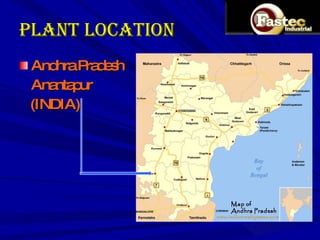
Plant location Andhra Pradesh Anantapur  (INDIA)
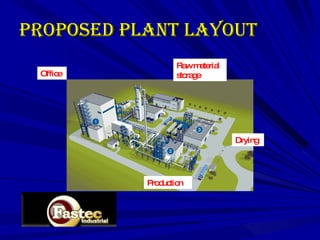
Proposed Plant layout Office Production Drying Raw material storage
OVERVIEW The bricks which currently most us aware is made up of the soil of specific quality, but due to which earth erosion takes place and we waste natural resources. This job is too laborious and involves cost. Natural seasons affect the quality and cost. This bricks creates environmental pollution.
OVERVIEW Helps to reduce the pollution Demand consumption and increasing cost  We come up with FLY ASH BRICKS  The main raw material is fly ash which is available in abundant quantity and free of cost at the thermal power station. Disposal of fly ash is headache. It is highly polluting material.
Scope of project Nearly 73% of India’s total installed power generation capacity is thermal, of which coal-based generation is 90% – the remaining comprising diesel, wind, gas, and steam.  The 85 utility thermal power stations, besides the several captive power plants, use bituminous and sub-bituminous coal and produce large quantities of fly ash.  High ash content (30%–50%) contributes to these large volumes of fly ash.
PROBLEMS OF FLY ASH It is a very difficult material to handle in dry state because it is very fine and readily airborne even in mild wind. It disturbs the ecology of the region, being a source of soil air and water pollution. Long inhalation of fly ash causes silicosis, fibrosis of lungs, bronchitis, pneumonitis etc.
PROBLEMS OF FLY ASH Flying fine particles of ash create great nuisance for people living near power stations, corrode structural surfaces, and affect horticulture.  Eventual settlement of fly ash particles over many hectares of land in the vicinity of power station brings about perceptible degeneration in soil characteristics.
NEED FOR UTILIZING / DISPOSING FLY ASH With the rapid rise in thermal generation, environmental pollution as a result of massive fly ash generation, poses a new problem. Fly ash is reported to cause ailments like allergic bronchitis, silicosis, and asthma. Fly ash contaminates surface water and may also have an effect on underground water, affects the aquatic life, is harmful for plants, and corrodes exposed metallic structures in its vicinity.
CURRENT FLYASH DISPOSAL PRACTICES AND EFFECTS At thermal power plants, fly ash is currently collected / disposed off by using wet or dry systems. In cases, where fly ash collection systems are not very efficient, a portion of it escapes into the atmosphere causing environmental pollution. In the wet system, fly ash is mixed with water and sluiced to settling ponds or dumping areas near the plant. Being cheaper than any other manner of fly ash removal, it is the widely used method at present in India
Product Description:  FLY ASH BLOCKS  Features:   Size of blocks is 290x185x125mm  Faster construction  Less mortar consumption  Most suitable for boundary walls  Plastering not required  Decorative, like stone masonry Ash content 26%  PLAIN AND CHEQUERED TILES Plain and chequered tiles 22mm thick are manufactured in different sizes and colors as per requirement.
ASH COLLECTION Ash can be collected in following categories:  DRY FLY ASH: Dry ash is collected from different rows of electrostatic precipitators. It is available in two different grades of fineness in silos for use as resource material by different users. BOTTOM ASH: Bottom ash is collected from the bottom of the boiler and transported to hydro bins and then ash mound for use in road embankment.  CONDITIONED FLY ASH: Conditioned fly ash is also available in ash mound for use in land fills and ash building products.
Operational Plan  &  HR Plan
Operational Plan & HR Plan  PLANT PARAMETERS  Capacity, Bricks /Yr.    1,26,00,000 Bricks / day   30,000 No. of Shifts / day   2 Working days / Yr.    300 Land Area,   2 Acer  
Production Plan First operation-50% of Capacity  ( 60,00,000 units) Production in batches One batch of 1000 bricks. Total 6000 batches yearly. Second year operation- 60% of capacity
RESOURCES MANPOWER Managerial  8 Skilled  32 Unskilled  12 RAW MATERIAL (Tonne per 1000 bricks)  Fly ash 2.5  Sand 0.4 Lime 0.35 Chemical accelerator 0.01
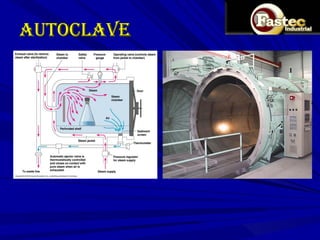
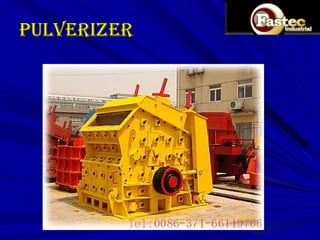
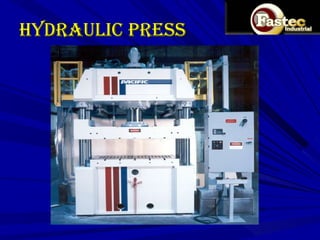
RESOURCES UTILITIES (Per 1000 bricks) Power, KWH 10.33  Water, KL 4  Coal , T 0.18   PLANT & MACHINERY   Hydraulic Press Hoists  Pulveriser Boilers Autoclave Curing chambers   ECONOMICS   Plant & Machinery 42,00,000 Licence Fees 4,00,000  Licence Period 10 Years
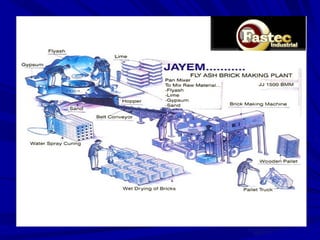
MANUFACTURING PROCESS The process involves wet mixing of fly ash, sand, lime and an accelerating agent.  The mixture is shaped into the standard size of bricks in a hydraulic press to pressures varying between 100 to 200 kg/cm², as against below 50 kg/cm2 for conventional bricks.  The moulded bricks are dried in two stages, i.e., atmospheric drying for a period of 24 hrs., followed by curing with steam in a steam chamber. Depending upon the temperature of steam available the curing time is scheduled as 6 hrs. between 95 to 105  o c.
 
TECHNOLOGY Technology for the project may be obtained from either the Central Fuel Research Institute, APSEB's Consulting Cell Or from the equipment suppliers. Technology agreements would preferably be entered into that guarantee the performance of the equipment, with equipment suppliers.
STRATEGIC PLAN
Demand And Supply Currently the demand for bricks is very high than the supply. D & S gap is 250 billion bricks per annum Raw material used for regular red bricks is limited. Strategic step: Introducing Fly Ash Bricks to reduce demand and supply gap. Subsidies and orders from govt.
Competitive strategies Colouring the bricks red Uniform in size, shape High strength Light in weight Good resistance to salinity and termite Water absorption is less
Pricing Strategies Penetration Initially Rs. 1000 per 1000 bricks. Later concession for large quantity buying.
Promotional Strategies Discounts on large buying Aggressive Selling Trade promotion Publicity Large volume of institutional sales
MARKETING  PLAN
Existing Market Scenario Market is dominated by red bricks. Current estimates show the gap between demand and supply of bricks to be of the order of 250 billion bricks per annum It is new product to the market. This project helps to reduce environment pollution.
Existing Market Scenario Use of this bricks results in savings in construction cost by 25%  These bricks are already getting popular with reputed Govt. agencies and builders.  This unit too requires a No Objection certificate from the AP Pollution Control Board.
Sales Target  We are going to sale 60,00,000 units of bricks first year. In second year the sales target will be 72,00,000 units of bricks.
Existing Users Gujarat Electricity Board Ahmedabad Urban Development Authority Ahmedabad Municipal Corporation etc
STP Strategy  Target Market Builders Consultants Architects Govt. Positioning  Positioned as Environmental Clearance
STP Strategy  Segmentation  Based on the geographic As our plant will be located in AP area, firstly going to capture this area. Based on the Demographic Name of Company: Fastec Industrial Product Brand Name: Flytec Bricks
Financial  Plan
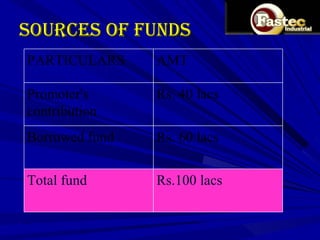
Sources of funds PARTICULARS AMT Promoter's  contribution Rs. 40 lacs Borrowed fund Rs. 60 lacs Total fund Rs.100 lacs
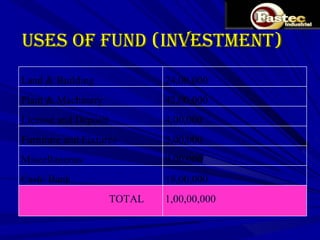
Uses of fund (INVESTMENT) Land & Building 24,00,000 Plant & Machinery 42,00,000 License and Deposit 4,00,000 Furniture and Fixtures 3,00,000 Miscellaneous  9,00,000 Cash/ Bank 18,00,000 TOTAL 1,00,00,000
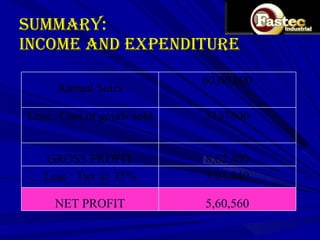
SUMMARY: INCOME AND EXPENDITURE Annual Sales 60,00,000 Less : Cost of goods sold 5137600 GROSS PROFIT 8,62,400 Less : Tax @ 35% 3,01,840 NET PROFIT 5,60,560
Financial Ratios ROI  5.61% Profit Margin  9.34% B.E.P.  2nd year.
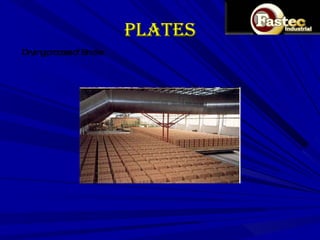
plates Drying process of Bricks
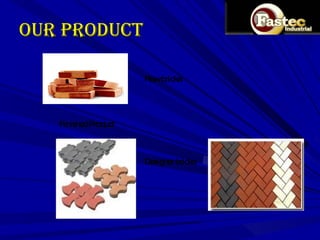
Our product Raw bricks Finished Product Designer bricks
autoclave
pulverizer
Hydraulic press
CONCLUSION FASTEC with its dedicated efforts is trying to emerge as an organization, which can empower its fellowmen to eliminate environmental pollutants.  FASTEC  in the long run will try its best to generate an environment a pollution free environment.
THANK YOU

Fly Ash Business Plan

  • 1.
    FASTEC INDUSTRIAL “AnEnvironment Friendly Project” Presentation by: Gagan Jangale. (584) Harish Nargundkar. (589) Kiran Ambekar. (592) Kiran Kitturkar. (593) BUSSINESS PLAN ON K.L.S INSTITUTE OF MANAGEMENT EDUCATION & RESEARCH
  • 2.
    PROMOTORS Name Qualification KIRAN AMBEKAR BSc, MBA (Marketing) HARISH NARGUNDKAR Bcom, MBA (Marketing) GAGAN JANGALE B.E., MBA ( HR & Marketing) KIRAN KITTURKAR Bcom, MBA (Finance)
  • 3.
    EXECUTIVE SUMMARY INTRODUCTION:We are introducing the business of manufacturing Fly Ash Bricks with a view point of eliminating Fly Ash as an Environment Pollutant which provides the huge benefit to organization as well as to environment.
  • 4.
    MISSION: “ Toprovide and promote business and services that strengthen the brick manufacturing sector for the ultimate benefit of its customers and society." VISION: To be in the forefront of creating awareness about environment, & to be the largest player in the field of fly-ash brick production.
  • 5.
    Plant location AndhraPradesh Anantapur (INDIA)
  • 6.
    Proposed Plant layoutOffice Production Drying Raw material storage
  • 7.
    OVERVIEW The brickswhich currently most us aware is made up of the soil of specific quality, but due to which earth erosion takes place and we waste natural resources. This job is too laborious and involves cost. Natural seasons affect the quality and cost. This bricks creates environmental pollution.
  • 8.
    OVERVIEW Helps toreduce the pollution Demand consumption and increasing cost We come up with FLY ASH BRICKS The main raw material is fly ash which is available in abundant quantity and free of cost at the thermal power station. Disposal of fly ash is headache. It is highly polluting material.
  • 9.
    Scope of projectNearly 73% of India’s total installed power generation capacity is thermal, of which coal-based generation is 90% – the remaining comprising diesel, wind, gas, and steam. The 85 utility thermal power stations, besides the several captive power plants, use bituminous and sub-bituminous coal and produce large quantities of fly ash. High ash content (30%–50%) contributes to these large volumes of fly ash.
  • 10.
    PROBLEMS OF FLYASH It is a very difficult material to handle in dry state because it is very fine and readily airborne even in mild wind. It disturbs the ecology of the region, being a source of soil air and water pollution. Long inhalation of fly ash causes silicosis, fibrosis of lungs, bronchitis, pneumonitis etc.
  • 11.
    PROBLEMS OF FLYASH Flying fine particles of ash create great nuisance for people living near power stations, corrode structural surfaces, and affect horticulture. Eventual settlement of fly ash particles over many hectares of land in the vicinity of power station brings about perceptible degeneration in soil characteristics.
  • 12.
    NEED FOR UTILIZING/ DISPOSING FLY ASH With the rapid rise in thermal generation, environmental pollution as a result of massive fly ash generation, poses a new problem. Fly ash is reported to cause ailments like allergic bronchitis, silicosis, and asthma. Fly ash contaminates surface water and may also have an effect on underground water, affects the aquatic life, is harmful for plants, and corrodes exposed metallic structures in its vicinity.
  • 13.
    CURRENT FLYASH DISPOSALPRACTICES AND EFFECTS At thermal power plants, fly ash is currently collected / disposed off by using wet or dry systems. In cases, where fly ash collection systems are not very efficient, a portion of it escapes into the atmosphere causing environmental pollution. In the wet system, fly ash is mixed with water and sluiced to settling ponds or dumping areas near the plant. Being cheaper than any other manner of fly ash removal, it is the widely used method at present in India
  • 14.
    Product Description: FLY ASH BLOCKS Features: Size of blocks is 290x185x125mm Faster construction Less mortar consumption Most suitable for boundary walls Plastering not required Decorative, like stone masonry Ash content 26% PLAIN AND CHEQUERED TILES Plain and chequered tiles 22mm thick are manufactured in different sizes and colors as per requirement.
  • 15.
    ASH COLLECTION Ashcan be collected in following categories: DRY FLY ASH: Dry ash is collected from different rows of electrostatic precipitators. It is available in two different grades of fineness in silos for use as resource material by different users. BOTTOM ASH: Bottom ash is collected from the bottom of the boiler and transported to hydro bins and then ash mound for use in road embankment. CONDITIONED FLY ASH: Conditioned fly ash is also available in ash mound for use in land fills and ash building products.
  • 16.
  • 17.
    Operational Plan &HR Plan PLANT PARAMETERS Capacity, Bricks /Yr. 1,26,00,000 Bricks / day 30,000 No. of Shifts / day 2 Working days / Yr. 300 Land Area, 2 Acer  
  • 18.
    Production Plan Firstoperation-50% of Capacity ( 60,00,000 units) Production in batches One batch of 1000 bricks. Total 6000 batches yearly. Second year operation- 60% of capacity
  • 19.
    RESOURCES MANPOWER Managerial 8 Skilled 32 Unskilled 12 RAW MATERIAL (Tonne per 1000 bricks) Fly ash 2.5  Sand 0.4 Lime 0.35 Chemical accelerator 0.01
  • 20.
    RESOURCES UTILITIES (Per1000 bricks) Power, KWH 10.33  Water, KL 4  Coal , T 0.18 PLANT & MACHINERY   Hydraulic Press Hoists  Pulveriser Boilers Autoclave Curing chambers   ECONOMICS   Plant & Machinery 42,00,000 Licence Fees 4,00,000  Licence Period 10 Years
  • 21.
    MANUFACTURING PROCESS Theprocess involves wet mixing of fly ash, sand, lime and an accelerating agent. The mixture is shaped into the standard size of bricks in a hydraulic press to pressures varying between 100 to 200 kg/cm², as against below 50 kg/cm2 for conventional bricks. The moulded bricks are dried in two stages, i.e., atmospheric drying for a period of 24 hrs., followed by curing with steam in a steam chamber. Depending upon the temperature of steam available the curing time is scheduled as 6 hrs. between 95 to 105 o c.
  • 22.
  • 23.
    TECHNOLOGY Technology forthe project may be obtained from either the Central Fuel Research Institute, APSEB's Consulting Cell Or from the equipment suppliers. Technology agreements would preferably be entered into that guarantee the performance of the equipment, with equipment suppliers.
  • 24.
  • 25.
    Demand And SupplyCurrently the demand for bricks is very high than the supply. D & S gap is 250 billion bricks per annum Raw material used for regular red bricks is limited. Strategic step: Introducing Fly Ash Bricks to reduce demand and supply gap. Subsidies and orders from govt.
  • 26.
    Competitive strategies Colouringthe bricks red Uniform in size, shape High strength Light in weight Good resistance to salinity and termite Water absorption is less
  • 27.
    Pricing Strategies PenetrationInitially Rs. 1000 per 1000 bricks. Later concession for large quantity buying.
  • 28.
    Promotional Strategies Discountson large buying Aggressive Selling Trade promotion Publicity Large volume of institutional sales
  • 29.
  • 30.
    Existing Market ScenarioMarket is dominated by red bricks. Current estimates show the gap between demand and supply of bricks to be of the order of 250 billion bricks per annum It is new product to the market. This project helps to reduce environment pollution.
  • 31.
    Existing Market ScenarioUse of this bricks results in savings in construction cost by 25% These bricks are already getting popular with reputed Govt. agencies and builders. This unit too requires a No Objection certificate from the AP Pollution Control Board.
  • 32.
    Sales Target We are going to sale 60,00,000 units of bricks first year. In second year the sales target will be 72,00,000 units of bricks.
  • 33.
    Existing Users GujaratElectricity Board Ahmedabad Urban Development Authority Ahmedabad Municipal Corporation etc
  • 34.
    STP Strategy Target Market Builders Consultants Architects Govt. Positioning Positioned as Environmental Clearance
  • 35.
    STP Strategy Segmentation Based on the geographic As our plant will be located in AP area, firstly going to capture this area. Based on the Demographic Name of Company: Fastec Industrial Product Brand Name: Flytec Bricks
  • 36.
  • 37.
    Sources of fundsPARTICULARS AMT Promoter's contribution Rs. 40 lacs Borrowed fund Rs. 60 lacs Total fund Rs.100 lacs
  • 38.
    Uses of fund(INVESTMENT) Land & Building 24,00,000 Plant & Machinery 42,00,000 License and Deposit 4,00,000 Furniture and Fixtures 3,00,000 Miscellaneous 9,00,000 Cash/ Bank 18,00,000 TOTAL 1,00,00,000
  • 39.
    SUMMARY: INCOME ANDEXPENDITURE Annual Sales 60,00,000 Less : Cost of goods sold 5137600 GROSS PROFIT 8,62,400 Less : Tax @ 35% 3,01,840 NET PROFIT 5,60,560
  • 40.
    Financial Ratios ROI 5.61% Profit Margin 9.34% B.E.P. 2nd year.
  • 41.
  • 42.
    Our product Rawbricks Finished Product Designer bricks
  • 43.
  • 44.
  • 45.
  • 46.
    CONCLUSION FASTEC withits dedicated efforts is trying to emerge as an organization, which can empower its fellowmen to eliminate environmental pollutants. FASTEC in the long run will try its best to generate an environment a pollution free environment.
  • 47.