Flow and Error control Protocols
Contributions -
❏ Shubham Singh (22BCY10185)
❏ Rohan Mishra (22BCY10173)
❏ Anipra Pandya (22BCY10172)
❏ Priyanshu Gautam (22BCY10141)
❏ Adhil Ali (22BCY10163)
Stop and Wait, Stop and Wait ARQ
Go back-N ARQ, Selective repeat ARQ.
Introduction
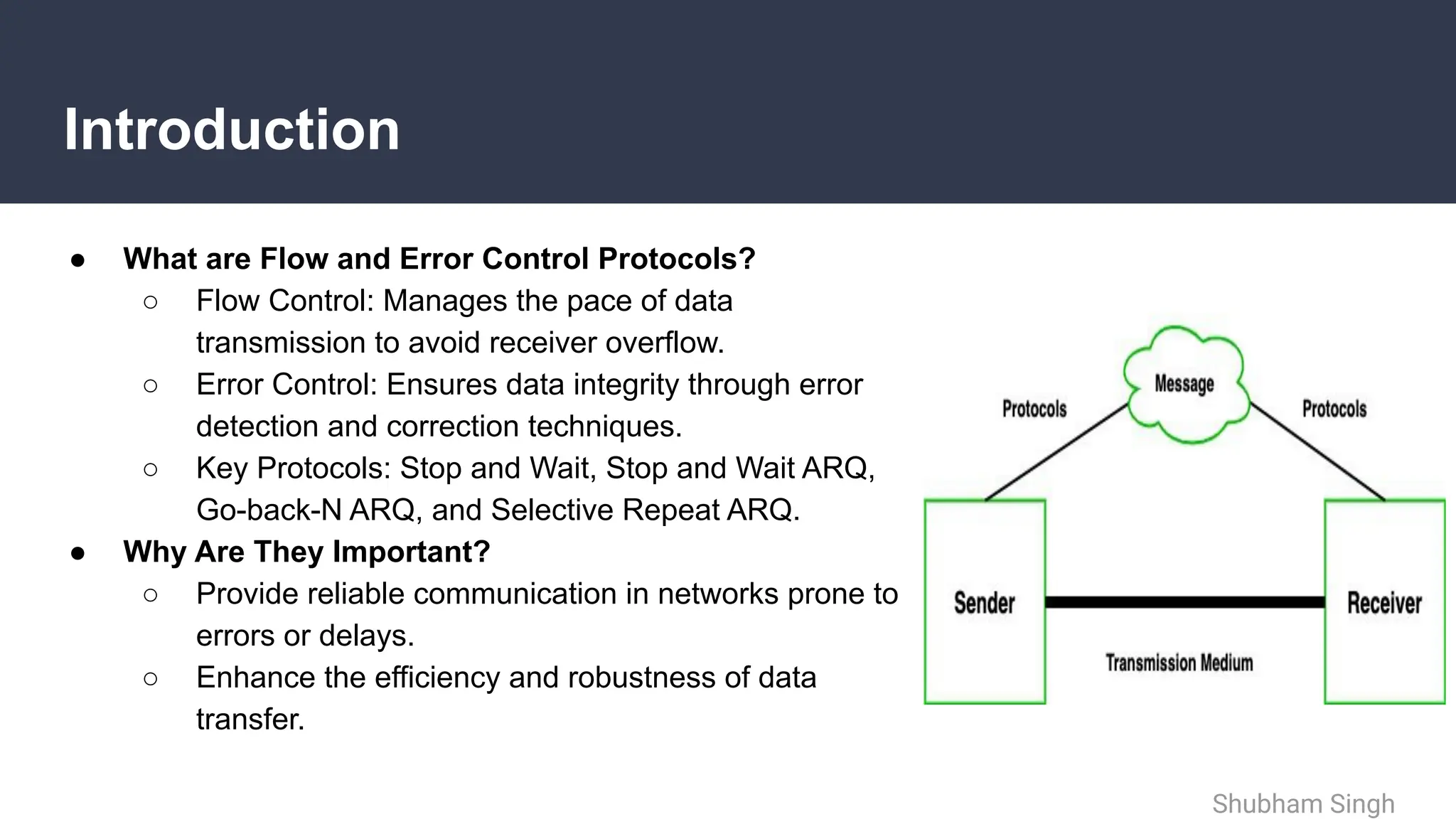
● What are Flow and Error Control Protocols?
○ Flow Control: Manages the pace of data
transmission to avoid receiver overflow.
○ Error Control: Ensures data integrity through error
detection and correction techniques.
○ Key Protocols: Stop and Wait, Stop and Wait ARQ,
Go-back-N ARQ, and Selective Repeat ARQ.
● Why Are They Important?
○ Provide reliable communication in networks prone to
errors or delays.
○ Enhance the efficiency and robustness of data
transfer.
Shubham Singh
Stop and Wait Protocol
Overview:
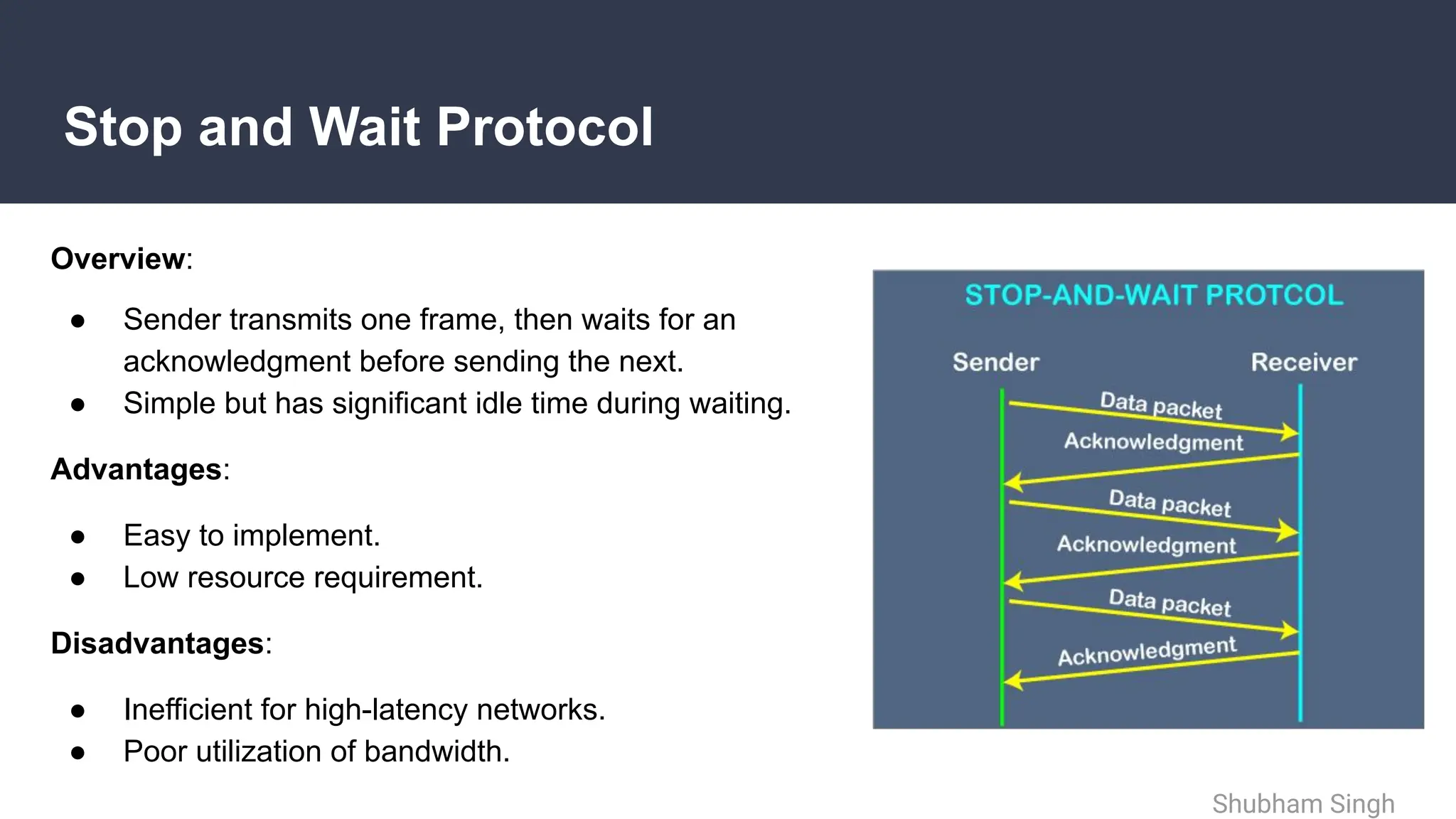
● Sender transmits one frame, then waits for an
acknowledgment before sending the next.
● Simple but has significant idle time during waiting.
Advantages:
● Easy to implement.
● Low resource requirement.
Disadvantages:
● Inefficient for high-latency networks.
● Poor utilization of bandwidth.
Shubham Singh
Stop and Wait ARQ
● Overview:
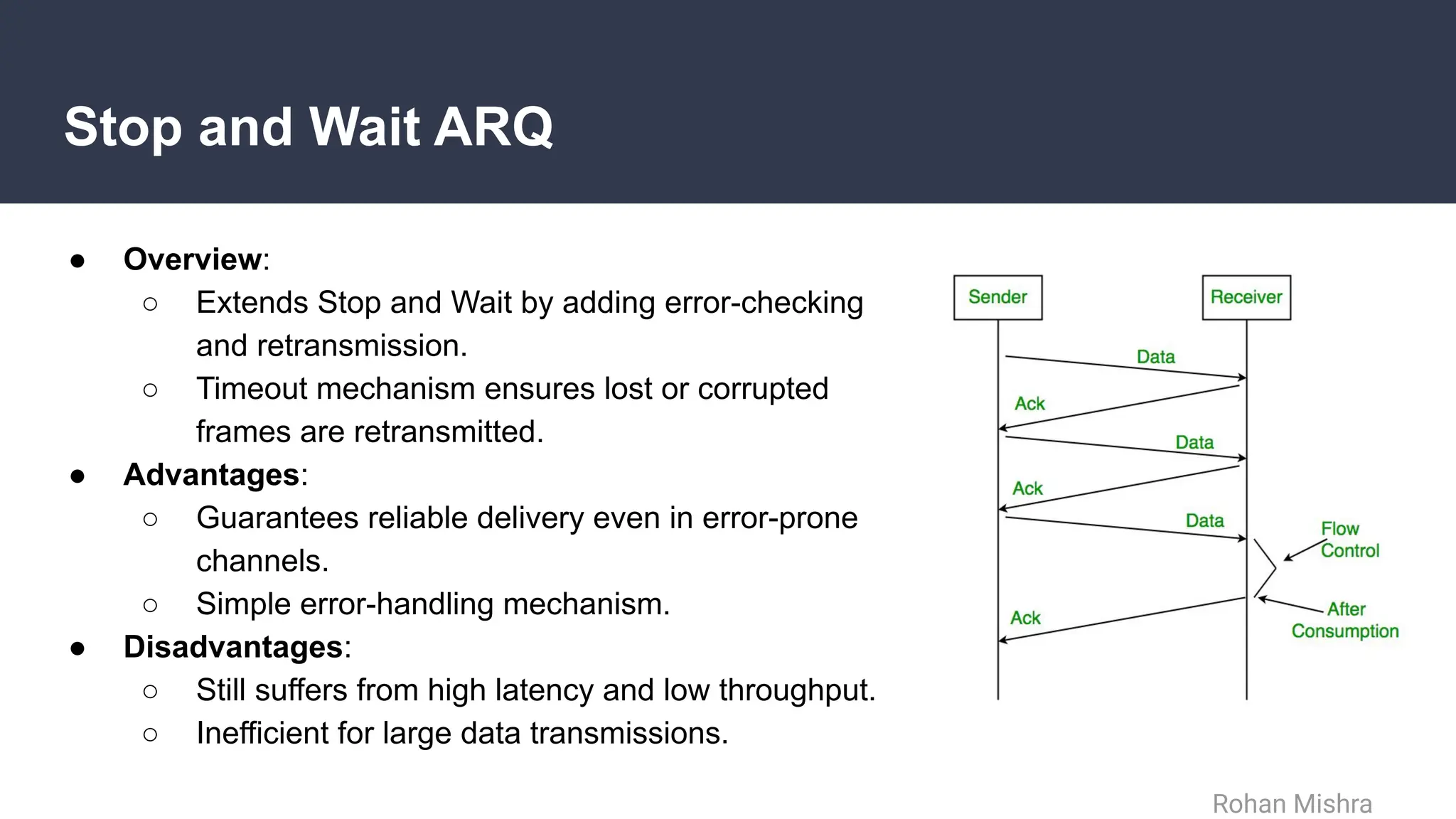
○ Extends Stop and Wait by adding error-checking
and retransmission.
○ Timeout mechanism ensures lost or corrupted
frames are retransmitted.
● Advantages:
○ Guarantees reliable delivery even in error-prone
channels.
○ Simple error-handling mechanism.
● Disadvantages:
○ Still suffers from high latency and low throughput.
○ Inefficient for large data transmissions.
Rohan Mishra
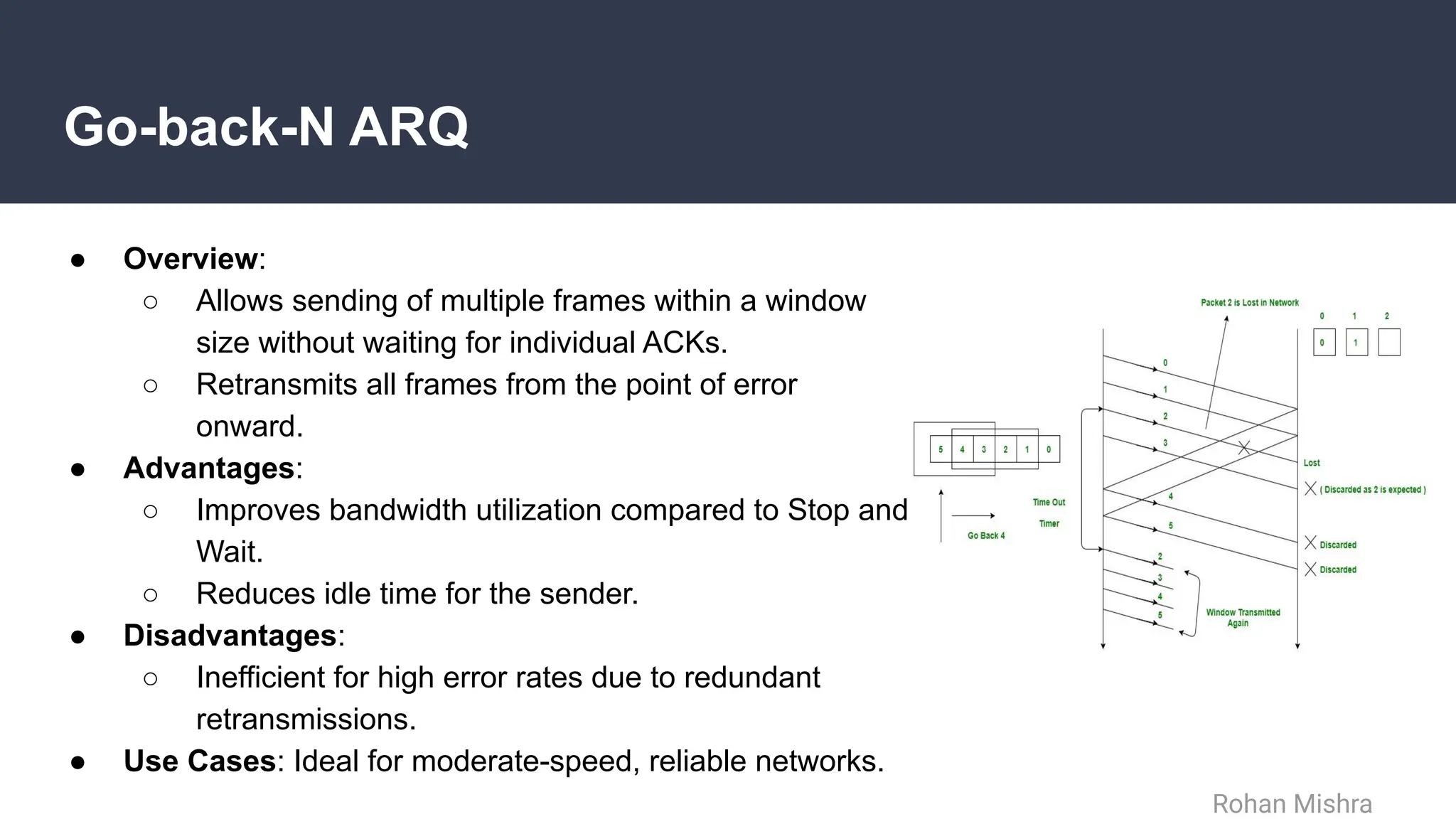
Go-back-N ARQ
● Overview:
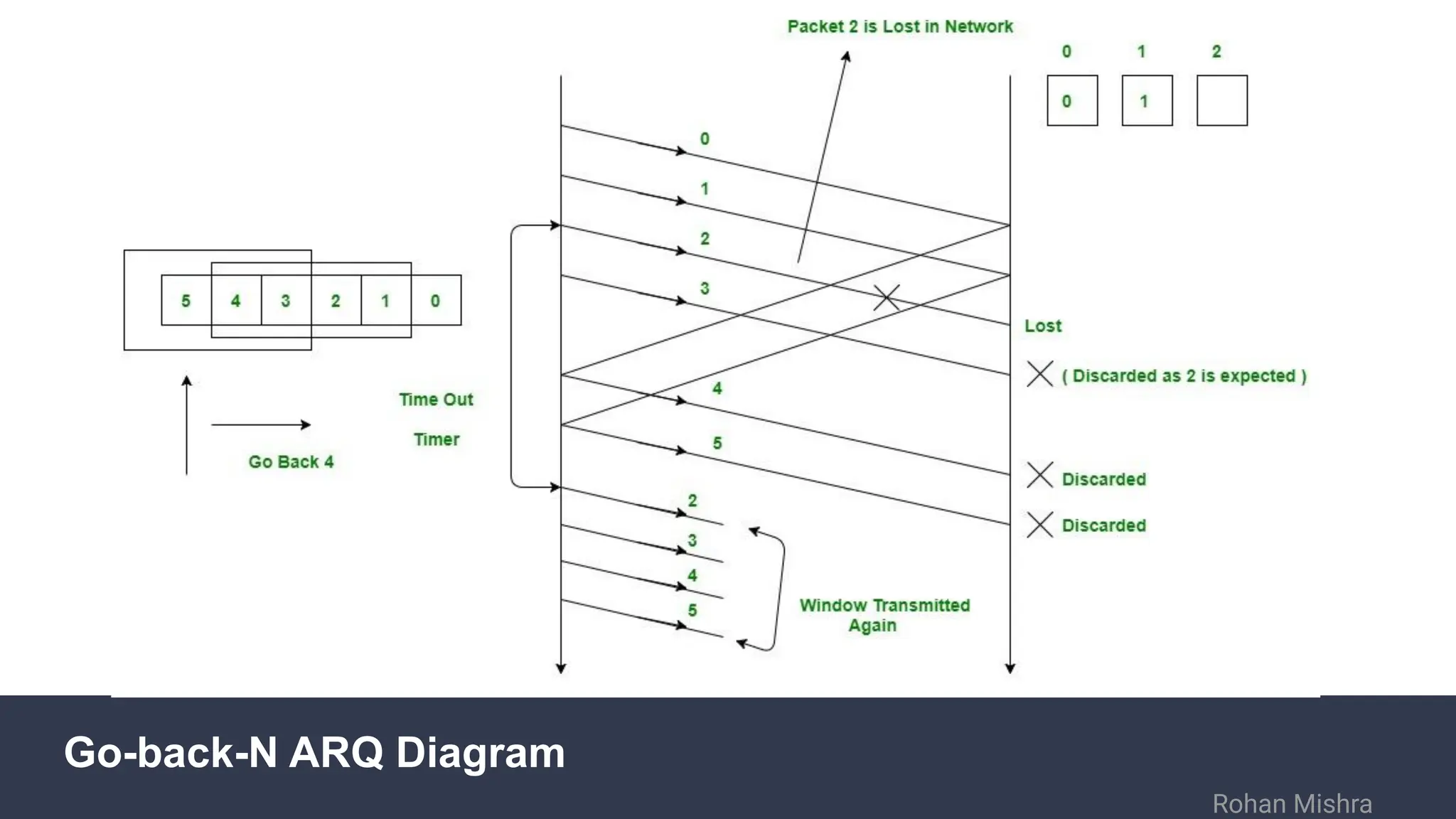
○ Allows sending of multiple frames within a window
size without waiting for individual ACKs.
○ Retransmits all frames from the point of error
onward.
● Advantages:
○ Improves bandwidth utilization compared to Stop and
Wait.
○ Reduces idle time for the sender.
● Disadvantages:
○ Inefficient for high error rates due to redundant
retransmissions.
● Use Cases: Ideal for moderate-speed, reliable networks.
Rohan Mishra
Go-back-N ARQ Diagram
Rohan Mishra
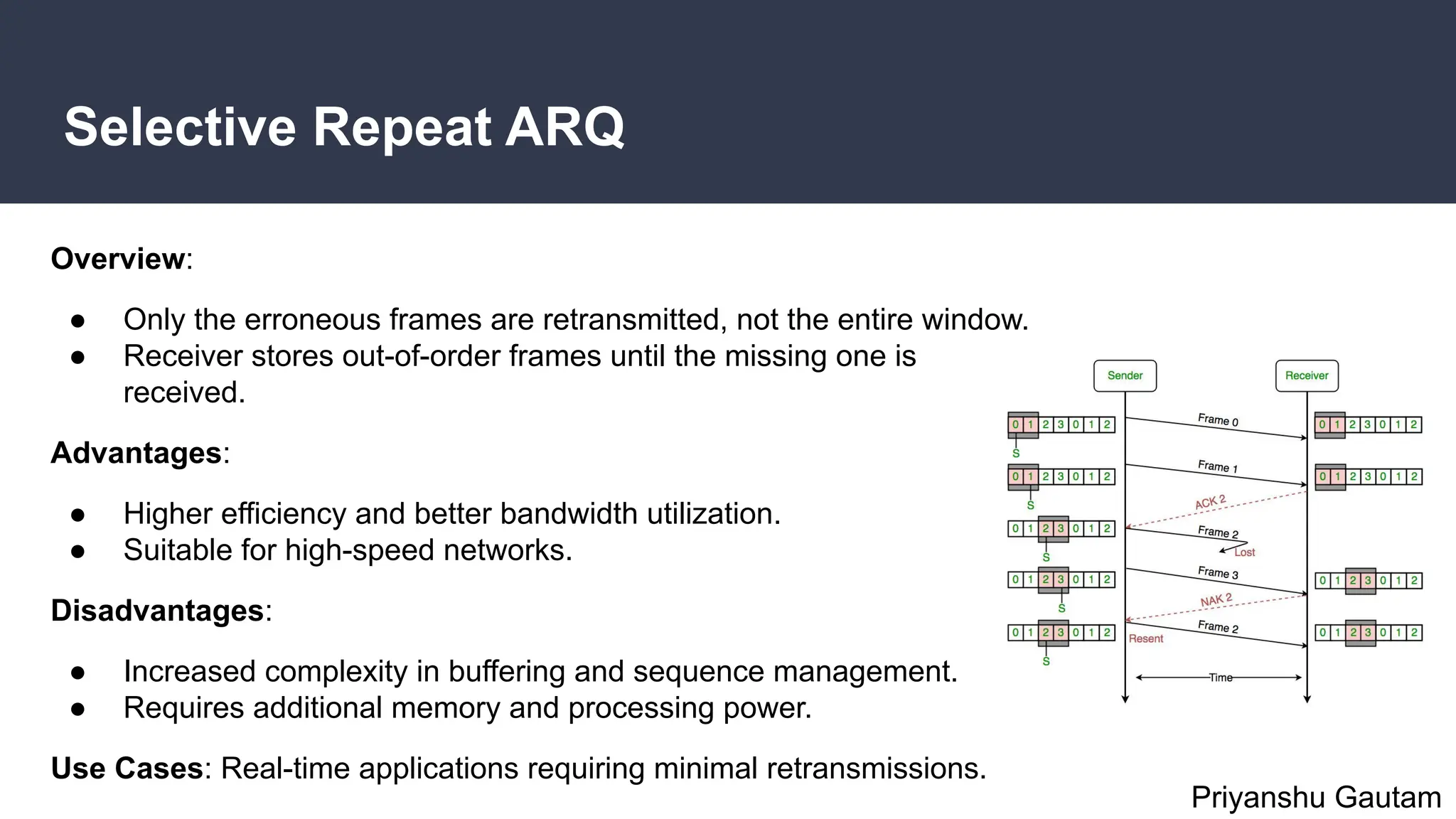
Selective Repeat ARQ
Overview:
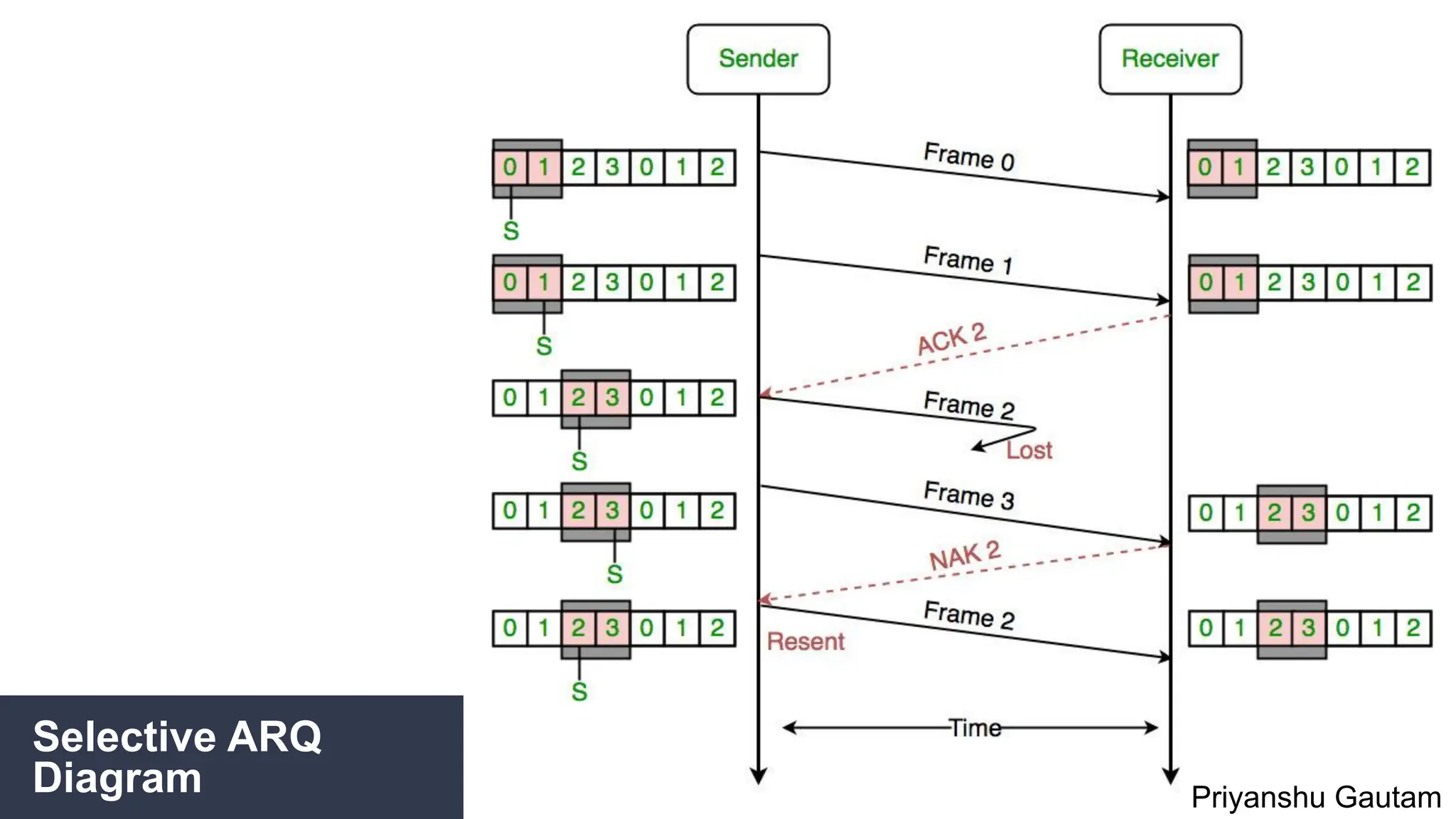
● Only the erroneous frames are retransmitted, not the entire window.
● Receiver stores out-of-order frames until the missing one is
received.
Advantages:
● Higher efficiency and better bandwidth utilization.
● Suitable for high-speed networks.
Disadvantages:
● Increased complexity in buffering and sequence management.
● Requires additional memory and processing power.
Use Cases: Real-time applications requiring minimal retransmissions.
Priyanshu Gautam
Selective ARQ
Diagram Priyanshu Gautam
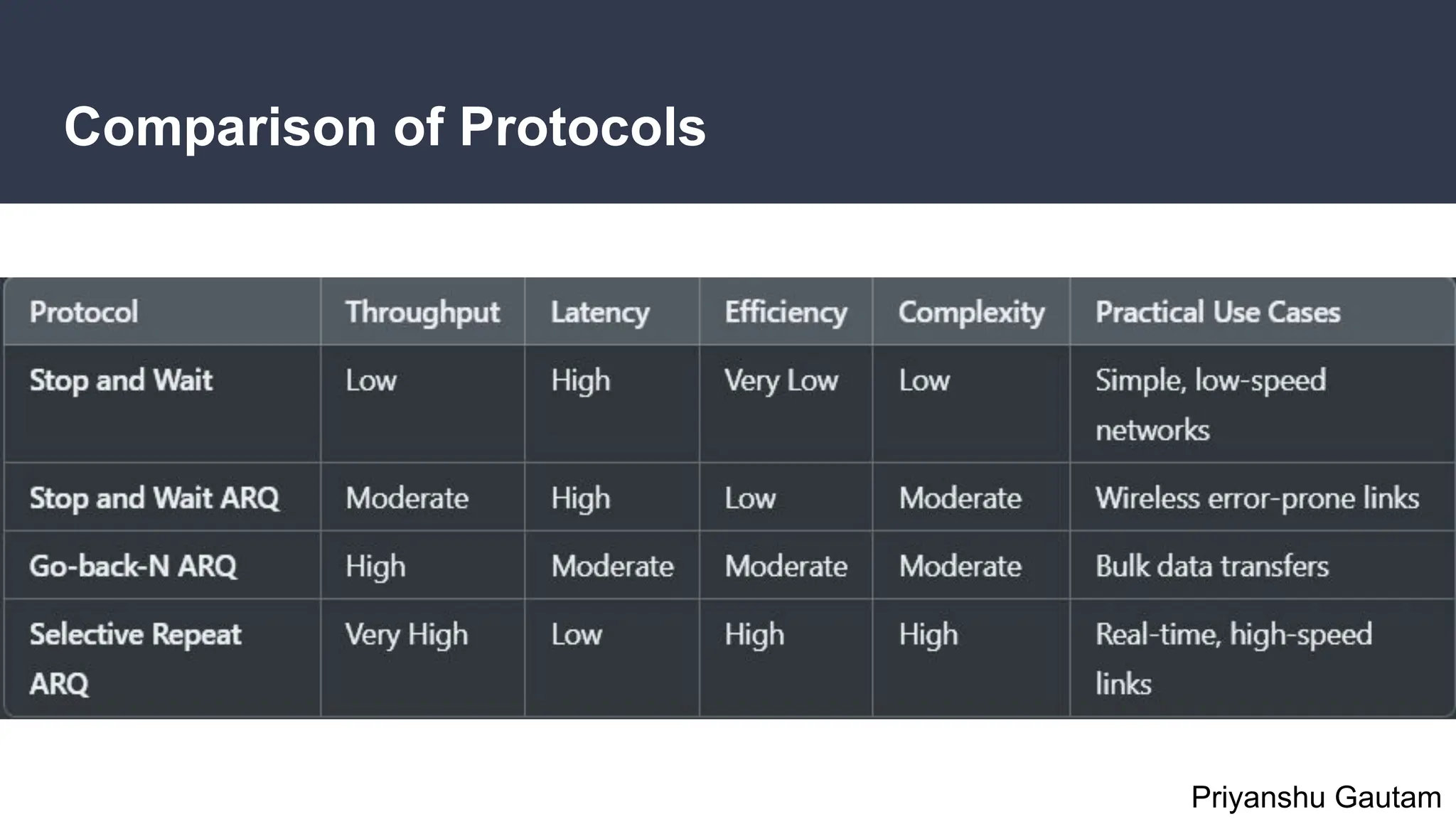
Comparison of Protocols
Priyanshu Gautam
Real-World Applications
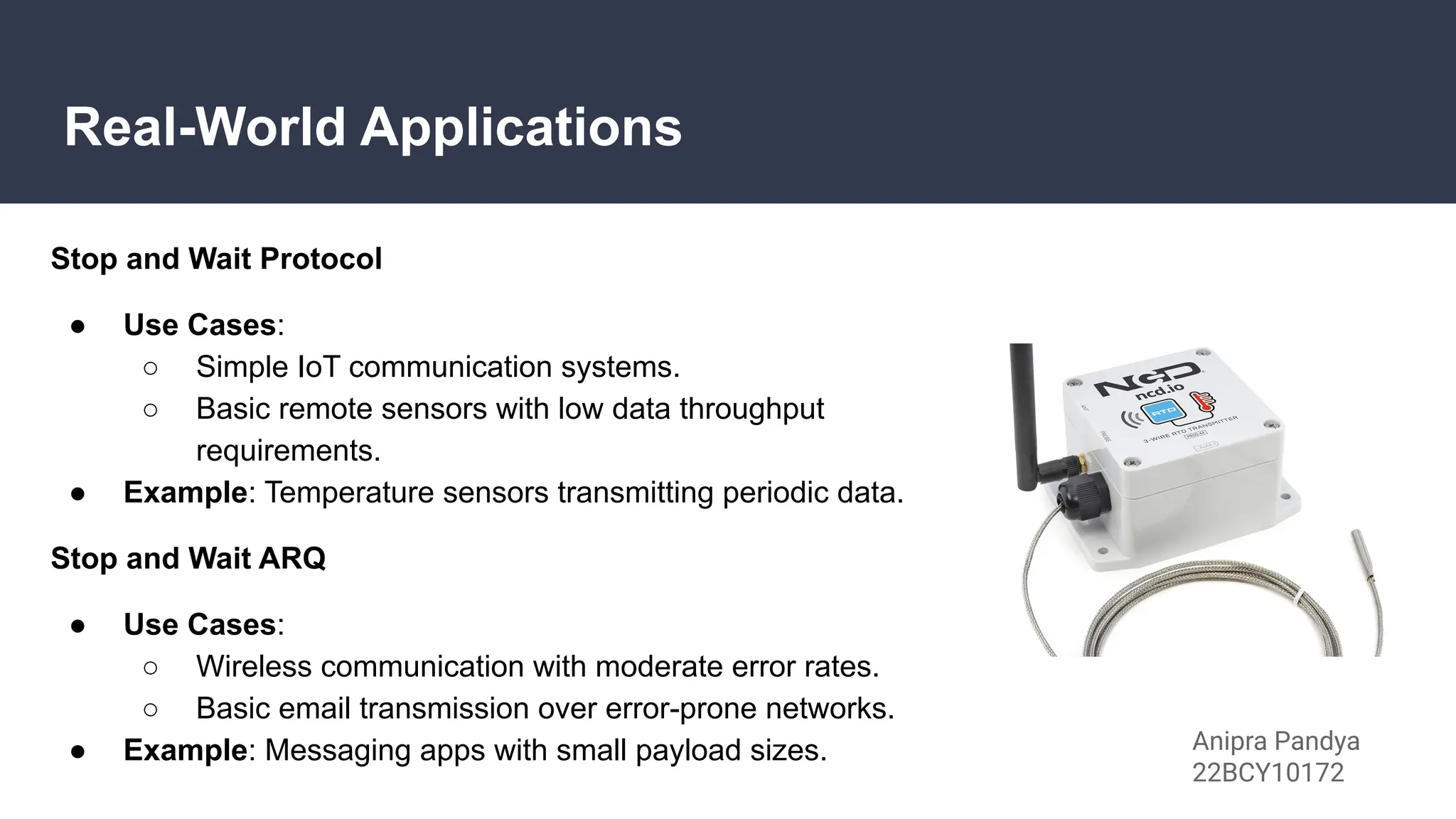
Stop and Wait Protocol
● Use Cases:
○ Simple IoT communication systems.
○ Basic remote sensors with low data throughput
requirements.
● Example: Temperature sensors transmitting periodic data.
Stop and Wait ARQ
● Use Cases:
○ Wireless communication with moderate error rates.
○ Basic email transmission over error-prone networks.
● Example: Messaging apps with small payload sizes. Anipra Pandya
22BCY10172
Real-World Applications (Cont.)
Go-back-N ARQ
● Use Cases:
○ High-latency systems requiring bulk data transfer.
○ File transfers in moderately reliable networks.
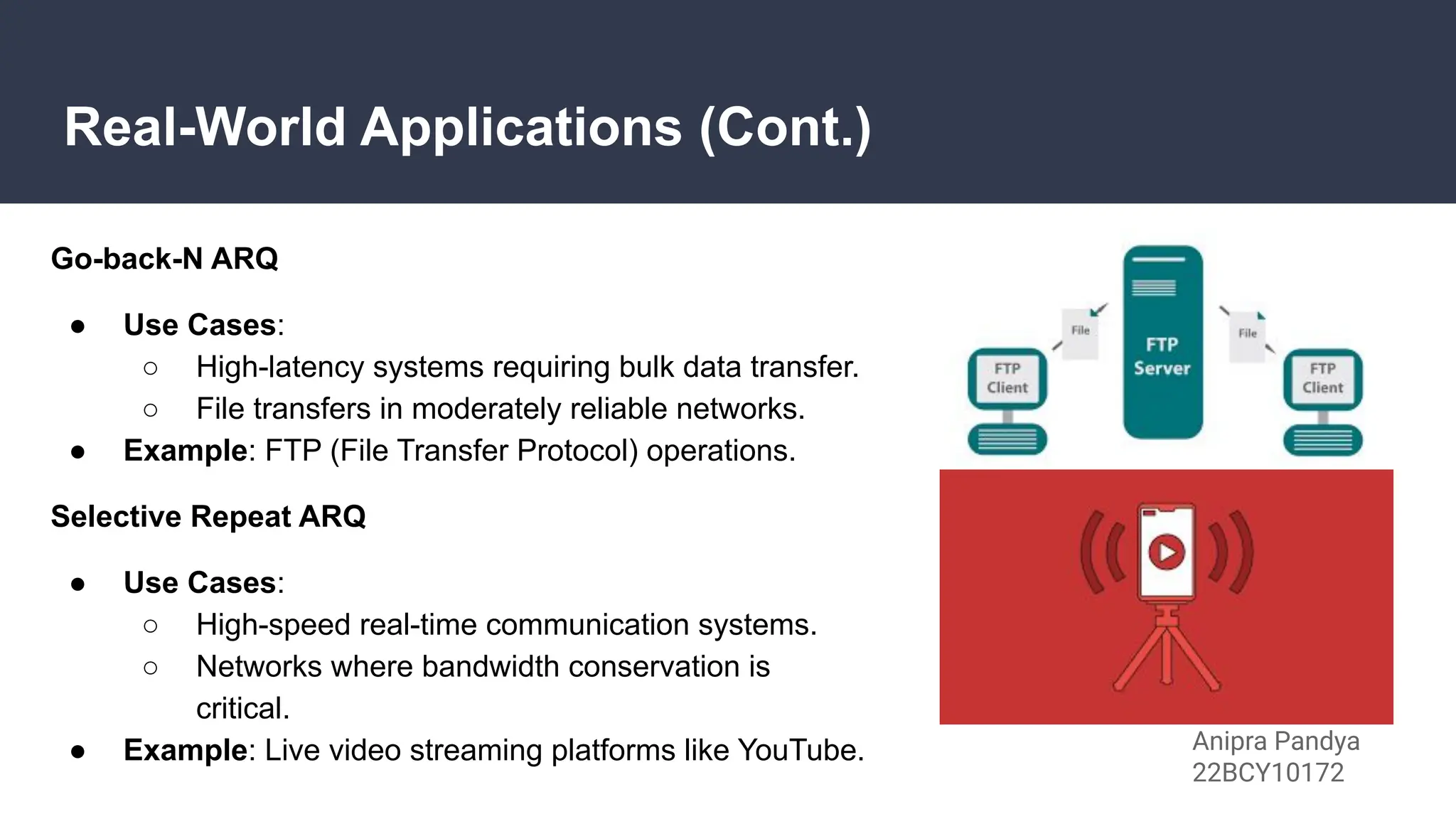
● Example: FTP (File Transfer Protocol) operations.
Selective Repeat ARQ
● Use Cases:
○ High-speed real-time communication systems.
○ Networks where bandwidth conservation is
critical.
● Example: Live video streaming platforms like YouTube. Anipra Pandya
22BCY10172
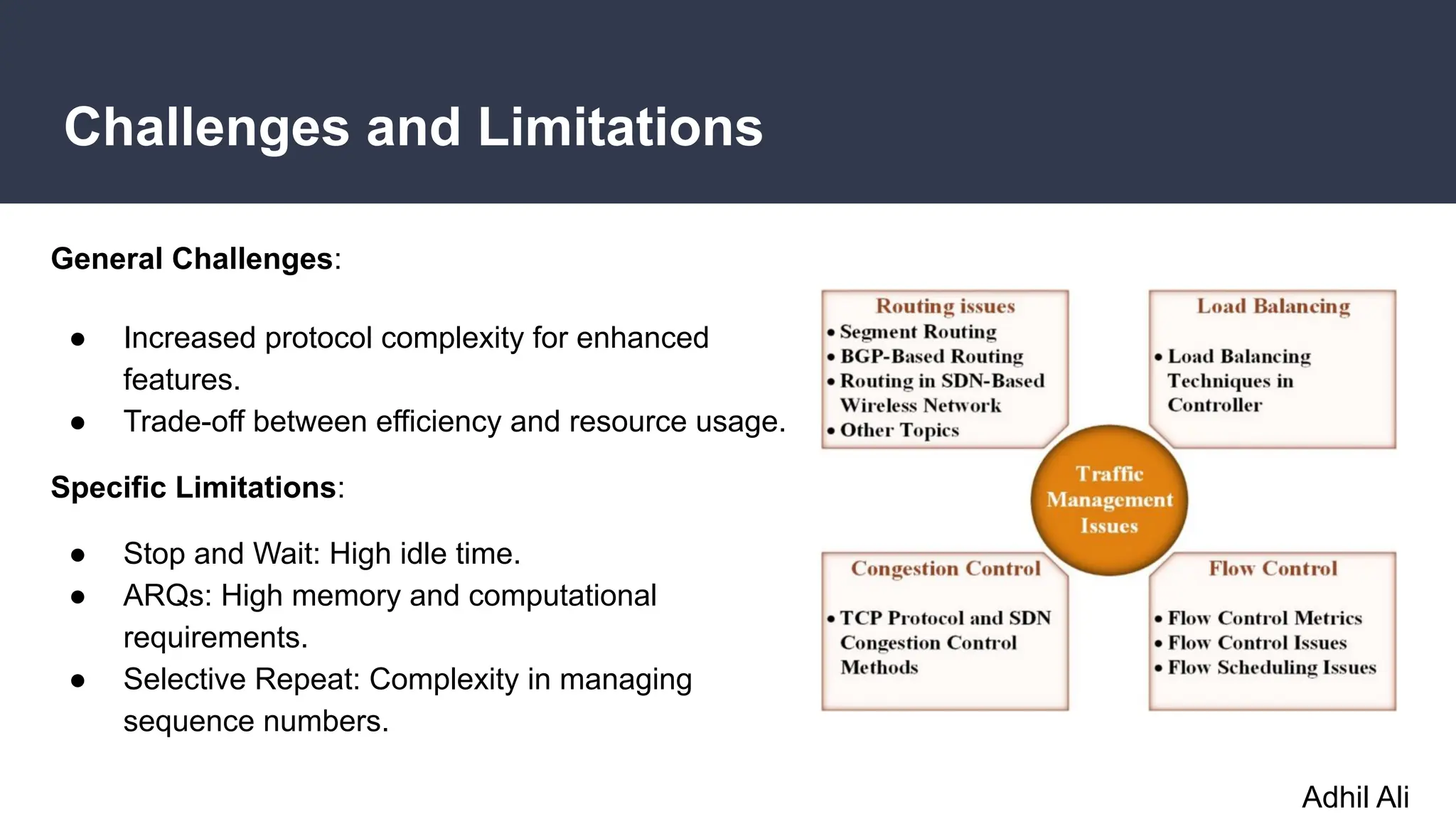
Challenges and Limitations
General Challenges:
● Increased protocol complexity for enhanced
features.
● Trade-off between efficiency and resource usage.
Specific Limitations:
● Stop and Wait: High idle time.
● ARQs: High memory and computational
requirements.
● Selective Repeat: Complexity in managing
sequence numbers.
Adhil Ali
Conclusion
● Summary:
○ Flow and error control protocols ensure efficient and
reliable communication.
○ Each protocol has specific strengths and weaknesses
tailored to network conditions.
● Key Takeaway: The choice of protocol depends on the
trade-off between efficiency, complexity, and reliability.
● Future Trends:
○ Adaptive error
control mechanisms.
○ Integration with AI for
predictive
retransmission.
Adhil Ali

Flow and Error Control Protocols SnW, SnW ARQ, Goback-N ARQ, Selective R ARQ

  • 1.
    Flow and Errorcontrol Protocols Contributions - ❏ Shubham Singh (22BCY10185) ❏ Rohan Mishra (22BCY10173) ❏ Anipra Pandya (22BCY10172) ❏ Priyanshu Gautam (22BCY10141) ❏ Adhil Ali (22BCY10163) Stop and Wait, Stop and Wait ARQ Go back-N ARQ, Selective repeat ARQ.
  • 2.
    Introduction ● What areFlow and Error Control Protocols? ○ Flow Control: Manages the pace of data transmission to avoid receiver overflow. ○ Error Control: Ensures data integrity through error detection and correction techniques. ○ Key Protocols: Stop and Wait, Stop and Wait ARQ, Go-back-N ARQ, and Selective Repeat ARQ. ● Why Are They Important? ○ Provide reliable communication in networks prone to errors or delays. ○ Enhance the efficiency and robustness of data transfer. Shubham Singh
  • 3.
    Stop and WaitProtocol Overview: ● Sender transmits one frame, then waits for an acknowledgment before sending the next. ● Simple but has significant idle time during waiting. Advantages: ● Easy to implement. ● Low resource requirement. Disadvantages: ● Inefficient for high-latency networks. ● Poor utilization of bandwidth. Shubham Singh
  • 4.
    Stop and WaitARQ ● Overview: ○ Extends Stop and Wait by adding error-checking and retransmission. ○ Timeout mechanism ensures lost or corrupted frames are retransmitted. ● Advantages: ○ Guarantees reliable delivery even in error-prone channels. ○ Simple error-handling mechanism. ● Disadvantages: ○ Still suffers from high latency and low throughput. ○ Inefficient for large data transmissions. Rohan Mishra
  • 5.
    Go-back-N ARQ ● Overview: ○Allows sending of multiple frames within a window size without waiting for individual ACKs. ○ Retransmits all frames from the point of error onward. ● Advantages: ○ Improves bandwidth utilization compared to Stop and Wait. ○ Reduces idle time for the sender. ● Disadvantages: ○ Inefficient for high error rates due to redundant retransmissions. ● Use Cases: Ideal for moderate-speed, reliable networks. Rohan Mishra
  • 6.
  • 7.
    Selective Repeat ARQ Overview: ●Only the erroneous frames are retransmitted, not the entire window. ● Receiver stores out-of-order frames until the missing one is received. Advantages: ● Higher efficiency and better bandwidth utilization. ● Suitable for high-speed networks. Disadvantages: ● Increased complexity in buffering and sequence management. ● Requires additional memory and processing power. Use Cases: Real-time applications requiring minimal retransmissions. Priyanshu Gautam
  • 8.
  • 9.
  • 10.
    Real-World Applications Stop andWait Protocol ● Use Cases: ○ Simple IoT communication systems. ○ Basic remote sensors with low data throughput requirements. ● Example: Temperature sensors transmitting periodic data. Stop and Wait ARQ ● Use Cases: ○ Wireless communication with moderate error rates. ○ Basic email transmission over error-prone networks. ● Example: Messaging apps with small payload sizes. Anipra Pandya 22BCY10172
  • 11.
    Real-World Applications (Cont.) Go-back-NARQ ● Use Cases: ○ High-latency systems requiring bulk data transfer. ○ File transfers in moderately reliable networks. ● Example: FTP (File Transfer Protocol) operations. Selective Repeat ARQ ● Use Cases: ○ High-speed real-time communication systems. ○ Networks where bandwidth conservation is critical. ● Example: Live video streaming platforms like YouTube. Anipra Pandya 22BCY10172
  • 12.
    Challenges and Limitations GeneralChallenges: ● Increased protocol complexity for enhanced features. ● Trade-off between efficiency and resource usage. Specific Limitations: ● Stop and Wait: High idle time. ● ARQs: High memory and computational requirements. ● Selective Repeat: Complexity in managing sequence numbers. Adhil Ali
  • 13.
    Conclusion ● Summary: ○ Flowand error control protocols ensure efficient and reliable communication. ○ Each protocol has specific strengths and weaknesses tailored to network conditions. ● Key Takeaway: The choice of protocol depends on the trade-off between efficiency, complexity, and reliability. ● Future Trends: ○ Adaptive error control mechanisms. ○ Integration with AI for predictive retransmission. Adhil Ali