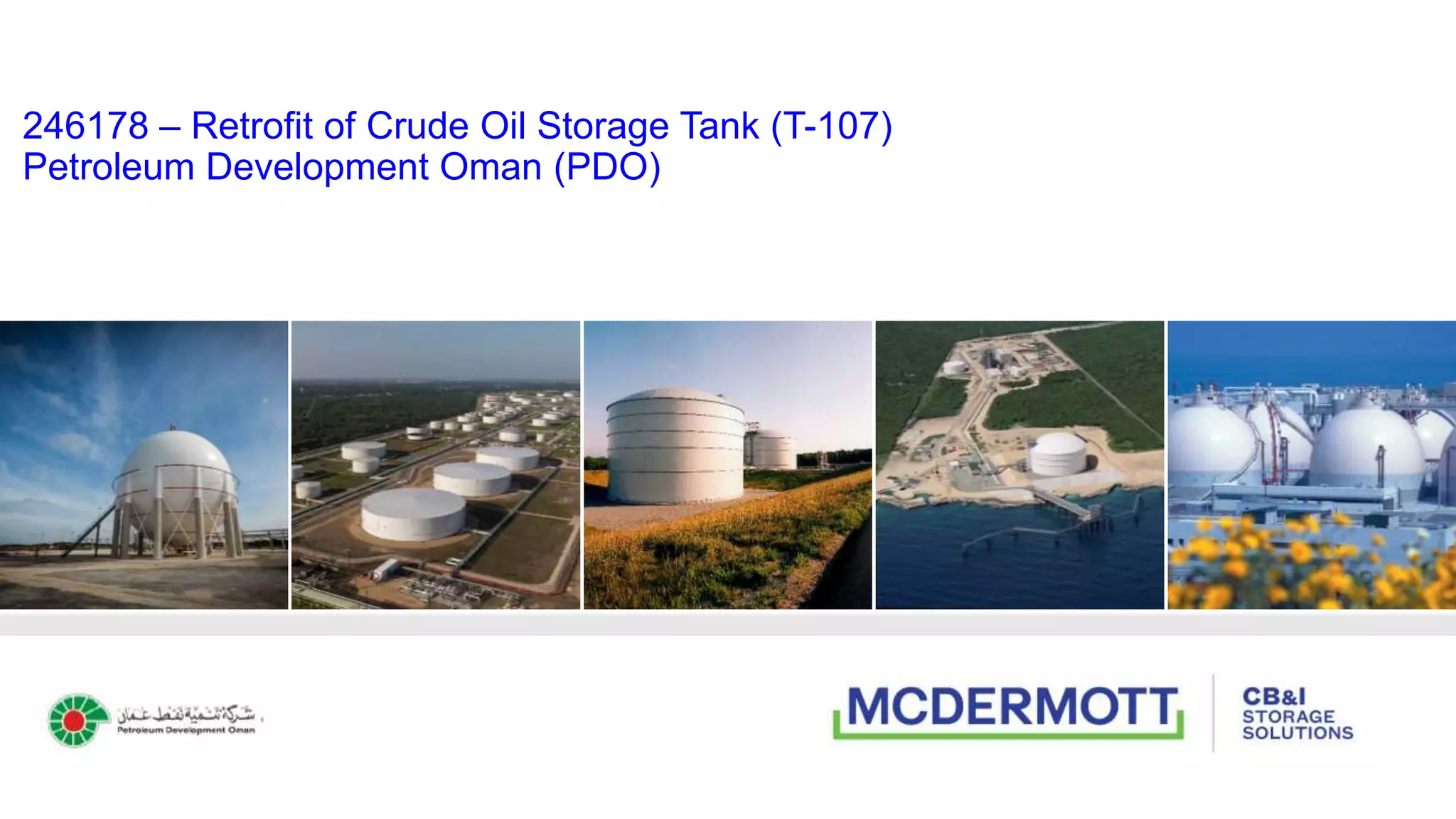
246178 – Retrofit of Crude Oil Storage Tank (T-107)
Petroleum Development Oman (PDO)
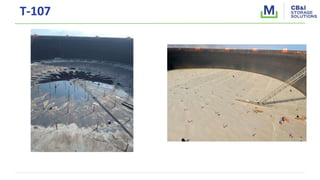
T-107
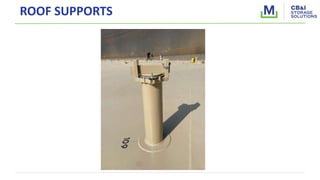
ROOF SUPPORTS
ROOF SUPPORTS
1. HOW THE ROOF SUPPORT OPERATES?
With the FRS-100 cast steel locking type support assembly, the sleeve supports the floating roof in the
low landed position. The inner pipe leg locks to the sleeve to support the roof in the high or maintenance position.
Under the normal operating conditions, the inner pipe leg slides in the sleeve as the roof moves between the high
and low positions. A flexible wiper seal is provided to cover the gap between the sleeve and the inner pipe leg.
2. WILL THE LEGS DAMAGE THE GRE LINING WHEN IS LANDED IN OPERATION POSITION
No, the roof leg will Not damage the GRE lining as its free to slide up and down the sleeve during the normal
operation of the tank.
3. WHAT IS THE ADVANTAGE OF THE NEW DESIGN TO THE OLD DESIGN?
With the new design, the operator does not need to go on to the roof to fix the pins in place during the normal
operation of the tank. Its when they are about to take the tank out of service that the inner pipe leg needs
to be locked to the sleeve to support the roof in its maintenance position. Also, as noted above, the legs
are provided with a flexible wiper seal to the cover the gap between the sleeve and the leg to keep the
emission levels within the EPA limits.
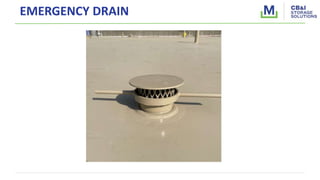
EMERGENCY DRAIN
EMERGENCY DRAIN
1. HOW THE EMERGENCY DRAIN OPERATES?
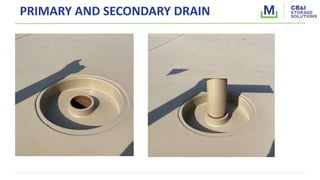
The normal drains are positioned close to the lowest point of the upper deck of the floating
roof and sized such that in the event of rain, the drains would drain the specified(design roof rate) rain water
from this lowest point of the roof.
The emergency drains on the other hand are positioned at 4”/101mm above the lowest point of the roof,
which is the point at which the maximum rain water that can be stored on the roof will be breached. Its at this
point that the emergency drains which are always open will start to operate, removing water from the roof;
however unlike the normal drains which drains the water through a combination of steel & flexible piping
to the outside of the tank, the emergency drains drain the water directly to the stored product
under the floating roof.
2. AT WHAT HEIGHT THESE DRAINS WILL OPEN TO HELP DRAIN THE LIQUID FROM THE ROOF?
As noted above, these drains are always open but will operate when the rain water on the roof reaches
the roof storage capacity at which these emergency drains are breached.
For this design, this is at a distance of 4" above the low point of the top deck.
PRIMARY AND SECONDARY DRAIN
1. IS THE QUANTITY OF DRAINS ENOUGH TO DRAIN THE ROOF IN CASE OF HEAVY DOWNPOUR?
Yes, the roof drains – both the normal & emergency drains have been sized for the specified
design roof rate and duration.
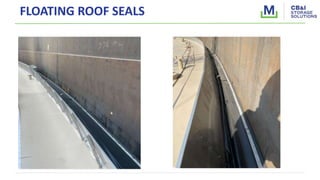
FLOATING ROOF SEALS
FLOATING ROOF SEALS
1. IS THIS TYPE OF SEAL MAINTENANCE FREE?
Yes, CB&I seals are maintenance free for the normal operating conditions. However, all the parts are provided
with one additional spare & CB&I is always available in the event any part needs to be replaced due to
lighting strikes etc.
2. ANY PART THAT REQUIRES SPARE PARTS?
As noted above, none of the parts need replacement for the normal operating conditions. However, CB&I is
always available in the event any parts needs to be replaced due to lighting strikes etc.
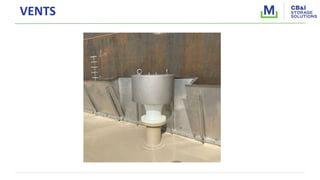
VENTS
VENTS
1. WHAT IS THE FUNCTION OF RIM VENTS PRV’S PARTICULAR TO ACCUMULATION OF GAS VAPOR?
The pressure rim vents are sized to vent any excess pressure (vapor) that might have accumulated
in the rim space under the primary seal.
2. WILL THESE PRV’S PREVENT THE OVERFLOW OF PRODUCT ON THE AUTOMATIC BLEEDER VENTS
DURING FILLING AND DRAINING OF PRODUCT? HOW?
The floating roof ‘seats’ on top of the product during the normal operation of the tank;
they are designed to store products with vapor pressures that are within the limits
of EPA guidelines, so there is no reason why there should be vapor accumulation under the deck
during the upward & downward movement of the roof.
3. HOW DO THE BLEEDER VENTS FUNCTIONS?
During draining of the product, when the floating roof eventually seats on its supports, either in
the normal operating level or the maintenance level, the bleeder vents will fully open, thus preventing
any development of vacuum. Also, during filling, whilst the roof is still on its supports, the bleeder
vents are fully open, preventing positive pressure from developing under the roof. Once the product
completely touches the underneath of the roof and starts to rise, the bleeder vents will then close. At this
stage with the product in full contact with the underside of the roof, the should be no development of
under the roof.
Floating Roof Operation.pptx

Floating Roof Operation.pptx

  • 1.
    246178 – Retrofitof Crude Oil Storage Tank (T-107) Petroleum Development Oman (PDO)
  • 2.
  • 3.
  • 4.
    ROOF SUPPORTS 1. HOWTHE ROOF SUPPORT OPERATES? With the FRS-100 cast steel locking type support assembly, the sleeve supports the floating roof in the low landed position. The inner pipe leg locks to the sleeve to support the roof in the high or maintenance position. Under the normal operating conditions, the inner pipe leg slides in the sleeve as the roof moves between the high and low positions. A flexible wiper seal is provided to cover the gap between the sleeve and the inner pipe leg. 2. WILL THE LEGS DAMAGE THE GRE LINING WHEN IS LANDED IN OPERATION POSITION No, the roof leg will Not damage the GRE lining as its free to slide up and down the sleeve during the normal operation of the tank. 3. WHAT IS THE ADVANTAGE OF THE NEW DESIGN TO THE OLD DESIGN? With the new design, the operator does not need to go on to the roof to fix the pins in place during the normal operation of the tank. Its when they are about to take the tank out of service that the inner pipe leg needs to be locked to the sleeve to support the roof in its maintenance position. Also, as noted above, the legs are provided with a flexible wiper seal to the cover the gap between the sleeve and the leg to keep the emission levels within the EPA limits.
  • 5.
  • 6.
    EMERGENCY DRAIN 1. HOWTHE EMERGENCY DRAIN OPERATES? The normal drains are positioned close to the lowest point of the upper deck of the floating roof and sized such that in the event of rain, the drains would drain the specified(design roof rate) rain water from this lowest point of the roof. The emergency drains on the other hand are positioned at 4”/101mm above the lowest point of the roof, which is the point at which the maximum rain water that can be stored on the roof will be breached. Its at this point that the emergency drains which are always open will start to operate, removing water from the roof; however unlike the normal drains which drains the water through a combination of steel & flexible piping to the outside of the tank, the emergency drains drain the water directly to the stored product under the floating roof. 2. AT WHAT HEIGHT THESE DRAINS WILL OPEN TO HELP DRAIN THE LIQUID FROM THE ROOF? As noted above, these drains are always open but will operate when the rain water on the roof reaches the roof storage capacity at which these emergency drains are breached. For this design, this is at a distance of 4" above the low point of the top deck.
  • 7.
  • 8.
    PRIMARY AND SECONDARYDRAIN 1. IS THE QUANTITY OF DRAINS ENOUGH TO DRAIN THE ROOF IN CASE OF HEAVY DOWNPOUR? Yes, the roof drains – both the normal & emergency drains have been sized for the specified design roof rate and duration.
  • 9.
  • 10.
    FLOATING ROOF SEALS 1.IS THIS TYPE OF SEAL MAINTENANCE FREE? Yes, CB&I seals are maintenance free for the normal operating conditions. However, all the parts are provided with one additional spare & CB&I is always available in the event any part needs to be replaced due to lighting strikes etc. 2. ANY PART THAT REQUIRES SPARE PARTS? As noted above, none of the parts need replacement for the normal operating conditions. However, CB&I is always available in the event any parts needs to be replaced due to lighting strikes etc.

  • 11.
  • 12.
    VENTS 1. WHAT ISTHE FUNCTION OF RIM VENTS PRV’S PARTICULAR TO ACCUMULATION OF GAS VAPOR? The pressure rim vents are sized to vent any excess pressure (vapor) that might have accumulated in the rim space under the primary seal. 2. WILL THESE PRV’S PREVENT THE OVERFLOW OF PRODUCT ON THE AUTOMATIC BLEEDER VENTS DURING FILLING AND DRAINING OF PRODUCT? HOW? The floating roof ‘seats’ on top of the product during the normal operation of the tank; they are designed to store products with vapor pressures that are within the limits of EPA guidelines, so there is no reason why there should be vapor accumulation under the deck during the upward & downward movement of the roof. 3. HOW DO THE BLEEDER VENTS FUNCTIONS? During draining of the product, when the floating roof eventually seats on its supports, either in the normal operating level or the maintenance level, the bleeder vents will fully open, thus preventing any development of vacuum. Also, during filling, whilst the roof is still on its supports, the bleeder vents are fully open, preventing positive pressure from developing under the roof. Once the product completely touches the underneath of the roof and starts to rise, the bleeder vents will then close. At this stage with the product in full contact with the underside of the roof, the should be no development of under the roof.