BY
S. Sheeba Stephen
The Five Year plan were conceived to rebuilt
rural India, to lay the foundation of industrial
progress and to secure the balanced
development of all parts of the country.
 Control or eradication of major
  communicable diseases.
 Strengthening of the basic health
  services through primary health
  centers and subcenters.
 Population control and
 Development of health manpower
  resources.
 Water  supply and sanitation.
 Control of communicable diseases.
 Nutrition.
 Indigenious system of medicine.
 Establishment   of institutional
  facilities.
 Development of the technical
  manpower.
 Development of institutions to
  control communicable diseases.
 Improvement of environment
  hygiene through campaign.
 Family planning.
A   Major thrust to provide safe
  drinking water. Small pox
  eradication was perceived.
 Malaria eradication activities were
  consolidated.
 Development was seen in programes
  to control TB,leprosy,cholera,and
  filaria.
 Improved basic sanitation in urban
  and rural areas.
 FROM   1966 TO 1969.
 Health  Manpower development by
  training different categories of
  medical personnal.
 Strengthening of available health
  infrastructure to improve the quality
  of services.
 Consolidation of the advances made
  during previous five year plans.
 Maternal  and child health
  components were integrated with
  family planning to make it a family
  welfare programe.
 More and more vertical programe
  workers were converted to multi
  purpose workers.
 Health care delivery in rural and
  urban areas.
 Population stabilization,MCH care.
 Control of communicable diseases
  and blindness.
 Control of containment of non-
  communicable diseases.
 Medical/health research and
  development.
 Medical  education, manpower planning and
  training.
 Health information, education and
  communication.
 Indigenous system of medicine and
  homeopathy.
   To achieve the following goals by 2000,they are
   1.Virtual elimination of poverty.
   2.Virtual elimination of illiteracy.
   3.Ensuring near full employment.
   4.Ensuring basic need of food, clothing and shelter
    for all.
   They also aimed to provide,
   Safe drinking water,
   Basic sanitation for at least 80%of urban and 25%of
    rural.
   Envisaged universal coverage of vaccination against
    six killer disease.
   Attempted to achieve couple protection rate of 42%
    by the end of this plan.
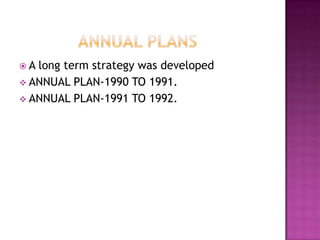
A long term strategy was developed
 ANNUAL PLAN-1990 TO 1991.
 ANNUAL PLAN-1991 TO 1992.
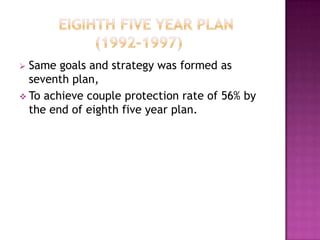
 Same goals and strategy was formed as
  seventh plan,
 To achieve couple protection rate of 56% by
  the end of eighth five year plan.
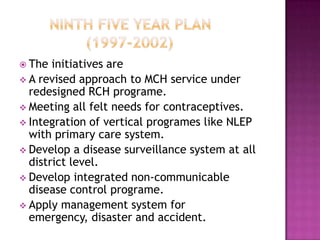
 The  initiatives are
 A revised approach to MCH service under
  redesigned RCH programe.
 Meeting all felt needs for contraceptives.
 Integration of vertical programes like NLEP
  with primary care system.
 Develop a disease surveillance system at all
  district level.
 Develop integrated non-communicable
  disease control programe.
 Apply management system for
  emergency, disaster and accident.
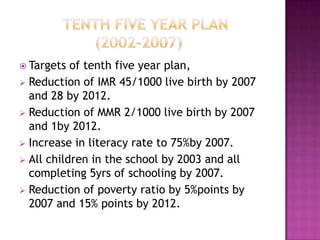
 Targets  of tenth five year plan,
 Reduction of IMR 45/1000 live birth by 2007
  and 28 by 2012.
 Reduction of MMR 2/1000 live birth by 2007
  and 1by 2012.
 Increase in literacy rate to 75%by 2007.
 All children in the school by 2003 and all
  completing 5yrs of schooling by 2007.
 Reduction of poverty ratio by 5%points by
  2007 and 15% points by 2012.
 All villages to have sustained access to
  portable drinking water by 2007.
 Clearing of all major polluted rivers by 2007
  and other notified stretches by 2012.
 Achieve zero level increase of HIV/AIDS
  prevalence by 2007.
 25% reduction in mortality and morbidity
  due to malaria by 2007 and 50% by 2010.
 Reduction in decadal growth rate(2001-
  2011)to 16.2%.
 Goals of eleventh five year plan’
 Reducing MMR to 1/1000 live birth.
 Reducing IMR to 28/1000 live birth.
 Reducing total fertility rate to2.1
 Providing clean drinking water for all by 2009
  and ensuring no slip backs.
 Reducing mal nutrition among children of age
  group 0-3 to half its present level.
 Reducing anemia among women and girls by
  50%.
 Rasing the sex ratio for age group 0-6 to 935
  by 2011-2012 and 950 by 2016-2017.
 Twelve statergy challenges,
 Enhancing the capacity of growth.
 Enhancing skills and faster generation of
  employment.
 Managing the environment.
 Markets for efficiency and inclusion.
 Decentralization, Empowerment and
  information.
 Technology and innovation.
 Securing the energy future for India.
 Accelerated development of transport
  infrastructure.
 Rural transformation and sustained growth of
  agriculture.
 Managing urbanization.
 Improved access to quality education.
 Better preventive and curative health care.
Five year plan

Five year plan

  • 1.
  • 2.
    The Five Yearplan were conceived to rebuilt rural India, to lay the foundation of industrial progress and to secure the balanced development of all parts of the country.
  • 3.
     Control oreradication of major communicable diseases.  Strengthening of the basic health services through primary health centers and subcenters.  Population control and  Development of health manpower resources.
  • 4.
     Water supply and sanitation.  Control of communicable diseases.  Nutrition.  Indigenious system of medicine.
  • 5.
     Establishment of institutional facilities.  Development of the technical manpower.  Development of institutions to control communicable diseases.  Improvement of environment hygiene through campaign.  Family planning.
  • 6.
    A Major thrust to provide safe drinking water. Small pox eradication was perceived.  Malaria eradication activities were consolidated.  Development was seen in programes to control TB,leprosy,cholera,and filaria.  Improved basic sanitation in urban and rural areas.
  • 7.
     FROM 1966 TO 1969.
  • 8.
     Health Manpower development by training different categories of medical personnal.  Strengthening of available health infrastructure to improve the quality of services.  Consolidation of the advances made during previous five year plans.
  • 9.
     Maternal and child health components were integrated with family planning to make it a family welfare programe.  More and more vertical programe workers were converted to multi purpose workers.
  • 10.
     Health caredelivery in rural and urban areas.  Population stabilization,MCH care.  Control of communicable diseases and blindness.  Control of containment of non- communicable diseases.  Medical/health research and development.
  • 11.
     Medical education, manpower planning and training.  Health information, education and communication.  Indigenous system of medicine and homeopathy.
  • 12.
    To achieve the following goals by 2000,they are  1.Virtual elimination of poverty.  2.Virtual elimination of illiteracy.  3.Ensuring near full employment.  4.Ensuring basic need of food, clothing and shelter for all.  They also aimed to provide,  Safe drinking water,  Basic sanitation for at least 80%of urban and 25%of rural.  Envisaged universal coverage of vaccination against six killer disease.  Attempted to achieve couple protection rate of 42% by the end of this plan.
  • 13.
    A long termstrategy was developed  ANNUAL PLAN-1990 TO 1991.  ANNUAL PLAN-1991 TO 1992.
  • 14.
     Same goalsand strategy was formed as seventh plan,  To achieve couple protection rate of 56% by the end of eighth five year plan.
  • 15.
     The initiatives are  A revised approach to MCH service under redesigned RCH programe.  Meeting all felt needs for contraceptives.  Integration of vertical programes like NLEP with primary care system.  Develop a disease surveillance system at all district level.  Develop integrated non-communicable disease control programe.  Apply management system for emergency, disaster and accident.
  • 16.
     Targets of tenth five year plan,  Reduction of IMR 45/1000 live birth by 2007 and 28 by 2012.  Reduction of MMR 2/1000 live birth by 2007 and 1by 2012.  Increase in literacy rate to 75%by 2007.  All children in the school by 2003 and all completing 5yrs of schooling by 2007.  Reduction of poverty ratio by 5%points by 2007 and 15% points by 2012.
  • 17.
     All villagesto have sustained access to portable drinking water by 2007.  Clearing of all major polluted rivers by 2007 and other notified stretches by 2012.  Achieve zero level increase of HIV/AIDS prevalence by 2007.  25% reduction in mortality and morbidity due to malaria by 2007 and 50% by 2010.  Reduction in decadal growth rate(2001- 2011)to 16.2%.
  • 18.
     Goals ofeleventh five year plan’  Reducing MMR to 1/1000 live birth.  Reducing IMR to 28/1000 live birth.  Reducing total fertility rate to2.1  Providing clean drinking water for all by 2009 and ensuring no slip backs.  Reducing mal nutrition among children of age group 0-3 to half its present level.
  • 19.
     Reducing anemiaamong women and girls by 50%.  Rasing the sex ratio for age group 0-6 to 935 by 2011-2012 and 950 by 2016-2017.
  • 20.
     Twelve statergychallenges,  Enhancing the capacity of growth.  Enhancing skills and faster generation of employment.  Managing the environment.  Markets for efficiency and inclusion.  Decentralization, Empowerment and information.  Technology and innovation.
  • 21.
     Securing theenergy future for India.  Accelerated development of transport infrastructure.  Rural transformation and sustained growth of agriculture.  Managing urbanization.  Improved access to quality education.  Better preventive and curative health care.