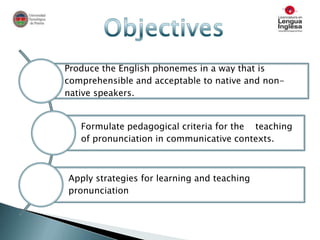
Produce the English phonemes in a way that is
comprehensible and acceptable to native and non-
native speakers.


   Formulate pedagogical criteria for the teaching
   of pronunciation in communicative contexts.


Apply strategies for learning and teaching
pronunciation
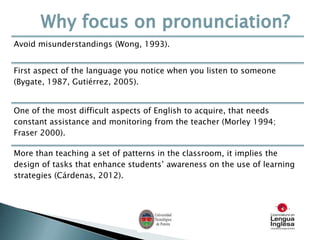
Avoid misunderstandings (Wong, 1993).


First aspect of the language you notice when you listen to someone
(Bygate, 1987, Gutiérrez, 2005).


One of the most difficult aspects of English to acquire, that needs
constant assistance and monitoring from the teacher (Morley 1994;
Fraser 2000).

More than teaching a set of patterns in the classroom, it implies the
design of tasks that enhance students’ awareness on the use of learning
strategies (Cárdenas, 2012).
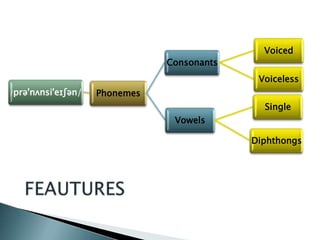
Voiced
                               Consonants
                                             Voiceless
/prə'nʌnsi'eɪʃən/   Phonemes
                                              Single
                                Vowels

                                            Diphthongs
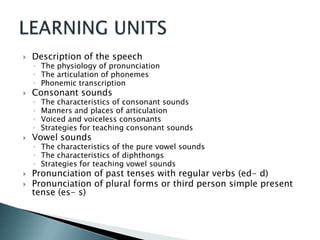
   Description of the speech
    ◦ The physiology of pronunciation
    ◦ The articulation of phonemes
    ◦ Phonemic transcription
   Consonant sounds
    ◦   The characteristics of consonant sounds
    ◦   Manners and places of articulation
    ◦   Voiced and voiceless consonants
    ◦   Strategies for teaching consonant sounds
   Vowel sounds
    ◦ The characteristics of the pure vowel sounds
    ◦ The characteristics of diphthongs
    ◦ Strategies for teaching vowel sounds
   Pronunciation of past tenses with regular verbs (ed- d)
   Pronunciation of plural forms or third person simple present
    tense (es- s)
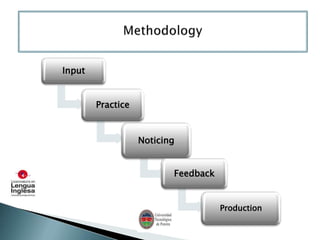
Input


        Practice


                   Noticing


                          Feedback


                                     Production
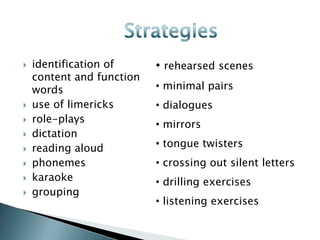
   identification of      • rehearsed scenes
    content and function
    words                  • minimal pairs
   use of limericks       • dialogues
   role-plays             • mirrors
   dictation
   reading aloud          • tongue twisters
   phonemes               • crossing out silent letters
   karaoke                • drilling exercises
   grouping
                           • listening exercises
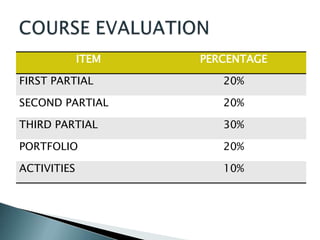
ITEM   PERCENTAGE

FIRST PARTIAL          20%

SECOND PARTIAL         20%

THIRD PARTIAL          30%

PORTFOLIO              20%

ACTIVITIES             10%
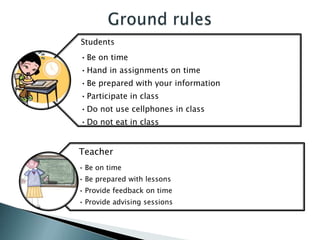
Students
• Be on time
• Hand in assignments on time
• Be prepared with your information
• Participate in class
• Do not use cellphones in class
• Do not eat in class


Teacher
• Be on time
• Be prepared with lessons
• Provide feedback on time
• Provide advising sessions
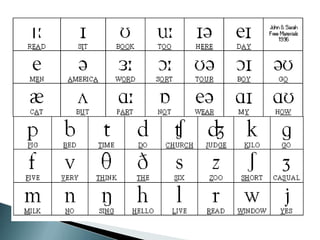
IPA
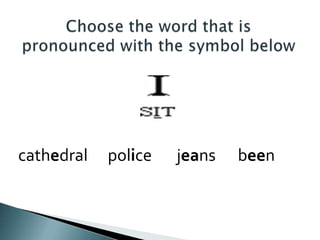
cathedral   police   jeans   been
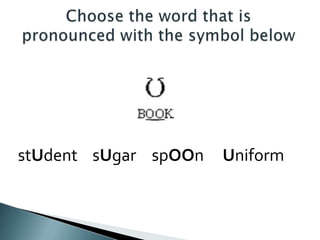
stUdent sUgar spOOn   Uniform
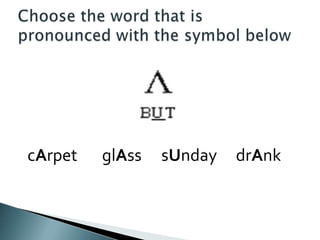
cArpet   glAss   sUnday   drAnk
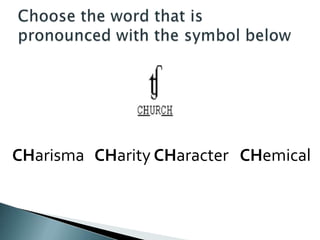
CHarisma CHarity CHaracter CHemical
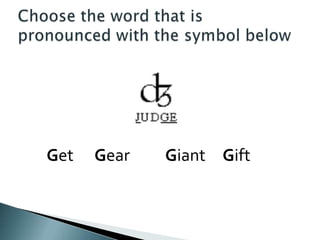
Get   Gear   Giant Gift
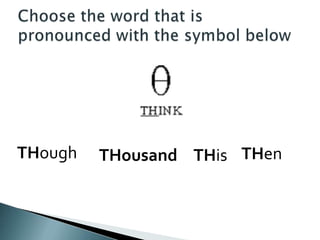
THough   THousand THis THen
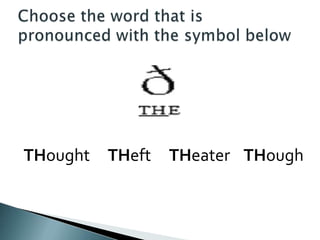
THought   THeft   THeater THough
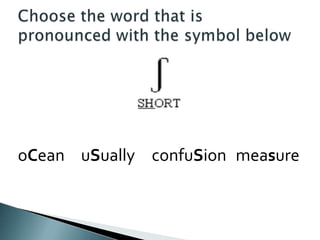
oCean uSually confuSion measure
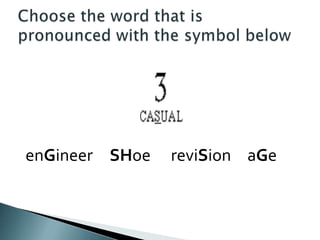
enGineer SHoe   reviSion aGe
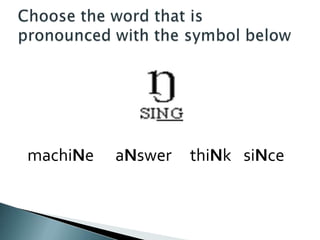
machiNe   aNswer   thiNk siNce
   http://www.photransedit.com/Online/Text2P
    honetics.aspx
   http://yt-subs.appspot.com/
   http://www.uiowa.edu/~acadtech/phonetics/
    english/frameset.html
   http://www.eyespeakenglish.com/en/product
    s/demo_us/index.php
   Kelly, Gerald. How to Teach Pronunciation. Longman,
    2000. 154 pp.
   New Headway Pronunciation Intermediate
   IPA(International Phonetic Alphabet)
   Monolingual English dictionary
   http://www1.voanews.com/english/news/
   http://www.wordreference.com
   http://plataforma.utp.edu.co/course/view.php?id=36
    6
   http://dictionary.cambridge.org/
   http://www.pronuncian.com/assess.aspx
   http://davidbrett.uniss.it/phonology/aspects_of_con
    nected_speech_inde.htm
   http://www.uiowa.edu/~acadtech/phonetics/
 http://pronunciationii.blogspot.com/
 clauditacar@utp.edu.co

First lesson blog

  • 2.
    Produce the Englishphonemes in a way that is comprehensible and acceptable to native and non- native speakers. Formulate pedagogical criteria for the teaching of pronunciation in communicative contexts. Apply strategies for learning and teaching pronunciation
  • 3.
    Avoid misunderstandings (Wong,1993). First aspect of the language you notice when you listen to someone (Bygate, 1987, Gutiérrez, 2005). One of the most difficult aspects of English to acquire, that needs constant assistance and monitoring from the teacher (Morley 1994; Fraser 2000). More than teaching a set of patterns in the classroom, it implies the design of tasks that enhance students’ awareness on the use of learning strategies (Cárdenas, 2012).
  • 4.
    Voiced Consonants Voiceless /prə'nʌnsi'eɪʃən/ Phonemes Single Vowels Diphthongs
  • 5.
    Description of the speech ◦ The physiology of pronunciation ◦ The articulation of phonemes ◦ Phonemic transcription  Consonant sounds ◦ The characteristics of consonant sounds ◦ Manners and places of articulation ◦ Voiced and voiceless consonants ◦ Strategies for teaching consonant sounds  Vowel sounds ◦ The characteristics of the pure vowel sounds ◦ The characteristics of diphthongs ◦ Strategies for teaching vowel sounds  Pronunciation of past tenses with regular verbs (ed- d)  Pronunciation of plural forms or third person simple present tense (es- s)
  • 6.
    Input Practice Noticing Feedback Production
  • 7.
    identification of • rehearsed scenes content and function words • minimal pairs  use of limericks • dialogues  role-plays • mirrors  dictation  reading aloud • tongue twisters  phonemes • crossing out silent letters  karaoke • drilling exercises  grouping • listening exercises
  • 8.
    ITEM PERCENTAGE FIRST PARTIAL 20% SECOND PARTIAL 20% THIRD PARTIAL 30% PORTFOLIO 20% ACTIVITIES 10%
  • 9.
    Students • Be ontime • Hand in assignments on time • Be prepared with your information • Participate in class • Do not use cellphones in class • Do not eat in class Teacher • Be on time • Be prepared with lessons • Provide feedback on time • Provide advising sessions
  • 10.
  • 13.
    cathedral police jeans been
  • 14.
  • 15.
    cArpet glAss sUnday drAnk
  • 16.
  • 17.
    Get Gear Giant Gift
  • 18.
    THough THousand THis THen
  • 19.
    THought THeft THeater THough
  • 20.
  • 21.
    enGineer SHoe reviSion aGe
  • 22.
    machiNe aNswer thiNk siNce
  • 23.
    http://www.photransedit.com/Online/Text2P honetics.aspx  http://yt-subs.appspot.com/  http://www.uiowa.edu/~acadtech/phonetics/ english/frameset.html  http://www.eyespeakenglish.com/en/product s/demo_us/index.php
  • 24.
    Kelly, Gerald. How to Teach Pronunciation. Longman, 2000. 154 pp.  New Headway Pronunciation Intermediate  IPA(International Phonetic Alphabet)  Monolingual English dictionary  http://www1.voanews.com/english/news/  http://www.wordreference.com  http://plataforma.utp.edu.co/course/view.php?id=36 6  http://dictionary.cambridge.org/  http://www.pronuncian.com/assess.aspx  http://davidbrett.uniss.it/phonology/aspects_of_con nected_speech_inde.htm  http://www.uiowa.edu/~acadtech/phonetics/
  • 25.