•What is Firefox OS? 
• How it work? 
•The first smart phones running Firefox OS is slated to be released in the first 
half of 2013. It will first be released in South America, and will later come 
to Asian andEuropean markets. 
•The phones are being developed by Geeksphone — a Spanish smartphone 
start-up — and Telefonica, one of the largest telecommunications companies 
in the world (and also Spanish). 
•The mozilla firefox os is still on development it is launched on market is on 
feb 2013
•On July 25, 2011, started this at Mozilla Corporation, announced the 
"Boot to Gecko" Project on the mozilla.dev.platform mailing list. 
The project proposal was to "pursue the goal of building a complete, 
standalone operating system for the open web" in order to "find the gaps 
that keep web developers from being able to build apps that are —in every 
way— the equals of native apps built forBlackBerry 
10, iPhone, Android The announcement identified these work areas: 
new Web APIs to expose device and OS capabilities such as telephone and 
camera, to safely expose these to web pages, applications to prove these 
capabilities, and low-level code to boot an Android-compatible device. 
According to "Mozilla says that B2G is motivated by a desire to 
demonstrate that the standards-based open Web has the potential to be a 
competitive alternative to the existing single-vendor application 
development stacks offered by the dominant mobile operating systems. 
In July 2012, Boot to Gecko was rebranded as 'Firefox OS' after Mozilla's 
well-known desktop browser, Firefox, and screenshots began appearing in 
August 2012
In this completely open standards and there’s no proprietary software or 
technology involved. The software stack is entirely HTML5 
HTML-5 
Mozilla's HTML 5-based smartphone operating system has been 
rebranded as Firefox OS, and the first supported phones will launch in 
2013. 
Previously named Boot2Gecko, Mozilla's pocket OS is built entirely upon 
open web standards. Every app right down to the phone caller will be 
made in HTML5, and the OS will allow web-based applications to access 
system files: something only native apps can do on Android and iOS and 
such. 
HTML5 has potential to replicate almost anything you'd see on a typical 
smartphone: even 3D games. Apps can also be cached to the phone, so 
your mobile doesn't become a useless brick when you lose your data 
connection. 
Mozilla points to the "removal of unnecessary middleware layers" and the 
optimisation towards entry-level devices as something that will let 
operators hit a range of price points -- including the lowest end of 
smartphones, "helping to drive adoption across developing markets".
The initial development work involves three major software layers: Gonk, Gecko, 
and the HTML5 layer, which includes the Gaia user-interface. 
Gonk 
Gonk consists of a Linux kernel and userspace hardware abstraction layer 
(HAL). The kernel and several userspace libraries are common open-source 
projects: Linux, libusb, BlueZ, etc. Some other parts of the HAL are shared with 
the Android project: GPS, camera, among others. Gonk is basically an 
extremely simple Linux distribution and is therefore a porting target of Gecko; 
there is a port of Gecko to Gonk, just like there is a port of Gecko to OS X, and 
a port of Gecko to Android. Since the B2G project has full control over Gonk, 
Gecko 
Gecko is the application runtime of B2G. Gecko implements the open 
standards for HTML, CSS, and JS. Gecko includes a networking stack, graphics 
stack, layout engine, virtual machine (for JS), and porting layers 
Gaia 
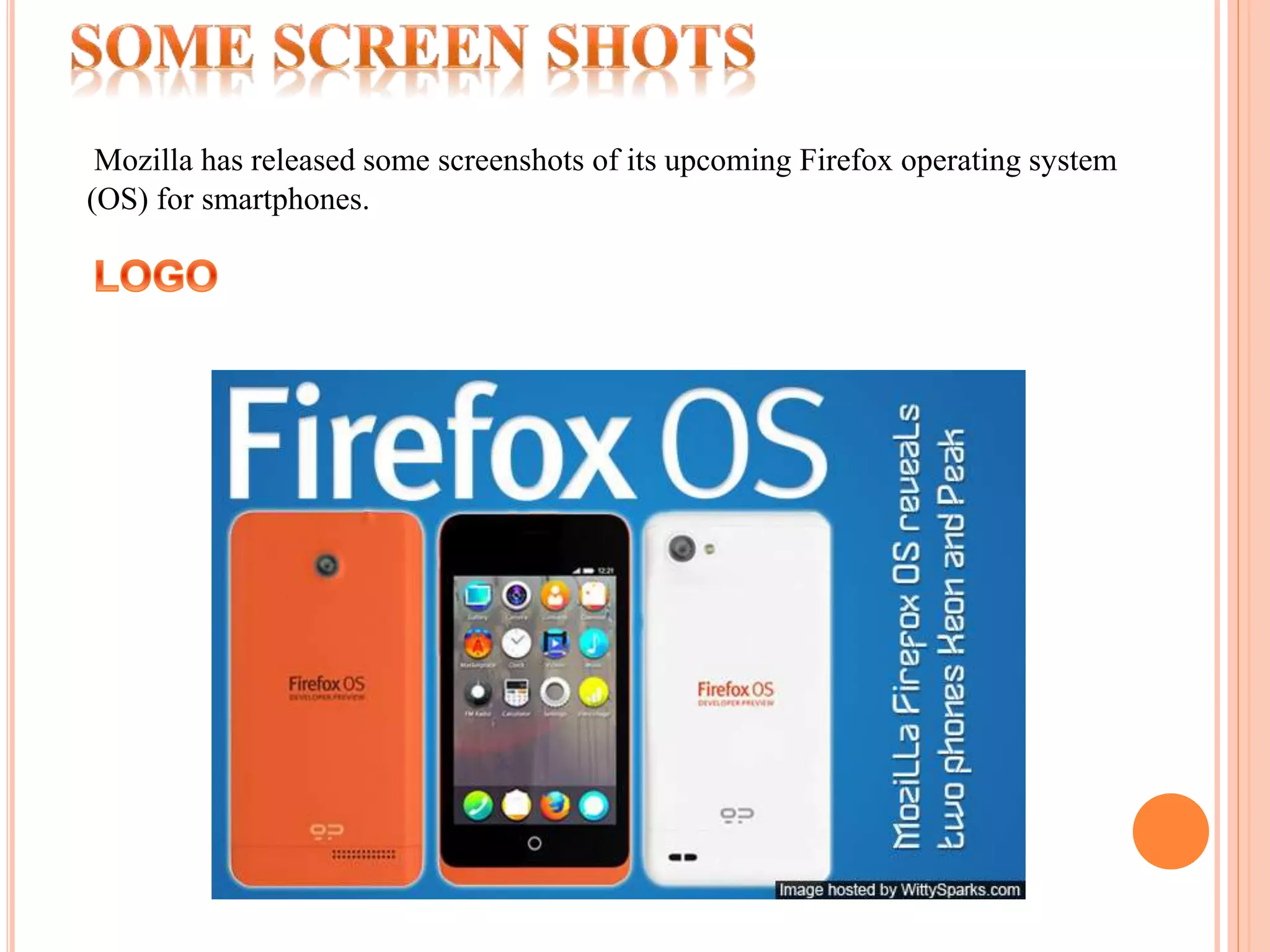
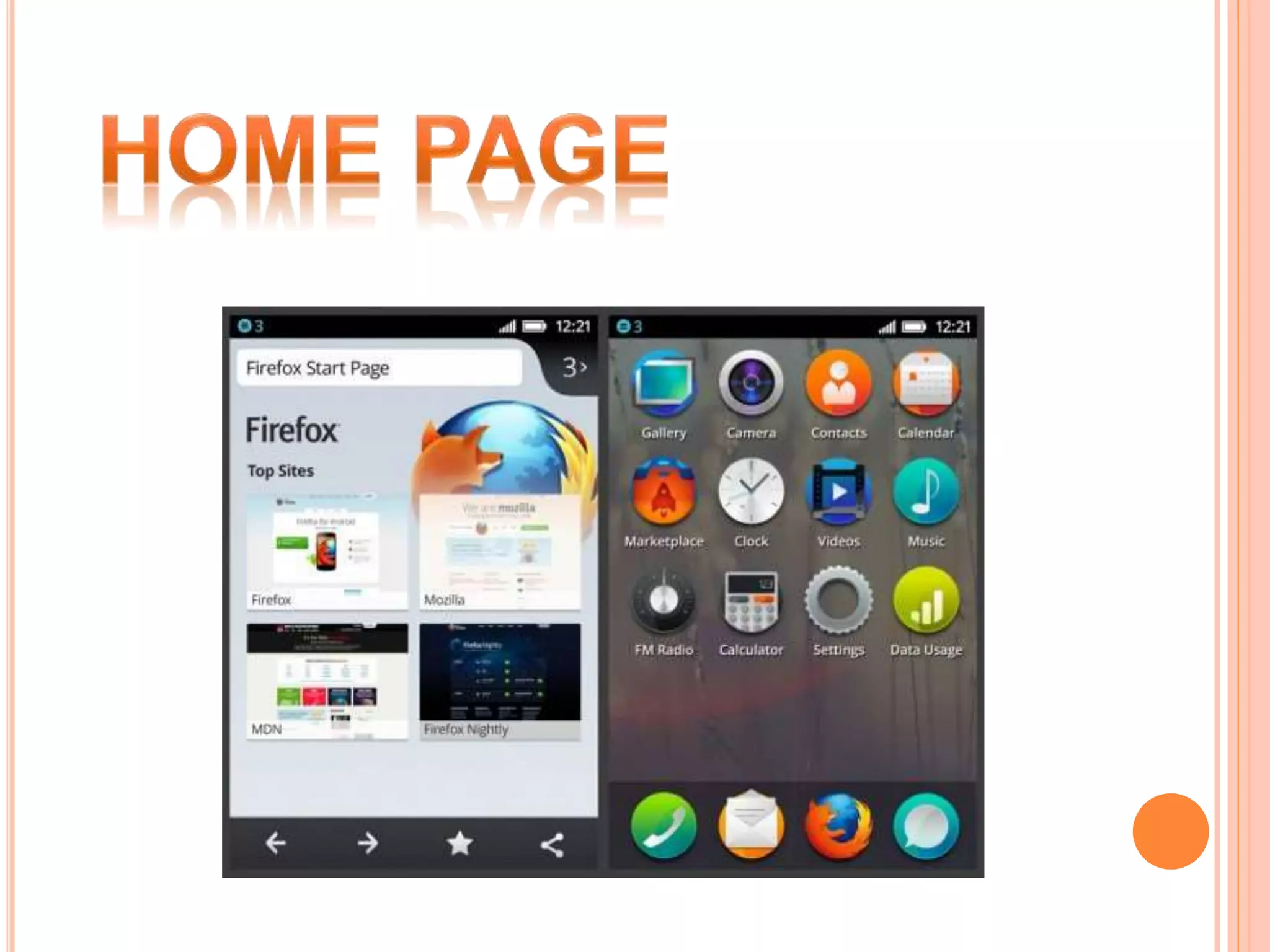
Gaia is the user interface of Firefox OS and controls everything drawn to screen. 
Gaia includes implementations of a lock screen, home screen, telephone dialer, 
text-messaging application, and camera app. Gaia is written entirely in HTML, 
CSS, and JavaScript. It interfaces with the operating system through Open Web 
APIs, which are implemented by Gecko. Because it only uses standard web 
APIs it can work on other OSes and other web-browsers.
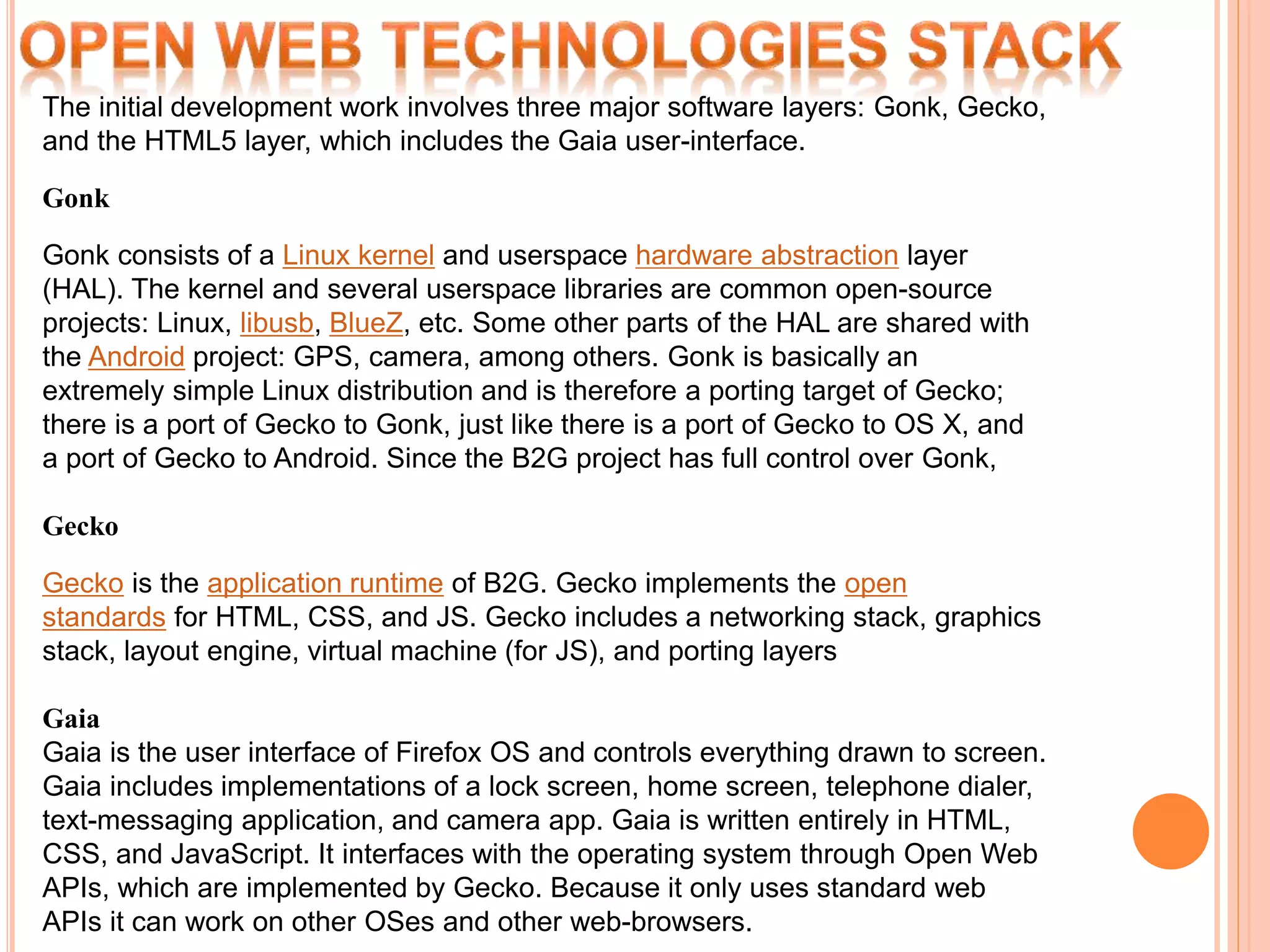
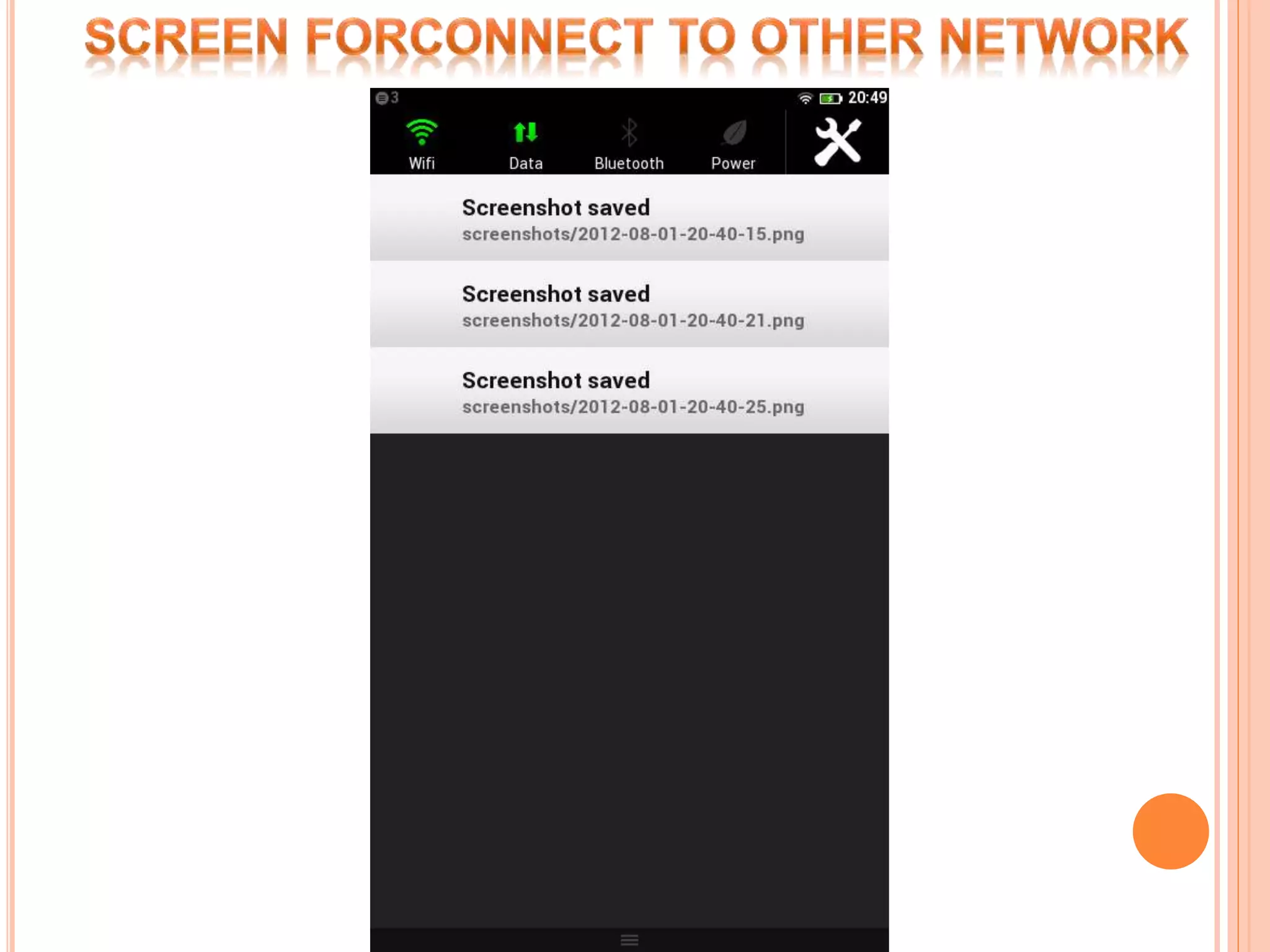
Mozilla has released some screenshots of its upcoming Firefox operating system 
(OS) for smartphones.
Firefox smart phone os

Firefox smart phone os

  • 2.
    •What is FirefoxOS? • How it work? •The first smart phones running Firefox OS is slated to be released in the first half of 2013. It will first be released in South America, and will later come to Asian andEuropean markets. •The phones are being developed by Geeksphone — a Spanish smartphone start-up — and Telefonica, one of the largest telecommunications companies in the world (and also Spanish). •The mozilla firefox os is still on development it is launched on market is on feb 2013
  • 3.
    •On July 25,2011, started this at Mozilla Corporation, announced the "Boot to Gecko" Project on the mozilla.dev.platform mailing list. The project proposal was to "pursue the goal of building a complete, standalone operating system for the open web" in order to "find the gaps that keep web developers from being able to build apps that are —in every way— the equals of native apps built forBlackBerry 10, iPhone, Android The announcement identified these work areas: new Web APIs to expose device and OS capabilities such as telephone and camera, to safely expose these to web pages, applications to prove these capabilities, and low-level code to boot an Android-compatible device. According to "Mozilla says that B2G is motivated by a desire to demonstrate that the standards-based open Web has the potential to be a competitive alternative to the existing single-vendor application development stacks offered by the dominant mobile operating systems. In July 2012, Boot to Gecko was rebranded as 'Firefox OS' after Mozilla's well-known desktop browser, Firefox, and screenshots began appearing in August 2012
  • 4.
    In this completelyopen standards and there’s no proprietary software or technology involved. The software stack is entirely HTML5 HTML-5 Mozilla's HTML 5-based smartphone operating system has been rebranded as Firefox OS, and the first supported phones will launch in 2013. Previously named Boot2Gecko, Mozilla's pocket OS is built entirely upon open web standards. Every app right down to the phone caller will be made in HTML5, and the OS will allow web-based applications to access system files: something only native apps can do on Android and iOS and such. HTML5 has potential to replicate almost anything you'd see on a typical smartphone: even 3D games. Apps can also be cached to the phone, so your mobile doesn't become a useless brick when you lose your data connection. Mozilla points to the "removal of unnecessary middleware layers" and the optimisation towards entry-level devices as something that will let operators hit a range of price points -- including the lowest end of smartphones, "helping to drive adoption across developing markets".
  • 5.
    The initial developmentwork involves three major software layers: Gonk, Gecko, and the HTML5 layer, which includes the Gaia user-interface. Gonk Gonk consists of a Linux kernel and userspace hardware abstraction layer (HAL). The kernel and several userspace libraries are common open-source projects: Linux, libusb, BlueZ, etc. Some other parts of the HAL are shared with the Android project: GPS, camera, among others. Gonk is basically an extremely simple Linux distribution and is therefore a porting target of Gecko; there is a port of Gecko to Gonk, just like there is a port of Gecko to OS X, and a port of Gecko to Android. Since the B2G project has full control over Gonk, Gecko Gecko is the application runtime of B2G. Gecko implements the open standards for HTML, CSS, and JS. Gecko includes a networking stack, graphics stack, layout engine, virtual machine (for JS), and porting layers Gaia Gaia is the user interface of Firefox OS and controls everything drawn to screen. Gaia includes implementations of a lock screen, home screen, telephone dialer, text-messaging application, and camera app. Gaia is written entirely in HTML, CSS, and JavaScript. It interfaces with the operating system through Open Web APIs, which are implemented by Gecko. Because it only uses standard web APIs it can work on other OSes and other web-browsers.
  • 6.
    Mozilla has releasedsome screenshots of its upcoming Firefox operating system (OS) for smartphones.