Fire Safety
Management
Comprehensive approach to prevent, detect,
and mitigate fire-related risks and ensure the
safety of people, property, and the
environment.
Group members- Branch
Amruta Thakur IT A
Jeetesh Ukey IT A
Rajat Anturkar Mech
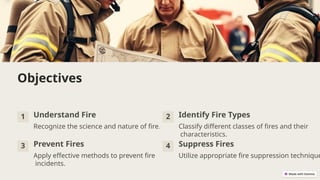
Objectives
1 Understand Fire
Recognize the science and nature of fire.
2 Identify Fire Types
Classify different classes of fires and their
characteristics.
3 Prevent Fires
Apply effective methods to prevent fire
incidents.
4 Suppress Fires
Utilize appropriate fire suppression technique
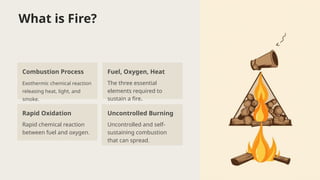
What is Fire?
Combustion Process
Exothermic chemical reaction
releasing heat, light, and
smoke.
Fuel, Oxygen, Heat
The three essential
elements required to
sustain a fire.
Rapid Oxidation
Rapid chemical reaction
between fuel and oxygen.
Uncontrolled Burning
Uncontrolled and self-
sustaining combustion
that can spread.
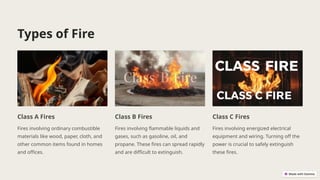
Types of Fire
Class A Fires
Fires involving ordinary combustible
materials like wood, paper, cloth, and
other common items found in homes
and offices.
Class B Fires
Fires involving flammable liquids and
gases, such as gasoline, oil, and
propane. These fires can spread rapidly
and are difficult to extinguish.
Class C Fires
Fires involving energized electrical
equipment and wiring. Turning off the
power is crucial to safely extinguish
these fires.
Types of Fire
Fires can be classified into several distinct categories based on the nature of the burning materials. Understanding these fire
types is crucial for selecting the appropriate fire suppression and prevention methods.
Class A Fires
Class A fires involve ordinary combustible materials such as wood, paper, cloth, and plastics. These fires typically spread quickly and can be effectively extinguished using water-based methods.
• Example: A burning piece of wood in a fireplace.
• Example: A pile of paper catching fire in a trash bin.
Class B Fires
Class B fires involve flammable liquids and gases, including gasoline, oil, and propane. These fires can spread rapidly and require specialized extinguishing agents, such as dry
chemical or foam-based suppressants, to effectively smother the flames.
• Example: A gasoline-fueled car engine fire.
• Example: A leaking propane tank igniting.
Class C Fires
Class C fires involve energized electrical equipment and wiring. Addressing these fires requires the use of non-conductive extinguishing agents, such as carbon dioxide or dry powder,
to safely cut off the electrical source and extinguish the flames.
• Example: A faulty electrical outlet sparking and catching fire.
• Example: A burning electrical cord.
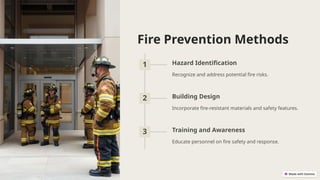
Fire Prevention Methods
1 Hazard Identification
Recognize and address potential fire risks.
2 Building Design
Incorporate fire-resistant materials and safety features.
3 Training and Awareness
Educate personnel on fire safety and response.
Fire Suppression Techniques
Water-based
Effective for Class A fires.
Dry Chemical
Suitable for Class B and C fires.
Carbon Dioxide
Ideal for electrical and flammable
liquid fires.
Foam-based
Effective for flammable liquid and
gas fires.
Fire Safety Management
Practices
Risk Assessment
Identify and evaluate potential fire hazards.
Emergency Planning
Develop and implement comprehensive response plans.
Training and Drills
Educate personnel and practice emergency procedures.
Fire Safety Management Practices
Risk Assessment
Identify and evaluate potential fire
hazards within the workplace,
including the type of materials used,
the presence of flammable liquids or
gases, and the location of electrical
equipment. This process involves
analyzing potential ignition sources,
the likelihood of a fire occurring, and
the potential consequences of a fire.
Emergency Planning
Develop comprehensive plans to
address fire emergencies, including
procedures for evacuation, fire
suppression, and communication.
This planning process should involve
all relevant stakeholders, including
employees, fire safety officers, and
emergency response personnel.
Training and Drills
Educate personnel on fire safety procedures, including fire prevention, fire
suppression, and emergency evacuation. Regularly conduct fire drills to ensure that
employees are familiar with emergency procedures and can respond effectively in
the event of a fire.
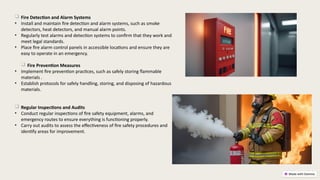
 Fire Detection and Alarm Systems
• Install and maintain fire detection and alarm systems, such as smoke
detectors, heat detectors, and manual alarm points.
• Regularly test alarms and detection systems to confirm that they work and
meet legal standards.
• Place fire alarm control panels in accessible locations and ensure they are
easy to operate in an emergency.
 Fire Prevention Measures
• Implement fire prevention practices, such as safely storing flammable
materials .
• Establish protocols for safely handling, storing, and disposing of hazardous
materials.
 Regular Inspections and Audits
• Conduct regular inspections of fire safety equipment, alarms, and
emergency routes to ensure everything is functioning properly.
• Carry out audits to assess the effectiveness of fire safety procedures and
identify areas for improvement.
To Enhance fire Safety we can Install :
• Digital Monitoring and Alarm Systems:
1. IoT and Remote Monitoring –
Internet of Things (IoT) devices offer real-time monitoring, with
sensors that detect early warning signs of fire hazards (e.g.,
overheating equipment, gas leaks). These systems can also
notify multiple stakeholders via mobile devices, enabling rapid
responses even if facility managers are off-site.
• Fire-Resistant Building Materials –
In recent years, healthcare facilities have increasingly
incorporated fire resistant materials in construction, particularly
in high-risk areas such as kitchens and laboratories. These
materials reduce fire spread, providing more time for
evacuation and response.
Conclusion
Proactive Approach
Effective fire safety
management is critical for
protecting lives and assets.
Continuous
Improvement
Regular reviews and updates
ensure fire safety measures
remain relevant.
Shared Responsibility
Everyone plays a role in maintaining a safe environment.

Fire-Safety-Management Presentation PPT.

  • 1.
    Fire Safety Management Comprehensive approachto prevent, detect, and mitigate fire-related risks and ensure the safety of people, property, and the environment. Group members- Branch Amruta Thakur IT A Jeetesh Ukey IT A Rajat Anturkar Mech
  • 2.
    Objectives 1 Understand Fire Recognizethe science and nature of fire. 2 Identify Fire Types Classify different classes of fires and their characteristics. 3 Prevent Fires Apply effective methods to prevent fire incidents. 4 Suppress Fires Utilize appropriate fire suppression technique
  • 3.
    What is Fire? CombustionProcess Exothermic chemical reaction releasing heat, light, and smoke. Fuel, Oxygen, Heat The three essential elements required to sustain a fire. Rapid Oxidation Rapid chemical reaction between fuel and oxygen. Uncontrolled Burning Uncontrolled and self- sustaining combustion that can spread.
  • 4.
    Types of Fire ClassA Fires Fires involving ordinary combustible materials like wood, paper, cloth, and other common items found in homes and offices. Class B Fires Fires involving flammable liquids and gases, such as gasoline, oil, and propane. These fires can spread rapidly and are difficult to extinguish. Class C Fires Fires involving energized electrical equipment and wiring. Turning off the power is crucial to safely extinguish these fires.
  • 5.
    Types of Fire Firescan be classified into several distinct categories based on the nature of the burning materials. Understanding these fire types is crucial for selecting the appropriate fire suppression and prevention methods. Class A Fires Class A fires involve ordinary combustible materials such as wood, paper, cloth, and plastics. These fires typically spread quickly and can be effectively extinguished using water-based methods. • Example: A burning piece of wood in a fireplace. • Example: A pile of paper catching fire in a trash bin. Class B Fires Class B fires involve flammable liquids and gases, including gasoline, oil, and propane. These fires can spread rapidly and require specialized extinguishing agents, such as dry chemical or foam-based suppressants, to effectively smother the flames. • Example: A gasoline-fueled car engine fire. • Example: A leaking propane tank igniting. Class C Fires Class C fires involve energized electrical equipment and wiring. Addressing these fires requires the use of non-conductive extinguishing agents, such as carbon dioxide or dry powder, to safely cut off the electrical source and extinguish the flames. • Example: A faulty electrical outlet sparking and catching fire. • Example: A burning electrical cord.
  • 6.
    Fire Prevention Methods 1Hazard Identification Recognize and address potential fire risks. 2 Building Design Incorporate fire-resistant materials and safety features. 3 Training and Awareness Educate personnel on fire safety and response.
  • 7.
    Fire Suppression Techniques Water-based Effectivefor Class A fires. Dry Chemical Suitable for Class B and C fires. Carbon Dioxide Ideal for electrical and flammable liquid fires. Foam-based Effective for flammable liquid and gas fires.
  • 8.
    Fire Safety Management Practices RiskAssessment Identify and evaluate potential fire hazards. Emergency Planning Develop and implement comprehensive response plans. Training and Drills Educate personnel and practice emergency procedures.
  • 9.
    Fire Safety ManagementPractices Risk Assessment Identify and evaluate potential fire hazards within the workplace, including the type of materials used, the presence of flammable liquids or gases, and the location of electrical equipment. This process involves analyzing potential ignition sources, the likelihood of a fire occurring, and the potential consequences of a fire. Emergency Planning Develop comprehensive plans to address fire emergencies, including procedures for evacuation, fire suppression, and communication. This planning process should involve all relevant stakeholders, including employees, fire safety officers, and emergency response personnel. Training and Drills Educate personnel on fire safety procedures, including fire prevention, fire suppression, and emergency evacuation. Regularly conduct fire drills to ensure that employees are familiar with emergency procedures and can respond effectively in the event of a fire.
  • 10.
     Fire Detectionand Alarm Systems • Install and maintain fire detection and alarm systems, such as smoke detectors, heat detectors, and manual alarm points. • Regularly test alarms and detection systems to confirm that they work and meet legal standards. • Place fire alarm control panels in accessible locations and ensure they are easy to operate in an emergency.  Fire Prevention Measures • Implement fire prevention practices, such as safely storing flammable materials . • Establish protocols for safely handling, storing, and disposing of hazardous materials.  Regular Inspections and Audits • Conduct regular inspections of fire safety equipment, alarms, and emergency routes to ensure everything is functioning properly. • Carry out audits to assess the effectiveness of fire safety procedures and identify areas for improvement.
  • 11.
    To Enhance fireSafety we can Install : • Digital Monitoring and Alarm Systems: 1. IoT and Remote Monitoring – Internet of Things (IoT) devices offer real-time monitoring, with sensors that detect early warning signs of fire hazards (e.g., overheating equipment, gas leaks). These systems can also notify multiple stakeholders via mobile devices, enabling rapid responses even if facility managers are off-site. • Fire-Resistant Building Materials – In recent years, healthcare facilities have increasingly incorporated fire resistant materials in construction, particularly in high-risk areas such as kitchens and laboratories. These materials reduce fire spread, providing more time for evacuation and response.
  • 12.
    Conclusion Proactive Approach Effective firesafety management is critical for protecting lives and assets. Continuous Improvement Regular reviews and updates ensure fire safety measures remain relevant. Shared Responsibility Everyone plays a role in maintaining a safe environment.