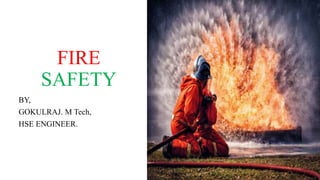
FIRE
SAFETY
BY,
GOKULRAJ. M Tech,
HSE ENGINEER.
FIRE
• Fire was one of the first discoveries
made by man. Since then it has been
used for light, heat, cooking,
destroying, and so much more.
• Today, fire is the cause of death for
more people in World than all other
natural disasters.
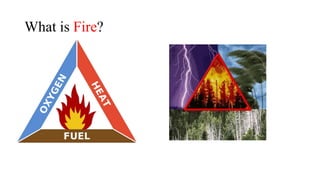
What is Fire?
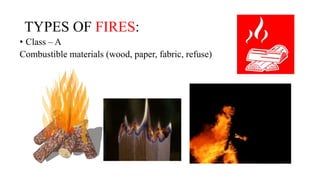
TYPES OF FIRES:
• Class – A
Combustible materials (wood, paper, fabric, refuse)
TYPES OF FIRES:
• Class – B
Flammable liquids
TYPES OF FIRES:
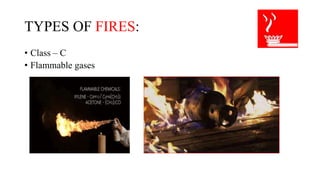
• Class – C
• Flammable gases
TYPES OF FIRES:
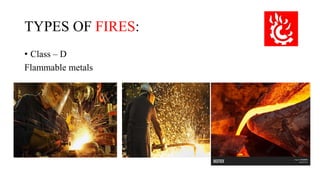
• Class – D
Flammable metals
TYPES OF FIRES:
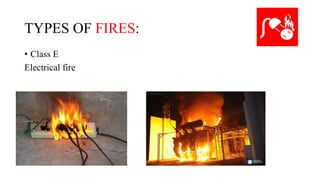
• Class E
Electrical fire
TYPES OF FIRES:
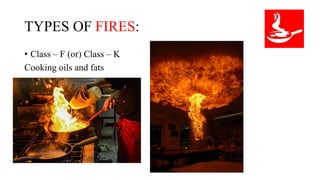
• Class – F (or) Class – K
Cooking oils and fats
COMMON CAUSES OF FIRE
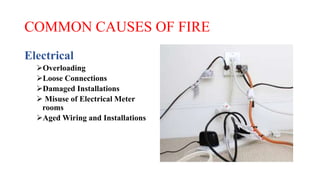
Electrical
Overloading
Loose Connections
Damaged Installations
 Misuse of Electrical Meter
rooms
Aged Wiring and Installations
COMMON CAUSES OF FIRE
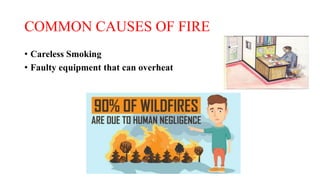
• Careless Smoking
• Faulty equipment that can overheat
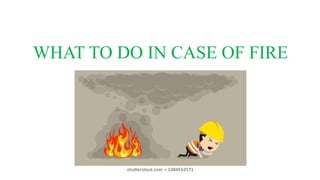
WHAT TO DO IN CASE OF FIRE
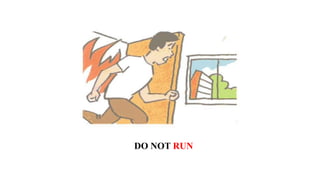
DO NOT RUN
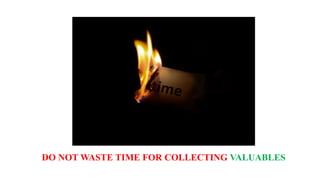
DO NOT WASTE TIME FOR COLLECTING VALUABLES
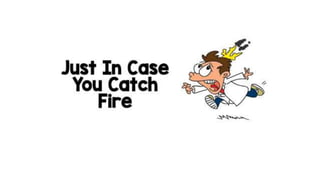
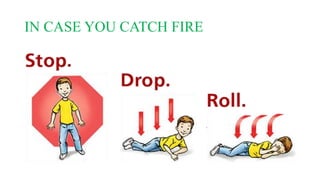
IN CASE YOU CATCH FIRE
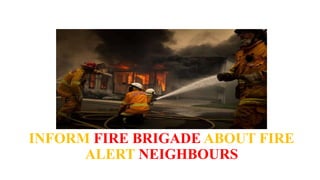
INFORM FIRE BRIGADE ABOUT FIRE
ALERT NEIGHBOURS
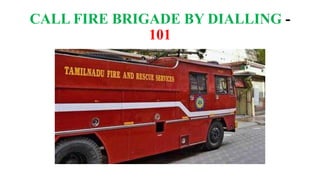
CALL FIRE BRIGADE BY DIALLING -
101
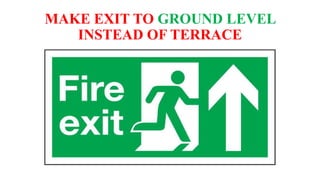
MAKE EXIT TO GROUND LEVEL
INSTEAD OF TERRACE
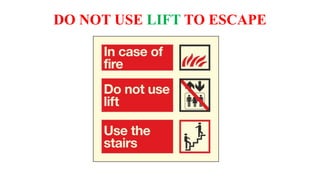
DO NOT USE LIFT TO ESCAPE
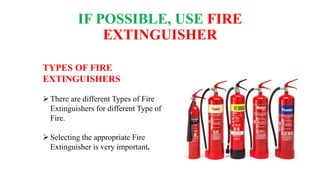
IF POSSIBLE, USE FIRE
EXTINGUISHER
TYPES OF FIRE
EXTINGUISHERS
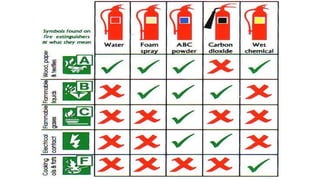
There are different Types of Fire
Extinguishers for different Type of
Fire.
Selecting the appropriate Fire
Extinguisher is very important.
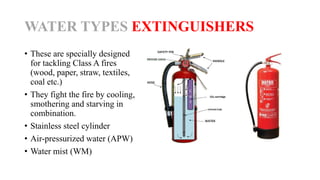
WATER TYPES EXTINGUISHERS
• These are specially designed
for tackling Class A fires
(wood, paper, straw, textiles,
coal etc.)
• They fight the fire by cooling,
smothering and starving in
combination.
• Stainless steel cylinder
• Air-pressurized water (APW)
• Water mist (WM)
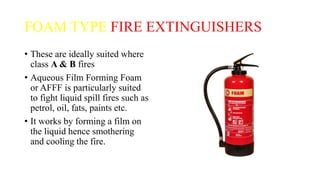
FOAM TYPE FIRE EXTINGUISHERS
• These are ideally suited where
class A & B fires
• Aqueous Film Forming Foam
or AFFF is particularly suited
to fight liquid spill fires such as
petrol, oil, fats, paints etc.
• It works by forming a film on
the liquid hence smothering
and cooling the fire.
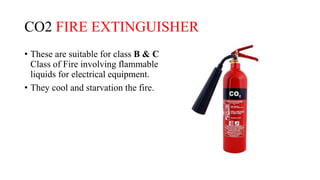
CO2 FIRE EXTINGUISHER
• These are suitable for class B & C
Class of Fire involving flammable
liquids for electrical equipment.
• They cool and starvation the fire.
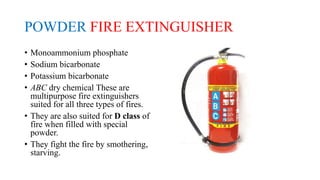
POWDER FIRE EXTINGUISHER
• Monoammonium phosphate
• Sodium bicarbonate
• Potassium bicarbonate
• ABC dry chemical These are
multipurpose fire extinguishers
suited for all three types of fires.
• They are also suited for D class of
fire when filled with special
powder.
• They fight the fire by smothering,
starving.
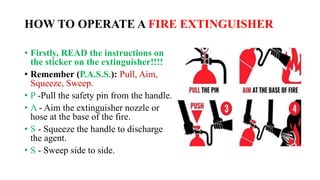
HOW TO OPERATE A FIRE EXTINGUISHER
• Firstly, READ the instructions on
the sticker on the extinguisher!!!!
• Remember (P.A.S.S.): Pull, Aim,
Squeeze, Sweep.
• P -Pull the safety pin from the handle.
• A - Aim the extinguisher nozzle or
hose at the base of the fire.
• S - Squeeze the handle to discharge
the agent.
• S - Sweep side to side.
Fire safety

Fire safety

  • 1.
  • 2.
    FIRE • Fire wasone of the first discoveries made by man. Since then it has been used for light, heat, cooking, destroying, and so much more. • Today, fire is the cause of death for more people in World than all other natural disasters.
  • 3.
  • 4.
    TYPES OF FIRES: •Class – A Combustible materials (wood, paper, fabric, refuse)
  • 5.
    TYPES OF FIRES: •Class – B Flammable liquids
  • 6.
    TYPES OF FIRES: •Class – C • Flammable gases
  • 7.
    TYPES OF FIRES: •Class – D Flammable metals
  • 8.
    TYPES OF FIRES: •Class E Electrical fire
  • 9.
    TYPES OF FIRES: •Class – F (or) Class – K Cooking oils and fats
  • 10.
    COMMON CAUSES OFFIRE Electrical Overloading Loose Connections Damaged Installations  Misuse of Electrical Meter rooms Aged Wiring and Installations
  • 11.
    COMMON CAUSES OFFIRE • Careless Smoking • Faulty equipment that can overheat
  • 12.
    WHAT TO DOIN CASE OF FIRE
  • 13.
  • 14.
    DO NOT WASTETIME FOR COLLECTING VALUABLES
  • 17.
    IN CASE YOUCATCH FIRE
  • 18.
    INFORM FIRE BRIGADEABOUT FIRE ALERT NEIGHBOURS
  • 19.
    CALL FIRE BRIGADEBY DIALLING - 101
  • 20.
    MAKE EXIT TOGROUND LEVEL INSTEAD OF TERRACE
  • 21.
    DO NOT USELIFT TO ESCAPE
  • 22.
    IF POSSIBLE, USEFIRE EXTINGUISHER TYPES OF FIRE EXTINGUISHERS There are different Types of Fire Extinguishers for different Type of Fire. Selecting the appropriate Fire Extinguisher is very important.
  • 23.
    WATER TYPES EXTINGUISHERS •These are specially designed for tackling Class A fires (wood, paper, straw, textiles, coal etc.) • They fight the fire by cooling, smothering and starving in combination. • Stainless steel cylinder • Air-pressurized water (APW) • Water mist (WM)
  • 24.
    FOAM TYPE FIREEXTINGUISHERS • These are ideally suited where class A & B fires • Aqueous Film Forming Foam or AFFF is particularly suited to fight liquid spill fires such as petrol, oil, fats, paints etc. • It works by forming a film on the liquid hence smothering and cooling the fire.
  • 25.
    CO2 FIRE EXTINGUISHER •These are suitable for class B & C Class of Fire involving flammable liquids for electrical equipment. • They cool and starvation the fire.
  • 26.
    POWDER FIRE EXTINGUISHER •Monoammonium phosphate • Sodium bicarbonate • Potassium bicarbonate • ABC dry chemical These are multipurpose fire extinguishers suited for all three types of fires. • They are also suited for D class of fire when filled with special powder. • They fight the fire by smothering, starving.
  • 28.
    HOW TO OPERATEA FIRE EXTINGUISHER • Firstly, READ the instructions on the sticker on the extinguisher!!!! • Remember (P.A.S.S.): Pull, Aim, Squeeze, Sweep. • P -Pull the safety pin from the handle. • A - Aim the extinguisher nozzle or hose at the base of the fire. • S - Squeeze the handle to discharge the agent. • S - Sweep side to side.