




























Presented By Manmeet ThaparVishrutha MararArti GadaDeepavali VankaluRammani GuptaSiddhesh ParabSachinPramod Yadav
WHY YOU DON’T SHARE FINANCIAL DECISIONS  !!!!
Why you should share your financial decisions ?To achieve financial goals
How to cut tax by investing in spouse name?
The meshing together of theinvestments of the husband and wifenot only strengthens the household'sfinancial fibre but gives them acomprehensive view of the realsituationThe taxman has set limits to this joiningof the finances of the two spouses. Hehas no problems if one spouse givesmoney to the other. After all, it's theirmoney and spouses are in the list ofspecified relatives whom you can giftany sum without attracting a gift tax
4 Tax-efficient Strategies for CouplesIf you want to buy a house in your wife's name but don't want the rent to be taxed as your income, loan her the money instead. In exchange, she can give you her jewellery.
There is no tax on income from the PPF or on long-term capital gains from shares and equity mutual funds. Investing in these options will put no additional tax liability.
It's better to gift gold jewellery instead of cash to your wife because gold does not generate any income.
If a wife saves a little out of the money given to her for household expenses, that money is her own. If it is invested, the gains will not be clubbed with the income of the husband. ELSS FUNDS: SHOULD YOU BUY TAX-SAVING FUNDS?Reasons (ELSS) Potential to give the highest returns No tax on the gains, Easy to understand Even easier to buy Lock-in period is the shortest for any Section 80C option. If yes then?LUMPSUM OR SIPs How do you choose a fund to invest in? Future of ELSS
FIVE BEST TAX PLANS FOR YOU TO CHOOSE
How to Calculate SIP return?The most widely used method is known as the internal rate of return or IRR method. IRR is useful not only for SIP returns but also for estimating returns from money back insurance policies and bond yields.Calculations have to be worked out using financial calculators or a spreadsheet.Two such websites are engineeringtoolbox.com and datadynamica.com.
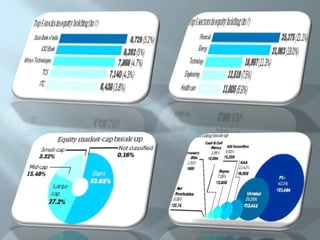
High Returns at Moderate RiskLarge & mid cap Fund (Regular growth Fund)This portfolio has been able to generate decent returns without taking undue risk.Even the equity portion is invested in stable stocks.More than 80% of equity corpus is anchored in giant & large cap stocks & balance 20% is invested in mid & small caps stocks.
The Trap Called Guaranteed NAVImportant things to know-No instrument that invest in equities can guarantee returns.SEBI does not allow even MF to guarantee returns.There is no min returns guaranteed by the policies.Insurance com do not explain how they manage to deliver guaranteed returns without incurring losses.The highest NAV is not the same during the policy tenure.NAV-represents a fund's per share market value . This is the price at which investors buy shares from the fund company.E.g. For example, if a fund has assets of $50 million and liabilities of $10 million, it would have a NAV of $40 million.
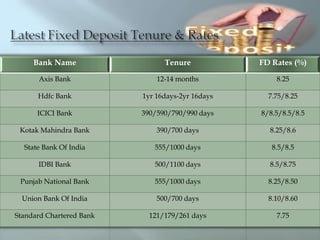
Banks play numerology with FD rates. Find out how you can gain from thisBanks are offering odd-tenure fixed deposits to match their assets & liabilities.It has higher demand for one-year loans, then it will offer a 390-day deposit. Similarly, the 700-day deposits are meant to match the asset and liability for two-year loans.” Simply put, banks are ensuring they have money to give loans by extending the tenure of matching FDs. As the FDs mature a little later, it gives them more breathing space to get the money back from the borrowers and return it to the depositors. Deposits are mainly up to one year. But if it crosses this period, we get slightly more time to match assets and liabilities
Latest Fixed Deposit Tenure & Rates
If a customer makes a pre-mature withdrawal, he earns a lower interest which applies to the tenure shorter than that of the specific scheme. This acts as an automatic penalty, though there is no pre-mature withdrawal charge.E.g. HDFC Bank is one. The bank has said it will charge a 1% penalty on premature withdrawals for all fixed deposits.ICICI Bank already charges a 0.5-1% lower interest rate to end an FD. The penal interest is 0.5% for a one-year deposit and 1% for deposits below `5 crore but with a higher tenure.The penalty of 1% lower interest when people renew existing FDs or open a new deposit will now be waived off
Tax Benefits Section :-
 u/s 80 ccc
 u/s 10 (10 D)
 u/s 10 (10 A)Premium Payment Option  :Regular PremiumLimited PaymentSingle Premium.
Sub sec 3 of 80 c :-Tax Benefit can be claimed for maximum of 20 % of Premium on Sum Assured while paying Premium.To Claim Tax Benefit on Maturity Premium should not be more then 20 % (u/s 10(10D(c)).
Case 1.Mr.ABC pays a regular premium towards a ULIP plan Rs.2,00,000 pa with a Cover of Rs.20,00,000 for 20 Year term.Is He eligilble for Tax benefit u/s 80 c (Premium Payment)and 10 (10 D)(Maturity Value )
Calculation – Case 1.Premium paid is 10 % of Sum Assured  offered.Hence Both Tax Benefit he can Claim.
Case 2. If Mr.Shah Pays Rs.1,00,000 one time premium towards a Ulip Plan with a Sum Assured of Rs.1,10,000 for a term of 15 years.Is He eligilble for Tax benefit u/s 80 c (Premium Payment)and 10 (10 D)(Maturity Value )
Calculation – Case 2Premium is 110 % of Sum Assured.	Hence ,Tax Benefit will be offered maximum of 20 % i.e Rs.22,000 /-Maturity Value would be Taxable.
FORTUNE  AT  HOMEThe reverse mortgage scheme was started in the year 2007 by the Indian government.Reverse mortgage scheme is the exact opposite of a home loan.In this the bank starts giving the owner of the property a monthly payment as a loan against his property.Only 75% of the value of his property can be borrowed by the owner.
Continued……The money received is a loan and so its is tax free.Only senior citizens are eligible to avail this facility and they should be living in the house they mortgage.With every payment the bank’s  ownership of the house increases.After the death of the owner ,their heirs have to repay the loan taken against their property.

Financial Planning project

  • 1.
    Presented By ManmeetThaparVishrutha MararArti GadaDeepavali VankaluRammani GuptaSiddhesh ParabSachinPramod Yadav
  • 3.
    WHY YOU DON’TSHARE FINANCIAL DECISIONS !!!!
  • 5.
    Why you shouldshare your financial decisions ?To achieve financial goals
  • 6.
    How to cuttax by investing in spouse name?
  • 7.
    The meshing togetherof theinvestments of the husband and wifenot only strengthens the household'sfinancial fibre but gives them acomprehensive view of the realsituationThe taxman has set limits to this joiningof the finances of the two spouses. Hehas no problems if one spouse givesmoney to the other. After all, it's theirmoney and spouses are in the list ofspecified relatives whom you can giftany sum without attracting a gift tax
  • 8.
    4 Tax-efficient Strategiesfor CouplesIf you want to buy a house in your wife's name but don't want the rent to be taxed as your income, loan her the money instead. In exchange, she can give you her jewellery.
  • 9.
    There is notax on income from the PPF or on long-term capital gains from shares and equity mutual funds. Investing in these options will put no additional tax liability.
  • 10.
    It's better togift gold jewellery instead of cash to your wife because gold does not generate any income.
  • 11.
    If a wifesaves a little out of the money given to her for household expenses, that money is her own. If it is invested, the gains will not be clubbed with the income of the husband. ELSS FUNDS: SHOULD YOU BUY TAX-SAVING FUNDS?Reasons (ELSS) Potential to give the highest returns No tax on the gains, Easy to understand Even easier to buy Lock-in period is the shortest for any Section 80C option. If yes then?LUMPSUM OR SIPs How do you choose a fund to invest in? Future of ELSS
  • 12.
    FIVE BEST TAXPLANS FOR YOU TO CHOOSE
  • 13.
    How to CalculateSIP return?The most widely used method is known as the internal rate of return or IRR method. IRR is useful not only for SIP returns but also for estimating returns from money back insurance policies and bond yields.Calculations have to be worked out using financial calculators or a spreadsheet.Two such websites are engineeringtoolbox.com and datadynamica.com.
  • 14.
    High Returns atModerate RiskLarge & mid cap Fund (Regular growth Fund)This portfolio has been able to generate decent returns without taking undue risk.Even the equity portion is invested in stable stocks.More than 80% of equity corpus is anchored in giant & large cap stocks & balance 20% is invested in mid & small caps stocks.
  • 17.
    The Trap CalledGuaranteed NAVImportant things to know-No instrument that invest in equities can guarantee returns.SEBI does not allow even MF to guarantee returns.There is no min returns guaranteed by the policies.Insurance com do not explain how they manage to deliver guaranteed returns without incurring losses.The highest NAV is not the same during the policy tenure.NAV-represents a fund's per share market value . This is the price at which investors buy shares from the fund company.E.g. For example, if a fund has assets of $50 million and liabilities of $10 million, it would have a NAV of $40 million.
  • 18.
    Banks play numerologywith FD rates. Find out how you can gain from thisBanks are offering odd-tenure fixed deposits to match their assets & liabilities.It has higher demand for one-year loans, then it will offer a 390-day deposit. Similarly, the 700-day deposits are meant to match the asset and liability for two-year loans.” Simply put, banks are ensuring they have money to give loans by extending the tenure of matching FDs. As the FDs mature a little later, it gives them more breathing space to get the money back from the borrowers and return it to the depositors. Deposits are mainly up to one year. But if it crosses this period, we get slightly more time to match assets and liabilities
  • 19.
    Latest Fixed DepositTenure & Rates
  • 20.
    If a customermakes a pre-mature withdrawal, he earns a lower interest which applies to the tenure shorter than that of the specific scheme. This acts as an automatic penalty, though there is no pre-mature withdrawal charge.E.g. HDFC Bank is one. The bank has said it will charge a 1% penalty on premature withdrawals for all fixed deposits.ICICI Bank already charges a 0.5-1% lower interest rate to end an FD. The penal interest is 0.5% for a one-year deposit and 1% for deposits below `5 crore but with a higher tenure.The penalty of 1% lower interest when people renew existing FDs or open a new deposit will now be waived off
  • 21.
  • 22.
  • 23.
    u/s 10(10 D)
  • 24.
    u/s 10(10 A)Premium Payment Option :Regular PremiumLimited PaymentSingle Premium.
  • 25.
    Sub sec 3of 80 c :-Tax Benefit can be claimed for maximum of 20 % of Premium on Sum Assured while paying Premium.To Claim Tax Benefit on Maturity Premium should not be more then 20 % (u/s 10(10D(c)).
  • 26.
    Case 1.Mr.ABC paysa regular premium towards a ULIP plan Rs.2,00,000 pa with a Cover of Rs.20,00,000 for 20 Year term.Is He eligilble for Tax benefit u/s 80 c (Premium Payment)and 10 (10 D)(Maturity Value )
  • 27.
    Calculation – Case1.Premium paid is 10 % of Sum Assured offered.Hence Both Tax Benefit he can Claim.
  • 28.
    Case 2. IfMr.Shah Pays Rs.1,00,000 one time premium towards a Ulip Plan with a Sum Assured of Rs.1,10,000 for a term of 15 years.Is He eligilble for Tax benefit u/s 80 c (Premium Payment)and 10 (10 D)(Maturity Value )
  • 29.
    Calculation – Case2Premium is 110 % of Sum Assured. Hence ,Tax Benefit will be offered maximum of 20 % i.e Rs.22,000 /-Maturity Value would be Taxable.
  • 30.
    FORTUNE AT HOMEThe reverse mortgage scheme was started in the year 2007 by the Indian government.Reverse mortgage scheme is the exact opposite of a home loan.In this the bank starts giving the owner of the property a monthly payment as a loan against his property.Only 75% of the value of his property can be borrowed by the owner.
  • 31.
    Continued……The money receivedis a loan and so its is tax free.Only senior citizens are eligible to avail this facility and they should be living in the house they mortgage.With every payment the bank’s ownership of the house increases.After the death of the owner ,their heirs have to repay the loan taken against their property.