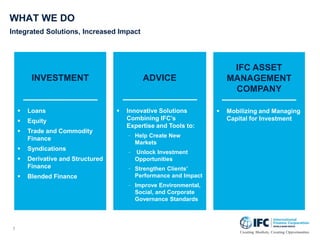
WHAT WE DO
Integrated Solutions, Increased Impact
1
INVESTMENT
 Loans
 Equity
 Trade and Commodity
Finance
 Syndications
 Derivative and Structured
Finance
 Blended Finance
ADVICE
 Innovative Solutions
Combining IFC’s
Expertise and Tools to:
– Help Create New
Markets
– Unlock Investment
Opportunities
– Strengthen Clients’
Performance and Impact
– Improve Environmental,
Social, and Corporate
Governance Standards
IFC ASSET
MANAGEMENT
COMPANY
 Mobilizing and Managing
Capital for Investment
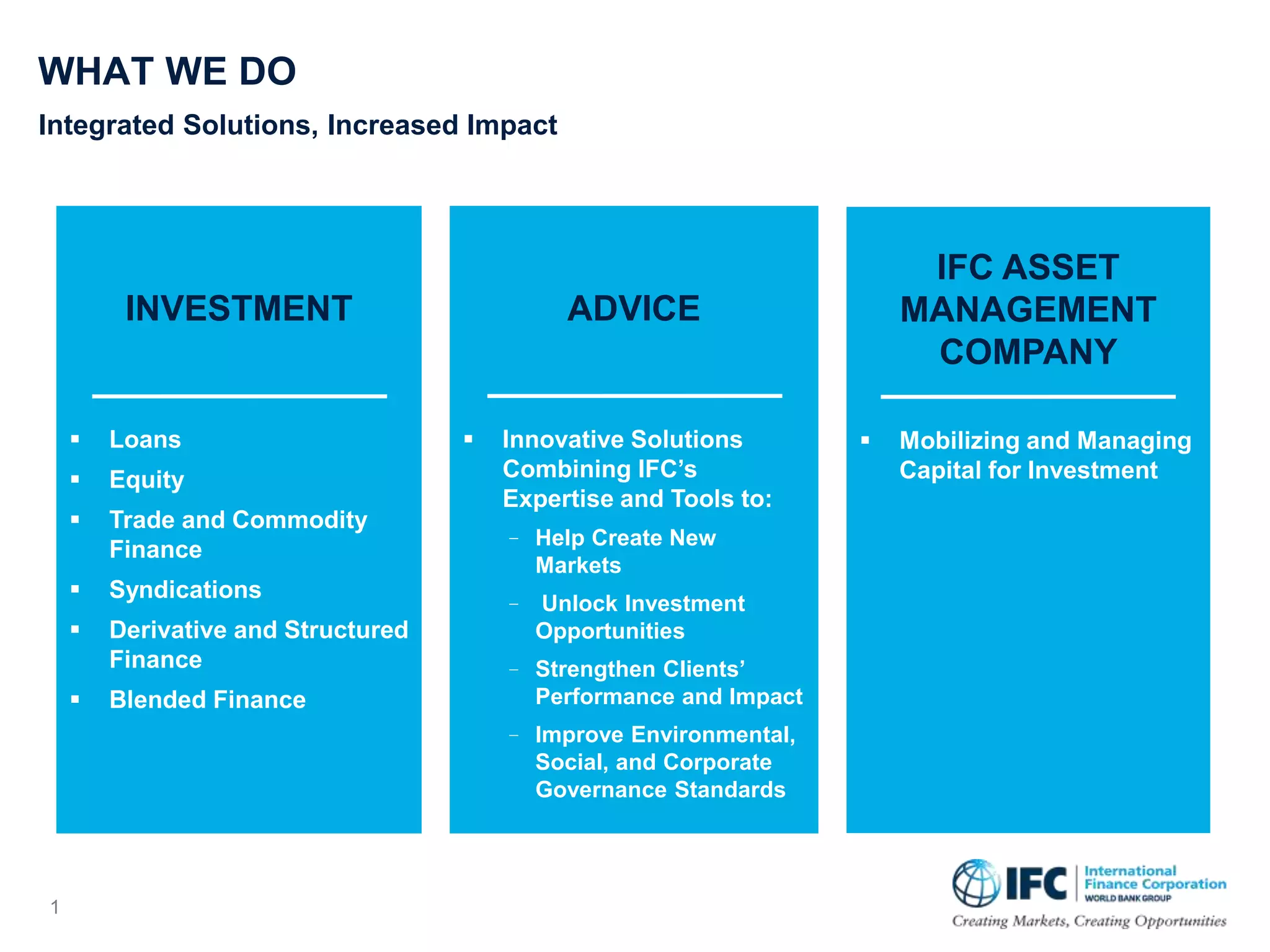
APPROACH 1. IFC FORESTRY & WOOD PRODUCTS SECTOR
(YE16 OUTSTANDING PORTFOLIO $884 MLN)
CREATING MARKETS
A comprehensive approach to tap the power
of the private sector through:
 Establishing regulatory and policy frameworks that
improve public governance and enable markets to
thrive
 Promoting competition and innovation
 Achieving demonstration effects that encourage
replication
 Introducing new solutions driven by improved
technology and logistics
 Building capacity and skills to open new markets
IFC PROJECT SELECTION CRITERIA
 Experienced sponsors with solid track record
 Land tenure sustainability
 Sustainable and secure fiber supply
 Incorporation of E&S responsibility and certification
 Clear competitive advantage: high wood paying
capability and low wood delivered cost (cash cost in
lower quartile)
 Competitive investment cost per unit
 Proper investment timing (supply-demand balance)
FULL FWP VALUE CHAIN
APPROACH 2. IFC GREEN BONDS
 IFC is one of the world’s largest financiers of climate-smart projects for developing countries. Since
2005 IFC has invested $18.3 billion in long-term financing
 IFC launched a green bond program in 2010 to help catalyze the market and unlock investment for
private sector projects that support renewable energy and energy efficiency.
 By June 2017, IFC’s had issued $5.8 billion in green bonds across in twelve currencies, with the largest
green-bond fund to date at $2 billion.
 All proceeds from IFC green bonds are set aside in a designated account for investing exclusively in
renewable energy, energy efficiency, and other climate-related projects in developing countries.
3
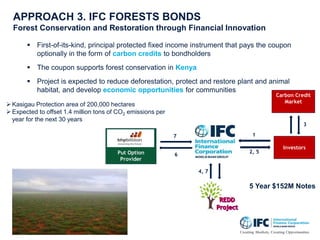
APPROACH 3. IFC FORESTS BONDS
Forest Conservation and Restoration through Financial Innovation
4
Investors
4, 7
Put Option
Provider
6
Carbon Credit
Market
3
1
2, 5
7
 First-of-its-kind, principal protected fixed income instrument that pays the coupon
optionally in the form of carbon credits to bondholders
 The coupon supports forest conservation in Kenya
 Project is expected to reduce deforestation, protect and restore plant and animal
habitat, and develop economic opportunities for communities
5 Year $152M Notes
 Kasigau Protection area of 200,000 hectares
 Expected to offset 1.4 million tons of CO2 emissions per
year for the next 30 years
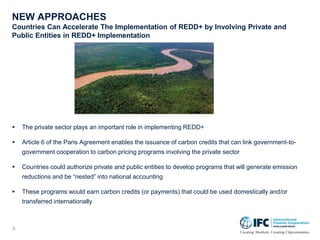
NEW APPROACHES
Countries Can Accelerate The Implementation of REDD+ by Involving Private and
Public Entities in REDD+ Implementation
 The private sector plays an important role in implementing REDD+
 Article 6 of the Paris Agreement enables the issuance of carbon credits that can link government-to-
government cooperation to carbon pricing programs involving the private sector
 Countries could authorize private and public entities to develop programs that will generate emission
reductions and be “nested” into national accounting
 These programs would earn carbon credits (or payments) that could be used domestically and/or
transferred internationally
5
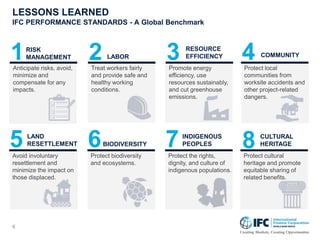
LESSONS LEARNED
IFC PERFORMANCE STANDARDS - A Global Benchmark
6
1Anticipate risks, avoid,
minimize and
compensate for any
impacts.
2Treat workers fairly
and provide safe and
healthy working
conditions.
3Promote energy
efficiency, use
resources sustainably,
and cut greenhouse
emissions.
4Protect local
communities from
worksite accidents and
other project-related
dangers.
5Avoid involuntary
resettlement and
minimize the impact on
those displaced.
6Protect biodiversity
and ecosystems.
7Protect the rights,
dignity, and culture of
indigenous populations.
8
RISK
MANAGEMENT LABOR
RESOURCE
EFFICIENCY COMMUNITY
LAND
RESETTLEMENT BIODIVERSITY
INDIGENOUS
PEOPLES
CULTURAL
HERITAGE
Protect cultural
heritage and promote
equitable sharing of
related benefits.

Finance tools for protecting forests

  • 1.
    WHAT WE DO IntegratedSolutions, Increased Impact 1 INVESTMENT  Loans  Equity  Trade and Commodity Finance  Syndications  Derivative and Structured Finance  Blended Finance ADVICE  Innovative Solutions Combining IFC’s Expertise and Tools to: – Help Create New Markets – Unlock Investment Opportunities – Strengthen Clients’ Performance and Impact – Improve Environmental, Social, and Corporate Governance Standards IFC ASSET MANAGEMENT COMPANY  Mobilizing and Managing Capital for Investment
  • 2.
    APPROACH 1. IFCFORESTRY & WOOD PRODUCTS SECTOR (YE16 OUTSTANDING PORTFOLIO $884 MLN) CREATING MARKETS A comprehensive approach to tap the power of the private sector through:  Establishing regulatory and policy frameworks that improve public governance and enable markets to thrive  Promoting competition and innovation  Achieving demonstration effects that encourage replication  Introducing new solutions driven by improved technology and logistics  Building capacity and skills to open new markets IFC PROJECT SELECTION CRITERIA  Experienced sponsors with solid track record  Land tenure sustainability  Sustainable and secure fiber supply  Incorporation of E&S responsibility and certification  Clear competitive advantage: high wood paying capability and low wood delivered cost (cash cost in lower quartile)  Competitive investment cost per unit  Proper investment timing (supply-demand balance) FULL FWP VALUE CHAIN
  • 3.
    APPROACH 2. IFCGREEN BONDS  IFC is one of the world’s largest financiers of climate-smart projects for developing countries. Since 2005 IFC has invested $18.3 billion in long-term financing  IFC launched a green bond program in 2010 to help catalyze the market and unlock investment for private sector projects that support renewable energy and energy efficiency.  By June 2017, IFC’s had issued $5.8 billion in green bonds across in twelve currencies, with the largest green-bond fund to date at $2 billion.  All proceeds from IFC green bonds are set aside in a designated account for investing exclusively in renewable energy, energy efficiency, and other climate-related projects in developing countries. 3
  • 4.
    APPROACH 3. IFCFORESTS BONDS Forest Conservation and Restoration through Financial Innovation 4 Investors 4, 7 Put Option Provider 6 Carbon Credit Market 3 1 2, 5 7  First-of-its-kind, principal protected fixed income instrument that pays the coupon optionally in the form of carbon credits to bondholders  The coupon supports forest conservation in Kenya  Project is expected to reduce deforestation, protect and restore plant and animal habitat, and develop economic opportunities for communities 5 Year $152M Notes  Kasigau Protection area of 200,000 hectares  Expected to offset 1.4 million tons of CO2 emissions per year for the next 30 years
  • 5.
    NEW APPROACHES Countries CanAccelerate The Implementation of REDD+ by Involving Private and Public Entities in REDD+ Implementation  The private sector plays an important role in implementing REDD+  Article 6 of the Paris Agreement enables the issuance of carbon credits that can link government-to- government cooperation to carbon pricing programs involving the private sector  Countries could authorize private and public entities to develop programs that will generate emission reductions and be “nested” into national accounting  These programs would earn carbon credits (or payments) that could be used domestically and/or transferred internationally 5
  • 6.
    LESSONS LEARNED IFC PERFORMANCESTANDARDS - A Global Benchmark 6 1Anticipate risks, avoid, minimize and compensate for any impacts. 2Treat workers fairly and provide safe and healthy working conditions. 3Promote energy efficiency, use resources sustainably, and cut greenhouse emissions. 4Protect local communities from worksite accidents and other project-related dangers. 5Avoid involuntary resettlement and minimize the impact on those displaced. 6Protect biodiversity and ecosystems. 7Protect the rights, dignity, and culture of indigenous populations. 8 RISK MANAGEMENT LABOR RESOURCE EFFICIENCY COMMUNITY LAND RESETTLEMENT BIODIVERSITY INDIGENOUS PEOPLES CULTURAL HERITAGE Protect cultural heritage and promote equitable sharing of related benefits.

Editor's Notes

  • #4 FWP Interests in this FLR event – creating markets
  • #6 how your approach or model looks like on the ground, and how you engage the different stakeholders (in particular local people)
  • #7 New Indonesia REDD+ Regulation 70 recognizes importance of private sector in REDD and international trading of carbon credits, but does not yet specify nesting mechanisms.
  • #8 Lessons learned from current and past experiences – need for highest standards of safeguards