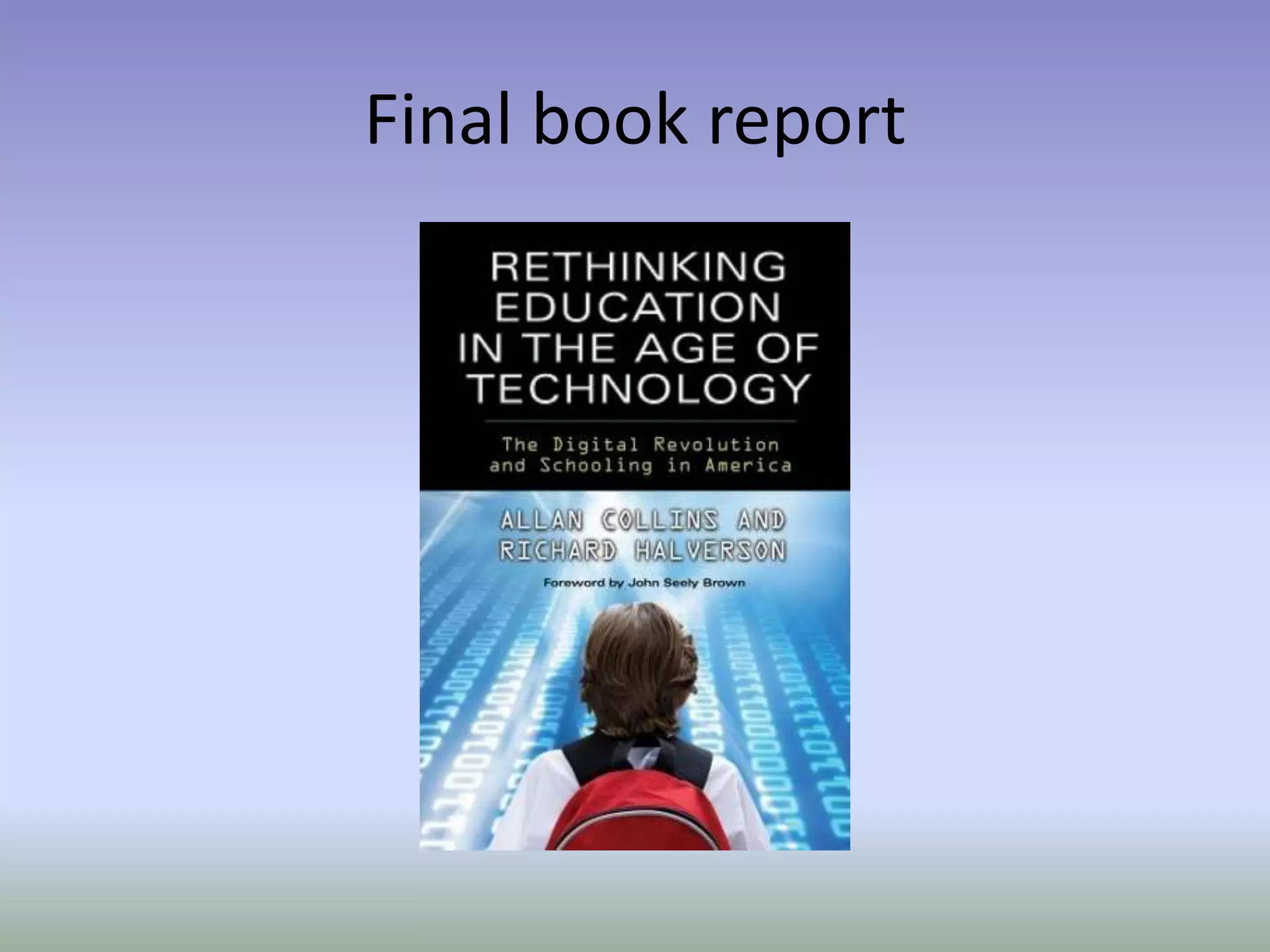
Final book report
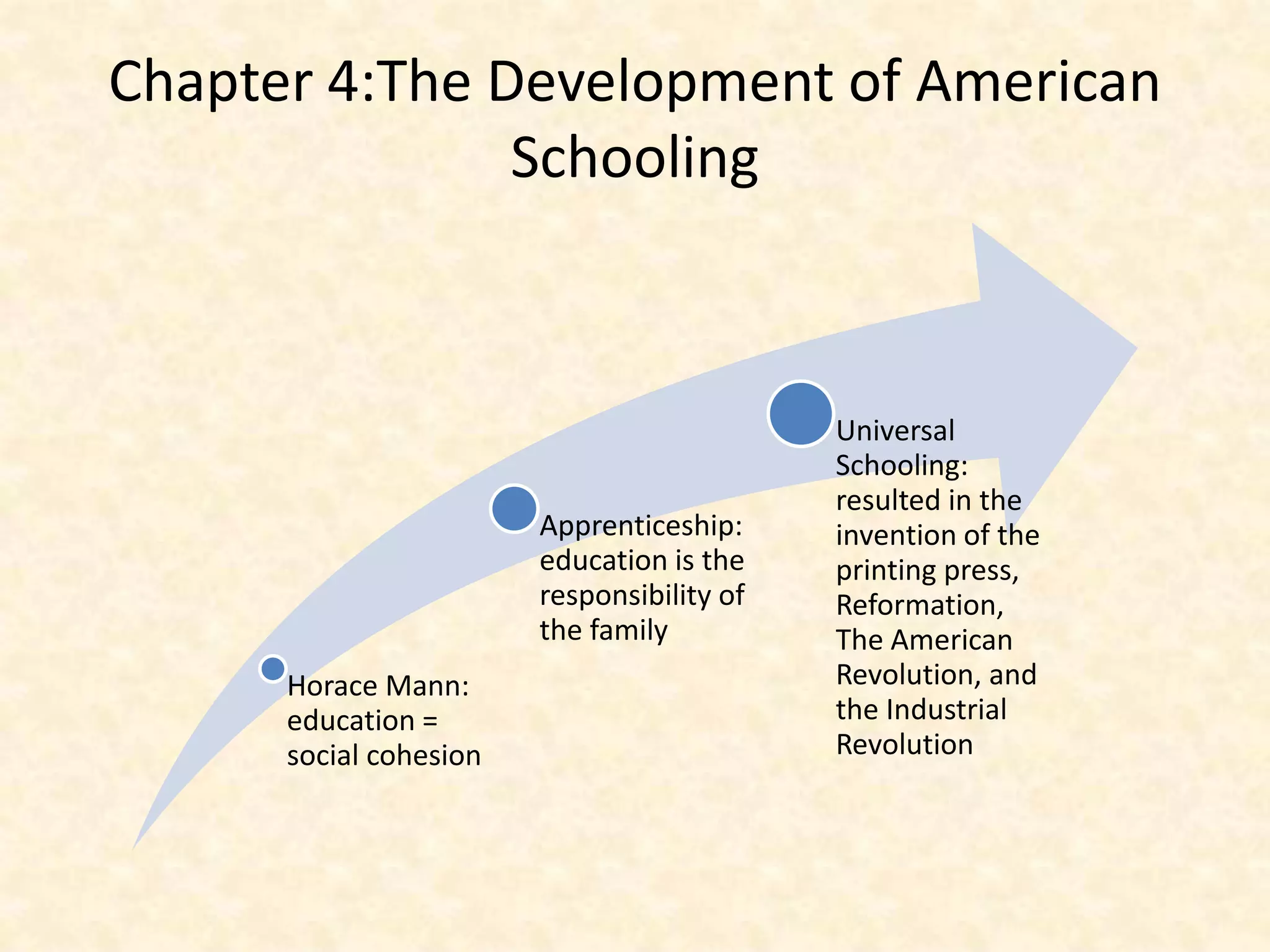
Chapter 4:The Development of American
               Schooling


                                            Universal
                                            Schooling:
                                            resulted in the
                        Apprenticeship:     invention of the
                        education is the    printing press,
                        responsibility of   Reformation,
                        the family          The American
      Horace Mann:                          Revolution, and
      education =                           the Industrial
      social cohesion                       Revolution
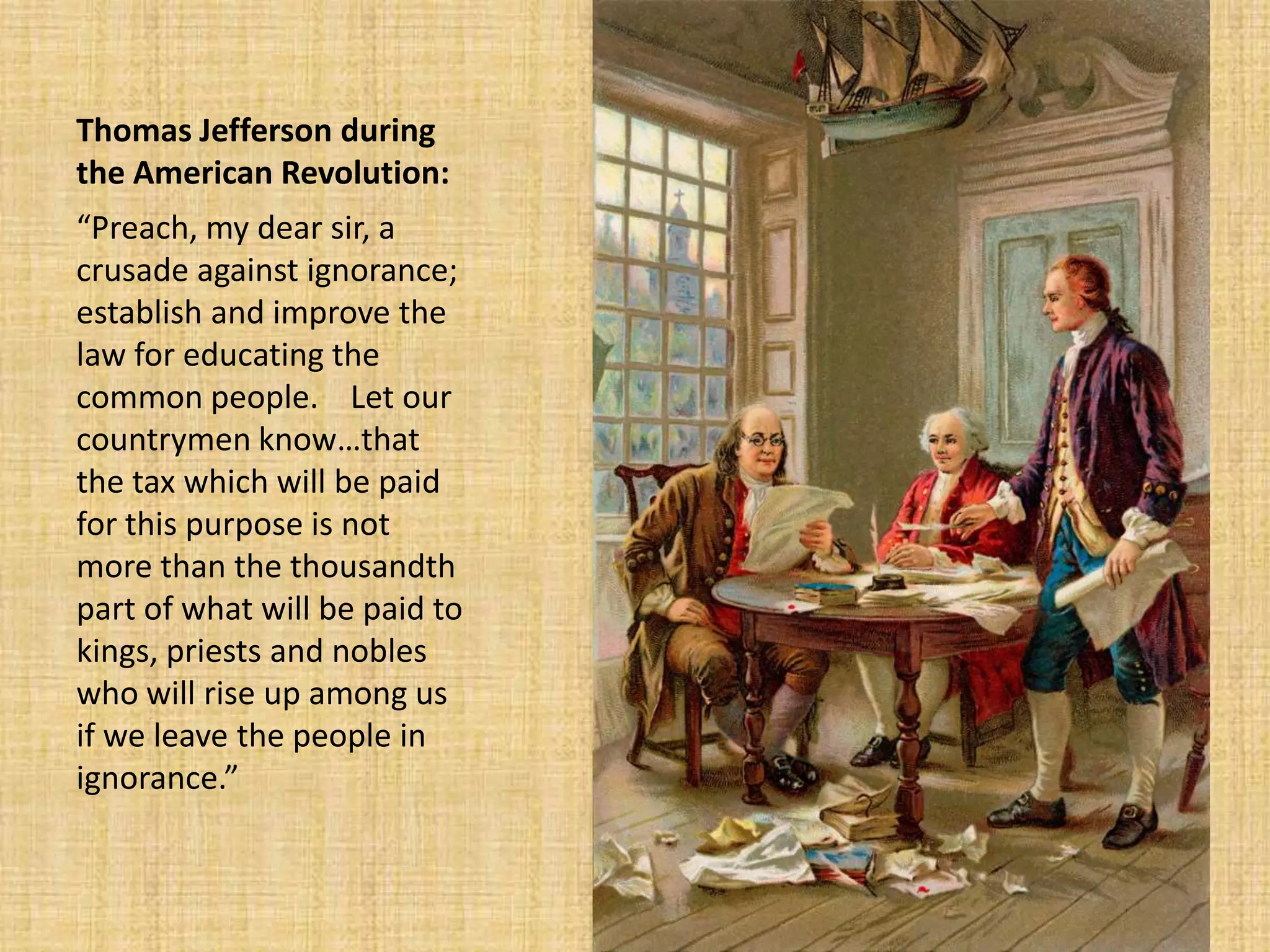
Thomas Jefferson during
the American Revolution:
“Preach, my dear sir, a
crusade against ignorance;
establish and improve the
law for educating the
common people. Let our
countrymen know…that
the tax which will be paid
for this purpose is not
more than the thousandth
part of what will be paid to
kings, priests and nobles
who will rise up among us
if we leave the people in
ignorance.”
The Evolution of a School System…
• http://www.voki.com/pickup.php?scid=41399
  19&height=267&width=200
Chapter 5: The Seeds of a New System of
               Education

     As technology drives education,
     schools will have less of a role in
            student learning.
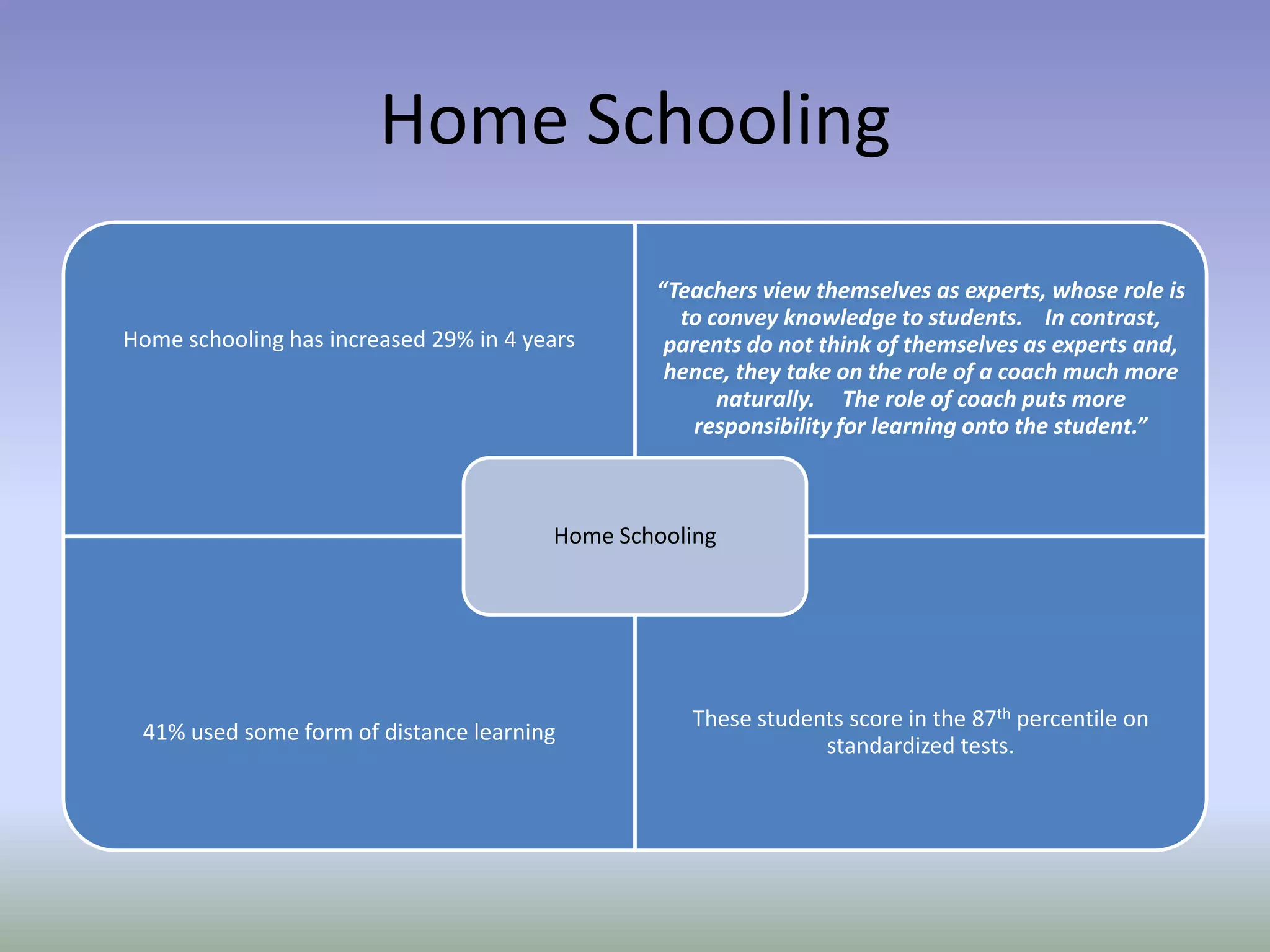
Home Schooling
                                                “Teachers view themselves as experts, whose role is
                                                  to convey knowledge to students. In contrast,
Home schooling has increased 29% in 4 years      parents do not think of themselves as experts and,
                                                 hence, they take on the role of a coach much more
                                                      naturally. The role of coach puts more
                                                    responsibility for learning onto the student.”


                                        Home Schooling


                                                   These students score in the 87th percentile on
 41% used some form of distance learning
                                                               standardized tests.
Workplace Learning
                   & Distance Education
•   Some corporations are                         •   University of Phoenix: most successful
     “faced with remedial training needs for          online university in USA with more than
    the kinds of knowledge and skills that            30,000 online students (pg. 75)
    students should learn in schools.” (pg. 71)   •   Virtual high school programs: Utah:35,000
•   Online training games that teach customer         online students and Florida: 21,000 online
    service                                           students
•   “Eureka”: an online learning system           •   Distance Education, though still viewed by
    created by Xerox to allow workers to              many as inferior to traditional education,
    share stories about how they learned to           will continue to offer learners to advance
    problem solve when the manuals didn’t             their careers.
    contain information they needed to repair
    equipment
•   Military: simulations which allow trainees
    to drive tanks in virtual terrains,
    interacting with experts trained in enemy
    tactics
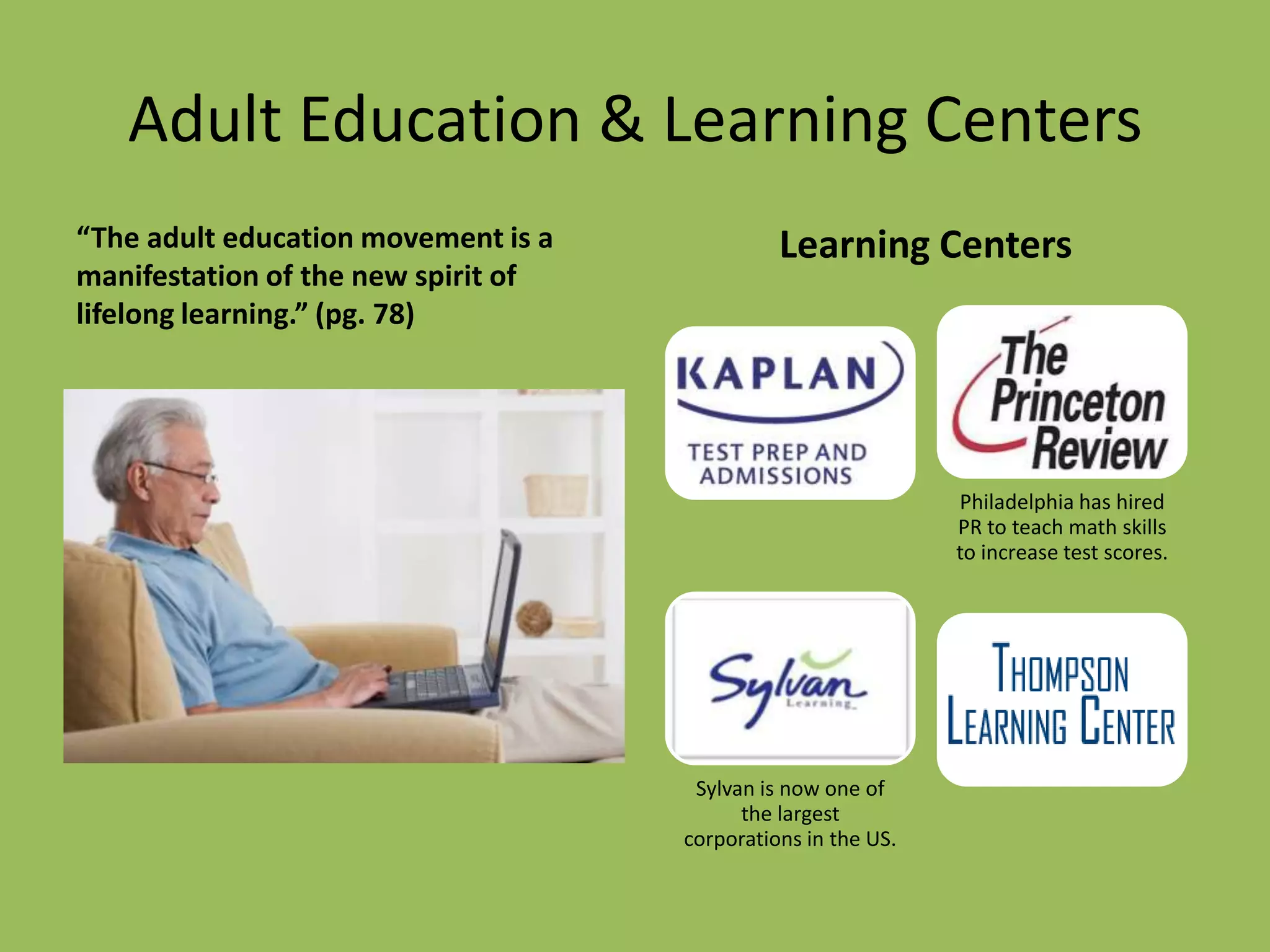
Adult Education & Learning Centers
“The adult education movement is a             Learning Centers
manifestation of the new spirit of
lifelong learning.” (pg. 78)


                                                               Philadelphia has hired
                                                               PR to teach math skills
                                                               to increase test scores.


                                      Sylvan is now one of
                                           the largest
                                     corporations in the US.
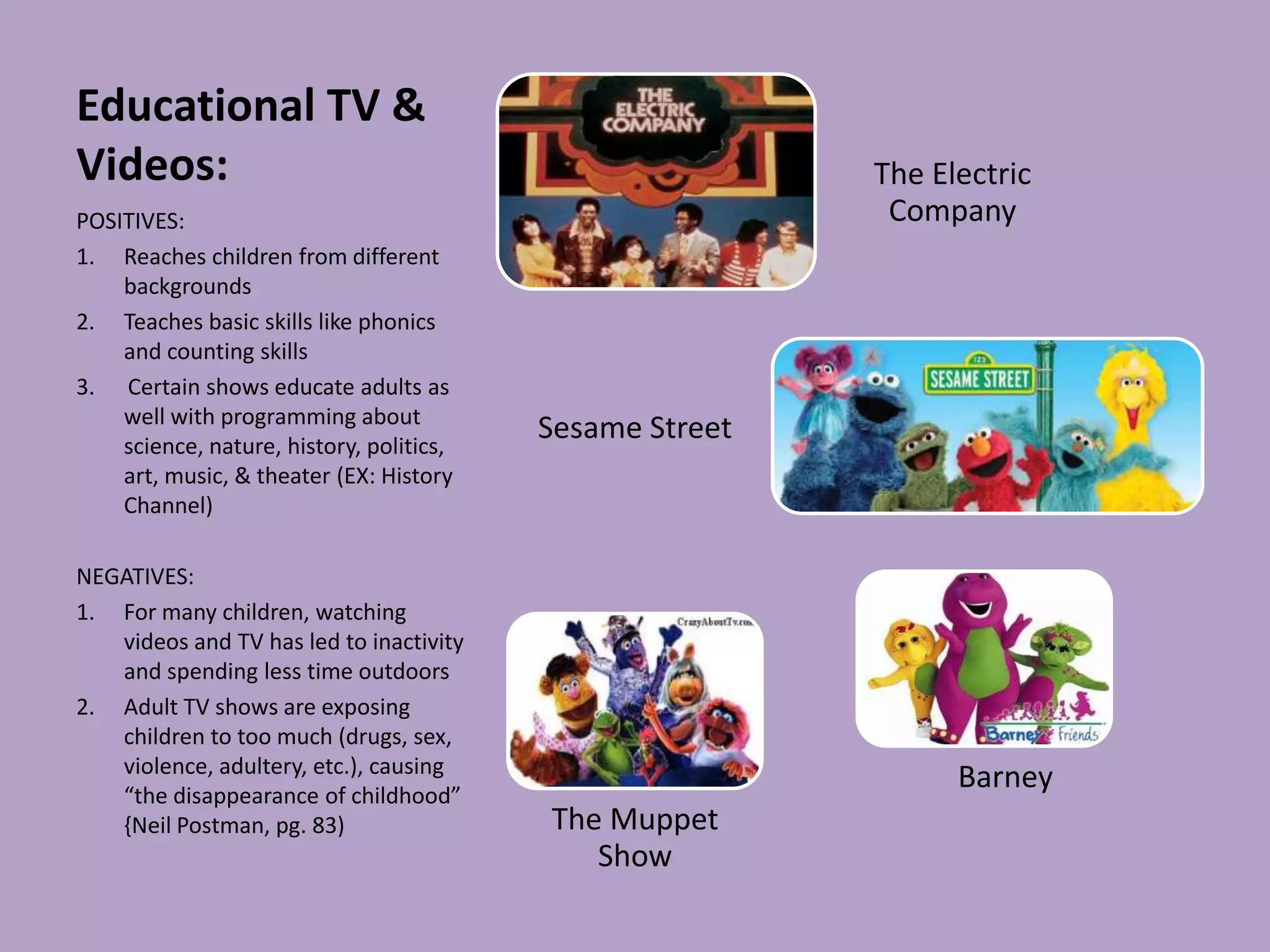
Educational TV &
Videos:                                                   The Electric
POSITIVES:                                                 Company
1. Reaches children from different
    backgrounds
2. Teaches basic skills like phonics
    and counting skills
3. Certain shows educate adults as
    well with programming about
    science, nature, history, politics,
                                          Sesame Street
    art, music, & theater (EX: History
    Channel)

NEGATIVES:
1. For many children, watching
   videos and TV has led to inactivity
   and spending less time outdoors
2. Adult TV shows are exposing
   children to too much (drugs, sex,
   violence, adultery, etc.), causing
   “the disappearance of childhood”
                                                                Barney
   {Neil Postman, pg. 83)                 The Muppet
                                             Show
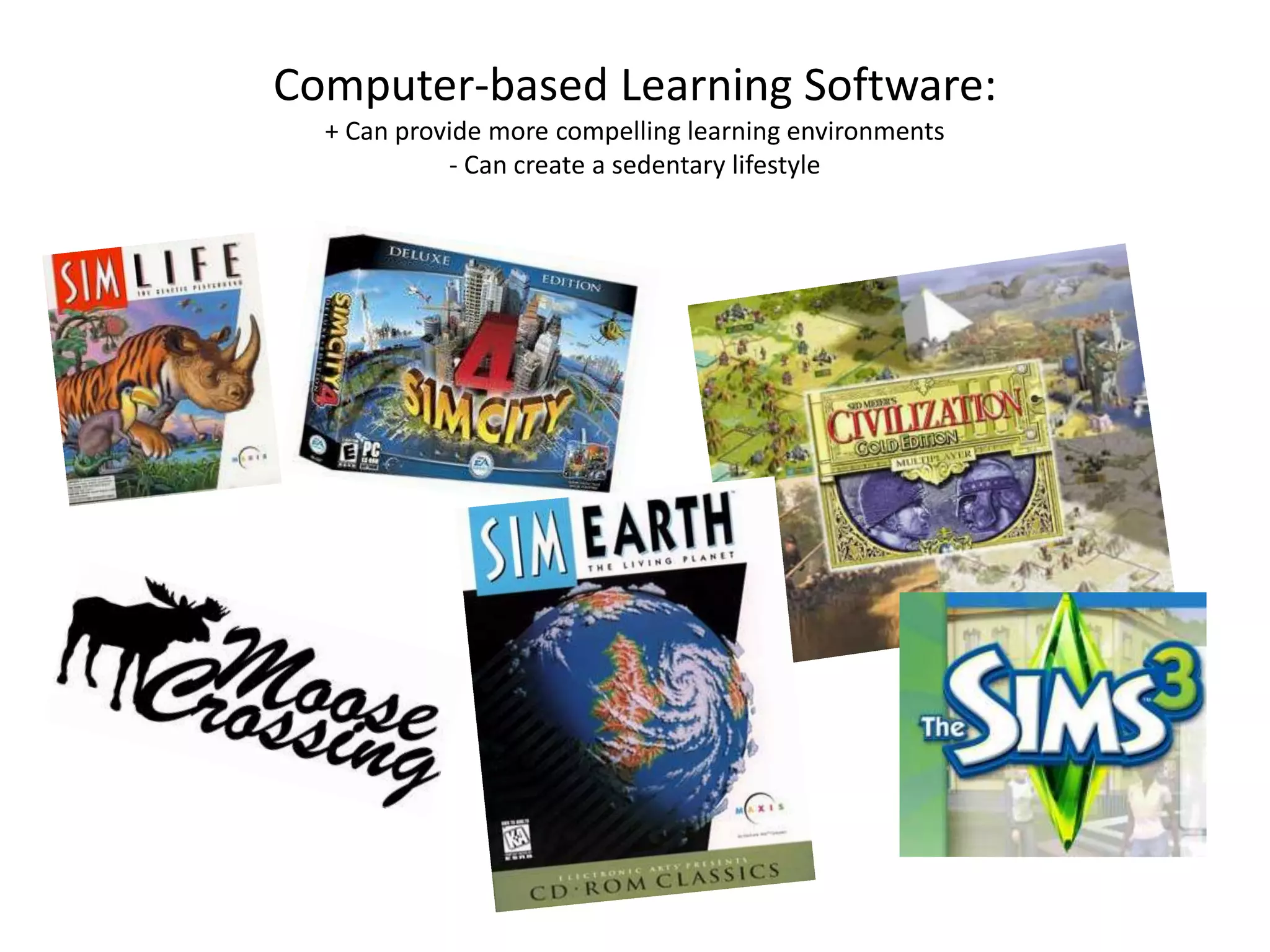
Computer-based Learning Software:
  + Can provide more compelling learning environments
            - Can create a sedentary lifestyle
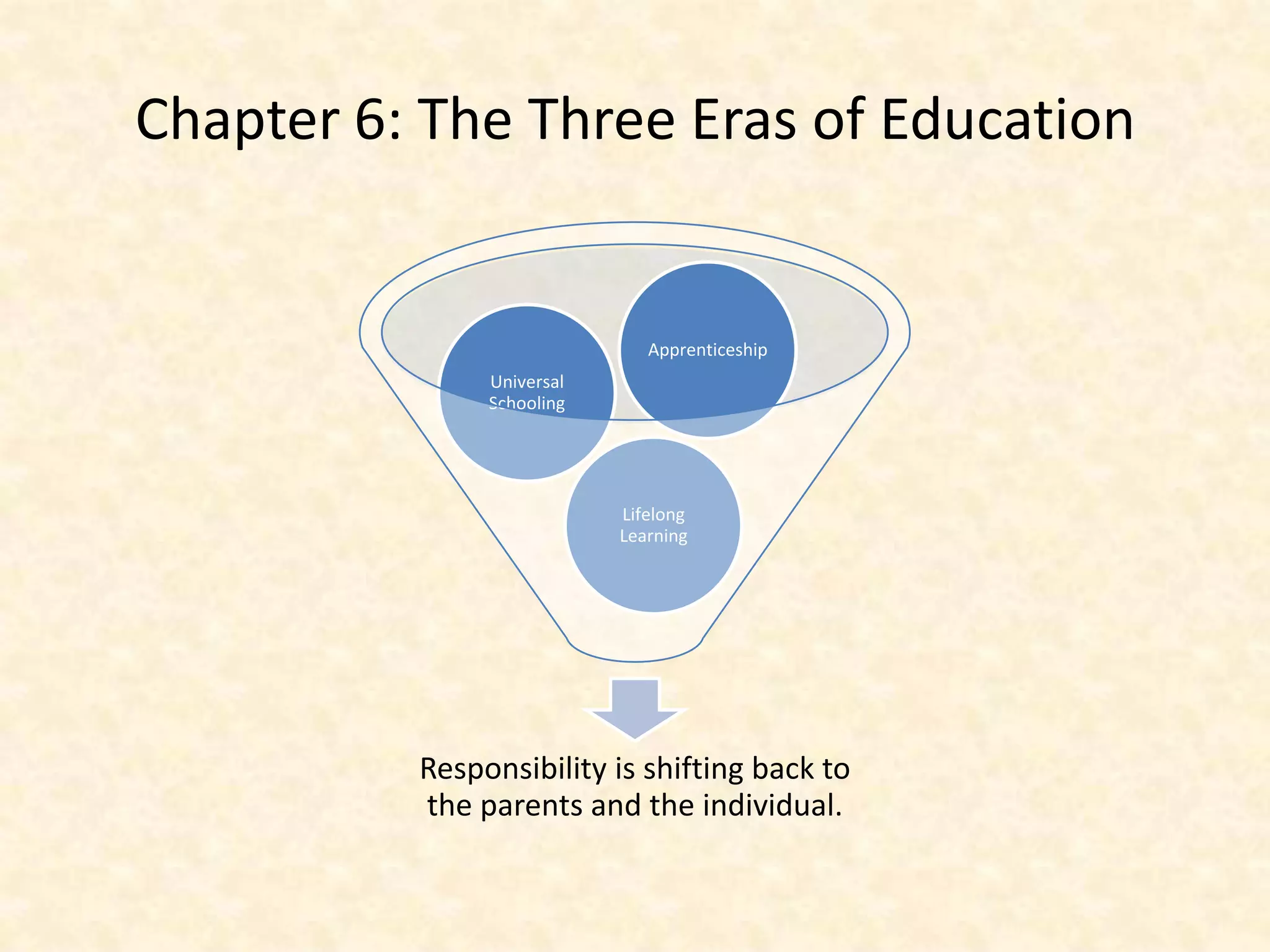
Chapter 6: The Three Eras of Education


                              Apprenticeship
               Universal
               Schooling


                           Lifelong
                           Learning


          Responsibility is shifting back to
          the parents and the individual.
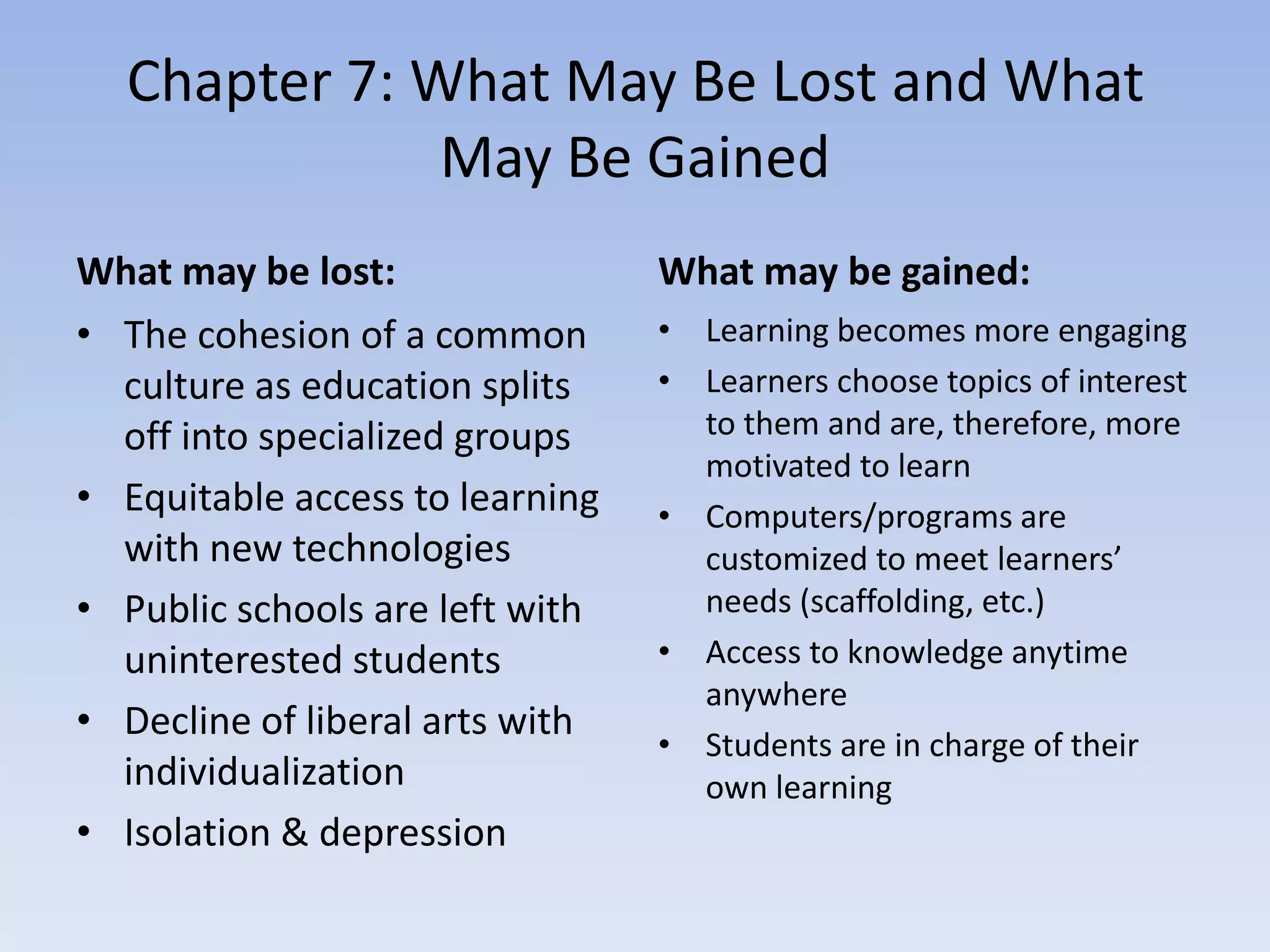
Chapter 7: What May Be Lost and What
              May Be Gained
What may be lost:                What may be gained:
• The cohesion of a common       • Learning becomes more engaging
  culture as education splits    • Learners choose topics of interest
  off into specialized groups      to them and are, therefore, more
                                   motivated to learn
• Equitable access to learning   • Computers/programs are
  with new technologies            customized to meet learners’
• Public schools are left with     needs (scaffolding, etc.)
  uninterested students          • Access to knowledge anytime
                                   anywhere
• Decline of liberal arts with
                                 • Students are in charge of their
  individualization                own learning
• Isolation & depression
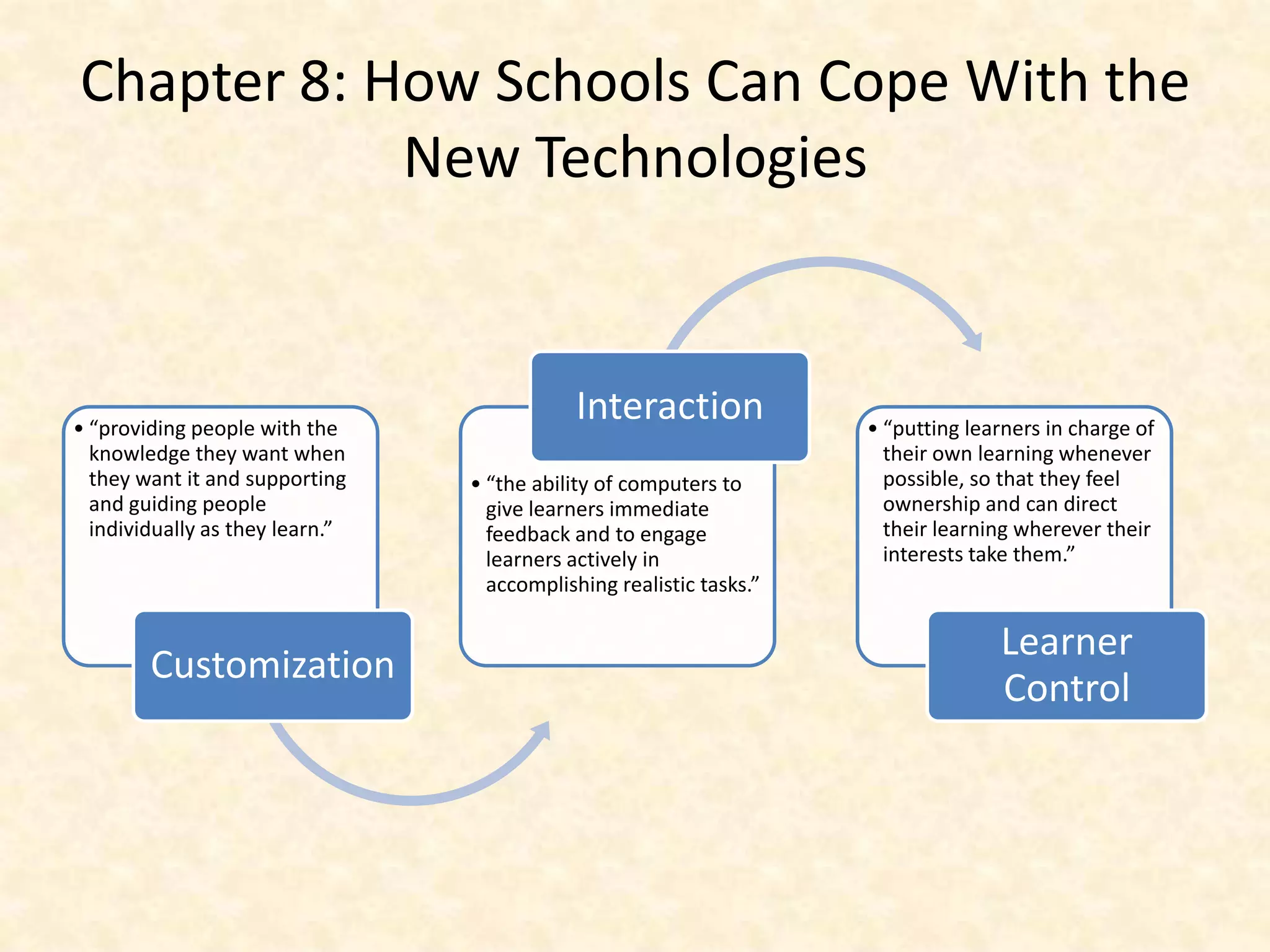
Chapter 8: How Schools Can Cope With the
            New Technologies


• “providing people with the
                                             Interaction             • “putting learners in charge of
  knowledge they want when                                             their own learning whenever
  they want it and supporting    • “the ability of computers to        possible, so that they feel
  and guiding people               give learners immediate             ownership and can direct
  individually as they learn.”     feedback and to engage              their learning wherever their
                                   learners actively in                interests take them.”
                                   accomplishing realistic tasks.”

                                                                                   Learner
        Customization
                                                                                   Control
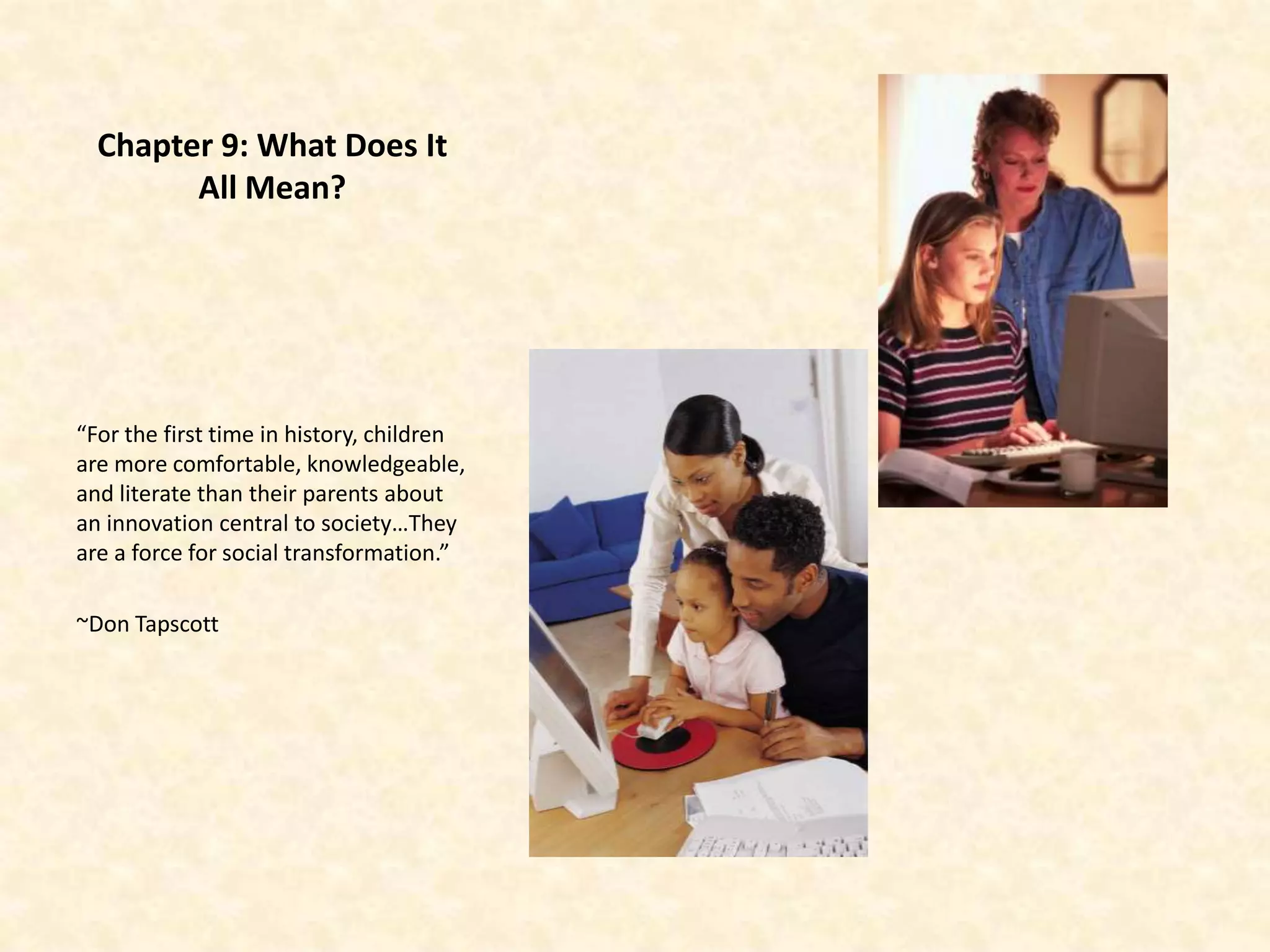
Chapter 9: What Does It
        All Mean?


“For the first time in history, children
are more comfortable, knowledgeable,
and literate than their parents about
an innovation central to society…They
are a force for social transformation.”

~Don Tapscott
Chapter 10: Rethinking Education in a
             Technological World
RETHINKING…
•   Learning
•   Motivation
•   What is important to learn
•   Careers
•   Transitions between learning & work
•   Educational leadership
•   The role of government in education
•   Our vision of the future

Final%2520book%2520report%5b1%5d[1]

  • 1.
  • 2.
    Chapter 4:The Developmentof American Schooling Universal Schooling: resulted in the Apprenticeship: invention of the education is the printing press, responsibility of Reformation, the family The American Horace Mann: Revolution, and education = the Industrial social cohesion Revolution
  • 3.
    Thomas Jefferson during theAmerican Revolution: “Preach, my dear sir, a crusade against ignorance; establish and improve the law for educating the common people. Let our countrymen know…that the tax which will be paid for this purpose is not more than the thousandth part of what will be paid to kings, priests and nobles who will rise up among us if we leave the people in ignorance.”
  • 4.
    The Evolution ofa School System… • http://www.voki.com/pickup.php?scid=41399 19&height=267&width=200
  • 5.
    Chapter 5: TheSeeds of a New System of Education As technology drives education, schools will have less of a role in student learning.
  • 6.
    Home Schooling “Teachers view themselves as experts, whose role is to convey knowledge to students. In contrast, Home schooling has increased 29% in 4 years parents do not think of themselves as experts and, hence, they take on the role of a coach much more naturally. The role of coach puts more responsibility for learning onto the student.” Home Schooling These students score in the 87th percentile on 41% used some form of distance learning standardized tests.
  • 7.
    Workplace Learning & Distance Education • Some corporations are • University of Phoenix: most successful “faced with remedial training needs for online university in USA with more than the kinds of knowledge and skills that 30,000 online students (pg. 75) students should learn in schools.” (pg. 71) • Virtual high school programs: Utah:35,000 • Online training games that teach customer online students and Florida: 21,000 online service students • “Eureka”: an online learning system • Distance Education, though still viewed by created by Xerox to allow workers to many as inferior to traditional education, share stories about how they learned to will continue to offer learners to advance problem solve when the manuals didn’t their careers. contain information they needed to repair equipment • Military: simulations which allow trainees to drive tanks in virtual terrains, interacting with experts trained in enemy tactics
  • 8.
    Adult Education &Learning Centers “The adult education movement is a Learning Centers manifestation of the new spirit of lifelong learning.” (pg. 78) Philadelphia has hired PR to teach math skills to increase test scores. Sylvan is now one of the largest corporations in the US.
  • 9.
    Educational TV & Videos: The Electric POSITIVES: Company 1. Reaches children from different backgrounds 2. Teaches basic skills like phonics and counting skills 3. Certain shows educate adults as well with programming about science, nature, history, politics, Sesame Street art, music, & theater (EX: History Channel) NEGATIVES: 1. For many children, watching videos and TV has led to inactivity and spending less time outdoors 2. Adult TV shows are exposing children to too much (drugs, sex, violence, adultery, etc.), causing “the disappearance of childhood” Barney {Neil Postman, pg. 83) The Muppet Show
  • 10.
    Computer-based Learning Software: + Can provide more compelling learning environments - Can create a sedentary lifestyle
  • 11.
    Chapter 6: TheThree Eras of Education Apprenticeship Universal Schooling Lifelong Learning Responsibility is shifting back to the parents and the individual.
  • 12.
    Chapter 7: WhatMay Be Lost and What May Be Gained What may be lost: What may be gained: • The cohesion of a common • Learning becomes more engaging culture as education splits • Learners choose topics of interest off into specialized groups to them and are, therefore, more motivated to learn • Equitable access to learning • Computers/programs are with new technologies customized to meet learners’ • Public schools are left with needs (scaffolding, etc.) uninterested students • Access to knowledge anytime anywhere • Decline of liberal arts with • Students are in charge of their individualization own learning • Isolation & depression
  • 13.
    Chapter 8: HowSchools Can Cope With the New Technologies • “providing people with the Interaction • “putting learners in charge of knowledge they want when their own learning whenever they want it and supporting • “the ability of computers to possible, so that they feel and guiding people give learners immediate ownership and can direct individually as they learn.” feedback and to engage their learning wherever their learners actively in interests take them.” accomplishing realistic tasks.” Learner Customization Control
  • 14.
    Chapter 9: WhatDoes It All Mean? “For the first time in history, children are more comfortable, knowledgeable, and literate than their parents about an innovation central to society…They are a force for social transformation.” ~Don Tapscott
  • 15.
    Chapter 10: RethinkingEducation in a Technological World RETHINKING… • Learning • Motivation • What is important to learn • Careers • Transitions between learning & work • Educational leadership • The role of government in education • Our vision of the future