+
    Computer
    Games In
       the
    Classroom

                 Enhancing Learning,
                Motivating Students and
                 Encouraging Active
                        Learning
+   Importance

    Purpose   of Study
    Literature  Review
     Key themes
     Implications
     Gaps
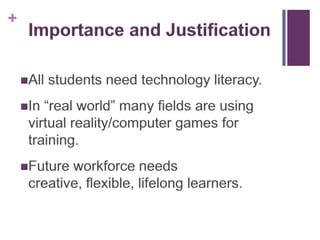
     Importance and
      Justification
+

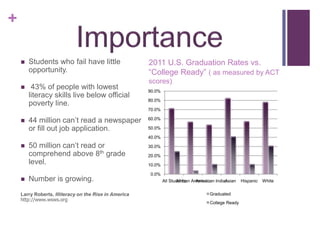
       Students who fail have little                  2011 U.S. Graduation Rates vs.
        opportunity.                                   “College Ready” ( as measured by ACT
                                                       scores)
        43% of people with lowest                     90.0%
        literacy skills live below official
                                                       80.0%
        poverty line.
                                                       70.0%

       44 million can’t read a newspaper              60.0%

        or fill out job application.                   50.0%

                                                       40.0%

       50 million can’t read or                       30.0%
        comprehend above 8th grade                     20.0%
        level.                                         10.0%

                                                       0.0%
       Number is growing.                                     All Students American Indian sian
                                                                      African American    A         Hispanic   White


    Larry Roberts, Illiteracy on the Rise in America                                Graduated
    http://www.wsws.org
                                                                                    College Ready
+

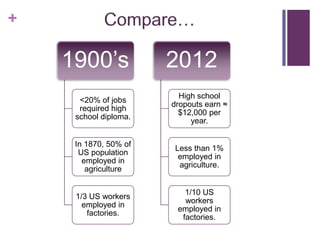
    1900’s             2012
                         High school
      <20% of jobs
                       dropouts earn ≈
      required high
                         $12,000 per
     school diploma.
                            year.

     In 1870, 50% of
                        Less than 1%
      US population
                         employed in
       employed in
                         agriculture.
        agriculture

                          1/10 US
     1/3 US workers
                          workers
       employed in
                        employed in
        factories.
                         factories.
+
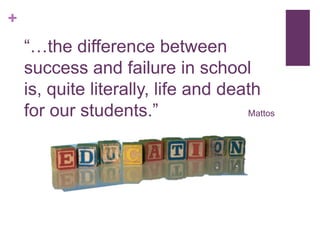
    “…the difference between
    success and failure in school
    is, quite literally, life and death
    for our students.”               Mattos
+


    Will interactive computer games help
    students who struggle in math?
       Immediate explanatory feedback
       Reduces need to unlearn and re-learn
       Slower learners need extra time practicing
       Mastery over time
       Builds fluency: accuracy + speed
       Fluency allows cognitive focus on new concepts
+
            Theme 1: Number Sense and the Social Divide

       Number sense is the single largest predictor of mathematics
        success in young children.

       Calculation is linked to the language in which it is learned
        which puts some EL students at a disadvantage.

       At-risk students are at a far greater risk educationally.
           Minority status
           Low family income
           Poorly educated parents
           Emotional or physical difficulties
+
                 Literature Review
    Theme 2: Brain Based Instructional Strategies            for
                       Learning
       Learning causes growth in brain cells.

       Learning happens when connections are made between new
        information and previous knowledge.

       Multi-modal processing = stronger connections

       Mayer’s cognitive theory of multi-media learning
           Dual channel learning
           Verbal or written words
           Non-verbal or pictorial
+
                   Literature Review
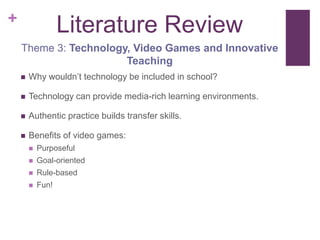
    Theme 3: Technology, Video Games and Innovative
                       Teaching
       Why wouldn’t technology be included in school?

       Technology can provide media-rich learning environments.

       Authentic practice builds transfer skills.

       Benefits of video games:
           Purposeful
           Goal-oriented
           Rule-based
           Fun!
+
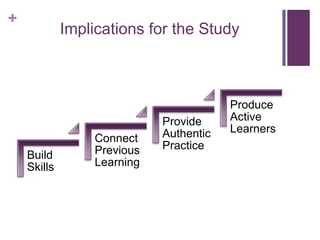
             Implications for the Study


                                         Produce
                             Provide     Active
                             Authentic   Learners
                  Connect
                  Previous   Practice
    Build
    Skills        Learning
+


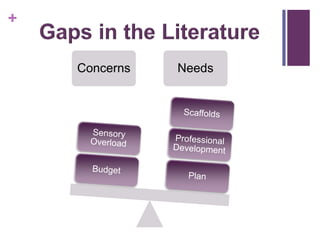
    Concerns   Needs
+

Chapter2 ppt

  • 1.
    + Computer Games In the Classroom Enhancing Learning, Motivating Students and Encouraging Active Learning
  • 2.
    + Importance Purpose of Study Literature Review Key themes Implications Gaps Importance and Justification
  • 3.
    +  Students who fail have little 2011 U.S. Graduation Rates vs. opportunity. “College Ready” ( as measured by ACT scores)  43% of people with lowest 90.0% literacy skills live below official 80.0% poverty line. 70.0%  44 million can’t read a newspaper 60.0% or fill out job application. 50.0% 40.0%  50 million can’t read or 30.0% comprehend above 8th grade 20.0% level. 10.0% 0.0%  Number is growing. All Students American Indian sian African American A Hispanic White Larry Roberts, Illiteracy on the Rise in America Graduated http://www.wsws.org College Ready
  • 4.
    + 1900’s 2012 High school <20% of jobs dropouts earn ≈ required high $12,000 per school diploma. year. In 1870, 50% of Less than 1% US population employed in employed in agriculture. agriculture 1/10 US 1/3 US workers workers employed in employed in factories. factories.
  • 5.
    + “…the difference between success and failure in school is, quite literally, life and death for our students.” Mattos
  • 6.
    + Will interactive computer games help students who struggle in math?  Immediate explanatory feedback  Reduces need to unlearn and re-learn  Slower learners need extra time practicing  Mastery over time  Builds fluency: accuracy + speed  Fluency allows cognitive focus on new concepts
  • 7.
    + Theme 1: Number Sense and the Social Divide  Number sense is the single largest predictor of mathematics success in young children.  Calculation is linked to the language in which it is learned which puts some EL students at a disadvantage.  At-risk students are at a far greater risk educationally.  Minority status  Low family income  Poorly educated parents  Emotional or physical difficulties
  • 8.
    + Literature Review Theme 2: Brain Based Instructional Strategies for Learning  Learning causes growth in brain cells.  Learning happens when connections are made between new information and previous knowledge.  Multi-modal processing = stronger connections  Mayer’s cognitive theory of multi-media learning  Dual channel learning  Verbal or written words  Non-verbal or pictorial
  • 9.
    + Literature Review Theme 3: Technology, Video Games and Innovative Teaching  Why wouldn’t technology be included in school?  Technology can provide media-rich learning environments.  Authentic practice builds transfer skills.  Benefits of video games:  Purposeful  Goal-oriented  Rule-based  Fun!
  • 10.
    + Implications for the Study Produce Provide Active Authentic Learners Connect Previous Practice Build Skills Learning
  • 11.
    + Concerns Needs
  • 12.