FRONT COVER S4 Craft & Design Final Folio – Template Guide
Contents Page Page 1 – Page 2 –  Page 3 – Name and Page No
Problem Name and Page No Brief The Design Problem and Brief I will design and make ………..
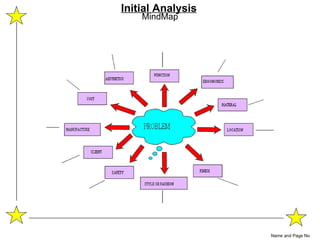
MindMap Name and Page No Initial Analysis
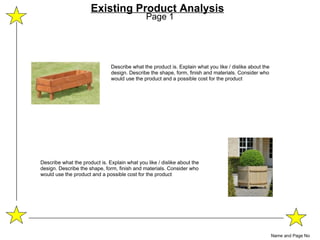
Page 1 Name and Page No Existing Product Analysis Describe what the product is. Explain what you like / dislike about the design. Describe the shape, form, finish and materials. Consider who would use the product and a possible cost for the product Describe what the product is. Explain what you like / dislike about the design. Describe the shape, form, finish and materials. Consider who would use the product and a possible cost for the product
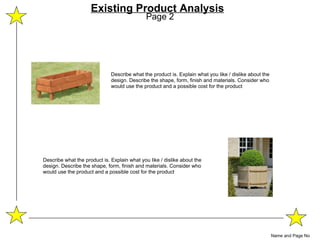
Page 2 Name and Page No Existing Product Analysis Describe what the product is. Explain what you like / dislike about the design. Describe the shape, form, finish and materials. Consider who would use the product and a possible cost for the product Describe what the product is. Explain what you like / dislike about the design. Describe the shape, form, finish and materials. Consider who would use the product and a possible cost for the product
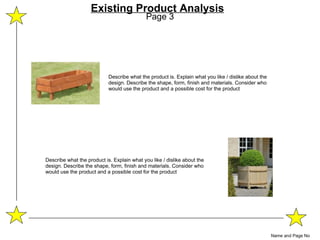
Page 3 Name and Page No Existing Product Analysis Describe what the product is. Explain what you like / dislike about the design. Describe the shape, form, finish and materials. Consider who would use the product and a possible cost for the product Describe what the product is. Explain what you like / dislike about the design. Describe the shape, form, finish and materials. Consider who would use the product and a possible cost for the product
The following pages of my folio are the areas of research I have identified that will affect my final product Name and Page No Research Area
This page should contain information or a table of materials research. If you think your product will have more than 1 material i.e. Wood and Plastic, you should have 1 page for the family of each material. Name and Page No Materials Research Table
This area of the folio should show a  minimum  of 4 possible joints you could use for your project. You should be able to fit 2 joints and information on each page. Name and Page No Wood Joining Techniques
This area of the folio should show a  minimum  of 4 possible metal joining techniques you could use for your project. You should be able to fit 2 techniques and information on each page. Name and Page No Metal Joining Techniques
This area of the folio should show a  minimum  of 4 possible plastics joining techniques you could use for your project. You should be able to fit 2 techniques and information on each page. Name and Page No Plastics Joining Techniques
This area of your folio should focus on people and how they will interact with your potential product. If you wish to aim for a Credit then you should include Anthropometrics. Name and Page No Ergonomics
You should now use the research and analysis areas of your folio to begin to sketch ideas for your final project. These can be done over 2 or 3 pages. Remember to add colour and notes to each sketch. Name and Page No Ideas
Now you should have at least 6 sketches of possible final projects to make. You should now be looking to reduce your number of ideas-perhaps mixing and matching as you develop towards a final design. Sizes should be basic at this stage. Name and Page No Development of Ideas
This area of the folio should show sketches of your final idea (the product you will make). You should make sure you sketch different views of your product and add notes to your sketch to explain exactly what it does/is and the sizes involved. Name and Page No Final Idea
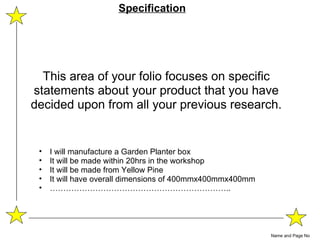
This area of your folio focuses on specific statements about your product that you have decided upon from all your previous research. Name and Page No Specification I will manufacture a Garden Planter box It will be made within 20hrs in the workshop It will be made from Yellow Pine It will have overall dimensions of 400mmx400mmx400mm ………………………………………………………… ..
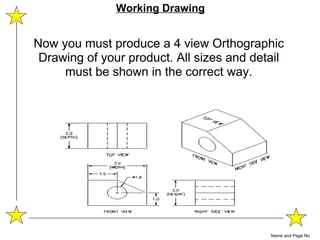
Now you must produce a 4 view Orthographic Drawing of your product. All sizes and detail must be shown in the correct way. Name and Page No Working Drawing
This is a simple table of sizes of raw material you will need to make your project. You will be provided with a template to fill in. You cannot enter the workshop without a working drawing and cutting list. Name and Page No Cutting List
An area of your folio/manufacture that should be planned in advance but in reality is best done as you work in the workshop. Produce an ordered step by step list of how you produce your project in the workshop. (Templates can be provided)  Name and Page No Sequence of Operations
The last page in your folio where you sum up all your work, say what you enjoyed or found challenging, and what you would do to improve if you had to make the product again. A good evaluation compares the final manufactured product to the Specification and Final idea Drawings. Name and Page No Evaluation

Final Folio Template

  • 1.
    FRONT COVER S4Craft & Design Final Folio – Template Guide
  • 2.
    Contents Page Page1 – Page 2 – Page 3 – Name and Page No
  • 3.
    Problem Name andPage No Brief The Design Problem and Brief I will design and make ………..
  • 4.
    MindMap Name andPage No Initial Analysis
  • 5.
    Page 1 Nameand Page No Existing Product Analysis Describe what the product is. Explain what you like / dislike about the design. Describe the shape, form, finish and materials. Consider who would use the product and a possible cost for the product Describe what the product is. Explain what you like / dislike about the design. Describe the shape, form, finish and materials. Consider who would use the product and a possible cost for the product
  • 6.
    Page 2 Nameand Page No Existing Product Analysis Describe what the product is. Explain what you like / dislike about the design. Describe the shape, form, finish and materials. Consider who would use the product and a possible cost for the product Describe what the product is. Explain what you like / dislike about the design. Describe the shape, form, finish and materials. Consider who would use the product and a possible cost for the product
  • 7.
    Page 3 Nameand Page No Existing Product Analysis Describe what the product is. Explain what you like / dislike about the design. Describe the shape, form, finish and materials. Consider who would use the product and a possible cost for the product Describe what the product is. Explain what you like / dislike about the design. Describe the shape, form, finish and materials. Consider who would use the product and a possible cost for the product
  • 8.
    The following pagesof my folio are the areas of research I have identified that will affect my final product Name and Page No Research Area
  • 9.
    This page shouldcontain information or a table of materials research. If you think your product will have more than 1 material i.e. Wood and Plastic, you should have 1 page for the family of each material. Name and Page No Materials Research Table
  • 10.
    This area ofthe folio should show a minimum of 4 possible joints you could use for your project. You should be able to fit 2 joints and information on each page. Name and Page No Wood Joining Techniques
  • 11.
    This area ofthe folio should show a minimum of 4 possible metal joining techniques you could use for your project. You should be able to fit 2 techniques and information on each page. Name and Page No Metal Joining Techniques
  • 12.
    This area ofthe folio should show a minimum of 4 possible plastics joining techniques you could use for your project. You should be able to fit 2 techniques and information on each page. Name and Page No Plastics Joining Techniques
  • 13.
    This area ofyour folio should focus on people and how they will interact with your potential product. If you wish to aim for a Credit then you should include Anthropometrics. Name and Page No Ergonomics
  • 14.
    You should nowuse the research and analysis areas of your folio to begin to sketch ideas for your final project. These can be done over 2 or 3 pages. Remember to add colour and notes to each sketch. Name and Page No Ideas
  • 15.
    Now you shouldhave at least 6 sketches of possible final projects to make. You should now be looking to reduce your number of ideas-perhaps mixing and matching as you develop towards a final design. Sizes should be basic at this stage. Name and Page No Development of Ideas
  • 16.
    This area ofthe folio should show sketches of your final idea (the product you will make). You should make sure you sketch different views of your product and add notes to your sketch to explain exactly what it does/is and the sizes involved. Name and Page No Final Idea
  • 17.
    This area ofyour folio focuses on specific statements about your product that you have decided upon from all your previous research. Name and Page No Specification I will manufacture a Garden Planter box It will be made within 20hrs in the workshop It will be made from Yellow Pine It will have overall dimensions of 400mmx400mmx400mm ………………………………………………………… ..
  • 18.
    Now you mustproduce a 4 view Orthographic Drawing of your product. All sizes and detail must be shown in the correct way. Name and Page No Working Drawing
  • 19.
    This is asimple table of sizes of raw material you will need to make your project. You will be provided with a template to fill in. You cannot enter the workshop without a working drawing and cutting list. Name and Page No Cutting List
  • 20.
    An area ofyour folio/manufacture that should be planned in advance but in reality is best done as you work in the workshop. Produce an ordered step by step list of how you produce your project in the workshop. (Templates can be provided) Name and Page No Sequence of Operations
  • 21.
    The last pagein your folio where you sum up all your work, say what you enjoyed or found challenging, and what you would do to improve if you had to make the product again. A good evaluation compares the final manufactured product to the Specification and Final idea Drawings. Name and Page No Evaluation