Beam Design Final Report
Team Under Pressure
ENES220 Section 0201
Dr. Bowden
David Hairumian, Mitchell McNamara, Daniel Pedraza, Nick Seiler
12/12/2014
Page 1 of 8
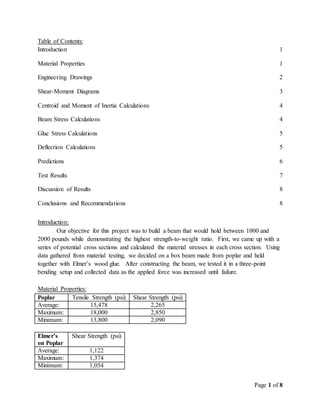
Table of Contents:
Introduction
Material Properties
Engineering Drawings
Shear-Moment Diagrams
Centroid and Moment of Inertia Calculations
Beam Stress Calculations
Glue Stress Calculations
Deflection Calculations
Predictions
Test Results
Discussion of Results
Conclusions and Recommendations
1
1
2
3
4
4
5
5
6
7
8
8
Introduction:
Our objective for this project was to build a beam that would hold between 1000 and
2000 pounds while demonstrating the highest strength-to-weight ratio. First, we came up with a
series of potential cross sections and calculated the material stresses in each cross section. Using
data gathered from material testing, we decided on a box beam made from poplar and held
together with Elmerโ€™s wood glue. After constructing the beam, we tested it in a three-point
bending setup and collected data as the applied force was increased until failure.
Material Properties:
Poplar Tensile Strength (psi) Shear Strength (psi)
Average: 15,478 2,265
Maximum: 18,000 2,850
Minimum: 13,800 2,090
Elmerโ€™s
on Poplar
Shear Strength (psi)
Average: 1,122
Maximum: 1,374
Minimum: 1,054
Page 2 of 8
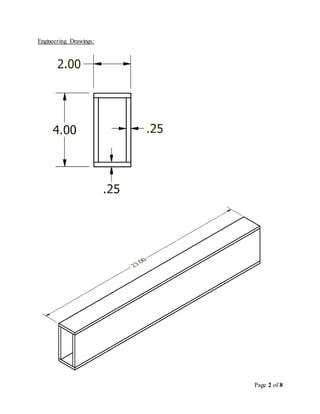
Engineering Drawings:
Page 3 of 8
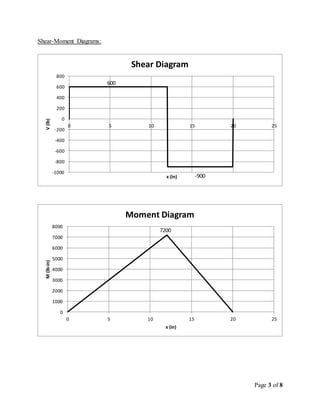
Shear-Moment Diagrams:
-1000
-800
-600
-400
-200
0
200
400
600
800
0 5 10 15 20 25
V(lb)
x (in)
Shear Diagram
600
-900
0
1000
2000
3000
4000
5000
6000
7000
8000
0 5 10 15 20 25
M(lb-in)
x (in)
Moment Diagram
7200
Page 4 of 8
Centroid and Moment of Inertia:
Centroid Location: ๐‘ฅฬ… = 1๐‘–๐‘›, ๐‘ฆฬ… = 2 ๐‘–๐‘› (by symmetry)
Moment of Inertia: ๐ผ =
1
12
[ ๐‘โ„Ž3] =
1
12
[(2๐‘–๐‘›)(4๐‘–๐‘›)3] = 5.3073 ๐‘–๐‘›4
Beam Stresses:
From V-M Diagrams: ๐‘‰๐‘š๐‘Ž๐‘ฅ = 900๐‘™๐‘, ๐‘€ ๐‘š๐‘Ž๐‘ฅ = 7200๐‘™๐‘ โˆ™ ๐‘–๐‘›
Normal Stress: ๐œŽ ๐‘š๐‘Ž๐‘ฅ =
๐‘€ ๐‘š๐‘Ž๐‘ฅ ๐‘
๐ผ
=
(7200๐‘™๐‘โˆ™๐‘–๐‘›)(2๐‘–๐‘›)
5.3073๐‘– ๐‘›4 = 2713.2 ๐‘๐‘ ๐‘–
Shear Stress: ๐œ ๐‘š๐‘Ž๐‘ฅ =
๐‘‰ ๐‘š๐‘Ž๐‘ฅ ๐‘„
๐ผ๐‘ก
๐‘„ = ๐ดโˆ—
๐‘ฆฬ…โˆ—
๐ดโˆ—
= (2๐‘–๐‘›)(2๐‘–๐‘›) โˆ’ (1.5๐‘–๐‘›)(1.75๐‘–๐‘›) = 1.375 ๐‘–๐‘›2
๐‘ฆฬ…โˆ—
=
(4๐‘– ๐‘›2)(2๐‘–๐‘›)โˆ’(2.625๐‘– ๐‘›2 )(.875๐‘–๐‘› )
4๐‘– ๐‘›2 โˆ’2.625๐‘– ๐‘›2 = 1.2386 ๐‘–๐‘›
๐œ ๐‘š๐‘Ž๐‘ฅ =
(900๐‘™๐‘)(1.375๐‘– ๐‘›2 )(1.2386๐‘–๐‘›)
(5.3073๐‘– ๐‘›4)(0.5๐‘–๐‘› )
= 577.61 ๐‘๐‘ ๐‘–
Safety Factors:
Normal: ๐œŽ๐‘Ž๐‘™๐‘™๐‘œ๐‘ค = 13,800 ๐‘๐‘ ๐‘–
๐‘†. ๐น. =
๐œŽ ๐‘Ž๐‘™๐‘™๐‘œ๐‘ค
๐œŽ ๐‘š๐‘Ž๐‘ฅ
=
13,800๐‘๐‘ ๐‘–
2,713.2๐‘๐‘ ๐‘–
= 5.086
Shear: ๐œ ๐‘Ž๐‘™๐‘™๐‘œ๐‘ค = 2,090 ๐‘๐‘ ๐‘–
๐‘†. ๐น. =
๐œ ๐‘Ž๐‘™๐‘™๐‘œ๐‘ค
๐œ ๐‘š๐‘Ž๐‘ฅ
=
2,090๐‘๐‘ ๐‘–
577.61๐‘๐‘ ๐‘–
= 3.618
Page 5 of 8
Glue Stress:
Shear Stress: ๐œ๐‘”๐‘™๐‘ข๐‘’ =
๐‘ž
๐‘๐‘ค
, ๐‘ž =
๐‘‰ ๐‘š๐‘Ž ๐‘ฅ ๐‘„
๐ผ
๐‘„ = ๐ดโˆ—
๐‘ฆฬ…โˆ—
๐ดโˆ—
= (2๐‘–๐‘›)(0.25๐‘–๐‘›) = 0.5 ๐‘–๐‘›2
๐‘ฆฬ…โˆ—
= 2๐‘–๐‘› โˆ’ (
0.25๐‘–๐‘›
2
) = 1.875 ๐‘–๐‘›2
๐‘ž =
(900๐‘™๐‘)(0.5๐‘– ๐‘›2)(1.875๐‘–๐‘›)
5.3073๐‘– ๐‘›4 = 158.99 ๐‘™๐‘/๐‘–๐‘›
๐œ๐‘”๐‘™๐‘ข๐‘’ =
158.99๐‘™๐‘/๐‘–๐‘›
2(.25๐‘–๐‘› )
= 317.96 ๐‘๐‘ ๐‘–
Safety Factor:
Shear: ๐œ ๐‘Ž๐‘™๐‘™๐‘œ๐‘ค = 760 ๐‘๐‘ ๐‘–
๐‘†. ๐น. =
๐œ ๐‘Ž๐‘™๐‘™๐‘œ๐‘ค
๐œ ๐‘š๐‘Ž๐‘ฅ
=
760๐‘๐‘ ๐‘–
317.96๐‘๐‘ ๐‘–
= 2.390
Deflection:
๐‘€( ๐‘ฅ) = ๐น๐ด < ๐‘ฅ โˆ’ 0 >1
โˆ’ ๐‘ƒ < ๐‘ฅ โˆ’ 12 >1
+ ๐น๐ต < ๐‘ฅ โˆ’ 20 >1
๐ธ๐ผ๐‘ฆโ€ฒ( ๐‘ฅ) =
๐น ๐ด
2
๐‘ฅ2
โˆ’
๐‘ƒ
2
< ๐‘ฅ โˆ’ 12 >2
+ ๐ถ1
๐ธ๐ผ๐‘ฆ( ๐‘ฅ) =
๐น ๐ด
6
๐‘ฅ3
โˆ’
๐‘ƒ
6
< ๐‘ฅ โˆ’ 12 >3
+ ๐ถ1 ๐‘ฅ + ๐ถ2
๐ธ = 1.580 โˆ— 106
๐‘๐‘ ๐‘–
Boundary Conditions: ๐‘ฆ(0) = 0, ๐‘ฆ(20) = 0
Solve for Constants ๐ถ1 and ๐ถ2
๐‘ฆ(0) = 0
0 =
600
6
(0)3
โˆ’
1500
6
(0)3
+ ๐ถ1(0)+ ๐ถ2
๐ถ2 = 0
๐‘ฆ(20) = 0
0 =
600
6
(20)3
โˆ’
1500
6
(20 โˆ’ 12)3
+ ๐ถ1(20)
๐ถ1 = โˆ’33600 ๐‘™๐‘ โˆ™ ๐‘–๐‘›2
Solve for location where slope equals zero:
0 โ‰ค ๐‘ฅ โ‰ค 12
0 =
600
2
๐‘ฅ2
โˆ’
1500
2
(0)2
โˆ’ 33600
๐‘ฅ = 10.58 ๐‘–๐‘›
12 < ๐‘ฅ โ‰ค 20
0 =
600
2
๐‘ฅ2
โˆ’
1500
2
( ๐‘ฅ โˆ’ 12)2
โˆ’ 33600
๐‘ฅ = 10.76 ๐‘–๐‘›, 29.24 ๐‘–๐‘› (๐‘›๐‘œ๐‘ก ๐‘–๐‘› ๐‘‘๐‘œ๐‘š๐‘Ž๐‘–๐‘›)
Solve for max deflection:
๐‘ฆ ๐‘š๐‘Ž๐‘ฅ =
1
๐ธ๐ผ
[
๐น ๐ด
6
๐‘ฅ3
โˆ’
๐‘ƒ
6
< ๐‘ฅ โˆ’ 12 >3
โˆ’ 33600]
๐‘ฆ ๐‘š๐‘Ž๐‘ฅ = ๐‘ฆ(10.58๐‘–๐‘›) =
1
8.386 โˆ—106 ๐‘™๐‘โˆ™๐‘–๐‘›2 [
600๐‘™๐‘
6
(10.58๐‘–๐‘›)3
โˆ’ 33600๐‘™๐‘ โˆ™ ๐‘–๐‘›2
(10.58๐‘–๐‘›)]
๐‘ฆ ๐‘š๐‘Ž๐‘ฅ = โˆ’.02827 ๐‘–๐‘›
Page 6 of 8
Predictions:
Maximum Load:
๐‘ƒ๐‘š๐‘Ž๐‘ฅ = (๐‘†. ๐น. ) ๐‘š๐‘–๐‘› โˆ— ๐‘ƒ = 2.390(1500๐‘™๐‘) = 3585 ๐‘™๐‘
Strength-to-Weight Ratio:
๐‘†. ๐‘Š.=
๐‘ƒ ๐‘š๐‘Ž๐‘ฅ
๐‘Š
๐œŒ = 0.0220 ๐‘™๐‘/๐‘–๐‘›3
(๐‘“๐‘Ÿ๐‘œ๐‘š ๐‘€๐‘Ž๐‘ก๐‘ค๐‘’๐‘)
๐‘‰ = (4๐‘–๐‘›)(2๐‘–๐‘›)(23๐‘–๐‘›) โˆ’ (3.5๐‘–๐‘›)(1.5๐‘–๐‘›)(23๐‘–๐‘›) = 63.25 ๐‘–๐‘›3
๐‘Š = ๐œŒ๐‘‰ = (0.0220๐‘™๐‘/๐‘–๐‘›3)(63.25๐‘–๐‘›3) = 1.392 ๐‘™๐‘
๐‘†. ๐‘Š.=
3585๐‘™๐‘
1.392๐‘™๐‘
= 2582.6
Failure Type and Location:
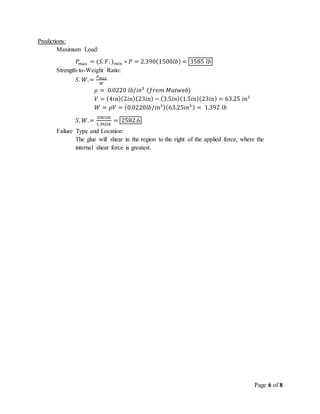
The glue will shear in the region to the right of the applied force, where the
internal shear force is greatest.
Page 7 of 8
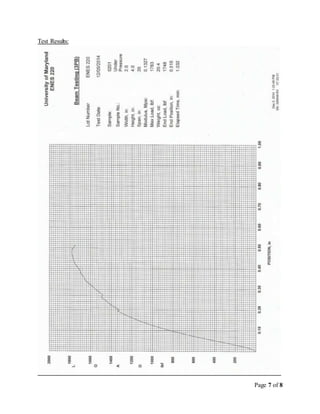
Test Results:
Page 8 of 8
Discussion of Results:
Our beam failed at 1783 pounds, much lower than our predicted maximum. However, it
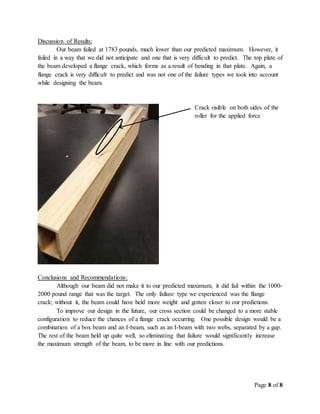
failed in a way that we did not anticipate and one that is very difficult to predict. The top plate of
the beam developed a flange crack, which forms as a result of bending in that plate. Again, a
flange crack is very difficult to predict and was not one of the failure types we took into account
while designing the beam.
Conclusions and Recommendations:
Although our beam did not make it to our predicted maximum, it did fail within the 1000-
2000 pound range that was the target. The only failure type we experienced was the flange
crack; without it, the beam could have held more weight and gotten closer to our predictions.
To improve our design in the future, our cross section could be changed to a more stable
configuration to reduce the chances of a flange crack occurring. One possible design would be a
combination of a box beam and an I-beam, such as an I-beam with two webs, separated by a gap.
The rest of the beam held up quite well, so eliminating that failure would significantly increase
the maximum strength of the beam, to be more in line with our predictions.
Crack visible on both sides of the
roller for the applied force

Final Design Report

  • 1.
    Beam Design FinalReport Team Under Pressure ENES220 Section 0201 Dr. Bowden David Hairumian, Mitchell McNamara, Daniel Pedraza, Nick Seiler 12/12/2014
  • 2.
    Page 1 of8 Table of Contents: Introduction Material Properties Engineering Drawings Shear-Moment Diagrams Centroid and Moment of Inertia Calculations Beam Stress Calculations Glue Stress Calculations Deflection Calculations Predictions Test Results Discussion of Results Conclusions and Recommendations 1 1 2 3 4 4 5 5 6 7 8 8 Introduction: Our objective for this project was to build a beam that would hold between 1000 and 2000 pounds while demonstrating the highest strength-to-weight ratio. First, we came up with a series of potential cross sections and calculated the material stresses in each cross section. Using data gathered from material testing, we decided on a box beam made from poplar and held together with Elmerโ€™s wood glue. After constructing the beam, we tested it in a three-point bending setup and collected data as the applied force was increased until failure. Material Properties: Poplar Tensile Strength (psi) Shear Strength (psi) Average: 15,478 2,265 Maximum: 18,000 2,850 Minimum: 13,800 2,090 Elmerโ€™s on Poplar Shear Strength (psi) Average: 1,122 Maximum: 1,374 Minimum: 1,054
  • 3.
    Page 2 of8 Engineering Drawings:
  • 4.
    Page 3 of8 Shear-Moment Diagrams: -1000 -800 -600 -400 -200 0 200 400 600 800 0 5 10 15 20 25 V(lb) x (in) Shear Diagram 600 -900 0 1000 2000 3000 4000 5000 6000 7000 8000 0 5 10 15 20 25 M(lb-in) x (in) Moment Diagram 7200
  • 5.
    Page 4 of8 Centroid and Moment of Inertia: Centroid Location: ๐‘ฅฬ… = 1๐‘–๐‘›, ๐‘ฆฬ… = 2 ๐‘–๐‘› (by symmetry) Moment of Inertia: ๐ผ = 1 12 [ ๐‘โ„Ž3] = 1 12 [(2๐‘–๐‘›)(4๐‘–๐‘›)3] = 5.3073 ๐‘–๐‘›4 Beam Stresses: From V-M Diagrams: ๐‘‰๐‘š๐‘Ž๐‘ฅ = 900๐‘™๐‘, ๐‘€ ๐‘š๐‘Ž๐‘ฅ = 7200๐‘™๐‘ โˆ™ ๐‘–๐‘› Normal Stress: ๐œŽ ๐‘š๐‘Ž๐‘ฅ = ๐‘€ ๐‘š๐‘Ž๐‘ฅ ๐‘ ๐ผ = (7200๐‘™๐‘โˆ™๐‘–๐‘›)(2๐‘–๐‘›) 5.3073๐‘– ๐‘›4 = 2713.2 ๐‘๐‘ ๐‘– Shear Stress: ๐œ ๐‘š๐‘Ž๐‘ฅ = ๐‘‰ ๐‘š๐‘Ž๐‘ฅ ๐‘„ ๐ผ๐‘ก ๐‘„ = ๐ดโˆ— ๐‘ฆฬ…โˆ— ๐ดโˆ— = (2๐‘–๐‘›)(2๐‘–๐‘›) โˆ’ (1.5๐‘–๐‘›)(1.75๐‘–๐‘›) = 1.375 ๐‘–๐‘›2 ๐‘ฆฬ…โˆ— = (4๐‘– ๐‘›2)(2๐‘–๐‘›)โˆ’(2.625๐‘– ๐‘›2 )(.875๐‘–๐‘› ) 4๐‘– ๐‘›2 โˆ’2.625๐‘– ๐‘›2 = 1.2386 ๐‘–๐‘› ๐œ ๐‘š๐‘Ž๐‘ฅ = (900๐‘™๐‘)(1.375๐‘– ๐‘›2 )(1.2386๐‘–๐‘›) (5.3073๐‘– ๐‘›4)(0.5๐‘–๐‘› ) = 577.61 ๐‘๐‘ ๐‘– Safety Factors: Normal: ๐œŽ๐‘Ž๐‘™๐‘™๐‘œ๐‘ค = 13,800 ๐‘๐‘ ๐‘– ๐‘†. ๐น. = ๐œŽ ๐‘Ž๐‘™๐‘™๐‘œ๐‘ค ๐œŽ ๐‘š๐‘Ž๐‘ฅ = 13,800๐‘๐‘ ๐‘– 2,713.2๐‘๐‘ ๐‘– = 5.086 Shear: ๐œ ๐‘Ž๐‘™๐‘™๐‘œ๐‘ค = 2,090 ๐‘๐‘ ๐‘– ๐‘†. ๐น. = ๐œ ๐‘Ž๐‘™๐‘™๐‘œ๐‘ค ๐œ ๐‘š๐‘Ž๐‘ฅ = 2,090๐‘๐‘ ๐‘– 577.61๐‘๐‘ ๐‘– = 3.618
  • 6.
    Page 5 of8 Glue Stress: Shear Stress: ๐œ๐‘”๐‘™๐‘ข๐‘’ = ๐‘ž ๐‘๐‘ค , ๐‘ž = ๐‘‰ ๐‘š๐‘Ž ๐‘ฅ ๐‘„ ๐ผ ๐‘„ = ๐ดโˆ— ๐‘ฆฬ…โˆ— ๐ดโˆ— = (2๐‘–๐‘›)(0.25๐‘–๐‘›) = 0.5 ๐‘–๐‘›2 ๐‘ฆฬ…โˆ— = 2๐‘–๐‘› โˆ’ ( 0.25๐‘–๐‘› 2 ) = 1.875 ๐‘–๐‘›2 ๐‘ž = (900๐‘™๐‘)(0.5๐‘– ๐‘›2)(1.875๐‘–๐‘›) 5.3073๐‘– ๐‘›4 = 158.99 ๐‘™๐‘/๐‘–๐‘› ๐œ๐‘”๐‘™๐‘ข๐‘’ = 158.99๐‘™๐‘/๐‘–๐‘› 2(.25๐‘–๐‘› ) = 317.96 ๐‘๐‘ ๐‘– Safety Factor: Shear: ๐œ ๐‘Ž๐‘™๐‘™๐‘œ๐‘ค = 760 ๐‘๐‘ ๐‘– ๐‘†. ๐น. = ๐œ ๐‘Ž๐‘™๐‘™๐‘œ๐‘ค ๐œ ๐‘š๐‘Ž๐‘ฅ = 760๐‘๐‘ ๐‘– 317.96๐‘๐‘ ๐‘– = 2.390 Deflection: ๐‘€( ๐‘ฅ) = ๐น๐ด < ๐‘ฅ โˆ’ 0 >1 โˆ’ ๐‘ƒ < ๐‘ฅ โˆ’ 12 >1 + ๐น๐ต < ๐‘ฅ โˆ’ 20 >1 ๐ธ๐ผ๐‘ฆโ€ฒ( ๐‘ฅ) = ๐น ๐ด 2 ๐‘ฅ2 โˆ’ ๐‘ƒ 2 < ๐‘ฅ โˆ’ 12 >2 + ๐ถ1 ๐ธ๐ผ๐‘ฆ( ๐‘ฅ) = ๐น ๐ด 6 ๐‘ฅ3 โˆ’ ๐‘ƒ 6 < ๐‘ฅ โˆ’ 12 >3 + ๐ถ1 ๐‘ฅ + ๐ถ2 ๐ธ = 1.580 โˆ— 106 ๐‘๐‘ ๐‘– Boundary Conditions: ๐‘ฆ(0) = 0, ๐‘ฆ(20) = 0 Solve for Constants ๐ถ1 and ๐ถ2 ๐‘ฆ(0) = 0 0 = 600 6 (0)3 โˆ’ 1500 6 (0)3 + ๐ถ1(0)+ ๐ถ2 ๐ถ2 = 0 ๐‘ฆ(20) = 0 0 = 600 6 (20)3 โˆ’ 1500 6 (20 โˆ’ 12)3 + ๐ถ1(20) ๐ถ1 = โˆ’33600 ๐‘™๐‘ โˆ™ ๐‘–๐‘›2 Solve for location where slope equals zero: 0 โ‰ค ๐‘ฅ โ‰ค 12 0 = 600 2 ๐‘ฅ2 โˆ’ 1500 2 (0)2 โˆ’ 33600 ๐‘ฅ = 10.58 ๐‘–๐‘› 12 < ๐‘ฅ โ‰ค 20 0 = 600 2 ๐‘ฅ2 โˆ’ 1500 2 ( ๐‘ฅ โˆ’ 12)2 โˆ’ 33600 ๐‘ฅ = 10.76 ๐‘–๐‘›, 29.24 ๐‘–๐‘› (๐‘›๐‘œ๐‘ก ๐‘–๐‘› ๐‘‘๐‘œ๐‘š๐‘Ž๐‘–๐‘›) Solve for max deflection: ๐‘ฆ ๐‘š๐‘Ž๐‘ฅ = 1 ๐ธ๐ผ [ ๐น ๐ด 6 ๐‘ฅ3 โˆ’ ๐‘ƒ 6 < ๐‘ฅ โˆ’ 12 >3 โˆ’ 33600] ๐‘ฆ ๐‘š๐‘Ž๐‘ฅ = ๐‘ฆ(10.58๐‘–๐‘›) = 1 8.386 โˆ—106 ๐‘™๐‘โˆ™๐‘–๐‘›2 [ 600๐‘™๐‘ 6 (10.58๐‘–๐‘›)3 โˆ’ 33600๐‘™๐‘ โˆ™ ๐‘–๐‘›2 (10.58๐‘–๐‘›)] ๐‘ฆ ๐‘š๐‘Ž๐‘ฅ = โˆ’.02827 ๐‘–๐‘›
  • 7.
    Page 6 of8 Predictions: Maximum Load: ๐‘ƒ๐‘š๐‘Ž๐‘ฅ = (๐‘†. ๐น. ) ๐‘š๐‘–๐‘› โˆ— ๐‘ƒ = 2.390(1500๐‘™๐‘) = 3585 ๐‘™๐‘ Strength-to-Weight Ratio: ๐‘†. ๐‘Š.= ๐‘ƒ ๐‘š๐‘Ž๐‘ฅ ๐‘Š ๐œŒ = 0.0220 ๐‘™๐‘/๐‘–๐‘›3 (๐‘“๐‘Ÿ๐‘œ๐‘š ๐‘€๐‘Ž๐‘ก๐‘ค๐‘’๐‘) ๐‘‰ = (4๐‘–๐‘›)(2๐‘–๐‘›)(23๐‘–๐‘›) โˆ’ (3.5๐‘–๐‘›)(1.5๐‘–๐‘›)(23๐‘–๐‘›) = 63.25 ๐‘–๐‘›3 ๐‘Š = ๐œŒ๐‘‰ = (0.0220๐‘™๐‘/๐‘–๐‘›3)(63.25๐‘–๐‘›3) = 1.392 ๐‘™๐‘ ๐‘†. ๐‘Š.= 3585๐‘™๐‘ 1.392๐‘™๐‘ = 2582.6 Failure Type and Location: The glue will shear in the region to the right of the applied force, where the internal shear force is greatest.
  • 8.
    Page 7 of8 Test Results:
  • 9.
    Page 8 of8 Discussion of Results: Our beam failed at 1783 pounds, much lower than our predicted maximum. However, it failed in a way that we did not anticipate and one that is very difficult to predict. The top plate of the beam developed a flange crack, which forms as a result of bending in that plate. Again, a flange crack is very difficult to predict and was not one of the failure types we took into account while designing the beam. Conclusions and Recommendations: Although our beam did not make it to our predicted maximum, it did fail within the 1000- 2000 pound range that was the target. The only failure type we experienced was the flange crack; without it, the beam could have held more weight and gotten closer to our predictions. To improve our design in the future, our cross section could be changed to a more stable configuration to reduce the chances of a flange crack occurring. One possible design would be a combination of a box beam and an I-beam, such as an I-beam with two webs, separated by a gap. The rest of the beam held up quite well, so eliminating that failure would significantly increase the maximum strength of the beam, to be more in line with our predictions. Crack visible on both sides of the roller for the applied force