FIGURES OF SPEECH
LESSON 4
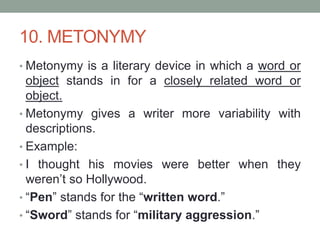
10. METONYMY
• Metonymy is a literary device in which a word or
object stands in for a closely related word or
object.
• Metonymy gives a writer more variability with
descriptions.
• Example:
• I thought his movies were better when they
weren’t so Hollywood.
• “Pen” stands for the “written word.”
• “Sword” stands for “military aggression.”
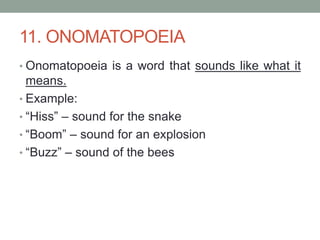
11. ONOMATOPOEIA
• Onomatopoeia is a word that sounds like what it
means.
• Example:
• “Hiss” – sound for the snake
• “Boom” – sound for an explosion
• “Buzz” – sound of the bees
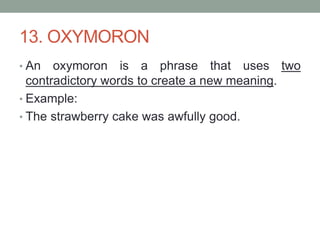
13. OXYMORON
• An oxymoron is a phrase that uses two
contradictory words to create a new meaning.
• Example:
• The strawberry cake was awfully good.
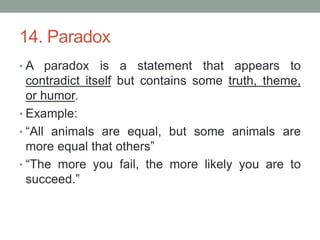
14. Paradox
• A paradox is a statement that appears to
contradict itself but contains some truth, theme,
or humor.
• Example:
• “All animals are equal, but some animals are
more equal that others”
• “The more you fail, the more likely you are to
succeed.”
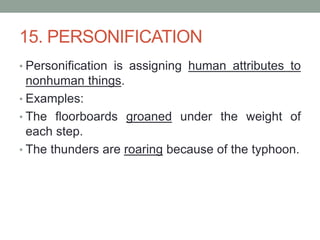
15. PERSONIFICATION
• Personification is assigning human attributes to
nonhuman things.
• Examples:
• The floorboards groaned under the weight of
each step.
• The thunders are roaring because of the typhoon.
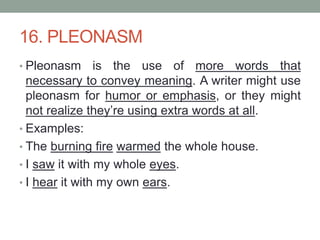
16. PLEONASM
• Pleonasm is the use of more words that
necessary to convey meaning. A writer might use
pleonasm for humor or emphasis, or they might
not realize they’re using extra words at all.
• Examples:
• The burning fire warmed the whole house.
• I saw it with my whole eyes.
• I hear it with my own ears.
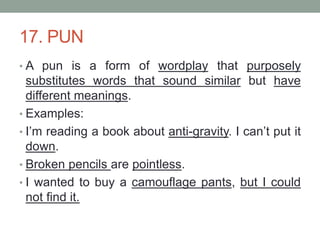
17. PUN
• A pun is a form of wordplay that purposely
substitutes words that sound similar but have
different meanings.
• Examples:
• I’m reading a book about anti-gravity. I can’t put it
down.
• Broken pencils are pointless.
• I wanted to buy a camouflage pants, but I could
not find it.
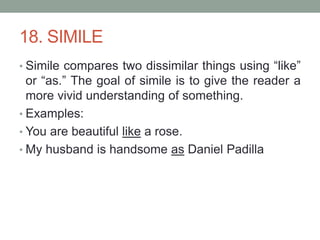
18. SIMILE
• Simile compares two dissimilar things using “like”
or “as.” The goal of simile is to give the reader a
more vivid understanding of something.
• Examples:
• You are beautiful like a rose.
• My husband is handsome as Daniel Padilla
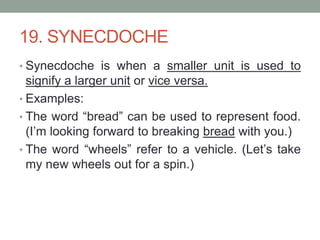
19. SYNECDOCHE
• Synecdoche is when a smaller unit is used to
signify a larger unit or vice versa.
• Examples:
• The word “bread” can be used to represent food.
(I’m looking forward to breaking bread with you.)
• The word “wheels” refer to a vehicle. (Let’s take
my new wheels out for a spin.)
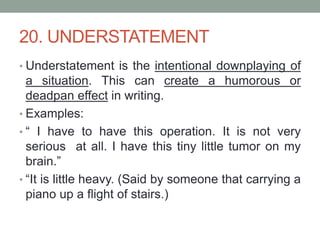
20. UNDERSTATEMENT
• Understatement is the intentional downplaying of
a situation. This can create a humorous or
deadpan effect in writing.
• Examples:
• “ I have to have this operation. It is not very
serious at all. I have this tiny little tumor on my
brain.”
• “It is little heavy. (Said by someone that carrying a
piano up a flight of stairs.)

Figures of speech continuation.pptx

  • 1.
  • 2.
    10. METONYMY • Metonymyis a literary device in which a word or object stands in for a closely related word or object. • Metonymy gives a writer more variability with descriptions. • Example: • I thought his movies were better when they weren’t so Hollywood. • “Pen” stands for the “written word.” • “Sword” stands for “military aggression.”
  • 3.
    11. ONOMATOPOEIA • Onomatopoeiais a word that sounds like what it means. • Example: • “Hiss” – sound for the snake • “Boom” – sound for an explosion • “Buzz” – sound of the bees
  • 4.
    13. OXYMORON • Anoxymoron is a phrase that uses two contradictory words to create a new meaning. • Example: • The strawberry cake was awfully good.
  • 5.
    14. Paradox • Aparadox is a statement that appears to contradict itself but contains some truth, theme, or humor. • Example: • “All animals are equal, but some animals are more equal that others” • “The more you fail, the more likely you are to succeed.”
  • 6.
    15. PERSONIFICATION • Personificationis assigning human attributes to nonhuman things. • Examples: • The floorboards groaned under the weight of each step. • The thunders are roaring because of the typhoon.
  • 7.
    16. PLEONASM • Pleonasmis the use of more words that necessary to convey meaning. A writer might use pleonasm for humor or emphasis, or they might not realize they’re using extra words at all. • Examples: • The burning fire warmed the whole house. • I saw it with my whole eyes. • I hear it with my own ears.
  • 8.
    17. PUN • Apun is a form of wordplay that purposely substitutes words that sound similar but have different meanings. • Examples: • I’m reading a book about anti-gravity. I can’t put it down. • Broken pencils are pointless. • I wanted to buy a camouflage pants, but I could not find it.
  • 9.
    18. SIMILE • Similecompares two dissimilar things using “like” or “as.” The goal of simile is to give the reader a more vivid understanding of something. • Examples: • You are beautiful like a rose. • My husband is handsome as Daniel Padilla
  • 10.
    19. SYNECDOCHE • Synecdocheis when a smaller unit is used to signify a larger unit or vice versa. • Examples: • The word “bread” can be used to represent food. (I’m looking forward to breaking bread with you.) • The word “wheels” refer to a vehicle. (Let’s take my new wheels out for a spin.)
  • 11.
    20. UNDERSTATEMENT • Understatementis the intentional downplaying of a situation. This can create a humorous or deadpan effect in writing. • Examples: • “ I have to have this operation. It is not very serious at all. I have this tiny little tumor on my brain.” • “It is little heavy. (Said by someone that carrying a piano up a flight of stairs.)