Eur Heart J, Volume 39, Issue 24, 21 June 2018, Pages 2314–2325, https://doi.org/10.1093/eurheartj/ehy060
The content of this slide may be subject to copyright: please see the slide notes for details.
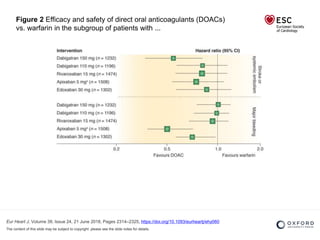
Figure 2 Efficacy and safety of direct oral anticoagulants (DOACs)
vs. warfarin in the subgroup of patients with ...

Figure.pptx

  • 1.
    Eur Heart J,Volume 39, Issue 24, 21 June 2018, Pages 2314–2325, https://doi.org/10.1093/eurheartj/ehy060 The content of this slide may be subject to copyright: please see the slide notes for details. Figure 2 Efficacy and safety of direct oral anticoagulants (DOACs) vs. warfarin in the subgroup of patients with ...

Editor's Notes

  • #2 Figure 2 Efficacy and safety of direct oral anticoagulants (DOACs) vs. warfarin in the subgroup of patients with moderate chronic kidney disease from randomized controlled trials in atrial fibrillation. Comparison of hazard ratios and 95% confidence intervals for primary efficacy and safety outcomes for 150 and 110 mg dabigatran twice daily, 15 mg rivaroxaban once daily, 5 mg apixaban twice daily, and 30 mg edoxaban once daily. Chronic kidney disease was defined as estimated creatinine clearance of 30 to 49 mL/min or as 25 to 49 mL/min for apixaban. aApixaban 2.5 mg twice daily if patient had any two of the following: age ≥ 80 years, body weight ≤ 60 kg, or serum creatinine ≥1.5 mg/dL. Reproduced from Qamar and Bhatt63 with permission from the publisher. Unless provided in the caption above, the following copyright applies to the content of this slide: © The Author(s) 2018. Published by Oxford University Press on behalf of the European Society of Cardiology This is an Open Access article distributed under the terms of the Creative Commons Attribution Non-Commercial License (http://creativecommons.org/licenses/by-nc/4.0/), which permits non-commercial re-use, distribution, and reproduction in any medium, provided the original work is properly cited. For commercial re-use, please contact journals.permissions@oup.com© The Author(s) 2018. Published by Oxford University Press on behalf of the European Society of Cardiology