FIGURATIVE
LANGUGAGE
Friday, November 29th 2024
Simile, Metaphor, Alliteration,
Onomatopoeia, Personification
What Is Figurative Language?
Figurative language is a way of using words to compare something to
something else – beyond the literal meaning.
Figurative language is used for emphasis and impact.
I’ve told you a million times to clean your room!
She ran as fast as lightning.
tan como
His team was on top of the world after winning the
championship game.
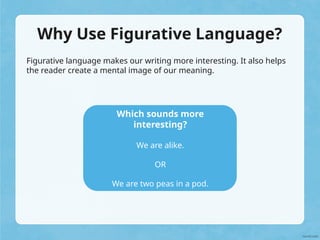
Why Use Figurative Language?
Figurative language makes our writing more interesting. It also helps
the reader create a mental image of our meaning.
Which sounds more
interesting?
We are alike.
OR
We are two peas in a pod.
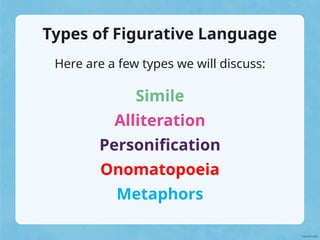
Types of Figurative Language
Here are a few types we will discuss:
Simile
Alliteration
Personification
Onomatopoeia
Metaphors
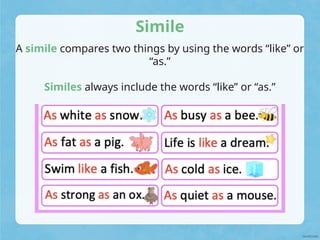
Simile
A simile compares two things by using the words “like” or
“as.”
Similes always include the words “like” or “as.”
EXAMPLE:
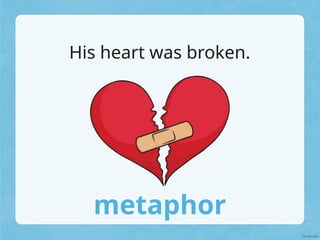
Metaphor
A metaphor compares one thing to another without using
“like” or “as.”
Metaphors say one thing is another.
EXAMPLE:
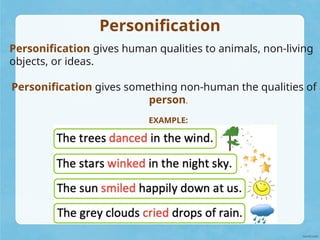
Personification
Personification gives human qualities to animals, non-living
objects, or ideas.
Personification gives something non-human the qualities of a
person.
EXAMPLE:
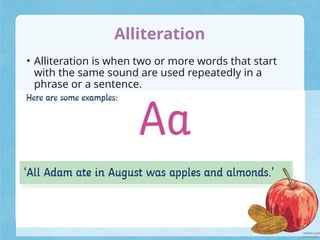
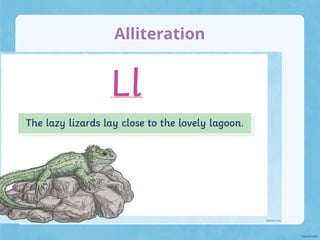
Alliteration
• Alliteration is when two or more words that start
with the same sound are used repeatedly in a
phrase or a sentence.
Alliteration
Quiz Activity
Can you correctly identify the type of
figurative language?
Simile, Metaphor, Personification, or
Alliteration?
My phone shouted at me from the other side of
the room.
personification
His heart was broken.
metaphor
Your name sounds like music to my
ears!
simile
Question:
Why do you think we
use figurative
language
in writing?

Figurative language slides for 3rd grade

  • 1.
    FIGURATIVE LANGUGAGE Friday, November 29th2024 Simile, Metaphor, Alliteration, Onomatopoeia, Personification
  • 2.
    What Is FigurativeLanguage? Figurative language is a way of using words to compare something to something else – beyond the literal meaning. Figurative language is used for emphasis and impact. I’ve told you a million times to clean your room! She ran as fast as lightning. tan como His team was on top of the world after winning the championship game.
  • 3.
    Why Use FigurativeLanguage? Figurative language makes our writing more interesting. It also helps the reader create a mental image of our meaning. Which sounds more interesting? We are alike. OR We are two peas in a pod.
  • 4.
    Types of FigurativeLanguage Here are a few types we will discuss: Simile Alliteration Personification Onomatopoeia Metaphors
  • 5.
    Simile A simile comparestwo things by using the words “like” or “as.” Similes always include the words “like” or “as.” EXAMPLE:
  • 6.
    Metaphor A metaphor comparesone thing to another without using “like” or “as.” Metaphors say one thing is another. EXAMPLE:
  • 7.
    Personification Personification gives humanqualities to animals, non-living objects, or ideas. Personification gives something non-human the qualities of a person. EXAMPLE:
  • 8.
    Alliteration • Alliteration iswhen two or more words that start with the same sound are used repeatedly in a phrase or a sentence.
  • 9.
  • 11.
    Quiz Activity Can youcorrectly identify the type of figurative language?
  • 12.
    Simile, Metaphor, Personification,or Alliteration? My phone shouted at me from the other side of the room. personification
  • 13.
    His heart wasbroken. metaphor
  • 14.
    Your name soundslike music to my ears! simile
  • 15.
    Question: Why do youthink we use figurative language in writing?