
WELCOME Goodmorning to all and one.
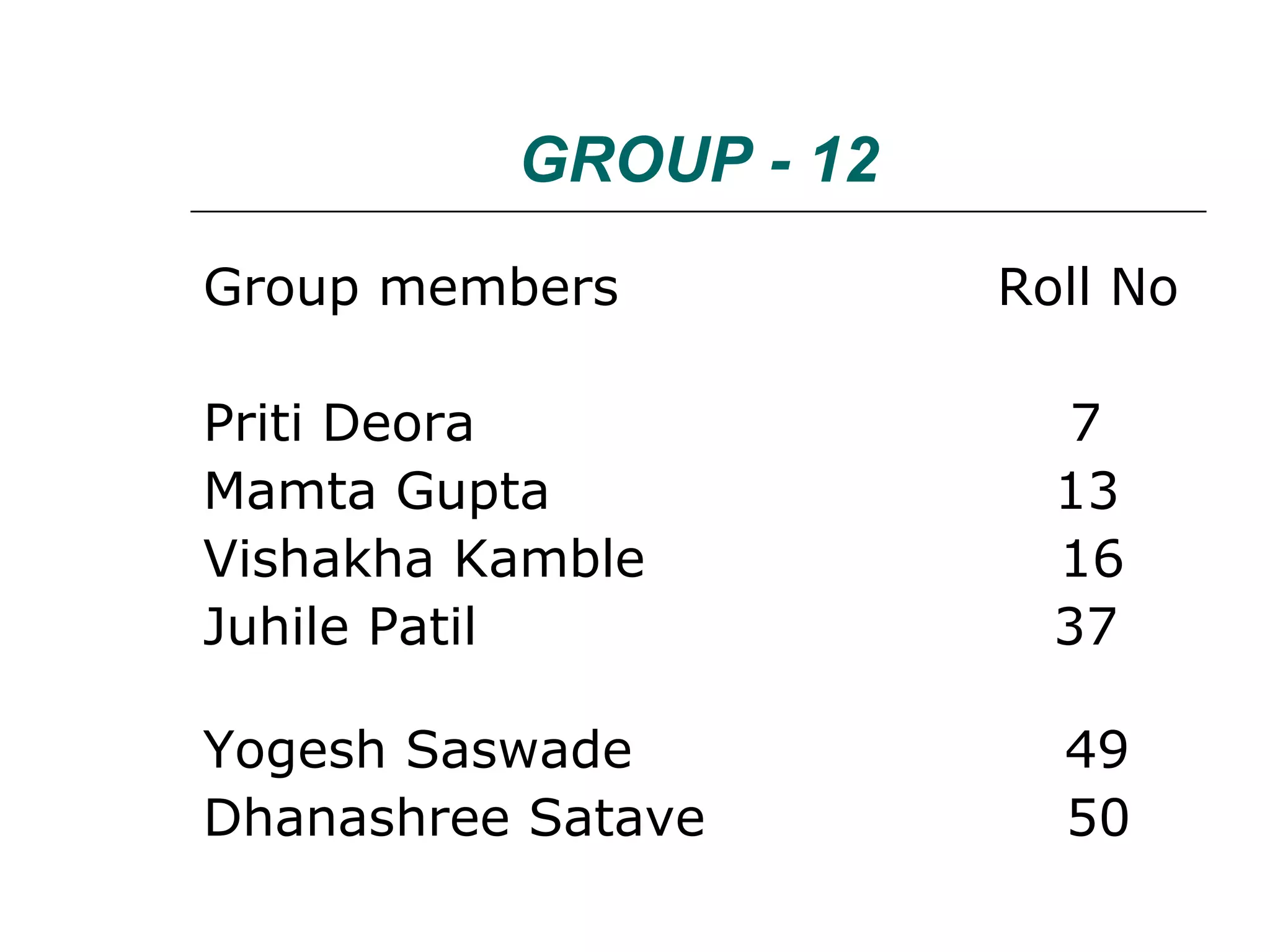
GROUP - 12 Group members  Roll No Priti Deora  7 Mamta Gupta  13 Vishakha Kamble  16 Juhile Patil  37  Yogesh Saswade  49 Dhanashree Satave  50
TOPIC: Attitude once formed is very difficult to changed. (FOR THE TOPIC)
INTRODUCTION “ Attitude is a little thing that makes a big difference.”
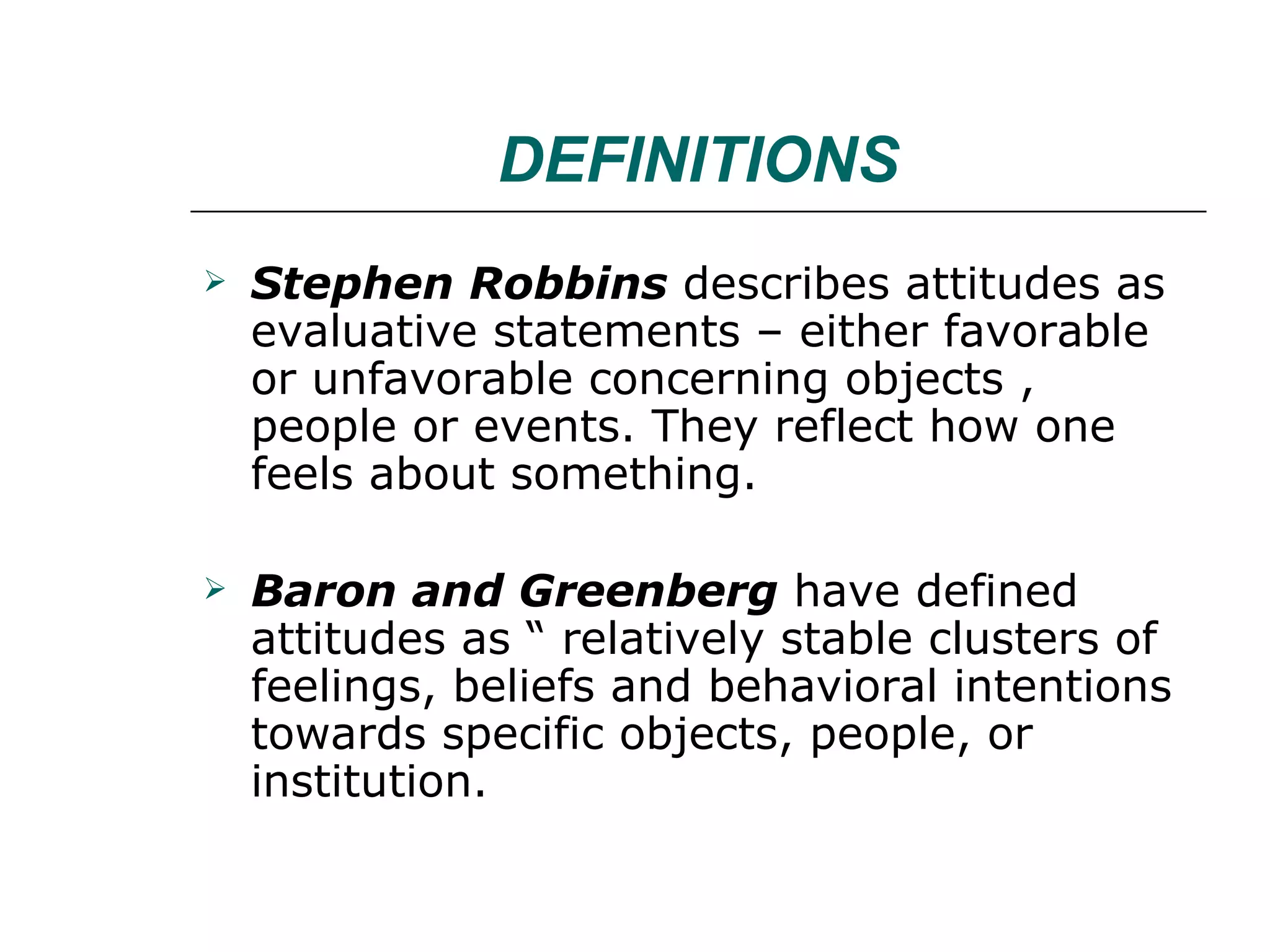
DEFINITIONS Stephen Robbins  describes attitudes as evaluative statements – either favorable or unfavorable concerning objects , people or events. They reflect how one feels about something. Baron and Greenberg  have defined attitudes as “ relatively stable clusters of feelings, beliefs and behavioral intentions towards specific objects, people, or institution.
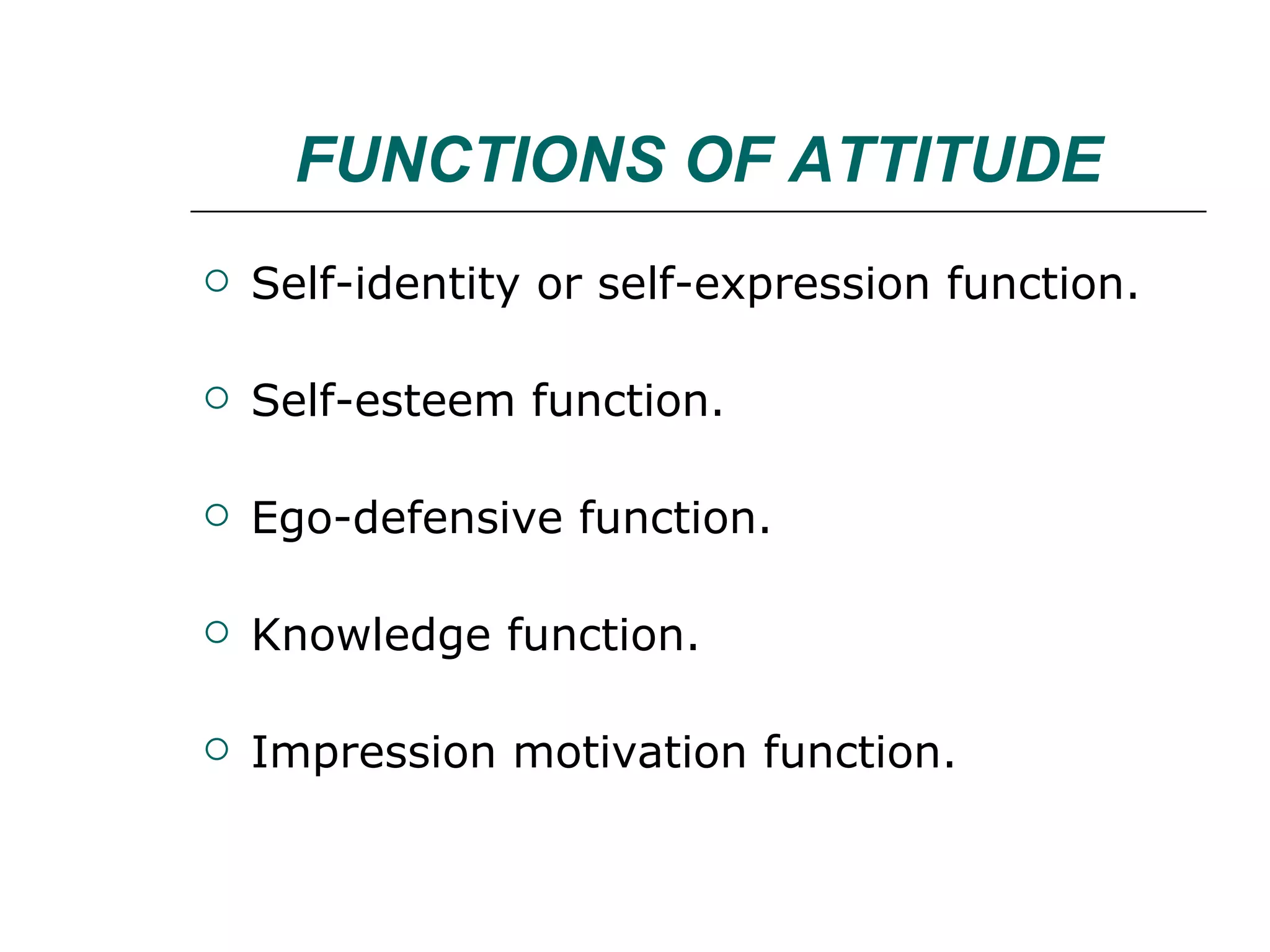
FUNCTIONS OF ATTITUDE Self-identity or self-expression function. Self-esteem function. Ego-defensive function. Knowledge function. Impression motivation function.
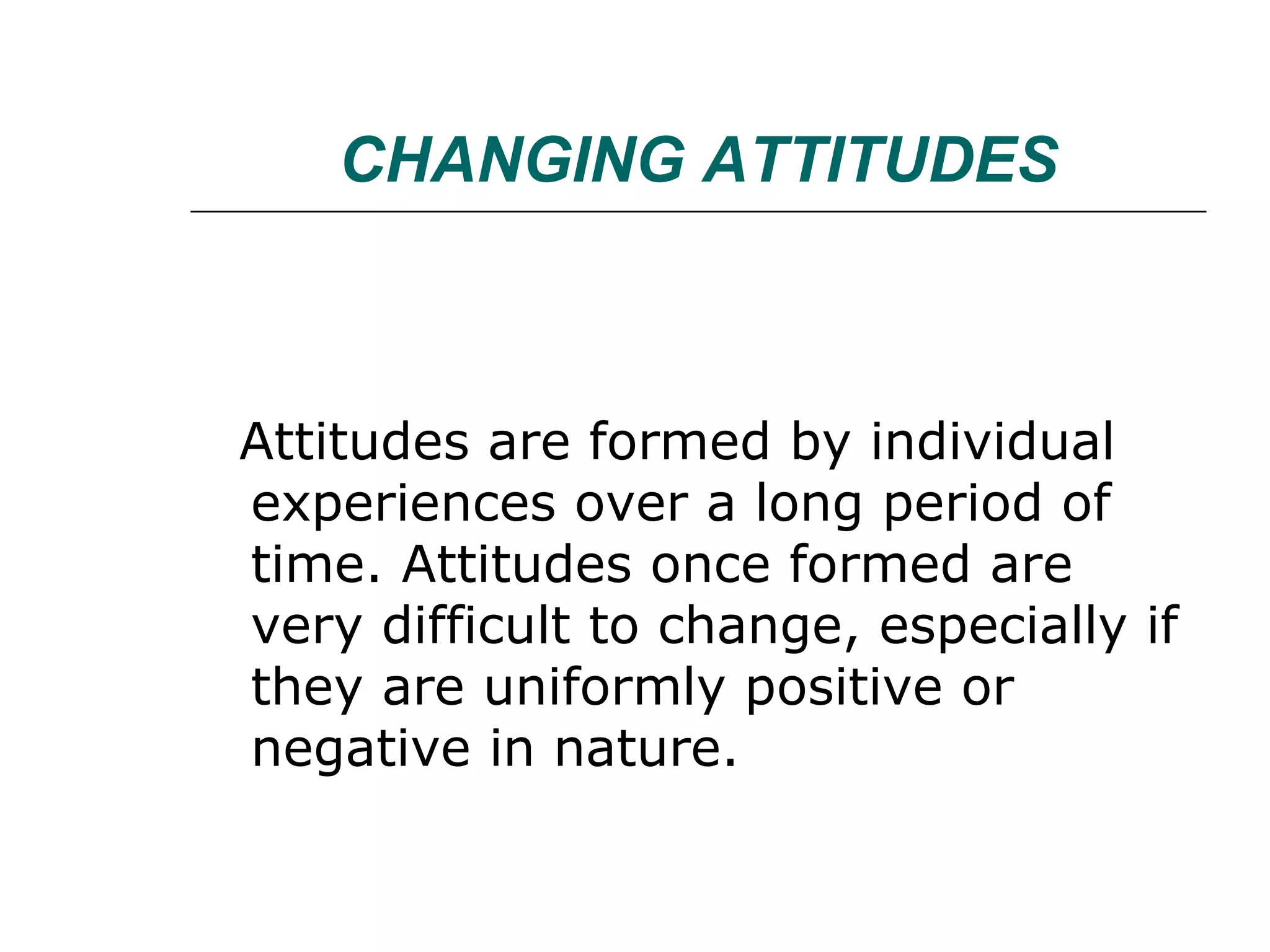
CHANGING ATTITUDES Attitudes are formed by individual experiences over a long period of time. Attitudes once formed are very difficult to change, especially if they are uniformly positive or negative in nature.
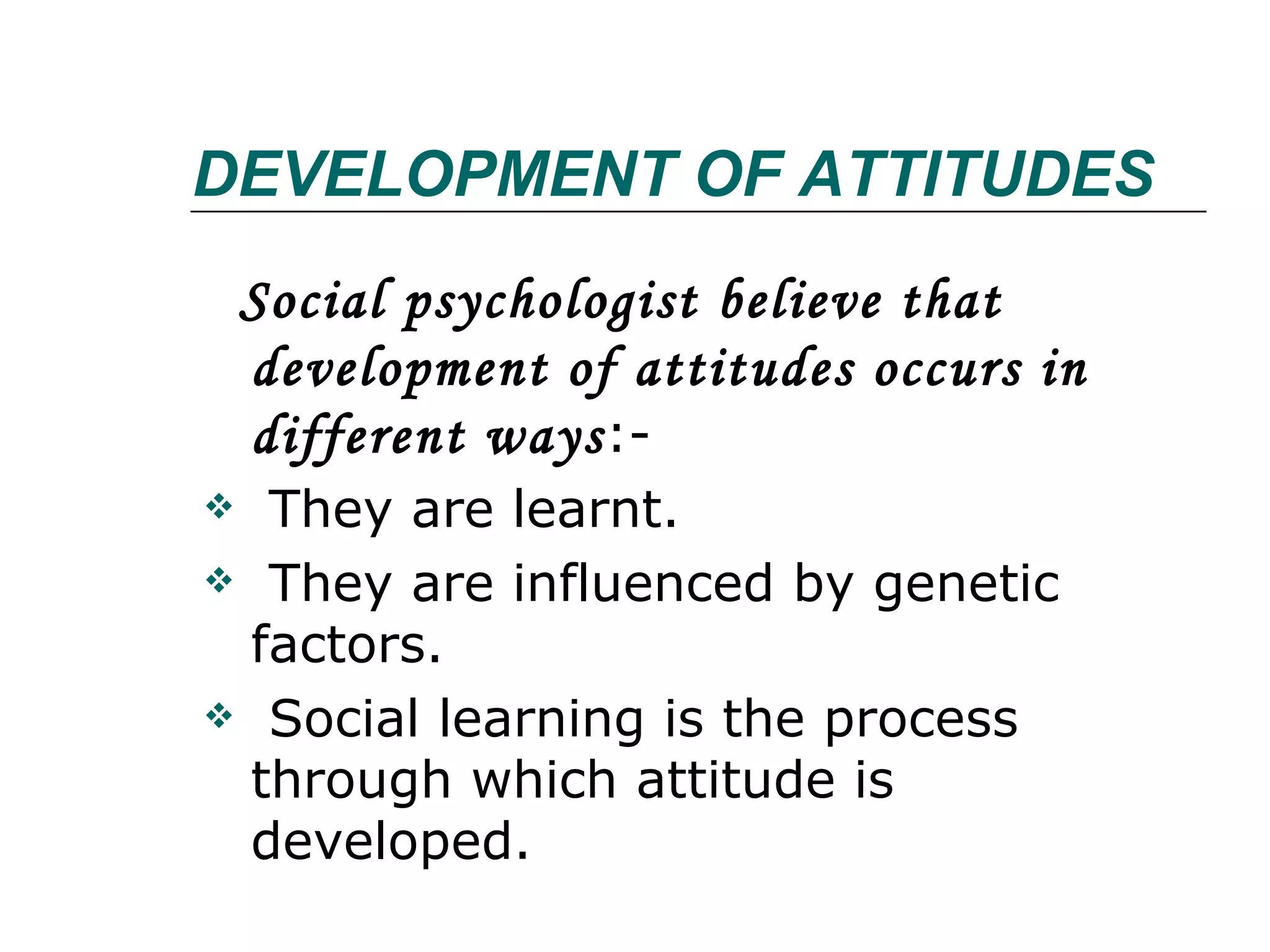
DEVELOPMENT OF ATTITUDES Social psychologist believe that development of attitudes occurs in  different ways :- They are learnt. They are influenced by genetic factors. Social learning is the process through which attitude is developed.
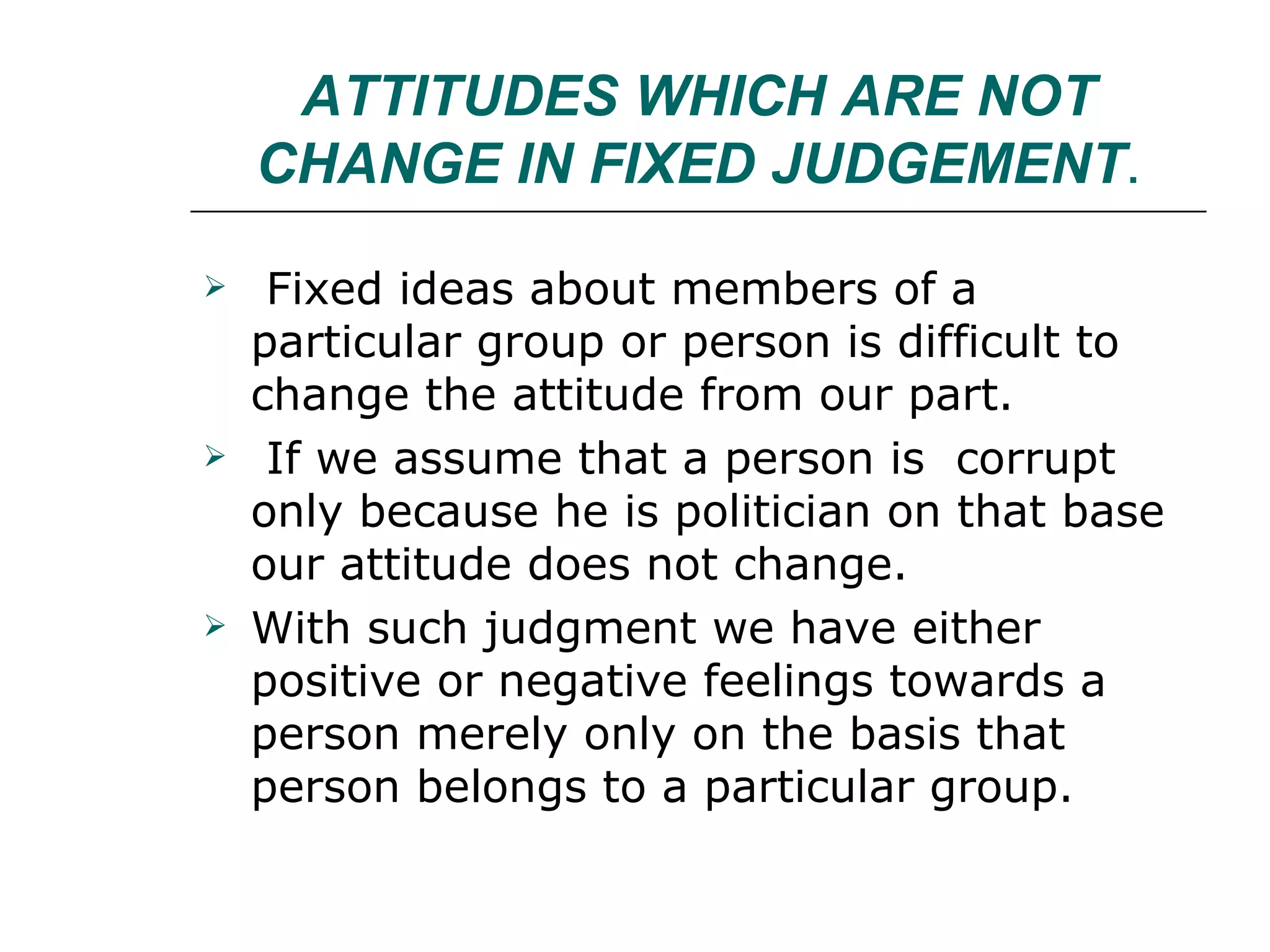
ATTITUDES WHICH ARE NOT CHANGE IN FIXED JUDGEMENT . Fixed ideas about members of a particular group or person is difficult to change the attitude from our part. If we assume that a person is  corrupt only because he is politician on that base our attitude does not change. With such judgment we have either positive or negative feelings towards a person merely only on the basis that person belongs to a particular group.
ATTITUDE WHICH DOESNOT CHANGE ON PRE-JUDGING. In simple words , prejudging is the dislike that we have towards a particular person because he is a member of particular group. We dislike peoples for e.g. if you dislike a person only because he is south-Indian is a prejudging. Prejudice generates negative thoughts and feelings towards members of a particular group.
CONDITION UNDER WHICH ATTITUDE ONCE FORMED IS DIFFICULT TO CHANGE The attitude does not changes in the condition where the person is the teenager. In case where the person when keep an attitude of judgment on other person is also not possible to change the attitude of that particular person. In case where the family are conservative  there the attitude of the children is also difficult to change.
CHARACTERISTICS OF NOT CHANGING THE ATTITUDE   Messages that do not appear to be designed to change our attitude in any possible manner. Some messages which distracts the people by their false statement makes the people keen to not change the attitude. The attitude also never change unless the message is understood.
TARGET The people who have low esteem and have lack of confidence change the attitude. The attitude is not changed of individuals who are educated, knowledgeable and well formed. The attitude is not changed unless the person is influenced hardly by other person.
ATTITUDE AT COGNITIVE LEVEL Attitude in cognitive level influenced on our behavior. The attitudes of people which are straight forward never keens to change their attitude. When there is inconsistency between our attitudes or between our attitude and behavior.
CONCLUSION The person which are of closed mind and set a principle in their particular life finds difficult to change their attitude under any circumstances.  From the following presentation we conclude that there is no possibility of changing the attitude of a person in many stages.
THANKYOU

attitude once formed is very difficult to change

  • 1.
  • 2.
    GROUP - 12Group members Roll No Priti Deora 7 Mamta Gupta 13 Vishakha Kamble 16 Juhile Patil 37 Yogesh Saswade 49 Dhanashree Satave 50
  • 3.
    TOPIC: Attitude onceformed is very difficult to changed. (FOR THE TOPIC)
  • 4.
    INTRODUCTION “ Attitudeis a little thing that makes a big difference.”
  • 5.
    DEFINITIONS Stephen Robbins describes attitudes as evaluative statements – either favorable or unfavorable concerning objects , people or events. They reflect how one feels about something. Baron and Greenberg have defined attitudes as “ relatively stable clusters of feelings, beliefs and behavioral intentions towards specific objects, people, or institution.
  • 6.
    FUNCTIONS OF ATTITUDESelf-identity or self-expression function. Self-esteem function. Ego-defensive function. Knowledge function. Impression motivation function.
  • 7.
    CHANGING ATTITUDES Attitudesare formed by individual experiences over a long period of time. Attitudes once formed are very difficult to change, especially if they are uniformly positive or negative in nature.
  • 8.
    DEVELOPMENT OF ATTITUDESSocial psychologist believe that development of attitudes occurs in different ways :- They are learnt. They are influenced by genetic factors. Social learning is the process through which attitude is developed.
  • 9.
    ATTITUDES WHICH ARENOT CHANGE IN FIXED JUDGEMENT . Fixed ideas about members of a particular group or person is difficult to change the attitude from our part. If we assume that a person is corrupt only because he is politician on that base our attitude does not change. With such judgment we have either positive or negative feelings towards a person merely only on the basis that person belongs to a particular group.
  • 10.
    ATTITUDE WHICH DOESNOTCHANGE ON PRE-JUDGING. In simple words , prejudging is the dislike that we have towards a particular person because he is a member of particular group. We dislike peoples for e.g. if you dislike a person only because he is south-Indian is a prejudging. Prejudice generates negative thoughts and feelings towards members of a particular group.
  • 11.
    CONDITION UNDER WHICHATTITUDE ONCE FORMED IS DIFFICULT TO CHANGE The attitude does not changes in the condition where the person is the teenager. In case where the person when keep an attitude of judgment on other person is also not possible to change the attitude of that particular person. In case where the family are conservative there the attitude of the children is also difficult to change.
  • 12.
    CHARACTERISTICS OF NOTCHANGING THE ATTITUDE Messages that do not appear to be designed to change our attitude in any possible manner. Some messages which distracts the people by their false statement makes the people keen to not change the attitude. The attitude also never change unless the message is understood.
  • 13.
    TARGET The peoplewho have low esteem and have lack of confidence change the attitude. The attitude is not changed of individuals who are educated, knowledgeable and well formed. The attitude is not changed unless the person is influenced hardly by other person.
  • 14.
    ATTITUDE AT COGNITIVELEVEL Attitude in cognitive level influenced on our behavior. The attitudes of people which are straight forward never keens to change their attitude. When there is inconsistency between our attitudes or between our attitude and behavior.
  • 15.
    CONCLUSION The personwhich are of closed mind and set a principle in their particular life finds difficult to change their attitude under any circumstances. From the following presentation we conclude that there is no possibility of changing the attitude of a person in many stages.
  • 16.