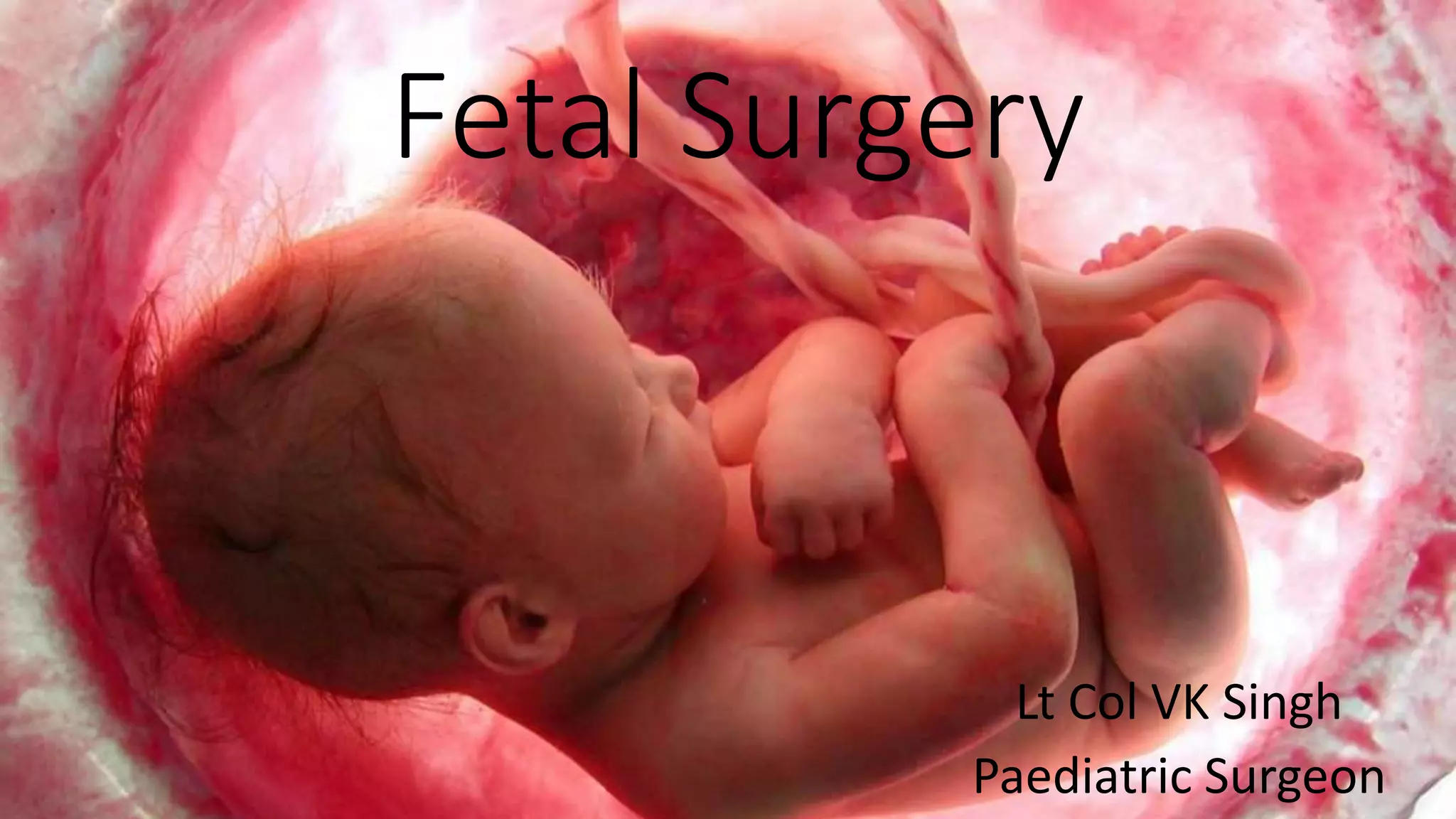
Fetal Surgery
Lt Col VK Singh
Paediatric Surgeon
Introduction
• Till few yrs back, little could be done for babies in utero with
congenital anomalies
• Damage to the organ couldn’t be arrested or minimized before birth
• Now- Improved imaging including 3D / 4D USG and ultra fast MRI
including functional imaging
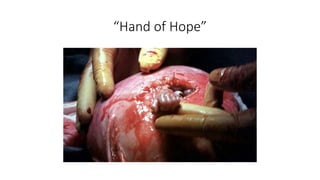
“Hand of Hope”
Fetal Surgery
• Type of surgery that is performed on a developing fetus while it is still
in the womb.
• Reserved for cases in which the condition is severe and may cause
significant disability or death if left untreated
• The decision to perform fetal surgery is made on a case-by-case basis,
and careful consideration is given to the risks and benefits for both
the mother and the fetus
• 1982 – first open fetal surgery for obstructive uropathy
Contraindication
• Severe affliction
• Other associated life threatening abnormalities
• Chromosomal & genetic conditions
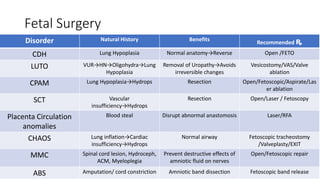
Fetal Surgery
Disorder Natural History Benefits
Recommended ꝶ
CDH Lung Hypoplasia Normal anatomy→Reverse Open /FETO
LUTO VUR→HN→Oligohydra→Lung
Hypoplasia
Removal of Uropathy→Avoids
irreversible changes
Vesicostomy/VAS/Valve
ablation
CPAM Lung Hypoplasia→Hydrops Resection Open/Fetoscopic/Aspirate/Las
er ablation
SCT Vascular
insufficiency→Hydrops
Resection Open/Laser / Fetoscopy
Placenta Circulation
anomalies
Blood steal Disrupt abnormal anastomosis Laser/RFA
CHAOS Lung inflation→Cardiac
insufficiency→Hydrops
Normal airway Fetoscopic tracheostomy
/Valveplasty/EXIT
MMC Spinal cord lesion, Hydroceph,
ACM, Myeloplegia
Prevent destructive effects of
amniotic fluid on nerves
Open/Fetoscopic repair
ABS Amputation/ cord constriction Amniotic band dissection Fetoscopic band release
Types of FS
• Open Surgery
• FETENDO (Fetal Endoscopic surgery)
• FIGS- IT (Fetal image guided surgery for Intervention or Therapy)
• EXIT (Ex Utero Intrapartum Treatment)
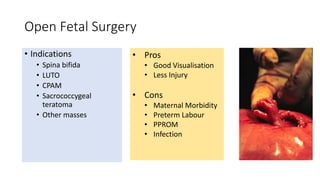
Open Fetal Surgery
• Indications
• Spina bifida
• LUTO
• CPAM
• Sacrococcygeal
teratoma
• Other masses
• Pros
• Good Visualisation
• Less Injury
• Cons
• Maternal Morbidity
• Preterm Labour
• PPROM
• Infection
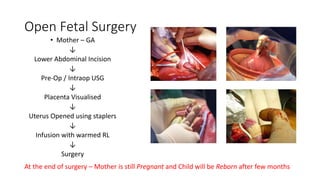
Open Fetal Surgery
• Mother – GA
↓
Lower Abdominal Incision
↓
Pre-Op / Intraop USG
↓
Placenta Visualised
↓
Uterus Opened using staplers
↓
Infusion with warmed RL
↓
Surgery
At the end of surgery – Mother is still Pregnant and Child will be Reborn after few months
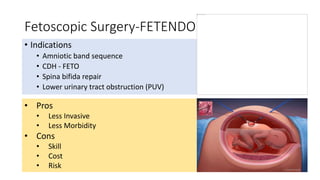
Fetoscopic Surgery-FETENDO
• Indications
• Amniotic band sequence
• CDH - FETO
• Spina bifida repair
• Lower urinary tract obstruction (PUV)
• Pros
• Less Invasive
• Less Morbidity
• Cons
• Skill
• Cost
• Risk
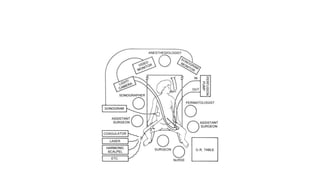
FIGS - IT
Indications:
• Disorders of Monochorionic
placentation
• TTTS (Twin to twin transfusion syndrome)
• TAPS (Twin Anemia Polycythemia
Sequence)
• sIUGR (Selective IUGR)
• TRAP (Twin Reverse Arterial Perfusion)
• Catheter/ shunts→
Bladder/Abdomen/Chest
• Fetal cardiac defects
• Pros
• Least Invasive
• Less Morbidity
• Day Care
• Cons
• Skill
• Risk
• Not for major anomalies
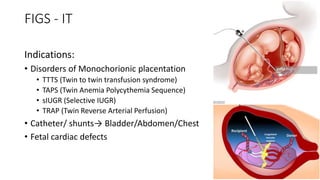
FIGS - IT
Indications:
• Disorders of Monochorionic placentation
• TTTS (Twin to twin transfusion syndrome)
• TAPS (Twin Anemia Polycythemia Sequence)
• sIUGR (Selective IUGR)
• TRAP (Twin Reverse Arterial Perfusion)
• Catheter/ shunts→ Bladder/Abdomen/Chest
• Fetal cardiac defects
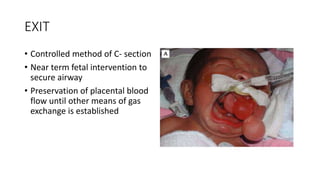
EXIT
• Controlled method of C- section
• Near term fetal intervention to
secure airway
• Preservation of placental blood
flow until other means of gas
exchange is established
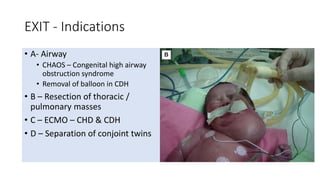
EXIT - Indications
• A- Airway
• CHAOS – Congenital high airway
obstruction syndrome
• Removal of balloon in CDH
• B – Resection of thoracic /
pulmonary masses
• C – ECMO – CHD & CDH
• D – Separation of conjoint twins
MOMS Trial
• Prospective and randomized
• Prenatal Vs postnatal repair
• NEJM 2011
• Less need for VP shunt in first year (44% vs 84%)
• Improved mental/motor composite score at 30 months
• Less need for CIC 938% vs 51%)
• Durable
Laser for TTTS
• Prospective and randomized
• Laser vs amnioreduction
• Stopped early due to significant benefit in laser group
• NEJM 2004
• Better survival of at least one twin at 28 days (76% vs 56%)
• More likely to be free of neurologic complications (52% vs 31%)
CDH
• The key to successful management is to have a fetus with competent
lungs after birth
• Presence of liver in thorax
• LHR – less than 1.0
• These fetuses need intrapartum intervention for postpartum surgery
to succeed
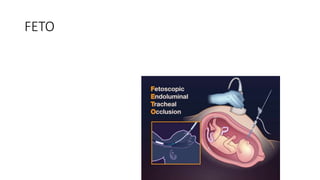
• FETENDO with temporary tracheal occlusion
• EXIT procedure to remove the balloon before birth
CDH
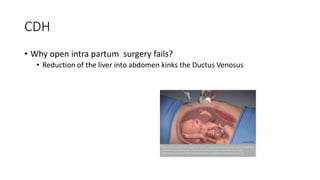
• Why open intra partum surgery fails?
• Reduction of the liver into abdomen kinks the Ductus Venosus
FETO
Maternal and fetal risks
• Maternal
• Surgery
• Anaesthesia
• Fetal
• Prematurity
• Intrauterine infection
• Fetal vascular embolic events
• Intestinal atresia
• Renal agenesis
• Premature closure of ductus arteriosus
• CNS injuries – Maternal hypoxia / fetal circulatory disturbance
Future Possibilities
• Deliver stem cells or DNA to treat sickle cell anemia or other genetic
conditions
• Haemoglobinopathies
• Immunodeficiency diseases
• MPS
• Fanconi anemia
Fetal Surgery Draft.pptx

Fetal Surgery Draft.pptx

  • 1.
    Fetal Surgery Lt ColVK Singh Paediatric Surgeon
  • 3.
    Introduction • Till fewyrs back, little could be done for babies in utero with congenital anomalies • Damage to the organ couldn’t be arrested or minimized before birth • Now- Improved imaging including 3D / 4D USG and ultra fast MRI including functional imaging
  • 4.
  • 5.
    Fetal Surgery • Typeof surgery that is performed on a developing fetus while it is still in the womb. • Reserved for cases in which the condition is severe and may cause significant disability or death if left untreated • The decision to perform fetal surgery is made on a case-by-case basis, and careful consideration is given to the risks and benefits for both the mother and the fetus • 1982 – first open fetal surgery for obstructive uropathy
  • 6.
    Contraindication • Severe affliction •Other associated life threatening abnormalities • Chromosomal & genetic conditions
  • 7.
    Fetal Surgery Disorder NaturalHistory Benefits Recommended ꝶ CDH Lung Hypoplasia Normal anatomy→Reverse Open /FETO LUTO VUR→HN→Oligohydra→Lung Hypoplasia Removal of Uropathy→Avoids irreversible changes Vesicostomy/VAS/Valve ablation CPAM Lung Hypoplasia→Hydrops Resection Open/Fetoscopic/Aspirate/Las er ablation SCT Vascular insufficiency→Hydrops Resection Open/Laser / Fetoscopy Placenta Circulation anomalies Blood steal Disrupt abnormal anastomosis Laser/RFA CHAOS Lung inflation→Cardiac insufficiency→Hydrops Normal airway Fetoscopic tracheostomy /Valveplasty/EXIT MMC Spinal cord lesion, Hydroceph, ACM, Myeloplegia Prevent destructive effects of amniotic fluid on nerves Open/Fetoscopic repair ABS Amputation/ cord constriction Amniotic band dissection Fetoscopic band release
  • 8.
    Types of FS •Open Surgery • FETENDO (Fetal Endoscopic surgery) • FIGS- IT (Fetal image guided surgery for Intervention or Therapy) • EXIT (Ex Utero Intrapartum Treatment)
  • 9.
    Open Fetal Surgery •Indications • Spina bifida • LUTO • CPAM • Sacrococcygeal teratoma • Other masses • Pros • Good Visualisation • Less Injury • Cons • Maternal Morbidity • Preterm Labour • PPROM • Infection
  • 10.
    Open Fetal Surgery •Mother – GA ↓ Lower Abdominal Incision ↓ Pre-Op / Intraop USG ↓ Placenta Visualised ↓ Uterus Opened using staplers ↓ Infusion with warmed RL ↓ Surgery At the end of surgery – Mother is still Pregnant and Child will be Reborn after few months
  • 11.
    Fetoscopic Surgery-FETENDO • Indications •Amniotic band sequence • CDH - FETO • Spina bifida repair • Lower urinary tract obstruction (PUV) • Pros • Less Invasive • Less Morbidity • Cons • Skill • Cost • Risk
  • 12.
    FIGS - IT Indications: •Disorders of Monochorionic placentation • TTTS (Twin to twin transfusion syndrome) • TAPS (Twin Anemia Polycythemia Sequence) • sIUGR (Selective IUGR) • TRAP (Twin Reverse Arterial Perfusion) • Catheter/ shunts→ Bladder/Abdomen/Chest • Fetal cardiac defects • Pros • Least Invasive • Less Morbidity • Day Care • Cons • Skill • Risk • Not for major anomalies
  • 13.
    FIGS - IT Indications: •Disorders of Monochorionic placentation • TTTS (Twin to twin transfusion syndrome) • TAPS (Twin Anemia Polycythemia Sequence) • sIUGR (Selective IUGR) • TRAP (Twin Reverse Arterial Perfusion) • Catheter/ shunts→ Bladder/Abdomen/Chest • Fetal cardiac defects
  • 14.
    EXIT • Controlled methodof C- section • Near term fetal intervention to secure airway • Preservation of placental blood flow until other means of gas exchange is established
  • 15.
    EXIT - Indications •A- Airway • CHAOS – Congenital high airway obstruction syndrome • Removal of balloon in CDH • B – Resection of thoracic / pulmonary masses • C – ECMO – CHD & CDH • D – Separation of conjoint twins
  • 16.
    MOMS Trial • Prospectiveand randomized • Prenatal Vs postnatal repair • NEJM 2011 • Less need for VP shunt in first year (44% vs 84%) • Improved mental/motor composite score at 30 months • Less need for CIC 938% vs 51%) • Durable
  • 17.
    Laser for TTTS •Prospective and randomized • Laser vs amnioreduction • Stopped early due to significant benefit in laser group • NEJM 2004 • Better survival of at least one twin at 28 days (76% vs 56%) • More likely to be free of neurologic complications (52% vs 31%)
  • 20.
    CDH • The keyto successful management is to have a fetus with competent lungs after birth • Presence of liver in thorax • LHR – less than 1.0 • These fetuses need intrapartum intervention for postpartum surgery to succeed • FETENDO with temporary tracheal occlusion • EXIT procedure to remove the balloon before birth
  • 21.
    CDH • Why openintra partum surgery fails? • Reduction of the liver into abdomen kinks the Ductus Venosus
  • 22.
  • 30.
    Maternal and fetalrisks • Maternal • Surgery • Anaesthesia • Fetal • Prematurity • Intrauterine infection • Fetal vascular embolic events • Intestinal atresia • Renal agenesis • Premature closure of ductus arteriosus • CNS injuries – Maternal hypoxia / fetal circulatory disturbance
  • 31.
    Future Possibilities • Deliverstem cells or DNA to treat sickle cell anemia or other genetic conditions • Haemoglobinopathies • Immunodeficiency diseases • MPS • Fanconi anemia