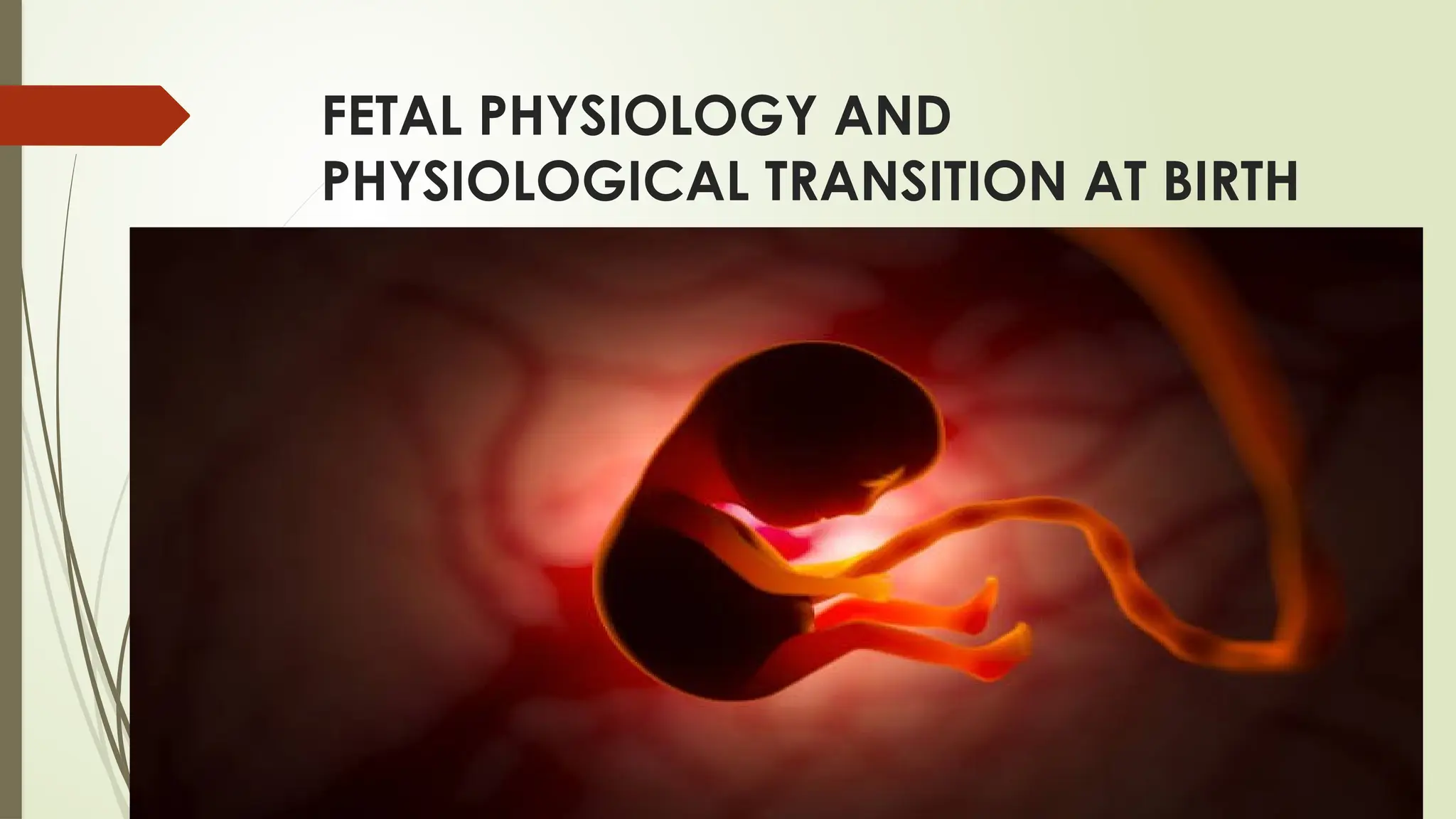
FETAL PHYSIOLOGY AND
PHYSIOLOGICAL TRANSITION AT BIRTH
Introduction
 Intrauterine development  conception to birth
 Prenatal development is usually divided into 3 stages: germinal, embryonic, fetal
 Germinal stage  conception to 2 weeks of implantation of embryo (formation of placenta)
 Embryonic stage 3rd to 8th weeks of pregnancy – organogenesis  teratogens
 Fetal stage 9th
week of pregnancy to birth  growth and functional differentiation of organs
 TERM NEONATE-between 37 to < 42 gestational week
 PRETERM NEONATE-<37 gestational week (irrespective of BW)
 POST TERM NEONATE-> or equal to 42 gestational week
 LOW BIRTH WEIGHT(LBW)<2500 GRAM
 VERY LOW BIRTH WEIGHT(VLBW)<150O GRAM (irrespective of BW)
 EXTREMELY LOW BIRTH WEIGHT(ELBW)< 1000 GRAM
 Adult and fetal circulation differs in:
 Placenta as the organ of respiration
 High pulmonary vascular resistance (PVR)
 Low systemic vascular resistance (SVR),
 Fetal ventricles pump in parallel with right ventricular dominance
 Neonatal circulation has several shunts — ductus arteriosus, ductus
venosus, and foramen ovale — directs oxygenated blood to brain and
heart and bypasses the lungs
Uteroplacental physiology
 Placenta- interface- composed of both maternal and fetal tissue
 made up of a basal and a chorionic plate separated by intervillous
space
 Maternal blood uterine arteries  intervillous space via the spiral
arteries  chorionic plate fetal villi (exchange takes place)  veins in
the basal plate  uterine veins (away from uterus)
 Umbilical arteries(form umbilical capillaries that cross the chorionic Villi) 
placenta
 After placental exchange, oxygen-rich, nutrient rich, and waste-free
blood is returned from the placenta to the fetus through a single umbilical
vein.
Uterine blood flow
 Increase in Flow: Rises from ~100 mL/min pre-pregnancy to 700–900 mL/min at term
(10% of cardiac output).
 Distribution: ~80% perfuses placenta; 20% perfuses myometrium.
 Minimal Autoregulation: Vessels stay fully dilated; flow depends on maternal
cardiac output.
 Factors Affecting Uterine Perfusion:
 Perfusion Pressure: Decreased by maternal hypotension (e.g., hypovolemia, anesthesia,
aortocaval compression).
 Venous Pressure: Increased by aortocaval compression, prolonged contractions,
Valsalva maneuver.
 Hypocapnia: Extreme low CO (from hyperventilation in labor) may reduce flow, causing
₂
fetal hypoxemia.
 Anesthesia: Neuraxial blocks don’t impact flow if hypotension is avoided; any drop
in blood pressure should be corrected promptly.
PLACENTAL EXCHANGE
 Oxygen Transfer
 O2 delivery depends on  ratio of maternal to fetal placental blood flow, O2 partial
pressure gradient betn two circulations, diffusion capacity of placenta, respective
maternal and fetal hemoglobin concentrations and O2 affinities, and the acid-base status
of the fetal and maternal blood (Bohr effect).
 O2 delivery to fetus – facilitated d/t fetal OHDC is to the left (greater O2 affinity) of
maternal OHDC (decreased O2 affinity)
 Fetal Hb - higher O2 affinity and lower partial pressure at which it is 50% saturated(P50:
18mm Hg) vs maternal hemoglobin (P50: 27 mmHg)
 Fetal PaO2 - 40 mm Hg (never >60 mm Hg)
 CO2 easily crosses the placenta – feto-maternal transfer is limited by blood flow and not
diffusion
Drug Transfer
 Four mechanisms of maternal-fetal exchange across placenta : passive diffusion,
facilitated diffusion, transporter-mediated mechanisms, and vesicular transport.
 Drugs with molecular weights < 1000 Daltons cross by diffusion if drug is not ionized
 Rate of diffusion and peak levels in fetus depend on maternal-to-fetal
concentration gradients (primary determinant), maternal protein binding,
molecular weight, lipid solubility, and degree of drug ionization
 All inhalational agents and most intravenous agents freely cross the placenta
 Inhalational agents - little fetal depression in doses <1 MAC
 Delivery within 10 min of induction by Ketamine, propofol, and benzodiazepines 
drugs detected in fetal plasma
 NDMR are ionized, with high molecular weight, poor lipid solubility - minimal placental
transfer
 Succinylcholine - low molecular weight but highly ionized - does not readily cross
placenta (unless given in large nonclinical doses)
 Drugs readily crossing the BBB also readily cross the placenta
 Fetal blood -more acidic than maternal blood
 lower pH - weakly basic drugs - local anesthetics and opioids- cross placenta as
nonionized molecules and become ionized in fetal circulation
 Newly ionized molecule -more resistance to diffusion back across placenta-
accumulate in fetal circulation – toxicity (by “ion trapping”)
 Pronounced during fetal distress (fetal acidemia)
 High concentrations of LA in fetal circulation decreases neonatal neuromuscular tone
 Fetal effects  bradycardia, ventricular arrhythmias, acidosis, severe cardiac
depression
Fetal physiology
Fetal Circulation
 Placenta receives half the fetal
cardiac output - respiratory gas
exchange
 Fetal lungs - little blood flow
 Pulmonary and systemic circulations
are in parallel instead of in series
 Made possible by two cardiac shunts:
the foramen ovale and the ductus
arteriosus
 Nutrients for growth and development
delivered from umbilical vein in
umbilical cord → fetal heart
 Oxygenated blood  umbilical vein  either through liver or the ductus
venosus  IVC
 IVC Right atrium foramen ovale into the left atrium (bypassing RV and
lungs)
 Blood passes LV and aorta  the head and upper torso.
 deoxygenated blood from SVC and myocardium via coronary sinus  right
ventricle and into the pulmonary artery.
 Most of this blood is returned to the descending aorta via the ductus arteriosus
 Blood in descending aorta either supplies umbilical artery to be reoxygenated
at placenta or continues to supply lower limbs.
FETAL CIRCULATION
(PARALLEL CIRCULATION)
 Well-oxygenated blood from placenta (80% oxygen saturation) mixes with venous
blood returning from lower body (25% saturation)
 Flows via the IVC into right atrium
 Blood flows from RA to LA (67% saturation) through foramen ovale
 LA blood -> left ventricle to the upper body (mainly brain and heart).
 Poorly oxygenated blood from upper body returns via the SVC to RA
 High PVR 95% of the blood ejected from right ventricle (60% oxygen saturation) is
shunted across ductus arteriosus, into descending aorta, and back to the placenta
and lower body
 Parallel circulation causes unequal ventricular flows (RV ejects 2/3rd
of combined
ventricular outputs)
 Oxygen saturation of blood in various vessels:
 Umbilical vein: 80%
 Abdominal IVC and portal vein: 28%
 Thoracic IVC: 67%
 Superior venacava: 25%
 Pulmonary veins: 42%
 Pulmonary trunk: 52%
 Umbilical arteries: 56%
Physiological changes after birth
UMBILICAL VESSELS- IMMEDIATELY AFTER
CLAMPING:
 Constrict in response to stretching
and increased oxygen content at
delivery
 Large low-resistance placental
vascular bed removed from the
circulation
 Increase SVR
 Reduction of blood flow along ductus
venosus (passive closure over the
following 3-7 days),reduced blood
flow in IVC
LUNG EXPANSION
 Drops pulmonary vascular
resistance
 Increase in blood returning to the
LA
These two changes reduce right
atrial and increase left atrial
pressures, functionally closing the
foramen ovale within the first few
breaths of life
Differences in Fetal and Adult Circulation
 3 shunts:
- Ductus venosus
- Foramen ovale
- Ductus arteriosus
Factors contributing to patent shunts
 Low Oxygen Tension-Keeps
ductus arteriosus open 
preventing vasoconstriction
 Prostaglandins (PGE2)-
Produced by placenta and
fetal tissues; relaxes ductus
arteriosus smooth muscle
 Placental Circulation
Provides low-resistance
pathway, optimizes pressure
for shunt flow
 Anatomical and Pressure Gradients-
High right atrium pressure directs
blood through foramen ovale.
 High Pulmonary Resistance-Fluid-filled
lungs create high resistance, favoring
shunt pathways.
 Hormonal Influence-Nitric oxide and
adenosine aid in maintaining
vasodilation.
Fate of shunts
Fetal Shunt
Function in Fetal
Circulation
Fate After Birth
Functional
closure
Anatomical
closure
Ductus venosus
Bypasses liver,
directing blood to
the vena cava
Becomes the
ligamentum
venosum
10 – 96 hrs
after birth
2 – 3 wks after
birth
Foramen ovale
Shunts blood
between atria,
bypassing the lungs
Closes to form
the fossa
ovalis
Within several
mins after birth
One year after
birth
Ductus
arteriosus
Diverts blood from
pulmonary artery to
aorta
Becomes the
ligamentum
arteriosum
Within several
mins after birth
3 – 7 days
after birth
Umbilical arteries → Umbilical ligaments
Umbilical vein → Ligamentum teres
STRUCTURAL AND FUNCTIONAL DEVELOPMENT
 Shape of heart completed by 6 weeks’ gestation
 Myofibrillar density and maturation increase through first year of postnatal life
 Rapid protein synthesis and cell growth of myocardium - requires a high
intracellular concentration of nuclei, mitochondria, and endoplasmic reticulum
 Greater no. of nonelastic and noncontractile elements - neonatal myocardium
less compliant
 Decreased ventricular compliance - small changes in EDV to induce large
changes in EDP
 Augmentation of SV by Frank-Starling mechanism - less effective in young
children - near peak of frank starling curve
 CO increases only about 15% with volume loading vs increasing HR
 Myocardium- intolerant to hypocalcemia d/t immature regulatory system
 Normal fetal cardiac output- 425-550 ml/kg/min throughout gestation
AUTONOMIC CONTROL OF THE CIRCULATION
 Fetal heart  reduced catecholamine stores  increased sensitivity to exogenously
administered norepinephrine (NE)
 Adrenergic innervation complete between 18 - 28 weeks’ gestation
 Low cardiac stores of NE and decreased no. of sympathetic nerves at birth
 Adrenergic responses - apparently present
 Cholinergic system completely developed at birth  sensitive to vagal stimulation
 Bradycardia in response to increase in autonomic tone
 Baroreceptor reflex is present but incompletely developed at term
 Chemoreceptor response is well developed in utero
 Fetal bradycardia in response to hypoxia  chemoreceptors
MYOCARDIAL METABOLISM
 Relative “hypoxia” is normal in utero (infant hearts tolerate hypoxia better vs adults)
 Due to high concentrations of glycogen stores in myocardium
 Ability to more effectively use anaerobic metabolism
 Fetal/newborn heart  relatively resistant to hypoxia
 Resuscitated more easily if oxygenation and perfusion are reestablished quickly
 Oxygen consumption increases precipitously after birth  to maintain temperature
 Full-term infant’s O2 consumption in neutral thermal environment  6 mL/kg/min
 Increases to 7 and 8 mL/kg/min at 10 days and 4weeks
Parallel circulation of fetus convert to series circulation of adult with left
ventricular predominance
Successful transition from fetal to postnatal circulation requires :
 Clamping of umbilical cord and removal of the placenta
 Increased pulmonary blood flow
 Shunt closure
Most profound adaptive changes at birth involve circulatory and respiratory
systems
TRANSITION AT BIRTH
TRANSITION AT BIRTH
 During expulsion of fetus, fluid in lungs is normally squeezed by the forces of the pelvic
muscles and the vagina acting on the fetus
 Remaining fluid reabsorbed by pulmonary capillaries and lymphatics
 Small (preterm) neonates and neonates delivered via LSCS do not benefit from the
vaginal squeeze - difficulty in maintaining respirations (transient tachypnea of the
newborn)
 Respiratory efforts - normally initiated within 30 s after birth and become sustained
within 90 s
 Mild hypoxia and acidosis as well as sensory stimulation—cord clamping, pain, touch,
and noise—help initiate and sustain respirations, whereas the outward recoil of the
chest at delivery aids in filling the lungs with air.
TRANSITION AT BIRTH – transitional circulation
 1st
breath  expansion of lung  increased alveolar oxygen and pH +
neurohumoral mediators and nitric oxide (NO) relax pulmonary vasoconstriction
 Separation from placenta, increase in blood volume, surge of catecholamine,
thromboxane A2 and vasopressin cause increase in SVR and left ventricular
afterload
 Decrease in PVR + increase in SVR raises left atrial pressure above right atrial
pressure (RAP)  functional closure - “flap valve” of foramen ovale
 Decrease in PVR causes flow through ductus arteriosus to reverse
 Ductus exposed to oxygenated systemic arterial blood + rapid decrease in PGE2
after birth  closes the ductus functionally
 Ductus venosus closes passively with removal of placental circulation and
readjustment of portal pressure relative to IVC pressure
 Further gradual decline in PVR d/t structural remodeling of muscular layer of
pulmonary blood vessels
 Hypoxia, hypercapnia, anesthesia-induced changes in peripheral or pulmonary
vascular tone  reverse to fetal circulation
 Rise in PVR > SVR  blood is shunted past the lungs via the patent foramen ovale
 Hypoxemia occurs  hyperventilation with 100% O2
 Risk factors include prematurity, infection, acidosis, pulmonary disease resulting in
hypercapnia or hypoxemia , aspiration of meconium, hypothermia, CHD
 MC arrhythmia in pediatric populations  hypoxia-induced bradycardia  can
lead to asystole
 Ventricular fibrillation - extremely rare in infants
Fetal respiration
 Vs fetal circulation (established very early during intrauterine life) maturation of lungs lags
behind
 Lung bud septates from the foregut in 1st
trimester
 Gas exchanging portions of airway  formed during 2nd
trimester
 Alveolar ductal development starts 24 WOG  septation of air sacs begins  36 WOG
 Extrauterine survival not possible until 22 – 24 WOG
 Alveoli then increase in number and size until 8 years of age
 Pulmonary capillaries - formed and come to lie in close approximation to an immature
alveolar epithelium
 30 weeks – cuboidal alveolar epithelium flattens out and begins to produce pulmonary
surfactant
 Sufficient surfactant - after 34 weeks of gestation
 Administration of glucocorticoids to mother accelerate fetal surfactant production.
Respiratory Changes
Chemical
Sensory/ Thermal
Mechanical
Initiation
of
Breathing
What part do each of these factors
play in initiation of respirations in
the neonate?
Sensory / Thermal Events
Thermal-- decrease in environmental temperature after
delivery - major stimulus for breathing
Tactile--nerve endings in the skin are stimulated
Visual--change from a dark world to one of light
Auditory--sound in the extrauterine environment
Chemical Events
1. With cutting of the cord, remove oxygen supply
2. Asphyxia occurs
3. CO2 and O2 and pH = ACIDOSIS
4. Acidotic state-- stimulates the
respiratory center in the medulla and
the chemoreceptors in carotid artery to
initiate breathing
Pulmonary system
 With initiation of ventilation - pulmonary system changes dramatically
 Alveoli - fluid filled to air-filled state with normal ventilatory pattern in first 5- 10 minutes
of life
 Adequate expansion of collapsed and fluid-filled alveoli - newborn will generate initial
negative intrathoracic pressure (40 to 60 cm H2O)
 10 - 20 minutes of life - near-normal FRC
 Blood gases stabilize with establishment of increased pulmonary blood flow
 Less response to hypercapnia vs hypoxia – hyperventilate briefly in presence of hypoxia
 Fetus lives in a low oxygen environment but O2 content of blood of fetus is similar to
adults (20 mL of oxygen/100 mL of blood) d/t higher concn of Hb with high affinity for
O2
Changes at birth….mechanical
Compression of fluid from the fetal lung during vaginal delivery
establishes the lung volume
Negative inspiratory pressures of up to 70-100 cm H2O are initially
required to expand the alveoli (Laplace’s relationships) which facilitate
lung expansion by overcoming:
 airways resistance
 inertia of fluid in the airways
 surface tension of the air/fluid interface in the alveolus
As the chest passes
through the birth canal
the lungs are
compressed
Subsequent recoil
of the chest wall
produces passive
inspiration of air
into the lungs
Pulmonary system
 Lung expansion increases alveolar and arterial oxygen tensions
 Decreases PVR (increase O2 tension - potent stimulus for pulmonary arterial dilation)
 Resultant increase in pulmonary BF and augmented flow to left heart elevates left atrial
pressure and functionally closes foramen ovale
 Increase in arterial oxygen tension causes ductus arteriosus to contract and
functionally close
 Other chemical mediators that play role in ductal closure - acetylcholine, bradykinin,
and prostaglandins
Pulmonary system
 Small diameter of airways increases resistance to airflow
 TV roughly same as the child or adult on a volume/kilogram body weight
measure
 RR is increased
 Closing volumes - high as in range of normal TV
 Increased MV mirrors higher O2 consumption in neonates (2 X an adult)
 Ratio of MV to FRC – 2-3 X higher vs adult
 Clinical significance – induction and emergence with volatile anesthetic agent –
faster
 Low FRC relative to MV and oxygen consumption - less “oxygen reserve” in the
FRC vs that of older children and adults – rapid drop of spo2
Pulmonary system
 Lung compliance - relatively low vs chest wall compliance –high
 Pliable rib cage – less mechanical support - significant retractions with less
efficient gas exchange and functional airway closure – increases work of
breathing
 Intercostal muscles- poorly developed - diaphragm providing for most of
gas exchange
 Composition of diaphragmatic and intercostal muscles varies vs adult
 Type I muscle fibers as in adults develops by 2 years
 Surfactant necessary to maintain distensibility of alveoli and FRC at
exhalation
 Decreased production - prematurity ,maternal diabetes –RDS
 Low surfactant - alveolar collapse, decrease lung compliance, hypoxia,
increased work of breathing, respiratory failure
 Role of commercially available surfactant
Persistent Pulmonary Hypertension of
the Newborn
 Pulmonary circulation - extremely sensitive to O2, pH, nitric oxide,
adenosine, prostaglandins and lung inflation
 Hypoxia and acidosis, inflammatory mediators – PAH k/a PPHN or persistent
fetal circulation
 PPHN occurs in term and preterm infants
 Caused by precipitating conditions as severe birth asphyxia, meconium
aspiration, sepsis, congenital diaphragmatic hernia (CDH), and maternal
useof nonsteroidal anti-inflammatory drugs with in utero constriction of
ductus arteriosus, often idiopathic
 Risk factors include maternal diabetes, maternal asthma, and cesarean
delivery
Persistent Pulmonary Hypertension of
the Newborn
 High PVR - ductus arteriosus and foramen ovale remain open - right-to-left
shunting bypassing pulmonary circulation
 Profound hypoxia from right-to-left shunting and a normal or elevated
PaCO2
 Hypoxemia - out of proportion to other presenting signs of respiratory and
cardiovascular compromise
 Treatment - correcting any predisposing disease (hypoglycemia,
polycythemia) and improving poor tissue oxygenation (agents to decrease
PVR)
 Goals - PaO2 of 60 to 100 mmHg and maintain normocapnia
Meconium Aspiration
 Important pulmonary challenge in newborn
 Interference with normal maternal placental circulation in 3rd
trimester - fetal hypoxia
 Increase in musculature in blood vessels of distal respiratory units
 Chronic fetal hypoxia - passage of meconium in utero
 Breath in utero - meconium mixed amniotic fluid to enter pulmonary system
 Mechanically obstructs tracheobronchial system
 Leads to respiratory failure can be refractory to treatment
Gastrointestinal System
 Gastric pH  alkalotic at birth
 2nd
day of life  pH becomes in normal physiologic range
 Ability to coordinate swallowing with respiration  fully mature after infants are 4-5
months of age  high incidence of GERD
 Any gastrointestinal developmental disorder shows up within 24 - 36 hours of life
 Upper intestinal abnormalities  vomiting and regurgitation
 Lower intestinal abnormalities  abdominal distention and failure to pass meconium
The Hepatic System
 Immature functional capacity of liver - synthetic and metabolic functions
 Most enzyme systems for normal function and drug metabolism- present at birth but not
induced
 In utero -maternal circulation and metabolism - responsible for drug elimination
 CYP450 system responsible for phase I drug metabolism of lipophilic compounds  50%
of adult levels at birth
 Phase II reactions involve conjugation to make drug more water-soluble to facilitate
renal excretion
 Often impaired in neonates  cause jaundice and long drug + their active metabolites
half-lives (e.g. morphine and benzodiazepines - several days)
 Decreased metabolism - increase its safety profile - eg – acetaminophen – low CYP450
metabolism less reactive metabolites
Transition after birth
 Hepatic metabolism rapidly increases for two reasons:
(1) hepatic blood flow increases  more drug is delivered to liver
(2) the enzyme systems develop and induced
 Albumin and other drugs binding proteins - low in term (lower in preterm) - greater
levels of free drug
 Exogenous vitamin K to prevent hemorrhagic disease of newborn
 Hepatic glycogen stores – low
The Renal System
 In utero -fetal waste material - removed by placenta
 Fetal kidneys – passive role (low RBF and low GFR)
 4 major reasons : low systemic arterial pressure, high renal vascular resistance, low
permeability of the glomerular capillaries, and the small size and number of glomeruli
 Kidneys receive - 3% of the cardiac output vs 25% in adult
 Birth - systemic arterial pressure increases and renal vascular resistance decreases
 GFR - doubles in first 2 weeks
 Adult levels by 2 years of age
 Urine output < 1 mL/kg/hr after 24 hours of life - indicative of hypovolemia or renal
pathology
 Anesthetic consideration – renal clearance of drugs is low in neonates – dose
adjustment
 Relative inability to conserve free water – prone to dehydration
Fetal Blood
Hematopoiesis
 First seen in the yolk sac during embryonic period (mesoblastic period)
 Liver takes over up to term (hepatic period)
 Bone marrow: starts hematopoietic function at around 4 months fetal age
major site of blood formation in adults (myeloid period)
Fetal Blood
Hematopoiesis
 Erythrocytes progress from nucleated to non-nucleated
 32 weeks – adult hemoglobin synthesis starts
 Blood vol. and Hb concentration increase progressively
 Mid-pregnancy: Hb 15 gms/dl
 Term: 18 gms/dl
Fetal Blood
Hematopoiesis
 Fetal erythrocytes: 2/3 that of adult’s (due to large volume and more
easily deformable)
 Fetal Hb life span  80 days
 During states of fetal anemia: fetal liver synthesizes erythropoietin and
excretes it into the amniotic fluid. (for erythropoiesis in utero)
Fetal Blood
Fetal Blood Volume
 Average volume of 80 ml/kg body wt.
right after cord clamping in normal term
infants
 Placenta contains 45 ml/kg body weight
 Feto-placental blood volume at term is
approx. 125 ml/kg of fetus
Fetal Blood
Type Description Chains
Hemoglobin F Fetal Hgb or alkaline-resistant
Hgb
2 alpha chains,
2 gamma chains
Hemoglobin A Adult Hgb. Formed starting at
32-34 wks gestation and results
from methylation of gamma
globin chains
2 alpha chains,
2 beta chains
Hemoglobin A2 Present in mature fetus in small
amounts that increase after
birth
2 alpha chains,
2 delta chains
Fetal Hemoglobin
Fetal Blood
Fetal Hemoglobin
 Fetal erythrocytes that contain mostly
Hgb F bind more O2 than Hgb A
erythrocytes
 Hgb A binds 2-3 BPG more tightly than
Hgb F (this lowers affinity of Hgb for O2)
 Increased O2 affinity of fetal erythrocytes
results from lower concentration of 2-3
BPG in the fetus
 Affinity of fetal blood for O2 decreases at
higher temp. (maternal hyperthermia)
Thermoregulation
 Vulnerable to hypothermia d/t large ratio of body surface area to weight, thinness of
skin &low fat stores
 Cold stress  increased O2 consumption & metabolic acidosis (more in preterms)
 Compensation by shivering and nonshivering (cellular) thermogenesis (metabolism of
brown fat)
 Minimal ability to shiver during first 3 months of life  cellular thermogenesis 
principal method
 Anesthetic consideration to preserve heat during surgery (80°F or warmer) -
conduction
 Newborn  incubator and covered minimizes heat lost via convection
 Heat loss from scalp – significant
 Heat lost via evaporation  lessened by humidification of inspired gases
 Anesthetics impact thermoregulation  particularly nonshivering thermogenesis in
neonates.
References
Millers textbook of anesthesia 9th
edition
Barash clinical anesthesia,8th
edition
Morgan and Mikhail’s anesthesia 7th
edition
FETAL PHYSIOLOGY AND PHYSIOLOGICAL TRANSITION AT BIRTH.pptx

FETAL PHYSIOLOGY AND PHYSIOLOGICAL TRANSITION AT BIRTH.pptx

  • 1.
  • 2.
    Introduction  Intrauterine development conception to birth  Prenatal development is usually divided into 3 stages: germinal, embryonic, fetal  Germinal stage  conception to 2 weeks of implantation of embryo (formation of placenta)  Embryonic stage 3rd to 8th weeks of pregnancy – organogenesis  teratogens  Fetal stage 9th week of pregnancy to birth  growth and functional differentiation of organs  TERM NEONATE-between 37 to < 42 gestational week  PRETERM NEONATE-<37 gestational week (irrespective of BW)  POST TERM NEONATE-> or equal to 42 gestational week  LOW BIRTH WEIGHT(LBW)<2500 GRAM  VERY LOW BIRTH WEIGHT(VLBW)<150O GRAM (irrespective of BW)  EXTREMELY LOW BIRTH WEIGHT(ELBW)< 1000 GRAM
  • 3.
     Adult andfetal circulation differs in:  Placenta as the organ of respiration  High pulmonary vascular resistance (PVR)  Low systemic vascular resistance (SVR),  Fetal ventricles pump in parallel with right ventricular dominance  Neonatal circulation has several shunts — ductus arteriosus, ductus venosus, and foramen ovale — directs oxygenated blood to brain and heart and bypasses the lungs
  • 4.
    Uteroplacental physiology  Placenta-interface- composed of both maternal and fetal tissue  made up of a basal and a chorionic plate separated by intervillous space  Maternal blood uterine arteries  intervillous space via the spiral arteries  chorionic plate fetal villi (exchange takes place)  veins in the basal plate  uterine veins (away from uterus)  Umbilical arteries(form umbilical capillaries that cross the chorionic Villi)  placenta  After placental exchange, oxygen-rich, nutrient rich, and waste-free blood is returned from the placenta to the fetus through a single umbilical vein.
  • 5.
    Uterine blood flow Increase in Flow: Rises from ~100 mL/min pre-pregnancy to 700–900 mL/min at term (10% of cardiac output).  Distribution: ~80% perfuses placenta; 20% perfuses myometrium.  Minimal Autoregulation: Vessels stay fully dilated; flow depends on maternal cardiac output.  Factors Affecting Uterine Perfusion:  Perfusion Pressure: Decreased by maternal hypotension (e.g., hypovolemia, anesthesia, aortocaval compression).  Venous Pressure: Increased by aortocaval compression, prolonged contractions, Valsalva maneuver.  Hypocapnia: Extreme low CO (from hyperventilation in labor) may reduce flow, causing ₂ fetal hypoxemia.  Anesthesia: Neuraxial blocks don’t impact flow if hypotension is avoided; any drop in blood pressure should be corrected promptly.
  • 6.
    PLACENTAL EXCHANGE  OxygenTransfer  O2 delivery depends on  ratio of maternal to fetal placental blood flow, O2 partial pressure gradient betn two circulations, diffusion capacity of placenta, respective maternal and fetal hemoglobin concentrations and O2 affinities, and the acid-base status of the fetal and maternal blood (Bohr effect).  O2 delivery to fetus – facilitated d/t fetal OHDC is to the left (greater O2 affinity) of maternal OHDC (decreased O2 affinity)  Fetal Hb - higher O2 affinity and lower partial pressure at which it is 50% saturated(P50: 18mm Hg) vs maternal hemoglobin (P50: 27 mmHg)  Fetal PaO2 - 40 mm Hg (never >60 mm Hg)  CO2 easily crosses the placenta – feto-maternal transfer is limited by blood flow and not diffusion
  • 7.
    Drug Transfer  Fourmechanisms of maternal-fetal exchange across placenta : passive diffusion, facilitated diffusion, transporter-mediated mechanisms, and vesicular transport.  Drugs with molecular weights < 1000 Daltons cross by diffusion if drug is not ionized  Rate of diffusion and peak levels in fetus depend on maternal-to-fetal concentration gradients (primary determinant), maternal protein binding, molecular weight, lipid solubility, and degree of drug ionization  All inhalational agents and most intravenous agents freely cross the placenta  Inhalational agents - little fetal depression in doses <1 MAC  Delivery within 10 min of induction by Ketamine, propofol, and benzodiazepines  drugs detected in fetal plasma
  • 8.
     NDMR areionized, with high molecular weight, poor lipid solubility - minimal placental transfer  Succinylcholine - low molecular weight but highly ionized - does not readily cross placenta (unless given in large nonclinical doses)  Drugs readily crossing the BBB also readily cross the placenta  Fetal blood -more acidic than maternal blood  lower pH - weakly basic drugs - local anesthetics and opioids- cross placenta as nonionized molecules and become ionized in fetal circulation  Newly ionized molecule -more resistance to diffusion back across placenta- accumulate in fetal circulation – toxicity (by “ion trapping”)  Pronounced during fetal distress (fetal acidemia)  High concentrations of LA in fetal circulation decreases neonatal neuromuscular tone  Fetal effects  bradycardia, ventricular arrhythmias, acidosis, severe cardiac depression
  • 9.
    Fetal physiology Fetal Circulation Placenta receives half the fetal cardiac output - respiratory gas exchange  Fetal lungs - little blood flow  Pulmonary and systemic circulations are in parallel instead of in series  Made possible by two cardiac shunts: the foramen ovale and the ductus arteriosus  Nutrients for growth and development delivered from umbilical vein in umbilical cord → fetal heart
  • 10.
     Oxygenated blood umbilical vein  either through liver or the ductus venosus  IVC  IVC Right atrium foramen ovale into the left atrium (bypassing RV and lungs)  Blood passes LV and aorta  the head and upper torso.  deoxygenated blood from SVC and myocardium via coronary sinus  right ventricle and into the pulmonary artery.  Most of this blood is returned to the descending aorta via the ductus arteriosus  Blood in descending aorta either supplies umbilical artery to be reoxygenated at placenta or continues to supply lower limbs. FETAL CIRCULATION (PARALLEL CIRCULATION)
  • 11.
     Well-oxygenated bloodfrom placenta (80% oxygen saturation) mixes with venous blood returning from lower body (25% saturation)  Flows via the IVC into right atrium  Blood flows from RA to LA (67% saturation) through foramen ovale  LA blood -> left ventricle to the upper body (mainly brain and heart).  Poorly oxygenated blood from upper body returns via the SVC to RA  High PVR 95% of the blood ejected from right ventricle (60% oxygen saturation) is shunted across ductus arteriosus, into descending aorta, and back to the placenta and lower body  Parallel circulation causes unequal ventricular flows (RV ejects 2/3rd of combined ventricular outputs)
  • 13.
     Oxygen saturationof blood in various vessels:  Umbilical vein: 80%  Abdominal IVC and portal vein: 28%  Thoracic IVC: 67%  Superior venacava: 25%  Pulmonary veins: 42%  Pulmonary trunk: 52%  Umbilical arteries: 56%
  • 14.
    Physiological changes afterbirth UMBILICAL VESSELS- IMMEDIATELY AFTER CLAMPING:  Constrict in response to stretching and increased oxygen content at delivery  Large low-resistance placental vascular bed removed from the circulation  Increase SVR  Reduction of blood flow along ductus venosus (passive closure over the following 3-7 days),reduced blood flow in IVC LUNG EXPANSION  Drops pulmonary vascular resistance  Increase in blood returning to the LA These two changes reduce right atrial and increase left atrial pressures, functionally closing the foramen ovale within the first few breaths of life
  • 15.
    Differences in Fetaland Adult Circulation  3 shunts: - Ductus venosus - Foramen ovale - Ductus arteriosus
  • 16.
    Factors contributing topatent shunts  Low Oxygen Tension-Keeps ductus arteriosus open  preventing vasoconstriction  Prostaglandins (PGE2)- Produced by placenta and fetal tissues; relaxes ductus arteriosus smooth muscle  Placental Circulation Provides low-resistance pathway, optimizes pressure for shunt flow  Anatomical and Pressure Gradients- High right atrium pressure directs blood through foramen ovale.  High Pulmonary Resistance-Fluid-filled lungs create high resistance, favoring shunt pathways.  Hormonal Influence-Nitric oxide and adenosine aid in maintaining vasodilation.
  • 17.
    Fate of shunts FetalShunt Function in Fetal Circulation Fate After Birth Functional closure Anatomical closure Ductus venosus Bypasses liver, directing blood to the vena cava Becomes the ligamentum venosum 10 – 96 hrs after birth 2 – 3 wks after birth Foramen ovale Shunts blood between atria, bypassing the lungs Closes to form the fossa ovalis Within several mins after birth One year after birth Ductus arteriosus Diverts blood from pulmonary artery to aorta Becomes the ligamentum arteriosum Within several mins after birth 3 – 7 days after birth Umbilical arteries → Umbilical ligaments Umbilical vein → Ligamentum teres
  • 18.
    STRUCTURAL AND FUNCTIONALDEVELOPMENT  Shape of heart completed by 6 weeks’ gestation  Myofibrillar density and maturation increase through first year of postnatal life  Rapid protein synthesis and cell growth of myocardium - requires a high intracellular concentration of nuclei, mitochondria, and endoplasmic reticulum  Greater no. of nonelastic and noncontractile elements - neonatal myocardium less compliant  Decreased ventricular compliance - small changes in EDV to induce large changes in EDP  Augmentation of SV by Frank-Starling mechanism - less effective in young children - near peak of frank starling curve  CO increases only about 15% with volume loading vs increasing HR  Myocardium- intolerant to hypocalcemia d/t immature regulatory system  Normal fetal cardiac output- 425-550 ml/kg/min throughout gestation
  • 19.
    AUTONOMIC CONTROL OFTHE CIRCULATION  Fetal heart  reduced catecholamine stores  increased sensitivity to exogenously administered norepinephrine (NE)  Adrenergic innervation complete between 18 - 28 weeks’ gestation  Low cardiac stores of NE and decreased no. of sympathetic nerves at birth  Adrenergic responses - apparently present  Cholinergic system completely developed at birth  sensitive to vagal stimulation  Bradycardia in response to increase in autonomic tone  Baroreceptor reflex is present but incompletely developed at term  Chemoreceptor response is well developed in utero  Fetal bradycardia in response to hypoxia  chemoreceptors
  • 20.
    MYOCARDIAL METABOLISM  Relative“hypoxia” is normal in utero (infant hearts tolerate hypoxia better vs adults)  Due to high concentrations of glycogen stores in myocardium  Ability to more effectively use anaerobic metabolism  Fetal/newborn heart  relatively resistant to hypoxia  Resuscitated more easily if oxygenation and perfusion are reestablished quickly  Oxygen consumption increases precipitously after birth  to maintain temperature  Full-term infant’s O2 consumption in neutral thermal environment  6 mL/kg/min  Increases to 7 and 8 mL/kg/min at 10 days and 4weeks
  • 21.
    Parallel circulation offetus convert to series circulation of adult with left ventricular predominance Successful transition from fetal to postnatal circulation requires :  Clamping of umbilical cord and removal of the placenta  Increased pulmonary blood flow  Shunt closure Most profound adaptive changes at birth involve circulatory and respiratory systems TRANSITION AT BIRTH
  • 22.
    TRANSITION AT BIRTH During expulsion of fetus, fluid in lungs is normally squeezed by the forces of the pelvic muscles and the vagina acting on the fetus  Remaining fluid reabsorbed by pulmonary capillaries and lymphatics  Small (preterm) neonates and neonates delivered via LSCS do not benefit from the vaginal squeeze - difficulty in maintaining respirations (transient tachypnea of the newborn)  Respiratory efforts - normally initiated within 30 s after birth and become sustained within 90 s  Mild hypoxia and acidosis as well as sensory stimulation—cord clamping, pain, touch, and noise—help initiate and sustain respirations, whereas the outward recoil of the chest at delivery aids in filling the lungs with air.
  • 23.
    TRANSITION AT BIRTH– transitional circulation  1st breath  expansion of lung  increased alveolar oxygen and pH + neurohumoral mediators and nitric oxide (NO) relax pulmonary vasoconstriction  Separation from placenta, increase in blood volume, surge of catecholamine, thromboxane A2 and vasopressin cause increase in SVR and left ventricular afterload  Decrease in PVR + increase in SVR raises left atrial pressure above right atrial pressure (RAP)  functional closure - “flap valve” of foramen ovale  Decrease in PVR causes flow through ductus arteriosus to reverse  Ductus exposed to oxygenated systemic arterial blood + rapid decrease in PGE2 after birth  closes the ductus functionally  Ductus venosus closes passively with removal of placental circulation and readjustment of portal pressure relative to IVC pressure  Further gradual decline in PVR d/t structural remodeling of muscular layer of pulmonary blood vessels
  • 24.
     Hypoxia, hypercapnia,anesthesia-induced changes in peripheral or pulmonary vascular tone  reverse to fetal circulation  Rise in PVR > SVR  blood is shunted past the lungs via the patent foramen ovale  Hypoxemia occurs  hyperventilation with 100% O2  Risk factors include prematurity, infection, acidosis, pulmonary disease resulting in hypercapnia or hypoxemia , aspiration of meconium, hypothermia, CHD  MC arrhythmia in pediatric populations  hypoxia-induced bradycardia  can lead to asystole  Ventricular fibrillation - extremely rare in infants
  • 25.
    Fetal respiration  Vsfetal circulation (established very early during intrauterine life) maturation of lungs lags behind  Lung bud septates from the foregut in 1st trimester  Gas exchanging portions of airway  formed during 2nd trimester  Alveolar ductal development starts 24 WOG  septation of air sacs begins  36 WOG  Extrauterine survival not possible until 22 – 24 WOG  Alveoli then increase in number and size until 8 years of age  Pulmonary capillaries - formed and come to lie in close approximation to an immature alveolar epithelium  30 weeks – cuboidal alveolar epithelium flattens out and begins to produce pulmonary surfactant  Sufficient surfactant - after 34 weeks of gestation  Administration of glucocorticoids to mother accelerate fetal surfactant production.
  • 26.
    Respiratory Changes Chemical Sensory/ Thermal Mechanical Initiation of Breathing Whatpart do each of these factors play in initiation of respirations in the neonate?
  • 27.
    Sensory / ThermalEvents Thermal-- decrease in environmental temperature after delivery - major stimulus for breathing Tactile--nerve endings in the skin are stimulated Visual--change from a dark world to one of light Auditory--sound in the extrauterine environment
  • 28.
    Chemical Events 1. Withcutting of the cord, remove oxygen supply 2. Asphyxia occurs 3. CO2 and O2 and pH = ACIDOSIS 4. Acidotic state-- stimulates the respiratory center in the medulla and the chemoreceptors in carotid artery to initiate breathing
  • 29.
    Pulmonary system  Withinitiation of ventilation - pulmonary system changes dramatically  Alveoli - fluid filled to air-filled state with normal ventilatory pattern in first 5- 10 minutes of life  Adequate expansion of collapsed and fluid-filled alveoli - newborn will generate initial negative intrathoracic pressure (40 to 60 cm H2O)  10 - 20 minutes of life - near-normal FRC  Blood gases stabilize with establishment of increased pulmonary blood flow  Less response to hypercapnia vs hypoxia – hyperventilate briefly in presence of hypoxia  Fetus lives in a low oxygen environment but O2 content of blood of fetus is similar to adults (20 mL of oxygen/100 mL of blood) d/t higher concn of Hb with high affinity for O2
  • 30.
    Changes at birth….mechanical Compressionof fluid from the fetal lung during vaginal delivery establishes the lung volume Negative inspiratory pressures of up to 70-100 cm H2O are initially required to expand the alveoli (Laplace’s relationships) which facilitate lung expansion by overcoming:  airways resistance  inertia of fluid in the airways  surface tension of the air/fluid interface in the alveolus As the chest passes through the birth canal the lungs are compressed Subsequent recoil of the chest wall produces passive inspiration of air into the lungs
  • 31.
    Pulmonary system  Lungexpansion increases alveolar and arterial oxygen tensions  Decreases PVR (increase O2 tension - potent stimulus for pulmonary arterial dilation)  Resultant increase in pulmonary BF and augmented flow to left heart elevates left atrial pressure and functionally closes foramen ovale  Increase in arterial oxygen tension causes ductus arteriosus to contract and functionally close  Other chemical mediators that play role in ductal closure - acetylcholine, bradykinin, and prostaglandins
  • 32.
    Pulmonary system  Smalldiameter of airways increases resistance to airflow  TV roughly same as the child or adult on a volume/kilogram body weight measure  RR is increased  Closing volumes - high as in range of normal TV  Increased MV mirrors higher O2 consumption in neonates (2 X an adult)  Ratio of MV to FRC – 2-3 X higher vs adult  Clinical significance – induction and emergence with volatile anesthetic agent – faster  Low FRC relative to MV and oxygen consumption - less “oxygen reserve” in the FRC vs that of older children and adults – rapid drop of spo2
  • 33.
    Pulmonary system  Lungcompliance - relatively low vs chest wall compliance –high  Pliable rib cage – less mechanical support - significant retractions with less efficient gas exchange and functional airway closure – increases work of breathing  Intercostal muscles- poorly developed - diaphragm providing for most of gas exchange  Composition of diaphragmatic and intercostal muscles varies vs adult  Type I muscle fibers as in adults develops by 2 years  Surfactant necessary to maintain distensibility of alveoli and FRC at exhalation  Decreased production - prematurity ,maternal diabetes –RDS  Low surfactant - alveolar collapse, decrease lung compliance, hypoxia, increased work of breathing, respiratory failure  Role of commercially available surfactant
  • 37.
    Persistent Pulmonary Hypertensionof the Newborn  Pulmonary circulation - extremely sensitive to O2, pH, nitric oxide, adenosine, prostaglandins and lung inflation  Hypoxia and acidosis, inflammatory mediators – PAH k/a PPHN or persistent fetal circulation  PPHN occurs in term and preterm infants  Caused by precipitating conditions as severe birth asphyxia, meconium aspiration, sepsis, congenital diaphragmatic hernia (CDH), and maternal useof nonsteroidal anti-inflammatory drugs with in utero constriction of ductus arteriosus, often idiopathic  Risk factors include maternal diabetes, maternal asthma, and cesarean delivery
  • 38.
    Persistent Pulmonary Hypertensionof the Newborn  High PVR - ductus arteriosus and foramen ovale remain open - right-to-left shunting bypassing pulmonary circulation  Profound hypoxia from right-to-left shunting and a normal or elevated PaCO2  Hypoxemia - out of proportion to other presenting signs of respiratory and cardiovascular compromise  Treatment - correcting any predisposing disease (hypoglycemia, polycythemia) and improving poor tissue oxygenation (agents to decrease PVR)  Goals - PaO2 of 60 to 100 mmHg and maintain normocapnia
  • 39.
    Meconium Aspiration  Importantpulmonary challenge in newborn  Interference with normal maternal placental circulation in 3rd trimester - fetal hypoxia  Increase in musculature in blood vessels of distal respiratory units  Chronic fetal hypoxia - passage of meconium in utero  Breath in utero - meconium mixed amniotic fluid to enter pulmonary system  Mechanically obstructs tracheobronchial system  Leads to respiratory failure can be refractory to treatment
  • 40.
    Gastrointestinal System  GastricpH  alkalotic at birth  2nd day of life  pH becomes in normal physiologic range  Ability to coordinate swallowing with respiration  fully mature after infants are 4-5 months of age  high incidence of GERD  Any gastrointestinal developmental disorder shows up within 24 - 36 hours of life  Upper intestinal abnormalities  vomiting and regurgitation  Lower intestinal abnormalities  abdominal distention and failure to pass meconium
  • 41.
    The Hepatic System Immature functional capacity of liver - synthetic and metabolic functions  Most enzyme systems for normal function and drug metabolism- present at birth but not induced  In utero -maternal circulation and metabolism - responsible for drug elimination  CYP450 system responsible for phase I drug metabolism of lipophilic compounds  50% of adult levels at birth  Phase II reactions involve conjugation to make drug more water-soluble to facilitate renal excretion  Often impaired in neonates  cause jaundice and long drug + their active metabolites half-lives (e.g. morphine and benzodiazepines - several days)  Decreased metabolism - increase its safety profile - eg – acetaminophen – low CYP450 metabolism less reactive metabolites
  • 42.
    Transition after birth Hepatic metabolism rapidly increases for two reasons: (1) hepatic blood flow increases  more drug is delivered to liver (2) the enzyme systems develop and induced  Albumin and other drugs binding proteins - low in term (lower in preterm) - greater levels of free drug  Exogenous vitamin K to prevent hemorrhagic disease of newborn  Hepatic glycogen stores – low
  • 43.
    The Renal System In utero -fetal waste material - removed by placenta  Fetal kidneys – passive role (low RBF and low GFR)  4 major reasons : low systemic arterial pressure, high renal vascular resistance, low permeability of the glomerular capillaries, and the small size and number of glomeruli  Kidneys receive - 3% of the cardiac output vs 25% in adult  Birth - systemic arterial pressure increases and renal vascular resistance decreases  GFR - doubles in first 2 weeks  Adult levels by 2 years of age  Urine output < 1 mL/kg/hr after 24 hours of life - indicative of hypovolemia or renal pathology  Anesthetic consideration – renal clearance of drugs is low in neonates – dose adjustment  Relative inability to conserve free water – prone to dehydration
  • 44.
    Fetal Blood Hematopoiesis  Firstseen in the yolk sac during embryonic period (mesoblastic period)  Liver takes over up to term (hepatic period)  Bone marrow: starts hematopoietic function at around 4 months fetal age major site of blood formation in adults (myeloid period)
  • 45.
    Fetal Blood Hematopoiesis  Erythrocytesprogress from nucleated to non-nucleated  32 weeks – adult hemoglobin synthesis starts  Blood vol. and Hb concentration increase progressively  Mid-pregnancy: Hb 15 gms/dl  Term: 18 gms/dl
  • 46.
    Fetal Blood Hematopoiesis  Fetalerythrocytes: 2/3 that of adult’s (due to large volume and more easily deformable)  Fetal Hb life span  80 days  During states of fetal anemia: fetal liver synthesizes erythropoietin and excretes it into the amniotic fluid. (for erythropoiesis in utero)
  • 47.
    Fetal Blood Fetal BloodVolume  Average volume of 80 ml/kg body wt. right after cord clamping in normal term infants  Placenta contains 45 ml/kg body weight  Feto-placental blood volume at term is approx. 125 ml/kg of fetus
  • 48.
    Fetal Blood Type DescriptionChains Hemoglobin F Fetal Hgb or alkaline-resistant Hgb 2 alpha chains, 2 gamma chains Hemoglobin A Adult Hgb. Formed starting at 32-34 wks gestation and results from methylation of gamma globin chains 2 alpha chains, 2 beta chains Hemoglobin A2 Present in mature fetus in small amounts that increase after birth 2 alpha chains, 2 delta chains Fetal Hemoglobin
  • 49.
    Fetal Blood Fetal Hemoglobin Fetal erythrocytes that contain mostly Hgb F bind more O2 than Hgb A erythrocytes  Hgb A binds 2-3 BPG more tightly than Hgb F (this lowers affinity of Hgb for O2)  Increased O2 affinity of fetal erythrocytes results from lower concentration of 2-3 BPG in the fetus  Affinity of fetal blood for O2 decreases at higher temp. (maternal hyperthermia)
  • 50.
    Thermoregulation  Vulnerable tohypothermia d/t large ratio of body surface area to weight, thinness of skin &low fat stores  Cold stress  increased O2 consumption & metabolic acidosis (more in preterms)  Compensation by shivering and nonshivering (cellular) thermogenesis (metabolism of brown fat)  Minimal ability to shiver during first 3 months of life  cellular thermogenesis  principal method  Anesthetic consideration to preserve heat during surgery (80°F or warmer) - conduction  Newborn  incubator and covered minimizes heat lost via convection  Heat loss from scalp – significant  Heat lost via evaporation  lessened by humidification of inspired gases  Anesthetics impact thermoregulation  particularly nonshivering thermogenesis in neonates.
  • 51.
    References Millers textbook ofanesthesia 9th edition Barash clinical anesthesia,8th edition Morgan and Mikhail’s anesthesia 7th edition

Editor's Notes

  • #10 ( 8-10% of total cardiac output passes through the high-resistance pulmonary circulation.)
  • #11 Up to 50% of the well-oxygenated blood in the umbilical vein can pass directly to the heart via the ductus venosus, bypassing the liver.
  • #33 Diaphragm in neonate - two types of fibers, type 1, slow twitch, high-oxidative fibers that give sustained contraction with very little fatigue, and the type 2, fast twitch, low-oxidative fibers that give quick contractions but fatigue easily. The distribution of these fibers in the newborn shows only about 25% type 1 fibers, whereas 55% of the fibers are type 1 in the mature diaphragm at about 2 years of age. The preterm newborn has even fewer type 1 fibers at birth, in the 10% range. This relative lack of type 1 fibers means that the newborn, especially the preterm, is at risk for diaphragmatic fatigue in the presence of significant resistance to ventilation or periods of hyperventilation
  • #42 Conjugation by sulfation and acetylation - well developed vs conjugation with glutathione and glucuronidation Hepatic biotransformation - eg morphine – prolonged elimination half-lives