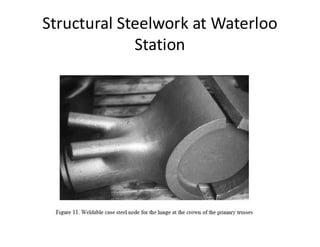
Structural Steelwork at Waterloo
Station
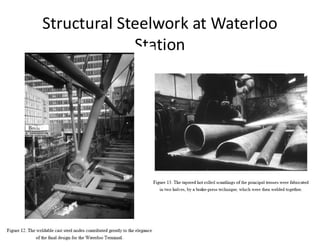
Structural Steelwork at Waterloo
Station
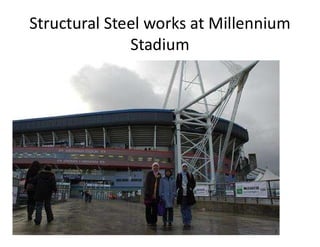
Structural Steel works at Millennium
Stadium
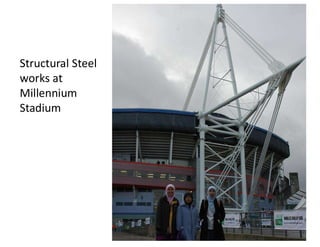
Structural Steel
works at
Millennium
Stadium
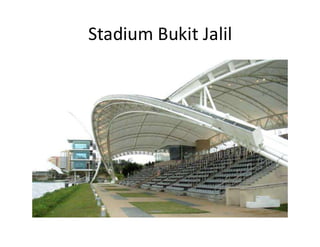
Stadium Bukit Jalil
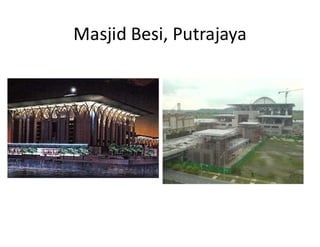
Masjid Besi, Putrajaya
MANUFACTURE (Stages)
• Making of Pig Iron
• Conversion to steel
• Casting of molten steel
• Formation into section or strips
• Coils of steel strip are cold-rolled into thin
sections and profiled sheet
Manufacture of Pig Iron
• Raw Materials:
Iron ore (from America, Australia and
Scandinavia - high iron content of the ore)
Coke from coking coal (Europe) – sintered with
iron ore prior to iron-making process
Lime stone
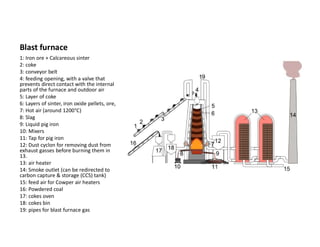
Blast furnace
1: Iron ore + Calcareous sinter
2: coke
3: conveyor belt
4: feeding opening, with a valve that
prevents direct contact with the internal
parts of the furnace and outdoor air
5: Layer of coke
6: Layers of sinter, iron oxide pellets, ore,
7: Hot air (around 1200°C)
8: Slag
9: Liquid pig iron
10: Mixers
11: Tap for pig iron
12: Dust cyclon for removing dust from
exhaust gasses before burning them in
13.
13: air heater
14: Smoke outlet (can be redirected to
carbon capture & storage (CCS) tank)
15: feed air for Cowper air heaters
16: Powdered coal
17: cokes oven
18: cokes bin
19: pipes for blast furnace gas
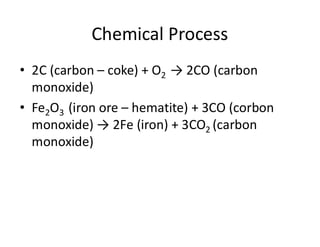
Chemical Process
• 2C (carbon – coke) + O2 → 2CO (carbon
monoxide)
• Fe2O3 (iron ore – hematite) + 3CO (corbon
monoxide) → 2Fe (iron) + 3CO2 (carbon
monoxide)
Process
• Limestone forms a liquid slag, floating on
surface of molten iron – tapped of for disposal
as by product of steel making industry
• At this stage, iron is 90-95% pure with
impurities (sulphur, phosphorus, manganese
and silicon) and carbon content 4-5% .
• Blastfurnance operate nonstop for 10 years,
producing 40,000 tonnes/week
Steel Making
• Basic oxygen process
for manufacture of bulk quantities of
standard-grade steel
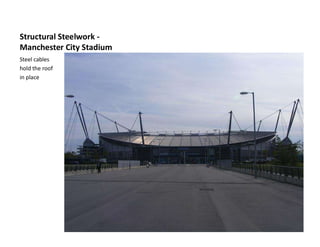
Manchester City Stadium – approximately
2000 tonnes of structural steel
• Electric arc furnace – production of high
quality special steel and particularly stailess
steel.
Structural Steelwork -
Manchester City Stadium
Steel cables
hold the roof
in place
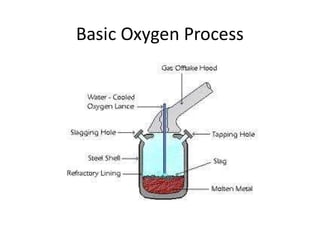
Basic Oxygen Process
• In a refractory lined steel furnace
• Can be tilted for charging and tapping
• Typically will take a charge of 350 tonnes
(scrap metal – ¼ of charge) and convert it into
steel in 30 min.
Basic Oxygen Process
• Charge loaded direct from blastfurnace + scrap metal
• Water-cooled lance is lowered to blow in high-pressure
oxygen to burn off impurities and reduce excess carbon
• Argon + small quantities of nitrogen are introduced at
bottom
• Lime added to form floating slag to remove impurities
• Alloying components added to adjust steel
composition before tapping
• Furnace is inverted to remove any remaining slag
• Next cycle
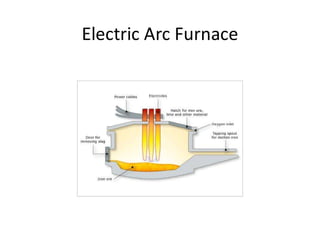
Electric Arc Furnace
• Refractory-lined hearth covered with
removeable roof where graphite electrodes
can be raised and lowered
• Scrap metal charged in while roof open
• Powerful electric arc is struck between
electrodes and metal – heating to melting
point
Electric Arc Furnace
• Lime and fluorspar are added to form slag
• Oxygen is blown to complete purification
process
• At correct temperature and chemical analysis,
furnace is tilted to tap off metal
• Added appropriate alloying components
• Typically will produce 150 tonnes of high-
grade (stainless steel) in 90 min.
Casting
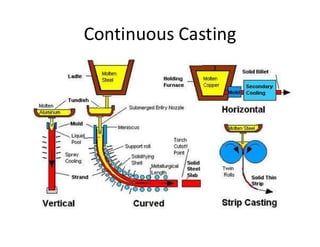
• Molten steel was cast into ingots (blocks)
before hot rolling into slabs and then sheet
• Currently, directly being poured or teemed
and cast into continuous billets or slabs
• Cast into appropriate lengths for subsequent
process.
• Continuous casting – more energy efficient
and produce better surface finish
Continuous Casting
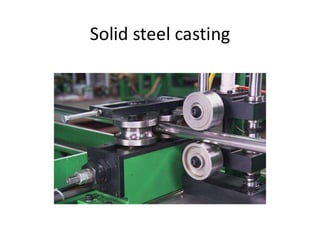
Solid steel casting
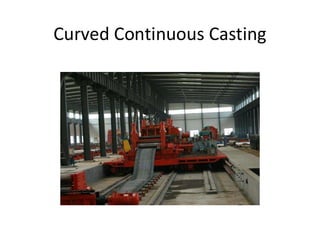
Curved Continuous Casting
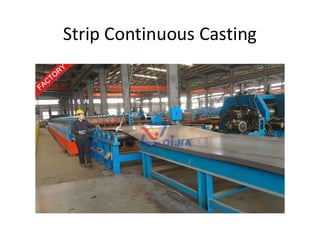
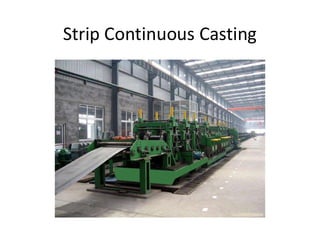
Strip Continuous Casting
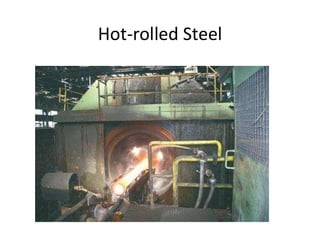
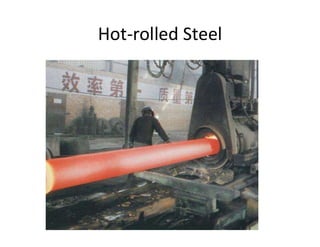
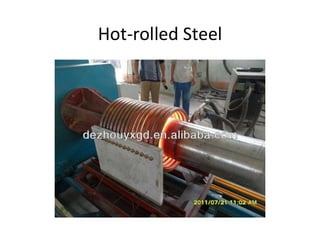
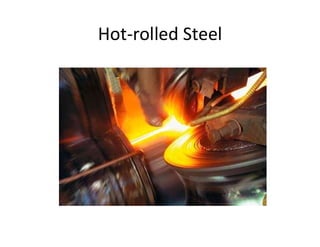
Hot-rolled Steel
• Steel sheet is produced by passing 25 tonnes hot
slabs at approximately 1250°C through a series of
computer-controlled rollers
• The thickness between 1.5 to 20 mm
• Water cooling and coiling
• 25 tonnes slab → 1 km coil of 2 mm sheet
• Steel section such as universal beams (UB) and
columns, channels and angles are rolled from hot
billets through a series of stands to the
appropriate section.
Hot-rolled Steel
Hot-rolled Steel
Hot-rolled Steel
Hot-rolled Steel

Ferrous & non-ferrous metal _ 2.pdf

  • 1.
    Structural Steelwork atWaterloo Station
  • 2.
    Structural Steelwork atWaterloo Station
  • 3.
    Structural Steel worksat Millennium Stadium
  • 4.
  • 5.
  • 6.
  • 7.
    MANUFACTURE (Stages) • Makingof Pig Iron • Conversion to steel • Casting of molten steel • Formation into section or strips • Coils of steel strip are cold-rolled into thin sections and profiled sheet
  • 8.
    Manufacture of PigIron • Raw Materials: Iron ore (from America, Australia and Scandinavia - high iron content of the ore) Coke from coking coal (Europe) – sintered with iron ore prior to iron-making process Lime stone
  • 9.
    Blast furnace 1: Ironore + Calcareous sinter 2: coke 3: conveyor belt 4: feeding opening, with a valve that prevents direct contact with the internal parts of the furnace and outdoor air 5: Layer of coke 6: Layers of sinter, iron oxide pellets, ore, 7: Hot air (around 1200°C) 8: Slag 9: Liquid pig iron 10: Mixers 11: Tap for pig iron 12: Dust cyclon for removing dust from exhaust gasses before burning them in 13. 13: air heater 14: Smoke outlet (can be redirected to carbon capture & storage (CCS) tank) 15: feed air for Cowper air heaters 16: Powdered coal 17: cokes oven 18: cokes bin 19: pipes for blast furnace gas
  • 10.
    Chemical Process • 2C(carbon – coke) + O2 → 2CO (carbon monoxide) • Fe2O3 (iron ore – hematite) + 3CO (corbon monoxide) → 2Fe (iron) + 3CO2 (carbon monoxide)
  • 11.
    Process • Limestone formsa liquid slag, floating on surface of molten iron – tapped of for disposal as by product of steel making industry • At this stage, iron is 90-95% pure with impurities (sulphur, phosphorus, manganese and silicon) and carbon content 4-5% . • Blastfurnance operate nonstop for 10 years, producing 40,000 tonnes/week
  • 12.
    Steel Making • Basicoxygen process for manufacture of bulk quantities of standard-grade steel Manchester City Stadium – approximately 2000 tonnes of structural steel • Electric arc furnace – production of high quality special steel and particularly stailess steel.
  • 13.
    Structural Steelwork - ManchesterCity Stadium Steel cables hold the roof in place
  • 14.
  • 15.
    Basic Oxygen Process •In a refractory lined steel furnace • Can be tilted for charging and tapping • Typically will take a charge of 350 tonnes (scrap metal – ¼ of charge) and convert it into steel in 30 min.
  • 16.
    Basic Oxygen Process •Charge loaded direct from blastfurnace + scrap metal • Water-cooled lance is lowered to blow in high-pressure oxygen to burn off impurities and reduce excess carbon • Argon + small quantities of nitrogen are introduced at bottom • Lime added to form floating slag to remove impurities • Alloying components added to adjust steel composition before tapping • Furnace is inverted to remove any remaining slag • Next cycle
  • 17.
  • 18.
    Electric Arc Furnace •Refractory-lined hearth covered with removeable roof where graphite electrodes can be raised and lowered • Scrap metal charged in while roof open • Powerful electric arc is struck between electrodes and metal – heating to melting point
  • 19.
    Electric Arc Furnace •Lime and fluorspar are added to form slag • Oxygen is blown to complete purification process • At correct temperature and chemical analysis, furnace is tilted to tap off metal • Added appropriate alloying components • Typically will produce 150 tonnes of high- grade (stainless steel) in 90 min.
  • 20.
    Casting • Molten steelwas cast into ingots (blocks) before hot rolling into slabs and then sheet • Currently, directly being poured or teemed and cast into continuous billets or slabs • Cast into appropriate lengths for subsequent process. • Continuous casting – more energy efficient and produce better surface finish
  • 21.
  • 22.
  • 23.
  • 24.
  • 25.
  • 26.
    Hot-rolled Steel • Steelsheet is produced by passing 25 tonnes hot slabs at approximately 1250°C through a series of computer-controlled rollers • The thickness between 1.5 to 20 mm • Water cooling and coiling • 25 tonnes slab → 1 km coil of 2 mm sheet • Steel section such as universal beams (UB) and columns, channels and angles are rolled from hot billets through a series of stands to the appropriate section.
  • 27.
  • 28.
  • 29.
  • 30.