SOC 402: Sociological Theory
Feminist Theory
Intellectual Influences (varied)
• Marx and Engels
• Freud (reaction to)
• Neo-Marxist (especially critical)
• Neofunctionalist (especially conflict)
• exchange theory
• symbolic interactionism
• phenomenological
• poststructural
• feminist influence: where are the women?
Socio-historical Context
• Feminist History/history of feminism
• 18th C. bourgeois revolutions/liberal reforms
• 19th C. abolition, reform, suffrage
• 20th C. radical protest, socialism and progressivism
• 1920: women's suffrage
http://americancivilwar.com/women/Womens_Su
ffrage/womens_suffrage_timeline.html
• 1957: The Second Sex, Simone de Beauvoir
• 1959: The Feminine Mystique, Betty Friedan
• since 1970, women in sociology
Perspective
• Perspective: mostly liberal vs. radical
– Structural/positivist: liberal and radical
– critical/Hegelian: radical
– Pragmatist: social construction (Symbolic
Interactionis): liberal
– Phenomenological: liberal?
– Postmodern: purports to being radical
– Psycho-analytical, behavioral:liberal?
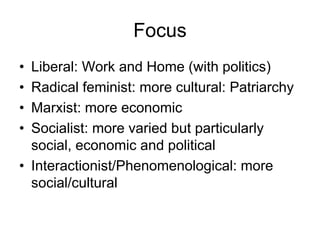
Focus
• Liberal: Work and Home (with politics)
• Radical feminist: more cultural: Patriarchy
• Marxist: more economic
• Socialist: more varied but particularly
social, economic and political
• Interactionist/Phenomenological: more
social/cultural
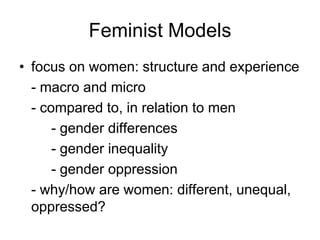
Feminist Models
• focus on women: structure and experience
- macro and micro
- compared to, in relation to men
- gender differences
- gender inequality
- gender oppression
- why/how are women: different, unequal,
oppressed?
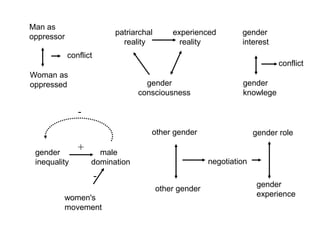
Man as
oppressor
Woman as
oppressed
conflict
gender
inequality
male
domination
-
women's
movement
-
+
gender
interest
gender
knowlege
conflict
patriarchal
reality
gender
consciousness
experienced
reality
other gender
other gender
negotiation
gender role
gender
experience
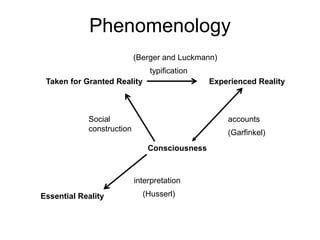
Phenomenology
Essential Reality
Taken for Granted Reality Experienced Reality
Consciousness
typification
Social
construction
accounts
interpretation
(Berger and Luckmann)
(Garfinkel)
(Husserl)

feminist theory .ppt