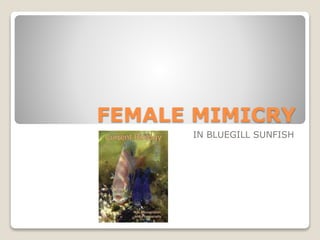
FEMALE MIMICRY
IN BLUEGILL SUNFISH
What is Mimicry?
 Mimicry: The art, practice or art of
mimicking
 The close external resemblance of an
organism, the mimic, to some different
organism, the model, such that the mimic
benefits from the mistaken identity, as
seeming to be unpalatable or harmful
 Mimic Octopus
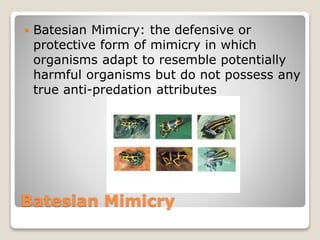
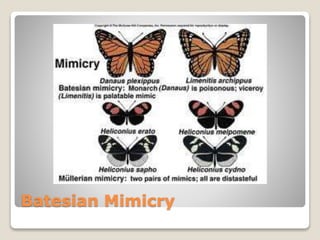
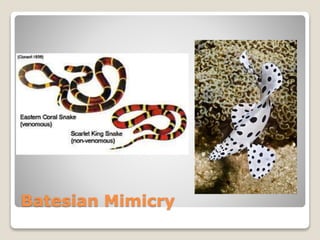
Batesian Mimicry
 Batesian Mimicry: the defensive or
protective form of mimicry in which
organisms adapt to resemble potentially
harmful organisms but do not possess any
true anti-predation attributes
Batesian Mimicry
 example: bugs that look like bees or
wasps
 named after English naturalist Henry
Walter Bates
 mimic benefits, model receives nothing
Batesian Mimicry
Batesian Mimicry
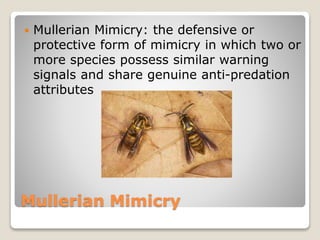
Mullerian Mimicry
 Mullerian Mimicry: the defensive or
protective form of mimicry in which two or
more species possess similar warning
signals and share genuine anti-predation
attributes
Mullerian Mimicry
 example: two species of butterflies
 both species (mimic and model) benefit,
both increase chances of survival
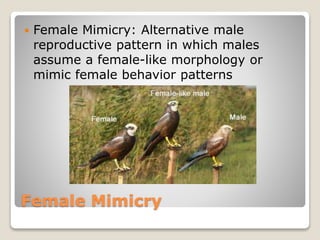
Female Mimicry
 Female Mimicry: Alternative male
reproductive pattern in which males
assume a female-like morphology or
mimic female behavior patterns
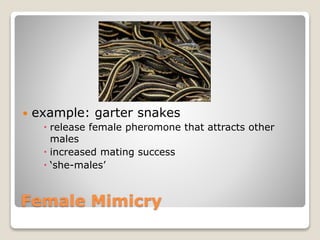
Female Mimicry
 example: garter snakes
 release female pheromone that attracts other
males
 increased mating success
 ‘she-males’
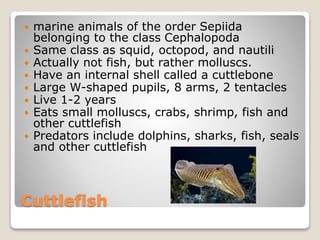
Cuttlefish
 marine animals of the order Sepiida
belonging to the class Cephalopoda
 Same class as squid, octopod, and nautili
 Actually not fish, but rather molluscs.
 Have an internal shell called a cuttlebone
 Large W-shaped pupils, 8 arms, 2 tentacles
 Live 1-2 years
 Eats small molluscs, crabs, shrimp, fish and
other cuttlefish
 Predators include dolphins, sharks, fish, seals
and other cuttlefish
Cuttlefish
Cuttlefish
BLUEGILL SUNFISH (Lepomis
macrochirus)
Male reproductive success
depends on male
competition and
aggression
 Female mimicry is an
alternative reproduction
strategy
Fish #1 – The Large Male
 Fish #1 - Male
 Larger, aggressive, territorial
 6-7 years to reach this size
 Protects his nesting area
Fish #2 – The Female
 Fish #2 - Female
 Smaller
 Lays eggs in a larger male’s nesting area
Fish #3 – The Satellite Male
 Fish #3 - Sneaker/Satellite Male
(Cuckolder)
 Smaller male
 Resembles female
 Swims along side of larger male and
female during mating
 “sneaks” in and squirts semen on the
eggs laid by the female
Female Mimicry – Bluegill Sunfish
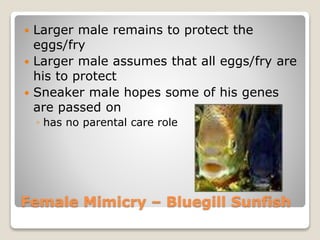
 Larger male remains to protect the
eggs/fry
 Larger male assumes that all eggs/fry are
his to protect
 Sneaker male hopes some of his genes
are passed on
◦ has no parental care role
Female Mimicry – Bluegill Sunfish
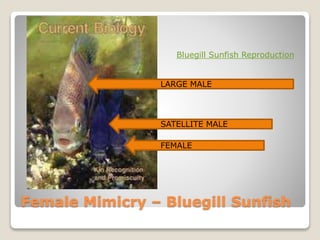
LARGE MALE
SATELLITE MALE
FEMALE
Bluegill Sunfish Reproduction

Female mimicry

  • 1.
  • 2.
    What is Mimicry? Mimicry: The art, practice or art of mimicking  The close external resemblance of an organism, the mimic, to some different organism, the model, such that the mimic benefits from the mistaken identity, as seeming to be unpalatable or harmful  Mimic Octopus
  • 3.
    Batesian Mimicry  BatesianMimicry: the defensive or protective form of mimicry in which organisms adapt to resemble potentially harmful organisms but do not possess any true anti-predation attributes
  • 4.
    Batesian Mimicry  example:bugs that look like bees or wasps  named after English naturalist Henry Walter Bates  mimic benefits, model receives nothing
  • 5.
  • 6.
  • 7.
    Mullerian Mimicry  MullerianMimicry: the defensive or protective form of mimicry in which two or more species possess similar warning signals and share genuine anti-predation attributes
  • 8.
    Mullerian Mimicry  example:two species of butterflies  both species (mimic and model) benefit, both increase chances of survival
  • 9.
    Female Mimicry  FemaleMimicry: Alternative male reproductive pattern in which males assume a female-like morphology or mimic female behavior patterns
  • 10.
    Female Mimicry  example:garter snakes  release female pheromone that attracts other males  increased mating success  ‘she-males’
  • 11.
    Cuttlefish  marine animalsof the order Sepiida belonging to the class Cephalopoda  Same class as squid, octopod, and nautili  Actually not fish, but rather molluscs.  Have an internal shell called a cuttlebone  Large W-shaped pupils, 8 arms, 2 tentacles  Live 1-2 years  Eats small molluscs, crabs, shrimp, fish and other cuttlefish  Predators include dolphins, sharks, fish, seals and other cuttlefish
  • 12.
  • 13.
    BLUEGILL SUNFISH (Lepomis macrochirus) Malereproductive success depends on male competition and aggression  Female mimicry is an alternative reproduction strategy
  • 14.
    Fish #1 –The Large Male  Fish #1 - Male  Larger, aggressive, territorial  6-7 years to reach this size  Protects his nesting area
  • 15.
    Fish #2 –The Female  Fish #2 - Female  Smaller  Lays eggs in a larger male’s nesting area
  • 16.
    Fish #3 –The Satellite Male  Fish #3 - Sneaker/Satellite Male (Cuckolder)  Smaller male  Resembles female  Swims along side of larger male and female during mating  “sneaks” in and squirts semen on the eggs laid by the female
  • 17.
    Female Mimicry –Bluegill Sunfish  Larger male remains to protect the eggs/fry  Larger male assumes that all eggs/fry are his to protect  Sneaker male hopes some of his genes are passed on ◦ has no parental care role
  • 18.
    Female Mimicry –Bluegill Sunfish LARGE MALE SATELLITE MALE FEMALE Bluegill Sunfish Reproduction