





























Caridy Patiño
Bartender at Yahoo! Mojito Team
Principal Engineer at Yahoo! Search

caridy@yahoo-inc.com
@caridy
#feecbr
The challenges of
building mobile HTML5 applications
Goal

“to see the big picture”
The Web and the mobile revolution
5 ye
                                 ars a
                                      go
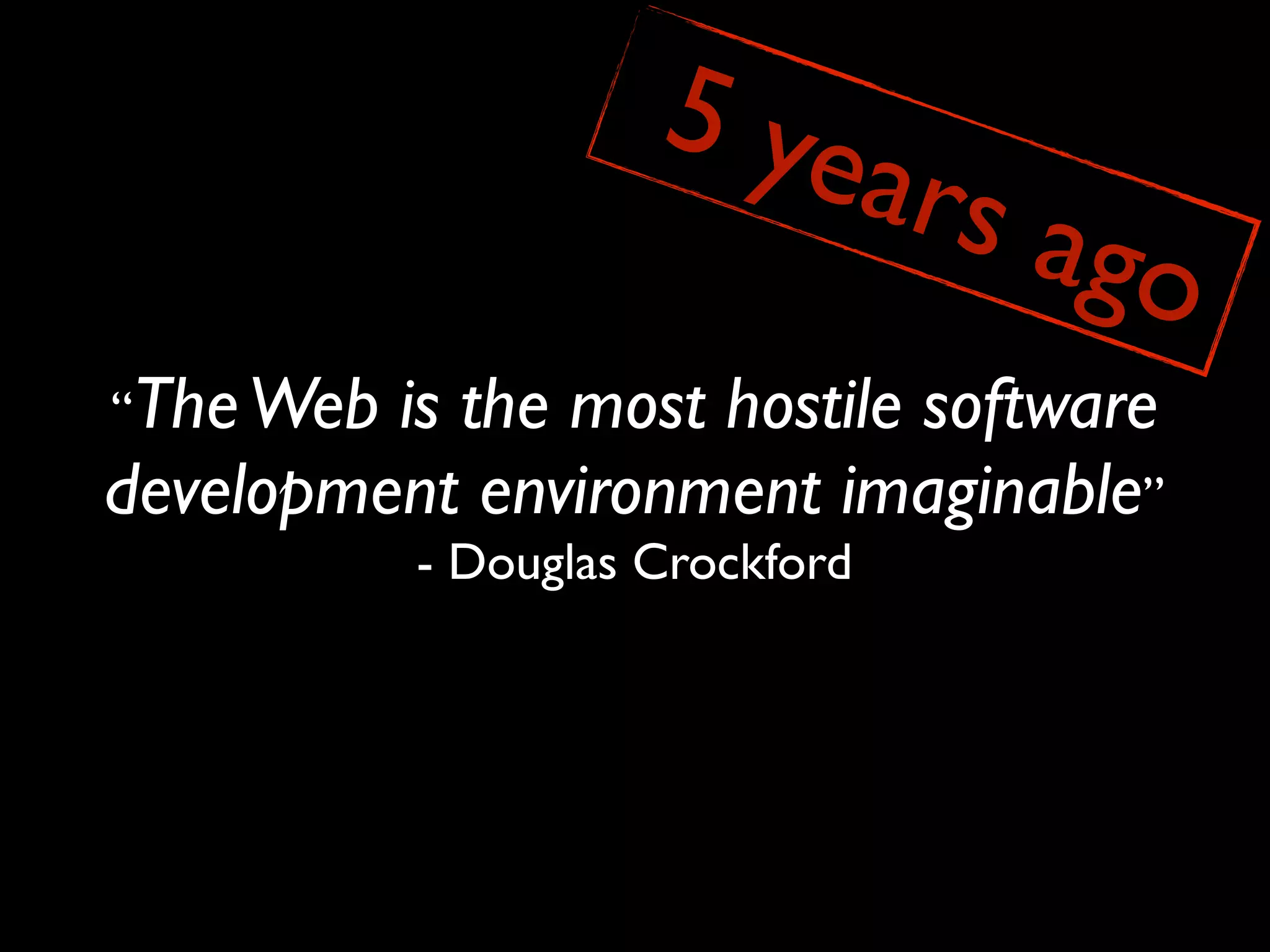
“The Web is the most hostile software
development environment imaginable”
           - Douglas Crockford
But the future was looking bright:

- Javascript libraries getting popular
- ECMAScript 5 on the making
- Chrome Browser on the making
But then few things happened:
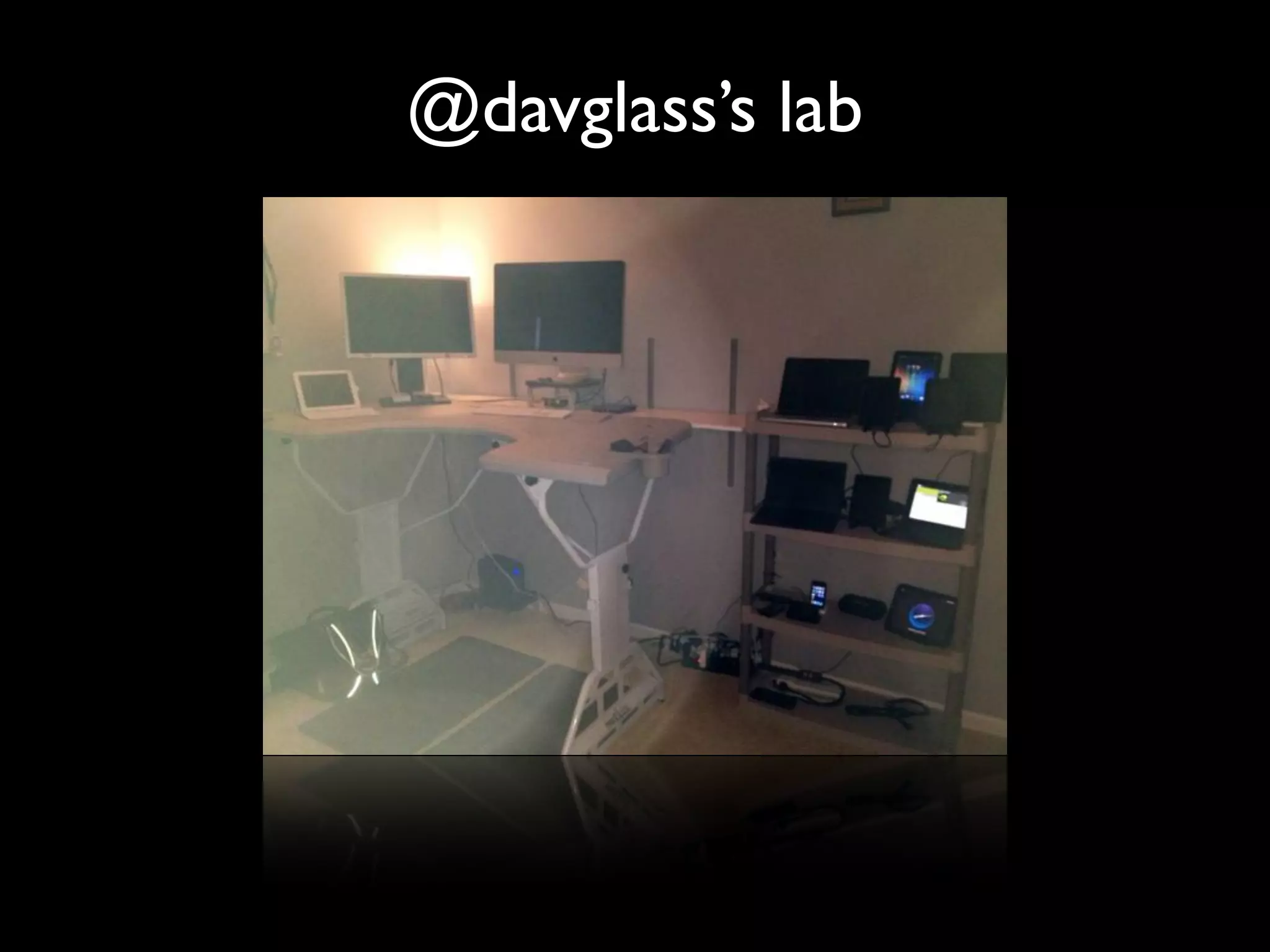
and somehow, we ended up here:
@davglass’s lab
toda
                                      y
   “The Mobile Web is even worse today and
it is not going to get any better anytime soon.”
What path to choose?
Web Applications
“A web application is any application that uses a web
                browser as a client.”
“A web application is any application that uses a web
           browser runtime as a client.”
A mobile web application is any web application
    that implement a highly interactive UI
   specifically optimized for mobile devices.
3 types of mobile web applications
     that you can build today
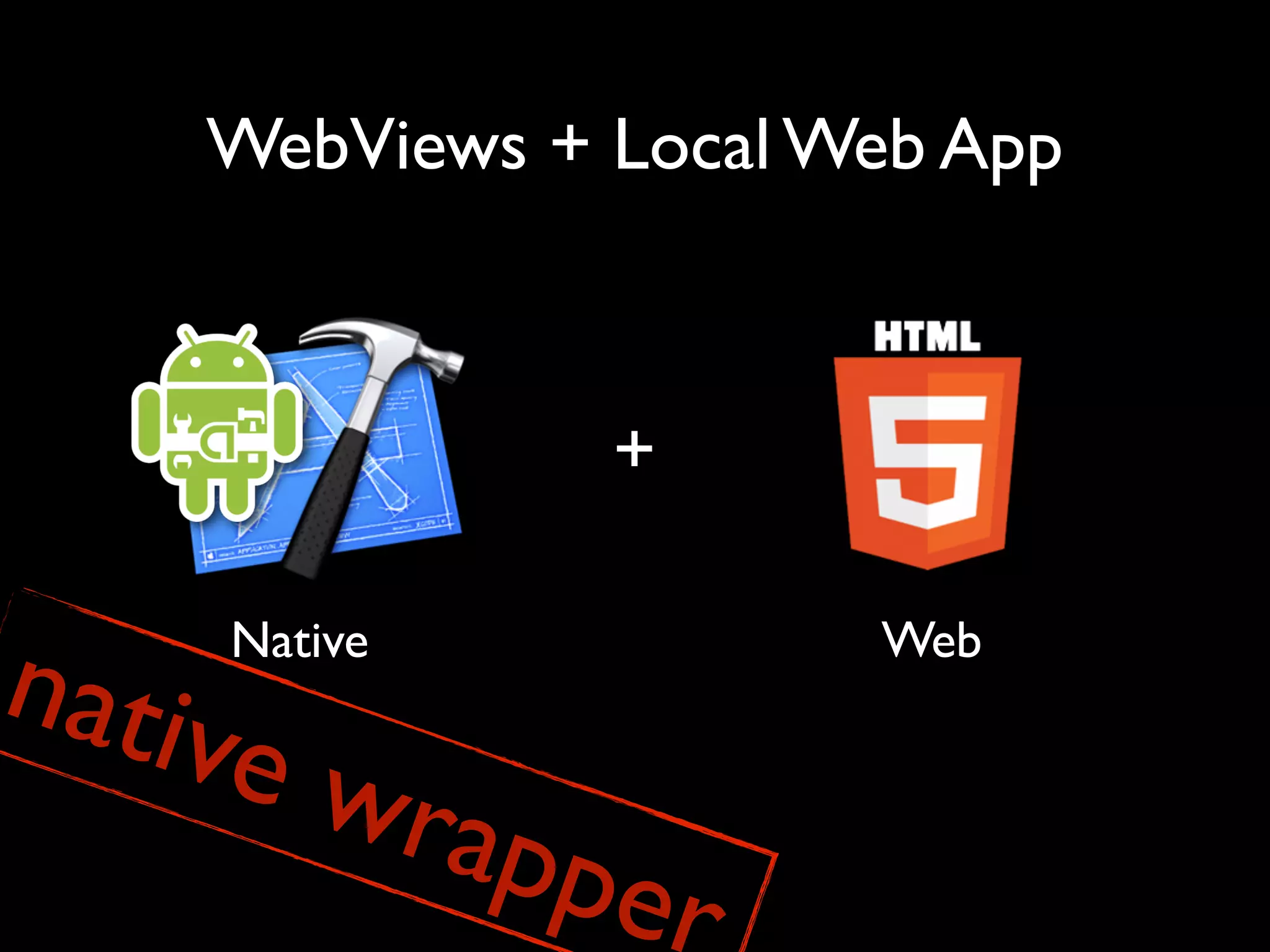
WebViews + Local Web App


                +


nativ
    Native            Web

     e wr
             appe
                  r
- Part of hybrid apps
- Based on WebViews*
- HTML, JS and CSS are bundled with app
- Can work offline
- Mimic native behavior
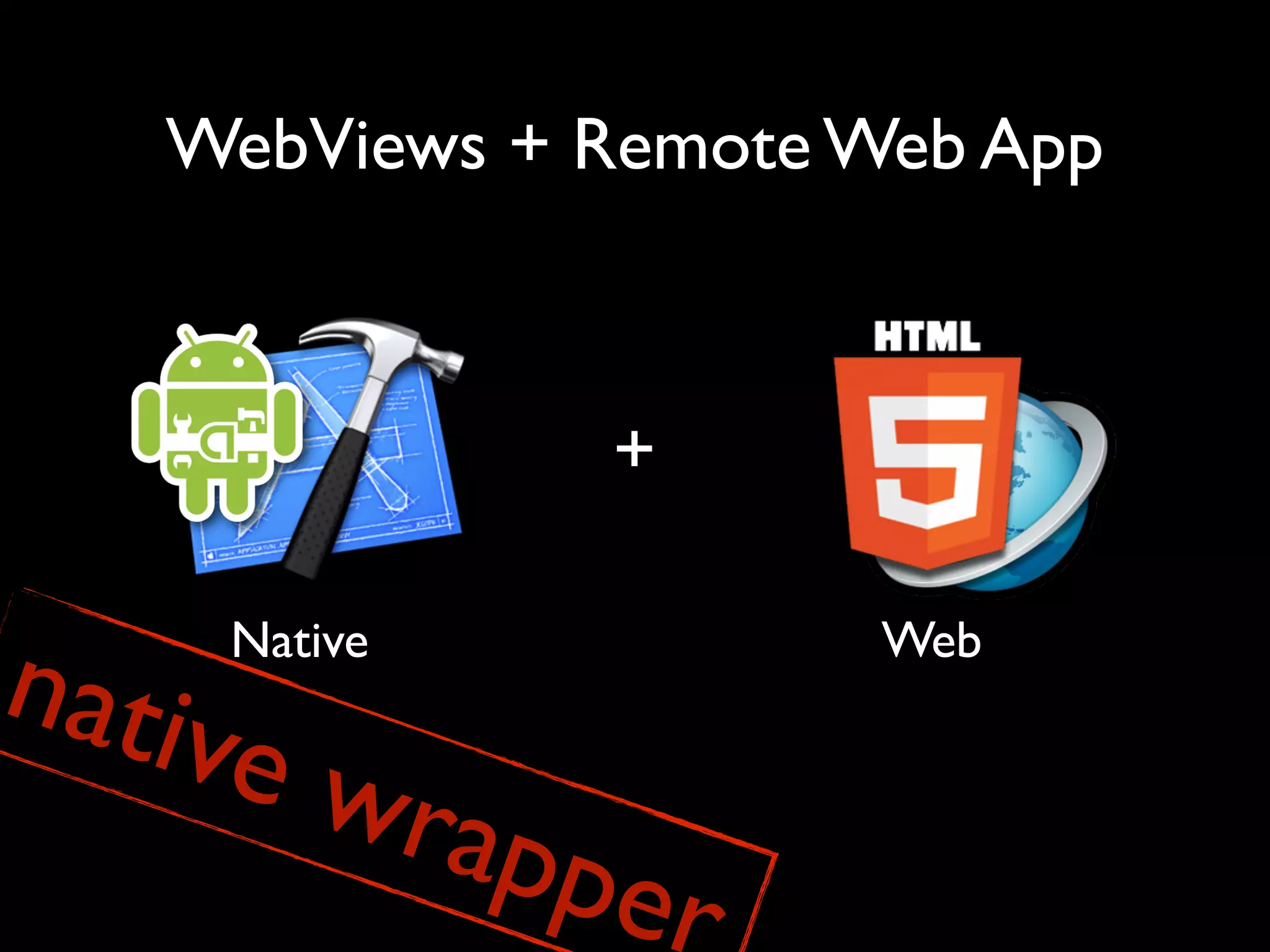
WebViews + Remote Web App


                +


nativ
    Native            Web

     e wr
             appe
                  r
- Part of hybrid apps
- Based on WebViews*
- HTML, JS and CSS are downloaded over HTTP
- Requires network activity
- Mimic native behavior
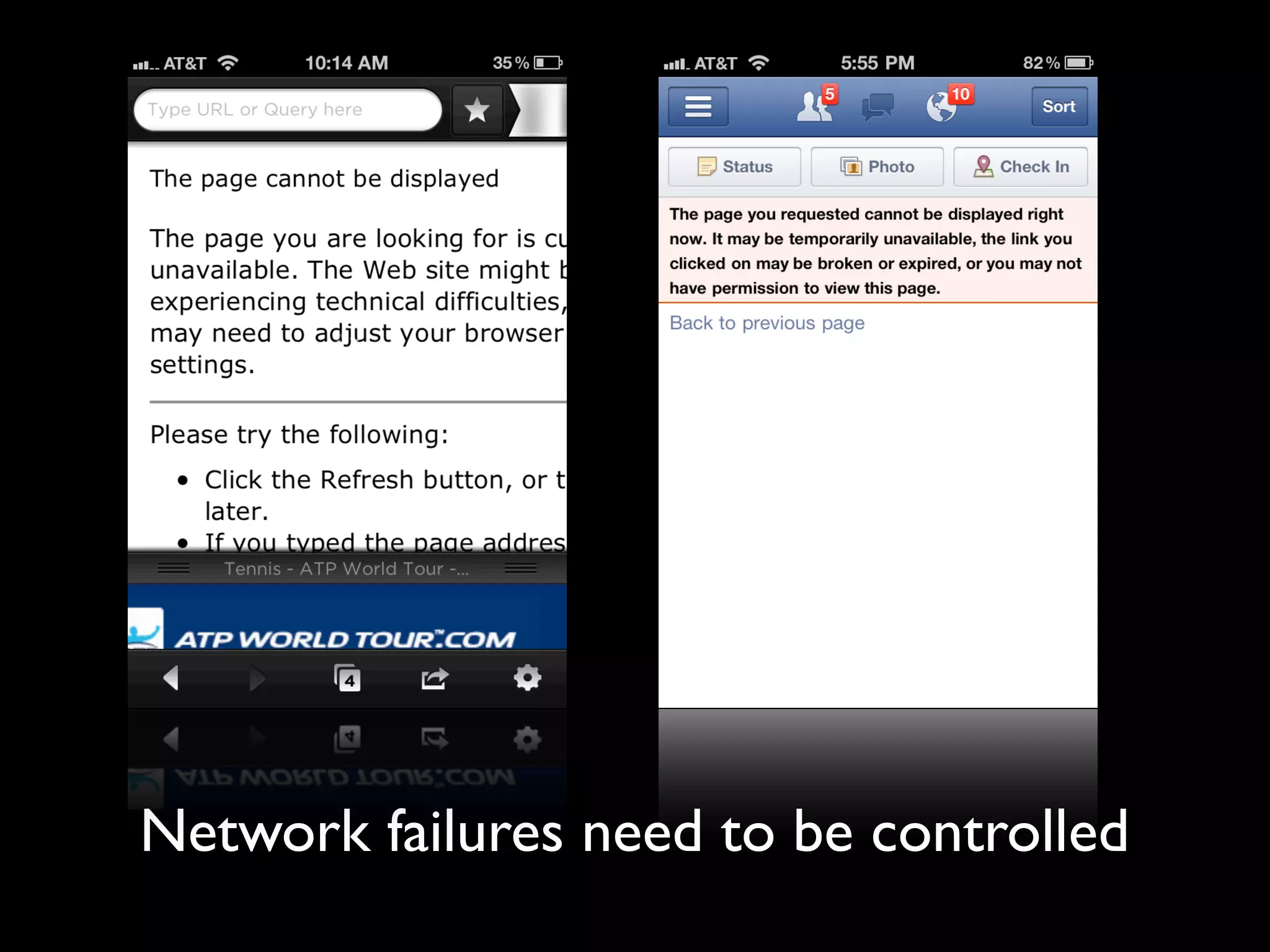
Expect network craziness
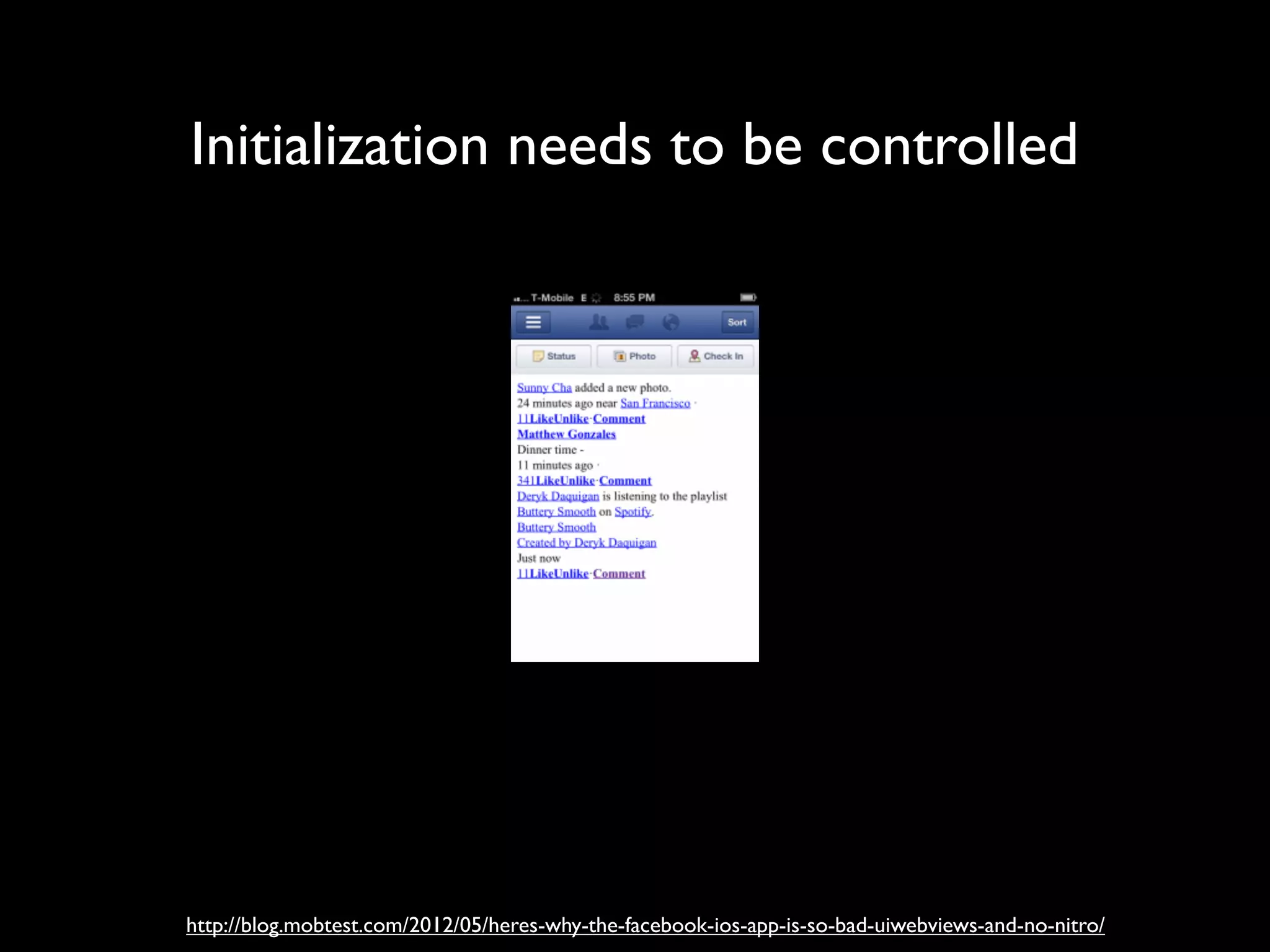
Network failures need to be controlled
CSS can also fail when loading
      web-based apps
Initialization needs to be controlled


http://blog.mobtest.com/2012/05/heres-why-the-facebook-ios-app-is-so-bad-uiwebviews-and-no-nitro/
Browser based apps


pure
       web
- Pure web apps
- Require a browser
- HTML, JS and CSS are downloaded over HTTP
- Inherit the freedom of the Web
- Discoverability is inherited as well
The total mess of mobile web
RIP

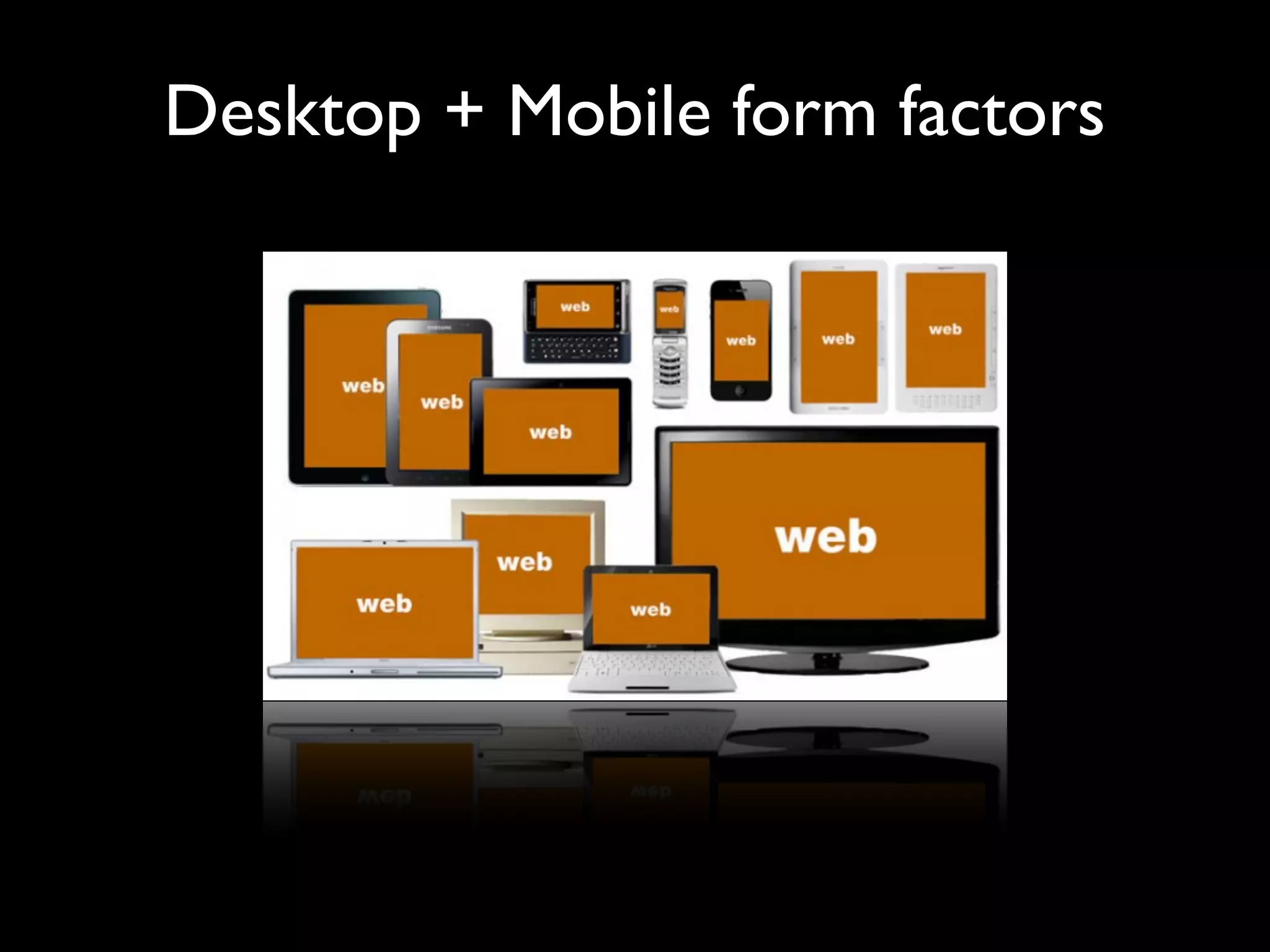
form factors
Touch screen saves us from
  those crazy form-factors
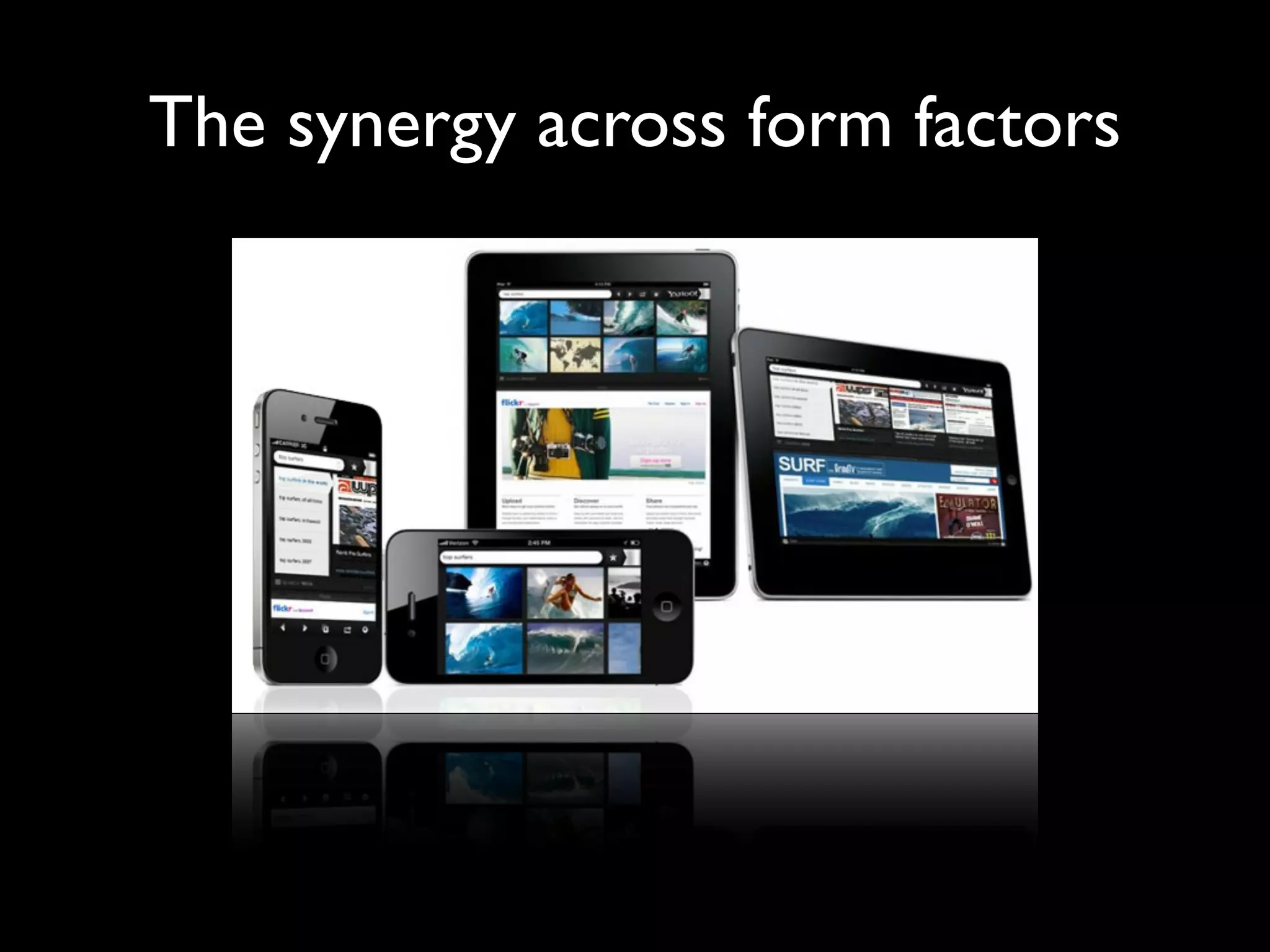
The synergy across form factors
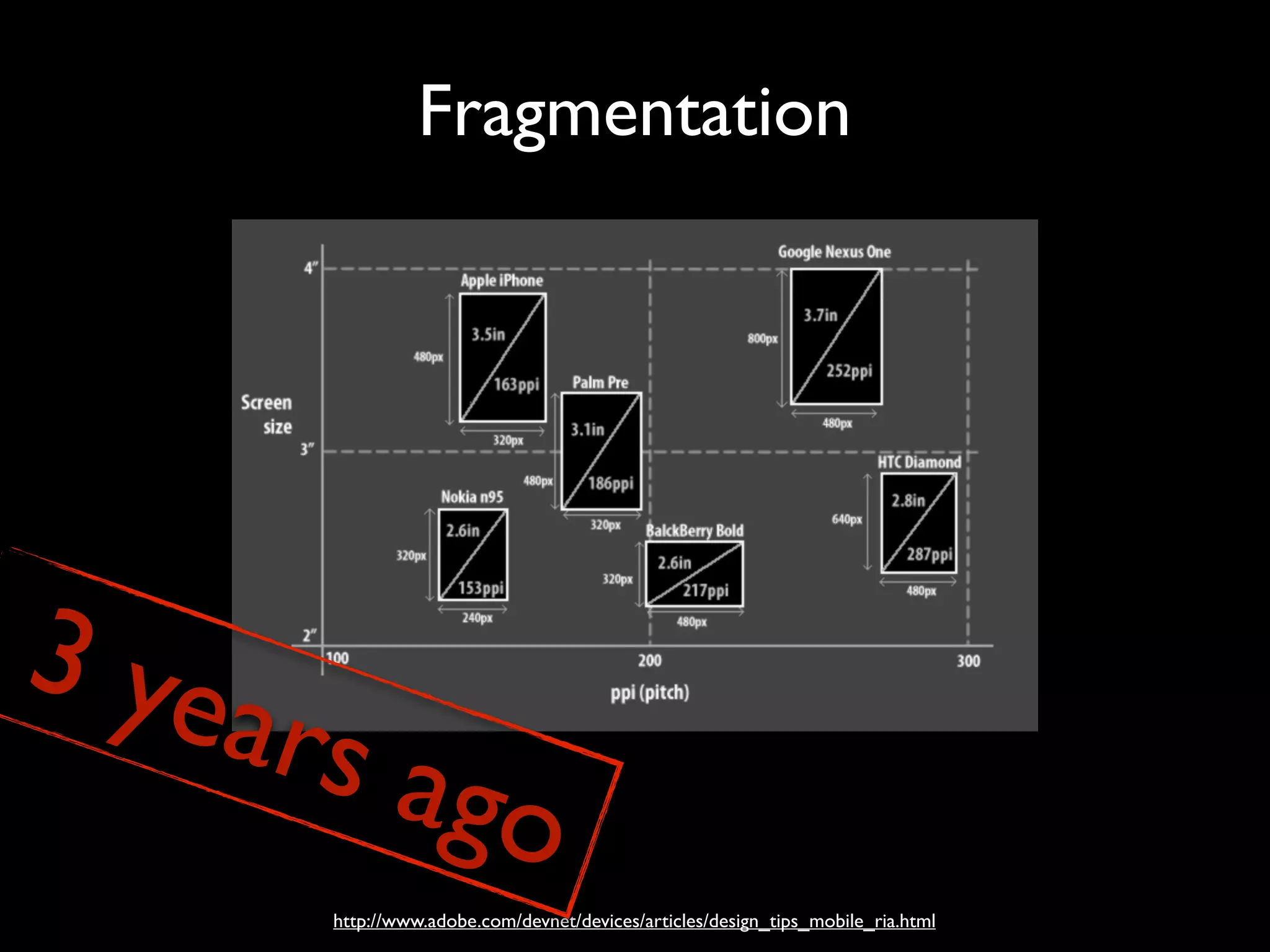
Fragmentation


3 ye
    ars a
         go
       http://www.adobe.com/devnet/devices/articles/design_tips_mobile_ria.html
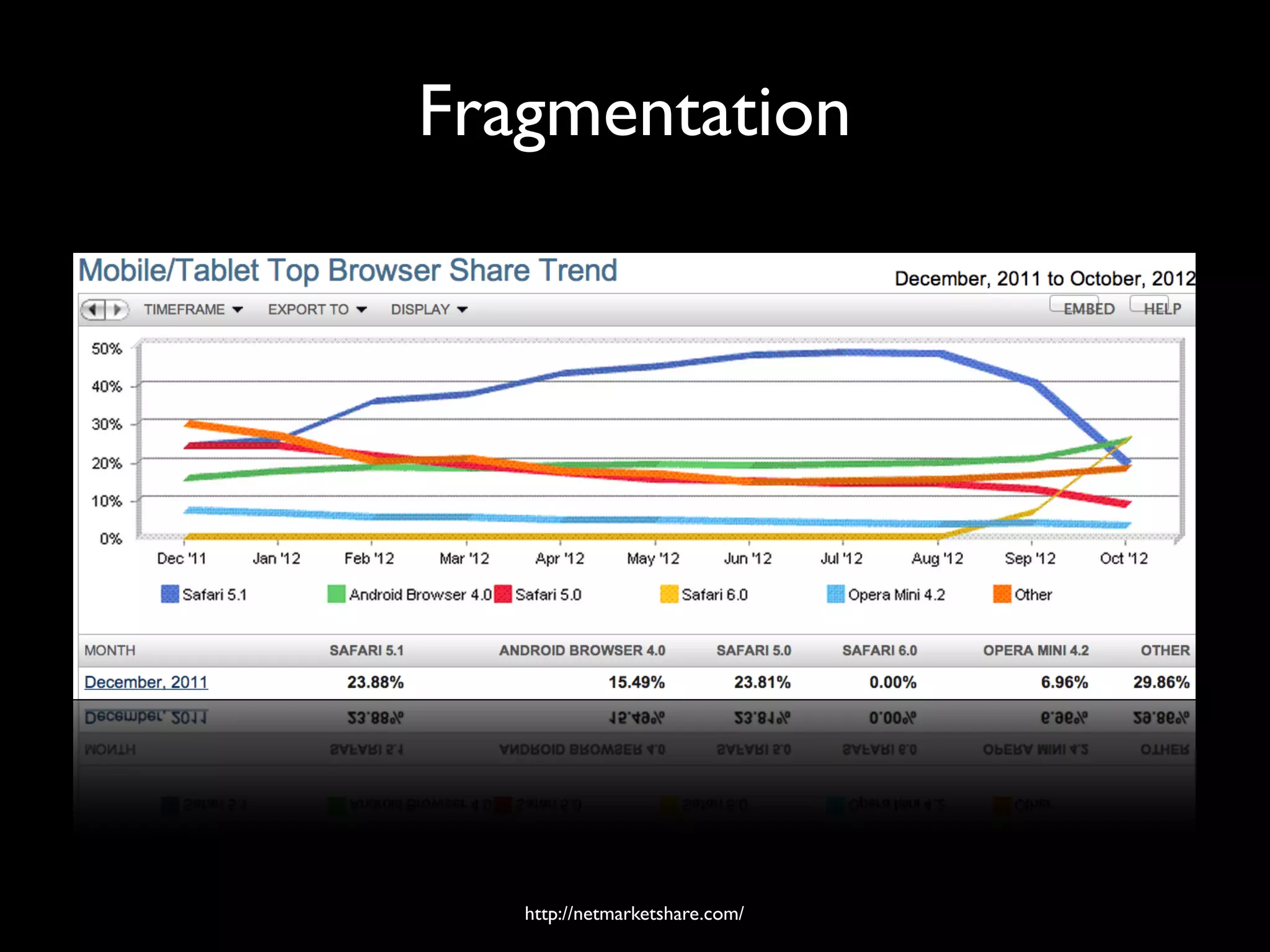
Fragmentation


   http://netmarketshare.com/
Android 4 is set to solve
      browser fragmentation
we w
     i   ll se
                 e
Desktop + Mobile form factors
Runtimes
A runtime is a web engine container that can run a web
       application in a form of HTML, JS and CSS
A mobile browser, a webview and phonegap are
            examples of runtimes
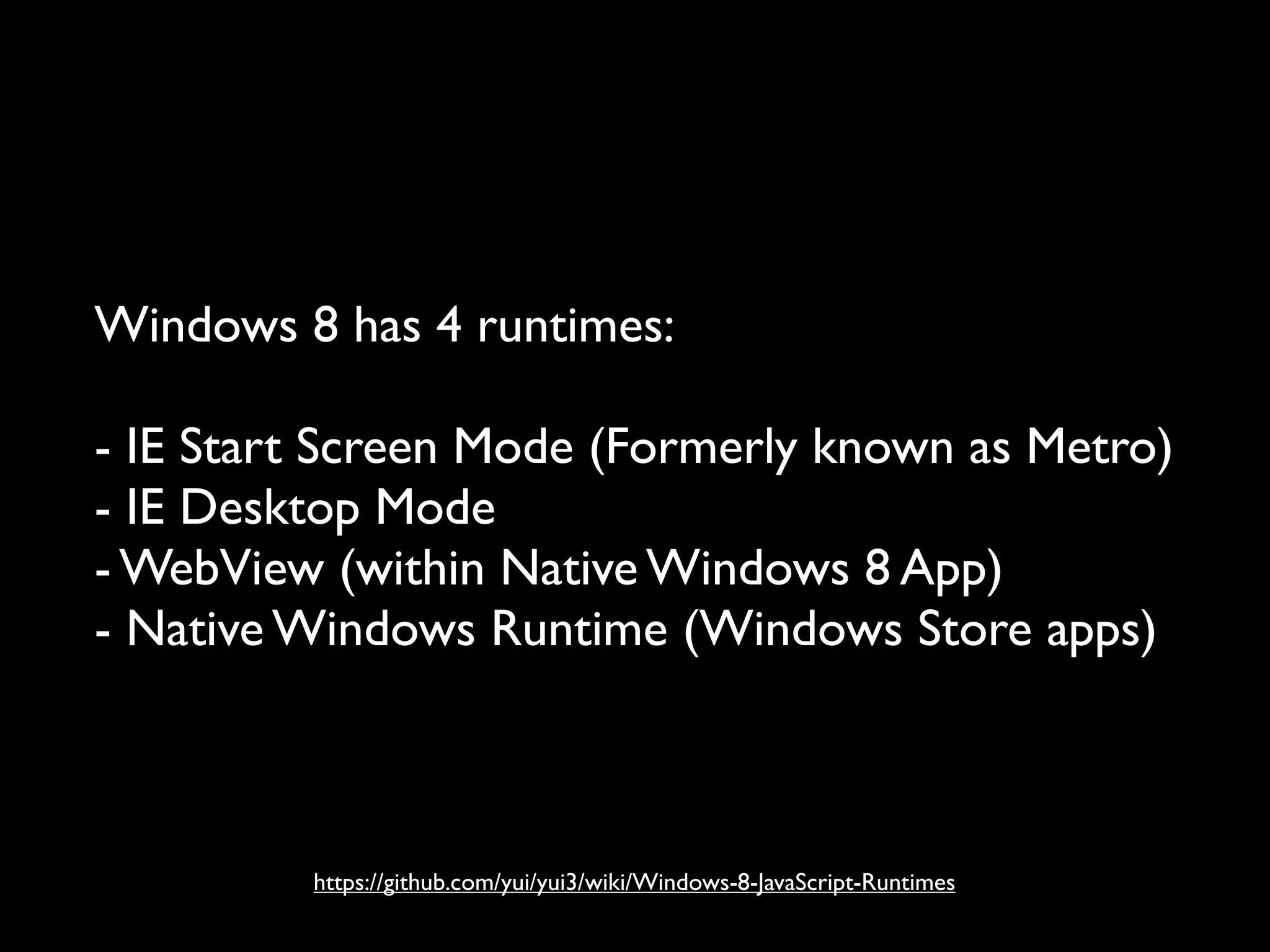
Windows 8 has 4 runtimes:

- IE Start Screen Mode (Formerly known as Metro)
- IE Desktop Mode
- WebView (within Native Windows 8 App)
- Native Windows Runtime (Windows Store apps)


         https://github.com/yui/yui3/wiki/Windows-8-JavaScript-Runtimes
Runtimes allow us to run the same web app
           in different contexts
Every runtime has its own characteristics, features and
                   security models
Developing for a single runtime is not
longer an option for most products
Applications will tent to grow organically
by adding complexity and new logical pieces
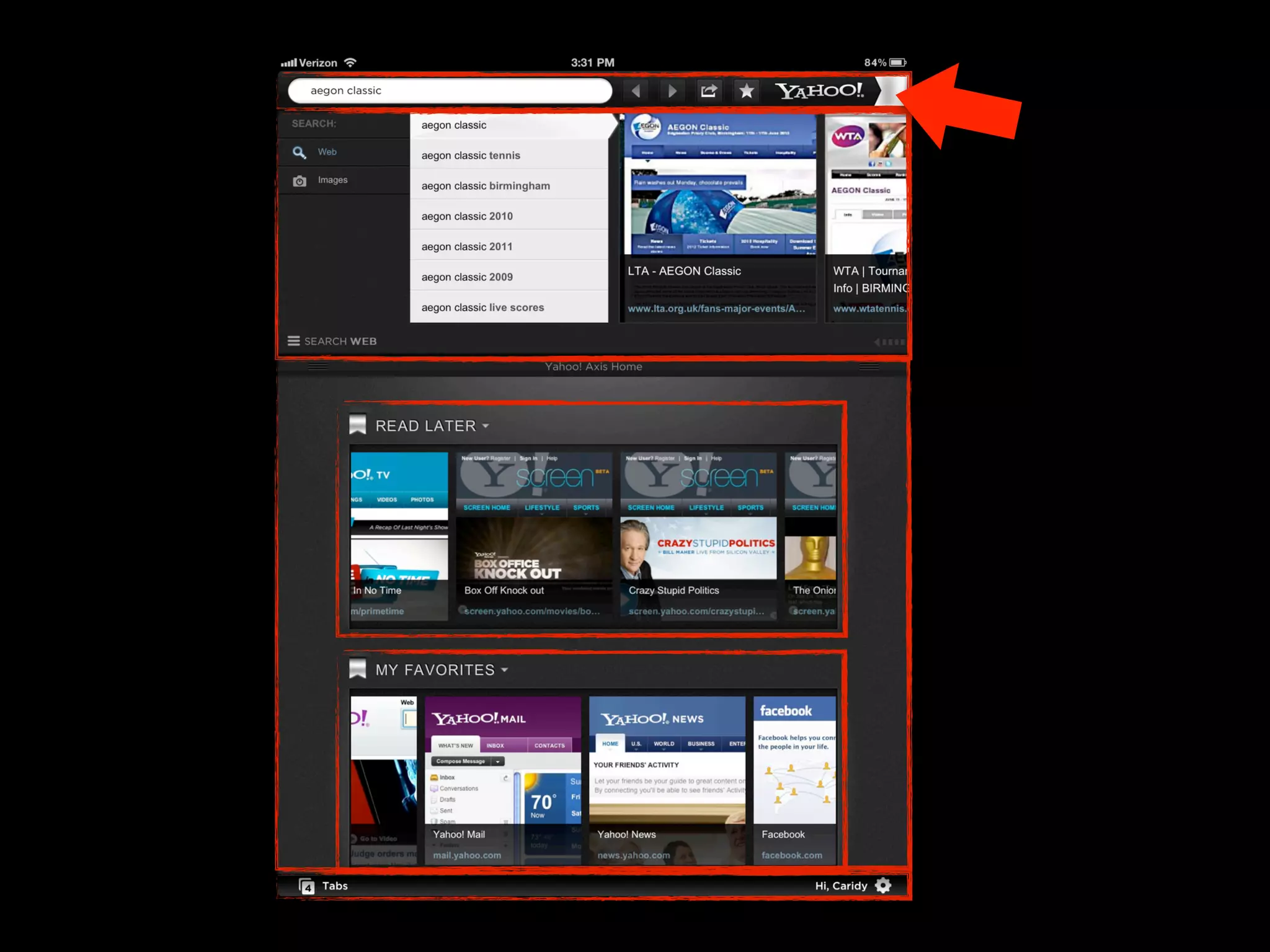
Reusing UI elements and logical pieces
        could be paramount
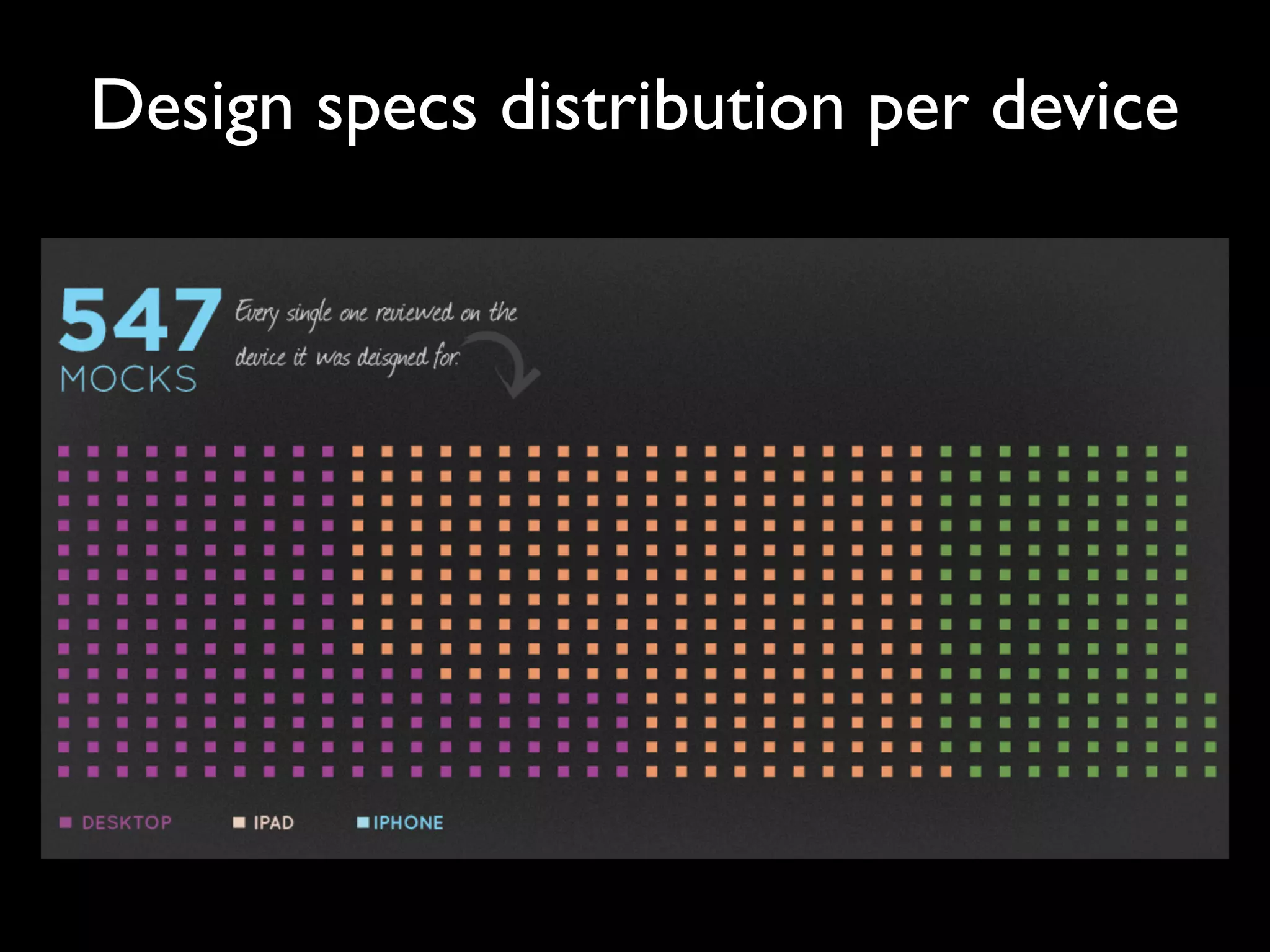
Design specs distribution per device
Reusing is the biggest problem of all
   in a mobile web application
Optimization & Adaptation
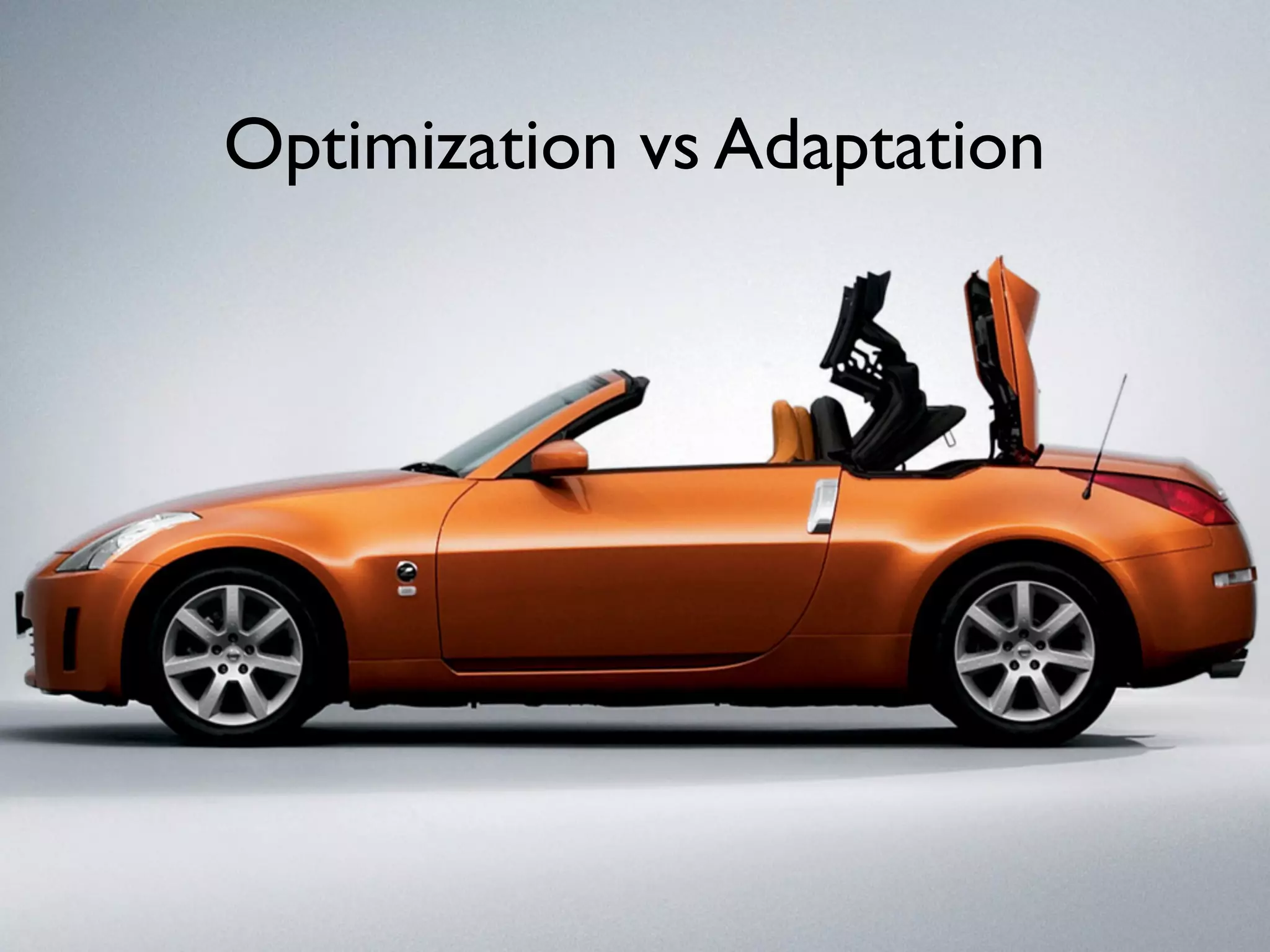
Optimization vs Adaptation
Snow Chains to adapt your vehicle
Optimization vs Adaptation
Optimization
Optimization is about customizing the
 way your app behaves per runtime
It is about producing the right HTML, JS
           and CSS per runtime
Adaptation
Adaptation is about customizing the
UI per screen size, per connection
 speed, per feature detection, etc.
Adapt per:

- Screen size
- Orientation
- Connection Speed
- Memory
- etc.
The Twitter Tale
201
   0
201
                                                  0

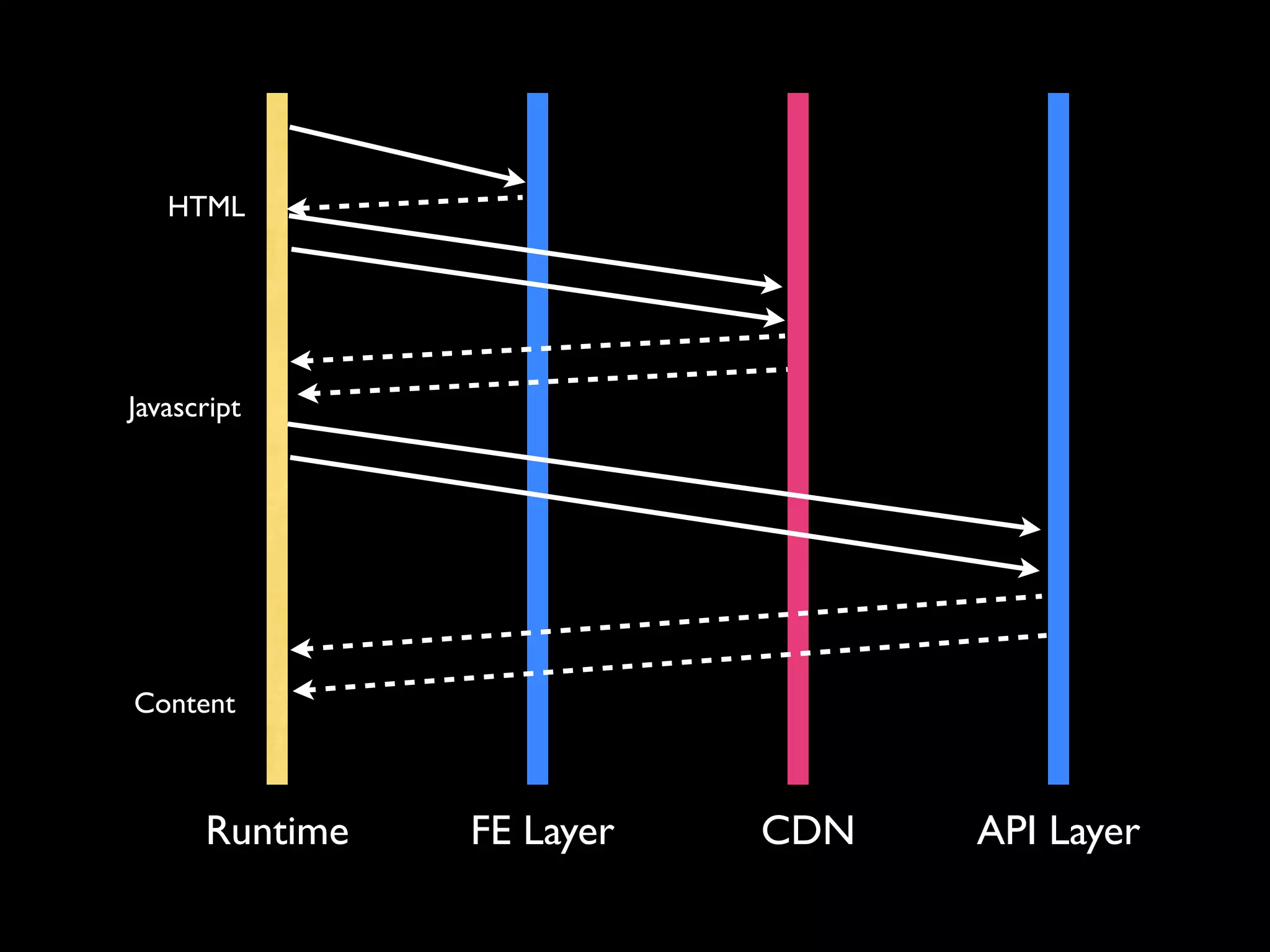
 Twitter launched a new version of the web
application that explicitly required javascript
http://twitter.com/?_twitter_noscript=1
HTML


Javascript


Content


      Runtime   FE Layer   CDN   API Layer
The problem?
    The app was sloooowwwww for
a lot of users, specially mobile users.
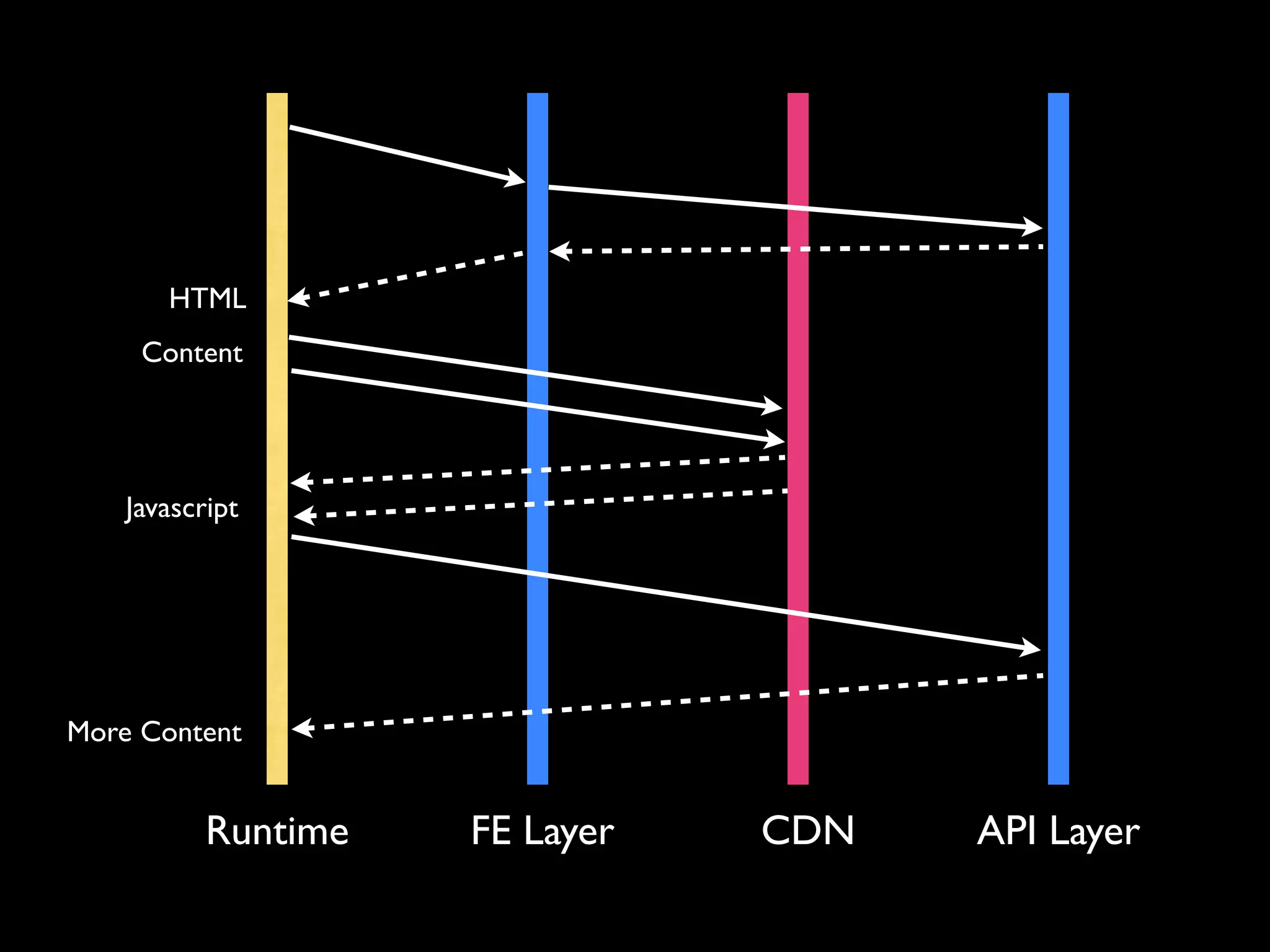
Less than a year after, Twitter re-architected
 the infrastructure to get content upfront
HTML
     Content


    Javascript


More Content


           Runtime   FE Layer   CDN   API Layer
How can we create web applications
    that are flexible enough?
Use the same language everywhere!
  and that language is JavaScript.
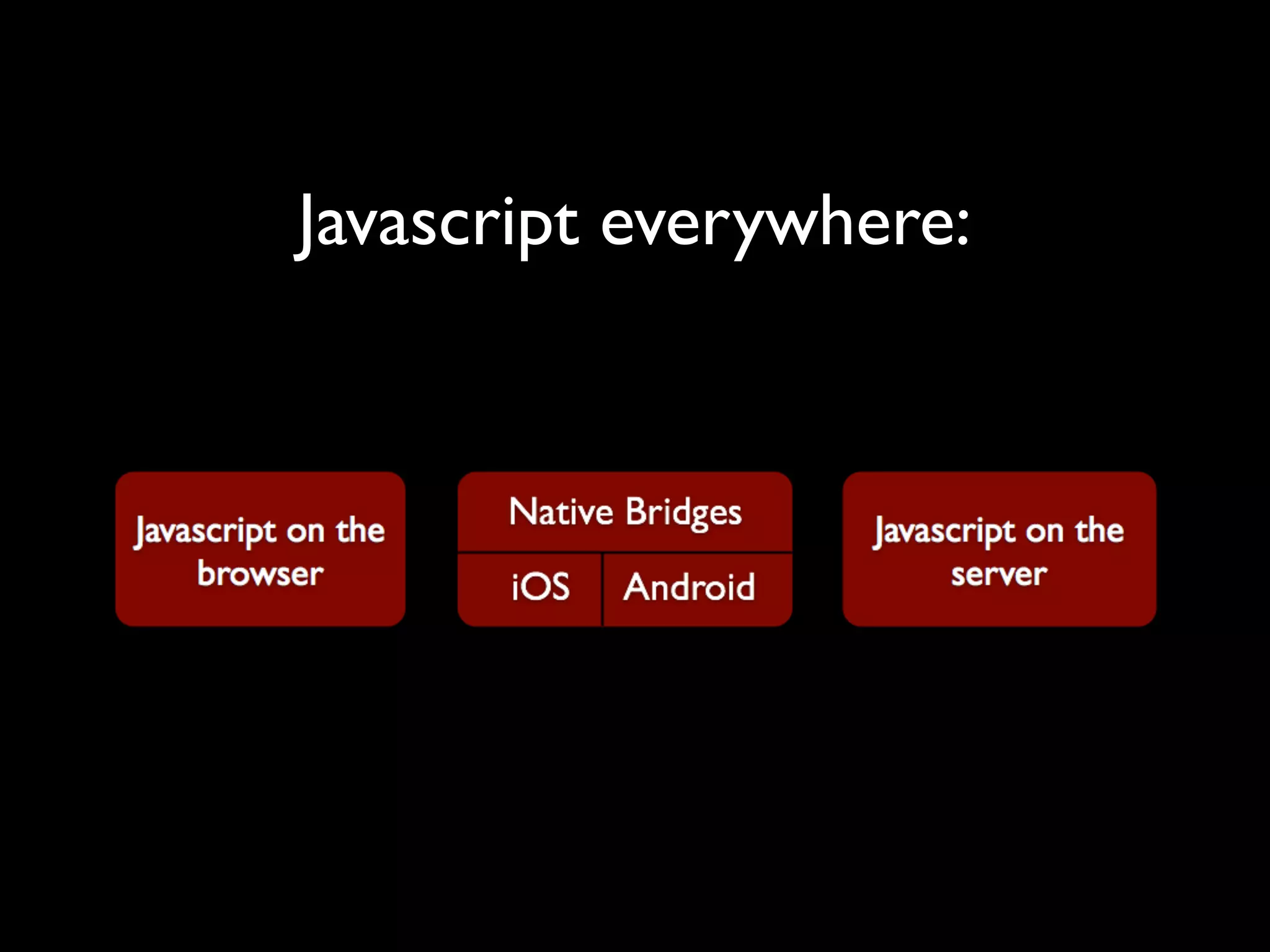
Javascript everywhere:
Final notes...
Build mobile applications on top
of platforms designed primarily for
          mobile products
The web it’s all about control,
      your control
write once, run everywhere,
        no so easy!
Customize per runtime & context,
adapt per form factor & feature detection
Build for the future,
don't get locked into a platform.
Obrigado
  @caridy

The challenges of building mobile HTML5 applications - FEEC Brazil 2012 - Recife