





Samuel Ideozu
Fashion
Styles and customs at a given time.
Commonly used to describe popular clothing style
Roots from Latin word facia meaning a particular
make or shape (Kawamura, 2005, p. 3)
It is MOMENTARY, imagery,
Fashion constructs DESIRE
Architecture
Roots from Greek word arkhitektonike
The art and science of designing and constructing
It is an Experiential, Critical, and Interpretative
occurance (Colomina, Pallasmaa, Giedion, etc.)
It is MONUMENTARY, conceptual, ideological,
philosophical…..
Architecture constructs ideology
Aims
The purpose of this research is:
 to explore the relationship between
Architecture and Fashion in:
 Modernist Era,
 Contemporary Era,
and
 Via a comparative catalogue
Motivations and Significance
 Theoretical Aspects
Vast literature and image on fashioned architecture and
architectured fashion, but little emphasis on inner / outer
harmony of the structures
Catching up with the contemporary design trends / issues
as a practicing architect
Motivations and Significance (Cont.)
 Most of the literature, exhibitions, and designers on
the issue explores the parallel practices and sound it
is inevitable for these two disciplines to develop
separately
 If this is the case, do we need to practice more
transformable, changeable, mobile, modular spaces?
 What about the eternity of the architecture through
his designs?
Summary 1
 Architecture and Fashion interaction origins
from the body, ornament and dressing.
 While the architects in the Modernist Era rejected
fashion, fashion designers followed the
architectural principles and functionality
 Fashion than found its way into architecture
through the concept of glamour
Summary 2
 The social, technological and global influences
of the contemporary era brought Architecture
and Fashion closer not only from the point of
view of design and advantages, but also in terms
of disadvantages and threats for architectural
integrity, suggesting solutions to overcome
these burdens
Summary 2
 Architecture in itself is conceptual, as it operates
at the intersection of culture, space, shape and
form of a given society
 Fashion is a consumer product operating
through (especially) female clothing
Dissertation Question
 On these grounds, given the close relationship
between Architecture and Fashion, : can
architecture be fashionable rather than being
fashioned? In other words, can architecture
operate in the fashion system without forgoing
its qualities of form, function, material, program
and harmony with the dwelling?
Findings 1
 Architecture can still be fashionable and protect its
quality of ideology and represent intellectuality and
sophistication of the society in which it operates by
using communication technology not as a tool of
commercialism but as a tool of advocating the
principles of good architecture and good design,
rather than rejecting the global reality of populist
culture and mass consumption.
Findings 2
 Architecture can still be fashionable and protect
its quality by avoiding the cut and paste culture
and producing original designs and thoughts.
Findings 3
 Architecture can still be fashionable and protect
its integrity by campaigning slowing down
design (and mainly fashion) instead of speeding
up architecture. As Okpokiri (2009) puts it, using
more wisdom and less technology would
certainly help architecture to be fashionable
rather than being fashioned
THANK YOU

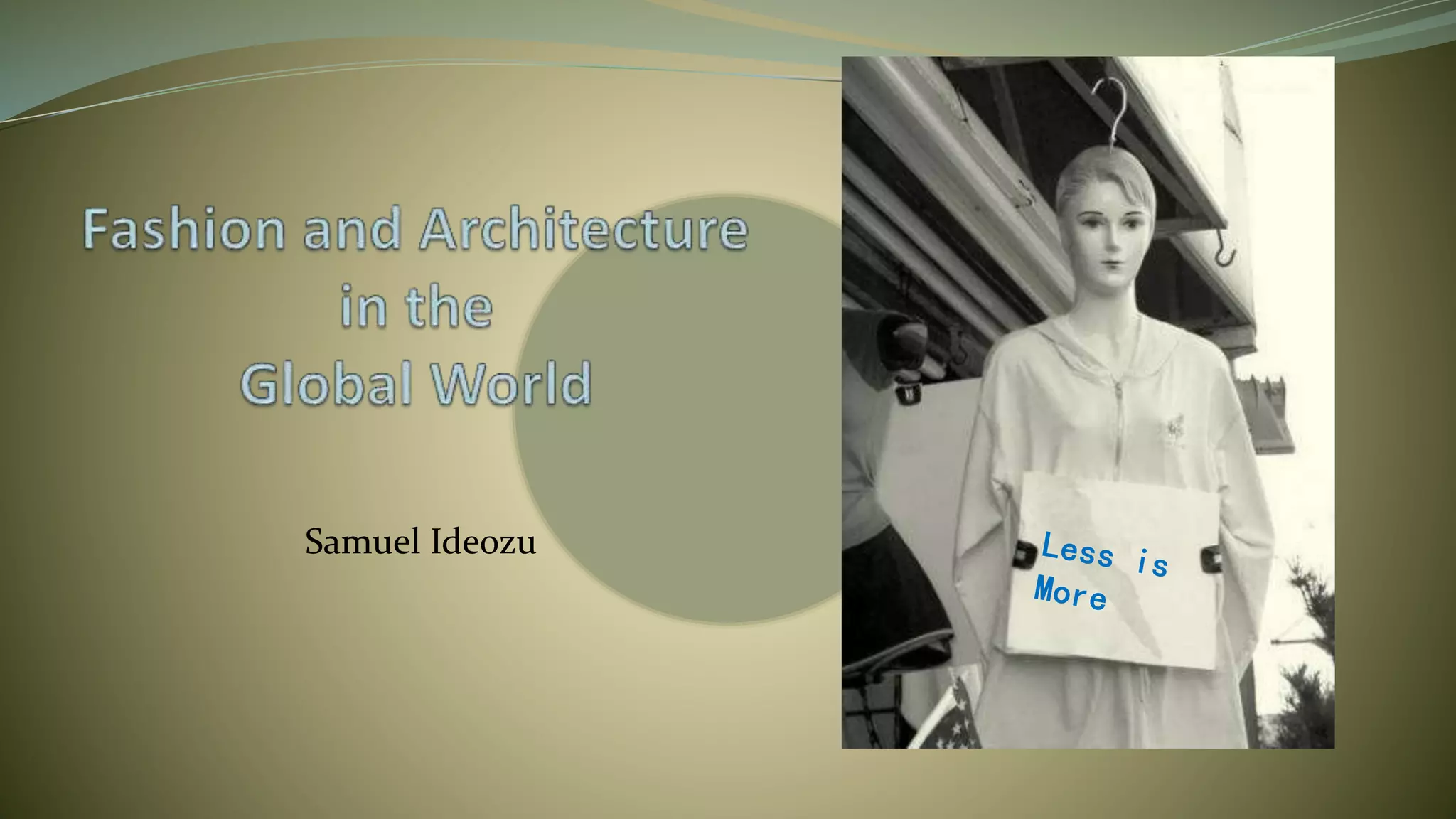
Fashion and architecture

  • 1.
  • 2.
    Fashion Styles and customsat a given time. Commonly used to describe popular clothing style Roots from Latin word facia meaning a particular make or shape (Kawamura, 2005, p. 3) It is MOMENTARY, imagery, Fashion constructs DESIRE
  • 3.
    Architecture Roots from Greekword arkhitektonike The art and science of designing and constructing It is an Experiential, Critical, and Interpretative occurance (Colomina, Pallasmaa, Giedion, etc.) It is MONUMENTARY, conceptual, ideological, philosophical….. Architecture constructs ideology
  • 4.
    Aims The purpose ofthis research is:  to explore the relationship between Architecture and Fashion in:  Modernist Era,  Contemporary Era, and  Via a comparative catalogue
  • 5.
    Motivations and Significance Theoretical Aspects Vast literature and image on fashioned architecture and architectured fashion, but little emphasis on inner / outer harmony of the structures Catching up with the contemporary design trends / issues as a practicing architect
  • 6.
    Motivations and Significance(Cont.)  Most of the literature, exhibitions, and designers on the issue explores the parallel practices and sound it is inevitable for these two disciplines to develop separately  If this is the case, do we need to practice more transformable, changeable, mobile, modular spaces?  What about the eternity of the architecture through his designs?
  • 7.
    Summary 1  Architectureand Fashion interaction origins from the body, ornament and dressing.  While the architects in the Modernist Era rejected fashion, fashion designers followed the architectural principles and functionality  Fashion than found its way into architecture through the concept of glamour
  • 8.
    Summary 2  Thesocial, technological and global influences of the contemporary era brought Architecture and Fashion closer not only from the point of view of design and advantages, but also in terms of disadvantages and threats for architectural integrity, suggesting solutions to overcome these burdens
  • 9.
    Summary 2  Architecturein itself is conceptual, as it operates at the intersection of culture, space, shape and form of a given society  Fashion is a consumer product operating through (especially) female clothing
  • 10.
    Dissertation Question  Onthese grounds, given the close relationship between Architecture and Fashion, : can architecture be fashionable rather than being fashioned? In other words, can architecture operate in the fashion system without forgoing its qualities of form, function, material, program and harmony with the dwelling?
  • 11.
    Findings 1  Architecturecan still be fashionable and protect its quality of ideology and represent intellectuality and sophistication of the society in which it operates by using communication technology not as a tool of commercialism but as a tool of advocating the principles of good architecture and good design, rather than rejecting the global reality of populist culture and mass consumption.
  • 12.
    Findings 2  Architecturecan still be fashionable and protect its quality by avoiding the cut and paste culture and producing original designs and thoughts.
  • 13.
    Findings 3  Architecturecan still be fashionable and protect its integrity by campaigning slowing down design (and mainly fashion) instead of speeding up architecture. As Okpokiri (2009) puts it, using more wisdom and less technology would certainly help architecture to be fashionable rather than being fashioned
  • 14.