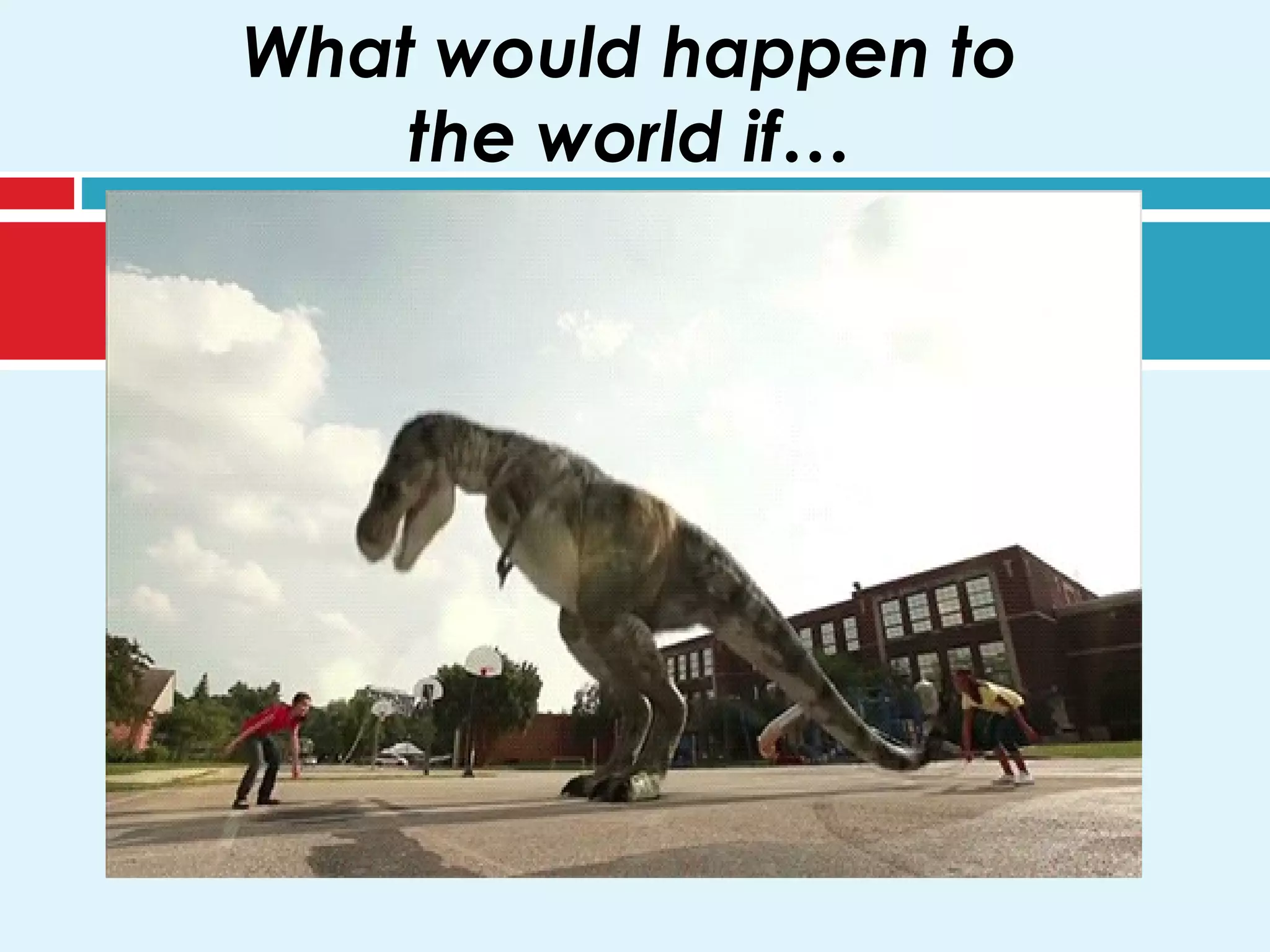
What would happen to
the world if…
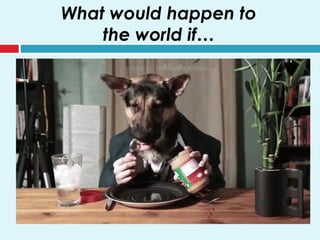
What would happen to
the world if…
What would happen to
the world if…
1. Heatherand herdog, Remy,
enjoyed theirwalkin the warm
sunshine.
2. “It looks like a stormis headed
ourway,” warned Roy Rooster.
3. A man fromthe zoo brings a
snake named Sally to Tara’s
school.
4. “I’mhaving a bad hairday,”
moaned the ostrich.
A story that tells about
something that could happen in
real life is realistic.
A story that has some things
that co uld no t possibly happen
is fantasy.
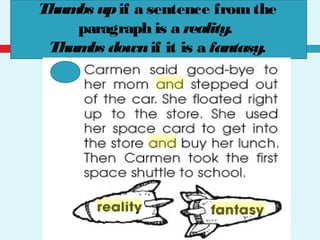
Thumbs upif a sentence fromthe
paragraph is a reality.
Thumbs downif it is a fantasy.
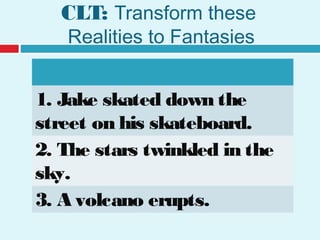
CLT: Transform these
Realities to Fantasies
1. Jake skated down the
street on his skateboard.
2. The stars twinkled in the
sky.
3. A volcano erupts.

Fantasy and Reality

  • 1.
    What would happento the world if…
  • 2.
    What would happento the world if…
  • 3.
    What would happento the world if…
  • 4.
    1. Heatherand herdog,Remy, enjoyed theirwalkin the warm sunshine. 2. “It looks like a stormis headed ourway,” warned Roy Rooster. 3. A man fromthe zoo brings a snake named Sally to Tara’s school. 4. “I’mhaving a bad hairday,” moaned the ostrich.
  • 5.
    A story thattells about something that could happen in real life is realistic. A story that has some things that co uld no t possibly happen is fantasy.
  • 6.
    Thumbs upif asentence fromthe paragraph is a reality. Thumbs downif it is a fantasy.
  • 7.
    CLT: Transform these Realitiesto Fantasies 1. Jake skated down the street on his skateboard. 2. The stars twinkled in the sky. 3. A volcano erupts.

Editor's Notes

  • #3 Notes for trainer: Other statistics to consider sharing include: According to the 2009 Pediatric Nutrition Surveillance System (PedNSS) data, nearly one-third of the 3.7 million low-income children aged two to four years surveyed were obese or overweight, and 541,000 were obese. 1 of 7 low-income, preschool-aged children is obese. Some children are burdened more than others. American Indian and Alaska Native (20.7%) and Hispanic (17.9%) children aged 2 to 4 years have the highest rates of obesity. For more data and statistics, visit: www.cdc.gov/obesity/data/childhood.html
  • #4 Suggested talking points: Foods and beverages associated with obesity (i.e. foods and beverages that are high in fat and high in sugar) often lack important nutrients. Many nutrients are important for brain development and cognitive functioning.
  • #6 Suggested talking points: Obesity is so concerning because obesity puts us at increased risk for many diseases and health problems. This is especially true for children because the younger you are when you become obese, and the longer you are obese, the greater your risks for having health problems.
  • #7 Suggested talking points: The good news is: we CAN solve the obesity problem!
  • #8 Suggested talking points: The good news is: we CAN solve the obesity problem!