After viewing this Powerpoint presentation, you
should be able to:
Describe the structural differences of various
imaginative forms of literature, including fantasies,
fables, myths, legends, and fairy tales.
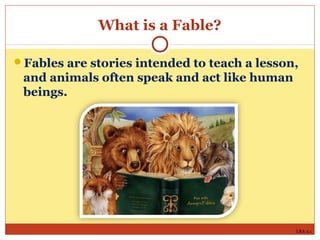
What is a Fable?
Fables are stories intended to teach a lesson,
and animals often speak and act like human
beings.
LRA 3.1
Elements to Remember
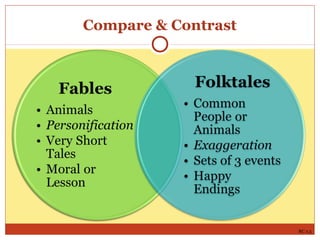
ANIMALS are usually the main characters
The plot and characters are SIMPLE
Stories teach a MORAL or LESSON
SETTING is common and nonspecific
Author uses PERSONIFICATION
LRA 3.1
What is Personification?
In simple terms, its making animals or
objects seem like real people, with real
human feelings and emotions.
LRA 3.5
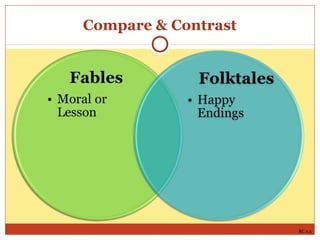
Compare & Contrast
RC 2.5
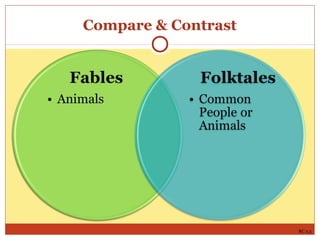
Compare & Contrast
RC 2.5
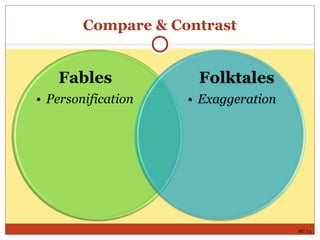
Compare & Contrast
RC 2.5
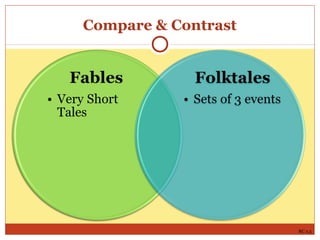
Compare & Contrast
RC 2.5
Compare & Contrast
RC 2.5
Compare & Contrast
RC 2.5
Aesop
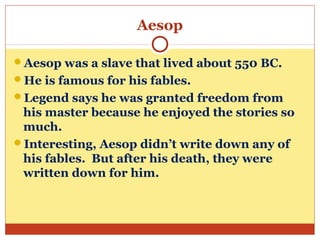
Aesop was a slave that lived about 550 BC.
He is famous for his fables.
Legend says he was granted freedom from
his master because he enjoyed the stories so
much.
Interesting, Aesop didn’t write down any of
his fables. But after his death, they were
written down for him.
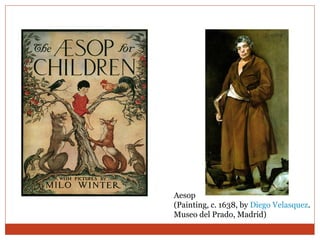
Aesop
(Painting, c. 1638, by Diego Velasquez.
Museo del Prado, Madrid)
Examples
The Grasshopper and the Ants (Bug’s Life)
The Tortoise and the Hare
The Lion and the Mouse
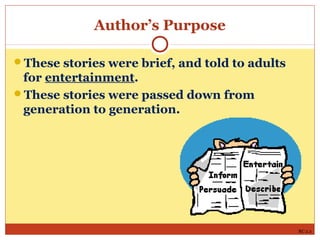
Author’s Purpose
These stories were brief, and told to adults
for entertainment.
These stories were passed down from
generation to generation.
RC 2.2
Hyperl
ink
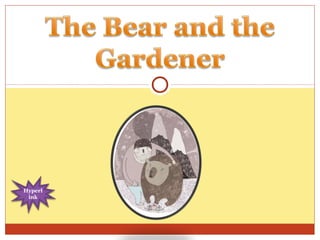
A gardener, who lived alone, set out
one day to seek a friend who would be
a suitable companion. He had not
gone far when he met a Bear, whom
he invited to come and live with him.
The Bear was a very silly one, who was
also discontented with living alone, so
he went home with the gardener very
willingly.
The gardener provided all the food, and
the only service he required of the
Bear was to keep the flies off his face
while he slept in the shade. One day, a
fly insisted upon lighting on the
Gardener's face, although he was
brushed off again and again. The silly
Bear finally became so enraged that
he threw a heavy stone upon it. He
killed the fly, but alas! he also killed
his friend.
Elements
Characters
Bear & Gardner
Setting
Garden
Lesson or Moral
Choose your friends wisely
Hyperl
ink
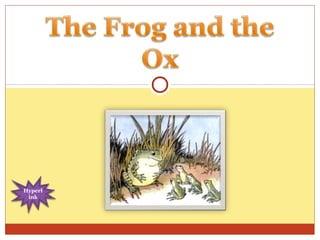
A young frog, amazed at the huge size
of an ox, rushed to tell her father
about the monster. The father frog,
trying to impress his child, puffed
himself up to look like the ox. The
young frog said it was much bigger.
Again the father puffed himself up.
The young frog insisted the monster
was even bigger. The father puffed
and puffed - and burst!
Hyperl
ink
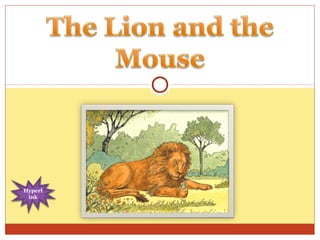
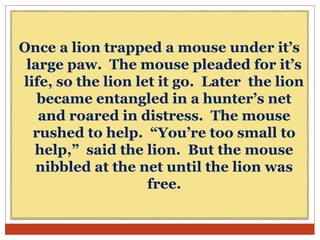
Once a lion trapped a mouse under it’s
large paw. The mouse pleaded for it’s
life, so the lion let it go. Later the lion
became entangled in a hunter’s net
and roared in distress. The mouse
rushed to help. “You’re too small to
help,” said the lion. But the mouse
nibbled at the net until the lion was
free.
Hyperl
ink
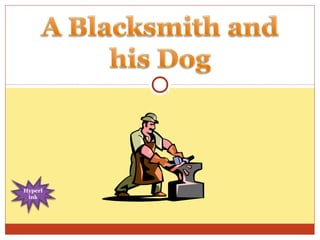
A Blacksmith had a little Dog, which
used to sleep when his master was at
work, but was very wide awake indeed
when it was time for meals. One day
his master pretended to be disgusted
at this, and when he had thrown him a
bone as usual, he said, "What on earth
is the good of a lazy cur like you?
When I am hammering away at my
anvil, you just curl up and go to sleep:
but no sooner do I stop for a mouthful
of food than you wake up and wag
your tail to be fed.”
Hyperl
ink
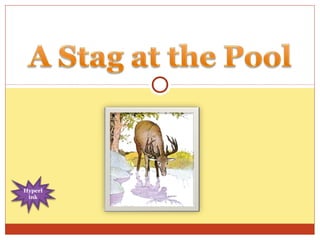
A stag, gazing at his reflection in a pool,
remarked, “What glorious antlers I
have. But my legs are so skinny!” At
that moment the stag heard a pack of
hunters and hounds approaching. His
long legs helped him flee into a thick
wood, but his antlers became
entangled in the branches. Struggle
as he might, he was trapped - and the
hounds and hunters closed in.
Hyperl
ink
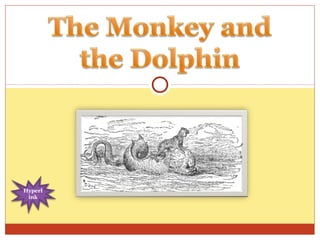
A monkey fell from a ship and was
rescued by a dolphin. The dolphin
asked if he lived nearby. The monkey
lied and said that he did. “Do you
know Seriphos?” asked the dolphin.
The monkey, thinking Seriphos was a
person’s name, boasted that it was his
best friend. As Seriphos was a town,
the dolphin knew the monkey was
lying, so he dived, leaving him to swim
to shore.
Hyperl
ink
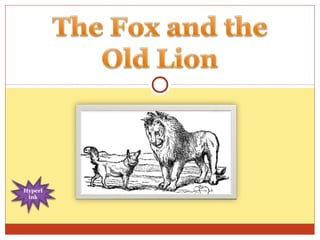
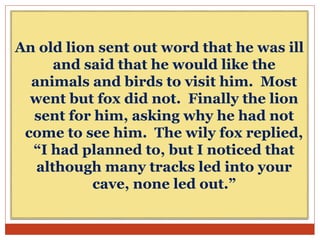
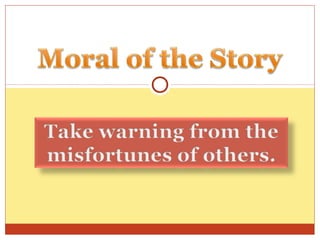
An old lion sent out word that he was ill
and said that he would like the
animals and birds to visit him. Most
went but fox did not. Finally the lion
sent for him, asking why he had not
come to see him. The wily fox replied,
“I had planned to, but I noticed that
although many tracks led into your
cave, none led out.”
Hyperl
ink
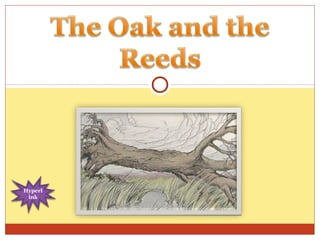
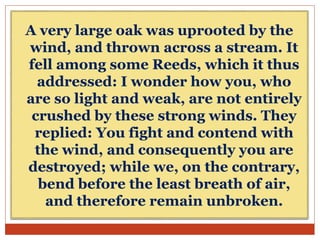
A very large oak was uprooted by the
wind, and thrown across a stream. It
fell among some Reeds, which it thus
addressed: I wonder how you, who
are so light and weak, are not entirely
crushed by these strong winds. They
replied: You fight and contend with
the wind, and consequently you are
destroyed; while we, on the contrary,
bend before the least breath of air,
and therefore remain unbroken.
Hyperl
ink
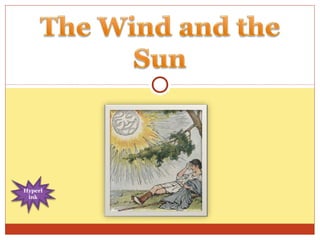
The wind and the sun argued over who
was the stronger. They saw a traveller
and agreed that whoever could get the
traveller’s coat off his body must be
the stronger. The wind blew fiercely,
but the harder it blew, the tighter the
man clutched his coat. Then the sun
beamed it’s warm rays until the man
was so hot he took off his coat.
Hyperl
ink
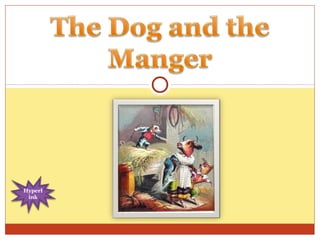
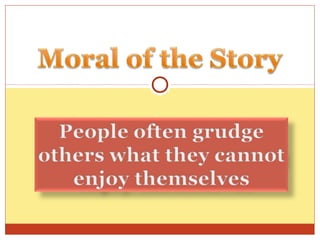
A dog decided to nap in a manger full of
fresh hay intended for the family ox.
At the end of that long day, the tired
ox returned to the stable to eat some
of the hay in the manger, but the dog
awoke and barked and bit so fiercely
that the ox could not eat the hay. "You
are mean and vicious," said the ox.
"You don't eat hay, so why do you stop
me from enjoying it?"
Week 2 Elements of Fables

Week 2 Elements of Fables

  • 1.
    After viewing thisPowerpoint presentation, you should be able to: Describe the structural differences of various imaginative forms of literature, including fantasies, fables, myths, legends, and fairy tales.
  • 2.
    What is aFable? Fables are stories intended to teach a lesson, and animals often speak and act like human beings. LRA 3.1
  • 3.
    Elements to Remember ANIMALSare usually the main characters The plot and characters are SIMPLE Stories teach a MORAL or LESSON SETTING is common and nonspecific Author uses PERSONIFICATION LRA 3.1
  • 4.
    What is Personification? Insimple terms, its making animals or objects seem like real people, with real human feelings and emotions. LRA 3.5
  • 5.
  • 6.
  • 7.
  • 8.
  • 9.
  • 10.
  • 11.
    Aesop Aesop was aslave that lived about 550 BC. He is famous for his fables. Legend says he was granted freedom from his master because he enjoyed the stories so much. Interesting, Aesop didn’t write down any of his fables. But after his death, they were written down for him.
  • 12.
    Aesop (Painting, c. 1638,by Diego Velasquez. Museo del Prado, Madrid)
  • 13.
    Examples The Grasshopper andthe Ants (Bug’s Life) The Tortoise and the Hare The Lion and the Mouse
  • 14.
    Author’s Purpose These storieswere brief, and told to adults for entertainment. These stories were passed down from generation to generation. RC 2.2
  • 15.
  • 16.
    A gardener, wholived alone, set out one day to seek a friend who would be a suitable companion. He had not gone far when he met a Bear, whom he invited to come and live with him. The Bear was a very silly one, who was also discontented with living alone, so he went home with the gardener very willingly.
  • 17.
    The gardener providedall the food, and the only service he required of the Bear was to keep the flies off his face while he slept in the shade. One day, a fly insisted upon lighting on the Gardener's face, although he was brushed off again and again. The silly Bear finally became so enraged that he threw a heavy stone upon it. He killed the fly, but alas! he also killed his friend.
  • 19.
  • 21.
  • 22.
    A young frog,amazed at the huge size of an ox, rushed to tell her father about the monster. The father frog, trying to impress his child, puffed himself up to look like the ox. The young frog said it was much bigger. Again the father puffed himself up. The young frog insisted the monster was even bigger. The father puffed and puffed - and burst!
  • 24.
  • 25.
    Once a liontrapped a mouse under it’s large paw. The mouse pleaded for it’s life, so the lion let it go. Later the lion became entangled in a hunter’s net and roared in distress. The mouse rushed to help. “You’re too small to help,” said the lion. But the mouse nibbled at the net until the lion was free.
  • 27.
  • 28.
    A Blacksmith hada little Dog, which used to sleep when his master was at work, but was very wide awake indeed when it was time for meals. One day his master pretended to be disgusted at this, and when he had thrown him a bone as usual, he said, "What on earth is the good of a lazy cur like you? When I am hammering away at my anvil, you just curl up and go to sleep: but no sooner do I stop for a mouthful of food than you wake up and wag your tail to be fed.”
  • 30.
  • 31.
    A stag, gazingat his reflection in a pool, remarked, “What glorious antlers I have. But my legs are so skinny!” At that moment the stag heard a pack of hunters and hounds approaching. His long legs helped him flee into a thick wood, but his antlers became entangled in the branches. Struggle as he might, he was trapped - and the hounds and hunters closed in.
  • 33.
  • 34.
    A monkey fellfrom a ship and was rescued by a dolphin. The dolphin asked if he lived nearby. The monkey lied and said that he did. “Do you know Seriphos?” asked the dolphin. The monkey, thinking Seriphos was a person’s name, boasted that it was his best friend. As Seriphos was a town, the dolphin knew the monkey was lying, so he dived, leaving him to swim to shore.
  • 36.
  • 37.
    An old lionsent out word that he was ill and said that he would like the animals and birds to visit him. Most went but fox did not. Finally the lion sent for him, asking why he had not come to see him. The wily fox replied, “I had planned to, but I noticed that although many tracks led into your cave, none led out.”
  • 39.
  • 40.
    A very largeoak was uprooted by the wind, and thrown across a stream. It fell among some Reeds, which it thus addressed: I wonder how you, who are so light and weak, are not entirely crushed by these strong winds. They replied: You fight and contend with the wind, and consequently you are destroyed; while we, on the contrary, bend before the least breath of air, and therefore remain unbroken.
  • 42.
  • 43.
    The wind andthe sun argued over who was the stronger. They saw a traveller and agreed that whoever could get the traveller’s coat off his body must be the stronger. The wind blew fiercely, but the harder it blew, the tighter the man clutched his coat. Then the sun beamed it’s warm rays until the man was so hot he took off his coat.
  • 45.
  • 46.
    A dog decidedto nap in a manger full of fresh hay intended for the family ox. At the end of that long day, the tired ox returned to the stable to eat some of the hay in the manger, but the dog awoke and barked and bit so fiercely that the ox could not eat the hay. "You are mean and vicious," said the ox. "You don't eat hay, so why do you stop me from enjoying it?"