AGENDA
 The Importance of Planning & Organization
 Knowing your Audience
 Involving your Personality
 Your Presentation Checklist
 Handling Questions
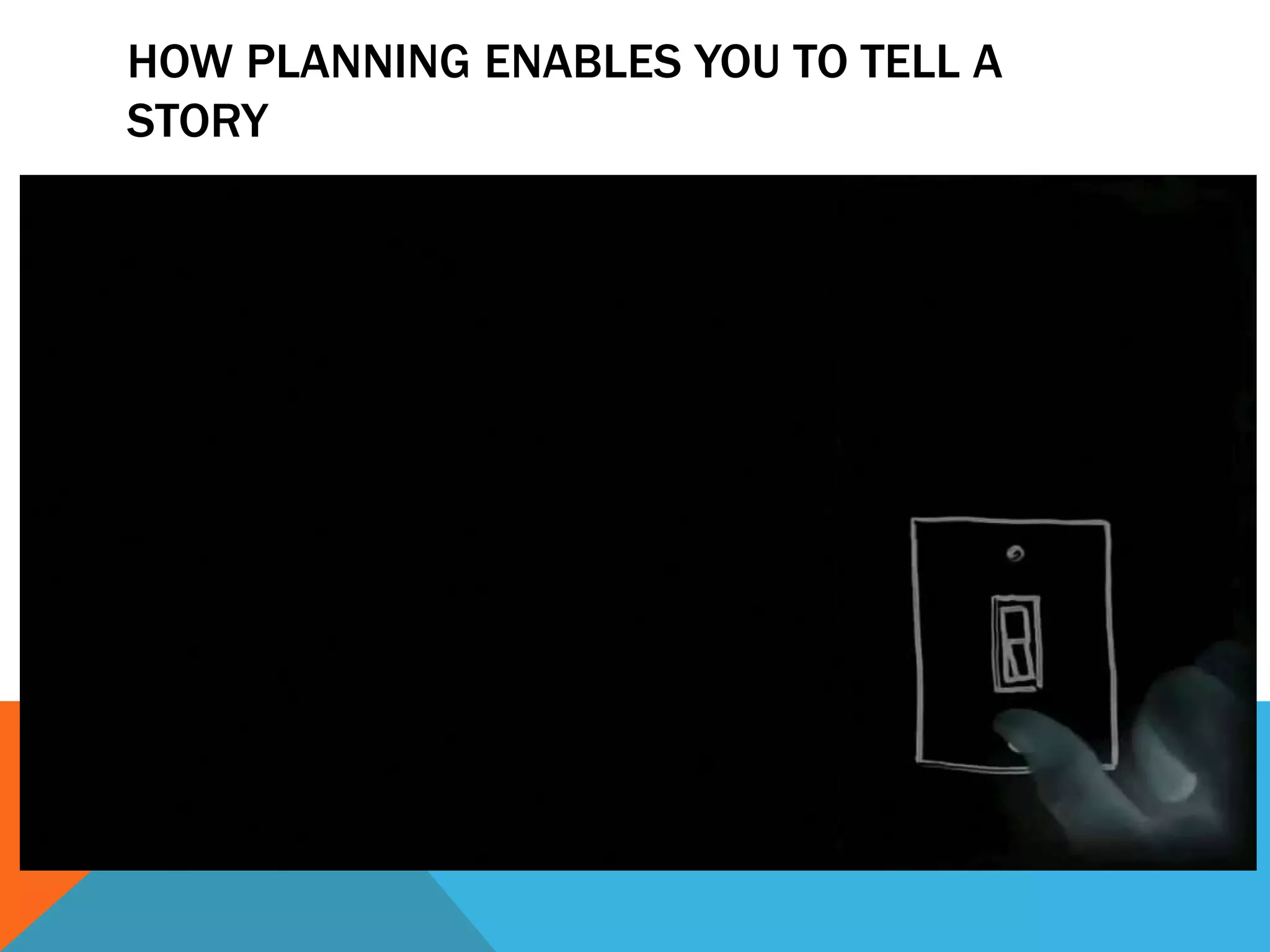
HOW PLANNING ENABLES YOU TO TELL A
STORY
INVOVLING YOUR PERSONALITY
Presentation style and personal
confidence are as important as the
actual content of the presentation itself
SPEAKING NATURALLY
YOUR PRESENTATION CHECKLIST
• Use images & graphics
• Minimize text & numbers
• Contrast between text and background
• Speak clearly, with confidence and pause when
appropriate
• Vary your tone and be natural in the way you speak
• Know your material inside out & backwards
• Engage with your audience
• Ensure you present to the appropriate time length
• What is your contingency plan?
HANDLING QUESTIONS
• Anticipate questions and prepare responses; rehearse
answers to difficult questions
• If necessary, offer to obtain additional information
follow up
• Use questions to strengthen your main arguments –
answer questions candidly but positively link
objections to attractive features
HANDLING QUESTIONS
• Do not digress
• Be honest: if you can’t answer a question, say so.
• Use the last question to summarize
F1 presentation- How to Give a Good Verbal Presentation

F1 presentation- How to Give a Good Verbal Presentation

  • 4.
    AGENDA  The Importanceof Planning & Organization  Knowing your Audience  Involving your Personality  Your Presentation Checklist  Handling Questions
  • 6.
    HOW PLANNING ENABLESYOU TO TELL A STORY
  • 9.
    INVOVLING YOUR PERSONALITY Presentationstyle and personal confidence are as important as the actual content of the presentation itself
  • 10.
  • 11.
    YOUR PRESENTATION CHECKLIST •Use images & graphics • Minimize text & numbers • Contrast between text and background • Speak clearly, with confidence and pause when appropriate • Vary your tone and be natural in the way you speak • Know your material inside out & backwards • Engage with your audience • Ensure you present to the appropriate time length • What is your contingency plan?
  • 12.
    HANDLING QUESTIONS • Anticipatequestions and prepare responses; rehearse answers to difficult questions • If necessary, offer to obtain additional information follow up • Use questions to strengthen your main arguments – answer questions candidly but positively link objections to attractive features
  • 13.
    HANDLING QUESTIONS • Donot digress • Be honest: if you can’t answer a question, say so. • Use the last question to summarize