eXtension   2.0 : Interaction ,  Participation   and   Community Robert Hughes, Jr. University of Illinois Just In Time Parenting, adviser
Let the conversation begin— http://open2learn.blogspot.com/
From Extension to Web 2.0 How do we get from our work today to the kinds of activities that Michael Wesch described? Interaction Participation   Community
Web 2.0—A definition “ the Web was shifting from being a medium, in which information was transmitted and consumed, into  being a platform , in which  content was created, shared, remixed, repurposed , and  passed along . And what people were doing with the Web was … having a conversation , with a vocabulary consisting not just of words but of images, video, multimedia and …And this became, and looked like, and  behaved like, a network .” Downes, 2005  http://www.downes.ca/post/31741
eXtension 2.0 A platform in which  scientists, educators and the public  engage in  interactions  with content and ideas,  participate  with others in creating new content and ideas and form collaborative learning  communities  to address the major issues of society.
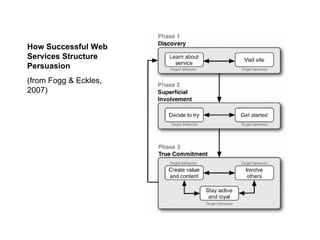
How Successful Web Services Structure Persuasion (from Fogg & Eckles, 2007)
Interaction It is important for learners to take control of their learning. “Understanding” is important– people must recognize when they understand and when they need more information Sense-making, self-assessment and reflection are key strategies for active learning.
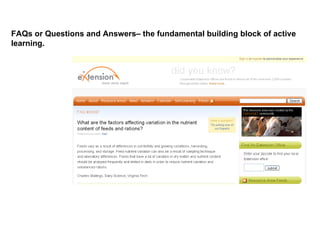
FAQs or Questions and Answers– the fundamental building block of active learning.
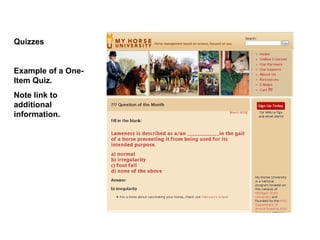
Quizzes Example of a One-Item Quiz. Note link to additional information.
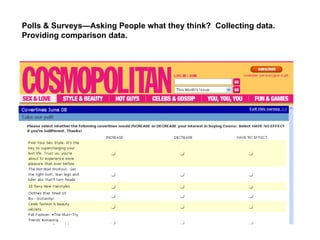
Polls & Surveys—Asking People what they think?  Collecting data.  Providing comparison data.
Budgeting and Financial Calculators provide interaction with content.
e-Newsletters and Feeds are another way to engage learners.
How Stuff Works Example of website that uses illustrations, pictures, videos, sounds, etc. to explain ideas.
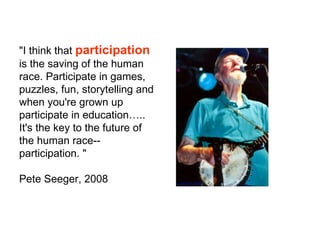
"I think that  participation  is the saving of the human race. Participate in games, puzzles, fun, storytelling and when you're grown up participate in education….. It's the key to the future of the human race-- participation. "  Pete Seeger, 2008
Participation Encouraging people to contribute value to our websites— Tagging and rating Participating in discussions Serving as reviewers, editors, etc. Contributing content
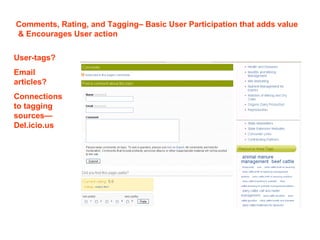
Comments, Rating, and Tagging– Basic User Participation that adds value & Encourages User action User-tags? Email articles? Connections to tagging sources—Del.icio.us
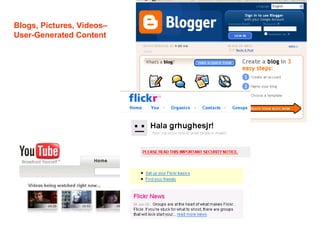
Blogs, Pictures, Videos– User-Generated Content
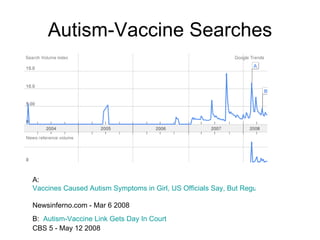
Autism-Vaccine Searches A:  Vaccines Caused Autism Symptoms in Girl, US Officials Say, But Regulators Still Deny Autism-Vaccine Link Newsinferno.com - Mar 6 2008    B:  Autism-Vaccine Link Gets Day In Court CBS 5 - May 12 2008   
Society & Science:  The Autism-Vaccine Debate The Debate:  Are vaccines the cause of autism? Science votes “no” Society votes “yes Analysis of media & scientific literature Media focus on vaccines Scientific literature on other causes Blog posts on autism-vaccines 7.5 per day No blog posts by scientists 57% of references about research are negative Some good discussions by small percentages of bloggers YouTube videos on immunization Positive 48%, Negative, 32%; Ambiguous, 20% Negative videos were more likely to be viewed, rated, and have high ratings.
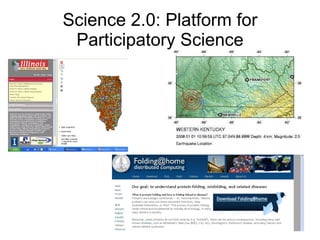
Science 2.0: Platform for Participatory Science
Encouraging Participation Participation Inequality The 90-9-1 rule Blogs  95%, 5%, .01%  Nielsen’s recommendations Make it easy to contribute Make contributing a side activity Make users editors rather than authors Highlight quality contributions & contributors
Community “… social learning is based on the premise that our  understanding of content is socially constructed  through conversations about the content and through grounded  interactions, especially with others , around problems or actions.  The focus is not so much on  what  we are learning but on  how  we are learning”  (Brown and Adler, 2008, p. 18).
Collaborative Learning Communities “It takes a village to create a wiki.” Everyone involved is viewed as both a teacher and a learner.
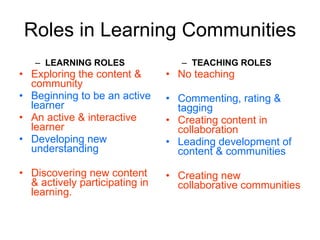
Roles in Learning Communities LEARNING ROLES Exploring the content & community Beginning to be an active learner An active & interactive learner Developing new understanding Discovering new content & actively participating in learning. TEACHING ROLES No teaching Commenting, rating & tagging Creating content in collaboration   Leading development of content & communities Creating new collaborative communities
Building Online Communities Butler et al., 2008 maintaining the software interaction tools themselves so that they work for the group; recruiting new members to the group to replace those who leave; managing social dynamics or group process; participating or contributing to the interaction.
Why do people participate in community? Butler et al., 2008 Informational– learn something Social– get to know new people Visibility– gain recognition & influence Altruism– a chance to help others
Questions How can I make our work more active and interactive? How do I encourage more participation? How do I create a more robust community?
video

eXtension Twopointzero

  • 1.
    eXtension 2.0 : Interaction , Participation and Community Robert Hughes, Jr. University of Illinois Just In Time Parenting, adviser
  • 2.
    Let the conversationbegin— http://open2learn.blogspot.com/
  • 3.
    From Extension toWeb 2.0 How do we get from our work today to the kinds of activities that Michael Wesch described? Interaction Participation Community
  • 4.
    Web 2.0—A definition“ the Web was shifting from being a medium, in which information was transmitted and consumed, into being a platform , in which content was created, shared, remixed, repurposed , and passed along . And what people were doing with the Web was … having a conversation , with a vocabulary consisting not just of words but of images, video, multimedia and …And this became, and looked like, and behaved like, a network .” Downes, 2005 http://www.downes.ca/post/31741
  • 5.
    eXtension 2.0 Aplatform in which scientists, educators and the public engage in interactions with content and ideas, participate with others in creating new content and ideas and form collaborative learning communities to address the major issues of society.
  • 6.
    How Successful WebServices Structure Persuasion (from Fogg & Eckles, 2007)
  • 7.
    Interaction It isimportant for learners to take control of their learning. “Understanding” is important– people must recognize when they understand and when they need more information Sense-making, self-assessment and reflection are key strategies for active learning.
  • 8.
    FAQs or Questionsand Answers– the fundamental building block of active learning.
  • 9.
    Quizzes Example ofa One-Item Quiz. Note link to additional information.
  • 10.
    Polls & Surveys—AskingPeople what they think? Collecting data. Providing comparison data.
  • 11.
    Budgeting and FinancialCalculators provide interaction with content.
  • 12.
    e-Newsletters and Feedsare another way to engage learners.
  • 13.
    How Stuff WorksExample of website that uses illustrations, pictures, videos, sounds, etc. to explain ideas.
  • 14.
    "I think that participation is the saving of the human race. Participate in games, puzzles, fun, storytelling and when you're grown up participate in education….. It's the key to the future of the human race-- participation. " Pete Seeger, 2008
  • 15.
    Participation Encouraging peopleto contribute value to our websites— Tagging and rating Participating in discussions Serving as reviewers, editors, etc. Contributing content
  • 16.
    Comments, Rating, andTagging– Basic User Participation that adds value & Encourages User action User-tags? Email articles? Connections to tagging sources—Del.icio.us
  • 17.
    Blogs, Pictures, Videos–User-Generated Content
  • 18.
    Autism-Vaccine Searches A: Vaccines Caused Autism Symptoms in Girl, US Officials Say, But Regulators Still Deny Autism-Vaccine Link Newsinferno.com - Mar 6 2008    B: Autism-Vaccine Link Gets Day In Court CBS 5 - May 12 2008   
  • 19.
    Society & Science: The Autism-Vaccine Debate The Debate: Are vaccines the cause of autism? Science votes “no” Society votes “yes Analysis of media & scientific literature Media focus on vaccines Scientific literature on other causes Blog posts on autism-vaccines 7.5 per day No blog posts by scientists 57% of references about research are negative Some good discussions by small percentages of bloggers YouTube videos on immunization Positive 48%, Negative, 32%; Ambiguous, 20% Negative videos were more likely to be viewed, rated, and have high ratings.
  • 20.
    Science 2.0: Platformfor Participatory Science
  • 21.
    Encouraging Participation ParticipationInequality The 90-9-1 rule Blogs 95%, 5%, .01% Nielsen’s recommendations Make it easy to contribute Make contributing a side activity Make users editors rather than authors Highlight quality contributions & contributors
  • 22.
    Community “… sociallearning is based on the premise that our understanding of content is socially constructed through conversations about the content and through grounded interactions, especially with others , around problems or actions. The focus is not so much on what we are learning but on how we are learning” (Brown and Adler, 2008, p. 18).
  • 23.
    Collaborative Learning Communities“It takes a village to create a wiki.” Everyone involved is viewed as both a teacher and a learner.
  • 24.
    Roles in LearningCommunities LEARNING ROLES Exploring the content & community Beginning to be an active learner An active & interactive learner Developing new understanding Discovering new content & actively participating in learning. TEACHING ROLES No teaching Commenting, rating & tagging Creating content in collaboration Leading development of content & communities Creating new collaborative communities
  • 25.
    Building Online CommunitiesButler et al., 2008 maintaining the software interaction tools themselves so that they work for the group; recruiting new members to the group to replace those who leave; managing social dynamics or group process; participating or contributing to the interaction.
  • 26.
    Why do peopleparticipate in community? Butler et al., 2008 Informational– learn something Social– get to know new people Visibility– gain recognition & influence Altruism– a chance to help others
  • 27.
    Questions How canI make our work more active and interactive? How do I encourage more participation? How do I create a more robust community?
  • 28.