Extended Real-World Data:
The Life Science Industry’s Number One Asset
© 2018 Health Catalyst
Proprietary. Feel free to share but we would appreciate a Health Catalyst citation.
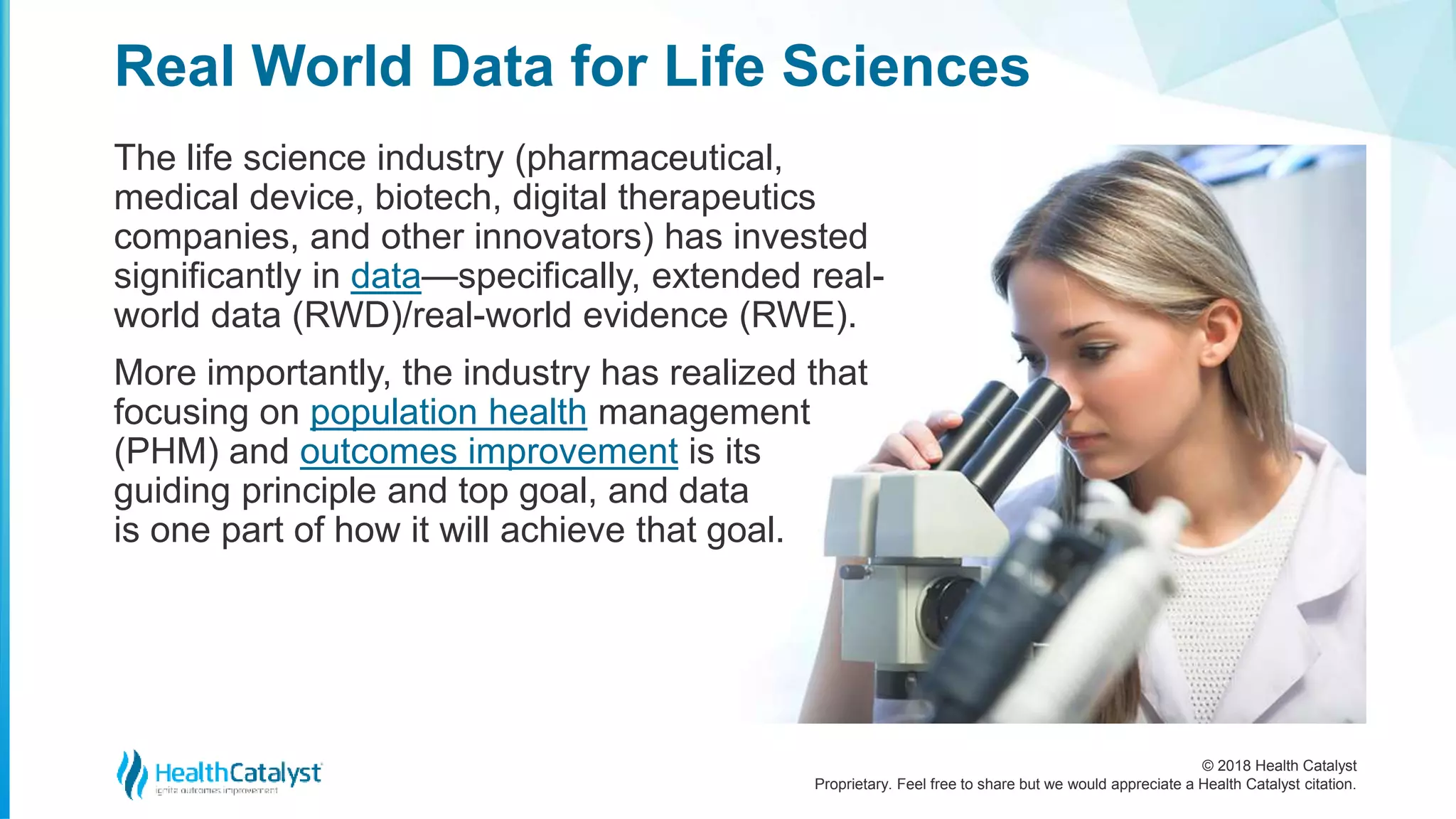
The life science industry (pharmaceutical,
medical device, biotech, digital therapeutics
companies, and other innovators) has invested
significantly in data—specifically, extended real-
world data (RWD)/real-world evidence (RWE).
More importantly, the industry has realized that
focusing on population health management
(PHM) and outcomes improvement is its
guiding principle and top goal, and data
is one part of how it will achieve that goal.
Real World Data for Life Sciences
© 2018 Health Catalyst
Proprietary. Feel free to share but we would appreciate a Health Catalyst citation.
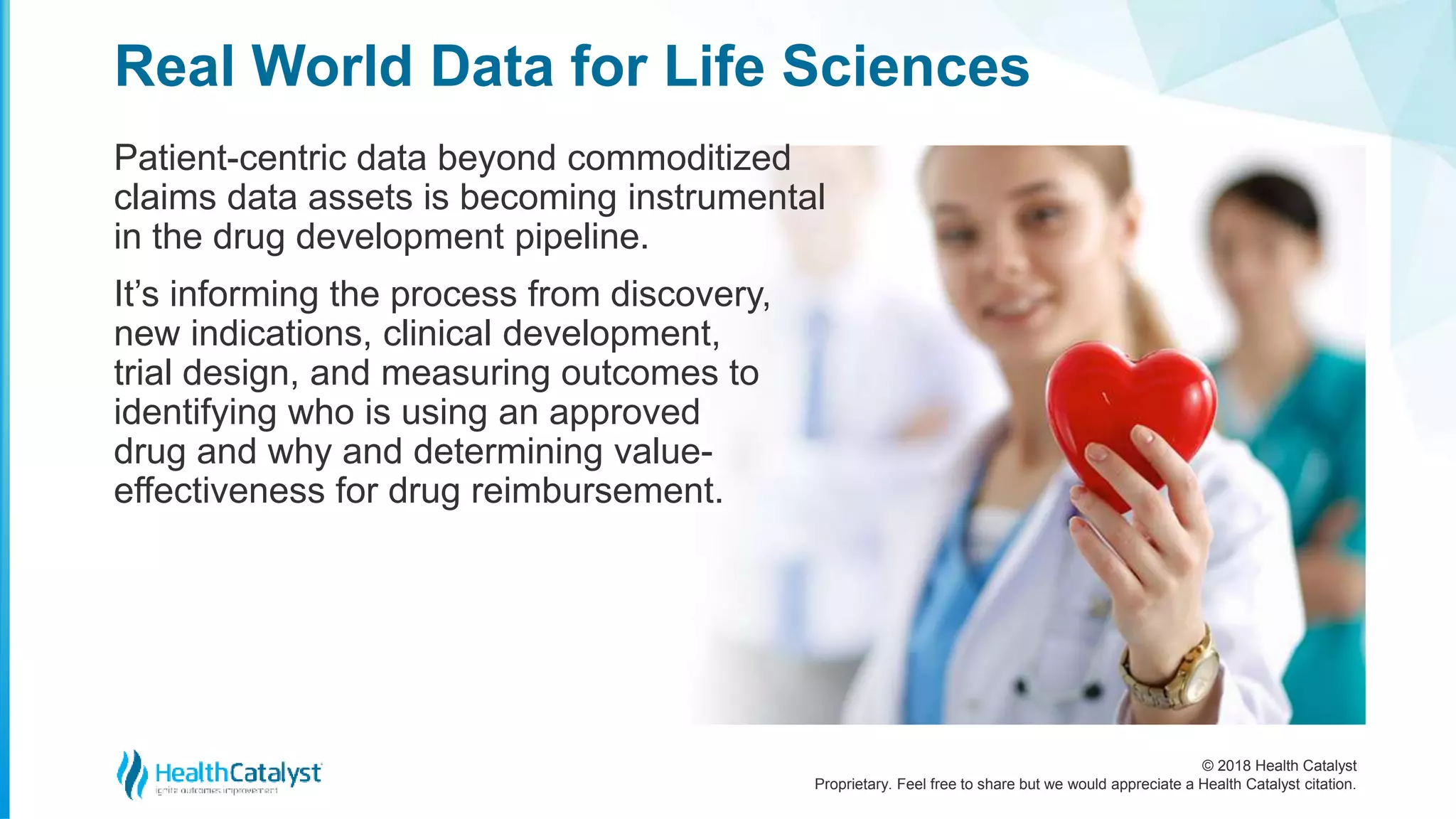
Patient-centric data beyond commoditized
claims data assets is becoming instrumental
in the drug development pipeline.
It’s informing the process from discovery,
new indications, clinical development,
trial design, and measuring outcomes to
identifying who is using an approved
drug and why and determining value-
effectiveness for drug reimbursement.
Real World Data for Life Sciences
© 2018 Health Catalyst
Proprietary. Feel free to share but we would appreciate a Health Catalyst citation.
As data has become a staple decision driver at
most life science companies, organizations are
increasingly aware of the need to bridge the
divide between these two data imperatives:
Leveraging the fully digital experiences (e.g.,
patient-facing applications) and the existing
clinical, provider setting.
Working with large healthcare systems and
their providers and patients, with a thorough
understanding of clinical operations, to drive
meaningful change.
Real World Data for Life Sciences
>
>
© 2018 Health Catalyst
Proprietary. Feel free to share but we would appreciate a Health Catalyst citation.
This report explains the importance of extended
RWD and RWE for the life science industry and
how partnering with the right healthcare
transformation company provides
access to the patient-centric data
needed to improve the drug
development process.
Real World Data for Life Sciences
© 2018 Health Catalyst
Proprietary. Feel free to share but we would appreciate a Health Catalyst citation.
The drug development process takes from 8 to
15 years, costs up to $11 billion, and relies on
an expensive and often inefficient clinical trials
process, as well as costly, sparse data that
doesn’t provide a full picture of patient health.
For example, claims data will show that a
patient fills a prescription but gives no insight
into outcomes, side effects, etc.
Leveraging Data to Overcome the
Inefficiencies of Drug Development
© 2018 Health Catalyst
Proprietary. Feel free to share but we would appreciate a Health Catalyst citation.
As the entire system (regulators, payers,
manufacturers, and providers) aligns around
outcomes, the following knowledge areas will
enable a fair, outcomes-driven healthcare system:
Real-world patient care (e.g., care variability
between and within health systems).
Measuring outcomes in real time across a
diversity of provider types, shapes, sizes,
and geographies.
Understanding the clinical processes that
drive those outcomes.
Leveraging Data to Overcome the
Inefficiencies of Drug Development
>
>
>
© 2018 Health Catalyst
Proprietary. Feel free to share but we would appreciate a Health Catalyst citation.
Healthcare today has a crucial opportunity,
as, for the first time, key industry players
are aligning on the same key goals.
Regulatory, cost, and reimbursement
pressures are driving the urgency to
deliver the right treatment to the
right patient, as measured by real-
world outcomes and monitoring.
Leveraging Data to Overcome the
Inefficiencies of Drug Development
© 2018 Health Catalyst
Proprietary. Feel free to share but we would appreciate a Health Catalyst citation.
This means that manufacturers, payers, and
providers all benefit from solving similar challenges:
How do I identify patients with lower risk and
highest benefit from treatment “X”?
How do I manage my patient population, at a
PHM level, to drive overall balance between
clinical and financial outcomes?
How do I predict, identify, minimize, monitor,
and measure drug safety issues?
How do I ensure high standards of treatment
adherence, patient education, support, and
follow-up to maximize outcome potential?
Leveraging Data to Overcome the
Inefficiencies of Drug Development
>
>
>
>
© 2018 Health Catalyst
Proprietary. Feel free to share but we would appreciate a Health Catalyst citation.
While RWD (mostly claims and some
EHR data) has shown more useful
potential for life sciences in the past few
years, its impact has often been limited
to specific settings, disease areas,
geographies, payers, etc.
The coming years will likely see a
substantial impact across most
therapeutics, both for their development,
launch, and post-launch activities.
Leveraging Data to Overcome the
Inefficiencies of Drug Development
© 2018 Health Catalyst
Proprietary. Feel free to share but we would appreciate a Health Catalyst citation.
The 21st Century Cures Act was signed into
law in 2016, boosting the value of RWD and
RWE for the FDA and life science industry.
The Cures Act aims to accelerate medical
product development and innovation and
places more focus on RWE- and RWD-driven
decision making.
According to Congress, RWE is data from
sources other than clinical trials (e.g.,
randomized trials and observational studies)
on the use and the potential benefits or
risks of a drug.
The FDA Leads the Way:
RWD for Regulatory Approvals
© 2018 Health Catalyst
Proprietary. Feel free to share but we would appreciate a Health Catalyst citation.
Congress describes RWD as data on patient
health status and/or delivery of care that’s
routinely collected from EHRs, claims and
billing, patient-generated data, and more.
Both RWE and RWD are growing in volume
and depth with the increasing use of computers,
mobile devices, and wearables and gaining
utility as advanced analytics capabilities
(e.g., AI and machine learning) enable more
personalized and actionable insights.
The FDA Leads the Way:
RWD for Regulatory Approvals
© 2018 Health Catalyst
Proprietary. Feel free to share but we would appreciate a Health Catalyst citation.
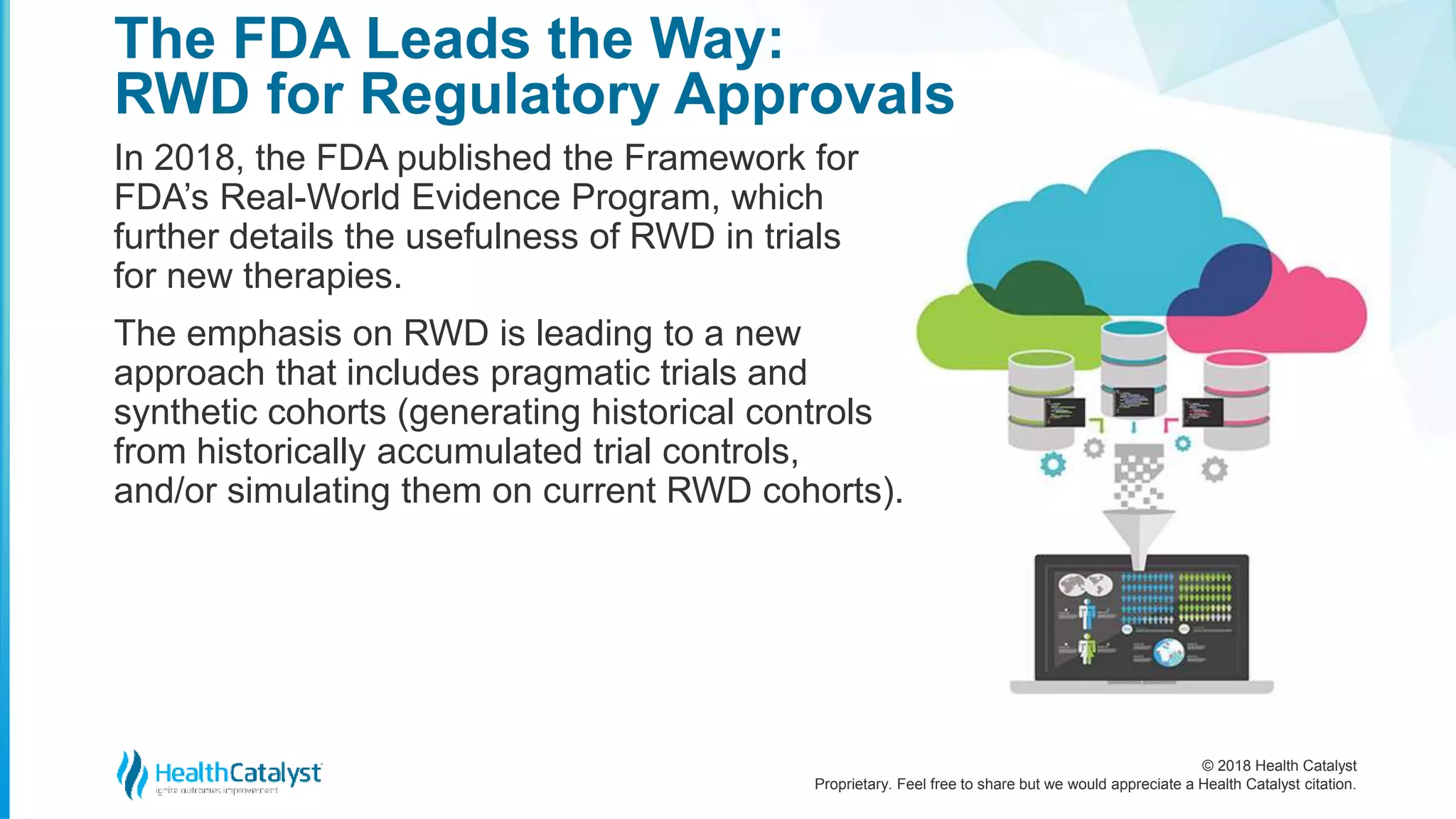
In 2018, the FDA published the Framework for
FDA’s Real-World Evidence Program, which
further details the usefulness of RWD in trials
for new therapies.
The emphasis on RWD is leading to a new
approach that includes pragmatic trials and
synthetic cohorts (generating historical controls
from historically accumulated trial controls,
and/or simulating them on current RWD cohorts).
The FDA Leads the Way:
RWD for Regulatory Approvals
© 2018 Health Catalyst
Proprietary. Feel free to share but we would appreciate a Health Catalyst citation.
Because pragmatic trials are poised to slash
costs and reduce timelines drastically, life
science companies that adopt them early will
differentiate themselves in the market.
Key RWD/RWE challenges are emerging
around access to health systems and patients
as different organizations compete to enroll
patients in traditional studies, as well as
innovative studies that leverage data-driven
approaches.
The FDA Leads the Way:
RWD for Regulatory Approvals
© 2018 Health Catalyst
Proprietary. Feel free to share but we would appreciate a Health Catalyst citation.
It’s not sufficient for life science companies to
leverage data; they must also create clear value
for providers and patients, ensuring that
innovations in clinical development help health
systems achieve certain goals:
Develop population health and clinical
operations strategies that align clinical
trials with standards of care.
Choose trials that are truly of value to
the patient and to the health system
that manages them.
The FDA Leads the Way:
RWD for Regulatory Approvals
>
>
© 2018 Health Catalyst
Proprietary. Feel free to share but we would appreciate a Health Catalyst citation.
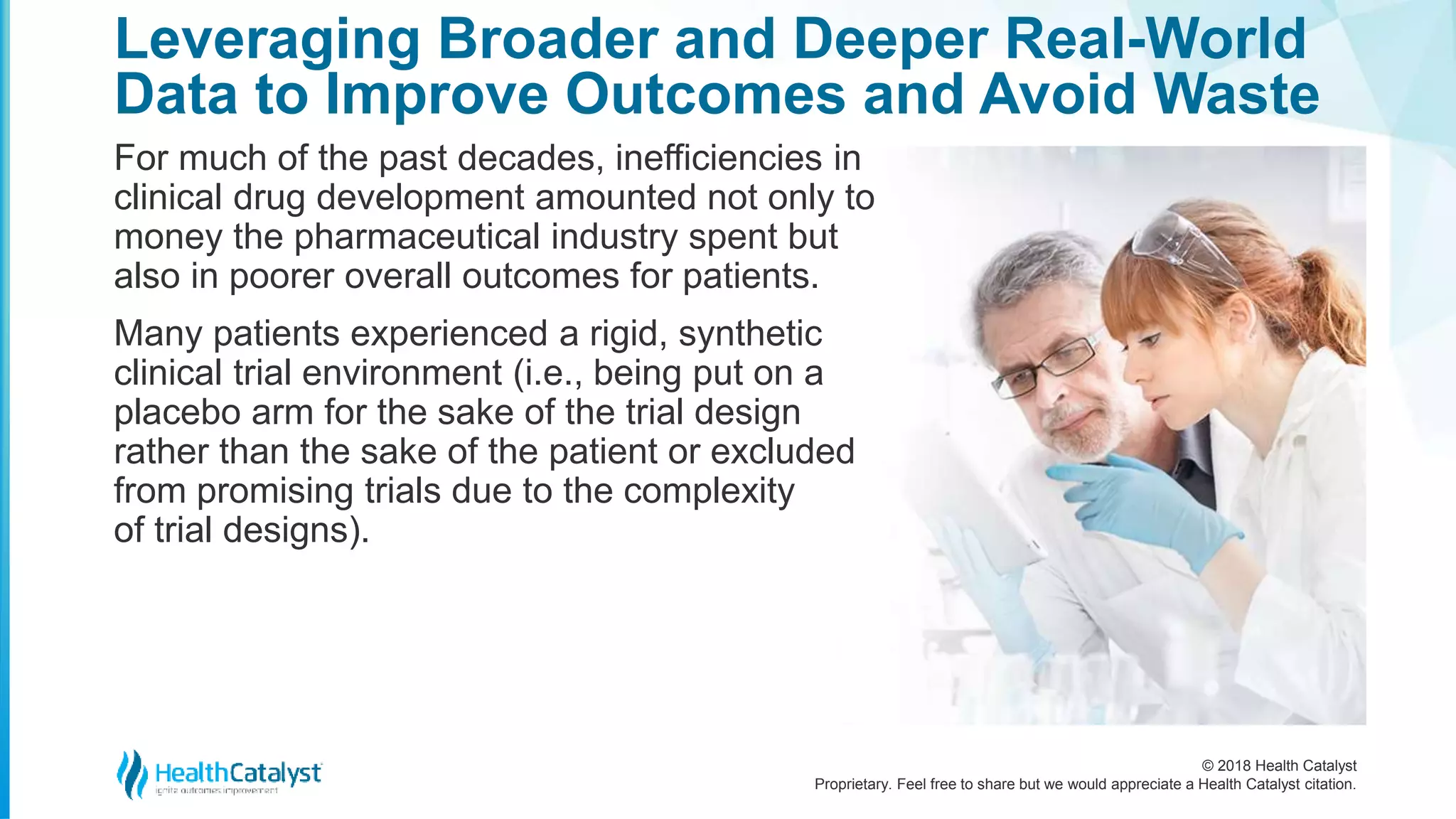
For much of the past decades, inefficiencies in
clinical drug development amounted not only to
money the pharmaceutical industry spent but
also in poorer overall outcomes for patients.
Many patients experienced a rigid, synthetic
clinical trial environment (i.e., being put on a
placebo arm for the sake of the trial design
rather than the sake of the patient or excluded
from promising trials due to the complexity
of trial designs).
Leveraging Broader and Deeper Real-World
Data to Improve Outcomes and Avoid Waste
© 2018 Health Catalyst
Proprietary. Feel free to share but we would appreciate a Health Catalyst citation.
Leveraging Broader and Deeper Real-World
Data to Improve Outcomes and Avoid Waste
A real-world approach marries clinical
development with the realities of healthcare:
Comorbidities
Complexity
The need to measure real-world outcomes
(versus synthetic outcomes within a sanitized trial)
>
>
>
© 2018 Health Catalyst
Proprietary. Feel free to share but we would appreciate a Health Catalyst citation.
Leveraging Broader and Deeper Real-World
Data to Improve Outcomes and Avoid Waste
Critical Value Across the Life Science Pipeline
By leveraging extended RWD/RWE, life science
companies gain critical value across their
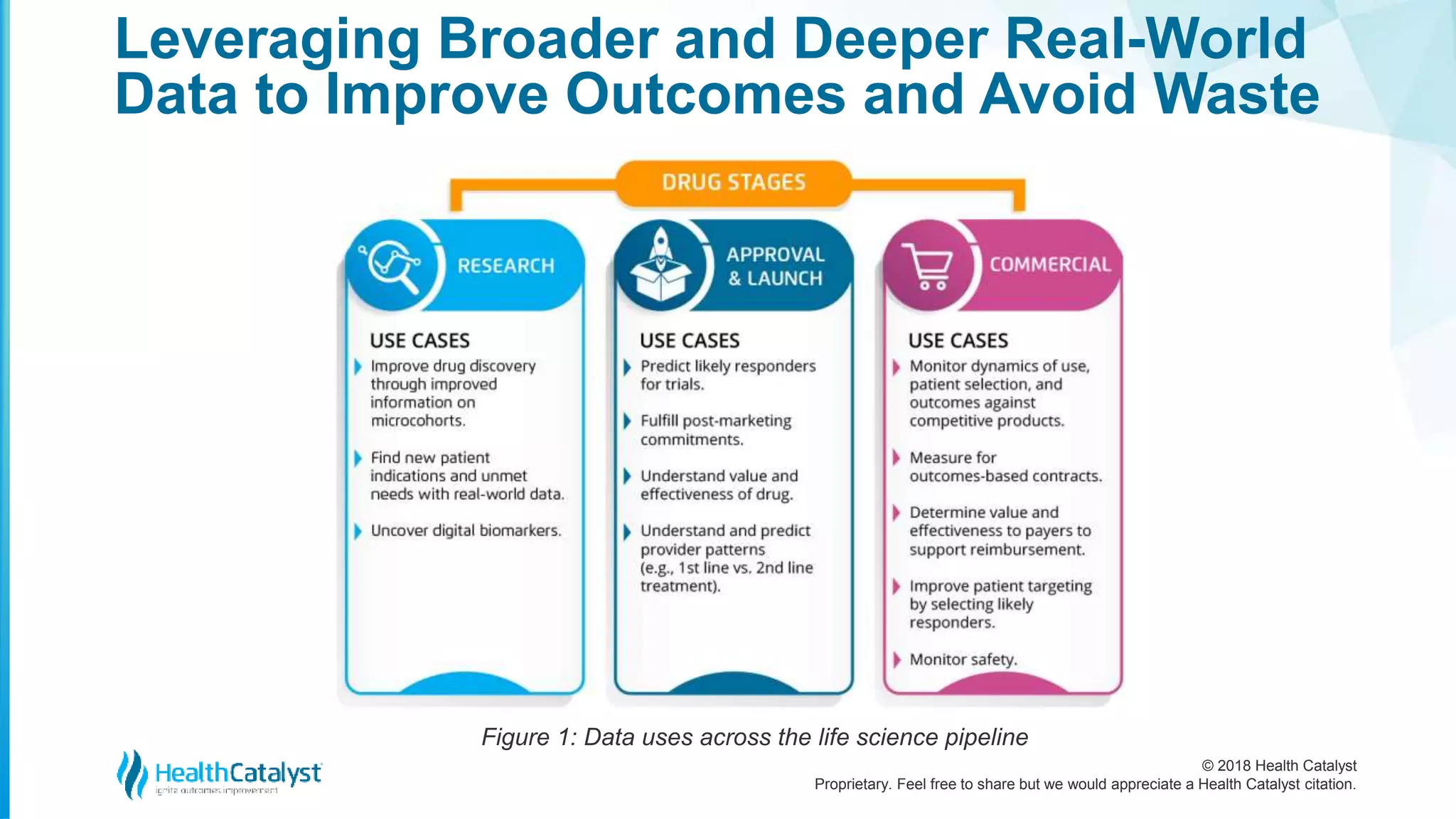
pipeline (Figure 1), allowing them to:
Save money.
Accelerate clinical trials time and time to market.
Create a more insightful digital marketing
strategy.
Improve matching of patients with drugs.
>
>
>
>
© 2018 Health Catalyst
Proprietary. Feel free to share but we would appreciate a Health Catalyst citation.
Leveraging Broader and Deeper Real-World
Data to Improve Outcomes and Avoid Waste
Figure 1: Data uses across the life science pipeline
© 2018 Health Catalyst
Proprietary. Feel free to share but we would appreciate a Health Catalyst citation.
Leveraging Broader and Deeper Real-World
Data to Improve Outcomes and Avoid Waste
Offerings have started to grow
around certain therapeutic
areas, and healthcare analytics
vendors are now expanding
offerings to meet the demand
for integrated data from many
sources (e.g., labs, consumer
behavior, and more [Figure 2])
that capture the breadth of
patient health.
Figure 2: Life science companies are interested in a variety of data
© 2018 Health Catalyst
Proprietary. Feel free to share but we would appreciate a Health Catalyst citation.
As Clinical Trials Evolve, Extended
RWD/RWE Becomes Paramount
The life science industry historically placed its
largest bets on heavily sanitized clinical trials, as
regulatory approval equated to reimbursement.
As the field evolved, developers learned that
the synthetic trial setting didn’t reflect drug
performance in the real world.
When commercialized and available to larger
populations, drugs may produce different
safety profiles and effectiveness than in the
select trial population.
© 2018 Health Catalyst
Proprietary. Feel free to share but we would appreciate a Health Catalyst citation.
As Clinical Trials Evolve, Extended
RWD/RWE Becomes Paramount
The limited populations and controlled nature
of clinical trials have sparked the extended
RWD/RWE movement to understand patient
behavior and real-world performance via
data outside the clinical trial setting.
And as regulators and payers adapt,
the pressures have mounted to develop
therapies that are safe and effective
in the real-world setting.
© 2018 Health Catalyst
Proprietary. Feel free to share but we would appreciate a Health Catalyst citation.
As Clinical Trials Evolve, Extended
RWD/RWE Becomes Paramount
Much of the initial evidence, however, was confined
to large, but shallow, claims-derived datasets.
These datasets present many challenges in the
clinical trials setting:
Conversion of claims into specific visits and a
clear history of the patient (coding challenges).
Understanding completeness/incompleteness
of the datasets (data quality challenges).
Categorization of providers and locations of
service (provenance tracing).
Selecting the most useful measures of
utilization and expenditures (outcome metrics).
>
>
>
>
© 2018 Health Catalyst
Proprietary. Feel free to share but we would appreciate a Health Catalyst citation.
As Clinical Trials Evolve, Extended
RWD/RWE Becomes Paramount
A few deeper, EHR-derived datasets
emerged, especially for some diseases
(e.g., cancer) from specialized companies
or from specific regions, payers, etc.
Most of these datasets, however, are not
broad and deep enough and can often
only be partially linked together.
© 2018 Health Catalyst
Proprietary. Feel free to share but we would appreciate a Health Catalyst citation.
Looking Beyond the EHR for Broad and Deep Data
Driving outcomes improvement requires integration
of data across sources, but with much of RWD to
date focused on claims and with limited EHR data,
the life science industry lacks the breadth and
depth to leverage RWD in drug development.
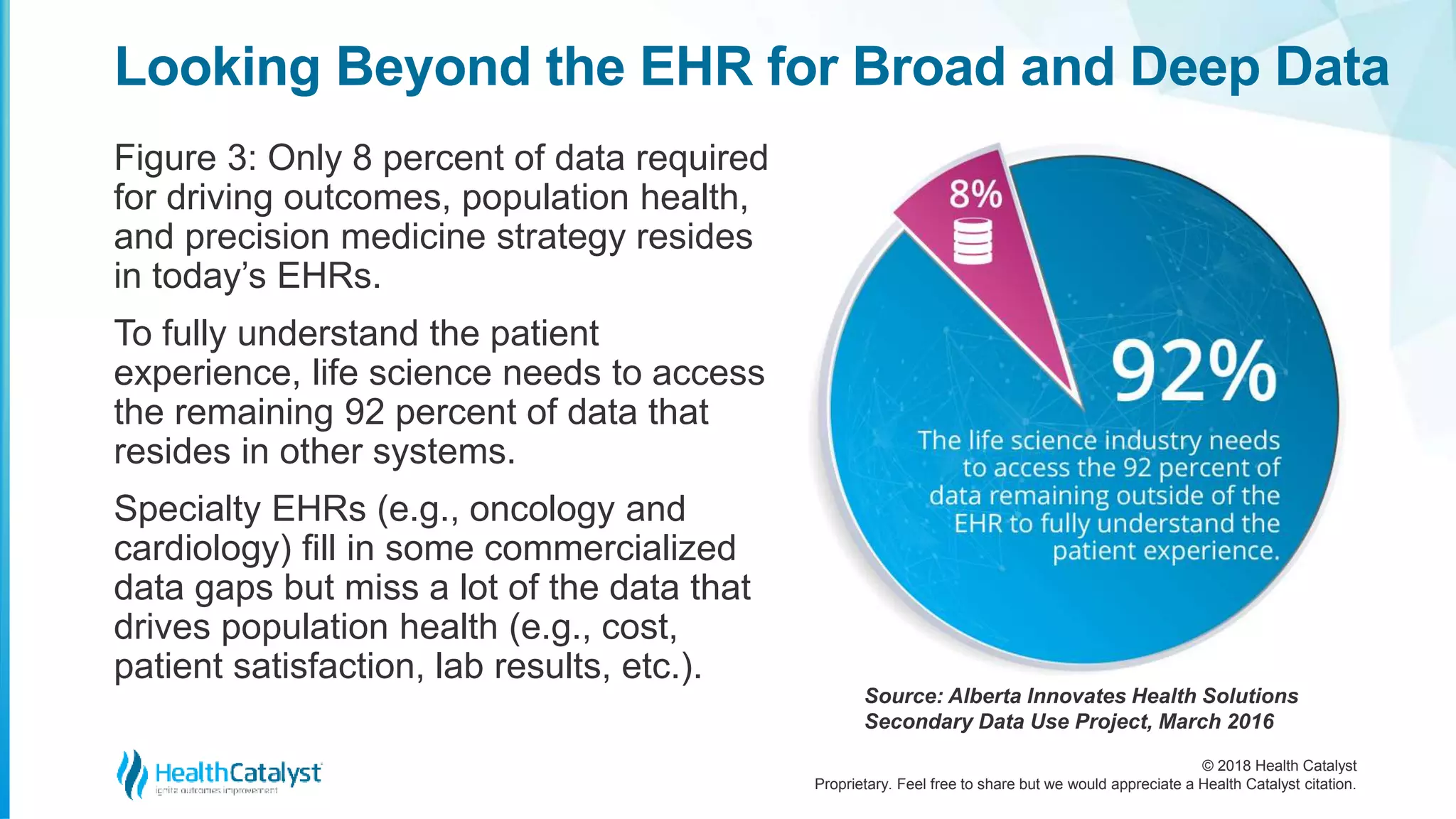
As Figure 3 explains, and the experience of
healthcare transformation companies confirms, only
8 percent of the needed data resides in the EHR.
Having large claims data and some EHR data is
only scratching the surface of true outcomes
measurement and transformation work for both
population health and personalized approaches.
© 2018 Health Catalyst
Proprietary. Feel free to share but we would appreciate a Health Catalyst citation.
Looking Beyond the EHR for Broad and Deep Data
Figure 3: Only 8 percent of data required
for driving outcomes, population health,
and precision medicine strategy resides
in today’s EHRs.
To fully understand the patient
experience, life science needs to access
the remaining 92 percent of data that
resides in other systems.
Specialty EHRs (e.g., oncology and
cardiology) fill in some commercialized
data gaps but miss a lot of the data that
drives population health (e.g., cost,
patient satisfaction, lab results, etc.).
Source: Alberta Innovates Health Solutions
Secondary Data Use Project, March 2016
© 2018 Health Catalyst
Proprietary. Feel free to share but we would appreciate a Health Catalyst citation.
Looking Beyond the EHR for Broad and Deep Data
Extended RWD/RWE requires broader
sources to truly understand patients; life
science companies can access this
knowledge by partnering with an
established healthcare transformation
company.
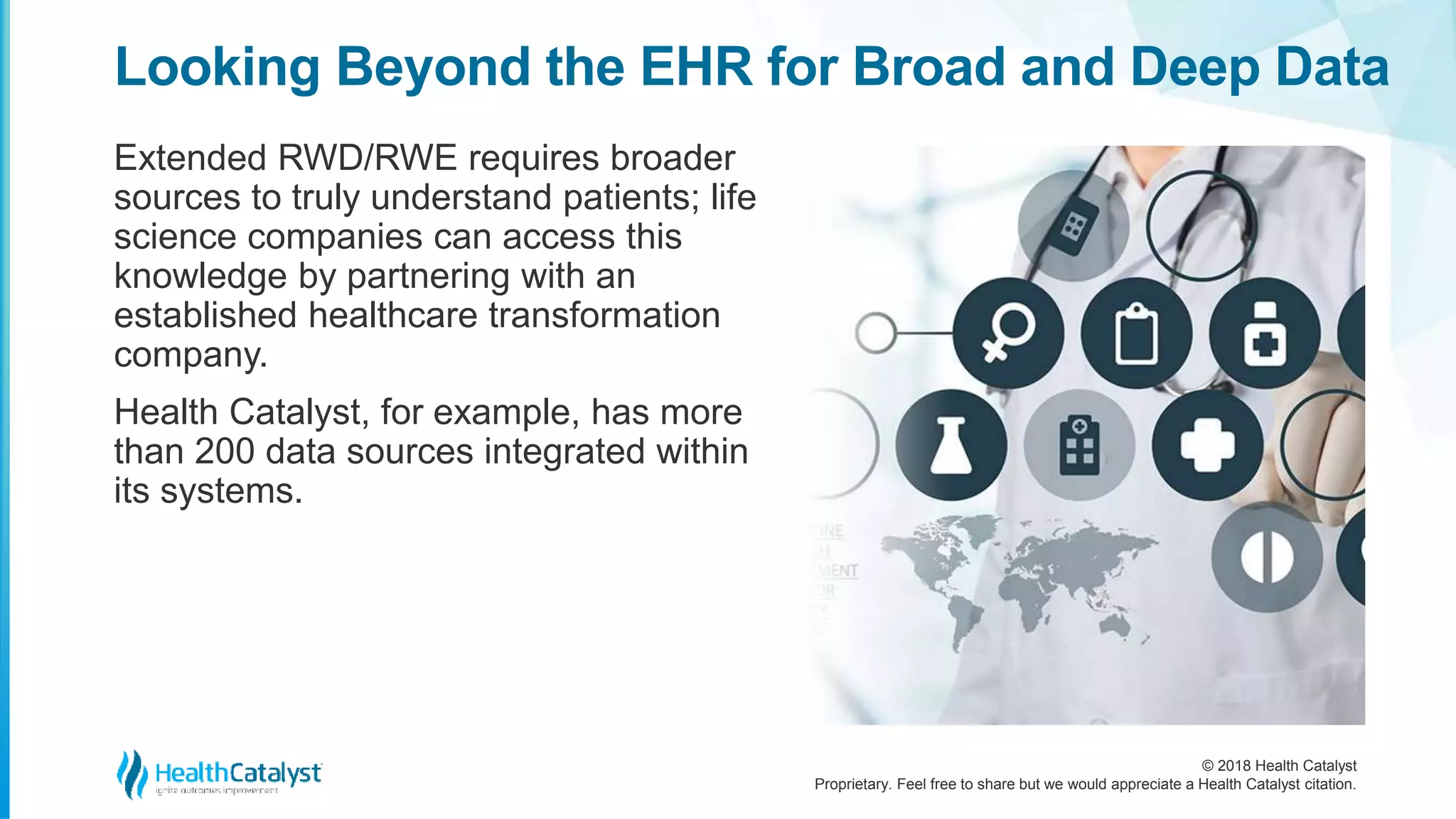
Health Catalyst, for example, has more
than 200 data sources integrated within
its systems.
© 2018 Health Catalyst
Proprietary. Feel free to share but we would appreciate a Health Catalyst citation.
Looking Beyond the EHR for Broad and Deep Data
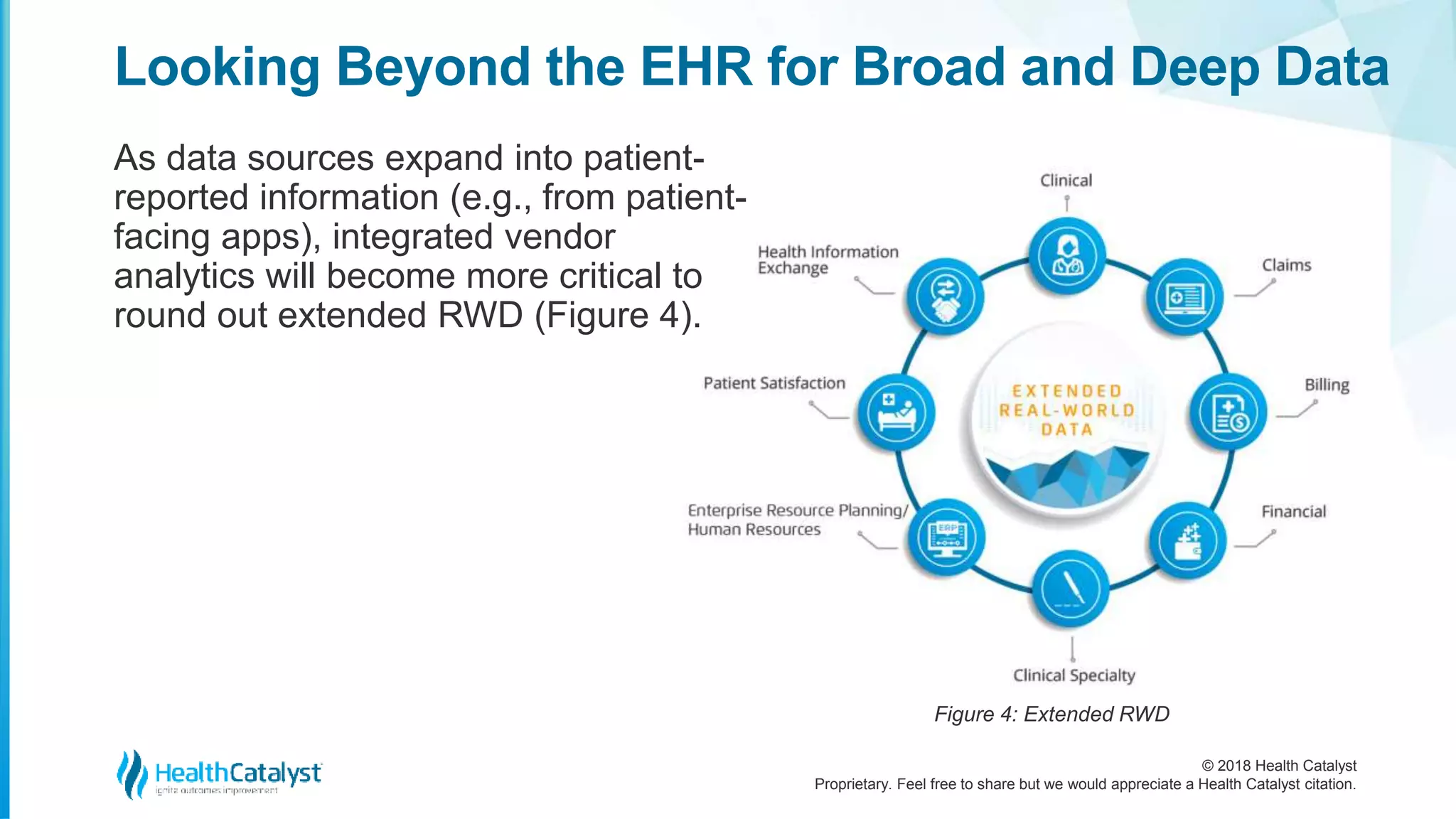
As data sources expand into patient-
reported information (e.g., from patient-
facing apps), integrated vendor
analytics will become more critical to
round out extended RWD (Figure 4).
Figure 4: Extended RWD
© 2018 Health Catalyst
Proprietary. Feel free to share but we would appreciate a Health Catalyst citation.
Looking Beyond the EHR for Broad and Deep Data
To produce extended RWD, a healthcare transformation
company must have five key capabilities:
1. Ability to measure real world outcomes.
2. Direct and maintain trusted relationship with
providers across the continuum of care.
3. Ability to bridge the gap between actionable
insight and real-world action.
4. Access to the breadth and depth of knowledge
across data, analytics, and clinical operations.
5. Interdisciplinary teams to achieve success using
data science, technological tools and clinical
operations experience and insight that allows true
healthcare transformation by operating at the level of
governance, culture, and process improvement.
© 2018 Health Catalyst
Proprietary. Feel free to share but we would appreciate a Health Catalyst citation.
From Insights to Real-World Action
Having RWD and RWE is only the start to driving
outcomes; life science companies need the ability
to act on the data by turning it into provider-level
actions that benefit the patient.
Partnering with the right healthcare transformation
organization helps life sciences achieve real-world
action by connecting companies with multiple
health systems and patients, as well as the
data that determines whether hypotheses
are operational and lead to improvement.
© 2018 Health Catalyst
Proprietary. Feel free to share but we would appreciate a Health Catalyst citation.
From Insights to Real-World Action
For example, a life science company can use
shallow data to predict drug response, find patterns,
and develop insights, but only when it deploys the
drug in the real-world hospital setting can it
understand the actual real-world impact.
Together, the life science industry and the right
healthcare transformation companies can drive
change, monitor, and measure drug performance.
© 2018 Health Catalyst
Proprietary. Feel free to share but we would appreciate a Health Catalyst citation.
From Insights to Real-World Action
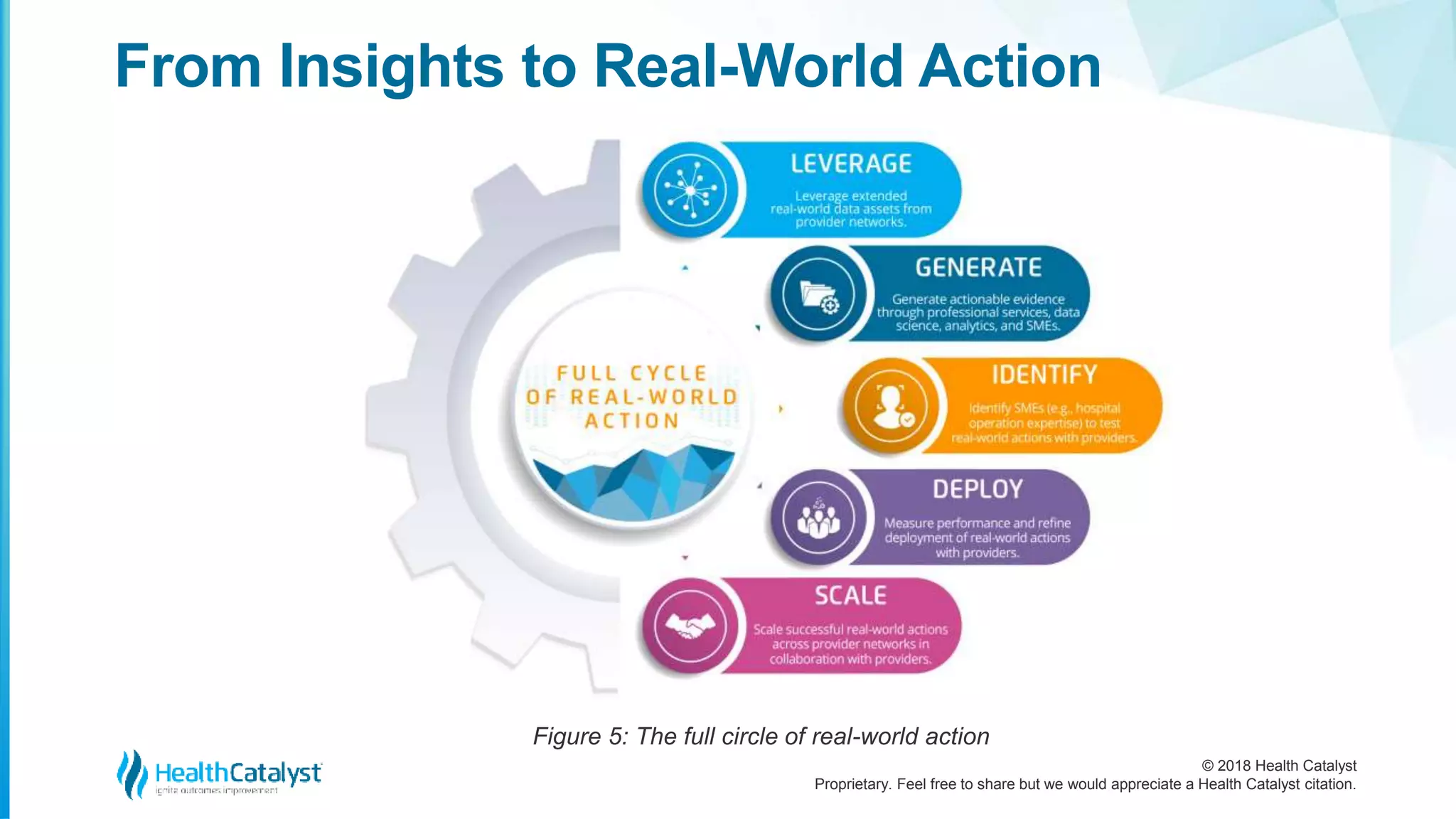
This completes the full circle of real-world action (Figure 5), from
opportunity to action, with a solution that achieves five key goals:
1. Leverages extended RWD from trusted provider networks.
2. Generates extended and actionable RWE, leveraging
consulting services, professional services, data science,
analytics, SMEs, clinical operations and PHM expertise.
3. Identifies real-world actions for providers to test with patients
(leveraging SMEs, e.g., hospital operational expertise).
4. Deploys and measures performance and refines the real-
world action deployment in collaboration with providers.
5. Scales successful real-world actions across provider
networks in collaboration with providers.
© 2018 Health Catalyst
Proprietary. Feel free to share but we would appreciate a Health Catalyst citation.
From Insights to Real-World Action
Figure 5: The full circle of real-world action
© 2018 Health Catalyst
Proprietary. Feel free to share but we would appreciate a Health Catalyst citation.
Two Benefits of Healthcare Transformation
Companies Committed to Outcomes Improvements
By partnering with the right healthcare transformation
company, life science companies gain two key
capabilities:
1. Core Capabilities
2. Strategic Consulting and Professional Services
© 2018 Health Catalyst
Proprietary. Feel free to share but we would appreciate a Health Catalyst citation.
Two Benefits of Healthcare Transformation
Companies Committed to Outcomes Improvements
Core Capabilities
Because an effective healthcare
transformation company is focused around
outcomes improvement, it brings essential
capabilities to the life science drug pipeline.
The three core capabilities of best practice,
analytics, and adoption that support outcomes
improvement can also serve as an effective
framework in drug development.
© 2018 Health Catalyst
Proprietary. Feel free to share but we would appreciate a Health Catalyst citation.
Two Benefits of Healthcare Transformation
Companies Committed to Outcomes Improvements
Strategic Consulting and Professional Services
Strategic consulting and professional services
offerings have unique data to quickly identify
solutions, leverage technologies for data ingestion
and visualization, and complement it with deep
operational expertise to contextualize the human
factors and processes that drive success.
With a trusted network of providers, life science
companies can merge data and professional skills
and refine a solution until it can function and scale
across providers.
© 2018 Health Catalyst
Proprietary. Feel free to share but we would appreciate a Health Catalyst citation.
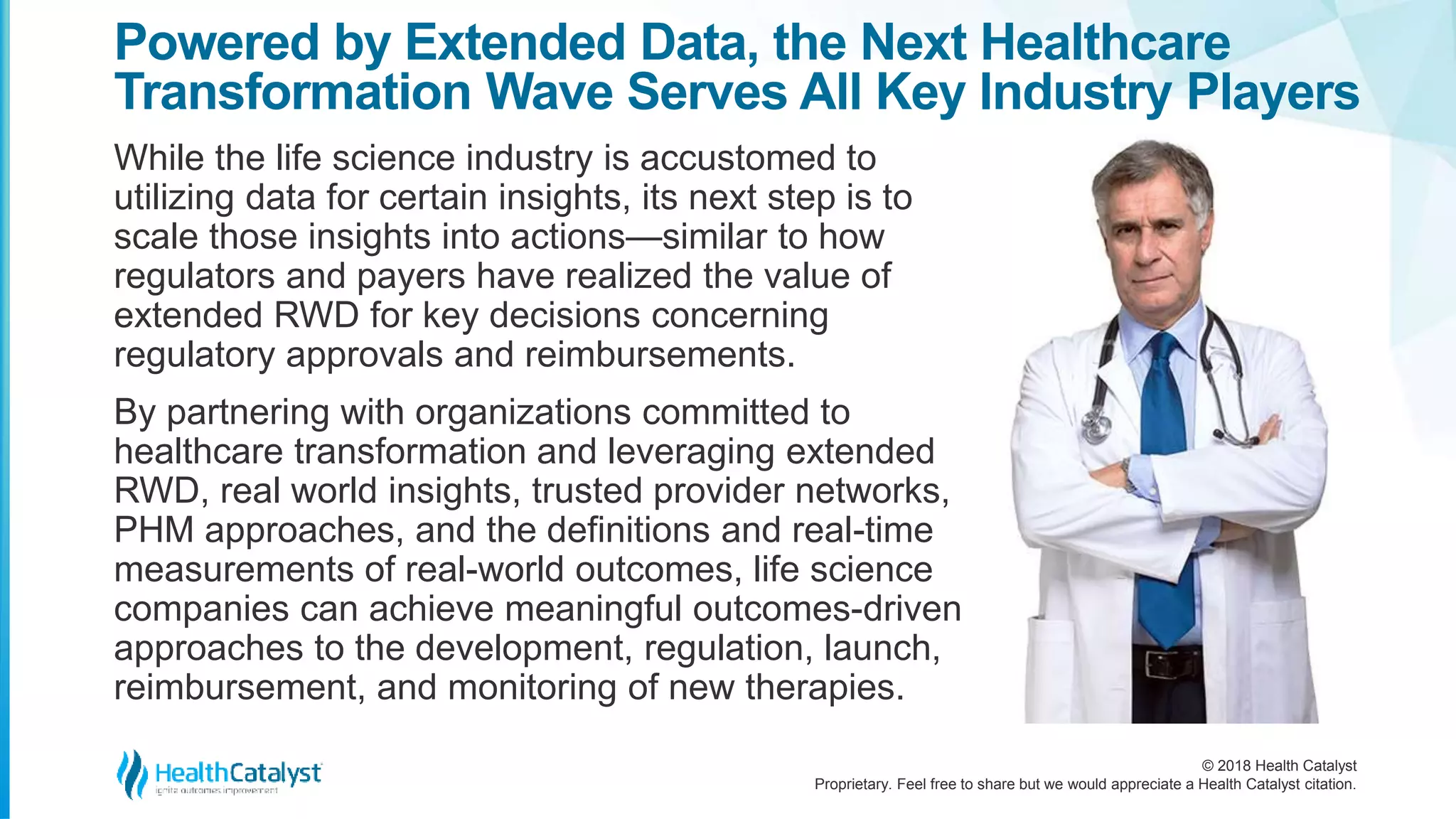
Powered by Extended Data, the Next Healthcare
Transformation Wave Serves All Key Industry Players
While the life science industry is accustomed to
utilizing data for certain insights, its next step is to
scale those insights into actions—similar to how
regulators and payers have realized the value of
extended RWD for key decisions concerning
regulatory approvals and reimbursements.
By partnering with organizations committed to
healthcare transformation and leveraging extended
RWD, real world insights, trusted provider networks,
PHM approaches, and the definitions and real-time
measurements of real-world outcomes, life science
companies can achieve meaningful outcomes-driven
approaches to the development, regulation, launch,
reimbursement, and monitoring of new therapies.
© 2018 Health Catalyst
Proprietary. Feel free to share but we would appreciate a Health Catalyst citation.
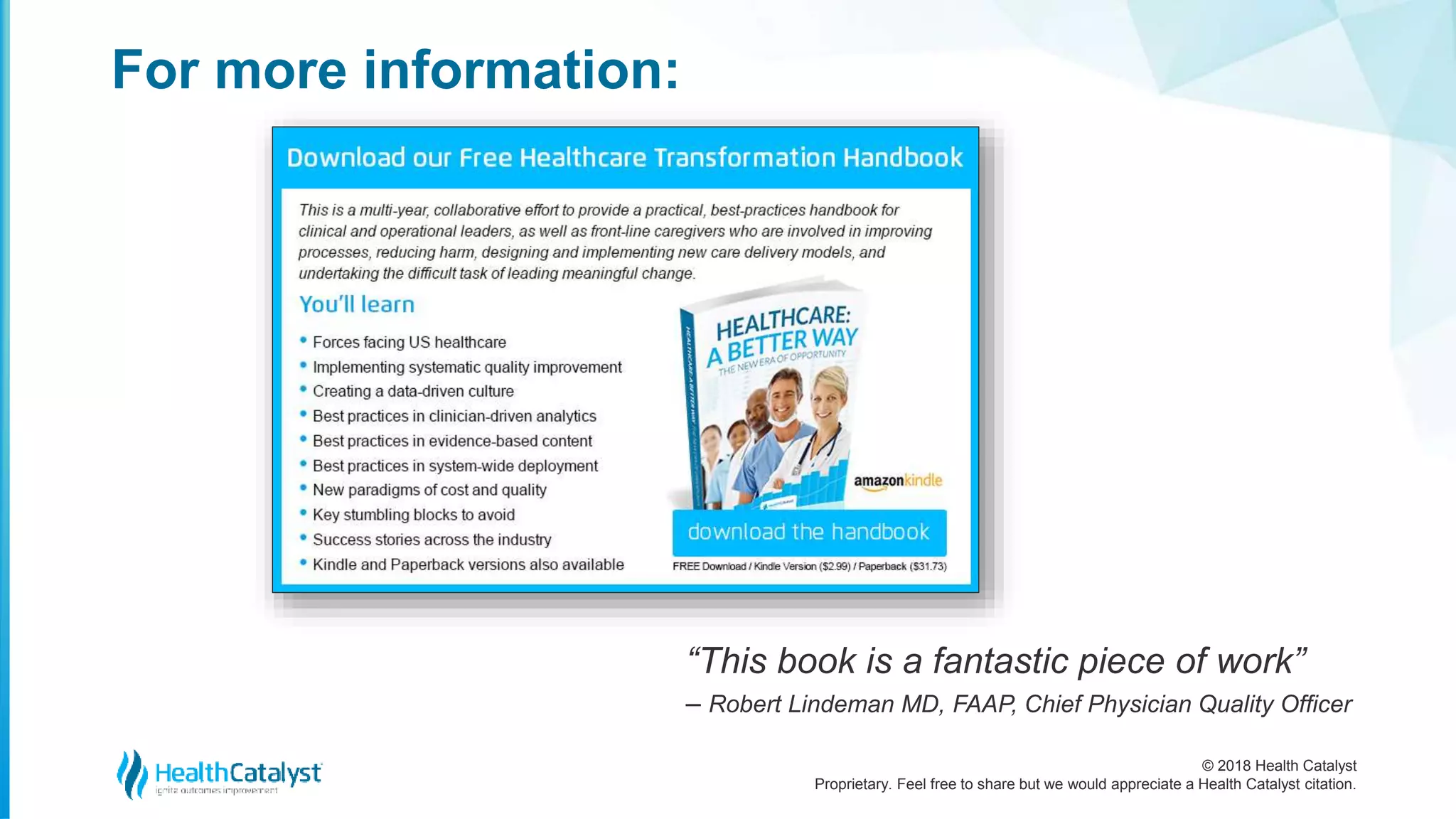
For more information:
“This book is a fantastic piece of work”
– Robert Lindeman MD, FAAP, Chief Physician Quality Officer
© 2018 Health Catalyst
Proprietary. Feel free to share but we would appreciate a Health Catalyst citation.
More about this topic
Link to original article for a more in-depth discussion.
Extended Real-World Data: The Life Science Industry’s Number One Asset
Health Catalyst Adds World-Class Expertise in AI and Life Sciences
Health Catalyst News
Preventing Medication Errors: A $21 Billion Opportunity
Stan Pestotnik, MS, RPh, Patient Safety Products, VP
Pairing HIE Data with an Analytics Platform: Four Key Improvement Categories
Adam Bell, Director of Clinical Advisory and Provider Outreach Services; Carol Owen, SVP, Interoperability
Dan Soule, VP Product Management; Eric Crawford, Head of Product - Interoperability, Analytics and Big Data
Analysis Reveals that Pharmacist-led Medication Therapy Management Reduces Total Cost of Care
Health Catalyst Success Stories
The Digitization of Healthcare: Why the Right Approach Matters and Five Steps to Get There
Health Catalyst Insights
© 2018 Health Catalyst
Proprietary. Feel free to share but we would appreciate a Health Catalyst citation.
Other Clinical Quality Improvement Resources
Click to read additional information at www.healthcatalyst.com
Elia Stupka leads the Life Sciences group at Health Catalyst as well as contributing to overall
vision and growth for the company. He is a visionary leader in digital health with a passion for
innovation in health and life sciences and 20 years of experience across industry, academic and
clinical settings. In his role leading data science at Dana-Farber Cancer Institute, one of the
world's leading cancer organizations, Dr. Stupka brought together research, clinical and operational data
to improve patient outcomes and facilitated the discovery of new treatments. He started his career as a
member of the first team that annotated the human genome in Cambridge, U.K. He then worked with
Nobel Laureate Sydney Brenner to build the first genome research group in Singapore. Dr. Stupka has
worked at several key European research organizations such as the Telethon Institute of Genetics and
University College London. He then co-directed a genomics research center at San Raffaele Hospital in
Milan, Italy, where he contributed to the successful development and completion of the first commercially
viable gene therapy clinical trials in Europe. He worked several years in the pharma industry, at
Boehringer Ingelheim Pharma, where he headed computational biology and genomics. Over his career Dr.
Stupka has published 100+ peer reviewed articles, and been cited 35,000+ times across the fields of drug
development, data science and ethics. His work has contributed to the understanding of the human
genome and transcriptome, the diagnosis of rare disease patients, the development of gene therapy and
novel drugs on the market and the development of ethics frameworks pertaining to the fast-changing world
of big data in health and biology.
© 2018 Health Catalyst
Proprietary. Feel free to share but we would appreciate a Health Catalyst citation.
Other Clinical Quality Improvement Resources
Click to read additional information at www.healthcatalyst.com
Health Catalyst is a mission-driven data warehousing, analytics and outcomes-improvement company
that helps healthcare organizations of all sizes improve clinical, financial, and operational outcomes
needed to improve population health and accountable care. Our proven enterprise data warehouse
(EDW) and analytics platform helps improve quality, add efficiency and lower costs in support of more
than 65 million patients for organizations ranging from the largest US health system to forward-thinking
physician practices.
Health Catalyst was recently named as the leader in the enterprise healthcare BI market in
improvement by KLAS, and has received numerous best-place-to work awards including Modern
Healthcare in 2013, 2014, and 2015, as well as other recognitions such as “Best Place to work for
Millenials, and a “Best Perks for Women.”

Extended Real-World Data: The Life Science Industry’s Number One Asset

  • 1.
    Extended Real-World Data: TheLife Science Industry’s Number One Asset
  • 2.
    © 2018 HealthCatalyst Proprietary. Feel free to share but we would appreciate a Health Catalyst citation. The life science industry (pharmaceutical, medical device, biotech, digital therapeutics companies, and other innovators) has invested significantly in data—specifically, extended real- world data (RWD)/real-world evidence (RWE). More importantly, the industry has realized that focusing on population health management (PHM) and outcomes improvement is its guiding principle and top goal, and data is one part of how it will achieve that goal. Real World Data for Life Sciences
  • 3.
    © 2018 HealthCatalyst Proprietary. Feel free to share but we would appreciate a Health Catalyst citation. Patient-centric data beyond commoditized claims data assets is becoming instrumental in the drug development pipeline. It’s informing the process from discovery, new indications, clinical development, trial design, and measuring outcomes to identifying who is using an approved drug and why and determining value- effectiveness for drug reimbursement. Real World Data for Life Sciences
  • 4.
    © 2018 HealthCatalyst Proprietary. Feel free to share but we would appreciate a Health Catalyst citation. As data has become a staple decision driver at most life science companies, organizations are increasingly aware of the need to bridge the divide between these two data imperatives: Leveraging the fully digital experiences (e.g., patient-facing applications) and the existing clinical, provider setting. Working with large healthcare systems and their providers and patients, with a thorough understanding of clinical operations, to drive meaningful change. Real World Data for Life Sciences > >
  • 5.
    © 2018 HealthCatalyst Proprietary. Feel free to share but we would appreciate a Health Catalyst citation. This report explains the importance of extended RWD and RWE for the life science industry and how partnering with the right healthcare transformation company provides access to the patient-centric data needed to improve the drug development process. Real World Data for Life Sciences
  • 6.
    © 2018 HealthCatalyst Proprietary. Feel free to share but we would appreciate a Health Catalyst citation. The drug development process takes from 8 to 15 years, costs up to $11 billion, and relies on an expensive and often inefficient clinical trials process, as well as costly, sparse data that doesn’t provide a full picture of patient health. For example, claims data will show that a patient fills a prescription but gives no insight into outcomes, side effects, etc. Leveraging Data to Overcome the Inefficiencies of Drug Development
  • 7.
    © 2018 HealthCatalyst Proprietary. Feel free to share but we would appreciate a Health Catalyst citation. As the entire system (regulators, payers, manufacturers, and providers) aligns around outcomes, the following knowledge areas will enable a fair, outcomes-driven healthcare system: Real-world patient care (e.g., care variability between and within health systems). Measuring outcomes in real time across a diversity of provider types, shapes, sizes, and geographies. Understanding the clinical processes that drive those outcomes. Leveraging Data to Overcome the Inefficiencies of Drug Development > > >
  • 8.
    © 2018 HealthCatalyst Proprietary. Feel free to share but we would appreciate a Health Catalyst citation. Healthcare today has a crucial opportunity, as, for the first time, key industry players are aligning on the same key goals. Regulatory, cost, and reimbursement pressures are driving the urgency to deliver the right treatment to the right patient, as measured by real- world outcomes and monitoring. Leveraging Data to Overcome the Inefficiencies of Drug Development
  • 9.
    © 2018 HealthCatalyst Proprietary. Feel free to share but we would appreciate a Health Catalyst citation. This means that manufacturers, payers, and providers all benefit from solving similar challenges: How do I identify patients with lower risk and highest benefit from treatment “X”? How do I manage my patient population, at a PHM level, to drive overall balance between clinical and financial outcomes? How do I predict, identify, minimize, monitor, and measure drug safety issues? How do I ensure high standards of treatment adherence, patient education, support, and follow-up to maximize outcome potential? Leveraging Data to Overcome the Inefficiencies of Drug Development > > > >
  • 10.
    © 2018 HealthCatalyst Proprietary. Feel free to share but we would appreciate a Health Catalyst citation. While RWD (mostly claims and some EHR data) has shown more useful potential for life sciences in the past few years, its impact has often been limited to specific settings, disease areas, geographies, payers, etc. The coming years will likely see a substantial impact across most therapeutics, both for their development, launch, and post-launch activities. Leveraging Data to Overcome the Inefficiencies of Drug Development
  • 11.
    © 2018 HealthCatalyst Proprietary. Feel free to share but we would appreciate a Health Catalyst citation. The 21st Century Cures Act was signed into law in 2016, boosting the value of RWD and RWE for the FDA and life science industry. The Cures Act aims to accelerate medical product development and innovation and places more focus on RWE- and RWD-driven decision making. According to Congress, RWE is data from sources other than clinical trials (e.g., randomized trials and observational studies) on the use and the potential benefits or risks of a drug. The FDA Leads the Way: RWD for Regulatory Approvals
  • 12.
    © 2018 HealthCatalyst Proprietary. Feel free to share but we would appreciate a Health Catalyst citation. Congress describes RWD as data on patient health status and/or delivery of care that’s routinely collected from EHRs, claims and billing, patient-generated data, and more. Both RWE and RWD are growing in volume and depth with the increasing use of computers, mobile devices, and wearables and gaining utility as advanced analytics capabilities (e.g., AI and machine learning) enable more personalized and actionable insights. The FDA Leads the Way: RWD for Regulatory Approvals
  • 13.
    © 2018 HealthCatalyst Proprietary. Feel free to share but we would appreciate a Health Catalyst citation. In 2018, the FDA published the Framework for FDA’s Real-World Evidence Program, which further details the usefulness of RWD in trials for new therapies. The emphasis on RWD is leading to a new approach that includes pragmatic trials and synthetic cohorts (generating historical controls from historically accumulated trial controls, and/or simulating them on current RWD cohorts). The FDA Leads the Way: RWD for Regulatory Approvals
  • 14.
    © 2018 HealthCatalyst Proprietary. Feel free to share but we would appreciate a Health Catalyst citation. Because pragmatic trials are poised to slash costs and reduce timelines drastically, life science companies that adopt them early will differentiate themselves in the market. Key RWD/RWE challenges are emerging around access to health systems and patients as different organizations compete to enroll patients in traditional studies, as well as innovative studies that leverage data-driven approaches. The FDA Leads the Way: RWD for Regulatory Approvals
  • 15.
    © 2018 HealthCatalyst Proprietary. Feel free to share but we would appreciate a Health Catalyst citation. It’s not sufficient for life science companies to leverage data; they must also create clear value for providers and patients, ensuring that innovations in clinical development help health systems achieve certain goals: Develop population health and clinical operations strategies that align clinical trials with standards of care. Choose trials that are truly of value to the patient and to the health system that manages them. The FDA Leads the Way: RWD for Regulatory Approvals > >
  • 16.
    © 2018 HealthCatalyst Proprietary. Feel free to share but we would appreciate a Health Catalyst citation. For much of the past decades, inefficiencies in clinical drug development amounted not only to money the pharmaceutical industry spent but also in poorer overall outcomes for patients. Many patients experienced a rigid, synthetic clinical trial environment (i.e., being put on a placebo arm for the sake of the trial design rather than the sake of the patient or excluded from promising trials due to the complexity of trial designs). Leveraging Broader and Deeper Real-World Data to Improve Outcomes and Avoid Waste
  • 17.
    © 2018 HealthCatalyst Proprietary. Feel free to share but we would appreciate a Health Catalyst citation. Leveraging Broader and Deeper Real-World Data to Improve Outcomes and Avoid Waste A real-world approach marries clinical development with the realities of healthcare: Comorbidities Complexity The need to measure real-world outcomes (versus synthetic outcomes within a sanitized trial) > > >
  • 18.
    © 2018 HealthCatalyst Proprietary. Feel free to share but we would appreciate a Health Catalyst citation. Leveraging Broader and Deeper Real-World Data to Improve Outcomes and Avoid Waste Critical Value Across the Life Science Pipeline By leveraging extended RWD/RWE, life science companies gain critical value across their pipeline (Figure 1), allowing them to: Save money. Accelerate clinical trials time and time to market. Create a more insightful digital marketing strategy. Improve matching of patients with drugs. > > > >
  • 19.
    © 2018 HealthCatalyst Proprietary. Feel free to share but we would appreciate a Health Catalyst citation. Leveraging Broader and Deeper Real-World Data to Improve Outcomes and Avoid Waste Figure 1: Data uses across the life science pipeline
  • 20.
    © 2018 HealthCatalyst Proprietary. Feel free to share but we would appreciate a Health Catalyst citation. Leveraging Broader and Deeper Real-World Data to Improve Outcomes and Avoid Waste Offerings have started to grow around certain therapeutic areas, and healthcare analytics vendors are now expanding offerings to meet the demand for integrated data from many sources (e.g., labs, consumer behavior, and more [Figure 2]) that capture the breadth of patient health. Figure 2: Life science companies are interested in a variety of data
  • 21.
    © 2018 HealthCatalyst Proprietary. Feel free to share but we would appreciate a Health Catalyst citation. As Clinical Trials Evolve, Extended RWD/RWE Becomes Paramount The life science industry historically placed its largest bets on heavily sanitized clinical trials, as regulatory approval equated to reimbursement. As the field evolved, developers learned that the synthetic trial setting didn’t reflect drug performance in the real world. When commercialized and available to larger populations, drugs may produce different safety profiles and effectiveness than in the select trial population.
  • 22.
    © 2018 HealthCatalyst Proprietary. Feel free to share but we would appreciate a Health Catalyst citation. As Clinical Trials Evolve, Extended RWD/RWE Becomes Paramount The limited populations and controlled nature of clinical trials have sparked the extended RWD/RWE movement to understand patient behavior and real-world performance via data outside the clinical trial setting. And as regulators and payers adapt, the pressures have mounted to develop therapies that are safe and effective in the real-world setting.
  • 23.
    © 2018 HealthCatalyst Proprietary. Feel free to share but we would appreciate a Health Catalyst citation. As Clinical Trials Evolve, Extended RWD/RWE Becomes Paramount Much of the initial evidence, however, was confined to large, but shallow, claims-derived datasets. These datasets present many challenges in the clinical trials setting: Conversion of claims into specific visits and a clear history of the patient (coding challenges). Understanding completeness/incompleteness of the datasets (data quality challenges). Categorization of providers and locations of service (provenance tracing). Selecting the most useful measures of utilization and expenditures (outcome metrics). > > > >
  • 24.
    © 2018 HealthCatalyst Proprietary. Feel free to share but we would appreciate a Health Catalyst citation. As Clinical Trials Evolve, Extended RWD/RWE Becomes Paramount A few deeper, EHR-derived datasets emerged, especially for some diseases (e.g., cancer) from specialized companies or from specific regions, payers, etc. Most of these datasets, however, are not broad and deep enough and can often only be partially linked together.
  • 25.
    © 2018 HealthCatalyst Proprietary. Feel free to share but we would appreciate a Health Catalyst citation. Looking Beyond the EHR for Broad and Deep Data Driving outcomes improvement requires integration of data across sources, but with much of RWD to date focused on claims and with limited EHR data, the life science industry lacks the breadth and depth to leverage RWD in drug development. As Figure 3 explains, and the experience of healthcare transformation companies confirms, only 8 percent of the needed data resides in the EHR. Having large claims data and some EHR data is only scratching the surface of true outcomes measurement and transformation work for both population health and personalized approaches.
  • 26.
    © 2018 HealthCatalyst Proprietary. Feel free to share but we would appreciate a Health Catalyst citation. Looking Beyond the EHR for Broad and Deep Data Figure 3: Only 8 percent of data required for driving outcomes, population health, and precision medicine strategy resides in today’s EHRs. To fully understand the patient experience, life science needs to access the remaining 92 percent of data that resides in other systems. Specialty EHRs (e.g., oncology and cardiology) fill in some commercialized data gaps but miss a lot of the data that drives population health (e.g., cost, patient satisfaction, lab results, etc.). Source: Alberta Innovates Health Solutions Secondary Data Use Project, March 2016
  • 27.
    © 2018 HealthCatalyst Proprietary. Feel free to share but we would appreciate a Health Catalyst citation. Looking Beyond the EHR for Broad and Deep Data Extended RWD/RWE requires broader sources to truly understand patients; life science companies can access this knowledge by partnering with an established healthcare transformation company. Health Catalyst, for example, has more than 200 data sources integrated within its systems.
  • 28.
    © 2018 HealthCatalyst Proprietary. Feel free to share but we would appreciate a Health Catalyst citation. Looking Beyond the EHR for Broad and Deep Data As data sources expand into patient- reported information (e.g., from patient- facing apps), integrated vendor analytics will become more critical to round out extended RWD (Figure 4). Figure 4: Extended RWD
  • 29.
    © 2018 HealthCatalyst Proprietary. Feel free to share but we would appreciate a Health Catalyst citation. Looking Beyond the EHR for Broad and Deep Data To produce extended RWD, a healthcare transformation company must have five key capabilities: 1. Ability to measure real world outcomes. 2. Direct and maintain trusted relationship with providers across the continuum of care. 3. Ability to bridge the gap between actionable insight and real-world action. 4. Access to the breadth and depth of knowledge across data, analytics, and clinical operations. 5. Interdisciplinary teams to achieve success using data science, technological tools and clinical operations experience and insight that allows true healthcare transformation by operating at the level of governance, culture, and process improvement.
  • 30.
    © 2018 HealthCatalyst Proprietary. Feel free to share but we would appreciate a Health Catalyst citation. From Insights to Real-World Action Having RWD and RWE is only the start to driving outcomes; life science companies need the ability to act on the data by turning it into provider-level actions that benefit the patient. Partnering with the right healthcare transformation organization helps life sciences achieve real-world action by connecting companies with multiple health systems and patients, as well as the data that determines whether hypotheses are operational and lead to improvement.
  • 31.
    © 2018 HealthCatalyst Proprietary. Feel free to share but we would appreciate a Health Catalyst citation. From Insights to Real-World Action For example, a life science company can use shallow data to predict drug response, find patterns, and develop insights, but only when it deploys the drug in the real-world hospital setting can it understand the actual real-world impact. Together, the life science industry and the right healthcare transformation companies can drive change, monitor, and measure drug performance.
  • 32.
    © 2018 HealthCatalyst Proprietary. Feel free to share but we would appreciate a Health Catalyst citation. From Insights to Real-World Action This completes the full circle of real-world action (Figure 5), from opportunity to action, with a solution that achieves five key goals: 1. Leverages extended RWD from trusted provider networks. 2. Generates extended and actionable RWE, leveraging consulting services, professional services, data science, analytics, SMEs, clinical operations and PHM expertise. 3. Identifies real-world actions for providers to test with patients (leveraging SMEs, e.g., hospital operational expertise). 4. Deploys and measures performance and refines the real- world action deployment in collaboration with providers. 5. Scales successful real-world actions across provider networks in collaboration with providers.
  • 33.
    © 2018 HealthCatalyst Proprietary. Feel free to share but we would appreciate a Health Catalyst citation. From Insights to Real-World Action Figure 5: The full circle of real-world action
  • 34.
    © 2018 HealthCatalyst Proprietary. Feel free to share but we would appreciate a Health Catalyst citation. Two Benefits of Healthcare Transformation Companies Committed to Outcomes Improvements By partnering with the right healthcare transformation company, life science companies gain two key capabilities: 1. Core Capabilities 2. Strategic Consulting and Professional Services
  • 35.
    © 2018 HealthCatalyst Proprietary. Feel free to share but we would appreciate a Health Catalyst citation. Two Benefits of Healthcare Transformation Companies Committed to Outcomes Improvements Core Capabilities Because an effective healthcare transformation company is focused around outcomes improvement, it brings essential capabilities to the life science drug pipeline. The three core capabilities of best practice, analytics, and adoption that support outcomes improvement can also serve as an effective framework in drug development.
  • 36.
    © 2018 HealthCatalyst Proprietary. Feel free to share but we would appreciate a Health Catalyst citation. Two Benefits of Healthcare Transformation Companies Committed to Outcomes Improvements Strategic Consulting and Professional Services Strategic consulting and professional services offerings have unique data to quickly identify solutions, leverage technologies for data ingestion and visualization, and complement it with deep operational expertise to contextualize the human factors and processes that drive success. With a trusted network of providers, life science companies can merge data and professional skills and refine a solution until it can function and scale across providers.
  • 37.
    © 2018 HealthCatalyst Proprietary. Feel free to share but we would appreciate a Health Catalyst citation. Powered by Extended Data, the Next Healthcare Transformation Wave Serves All Key Industry Players While the life science industry is accustomed to utilizing data for certain insights, its next step is to scale those insights into actions—similar to how regulators and payers have realized the value of extended RWD for key decisions concerning regulatory approvals and reimbursements. By partnering with organizations committed to healthcare transformation and leveraging extended RWD, real world insights, trusted provider networks, PHM approaches, and the definitions and real-time measurements of real-world outcomes, life science companies can achieve meaningful outcomes-driven approaches to the development, regulation, launch, reimbursement, and monitoring of new therapies.
  • 38.
    © 2018 HealthCatalyst Proprietary. Feel free to share but we would appreciate a Health Catalyst citation. For more information: “This book is a fantastic piece of work” – Robert Lindeman MD, FAAP, Chief Physician Quality Officer
  • 39.
    © 2018 HealthCatalyst Proprietary. Feel free to share but we would appreciate a Health Catalyst citation. More about this topic Link to original article for a more in-depth discussion. Extended Real-World Data: The Life Science Industry’s Number One Asset Health Catalyst Adds World-Class Expertise in AI and Life Sciences Health Catalyst News Preventing Medication Errors: A $21 Billion Opportunity Stan Pestotnik, MS, RPh, Patient Safety Products, VP Pairing HIE Data with an Analytics Platform: Four Key Improvement Categories Adam Bell, Director of Clinical Advisory and Provider Outreach Services; Carol Owen, SVP, Interoperability Dan Soule, VP Product Management; Eric Crawford, Head of Product - Interoperability, Analytics and Big Data Analysis Reveals that Pharmacist-led Medication Therapy Management Reduces Total Cost of Care Health Catalyst Success Stories The Digitization of Healthcare: Why the Right Approach Matters and Five Steps to Get There Health Catalyst Insights
  • 40.
    © 2018 HealthCatalyst Proprietary. Feel free to share but we would appreciate a Health Catalyst citation. Other Clinical Quality Improvement Resources Click to read additional information at www.healthcatalyst.com Elia Stupka leads the Life Sciences group at Health Catalyst as well as contributing to overall vision and growth for the company. He is a visionary leader in digital health with a passion for innovation in health and life sciences and 20 years of experience across industry, academic and clinical settings. In his role leading data science at Dana-Farber Cancer Institute, one of the world's leading cancer organizations, Dr. Stupka brought together research, clinical and operational data to improve patient outcomes and facilitated the discovery of new treatments. He started his career as a member of the first team that annotated the human genome in Cambridge, U.K. He then worked with Nobel Laureate Sydney Brenner to build the first genome research group in Singapore. Dr. Stupka has worked at several key European research organizations such as the Telethon Institute of Genetics and University College London. He then co-directed a genomics research center at San Raffaele Hospital in Milan, Italy, where he contributed to the successful development and completion of the first commercially viable gene therapy clinical trials in Europe. He worked several years in the pharma industry, at Boehringer Ingelheim Pharma, where he headed computational biology and genomics. Over his career Dr. Stupka has published 100+ peer reviewed articles, and been cited 35,000+ times across the fields of drug development, data science and ethics. His work has contributed to the understanding of the human genome and transcriptome, the diagnosis of rare disease patients, the development of gene therapy and novel drugs on the market and the development of ethics frameworks pertaining to the fast-changing world of big data in health and biology.
  • 41.
    © 2018 HealthCatalyst Proprietary. Feel free to share but we would appreciate a Health Catalyst citation. Other Clinical Quality Improvement Resources Click to read additional information at www.healthcatalyst.com Health Catalyst is a mission-driven data warehousing, analytics and outcomes-improvement company that helps healthcare organizations of all sizes improve clinical, financial, and operational outcomes needed to improve population health and accountable care. Our proven enterprise data warehouse (EDW) and analytics platform helps improve quality, add efficiency and lower costs in support of more than 65 million patients for organizations ranging from the largest US health system to forward-thinking physician practices. Health Catalyst was recently named as the leader in the enterprise healthcare BI market in improvement by KLAS, and has received numerous best-place-to work awards including Modern Healthcare in 2013, 2014, and 2015, as well as other recognitions such as “Best Place to work for Millenials, and a “Best Perks for Women.”