By
Saritha
HR
Index for Presentation
 What is an Employee Value Proposition (EVP)?
 Why is EVP important?
 Components of a Strong EVP
 Examples of Strong EVPs
 Aligning EVP with Organizational Goals
 Creating Your EVP
 Measuring the Success of Your EVP
 Conclusion
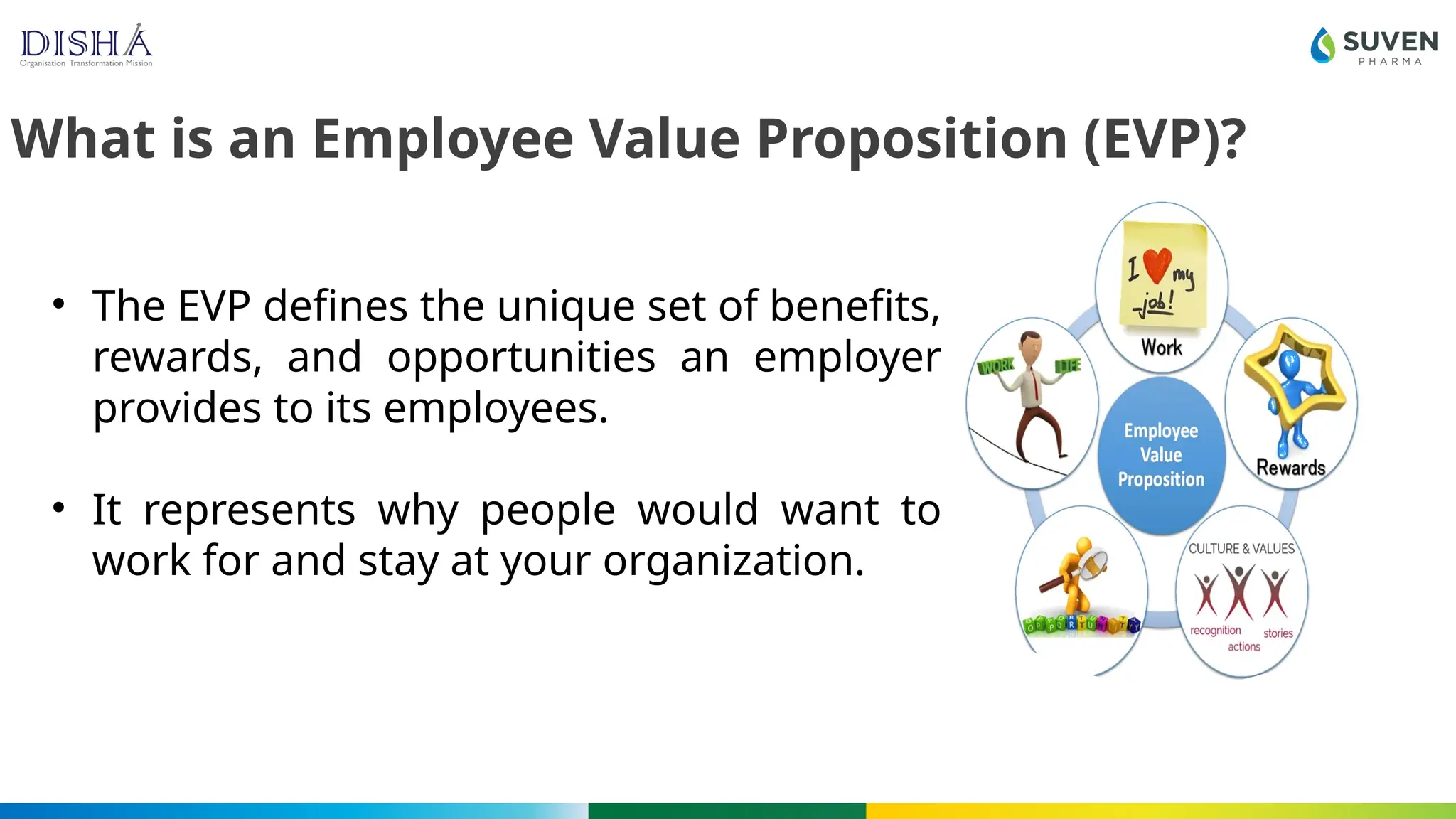
What is an Employee Value Proposition (EVP)?
• The EVP defines the unique set of benefits,
rewards, and opportunities an employer
provides to its employees.
• It represents why people would want to
work for and stay at your organization.
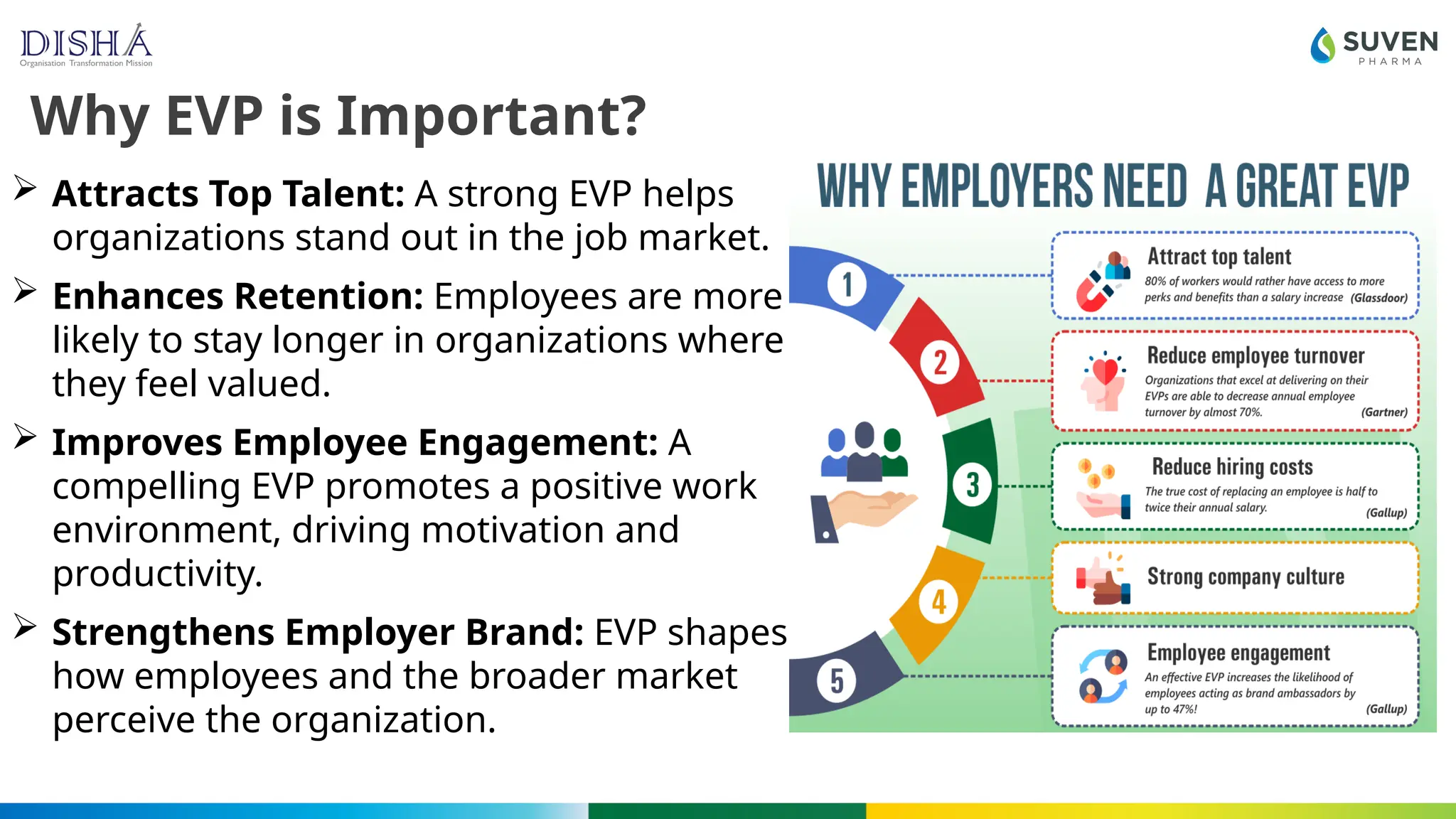
Why EVP is Important?
 Attracts Top Talent: A strong EVP helps
organizations stand out in the job market.
 Enhances Retention: Employees are more
likely to stay longer in organizations where
they feel valued.
 Improves Employee Engagement: A
compelling EVP promotes a positive work
environment, driving motivation and
productivity.
 Strengthens Employer Brand: EVP shapes
how employees and the broader market
perceive the organization.
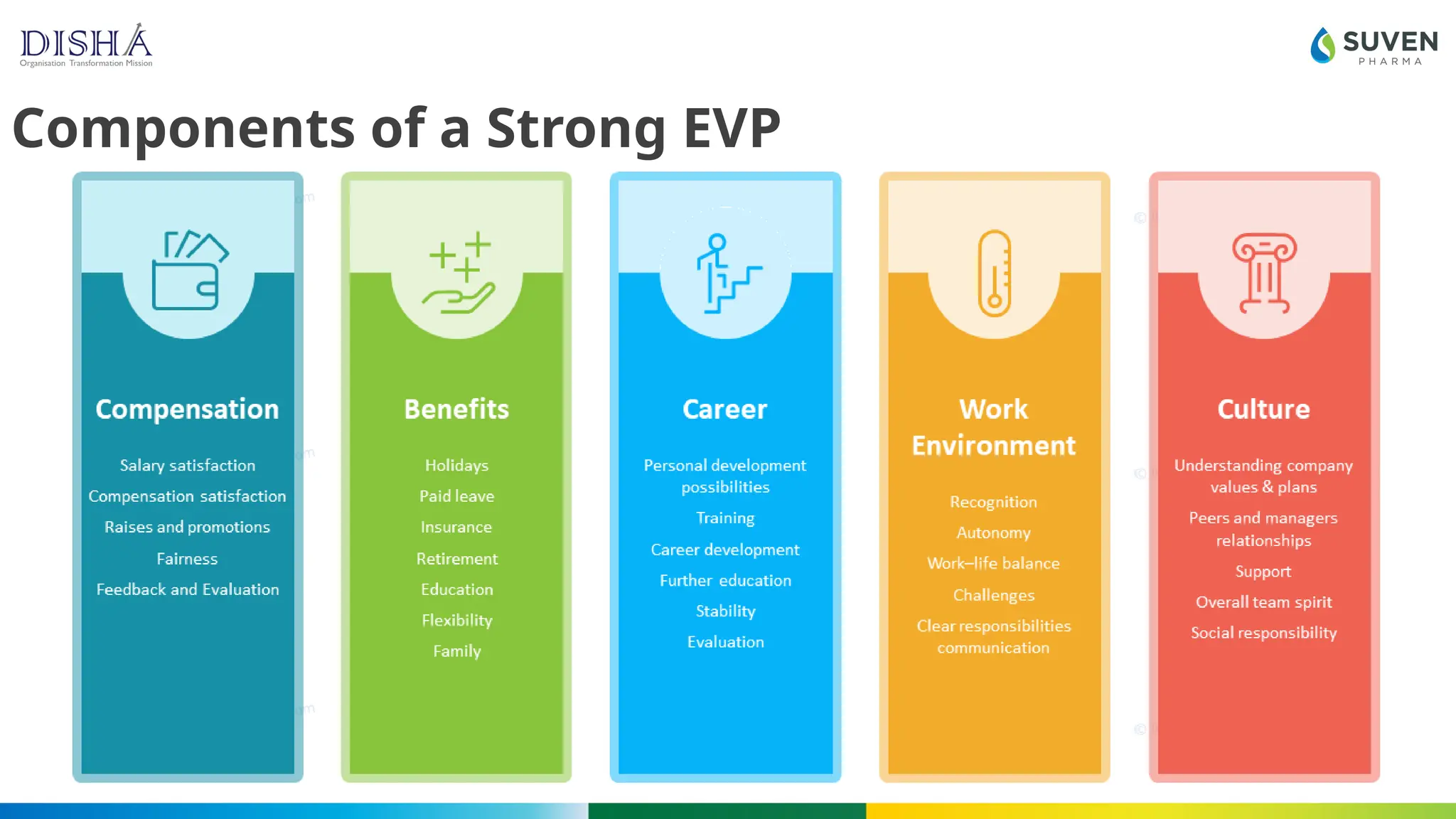
Components of a Strong EVP
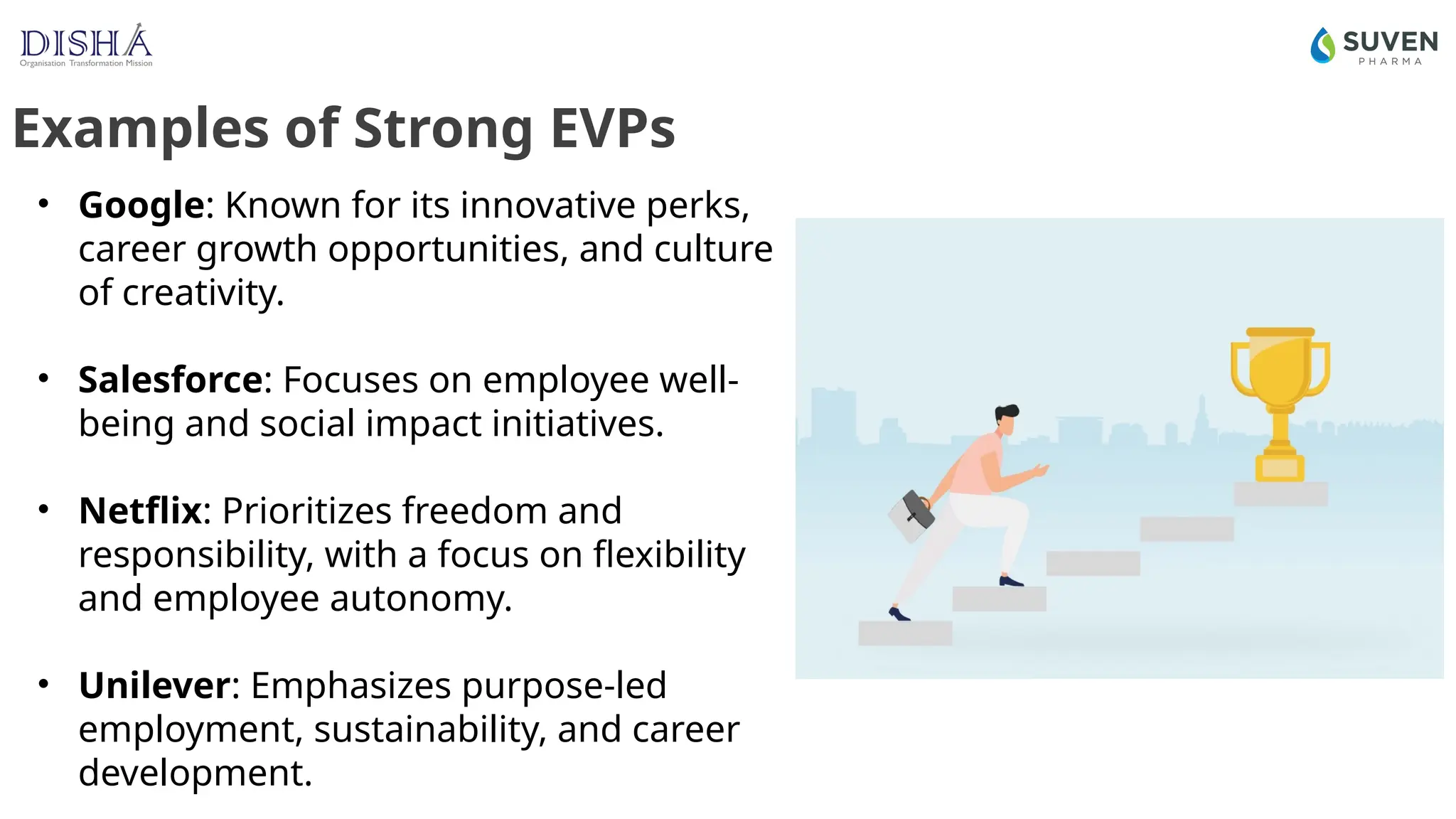
Examples of Strong EVPs
• Google: Known for its innovative perks,
career growth opportunities, and culture
of creativity.
• Salesforce: Focuses on employee well-
being and social impact initiatives.
• Netflix: Prioritizes freedom and
responsibility, with a focus on flexibility
and employee autonomy.
• Unilever: Emphasizes purpose-led
employment, sustainability, and career
development.
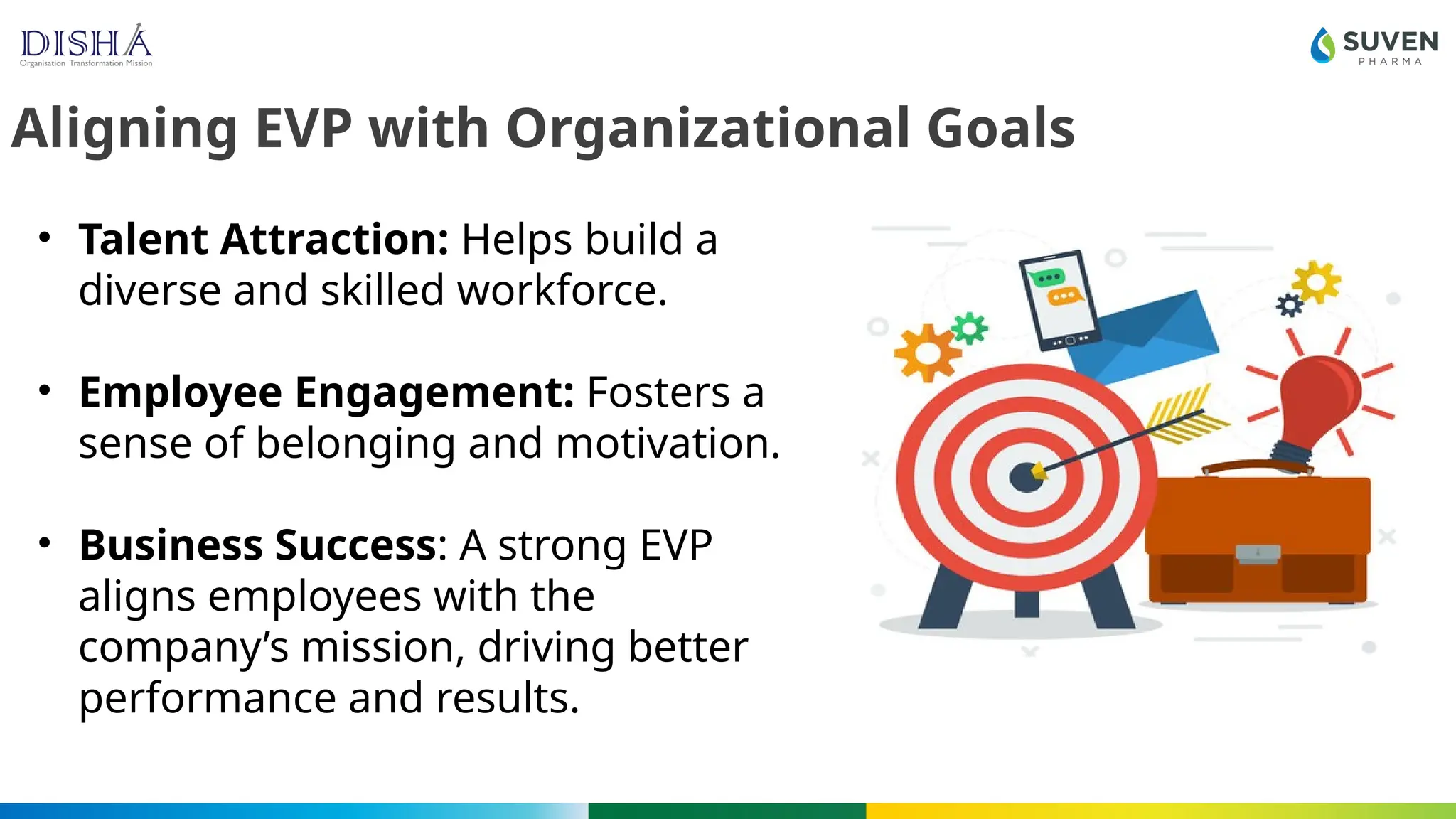
Aligning EVP with Organizational Goals
• Talent Attraction: Helps build a
diverse and skilled workforce.
• Employee Engagement: Fosters a
sense of belonging and motivation.
• Business Success: A strong EVP
aligns employees with the
company’s mission, driving better
performance and results.
Creating Your EVP
• Understand Employee Needs: Conduct surveys and focus groups to gather
feedback.
• Define Organizational Strengths: Identify what makes your organization
unique in the market.
• Benchmark Against Competitors: Analyze competitors’ EVPs to understand
the market landscape.
• Customize for Different Segments: Tailor EVP elements for different
employee demographics (e.g., Millennials, Gen Z, seasoned professionals).
• Communicate Consistently: Ensure EVP is integrated into recruitment,
onboarding, and ongoing communications.
Measuring the Success of Your EVP
• Employee Surveys: Regular feedback to understand if employees
resonate with the EVP.
• Attrition Rates: Monitor employee turnover and reasons for leaving.
• Recruitment Metrics: Track time-to-hire and offer acceptance rates.
• Engagement Levels: Assess employee satisfaction and engagement
scores.
• Continuous Improvement: Revise EVP based on changing workforce
needs and market conditions.
Conclusion
• The Employee Value Proposition is no longer
just a tool for recruitment—it’s a strategic
asset.
• As workplaces evolve with hybrid models and
shifting employee expectations, a dynamic
and adaptive EVP will continue to be crucial
for business success.
• Call to Action: Invest in your EVP to drive long-
term growth, innovation, and employee
loyalty.
Thank you!

Express - R Saritha -Suven 26-09-2024.pptx

  • 2.
  • 3.
    Index for Presentation What is an Employee Value Proposition (EVP)?  Why is EVP important?  Components of a Strong EVP  Examples of Strong EVPs  Aligning EVP with Organizational Goals  Creating Your EVP  Measuring the Success of Your EVP  Conclusion
  • 4.
    What is anEmployee Value Proposition (EVP)? • The EVP defines the unique set of benefits, rewards, and opportunities an employer provides to its employees. • It represents why people would want to work for and stay at your organization.
  • 5.
    Why EVP isImportant?  Attracts Top Talent: A strong EVP helps organizations stand out in the job market.  Enhances Retention: Employees are more likely to stay longer in organizations where they feel valued.  Improves Employee Engagement: A compelling EVP promotes a positive work environment, driving motivation and productivity.  Strengthens Employer Brand: EVP shapes how employees and the broader market perceive the organization.
  • 6.
    Components of aStrong EVP
  • 7.
    Examples of StrongEVPs • Google: Known for its innovative perks, career growth opportunities, and culture of creativity. • Salesforce: Focuses on employee well- being and social impact initiatives. • Netflix: Prioritizes freedom and responsibility, with a focus on flexibility and employee autonomy. • Unilever: Emphasizes purpose-led employment, sustainability, and career development.
  • 8.
    Aligning EVP withOrganizational Goals • Talent Attraction: Helps build a diverse and skilled workforce. • Employee Engagement: Fosters a sense of belonging and motivation. • Business Success: A strong EVP aligns employees with the company’s mission, driving better performance and results.
  • 9.
    Creating Your EVP •Understand Employee Needs: Conduct surveys and focus groups to gather feedback. • Define Organizational Strengths: Identify what makes your organization unique in the market. • Benchmark Against Competitors: Analyze competitors’ EVPs to understand the market landscape. • Customize for Different Segments: Tailor EVP elements for different employee demographics (e.g., Millennials, Gen Z, seasoned professionals). • Communicate Consistently: Ensure EVP is integrated into recruitment, onboarding, and ongoing communications.
  • 10.
    Measuring the Successof Your EVP • Employee Surveys: Regular feedback to understand if employees resonate with the EVP. • Attrition Rates: Monitor employee turnover and reasons for leaving. • Recruitment Metrics: Track time-to-hire and offer acceptance rates. • Engagement Levels: Assess employee satisfaction and engagement scores. • Continuous Improvement: Revise EVP based on changing workforce needs and market conditions.
  • 11.
    Conclusion • The EmployeeValue Proposition is no longer just a tool for recruitment—it’s a strategic asset. • As workplaces evolve with hybrid models and shifting employee expectations, a dynamic and adaptive EVP will continue to be crucial for business success. • Call to Action: Invest in your EVP to drive long- term growth, innovation, and employee loyalty.
  • 12.