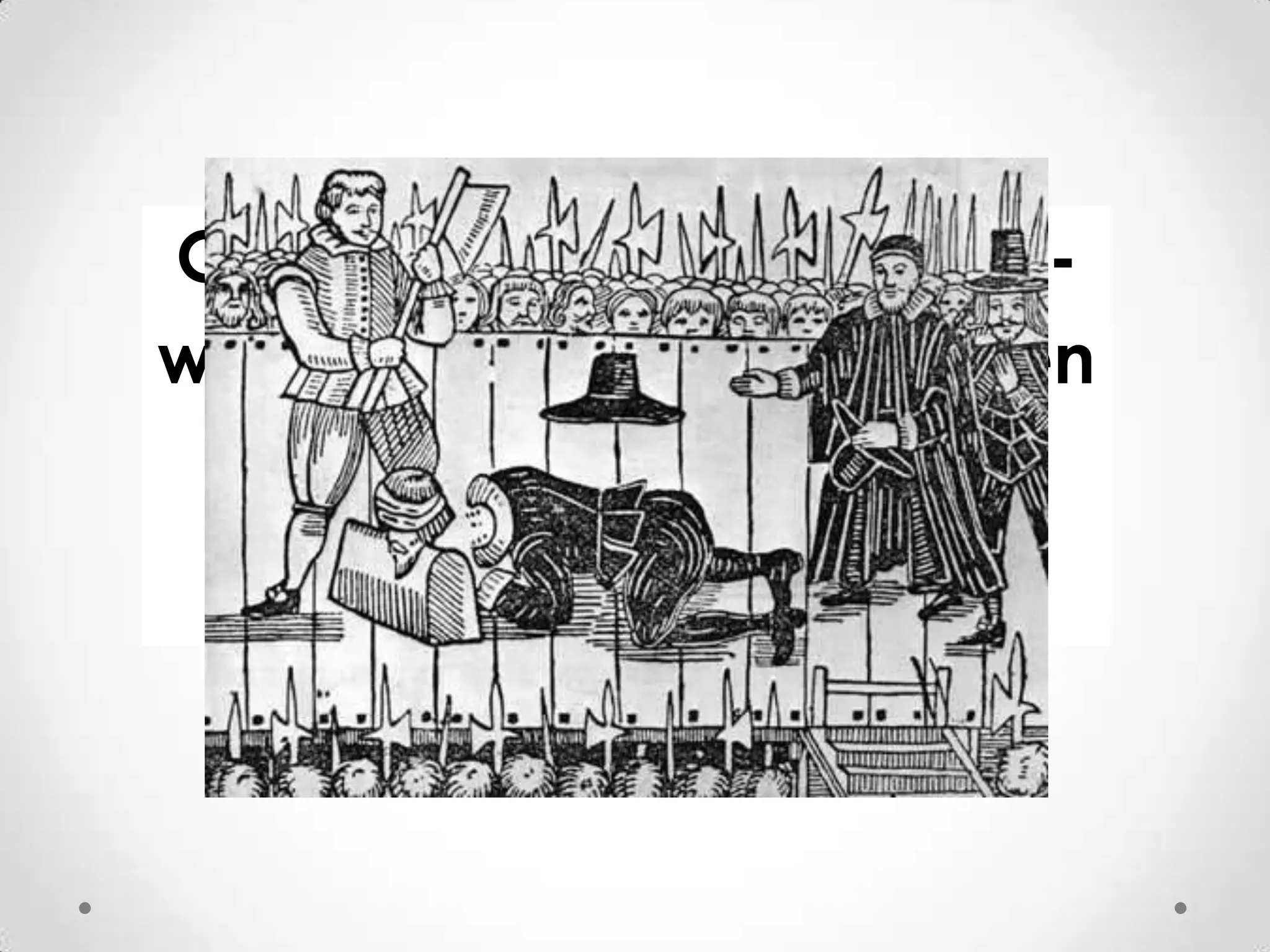
Given the circumstances -
would Charles 1 have been
    executed in 2012?
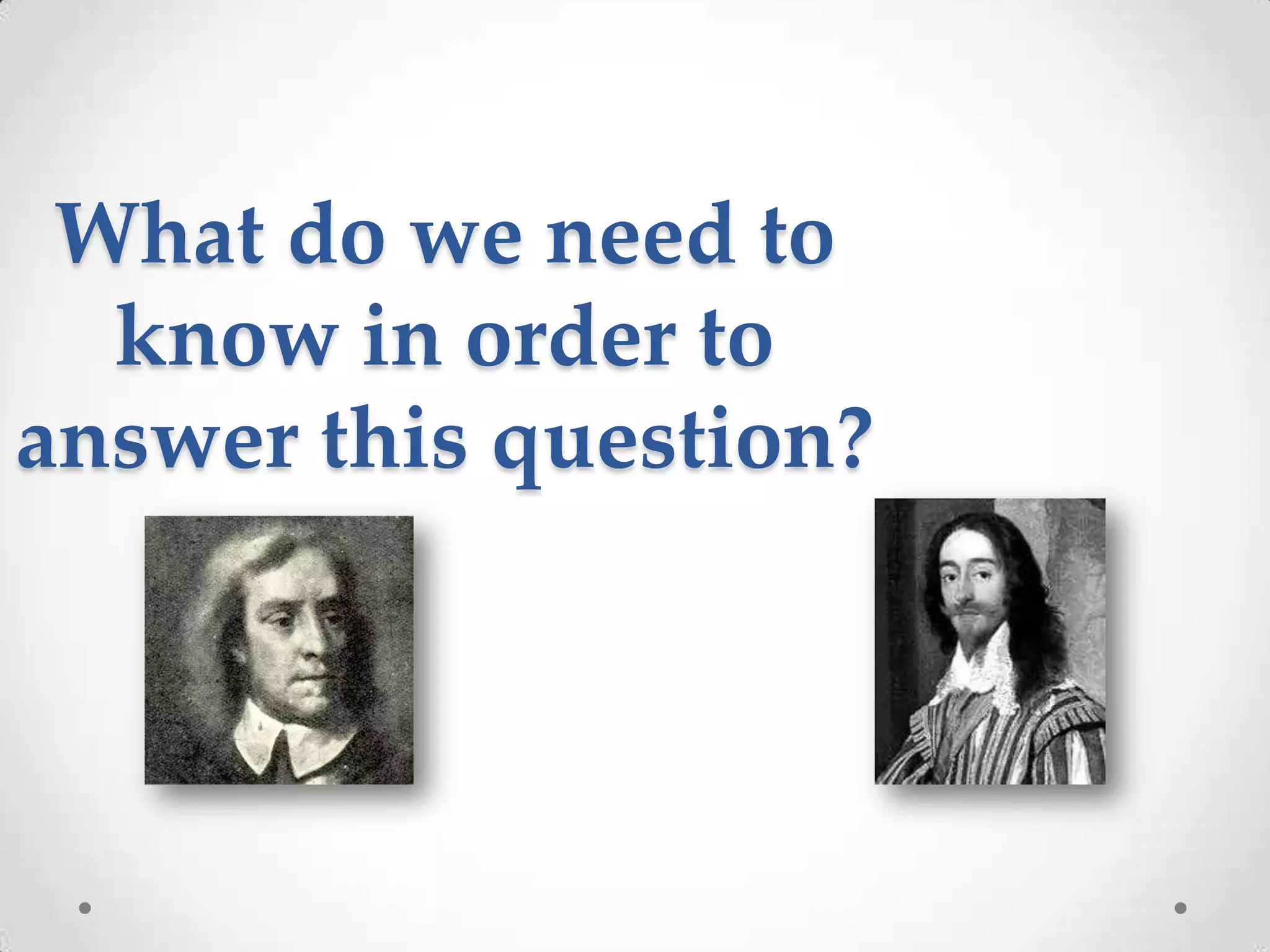
What do we need to
  know in order to
answer this question?
 Who was Charles 1?
 Why was he executed in 1649?
 (He was accused of murder, tyranny
             and treason)
 Should he have been executed in
  1649? (Was this a fair and popular
  decision?)


    Would these factors apply in 2012?
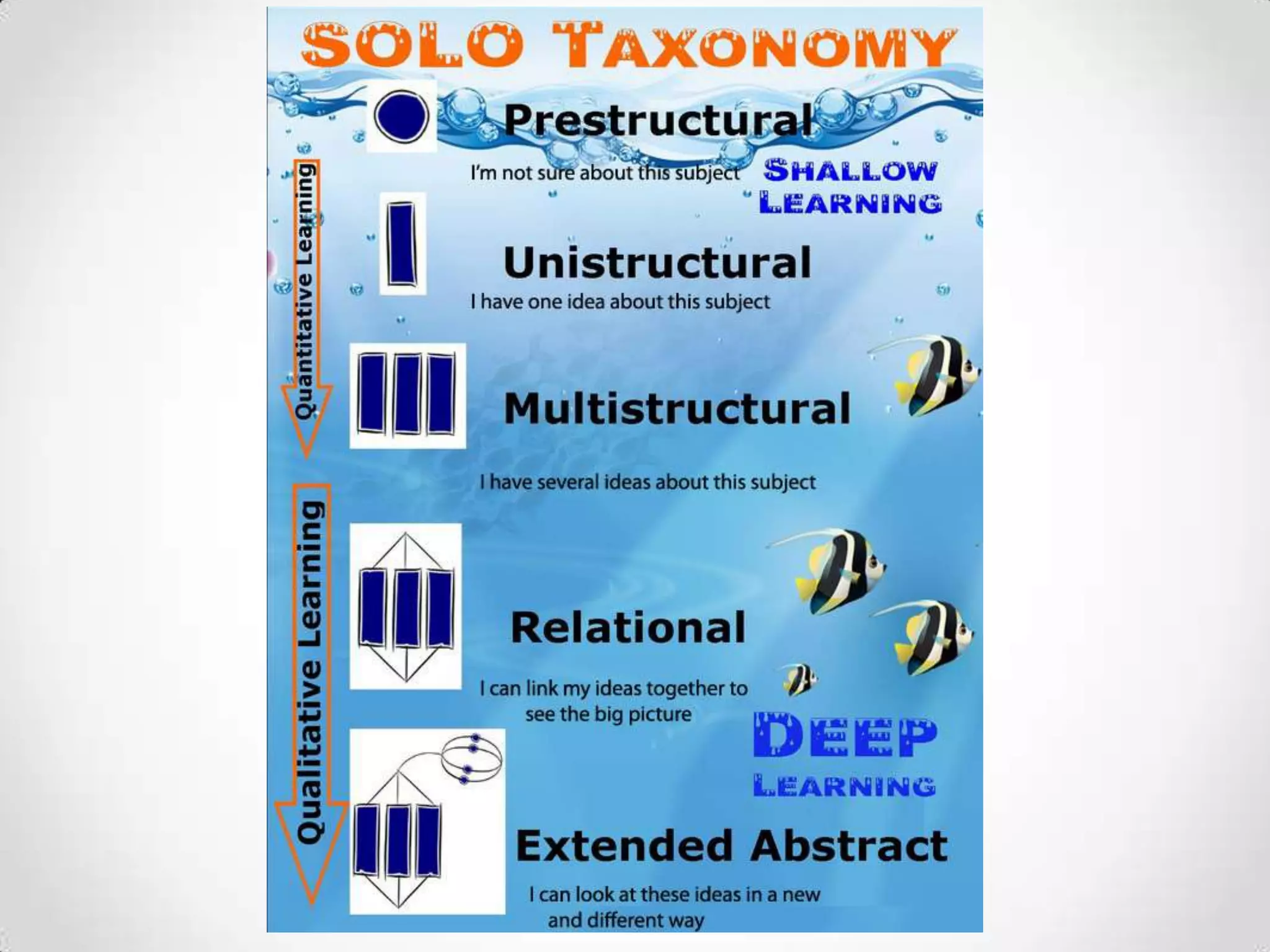
SoLo
• Structure of Observed Learning Outcome
• Do I know enough about the events to make
  a decision about the execution of 1649?
• How do I apply these to 2012?
Making progress to the next
level depends on finding the
 relationships between this
         knowledge


  In order to answer the questions
students need a big multistructural
        base of knowledge
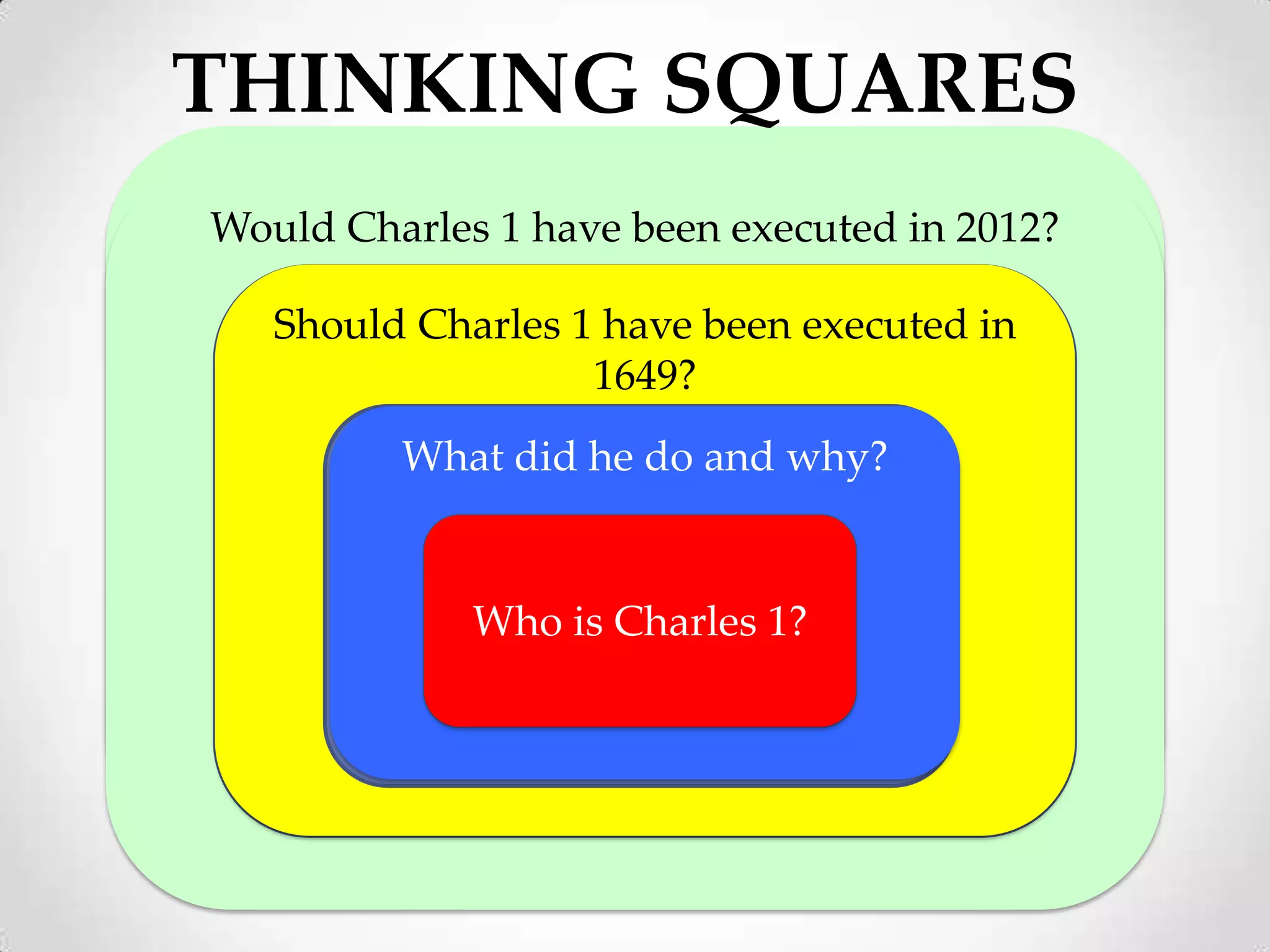
THINKING SQUARES
Does Shakespeare influence all modern writers?
 Would Charles 1 have been executed in 2012?

    Should Charles 1 have been executed in
                    1649?
           What did he do and why?


              Who is Charles 1?
Quick Test to see if we
  understand the SOLO
          Levels
Assign each statement on
 your sheet of paper to a
        SOLO level
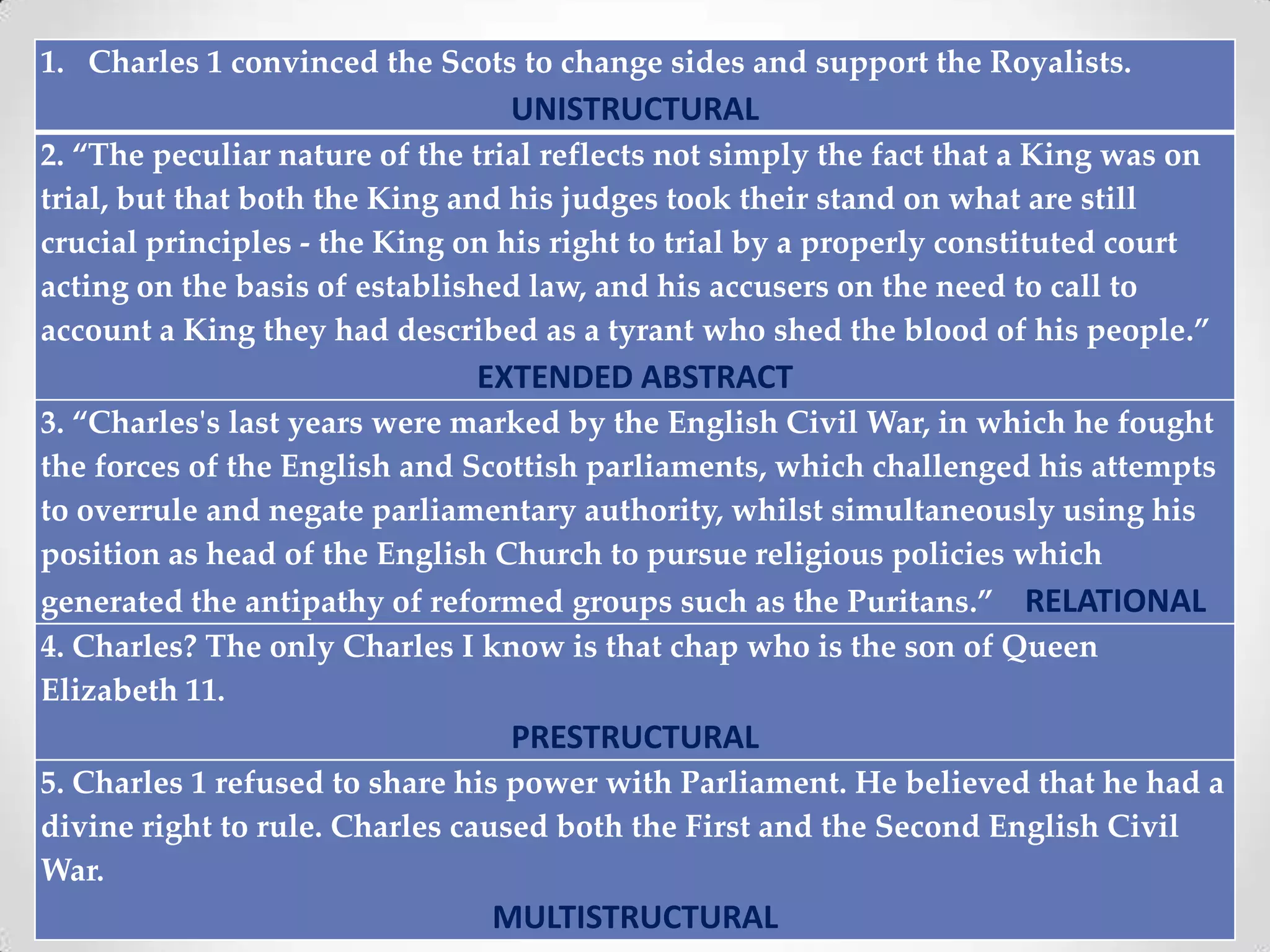
1. Charles 1 convinced the Scots to change sides and support the Royalists.
                                 UNISTRUCTURAL
2. “The peculiar nature of the trial reflects not simply the fact that a King was on
trial, but that both the King and his judges took their stand on what are still
crucial principles - the King on his right to trial by a properly constituted court
acting on the basis of established law, and his accusers on the need to call to
account a King they had described as a tyrant who shed the blood of his people.”
                               EXTENDED ABSTRACT
3. “Charles's last years were marked by the English Civil War, in which he fought
the forces of the English and Scottish parliaments, which challenged his attempts
to overrule and negate parliamentary authority, whilst simultaneously using his
position as head of the English Church to pursue religious policies which
generated the antipathy of reformed groups such as the Puritans.” RELATIONAL
4. Charles? The only Charles I know is that chap who is the son of Queen
Elizabeth 11.
                                 PRESTRUCTURAL
5. Charles 1 refused to share his power with Parliament. He believed that he had a
divine right to rule. Charles caused both the First and the Second English Civil
War.
                                MULTISTRUCTURAL
 Why was Charles executed in 1649?
 (He was accused of murder, tyranny
              and treason)
 Use hexagons to write down each
  point, then link these up to see the
  relationships.
 Should he have been executed in
  1649? Was this a fair and popular
  decision?


 Would these factors apply in 2012?

Execution of charles_1

  • 1.
    Given the circumstances- would Charles 1 have been executed in 2012?
  • 2.
    What do weneed to know in order to answer this question?
  • 3.
     Who wasCharles 1?  Why was he executed in 1649? (He was accused of murder, tyranny and treason)  Should he have been executed in 1649? (Was this a fair and popular decision?)  Would these factors apply in 2012?
  • 4.
    SoLo • Structure ofObserved Learning Outcome • Do I know enough about the events to make a decision about the execution of 1649? • How do I apply these to 2012?
  • 6.
    Making progress tothe next level depends on finding the relationships between this knowledge In order to answer the questions students need a big multistructural base of knowledge
  • 7.
    THINKING SQUARES Does Shakespeareinfluence all modern writers? Would Charles 1 have been executed in 2012? Should Charles 1 have been executed in 1649? What did he do and why? Who is Charles 1?
  • 8.
    Quick Test tosee if we understand the SOLO Levels Assign each statement on your sheet of paper to a SOLO level
  • 9.
    1. Charles 1convinced the Scots to change sides and support the Royalists. UNISTRUCTURAL 2. “The peculiar nature of the trial reflects not simply the fact that a King was on trial, but that both the King and his judges took their stand on what are still crucial principles - the King on his right to trial by a properly constituted court acting on the basis of established law, and his accusers on the need to call to account a King they had described as a tyrant who shed the blood of his people.” EXTENDED ABSTRACT 3. “Charles's last years were marked by the English Civil War, in which he fought the forces of the English and Scottish parliaments, which challenged his attempts to overrule and negate parliamentary authority, whilst simultaneously using his position as head of the English Church to pursue religious policies which generated the antipathy of reformed groups such as the Puritans.” RELATIONAL 4. Charles? The only Charles I know is that chap who is the son of Queen Elizabeth 11. PRESTRUCTURAL 5. Charles 1 refused to share his power with Parliament. He believed that he had a divine right to rule. Charles caused both the First and the Second English Civil War. MULTISTRUCTURAL
  • 10.
     Why wasCharles executed in 1649? (He was accused of murder, tyranny and treason)  Use hexagons to write down each point, then link these up to see the relationships.  Should he have been executed in 1649? Was this a fair and popular decision?  Would these factors apply in 2012?