EXAMINATION OF TMJ Dr. Ayesha Anwer Ali
TEMPOROMANDIBULAR
KINEMATICS
Mouth Opening
 Initial mouth opening to consist of angular motion of the
condyle relative to the disc within the inferior joint space. The
late phase of opening the mouth consists on the transition
from primary rotation to primary translation. . During the
translation, anterior and inferior glide or translation of both
the disc and condyle occur within the superior joint space.
 Mouth closing
MANDIBULAR
DEPRESSION
A. early phase rotation which occurs in the inferior joint space and B. late phase translation which
occurs in the superior joint space.
CON…..
Protrusion involves anterior
glide or translation of both
condyles.
Retrusion involves
posterior glide or
translation back to the
resting position.
CON….
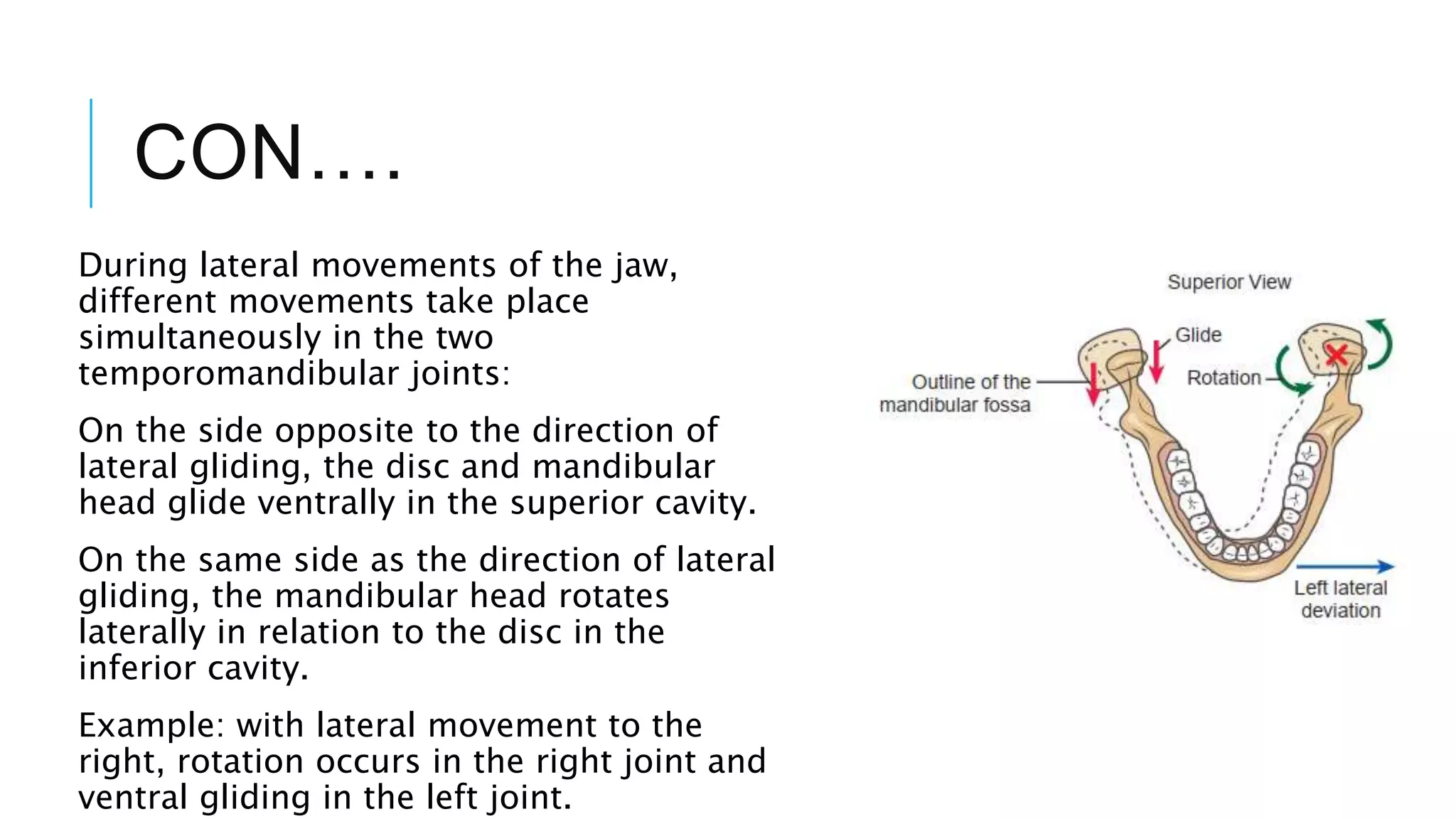
During lateral movements of the jaw,
different movements take place
simultaneously in the two
temporomandibular joints:
On the side opposite to the direction of
lateral gliding, the disc and mandibular
head glide ventrally in the superior cavity.
On the same side as the direction of lateral
gliding, the mandibular head rotates
laterally in relation to the disc in the
inferior cavity.
Example: with lateral movement to the
right, rotation occurs in the right joint and
ventral gliding in the left joint.
CON…
Resting position
 Mouth slightly open
Close-packed position
 Mouth closed
Capsular pattern
 Restriction in opening the mouth
TMJ EXAMINATION
Active Movement
Passive physiological Movement
Passive Accessory Movement
Resisted Movement
ACTIVE MOVEMENT
Reproduction of the symptom
Symmetry
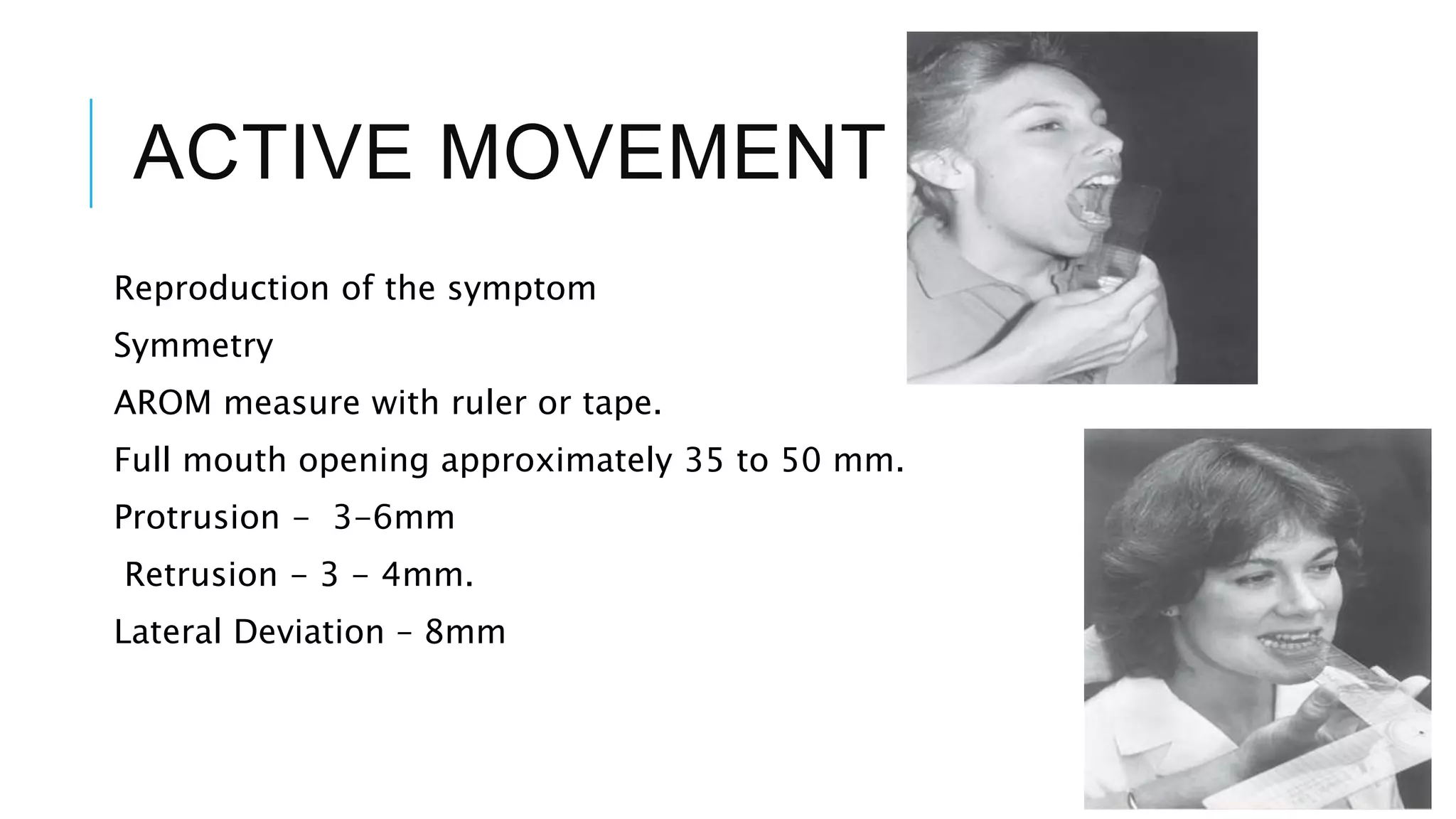
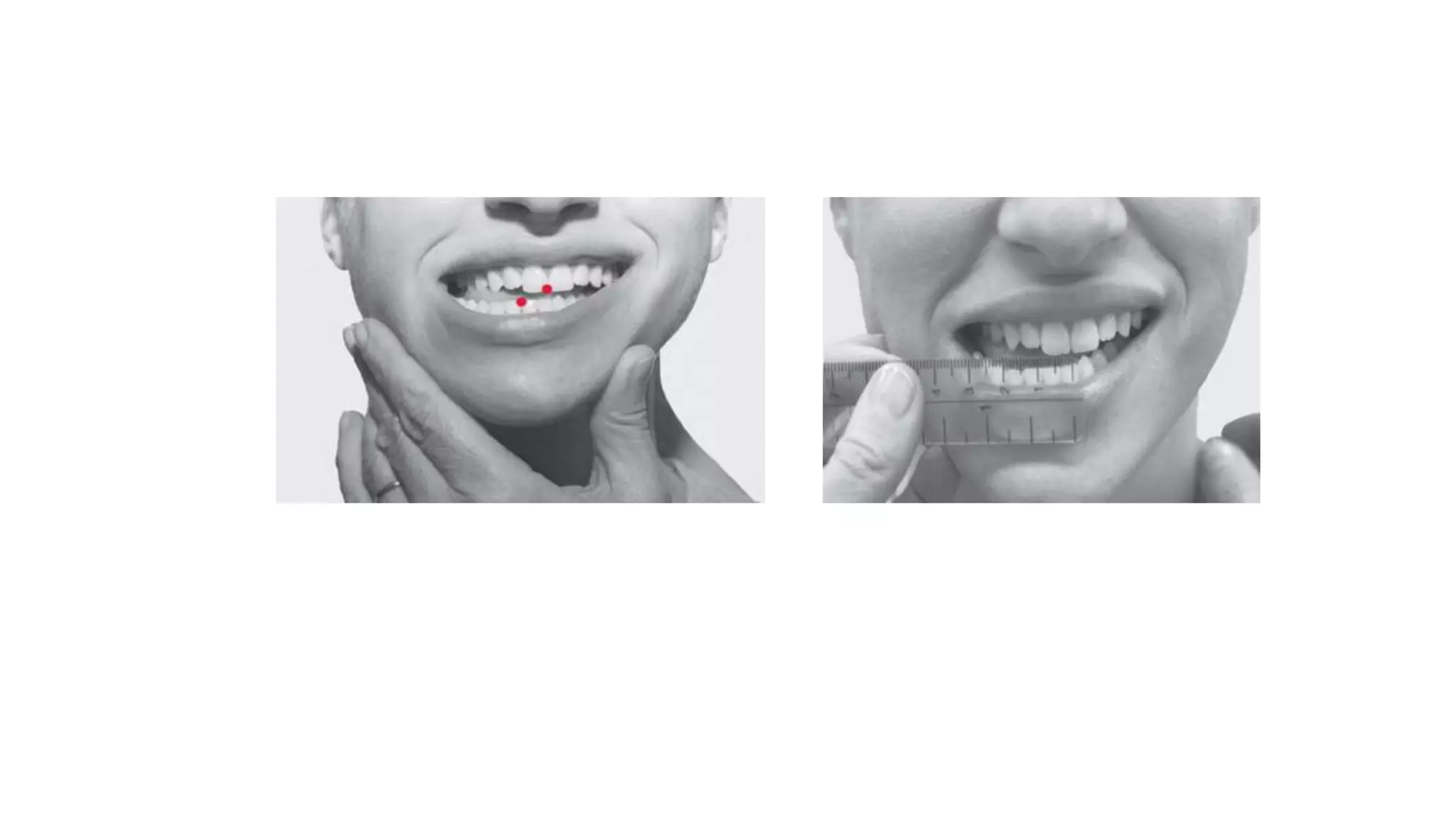
AROM measure with ruler or tape.
Full mouth opening approximately 35 to 50 mm.
Protrusion - 3-6mm
Retrusion - 3 - 4mm.
Lateral Deviation – 8mm
PASSIVE MOVEMENT
Reproduction of the symptom
During PROM check endfeel.
A comparison of the response of symptoms to the active and passive
movements can help to determine whether the structure at fault is
non-contractile (articular) or contractile (extra-articular).
If the lesion is non-contractile, such as ligament, then active and
passive movements will be painful and/or restricted in the same
direction. If the lesion is in a contractile tissue (i.e. muscle) then
active and passive movements are painful and/or restricted in
opposite directions.
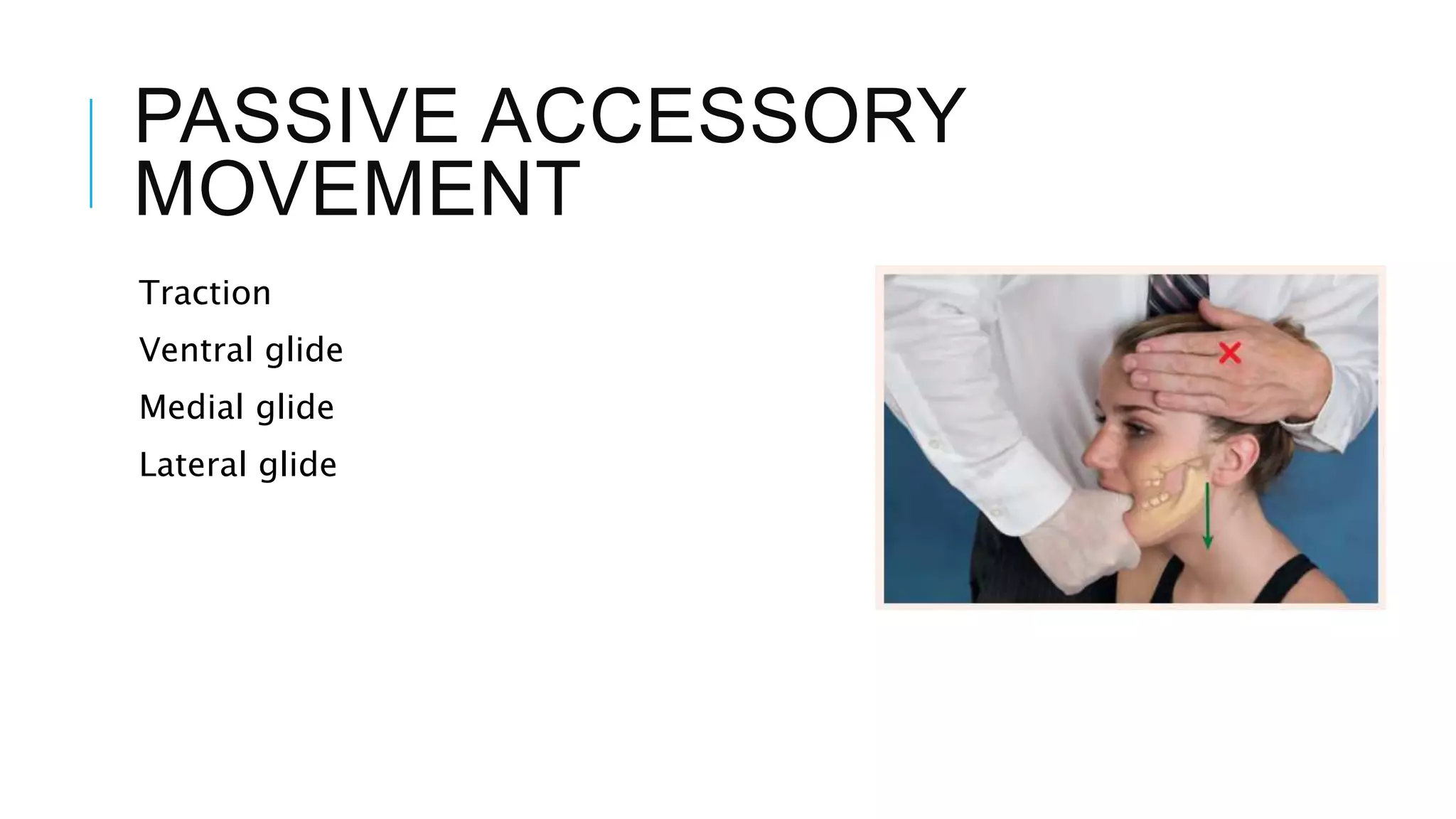
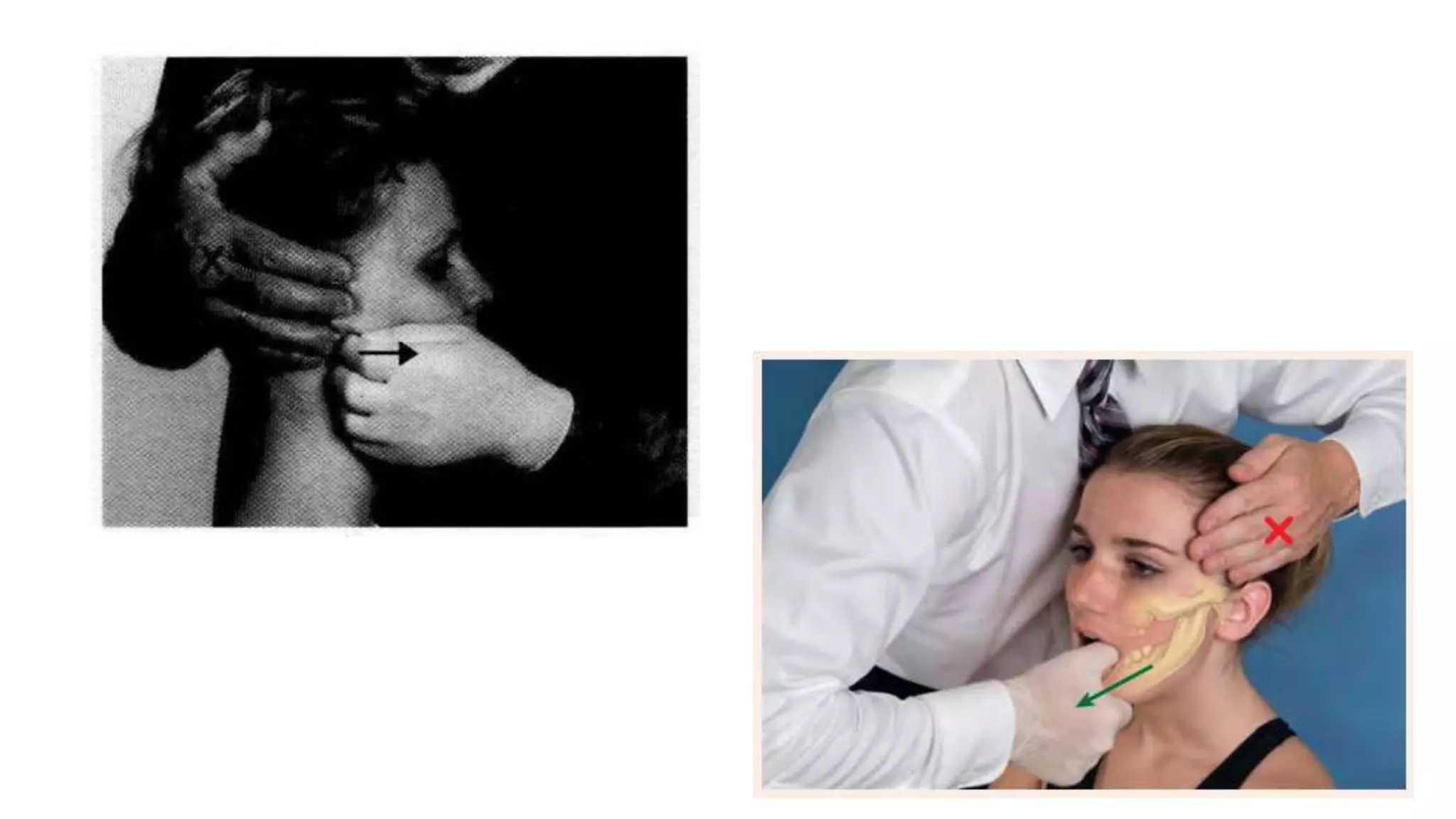
PASSIVE ACCESSORY
MOVEMENT
Traction
Ventral glide
Medial glide
Lateral glide
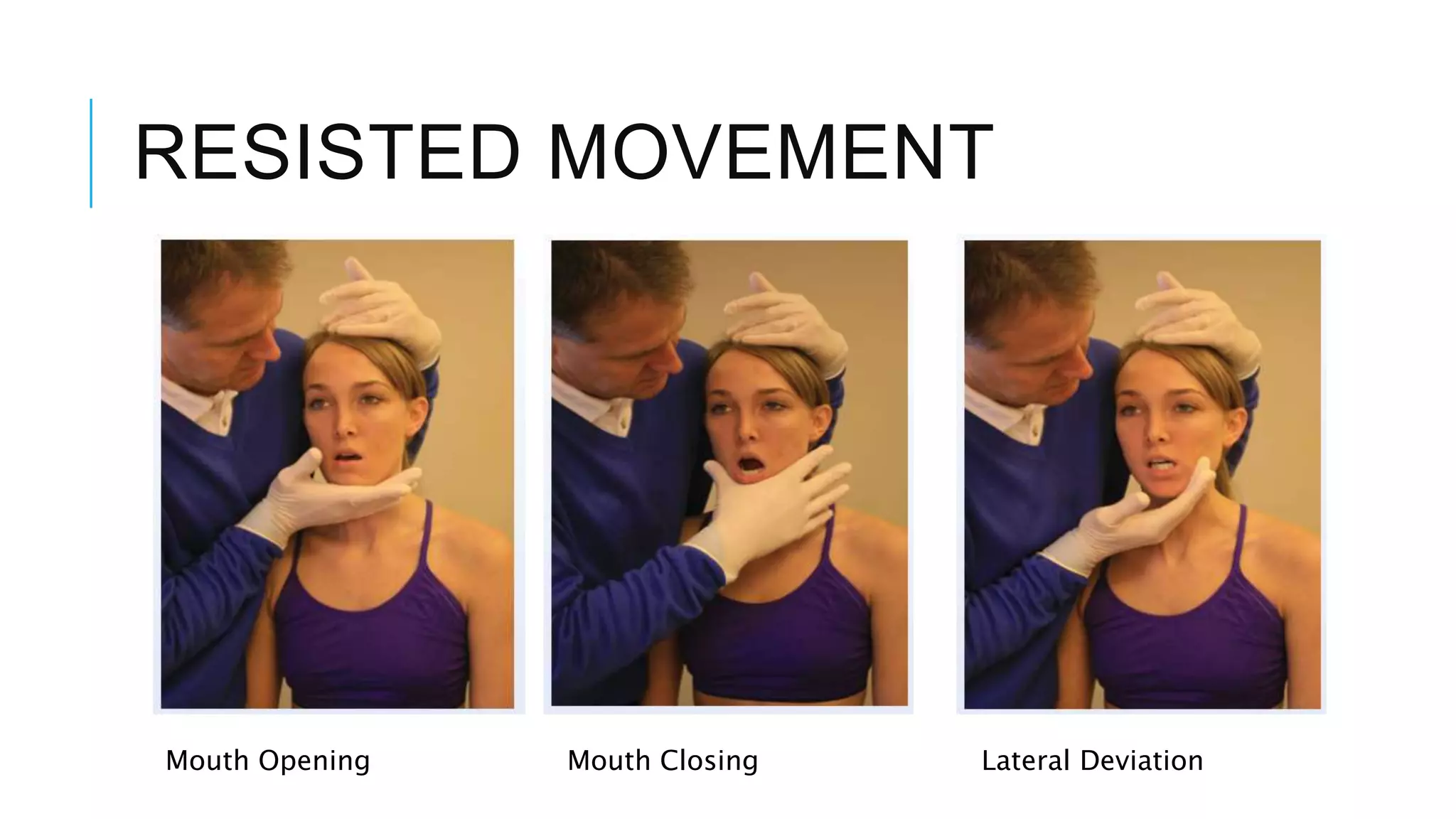
RESISTED MOVEMENT
Mouth Opening Mouth Closing Lateral Deviation
Examination of TMJ 2.pptx

Examination of TMJ 2.pptx

  • 1.
    EXAMINATION OF TMJDr. Ayesha Anwer Ali
  • 2.
    TEMPOROMANDIBULAR KINEMATICS Mouth Opening  Initialmouth opening to consist of angular motion of the condyle relative to the disc within the inferior joint space. The late phase of opening the mouth consists on the transition from primary rotation to primary translation. . During the translation, anterior and inferior glide or translation of both the disc and condyle occur within the superior joint space.  Mouth closing
  • 3.
    MANDIBULAR DEPRESSION A. early phaserotation which occurs in the inferior joint space and B. late phase translation which occurs in the superior joint space.
  • 4.
    CON….. Protrusion involves anterior glideor translation of both condyles. Retrusion involves posterior glide or translation back to the resting position.
  • 5.
    CON…. During lateral movementsof the jaw, different movements take place simultaneously in the two temporomandibular joints: On the side opposite to the direction of lateral gliding, the disc and mandibular head glide ventrally in the superior cavity. On the same side as the direction of lateral gliding, the mandibular head rotates laterally in relation to the disc in the inferior cavity. Example: with lateral movement to the right, rotation occurs in the right joint and ventral gliding in the left joint.
  • 6.
    CON… Resting position  Mouthslightly open Close-packed position  Mouth closed Capsular pattern  Restriction in opening the mouth
  • 7.
    TMJ EXAMINATION Active Movement Passivephysiological Movement Passive Accessory Movement Resisted Movement
  • 8.
    ACTIVE MOVEMENT Reproduction ofthe symptom Symmetry AROM measure with ruler or tape. Full mouth opening approximately 35 to 50 mm. Protrusion - 3-6mm Retrusion - 3 - 4mm. Lateral Deviation – 8mm
  • 10.
    PASSIVE MOVEMENT Reproduction ofthe symptom During PROM check endfeel. A comparison of the response of symptoms to the active and passive movements can help to determine whether the structure at fault is non-contractile (articular) or contractile (extra-articular). If the lesion is non-contractile, such as ligament, then active and passive movements will be painful and/or restricted in the same direction. If the lesion is in a contractile tissue (i.e. muscle) then active and passive movements are painful and/or restricted in opposite directions.
  • 11.
  • 14.
    RESISTED MOVEMENT Mouth OpeningMouth Closing Lateral Deviation