Age and EWT: The elderly
L/O: to be able to describe what research has shown
            about the elderly and testimony.
 Starter

           What are the two issues
            you need to know for
             the impact of being
           elderly on the accuracy
               of eye witness
                 testimony?
L/O: to be able to describe what research has shown
              about the elderly and testimony.
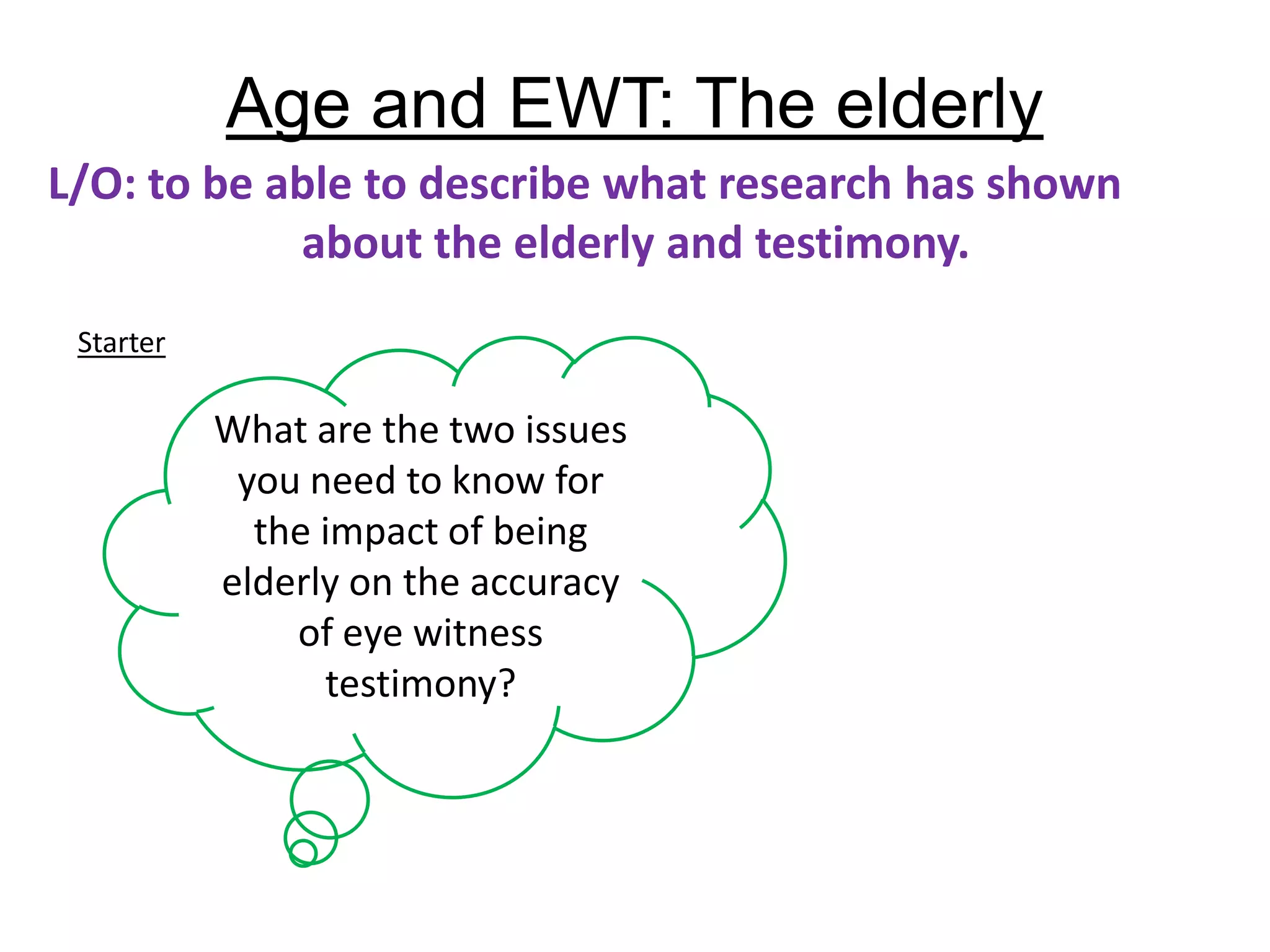
            Suggestibility or Memory processes?
Cohen and Faulkner (1989)                     Coxon and Valentine (1997)
• Young adults (average 35 years) and         • Participants were shown a video
   elderly participants (average 70 years).     recording of a staged crime.
• Shown a silent film-clip of a
   kidnapping.                                Found: both young children (7-9 years)
• 10 minutes later, the groups were           and the elderly (60-85) were less
   given a summary to read:                   accurate in their recall of events than
1. accurate OR                                young adults (16-18 years).
                                              Argued: immature cognitions in children
2. one containing inaccurate
                                              and aging the elderly.
   information.
• Tested for memory later.
                                          Also found: Elderly participants were
                                          not any more susceptible to misleading
Found: elderly group were much more       information than young adults.
likely to be influenced by the inaccurate Argued: the elderly are not more
summary read afterwards including some suggestibility but form and recall less
of it in their recall of the film.        complete memories.
Plan an answer for 6 marks focusing on the
effects of older age on EWT.

Remember this asks for the answer to be lead
by a description of the research.

Two well described pieces of research with a
opening/closing comment about the
inconclusive research will get 6 marks.

Write it. 8-10 minutes.
This question requires evaluation of the research findings.

For top marks, you could also include the contrary research by Brainerd and Reyna and The
Fuzzy Trace Theory (article page 58-59) study guide – to be studied in your own time.
Self study
                Due Monday
1. Plan your 12 mark answer (AO1 and AO2
   balance).
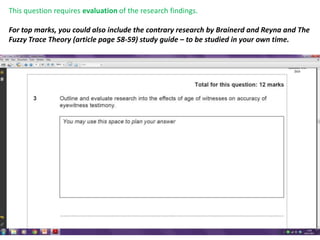
Outline and evaluate research into the effects
of age of witness on accuracy of eyewitness
testimony.

2. Read study guide pages 46-47 to recap / fill in
notes.
Complete 2x apply your knowledge questions.
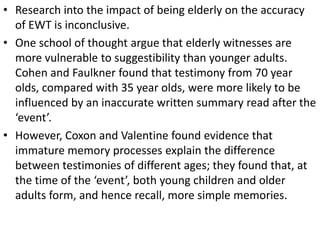
• Research into the impact of being elderly on the accuracy
  of EWT is inconclusive.
• One school of thought argue that elderly witnesses are
  more vulnerable to suggestibility than younger adults.
  Cohen and Faulkner found that testimony from 70 year
  olds, compared with 35 year olds, were more likely to be
  influenced by an inaccurate written summary read after the
  ‘event’.
• However, Coxon and Valentine found evidence that
  immature memory processes explain the difference
  between testimonies of different ages; they found that, at
  the time of the ‘event’, both young children and older
  adults form, and hence recall, more simple memories.
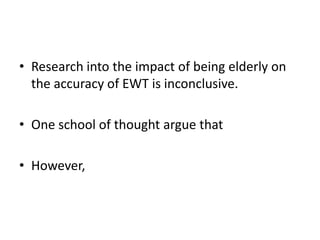
• Research into the impact of being elderly on
  the accuracy of EWT is inconclusive.

• One school of thought argue that

• However,

Ewt elderly

  • 1.
    Age and EWT:The elderly L/O: to be able to describe what research has shown about the elderly and testimony. Starter What are the two issues you need to know for the impact of being elderly on the accuracy of eye witness testimony?
  • 2.
    L/O: to beable to describe what research has shown about the elderly and testimony. Suggestibility or Memory processes? Cohen and Faulkner (1989) Coxon and Valentine (1997) • Young adults (average 35 years) and • Participants were shown a video elderly participants (average 70 years). recording of a staged crime. • Shown a silent film-clip of a kidnapping. Found: both young children (7-9 years) • 10 minutes later, the groups were and the elderly (60-85) were less given a summary to read: accurate in their recall of events than 1. accurate OR young adults (16-18 years). Argued: immature cognitions in children 2. one containing inaccurate and aging the elderly. information. • Tested for memory later. Also found: Elderly participants were not any more susceptible to misleading Found: elderly group were much more information than young adults. likely to be influenced by the inaccurate Argued: the elderly are not more summary read afterwards including some suggestibility but form and recall less of it in their recall of the film. complete memories.
  • 3.
    Plan an answerfor 6 marks focusing on the effects of older age on EWT. Remember this asks for the answer to be lead by a description of the research. Two well described pieces of research with a opening/closing comment about the inconclusive research will get 6 marks. Write it. 8-10 minutes.
  • 4.
    This question requiresevaluation of the research findings. For top marks, you could also include the contrary research by Brainerd and Reyna and The Fuzzy Trace Theory (article page 58-59) study guide – to be studied in your own time.
  • 6.
    Self study Due Monday 1. Plan your 12 mark answer (AO1 and AO2 balance). Outline and evaluate research into the effects of age of witness on accuracy of eyewitness testimony. 2. Read study guide pages 46-47 to recap / fill in notes. Complete 2x apply your knowledge questions.
  • 7.
    • Research intothe impact of being elderly on the accuracy of EWT is inconclusive. • One school of thought argue that elderly witnesses are more vulnerable to suggestibility than younger adults. Cohen and Faulkner found that testimony from 70 year olds, compared with 35 year olds, were more likely to be influenced by an inaccurate written summary read after the ‘event’. • However, Coxon and Valentine found evidence that immature memory processes explain the difference between testimonies of different ages; they found that, at the time of the ‘event’, both young children and older adults form, and hence recall, more simple memories.
  • 8.
    • Research intothe impact of being elderly on the accuracy of EWT is inconclusive. • One school of thought argue that • However,