E-Waste – Sobering facts
Some E-Waste background…
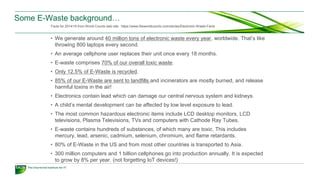
• We generate around 40 million tons of electronic waste every year, worldwide. That’s like
throwing 800 laptops every second.
• An average cellphone user replaces their unit once every 18 months.
• E-waste comprises 70% of our overall toxic waste.
• Only 12.5% of E-Waste is recycled.
• 85% of our E-Waste are sent to landfills and incinerators are mostly burned, and release
harmful toxins in the air!
• Electronics contain lead which can damage our central nervous system and kidneys.
• A child’s mental development can be affected by low level exposure to lead.
• The most common hazardous electronic items include LCD desktop monitors, LCD
televisions, Plasma Televisions, TVs and computers with Cathode Ray Tubes.
• E-waste contains hundreds of substances, of which many are toxic. This includes
mercury, lead, arsenic, cadmium, selenium, chromium, and flame retardants.
• 80% of E-Waste in the US and from most other countries is transported to Asia.
• 300 million computers and 1 billion cellphones go into production annually. It is expected
to grow by 8% per year. (not forgetting IoT devices!)
Facts for 2014/15 from World Counts web site : https://www.theworldcounts.com/stories/Electronic-Waste-Facts
E-Waste – Positive actions?
So what can we do about it….
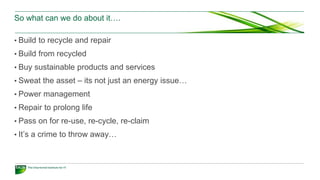
• Build to recycle and repair
• Build from recycled
• Buy sustainable products and services
• Sweat the asset – its not just an energy issue…
• Power management
• Repair to prolong life
• Pass on for re-use, re-cycle, re-claim
• It’s a crime to throw away…
E-Footprints
0,0
2,0
4,0
6,0
8,0
10,0
12,0
14,0
apr-16
mag-16
giu-16
lug-16
ago-16
set-16
ott-16
nov-16
dic-16
gen-17
feb-17
mar-17
tCO2e
ICT Carbon Footprint (Daily)
Defra ICT Animal Health Natural England Rural Payments Agency Previous Year
UK Government Footprints – Defra 2016/17 by organisation
0,0
2,0
4,0
6,0
8,0
10,0
12,0
apr-16 mag-16 giu-16 lug-16 ago-16 set-16 ott-16 nov-16 dic-16 gen-17 feb-17 mar-17
tCO2e
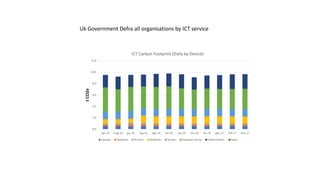
ICT Carbon Footprint (Daily by Device)
Laptops Desktops Printers Networks Servers Sampson House Global Switch Daisy
Uk Government Defra all organisations by ICT service
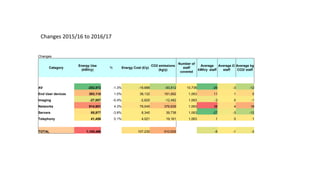
Changes
Category
Energy Use
(kWh/y)
% Energy Cost (£/y)
CO2 emissions
(kg/y)
Number of
staff
covered
Average
kWh/y staff
Average £/
staff
Average kg
CO2/ staff
AV -202,972 -1.3% -19,688 -93,812 10,736 -26 -3 -12
End User devices 393,110 1.0% 38,132 181,692 1,063 11 1 5
Imaging -27,007 -0.4% -2,620 -12,482 1,063 -3 0 -1
Networks 814,901 4.3% 79,045 376,639 1,063 38 4 18
Servers 85,977 -3.8% 8,340 39,738 1,063 -27 -3 -12
Telephony 41,456 0.1% 4,021 19,161 1,063 1 0 1
TOTAL 1,105,466 107,230 510,935 -6 -1 -3
Changes 2015/16 to 2016/17

E-waste - Sobering facts

  • 1.
  • 2.
    Some E-Waste background… •We generate around 40 million tons of electronic waste every year, worldwide. That’s like throwing 800 laptops every second. • An average cellphone user replaces their unit once every 18 months. • E-waste comprises 70% of our overall toxic waste. • Only 12.5% of E-Waste is recycled. • 85% of our E-Waste are sent to landfills and incinerators are mostly burned, and release harmful toxins in the air! • Electronics contain lead which can damage our central nervous system and kidneys. • A child’s mental development can be affected by low level exposure to lead. • The most common hazardous electronic items include LCD desktop monitors, LCD televisions, Plasma Televisions, TVs and computers with Cathode Ray Tubes. • E-waste contains hundreds of substances, of which many are toxic. This includes mercury, lead, arsenic, cadmium, selenium, chromium, and flame retardants. • 80% of E-Waste in the US and from most other countries is transported to Asia. • 300 million computers and 1 billion cellphones go into production annually. It is expected to grow by 8% per year. (not forgetting IoT devices!) Facts for 2014/15 from World Counts web site : https://www.theworldcounts.com/stories/Electronic-Waste-Facts
  • 3.
  • 4.
    So what canwe do about it…. • Build to recycle and repair • Build from recycled • Buy sustainable products and services • Sweat the asset – its not just an energy issue… • Power management • Repair to prolong life • Pass on for re-use, re-cycle, re-claim • It’s a crime to throw away…
  • 5.
  • 6.
    0,0 2,0 4,0 6,0 8,0 10,0 12,0 14,0 apr-16 mag-16 giu-16 lug-16 ago-16 set-16 ott-16 nov-16 dic-16 gen-17 feb-17 mar-17 tCO2e ICT Carbon Footprint(Daily) Defra ICT Animal Health Natural England Rural Payments Agency Previous Year UK Government Footprints – Defra 2016/17 by organisation
  • 7.
    0,0 2,0 4,0 6,0 8,0 10,0 12,0 apr-16 mag-16 giu-16lug-16 ago-16 set-16 ott-16 nov-16 dic-16 gen-17 feb-17 mar-17 tCO2e ICT Carbon Footprint (Daily by Device) Laptops Desktops Printers Networks Servers Sampson House Global Switch Daisy Uk Government Defra all organisations by ICT service
  • 8.
    Changes Category Energy Use (kWh/y) % EnergyCost (£/y) CO2 emissions (kg/y) Number of staff covered Average kWh/y staff Average £/ staff Average kg CO2/ staff AV -202,972 -1.3% -19,688 -93,812 10,736 -26 -3 -12 End User devices 393,110 1.0% 38,132 181,692 1,063 11 1 5 Imaging -27,007 -0.4% -2,620 -12,482 1,063 -3 0 -1 Networks 814,901 4.3% 79,045 376,639 1,063 38 4 18 Servers 85,977 -3.8% 8,340 39,738 1,063 -27 -3 -12 Telephony 41,456 0.1% 4,021 19,161 1,063 1 0 1 TOTAL 1,105,466 107,230 510,935 -6 -1 -3 Changes 2015/16 to 2016/17