The San Francisco Department of Public Health:
Care Coordination addressing the Social
Determinants of Health
Managed Care Initiative
Lisa Catanzaro. M. Arch., MPH
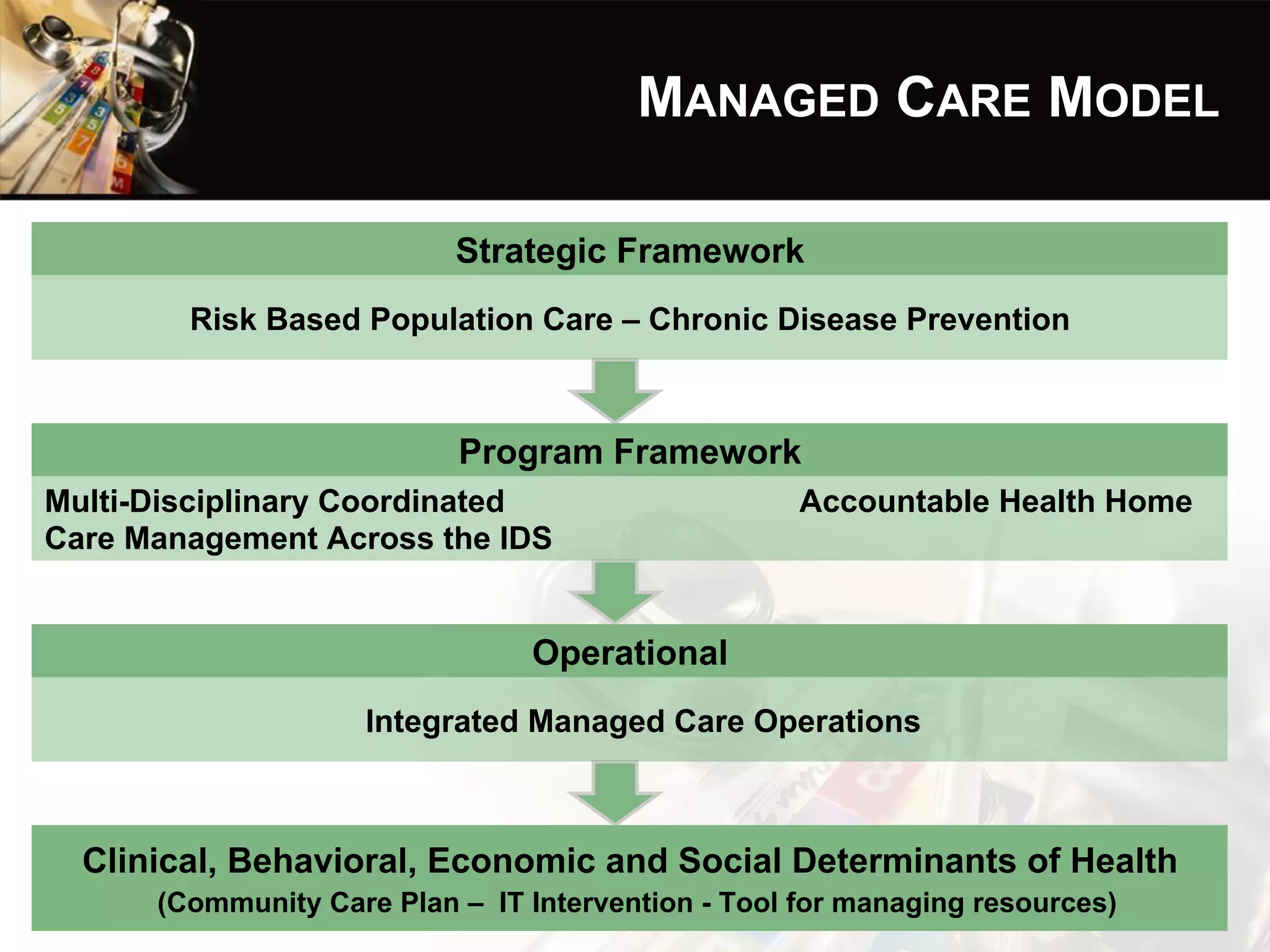
MANAGED CARE MODEL
Strategic Framework
Risk Based Population Care – Chronic Disease Prevention
Program Framework
Multi-Disciplinary Coordinated Accountable Health Home
Care Management Across the IDS
Operational
Integrated Managed Care Operations
Clinical, Behavioral, Economic and Social Determinants of Health
(Community Care Plan – IT Intervention - Tool for managing resources)
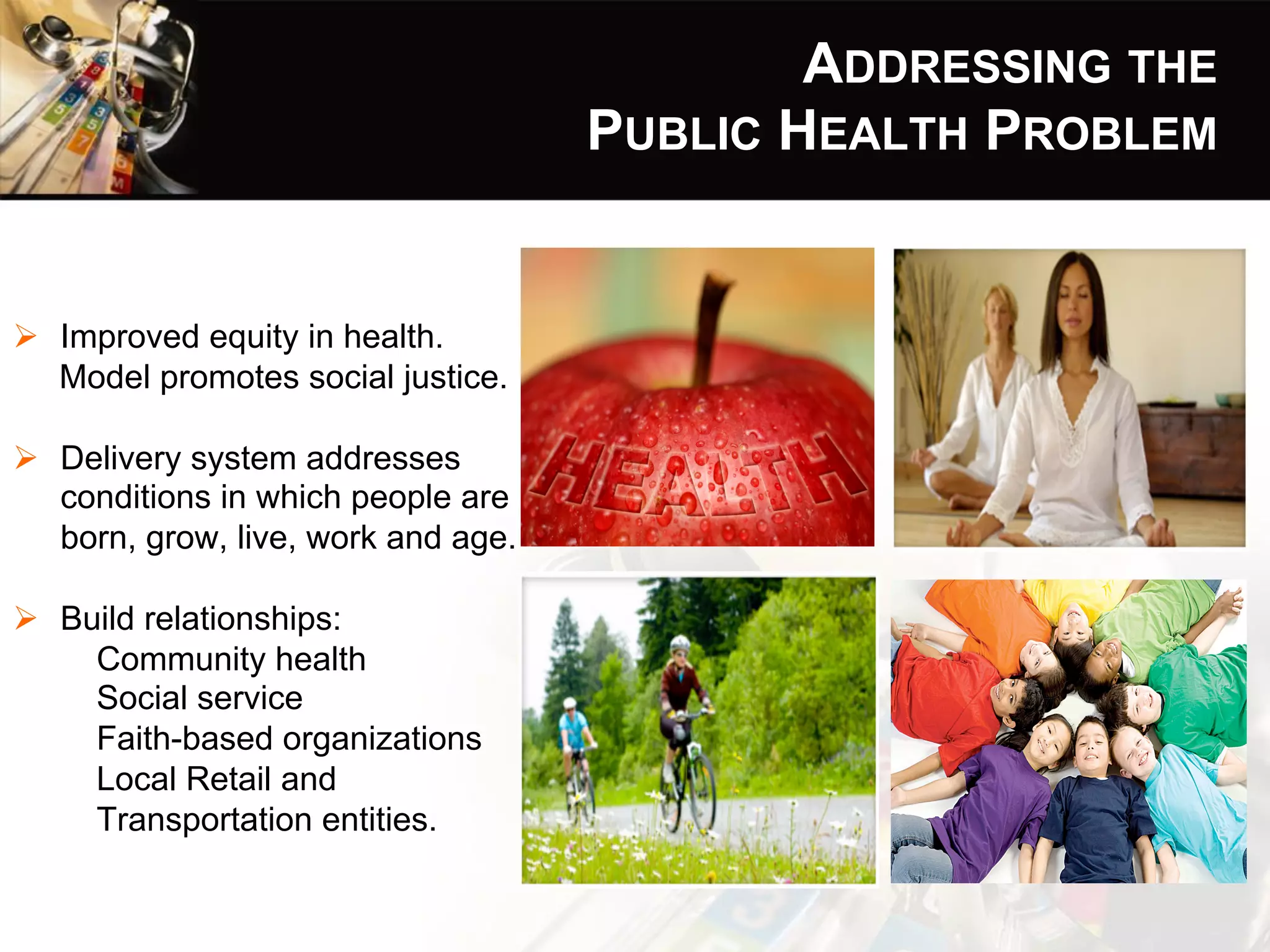
ADDRESSING THE
PUBLIC HEALTH PROBLEM
Ø  Improved equity in health.
Model promotes social justice.
Ø  Delivery system addresses
conditions in which people are
born, grow, live, work and age.
Ø  Build relationships:
Community health
Social service
Faith-based organizations
Local Retail and
Transportation entities.
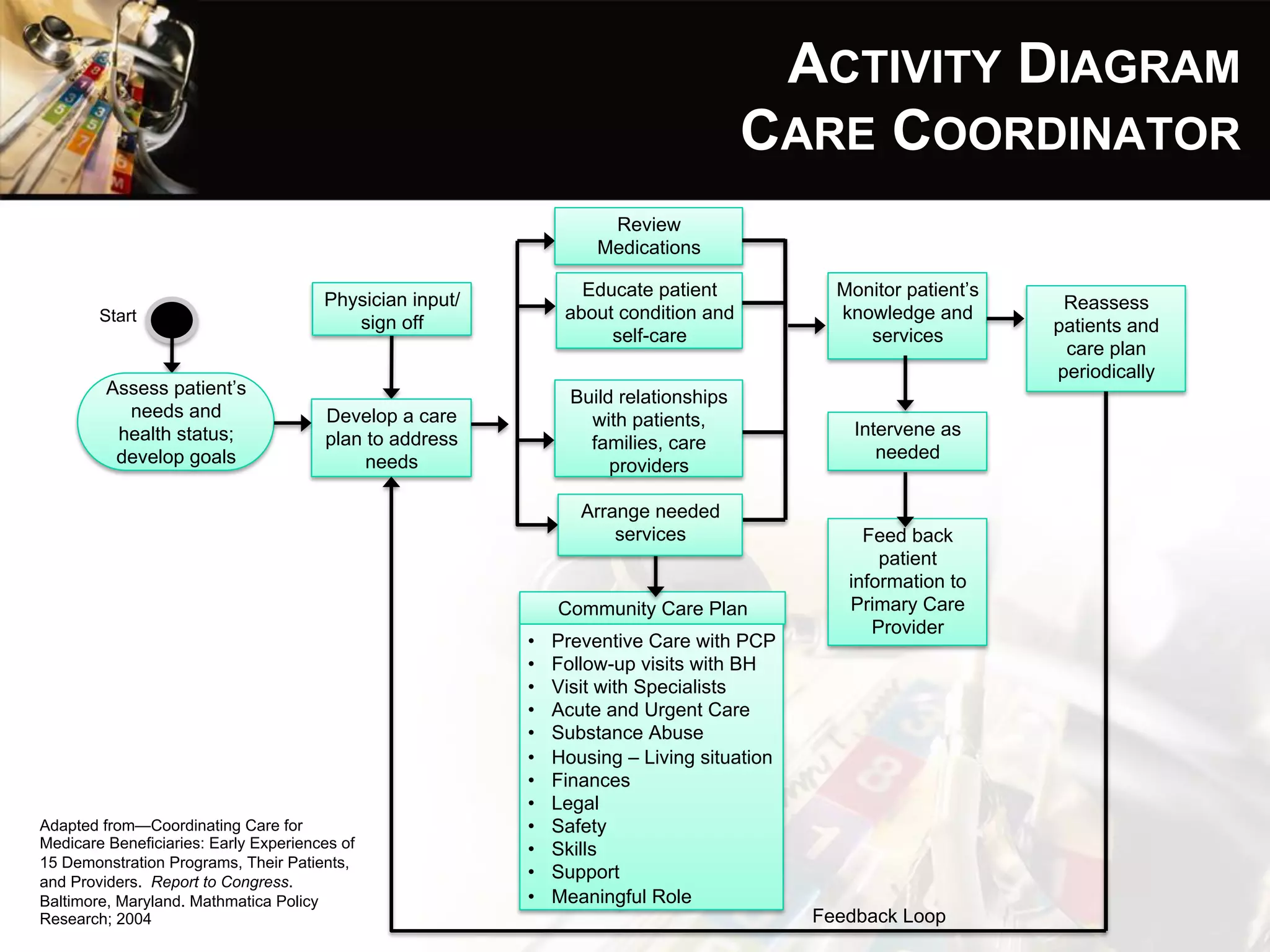
ACTIVITY DIAGRAM
CARE COORDINATOR
Adapted from—Coordinating Care for
Medicare Beneficiaries: Early Experiences of
15 Demonstration Programs, Their Patients,
and Providers. Report to Congress.
Baltimore, Maryland. Mathmatica Policy
Research; 2004
Start
Physician input/
sign off
Community Care Plan
Feedback Loop
Assess patient’s
needs and
health status;
develop goals
Develop a care
plan to address
needs
Review
Medications
Educate patient
about condition and
self-care
Build relationships
with patients,
families, care
providers
•  Preventive Care with PCP
•  Follow-up visits with BH
•  Visit with Specialists
•  Acute and Urgent Care
•  Substance Abuse
•  Housing – Living situation
•  Finances
•  Legal
•  Safety
•  Skills
•  Support
•  Meaningful Role
Monitor patient’s
knowledge and
services
Intervene as
needed
Feed back
patient
information to
Primary Care
Provider
Reassess
patients and
care plan
periodically
Arrange needed
services
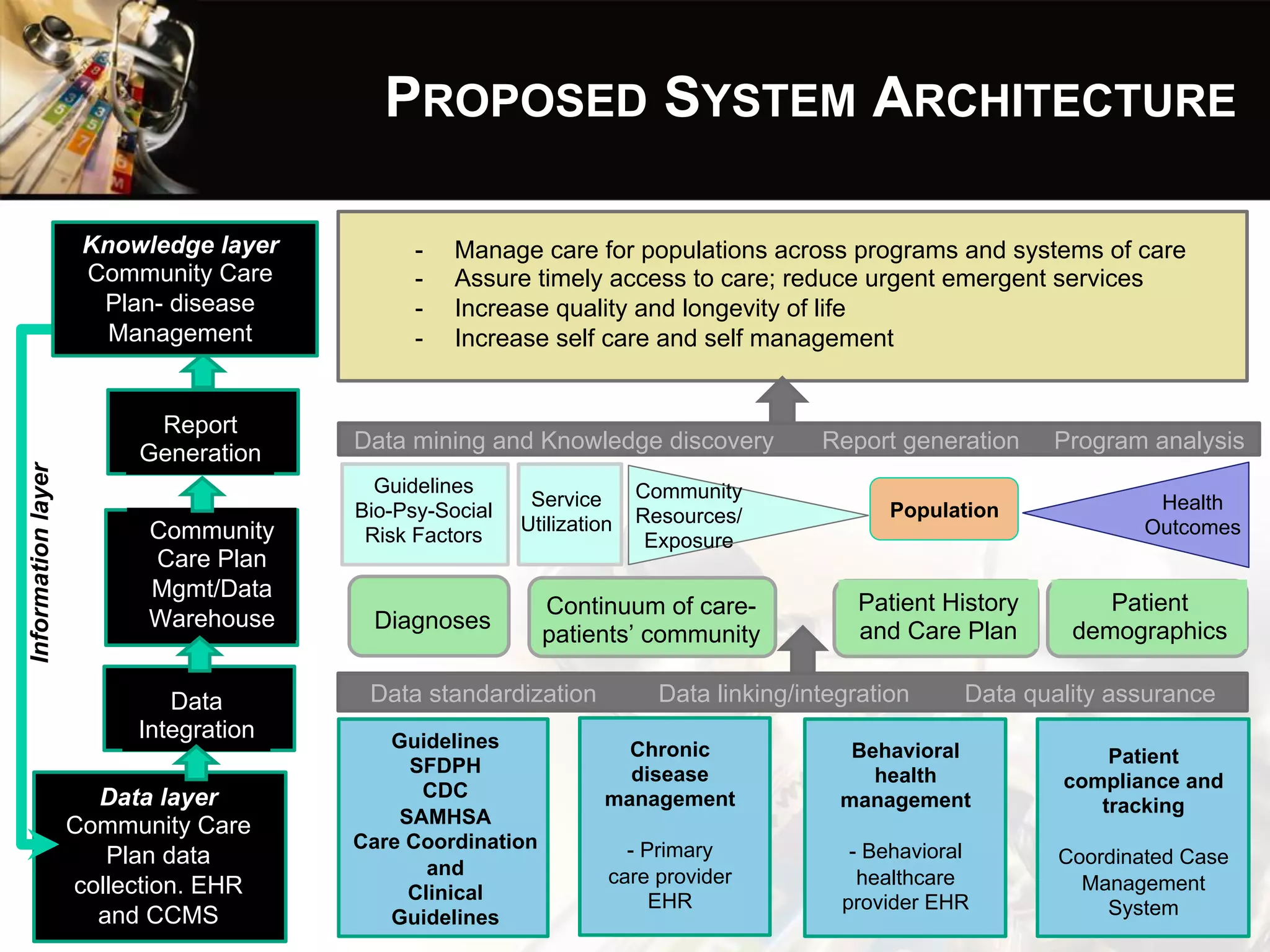
PROPOSED SYSTEM ARCHITECTURE
Data
Integration
Chronic
disease
management
- Primary
care provider
EHR
Behavioral
health
management
- Behavioral
healthcare
provider EHR
Community
Care Plan
Mgmt/Data
Warehouse
Data layer
Community Care
Plan data
collection. EHR
and CCMS
Report
Generation
Informationlayer
Data standardization Data linking/integration Data quality assurance
-  Manage care for populations across programs and systems of care
-  Assure timely access to care; reduce urgent emergent services
-  Increase quality and longevity of life
-  Increase self care and self management
Patient
compliance and
tracking
Coordinated Case
Management
System
Diagnoses
Continuum of care-
patients’ community
Patient History
and Care Plan
Patient
demographics
Health
Outcomes
Population
Guidelines
Bio-Psy-Social
Risk Factors
Knowledge layer
Community Care
Plan- disease
Management
Community
Resources/
Exposure
Guidelines
SFDPH
CDC
SAMHSA
Care Coordination
and
Clinical
Guidelines
Service
Utilization
Data mining and Knowledge discovery Report generation Program analysis
REFERENCES
Horvitz-Lennon M, Kilbourne AM, Pincus HA. From silos to bridges: meeting the general health care needs of adults with severe mental
illnesses. Health Affairs 25, no. 3 (2006): 659-669.
Editor. High Users of Multiple Systems. San Francisco Department of Public Health. City and County of San Francisco. San Francisco,
CA. Draft; 2013.
Wise CG, Bahl V, et al. Population-Based Medical and Disease Management: An Evaluation of Cost and Quality. Disease Management.
2006; 9(1): 45 –55
Larmee AS, Levinsky SK, et al. Case management in a heterogeneous heart failure population: A Randomized Controlled Trial. Archives
of Internal Medicine. 2003; 163: 809-817.
Editor. Coordinated Case Management System (CCMS). San Francisco Department of Public Health. City and County of San Francisco.
San Francisco, CA SFPDPH Publication; 2012.
Editor. Integrated Delivery System: Care Coordination. San Francisco Department of Public Health. City and County of San Francisco.
San Francisco, CA. Draft; 2013.
Editor. Coordinated Case Management System. (2012).
Editor. Best Practices in Coordinated Care. Report submitted to Health Care Financing Administration, Division of Demonstration
Programs, Center for Health Plans and Providers. Baltimore, Maryland. Mathmatica Policy Research; 2000.
McDonald KM, Sundaram V, et al. Closing the Quality Gap: A Critical Analysis of Quality Improvement Strategies (Vol.7: Care
Coordination). Agency for Healthcare Research and Quality (US). 2007; 04(07): 0051-7.
Editor. Coordinating Care for Medicare Beneficiaries: Early Experiences of 15 Demonstration Programs, Their Patients, and Providers.
Report to Congress. Baltimore, Maryland. Mathmatica Policy Research; 2004
Institute for Healthcare Improvement. IHI Triple Aim Initiative. http://www.ihi.org/offerings/Initiatives/TripleAim/Pages/default.aspx.
Accessed June 22, 2013.

SFDPH_Managed Care Initiative

  • 1.
    The San FranciscoDepartment of Public Health: Care Coordination addressing the Social Determinants of Health Managed Care Initiative Lisa Catanzaro. M. Arch., MPH
  • 2.
    MANAGED CARE MODEL StrategicFramework Risk Based Population Care – Chronic Disease Prevention Program Framework Multi-Disciplinary Coordinated Accountable Health Home Care Management Across the IDS Operational Integrated Managed Care Operations Clinical, Behavioral, Economic and Social Determinants of Health (Community Care Plan – IT Intervention - Tool for managing resources)
  • 3.
    ADDRESSING THE PUBLIC HEALTHPROBLEM Ø  Improved equity in health. Model promotes social justice. Ø  Delivery system addresses conditions in which people are born, grow, live, work and age. Ø  Build relationships: Community health Social service Faith-based organizations Local Retail and Transportation entities.
  • 4.
    ACTIVITY DIAGRAM CARE COORDINATOR Adaptedfrom—Coordinating Care for Medicare Beneficiaries: Early Experiences of 15 Demonstration Programs, Their Patients, and Providers. Report to Congress. Baltimore, Maryland. Mathmatica Policy Research; 2004 Start Physician input/ sign off Community Care Plan Feedback Loop Assess patient’s needs and health status; develop goals Develop a care plan to address needs Review Medications Educate patient about condition and self-care Build relationships with patients, families, care providers •  Preventive Care with PCP •  Follow-up visits with BH •  Visit with Specialists •  Acute and Urgent Care •  Substance Abuse •  Housing – Living situation •  Finances •  Legal •  Safety •  Skills •  Support •  Meaningful Role Monitor patient’s knowledge and services Intervene as needed Feed back patient information to Primary Care Provider Reassess patients and care plan periodically Arrange needed services
  • 5.
    PROPOSED SYSTEM ARCHITECTURE Data Integration Chronic disease management -Primary care provider EHR Behavioral health management - Behavioral healthcare provider EHR Community Care Plan Mgmt/Data Warehouse Data layer Community Care Plan data collection. EHR and CCMS Report Generation Informationlayer Data standardization Data linking/integration Data quality assurance -  Manage care for populations across programs and systems of care -  Assure timely access to care; reduce urgent emergent services -  Increase quality and longevity of life -  Increase self care and self management Patient compliance and tracking Coordinated Case Management System Diagnoses Continuum of care- patients’ community Patient History and Care Plan Patient demographics Health Outcomes Population Guidelines Bio-Psy-Social Risk Factors Knowledge layer Community Care Plan- disease Management Community Resources/ Exposure Guidelines SFDPH CDC SAMHSA Care Coordination and Clinical Guidelines Service Utilization Data mining and Knowledge discovery Report generation Program analysis
  • 6.
    REFERENCES Horvitz-Lennon M, KilbourneAM, Pincus HA. From silos to bridges: meeting the general health care needs of adults with severe mental illnesses. Health Affairs 25, no. 3 (2006): 659-669. Editor. High Users of Multiple Systems. San Francisco Department of Public Health. City and County of San Francisco. San Francisco, CA. Draft; 2013. Wise CG, Bahl V, et al. Population-Based Medical and Disease Management: An Evaluation of Cost and Quality. Disease Management. 2006; 9(1): 45 –55 Larmee AS, Levinsky SK, et al. Case management in a heterogeneous heart failure population: A Randomized Controlled Trial. Archives of Internal Medicine. 2003; 163: 809-817. Editor. Coordinated Case Management System (CCMS). San Francisco Department of Public Health. City and County of San Francisco. San Francisco, CA SFPDPH Publication; 2012. Editor. Integrated Delivery System: Care Coordination. San Francisco Department of Public Health. City and County of San Francisco. San Francisco, CA. Draft; 2013. Editor. Coordinated Case Management System. (2012). Editor. Best Practices in Coordinated Care. Report submitted to Health Care Financing Administration, Division of Demonstration Programs, Center for Health Plans and Providers. Baltimore, Maryland. Mathmatica Policy Research; 2000. McDonald KM, Sundaram V, et al. Closing the Quality Gap: A Critical Analysis of Quality Improvement Strategies (Vol.7: Care Coordination). Agency for Healthcare Research and Quality (US). 2007; 04(07): 0051-7. Editor. Coordinating Care for Medicare Beneficiaries: Early Experiences of 15 Demonstration Programs, Their Patients, and Providers. Report to Congress. Baltimore, Maryland. Mathmatica Policy Research; 2004 Institute for Healthcare Improvement. IHI Triple Aim Initiative. http://www.ihi.org/offerings/Initiatives/TripleAim/Pages/default.aspx. Accessed June 22, 2013.