By KIMMY GULERIA
Physical Evidence:
• Physical evidence refers to any tangible object or material that is relevant
to a crime or investigation. It can include a wide range of items, such as
weapons, clothing, fingerprints, footprints, DNA samples, hair, fibers, tool
marks, tire tracks, shell casings, and more.
It is crucial in forensic investigations because it provides direct links
between individuals, objects, and locations involved in a crime. It can help
establish facts, corroborate witness statements, identify suspects, and
reconstruct events.
Documentary Evidence
Documentary evidence, also known as documentary or
documentary materials, refers to written or recorded materials
that are relevant to a legal case or investigation. This type of
evidence includes a variety of documents, records, reports, or
other written or recorded materials that provide information
about events, actions, or circumstances related to the case.
Testimonial evidence
It is also known as eyewitness testimony or oral evidence, refers to
statements or testimony provided by individuals who have witnessed or
experienced events relevant to a legal case or investigation. This type of
evidence is based on personal observations, perceptions, or experiences of
the witness and is often presented verbally in court.
(eyewitness, victim witness, expert witness)
Testimonial evidence is considered an important form of evidence in legal
proceedings, as it provides firsthand accounts of events or circumstances
from individuals who were directly involved or present at the time.
Digital evidence
It refers to any electronic information or data that is relevant to a legal
investigation or case. In today's digital age, a wide range of digital devices
and platforms generate and store vast amounts of data, making digital
evidence increasingly important in various types of legal proceedings.
(email, text messages, social media post, digital photos & videos, internet
browsing history )
Trace Evidence:
• Trace evidence refers to very small pieces of physical material that are
often overlooked but can be crucial in solving crimes. These tiny bits of
evidence can include things like hair, fibers, paint chips, glass fragments,
soil, or even pollen. They're called "trace" because they're often left behind
in very small amounts or are hard to see without close inspection.
Associative evidence
Associative evidences is like a connecting link that helps tie things
together in a crime investigation. It's evidence that doesn't directly
prove who did something, but it connects people, objects, or places to
each other or to a particular event. For example, finding a suspect's
wallet at a crime scene would be associative evidence because it
connects the suspect to that location. It helps investigators build a
story of what might have happened based on the connections between
different pieces of evidence.
Observation & Recognition of evidences are critical skills for professionals in various field,
including law enforcement, healthcare, forensics & investigations. Recognition is the process to
identify probative (something that tends to demonstrate or prove something) evidence hiding
among numerous redundant, irrelevant or unrelated items evidence at the crime scene or in
the forensic lab.
Accurate observation, appropriate & early recognition is very significant to carry on
investigation & can provide valuable insight into a situation or crime. Here are some key points
to observe & recognize evidence.
Continous
Training
It should be started immediately after securing the crime scene &
recognizing the evidence. Experts should collect the evidence in a
systematic, logical & careful manner to avoid contamination & cross-
contamination of the evidence. Documented the scene by Photography &
videography . It should be done before the collection of evidences so as
to preserve the record in its original appearance & location.
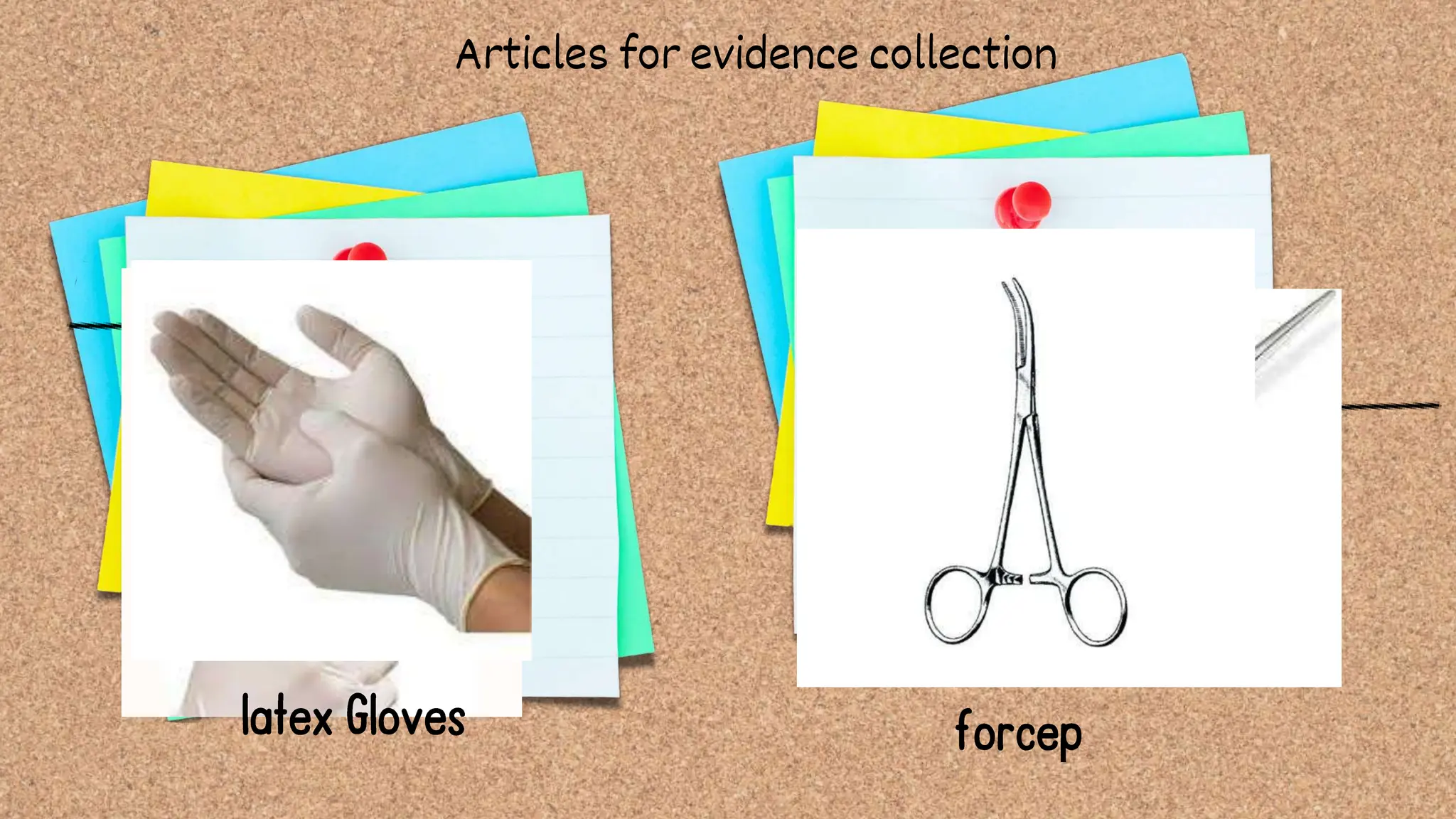
Articles for evidence collection
Tweezers Sterile swabs Test Tube & Rack
Plastic bags
Paper bags Cardboard Boxes
Hand Tool
Plastic 5- gallon Bucket
12-15 inches tall, with a
10-12 inch diameter
Photographic ruler
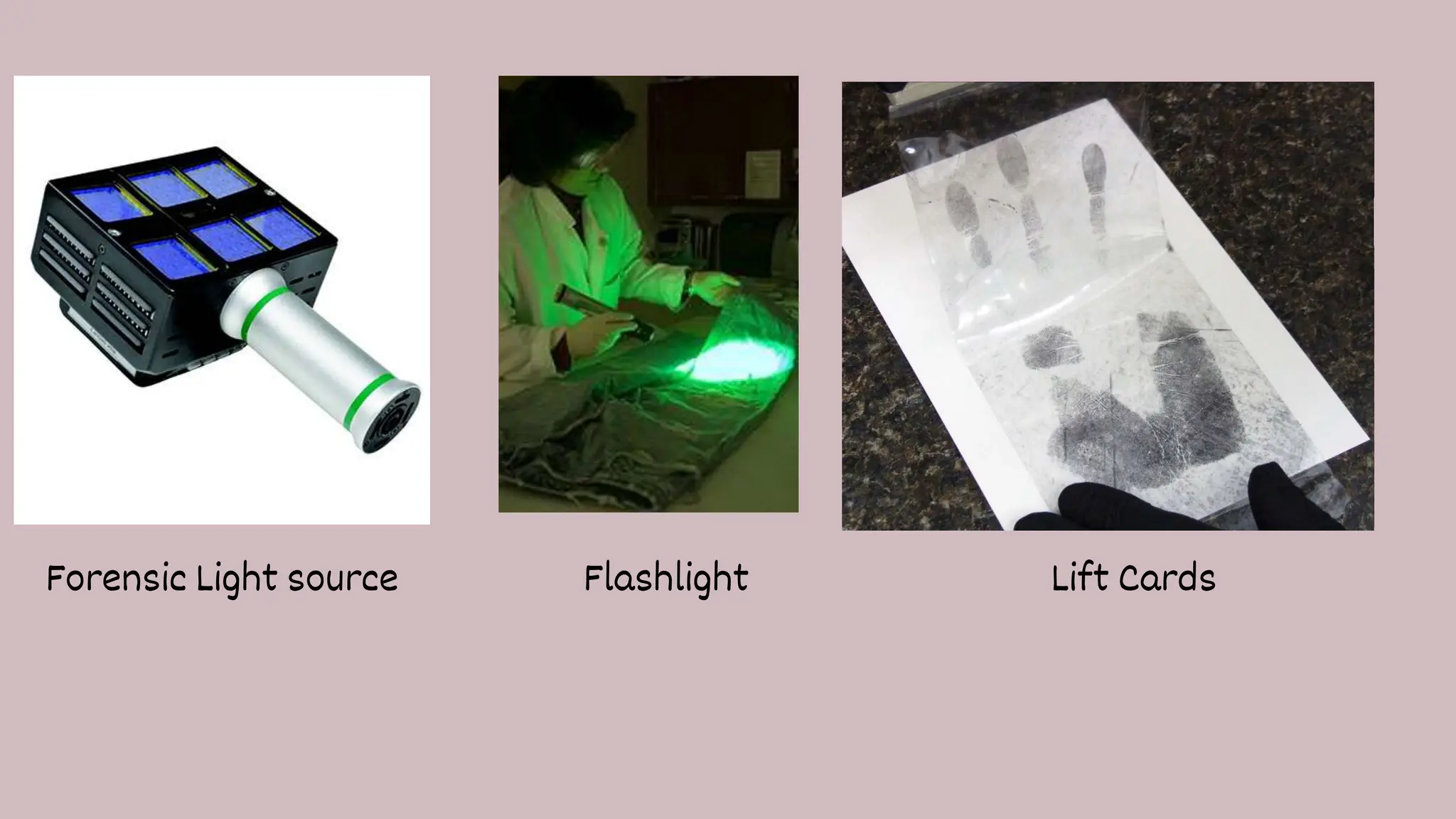
Flashlight
Forensic Light source Lift Cards
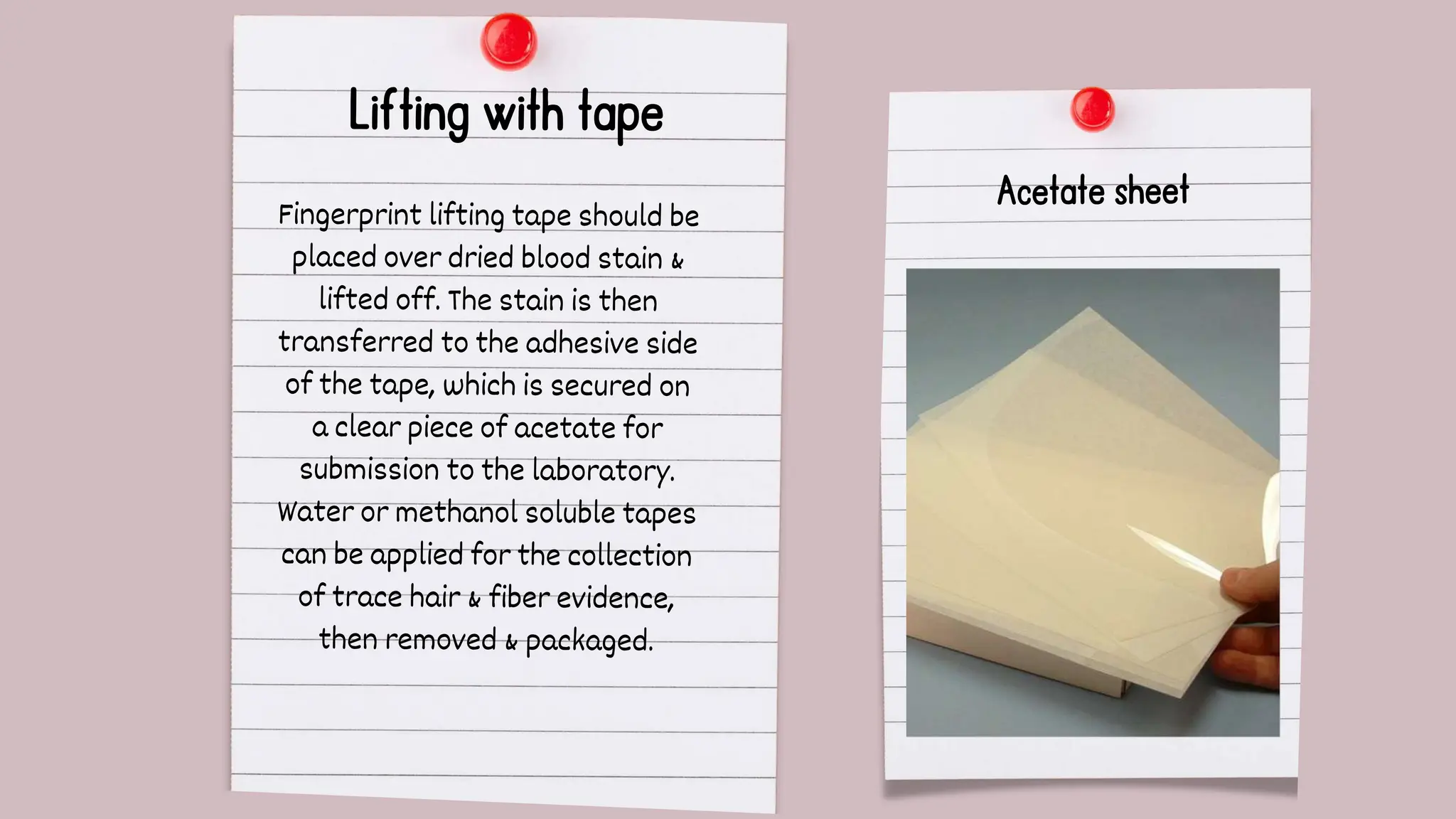
Lift tape Dental stone
powder
Gel lifter Tool marks casting material
Electrostatic dust lifter
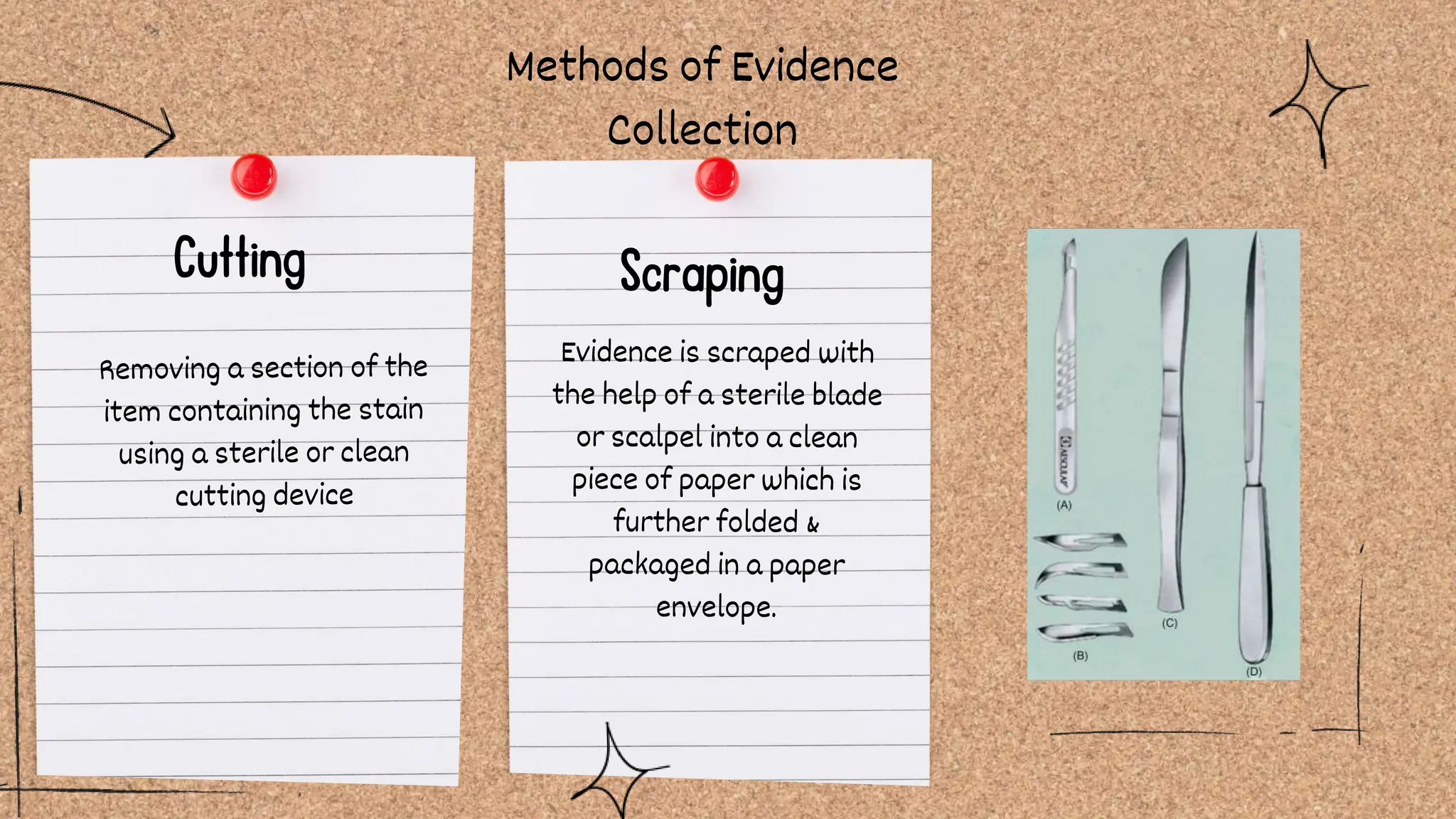
Methods of Evidence
Collection
Flammable
Fluid
• Viscera (Stomach, Small intestine, liver, spleen, kidney) should be
collected in wide mouth glass bottle for each
.
• In cases of poisoning saturated solution of common salt should be
used for preservation of viscera.
• Tissues to be used for Histopathology may be preserved in 10%
formalin.
• Blood for alcohol identification should be preserved with 10 mg
Sodium fluoride & 30 mg potassium oxalate for 10ml of blood. This
mixture helps to prevent the alcohol in the blood from breaking down
and ensures accurate testing for alcohol levels.
• Keep Biological evidence in cool, dry conditions to
prevent degradation.
• Freeze them if preserved for extended periods.
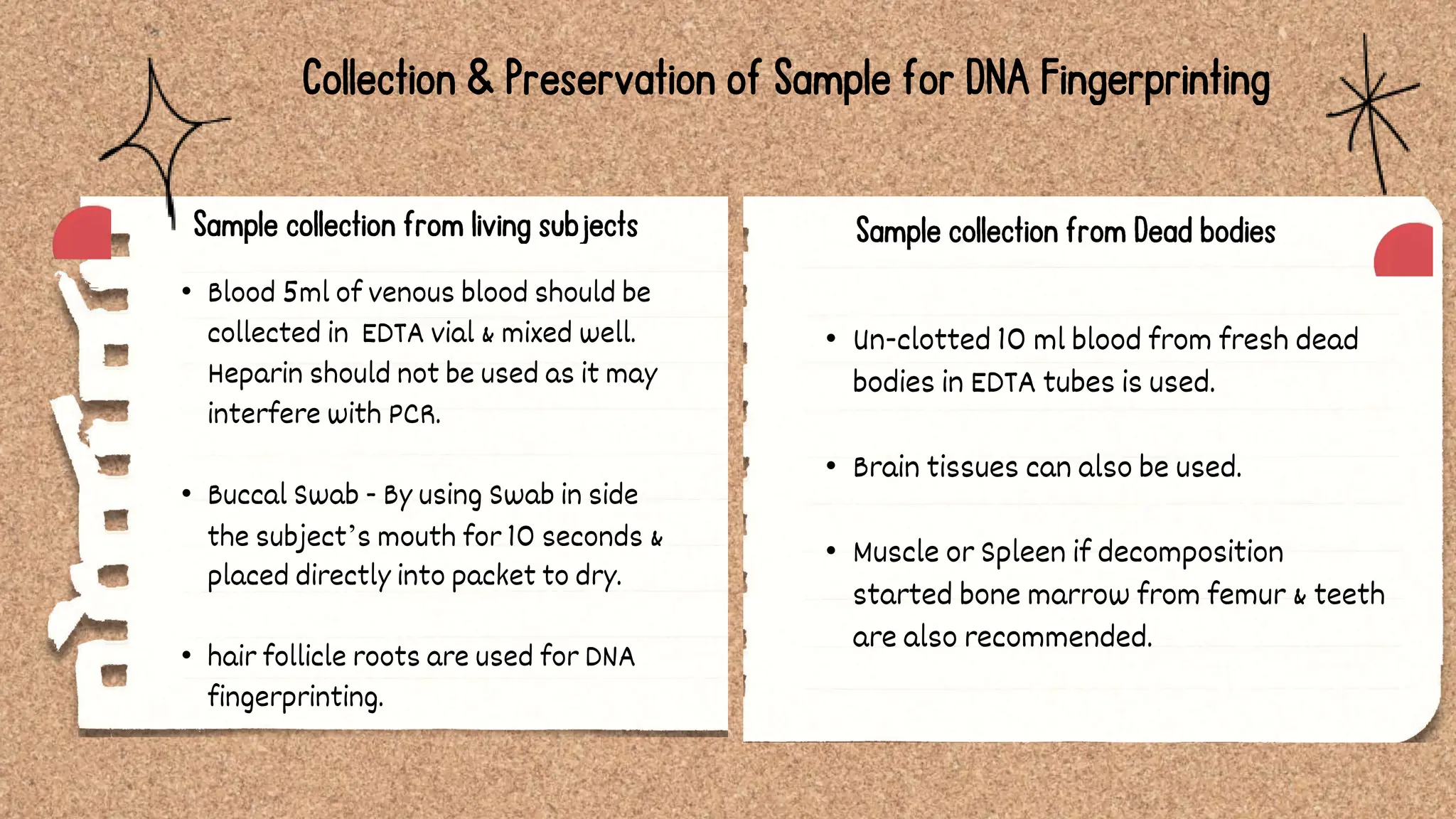
• Un-clotted 10 ml blood from fresh dead
bodies in EDTA tubes is used.
• Brain tissues can also be used.
• Muscle or Spleen if decomposition
started bone marrow from femur & teeth
are also recommended.
• Blood 5ml of venous blood should be
collected in EDTA vial & mixed well.
Heparin should not be used as it may
interfere with PCR.
• Buccal Swab - By using Swab in side
the subject’s mouth for 10 seconds &
placed directly into packet to dry.
• hair follicle roots are used for DNA
fingerprinting.
Digital Evidence
• Make forensic copies to preserve the original data without altering it.
• Maintain the integrity of digital evidence by storing it in write
protected media .
Continue......
• shipping Guidelines
• Secure transportation
• Notification
• Tracking & confirmation
• Receiving Confirmation
• Storage at Forensic laboratory
• Analysis process
• Return of Samples
RECAPTUALIZATION
• Enlist the types of Evidences
• Describe the Principles of Evidence collection
• Discuss the methods of collection of evidence
• How we can collect the Sample of DNA from dead bodies.
• Explain the steps of documentation of Digital Evidences.
Evidence collection & Preservation .pptx

Evidence collection & Preservation .pptx

  • 1.
  • 3.
    Physical Evidence: • Physicalevidence refers to any tangible object or material that is relevant to a crime or investigation. It can include a wide range of items, such as weapons, clothing, fingerprints, footprints, DNA samples, hair, fibers, tool marks, tire tracks, shell casings, and more. It is crucial in forensic investigations because it provides direct links between individuals, objects, and locations involved in a crime. It can help establish facts, corroborate witness statements, identify suspects, and reconstruct events.
  • 4.
    Documentary Evidence Documentary evidence,also known as documentary or documentary materials, refers to written or recorded materials that are relevant to a legal case or investigation. This type of evidence includes a variety of documents, records, reports, or other written or recorded materials that provide information about events, actions, or circumstances related to the case.
  • 5.
    Testimonial evidence It isalso known as eyewitness testimony or oral evidence, refers to statements or testimony provided by individuals who have witnessed or experienced events relevant to a legal case or investigation. This type of evidence is based on personal observations, perceptions, or experiences of the witness and is often presented verbally in court. (eyewitness, victim witness, expert witness) Testimonial evidence is considered an important form of evidence in legal proceedings, as it provides firsthand accounts of events or circumstances from individuals who were directly involved or present at the time.
  • 6.
    Digital evidence It refersto any electronic information or data that is relevant to a legal investigation or case. In today's digital age, a wide range of digital devices and platforms generate and store vast amounts of data, making digital evidence increasingly important in various types of legal proceedings. (email, text messages, social media post, digital photos & videos, internet browsing history )
  • 7.
    Trace Evidence: • Traceevidence refers to very small pieces of physical material that are often overlooked but can be crucial in solving crimes. These tiny bits of evidence can include things like hair, fibers, paint chips, glass fragments, soil, or even pollen. They're called "trace" because they're often left behind in very small amounts or are hard to see without close inspection.
  • 8.
    Associative evidence Associative evidencesis like a connecting link that helps tie things together in a crime investigation. It's evidence that doesn't directly prove who did something, but it connects people, objects, or places to each other or to a particular event. For example, finding a suspect's wallet at a crime scene would be associative evidence because it connects the suspect to that location. It helps investigators build a story of what might have happened based on the connections between different pieces of evidence.
  • 9.
    Observation & Recognitionof evidences are critical skills for professionals in various field, including law enforcement, healthcare, forensics & investigations. Recognition is the process to identify probative (something that tends to demonstrate or prove something) evidence hiding among numerous redundant, irrelevant or unrelated items evidence at the crime scene or in the forensic lab. Accurate observation, appropriate & early recognition is very significant to carry on investigation & can provide valuable insight into a situation or crime. Here are some key points to observe & recognize evidence.
  • 11.
  • 12.
    It should bestarted immediately after securing the crime scene & recognizing the evidence. Experts should collect the evidence in a systematic, logical & careful manner to avoid contamination & cross- contamination of the evidence. Documented the scene by Photography & videography . It should be done before the collection of evidences so as to preserve the record in its original appearance & location.
  • 15.
  • 16.
    Tweezers Sterile swabsTest Tube & Rack
  • 17.
    Plastic bags Paper bagsCardboard Boxes
  • 18.
    Hand Tool Plastic 5-gallon Bucket 12-15 inches tall, with a 10-12 inch diameter Photographic ruler
  • 19.
  • 20.
    Lift tape Dentalstone powder
  • 21.
    Gel lifter Toolmarks casting material Electrostatic dust lifter
  • 23.
  • 28.
  • 34.
    • Viscera (Stomach,Small intestine, liver, spleen, kidney) should be collected in wide mouth glass bottle for each . • In cases of poisoning saturated solution of common salt should be used for preservation of viscera. • Tissues to be used for Histopathology may be preserved in 10% formalin. • Blood for alcohol identification should be preserved with 10 mg Sodium fluoride & 30 mg potassium oxalate for 10ml of blood. This mixture helps to prevent the alcohol in the blood from breaking down and ensures accurate testing for alcohol levels.
  • 35.
    • Keep Biologicalevidence in cool, dry conditions to prevent degradation. • Freeze them if preserved for extended periods.
  • 36.
    • Un-clotted 10ml blood from fresh dead bodies in EDTA tubes is used. • Brain tissues can also be used. • Muscle or Spleen if decomposition started bone marrow from femur & teeth are also recommended. • Blood 5ml of venous blood should be collected in EDTA vial & mixed well. Heparin should not be used as it may interfere with PCR. • Buccal Swab - By using Swab in side the subject’s mouth for 10 seconds & placed directly into packet to dry. • hair follicle roots are used for DNA fingerprinting.
  • 37.
    Digital Evidence • Makeforensic copies to preserve the original data without altering it. • Maintain the integrity of digital evidence by storing it in write protected media .
  • 39.
  • 41.
    • shipping Guidelines •Secure transportation • Notification • Tracking & confirmation • Receiving Confirmation • Storage at Forensic laboratory • Analysis process • Return of Samples
  • 42.
    RECAPTUALIZATION • Enlist thetypes of Evidences • Describe the Principles of Evidence collection • Discuss the methods of collection of evidence • How we can collect the Sample of DNA from dead bodies. • Explain the steps of documentation of Digital Evidences.