These days there is so much information online.
Is it useful though?
It depends on how much time you have
to sift through the results! 
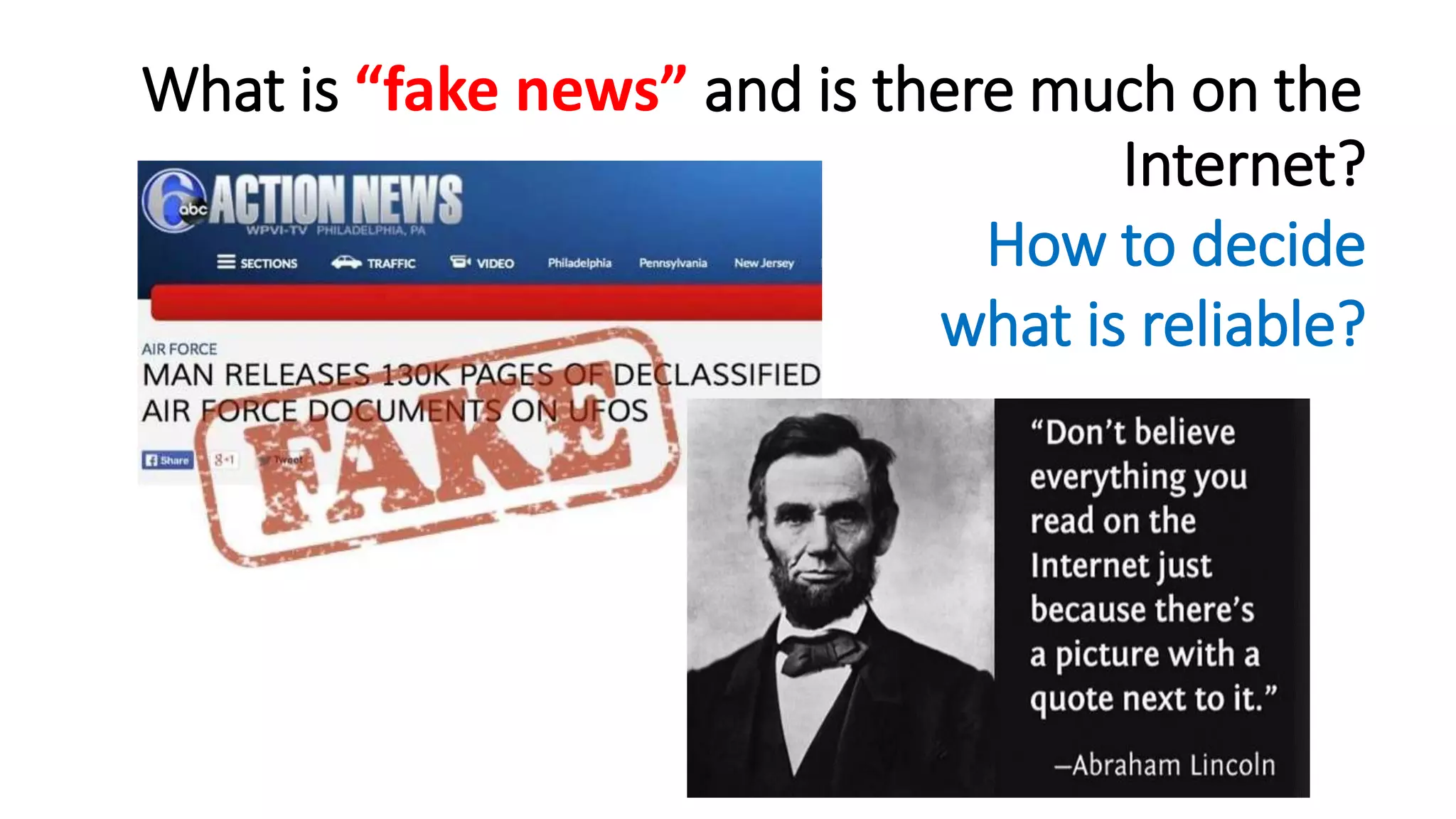
What is “fake news” and is there much on the
Internet?
How to decide
what is reliable?
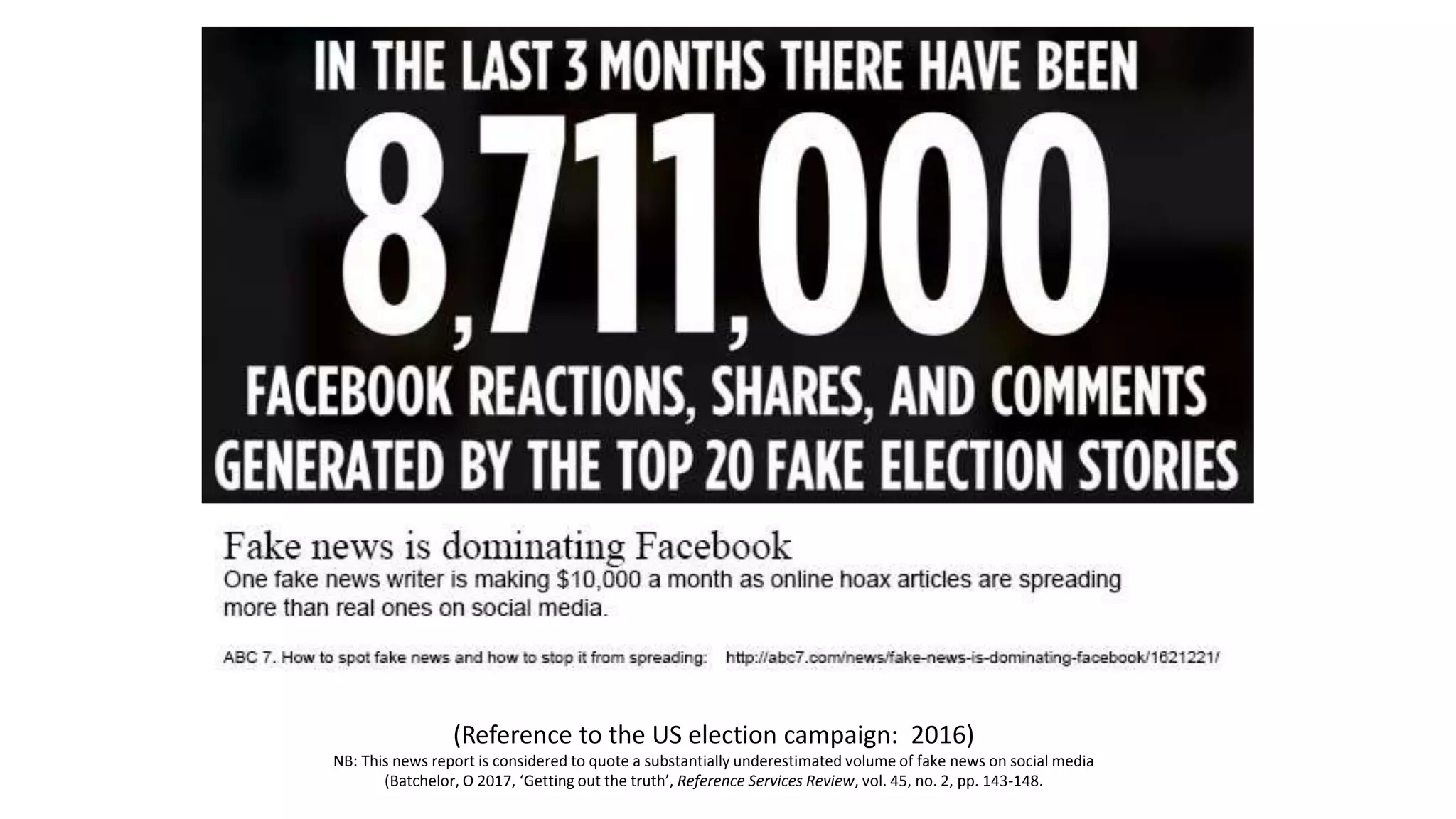
(Reference to the US election campaign: 2016)
NB: This news report is considered to quote a substantially underestimated volume of fake news on social media
(Batchelor, O 2017, ‘Getting out the truth’, Reference Services Review, vol. 45, no. 2, pp. 143-148.
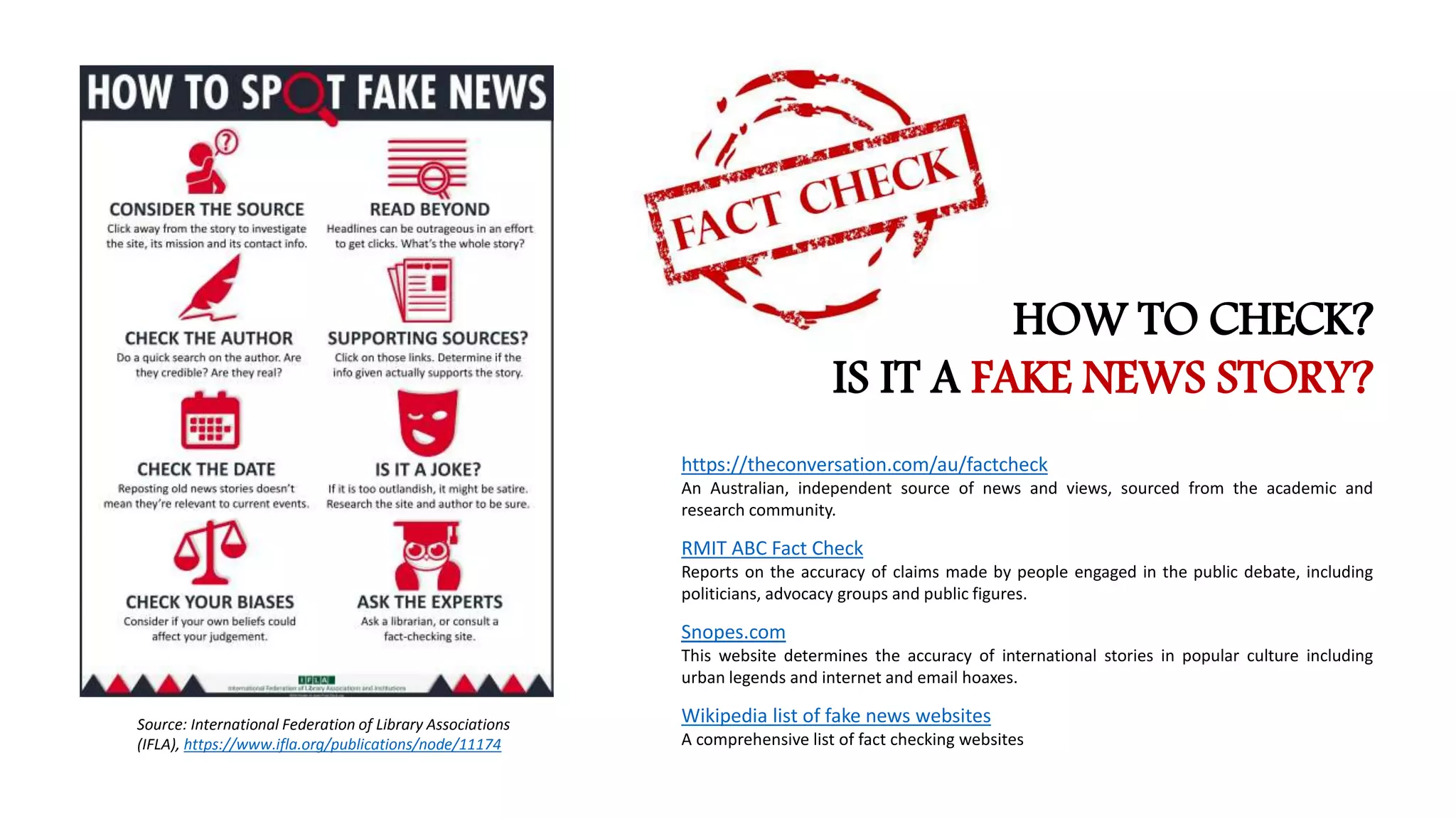
HOW TO CHECK?
IS IT A FAKE NEWS STORY?
https://theconversation.com/au/factcheck
An Australian, independent source of news and views, sourced from the academic and
research community.
RMIT ABC Fact Check
Reports on the accuracy of claims made by people engaged in the public debate, including
politicians, advocacy groups and public figures.
Snopes.com
This website determines the accuracy of international stories in popular culture including
urban legends and internet and email hoaxes.
Wikipedia list of fake news websites
A comprehensive list of fact checking websites
Source: International Federation of Library Associations
(IFLA), https://www.ifla.org/publications/node/11174
With misinformation becoming common …
… how to find reliable academic information?
The Internet still has
useful information.
Right?
Right!
n
You just have to know what you’re looking at
1. Who wrote it?
2. Can you find which organization is
connected to the information?
3. Is it current?
4. Is it biased or balanced in viewpoint?
Start with a quick evaluation of the
URL – or Domain name
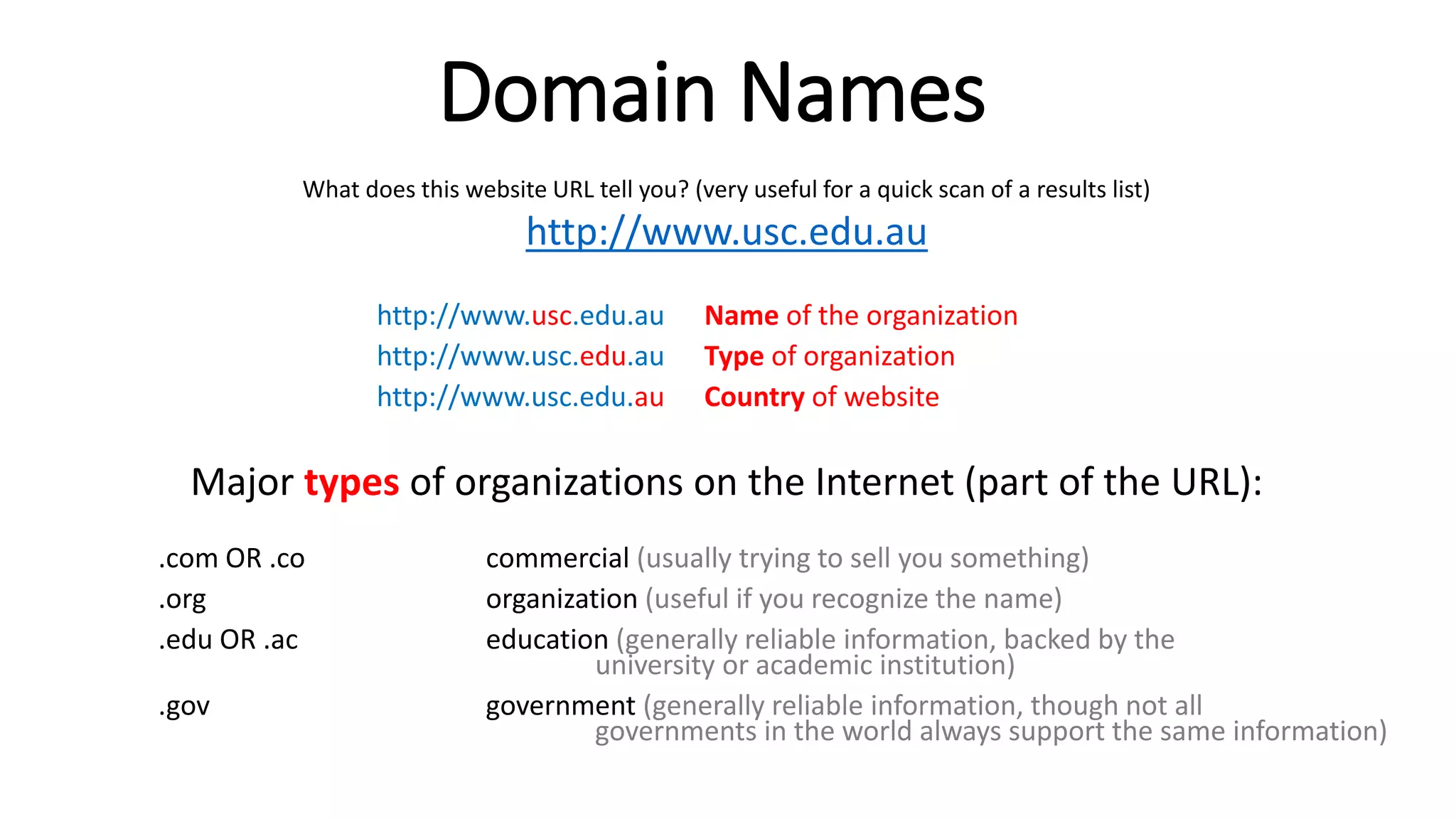
Domain Names
What does this website URL tell you? (very useful for a quick scan of a results list)
http://www.usc.edu.au
http://www.usc.edu.au Name of the organization
http://www.usc.edu.au Type of organization
http://www.usc.edu.au Country of website
Major types of organizations on the Internet (part of the URL):
.com OR .co commercial (usually trying to sell you something)
.org organization (useful if you recognize the name)
.edu OR .ac education (generally reliable information, backed by the
university or academic institution)
.gov government (generally reliable information, though not all
governments in the world always support the same information)
Domain Names
Example: You are researching Australian conservation issues
What can you tell about the reliability of the conservation information likely in these websites
just from their URL?
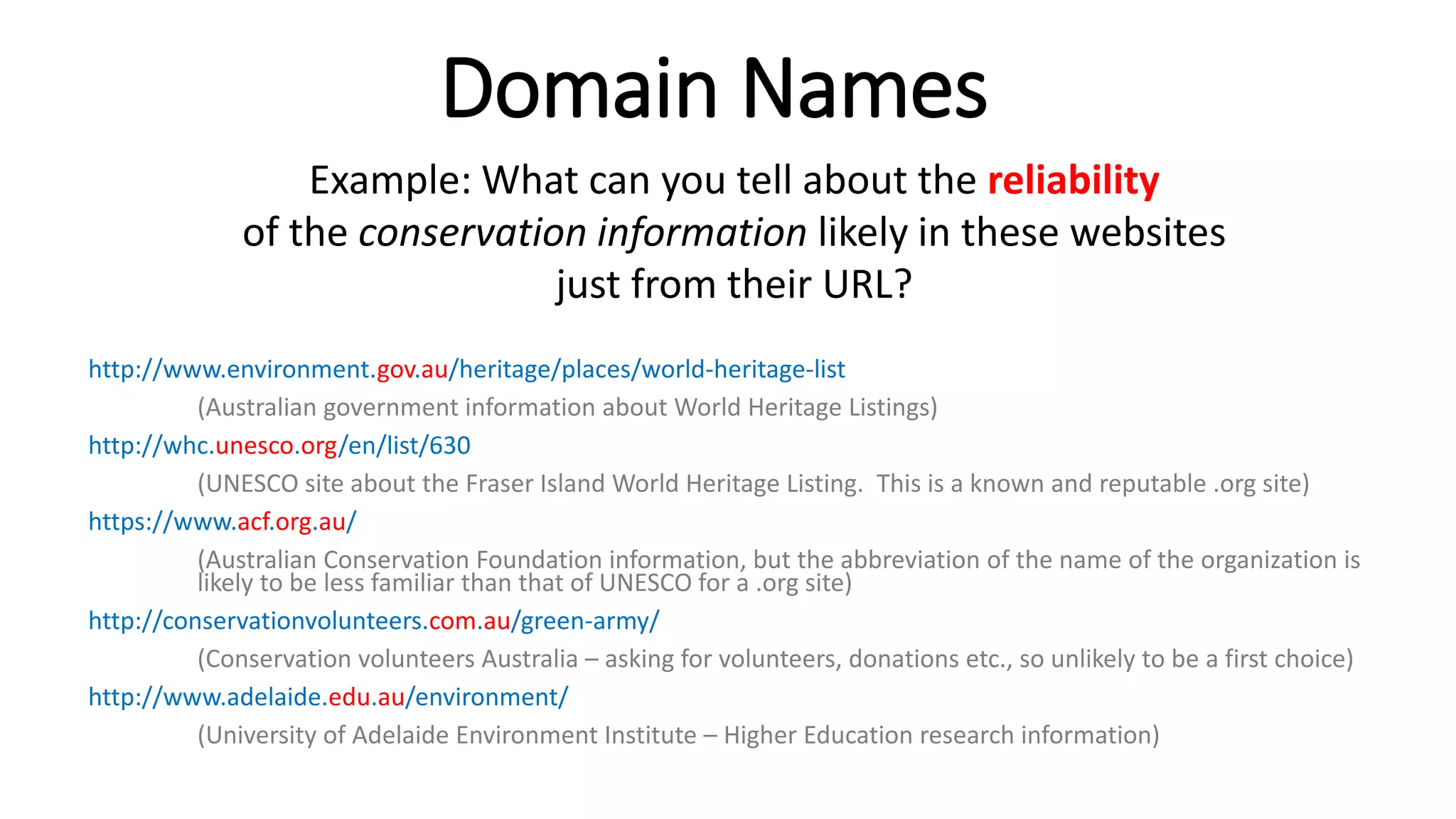
http://www.environment.gov.au/heritage/places/world-heritage-list
o
http://whc.unesco.org/en/list/630
o
https://www.acf.org.au/
o
http://conservationvolunteers.com.au/green-army/
o
http://www.adelaide.edu.au/environment/
Which would you look at first?
Domain Names
Example: What can you tell about the reliability
of the conservation information likely in these websites
just from their URL?
http://www.environment.gov.au/heritage/places/world-heritage-list
(Australian government information about World Heritage Listings)
http://whc.unesco.org/en/list/630
(UNESCO site about the Fraser Island World Heritage Listing. This is a known and reputable .org site)
https://www.acf.org.au/
(Australian Conservation Foundation information, but the abbreviation of the name of the organization is
likely to be less familiar than that of UNESCO for a .org site)
http://conservationvolunteers.com.au/green-army/
(Conservation volunteers Australia – asking for volunteers, donations etc., so unlikely to be a first choice)
http://www.adelaide.edu.au/environment/
(University of Adelaide Environment Institute – Higher Education research information)
Now you have made a good start!
Critically evaluate all web information for use
in academic research (and life!)
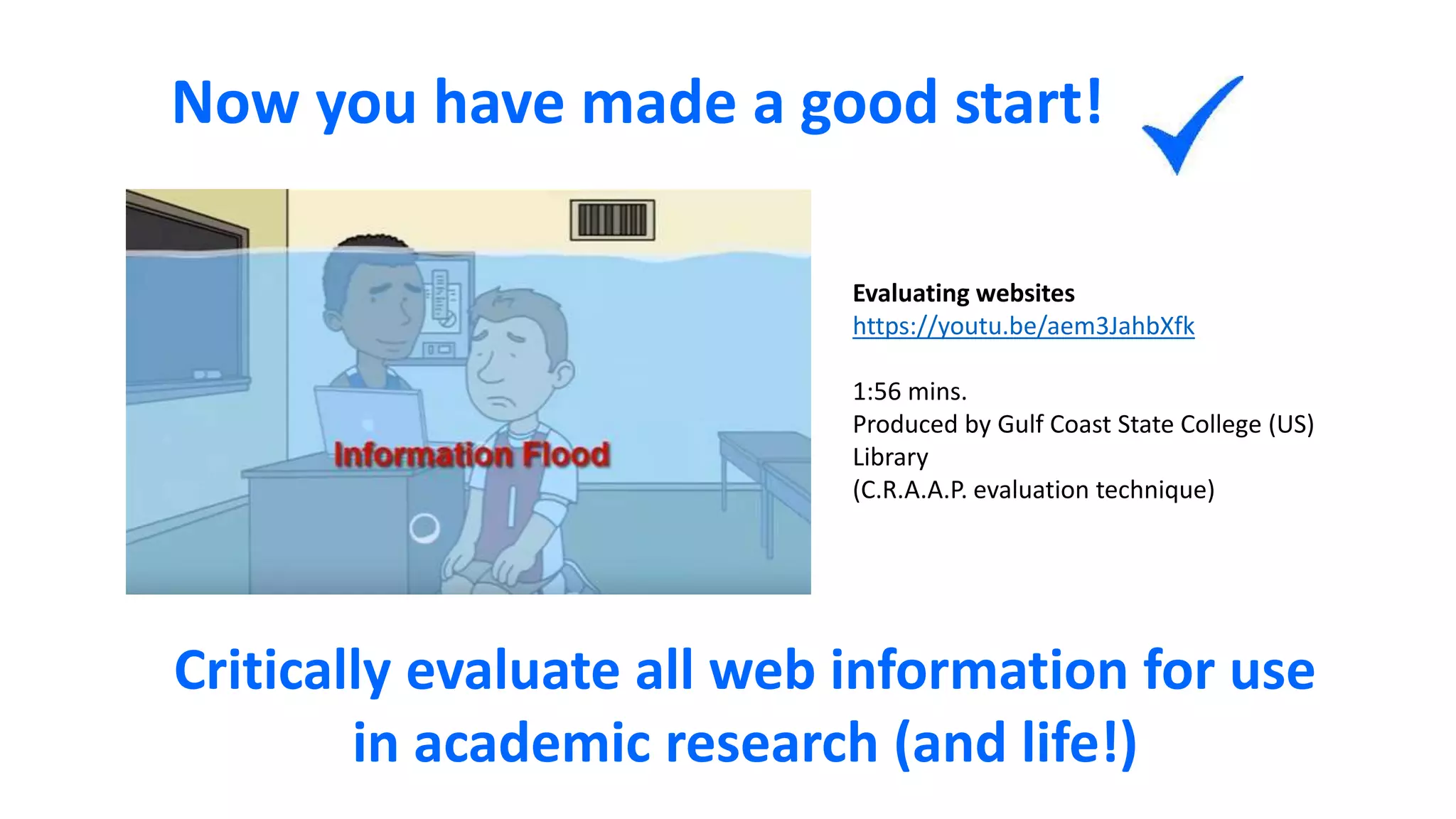
Evaluating websites
https://youtu.be/aem3JahbXfk
1:56 mins.
Produced by Gulf Coast State College (US)
Library
(C.R.A.A.P. evaluation technique)

Evaluation of Web Information

  • 1.
    These days thereis so much information online. Is it useful though? It depends on how much time you have to sift through the results! 
  • 2.
    What is “fakenews” and is there much on the Internet? How to decide what is reliable?
  • 3.
    (Reference to theUS election campaign: 2016) NB: This news report is considered to quote a substantially underestimated volume of fake news on social media (Batchelor, O 2017, ‘Getting out the truth’, Reference Services Review, vol. 45, no. 2, pp. 143-148.
  • 4.
    HOW TO CHECK? ISIT A FAKE NEWS STORY? https://theconversation.com/au/factcheck An Australian, independent source of news and views, sourced from the academic and research community. RMIT ABC Fact Check Reports on the accuracy of claims made by people engaged in the public debate, including politicians, advocacy groups and public figures. Snopes.com This website determines the accuracy of international stories in popular culture including urban legends and internet and email hoaxes. Wikipedia list of fake news websites A comprehensive list of fact checking websites Source: International Federation of Library Associations (IFLA), https://www.ifla.org/publications/node/11174
  • 5.
    With misinformation becomingcommon … … how to find reliable academic information? The Internet still has useful information. Right?
  • 6.
    Right! n You just haveto know what you’re looking at 1. Who wrote it? 2. Can you find which organization is connected to the information? 3. Is it current? 4. Is it biased or balanced in viewpoint? Start with a quick evaluation of the URL – or Domain name
  • 7.
    Domain Names What doesthis website URL tell you? (very useful for a quick scan of a results list) http://www.usc.edu.au http://www.usc.edu.au Name of the organization http://www.usc.edu.au Type of organization http://www.usc.edu.au Country of website Major types of organizations on the Internet (part of the URL): .com OR .co commercial (usually trying to sell you something) .org organization (useful if you recognize the name) .edu OR .ac education (generally reliable information, backed by the university or academic institution) .gov government (generally reliable information, though not all governments in the world always support the same information)
  • 8.
    Domain Names Example: Youare researching Australian conservation issues What can you tell about the reliability of the conservation information likely in these websites just from their URL? http://www.environment.gov.au/heritage/places/world-heritage-list o http://whc.unesco.org/en/list/630 o https://www.acf.org.au/ o http://conservationvolunteers.com.au/green-army/ o http://www.adelaide.edu.au/environment/ Which would you look at first?
  • 9.
    Domain Names Example: Whatcan you tell about the reliability of the conservation information likely in these websites just from their URL? http://www.environment.gov.au/heritage/places/world-heritage-list (Australian government information about World Heritage Listings) http://whc.unesco.org/en/list/630 (UNESCO site about the Fraser Island World Heritage Listing. This is a known and reputable .org site) https://www.acf.org.au/ (Australian Conservation Foundation information, but the abbreviation of the name of the organization is likely to be less familiar than that of UNESCO for a .org site) http://conservationvolunteers.com.au/green-army/ (Conservation volunteers Australia – asking for volunteers, donations etc., so unlikely to be a first choice) http://www.adelaide.edu.au/environment/ (University of Adelaide Environment Institute – Higher Education research information)
  • 10.
    Now you havemade a good start! Critically evaluate all web information for use in academic research (and life!) Evaluating websites https://youtu.be/aem3JahbXfk 1:56 mins. Produced by Gulf Coast State College (US) Library (C.R.A.A.P. evaluation technique)

Editor's Notes

  • #8 What’s in a name? A lot when it comes to websites! 
  • #9 What’s in a name? A lot when it comes to websites! 
  • #10 What’s in a name? A lot when it comes to websites! 