Evaluating a Development Project
What is and what is not?
M. Katundu
Moshi Cooperative University
January, 2023
Definition
 IE seek to assess the changes
brought about by a project or
programme, whether these
changes are intended or
unintended.
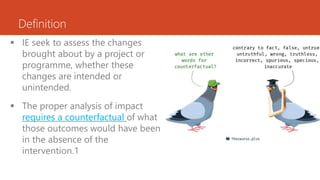
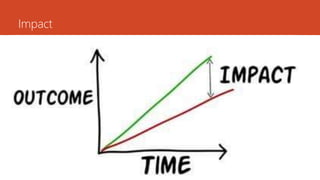
 The proper analysis of impact
requires a counterfactual of what
those outcomes would have been
in the absence of the
intervention.1
impact evaluation plan
include:
1. Background and context (provides
information on the background of
the intervention to be evaluated)
2. The purpose, objectives and scope
of the evaluation
3. Theory of change (ToC)
4. Key evaluation questions the
evaluation aims to answer
5. Proposed designs and
methodologies
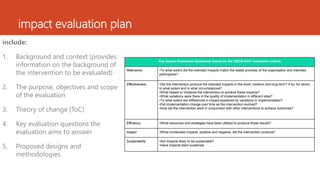
Key Impact Evaluation Questions based on the OECD-DAC evaluation criteria
Relevance •To what extent did the intended impacts match the stated priorities of the organisation and intended
participants?
Effectiveness •Did the intervention produce the intended impacts in the short, medium and long term? If so, for whom,
to what extent and in what circumstances?
•What helped or hindered the intervention to achieve these impacts?
•What variations were there in the quality of implementation in different sites?
•To what extent are differences in impact explained by variations in implementation?
•Did implementation change over time as the intervention evolved?
•How did the intervention work in conjunction with other interventions to achieve outcomes?
Efficiency •What resources and strategies have been utilized to produce these results?
Impact •What unintended impacts, positive and negative, did the intervention produce?
Sustainability •Are impacts likely to be sustainable?
•Have impacts been sustained
Process
Review project documents (proposal, reports etc
Review the project theory of change
Review the project budget
Conduct Interviews with project team, internal and external project
partners
Pay attention to:
 The Counterfactual
 Lessons learned
 Establish cases both good or bad if any
Efficiency/Cost analysis
Including an analysis of a programme's costs in an impact
evaluation provides another essential piece of information
policymakers need. Unfortunately, too many impact
evaluations omit this essential component.
Impact
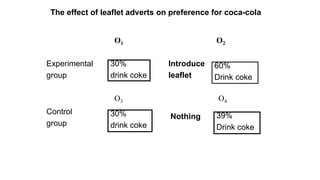
The effect of leaflet adverts on preference for coca-cola
Experimental
group
Control
group
30%
drink coke
30%
drink coke
Introduce
leaflet
Nothing
60%
Drink coke
39%
Drink coke
O1 O2
O3 O4
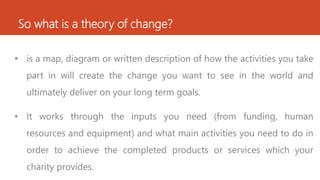
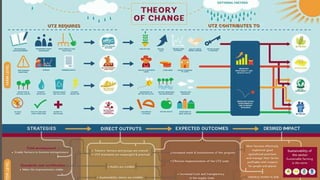
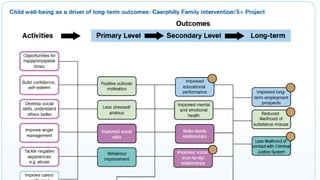
So what is a theory of change?
• is a map, diagram or written description of how the activities you take
part in will create the change you want to see in the world and
ultimately deliver on your long term goals.
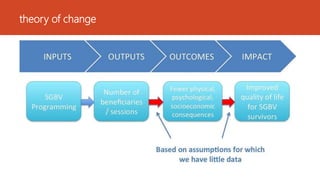
• It works through the inputs you need (from funding, human
resources and equipment) and what main activities you need to do in
order to achieve the completed products or services which your
charity provides.
theory of change
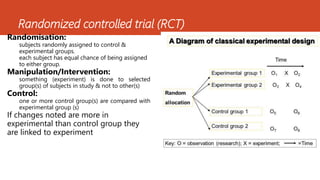
Randomized controlled trial (RCT)
Randomisation:
subjects randomly assigned to control &
experimental groups.
each subject has equal chance of being assigned
to either group.
Manipulation/Intervention:
something (experiment) is done to selected
group(s) of subjects in study & not to other(s)
Control:
one or more control group(s) are compared with
experimental group (s)
If changes noted are more in
experimental than control group they
are linked to experiment
Asanteni

Evaluating a Development Project.pptx

  • 1.
    Evaluating a DevelopmentProject What is and what is not? M. Katundu Moshi Cooperative University January, 2023
  • 2.
    Definition  IE seekto assess the changes brought about by a project or programme, whether these changes are intended or unintended.  The proper analysis of impact requires a counterfactual of what those outcomes would have been in the absence of the intervention.1
  • 3.
    impact evaluation plan include: 1.Background and context (provides information on the background of the intervention to be evaluated) 2. The purpose, objectives and scope of the evaluation 3. Theory of change (ToC) 4. Key evaluation questions the evaluation aims to answer 5. Proposed designs and methodologies Key Impact Evaluation Questions based on the OECD-DAC evaluation criteria Relevance •To what extent did the intended impacts match the stated priorities of the organisation and intended participants? Effectiveness •Did the intervention produce the intended impacts in the short, medium and long term? If so, for whom, to what extent and in what circumstances? •What helped or hindered the intervention to achieve these impacts? •What variations were there in the quality of implementation in different sites? •To what extent are differences in impact explained by variations in implementation? •Did implementation change over time as the intervention evolved? •How did the intervention work in conjunction with other interventions to achieve outcomes? Efficiency •What resources and strategies have been utilized to produce these results? Impact •What unintended impacts, positive and negative, did the intervention produce? Sustainability •Are impacts likely to be sustainable? •Have impacts been sustained
  • 4.
    Process Review project documents(proposal, reports etc Review the project theory of change Review the project budget Conduct Interviews with project team, internal and external project partners Pay attention to:  The Counterfactual  Lessons learned  Establish cases both good or bad if any
  • 5.
    Efficiency/Cost analysis Including ananalysis of a programme's costs in an impact evaluation provides another essential piece of information policymakers need. Unfortunately, too many impact evaluations omit this essential component.
  • 6.
  • 7.
    The effect ofleaflet adverts on preference for coca-cola Experimental group Control group 30% drink coke 30% drink coke Introduce leaflet Nothing 60% Drink coke 39% Drink coke O1 O2 O3 O4
  • 8.
    So what isa theory of change? • is a map, diagram or written description of how the activities you take part in will create the change you want to see in the world and ultimately deliver on your long term goals. • It works through the inputs you need (from funding, human resources and equipment) and what main activities you need to do in order to achieve the completed products or services which your charity provides.
  • 9.
  • 12.
    Randomized controlled trial(RCT) Randomisation: subjects randomly assigned to control & experimental groups. each subject has equal chance of being assigned to either group. Manipulation/Intervention: something (experiment) is done to selected group(s) of subjects in study & not to other(s) Control: one or more control group(s) are compared with experimental group (s) If changes noted are more in experimental than control group they are linked to experiment
  • 13.

Editor's Notes

  • #14 In Slide Show mode, click the arrow to enter the PowerPoint Getting Started Center.