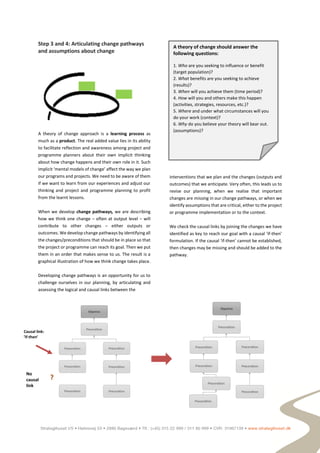
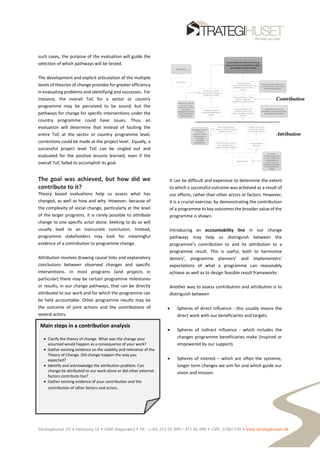
This document outlines the theory of change approach to planning, monitoring, and evaluating programs. It defines a theory of change as making implicit assumptions about how change happens explicit through articulating the sequence of changes expected from activities. The six steps described are: 1) Understanding how change happens in the context and your role, 2) Drawing on lessons learned, 3) Articulating change pathways between outputs and outcomes, and 4) Identifying assumptions about change. The example shows how outcome mapping revealed additional factors needed for communities to advocate for their rights beyond just advocacy training. Developing change pathways challenges planning by making the logical links between interventions and anticipated changes explicit.