D: 12/17/12
A: European Economy Notes
S: Why is the economy of Europe so different
among each region?
H: Eastern Europe Constructed Response
   Due Thursday

w.o.d: oil shale

Warm-Up: Answer questions 1 & 2 on page 337.
Write the questions and answers
Word of the Day
 Word         Definition    Sentence         Picture

               Layered      Estonia has
              rock that    deposits of oil
Oil shale
                            shale that it
              yields oil
                           uses to make
                when       electricity for
               heated        the Baltic
                             countries.
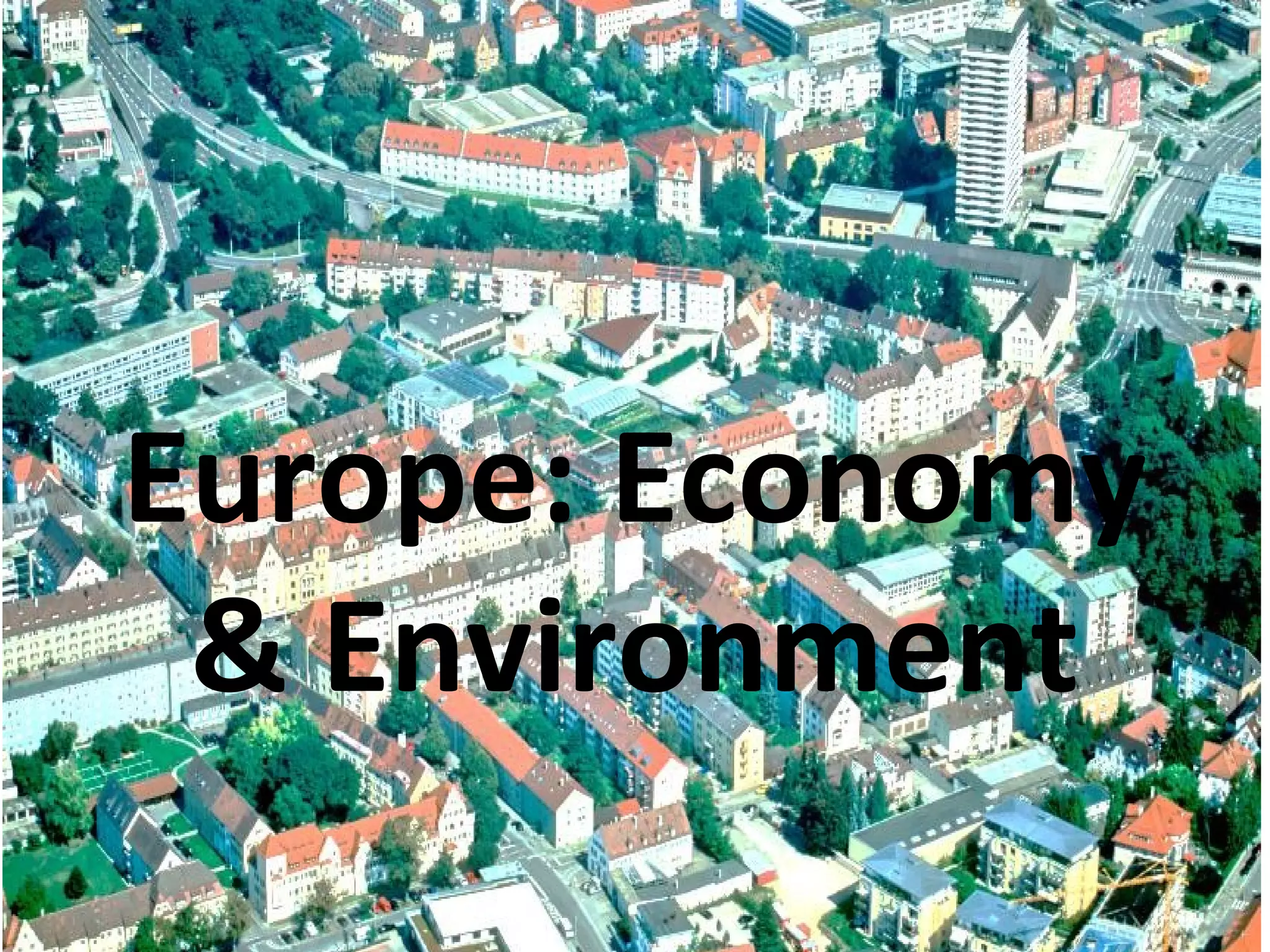
Europe: Economy
 & Environment
I. Economic Activities
A. Heavy industry includes the production of
   machinery, coal & iron
B. Countries without these minerals practice light
   industry and manufacture high-end electronics.
C. Most workers in Western Europe participate in
   service industries, especially tourism
I. Economic Activities
D. Farming in Western Europe is called Mixed
   farming where several types of crops are
   grown on one farm. In Eastern Europe they
   grow food on farm cooperatives where
   several farmers will grow one type of food to
   lower the cost. Eastern Europe has just
   recently begun using modern equipment to
   farm on privately owned pieces of land.
II. Transportation and
              Communications
A. Railways link most major European cities,
   natural resources and industrial centers.
   Even the Chunnel under the English Channel
   links Paris to London.
B. Europe handles 65% of all world shipping
   due to its ports, rivers and canals
C. All European television is linked in a system
   called the European Broadcasting Network.
II. Transportation and
              Communications
D. Western Europe is more technologically
   advanced than Eastern Europe and only
   recently people in Eastern Europe have
   begun to use cell phones. Items like
   computers and cable TV are also rare to find
   in Eastern Europe but are all over Western
   Europe.
III. Trade and Interdependence
A. In 1992 the European Union was made to
   eliminate the restrictions on trading goods
   among its members to make Europe more
   competitive in the global market. Today the
   EU has allowed for one currency called the
   Euro, established a central bank and has
   common foreign policy
III. Trade and Interdependence
B. After the fall of Communism in 1989 Eastern
   Europe has struggled to set up a free market
   economy and many have not been able to
   join the EU due to their environmental
   policies.
IV. Managing Resources
A. Dry farming where they find ways to
   conserve soil moisture has to be used in
   Southern Europe due to its dry warm climate.
B. The majority of the forests have been cut
   down and cleared for farm land making the
   soil erosion and many have started
   reforestation
V. Human Impact
A. Before 1989 Eastern Europe did not have the
   same environmental laws as Western Europe
   and caused much industrial waste.
B. Burning chemicals and car exhaust help create
   acid rain that withers forest and is also carried
   to the ground by Europe’s freshwater systems.
   These polluted waters are also harming the
   farm land
C. In Southern Europe people use the rivers for
   waste disposal
VI. Future Challenges
• Pollution in the Danube River is threatening
  wildlife in the Black Sea and to clean it up it
  will cost a lot of money
• By 2020 all EU members must have lower
  emissions rate so many are trying to find
  alternative energies.

Europe Economy & Environment

  • 1.
    D: 12/17/12 A: EuropeanEconomy Notes S: Why is the economy of Europe so different among each region? H: Eastern Europe Constructed Response Due Thursday w.o.d: oil shale Warm-Up: Answer questions 1 & 2 on page 337. Write the questions and answers
  • 2.
    Word of theDay Word Definition Sentence Picture Layered Estonia has rock that deposits of oil Oil shale shale that it yields oil uses to make when electricity for heated the Baltic countries.
  • 3.
    Europe: Economy &Environment
  • 4.
    I. Economic Activities A.Heavy industry includes the production of machinery, coal & iron B. Countries without these minerals practice light industry and manufacture high-end electronics. C. Most workers in Western Europe participate in service industries, especially tourism
  • 5.
    I. Economic Activities D.Farming in Western Europe is called Mixed farming where several types of crops are grown on one farm. In Eastern Europe they grow food on farm cooperatives where several farmers will grow one type of food to lower the cost. Eastern Europe has just recently begun using modern equipment to farm on privately owned pieces of land.
  • 6.
    II. Transportation and Communications A. Railways link most major European cities, natural resources and industrial centers. Even the Chunnel under the English Channel links Paris to London. B. Europe handles 65% of all world shipping due to its ports, rivers and canals C. All European television is linked in a system called the European Broadcasting Network.
  • 7.
    II. Transportation and Communications D. Western Europe is more technologically advanced than Eastern Europe and only recently people in Eastern Europe have begun to use cell phones. Items like computers and cable TV are also rare to find in Eastern Europe but are all over Western Europe.
  • 8.
    III. Trade andInterdependence A. In 1992 the European Union was made to eliminate the restrictions on trading goods among its members to make Europe more competitive in the global market. Today the EU has allowed for one currency called the Euro, established a central bank and has common foreign policy
  • 9.
    III. Trade andInterdependence B. After the fall of Communism in 1989 Eastern Europe has struggled to set up a free market economy and many have not been able to join the EU due to their environmental policies.
  • 10.
    IV. Managing Resources A.Dry farming where they find ways to conserve soil moisture has to be used in Southern Europe due to its dry warm climate. B. The majority of the forests have been cut down and cleared for farm land making the soil erosion and many have started reforestation
  • 11.
    V. Human Impact A.Before 1989 Eastern Europe did not have the same environmental laws as Western Europe and caused much industrial waste. B. Burning chemicals and car exhaust help create acid rain that withers forest and is also carried to the ground by Europe’s freshwater systems. These polluted waters are also harming the farm land C. In Southern Europe people use the rivers for waste disposal
  • 12.
    VI. Future Challenges •Pollution in the Danube River is threatening wildlife in the Black Sea and to clean it up it will cost a lot of money • By 2020 all EU members must have lower emissions rate so many are trying to find alternative energies.