www.iua-eurochap2010.eu ~   1
IN CONJUNCTION WITH
                          9th World Congress for Microcirculation
                         Maison de la Chimie, September 26-28, 2010

            9th Annual Congress of the « Société Française de Médecine Vasculaire »
                              La Villette, September 23-25, 2010


UNDER THE AUSPICES OF
                 Société Française de Médecine Vasculaire (SFMV)


                 Société de Chirurgie Vasculaire de Langue Française (SCVLF)


                 Société Française d’Angiologie (SFA)


                 Collège Français de Pathologie Vasculaire (CFPV)


                 Collège des Enseignants de Médecine Vasculaire (CEMV)


ACKNOWLEDGMENTS
        The International Union of Angiology thanks for their participation

                                   Ad Rem Technology


2~
WELCOME ADDRESS
                    Dear Participant,

                    On behalf of the European Chapter of the International Union of Angiology,
                    and the French societies of vascular medicine and surgery, I am very pleased
                    to offer you a warm welcome to the 19th Eurochap!

                     The special position of this additional congress allowed us to experiment
                     some specific features, organized in a compact form with only two parallel
                     rooms:
- short lectures keeping time for discussions are organized in thematic symposia addressing the
changes in concepts and practices in the different vascular fields;
- specific postgraduate sessions based on clinical case solving and decision making will use
electronic votes in addition to the comments of experts, in order to increase interactivity;
- and the “Forum of Vascular Initiatives”, which will be an occasion to share the richness of
the initiatives of the IUA and its members for the teaching of vascular medicine and surgery,
the quality of care for the vascular patients and the promotion of patients associations and even
humanitarian actions.
The innovations also take a great part, since our congress attracted many proposals from
which we were able to select 150 abstracts organized in seven oral and ten poster sessions
with discussion rounds; furthermore the last congress day will be shared with the 9th World
Congress for Microcirculation that follows in the same location.

As you can see, everything has been thought in order to promote and facilitate scientific exchange
in a positive and friendly atmosphere. Many top scientist and physicians invited from all over
Europe and abroad accepted to play the game with you according to these principles, and we
need you to be as active as possible in order to get as much as you can from the feast!

As the congress takes place in the Maison de la Chimie, in the historical center of Paris, we
hope it will also be for you the occasion to enjoy the cultural wealth of Paris.

For the Organizing Committee,


                                                   Professor Patrick Carpentier, President


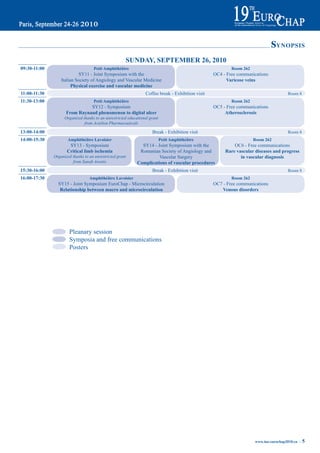
            SUMMARY
                     Synopsis ....................................................................................     4
     	               Scientific	Program	
                      Friday, September 24 .............................................................               7
                      Saturday, September 25 .........................................................                14
                      Sunday, September 26 ...........................................................                20
                     Congress Map and Exhibition Plan .........................................                       24
                     Abstracts
                        Symposia ..............................................................................       26
                        Oral Communications .........................................................                 43
                        Posters .................................................................................     58
                     Authors’ Index ..........................................................................        85
                     General Information .................................................................            89

                                                                                                                           www.iua-eurochap2010.eu ~   3
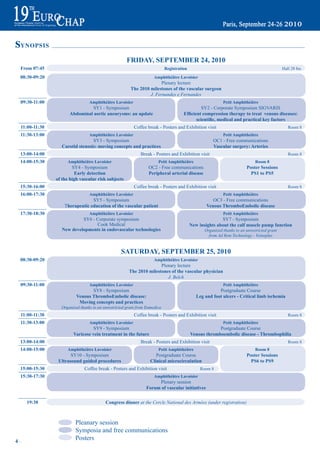
sYNOPSIS
                                                    Friday, September 24, 2010
 From 07:45                                                                registration                                                      Hall 28 bis

 08:30-09:20                                                        amphithéâtre Lavoisier
                                                                      Plenary lecture
                                                       the 2010 milestones of the vascular surgeon
                                                                J. Fernandes e Fernandes
 09:30-11:00                    amphithéâtre Lavoisier                                                     petit amphithéâtre
                               SY1 - Symposium                                                 SY2 - Corporate Symposium SIGVARIS
                     abdominal aortic aneurysms: an update                           Efficient compression therapy to treat venous diseases:
                                                                                            scientific, medical and practical key factors
 11:00-11:30                                             Coffee break - Posters and Exhibition visit                                            Room 8
 11:30-13:00                    amphithéâtre Lavoisier                                                     petit amphithéâtre
                                SY3 - Symposium                                                      OC1 - Free communications
                 Carotid stenosis: moving concepts and practices                                     Vascular surgery: arteries
 13:00-14:00                                                Break - Posters and Exhibition visit                                                Room 8
 14:00-15:30        amphithéâtre Lavoisier                            petit amphithéâtre                                     room 8
                       SY4 - Symposium                           OC2 - Free communications                              poster Sessions
                        early detection                          peripheral arterial disease                              pS1 to pS5
               of the high vascular risk subjects
 15:30-16:00                                             Coffee break - Posters and Exhibition visit                                            Room 8
 16:00-17:30                    amphithéâtre Lavoisier                                                     petit amphithéâtre
                                SY5 - Symposium                                                      OC3 - Free communications
                   Therapeutic education of the vascular patient                                  Venous thromboembolic disease
 17:30-18:30                    amphithéâtre Lavoisier                                                     petit amphithéâtre
                           SY6 - Corporate symposium                                                     SY7 - Symposium
                                 Cook Medical                                             New insights about the calf muscle pump function
                  New developments in endovascular technologies                                  Organized thanks to an unrestricted grant
                                                                                                   from Ad Rem Technology - Veinoplus


                                                 SatUrday, September 25, 2010
 08:30-09:20                                                        amphithéâtre Lavoisier
                                                                     Plenary lecture
                                                      the 2010 milestones of the vascular physician
                                                                        J. Belch
 09:30-11:00                    amphithéâtre Lavoisier                                                     petit amphithéâtre
                                SY8 - Symposium                                                         Postgraduate Course
                         Venous thromboembolic disease:                                      Leg and foot ulcers - Critical limb ischemia
                          moving concepts and practices
                 Organized thanks to an unrestricted grant from Eumedica
 11:00-11:30                                             Coffee break - Posters and Exhibition visit                                            Room 8
 11:30-13:00                    amphithéâtre Lavoisier                                                     petit amphithéâtre
                                 SY9 - Symposium                                                       Postgraduate Course
                       Varicose vein treatment in the future                              Venous thromboembolic disease - thrombophilia
 13:00-14:00                                                Break - Posters and Exhibition visit                                                Room 8
 14:00-15:00        amphithéâtre Lavoisier                            petit amphithéâtre                                     room 8
                      SY10 - Symposium                               Postgraduate Course                                poster Sessions
                Ultrasound guided procedures                      Clinical microcirculation                               pS6 to pS9
 15:00-15:30                 Coffee break - Posters and Exhibition visit                       Room 8
 15:30-17:30                                                        amphithéâtre Lavoisier
                                                                    Plenary session
                                                               Forum of vascular initiatives

     19:30                               Congress dinner at the Cercle National des Armées (under registration)


                        Pleanary session
                        Symposia and free communications
4~
                        Posters
sYNOPSIS
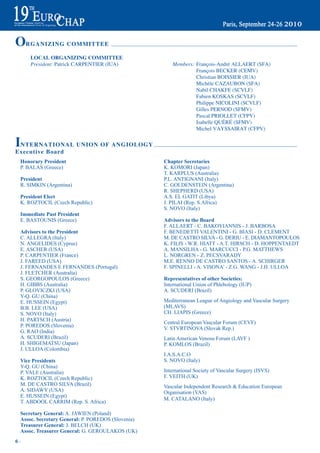
                                                      SUNday, September 26, 2010
09:30-11:00                         petit amphithéâtre                                                     room 262
                           SY11 - Joint Symposium with the                                         OC4 - Free communications
                  Italian Society of Angiology and Vascular Medicine                                     Varicose veins
                        physical exercise and vascular medicine
11:00-11:30                                                      Coffee break - Exhibition visit                                        Room 8
11:30-13:00                         petit amphithéâtre                                                     room 262
                               SY12 - Symposium                                                    OC5 - Free communications
                     From raynaud phenomenon to digital ulcer                                           atherosclerosis
                    Organized thanks to an unrestricted educational grant
                               from Actelion Pharmaceuticals

13:00-14:00                                                          Break - Exhibition visit                                           Room 8
14:00-15:30           amphithéâtre Lavoisier                                petit amphithéâtre                        room 262
                      SY13 - Symposium                         SY14 - Joint Symposium with the              OC6 - Free communications
                     Critical limb ischemia                   Romanian Society of Angiology and         rare vascular diseases and progress
              Organized thanks to an unrestricted grant                Vascular Surgery                        in vascular diagnosis
                        from Sanofi Aventis                  Complications of vascular procedures
15:30-16:00                                                          Break - Exhibition visit                                           Room 8
16:00-17:30                       amphithéâtre Lavoisier                                                   room 262
                SY15 - Joint Symposium EuroChap - Microcirculation                                 OC7 - Free communications
                 relationship between macro and microcirculation                                       Venous disorders


                      Pleanary session
                      Symposia and free communications
                      Posters


                                                                                                                      www.iua-eurochap2010.eu ~   5
ORGANIZING COMMITTEE
     LOCAL ORGANIZING COMMITTEE
     President: Patrick CArPEntIEr (IUA)              Members: François-André ALLAErt (SFA)
                                                               François BECKEr (CEMV)
                                                               Christian BOISSIEr (IUA)
                                                               Michèle CAzAUBOn (SFA)
                                                               nabil ChAKFE (SCVLF)
                                                               Fabien KOSKAS (SCVLF)
                                                               Philippe nICOLInI (SCVLF)
                                                               Gilles PErnOd (SFMV)
                                                               Pascal PrIOLLEt (CFPV)
                                                               Isabelle QUéré (SFMV)
                                                               Michel VAySSAIrAt (CFPV)


INTERNATIONAL UNION OF ANGIOLOGY
Executive Board
 Honorary president                                Chapter Secretaries
 P. BALAS (Greece)                                 K. KOMORI (Japan)
                                                   T. KARPLUS (Australia)
 president                                         P.L. ANTIGNANI (Italy)
 R. SIMKIN (Argentina)                             C. GOLDENSTEIN (Argentina)
                                                   R. SHEPHERD (USA)
 president elect                                   A.S. EL GATIT (Libya)
 K. ROZTOCIL (Czech Republic)                      J. PILAI (Rep. S.Africa)
                                                   S. NOVO (Italy)
 immediate past president
 E. BASTOUNIS (Greece)                             advisors to the board
                                                   F. ALLAERT - C. BAKOYIANNIS - J. BARBOSA
 advisors to the president                         F. BENEDETTI VALENTINI - G. BIASI - D. CLEMENT
 C. ALLEGRA (Italy)                                M. DE CASTRO SILVA - G. DERIU - E. DIAMANTOPOULOS
 N. ANGELIDES (Cyprus)                             K. FILIS - W.R. HIATT - A.T. HIRSCH - D. HOPPENTAEDT
 E. ASCHER (USA)                                   A. MANSILHA - G. MARCUCCI - P.G. MATTHEWS
 P. CARPENTIER (France)                            L. NORGREN - Z. PECSVARADY
 J. FAREED (USA)                                   M.E. RENNO DE CASTRO SANTOS - A. SCHIRGER
 J. FERNANDES E FERNANDES (Portugal)               F. SPINELLI - A. VISONA’ - Z.G. WANG - J.H. ULLOA
 J. FLETCHER (Australia)
 S. GEORGOPOULOS (Greece)                          representatives of other Societies:
 H. GIBBS (Australia)                              International Union of Phlebology (IUP)
 P. GLOVICZKI (USA)                                A. SCUDERI (Brazil)
 Y-Q. GU (China)
 E. HUSSEIN (Egypt)                                Mediterranean League of Angiology and Vascular Surgery
 B.B. LEE (USA)                                    (MLAVS)
 S. NOVO (Italy)                                   CH. LIAPIS (Greece)
 H. PARTSCH (Austria)
                                                   Central European Vascular Forum (CEVF)
 P. POREDOS (Slovenia)
                                                   V. STVRTINOVA (Slovak Rep.)
 G. RAO (India)
 A. SCUDERI (Brazil)                               Latin American Venosu Forum (LAVF )
 H. SHIGEMATSU (Japan)                             P. KOMLOS (Brazil)
 J. ULLOA (Colombia)
                                                   I.A.S.A.C.O
 Vice presidents                                   S. NOVO (Italy)
 Y-Q. GU (China)
 P. VALE (Australia)                               International Society of Vascular Surgery (ISVS)
 K. ROZTOCIL (Czech Republic)                      F. VEITH (UK)
 M. DE CASTRO SILVA (Brazil)                       Vascular Independent Research & Education European
 A. SIDAWY (USA)                                   Organisation (VAS)
 E. HUSSEIN (Egypt)
                                                   M. CATALANO (Italy)
 T. ABDOOL CARRIM (Rep. S. Africa)

 Secretary General: A. JAWIEN (Poland)
 assoc. Secretary General: P. POREDOS (Slovenia)
 treasurer General: J. BELCH (UK)
 assoc. treasurer General: G. GEROULAKOS (UK)
6~
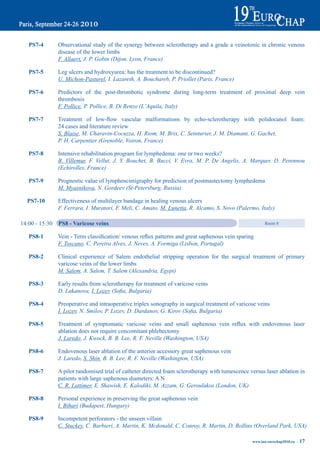
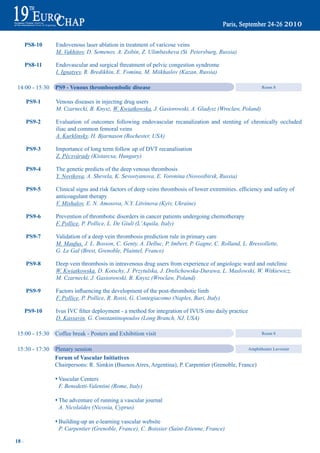
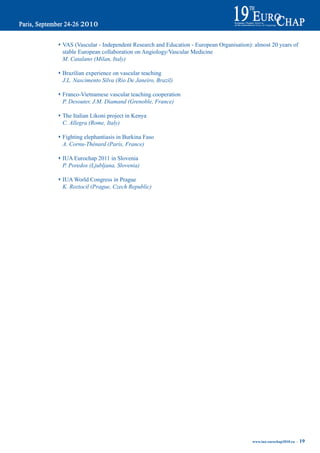
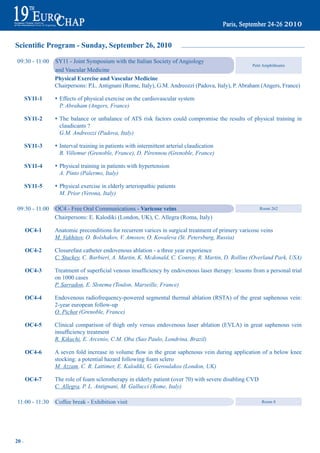
Scientific Program - Friday, September 24, 2010

08:30 - 09:20   Plenary lecture                                                                   Amphitheatre Lavoisier

                Chair: P. Carpentier (Grenoble, France)

                the 2010 milestones of the vascular surgeon
                J. Fernandes e Fernandes (Lisbon, Portugal)

09:30 - 11:00   SY1 - Symposium                                                                   Amphitheatre Lavoisier

                abdominal aortic aneurysms: an update
                Chairpersons: P. Gloviczki (Rochester, USA), A. Jawien (Bydgoszcz, Poland)

   Sy1-1        s Pathogenesis of the abdominal aortic aneurysm
                  E. Allaire (Créteil, France)

   Sy1-2        s Screening for abdominal aortic aneurysm
                  J.S. Lindholdt (Viborg, Denmark)

   Sy1-3        s The long-term results of EVAR I trial
                  J.T. Powell (London, UK)

   Sy1-4        s Medical approach to the patient with an abdominal aortic aneurysm
                  F. Becker (Geneva, Switzerland)

09:30 - 11:00   SY2 - Corporate Symposium SIGVARIS                                                Petit Amphithéâtre

                Efficient compression therapy to treat venous diseases: scientific, medical and practical key factors
                Chairpersons: P. Carpentier (Grenoble, France), P. Kern (Vevey, Switzerland)

   Sy2-1        s Compression therapy: a bright future requiring many efforts
                  P. Carpentier (Grenoble, France)

   Sy2-2        s New strategies to improve compliance of compression therapy (20-36 mmHg)
                  D. Rastel, (Grenoble, France)

   Sy2-3        s Compression after sclerotherapy
                  P. Kern (Vevey, Switzerland)

   Sy2-4        s The effects of medical compression stockings on venous anatomy
                  J.F. Uhl (Paris, France)

11:00 - 11:30   Coffee break - Posters and Exhibition visit                                              Room 8


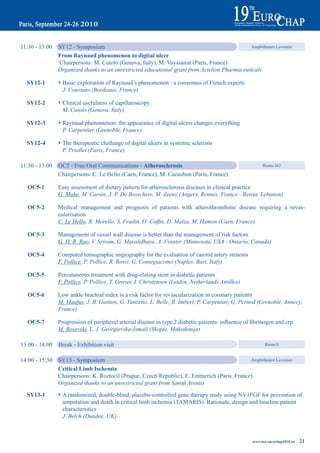
11:30 - 13:00   SY3 - Symposium                                                                   Amphitheatre Lavoisier

                Carotid stenosis: moving concepts and practices
                Chairpersons: E. Bastounis (Athens, Greece), F. Becker (Geneva, Switzerland)

   Sy3-1        s The surgical treatment of carotid stenosis: new information from recent trials and what is required
                  for future studies
                  J. Fernandes e Fernandes (Lisbon, Portugal)

   Sy3-2        s Carotid stenosis: place of carotid stenting
                  J.L. Mas (Paris, France)

   Sy3-3        s Stroke and Thrombolytic therapy: an update
                  V. Larrue (Toulouse, France)

   Sy3-4	       s	Asymptomatic	Carotid	Stenosis	and	Risk	Stratification
                  A. Nicolaides (Nicosia, Cyprus)                                                   www.iua-eurochap2010.eu ~   7
11:30 - 13:00   OC1 - Free Oral Communications - Vascular surgery: arteries                             Petit Amphithéâtre

                Chairpersons: F. Koskas (Paris, France), N. Chakfe (Strasbourg, France)

     OC1-1      Symptomatic huge abdominal aortic aneurysms
                M. Salem, A. Salem, T. Salem (Alexandria, Egypt)

     OC1-2      Minimal incision aortic aneurysm repair: an underutilized but safe technique
                M. Kalra, A. Duncan, S. Cha, P. Gloviczki (Rochester, USA)

     OC1-3      Prevalence of abdominal aortic aneurysm in screening survey of small town’s residents in northern Poland
                A. Jawien, B. Formankiewicz, T. Derezinski, A. Migdalski, R. Piotrowicz, G. Jakubowski (Bydgoszcz,
                Poland)

     OC1-4	     Retrograde	 trans-popliteal	 recanalization	 of	 the	 superficial	 femoral	 artery:	 the	 face-down	 technique
                I. Broutzos, I. Dalainas, K. Moulakakis, N. Ptohis, M. Daskalopoulos,
                C. Papasideris, A. Papapetrou, K. Xiromeritis, M. Moschou, E. Avgerinos, T. Giannakopoulos,
                N. Kelekis, C. Liapis (Athens, Greece)

     OC1-5      Intravenous thrombolysis with recombinant tissue plasminogen activator (rt-PA) in acute lower limb
                ischemia
                V. Flis, N. Kobilica, A. Bergauer, B. Mrdza, F. Milotic, B. Stirn (Maribor, Slovenia)

     OC1-6      Endovascular repair of traumatic aortic rupture: single center experience
                N. Melas, A. Giannopoulos, N. Saratzis, A. Saratzis, I. Lazaridis, C. Trigonis, K. Ktenidis, D. Kiskinis
                (Thessaloniki, Greece)

     OC1-7      Surgical treatment principles in patients with traumatic injuries of main vessels, bone-joints of
                extremities
                N. Abushov, M. Karimov, G. Tagizade, E. Zakirjayev, E. Aliyev (Baku, Azerbaidjan)

13:00 - 14:00   Break - Posters and Exhibition visit                                                         Room 8


14:00 - 15:30   SY4 - Symposium                                                                       Amphitheatre Lavoisier

                Early detection of the high vascular risk subjects
                Chairpersons: J. Belch (Dundee, UK), S. Novo (Palermo, Italy)

     Sy4-1      s Screening for PAD in the general population
                  V. Aboyans (Limoges, France)

     Sy4-2      s Asymptomatic carotid lesions predict global cardiovascular risk beyond the cards of the risk
                  S. Novo (Palermo, Italy)

     Sy4-3      s Early markers in hypertension: often of vascular origin!
                  D. Clément (Ghent, Belgium)

     Sy4-4      s Atherosclerosis and venous thrombosis - the same disease entity with two different faces
                  P. Poredos, M.K. Jezovnik (Ljubljana, Slovenia)

14:00 - 15:30   OC2 - Free Oral Communications - peripheral arterial disease                            Petit Amphithéâtre

                Chairpersons: G. Marcucci (Civitavecchia, Italy), M. Catalano (Milan, Italy)

     OC2-1      Function of endothelial cells in limb ischemia
                R. Proczka, M. Kedzior, P. Jagus, P. Bialek, M. Polanska, M. Postacchini,
                I. Postacchini, P. Nitkowski, J. Chorostowska-Wynimko, J. Polanski (Warsaw, Poland)


8~
OC2-2         Does really exist a high risk patient for conventional carotid endarterectomy?
                G. Marcucci, F. Accrocca, A. Siani, A.G. Giordano, R. Antonelli (Civitavecchia, Rome, Italy)

  OC2-3         High prevalence of peripheral arterial disease: results of the evaluation of ankle/brachial index
                in hungarian hypertensives (ERV) screening program
                K. Farkas, Z. Jarai, E. Kolossvary, A. Ludanyi, I. Kiss (Budapest, Hungary)

  OC2-4	        Cronocol	 implant	 reduces	 surgical	 site	 infection	 and	 improves	 final	 outcome	 in	 ischemic	 patients
                C. Costa Almeida, L. Reis, L. Carvalho, C. Costa Almeida (Coimbra, Portugal)

  OC2-5         European biobank on vascular diseases
                M. Catalano, VAS-Scientific Team, VAS-Biobank Working Group (Milan, Italy)

  OC2-6	        Assessment	of	collateral	blood	flow	in	ischemic	lower	limb
                O. Albazde (London, UK)

  OC2-7         Comparative studding of hemorheological indexes in patients with critical limb ischemia
                N. Abushov, E. Zakirjayev, Z. Aliyev, G. Zeynalova (Baku, Azerbaijan)

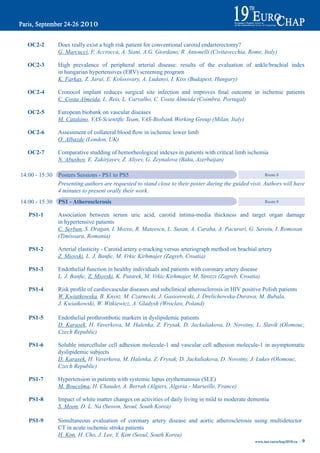
14:00 - 15:30   Posters Sessions - PS1 to PS5                                                             Room 8

                Presenting authors are requested to stand close to their poster during the guided visit. Authors will have
                4 minutes to present orally their work.
14:00 - 15:30   pS1 - atherosclerosis                                                                      Room 8


   pS1-1        Association between serum uric acid, carotid intima-media thickness and target organ damage
                in hypertensive patients
                C. Serban, S. Dragan, I. Mozos, R. Mateescu, L. Susan, A. Caraba, A. Pacurari, G. Savoiu, I. Romosan
                (Timisoara, Romania)

   pS1-2        Arterial elasticity - Carotid artery e-tracking versus arteriograph method on brachial artery
                Z. Miovski, L. J. Banfic, M. Vrkic Kirhmajer (Zagreb, Croatia)

   pS1-3        Endothelial function in healthy individuals and patients with coronary artery disease
                L. J. Banfic, Z. Miovski, K. Putarek, M. Vrkic Kirhmajer, M. Strozzi (Zagreb, Croatia)

   pS1-4	       Risk	profile	of	cardiovascular	diseases	and	subclinical	atherosclerosis	in	HIV positive Polish patients
                W. Kwiatkowska, B. Knysz, M. Czarnecki, J. Gasiorowski, J. Drelichowska-Durawa, M. Bubala,
                J. Kwiatkowski, W. Witkiewicz, A. Gladysh (Wroclaw, Poland)

   pS1-5        Endothelial prothrombotic markers in dyslipidemic patients
                D. Karasek, H. Vaverkova, M. Halenka, Z. Frysak, D. Jackuliakova, D. Novotny, L. Slavik (Olomouc,
                Czech Republic)

   pS1-6        Soluble intercellular cell adhesion molecule-1 and vascular cell adhesion molecule-1 in asymptomatic
                dyslipidemic subjects
                D. Karasek, H. Vaverkova, M. Halenka, Z. Frysak, D. Jackuliakova, D. Novotny, J. Lukes (Olomouc,
                Czech Republic)

   pS1-7        Hypertension in patients with systemic lupus erythematosus (SLE)
                M. Boucelma, H. Chaudet, A. Berrah (Algiers, Algeria - Marseille, France)

   pS1-8        Impact of white matter changes on activities of daily living in mild to moderate dementia
                S. Moon, D. L. Na (Suwon, Seoul, South Korea)

   pS1-9        Simultaneous evaluation of coronary artery disease and aortic atherosclerosis using multidetector
                CT in acute ischemic stroke patients
                H. Kim, H. Cho, J. Lee, Y. Kim (Seoul, South Korea)
                                                                                                      www.iua-eurochap2010.eu ~   9
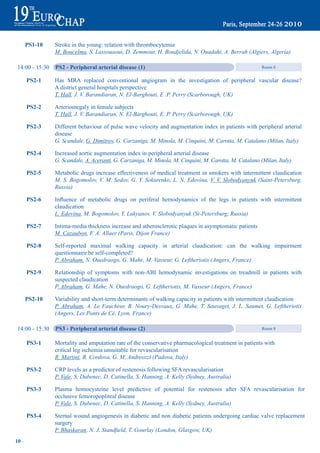
pS1-10    Stroke in the young: relation with thrombocytemia
                 M. Boucelma, S. Lassouaoui, D. Zemmour, H. Boudjelida, N. Ouadahi, A. Berrah (Algiers, Algeria)

 14:00 - 15:30   pS2 - peripheral arterial disease (1)                                                      Room 8


       pS2-1     Has MRA replaced conventional angiogram in the investigation of peripheral vascular disease?
                 A district general hospitals perspective
                 T. Hall, J. V. Barandiaran, N. El-Barghouti, E .P. Perry (Scarborough, UK)

       pS2-2     Arteriomegaly in female subjects
                 T. Hall, J. V. Barandiaran, N. El-Barghouti, E. P. Perry (Scarborough, UK)

       pS2-3     Different behaviour of pulse wave velocity and augmentation index in patients with peripheral arterial
                 disease
                 G. Scandale, G. Dimitrov, G. Carzaniga, M. Minola, M. Cinquini, M. Carotta, M. Catalano (Milan, Italy)

       pS2-4     Increased aortic augmentation index in peripheral arterial disease
                 G. Scandale, A. Aceranti, G. Carzaniga, M. Minola, M. Cinquini, M. Carotta, M. Catalano (Milan, Italy)

       pS2-5     Metabolic drugs increase effectiveness of medical treatment in smokers with intermittent claudication
                 M. S. Bogomolov, V. M. Sedov, G. Y. Sokurenko, L. N. Edovina, V. V. Slobodyanyuk (Saint-Petersburg,
                 Russia)

       pS2-6	    Influence	 of	 metabolic	 drugs	 on	 periferal	 hemodynamics	 of	 the	 legs	 in	 patients	 with	 intermittent
                 claudication
                 L. Edovina, M. Bogomolov, Y. Lukyanov, V. Slobodyanyuk (St-Petersburg, Russia)

       pS2-7     Intima-media thickness increase and atherosclerotic plaques in asymptomatic patients
                 M. Cazaubon, F. A. Allaer (Paris, Dijon France)

       pS2-8     Self-reported maximal walking capacity in arterial claudication: can the walking impairment
                 questionnaire be self-completed?
                 P. Abraham, N. Ouedraogo, G. Mahe, M. Vasseur, G. Leftheriotis (Angers, France)

       pS2-9     Relationship of symptoms with non-ABI hemodynamic investigations on treadmill in patients with
                 suspected claudication
                 P. Abraham, G. Mahe, N. Ouedraogo, G. Leftheriotis, M. Vasseur (Angers, France)

       pS2-10    Variability and short-term determinants of walking capacity in patients with intermittent claudication
                 P. Abraham, A. Le Faucheur, B. Noury-Desvaux, G. Mahe, T. Sauvaget, J. L. Saumet, G. Leftheriotis
                 (Angers, Les Ponts de Cé, Lyon, France)

 14:00 - 15:30   pS3 - peripheral arterial disease (2)                                                      Room 8


       pS3-1     Mortality and amputation rate of the conservative pharmacological treatment in patients with
                 critical leg ischemia unsuitable for revascularisation
                 R. Martini, R. Cordova, G. M. Andreozzi (Padova, Italy)

       pS3-2     CRP levels as a predictor of restenosis following SFA revascularisation
                 P. Vale, S. Dubenec, D. Catinella, S. Hanning, A. Kelly (Sydney, Australia)

       pS3-3     Plasma homocysteine level predictive of potential for restenosis after SFA revascularisation for
                 occlusive femoropopliteal disease
                 P. Vale, S. Dubenec, D. Catinella, S. Hanning, A. Kelly (Sydney, Australia)

       pS3-4     Sternal wound angiogenesis in diabetic and non diabetic patients undergoing cardiac valve replacement
                 surgery
                 P. Bhaskaran, N. J. Standfield, T. Gourlay (London, Glasgow, UK)
10 ~
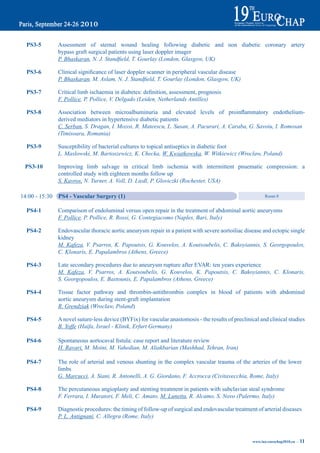
pS3-5         Assessment of sternal wound healing following diabetic and non diabetic coronary artery
                bypass graft surgical patients using laser doppler imager
                P. Bhaskaran, N. J. Standfield, T. Gourlay (London, Glasgow, UK)

  pS3-6	        Clinical	significance	of	laser	doppler	scanner	in	peripheral	vascular	disease
                P. Bhaskaran, M. Aslam, N. J. Standfield, T. Gourlay (London, Glasgow, UK)

  pS3-7	        Critical	limb	ischaemia	in	diabetes:	definition,	assessment,	prognosis
                F. Pollice, P. Pollice, V. Delgado (Leiden, Netherlands Antilles)

  pS3-8	        Association	 between	 microalbuminuria	 and	 elevated	 levels	 of	 proinflammatory	 endothelium-
                derived mediators in hypertensive diabetic patients
                C. Serban, S. Dragan, I. Mozos, R. Mateescu, L. Susan, A. Pacurari, A. Caraba, G. Savoiu, I. Romosan
                (Timisoara, Romania)

  pS3-9         Susceptibility of bacterial cultures to topical antiseptics in diabetic foot
                L. Maslowski, M. Bartoszewicz, K. Checka, W. Kwiatkowska, W. Witkiewicz (Wroclaw, Poland)

 pS3-10         Improving limb salvage in critical limb ischemia with intermittent pnuematic compression: a
                controlled study with eighteen months follow up
                S. Kavros, N. Turner, A. Voll, D. Liedl, P. Gloviczki (Rochester, USA)

14:00 - 15:30   pS4 - Vascular Surgery (1)                                                                 Room 8


  pS4-1         Comparison of endoluminal versus open repair in the treatment of abdominal aortic aneurysms
                F. Pollice, P. Pollice, R. Rossi, G. Contegiacomo (Naples, Bari, Italy)

  pS4-2         Endovascular thoracic aortic aneurysm repair in a patient with severe aortoiliac disease and ectopic single
                kidney
                M. Kafeza, V. Psarros, K. Papoutsis, G. Kouvelos, A. Koutsoubelis, C. Bakoyiannis, S. Georgopoulos,
                C. Klonaris, E. Papalambros (Athens, Greece)

  pS4-3         Late secondary procedures due to aneurysm rupture after EVAR: ten years experience
                M. Kafeza, V. Psarros, A. Koutsoubelis, G. Kouvelos, K. Papoutsis, C. Bakoyiannis, C. Klonaris,
                S. Georgopoulos, E. Bastounis, E. Papalambros (Athens, Greece)

  pS4-4         Tissue factor pathway and thrombin-antithrombin complex in blood of patients with abdominal
                aortic aneurysm during stent-graft implantation
                R. Grendziak (Wroclaw, Poland)

  pS4-5         A novel suture-less device (BYFix) for vascular anastomosis - the results of preclinical and clinical studies
                B. Yoffe (Haifa, Israel - Klinik, Erfurt Germany)

  pS4-6	        Spontaneous	aortocaval	fistula:	case	report	and	literature	review
                H. Ravari, M. Moini, M. Vahedian, M. Aliakbarian (Mashhad, Tehran, Iran)

  pS4-7         The role of arterial and venous shunting in the complex vascular trauma of the arteries of the lower
                limbs
                G. Marcucci, A. Siani, R. Antonelli, A. G. Giordano, F. Accrocca (Civitavecchia, Rome, Italy)

  pS4-8         The percutaneous angioplasty and stenting treatment in patients with subclavian steal syndrome
                F. Ferrara, I. Muratori, F. Meli, C. Amato, M. Lunetta, R. Alcamo, S. Novo (Palermo, Italy)

  pS4-9         Diagnostic procedures: the timing of follow-up of surgical and endovascular treatment of arterial diseases
                P. L. Antignani, C. Allegra (Rome, Italy)


                                                                                                     www.iua-eurochap2010.eu ~   11
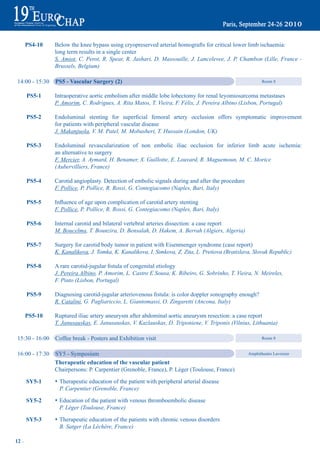
pS4-10    Below the knee bypass using cryopreserved arterial homografts for critical lower limb ischaemia:
                 long term results in a single center
                 S. Amiot, C. Perot, R. Spear, R. Jashari, D. Massouille, J. Lancelevee, J. P. Chambon (Lille, France -
                 Brussels, Belgium)

 14:00 - 15:30   pS5 - Vascular Surgery (2)                                                                Room 8


       pS5-1     Intraoperative aortic embolism after middle lobe lobectomy for renal leyomiosarcoma metastases
                 P. Amorim, C. Rodrigues, A. Rita Matos, T. Vieira, F. Félix, J. Pereira Albino (Lisbon, Portugal)

       pS5-2	    Endoluminal	 stenting	 for	 superficial	 femoral	 artery	 occlusion	 offers	 symptomatic	 improvement
                 for patients with peripheral vascular disease
                 J. Makanjuola, V. M. Patel, M. Mobasheri, T. Hussain (London, UK)

       pS5-3     Endoluminal revascularization of non embolic iliac occlusion for inferior limb acute ischemia:
                 an alternative to surgery
                 F. Mercier, A. Aymard, H. Benamer, X. Guillotte, E. Louvard, R. Maguemoun, M. C. Morice
                 (Aubervilliers, France)

       pS5-4     Carotid angioplasty. Detection of embolic signals during and after the procedure
                 F. Pollice, P. Pollice, R. Rossi, G. Contegiacomo (Naples, Bari, Italy)

       pS5-5	    Influence	of	age	upon	complication	of	carotid	artery	stenting
                 F. Pollice, P. Pollice, R. Rossi, G. Contegiacomo (Naples, Bari, Italy)

       pS5-6     Internal carotid and bilateral vertebral arteries dissection: a case report
                 M. Boucelma, T. Bounzira, D. Bensalah, D. Hakem, A. Berrah (Algiers, Algeria)

       pS5-7     Surgery for carotid body tumor in patient with Eisenmenger syndrome (case report)
                 K. Kanalikova, J. Tomka, K. Kanalikova, I. Simkova, Z. Zita, L. Pretiova (Bratislava, Slovak Republic)

       pS5-8	    A	rare	carotid-jugular	fistula	of	congenital	etiology
                 J. Pereira Albino, P. Amorim, L. Castro E Sousa, K. Ribeiro, G. Sobrinho, T. Vieira, N. Meireles,
                 F. Pinto (Lisbon, Portugal)

       pS5-9	    Diagnosing	carotid-jugular	arteriovenous	fistula:	is	color	doppler	sonography	enough?
                 R. Catalini, G. Pagliariccio, L. Giantomassi, O. Zingaretti (Ancona, Italy)

       pS5-10    Ruptured iliac artery aneurysm after abdominal aortic aneurysm resection: a case report
                 T. Janusauskas, E. Janusauskas, V. Kazlauskas, D. Triponiene, V. Triponis (Vilnius, Lithuania)

 15:30 - 16:00   Coffee break - Posters and Exhibition visit                                               Room 8


 16:00 - 17:30   SY5 - Symposium                                                                    Amphitheatre Lavoisier

                 therapeutic education of the vascular patient
                 Chairpersons: P. Carpentier (Grenoble, France), P. Léger (Toulouse, France)

       Sy5-1     s Therapeutic education of the patient with peripheral arterial disease
                   P. Carpentier (Grenoble, France)

       Sy5-2	     Education of the patient with venous thromboembolic disease
                 s	
                  P. Léger (Toulouse, France)

       Sy5-3	    s Therapeutic education of the patients with chronic venous disorders
                   B. Satger (La Léchère, France)

12 ~
16:00 - 17:30   OC3 - Free Oral Communications - Venous thromboembolic disease                    Petit Amphithéâtre

                    Chairpersons: G. Pernod (Grenoble, France), A. Visona (Castelfranco Veneto, Italy)

      OC3-1         Comparison of the clinical history of symptomatic isolated muscular calf vein thrombosis
                    versus deep calf vein thrombosis
                    J. Galanaud, M.A. Sevestre, C. Genty, J.P. Laroche, V. Zyzka, I. Quere, J.L. Bosson (Montpellier, Amiens,
                    Grenoble, Fort de France, France)

      OC3-2         Bleeding complications in patients with cancer receiving anticoagulant therapy for venous
	       	           thromboembolism.	findings	from	the	RIETE registry
                    A. Visonà, P. Di Micco, J.A. Nieto, J. Truijllo Santos, R. Quintavalla, P. Prandoni, M. Monreal
                    (Castelfranco Veneto, Naples, Parma, Padua, Italy - Cuenca, Cartagena, Badalona, Spain)

      OC3-3         Fatal bleeding in patients receiving anticoagulant therapy for venous thromboembolism. Findings
                    from the RIETE registry
                    A. Visonà, P. Di Micco, A. Niglio, M. Amitrano, M. Ciammaichella, P. Prandoni, M. Monreal,
                    J.A. Nieto (Castelfranco Veneto, Naples, Avellino, Rome, Padua, Italy - Badalona, Cuenca, Spain)

      OC3-4         Venous thromboembolism in the elderly: epidemiological data overview based on the prospective
                    OPTIMEV cohort
                    G. Pernod, M. A. Sevestre, C. Genty, J. Labarere, P. Couturier, J. L. Bosson (Grenoble, Amiens, France)

      OC3-5	        Thrombosis	of	atypical	location,	Mayo	series:	profile	of	local	causes	in	organ	vein	thrombosis
                    W. Wysokinski, R. Mcbane (Rochester, USA)

      OC3-6	        Evaluation	of	a	pneumatic	device	efficacy	to	prevent	venous	disorders	in	air	travel
                    F. Fernandez, I. Chirosa, M. Martinez, J.J. Sánchez-Cruz, E. Ros (Granada, Spain)

      OC3-7         Calf vein thrombosis and risk of pulmonary embolism
                    P. L. Antignani, C. Allegra (Rome, Italy)

    17:30 - 18:30   SY6 - Corporate Symposium Cook Medical                                              Amphitheatre Lavoisier

                    New developments in endovascular technologies
                    Chair: N. Chakfé (Strasbourg, France)

	 Sy6-1             s Fenestrated endografts for thoracoabdominal aortic pathologies
                      J-P. Becquemin (Créteil, France)

    	 Sy6-2         s Future developments in Abdominal Aortic Aneurysm treatment
                      F. Thaveau (Strasbourg, France)

    	 Sy6-3         s	 there a room for drug eluting stents in SFA lesions?
                     Is
                     N. Chakfé (Strasbourg, France)

    17:30 - 18:30   SY7 - Symposium                                                                 Petit Amphithéâtre

                    New insights about the calf muscle pump function
                    Chairpersons: P. Carpentier (Grenoble, France), A. Nicolaïdes (Nicosia, Cyprus)
                    Organized thanks to an unrestricted educational grant from Ad Rem Technology - VEINOPLUS

	 Sy7-1	             Pathophysiology of the calf muscle pump
                    s	
                     A. Nicolaïdes (Nicosia, Cyprus)

	 Sy7-2	             Functional anatomy of the muscular pumps of the lower limb
                    s	
                     J.F. Uhl (Paris, France)

	         	         s	 to improve the calf muscle function in CVD patients
                     How
                     A. Jawien (Bydgoszcz, Poland)

                                                                                                        www.iua-eurochap2010.eu ~   13
Scientific Program - Saturday, September 25, 2010

 08:30 - 09:20   Plenary lecture                                                                     Amphitheatre Lavoisier

                 Chair: A. Jawien (Bydgoszcz, Poland)

                 the 2010 milestones of the vascular physician
                 J. Belch (Dundee, UK)

 09:30 - 11:00   SY8 - Symposium                                                                     Amphitheatre Lavoisier

                 Venous thromboembolic disease: moving Concepts and practices
                 Chairpersons: I. Quéré (Montpellier, France), A. Comerota (Michigan, USA)
                 Organized thanks to an unrestricted grant from Eumedica

       Sy8-1     s Medical	signification	of	the	asymptomatic	venous	and	pulmonary	embolism
                   G. Pernod (Grenoble, France)

       Sy8-2     s Newer trends in the management of thrombosis. Impacts on Vascular Indications
                   E. Kalodiki (London, UK)

       Sy8-3     s Superficial	thrombophlebitis,	a	significant	subset	of	venous	thromboembolic	disease
                   I. Quéré (Montpellier, France)

       Sy8-4     s The concept of early thrombus removal for iliofemoral deep venous thrombosis
                   A. Comerota (Michigan, USA)

 09:30 - 11:00   Postgraduate Course                                                              Petit Amphithéâtre

                 Leg and foot ulcers - Critical limb ischemia
                 Moderators: P. Carpentier (Grenoble, France), M.-A. Sevestre-Pietri (Amiens, France)
                 Experts: K. Roztocil (Prague, Czech Republic), G. Marcucci (Rome, Italy), M.C. Portilho (Brazil),
                 P. Gloviczki (Rochester, USA)

                 This session is based on the interactivity between the audience and an international panel of experts
                 discussing decision making about clinical cases with the help of concordance script tests and the powervote
                 technique.
                 At the end of the session, participants will understand the importance of a thorough medical diagnostic
                 and pre-therapeutic evaluation of patients with leg or foot ulcers; they will have an increased awareness
                 of the educational and social needs of these patients; they will be able to make the diagnosis of critical
                 limb ischemia and will understand the need for a multidisciplinary approach of the patient suffering
                 from this condition.

 11:00 - 11:30   Coffee break - Posters and Exhibition visit                                                Room 8


 11:30 - 13:00   SY9 - Symposium                                                                  Amphitheatre Lavoisier

                 Varicose vein treatment in the future
                 Chairpersons: M. de Castro-Silva (Belo Horizonte, Brazil), P. Nicolini (Lyon, France)

       Sy9-1     s Clinical Practice Guidelines of the Society for Vascular Surgery and the American Venous Forum on
                   3 the Care of Patients with Varicose Veins
                   P. Gloviczki (Rochester, USA)

       Sy9-2     s Future techniques for varicose vein ablation
                   P. Nicolini (Lyon, France)


14 ~
Sy9-3        s We need to know more about the natural history of venous hemodynamics in patients with varicose veins!
                      O. Pichot, P. Carpentier (Grenoble, France)

       Sy9-4        s Molecular Mechanisms for Microvascular Endothelial Apoptosis under Pressure Elevation and
                      Therapeutic Targets
                      G. Schmid-Schönbein (San Diego, USA)

    11:30 - 13:00   Postgraduate Course                                                              Petit Amphithéâtre

                    Venous thromboembolic disease - thrombophilia
                    Moderators: G. Pernod (Grenoble, France), P. Nguyen (Reims, France)
                    Experts: A. Visona (Castelfranco Veneto, Italy), M.E. Renno de Castro Santos (Brazil),
                    M. Sprynger (Liège, Belgium)

                    This session is based on the interactivity between the audience and an international panel of experts
                    discussing decision making about clinical cases with the help of concordance script tests and the
                    powervote technique.
                    At the conclusion of the session, attendees will have an increased awareness of the importance of
	         	         the	 evaluation	 of	 the	 benefit/risk	 ratio	 for	 the	 decision	 about	 the	 treatment	 of	 these	 conditions.	 They
	         	         will	 have	 a	 deeper	 understanding	 of	 the	 clinical	 signification	 of	 the	 different	 inherited	 and	 acquired
                    thrombophilia and the drawbacks of their systematic evaluation.

    13:00 - 14:00   Break - Posters and Exhibition visit                                                               Room 8


    14:00 - 15:00   SY10 - Symposium                                                                            Amphitheatre Lavoisier

                    Ultrasound guided procedures
                    Chairpersons: O. Pichot (Grenoble, France), E. Ascher (New York, USA)

	 Sy10-1	            Ultrasound assisted arterial procedures
                    s	
                     E. Ascher (New York, USA)

	 Sy10-2	            Vascular access for hemodialysis
                    s	
                     O. Pichot (Grenoble, France)

	 Sy10-3	            Ultrasound guided treatment of varicose veins
                    s	
                     C. Hamel-Desnos (Caen, France)

    14:00 - 15:00   Postgraduate Course                                                                Petit Amphithéâtre

                    Clinical microcirculation
                    Moderators: M. Vayssairat (Paris, France), P. Carpentier (Grenoble, France)
                    Experts: C. Allegra (Rome, Italy), A.T. Guillaumon (Brazil), J.C. Wautrecht (Brussels, Belgium)

                    This session is based on the interactivity between the audience and an international panel of experts
                    discussing decision making about clinical cases with the help of concordance script tests and the
                    powervote technique.
                    At the end of the session, participants will have a broader understanding of the needs of patients
                    seeking medical help for a vascular acrosyndromes, and will be able to diagnose atypical
	         	         acrosyndromes	 such	 as	 complicated	 chilblains	 and	 paroxystic	 finger	 hematoma	 and	 to	 manage	 a	 cost
                    effective etiological evaluation of Raynaud phenomenon.

    14:00 - 15:30   Posters Sessions - PS6 to PS9                                                             Room 8

                    Presenting authors are requested to stand close to their poster during the guided visit. Authors will have
                    4 minutes to present orally their work.


                                                                                                                www.iua-eurochap2010.eu ~   15
14:00 - 15:30   pS6 - arteritis, vasculitis, therapeutic                                                   Room 8


       pS6-1     Generic argatroban preparations differ in their anticoagulant and antiprotease responses in
                 patients with liver disease. Dosing implications
                 D. Hoppensteadt, O. Iqbal, S. Masood, J. Fareed (Maywood, USA)

       pS6-2     Prevalence of free methyl chloride as an impurity in generic clopidogrel preparations. Safety implications
                 in cardiovascular patients
                 A. Duguot, H. Belva-Besnet, C. Conocar, M. Daumas, G. Rao, I. Mohan Theti (Paris, France - Bangelore,
                 India)

       pS6-3     Low adherence to antithrombotic indications and gender differences in aspirin use in patients
                 with previous minor bleeding
                 A. Mattioli, A. Farinetti, R. Lonardi, S. Pennella, G. Tazzioli, G. Mattioli (Modena, Italy)

       pS6-4     The pharmacogenetic approach to the anticoagulant therapy
                 Y. Novikova, A. Shevela, G. Lifshitz, K. Sevostyanova, E. Voronina (Novosibirsk, Russia)

       pS6-5     Multifactorial treatment effectivness of dyslipidemia, type 2 diabetes mellitus and arterial hypertension
                 in patients with CHD
                 K. Kapanadze, N. N. Kipshidze (Tbilsi, Georgia)

       pS6-6     Hyperbaric oxygen therapy in refractory ischemic cutaneous lesions in vasculitis and connective
                 vascular disease
                 C. Belizna, D. Henrion, V. Soude, B. Bienvenu, F. Maillot, E. Andres, C. Lavigne, A. Ghali, A. Mercat,
                 P. Asfar (Angers, Caen, Tours, Strasbourg, France)

       pS6-7     Digital ischemia and myeloproliferative disorders
                 B. Imbert, N. Kherat, I. Marie, H. Desmurs-Clavel, P. Carpentier (Grenoble, Rouen, Lyon, France)

       pS6-8     Prophylaxis of suspected secondary Raynaud’s phenomenon
                 C. Costa Almeida, L. Carvalho, L. Reis, J. Fortuna, C. Costa Almeida (Coimbra, Portugal)

       pS6-9     Abdominal aortitis and doxycyclin: case report
                 M. Sprynger, C. Nizet, L. A. Pierard (Liege, Belgium)

       pS6-10	   Treatment	of	non-healing	wounds	with	autologous	bone	marrow	cells,	platelets,	fibrin	glue,	and	collagen	
                 matrix
                 H. Ravari, D. Hamidi Almadrai, M. Salimifar, S. H. Bonakdaran (Mashhad, Iran)

       pS6-11    Association of heparin-PF4 antibodies with intima-media thickness of carotid arteries
                 A. Mattioli, A. Farinetti, R. Lonardi, S. Pennella, G. Mattioli (Modena, Italy)

       pS6-12    A collaborative multi-disciplinary community approach to a streptococcus pyogenes infection
                 G. Hancock, J. V. Barandiaran, T. C. Hall, N. El-Barghouti, E. P. Perry (Scarborough, UK)

 14:00 - 15:30   pS7 - Chronic venous disorders / Lymphedema                                                Room 8


       pS7-1     Are there incurable leg ulcers?
                 F. Zernovicky, K. Samelova, F. Zernovicky Jr. (Bratislava, Slovak Republic)

       pS7-2     Phlebological passport
                 T. Alekperova, A. Truxanov, S. Musaeva, O. Alekperov (Moscow, Russia)

       pS7-3     Electro-stimulation with VEINOPLUS®	-	a	new	method	for	the	treatment	of	chronic	venous	insufficiency
                 of the lower limbs
                 V. Y. Bogachev, O. V. Golovanova, A. H. Kuznietov, A. O. Stchekoian (Moscow, Russia)
16 ~
pS7-4        Observational study of the synergy between sclerotherapy and a grade a veinotonic in chronic venous
                disease of the lower limbs
                F. Allaert, J. P. Gobin (Dijon, Lyon, France)

   pS7-5        Leg ulcers and hydroxyurea: has the treatment to be discontinued?
                U. Michon-Pasturel, I. Lazareth, A. Bouchareb, P. Priollet (Paris, France)

   pS7-6        Predictors of the post-thrombotic syndrome during long-term treatment of proximal deep vein
                thrombosis
                F. Pollice, P. Pollice, B. Di Renzo (L’Aquila, Italy)

   pS7-7	       Treatment	 of	 low-flow	 vascular	 malformations	 by	 echo-sclerotherapy	 with	 polidocanol	 foam:
                24 cases and literature review
                S. Blaise, M. Charavin-Cocuzza, H. Riom, M. Brix, C. Seinturier, J. M. Diamant, G. Gachet,
                P. H. Carpentier (Grenoble, Voiron, France)

   pS7-8        Intensive rehabilitation program for lymphedema: one or two weeks?
                B. Villemur, F. Vellut, J. Y. Bouchet, B. Bucci, V. Evra, M. P. De Angelis, A. Marquer, D. Perennou
                (Echirolles, France)

   pS7-9        Prognostic value of lymphoscintigraphy for prediction of postmastectomy lymphedema
                M. Myasnikova, N. Gordeev (St-Petersburg, Russia)

  pS7-10        Effectiveness of multilayer bandage in healing venous ulcers
                F. Ferrara, I. Muratori, F. Meli, C. Amato, M. Lunetta, R. Alcamo, S. Novo (Palermo, Italy)

14:00 - 15:30   pS8 - Varicose veins                                                                    Room 8


   pS8-1	       Vein	-	Term	classification/	venous	reflux	patterns	and	great	saphenous	vein	sparing
                F. Toscano, C. Pereira Alves, J. Neves, A. Formiga (Lisbon, Portugal)

   pS8-2        Clinical experience of Salem endothelial stripping operation for the surgical treatment of primary
                varicose veins of the lower limbs
                M. Salem, A. Salem, T. Salem (Alexandria, Egypt)

   pS8-3        Early results from sclerotherapy for treatment of varicose veins
                D. Lukanova, I. Lozev (Sofia, Bulgaria)

   pS8-4        Preoperative and intraoperative triplex sonography in surgical treatment of varicose veins
                I. Lozev, N. Smilov, P. Lozev, D. Dardanov, G. Kirov (Sofia, Bulgaria)

   pS8-5	       Treatment	 of	 symptomatic	 varicose	 veins	 and	 small	 saphenous	 vein	 reflux	 with	 endovenous	 laser
                ablation does not require concomitant phlebectomy
                J. Laredo, J. Kwock, B. B. Lee, R. F. Neville (Washington, USA)

   pS8-6        Endovenous laser ablation of the anterior accessory great saphenous vein
                J. Laredo, S. Shin, B. B. Lee, R. F. Neville (Washington, USA)

   pS8-7        A pilot randomised trial of catheter directed foam sclerotherapy with tumescence versus laser ablation in
                patients with large saphenous diameters: A N
                C. R. Lattimer, E. Shawish, E. Kalodiki, M. Azzam, G. Geroulakos (London, UK)

   pS8-8        Personal experience in preserving the great saphenous vein
                I. Bihari (Budapest, Hungary)

   pS8-9        Incompetent perforators - the unseen villain
                C. Stuckey, C. Barbieri, A. Martin, K. Mcdonald, C. Conroy, R. Martin, D. Rollins (Overland Park, USA)

                                                                                                  www.iua-eurochap2010.eu ~   17
PS8-10    Endovenous laser ablation in treatment of varicose veins
                 M. Vakhitov, D. Semenov, A. Zsibin, Z. Ulimbasheva (St. Petersburg, Russia)

       PS8-11    Endovascular and surgical threatment of pelvic congestion syndrome
                 I. Ignatyev, R. Bredikhin, E. Fomina, M. Miikhailov (Kazan, Russia)

 14:00 - 15:30   PS9 - Venous thromboembolic disease                                                       Room 8


       PS9-1     Venous diseases in injecting drug users
                 M. Czarnecki, B. Knysz, W. Kwiatkowska, J. Gasiorowski, A. Gladysz (Wroclaw, Poland)

       PS9-2     Evaluation of outcomes following endovascular recanalization and stenting of chronically occluded
                 iliac and common femoral veins
                 A. Kurklinsky, H. Bjarnason (Rochester, USA)

       PS9-3     Importance of long term follow up of dVt recanalisation
                 Z. Pécsvárady (Kistarcsa, Hungary)

       PS9-4     the genetic predicts of the deep venous thrombosis
                 Y. Novikova, A. Shevela, K. Sevostyanova, E. Voronina (Novosibirsk, Russia)

       PS9-5	    Clinical	signs	and	risk	factors	of	deep	veins	thrombosis	of	lower	extremities.	efficiency	and	safety	of
                 anticoagulant therapy
                 V. Mishalov, E. N. Amosova, N.Y. Litvinova (Kyiv, Ukraine)

       PS9-6     Prevention of thrombotic disorders in cancer patients undergoing chemotherapy
                 F. Pollice, P. Pollice, L. De Giuli (L’Aquila, Italy)

       PS9-7     Validation of a deep vein thrombosis prediction rule in primary care
                 M. Maufus, J. L. Bosson, C. Genty, A. Delluc, P. Imbert, P. Gagne, C. Rolland, L. Bressollette,
                 G. Le Gal (Brest, Grenoble, Plaintel, France)

       PS9-8     deep vein thrombosis in intravenous drug users from experience of angiologic ward and outclinic
                 W. Kwiatkowska, D. Kotschy, J. Przytulska, J. Drelichowska-Durawa, L. Maslowski, W. Witkiewicz,
                 M. Czarnecki, J. Gasiorowski, B. Knysz (Wroclaw, Poland)

       PS9-9	    Factors	influencing	the	development	of	the	post-thrombotic	limb
                 F. Pollice, P. Pollice, R. Rossi, G. Contegiacomo (Naples, Bari, Italy)

       PS9-10    Ivus IVc	filter	deployment	-	a	method	for	integration	of	IVus into daily practice
                 D. Kassavin, G. Constantinopoulos (Long Branch, NJ, USA)

 15:00 - 15:30   coffee break - Posters and Exhibition visit                                               Room 8


 15:30 - 17:30   Plenary session                                                                 Amphitheatre Lavoisier

                 Forum of Vascular Initiatives
                 chairpersons: R. simkin (Buenos Aires, Argentina), P. carpentier (Grenoble, France)

                 s Vascular centers
                   F. Benedetti-Valentini (Rome, Italy)

                 s the adventure of running a vascular journal
                   A. Nicolaïdes (Nicosia, Cyprus)

                 s Building-up an e-learning vascular website
                   P. Carpentier (Grenoble, France), C. Boissier (Saint-Etienne, France)

18 ~
s VAS (Vascular - Independent Research and Education - European Organisation): almost 20 years of
  stable European collaboration on Angiology/Vascular Medicine
  M. Catalano (Milan, Italy)

s Brazilian experience on vascular teaching
  J.L. Nascimento Silva (Rio De Janeiro, Brazil)

s Franco-Vietnamese vascular teaching cooperation
  P. Desouter, J.M. Diamand (Grenoble, France)

s The Italian Likoni project in Kenya
  C. Allegra (Rome, Italy)

s Fighting elephantiasis in Burkina Faso
  A. Cornu-Thénard (Paris, France)

s IUA Eurochap 2011 in Slovenia
  P. Poredos (Ljubljana, Slovenia)

s IUA World Congress in Prague
  K. Roztocil (Prague, Czech Republic)


                                                                              www.iua-eurochap2010.eu ~   19
Scientific Program - Sunday, September 26, 2010

    09:30 - 11:00   SY11 - Joint Symposium with the Italian Society of Angiology
                                                                                                        Petit Amphitheatre
                    and Vascular Medicine
                    physical exercise and Vascular medicine
                    Chairpersons: P.L. Antignani (Rome, Italy), G.M. Andreozzi (Padova, Italy), P. Abraham (Angers, France)

       Sy11-1       s Effects of physical exercise on the cardiovascular system
                      P. Abraham (Angers, France)

       Sy11-2       s The balance or unbalance of ATS risk factors could compromise the results of physical training in
                      claudicants ?
                      G.M. Andreozzi (Padova, Italy)

       Sy11-3       s Interval training in patients with intermittent arterial claudication
                      B. Villemur (Grenoble, France), D. Pérennou (Grenoble, France)

       Sy11-4       s Physical training in patients with hypertension
                      A. Pinto (Palermo, Italy)

       Sy11-5       s Physical exercise in elderly arteriopathic patients
                      M. Prior (Verona, Italy)

    09:30 - 11:00   OC4 - Free Oral Communications - Varicose veins                                         Room 262

                    Chairpersons: E. Kalodiki (London, UK), C. Allegra (Roma, Italy)

       OC4-1        Anatomic preconditions for recurrent varices in surgical treatment of primery varicose veins
                    M. Vakhitov, O. Bolshakov, V. Amosov, O. Kovaleva (St. Petersburg, Russia)

       OC4-2        Closurefast catheter endovenous ablation - a three year experience
                    C. Stuckey, C. Barbieri, A. Martin, K. Mcdonald, C. Conroy, R. Martin, D. Rollins (Overland Park, USA)

       OC4-3	       Treatment	of	superficial	venous	insufficiency	by	endovenous	laser	therapy:	lessons	from	a	personal	trial
                    on 1000 cases
                    P. Sarradon, E. Slotema (Toulon, Marseille, France)

       OC4-4        Endovenous radiofrequency-powered segmental thermal ablation (RSTA) of the great saphenous vein:
                    2-year european follow-up
                    O. Pichot (Grenoble, France)

       OC4-5        Clinical comparison of thigh only versus endovenous laser ablation (EVLA) in great saphenous vein
	        	          insufficiency	treatment
                    R. Kikuchi, E. Arcenio, C.M. Oba (Sao Paulo, Londrina, Brazil)

       OC4-6	       A	seven	fold	increase	in	volume	flow	in	the	great	saphenous	vein	during	application	of	a	below	knee
                    stocking: a potential hazard following foam sclero
                    M. Azzam, C. R. Lattimer, E. Kalodiki, G. Geroulakos (London, UK)

       OC4-7        The role of foam sclerotherapy in elderly patient (over 70) with severe disabling CVD
                    C. Allegra, P. L. Antignani, M. Gallucci (Rome, Italy)

    11:00 - 11:30   Coffee break - Exhibition visit                                                         Room 8


20 ~
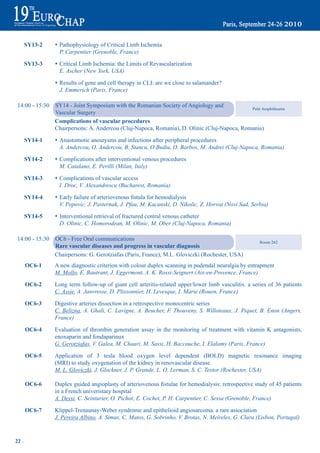
11:30 - 13:00   SY12 - Symposium                                                              Amphitheatre Lavoisier

                From raynaud phenomenon to digital ulcer
                Chairpersons: M. Cutolo (Genova, Italy), M. Vayssairat (Paris, France)
                Organized thanks to an unrestricted educational grant from Actelion Pharmaceuticals

  Sy12-1        s Basic exploration of Raynaud’s phenomenon : a consensus of French experts
                  J. Constans (Bordeaux, France)

  Sy12-2        s Clinical usefulness of capillaroscopy
                  M. Cutolo (Genova, Italy)

  Sy12-3        s Raynaud phenomenon: the appearance of digital ulcers changes everything
                  P. Carpentier (Grenoble, France)

  Sy12-4        s The therapeutic challenge of digital ulcers in systemic sclerosis
                  P. Priollet (Paris, France)

11:30 - 13:00   OC5 - Free Oral Communications - atherosclerosis                                          Room 262

                Chairpersons: C. Le Hello (Caen, France), M. Cazaubon (Paris, France)

  OC5-1         Easy assessment of dietary pattern for atherosclerosis diseases in clinical practice
                G. Mahe, M. Carsin, J. P. De Bosschere, M. Zeeny (Angers, Rennes, France - Beirut, Lebanon)

  OC5-2         Medical management and prognosis of patients with atherothrombotic disease requiring a revas-
                cularisation
                C. Le Hello, R. Morello, S. Fradin, O. Coffin, D. Maïza, M. Hamon (Caen, France)

  OC5-3         Management of vessel wall disease is better than the management of risk factors
                G. H. R. Rao, V. Sriram, G. Muralidhara, A. Fenster (Minnesota, USA - Ontario, Canada)

  OC5-4         Computed tomographic angiography for the evaluation of carotid artery stenosis
                F. Pollice, P. Pollice, R. Rossi, G. Contegiacomo (Naples, Bari, Italy)

  OC5-5         Percutaneous treatment with drug-eluting stent in diabetic patients
                F. Pollice, P. Pollice, T. Grover, I. Christensen (Leiden, Netherlands Antilles)

  OC5-6         Low ankle brachial index is a risk factor for revascularization in coronary patients
                M. Maufus, J. B. Guitton, G. Vanzetto, L. Belle, B. Imbert, P. Carpentier, G. Pernod (Grenoble, Annecy,
                France)

  OC5-7	        Progression	of	peripheral	arterial	disease	in	type	2	diabetic	patients:	influence	of	fibrinogen	and	crp
                M. Bosevski, L. J. Georgievska-Ismail (Skopje, Makedonija)

13:00 - 14:00   Break - Exhibition visit                                                                   Room 8


14:00 - 15:30   SY13 - Symposium                                                              Amphitheatre Lavoisier

                Critical Limb ischemia
                Chairpersons: K. Roztocil (Prague, Czech Republic), E. Emmerich (Paris, France)
                Organized thanks to an unrestricted grant from Sanofi Aventis

  Sy13-1        s A randomized, double-blind, placebo-controlled gene therapy study using NV1FGF for prevention of
                  amputation and death in critical limb ischemia (TAMARIS). Rationale, design and baseline patient
                  characteristics
                  J. Belch (Dundee, UK)


                                                                                                     www.iua-eurochap2010.eu ~   21
Sy13-2    s Pathophysiology of Critical Limb Ischemia
                   P. Carpentier (Grenoble, France)

       Sy13-3    s Critical Limb Ischemia: the Limits of Revascularization
                   E. Ascher (New York, USA)

                 s Results of gene and cell therapy in CLI: are we close to salamander?
                   J. Emmerich (Paris, France)

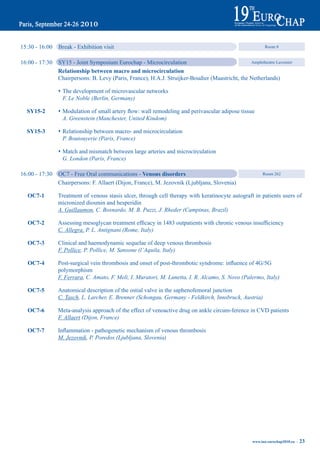
 14:00 - 15:30   SY14 - Joint Symposium with the Romanian Society of Angiology and
                                                                                              Petit Amphitheatre
                 Vascular Surgery
                 Complications of vascular procedures
                 Chairpersons: A. Andercou (Cluj-Napoca, Romania), D. Olinic (Cluj-Napoca, Romania)

       Sy14-1    s Anastomotic aneurysms and infections after peripheral procedures
                   A. Andercou, O. Andercou, B. Stancu, O.Budiu, O. Barbos, M. Andrei (Cluj-Napoca, Romania)

       Sy14-2    s Complications after interventional venous procedures
                   M. Catalano, E. Perilli (Milan, Italy)

       Sy14-3    s Complications of vascular access
                   I. Droc, V. Alexandrescu (Bucharest, Romania)

       Sy14-4    s	Early	failure	of	arteriovenous	fistula	for	hemodialysis
                   V. Popovic, J. Pasternak, J. Pfau, M. Kacanski, D. Nikolic, Z. Horvat (Novi Sad, Serbia)

       Sy14-5    s Interventional retrieval of fractured central venous catheter
                   D. Olinic, C. Homorodean, M. Olinic, M. Ober (Cluj-Napoca, Romania)

 14:00 - 15:30   OC6 - Free Oral communications
                                                                                                       Room 262
                 rare vascular diseases and progress in vascular diagnosis
                 Chairpersons: G. Gerotziafas (Paris, France), M.L. Gloviczki (Rochester, USA)
       OC6-1     A new diagnostic criterion with colour duplex scanning in pudendal neuralgia by entrapment
                 M. Mollo, E. Bautrant, J. Eggermont, A. K. Rossi-Seignert (Aix-en-Provence, France)

       OC6-2     Long term follow-up of giant cell arteritis-related upper/lower limb vasculitis. a series of 36 patients
                 C. Assie, A. Janvresse, D. Plissonnier, H. Levesque, I. Marie (Rouen, France)

       OC6-3     Digestive arteries dissection in a retrospective monocentric series
                 C. Belizna, A. Ghali, C. Lavigne, A. Beucher, F. Thouveny, S. Willoteaux, J. Piquet, B. Enon (Angers,
                 France)

       OC6-4     Evaluation of thrombin generation assay in the monitoring of treatment with vitamin K antagonists,
                 enoxaparin and fondaparinux
                 G. Gerotziafas, V. Galea, M. Chaari, M. Sassi, H. Baccouche, I. Elalamy (Paris, France)

       OC6-5     Application of 3 tesla blood oxygen level dependent (BOLD) magnetic resonance imaging
                 (MRI) to study oxygenation of the kidney in renovascular disease
                 M. L. Gloviczki, J. Glockner, J. P. Grande, L. O. Lerman, S. C. Textor (Rochester, USA)

       OC6-6	    Duplex	guided	angioplasty	of	arteriovenous	fistulae	for	hemodialysis:	retrospective	study	of	45	patients
                 in a French univeristary hospital
                 A. Dessi, C. Seinturier, O. Pichot, E. Cochet, P. H. Carpentier, C. Sessa (Grenoble, France)

       OC6-7     Klippel-Trenaunay-Weber syndrome and epithelioid angiosarcoma. a rare association
                 J. Pereira Albino, A. Simas, C. Matos, G. Sobrinho, V. Brotas, N. Meireles, G. Clara (Lisbon, Portugal)


22 ~
15:30 - 16:00   Break - Exhibition visit                                                                   Room 8


16:00 - 17:30   SY15 - Joint Symposium Eurochap - Microcirculation                               Amphitheatre Lavoisier

                relationship between macro and microcirculation
                Chairpersons: B. Levy (Paris, France), H.A.J. Struijker-Boudier (Maastricht, the Netherlands)

                s The development of microvascular networks
                  F. Le Noble (Berlin, Germany)

  Sy15-2        s	Modulation	of	small	artery	flow:	wall	remodeling	and	perivascular	adipose	tissue
                  A. Greenstein (Manchester, United Kindom)

  Sy15-3        s Relationship between macro- and microcirculation
                  P. Boutouyerie (Paris, France)

                s Match and mismatch between large arteries and microcirculation
                  G. London (Paris, France)

16:00 - 17:30   OC7 - Free Oral communications - Venous disorders                                         Room 262

                Chairpersons: F. Allaert (Dijon, France), M. Jezovnik (Ljubljana, Slovenia)

  OC7-1         Treatment of venous stasis ulcer, through cell therapy with keratinocyte autograft in patients users of
                micronized diosmin and hesperidin
                A. Guillaumon, C. Bosnardo, M. B. Puzzi, J. Rheder (Campinas, Brazil)

  OC7-2	        Assessing	mesoglycan	treatment	efficacy	in	1483	outpatients	with	chronic	venous	insufficiency
                C. Allegra, P. L. Antignani (Rome, Italy)

  OC7-3         Clinical and haemodynamic sequelae of deep venous thrombosis
                F. Pollice, P. Pollice, M. Sansone (l’Aquila, Italy)

  OC7-4	        Post-surgical	vein	thrombosis	and	onset	of	post-thrombotic	syndrome:	influence	of	4G/5G
                polymorphism
                F. Ferrara, C. Amato, F. Meli, I. Muratori, M. Lunetta, I. R. Alcamo, S. Novo (Palermo, Italy)

  OC7-5         Anatomical description of the ostial valve in the saphenofemoral junction
                C. Tasch, L. Larcher, E. Brenner (Schongau, Germany - Feldkirch, Innsbruck, Austria)

  OC7-6         Meta-analysis approach of the effect of venoactive drug on ankle circum-ference in CVD patients
                F. Allaert (Dijon, France)

  OC7-7	        Inflammation	-	pathogenetic	mechanism	of	venous	thrombosis
                M. Jezovnik, P. Poredos (Ljubljana, Slovenia)


                                                                                                     www.iua-eurochap2010.eu ~   23
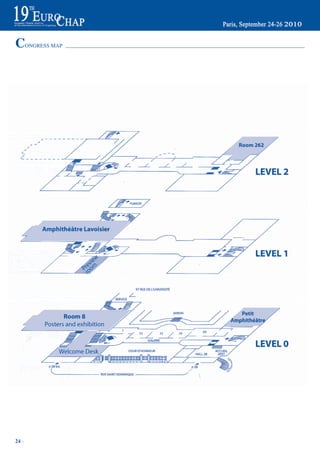
C      ONGRESS MAP


24 ~
E
HIBITION PLAN


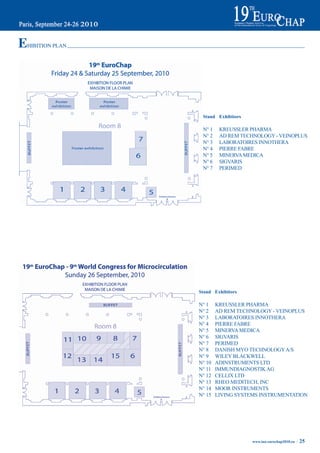
                 Stand Exhibitors

                 N° 1    KREUSSLER PHARMA
                 N° 2    AD REM TECHNOLOGY - VEINOPLUS
                 N° 3    LABORATOIRES INNOTHERA
                 N° 4    PIERRE FABRE
                 N° 5    MINERVA MEDICA
                 N° 6    SIGVARIS
                 N° 7    PERIMED


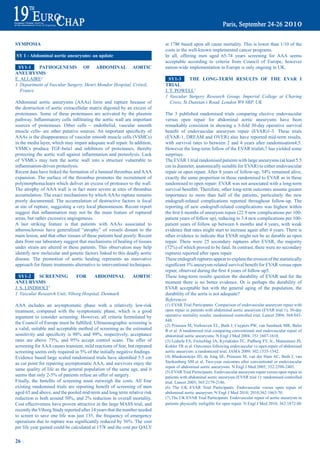
                Stand Exhibitors

                N° 1    KREUSSLER PHARMA
                N° 2    AD REM TECHNOLOGY - VEINOPLUS
                N° 3    LABORATOIRES INNOTHERA
                N° 4    PIERRE FABRE
                N° 5    MINERVA MEDICA
                N° 6    SIGVARIS
                N° 7    PERIMED
                N° 8    DANISH MYO TECHNOLOGY A/S
                N° 9    WILEY BLACKWELL
                N° 10   ADINSTRUMENTS LTD
                N° 11   IMMUNDIAGNOSTIK AG
                N° 12   CELLIX LTD
                N° 13   RHEO MEDITECH, INC
                N° 14   MOOR INSTRUMENTS
                N° 15   LIVING SYSTEMS INSTRUMENTATION


                                    www.iua-eurochap2010.eu ~   25
SympOSia                                                                          at 178€ based upon all cause mortality. This is lower than 1/10 of the
                                                                                  costs in the well-known implemented cancer programs.
Sy 1 - abdominal aortic aneurysms: an update                                      In all, offering men aged 65-74 years screening for AAA seems
                                                                                  acceptable according to criteria from Council of Europe, however
 Sy1-1    patHOGeNeSiS OF abdOmiNaL aOrtiC                                        nation-wide implementation in Europe is only ongoing in UK.
aNeUrySmS
E. ALLAIRE1                                                                         Sy1-3      tHe LONG-term reSULtS OF tHe eVar i
1 Department of Vascular Surgery, Henri Mondor Hospital, Créteil,                 triaL
  France                                                                          J. T. POWELL1
                                                                                  1 Vascular Surgery Research Group, Imperial College at Charing
Abdominal aortic aneurysms (AAAs) form and rupture because of                        Cross, St Dunstan’s Road, London W6 8RP, UK
the destruction of aortic extracellular matrix digested by an excess of
proteinases. Some of these proteinases are activated by the plasmin               The 3 published randomised trials comparing elective endovascular
pathway.	Inflammatory	cells	infiltrating	the	aortic	wall	are	important	           versus open repair for abdominal aortic aneurysms have been
sources of proteinases. Other cells – endothelial, vascular smooth                remarkably consistent in showing a 3-fold 30-day operative survival
muscle	 cells-	 are	 other	 putative	 sources.	An	 important	 specificity	 of	    benefit	 of	 endovascular	 aneurysm	 repair	 (EVAR)1-3.	 These	 trials	
AAAs is the disappearance of vascular smooth muscle cells (VSMCs)                 (EVAR-1, DREAM and OVER) also have reported mid-term results,
in the media layer, which may impair adequate wall repair. In addition,           with survival rates to between 2 and 4 years after randomisation4;5.
VSMCs produce TGF-beta1 and inhibitors of proteinases, thereby                    However the long-term follow of the EVAR trials6;7 has yielded some
protecting	the	aortic	wall	against	inflammation	and	proteolysis.	Lack	            surprises.
of VSMCs may turn the aortic wall into a structure vulnerable to                  The EVAR 1 trial randomised patients with large aneurysms (at least 5.5
inflammation-driven	proteolysis.	                                                 cm in diameter, anatomically suitable for EVAR) to either endovascular
Recent data have linked the formation of a luminal thrombus and AAA               repair	or	open	repair.	After	8	years	of	follow-up,	54%	remained	alive,	
expansion. The surface of the thrombus promotes the recruitment of                exactly the same proportion in those randomised to EVAR as in those
polymorphonuclears which deliver an excess of proteases to the wall.              randomised to open repair: EVAR was not associated with a long-term
The atrophy of AAA wall is in fact more severe at sites of thrombus               survival	benefit6.	Therefore,	other	long-term	outcomes	assume	greater	
accumulation. The exact mechanisms by which AAAs rupture remains                  importance to more than half of the patients, particularly the new
poorly documented. The accumulation of destructive factors is focal               endograft-related complications reported throughout follow-up. The
at site of rupture, suggesting a very local phenomenon. Recent report             reporting of new endograft-related complications was highest within
suggest	 that	 inflammation	 may	 not	 be	 the	 main	 feature	 of	 ruptured	      the	first	6	months	of	aneurysm	repair	(22.9	new	complications	per	100-
areas, but rather excessive angiogenesis.                                         patient years of follow up), reducing to 3.4 new complications per 100-
A last striking feature is that patients with AAAs associated to                  patient years of follow up between 6 months and 4 years, with weak
atherosclerosis have generalized “atrophy” of vessels distant to the              evidence that rates might start to increase again after 4 years. There is
main lesion, and that other tissues of these patients heal poorly. Recent         other evidence to indicate that EVAR might not be as durable as open
data from our laboratory suggest that mechanisms of healing of tissues            repair. There were 25 secondary ruptures after EVAR, the majority
under strain are altered in these patients. This observation may help             (72%)	of	which	proved	to	be	fatal.	In	contrast,	there	were	no	secondary	
identify new molecular and genetic factors linked to this deadly aortic           ruptures reported after open repair.
disease. The promotion of aortic healing represents an innovative                 These endograft ruptures appear to explain the erosion of the statistically
approach for future treatments alternative to interventional techniques.          significant	3%	aneurysm-related	survival	benefit	for	EVAR	versus	open	
                                                                                  repair,	observed	during	the	first	4	years	of	follow	up5.	
  Sy1-2    SCreeNiNG          FOr     abdOmiNaL                    aOrtiC         These long-term results question the durability of EVAR and for the
aNeUrySmS                                                                         moment there is no better evidence. Or is perhaps the durability of
J. S. LINDHOLT1                                                                   EVAR acceptable but with the general aging of the population, the
1 Vascular Research Unit, Viborg Hospital, Denmark                                durability of the aorta is not adequate?
                                                                                  References
AAA includes an asymptomatic phase with a relatively low-risk                     (1) EVAR Trial Participants. Comparison of endovascular aneurysm repair with
treatment, compared with the symptomatic phase, which is a good                   open repair in patients with abdominal aortic aneurysm (EVAR trial 1), 30-day
argument to consider screening. However, all criteria formulated by               operative mortality results: randomised controlled trial. Lancet 2004; 364:843-
                                                                                  848.
the	Council	of	Europe	must	be	fulfilled;	Ultrasonographic	screening	is	
                                                                                  (2) Prinssen M, Verhoeven EL, Buth J, Cuypers PW, van Sambeek MR, Balm
a valid, suitable and acceptable method of screening as the estimated             R et al. A randomized trial comparing conventional and endovascular repair of
sensitivity	 and	 specificity	 is	 98%	 and	 99%,	 respectively,	 acceptance	     abdominal aortic aneurysms. N Engl J Med 2004; 351:1607-1618.
rates	 are	 above	 75%,	 and	 95%	 accept	 control	 scans.	 The	 offer	 of	       (3) Lederle FA, Freischlag JA, Kyriakides TC, Padberg FT, Jr., Matsumura JS,
screening for AAA causes transient, mild reactions of fear, but repeated          Kohler TR et al. Outcomes following endovascular vs open repair of abdominal
screening	seems	only	required	in	5%	of	the	initially	negative	findings.           aortic aneurysm: a randomized trial. JAMA 2009; 302:1535-1542.
Evidence	based	large	scaled	randomised	trials	have	identified	5.5	cm	             (4) Blankensteijn JD, de Jong SE, Prinssen M, van der Ham AC, Buth J, van
as cut point for repairing asymptomatic AAA, and survivors enjoy the              Sterkenburg SM et al. Two-year outcomes after conventional or endovascular
                                                                                  repair of abdominal aortic aneurysms. N Engl J Med 2005; 352:2398-2405.
same quality of life as the general population of the same age, and it
                                                                                  (5) EVAR Trial Participants. Endovascular aneurysm repair versus open repair in
seems	that	only	2-5%	of	patients	refuse	an	offer	of	surgery.	                     patients with abdominal aortic aneurysm (EVAR trial 1): randomised controlled
Finally,	 the	 benefits	 of	 screening	 must	 outweigh	 the	 costs.	 All	 four	   trial. Lancet 2005; 365:2179-2186.
existing	 randomised	 trials	 are	 reporting	 benefit	 of	 screening	 of	 men	    (6) The UK EVAR Trial Participants. Endovascular versus open repair of
aged 65 and above, and the pooled mid-term and long term relative risk            abdominal aortic aneurysm. N Engl J Med 2010; 2010;362:1863-70.
reduction	is	both	around	50%,	and	2%	reduction	in	overall	mortality.	             (7) The UK EVAR Trial Participants. Endovascular repair of aortic aneurysm in
Cost effectiveness have proven attractive in the large MASS trial, and            patients physically ineligible for open repair. N Engl J Med 2010; 362:1872-80
recently the Viborg Study reported after 14 years that the number needed
to screen to save one life was just 135, the frequency of emergency
operations	due	to	rupture	was	significantly	reduced	by	56%.	The	cost	
per life year gained could be calculated at 157€ and the cost per QALY

26 ~
Sy1-4     mediCaL apprOaCH tO tHe patieNt WitH                                       Sy2-2      NeW StrateGieS tO imprOVe COmpLiaNCe
aN abdOmiNaL aOrtiC aNeUrySm                                                          OF COmpreSSiON tHerapy (20-36 mmHG)
F. BECKER1                                                                            D. RASTEL1, E. LE FLOCH2, B. LUN3
1 Division of Angiology and Hemostasis, Department of Internal                        1 Grenoble, France
   Medicine, University Hospitals of Geneva, Geneva, Switzerland                      2 Paris, France
                                                                                      3 Saint-Just Saint-Rambert, France
Until recently, abdominal aortic aneurysm has only been seen through
an immutable progression and a very high mortality in case of rupture.                Compression therapy (CT) is one of the key treatment of deep and
In this frame any AAA discovered was monitored by imaging as                          superficial	 venous	 disorders.	 CT	 based	 on	 Medical	 compression	
long	 as	 the	 surgical	 benefit	 versus	 risk	 of	 rupture	 was	 in	 favor	 of	 a	   stockings (MCS) is generally preferred to bandages thanks to the
preventive surgery. The threshold diameter of the AAA being at                        better control of the delivered pressure. Nervertheless, it is admitted
50 mm.                                                                                that	the	compliance	to	MCS	remains	insufficient	due	to	difficulties	to	
Nevertheless,	 -firstly	 when	 analyzing	 the	 causes	 of	 death	 of	 patients	       put on, to wear and to remove MCS. In a recent survey among French
with AAA, the AAA rupture is not the main cause, it may even be the                   phlebologists (MCS with 20-36mmHg at the ankle; alias french class
last one, -secondly the operative mortality in scheduled surgery for                  3),	21.4%	of	patients	are	uncompliant,	70.4%	have	difficulties	to	put	on	
AAA is largely due to pre-existing co-morbidities, -thirdly even if we                and	25.4%	feel	discomfort.
have no evidence-based drug to slow the progression of AAA, actions                   Then, new strategies of research have been conducted to improve
against some reducible factors (like smoking and sedentariness) are                   compliance to MCS over long term periods of treatment such as it is
likely to slow the AAA progression rate.                                              required to treat post thrombotic syndrome or severe venous pathologies.
Faced with a patient who has just been discovered a AAA <50 mm                        One of the key point for compliance is the putting on process where its
AP, we must not only monitor the evolution of AAA by scheduled                        main parameter is fabric friction factor at the level of the instep and the
ultrasound examinations, we must act on cardio-vascular risk factors                  ankle. So, the objectives of the strategy was to reduce friction.
and on co-morbidities that are able to exacerbate the potential surgical              This was driven through different studies:
risk. In particular, smoking cessation, improvement of respiratory                    1	 -	 To	 improve	 our	 knowledges	 on	 skin-MCS	 interface,	 coefficent	
function, regular exercise... are probably as important as the repeated               of friction and secondary skin parameters. In brief, hydration
imagings. It is probably also useful to inquire about the relatives over              (corneometer®), micro-structure (Visioscan®), water loss (Tewameter®),
50 years of the patient.                                                              elasticity (Cutometer®) have been measured.
                                                                                      2 - To optimise the ergonomic description of patients’ body movements
SY 2 - Efficient compression therapy to treat venous                                  during putting on and pulling off processes, a biomechanician approach
diseases: scientific, medical and practical key factors                               have been considered. Muscle activities were investigated using surface
(Corporate Symposium - Sigvaris)                                                      electromyography measurements. We concluded that muscle activity
                                                                                      of the thumb is mainly involved in putting on and muscle groups of
 Sy2-1     COmpreSSiON tHerapy iN CHrONiC VeNOUS                                      shoulder in removing MCS.
diSOrderS: a briGHt FUtUre reQUiriNG maNy                                             2 - To facilitate the putting on process (slippy aspect), improvement
eFFOrtS                                                                               (yarns selection) and innovation (dynamic in elasticity) in MCS
P. CARPENTIER1                                                                        concept and design were implemented («EXPERT» from SIGVARIS).
1 Centre de Recherche Universitaire de La Léchère (73210), France                     Conducted on a pannel of 30 patients in different situations (comparative
                                                                                      test)	 we	 noticed	 that	 for	 79%	 putting	 on	 is	 improved	 and	 93%	 felt	
Although compression therapy is increasingly acknowledged as the                      confortable with this new MCS.
cornerstone of the treatment of patients with chronic venous disorders
(CVD), its use in everyday practice is far from satisfactory, and                       Sy2-3     COmpreSSiON            aFter         SCLerOtHerapy
many efforts have to be developed by the manufacturers, the vascular                  P. KERN1
scientists, the attending physicians and the patients in order to get the             1 Private office of vascular medicine in Vevey, Switzerland
potential	benefit	that	can	be	drawn	from	this	major	therapeutic	tool:
- Patients have to appropriate their compression device, to learn how to              As recommended in the guidelines of the German Society of
use and to look after it, and to adapt in some way their lifestyle to the             Phlebology most specialists apply compression after sclerotherapy
treatment,	all	objectives	that	are	nothing	short	of	difficult	and	require	            of saphenous varicose veins and collaterals. Applying an extrinsic
knowledge, skills and motivation, which means that compression                        selective compression associated with compression bandage after
therapy	requires	specific	therapeutic	education	programs.	                            sclerotherapy	of	the	great	saphenous	vein	significantly	enhances	results	
- Physicians have to play their role in these therapeutic education                   at	2	years	(echographic	recanalisation	11	vs	23%,	respectively)1.	On	
programs,	 and	 already	 the	 prescription	 process	 is	 one	 first	 important	       the contrary, short term (< 6 weeks) results and incidence of side
step for building motivation, insuring the adequacy of the device to                  effects	 are	 not	 influenced	 by	 compression	 (low	 grade	 15-20	 mmHg	
the vascular status of the patient and for customizing it to its personal             medical compression stocking (MCS)2, or 5 days instead of one day
needs: education of the physicians is also necessary.                                 compression bandages3).
- A lot of work is needed from the vascular scientists who have yet                   In the setting of telangiectasias, several studies demonstrated a
to	 validate	 the	 efficacy	 of	 compression	 stockings	 in	 some	 important	         beneficial	effect	of	wearing	MCS	after	sclerotherapy.	This	was	shown	
indications	such	as	venous	edema,	and	to	define	the	optimal	pressure	                 for telangiectasias greater than 0.5 mm in diameter4. The best effects
and stiffness for each clinical situation through adequate therapeutic                were observed in patients wearing MCS 20-30 mmHg for three
trials, in order to make the use of compression stockings quite an                    weeks5.	Recently,	this	benefit	was	confirmed	by	a	prospective	study6.	
evidence-based practice.                                                              After one session of sclerotherapy for telangiectasias on the lateral
- The acceptability (esthetics, comfort, easiness to handle) and physical             aspect of the thigh (C1A or SEPASPN1), 100 patients were randomized
properties of the compression have very much improved during the last                 either to daily 23-32 mmHg MCS for three weeks or no compression.
decade. However, a lot remains to be done from the manufacturers in                   Objective	 rating	 of	 vessel	 disappearance	 was	 significantly	 better	
this respect, and they also have to play their role in the promotion of               after compression (p= .026). Poor results were more frequent in the
the therapeutic trials.                                                               no	 compression	 group	 (43%	 versus	 24%).	 Micro-thrombi	 were	 less	
All these efforts, and their coordination, are necessary to make                      prevalent in the compression group. Finally, a subsequent study7,
compression therapy more effective in real life.                                      comparing	1	to	4	week	MCS,	showed	a	significant	reduction	of	post-

                                                                                                                                     www.iua-eurochap2010.eu ~   27
sclerotherapy pigmentations when MCS was worn for 4 weeks.                           J. FERNANDES E FERNANDES1
In conclusion, even if the usefulness of MCS wearing after sclerotherapy             1 Faculty of Medicine, University of Lisbon, Hospital Santa Maria and
of	saphenous	veins	seems	to	be	more	obvious,	it’s	efficacy	at	present	                  Lisbon Cardiovascular Institute, Lisbon, Portugal
is less well documented in this indication than after sclerotherapy of
telangiectasias.                                                                     Severe carotid bifurcation stenosis is a major cause of stroke in the
References:                                                                          western population. Carotid Endarterectomy (CEA) has been shown to
1- Ferrara F, Bernbach HR, La compression écho-guidée après sclérothérapie.          reduce	stroke	risk	in	stenosis	>70%	for	symptomatic	and	asymptomatic	
Phlébologie 2009 ; 62 : 36-41                                                        patients (ECST; NASCET, ACAS and ACST) and became the
2- Hamel-Desnos C; Guias BJ, Desnos PR, Mesgard A. Foam sclerotherapy of             established procedure for the treatment of severe carotid bifurcation
the saphenous veins. Randomised controlled trial with or without compression.
                                                                                     disease, because combined mortality and neurological morbidity
Eur J Vasc Endovasc Surg. 2010 Apr; 39: 500-7
3- O’Hare JL, Stephens J, Parkin D, Earnshaw JJ. Randomized clinical trial of        were inferior to best medical treatment. Reduction of surgical risk
different bandage regimens after foam sclerotherapy for varicose veins. Br J         and improvement on durability of CEA resulted from judicious use
Surg. 2010 May; 97: 650-6.                                                           of indwelling shunts during endarterectomy and systematic use of
4- Goldman MP, Beaudoing D, Marley W, Lopez L, Butie A. Compression in               patch closure. Per-operative quality control of CEA adequacy has been
the treatment of leg telangiectasia: a preliminary report. J Dermatol Surg Oncol.    associated	with	reduction	of	neurological	events	as	confirmed	by	our	
1990; 16:322-5.                                                                      own experience of systematic completion assessment of CEA with per-
5- Weiss RA, Sadick NS, Goldman MP, Weiss MA. Post-sclerotherapy                     operative	colour-flow	Duplex	Scan.	
compression: controlled comparative study of duration of compression and its
                                                                                     Carotid Angioplasty and Stenting (CAS) a less invasive procedure, not
effects on clinical outcome. Dermatol Surg 1999; 25:105-8.
6- Kern P, Ramelet A-A, Wütschert R, Hayoz D. Compression after sclerotherapy        requiring surgical intervention, has been suggested as an alternative for
for telangiectasias and reticular leg veins: a randomized controlled study. J Vasc   treatment of carotid stenosis.
Surg 2007; 45: 1212-16.                                                              Recently published RCT’s (EVA-3S, SPACE and ICSS) comparing
7-	Nootheti	PK,	Kristian	MC,	MagpantayA,	Goldman	MP.	Efficacy	of	graduated	          CAE	and	CAS	in	symptomatic	>70%	stenosis	have	provided	evidence	
compression stockings for an additional 3 weeks after sclerotherapy treatment        that CAS is associated with higher incidence of ipsilateral stroke,
of reticular and telangiectactic leg veins. Dermatol Surg 2009; 35: 53-8.            increased incidence of silent brain infarcts as assessed by DW NMR
                                                                                     (ICSS) and concluded that CEA should continue as the procedure of
  Sy2-4      tHe eFFeCtS OF mediCaL COmpreSSiON                                      choice for symptomatic patients.
StOCKiNGS ON VeNOUS aNatOmy                                                          Asymptomatic carotid disease is a relatively benign disease with a stroke
J. - F. UHL1, 2                                                                      risk	of	3%/year	as	suggested	in	natural	history	studies	and	is	a	marker	
1 URDIA research unit, EA4566 University Paris Descartes, Paris,                     of cardiovascular disease. Reported CAS results in asymptomatic
   France                                                                            stenosis	are	constantly	associated	with	neurological	morbidity	>	3%,	
2 Vascular surgeon, 113 av. victor Hugo, 75116 Paris, France                         with non-negligible restenosis rate, thus casting doubts on its real
                                                                                     efficacy	and	CEA	to	be	really	effective	must	have	a	surgical	risk	<	3%	
Objective: to study the effects of medical compression stockings (MCS)               (AHA Guidelines).
on	both	the	superficial	and	deep	veins	veins	of	the	lower	limbs.                     Increased stroke risk in asymptomatic stenosis is associated with plaque
methods: The spiral CT with 3D reconstruction of the lower limbs                     vulnerability as assessed by its echogenicity, plaque structure analysis
(with or without injection) is an accurate method to assess the 3D shape             and evidence of progressing stenosis on repeated Duplex examinations.
of	the	leg	and	the	diameter	of	the	superficial/deep	veins.	It	is	possible	           Non-invasive evaluation of plaque activity provided by the Activity
to obtain a realistic 3D model of the leg and its anatomical structures.             Index was shown to identify asymptomatic stenosis with higher risk
That makes possible to evaluate the interface pressure and effects due               of developing neurological events thus improving selection of patients
to the compression stockings. Technical limits: exposition to X rays,                that	will	benefit	of	carotid	interventions	to	prevent	stroke.
a venous injection is usually not advisable, and this exam is strictly               Therefore, a study in asymptomatic patients at high risk of stroke is
limited to the lying position.                                                       required comparing interventional procedures (CEA and CAS) with a
The MRI in standing position in T2 is a more informative protocol.                   subgroup of patients under well established contemporary best medical
The Duplex US through a stocking with a transparent window is                        treatment.
another way to assess both the anatomical and hemodynamical effect
of the MCS on the veins.                                                               Sy3-2      CarOtid SteNOSiS: pLaCe OF CarOtid
results:	According	to	the	Laplace’s	law,	the	modifications	of	the	shape	             SteNtiNG
of the leg i.e cross sections at different levels, give a radius for each            J. L. MAS1
location, and so different interface pressures all around the limb.                  1 Hôpital Sainte-Anne, Université Paris Descartes, INSERM UMR894,
The results of these theoretical values of the interface pressure are                   Paris, France
close to the real values measured at the same location by a probe: the
compression of the saphenous veins in lying position is observed below               Large randomized clinical trials (RCTs) have shown that the addition
the knee providing the pressure at the ankle (B point) is at least 25 mm             of endarterectomy to medical therapy is effective in reducing the risk
of Hg. It is not possible to make a compression of the veins at the thigh            of stroke among patients with severe carotid stenosis. At present, RCTs
level without a pad.                                                                 in patients with symptomatic carotid disease show inferior results of
Conclusion: The Laplace law and the interface pressure work well                     stenting compared to surgery with regard to the risk of stroke or death
regarding	 the	 superficial	 veins.	 But,	 in	 reality,	 the	 problem	 is	 much	     within 30 days of treatment.
more complex regarding the effect of MCS on the deep veins: during                   Both	methods	of	treatment	seem	to	have	similar	efficacy	at	preventing	
the muscular contraction, they act like an extra aponeurosis and seem                mid/long-term ipsilateral stroke after the treatment period, but with
to play an important role even for a lower pressure interface.                       wide	 confidence	 intervals,	 despite	 a	 significantly	 higher	 incidence	
Key words: Multisclice CT - MRI - interface pressure - MCS                           of restenosis in patients treated with stenting. Longer follow-up is
                                                                                     needed to assess the impact of the potentially higher rate of recurrent
Sy 3 - Carotid stenosis: moving concepts and practices                               stenosis after stenting compared with surgery on late recurrent stroke.
                                                                                     To	improve	the	risk-benefit	profile	of	stenting,	it	is	crucial	to	establish	
 Sy3-1  tHe SUrGiCaL treatmeNt OF CarOtid                                            which factors among patient characteristics and the procedure itself
SteNOSiS: NeW iNFOrmatiON FrOm reCeNt triaLS                                         are associated with a high risk of stroke after carotid stenting. Recent
aNd WHat iS reQUired FOr FUtUre StUdieS                                              meta-analysis show a striking age-related difference with equivalent

28 ~
risks of stroke or death after stenting and surgery below the age of 70          clinical features and a model of stenosis combined with clinical and
and a two-fold increase in risk of stenting over endarterectomy above            plaque	features	were	0.59	(95%	CI	0.54	to	0.64),	0.66	(0.62	to	0.72)	
this age.                                                                        and 0.82 (0.78 to 0.86) respectively.
RCTs in patients with asymptomatic stenosis have shown that the                  In the last model, stenosis, history of contralateral TIAs or stroke, GSM,
absolute	benefit	of	endarterectomy	versus	medical	treatment	alone	is	            plaque area and DWA were independent predictors of ipsilateral CORI
small, especially in women. In addition, there is growing evidence that          events. Combinations of these could stratify patients into different
the risk of ipsilateral stroke without surgery has been going down to            levels of risk for ipsilateral CORI and stroke, with predicted risk close
<1%	 per	 year,	 thanks	 to	 more	 effective	 medical	 therapy.	 If	 stenting	   to	observed	risk.	Of	the	923	patients	with	?70%	stenosis,	the	predicted	
is associated with an excess procedural risk of stroke (as it probably           cumulative	 five	 year	 stroke	 rate	 was	 <5%	 in	 495,	 5-9.9%	 in	 202,	
is),	this	excess	risk	will	probably	erode	or	nullify	the	small	benefit	of	       10-19.9%	in	142	and	?20%	in	84	patients.
revascularisation versus medical treatment alone. Therefore, the right           Thus,	cerebrovascular	risk	stratification	is	possible	using	a	combination	
question may be whether carotid stenting (or surgery) further reduces            of clinical and ultrasonic plaque features.
stroke risk in patients who receive best medical therapy.
                                                                                 SY 4 - Early detection of the high vascular risk subjects
 Sy3-3      StrOKe aNd tHrOmbOLytiC tHerapy. aN
Update                                                                            Sy4-1     SCreeNiNG FOr pad iN tHe GeNeraL
V. LARRUE1                                                                       pOpULatiON
1 Department of Vascular Neurology, University Hospital of Toulouse,             V. ABOYANS1
  Toulouse, France                                                               1 Vascular Unit, Dupuytren University Hospital, Limoges, France

Fifteen	years	after	demonstration	of	its	efficacy	intravenous	thrombolytic	      Over these last 25 years, the clinical and epidemiological studies have
therapy with alteplase remains the only validated treatment of acute             clearly shown that PAD is a frequent condition in general population,
ischemic	stroke.	The	efficacy	of	treatment	is	strongly	time	dependent.	          and the subjects affected even by its asymptomatic form are at high risk
It	has	been	demonstrated	up	to	4.5h	of	stroke	onset	and	efficacy	rapidly	        of death and cardiovascular events. As for the population screening of
decreases within this time frame.                                                any	life-threatening	disease,	screening	for	PAD	should	follow	specific	
Safety of intravenous thrombolysis for stroke in clinical practice has           conditions: the screening method should be accurate, robust, safe,
been	 confirmed	 by	 large	 phase	 IV	 studies.	 Implementation	 of	 this	       well-accepted, cost-effective and it should be followed by a successful
treatment is however still a challenge in many areas because it requires         medical intervention to improve the prognosis in case of positive test.
expertise in both clinical neurology and brain imaging interpretation.           The ankle-brachial index is the most widely-used tool to detect PAD,
In	addition,	the	efficacy	of	intravenous	thrombolysis	remains	uncertain	         because	it	presents	the	five	former	characteristics	enlisted	above.	The	
in important subgroups such as patients over 80 years.                           key and unresolved issue remains the management of asymptomatic
Intravenous thrombolysis with alteplase is poorly effective in patients          PAD. Further studies are necessary to assess the successful strategies
with large vessel occlusion. Additional or alternative therapies are             which	may	definitely	validate	the	population	screening	for	PAD.
currently evaluated in these patients. These include thrombolysis
acceleration with transcranial ultrasound, intra-arterial administration           Sy4-2      aSymptOmatiC CarOtid LeSiONS prediCt
of	fibrinolytics,	and	embolectomy	with	mechanical	devices.                       GLObaL CardiOVaSCULar riSK beyONd tHe CardS
                                                                                 OF tHe riSK
 Sy3-4    aSymptOmatiC CarOtid SteNOSiS aNd riSK                                 S. NOVO1, P. CARITA1, C. VISCONTI1, E. CORRADO1,
StratiFiCatiON                                                                   I. MURATORI1, G. NOVO1
A. NICOLAIDES1 (for the ACSRS study group)                                       1 Center for the Early Diagnosis of Preclinical and Multifocal
1 Department of Biomedical Sciences - University of Cyprus, Nicosia,                Atherosclerosis, Division of Cardiology, University Hosp., University
  Cyprus                                                                            of Palermo, Italy

Best evidence indicates that the annual risk of ipsilateral cerebral             Atherosclerotic Cardiovascular Disease (CVD) is the biggest cause
stroke in patients with moderate-severe asymptomatic internal carotid            of morbidity and mortality worldwide and remains the major threats
stenosis (ACS) receiving optimal medical intervention alone has                  to the future public health of multiple countries. Decades of research
fallen	 to	 approximately	 1%	 making	 routine	 carotid	 endarterectomy	         have determined that atherosclerosis develops insidiously, being
unjustified.	 However,	 if	 patient	 subgroups	 with	 sufficiently	 higher	      advanced by the time that symptoms occur. In healthy subjects, the
average risk, despite current optimal medical intervention, could be             atherosclerotic process is the product of a number of genetic, social,
reliably	identified,	then	carotid	surgery	may	still	be	justified.	               physiological and environmental factors and a comprehensive
The ACSRS performed under the auspices of the IUA was a prospective,             approach to prevention would address all of these. Risk Factors may
multicentre, cohort study of patients undergoing medical intervention            be	 defined	 as	 conditions	 casual-linked	 to	ATS	 and	 can	 be	 divided	 in	
for vascular disease that has answered this question. Hazard ratios for          traditional	 (modifiable	 and	 not	 modifiable)	 and	 emerging.	 Recently,	
stenosis, clinical features and plaque texture features associated with          various	 biomarkers	 of	 inflammation	 have	 also	 been	 increasingly	
ipsilateral cerebrovascular or retinal ischemic (CORI) events were               investigated as possible indicators of increased cardiovascular risk.
calculated using proportional hazards models.                                    Several seemingly modest RF may, in combination, result in a much
1121	patients	with	50-99%	asymptomatic	ICA	stenosis	in	relation	to	the	          higher risk than an impressively raised single factor. This means
bulb (ECST method) were followed-up for 6-96 (mean 48) months. A                 that the RF may interact to increase risk into a logarithmic way. For
total of 130 ipsilateral CORI events occurred. Severity of stenosis, age,        these reasons, risk estimation systems have been developed to assist
systolic blood pressure, increased serum creatinine, smoking history             clinicians to assess the effects of several risk factors combinations in
of more than 10 pack-years, history of contralateral TIAs or stroke,             planning cardiovascular preventive strategies. The various countries
low gray scale median (GSM), increased plaque area, plaque types 1, 2            use different systems in order to respect the different populations of
and 3 and presence of discrete white areas without acoustic shadowing            reference, in example the Progetto Cuore (ISS) aims at estimating the
(DWA) were associated with increased risk.                                       risk in Italian population. Each score system should consider a broader
ROC curves were constructed for predicted risk versus observed CORI              perspective and attempt to estimate the «global» cardiovascular risk
events as a measure of model validity. The areas under the ROC curves            (GCVR)	of	developing	a	first	adverse	CV	event	in	the	following	ten	
for a model of stenosis alone, a model of stenosis combined with                 years by evaluating several traditional RF. The most recent guidelines

                                                                                                                                www.iua-eurochap2010.eu ~   29
recommend the use of risk assessment tools to help identify individuals         Fundoscopy has been forgotten last years in hypertension clinics.
at	«high»	risk,	who	could	benefit	from	therapeutic	intervention,	before	        However, recent papers have indicated that the image seen by visual
making clinical management decision. However, the term global risk              inspection, can be digitised and fed into the computer providing very
estimation is perhaps a misnomer, as no system accommodates all                 well	quantifiable	information.	
known risk factors. Furthermore, many evidences indicate that the non           Conclusion:	total	cardiovascular	risk	is	regularly	defined	by	risk	factors	
invasive evaluation of signs of preclinical atherosclerosis could help to       or organ damage. Sub clinical organ damage could bring in a lot of
better	define	the	pattern	of	risk	in	asymptomatic	subjects.	The	risk	of	        new information on long term prognosis. This is particularly the case
CV events in patients with preclinical atherosclerotic lesions is higher        when several bits of sub clinical changes occur together. Analysis of
than in the controls. The preclinical ATS is, indeed, an early stage of         these changes could open the way for much earlier prevention and
this process: it is characterized by a minimal damage (then potentially         treatment.
susceptible to correction) and, above all, indicates a multifocal disease.
In these regards, the ultrasound evaluation of Intima-media thickness             Sy4-4      atHerOSCLerOSiS aNd VeNOUS tHrOm-
and/or asymptomatic plaque of carotid arteries it’s a high sensitive and        bOSiS tHe Same diSeaSe eNtity WitH tWO diF-
specific	method.	In	a	recent	study	we	aimed	at	determining	the	effects	         FereNt FaCeS
of including carotid IMT and ACP evaluation on the accuracy of CV               P. POREDOS1, M. K. JEZOVNIK1
prediction. Our intention was to investigate if a new model of risk             1 University Clinical Centre Ljubljana, Department of Vascular
stratification	incorporating	the	IMT/ACP	beyond	the	risk	variables	of	             Diseases, Zaloska 7, SI-1000, Ljubljana
the «Progetto Cuore» could more accurately predict the GCVR in 454
[215	 male	 and	 239	 female]	 asymptomatic	 subjects.	After	 a	 five-year	     In past decades studies have indicated that there is an association
follow-up,	 overall	 CV	 major	 events	 occurred	 in	 the	 13%	 of	 subjects	   between atherosclerotic and venous thrombembolic disease (VTE).
(n=62) and none of the traditional RF evaluated was alone able to               This presumption is supported by similar or identical risk factors for
predict events. We reported a strong association between presence of            both diseases and common pathogenetic mechanisms. Some studies
preclinical carotid ATS and rate of events. In more details, in the group       have shown also that patients with VTE are at increased risk for
of	subjects	at	GCVR	<	20%	total	events	occurred	in	the	8%	of	subjects	          atherosclerotic thrombembolic events.
with	 normal	 ultrasound	 findings,	 in	 the	 13%	 (n=14)	 with	 increased	     We investigated if in patients with idiopathic VTE the prevalence
IMT	 and	 in	 the	 15%	 (n=23)	 with	ACP	 (p	 <	 0.012).	We	 showed	 that	      of preclinical indicators of atherosclerosis (increased intima-media
in managing subjects at «low-intermediate risk» (that currently has             thickness-IMT, number of atherosclerotic plaques is higher than in
poor propabilities to receive complete informations and therapies for           healthy	 subjects.	 Further	 we	 studied	 flow	 mediated	 endothelium	
cardiovascular prevention), the evidence of signs of asymptomatic               dependent (FMD) vasodilatory response of brachial artery in both
IMT or ACP, could provide further informations in improving their risk          groups of investigated subjects. Forty-nine patients with idiopathic
prediction. Similarly, in another study (enrolling 558 asymptomatic             VTE of both sexes (mean age 52.3 ± 14.3) and 48 age-matched healthy
patients) after a ten-year follow-up we reported that although the overall      controls were included. Using ultrasound carotid and femoral arteries
incidence	of	a	first	CV	event	reflected	the	different	risk	profiles	(4,	14,	    were investigated and IMT as well as the presence of atherosclerotic
and	20%,	respectively),	the	rate	of	events	increased	to	35,	46,	and	63%,	       plaques and their thickness were determined. Flow mediated
respectively in those patients with baseline evidences of preclinical           vasodilatory response was studied by the determination of changes of
ATS. Furthermore, at the multivariate analysis asymptomatic carotid             the diameter of brachial artery during reactive hyperaemia.
lesions	significantly	influenced	the	incidence	of	events.	According	to	         Intima-media	was	on	average	and	in	all	investigated	beds	significantly	
our and other similar results, the carotid pre-ATS could be a marker of         thicker in patients than in controls (0.94 mm ± 0.29 mm vs 0.71±0.15
«additional» risk.                                                              mm, p< 0.001). In patients with VTE a higher prevalence of
                                                                                atherosclerotic plaques was registered. Furthermore, total plaque
 Sy4-3      earLy marKerS iN HyperteNSiON: OFteN                                thickness	 was	 significantly	 higher	 in	 patients	 than	 in	 controls.	
OF VaSCULar OriGiN!                                                             Compared	to	the	control	group	FMD	was	significantly	reduced	in	the	
D. L. CLEMENT1                                                                  group	 of	 patients:	 4.9%	 (95%CI	 1.1-8.7%)	 vs.	 12.7%	 (95%CI	 7.8-
1 University of Ghent, Ghent, Belgium                                           17.6%),	 p<0.001.	 Patients	 with	 VTE	 had	 also	 significantly	 reduced	
                                                                                endothelium independent dilation of the brachial artery. Functional
The reappraisal of the 2007 guidelines on the management of                     and morphological deterioration of arterial wall were interrelated.
Hypertension have emphasised the importance of estimating total                 Furthermore, FMD was related to circulating indicators of endothelial
cardiovascular risk. Even minor blood pressure elevation, can become            dysfunction.
a major treat in case also other risk factors are present.                      The	 findings	 of	 our	 study	 show	 a	 close	 interrelationship	 between	
Last	years	reflections	along	this	line	has	gone	even	further.	Even	minor	       the presence of the idiopathic VTE and preclinical atherosclerotic
degree of organ damage, when added to other risk factors or minor               deterioration of the peripheral arteries. This means that patients with
disease, can lead to a seriously total increased risk. This reasoning has       VTE have simultaneous deterioration of the arterial and venous wall
focused all attention in hypertension to organ damage, even when it has         and that there is a close relationship in the development of both
not yet come to a clinically level; therefore the term of «subclinical»         diseases.
organ damage is being used.
Microalbuminuria is a good marker of early changes in kidney                    Sy 5 - therapeutic education of the vascular patient
function.	The	test	is	quite	easy	and	normal	limits	rather	well	defined.	
Cost effectiveness score is excellent and there is good correlation to            Sy5-1    tHerapeUtiC edUCatiON OF tHe patieNt
prognosis. However, clinicians still underuse the technique.                    WitH peripHeraL arteriaL diSeaSe
The electrocardiogram is largely alike at the level of the heart. ECG           P. H. CARPENTIER1
is cheap and very easy to perform. Recent information shows that                1 Department of Vascular Medicine, Grenoble University Hospital,
prognostic information can be obtained even when amplitude of R                    F-38043 Grenoble cedex, France
waves is falling in between «normal» values.
Ankle brachial artery pressure index (ABI) is to be seen in the same            Patients with peripheral arterial disease are expected to control their risk
context. Besides its diagnostic capacities, it has a very strong correlation    factors, to be compliant with non symptomatic long term treatment and
to long term prognosis. Recent data point out the value of ABI also             to be able to detect any warning sign for a complication. This cannot
when it falls just around normal limits.                                        be achieved only by the usual information delivered by the physician

30 ~
during a classical medical consultation. It is the aim of therapeutic             and any mean able to improve the quality of life is welcome. In order
education is to modify the behavior of the patient in order to obtain the         to address these needs, several educational programs for voluntary
required changes in lifestyle, to help him to cope with the disabilities          patients were developed in French spa resorts with some improvements
related to his disease or its treatment, and to make him an active partner        over the years. Initially focused on the promotion of a better knowledge
in the management of his disease.                                                 in venous disease by the patients, by the time the educational programs
A program called “Let’s Walk” was developed by the vascular medicine              developped towards a more customized approach to the needs of each
teams of Grenoble and Montpellier with the collaboration of a group               patient.
of patients with arterial claudication. The educational course was made           The	 first	 one	 named	 «Ecole	 de	 la	 veine»	 started	 15	 years	 ago	 in	 the	
of	 three	 face	 to	 face	 educational	 consultations	 and	 five	 workshops	      spa resort of La Léchère, with topics approached during interactive
where small groups of patients were interactively informed about the              work-groups. A series of patients showed improved knowledge and
risk factors, the natural history and the treatments of peripheral arterial       compliance to compression therapy in the short term.
disease and atherothrombosis, and motivated for a better control of               «Veinothermes» was developed two years ago by a multiprofessional
physical	activity,	dietetics	and	other	needed	lifestyle	modifications.	A	         group with the help of referent patients. The program combines three
preliminary	 evaluation	 of	 the	 90	 first	 patients	 showed	 that	 only	 two	   educational workshops and an individual education consultation
third of the patients completed the whole educational course, but that            aiming at the selection of objectives for the patient to be achieved
this	group	experienced	a	significant	increase	of	knowledge,	motivation,	          within	 three	 months.	A	 systematic	 evaluation	 of	 the	 first	 94	 patients	
self-perceived health status and physical activity. This program is               showed	significant	behavioural	changes,	including	an	improvement	of	
currently available in 12 other French centers.                                   compliance to compression therapy and of quality of life.
                                                                                  A third programme was experimented for persons with a recent history
  Sy5-2     edUCatiON OF tHe patieNt WitH VeNOUS                                  of proximal deep vein thrombosis with a six days training course
tHrOmbOembOLiC diSeaSe                                                            combining	 four	 educational	 workshops	 and	 a	 specific	 rehabilitation	
P. LEGER1                                                                         program using spa therapy.
1 Clinique Pasteur, Toulouse, France                                              These experiments with CVD show that it can be useful for this category
                                                                                  of chronic vascular patients, and desserve a larger application.
Therapeutic patient education is a crucial factor in the therapeutic
management of patients with thromboembolic disease.                               Sy 7 - New insights about the calf muscle pump function
Education has been structured and modeled. Many recommendations
regarding the role of the trainers, as well as the role and implementation         Sy7-1    patHOpHySiOLOGy OF tHe CaLF mUSCLe
of Education in the treatment of chronic diseases, are available.                 pUmp
Therapeutic education of patients with thromboembolic disease is                  A. NICOLAIDES1
mainly focused on anticoagulation treatment.                                      1 Department of Biomedical Sciences - University of Cyprus, Nicosia,
The objectives of Education are numerous:                                           Cyprus
- To avoid hemorrhagic and thrombotic events,
- To train the patient on how to manage his treatment with VKA through            The lower limb venous return consists of three muscle pumps in
a comprehensive patient-centred approach                                          series: foot, calf and thigh. Stepping on the ground empties the venous
- To emphasize the «patient-actors» concept by sharing knowledge                  plexus of the foot into the calf (priming) and subsequent contraction
and expertise with caregivers. The aim is to integrate the treatment and          of the muscles to lift the heel off the ground empties the calf into the
disease in the patient’s daily life and allow him to achieve an acceptable        thigh;	 finally	 lifting	 the	 leg	 off	 the	 ground	 maintains	 contraction	 of	
quality of life.                                                                  the quadriceps contributing to the emptying of the thigh. Proximal
Education is best achieved by a multi-professional team, using many               propagation is the result of competent valves.
teaching tools and different means of transmission of knowledge.                  Reflux,	 in	 the	 superficial	 system	 allows	 a	 proportion	 of	 the	 expelled	
Role-playing situations can often help assess the patient’s knowledge.            blood	to	flow	down	to	the	lower	limb	depending	on	rate	of	reflux	and	the	
Education is based on the achievement of educational diagnosis for                interval of relaxation between steps. This produces a high ambulatory
each patient and the set up of a therapeutic agreement with the patient           venous	 pressure	 (AVP)	 which	 is	 worse	 during	 slow	 walking.	 Reflux	
followed by an action plan. Evaluation is an integral part of the activity.       in the deep veins is associated with an even higher AVP and damage
A minimum knowledge is required for the patient called «Safety                    to	the	microcirculation	producing	skin	changes	and	oedema.	Outflow	
agreement» is often used in the case of education of a patient treated            obstruction	 in	 the	 presence	 of	 reflux	 produces	 the	 worst	 possible	
with anticoagulants.                                                              clinical condition unless the popliteal valves are competent. Thus,
Recent	studies	confirm	the	importance	and	the	efficiency	of	therapeutic	          the	popliteal	valves	are	key	in	maintaining	the	efficacy	of	calf	muscle	
patient education specially, in Self-monitoring of oral anticoagulation.          pump. When competent they protect the lower limb from developing
A	recent	study	showed	a	significant	difference	in	favour	of	the	group	            the post thrombotic sequelae.
Education on the occurrence of serious bleeding complications and                 In clinical practice elastic compression controls oedema all the time
recurrence	thrombosis.	OR	0.25	(95%	CI	0.1	to	0.7),	p	<0.01.	                     but improves the calf muscle pump function only during walking
Education is effective in patients treated with anticoagulants. It reduces        and contributes to lowering the average venous pressure throughout
bleeding and thrombotic complications.                                            the day. Intermittent calf compression or musle stimulation devices
                                                                                  empty the veins at rest (during sitting) also contributing to a lower
 Sy5-3      tHerapeUtiC edUCatiON OF tHe patieNtS                                 average venous pressure throughout the day. The combination of (a)
WitH CHrONiC VeNOUS diSOrderS                                                     elastic compression, (b) intermittent calf compression, (c) iliofemoral
B. SATGER1                                                                        recanalisation when indicated and (d) venotonic drugs offer a patient
1 Centre de Recherche Universitaire de La Léchère, 73260, France                  with	a	deficient	venous	pump,	the	best	therapeutic	option.
                                                                                  What is not yet known is the quantitative contribution of each modality
Chronic venous disorders (CVD) have no effective curative therapy                 and which combination is optimal for different clinical situations.
and need long term care management. Patients have to manage their
illness for a long time; a high motivation for treatment with a good                Sy7-2      FUNCtiONaL aNatOmy OF tHe mUSCULar
compliance to compression therapy is required, and they may have to               pUmpS OF tHe LOWer Limb
change their lifestyle with the importance of venous hygiene. Thus a              J.-F. UHL1,2, C. GILLOT1
need for active participation of patients to their treatment is requested         1 URDIA research unit, EA4566 Laboratory of anatomy - University

                                                                                                                                   www.iua-eurochap2010.eu ~   31
Paris Descartes, Paris, France
2 Vascular surgeon, 113 avenue victor Hugo, 75116 Paris, France                 The conventional management of thrombotic and cardiovascular
                                                                                disorders is based on the use of heparin, oral anticoagulants and aspirin.
Objective: to study the anatomy of the muscular veins responsible for           Despite remarkable progress in life sciences, these drugs still remain
the venous return of the lower limb.                                            a challenge and mystery to us, and their use is far from optimized.
methods: 3 main techniques were used in this study: The anatomical              The development of low molecular weight heparins (LMWHs) and
dissection after Latex injection of venous network, the CT venography           the synthesis of heparinomimetics, such as the chemically synthesized
(MSCT in lying position with contrast injection of the foot) and the            pentasaccharide,	represent	a	refined	use	of	heparin.	Generic	versions	of	
T2-weighted MRI of the calf in different body positions (supine, prone,         various branded LMWHs are also developed. Chemical and enzymatic
upright).                                                                       modifications	 of	 heparin	 and	 related	 glycosaminoglycans	 have	 also	
results: The 4 anatomical components of the muscular pumps are:                 resulted in the introduction of anticoagulants with different biologic
the foot pump, the leg pump (soleus muscle), the popliteal pump                 actions. An anti-Xa enriched LMWH namely AVE 5026 is also
(gastrocnemius muscles) and the thigh pump (semimembranosus                     developed	 for	 specific	 indications	 in	 cancer	 associated	 thrombosis.	
muscle).                                                                        Additional drugs from this knowledge will continue to develop;
Anatomy of these muscular pumps is not well-known: its main aspects             however, none of these drugs will match the polypharmacology of
will be demonstrated by dissections and 3D reconstruction of the                heparin. Parenteral antithrombin agents such as hirudins, angiomax and
venous system.                                                                  argatroban have been used in the management of heparin compromised
A systematization of the veins of the soleus muscle will be proposed.           patients. Newer parenteral anticoagulants from both the natural and
The gastrocnemius pump, the most powerful, is synchronized with the             synthetic sources are also developed. A newer parenteral anti-Xa drug,
thigh	pump	which	acts	like	a	safety	valve	to	drain	the	high	flow	of	the	        namely otamaxiban represents a potent anticoagulant which may be
popliteal vein in the deep femoral vein.                                        useful in various hematologic indications. A parenteral LMWH, namely
Conclusion: A chain of muscles from the foot to the thigh makes a               M118 is currently undergoing clinical trials and can be developed
true functional unit to activate the venous return. A failure of one or         for expanded indications. Among the antiplatelet drugs, aspirin still
several of these pumps, activated during walk, will be responsible for a        remains the leading drug in the management of thrombotic disorders.
worsening of the chronic venous disease of our patients.                        The newer antiplatelet drugs such as ADP receptor inhibitors, GPIIb/
Key words: VenoCT - MRI - Anatomy- muscular pumps- calf pump                    IIIa	inhibitors	and	other	specific	receptor	inhibitors	have	limited	effects	
                                                                                and have been used in patients who have already been treated with
Sy 8 - Venous thromboembolic disease: moving Concepts and                       aspirin. Warfarin provides a convenient and affordable approach in the
practices                                                                       long-term outpatient management of thrombotic disorders. Warfarin
                                                                                and other anticoagulant usage has been optimized by utilizing INR
 Sy8-1     mediCaL SiGNiFiCatiON OF tHe aSymptO-                                and improved monitoring approaches. The optimized use of these
matiC VeNOUS aNd pULmONary embOLiSm                                             drugs still remains as the approach of choice to manage thrombotic
G. PERNOD1                                                                      disorders.	The	new	anticoagulant	targets,	including	specific	sites	in	the	
1 Vascular Medical unit, CHU Grenoble, Grenoble, France                         hemostatic network such as tissue factor, individual clotting factors
                                                                                (IIa, VIIa, IXa, Xa, XIIa and XIIIa), recombinant forms of serpins
Pulmonary embolism (PE) is a common disorder with an estimated                  (antithrombin, heparin co-factor II and tissue factor pathway inhibitors),
annual incidence of approximately 300,000 cases in Europe. PE is an             recombinant	 activated	 protein	 C,	 thrombomodulin	 and	 site	 specific	
important cause of mortality: in the past two decades, the case fatality        serine proteases inhibitors complexes have also been developed. Of
rate	 for	 PE	 was	 estimated	 to	 vary	 from	 7%	 to	 11%.	 Over	 the	 last	   these activated protein C and thrombomodulin have been useful in
years, there has been an increasing number of diagnosis of incidental,          the management of disseminated intravascular coagulation (DIC)
asymptomatic pulmonary emboli that are detected in patients undergoing          and related syndromes. There is a major thrust on the development
chest computer tomography (CT) for reasons other than the research of           of orally bioavailable anticoagulant drugs (anti-Xa and IIa agents),
suspected PE. With the increasing use of chest CT scans, incidental             which are slated to replace oral anticoagulants. Both anti-factor Xa (
diagnoses of PE are becoming a common problem in clinical practice.             rivaroxiban and apixiban) and antithrombin (dabigatran) agents have
However, information on the prevalence and on the natural history               been developed for oral use and have provided impressive clinical
of unsuspected silent PE is extremely limited. In particular, whether           outcomes in sponsored trials for the post surgical prophylaxis of
the diagnosis of an unsuspected asymptomatic PE is associated with              venous thrombosis; however, safety concerns related to liver enzyme
increased morbidity and mortality rates remains unclear. Furthermore,           elevations and thrombosis rebound have been reported with some of
the optimal therapeutic strategies when asymptomatic PE is incidentally         their use. For these reasons the US FDA did not approve the orally
diagnosed are uncertain. In the absence of evidences on the risk to             active antithrombin agent ximelagatran for several indications. While
benefit	ratio	of	an	active	treatment,	it	is	currently	recommended	that	the	     rivaroxiban	 and	 dabigatran	 are	 available	 for	 qualified	 indications	
same initial and long-term anticoagulation as for comparable patients           in Europe and Canada these drugs are not approved in the United
with symptomatic PE is prescribed. Moreover, approximately one                  States. The synthetic pentasaccharide (fondaparinux) has undergone
third of patients with deep venous thrombosis have silent pulmonary             an aggressive clinical development. Unexpectedly, fondaparinux also
embolism. Silent pulmonary embolism is more frequent in patients                produced major bleeding problems at minimal dosages. Fondaparinux
with proximal deep venous thrombosis than in those with distal deep             represents only one of the multiple pharmacologic effects of heparins.
venous thrombosis, and asymptiomatic pulmonary embolism may lead                Thus, its therapeutic index will be proportionately narrower. The
to pulmonary hypertension.                                                      methylated pentasaccharide, namely idraparinux, is effective for
The aim of this presentation was to focus on epidemiological data and           long term prophylaxis, but its use is associated with bleeding. Other
practical approach regarding unsuspected silent PE.                             forms of pentasaccharide such as the biotinylated form which can
                                                                                be reversed with fucoidin are also developed. The newer antiplatelet
  Sy8-2      NeWer treNdS iN tHe maNaGemeNt OF                                  drugs have added a new dimension in the management of thrombotic
tHrOmbOSiS. impaCtS ON VaSCULar iNdiCatiONS                                     disorders. The favorable clinical outcomes with aspirin and clopidogrel
E. KALODIKI1, J. FAREED2                                                        have validated COX-1 and P2Y12 receptors as targets for new drug
1 Ealing Hospital & Imperial College London, SW7 2AZ & Loyola                   development. Prasugrel, a novel thienopyridine, cangrelor and tricoglor
   University, UK                                                               represent newer P2Y12 antagonists. Cangrelor and tricoglor are direct
2 USA                                                                           inhibitors, whereas prasugrel requires metabolic activation. While

32 ~
clinically effective, prasugrel may have a narrower safety spectrum              alone have demonstrated that patients receiving thrombectomy have
and its dosage requires further optimization. The newer parenteral and           significantly	 better	 outcomes	 at	 6	 months,	 5	 years,	 and	 10	 years.6	
oral antithrombin and anti-Xa agents may be useful in the short and              Furthermore, nonrandomized reports have demonstrated patency and
long term management of heparin compromised patients, in particular              preservation of valve function following thrombectomy in two-thirds
those who develop thrombocytopenia. These drugs may also be useful               or more of patients.
in	specific	indications,	in	particular	the	oral	anti-Xa	and	anti-IIa	agents	     Catheter-directed thrombolysis (CDT) has evolved as the treatment of
for the long term outpatient management of thrombosis. Because of                choice for the majority of patients with iliofemoral DVT. Success rates
the lower molecular weigh, synthetic oral anti-Xa and anti-IIa drugs as          of	80-95%	are	commonly	reported	if	patients	are	treated	within	2	weeks	
well as the newer antiplatelet drugs may pass through the placenta and           of onset.7, 8 Nonrandomized observations of long-term patency without
also pass through the blood brain barrier. These drugs cannot be used            reflux	and	low	recurrence	rates	have	been	reported.8	A	cohort-controlled	
in pregnant women and patients with central nervous system (CNS)                 trial demonstrated improved QOL following CDT compared to patients
disorders. Since heparins have a therapeutic effect on cancer associated         treated with anticoagulation alone.9 It has recently been observed that
thrombosis it’s useful in the management of hematologic malignancies.            the amount of thrombus removed is directly proportional to improved
The relative therapeutic value of the newer anticoagulants will remain           QOL and reduced postthrombotic morbidity.10, 11 A small randomized
unknown until additional clinical data becomes available. Although               trial of CDT versus anticoagulation alone demonstrated improved
the newer anticoagulant and antiplatelet drugs are attractive for several        patency and valve function following CDT.12 Two randomized trials
reasons, none of these are expected to replace the conventional drugs            are	currently	underway	to	further	assess	the	long-term	benefit	of	CDT	
in poly-therapeutic approaches. The generic versions of heparin and              versus anticoagulation for acute DVT.13, 14
LMWH along with other anticoagulants will also become available.                 Based upon available data, a strategy of thrombus removal for patients
However,	 their	 safety	 and	 efficacy	 has	 to	 be	 closely	 watched	 and	      with iliofemoral DVT appears superior to anticoagulation alone and
validated. Heparins, warfarin and aspirin will continue to play a major          should be recommended to all who are active and ambulatory.
role in the management of thrombosis and related vascular disorders              (1) Prandoni P, Villalta S, Bagatella P, Rossi L, Marchiori A, Piccioli A, et al.
beyond 2010.                                                                     The clinical course of deep-vein thrombosis. Prospective long-term follow-up
                                                                                 of 528 symptomatic patients. Haematologica 1997;82(4):423-8.
                                                                                 (2) Douketis JD, Crowther MA, Foster GA, Ginsberg JS. Does the location of
  Sy8-3    SUperFiCiaL            tHrOmbOpHLebitiS,          a
                                                                                 thrombosis determine the risk of disease recurrence in patients with proximal
SiGNiFiCaNt SUbSet OF VeNOUS tHrOmbOembOLiC                                      deep vein thrombosis? Am J Med 2001;110(7):515-9.
diSeaSe                                                                          (3)	 Delis	 KT,	 Bountouroglou	 D,	 Mansfield	 AO.	 Venous	 claudication	 in	
I. QUÉRÉ1                                                                        iliofemoral thrombosis: long-term effects on venous hemodynamics, clinical
1 Vascular Medicine, Hôpital Saint Eloi, Montpellier, France                     status, and quality of life. Ann Surg 2004;239(1):118-26.
                                                                                 (4) Akesson H, Brudin L, Dahlstrom JA, Eklof B, Ohlin P, Plate G. Venous
Superficial	 venous	 thrombosis	 (SVT)	 is	 a	 very	 frequent	 event.	 Until	    function assessed during a 5 year period after acute ilio-femoral venous
recently, the scarcity of strong epidemiological data and therapeutic            thrombosis treated with anticoagulation. Eur J Vasc Surg 1990;4(1):43-8.
                                                                                 (5) Kahn SR, Shrier I, Julian JA, Ducruet T, Arsenault L, Miron MJ, et al.
trials has led to a mostly empirical and debated management. Clinically
                                                                                 Determinants and time course of the postthrombotic syndrome after acute deep
relevant superiority of any kind of treatment over another (placebo,             venous thrombosis. Ann Intern Med 2008;149(10):698-707.
surgery,	non	steroidal	anti-inflammatory	agents,	and	different	regimens	         (6) Plate G, Eklof B, Norgren L, Ohlin P, Dahlstrom JA. Venous thrombectomy
of anticoagulants) could not be demonstrated.                                    for iliofemoral vein thrombosis--10-year results of a prospective randomised
Important advances were recently realized in the epidemiological and             study. Eur J Vasc Endovasc Surg 1997;14(5):367-74.
therapeutic	 fields.	 In	 the	 large	 prospective	 multicenter	 observational	   (7) Comerota AJ, Gravett MH. Iliofemoral venous thrombosis. J Vasc Surg
POST	(Prospective	observational	superficial	thrombophlebitis)	French	            2007;46(5):1065-76.
study, one out of four patients with SVT had a concurrent deep venous            (8) Baekgaard N, Broholm R, Just S, Jorgensen M, Jensen LP. Long-term results
                                                                                 using catheter-directed thrombolysis in 103 lower limbs with acute iliofemoral
thromboembolism	 (DVT,	 pulmonary	 embolism	 (PE))	 and	 10%	 of	
                                                                                 venous thrombosis. Eur J Vasc Endovasc Surg 2010;39(1):112-7.
patients with an isolated SVT, i.e. without concurrent deep VTE at               (9) Comerota AJ, Throm RC, Mathias SD, Haughton S, Mewissen M. Catheter-
presentation, experienced a VTE complication (SVT, DVT, PE) at                   directed thrombolysis for iliofemoral deep venous thrombosis improves health-
three months. Preliminary results of the international Calisto trial have        related quality of life. J Vasc Surg 2000;32(1):130-7.
been presented and will be discussed during this talk.                           (10) Grewal N, Martinez J, Andrews L, Comerota AJ. Quantity of clot lysed
                                                                                 after catheter-directed thrombolysis for iliofemoral deep venous thrombosis
 Sy8-4      tHe CONCept OF earLy tHrOmbUS                                        correlates with post-thrombotic morbidity. J Vasc Surg 2010;In press.
remOVaL FOr iLiOFemOraL dVt                                                      (11) Grewal N, Martinez J, Andrews L, Assi Z, Kasanjian S, Comerota AJ.
                                                                                 Objective outcome measures of patients with iliofemoral DVT treated with
A. J. COMEROTA1,2
                                                                                 catheter-directed thrombolysis. Presented at American Venous Forum, February
1 Director Jobst Vascular Center, USA,                                           2010 2010
2 Adjunct Professor of Surgery, University of Michigan, USA                      (12) Elsharawy M, Elzayat E. Early results of thrombolysis vs anticoagulation in
                                                                                 iliofemoral venous thrombosis. A randomised clinical trial. Eur J Vasc Endovasc
Anticoagulation alone is standard treatment for most patients with acute         Surg 2002;24(3):209-14.
deep venous thrombosis (DVT). However, patients with iliofemoral                 (13) Enden T, Klow NE, Sandvik L, Slagsvold CE, Ghanima W, Hafsahl G, et
DVT	have	increased	postthrombotic	morbidity1	and	suffer	significantly	           al. Catheter-directed thrombolysis vs. anticoagulant therapy alone in deep vein
higher recurrence rates compared to patients with infrainguinal                  thrombosis: results of an open randomized, controlled trial reporting on short-
                                                                                 term patency. J Thromb Haemost 2009;7(8):1268-75.
DVT.2 Following the natural history of iliofemoral DVT treated with
                                                                                 (14) Comerota AJ. The ATTRACT Trial: Rationale for Early Intervention for
anticoagulation alone reveals that the overwhelming majority have a              Iliofemoral DVT. Perspect Vasc Surg Endovasc Ther 2010.
poor	quality-of-life	(QOL),	15%	will	develop	ulceration	within	5	years,	
and	at	least	40%	will	have	venous	claudication.	3,	4                             Sy 9 - Varicose vein treatment in the future
A prospective analysis of patients treated with anticoagulation for
acute DVT demonstrates that patients with iliofemoral DVT have the                 Sy9-1    CLiNiCaL praCtiCe GUideLiNeS OF tHe
most severe postthrombotic morbidity (OR 2.23; P<.001).5 The same                SOCiety FOr VaSCULar SUrGery aNd tHe ameriCaN
investigators reported that common femoral or iliac vein thrombosis              VeNOUS FOrUm ON tHe Care OF patieNtS WitH
and the degree of postthrombotic morbidity at 1 month were the best              VariCOSe VeiNS
predictors of postthrombotic syndrome (P<.001).                                  P. GLOVICZKI1
Randomized trials of venous thrombectomy versus anticoagulation                  1 Mayo Clinic, Rochester, MN, USA

                                                                                                                                  www.iua-eurochap2010.eu ~   33
The Society for Vascular Surgery (SVS) and the American Venous                  Sy9-3      We Need tO KNOW mOre abOUt tHe
Forum (AVF) established a committee to provide evidence based                  NatUraL HiStOry OF VeNOUS HemOdyNamiCS iN
guidelines for treatment of patients with varicose veins (CEAP Class           patieNtS WitH VariCOSe VeiNS!
2). The guidelines also included recommendation for treatment of               O. PICHOT1, P. CARPENTIER2
superficial	 and	 perforator	 vein	 incompetence	 in	 patients	 with	 more	    1 Centre de médecine vasculaire, Grenoble, France
advanced (CEAP Class 3-6) venous disease. Recommendations of the               2 Hôpital A. Michallon, Service de médecine vasculaire, BP 217X,
Guideline	 Committee	 were	 Strong	 (Grade	 1),	 if	 the	 benefits	 clearly	     Grenoble, France
outweighed risks, burden, and costs or the suggestions were Weak
(Grade	2)	if	the	benefits	were	closely	balanced	with	risks	and	burden.	        The natural history of venous hemodynamics in patients with varicose
The level of available evidence to support the evaluation or treatment         veins is far from being understood. The classical old theoretical
could be of High (A), Medium (B) and Low or Very Low (C) quality.              model,	 lacking	 of	 objective	 scientific	 evidence,	 which	 was	 favoring	
The following recommendations were proposed: The committee                     the	reflux	hypothesis	and	describing	a	chronic	vein	disease	progressing	
recommended that in patients with varicose veins a complete history            downwards under the effect of the venous hyper pressure is currently
and detailed physical examination is complemented by duplex                    challenged by the theory of a primary parietal disease of the venous
scanning	of	the	deep	and	superficial	veins	(Grade	1A).	The	committee	          reticulum.
also	 recommended	 that	 the	 CEAP	 classification	 is	 used	 for	 patients	   Several observational studies using duplex ultrasound bring evidence
with varicose veins and that the revised Venous Clinical Severity Score        in favor of the ascending hypothesis of varicose disease progression.
is used to assess treatment outcome (both Grade 1B). The committee             Particularly,	it	has	been	demonstrated	that	primary	venous	reflux	can	
suggested compression therapy for patients with symptomatic varicose           occur	in	any	superficial	or	deep	vein	of	the	lower	limbs,	suggesting	that	
veins (Grade 2C) but recommended against compression therapy as                reflux	appears	to	be	a	local	or	multifocal	process	and	that	the	typology	
the primary treatment if the patient is a candidate for an intervention        of	the	reflux	correlates	with	the	age	of	patients	as	well	as	with	the	CEAP	
(Grade 1B). Compression therapy was recommended, however, as the               clinical	class.	In	other	hand,	some	data	suggests	that	reflux	progression	
primary treatment to aid healing of venous ulceration and as an adjuvant       doesn’t concern all the patients and thus that competent valves will not
treatment to intervention to prevent ulcer recurrence (Grade 1B). To           necessarily deteriorate overtime.
decrease recurrence of venous ulcers, ablation of the incompetent              Outcomes observed after minimally invasive alternative to the
superficial	veins	in	addition	to	compression	therapy	was	recommended	          conventional high ligation and stripping have demonstrated that the
(Grade 1A). For treatment of the incompetent great saphenous vein              sole ablation of the saphenous trunk results in restitution of saphenous
(GSV) the committee recommended endovenous thermal ablation                    vein termination competence and sometimes in legs varicose veins
(radiofrequency or laser) over high ligation and inversion stripping           disappearance and in opposite, removing the only vein reservoir
of the saphenous vein to the level of the knee (Grade 1 B). The                leads	in	about	2	thirds	of	cases	to	saphenous	reflux	disappearance	and	
committee also recommended phlebectomy or sclerotherapy to treat               decrease of the saphenous trunk diameter.
varicose tributaries (Grade 1B) and suggested foam sclerotherapy as            Actually, in an individual patient presenting with varicose veins,
an option for treatment of the incompetent saphenous vein (Grade 2C).          precise criteria are missing in order to determine the risk of progression
The committee recommended, however, against selective treatment of             of	the	superficial	vein	insufficiency.	In	the	same	time,	even	if	a	tailored	
perforator vein incompetence in patients with simple varicose veins            treatment is usually proposed to address the patient’s complaints, the
(CEAP Class 2, Grade 1B) but suggested treatment of pathologic                 choice	of	the	more	efficient	and	less	invasive	treatment	modality	is	still	
perforators	 (outwards	 flow	 of	 >	 500	 ms	 duration,	 vein	 diameter	 of	   often non evidence based.
>3.5 mm) located underneath healed or active ulcers (CEAP Class                Prospective	 studies	 of	 superficial	 veins	 disease	 natural	 history,	 and	
5-6, Grade 2B). The committee also recommended treatment of pelvic             standardized evaluation of postoperative outcomes after the different
congestion syndrome and pelvic varices with coil embolization, plugs           available varicose treatments modalities are mandatory in order to
or transcatheter sclerotherapy, used alone or in combination (Grade            optimize therapeutic strategy.
2B)
                                                                                Sy9-4      mOLeCULar meCHaNiSmS FOr miCrO-
  Sy9-2     FUtUre teCHNiQUe FOr VariCOSe VeiN                                 VaSCULar eNdOtHeLiaL apOptOSiS UNder preSSUre
abLatiON                                                                       eLeVatiON aNd tHerapeUtiC tarGetS
P. NICOLINI1                                                                   G. W. SCHMID-SCHÖNBEIN1, T. ALSAIGH1, E. S. POCOCK1
1 Vascular Surgeon, Clinique du Parc, Lyon, France                             1 Department of Bioengineering, University of California, San Diego
                                                                                 La Jolla, California, 92093-0412, USA
Within 10 years, crossectomy and stripping of the saphenous veins
associated with stab avulsions was gradually replaced by the thermal           Chronic venous hypertension is associated with markers for
percutaneous techniques of destruction. The radiofrequency (RF) is             microvascular	 inflammation,	 tissue	 restructuring,	 and	 apoptosis,	 but	
first	technique	(11	years),	LASER	is	a	more	recent	technique	(8	years).	       the cellular and molecular mechanisms underlying these processes
On the same bases as two previous ones, a new technique of thermal             remain	 uncertain.	 Key	 signatures	 of	 inflammation	 in	 microvascular	
destruction with steam is in the course of evaluation.                         regions with elevated venous blood pressure are already evident in
Some warmed sterile water is sent under pressure (600 bars) in the             acute forms of venous pressure elevation. This observation suggests
form of vapor (temperature from 100 to 150 ° C) to the trunk of the            that acute venous pressure elevation may represent one of the trigger
saphenous vein by a percutaneous approach.                                     mechanisms	 for	 the	 inflammatory	 cascade	 encountered	 during	 the	
A prospective multicentric study began in November 2008 with                   progression of the disease. In the present study we examined the
inclusion of 80 patients. The sx months results are superposables to           hypothesis that acutely elevated venous pressure together with the
those of the RF and LASER. A deep venous thrombosis was found                  reduction of shear stress induces elevated enzymatic activity in
in the immediate post operative course without after-effects. In the           venules. This activity in turn causes cleavage of surface receptors
medium	term	we	find	a	pigmentation	and	a	dysethesia.                           promoting endothelial dysfunction. Using a rodent model for venous
Subject	to	confirmation	of	the	medium-term	results,	this	technique	is	         hypertension by repeated venular occlusions with 15 min durations,
promising. It should cheaper than 2 more other technique. Furthermore          microzymographic techniques for enzyme activity detection in-vivo,
It also allows to treat the collateral without phlebectomy.                    and immunohistochemistry for receptor labeling, we found increased
                                                                               activity of the matrix metalloproteases (MMP-1, -8 and -9). In this
                                                                               short time we also observed that elevated venule pressure causes in

34 ~
some venules a reduced labeling density with an antibody against the          In addition to clinical examination, duplex ultrasound (DU) is the
extracellular domain of the vascular endothelial growth factor receptor       choice	 technique	 for	 assessment	 of	 arteriovenous	 fistulae	 in	 patients	
2 (VEGFR2) while in other venules we observed an increased VEGFR2             undergoing hemodialysis. DU presents a high sensibility for a- or
expression compared to the levels before venous pressure elevation.           symptomatic venous stenosis diagnosis. It provides an accurate
We conclude that short-term pressure elevation increases enzymatic            anatomical and hemodynamic analysis of the stenosis and allows to
activity in venules, which may contribute to endothelial dysfunction          measure	in	the	same	time	the	vascular	access	(VA)	flow	even	in	patients	
associated with this disease. Supported by NIH grant HL 10881.                who’s the VA is not yet used for dialysis delivery. Actually, information
                                                                              provided	by	DU	is	sufficient	to	decide	to	treat	stenosis,	and	to	optimize	
Sy 10 - Ultrasound guided procedures                                          the choice between surgical and endovascular revision. Even in case
                                                                              of a clinically obvious indication of angioplasty, DU preliminary
 Sy10-1 ULtraSOUNd                  aSSiSted                arteriaL          examination allows to optimize practical modalities of angioplasty.
prOCedUreS                                                                    Recently, ultrasound guided angioplasty (UGA) has become a very
E. ASCHER1                                                                    promising option. DU allows to guide every step of the angioplasty
1 Mt. Sinai School of Medicine, New York, USA                                 procedure, including stenting if necessary, and to analyze continuously
                                                                              the results of the procedure in an anatomical and hemodynamic way
purpose: The technique of balloon angioplasty of peripheral arteries          as well. Immediate preoperative ultrasound analysis of the stenosis is
and failing infrainguinal bypasses requires use of arteriography and          the	first	step	of	the	UGA.	It	allows	choosing	the	type	and	the	size	of	
fluoroscopic	guidance.	Patients	not	yet	on	dialysis	with	chronic	renal	       the balloon and the most suitable site of vascular access, which can be
insufficiency	(CRI)	and	non-maturing	AV	accesses	present	therapeutic	         guided by ultrasound if necessary. Introducers, guide wires, balloons
problem. Because standard treatment with balloon angioplasty is               and stents are easily imaged by DU.
based on nephrotoxic contrast for diagnosis and treatment, we sought          Compared	to	conventional	fluoroscopic	guidance,	UGA	presents	some	
alternative therapies. We attempted to perform balloon angioplasty and        advantages: risks related to contrast injection and X rays exposure
stent placement for infrainguinal arteries, bypasses, carotid arteries        are avoided; continuous monitoring of the procedure allows detecting
and AV accesses under duplex guidance to avoid/minimize use of                immediately occurrence of eventual complications and also recoil
nephrotoxic contrast material and radiation exposure.                         phenomena; local hemodynamic results assessment of angioplasty and
methods: Over the last 72 months, 260 patients underwent 360 duplex-          intraoperative	 VA	 flow	 measurement	 demonstrates	 more	 accurately	
guided infrainguinal arterial balloon angioplasties (236 stenoses, 124        than	the	only	morphological	analysis	the	efficiency	of	the	procedure,	
occlusions)	for	claudication	and	limb-threatening	ischemia	in	57%	and	        especially in case of multiple stenosis; at least, UGA appears to be
43%,	respectively.                                                            often	easier,	faster,	and	cheaper	than	fluoroscopic	guidance.	
Additional 44 patients had attempted balloon angioplasties of 50 failing      Nevertheless, UGA requires collaboration of two practitioners
infrainguinal bypasses.                                                       accustomed with the use of ultrasound. Furthermore preoperative DU
All arterial or graft cannulations were done under direct duplex              examination is mandatory to verify ultrasound accessibility of the
visualization. Fluoroscopy and contrast was employed to reach                 stenosis to be treated.
ipsilateral	 CFA	 in	 cases	 of	 contralateral	 access	 (5%).	 Guide	 wire	
manipulation from ipsilateral CFA to a site beyond the most distal             Sy10-3 treatmeNt OF VariCOSe VeiNS.
stenotic lesion, selection and placement of balloons and stents were          ULtraSOUNd-GUided prOCedUreS
done solely with duplex scanning.                                             C. HAMEL-DESNOS1
Forty-one	 patients	 (63%	 asymptomatic)	 with	 severe	 (>70%)	 carotid	      1 Saint Martin Private Hospital, Caen, France
stenoses (27 primary, 14 restenoses) underwent duplex-assisted carotid
balloon angioplasty and stenting (CBAS). Fluoroscopy was used to              The use of ultrasound imaging assistance in procedures for the
assist guidewire passage into aorta and common carotid artery and             treatment	of	varicose	veins	began	in	1986,	when	the	first	description	
also to place cerebral protection device (39 cases). Catheterization of       was published of ultrasound guided sclerotherapy (UGS).
internal and external carotid arteries, balloon and stent deployment were     Objective: The objective of this presentation is to highlight the
successfully achieved with ultrasound guidance alone in all cases.            importance and the contribution of duplex ultrasonography in various
results: Overall technical success of infrainguinal angioplasties was         procedures for treating varicose veins in the lower limbs.
95%	 (99.6%	 and	 86%	 for	 stenoses	 and	 occlusions,	 respectively).	       design and method: The ultrasound guided procedures being
Technical	 success	 of	 bypass	 angioplasties	 was	 98%	 (49/50	 cases).	     essentially endovenous procedures, the UGS and the thermal ablation
Six-month primary patency rates for both lower extremity arterial and         (TA) are tackled.
bypass	angioplasties	were	70%.                                                The common points and the peculiarities, according to the procedures,
One	ipsilateral	stroke	(2.4%)	occurred	intraoperatively	during	duplex-        are successively described.
assisted CBAS with complete clinical recovery in 4 months.                    results: In all cases, prior to any treatment, a clinical and duplex
Conclusions: The proposed technique is an effective modality for              ultrasonographic assessment is performed. The assessment makes it
treatment of infrainguinal arterial occlusive disease and failing             possible to study the condition and to choose the most suitable treatment
infrainguinal arterial bypasses. Advantages include direct visualization      for the case in question, in concertation with the patient. It also makes it
of puncture site, accurate selection of balloons and stents and               possible	to	assess	more	specifically	any	hemodynamic,	anatomical	and/
confirmation	 of	 technical	 adequacy	 by	 hemodynamic	 and	 imaging	         or	technical	difficulties	that	may	need	to	be	overcome.	
parameters.	 Additional	 benefits	 are	 avoidance	 of	 radiation	 exposure	   Afterwards, in the case of UGS, the treatment is performed entirely
and contrast material.                                                        under ultrasound imaging control and comprises four stages - identifying
Duplex-assisted CBAS is feasible and may reduce the need of                   the vein to be treated, puncturing the vein, injection of the sclerosing
intraarterial contrast injection in selected patients deemed high risk for    agent and checking the post-injection outcome.
renal failure.                                                                In the case of TA, the veins to be treated are marked on the skin surface,
                                                                              a procedure performed with ultrasound imaging assistance. Then,
 Sy10-2 ULtraSOUNd GUided prOCedUreS:                                         during the treatment, ultrasound scanning is used for puncturing the
VaSCULar aCCeSS FOr HemOdiaLySiS                                              vein	and	introducing	the	catheter,	for	positioning	the	fibre	or	applicator	
O. PICHOT1                                                                    correctly, for tumescent anaesthesia, and for performing a post-
1 Centre De Médecine Vasculaire, Grenoble, France                             procedural examination.
                                                                              Conclusion: For treating varicose veins in the lower limbs, the duplex

                                                                                                                             www.iua-eurochap2010.eu ~   35
ultrasonography is proving to be an essential tool. Appropriate training              and safety tolerate and the patient’s motivation were excellent. More
and learning the skills accurately are an indispensable prerequisite for              studies	will	be	useful	to	confirm	these	results.	
effective and safe endovenous treatments of all types.
                                                                                       Sy11-2    tHe baLaNCe Or UNbaLaNCe OF atS
Sy 11 - physical exercise and Vascular medicine                                       riSK FaCtOrS COULd COmprOmiSe tHe reSULtS OF
(Joint symposium with the italian Society of angiology                                pHySiCaL traiNiNG iN CLaUdiCaNtS?
and Vascular medicine)                                                                G. M. ANDREOZZI1
                                                                                      1 Angiology Care Unit of University Hospital of Padua, Padua, Italy
 Sy11-1     eFFeCtS OF pHySiCaL eXerCiSe ON tHe
CardiOVaSCULar SyStem                                                                 The correction of atherosclerotic risk factors is the unavoidable
P. ABRAHAM1                                                                           assumption to assure the maximal effectiveness and duration of the
1 University of Angers, Angers, France                                                results of any therapeutic intervention (pharmacological and surgical)
                                                                                      for the treatment of Intermittent Claudication.
A normal vascular function is essential for exercise. The energetic                   Aim of this study has been to verify if the presence/absence of risk
substrates required for the biochemical processes leading to movement,                factors and the degree of their correction could compromise the
as well as the oxygen used to oxidize these substrates are both provided              responsiveness of claudicant patients to the supervised physical
to	the	exercising	muscle	by	blood.	Then	muscle	blood	flow	must	increase	              training.
with	exercise	to	fit	the	oxygen	and	metabolic	requirement	of	the	active	              methods: Initial (IDC), absolute (ACD) claudication distance, and
muscle. As a result, the increase in the workload is linearly associated              recovery time (RT) have been measured by maximal treadmill exercise
to	an	increase	in	blood	flow	to	the	exercising	muscles.	Cardiac	output	               in 74 claudicants. The measurements have been repeated after 18 days
increases	 to	 fit	 the	 increase	 in	 muscle	 blood	 flow.	 Nevertheless,	 the	      of supervised physical training consisting of a daily walk reaching
physiological adaptation to exercise not only includes an increase in                 either a distance goal of 1-2 km or a time goal of at least 30 min. The
cardiac	 output,	 but	 a	 redistribution	 of	 the	 total	 flow	 to	 the	 different	   working load of each single training session has been tailored at 60-
vascular beds (splanchnic, renal, cutaneous, etc…). The fraction of the               70%	of	the	ACD	measured	by	a	non-maximal	treadmill	exercise.
cardiac output distributed to each vascular bed is variable and depends               The	patients’	cohort	has	been	stratified	in	seven	groups	and	eighteen	
on the intensity and duration of exercise, environmental conditions                   sub-groups (no smokers, smokers in the past, still smokers, no-diabetics,
and training status. The underlying mechanism of short term and long                  well balanced and unbalanced diabetes, absent, well balanced and
term vascular changes induced by exercise are still subject to debate.                unbalanced hypercholesterolemia, normal weight, over weight and light
The presentation will review current concepts about the physiological                 obesity, hypertensive and no-hypertensive, with and without previous
mechanisms	 involved	 in	 blood	 flow	 regulation	 in	 peripheral	 vessels	           myocardial infarction and TIAs or stroke). The mean and standard error
during exercise. Then, the structural and functional changes induced                  of ICD, ACD and RT before and after 18 days of physical training have
by exercise training in peripheral vessel will shortly be presented. Last,            been calculated and compared with Student’s t test in each group and
as an introduction to the other presentations, the different underlying               sub-group. On the data before and after training of ICD, ACD and RT
mechanisms,	beyond	the	sole	blood	flow	impairment,	that	may	result	                   of each group of risk factors the multivariate analysis of the variance
in exercise limitation in patients showing vascular-type claudication                 has been carried out by ANOVA. All the analyses were considered
will be analysed. These mechanisms should not be underestimated                       significant	when	the	p	value	was	less	than	0.05.	
and should likely be accounted for to further improve the quality of                  results: ICD values increased from 55.12 to 121.86 m, ACD from
rehabilitation programs in PAD patients.                                              103.16	to	191.58	m,	TR	reduced	from	204.04	to	87.46	sec,	confirming	
                                                                                      the relevant (p<0.0001) effectiveness of supervised physical training
 Sy11-3     iNterVaL traiNiNG iN patieNtS WitH                                        on the walking capacity of claudicant patients. The comparison
iNtermitteNt arteriaL CLaUdiCatiON                                                    between the deltas (value after minus value before) of each sub-group
B. VILLEMUR1, D. PÉRENNOU1                                                            did	 not	 show	 any	 significant	 difference.	The	 multivariate	 analysis	 of	
1 Unité de Rééducation Vasculaire, Clinique Universitaire de Médecine                 the variance (ANOVA) of before and after ICD ACD and RT of each
  Physique et Rééducation, Centre Hospitalier Universitaire de                        risk factor groups showed values relevantly lesser than 0.05, indicating
  Grenoble, France                                                                    that	risk	factors	did	not	influence	the	result	of	physical	training.
                                                                                      Conclusions:	 The	 supervised	 physical	 training	 is	 confirmed	 as	 an	
During controlled studies with patients with intermittent claudication                effective	tool	for	the	treatment	of	claudicant	patient.	We	did	not	find	any	
from peripheral arterial disease, it was found that exercise training                 significant	difference	in	the	response	to	the	programme	related	with	the	
improved patients walking distance. The study’s objective was to                      presence, absence or balance degree of the risk factors, and we conclude
determine the effects and the adverse events of treadmill interval                    that physical training effectiveness is independent from the their
training with active recovery by a prospective study.                                 presence, absence or balance degree. This statement is very important
methods: Eleven patients with the second stage of peripheral arterial                 because highlights the physical training as the only therapeutic tool for
disease took part in a rehabilitation program (aged 68,5±10,3 years)5                 PAD independent from the results of the risk factors’ treatment.
days a week for 2 weeks. Each day, they had to practice global physical
activity, up and low lesionnel exercises, intermittent pressotherapy                   Sy11-4     pHySiCaL traiNiNG iN patieNtS WitH
and program of treadmill walking. The interval training program                       HyperteNSiON
consisted of treadmill exercise, 30 minutes each morning and evening                  A. PINTO1
with	 increased	 intensity:	 for	 the	 first	 week,	 speed	 was	 increased,	 for	     1 U.O. FISIOPATOLOGIA CIRCOLATORIA - Dipartimento
the second one, trend was increased. Each session of interval training                  Biomedico di Medicina Interna e Specialistica - AOUP «P. Giaccone»,
consisted of 5 cycles successively of 6 minutes. Each cycle consisted of                Università degli Studi di Palermo, Italy
3 minutes of work followed of 3 minutes of active recovery.
results: At the beginning of the rehabilitation program, the walking                  Elevated blood pressure (BP) is an extremely common and important
distance was in average 610 meters (120-1930) and 1252 meters                         risk factor for cardiovascular disease and stroke. Because drug therapy
(320-2870 at the end (p=0,033). Every patient improved their walking                  for hypertension effectively reduces the risk of stroke and coronary
distance. No adverse event was noted.                                                 disease, efforts to control BP levels and correlated diseases have
Conclusion: This study showed that the interval training with active                  concentrated on pharmacological therapy. Still, despite the common
recovery	for	patients	with	arterial	intermittent	claudication	was	efficient	          use of antihypertensive medications, rates of hypertension control

36 ~
remains	suboptimal	(1,2).	Lifestyle	modifications	as	adjuvant	therapy	              An update. Sports Med. 1996; 21 (5):347-383.
in medication-treated hypertension are recently being recommended                   12.Kelley G. Dynamic resistance exercise and resting blood pressure in adults:
by guidelines (3), yet there are considerable gaps in our knowledge                 a meta analysis. J Appl Physiol. 1997; 82 (5):1559-1565.
                                                                                    13.Williams	 PT.	 Physical	 fitness	 and	 activity	 as	 separate	 heart	 disease	 risk	
about	 the	 effects	 of	 therapies	 centered	 on	 behavioural	 modifications.	
                                                                                    factors: a meta-analysis. Med Sci Sport Exerc. 2001; 33:754-761.
Several studies of the relation between BP levels and physical exercise             14.Lee IM, Skerrett PJ. Physical activity and all-cause mortality: what is the
have mainly focused on exercise of the dynamic aerobic type (4-7).                  dose-response relation? Med Sci Sport Exerc. 2001; 33: S459-S471.
This type of exercise requires a prolonged period of time and involves              15.Tanasescu M, Leitzmann MF, Rimm EB, et al. Physical activity in relation
a large number of muscles. Aerobic exercise has been recognized as                  to cardiovascular disease and total mortality among men with type 2 diabetes.
the most recommended when the issue is the promotion of general                     Circulation. 2003 May 20;107(19):2435-2439. Epub 2003 Apr 28.
health (5,6). Recently more emphasis is being placed on resistive                   16.Iwane M, Arita M, Tomimoto S, et al. Walking 10,000 steps/day or more
exercise, with the same objective. Resistance or resistive training                 reduces blood pressure and sympathetic nerve activity in mild essential
                                                                                    hypertension. Hypertens Res. 2000 Nov;23(6):573-580.
consists of local muscle work with overloads, such as weights, bars,
and clamps, performed with moderate weights, frequent repetitions,
and pauses, being, therefore, characterized as discontinuous exertion.               Sy11-5     pHySiCaL eXerCiSe iN eLderLy arteriO-
(8-10). Resistive training is now currently used in programs of cardiac             patHiC patieNtS
rehabilitation; when practiced under appropriate supervision, it leads              M. PRIOR1
to	significant	benefits	with	low	risks	(11),	contributing	to	the	reduction	         1 Vascular Rehabilitation Unit - Azienda Ospedaliera Universitaria
in resting BP. In a meta-analysis with normotensive and hypertensive                  Integrata, Verona, Italy
individuals, dynamic resistance exercise has been reported to cause a
mean	3%	reduction	in	systolic	blood	pressure	(SBP)	and	a	4%	reduction	              At present, physical exercise is considered a cornerstone in the initial
in diastolic blood pressure (DBP) in both groups, with no changes                   treatment of peripheral arterial disease (PAD). The best results are
in body weight or resting heart rate (12). Development of adjuvant                  obtained when a supervised program of treadmill based walking
therapy based on physical exercise in a great number of subjects, as                exercise	 is	 used.	 More	 than	 100%	 increases	 in	 treadmill	 exercise	
required by recent guidelines, not only entails considerable economic               performance,	together	with	significant	improvements	of	peak	oxygen	
investment, but also requires adequate technical support and continuing             consumption, and of quality of life are described. Possible mechanisms
supervision of trained physiotherapists. In addition, some pathologic               underlying the training response in PAD include improvements in
conditions limit or prohibit certain types of physical activity. All these          leg	 blood	 flow	 and	 oxygen	 delivery,	 mostly	 related	 to	 incremented	
reasons contribute to less use of these important non-pharmacological               muscle capillary density. These changes are likely mediated by an
interventions both on hypertensive patients and on non-hypertensive                 improvement of endothelial function and nitric oxide release. Exercise
high-risk	 subjects	 than	 expected.	 The	 benefits	 of	 physical	 activity	        training may also improve skeletal muscle metabolism, and blood
centred on walking programs are well demonstrated: walking is                       viscosity,	and	reduce	local	and	systemic	inflammation.	In	addition	to	
inversely associated with total mortality (13); faster walking pace was             hemodynamic and metabolic mechanisms, improved biomechanics
inversely associated with cardiovascular disease and total mortality                of walking may contribute to increased walking ability. An elevation
independently of the time spent walking (14); this inverse association              of pain perception threshold, possibly induced by an increase in
was not explained by other cardiovascular risk factors (13-15).                     endorphins	release,	could	also	be	considered.	All	these	beneficial	effects	
Specifically	 in	 relation	 to	 walking	 activity	 on	 hypertensive	 subject,	      of	 exercise	 don’t	seem	 to	 be	age-related.	 Older	PAD	 patients	 benefit	
Iwane et al. demonstrated that walking 10,000 steps/day or more,                    from exercise training too, given that the presence of comorbidity
irrespective of exercise intensity or duration, is effective in lowering            doesn’t limit their involvement in training sessions. In fact, once the
BP, increasing exercise capacity, and reducing sympathetic nerve                    main exercise response determinants are considered, age is not «per
activity in hypertensive patients (16).So, even a light/moderate aerobic            se»	significantly	correlated	to	a	reduced	improvement	of	claudication	
physical	activity	program,	such	as	fast	walking,	provides	a	significant	            distance upon completion of a treadmill walking program. Moreover,
benefit	in	hypertensives,	and	could	be	prescribed	added	to	drug	therapy	            the	lower	is	the	initial	physical	fitness,	the	higher	is	the	fitness	increase	
or alone.                                                                           at the same training load. Then, it is particularly important that elderly
References                                                                          arteriopathic	patients	take	part	to	specific	supervised	exercise	training	
1.Burt VL, Cutler JA, Higgins M, et al. Trend in the prevalence, awareness,         programs, given that they are usually more compromised than younger
treatment, and control of hypertension in the adult US population. Hypertension.    ones, in functional capabilities and in quality of life. At this regard, our
1995; 26:60-69.                                                                     rehabilitation program integrates the treadmill training sessions with
2.Berlowitz DR, Ash AS, Hickey EC, et al. Inadequate management of blood            gymnastics	 sessions	 based	 on	 physical	 exercises	 specifically	 aimed	
pressure in a hypertensive population. N Engl J Med. 1998; 339:1957-1963.           to	 enhance	 proprioceptive	 ability,	 joint	 flexibility,	 muscular	 mass	
3.European Society of Hypertension-European Society of Cardiology                   and strength and walking mechanics. Such a program evidenced an
Guidelines Committee. 2003 European Society of Hypertension-European
                                                                                    improvement not only of walking distance, but also of the quality of
Society of Cardiology guidelines for the management of arterial hypertension. J
Hypertens. 2003 Jun; 21(6):1011-1053.
                                                                                    life	scores	measured	with	specific	questionnaires.
4.Lima EG, Spritzer N, Nerkenhoff FL, et al. Noninvasive ambulatory 24 hours
blood pressure in patients with high normal blood pressure and exaggerated          Sy 12 - From raynaud phenomenon to digital ulcer (organized
systolic pressure response to exercise. Hypertension. 1995; 26:1121-1124.           thanks to an unrestricted educational grant from Actelion
5.Kelley G, McClellan P. Antihypertensive efffects of aerobic exercise: a brief     pharmaceuticals)
metaanalytic review of randomized controled trials. Am J Hypertens. 1994;
7:115-119.                                                                           Sy12-1 baSiC           eXpLOratiON          OF   rayNaUd’S
6.Fagard RH. The role of exercise in blood pressure control: supportive evidence.
                                                                                    pHeNOmeNON: a CONSeNSUS OF FreNCH eXpertS
J Hypertens. 1995; 13:1223-1227.
7.Kingwell BA, Jennings GL. Effects of walking and other exercise programs
                                                                                    J. CONSTANS (Bordeaux) AND M.-A. PISTORIUS (Nantes) for the
upon blood pressure in normal subjects. Med J Aust. 1993;158(4):234-238.            French Working Group
8.Kelemen MH. Resistive training safety and assessment guidelines for cardiac       P. CARPENTIER (Grenoble), J. DECAMPS LE CHEVOIR (Paris),
and coronary prone patients. Med Sci Sports Exerc. 1989; 21 (6):675-677.            J.-L. GUILMOT (Tours), J. LAUNAY (Paris), I.LAZARETH (Paris),
9.Stewart KJ. Weight training in coronary artery disease and hypertension. Prog     P. LEGER (Toulouse), P. PRIOLLET (Paris), P. SENET (Paris),
Cardiovasc Dis. 1992; 35 (2):159-168.                                               P. SINTES (Paris), A. SOLANILLA (Bordeaux), L. TRIBOUT (Paris),
10.Morrissey MC, Harman EA, Johnson MJ. Resistance training modes:                  M. VAYSSAIRAT (Paris)
specificy	and	effectiveness.	Med	Sci	Sport	Exer.	1995;	27:648-660.	
11.Verrill DE, Ribisl PM. Resistive exercise training in cardiac rehabilitation.
                                                                                    A consensus was made by experts from French vascular medicine society

                                                                                                                                         www.iua-eurochap2010.eu ~    37
microcirculation working group and from the French microcirculation              Therefore, NVC represents the safest method to analyze microvascular
society.	 The	 aim	 was	 to	 propose	 recommendations	 on	 the	 first-line	      abnormalities in SSc, and enables the early differential diagnosis
statement of Raynaud’s.                                                          between primary and secondary Raynaud phenomenon.
Three	 steps	 were	 considered:	 defining	 the	 kind	 of	 acrosyndrome,	         In	addition,	abnormal	findings	on	NVC	at	baseline	together	with	the	
differentiating etiologica factors from factors that impact on Raynaud’s         presence	of	SSc-specific	autoantibodies	indicate	a	very	high	probability	
clinical	expression,	and	defining	assessment	that	needs	to	be	relevant,	         (over	80%)	of	developing	definite	SSc,	whereas	their	absence	rules	out	
reasonable and not to be anxiogenic                                              this outcome.
Clinical assessment can identify .Raynaud’s suspect of revealing a               Early diagnosis of SSc could enable the early start of treatment, which
patholological process such as connective tissue disease or apparently           could slow disease progression and clinical complications.
primary Raynaud’s. In the absence of signs of associated disease, the            References:
clinical factors that lead to consider Raynaud’s as suspect are severe           De Angelis R, Grassi W, Cutolo M. Arthritis Rheum. 2009 15;61:405-10
crisis	(several	times	a	day,	no	summer	remission,	all	fingers	concerned,	        Herrick AL, Cutolo M. Arthritis Rheum. 2010 May 5. [Epub ahead of print]
unexplained aggravation. When these factors are present, one needs to            Cutolo M, Sulli A, Smith V. Nat Rev Rheumatol. 2010 Aug 10. [Epub ahead
                                                                                 of print
follow up the patient.
When Raynaud’s seems to be primary, nailfold capillaroscopy and
                                                                                  Sy12-3 rayNaUd pHeNOmeNON: tHe OCCUrreNCe
antinuclear antibodies (ANA) need to be performed. Then no follow
                                                                                 OF diGitaL ULCerS CHaNGeS eVerytHiNG!
up is believed to be necessary. If capillaroscopy or ANA are positive,
                                                                                 P. CARPENTIER1
then	 annual	 follow	 up	 is	 mandatory	 because	 40%	 patients	 will	 have	
                                                                                 1 Clinique Universitaire de Médecine Vasculaire, Centre Hospitalier
other characteristics of systemic sclerosis. Literature does not give the
                                                                                    Universitaire de Grenoble, France
answer on the extend of assessment to be performed in that case.
Finally a patient suffering from Raynaud’s needs careful clinical
                                                                                 Raynaud phenomenon is a vascular acrosyndrome that is widespread
assessment, nailfold capillaroscopy and ANA. Other investigations and
                                                                                 in	the	general	population	and	most	often	primary,	without	significant	
follow-up depend on associated clinical signs.
                                                                                 influence	 on	 the	 health	 status	 and	 quality	 of	 life.	 But	 when	 this	
                                                                                 phenomenon is associated with digital ulcers, the situation becomes
 Sy12-2 CLiNiCaL USeFULNeSS OF CapiLLarOSCOpy
                                                                                 quite different:
M. CUTOLO1
                                                                                 - A benign primary Raynaud can be ruled out in front of these associated
1 Research Laboratory and Academic Unit of Clinical Rheumatology,
                                                                                 trophic changes, and the underlying disease is most often a systemic
  Department of Internal Medicine, University of Genova, Genova,
                                                                                 sclerosis, with or without additional clinical features, requiring a
  Italy
                                                                                 diagnostic	 work-up	 and	 a	 specific	 management	 with	 both	 local	 and	
                                                                                 systemic therapeutic targets. The hypothenar hammer syndrome is the
Nailfold videocapillaroscopy (NVC) represents the best and safest
                                                                                 second etiology to be called in mind in this situation, and although the
method to detect and to analyze morphological microvascular
                                                                                 recurrence	 of	 this	 occupational	 disease	 is	 rare,	 it	 requires	 a	 specific	
abnormalities, especially in presence of secondary Raynaud’s
                                                                                 medical and medico-social approach.
phenomenon. In normal conditions or in primary Raynaud phenomenon
                                                                                 -	Digital	ulcers	related	to	systemic	sclerosis	are	difficult	to	heal	(mean	
(but not during the cold-exposure test), the nailfold capillaroscopic
                                                                                 duration	>	100days),	result	in	a	significant	alteration	of	the	quality	of	
pattern shows regular disposition of capillary loops along the nailfold
                                                                                 life and hand disability in everyday life, often show multiple recurrences
bed and no abnormal enlargements or capillary loss.
                                                                                 (66%),	 and	 can	 end	 up	 in	 tissue	 loss	 or	 even	 digital	 amputations	
In patients with primary Raynaud phenomenon, however, one or more
                                                                                 (1.2%).	
abnormal	 capillaroscopic	 findings,	 should	 alert	 the	 physician	 to	 the	
                                                                                 -	 Their	 treatment	 is	 difficult,	 with	 no	 clearly	 efficient	 treatment	
possibility of secondary Raynaud phenomenon, owing to the presence
                                                                                 demonstrated in therapeutic trials, and the prevention of recurrences,
of a previously undetected connective autoimmune disease, for example
                                                                                 which has been found more easily achievable, is therefore one main
systemic sclerosis (SSc).
                                                                                 therapeutic goal.
Morphological markers of microvascular damage include giant
capillaries, microhemorrhages, loss of capillaries, the presence
                                                                                  Sy12-4 tHe tHerapeUtiC CHaLLeNGe OF diGitaL
of avascular areas and angiogenesis; these features characterize
                                                                                 ULCerS iN SyStemiC SCLerOSiS
more	 than	 95%	 of	 patients	 with	 overt	 SSc	 even	 if	 are	 not	 obesrved	
                                                                                 P. PRIOLLET1
concomitantly.
                                                                                 1 Department of Vascular Medicine, Groupe Hospitalier Paris-Saint
These sequential and dynamic capillaroscopic changes are typical of
                                                                                    Joseph, 75014 Paris, France
the microvascular involvement in SSc, and can be described by the
term ‘SSc pattern’ .
                                                                                 Digital ulcers(DU) are a major complication in the course of systemic
Most importantly, imaging with NVC enables the early differentiation
                                                                                 sclerosis(SSc).	DU	occur	up	to	60%	of	patients	with	limited	or	diffuse	
between primary and secondary Raynaud phenomenon by identifying
                                                                                 SSc. These lesions lead to substantial morbidity (reduce quality of
morphological	 patterns	 specific	 to	 various	 stages	 of	 SSc	 (patterns	
                                                                                 life,	pain,	disability	and	disfigurement)	that	can	escalate	to	gangrene	
‘early’, ‘active’ and ‘late’); the inclusion of these NVC patterns could
                                                                                 and amputation. Management of DU remains a challenge. It involves
increase	the	sensitivity	of	classification	criteria	for	SSc.
                                                                                 non-pharmacologic and pharmacologic modalities for treatment and
Reduced capillary density on NVC correlates with a high risk of
                                                                                 prevention of these lesions. Non -pharmacologic therapies include
developing digital skin ulcers and the presence of pulmonary arterial
                                                                                 avoidance of cold exposure, emotional stress, nicotine exposure,
hypertension, and can therefore be used as a marker of SSc severity
                                                                                 trauma or vasoconstricting drugs. Supporting therapies include
and progression.
                                                                                 pain medications, antibiotics and occlusive dressings. Agents to
Therapies targeting underlying vascular disease in SSc improve
                                                                                 treat Raynaud’s phenomenon are often used for the treatment and
symptoms of Raynaud phenomenon and reduce ischemic injury to
                                                                                 prevention of DU in SSc. Direct vasodilatating drugs such as calcium
involved	tussue/organs;	however,	targeted	treatment	of	fibrosis	remains	
                                                                                 channel blockers, alpha-adrenergic inhibitors, angiotensin converting
a challenge.
                                                                                 enzyme inhibitors, angiotensin receptors blockers, nitrates and
Immunesuppressive	 tharapies	 still	 of	 efficacy	 in	 the	 modulation	 of	
                                                                                 intravenous	 prostacyclins	 are	 used	 with	 variable	 degrees	 of	 efficacy.	
the immune response underlying SSc and generally characteriwing
                                                                                 Placebo-controlled study using an oral endothelin receptor antagonist,
all connective tissue diseases (i.e. Cyclophosphamide, Rituximab,
                                                                                 bosentan,	demonstrated	a	48%	reduction	in	the	mean	number	of	new	
Ciclosporin).
                                                                                 ulcers during the treatment period; however, there was no difference

38 ~
between treatment groups in the healing of existing ulcers. Other                   NCT00566657
agents considered for the treatment of DU include phosphodiesterase-
5-inhibitor,selective serotonin reuptake inhibitors, antiplatelet as well            Sy13-2 patHOpHySiOLOGy OF CritiCaL Limb iSCHe-
as anticoagulant therapies and statin. Surgical procedures may be                   mia
required as a last resort for severe DU. Finally, patients therapeutic              P. CARPENTIER1
training is essential for DU prevention in SSc.                                     1 Clinique Universitaire de Médecine Vasculaire, Centre Hospitalier
                                                                                       Universitaire de Grenoble (38043), France
 Sy 13 - Critical Limb ischemia
(Organized thanks to an unrestricted grant from Sanofi Aventis)                     The microvascular system is able to adapt for a large range of blood
                                                                                    flow	conditions	to	preserve	tissular	viability	through	adequate	oxygen	
 Sy13-1 a raNdOmiZed, dOUbLe-bLiNd, pLaCebO-                                        cell delivery. The most crucial parameter for a proper functioning of
CONtrOLLed GeNe tHerapy StUdy USiNG NV1FGF FOr                                      this sophisticated distribution network is the arterio-venous pressure
preVeNtiON OF ampUtatiON aNd deatH iN CritiCaL                                      gradient, which explains the prognostic value of distal arterial pressure
Limb iSCHemia (tamariS).                                                            measurements in patients with peripheral arterial disease, and the
ratiONaLe, deSiGN aNd baSeLiNe patieNt CHaraC-                                      well documented superiority of revascularization over vasomotor
teriStiCS                                                                           interventions in the situation of limb salvage.
J. BELCH7, E. VAN BELLE1, S. NIKOL2, L. NORGREN3,                                   However, when the arterial hemodynamic conditions are beyond the
I. BAUMGARTNER4, V. DRIVER5, W. R. HIATT6 (Tamaris steering                         adaptation capability of the microcirculation, the decompensation of
committee)                                                                          this highly regulated system produces several pathophysiological
1 Department of Cardiology, CHRU de Lille and EA 2693, University                   vicious circles that have also to be taken into account in the medical
   Lille-Nord de France;                                                            management of the patient:
2 Department of Angiology, Askleplios Klinik St. Georg, Hamburg;                    - the low arterio-venous pressure gradient induces heterogeneity of
3 Department of Surgery, Orebro University Hospital, Orebro,                        capillary perfusion related to the non-uniformity of capillary geometry,
   Sweden;                                                                          which results in even deeper hypoxia in some tissular areas and higher
4 Swiss Cardiovascular Center, Division of Angiology, Inselspital,                  risk of cellular death;
   Bern University Hospital, Bern, Switzerland;                                     - this perfusion heterogeneity is further enhanced by a regional
5 Clinical Research Foot Care, Endovascular and Vascular Services,                  hyperviscosity	related	to	a	deficiency	of	the	physiological	hemodilution,	
   Boston University School of Medicine and Boston University                       which	is	depending	upon	the	arterial	blood	flow	velocity;	
   Medical Center, Boston;                                                          - the hypoxic vasoplegia suppress the physiological vasomotion - an
6 Division of Cardiology, University of Colorado School of Medicine,                other compensatory mechanism for tissue perfusion heterogeneity –
   Denver, Colorado USA; 7Institute of Cardiovascular Research,                     and	 the	 myogenic	 reflex	 which	 physiologically	 protects	 the	 capillary	
   (Vascular & Inflammatory Diseases Research Unit) Ninewells                       networks against orthostatic pressure, therefore facilitating edema
   Hospital and Medical School, Dundee                                              formation;
                                                                                    - the decrease in transcapillary pressure gradient related to poor
Background: Patients with critical limb ischemia (CLI) unsuitable for               capillary perfusion and edema-related interstitial hyperpressure results
revascularization	have	a	high	rate	of	amputation	and	mortality	(30%	                in capillary collapsus and further decrease in functional capillary
and	 25%	 at	 1	 year	 respectively).	 Local	 gene	 therapy	 using	 plasmid	        density.
DNA	encoding	acidic	fibroblast	growth	factor	(NV1FGF,	riferminogene	                The understanding of these mechanisms allow the optimization of the
pecaplasmid) demonstrated an increased amputation-free survival in a                adjuvant medical, pharmacological and physiotherapeutic management
phase II trial. This paper provides the rationale, design and baseline              of patients with critical limb ischemia in dedicated multidisciplinary
characteristics of CLI patients enrolled to the pivotal phase III trial             vascular centers.
(EFC6145/TAMARIS).
methods: An international, double-blind, placebo-controlled,                         Sy13-3 CritiCaL Limb iSCHemia:                          tHe      LimitS
randomized study included 525 CLI patients recruited from 170                       OF reVaSCULariZatiON
sites worldwide who were unsuitable for revascularization and had                   E. ASCHER1
non-healing skin lesions, to evaluate whether repeated intramuscular                1 Mt. Sinai School of Medicine, New York, USA
administration of NV1FGF results in reduction of major amputations
or deaths at 1 year.                                                                introduction: Bypasses to the infrageniculate arteries were adopted by
results:	Mean	age	of	the	population	was	70±10	years	including	70%	                  vascular surgeons for management of critical lower extremity ischemia
males	and	53%	diabetic	patients.	Fifty	four	percent	of	the	population	              more than four decades ago. These challenging operations have proven
had	previous	lower	extremity	revascularization	and	22%	had	previous	                to be an acceptable alternative to major amputations, especially in
minor amputation of the index leg. Ninety six percent of patients had               the elderly diabetic population. Perhaps the most important factor
an ankle pressure < 70 mmHg and/or a toe pressure < 50 mmHg or a                    determining success is the utilization of autologous vein as a conduit.
TcPO2	<	30mmHg.	In	94%	the	index	leg	had	distal	occlusive	disease	                  Herein we discuss the reported results of distal bypass to arteries in the
affecting	 arteries	 below	 the	 knee.	 Statins	 were	 prescribed	 in	 54%	 of	     foot and calf using non-autologous conduit.
patients,	 and	 antiplatelet	 drugs	 in	 80%.	Variation	 in	 region	 of	 origin	    Prosthetic Bypasses with Adjacent Arterio-Venous Fistulas (AVF):
resulted in only minor demographic imbalance. Patients with diabetes                Bypasses to Infrageniculate Arteries: We recently reviewed our
had more risk factors including history of coronary artery disease, but             experience with 112 PTFE bypasses with complementary AVF
were similar to non-diabetic patients regarding limb haemodynamics                  performed in 103 patients at our institution. Of these, 58 were men
and vascular lesions.                                                               (56%)	and	45	women	(44%)	with	average	ages	71.5	±	9.	Indications	
Conclusion: The clinical and vascular anatomy presentation of                       for surgery were limited to patients with critical ischemia: severe rest
patients with CLI with ischemic skin lesions who were unsuitable for                pain	 in	 39%,	 non-healing	 ischemic	 ulcers	 in	 33%	 and	 gangrene	 in	
revascularization was homogeneous with little imbalance according to                28%.	 Six-millimeter	 expanded	 and	 ringed	 PTFE	 grafts	 were	 utilized	
region	 of	 origin	 or	 diabetic	 status.	 The	 findings	 from	 this	 large	 CLI	   for all 112 bypasses. Lack of suitable autologous vein for the bypass
cohort are important for the understanding of the epidemiology of the               was the indication for the use of prosthetic material in 91 cases. In the
disease.                                                                            remaining 21 cases, patients were too unstable to withstand prolonged
reference: This study is registered with ClinicalTrials.gov, number                 operations with multiple vein harvesting.

                                                                                                                                   www.iua-eurochap2010.eu ~   39
The	arteries	used	for	outflow	included:	the	anterior	tibial	in	53	cases	             material are well tolerated by the organism, but in particular situations,
(45%),	the	posterior	tibial	in	26	(23%),	and	the	peroneal	in	21	(19%).	              they	can	lead	to	severe	infections,	difficult	to	treat.
We created complementary distal anastomosis AVFs in the following                    materials and methods: A retrospective study were carried out in
fashion: We selected the larger of the two deep veins, ligated vein                  which sequential cases of pseudoaneurysms and infections occured
branches, mobilized the recipient artery and performed a 1-2 cm                      after	vascular	procedures	between	2005	and	2009	were	identified	from	
arteriotomy, ligated adjacent deep vein and transected it at anywhere                operating rooms records. Data collected included epidemiological
from 0.5 to 1 cm distal to the endpoint of the arteriotomy, fashioned and            characteristics of each patient, method of presentation, history of
anastomosed the open end of the central vein portion to the adjacent                 previous vascular surgery, treatment received by each case and results
artery and then performed an end-to-side anastomosis between the                     after treatment.
distal end of the PTFE graft and the vein. Completion arteriogram was                results: In these period we performed 150 reconstructions of the lower
performed in all cases to evaluate the adequacy of the technique.                    limbs. Time from graft implantation to aneurysm formation varied from
The	30-day	mortality	rate	in	our	set	of	patients	was	2.9%.	All	3	patients	           1 month to 3 years. Clinical signs were represented by groin swelling
died from acute myocardial infarction. The overall cumulative graft                  associated with pain but in 2 cases only pulsatile mass in the groin
patency	rates	for	the	112	infrapopliteal	bypasses	were	75%,	65%	and	                 was the only sign. Treatment consisted in defect repair by direct suture
55%	at	1,	2	and	3	years,	respectively.	Overall	cumulative	limb	salvage	              or complete revision of anastomosis. Another treatment option was
rates	for	the	112	infrapopliteal	bypass	cases	were	81%,	76%	and	73%	                 excision of a segment of the graft and replacement with additional graft
at 1, 2 and 3 years, respectively.                                                   material. Treatment of infections was both medical with large spectrum
Bypasses to Pedal Vessels: Our experience with this technique consists               of antibiotics and surgical by graft excision and extraantomic bypass
of 20 patients who presented with very limited distal runoff with no                 reconstruction or arterial ligature followed by above knee amputation.
autogenous vein and very small adjacent deep veins. Adjunctive turn-                 Conclusion: The development of an anastomotic aneurysm should
down	 arteriovenous	 fistulae	 were	 constructed	 with	 great	 saphenous	            be viewed as a total failure of the anastomosis. The best therapeutic
vein in 15 patients and with the small saphenous vein in 5 patients. The             strategy is excision of a segment of the graft and replacement with an
recipient arteries were the distal posterior tibial in 7 cases, the dorsalis         interponat. In the presence of infection the only option is to bypass
pedis in 7 cases and the plantar branches in 6 cases.                                the region through an extraanatomic procedure and eventually to cover
Our	 technique	 for	 the	 saphenous	 turn-down	 fistula	 includes:	 1)	              the	infected	site	with	a	muscular	flap.	Intensive	use	of	large	spectrum	
transection of the greater or lesser saphenous vein in the lower leg; 2)             antibiotics and a proper surgical technique can prevent appearance of
circumferential mobilization of the vein down to the level of the ankle;             these complications.
3) ablation of the distal valves with an antegrade valvulatome and
coronary dilator; 4) subcutaneous tunneling of the free portion of the                Sy14-2 COmpLiCatiONS aFter iNterVeNtiONaL
vein in a gentle arc towards the paramalleolar artery; 5) anastomosis                VeNOUS prOCedUreS
of the peripheral end of the vein to the side of the artery and; 6)                  M. CATALANO1, E. PERILLI1
anastomosis of the distal end of a 6 mm PTFE ringed graft to the vein                1 Research Center on Vascular Diseases and Angiology Unit -
at or near its anastomosis to the artery.                                              University of Milan - L.Sacco Hospital, Milan, Italy
Of the 20 cases with PTFE bypass and a saphenous turn-down
arteriovenous	 fistula,	 13	 had	 a	 patent	 graft	 and	 fistula	 from	 6	 to	 24	   In recent years, mini-invasive procedures (laser and radio-frequency)
months (mean 14 months). Five patients have had patent graft and                     for out-patient use have been developed, aimed at lowering the
fistula	for	more	than	2	years.	Limb	salvage	was	achieved	in	14	(70	%)	               peri-operative morbidity of surgery but retaining the same level of
of these cases from 3 to 24 months (mean 12 months). We believe that,                effectiveness.
despite the limited patency rates of non-autologous pedal bypasses,                  Complications, both major or minor, can rarely occur with these
limb salvage will be achieved in a certain percentage therefore making               methods	(less	than	3%	of	patients).	
the attempt a viable and worthwhile endeavor.                                        According to the main data in literature on endovenous laser, the
Summary: While an aggressive approach to ischemic limbs salvage                      incidence	 of	 major	 complication,	 (TED),	 is	 0.12%.	 The	 occurrence	
using totally autogenous infrapopliteal bypasses has demonstrated                    of	 minor	 complications	 are:	 pain	 during	 the	 procedure	 (16.1%),	
encouraging	 results,	 a	 significant	 number	 of	 patients	 will	 face	 major	      bruises	 (60.6%),	 haematoma	 (5.5%),	 temporary	 paraesthesia	 (3.4%),	
amputation	due	to	the	insufficient	vein	length.	In	these	instances,	the	             hyperpigmentation	 (2.9%),	 superficial	 vein	 thrombosis	 of	 collateral	
physician must rely on using less durable grafts made of prosthetic                  veins	(3.4%)	and	burns	(0.2%).		
material. Methods developed by our group provide surgeons with                       Both	TED	(2.1%)	and	minor	complications	such	as	skin	burns	(1.2%)	
additional options for treatment of these challenging cases. The                     and	 paraesthesia	 (12.3%)	 are	 slightly	 more	 frequent	 with	 radio-
cumulative patency rates are acceptable and support the value of using               frequency procedures.
this adjunctive technique.                                                           In order to maintain the proper safety level needed for performing this
                                                                                     treatment on out-patients and to reduce complications it is important to
Sy 14 - Complications of vascular procedures - a Symposium of                        pay special attention to several aspects:
the romanian Society of angiology and Vascular Surgery                               •	Rigorous	personnel	training
                                                                                     •	In-depth	clinical	investigation	and	ultrasonographic	examination	of	
 Sy14-1 aNaStOmOtiC aNeUrySmS aNd                                                    the venous circulation to select patients
iNFeCtiONS aFter peripHeraL prOCedUreS                                               •	Whole	 procedure	 must	 be	 entirely	 echo-guided	 (including	 the	 vein	
A. ANDERCOU1, O. ANDERCOU1, B. STANCU1, O. BUDIU1,                                   access,	 the	 guide	 wire,	 the	 catheter	 and	 the	 optical	 fibre,	 the	 laser	
O. BARBOS1, M. ANDREI1                                                               equipment while delivering energy).
1 University of Medicine and Pharmacy Iuliu Hatieganu, Second                        •	Peri-venous	anaesthesia	(wi)th	echographic	monitoring).	Other	types	
  Surgical Clinic, Cluj Napoca, Romania                                              of anaesthesia increase the risk of TED and lower the likelihood of a
                                                                                     successful outcome of the treatment.
purpose: Most common and feared complications after peripheral                       •	 Antithrombotic	 prophylaxis	 with	 fractioned	 heparin,	 class	 three	
reconstructions are anastomotic aneurysms and local infections, which                elastic compression
leads to high rate of graft failure and limb loss. Anastomotic aneurysms             •	Echographic	and	clinical	follow-up	of	the	patient
can be categorized into to groups: those that result from a perforation of           Conclusions: Endovenous laser and radio-frequency are two safe mini-
an artery by traumatic or iatrogenic injury, and those that results from             invasive methods that can be considered out-patient treatments.
dehiscence of a surgical vascular anastomosis. Usually, synthetic graft

40 ~
Sy14-3 COmpLiCatiONS OF VaSCULar aCCeSS                                    avoid further complications (pulmonary infarction, endocarditis,
I. DROC1, V. ALEXANDRESCU2                                                  arrhythmia).
1 Army’s Center for Cardiovascular Diseases, Bucharest, Romania             A right femoral vein 8F approach was done. A two loops snare was used
2 Princess Paola Hospital, Brussel, Belgium                                 to capture the proximal end of the catheter, but this one was attached
                                                                            to the wall. A pigtail catheter was then successfully used to attach
Endovascular procedures proved to be an alternative for classical           the central part of the catheter, in the right atrium. By withdrawing
vascular surgery. Postoperative complications are less frequent but         the pigtail catheter, the bended ruptured catheter was than pooled
sometimes very severe. Femoral pseudoaneurysms and retroperitoneal          progressively into the inferior vena cava and the right iliac vein.
hematoma are ones of the rare complications after femoral puncture,         Once in the smaller diameter iliac vein, one extremity of the ruptured
with local and systemic signs. That’s why the surveillance and prompt       catheter was easier to capture, using the dedicated snare. Pooling back
surgical treatment is very important especially for high risk patients.     the snare, the bending of the ruptured catheter was abolished. Venous
This is a retrospective study which was perfomed on patients aged 48-       introducer, snare and captured ruptured catheter were progressively
80 years old developing complications after endovascular treatment in       extracted, without venous injury.
our institutions. All patients required emergency surgical treatment. The   Although rare, complications of ruptured venous catheter may require
diagnosis was established by clinical exam, echo-doppler and CT. The        the intervention of a skilled team, with the use of dedicated extraction
main risk factors were: hypertension, COPD, obesity, use of antiplatelet    devices and the ability of operators to improvise.
agents, periprocedural heparinisation. The maximal incidence was
reported in the 7th decade. All the patients needed surgical treatment.     Sy 15 - Common session eurochap - microcirculation:
Postoperative evolution was favorable.                                      relationship between macro and microcirculation
After cardiac and vascular procedures, clinical and paraclinical
postinterventional surveillance is mandatory in order to detect and treat    Sy15-2 mOdULatiON OF SmaLL artery FLOW:
major complications, which sometimes can be fatal.                          WaLL remOdeLiNG aNd periVaSCULar adipOSe
                                                                            tiSSUe
Sy14-4      earLy FaiLUre OF arteriOVeNOUS FiStULa                          A. S. GREENSTEIN1, R. AGHAMOHAMMADZADEH1,
FOr HemOdiaLySiS                                                            R.A. MALIK1, A. M. HEAGERTY1
V. POPOVIC1, J. PASTERNAK1, J. PFAU1, M. KACANSKI1,                         1 Cardiovascular Research Group, School of Biomedicine, University
D. NIKOLIC1, Z. HORVAT1                                                       of Manchester
1 Clinical Centre Vojvodina, Novi Sad, Serbia
                                                                            The	major	determinant	of	flow	through	small	arteries	is	variation	in	the	
Background:	Increasing	use	of	primary	arteriovenous	fistulae	(pAVFs)	       luminal diameter. In patients with essential hypertension a reduction
is a desired goal in hemodialysis patients. However, in many instances,     in lumen diameter occurs by eutrophic remodeling: an inward re-
AVFs	fail	to	adequately	mature	due	to	ill-defined	mechanisms.	              arrangement of the arterial wall. In patients with diabetes there is a
Objective: To determine the factors affecting early failure and high        pathological outward growth of the arterial wall with preservation, rather
complication rate of AVFs                                                   than narrowing of the lumen diameter. The inability to reduce lumen
methods: A retrospective study was conducted analyzing data during          diameter in the context of hypertension may lead to a predisposition
six year period on hemodialysis patients with previously created            to target organ damage and this forms the basis of the ‘passive
vascular accesses at Clinical Center in Novi Sad. Five hundred eighty       pressure microcirculatory bed’ hypothesis. This pathological pattern
AVFs were analyzed. There were 216 men and 188 women, with an               of wall growth also been seen in patients with acromegaly, endocrine
average age ranging from 21 to 82 years (mean age, 51.39 years).            hypertension and recently in elderly patients with late-life depression
results: The types of procedures performed included placement of            where it correlates with vascular lesions seen on MR scanning.
arteriovenous grafts in 12 patients, creation of AVFs in 484 patients       Luminal	 diameter	 is	 also	 controlled	 by	 a	 fine	 balance	 between	
and revision of AVFs in 83 patients.                                        endothelium mediated vasodilation and constriction of the small
Conclusions: Main risk factors for early failure and high complication      artery wall. Recently, it has been observed that this balance can be
rate included: hypothension, diabetes mellitus, cardiac desease, previos    influenced	by	adipose	tissue	which	surrounds	the	small	artery,	known	
temporary catheter insertion. Autologous access is the best angioaccess     as perivascular adipose tissue (PVAT). In health, PVAT releases soluble
for dialysis also in all groups of patients and can be performed in most    relaxing factors which work via both endothelial dependent (nitric
patients.                                                                   oxide) and endothelium independent mechisms. In obesity the anti-
                                                                            contractile	capacity	of	PVAT	is	lost	due	to	inflammation	in	adipocytes.	
 Sy14-5 iNterVeNtiONaL retrieVaL OF FraCtUred                               The resultant increase in tone has been postulated to contribute to the
CeNtraL VeNOUS CatHeter                                                     development of hypertension in obesity.
D. D. OLINIC1, C. C. HOMORODEAN1, M. MARIA OLINIC1,
M. M. OBER1                                                                  Sy15-3 reLatiONSHip betWeeN maCrO-
1 University of Medicine and Pharmacy, County Clinical Emergency            aNd miCrOCirCULatiON
  Hospital, Cluj-Napoca, Romania                                            P. BOUTOUYERIE1
                                                                            1 Hôpital Européen Georges Pompidou, Unité de Pharmacologie
Central venous catheters are often used for chemotherapy, parenteral           clinique, Service de Pharmacologie
nutrition and long term antibiotics. A potential complication with their
use is fracture of the catheter with the intravascular fragment migrating   Abstract: large arteries and small arteries properties may interact to
centrally as a foreign body embolus. The incidence of this complication     explain the pathophysiology of cerebrovascular diseases in many
is approximately 1-2/1000.                                                  ways. First, atherosclerosis at the level of the aorta and cervical
A case is presented in which the central venous catheter, implanted         arteries is a major cause of stroke. Here, epidemiological evidences
perioperatory in a patient with gastric neoplasia, was unfortunately        are given, together with insights in the mechanical properties of the
cut, during manoeuvers to withdraw the catheter. The distal part of         atherosclerotic plaque. Second, cognitive impairment may result from
the catheter migrated into the pulmonary artery, while the proximal         vascular causes (small vessel disease, stroke), or neurodegenerative
part remained in the upper vena cava. Radiology assessed the                disease such as Alzheimer disease, and even more often both conditions
complication, while patient remained asymptomatic. Interventionists         are associated. Here, we present evidence of strong and meaningful
were immediately asked to extract the ruptured catheter, in order to        associations between large artery stiffness, cognitive decline and white

                                                                                                                         www.iua-eurochap2010.eu ~   41
matter lesions. Last, there is a unifying condition known as pulse wave
encephalopathy, related to the transmission of pulse pressure to the
brain tissue along large arteries to the microcirculation, where excessive
pulsatility induces fragility and damages. Evidence for this phenomenon
and its link with arterial stiffness and chronic brain damage are to be given.
The	 efficacy	 of	 antihypertensive	 treatments	 to	 prevent	 cerebrovascular	
diseases may be carried by their effect on large arteries, namely arterial
stiffness. Whatever the mechanisms involved, the consequences of risk
factors on large and small arteries matters for the understanding of most
cerebrovascular diseases and related conditions.


42 ~
Free OraL COmmUNiCatiONS                                                      compared with Pearson chi-square test, survival using Kaplan-Meier
                                                                              curves.	EVAR	patients	were	older	and	had	significantly	more	cardiac	
OC1 - aortic aneurysms                                                        and pulmonary comorbidities (p=0.05). 30-day major complication and
                                                                              mortality	rates	for	MIAR,	OR	and	EVAR	were	5%,	15%,	5%	(p=0.15)	and	
 OC1-1      SymptOmatiC HUGe abdOmiNaL aOrtiC                                 1.7%,	1.6%	and	1.6%	(p=0.99)	respectively.	Median	LOS	for	MIAR=5	
aNeUrySmS:mOrbidity aNd mOrtaLity                                             days was shorter than OR=7 days (p=0.003); longer than EVAR=2 days
M. SALEM1, A. SALEM2, T. SALEM3                                               (p< .001). Median hospital charges were lowest for MIAR, +$1,325
1 Faculty of Medicine, Department of Vascular Surgery, Alexandria,            greater for OR (p=0.32); +$15,305 for EVAR (p<0.001). The >30-day
  Egypt                                                                       complication	 rate	 for	 MIAR	 was	 5%;	 OR	 12.5%	 (p=0.2).	The	 30	 to	
2 Medical Research Institute, Department of Surgery, Alexandria,              180-day and >180-day EVAR re-intervention rate for endoleak and/or
  Egypt                                                                       migration	was	4.7%	(3/63)	and	6.3%	(4/63).	Three-year	survival	was	
3 Faculty of Medicine, Department of Internal Medicine, Alexandria,           91%,	87%,	and	81%	(p=0.35)	for	MIAR,	OR	and	EVAR.	
  Egypt                                                                       Conclusion: MIAR is safe and results in fewer complications and
                                                                              shorter	hospital	stay	compared	to	standard	open	repair.	It	is	significantly	
Objective: is to evaluate the results of surgical reconstruction of           more cost effective than EVAR. MIAR may become the new gold
symptomatic huge abdominal aortic aneurysms (AAAs).                           standard for AAA repair.
design & method: Twenty eight patients with symptomatic huge                  Keywords: Minimal incision, Open repair, Endovascular repair
abdominal aortic aneurysms were studied in ten years period from
1995-2005.The diagnosis was done by: history, clinical examination,            OC1-3     pr e Va L e N C e OF a b d Om i N aL aO rtiC
various imaging which include: Duplex Ultrasound, CTA, MRA, DSA               aNeUrySm iN SCreeNiNG SUrVey OF SmaLL tOWN’S
& mid –stream aortography . Aortic reconstruction was done by using           reSideNtS iN NOrtHerN pOLaNd
Bifurcated Dacron graft or aneurysmorrhaphy in mycotic saccular type          A. JAWIEN1, B. FORMANKIEWICZ1, T. DEREZINSKI1,
(two cases).                                                                  A. MIGDALSKI1, R. PIOTROWICZ1, G. JAKUBOWSKI1
results & Conclusions: The age incidence ranged from 45 -78 years             1 Collegium Medicum, University of Nicolai Copernicus, Bydgoszcz,
with a mean of 64 years. Male sex was predominant than female                   Poland
sex with M:F ratio 6:1. There was a history of Diabetes mellitus,
smoking, hypertention, hypercholesterolaemia, obesity, myocardial             purpose: The aim of the study was to evaluate the prevalence of
infarction(7cases ) & renal impairment (two cases). The most common           Abdominal Aortic Aneurysm (AAA) among asymptomatic men aged
presentations of AAAs were abdominal pain, back pain, pulsating               65 years and older in the community of 14 700 citizens’ town in
abdominal mass & acute abdomen (in two leaking AAAs ). The size               northern Poland.
of the aneurysm (diameter) ranged between 10-22 cm with a mean                method: Ultrasonography was used as an assessment for abdominal
of 14 cm, the size was measured by Duplex Ultrasound &CTA.                    aorta in a population of small town’s men over 65 years old. The criteria
Postoperative. Morbidity: Lower limb ischemia due to thrombosis was           for diagnosing AAA were: 1.diameter of the infrarenal aorta more than
present in two cases & distal embolization in two cases, thrombectomy         30 mm or 2. diameter of infrarenal aorta 50 per cent greater than the
& embolectomy were done respectively & successfully except One big            diameter of suprarenal aorta.
toe amputated after embolectomy. Myocardial infarction occurred in            results: Among 14 700 citizens of the studied town’s population the
four cases, Two of them died. Another two cases developed uraemia,            men 65 of age or more accounted for 641. The screening was performed
one of them died. One of the two cases presented with leaking aneurysm        in	253	men,	leading	to	the	attendance	rate	of	39%.	23	(9.1%)	out	of	253	
died. The over all mortality rate within thirty postoperative days was        screened men had positive ultrasound results for AAA. The anterior to
14.3%,	 no	 intraoperative	 mortality.	 In	 conclusion,	 the	 morbidity	 &	   posterior diameter of the aorta was successfully measured in all studied
mortality rates were proportional with increase in size of the aneurysm       men and the size of diagnosed AAA ranged from 30 to 65mm. The
& increase with the presence of preoperative cardiac, renal dysfunction       mean	age	of	men	with	AAA	was	72,8	years.	Almost	87%	(20)	patients	
& risk factors.                                                               with detected AAA were active smokers or only recently not smoking.
Keywords: Aortic aneurysm,Pulsating Abdominal mass, Ischaemia of              Hypertension and cardiovascular disease were respectively accounted
the lower limb                                                                for	56%	and	30%	of	another	risk	factors	for	AAA.	Only	1	patient	with	
                                                                              AAA	 had	 positive	 familial	 history.	 Five	 (1.9%)	 patients	 were	 found	
 OC1-2     miNimaL iNCiSiON aOrtiC aNeUrySm                                   to have the diameter of AAA >= 55mm and all of them underwent
repair: aN UNderUtiLiZed bUt SaFe teCHNiQUe                                   elective AAA surgical reconstruction (3 patients - open repair, 2
M. KALRA1, A. DUNCAN1, S. CHA1, P. GLOVICZKI1                                 patients - endovascular repair). There were no postoperative mortality.
1 Mayo Clinic, Rochester, USA                                                 The	 progression	 of	 smaller	 lesions	 found	 in	 19	 patients	 (7.5%)	 are	
                                                                              monitored on a regular basis by ultrasound and clinical examination.
Objective: To evaluate our experience with minimal incision aortic            Conclusion:	 The	 performed	 screening	 identified	 23	 (9.1%)	 patients	
repair (MIAR, incision <15 cm) and compare the results of abdominal           previously	not	aware	of	having	AAA.	These	findings	have	proven	that	
aortic aneurysm (AAA) repair to traditional open surgery (OR) and             screening for AAA is not only valuable for big populations but also for
endovascular repair (EVAR).                                                   smaller communities with comparable rate of diagnosed AAA.
methods: Data from consecutive patients undergoing elective MIAR              Keywords: Abdominal Aortic Aneurysm, Prevalence, Screening
over a 6 year period (2003-2008) were retrospectively reviewed. Patients
undergoing suprarenal and/or iliac reconstruction were excluded, the            OC1-4   retrOGrade traNS-pOpLiteaL reCaNaLi-
remainder were compared to patients concurrently undergoing OR or             ZatiON OF tHe SUperFiCiaL FemOraL artery:
EVAR.                                                                         tHe FaCe-dOWN teCHNiQUe
results: MIAR was performed in 142 males and 30 females (mean                 I. BROUTZOS1, I. DALAINAS2, K. MOULAKAKIS2,
age 72 years) with AAA: infrarenal (117), juxtarenal (20), with iliac         N. PTOHIS1, M. DASKALOPOULOS2, C. PAPASIDERIS2,
aneurysms (15) and aortoiliac occlusive disease (20). There were 10           A. PAPAPETROU2, K. XIROMERITIS2, M. MOSCHOU2,
conversions;	30	day	mortality	was	1.7%.	Median	time	to	regular	diet,	         E. AVGERINOS2, T. GIANNAKOPOULOS2, N. KELEKIS1, C. LIAPIS2
ICU and hospital stay (LOS) were 4,1.6 and 5 days. Infrarenal AAA
repair by MIAR (n=64) was compared to OR (n=65) and EVAR (n=63).              1 2nd Department of Radiology, Athens, Greece
Patient characteristics, 30-day mortality and complications were              2 Department of Vascular Surgery, Athens, Greece

                                                                                                                             www.iua-eurochap2010.eu ~   43
purpose: The aim of this prospective, single-Institution study is to              documented in all patients. There were no amputations during a follow
evaluate the technical success, clinical impact, and short term results of        up period of 36 months and no hemorrhagic complications in early
the	retrograde	transpopliteal	recanalizzation	of	the	superficial	femoral	         post	treatment	period	(within	30	days).	Five	patients	died	(28%)	during	
artery (SFA), (face-down technique).                                              follow up period from unrelated causes.
methods: From September 2008 to April 2010, 24 patients were treated              Conclusion: Findings indicate that thrombolytic treatment with
with the face-down technique. Data collection and analysis, as well as            intravenous rt-PA in selected patients with ALI who are unable or
follow-up, were performed in a prospective manner. All patients were              unwilling to undergo intra-arterial treatment is feasible.
males, mean age 69 years (range 58-82). In all cases the antegrade                Keywords:       Intravenous      thrombolysis,Tissue        plasminogen
recanalizzation was not possible due to impossibility of re-entry in the          activator,Acute lower limb ischemia
true lumen in subintimal recanalizzation attempts, or impossibility of
proceeding with the antegrade access due to occlusion of the proximal              OC1-6      eNdOVaSCULar repair OF traUmatiC
part	 of	 the	 SFA.	 Twenty-two	 patients	 (91.7%)	 were	 classified	 with	       aOrtiC rUptUre: SiNGLe CeNter eXperieNCe
TASC D lesions. The procedure started with the patient to a prone                 N. MELAS1, A. GIANNOPOULOS1, N. SARATZIS1,
position and placement of a 5-6F introducer sheath into the popliteal             A. SARATZIS1, I. LAZARIDIS1, C. TRIGONIS1, K. KTENIDIS1,
artery	 under	 fluoroscopic	 guidance.	A	 0.035»	 hydrophilic	 guidewire	         D. KISKINIS1
was used for recanalizzation in all cases.                                        1 Aristotle University of Thessaloniki, Thessaloniki, Greece
results: Immediate technical success was achieved in 21 of the
24	 patients	 (87.5%).	 In	 two	 patients,	 the	 femoral-popliteal	 axis	         introduction: Traumatic rupture of the thoracic aorta secondary to
was thrombosed immediately after the procedure. One patient                       blunt chest trauma is a life-threatening emergency. The endovascular
underwent bellow-knee amputation, while the other an uncomplicated                treatment of such pathologies is a proposed alternative to open surgery,
thrombectomy of the femoral-popliteal axis. The third patient was                 which is typically associated with high rates of morbidity and mortality.
complicated with intra-procedural dissection of the unilateral iliac-             The	 objective	 of	 this	 study	 was	 to	 evaluate	 the	 efficacy	 of	 thoracic	
femoral-popliteal axis. He was immediately transferred to the operating           aortic disruptions treated with thoracic stentgraft.
theatre and treated with surgical fenestration and thrombectomy. The              methods: 18 male patients (mean age 28.5 years) were admitted to
patient	 restored	 good	 pedal	 flows	 after	 the	 surgical	 procedure.	 At	 a	   our institution between 2003 and 2009 due to blunt aortic trauma –
mean follow-up of 6 months (range 1 to 16 months) 12 patients remain              following violent motor vehicle collisions. Plain chest x-ray, spiral
with	patent	popliteal	artery	and	without	significant	restenosis.                  computed tomography and aortography were used for diagnosis in
Conclusion: The face-down technique is a valid alternative to failed              all cases. In six cases, transesophageal echocardiography was also
antegrade subintimal recanalizzation of the SFA with an acceptable                available. All subjects were poor surgical candidates, due to major
periprocedural success rate. However, the mid-term durability of                  concomitant injuries and were treated using endovascular technique.
the procedure is limited and therefore it should be attempted only in             results:	Technical	success	was	100%.	In	one	case	the	deployment	of	
patients with critical limb ischemia.                                             a second cuff was necessary for exclusion of a endoleak. There were
Keywords: Retrograde Recanalizzation, Subintimal Recanalizzation,                 no procedure related deaths. 3 patients presented with uncontrolled
Face down                                                                         hypertension which continued after graft deployment but subsided
                                                                                  3 months later. No cardiac, neurological or peripheral vascular
 OC1-5      iNtraVeNOUS tHrOmbOLySiS WitH reCOm-                                  complications were noted within the 30 day post operative follow up
biNaNt tiSSUe pLaSmiNOGeN aCtiVatOr (rt-pa) iN                                    period except in one patient who presented Horner syndrome due to
aCUte LOWer Limb iSCHemia                                                         subclavian artery transpotition. During late follow up (36 months)
V. FLIS1, N. KOBILICA1, A. BERGAUER1, B. MRDZA1,                                  one major complication appeared. One patient was converted to
F. MILOTIC1, B. STIRN1                                                            hybrid E-vita repair (18nth month) due to stentgraft collapse and
1 University Hospital Maribor, Maribor, Slovenia                                  pseudoaneurysm formation. All patients are alive with no documented
                                                                                  complication.
Background: Over the past years, thrombolysis for the treatment of                Conclusion(s): Endovascular repair of thoracic aortic disruption is
acute limb ischemia has been the subject of intense evaluation, however           technically feasible and early follow-up results are promising.
most authors have attempted to address this issue by the use of intra-            Keywords: Traumatic aortic rupture
arterial thrombolysis. Some patients are for various reasons unable to
undergo such treatment. The aim of this study was to evaluate the effect           OC1-7       SUrGiCaL treatmeNt priNCipLeS iN
of intravenous thrombolysis in patients with acute lower limb ischemia            patieNtS WitH traUmatiC iNJUrieS OF maiN VeSSeLS,
(ALI).                                                                            bONe-JOiNtS OF eXtremitieS
methods: In the present study we prospectively evaluated the outcome              N. ABUSHOV1, M. KARIMOV2, G. TAGIZADE1,
of ALI after intravenous thrombolytic treatment with 100 mg rt-PA                 E. ZAKIRJAYEV1, E. ALIYEV1
in patients with acute thrombosis of lower limb arteries and onset                1 Scientific Center of Surgery after M. TOPCHUBASHOV, Baku,
of symptoms within 12 hours prior to treatment. During 3 years                      Azerbaidjan
(2007-2009) eighteen patients out of 86 were included (range 65-                  2 Azerbaijan Medical University, Baku, Azerbaidjan
80, 11 women). Written consent was obtained. Occlusions of in situ
thromboses of native vessels and the level of ischemia between IIA and            introduction: Debate continues about the choice of optimal surgical
II	B	were	accepted.	Thrombosis	was	verified	with	duplex	ultrasound	               treatment principles in patients with traumatic injuries (TI) of main
examination. Thrombotic occlusions were located in external iliac                 vessels,	 bone-joints	 (MVBJ)	 of	 extremities.	 Aim:	 to	 define	 more	
artery	(2),	common	femoral	artery	(2),	superficial	femoral	artery	(11)	           precisely the surgical treatment principles, to examine of complications
and popliteal artery (3). All patients received thrombolytic treatment            in the postoperative period and theirs prophylactic measures, to
with100 mg rt-PA given intravenously over a period of 180 minutes.                improve the immediate and remote results in patients with TI of MVBJ
Standard exclusion criteria for thrombolysis treatment were applied.              of extremities.
Degree of lysis, patency of initially occluded vessels and clinical               materials ans methods: 902 patients with vascular injuries, in side
outcome including amputation-free survival (major amputations) were               855	persons	with	extremity	vascular	trauma,	of	these	127	(14,8%)	with	
assessed.                                                                         combined skeletal trauma. Localization of injury: upper extremity-
results:	Complete	and	partial	thrombolysis	was	obtained	in	8	(44%)	               52(40,9%),	 lower-75(59,1%).	 Gunshot	 wounds–52	 (40,9%),	 stab–
and	6	(33%)	patients,	respectively,	however	clinical	improvement	was	             30(23,6%),	 lacerated–20	 (15,8%),	 blunt–25	 (19,7%).	 Arteriography	

44 ~
was	 used	 in	 19	 (14.19%)	 patients	 with	 stable	 homodynamics	 and	          OC2-2     dOeS reaLLy eXiSt a HiGH riSK patieNt FOr
no establish diagnosis. Treatment methods of bone-joint injuries:               CONVeNtiONaL CarOtid eNdartereCtOmy?
transosseous	 osteosynthesis-9	 (7,0%),	 intramedullary	 osteosynthesis-        G. MARCUCCI1, F. ACCROCCA1, A. SIANI1, A.G. GIORDANO1,
13	 (10,3%),	 osteosynthesis	 with	 metal	 pins-16	 (12,7%),	 skeletal	         R. ANTONELLI1
traction-20	(15,7%),	plaster	immobilization-69	(54,3%).	                        1 San Paolo Hospital, Civitavecchia, Rome, Italy
results: We consider, that prophylaxis of early infective complications
in	 patients	 with	 TI	 of	 MVBJ	 (114-89,7%)	 depends	 on	 preferable	         Objective:	the	increasing	use	of	carotid	stenting	(CAS)	has	been	justified	
employment	 of	 external	 fixation	 methods;	 primary	 repair	 of	 injured	     in the patients at “high risk” for conventional carotid endarterectomy
artery (later injured vein) for ischemia time decrease at stable fractures.     (CEA). Based on our own patient population and the results reported in
At unstable fractures priority should be given to osteosynthesis                the literature, we try to demonstrate that CEA is a safe procedure, even
before repair of injured vessels. Initial surgical correction of the            in patients with high risk comorbidities.
bone-joints	 injuries	 was	 used	 in	 37	 (29,1%),	 of	 injured	 vessels	 in	   design and method: we analyzed our 625 CEA interventions in 545
90	 (70,9%)	 patients.	 Surgical	 repair	 of	 injured	 vessels-97	 (76,4%)	     patients	between	June	2003	to	June	2009.	Of	these	patients,	59%	had	
patients. Combined vascular and skeletal trauma was associated with             a	severe	coronary	disease,	15%	had	a	severe	pulmonary	disease,	8%	
a	higher	(42(33,2%)	from	127)	employing	of	transplantat	for	vascular	           renal	 malfunction,	 18%	 had	 a	 controlateral	 internal	 carotid	 artery	
reconstruction	more	than	isolated	vascular	trauma	(147(20,2%)	from	             occlusion,	5%	recurrent	carotid	stenosis	or	hostile	neck	and	37%	were	
728,	p<0,001).	Vascular	ligation	(11,8%)	must	be	used	only	at	forced	           more than 80 years old.
circumstances.	 48(37,7%)	 patients	 were	 presented	 with	 combined	           results: comparing with the “not –high risk” patients, so called “high
nerve	 injuries.	 The	 long-term	 results:	 bad-7	 (8,5%),	 satisfactory-53	    risk”	patients	presented	not	significative	differences	in	morbility	and	
(64,7%),	fine-22	(26,8%)	patients.	                                             mortality	rate	(1.2%	vs	1.5	%	postoperative	neurological	events;	p	=	
Conclusion: Investigations show, that adherence of developed                    ns;	0.4	%	mortality	in	both	groups).	In	patients	with	redo	surgery	or	
principles promote for improvement of surgical treatment results in             hostile neck, cranial nerve lesions rate was not statistically different of
patients with TI of MVBJ of extremities. The long-term prognosis, on            those of patients without redo surgery. In patients over 80 years of age,
the whole, was connected with condition of extremity blood circulation          we	achieved	a	neurological	deficit	rate	was	1.6%	and	mortality	0.2%.
and reestablishment of nerve’s functions.                                       Conclusion: our results and those from the literature show that CEA
Keywords: Traumatic injuries,Main vessels, Bone-joints, Extremities             is a safe procedure in patients with carotid artery disease. Coronary,
                                                                                pulmonary or renal disease, controlateral carotid occlusion carotid
OC2 - peripheral arterial disease                                               restenosis, hostile neck, age over 80 years are not a controindication
                                                                                to conventional CEA.
  OC2-1     FUNCtiON OF eNdOtHeLiaL CeLL iN Limb                                Keywords: Carotid endarterectomy, High risk patients
iSCHemia
R. PROCZKA1, M. KEDZIOR2, P. JAGUS2, P. BIALEK1,                                  OC2-3     HiGH preVaLeNCe OF peripHeraL arteriaL
M. POLANSKA2, M. POSTACCHINI1, I. POSTACCHINI1,                                 diSeaSe: reSULtS OF tHe eVaLUatiON OF aNKLe/
P. NITKOWSKI1, J. CHOROSTOWSKA-WYNIMKO2,                                        braCHiaL iNdeX iN HUNGariaN HyperteNSiVeS (erV)
J. POLANSKI1                                                                    SCreeNiNG prOGram
1 2nd Department of Vascular Surgery, Warsaw, Poland                            K. FARKAS1, Z. JÁRAI2, E. KOLOSSVÁRY1, A. LUDÁNYI3,
2 Medical Diagnostic Laboratory, Warsaw Institute of Tuberculosis               I. KISS1
   and Lung Disease, Warsaw, Poland                                             1 Department of Angiology and Nephrology of Internal Medicine, St.
                                                                                   Imre Teaching Hospital, Budapest, Hungary
Objective:	In	patients	with	lower	limb	ischemia,	specifically	critical	         2 First Department of Medicine, Semmelweis University, Budapest,
limb ischemia, the local angiogenic response is unsatisfactory in                  Hungary
maintaining adequate local perfusion. From our previous results, it is          3 EGIS Pharmaceuticals, Budapest, Hungary
apparent that the level of vascular endothelial growth factor rises in
this group of patients, however in patients with critical limb ischemia it      Background and objective: Epidemiological data have shown that
does not produce the expected biological effects. The aim of the study,         clinical, but also preclinical stages of peripheral arterial disease (PAD)
was to assess the impact of the patients serum on the activity of human         are characterised by a high risk of cardiovascular mortality. PAD can
umbilical vein cells( HUVEC) in patients with critical ischemia,                be diagnosed already in the early, asymptomatic stage, with a simple,
moderate ischemia and in healthy patients.                                      noninvasive test, the ankle/brachial index (ABI). A low ABI is an
method: We analysed three group of patients; with critical ischemia,            indicator of high cardiovascular risk in asymptomatic patients. The
moderate	 ischemia	 and	 healthy.	 In	 each	 group	 five	 patients	 were	       objective of the present study was to evaluate the prevalence of PAD in
examined.	 5%	 solution	 of	 patients	 serum	 was	 added	 to	 MTT	 and	         hypertensive patients.
incubated for 4 hours. Absorbance was measured by 570nm wave. We                patients and method: Hypertensive patients (age 50-75 years) who
measured	also	the	effect	of	5%	serum	on	elongation	of	vascular	buds.            were attended at 55 hypertension outpatient clinics from Hungary,
results: The cessation of proliferative progression of HUVEC cells              during a 17 month period, were included in the prospective study. All
was discovered in the CLI group of patients. Furthermore, the effect of         patients had a clinical history, a physical examination, a blood analysis,
the examined serum on the angiogenic activity of endothelial vascular           and a measurement of the ankle-brachial index.
cells was analyzed. We observed enlarged total elongation of vascular           results: A total of 21 892 patients (9162 males; mean age: 61.45 years),
bud in patients with critical ischemia comparing to patients with               were	included	in	the	study.	58	%	of	the	subjects	were	at	low	(0-1%)	
moderate ischemia and to healthy ones (p<0.01, p<0.001).                        or	moderate	(2-4%)	risk	according	to	the	calculated	SCORE	risk.	The	
Conclusion: VEGF of patients with critical peripheral ischemia                  prevalence	of	a	low	ABI	(<=0.9)	was	14.0%.	In	the	low,	moderate	and	
develops strong biological effect on HUVEC ! We suspect, that in                high	SCORE	risk	groups,	the	prevalence	of	low	ABI	was	6.5%,	9,7%	
critical ischemia, incompetence of VEGF receptors plays a crucial role.         and	17.5%	in	males;	8.7%,	11.9%	and	17.4%	in	females,	respectively.	
Further investigations on larger group is needed.                               In a multivariate analysis, factors associated with a low ABI were age,
Keywords: VEGF, HUVEC, CLi                                                      smoking, diabetes, hypercholesterolemia, elevated serum uric acid
                                                                                level,	 a	 reduced	 glomerular	 filtration	 rate,	 blood	 pressure	 >140/90	
                                                                                mmHg, microalbuminuria, the presence of myocardial infarction in the
                                                                                patient history and the presence of PAD in the family history.

                                                                                                                              www.iua-eurochap2010.eu ~   45
Conclusions: Prevalence of a low ABI is elevated in hypertensive                 approaches, with close collaboration with non-European Countries.
patients. The use of ABI screening may improve cardiovascular risk               The	Biobank	is	a	project	from	VAS,	European	Scientific	Association,	
prediction	and	the	treatment	can	be	modified	according	to	the	guidelines	        a	large	no-profit-Network	of	qualified	researchers,	clinicians,	Centres	
for high risk patients. Cardiovascular morbidity and mortality data              and Institutions of 23 European Countries, operating since 1991 in the
will be evaluated after the 5 years long prospective phase of the ERV            area of Angiology/Vascular-Medicine funding on the triad Research-
program.                                                                         Education-Clinics.
Keywords: Peripheral arterial disease, Ankle-brachial index,                     methods: The Biobank on Vascular has subprojects activated in
Hypertension                                                                     succession.The	first	ongoing	is	on	PAD	(Vas-EBPp),	high-risk	disease	
                                                                                 for	acute	events/mortality,	since	the	asymptomatic	stage.	The	qualified	
 OC2-4     CrONOCOL impLaNt redUCeS SUrGiCaL                                     patient selection, data and sample collection procedure are standardised
Site iNFeCtiON aNd imprOVeS FiNaL OUtCOme iN                                     for participating Centres. Once the informed consent is signed the
iSCHemiC patieNtS                                                                blood-samples are sent to the centralized biorepository in Milan after
C. COSTA ALMEIDA1, L. REIS1, L. CARVALHO1,                                       the	researchers	have	filled	in	an	anonymized	detailed	online-clinical-
C. COSTA ALMEIDA1                                                                questionnaire	on	the	patient.	The	quality	certified	organization	is	fully	
1 Centro Hospitalar de Coimbra, Coimbra, Portugal                                centralized making the participation free and easy.
                                                                                 results: The VAS-European-Biobank is already recognised in the
Surgical site infection (SSI) in an ischemic patient after implantation of       European Network of Biobank of excellence for working with common
a prosthetic by-pass is a complication that can have catastrophic impact         methodologies	(BBMRI,	ISS),	with	the	final	aim	to	improve	knowledge	
in the by-pass permeability and in the future of the limb, and it can            and health in a near future. Short-term results: allowing biobanking to
happen after administration of prophylactic systemic antibiotic. Using           enter	the	everyday	clinical	practice	of	qualified	Centres,	strengthening	
a Cronocol implant (collagen matrix impregnated with gentamicin) in              their excellence in the triad Clinic-Research-Education; make European
the groin incision of patients submitted to femoro-popliteal by-pass can         patients active in researches for future generations.
be a viable option to reduce SSI.                                                Conclusions: A wide call to join the European-Biobank on Vascular
Objective: to compare SSI rate in patients operated on of femoro-                Disease has been launched.(www.vas-int-org/vas@unimi.it )
popliteal prosthetic by-pass in whom a Cronocol implant was applied              Keywords: Biobanking, Peripheral arterial diseases,Research
in the groin incision intra-operatively, with SSI rate in a control group
operated on without that implant.                                                 OC2-6      aSSeSSmeNt        OF      COLLateraL                     bLOOd
Methods: in a group of 40 non-diabetic patients with lower limb ischemia         FLOW iN iSCHemiC LOWer Limb
with indication for femoro-popliteal by-pass graft (PTFE supported               O. ALBAZDE1
grafts were used), all treated with piperacilin plus tazobactam as               1 Imperial College, London, United Kingdom
systemic infection prophylaxis, 20 (chosen at random) had a Cronocol
implant applied in the groin incision. All patients in both groups were          Raised athermanous plaques are common in the lower abdominal aorta
operated by the same team. SSI signs and symptoms were evaluated                 by early adult life. Progressive diseases at this site and in the vessels
during	the	first	30	days	pos-op,	and	the	results	compared.                       distal to it occur mainly in the second half of life, but usually remain
Results: SSI rate (no severe infection in none, but edema, redness,              asymptomatic. When symptomatic, patients usually present to the
local	pain,	some	pus	around	stitches)	in	the	control	group	was	25	%	(5	          clinician with intermittent claudication. Several risk factors have been
patients), while in the Cronocol group there were no signs of SSI. No            implicated in the progression of such disease, diabetes mellitus has
allergic reactions, either local or systemic, were noticed.                      been found to magnify the disease process, causing greater morbidity,
Conclusions: by using a Cronocol implant intra-operatively it                    (and mortality) in the form of macrovascular and microvascular
seems possible to reduce SSI rate in these operations, carrying no               complications.
complications related to its use. These preliminary results are very             In order to quantitatively assess the contribution of the collateral
favourable	to	the	prophylactic	efficacy	of	Cronocol	implants	towards	            circulation	to	the	lower	limb	blood	flow	and	to	assess	capillary	filtration	
SSI, and that is why we are presenting them. More randomized studies             a	 total	 of	 80	 subjects	 were	 subjected	 to	 popliteal	 artery	 blood	 flow	
and a larger group of patients in ours are needed, before its routine use        measurement,	 (using	 Duplex	 ultrasound)	 and	 total	 limb	 blood	 flow	
can be advised in operations where a local infection can be disastrous.          measurement using opto-electronic plethysmography.
Keywords: Surgical Site Infection, Cronocol implant,PTFE prosthesis              These subjects included 20 patients with peripheral arterial disease
by-pass                                                                          (PAD),	 [diagnosed	 by	 DSA	 as	 having	 occlusion	 of	 the	 superficial	
                                                                                 femoral artery without popliteal disease and with ABPI < 0.9] 20
 OC2-5      eUrOpeaN         biObaNK        ON VaSCULar                          patients with PAD and NIDDM, 20 patients with PAD and IDDM and
diSeaSeS                                                                         20 control subjects of comparable age and risk factors.
M. CATALANO1,	 VAS-Scientific	 Team1, VAS-Biobank Working                        There	was	a	significant	difference	in	the	means	(P<0.05)	of	total	limb	
Group1-2                                                                         blood	flow	and	popliteal	artery	blood	flow	in	patients	with	PAD,	which	
1 Vas-Vascular-Independent Research and Education-European                       can be attributed to the development of their collateral circulation. The
  Organization, Milan, Italy                                                     mean	values	for	total	limb	blood	flow	and	popliteal	artery	blood	flow	
2 Research Center on Vascular Diseases and Angiology Unit                        were not markedly different in all other study groups. This means that
  University of Milan-H Sacco, Milan, Italy                                      in patients with NIDDM and IDDM, the popliteal artery is the main
                                                                                 contributor	to	the	blood	flow	to	the	lower	limb	and	these	patients	have	
Objectives: Advances in medicine and the discovering of how genetic              little	collateral	circulation	blood	flow.
variation	 influences	 disease	 can	 be	 achieved	 only	 by	 research	 on	       The	 measurements	 for	 capillary	 filtration	 revealed	 that	 patients	 with	
big numbers of available samples, properly collected and stored by               IDDM and PAD have a markedly reduced rate compared to the other
Biobanks. Vascular Diseases and their socio-economic impact are                  study groups.
spreading mainly because of the increase in average-age. To improve              Keywords:	Assessment	of	total	blood	flow,	To	ischemic	lower	limb
the knowledge through a secure access to clinical data and biological
resources which are essential in health-related researches the VAS-               OC2-7   COmparatiVe StUddiNG OF HemOrHeOLO-
European-Biobank	 on	 Vascular	 Patients	 was	 defined.	 Besides	 the	           GiCaL iNdeXeS iN patieNtS WitH CritiCaL Limb
Biobank	aims	to	contribute	to	increase	research’s	scientific	excellence	         iSCHemia
and	 efficacy	 in	 life	 sciences	 linking	 both	 clinical	 and	 biomolecular	   N. ABUSHOV1, E. ZAKIRJAYEV1, Z. ALIYEV1, G. ZEYNALOVA1

46 ~
1 Scientific Center of Surgery after M. TOPCHBASHOV, Baku,                       results:	86.5%	of	DCVT	patients	and	76.7%	of	MCVT	patients	were	
  Azerbaijan                                                                     treated with anticoagulant drugs during the whole follow-up (P=0.003).
                                                                                 MCVT	 was	 significantly	 more	 associated	 with	 localized	 pain	 than	
introduction: Successful treatment of patients with critical limb                DCVT	 (30.4%	 vs	 22.4%,	 P=0.02)	 and	 less	 associated	 with	 swelling	
ischemia	 (CLI)	 is	 the	 one	 of	 the	 difficulty	 problem	 of	 contemporary	   (47.9%	vs	62.7%,	p<0.001).	MCVT	and	DCVT	patients	exhibited	the	
angiosurgery.	 The	 aim:	 to	 analyze	 the	 influence	 of	 alterations	 in	      same	risk	factors	profile	(except	recent	surgery	slightly	more	associated	
hemostasis system to clinical course.                                            with DCVT: OR= 1.70 [1.06 – 2.75]) and were equivalent in terms
material and methods:	 The	 hemorheological	 status	 (fibrinogen	                of co-morbidities (evaluated thanks to their Charlson index). At three
concentration,	 fibrinolytic	 activity,	 prothrombin	 index,	 blood	             months, there was no difference in terms of death, VTE recurrence and
coagulation time, deformability of erythrocytes) in 25 patients with             major	bleeding	between	MCVT	and	DCVT	(3.8%	vs	4.1%;	1.5%	vs	
CLI was studied. The main group (n=15) was performed by patients                 1.4%;	0%	vs	0.5%	respectively,	all	statistically	not	significant).
with thromboangiitis obliterans (TAO), aged from 22 to 51 (median                Conclusion: isolated symptomatic MCVT and DCVT populations
40,0±0,7), control group (n=10)-arteriosclerosis obliterans, aged                exhibit different clinical symptoms at presentation but affect the same
from 47 to 72 (median 61,0±0,5). The diagnosis of TAO is based on 5              population. Under anticoagulant treatment and in the short term,
criteria of Shionoya (smoking history, onset before the age of 50 years,         isolated distal DVT constitute a homogeneous entity. Therapeutic trials
infrapopliteal arterial occlusive disease, either upper limb involvement         are needed in order to determine a consensual mode of care of MCVT
or phlebitis migrans, and absence of atherosclerotic risk factors other          and DCVT.
than smoking). Microcirculation was studied by transcutaneous oxygen             Keywords: Distal deep-vein thrombosis, Muscular calf vein
pressure (tcpO2) for estimate the dependence of clinic-functional                thrombosis, Deep calf vein thrombosis
infringements in ischemic leg from hemostasis system.
results: Main group (TAO) had a most tendency to hypercoagulation                 OC3-2      bLeediNG COmpLiCatiONS iN patieNtS
and aggravation of the blood hemorheological features as compared                WitH CaNCer reCeiViNG aNtiCOaGULaNt tHerapy
with control group. In basic group prothrombin index was improved                FOr       VeNOUS         tHrOmbOembOLiSm.                FiNdiNGS
median	 on	 11,6±1,1%	 (ð<0,05),	 deformability	 of	 erythrocytes	 was	          FrOm tHe riete reGiStry
reduced median on 1,23±0,2 un. (p<0,05). Blood coagulation time was              A. VISONÀ1, P. DI MICCO2, J.A. NIETO3, J. TRUIJLLO SANTOS4,
decreased	in	main	group	(2,1±0,4	vers.	3,1±0,3	min.,	ð<0,01).	There	             R. QUINTAVALLA5, P. PRANDONI6, M. MONREAL7
were	no	significantly	differences	in	indexes	of	fibrinogen	concentration	        1 Angiology Unit Castelfranco Hospital, Castelfranco Veneto, Italy
and	fibrinolytic	activity.	Comparative	analysis	of	tcpO2	was	revealed	           2 Internal Medicine Ospedale Buonconsiglio Fatebenefratelli, Naples,
the more clinic-functional infringements in ischemic leg at patients               Italy
with TAO (22,1±2,2 vers. 27,4±1,6 mmHg, p<0,05).                                 3 Department of Internal Medicine Hospital Virgen de la Luz, Cuenca,
Conclusion: We consider, that medicamental therapy of hemorheologic                Spain
abnormalities in patient with TAO and CLI must be direct to correction           4 Department of Internal Medicine Hospital Universitario Santa
of abnormalities in all hemocoagulation system components. The best                Maria de Rosell, Cartagena, Spain
results of complex surgical treatment were recorded by combined                  5 Department of Internal Medicine Azienda Ospedaliera Universitaria,
employment of surgical operations (arterial reconstructions or lumbar              Parma, Italy
sympathectomy), prolonged epidural analgesia and complex rheological             6 Germans Trias I Pujol Hospital, Badalona, Spain
therapy in perioperative period.                                                 7 Department of Cardiothoracic and Vascular Sciences University of
Keywords: Critical limb ischemia, Thromboangiitis obliterans,                      Padua, Padua, Italy
Hemostasis system
                                                                                 Background: Cancer patients with acute venous thromboembolism
OC3 - Venous thromboembolic disease                                              (VTE) have an increased incidence of anticoagulant related bleeding
                                                                                 complications compared with those without cancer.
  OC3-1    COmpariSON OF tHe CLiNiCaL HiStOry                                    methods: Using data from RIETE, an ongoing registry of consecutive
OF SymptOmatiC iSOLated mUSCULar CaLF VeiN                                       patients with acute VTE, we assessed risk factors for fatal bleeding
tHrOmbOSiS VerSUS deep CaLF VeiN tHrOmbOSiS                                      among consecutive patients with active cancer and symptomatic acute
J. GALANAUD1, M.A. SEVESTRE2,3, C. GENTY3,4, J.P. LAROCHE1,                      deep venous thrombosis (DVT) or pulmonary embolism (PE).
V. ZYZKA5, I. QUERE1,6, J.L. BOSSON3,4                                           results: Up to December 2009, 25,022 patients with acute VTE had
1 CHU Montpellier, Montpellier, France                                           been	 enrolled	 in	 RIETE,	 of	 whom	 4,921	 (20%)	 had	 active	 cancer.	
2 CHU Amiens, Amiens, France                                                     Of these 212 patients did not receive anticoagulant therapy, or it was
3 TIMC, Grenoble, France                                                         stopped earlier than day 90 for reason other than bleeding. Thus, 4,709
4 CIC, Grenoble, France                                                          received	anticoagulant	therapy	during	the	first	three	months	and	were	
5 Cabinet de médecine vasculaire, Fort de France, France                         considered for the purpose of this study.
6 EA 2992, Montpellier, France                                                   During	 the	 first	 three	 months	 of	 anticoagulant	 therapy,	 200	 (4,4%)	
                                                                                 patients	 developed	 major	 bleeding.	 Then,	 38	 (0.8%)	 further	 patients	
Objective: half of all lower limbs deep vein thromboses (DVT) are                bled	 beyond	 the	 first	 90	 days	 of	 therapy,	 3	 bled	 after	 withholding	
distal DVT that are equally distributed between muscular calf vein               anticoagulant therapy. The most common sites of bleeding were the
thromboses (MCVT) and deep calf vein thromboses (DCVT). Despite                  gastrointestinal	 tract	 (118	 patients,	 49%),	 genitourinary	 system	 (43	
their high prevalence, MCVT and DCVT have never been compared                    patients,	 18%)	 and	 the	 brain	 (27	 patients,	 11%).	 In	 all	 160	 patients	
so far, which prevents from a possible modulation of distal DVT                  (66%)	died	within	30	days	after	bleeding:	88	(55%)	died	of	bleeding,	3	
management according to the kind of distal DVT (MCVT or DCVT).                   (1,9%)	died	of	recurrent	pulmonary	embolism.
Our objective is to compare the clinical history of DCVT versus                  Conclusions: Major bleeding is a frequent and severe complication in
MCVT.                                                                            cancer patient with VTE, even beyond the third month. One in every
design and methods: using data from the French, multicenter,                     three patients who bled died of the bleeding event. This information has
prospective observational OPTIMEV study, we compared the clinical                to be validated in further studies in order to help clinicians to weigh the
presentation, risk factors of 268 symptomatic isolated DCVT and 457              risk	and	benefits	of	prescribing	anticoagulant	therapy	in	an	individual	
symptomatic isolated MCVT and the three-month outcomes of the 222                patient.
DCVT and 390 MCVT followed up.                                                   Keywords: Bleeding, Cancer, Anticoagulant Therapy

                                                                                                                                 www.iua-eurochap2010.eu ~   47
OC3-3     FataL bLeediNG iN patieNtS reCeiViNG                                incidence, there is surprisingly little known about VTE in elderly.
aNtiCOaGULaNt tHerapy FOr VeNOUS tHrOmbO-                                       Our aim was to focus on epidemiological information regarding VTE
embOLiSm. FiNdiNGS FrOm tHe riete reGiStry                                      among old population.
A. VISONÀ1, P. DI MICCO2, A. NIGLIO3, M. AMITRANO4,                             A total of 8256 patients suspected of VTE were included in the
M. CIAMMAICHELLA5, P. PRANDONI6, M. MONREAL7,                                   multicentre prospective cohort OPTIMEV study, among which the
J.A. NIETO8                                                                     aged study population (> 75y) was 2149. A total of 655 patients
1 Angiology Unit Castelfranco Veneto Hospital, Castelfranco Veneto,             (30.5%)	 were	 positive	 cases	 of	 VTE,	 including	 203	 isolated	 distal	
  Italy                                                                         DVT	 (31%),	 and	 452	 (69%)	 proximal	 DVT	 +/-	 PE.	 Compared	 to	 a	
2 Internal Medicine Ospedale Buonconsiglio Fatebenefratelli, Naples,            control group aged lower than 75 without VTE, bed rest (OR 1.43,
  Italy                                                                         95%	 CI	 1.09	 –	 1.87),	 acute	 cancer	 (OR	 1.99,	 95%	 CI	 1.47	 –	 2.7),	
3 Internal Medicine of Second University of Naples, Naples, Italy               previous	 history	 of	VTE	 (OR	 1.71,	 95%	 CI	 1.36	 –	 2.14),	 cardiac	 or	
4 Angiology Unit San Giuseppe Moscati Hospital, Avellino, Italy                 pulmonary	insufficiency	(OR	1.91,	95%	CI	1.4	–	2.62)	and	travel	(OR	
5 Medicina Urgenza S Giovanni Addolorata Hospital, Rome, Italy                  3.59,	95%	CI	1.31	–	9.85)	were	independent	risk	factors	for	all	forms	
6 Department of Cardiothoracic and Vascular Sciences University of              of	VTE.	To	identify	potential	specific	risk	factors	in	elderly,	we	tested	
  Padua, Padua, Italy                                                           by logistic regression the interaction between age (more or less than
7 Department of Internal Medicine Hospital Germans Trias i Pujol,               75) and risk factors. Only male gender, lower limb immobilization and
  Badalona, Spain                                                               surgery	 were	 found	 to	 be	 significantly	 different	 risk	 factors	 for	VTE	
8 Hospital Virgen de la Luz, Cuenca, Spain                                      according to age, and surprisingly, were more associated with VTE in
                                                                                younger patients. Our epidemiological data showed that severe medical
Background: Fatal bleeding is the most serious consequence of                   disorders were strongly associated with the occurrence of VTE elderly.
anticoagulant therapy, but the factors associated with fatal bleeding           However, compared to young patients suffered from VTE, there is a
during	the	first	3	months	of	treatment	of	acute	venous	thromboembolism	         few	really	specific	risk	factors	in	this	old	population.
(VTE) are uncertain.                                                            Keywords: Venous thrombosis, Elderly, Epidemiology
methods: Using data from RIETE, an ongoing registry of consecutive
patients with acute VTE, we assessed risk factors for fatal bleeding             OC3-5     tHrOmbOSiS OF atypiCaL LOCatiON, mayO
among all patients. We then used this information to derive a clinical          SerieS: prOFiLe OF LOCaL CaUSeS iN OrGaN VeiN
model that would stratify a patient’s risk of fatal bleeding during the         tHrOmbOSiS
first	3	months	of	treatment.                                                    W. WYSOKINSKI1, R. MCBANE1
results:	 Of	 24,395	 patients,	 546	 (2.24%)	 had	 a	 major	 bleed	 and	       1 Mayo Clinic and Foundation, Rochester, USA
135	 (0.55%)	 had	 a	 fatal	 bleed.	 The	 gastrointestinal	 tract	 was	 the	
most	 common	 site	 of	 fatal	 bleeding	 (40%	 of	 fatal	 bleeds),	 followed	   Objectives: Organ vein thrombosis represents relatively rare but often
by	 intracranial	 bleeding	 (25%).	 Fatal	 bleeding	 was	 independently	        very serious medical condition. To challenge the common notion that
associated with the following factors at the time of VTE diagnosis:             thrombosis of this location is associated with the general prothrombotic
age >75 years (OR: 2.16), metastatic cancer (OR: 3.80), immobility§4            status, etiology of organ venous thrombosis with particular attention to
days (OR 1.99), a major bleed within the past 30 days (OR: 2.64), an            local causes was analyzed.
abnormal prothrombin time (OR: 2.09), a platelet count <10/L (OR:               patients and methods: We studied all patients with organ vein
2.23), creatinine clearance <30 mL/min (OR: 2.27), anemia (OR: 1.54),           thrombosis: cerebral venous sinus thrombosis (CVST), portal,
and distal deep vein thrombosis (OR: 0.39). A clinical prediction rule          mesenteric, splenic, hepatic, renal, and ovarian vein thrombosis seen
for risk of fatal bleeding that included 9 baseline factors was derived.        at the Mayo Clinic between 1990 and 2006. Etiology of thrombotic
Fatal	bleeding	occurred	in	0.16%	(95%	CI:	0.11-0.23)	of	the	low-risk,	          process was carefully reviewed.
1.06%	(95%	CI:	0.85-1.30)	of	the	moderate-risk,	and	4.24%	(95%	CI:	             results: Number of patients included, mean age±SD, contribution of
2.76-6.27) of the high-risk category.                                           organ pathology provoking thrombosis, and the percentage of total
Conclusions: Patient characteristics and laboratory variables can               patients with local cause of thrombosis including those with multiple
identify patients at high risk for fatal bleeding during treatment of acute     potential etiologies are shown in Table.
VTE.
Keywords: Fatal Bleeding, Anticoagulant Therapy, Venous
Thromboembolism

  OC3-4      VeNOUS        tHrOmbOembOLiSm                 iN    tHe
eLderLy: epidemiOLOGiCaL data OVerVieW baSed
ON tHe prOSpeCtiVe OptimeV COHOrt
G. PERNOD1, 2, M. A. SEVESTRE1, 3, C. GENTY4, J. LABARERE1,5,
P. COUTURIER1,6, J. L. BOSSON1,4
1 ThEMAS, TIMC UMR 5525 CNRS Université Joseph Fourier,
   Grenoble, France
2 Department of Vascular Medicine, Grenoble University Hospital,
   Grenoble, France
3 Department of Vascular Medicine Unit, Amiens University
   Hospital, Amiens, France
4 Department of statistics, Centre of Clinical Investigation, Grenoble
   University Hospital, Grenoble, France
5 Quality of Care Unit, Grenoble University Hospital, Grenoble,
   France
6 Department of Geriatrics, Grenoble University Hospital, Grenoble,
   France                                                                       Conclusions: With the exception of CVST, all other thromboses of
                                                                                organ veins are caused in the majority of cases by local factor: cancer,
One of the strongest risk factor for VTE is age. Despite this high              inflammation,	surgery.	Specific	location	of	underlying	cause	determines	


48 ~
specific	location	of	thrombotic	process	while	general	predisposition	is	        CCDU assessment is scheduled and after 3 months patients are planned
less important.                                                                 for	a	follow-up	visit.	192	outpatients	with	objective	confirmed	ID-DVT	
Keywords: Venous thrombosis of atypical, Risk factors for                       were considered. 171 were eligible and were included in the study. 124
thrombosis                                                                      (72.5%)	presented	only	thrombosis	of	the	muscular	veins.	62	patients	
                                                                                (36.2%)	presented	an	unprovoked	ID-DVT.
  OC3-6    eVaLUatiON OF a pNeUmatiC deViCe eF-                                 Events	during	first	month	of	treatment:	Six	patients	showed	progression	
FiCaCy tO preVeNt VeNOUS diSOrderS iN air                                       thrombosis	 proximal	 deep	 veins	 (3.5%),	 1	 showed	 ID-DVT	 in	 the	
traVeL                                                                          other leg. Six of them were unprovoked ID-DVT. There were no major
F. FERNANDEZ1, I. CHIROSA2, M. MARTINEZ2,                                       bleeding	(0%);	two	patients	(1.16%)	suffered	a	minor	bleeding.	
J.J. SÁNCHEZ-CRUZ3, E. ROS1                                                     After three months: Five patients demonstrated recurrence: 4 patients
1 Hospital Universitario San Cecilio, Granada, Spain                            showed a proximal DVT.
2 Universidad de Granada, Granada, Spain                                        In our study, the majority of thrombotic progression, during the
3 Escuela Andaluza de Salud Pública, Granada, Spain                             treatment period, was observed in patients with unprovoked ID-DVT.
                                                                                We	need	others	patients	to	define	correctly	the	treatment	of	ID-DVT	
Objectives: The WHO recognizes air travel related venous diseases               but our results showed the usefulness of a full prolonged treatment in
as a global hazard for health; it may encompass from paresthesia to             unprovoked ID-DVT.
oedema and in serious cases can produce deep venous thrombosis and              Keywords: Deep venous thrombosis, Ultrasound, Pulmonary
pulmonary emboli that can lead to fatal consequences. As causes we              embolism
can emphasize immobilization in static and forced situation, hypobaric
hypoxia and coagulation disorder related to low humidity and low                OC4 - Varicose veins
pressure	in	cabin.	In	order	to	test	the	efficacy	of	a	pneumatic	device	
designed to prevent this pathology we have performed a randomized                OC4-1      aNatOmiC preCONditiONS FOr reCUrreNt
clinical essay with cross over groups.                                          VariCeS iN SUrGiCaL treatmeNt OF primery
design and methodology: 60 healthy volunteers were assigned in                  VariCOSe VeiNS
randomized way to simulated air travel in hypoxia-hypobaric altitude            M. VAKHITOV1, O. BOLSHAKOV1, V. AMOSOV1, O. KOVALEVA1
at 2.400 meters high with space and conditions similar to those of a            1 St.Petersburg State I.P.Pavlov Medical University, Department of
commercial	flight.	We	took	anthropometric	determinations,	echography,	            General Surgery, St.Petersburg, Russia
plethysmography and QOL questionnaire, after and before exposition
and with and without induced exercise.                                          The	problem	of	primary	varicose	veins	(PVV)	treatment	is	not	finally	
We made evaluation of weight, echographic diameters of deep and                 established. The high percentage of complicated forms and recurrent
superficial	 veins,	 distance	 dermis-fascial	 and	 dermis-periostial	 for	     varices	(RV)	(from	20	to	80%)	testifies	to	it.	The	precise	mechanism	of	
estimated	oedema,	venous	occlusion	plethysmography	(venous	outflow	             PVV development, as well as RV remains unclear.
and capacitance) and qualitative questionnaires (symptomatology and             It’s	known,	that	deep	veins	(DV)	take	up	to	85%	of	the	outflow	blood.	
QOL).                                                                           Logically clear, the pathological high venous volume and pressure in
results: There were no differences in venous diameter, but we found             the	superficial	veins	are	an	effect	of	inadequacy	between	the	quantitive	
significant	differences	in	oedema	evaluated	by	malleolar	echographic	           needs	 in	 the	 venous	 outflow	 and	 the	 DV	 capacity,	 caused	 by	 their	
distances (p<.000), clear differences in plethysmographic parameters            anatomic structure.
(p<.00) more acute in distal measures of venous return and there                aim: To study a role of DV in varicose veins recurrence.
weren´t	significance	in	qualitative	symptomatology	after	exposure	to	           Materials and methods: Ultrasonography of 255 patients (339 lower
flight	simulated	conditions.	Those	effects	are	reversible	in	control	after	     limbs) with RV throughout different follow-up periods after radical
two weeks.                                                                      operations were made.
Conclusion: Exercise mediated by pneumatic device can prevent                   DV structure of 53 lower extremities in anatomic material has been
venous	disorders	caused	by	experimental	simulated	exposure	to	flight	           studied. The research included latex injection of veins and a layer- by-
conditions.                                                                     layer section.
Keywords: Prophylaxis venous disease, Prevention based in exercise,             results:	 In	 all	 339	 cases	 of	 RV	 pathologic	 reflux	 from	 the	 deep	 to	
Traveller´s thrombosis                                                          superficial	 veins	 were	 revealed:	 in	 42	 cases	 of	 339	 through	 the	 long	
                                                                                stump	 (1,0-2,5cm)	 with	 insufficient	 tributaries;	 in	 188	 cases	 through	
 OC3-7     CaLF VeiN tHrOmbOSiS aNd riSK                                OF      the Anterolateral and Posteromedial tributaries. In 255 cases of 339
pULmONary embOLiSm                                                              there	 was	 reflux	 through	 the	 perforator	 veins	 mainly	 (94,5%)	 in	 the	
P. L. ANTIGNANI1, C. ALLEGRA1                                                   calf.	In	147	cases	of	339	DV	insufficiency	was	revealed.	
1 Department of Angiology St. Giovanni Hospital, Rome, Italy                    In anatomic material 18 variants of venous structure were revealed,
                                                                                which	 reflect	 retiform,	 maturation	 stages	 of	 development	 and	 their	
The majority of the thrombi diagnosed by screening tests were                   similar forms.
confined	 to	 the	 calf,	 clinically	 silent,	 without	 any	 progression	 or	   Conclusions: Morphological bases, providing adequate venous
embolic	 complications.	 However,	 approximately	 10	 to	 20%	 of	 calf	        outflow,	 are	 not	 the	 same	 in	 different	 individual	 forms	 of	 the	 DV	
thrombi extend to proximal veins. The real incidence of symptomatic             structure. A lack of compensatory possibility of the DV can explain
Isolated Distal Deep Vein Thrombosis (ID-DVT) is not clear, being               DV hypertension, deep and perforator veins dilatation by pressure and
reported	 in	 different	 studies	 between	 9	 and	 46%.	 Symptomatic	 ID-       reflux	 into	 the	 Great	 and	 Small	 Saphenous	 veins	 system,	 leading	 to	
DVT is associated with proximal progression, PE and post-thrombotic             venous	hypertension	in	the	superficial	veins	and	their	varicosity,	even	
syndrome more frequently than asymptomatic ID-DVT.                              after radical operations.
Recent studies reported that the risk of PE in patients with ID-DVT is          Keywords: Varicose Veins, Recurrent Varices, Deep Veins Structure
similar	to	the	risk	of	PE	in	patients	with	proximal	DVT	(24.6%).
The TICT study (Treatment of Isolated Calf Thrombosis) is aimed to               OC4-2    CLOSUreFaSt         CatHeter      eNdOVeNOUS
assess	the	efficacy	and	safety	of	a	treatment	regimen	of	ID-DVT	with	           abLatiON - a tHree year eXperieNCe
twice-daily subcutaneous administration of full dose weight-adjusted            C. STUCKEY1, C. BARBIERI1, A. MARTIN2,1, K. MCDONALD3.2.1,
of LMWH for 1 week, followed by half dose of LMWH administered                  C. CONROY2,1, R. MARTIN1, D. ROLLINS4
once-daily for the 3 weeks. At the end of the 4 weeks of treatment a            1 ACP, Overland Park, KS, USA

                                                                                                                                www.iua-eurochap2010.eu ~   49
2 RVT, Overland Park, KS, USA                                                     had similar total repermeation rates (III&IV), but showed less partial
3 RDMS, Overland Park, KS, USA                                                    repermeation	rates,	ecchymoses,	pigmentations	or	inflammation.
4 ORT, Overland Park, KS, USA                                                     Conclusion:	This	study	confirms	the	efficacy	of	ELT	in	treatment	of	
                                                                                  SVI. Subsequent studies remain necessary to determine its place among
This presentation analyzes the three year experience developed in a               continuously developing endoluminal techniques.
private practice of Phlebology, from 05/01/2007 thrrough 04/30/2010.              Keywords: Endovenous Laser Ablation, Varicose Veins,Venous
In	 that	 time	 period	 we	 treated	 359	 patients	 (83%	 female),	 using	 857	   Insuffisency
ClosureFast catheters to ablate 886 vessels (1.03 vessels/catheter),
using radiofrequency for our energy source. The average number                     OC4-4     eNdOVeNOUS radiOFreQUeNCy-pOWered
of ClosureFast catheters used was 2.39 catheters per patient. We                  SeGmeNtaL tHermaL abLatiON (rSta) OF tHe Great
experienced no ClosureFast catheter failures.                                     SapHeNOUS VeiN: 2-year eUrOpeaN FOLLOW-Up
The treatment of these 886 vessels required 934 accesses (1.05 accesses/          O. PICHOT1
vessel). This larger number of accesses was primarilly the result of the          1 Service de Médecine Vasculaire CHU de Grenoble, Grenoble,
failure of previous treatment (EVA with RF or EVLT) or segmental                    France
occlusion from previous episodes of idiopathic thrombophlebitis.The
vessel being treated required only one access in 804 interventions.               Background: Radiofrequency segmental thermal ablation (RSTA) has
Fifty six (56) vessels required two (2) assesses and on six vessels, three        become a commonly used technology for occlusion of incompetent
accesses were utilized.                                                           great saphenous veins (GSVs). Mid-term results and data on clinical
We used 489,680 cc of tumescent analgesia in treating 45,652.2 cm                 parameters are still lacking.
(approx	1500	yd)	of	incompetent	refluxing	varicose	vein	(10.73	cc/cm	             methods: N=295 RSTA-treated GSVs were followed for 24 months
of vein). The treatment time required was 30,258 min (504.3 hrs), as              in	a	prospective	multicenter	trial.	Clinical	control	visits	included	flow	
measured from the initial injection of local anesthesia to the closing of         and	 reflux	 analysis	 by	 duplex-	 ultrasound	 and	 assessment	 of	 clinical	
the access site(s). The time required for the application of the dressing         parameters according to CEAP and VCSS.
or compression garment was not included. We averaged 1.51 cm of                   results:	 280	 of	 295	 treated	 GSVs	 (94.9%)	 were	 available	 for	 24	
vein treated per minute of operative time.                                        months follow-up. Utilizing Kaplan-Meier survival analysis, the
The distribution of vessels treated was GSV (467), SSV (215), SSV +               probability	 of	 occlusion	 was	 94.5%	 and	 the	 probability	 of	 no	 reflux	
GIA	(99),	AASV	(88),	GIA	(9)	and	refluxing	branches	(8).                          was	97.2%	at	24	months	after	the	intervention.	In	addition,	98.6%	of	
We evaluated all of the patients throughout the three year period, and            legs	remained	free	of	clinically	relevant	axial	reflux	at	24	months	post-
our	series	showed	an	ablation	rate	of	greater	than	99%.                           procedure. If occlusion was present at 12 months follow-up, the risk
Keywords: Endovenous Ablation, ClosureFast, Intervention                          of	developing	new	flow	or	reflux	until	24	months	follow-up	was	3.7%	
                                                                                  and	 2.9%,	 respectively.	 Diameters	 of	 the	 GSV	 measured	 3	 cm	 distal	
 OC4-3      treatmeNt OF SUperFiCiaL VeNOUS iNSUF-                                to the SFJ reduced from 5.6 ± 2.1 mm at screening to 2.1 ± 0.9 mm
FiCieNCy by eNdOVeNOUS LaSer tHerapy: LeSSONS                                     at 24-months follow-up. The average VCSS score improved from 3.9
FrOm a perSONaL triaL ON 1000 CaSeS                                               ± 2.1 to 0.8 ± 1.5 at 3 months follow-up (p<0.0001) and stayed at an
P. SARRADON1, E. SLOTEMA2                                                         average below 0.7 during the complete 24 months follow-up. While
1 Polyclinique les Fleurs, Toulon, France                                         only	41.1%	of	patients	were	free	of	pain	before	treatment,	at	24	months	
2 Dpt. of General and Endocrine Surgery, Hôpital la Timone, Marseille,            99.3%	(n=278)	reported	no	pain	and	96.4%	(n=270)	did	not	experience	
   France                                                                         pain during the 12 months before.
                                                                                  Conclusion: RSTA showed a high and durable success rate in
aim:	Treatment	of	superficial	venous	insufficiency	(SVI)	is	changing	             conjunction	with	clinical	efficacy	and	a	moderate	side-effect	profile.
rapidly in the last decade due to innovations in endoluminal technology,          Keywords: Radiofrequency
rendering aggressive surgical stripping out of date. We report the
results a trial of 1002 saphenous axes (SA) treated by endovenous laser            OC4-5     CLiNiCaL COmpariSON OF tHiGH ONLy
therapy (ELT) performed by a single surgeon and the lessons learnt to             VerSUS eNdOVeNOUS LaSer abLatiON (eVLa) iN
improve the technique.                                                            Great SapHeNOUS VeiN iNSUFFiCieNCy treatmeNt
method:	From	November	2002	to	May	2009,	1002	SA	(84.8%	great	                     R. KIKUCHI1, E. ARCENIO2, C.M. OBA1
saphenous	 vein	 (GSV),	 15.2%	 small	 saphenous	 vein	 (SSV))	 were	             1 Clinica Miyake, Sao Paulo, Brazil
treated by ELT, using a 980nm diode laser on 745 patients (mean age               2 EVAS, Londrina, Brazil
53	years;	female	78%,	male	22%).	In	the	first	year	(n=124)	crossectomy	
was added to the procedure, but abandoned thereafter. The pulsed laser            introduction: Recurrence of varicose veins in the leg occurs
emission evolved in the third year to continuous laser emission with 1            frequently after standard EVLA technique for great saphenous vein
to	2	millimeters	per	second	retraction	of	the	fiber.	Phlebectomies	were	          (GSV)	insufficiency.	The	present	study	aims	to	compare	efficacy	and	
performed after the procedure if necessary. Perivenous tumescence                 side	effects	of	treating	GSV	insufficiency	with	EVLA	in	the	thigh	only	
was carried out using a solution of xylocaine 20ml, naropène 20ml-                and EVLA extended to the middle leg.
bicarbonate	 1.4%	 in	 250ml.	 Follow-up	 contained	 clinical	 and	               methods:	Forty	limbs	(20	patients)	with	GSV	insufficiency,	randomly	
ultrasound examination at one week postoperatively, 6 months and                  separated	 in	 two	 groups.	 The	 first	 group	 was	 submitted	 to	 EVLA	
yearly.	 Different	 type	 of	 repermeations	 were	 classified	 according	 to	     standard technique (S-EVLA), and the other group was submitted to
anatomical stage and clinical grade (clinical stage of repermeation: I=           EVLA	extended	from	the	thigh	to	the	middle	leg	(E-EVLA).	Efficacy,	
piecemeal	II=	long	III=	total	without	dilation	or	reflux	IV=	total	with	          symptoms and side effects were assessed after 1, 4 and 8 weeks.
dilation	and	reflux;	clinical	grades:	A=	asymptomatic	B=	symptomatic	             results: One week after procedure, hypoesthesia was present in 6/20
venous	insufficiency	C=varicose	veins).                                           E-EVLA group and absent in all patients of S-EVLA group. After
results and discussion: With a follow-up of up to 6 years (1 to 79                two weeks only 2 of these patients still have hypoesthesia, with lower
months),	the	success	rate	was	96.8%.	Significant	repermeation	(grades	            intensity. Residual varicose veins were present in 6/20 of E-EVLA and
II	to	IV)	were	found	in	32	cases	(3.2%);	6	(0.6%)	lead	to	a	surgical	             16/20 of S-EVLA patients. GSV patency and skin hyperpigmentation
reintervention (IIBC IVB¹C). No reperfusion was found after one year              were similar in both groups.
follow-up.	The	first	group	operated	with	crossectomy	didn’t	show	any	             Conclusion: E-EVLA is more effective if compared to S-EVLA.
superior outcomes to ELT only. The continuous laser therapy group                 E-EVLA side effects exist but are usually mild and temporary.

50 ~
Keywords:	Endovenous	laser,	Venous	insufficiency,	Varicose	vein                 after-treatment value of 4.3; VDS score improved from 2.1 to 0.6.
                                                                                We obtained a complete success in 53 patients, a partial success in 3
 OC4-6      a SeVeN FOLd iNCreaSe iN VOLUme FLOW iN                             patients and 1 failure. No systemic side effects have been observed.
tHe Great SapHeNOUS VeiN dUriNG appLiCatiON                                     All patients expressed their gratitude and a high level of satisfaction;
OF a beLOW KNee StOCKiNG: a pOteNtiaL HaZard                                    especially patients with a more severe CVI (C5-C6) could achieve a
FOLLOWiNG FOam SCLerO                                                           significant	improvement	in	their	quality	of	life	(SF12).
M. AZZAM1, C. R. LATTIMER1, E. KALODIKI1, G. GEROULAKOS1                        Keywords: Echo guide foam sclerotherapy, Varicose veins, Elderly
1 Department of Vascular Surgery, Ealing Hospital and Imperial                  patients
  College, SW7 2AZ., London, United Kingdom
                                                                                OC5 - atherosclerosis
Objective: Bolus foam displacement into deep veins has been
associated with systemic side effects following Ultrasound Guided                OC5-1      eaSy aSSeSSmeNt OF dietary patterN FOr
Foam Sclerotherapy (UGFS). Since the Great Saphenous Vein (GSV)                 atHerOSCLerOSiS diSeaSeS iN CLiNiCaL praCtiCe
is a primary target for foam sclerotherapy, the objective was to measure        G. MAHE1, M. CARSIN2, J. P. DE BOSSCHERE2, M. ZEENY3
the Peak Systolic Velocity (PSV) and Volume Flow (VF) within the                1 Laboratoire d’explorations fonctionnelles vasculaires, centre
GSV before and during the application of an Elastic Graduated                     hospitalier universitaire, Angers, France
Compression Stocking (EGCS).                                                    2 Médecine générale, Rennes, France
design and method: Twelve consecutive symptomatic patients (12                  3 Université Saint Joseph, Beirut, Lebanon
legs,	median	age	47	years,	range	24	-	76)	with	GSV	reflux	(>	0.5ml/
sec) were recruited. The average GSV diameter (d) in the thigh, PSV             Objectives:	 Nutrition	 is	 one	 of	 the	 modifiable	 risk	 factors	 of	
and the Time Averaged Mean Velocity (TAMV) were recorded with the               atherosclerosis vascular diseases. We aimed to (1) evaluate dietary
patient supine. Duplex measurements were taken at baseline and during           pattern associated with vascular diseases in clinical practice using a
the application of the EGCS. Cross-sectional area (A) was calculated            validated food frequency questionnaire (FFQ), (2) determine potential
using:	π	x	d2	/	4.	The	VF	(ml/min)	was	derived	using:	TAMV	x	A.                 independent socio-demographic and behavioural factors that are
results: The median GSV diameter was 6.9mm (range 5.0 – 9.1) which              involved in such dietary.
reduced to 5.8mm (range 3.5 - 8.4) after the stocking was applied (p <          Design: Cross sectional study.
0.001). During the application of the EGCS there was a median 17.7              Setting:	General	Practitioners’	office	in	2009.
fold increase in PSV (range 6.0 - 42.3, p < 0.001) within the GSV and a         Subjects: 250 French subjects (from 18 to 84 years old).
median 7.2 fold increase in VF (range 1.9 – 12.2, p < 0.001).                   Main outcome measure: Vascular Dietary Score (VDS ranges from-17
Conclusions: This study demonstrates that the application of a                  to 19).
stocking	results	in	significant	increases	in	VF	and	PSV	within	the	GSV.	        results:	 21%	 had	 a	 favourable	 vascular	 diet	 (VDS	 >	 or	 =	 8),	 79%	
If the GSV contains foam this may increase the incidence of systemic            needed	to	improve	their	diet	(VDS<	8)	and	21%	had	a	risky	vascular	diet	
side effects by its potential displacement into deep veins. The initial         (VDS < or = -1). A step-by-step multivariate linear-regression analysis
application of an EGCS up to the level of the access site is proposed           with stepwise selection was performed using the VDS as the dependent
before foam is injected as this could minimize complications. Validation        variable.	Significant	variables	were:	age	(beta=0.495,	P<0.0001),	men	
of this hypothesis with clinical endpoints will require large numbers of        (beta=-0.282, P<0.0001), “Sport, > or = 1 hour/week” (beta=0.253,
patients and such a study, statistically powered, in our view is unlikely       P=0.001), “Walking, 20 minutes/day” (beta=0,161, P=0.012), “Former
to be performed.                                                                smoker” (beta=0.118, P=0.029), and previous nutritional advice
Keywords: Foam, Compression Stockings                                           (beta=0.105, P=0.049), “Alcohol, > or = 20g/day” (-0.216, P<0.0001),
                                                                                “Primary	school”	(-0.156,	P=0.010)).	The	R2	coefficient	of	this	model	
 OC4-7    tHe rOLe OF FOam SCLerOtHerapy iN                                     was	 0,347	 (P<0.0001).	 88.7%	 of	 subjects	 found	 the	 evaluation	 very	
eLderLy patieNt (OVer 70) WitH SeVere diSabLiNG                                 interesting	and	89.6%	that	the	GPs	should	perform	it.	
CVd                                                                             Conclusion: Simple dietary assessment for vascular diseases prevention
C. ALLEGRA1, P. L. ANTIGNANI1, M. GALLUCCI1                                     can be easily done in clinical practice to allow physicians to give
1 Department of Angiology - St.Giovanni Hospital, Rome, Italy                   objective and rapid advice for each patient. Age, educational-status,
                                                                                alcohol-consumption, gender, and physical-activity are associated with
Factors like age, active leg ulcers and a high cost often turn into a           the VDS. Compliance with such evaluation was found to be very high,
limitation for conventional stripping procedure. Foam sclerotherapy,            which should encourage larger dietary screening in the population in
as a minimally invasive, repeatable, inexpensive and safe procedure,            order to reduce the impact of vascular diseases.
seems to be a promising option among this group of patients. Our study          Keywords: Nutrition, Food frequency questionnaire, Atherosclerosis
aimed	at	evaluating	the	efficacy,	safety,	patient’s	satisfaction	and	ability	
to make elderly patients autonomous after such procedure.                        OC5-2    mediCaL maNaGemeNt aNd prOGNOSiS OF
Between December 2005 and December 2009 we performed ultrasound                 patieNtS      WitH   atHerOtHrOmbOtiC           diSeaSe
guided foam sclero-therapy in 57 patients with C4-C6 of CVD. All                reQUiriNG a reVaSCULariSatiON
patients were evaluated before and after treatment (6-12-24-36 months)          C. LE HELLO1, R. MORELLO1, S. FRADIN1, O. COFFIN1,
through the Venous Severity Score System (VSSS) and quality of life             D. MAÏZA1, M. HAMON1
questionnaire	(SF12).	Seventeen	patients	(34.6%)	had	been	suffering	            1 CHU, Caen, France
from leg ulcers for an average period of 3.6 years. Eighteen patients
underwent internal or external saphenous trunk treatment; as to the             Objective: Real-world evaluation of medical management and
remaining 31 patients, incompetent perforating veins and relapsing              prognosis of patients with atherothrombotic disease (ATD) addressed
collateral varices accounting for ulcers were treated. At the end of            for revascularisation.
treatment, all patients were followed up with objective clinical exams,         design and method: Prospective observational study of 956 patients
CDU, VCSS, VDS and SF12 questionnaire at 6-12-24-36 months.                     followed during 3 years (primary outcome: all-cause death, composite
During the 6-36 months follow-up period symptoms improved or                    secondary outcome: cardiovascular death and major adverse vascular
disappeared in all patients. Ulcer healing was observed in 12 out of            events) in the University Hospital of Caen (France).
17	 patients	 (70.5%)	 with	 an	 average	 treatment	 time	 of	 2.7	 months.	    results: During	a	period	of	6	years,	956	patients	(82.6%	men,	mean	
On average, VCSS improved from a baseline value of 12.7 to an                   age 64.5+/-10.1 years) were enrolled for supra-aortic vessels disease

                                                                                                                              www.iua-eurochap2010.eu ~   51
(SVD)	 (24.6%,	 of	 which	 38.3%	 were	 symptomatic),	 coronary	 heart	            OC5-4    COmpUted tOmOGrapHiC aNGiOGrapHy
disease	(CHD)	(40.4%,	of	which	19.4%	had	myocardial	infarction	and	               FOr tHe eVaLUatiON OF CarOtid artery SteNOSiS
67.4%	 3-vessel	 disease),	 peripheral	 artery	 disease	 (PAD)	 (34.2%,	 of	      F. POLLICE1, P. POLLICE1, R. ROSSI1, G. CONTEGIACOMO2
which	26.0%	had	chronic	ischemia)	and	visceral	artery	disease	(1.7%).	            1 Department of Vascular Surgery, University of Naples, Naples, Italy
After paraclinical evaluation, >2 vascular territories were involved              2 Department of Interventional Radiology, Bari, Italy
in	 85.0%.	 Vascular	 risk	 factors	 profiles	 were:	 previous	 tobacco	
use	 (65.7%),	 current	 tobacco	 use	 (10.6%),	 hypertension	 (64.3%),	           aim: Stroke is the third leading cause of mortality in the word and
hypercholesterolemia	(75.4%),	diabetes	(25.8%),	overweight	(43.8%)	               the stenosis degree is considered a fundamental parameter for the
and	 obesity	 (25.2%).	 LDL	 cholesterol	 was	 >2.58	 mmol/L	 (>100mg/            definition	 of	 the	 therapeutic	 approach.	 With	 the	 development	 of	
dL)	for	38.2%	of	patients	and	for	29.2%	of	those	treated	with	a	statin.	          multi-detector-Row CT (MDCTA) scanner, computed tomography
HbA1c	 levels	 were	 >6.5%	 for	 16.9%	 of	 patients	 and	 for	 53.8%	 of	        has become a widely used imaging technique for categorizing carotid
diabetic patients. Patients were undertreated with antiplatelet agents            artery stenosis degree. The purpose of this paper is to compare two CT
(86.1%),	statins	(73.2%),	renin-angiotensin	system	inhibitors	(61.1%),	           post-processing procedure, maximum intensity projection (MIP) and
and triple combination of at least an antiplatelet agent, a statin and a          multi planar reconstruction (MPR) in order to evaluate their sensitivity
renin-angiotensin	 system	 inhibitor	 (45.1%	 for	 PAD,	 48.1%	 for	 SVD	         and inter technique agreement.
and	65.9%	for	CHD	among	patients	included	after	June	2006).	With	                 methods: For the purpose 45 patients (35 males and 10 females),
a mean follow-up of 22.3+/-10.8 months, primary and secondary                     that underwent MDCTA for carotid artery evaluation, have been
outcomes	 were	 higher	 for	 PAD	 (11.3%,	 p=0.012;	 47.4%,	 p<0.001),	           retrospectively evaluated. Data set were processed with the study
diabetic	 patients	 (11.6%,	 p=0.021;	 36.8%,	 p=0.001),	 HbA1c	 >6.5%	           group’s workstations, by using MPR and MIP algorithms. Each patient
(14.5%,	 p=0.004;	 35.8%,	 p=0.016).	 Secondary	 outcome	 was	 higher	            was assessed for stenosis degree by using North American Symptomatic
in	hypertensive	patients	(30.1%,	p=0.036)	and	those	with	>2	involved	             Carotid Endarterectomy Trial method. Statistic analysis was performed
territories	(31.9%,	p=0.002).	                                                    to determine the sensitivity of the used procedure. The Cohen Kappa
Conclusions: Even at the time of revascularisation, medical                       test was applied to assess the level of intra-observer agreement. Image
management of ATD was not optimal. The need for clinical education                quality was also evaluated.
of physicians and patients remains necessary to improve prognosis of              results:	MPR	sensitivity	was	87.8%(95%	confidence	interval	[CI]81-
ATD.                                                                              94.5%)	and	MIP	sensitivity	was	91.1%	(95%CI85.2-97%).	Agreement	
Keywords: Atherosclerosis, Real-world evaluation, Medical                         in MPR was 0.792 with a standard error (SE) of 0.066, and agreement
management                                                                        in MIP was 0.836, with a SE of 0.072.
                                                                                  Conclusion: Results of the study indicate the MIP algorithms is more
 OC5-3      maNaGemeNt OF VeSSeL WaLL diSeaSe iS                                  sensitive than MPR. Best intra-observer agreement and image quality
better tHaN tHe maNaGemeNt OF riSK FaCtOrS                                        results were also observer in the MIP. Data suggest also that MIP
G. H. R. RAO1,2, V. SRIRAM2, G. MURALIDHARA2, A. FENSTER3                         should be the post-processing procedure to be utilized in the evaluation
1 Lillehei Heart Institute, University of Minnesota, Minneapolis,                 of carotid artery stenosis degree, when using MDCTA. Presence of
  Minnesota, USA                                                                  big	 calcified	 plaque	 can	 determine	 difficulties	 in	 MIP	 evaluation	 of	
2 South Asian Society on Atherosclerosis and Thrombosis, USA                      stenosis degree.
3 Robarts Research Institute, University of Western Ontario, London,              Keywords: Carotid stenosis
  Ontario, Canada
                                                                                   OC5-5     perCUtaNeOUS treatmeNt WitH drUG-
Objective: Framingham Studies provided evidence to support the                    eLUtiNG SteNt iN diabetiC patieNtS
role of risk factors such as increased blood pressure and altered blood           F. POLLICE1, P. POLLICE1, T. GROVER1, I. CHRISTENSEN1
lipids, for promoting acute vascular events. Based on these results,              1 Department of Cardiology, Leiden University Medical Center, Leiden,
management strategies for these risk factors were developed. Recent               Netherlands Antilles
studies with Computerized Tomography (CT) providing calcium
scoring for coronary arteries and Magnetic Resonance Imaging (MRI)                Background: Recent pivotal randomised clinical trials underscored
giving vessel volume measurements, have demonstrated that using                   the salutary effects of drug-eluting stents (DES) in diabetics who
conventional	methods	for	monitoring	risk,	may	exclude	more	than	30%	              underwent percutaneous-coronary revascularization (PCR). These
of the individuals from further screening for high-risk.                          trials documented lower incidence of adverse cardiovascular events
design and method: One such new methodology for monitoring                        and angiographic restenosis with DES usage in comparison with bare
quantitative measurements of the progression (or regression) of carotid           metal stents. Although these enthusiastic results, it should bear in mind
plaque is the use of 3D ultrasound.                                               that	 clinical	 trials	 do	 not	 reflect	 real	 clinical	 practice	 as	 they	 enrol	
results: Studies from the Robarts Research Institute at London                    highly selected patients with relative non-complex lesions.
Ontario, have demonstrated that similar to total intima media thickness           aim: The aim of the current study is the evaluation of clinical outcomes
(IMT) measurements, total plaque volume (TPV) or total plaque area                in unselected diabetic patients usually encountered during everyday
(TPA) measurements, also could be used to monitor the progress of                 interventional cardiology practice who underwent coronary stenting
atherosclerosis. Furthermore, they have demonstrated that aggressive              with drug-eluting stent(DES)implantation.
lipid lowering with drugs such as Lipitor, could reduce the TPV                   methods: 878 patients (1451 lesions)underwent PCR with DES
significantly	 in	 as	 short	 a	 period	 as	 three	 months.	This	 methodology	    implantation.	 Patients	 were	 classified	 into	 three	 groups	 according	 to	
has been shown to be sensitive enough, to monitor the diet-induced                diabetes mellitus(DM)status:1) No-DM (578 patients/937 lesions); 2)
changes in the total vessel volume. 3D Ultrasound studies also have               non-insulin requiring DM(No.IrDM) (171 patients/301 lesions); 3)
demonstrated	 that	 even	 after	 significant	 lowering	 of	 blood	 lipids	 the	   insulin requiring DM (iRDM)(129 patients/213 lesions).
progression of TPV may still be persistent, suggesting the need for               results: Procedural success was high overall. In-hospital myocardial
further aggressive treatment.                                                     infarction	(MI)	was	higher	inIrDM	than	in	no—IrDM	patients(10.9%,	
Conclusion: Evidence from recent studies suggests, that monitoring                4.1%,	2.6%,	respectively;	p<0.001).	IrDM	patients	showed	higher	in-
the progression or regression of the disease is far superior to the               hospital	cardiac	death	than	no-IrDM	and	no-DM	patients	(3.9%,	0.6%,	
management of known conventional risk factors.                                    0.5%,	respectively;	p=0.002).	one	year	target	lesions	revascularization	
Keywords: Risk, IMT                                                               (TLR) and target vessel revascularization (TVR) rates were not
                                                                                  statistically different. IrDM patients compared with both No-IrDM

52 ~
and	NO-DM	patients	showed	lower	one-year	survival	(92.3%,	97.1%,	               was 4,12 + 0,85 g/L. Multivariate analysis showed F value has been
98.4%	respectively;	p=0.002%),	lower	one-year	event-free	survival(71.,	         determinate with non HDL - cholesterol (â = 1,093, p = 0,027). Linear
80.2%,	86.3%	respectively:	p=0.001),	and	higher	incidence	of	one-year	          regression	 analysis	 defined	 F	as	 predictor	for	minimal	value	 of	ABI,	
MI	(15.5%,	6.4%,	3.9%,	respectively;	p<0.001)	multivariate	analysis	            found at the end of investigation (â = 0,469, p = 0,007). Value of CRP
demonstrated that DM was an independent predictor of one-year MI                determinate change of minimal value of ABI and change of mean ABI
and one-year MACE.                                                              per year (ABImin and ABIx/y).
Conclusion: Despite the positive effects of DES on TLR, diabetics,              Conclusion:	Our	results	indicate	that	plasma	determination	of	fibrinogen	
especially IrDM, as compared with No-DM, showed worse immediate                 and	CRP	has	clinical	utility	in	defining	the	process	of	progression	of	
and long-term clinical outcomes.                                                peripheral atherosclerosis in type 2 diabetic population.
Keywords: Diabetes 2                                                            Keywords: ABI, CRP, Fibrinogen

 OC5-6    LOW aNKLe braCHiaL iNdeX iS a riSK                                    OC6 - rare vascular diseases and progress in vascular diagnosis
FaCtOr FOr reVaSCULariZatiON iN COrONary
patieNtS                                                                         OC6-1      a NeW diaGNOStiC CriteriON WitH
M. MAUFUS1, J. B. GUITTON1, G. VANZETTO2, L. BELLE3,                            OLOUr dUpLeX SCaNNiNG iN pUdeNdaL NeUraLGia
B. IMBERT1, P. CARPENTIER1, G. PERNOD1                                          by eNtrapmeNt
1 Department of Vascular Medicine, CHU Grenoble, Grenoble,                      M. MOLLO1, E. BAUTRANT1, J. EGGERMONT1,
  France                                                                        A. K. ROSSI-SEIGNERT2
2 Department of Cardiology, CHU Grenoble, Grenoble, France                      1 Pelvi-perineal Rehabilitation Dpt, Private Med Centre L’Avancee,
3 Depatment of Cardiology, CH Annecy, Annecy, France                              Aix-en-Provence, France
                                                                                2 Physical and Readaptation Physical Med Dpt, Pays d’Aix Hospital
Objective:	 Peripheral	 Artery	 Disease	 defined	 as	 an	 Ankle	 Brachial	        Centre, Aix-en-Provence, France
Index (ABI) < 0,90 is associated with high risk of Coronary Artery
Disease (CAD), stroke and mortality. The aim of our study was to assess         Objective:	 to	 confirm	 diagnostic	 accuracy	 of	 a	 new	 Colour	 Duplex	
the positive predictive value of the ABI regarding CAD requiring a              Scanning (CDS) criterion, the Pudendal Artery Ratio (PAR) described
revascularization procedure.                                                    by Mollo et al*, in Pudendal Neuralgia by Entrapment (PNE).
design and methods: We conducted a prospective monocentric study.               design and methods: a prospective study on a consecutive series
All patients admitted in the cardiology unit for suspected CAD requiring        brought up-to-date to 667 unselected patients, all evaluated by both
a coronary artery angiography were consecutively included. Patients             CDS and Neurological Criteria (NC) (Diagnostic Score (DS) and
were assessed for cardiovascular risk factors, claudication history, rest       Electroneuromyography (ENMG)) and, when surgery was indicated,
pain or ulcer, and ABI was calculated. Patients were divided into two           by an Intra-Operative Score (IOS). CDS examinations were performed
groups (ABI < 0.90 or 0.90 < ABI < 1.30). The primary endpoint was              by an operator who was unaware of NC and IOS, and in the same way,
the number of coronary artery revascularization procedure (CARP),               NC	 and	 IOS	 established	 by	 practitioners	 unaware	 of	 CDS	 findings.	
coronary artery bypass graft of percutaneous transluminal coronary              Inadequate examinations were neither repeated nor removed from the
angioplasty, according to ABI group.                                            analysis. Results of CDS were compared to those of NC and of IOS for
results: 171 patients were consecutively included during 4 months.              surgical cases (Student t test) and diagnostic values (Sensitivity and
109	 patients	 (63.7%)	 had	 CAD,	 and	 50	 (29.3%)	 had	 an	ABI	 <	 0.90.	     Specificity)	were	evaluated.
Among	 the	 50	 patients	 with	ABI	 <	 0.90,	 43	 (86%)	 needed	 a	 CARP.	      results:	in	this	consecutive	series,	CDS	exploration	showed	a	99.6%	
Among	the	121	patients	with	0.90	<	ABI	<	1.30,	66	(54.5%)	needed	a	             Feasibility. PNE was diagnosed with NC in 217 patients. For 115,
CARP. The Odd ratio for CAD revascularization among patients with               surgery	was	finally	indicated,	since	the	first	stage	of	treatment	was	not	
ABI	<	0.90	is	5.12	[95%	CI;	2.13	to	12.28,	p	<	0.001].                          sufficient	for	recovery.	Comparative	study	was	based	on	154	operated	
Conclusions: Our prospective study has shown that among patients                nerves	(76	unilateral,	39	bilateral).	Of	the	154	PNE	identified	by	NC,	
with suspected CAD, an ABI < 0,90 is associated with a 5,12 relative            137 Pudendal Vascular Entrapment (PVE) were detected by CDS.
risk for CARP. Thus ABI is a useful non-invasive non-expansive tool             Comparison with IOS obtained during surgical procedures led to a
that	identifies	a	subgroup	of	patients	at	risk	to	require	a	CARP.               95.5%	Sensitivity	and	a	66.7%	Specificity,	for	diagnosis	of	PNE.	
Keywords: Peripheral vascular disease, Coronary arteyr disease, Ankle           Conclusions: this study validates our new CDS criterion, the PAR, very
brachial index                                                                  strong at diagnosing PNE, involving a great advance in the patients’
                                                                                care for this pathology.
 OC5-7      prOGreSSiON OF peripHeraL arteriaL                                  (*) Mollo M. et al. Evaluation of diagnostic accuracy of Colour Duplex
diSeaSe iN type 2 diabetiC patieNtS: iNFLUeNCe                                  Scanning, compared to electroneuromyography, diagnostic score and
OF FibriNOGeN aNd Crp                                                           surgical outcomes, in Pudendal Neuralgia by entrapment: A prospective
M. BOSEVSKI1, L. J. GEORGIEVSKA-ISMAIL1                                         study on 96 patients. PAIN; 142: 159-63 (2009).
1 University Cardiology Clinic, Faculty of Medicine, Skopje,                    Keywords: Pudendal Neuralgia, Pudendal Nerve Entrapment, Alcock’s
  Makedonija                                                                    Canal Syndrome

The	 aim	 of	 study	 was	 to	 determinate	 the	 influence	 of	 inflammatory	      OC6-2    LONG term FOLLOW-Up OF GiaNt CeLL
markers:	fibrinogen	(F)	and	C-reactive	protein	(CRP)	on	the	progression	        arteritiS-reLated Upper/LOWer Limb VaSCULitiS.
of peripheral atherosclerosis in type 2 diabetic pts.                           a SerieS OF 36 patieNtS
patients and methods: 62 pts with type 2 diabetes and diagnosed                 C. ASSIE1, A. JANVRESSE1, D. PLISSONNIER1, H. LEVESQUE1,
coronary artery disease were enrolled in a cohort prospective study.            I. MARIE1
We measured in them, at all, progression of peripheral arterial disease,        1 Département de Médecine interne, CHU Rouen, 76031 Rouen Cedex,
defined	 as	 change	 of	 ankle-brachial	 index	 (ABI)	 after	 36	 months.	         France
Multiple	 linear	 regression	 analysis	 was	 built	 to	 define	 predictivity	
of continuous variables: F, CRP, lipid fraction, urea, creatinin, fast          introduction: The aims of this retrospective study were to evaluate
glycemia, duration of diabetes, age on to ABI value.                            clinical features and long-term outcome of patientswith giant cell
results: Study population was on age 60,28 + 27 years and mean                  arteritis (GCA) exhibiting upper/lower limb vasculitis.
diabetes	duration	of	8,58	+	6,17	years.	Mean	plasma	fibrinogen	level	           methods: 36 consecutive patients received a diagnosis of symptomatic

                                                                                                                             www.iua-eurochap2010.eu ~   53
upper/lower limb vasculitis related to GCA. Diagnosis of upper/lower           a mean delay varying from 24 hours (one patient) to 6 months.
limb vasculitis was made using duplex arterial ultrasonography, helical        In conclusion, the correct approach of the etiological diagnosis when
computed tomography (CT)-scan or angiography.                                  dealing with digestive arterial dissection, is essential, in order to detect
results: The patients were 30 women and 6 men with a median age                elastic and conjonctif tissue arterial disease, and some vasculitis with
of 68.5 years. Upper/lower limb vasculitis preceded the initial GCA            elective tropism for digestive arteries.
diagnosis in 7 patients. GCA clinical manifestations was severe                Keywords: Digestive arteries, Arterial dissection
resulting	in	ischemic	complications	of	the	limbs	in	10	patients	(27.8%).	
GCA-related large vessel involvement was located on: the upper limb             OC6-4      eVaLUatiON OF tHrOmbiN GeNeratiON
alone	(58.3%),	the	lower	limb	alone	(19.4%)	and	both	upper	and	lower	          aSSay iN tHe mONitOriNG OF treatmeNt WitH
limbs	(22.2%).	The	distribution	of	arterial	involvement	in	GCA	patients	       VitamiN       K     aNtaGONiStS,        eNOXapariN        aNd
with	upper	limb	vasculitis	was	as	follows:	subclavian	(55.6%),	axillary	       FONdapariNUX
(47.2%)	 and	 brachial	 (22.2%)	 arteries;	 the	 localization	 of	 arterial	   G. GEROTZIAFAS1, V. GALEA1, M. CHAARI1, M. SASSI1,
involvement in GCA patients with lower limb vasculitis included:               H. BACCOUCHE1, I. ELALAMY1
internal	iliac	artery	(11.1%);	common	femoral	artery	(13.9%);	superficial	     1 Thrombosis Center, Service Hématologie Biologique. ER2 UPMC,
femoral	 artery	 (33.3%),	 deep	 femoral	 artery	 (5.6%),	 popliteal	 and	       Hôpital Tenon, Paris, France
anterior	tibial	arteries	(5.6%).	All	patients	were	given	steroid	therapy.	
Reconstructive	 study	 was	 performed	 in	 10	 patients	 (27.8%):	 venous	     Background/Aim: Thrombin generation (TG) assay is sensitive
bypass graft (n=6), angioplasty (n=1), thromboendarteriectomy (n=2) or         but not standardized for monitoring anticoagulant treatment. We
thrombectomy (n=1); two other patients with limb ischemia underwent            sought to establish therapeutic ranges of thrombogram parameters
amputation. The median observation time was 32 months; the outcome             in patients treated with vitamin K antagonist (VKA), enoxaparin or
of upper/lower limb vasculitis was as follows: 1) disappearance of             fondaparinux.
clinical	symptoms	(44.4%);	2)	improvement	of	clinical	manifestations	          materials and methods: We studied plasma of 234 consecutive
(44.4%);	and	3)	deterioration	of	clinical	manifestations	(11.2%).              patients receiving VKA (n= 148), enoxaparin (n=36), fondaparinux
Conclusion: Our study indicates that upper/lower limb vasculitis is not        (n=50)	 and	 30	 healthy	 individuals.	 Patients	 on	 VKA	 were	 stratified	
uncommon in GCA. Indeed, yearly clinical vascular examination may              according to INR value (<2,2-3,>3) and patients on enoxaparin or
be adequate to screen upper/lower limb vasculitis in GCA patients. Our         fondaparinux	 were	 stratified	 according	 to	 the	 administered	 dose	
series also underlines that early diagnosis of GCA-related is crucial in       (prophylactic or therapeutic). Prothrombin time (PT) was determined
patients, resulting in decrease of severe ischemic complications.              using human thromboplastin (Thromborel S, Dade Behring; Marbourg,
Keywords: Giant cell arteritis, Upper and lower limb vsculitis, Long           Germany) and anti-Xa activity using a standardized chromogenic assay
term outcome                                                                   (Coamatic Heparin from Chromogenix, Milan, Italy). Callibration
                                                                               curves were constructed by spiking normal pool plasma with enoxaparin
 OC6-3      diGeStiVe arterieS diSSeCtiON iN                             a     of fondaparinux. TG was assessed in citrated platelet poor plasma with
retrOSpeCtiVe mONOCeNtriC SerieS                                               Calibrated Automated Thrombogram (CAT, Stago, France).
C. BELIZNA1, A. GHALI1, C. LAVIGNE1, A. BEUCHER1,                              results:	 TG	 was	 significantly	 inhibited	 in	 patients	 receiving	
F. THOUVENY2, S. WILLOTEAUX2, J. PIQUET3, B. ENON3                             antithrombotic treatment compared to controls. Thrombogram
1 Internal medicine, CHU Angers, Angers, France                                parameters showed different sensitivity to the antithrombotic effect
2 Radiology, CHU Angers, Angers, France                                        and	to	the	treatment	intensity.	A	significant	inter-individual	variability	
3 Vascular surgery, CHU Angers, Angers, France                                 of Endogenous Thrombin Potential (ETP) and Mean Rate Index (MRI)
                                                                               of the propagation phase of TG was observed in VKA subgroups with
Digestive arteries dissection could have sometimes a severe outcome,           INR>2 as well as in patients receiving enoxaparin or fondaparinux. MRI
further	 complicated	 by	 difficulties	 in	 performing	 an	 etiological	       and	Peak	were	the	most	sensitive	thrombogram	parameters	reflecting	
diagnosis.                                                                     antithrombotic effect of enoxaparin. MRI was the most accurate tool
Hence, a complete screening for etiological diagnosis allows a fast            allowing the distinction of prophylactic and therapeutic fondaparinux
clinical management and the scheduling of the follow-up.                       doses.
We report a retrospective monocentric series of 47 patients diagnosed          Conclusion: Each parameter of CAT thrombogram had a different
during	a	five	year	period	(2005-2009)	in	Internal	Medicine	and	Vascular	       sensitivity to the antithrombotic effect depending on the type and
Surgery Department.                                                            the treatment intensity. It is not correlated with the INR or the anti-
methods: 47 cases could be included in the current study with the aid          Xa activity. The clinical relevance of such a monitoring needs to be
of two medical tools: the French medical disease coding PMSI, and              prospectively investigated.
informatised patient medical recording.                                        Keywords: Thrombin generation, Fondaparinux, Low Molecular
Data regarding the etiological diagnosis, treatment, outcome, follow-          Weight Heparin
up, could have been collected.
results: Patients’ s mean age was 41 years old, and the sex ratio males         OC6-5      appLiCatiON OF 3 teSLa bLOOd OXyGeN
to females 2:1.                                                                LeVedepeNdeNt (bOLd) maGNetiC reSONaNCe
Digestive arterial localisation was either unique: superior mesenteric         imaGiNG (mri) tO StUdy OXyGeNatiON OF tHe
artery	 (49%),	 or	 coeliac	 artery	 (42%),	 or	 concerned	 more	 than	 one	   KidNey iN reNOVaSCULar diSeaSe
territory	(9%).                                                                M. L. GLOVICZKI1, J. GLOCKNER2, J. P. GRANDE3,
The etiological diagnosis was found as follows: Marfan syndrome                L. O. LERMAN1, S. C. TEXTOR1
(3 cases), Ehler- Danlos (3 cases), panarteritis (2 cases), Wegener            1 Nephrology and Hypertension Department, Mayo Clinic, Rochester,
granulomatosis (2 cases), Churg-Strauss syndrome (2 cases).                      Minnesota, USA
Arterial dysplasia was reported in 35 patients.                                2 Radiology Department, Mayo Clinic, Rochester, Minnesota, USA
Mean	time	before	performing	final	diagnosis	was	3	months.	                     3 Laboratory Medicine and Pathology Department, Mayo Clinic,
22 patients had emergency surgery, and 25 had only radiological and              Rochester, Minnesota, USA
clinical regular follow-up. Among these 25 patients, 7 had surgery after
a mean follow-up time of 6 months.                                             Background: BOLD MRI provides noninvasive measurement of
Immunosuppressive therapy allowed arterial lesional stabilisation in           regional tissue oxygenation based upon the paramagnetic properties of
4/6	cases	of	vasculitis.	Fatal	outcome	appeared	in	10	cases	(21%)	after	       deoxyhemoglobin. We sought to examine patients with atherosclerotic

54 ~
renal	 artery	 stenosis	 for	 whom	 reduced	 blood	 flow	 to	 the	 kidneys	   69%	of	fistulae	were	located	in	the	arm,	31	%	in	the	forearm.	In	40%	
ultimately leads to renal tissue damage.                                      of patients, procedure was completed with stenting.Immediat results
methods: BOLD MRI evaluation was performed in 24 patients with                were good. In 6 cases there was a resident moderate stenosis and in two
essential hypertension, 19 patients with moderate atheromatous renal          cases procedure failed.
artery stenosis (ARAS) and 14 patients with severe ARAS. Studies were         Conclusions: Angioplasty under duplex scan guidance is effectible and
done under baseline conditions and after intravenous administration           safe	 and	 rarely	 necessits	 adjunction	 of	 fluoroscopy	 to	 be	 performed.	
of furosemide (20 mg) to examine changes in R2* resulting from                This technic has many advantages: less irradiation for staff and patients,
suppression of oxygen consumption linked to medullary tubular solute          no toxicity of iodine. Duplex scan may be considered the key exam for
transport. For each kidney the hilum level was chosen for analysis,           preoperative evaluation, surveillance and treatment of complications of
including 3 individual segments (anterior, lateral and posterior). Each       arteriovenous	fistulae.
segment	 was	 defined	 by	 cortical	 and	 medullary	 region	 of	 interest	    Keywords:	Duplex	scan,	Arteriovenous	fistulae,	Angioplasty
(ROI).
results:                                                                        OC6-7     KLippeL-treNaUNay-Weber SyNdrOme aNd
                                                                              epitHeLiOid aNGiOSarCOma. a rare aSSOCiatiON
                                                                              J. PEREIRA ALBINO1, A. SIMAS2, C. MATOS3, G. SOBRINHO1,
                                                                              V. BROTAS2, N. MEIRELES1, G. CLARA3
                                                                              1 Vascular Surgery Service 2 H. Pulido Valente - CHLN, Lisbon,
                                                                                 Portugal
                                                                              2 Medicine 2 Service H. Capuchos - CHLC, Lisbon, Portugal
                                                                              3 Medicine 3 Service H. Pulido Valente - CHLN, Lisbon, Portugal

                                                                              Klippel-Trenaunay-Weber syndrome is a rare congenital disorder of the
                                                                              peripheral vascular system that is characterized by haemangiomas, soft
                                                                              tissue and/or osseous hypertrophy, venous and lymphatic anomalies, as
                                                                              well as arterio-venous malformations. Although this syndrome is rarely
                                                                              associated with tumors sometimes this association occurs. The authors
                                                                              describe the case of a 22 year old black male from Guiné-Bissau who
                                                                              had shown signs of complications of a Klipppel-Trenaunay-Weber
Moderate	 ARAS	 reduced	 blood	 flow	 and	 GFR,	 but	 was	 associated	        syndrome since the age of 14, including ulcerations an bleeding,
with preserved medullary and cortical R2* as compared to essential            He was referenced to our Hospital, and on arrival showed gigantic
hypertension.	 More	 severe	 ARAS	 (stenosis	 >90%)	 led	 to	 elevation	      hemihypertrophy of his right lower limb, with multiple variegated and
of cortical R2* values and changes after furosemide were smaller              grape-like	 red,	purple	 and	firm	subcutaneous	 nodules	in	 the	calf	 and	
for medullary ROIs. The ratio of cortical to medullary R2* after              thigh, pinpoint red macules, and multiple infected skin ulcers with
furosemide administration rose in severe ARAS. Many atrophic                  excessive bleeding. Laboratory tests revealed a ferropenic anemia.
poststenotic kidneys demonstrated patchy distribution of zones with           After several complementary examinations (MRI and AngioCT)
elevated medullary R2*.                                                       an arteriography was performed, that revealed multiple pelvic and
Conclusion: These results demonstrate substantial adaptation of               lower	 limb	 arteriovenous	 fistulae.	 Because	 of	 uncontrolled	 bleeding	
kidneys	 to	 decreased	 blood	 flow,	 kidney	 volume	 and	 GFR	 despite	      of the lower right limb, he was submitted to limb disarticulation with
progressive ARAS. However, tissue oxygenation and medullary                   controlled hypotension. The histopathologic examination of a nodule
function deteriorate in more severe stenosis, consistent with results         revealed	 an	 epihelioid	 angiosarcoma,	 which	 was	 also	 confirmed	 in	
observed after acute vascular occlusion in animal studies. Regional           other nodules. Although the patient improved, the pulmonary CT scan
tissue examination using 3 T BOLD MR appears to be a valuable                 revealed the existence of lung metastases. The patient was submitted
non-invasive tool to detect the limits of renal adaptation to reduced         to chemotherapy with thalidomide and doxorubicin. At the 12 month
perfusion. This test may be helpful to decide which patients need renal       follow-up the patient was doing well, and a PET scan revealed no
revascularization.                                                            more new lesions, except in the amputation stump. However, 32
Keywords: Renal artery stenosis, Kidney, Bold MRI                             months after the diagnosis, the patient came back to our department
                                                                              with	new	modular	lesions	and	more	av	fistulas	in	the	stump.	Tumoral	
  OC6-6     dUpLeX GUided aNGiOpLaSty OF arteriO-                             dissemination was detected and he died 42 months after the diagnosis
VeNOUS FiStULae FOr HemOdiaLySiS: retrOS-                                     (3 months after new chemotherapy treatment had begun). Our case
peCtiVe StUdy OF 45 patieNtS iN a FreNCH                                      illustrates a rare association and also an unexpected survival for a
UNiVeriStary HOSpitaL                                                         patient with an epithelioid angiosarcoma.
A. DESSI1, C. SEINTURIER1, O. PICHOT1, E. COCHET2,                            Keywords: Klippel-Trenaunay-Weber S., Epithelioid Angiosarcoma
P. H. CARPENTIER1, C. SESSA2
1 Vascular Medicine Department, CHU Grenoble, Grenoble, France                OC7 - Venous disorders
2 Vascular Surgery Departmeent, CHU Grenoble, Grenoble, France
                                                                               OC7-1      treatmeNt OF VeNOUS StaSiS ULCer,
Venous stenosis amount to the major part of the complication of               tHrOUGH CeLL tHerapy WitH KeratiNOCyte
arteriovenous	 fistulae	 for	 hémodialysis.	 Consequences	 are	 high	         aUtOGraFt iN patieNtS USerS OF miCrONiZed
venous	pressures,	bleeding	at	the	puncture	point	and	low	volume	flow.	        diOSmiN aNd HeSperidiN
Treatment of these complications are usually performed by angioplasty         A. GUILLAUMON1, C. BOSNARDO1, M. B. PUZZI1, J. RHEDER1
with	contrast	material	under	fluoroscopy.	This	procedure	may	also	be	         1 State University of Campinas, Campinas, Brazil
performed with duplex scan guidance.
design and method: we describe a retrospective serie of 45 cases of           introduction: The venous stasis ulcer is the most severe complication
patients treated by venous angioplasty guided by duplex scan and detail       of	 chronic	 venous	 insufficiency,	 affecting	 adults	 and	 keeping	 them	
technics and results.                                                         away from work and from normal social life. Objective: To demonstrate
results: 45 patients (mean age 68) received a venous angioplasty              a new therapeutic method for accelerating healing.
under	duplex	scan	guidance.	60	%	were	men	and	47%	were	diabetic.	             methods:	Twenty-five	(25)	patients	with	venous	stasis	ulcers,	CEAP	

                                                                                                                             www.iua-eurochap2010.eu ~   55
VI, who have not healed with conventional treatments were selected        3, 6, 12, and 24 months.
from the Clinic of Peripheral Vascular Diseases, Faculty of Medical       results: The study include 86 leg, and the 2-year follow-up period
Sciences, UNICAMP – were treated with autograft keratinocytes,            was	 completed	 for	 70	 legs.	 Significantly	 more	 reflux	 was	 found	 in	
grown in the skin cell culture laboratory, CIPED-FCM – UNICAMP.           previously thrombosed vein segments, with an odds ratio of 1.8 after 3
They were divided into two groups, Group I-11 patients, 10 female         months, of 2.1 after 6 months, of 2.5 after 12 months, and 3.2 after 24
and 1 male, Group II-14 patients, 11 female and 3 male. Both groups       months. Multiple regression results showed that the most important risk
were treated with autograft keratinocytes on the clean ulcer bed, and     factor	for	early	clinical	signs	of	PTS	was	superficial	reflux	in	months	
group II, was also given a dose of micronized diosmin hesperidin every    3,6	and	12	(<-.02).	deep	reflux	did	not	have	a	synergistic	relationship	
12 hours. All the patients were asked to take a 30-minute rest in the     with	superficial	reflux	in	correlation	with	the	clinical	signs	of	PTS.	The	
Trendelenburg position for two hours of usual activity.                   SVPT was not able to predict the development of PTS.
results: After the evaluation of data with statistics methods no          Conclusion:	 More	 reflux	 develops	 in	 previously	 thrombosed	 vein	
parametric	Healing	and/or	improvement	of	the	ulcers	with	significant	     segments.	As	 early	 as	 after	 the	 third	 month,	 patients	 with	 superficial	
reduction of the bed in both groups were observed, with Group II          reflux	have	an	increased	risk	of	development	of	the	first	clinical	signs	
obtaining precocious results.                                             of PTS. Within 2 years, SVPT shows no relationship with clinical signs
Conclusion: This method proves to be a good therapeutic option to         of PTS.
help in the healing of stasis ulcers                                      Keywords: Post thrombotic syndrome
Keywords: Ulcer, Keratinocites, Venous Estatis
                                                                           OC7-4      pOSt-SUrGiCaL VeiN tHrOmbOSiS aNd ONS
 OC7-2    aSSeSSiNG meSOGLyCaN treatmeNt eFFiCa-                          et OF pOSt-tHrOmbOtiC SyNdrOme: iNFLUeNCe OF
Cy iN 1483 OUtpatieNtS WitH CHrONiC VeNOUS                                4G/5G pOLymOrpHiSm
iNSUFFiCieNCy                                                             F. FERRARA1, C. AMATO1, F MELI1, I. MURATORI1,
C. ALLEGRA1, P. L. ANTIGNANI1                                             M. LUNETTA2, I. R. ALCAMO1, S. NOVO2
1 Department of Angiology St. Giovanni Hospital, Rome, Italy              1 Divion of Angiology, Palermo, Italy
                                                                          2 Division of Cardiology, Palermo, Italy
Background:	Mesoglycan	is	an	antithrombotic	agent,	a	pro-fibrinolytic	
drug and restores the endothelium’s physiologic selective-barrier         The purpose of this study was to investigate whether the presence of a
properties that include anti-edematous activity as shown by numerous      Plasminogen Activator Inhibitor type 1 (PAI-1) promoter polymorphism
clinical and experimental studies.                                        4G/5G	and	increase	of	PAI-1	activity	may	have	a	prognostic	significance	
methods: In the present investigation we studied the effect of            in patients with persistence of post-surgical vein thrombosis and in
Mesoglycan in patients with chronic venous disorders (presence of         onset of post-thrombotic syndrome in spite of anticoagulant treatment
overt	Class	2	venous	disorders	as	defined	by	the	CEAP	guidelines	for	     in patients with DVT.
the diagnosis and therapy of vein and lymphatic disorders). The study     The PAI-1 promoter polymorphism 4G/5G can induce a reduced
comprised a 30-day treatment period with 50 mg b.i.d. Mesoglycan          fibrinolytic	activity	with	persistence	thrombosis	
(Prisma, Mediolanum Farmaceutici, Milan) administered p.o., followed      methods: We included in a prospective 36 months follow-up study 168
by a 30-day wash-out period.                                              patients with post-surgical femoral and/or popliteal vein thrombosis
results: Between March and August 2008, 1559 patients were enrolled       subdivided in the following groups:
in the study involving 98 centers. The analysis population comprised      85 patients with 4G/5G polymorphism and increase of PAI-1 activity.
1483	patients.	74.4%	of	patients	were	female	and	the	mean	age	was	55.2	   83 patients without 4G/5G polymorphism and normal PAI-activity
years. At the end of the study, the improvements recorded from baseline   We evaluated the persistence of thrombotic lesion after 3 and 12 months
were	statistically	significant	for	each	of	the	eight	domains	of	the	SF-   (short-term) and the occurence of post-thrombotic syndrome after 36
36 Health Status questionnaire, indicating an improvement in patients’    months by echocolordoppler examination.
general condition. Already by day 15 from the start of treatment,         results: We observed that 65 patients with 4G/5g polymorphism had a
pigmentation and eczema severity score and lower limb circumference       persistence of deep vein thrombosis after three months and in 62 patients
had	fallen	significantly.	These	changes	were	also	confirmed	at	30	days	   after 12 months; 61 patients presented a persistence of thrombosis and
after withdrawal of Mesoglycan treatment.                                 post-thrombotic syndrome at the end of the study (after 36 months)
Conclusions: The present results show that, in patients with chronic      ; while in patients without 4G/5G polymorphism 39 patients had a
venous disorders, clinical manifestations of venous disease and quality   persistance of deep vein thormbosis after three months and 19 patients
of life improved after Mesoglycan therapy administered according to       after 12 months; 14 patients shown persistence of thrombosis and
the described protocol.                                                   post-thrombotic syndrome at the end of the study. From a multivariate
Keywords: Treatment, Venous ulcers, Symptoms and signs                    analysis of data we observed that 4G/5G polymorphism was a predictor
                                                                          for the persistence of thrombosis after short-term analysis and for
 OC7-3        CLiNiCaL aNd HaemOdyNamiC SeQUeLae                          incidence of post-thrombotic syndrome in the following controls.
OF deep VeNOUS tHrOmbOSiS                                                 Conclusion: Patients with 4G/5G genotype in the promoter of the PAI –
F. POLLICE1, P. POLLICE1, M. SANSONE1                                     1 gene with increase of PAI-1 activity present a higher risk of persistence
1 Department of Medicine and Thrombosis - l’Aquila University,            of vein thrombosis and onset of post-thrombotic syndrome.
   l’Aquila, Italy                                                        Keywords: Polymorphism 4G/5G, Post-thrombotic syndrome, Deep
                                                                          vein thormbosis
Objective:	Post	thrombotic	syndrome	(PTS)	develops	in	40%	to	60%	
of patients with deep venous thrombosis. Factors that are important in     OC7-5      aNatOmiCaL deSCriptiON OF tHe OStiaL
the	development	of	PTS	include	venous	reflux,	deep	vein	obstruction,	     VaLVe iN tHe SapHeNOFemOraL JUNCtiON
and calf muscle pump dysfunction (CMD).                                   C. TASCH1, L. LARCHER2, E. BRENNER3
methods: Reflux	and	CMD	in	relationship	to	the	severity	of	PTS	were	      1 Division for Surgery, Clinic Weilheim-Schongau, Schongau,
evaluated in a 2-years follow-up study of patients with acute deep          Germany
venous	thrombosis.	Duplex	scanning	was	used	to	measure	reflux.	The	       2 Division for Plastic Surgery, Hospital Feldkirch, Feldkirch, Austria
supine venous pump function test (SVPT) measures CMD with strain-         3 Department of Anatomy, Medical University Innsbruck, Innsbruck,
gauge plethysmography. The base-line examination was performed              Austria
within 1 to 5 days after diagnosis. The next examination were scheduled

56 ~
Background:	 Venous	 valves	 have	 been	 classified	 into	 parietal	 and	          OC7-7      iNFLammatiON – patHOGeNetiC meCHaNiSm
ostial valves. Most of the literature deals with the parietal valves (PVs),       OF VeNOUS tHrOmbOSiS
which are situated within the lumen of the veins, whereas ostial valves           M. JEZOVNIK1, P. POREDOS1
(OVs)	are	situated	directly	at	the	confluence	of	two	veins.	OVs	occur	            1 Department of Vascular Disease, University Medical Centre
less frequently, and they consist usually of a single cusp, sometimes               Ljubljana, Ljubljana, Slovenia
of two cusps. Within the common femoral vein (CFV), the most
prominent PVs are the suprasaphenic and infrasaphenic valve, within               Background:	 The	 role	 of	 inflammation	 in	 the	 pathophysiology	 of	
the great saphenous vein (GSV) these are the terminal and preterminal             arterial thrombosis has been well elucidated. Little is known about the
valve. Especially in French literature, this terminal valve of the GSV is         relationship	between	inflammation	and	venous	thrombosis.	Recently,	
called “valvule ostiale”. While PVs were well studied, there is almost            inflammation	 has	 been	 accepted	 as	 a	 possible	 mechanism	 through	
no literature on the OVs, especially on the OV of the GSV.                        which risk factors trigger thrombus formation in veins. The aim of study
methods: Ninety-eight isolated specimens consisting of the CFV and                was	to	investigate	the	inflammatory	markers	and	their	relationship	to	
the attached tributary veins including the GSV, were investigated for             idiopathic venous thrombosis.
the presence of OVs. All specimens derived from bodies bequested by               materials and methods:	 49	 patients	 with	 first	 idiopathic	 venous	
informed consent to the Division for Clinical and Functional Anatomy,             thrombosis and 48 age matched control subjects were included in
Medical University Innsbruck.                                                     the study. Patients were studied 2-4 months after the acute event.
From	these	98	specimens	five	possessed	an	OV	consisting	of	a	single	              Patients and control subjects did not differ in the classical risk factors
cusp	 (5.1%),	 six	 had	 an	 OV	 with	 two	 cusps	 (6.1%);	 additional	 ten	      of atherosclerosis, except in body mass index. In both groups, blood
specimens	showed	remnants	of	an	OV	(10.2%).	                                      markers	of	inflammation,	namely	high	sensitive	C-reactive	protein	(hs	
discussion: The distinction between PVs and OVs is not always clear               CRP), interleukins (IL-6, IL-8, IL-10) and tumour necrosis factor alpha
in literature, and in consequence misinterpretation may occur. Very               (TNF-α),	 and	 circulating	 markers	 of	 endothelial	 dysfunction/damage	
often the terminal valve of the GSV, a real PV, is called “ostial valve”.         namely von Willebrand factor (vWF), P-selectin and the vascular
In patients presenting symptoms of chronic venous disease, saphenous              adhesion molecule (VCAM-1) were measured.
vein	 reflux	 is	 the	 most	 common	 haemodynamic	 abnormality	 and	              results:	 In	 comparison	 to	 healthy	subjects	 patients	 had	significantly	
sapheno-femoral junction involvement has been cited as responsibel                higher	levels	of	inflammatory	markers:	hs	CRP:	2.58	mg/L	(1.37-6.61),	
for varicose vein formation. Thus especially the competence as well as            vs 1.67 mg/L (0.97-3.24) p=0.044, IL-6: 2.37 pg/mL (1.59-4.10), vs
the	exact	location	respectively	correct	identification	of	the	valves	of	the	      2.03 pg/mL (1.45-2.59), p=0.025, IL-8: 3.53 pg/mL (2.94-5.3), vs
saphenofemoral junction gain in importance in ultrasound scanning. It             2.25	pg/mL	(1.77-2.90)	p=<	0.0001.	The	levels	of	anti-inflammatory	
is important to identify OVs and consequently differentiate saphenous             IL-10	were	significantly	lower	1.81	pg/mL	(1.53-2.21)	vs	2.71	pg/mL	
from non-saphenous trunk pathology before surgical intervention with              (1.84-3.65), p<0.001. Patients had higher levels of circulating markers
regard to preserve the main GSV for its potential use in coronary bypass          of endothelial dysfunction: vWF 150.0 g/L (121.0-195.0) vs 91.5 g/L
grafting and other vascular procedures. To avoid misinterpretation our            (70.5-104.0), p=<0.0001, P-selectin 39.5 pg/L (34.0-40.6) vs 34.8 pg/L
anatomical data provides a clear distinction to the terminal valve of the         (32.5-38.6)	p=0.009.	The	levels	of	some	inflammatory	markers	were	
Great Saphenous Vein.                                                             related to markers of endothelial dysfunction.
Keywords: Venous Valves                                                           Conclusions: Patients with idiopathic venous thrombosis have
                                                                                  increased	 levels	 of	 circulating	 markers	 of	 inflammation	 and	 blood	
 OC7-6      meta-aNaLySiS apprOaCH OF tHe eFFeCt                                  markers of endothelial dysfunction. Higher levels of investigated
OF VeNOaCtiVe drUG ON aNKLe CirCUmFereNCe iN                                      markers indicate that patients in the stable phase of the disease have
CVd patieNtS                                                                      an	 increased	 systemic	 inflammatory	 response	 and	 consequently	
F. ALLAERT1                                                                       deteriorated endothelial function.
1 Chair of medical evaluation Ceren ESC, Dijon, France                            Keywords:	 Venous	 thrombosis,	 Inflammation,	 Endothelial	
                                                                                  dysfunction
Objectives: to describe and compare the effects of venoactive drugs on
ankle circumferences in CVD patients through a meta-analysis of grade
A publication issued from 1975 to 2009.
methods: All papers dealing with randomized double-blind clinical
trials, comparing active drug versus placebo or active drug versus
active drug on ankle circumferences were extracted from Medline and
checked according Jadad and Cucherat evaluation grid.
results: Ten papers with a Jadad score> 3 including 1010 patients
were introduced in the matanalysis. Studied drugs were MPFF,
hydroxyethylrutoside, ruscus aculeatus extracts and placebo. The ankle
perimeter reduction was - 0,80 ± 0,53 cm for MPFF, -0,58 ± 0,47 cm for
ruscus aculeatus extracts, - 0,58 ± 0,31 cm for hydroxyethylrutoside,
and -0,11 ± 0,42 cm.for placebo. Statistical comparison show that the
three drugs are more active than placebo (p<0.0001), than MPFF was
superior to ruscus aculeatus extracts and hydroxyethylrutoside and do
not show difference between the two last one. Meta-analytic results
show	 also	 that	 statistically	 oedema	 will	 be	 reduced	 of	 1	 cm	 in	 35%	
of	the	patient	treated	with	MPFF,	17%	with	ruscus	aculeatus	extracts,	
13%	with	hydroxyethylrutoside	and	2%	with	lacebo.
Conclusion:	This	metanalysis	confirms	the	grade	A	rank	attributed	to	
MPFF by the Sienna conference consensus through the demonstration
of its predominant effect on oedema, one of the most frequent symptoms
for	which	people	presenting	venous	insufficiency	are	consulting.
Keywords: Oedema, Venoactive drug, Metanalysis


                                                                                                                                www.iua-eurochap2010.eu ~   57
POSTERS                                                                  on common carotid arteries. Healthy volunteers were compared with
                                                                         coronary patients. Coronary angiography was done to all patients with
PS1 - Atherosclerosis                                                    symptom of angina pectoris while control group was not submitted to
                                                                         coronary angio because of ethical reasons. The aim was to establish the
  PS1-1      ASSOCIATION BETWEEN SERUM URIC ACID,                        applicability of the two similar methods used to evaluate the elasticity
CAROTID INTIMA-MEDIA THICKNESS AND TARGET                                of the arterial wall in healthy individuals as well as in patients that
ORGAN DAMAGE IN HYPERTENSIVE PATIENTS                                    suffer from coronary artery disease (CAD).
C. SERBAN1, S. DRAGAN2, I. MOZOS1, R. MATEESCU3,                         Methods: Prospectively were evaluated 49 individuals (20 healthy
L. SUSAN4, A. CARABA4, A. PACURARI4, G. SAVOIU5,                         volunteers and 29 CAD patients). The average age was 28.62±9.51
I. ROMOSAN4                                                              years for healthy individual and 61.5±8.06 years for coronary patients.
1 University of Medicine and Pharmacy Victor Babes -                     Both groups were subjected to two non invasive measurements of artery
   Pathophysiology Department, Timisoara, Romania                        elasticity. E-TRACKING on common carotid artery 1 to 2 centimeters
2 University of Medicine and Pharmacy Victor Babes - Preventive          before the bifurcation was done by using ALOKA alfa 100 ultrasound.,
   Cardiology and Cardiovascular Rehabilitation Clinic, Timisoara,       beta index, augmentation index ( AI ) and the speed of pulse wave
   Romania                                                               velocity ( PWV ) were evaluated. TensioMedTM arteriograph was used
3 University of Medicine and Pharmacy Victor Babes - Physiology          on brachial artery. Augmentation index of the brachial artery (AI brah),
   Department, Timisoara, Romania                                        augmentation index of aorta ( AO aortic ) and the speed of pulse wave
4 University of Medicine and Pharmacy Victor Babes - IVth Medical        velocity were measured thereafter in the same conditions.
   Clinic, Timisoara, Romania                                            Results:
5 University of Medicine and Pharmacy Victor Babes - Anatomy,
   physiology and pathophysiology Department, Timisoara, Romania

Objective: Clinical evidence supported the possibility that serum uric
acid (SUA) may lead to hypertension. Carotid intima–media thickness
(carotid IMT) measured noninvasively by ultrasonography is now
widely used as a surrogate marker for atherosclerosis. The purpose of
this study was to investigate the association of SUA and carotid IMT
with target organ damage (TOD) in hypertensive patients.
Design and method: One hundred and eighty two hypertensive patients,
after underwent extensive clinical, laboratory, and ultrasonographic
investigations searching for cardiac, vascular and renal TOD, were
divided into four groups as follows: no TOD (Group I, n=24); 1 TOD       Conclusion: Parameters given from the e-TRACKING method
(Group II, n=50); 2 TOD (Group III, n=40); and > or=3 TOD (Group         comparing to the results of Arteriograph discriminate healthy
IV, n=48). Carotid IMT was performed using high-resolution B-mode        individuals from CAD population signifi     cantly better. Arteriograph
ultrasonography according with Mannheim Consensus.                       as the method did not show any signifi    cant difference in the arterial
Results: Uric acid was directly associated with the number of affected   wall elasticity between healthy and patient population. Nominal values
organs. Uric acid was higher in the patient groups with > or=3 TOD       according to the two different population exist but the difference was
(Group IV: 8.38±0.31mg/dl vs Group III: 8.24±0.42 mg/dl, P<0.001),       not statistically significant.
2 TOD (Group III: 8.24±0.42 mg/dl vs Group II: 7.91±0.76 mg/dl,          Keywords: Arteriograph, e-tracking, CAD
P<0.001) and 1 TOD as compared with patients with no TOD (Group
II: 7.91±0.76 mg/dl vs Group I: 6.04±0.41, P<0.001). Carotid IMT          PS1-3     ENDOTHELIAL FUNCTION            IN     HEALTHY
was also directly associated with the number of affected organs. The     INDIVIDUALS AND PATIENTS WITH CORONARY ARTERY
value of carotid IMT was higher in the patient groups with > or=3 TOD    DISEASE
(Group IV: 1.30±0.04 mm vs Group III: 1.29±0.04 mm, P<0.001), 2          L. J. BANFIC1, Z. MIOVSKI1, K. PUTAREK1,
TOD (Group III: 1.29±0.04 mm vs Group II: 1.22±0.11 mm, P<0.001)         M. VRKIC KIRHMAJER1, M. STROZZI1
and 1 TOD as compared with patients with no TOD (Group II:               1 Department of Cardiovascular Diseases - University Hospital
1.22±0.11 mm vs Group I: 0.84±0.03 mm, P<0.001). We obtained a             Center Zagreb, Zagreb, Croatia
strong significantly correlation between SUA and carotid IMT (r=0.86,
p<0.001).                                                                Introduction: Endothelial function and arterial elasticity create the
Conclusions: These fi    ndings suggested that increased values of        new insight in vascular function with the potential for risk evaluation.
SUA and IMT were associated with the number of TOD and may be            Echo tracking (e-TRACKING) offers accurate evaluation of vascular
considered indicators for evaluating TOD.                                elasticity even before atherosclerotic vessel changes occur.
                                                                         Aim: The investigation was designed to compare the elasticity of
Keywords: Hypertension, UltraSound, Hyperuricemia                        carotid artery in healthy individuals and in coronary patients confi rmed
                                                                         by coronary angiography. Non-invasive (e-TRACKING) method was
 PS1-2      ARTERIAL ELASTICITY - CAROTID ARTERY                         used in testing arterial endothelial function and elasticity. ß index, AI
E-TRACKING VERSUS ARTERIOGRAPH METHOD ON                                 and PWV are used to evaluate arterial elasticity.
BRACHIAL ARTERY                                                          Methods: 49 individuals (20 healthy volunteers and 29 coronary
Z. MIOVSKI1, L. J. BANFIC1, M. VRKIC KIRHMAJER1                          patients) were tested. Beta index, augmentation index (AI) and the
1 University Hospital for Cardiovascular Diseases - Zagreb, Zagreb,      speed of pulse wave velocity progression (PWV) were evaluated in both
  Croatia                                                                groups. The endothelial function and the e-TRACKING parameters
                                                                         from carotid artery insonifi cations were evaluated by using Aloka 100
Introduction: The evaluation of peripheral arterial elasticity became    ultrasound with the linear probe (10MHz).
popular method in primary and secondary prevention of cardiovascular     Results: Average age of the healthy individual was 28,62±9,5 years
diseases.                                                                and in coronary artery disease group was 61.5± 8,05 years.
Aim: The study was designed to compare two similar method used
for arterial elastic properties evaluation ; arteriopgraph method for
evaluation on brachial artery, and e-TRACKING ultrasound method

58 ~
2 University Hospital Olomouc - Department of Clinical Biochemistry,
                                                                                   Olomouc, Czech Republic
                                                                                 3 University Hospital Olomouc - Department of Hematooncology,
                                                                                   Olomouc, Czech Republic

                                                                                 Objective: The aim of this study was to evaluate the plasma levels
Conclusion: Endothelial function expressed as parameters that present            of prothrombotic markers: von Willebrand factor (vWF), plasminogen
arterial	elastic	properties	(	beta	index,	AI	and	PWV)	could	significantly	       activator inhibitor-1 (PAI-1), tissue plasminogen activator (t-PA) in
differentiate healthy population from symptomatic patients with                  asymptomatic subjects with dyslipidemia.
coronary artery disease.                                                         design and methods: Asymptomatic subjects with dyslipidemia and
Keywords: CAD,e-tracking,endothel                                                their relatives (n=234) were assessed for lipids and prothrombotic
                                                                                 markers. Individuals were divided into four dyslipidemic phenotypes
  pS1-4     riSK prOFiLe OF CardiOVaSCULar diSeaSeS                              (DLP) according to apolipoprotein B (apoB) and triglycerides (TG):
aNd SUbCLiNiCaL atHerOSCLerOSiS iN HiV pOSitiVe                                  DLP1 (n = 58, apoB < 1.2g/l and TG < 1.5mmol/l), DLP2 (n = 47,
pOLiSH patieNtS                                                                  apo B < 1.2g/l and TG > or = 1.5mmol/l), DLP3 (n = 31, apoB > or =
W. KWIATKOWSKA1, B. KNYSZ2, M. CZARNECKI2,                                       1.2g/l and TG < 1.5mmol/l) and DLP4 (n = 98, apoB > or = 1.2g/l and
J. GASIOROWSKI2, J. DRELICHOWSKA-DURAWA1,                                        TG > or = 1.5mmol/l). Associations between prothrombotic markers
M. BUBALA3, J. KWIATKOWSKI3, W. WITKIEWICZ1,                                     and risk factors for atherosclerosis, markers of insulin resistance, and
A. GLADYSH2                                                                      the intima-media thickness of the common carotid artery (IMT) were
1 Regional Specialist Hospital, Research and Development Centre,                 assessed too.
   Dpt of Angiology, Wroclaw, Poland                                             results:	 Significant	 differences	 in	 PAI-1	 between	 normolipidemic	
2 Department of Infectious Diseases Wroclaw Medical University,                  phynotype - DLP1 (62.5 [35.9-82.9] ng/ml) and hypertriglyceridemic
   Wroclaw, Poland                                                               phenotypes - DLP2 (82.2 [61.1-122.1] ng/ml, p<0.01) and DLP4
3 Wroclaw University of Technology, Wroclaw, Poland                              (91.4 [63.5-111.8] ng/ml, p<0.001) after adjustment for age, sex and
                                                                                 body mass index, were found. Levels of t-PA were different only
Objective: The aim of the study was to evaluate the independent                  between DLP1 and DLP4 (1.9 [0.9-3.3] ng/ml versus 5.3 [2.5-8.6] ng/
risk factors of CVD and early atherosclerosis in HIV positive Polish             ml,	 p<0.05).	 There	 were	 no	 significant	 differences	 of	 vWF	 between	
subpopulation.                                                                   DLPs. PAI-1 and t-PA correlated with lipid parameters, markers of
design and method: We assessed risk factors for CVD and carotid                  insulin resistance, blood pressure and obesity. VWF was independently
intima media thickness (cIMT) of common carotid artery/bulb by                   associated with IMT, which was increased in DLP4.
ultrasound (LOGIQ 7) in 72 HIV(+) mostly treated with ARV and                    Conclusions: Individuals with hypertriglyceridemic phenotypes
24 control individuals matched for age and sex without pre-existing              showed increased levels of PAI-1 in comparison with normolipidemic
CVD.                                                                             subjects. The elevation of t-PA was presented only in patients with
results:	CVD	was	diagnosed	in	5%	of	HIV	(+)	patients.	In	HIV	(+)                 simultaneously	 elevated	 TG	 and	 apoB.	 The	 significant	 increase	 of	
patients the prevalence of heavy cigarette smoking is more frequent              IMT	confirmed	in	the	patients	with	DLP4	reveals	individuals	with	the	
(62,5%	vs.	37,5%),	they	are	significantly:	less	obese	(BMI	23,6	vs.25,6,	        highest risk for atherosclerosis manifestation.
p=0,0019) with higher waist/hip ratio (0,92 vs. 0,84, p=0,0006), with            Supported by grant IGA MZCR NS/10284-3
significantly	lower:	LDL-C	(100,9	vs.116,8	mg/dL,	p=0,0034),	HDL-C	              Keywords: Von Willebrand factor, Tissue plasminogen activator,
(56,8	vs.	65,0mg/dL,	p=0,005),	fibrinogen	(2,49	vs.	3,04g/l,	p=0,0001),	         Intima-media thickness
with	significantly	higher:	triglicerydes	(169,2	vs.	113,0mg/dl	p=0,005),	
and homocysteine (13,9 vs 11,0µmol/l, p=0,001) concentrations. Mean               pS1-6      SOLUbLe iNterCeLLULar CeLL adHeSiON
cIMT was 0,703mm +/- 0,183 and 0,523mm +/- 0,095 respectively in                 mOLeCULe-1 aNd VaSCULar                CeLL adHeSiON
HIV (+) and control group (p=0,0001). In HIV (+) vs. control - mean              mOLeCULe-1        iN aSymptOmatiC          dySLipidemiC
bulb cIMT value was 0,800mm vs. 0,578mm and common carotid                       SUbJeCtS
cIMT 0,606mm vs.0,470mm (p=0,0001). Carotid plaques > 1,5mm                      D. KARASEK1, H. VAVERKOVA1, M. HALENKA1, Z. FRYSAK1, D.
were observed in 28 HIV positive patients vs. 1 participant of control           JACKULIAKOVA1, D. NOVOTNY2, J. LUKES2
group.                                                                           1 University Hospital - 3rd Department of Internal Medicine,
Conclusions: In HIV positive patients more extensive atherosclerosis               Olomouc, Czech Republic
measured by cIMT was observed. The strongest classical risk factor               2 University Hospital - Department of Clinical Biochemistry,
of CVD in Polish HIV(+) patients is cigarette smoking. Constitution                Olomouc, Czech Republic
features	 and	 biochemical	 profile	 of	 these	 patients	 tend	 to	 metabolic	
syndrome. Both, HIV infection and antiretroviral therapy are important           Objective: The plasma levels of soluble intercellular cell adhesion
predictive factors of premature atherosclerosis. Further longitudinal            molecule-1 (s-ICAM-1) and soluble vascular cell adhesion molecule-1
studies	in	the	field	of	subclinical	atherosclerosis	in	Polish	HIV	positive	      (s-VCAM-1) were assessed in clinically asymptomatic subjects to
population are necessary.                                                        compare them between normolipidemic and various dyslipidemic
Supported by European Regional Development Fund, Polish                          phenotypes. The associations between soluble cell adhesion molecules
Government (Operational Programme Innovative Economy 2007-                       (s-CAMs) and risk factors for atherosclerosis, markers of insulin
2013),under the grant “WROVASC - Integrated Cardiovascular                       resistance, and the intima-media thickness of the common carotid
Centre”                                                                          artery (IMT) were evaluated, too.
Keywords: Atherosclerosis, IMT, HIV infection, Risk factors                      design and methods: 234 asymptomatic subjects were divided into
                                                                                 four dyslipidemic phenotypes (DLP) according to apolipoprotein B
 pS1-5      eNdOtHeLiaL prOtHrOmbOtiC marKerS iN                                 (apoB) and triglycerides (TG): DLP1 (n = 58, apoB < 1.2g/l and TG <
dySLipidemiC patieNtS                                                            1.5mmol/l), DLP2 (n = 47, apoB < 1.2g/l and TG > or = 1.5mmol/l),
D. KARASEK1, H. VAVERKOVA1, M. HALENKA1, Z. FRYSAK1, D.                          DLP3 (n = 31, apoB > or = 1.2g/l and TG < 1.5mmol/l) and DLP4
JACKULIAKOVA1, D. NOVOTNY2, L. SLAVIK3                                           (n = 98, apoB > or = 1.2g/l and TG > or = 1.5mmol/l). DLP1 (normo-
1 University Hospital Olomouc - 3rd Department of Internal Medicine,             apoB /normo-TG) served as a control group.
  Olomouc, Czech Republic                                                        results:	A	significant	difference	in	s-ICAM-1	between	DLP1	(502.0	

                                                                                                                              www.iua-eurochap2010.eu ~   59
[457.1-568.2] ng/ml) and DLP4 (567.9 [502.8-692.1] ng/ml, p<0.001)                  associated with more impaired basic and instrumental ADL.
was	 found.	 No	 significant	 differences	 in	 s-VCAM-1	 between	 DLPs	             Keywords: White matter changes, Dementia, Activities of daily
were apparent. S-ICAM-1 was independently predicted by HDL-                         living
cholesterol, non-HDL-cholesterol, proinsulin, C-peptide, waist,
systolic and diastolic blood pressure. S-VCAM-1 was predicted only                   pS1-9     SimULtaNeOUS eVaLUatiON OF COrONary
by age and systolic blood pressure. Both s-CAMs were detected as                    artery diSeaSe aNd aOrtiC atHerOSCLerOSiS USiNG
independent	predictors	for	IMT,	which	was	significantly	increased	in	               mULtideteCtOr Ct iN aCUte iSCHemiC StrOKe
DLP 4.                                                                              patieNtS
Conclusions: The elevation of s-ICAM-1 was presented only in patients               H. KIM1, H. CHO1, J. LEE1, Y. KIM1
with simultaneously elevated TG and apoB (DLP4) in comparison with                  1 Department of Neurology, Konkuk University Hospital, Seoul,
normolipidemic	subjects.	Patients	with	DLP	4	had	significantly	increased	             South Korea
IMT, which was independently predicted by levels of s-ICAM-1 and of
s-VCAM-1.	These	findings	pointed	out	DLP4	subjects	as	individuals	                  Backgrounds: Coronary artery disease (CAD) is a major determinant
with the highest risk for early manifestation of atherosclerosis.                   of the outcome in ischemic stroke patients. Aortic atherosclerosis
Supported by grant IGA MZCR NS/10284-3.                                             (AA) is a potential embolic source in ischemic stroke patients. We
Keywords: Soluble cell adhesion molecule, Intima-media thickness,                   investigated effectiveness of simultaneous evaluation of CAD and AA
Dyslipidemia                                                                        in acute ischemic stroke patients with multiple vascular risk factors.
                                                                                    methods: We simultaneously evaluated CAD and AA using 64-slice
 pS1-7       HyperteNSiON iN patieNtS WitH SyStemiC                                 MDCT with single sequence in consecutive acute ischemic stroke
LUpUS erytHematOSUS (SLe)                                                           patients with multiple vascular risk factors admitted Konkuk university
M. BOUCELMA1, H. CHAUDET, A. BERRAH                                                 hospital	from	March,	2008	to	November,	2009.	More	than	50%	stenosis	
1 Mohamed Lamine Debaghine Hospital, Bd Said Touati, Algiers,                       in	one	or	more	coronary	arteries	on	MDCT	was	defined	as	having	CAD.	
  Algeria                                                                           AA	was	classified	into	AA	in	proximal	aorta	(ascending	aorta	including	
2 Statistical Department, North Hospital, University of Aix Marseille,              arch) or descending aorta by location, and simple or complicated by
  Marseille, France                                                                 plaque	nature.	Complicated	aortic	plaque	(CAP)	was	defined	as	plaque	
                                                                                    thickness more than 4mm, mobile or ulcerated plaque in proximal
Mortality in SLE patients is increasing due to cardiovascular disease.              aorta. Individual vascular risk factors and Framingham Risk Scores
Objectives: To determine the prevalence of hypertension in our SLE                  (FRS) were evaluated.
patient cohort, and to establish the factors which contribute to their              results: Of 274 patients (male 165, mean age 66.2 year-old), CAD was
development of hypertension.                                                        found	in	61	(22.3%)	of	patients.	For	CAD,	CAP	(OR:	2.39,	95%	CI:	
patients and methods: We studied 150 SLE patients (149 women, 4                     1.14-4.97)	was	independent	predictor.	AA	was	found	in	209	(76.3%)	
men).Blood pressure was mesured in all patients three times, with a                 patients	including	147	(53.6%)	patients	with	plaque	in	proximal	aorta	
separation of 5 minutes. We inquired about cardiovascular risk factor               and	 59	 (21.5%)	 patients	 with	 CAP.	 For	 CAP,	 CAD	 (OR:	 2.69,	 95%	
and treatment (immunosuppressives drugs, corticoids).                               CI:	1.22-5.90),	previous	history	of	ischemic	stroke	(OR:	2.30,	95%	CI:	
Results: The mean age was 37±10 years and the mean duration of                      1.00-5.28),	 and	 stroke	 subtype	 (OR:	 0.25,	 95%	 CI:	 0.08-0.72)	 were	
SLE	was	11.3±6.2	years.35.2%	of	patients	suffered	hypertension,	5%	                 independent predictors. FRS was also modest predictor for both CAD
diabetes,	 48%	 hypercholesterolemia,	 42.5%	 moderate	 hyperhomo-                  (OR:	 1.04,	 95%	 CI:	 1.01-1.06)	 and	 CAP	 (OR:	 1.02,	 95%	 CI:	 0.99-
cysteinemia.	 87%	 had	 taken	 corticoids.	 From	 hypertensive	 patients	           1.04).
59.2%	 had	 a	 renal	 flare	 and	 at	 the	 time	 of	 study	 renal	 function	 was	   Conclusion: Simultaneous evaluation of CAD and AA using MDCT
normal.	Hypertension	was	significantly	linked	to	nephritis	(p	<	0.02),	             in acute ischemic stroke patient with multiple risk factors was useful.
and cumulative dose of corticosteroids (p < 0.001).                                 CAD or CAP was independent predictor to either. FRS was also
Keywords: Systemic lupus erythematosus, Hypertension, Vascular                      usefulness in predicting presence of CAD or CAP in acute ischemic
event                                                                               stroke patients.
                                                                                    Keywords: Ischemic stroke, Coronary artery disease, Aortic
  pS1-8    impaCt OF WHite matter CHaNGeS ON                                        atherosclerosis
aCtiVitieS OF daiLy LiViNG iN miLd tO mOderate
demeNtia                                                                             pS1-10 StrOKe iN tHe yOUNG: reLatiON WitH
S. MOON1, D. L. NA2                                                                 tHrOmbOCytemia
1 Ajou University School of Medicine, Suwon, South Korea                            M. BOUCELMA1, S. LASSOUAOUI1, D. ZEMMOUR1,
2 Samsung Medical Center, Seoul, South Korea                                        H. BOUDJELIDA1, N. OUADAHI1, A. BERRAH1
                                                                                    1 Department of internal medicine, Mohamed Lamine Debaghine
We investigated the association between white matter changes and                      Hospital, Bd Said Touati, Algiers, Algeria
activities	 of	 daily	 living	 (ADL)	 in	 a	 large,	 well-defined	 cohort	 of	
patients with mild-to-moderate dementia (either Alzheimer’s disease or              introduction: One of the hematological causes of stroke is essential
subcortical vascular dementia). We divided a total of 289 patients into             thrombocythemia (ET). It is one of the proliferative syndromes of
three groups (140 mild, 99 moderate, and 50 severe) depending on the                the hematopoietical system. Patient with ET have an increased risk
degree of white matter changes on their brain MRIs and analyzed the                 of thrombosis and/or hemorrhage of veins and arteries. Few clinical
three groups’ performances on basic and instrumental ADL. The degree                reports have been published describing the clinical onset of ET in the
of white matter changes was associated with greater age, hypertension,              clinical onset of ET in the form of a vascular accident.
previous history of stroke, higher Hachinski Ischemic Score, worse                  Case report: A 46 year old man, smoker, with no known hematological
global cognitive status and functional status, and more impaired basic              pathology, was admitted for investigation of left common carotid
ADL and IADL. The severe group’s more impaired performance on both                  thrombosis. In his past medical history, we noticed a high blood
the	basic	and	instrumental	ADL	remained	significant	after	adjustment	               pressure since 06 months and a transient ischemic stroke. Clinical exam
for age and hypertension. Tasks involving physical activities were most             were normal. Monitoring ECG, transoesophagal echocardiography,
significant.	This	is	the	first	study	investigating	the	association	between	         chest-Xrays, abdominal ultrasonography show no abnormalities.
white	matter	changes	and	ADL	in	a	large,	well-defined	dementia	cohort.	             Platelet count was high: 1000.000/mm3.Marrow biopsy describes a
The present study suggests that severe white matter changes might be                hyperplastic megacaryocytopoiesis.

60 ~
Conclusion: Myeloproliperative disorders, including ET, must be                Conclusion: True arteriomegaly is predominantly a disease of males. It
suspected in al stroke patients with an elevated platelet count, even in       is	rare	in	females	but	still	causes	late	problems	which	prove	difficult	to	
those who have potential causes of reactive thrombocytosis.                    treat. Operative treatment in male patients proves more successful than
Keywords: Hematologics disorders, Stroke                                       endovascular procedures.
                                                                               Keywords: Arteriomegaly, Female
PS2 - Peripheral arterial disease (1)
                                                                                pS2-3      diFFereNt beHaViOUr OF pULSe WaVe
  pS2-1    HaS     mra       repLaCed         CONVeNtiONaL                     VeLOCity aNd aUGmeNtatiON iNdeX iN patieNtS
aNGiOGram iN tHe iNVeStiGatiON OF peripHeraL                                   WitH peripHeraL arteriaL diSeaSe
VaSCULar diSeaSe? a diStriCt GeNeraL HOSpitaLS                                 G. SCANDALE1, G. DIMITROV1, G. CARZANIGA1, M. MINOLA1,
perSpeCtiVe                                                                    M. CINQUINI2, M. CAROTTA1, M. CATALANO1
T. HALL1, J. V. BARANDIARAN1, N. EL-BARGHOUTI1,                                1 Research Centre on Vascular Diseases and Angiology Unit -
E.P. PERRY1                                                                      University of Milan - L. Sacco H, Milan, Italy
1 Scarborough Hospital, Scarborough, United Kingdom                            2 Mario Negri Institute for Pharmacological Research, Milan, Italy

introduction: Magnetic resonance angiogram (MRA) has lower rates               Objective: Age-related increased arterial stiffness is facilitated by
of morbidity and mortality when compared to the invasive catheter              arteriosclerotic disease. Both the aortic pulse-wave velocity and the
insertion required in conventional angiography. We conducted a study           aortic augmentation index are used as direct and indirect markers of
looking at the change of clinical practice in our departments’ initial         arterial stiffness. It has not been determined whether these parameters
investigation of peripheral vascular disease (PVD).                            exhibit the same behaviour in patients with Peripheral Arterial
method: Data was collected prospectively between January 2001                  Disease.
and Dec 2009. Multi-disciplinary team meeting outcomes were                    methods: The aortic augmentation index of 43 subjects with an
evaluated from our database as intervention (surgery/angioplasty) or           ankle-arm pressure index of <0.9 and of 49 sex-matched controls
no intervention.                                                               was measured using central pulse-wave analysis and aortic stiffness
results: Data per year is shown in table 1.                                    techniques applied to the carotid-femoral pulse-wave velocity.
                                                                               results: The age, height, heart rate and mean arterial pressures did
                                                                               not differ between the two groups (p=0.87; p=0.29; p=0.25; p=0.63).
                                                                               The aortic augmentation index was higher (p<0.01) in the PAD group
                                                                               but the aortic pulse-wave velocity did not differ as compared with
                                                                               the controls (p=0,36). In the univariate and multivariate regression
*Surgery and/ or Angioplasty                                                   analysis models the aortic augmentation index was inversely related to
Conclusion: MRA has replaced conventional angiography as the initial           heart rate (p= 0.0001; 0.002) but not to PWV. (p=0.74), age (p=0.52) or
investigation of PVD. There still remains a need for conventional              height (p=0.97). The aortic pulse-wave velocity was related directly to
angiography for selected patients for investigation and for all patients       age (p=0.05), to heart rate (p=0.03) and to systolic pressure (p=0.02).
undergoing angioplasty.                                                        Conclusions: In PAD patients, commonly used arterial stiffness
The total number of patients investigated has increased as MRA has             parameters exhibit a different behaviour, suggesting different
become more established but the percentage of interventions undertaken         underlying pathophysiological mechanisms. This observation might
has decreased.                                                                 have	implications	for	cardiovascular	risk	stratification.
Keywords: MRA,Peripheral vasucalr disease,Angiography                          Keywords: Peripheral arterial disease,Arterial stiffness,Aortic indexes
  pS2-2    arteriOmeGaLy iN FemaLe SUbJeCtS                                     pS2-4      iNCreaSed aOrtiC aUGmeNtatiON iNdeX
T. HALL1, J. V. BARANDIARAN1, N. EL-BARGHOUTI1,                                iN peripHeraL arteriaL diSeaSe
E. P. PERRY1                                                                   G. SCANDALE1, A. ACERANTI1, G. CARZANIGA1, M. MINOLA1,
1 Scarborough Hospital, Scarborough, United Kingdom                            M. CINQUINI2, M. CAROTTA1, M. CATALANO1
                                                                               1 Research Centre on Vascular Diseases and Angiology Unit -
introduction: Arteriomegaly is described as tortuous, ectatic and                University of Milan - L.Sacco H., Milan, Italy
irregular	 vessels	 with	 prolonged	 blood	 flow	 and	 is	 predominantly	 a	   2 Mario Negri Institute for Pharmacological Research, Milan, Italy
disease of males. We present the cases of two arteriomegalic female
subjects. We stress the rarity of such presentation and discuss its            Objective: A low ankle-arm pressure index (<0,9) is associated with
management.                                                                    increased cardiovascular complications. This observation suggests a
Case reports: 1: TC presented aged 84 in 2004 with right leg rest pain         relationship between Peripheral Arterial Disease and the heart, which
and tissue loss. She was hypertensive, emphysematous and a heavy               can be investigated by means of a descriptive analysis of the central
ex-smoker. The patient underwent conventional angiography. This                pulse-wave form. The aim of this paper is to compare parameters of the
demonstrated Type 3 arteriomegaly with aneurysmal degeneration of              ventricular and vascular patterns in patients with and without PAD.
the aorta, right femoral and bilateral iliac arteries. In addition there       methods: The following parameters were measured in 92 male patients
was	complete	occlusion	of	the	left	superficial	femoral	artery	(SFA)	and	       (43 with PAD and 49 controls) having an average age of 68 ± 7: aortic
right distal SFA. She had failed attempted angioplasty of the right SFA        augmentation index, ventricular ejection time and that of return of the
due	to	heavy	calcification.	Bypass	surgery	was	declined	by	the	patient.	       wave	reflection	using	the	wave-pulse	technique	after	tonometric	testing	
The patient died in 2006 without further vascular intervention.                for recording the radial artery.
2: JS, aged 83 in 2007 following a fall and the development of ischaemia       results: For matching age, sex, height, heart rate and diastolic pressures,
of the right lower limb. Comorbidities comprised previous stroke and           the aortic augmentation index and the ventricular ejection time were
atrial	 fibrillation.	 The	 subject	 underwent	 conventional	 angiography.	    higher in the PAD group (p=0.01; p=0.03) while the return time of the
Type 3 arteriomegaly was diagnosed in combination with aneurymal               reflected	 wave	 was	 lower	 (p=0.02).	According	 to	 the	 univariate	 and	
degeneration of the aorta, bilateral iliacs and ectatic vessels down to the    multivariate regression analysis models, the aortic augmentation index
popliteal area. A thrombosed right popliteal aneurysm was suspected            was inversely related to heart rate (p= 0.0001; 0.002) but not to age
and	 confirmed	 on	 ultrasound	 duplex	 scan.	 During	 her	 inpatient	 stay	   (p=0.52), height (p=0.97) or diastolic pressure (p=0.97).
she developed a further stroke and was discharged without vascular             Conclusions:	 Male	 PAD	 patients	 exhibit	 significant	 changes	 in	
intervention. She died 3 months later.

                                                                                                                            www.iua-eurochap2010.eu ~   61
parameters that are indicative of the relationship between their hearts            the affected leg – 15.4 cm/sec; mean MWD – 98.0 meters. GROUP
and their arteries. Further studies are required in order to determine the         2 – 10 smokers: mean age – 58.7 years; mean ABI – 0.70, mean PSV
physiological	and	clinical	significance	of	these	observations.                     – 11.7 cm/sec; mean MWD – 135.8 meters. Measurements of ABI,
Keywords: Increased aortic augmentation, Peripheral arterial disease,              PSV, and MWD were performed before and 1-3 days after 10 everyday
ABI                                                                                intravenous	 infusions	 of	 Cytoflavin	 (combination	 of	 succinic	 acid,	
                                                                                   inosine,	nicotinamide	and	riboflavin).
 pS2-5      metabOLiC drUGS iNCreaSe eFFeCtiVeNeSS                                 results: Measurements after the treatment demonstrated moderate
OF mediCaL treatmeNt iN SmOKerS WitH                                               increase	 of	 ABI	 (mean	 –	 12.3%)	 and	 PSV	 (mean	 –	 31.3%)	 among	
iNtermitteNt CLaUdiCatiON                                                          non-smoking patients. However, average increase of MWD in that
M. S. BOGOMOLOV1, V. M. SEDOV1, G. Y. SOKURENKO1,                                  group	was	only	27.4%.	In	Group	2	changes	of	ABI	were	not	significant	
L. N. EDOVINA1, V. V. SLOBODYANYUK1                                                (-0.8%,	on	the	average),	but	PSV	and	MWD	in	smokers	increased	very	
1 Pavlov’s State Medical University, Department of Vascular Surgery,               substantially	(mean	growing	–	56.0%	and	42.8%,	respectively).	
  Saint-Petersburg, Russia                                                         Conclusions: Administration of antioxidant and metabolic substances
                                                                                   for treatment of chronic limb ischemia leads to improvement of the
Objective: Modern approach to treatment of patients with peripheral                peripheral hemodynamics. Increasing of peak systolic velocity of the
arterial disease (PAD) suggests administration of antiplatelet                     blood in the tibial arteries and improving of patients’ walking capacity
and vasodilating agents. Effectiveness of metabolic correction of                  after	this	treatment	are	more	significant	in	smoking	patients.
claudication is still underestimated.                                              Keywords:        Intermittent      claudication,   Metabolic      drugs,
design and method: In accordance with Inclusion criteria (painfree                 Hemodynamics
walking distance (PWD) <200 meters and ankle-brachial index (ABI)
<0.95), 34 nondiabetic and diabetic patients were included in the study.            pS2-7      iNtima-media tHiCKNeSS iNCreaSe aNd
They were divided on two groups. GROUP 1 – 13 non-smokers (mean                    atHerOSCLerOtiC pLaQUeS iN aSymptOmatiC
age – 67.7 years; mean PWD – 65.9 meters). GROUP 2 – 21 smokers                    patieNtS
(mean age – 59.4 years; mean PWD – 66.9 meters). At the beginning                  M. CAZAUBON1, F. A. ALLAER2
of	 the	 study	 -	 10	 everyday	 intravenous	 infusions	 of	 Cytoflavin	           1 Department of angiology american hospital, Paris, France
(combination	 of	 succinic	 acid,	 inosine,	 nicotinamide	 and	 riboflavin).       2 Chair of medical evaluation, Dijon, France
Treatment during the study: aspirin, nicotinic acid and drotaverine.
results: Walking ability was improved in all of the patients: just after           Objective: Describe and analyse the frequency of Intima-media
the	 last	 cytoflavin	 infusion	 average	 increase	 of	 PWD	 was	 62.0%,	 in	      thickness (IMT) increase and of atherosclerotic plaques (AP) when
one	month	–	82.9%,	and	in	three	months	–	82.5%.	In	3	months	after	                 a Doppler (D) ultrasound is conducted in asymptomatic patients
cytoflavin	infusions	increase	of	ABI	in	Group	1	was	in	average	twice	              consulting in daily practice of community angiologists.
more	than	in	Group	2	(7.0%	and	3.4%,	respectively).	In	spite	of	this	              methods: an Doppler ultrasound examination was systematically
fact, in nonsmoking group improvement of walking ability was less                  conducted to study the posterior wall, 1 cm far from the carotid
significant:	 just	 after	 the	 last	 infusion	 average	 increase	 of	 PWD	 was	   bifurcation in all asymptomatic patients presenting at list one cv risk
37.3%,	 in	 one	 month	 –	 49.8%,	 and	 in	 three	 months	 –	 only	 49.7%.	        factor..
Increasing	of	PWD	in	Group	2	was,	in	average,	77.2%,	104.4%	and	                   results:	 80	 patients	 (53,7%	 women),	 58years	 old	 were	 examined.	
102.6%,	respectively.	In	3	months	more	than	50%	accretion	of	PWD	                  67.5%	 were	 dyslipidemic,	 47.5%	 have	 a	 familial	 past	 history	 of	 CV	
was	 registered	 in	 5	 (38.5%)	 of	 13	 patients	 from	 Group	 1	 (PWD	           disease,	37.5%	are	smoker	or	former	smokers,	36.3%	are	hypertensive	
increasing	-	from	52.6%	to	140.9%)	and	in	10	(47.6%)	of	21	patients	               et	 12.5%	 have	 a	 diabetes.	 IMT	 is	 standard	 in	 31.3%	 of	 them	 and	
from	Group	2	(PWD	increasing	from	64.4%	to	688.9%).                                increased	in	45.0%.	23.7%	are	presenting	atherosclerotic	plaques.	The	
Conclusions: Complex treatment of patients with limb ischemia should               frequency	 of	 increased	 IMT	 and	AP	 are	 respectively	 42.1%	 et	 5.3%	
include medicine, which improve metabolism. This treatment is more                 in	patients	<	50	y,	44.4%	and	25.9%	between	50	to	60	y,	55.0%	and	
effective in smoking patients.                                                     35.0%	between	60	to	70	y,	35.7%	and	28.6%	>	70	y	(p<0,001).	Their	
Keywords: Intermittent claudication, Medical treatment, Metabolic                  frequencies	are	50,0%	and	29,6%	when	dyslipidemia,	50.0%	and	20,0%	
drugs                                                                              in	 diabetics,	 51.7%	 and	 27.6%	 in	 case	 of	 hypertension,	 43.3%	 and	
                                                                                   26.7%	in	smokers	et	44.7%	and	24.7%	in	patients	with	past	history	of	
 pS2-6 iNFLUeNCe OF metabOLiC drUGS ON                                             CV disease. Logistic analysis shows an increase of the risk of having an
periFeraL HemOdyNamiCS OF tHe LeGS iN patieNtS                                     augmentation of IMT or of having an AP in 60 to 70 years old patients
WitH iNtermitteNt CLaUdiCatiON                                                     (OR : 12,8 vs < 50 y), in patients older than 70 y (OR : 6,9 vs < 50 y)
L. EDOVINA1, M. BOGOMOLOV1, Y. LUKYANOV1,                                          and in dyslipidemic patients (OR : 6,7 vs absence).
V. SLOBODYANYUK1                                                                   Conclusion: This study shows an increase of the IMT and of AP
1 Pavlov’s State Medical University, Saint-Petersburg, Russia                      in asymptomatic patients and especially when older than 60 and
                                                                                   dyslipidemic. It point out the interest of a systematic DP carotid
Objective: Peripheral arterial disease (PAD) is an important                       examination in asymptomatic patients presenting at least a major
manifestation of atherosclerosis. One of the main goals of treatment               cardiovascular risk factor after 40 years old.
for patients with claudication is to improve their walking capacity. The           Keywords: Intima media, Atheroslerosis, Asymptomatic patients
overall approach to the medical treatment of patients with intermittent
claudication was extensively reviewed in recent publications. These                  pS2-8     SeLF-repOrted             maXimaL WaLKiNG
reviews	were	mostly	focused	on	risk-factor	modification	and	antiplatelet	          CapaCity iN arteriaL CLaUdiCatiON: CaN tHe
therapies. Unfortunately, potential effectiveness of using of metabolic            WaLKiNG impairmeNt QUeStiONNaire be SeLF-
drugs for symptomatic relief in patients with peripheral arterial disease          COmpLeted?
is still underestimated.                                                           P. ABRAHAM1, N. OUEDRAOGO1, G. MAHE1, M. VASSEUR1,
design and method: In the study 21 non diabetic patients with PAD                  G. LEFTHERIOTIS1
were included (maximal walking distance (MWD) <200 meters and                      1 University Hospital, Angers, France
ankle-brachial index (ABI) <0.95). GROUP 1 – 11 non-smokers: mean
age – 69.1 years; mean ankle-brachial index (ABI) – 0.60, mean peak                Background: The walking impairment questionnaire (WIQ) allows
systolic velocity (PSV) of the blood in the posterior tibial artery of             for a standard estimation of self-reported exercise capacity in patients

62 ~
with peripheral artery disease (PAD). If the WIQ questionnaire is to be         pS2-10 VariabiLity aNd SHOrt-term deter-
completed	without	medical	supervision,	in	order	to	avoid	any	influence	        miNaNtS OF WaLKiNG CapaCity iN patieNtS WitH
of the physician on patient’s answers, a potential issue is its relative       iNtermitteNt CLaUdiCatiON
complexity.	We	aimed	to	estimate	the	difficulties	encountered	by	the	          P. ABRAHAM1, A. LE FAUCHEUR2, B. NOURY-DESVAUX2,
patients to self-complete the WIQ.                                             G. MAHE1, T. SAUVAGET2, J. L. SAUMET3, G. LEFTHERIOTIS1
methods: We prospectively studied 73 patients with claudication.               1 University Hospital, Angers, France
The French version of the WIQ was self-completed by the patients               2 IFEPSA, Le sponts de Cé, France
at arrival with a blue or black pen and then corrected with a red pen          3 University Cl Bernard, Lyon, France
by a technician or a nurse in case of missing (no answer), duplicate
(multiple answers to a single question) or paradoxical answers (e.g.:          Objective: Global positioning system (GPS) recordings can provide
lower	difficulty	for	a	higher	task	level)	on	each	of	the	three	sub-scale	      valid information on walking capacity in patients with peripheral
questionnaires: distance (D), Speed (S), climbing stair capacity (C).          arterial disease (PAD) and intermittent claudication (IC) during
Thereafter patients performed a constant load treadmill walking tests          community-based outdoor walking. This study used GPS to determine
(maximized to 750 m) blinded to the results of the WIQ questionnaire.          the variability of the free-living walking distance between two stops
results: Half of the questionnaires (37 out of 73) had to be corrected         (WDBS), induced by lower-limb pain, which may exist within a single
for missing (n=23, 24 & 24), duplicate (n=3, 0 & 1) or paradoxical             stroll in PAD patients with IC and the potential associated parameters
(n=5, 6 & 1) answers within the D, S & C sub-scales respectively.              obtained from GPS analysis.
Median [25-75°centiles] distance on treadmill was 171 m [109-376].             methods: This cross-sectional study of 57 PAD patients with IC was
Once	the	questionnaire	corrected,	the	coefficient	of	correlation	of	the	       conducted in a university hospital. The intervention was a 1-hour free-
WIQ-score (mean of the 3 subscale) to treadmill maximal walking                living	 walking	 in	 a	 flat	 public	 park	 with	 GPS	 recording	 at	 0.5	 Hz.	
distance was r=0.652; p<0.05.                                                  GPS-computed parameters for each patient were WDBS, previous
Conclusion: The WIQ correlates fairly with objective estimation of             stop duration (PSD), cumulated time from the beginning of the stroll,
maximal walking distance. It is a useful tool to estimate self-reported        and	average	walking	speed	for	each	walking	bout.	The	coefficient	of	
exercise capacity in the clinical or research context but it is hardly self-   variation of each parameter was calculated for patients with the number
completed by the patients. It is quite complex with 14 questions and a         of walking bouts (NWB) >5 during their stroll. A multivariate analysis
choice among 5 possible answers (70 boxes). Supervised administration          was performed to correlate WDBS with the other parameters.
of the WIQ appears necessary in most cases.                                    results: Mean (SD) maximal individual WDBS was 1905 (1189) vs
Keywords: Questionnaires, Maximal walking distance                             550 (621) meters for patients with NWB <5 vs NWB > 5, respectively
                                                                               (P	<	.001).	In	the	36	patients	with	NWB	>	5,	the	coefficient	of	variation	
  pS2-9     reLatiONSHip OF SymptOmS WitH NON-abi                              for	individual	WDBS	was	43%.	Only	PSD	and	cumulated	time	were	
HemOdyNamiC iNVeStiGatiONS ON treadmiLL iN                                     statistically associated with WDBS in 16 and 5 patients, respectively.
patieNtS WitH SUSpeCted CLaUdiCatiON                                           Conclusions: A wide short-term variability of WDBS exists and
P. ABRAHAM1, G. MAHE1, N. OUEDRAOGO1, G. LEFTHERIOTIS1,                        likely	contributes	to	the	difficulties	experienced	by	patients	with	IC	to	
M. VASSEUR1                                                                    estimate their maximal walking distance at leisurely pace. Incomplete
1 University Hospital, Angers, France                                          recovery from a preceding walk, as estimated through PSD, seems to
                                                                               dominantly account for the WDBS in patients with IC.
Background: We aimed to study the relationship between symptoms                Keywords: Global positioning system, Claudication, Community
on treadmill and a hemodynamic parameter, different from ABI,                  based recordings
independent from arterial stiffness and that can detect both proximal
and	 distal	 regional	 blood	 flow	 impairment	 (RBFI)	 respectively:	         pS3-peripheral arterial disease (2)
exercise-induced transcutaneous oxygen pressure (tcpO2)-changes.
When concordant with pain location on treadmill, RFBI can provide               pS3-1      mOrtaLity aNd ampUtatiON rate OF tHe
objective evidence for the arterial origin of exercise-induced pain.           CONSerVatiVe pHarmaCOLOGiCaL treatmeNt iN
methods:	ABI	at	rest	was	defined	as	a	9-category	variable.	The	San	            patieNtS WitH CritiCaL LeG iSCHemia UNSUitabLe
Diego Claudication Questionnaire assessed both proximal (hip, thigh,           FOr reVaSCULariSatiON
buttock) and distal (calf) exertional leg pain experienced on treadmill        R. MARTINI1, R. CORDOVA1, G. M. ANDREOZZI1
and analysed with the results of exercise tcpO2 for each ABI caterogy.         1 U.O.C. Angiologia - Azienda Ospedaliera-Università di Padova,
Exercise-related vascular-type pain was considered of vascular origin            Padova, Italy
when underlying concordant RFBI was observed.
results: We studied 600 patients suspected of claudication. Of these,          In spite of the recent progress in revascularization and in
81 were treated for diabetes, 203 had a past history of lower limb             anaesthesiology procedures, today in vascular centres there are still
peripheral arterial surgery or angioplasty. ABI could not be measured          patients considered not suitable for revascularization. In these patients
in 10 legs due to arterial incompressibility. Among the 1190 studied           non interventional treatment such as pain treatment, prostanoids, spinal
legs, the proportion of legs with pain of vascular origin decreased in         cord stimulations or hyperbaric oxygen treatment associated or not
a	stepwise	manner	from	84.1	%	for	ABIs	0.50-&-lower	down	to	8.1	               with wound management treatment are used to avoid amputation. In
%	 for	ABIs	 in	 the	 1.21-to-1.30	 intervals.	 For	ABIs	 1.31-&-over,	 the	   this work we describe the natural history of a group of 90 patients with
proportion of legs with pain assumed of vascular origin increased to           Critical Limb Ischaemia, considered not suitable for revascularization,
40.9	%.	                                                                       treated not interventionally. The rate of amputation and mortality were
Conclusions: There is no abrupt ABI cut-off point to predict the               observed over a 24-month period. Patients with CLI and end-stage
concordance of pain at exercise to underlying exercise-induced RBFI            general conditions, or needing immediate primary amputation were
in patient with suspected PAD. The proportion of concordant pain and           excluded from this study. Sixteen patients were not revascularized
underlying RBFI decreases linearly with the increase in ABI up to an           because	 of	 poor	 functional	 status	 (37.7%);	 seventy-six	 patients	
ABI ranging 1.21-to-1.30 and increases when ABI further increases.             (64.4%)	had	inadequate	outflow	vessels.	Among	classical	risk	factors	
The relationship of ABI categories to pain associated with concordant          for amputation and mortality in CLI, the level of independence, i.e. the
exercise-induced RBFI, follows the expected U-shaped pattern.                  capacity of the patients to have an independent life, was assessed. Toe
Keywords: Exercise, Transcutaneous oxygen pressure, Ankle to                   amputations or other foot-sparing surgical procedures were performed
brachial index                                                                 during	treatment	in	13%	of	limbs.	Revascularisation	was	attempted	in	

                                                                                                                               www.iua-eurochap2010.eu ~   63
12	patients	(10.6%)	within	8	months	because	a	significant	worsening	of	      significantly	higher	plasma	homocysteine	(Hcy)	levels	than	unaffected	
CLI.	Major	amputation	was	necessary	in	8	patients	(9.3%):	4	patients	        controls. Restenosis continues to be a frequent complication of
had primary amputation and 4 had secondary amputation after a failed         percutaneous revascularisation (PR) of the femoropopliteal artery
revascularization	 attempt.	 Twenty-one	 patients	 (23.2%)	 died	 during	    (FPA) despite the initial technical success. The objectives of this study
the 24-month period four of these had needed revascularization. The          were to determine whether elevated Hcy level can predict restenosis in
logistic regression showed that restricted level of independence (RLI)       patients with claudication undergoing PR of FPA for total occlusions.
was independently associated with amputation and death at 24 months          design and method: 113	pts	[males=67(59%),	mean	age	77(range	53-
(P< 0.001). In conclusion our study reports that in patients, with not       95)] underwent PR to FPA. Plasma Hcy levels were measured 12-24
limb or life threatening skin lesions, if treated in specialised vascular    hours prior to PR. All pts had total occlusions (range 2cm-40cm) of
centres, made possible to achieve good result in terms of amputation         FPA and >2 vessel infrapopliteal runoff. Clinical restenosis requiring
ad death rate.                                                               repeat	PR	was	defined	by	a	>75%	stenosis	on	duplex	ultrasound	and/
Keywords: Critical leg ischemia, Peripheral arterial disease                 or recurrent disabling claudication with a fall in ABI. Follow-up was
                                                                             attained at 6 months.
  pS3-2      Crp LeVeLS aS a prediCtOr OF reSteNOSiS                         results: Mean baseline Hcy level was 11.8±3.2mmol/L (7.6mmol/
FOLLOWiNG SFa reVaSCULariSatiON                                              L–19.2mm/L). Baseline resting ABI’s ranged from 0.53 to 0.79.
P. VALE1, S. DUBENEC2, D. CATINELLA1, S. HANNING3,                           No restenosis or only minimal intimal hyperplasia was observed in
A. KELLY4                                                                    76(67%)pts	at	6	months.	Restenosis	requiring	repeat	PR	was	observed	
1 Department of Vascular Medicine, Mater Hospital, Sydney,                   in	37(32%).	Restenosis	was	independent	of	length	of	occlusion.	Hcy	
   Australia                                                                 level	was	significantly	higher	in	the	restenosis	group	(16.5±1.5mmol/L,	
2 Department of Vascular Surgery, Mater Hospital, Sydney,                    p<0.005).
   Australia                                                                 Conclusions: These results indicate that an elevated homocysteine level
3 Department of Anaesthetics, Mater Hospital, Sydney, Australia              may predict restenosis that requires repeat revascularisation following
4 Sydney Endovascular Specialists, Sydney, Australia                         PR of FPA total occlusions. Studies investigating strategies to lower
                                                                             homocysteine levels in patients with PAD are underway and may result
Objective:	Superficial	femoral	artery	(SFA)	stenosis	represents	one	of	      in reduced restenosis rates at 6 months for PR of FPA occlusions.
the most common sites of peripheral vascular obstruction. Restenosis         Keywords: Homocysteine, Restenosis, SFA
continues to be a frequent complication of angioplasty (PTA) at this
site despite the initial technical success. C-reactive protein (CRP) is an     pS3-4     SterNaL WOUNd aNGiOGeNeSiS iN diabetiC
acute phase reactant and pts with elevated basal levels of CRP are at        aNd NON diabetiC patieNtS UNderGOiNG CardiaC
an increased risk of cardiovascular disease.The objectives of this study     VaLVe repLaCemeNt SUrGery
were to determine whether CRP levels could be utilised as a predictor        P. BHASKARAN1, N. J. STANDFIELD1, T. GOURLAY2
of restenosis in patients with claudication undergoing SFA PTA.              1 Hammersmith Hospital, Imperial College, London, United
design and method:	100	pts	[males=65	(65%),	mean	age	64	(range	34-              Kingdom
80)] underwent PTA to SFA alone (n=75) or in combination with PTA to         2 University of Strathclyde, Glasgow, United Kingdom
popliteal (n=25). CRP levels were measured 12-24 hours prior to PTA.
All	pts	had	target	stenoses	of	70	to	100%	and	>2	vessel	infrapopliteal	      Background: In this study we propose to assess the sternal wound
runoff.	Clinical	restenosis	was	defined	by	a	>50%	stenosis	(increase	in	     healing process following cardiac valve replacement patients.
flow	velocity	by	>	100%)	on	duplex.	Average	follow-up	attained	was	          Pathological and mechanical factors affect the collateral vessel
12 months.                                                                   formation and angiogenesis. In diabetic patients acute and chronic
results: Baseline resting ABI’s ranged from 0.60 to 0.83 and post-           arterial changes prolong the recovery process from the insult. There is
exercise ABI’s ranged from 0.27 to 0.70. CRP levels pre-procedure            no interruption of arterial blood supply in these patients as the internal
were	 <1mmol/L	 (35%),	 1-2mmol/L	 (32%)	 and	 >2mmol/L	 (33%).	             thoracic arteries are not mobilised in these patients.
No restenosis or only minimal intimal hyperplasia was observed in            aim: To establish the difference in healing process of sternal wound
75	(75%)	at	12	months.	Revascularization	was	required	in	25	(25%)	           following diabetic and non diabetic cardiac valve replacement patients
pts (PTA=5, PTA/stent=20) for clinical restenosis. Of pts requiring          using Laser Doppler Imager.
revascularisation	CRP	levels	were	1-2mmol/L	(25%)	and	>	2mmol/L	             methods: Sternal area of diabetic and non diabetic patients were
(95%).                                                                       scanned at 5 time points (pre-induction and 72 hours after surgery)
Conclusions: These results may be cautiously interpreted to indicate         by measuring doppler shift of laser light caused by blood cell
that elevated CRP levels prior to SFA intervention may be used as            movements.
a predictor of restenosis following SFA PTA. Further strategies to           results: The neovascularisation and wound healing were steady
decrease restenosis can thereby be implemented.                              and faster in non diabetic patients. The tissue perfusion was steadily
Keywords:	Restenosis,	CRP,	Superficial	femoral	artery                        increased thorough out on both sides of sternum. There was a decreased
                                                                             perfusion on left side compare to right side.
  pS3-3      pLaSma HOmOCySteiNe LeVeL prediCtiVe                            In diabetic patients the perfusion was dropped slightly following surgery
OF pOteNtiaL FOr                reSteNOSiS aFter                SFa          and increased after 24 hours. At 48 hours the process of angiogenesis
reVaSCULariSatiON FOr OCCLUSiVe FemOrO-                                      was decreased below the baseline and increased after that.
pOpLiteaL diSeaSe                                                            Here we established the difference in the process of formation collaterals
P. VALE1, S. DUBENEC2, D. CATINELLA1, S. HANNING3,                           and angiogenesis in diabetic and non diabetic patients, which is steady
A. KELLY4                                                                    in nature through out.
1 Department of Vascular Medicine, Mater Hospital, Sydney,                   Summary: There was a reduced neovasculirisation process following
   Australia                                                                 cardiac valvular surgical patients secondary to chronic pathological
2 Department of Vascular Surgery, Mater Hospital, Sydney,                    arterial changes in diabetic patients.
   Australia                                                                 Keywords: Angiogenesis, Diabetic, Non diabetic
3 Department of Anaesthetics, Mater Hospital, Sydney, Australia
4 Sydney Endovascular Specialists, Sydney, Australia                          pS3-5 aSSeSSmeNt OF SterNaL WOUNd HeaLiNG
                                                                             FOLLOWiNG diabetiC aNd NON diabetiC COrONary
Objective: Patients with peripheral arterial disease (PAD) have              artery bypaSS GraFt SUrGiCaL patieNtS USiNG

64 ~
LaSer dOppLer imaGer                                                              pathology of the disease process.
P. BHASKARAN1, N. J. STANDFIELD1, T. GOURLAY2                                     Summary: This study established the positional difference in tissue
1 Hammersmith Hospital, Imperial College, London,                     United      perfusion in DM and Non DM patients secondary to narrowing of
   Kingdom                                                                        the arteries, formation of collaterals and angiogenesis. Other groups
2 University of Strathclyde, Glasgow, United Kingdom                              showed different disease process and pathology. This helps to treat the
                                                                                  patients depends on the skin perfusion.
Background: Disturbances in sternal wound healing following                       Keywords: Diabetic, Non diabetic, Hypoxic
coronary artery bypass graft (CABG) surgeries is a major problem. The
reasons for the delayed healing are different. Regional blood supply by             pS3-7     CritiCaL Limb iSCHaemia iN diabeteS:
internal thoracic and intercostal arteries, operative technique, infection        deFiNitiON, aSSeSSmeNt, prOGNOSiS
control and post operative management are important factors affecting             F. POLLICE1, P. POLLICE1, V. DELGADO1
the sternal healing process. In CABG patients, left internal thoracic             1 Department of Cardiology - Leiden University Medical Center,
artery is used to establish anastomosis with the coronary artery. Wound              Leiden, Netherlands Antilles
healing of the left side requires collateral vessel formation in the
process of wound healing.                                                         Background: We sought to establish risk factors predicting the out
aim: To establish the role of internal thoracic and intercostals arteries         come of foot lesions in longstanding diabetic patients with critical foot
in collateral formation and angiogenesis in both sides of the sternum             ischaemia(CFI).
following CABG surgeries using Laser Doppler Imager.                              patients and methods: We investigated retrospectively 98 consecutive
methods: Left and right parasternal tissue perfusion of 30 diabetic and           diabetic patients with ischaemic foot lesions. The patients (mean age
non diabetic patients were measured at 5 time points (pre-induction to            70 years, duration of diabetes 21 years)were jointly cared for by
72 hours after bypass). LDI laser Doppler imaging system measures the             specialised diabetologists and vascular surgeons; 75 patients were
frequency	of	the	blood	cells	passing	through	the	laser	light	field.	              treated by arterial revascularisation.
Results: In diabetic patients, the tissue perfusion was dropped                   results: Good outcome (lesions healing) was observed in 53 patients
significantly	 bilaterally	 immediately	 after	 surgery,	 but	 more	 on	 left	    (54%).	Bad	outcome	was	observed	in	45	patients	:not	healing	lesions	
side. The collateral vessel formation and angiogenesis were increased             (n=5), major amputation (n=19), and death in relation to the foot lesions
bilaterally	in	first	24	hours	following	surgery	and	kept	same	pace	with	          (n=21). Patients with good and bad outcome did not differ regarding age,
the right side after 48 hours. After 72 hours the tissue perfusion was            sex, smoking status, type, duration and treatment of diabetes mellitus,
dropped	to	base	line	and	noticed	significant	drop	on	left	side.                   presence of neuropathy, coronary heart disease, stroke, previous
In non diabetic patients, the perfusion was gradually increased on the            amputations, current revascularization, and localization, of the foot
right side and dropped on the left side immediately after surgery. After          lesions. The risk of bad outcome was increased 8.9 times in patients an
48 hours the perfusion was equalled bilaterally and dropped to the base           dialysis for end –stage renal disease; 7.0 times if surgical complications
line.                                                                             were present; and 5.4 times with C-reactive protein(CRP) above the
Summary: The new vessel formation was delayed on left side                        second quintile ( cut-off value 8 mg/dl).
secondary to mobilization of left internal thoracic artery in both groups         Conclusion: Management of longstanding diabetic patients with
of	 surgical	 patients.	 The	 difference	 was	 more	 significant	 in	 diabetic	   ischaemic foot lesions leaves room for improvement. Dialysis treatment,
patients.                                                                         elevated CRP levels and surgical complications were strongly predictive
Keywords: Angiogenesis, Diabetic, Sternum                                         of non-healing lesions, major amputation and death.
                                                                                  Keywords: Diabetes
  pS3-6     CLiNiCaL SiGNiFiCaNCe OF LaSer dOppLer
SCaNNer         iN    peripHeraL VaSCULar            diSeaSe                        pS3-8 aSSOCiatiON betWeeN miCrOaLbUmiNUria
P. BHASKARAN1, M. ASLAM1, N. J. STANDFIELD1, T. GOURLAY2                          aNd eLeVated LeVeLS OF prOiNFLammatOry
1 Hammersmith Hospital, Imperial College, London, United                          eNdOtHeLiUm-deriVed mediatOrS iN HyperteNSiVe
   Kingdom                                                                        diabetiC patieNtS
2 University of Strathclyde, Glasgow, United Kingdom                              C. SERBAN1, S. DRAGAN2, I. MOZOS1, R. MATEESCU3,
                                                                                  L. SUSAN4, A. PACURARI4, A. CARABA4, G. SAVOIU5,
Background: In peripheral vascular disease (PVD), skin perfusion is               I. ROMOSAN4
an important factor in the management of acute and chronic disease                1 University of Medicine and Pharmacy Victor Babes - Patho-
process.	 It	 is	 very	 difficult	 to	 manage	 the	 hypoxic	 cellular	 changes	      physiology Department, Timisoara, Romania
and require more extensive investigations and aggressive treatment to             2 Preventive Cardiology and Cardiovascular Rehabilitation Clinic,
prevent progression of the disease.                                                  Timisoara, Romania
aim: To evaluate the skin hypoxic changes secondary to different                  3 University of Medicine and Pharmacy Victor Babes - Physiology
disease processes in the management of PVD by using laser doppler                    Department, Timisoara, Romania
scanner.                                                                          4 University of Medicine and Pharmacy Victor Babes - IVth Medical
methods: 170 diabetic (DM) and non diabetic (Non DM) patients                        Clinic, Timisoara, Romania
were	selected	with	symptomatic	of	lower	limb	PVD.	The	blood	flow	of	              5 University of Medicine and Pharmacy - Anatomy, physiology and
the area of interest was estimated by Moor LDI laser doppler imaging                 pathophysiology Department, Timisoara, Romania
system. Measurement of the doppler shift of laser light caused by blood
cells	passing	within	the	laser	light	field	of	the	distal	dorsal	part	of	the	      Objective: Microalbuminuria, an early indicator of chronic kidney
foot were taken in standing and lying down positions to establish the             disease is also a well-established risk factor for atherosclerosis in
extend of the severity of the PVD.                                                patients	with	cardiovascular	disease.	Inflammatory	markers	are	known	
results: The skin perfusion measured in DM standing and Non                       to be sensitive predictors of atherosclerotic disease. The purpose of
DM	 lying	 down	 groups	 showed	 statistically	 significant	 increase	 in	        this study was to study the association between microalbuminuria and
microcirculation. Other groups such as hypercholesterolemic (HC),                 inflammatory	 markers	 (high-sensitivity	 C-reactive	 protein-hsCRP,	
smokers (S) and hypertensive (HT) patients did not establish any                  plasma	fibrinogen)	in	hypertensive	type	2	diabetic	patients	compared	
significant	 changes	 in	 both	 positions	 except	 there	 was	 an	 increase	      to hypertensive patients.
perfusion in non HC, S and non HT patients. Angiogenesis secondary                design and method:	 We	 compared	 the	 levels	 of	 fibrinogen,	 hsCRP	
to collateral circulation is affected by the etiological factors and              and 24-h urine microalbuminuria of 71 patients with both arterial

                                                                                                                               www.iua-eurochap2010.eu ~   65
hypertension and type 2 diabetes mellitus (mean age 60 ± 4.84 years)               Keywords: Diabetic foot, Topical treatment
with those of 50 patients with arterial hypertension (mean age 56 ±
5.60 years). For the measurement of microalbuminuria and hsCRP it                   pS3-10    imprOViNG Limb SaLVaGe iN CritiCaL
was used the immunoturbidimetric method.                                           Limb iSCHemia WitH iNtermitteNt pNUematiC
results: The level of microalbuminuria was found to increase                       COmpreSSiON: a CONtrOLLed StUdy WitH eiGHteeN
significantly	in	hypertensive	diabetic	patients,	compared	to	that	of	the	          mONtHS FOLLOW Up
hypertensive patients (117 ± 15.51 mg/l vs 45 ± 37.65 mg/l, P < 0.001).            S. KAVROS1, N. TURNER1, A. VOLL1, D. LIEDL1, P. GLOVICZKI1
Hypertensive	 patients	 with	 type	 2	 diabetes	 mellitus	 had	 significantly	     1 Mayo Clinic, Rochester, USA
increased values of plasma hsCRP (6.95 ± 0.44 mg/l vs 4.02 ± 1.53
mg/l,	P	<	0.001)	and	fibrinogen	(5.04	±	0.30	g/l	vs	3.33	±	0.81	g/l,	P	            Background: The purpose of this study was to evaluate the clinical
< 0.001), compared to hypertensive patients. Microalbuminuria was                  role of IPC in the treatment of patients with chronic critical limb
significantly	correlated	with	hsCRP	(r	=	0.71,	P	<	0.001)	and	fibrinogen	          ischemia (CCLI), tissue loss and non-healing wounds of the foot on
(r = 0.72, P < 0.001).                                                             whom peripheral arterial revascularization had been exhausted.
Conclusions: Microalbuminuria is associated with elevated levels                   methods: This study comprises 2 groups: group 1 consisted of 24
of	 proinflammatory	 endothelium-derived	 mediators	 like	 hsCRP	                  patients, median age 70 years, who received IPC for tissue loss and
and	 fibrinogen,	 in	 hypertensive	 patients	 with	 diabetes	 mellitus.	           non-healing wounds of the foot secondary to CCLI, in addition to
Microalbuminuria screening and effective treatment to reduce blood                 wound care; group 2 consisted of 24 patients, median age 69 years,
pressure and microalbuminuria in hypertensive patients, particularly               who received wound care for tissue loss and non-healing wounds of
those with existing diabetes may improve cardiovascular and renal                  the	foot	secondary	to	CCLI,	without	the	benefit	of	IPC.	Outcome	was	
outcomes.                                                                          considered favorable if complete healing and limb salvage occurred,
Keywords: Microalbuminuria, Hypertension, Diabetes mellitus                        and adverse if the patient had to undergo a below knee amputation
                                                                                   subsequent to failure/deterioration of wound healing.
 pS3-9     SUSCeptibiLity OF baCteriaL CULtUreS tO                                 results:	In	the	Control	Group	20	patients	(83%)	failed	to	heal	their	foot	
tOpiCaL aNtiSeptiCS iN diabetiC FOOt                                               wounds	and	underwent	a	BKA;	the	remaining	4	(17%)	had	complete	
L. MASLOWSKI1, M. BARTOSZEWICZ2, K. CHECKA2,                                       healing	 and	 limb	 salvage.	 In	 the	 IPC	 Group	 14	 patients	 (58%)	 had	
W. KWIATKOWSKA1, W. WITKIEWICZ3                                                    complete	foot	wound	healing	and	limb	salvage.	Ten	patients	(42%)	in	
1 Regional Specialist Hospital, Research and Development Center,                   this group underwent BKA after failing healing of the foot wounds.
  Department of Angiology, Wroclaw, Poland                                         Both	wound	healing	and	limb	salvage	were	significantly	better	in	the	
2 Medical University, Department of Microbiology, Wroclaw,                         IPC group (p<0.01).
  Poland                                                                           Conclusion: Our study data reveal that IPC implementation used as an
3 Regional Specialist Hospital, Research and Development Center,                   adjunct to wound care in patients with chronic CLI and chronic non-
  Department of General and Vascular Surgery, Wroclaw, Poland                      healing wounds/tissue loss improves the likelihood of wound healing
                                                                                   and limb salvage, when established treatment alternatives in current
Topical antibacterial treatment is important therapeutic method in                 practice are lacking.
diabetic foot.                                                                     Keywords: Chronic Critical Limb Ischemia, Intermittent Pnuematic
Aim of the study was the evaluation of susceptibility of bacteria                  Compres, Limb Salvage
cultured from necrotic and purulent tissues collected from patients with
diabetic foot to usual topical antiseptics.                                        pS4 - Vascular Surgery (1)
Study group: 15 patients with type 2 diabetes with diabetic foot (11
male, 4 female; mean age 65,7years; mean diabetes duration 15,5 yrs).               pS4-1 COmpariSON OF eNdOLUmiNaL VerSUS OpeN
In 10 patients obliterative atherosclerosis was diagnosed, in 6 of them            repair iN tHe treatmeNt OF abdOmiNaL aOrtiC
endovacular procedures were performed. Necrosis was observed in 11                 aNeUrySmS
patients, ulcers in 2 pts; in 5 cases incision and drainage was done; 7            F. POLLICE1, P. POLLICE1, R. ROSSI1, G. CONTEGIACOMO2
pts have had radiological signs of osteolisis. In 3 pts primary femoral            1 Department of Vascular Surgery, University of Naples, Naples,
amputation was performed and distal foot amputations in next 3 pts.                   Italy
method: In all patients tissue specimens was obtained for bacterial                2 Department of Interventional Radiology, Bari, Italy
cultures.
results: In all samples bacterial colonization was ascertained with                purpose: Endovascular abdominal aortic aneurysm (AAA) repair is
critical value above 105 CFU/g of tissue. In 9 pts mixed G+ and G-                 reported to result in less initial patient morbidity and a shorter hospital
infection was recorded, G+ infection in 3, G- infection in 3. Cultures             length of stay(LOS) when compared with conventional AAA repair. We
were positive for Staphylococcus aureus, Staphylococcus. epidermidis,              sought to examine the durability of this result during the intermediate
Staphylococcus auricularis, Enterococcus sp., Pseudomonas sp.,                     follow-up interval.
Stenotrophomonas maltophilia, Acinetobacter baumani, E.coli,                       methods: The records of all admissions for all patients who underwent
Citrobacter freundi and Serratia species. The in vitro susceptibility of           AAA repair during a 26-month interval were reviewed.
cultured germs to usual topical antiseptic as povidone-iodine, ethacridine         results: Three –hundred thirty-seven (337) patients underwent
lactate, chlorhexidine and octenidine hydrochloride in clinically used             procedures to repair AAAs (163 open and 174 endovascular).
concentrations was examined; studies were done using microbiological               Endovascular procedures were performed with a variety of devices
cultures	 either	 in	 plankton	 or	 in	 biofilm	 forms.	 In	 plankton	 cultures	   and	 configurations.	 The	 mean	 follow-up	 period	 was	 10.6	 months	
G+ bacterial species showed diminished susceptibility to povidone-                 (endovascular repair) and 12.3 months (open repair). LOS did not
iodine;	in	biofilm	cultures	these	bacteria	were	resistant	to	this	antiseptic	      significantly	vary	by	device	(P=.24	to	P=.92)	or	configuration	(P=.24).	
agent.	 All	 Pseudomonas	 aeruginosa	 biofilm	 cultures	 were	 resistant	          The	 initial	 median	 LOS	 for	 procedures	 was	 significantly	 shorter	
to	 all	 examined	 antiseptics;	 former	 G-	 biofilm	 cultures	 also	 showed	      (P=.009) for endovascular repairs (5 days) than for open procedures
diminished susceptibility to all topical antiseptics. G+ bacterial cultures        (8days). The readmission-free survival rate after AAA repair at 12
were susceptible to ethacridine lactate, chlorhexidine and octenidine              months	 was	 95%	 for	 patients	 for	 open	 AAA	 repair	 versus	 71%	 for	
hydrochloride	either	in	plankton	or	in	biofilm	forms.                              patients for endovascular repair (P<.001). If the total hospital days
Conclusion: chlorhexidine and octenidine hydrochloride should be                   were compared, including the initial and all subsequent AAA-related
recommended as basic topical antiseptic agents.                                    admissions,	 there	 was	 no	 significant	 difference	 for	 mean	 LOS	 for	

66 ~
patients who underwent endovascular versus open AAA procedures                 experience in open repair. Surveillance can be crucial in preventing
(11 days versus 13.6 days; P=.21). Although women had similar LOS              late complications.
to men for endovascular repair, (P=.44), they had longer initial LOS for       Keywords: EVAR, Reintervention, Rupture
open AAA repair (15 versus 10 days; P=.03). After endovascular repair,
women	were	more	likely	than	men	to	be	readmitted	by	12	months	(51%	              pS4-4    tiSSUe FaCtOr patHWay aNd tHrOmbiN-
versus	71%	readmission-free	survival	rate;	P=.03)	and	they	had	longer	         aNtitHrOmbiN COmpLeX iN bLOOd OF patieNtS WitH
LOS on readmission (13.2 versus 5.2 days; P=.006                               abdOmiNaL aOrtiCaNeUrySm dUriNG SteNt-GraFt
Conclusion: Although initial LOS was shorter for the patients who              impLaNtatiON
underwent endovascular as compared with conventional AAA repair,               R. GRENDZIAK1
this advantage was lost during the follow-up interval because of frequent      1 Regional Specialized Hospital, Department of Vascular Surgery,
readmission for the treatment of procedure-related complications,                Wroclaw, Poland
chiefly	endoleak.	
Keywords: Aneurysm                                                             Objective: Tissue factor (TF)pathway is the key initiator of trombin-
                                                                               generation and thrombo-embolic complications.TF takes also part in
 pS4-2      eNdOVaSCULartHOraCiCaOrtiCaNeUrySm                                 inflammatory	processes	and	together	with	vascular	endothelial	growth	
repair iN a patieNt WitH SeVere aOrtOiLiaC                                     factor (VEGF) in proliferation and migration of vascular endothelial
diSeaSe aNd eCtOpiC SiNGLe KidNey                                              and muscle cells.Tissue factor pathway inhibitor (TFPI ) inhibits
M. KAFEZA1, V. PSARROS1, K. PAPOUTSIS1, G. KOUVELOS1,                          thrombogenesis and thrombus formation and prevents the artery
A. KOUTSOUBELIS1, C. BAKOYIANNIS1, S. GEORGOPOULOS1,                           stenosis.Thrombin-antithrombin	 complexes	 (TAT)	 reflect	 trombin-
C. KLONARIS1, E. PAPALAMBROS1                                                  generation occuring in blood.
1 University of Athens, Laiko General Hospital, First Department of            desing and methods: The aim of the study was to evaluate the
  Surgery, Vascular Division, Athens, Greece                                   concentration of TF, TFPI,VEGF and TAT complexes in blood of
                                                                               patients with abdominal aorta aneurysym (AAA) during stent-grafts
introduction: While endovascular repair of thoracic aortic aneurysm            implantation. Twenty six patients (22 men and 4 women) in mean
is rapidly emerging, an increasing number of complex cases and                 age 71 years with AAA and implanted stent-grafts were enrolled in
challenging access related problems are encountered. A variety of              this study. Blood was drawn 3 times: before, just after and 24 hours
techniques have been developed to overcome these limitations.                  after stent graft implantation. The concentration of TF, TFPI, VEGF,
Case report: This report presents a patient with descending thoracic           and TAT complexes were measured with with commercial kits,using
aneurysm of 6,4cm diameter, with concomitant severe aortoiliac                 enzyme immunoassay (ELISA).
disease. Preoperative imaging revealed a single ectopic right kidney,          results: In plasma of patients with AAA the concentration of TF
with the right renal artery arising near aortic bifurcation.A temporary        were	significantly	higher	than	in	controls	i.e.	241	±	164	pg/ml	versus	
extra-corporeal, subclavian-femoral bypass was used to maintain kidney         133±79pg/ml, also higher were TFPI levels 101±18 ng/ml versus 63±18
perfusion while device access was obtained through an aortomonoiliac           ng/ml. VEGF concentration were similar in examinated both groups.
graft.                                                                         Just after stent-grafts implantation TAT complexes were four times
The device was deployed successfully and the patient had no                    higher and after 24 hours decreased to the level before operations
deterioration of his renal function at discharge and follow up.                Conclusion: Stent-graft implantation to patients with AAA caused
Conclusion: Nowadays, endovascular endografting continues to                   a	significiant	decrease	of	plasma	TF	level	probably	by	adsorbtion	of	
evolve, while the use of alternative approaches and new techniques             this protein on implanted prothesis where thrombin –generation was
expand the number of patients eligible for endovascular repair.                activated.
Keywords: TEVAR, Access, iliac, Kidney perfusion                               Keywords: Tissue factor, Aortic aneurysm, Thrombin-generation

 pS4-3      Late SeCONdary prOCedUreS dUe tO                                    pS4-5     a NOVeL SUtUre-LeSS deViCe (byFiX) FOr
aNeUrySm rUptUre aFter eVar: teN yearS                                         VaSCULaraNaStOmOSiS- tHe reSULtS OFpreCLiNiCaL
eXperieNCe                                                                     aNd CLiNiCaL StUdieS
M. KAFEZA1, V. PSARROS1, A. KOUTSOUBELIS1,                                     B. YOFFE1,2
G. KOUVELOS1, K. PAPOUTSIS1, C. BAKOYIANNIS1,                                  1 Y. Urin HDH, HAIFA, Israel
C. KLONARIS1, S. GEORGOPOULOS1, E. BASTOUNIS1,                                 2 M.Schneider, MD, Klinik, Erfurt, Germany
E. PAPALAMBROS1
1 University of Athens, Laiko General Hospital, First Department of            Despite the development of EVAR (endovascular aneurysm repair) in
  Surgery, Vascular Division, Athens, Greece                                   the last decade, open surgery is still the treatment of choice for elective
                                                                               and emergency patients with low-risk abdominal aortic aneurysms and
Introduction-Objective: Endovascular aneurysm repair (EVAR) is                 long life expectancies
applied with increasing frequency the last two decades having proved           The successful performance of vascular anastomosis requires a high
its low perioperative mortality and morbidity. However, mid- and long-         level of skill, a long learning curve, and a substantial amount of time.
term durability of the procedure has been challenged by late aneurysm          The creation of a facilitated mechanical vascular anastomosis should
rupture. In this study we present our experience on late secondary             not compromise quality or patency rates and produce at least the same
procedures after EVAR.                                                         results as those obtained with standard suturing techniques.
design and methods: We report six cases of patients presented with             The next study we performed was for laparoscopic aortic surgery on
rupture	 one	 month	 to	 five	 years	 after	 EVAR.	 More	 specifically,	 we	   pigs using HDH device also showed very good results.We received
report	two	patients	presented	with	rupture	and	aortocaval	fistula,	three	      in all cases safe and reliable anastomosis and all procedures were
patients with endoleak type I or III and rupture and one patient with          completed laparoscopically.
type II endoleak and contained rupture. All patients were treated with         Clinical trails are in progress now and we did 6 operation on abdominal
complete or partial removal of the endograft and interposition of an           aortic for AAA and aortic iliac occlusion without complications
aortic graft, except one case of type I endoleak which was sealed by           at Barzilay Medical center and 2 femoro popliteal bypasses were
an aortic cuff.                                                                performed in Germany with excellent results.
Conclusions: Late rupture of a previously treated aneurysm by EVAR             The patients are continuing the follow up and the midterm results are
is quite uncommon; however a favorable outcome requires adequate               very good.

                                                                                                                             www.iua-eurochap2010.eu ~   67
All studies showed that this anastomotic device is reliable for fast, easy           nerve palsy, postoperative complications, repeated operations and
and safe anastomosis perfomance in aortic and peripheral arteries.The                the incidence of amputation and the mortality rate (p<0.05). Mean
routine usage of the BYFix device facilitates the surgeon’s work and                 ischemic time for preoperative, intraoperative, and total ischemic time
promotes the patient’s recovery.                                                     in	the	group	A	and	B	were	recorded	and	difference	was	significant	for	
We have developed a new medical device for performing of sutureless                  intraoperative (P <.001) and total (P <.05) ischemic time.
anasthomosis that can be attached to any kind of prosthetic grafts                   Conclusions: The use of early shunting of artery and vein after lower
available on the market. After the attachment performed the device                   limb	 trauma	 can	 lead	 to	 great	 advantage	 in	 terms	 of	 significantly	
with	the	graft	is	inserted	into	the	Aorta	or	another	vessel	and	is	fixed	to	         improved outcomes, reducing total ischemic time, ischemic contracture,
the vessel’s walls by the barbs.                                                     need to fasciotomy, ischemic nerve palsy and amputation and mortality
Keywords: EVAR                                                                       rates.
                                                                                     Keywords: Arterial and venous shunt, Complex vascular trauma
 pS4-6     SpONtaNeOUS aOrtOCaVaL FiStULa: CaSe
repOrt aNd LiteratUre reVieW                                                           pS4-8     tHe perCUtaNeOUS aNGiOpLaSty aNd
H. RAVARI1, M. MOINI2, M. VAHEDIAN2, M. ALIAKBARIAN1                                 SteNtiNG treatmeNt iN patieNtS WitH SUbCLaViaN
1 Imam Reza Hospital, Department of vascular surgery, Mashhad,                       SteaL SyNdrOme
   Iran                                                                              F. FERRARA1, I. MURATORI1, F. MELI1, C. AMATO1,
2 Sina Hospital, Department of vascular surgery, Tehran, Iran                        M. LUNETTA2, R. ALCAMO1, S. NOVO2
                                                                                     1 Division of Angiology, Palermo, Italy
Spontaneous	 aortocaval	 fistula	 is	 a	 rare	 complication	 of	 abdominal	          2 Division of Cardiology, Palermo, Italy
aortic aneurysms. We describe two cases of spontaneous aortocaval
fistula.	The	first	patient	is	a	67-year-old	woman	who	was	admitted	to	               Subclavian steal syndrome (SSS) is a complication of the atherosclerotic
our	 hospital	 complaining	 of	 abdominal	 pain.	 Positive	 findings	 were	          disease or of arteritis which can lead to manifestations of cerebral
pulsatile abdominal mass and tachycardia. Computed tomography                        vascular	insufficiency.	The	aim	of	this	report	is	to	evaluate	the	benefits	
(CT) scan showed an infra-renal abdominal aortic aneurysm of 7 cm                    of subclavian stenosis PTA corrective treatment in patients who had
in transverse diameter, indicative of contrast material in the inferior              vertebral-subclavian steal syndrome, subdivided according to the
vena cava. Another patient was a 59-year-old man with a compliant                    haemodynamic type of steal.
of progressive abdominal pain and hypotension initiated two days                     We performed a retrospective study using data previously collected in
prior to admission. After initial hemodynamic stabilization, an                      Doppler ultrasound exams register and then retrospectively reviewed.
abdominal computed tomography (CT) scan was obtained with oral                       72 patients with SSS were observed; 45 of these patients were
and intravenous contrast. The CT scan showed an infrarenal aortic                    symptomatic.
aneurysm of 8 cm in transverse diameter, as being suspicious for                     Patients with positive ultrasound test for SSS were then examined
retroperitoneal leak. The Simultaneous contrast enhancement in the                   with	an	angiographic	study	that	confirmed	the	presence	of	a	stenosis	
inferior	 vena	 cava	 was	 also	 identified.	 Both	 patients	 underwent	 an	         or occlusion of the subclavian artery and, when present, the vertebral-
urgent	laparotomy	in	whom	the	diagnosis	of	an	aortocaval	fistula	was	                subclavian steal syndrome. Patients included in the study were
confirmed.	We	review	the	literature	on	spontaneous	aortocaval	fistula	               subdivided in the following groups:
as	a	consequence	of	complicated	aortic	aneurysms,	and	briefly	discuss	               - the 1st group included patients with a degree of subclavian stenosis,
its clinical presentation and surgical management.                                   ranging	 between	 50%	 and	 70%,	 who	 presented	 an	 intermittent	 SSS;	
Keywords:	 Aortocaval	 fistula,	 Abdominal	 aortic	 aneurysm,	                       this group was composed of 15 patients aged between 51 and 73 years
Arteriovenous	fistula                                                                old.
                                                                                     - the 2nd group included patients with a degree of subclavian stenosis
  pS4-7    tHe rOLe OFarteriaLaNdVeNOUS SHUNtiNG                                     that	ranged	between	75%	and	90%,	who	presented	a	complete	SSS.	We	
iN tHe COmpLeX VaSCULar traUma OF tHe arterieS                                       also compared the difference in the probability of restenosis Fourteen
OF tHe LOWer LimbS                                                                   patients in the 1st group remained asymptomatic. One patient presented
G. MARCUCCI1, A. SIANI1, R. ANTONELLI1, A. G. GIORDANO1,                             subclavian	restenosis	fifteen	months	after	PTA.	
F. ACCROCCA1                                                                         Eighteen patients in the 2nd group remained asymptomatic, while nine
1 San Paolo Hospital, Civitavecchia, Rome, Italy                                     patients showed a subclavian restenosis and three patients a subclavian
                                                                                     occlusion.
Objective: Complex lower limb vascular injuries are associated                       At	the	end	of	follow	up	71,10%	of	all	the	patients	were	asymptomatic	
with a high degree of limb loss and an high mortality rate The aim of                and their echocolordoppler and angiographic controls were normal
this	 study	 was	 to	 determine	 the	 possible	 benefits	 of	 routine	 use	 of	 a	   while	in	the	second	group	of	patients	a	percentage	of	40%	of	restenosis	
temporary intraluminal arterial shunt in patients with complex vascular              was found.
trauma	of	the	arteries	of	the	lower	limb	to	significantly	reduces	total	             We believe that our data are only preliminary because of the limited
ischemic time, complications, repeated operations, amputation, and                   number of cases involved and further studies are required to verify our
hospitalization.                                                                     hypothesis.
design and method: From January 2004 to December 2009 13                             Keywords: Subclavian steal syndrome, Doppler ultrasound, Vertebal
complex blunt and penetrating vascular trauma, with arterial, venous                 reversal	flow
and bone involvement that required stabilization, with complete lower
limb ischemia or bleeding were subjected to emergency operation.                       pS4-9    diaGNOStiC prOCedUreS: tHe timiNG
Over	2	years	seven	artery	injuries	(	4	popliteal,	3	superficial	femoral	             OF FOLLOW-Up OF SUrGiCaL aNd eNdOVaSCULar
arteries) were managed with insertion of a shunt at the initial phase of             treatmeNt OF arteriaL diSeaSeS
the operation ( Group B). Data from these procedures were analyzed                   P. L. ANTIGNANI1, C. ALLEGRA1
and compared with collected data from six complex vascular trauma (                  1 San Giovanni Hospital, Department of Angiology, Rome, Italy
4	popliteal,	2	superficial	femoral	arteries),	treated	without	shunt	during	
the preceding 3 years ( group A).                                                    A	proper	definition	of	the	indications	and	criteria	regulating	the	access	
results: Comparisons between the group A and group B showed that                     to instrumental procedures should have the following goals: improve
early shunting of both artery and vein in both penetrating and blunt                 the appropriate use of the procedure, reduce waiting times for the
injuries	significantly	reduced	the	incidence	of	fasciotomies,	contracture,	          performance of the procedure by discouraging inappropriate use to

68 ~
foster the access of those who are most in need and prevent vascular                frequent.
disease and complications by a greater capacity of the outcome to                   Keywords: Critical limb ischaemia, Arterial homografts
influence	the	medical	and/or	surgical	therapeutic	decision,	as	stated	in	
a number of proceedings published by the Health Councils of several                 pS5 - Vascular Surgery (2)
Italian regions.
In patients with an aneurysm of the abdominal aorta, the timing of                    pS5-1     iNtraOperatiVe aOrtiC embOLiSm aFter
follow-up depends on the diameter of the aorta, the type of aneurysm,               middLe LObe LObeCtOmy FOr reNaL LeyOmiO-
and the attitudes of the vascular team. According to recent studies all             SarCOma metaStaSeS
patients over 65 years should undergo a screening of the abdominal                  P. AMORIM1, C. RODRIGUES2, A. RITA MATOS2, T. VIEIRA1,
aorta.                                                                              F. FÉLIX2, J. PEREIRA ALBINO1
For aortic ectasias under 3 cm, a follow-up must be carried out after 3             1 Vascular Surgery Service 2, Pulido Valente Hospital - CHLN,
years, while for aneurysms between 3.2 and 3.4 cm, follow-ups should                   Lisbon, Portugal
be performed every two years, and for aneurysms above 3.5 every                     2 Thoracic Surgery Service, Pulido Valente Hospital - CHLN, Lisbon,
year.                                                                                  Portugal
In patients subjected to aortic or aorto-iliac-femoral surgical
revascularization, an ECD is indicated within 30 days; then every three             introduction: Acute occlusion at the aortic bifurcation by tumor
months	in	the	first	year,	six	months	in	the	second,	and	if	there	are	no	            embolus	is	a	rare	finding.	The	potential	for	arterial	embolism	of	a	tumor	
complications only if they arise or if they are suspected as of the third           invading the pulmonary veins or right atrium has been recognised
year.                                                                               before and may be the presenting picture of a pulmonary malignancy.
In the cases treated with aortic endoprosthesis, a follow-up is performed           However, the occlusion of the aortic bifurcation is a rare event. On the
at discharge, at 3, 6, 9, and 12 months and then annually with CT                   other	hand,	the	renal	leyomiosarcoma	constituted	0,12%	of	all	invasive	
angiography.                                                                        renal malignancies and has a similar prognosis to the transitional cell
At the present time, there is no evidence for a periodical follow-up of             carcinoma that is better than that of clear cell carcinoma.
steno-obstructive femoral-distal lesions. There are no differences in the           Case report: We present a rare case of intraoperative infra renal aortic
controls on the basis of the material employed.                                     acute emboli, while performing a middle lobe lobectomy for renal
In patients subjected to surgical femoral-distal revascularization, a               leyomiosarcoma metastases. The patient was promptly diagnosed,
study is indicated at 3 - 6 –9-12 months, and then every 6-12 months.               underwent emergency vascular surgery, and was done an aortic
Keywords: Ultrasound evaluation, Diagnosis, Follow up                               thromboembolectomy by aorto iliac approach, she recovered without
                                                                                    disabilities.
 pS4-10 beLOW tHe KNee bypaSS USiNG CryO-                                           methods: In the literature review, we found only 11 case reports
preSerVed arteriaL HOmOGraFtS FOr CritiCaL                                          associated with lung malignancy and arterial embolism, none due to a
LOWer Limb iSCHaemia: LONG term reSULtS iN a                                        renal leyomiosarcoma. The treatment of choice is embolectomy within
SiNGLe CeNter                                                                       the	first	6	hours	when	there	is	a	complete	occlusion.	However,	in	our	
S. AMIOT1, C. PEROT1, R. SPEAR1, R. JASHARI2,                                       case,	this	technique	was	not	possible.	Mortality	can	be	as	high	as	70	%	
D. MASSOUILLE1, J. LANCELEVEE1, J. P. CHAMBON1                                      if the diagnosis is delayed, although cases have been described, like the
1 CHRU de Lille, Lille, France                                                      one we have treated, as successful surgery.
2 European Homograft Bank, Bruxelles, Belgium                                       Conclusion: Neoplastic diseases of the lung can be associated with
                                                                                    pulmonary vein or right atrium tumors. Symptoms of acute arterial
From january 2001 to december 2009, 32 patients (15 male) underwent                 occlusion should always prompt a search for an arterial embolus.
surgical revascularization using a cryopreserved arterial homograft at              Surgical management offers the best results.
the level or below the popliteal artery for critical lower limb ischaemia.          Keywords: Aortic embolism, Leyomiosarcoma
No patient was treated for acute ischaemia or for graft infection. All
of	them	were	on	stage	4	or	5	according	to	Rutherford	classification.	A	               pS5-2    eNdOLUmiNaL SteNtiNG FOr SUperFiCiaL
previous popliteal-level revascularization had already been performed               FemOraL artery OCCLUSiON OFFerS SymptOmatiC
at	least	once	in	25(78%)	cases.	No	great	saphenous	vein	could	be	used,	             imprOVemeNt FOr patieNtS WitH peripHeraL
wether already harvested or unsuitable. The proximal bypass site was                VaSCULar diSeaSe
distal	external	iliac	artery	in	1	case	(3.1%),	common	femoral	artery	in	            J. MAKANJUOLA1, V. M. PATEL1, M. MOBASHERI1, T. HUSSAIN1
21	cases	(65.6%),	deep	femoral	artery	in	4	cases	(12.5%),	superficial	              1 Northwick Park Hospital, London, United Kingdom
femoral	artery	in	5	cases	(15.6%),	and	proximal	popliteal	artery	in	1	
case	 (3.1%).	 The	 distal	 site	 was	 infra-articular	 popliteal	 artery	 in	 7	   aims: The aim of this study was to assess the immediate and early
cases	(22%),	proximal	anterior	tibial	artery	in	9	cases	(28%),	proximal	            occlusion	 rates	 of	 endoluminal	 superficial	 femoral	 arterial	 stents	 for	
posterior	 tibial	 artery	 in	 6	 cases	 (18.8%),	 tibio-peroneal	 trunk	 in	 4	    occlusive atherosclerotic disease.
cases,	 peroneal	 artery	 in	 5	 cases	 (15.6%)	 and	 dorsal	 pedal	 artery	 in	    methods: This prospective study enrolled all patients over a two year
1	 case	 (3.1%).	 Bypasses	 were	 exclusively	 made	 from	 cryopreserved	           period that required endoluminal stenting following failed angioplasty
arterial homografts. Mean follow-up was 30 months (1 to 110 months),                for	 mid	 superficial	 femoral	 artery	 occlusion.	 The	 procedures	 were	
and 1 patient was lost to follow-up.                                                performed by two consultant radiologists after discussion at a multi-
30-day	mortality	was	0%.	One	early	bypass	thrombosis	led	to	a	mid-                  disciplinary meeting. Bare metal stents were inserted in all patients.
thigh amputation. In the end of the study 10 bypasses were patent                   Clopidogrel was prescribed for 3 months in addition to aspirin. Stent
without reintervention. During the study 22 bypasses were occluded,                 patency	was	assessed	with	a	colour	flow	duplex	scan	performed	by	a	
16 embolectomy were performed, allowing to keep 7 bypasses patent.                  vascular scientist the day after the procedure and 6 months later.
A major amputation was required in 11 cases. One arterial homograft                 results: 20 patients presented with claudication (12) and critical
had to be replaced by another homograft to treat a sepsis. At the end               ischaemia (8). The median age was 75 years (range: 57- 94) and 11
of the study 7 patients had died (4 cardiovascular causes, 1 cancer, 2              (55%)	 were	 male.	 The	 median	 occlusion	 length	 was	 16	 cms	 (4	 -	 29	
miscellaneous).                                                                     cms).	There	were	no	immediate	stent	occlusions;	16	(80%)	stents	were	
Lower limb revascularization using cryopreserved arterial homografts                patent at early follow up (median 6 months (1 - 12 months)). Of these
is an acceptable option in critical ischeamia when great saphenous                  patients	 there	 was	 significant	 improvement	 in	 resting	 ankle	 brachial	
vein is lacking. Careful follow-up is mandatory and reintervention are              pressure index (median 0.50 (0.00 – 1.01) vs. 0.87 (0.00 – 1.14), p <

                                                                                                                                    www.iua-eurochap2010.eu ~   69
0.02, Mann-Whitney U test). There were no other complications.                 results: New lesions were seen on the postintervantional DW-MRI in
Conclusion:	 Superficial	 femoral	 arterial	 stents	 have	 an	 adequate	       28.0%	(7/25)	of	the	proximal	EPD	group	versus	32.6%(6/19)	of	those	
patency rate at 6 months with patients achieving symptomatic                   with	 a	 distal	 filter	 (p=NS).	 The	 majority	 were	 clinically	 silent.	 The	
improvement. Further research is required to evaluate the long term            new lesions in the vascular territory of the stented carotid artery in the
patency of these stents.                                                       group as a whole and per patient were fewer in the proximal EPD group
Keywords:	Endoluminal	stenting,	Superficial	femoral	artery                     (p=NS).	No	significant	differences	were	noted	in	the	T2	appearance	of	
                                                                               the new lesions or the number of new lesions observed away from the
  pS5-3      eNdOLUmiNaL reVaSCULariZatiON OF NON                              vascular territory of the stented artery.
embOLiC iLiaC OCCLUSiON FOr iNFeriOr Limb aCUte                                Conclusion:	Proximal	embolus	protection	devices	show	a	nonsignificant	
iSCHemia: aN aLterNatiVe tO SUrGery                                            trend toward fewer embolic events, which warrants large-scale studies.
F. MERCIER1, A. AYMARD1, H. BENAMER1, X. GUILLOTTE1,                           Furthermore, proximal protection devices can be useful to control and
E. LOUVARD1, R. MAGUEMOUN1, M. C. MORICE1                                      treat acute in-stent thrombosis.
1 Hôpital Européen de Paris la Roseraie, 120 av. de la République,             Keywords: Stenosis
   Aubervilliers, France
                                                                                 pS5-5     iNFLUeNCe OF aGe UpON COmpLiCatiON OF
Endoluminal revascularization is proposed in grade D iliac occlusion           CarOtid artery SteNtiNG
of	 TASC	 II	 classification,	 rather	 than	 a	 surgical	 approach	 usually	   F. POLLICE1, P. POLLICE1, R. ROSSI1, G. CONTEGIACOMO2
approved, for acute ischemia of inferior limb.                                 1 University of Naples, Department of Vascular Surgery, Naples,
Procedures were performed in three patients with moderate (2) or severe           Italy
(1)	ischemia	in	stade	IIb	Rutherford	classification.	Patients	had	a	past	      2 Department of Interventional Radiology, Bari, Italy
medical	history	of	claudication	stade	IIb	in	Fontaine	classification	(3),	
no cardiac embolic etiology, smoking (3), HTA (3). Intervals between           introduction: To asses the impact of age on technical success and
symptoms and interventions were one day (1) and two weeks (2). All             complications of carotid stenting in a prospective single-center cohort
patients had duplex Doppler ultrasound evaluation with ankle-brachial          study.
pressure index (< 0,6), angiographic computed axial tomography (1),            methods: One hundred eleven consecutive patients (74 men;
angiographic magnetic resonance imagery (1). Femoral catheterisms              median	 age	 70	 years)	 with	 >-	 70%	 symptomatic(n=33)	 or	 >-90%	
were ispilateral (3) with introducer 6F, hydrophilic 0.035 guide               asymptomatic(n=78) internal carotid artery(ICA) stenosis underwent
wire, nitinol stents (7 mm x 80 mm and 8 mm x 100 mm), balloon                 carotid artery stent implantation. Primary technical success and peri-
expandable stents (7 mm x 58 mm), balloon (6 x 80 mm, 7 x 40 mm),              procedural complications were compared in patients aged>75 years
pigtail 5F. Endoluminal iliac position was controlled by visualisation         (n=28) to patients <75 years (n=83).
of	the	opening	of	the	nitinol	stent.	Complementary	balloon	inflation	for	      results: Patient groups below and above 75 years compared well with
iliac artery stenosis was mandatory in all patients.                           respect to baseline demographic and clinical data. Successful stenting
All iliac arteries were revascularized. One clot migration occured in an       was	 achieved	 in	 108	 (97%)	 patients.	 The	 combined	 neurological	
ipsilateral	profunda	femoral	after	inflation	of	balloon	expandable	stent.	     complication	rate	was	7%	(n=8),	with	1(1%)	major	stroke,	1	(1%)	minor	
To avoid it and control the endoluminal position it was choosed after          stroke, and no 30-day mortality. Technical angiographic complications
the	first	case	that	the	nitinol	stent	should	be	gently	opened	before	any	      occurred	in	8(7%)	patients.	No	significant	differences	between	patients	
inflation.	One	calf	aponevrotomia	was	mandatory	Length	of	stay	were	           > 75 years and those <75 years were observed for primary success rates
2, 7and 21 days. Permeability was controlled clinically and with duplex        (100%	[28/28]	versus	96%	[80/83];p=0.8),	overall	complications	(14%	
Doppler at 6 months.                                                           [4/28]	 versus	 16%	 [13/83];	 p=1.0),	 neurological	 complications	 (7%	
Endoluminal revascularization is a possible alternative to surgery in          [2/28]	versus	7%	[6/83];	p=0.6).
acute grade D iliac artery occlusion and treats simultaneously occlusion       Conclusion: Elective carotid stenting can be performed safely in older
and underlying iliac stenosis. Main risk is migration of the recent iliac      patients with several comorbidities. Patients age does not seem to be an
clot during the recanalization. The permeability at long term should be        independent risk factor for poor outcome after endovascular treatment
compared to chronic iliac grade D subintimal revascularization.                of internal carotid artery stenosis.
Keywords: Endoluminal revascularisation, Iliac artery occlusion,               Keywords: Stenosis
Acute inferior limb ischemia
                                                                                pS5-6    iNterNaL     CarOtid        aNd     biLateraL
  pS5-4     CarOtid aNGiOpLaSty. deteCtiON OF                                  VertebraL arterieS diSSeCtiON: a CaSe repOrt
embOLiC SiGNaLS dUriNG aNd aFter tHe                                           M. BOUCELMA1, T. BOUNZIRA1, D. BENSALAH1, D. HAKEM1,
prOCedUre                                                                      A. BERRAH1
F. POLLICE1, P. POLLICE1, R. ROSSI1, G. CONTEGIACOMO2                          1 Mohamed Lamine Debaghine Hospital, Bd Said Touati, Algiers,
1 University of Naples, Department of Vascular Surgery, Naples,                  Algeria
   Italy                                                                       Cervicocerebral arterial dissections (CAD) are an important cause of
2 Department of Interventional Radiology, Bari, Italy                          strokes	 in	 younger	 patients	 accounting	 for	 nearly	 20%	 of	 strokes	 in	
                                                                               patients under the age of 45 years. Extracranial internal carotid artery
purpose:	To	evaluate	and	compare	the	efficacy	of	proximal	versus	distal	       dissections	comprise	70%-	80%	and	extracranial	vertebral	dissections	
embolus protection devices (EPD) during carotid artey angioplasty/             account	 for	 about	 15%	 all	 CAD.	 Aetiopathogenesis	 of	 CAD	 is	
stenting (CAS) based on diffusion-weighted magnetic resonance                  incompletely understood, though trauma, an underlying arteriopathy
imaging (DW-MRI).                                                              are considered important. We report a case of 39 years old woman
methods: Forty-four patients (31 men; mean age 68 years, range 48-             suffered a dissection of her left internal carotid artery and bilateral
85) underwent protected CAS and had DW-MRI before and after the                cervical vertebral arteries after facial plastic surgery. This observation
intervention. The cohort was analyzed according to the type of EPD             discusses recent developments in understanding of the epidemiology,
used:a	proximal	EPD	was	deployed	in	25	(56,8%)	patients	(17	men)               the pathogenesis, the methods of diagnosis and the approaches to
mean	age	66	years,	range	48-85)	and	a	dstal	filter	in	19	(14men;mean	          treatment.
age	 70	 years,	 range	 58-79).	 Fifteen	 (60.0%)	 patients	 with	 proximal	   Keywords: Stroke, Young patients, Vertebral artery dissection
protection were symptomatic of the target lesion; in the distal protection
group,	10	(52,6%)	were	symptomatic.

70 ~
pS5-7      SUrGery FOr CarOtid bOdy tUmOr iN                                pS5-8     a rare CarOtid-JUGULar FiStULa OF
patieNt WitH eiSeNmeNGer SyNdrOme (CaSe                                    CONGeNitaL etiOLOGy
repOrt)                                                                    J. PEREIRA ALBINO1, P. AMORIM1, L. CASTRO E SOUSA1,
K. KANALIKOVA1, J. TOMKA1, K. KANALIKOVA2, I. SIMKOVA2,                    K. RIBEIRO1, G. SOBRINHO1, T. VIEIRA1, N. MEIRELES1,
Z. ZITA1, L. PRETIOVA3                                                     F. PINTO2
1 NUSCH - Department of Angiosurgery, Bratislava, Slovak                   1 Vascular Surgery Service 2, Pulido Valente Hospital - CHLN,
  Republic                                                                    Lisbon, Portugal
2 NUSCH - Department of Cardiology, Bratislava, Slovak Republic            2 Pediatric Cardiology Service, Santa Marta Hospital - CHLC,
3 NUSCH - Department of Anaesthesiology and Intensive Care,                   Lisbon, Portugal
  Bratislava, Slovak Republic
                                                                           The	 arterio-venous	 fistulas	 of	 the	 neck	 vessels	 are	 extremely	 rare	
Eisenmenger syndrome represents clinical status, developing in             clinical situations. In review of the literature are described about 30
patients with advanced pulmonary hypertension associated with shunt        cases, with carotid involvement.
congenital heart disease. It is characterized by cyanosis, secondary       The authors present a case of a 7-year-old boy, born in Cape Verde,
erythrocytosis and all related multiorgan symptoms. Surgery in             with pulsatile preauricular mass, with no other symptoms, referred to
patients with Eisenmenger syndrome is associated with extremly high        our department for evaluation. The mass existed since birth and had
perioperative risk. Carotid body tumors (chemodectomas) are rare neck      been gradually increasing in volume.
lesions, originating from neuroendocrine tissue in carotid body.They       The	clinic	strongly	suggests	the	existence	of	arterio	venous	fistula,	and	
can be for a long time asymptomatic, main signs and symptoms being         an	angiographic	study	confirmed	the	preoperative	diagnosis	although	
slow growing pulsatile mass, at the level of carotid bifurcation and a     remaining doubt about the involvement of the internal carotid.
peripheral cervical neuropathy related to largest tumors.Diagnosis is      Conventional	 open	 surgery	 is	 decided	 as	 a	 first	 choice	 of	 treatment,	
made, beside physical examination, by different imaging modalities         which	has	conducted	to	high	ligation	of	the	fistula	and	of	the	external	
(CCDS,CTA,MRA). Angiography is used for detail description of tumor        carotid as well as all its branches, which immediately solved the
vascularity and for performing Matas test.Treatment in most cases is       situation. The postoperative period was uneventful. Although they
surgical. In some patients percutanous embolisation is considered.         have been discussed as possible alternatives endovascular techniques
Authors present the case of 47-years old patient with truncus arteriosus   were rejected by existing doubts in the anatomy of the malformation
communis Collet-Edwards I, unoperable, with severe irreversible            and patient’s age.
pulmonary hypertension, in whom pulsatile mass formation on the            The immediate result of this surgical option does not provide certainty
left side of neck was diagnosed. It turned out to be a chemodectom,        as	to	the	potential	healing	of	the	fistula.	So	at	12	months	of	follow-up	
Shamblin II, completely surrounding external carotid artery. Because       was	decided	to	perform	a	MRI,	which	showed	no	evidence	of	fistula.	
of rapid progression in growth and clinical symptoms appearing,            The patient is well, with excellent weight gain, and periodic monitoring
patient was indicated for surgery. After preparation surgery was           on our query.
performed in general anestesia.Tumorous mass was extirpated from           The early surgical alternative should be seen as a priority choice in this
carotid bifurcation and resection of involved external carotid artery      type	 of	 congenital	 fistulas	 of	 the	 cervical	 area	 and	 it	 is	 important	 to	
was performed. Perioperative care was leaded by experienced team           resist the temptation of making a proximal ligation of the vessel.
of specialists.No adverse complication in perioperative period was         Keywords:	Carotid,	Jugular	fistula
noticed, neither in long-term follow-up.
Conclusion:Carotid	 body	 tumor	 has	 a	 random	 occurence	 (0,03%of	        pS5-9     diaGNOSiNG CarOtid-JUGULar arteriO-
all neoplasm).Patients with Eisenmenger syndrome are at high risk          VeNOUS FiStULa: iS COLOr dOppLer SONOGrapHy
for developing complications during surgery. Noncardiac surgery            eNOUGH?
should be provided by professionals experienced in care of patients        R. CATALINI1, G. PAGLIARICCIO2, L. GIANTOMASSI1,
with pulmonary hypertension and experted surgeons. Presence of             O. ZINGARETTI1
both random diagnoses in one patient is unique. Review of literature       1 Vascular medicine - Department of internal medicine, Ancona, Italy
describes only few case reports of carotid body tumor occurence in         2 Vascular surgery, Ancona, Italy
patients with cyanotic congenital heart disease.
                                                                           An	 arteriovenous	 carotid-jugular	 fistula,	 which/	 is	 usually	 a	 rare	
                                                                           clinical event, becomes more likely after a traumatic or iatrogenic
                                                                           event after catheterization of a jugular vein. When characterized by
                                                                           congenital	origin,	it	is	often	identified	while	performing	a	color	Doppler	
                                                                           sonography prescribed for other reasons.
                                                                           We describe the clinical case of a 74 years old man who was subjected
                                                                           to color Doppler sonography of the carotid arteries for the clinical
                                                                           evidence of carotid bruit.
                                                                           During	the	examination	was	founded	a	60%	stenosis	of	the	right	carotid	
                                                                           bifurcation and, in the distal segment of the right internal extracranial
                                                                           carotid,	 a	 flow	 pattern	 characterized	 by	 very	 high	 diastolic	 velocity	
                                                                           and	 flow	 turbulence	 while	 the	 adjacent	 internal	 jugular	 vein	 showed	
                                                                           pulsatile	“arterial-like”	flow.
                                                                           While we could not direct image the arterio-venous throughput, the
                                                                           above evidence pointed us towards the diagnosis of arteriovenous
                                                                           fistula.	Later,	due	to	the	emergence	of	occasional	tinnitus,	the	patient	
                                                                           was	subjected	to	an	AngioTC	exam,	which	confirmed	the	color	Doppler	
                                                                           report, while at the same time showing that the focal arterio-venous
                                                                           throughput did not require a correction.
                                                                           Currently the patient is clinically asymptomatic and is followed up
                                                                           regularly by color Doppler sonography, showing no instrumental
Keywords: Carotid body tumor, Eisenmenger syndrome, Surgery                evolution	of	the	fistula.

                                                                                                                              www.iua-eurochap2010.eu ~   71
Our	experience	confirms	previous	findings	in	the	literature	where	it	is	           responses, the three generics were compared with argatroban in human
clear that the color Doppler sonography is the examination of choice               plasma of normals and liver disease patients.
in	the	diagnosis	of	carotid-jugular	fistula,	as	it	allows	to	obtain	all	the	       results: Assay dependent variations were observed among the generics
necessary information without resorting to second level contrast tests.            in the normals. When the generics were supplemented to plasma from
Whenever it appears clinically or instrumentally necessary to treat                liver disease patients, free of any other anticoagulant drugs, marked
the	 fistula,	 it	 is	 possible	 to	 proceed	 with	 a	 direct	 contrast	 exam	     differences were noted in the PT and APTT responses. In the PT studies
(angiography) to program the correction to be performed preferably                 supplementation of these agents resulted in a comparable response
with endovascular technique (placement of stent graft).                            between argatroban and argaron (122+7 vs 134+8 secs). Slovastan
Moreover, the non-invasive nature and easy reproducibility of the                  produced a much higher response (188+12 secs) and gartban only
Color Doppler sonography allow for easy monitoring of the evolution                produced a modest increase (24+4 secs). Interestingly, in the APTT
of	the	fistula	over	time.                                                          assay, argatroban and argaron produced similar responses (32+4 vs
Keywords:	Arteriovenous	fistula,	Carotid,	Doppler	sonography                       30+3 secs). Whereas, slovastan produced a much higher response
                                                                                   (138+10 secs) and gartban (84+6 secs). In the thrombin time assays all
 pS5-10     rUptUred iLiaC artery aNeUrySm aFter                                   three generics produced much higher anticoagulant response (140-160
abdOmiNaL aOrtiC aNeUrySm reSeCtiON: a CaSe                                        secs) in contrast to argatroban which only produced 60+3 secs. In the
repOrt                                                                             amidolytic anti-IIa assays, all generics produced comparable inhibition
T. JANUSAUSKAS1, E. JANUSAUSKAS2, V. KAZLAUSKAS2,                                  of	thrombin	(6-8%)	whereas	argatroban	produced	a	higher	inhibition	
D. TRIPONIENE1, V. TRIPONIS1                                                       (12+3	%).	All	of	these	studies	were	carried	out	at	1	µg/ml.
1 Vilnius University, Vilnius, Lithuania                                           Conclusion: In comparison to normals, the liver disease patients
2 Vilnius City University Hospital, Vilnius, Lithuania                             showed a much wider variation in the anticoagulant responses with
                                                                                   different generics, suggest that generic argatroban may exhibit marked
Objective: To present a case of ruptured iliac artery aneurysm after               differences	 in	 different	 disease.	 This	 may	 have	 safety	 and	 efficacy	
abdominal aortic aneurysm resection.                                               implications.
methods: We report a case of ruptured iliac artery aneurysm in 62                  Keywords: Argatroban
year old man with acute pain of abdomen and shock. Abdominal aortic
aneurysm resection and aortic reconstruction with bifurcated vascular               pS6-2      preVaLeNCe OF Free metHyL CHLOride aS
graft was performed seven months previously. Both common iliac                     aN impUrity iN GeNeriC CLOpidOGreLpreparatiONS.
arteries were ligatured, but internal iliac arteries were left functional.         SaFety impLiCatiONS iN CardiO-VaSCULar patieNtS
Abdominal aortic aneurysm and aneurysms of both common iliac                       A. DUGUOT1, H. BELVA-BESNET1, C. CONOCAR1,
arteries	 were	 detected	 on	 a	 routine	 ultrasound	 scan	 five	 years	 before	   M. DAUMAS1, G. RAO2, I. MOHAN THETI2
the reconstruction. The size of the aneurysm and the location of a                 1 Sanofi Research, Paris, France
haematoma	after	rupture	were	specified	on	CT.                                      2 South Asian Atherosclerosis & Thrombosis, Bangelore, India
results: The treatment involved the urgent open resection of ruptured
left common iliac artery aneurysm and right common iliac artery                    Objective: Several generic versions of clopidogrel hydrochloride have
aneurysm and ligature of iliac arteries. The patient died two hours after          recently become available through out the world. They include Clopilet,
the operation due to shock complications.                                          Ceruvin, Clopigrel, Clopivas, Clopitab, Clavix, Deplatt and Plagril in
Conclusions: Appealing to this fact we recommend total aneurysm sac                India. Additional generics are marketed in Europe by Consilient (UK),
exclusion	of	blood	flow.	                                                          Sandoz (Belgium) and Mylan (Germany). Some of these have been
                                                                                   reported to contain methyl chloride which is formed from the hydrolysis
                                                                                   of ester in the presence of hydrochloride as counter ion. In the European
                                                                                   products the reported levels of methyl chloride were 40-50 ppm, which
                                                                                   are well above the threshold of toxicologic concern (TTC), which is
                                                                                   considered to be 20 ppm, considering a daily dose of 75 mg, expressed
                                                                                   as clopidogrel base. Various salts of clopidogrel are known to degrade
                                                                                   by two main pathways which include racemization and hydrolysis of
                                                                                   methyl ester, which lead to the formation of methyl chloride in the case
Keywords: Abdominal aortic aneurysm, Ruptured iliac artery                         of clopidogrel hydrochloride. The alkyl halogenides such as methyl
aneurysm                                                                           chloride are known to exhibit genotoxic properties.
                                                                                   design and method: The aim was to compare the methyl chloride
pS6 - arteritis, Vasculitis, therapeutic                                           impurity	levels	in	these	preparations.	A	modified	gas	chromatographic	
                                                                                   method	is	employed	using	the	flame	ionization	detection	to	quantitate	
 pS6-1    GeNeriC          arGatrObaN       preparatiONS                           methyl chloride.
diFFer iN tHeir aNtiCOaGULaNt aNd aNtiprOteaSe                                     results: In the European preparations the amount of methyl chloride
reSpONSeS iN patieNtS WitH LiVer diSeaSe. dOSiNG                                   was found to be between 40-50 ppm., whereas in the preparations
impLiCatiONS                                                                       marketed in India this ranged from 10-110 ppm. Although the shelf life
D. HOPPENSTEADT1, O. IQBAL1, S. MASOOD1, J. FAREED1                                of the preparations from India are not known, these levels are likely to
1 Department of Pathology, Maywood, IL, USA                                        increase to a higher level at higher temperatures.
                                                                                   Conclusion: These studies clearly underscore the substandard nature of
Objectives: Argatroban is a synthetic antithrombin agent currently                 generic clopidogrel hydrochloride preparations and warrant additional
approved for anticoagulation management of HIT patients, in particular             analytical studies to check the purity of generic versions of clopidogrel
those requiring percutaneous intervention (PCI). Generic versions                  hydrochloride. More over, the effect of these impurities in the generic
of argatroban, slovastan, gartban and argaron available in Japan are               products need further investigations and are likely to contribute to the
at various developmental stages. They have been shown to produce                   observed variations in the pharmacodynamic responses.
different anticoagulant effects in the ACT and iSTAT ACT assays.                   Keywords: Clopidogrel
In the iSTAT ACT assay gartban showed a very high anticoagulant
response, whereas argaron shows a weaker effect.
design and method: To further investigate the differential anticoagulant


72 ~
pS6-3       LOW adHereNCe tO aNtitHrOmbOtiC                                     pS6-5    mULtiFaCtOriaLtreatmeNt eFFeCtiVNeSS
iNdiCatiONS aNd GeNder diFFereNCeS iN aSpiriN                                   OF dySLipidemia, type 2 diabeteS meLLitUS aNd
USe iN patieNtS WitH preViOUS miNOr bLeediNG                                    arteriaL HyperteNSiON iN patieNtS WitH CHd
A. MATTIOLI1, A. FARINETTI2, R. LONARDI2, S. PENNELLA1,3,                       K. KAPANADZE1, N. N. KIPSHIDZE1
G. TAZZIOLI2, G. MATTIOLI3                                                      1 Acad. Nodar Kipshidze National Center of Therapy, Tbilsi,
1 University of Modena and Reggio Emilia, Department of Sc,                       Georgia
  Modena, Italy
2 University of Modena and Reggio Emilia, Department of Surgery,                The aim of the study was to estimate multifactorial treatment
  Modena, Italy                                                                 effectiveness of dyslipidemia, type 2 diabetes mellitus and arterial
3 Istituto Nazionale di Ricerca Cardiovascolare, Modena, Italy                  hypertension.
                                                                                materials and methods: We studied 58 patients (mean age 49±14,
Aspirin is use in widely mode to prevent cardiovascular disease. Patients       male/female 26/32) with dyslipoproteinemia, type 2 diabetes mellitus
(pts) presenting a previous episode of minor bleeding have high risk            and arterial hypertension II (JNC VII). Their mean indices of T-C,
for recurrence. The aim of the study was to evaluate the adherence to           HDL-C, LDL-C and TG were: 247.28±26.1 mg/dl, 29.09±4.1mg/dl,
guideline in aspirin prescription in pts with previous minor bleeding.          158.25±22.8mg/dl and 225.9±19.8mg/dl respectively), HbA1c varied
design and method: Data were analyzed from 1.100 patients:                      from	6.5%	to	7.0%	and	the	levels	of	creatinine	varied	from	120	to	150	
[504	 men	 (45.8%)	 and	 596	 women	 (54.2%),	 mean	 age	 54	 ±	 12	 yrs]	      µmol/l. Patients were randomly assigned and divided into two groups
referred for minor hemorrhage. All patients were followed for 1                 (Gr.): Gr.1 patients received hypolipidemic drugs (statin), hypotensive
year. The use of aspirin was evaluated: dose, time, other bleeding              drugs (ACE inhibitors, Ca-antagonists, duretics) and metmorphine,
episodes (major and minor), and indication according to guidelines and          gliclazide during 8 weeks. And Gr.2 patients received only hypotensive
gender. Cardiovascular and hemorrhagic risk factors were assessing.             and antidiabetic drugs.
We found 131 pts treated with aspirin and 89 pts treated with oral              results:	 In	 the	 Gr.1	 target	 levels	 of	 lipid	 profile,	 glucose	 levels	 and	
anticoagulants;	65	pts	had	a	previous	episode	of	atrial	fibrillation	and	/      arterial	presure	were	reached	in	62%,	65%	and	70%	respectively.	As	
or a myocardial infarction. The daily aspirin dosage ranges from 80 to          for	Gr.2	lipid	profile	did	not	change	in	84%,	and	target	levels	of	arterial	
500	mg.	Hemoglobin	was	significantly	lower	in	patients	taking	ASA	              pressure	 and	 glucose	 concentrations	 were	 reached	 in	 50%	 and	 52%,	
and anticoagulants (9.8 ± 3.5 vs 14 ± 4.1).                                     respectively.
results: We evaluate adherence to guideline in prescription aspirin in          Conclusion: As a result, all patients with type 2 diabetes, should be
cardiac patients with previous minor bleeding: 456 patients had cardiac         treated with the above mentioned scheme at the early stage of the
indication	for	aspirin	and/or	anticoagulants	(including	atrial	fibrillation)	   disease,	 in	 order	 to	 reach	 target	 levels	 of	 lipid	 profile.	 Treatment	
but	only	238	of	them	(52.19%)	were	treated,	women	were	less	likely	             must be aimed not only at dyslipidemia, but the risk factors of type
to	 be	 treated	 with	 aspirin	 (30%	 vs	 67%).	 Recurrence	 of	 hemorrhage	    2 diabetes and arterial hypertension as well as these conditions create
was	higher	in	pts	taking	aspirin	(42%	versus	23%	in	control),	with	a	           vicious circle and aggravate one another. Multifactorial treatment of
trend to even greater incidence in pts taking high dosage of aspirin and        the above mentioned pathologies facilitates their management and
anticoagulants	(40%	vs	60%).                                                    provides better prognosis.
Conclusions: A previous minor bleeding discourages the use of aspirin           Keywords: Dyslipoprotenemia, Ttype 2 diabetes mellitus, Arterial
although indicated to guideline and that women were under treated with          hypertension
respect to men. Aspirin was associated with a higher rate of recurrences
of minor bleeding, without important hemodynamic effects. Pts taking              pS6-6    HyperbariC OXyGeN tHerapy iN reFraC-
high dosage of aspirin or anticoagulants were more likely to develop            tOry iSCHemiC CUtaNeOUS LeSiONS iN VaSCULitiS
bleeding                                                                        aNd CONNeCtiVe VaSCULar diSeaSe
Keywords: Aspirin, Bleeding                                                     C. BELIZNA1, D. HENRION2, V. SOUDE3, B. BIENVENU4,
                                                                                F. MAILLOT5, E. ANDRES6, C. LAVIGNE1, A. GHALI1,
 pS6-4       tHe pHarmaCOGeNetiC apprOaCH tO tHe                                A. MERCAT3, P. ASFAR3
aNtiCOaGULaNt tHerapy                                                           1 Angers CHU, Internal medicine, Angers, France
Y. NOVIKOVA1, A. SHEVELA1, G. LIFSHITZ1, K. SEVOSTYANOVA1,                      2 Inserm 771, Angers, France
E. VORONINA1                                                                    3 Angers CHU, Medical reanimation, Angers, France
1 Institut de biologie chimique et medecine fondamentale, Novosibirsk,          4 Caen CHU, Internal medicine, Caen, France
   Russia                                                                       5 Tours CHU, Internal medicine, Tours, France
                                                                                6 Strasbourg CHU, Internal medicine, Strasboug, France
purpose: to study the frequency of occurrence of the warfarin
metabolism gene in patients with deep venous thrombosis, to determine           Hyperbaric oxygen therapy is currently used in ischemic cutaneous
the optimal dosage of the drug depending on the genotype.                       arterial ulcers resistant to classical therapy.
methods: a study of CYP2C9 and VKORC1 genes with the help of                    Nowadays, only few data have been reported concerning the use of this
PCR/RFLP method of diagnostics was conducted on 159 patients                    form of treatment in ischemic lesions found in vasculitis and connective
with deep venous thrombosis in lower extremities. Results: «Poor»               vascular disease.
metabolizers with the gene CYP2C9*2 variant Ñ/Ñ among patients in the           We present the retrospective experience of few medical centers that
research	group	were	found	in	108	(	68%)	of	cases,	whereas	CYP2C9*3	             currently employ hyperbaric oxygen.
variant	A/A	-was	found	in	157	(98,7%)	and	the	heterozygous	variant	             Data from patients with vasculitis and connective vascular disease
of	 polymorphism	 CYP2C9*3	 C/T	 was	 registrated	 in	 2	 (1,3%)	 of	 the	      presenting with ischemic cutaneous ulcers and that have received
patients. The polymorphous variant CYP2C9*2 C/T was detected in                 hyperbaric oxygen therapy have been retrospectively recorded (2005-
50	(31,4%),	whereas	the	gene	CYP2C9*2	substitution	T/T	–	only	in	1	             2009).
(0,6%)	of	the	cases.	                                                           Measures of transcutaneous oxymetry (TcpO2) have been performed in
While investigating the frequency of occurrence of different                    these patients before starting the treatment based on hyperbaric oxygen,
polymorphous variations of the VKORC1 gene it was discovered, that              in order to detect local ischemia. The classical treatment programme
among patients the heterozygous C/T variation is found more often               consisted in a two times a day hyperbaric oxygen therapy every day, 5
than the “wild type                                                             days per week for a total length of treatment of three weeks.
Keywords: Pharmacogenetic, Warfarin, Personolized therapy                       18 patients, mean age 56.5 years old, have been treated with hyperbaric

                                                                                                                                  www.iua-eurochap2010.eu ~    73
oxygen (retrospective experience between 2005-2009). Among them,            C. COSTA ALMEIDA1
10 patients have presented systemic sclerosis, two patients had pan-        1 Centro Hospitalar de Coimbra, Coimbra, Portugal
arteritis, three patients Wegener granulomatosis and two patients
Buerger‘s disease.                                                          Raynaud’s phenomenon secondary to collagen diseases, in special
Measures of transcutaneous oxymetry have been repeated at the end of        systemic scleroderma, being present for a long time before other
hyperbaric	oxygen	therapy	and	have	been	found	as	improved	(>50%)	           manifestations take place, produces severe, painful, recurrent lesions of
in all patients (p<0.001). Complete cicatrisation of ulcers have been       the extremities, with patient’s bad quality of life and the frequent need
obtained in 14 patients. In two patients local improvement have been        for minor surgical interventions or even amputations. Treatment of
noticed. Pain complaints have been totally disappeared in 15 patients       vasospastic	ischemic	episodes	in	this	situation	can	be	difficult,	and	their	
and	have	been	significantly	improved	in	the	other	two	patients	(more	       clinical importance is based on their frequency and duration, as well as
than	50%	on	the	analogical	pain	evaluation	scale)	and	persisted	after	      their intensity. An antagonist of endothelin’s receptors, bosentan, has
12 months.                                                                  been used, successfully, to prevent these episodes, making them at least
In conclusion, we suggest that hyperbaric oxygen therapy could              less frequent, improving patients’ quality of life.
represent an alternative therapy in refractory in refractory ischemic       Case of a 63-year old lady with a Raynaud’s phenomenon for more than
cutaneous lesions in vasculitis and connective vascular disease. The        20 years and increasing severity, with pain and recurrent development
high cost of the hyperbaric oxygen therapy should not represent an          of distal necrosis points and sub-ungueal abcesses in hands and feet,
obstacle in the treatment choice, because of the rapid and constant         with a terrible quality of life, is presented, for which it was never
clinical improvement obtained with this form of therapy.                    possible	 to	 find	 a	 primary	 cause.	 Classified	 as	 “suspected	 secondary	
Keywords: Vasculitis,Hyperbaric oxygen therapy                              Raynaud’s phenomenon” (or suspected Raynaud’s syndrome), having
                                                                            to be admitted to hospital 3 or 4 times a year, for one month of
 pS6-7     diGitaL iSCHemiaaNd myeLOprOLiFeratiVe                           intravenous treatment with iloprost (prostaciclin I2 analog, the only
diSOrderS                                                                   treatment that has been able to reverse her severe ischemic episodes
B. IMBERT1, N. KHERAT1, I. MARIE2, H. DESMURS-CLAVEL3, P.                   and prevent amputation). After last one month-stay in hospital, June
CARPENTIER1                                                                 2009, she was put on oral intake of bosentan.
1 CHU de Grenoble, Clinique de medecine vasculaire, Grenoble,               She has been taking bosentan in the dose for systemic sclerosis,
  France                                                                    under adequate laboratory controls, with no adverse effects. Since the
2 CHU de Rouen, Service de médecine interne, Rouen, France                  beginning of the treatment – for almost one year now – she has nod had
3 Hopital Edouard Herrriot, Service de médecine interne, Lyon,              any vasospastic ischemic digital episodes.
  France                                                                    Conclusion: bosentan was very effective as a prophylactic measure in
                                                                            this case of severe Raynaud’s phenomenon, only suspected of being
Arterial and venous thrombotic events are frequent in myelo-                secondary because there is not any prove of this patient suffering of a
proliferative	disorders	(MPD)	(50%),	and	often	indicative	of	disease.	      collagen disease so far (more than 20 years of evolution).
On the other hand, microvascular damage, including ischemia and             Keywords: Bosentan, Raynaud phenomenon prophylaxis, Distal
digital necrosis, which are the most severe forms, often appear to be a     necrosis
source of wandering and delay to diagnosis.
We report a retrospective multicenter study of 18 cases of severe             pS6-9   abdOmiNaL aOrtitiS aNd dOXyCyCLiN:
ischemia	or	necrosis	of	finger	or	toe,	associated	with	MPD,	including	9	    CaSe repOrt
polycythemia vera (PV) and 9 essential thrombocythemia (ET). They           M. SPRYNGER1, C. NIZET1, L. A. PIERARD1
are 16 men and 2 women, average age 55 years, for which we collected        1 CHU, Liege, Belgium
clinical, laboratory and monitoring data.
results: The microcirculatory damage was indicative of the MPD in           Background and purpose: This case report describes the use of
75%	cases	(14/18)	in	the	form	of	distal	ischemia,	necrosis,	including	10	   doxycyclin in a patient with abdominal aortitis and peri-aortitis.
digital and 4 necrosis immediately preceded by other microcirculatory       Case description: A 66-year-old male patient presented with chronic
events (purpura, pseudo- chilblain, livedo, severe Raynaud’s                night-lombalgy and painful palpation of the abdominal aorta despite
phenomenon).	The	toes	are	more	frequently	affected	than	the	fingers	        long-lasting	 nonsteroidal	 antiinflammatory	 therapy.	 Symptoms	 had	
(72%	vs.	28%)	and	damage	was	bilateral	4	times.	                            began 2 1/2 months earlier. CT-scan revealed atherosclerosis and
Time	to	diagnosis	of	SMP	is	greater	than	6	months	in	64%	of	cases	with	     calcifications	of	abdominal	arteries,	thickening	(7	mm)	of	the	anterior	
an average of 11 months.                                                    wall of the infrarenal aorta and intraluminal aortic thrombus. The
Blood count showed hemoglobin less than 170g/l and platelets less           maximal diameter of the aorta was 37 mm. Ultrasounds showed
than 700G/l in half of cases. Finding the JAK2 mutation or culture          echolucent	thickening	of	the	aortic	wall	(6,5	mm),	confirmed	by	MRI.	
hematopoietic	progenitors	led	to	the	diagnosis	in	80%	of	cases.	            Fibrinogen was elevated (5.66 g/l) and CRP was <1 mg/l. 18FDG-PET-
The	outcome	was	very	favorable	in	90%	of	cases,	with	healing	in	nine	       scan showed intense hypermetabolism in front of the infrarenal aorta
weeks with antiplatelet treatment and / or Iloprost, sometimes even         and common iliac arteries. Chlamydophila pneumoniae antibodies (IgG
before cytoreductive treatment. However, amputation was performed           and IgA) were elevated. The patient received doxycyclin 100 mg/d
2 times.                                                                    during 3 months. Valsartan was continued. Pain quickly disappeared
discussion: The delay in diagnosis of ET or PV is common before             after we started the therapy and 2 months later, PET-scan showed
ischemic events often dragging, which is all the more regrettable that      excellent regression of hypermetabolism. The infrarenal aortic wall
the prognosis of this condition is good. Differential diagnoses are         thickness slowly regressed down to 2.7 mm. Anti-Chlamydophilia
numerous. The CBC may be normal or subject to minimal disturbance           pneumoniae IgA remained positive.
which	should	attract	attention.	If	doubt,	to	find	a	JAK2	mutation	allows	   discussion:	Aortitis	may	be	due	to	inflammation,	infection	or	may	be	
diagnosis	in	80-90%	of	cases.                                               idiopathic. Corticotherapy can aggravate an active infectious process
Keywords: Digital ischemia, Myeloproliferative disorders,                   and even cause life-threatening dissection. We describe the case of a
Microvasculature                                                            66-year old male patient with abdominal aortitis and peri-aortitis and
                                                                            chlamydophila pneumoniae infection who received doxycyclin with a
 pS6-8    prOpHyLaXiS OF SUSpeCted SeCONdary                                successful outcome. Doxycyclin inhibits matrix metalloproteinase-9.
rayNaUd’S pHeNOmeNON                                                        A recent human study showed that this drug also selectively inhibits
C. COSTA ALMEIDA1,, L. CARVALHO1, L. REIS1, J. FORTUNA1,                    specific	 cellular	 (aortic	 wall	 neutrophil	 and	 cytotoxic	 T-cell	 content)	

74 ~
and molecular (cytokines IL-6, IL-8, transcription factors AP-1, C/           mean platelets value was 234 ± 66 at baseline, reduced to 100 ± 60 at
EBP, STAT3 and neutrophil-derived proteases) aspects of vascular              day 6th (p<0.001), while in group B the mean value was 233 ± 61 at
inflammation	 in	 abdominal	 aortic	 aneurysms.	 This	 antiinflammatory	      baseline and 199 ± 65 at day 6th (p=n.s.). At baseline, pts who tested
effect of doxycyclin might participate in the favourable outcome of our       positive had a slight increase I/M Thickness (0.80± 0.06 vs 0.84 ±
patient.	To	our	knowledge	this	represents	the	first	case	of	inflammatory	     0.054). After 6 months pts with antibodies developed 2 cases of major
aortitis treated by doxycyclin.                                               peripheral thrombosis, one pulmonary embolism and 10 cases of minor
Keywords: Abdominal aortitis, Abdominal aortic aneurysm,                      thrombosis. The I/M thickness was slightly increased in pts of Group A
Doxycyclin                                                                    (0.84 ± 0.054 to 0.86 ± 0.1).
                                                                              Conclusions: We reported an increase in I/M thickness in pts developing
 pS6-10 treatmeNt OF NON-HeaLiNG WOUNdS WitH                                  antibodies, suggesting an atherosclerotic thickening due to interaction
aUtOLOGOUS bONe marrOW CeLLS, pLateLetS,                                      between PF4 immunocomplexes and heparan sulphate on endothelium,
FibriN GLUe, aNd COLLaGeN matriX                                              inducing an immunoinjury to the endothelium
H. RAVARI1, D. HAMIDI ALMADRAI1, M. SALIMIFAR1,                               Keywords: Heparin, Antibodies, Carotid arteries
S. H. BONAKDARAN1
1 Mashhad University of Medical Siences, Mashhad, Iran                         pS6-12 a COLLabOratiVe mULti-diSCipLiNary
                                                                              COmmUNity apprOaCH tO a StreptOCOCCUS
Objective: Foot ulcerations in diabetic patients are associated with          pyOGeNeS iNFeCtiON
increased morbidity and mortality, and they have a negative impact            G. HANCOCK1, J. V. BARANDIARAN1, T. C. HALL1,
on the quality of life. Management of diabetic foot ulcers presents           N. EL-BARGHOUTI1, E. P. PERRY1
a major clinical challenge. There are several new approaches which            1 Scarborough Hospital, Scarborough, United Kingdom
are separately using for treatment of non-healing wounds such as
bone marrow stem cells injection along with their topically applying,         introduction: Streptococcus pyogenes (group A) is one of the most
platelets	growth	factors	and	fibrin	glue.                                     common pathogens in humans and virulent strains of this bacterium
design and method: 10 diabetic patients (7 males and 3 females with           can lead to cellulitis and toxicity of the layers of the skin. Assessing
mean age 53 years) presenting with a chronic foot ulcer (mean duration        extensive wounds caused by streptococcus pyogenes is unusual for
5 months) were included in a prospective study. The marrow-derived            Community Tissue Viability Nurses as often such wounds are referred
cells were injected into lower extremity chronic wounds along with            for vascular and plastic surgery. We discuss the management of such
platelets,	 fibrin	 glue	 and	 bone	 marrow-impregnated	 collagen	 matrix.	   a patient using a collaborative approach to promote healing in the
The patients were followed up regularly one, two and four weeks later         community of this complex condition.
for all relevant parameters.                                                  Case Study: A 33 year old male was admitted to hospital septic,
results: The wounds showed a steady overall decrease in wound size/           with a sudden onset of a spreading necrotic wound which resembled
surface	77%	after	2	weeks	and	88%	after	4	weeks.	Complete	wound	              necrotising fasciitis as it caused sporadic ulcerated lesions of the foot
healing	occurred	in	30%	patients	after	4	weeks.                               and leg. The patient needed emergency debridement and multiple
Conclusions: Our study suggests that the combination of mentioned             surgical excision of necrotic tissues as the antibiotic therapy showed
components	 (stem	 cells,	 platelets,fibrin	 glue	 and	 collagen	 matrix)	    slow response. On discharge he was managed jointly between vascular
could be used safely in order to synergize the effect of each others for      surgery, plastic surgery and the community Tissue Viability Teams.
ultimate closure of chronic diabetic wounds.                                  Despite large wounds, he was successfully treated in the community
Keywords: Diabetic Foot, Stem Cell, Wound healing                             using moist wound healing and compression therapy by the community
                                                                              tissue viability team.
 pS6-11      aSSOCiatiON OF HepariN-pF4 aNtibOdieS                            Conclusion: Multi-disciplinary working between a team of vascular
WitH iNtima-media tHiCKNeSS OF CarOtid                                        and plastic surgeons, the community Tissue Viability Nurse and the
arterieS                                                                      patient, encouraged appropriate care planning. Through optimum
A. MATTIOLI1, A. FARINETTI2, R. LONARDI2, S. PENNELLA1,3,                     wound care, compression therapy and patient education, the wound
G. MATTIOLI3                                                                  reduced in size without the need for plastic or further surgery.
1 University of Modena and Reggio Emilia, Department Biomed Sc,               Keywords: Streptococcus pyogenes, Compression therapy
  Modena, Italy
2 University of Modena and Reggio Emilia, Department of Surgery,              pS7-Chronic venous disorders / Lymphedema
  Modena, Italy
3 Istituto Nazionale di Ricerca Cardiovascolare, Modena, Italy                  pS7-1      are tHere iNCUrabLe LeG ULCerS?
                                                                              F. ZERNOVICKY1, K. SAMELOVA2, F. ZERNOVICKY Jr.3
Serologic evidence of heparin-PF4 antibodies in patients (pts) with an        1 ANGIO, Bratislava, Slovak Republic
otherwise unexplained thrombocytopenia and new thromboembolic                 2 University Hospital, Geriatric clinic, Bratislava, Slovak Republic
events suggest the occurrence of heparin-induced thrombocytopenia             3 National Cardiovascular Institute, Clinic of Vascular Surgery,
(HIT). The aim of the study was to evaluate the prevalence of carotid            Bratislava, Slovak Republic
thrombosis in pts treated with heparin that developed PF4/heparin/IgG
complexes.                                                                    Leg ulcers present a serious problem as for the patients, so for healthcare
design and method: Study population included 400 pts (mean age 65             system and for the whole society. Expenses for their treatment are
± 10 yrs) treated with unfractionated heparin. An immunoassay ELISA           astronomically high. The key to the success is the correct diagnosis with
test was used to detect anti-heparin/PF4 antibodies. Blood samples were       exact	definig	of	the	etiology.	The	correct	treatment	must	by	specific.
taken after 8 ± 2.3 days from the start of heparin treatment. Platelets,      Authors present their material: 351 leg ulcers treated in 2002 - 2009.
CRP, hemoglobin, serum iron, transferrin, ferritin and nutritional status     19 ischemic - 17 of them healed, 11 vasculitic - 9 of them healed, 4
were measured. All pts underwent Doppler ultrasound evaluation of             lymphatic - all healed,but 1 repeatedly recurred, 3 were malignant -
carotid intima/media (I/M) thickness at day 8 and after 6 months. We          1 healed, 1 refused surgery, 1 died. 314 were of venous origin - 284
compared pts who developed antibodies (group A) with pts who did not          (90%)	of	them	healed,	but	with	8,5%	recurrency	rate!
develop antibodies (group B).                                                 Authors demonstrate the most common, but also some curious
results:	Heparin/PF4	antibodies	were	found	in	112	pts	(28%),	mean	            diagnostic and therapeutic errors- having serious, sometimes fatal
optical density was 1.236 ± 0.489 (range 1.956-0.50). In Group A              consequences.

                                                                                                                            www.iua-eurochap2010.eu ~   75
Closing the authors constate, that there are much more wrongly treated,        insufficiency.Stimulation	 with	 VEINOPLUS®	 could	 also	 impove	
as really incurable leg ulcers.                                                venous	 hemodynamics.This	 finding	 should	 be	 investigated	 and	
Keywords: Etiologic diagnosis, Differentiated treatment, Conditions            confirmed	in	further	studies.
of success                                                                     Keywords: Veinoplus, Edema, Calf muscle pump

  pS7-2     pHLebOLOGiCaL paSSpOrt                                               pS7-4     ObSerVatiONaL StUdy OF tHe SyNerGy
T. ALEKPEROVA1, A. TRUXANOV2, S. MUSAEVA3,                                     betWeeN SCLerOtHerapyaNd a Grade a VeiNOtONiC
O. ALEKPEROV4                                                                  iN CHrONiC VeNOUS diSeaSe OF tHe LOWer LimbS
1 Medical Post-Graduate Academy, Moscow, Russia                                F. ALLAERT1, J. P. GOBIN2
2 National association of experts of regenerative medicine, Moscow,            1 Chair of medical evaluation, Dijon, France
   Russia                                                                      2 Phlebologists, Lyon, France
3 Privat Moscow Medical Centre Seguall, Moscow, Russia
4 Moscow Medical University, Moscow, Russia                                    Objective: To describe the evolution of physical and functional
                                                                               symptoms of venous disease under the combined effects of sclerotherapy
Objective: To create a common medical language for ÑVD, developed              and a grade A venotonic.
a universal document - phlebological passport, which meets all the             methods: This observational study was conducted among phlebology,
necessary for the process of treatment and rehabilitation.                     angiology and vascular medicine patients presenting with venous
Design: Develop a universal document of rehabilitation assistance              disease at CEAP stages C1S to C3S. Patients were being treated
CVD.                                                                           simultaneously with a grade A venotonic and sclerotherapy consisting
methods: Phlebological passport has three sections - diagnostic,               of at least two injections at three week intervals. The main criterion
therapeutic, informational. The methodological basis of the diagnostic         was the evolution of physical and functional symptoms as assessed
section	 is	 CEAP.	The	 health	 section	 reflects	 made	 appointments	 and	    by visual analog scales from 0 to 100. Secondary criteria consisted of
medical	 manipulations	 and	 recorded	 their	 effectiveness	 is	 confirmed	    CIVIC questionnaire assessed quality of life and patient satisfaction.
by ultrasound data-mapping with posttherapeuticaly monitoring. In              results: The	 study	 included	 1004	 mainly	 female	 patients	 (89.4%)	
information submitted to the department all of the necessary information       aged	 50.4	 ±	 14.1.	 Of	 these,	 13.2%	 were	 C1s,	 31.8%	 were	 C2s	 and	
for	the	patient,	identified	individual	risk	of	CVD	and	/	or	its	recurrence,	   55.1%	 were	 C3s.	 Among	 these	 patients	 72.0%	 were	 treated	 with	
formed by the activities                                                       liquid	 sclerotherapy,	 24.2%	 with	 foam	 sclerotherapy	 and	 3.8%	 with	
Keywords:	 CEAP	 classification,	 Phlebopassport,	 Prevention	 and	            a combination of the two. After one month, pain went from 35.4 to
rehabilitation                                                                 19.3 (p<0.001), heaviness from 44.4 to 21.5 (p<0.001), occurrence
                                                                               of	oedema	from	55.1%	to	40.0%	(p<0.001)	and	CIVIC	questionnaire	
 pS7-3      eLeCtrO-StimULatiON WitH VeiNOpLUS®                                items	also	altered	significantly:	mental	outlook	from	18.8	to	12.5,	pain	
a NeW metHOd FOr tHe treatmeNt OF CHrONiC                                      from 40.9 to 26.7, social factors from 31.4 to 22.0 and physical factors
VeNOUS iNSUFFiCieNCy OF tHe LOWer LimbS                                        from 22.0 to 14.9. Patients assessed their satisfaction as 68.5 on a scale
V. Y. BOGACHEV1, O. V. GOLOVANOVA1, A. H. KUZNIETOV1, A.                       from 0 to 100.
O. STCHEKOIAN1                                                                 Conclusion:	Patients	presenting	for	sclerotherapy	experience	significant	
1 Russian State Medical University, Department of Angiology &                  venous symptomatology which must be alleviated. Combination of
Vascular Surgery, Moscow, Russia                                               sclerotherapy and a proven phlebotonic (grade A) reduces patient
                                                                               discomfort and increases satisfaction.
Background: Electro-stimulation with VEINOPLUS® has recently                   Keywords: Varicosis, Sclerotherapy, Synergy
emerged as a new technique to activate the calf muscle pump and
improve symptoms of venous disease. The aim of this study was to                 pS7-5    LeG ULCerS aNd HydrOXyUrea: HaS tHe
determine	in	patients	suffering	from	venous	chronic	edema,	the	efficacy	       treatmeNt tO be diSCONtiNUed?
of this treatment in terms of reduction of evening edema, diminution           U. MICHON-PASTUREL1, I. LAZARETH1, A. BOUCHAREB1,
of pain, improvement of quality of life and evaluate the durability of         P. PRIOLLET1
the treatment.                                                                 1 Hopital Paris Saint Joseph, Paris, France
method:	 30	 patients	 (32legs)	 aged	 19-50	 classified	 CEAP	 C3	 with	
chronic evening venous edema wererecruited. All patients were treated          Objective: Leg ulcers have been reported in patients undergoing
with CE-registered VEINOPLUS® neuromuscular stimulator during 30               long- term hydroxyurea therapy for a myeloproliferative disease.
days: (each session: 20 minutes). Main criteria was the circumference          Drug	withdrawal	is	often	required,	neather	hydroxyurea	efficiency	on	
of the supramaleoal shin segment, measured with a tape in the evening,         myeloprolifrative disorders is the best recognized therapeutic option.
before treatment, daily and as control 5 days after treatment. As              To demonstrate that hydroxyurea hydroxyurea can be purchased in
secondary criteria, patients were assessed on day 0 and 35 regarding           most of the cases, we report this observational study.
pain on the Visual Analog Scale, Quality Of Life (QOL) according to            Hydroxyurea-induced leg ulcers are usually painful and characterized
CIVIQ	 questionnaire	 and	 venous	 Refilling	 Time	 (RT)	 measured	 by	        by a poor response to traditional local and systemic therapies. We also
Photoplethysmography. Three months after the treatment, evaluation             describe our experience with whole thickness pinch grafts (according
of symptoms was made again. RESULTS: Total or partial reduction                to the Reverdin’s method) in this indication.
of	 evening	 edema	 was	 shown	 in	 93.8%	 of	 limbs,	 circumference	 of	      design and method: All patients treated by long term hydroxyurea
the supramalleolar shin diminished by 20,3mm (p<0.001), number                 and having leg ulcers, hospitalized in our vascular medicine unit, were
of painful legs reducedfrom 28 to 12 and severity score was cut from           involved. Cardiovascular risk factors, history of arterial or venous
8.3±1.1 to 3.8±0.9 (p<0.001), QOL score dropped from 34.5±7.8 to               disease, clinical, haemodynamical and biological data were registered.
17.2 points ±4.6 (p<0.001) and RT increased from 17.1±0.9 to 21.5              A complete vascular assessment, with arterial and venous Doppler
seconds ±1.1 (p<0.001).                                                        ultrasonography, was performed for all the patients.
Conclusion: Electrostimulation with VEINOPLUS® is an effective                 results:	Ten	consecutive	(five	men	and	five	women)	patients	seen	in	our	
and well-tolerated therapeutic method for the treatment of chronic             vascular medicine unit from 2005 to 2009 were involved. All received
venous disease when it comes to treatment of chronic edema, for                long-term hydroxyurea treatment and have painful and refractory leg
reducing pain and improving QOL. It can be used as additional means            ulcers. Mean age was 78.2 years (59- 92) and mean therapy duration
in the treatment and the prevention of symptoms of chronic venous              9 years.

76 ~
8/10 had an underlying venous disease, 7/10 an arterial disease.                line	treatment	of	low-flow	vascular	malformations.	This	study	reports	
In half of patients (5/10), hydroxyurea was purchased and leg ulcers            the treatment experience by echosclerosis polidocanol foam in low-
healed in 4/5 patients. In half of patients, hydroxyurea was stopped and        flow	malformations	of	Vascular	Medicine	Department	of	Grenoble.
leg ulcers healed in 2/5.                                                       Design: Retrospective single-center series
2 to 6 skin grafts by patient were performed. 2/10 patients had an              materials and methods: The records of all patients with symptomatic
arterial revascularization and 1/10 a venous crossectomy.                       vascular	 malformation	 type	 low-flow	 veno-venous	 or	 lymphatic	 or	
Finally,	60%	of	the	patients	healed	their	ulcers	and	40%	were	improved.	        complex type Klippel-Trenaunay syndrome (KTS) echosclerosis
100%	were	painless.	                                                            treated between January 2006 and December 2009 were analyzed.
Conclusion: Leg ulcer is a polyfactorial disease which require a                The therapeutic indication was always previously validated by the
complete cardiovascular assessment and a vascular global management.            Consultative Committee of vascular malformations of the University
An	exhaustive	vascular	checking	is	necessary.	Skin	grafts	are	efficient	        Hospital	 of	 Grenoble.	 All	 vascular	 malformations	 were	 classified	
in	this	indication,	leading	to	60%	healing	in	our	experience.                   according	to	the	Classification	of	Hamburg.	The	sclerosant	polidocanol	
Keywords: Leg Ulcer, Hydroxuurea, Skin graft                                    was used as a foam.
                                                                                results: 24 patients 7-78 years were treated (19 venous malformations,
  pS7-6    prediCtOrS OF tHe pOSt-tHrOmbOtiC                                    3 venous malformations KTS and 2-nodes). The concentrations of
SyNdrOme dUriNG LONG-term treatmeNt OF                                          polidocanol	 used	 ranged	 from	 0.25	 to	 3%.	 The	 average	 number	 of	
prOXimaL deep VeiN tHrOmbOSiS                                                   sitting was 2.3 [1-16]. After a median follow-up of 9.5 months [1-58],
F. POLLICE1, P. POLLICE1, B. DI RENZO1                                          23 of 24 patients notaient a decrease in pain in 9 cases, a reduction of
1 L’Aquila University, Department of cardiology, L’Aquila, Italy                over	50%	of	the	initial	volume	was	obtained	and	58.3%	reduction	less	
                                                                                than	50%	of	original	volume.	Two	minor	side	effects	were	reported.
Summary: Background. The post-thrombotic syndrome is a chronic,                 Conclusions: Treatment with echosclerosis using polidocanol foam
poorly understood complication of deep venous thrombosis(DVT).                  seems to be well tolerated. This treatment will improve the symptoms
Objectives: To evaluate predictors of the post-thrombotic syndrome,             of	 abnormalities	 in	 slow	 flows	 without	 the	 risk	 of	 more	 aggressive	
including intensity of long-term anticoagulation, and to assess the             sclerosing products such as ethanol.
impact of the post thrombotic syndrome on quality of life.                      Keywords: Vascular malformation, Foam sclerotherapy
patients and methods: The setting was 10 italian hospitals. One
hundred	 and	 forty-five	 patients	 with	 an	 unprovoked	 episode	 of	           pS7-8      iNteNSiVe reHabiLitatiON prOGram FOr
proximal DVT who were initially treated with 3 months of conventional           LympHedema: ONe Or tWO WeeKS?
intensity warfarin then participated in a trial comparing two intensities       B. VILLEMUR1, F. VELLUT, J. Y. BOUCHET, B. BUCCI, V. EVRA,
of long-term warfarin therapy. Post-thrombotic syndrome was assessed            M. P. DE ANGELIS, A. MARQUER, D. PERENNOU
at the end of the trial using a validated clinical scale generic and            1 CHU Grenoble, Cliqnue MPR, Vascular rehabilitation unit,
venous	 disease-specific	 quality	 of	 life	 was	 compared	 inpatients	 with	     Echirolles 38434, France
and without the post-thrombotic syndrome. Multivariable regression
analyses were performed to identify predictors of the post-thrombotic           introduction: Severe lymphoedema responds very well to an intensive
syndrome and of its severity.                                                   rehabilitation program performed in a vascular rehabilitation unit
results: After an everage follow-up of 2.2years, the prevalence of              (Gironet et al 2004). Such programmes usually consist in: manual
post-thrombotic	 syndrome	 was	 37%	 and	 of	 severe	 post-thrombotic	          lymphatic drainage, intermittent pneumatic compression, multi-layer
syndrome	was	4%.	Quality	of	life	was	worse	in	patients	with	the	post-           inelastic and elastic bandaging, patient education and physical exercise.
thrombotic syndrome compared with patients who did not have it. The             The optimal duration of these programs remains to be determined.
presence of factor(F)V Leiden or the prothrombin gene mutation was              Objectives:	 Quantifying	 the	 efficiency	 of	 an	 intensive	 vascular	
an independent predictor of both a lower risk (P=0.006) an reduced              rehabilitation program for the treatment of lymphoedema. Testing the
severity (P=0.045) of the post-thrombotic syndrome. Intensity of                hypothesis	that	2	weeks	is	more	efficient	than	one	week.	
anticoagulation	 did	 not	 influence	 the	 risk	 of	 developing	 the	 post-     method: Twenty female patients (62,6±5,6 years) with idiopathic
thrombotic syndrome.                                                            (7) or secondary (13) lymphedema of the upper (10) and the lower
Conclusion: The post-thrombotic syndrome is a frequent and                      (10) limb were recruited for this study, and assessed before treatment
burdensome complication of proximal DVT, even among patients                    (W0), after one week (W1) or two weeks(W2) of inpatient treatment.
maintained on long-term oral anticoagulation. While the presence of             Three criteria were used: an index of limb circumference (average of 8
FV Leiden or prothrombin gene mutation appears to be associated                 different circumferential measurements for the same limb), the range of
with	a	reduced	risk	of	post-thrombotic	syndrome,	this	findings	requires	        motion	for	passive	flexion	of	elbow	and	knee;	an	ad	hoc	test	of	active	
further evaluation in prospective studies.                                      mobility. Non parametric statistics were used.
Keywords: Diabetic                                                              results:	If	an	efficiency	was	obtained	after	one	week,	this	efficiency	
                                                                                was better after 2 weeks of intensive rehabilitation: decrease of limb
  pS7-7    treatmeNt OF LOW-FLOW VaSCULar                                       circumference = 2 cm at W1 and 2,6 cm at W2 (p<0.001) ; the gain
maLFOrmatiONS by eCHO-SCLerOtHerapy WitH                                        of	passive	flexion	was	10°	at	W1	and	13°	at	W2	(p=0.01);the	active	
pOLidOCaNOL FOam: 24 CaSeS aNd LiteratUre                                       mobility test was increased to 2,6 at W1 and 3,6 at W2 (p=0,03).
reVieW                                                                          Conclusion: A program of two weeks of intensive lymphoedema
S. BLAISE1, M. CHARAVIN-COCUZZA1, H. RIOM2, M. BRIX3,                           rehabilitation	is	more	efficient	than	a	one-week	program.	
C. SEINTURIER1, J. M. DIAMANT4, G. GACHET5,                                     Bibliographie: 1. Gironet N et al. Lymphedema of the limb: predictors
P. H. CARPENTIER1                                                               of	 efficacy	 of	 combined	 physical	 therapy.	 Ann	 Dermatol	 Venereol	
1 CHU Grenoble, Vascular Medicine Department, Grenoble, France                  2004;131:775-9
2 Vascular Office, Grenoble, France                                             Keywords: Lymphedema, Intensive rehabilitation
3 CHU Grenoble, Maxillo Facial Surgery Department, Grenoble,
   France                                                                        pS7-9      prOGNOStiC VaLUe OF LympHOSCiNti-
4 Vascular Office, Grenoble, France                                             GrapHy FOr prediCtiON OF pOStmaSteCtOmy
5 Vascular Office, Voiron, France                                               LympHedema
                                                                                M. MYASNIKOVA1, N. GORDEEV1
Objectives:	Treatment	with	sclerotherapy	has	been	suggested	as	first	           1 Pavlov’s State Medical University, Saint-Petersburg, Russia

                                                                                                                               www.iua-eurochap2010.eu ~   77
Objectives: Development of postmastectomy lymphedema of the
upper limb is usually explaned by certain risk factors such as axillary           pS8-Varicose veins
surgery,	 radiotherapy,	 obesity,	 venous	 outflow	 obstruction,	 delayed	
wound healing, and infection. According to published reports, the                   pS8-1     VeiN – term CLaSSiFiCatiON/ VeNOUS reFLUX
incidence of lymphedema of the arm in patients with breast cancer after           patterNS aNd Great SapHeNOUS VeiN SpariNG
radical	surgery	varies	from	5	to	50%.	The	purpose	of	the	carried	study	           F. TOSCANO1, C. PEREIRA ALVES1, J. NEVES1, A. FORMIGA1
was	to	evaluate	efficiency	of	lymphoscintigraphy	for	identifying	those	           1 Hospital Santo António dos Capuchos, Lisbon, Portugal
risk factors that may result in secondary lymphedema after surgical
treatment for breast carcinoma in a large patient series.                         Objective:	 Detailed	 analysis	 of	 reflux	 patterns	 of	 94	 consecutive	
design and method: Using dynamic lymphoscintigraphy we performed                  patients operated on by the same surgical team following the VEIN
intravital visualization of functionally active lymph collectors of 600           Term	Classification	criteria.
upper extremities: 300 in healthy subjects, 80 in patients with breast            methodology:	 Computer	 registry	 of	 CEAP,	 Reflux	 patterns	 (Axial	
cancer before treatment, 70 in operated patients without postmastectomy           [Ra]/Segmental	[Rs]),	type	of	surgery	(Axial	reflux=	classic	surgery;	
edema, and 150 – in patients with postmastectomy edema.                           Segmental	reflux=	GSV	sparing)
results:	Three	 variants	 of	 normal	 lymph	 flow	 pattern	 were	 revealed	       results:	35	patients	classified	as	Axial	reflux;	
in	healthy	subjects:	collector	(62%),	diffuse	(18%)	and	nodular	(20%).	           59	patients	classified	as	Segmental	reflux.	
In patients that undergone mastectomy collector pattern was found                 			3	different	patterns	of	segmental	reflux	were	considered.	
in	 56,2%	 and	 edema	 was	 very	 seldom	 in	 these	 patients;	 diffuse	 –	 in	   R(S1;S2;S3)
10%	of	patients	without	edema	and	in	42%	of	the	patients	with	edema;	             			S1-	involving	superficial	varicose	veins	only	-	17	patients
nodular	–	in	25%	of	patients	without	edema	and	practically	never	in	                 S2- involving varicose branches plus adjacent segments of GSV -
patients with edema.                                                                 13 patients
Conclusions:	Diffuse	pattern	of	lymph	flow	could	be	estimated	as	an	                 S3- involving varicose branches plus the SFJ and a shorter or
unfavorable prognostic sign. In these patients complex conservative                  longer segment of GSV – 29 patients
treatment should be started in advance, before clinical appearance of             CEAP distribution: Ra: C2 – 17; C4a – 6; C4b – 8; C5 – 4
the edema.                                                                           Rs: C2 – 41; C4a – 13; C4b – 3; C5 - 2
Keywords: Postmastectomy lymphedema                                               Clinical follow-up showed no recurrence so far. 10 - S3 sub group
                                                                                  randomized patients were subjected to pos-op eco-doppler monitoring
  pS7-10 eFFeCtiVeNeSS OF mULtiLayer baNdaGe iN                                   revelling	 recovery	 of	 normal	 flow	 of	 previously	 refluxive	 GSV	
HeaLiNG VeNOUS ULCerS                                                             segments.
F. FERRARA1, I. MURATORI1, F. MELI1, C. AMATO1,                                   Conclusions:
M. LUNETTA2, R. ALCAMO1, S. NOVO2                                                 1-	Segmental	reflux	was	frequent,	63%	of	patients.
1 Division of Angiology, Palermo, Italy                                           2-	Preservation	of	GSV	even	if	a	refluxive	segment	existed	(but	with	no	
2 Division of Cardiology, Palermo, Italy                                          continuous involvement) doesn’t seem to conditionate recurrence but
                                                                                  instead is followed by recovery of normal GSV function.
The multi-layer high compression system is described as the current               3-	Our	CEAP	data	confirmed	more	severe	clinical	classes	among	axial	
gold standard for treating venous ulcers. A recent meta-analysis of               than	segmental	refluxes.
bandaging systems found that multi-layer compression bandages                     Keywords: Varices, Saphenous, Sparing
appeared to be superior to single-layer bandages in promoting venous
ulcer healing.                                                                     pS8-2      CLiNiCaL eXperieNCe OF SaLem eNdOtHe-
The aim of this study is to compare the in patients with chronic venous           LiaL StrippiNG OperatiON FOr tHe SUrGiCaL
ulceration compared to standard short stretch (SS) compression                    treatmeNt OF primary VariCOSe VeiNS OF tHe
bandaging.                                                                        LOWer LimbS
An open, randomized, prospective, single-center study was performed               M. SALEM1, A. SALEM2, T. SALEM3
in order to determine the healing rates of VLU when treated with                  1 Faculty of Medicine, Department of Vascular Surgery, Alexandria,
different compression systems and different sub-bandage pressure                    Egypt
values. Patients aged at least 18-years-old with leg ulceration of                2 Medical Research Institute, Department of Surgery, Alexandria,
suspected venous etiology were screened for inclusion in the trial.                 Egypt
Before inclusion in the study, all patients underwent a color Duplex scan         3 Faculty of Medicine, Department of Internal Medicine, Alexandria,
(CS) examination and ankle-brachial pressure index measurements.                    Egypt
Patients were randomized into two groups: 30 patients who were treated
using a heel-less, open-toed, elastic class III compression device knitted        Objective: New instrument Salem Stripper & operation Salem
in tubular 30 patients treated with a multi-layer bandaging system                Endothelial Stripping Operation are described. The operation & the
comprised of single stretch compression bandage and inelastic bandage             Stripper	were	invented	&	designed	by	the	first	author	for	the	surgical	
impregnated with oxide paste and coumarin. Group A patients were                  treatment of primary varicose veins of the lower limbs to avoid the
medicated every two days while group B patients were medicated every              complications of vein stripping operation.
ten days. Of the 63 patients, 60 completed the protocol. Two patient              design & method: 500 patients with primary varicose veins of the
received multi layer bandage had local allergic reaction, and one patients        lower limbs were studied. All cases were collected at random in 14
with stretch bandage discontinued the study for poor compliance. After            years (from Jan. 1991 – Jan.2005). The diagnosis was done by history
12 weeks in patients in group A was not observed a complete recovery,             & clinical examination. No patient gave past history of deep vein
while all patients in group B had achieved complete ulcer healing. The            thrombosis.Routine laboratory investigations were done. Duplex
results obtained in this study indicate that better healing results are           Ultrasound was done to all cases. All cases were treated surgically by
achieved with multi-component compression systems than with single-               Salem Operation using Salem Stripper.
component compression systems and that a compression system should                results & conclusions: The age incidence was between 20 -56 years
be individually determined for each patient according to individual               with	 a	 mean	 of	 32	 years.	 Female	 sex	 represented	 58%.	 The	 most	
characteristics of the leg and Calf Circumference.                                common presentations of primary varicose veins of the lower limb
Keywords: Venous ulcers, Multi-layer compression system, Short                    were: varicosities, heaviness of the limb, dull aching pain, burning
stretch compression                                                               pain	 &	 disfigurement.	 The	 great	 saphenous	 vein	 was	 affected	 in	 all	


78 ~
cases,	unilateral	involvement	was	in	460	patients	(92%),	while	bilateral	           The	occurrence	of	postoperative	recurrent	VV(after	two	years)	in	35%	
involvement	was	in	40	patients	(8%)	&	association	of	short	saphenous	               of	the	ND	group	and	in	7%	of	D	group,	most	often	is	due	to	inappropriate	
varices	 was	 in	 12	 patients	 (2.4%).The	 hospital	 stay	 after	 operation	       selection,	incorrect	initial	diagnosis,	poor	correction	of	venous	reflux,	
ranged between 5-10 hours with a mean of 7 hours (one day surgery).                 bad intraoperative technique and improper postoperative treatment or
Postoperative residual varicosities were managed by sclerotherapy.                  progression of the disease.
Postoperative ultrasound showed obliteration of the varices. Follow up              Conclusions: CVI causing varicose disease is the result of venous
of the patients was done for a period of 5 years from time of operation             hypertension	 most	 often	 caused	 by	 a	 primary	 valvular	 reflux	 in	 the	
with	 a	 total	 recurrence	 of	 39	 limbs	 (7.22%).	 In	 Conclusion: Salem          superficial	 veins.	 The	 disease	 develops	 in	 different	 reflux	 models.	
Operation is simple, safe, cheap & easy operation. The results were                 Preoperative and intraoperative triplex sonography gives objective
excellent with no hemorrhage, no hematoma, no saphenuos neuritis, no                information	 about	 the	 overall	 condition	 of	 the	 superficial	 and	 deep	
hospital stay & early return back to work                                           venous	 system,	 the	 presence	 of	 varicose	 and	 valvular	 reflux.	 This	
Award winner, San Francisco, USA.                                                   allows	development	of	accurate,	functional	morphologic	reflux	model,	
US Patent 1991.                                                                     which allows for choosing the correct surgical approach - removing
Keywords: Varicose veins, Salem Operation, Treatment of varicose                    valvular	reflux	and	varicose	veins	at	all	levels	and	locations.
veins                                                                               Keywords: Preoperative intraoperative, Intraoperative, Triplex
                                                                                    sonography
 pS8-3      earLy reSULtS FrOm SCLerOtHerapy FOr
treatmeNt OF VariCOSe VeiNS                                                           pS8-5   treatmeNt OF SymptOmatiC VariCOSe
D. LUKANOVA1, I. LOZEV2                                                             VeiNS aNd SmaLL SapHeNOUS VeiN reFLUX WitH
1 National hospital of Cardiology, Clinic of Vascular surgery and                   eNdOVeNOUS LaSer abLatiON dOeS NOt reQUire
  Angiology, Sofia, Bulgaria                                                        CONCOmitaNt pHLebeCtOmy
2 Ministry of Internal Affairs, Clinic of Surgery, Medical Institute,               J. LAREDO1, J. KWOCK1, B. B. LEE1, R. F. NEVILLE1
  Sofia, Bulgaria                                                                   1 Georgetown University Medical Center, Washington, USA

Sclerotherapy is a non-surgical method for treatment of varicose                    Objective:	This	study	assessed	the	efficacy	of	office	based	endovenous	
veins	by	injection	of	a	corrosive	agent	that	causes	fibrosis	of	the	vein.	          laser ablation therapy (EVLT) in treating symptomatic varicose veins
The injection is performed under visual or ultrasonographic control.                and incompetence of the Small Saphenous Vein (SSV). All procedures
Sclerosing solutions and foams are in use.                                          were performed under local anesthesia without sedation and all patients
The aim was to observe our early results from sclerotherapy for                     were assessed for the need for post EVLT sclerotherapy.
treatment of reticular varicose veins and teleangiectasiae.                         methods: Patients with symptomatic varicose veins and venous
Material and method: We treated 230 out-patients, mainly women,                     duplex	 ultrasound	 documented	 reflux	 of	 the	 SSV	 and	 CEAP	 clinical	
in one or several sessions. In all of them we did previous Doppler                  classification	of	2	or	greater	underwent	EVLT	of	the	SSV	with	tumescent	
ultrasonography. Follow up examination was performed one month                      anesthesia. Concomitant phlebectomy of symptomatic varicose veins
later.                                                                              was not performed. Post procedure follow-up included venous duplex
results: The	early	aesthetic	and	therapeutic	results	are	excellent	in	90%	          ultrasound and multiple clinical evaluations of symptomatic varicose
of cases.They were the same after a month. Only mild complications                  veins.
were	observed,	like	hyperpigmentations,	in	3%	of	patients.                          results: From December 2005 to June 2008, 95 SSVs were ablated
Conclusion: The advantages of sclerotherapy are that it can be                      in 95 limbs in 82 patients (57 women, 25 men, mean age = 55.2 yrs).
performed	 in	 a	 physician,s	 office,	 in	 patients	 on	 anticoagulants	 or	 in	   Two patients had previous EVLT of the ipsilateral greater saphenous
elderly	patients	that	are	difficult	to	operate	on.	This	safe	procedure	can	         vein (GSV) and 6 patients had previous GSV stripping in the ipsilateral
be repeted after time.                                                              leg.	CEAP	clinical	classification	was	C2	n	=	18,	C3	n	=	43,	C4	n	=	11,	
Keywords: Sclerotherapy, Varicose vein, Sclerosing solutions                        C5 n = 3, C6 n = 20. Post procedure venous duplex ultrasound showed
                                                                                    complete	 ablation	 of	 98.8%	 of	 treated	 SSVs	 with	 one	 recanalization	
  pS8-4     preOperatiVe              aNd          iNtraOperatiVe                   (2 wks: 63/63, 3 mos: 19/20, 6 mos: 5/5). Subsequent sclerotherapy
tripLeX SONOGrapHy iN SUrGiCaL treatmeNt OF                                         for residual symptomatic varicose veins was required in 29 of 95
VariCOSe VeiNS                                                                      treated	limbs	in	29	patients	(30.5%).	One	patient	(1.1%)	developed	a	
I. LOZEV1, N. SMILOV1, P. LOZEV1, D. DARDANOV1, G. KIROV1                           calf DVT post procedure and was treated with anticoagulation. Minor
1 Ministry of Interior, Medical Institute, Sofia, Bulgaria                          complications were limited to phlebitis and cellulitis seen in two patients
                                                                                    (2.2%)	and	one	patient	(1.1%)	respectively	(out	of	82	patients).			
inroduction: Rate of recurrence after surgical treatment of patients                Conclusion: EVLT of the SSV in patients with symptomatic varicose
with varicose disease causing CVI remains high, the most common                     veins	and	incompetence	of	the	SSV	is	efficacious	and	is	associated	with	
causes are incorrect diagnosis and poor surgical technique.                         minimal complications. The majority of patients undergoing EVLT of
Objective: Using prospective analysis, to assess the impact of                      the SSV do not require additional treatment of residual symptomatic
preoperative and intraoperative triplex sonography on the radicality                varicose veins.
of surgical treatment and the reduction of recurrence in patients with              Keywords: Small Saphenous Vein, Endovenous Laser Ablation,
varicose disease.                                                                   Phlebectomy
design and method: Surgery for varicose veins (VV) was performed
in 159 patients (167 limbs - Group ND) without using of preoperative                  pS8-6   eNdOVeNOUS LaSer abLatiON OF tHe
and intraoperative triplex sonography - when the diagnosis is given by              aNteriOr aCCeSSOry Great SapHeNOUS VeiN
clinical examination and bi-directional Doppler.                                    J. LAREDO1, S. SHIN1, B. B. LEE1, R. F. NEVILLE1
254 patients (276 limbs - Group D) were operated using preoperative                 1 Georgetown University Medical Center, Washington, USA
and intraoperative triplex sonography. Patients in group D and ND,
two years after the operation were examined clinically and with triplex             Background: The Great Saphenous Vein (GSV) is the most commonly
sonography.                                                                         affected	 vein	 in	 patients	 with	 superficial	 venous	 insufficiency.	
Results: Based on the results of preoperative triplex sonography study              Incompetence of the Anterior Accessory Great Saphenous Vein
of	 superficial	 veins	 and	 deep	 venous	 system,	 six	 models	 of	 valvular	      (AAGSV)	is	estimated	to	occur	in	approximately	10%	of	patients	with	
reflux	are	made	of	LSV	and	SSV.                                                     symptomatic	varicose	veins	and	superficial	venous	insufficiency.	The	

                                                                                                                                   www.iua-eurochap2010.eu ~   79
aim	of	this	study	was	to	determine	the	incidence	of	AAGSV	reflux	in	               days [1 - 21], p = 0.134).
this	patient	population	and	to	assess	the	efficacy	of	endovenous	laser	            Conclusions: We	have	shown	in	this	pilot	study	significant	advantages	
ablation (EVLT) of AAGSV.                                                          of CDT-UGFS versus EVLT in a background of a comparable
methods: From December 2006 to June 2008, patients with                            obliteration of the main trunk of the GSV (>8mm diameter).
symptomatic varicose veins underwent clinical evaluation and venous                Keywords: Foam, Laser, Quality of life
duplex	scanning.	AAGSV	reflux	was	treated	by	EVLT	with	tumescent	
anesthesia.	 Patients	 with	 GSV	 and	 AAGSV	 reflux	 underwent	                     pS8-8    perSONaL eXperieNCe iN preSerViNG tHe
simultaneous ablation of both veins. Post procedure follow-up included             Great SapHeNOUS VeiN
venous duplex ultrasound and clinical evaluation. If necessary,                    I. BIHARI1
sclerotherapy or stab phlebectomy of symptomatic varicose veins was                1 A + B Clinic, Budapest, Hungary
staged in the follow-up period.
results:	A	total	of	313	limbs	in	255	patients	had	reflux	involving	the	            aim: What is the aim of great saphenous vein preservation? Was it
GSV, AAGSV and Small Saphenous Veins. The incidence of AAGSV                       successful over the last 30 years?
reflux	was	11.5%	(36	limbs,	35	patients).	EVLT	ablations	(n=36)	of	the	            Methods: Sapheno-femoral junction ligature, plasty, wrapping, distant
AAGSV were performed in these patients (30 women, 5 men, mean                      sclerotherapy.
age=51.8 yrs). Six patients had previous EVLT of the ipsilateral GSV               results: Wrapping and distant sclerotherapy gave good results only
and ten patients had prior GSV stripping in the ipsilateral leg. The               for	two	years,	ligature	and	plasty	were	efficient	for	5	years.	After	this	
remaining 20 limbs had a competent GSV which was not treated. The                  time patients require varicose vein surgery because of recurrency. Two
incidence	of	concomitant	AAGSV	and	GSV	reflux	was	1.6%	(5	limbs).	                 successful coronary bypass operations were performed with saved
Post procedure venous duplex ultrasound showed complete ablation                   great saphenous veins.
of	 100%	 of	 treated	AAGSVs	 at	 9	 months.	 Subsequent	 sclerotherapy	           Conclusion: The aim of great saphenous vein preservation is for it to
for residual symptomatic varicose veins was required in 11 of 36                   be used later as a bypass material. Any debate centres on the femoral
treated	limbs	in	35	patients	(30.6%).	No	significant	complications	were	           part of the great saphenous vein, because the crural part in most cases
observed.                                                                          is healthy and should be saved intact. It seems that the time span, about
Conclusion: Isolated incompetence of the AAGSV occurs in                           20 years between varicose vein and bypass surgery, is too long to save
approximately	 10%	 of	 patients	 with	 symptomatic	 varicose	 veins.	             a non-healthy vein in a patient who is prone to varicose vein disease.
EVLT	 of	 the	 AAGSV	 efficacious	 and	 is	 associated	 with	 minimal	             In many cases the saphenous vein requires further operations in order
complications.                                                                     to maintain the necessary quality for bypass surgery. We recommend
Keywords: Anterior Accessory Saphenous, Endovenous Laser                           femoral part preservation if the patient’s atherosclerosis is known at the
Ablation,	Venous	Insufficiency                                                     time of varicose vein surgery.
                                                                                   Keywords: Great saphenous vein, Preservation, Bypass material
 pS8-7      a piLOt raNdOmiSed triaL OF CatHeter
direCted FOam SCLerOtHerapy WitH tUmeSCeNCe                                         pS8-9     iNCOmpeteNt perFOratOrS - tHe UNSeeN
VerSUS LaSer abLatiON iN patieNtS WitH LarGe                                       ViLLaiN
SapHeNOUS diameterS: a N                                                           C. STUCKEY1, C. BARBIERI1, A. MARTIN2,1, K. MCDONALD3,2,1,
C. R. LATTIMER1, E SHAWISH1, E. KALODIKI1, M. AZZAM1,                              C. CONROY2,1, R. MARTIN1, D. ROLLINS4
G. GEROULAKOS1                                                                     1 ACP, Overland Park, USA
1 Ealing Hospital and Imperial College, Department of Vascular                     2 RVT, Overland Park, USA
  Surgery, SW7 2AZ London, United Kingdom                                          3 RDMS, Overland Park, USA
                                                                                   4 ORT, Overland Park, USA
Objective: Ultrasound-Guided Foam Sclerotherapy (UGFS) alone is
less effective in obliterating veins in patients with Great Saphenous              Phlebologists have accepted the role of incompetent perforators in
Vein (GSV) diameters at or above 8mm when compared to Endovenous                   the development of venous stasis ulcers. With the advent of portable,
Laser Therapy (EVLT). We propose Catheter-Directed Tumescence-                     high	 resolution	 duplex	 ultrasound,	 the	 identification	 of	 the	 elusive	
assisted Ultrasound-Guided Foam Sclerotherapy (CDT-UGFS) as a                      incompetent perforators has been greatly facilitated. Given the
new technique to improve GSV obliteration by reducing saphenous                    minimally invasive nature of the radiofrequency endovenous ablation,
calibre and controlling foam deployment.                                           the villain can now be seen and treated. This presentation analyzes
design and method: Twenty-six symptomatic patients were                            only the results of treatment of incompetent perforators, in a private
randomized into CDT-UGFS (mean venous diameter 9.1mm, range                        phlebology practice, over a 30 month period (05/17/07 - 11/17/09). In
8mm - 12mm) or EVLT (mean venous diameter 9.7mm; range 8.3mm                       our practice, all radiofrequency endovenous ablations accomplished
- 12mm). Assessments were performed before and at three weeks after                at one setting constitute an intervention. The 415 patients treated,
treatment (23 legs) using: The Aberdeen Varicose Vein Questionnaire                required 1322 interventions to ablate 3381 incompetent perforators
(AVVQ) and a full duplex examination. Time to return to normal                     (2.6	 Pi/intervention).	 During	 the	 first	 20	 months	 analyzed,	 2041	 Pi	
activities, treatment times and seven-day post-procedural visual                   were treated with an average time of 14.6 minutes/Pi. Over the last 10
analogue pain scores were also recorded.                                           months, 1340 Pi were treated and required an average of 12.2 minutes/
results: In the CDT-UGFS group GSV obliteration was complete in                    Pi.	 This	 reduction	 of	 requisite	 treatment	 time	 represents	 a	 16.4%	
10/11 patients, with one patient demonstrating an incomplete occlusion             reduction	in	time,	and	a	commensurate	improvement	in	the	efficiency	
with	 mild	 reflux.	 In	 the	 EVLT	 patients,	 obliteration	 of	 the	 vein	 was	   of our practice. It also demonstrates the learning curve associated with
complete in 11/12 patients while in one there was GSV patency but                  the radiofrequency endovenous ablation procedure. Our initial ablation
without	reflux.	Post-procedure	morbidity	in	the	EVLT	group	included	               rate	 remains	 greater	 than	 99.75%,	 and	 the	 sustained	 ablation	 rate,	
a	thrombophlebitis	requiring	admission,	a	groin	haematoma	and	a	30%	               evolving	from	this	treatment	period	of	30	months,	remains	over	99.5%.	
non-occlusive femoral vein thrombosis. In the CDT-UGFS group there                 As the number of patients increases, the number of Pi per patient has
was less average post-procedural pain (31/100 [2-99/100] vs 9/100 [1-              decreased from 10.1per patient, down to 8.1 Pi per patient.
80 /100], p = 0.012), a trend towards improved median quality of life              Keywords: Radiofrequency endovenoua abla, Incompetent perforator,
(12.0 [5.5 – 34.5] vs 18.6 [10.6 – 66.9], p = 0.106), shorter median               Intervention
treatment times (48min [35 – 60] vs 90 min [65 – 132], p <0.001) with
a trend towards earlier return to normal activities (2 days [0 – 21] vs 7

80 ~
pS8-10     eNdOVeNOUS LaSer abLatiON iN treat-                            15 patients underwent resection surgery.
meNt OF VariCOSe VeiNS                                                     Major	 and	 satisfactory	 results	 were	 obtained	 in	 47	 (90,1%)	 cases.	
M. VAKHITOV1, D. SEMENOV, A. ZSIBIN, Z. ULIMBASHEVA                        Recurrence of symptoms was diagnosed in 4 patients after resection
1 St. Petersburg State I.P.Pavlov Medical University, Department of        operations and one patient after reconstructive surgery. In 3 cases pain
  General Surgery, St. Petersburg, Russia                                  syndrome was observed after embolization of ovarian veins. In 2 cases
                                                                           the pain syndrome was treated conservatively, in one case it was an
Crossectomy and stripping (CS) are considered as standard procedures       open surgery. There was no cases of recurrence of disease.
for	sapheneous	vein	insufficiency.	Endovenous	laser	therapy	(EVLT)	        Conclusion: In case of nutcracker syndrome the most effective methods
has been implemented over the last years as an alternative to CS.          are reconstructive operations for elimination of venous hypertension in
EVLT for ablation of the Great Saphenous vein (GSV) is supposed to         the left renal vein.
minimize postoperative morbidity.                                          In the case of idiopathic dilatation of gonadal veins the most effective
Aim: To compare endovenous laser ablation versus crossectomy and           method is endovascular embolization of ovarian veins.
stripping of the GSV in a prospective randomized trial.                    Keywords: Pelvic congestion syndrome, Reconstructive surgery
methods:	 138	 patients	 suffering	 from	 GSV	 insufficiency	 were	
randomly assigned for EVLT or CS. 82 patients (90 lower extremities)       pS9 - Venous thromboembolic disease
were treated with a 810-nm Diode laser (Quanta-Italy) with spinal
anaesthesia. Continuous emission, 15 W, variable retraction speed            pS9-1     VeNOUS diSeaSeS iN iNJeCtiNG drUG USerS
(approx.1mm/sec)	 were	 used.	 The	 speed	 of	 laser	 fiber	 retraction	   M. CZARNECKI1, B. KNYSZ1, W. KWIATKOWSKA2,
depends on calibre of a vein. Parameters of laser coagulation              J. GASIOROWSKI1, A. GLADYSZ1
were determined by results of our own clinical and morphological           1 Medical University of Wroclaw, Department of Infectious Diseases,
researches. 22 specimens of proximal GSV were excised and studied             Wroclaw, Poland
by light microscopy for venous wall changes after thermal damage.          2 Regional Specialist Hospital, Research and Development Centre,
All cases were combined with crossectomy, mini-phlebectomy (Muller            Department of Angiology, Wroclaw, Poland
technique) and compression. Duplex ultrasound examinations were
performed at baseline and followed up for 1 week, as well as for 3, 18     Objective: The purpose of our study was to estimate the prevalence of
and 21 months post treatment.                                              venous diseases (VD) in intravenous drug users (IDUs).
56 patients (66 lower extremities) were treated by surgical operation.     methods and design: Anonymous questionnaire (structured by
Crossectomy, stripping of GSF, and phlebectomy of varicose veins           authors)	focusing	on	VD,	filled	by	73	IDUs	attending	the	supervised	
were made with spinal anaesthesia.                                         drug consumptions clinics in the region of Lower Silesia (Poland).
results: Both study groups were well balanced concerning age, sex          results: 19 women and 54 men, med.age - 34 years, 32 HIV (+) and 41
and CEAP (C2-C5). EVLT and CS were equally safe. CS induced                HIV (-) were enrolled into the study.
much	more	postoperative	hematomas	(9,8%)	and	dysaesthesia	(14,7%)	         45	 (61,6%)	 asked	 patients	 have	 experienced	 VD:	 venous	
than EVLT, while EVLT patients had more bruising and ecchymosis            thromboembolism,	 superficial	 thrombophlebitis	 (ST)	 and/or	 chronic	
(43%).	For	patients,	treated	with	EVLA,	uncompleted	occlusion	was	in	      venous	disorders	(CVD).	17	(23,3%)	patients	suffered	from	deep	vein	
6,7	%	and	painful	phlebitis	in	2,3	%	in	GSV	>10mm.	12	patients	had	        thrombosis	(DVT)	of	the	lower	limbs,	4	(5,5%)	–	pulmonary	embolism	
reflux	in	the	groin	of	a	side-branch	originating	from	the	femoral	vein.	   (PE),	 14	 (19,2%)	 –	 ST,	 6	 (8,2%)	 -	 both:	 DVT	 and	 ST.	 Nobody	 was	
Neither deep vein thromboses nor skin burns were observed during           diagnosed for upper limb VD. Recurrent DVT was reported by 10
EVLT treatment.                                                            patients and ST - by 12. All patients with DVT injected drugs into lower
Keywords: Varicose veins, Laser ablation, Crossectomy and stripping        limb veins, including femoral veins. The mean length of time since the
                                                                           first	injecting	into	groin	to	presentation	of	DVT	was	5,6	years,	most	
  pS8-11    eNdOVaSCULar aNd SUrGiCaL tHreat-                              often	–	1	year.	44(60,1%)	patients	complained	of	various	symptoms	of	
meNt OF peLViC CONGeStiON SyNdrOme                                         CVD. 24 persons had venous leg ulcerations in the past. At the moment
I. IGNATYEV1, R. BREDIKHIN1, E. FOMINA1, M. MIIKHAILOV2                    of	 study	 10(13,7%)	 patients	 suffered	 from	 the	 chronic	 ulceration.	 11	
1 Interregional Clinical and diagnostic center, Kazan, RUSSIA              patients were hospitalized because of VD, mainly due to DVT (6) or
2 State Medical Academy, Kazan, Russia                                     PE (2).
                                                                           We have registered higher prevalence of VD among HIV (+) comparing
aim: Creation of optimal strategy of treatment patients with pelvic        with	HIV	(-)	subgroup.	65,6%	of	HIV	(+)	patients	experienced	DVT/PE	
congestion syndrome.                                                       or	ST,	81,3%	of	them	suffered	from	CVD,	whereas	in	HIV	(-)	subgroup	
methods: 103 women with pelvic congestion syndrome were examined           these	values	were:	34,1%	and	24,4%,	respectively.		
and treated. All women underwent transvaginal and transabdominal           Conclusions: Prevalence of venous thromboembolism and chronic
color duplex scanning. 52 women underwent multislice CT, pelvic            venous	 disorders	 in	 IDUs	 is	 significantly	 higher	 than	 in	 general	
phleboscintigraphy and phlebography.                                       population. The major risk factors for venous diseases in IDUs are:
results: In 51 cases dilatation of ovarian veins till 5 mm, not            punctions of the lower limb’s veins and HIV infection.
accompanied by a syndrome of chronic pelvic pain was revealed. This        Keywords: Chronic venous disorders, Venous thromboembolism,
woman were treated conservatively. 17 women had aorto-mesenteric           Intravenous drug addiction
compression of the left renal vein (nutcracker syndrome). In all that
cases ovarian vein diameter was more than 8 mm (mean 0,88 mm).              pS9-2     eVaLUatiON OF OUtCOmeS FOLLOWiNG
Reconstructive operation were performed on this patients: 10               eNdOVaSCULar reCaNaLiZatiON aNd SteNtiNG
applications of the proximal ovarian-iliacal anastomoses, 5 - safenal-     OF CHrONiCaLLy OCCLUded iLiaC aNd COmmON
ovarian anastomoses. One prosthetics of left renal vein was made. And      FemOraL VeiNS
one more woman underwent transposition of the left renal vein. In the      A. KURKLINSKY1, H. BJARNASON1
case	of	idiopathic	reflux	and	presence	of	clinical	pelvic	congestion	19	   1 Mayo Clinic, Rochester, USA
patients underwent one-or two-sided embolization of ovarian veins. In
one case the hemangioma in the origin of the left internal iliac vein      design and methods: Retrospective case-series review of 89
was detected as a cause of widespread sexual and pelvic varicose. Set      consecutive patients (62 women; median age 46.16 years) from March
of embolization therapy on the branches of the internal iliac vein was     03, 2003 through December 01, 2008.
realized.                                                                  Results and Conclusions: Median primary patency for the duration of

                                                                                                                          www.iua-eurochap2010.eu ~   81
study was 11.31 months. It was 43.27 months for the patients in the              substitution	1958	G->A	was	found	in	29,2%.	The	treatment	of	patients	
first	year	of	the	study	reflecting	longer	follow-up	time.	There	was	no	          with deep venous thrombosis was carrying out with consideration of
significant	difference	of	primary	patency	duration	when	controlled	for	          genotyping data. Folic acid and anti-aggregating drugs were including
the year of the inclusion in the study, age, or gender. Primary patency          in baseline therapy in patients with polymorphous variants of folate
problems	were	detected	most	commonly	during	the	first	year	of	follow-            cycle`s and thrombocytic haemostasis`.
up.	Irreversible	loss	of	primary	patency	occurred	in	4.5%	of	the	cases	          Conclusion: The application of molecular-genetics methods in patients
(only one attempted recanalization). Primary assisted patency was                with deep venous thrombosis makes treatment and prophilaxis more
established	in	11%	of	cases;	all	remained	patient	with	a	mean	follow-            effective, it helps to individualize the therapeutic tactic.
up of 25.32 months (IQ range 24.3 – 39.32). Secondary patency was                Keywords: Deep venous thrombosis, System haemostasis genes,
established	 in	 3.4%	 cases	 (all	 lost	 to	 follow-up).	 Venous	 pressure	     Personolized therapy
gradients	across	lesion	were	significantly	reduced	from	5.63	mm	Hg	
to 0.71 mm Hg (p<0.0001; n=28). Non-invasive vascular laboratory                  pS9-5     CLiNiCaL SiGNS aNd riSK FaCtOrS OF
assessment	 data	 were	 insufficient	 to	 draw	 statistical	 conclusions	        deep VeiNS tHrOmbOSiS OF LOWer eXtremitieS.
regarding	changes	in	venous	obstruction	or	insufficiency.	We	conclude	           eFFiCieNCy aNd SaFety OF aNtiCOaGULaNt
that stenting of chronically occluded iliac and common femoral veins             tHerapy
may provide long term patency of the vessels for over one year in the            V. MISHALOV1, E. N. AMOSOVA1, N.Y. LITVINOVA1
majority of patients, in accord with earlier studies.                            1 National Medical University, Kyiv, Ukraine
Keywords: Venous obstruction, Venous stenting, Postphlebitic
syndrome                                                                         The purpose of our research was to conduct the retrospective analysis
                                                                                 of clinical signs and risk factors for patients with diagnosis of acute
 pS9-3     impOrtaNCe OF LONG term FOLLOW Up OF                                  deep veins thrombosis (ADVT) of lower extremities, treating oneself
dVt reCaNaLiSatiON                                                               in the departments of vascular surgery and to compare effectiveness
Z. PÉCSVÁRADY1                                                                   and safety of therapy.
1 Flór Ferenc Teaching Hospital, Kistarcsa, Hungary                              materials and methods: For period from 2004 to 2009 the diagnosis
                                                                                 of	ADVT	was	set	for	518	patients,	among	them	256	(49,4%)	men	and	
The recent practice in Hungary to diagnose DVT is compression                    262	 (50,6%)	 women.	 All	 of	 patients	 with	 ADVT	 got	 therapy	 with	
ultrasonography ( CUS ) in the acute phase. However no regular follow            anticoagulants.	 Enoxaparin	 sodium	 was	 prescribed	 in	 428	 (82,6%)	
up to check the recanalisation of the thrombus what is not even advised          cases,	 UFH	 in	 58	 (11,2%)	 and	 in	 20	 (3,9%)	 –	 others	 LMWH.	 Were	
by the current international guidelines. Some paper already followed             have	 analysed	 efficiency	 and	 complications	 after	 antithrombotical	
the recanalisation rate and found that the completion of this process is         therapy in a hospital period.
about ½-1 year. It is also known that the incomplet recanalisation is one        results and their discussion: Therapy of UFH and LMWH was
of the source of the recurrent DVT.                                              effective	 (on	 the	 average	 a	 good	 result	 is	 got	 in	 more	 than	 in	 86	 %	
The author detailes the pathomechanism and the time course of the                cases) enough. Enoxaparin treatment was related to considerably less
recanalisation and draws attention the importance of the follow                  of	 hemorrhagic	 complications,	 than	 treatment	 of	 UFH	 (ð<0,05),	 that	
up, showing some special cases. It is also disccused that the rate               concerned all of types of such complications.
of	 recanalisation	 has	 to	 influence	 our	 daily	 practice	 to	 the	 period	   Conclusions: 1.Among patients with ADVT with primary localization
of anticoagulation. Finally preliminary data are shown from the                  in ileofemoral and popliteal segments which treated in the departments
recanalisation effect of novel anticoagulant agents.                             of vascular surgery prevailed senior persons more than 60 years old
Keywords: Deep venous thrombosis (DVT), Ultrasound diagnosis of                  (52,7%).	
DVT, DVT treatment, Recanalization of thrombus                                   2.In	 83,8%	 cases	 the	 most	 frequent	 symptoms	 of	 disease	 are	 an	
                                                                                 edema	 of	 extremity	 (in	 80,1%)	 and	 pain	 syndrome	 75,1%,	 which	 at	
 pS9-4       tHe GeNetiC prediCtS OF tHe deep VeNOUS                             a	monosymptomal	variant	(34,4%	patients)	are	marked	in	64,6%	and	
tHrOmbOSiS                                                                       45,4%	accordingly.	
Y. NOVIKOVA1, A. SHEVELA1, K. SEVOSTYANOVA1,                                     3.	 Efficiency	 of	 anticoagulant	 therapy	 was	 identical	 at	 enoxaparin	
E. VORONINA1                                                                     and	UFH	groups	and	was	achieved	in	95,6%	and	91,3%	accordingly,	
1 Institut de biologie chimique et medecine fondamentale, Novosibirsk,           however in cases of enoxaparin application regress of clinical signs in
  Russia                                                                         was	rapid	67,4%	cases,	while	if	UFH	used	only	in	55,1%	cases.
                                                                                 4. Treatment of with enoxaparin accompanied with reduced frequency
The aim of present study is the determination of the thrombophilia               of all hemorrhagic complications in 1,8 times, serious in 2,4 times and
genetic markers among the patients with acute deep venous thrombosis             moderate in 2,8 times
with the purpose of conservative therapy prescription, recurrence and            Keywords: Clinical signs and risk factor, Acute deep veins thrombosis,
complication	profilaxis.                                                         Anticoagulant therapy
methods: by this moment we studied 195 patients with deep venous
thrombosis of the lower limbs. Genome DNA patterns` was received                   pS9-6      preVeNtiON OF tHrOmbOtiC diSOrderS iN
from	venous	blood	by	phenol-chloroform	extraction.	The	definition	of	            CaNCer patieNtS UNderGOiNG CHemOtHerapy
allelic variants of the haemostasis system`s genes was carried out by            F. POLLICE1, P. POLLICE1, L. DE GIULI1
the PCR/RFLP method.                                                             1 L’Aquila University, Department of Cardiology and Medicine,
results: The heterozygous polymorphism of the thrombocytic                          L’Aquila, Italy
glycoprotein	gene	Gp1a-integrin-alpha-2	807	C->T	was	found	in	42,6%	
of the cases, whereas the homozygous variant of the same gene was                purpose:	The	role	of	prophylactic	vena	cava	filters(VCF)	in	patients	
registered	in	the	8,1%	patients.	The	heterozygous	mutations	of	the	gene	         with cancer is debated. Although VCF are often placed in patients
PAI-1	 substitution	 675	 5G->4G	 (58,3%	 of	 the	 cases),	 the	 gene	 FGB	      with cancer after recurrence of venous thromboembolic events (VTE),
substitution	 G-455A	 Promoter	 (33,9%)	 and	 the	 gene	 FXII	 46	 C->T	         identification	of	this	subset	of	patients	has	not	been	well-defined.	This	
polymorphism	 (26%)	 was	 coming	 across	 most	 often.	 In	 47%	 of	 the	        study was undertaken to assess factors associated with increased risk
exeminees the gene MTHFR, heterozygous polymorphous substitution                 for recurrent VTE.
677 C->T was detected. The homozygous mutation of the folate                     methods: All patients with a history of thromboembolism or
cycle`s enzyme methylenetetrahydrofolate dehydrogenase – MTHFD                   malignant disease and who required a VCF because of failure of or

82 ~
contraindication to anticoagulation therapy were abstracted from the                pS9-8     deep VeiN tHrOmbOSiS iN iNtraVeNOUS
Registry of 10 italian hospitals.                                                  drUG USerS FrOm eXperieNCe OF aNGiOLOGiC Ward
results: Ninety-nine patients (49 men, 50 women) with a mean age of                aNd OUtCLiNiC
58	years	were	included	in	the	study.	New	metastases	occurred	in	55%	               W. KWIATKOWSKA1, D. KOTSCHY1, J. PRZYTULSKA1, J.
of	patients,	and	12%	of	patients	had	a	history	of	VTE	before	cancer	               DRELICHOWSKA-DURAWA1, L. MASLOWSKI1,
diagnosis.	Corticosteroid	agents	were	used	during	therapy	in	48%	of	               W. WITKIEWICZ1, M. CZARNECKI2, J. GASIOROWSKI2,
patients.	Acute	VTE	was	present	in	52%	of	patients	at	cancer	diagnosis,	           B. KNYSZ2
and	 in	 34%	 of	 patients	 VTE	 was	 associated	 with	 new	 metastases.	          1 Regional Specialist Hospital, Research and Development Centre,
Recurrent	VTE	occurred	in	40%	of	patients,	and	significant	risk	factors	             Wroclaw, Poland
included	 presence	 of	 new	 metastases	 (odds	 ratio	 [OR],	 3.3;	 95%	           2 Medical University of Wroclaw, Department of Infectious Diseases,
confidence	 interval[CI],	 1.16-9.09;	 P=.02)	 and	 history	 of	 VTE	 (OR,	          Wroclaw, Poland
10.6; CI, 1.98-57.2; P=.006). Whereas a single episode of neutropenia
did	 not	 reach	 significance	 (OR,	 1.1;	 CI,	 0.97-1.35;	 P=	 .11),	 multiple	   Objective: In the 90thies the number of intravenous drug users (IDUs)
neutropenic	episodes	were	significantly	associated	with	recurrent	VTE	             has increased. Main etiopathogenetic factors for DVT (Deep Vein
(P=.04). Smoking, hormone replacement therapy, decreased mobility,                 Thrombosis) among IDUs are: multiple vein injuries, unsterilized
post-surgical state, and obesity were not independently associated with            injection needles, intravenous intake of insoluble particles. IDUs are up
increased risk. Mean survival in this series was 30 months, and was                to	21%	of	all	of	the	patients	admitted	to	hospitals	with	DVT	diagnosis	
significantly	worse	in	patients	with	VTE	at	cancer	diagnosis	and	with	             and	50%	in	group	under	40	years	of	age.	Since	2004	we	treated	5	young	
inability to tolerate anticoagulant therapy in conjunction with VCF.               patients-IDUs diagnosed for DVT, 3 of them in the last year. We present
Conclusion: Patients with malignant disease may be at increased risk               2 cases of IDUs (heroine) with the proximal DVT.
for recurrent VTE after development of new metastases or multiple                  design and method: presentation of cases.
episodes of neutropenia, especially those patients with a history of               28 years old female, 8 years of addiction, HCV and HIV positive,
VTE.                                                                               admitted to ward with symptoms of DVT, after treatment of right
Keywords: Diabetic                                                                 groin	 fistula.	 In	 physical	 examination:	 no	 fever,	 traces	 of	 punctures	
                                                                                   on	 extremities	 including	 plantar	 side	 of	 feet,	 scar	 from	 groin	 fistula,	
  pS9-7     VaLidatiON OF a deep VeiN tHrOmbOSiS                                   miscolored string-like veins, skin ulcerations, oedema and cyanosis of
prediCtiON rULe iN primary Care                                                    right lower limb. High D-dimer concentration, femoral vein thrombosis
M. MAUFUS1, J. L. BOSSON2, C. GENTY2, A. DELLUC3,                                  confirmed	in	ultrasound	examination.
P. IMBERT4, P. GAGNE5, C. ROLLAND2, L. BRESSOLLETTE3,                              29 years old male, 5 years of addiction, HCV-positive, admitted with
G. LE GAL3                                                                         symptoms of DVT. In physical examination: fever, massive oedema
1 Universite Europeenne de Bretagne; EA3878 IFR 148; Departement                   and cyanosis of left lower limb, traces of vein punctures, groin
   de medecine interne, pneumologie et medecine vasculaire, Brest,                 lymphadenopathy, skin ulcerations and abscesses of both lower limbs.
   France                                                                          High D-dimer concentration. Thrombosis of iliac, femoral, popliteal
2 CHU Grenoble, Centre Investigations Cliniques, Grenoble,                         and	 superficial	 veins	 confirmed	 in	 ultrasound	 examination,	 femoral	
   France                                                                          artery	pseudoaneurysm	filled	with	clots.	In	both	cases	Low	Molecular	
3 CHU de la Cavale Blanche, Universite Europeenne de Bretagne;                     Weight Heparin (LMWH), antibiotics and compression therapy were
   INSERM CIC 05-02, IFR148, Brest, France                                         administered. The patients were discharged with advise to continue
4 Universite Joseph Fourrier, Departement de Medecine Generale,                    treatment with LMWH.
   Grenoble, France                                                                Conclusions: Taking into account medical reports, escalation of
5 Private medical office, Plaintel, France                                         addiction and observed DVT cases in IDUs, in spite of lack of
                                                                                   EBM data, addiction from intravenous drugs should be taken under
Objective: Suspected Deep Vein Thrombosis (DVT) of Lower Limbs                     consideration as a risk factor for DVT in young patients. Lack of
(LL)	may	require	different	tools	to	rule	out	or	confirm	the	diagnosis.	            therapeutic guidelines for this group is also a problem to solve.
Clinical probability provides help to select useful tests, interpret their         Supported by European Regional Development Fund, Polish Govern.
results, and decide to treat the patient meanwhile. Prediction rule that           the grant WROVASC Integrated Cardiovascular Centre, Wroclaw,
risk	stratifies	patient	with	suspected	DVT	are	validated	for	inpatients,	          POLAND
such Wells’score, but not for outpatients. We previously derived and               Keywords: Deep vein thrombosis, Intravenous drug users
internally validated such a prediction rule: Brest’score. The aim of this
study is to externally validate this score.                                          pS9-9     FaCtOrS iNFLUeNCiNG tHe deVeLOpmeNt
design and methods: Brest’score was applied to OPTIMEV                             OF tHe pOSt-tHrOmbOtiC Limb
outpatients with suspected LL-DVT, and without suspected pulmonary                 F. POLLICE1, P. POLLICE1, R. ROSSI1, G. CONTEGIACOMO2
embolism.	Sensitivity	and	specificity	were	calculated	for	proximal	and	            1 University of Naples, Department of Vascular Surgery, Naples,
distal DVT, according to each score. The area under the ROC curve                     Italy
was calculated for each kind of DVT, in order to assess the validity of            2 Department of Interventional Radiology, Bari, Italy
Brest’score on pedicting the presence or absence of DVT.
results: Among 3 523 outpatients prospectively included in the                     purpose: This study was designed to determine whether patients
OPTIMEV study for suspected LL DVT, overall prevalence of DVT                      having underlying venous disease in their contralateral limbs indicates
was	29.7%	(n	=	1046),	ranging	from	21.7%	in	the	non-high	Brest’score	              a more severe long-term clinical outcome in the ipsilateral limb after a
probability,	to	61.4%	in	the	high	Brest’score	probability.	The	area	under	         deep vein thrombosis (DTV) and to determine what other factors may
the	ROC	curve	was	0.7870	[CI	95%;	0.7713	-	0.8028].	With	subgroup	                 influence	the	long-term	outcome.
analysis,	the	area	under	curve	was	0.8340	[CI	95%;	0.8162	-	0.8518]	               methods: An acute DVT was initially diagnosed by means of duplex
for	proximal	DVT	(n=465),	and	0.7494	[CI	95%;	0.7284	-	0.7705]	for	                ultrasound scanning. Follow-up clinical examinations and bilateral
distal DVT (n=581).                                                                duplex	reflux	studies	were	performed	for	a	mean	period	as	long	as	3	
Conclusions:	Brest’score	reliably	identifies	outpatients	with	LL	DVT,	             years. The patients were divided into two groups: group I, those with
weather proximal or distal.                                                        no history of a contralateral DVT, and group II, those with a history of a
Keywords: Deep Vein Thrombosis, Primary health care, Diagnosis                     contralateral	DVT.	The	patients	were	classified	at	their	final	examination	
                                                                                   according to the Clinical, Etiology, Anatomic, Pathophysiologic,

                                                                                                                                     www.iua-eurochap2010.eu ~   83
(CEAP)	classification.	And	the	ipsilateral	and	contralateral	limbs	were	
compared.
results: Sixty-three patients were monitored in a mean follow-up
period	of	3	years.	There	was	a	significant	difference	in	the	incidence	of	
symptoms between the ipsilateral limbs(P>.001) and the contralateral
limbs	 (P<.001)	 for	 both	 groups.	 There	 was	 no	 significant	 difference	
between	the	incidence	of	superficial	reflux	between	the	ipsilateral	and	
contralaetral limbs, but the deep venous system and perforator veins
were involved more often in the ipsilateral limbs. In group I, only six
patients	(10%)	had	no	evidence	of	venous	dysfunction(CEAP=0)	in	their	
ipsilateral	or	contralateral	limbs	at	the	time	of	the	final	examination,	
and all patients had reversible risk factors. Of patients who had a mild
clinical	outcome	(CEAP	score,	1to3),	64%	had	a	healthy	contralateral	
limb,	and	the	remaining	36%	had	mild	to	moderate	disease.	
Conclusion:	 There	 are	 a	 significant	 number	 of	 patients	 with	 an	
acute DVT who had an underlying venous disease in the uninvolved
contralateral limb. An ipsilateral post-thrombotic limb is more likely to
develop	in	patients	with	primary	venous	reflux	after	an	acute	DVT.	
Keywords: Thrombosis

 pS9-10  iVUS iVC FiLter depLOymeNt - a metHOd
FOr iNteGratiON OF iVUS iNtO daiLy praCtiCe
D. KASSAVIN1, G. CONSTANTINOPOULOS1
1 Monmouth Medical Center - Department of Surgery, Long Branch,
NJ, USA

The use of IVUS for diagnostic and therapeutic procedures provides
many advantages to the vascular specialist. Studies performed with
IVUS accurately correlate with those obtained with angiography and in
certain circumstances are better able to evaluate the severity of vessel
disease while avoiding the risks of prolonged radiation exposure,
nephrotoxic contrast agents and potential allergic reactions. IVUS has
been implemented for a variety of diagnostic and therapeutic vascular
procedures, ranging from intraprocedural device deployment to follow
up surveillance.
We review our experience with the deployment of one hundred IVC
filters	using	IVUS	whereby	a	transition	was	made	from	the	combined	
use of IVUS and traditional roadmapping techniques (venography or
renal vein cannulation) to the sole use of the IVUS as the roadmapping
tool	for	IVC	filter	insertion.	
Our	 experience	 with	 the	 IVUS	 for	 IVC	 filter	 deployment	 has	 served	
as a bridge for its incorporation into other vascular procedures. IVUS
has the potential to become a standard in the vascular specialists’
armamentarium.
Keywords:	Intravascular	Ultrasound,	Inferior	vena	cava	filter


84 ~
aUtHOr’S iNdeX                                        BONAKDARAN S. H.            PS6-10
                                                      BOSEVSKI M.                 OC5-7
a                                                     BOSNARDO C.                 OC7-1
ABOYANS V.             SY4-1                          BOSSON J.L.                 OC3-1, OC3-4, PS9-7
ABRAHAM P.             PS2-8, PS2-9, PS2-10, SY11-1   BOUCELMA M.                 PS1-7, PS1-10, PS5-6
ABUSHOV N.             OC1-7, OC2-7                   BOUCHAREB A.                PS7-5
ACCROCCA F.            OC2-2, PS4-7                   BOUCHET J. Y.               PS7-8
ACERANTI A.            PS2-4                          BOUDJELIDA H.               PS1-10
AGHAMOHAMMADZADEH R.   SY15-2                         BOUNZIRA T.                 PS5-6
ALBAZDE O.             OC2-6                          BOUTOUYERIE P.              SY15-3
ALCAMO I. R.           OC7-4                          BREDIKHIN R.                PS8-11
ALCAMO R.              PS4-8, PS7-10                  BRENNER E.                  OC7-5
ALEKPEROV O.           PS7-2                          BRESSOLLETTE L.             PS9-7
ALEKPEROVA T.          PS7-2                          BRIX M.                     PS7-7
ALEXANDRESCU V.        SY14-3                         BROTAS V.                   OC6-7
ALIAKBARIAN M.         PS4-6                          BROUTZOS I.                 OC1-4
ALIYEV E.              OC1-7                          BUBALA M.                   PS1-4
ALIYEV Z.              OC2-7                          BUCCI B.                    PS7-8
ALLAER F. A.           PS2-7                          BUDIU O.                    SY14-1
ALLAERT F.             OC7-6, PS7-4
ALLAIRE E.             SY1-1                          C
ALLEGRA C.             OC3-7, OC4-7, OC7-2, PS4-9     C. HOMORODEAN C.        SY14-5
ALSAIGH T.             SY9-4                          CARABA A.               PS1-1, PS3-8
AMATO C.               OC7-4, PS4-8, PS7-10           CARITÀ P.               SY4-2
AMIOT S.               PS4-10                         CAROTTA M.              PS2-3, PS2-4
AMITRANO M.            OC3-3                          CARPENTIER P.           OC5-6, OC6-6, PS6-7, PS7-7,
AMORIM P.              PS5-1, PS5-8                                           SY2-1, SY5-1, SY9-3, SY12-1,
AMOSOV V.              OC4-1                                                  SY12-3, SY13-2
AMOSOVA E. N.          PS9-5                          CARSIN M.               OC5-1
ANDERCOU A.            SY14-1                         CARVALHO L.             OC2-4, PS6-8
ANDERCOU O.            SY14-1                         CARZANIGA G.            PS2-3, PS2-4
ANDREI M.              SY14-1                         CASTRO E SOUSA L.       PS5-8
ANDREOZZI G. M.        PS3-1, SY11-2                  CATALANO M.             OC2-5, PS2-3, PS2-4
ANDRES E.              PS6-6                          CATALINI R.             PS5-9
ANTIGNANI P. L.        OC3-7, OC4-7, OC7-2, PS4-9     CATINELLA D.            PS3-2, PS3-3
ANTONELLI R.           OC2-2, PS4-7                   CAZAUBON M.             PS2-7
ARCENIO E.             OC4-5                          CHA S.                  OC1-2
ASCHER E.              SY10-1, SY13-3                 CHAARI M.               OC6-4
ASFAR P.               PS6-6                          CHAMBON J. P.           PS4-10
ASLAM M.               PS3-6                          CHARAVIN-COCUZZA M.     PS7-7
ASSIE C.               OC6-2                          CHAUDET H.              PS1-7
AVGERINOS E.           OC1-4                          CHECKA K.               PS3-9
AYMARD A.              PS5-3                          CHIROSA I.              OC3-6
AZZAM M.               OC4-6, PS8-7                   CHO H.                  PS1-9
                                                      CHOROSTOWSKA-WYNIMKO J. OC2-1
b                                                     CHRISTENSEN I.          OC5-5
BACCOUCHE H.           OC6-4                          CIAMMAICHELLA M.        OC3-3
BAKOYIANNIS C.         PS4-2, PS4-3                   CINQUINI M.             PS2-3, PS2-4
BANFIC L. J.           PS1-2, PS1-3                   CLARA G.                OC6-7
BARANDIARAN J. V.      PS2-1, PS2-2, PS6-12           CLEMENT D. L.           SY4-3
BARBIERI C.            OC4-2, PS8-9                   COCHET E.               OC6-6
BARBOS O.              SY14-1                         COFFIN O.               OC5-2
BARTOSZEWICZ M.        PS3-9                          COMEROTA A. J.          SY8-4
BASTOUNIS E.           PS4-3                          CONOCAR C.              PS6-2
BAUMGARTNER I.         SY13-1                         CONROY C.               OC4-2, PS8-9
BAUTRANT E.            OC6-1                          CONSTANS J.             SY12-1
BECKER F.              SY1-4                          CONSTANTINOPOULOS G.    PS9-10
BELCH J.               SY13-1                         CONTEGIACOMO G.         OC5-4, PS4-1, PS5-4, PS5-5, PS9-9
BELIZNA C.             OC6-3, PS6-6                   CORDOVA R.              PS3-1
BELLE L.               OC5-6                          CORRADO E.              SY4-2
BELVA-BESNET H.        PS6-2                          COSTA ALMEIDA C.        OC2-4, PS6-8
BENAMER H.             PS5-3                          COUTURIER P.            OC3-4
BENSALAH D.            PS5-6                          CUTOLO M.               SY12-2
BERGAUER A.            OC1-5                          CZARNECKI M.            PS1-4, PS9-1, PS9-8
BERRAH A.              PS1-7, PS1-10, PS5-6
BEUCHER A.             OC6-3                          d
BHASKARAN P.           PS3-4, PS3-5, PS3-6            D. OLINIC D.                SY14-5
BIALEK P.              OC2-1                          DALAINAS I.                 OC1-4
BIENVENU B.            PS6-6                          DARDANOV D.                 PS8-4
BIHARI I.              PS8-8                          DASKALOPOULOS M.            OC1-4
BJARNASON H.           PS9-2                          DAUMAS M.                   PS6-2
BLAISE S.              PS7-7                          DE ANGELIS M. P.            PS7-8
BOGACHEV V. Y.         PS7-3                          DE BOSSCHERE J. P.          OC5-1
BOGOMOLOV M. S.        PS2-5, PS2-6                   DE GIULI L.                 PS9-6
BOLSHAKOV O.           OC4-1                          DECAMPS LE CHEVOIR J.       SY12-1

                                                                                           www.iua-eurochap2010.eu ~   85
DELGADO V.                 PS3-7                  GUILMOT J.-L.        SY12-1
DELLUC A.                  PS9-7                  GUITTON J. B.        OC5-6
DEREZINSKI T.              OC1-3
DESMURS-CLAVEL H.          PS6-7                  H
DESSI A.                   OC6-6                  HAKEM D.             PS5-6
DI MICCO P.                OC3-2, OC3-3           HALENKA M.           PS1-5, PS1-6
DI RENZO B.                PS7-6                  HALL T.              PS2-1, PS2-2, PS6-12
DIAMANT J. M.              PS7-7                  HAMEL-DESNOS C.      SY10-3
DIMITROV G.                PS2-3                  HAMIDI ALMADRAI D.   PS6-10
DRAGAN S.                  PS1-1, PS3-8           HAMON M.             OC5-2
DRELICHOWSKA-DURAWA J.     PS1-4, PS9-8           HANCOCK G.           PS6-12
DRIVER V.                  SY13-1                 HANNING S.           PS3-2, PS3-3
DROC I.                    SY14-3                 HEAGERTY A. M.       SY15-2
DUBENEC S.                 PS3-2, PS3-3           HENRION D.           PS6-6
DUGUOT A.                  PS6-2                  HOPPENSTEADT D.      PS6-1
DUNCAN A.                  OC1-2                  HUSSAIN T.           PS5-2

e                                                  i
EDOVINA L. N.              PS2-5, PS2-6           IGNATYEV I.          PS8-11
EGGERMONT J.               OC6-1                  IMBERT B.            OC5-6, PS6-7
EL-BARGHOUTI N.            PS2-1, PS2-2, PS6-12   IMBERT P.            PS9-7
ELALAMY I.                 OC6-4                  IQBAL O.             PS6-1
ENON B.                    OC6-3
EVRA V.                    PS7-8                   J
                                                  JACKULIAKOVA D.      PS1-5, PS1-6
 F                                                JAGUS P.             OC2-1
FAREED J.                  PS6-1, SY8-2           JAKUBOWSKI G.        OC1-3
FARINETTI A.               PS6-3, PS6-11          JANUSAUSKAS E.       PS5-10
FARKAS K.                  OC2-3                  JANUSAUSKAS T.       PS5-10
FÉLIX F.                   PS5-1                  JANVRESSE A.         OC6-2
FENSTER A.                 OC5-3                  JÁRAI Z.             OC2-3
FERNANDES E FERNANDES J.   SY3-1                  JASHARI R.           PS4-10
FERNANDEZ F.               OC3-6                  JAWIEN A.            OC1-3
FERRARA F.                 OC7-4, PS4-8, PS7-10   JEZOVNIK M. K.       OC7-7, SY4-4
FLIS V.                    OC1-5
FOMINA E.                  PS8-11                 K
FORMANKIEWICZ B.           OC1-3                  KAFEZA M.            PS4-2, PS4-3
FORMIGA A.                 PS8-1                  KALODIKI E.          OC4-6, PS8-7, SY8-2
FORTUNA J.                 PS6-8                  KALRA M.             OC1-2
FRADIN S.                  OC5-2                  KANALIKOVA K.        PS5-7
FRYSAK Z.                  PS1-5, PS1-6           KAPANADZE K.         PS6-5
                                                  KARASEK D.           PS1-5, PS1-6
G                                                 KARIMOV M.           OC1-7
GACHET G.                  PS7-7                  KASSAVIN D.          PS9-10
GAGNE P.                   PS9-7                  KAVROS S.            PS3-10
GALANAUD J.                OC3-1                  KAZLAUSKAS V.        PS5-10
GALEA V.                   OC6-4                  KEDZIOR M.           OC2-1
GALLUCCI M.                OC4-7                  KELEKIS N.           OC1-4
GASIOROWSKI J.             PS1-4, PS9-1, PS9-8    KELLY A.             PS3-2, PS3-3
GENTY C.                   OC3-1, OC3-4, PS9-7    KERN P.              SY2-3
GEORGIEVSKA-ISMAIL L. J.   OC5-7                  KHERAT N.            PS6-7
GEORGOPOULOS S.            PS4-2, PS4-3           KIKUCHI R.           OC4-5
GEROTZIAFAS G.             OC6-4                  KIM H.               PS1-9
GEROULAKOS G.              OC4-6, PS8-7           KIM Y.               PS1-9
GHALI A.                   OC6-3, PS6-6           KIPSHIDZE N. N.      PS6-5
GIANNAKOPOULOS T.          OC1-4                  KIROV G.             PS8-4
GIANNOPOULOS A.            OC1-6                  KISKINIS D.          OC1-6
GIANTOMASSI L.             PS5-9                  KISS I.              OC2-3
GILLOT C.                  SY7-2                  KLONARIS C.          PS4-2, PS4-3
GIORDANO A.G.              OC2-2, PS4-7           KNYSZ B.             PS1-4, PS9-1, PS9-8
GLADYSH A.                 PS1-4                  KOBILICA N.          OC1-5
GLADYSZ A.                 PS9-1                  KOLOSSVÁRY E.        OC2-3
GLOCKNER J.                OC6-5                  KOTSCHY D.           PS9-8
GLOVICZKI M. L.            OC6-5                  KOUTSOUBELIS A.      PS4-2, PS4-3
GLOVICZKI P.               OC1-2, PS3-10, SY9-1   KOUVELOS G.          PS4-2, PS4-3
GOBIN J. P.                PS7-4                  KOVALEVA O.          OC4-1
GOLOVANOVA O. V.           PS7-3                  KTENIDIS K.          OC1-6
GORDEEV N.                 PS7-9                  KURKLINSKY A.        PS9-2
GOURLAY T.                 PS3-4, PS3-5, PS3-6    KUZNIETOV A. H.      PS7-3
GRANDE J. P.               OC6-5                  KWIATKOWSKA W.       PS1-4, PS3-9, PS9-1, PS9-8
GREENSTEIN A. S.           SY15-2                 KWIATKOWSKI J.       PS1-4
GRENDZIAK R.               PS4-4                  KWOCK J.             PS8-5
GROVER T.                  OC5-5
GUILLAUMON A.              OC7-1                  L
GUILLOTTE X.               PS5-3                  LABARERE J.          OC3-4

86 ~
LANCELEVEE J.        PS4-10                        MIOVSKI Z.                     PS1-2, PS1-3
LARCHER L.           OC7-5                         MISHALOV V.                    PS9-5
LAREDO J.            PS8-5, PS8-6                  MOBASHERI M.                   PS5-2
LAROCHE J.P.         OC3-1                         MOHAN THETI I.                 PS6-2
LARRUE V.            SY3-3                         MOINI M.                       PS4-6
LASSOUAOUI S.        PS1-10                        MOLLO M.                       OC6-1
LATTIMER C. R.       OC4-6, PS8-7                  MONREAL M.                     OC3-2, OC3-3
LAUNAY J.            SY12-1                        MOON S.                        PS1-8
LAVIGNE C.           OC6-3, PS6-6                  MORELLO R.                     OC5-2
LAZARETH I.          PS7-5, SY12-1                 MORICE M. C.                   PS5-3
LAZARIDIS I.         OC1-6                         MOSCHOU M.                     OC1-4
LE FAUCHEUR A.       PS2-10                        MOULAKAKIS K.                  OC1-4
LE FLOCH E.          SY2-2                         MOZOS I.                       PS1-1, PS3-8
LE GAL G.            PS9-7                         MRDZA B.                       OC1-5
LE HELLO C.          OC5-2                         MURALIDHARA G.                 OC5-3
LE NOBLE F.          SY15-1                        MURATORI I.                    OC7-4, PS4-8, PS7-10, SY4-2
LEE B. B.            PS8-5, PS8-6                  MUSAEVA S.                     PS7-2
LEE J.               PS1-9                         MYASNIKOVA M.                  PS7-9
LEFTHERIOTIS G.      PS2-8, PS2-9, PS2-10
LEGER P.             SY5-2, SY12-1                 N
LERMAN L. O.         OC6-5                         NA D. L.                       PS1-8
LEVESQUE H.          OC6-2                         NEVES J.                       PS8-1
LIAPIS C.            OC1-4                         NEVILLE R.F.                   PS8-5, PS8-6
LIEDL D.             PS3-10                        NICOLAIDES A.                  SY3-4, SY7-1
LIFSHITZ G.          PS6-4                         NICOLINI P.                    SY9-2
LINDHOLT J. S.       SY1-2                         NIETO J.A.                     OC3-2, OC3-3
LITVINOVA N.Y.       PS9-5                         NIGLIO A.                      OC3-3
LONARDI R.           PS6-3, PS6-11                 NIKOL S.                       SY13-1
LONDON G.            SY15-4                        NITKOWSKI P.                   OC2-1
LOUVARD E.           PS5-3                         NIZET C.                       PS6-9
LOZEV I.             PS8-3, PS8-4                  NORGREN L.                     SY13-1
LOZEV P.             PS8-4                         NOURY-DESVAUX B.               PS2-10
LUDÁNYI A.           OC2-3                         NOVIKOVA Y.                    PS6-4, PS9-4
LUKANOVA D.          PS8-3                         NOVO G.                        SY4-2
LUKES J.             PS1-6                         NOVO S.                        OC7-4, PS4-8, PS7-10, SY4-2
LUKYANOV Y.          PS2-6                         NOVOTNY D.                     PS1-5, PS1-6
LUNETTA M.           OC7-4, PS4-8, PS7-10
                                                   O
m                                                  OBA C.M.                       OC4-5
M. OBER M.           SY14-5                        OUADAHI N.                     PS1-10
MAGUEMOUN R.         PS5-3                         OUEDRAOGO N.                   PS2-8, PS2-9
MAHE G.              OC5-1, PS2-8, PS2-9, PS2-10
MAILLOT F.           PS6-6                          p
MAÏZA D.             OC5-2                         PACURARI A.                      PS1-1, PS3-8
MAKANJUOLA J.        PS5-2                         PAGLIARICCIO G.                  PS5-9
MALIK R. A.          SY15-2                        PAPALAMBROS E.                   PS4-2, PS4-3
MARCUCCI G.          OC2-2, PS4-7                  PAPAPETROU A.                    OC1-4
MARIA OLINIC M.      SY14-5                        PAPASIDERIS C.                   OC1-4
MARIE I.             OC6-2, PS6-7                  PAPOUTSIS K.                     PS4-2, PS4-3
MARQUER A.           PS7-8                         PATEL V. M.                      PS5-2
MARTIN A.            OC4-2, PS8-9                  PÉCSVÁRADY Z.                    PS9-3
MARTIN R.            OC4-2, PS8-9                  PENNELLA S.                      PS6-3, PS6-11
MARTINEZ M.          OC3-6                         PEREIRA ALBINO J.                OC6-7, PS5-1, PS5-8
MARTINI R.           PS3-1                         PEREIRA ALVES C.                 PS8-1
MAS J. L.            SY3-2                         PERENNOU D.                      PS7-8, SY11-3
MASLOWSKI L.         PS3-9, PS9-8                  PERNOD G.                        OC3-4, OC5-6, SY8-1
MASOOD S.            PS6-1                         PEROT C.                         PS4-10
MASSOUILLE D.        PS4-10                        PERRY E .P.                      PS2-1, PS2-2, PS6-12
MATEESCU R.          PS1-1, PS3-8                  PICHOT O.                        OC4-4, OC6-6, SY9-3, SY10-2
MATOS C.             OC6-7                         PIERARD L. A.                    PS6-9
MATTIOLI A.          PS6-3, PS6-11                 PINTO A.                         SY11-4
MATTIOLI G.          PS6-3, PS6-11                 PINTO F.                         PS5-8
MAUFUS M.            OC5-6, PS9-7                  PIOTROWICZ R.                    OC1-3
MCBANE R.            OC3-5                         PIQUET J.                        OC6-3
MCDONALD K.          OC4-2, PS8-9                  PISTORIUS M.-A.                  SY12-1
MEIRELES N.          OC6-7, PS5-8                  PLISSONNIER D.                   OC6-2
MELAS N.             OC1-6                         POCOCK E. S.                     SY9-4
MELI F.              OC7-4, PS4-8, PS7-10          POLANSKA M.                      OC2-1
MERCAT A.            PS6-6                         POLANSKI J.                      OC2-1
MERCIER F.           PS5-3                         POLLICE F.                       OC5-4, OC5-5, OC7-3, PS3-7,
MICHON-PASTUREL U.   PS7-5                         PS4-1, PS5-4, PS5-5, PS7-6, PS9-6, PS9-9
MIGDALSKI A.         OC1-3                         POLLICE P.                       OC5-4, OC5-5, OC7-3, PS3-7,
MIIKHAILOV M.        PS8-11                        PS4-1, PS5-4, PS5-5, PS7-6, PS9-6, PS9-9
MILOTIC F.           OC1-5                         POREDOS P.                       OC7-7, SY4-4
MINOLA M.            PS2-3, PS2-4                  POSTACCHINI I.                   OC2-1

                                                                                          www.iua-eurochap2010.eu ~   87
POSTACCHINI M.           OC2-1                               SOLANILLA A.             SY12-1
POWELL J. T.             SY1-3                               SOUDE V.                 PS6-6
PRANDONI P.              OC3-2, OC3-3                        SPEAR R.                 PS4-10
PRETIOVA L.              PS5-7                               SPRYNGER M.              PS6-9
PRIOLLET P.              PS7-5, SY12-1, SY12-4               SRIRAM V.                OC5-3
PRIOR M.                 SY11-5                              STANCU B.                SY14-1
PROCZKA R.               OC2-1                               STANDFIELD N. J.         PS3-4, PS3-5, PS3-6
PRZYTULSKA J.            PS9-8                               STCHEKOIAN A. O.         PS7-3
PSARROS V.               PS4-2, PS4-3                        STIRN B.                 OC1-5
PTOHIS N.                OC1-4                               STROZZI M.               PS1-3
PUTAREK K.               PS1-3                               STUCKEY C.               OC4-2, PS8-9
PUZZI M. B.              OC7-1                               SUSAN L.                 PS1-1, PS3-8

Q                                                            t
QUERE I.                 OC3-1, SY8-3                        TAGIZADE G.              OC1-7
QUINTAVALLA R.           OC3-2                               TASCH C.                 OC7-5
                                                             TAZZIOLI G.              PS6-3
r                                                            TEXTOR S. C.             OC6-5
R. HIATT W.              SY13-1                              THOUVENY F.              OC6-3
RAO G.                   PS6-2                               TOMKA J.                 PS5-7
RAO G. H. R.             OC5-3                               TOSCANO F.               PS8-1
RASTEL D.                SY2-2                               TRIBOUT L.               SY12-1
RAVARI H.                PS4-6, PS6-10                       TRIGONIS C.              OC1-6
REIS L.                  OC2-4, PS6-8                        TRIPONIENE D.            PS5-10
RHEDER J.                OC7-1                               TRIPONIS V.              PS5-10
RIBEIRO K.               PS5-8                               TRUIJLLO SANTOS J.       OC3-2
RIOM H.                  PS7-7                               TRUXANOV A.              PS7-2
RITA MATOS A.            PS5-1                               TURNER N.                PS3-10
RODRIGUES C.             PS5-1
ROLLAND C.               PS9-7                               U
ROLLINS D.               OC4-2, PS8-9                        UHL J.- F.               SY2-4, SY7-2
ROMOSAN I.               PS1-1, PS3-8                        ULIMBASHEVA Z.           PS8-10
ROS E.                   OC3-6
ROSSI R.                 OC5-4, PS4-1, PS5-4, PS5-5, PS9-9   V
ROSSI-SEIGNERT A. K.     OC6-1                               VAHEDIAN M.            PS4-6
                                                             VAKHITOV M.            OC4-1, PS8-10
S                                                            VALE P.                PS3-2, PS3-3
SALEM A.                 OC1-1, PS8-2                        VAN BELLE E.           SY13-1
SALEM M.                 OC1-1, PS8-2                        VANZETTO G.            OC5-6
SALEM T.                 OC1-1, PS8-2                        VAS-BIOBANK WORKING GROUP OC2-5
SALIMIFAR M.             PS6-10                              VAS-SCIENTIFIC TEAM    OC2-5
SAMELOVA K.              PS7-1                               VASSEUR M.             PS2-8, PS2-9
SÁNCHEZ-CRUZ J.J.        OC3-6                               VAVERKOVA H.           PS1-5, PS1-6
SANSONE M.               OC7-3                               VAYSSAIRAT M.          SY12-1
SARATZIS A.              OC1-6                               VELLUT F.              PS7-8
SARATZIS N.              OC1-6                               VIEIRA T.              PS5-1, PS5-8
SARRADON P.              OC4-3                               VILLEMUR B.            PS7-8, SY11-3
SASSI M.                 OC6-4                               VISCONTI C.            SY4-2
SATGER B.                SY5-3                               VISONÀ A.              OC3-2, OC3-3
SAUMET J. L.             PS2-10                              VOLL A.                PS3-10
SAUVAGET T.              PS2-10                              VORONINA E.            PS6-4, PS9-4
SAVOIU G.                PS1-1, PS3-8                        VRKIC KIRHMAJER M.     PS1-2, PS1-3
SCANDALE G.              PS2-3, PS2-4
SCHMID-SCHÖNBEIN G. W.   SY9-4                               W
SEDOV V. M.              PS2-5                               WILLOTEAUX S.            OC6-3
SEINTURIER C.            OC6-6, PS7-7                        WITKIEWICZ W.            PS1-4, PS3-9, PS9-8
SEMENOV D.               PS8-10                              WYSOKINSKI W.            OC3-5
SENET P.                 SY12-1
SERBAN C.                PS1-1, PS3-8                        X
SESSA C.                 OC6-6                               XIROMERITIS K.           OC1-4
SEVESTRE M.A.            OC3-1, OC3-4
SEVOSTYANOVA K.          PS6-4, PS9-4                        y
SHAWISH E.               PS8-7                               YOFFE B.                 PS4-5
SHEVELA A.               PS6-4, PS9-4
SHIN S.                  PS8-6                               Z
SIANI A.                 OC2-2, PS4-7                        ZAKIRJAYEV E.            OC1-7, OC2-7
SIMAS A.                 OC6-7                               ZEENY M.                 OC5-1
SIMKOVA I.               PS5-7                               ZEMMOUR D.               PS1-10
SINTES P.                SY12-1                              ZERNOVICKY F.            PS7-1
SLAVIK L.                PS1-5                               ZERNOVICKY JR. F.        PS7-1
SLOBODYANYUK V. V.       PS2-5, PS2-6                        ZEYNALOVA G.             OC2-7
SLOTEMA E.               OC4-3                               ZINGARETTI O.            PS5-9
SMILOV N.                PS8-4                               ZITA Z.                  PS5-7
SOBRINHO G.              OC6-7, PS5-8                        ZSIBIN A.                PS8-10
SOKURENKO G. Y.          PS2-5                               ZYZKA V.                 OC3-1

88 ~
General information                                             Congress Dinner on Saturday,
                                                                September 25 at 19:30
Dates and Congress venue                                        the Congress dinner will be held at Le Cercle National des
19 EuroChap
  th                                                            Armées which is located Place St Augustin, in the heart of
September 24 to 26, 2010                                        Paris.
Maison de la Chimie - 28, rue Saint-dominique                   the building was inaugurated in 1928, by the President of
75007 Paris / France                                            the republic Gaston doumergue.
Phone: +33 (0)1 40 62 27 00 - Fax: + 33 (0)1 45 55 98 62        the building of the Place Saint-Augustin is due to the chief
www.maisondelachimie.com                                        architect of the Palais nationaux, Charles Lemaresquier,
                                                                member of the institute.
Access                                                          thierry Chevalier, the Chef, worked in the kitchens of the
Subway:                                                         largest luxury hotels, the Crillon and the ritz.
Lines 8 and 13 (Invalides), Line 12 (Assemblée nationale)       In addition, thierry Chevalier continues to train with the
                                                                greats: Marc Veyrat, Michel Bras, Pierre hermé,
rEr                                                             Alain ducasse, Peter Gagnère.
Line C (Esplanade des Invalides)
                                                                Cercle national des Armées
BUS                                                                               8, place Saint Augustin - 75008 Paris
Bus 69 (Esplanade des Invalides)                                                  Phone: + 33 (0)1 44 90 26 26
Bus 63, 73, 83, 84, 94 (Assemblée nationale)                                      Fax: +33 (0)1 45 22 17 75


Official Language
Official	language	is	English.	All	presentations,	discussions	
and questions must be in English. no simultaneous
translation is organised.

Administrative and Scientific Secretariat
Welcome desk
hall 28 bis – level 0

the congress secretariat is open:
 - on Friday, September 24 from 07:45 to 19:00
 - on Saturday, September 25 from 07:45 to 18:00
 - on Sunday, September 26 from 07:45 to 18:00
                                                                Subway
                                                                Line 9, station Saint Augustin
         AIM France - AIM Group International                   Line 14, station Gare Saint Lazare (5 mn)
          52, rue Bichat - 75010 Paris - France
              Phone: +33 (0)1 40 78 38 00
                                                                Exhibition
                Fax: +33 (0)1 40 78 38 10
                                                                An exhibition is held at room 8 – level 0 of the Maison de
          E-mail: eurochap2010@aimfrance.fr
                                                                la Chimie.
                                                                Exhibition is opened:
                                                                  - on Friday, September 24 from 07:45 to 19:00
Badges                                                            - on Saturday, September 25 from 07:45 to 18:00
the wearing of the badge is mandatory inside the                  - on Sunday, September 26 from 07:45 to 18:00
Congress Center:
 - red: Speakers, Moderators, Guests
                                                                Participants’ list
 - Participants and authors of oral and posters communi-
                                                                the list of participants is available and can be viewed at
 cations:
                                                                the welcome desk.
   w transparent: 3 days registration
   w yellow: one day registration, September 24, 2010
   w White: one day registration, September 25, 2010            Cloakroom
   w Black: one day registration, September 26, 2010            hall 28 bis - level 0
 - Blue: Exhibitors                                             A cloakroom is available during opening hours of the
 - Green: Press                                                 congress secretariat. It is located near the welcome desk.
                                                                Please make sure that no personal belongings are left after
                                                                secretariat’s closing each day.


                                                                                                   www.iua-eurochap2010.eu ~   89
Scientific Information                                              In compliance with EBAC/ EACCME guidelines, all
                                                                    speakers/ chairpersons participating in this programme have
Posters                                                             disclosed	 potential	 conflicts	 of	 interest	 that	 might	 cause	
Posters are displayed in room 8, level 0 of the Congress            a bias in the presentations. the Organising Committee
Centre.                                                             is	 responsible	 for	 ensuring	 that	 all	 potential	 conflicts	 of	
Posters	 must	 be	 displayed	 for	 the	 two	 first	 days	 of	 the   interest relevant to the programme are declared to the
meeting.                                                            audience prior to the CME activities.
Posters set up:
- Friday 24 September, 2010 from 07.30 to 11.00
(Before	the	first	coffee	break)
Dismantling:
- Saturday 25 September, 2010 from 15.30 to 16.00
(After the coffee break)

Your	poster	has	been	given	a	number	and	shall	be	fixed	on	
the poster board marked with the same number. Pins and
tape are at your disposal at the welcome desk.
the Organizing Secretariat will not be responsible for
posters that have not been collected at the end of the meeting.

Guided visit session of the posters:
Presenting authors are requested to stand close to their
poster during the guided visit sessions as follows:

- Friday 24, September 2010 from 14:00 to 15:30
presentation of the posters on the themes:
   w PS1- Atherosclerosis
   w PS2 - Peripheral arterial disease (1)
   w PS3 - Peripheral arterial disease (2)
   w PS4 - Vascular Surgery (1)
   w PS5 - Vascular Surgery (2)

- Saturday 25, September 2010 from 14:00 to 15:30
presentation of the posters on the themes:
   w PS6 - Arteritis, vasculitis, therapeutic
   w PS7 - Chronic venous disorders / Lymphedema
   w PS8 - Varicose veins
   w PS9 - Venous thromboembolic disease

Preview room
room 103 - level 1
All the speakers have to come to the preview room. We
advise all the speakers to provide to the preview room their
presentation a half-day minimum before the beginning of
the session.
Computers (PC and Mac) are available in the preview
room.

CME Accreditation
          «the event “19th EuroChap European Chapter
          Meeting of the IUA” is accredited by the European
          Board for Accreditation in Cardiology (EBAC)
          for “18” hours of External CME credits.

Each participant should claim only those hours of credit that
have actually been spent in the educational activity. EBAC
works according to the quality standards of the European
Accreditation Council for Continuing Medical Education
(EACCME), which is an institution of the European Union
of Medical Specialists (UEMS).”
90 ~
A unique action at the core
                             of chronic venous disease


                                                                                          No.           1
                                                           phlebotropic drug
                                                              worldwide
Presentation
and composition:
Micronized, purified
flavonoid fraction 500 mg:
diosmin 450 mg; hesperidin
50 mg. Therapeutic proper-
ties: Vascular protector and veno-
tonic. Daflon 500 mg acts on the return
vascular system: it reduces venous disten-
sibility and venous stasis; in the microcircula-
tion, it normalizes capillary permeability and rein-
forces capillary resistance. Pharmacokinetics: Microniza-
tion of Daflon 500 mg increases its gastrointestinal absorp-
tion compared with nonmicronized diosmin (urinary excretion 57.9%
vs 32.7%). Therapeutic indications: Treatment of organic and idio-
pathic chronic venous insufficiency of the lower limbs with the following
symptoms: heavy legs; pain; nocturnal cramps. Treatment of hemorrhoids and
acute hemorrhoidal attacks. Side effects: Some cases of minor gastrointestinal and
autonomic disorders have been reported, but these never required cessation of treatment.
Drug interactions: None. Precautions: Pregnancy: experimental studies in animals have not
demonstrated any teratogenic effects, and no harmful effects have been reported in man to date. Lac-
tation: in the absence of data concerning the diffusion into breast milk, breast-feeding is not rec-
ommended during treatment. Contraindications: None. Dosage and administration: In venous dis-
ease: 2 tablets daily. In acute hemorrhoidal attacks: the dosage can be increased to up to 6 tablets
daily. As prescribing information may vary from country to country, please refer to the complete data
sheet supplied in your country.
Les Laboratoires Servier - France. - Correspondent: Servier International -
35, rue de Verdun - 92284 Suresnes Cedex - France. Website: www.servier.com
Daflon 500 mg (MPFF) is also registered under various trade names, including: Detralex,
Arvenum 500, Elatec, Alvenor, Ardium, Capiven, Variton
1 - Ramelet AA, Clin Hemorheol Microcir. 2005;33:309-319. 2 - Nicolaides A, Int Ang. 2008;27:1-60.
                                                                                                            2 tablets daily
                                  Chronic venous disease

Eurochap2010 final program

  • 1.
  • 2.
    IN CONJUNCTION WITH 9th World Congress for Microcirculation Maison de la Chimie, September 26-28, 2010 9th Annual Congress of the « Société Française de Médecine Vasculaire » La Villette, September 23-25, 2010 UNDER THE AUSPICES OF Société Française de Médecine Vasculaire (SFMV) Société de Chirurgie Vasculaire de Langue Française (SCVLF) Société Française d’Angiologie (SFA) Collège Français de Pathologie Vasculaire (CFPV) Collège des Enseignants de Médecine Vasculaire (CEMV) ACKNOWLEDGMENTS The International Union of Angiology thanks for their participation Ad Rem Technology 2~
  • 3.
    WELCOME ADDRESS Dear Participant, On behalf of the European Chapter of the International Union of Angiology, and the French societies of vascular medicine and surgery, I am very pleased to offer you a warm welcome to the 19th Eurochap! The special position of this additional congress allowed us to experiment some specific features, organized in a compact form with only two parallel rooms: - short lectures keeping time for discussions are organized in thematic symposia addressing the changes in concepts and practices in the different vascular fields; - specific postgraduate sessions based on clinical case solving and decision making will use electronic votes in addition to the comments of experts, in order to increase interactivity; - and the “Forum of Vascular Initiatives”, which will be an occasion to share the richness of the initiatives of the IUA and its members for the teaching of vascular medicine and surgery, the quality of care for the vascular patients and the promotion of patients associations and even humanitarian actions. The innovations also take a great part, since our congress attracted many proposals from which we were able to select 150 abstracts organized in seven oral and ten poster sessions with discussion rounds; furthermore the last congress day will be shared with the 9th World Congress for Microcirculation that follows in the same location. As you can see, everything has been thought in order to promote and facilitate scientific exchange in a positive and friendly atmosphere. Many top scientist and physicians invited from all over Europe and abroad accepted to play the game with you according to these principles, and we need you to be as active as possible in order to get as much as you can from the feast! As the congress takes place in the Maison de la Chimie, in the historical center of Paris, we hope it will also be for you the occasion to enjoy the cultural wealth of Paris. For the Organizing Committee, Professor Patrick Carpentier, President SUMMARY Synopsis .................................................................................... 4 Scientific Program Friday, September 24 ............................................................. 7 Saturday, September 25 ......................................................... 14 Sunday, September 26 ........................................................... 20 Congress Map and Exhibition Plan ......................................... 24 Abstracts Symposia .............................................................................. 26 Oral Communications ......................................................... 43 Posters ................................................................................. 58 Authors’ Index .......................................................................... 85 General Information ................................................................. 89 www.iua-eurochap2010.eu ~ 3
  • 4.
    sYNOPSIS Friday, September 24, 2010 From 07:45 registration Hall 28 bis 08:30-09:20 amphithéâtre Lavoisier Plenary lecture the 2010 milestones of the vascular surgeon J. Fernandes e Fernandes 09:30-11:00 amphithéâtre Lavoisier petit amphithéâtre SY1 - Symposium SY2 - Corporate Symposium SIGVARIS abdominal aortic aneurysms: an update Efficient compression therapy to treat venous diseases: scientific, medical and practical key factors 11:00-11:30 Coffee break - Posters and Exhibition visit Room 8 11:30-13:00 amphithéâtre Lavoisier petit amphithéâtre SY3 - Symposium OC1 - Free communications Carotid stenosis: moving concepts and practices Vascular surgery: arteries 13:00-14:00 Break - Posters and Exhibition visit Room 8 14:00-15:30 amphithéâtre Lavoisier petit amphithéâtre room 8 SY4 - Symposium OC2 - Free communications poster Sessions early detection peripheral arterial disease pS1 to pS5 of the high vascular risk subjects 15:30-16:00 Coffee break - Posters and Exhibition visit Room 8 16:00-17:30 amphithéâtre Lavoisier petit amphithéâtre SY5 - Symposium OC3 - Free communications Therapeutic education of the vascular patient Venous thromboembolic disease 17:30-18:30 amphithéâtre Lavoisier petit amphithéâtre SY6 - Corporate symposium SY7 - Symposium Cook Medical New insights about the calf muscle pump function New developments in endovascular technologies Organized thanks to an unrestricted grant from Ad Rem Technology - Veinoplus SatUrday, September 25, 2010 08:30-09:20 amphithéâtre Lavoisier Plenary lecture the 2010 milestones of the vascular physician J. Belch 09:30-11:00 amphithéâtre Lavoisier petit amphithéâtre SY8 - Symposium Postgraduate Course Venous thromboembolic disease: Leg and foot ulcers - Critical limb ischemia moving concepts and practices Organized thanks to an unrestricted grant from Eumedica 11:00-11:30 Coffee break - Posters and Exhibition visit Room 8 11:30-13:00 amphithéâtre Lavoisier petit amphithéâtre SY9 - Symposium Postgraduate Course Varicose vein treatment in the future Venous thromboembolic disease - thrombophilia 13:00-14:00 Break - Posters and Exhibition visit Room 8 14:00-15:00 amphithéâtre Lavoisier petit amphithéâtre room 8 SY10 - Symposium Postgraduate Course poster Sessions Ultrasound guided procedures Clinical microcirculation pS6 to pS9 15:00-15:30 Coffee break - Posters and Exhibition visit Room 8 15:30-17:30 amphithéâtre Lavoisier Plenary session Forum of vascular initiatives 19:30 Congress dinner at the Cercle National des Armées (under registration) Pleanary session Symposia and free communications 4~ Posters
  • 5.
    sYNOPSIS SUNday, September 26, 2010 09:30-11:00 petit amphithéâtre room 262 SY11 - Joint Symposium with the OC4 - Free communications Italian Society of Angiology and Vascular Medicine Varicose veins physical exercise and vascular medicine 11:00-11:30 Coffee break - Exhibition visit Room 8 11:30-13:00 petit amphithéâtre room 262 SY12 - Symposium OC5 - Free communications From raynaud phenomenon to digital ulcer atherosclerosis Organized thanks to an unrestricted educational grant from Actelion Pharmaceuticals 13:00-14:00 Break - Exhibition visit Room 8 14:00-15:30 amphithéâtre Lavoisier petit amphithéâtre room 262 SY13 - Symposium SY14 - Joint Symposium with the OC6 - Free communications Critical limb ischemia Romanian Society of Angiology and rare vascular diseases and progress Organized thanks to an unrestricted grant Vascular Surgery in vascular diagnosis from Sanofi Aventis Complications of vascular procedures 15:30-16:00 Break - Exhibition visit Room 8 16:00-17:30 amphithéâtre Lavoisier room 262 SY15 - Joint Symposium EuroChap - Microcirculation OC7 - Free communications relationship between macro and microcirculation Venous disorders Pleanary session Symposia and free communications Posters www.iua-eurochap2010.eu ~ 5
  • 6.
    ORGANIZING COMMITTEE LOCAL ORGANIZING COMMITTEE President: Patrick CArPEntIEr (IUA) Members: François-André ALLAErt (SFA) François BECKEr (CEMV) Christian BOISSIEr (IUA) Michèle CAzAUBOn (SFA) nabil ChAKFE (SCVLF) Fabien KOSKAS (SCVLF) Philippe nICOLInI (SCVLF) Gilles PErnOd (SFMV) Pascal PrIOLLEt (CFPV) Isabelle QUéré (SFMV) Michel VAySSAIrAt (CFPV) INTERNATIONAL UNION OF ANGIOLOGY Executive Board Honorary president Chapter Secretaries P. BALAS (Greece) K. KOMORI (Japan) T. KARPLUS (Australia) president P.L. ANTIGNANI (Italy) R. SIMKIN (Argentina) C. GOLDENSTEIN (Argentina) R. SHEPHERD (USA) president elect A.S. EL GATIT (Libya) K. ROZTOCIL (Czech Republic) J. PILAI (Rep. S.Africa) S. NOVO (Italy) immediate past president E. BASTOUNIS (Greece) advisors to the board F. ALLAERT - C. BAKOYIANNIS - J. BARBOSA advisors to the president F. BENEDETTI VALENTINI - G. BIASI - D. CLEMENT C. ALLEGRA (Italy) M. DE CASTRO SILVA - G. DERIU - E. DIAMANTOPOULOS N. ANGELIDES (Cyprus) K. FILIS - W.R. HIATT - A.T. HIRSCH - D. HOPPENTAEDT E. ASCHER (USA) A. MANSILHA - G. MARCUCCI - P.G. MATTHEWS P. CARPENTIER (France) L. NORGREN - Z. PECSVARADY J. FAREED (USA) M.E. RENNO DE CASTRO SANTOS - A. SCHIRGER J. FERNANDES E FERNANDES (Portugal) F. SPINELLI - A. VISONA’ - Z.G. WANG - J.H. ULLOA J. FLETCHER (Australia) S. GEORGOPOULOS (Greece) representatives of other Societies: H. GIBBS (Australia) International Union of Phlebology (IUP) P. GLOVICZKI (USA) A. SCUDERI (Brazil) Y-Q. GU (China) E. HUSSEIN (Egypt) Mediterranean League of Angiology and Vascular Surgery B.B. LEE (USA) (MLAVS) S. NOVO (Italy) CH. LIAPIS (Greece) H. PARTSCH (Austria) Central European Vascular Forum (CEVF) P. POREDOS (Slovenia) V. STVRTINOVA (Slovak Rep.) G. RAO (India) A. SCUDERI (Brazil) Latin American Venosu Forum (LAVF ) H. SHIGEMATSU (Japan) P. KOMLOS (Brazil) J. ULLOA (Colombia) I.A.S.A.C.O Vice presidents S. NOVO (Italy) Y-Q. GU (China) P. VALE (Australia) International Society of Vascular Surgery (ISVS) K. ROZTOCIL (Czech Republic) F. VEITH (UK) M. DE CASTRO SILVA (Brazil) Vascular Independent Research & Education European A. SIDAWY (USA) Organisation (VAS) E. HUSSEIN (Egypt) M. CATALANO (Italy) T. ABDOOL CARRIM (Rep. S. Africa) Secretary General: A. JAWIEN (Poland) assoc. Secretary General: P. POREDOS (Slovenia) treasurer General: J. BELCH (UK) assoc. treasurer General: G. GEROULAKOS (UK) 6~
  • 7.
    Scientific Program -Friday, September 24, 2010 08:30 - 09:20 Plenary lecture Amphitheatre Lavoisier Chair: P. Carpentier (Grenoble, France) the 2010 milestones of the vascular surgeon J. Fernandes e Fernandes (Lisbon, Portugal) 09:30 - 11:00 SY1 - Symposium Amphitheatre Lavoisier abdominal aortic aneurysms: an update Chairpersons: P. Gloviczki (Rochester, USA), A. Jawien (Bydgoszcz, Poland) Sy1-1 s Pathogenesis of the abdominal aortic aneurysm E. Allaire (Créteil, France) Sy1-2 s Screening for abdominal aortic aneurysm J.S. Lindholdt (Viborg, Denmark) Sy1-3 s The long-term results of EVAR I trial J.T. Powell (London, UK) Sy1-4 s Medical approach to the patient with an abdominal aortic aneurysm F. Becker (Geneva, Switzerland) 09:30 - 11:00 SY2 - Corporate Symposium SIGVARIS Petit Amphithéâtre Efficient compression therapy to treat venous diseases: scientific, medical and practical key factors Chairpersons: P. Carpentier (Grenoble, France), P. Kern (Vevey, Switzerland) Sy2-1 s Compression therapy: a bright future requiring many efforts P. Carpentier (Grenoble, France) Sy2-2 s New strategies to improve compliance of compression therapy (20-36 mmHg) D. Rastel, (Grenoble, France) Sy2-3 s Compression after sclerotherapy P. Kern (Vevey, Switzerland) Sy2-4 s The effects of medical compression stockings on venous anatomy J.F. Uhl (Paris, France) 11:00 - 11:30 Coffee break - Posters and Exhibition visit Room 8 11:30 - 13:00 SY3 - Symposium Amphitheatre Lavoisier Carotid stenosis: moving concepts and practices Chairpersons: E. Bastounis (Athens, Greece), F. Becker (Geneva, Switzerland) Sy3-1 s The surgical treatment of carotid stenosis: new information from recent trials and what is required for future studies J. Fernandes e Fernandes (Lisbon, Portugal) Sy3-2 s Carotid stenosis: place of carotid stenting J.L. Mas (Paris, France) Sy3-3 s Stroke and Thrombolytic therapy: an update V. Larrue (Toulouse, France) Sy3-4 s Asymptomatic Carotid Stenosis and Risk Stratification A. Nicolaides (Nicosia, Cyprus) www.iua-eurochap2010.eu ~ 7
  • 8.
    11:30 - 13:00 OC1 - Free Oral Communications - Vascular surgery: arteries Petit Amphithéâtre Chairpersons: F. Koskas (Paris, France), N. Chakfe (Strasbourg, France) OC1-1 Symptomatic huge abdominal aortic aneurysms M. Salem, A. Salem, T. Salem (Alexandria, Egypt) OC1-2 Minimal incision aortic aneurysm repair: an underutilized but safe technique M. Kalra, A. Duncan, S. Cha, P. Gloviczki (Rochester, USA) OC1-3 Prevalence of abdominal aortic aneurysm in screening survey of small town’s residents in northern Poland A. Jawien, B. Formankiewicz, T. Derezinski, A. Migdalski, R. Piotrowicz, G. Jakubowski (Bydgoszcz, Poland) OC1-4 Retrograde trans-popliteal recanalization of the superficial femoral artery: the face-down technique I. Broutzos, I. Dalainas, K. Moulakakis, N. Ptohis, M. Daskalopoulos, C. Papasideris, A. Papapetrou, K. Xiromeritis, M. Moschou, E. Avgerinos, T. Giannakopoulos, N. Kelekis, C. Liapis (Athens, Greece) OC1-5 Intravenous thrombolysis with recombinant tissue plasminogen activator (rt-PA) in acute lower limb ischemia V. Flis, N. Kobilica, A. Bergauer, B. Mrdza, F. Milotic, B. Stirn (Maribor, Slovenia) OC1-6 Endovascular repair of traumatic aortic rupture: single center experience N. Melas, A. Giannopoulos, N. Saratzis, A. Saratzis, I. Lazaridis, C. Trigonis, K. Ktenidis, D. Kiskinis (Thessaloniki, Greece) OC1-7 Surgical treatment principles in patients with traumatic injuries of main vessels, bone-joints of extremities N. Abushov, M. Karimov, G. Tagizade, E. Zakirjayev, E. Aliyev (Baku, Azerbaidjan) 13:00 - 14:00 Break - Posters and Exhibition visit Room 8 14:00 - 15:30 SY4 - Symposium Amphitheatre Lavoisier Early detection of the high vascular risk subjects Chairpersons: J. Belch (Dundee, UK), S. Novo (Palermo, Italy) Sy4-1 s Screening for PAD in the general population V. Aboyans (Limoges, France) Sy4-2 s Asymptomatic carotid lesions predict global cardiovascular risk beyond the cards of the risk S. Novo (Palermo, Italy) Sy4-3 s Early markers in hypertension: often of vascular origin! D. Clément (Ghent, Belgium) Sy4-4 s Atherosclerosis and venous thrombosis - the same disease entity with two different faces P. Poredos, M.K. Jezovnik (Ljubljana, Slovenia) 14:00 - 15:30 OC2 - Free Oral Communications - peripheral arterial disease Petit Amphithéâtre Chairpersons: G. Marcucci (Civitavecchia, Italy), M. Catalano (Milan, Italy) OC2-1 Function of endothelial cells in limb ischemia R. Proczka, M. Kedzior, P. Jagus, P. Bialek, M. Polanska, M. Postacchini, I. Postacchini, P. Nitkowski, J. Chorostowska-Wynimko, J. Polanski (Warsaw, Poland) 8~
  • 9.
    OC2-2 Does really exist a high risk patient for conventional carotid endarterectomy? G. Marcucci, F. Accrocca, A. Siani, A.G. Giordano, R. Antonelli (Civitavecchia, Rome, Italy) OC2-3 High prevalence of peripheral arterial disease: results of the evaluation of ankle/brachial index in hungarian hypertensives (ERV) screening program K. Farkas, Z. Jarai, E. Kolossvary, A. Ludanyi, I. Kiss (Budapest, Hungary) OC2-4 Cronocol implant reduces surgical site infection and improves final outcome in ischemic patients C. Costa Almeida, L. Reis, L. Carvalho, C. Costa Almeida (Coimbra, Portugal) OC2-5 European biobank on vascular diseases M. Catalano, VAS-Scientific Team, VAS-Biobank Working Group (Milan, Italy) OC2-6 Assessment of collateral blood flow in ischemic lower limb O. Albazde (London, UK) OC2-7 Comparative studding of hemorheological indexes in patients with critical limb ischemia N. Abushov, E. Zakirjayev, Z. Aliyev, G. Zeynalova (Baku, Azerbaijan) 14:00 - 15:30 Posters Sessions - PS1 to PS5 Room 8 Presenting authors are requested to stand close to their poster during the guided visit. Authors will have 4 minutes to present orally their work. 14:00 - 15:30 pS1 - atherosclerosis Room 8 pS1-1 Association between serum uric acid, carotid intima-media thickness and target organ damage in hypertensive patients C. Serban, S. Dragan, I. Mozos, R. Mateescu, L. Susan, A. Caraba, A. Pacurari, G. Savoiu, I. Romosan (Timisoara, Romania) pS1-2 Arterial elasticity - Carotid artery e-tracking versus arteriograph method on brachial artery Z. Miovski, L. J. Banfic, M. Vrkic Kirhmajer (Zagreb, Croatia) pS1-3 Endothelial function in healthy individuals and patients with coronary artery disease L. J. Banfic, Z. Miovski, K. Putarek, M. Vrkic Kirhmajer, M. Strozzi (Zagreb, Croatia) pS1-4 Risk profile of cardiovascular diseases and subclinical atherosclerosis in HIV positive Polish patients W. Kwiatkowska, B. Knysz, M. Czarnecki, J. Gasiorowski, J. Drelichowska-Durawa, M. Bubala, J. Kwiatkowski, W. Witkiewicz, A. Gladysh (Wroclaw, Poland) pS1-5 Endothelial prothrombotic markers in dyslipidemic patients D. Karasek, H. Vaverkova, M. Halenka, Z. Frysak, D. Jackuliakova, D. Novotny, L. Slavik (Olomouc, Czech Republic) pS1-6 Soluble intercellular cell adhesion molecule-1 and vascular cell adhesion molecule-1 in asymptomatic dyslipidemic subjects D. Karasek, H. Vaverkova, M. Halenka, Z. Frysak, D. Jackuliakova, D. Novotny, J. Lukes (Olomouc, Czech Republic) pS1-7 Hypertension in patients with systemic lupus erythematosus (SLE) M. Boucelma, H. Chaudet, A. Berrah (Algiers, Algeria - Marseille, France) pS1-8 Impact of white matter changes on activities of daily living in mild to moderate dementia S. Moon, D. L. Na (Suwon, Seoul, South Korea) pS1-9 Simultaneous evaluation of coronary artery disease and aortic atherosclerosis using multidetector CT in acute ischemic stroke patients H. Kim, H. Cho, J. Lee, Y. Kim (Seoul, South Korea) www.iua-eurochap2010.eu ~ 9
  • 10.
    pS1-10 Stroke in the young: relation with thrombocytemia M. Boucelma, S. Lassouaoui, D. Zemmour, H. Boudjelida, N. Ouadahi, A. Berrah (Algiers, Algeria) 14:00 - 15:30 pS2 - peripheral arterial disease (1) Room 8 pS2-1 Has MRA replaced conventional angiogram in the investigation of peripheral vascular disease? A district general hospitals perspective T. Hall, J. V. Barandiaran, N. El-Barghouti, E .P. Perry (Scarborough, UK) pS2-2 Arteriomegaly in female subjects T. Hall, J. V. Barandiaran, N. El-Barghouti, E. P. Perry (Scarborough, UK) pS2-3 Different behaviour of pulse wave velocity and augmentation index in patients with peripheral arterial disease G. Scandale, G. Dimitrov, G. Carzaniga, M. Minola, M. Cinquini, M. Carotta, M. Catalano (Milan, Italy) pS2-4 Increased aortic augmentation index in peripheral arterial disease G. Scandale, A. Aceranti, G. Carzaniga, M. Minola, M. Cinquini, M. Carotta, M. Catalano (Milan, Italy) pS2-5 Metabolic drugs increase effectiveness of medical treatment in smokers with intermittent claudication M. S. Bogomolov, V. M. Sedov, G. Y. Sokurenko, L. N. Edovina, V. V. Slobodyanyuk (Saint-Petersburg, Russia) pS2-6 Influence of metabolic drugs on periferal hemodynamics of the legs in patients with intermittent claudication L. Edovina, M. Bogomolov, Y. Lukyanov, V. Slobodyanyuk (St-Petersburg, Russia) pS2-7 Intima-media thickness increase and atherosclerotic plaques in asymptomatic patients M. Cazaubon, F. A. Allaer (Paris, Dijon France) pS2-8 Self-reported maximal walking capacity in arterial claudication: can the walking impairment questionnaire be self-completed? P. Abraham, N. Ouedraogo, G. Mahe, M. Vasseur, G. Leftheriotis (Angers, France) pS2-9 Relationship of symptoms with non-ABI hemodynamic investigations on treadmill in patients with suspected claudication P. Abraham, G. Mahe, N. Ouedraogo, G. Leftheriotis, M. Vasseur (Angers, France) pS2-10 Variability and short-term determinants of walking capacity in patients with intermittent claudication P. Abraham, A. Le Faucheur, B. Noury-Desvaux, G. Mahe, T. Sauvaget, J. L. Saumet, G. Leftheriotis (Angers, Les Ponts de Cé, Lyon, France) 14:00 - 15:30 pS3 - peripheral arterial disease (2) Room 8 pS3-1 Mortality and amputation rate of the conservative pharmacological treatment in patients with critical leg ischemia unsuitable for revascularisation R. Martini, R. Cordova, G. M. Andreozzi (Padova, Italy) pS3-2 CRP levels as a predictor of restenosis following SFA revascularisation P. Vale, S. Dubenec, D. Catinella, S. Hanning, A. Kelly (Sydney, Australia) pS3-3 Plasma homocysteine level predictive of potential for restenosis after SFA revascularisation for occlusive femoropopliteal disease P. Vale, S. Dubenec, D. Catinella, S. Hanning, A. Kelly (Sydney, Australia) pS3-4 Sternal wound angiogenesis in diabetic and non diabetic patients undergoing cardiac valve replacement surgery P. Bhaskaran, N. J. Standfield, T. Gourlay (London, Glasgow, UK) 10 ~
  • 11.
    pS3-5 Assessment of sternal wound healing following diabetic and non diabetic coronary artery bypass graft surgical patients using laser doppler imager P. Bhaskaran, N. J. Standfield, T. Gourlay (London, Glasgow, UK) pS3-6 Clinical significance of laser doppler scanner in peripheral vascular disease P. Bhaskaran, M. Aslam, N. J. Standfield, T. Gourlay (London, Glasgow, UK) pS3-7 Critical limb ischaemia in diabetes: definition, assessment, prognosis F. Pollice, P. Pollice, V. Delgado (Leiden, Netherlands Antilles) pS3-8 Association between microalbuminuria and elevated levels of proinflammatory endothelium- derived mediators in hypertensive diabetic patients C. Serban, S. Dragan, I. Mozos, R. Mateescu, L. Susan, A. Pacurari, A. Caraba, G. Savoiu, I. Romosan (Timisoara, Romania) pS3-9 Susceptibility of bacterial cultures to topical antiseptics in diabetic foot L. Maslowski, M. Bartoszewicz, K. Checka, W. Kwiatkowska, W. Witkiewicz (Wroclaw, Poland) pS3-10 Improving limb salvage in critical limb ischemia with intermittent pnuematic compression: a controlled study with eighteen months follow up S. Kavros, N. Turner, A. Voll, D. Liedl, P. Gloviczki (Rochester, USA) 14:00 - 15:30 pS4 - Vascular Surgery (1) Room 8 pS4-1 Comparison of endoluminal versus open repair in the treatment of abdominal aortic aneurysms F. Pollice, P. Pollice, R. Rossi, G. Contegiacomo (Naples, Bari, Italy) pS4-2 Endovascular thoracic aortic aneurysm repair in a patient with severe aortoiliac disease and ectopic single kidney M. Kafeza, V. Psarros, K. Papoutsis, G. Kouvelos, A. Koutsoubelis, C. Bakoyiannis, S. Georgopoulos, C. Klonaris, E. Papalambros (Athens, Greece) pS4-3 Late secondary procedures due to aneurysm rupture after EVAR: ten years experience M. Kafeza, V. Psarros, A. Koutsoubelis, G. Kouvelos, K. Papoutsis, C. Bakoyiannis, C. Klonaris, S. Georgopoulos, E. Bastounis, E. Papalambros (Athens, Greece) pS4-4 Tissue factor pathway and thrombin-antithrombin complex in blood of patients with abdominal aortic aneurysm during stent-graft implantation R. Grendziak (Wroclaw, Poland) pS4-5 A novel suture-less device (BYFix) for vascular anastomosis - the results of preclinical and clinical studies B. Yoffe (Haifa, Israel - Klinik, Erfurt Germany) pS4-6 Spontaneous aortocaval fistula: case report and literature review H. Ravari, M. Moini, M. Vahedian, M. Aliakbarian (Mashhad, Tehran, Iran) pS4-7 The role of arterial and venous shunting in the complex vascular trauma of the arteries of the lower limbs G. Marcucci, A. Siani, R. Antonelli, A. G. Giordano, F. Accrocca (Civitavecchia, Rome, Italy) pS4-8 The percutaneous angioplasty and stenting treatment in patients with subclavian steal syndrome F. Ferrara, I. Muratori, F. Meli, C. Amato, M. Lunetta, R. Alcamo, S. Novo (Palermo, Italy) pS4-9 Diagnostic procedures: the timing of follow-up of surgical and endovascular treatment of arterial diseases P. L. Antignani, C. Allegra (Rome, Italy) www.iua-eurochap2010.eu ~ 11
  • 12.
    pS4-10 Below the knee bypass using cryopreserved arterial homografts for critical lower limb ischaemia: long term results in a single center S. Amiot, C. Perot, R. Spear, R. Jashari, D. Massouille, J. Lancelevee, J. P. Chambon (Lille, France - Brussels, Belgium) 14:00 - 15:30 pS5 - Vascular Surgery (2) Room 8 pS5-1 Intraoperative aortic embolism after middle lobe lobectomy for renal leyomiosarcoma metastases P. Amorim, C. Rodrigues, A. Rita Matos, T. Vieira, F. Félix, J. Pereira Albino (Lisbon, Portugal) pS5-2 Endoluminal stenting for superficial femoral artery occlusion offers symptomatic improvement for patients with peripheral vascular disease J. Makanjuola, V. M. Patel, M. Mobasheri, T. Hussain (London, UK) pS5-3 Endoluminal revascularization of non embolic iliac occlusion for inferior limb acute ischemia: an alternative to surgery F. Mercier, A. Aymard, H. Benamer, X. Guillotte, E. Louvard, R. Maguemoun, M. C. Morice (Aubervilliers, France) pS5-4 Carotid angioplasty. Detection of embolic signals during and after the procedure F. Pollice, P. Pollice, R. Rossi, G. Contegiacomo (Naples, Bari, Italy) pS5-5 Influence of age upon complication of carotid artery stenting F. Pollice, P. Pollice, R. Rossi, G. Contegiacomo (Naples, Bari, Italy) pS5-6 Internal carotid and bilateral vertebral arteries dissection: a case report M. Boucelma, T. Bounzira, D. Bensalah, D. Hakem, A. Berrah (Algiers, Algeria) pS5-7 Surgery for carotid body tumor in patient with Eisenmenger syndrome (case report) K. Kanalikova, J. Tomka, K. Kanalikova, I. Simkova, Z. Zita, L. Pretiova (Bratislava, Slovak Republic) pS5-8 A rare carotid-jugular fistula of congenital etiology J. Pereira Albino, P. Amorim, L. Castro E Sousa, K. Ribeiro, G. Sobrinho, T. Vieira, N. Meireles, F. Pinto (Lisbon, Portugal) pS5-9 Diagnosing carotid-jugular arteriovenous fistula: is color doppler sonography enough? R. Catalini, G. Pagliariccio, L. Giantomassi, O. Zingaretti (Ancona, Italy) pS5-10 Ruptured iliac artery aneurysm after abdominal aortic aneurysm resection: a case report T. Janusauskas, E. Janusauskas, V. Kazlauskas, D. Triponiene, V. Triponis (Vilnius, Lithuania) 15:30 - 16:00 Coffee break - Posters and Exhibition visit Room 8 16:00 - 17:30 SY5 - Symposium Amphitheatre Lavoisier therapeutic education of the vascular patient Chairpersons: P. Carpentier (Grenoble, France), P. Léger (Toulouse, France) Sy5-1 s Therapeutic education of the patient with peripheral arterial disease P. Carpentier (Grenoble, France) Sy5-2 Education of the patient with venous thromboembolic disease s P. Léger (Toulouse, France) Sy5-3 s Therapeutic education of the patients with chronic venous disorders B. Satger (La Léchère, France) 12 ~
  • 13.
    16:00 - 17:30 OC3 - Free Oral Communications - Venous thromboembolic disease Petit Amphithéâtre Chairpersons: G. Pernod (Grenoble, France), A. Visona (Castelfranco Veneto, Italy) OC3-1 Comparison of the clinical history of symptomatic isolated muscular calf vein thrombosis versus deep calf vein thrombosis J. Galanaud, M.A. Sevestre, C. Genty, J.P. Laroche, V. Zyzka, I. Quere, J.L. Bosson (Montpellier, Amiens, Grenoble, Fort de France, France) OC3-2 Bleeding complications in patients with cancer receiving anticoagulant therapy for venous thromboembolism. findings from the RIETE registry A. Visonà, P. Di Micco, J.A. Nieto, J. Truijllo Santos, R. Quintavalla, P. Prandoni, M. Monreal (Castelfranco Veneto, Naples, Parma, Padua, Italy - Cuenca, Cartagena, Badalona, Spain) OC3-3 Fatal bleeding in patients receiving anticoagulant therapy for venous thromboembolism. Findings from the RIETE registry A. Visonà, P. Di Micco, A. Niglio, M. Amitrano, M. Ciammaichella, P. Prandoni, M. Monreal, J.A. Nieto (Castelfranco Veneto, Naples, Avellino, Rome, Padua, Italy - Badalona, Cuenca, Spain) OC3-4 Venous thromboembolism in the elderly: epidemiological data overview based on the prospective OPTIMEV cohort G. Pernod, M. A. Sevestre, C. Genty, J. Labarere, P. Couturier, J. L. Bosson (Grenoble, Amiens, France) OC3-5 Thrombosis of atypical location, Mayo series: profile of local causes in organ vein thrombosis W. Wysokinski, R. Mcbane (Rochester, USA) OC3-6 Evaluation of a pneumatic device efficacy to prevent venous disorders in air travel F. Fernandez, I. Chirosa, M. Martinez, J.J. Sánchez-Cruz, E. Ros (Granada, Spain) OC3-7 Calf vein thrombosis and risk of pulmonary embolism P. L. Antignani, C. Allegra (Rome, Italy) 17:30 - 18:30 SY6 - Corporate Symposium Cook Medical Amphitheatre Lavoisier New developments in endovascular technologies Chair: N. Chakfé (Strasbourg, France) Sy6-1 s Fenestrated endografts for thoracoabdominal aortic pathologies J-P. Becquemin (Créteil, France) Sy6-2 s Future developments in Abdominal Aortic Aneurysm treatment F. Thaveau (Strasbourg, France) Sy6-3 s there a room for drug eluting stents in SFA lesions? Is N. Chakfé (Strasbourg, France) 17:30 - 18:30 SY7 - Symposium Petit Amphithéâtre New insights about the calf muscle pump function Chairpersons: P. Carpentier (Grenoble, France), A. Nicolaïdes (Nicosia, Cyprus) Organized thanks to an unrestricted educational grant from Ad Rem Technology - VEINOPLUS Sy7-1 Pathophysiology of the calf muscle pump s A. Nicolaïdes (Nicosia, Cyprus) Sy7-2 Functional anatomy of the muscular pumps of the lower limb s J.F. Uhl (Paris, France) s to improve the calf muscle function in CVD patients How A. Jawien (Bydgoszcz, Poland) www.iua-eurochap2010.eu ~ 13
  • 14.
    Scientific Program -Saturday, September 25, 2010 08:30 - 09:20 Plenary lecture Amphitheatre Lavoisier Chair: A. Jawien (Bydgoszcz, Poland) the 2010 milestones of the vascular physician J. Belch (Dundee, UK) 09:30 - 11:00 SY8 - Symposium Amphitheatre Lavoisier Venous thromboembolic disease: moving Concepts and practices Chairpersons: I. Quéré (Montpellier, France), A. Comerota (Michigan, USA) Organized thanks to an unrestricted grant from Eumedica Sy8-1 s Medical signification of the asymptomatic venous and pulmonary embolism G. Pernod (Grenoble, France) Sy8-2 s Newer trends in the management of thrombosis. Impacts on Vascular Indications E. Kalodiki (London, UK) Sy8-3 s Superficial thrombophlebitis, a significant subset of venous thromboembolic disease I. Quéré (Montpellier, France) Sy8-4 s The concept of early thrombus removal for iliofemoral deep venous thrombosis A. Comerota (Michigan, USA) 09:30 - 11:00 Postgraduate Course Petit Amphithéâtre Leg and foot ulcers - Critical limb ischemia Moderators: P. Carpentier (Grenoble, France), M.-A. Sevestre-Pietri (Amiens, France) Experts: K. Roztocil (Prague, Czech Republic), G. Marcucci (Rome, Italy), M.C. Portilho (Brazil), P. Gloviczki (Rochester, USA) This session is based on the interactivity between the audience and an international panel of experts discussing decision making about clinical cases with the help of concordance script tests and the powervote technique. At the end of the session, participants will understand the importance of a thorough medical diagnostic and pre-therapeutic evaluation of patients with leg or foot ulcers; they will have an increased awareness of the educational and social needs of these patients; they will be able to make the diagnosis of critical limb ischemia and will understand the need for a multidisciplinary approach of the patient suffering from this condition. 11:00 - 11:30 Coffee break - Posters and Exhibition visit Room 8 11:30 - 13:00 SY9 - Symposium Amphitheatre Lavoisier Varicose vein treatment in the future Chairpersons: M. de Castro-Silva (Belo Horizonte, Brazil), P. Nicolini (Lyon, France) Sy9-1 s Clinical Practice Guidelines of the Society for Vascular Surgery and the American Venous Forum on 3 the Care of Patients with Varicose Veins P. Gloviczki (Rochester, USA) Sy9-2 s Future techniques for varicose vein ablation P. Nicolini (Lyon, France) 14 ~
  • 15.
    Sy9-3 s We need to know more about the natural history of venous hemodynamics in patients with varicose veins! O. Pichot, P. Carpentier (Grenoble, France) Sy9-4 s Molecular Mechanisms for Microvascular Endothelial Apoptosis under Pressure Elevation and Therapeutic Targets G. Schmid-Schönbein (San Diego, USA) 11:30 - 13:00 Postgraduate Course Petit Amphithéâtre Venous thromboembolic disease - thrombophilia Moderators: G. Pernod (Grenoble, France), P. Nguyen (Reims, France) Experts: A. Visona (Castelfranco Veneto, Italy), M.E. Renno de Castro Santos (Brazil), M. Sprynger (Liège, Belgium) This session is based on the interactivity between the audience and an international panel of experts discussing decision making about clinical cases with the help of concordance script tests and the powervote technique. At the conclusion of the session, attendees will have an increased awareness of the importance of the evaluation of the benefit/risk ratio for the decision about the treatment of these conditions. They will have a deeper understanding of the clinical signification of the different inherited and acquired thrombophilia and the drawbacks of their systematic evaluation. 13:00 - 14:00 Break - Posters and Exhibition visit Room 8 14:00 - 15:00 SY10 - Symposium Amphitheatre Lavoisier Ultrasound guided procedures Chairpersons: O. Pichot (Grenoble, France), E. Ascher (New York, USA) Sy10-1 Ultrasound assisted arterial procedures s E. Ascher (New York, USA) Sy10-2 Vascular access for hemodialysis s O. Pichot (Grenoble, France) Sy10-3 Ultrasound guided treatment of varicose veins s C. Hamel-Desnos (Caen, France) 14:00 - 15:00 Postgraduate Course Petit Amphithéâtre Clinical microcirculation Moderators: M. Vayssairat (Paris, France), P. Carpentier (Grenoble, France) Experts: C. Allegra (Rome, Italy), A.T. Guillaumon (Brazil), J.C. Wautrecht (Brussels, Belgium) This session is based on the interactivity between the audience and an international panel of experts discussing decision making about clinical cases with the help of concordance script tests and the powervote technique. At the end of the session, participants will have a broader understanding of the needs of patients seeking medical help for a vascular acrosyndromes, and will be able to diagnose atypical acrosyndromes such as complicated chilblains and paroxystic finger hematoma and to manage a cost effective etiological evaluation of Raynaud phenomenon. 14:00 - 15:30 Posters Sessions - PS6 to PS9 Room 8 Presenting authors are requested to stand close to their poster during the guided visit. Authors will have 4 minutes to present orally their work. www.iua-eurochap2010.eu ~ 15
  • 16.
    14:00 - 15:30 pS6 - arteritis, vasculitis, therapeutic Room 8 pS6-1 Generic argatroban preparations differ in their anticoagulant and antiprotease responses in patients with liver disease. Dosing implications D. Hoppensteadt, O. Iqbal, S. Masood, J. Fareed (Maywood, USA) pS6-2 Prevalence of free methyl chloride as an impurity in generic clopidogrel preparations. Safety implications in cardiovascular patients A. Duguot, H. Belva-Besnet, C. Conocar, M. Daumas, G. Rao, I. Mohan Theti (Paris, France - Bangelore, India) pS6-3 Low adherence to antithrombotic indications and gender differences in aspirin use in patients with previous minor bleeding A. Mattioli, A. Farinetti, R. Lonardi, S. Pennella, G. Tazzioli, G. Mattioli (Modena, Italy) pS6-4 The pharmacogenetic approach to the anticoagulant therapy Y. Novikova, A. Shevela, G. Lifshitz, K. Sevostyanova, E. Voronina (Novosibirsk, Russia) pS6-5 Multifactorial treatment effectivness of dyslipidemia, type 2 diabetes mellitus and arterial hypertension in patients with CHD K. Kapanadze, N. N. Kipshidze (Tbilsi, Georgia) pS6-6 Hyperbaric oxygen therapy in refractory ischemic cutaneous lesions in vasculitis and connective vascular disease C. Belizna, D. Henrion, V. Soude, B. Bienvenu, F. Maillot, E. Andres, C. Lavigne, A. Ghali, A. Mercat, P. Asfar (Angers, Caen, Tours, Strasbourg, France) pS6-7 Digital ischemia and myeloproliferative disorders B. Imbert, N. Kherat, I. Marie, H. Desmurs-Clavel, P. Carpentier (Grenoble, Rouen, Lyon, France) pS6-8 Prophylaxis of suspected secondary Raynaud’s phenomenon C. Costa Almeida, L. Carvalho, L. Reis, J. Fortuna, C. Costa Almeida (Coimbra, Portugal) pS6-9 Abdominal aortitis and doxycyclin: case report M. Sprynger, C. Nizet, L. A. Pierard (Liege, Belgium) pS6-10 Treatment of non-healing wounds with autologous bone marrow cells, platelets, fibrin glue, and collagen matrix H. Ravari, D. Hamidi Almadrai, M. Salimifar, S. H. Bonakdaran (Mashhad, Iran) pS6-11 Association of heparin-PF4 antibodies with intima-media thickness of carotid arteries A. Mattioli, A. Farinetti, R. Lonardi, S. Pennella, G. Mattioli (Modena, Italy) pS6-12 A collaborative multi-disciplinary community approach to a streptococcus pyogenes infection G. Hancock, J. V. Barandiaran, T. C. Hall, N. El-Barghouti, E. P. Perry (Scarborough, UK) 14:00 - 15:30 pS7 - Chronic venous disorders / Lymphedema Room 8 pS7-1 Are there incurable leg ulcers? F. Zernovicky, K. Samelova, F. Zernovicky Jr. (Bratislava, Slovak Republic) pS7-2 Phlebological passport T. Alekperova, A. Truxanov, S. Musaeva, O. Alekperov (Moscow, Russia) pS7-3 Electro-stimulation with VEINOPLUS® - a new method for the treatment of chronic venous insufficiency of the lower limbs V. Y. Bogachev, O. V. Golovanova, A. H. Kuznietov, A. O. Stchekoian (Moscow, Russia) 16 ~
  • 17.
    pS7-4 Observational study of the synergy between sclerotherapy and a grade a veinotonic in chronic venous disease of the lower limbs F. Allaert, J. P. Gobin (Dijon, Lyon, France) pS7-5 Leg ulcers and hydroxyurea: has the treatment to be discontinued? U. Michon-Pasturel, I. Lazareth, A. Bouchareb, P. Priollet (Paris, France) pS7-6 Predictors of the post-thrombotic syndrome during long-term treatment of proximal deep vein thrombosis F. Pollice, P. Pollice, B. Di Renzo (L’Aquila, Italy) pS7-7 Treatment of low-flow vascular malformations by echo-sclerotherapy with polidocanol foam: 24 cases and literature review S. Blaise, M. Charavin-Cocuzza, H. Riom, M. Brix, C. Seinturier, J. M. Diamant, G. Gachet, P. H. Carpentier (Grenoble, Voiron, France) pS7-8 Intensive rehabilitation program for lymphedema: one or two weeks? B. Villemur, F. Vellut, J. Y. Bouchet, B. Bucci, V. Evra, M. P. De Angelis, A. Marquer, D. Perennou (Echirolles, France) pS7-9 Prognostic value of lymphoscintigraphy for prediction of postmastectomy lymphedema M. Myasnikova, N. Gordeev (St-Petersburg, Russia) pS7-10 Effectiveness of multilayer bandage in healing venous ulcers F. Ferrara, I. Muratori, F. Meli, C. Amato, M. Lunetta, R. Alcamo, S. Novo (Palermo, Italy) 14:00 - 15:30 pS8 - Varicose veins Room 8 pS8-1 Vein - Term classification/ venous reflux patterns and great saphenous vein sparing F. Toscano, C. Pereira Alves, J. Neves, A. Formiga (Lisbon, Portugal) pS8-2 Clinical experience of Salem endothelial stripping operation for the surgical treatment of primary varicose veins of the lower limbs M. Salem, A. Salem, T. Salem (Alexandria, Egypt) pS8-3 Early results from sclerotherapy for treatment of varicose veins D. Lukanova, I. Lozev (Sofia, Bulgaria) pS8-4 Preoperative and intraoperative triplex sonography in surgical treatment of varicose veins I. Lozev, N. Smilov, P. Lozev, D. Dardanov, G. Kirov (Sofia, Bulgaria) pS8-5 Treatment of symptomatic varicose veins and small saphenous vein reflux with endovenous laser ablation does not require concomitant phlebectomy J. Laredo, J. Kwock, B. B. Lee, R. F. Neville (Washington, USA) pS8-6 Endovenous laser ablation of the anterior accessory great saphenous vein J. Laredo, S. Shin, B. B. Lee, R. F. Neville (Washington, USA) pS8-7 A pilot randomised trial of catheter directed foam sclerotherapy with tumescence versus laser ablation in patients with large saphenous diameters: A N C. R. Lattimer, E. Shawish, E. Kalodiki, M. Azzam, G. Geroulakos (London, UK) pS8-8 Personal experience in preserving the great saphenous vein I. Bihari (Budapest, Hungary) pS8-9 Incompetent perforators - the unseen villain C. Stuckey, C. Barbieri, A. Martin, K. Mcdonald, C. Conroy, R. Martin, D. Rollins (Overland Park, USA) www.iua-eurochap2010.eu ~ 17
  • 18.
    PS8-10 Endovenous laser ablation in treatment of varicose veins M. Vakhitov, D. Semenov, A. Zsibin, Z. Ulimbasheva (St. Petersburg, Russia) PS8-11 Endovascular and surgical threatment of pelvic congestion syndrome I. Ignatyev, R. Bredikhin, E. Fomina, M. Miikhailov (Kazan, Russia) 14:00 - 15:30 PS9 - Venous thromboembolic disease Room 8 PS9-1 Venous diseases in injecting drug users M. Czarnecki, B. Knysz, W. Kwiatkowska, J. Gasiorowski, A. Gladysz (Wroclaw, Poland) PS9-2 Evaluation of outcomes following endovascular recanalization and stenting of chronically occluded iliac and common femoral veins A. Kurklinsky, H. Bjarnason (Rochester, USA) PS9-3 Importance of long term follow up of dVt recanalisation Z. Pécsvárady (Kistarcsa, Hungary) PS9-4 the genetic predicts of the deep venous thrombosis Y. Novikova, A. Shevela, K. Sevostyanova, E. Voronina (Novosibirsk, Russia) PS9-5 Clinical signs and risk factors of deep veins thrombosis of lower extremities. efficiency and safety of anticoagulant therapy V. Mishalov, E. N. Amosova, N.Y. Litvinova (Kyiv, Ukraine) PS9-6 Prevention of thrombotic disorders in cancer patients undergoing chemotherapy F. Pollice, P. Pollice, L. De Giuli (L’Aquila, Italy) PS9-7 Validation of a deep vein thrombosis prediction rule in primary care M. Maufus, J. L. Bosson, C. Genty, A. Delluc, P. Imbert, P. Gagne, C. Rolland, L. Bressollette, G. Le Gal (Brest, Grenoble, Plaintel, France) PS9-8 deep vein thrombosis in intravenous drug users from experience of angiologic ward and outclinic W. Kwiatkowska, D. Kotschy, J. Przytulska, J. Drelichowska-Durawa, L. Maslowski, W. Witkiewicz, M. Czarnecki, J. Gasiorowski, B. Knysz (Wroclaw, Poland) PS9-9 Factors influencing the development of the post-thrombotic limb F. Pollice, P. Pollice, R. Rossi, G. Contegiacomo (Naples, Bari, Italy) PS9-10 Ivus IVc filter deployment - a method for integration of IVus into daily practice D. Kassavin, G. Constantinopoulos (Long Branch, NJ, USA) 15:00 - 15:30 coffee break - Posters and Exhibition visit Room 8 15:30 - 17:30 Plenary session Amphitheatre Lavoisier Forum of Vascular Initiatives chairpersons: R. simkin (Buenos Aires, Argentina), P. carpentier (Grenoble, France) s Vascular centers F. Benedetti-Valentini (Rome, Italy) s the adventure of running a vascular journal A. Nicolaïdes (Nicosia, Cyprus) s Building-up an e-learning vascular website P. Carpentier (Grenoble, France), C. Boissier (Saint-Etienne, France) 18 ~
  • 19.
    s VAS (Vascular- Independent Research and Education - European Organisation): almost 20 years of stable European collaboration on Angiology/Vascular Medicine M. Catalano (Milan, Italy) s Brazilian experience on vascular teaching J.L. Nascimento Silva (Rio De Janeiro, Brazil) s Franco-Vietnamese vascular teaching cooperation P. Desouter, J.M. Diamand (Grenoble, France) s The Italian Likoni project in Kenya C. Allegra (Rome, Italy) s Fighting elephantiasis in Burkina Faso A. Cornu-Thénard (Paris, France) s IUA Eurochap 2011 in Slovenia P. Poredos (Ljubljana, Slovenia) s IUA World Congress in Prague K. Roztocil (Prague, Czech Republic) www.iua-eurochap2010.eu ~ 19
  • 20.
    Scientific Program -Sunday, September 26, 2010 09:30 - 11:00 SY11 - Joint Symposium with the Italian Society of Angiology Petit Amphitheatre and Vascular Medicine physical exercise and Vascular medicine Chairpersons: P.L. Antignani (Rome, Italy), G.M. Andreozzi (Padova, Italy), P. Abraham (Angers, France) Sy11-1 s Effects of physical exercise on the cardiovascular system P. Abraham (Angers, France) Sy11-2 s The balance or unbalance of ATS risk factors could compromise the results of physical training in claudicants ? G.M. Andreozzi (Padova, Italy) Sy11-3 s Interval training in patients with intermittent arterial claudication B. Villemur (Grenoble, France), D. Pérennou (Grenoble, France) Sy11-4 s Physical training in patients with hypertension A. Pinto (Palermo, Italy) Sy11-5 s Physical exercise in elderly arteriopathic patients M. Prior (Verona, Italy) 09:30 - 11:00 OC4 - Free Oral Communications - Varicose veins Room 262 Chairpersons: E. Kalodiki (London, UK), C. Allegra (Roma, Italy) OC4-1 Anatomic preconditions for recurrent varices in surgical treatment of primery varicose veins M. Vakhitov, O. Bolshakov, V. Amosov, O. Kovaleva (St. Petersburg, Russia) OC4-2 Closurefast catheter endovenous ablation - a three year experience C. Stuckey, C. Barbieri, A. Martin, K. Mcdonald, C. Conroy, R. Martin, D. Rollins (Overland Park, USA) OC4-3 Treatment of superficial venous insufficiency by endovenous laser therapy: lessons from a personal trial on 1000 cases P. Sarradon, E. Slotema (Toulon, Marseille, France) OC4-4 Endovenous radiofrequency-powered segmental thermal ablation (RSTA) of the great saphenous vein: 2-year european follow-up O. Pichot (Grenoble, France) OC4-5 Clinical comparison of thigh only versus endovenous laser ablation (EVLA) in great saphenous vein insufficiency treatment R. Kikuchi, E. Arcenio, C.M. Oba (Sao Paulo, Londrina, Brazil) OC4-6 A seven fold increase in volume flow in the great saphenous vein during application of a below knee stocking: a potential hazard following foam sclero M. Azzam, C. R. Lattimer, E. Kalodiki, G. Geroulakos (London, UK) OC4-7 The role of foam sclerotherapy in elderly patient (over 70) with severe disabling CVD C. Allegra, P. L. Antignani, M. Gallucci (Rome, Italy) 11:00 - 11:30 Coffee break - Exhibition visit Room 8 20 ~
  • 21.
    11:30 - 13:00 SY12 - Symposium Amphitheatre Lavoisier From raynaud phenomenon to digital ulcer Chairpersons: M. Cutolo (Genova, Italy), M. Vayssairat (Paris, France) Organized thanks to an unrestricted educational grant from Actelion Pharmaceuticals Sy12-1 s Basic exploration of Raynaud’s phenomenon : a consensus of French experts J. Constans (Bordeaux, France) Sy12-2 s Clinical usefulness of capillaroscopy M. Cutolo (Genova, Italy) Sy12-3 s Raynaud phenomenon: the appearance of digital ulcers changes everything P. Carpentier (Grenoble, France) Sy12-4 s The therapeutic challenge of digital ulcers in systemic sclerosis P. Priollet (Paris, France) 11:30 - 13:00 OC5 - Free Oral Communications - atherosclerosis Room 262 Chairpersons: C. Le Hello (Caen, France), M. Cazaubon (Paris, France) OC5-1 Easy assessment of dietary pattern for atherosclerosis diseases in clinical practice G. Mahe, M. Carsin, J. P. De Bosschere, M. Zeeny (Angers, Rennes, France - Beirut, Lebanon) OC5-2 Medical management and prognosis of patients with atherothrombotic disease requiring a revas- cularisation C. Le Hello, R. Morello, S. Fradin, O. Coffin, D. Maïza, M. Hamon (Caen, France) OC5-3 Management of vessel wall disease is better than the management of risk factors G. H. R. Rao, V. Sriram, G. Muralidhara, A. Fenster (Minnesota, USA - Ontario, Canada) OC5-4 Computed tomographic angiography for the evaluation of carotid artery stenosis F. Pollice, P. Pollice, R. Rossi, G. Contegiacomo (Naples, Bari, Italy) OC5-5 Percutaneous treatment with drug-eluting stent in diabetic patients F. Pollice, P. Pollice, T. Grover, I. Christensen (Leiden, Netherlands Antilles) OC5-6 Low ankle brachial index is a risk factor for revascularization in coronary patients M. Maufus, J. B. Guitton, G. Vanzetto, L. Belle, B. Imbert, P. Carpentier, G. Pernod (Grenoble, Annecy, France) OC5-7 Progression of peripheral arterial disease in type 2 diabetic patients: influence of fibrinogen and crp M. Bosevski, L. J. Georgievska-Ismail (Skopje, Makedonija) 13:00 - 14:00 Break - Exhibition visit Room 8 14:00 - 15:30 SY13 - Symposium Amphitheatre Lavoisier Critical Limb ischemia Chairpersons: K. Roztocil (Prague, Czech Republic), E. Emmerich (Paris, France) Organized thanks to an unrestricted grant from Sanofi Aventis Sy13-1 s A randomized, double-blind, placebo-controlled gene therapy study using NV1FGF for prevention of amputation and death in critical limb ischemia (TAMARIS). Rationale, design and baseline patient characteristics J. Belch (Dundee, UK) www.iua-eurochap2010.eu ~ 21
  • 22.
    Sy13-2 s Pathophysiology of Critical Limb Ischemia P. Carpentier (Grenoble, France) Sy13-3 s Critical Limb Ischemia: the Limits of Revascularization E. Ascher (New York, USA) s Results of gene and cell therapy in CLI: are we close to salamander? J. Emmerich (Paris, France) 14:00 - 15:30 SY14 - Joint Symposium with the Romanian Society of Angiology and Petit Amphitheatre Vascular Surgery Complications of vascular procedures Chairpersons: A. Andercou (Cluj-Napoca, Romania), D. Olinic (Cluj-Napoca, Romania) Sy14-1 s Anastomotic aneurysms and infections after peripheral procedures A. Andercou, O. Andercou, B. Stancu, O.Budiu, O. Barbos, M. Andrei (Cluj-Napoca, Romania) Sy14-2 s Complications after interventional venous procedures M. Catalano, E. Perilli (Milan, Italy) Sy14-3 s Complications of vascular access I. Droc, V. Alexandrescu (Bucharest, Romania) Sy14-4 s Early failure of arteriovenous fistula for hemodialysis V. Popovic, J. Pasternak, J. Pfau, M. Kacanski, D. Nikolic, Z. Horvat (Novi Sad, Serbia) Sy14-5 s Interventional retrieval of fractured central venous catheter D. Olinic, C. Homorodean, M. Olinic, M. Ober (Cluj-Napoca, Romania) 14:00 - 15:30 OC6 - Free Oral communications Room 262 rare vascular diseases and progress in vascular diagnosis Chairpersons: G. Gerotziafas (Paris, France), M.L. Gloviczki (Rochester, USA) OC6-1 A new diagnostic criterion with colour duplex scanning in pudendal neuralgia by entrapment M. Mollo, E. Bautrant, J. Eggermont, A. K. Rossi-Seignert (Aix-en-Provence, France) OC6-2 Long term follow-up of giant cell arteritis-related upper/lower limb vasculitis. a series of 36 patients C. Assie, A. Janvresse, D. Plissonnier, H. Levesque, I. Marie (Rouen, France) OC6-3 Digestive arteries dissection in a retrospective monocentric series C. Belizna, A. Ghali, C. Lavigne, A. Beucher, F. Thouveny, S. Willoteaux, J. Piquet, B. Enon (Angers, France) OC6-4 Evaluation of thrombin generation assay in the monitoring of treatment with vitamin K antagonists, enoxaparin and fondaparinux G. Gerotziafas, V. Galea, M. Chaari, M. Sassi, H. Baccouche, I. Elalamy (Paris, France) OC6-5 Application of 3 tesla blood oxygen level dependent (BOLD) magnetic resonance imaging (MRI) to study oxygenation of the kidney in renovascular disease M. L. Gloviczki, J. Glockner, J. P. Grande, L. O. Lerman, S. C. Textor (Rochester, USA) OC6-6 Duplex guided angioplasty of arteriovenous fistulae for hemodialysis: retrospective study of 45 patients in a French univeristary hospital A. Dessi, C. Seinturier, O. Pichot, E. Cochet, P. H. Carpentier, C. Sessa (Grenoble, France) OC6-7 Klippel-Trenaunay-Weber syndrome and epithelioid angiosarcoma. a rare association J. Pereira Albino, A. Simas, C. Matos, G. Sobrinho, V. Brotas, N. Meireles, G. Clara (Lisbon, Portugal) 22 ~
  • 23.
    15:30 - 16:00 Break - Exhibition visit Room 8 16:00 - 17:30 SY15 - Joint Symposium Eurochap - Microcirculation Amphitheatre Lavoisier relationship between macro and microcirculation Chairpersons: B. Levy (Paris, France), H.A.J. Struijker-Boudier (Maastricht, the Netherlands) s The development of microvascular networks F. Le Noble (Berlin, Germany) Sy15-2 s Modulation of small artery flow: wall remodeling and perivascular adipose tissue A. Greenstein (Manchester, United Kindom) Sy15-3 s Relationship between macro- and microcirculation P. Boutouyerie (Paris, France) s Match and mismatch between large arteries and microcirculation G. London (Paris, France) 16:00 - 17:30 OC7 - Free Oral communications - Venous disorders Room 262 Chairpersons: F. Allaert (Dijon, France), M. Jezovnik (Ljubljana, Slovenia) OC7-1 Treatment of venous stasis ulcer, through cell therapy with keratinocyte autograft in patients users of micronized diosmin and hesperidin A. Guillaumon, C. Bosnardo, M. B. Puzzi, J. Rheder (Campinas, Brazil) OC7-2 Assessing mesoglycan treatment efficacy in 1483 outpatients with chronic venous insufficiency C. Allegra, P. L. Antignani (Rome, Italy) OC7-3 Clinical and haemodynamic sequelae of deep venous thrombosis F. Pollice, P. Pollice, M. Sansone (l’Aquila, Italy) OC7-4 Post-surgical vein thrombosis and onset of post-thrombotic syndrome: influence of 4G/5G polymorphism F. Ferrara, C. Amato, F. Meli, I. Muratori, M. Lunetta, I. R. Alcamo, S. Novo (Palermo, Italy) OC7-5 Anatomical description of the ostial valve in the saphenofemoral junction C. Tasch, L. Larcher, E. Brenner (Schongau, Germany - Feldkirch, Innsbruck, Austria) OC7-6 Meta-analysis approach of the effect of venoactive drug on ankle circum-ference in CVD patients F. Allaert (Dijon, France) OC7-7 Inflammation - pathogenetic mechanism of venous thrombosis M. Jezovnik, P. Poredos (Ljubljana, Slovenia) www.iua-eurochap2010.eu ~ 23
  • 24.
    C ONGRESS MAP 24 ~
  • 25.
    E HIBITION PLAN Stand Exhibitors N° 1 KREUSSLER PHARMA N° 2 AD REM TECHNOLOGY - VEINOPLUS N° 3 LABORATOIRES INNOTHERA N° 4 PIERRE FABRE N° 5 MINERVA MEDICA N° 6 SIGVARIS N° 7 PERIMED Stand Exhibitors N° 1 KREUSSLER PHARMA N° 2 AD REM TECHNOLOGY - VEINOPLUS N° 3 LABORATOIRES INNOTHERA N° 4 PIERRE FABRE N° 5 MINERVA MEDICA N° 6 SIGVARIS N° 7 PERIMED N° 8 DANISH MYO TECHNOLOGY A/S N° 9 WILEY BLACKWELL N° 10 ADINSTRUMENTS LTD N° 11 IMMUNDIAGNOSTIK AG N° 12 CELLIX LTD N° 13 RHEO MEDITECH, INC N° 14 MOOR INSTRUMENTS N° 15 LIVING SYSTEMS INSTRUMENTATION www.iua-eurochap2010.eu ~ 25
  • 26.
    SympOSia at 178€ based upon all cause mortality. This is lower than 1/10 of the costs in the well-known implemented cancer programs. Sy 1 - abdominal aortic aneurysms: an update In all, offering men aged 65-74 years screening for AAA seems acceptable according to criteria from Council of Europe, however Sy1-1 patHOGeNeSiS OF abdOmiNaL aOrtiC nation-wide implementation in Europe is only ongoing in UK. aNeUrySmS E. ALLAIRE1 Sy1-3 tHe LONG-term reSULtS OF tHe eVar i 1 Department of Vascular Surgery, Henri Mondor Hospital, Créteil, triaL France J. T. POWELL1 1 Vascular Surgery Research Group, Imperial College at Charing Abdominal aortic aneurysms (AAAs) form and rupture because of Cross, St Dunstan’s Road, London W6 8RP, UK the destruction of aortic extracellular matrix digested by an excess of proteinases. Some of these proteinases are activated by the plasmin The 3 published randomised trials comparing elective endovascular pathway. Inflammatory cells infiltrating the aortic wall are important versus open repair for abdominal aortic aneurysms have been sources of proteinases. Other cells – endothelial, vascular smooth remarkably consistent in showing a 3-fold 30-day operative survival muscle cells- are other putative sources. An important specificity of benefit of endovascular aneurysm repair (EVAR)1-3. These trials AAAs is the disappearance of vascular smooth muscle cells (VSMCs) (EVAR-1, DREAM and OVER) also have reported mid-term results, in the media layer, which may impair adequate wall repair. In addition, with survival rates to between 2 and 4 years after randomisation4;5. VSMCs produce TGF-beta1 and inhibitors of proteinases, thereby However the long-term follow of the EVAR trials6;7 has yielded some protecting the aortic wall against inflammation and proteolysis. Lack surprises. of VSMCs may turn the aortic wall into a structure vulnerable to The EVAR 1 trial randomised patients with large aneurysms (at least 5.5 inflammation-driven proteolysis. cm in diameter, anatomically suitable for EVAR) to either endovascular Recent data have linked the formation of a luminal thrombus and AAA repair or open repair. After 8 years of follow-up, 54% remained alive, expansion. The surface of the thrombus promotes the recruitment of exactly the same proportion in those randomised to EVAR as in those polymorphonuclears which deliver an excess of proteases to the wall. randomised to open repair: EVAR was not associated with a long-term The atrophy of AAA wall is in fact more severe at sites of thrombus survival benefit6. Therefore, other long-term outcomes assume greater accumulation. The exact mechanisms by which AAAs rupture remains importance to more than half of the patients, particularly the new poorly documented. The accumulation of destructive factors is focal endograft-related complications reported throughout follow-up. The at site of rupture, suggesting a very local phenomenon. Recent report reporting of new endograft-related complications was highest within suggest that inflammation may not be the main feature of ruptured the first 6 months of aneurysm repair (22.9 new complications per 100- areas, but rather excessive angiogenesis. patient years of follow up), reducing to 3.4 new complications per 100- A last striking feature is that patients with AAAs associated to patient years of follow up between 6 months and 4 years, with weak atherosclerosis have generalized “atrophy” of vessels distant to the evidence that rates might start to increase again after 4 years. There is main lesion, and that other tissues of these patients heal poorly. Recent other evidence to indicate that EVAR might not be as durable as open data from our laboratory suggest that mechanisms of healing of tissues repair. There were 25 secondary ruptures after EVAR, the majority under strain are altered in these patients. This observation may help (72%) of which proved to be fatal. In contrast, there were no secondary identify new molecular and genetic factors linked to this deadly aortic ruptures reported after open repair. disease. The promotion of aortic healing represents an innovative These endograft ruptures appear to explain the erosion of the statistically approach for future treatments alternative to interventional techniques. significant 3% aneurysm-related survival benefit for EVAR versus open repair, observed during the first 4 years of follow up5. Sy1-2 SCreeNiNG FOr abdOmiNaL aOrtiC These long-term results question the durability of EVAR and for the aNeUrySmS moment there is no better evidence. Or is perhaps the durability of J. S. LINDHOLT1 EVAR acceptable but with the general aging of the population, the 1 Vascular Research Unit, Viborg Hospital, Denmark durability of the aorta is not adequate? References AAA includes an asymptomatic phase with a relatively low-risk (1) EVAR Trial Participants. Comparison of endovascular aneurysm repair with treatment, compared with the symptomatic phase, which is a good open repair in patients with abdominal aortic aneurysm (EVAR trial 1), 30-day argument to consider screening. However, all criteria formulated by operative mortality results: randomised controlled trial. Lancet 2004; 364:843- 848. the Council of Europe must be fulfilled; Ultrasonographic screening is (2) Prinssen M, Verhoeven EL, Buth J, Cuypers PW, van Sambeek MR, Balm a valid, suitable and acceptable method of screening as the estimated R et al. A randomized trial comparing conventional and endovascular repair of sensitivity and specificity is 98% and 99%, respectively, acceptance abdominal aortic aneurysms. N Engl J Med 2004; 351:1607-1618. rates are above 75%, and 95% accept control scans. The offer of (3) Lederle FA, Freischlag JA, Kyriakides TC, Padberg FT, Jr., Matsumura JS, screening for AAA causes transient, mild reactions of fear, but repeated Kohler TR et al. Outcomes following endovascular vs open repair of abdominal screening seems only required in 5% of the initially negative findings. aortic aneurysm: a randomized trial. JAMA 2009; 302:1535-1542. Evidence based large scaled randomised trials have identified 5.5 cm (4) Blankensteijn JD, de Jong SE, Prinssen M, van der Ham AC, Buth J, van as cut point for repairing asymptomatic AAA, and survivors enjoy the Sterkenburg SM et al. Two-year outcomes after conventional or endovascular repair of abdominal aortic aneurysms. N Engl J Med 2005; 352:2398-2405. same quality of life as the general population of the same age, and it (5) EVAR Trial Participants. Endovascular aneurysm repair versus open repair in seems that only 2-5% of patients refuse an offer of surgery. patients with abdominal aortic aneurysm (EVAR trial 1): randomised controlled Finally, the benefits of screening must outweigh the costs. All four trial. Lancet 2005; 365:2179-2186. existing randomised trials are reporting benefit of screening of men (6) The UK EVAR Trial Participants. Endovascular versus open repair of aged 65 and above, and the pooled mid-term and long term relative risk abdominal aortic aneurysm. N Engl J Med 2010; 2010;362:1863-70. reduction is both around 50%, and 2% reduction in overall mortality. (7) The UK EVAR Trial Participants. Endovascular repair of aortic aneurysm in Cost effectiveness have proven attractive in the large MASS trial, and patients physically ineligible for open repair. N Engl J Med 2010; 362:1872-80 recently the Viborg Study reported after 14 years that the number needed to screen to save one life was just 135, the frequency of emergency operations due to rupture was significantly reduced by 56%. The cost per life year gained could be calculated at 157€ and the cost per QALY 26 ~
  • 27.
    Sy1-4 mediCaL apprOaCH tO tHe patieNt WitH Sy2-2 NeW StrateGieS tO imprOVe COmpLiaNCe aN abdOmiNaL aOrtiC aNeUrySm OF COmpreSSiON tHerapy (20-36 mmHG) F. BECKER1 D. RASTEL1, E. LE FLOCH2, B. LUN3 1 Division of Angiology and Hemostasis, Department of Internal 1 Grenoble, France Medicine, University Hospitals of Geneva, Geneva, Switzerland 2 Paris, France 3 Saint-Just Saint-Rambert, France Until recently, abdominal aortic aneurysm has only been seen through an immutable progression and a very high mortality in case of rupture. Compression therapy (CT) is one of the key treatment of deep and In this frame any AAA discovered was monitored by imaging as superficial venous disorders. CT based on Medical compression long as the surgical benefit versus risk of rupture was in favor of a stockings (MCS) is generally preferred to bandages thanks to the preventive surgery. The threshold diameter of the AAA being at better control of the delivered pressure. Nervertheless, it is admitted 50 mm. that the compliance to MCS remains insufficient due to difficulties to Nevertheless, -firstly when analyzing the causes of death of patients put on, to wear and to remove MCS. In a recent survey among French with AAA, the AAA rupture is not the main cause, it may even be the phlebologists (MCS with 20-36mmHg at the ankle; alias french class last one, -secondly the operative mortality in scheduled surgery for 3), 21.4% of patients are uncompliant, 70.4% have difficulties to put on AAA is largely due to pre-existing co-morbidities, -thirdly even if we and 25.4% feel discomfort. have no evidence-based drug to slow the progression of AAA, actions Then, new strategies of research have been conducted to improve against some reducible factors (like smoking and sedentariness) are compliance to MCS over long term periods of treatment such as it is likely to slow the AAA progression rate. required to treat post thrombotic syndrome or severe venous pathologies. Faced with a patient who has just been discovered a AAA <50 mm One of the key point for compliance is the putting on process where its AP, we must not only monitor the evolution of AAA by scheduled main parameter is fabric friction factor at the level of the instep and the ultrasound examinations, we must act on cardio-vascular risk factors ankle. So, the objectives of the strategy was to reduce friction. and on co-morbidities that are able to exacerbate the potential surgical This was driven through different studies: risk. In particular, smoking cessation, improvement of respiratory 1 - To improve our knowledges on skin-MCS interface, coefficent function, regular exercise... are probably as important as the repeated of friction and secondary skin parameters. In brief, hydration imagings. It is probably also useful to inquire about the relatives over (corneometer®), micro-structure (Visioscan®), water loss (Tewameter®), 50 years of the patient. elasticity (Cutometer®) have been measured. 2 - To optimise the ergonomic description of patients’ body movements SY 2 - Efficient compression therapy to treat venous during putting on and pulling off processes, a biomechanician approach diseases: scientific, medical and practical key factors have been considered. Muscle activities were investigated using surface (Corporate Symposium - Sigvaris) electromyography measurements. We concluded that muscle activity of the thumb is mainly involved in putting on and muscle groups of Sy2-1 COmpreSSiON tHerapy iN CHrONiC VeNOUS shoulder in removing MCS. diSOrderS: a briGHt FUtUre reQUiriNG maNy 2 - To facilitate the putting on process (slippy aspect), improvement eFFOrtS (yarns selection) and innovation (dynamic in elasticity) in MCS P. CARPENTIER1 concept and design were implemented («EXPERT» from SIGVARIS). 1 Centre de Recherche Universitaire de La Léchère (73210), France Conducted on a pannel of 30 patients in different situations (comparative test) we noticed that for 79% putting on is improved and 93% felt Although compression therapy is increasingly acknowledged as the confortable with this new MCS. cornerstone of the treatment of patients with chronic venous disorders (CVD), its use in everyday practice is far from satisfactory, and Sy2-3 COmpreSSiON aFter SCLerOtHerapy many efforts have to be developed by the manufacturers, the vascular P. KERN1 scientists, the attending physicians and the patients in order to get the 1 Private office of vascular medicine in Vevey, Switzerland potential benefit that can be drawn from this major therapeutic tool: - Patients have to appropriate their compression device, to learn how to As recommended in the guidelines of the German Society of use and to look after it, and to adapt in some way their lifestyle to the Phlebology most specialists apply compression after sclerotherapy treatment, all objectives that are nothing short of difficult and require of saphenous varicose veins and collaterals. Applying an extrinsic knowledge, skills and motivation, which means that compression selective compression associated with compression bandage after therapy requires specific therapeutic education programs. sclerotherapy of the great saphenous vein significantly enhances results - Physicians have to play their role in these therapeutic education at 2 years (echographic recanalisation 11 vs 23%, respectively)1. On programs, and already the prescription process is one first important the contrary, short term (< 6 weeks) results and incidence of side step for building motivation, insuring the adequacy of the device to effects are not influenced by compression (low grade 15-20 mmHg the vascular status of the patient and for customizing it to its personal medical compression stocking (MCS)2, or 5 days instead of one day needs: education of the physicians is also necessary. compression bandages3). - A lot of work is needed from the vascular scientists who have yet In the setting of telangiectasias, several studies demonstrated a to validate the efficacy of compression stockings in some important beneficial effect of wearing MCS after sclerotherapy. This was shown indications such as venous edema, and to define the optimal pressure for telangiectasias greater than 0.5 mm in diameter4. The best effects and stiffness for each clinical situation through adequate therapeutic were observed in patients wearing MCS 20-30 mmHg for three trials, in order to make the use of compression stockings quite an weeks5. Recently, this benefit was confirmed by a prospective study6. evidence-based practice. After one session of sclerotherapy for telangiectasias on the lateral - The acceptability (esthetics, comfort, easiness to handle) and physical aspect of the thigh (C1A or SEPASPN1), 100 patients were randomized properties of the compression have very much improved during the last either to daily 23-32 mmHg MCS for three weeks or no compression. decade. However, a lot remains to be done from the manufacturers in Objective rating of vessel disappearance was significantly better this respect, and they also have to play their role in the promotion of after compression (p= .026). Poor results were more frequent in the the therapeutic trials. no compression group (43% versus 24%). Micro-thrombi were less All these efforts, and their coordination, are necessary to make prevalent in the compression group. Finally, a subsequent study7, compression therapy more effective in real life. comparing 1 to 4 week MCS, showed a significant reduction of post- www.iua-eurochap2010.eu ~ 27
  • 28.
    sclerotherapy pigmentations whenMCS was worn for 4 weeks. J. FERNANDES E FERNANDES1 In conclusion, even if the usefulness of MCS wearing after sclerotherapy 1 Faculty of Medicine, University of Lisbon, Hospital Santa Maria and of saphenous veins seems to be more obvious, it’s efficacy at present Lisbon Cardiovascular Institute, Lisbon, Portugal is less well documented in this indication than after sclerotherapy of telangiectasias. Severe carotid bifurcation stenosis is a major cause of stroke in the References: western population. Carotid Endarterectomy (CEA) has been shown to 1- Ferrara F, Bernbach HR, La compression écho-guidée après sclérothérapie. reduce stroke risk in stenosis >70% for symptomatic and asymptomatic Phlébologie 2009 ; 62 : 36-41 patients (ECST; NASCET, ACAS and ACST) and became the 2- Hamel-Desnos C; Guias BJ, Desnos PR, Mesgard A. Foam sclerotherapy of established procedure for the treatment of severe carotid bifurcation the saphenous veins. Randomised controlled trial with or without compression. disease, because combined mortality and neurological morbidity Eur J Vasc Endovasc Surg. 2010 Apr; 39: 500-7 3- O’Hare JL, Stephens J, Parkin D, Earnshaw JJ. Randomized clinical trial of were inferior to best medical treatment. Reduction of surgical risk different bandage regimens after foam sclerotherapy for varicose veins. Br J and improvement on durability of CEA resulted from judicious use Surg. 2010 May; 97: 650-6. of indwelling shunts during endarterectomy and systematic use of 4- Goldman MP, Beaudoing D, Marley W, Lopez L, Butie A. Compression in patch closure. Per-operative quality control of CEA adequacy has been the treatment of leg telangiectasia: a preliminary report. J Dermatol Surg Oncol. associated with reduction of neurological events as confirmed by our 1990; 16:322-5. own experience of systematic completion assessment of CEA with per- 5- Weiss RA, Sadick NS, Goldman MP, Weiss MA. Post-sclerotherapy operative colour-flow Duplex Scan. compression: controlled comparative study of duration of compression and its Carotid Angioplasty and Stenting (CAS) a less invasive procedure, not effects on clinical outcome. Dermatol Surg 1999; 25:105-8. 6- Kern P, Ramelet A-A, Wütschert R, Hayoz D. Compression after sclerotherapy requiring surgical intervention, has been suggested as an alternative for for telangiectasias and reticular leg veins: a randomized controlled study. J Vasc treatment of carotid stenosis. Surg 2007; 45: 1212-16. Recently published RCT’s (EVA-3S, SPACE and ICSS) comparing 7- Nootheti PK, Kristian MC, MagpantayA, Goldman MP. Efficacy of graduated CAE and CAS in symptomatic >70% stenosis have provided evidence compression stockings for an additional 3 weeks after sclerotherapy treatment that CAS is associated with higher incidence of ipsilateral stroke, of reticular and telangiectactic leg veins. Dermatol Surg 2009; 35: 53-8. increased incidence of silent brain infarcts as assessed by DW NMR (ICSS) and concluded that CEA should continue as the procedure of Sy2-4 tHe eFFeCtS OF mediCaL COmpreSSiON choice for symptomatic patients. StOCKiNGS ON VeNOUS aNatOmy Asymptomatic carotid disease is a relatively benign disease with a stroke J. - F. UHL1, 2 risk of 3%/year as suggested in natural history studies and is a marker 1 URDIA research unit, EA4566 University Paris Descartes, Paris, of cardiovascular disease. Reported CAS results in asymptomatic France stenosis are constantly associated with neurological morbidity > 3%, 2 Vascular surgeon, 113 av. victor Hugo, 75116 Paris, France with non-negligible restenosis rate, thus casting doubts on its real efficacy and CEA to be really effective must have a surgical risk < 3% Objective: to study the effects of medical compression stockings (MCS) (AHA Guidelines). on both the superficial and deep veins veins of the lower limbs. Increased stroke risk in asymptomatic stenosis is associated with plaque methods: The spiral CT with 3D reconstruction of the lower limbs vulnerability as assessed by its echogenicity, plaque structure analysis (with or without injection) is an accurate method to assess the 3D shape and evidence of progressing stenosis on repeated Duplex examinations. of the leg and the diameter of the superficial/deep veins. It is possible Non-invasive evaluation of plaque activity provided by the Activity to obtain a realistic 3D model of the leg and its anatomical structures. Index was shown to identify asymptomatic stenosis with higher risk That makes possible to evaluate the interface pressure and effects due of developing neurological events thus improving selection of patients to the compression stockings. Technical limits: exposition to X rays, that will benefit of carotid interventions to prevent stroke. a venous injection is usually not advisable, and this exam is strictly Therefore, a study in asymptomatic patients at high risk of stroke is limited to the lying position. required comparing interventional procedures (CEA and CAS) with a The MRI in standing position in T2 is a more informative protocol. subgroup of patients under well established contemporary best medical The Duplex US through a stocking with a transparent window is treatment. another way to assess both the anatomical and hemodynamical effect of the MCS on the veins. Sy3-2 CarOtid SteNOSiS: pLaCe OF CarOtid results: According to the Laplace’s law, the modifications of the shape SteNtiNG of the leg i.e cross sections at different levels, give a radius for each J. L. MAS1 location, and so different interface pressures all around the limb. 1 Hôpital Sainte-Anne, Université Paris Descartes, INSERM UMR894, The results of these theoretical values of the interface pressure are Paris, France close to the real values measured at the same location by a probe: the compression of the saphenous veins in lying position is observed below Large randomized clinical trials (RCTs) have shown that the addition the knee providing the pressure at the ankle (B point) is at least 25 mm of endarterectomy to medical therapy is effective in reducing the risk of Hg. It is not possible to make a compression of the veins at the thigh of stroke among patients with severe carotid stenosis. At present, RCTs level without a pad. in patients with symptomatic carotid disease show inferior results of Conclusion: The Laplace law and the interface pressure work well stenting compared to surgery with regard to the risk of stroke or death regarding the superficial veins. But, in reality, the problem is much within 30 days of treatment. more complex regarding the effect of MCS on the deep veins: during Both methods of treatment seem to have similar efficacy at preventing the muscular contraction, they act like an extra aponeurosis and seem mid/long-term ipsilateral stroke after the treatment period, but with to play an important role even for a lower pressure interface. wide confidence intervals, despite a significantly higher incidence Key words: Multisclice CT - MRI - interface pressure - MCS of restenosis in patients treated with stenting. Longer follow-up is needed to assess the impact of the potentially higher rate of recurrent Sy 3 - Carotid stenosis: moving concepts and practices stenosis after stenting compared with surgery on late recurrent stroke. To improve the risk-benefit profile of stenting, it is crucial to establish Sy3-1 tHe SUrGiCaL treatmeNt OF CarOtid which factors among patient characteristics and the procedure itself SteNOSiS: NeW iNFOrmatiON FrOm reCeNt triaLS are associated with a high risk of stroke after carotid stenting. Recent aNd WHat iS reQUired FOr FUtUre StUdieS meta-analysis show a striking age-related difference with equivalent 28 ~
  • 29.
    risks of strokeor death after stenting and surgery below the age of 70 clinical features and a model of stenosis combined with clinical and and a two-fold increase in risk of stenting over endarterectomy above plaque features were 0.59 (95% CI 0.54 to 0.64), 0.66 (0.62 to 0.72) this age. and 0.82 (0.78 to 0.86) respectively. RCTs in patients with asymptomatic stenosis have shown that the In the last model, stenosis, history of contralateral TIAs or stroke, GSM, absolute benefit of endarterectomy versus medical treatment alone is plaque area and DWA were independent predictors of ipsilateral CORI small, especially in women. In addition, there is growing evidence that events. Combinations of these could stratify patients into different the risk of ipsilateral stroke without surgery has been going down to levels of risk for ipsilateral CORI and stroke, with predicted risk close <1% per year, thanks to more effective medical therapy. If stenting to observed risk. Of the 923 patients with ?70% stenosis, the predicted is associated with an excess procedural risk of stroke (as it probably cumulative five year stroke rate was <5% in 495, 5-9.9% in 202, is), this excess risk will probably erode or nullify the small benefit of 10-19.9% in 142 and ?20% in 84 patients. revascularisation versus medical treatment alone. Therefore, the right Thus, cerebrovascular risk stratification is possible using a combination question may be whether carotid stenting (or surgery) further reduces of clinical and ultrasonic plaque features. stroke risk in patients who receive best medical therapy. SY 4 - Early detection of the high vascular risk subjects Sy3-3 StrOKe aNd tHrOmbOLytiC tHerapy. aN Update Sy4-1 SCreeNiNG FOr pad iN tHe GeNeraL V. LARRUE1 pOpULatiON 1 Department of Vascular Neurology, University Hospital of Toulouse, V. ABOYANS1 Toulouse, France 1 Vascular Unit, Dupuytren University Hospital, Limoges, France Fifteen years after demonstration of its efficacy intravenous thrombolytic Over these last 25 years, the clinical and epidemiological studies have therapy with alteplase remains the only validated treatment of acute clearly shown that PAD is a frequent condition in general population, ischemic stroke. The efficacy of treatment is strongly time dependent. and the subjects affected even by its asymptomatic form are at high risk It has been demonstrated up to 4.5h of stroke onset and efficacy rapidly of death and cardiovascular events. As for the population screening of decreases within this time frame. any life-threatening disease, screening for PAD should follow specific Safety of intravenous thrombolysis for stroke in clinical practice has conditions: the screening method should be accurate, robust, safe, been confirmed by large phase IV studies. Implementation of this well-accepted, cost-effective and it should be followed by a successful treatment is however still a challenge in many areas because it requires medical intervention to improve the prognosis in case of positive test. expertise in both clinical neurology and brain imaging interpretation. The ankle-brachial index is the most widely-used tool to detect PAD, In addition, the efficacy of intravenous thrombolysis remains uncertain because it presents the five former characteristics enlisted above. The in important subgroups such as patients over 80 years. key and unresolved issue remains the management of asymptomatic Intravenous thrombolysis with alteplase is poorly effective in patients PAD. Further studies are necessary to assess the successful strategies with large vessel occlusion. Additional or alternative therapies are which may definitely validate the population screening for PAD. currently evaluated in these patients. These include thrombolysis acceleration with transcranial ultrasound, intra-arterial administration Sy4-2 aSymptOmatiC CarOtid LeSiONS prediCt of fibrinolytics, and embolectomy with mechanical devices. GLObaL CardiOVaSCULar riSK beyONd tHe CardS OF tHe riSK Sy3-4 aSymptOmatiC CarOtid SteNOSiS aNd riSK S. NOVO1, P. CARITA1, C. VISCONTI1, E. CORRADO1, StratiFiCatiON I. MURATORI1, G. NOVO1 A. NICOLAIDES1 (for the ACSRS study group) 1 Center for the Early Diagnosis of Preclinical and Multifocal 1 Department of Biomedical Sciences - University of Cyprus, Nicosia, Atherosclerosis, Division of Cardiology, University Hosp., University Cyprus of Palermo, Italy Best evidence indicates that the annual risk of ipsilateral cerebral Atherosclerotic Cardiovascular Disease (CVD) is the biggest cause stroke in patients with moderate-severe asymptomatic internal carotid of morbidity and mortality worldwide and remains the major threats stenosis (ACS) receiving optimal medical intervention alone has to the future public health of multiple countries. Decades of research fallen to approximately 1% making routine carotid endarterectomy have determined that atherosclerosis develops insidiously, being unjustified. However, if patient subgroups with sufficiently higher advanced by the time that symptoms occur. In healthy subjects, the average risk, despite current optimal medical intervention, could be atherosclerotic process is the product of a number of genetic, social, reliably identified, then carotid surgery may still be justified. physiological and environmental factors and a comprehensive The ACSRS performed under the auspices of the IUA was a prospective, approach to prevention would address all of these. Risk Factors may multicentre, cohort study of patients undergoing medical intervention be defined as conditions casual-linked to ATS and can be divided in for vascular disease that has answered this question. Hazard ratios for traditional (modifiable and not modifiable) and emerging. Recently, stenosis, clinical features and plaque texture features associated with various biomarkers of inflammation have also been increasingly ipsilateral cerebrovascular or retinal ischemic (CORI) events were investigated as possible indicators of increased cardiovascular risk. calculated using proportional hazards models. Several seemingly modest RF may, in combination, result in a much 1121 patients with 50-99% asymptomatic ICA stenosis in relation to the higher risk than an impressively raised single factor. This means bulb (ECST method) were followed-up for 6-96 (mean 48) months. A that the RF may interact to increase risk into a logarithmic way. For total of 130 ipsilateral CORI events occurred. Severity of stenosis, age, these reasons, risk estimation systems have been developed to assist systolic blood pressure, increased serum creatinine, smoking history clinicians to assess the effects of several risk factors combinations in of more than 10 pack-years, history of contralateral TIAs or stroke, planning cardiovascular preventive strategies. The various countries low gray scale median (GSM), increased plaque area, plaque types 1, 2 use different systems in order to respect the different populations of and 3 and presence of discrete white areas without acoustic shadowing reference, in example the Progetto Cuore (ISS) aims at estimating the (DWA) were associated with increased risk. risk in Italian population. Each score system should consider a broader ROC curves were constructed for predicted risk versus observed CORI perspective and attempt to estimate the «global» cardiovascular risk events as a measure of model validity. The areas under the ROC curves (GCVR) of developing a first adverse CV event in the following ten for a model of stenosis alone, a model of stenosis combined with years by evaluating several traditional RF. The most recent guidelines www.iua-eurochap2010.eu ~ 29
  • 30.
    recommend the useof risk assessment tools to help identify individuals Fundoscopy has been forgotten last years in hypertension clinics. at «high» risk, who could benefit from therapeutic intervention, before However, recent papers have indicated that the image seen by visual making clinical management decision. However, the term global risk inspection, can be digitised and fed into the computer providing very estimation is perhaps a misnomer, as no system accommodates all well quantifiable information. known risk factors. Furthermore, many evidences indicate that the non Conclusion: total cardiovascular risk is regularly defined by risk factors invasive evaluation of signs of preclinical atherosclerosis could help to or organ damage. Sub clinical organ damage could bring in a lot of better define the pattern of risk in asymptomatic subjects. The risk of new information on long term prognosis. This is particularly the case CV events in patients with preclinical atherosclerotic lesions is higher when several bits of sub clinical changes occur together. Analysis of than in the controls. The preclinical ATS is, indeed, an early stage of these changes could open the way for much earlier prevention and this process: it is characterized by a minimal damage (then potentially treatment. susceptible to correction) and, above all, indicates a multifocal disease. In these regards, the ultrasound evaluation of Intima-media thickness Sy4-4 atHerOSCLerOSiS aNd VeNOUS tHrOm- and/or asymptomatic plaque of carotid arteries it’s a high sensitive and bOSiS tHe Same diSeaSe eNtity WitH tWO diF- specific method. In a recent study we aimed at determining the effects FereNt FaCeS of including carotid IMT and ACP evaluation on the accuracy of CV P. POREDOS1, M. K. JEZOVNIK1 prediction. Our intention was to investigate if a new model of risk 1 University Clinical Centre Ljubljana, Department of Vascular stratification incorporating the IMT/ACP beyond the risk variables of Diseases, Zaloska 7, SI-1000, Ljubljana the «Progetto Cuore» could more accurately predict the GCVR in 454 [215 male and 239 female] asymptomatic subjects. After a five-year In past decades studies have indicated that there is an association follow-up, overall CV major events occurred in the 13% of subjects between atherosclerotic and venous thrombembolic disease (VTE). (n=62) and none of the traditional RF evaluated was alone able to This presumption is supported by similar or identical risk factors for predict events. We reported a strong association between presence of both diseases and common pathogenetic mechanisms. Some studies preclinical carotid ATS and rate of events. In more details, in the group have shown also that patients with VTE are at increased risk for of subjects at GCVR < 20% total events occurred in the 8% of subjects atherosclerotic thrombembolic events. with normal ultrasound findings, in the 13% (n=14) with increased We investigated if in patients with idiopathic VTE the prevalence IMT and in the 15% (n=23) with ACP (p < 0.012). We showed that of preclinical indicators of atherosclerosis (increased intima-media in managing subjects at «low-intermediate risk» (that currently has thickness-IMT, number of atherosclerotic plaques is higher than in poor propabilities to receive complete informations and therapies for healthy subjects. Further we studied flow mediated endothelium cardiovascular prevention), the evidence of signs of asymptomatic dependent (FMD) vasodilatory response of brachial artery in both IMT or ACP, could provide further informations in improving their risk groups of investigated subjects. Forty-nine patients with idiopathic prediction. Similarly, in another study (enrolling 558 asymptomatic VTE of both sexes (mean age 52.3 ± 14.3) and 48 age-matched healthy patients) after a ten-year follow-up we reported that although the overall controls were included. Using ultrasound carotid and femoral arteries incidence of a first CV event reflected the different risk profiles (4, 14, were investigated and IMT as well as the presence of atherosclerotic and 20%, respectively), the rate of events increased to 35, 46, and 63%, plaques and their thickness were determined. Flow mediated respectively in those patients with baseline evidences of preclinical vasodilatory response was studied by the determination of changes of ATS. Furthermore, at the multivariate analysis asymptomatic carotid the diameter of brachial artery during reactive hyperaemia. lesions significantly influenced the incidence of events. According to Intima-media was on average and in all investigated beds significantly our and other similar results, the carotid pre-ATS could be a marker of thicker in patients than in controls (0.94 mm ± 0.29 mm vs 0.71±0.15 «additional» risk. mm, p< 0.001). In patients with VTE a higher prevalence of atherosclerotic plaques was registered. Furthermore, total plaque Sy4-3 earLy marKerS iN HyperteNSiON: OFteN thickness was significantly higher in patients than in controls. OF VaSCULar OriGiN! Compared to the control group FMD was significantly reduced in the D. L. CLEMENT1 group of patients: 4.9% (95%CI 1.1-8.7%) vs. 12.7% (95%CI 7.8- 1 University of Ghent, Ghent, Belgium 17.6%), p<0.001. Patients with VTE had also significantly reduced endothelium independent dilation of the brachial artery. Functional The reappraisal of the 2007 guidelines on the management of and morphological deterioration of arterial wall were interrelated. Hypertension have emphasised the importance of estimating total Furthermore, FMD was related to circulating indicators of endothelial cardiovascular risk. Even minor blood pressure elevation, can become dysfunction. a major treat in case also other risk factors are present. The findings of our study show a close interrelationship between Last years reflections along this line has gone even further. Even minor the presence of the idiopathic VTE and preclinical atherosclerotic degree of organ damage, when added to other risk factors or minor deterioration of the peripheral arteries. This means that patients with disease, can lead to a seriously total increased risk. This reasoning has VTE have simultaneous deterioration of the arterial and venous wall focused all attention in hypertension to organ damage, even when it has and that there is a close relationship in the development of both not yet come to a clinically level; therefore the term of «subclinical» diseases. organ damage is being used. Microalbuminuria is a good marker of early changes in kidney Sy 5 - therapeutic education of the vascular patient function. The test is quite easy and normal limits rather well defined. Cost effectiveness score is excellent and there is good correlation to Sy5-1 tHerapeUtiC edUCatiON OF tHe patieNt prognosis. However, clinicians still underuse the technique. WitH peripHeraL arteriaL diSeaSe The electrocardiogram is largely alike at the level of the heart. ECG P. H. CARPENTIER1 is cheap and very easy to perform. Recent information shows that 1 Department of Vascular Medicine, Grenoble University Hospital, prognostic information can be obtained even when amplitude of R F-38043 Grenoble cedex, France waves is falling in between «normal» values. Ankle brachial artery pressure index (ABI) is to be seen in the same Patients with peripheral arterial disease are expected to control their risk context. Besides its diagnostic capacities, it has a very strong correlation factors, to be compliant with non symptomatic long term treatment and to long term prognosis. Recent data point out the value of ABI also to be able to detect any warning sign for a complication. This cannot when it falls just around normal limits. be achieved only by the usual information delivered by the physician 30 ~
  • 31.
    during a classicalmedical consultation. It is the aim of therapeutic and any mean able to improve the quality of life is welcome. In order education is to modify the behavior of the patient in order to obtain the to address these needs, several educational programs for voluntary required changes in lifestyle, to help him to cope with the disabilities patients were developed in French spa resorts with some improvements related to his disease or its treatment, and to make him an active partner over the years. Initially focused on the promotion of a better knowledge in the management of his disease. in venous disease by the patients, by the time the educational programs A program called “Let’s Walk” was developed by the vascular medicine developped towards a more customized approach to the needs of each teams of Grenoble and Montpellier with the collaboration of a group patient. of patients with arterial claudication. The educational course was made The first one named «Ecole de la veine» started 15 years ago in the of three face to face educational consultations and five workshops spa resort of La Léchère, with topics approached during interactive where small groups of patients were interactively informed about the work-groups. A series of patients showed improved knowledge and risk factors, the natural history and the treatments of peripheral arterial compliance to compression therapy in the short term. disease and atherothrombosis, and motivated for a better control of «Veinothermes» was developed two years ago by a multiprofessional physical activity, dietetics and other needed lifestyle modifications. A group with the help of referent patients. The program combines three preliminary evaluation of the 90 first patients showed that only two educational workshops and an individual education consultation third of the patients completed the whole educational course, but that aiming at the selection of objectives for the patient to be achieved this group experienced a significant increase of knowledge, motivation, within three months. A systematic evaluation of the first 94 patients self-perceived health status and physical activity. This program is showed significant behavioural changes, including an improvement of currently available in 12 other French centers. compliance to compression therapy and of quality of life. A third programme was experimented for persons with a recent history Sy5-2 edUCatiON OF tHe patieNt WitH VeNOUS of proximal deep vein thrombosis with a six days training course tHrOmbOembOLiC diSeaSe combining four educational workshops and a specific rehabilitation P. LEGER1 program using spa therapy. 1 Clinique Pasteur, Toulouse, France These experiments with CVD show that it can be useful for this category of chronic vascular patients, and desserve a larger application. Therapeutic patient education is a crucial factor in the therapeutic management of patients with thromboembolic disease. Sy 7 - New insights about the calf muscle pump function Education has been structured and modeled. Many recommendations regarding the role of the trainers, as well as the role and implementation Sy7-1 patHOpHySiOLOGy OF tHe CaLF mUSCLe of Education in the treatment of chronic diseases, are available. pUmp Therapeutic education of patients with thromboembolic disease is A. NICOLAIDES1 mainly focused on anticoagulation treatment. 1 Department of Biomedical Sciences - University of Cyprus, Nicosia, The objectives of Education are numerous: Cyprus - To avoid hemorrhagic and thrombotic events, - To train the patient on how to manage his treatment with VKA through The lower limb venous return consists of three muscle pumps in a comprehensive patient-centred approach series: foot, calf and thigh. Stepping on the ground empties the venous - To emphasize the «patient-actors» concept by sharing knowledge plexus of the foot into the calf (priming) and subsequent contraction and expertise with caregivers. The aim is to integrate the treatment and of the muscles to lift the heel off the ground empties the calf into the disease in the patient’s daily life and allow him to achieve an acceptable thigh; finally lifting the leg off the ground maintains contraction of quality of life. the quadriceps contributing to the emptying of the thigh. Proximal Education is best achieved by a multi-professional team, using many propagation is the result of competent valves. teaching tools and different means of transmission of knowledge. Reflux, in the superficial system allows a proportion of the expelled Role-playing situations can often help assess the patient’s knowledge. blood to flow down to the lower limb depending on rate of reflux and the Education is based on the achievement of educational diagnosis for interval of relaxation between steps. This produces a high ambulatory each patient and the set up of a therapeutic agreement with the patient venous pressure (AVP) which is worse during slow walking. Reflux followed by an action plan. Evaluation is an integral part of the activity. in the deep veins is associated with an even higher AVP and damage A minimum knowledge is required for the patient called «Safety to the microcirculation producing skin changes and oedema. Outflow agreement» is often used in the case of education of a patient treated obstruction in the presence of reflux produces the worst possible with anticoagulants. clinical condition unless the popliteal valves are competent. Thus, Recent studies confirm the importance and the efficiency of therapeutic the popliteal valves are key in maintaining the efficacy of calf muscle patient education specially, in Self-monitoring of oral anticoagulation. pump. When competent they protect the lower limb from developing A recent study showed a significant difference in favour of the group the post thrombotic sequelae. Education on the occurrence of serious bleeding complications and In clinical practice elastic compression controls oedema all the time recurrence thrombosis. OR 0.25 (95% CI 0.1 to 0.7), p <0.01. but improves the calf muscle pump function only during walking Education is effective in patients treated with anticoagulants. It reduces and contributes to lowering the average venous pressure throughout bleeding and thrombotic complications. the day. Intermittent calf compression or musle stimulation devices empty the veins at rest (during sitting) also contributing to a lower Sy5-3 tHerapeUtiC edUCatiON OF tHe patieNtS average venous pressure throughout the day. The combination of (a) WitH CHrONiC VeNOUS diSOrderS elastic compression, (b) intermittent calf compression, (c) iliofemoral B. SATGER1 recanalisation when indicated and (d) venotonic drugs offer a patient 1 Centre de Recherche Universitaire de La Léchère, 73260, France with a deficient venous pump, the best therapeutic option. What is not yet known is the quantitative contribution of each modality Chronic venous disorders (CVD) have no effective curative therapy and which combination is optimal for different clinical situations. and need long term care management. Patients have to manage their illness for a long time; a high motivation for treatment with a good Sy7-2 FUNCtiONaL aNatOmy OF tHe mUSCULar compliance to compression therapy is required, and they may have to pUmpS OF tHe LOWer Limb change their lifestyle with the importance of venous hygiene. Thus a J.-F. UHL1,2, C. GILLOT1 need for active participation of patients to their treatment is requested 1 URDIA research unit, EA4566 Laboratory of anatomy - University www.iua-eurochap2010.eu ~ 31
  • 32.
    Paris Descartes, Paris,France 2 Vascular surgeon, 113 avenue victor Hugo, 75116 Paris, France The conventional management of thrombotic and cardiovascular disorders is based on the use of heparin, oral anticoagulants and aspirin. Objective: to study the anatomy of the muscular veins responsible for Despite remarkable progress in life sciences, these drugs still remain the venous return of the lower limb. a challenge and mystery to us, and their use is far from optimized. methods: 3 main techniques were used in this study: The anatomical The development of low molecular weight heparins (LMWHs) and dissection after Latex injection of venous network, the CT venography the synthesis of heparinomimetics, such as the chemically synthesized (MSCT in lying position with contrast injection of the foot) and the pentasaccharide, represent a refined use of heparin. Generic versions of T2-weighted MRI of the calf in different body positions (supine, prone, various branded LMWHs are also developed. Chemical and enzymatic upright). modifications of heparin and related glycosaminoglycans have also results: The 4 anatomical components of the muscular pumps are: resulted in the introduction of anticoagulants with different biologic the foot pump, the leg pump (soleus muscle), the popliteal pump actions. An anti-Xa enriched LMWH namely AVE 5026 is also (gastrocnemius muscles) and the thigh pump (semimembranosus developed for specific indications in cancer associated thrombosis. muscle). Additional drugs from this knowledge will continue to develop; Anatomy of these muscular pumps is not well-known: its main aspects however, none of these drugs will match the polypharmacology of will be demonstrated by dissections and 3D reconstruction of the heparin. Parenteral antithrombin agents such as hirudins, angiomax and venous system. argatroban have been used in the management of heparin compromised A systematization of the veins of the soleus muscle will be proposed. patients. Newer parenteral anticoagulants from both the natural and The gastrocnemius pump, the most powerful, is synchronized with the synthetic sources are also developed. A newer parenteral anti-Xa drug, thigh pump which acts like a safety valve to drain the high flow of the namely otamaxiban represents a potent anticoagulant which may be popliteal vein in the deep femoral vein. useful in various hematologic indications. A parenteral LMWH, namely Conclusion: A chain of muscles from the foot to the thigh makes a M118 is currently undergoing clinical trials and can be developed true functional unit to activate the venous return. A failure of one or for expanded indications. Among the antiplatelet drugs, aspirin still several of these pumps, activated during walk, will be responsible for a remains the leading drug in the management of thrombotic disorders. worsening of the chronic venous disease of our patients. The newer antiplatelet drugs such as ADP receptor inhibitors, GPIIb/ Key words: VenoCT - MRI - Anatomy- muscular pumps- calf pump IIIa inhibitors and other specific receptor inhibitors have limited effects and have been used in patients who have already been treated with Sy 8 - Venous thromboembolic disease: moving Concepts and aspirin. Warfarin provides a convenient and affordable approach in the practices long-term outpatient management of thrombotic disorders. Warfarin and other anticoagulant usage has been optimized by utilizing INR Sy8-1 mediCaL SiGNiFiCatiON OF tHe aSymptO- and improved monitoring approaches. The optimized use of these matiC VeNOUS aNd pULmONary embOLiSm drugs still remains as the approach of choice to manage thrombotic G. PERNOD1 disorders. The new anticoagulant targets, including specific sites in the 1 Vascular Medical unit, CHU Grenoble, Grenoble, France hemostatic network such as tissue factor, individual clotting factors (IIa, VIIa, IXa, Xa, XIIa and XIIIa), recombinant forms of serpins Pulmonary embolism (PE) is a common disorder with an estimated (antithrombin, heparin co-factor II and tissue factor pathway inhibitors), annual incidence of approximately 300,000 cases in Europe. PE is an recombinant activated protein C, thrombomodulin and site specific important cause of mortality: in the past two decades, the case fatality serine proteases inhibitors complexes have also been developed. Of rate for PE was estimated to vary from 7% to 11%. Over the last these activated protein C and thrombomodulin have been useful in years, there has been an increasing number of diagnosis of incidental, the management of disseminated intravascular coagulation (DIC) asymptomatic pulmonary emboli that are detected in patients undergoing and related syndromes. There is a major thrust on the development chest computer tomography (CT) for reasons other than the research of of orally bioavailable anticoagulant drugs (anti-Xa and IIa agents), suspected PE. With the increasing use of chest CT scans, incidental which are slated to replace oral anticoagulants. Both anti-factor Xa ( diagnoses of PE are becoming a common problem in clinical practice. rivaroxiban and apixiban) and antithrombin (dabigatran) agents have However, information on the prevalence and on the natural history been developed for oral use and have provided impressive clinical of unsuspected silent PE is extremely limited. In particular, whether outcomes in sponsored trials for the post surgical prophylaxis of the diagnosis of an unsuspected asymptomatic PE is associated with venous thrombosis; however, safety concerns related to liver enzyme increased morbidity and mortality rates remains unclear. Furthermore, elevations and thrombosis rebound have been reported with some of the optimal therapeutic strategies when asymptomatic PE is incidentally their use. For these reasons the US FDA did not approve the orally diagnosed are uncertain. In the absence of evidences on the risk to active antithrombin agent ximelagatran for several indications. While benefit ratio of an active treatment, it is currently recommended that the rivaroxiban and dabigatran are available for qualified indications same initial and long-term anticoagulation as for comparable patients in Europe and Canada these drugs are not approved in the United with symptomatic PE is prescribed. Moreover, approximately one States. The synthetic pentasaccharide (fondaparinux) has undergone third of patients with deep venous thrombosis have silent pulmonary an aggressive clinical development. Unexpectedly, fondaparinux also embolism. Silent pulmonary embolism is more frequent in patients produced major bleeding problems at minimal dosages. Fondaparinux with proximal deep venous thrombosis than in those with distal deep represents only one of the multiple pharmacologic effects of heparins. venous thrombosis, and asymptiomatic pulmonary embolism may lead Thus, its therapeutic index will be proportionately narrower. The to pulmonary hypertension. methylated pentasaccharide, namely idraparinux, is effective for The aim of this presentation was to focus on epidemiological data and long term prophylaxis, but its use is associated with bleeding. Other practical approach regarding unsuspected silent PE. forms of pentasaccharide such as the biotinylated form which can be reversed with fucoidin are also developed. The newer antiplatelet Sy8-2 NeWer treNdS iN tHe maNaGemeNt OF drugs have added a new dimension in the management of thrombotic tHrOmbOSiS. impaCtS ON VaSCULar iNdiCatiONS disorders. The favorable clinical outcomes with aspirin and clopidogrel E. KALODIKI1, J. FAREED2 have validated COX-1 and P2Y12 receptors as targets for new drug 1 Ealing Hospital & Imperial College London, SW7 2AZ & Loyola development. Prasugrel, a novel thienopyridine, cangrelor and tricoglor University, UK represent newer P2Y12 antagonists. Cangrelor and tricoglor are direct 2 USA inhibitors, whereas prasugrel requires metabolic activation. While 32 ~
  • 33.
    clinically effective, prasugrelmay have a narrower safety spectrum alone have demonstrated that patients receiving thrombectomy have and its dosage requires further optimization. The newer parenteral and significantly better outcomes at 6 months, 5 years, and 10 years.6 oral antithrombin and anti-Xa agents may be useful in the short and Furthermore, nonrandomized reports have demonstrated patency and long term management of heparin compromised patients, in particular preservation of valve function following thrombectomy in two-thirds those who develop thrombocytopenia. These drugs may also be useful or more of patients. in specific indications, in particular the oral anti-Xa and anti-IIa agents Catheter-directed thrombolysis (CDT) has evolved as the treatment of for the long term outpatient management of thrombosis. Because of choice for the majority of patients with iliofemoral DVT. Success rates the lower molecular weigh, synthetic oral anti-Xa and anti-IIa drugs as of 80-95% are commonly reported if patients are treated within 2 weeks well as the newer antiplatelet drugs may pass through the placenta and of onset.7, 8 Nonrandomized observations of long-term patency without also pass through the blood brain barrier. These drugs cannot be used reflux and low recurrence rates have been reported.8 A cohort-controlled in pregnant women and patients with central nervous system (CNS) trial demonstrated improved QOL following CDT compared to patients disorders. Since heparins have a therapeutic effect on cancer associated treated with anticoagulation alone.9 It has recently been observed that thrombosis it’s useful in the management of hematologic malignancies. the amount of thrombus removed is directly proportional to improved The relative therapeutic value of the newer anticoagulants will remain QOL and reduced postthrombotic morbidity.10, 11 A small randomized unknown until additional clinical data becomes available. Although trial of CDT versus anticoagulation alone demonstrated improved the newer anticoagulant and antiplatelet drugs are attractive for several patency and valve function following CDT.12 Two randomized trials reasons, none of these are expected to replace the conventional drugs are currently underway to further assess the long-term benefit of CDT in poly-therapeutic approaches. The generic versions of heparin and versus anticoagulation for acute DVT.13, 14 LMWH along with other anticoagulants will also become available. Based upon available data, a strategy of thrombus removal for patients However, their safety and efficacy has to be closely watched and with iliofemoral DVT appears superior to anticoagulation alone and validated. Heparins, warfarin and aspirin will continue to play a major should be recommended to all who are active and ambulatory. role in the management of thrombosis and related vascular disorders (1) Prandoni P, Villalta S, Bagatella P, Rossi L, Marchiori A, Piccioli A, et al. beyond 2010. The clinical course of deep-vein thrombosis. Prospective long-term follow-up of 528 symptomatic patients. Haematologica 1997;82(4):423-8. (2) Douketis JD, Crowther MA, Foster GA, Ginsberg JS. Does the location of Sy8-3 SUperFiCiaL tHrOmbOpHLebitiS, a thrombosis determine the risk of disease recurrence in patients with proximal SiGNiFiCaNt SUbSet OF VeNOUS tHrOmbOembOLiC deep vein thrombosis? Am J Med 2001;110(7):515-9. diSeaSe (3) Delis KT, Bountouroglou D, Mansfield AO. Venous claudication in I. QUÉRÉ1 iliofemoral thrombosis: long-term effects on venous hemodynamics, clinical 1 Vascular Medicine, Hôpital Saint Eloi, Montpellier, France status, and quality of life. Ann Surg 2004;239(1):118-26. (4) Akesson H, Brudin L, Dahlstrom JA, Eklof B, Ohlin P, Plate G. Venous Superficial venous thrombosis (SVT) is a very frequent event. Until function assessed during a 5 year period after acute ilio-femoral venous recently, the scarcity of strong epidemiological data and therapeutic thrombosis treated with anticoagulation. Eur J Vasc Surg 1990;4(1):43-8. (5) Kahn SR, Shrier I, Julian JA, Ducruet T, Arsenault L, Miron MJ, et al. trials has led to a mostly empirical and debated management. Clinically Determinants and time course of the postthrombotic syndrome after acute deep relevant superiority of any kind of treatment over another (placebo, venous thrombosis. Ann Intern Med 2008;149(10):698-707. surgery, non steroidal anti-inflammatory agents, and different regimens (6) Plate G, Eklof B, Norgren L, Ohlin P, Dahlstrom JA. Venous thrombectomy of anticoagulants) could not be demonstrated. for iliofemoral vein thrombosis--10-year results of a prospective randomised Important advances were recently realized in the epidemiological and study. Eur J Vasc Endovasc Surg 1997;14(5):367-74. therapeutic fields. In the large prospective multicenter observational (7) Comerota AJ, Gravett MH. Iliofemoral venous thrombosis. J Vasc Surg POST (Prospective observational superficial thrombophlebitis) French 2007;46(5):1065-76. study, one out of four patients with SVT had a concurrent deep venous (8) Baekgaard N, Broholm R, Just S, Jorgensen M, Jensen LP. Long-term results using catheter-directed thrombolysis in 103 lower limbs with acute iliofemoral thromboembolism (DVT, pulmonary embolism (PE)) and 10% of venous thrombosis. Eur J Vasc Endovasc Surg 2010;39(1):112-7. patients with an isolated SVT, i.e. without concurrent deep VTE at (9) Comerota AJ, Throm RC, Mathias SD, Haughton S, Mewissen M. Catheter- presentation, experienced a VTE complication (SVT, DVT, PE) at directed thrombolysis for iliofemoral deep venous thrombosis improves health- three months. Preliminary results of the international Calisto trial have related quality of life. J Vasc Surg 2000;32(1):130-7. been presented and will be discussed during this talk. (10) Grewal N, Martinez J, Andrews L, Comerota AJ. Quantity of clot lysed after catheter-directed thrombolysis for iliofemoral deep venous thrombosis Sy8-4 tHe CONCept OF earLy tHrOmbUS correlates with post-thrombotic morbidity. J Vasc Surg 2010;In press. remOVaL FOr iLiOFemOraL dVt (11) Grewal N, Martinez J, Andrews L, Assi Z, Kasanjian S, Comerota AJ. Objective outcome measures of patients with iliofemoral DVT treated with A. J. COMEROTA1,2 catheter-directed thrombolysis. Presented at American Venous Forum, February 1 Director Jobst Vascular Center, USA, 2010 2010 2 Adjunct Professor of Surgery, University of Michigan, USA (12) Elsharawy M, Elzayat E. Early results of thrombolysis vs anticoagulation in iliofemoral venous thrombosis. A randomised clinical trial. Eur J Vasc Endovasc Anticoagulation alone is standard treatment for most patients with acute Surg 2002;24(3):209-14. deep venous thrombosis (DVT). However, patients with iliofemoral (13) Enden T, Klow NE, Sandvik L, Slagsvold CE, Ghanima W, Hafsahl G, et DVT have increased postthrombotic morbidity1 and suffer significantly al. Catheter-directed thrombolysis vs. anticoagulant therapy alone in deep vein higher recurrence rates compared to patients with infrainguinal thrombosis: results of an open randomized, controlled trial reporting on short- term patency. J Thromb Haemost 2009;7(8):1268-75. DVT.2 Following the natural history of iliofemoral DVT treated with (14) Comerota AJ. The ATTRACT Trial: Rationale for Early Intervention for anticoagulation alone reveals that the overwhelming majority have a Iliofemoral DVT. Perspect Vasc Surg Endovasc Ther 2010. poor quality-of-life (QOL), 15% will develop ulceration within 5 years, and at least 40% will have venous claudication. 3, 4 Sy 9 - Varicose vein treatment in the future A prospective analysis of patients treated with anticoagulation for acute DVT demonstrates that patients with iliofemoral DVT have the Sy9-1 CLiNiCaL praCtiCe GUideLiNeS OF tHe most severe postthrombotic morbidity (OR 2.23; P<.001).5 The same SOCiety FOr VaSCULar SUrGery aNd tHe ameriCaN investigators reported that common femoral or iliac vein thrombosis VeNOUS FOrUm ON tHe Care OF patieNtS WitH and the degree of postthrombotic morbidity at 1 month were the best VariCOSe VeiNS predictors of postthrombotic syndrome (P<.001). P. GLOVICZKI1 Randomized trials of venous thrombectomy versus anticoagulation 1 Mayo Clinic, Rochester, MN, USA www.iua-eurochap2010.eu ~ 33
  • 34.
    The Society forVascular Surgery (SVS) and the American Venous Sy9-3 We Need tO KNOW mOre abOUt tHe Forum (AVF) established a committee to provide evidence based NatUraL HiStOry OF VeNOUS HemOdyNamiCS iN guidelines for treatment of patients with varicose veins (CEAP Class patieNtS WitH VariCOSe VeiNS! 2). The guidelines also included recommendation for treatment of O. PICHOT1, P. CARPENTIER2 superficial and perforator vein incompetence in patients with more 1 Centre de médecine vasculaire, Grenoble, France advanced (CEAP Class 3-6) venous disease. Recommendations of the 2 Hôpital A. Michallon, Service de médecine vasculaire, BP 217X, Guideline Committee were Strong (Grade 1), if the benefits clearly Grenoble, France outweighed risks, burden, and costs or the suggestions were Weak (Grade 2) if the benefits were closely balanced with risks and burden. The natural history of venous hemodynamics in patients with varicose The level of available evidence to support the evaluation or treatment veins is far from being understood. The classical old theoretical could be of High (A), Medium (B) and Low or Very Low (C) quality. model, lacking of objective scientific evidence, which was favoring The following recommendations were proposed: The committee the reflux hypothesis and describing a chronic vein disease progressing recommended that in patients with varicose veins a complete history downwards under the effect of the venous hyper pressure is currently and detailed physical examination is complemented by duplex challenged by the theory of a primary parietal disease of the venous scanning of the deep and superficial veins (Grade 1A). The committee reticulum. also recommended that the CEAP classification is used for patients Several observational studies using duplex ultrasound bring evidence with varicose veins and that the revised Venous Clinical Severity Score in favor of the ascending hypothesis of varicose disease progression. is used to assess treatment outcome (both Grade 1B). The committee Particularly, it has been demonstrated that primary venous reflux can suggested compression therapy for patients with symptomatic varicose occur in any superficial or deep vein of the lower limbs, suggesting that veins (Grade 2C) but recommended against compression therapy as reflux appears to be a local or multifocal process and that the typology the primary treatment if the patient is a candidate for an intervention of the reflux correlates with the age of patients as well as with the CEAP (Grade 1B). Compression therapy was recommended, however, as the clinical class. In other hand, some data suggests that reflux progression primary treatment to aid healing of venous ulceration and as an adjuvant doesn’t concern all the patients and thus that competent valves will not treatment to intervention to prevent ulcer recurrence (Grade 1B). To necessarily deteriorate overtime. decrease recurrence of venous ulcers, ablation of the incompetent Outcomes observed after minimally invasive alternative to the superficial veins in addition to compression therapy was recommended conventional high ligation and stripping have demonstrated that the (Grade 1A). For treatment of the incompetent great saphenous vein sole ablation of the saphenous trunk results in restitution of saphenous (GSV) the committee recommended endovenous thermal ablation vein termination competence and sometimes in legs varicose veins (radiofrequency or laser) over high ligation and inversion stripping disappearance and in opposite, removing the only vein reservoir of the saphenous vein to the level of the knee (Grade 1 B). The leads in about 2 thirds of cases to saphenous reflux disappearance and committee also recommended phlebectomy or sclerotherapy to treat decrease of the saphenous trunk diameter. varicose tributaries (Grade 1B) and suggested foam sclerotherapy as Actually, in an individual patient presenting with varicose veins, an option for treatment of the incompetent saphenous vein (Grade 2C). precise criteria are missing in order to determine the risk of progression The committee recommended, however, against selective treatment of of the superficial vein insufficiency. In the same time, even if a tailored perforator vein incompetence in patients with simple varicose veins treatment is usually proposed to address the patient’s complaints, the (CEAP Class 2, Grade 1B) but suggested treatment of pathologic choice of the more efficient and less invasive treatment modality is still perforators (outwards flow of > 500 ms duration, vein diameter of often non evidence based. >3.5 mm) located underneath healed or active ulcers (CEAP Class Prospective studies of superficial veins disease natural history, and 5-6, Grade 2B). The committee also recommended treatment of pelvic standardized evaluation of postoperative outcomes after the different congestion syndrome and pelvic varices with coil embolization, plugs available varicose treatments modalities are mandatory in order to or transcatheter sclerotherapy, used alone or in combination (Grade optimize therapeutic strategy. 2B) Sy9-4 mOLeCULar meCHaNiSmS FOr miCrO- Sy9-2 FUtUre teCHNiQUe FOr VariCOSe VeiN VaSCULar eNdOtHeLiaL apOptOSiS UNder preSSUre abLatiON eLeVatiON aNd tHerapeUtiC tarGetS P. NICOLINI1 G. W. SCHMID-SCHÖNBEIN1, T. ALSAIGH1, E. S. POCOCK1 1 Vascular Surgeon, Clinique du Parc, Lyon, France 1 Department of Bioengineering, University of California, San Diego La Jolla, California, 92093-0412, USA Within 10 years, crossectomy and stripping of the saphenous veins associated with stab avulsions was gradually replaced by the thermal Chronic venous hypertension is associated with markers for percutaneous techniques of destruction. The radiofrequency (RF) is microvascular inflammation, tissue restructuring, and apoptosis, but first technique (11 years), LASER is a more recent technique (8 years). the cellular and molecular mechanisms underlying these processes On the same bases as two previous ones, a new technique of thermal remain uncertain. Key signatures of inflammation in microvascular destruction with steam is in the course of evaluation. regions with elevated venous blood pressure are already evident in Some warmed sterile water is sent under pressure (600 bars) in the acute forms of venous pressure elevation. This observation suggests form of vapor (temperature from 100 to 150 ° C) to the trunk of the that acute venous pressure elevation may represent one of the trigger saphenous vein by a percutaneous approach. mechanisms for the inflammatory cascade encountered during the A prospective multicentric study began in November 2008 with progression of the disease. In the present study we examined the inclusion of 80 patients. The sx months results are superposables to hypothesis that acutely elevated venous pressure together with the those of the RF and LASER. A deep venous thrombosis was found reduction of shear stress induces elevated enzymatic activity in in the immediate post operative course without after-effects. In the venules. This activity in turn causes cleavage of surface receptors medium term we find a pigmentation and a dysethesia. promoting endothelial dysfunction. Using a rodent model for venous Subject to confirmation of the medium-term results, this technique is hypertension by repeated venular occlusions with 15 min durations, promising. It should cheaper than 2 more other technique. Furthermore microzymographic techniques for enzyme activity detection in-vivo, It also allows to treat the collateral without phlebectomy. and immunohistochemistry for receptor labeling, we found increased activity of the matrix metalloproteases (MMP-1, -8 and -9). In this short time we also observed that elevated venule pressure causes in 34 ~
  • 35.
    some venules areduced labeling density with an antibody against the In addition to clinical examination, duplex ultrasound (DU) is the extracellular domain of the vascular endothelial growth factor receptor choice technique for assessment of arteriovenous fistulae in patients 2 (VEGFR2) while in other venules we observed an increased VEGFR2 undergoing hemodialysis. DU presents a high sensibility for a- or expression compared to the levels before venous pressure elevation. symptomatic venous stenosis diagnosis. It provides an accurate We conclude that short-term pressure elevation increases enzymatic anatomical and hemodynamic analysis of the stenosis and allows to activity in venules, which may contribute to endothelial dysfunction measure in the same time the vascular access (VA) flow even in patients associated with this disease. Supported by NIH grant HL 10881. who’s the VA is not yet used for dialysis delivery. Actually, information provided by DU is sufficient to decide to treat stenosis, and to optimize Sy 10 - Ultrasound guided procedures the choice between surgical and endovascular revision. Even in case of a clinically obvious indication of angioplasty, DU preliminary Sy10-1 ULtraSOUNd aSSiSted arteriaL examination allows to optimize practical modalities of angioplasty. prOCedUreS Recently, ultrasound guided angioplasty (UGA) has become a very E. ASCHER1 promising option. DU allows to guide every step of the angioplasty 1 Mt. Sinai School of Medicine, New York, USA procedure, including stenting if necessary, and to analyze continuously the results of the procedure in an anatomical and hemodynamic way purpose: The technique of balloon angioplasty of peripheral arteries as well. Immediate preoperative ultrasound analysis of the stenosis is and failing infrainguinal bypasses requires use of arteriography and the first step of the UGA. It allows choosing the type and the size of fluoroscopic guidance. Patients not yet on dialysis with chronic renal the balloon and the most suitable site of vascular access, which can be insufficiency (CRI) and non-maturing AV accesses present therapeutic guided by ultrasound if necessary. Introducers, guide wires, balloons problem. Because standard treatment with balloon angioplasty is and stents are easily imaged by DU. based on nephrotoxic contrast for diagnosis and treatment, we sought Compared to conventional fluoroscopic guidance, UGA presents some alternative therapies. We attempted to perform balloon angioplasty and advantages: risks related to contrast injection and X rays exposure stent placement for infrainguinal arteries, bypasses, carotid arteries are avoided; continuous monitoring of the procedure allows detecting and AV accesses under duplex guidance to avoid/minimize use of immediately occurrence of eventual complications and also recoil nephrotoxic contrast material and radiation exposure. phenomena; local hemodynamic results assessment of angioplasty and methods: Over the last 72 months, 260 patients underwent 360 duplex- intraoperative VA flow measurement demonstrates more accurately guided infrainguinal arterial balloon angioplasties (236 stenoses, 124 than the only morphological analysis the efficiency of the procedure, occlusions) for claudication and limb-threatening ischemia in 57% and especially in case of multiple stenosis; at least, UGA appears to be 43%, respectively. often easier, faster, and cheaper than fluoroscopic guidance. Additional 44 patients had attempted balloon angioplasties of 50 failing Nevertheless, UGA requires collaboration of two practitioners infrainguinal bypasses. accustomed with the use of ultrasound. Furthermore preoperative DU All arterial or graft cannulations were done under direct duplex examination is mandatory to verify ultrasound accessibility of the visualization. Fluoroscopy and contrast was employed to reach stenosis to be treated. ipsilateral CFA in cases of contralateral access (5%). Guide wire manipulation from ipsilateral CFA to a site beyond the most distal Sy10-3 treatmeNt OF VariCOSe VeiNS. stenotic lesion, selection and placement of balloons and stents were ULtraSOUNd-GUided prOCedUreS done solely with duplex scanning. C. HAMEL-DESNOS1 Forty-one patients (63% asymptomatic) with severe (>70%) carotid 1 Saint Martin Private Hospital, Caen, France stenoses (27 primary, 14 restenoses) underwent duplex-assisted carotid balloon angioplasty and stenting (CBAS). Fluoroscopy was used to The use of ultrasound imaging assistance in procedures for the assist guidewire passage into aorta and common carotid artery and treatment of varicose veins began in 1986, when the first description also to place cerebral protection device (39 cases). Catheterization of was published of ultrasound guided sclerotherapy (UGS). internal and external carotid arteries, balloon and stent deployment were Objective: The objective of this presentation is to highlight the successfully achieved with ultrasound guidance alone in all cases. importance and the contribution of duplex ultrasonography in various results: Overall technical success of infrainguinal angioplasties was procedures for treating varicose veins in the lower limbs. 95% (99.6% and 86% for stenoses and occlusions, respectively). design and method: The ultrasound guided procedures being Technical success of bypass angioplasties was 98% (49/50 cases). essentially endovenous procedures, the UGS and the thermal ablation Six-month primary patency rates for both lower extremity arterial and (TA) are tackled. bypass angioplasties were 70%. The common points and the peculiarities, according to the procedures, One ipsilateral stroke (2.4%) occurred intraoperatively during duplex- are successively described. assisted CBAS with complete clinical recovery in 4 months. results: In all cases, prior to any treatment, a clinical and duplex Conclusions: The proposed technique is an effective modality for ultrasonographic assessment is performed. The assessment makes it treatment of infrainguinal arterial occlusive disease and failing possible to study the condition and to choose the most suitable treatment infrainguinal arterial bypasses. Advantages include direct visualization for the case in question, in concertation with the patient. It also makes it of puncture site, accurate selection of balloons and stents and possible to assess more specifically any hemodynamic, anatomical and/ confirmation of technical adequacy by hemodynamic and imaging or technical difficulties that may need to be overcome. parameters. Additional benefits are avoidance of radiation exposure Afterwards, in the case of UGS, the treatment is performed entirely and contrast material. under ultrasound imaging control and comprises four stages - identifying Duplex-assisted CBAS is feasible and may reduce the need of the vein to be treated, puncturing the vein, injection of the sclerosing intraarterial contrast injection in selected patients deemed high risk for agent and checking the post-injection outcome. renal failure. In the case of TA, the veins to be treated are marked on the skin surface, a procedure performed with ultrasound imaging assistance. Then, Sy10-2 ULtraSOUNd GUided prOCedUreS: during the treatment, ultrasound scanning is used for puncturing the VaSCULar aCCeSS FOr HemOdiaLySiS vein and introducing the catheter, for positioning the fibre or applicator O. PICHOT1 correctly, for tumescent anaesthesia, and for performing a post- 1 Centre De Médecine Vasculaire, Grenoble, France procedural examination. Conclusion: For treating varicose veins in the lower limbs, the duplex www.iua-eurochap2010.eu ~ 35
  • 36.
    ultrasonography is provingto be an essential tool. Appropriate training and safety tolerate and the patient’s motivation were excellent. More and learning the skills accurately are an indispensable prerequisite for studies will be useful to confirm these results. effective and safe endovenous treatments of all types. Sy11-2 tHe baLaNCe Or UNbaLaNCe OF atS Sy 11 - physical exercise and Vascular medicine riSK FaCtOrS COULd COmprOmiSe tHe reSULtS OF (Joint symposium with the italian Society of angiology pHySiCaL traiNiNG iN CLaUdiCaNtS? and Vascular medicine) G. M. ANDREOZZI1 1 Angiology Care Unit of University Hospital of Padua, Padua, Italy Sy11-1 eFFeCtS OF pHySiCaL eXerCiSe ON tHe CardiOVaSCULar SyStem The correction of atherosclerotic risk factors is the unavoidable P. ABRAHAM1 assumption to assure the maximal effectiveness and duration of the 1 University of Angers, Angers, France results of any therapeutic intervention (pharmacological and surgical) for the treatment of Intermittent Claudication. A normal vascular function is essential for exercise. The energetic Aim of this study has been to verify if the presence/absence of risk substrates required for the biochemical processes leading to movement, factors and the degree of their correction could compromise the as well as the oxygen used to oxidize these substrates are both provided responsiveness of claudicant patients to the supervised physical to the exercising muscle by blood. Then muscle blood flow must increase training. with exercise to fit the oxygen and metabolic requirement of the active methods: Initial (IDC), absolute (ACD) claudication distance, and muscle. As a result, the increase in the workload is linearly associated recovery time (RT) have been measured by maximal treadmill exercise to an increase in blood flow to the exercising muscles. Cardiac output in 74 claudicants. The measurements have been repeated after 18 days increases to fit the increase in muscle blood flow. Nevertheless, the of supervised physical training consisting of a daily walk reaching physiological adaptation to exercise not only includes an increase in either a distance goal of 1-2 km or a time goal of at least 30 min. The cardiac output, but a redistribution of the total flow to the different working load of each single training session has been tailored at 60- vascular beds (splanchnic, renal, cutaneous, etc…). The fraction of the 70% of the ACD measured by a non-maximal treadmill exercise. cardiac output distributed to each vascular bed is variable and depends The patients’ cohort has been stratified in seven groups and eighteen on the intensity and duration of exercise, environmental conditions sub-groups (no smokers, smokers in the past, still smokers, no-diabetics, and training status. The underlying mechanism of short term and long well balanced and unbalanced diabetes, absent, well balanced and term vascular changes induced by exercise are still subject to debate. unbalanced hypercholesterolemia, normal weight, over weight and light The presentation will review current concepts about the physiological obesity, hypertensive and no-hypertensive, with and without previous mechanisms involved in blood flow regulation in peripheral vessels myocardial infarction and TIAs or stroke). The mean and standard error during exercise. Then, the structural and functional changes induced of ICD, ACD and RT before and after 18 days of physical training have by exercise training in peripheral vessel will shortly be presented. Last, been calculated and compared with Student’s t test in each group and as an introduction to the other presentations, the different underlying sub-group. On the data before and after training of ICD, ACD and RT mechanisms, beyond the sole blood flow impairment, that may result of each group of risk factors the multivariate analysis of the variance in exercise limitation in patients showing vascular-type claudication has been carried out by ANOVA. All the analyses were considered will be analysed. These mechanisms should not be underestimated significant when the p value was less than 0.05. and should likely be accounted for to further improve the quality of results: ICD values increased from 55.12 to 121.86 m, ACD from rehabilitation programs in PAD patients. 103.16 to 191.58 m, TR reduced from 204.04 to 87.46 sec, confirming the relevant (p<0.0001) effectiveness of supervised physical training Sy11-3 iNterVaL traiNiNG iN patieNtS WitH on the walking capacity of claudicant patients. The comparison iNtermitteNt arteriaL CLaUdiCatiON between the deltas (value after minus value before) of each sub-group B. VILLEMUR1, D. PÉRENNOU1 did not show any significant difference. The multivariate analysis of 1 Unité de Rééducation Vasculaire, Clinique Universitaire de Médecine the variance (ANOVA) of before and after ICD ACD and RT of each Physique et Rééducation, Centre Hospitalier Universitaire de risk factor groups showed values relevantly lesser than 0.05, indicating Grenoble, France that risk factors did not influence the result of physical training. Conclusions: The supervised physical training is confirmed as an During controlled studies with patients with intermittent claudication effective tool for the treatment of claudicant patient. We did not find any from peripheral arterial disease, it was found that exercise training significant difference in the response to the programme related with the improved patients walking distance. The study’s objective was to presence, absence or balance degree of the risk factors, and we conclude determine the effects and the adverse events of treadmill interval that physical training effectiveness is independent from the their training with active recovery by a prospective study. presence, absence or balance degree. This statement is very important methods: Eleven patients with the second stage of peripheral arterial because highlights the physical training as the only therapeutic tool for disease took part in a rehabilitation program (aged 68,5±10,3 years)5 PAD independent from the results of the risk factors’ treatment. days a week for 2 weeks. Each day, they had to practice global physical activity, up and low lesionnel exercises, intermittent pressotherapy Sy11-4 pHySiCaL traiNiNG iN patieNtS WitH and program of treadmill walking. The interval training program HyperteNSiON consisted of treadmill exercise, 30 minutes each morning and evening A. PINTO1 with increased intensity: for the first week, speed was increased, for 1 U.O. FISIOPATOLOGIA CIRCOLATORIA - Dipartimento the second one, trend was increased. Each session of interval training Biomedico di Medicina Interna e Specialistica - AOUP «P. Giaccone», consisted of 5 cycles successively of 6 minutes. Each cycle consisted of Università degli Studi di Palermo, Italy 3 minutes of work followed of 3 minutes of active recovery. results: At the beginning of the rehabilitation program, the walking Elevated blood pressure (BP) is an extremely common and important distance was in average 610 meters (120-1930) and 1252 meters risk factor for cardiovascular disease and stroke. Because drug therapy (320-2870 at the end (p=0,033). Every patient improved their walking for hypertension effectively reduces the risk of stroke and coronary distance. No adverse event was noted. disease, efforts to control BP levels and correlated diseases have Conclusion: This study showed that the interval training with active concentrated on pharmacological therapy. Still, despite the common recovery for patients with arterial intermittent claudication was efficient use of antihypertensive medications, rates of hypertension control 36 ~
  • 37.
    remains suboptimal (1,2). Lifestyle modifications as adjuvant therapy An update. Sports Med. 1996; 21 (5):347-383. in medication-treated hypertension are recently being recommended 12.Kelley G. Dynamic resistance exercise and resting blood pressure in adults: by guidelines (3), yet there are considerable gaps in our knowledge a meta analysis. J Appl Physiol. 1997; 82 (5):1559-1565. 13.Williams PT. Physical fitness and activity as separate heart disease risk about the effects of therapies centered on behavioural modifications. factors: a meta-analysis. Med Sci Sport Exerc. 2001; 33:754-761. Several studies of the relation between BP levels and physical exercise 14.Lee IM, Skerrett PJ. Physical activity and all-cause mortality: what is the have mainly focused on exercise of the dynamic aerobic type (4-7). dose-response relation? Med Sci Sport Exerc. 2001; 33: S459-S471. This type of exercise requires a prolonged period of time and involves 15.Tanasescu M, Leitzmann MF, Rimm EB, et al. Physical activity in relation a large number of muscles. Aerobic exercise has been recognized as to cardiovascular disease and total mortality among men with type 2 diabetes. the most recommended when the issue is the promotion of general Circulation. 2003 May 20;107(19):2435-2439. Epub 2003 Apr 28. health (5,6). Recently more emphasis is being placed on resistive 16.Iwane M, Arita M, Tomimoto S, et al. Walking 10,000 steps/day or more exercise, with the same objective. Resistance or resistive training reduces blood pressure and sympathetic nerve activity in mild essential hypertension. Hypertens Res. 2000 Nov;23(6):573-580. consists of local muscle work with overloads, such as weights, bars, and clamps, performed with moderate weights, frequent repetitions, and pauses, being, therefore, characterized as discontinuous exertion. Sy11-5 pHySiCaL eXerCiSe iN eLderLy arteriO- (8-10). Resistive training is now currently used in programs of cardiac patHiC patieNtS rehabilitation; when practiced under appropriate supervision, it leads M. PRIOR1 to significant benefits with low risks (11), contributing to the reduction 1 Vascular Rehabilitation Unit - Azienda Ospedaliera Universitaria in resting BP. In a meta-analysis with normotensive and hypertensive Integrata, Verona, Italy individuals, dynamic resistance exercise has been reported to cause a mean 3% reduction in systolic blood pressure (SBP) and a 4% reduction At present, physical exercise is considered a cornerstone in the initial in diastolic blood pressure (DBP) in both groups, with no changes treatment of peripheral arterial disease (PAD). The best results are in body weight or resting heart rate (12). Development of adjuvant obtained when a supervised program of treadmill based walking therapy based on physical exercise in a great number of subjects, as exercise is used. More than 100% increases in treadmill exercise required by recent guidelines, not only entails considerable economic performance, together with significant improvements of peak oxygen investment, but also requires adequate technical support and continuing consumption, and of quality of life are described. Possible mechanisms supervision of trained physiotherapists. In addition, some pathologic underlying the training response in PAD include improvements in conditions limit or prohibit certain types of physical activity. All these leg blood flow and oxygen delivery, mostly related to incremented reasons contribute to less use of these important non-pharmacological muscle capillary density. These changes are likely mediated by an interventions both on hypertensive patients and on non-hypertensive improvement of endothelial function and nitric oxide release. Exercise high-risk subjects than expected. The benefits of physical activity training may also improve skeletal muscle metabolism, and blood centred on walking programs are well demonstrated: walking is viscosity, and reduce local and systemic inflammation. In addition to inversely associated with total mortality (13); faster walking pace was hemodynamic and metabolic mechanisms, improved biomechanics inversely associated with cardiovascular disease and total mortality of walking may contribute to increased walking ability. An elevation independently of the time spent walking (14); this inverse association of pain perception threshold, possibly induced by an increase in was not explained by other cardiovascular risk factors (13-15). endorphins release, could also be considered. All these beneficial effects Specifically in relation to walking activity on hypertensive subject, of exercise don’t seem to be age-related. Older PAD patients benefit Iwane et al. demonstrated that walking 10,000 steps/day or more, from exercise training too, given that the presence of comorbidity irrespective of exercise intensity or duration, is effective in lowering doesn’t limit their involvement in training sessions. In fact, once the BP, increasing exercise capacity, and reducing sympathetic nerve main exercise response determinants are considered, age is not «per activity in hypertensive patients (16).So, even a light/moderate aerobic se» significantly correlated to a reduced improvement of claudication physical activity program, such as fast walking, provides a significant distance upon completion of a treadmill walking program. Moreover, benefit in hypertensives, and could be prescribed added to drug therapy the lower is the initial physical fitness, the higher is the fitness increase or alone. at the same training load. Then, it is particularly important that elderly References arteriopathic patients take part to specific supervised exercise training 1.Burt VL, Cutler JA, Higgins M, et al. Trend in the prevalence, awareness, programs, given that they are usually more compromised than younger treatment, and control of hypertension in the adult US population. Hypertension. ones, in functional capabilities and in quality of life. At this regard, our 1995; 26:60-69. rehabilitation program integrates the treadmill training sessions with 2.Berlowitz DR, Ash AS, Hickey EC, et al. Inadequate management of blood gymnastics sessions based on physical exercises specifically aimed pressure in a hypertensive population. N Engl J Med. 1998; 339:1957-1963. to enhance proprioceptive ability, joint flexibility, muscular mass 3.European Society of Hypertension-European Society of Cardiology and strength and walking mechanics. Such a program evidenced an Guidelines Committee. 2003 European Society of Hypertension-European improvement not only of walking distance, but also of the quality of Society of Cardiology guidelines for the management of arterial hypertension. J Hypertens. 2003 Jun; 21(6):1011-1053. life scores measured with specific questionnaires. 4.Lima EG, Spritzer N, Nerkenhoff FL, et al. Noninvasive ambulatory 24 hours blood pressure in patients with high normal blood pressure and exaggerated Sy 12 - From raynaud phenomenon to digital ulcer (organized systolic pressure response to exercise. Hypertension. 1995; 26:1121-1124. thanks to an unrestricted educational grant from Actelion 5.Kelley G, McClellan P. Antihypertensive efffects of aerobic exercise: a brief pharmaceuticals) metaanalytic review of randomized controled trials. Am J Hypertens. 1994; 7:115-119. Sy12-1 baSiC eXpLOratiON OF rayNaUd’S 6.Fagard RH. The role of exercise in blood pressure control: supportive evidence. pHeNOmeNON: a CONSeNSUS OF FreNCH eXpertS J Hypertens. 1995; 13:1223-1227. 7.Kingwell BA, Jennings GL. Effects of walking and other exercise programs J. CONSTANS (Bordeaux) AND M.-A. PISTORIUS (Nantes) for the upon blood pressure in normal subjects. Med J Aust. 1993;158(4):234-238. French Working Group 8.Kelemen MH. Resistive training safety and assessment guidelines for cardiac P. CARPENTIER (Grenoble), J. DECAMPS LE CHEVOIR (Paris), and coronary prone patients. Med Sci Sports Exerc. 1989; 21 (6):675-677. J.-L. GUILMOT (Tours), J. LAUNAY (Paris), I.LAZARETH (Paris), 9.Stewart KJ. Weight training in coronary artery disease and hypertension. Prog P. LEGER (Toulouse), P. PRIOLLET (Paris), P. SENET (Paris), Cardiovasc Dis. 1992; 35 (2):159-168. P. SINTES (Paris), A. SOLANILLA (Bordeaux), L. TRIBOUT (Paris), 10.Morrissey MC, Harman EA, Johnson MJ. Resistance training modes: M. VAYSSAIRAT (Paris) specificy and effectiveness. Med Sci Sport Exer. 1995; 27:648-660. 11.Verrill DE, Ribisl PM. Resistive exercise training in cardiac rehabilitation. A consensus was made by experts from French vascular medicine society www.iua-eurochap2010.eu ~ 37
  • 38.
    microcirculation working groupand from the French microcirculation Therefore, NVC represents the safest method to analyze microvascular society. The aim was to propose recommendations on the first-line abnormalities in SSc, and enables the early differential diagnosis statement of Raynaud’s. between primary and secondary Raynaud phenomenon. Three steps were considered: defining the kind of acrosyndrome, In addition, abnormal findings on NVC at baseline together with the differentiating etiologica factors from factors that impact on Raynaud’s presence of SSc-specific autoantibodies indicate a very high probability clinical expression, and defining assessment that needs to be relevant, (over 80%) of developing definite SSc, whereas their absence rules out reasonable and not to be anxiogenic this outcome. Clinical assessment can identify .Raynaud’s suspect of revealing a Early diagnosis of SSc could enable the early start of treatment, which patholological process such as connective tissue disease or apparently could slow disease progression and clinical complications. primary Raynaud’s. In the absence of signs of associated disease, the References: clinical factors that lead to consider Raynaud’s as suspect are severe De Angelis R, Grassi W, Cutolo M. Arthritis Rheum. 2009 15;61:405-10 crisis (several times a day, no summer remission, all fingers concerned, Herrick AL, Cutolo M. Arthritis Rheum. 2010 May 5. [Epub ahead of print] unexplained aggravation. When these factors are present, one needs to Cutolo M, Sulli A, Smith V. Nat Rev Rheumatol. 2010 Aug 10. [Epub ahead of print follow up the patient. When Raynaud’s seems to be primary, nailfold capillaroscopy and Sy12-3 rayNaUd pHeNOmeNON: tHe OCCUrreNCe antinuclear antibodies (ANA) need to be performed. Then no follow OF diGitaL ULCerS CHaNGeS eVerytHiNG! up is believed to be necessary. If capillaroscopy or ANA are positive, P. CARPENTIER1 then annual follow up is mandatory because 40% patients will have 1 Clinique Universitaire de Médecine Vasculaire, Centre Hospitalier other characteristics of systemic sclerosis. Literature does not give the Universitaire de Grenoble, France answer on the extend of assessment to be performed in that case. Finally a patient suffering from Raynaud’s needs careful clinical Raynaud phenomenon is a vascular acrosyndrome that is widespread assessment, nailfold capillaroscopy and ANA. Other investigations and in the general population and most often primary, without significant follow-up depend on associated clinical signs. influence on the health status and quality of life. But when this phenomenon is associated with digital ulcers, the situation becomes Sy12-2 CLiNiCaL USeFULNeSS OF CapiLLarOSCOpy quite different: M. CUTOLO1 - A benign primary Raynaud can be ruled out in front of these associated 1 Research Laboratory and Academic Unit of Clinical Rheumatology, trophic changes, and the underlying disease is most often a systemic Department of Internal Medicine, University of Genova, Genova, sclerosis, with or without additional clinical features, requiring a Italy diagnostic work-up and a specific management with both local and systemic therapeutic targets. The hypothenar hammer syndrome is the Nailfold videocapillaroscopy (NVC) represents the best and safest second etiology to be called in mind in this situation, and although the method to detect and to analyze morphological microvascular recurrence of this occupational disease is rare, it requires a specific abnormalities, especially in presence of secondary Raynaud’s medical and medico-social approach. phenomenon. In normal conditions or in primary Raynaud phenomenon - Digital ulcers related to systemic sclerosis are difficult to heal (mean (but not during the cold-exposure test), the nailfold capillaroscopic duration > 100days), result in a significant alteration of the quality of pattern shows regular disposition of capillary loops along the nailfold life and hand disability in everyday life, often show multiple recurrences bed and no abnormal enlargements or capillary loss. (66%), and can end up in tissue loss or even digital amputations In patients with primary Raynaud phenomenon, however, one or more (1.2%). abnormal capillaroscopic findings, should alert the physician to the - Their treatment is difficult, with no clearly efficient treatment possibility of secondary Raynaud phenomenon, owing to the presence demonstrated in therapeutic trials, and the prevention of recurrences, of a previously undetected connective autoimmune disease, for example which has been found more easily achievable, is therefore one main systemic sclerosis (SSc). therapeutic goal. Morphological markers of microvascular damage include giant capillaries, microhemorrhages, loss of capillaries, the presence Sy12-4 tHe tHerapeUtiC CHaLLeNGe OF diGitaL of avascular areas and angiogenesis; these features characterize ULCerS iN SyStemiC SCLerOSiS more than 95% of patients with overt SSc even if are not obesrved P. PRIOLLET1 concomitantly. 1 Department of Vascular Medicine, Groupe Hospitalier Paris-Saint These sequential and dynamic capillaroscopic changes are typical of Joseph, 75014 Paris, France the microvascular involvement in SSc, and can be described by the term ‘SSc pattern’ . Digital ulcers(DU) are a major complication in the course of systemic Most importantly, imaging with NVC enables the early differentiation sclerosis(SSc). DU occur up to 60% of patients with limited or diffuse between primary and secondary Raynaud phenomenon by identifying SSc. These lesions lead to substantial morbidity (reduce quality of morphological patterns specific to various stages of SSc (patterns life, pain, disability and disfigurement) that can escalate to gangrene ‘early’, ‘active’ and ‘late’); the inclusion of these NVC patterns could and amputation. Management of DU remains a challenge. It involves increase the sensitivity of classification criteria for SSc. non-pharmacologic and pharmacologic modalities for treatment and Reduced capillary density on NVC correlates with a high risk of prevention of these lesions. Non -pharmacologic therapies include developing digital skin ulcers and the presence of pulmonary arterial avoidance of cold exposure, emotional stress, nicotine exposure, hypertension, and can therefore be used as a marker of SSc severity trauma or vasoconstricting drugs. Supporting therapies include and progression. pain medications, antibiotics and occlusive dressings. Agents to Therapies targeting underlying vascular disease in SSc improve treat Raynaud’s phenomenon are often used for the treatment and symptoms of Raynaud phenomenon and reduce ischemic injury to prevention of DU in SSc. Direct vasodilatating drugs such as calcium involved tussue/organs; however, targeted treatment of fibrosis remains channel blockers, alpha-adrenergic inhibitors, angiotensin converting a challenge. enzyme inhibitors, angiotensin receptors blockers, nitrates and Immunesuppressive tharapies still of efficacy in the modulation of intravenous prostacyclins are used with variable degrees of efficacy. the immune response underlying SSc and generally characteriwing Placebo-controlled study using an oral endothelin receptor antagonist, all connective tissue diseases (i.e. Cyclophosphamide, Rituximab, bosentan, demonstrated a 48% reduction in the mean number of new Ciclosporin). ulcers during the treatment period; however, there was no difference 38 ~
  • 39.
    between treatment groupsin the healing of existing ulcers. Other NCT00566657 agents considered for the treatment of DU include phosphodiesterase- 5-inhibitor,selective serotonin reuptake inhibitors, antiplatelet as well Sy13-2 patHOpHySiOLOGy OF CritiCaL Limb iSCHe- as anticoagulant therapies and statin. Surgical procedures may be mia required as a last resort for severe DU. Finally, patients therapeutic P. CARPENTIER1 training is essential for DU prevention in SSc. 1 Clinique Universitaire de Médecine Vasculaire, Centre Hospitalier Universitaire de Grenoble (38043), France Sy 13 - Critical Limb ischemia (Organized thanks to an unrestricted grant from Sanofi Aventis) The microvascular system is able to adapt for a large range of blood flow conditions to preserve tissular viability through adequate oxygen Sy13-1 a raNdOmiZed, dOUbLe-bLiNd, pLaCebO- cell delivery. The most crucial parameter for a proper functioning of CONtrOLLed GeNe tHerapy StUdy USiNG NV1FGF FOr this sophisticated distribution network is the arterio-venous pressure preVeNtiON OF ampUtatiON aNd deatH iN CritiCaL gradient, which explains the prognostic value of distal arterial pressure Limb iSCHemia (tamariS). measurements in patients with peripheral arterial disease, and the ratiONaLe, deSiGN aNd baSeLiNe patieNt CHaraC- well documented superiority of revascularization over vasomotor teriStiCS interventions in the situation of limb salvage. J. BELCH7, E. VAN BELLE1, S. NIKOL2, L. NORGREN3, However, when the arterial hemodynamic conditions are beyond the I. BAUMGARTNER4, V. DRIVER5, W. R. HIATT6 (Tamaris steering adaptation capability of the microcirculation, the decompensation of committee) this highly regulated system produces several pathophysiological 1 Department of Cardiology, CHRU de Lille and EA 2693, University vicious circles that have also to be taken into account in the medical Lille-Nord de France; management of the patient: 2 Department of Angiology, Askleplios Klinik St. Georg, Hamburg; - the low arterio-venous pressure gradient induces heterogeneity of 3 Department of Surgery, Orebro University Hospital, Orebro, capillary perfusion related to the non-uniformity of capillary geometry, Sweden; which results in even deeper hypoxia in some tissular areas and higher 4 Swiss Cardiovascular Center, Division of Angiology, Inselspital, risk of cellular death; Bern University Hospital, Bern, Switzerland; - this perfusion heterogeneity is further enhanced by a regional 5 Clinical Research Foot Care, Endovascular and Vascular Services, hyperviscosity related to a deficiency of the physiological hemodilution, Boston University School of Medicine and Boston University which is depending upon the arterial blood flow velocity; Medical Center, Boston; - the hypoxic vasoplegia suppress the physiological vasomotion - an 6 Division of Cardiology, University of Colorado School of Medicine, other compensatory mechanism for tissue perfusion heterogeneity – Denver, Colorado USA; 7Institute of Cardiovascular Research, and the myogenic reflex which physiologically protects the capillary (Vascular & Inflammatory Diseases Research Unit) Ninewells networks against orthostatic pressure, therefore facilitating edema Hospital and Medical School, Dundee formation; - the decrease in transcapillary pressure gradient related to poor Background: Patients with critical limb ischemia (CLI) unsuitable for capillary perfusion and edema-related interstitial hyperpressure results revascularization have a high rate of amputation and mortality (30% in capillary collapsus and further decrease in functional capillary and 25% at 1 year respectively). Local gene therapy using plasmid density. DNA encoding acidic fibroblast growth factor (NV1FGF, riferminogene The understanding of these mechanisms allow the optimization of the pecaplasmid) demonstrated an increased amputation-free survival in a adjuvant medical, pharmacological and physiotherapeutic management phase II trial. This paper provides the rationale, design and baseline of patients with critical limb ischemia in dedicated multidisciplinary characteristics of CLI patients enrolled to the pivotal phase III trial vascular centers. (EFC6145/TAMARIS). methods: An international, double-blind, placebo-controlled, Sy13-3 CritiCaL Limb iSCHemia: tHe LimitS randomized study included 525 CLI patients recruited from 170 OF reVaSCULariZatiON sites worldwide who were unsuitable for revascularization and had E. ASCHER1 non-healing skin lesions, to evaluate whether repeated intramuscular 1 Mt. Sinai School of Medicine, New York, USA administration of NV1FGF results in reduction of major amputations or deaths at 1 year. introduction: Bypasses to the infrageniculate arteries were adopted by results: Mean age of the population was 70±10 years including 70% vascular surgeons for management of critical lower extremity ischemia males and 53% diabetic patients. Fifty four percent of the population more than four decades ago. These challenging operations have proven had previous lower extremity revascularization and 22% had previous to be an acceptable alternative to major amputations, especially in minor amputation of the index leg. Ninety six percent of patients had the elderly diabetic population. Perhaps the most important factor an ankle pressure < 70 mmHg and/or a toe pressure < 50 mmHg or a determining success is the utilization of autologous vein as a conduit. TcPO2 < 30mmHg. In 94% the index leg had distal occlusive disease Herein we discuss the reported results of distal bypass to arteries in the affecting arteries below the knee. Statins were prescribed in 54% of foot and calf using non-autologous conduit. patients, and antiplatelet drugs in 80%. Variation in region of origin Prosthetic Bypasses with Adjacent Arterio-Venous Fistulas (AVF): resulted in only minor demographic imbalance. Patients with diabetes Bypasses to Infrageniculate Arteries: We recently reviewed our had more risk factors including history of coronary artery disease, but experience with 112 PTFE bypasses with complementary AVF were similar to non-diabetic patients regarding limb haemodynamics performed in 103 patients at our institution. Of these, 58 were men and vascular lesions. (56%) and 45 women (44%) with average ages 71.5 ± 9. Indications Conclusion: The clinical and vascular anatomy presentation of for surgery were limited to patients with critical ischemia: severe rest patients with CLI with ischemic skin lesions who were unsuitable for pain in 39%, non-healing ischemic ulcers in 33% and gangrene in revascularization was homogeneous with little imbalance according to 28%. Six-millimeter expanded and ringed PTFE grafts were utilized region of origin or diabetic status. The findings from this large CLI for all 112 bypasses. Lack of suitable autologous vein for the bypass cohort are important for the understanding of the epidemiology of the was the indication for the use of prosthetic material in 91 cases. In the disease. remaining 21 cases, patients were too unstable to withstand prolonged reference: This study is registered with ClinicalTrials.gov, number operations with multiple vein harvesting. www.iua-eurochap2010.eu ~ 39
  • 40.
    The arteries used for outflow included: the anterior tibial in 53 cases material are well tolerated by the organism, but in particular situations, (45%), the posterior tibial in 26 (23%), and the peroneal in 21 (19%). they can lead to severe infections, difficult to treat. We created complementary distal anastomosis AVFs in the following materials and methods: A retrospective study were carried out in fashion: We selected the larger of the two deep veins, ligated vein which sequential cases of pseudoaneurysms and infections occured branches, mobilized the recipient artery and performed a 1-2 cm after vascular procedures between 2005 and 2009 were identified from arteriotomy, ligated adjacent deep vein and transected it at anywhere operating rooms records. Data collected included epidemiological from 0.5 to 1 cm distal to the endpoint of the arteriotomy, fashioned and characteristics of each patient, method of presentation, history of anastomosed the open end of the central vein portion to the adjacent previous vascular surgery, treatment received by each case and results artery and then performed an end-to-side anastomosis between the after treatment. distal end of the PTFE graft and the vein. Completion arteriogram was results: In these period we performed 150 reconstructions of the lower performed in all cases to evaluate the adequacy of the technique. limbs. Time from graft implantation to aneurysm formation varied from The 30-day mortality rate in our set of patients was 2.9%. All 3 patients 1 month to 3 years. Clinical signs were represented by groin swelling died from acute myocardial infarction. The overall cumulative graft associated with pain but in 2 cases only pulsatile mass in the groin patency rates for the 112 infrapopliteal bypasses were 75%, 65% and was the only sign. Treatment consisted in defect repair by direct suture 55% at 1, 2 and 3 years, respectively. Overall cumulative limb salvage or complete revision of anastomosis. Another treatment option was rates for the 112 infrapopliteal bypass cases were 81%, 76% and 73% excision of a segment of the graft and replacement with additional graft at 1, 2 and 3 years, respectively. material. Treatment of infections was both medical with large spectrum Bypasses to Pedal Vessels: Our experience with this technique consists of antibiotics and surgical by graft excision and extraantomic bypass of 20 patients who presented with very limited distal runoff with no reconstruction or arterial ligature followed by above knee amputation. autogenous vein and very small adjacent deep veins. Adjunctive turn- Conclusion: The development of an anastomotic aneurysm should down arteriovenous fistulae were constructed with great saphenous be viewed as a total failure of the anastomosis. The best therapeutic vein in 15 patients and with the small saphenous vein in 5 patients. The strategy is excision of a segment of the graft and replacement with an recipient arteries were the distal posterior tibial in 7 cases, the dorsalis interponat. In the presence of infection the only option is to bypass pedis in 7 cases and the plantar branches in 6 cases. the region through an extraanatomic procedure and eventually to cover Our technique for the saphenous turn-down fistula includes: 1) the infected site with a muscular flap. Intensive use of large spectrum transection of the greater or lesser saphenous vein in the lower leg; 2) antibiotics and a proper surgical technique can prevent appearance of circumferential mobilization of the vein down to the level of the ankle; these complications. 3) ablation of the distal valves with an antegrade valvulatome and coronary dilator; 4) subcutaneous tunneling of the free portion of the Sy14-2 COmpLiCatiONS aFter iNterVeNtiONaL vein in a gentle arc towards the paramalleolar artery; 5) anastomosis VeNOUS prOCedUreS of the peripheral end of the vein to the side of the artery and; 6) M. CATALANO1, E. PERILLI1 anastomosis of the distal end of a 6 mm PTFE ringed graft to the vein 1 Research Center on Vascular Diseases and Angiology Unit - at or near its anastomosis to the artery. University of Milan - L.Sacco Hospital, Milan, Italy Of the 20 cases with PTFE bypass and a saphenous turn-down arteriovenous fistula, 13 had a patent graft and fistula from 6 to 24 In recent years, mini-invasive procedures (laser and radio-frequency) months (mean 14 months). Five patients have had patent graft and for out-patient use have been developed, aimed at lowering the fistula for more than 2 years. Limb salvage was achieved in 14 (70 %) peri-operative morbidity of surgery but retaining the same level of of these cases from 3 to 24 months (mean 12 months). We believe that, effectiveness. despite the limited patency rates of non-autologous pedal bypasses, Complications, both major or minor, can rarely occur with these limb salvage will be achieved in a certain percentage therefore making methods (less than 3% of patients). the attempt a viable and worthwhile endeavor. According to the main data in literature on endovenous laser, the Summary: While an aggressive approach to ischemic limbs salvage incidence of major complication, (TED), is 0.12%. The occurrence using totally autogenous infrapopliteal bypasses has demonstrated of minor complications are: pain during the procedure (16.1%), encouraging results, a significant number of patients will face major bruises (60.6%), haematoma (5.5%), temporary paraesthesia (3.4%), amputation due to the insufficient vein length. In these instances, the hyperpigmentation (2.9%), superficial vein thrombosis of collateral physician must rely on using less durable grafts made of prosthetic veins (3.4%) and burns (0.2%). material. Methods developed by our group provide surgeons with Both TED (2.1%) and minor complications such as skin burns (1.2%) additional options for treatment of these challenging cases. The and paraesthesia (12.3%) are slightly more frequent with radio- cumulative patency rates are acceptable and support the value of using frequency procedures. this adjunctive technique. In order to maintain the proper safety level needed for performing this treatment on out-patients and to reduce complications it is important to Sy 14 - Complications of vascular procedures - a Symposium of pay special attention to several aspects: the romanian Society of angiology and Vascular Surgery • Rigorous personnel training • In-depth clinical investigation and ultrasonographic examination of Sy14-1 aNaStOmOtiC aNeUrySmS aNd the venous circulation to select patients iNFeCtiONS aFter peripHeraL prOCedUreS • Whole procedure must be entirely echo-guided (including the vein A. ANDERCOU1, O. ANDERCOU1, B. STANCU1, O. BUDIU1, access, the guide wire, the catheter and the optical fibre, the laser O. BARBOS1, M. ANDREI1 equipment while delivering energy). 1 University of Medicine and Pharmacy Iuliu Hatieganu, Second • Peri-venous anaesthesia (wi)th echographic monitoring). Other types Surgical Clinic, Cluj Napoca, Romania of anaesthesia increase the risk of TED and lower the likelihood of a successful outcome of the treatment. purpose: Most common and feared complications after peripheral • Antithrombotic prophylaxis with fractioned heparin, class three reconstructions are anastomotic aneurysms and local infections, which elastic compression leads to high rate of graft failure and limb loss. Anastomotic aneurysms • Echographic and clinical follow-up of the patient can be categorized into to groups: those that result from a perforation of Conclusions: Endovenous laser and radio-frequency are two safe mini- an artery by traumatic or iatrogenic injury, and those that results from invasive methods that can be considered out-patient treatments. dehiscence of a surgical vascular anastomosis. Usually, synthetic graft 40 ~
  • 41.
    Sy14-3 COmpLiCatiONS OFVaSCULar aCCeSS avoid further complications (pulmonary infarction, endocarditis, I. DROC1, V. ALEXANDRESCU2 arrhythmia). 1 Army’s Center for Cardiovascular Diseases, Bucharest, Romania A right femoral vein 8F approach was done. A two loops snare was used 2 Princess Paola Hospital, Brussel, Belgium to capture the proximal end of the catheter, but this one was attached to the wall. A pigtail catheter was then successfully used to attach Endovascular procedures proved to be an alternative for classical the central part of the catheter, in the right atrium. By withdrawing vascular surgery. Postoperative complications are less frequent but the pigtail catheter, the bended ruptured catheter was than pooled sometimes very severe. Femoral pseudoaneurysms and retroperitoneal progressively into the inferior vena cava and the right iliac vein. hematoma are ones of the rare complications after femoral puncture, Once in the smaller diameter iliac vein, one extremity of the ruptured with local and systemic signs. That’s why the surveillance and prompt catheter was easier to capture, using the dedicated snare. Pooling back surgical treatment is very important especially for high risk patients. the snare, the bending of the ruptured catheter was abolished. Venous This is a retrospective study which was perfomed on patients aged 48- introducer, snare and captured ruptured catheter were progressively 80 years old developing complications after endovascular treatment in extracted, without venous injury. our institutions. All patients required emergency surgical treatment. The Although rare, complications of ruptured venous catheter may require diagnosis was established by clinical exam, echo-doppler and CT. The the intervention of a skilled team, with the use of dedicated extraction main risk factors were: hypertension, COPD, obesity, use of antiplatelet devices and the ability of operators to improvise. agents, periprocedural heparinisation. The maximal incidence was reported in the 7th decade. All the patients needed surgical treatment. Sy 15 - Common session eurochap - microcirculation: Postoperative evolution was favorable. relationship between macro and microcirculation After cardiac and vascular procedures, clinical and paraclinical postinterventional surveillance is mandatory in order to detect and treat Sy15-2 mOdULatiON OF SmaLL artery FLOW: major complications, which sometimes can be fatal. WaLL remOdeLiNG aNd periVaSCULar adipOSe tiSSUe Sy14-4 earLy FaiLUre OF arteriOVeNOUS FiStULa A. S. GREENSTEIN1, R. AGHAMOHAMMADZADEH1, FOr HemOdiaLySiS R.A. MALIK1, A. M. HEAGERTY1 V. POPOVIC1, J. PASTERNAK1, J. PFAU1, M. KACANSKI1, 1 Cardiovascular Research Group, School of Biomedicine, University D. NIKOLIC1, Z. HORVAT1 of Manchester 1 Clinical Centre Vojvodina, Novi Sad, Serbia The major determinant of flow through small arteries is variation in the Background: Increasing use of primary arteriovenous fistulae (pAVFs) luminal diameter. In patients with essential hypertension a reduction is a desired goal in hemodialysis patients. However, in many instances, in lumen diameter occurs by eutrophic remodeling: an inward re- AVFs fail to adequately mature due to ill-defined mechanisms. arrangement of the arterial wall. In patients with diabetes there is a Objective: To determine the factors affecting early failure and high pathological outward growth of the arterial wall with preservation, rather complication rate of AVFs than narrowing of the lumen diameter. The inability to reduce lumen methods: A retrospective study was conducted analyzing data during diameter in the context of hypertension may lead to a predisposition six year period on hemodialysis patients with previously created to target organ damage and this forms the basis of the ‘passive vascular accesses at Clinical Center in Novi Sad. Five hundred eighty pressure microcirculatory bed’ hypothesis. This pathological pattern AVFs were analyzed. There were 216 men and 188 women, with an of wall growth also been seen in patients with acromegaly, endocrine average age ranging from 21 to 82 years (mean age, 51.39 years). hypertension and recently in elderly patients with late-life depression results: The types of procedures performed included placement of where it correlates with vascular lesions seen on MR scanning. arteriovenous grafts in 12 patients, creation of AVFs in 484 patients Luminal diameter is also controlled by a fine balance between and revision of AVFs in 83 patients. endothelium mediated vasodilation and constriction of the small Conclusions: Main risk factors for early failure and high complication artery wall. Recently, it has been observed that this balance can be rate included: hypothension, diabetes mellitus, cardiac desease, previos influenced by adipose tissue which surrounds the small artery, known temporary catheter insertion. Autologous access is the best angioaccess as perivascular adipose tissue (PVAT). In health, PVAT releases soluble for dialysis also in all groups of patients and can be performed in most relaxing factors which work via both endothelial dependent (nitric patients. oxide) and endothelium independent mechisms. In obesity the anti- contractile capacity of PVAT is lost due to inflammation in adipocytes. Sy14-5 iNterVeNtiONaL retrieVaL OF FraCtUred The resultant increase in tone has been postulated to contribute to the CeNtraL VeNOUS CatHeter development of hypertension in obesity. D. D. OLINIC1, C. C. HOMORODEAN1, M. MARIA OLINIC1, M. M. OBER1 Sy15-3 reLatiONSHip betWeeN maCrO- 1 University of Medicine and Pharmacy, County Clinical Emergency aNd miCrOCirCULatiON Hospital, Cluj-Napoca, Romania P. BOUTOUYERIE1 1 Hôpital Européen Georges Pompidou, Unité de Pharmacologie Central venous catheters are often used for chemotherapy, parenteral clinique, Service de Pharmacologie nutrition and long term antibiotics. A potential complication with their use is fracture of the catheter with the intravascular fragment migrating Abstract: large arteries and small arteries properties may interact to centrally as a foreign body embolus. The incidence of this complication explain the pathophysiology of cerebrovascular diseases in many is approximately 1-2/1000. ways. First, atherosclerosis at the level of the aorta and cervical A case is presented in which the central venous catheter, implanted arteries is a major cause of stroke. Here, epidemiological evidences perioperatory in a patient with gastric neoplasia, was unfortunately are given, together with insights in the mechanical properties of the cut, during manoeuvers to withdraw the catheter. The distal part of atherosclerotic plaque. Second, cognitive impairment may result from the catheter migrated into the pulmonary artery, while the proximal vascular causes (small vessel disease, stroke), or neurodegenerative part remained in the upper vena cava. Radiology assessed the disease such as Alzheimer disease, and even more often both conditions complication, while patient remained asymptomatic. Interventionists are associated. Here, we present evidence of strong and meaningful were immediately asked to extract the ruptured catheter, in order to associations between large artery stiffness, cognitive decline and white www.iua-eurochap2010.eu ~ 41
  • 42.
    matter lesions. Last,there is a unifying condition known as pulse wave encephalopathy, related to the transmission of pulse pressure to the brain tissue along large arteries to the microcirculation, where excessive pulsatility induces fragility and damages. Evidence for this phenomenon and its link with arterial stiffness and chronic brain damage are to be given. The efficacy of antihypertensive treatments to prevent cerebrovascular diseases may be carried by their effect on large arteries, namely arterial stiffness. Whatever the mechanisms involved, the consequences of risk factors on large and small arteries matters for the understanding of most cerebrovascular diseases and related conditions. 42 ~
  • 43.
    Free OraL COmmUNiCatiONS compared with Pearson chi-square test, survival using Kaplan-Meier curves. EVAR patients were older and had significantly more cardiac OC1 - aortic aneurysms and pulmonary comorbidities (p=0.05). 30-day major complication and mortality rates for MIAR, OR and EVAR were 5%, 15%, 5% (p=0.15) and OC1-1 SymptOmatiC HUGe abdOmiNaL aOrtiC 1.7%, 1.6% and 1.6% (p=0.99) respectively. Median LOS for MIAR=5 aNeUrySmS:mOrbidity aNd mOrtaLity days was shorter than OR=7 days (p=0.003); longer than EVAR=2 days M. SALEM1, A. SALEM2, T. SALEM3 (p< .001). Median hospital charges were lowest for MIAR, +$1,325 1 Faculty of Medicine, Department of Vascular Surgery, Alexandria, greater for OR (p=0.32); +$15,305 for EVAR (p<0.001). The >30-day Egypt complication rate for MIAR was 5%; OR 12.5% (p=0.2). The 30 to 2 Medical Research Institute, Department of Surgery, Alexandria, 180-day and >180-day EVAR re-intervention rate for endoleak and/or Egypt migration was 4.7% (3/63) and 6.3% (4/63). Three-year survival was 3 Faculty of Medicine, Department of Internal Medicine, Alexandria, 91%, 87%, and 81% (p=0.35) for MIAR, OR and EVAR. Egypt Conclusion: MIAR is safe and results in fewer complications and shorter hospital stay compared to standard open repair. It is significantly Objective: is to evaluate the results of surgical reconstruction of more cost effective than EVAR. MIAR may become the new gold symptomatic huge abdominal aortic aneurysms (AAAs). standard for AAA repair. design & method: Twenty eight patients with symptomatic huge Keywords: Minimal incision, Open repair, Endovascular repair abdominal aortic aneurysms were studied in ten years period from 1995-2005.The diagnosis was done by: history, clinical examination, OC1-3 pr e Va L e N C e OF a b d Om i N aL aO rtiC various imaging which include: Duplex Ultrasound, CTA, MRA, DSA aNeUrySm iN SCreeNiNG SUrVey OF SmaLL tOWN’S & mid –stream aortography . Aortic reconstruction was done by using reSideNtS iN NOrtHerN pOLaNd Bifurcated Dacron graft or aneurysmorrhaphy in mycotic saccular type A. JAWIEN1, B. FORMANKIEWICZ1, T. DEREZINSKI1, (two cases). A. MIGDALSKI1, R. PIOTROWICZ1, G. JAKUBOWSKI1 results & Conclusions: The age incidence ranged from 45 -78 years 1 Collegium Medicum, University of Nicolai Copernicus, Bydgoszcz, with a mean of 64 years. Male sex was predominant than female Poland sex with M:F ratio 6:1. There was a history of Diabetes mellitus, smoking, hypertention, hypercholesterolaemia, obesity, myocardial purpose: The aim of the study was to evaluate the prevalence of infarction(7cases ) & renal impairment (two cases). The most common Abdominal Aortic Aneurysm (AAA) among asymptomatic men aged presentations of AAAs were abdominal pain, back pain, pulsating 65 years and older in the community of 14 700 citizens’ town in abdominal mass & acute abdomen (in two leaking AAAs ). The size northern Poland. of the aneurysm (diameter) ranged between 10-22 cm with a mean method: Ultrasonography was used as an assessment for abdominal of 14 cm, the size was measured by Duplex Ultrasound &CTA. aorta in a population of small town’s men over 65 years old. The criteria Postoperative. Morbidity: Lower limb ischemia due to thrombosis was for diagnosing AAA were: 1.diameter of the infrarenal aorta more than present in two cases & distal embolization in two cases, thrombectomy 30 mm or 2. diameter of infrarenal aorta 50 per cent greater than the & embolectomy were done respectively & successfully except One big diameter of suprarenal aorta. toe amputated after embolectomy. Myocardial infarction occurred in results: Among 14 700 citizens of the studied town’s population the four cases, Two of them died. Another two cases developed uraemia, men 65 of age or more accounted for 641. The screening was performed one of them died. One of the two cases presented with leaking aneurysm in 253 men, leading to the attendance rate of 39%. 23 (9.1%) out of 253 died. The over all mortality rate within thirty postoperative days was screened men had positive ultrasound results for AAA. The anterior to 14.3%, no intraoperative mortality. In conclusion, the morbidity & posterior diameter of the aorta was successfully measured in all studied mortality rates were proportional with increase in size of the aneurysm men and the size of diagnosed AAA ranged from 30 to 65mm. The & increase with the presence of preoperative cardiac, renal dysfunction mean age of men with AAA was 72,8 years. Almost 87% (20) patients & risk factors. with detected AAA were active smokers or only recently not smoking. Keywords: Aortic aneurysm,Pulsating Abdominal mass, Ischaemia of Hypertension and cardiovascular disease were respectively accounted the lower limb for 56% and 30% of another risk factors for AAA. Only 1 patient with AAA had positive familial history. Five (1.9%) patients were found OC1-2 miNimaL iNCiSiON aOrtiC aNeUrySm to have the diameter of AAA >= 55mm and all of them underwent repair: aN UNderUtiLiZed bUt SaFe teCHNiQUe elective AAA surgical reconstruction (3 patients - open repair, 2 M. KALRA1, A. DUNCAN1, S. CHA1, P. GLOVICZKI1 patients - endovascular repair). There were no postoperative mortality. 1 Mayo Clinic, Rochester, USA The progression of smaller lesions found in 19 patients (7.5%) are monitored on a regular basis by ultrasound and clinical examination. Objective: To evaluate our experience with minimal incision aortic Conclusion: The performed screening identified 23 (9.1%) patients repair (MIAR, incision <15 cm) and compare the results of abdominal previously not aware of having AAA. These findings have proven that aortic aneurysm (AAA) repair to traditional open surgery (OR) and screening for AAA is not only valuable for big populations but also for endovascular repair (EVAR). smaller communities with comparable rate of diagnosed AAA. methods: Data from consecutive patients undergoing elective MIAR Keywords: Abdominal Aortic Aneurysm, Prevalence, Screening over a 6 year period (2003-2008) were retrospectively reviewed. Patients undergoing suprarenal and/or iliac reconstruction were excluded, the OC1-4 retrOGrade traNS-pOpLiteaL reCaNaLi- remainder were compared to patients concurrently undergoing OR or ZatiON OF tHe SUperFiCiaL FemOraL artery: EVAR. tHe FaCe-dOWN teCHNiQUe results: MIAR was performed in 142 males and 30 females (mean I. BROUTZOS1, I. DALAINAS2, K. MOULAKAKIS2, age 72 years) with AAA: infrarenal (117), juxtarenal (20), with iliac N. PTOHIS1, M. DASKALOPOULOS2, C. PAPASIDERIS2, aneurysms (15) and aortoiliac occlusive disease (20). There were 10 A. PAPAPETROU2, K. XIROMERITIS2, M. MOSCHOU2, conversions; 30 day mortality was 1.7%. Median time to regular diet, E. AVGERINOS2, T. GIANNAKOPOULOS2, N. KELEKIS1, C. LIAPIS2 ICU and hospital stay (LOS) were 4,1.6 and 5 days. Infrarenal AAA repair by MIAR (n=64) was compared to OR (n=65) and EVAR (n=63). 1 2nd Department of Radiology, Athens, Greece Patient characteristics, 30-day mortality and complications were 2 Department of Vascular Surgery, Athens, Greece www.iua-eurochap2010.eu ~ 43
  • 44.
    purpose: The aimof this prospective, single-Institution study is to documented in all patients. There were no amputations during a follow evaluate the technical success, clinical impact, and short term results of up period of 36 months and no hemorrhagic complications in early the retrograde transpopliteal recanalizzation of the superficial femoral post treatment period (within 30 days). Five patients died (28%) during artery (SFA), (face-down technique). follow up period from unrelated causes. methods: From September 2008 to April 2010, 24 patients were treated Conclusion: Findings indicate that thrombolytic treatment with with the face-down technique. Data collection and analysis, as well as intravenous rt-PA in selected patients with ALI who are unable or follow-up, were performed in a prospective manner. All patients were unwilling to undergo intra-arterial treatment is feasible. males, mean age 69 years (range 58-82). In all cases the antegrade Keywords: Intravenous thrombolysis,Tissue plasminogen recanalizzation was not possible due to impossibility of re-entry in the activator,Acute lower limb ischemia true lumen in subintimal recanalizzation attempts, or impossibility of proceeding with the antegrade access due to occlusion of the proximal OC1-6 eNdOVaSCULar repair OF traUmatiC part of the SFA. Twenty-two patients (91.7%) were classified with aOrtiC rUptUre: SiNGLe CeNter eXperieNCe TASC D lesions. The procedure started with the patient to a prone N. MELAS1, A. GIANNOPOULOS1, N. SARATZIS1, position and placement of a 5-6F introducer sheath into the popliteal A. SARATZIS1, I. LAZARIDIS1, C. TRIGONIS1, K. KTENIDIS1, artery under fluoroscopic guidance. A 0.035» hydrophilic guidewire D. KISKINIS1 was used for recanalizzation in all cases. 1 Aristotle University of Thessaloniki, Thessaloniki, Greece results: Immediate technical success was achieved in 21 of the 24 patients (87.5%). In two patients, the femoral-popliteal axis introduction: Traumatic rupture of the thoracic aorta secondary to was thrombosed immediately after the procedure. One patient blunt chest trauma is a life-threatening emergency. The endovascular underwent bellow-knee amputation, while the other an uncomplicated treatment of such pathologies is a proposed alternative to open surgery, thrombectomy of the femoral-popliteal axis. The third patient was which is typically associated with high rates of morbidity and mortality. complicated with intra-procedural dissection of the unilateral iliac- The objective of this study was to evaluate the efficacy of thoracic femoral-popliteal axis. He was immediately transferred to the operating aortic disruptions treated with thoracic stentgraft. theatre and treated with surgical fenestration and thrombectomy. The methods: 18 male patients (mean age 28.5 years) were admitted to patient restored good pedal flows after the surgical procedure. At a our institution between 2003 and 2009 due to blunt aortic trauma – mean follow-up of 6 months (range 1 to 16 months) 12 patients remain following violent motor vehicle collisions. Plain chest x-ray, spiral with patent popliteal artery and without significant restenosis. computed tomography and aortography were used for diagnosis in Conclusion: The face-down technique is a valid alternative to failed all cases. In six cases, transesophageal echocardiography was also antegrade subintimal recanalizzation of the SFA with an acceptable available. All subjects were poor surgical candidates, due to major periprocedural success rate. However, the mid-term durability of concomitant injuries and were treated using endovascular technique. the procedure is limited and therefore it should be attempted only in results: Technical success was 100%. In one case the deployment of patients with critical limb ischemia. a second cuff was necessary for exclusion of a endoleak. There were Keywords: Retrograde Recanalizzation, Subintimal Recanalizzation, no procedure related deaths. 3 patients presented with uncontrolled Face down hypertension which continued after graft deployment but subsided 3 months later. No cardiac, neurological or peripheral vascular OC1-5 iNtraVeNOUS tHrOmbOLySiS WitH reCOm- complications were noted within the 30 day post operative follow up biNaNt tiSSUe pLaSmiNOGeN aCtiVatOr (rt-pa) iN period except in one patient who presented Horner syndrome due to aCUte LOWer Limb iSCHemia subclavian artery transpotition. During late follow up (36 months) V. FLIS1, N. KOBILICA1, A. BERGAUER1, B. MRDZA1, one major complication appeared. One patient was converted to F. MILOTIC1, B. STIRN1 hybrid E-vita repair (18nth month) due to stentgraft collapse and 1 University Hospital Maribor, Maribor, Slovenia pseudoaneurysm formation. All patients are alive with no documented complication. Background: Over the past years, thrombolysis for the treatment of Conclusion(s): Endovascular repair of thoracic aortic disruption is acute limb ischemia has been the subject of intense evaluation, however technically feasible and early follow-up results are promising. most authors have attempted to address this issue by the use of intra- Keywords: Traumatic aortic rupture arterial thrombolysis. Some patients are for various reasons unable to undergo such treatment. The aim of this study was to evaluate the effect OC1-7 SUrGiCaL treatmeNt priNCipLeS iN of intravenous thrombolysis in patients with acute lower limb ischemia patieNtS WitH traUmatiC iNJUrieS OF maiN VeSSeLS, (ALI). bONe-JOiNtS OF eXtremitieS methods: In the present study we prospectively evaluated the outcome N. ABUSHOV1, M. KARIMOV2, G. TAGIZADE1, of ALI after intravenous thrombolytic treatment with 100 mg rt-PA E. ZAKIRJAYEV1, E. ALIYEV1 in patients with acute thrombosis of lower limb arteries and onset 1 Scientific Center of Surgery after M. TOPCHUBASHOV, Baku, of symptoms within 12 hours prior to treatment. During 3 years Azerbaidjan (2007-2009) eighteen patients out of 86 were included (range 65- 2 Azerbaijan Medical University, Baku, Azerbaidjan 80, 11 women). Written consent was obtained. Occlusions of in situ thromboses of native vessels and the level of ischemia between IIA and introduction: Debate continues about the choice of optimal surgical II B were accepted. Thrombosis was verified with duplex ultrasound treatment principles in patients with traumatic injuries (TI) of main examination. Thrombotic occlusions were located in external iliac vessels, bone-joints (MVBJ) of extremities. Aim: to define more artery (2), common femoral artery (2), superficial femoral artery (11) precisely the surgical treatment principles, to examine of complications and popliteal artery (3). All patients received thrombolytic treatment in the postoperative period and theirs prophylactic measures, to with100 mg rt-PA given intravenously over a period of 180 minutes. improve the immediate and remote results in patients with TI of MVBJ Standard exclusion criteria for thrombolysis treatment were applied. of extremities. Degree of lysis, patency of initially occluded vessels and clinical materials ans methods: 902 patients with vascular injuries, in side outcome including amputation-free survival (major amputations) were 855 persons with extremity vascular trauma, of these 127 (14,8%) with assessed. combined skeletal trauma. Localization of injury: upper extremity- results: Complete and partial thrombolysis was obtained in 8 (44%) 52(40,9%), lower-75(59,1%). Gunshot wounds–52 (40,9%), stab– and 6 (33%) patients, respectively, however clinical improvement was 30(23,6%), lacerated–20 (15,8%), blunt–25 (19,7%). Arteriography 44 ~
  • 45.
    was used in 19 (14.19%) patients with stable homodynamics and OC2-2 dOeS reaLLy eXiSt a HiGH riSK patieNt FOr no establish diagnosis. Treatment methods of bone-joint injuries: CONVeNtiONaL CarOtid eNdartereCtOmy? transosseous osteosynthesis-9 (7,0%), intramedullary osteosynthesis- G. MARCUCCI1, F. ACCROCCA1, A. SIANI1, A.G. GIORDANO1, 13 (10,3%), osteosynthesis with metal pins-16 (12,7%), skeletal R. ANTONELLI1 traction-20 (15,7%), plaster immobilization-69 (54,3%). 1 San Paolo Hospital, Civitavecchia, Rome, Italy results: We consider, that prophylaxis of early infective complications in patients with TI of MVBJ (114-89,7%) depends on preferable Objective: the increasing use of carotid stenting (CAS) has been justified employment of external fixation methods; primary repair of injured in the patients at “high risk” for conventional carotid endarterectomy artery (later injured vein) for ischemia time decrease at stable fractures. (CEA). Based on our own patient population and the results reported in At unstable fractures priority should be given to osteosynthesis the literature, we try to demonstrate that CEA is a safe procedure, even before repair of injured vessels. Initial surgical correction of the in patients with high risk comorbidities. bone-joints injuries was used in 37 (29,1%), of injured vessels in design and method: we analyzed our 625 CEA interventions in 545 90 (70,9%) patients. Surgical repair of injured vessels-97 (76,4%) patients between June 2003 to June 2009. Of these patients, 59% had patients. Combined vascular and skeletal trauma was associated with a severe coronary disease, 15% had a severe pulmonary disease, 8% a higher (42(33,2%) from 127) employing of transplantat for vascular renal malfunction, 18% had a controlateral internal carotid artery reconstruction more than isolated vascular trauma (147(20,2%) from occlusion, 5% recurrent carotid stenosis or hostile neck and 37% were 728, p<0,001). Vascular ligation (11,8%) must be used only at forced more than 80 years old. circumstances. 48(37,7%) patients were presented with combined results: comparing with the “not –high risk” patients, so called “high nerve injuries. The long-term results: bad-7 (8,5%), satisfactory-53 risk” patients presented not significative differences in morbility and (64,7%), fine-22 (26,8%) patients. mortality rate (1.2% vs 1.5 % postoperative neurological events; p = Conclusion: Investigations show, that adherence of developed ns; 0.4 % mortality in both groups). In patients with redo surgery or principles promote for improvement of surgical treatment results in hostile neck, cranial nerve lesions rate was not statistically different of patients with TI of MVBJ of extremities. The long-term prognosis, on those of patients without redo surgery. In patients over 80 years of age, the whole, was connected with condition of extremity blood circulation we achieved a neurological deficit rate was 1.6% and mortality 0.2%. and reestablishment of nerve’s functions. Conclusion: our results and those from the literature show that CEA Keywords: Traumatic injuries,Main vessels, Bone-joints, Extremities is a safe procedure in patients with carotid artery disease. Coronary, pulmonary or renal disease, controlateral carotid occlusion carotid OC2 - peripheral arterial disease restenosis, hostile neck, age over 80 years are not a controindication to conventional CEA. OC2-1 FUNCtiON OF eNdOtHeLiaL CeLL iN Limb Keywords: Carotid endarterectomy, High risk patients iSCHemia R. PROCZKA1, M. KEDZIOR2, P. JAGUS2, P. BIALEK1, OC2-3 HiGH preVaLeNCe OF peripHeraL arteriaL M. POLANSKA2, M. POSTACCHINI1, I. POSTACCHINI1, diSeaSe: reSULtS OF tHe eVaLUatiON OF aNKLe/ P. NITKOWSKI1, J. CHOROSTOWSKA-WYNIMKO2, braCHiaL iNdeX iN HUNGariaN HyperteNSiVeS (erV) J. POLANSKI1 SCreeNiNG prOGram 1 2nd Department of Vascular Surgery, Warsaw, Poland K. FARKAS1, Z. JÁRAI2, E. KOLOSSVÁRY1, A. LUDÁNYI3, 2 Medical Diagnostic Laboratory, Warsaw Institute of Tuberculosis I. KISS1 and Lung Disease, Warsaw, Poland 1 Department of Angiology and Nephrology of Internal Medicine, St. Imre Teaching Hospital, Budapest, Hungary Objective: In patients with lower limb ischemia, specifically critical 2 First Department of Medicine, Semmelweis University, Budapest, limb ischemia, the local angiogenic response is unsatisfactory in Hungary maintaining adequate local perfusion. From our previous results, it is 3 EGIS Pharmaceuticals, Budapest, Hungary apparent that the level of vascular endothelial growth factor rises in this group of patients, however in patients with critical limb ischemia it Background and objective: Epidemiological data have shown that does not produce the expected biological effects. The aim of the study, clinical, but also preclinical stages of peripheral arterial disease (PAD) was to assess the impact of the patients serum on the activity of human are characterised by a high risk of cardiovascular mortality. PAD can umbilical vein cells( HUVEC) in patients with critical ischemia, be diagnosed already in the early, asymptomatic stage, with a simple, moderate ischemia and in healthy patients. noninvasive test, the ankle/brachial index (ABI). A low ABI is an method: We analysed three group of patients; with critical ischemia, indicator of high cardiovascular risk in asymptomatic patients. The moderate ischemia and healthy. In each group five patients were objective of the present study was to evaluate the prevalence of PAD in examined. 5% solution of patients serum was added to MTT and hypertensive patients. incubated for 4 hours. Absorbance was measured by 570nm wave. We patients and method: Hypertensive patients (age 50-75 years) who measured also the effect of 5% serum on elongation of vascular buds. were attended at 55 hypertension outpatient clinics from Hungary, results: The cessation of proliferative progression of HUVEC cells during a 17 month period, were included in the prospective study. All was discovered in the CLI group of patients. Furthermore, the effect of patients had a clinical history, a physical examination, a blood analysis, the examined serum on the angiogenic activity of endothelial vascular and a measurement of the ankle-brachial index. cells was analyzed. We observed enlarged total elongation of vascular results: A total of 21 892 patients (9162 males; mean age: 61.45 years), bud in patients with critical ischemia comparing to patients with were included in the study. 58 % of the subjects were at low (0-1%) moderate ischemia and to healthy ones (p<0.01, p<0.001). or moderate (2-4%) risk according to the calculated SCORE risk. The Conclusion: VEGF of patients with critical peripheral ischemia prevalence of a low ABI (<=0.9) was 14.0%. In the low, moderate and develops strong biological effect on HUVEC ! We suspect, that in high SCORE risk groups, the prevalence of low ABI was 6.5%, 9,7% critical ischemia, incompetence of VEGF receptors plays a crucial role. and 17.5% in males; 8.7%, 11.9% and 17.4% in females, respectively. Further investigations on larger group is needed. In a multivariate analysis, factors associated with a low ABI were age, Keywords: VEGF, HUVEC, CLi smoking, diabetes, hypercholesterolemia, elevated serum uric acid level, a reduced glomerular filtration rate, blood pressure >140/90 mmHg, microalbuminuria, the presence of myocardial infarction in the patient history and the presence of PAD in the family history. www.iua-eurochap2010.eu ~ 45
  • 46.
    Conclusions: Prevalence ofa low ABI is elevated in hypertensive approaches, with close collaboration with non-European Countries. patients. The use of ABI screening may improve cardiovascular risk The Biobank is a project from VAS, European Scientific Association, prediction and the treatment can be modified according to the guidelines a large no-profit-Network of qualified researchers, clinicians, Centres for high risk patients. Cardiovascular morbidity and mortality data and Institutions of 23 European Countries, operating since 1991 in the will be evaluated after the 5 years long prospective phase of the ERV area of Angiology/Vascular-Medicine funding on the triad Research- program. Education-Clinics. Keywords: Peripheral arterial disease, Ankle-brachial index, methods: The Biobank on Vascular has subprojects activated in Hypertension succession.The first ongoing is on PAD (Vas-EBPp), high-risk disease for acute events/mortality, since the asymptomatic stage. The qualified OC2-4 CrONOCOL impLaNt redUCeS SUrGiCaL patient selection, data and sample collection procedure are standardised Site iNFeCtiON aNd imprOVeS FiNaL OUtCOme iN for participating Centres. Once the informed consent is signed the iSCHemiC patieNtS blood-samples are sent to the centralized biorepository in Milan after C. COSTA ALMEIDA1, L. REIS1, L. CARVALHO1, the researchers have filled in an anonymized detailed online-clinical- C. COSTA ALMEIDA1 questionnaire on the patient. The quality certified organization is fully 1 Centro Hospitalar de Coimbra, Coimbra, Portugal centralized making the participation free and easy. results: The VAS-European-Biobank is already recognised in the Surgical site infection (SSI) in an ischemic patient after implantation of European Network of Biobank of excellence for working with common a prosthetic by-pass is a complication that can have catastrophic impact methodologies (BBMRI, ISS), with the final aim to improve knowledge in the by-pass permeability and in the future of the limb, and it can and health in a near future. Short-term results: allowing biobanking to happen after administration of prophylactic systemic antibiotic. Using enter the everyday clinical practice of qualified Centres, strengthening a Cronocol implant (collagen matrix impregnated with gentamicin) in their excellence in the triad Clinic-Research-Education; make European the groin incision of patients submitted to femoro-popliteal by-pass can patients active in researches for future generations. be a viable option to reduce SSI. Conclusions: A wide call to join the European-Biobank on Vascular Objective: to compare SSI rate in patients operated on of femoro- Disease has been launched.(www.vas-int-org/vas@unimi.it ) popliteal prosthetic by-pass in whom a Cronocol implant was applied Keywords: Biobanking, Peripheral arterial diseases,Research in the groin incision intra-operatively, with SSI rate in a control group operated on without that implant. OC2-6 aSSeSSmeNt OF COLLateraL bLOOd Methods: in a group of 40 non-diabetic patients with lower limb ischemia FLOW iN iSCHemiC LOWer Limb with indication for femoro-popliteal by-pass graft (PTFE supported O. ALBAZDE1 grafts were used), all treated with piperacilin plus tazobactam as 1 Imperial College, London, United Kingdom systemic infection prophylaxis, 20 (chosen at random) had a Cronocol implant applied in the groin incision. All patients in both groups were Raised athermanous plaques are common in the lower abdominal aorta operated by the same team. SSI signs and symptoms were evaluated by early adult life. Progressive diseases at this site and in the vessels during the first 30 days pos-op, and the results compared. distal to it occur mainly in the second half of life, but usually remain Results: SSI rate (no severe infection in none, but edema, redness, asymptomatic. When symptomatic, patients usually present to the local pain, some pus around stitches) in the control group was 25 % (5 clinician with intermittent claudication. Several risk factors have been patients), while in the Cronocol group there were no signs of SSI. No implicated in the progression of such disease, diabetes mellitus has allergic reactions, either local or systemic, were noticed. been found to magnify the disease process, causing greater morbidity, Conclusions: by using a Cronocol implant intra-operatively it (and mortality) in the form of macrovascular and microvascular seems possible to reduce SSI rate in these operations, carrying no complications. complications related to its use. These preliminary results are very In order to quantitatively assess the contribution of the collateral favourable to the prophylactic efficacy of Cronocol implants towards circulation to the lower limb blood flow and to assess capillary filtration SSI, and that is why we are presenting them. More randomized studies a total of 80 subjects were subjected to popliteal artery blood flow and a larger group of patients in ours are needed, before its routine use measurement, (using Duplex ultrasound) and total limb blood flow can be advised in operations where a local infection can be disastrous. measurement using opto-electronic plethysmography. Keywords: Surgical Site Infection, Cronocol implant,PTFE prosthesis These subjects included 20 patients with peripheral arterial disease by-pass (PAD), [diagnosed by DSA as having occlusion of the superficial femoral artery without popliteal disease and with ABPI < 0.9] 20 OC2-5 eUrOpeaN biObaNK ON VaSCULar patients with PAD and NIDDM, 20 patients with PAD and IDDM and diSeaSeS 20 control subjects of comparable age and risk factors. M. CATALANO1, VAS-Scientific Team1, VAS-Biobank Working There was a significant difference in the means (P<0.05) of total limb Group1-2 blood flow and popliteal artery blood flow in patients with PAD, which 1 Vas-Vascular-Independent Research and Education-European can be attributed to the development of their collateral circulation. The Organization, Milan, Italy mean values for total limb blood flow and popliteal artery blood flow 2 Research Center on Vascular Diseases and Angiology Unit were not markedly different in all other study groups. This means that University of Milan-H Sacco, Milan, Italy in patients with NIDDM and IDDM, the popliteal artery is the main contributor to the blood flow to the lower limb and these patients have Objectives: Advances in medicine and the discovering of how genetic little collateral circulation blood flow. variation influences disease can be achieved only by research on The measurements for capillary filtration revealed that patients with big numbers of available samples, properly collected and stored by IDDM and PAD have a markedly reduced rate compared to the other Biobanks. Vascular Diseases and their socio-economic impact are study groups. spreading mainly because of the increase in average-age. To improve Keywords: Assessment of total blood flow, To ischemic lower limb the knowledge through a secure access to clinical data and biological resources which are essential in health-related researches the VAS- OC2-7 COmparatiVe StUddiNG OF HemOrHeOLO- European-Biobank on Vascular Patients was defined. Besides the GiCaL iNdeXeS iN patieNtS WitH CritiCaL Limb Biobank aims to contribute to increase research’s scientific excellence iSCHemia and efficacy in life sciences linking both clinical and biomolecular N. ABUSHOV1, E. ZAKIRJAYEV1, Z. ALIYEV1, G. ZEYNALOVA1 46 ~
  • 47.
    1 Scientific Centerof Surgery after M. TOPCHBASHOV, Baku, results: 86.5% of DCVT patients and 76.7% of MCVT patients were Azerbaijan treated with anticoagulant drugs during the whole follow-up (P=0.003). MCVT was significantly more associated with localized pain than introduction: Successful treatment of patients with critical limb DCVT (30.4% vs 22.4%, P=0.02) and less associated with swelling ischemia (CLI) is the one of the difficulty problem of contemporary (47.9% vs 62.7%, p<0.001). MCVT and DCVT patients exhibited the angiosurgery. The aim: to analyze the influence of alterations in same risk factors profile (except recent surgery slightly more associated hemostasis system to clinical course. with DCVT: OR= 1.70 [1.06 – 2.75]) and were equivalent in terms material and methods: The hemorheological status (fibrinogen of co-morbidities (evaluated thanks to their Charlson index). At three concentration, fibrinolytic activity, prothrombin index, blood months, there was no difference in terms of death, VTE recurrence and coagulation time, deformability of erythrocytes) in 25 patients with major bleeding between MCVT and DCVT (3.8% vs 4.1%; 1.5% vs CLI was studied. The main group (n=15) was performed by patients 1.4%; 0% vs 0.5% respectively, all statistically not significant). with thromboangiitis obliterans (TAO), aged from 22 to 51 (median Conclusion: isolated symptomatic MCVT and DCVT populations 40,0±0,7), control group (n=10)-arteriosclerosis obliterans, aged exhibit different clinical symptoms at presentation but affect the same from 47 to 72 (median 61,0±0,5). The diagnosis of TAO is based on 5 population. Under anticoagulant treatment and in the short term, criteria of Shionoya (smoking history, onset before the age of 50 years, isolated distal DVT constitute a homogeneous entity. Therapeutic trials infrapopliteal arterial occlusive disease, either upper limb involvement are needed in order to determine a consensual mode of care of MCVT or phlebitis migrans, and absence of atherosclerotic risk factors other and DCVT. than smoking). Microcirculation was studied by transcutaneous oxygen Keywords: Distal deep-vein thrombosis, Muscular calf vein pressure (tcpO2) for estimate the dependence of clinic-functional thrombosis, Deep calf vein thrombosis infringements in ischemic leg from hemostasis system. results: Main group (TAO) had a most tendency to hypercoagulation OC3-2 bLeediNG COmpLiCatiONS iN patieNtS and aggravation of the blood hemorheological features as compared WitH CaNCer reCeiViNG aNtiCOaGULaNt tHerapy with control group. In basic group prothrombin index was improved FOr VeNOUS tHrOmbOembOLiSm. FiNdiNGS median on 11,6±1,1% (ð<0,05), deformability of erythrocytes was FrOm tHe riete reGiStry reduced median on 1,23±0,2 un. (p<0,05). Blood coagulation time was A. VISONÀ1, P. DI MICCO2, J.A. NIETO3, J. TRUIJLLO SANTOS4, decreased in main group (2,1±0,4 vers. 3,1±0,3 min., ð<0,01). There R. QUINTAVALLA5, P. PRANDONI6, M. MONREAL7 were no significantly differences in indexes of fibrinogen concentration 1 Angiology Unit Castelfranco Hospital, Castelfranco Veneto, Italy and fibrinolytic activity. Comparative analysis of tcpO2 was revealed 2 Internal Medicine Ospedale Buonconsiglio Fatebenefratelli, Naples, the more clinic-functional infringements in ischemic leg at patients Italy with TAO (22,1±2,2 vers. 27,4±1,6 mmHg, p<0,05). 3 Department of Internal Medicine Hospital Virgen de la Luz, Cuenca, Conclusion: We consider, that medicamental therapy of hemorheologic Spain abnormalities in patient with TAO and CLI must be direct to correction 4 Department of Internal Medicine Hospital Universitario Santa of abnormalities in all hemocoagulation system components. The best Maria de Rosell, Cartagena, Spain results of complex surgical treatment were recorded by combined 5 Department of Internal Medicine Azienda Ospedaliera Universitaria, employment of surgical operations (arterial reconstructions or lumbar Parma, Italy sympathectomy), prolonged epidural analgesia and complex rheological 6 Germans Trias I Pujol Hospital, Badalona, Spain therapy in perioperative period. 7 Department of Cardiothoracic and Vascular Sciences University of Keywords: Critical limb ischemia, Thromboangiitis obliterans, Padua, Padua, Italy Hemostasis system Background: Cancer patients with acute venous thromboembolism OC3 - Venous thromboembolic disease (VTE) have an increased incidence of anticoagulant related bleeding complications compared with those without cancer. OC3-1 COmpariSON OF tHe CLiNiCaL HiStOry methods: Using data from RIETE, an ongoing registry of consecutive OF SymptOmatiC iSOLated mUSCULar CaLF VeiN patients with acute VTE, we assessed risk factors for fatal bleeding tHrOmbOSiS VerSUS deep CaLF VeiN tHrOmbOSiS among consecutive patients with active cancer and symptomatic acute J. GALANAUD1, M.A. SEVESTRE2,3, C. GENTY3,4, J.P. LAROCHE1, deep venous thrombosis (DVT) or pulmonary embolism (PE). V. ZYZKA5, I. QUERE1,6, J.L. BOSSON3,4 results: Up to December 2009, 25,022 patients with acute VTE had 1 CHU Montpellier, Montpellier, France been enrolled in RIETE, of whom 4,921 (20%) had active cancer. 2 CHU Amiens, Amiens, France Of these 212 patients did not receive anticoagulant therapy, or it was 3 TIMC, Grenoble, France stopped earlier than day 90 for reason other than bleeding. Thus, 4,709 4 CIC, Grenoble, France received anticoagulant therapy during the first three months and were 5 Cabinet de médecine vasculaire, Fort de France, France considered for the purpose of this study. 6 EA 2992, Montpellier, France During the first three months of anticoagulant therapy, 200 (4,4%) patients developed major bleeding. Then, 38 (0.8%) further patients Objective: half of all lower limbs deep vein thromboses (DVT) are bled beyond the first 90 days of therapy, 3 bled after withholding distal DVT that are equally distributed between muscular calf vein anticoagulant therapy. The most common sites of bleeding were the thromboses (MCVT) and deep calf vein thromboses (DCVT). Despite gastrointestinal tract (118 patients, 49%), genitourinary system (43 their high prevalence, MCVT and DCVT have never been compared patients, 18%) and the brain (27 patients, 11%). In all 160 patients so far, which prevents from a possible modulation of distal DVT (66%) died within 30 days after bleeding: 88 (55%) died of bleeding, 3 management according to the kind of distal DVT (MCVT or DCVT). (1,9%) died of recurrent pulmonary embolism. Our objective is to compare the clinical history of DCVT versus Conclusions: Major bleeding is a frequent and severe complication in MCVT. cancer patient with VTE, even beyond the third month. One in every design and methods: using data from the French, multicenter, three patients who bled died of the bleeding event. This information has prospective observational OPTIMEV study, we compared the clinical to be validated in further studies in order to help clinicians to weigh the presentation, risk factors of 268 symptomatic isolated DCVT and 457 risk and benefits of prescribing anticoagulant therapy in an individual symptomatic isolated MCVT and the three-month outcomes of the 222 patient. DCVT and 390 MCVT followed up. Keywords: Bleeding, Cancer, Anticoagulant Therapy www.iua-eurochap2010.eu ~ 47
  • 48.
    OC3-3 FataL bLeediNG iN patieNtS reCeiViNG incidence, there is surprisingly little known about VTE in elderly. aNtiCOaGULaNt tHerapy FOr VeNOUS tHrOmbO- Our aim was to focus on epidemiological information regarding VTE embOLiSm. FiNdiNGS FrOm tHe riete reGiStry among old population. A. VISONÀ1, P. DI MICCO2, A. NIGLIO3, M. AMITRANO4, A total of 8256 patients suspected of VTE were included in the M. CIAMMAICHELLA5, P. PRANDONI6, M. MONREAL7, multicentre prospective cohort OPTIMEV study, among which the J.A. NIETO8 aged study population (> 75y) was 2149. A total of 655 patients 1 Angiology Unit Castelfranco Veneto Hospital, Castelfranco Veneto, (30.5%) were positive cases of VTE, including 203 isolated distal Italy DVT (31%), and 452 (69%) proximal DVT +/- PE. Compared to a 2 Internal Medicine Ospedale Buonconsiglio Fatebenefratelli, Naples, control group aged lower than 75 without VTE, bed rest (OR 1.43, Italy 95% CI 1.09 – 1.87), acute cancer (OR 1.99, 95% CI 1.47 – 2.7), 3 Internal Medicine of Second University of Naples, Naples, Italy previous history of VTE (OR 1.71, 95% CI 1.36 – 2.14), cardiac or 4 Angiology Unit San Giuseppe Moscati Hospital, Avellino, Italy pulmonary insufficiency (OR 1.91, 95% CI 1.4 – 2.62) and travel (OR 5 Medicina Urgenza S Giovanni Addolorata Hospital, Rome, Italy 3.59, 95% CI 1.31 – 9.85) were independent risk factors for all forms 6 Department of Cardiothoracic and Vascular Sciences University of of VTE. To identify potential specific risk factors in elderly, we tested Padua, Padua, Italy by logistic regression the interaction between age (more or less than 7 Department of Internal Medicine Hospital Germans Trias i Pujol, 75) and risk factors. Only male gender, lower limb immobilization and Badalona, Spain surgery were found to be significantly different risk factors for VTE 8 Hospital Virgen de la Luz, Cuenca, Spain according to age, and surprisingly, were more associated with VTE in younger patients. Our epidemiological data showed that severe medical Background: Fatal bleeding is the most serious consequence of disorders were strongly associated with the occurrence of VTE elderly. anticoagulant therapy, but the factors associated with fatal bleeding However, compared to young patients suffered from VTE, there is a during the first 3 months of treatment of acute venous thromboembolism few really specific risk factors in this old population. (VTE) are uncertain. Keywords: Venous thrombosis, Elderly, Epidemiology methods: Using data from RIETE, an ongoing registry of consecutive patients with acute VTE, we assessed risk factors for fatal bleeding OC3-5 tHrOmbOSiS OF atypiCaL LOCatiON, mayO among all patients. We then used this information to derive a clinical SerieS: prOFiLe OF LOCaL CaUSeS iN OrGaN VeiN model that would stratify a patient’s risk of fatal bleeding during the tHrOmbOSiS first 3 months of treatment. W. WYSOKINSKI1, R. MCBANE1 results: Of 24,395 patients, 546 (2.24%) had a major bleed and 1 Mayo Clinic and Foundation, Rochester, USA 135 (0.55%) had a fatal bleed. The gastrointestinal tract was the most common site of fatal bleeding (40% of fatal bleeds), followed Objectives: Organ vein thrombosis represents relatively rare but often by intracranial bleeding (25%). Fatal bleeding was independently very serious medical condition. To challenge the common notion that associated with the following factors at the time of VTE diagnosis: thrombosis of this location is associated with the general prothrombotic age >75 years (OR: 2.16), metastatic cancer (OR: 3.80), immobility§4 status, etiology of organ venous thrombosis with particular attention to days (OR 1.99), a major bleed within the past 30 days (OR: 2.64), an local causes was analyzed. abnormal prothrombin time (OR: 2.09), a platelet count <10/L (OR: patients and methods: We studied all patients with organ vein 2.23), creatinine clearance <30 mL/min (OR: 2.27), anemia (OR: 1.54), thrombosis: cerebral venous sinus thrombosis (CVST), portal, and distal deep vein thrombosis (OR: 0.39). A clinical prediction rule mesenteric, splenic, hepatic, renal, and ovarian vein thrombosis seen for risk of fatal bleeding that included 9 baseline factors was derived. at the Mayo Clinic between 1990 and 2006. Etiology of thrombotic Fatal bleeding occurred in 0.16% (95% CI: 0.11-0.23) of the low-risk, process was carefully reviewed. 1.06% (95% CI: 0.85-1.30) of the moderate-risk, and 4.24% (95% CI: results: Number of patients included, mean age±SD, contribution of 2.76-6.27) of the high-risk category. organ pathology provoking thrombosis, and the percentage of total Conclusions: Patient characteristics and laboratory variables can patients with local cause of thrombosis including those with multiple identify patients at high risk for fatal bleeding during treatment of acute potential etiologies are shown in Table. VTE. Keywords: Fatal Bleeding, Anticoagulant Therapy, Venous Thromboembolism OC3-4 VeNOUS tHrOmbOembOLiSm iN tHe eLderLy: epidemiOLOGiCaL data OVerVieW baSed ON tHe prOSpeCtiVe OptimeV COHOrt G. PERNOD1, 2, M. A. SEVESTRE1, 3, C. GENTY4, J. LABARERE1,5, P. COUTURIER1,6, J. L. BOSSON1,4 1 ThEMAS, TIMC UMR 5525 CNRS Université Joseph Fourier, Grenoble, France 2 Department of Vascular Medicine, Grenoble University Hospital, Grenoble, France 3 Department of Vascular Medicine Unit, Amiens University Hospital, Amiens, France 4 Department of statistics, Centre of Clinical Investigation, Grenoble University Hospital, Grenoble, France 5 Quality of Care Unit, Grenoble University Hospital, Grenoble, France 6 Department of Geriatrics, Grenoble University Hospital, Grenoble, France Conclusions: With the exception of CVST, all other thromboses of organ veins are caused in the majority of cases by local factor: cancer, One of the strongest risk factor for VTE is age. Despite this high inflammation, surgery. Specific location of underlying cause determines 48 ~
  • 49.
    specific location of thrombotic process while general predisposition is CCDU assessment is scheduled and after 3 months patients are planned less important. for a follow-up visit. 192 outpatients with objective confirmed ID-DVT Keywords: Venous thrombosis of atypical, Risk factors for were considered. 171 were eligible and were included in the study. 124 thrombosis (72.5%) presented only thrombosis of the muscular veins. 62 patients (36.2%) presented an unprovoked ID-DVT. OC3-6 eVaLUatiON OF a pNeUmatiC deViCe eF- Events during first month of treatment: Six patients showed progression FiCaCy tO preVeNt VeNOUS diSOrderS iN air thrombosis proximal deep veins (3.5%), 1 showed ID-DVT in the traVeL other leg. Six of them were unprovoked ID-DVT. There were no major F. FERNANDEZ1, I. CHIROSA2, M. MARTINEZ2, bleeding (0%); two patients (1.16%) suffered a minor bleeding. J.J. SÁNCHEZ-CRUZ3, E. ROS1 After three months: Five patients demonstrated recurrence: 4 patients 1 Hospital Universitario San Cecilio, Granada, Spain showed a proximal DVT. 2 Universidad de Granada, Granada, Spain In our study, the majority of thrombotic progression, during the 3 Escuela Andaluza de Salud Pública, Granada, Spain treatment period, was observed in patients with unprovoked ID-DVT. We need others patients to define correctly the treatment of ID-DVT Objectives: The WHO recognizes air travel related venous diseases but our results showed the usefulness of a full prolonged treatment in as a global hazard for health; it may encompass from paresthesia to unprovoked ID-DVT. oedema and in serious cases can produce deep venous thrombosis and Keywords: Deep venous thrombosis, Ultrasound, Pulmonary pulmonary emboli that can lead to fatal consequences. As causes we embolism can emphasize immobilization in static and forced situation, hypobaric hypoxia and coagulation disorder related to low humidity and low OC4 - Varicose veins pressure in cabin. In order to test the efficacy of a pneumatic device designed to prevent this pathology we have performed a randomized OC4-1 aNatOmiC preCONditiONS FOr reCUrreNt clinical essay with cross over groups. VariCeS iN SUrGiCaL treatmeNt OF primery design and methodology: 60 healthy volunteers were assigned in VariCOSe VeiNS randomized way to simulated air travel in hypoxia-hypobaric altitude M. VAKHITOV1, O. BOLSHAKOV1, V. AMOSOV1, O. KOVALEVA1 at 2.400 meters high with space and conditions similar to those of a 1 St.Petersburg State I.P.Pavlov Medical University, Department of commercial flight. We took anthropometric determinations, echography, General Surgery, St.Petersburg, Russia plethysmography and QOL questionnaire, after and before exposition and with and without induced exercise. The problem of primary varicose veins (PVV) treatment is not finally We made evaluation of weight, echographic diameters of deep and established. The high percentage of complicated forms and recurrent superficial veins, distance dermis-fascial and dermis-periostial for varices (RV) (from 20 to 80%) testifies to it. The precise mechanism of estimated oedema, venous occlusion plethysmography (venous outflow PVV development, as well as RV remains unclear. and capacitance) and qualitative questionnaires (symptomatology and It’s known, that deep veins (DV) take up to 85% of the outflow blood. QOL). Logically clear, the pathological high venous volume and pressure in results: There were no differences in venous diameter, but we found the superficial veins are an effect of inadequacy between the quantitive significant differences in oedema evaluated by malleolar echographic needs in the venous outflow and the DV capacity, caused by their distances (p<.000), clear differences in plethysmographic parameters anatomic structure. (p<.00) more acute in distal measures of venous return and there aim: To study a role of DV in varicose veins recurrence. weren´t significance in qualitative symptomatology after exposure to Materials and methods: Ultrasonography of 255 patients (339 lower flight simulated conditions. Those effects are reversible in control after limbs) with RV throughout different follow-up periods after radical two weeks. operations were made. Conclusion: Exercise mediated by pneumatic device can prevent DV structure of 53 lower extremities in anatomic material has been venous disorders caused by experimental simulated exposure to flight studied. The research included latex injection of veins and a layer- by- conditions. layer section. Keywords: Prophylaxis venous disease, Prevention based in exercise, results: In all 339 cases of RV pathologic reflux from the deep to Traveller´s thrombosis superficial veins were revealed: in 42 cases of 339 through the long stump (1,0-2,5cm) with insufficient tributaries; in 188 cases through OC3-7 CaLF VeiN tHrOmbOSiS aNd riSK OF the Anterolateral and Posteromedial tributaries. In 255 cases of 339 pULmONary embOLiSm there was reflux through the perforator veins mainly (94,5%) in the P. L. ANTIGNANI1, C. ALLEGRA1 calf. In 147 cases of 339 DV insufficiency was revealed. 1 Department of Angiology St. Giovanni Hospital, Rome, Italy In anatomic material 18 variants of venous structure were revealed, which reflect retiform, maturation stages of development and their The majority of the thrombi diagnosed by screening tests were similar forms. confined to the calf, clinically silent, without any progression or Conclusions: Morphological bases, providing adequate venous embolic complications. However, approximately 10 to 20% of calf outflow, are not the same in different individual forms of the DV thrombi extend to proximal veins. The real incidence of symptomatic structure. A lack of compensatory possibility of the DV can explain Isolated Distal Deep Vein Thrombosis (ID-DVT) is not clear, being DV hypertension, deep and perforator veins dilatation by pressure and reported in different studies between 9 and 46%. Symptomatic ID- reflux into the Great and Small Saphenous veins system, leading to DVT is associated with proximal progression, PE and post-thrombotic venous hypertension in the superficial veins and their varicosity, even syndrome more frequently than asymptomatic ID-DVT. after radical operations. Recent studies reported that the risk of PE in patients with ID-DVT is Keywords: Varicose Veins, Recurrent Varices, Deep Veins Structure similar to the risk of PE in patients with proximal DVT (24.6%). The TICT study (Treatment of Isolated Calf Thrombosis) is aimed to OC4-2 CLOSUreFaSt CatHeter eNdOVeNOUS assess the efficacy and safety of a treatment regimen of ID-DVT with abLatiON - a tHree year eXperieNCe twice-daily subcutaneous administration of full dose weight-adjusted C. STUCKEY1, C. BARBIERI1, A. MARTIN2,1, K. MCDONALD3.2.1, of LMWH for 1 week, followed by half dose of LMWH administered C. CONROY2,1, R. MARTIN1, D. ROLLINS4 once-daily for the 3 weeks. At the end of the 4 weeks of treatment a 1 ACP, Overland Park, KS, USA www.iua-eurochap2010.eu ~ 49
  • 50.
    2 RVT, OverlandPark, KS, USA had similar total repermeation rates (III&IV), but showed less partial 3 RDMS, Overland Park, KS, USA repermeation rates, ecchymoses, pigmentations or inflammation. 4 ORT, Overland Park, KS, USA Conclusion: This study confirms the efficacy of ELT in treatment of SVI. Subsequent studies remain necessary to determine its place among This presentation analyzes the three year experience developed in a continuously developing endoluminal techniques. private practice of Phlebology, from 05/01/2007 thrrough 04/30/2010. Keywords: Endovenous Laser Ablation, Varicose Veins,Venous In that time period we treated 359 patients (83% female), using 857 Insuffisency ClosureFast catheters to ablate 886 vessels (1.03 vessels/catheter), using radiofrequency for our energy source. The average number OC4-4 eNdOVeNOUS radiOFreQUeNCy-pOWered of ClosureFast catheters used was 2.39 catheters per patient. We SeGmeNtaL tHermaL abLatiON (rSta) OF tHe Great experienced no ClosureFast catheter failures. SapHeNOUS VeiN: 2-year eUrOpeaN FOLLOW-Up The treatment of these 886 vessels required 934 accesses (1.05 accesses/ O. PICHOT1 vessel). This larger number of accesses was primarilly the result of the 1 Service de Médecine Vasculaire CHU de Grenoble, Grenoble, failure of previous treatment (EVA with RF or EVLT) or segmental France occlusion from previous episodes of idiopathic thrombophlebitis.The vessel being treated required only one access in 804 interventions. Background: Radiofrequency segmental thermal ablation (RSTA) has Fifty six (56) vessels required two (2) assesses and on six vessels, three become a commonly used technology for occlusion of incompetent accesses were utilized. great saphenous veins (GSVs). Mid-term results and data on clinical We used 489,680 cc of tumescent analgesia in treating 45,652.2 cm parameters are still lacking. (approx 1500 yd) of incompetent refluxing varicose vein (10.73 cc/cm methods: N=295 RSTA-treated GSVs were followed for 24 months of vein). The treatment time required was 30,258 min (504.3 hrs), as in a prospective multicenter trial. Clinical control visits included flow measured from the initial injection of local anesthesia to the closing of and reflux analysis by duplex- ultrasound and assessment of clinical the access site(s). The time required for the application of the dressing parameters according to CEAP and VCSS. or compression garment was not included. We averaged 1.51 cm of results: 280 of 295 treated GSVs (94.9%) were available for 24 vein treated per minute of operative time. months follow-up. Utilizing Kaplan-Meier survival analysis, the The distribution of vessels treated was GSV (467), SSV (215), SSV + probability of occlusion was 94.5% and the probability of no reflux GIA (99), AASV (88), GIA (9) and refluxing branches (8). was 97.2% at 24 months after the intervention. In addition, 98.6% of We evaluated all of the patients throughout the three year period, and legs remained free of clinically relevant axial reflux at 24 months post- our series showed an ablation rate of greater than 99%. procedure. If occlusion was present at 12 months follow-up, the risk Keywords: Endovenous Ablation, ClosureFast, Intervention of developing new flow or reflux until 24 months follow-up was 3.7% and 2.9%, respectively. Diameters of the GSV measured 3 cm distal OC4-3 treatmeNt OF SUperFiCiaL VeNOUS iNSUF- to the SFJ reduced from 5.6 ± 2.1 mm at screening to 2.1 ± 0.9 mm FiCieNCy by eNdOVeNOUS LaSer tHerapy: LeSSONS at 24-months follow-up. The average VCSS score improved from 3.9 FrOm a perSONaL triaL ON 1000 CaSeS ± 2.1 to 0.8 ± 1.5 at 3 months follow-up (p<0.0001) and stayed at an P. SARRADON1, E. SLOTEMA2 average below 0.7 during the complete 24 months follow-up. While 1 Polyclinique les Fleurs, Toulon, France only 41.1% of patients were free of pain before treatment, at 24 months 2 Dpt. of General and Endocrine Surgery, Hôpital la Timone, Marseille, 99.3% (n=278) reported no pain and 96.4% (n=270) did not experience France pain during the 12 months before. Conclusion: RSTA showed a high and durable success rate in aim: Treatment of superficial venous insufficiency (SVI) is changing conjunction with clinical efficacy and a moderate side-effect profile. rapidly in the last decade due to innovations in endoluminal technology, Keywords: Radiofrequency rendering aggressive surgical stripping out of date. We report the results a trial of 1002 saphenous axes (SA) treated by endovenous laser OC4-5 CLiNiCaL COmpariSON OF tHiGH ONLy therapy (ELT) performed by a single surgeon and the lessons learnt to VerSUS eNdOVeNOUS LaSer abLatiON (eVLa) iN improve the technique. Great SapHeNOUS VeiN iNSUFFiCieNCy treatmeNt method: From November 2002 to May 2009, 1002 SA (84.8% great R. KIKUCHI1, E. ARCENIO2, C.M. OBA1 saphenous vein (GSV), 15.2% small saphenous vein (SSV)) were 1 Clinica Miyake, Sao Paulo, Brazil treated by ELT, using a 980nm diode laser on 745 patients (mean age 2 EVAS, Londrina, Brazil 53 years; female 78%, male 22%). In the first year (n=124) crossectomy was added to the procedure, but abandoned thereafter. The pulsed laser introduction: Recurrence of varicose veins in the leg occurs emission evolved in the third year to continuous laser emission with 1 frequently after standard EVLA technique for great saphenous vein to 2 millimeters per second retraction of the fiber. Phlebectomies were (GSV) insufficiency. The present study aims to compare efficacy and performed after the procedure if necessary. Perivenous tumescence side effects of treating GSV insufficiency with EVLA in the thigh only was carried out using a solution of xylocaine 20ml, naropène 20ml- and EVLA extended to the middle leg. bicarbonate 1.4% in 250ml. Follow-up contained clinical and methods: Forty limbs (20 patients) with GSV insufficiency, randomly ultrasound examination at one week postoperatively, 6 months and separated in two groups. The first group was submitted to EVLA yearly. Different type of repermeations were classified according to standard technique (S-EVLA), and the other group was submitted to anatomical stage and clinical grade (clinical stage of repermeation: I= EVLA extended from the thigh to the middle leg (E-EVLA). Efficacy, piecemeal II= long III= total without dilation or reflux IV= total with symptoms and side effects were assessed after 1, 4 and 8 weeks. dilation and reflux; clinical grades: A= asymptomatic B= symptomatic results: One week after procedure, hypoesthesia was present in 6/20 venous insufficiency C=varicose veins). E-EVLA group and absent in all patients of S-EVLA group. After results and discussion: With a follow-up of up to 6 years (1 to 79 two weeks only 2 of these patients still have hypoesthesia, with lower months), the success rate was 96.8%. Significant repermeation (grades intensity. Residual varicose veins were present in 6/20 of E-EVLA and II to IV) were found in 32 cases (3.2%); 6 (0.6%) lead to a surgical 16/20 of S-EVLA patients. GSV patency and skin hyperpigmentation reintervention (IIBC IVB¹C). No reperfusion was found after one year were similar in both groups. follow-up. The first group operated with crossectomy didn’t show any Conclusion: E-EVLA is more effective if compared to S-EVLA. superior outcomes to ELT only. The continuous laser therapy group E-EVLA side effects exist but are usually mild and temporary. 50 ~
  • 51.
    Keywords: Endovenous laser, Venous insufficiency, Varicose vein after-treatment value of 4.3; VDS score improved from 2.1 to 0.6. We obtained a complete success in 53 patients, a partial success in 3 OC4-6 a SeVeN FOLd iNCreaSe iN VOLUme FLOW iN patients and 1 failure. No systemic side effects have been observed. tHe Great SapHeNOUS VeiN dUriNG appLiCatiON All patients expressed their gratitude and a high level of satisfaction; OF a beLOW KNee StOCKiNG: a pOteNtiaL HaZard especially patients with a more severe CVI (C5-C6) could achieve a FOLLOWiNG FOam SCLerO significant improvement in their quality of life (SF12). M. AZZAM1, C. R. LATTIMER1, E. KALODIKI1, G. GEROULAKOS1 Keywords: Echo guide foam sclerotherapy, Varicose veins, Elderly 1 Department of Vascular Surgery, Ealing Hospital and Imperial patients College, SW7 2AZ., London, United Kingdom OC5 - atherosclerosis Objective: Bolus foam displacement into deep veins has been associated with systemic side effects following Ultrasound Guided OC5-1 eaSy aSSeSSmeNt OF dietary patterN FOr Foam Sclerotherapy (UGFS). Since the Great Saphenous Vein (GSV) atHerOSCLerOSiS diSeaSeS iN CLiNiCaL praCtiCe is a primary target for foam sclerotherapy, the objective was to measure G. MAHE1, M. CARSIN2, J. P. DE BOSSCHERE2, M. ZEENY3 the Peak Systolic Velocity (PSV) and Volume Flow (VF) within the 1 Laboratoire d’explorations fonctionnelles vasculaires, centre GSV before and during the application of an Elastic Graduated hospitalier universitaire, Angers, France Compression Stocking (EGCS). 2 Médecine générale, Rennes, France design and method: Twelve consecutive symptomatic patients (12 3 Université Saint Joseph, Beirut, Lebanon legs, median age 47 years, range 24 - 76) with GSV reflux (> 0.5ml/ sec) were recruited. The average GSV diameter (d) in the thigh, PSV Objectives: Nutrition is one of the modifiable risk factors of and the Time Averaged Mean Velocity (TAMV) were recorded with the atherosclerosis vascular diseases. We aimed to (1) evaluate dietary patient supine. Duplex measurements were taken at baseline and during pattern associated with vascular diseases in clinical practice using a the application of the EGCS. Cross-sectional area (A) was calculated validated food frequency questionnaire (FFQ), (2) determine potential using: π x d2 / 4. The VF (ml/min) was derived using: TAMV x A. independent socio-demographic and behavioural factors that are results: The median GSV diameter was 6.9mm (range 5.0 – 9.1) which involved in such dietary. reduced to 5.8mm (range 3.5 - 8.4) after the stocking was applied (p < Design: Cross sectional study. 0.001). During the application of the EGCS there was a median 17.7 Setting: General Practitioners’ office in 2009. fold increase in PSV (range 6.0 - 42.3, p < 0.001) within the GSV and a Subjects: 250 French subjects (from 18 to 84 years old). median 7.2 fold increase in VF (range 1.9 – 12.2, p < 0.001). Main outcome measure: Vascular Dietary Score (VDS ranges from-17 Conclusions: This study demonstrates that the application of a to 19). stocking results in significant increases in VF and PSV within the GSV. results: 21% had a favourable vascular diet (VDS > or = 8), 79% If the GSV contains foam this may increase the incidence of systemic needed to improve their diet (VDS< 8) and 21% had a risky vascular diet side effects by its potential displacement into deep veins. The initial (VDS < or = -1). A step-by-step multivariate linear-regression analysis application of an EGCS up to the level of the access site is proposed with stepwise selection was performed using the VDS as the dependent before foam is injected as this could minimize complications. Validation variable. Significant variables were: age (beta=0.495, P<0.0001), men of this hypothesis with clinical endpoints will require large numbers of (beta=-0.282, P<0.0001), “Sport, > or = 1 hour/week” (beta=0.253, patients and such a study, statistically powered, in our view is unlikely P=0.001), “Walking, 20 minutes/day” (beta=0,161, P=0.012), “Former to be performed. smoker” (beta=0.118, P=0.029), and previous nutritional advice Keywords: Foam, Compression Stockings (beta=0.105, P=0.049), “Alcohol, > or = 20g/day” (-0.216, P<0.0001), “Primary school” (-0.156, P=0.010)). The R2 coefficient of this model OC4-7 tHe rOLe OF FOam SCLerOtHerapy iN was 0,347 (P<0.0001). 88.7% of subjects found the evaluation very eLderLy patieNt (OVer 70) WitH SeVere diSabLiNG interesting and 89.6% that the GPs should perform it. CVd Conclusion: Simple dietary assessment for vascular diseases prevention C. ALLEGRA1, P. L. ANTIGNANI1, M. GALLUCCI1 can be easily done in clinical practice to allow physicians to give 1 Department of Angiology - St.Giovanni Hospital, Rome, Italy objective and rapid advice for each patient. Age, educational-status, alcohol-consumption, gender, and physical-activity are associated with Factors like age, active leg ulcers and a high cost often turn into a the VDS. Compliance with such evaluation was found to be very high, limitation for conventional stripping procedure. Foam sclerotherapy, which should encourage larger dietary screening in the population in as a minimally invasive, repeatable, inexpensive and safe procedure, order to reduce the impact of vascular diseases. seems to be a promising option among this group of patients. Our study Keywords: Nutrition, Food frequency questionnaire, Atherosclerosis aimed at evaluating the efficacy, safety, patient’s satisfaction and ability to make elderly patients autonomous after such procedure. OC5-2 mediCaL maNaGemeNt aNd prOGNOSiS OF Between December 2005 and December 2009 we performed ultrasound patieNtS WitH atHerOtHrOmbOtiC diSeaSe guided foam sclero-therapy in 57 patients with C4-C6 of CVD. All reQUiriNG a reVaSCULariSatiON patients were evaluated before and after treatment (6-12-24-36 months) C. LE HELLO1, R. MORELLO1, S. FRADIN1, O. COFFIN1, through the Venous Severity Score System (VSSS) and quality of life D. MAÏZA1, M. HAMON1 questionnaire (SF12). Seventeen patients (34.6%) had been suffering 1 CHU, Caen, France from leg ulcers for an average period of 3.6 years. Eighteen patients underwent internal or external saphenous trunk treatment; as to the Objective: Real-world evaluation of medical management and remaining 31 patients, incompetent perforating veins and relapsing prognosis of patients with atherothrombotic disease (ATD) addressed collateral varices accounting for ulcers were treated. At the end of for revascularisation. treatment, all patients were followed up with objective clinical exams, design and method: Prospective observational study of 956 patients CDU, VCSS, VDS and SF12 questionnaire at 6-12-24-36 months. followed during 3 years (primary outcome: all-cause death, composite During the 6-36 months follow-up period symptoms improved or secondary outcome: cardiovascular death and major adverse vascular disappeared in all patients. Ulcer healing was observed in 12 out of events) in the University Hospital of Caen (France). 17 patients (70.5%) with an average treatment time of 2.7 months. results: During a period of 6 years, 956 patients (82.6% men, mean On average, VCSS improved from a baseline value of 12.7 to an age 64.5+/-10.1 years) were enrolled for supra-aortic vessels disease www.iua-eurochap2010.eu ~ 51
  • 52.
    (SVD) (24.6%, of which 38.3% were symptomatic), coronary heart OC5-4 COmpUted tOmOGrapHiC aNGiOGrapHy disease (CHD) (40.4%, of which 19.4% had myocardial infarction and FOr tHe eVaLUatiON OF CarOtid artery SteNOSiS 67.4% 3-vessel disease), peripheral artery disease (PAD) (34.2%, of F. POLLICE1, P. POLLICE1, R. ROSSI1, G. CONTEGIACOMO2 which 26.0% had chronic ischemia) and visceral artery disease (1.7%). 1 Department of Vascular Surgery, University of Naples, Naples, Italy After paraclinical evaluation, >2 vascular territories were involved 2 Department of Interventional Radiology, Bari, Italy in 85.0%. Vascular risk factors profiles were: previous tobacco use (65.7%), current tobacco use (10.6%), hypertension (64.3%), aim: Stroke is the third leading cause of mortality in the word and hypercholesterolemia (75.4%), diabetes (25.8%), overweight (43.8%) the stenosis degree is considered a fundamental parameter for the and obesity (25.2%). LDL cholesterol was >2.58 mmol/L (>100mg/ definition of the therapeutic approach. With the development of dL) for 38.2% of patients and for 29.2% of those treated with a statin. multi-detector-Row CT (MDCTA) scanner, computed tomography HbA1c levels were >6.5% for 16.9% of patients and for 53.8% of has become a widely used imaging technique for categorizing carotid diabetic patients. Patients were undertreated with antiplatelet agents artery stenosis degree. The purpose of this paper is to compare two CT (86.1%), statins (73.2%), renin-angiotensin system inhibitors (61.1%), post-processing procedure, maximum intensity projection (MIP) and and triple combination of at least an antiplatelet agent, a statin and a multi planar reconstruction (MPR) in order to evaluate their sensitivity renin-angiotensin system inhibitor (45.1% for PAD, 48.1% for SVD and inter technique agreement. and 65.9% for CHD among patients included after June 2006). With methods: For the purpose 45 patients (35 males and 10 females), a mean follow-up of 22.3+/-10.8 months, primary and secondary that underwent MDCTA for carotid artery evaluation, have been outcomes were higher for PAD (11.3%, p=0.012; 47.4%, p<0.001), retrospectively evaluated. Data set were processed with the study diabetic patients (11.6%, p=0.021; 36.8%, p=0.001), HbA1c >6.5% group’s workstations, by using MPR and MIP algorithms. Each patient (14.5%, p=0.004; 35.8%, p=0.016). Secondary outcome was higher was assessed for stenosis degree by using North American Symptomatic in hypertensive patients (30.1%, p=0.036) and those with >2 involved Carotid Endarterectomy Trial method. Statistic analysis was performed territories (31.9%, p=0.002). to determine the sensitivity of the used procedure. The Cohen Kappa Conclusions: Even at the time of revascularisation, medical test was applied to assess the level of intra-observer agreement. Image management of ATD was not optimal. The need for clinical education quality was also evaluated. of physicians and patients remains necessary to improve prognosis of results: MPR sensitivity was 87.8%(95% confidence interval [CI]81- ATD. 94.5%) and MIP sensitivity was 91.1% (95%CI85.2-97%). Agreement Keywords: Atherosclerosis, Real-world evaluation, Medical in MPR was 0.792 with a standard error (SE) of 0.066, and agreement management in MIP was 0.836, with a SE of 0.072. Conclusion: Results of the study indicate the MIP algorithms is more OC5-3 maNaGemeNt OF VeSSeL WaLL diSeaSe iS sensitive than MPR. Best intra-observer agreement and image quality better tHaN tHe maNaGemeNt OF riSK FaCtOrS results were also observer in the MIP. Data suggest also that MIP G. H. R. RAO1,2, V. SRIRAM2, G. MURALIDHARA2, A. FENSTER3 should be the post-processing procedure to be utilized in the evaluation 1 Lillehei Heart Institute, University of Minnesota, Minneapolis, of carotid artery stenosis degree, when using MDCTA. Presence of Minnesota, USA big calcified plaque can determine difficulties in MIP evaluation of 2 South Asian Society on Atherosclerosis and Thrombosis, USA stenosis degree. 3 Robarts Research Institute, University of Western Ontario, London, Keywords: Carotid stenosis Ontario, Canada OC5-5 perCUtaNeOUS treatmeNt WitH drUG- Objective: Framingham Studies provided evidence to support the eLUtiNG SteNt iN diabetiC patieNtS role of risk factors such as increased blood pressure and altered blood F. POLLICE1, P. POLLICE1, T. GROVER1, I. CHRISTENSEN1 lipids, for promoting acute vascular events. Based on these results, 1 Department of Cardiology, Leiden University Medical Center, Leiden, management strategies for these risk factors were developed. Recent Netherlands Antilles studies with Computerized Tomography (CT) providing calcium scoring for coronary arteries and Magnetic Resonance Imaging (MRI) Background: Recent pivotal randomised clinical trials underscored giving vessel volume measurements, have demonstrated that using the salutary effects of drug-eluting stents (DES) in diabetics who conventional methods for monitoring risk, may exclude more than 30% underwent percutaneous-coronary revascularization (PCR). These of the individuals from further screening for high-risk. trials documented lower incidence of adverse cardiovascular events design and method: One such new methodology for monitoring and angiographic restenosis with DES usage in comparison with bare quantitative measurements of the progression (or regression) of carotid metal stents. Although these enthusiastic results, it should bear in mind plaque is the use of 3D ultrasound. that clinical trials do not reflect real clinical practice as they enrol results: Studies from the Robarts Research Institute at London highly selected patients with relative non-complex lesions. Ontario, have demonstrated that similar to total intima media thickness aim: The aim of the current study is the evaluation of clinical outcomes (IMT) measurements, total plaque volume (TPV) or total plaque area in unselected diabetic patients usually encountered during everyday (TPA) measurements, also could be used to monitor the progress of interventional cardiology practice who underwent coronary stenting atherosclerosis. Furthermore, they have demonstrated that aggressive with drug-eluting stent(DES)implantation. lipid lowering with drugs such as Lipitor, could reduce the TPV methods: 878 patients (1451 lesions)underwent PCR with DES significantly in as short a period as three months. This methodology implantation. Patients were classified into three groups according to has been shown to be sensitive enough, to monitor the diet-induced diabetes mellitus(DM)status:1) No-DM (578 patients/937 lesions); 2) changes in the total vessel volume. 3D Ultrasound studies also have non-insulin requiring DM(No.IrDM) (171 patients/301 lesions); 3) demonstrated that even after significant lowering of blood lipids the insulin requiring DM (iRDM)(129 patients/213 lesions). progression of TPV may still be persistent, suggesting the need for results: Procedural success was high overall. In-hospital myocardial further aggressive treatment. infarction (MI) was higher inIrDM than in no—IrDM patients(10.9%, Conclusion: Evidence from recent studies suggests, that monitoring 4.1%, 2.6%, respectively; p<0.001). IrDM patients showed higher in- the progression or regression of the disease is far superior to the hospital cardiac death than no-IrDM and no-DM patients (3.9%, 0.6%, management of known conventional risk factors. 0.5%, respectively; p=0.002). one year target lesions revascularization Keywords: Risk, IMT (TLR) and target vessel revascularization (TVR) rates were not statistically different. IrDM patients compared with both No-IrDM 52 ~
  • 53.
    and NO-DM patients showed lower one-year survival (92.3%, 97.1%, was 4,12 + 0,85 g/L. Multivariate analysis showed F value has been 98.4% respectively; p=0.002%), lower one-year event-free survival(71., determinate with non HDL - cholesterol (â = 1,093, p = 0,027). Linear 80.2%, 86.3% respectively: p=0.001), and higher incidence of one-year regression analysis defined F as predictor for minimal value of ABI, MI (15.5%, 6.4%, 3.9%, respectively; p<0.001) multivariate analysis found at the end of investigation (â = 0,469, p = 0,007). Value of CRP demonstrated that DM was an independent predictor of one-year MI determinate change of minimal value of ABI and change of mean ABI and one-year MACE. per year (ABImin and ABIx/y). Conclusion: Despite the positive effects of DES on TLR, diabetics, Conclusion: Our results indicate that plasma determination of fibrinogen especially IrDM, as compared with No-DM, showed worse immediate and CRP has clinical utility in defining the process of progression of and long-term clinical outcomes. peripheral atherosclerosis in type 2 diabetic population. Keywords: Diabetes 2 Keywords: ABI, CRP, Fibrinogen OC5-6 LOW aNKLe braCHiaL iNdeX iS a riSK OC6 - rare vascular diseases and progress in vascular diagnosis FaCtOr FOr reVaSCULariZatiON iN COrONary patieNtS OC6-1 a NeW diaGNOStiC CriteriON WitH M. MAUFUS1, J. B. GUITTON1, G. VANZETTO2, L. BELLE3, OLOUr dUpLeX SCaNNiNG iN pUdeNdaL NeUraLGia B. IMBERT1, P. CARPENTIER1, G. PERNOD1 by eNtrapmeNt 1 Department of Vascular Medicine, CHU Grenoble, Grenoble, M. MOLLO1, E. BAUTRANT1, J. EGGERMONT1, France A. K. ROSSI-SEIGNERT2 2 Department of Cardiology, CHU Grenoble, Grenoble, France 1 Pelvi-perineal Rehabilitation Dpt, Private Med Centre L’Avancee, 3 Depatment of Cardiology, CH Annecy, Annecy, France Aix-en-Provence, France 2 Physical and Readaptation Physical Med Dpt, Pays d’Aix Hospital Objective: Peripheral Artery Disease defined as an Ankle Brachial Centre, Aix-en-Provence, France Index (ABI) < 0,90 is associated with high risk of Coronary Artery Disease (CAD), stroke and mortality. The aim of our study was to assess Objective: to confirm diagnostic accuracy of a new Colour Duplex the positive predictive value of the ABI regarding CAD requiring a Scanning (CDS) criterion, the Pudendal Artery Ratio (PAR) described revascularization procedure. by Mollo et al*, in Pudendal Neuralgia by Entrapment (PNE). design and methods: We conducted a prospective monocentric study. design and methods: a prospective study on a consecutive series All patients admitted in the cardiology unit for suspected CAD requiring brought up-to-date to 667 unselected patients, all evaluated by both a coronary artery angiography were consecutively included. Patients CDS and Neurological Criteria (NC) (Diagnostic Score (DS) and were assessed for cardiovascular risk factors, claudication history, rest Electroneuromyography (ENMG)) and, when surgery was indicated, pain or ulcer, and ABI was calculated. Patients were divided into two by an Intra-Operative Score (IOS). CDS examinations were performed groups (ABI < 0.90 or 0.90 < ABI < 1.30). The primary endpoint was by an operator who was unaware of NC and IOS, and in the same way, the number of coronary artery revascularization procedure (CARP), NC and IOS established by practitioners unaware of CDS findings. coronary artery bypass graft of percutaneous transluminal coronary Inadequate examinations were neither repeated nor removed from the angioplasty, according to ABI group. analysis. Results of CDS were compared to those of NC and of IOS for results: 171 patients were consecutively included during 4 months. surgical cases (Student t test) and diagnostic values (Sensitivity and 109 patients (63.7%) had CAD, and 50 (29.3%) had an ABI < 0.90. Specificity) were evaluated. Among the 50 patients with ABI < 0.90, 43 (86%) needed a CARP. results: in this consecutive series, CDS exploration showed a 99.6% Among the 121 patients with 0.90 < ABI < 1.30, 66 (54.5%) needed a Feasibility. PNE was diagnosed with NC in 217 patients. For 115, CARP. The Odd ratio for CAD revascularization among patients with surgery was finally indicated, since the first stage of treatment was not ABI < 0.90 is 5.12 [95% CI; 2.13 to 12.28, p < 0.001]. sufficient for recovery. Comparative study was based on 154 operated Conclusions: Our prospective study has shown that among patients nerves (76 unilateral, 39 bilateral). Of the 154 PNE identified by NC, with suspected CAD, an ABI < 0,90 is associated with a 5,12 relative 137 Pudendal Vascular Entrapment (PVE) were detected by CDS. risk for CARP. Thus ABI is a useful non-invasive non-expansive tool Comparison with IOS obtained during surgical procedures led to a that identifies a subgroup of patients at risk to require a CARP. 95.5% Sensitivity and a 66.7% Specificity, for diagnosis of PNE. Keywords: Peripheral vascular disease, Coronary arteyr disease, Ankle Conclusions: this study validates our new CDS criterion, the PAR, very brachial index strong at diagnosing PNE, involving a great advance in the patients’ care for this pathology. OC5-7 prOGreSSiON OF peripHeraL arteriaL (*) Mollo M. et al. Evaluation of diagnostic accuracy of Colour Duplex diSeaSe iN type 2 diabetiC patieNtS: iNFLUeNCe Scanning, compared to electroneuromyography, diagnostic score and OF FibriNOGeN aNd Crp surgical outcomes, in Pudendal Neuralgia by entrapment: A prospective M. BOSEVSKI1, L. J. GEORGIEVSKA-ISMAIL1 study on 96 patients. PAIN; 142: 159-63 (2009). 1 University Cardiology Clinic, Faculty of Medicine, Skopje, Keywords: Pudendal Neuralgia, Pudendal Nerve Entrapment, Alcock’s Makedonija Canal Syndrome The aim of study was to determinate the influence of inflammatory OC6-2 LONG term FOLLOW-Up OF GiaNt CeLL markers: fibrinogen (F) and C-reactive protein (CRP) on the progression arteritiS-reLated Upper/LOWer Limb VaSCULitiS. of peripheral atherosclerosis in type 2 diabetic pts. a SerieS OF 36 patieNtS patients and methods: 62 pts with type 2 diabetes and diagnosed C. ASSIE1, A. JANVRESSE1, D. PLISSONNIER1, H. LEVESQUE1, coronary artery disease were enrolled in a cohort prospective study. I. MARIE1 We measured in them, at all, progression of peripheral arterial disease, 1 Département de Médecine interne, CHU Rouen, 76031 Rouen Cedex, defined as change of ankle-brachial index (ABI) after 36 months. France Multiple linear regression analysis was built to define predictivity of continuous variables: F, CRP, lipid fraction, urea, creatinin, fast introduction: The aims of this retrospective study were to evaluate glycemia, duration of diabetes, age on to ABI value. clinical features and long-term outcome of patientswith giant cell results: Study population was on age 60,28 + 27 years and mean arteritis (GCA) exhibiting upper/lower limb vasculitis. diabetes duration of 8,58 + 6,17 years. Mean plasma fibrinogen level methods: 36 consecutive patients received a diagnosis of symptomatic www.iua-eurochap2010.eu ~ 53
  • 54.
    upper/lower limb vasculitisrelated to GCA. Diagnosis of upper/lower a mean delay varying from 24 hours (one patient) to 6 months. limb vasculitis was made using duplex arterial ultrasonography, helical In conclusion, the correct approach of the etiological diagnosis when computed tomography (CT)-scan or angiography. dealing with digestive arterial dissection, is essential, in order to detect results: The patients were 30 women and 6 men with a median age elastic and conjonctif tissue arterial disease, and some vasculitis with of 68.5 years. Upper/lower limb vasculitis preceded the initial GCA elective tropism for digestive arteries. diagnosis in 7 patients. GCA clinical manifestations was severe Keywords: Digestive arteries, Arterial dissection resulting in ischemic complications of the limbs in 10 patients (27.8%). GCA-related large vessel involvement was located on: the upper limb OC6-4 eVaLUatiON OF tHrOmbiN GeNeratiON alone (58.3%), the lower limb alone (19.4%) and both upper and lower aSSay iN tHe mONitOriNG OF treatmeNt WitH limbs (22.2%). The distribution of arterial involvement in GCA patients VitamiN K aNtaGONiStS, eNOXapariN aNd with upper limb vasculitis was as follows: subclavian (55.6%), axillary FONdapariNUX (47.2%) and brachial (22.2%) arteries; the localization of arterial G. GEROTZIAFAS1, V. GALEA1, M. CHAARI1, M. SASSI1, involvement in GCA patients with lower limb vasculitis included: H. BACCOUCHE1, I. ELALAMY1 internal iliac artery (11.1%); common femoral artery (13.9%); superficial 1 Thrombosis Center, Service Hématologie Biologique. ER2 UPMC, femoral artery (33.3%), deep femoral artery (5.6%), popliteal and Hôpital Tenon, Paris, France anterior tibial arteries (5.6%). All patients were given steroid therapy. Reconstructive study was performed in 10 patients (27.8%): venous Background/Aim: Thrombin generation (TG) assay is sensitive bypass graft (n=6), angioplasty (n=1), thromboendarteriectomy (n=2) or but not standardized for monitoring anticoagulant treatment. We thrombectomy (n=1); two other patients with limb ischemia underwent sought to establish therapeutic ranges of thrombogram parameters amputation. The median observation time was 32 months; the outcome in patients treated with vitamin K antagonist (VKA), enoxaparin or of upper/lower limb vasculitis was as follows: 1) disappearance of fondaparinux. clinical symptoms (44.4%); 2) improvement of clinical manifestations materials and methods: We studied plasma of 234 consecutive (44.4%); and 3) deterioration of clinical manifestations (11.2%). patients receiving VKA (n= 148), enoxaparin (n=36), fondaparinux Conclusion: Our study indicates that upper/lower limb vasculitis is not (n=50) and 30 healthy individuals. Patients on VKA were stratified uncommon in GCA. Indeed, yearly clinical vascular examination may according to INR value (<2,2-3,>3) and patients on enoxaparin or be adequate to screen upper/lower limb vasculitis in GCA patients. Our fondaparinux were stratified according to the administered dose series also underlines that early diagnosis of GCA-related is crucial in (prophylactic or therapeutic). Prothrombin time (PT) was determined patients, resulting in decrease of severe ischemic complications. using human thromboplastin (Thromborel S, Dade Behring; Marbourg, Keywords: Giant cell arteritis, Upper and lower limb vsculitis, Long Germany) and anti-Xa activity using a standardized chromogenic assay term outcome (Coamatic Heparin from Chromogenix, Milan, Italy). Callibration curves were constructed by spiking normal pool plasma with enoxaparin OC6-3 diGeStiVe arterieS diSSeCtiON iN a of fondaparinux. TG was assessed in citrated platelet poor plasma with retrOSpeCtiVe mONOCeNtriC SerieS Calibrated Automated Thrombogram (CAT, Stago, France). C. BELIZNA1, A. GHALI1, C. LAVIGNE1, A. BEUCHER1, results: TG was significantly inhibited in patients receiving F. THOUVENY2, S. WILLOTEAUX2, J. PIQUET3, B. ENON3 antithrombotic treatment compared to controls. Thrombogram 1 Internal medicine, CHU Angers, Angers, France parameters showed different sensitivity to the antithrombotic effect 2 Radiology, CHU Angers, Angers, France and to the treatment intensity. A significant inter-individual variability 3 Vascular surgery, CHU Angers, Angers, France of Endogenous Thrombin Potential (ETP) and Mean Rate Index (MRI) of the propagation phase of TG was observed in VKA subgroups with Digestive arteries dissection could have sometimes a severe outcome, INR>2 as well as in patients receiving enoxaparin or fondaparinux. MRI further complicated by difficulties in performing an etiological and Peak were the most sensitive thrombogram parameters reflecting diagnosis. antithrombotic effect of enoxaparin. MRI was the most accurate tool Hence, a complete screening for etiological diagnosis allows a fast allowing the distinction of prophylactic and therapeutic fondaparinux clinical management and the scheduling of the follow-up. doses. We report a retrospective monocentric series of 47 patients diagnosed Conclusion: Each parameter of CAT thrombogram had a different during a five year period (2005-2009) in Internal Medicine and Vascular sensitivity to the antithrombotic effect depending on the type and Surgery Department. the treatment intensity. It is not correlated with the INR or the anti- methods: 47 cases could be included in the current study with the aid Xa activity. The clinical relevance of such a monitoring needs to be of two medical tools: the French medical disease coding PMSI, and prospectively investigated. informatised patient medical recording. Keywords: Thrombin generation, Fondaparinux, Low Molecular Data regarding the etiological diagnosis, treatment, outcome, follow- Weight Heparin up, could have been collected. results: Patients’ s mean age was 41 years old, and the sex ratio males OC6-5 appLiCatiON OF 3 teSLa bLOOd OXyGeN to females 2:1. LeVedepeNdeNt (bOLd) maGNetiC reSONaNCe Digestive arterial localisation was either unique: superior mesenteric imaGiNG (mri) tO StUdy OXyGeNatiON OF tHe artery (49%), or coeliac artery (42%), or concerned more than one KidNey iN reNOVaSCULar diSeaSe territory (9%). M. L. GLOVICZKI1, J. GLOCKNER2, J. P. GRANDE3, The etiological diagnosis was found as follows: Marfan syndrome L. O. LERMAN1, S. C. TEXTOR1 (3 cases), Ehler- Danlos (3 cases), panarteritis (2 cases), Wegener 1 Nephrology and Hypertension Department, Mayo Clinic, Rochester, granulomatosis (2 cases), Churg-Strauss syndrome (2 cases). Minnesota, USA Arterial dysplasia was reported in 35 patients. 2 Radiology Department, Mayo Clinic, Rochester, Minnesota, USA Mean time before performing final diagnosis was 3 months. 3 Laboratory Medicine and Pathology Department, Mayo Clinic, 22 patients had emergency surgery, and 25 had only radiological and Rochester, Minnesota, USA clinical regular follow-up. Among these 25 patients, 7 had surgery after a mean follow-up time of 6 months. Background: BOLD MRI provides noninvasive measurement of Immunosuppressive therapy allowed arterial lesional stabilisation in regional tissue oxygenation based upon the paramagnetic properties of 4/6 cases of vasculitis. Fatal outcome appeared in 10 cases (21%) after deoxyhemoglobin. We sought to examine patients with atherosclerotic 54 ~
  • 55.
    renal artery stenosis for whom reduced blood flow to the kidneys 69% of fistulae were located in the arm, 31 % in the forearm. In 40% ultimately leads to renal tissue damage. of patients, procedure was completed with stenting.Immediat results methods: BOLD MRI evaluation was performed in 24 patients with were good. In 6 cases there was a resident moderate stenosis and in two essential hypertension, 19 patients with moderate atheromatous renal cases procedure failed. artery stenosis (ARAS) and 14 patients with severe ARAS. Studies were Conclusions: Angioplasty under duplex scan guidance is effectible and done under baseline conditions and after intravenous administration safe and rarely necessits adjunction of fluoroscopy to be performed. of furosemide (20 mg) to examine changes in R2* resulting from This technic has many advantages: less irradiation for staff and patients, suppression of oxygen consumption linked to medullary tubular solute no toxicity of iodine. Duplex scan may be considered the key exam for transport. For each kidney the hilum level was chosen for analysis, preoperative evaluation, surveillance and treatment of complications of including 3 individual segments (anterior, lateral and posterior). Each arteriovenous fistulae. segment was defined by cortical and medullary region of interest Keywords: Duplex scan, Arteriovenous fistulae, Angioplasty (ROI). results: OC6-7 KLippeL-treNaUNay-Weber SyNdrOme aNd epitHeLiOid aNGiOSarCOma. a rare aSSOCiatiON J. PEREIRA ALBINO1, A. SIMAS2, C. MATOS3, G. SOBRINHO1, V. BROTAS2, N. MEIRELES1, G. CLARA3 1 Vascular Surgery Service 2 H. Pulido Valente - CHLN, Lisbon, Portugal 2 Medicine 2 Service H. Capuchos - CHLC, Lisbon, Portugal 3 Medicine 3 Service H. Pulido Valente - CHLN, Lisbon, Portugal Klippel-Trenaunay-Weber syndrome is a rare congenital disorder of the peripheral vascular system that is characterized by haemangiomas, soft tissue and/or osseous hypertrophy, venous and lymphatic anomalies, as well as arterio-venous malformations. Although this syndrome is rarely associated with tumors sometimes this association occurs. The authors describe the case of a 22 year old black male from Guiné-Bissau who had shown signs of complications of a Klipppel-Trenaunay-Weber Moderate ARAS reduced blood flow and GFR, but was associated syndrome since the age of 14, including ulcerations an bleeding, with preserved medullary and cortical R2* as compared to essential He was referenced to our Hospital, and on arrival showed gigantic hypertension. More severe ARAS (stenosis >90%) led to elevation hemihypertrophy of his right lower limb, with multiple variegated and of cortical R2* values and changes after furosemide were smaller grape-like red, purple and firm subcutaneous nodules in the calf and for medullary ROIs. The ratio of cortical to medullary R2* after thigh, pinpoint red macules, and multiple infected skin ulcers with furosemide administration rose in severe ARAS. Many atrophic excessive bleeding. Laboratory tests revealed a ferropenic anemia. poststenotic kidneys demonstrated patchy distribution of zones with After several complementary examinations (MRI and AngioCT) elevated medullary R2*. an arteriography was performed, that revealed multiple pelvic and Conclusion: These results demonstrate substantial adaptation of lower limb arteriovenous fistulae. Because of uncontrolled bleeding kidneys to decreased blood flow, kidney volume and GFR despite of the lower right limb, he was submitted to limb disarticulation with progressive ARAS. However, tissue oxygenation and medullary controlled hypotension. The histopathologic examination of a nodule function deteriorate in more severe stenosis, consistent with results revealed an epihelioid angiosarcoma, which was also confirmed in observed after acute vascular occlusion in animal studies. Regional other nodules. Although the patient improved, the pulmonary CT scan tissue examination using 3 T BOLD MR appears to be a valuable revealed the existence of lung metastases. The patient was submitted non-invasive tool to detect the limits of renal adaptation to reduced to chemotherapy with thalidomide and doxorubicin. At the 12 month perfusion. This test may be helpful to decide which patients need renal follow-up the patient was doing well, and a PET scan revealed no revascularization. more new lesions, except in the amputation stump. However, 32 Keywords: Renal artery stenosis, Kidney, Bold MRI months after the diagnosis, the patient came back to our department with new modular lesions and more av fistulas in the stump. Tumoral OC6-6 dUpLeX GUided aNGiOpLaSty OF arteriO- dissemination was detected and he died 42 months after the diagnosis VeNOUS FiStULae FOr HemOdiaLySiS: retrOS- (3 months after new chemotherapy treatment had begun). Our case peCtiVe StUdy OF 45 patieNtS iN a FreNCH illustrates a rare association and also an unexpected survival for a UNiVeriStary HOSpitaL patient with an epithelioid angiosarcoma. A. DESSI1, C. SEINTURIER1, O. PICHOT1, E. COCHET2, Keywords: Klippel-Trenaunay-Weber S., Epithelioid Angiosarcoma P. H. CARPENTIER1, C. SESSA2 1 Vascular Medicine Department, CHU Grenoble, Grenoble, France OC7 - Venous disorders 2 Vascular Surgery Departmeent, CHU Grenoble, Grenoble, France OC7-1 treatmeNt OF VeNOUS StaSiS ULCer, Venous stenosis amount to the major part of the complication of tHrOUGH CeLL tHerapy WitH KeratiNOCyte arteriovenous fistulae for hémodialysis. Consequences are high aUtOGraFt iN patieNtS USerS OF miCrONiZed venous pressures, bleeding at the puncture point and low volume flow. diOSmiN aNd HeSperidiN Treatment of these complications are usually performed by angioplasty A. GUILLAUMON1, C. BOSNARDO1, M. B. PUZZI1, J. RHEDER1 with contrast material under fluoroscopy. This procedure may also be 1 State University of Campinas, Campinas, Brazil performed with duplex scan guidance. design and method: we describe a retrospective serie of 45 cases of introduction: The venous stasis ulcer is the most severe complication patients treated by venous angioplasty guided by duplex scan and detail of chronic venous insufficiency, affecting adults and keeping them technics and results. away from work and from normal social life. Objective: To demonstrate results: 45 patients (mean age 68) received a venous angioplasty a new therapeutic method for accelerating healing. under duplex scan guidance. 60 % were men and 47% were diabetic. methods: Twenty-five (25) patients with venous stasis ulcers, CEAP www.iua-eurochap2010.eu ~ 55
  • 56.
    VI, who havenot healed with conventional treatments were selected 3, 6, 12, and 24 months. from the Clinic of Peripheral Vascular Diseases, Faculty of Medical results: The study include 86 leg, and the 2-year follow-up period Sciences, UNICAMP – were treated with autograft keratinocytes, was completed for 70 legs. Significantly more reflux was found in grown in the skin cell culture laboratory, CIPED-FCM – UNICAMP. previously thrombosed vein segments, with an odds ratio of 1.8 after 3 They were divided into two groups, Group I-11 patients, 10 female months, of 2.1 after 6 months, of 2.5 after 12 months, and 3.2 after 24 and 1 male, Group II-14 patients, 11 female and 3 male. Both groups months. Multiple regression results showed that the most important risk were treated with autograft keratinocytes on the clean ulcer bed, and factor for early clinical signs of PTS was superficial reflux in months group II, was also given a dose of micronized diosmin hesperidin every 3,6 and 12 (<-.02). deep reflux did not have a synergistic relationship 12 hours. All the patients were asked to take a 30-minute rest in the with superficial reflux in correlation with the clinical signs of PTS. The Trendelenburg position for two hours of usual activity. SVPT was not able to predict the development of PTS. results: After the evaluation of data with statistics methods no Conclusion: More reflux develops in previously thrombosed vein parametric Healing and/or improvement of the ulcers with significant segments. As early as after the third month, patients with superficial reduction of the bed in both groups were observed, with Group II reflux have an increased risk of development of the first clinical signs obtaining precocious results. of PTS. Within 2 years, SVPT shows no relationship with clinical signs Conclusion: This method proves to be a good therapeutic option to of PTS. help in the healing of stasis ulcers Keywords: Post thrombotic syndrome Keywords: Ulcer, Keratinocites, Venous Estatis OC7-4 pOSt-SUrGiCaL VeiN tHrOmbOSiS aNd ONS OC7-2 aSSeSSiNG meSOGLyCaN treatmeNt eFFiCa- et OF pOSt-tHrOmbOtiC SyNdrOme: iNFLUeNCe OF Cy iN 1483 OUtpatieNtS WitH CHrONiC VeNOUS 4G/5G pOLymOrpHiSm iNSUFFiCieNCy F. FERRARA1, C. AMATO1, F MELI1, I. MURATORI1, C. ALLEGRA1, P. L. ANTIGNANI1 M. LUNETTA2, I. R. ALCAMO1, S. NOVO2 1 Department of Angiology St. Giovanni Hospital, Rome, Italy 1 Divion of Angiology, Palermo, Italy 2 Division of Cardiology, Palermo, Italy Background: Mesoglycan is an antithrombotic agent, a pro-fibrinolytic drug and restores the endothelium’s physiologic selective-barrier The purpose of this study was to investigate whether the presence of a properties that include anti-edematous activity as shown by numerous Plasminogen Activator Inhibitor type 1 (PAI-1) promoter polymorphism clinical and experimental studies. 4G/5G and increase of PAI-1 activity may have a prognostic significance methods: In the present investigation we studied the effect of in patients with persistence of post-surgical vein thrombosis and in Mesoglycan in patients with chronic venous disorders (presence of onset of post-thrombotic syndrome in spite of anticoagulant treatment overt Class 2 venous disorders as defined by the CEAP guidelines for in patients with DVT. the diagnosis and therapy of vein and lymphatic disorders). The study The PAI-1 promoter polymorphism 4G/5G can induce a reduced comprised a 30-day treatment period with 50 mg b.i.d. Mesoglycan fibrinolytic activity with persistence thrombosis (Prisma, Mediolanum Farmaceutici, Milan) administered p.o., followed methods: We included in a prospective 36 months follow-up study 168 by a 30-day wash-out period. patients with post-surgical femoral and/or popliteal vein thrombosis results: Between March and August 2008, 1559 patients were enrolled subdivided in the following groups: in the study involving 98 centers. The analysis population comprised 85 patients with 4G/5G polymorphism and increase of PAI-1 activity. 1483 patients. 74.4% of patients were female and the mean age was 55.2 83 patients without 4G/5G polymorphism and normal PAI-activity years. At the end of the study, the improvements recorded from baseline We evaluated the persistence of thrombotic lesion after 3 and 12 months were statistically significant for each of the eight domains of the SF- (short-term) and the occurence of post-thrombotic syndrome after 36 36 Health Status questionnaire, indicating an improvement in patients’ months by echocolordoppler examination. general condition. Already by day 15 from the start of treatment, results: We observed that 65 patients with 4G/5g polymorphism had a pigmentation and eczema severity score and lower limb circumference persistence of deep vein thrombosis after three months and in 62 patients had fallen significantly. These changes were also confirmed at 30 days after 12 months; 61 patients presented a persistence of thrombosis and after withdrawal of Mesoglycan treatment. post-thrombotic syndrome at the end of the study (after 36 months) Conclusions: The present results show that, in patients with chronic ; while in patients without 4G/5G polymorphism 39 patients had a venous disorders, clinical manifestations of venous disease and quality persistance of deep vein thormbosis after three months and 19 patients of life improved after Mesoglycan therapy administered according to after 12 months; 14 patients shown persistence of thrombosis and the described protocol. post-thrombotic syndrome at the end of the study. From a multivariate Keywords: Treatment, Venous ulcers, Symptoms and signs analysis of data we observed that 4G/5G polymorphism was a predictor for the persistence of thrombosis after short-term analysis and for OC7-3 CLiNiCaL aNd HaemOdyNamiC SeQUeLae incidence of post-thrombotic syndrome in the following controls. OF deep VeNOUS tHrOmbOSiS Conclusion: Patients with 4G/5G genotype in the promoter of the PAI – F. POLLICE1, P. POLLICE1, M. SANSONE1 1 gene with increase of PAI-1 activity present a higher risk of persistence 1 Department of Medicine and Thrombosis - l’Aquila University, of vein thrombosis and onset of post-thrombotic syndrome. l’Aquila, Italy Keywords: Polymorphism 4G/5G, Post-thrombotic syndrome, Deep vein thormbosis Objective: Post thrombotic syndrome (PTS) develops in 40% to 60% of patients with deep venous thrombosis. Factors that are important in OC7-5 aNatOmiCaL deSCriptiON OF tHe OStiaL the development of PTS include venous reflux, deep vein obstruction, VaLVe iN tHe SapHeNOFemOraL JUNCtiON and calf muscle pump dysfunction (CMD). C. TASCH1, L. LARCHER2, E. BRENNER3 methods: Reflux and CMD in relationship to the severity of PTS were 1 Division for Surgery, Clinic Weilheim-Schongau, Schongau, evaluated in a 2-years follow-up study of patients with acute deep Germany venous thrombosis. Duplex scanning was used to measure reflux. The 2 Division for Plastic Surgery, Hospital Feldkirch, Feldkirch, Austria supine venous pump function test (SVPT) measures CMD with strain- 3 Department of Anatomy, Medical University Innsbruck, Innsbruck, gauge plethysmography. The base-line examination was performed Austria within 1 to 5 days after diagnosis. The next examination were scheduled 56 ~
  • 57.
    Background: Venous valves have been classified into parietal and OC7-7 iNFLammatiON – patHOGeNetiC meCHaNiSm ostial valves. Most of the literature deals with the parietal valves (PVs), OF VeNOUS tHrOmbOSiS which are situated within the lumen of the veins, whereas ostial valves M. JEZOVNIK1, P. POREDOS1 (OVs) are situated directly at the confluence of two veins. OVs occur 1 Department of Vascular Disease, University Medical Centre less frequently, and they consist usually of a single cusp, sometimes Ljubljana, Ljubljana, Slovenia of two cusps. Within the common femoral vein (CFV), the most prominent PVs are the suprasaphenic and infrasaphenic valve, within Background: The role of inflammation in the pathophysiology of the great saphenous vein (GSV) these are the terminal and preterminal arterial thrombosis has been well elucidated. Little is known about the valve. Especially in French literature, this terminal valve of the GSV is relationship between inflammation and venous thrombosis. Recently, called “valvule ostiale”. While PVs were well studied, there is almost inflammation has been accepted as a possible mechanism through no literature on the OVs, especially on the OV of the GSV. which risk factors trigger thrombus formation in veins. The aim of study methods: Ninety-eight isolated specimens consisting of the CFV and was to investigate the inflammatory markers and their relationship to the attached tributary veins including the GSV, were investigated for idiopathic venous thrombosis. the presence of OVs. All specimens derived from bodies bequested by materials and methods: 49 patients with first idiopathic venous informed consent to the Division for Clinical and Functional Anatomy, thrombosis and 48 age matched control subjects were included in Medical University Innsbruck. the study. Patients were studied 2-4 months after the acute event. From these 98 specimens five possessed an OV consisting of a single Patients and control subjects did not differ in the classical risk factors cusp (5.1%), six had an OV with two cusps (6.1%); additional ten of atherosclerosis, except in body mass index. In both groups, blood specimens showed remnants of an OV (10.2%). markers of inflammation, namely high sensitive C-reactive protein (hs discussion: The distinction between PVs and OVs is not always clear CRP), interleukins (IL-6, IL-8, IL-10) and tumour necrosis factor alpha in literature, and in consequence misinterpretation may occur. Very (TNF-α), and circulating markers of endothelial dysfunction/damage often the terminal valve of the GSV, a real PV, is called “ostial valve”. namely von Willebrand factor (vWF), P-selectin and the vascular In patients presenting symptoms of chronic venous disease, saphenous adhesion molecule (VCAM-1) were measured. vein reflux is the most common haemodynamic abnormality and results: In comparison to healthy subjects patients had significantly sapheno-femoral junction involvement has been cited as responsibel higher levels of inflammatory markers: hs CRP: 2.58 mg/L (1.37-6.61), for varicose vein formation. Thus especially the competence as well as vs 1.67 mg/L (0.97-3.24) p=0.044, IL-6: 2.37 pg/mL (1.59-4.10), vs the exact location respectively correct identification of the valves of the 2.03 pg/mL (1.45-2.59), p=0.025, IL-8: 3.53 pg/mL (2.94-5.3), vs saphenofemoral junction gain in importance in ultrasound scanning. It 2.25 pg/mL (1.77-2.90) p=< 0.0001. The levels of anti-inflammatory is important to identify OVs and consequently differentiate saphenous IL-10 were significantly lower 1.81 pg/mL (1.53-2.21) vs 2.71 pg/mL from non-saphenous trunk pathology before surgical intervention with (1.84-3.65), p<0.001. Patients had higher levels of circulating markers regard to preserve the main GSV for its potential use in coronary bypass of endothelial dysfunction: vWF 150.0 g/L (121.0-195.0) vs 91.5 g/L grafting and other vascular procedures. To avoid misinterpretation our (70.5-104.0), p=<0.0001, P-selectin 39.5 pg/L (34.0-40.6) vs 34.8 pg/L anatomical data provides a clear distinction to the terminal valve of the (32.5-38.6) p=0.009. The levels of some inflammatory markers were Great Saphenous Vein. related to markers of endothelial dysfunction. Keywords: Venous Valves Conclusions: Patients with idiopathic venous thrombosis have increased levels of circulating markers of inflammation and blood OC7-6 meta-aNaLySiS apprOaCH OF tHe eFFeCt markers of endothelial dysfunction. Higher levels of investigated OF VeNOaCtiVe drUG ON aNKLe CirCUmFereNCe iN markers indicate that patients in the stable phase of the disease have CVd patieNtS an increased systemic inflammatory response and consequently F. ALLAERT1 deteriorated endothelial function. 1 Chair of medical evaluation Ceren ESC, Dijon, France Keywords: Venous thrombosis, Inflammation, Endothelial dysfunction Objectives: to describe and compare the effects of venoactive drugs on ankle circumferences in CVD patients through a meta-analysis of grade A publication issued from 1975 to 2009. methods: All papers dealing with randomized double-blind clinical trials, comparing active drug versus placebo or active drug versus active drug on ankle circumferences were extracted from Medline and checked according Jadad and Cucherat evaluation grid. results: Ten papers with a Jadad score> 3 including 1010 patients were introduced in the matanalysis. Studied drugs were MPFF, hydroxyethylrutoside, ruscus aculeatus extracts and placebo. The ankle perimeter reduction was - 0,80 ± 0,53 cm for MPFF, -0,58 ± 0,47 cm for ruscus aculeatus extracts, - 0,58 ± 0,31 cm for hydroxyethylrutoside, and -0,11 ± 0,42 cm.for placebo. Statistical comparison show that the three drugs are more active than placebo (p<0.0001), than MPFF was superior to ruscus aculeatus extracts and hydroxyethylrutoside and do not show difference between the two last one. Meta-analytic results show also that statistically oedema will be reduced of 1 cm in 35% of the patient treated with MPFF, 17% with ruscus aculeatus extracts, 13% with hydroxyethylrutoside and 2% with lacebo. Conclusion: This metanalysis confirms the grade A rank attributed to MPFF by the Sienna conference consensus through the demonstration of its predominant effect on oedema, one of the most frequent symptoms for which people presenting venous insufficiency are consulting. Keywords: Oedema, Venoactive drug, Metanalysis www.iua-eurochap2010.eu ~ 57
  • 58.
    POSTERS on common carotid arteries. Healthy volunteers were compared with coronary patients. Coronary angiography was done to all patients with PS1 - Atherosclerosis symptom of angina pectoris while control group was not submitted to coronary angio because of ethical reasons. The aim was to establish the PS1-1 ASSOCIATION BETWEEN SERUM URIC ACID, applicability of the two similar methods used to evaluate the elasticity CAROTID INTIMA-MEDIA THICKNESS AND TARGET of the arterial wall in healthy individuals as well as in patients that ORGAN DAMAGE IN HYPERTENSIVE PATIENTS suffer from coronary artery disease (CAD). C. SERBAN1, S. DRAGAN2, I. MOZOS1, R. MATEESCU3, Methods: Prospectively were evaluated 49 individuals (20 healthy L. SUSAN4, A. CARABA4, A. PACURARI4, G. SAVOIU5, volunteers and 29 CAD patients). The average age was 28.62±9.51 I. ROMOSAN4 years for healthy individual and 61.5±8.06 years for coronary patients. 1 University of Medicine and Pharmacy Victor Babes - Both groups were subjected to two non invasive measurements of artery Pathophysiology Department, Timisoara, Romania elasticity. E-TRACKING on common carotid artery 1 to 2 centimeters 2 University of Medicine and Pharmacy Victor Babes - Preventive before the bifurcation was done by using ALOKA alfa 100 ultrasound., Cardiology and Cardiovascular Rehabilitation Clinic, Timisoara, beta index, augmentation index ( AI ) and the speed of pulse wave Romania velocity ( PWV ) were evaluated. TensioMedTM arteriograph was used 3 University of Medicine and Pharmacy Victor Babes - Physiology on brachial artery. Augmentation index of the brachial artery (AI brah), Department, Timisoara, Romania augmentation index of aorta ( AO aortic ) and the speed of pulse wave 4 University of Medicine and Pharmacy Victor Babes - IVth Medical velocity were measured thereafter in the same conditions. Clinic, Timisoara, Romania Results: 5 University of Medicine and Pharmacy Victor Babes - Anatomy, physiology and pathophysiology Department, Timisoara, Romania Objective: Clinical evidence supported the possibility that serum uric acid (SUA) may lead to hypertension. Carotid intima–media thickness (carotid IMT) measured noninvasively by ultrasonography is now widely used as a surrogate marker for atherosclerosis. The purpose of this study was to investigate the association of SUA and carotid IMT with target organ damage (TOD) in hypertensive patients. Design and method: One hundred and eighty two hypertensive patients, after underwent extensive clinical, laboratory, and ultrasonographic investigations searching for cardiac, vascular and renal TOD, were divided into four groups as follows: no TOD (Group I, n=24); 1 TOD Conclusion: Parameters given from the e-TRACKING method (Group II, n=50); 2 TOD (Group III, n=40); and > or=3 TOD (Group comparing to the results of Arteriograph discriminate healthy IV, n=48). Carotid IMT was performed using high-resolution B-mode individuals from CAD population signifi cantly better. Arteriograph ultrasonography according with Mannheim Consensus. as the method did not show any signifi cant difference in the arterial Results: Uric acid was directly associated with the number of affected wall elasticity between healthy and patient population. Nominal values organs. Uric acid was higher in the patient groups with > or=3 TOD according to the two different population exist but the difference was (Group IV: 8.38±0.31mg/dl vs Group III: 8.24±0.42 mg/dl, P<0.001), not statistically significant. 2 TOD (Group III: 8.24±0.42 mg/dl vs Group II: 7.91±0.76 mg/dl, Keywords: Arteriograph, e-tracking, CAD P<0.001) and 1 TOD as compared with patients with no TOD (Group II: 7.91±0.76 mg/dl vs Group I: 6.04±0.41, P<0.001). Carotid IMT PS1-3 ENDOTHELIAL FUNCTION IN HEALTHY was also directly associated with the number of affected organs. The INDIVIDUALS AND PATIENTS WITH CORONARY ARTERY value of carotid IMT was higher in the patient groups with > or=3 TOD DISEASE (Group IV: 1.30±0.04 mm vs Group III: 1.29±0.04 mm, P<0.001), 2 L. J. BANFIC1, Z. MIOVSKI1, K. PUTAREK1, TOD (Group III: 1.29±0.04 mm vs Group II: 1.22±0.11 mm, P<0.001) M. VRKIC KIRHMAJER1, M. STROZZI1 and 1 TOD as compared with patients with no TOD (Group II: 1 Department of Cardiovascular Diseases - University Hospital 1.22±0.11 mm vs Group I: 0.84±0.03 mm, P<0.001). We obtained a Center Zagreb, Zagreb, Croatia strong significantly correlation between SUA and carotid IMT (r=0.86, p<0.001). Introduction: Endothelial function and arterial elasticity create the Conclusions: These fi ndings suggested that increased values of new insight in vascular function with the potential for risk evaluation. SUA and IMT were associated with the number of TOD and may be Echo tracking (e-TRACKING) offers accurate evaluation of vascular considered indicators for evaluating TOD. elasticity even before atherosclerotic vessel changes occur. Aim: The investigation was designed to compare the elasticity of Keywords: Hypertension, UltraSound, Hyperuricemia carotid artery in healthy individuals and in coronary patients confi rmed by coronary angiography. Non-invasive (e-TRACKING) method was PS1-2 ARTERIAL ELASTICITY - CAROTID ARTERY used in testing arterial endothelial function and elasticity. ß index, AI E-TRACKING VERSUS ARTERIOGRAPH METHOD ON and PWV are used to evaluate arterial elasticity. BRACHIAL ARTERY Methods: 49 individuals (20 healthy volunteers and 29 coronary Z. MIOVSKI1, L. J. BANFIC1, M. VRKIC KIRHMAJER1 patients) were tested. Beta index, augmentation index (AI) and the 1 University Hospital for Cardiovascular Diseases - Zagreb, Zagreb, speed of pulse wave velocity progression (PWV) were evaluated in both Croatia groups. The endothelial function and the e-TRACKING parameters from carotid artery insonifi cations were evaluated by using Aloka 100 Introduction: The evaluation of peripheral arterial elasticity became ultrasound with the linear probe (10MHz). popular method in primary and secondary prevention of cardiovascular Results: Average age of the healthy individual was 28,62±9,5 years diseases. and in coronary artery disease group was 61.5± 8,05 years. Aim: The study was designed to compare two similar method used for arterial elastic properties evaluation ; arteriopgraph method for evaluation on brachial artery, and e-TRACKING ultrasound method 58 ~
  • 59.
    2 University HospitalOlomouc - Department of Clinical Biochemistry, Olomouc, Czech Republic 3 University Hospital Olomouc - Department of Hematooncology, Olomouc, Czech Republic Objective: The aim of this study was to evaluate the plasma levels Conclusion: Endothelial function expressed as parameters that present of prothrombotic markers: von Willebrand factor (vWF), plasminogen arterial elastic properties ( beta index, AI and PWV) could significantly activator inhibitor-1 (PAI-1), tissue plasminogen activator (t-PA) in differentiate healthy population from symptomatic patients with asymptomatic subjects with dyslipidemia. coronary artery disease. design and methods: Asymptomatic subjects with dyslipidemia and Keywords: CAD,e-tracking,endothel their relatives (n=234) were assessed for lipids and prothrombotic markers. Individuals were divided into four dyslipidemic phenotypes pS1-4 riSK prOFiLe OF CardiOVaSCULar diSeaSeS (DLP) according to apolipoprotein B (apoB) and triglycerides (TG): aNd SUbCLiNiCaL atHerOSCLerOSiS iN HiV pOSitiVe DLP1 (n = 58, apoB < 1.2g/l and TG < 1.5mmol/l), DLP2 (n = 47, pOLiSH patieNtS apo B < 1.2g/l and TG > or = 1.5mmol/l), DLP3 (n = 31, apoB > or = W. KWIATKOWSKA1, B. KNYSZ2, M. CZARNECKI2, 1.2g/l and TG < 1.5mmol/l) and DLP4 (n = 98, apoB > or = 1.2g/l and J. GASIOROWSKI2, J. DRELICHOWSKA-DURAWA1, TG > or = 1.5mmol/l). Associations between prothrombotic markers M. BUBALA3, J. KWIATKOWSKI3, W. WITKIEWICZ1, and risk factors for atherosclerosis, markers of insulin resistance, and A. GLADYSH2 the intima-media thickness of the common carotid artery (IMT) were 1 Regional Specialist Hospital, Research and Development Centre, assessed too. Dpt of Angiology, Wroclaw, Poland results: Significant differences in PAI-1 between normolipidemic 2 Department of Infectious Diseases Wroclaw Medical University, phynotype - DLP1 (62.5 [35.9-82.9] ng/ml) and hypertriglyceridemic Wroclaw, Poland phenotypes - DLP2 (82.2 [61.1-122.1] ng/ml, p<0.01) and DLP4 3 Wroclaw University of Technology, Wroclaw, Poland (91.4 [63.5-111.8] ng/ml, p<0.001) after adjustment for age, sex and body mass index, were found. Levels of t-PA were different only Objective: The aim of the study was to evaluate the independent between DLP1 and DLP4 (1.9 [0.9-3.3] ng/ml versus 5.3 [2.5-8.6] ng/ risk factors of CVD and early atherosclerosis in HIV positive Polish ml, p<0.05). There were no significant differences of vWF between subpopulation. DLPs. PAI-1 and t-PA correlated with lipid parameters, markers of design and method: We assessed risk factors for CVD and carotid insulin resistance, blood pressure and obesity. VWF was independently intima media thickness (cIMT) of common carotid artery/bulb by associated with IMT, which was increased in DLP4. ultrasound (LOGIQ 7) in 72 HIV(+) mostly treated with ARV and Conclusions: Individuals with hypertriglyceridemic phenotypes 24 control individuals matched for age and sex without pre-existing showed increased levels of PAI-1 in comparison with normolipidemic CVD. subjects. The elevation of t-PA was presented only in patients with results: CVD was diagnosed in 5% of HIV (+) patients. In HIV (+) simultaneously elevated TG and apoB. The significant increase of patients the prevalence of heavy cigarette smoking is more frequent IMT confirmed in the patients with DLP4 reveals individuals with the (62,5% vs. 37,5%), they are significantly: less obese (BMI 23,6 vs.25,6, highest risk for atherosclerosis manifestation. p=0,0019) with higher waist/hip ratio (0,92 vs. 0,84, p=0,0006), with Supported by grant IGA MZCR NS/10284-3 significantly lower: LDL-C (100,9 vs.116,8 mg/dL, p=0,0034), HDL-C Keywords: Von Willebrand factor, Tissue plasminogen activator, (56,8 vs. 65,0mg/dL, p=0,005), fibrinogen (2,49 vs. 3,04g/l, p=0,0001), Intima-media thickness with significantly higher: triglicerydes (169,2 vs. 113,0mg/dl p=0,005), and homocysteine (13,9 vs 11,0µmol/l, p=0,001) concentrations. Mean pS1-6 SOLUbLe iNterCeLLULar CeLL adHeSiON cIMT was 0,703mm +/- 0,183 and 0,523mm +/- 0,095 respectively in mOLeCULe-1 aNd VaSCULar CeLL adHeSiON HIV (+) and control group (p=0,0001). In HIV (+) vs. control - mean mOLeCULe-1 iN aSymptOmatiC dySLipidemiC bulb cIMT value was 0,800mm vs. 0,578mm and common carotid SUbJeCtS cIMT 0,606mm vs.0,470mm (p=0,0001). Carotid plaques > 1,5mm D. KARASEK1, H. VAVERKOVA1, M. HALENKA1, Z. FRYSAK1, D. were observed in 28 HIV positive patients vs. 1 participant of control JACKULIAKOVA1, D. NOVOTNY2, J. LUKES2 group. 1 University Hospital - 3rd Department of Internal Medicine, Conclusions: In HIV positive patients more extensive atherosclerosis Olomouc, Czech Republic measured by cIMT was observed. The strongest classical risk factor 2 University Hospital - Department of Clinical Biochemistry, of CVD in Polish HIV(+) patients is cigarette smoking. Constitution Olomouc, Czech Republic features and biochemical profile of these patients tend to metabolic syndrome. Both, HIV infection and antiretroviral therapy are important Objective: The plasma levels of soluble intercellular cell adhesion predictive factors of premature atherosclerosis. Further longitudinal molecule-1 (s-ICAM-1) and soluble vascular cell adhesion molecule-1 studies in the field of subclinical atherosclerosis in Polish HIV positive (s-VCAM-1) were assessed in clinically asymptomatic subjects to population are necessary. compare them between normolipidemic and various dyslipidemic Supported by European Regional Development Fund, Polish phenotypes. The associations between soluble cell adhesion molecules Government (Operational Programme Innovative Economy 2007- (s-CAMs) and risk factors for atherosclerosis, markers of insulin 2013),under the grant “WROVASC - Integrated Cardiovascular resistance, and the intima-media thickness of the common carotid Centre” artery (IMT) were evaluated, too. Keywords: Atherosclerosis, IMT, HIV infection, Risk factors design and methods: 234 asymptomatic subjects were divided into four dyslipidemic phenotypes (DLP) according to apolipoprotein B pS1-5 eNdOtHeLiaL prOtHrOmbOtiC marKerS iN (apoB) and triglycerides (TG): DLP1 (n = 58, apoB < 1.2g/l and TG < dySLipidemiC patieNtS 1.5mmol/l), DLP2 (n = 47, apoB < 1.2g/l and TG > or = 1.5mmol/l), D. KARASEK1, H. VAVERKOVA1, M. HALENKA1, Z. FRYSAK1, D. DLP3 (n = 31, apoB > or = 1.2g/l and TG < 1.5mmol/l) and DLP4 JACKULIAKOVA1, D. NOVOTNY2, L. SLAVIK3 (n = 98, apoB > or = 1.2g/l and TG > or = 1.5mmol/l). DLP1 (normo- 1 University Hospital Olomouc - 3rd Department of Internal Medicine, apoB /normo-TG) served as a control group. Olomouc, Czech Republic results: A significant difference in s-ICAM-1 between DLP1 (502.0 www.iua-eurochap2010.eu ~ 59
  • 60.
    [457.1-568.2] ng/ml) andDLP4 (567.9 [502.8-692.1] ng/ml, p<0.001) associated with more impaired basic and instrumental ADL. was found. No significant differences in s-VCAM-1 between DLPs Keywords: White matter changes, Dementia, Activities of daily were apparent. S-ICAM-1 was independently predicted by HDL- living cholesterol, non-HDL-cholesterol, proinsulin, C-peptide, waist, systolic and diastolic blood pressure. S-VCAM-1 was predicted only pS1-9 SimULtaNeOUS eVaLUatiON OF COrONary by age and systolic blood pressure. Both s-CAMs were detected as artery diSeaSe aNd aOrtiC atHerOSCLerOSiS USiNG independent predictors for IMT, which was significantly increased in mULtideteCtOr Ct iN aCUte iSCHemiC StrOKe DLP 4. patieNtS Conclusions: The elevation of s-ICAM-1 was presented only in patients H. KIM1, H. CHO1, J. LEE1, Y. KIM1 with simultaneously elevated TG and apoB (DLP4) in comparison with 1 Department of Neurology, Konkuk University Hospital, Seoul, normolipidemic subjects. Patients with DLP 4 had significantly increased South Korea IMT, which was independently predicted by levels of s-ICAM-1 and of s-VCAM-1. These findings pointed out DLP4 subjects as individuals Backgrounds: Coronary artery disease (CAD) is a major determinant with the highest risk for early manifestation of atherosclerosis. of the outcome in ischemic stroke patients. Aortic atherosclerosis Supported by grant IGA MZCR NS/10284-3. (AA) is a potential embolic source in ischemic stroke patients. We Keywords: Soluble cell adhesion molecule, Intima-media thickness, investigated effectiveness of simultaneous evaluation of CAD and AA Dyslipidemia in acute ischemic stroke patients with multiple vascular risk factors. methods: We simultaneously evaluated CAD and AA using 64-slice pS1-7 HyperteNSiON iN patieNtS WitH SyStemiC MDCT with single sequence in consecutive acute ischemic stroke LUpUS erytHematOSUS (SLe) patients with multiple vascular risk factors admitted Konkuk university M. BOUCELMA1, H. CHAUDET, A. BERRAH hospital from March, 2008 to November, 2009. More than 50% stenosis 1 Mohamed Lamine Debaghine Hospital, Bd Said Touati, Algiers, in one or more coronary arteries on MDCT was defined as having CAD. Algeria AA was classified into AA in proximal aorta (ascending aorta including 2 Statistical Department, North Hospital, University of Aix Marseille, arch) or descending aorta by location, and simple or complicated by Marseille, France plaque nature. Complicated aortic plaque (CAP) was defined as plaque thickness more than 4mm, mobile or ulcerated plaque in proximal Mortality in SLE patients is increasing due to cardiovascular disease. aorta. Individual vascular risk factors and Framingham Risk Scores Objectives: To determine the prevalence of hypertension in our SLE (FRS) were evaluated. patient cohort, and to establish the factors which contribute to their results: Of 274 patients (male 165, mean age 66.2 year-old), CAD was development of hypertension. found in 61 (22.3%) of patients. For CAD, CAP (OR: 2.39, 95% CI: patients and methods: We studied 150 SLE patients (149 women, 4 1.14-4.97) was independent predictor. AA was found in 209 (76.3%) men).Blood pressure was mesured in all patients three times, with a patients including 147 (53.6%) patients with plaque in proximal aorta separation of 5 minutes. We inquired about cardiovascular risk factor and 59 (21.5%) patients with CAP. For CAP, CAD (OR: 2.69, 95% and treatment (immunosuppressives drugs, corticoids). CI: 1.22-5.90), previous history of ischemic stroke (OR: 2.30, 95% CI: Results: The mean age was 37±10 years and the mean duration of 1.00-5.28), and stroke subtype (OR: 0.25, 95% CI: 0.08-0.72) were SLE was 11.3±6.2 years.35.2% of patients suffered hypertension, 5% independent predictors. FRS was also modest predictor for both CAD diabetes, 48% hypercholesterolemia, 42.5% moderate hyperhomo- (OR: 1.04, 95% CI: 1.01-1.06) and CAP (OR: 1.02, 95% CI: 0.99- cysteinemia. 87% had taken corticoids. From hypertensive patients 1.04). 59.2% had a renal flare and at the time of study renal function was Conclusion: Simultaneous evaluation of CAD and AA using MDCT normal. Hypertension was significantly linked to nephritis (p < 0.02), in acute ischemic stroke patient with multiple risk factors was useful. and cumulative dose of corticosteroids (p < 0.001). CAD or CAP was independent predictor to either. FRS was also Keywords: Systemic lupus erythematosus, Hypertension, Vascular usefulness in predicting presence of CAD or CAP in acute ischemic event stroke patients. Keywords: Ischemic stroke, Coronary artery disease, Aortic pS1-8 impaCt OF WHite matter CHaNGeS ON atherosclerosis aCtiVitieS OF daiLy LiViNG iN miLd tO mOderate demeNtia pS1-10 StrOKe iN tHe yOUNG: reLatiON WitH S. MOON1, D. L. NA2 tHrOmbOCytemia 1 Ajou University School of Medicine, Suwon, South Korea M. BOUCELMA1, S. LASSOUAOUI1, D. ZEMMOUR1, 2 Samsung Medical Center, Seoul, South Korea H. BOUDJELIDA1, N. OUADAHI1, A. BERRAH1 1 Department of internal medicine, Mohamed Lamine Debaghine We investigated the association between white matter changes and Hospital, Bd Said Touati, Algiers, Algeria activities of daily living (ADL) in a large, well-defined cohort of patients with mild-to-moderate dementia (either Alzheimer’s disease or introduction: One of the hematological causes of stroke is essential subcortical vascular dementia). We divided a total of 289 patients into thrombocythemia (ET). It is one of the proliferative syndromes of three groups (140 mild, 99 moderate, and 50 severe) depending on the the hematopoietical system. Patient with ET have an increased risk degree of white matter changes on their brain MRIs and analyzed the of thrombosis and/or hemorrhage of veins and arteries. Few clinical three groups’ performances on basic and instrumental ADL. The degree reports have been published describing the clinical onset of ET in the of white matter changes was associated with greater age, hypertension, clinical onset of ET in the form of a vascular accident. previous history of stroke, higher Hachinski Ischemic Score, worse Case report: A 46 year old man, smoker, with no known hematological global cognitive status and functional status, and more impaired basic pathology, was admitted for investigation of left common carotid ADL and IADL. The severe group’s more impaired performance on both thrombosis. In his past medical history, we noticed a high blood the basic and instrumental ADL remained significant after adjustment pressure since 06 months and a transient ischemic stroke. Clinical exam for age and hypertension. Tasks involving physical activities were most were normal. Monitoring ECG, transoesophagal echocardiography, significant. This is the first study investigating the association between chest-Xrays, abdominal ultrasonography show no abnormalities. white matter changes and ADL in a large, well-defined dementia cohort. Platelet count was high: 1000.000/mm3.Marrow biopsy describes a The present study suggests that severe white matter changes might be hyperplastic megacaryocytopoiesis. 60 ~
  • 61.
    Conclusion: Myeloproliperative disorders,including ET, must be Conclusion: True arteriomegaly is predominantly a disease of males. It suspected in al stroke patients with an elevated platelet count, even in is rare in females but still causes late problems which prove difficult to those who have potential causes of reactive thrombocytosis. treat. Operative treatment in male patients proves more successful than Keywords: Hematologics disorders, Stroke endovascular procedures. Keywords: Arteriomegaly, Female PS2 - Peripheral arterial disease (1) pS2-3 diFFereNt beHaViOUr OF pULSe WaVe pS2-1 HaS mra repLaCed CONVeNtiONaL VeLOCity aNd aUGmeNtatiON iNdeX iN patieNtS aNGiOGram iN tHe iNVeStiGatiON OF peripHeraL WitH peripHeraL arteriaL diSeaSe VaSCULar diSeaSe? a diStriCt GeNeraL HOSpitaLS G. SCANDALE1, G. DIMITROV1, G. CARZANIGA1, M. MINOLA1, perSpeCtiVe M. CINQUINI2, M. CAROTTA1, M. CATALANO1 T. HALL1, J. V. BARANDIARAN1, N. EL-BARGHOUTI1, 1 Research Centre on Vascular Diseases and Angiology Unit - E.P. PERRY1 University of Milan - L. Sacco H, Milan, Italy 1 Scarborough Hospital, Scarborough, United Kingdom 2 Mario Negri Institute for Pharmacological Research, Milan, Italy introduction: Magnetic resonance angiogram (MRA) has lower rates Objective: Age-related increased arterial stiffness is facilitated by of morbidity and mortality when compared to the invasive catheter arteriosclerotic disease. Both the aortic pulse-wave velocity and the insertion required in conventional angiography. We conducted a study aortic augmentation index are used as direct and indirect markers of looking at the change of clinical practice in our departments’ initial arterial stiffness. It has not been determined whether these parameters investigation of peripheral vascular disease (PVD). exhibit the same behaviour in patients with Peripheral Arterial method: Data was collected prospectively between January 2001 Disease. and Dec 2009. Multi-disciplinary team meeting outcomes were methods: The aortic augmentation index of 43 subjects with an evaluated from our database as intervention (surgery/angioplasty) or ankle-arm pressure index of <0.9 and of 49 sex-matched controls no intervention. was measured using central pulse-wave analysis and aortic stiffness results: Data per year is shown in table 1. techniques applied to the carotid-femoral pulse-wave velocity. results: The age, height, heart rate and mean arterial pressures did not differ between the two groups (p=0.87; p=0.29; p=0.25; p=0.63). The aortic augmentation index was higher (p<0.01) in the PAD group but the aortic pulse-wave velocity did not differ as compared with the controls (p=0,36). In the univariate and multivariate regression *Surgery and/ or Angioplasty analysis models the aortic augmentation index was inversely related to Conclusion: MRA has replaced conventional angiography as the initial heart rate (p= 0.0001; 0.002) but not to PWV. (p=0.74), age (p=0.52) or investigation of PVD. There still remains a need for conventional height (p=0.97). The aortic pulse-wave velocity was related directly to angiography for selected patients for investigation and for all patients age (p=0.05), to heart rate (p=0.03) and to systolic pressure (p=0.02). undergoing angioplasty. Conclusions: In PAD patients, commonly used arterial stiffness The total number of patients investigated has increased as MRA has parameters exhibit a different behaviour, suggesting different become more established but the percentage of interventions undertaken underlying pathophysiological mechanisms. This observation might has decreased. have implications for cardiovascular risk stratification. Keywords: MRA,Peripheral vasucalr disease,Angiography Keywords: Peripheral arterial disease,Arterial stiffness,Aortic indexes pS2-2 arteriOmeGaLy iN FemaLe SUbJeCtS pS2-4 iNCreaSed aOrtiC aUGmeNtatiON iNdeX T. HALL1, J. V. BARANDIARAN1, N. EL-BARGHOUTI1, iN peripHeraL arteriaL diSeaSe E. P. PERRY1 G. SCANDALE1, A. ACERANTI1, G. CARZANIGA1, M. MINOLA1, 1 Scarborough Hospital, Scarborough, United Kingdom M. CINQUINI2, M. CAROTTA1, M. CATALANO1 1 Research Centre on Vascular Diseases and Angiology Unit - introduction: Arteriomegaly is described as tortuous, ectatic and University of Milan - L.Sacco H., Milan, Italy irregular vessels with prolonged blood flow and is predominantly a 2 Mario Negri Institute for Pharmacological Research, Milan, Italy disease of males. We present the cases of two arteriomegalic female subjects. We stress the rarity of such presentation and discuss its Objective: A low ankle-arm pressure index (<0,9) is associated with management. increased cardiovascular complications. This observation suggests a Case reports: 1: TC presented aged 84 in 2004 with right leg rest pain relationship between Peripheral Arterial Disease and the heart, which and tissue loss. She was hypertensive, emphysematous and a heavy can be investigated by means of a descriptive analysis of the central ex-smoker. The patient underwent conventional angiography. This pulse-wave form. The aim of this paper is to compare parameters of the demonstrated Type 3 arteriomegaly with aneurysmal degeneration of ventricular and vascular patterns in patients with and without PAD. the aorta, right femoral and bilateral iliac arteries. In addition there methods: The following parameters were measured in 92 male patients was complete occlusion of the left superficial femoral artery (SFA) and (43 with PAD and 49 controls) having an average age of 68 ± 7: aortic right distal SFA. She had failed attempted angioplasty of the right SFA augmentation index, ventricular ejection time and that of return of the due to heavy calcification. Bypass surgery was declined by the patient. wave reflection using the wave-pulse technique after tonometric testing The patient died in 2006 without further vascular intervention. for recording the radial artery. 2: JS, aged 83 in 2007 following a fall and the development of ischaemia results: For matching age, sex, height, heart rate and diastolic pressures, of the right lower limb. Comorbidities comprised previous stroke and the aortic augmentation index and the ventricular ejection time were atrial fibrillation. The subject underwent conventional angiography. higher in the PAD group (p=0.01; p=0.03) while the return time of the Type 3 arteriomegaly was diagnosed in combination with aneurymal reflected wave was lower (p=0.02). According to the univariate and degeneration of the aorta, bilateral iliacs and ectatic vessels down to the multivariate regression analysis models, the aortic augmentation index popliteal area. A thrombosed right popliteal aneurysm was suspected was inversely related to heart rate (p= 0.0001; 0.002) but not to age and confirmed on ultrasound duplex scan. During her inpatient stay (p=0.52), height (p=0.97) or diastolic pressure (p=0.97). she developed a further stroke and was discharged without vascular Conclusions: Male PAD patients exhibit significant changes in intervention. She died 3 months later. www.iua-eurochap2010.eu ~ 61
  • 62.
    parameters that areindicative of the relationship between their hearts the affected leg – 15.4 cm/sec; mean MWD – 98.0 meters. GROUP and their arteries. Further studies are required in order to determine the 2 – 10 smokers: mean age – 58.7 years; mean ABI – 0.70, mean PSV physiological and clinical significance of these observations. – 11.7 cm/sec; mean MWD – 135.8 meters. Measurements of ABI, Keywords: Increased aortic augmentation, Peripheral arterial disease, PSV, and MWD were performed before and 1-3 days after 10 everyday ABI intravenous infusions of Cytoflavin (combination of succinic acid, inosine, nicotinamide and riboflavin). pS2-5 metabOLiC drUGS iNCreaSe eFFeCtiVeNeSS results: Measurements after the treatment demonstrated moderate OF mediCaL treatmeNt iN SmOKerS WitH increase of ABI (mean – 12.3%) and PSV (mean – 31.3%) among iNtermitteNt CLaUdiCatiON non-smoking patients. However, average increase of MWD in that M. S. BOGOMOLOV1, V. M. SEDOV1, G. Y. SOKURENKO1, group was only 27.4%. In Group 2 changes of ABI were not significant L. N. EDOVINA1, V. V. SLOBODYANYUK1 (-0.8%, on the average), but PSV and MWD in smokers increased very 1 Pavlov’s State Medical University, Department of Vascular Surgery, substantially (mean growing – 56.0% and 42.8%, respectively). Saint-Petersburg, Russia Conclusions: Administration of antioxidant and metabolic substances for treatment of chronic limb ischemia leads to improvement of the Objective: Modern approach to treatment of patients with peripheral peripheral hemodynamics. Increasing of peak systolic velocity of the arterial disease (PAD) suggests administration of antiplatelet blood in the tibial arteries and improving of patients’ walking capacity and vasodilating agents. Effectiveness of metabolic correction of after this treatment are more significant in smoking patients. claudication is still underestimated. Keywords: Intermittent claudication, Metabolic drugs, design and method: In accordance with Inclusion criteria (painfree Hemodynamics walking distance (PWD) <200 meters and ankle-brachial index (ABI) <0.95), 34 nondiabetic and diabetic patients were included in the study. pS2-7 iNtima-media tHiCKNeSS iNCreaSe aNd They were divided on two groups. GROUP 1 – 13 non-smokers (mean atHerOSCLerOtiC pLaQUeS iN aSymptOmatiC age – 67.7 years; mean PWD – 65.9 meters). GROUP 2 – 21 smokers patieNtS (mean age – 59.4 years; mean PWD – 66.9 meters). At the beginning M. CAZAUBON1, F. A. ALLAER2 of the study - 10 everyday intravenous infusions of Cytoflavin 1 Department of angiology american hospital, Paris, France (combination of succinic acid, inosine, nicotinamide and riboflavin). 2 Chair of medical evaluation, Dijon, France Treatment during the study: aspirin, nicotinic acid and drotaverine. results: Walking ability was improved in all of the patients: just after Objective: Describe and analyse the frequency of Intima-media the last cytoflavin infusion average increase of PWD was 62.0%, in thickness (IMT) increase and of atherosclerotic plaques (AP) when one month – 82.9%, and in three months – 82.5%. In 3 months after a Doppler (D) ultrasound is conducted in asymptomatic patients cytoflavin infusions increase of ABI in Group 1 was in average twice consulting in daily practice of community angiologists. more than in Group 2 (7.0% and 3.4%, respectively). In spite of this methods: an Doppler ultrasound examination was systematically fact, in nonsmoking group improvement of walking ability was less conducted to study the posterior wall, 1 cm far from the carotid significant: just after the last infusion average increase of PWD was bifurcation in all asymptomatic patients presenting at list one cv risk 37.3%, in one month – 49.8%, and in three months – only 49.7%. factor.. Increasing of PWD in Group 2 was, in average, 77.2%, 104.4% and results: 80 patients (53,7% women), 58years old were examined. 102.6%, respectively. In 3 months more than 50% accretion of PWD 67.5% were dyslipidemic, 47.5% have a familial past history of CV was registered in 5 (38.5%) of 13 patients from Group 1 (PWD disease, 37.5% are smoker or former smokers, 36.3% are hypertensive increasing - from 52.6% to 140.9%) and in 10 (47.6%) of 21 patients et 12.5% have a diabetes. IMT is standard in 31.3% of them and from Group 2 (PWD increasing from 64.4% to 688.9%). increased in 45.0%. 23.7% are presenting atherosclerotic plaques. The Conclusions: Complex treatment of patients with limb ischemia should frequency of increased IMT and AP are respectively 42.1% et 5.3% include medicine, which improve metabolism. This treatment is more in patients < 50 y, 44.4% and 25.9% between 50 to 60 y, 55.0% and effective in smoking patients. 35.0% between 60 to 70 y, 35.7% and 28.6% > 70 y (p<0,001). Their Keywords: Intermittent claudication, Medical treatment, Metabolic frequencies are 50,0% and 29,6% when dyslipidemia, 50.0% and 20,0% drugs in diabetics, 51.7% and 27.6% in case of hypertension, 43.3% and 26.7% in smokers et 44.7% and 24.7% in patients with past history of pS2-6 iNFLUeNCe OF metabOLiC drUGS ON CV disease. Logistic analysis shows an increase of the risk of having an periFeraL HemOdyNamiCS OF tHe LeGS iN patieNtS augmentation of IMT or of having an AP in 60 to 70 years old patients WitH iNtermitteNt CLaUdiCatiON (OR : 12,8 vs < 50 y), in patients older than 70 y (OR : 6,9 vs < 50 y) L. EDOVINA1, M. BOGOMOLOV1, Y. LUKYANOV1, and in dyslipidemic patients (OR : 6,7 vs absence). V. SLOBODYANYUK1 Conclusion: This study shows an increase of the IMT and of AP 1 Pavlov’s State Medical University, Saint-Petersburg, Russia in asymptomatic patients and especially when older than 60 and dyslipidemic. It point out the interest of a systematic DP carotid Objective: Peripheral arterial disease (PAD) is an important examination in asymptomatic patients presenting at least a major manifestation of atherosclerosis. One of the main goals of treatment cardiovascular risk factor after 40 years old. for patients with claudication is to improve their walking capacity. The Keywords: Intima media, Atheroslerosis, Asymptomatic patients overall approach to the medical treatment of patients with intermittent claudication was extensively reviewed in recent publications. These pS2-8 SeLF-repOrted maXimaL WaLKiNG reviews were mostly focused on risk-factor modification and antiplatelet CapaCity iN arteriaL CLaUdiCatiON: CaN tHe therapies. Unfortunately, potential effectiveness of using of metabolic WaLKiNG impairmeNt QUeStiONNaire be SeLF- drugs for symptomatic relief in patients with peripheral arterial disease COmpLeted? is still underestimated. P. ABRAHAM1, N. OUEDRAOGO1, G. MAHE1, M. VASSEUR1, design and method: In the study 21 non diabetic patients with PAD G. LEFTHERIOTIS1 were included (maximal walking distance (MWD) <200 meters and 1 University Hospital, Angers, France ankle-brachial index (ABI) <0.95). GROUP 1 – 11 non-smokers: mean age – 69.1 years; mean ankle-brachial index (ABI) – 0.60, mean peak Background: The walking impairment questionnaire (WIQ) allows systolic velocity (PSV) of the blood in the posterior tibial artery of for a standard estimation of self-reported exercise capacity in patients 62 ~
  • 63.
    with peripheral arterydisease (PAD). If the WIQ questionnaire is to be pS2-10 VariabiLity aNd SHOrt-term deter- completed without medical supervision, in order to avoid any influence miNaNtS OF WaLKiNG CapaCity iN patieNtS WitH of the physician on patient’s answers, a potential issue is its relative iNtermitteNt CLaUdiCatiON complexity. We aimed to estimate the difficulties encountered by the P. ABRAHAM1, A. LE FAUCHEUR2, B. NOURY-DESVAUX2, patients to self-complete the WIQ. G. MAHE1, T. SAUVAGET2, J. L. SAUMET3, G. LEFTHERIOTIS1 methods: We prospectively studied 73 patients with claudication. 1 University Hospital, Angers, France The French version of the WIQ was self-completed by the patients 2 IFEPSA, Le sponts de Cé, France at arrival with a blue or black pen and then corrected with a red pen 3 University Cl Bernard, Lyon, France by a technician or a nurse in case of missing (no answer), duplicate (multiple answers to a single question) or paradoxical answers (e.g.: Objective: Global positioning system (GPS) recordings can provide lower difficulty for a higher task level) on each of the three sub-scale valid information on walking capacity in patients with peripheral questionnaires: distance (D), Speed (S), climbing stair capacity (C). arterial disease (PAD) and intermittent claudication (IC) during Thereafter patients performed a constant load treadmill walking tests community-based outdoor walking. This study used GPS to determine (maximized to 750 m) blinded to the results of the WIQ questionnaire. the variability of the free-living walking distance between two stops results: Half of the questionnaires (37 out of 73) had to be corrected (WDBS), induced by lower-limb pain, which may exist within a single for missing (n=23, 24 & 24), duplicate (n=3, 0 & 1) or paradoxical stroll in PAD patients with IC and the potential associated parameters (n=5, 6 & 1) answers within the D, S & C sub-scales respectively. obtained from GPS analysis. Median [25-75°centiles] distance on treadmill was 171 m [109-376]. methods: This cross-sectional study of 57 PAD patients with IC was Once the questionnaire corrected, the coefficient of correlation of the conducted in a university hospital. The intervention was a 1-hour free- WIQ-score (mean of the 3 subscale) to treadmill maximal walking living walking in a flat public park with GPS recording at 0.5 Hz. distance was r=0.652; p<0.05. GPS-computed parameters for each patient were WDBS, previous Conclusion: The WIQ correlates fairly with objective estimation of stop duration (PSD), cumulated time from the beginning of the stroll, maximal walking distance. It is a useful tool to estimate self-reported and average walking speed for each walking bout. The coefficient of exercise capacity in the clinical or research context but it is hardly self- variation of each parameter was calculated for patients with the number completed by the patients. It is quite complex with 14 questions and a of walking bouts (NWB) >5 during their stroll. A multivariate analysis choice among 5 possible answers (70 boxes). Supervised administration was performed to correlate WDBS with the other parameters. of the WIQ appears necessary in most cases. results: Mean (SD) maximal individual WDBS was 1905 (1189) vs Keywords: Questionnaires, Maximal walking distance 550 (621) meters for patients with NWB <5 vs NWB > 5, respectively (P < .001). In the 36 patients with NWB > 5, the coefficient of variation pS2-9 reLatiONSHip OF SymptOmS WitH NON-abi for individual WDBS was 43%. Only PSD and cumulated time were HemOdyNamiC iNVeStiGatiONS ON treadmiLL iN statistically associated with WDBS in 16 and 5 patients, respectively. patieNtS WitH SUSpeCted CLaUdiCatiON Conclusions: A wide short-term variability of WDBS exists and P. ABRAHAM1, G. MAHE1, N. OUEDRAOGO1, G. LEFTHERIOTIS1, likely contributes to the difficulties experienced by patients with IC to M. VASSEUR1 estimate their maximal walking distance at leisurely pace. Incomplete 1 University Hospital, Angers, France recovery from a preceding walk, as estimated through PSD, seems to dominantly account for the WDBS in patients with IC. Background: We aimed to study the relationship between symptoms Keywords: Global positioning system, Claudication, Community on treadmill and a hemodynamic parameter, different from ABI, based recordings independent from arterial stiffness and that can detect both proximal and distal regional blood flow impairment (RBFI) respectively: pS3-peripheral arterial disease (2) exercise-induced transcutaneous oxygen pressure (tcpO2)-changes. When concordant with pain location on treadmill, RFBI can provide pS3-1 mOrtaLity aNd ampUtatiON rate OF tHe objective evidence for the arterial origin of exercise-induced pain. CONSerVatiVe pHarmaCOLOGiCaL treatmeNt iN methods: ABI at rest was defined as a 9-category variable. The San patieNtS WitH CritiCaL LeG iSCHemia UNSUitabLe Diego Claudication Questionnaire assessed both proximal (hip, thigh, FOr reVaSCULariSatiON buttock) and distal (calf) exertional leg pain experienced on treadmill R. MARTINI1, R. CORDOVA1, G. M. ANDREOZZI1 and analysed with the results of exercise tcpO2 for each ABI caterogy. 1 U.O.C. Angiologia - Azienda Ospedaliera-Università di Padova, Exercise-related vascular-type pain was considered of vascular origin Padova, Italy when underlying concordant RFBI was observed. results: We studied 600 patients suspected of claudication. Of these, In spite of the recent progress in revascularization and in 81 were treated for diabetes, 203 had a past history of lower limb anaesthesiology procedures, today in vascular centres there are still peripheral arterial surgery or angioplasty. ABI could not be measured patients considered not suitable for revascularization. In these patients in 10 legs due to arterial incompressibility. Among the 1190 studied non interventional treatment such as pain treatment, prostanoids, spinal legs, the proportion of legs with pain of vascular origin decreased in cord stimulations or hyperbaric oxygen treatment associated or not a stepwise manner from 84.1 % for ABIs 0.50-&-lower down to 8.1 with wound management treatment are used to avoid amputation. In % for ABIs in the 1.21-to-1.30 intervals. For ABIs 1.31-&-over, the this work we describe the natural history of a group of 90 patients with proportion of legs with pain assumed of vascular origin increased to Critical Limb Ischaemia, considered not suitable for revascularization, 40.9 %. treated not interventionally. The rate of amputation and mortality were Conclusions: There is no abrupt ABI cut-off point to predict the observed over a 24-month period. Patients with CLI and end-stage concordance of pain at exercise to underlying exercise-induced RBFI general conditions, or needing immediate primary amputation were in patient with suspected PAD. The proportion of concordant pain and excluded from this study. Sixteen patients were not revascularized underlying RBFI decreases linearly with the increase in ABI up to an because of poor functional status (37.7%); seventy-six patients ABI ranging 1.21-to-1.30 and increases when ABI further increases. (64.4%) had inadequate outflow vessels. Among classical risk factors The relationship of ABI categories to pain associated with concordant for amputation and mortality in CLI, the level of independence, i.e. the exercise-induced RBFI, follows the expected U-shaped pattern. capacity of the patients to have an independent life, was assessed. Toe Keywords: Exercise, Transcutaneous oxygen pressure, Ankle to amputations or other foot-sparing surgical procedures were performed brachial index during treatment in 13% of limbs. Revascularisation was attempted in www.iua-eurochap2010.eu ~ 63
  • 64.
    12 patients (10.6%) within 8 months because a significant worsening of significantly higher plasma homocysteine (Hcy) levels than unaffected CLI. Major amputation was necessary in 8 patients (9.3%): 4 patients controls. Restenosis continues to be a frequent complication of had primary amputation and 4 had secondary amputation after a failed percutaneous revascularisation (PR) of the femoropopliteal artery revascularization attempt. Twenty-one patients (23.2%) died during (FPA) despite the initial technical success. The objectives of this study the 24-month period four of these had needed revascularization. The were to determine whether elevated Hcy level can predict restenosis in logistic regression showed that restricted level of independence (RLI) patients with claudication undergoing PR of FPA for total occlusions. was independently associated with amputation and death at 24 months design and method: 113 pts [males=67(59%), mean age 77(range 53- (P< 0.001). In conclusion our study reports that in patients, with not 95)] underwent PR to FPA. Plasma Hcy levels were measured 12-24 limb or life threatening skin lesions, if treated in specialised vascular hours prior to PR. All pts had total occlusions (range 2cm-40cm) of centres, made possible to achieve good result in terms of amputation FPA and >2 vessel infrapopliteal runoff. Clinical restenosis requiring ad death rate. repeat PR was defined by a >75% stenosis on duplex ultrasound and/ Keywords: Critical leg ischemia, Peripheral arterial disease or recurrent disabling claudication with a fall in ABI. Follow-up was attained at 6 months. pS3-2 Crp LeVeLS aS a prediCtOr OF reSteNOSiS results: Mean baseline Hcy level was 11.8±3.2mmol/L (7.6mmol/ FOLLOWiNG SFa reVaSCULariSatiON L–19.2mm/L). Baseline resting ABI’s ranged from 0.53 to 0.79. P. VALE1, S. DUBENEC2, D. CATINELLA1, S. HANNING3, No restenosis or only minimal intimal hyperplasia was observed in A. KELLY4 76(67%)pts at 6 months. Restenosis requiring repeat PR was observed 1 Department of Vascular Medicine, Mater Hospital, Sydney, in 37(32%). Restenosis was independent of length of occlusion. Hcy Australia level was significantly higher in the restenosis group (16.5±1.5mmol/L, 2 Department of Vascular Surgery, Mater Hospital, Sydney, p<0.005). Australia Conclusions: These results indicate that an elevated homocysteine level 3 Department of Anaesthetics, Mater Hospital, Sydney, Australia may predict restenosis that requires repeat revascularisation following 4 Sydney Endovascular Specialists, Sydney, Australia PR of FPA total occlusions. Studies investigating strategies to lower homocysteine levels in patients with PAD are underway and may result Objective: Superficial femoral artery (SFA) stenosis represents one of in reduced restenosis rates at 6 months for PR of FPA occlusions. the most common sites of peripheral vascular obstruction. Restenosis Keywords: Homocysteine, Restenosis, SFA continues to be a frequent complication of angioplasty (PTA) at this site despite the initial technical success. C-reactive protein (CRP) is an pS3-4 SterNaL WOUNd aNGiOGeNeSiS iN diabetiC acute phase reactant and pts with elevated basal levels of CRP are at aNd NON diabetiC patieNtS UNderGOiNG CardiaC an increased risk of cardiovascular disease.The objectives of this study VaLVe repLaCemeNt SUrGery were to determine whether CRP levels could be utilised as a predictor P. BHASKARAN1, N. J. STANDFIELD1, T. GOURLAY2 of restenosis in patients with claudication undergoing SFA PTA. 1 Hammersmith Hospital, Imperial College, London, United design and method: 100 pts [males=65 (65%), mean age 64 (range 34- Kingdom 80)] underwent PTA to SFA alone (n=75) or in combination with PTA to 2 University of Strathclyde, Glasgow, United Kingdom popliteal (n=25). CRP levels were measured 12-24 hours prior to PTA. All pts had target stenoses of 70 to 100% and >2 vessel infrapopliteal Background: In this study we propose to assess the sternal wound runoff. Clinical restenosis was defined by a >50% stenosis (increase in healing process following cardiac valve replacement patients. flow velocity by > 100%) on duplex. Average follow-up attained was Pathological and mechanical factors affect the collateral vessel 12 months. formation and angiogenesis. In diabetic patients acute and chronic results: Baseline resting ABI’s ranged from 0.60 to 0.83 and post- arterial changes prolong the recovery process from the insult. There is exercise ABI’s ranged from 0.27 to 0.70. CRP levels pre-procedure no interruption of arterial blood supply in these patients as the internal were <1mmol/L (35%), 1-2mmol/L (32%) and >2mmol/L (33%). thoracic arteries are not mobilised in these patients. No restenosis or only minimal intimal hyperplasia was observed in aim: To establish the difference in healing process of sternal wound 75 (75%) at 12 months. Revascularization was required in 25 (25%) following diabetic and non diabetic cardiac valve replacement patients pts (PTA=5, PTA/stent=20) for clinical restenosis. Of pts requiring using Laser Doppler Imager. revascularisation CRP levels were 1-2mmol/L (25%) and > 2mmol/L methods: Sternal area of diabetic and non diabetic patients were (95%). scanned at 5 time points (pre-induction and 72 hours after surgery) Conclusions: These results may be cautiously interpreted to indicate by measuring doppler shift of laser light caused by blood cell that elevated CRP levels prior to SFA intervention may be used as movements. a predictor of restenosis following SFA PTA. Further strategies to results: The neovascularisation and wound healing were steady decrease restenosis can thereby be implemented. and faster in non diabetic patients. The tissue perfusion was steadily Keywords: Restenosis, CRP, Superficial femoral artery increased thorough out on both sides of sternum. There was a decreased perfusion on left side compare to right side. pS3-3 pLaSma HOmOCySteiNe LeVeL prediCtiVe In diabetic patients the perfusion was dropped slightly following surgery OF pOteNtiaL FOr reSteNOSiS aFter SFa and increased after 24 hours. At 48 hours the process of angiogenesis reVaSCULariSatiON FOr OCCLUSiVe FemOrO- was decreased below the baseline and increased after that. pOpLiteaL diSeaSe Here we established the difference in the process of formation collaterals P. VALE1, S. DUBENEC2, D. CATINELLA1, S. HANNING3, and angiogenesis in diabetic and non diabetic patients, which is steady A. KELLY4 in nature through out. 1 Department of Vascular Medicine, Mater Hospital, Sydney, Summary: There was a reduced neovasculirisation process following Australia cardiac valvular surgical patients secondary to chronic pathological 2 Department of Vascular Surgery, Mater Hospital, Sydney, arterial changes in diabetic patients. Australia Keywords: Angiogenesis, Diabetic, Non diabetic 3 Department of Anaesthetics, Mater Hospital, Sydney, Australia 4 Sydney Endovascular Specialists, Sydney, Australia pS3-5 aSSeSSmeNt OF SterNaL WOUNd HeaLiNG FOLLOWiNG diabetiC aNd NON diabetiC COrONary Objective: Patients with peripheral arterial disease (PAD) have artery bypaSS GraFt SUrGiCaL patieNtS USiNG 64 ~
  • 65.
    LaSer dOppLer imaGer pathology of the disease process. P. BHASKARAN1, N. J. STANDFIELD1, T. GOURLAY2 Summary: This study established the positional difference in tissue 1 Hammersmith Hospital, Imperial College, London, United perfusion in DM and Non DM patients secondary to narrowing of Kingdom the arteries, formation of collaterals and angiogenesis. Other groups 2 University of Strathclyde, Glasgow, United Kingdom showed different disease process and pathology. This helps to treat the patients depends on the skin perfusion. Background: Disturbances in sternal wound healing following Keywords: Diabetic, Non diabetic, Hypoxic coronary artery bypass graft (CABG) surgeries is a major problem. The reasons for the delayed healing are different. Regional blood supply by pS3-7 CritiCaL Limb iSCHaemia iN diabeteS: internal thoracic and intercostal arteries, operative technique, infection deFiNitiON, aSSeSSmeNt, prOGNOSiS control and post operative management are important factors affecting F. POLLICE1, P. POLLICE1, V. DELGADO1 the sternal healing process. In CABG patients, left internal thoracic 1 Department of Cardiology - Leiden University Medical Center, artery is used to establish anastomosis with the coronary artery. Wound Leiden, Netherlands Antilles healing of the left side requires collateral vessel formation in the process of wound healing. Background: We sought to establish risk factors predicting the out aim: To establish the role of internal thoracic and intercostals arteries come of foot lesions in longstanding diabetic patients with critical foot in collateral formation and angiogenesis in both sides of the sternum ischaemia(CFI). following CABG surgeries using Laser Doppler Imager. patients and methods: We investigated retrospectively 98 consecutive methods: Left and right parasternal tissue perfusion of 30 diabetic and diabetic patients with ischaemic foot lesions. The patients (mean age non diabetic patients were measured at 5 time points (pre-induction to 70 years, duration of diabetes 21 years)were jointly cared for by 72 hours after bypass). LDI laser Doppler imaging system measures the specialised diabetologists and vascular surgeons; 75 patients were frequency of the blood cells passing through the laser light field. treated by arterial revascularisation. Results: In diabetic patients, the tissue perfusion was dropped results: Good outcome (lesions healing) was observed in 53 patients significantly bilaterally immediately after surgery, but more on left (54%). Bad outcome was observed in 45 patients :not healing lesions side. The collateral vessel formation and angiogenesis were increased (n=5), major amputation (n=19), and death in relation to the foot lesions bilaterally in first 24 hours following surgery and kept same pace with (n=21). Patients with good and bad outcome did not differ regarding age, the right side after 48 hours. After 72 hours the tissue perfusion was sex, smoking status, type, duration and treatment of diabetes mellitus, dropped to base line and noticed significant drop on left side. presence of neuropathy, coronary heart disease, stroke, previous In non diabetic patients, the perfusion was gradually increased on the amputations, current revascularization, and localization, of the foot right side and dropped on the left side immediately after surgery. After lesions. The risk of bad outcome was increased 8.9 times in patients an 48 hours the perfusion was equalled bilaterally and dropped to the base dialysis for end –stage renal disease; 7.0 times if surgical complications line. were present; and 5.4 times with C-reactive protein(CRP) above the Summary: The new vessel formation was delayed on left side second quintile ( cut-off value 8 mg/dl). secondary to mobilization of left internal thoracic artery in both groups Conclusion: Management of longstanding diabetic patients with of surgical patients. The difference was more significant in diabetic ischaemic foot lesions leaves room for improvement. Dialysis treatment, patients. elevated CRP levels and surgical complications were strongly predictive Keywords: Angiogenesis, Diabetic, Sternum of non-healing lesions, major amputation and death. Keywords: Diabetes pS3-6 CLiNiCaL SiGNiFiCaNCe OF LaSer dOppLer SCaNNer iN peripHeraL VaSCULar diSeaSe pS3-8 aSSOCiatiON betWeeN miCrOaLbUmiNUria P. BHASKARAN1, M. ASLAM1, N. J. STANDFIELD1, T. GOURLAY2 aNd eLeVated LeVeLS OF prOiNFLammatOry 1 Hammersmith Hospital, Imperial College, London, United eNdOtHeLiUm-deriVed mediatOrS iN HyperteNSiVe Kingdom diabetiC patieNtS 2 University of Strathclyde, Glasgow, United Kingdom C. SERBAN1, S. DRAGAN2, I. MOZOS1, R. MATEESCU3, L. SUSAN4, A. PACURARI4, A. CARABA4, G. SAVOIU5, Background: In peripheral vascular disease (PVD), skin perfusion is I. ROMOSAN4 an important factor in the management of acute and chronic disease 1 University of Medicine and Pharmacy Victor Babes - Patho- process. It is very difficult to manage the hypoxic cellular changes physiology Department, Timisoara, Romania and require more extensive investigations and aggressive treatment to 2 Preventive Cardiology and Cardiovascular Rehabilitation Clinic, prevent progression of the disease. Timisoara, Romania aim: To evaluate the skin hypoxic changes secondary to different 3 University of Medicine and Pharmacy Victor Babes - Physiology disease processes in the management of PVD by using laser doppler Department, Timisoara, Romania scanner. 4 University of Medicine and Pharmacy Victor Babes - IVth Medical methods: 170 diabetic (DM) and non diabetic (Non DM) patients Clinic, Timisoara, Romania were selected with symptomatic of lower limb PVD. The blood flow of 5 University of Medicine and Pharmacy - Anatomy, physiology and the area of interest was estimated by Moor LDI laser doppler imaging pathophysiology Department, Timisoara, Romania system. Measurement of the doppler shift of laser light caused by blood cells passing within the laser light field of the distal dorsal part of the Objective: Microalbuminuria, an early indicator of chronic kidney foot were taken in standing and lying down positions to establish the disease is also a well-established risk factor for atherosclerosis in extend of the severity of the PVD. patients with cardiovascular disease. Inflammatory markers are known results: The skin perfusion measured in DM standing and Non to be sensitive predictors of atherosclerotic disease. The purpose of DM lying down groups showed statistically significant increase in this study was to study the association between microalbuminuria and microcirculation. Other groups such as hypercholesterolemic (HC), inflammatory markers (high-sensitivity C-reactive protein-hsCRP, smokers (S) and hypertensive (HT) patients did not establish any plasma fibrinogen) in hypertensive type 2 diabetic patients compared significant changes in both positions except there was an increase to hypertensive patients. perfusion in non HC, S and non HT patients. Angiogenesis secondary design and method: We compared the levels of fibrinogen, hsCRP to collateral circulation is affected by the etiological factors and and 24-h urine microalbuminuria of 71 patients with both arterial www.iua-eurochap2010.eu ~ 65
  • 66.
    hypertension and type2 diabetes mellitus (mean age 60 ± 4.84 years) Keywords: Diabetic foot, Topical treatment with those of 50 patients with arterial hypertension (mean age 56 ± 5.60 years). For the measurement of microalbuminuria and hsCRP it pS3-10 imprOViNG Limb SaLVaGe iN CritiCaL was used the immunoturbidimetric method. Limb iSCHemia WitH iNtermitteNt pNUematiC results: The level of microalbuminuria was found to increase COmpreSSiON: a CONtrOLLed StUdy WitH eiGHteeN significantly in hypertensive diabetic patients, compared to that of the mONtHS FOLLOW Up hypertensive patients (117 ± 15.51 mg/l vs 45 ± 37.65 mg/l, P < 0.001). S. KAVROS1, N. TURNER1, A. VOLL1, D. LIEDL1, P. GLOVICZKI1 Hypertensive patients with type 2 diabetes mellitus had significantly 1 Mayo Clinic, Rochester, USA increased values of plasma hsCRP (6.95 ± 0.44 mg/l vs 4.02 ± 1.53 mg/l, P < 0.001) and fibrinogen (5.04 ± 0.30 g/l vs 3.33 ± 0.81 g/l, P Background: The purpose of this study was to evaluate the clinical < 0.001), compared to hypertensive patients. Microalbuminuria was role of IPC in the treatment of patients with chronic critical limb significantly correlated with hsCRP (r = 0.71, P < 0.001) and fibrinogen ischemia (CCLI), tissue loss and non-healing wounds of the foot on (r = 0.72, P < 0.001). whom peripheral arterial revascularization had been exhausted. Conclusions: Microalbuminuria is associated with elevated levels methods: This study comprises 2 groups: group 1 consisted of 24 of proinflammatory endothelium-derived mediators like hsCRP patients, median age 70 years, who received IPC for tissue loss and and fibrinogen, in hypertensive patients with diabetes mellitus. non-healing wounds of the foot secondary to CCLI, in addition to Microalbuminuria screening and effective treatment to reduce blood wound care; group 2 consisted of 24 patients, median age 69 years, pressure and microalbuminuria in hypertensive patients, particularly who received wound care for tissue loss and non-healing wounds of those with existing diabetes may improve cardiovascular and renal the foot secondary to CCLI, without the benefit of IPC. Outcome was outcomes. considered favorable if complete healing and limb salvage occurred, Keywords: Microalbuminuria, Hypertension, Diabetes mellitus and adverse if the patient had to undergo a below knee amputation subsequent to failure/deterioration of wound healing. pS3-9 SUSCeptibiLity OF baCteriaL CULtUreS tO results: In the Control Group 20 patients (83%) failed to heal their foot tOpiCaL aNtiSeptiCS iN diabetiC FOOt wounds and underwent a BKA; the remaining 4 (17%) had complete L. MASLOWSKI1, M. BARTOSZEWICZ2, K. CHECKA2, healing and limb salvage. In the IPC Group 14 patients (58%) had W. KWIATKOWSKA1, W. WITKIEWICZ3 complete foot wound healing and limb salvage. Ten patients (42%) in 1 Regional Specialist Hospital, Research and Development Center, this group underwent BKA after failing healing of the foot wounds. Department of Angiology, Wroclaw, Poland Both wound healing and limb salvage were significantly better in the 2 Medical University, Department of Microbiology, Wroclaw, IPC group (p<0.01). Poland Conclusion: Our study data reveal that IPC implementation used as an 3 Regional Specialist Hospital, Research and Development Center, adjunct to wound care in patients with chronic CLI and chronic non- Department of General and Vascular Surgery, Wroclaw, Poland healing wounds/tissue loss improves the likelihood of wound healing and limb salvage, when established treatment alternatives in current Topical antibacterial treatment is important therapeutic method in practice are lacking. diabetic foot. Keywords: Chronic Critical Limb Ischemia, Intermittent Pnuematic Aim of the study was the evaluation of susceptibility of bacteria Compres, Limb Salvage cultured from necrotic and purulent tissues collected from patients with diabetic foot to usual topical antiseptics. pS4 - Vascular Surgery (1) Study group: 15 patients with type 2 diabetes with diabetic foot (11 male, 4 female; mean age 65,7years; mean diabetes duration 15,5 yrs). pS4-1 COmpariSON OF eNdOLUmiNaL VerSUS OpeN In 10 patients obliterative atherosclerosis was diagnosed, in 6 of them repair iN tHe treatmeNt OF abdOmiNaL aOrtiC endovacular procedures were performed. Necrosis was observed in 11 aNeUrySmS patients, ulcers in 2 pts; in 5 cases incision and drainage was done; 7 F. POLLICE1, P. POLLICE1, R. ROSSI1, G. CONTEGIACOMO2 pts have had radiological signs of osteolisis. In 3 pts primary femoral 1 Department of Vascular Surgery, University of Naples, Naples, amputation was performed and distal foot amputations in next 3 pts. Italy method: In all patients tissue specimens was obtained for bacterial 2 Department of Interventional Radiology, Bari, Italy cultures. results: In all samples bacterial colonization was ascertained with purpose: Endovascular abdominal aortic aneurysm (AAA) repair is critical value above 105 CFU/g of tissue. In 9 pts mixed G+ and G- reported to result in less initial patient morbidity and a shorter hospital infection was recorded, G+ infection in 3, G- infection in 3. Cultures length of stay(LOS) when compared with conventional AAA repair. We were positive for Staphylococcus aureus, Staphylococcus. epidermidis, sought to examine the durability of this result during the intermediate Staphylococcus auricularis, Enterococcus sp., Pseudomonas sp., follow-up interval. Stenotrophomonas maltophilia, Acinetobacter baumani, E.coli, methods: The records of all admissions for all patients who underwent Citrobacter freundi and Serratia species. The in vitro susceptibility of AAA repair during a 26-month interval were reviewed. cultured germs to usual topical antiseptic as povidone-iodine, ethacridine results: Three –hundred thirty-seven (337) patients underwent lactate, chlorhexidine and octenidine hydrochloride in clinically used procedures to repair AAAs (163 open and 174 endovascular). concentrations was examined; studies were done using microbiological Endovascular procedures were performed with a variety of devices cultures either in plankton or in biofilm forms. In plankton cultures and configurations. The mean follow-up period was 10.6 months G+ bacterial species showed diminished susceptibility to povidone- (endovascular repair) and 12.3 months (open repair). LOS did not iodine; in biofilm cultures these bacteria were resistant to this antiseptic significantly vary by device (P=.24 to P=.92) or configuration (P=.24). agent. All Pseudomonas aeruginosa biofilm cultures were resistant The initial median LOS for procedures was significantly shorter to all examined antiseptics; former G- biofilm cultures also showed (P=.009) for endovascular repairs (5 days) than for open procedures diminished susceptibility to all topical antiseptics. G+ bacterial cultures (8days). The readmission-free survival rate after AAA repair at 12 were susceptible to ethacridine lactate, chlorhexidine and octenidine months was 95% for patients for open AAA repair versus 71% for hydrochloride either in plankton or in biofilm forms. patients for endovascular repair (P<.001). If the total hospital days Conclusion: chlorhexidine and octenidine hydrochloride should be were compared, including the initial and all subsequent AAA-related recommended as basic topical antiseptic agents. admissions, there was no significant difference for mean LOS for 66 ~
  • 67.
    patients who underwentendovascular versus open AAA procedures experience in open repair. Surveillance can be crucial in preventing (11 days versus 13.6 days; P=.21). Although women had similar LOS late complications. to men for endovascular repair, (P=.44), they had longer initial LOS for Keywords: EVAR, Reintervention, Rupture open AAA repair (15 versus 10 days; P=.03). After endovascular repair, women were more likely than men to be readmitted by 12 months (51% pS4-4 tiSSUe FaCtOr patHWay aNd tHrOmbiN- versus 71% readmission-free survival rate; P=.03) and they had longer aNtitHrOmbiN COmpLeX iN bLOOd OF patieNtS WitH LOS on readmission (13.2 versus 5.2 days; P=.006 abdOmiNaL aOrtiCaNeUrySm dUriNG SteNt-GraFt Conclusion: Although initial LOS was shorter for the patients who impLaNtatiON underwent endovascular as compared with conventional AAA repair, R. GRENDZIAK1 this advantage was lost during the follow-up interval because of frequent 1 Regional Specialized Hospital, Department of Vascular Surgery, readmission for the treatment of procedure-related complications, Wroclaw, Poland chiefly endoleak. Keywords: Aneurysm Objective: Tissue factor (TF)pathway is the key initiator of trombin- generation and thrombo-embolic complications.TF takes also part in pS4-2 eNdOVaSCULartHOraCiCaOrtiCaNeUrySm inflammatory processes and together with vascular endothelial growth repair iN a patieNt WitH SeVere aOrtOiLiaC factor (VEGF) in proliferation and migration of vascular endothelial diSeaSe aNd eCtOpiC SiNGLe KidNey and muscle cells.Tissue factor pathway inhibitor (TFPI ) inhibits M. KAFEZA1, V. PSARROS1, K. PAPOUTSIS1, G. KOUVELOS1, thrombogenesis and thrombus formation and prevents the artery A. KOUTSOUBELIS1, C. BAKOYIANNIS1, S. GEORGOPOULOS1, stenosis.Thrombin-antithrombin complexes (TAT) reflect trombin- C. KLONARIS1, E. PAPALAMBROS1 generation occuring in blood. 1 University of Athens, Laiko General Hospital, First Department of desing and methods: The aim of the study was to evaluate the Surgery, Vascular Division, Athens, Greece concentration of TF, TFPI,VEGF and TAT complexes in blood of patients with abdominal aorta aneurysym (AAA) during stent-grafts introduction: While endovascular repair of thoracic aortic aneurysm implantation. Twenty six patients (22 men and 4 women) in mean is rapidly emerging, an increasing number of complex cases and age 71 years with AAA and implanted stent-grafts were enrolled in challenging access related problems are encountered. A variety of this study. Blood was drawn 3 times: before, just after and 24 hours techniques have been developed to overcome these limitations. after stent graft implantation. The concentration of TF, TFPI, VEGF, Case report: This report presents a patient with descending thoracic and TAT complexes were measured with with commercial kits,using aneurysm of 6,4cm diameter, with concomitant severe aortoiliac enzyme immunoassay (ELISA). disease. Preoperative imaging revealed a single ectopic right kidney, results: In plasma of patients with AAA the concentration of TF with the right renal artery arising near aortic bifurcation.A temporary were significantly higher than in controls i.e. 241 ± 164 pg/ml versus extra-corporeal, subclavian-femoral bypass was used to maintain kidney 133±79pg/ml, also higher were TFPI levels 101±18 ng/ml versus 63±18 perfusion while device access was obtained through an aortomonoiliac ng/ml. VEGF concentration were similar in examinated both groups. graft. Just after stent-grafts implantation TAT complexes were four times The device was deployed successfully and the patient had no higher and after 24 hours decreased to the level before operations deterioration of his renal function at discharge and follow up. Conclusion: Stent-graft implantation to patients with AAA caused Conclusion: Nowadays, endovascular endografting continues to a significiant decrease of plasma TF level probably by adsorbtion of evolve, while the use of alternative approaches and new techniques this protein on implanted prothesis where thrombin –generation was expand the number of patients eligible for endovascular repair. activated. Keywords: TEVAR, Access, iliac, Kidney perfusion Keywords: Tissue factor, Aortic aneurysm, Thrombin-generation pS4-3 Late SeCONdary prOCedUreS dUe tO pS4-5 a NOVeL SUtUre-LeSS deViCe (byFiX) FOr aNeUrySm rUptUre aFter eVar: teN yearS VaSCULaraNaStOmOSiS- tHe reSULtS OFpreCLiNiCaL eXperieNCe aNd CLiNiCaL StUdieS M. KAFEZA1, V. PSARROS1, A. KOUTSOUBELIS1, B. YOFFE1,2 G. KOUVELOS1, K. PAPOUTSIS1, C. BAKOYIANNIS1, 1 Y. Urin HDH, HAIFA, Israel C. KLONARIS1, S. GEORGOPOULOS1, E. BASTOUNIS1, 2 M.Schneider, MD, Klinik, Erfurt, Germany E. PAPALAMBROS1 1 University of Athens, Laiko General Hospital, First Department of Despite the development of EVAR (endovascular aneurysm repair) in Surgery, Vascular Division, Athens, Greece the last decade, open surgery is still the treatment of choice for elective and emergency patients with low-risk abdominal aortic aneurysms and Introduction-Objective: Endovascular aneurysm repair (EVAR) is long life expectancies applied with increasing frequency the last two decades having proved The successful performance of vascular anastomosis requires a high its low perioperative mortality and morbidity. However, mid- and long- level of skill, a long learning curve, and a substantial amount of time. term durability of the procedure has been challenged by late aneurysm The creation of a facilitated mechanical vascular anastomosis should rupture. In this study we present our experience on late secondary not compromise quality or patency rates and produce at least the same procedures after EVAR. results as those obtained with standard suturing techniques. design and methods: We report six cases of patients presented with The next study we performed was for laparoscopic aortic surgery on rupture one month to five years after EVAR. More specifically, we pigs using HDH device also showed very good results.We received report two patients presented with rupture and aortocaval fistula, three in all cases safe and reliable anastomosis and all procedures were patients with endoleak type I or III and rupture and one patient with completed laparoscopically. type II endoleak and contained rupture. All patients were treated with Clinical trails are in progress now and we did 6 operation on abdominal complete or partial removal of the endograft and interposition of an aortic for AAA and aortic iliac occlusion without complications aortic graft, except one case of type I endoleak which was sealed by at Barzilay Medical center and 2 femoro popliteal bypasses were an aortic cuff. performed in Germany with excellent results. Conclusions: Late rupture of a previously treated aneurysm by EVAR The patients are continuing the follow up and the midterm results are is quite uncommon; however a favorable outcome requires adequate very good. www.iua-eurochap2010.eu ~ 67
  • 68.
    All studies showedthat this anastomotic device is reliable for fast, easy nerve palsy, postoperative complications, repeated operations and and safe anastomosis perfomance in aortic and peripheral arteries.The the incidence of amputation and the mortality rate (p<0.05). Mean routine usage of the BYFix device facilitates the surgeon’s work and ischemic time for preoperative, intraoperative, and total ischemic time promotes the patient’s recovery. in the group A and B were recorded and difference was significant for We have developed a new medical device for performing of sutureless intraoperative (P <.001) and total (P <.05) ischemic time. anasthomosis that can be attached to any kind of prosthetic grafts Conclusions: The use of early shunting of artery and vein after lower available on the market. After the attachment performed the device limb trauma can lead to great advantage in terms of significantly with the graft is inserted into the Aorta or another vessel and is fixed to improved outcomes, reducing total ischemic time, ischemic contracture, the vessel’s walls by the barbs. need to fasciotomy, ischemic nerve palsy and amputation and mortality Keywords: EVAR rates. Keywords: Arterial and venous shunt, Complex vascular trauma pS4-6 SpONtaNeOUS aOrtOCaVaL FiStULa: CaSe repOrt aNd LiteratUre reVieW pS4-8 tHe perCUtaNeOUS aNGiOpLaSty aNd H. RAVARI1, M. MOINI2, M. VAHEDIAN2, M. ALIAKBARIAN1 SteNtiNG treatmeNt iN patieNtS WitH SUbCLaViaN 1 Imam Reza Hospital, Department of vascular surgery, Mashhad, SteaL SyNdrOme Iran F. FERRARA1, I. MURATORI1, F. MELI1, C. AMATO1, 2 Sina Hospital, Department of vascular surgery, Tehran, Iran M. LUNETTA2, R. ALCAMO1, S. NOVO2 1 Division of Angiology, Palermo, Italy Spontaneous aortocaval fistula is a rare complication of abdominal 2 Division of Cardiology, Palermo, Italy aortic aneurysms. We describe two cases of spontaneous aortocaval fistula. The first patient is a 67-year-old woman who was admitted to Subclavian steal syndrome (SSS) is a complication of the atherosclerotic our hospital complaining of abdominal pain. Positive findings were disease or of arteritis which can lead to manifestations of cerebral pulsatile abdominal mass and tachycardia. Computed tomography vascular insufficiency. The aim of this report is to evaluate the benefits (CT) scan showed an infra-renal abdominal aortic aneurysm of 7 cm of subclavian stenosis PTA corrective treatment in patients who had in transverse diameter, indicative of contrast material in the inferior vertebral-subclavian steal syndrome, subdivided according to the vena cava. Another patient was a 59-year-old man with a compliant haemodynamic type of steal. of progressive abdominal pain and hypotension initiated two days We performed a retrospective study using data previously collected in prior to admission. After initial hemodynamic stabilization, an Doppler ultrasound exams register and then retrospectively reviewed. abdominal computed tomography (CT) scan was obtained with oral 72 patients with SSS were observed; 45 of these patients were and intravenous contrast. The CT scan showed an infrarenal aortic symptomatic. aneurysm of 8 cm in transverse diameter, as being suspicious for Patients with positive ultrasound test for SSS were then examined retroperitoneal leak. The Simultaneous contrast enhancement in the with an angiographic study that confirmed the presence of a stenosis inferior vena cava was also identified. Both patients underwent an or occlusion of the subclavian artery and, when present, the vertebral- urgent laparotomy in whom the diagnosis of an aortocaval fistula was subclavian steal syndrome. Patients included in the study were confirmed. We review the literature on spontaneous aortocaval fistula subdivided in the following groups: as a consequence of complicated aortic aneurysms, and briefly discuss - the 1st group included patients with a degree of subclavian stenosis, its clinical presentation and surgical management. ranging between 50% and 70%, who presented an intermittent SSS; Keywords: Aortocaval fistula, Abdominal aortic aneurysm, this group was composed of 15 patients aged between 51 and 73 years Arteriovenous fistula old. - the 2nd group included patients with a degree of subclavian stenosis pS4-7 tHe rOLe OFarteriaLaNdVeNOUS SHUNtiNG that ranged between 75% and 90%, who presented a complete SSS. We iN tHe COmpLeX VaSCULar traUma OF tHe arterieS also compared the difference in the probability of restenosis Fourteen OF tHe LOWer LimbS patients in the 1st group remained asymptomatic. One patient presented G. MARCUCCI1, A. SIANI1, R. ANTONELLI1, A. G. GIORDANO1, subclavian restenosis fifteen months after PTA. F. ACCROCCA1 Eighteen patients in the 2nd group remained asymptomatic, while nine 1 San Paolo Hospital, Civitavecchia, Rome, Italy patients showed a subclavian restenosis and three patients a subclavian occlusion. Objective: Complex lower limb vascular injuries are associated At the end of follow up 71,10% of all the patients were asymptomatic with a high degree of limb loss and an high mortality rate The aim of and their echocolordoppler and angiographic controls were normal this study was to determine the possible benefits of routine use of a while in the second group of patients a percentage of 40% of restenosis temporary intraluminal arterial shunt in patients with complex vascular was found. trauma of the arteries of the lower limb to significantly reduces total We believe that our data are only preliminary because of the limited ischemic time, complications, repeated operations, amputation, and number of cases involved and further studies are required to verify our hospitalization. hypothesis. design and method: From January 2004 to December 2009 13 Keywords: Subclavian steal syndrome, Doppler ultrasound, Vertebal complex blunt and penetrating vascular trauma, with arterial, venous reversal flow and bone involvement that required stabilization, with complete lower limb ischemia or bleeding were subjected to emergency operation. pS4-9 diaGNOStiC prOCedUreS: tHe timiNG Over 2 years seven artery injuries ( 4 popliteal, 3 superficial femoral OF FOLLOW-Up OF SUrGiCaL aNd eNdOVaSCULar arteries) were managed with insertion of a shunt at the initial phase of treatmeNt OF arteriaL diSeaSeS the operation ( Group B). Data from these procedures were analyzed P. L. ANTIGNANI1, C. ALLEGRA1 and compared with collected data from six complex vascular trauma ( 1 San Giovanni Hospital, Department of Angiology, Rome, Italy 4 popliteal, 2 superficial femoral arteries), treated without shunt during the preceding 3 years ( group A). A proper definition of the indications and criteria regulating the access results: Comparisons between the group A and group B showed that to instrumental procedures should have the following goals: improve early shunting of both artery and vein in both penetrating and blunt the appropriate use of the procedure, reduce waiting times for the injuries significantly reduced the incidence of fasciotomies, contracture, performance of the procedure by discouraging inappropriate use to 68 ~
  • 69.
    foster the accessof those who are most in need and prevent vascular frequent. disease and complications by a greater capacity of the outcome to Keywords: Critical limb ischaemia, Arterial homografts influence the medical and/or surgical therapeutic decision, as stated in a number of proceedings published by the Health Councils of several pS5 - Vascular Surgery (2) Italian regions. In patients with an aneurysm of the abdominal aorta, the timing of pS5-1 iNtraOperatiVe aOrtiC embOLiSm aFter follow-up depends on the diameter of the aorta, the type of aneurysm, middLe LObe LObeCtOmy FOr reNaL LeyOmiO- and the attitudes of the vascular team. According to recent studies all SarCOma metaStaSeS patients over 65 years should undergo a screening of the abdominal P. AMORIM1, C. RODRIGUES2, A. RITA MATOS2, T. VIEIRA1, aorta. F. FÉLIX2, J. PEREIRA ALBINO1 For aortic ectasias under 3 cm, a follow-up must be carried out after 3 1 Vascular Surgery Service 2, Pulido Valente Hospital - CHLN, years, while for aneurysms between 3.2 and 3.4 cm, follow-ups should Lisbon, Portugal be performed every two years, and for aneurysms above 3.5 every 2 Thoracic Surgery Service, Pulido Valente Hospital - CHLN, Lisbon, year. Portugal In patients subjected to aortic or aorto-iliac-femoral surgical revascularization, an ECD is indicated within 30 days; then every three introduction: Acute occlusion at the aortic bifurcation by tumor months in the first year, six months in the second, and if there are no embolus is a rare finding. The potential for arterial embolism of a tumor complications only if they arise or if they are suspected as of the third invading the pulmonary veins or right atrium has been recognised year. before and may be the presenting picture of a pulmonary malignancy. In the cases treated with aortic endoprosthesis, a follow-up is performed However, the occlusion of the aortic bifurcation is a rare event. On the at discharge, at 3, 6, 9, and 12 months and then annually with CT other hand, the renal leyomiosarcoma constituted 0,12% of all invasive angiography. renal malignancies and has a similar prognosis to the transitional cell At the present time, there is no evidence for a periodical follow-up of carcinoma that is better than that of clear cell carcinoma. steno-obstructive femoral-distal lesions. There are no differences in the Case report: We present a rare case of intraoperative infra renal aortic controls on the basis of the material employed. acute emboli, while performing a middle lobe lobectomy for renal In patients subjected to surgical femoral-distal revascularization, a leyomiosarcoma metastases. The patient was promptly diagnosed, study is indicated at 3 - 6 –9-12 months, and then every 6-12 months. underwent emergency vascular surgery, and was done an aortic Keywords: Ultrasound evaluation, Diagnosis, Follow up thromboembolectomy by aorto iliac approach, she recovered without disabilities. pS4-10 beLOW tHe KNee bypaSS USiNG CryO- methods: In the literature review, we found only 11 case reports preSerVed arteriaL HOmOGraFtS FOr CritiCaL associated with lung malignancy and arterial embolism, none due to a LOWer Limb iSCHaemia: LONG term reSULtS iN a renal leyomiosarcoma. The treatment of choice is embolectomy within SiNGLe CeNter the first 6 hours when there is a complete occlusion. However, in our S. AMIOT1, C. PEROT1, R. SPEAR1, R. JASHARI2, case, this technique was not possible. Mortality can be as high as 70 % D. MASSOUILLE1, J. LANCELEVEE1, J. P. CHAMBON1 if the diagnosis is delayed, although cases have been described, like the 1 CHRU de Lille, Lille, France one we have treated, as successful surgery. 2 European Homograft Bank, Bruxelles, Belgium Conclusion: Neoplastic diseases of the lung can be associated with pulmonary vein or right atrium tumors. Symptoms of acute arterial From january 2001 to december 2009, 32 patients (15 male) underwent occlusion should always prompt a search for an arterial embolus. surgical revascularization using a cryopreserved arterial homograft at Surgical management offers the best results. the level or below the popliteal artery for critical lower limb ischaemia. Keywords: Aortic embolism, Leyomiosarcoma No patient was treated for acute ischaemia or for graft infection. All of them were on stage 4 or 5 according to Rutherford classification. A pS5-2 eNdOLUmiNaL SteNtiNG FOr SUperFiCiaL previous popliteal-level revascularization had already been performed FemOraL artery OCCLUSiON OFFerS SymptOmatiC at least once in 25(78%) cases. No great saphenous vein could be used, imprOVemeNt FOr patieNtS WitH peripHeraL wether already harvested or unsuitable. The proximal bypass site was VaSCULar diSeaSe distal external iliac artery in 1 case (3.1%), common femoral artery in J. MAKANJUOLA1, V. M. PATEL1, M. MOBASHERI1, T. HUSSAIN1 21 cases (65.6%), deep femoral artery in 4 cases (12.5%), superficial 1 Northwick Park Hospital, London, United Kingdom femoral artery in 5 cases (15.6%), and proximal popliteal artery in 1 case (3.1%). The distal site was infra-articular popliteal artery in 7 aims: The aim of this study was to assess the immediate and early cases (22%), proximal anterior tibial artery in 9 cases (28%), proximal occlusion rates of endoluminal superficial femoral arterial stents for posterior tibial artery in 6 cases (18.8%), tibio-peroneal trunk in 4 occlusive atherosclerotic disease. cases, peroneal artery in 5 cases (15.6%) and dorsal pedal artery in methods: This prospective study enrolled all patients over a two year 1 case (3.1%). Bypasses were exclusively made from cryopreserved period that required endoluminal stenting following failed angioplasty arterial homografts. Mean follow-up was 30 months (1 to 110 months), for mid superficial femoral artery occlusion. The procedures were and 1 patient was lost to follow-up. performed by two consultant radiologists after discussion at a multi- 30-day mortality was 0%. One early bypass thrombosis led to a mid- disciplinary meeting. Bare metal stents were inserted in all patients. thigh amputation. In the end of the study 10 bypasses were patent Clopidogrel was prescribed for 3 months in addition to aspirin. Stent without reintervention. During the study 22 bypasses were occluded, patency was assessed with a colour flow duplex scan performed by a 16 embolectomy were performed, allowing to keep 7 bypasses patent. vascular scientist the day after the procedure and 6 months later. A major amputation was required in 11 cases. One arterial homograft results: 20 patients presented with claudication (12) and critical had to be replaced by another homograft to treat a sepsis. At the end ischaemia (8). The median age was 75 years (range: 57- 94) and 11 of the study 7 patients had died (4 cardiovascular causes, 1 cancer, 2 (55%) were male. The median occlusion length was 16 cms (4 - 29 miscellaneous). cms). There were no immediate stent occlusions; 16 (80%) stents were Lower limb revascularization using cryopreserved arterial homografts patent at early follow up (median 6 months (1 - 12 months)). Of these is an acceptable option in critical ischeamia when great saphenous patients there was significant improvement in resting ankle brachial vein is lacking. Careful follow-up is mandatory and reintervention are pressure index (median 0.50 (0.00 – 1.01) vs. 0.87 (0.00 – 1.14), p < www.iua-eurochap2010.eu ~ 69
  • 70.
    0.02, Mann-Whitney Utest). There were no other complications. results: New lesions were seen on the postintervantional DW-MRI in Conclusion: Superficial femoral arterial stents have an adequate 28.0% (7/25) of the proximal EPD group versus 32.6%(6/19) of those patency rate at 6 months with patients achieving symptomatic with a distal filter (p=NS). The majority were clinically silent. The improvement. Further research is required to evaluate the long term new lesions in the vascular territory of the stented carotid artery in the patency of these stents. group as a whole and per patient were fewer in the proximal EPD group Keywords: Endoluminal stenting, Superficial femoral artery (p=NS). No significant differences were noted in the T2 appearance of the new lesions or the number of new lesions observed away from the pS5-3 eNdOLUmiNaL reVaSCULariZatiON OF NON vascular territory of the stented artery. embOLiC iLiaC OCCLUSiON FOr iNFeriOr Limb aCUte Conclusion: Proximal embolus protection devices show a nonsignificant iSCHemia: aN aLterNatiVe tO SUrGery trend toward fewer embolic events, which warrants large-scale studies. F. MERCIER1, A. AYMARD1, H. BENAMER1, X. GUILLOTTE1, Furthermore, proximal protection devices can be useful to control and E. LOUVARD1, R. MAGUEMOUN1, M. C. MORICE1 treat acute in-stent thrombosis. 1 Hôpital Européen de Paris la Roseraie, 120 av. de la République, Keywords: Stenosis Aubervilliers, France pS5-5 iNFLUeNCe OF aGe UpON COmpLiCatiON OF Endoluminal revascularization is proposed in grade D iliac occlusion CarOtid artery SteNtiNG of TASC II classification, rather than a surgical approach usually F. POLLICE1, P. POLLICE1, R. ROSSI1, G. CONTEGIACOMO2 approved, for acute ischemia of inferior limb. 1 University of Naples, Department of Vascular Surgery, Naples, Procedures were performed in three patients with moderate (2) or severe Italy (1) ischemia in stade IIb Rutherford classification. Patients had a past 2 Department of Interventional Radiology, Bari, Italy medical history of claudication stade IIb in Fontaine classification (3), no cardiac embolic etiology, smoking (3), HTA (3). Intervals between introduction: To asses the impact of age on technical success and symptoms and interventions were one day (1) and two weeks (2). All complications of carotid stenting in a prospective single-center cohort patients had duplex Doppler ultrasound evaluation with ankle-brachial study. pressure index (< 0,6), angiographic computed axial tomography (1), methods: One hundred eleven consecutive patients (74 men; angiographic magnetic resonance imagery (1). Femoral catheterisms median age 70 years) with >- 70% symptomatic(n=33) or >-90% were ispilateral (3) with introducer 6F, hydrophilic 0.035 guide asymptomatic(n=78) internal carotid artery(ICA) stenosis underwent wire, nitinol stents (7 mm x 80 mm and 8 mm x 100 mm), balloon carotid artery stent implantation. Primary technical success and peri- expandable stents (7 mm x 58 mm), balloon (6 x 80 mm, 7 x 40 mm), procedural complications were compared in patients aged>75 years pigtail 5F. Endoluminal iliac position was controlled by visualisation (n=28) to patients <75 years (n=83). of the opening of the nitinol stent. Complementary balloon inflation for results: Patient groups below and above 75 years compared well with iliac artery stenosis was mandatory in all patients. respect to baseline demographic and clinical data. Successful stenting All iliac arteries were revascularized. One clot migration occured in an was achieved in 108 (97%) patients. The combined neurological ipsilateral profunda femoral after inflation of balloon expandable stent. complication rate was 7% (n=8), with 1(1%) major stroke, 1 (1%) minor To avoid it and control the endoluminal position it was choosed after stroke, and no 30-day mortality. Technical angiographic complications the first case that the nitinol stent should be gently opened before any occurred in 8(7%) patients. No significant differences between patients inflation. One calf aponevrotomia was mandatory Length of stay were > 75 years and those <75 years were observed for primary success rates 2, 7and 21 days. Permeability was controlled clinically and with duplex (100% [28/28] versus 96% [80/83];p=0.8), overall complications (14% Doppler at 6 months. [4/28] versus 16% [13/83]; p=1.0), neurological complications (7% Endoluminal revascularization is a possible alternative to surgery in [2/28] versus 7% [6/83]; p=0.6). acute grade D iliac artery occlusion and treats simultaneously occlusion Conclusion: Elective carotid stenting can be performed safely in older and underlying iliac stenosis. Main risk is migration of the recent iliac patients with several comorbidities. Patients age does not seem to be an clot during the recanalization. The permeability at long term should be independent risk factor for poor outcome after endovascular treatment compared to chronic iliac grade D subintimal revascularization. of internal carotid artery stenosis. Keywords: Endoluminal revascularisation, Iliac artery occlusion, Keywords: Stenosis Acute inferior limb ischemia pS5-6 iNterNaL CarOtid aNd biLateraL pS5-4 CarOtid aNGiOpLaSty. deteCtiON OF VertebraL arterieS diSSeCtiON: a CaSe repOrt embOLiC SiGNaLS dUriNG aNd aFter tHe M. BOUCELMA1, T. BOUNZIRA1, D. BENSALAH1, D. HAKEM1, prOCedUre A. BERRAH1 F. POLLICE1, P. POLLICE1, R. ROSSI1, G. CONTEGIACOMO2 1 Mohamed Lamine Debaghine Hospital, Bd Said Touati, Algiers, 1 University of Naples, Department of Vascular Surgery, Naples, Algeria Italy Cervicocerebral arterial dissections (CAD) are an important cause of 2 Department of Interventional Radiology, Bari, Italy strokes in younger patients accounting for nearly 20% of strokes in patients under the age of 45 years. Extracranial internal carotid artery purpose: To evaluate and compare the efficacy of proximal versus distal dissections comprise 70%- 80% and extracranial vertebral dissections embolus protection devices (EPD) during carotid artey angioplasty/ account for about 15% all CAD. Aetiopathogenesis of CAD is stenting (CAS) based on diffusion-weighted magnetic resonance incompletely understood, though trauma, an underlying arteriopathy imaging (DW-MRI). are considered important. We report a case of 39 years old woman methods: Forty-four patients (31 men; mean age 68 years, range 48- suffered a dissection of her left internal carotid artery and bilateral 85) underwent protected CAS and had DW-MRI before and after the cervical vertebral arteries after facial plastic surgery. This observation intervention. The cohort was analyzed according to the type of EPD discusses recent developments in understanding of the epidemiology, used:a proximal EPD was deployed in 25 (56,8%) patients (17 men) the pathogenesis, the methods of diagnosis and the approaches to mean age 66 years, range 48-85) and a dstal filter in 19 (14men;mean treatment. age 70 years, range 58-79). Fifteen (60.0%) patients with proximal Keywords: Stroke, Young patients, Vertebral artery dissection protection were symptomatic of the target lesion; in the distal protection group, 10 (52,6%) were symptomatic. 70 ~
  • 71.
    pS5-7 SUrGery FOr CarOtid bOdy tUmOr iN pS5-8 a rare CarOtid-JUGULar FiStULa OF patieNt WitH eiSeNmeNGer SyNdrOme (CaSe CONGeNitaL etiOLOGy repOrt) J. PEREIRA ALBINO1, P. AMORIM1, L. CASTRO E SOUSA1, K. KANALIKOVA1, J. TOMKA1, K. KANALIKOVA2, I. SIMKOVA2, K. RIBEIRO1, G. SOBRINHO1, T. VIEIRA1, N. MEIRELES1, Z. ZITA1, L. PRETIOVA3 F. PINTO2 1 NUSCH - Department of Angiosurgery, Bratislava, Slovak 1 Vascular Surgery Service 2, Pulido Valente Hospital - CHLN, Republic Lisbon, Portugal 2 NUSCH - Department of Cardiology, Bratislava, Slovak Republic 2 Pediatric Cardiology Service, Santa Marta Hospital - CHLC, 3 NUSCH - Department of Anaesthesiology and Intensive Care, Lisbon, Portugal Bratislava, Slovak Republic The arterio-venous fistulas of the neck vessels are extremely rare Eisenmenger syndrome represents clinical status, developing in clinical situations. In review of the literature are described about 30 patients with advanced pulmonary hypertension associated with shunt cases, with carotid involvement. congenital heart disease. It is characterized by cyanosis, secondary The authors present a case of a 7-year-old boy, born in Cape Verde, erythrocytosis and all related multiorgan symptoms. Surgery in with pulsatile preauricular mass, with no other symptoms, referred to patients with Eisenmenger syndrome is associated with extremly high our department for evaluation. The mass existed since birth and had perioperative risk. Carotid body tumors (chemodectomas) are rare neck been gradually increasing in volume. lesions, originating from neuroendocrine tissue in carotid body.They The clinic strongly suggests the existence of arterio venous fistula, and can be for a long time asymptomatic, main signs and symptoms being an angiographic study confirmed the preoperative diagnosis although slow growing pulsatile mass, at the level of carotid bifurcation and a remaining doubt about the involvement of the internal carotid. peripheral cervical neuropathy related to largest tumors.Diagnosis is Conventional open surgery is decided as a first choice of treatment, made, beside physical examination, by different imaging modalities which has conducted to high ligation of the fistula and of the external (CCDS,CTA,MRA). Angiography is used for detail description of tumor carotid as well as all its branches, which immediately solved the vascularity and for performing Matas test.Treatment in most cases is situation. The postoperative period was uneventful. Although they surgical. In some patients percutanous embolisation is considered. have been discussed as possible alternatives endovascular techniques Authors present the case of 47-years old patient with truncus arteriosus were rejected by existing doubts in the anatomy of the malformation communis Collet-Edwards I, unoperable, with severe irreversible and patient’s age. pulmonary hypertension, in whom pulsatile mass formation on the The immediate result of this surgical option does not provide certainty left side of neck was diagnosed. It turned out to be a chemodectom, as to the potential healing of the fistula. So at 12 months of follow-up Shamblin II, completely surrounding external carotid artery. Because was decided to perform a MRI, which showed no evidence of fistula. of rapid progression in growth and clinical symptoms appearing, The patient is well, with excellent weight gain, and periodic monitoring patient was indicated for surgery. After preparation surgery was on our query. performed in general anestesia.Tumorous mass was extirpated from The early surgical alternative should be seen as a priority choice in this carotid bifurcation and resection of involved external carotid artery type of congenital fistulas of the cervical area and it is important to was performed. Perioperative care was leaded by experienced team resist the temptation of making a proximal ligation of the vessel. of specialists.No adverse complication in perioperative period was Keywords: Carotid, Jugular fistula noticed, neither in long-term follow-up. Conclusion:Carotid body tumor has a random occurence (0,03%of pS5-9 diaGNOSiNG CarOtid-JUGULar arteriO- all neoplasm).Patients with Eisenmenger syndrome are at high risk VeNOUS FiStULa: iS COLOr dOppLer SONOGrapHy for developing complications during surgery. Noncardiac surgery eNOUGH? should be provided by professionals experienced in care of patients R. CATALINI1, G. PAGLIARICCIO2, L. GIANTOMASSI1, with pulmonary hypertension and experted surgeons. Presence of O. ZINGARETTI1 both random diagnoses in one patient is unique. Review of literature 1 Vascular medicine - Department of internal medicine, Ancona, Italy describes only few case reports of carotid body tumor occurence in 2 Vascular surgery, Ancona, Italy patients with cyanotic congenital heart disease. An arteriovenous carotid-jugular fistula, which/ is usually a rare clinical event, becomes more likely after a traumatic or iatrogenic event after catheterization of a jugular vein. When characterized by congenital origin, it is often identified while performing a color Doppler sonography prescribed for other reasons. We describe the clinical case of a 74 years old man who was subjected to color Doppler sonography of the carotid arteries for the clinical evidence of carotid bruit. During the examination was founded a 60% stenosis of the right carotid bifurcation and, in the distal segment of the right internal extracranial carotid, a flow pattern characterized by very high diastolic velocity and flow turbulence while the adjacent internal jugular vein showed pulsatile “arterial-like” flow. While we could not direct image the arterio-venous throughput, the above evidence pointed us towards the diagnosis of arteriovenous fistula. Later, due to the emergence of occasional tinnitus, the patient was subjected to an AngioTC exam, which confirmed the color Doppler report, while at the same time showing that the focal arterio-venous throughput did not require a correction. Currently the patient is clinically asymptomatic and is followed up regularly by color Doppler sonography, showing no instrumental Keywords: Carotid body tumor, Eisenmenger syndrome, Surgery evolution of the fistula. www.iua-eurochap2010.eu ~ 71
  • 72.
    Our experience confirms previous findings in the literature where it is responses, the three generics were compared with argatroban in human clear that the color Doppler sonography is the examination of choice plasma of normals and liver disease patients. in the diagnosis of carotid-jugular fistula, as it allows to obtain all the results: Assay dependent variations were observed among the generics necessary information without resorting to second level contrast tests. in the normals. When the generics were supplemented to plasma from Whenever it appears clinically or instrumentally necessary to treat liver disease patients, free of any other anticoagulant drugs, marked the fistula, it is possible to proceed with a direct contrast exam differences were noted in the PT and APTT responses. In the PT studies (angiography) to program the correction to be performed preferably supplementation of these agents resulted in a comparable response with endovascular technique (placement of stent graft). between argatroban and argaron (122+7 vs 134+8 secs). Slovastan Moreover, the non-invasive nature and easy reproducibility of the produced a much higher response (188+12 secs) and gartban only Color Doppler sonography allow for easy monitoring of the evolution produced a modest increase (24+4 secs). Interestingly, in the APTT of the fistula over time. assay, argatroban and argaron produced similar responses (32+4 vs Keywords: Arteriovenous fistula, Carotid, Doppler sonography 30+3 secs). Whereas, slovastan produced a much higher response (138+10 secs) and gartban (84+6 secs). In the thrombin time assays all pS5-10 rUptUred iLiaC artery aNeUrySm aFter three generics produced much higher anticoagulant response (140-160 abdOmiNaL aOrtiC aNeUrySm reSeCtiON: a CaSe secs) in contrast to argatroban which only produced 60+3 secs. In the repOrt amidolytic anti-IIa assays, all generics produced comparable inhibition T. JANUSAUSKAS1, E. JANUSAUSKAS2, V. KAZLAUSKAS2, of thrombin (6-8%) whereas argatroban produced a higher inhibition D. TRIPONIENE1, V. TRIPONIS1 (12+3 %). All of these studies were carried out at 1 µg/ml. 1 Vilnius University, Vilnius, Lithuania Conclusion: In comparison to normals, the liver disease patients 2 Vilnius City University Hospital, Vilnius, Lithuania showed a much wider variation in the anticoagulant responses with different generics, suggest that generic argatroban may exhibit marked Objective: To present a case of ruptured iliac artery aneurysm after differences in different disease. This may have safety and efficacy abdominal aortic aneurysm resection. implications. methods: We report a case of ruptured iliac artery aneurysm in 62 Keywords: Argatroban year old man with acute pain of abdomen and shock. Abdominal aortic aneurysm resection and aortic reconstruction with bifurcated vascular pS6-2 preVaLeNCe OF Free metHyL CHLOride aS graft was performed seven months previously. Both common iliac aN impUrity iN GeNeriC CLOpidOGreLpreparatiONS. arteries were ligatured, but internal iliac arteries were left functional. SaFety impLiCatiONS iN CardiO-VaSCULar patieNtS Abdominal aortic aneurysm and aneurysms of both common iliac A. DUGUOT1, H. BELVA-BESNET1, C. CONOCAR1, arteries were detected on a routine ultrasound scan five years before M. DAUMAS1, G. RAO2, I. MOHAN THETI2 the reconstruction. The size of the aneurysm and the location of a 1 Sanofi Research, Paris, France haematoma after rupture were specified on CT. 2 South Asian Atherosclerosis & Thrombosis, Bangelore, India results: The treatment involved the urgent open resection of ruptured left common iliac artery aneurysm and right common iliac artery Objective: Several generic versions of clopidogrel hydrochloride have aneurysm and ligature of iliac arteries. The patient died two hours after recently become available through out the world. They include Clopilet, the operation due to shock complications. Ceruvin, Clopigrel, Clopivas, Clopitab, Clavix, Deplatt and Plagril in Conclusions: Appealing to this fact we recommend total aneurysm sac India. Additional generics are marketed in Europe by Consilient (UK), exclusion of blood flow. Sandoz (Belgium) and Mylan (Germany). Some of these have been reported to contain methyl chloride which is formed from the hydrolysis of ester in the presence of hydrochloride as counter ion. In the European products the reported levels of methyl chloride were 40-50 ppm, which are well above the threshold of toxicologic concern (TTC), which is considered to be 20 ppm, considering a daily dose of 75 mg, expressed as clopidogrel base. Various salts of clopidogrel are known to degrade by two main pathways which include racemization and hydrolysis of methyl ester, which lead to the formation of methyl chloride in the case Keywords: Abdominal aortic aneurysm, Ruptured iliac artery of clopidogrel hydrochloride. The alkyl halogenides such as methyl aneurysm chloride are known to exhibit genotoxic properties. design and method: The aim was to compare the methyl chloride pS6 - arteritis, Vasculitis, therapeutic impurity levels in these preparations. A modified gas chromatographic method is employed using the flame ionization detection to quantitate pS6-1 GeNeriC arGatrObaN preparatiONS methyl chloride. diFFer iN tHeir aNtiCOaGULaNt aNd aNtiprOteaSe results: In the European preparations the amount of methyl chloride reSpONSeS iN patieNtS WitH LiVer diSeaSe. dOSiNG was found to be between 40-50 ppm., whereas in the preparations impLiCatiONS marketed in India this ranged from 10-110 ppm. Although the shelf life D. HOPPENSTEADT1, O. IQBAL1, S. MASOOD1, J. FAREED1 of the preparations from India are not known, these levels are likely to 1 Department of Pathology, Maywood, IL, USA increase to a higher level at higher temperatures. Conclusion: These studies clearly underscore the substandard nature of Objectives: Argatroban is a synthetic antithrombin agent currently generic clopidogrel hydrochloride preparations and warrant additional approved for anticoagulation management of HIT patients, in particular analytical studies to check the purity of generic versions of clopidogrel those requiring percutaneous intervention (PCI). Generic versions hydrochloride. More over, the effect of these impurities in the generic of argatroban, slovastan, gartban and argaron available in Japan are products need further investigations and are likely to contribute to the at various developmental stages. They have been shown to produce observed variations in the pharmacodynamic responses. different anticoagulant effects in the ACT and iSTAT ACT assays. Keywords: Clopidogrel In the iSTAT ACT assay gartban showed a very high anticoagulant response, whereas argaron shows a weaker effect. design and method: To further investigate the differential anticoagulant 72 ~
  • 73.
    pS6-3 LOW adHereNCe tO aNtitHrOmbOtiC pS6-5 mULtiFaCtOriaLtreatmeNt eFFeCtiVNeSS iNdiCatiONS aNd GeNder diFFereNCeS iN aSpiriN OF dySLipidemia, type 2 diabeteS meLLitUS aNd USe iN patieNtS WitH preViOUS miNOr bLeediNG arteriaL HyperteNSiON iN patieNtS WitH CHd A. MATTIOLI1, A. FARINETTI2, R. LONARDI2, S. PENNELLA1,3, K. KAPANADZE1, N. N. KIPSHIDZE1 G. TAZZIOLI2, G. MATTIOLI3 1 Acad. Nodar Kipshidze National Center of Therapy, Tbilsi, 1 University of Modena and Reggio Emilia, Department of Sc, Georgia Modena, Italy 2 University of Modena and Reggio Emilia, Department of Surgery, The aim of the study was to estimate multifactorial treatment Modena, Italy effectiveness of dyslipidemia, type 2 diabetes mellitus and arterial 3 Istituto Nazionale di Ricerca Cardiovascolare, Modena, Italy hypertension. materials and methods: We studied 58 patients (mean age 49±14, Aspirin is use in widely mode to prevent cardiovascular disease. Patients male/female 26/32) with dyslipoproteinemia, type 2 diabetes mellitus (pts) presenting a previous episode of minor bleeding have high risk and arterial hypertension II (JNC VII). Their mean indices of T-C, for recurrence. The aim of the study was to evaluate the adherence to HDL-C, LDL-C and TG were: 247.28±26.1 mg/dl, 29.09±4.1mg/dl, guideline in aspirin prescription in pts with previous minor bleeding. 158.25±22.8mg/dl and 225.9±19.8mg/dl respectively), HbA1c varied design and method: Data were analyzed from 1.100 patients: from 6.5% to 7.0% and the levels of creatinine varied from 120 to 150 [504 men (45.8%) and 596 women (54.2%), mean age 54 ± 12 yrs] µmol/l. Patients were randomly assigned and divided into two groups referred for minor hemorrhage. All patients were followed for 1 (Gr.): Gr.1 patients received hypolipidemic drugs (statin), hypotensive year. The use of aspirin was evaluated: dose, time, other bleeding drugs (ACE inhibitors, Ca-antagonists, duretics) and metmorphine, episodes (major and minor), and indication according to guidelines and gliclazide during 8 weeks. And Gr.2 patients received only hypotensive gender. Cardiovascular and hemorrhagic risk factors were assessing. and antidiabetic drugs. We found 131 pts treated with aspirin and 89 pts treated with oral results: In the Gr.1 target levels of lipid profile, glucose levels and anticoagulants; 65 pts had a previous episode of atrial fibrillation and / arterial presure were reached in 62%, 65% and 70% respectively. As or a myocardial infarction. The daily aspirin dosage ranges from 80 to for Gr.2 lipid profile did not change in 84%, and target levels of arterial 500 mg. Hemoglobin was significantly lower in patients taking ASA pressure and glucose concentrations were reached in 50% and 52%, and anticoagulants (9.8 ± 3.5 vs 14 ± 4.1). respectively. results: We evaluate adherence to guideline in prescription aspirin in Conclusion: As a result, all patients with type 2 diabetes, should be cardiac patients with previous minor bleeding: 456 patients had cardiac treated with the above mentioned scheme at the early stage of the indication for aspirin and/or anticoagulants (including atrial fibrillation) disease, in order to reach target levels of lipid profile. Treatment but only 238 of them (52.19%) were treated, women were less likely must be aimed not only at dyslipidemia, but the risk factors of type to be treated with aspirin (30% vs 67%). Recurrence of hemorrhage 2 diabetes and arterial hypertension as well as these conditions create was higher in pts taking aspirin (42% versus 23% in control), with a vicious circle and aggravate one another. Multifactorial treatment of trend to even greater incidence in pts taking high dosage of aspirin and the above mentioned pathologies facilitates their management and anticoagulants (40% vs 60%). provides better prognosis. Conclusions: A previous minor bleeding discourages the use of aspirin Keywords: Dyslipoprotenemia, Ttype 2 diabetes mellitus, Arterial although indicated to guideline and that women were under treated with hypertension respect to men. Aspirin was associated with a higher rate of recurrences of minor bleeding, without important hemodynamic effects. Pts taking pS6-6 HyperbariC OXyGeN tHerapy iN reFraC- high dosage of aspirin or anticoagulants were more likely to develop tOry iSCHemiC CUtaNeOUS LeSiONS iN VaSCULitiS bleeding aNd CONNeCtiVe VaSCULar diSeaSe Keywords: Aspirin, Bleeding C. BELIZNA1, D. HENRION2, V. SOUDE3, B. BIENVENU4, F. MAILLOT5, E. ANDRES6, C. LAVIGNE1, A. GHALI1, pS6-4 tHe pHarmaCOGeNetiC apprOaCH tO tHe A. MERCAT3, P. ASFAR3 aNtiCOaGULaNt tHerapy 1 Angers CHU, Internal medicine, Angers, France Y. NOVIKOVA1, A. SHEVELA1, G. LIFSHITZ1, K. SEVOSTYANOVA1, 2 Inserm 771, Angers, France E. VORONINA1 3 Angers CHU, Medical reanimation, Angers, France 1 Institut de biologie chimique et medecine fondamentale, Novosibirsk, 4 Caen CHU, Internal medicine, Caen, France Russia 5 Tours CHU, Internal medicine, Tours, France 6 Strasbourg CHU, Internal medicine, Strasboug, France purpose: to study the frequency of occurrence of the warfarin metabolism gene in patients with deep venous thrombosis, to determine Hyperbaric oxygen therapy is currently used in ischemic cutaneous the optimal dosage of the drug depending on the genotype. arterial ulcers resistant to classical therapy. methods: a study of CYP2C9 and VKORC1 genes with the help of Nowadays, only few data have been reported concerning the use of this PCR/RFLP method of diagnostics was conducted on 159 patients form of treatment in ischemic lesions found in vasculitis and connective with deep venous thrombosis in lower extremities. Results: «Poor» vascular disease. metabolizers with the gene CYP2C9*2 variant Ñ/Ñ among patients in the We present the retrospective experience of few medical centers that research group were found in 108 ( 68%) of cases, whereas CYP2C9*3 currently employ hyperbaric oxygen. variant A/A -was found in 157 (98,7%) and the heterozygous variant Data from patients with vasculitis and connective vascular disease of polymorphism CYP2C9*3 C/T was registrated in 2 (1,3%) of the presenting with ischemic cutaneous ulcers and that have received patients. The polymorphous variant CYP2C9*2 C/T was detected in hyperbaric oxygen therapy have been retrospectively recorded (2005- 50 (31,4%), whereas the gene CYP2C9*2 substitution T/T – only in 1 2009). (0,6%) of the cases. Measures of transcutaneous oxymetry (TcpO2) have been performed in While investigating the frequency of occurrence of different these patients before starting the treatment based on hyperbaric oxygen, polymorphous variations of the VKORC1 gene it was discovered, that in order to detect local ischemia. The classical treatment programme among patients the heterozygous C/T variation is found more often consisted in a two times a day hyperbaric oxygen therapy every day, 5 than the “wild type days per week for a total length of treatment of three weeks. Keywords: Pharmacogenetic, Warfarin, Personolized therapy 18 patients, mean age 56.5 years old, have been treated with hyperbaric www.iua-eurochap2010.eu ~ 73
  • 74.
    oxygen (retrospective experiencebetween 2005-2009). Among them, C. COSTA ALMEIDA1 10 patients have presented systemic sclerosis, two patients had pan- 1 Centro Hospitalar de Coimbra, Coimbra, Portugal arteritis, three patients Wegener granulomatosis and two patients Buerger‘s disease. Raynaud’s phenomenon secondary to collagen diseases, in special Measures of transcutaneous oxymetry have been repeated at the end of systemic scleroderma, being present for a long time before other hyperbaric oxygen therapy and have been found as improved (>50%) manifestations take place, produces severe, painful, recurrent lesions of in all patients (p<0.001). Complete cicatrisation of ulcers have been the extremities, with patient’s bad quality of life and the frequent need obtained in 14 patients. In two patients local improvement have been for minor surgical interventions or even amputations. Treatment of noticed. Pain complaints have been totally disappeared in 15 patients vasospastic ischemic episodes in this situation can be difficult, and their and have been significantly improved in the other two patients (more clinical importance is based on their frequency and duration, as well as than 50% on the analogical pain evaluation scale) and persisted after their intensity. An antagonist of endothelin’s receptors, bosentan, has 12 months. been used, successfully, to prevent these episodes, making them at least In conclusion, we suggest that hyperbaric oxygen therapy could less frequent, improving patients’ quality of life. represent an alternative therapy in refractory in refractory ischemic Case of a 63-year old lady with a Raynaud’s phenomenon for more than cutaneous lesions in vasculitis and connective vascular disease. The 20 years and increasing severity, with pain and recurrent development high cost of the hyperbaric oxygen therapy should not represent an of distal necrosis points and sub-ungueal abcesses in hands and feet, obstacle in the treatment choice, because of the rapid and constant with a terrible quality of life, is presented, for which it was never clinical improvement obtained with this form of therapy. possible to find a primary cause. Classified as “suspected secondary Keywords: Vasculitis,Hyperbaric oxygen therapy Raynaud’s phenomenon” (or suspected Raynaud’s syndrome), having to be admitted to hospital 3 or 4 times a year, for one month of pS6-7 diGitaL iSCHemiaaNd myeLOprOLiFeratiVe intravenous treatment with iloprost (prostaciclin I2 analog, the only diSOrderS treatment that has been able to reverse her severe ischemic episodes B. IMBERT1, N. KHERAT1, I. MARIE2, H. DESMURS-CLAVEL3, P. and prevent amputation). After last one month-stay in hospital, June CARPENTIER1 2009, she was put on oral intake of bosentan. 1 CHU de Grenoble, Clinique de medecine vasculaire, Grenoble, She has been taking bosentan in the dose for systemic sclerosis, France under adequate laboratory controls, with no adverse effects. Since the 2 CHU de Rouen, Service de médecine interne, Rouen, France beginning of the treatment – for almost one year now – she has nod had 3 Hopital Edouard Herrriot, Service de médecine interne, Lyon, any vasospastic ischemic digital episodes. France Conclusion: bosentan was very effective as a prophylactic measure in this case of severe Raynaud’s phenomenon, only suspected of being Arterial and venous thrombotic events are frequent in myelo- secondary because there is not any prove of this patient suffering of a proliferative disorders (MPD) (50%), and often indicative of disease. collagen disease so far (more than 20 years of evolution). On the other hand, microvascular damage, including ischemia and Keywords: Bosentan, Raynaud phenomenon prophylaxis, Distal digital necrosis, which are the most severe forms, often appear to be a necrosis source of wandering and delay to diagnosis. We report a retrospective multicenter study of 18 cases of severe pS6-9 abdOmiNaL aOrtitiS aNd dOXyCyCLiN: ischemia or necrosis of finger or toe, associated with MPD, including 9 CaSe repOrt polycythemia vera (PV) and 9 essential thrombocythemia (ET). They M. SPRYNGER1, C. NIZET1, L. A. PIERARD1 are 16 men and 2 women, average age 55 years, for which we collected 1 CHU, Liege, Belgium clinical, laboratory and monitoring data. results: The microcirculatory damage was indicative of the MPD in Background and purpose: This case report describes the use of 75% cases (14/18) in the form of distal ischemia, necrosis, including 10 doxycyclin in a patient with abdominal aortitis and peri-aortitis. digital and 4 necrosis immediately preceded by other microcirculatory Case description: A 66-year-old male patient presented with chronic events (purpura, pseudo- chilblain, livedo, severe Raynaud’s night-lombalgy and painful palpation of the abdominal aorta despite phenomenon). The toes are more frequently affected than the fingers long-lasting nonsteroidal antiinflammatory therapy. Symptoms had (72% vs. 28%) and damage was bilateral 4 times. began 2 1/2 months earlier. CT-scan revealed atherosclerosis and Time to diagnosis of SMP is greater than 6 months in 64% of cases with calcifications of abdominal arteries, thickening (7 mm) of the anterior an average of 11 months. wall of the infrarenal aorta and intraluminal aortic thrombus. The Blood count showed hemoglobin less than 170g/l and platelets less maximal diameter of the aorta was 37 mm. Ultrasounds showed than 700G/l in half of cases. Finding the JAK2 mutation or culture echolucent thickening of the aortic wall (6,5 mm), confirmed by MRI. hematopoietic progenitors led to the diagnosis in 80% of cases. Fibrinogen was elevated (5.66 g/l) and CRP was <1 mg/l. 18FDG-PET- The outcome was very favorable in 90% of cases, with healing in nine scan showed intense hypermetabolism in front of the infrarenal aorta weeks with antiplatelet treatment and / or Iloprost, sometimes even and common iliac arteries. Chlamydophila pneumoniae antibodies (IgG before cytoreductive treatment. However, amputation was performed and IgA) were elevated. The patient received doxycyclin 100 mg/d 2 times. during 3 months. Valsartan was continued. Pain quickly disappeared discussion: The delay in diagnosis of ET or PV is common before after we started the therapy and 2 months later, PET-scan showed ischemic events often dragging, which is all the more regrettable that excellent regression of hypermetabolism. The infrarenal aortic wall the prognosis of this condition is good. Differential diagnoses are thickness slowly regressed down to 2.7 mm. Anti-Chlamydophilia numerous. The CBC may be normal or subject to minimal disturbance pneumoniae IgA remained positive. which should attract attention. If doubt, to find a JAK2 mutation allows discussion: Aortitis may be due to inflammation, infection or may be diagnosis in 80-90% of cases. idiopathic. Corticotherapy can aggravate an active infectious process Keywords: Digital ischemia, Myeloproliferative disorders, and even cause life-threatening dissection. We describe the case of a Microvasculature 66-year old male patient with abdominal aortitis and peri-aortitis and chlamydophila pneumoniae infection who received doxycyclin with a pS6-8 prOpHyLaXiS OF SUSpeCted SeCONdary successful outcome. Doxycyclin inhibits matrix metalloproteinase-9. rayNaUd’S pHeNOmeNON A recent human study showed that this drug also selectively inhibits C. COSTA ALMEIDA1,, L. CARVALHO1, L. REIS1, J. FORTUNA1, specific cellular (aortic wall neutrophil and cytotoxic T-cell content) 74 ~
  • 75.
    and molecular (cytokinesIL-6, IL-8, transcription factors AP-1, C/ mean platelets value was 234 ± 66 at baseline, reduced to 100 ± 60 at EBP, STAT3 and neutrophil-derived proteases) aspects of vascular day 6th (p<0.001), while in group B the mean value was 233 ± 61 at inflammation in abdominal aortic aneurysms. This antiinflammatory baseline and 199 ± 65 at day 6th (p=n.s.). At baseline, pts who tested effect of doxycyclin might participate in the favourable outcome of our positive had a slight increase I/M Thickness (0.80± 0.06 vs 0.84 ± patient. To our knowledge this represents the first case of inflammatory 0.054). After 6 months pts with antibodies developed 2 cases of major aortitis treated by doxycyclin. peripheral thrombosis, one pulmonary embolism and 10 cases of minor Keywords: Abdominal aortitis, Abdominal aortic aneurysm, thrombosis. The I/M thickness was slightly increased in pts of Group A Doxycyclin (0.84 ± 0.054 to 0.86 ± 0.1). Conclusions: We reported an increase in I/M thickness in pts developing pS6-10 treatmeNt OF NON-HeaLiNG WOUNdS WitH antibodies, suggesting an atherosclerotic thickening due to interaction aUtOLOGOUS bONe marrOW CeLLS, pLateLetS, between PF4 immunocomplexes and heparan sulphate on endothelium, FibriN GLUe, aNd COLLaGeN matriX inducing an immunoinjury to the endothelium H. RAVARI1, D. HAMIDI ALMADRAI1, M. SALIMIFAR1, Keywords: Heparin, Antibodies, Carotid arteries S. H. BONAKDARAN1 1 Mashhad University of Medical Siences, Mashhad, Iran pS6-12 a COLLabOratiVe mULti-diSCipLiNary COmmUNity apprOaCH tO a StreptOCOCCUS Objective: Foot ulcerations in diabetic patients are associated with pyOGeNeS iNFeCtiON increased morbidity and mortality, and they have a negative impact G. HANCOCK1, J. V. BARANDIARAN1, T. C. HALL1, on the quality of life. Management of diabetic foot ulcers presents N. EL-BARGHOUTI1, E. P. PERRY1 a major clinical challenge. There are several new approaches which 1 Scarborough Hospital, Scarborough, United Kingdom are separately using for treatment of non-healing wounds such as bone marrow stem cells injection along with their topically applying, introduction: Streptococcus pyogenes (group A) is one of the most platelets growth factors and fibrin glue. common pathogens in humans and virulent strains of this bacterium design and method: 10 diabetic patients (7 males and 3 females with can lead to cellulitis and toxicity of the layers of the skin. Assessing mean age 53 years) presenting with a chronic foot ulcer (mean duration extensive wounds caused by streptococcus pyogenes is unusual for 5 months) were included in a prospective study. The marrow-derived Community Tissue Viability Nurses as often such wounds are referred cells were injected into lower extremity chronic wounds along with for vascular and plastic surgery. We discuss the management of such platelets, fibrin glue and bone marrow-impregnated collagen matrix. a patient using a collaborative approach to promote healing in the The patients were followed up regularly one, two and four weeks later community of this complex condition. for all relevant parameters. Case Study: A 33 year old male was admitted to hospital septic, results: The wounds showed a steady overall decrease in wound size/ with a sudden onset of a spreading necrotic wound which resembled surface 77% after 2 weeks and 88% after 4 weeks. Complete wound necrotising fasciitis as it caused sporadic ulcerated lesions of the foot healing occurred in 30% patients after 4 weeks. and leg. The patient needed emergency debridement and multiple Conclusions: Our study suggests that the combination of mentioned surgical excision of necrotic tissues as the antibiotic therapy showed components (stem cells, platelets,fibrin glue and collagen matrix) slow response. On discharge he was managed jointly between vascular could be used safely in order to synergize the effect of each others for surgery, plastic surgery and the community Tissue Viability Teams. ultimate closure of chronic diabetic wounds. Despite large wounds, he was successfully treated in the community Keywords: Diabetic Foot, Stem Cell, Wound healing using moist wound healing and compression therapy by the community tissue viability team. pS6-11 aSSOCiatiON OF HepariN-pF4 aNtibOdieS Conclusion: Multi-disciplinary working between a team of vascular WitH iNtima-media tHiCKNeSS OF CarOtid and plastic surgeons, the community Tissue Viability Nurse and the arterieS patient, encouraged appropriate care planning. Through optimum A. MATTIOLI1, A. FARINETTI2, R. LONARDI2, S. PENNELLA1,3, wound care, compression therapy and patient education, the wound G. MATTIOLI3 reduced in size without the need for plastic or further surgery. 1 University of Modena and Reggio Emilia, Department Biomed Sc, Keywords: Streptococcus pyogenes, Compression therapy Modena, Italy 2 University of Modena and Reggio Emilia, Department of Surgery, pS7-Chronic venous disorders / Lymphedema Modena, Italy 3 Istituto Nazionale di Ricerca Cardiovascolare, Modena, Italy pS7-1 are tHere iNCUrabLe LeG ULCerS? F. ZERNOVICKY1, K. SAMELOVA2, F. ZERNOVICKY Jr.3 Serologic evidence of heparin-PF4 antibodies in patients (pts) with an 1 ANGIO, Bratislava, Slovak Republic otherwise unexplained thrombocytopenia and new thromboembolic 2 University Hospital, Geriatric clinic, Bratislava, Slovak Republic events suggest the occurrence of heparin-induced thrombocytopenia 3 National Cardiovascular Institute, Clinic of Vascular Surgery, (HIT). The aim of the study was to evaluate the prevalence of carotid Bratislava, Slovak Republic thrombosis in pts treated with heparin that developed PF4/heparin/IgG complexes. Leg ulcers present a serious problem as for the patients, so for healthcare design and method: Study population included 400 pts (mean age 65 system and for the whole society. Expenses for their treatment are ± 10 yrs) treated with unfractionated heparin. An immunoassay ELISA astronomically high. The key to the success is the correct diagnosis with test was used to detect anti-heparin/PF4 antibodies. Blood samples were exact definig of the etiology. The correct treatment must by specific. taken after 8 ± 2.3 days from the start of heparin treatment. Platelets, Authors present their material: 351 leg ulcers treated in 2002 - 2009. CRP, hemoglobin, serum iron, transferrin, ferritin and nutritional status 19 ischemic - 17 of them healed, 11 vasculitic - 9 of them healed, 4 were measured. All pts underwent Doppler ultrasound evaluation of lymphatic - all healed,but 1 repeatedly recurred, 3 were malignant - carotid intima/media (I/M) thickness at day 8 and after 6 months. We 1 healed, 1 refused surgery, 1 died. 314 were of venous origin - 284 compared pts who developed antibodies (group A) with pts who did not (90%) of them healed, but with 8,5% recurrency rate! develop antibodies (group B). Authors demonstrate the most common, but also some curious results: Heparin/PF4 antibodies were found in 112 pts (28%), mean diagnostic and therapeutic errors- having serious, sometimes fatal optical density was 1.236 ± 0.489 (range 1.956-0.50). In Group A consequences. www.iua-eurochap2010.eu ~ 75
  • 76.
    Closing the authorsconstate, that there are much more wrongly treated, insufficiency.Stimulation with VEINOPLUS® could also impove as really incurable leg ulcers. venous hemodynamics.This finding should be investigated and Keywords: Etiologic diagnosis, Differentiated treatment, Conditions confirmed in further studies. of success Keywords: Veinoplus, Edema, Calf muscle pump pS7-2 pHLebOLOGiCaL paSSpOrt pS7-4 ObSerVatiONaL StUdy OF tHe SyNerGy T. ALEKPEROVA1, A. TRUXANOV2, S. MUSAEVA3, betWeeN SCLerOtHerapyaNd a Grade a VeiNOtONiC O. ALEKPEROV4 iN CHrONiC VeNOUS diSeaSe OF tHe LOWer LimbS 1 Medical Post-Graduate Academy, Moscow, Russia F. ALLAERT1, J. P. GOBIN2 2 National association of experts of regenerative medicine, Moscow, 1 Chair of medical evaluation, Dijon, France Russia 2 Phlebologists, Lyon, France 3 Privat Moscow Medical Centre Seguall, Moscow, Russia 4 Moscow Medical University, Moscow, Russia Objective: To describe the evolution of physical and functional symptoms of venous disease under the combined effects of sclerotherapy Objective: To create a common medical language for ÑVD, developed and a grade A venotonic. a universal document - phlebological passport, which meets all the methods: This observational study was conducted among phlebology, necessary for the process of treatment and rehabilitation. angiology and vascular medicine patients presenting with venous Design: Develop a universal document of rehabilitation assistance disease at CEAP stages C1S to C3S. Patients were being treated CVD. simultaneously with a grade A venotonic and sclerotherapy consisting methods: Phlebological passport has three sections - diagnostic, of at least two injections at three week intervals. The main criterion therapeutic, informational. The methodological basis of the diagnostic was the evolution of physical and functional symptoms as assessed section is CEAP. The health section reflects made appointments and by visual analog scales from 0 to 100. Secondary criteria consisted of medical manipulations and recorded their effectiveness is confirmed CIVIC questionnaire assessed quality of life and patient satisfaction. by ultrasound data-mapping with posttherapeuticaly monitoring. In results: The study included 1004 mainly female patients (89.4%) information submitted to the department all of the necessary information aged 50.4 ± 14.1. Of these, 13.2% were C1s, 31.8% were C2s and for the patient, identified individual risk of CVD and / or its recurrence, 55.1% were C3s. Among these patients 72.0% were treated with formed by the activities liquid sclerotherapy, 24.2% with foam sclerotherapy and 3.8% with Keywords: CEAP classification, Phlebopassport, Prevention and a combination of the two. After one month, pain went from 35.4 to rehabilitation 19.3 (p<0.001), heaviness from 44.4 to 21.5 (p<0.001), occurrence of oedema from 55.1% to 40.0% (p<0.001) and CIVIC questionnaire pS7-3 eLeCtrO-StimULatiON WitH VeiNOpLUS® items also altered significantly: mental outlook from 18.8 to 12.5, pain a NeW metHOd FOr tHe treatmeNt OF CHrONiC from 40.9 to 26.7, social factors from 31.4 to 22.0 and physical factors VeNOUS iNSUFFiCieNCy OF tHe LOWer LimbS from 22.0 to 14.9. Patients assessed their satisfaction as 68.5 on a scale V. Y. BOGACHEV1, O. V. GOLOVANOVA1, A. H. KUZNIETOV1, A. from 0 to 100. O. STCHEKOIAN1 Conclusion: Patients presenting for sclerotherapy experience significant 1 Russian State Medical University, Department of Angiology & venous symptomatology which must be alleviated. Combination of Vascular Surgery, Moscow, Russia sclerotherapy and a proven phlebotonic (grade A) reduces patient discomfort and increases satisfaction. Background: Electro-stimulation with VEINOPLUS® has recently Keywords: Varicosis, Sclerotherapy, Synergy emerged as a new technique to activate the calf muscle pump and improve symptoms of venous disease. The aim of this study was to pS7-5 LeG ULCerS aNd HydrOXyUrea: HaS tHe determine in patients suffering from venous chronic edema, the efficacy treatmeNt tO be diSCONtiNUed? of this treatment in terms of reduction of evening edema, diminution U. MICHON-PASTUREL1, I. LAZARETH1, A. BOUCHAREB1, of pain, improvement of quality of life and evaluate the durability of P. PRIOLLET1 the treatment. 1 Hopital Paris Saint Joseph, Paris, France method: 30 patients (32legs) aged 19-50 classified CEAP C3 with chronic evening venous edema wererecruited. All patients were treated Objective: Leg ulcers have been reported in patients undergoing with CE-registered VEINOPLUS® neuromuscular stimulator during 30 long- term hydroxyurea therapy for a myeloproliferative disease. days: (each session: 20 minutes). Main criteria was the circumference Drug withdrawal is often required, neather hydroxyurea efficiency on of the supramaleoal shin segment, measured with a tape in the evening, myeloprolifrative disorders is the best recognized therapeutic option. before treatment, daily and as control 5 days after treatment. As To demonstrate that hydroxyurea hydroxyurea can be purchased in secondary criteria, patients were assessed on day 0 and 35 regarding most of the cases, we report this observational study. pain on the Visual Analog Scale, Quality Of Life (QOL) according to Hydroxyurea-induced leg ulcers are usually painful and characterized CIVIQ questionnaire and venous Refilling Time (RT) measured by by a poor response to traditional local and systemic therapies. We also Photoplethysmography. Three months after the treatment, evaluation describe our experience with whole thickness pinch grafts (according of symptoms was made again. RESULTS: Total or partial reduction to the Reverdin’s method) in this indication. of evening edema was shown in 93.8% of limbs, circumference of design and method: All patients treated by long term hydroxyurea the supramalleolar shin diminished by 20,3mm (p<0.001), number and having leg ulcers, hospitalized in our vascular medicine unit, were of painful legs reducedfrom 28 to 12 and severity score was cut from involved. Cardiovascular risk factors, history of arterial or venous 8.3±1.1 to 3.8±0.9 (p<0.001), QOL score dropped from 34.5±7.8 to disease, clinical, haemodynamical and biological data were registered. 17.2 points ±4.6 (p<0.001) and RT increased from 17.1±0.9 to 21.5 A complete vascular assessment, with arterial and venous Doppler seconds ±1.1 (p<0.001). ultrasonography, was performed for all the patients. Conclusion: Electrostimulation with VEINOPLUS® is an effective results: Ten consecutive (five men and five women) patients seen in our and well-tolerated therapeutic method for the treatment of chronic vascular medicine unit from 2005 to 2009 were involved. All received venous disease when it comes to treatment of chronic edema, for long-term hydroxyurea treatment and have painful and refractory leg reducing pain and improving QOL. It can be used as additional means ulcers. Mean age was 78.2 years (59- 92) and mean therapy duration in the treatment and the prevention of symptoms of chronic venous 9 years. 76 ~
  • 77.
    8/10 had anunderlying venous disease, 7/10 an arterial disease. line treatment of low-flow vascular malformations. This study reports In half of patients (5/10), hydroxyurea was purchased and leg ulcers the treatment experience by echosclerosis polidocanol foam in low- healed in 4/5 patients. In half of patients, hydroxyurea was stopped and flow malformations of Vascular Medicine Department of Grenoble. leg ulcers healed in 2/5. Design: Retrospective single-center series 2 to 6 skin grafts by patient were performed. 2/10 patients had an materials and methods: The records of all patients with symptomatic arterial revascularization and 1/10 a venous crossectomy. vascular malformation type low-flow veno-venous or lymphatic or Finally, 60% of the patients healed their ulcers and 40% were improved. complex type Klippel-Trenaunay syndrome (KTS) echosclerosis 100% were painless. treated between January 2006 and December 2009 were analyzed. Conclusion: Leg ulcer is a polyfactorial disease which require a The therapeutic indication was always previously validated by the complete cardiovascular assessment and a vascular global management. Consultative Committee of vascular malformations of the University An exhaustive vascular checking is necessary. Skin grafts are efficient Hospital of Grenoble. All vascular malformations were classified in this indication, leading to 60% healing in our experience. according to the Classification of Hamburg. The sclerosant polidocanol Keywords: Leg Ulcer, Hydroxuurea, Skin graft was used as a foam. results: 24 patients 7-78 years were treated (19 venous malformations, pS7-6 prediCtOrS OF tHe pOSt-tHrOmbOtiC 3 venous malformations KTS and 2-nodes). The concentrations of SyNdrOme dUriNG LONG-term treatmeNt OF polidocanol used ranged from 0.25 to 3%. The average number of prOXimaL deep VeiN tHrOmbOSiS sitting was 2.3 [1-16]. After a median follow-up of 9.5 months [1-58], F. POLLICE1, P. POLLICE1, B. DI RENZO1 23 of 24 patients notaient a decrease in pain in 9 cases, a reduction of 1 L’Aquila University, Department of cardiology, L’Aquila, Italy over 50% of the initial volume was obtained and 58.3% reduction less than 50% of original volume. Two minor side effects were reported. Summary: Background. The post-thrombotic syndrome is a chronic, Conclusions: Treatment with echosclerosis using polidocanol foam poorly understood complication of deep venous thrombosis(DVT). seems to be well tolerated. This treatment will improve the symptoms Objectives: To evaluate predictors of the post-thrombotic syndrome, of abnormalities in slow flows without the risk of more aggressive including intensity of long-term anticoagulation, and to assess the sclerosing products such as ethanol. impact of the post thrombotic syndrome on quality of life. Keywords: Vascular malformation, Foam sclerotherapy patients and methods: The setting was 10 italian hospitals. One hundred and forty-five patients with an unprovoked episode of pS7-8 iNteNSiVe reHabiLitatiON prOGram FOr proximal DVT who were initially treated with 3 months of conventional LympHedema: ONe Or tWO WeeKS? intensity warfarin then participated in a trial comparing two intensities B. VILLEMUR1, F. VELLUT, J. Y. BOUCHET, B. BUCCI, V. EVRA, of long-term warfarin therapy. Post-thrombotic syndrome was assessed M. P. DE ANGELIS, A. MARQUER, D. PERENNOU at the end of the trial using a validated clinical scale generic and 1 CHU Grenoble, Cliqnue MPR, Vascular rehabilitation unit, venous disease-specific quality of life was compared inpatients with Echirolles 38434, France and without the post-thrombotic syndrome. Multivariable regression analyses were performed to identify predictors of the post-thrombotic introduction: Severe lymphoedema responds very well to an intensive syndrome and of its severity. rehabilitation program performed in a vascular rehabilitation unit results: After an everage follow-up of 2.2years, the prevalence of (Gironet et al 2004). Such programmes usually consist in: manual post-thrombotic syndrome was 37% and of severe post-thrombotic lymphatic drainage, intermittent pneumatic compression, multi-layer syndrome was 4%. Quality of life was worse in patients with the post- inelastic and elastic bandaging, patient education and physical exercise. thrombotic syndrome compared with patients who did not have it. The The optimal duration of these programs remains to be determined. presence of factor(F)V Leiden or the prothrombin gene mutation was Objectives: Quantifying the efficiency of an intensive vascular an independent predictor of both a lower risk (P=0.006) an reduced rehabilitation program for the treatment of lymphoedema. Testing the severity (P=0.045) of the post-thrombotic syndrome. Intensity of hypothesis that 2 weeks is more efficient than one week. anticoagulation did not influence the risk of developing the post- method: Twenty female patients (62,6±5,6 years) with idiopathic thrombotic syndrome. (7) or secondary (13) lymphedema of the upper (10) and the lower Conclusion: The post-thrombotic syndrome is a frequent and (10) limb were recruited for this study, and assessed before treatment burdensome complication of proximal DVT, even among patients (W0), after one week (W1) or two weeks(W2) of inpatient treatment. maintained on long-term oral anticoagulation. While the presence of Three criteria were used: an index of limb circumference (average of 8 FV Leiden or prothrombin gene mutation appears to be associated different circumferential measurements for the same limb), the range of with a reduced risk of post-thrombotic syndrome, this findings requires motion for passive flexion of elbow and knee; an ad hoc test of active further evaluation in prospective studies. mobility. Non parametric statistics were used. Keywords: Diabetic results: If an efficiency was obtained after one week, this efficiency was better after 2 weeks of intensive rehabilitation: decrease of limb pS7-7 treatmeNt OF LOW-FLOW VaSCULar circumference = 2 cm at W1 and 2,6 cm at W2 (p<0.001) ; the gain maLFOrmatiONS by eCHO-SCLerOtHerapy WitH of passive flexion was 10° at W1 and 13° at W2 (p=0.01);the active pOLidOCaNOL FOam: 24 CaSeS aNd LiteratUre mobility test was increased to 2,6 at W1 and 3,6 at W2 (p=0,03). reVieW Conclusion: A program of two weeks of intensive lymphoedema S. BLAISE1, M. CHARAVIN-COCUZZA1, H. RIOM2, M. BRIX3, rehabilitation is more efficient than a one-week program. C. SEINTURIER1, J. M. DIAMANT4, G. GACHET5, Bibliographie: 1. Gironet N et al. Lymphedema of the limb: predictors P. H. CARPENTIER1 of efficacy of combined physical therapy. Ann Dermatol Venereol 1 CHU Grenoble, Vascular Medicine Department, Grenoble, France 2004;131:775-9 2 Vascular Office, Grenoble, France Keywords: Lymphedema, Intensive rehabilitation 3 CHU Grenoble, Maxillo Facial Surgery Department, Grenoble, France pS7-9 prOGNOStiC VaLUe OF LympHOSCiNti- 4 Vascular Office, Grenoble, France GrapHy FOr prediCtiON OF pOStmaSteCtOmy 5 Vascular Office, Voiron, France LympHedema M. MYASNIKOVA1, N. GORDEEV1 Objectives: Treatment with sclerotherapy has been suggested as first 1 Pavlov’s State Medical University, Saint-Petersburg, Russia www.iua-eurochap2010.eu ~ 77
  • 78.
    Objectives: Development ofpostmastectomy lymphedema of the upper limb is usually explaned by certain risk factors such as axillary pS8-Varicose veins surgery, radiotherapy, obesity, venous outflow obstruction, delayed wound healing, and infection. According to published reports, the pS8-1 VeiN – term CLaSSiFiCatiON/ VeNOUS reFLUX incidence of lymphedema of the arm in patients with breast cancer after patterNS aNd Great SapHeNOUS VeiN SpariNG radical surgery varies from 5 to 50%. The purpose of the carried study F. TOSCANO1, C. PEREIRA ALVES1, J. NEVES1, A. FORMIGA1 was to evaluate efficiency of lymphoscintigraphy for identifying those 1 Hospital Santo António dos Capuchos, Lisbon, Portugal risk factors that may result in secondary lymphedema after surgical treatment for breast carcinoma in a large patient series. Objective: Detailed analysis of reflux patterns of 94 consecutive design and method: Using dynamic lymphoscintigraphy we performed patients operated on by the same surgical team following the VEIN intravital visualization of functionally active lymph collectors of 600 Term Classification criteria. upper extremities: 300 in healthy subjects, 80 in patients with breast methodology: Computer registry of CEAP, Reflux patterns (Axial cancer before treatment, 70 in operated patients without postmastectomy [Ra]/Segmental [Rs]), type of surgery (Axial reflux= classic surgery; edema, and 150 – in patients with postmastectomy edema. Segmental reflux= GSV sparing) results: Three variants of normal lymph flow pattern were revealed results: 35 patients classified as Axial reflux; in healthy subjects: collector (62%), diffuse (18%) and nodular (20%). 59 patients classified as Segmental reflux. In patients that undergone mastectomy collector pattern was found 3 different patterns of segmental reflux were considered. in 56,2% and edema was very seldom in these patients; diffuse – in R(S1;S2;S3) 10% of patients without edema and in 42% of the patients with edema; S1- involving superficial varicose veins only - 17 patients nodular – in 25% of patients without edema and practically never in S2- involving varicose branches plus adjacent segments of GSV - patients with edema. 13 patients Conclusions: Diffuse pattern of lymph flow could be estimated as an S3- involving varicose branches plus the SFJ and a shorter or unfavorable prognostic sign. In these patients complex conservative longer segment of GSV – 29 patients treatment should be started in advance, before clinical appearance of CEAP distribution: Ra: C2 – 17; C4a – 6; C4b – 8; C5 – 4 the edema. Rs: C2 – 41; C4a – 13; C4b – 3; C5 - 2 Keywords: Postmastectomy lymphedema Clinical follow-up showed no recurrence so far. 10 - S3 sub group randomized patients were subjected to pos-op eco-doppler monitoring pS7-10 eFFeCtiVeNeSS OF mULtiLayer baNdaGe iN revelling recovery of normal flow of previously refluxive GSV HeaLiNG VeNOUS ULCerS segments. F. FERRARA1, I. MURATORI1, F. MELI1, C. AMATO1, Conclusions: M. LUNETTA2, R. ALCAMO1, S. NOVO2 1- Segmental reflux was frequent, 63% of patients. 1 Division of Angiology, Palermo, Italy 2- Preservation of GSV even if a refluxive segment existed (but with no 2 Division of Cardiology, Palermo, Italy continuous involvement) doesn’t seem to conditionate recurrence but instead is followed by recovery of normal GSV function. The multi-layer high compression system is described as the current 3- Our CEAP data confirmed more severe clinical classes among axial gold standard for treating venous ulcers. A recent meta-analysis of than segmental refluxes. bandaging systems found that multi-layer compression bandages Keywords: Varices, Saphenous, Sparing appeared to be superior to single-layer bandages in promoting venous ulcer healing. pS8-2 CLiNiCaL eXperieNCe OF SaLem eNdOtHe- The aim of this study is to compare the in patients with chronic venous LiaL StrippiNG OperatiON FOr tHe SUrGiCaL ulceration compared to standard short stretch (SS) compression treatmeNt OF primary VariCOSe VeiNS OF tHe bandaging. LOWer LimbS An open, randomized, prospective, single-center study was performed M. SALEM1, A. SALEM2, T. SALEM3 in order to determine the healing rates of VLU when treated with 1 Faculty of Medicine, Department of Vascular Surgery, Alexandria, different compression systems and different sub-bandage pressure Egypt values. Patients aged at least 18-years-old with leg ulceration of 2 Medical Research Institute, Department of Surgery, Alexandria, suspected venous etiology were screened for inclusion in the trial. Egypt Before inclusion in the study, all patients underwent a color Duplex scan 3 Faculty of Medicine, Department of Internal Medicine, Alexandria, (CS) examination and ankle-brachial pressure index measurements. Egypt Patients were randomized into two groups: 30 patients who were treated using a heel-less, open-toed, elastic class III compression device knitted Objective: New instrument Salem Stripper & operation Salem in tubular 30 patients treated with a multi-layer bandaging system Endothelial Stripping Operation are described. The operation & the comprised of single stretch compression bandage and inelastic bandage Stripper were invented & designed by the first author for the surgical impregnated with oxide paste and coumarin. Group A patients were treatment of primary varicose veins of the lower limbs to avoid the medicated every two days while group B patients were medicated every complications of vein stripping operation. ten days. Of the 63 patients, 60 completed the protocol. Two patient design & method: 500 patients with primary varicose veins of the received multi layer bandage had local allergic reaction, and one patients lower limbs were studied. All cases were collected at random in 14 with stretch bandage discontinued the study for poor compliance. After years (from Jan. 1991 – Jan.2005). The diagnosis was done by history 12 weeks in patients in group A was not observed a complete recovery, & clinical examination. No patient gave past history of deep vein while all patients in group B had achieved complete ulcer healing. The thrombosis.Routine laboratory investigations were done. Duplex results obtained in this study indicate that better healing results are Ultrasound was done to all cases. All cases were treated surgically by achieved with multi-component compression systems than with single- Salem Operation using Salem Stripper. component compression systems and that a compression system should results & conclusions: The age incidence was between 20 -56 years be individually determined for each patient according to individual with a mean of 32 years. Female sex represented 58%. The most characteristics of the leg and Calf Circumference. common presentations of primary varicose veins of the lower limb Keywords: Venous ulcers, Multi-layer compression system, Short were: varicosities, heaviness of the limb, dull aching pain, burning stretch compression pain & disfigurement. The great saphenous vein was affected in all 78 ~
  • 79.
    cases, unilateral involvement was in 460 patients (92%), while bilateral The occurrence of postoperative recurrent VV(after two years) in 35% involvement was in 40 patients (8%) & association of short saphenous of the ND group and in 7% of D group, most often is due to inappropriate varices was in 12 patients (2.4%).The hospital stay after operation selection, incorrect initial diagnosis, poor correction of venous reflux, ranged between 5-10 hours with a mean of 7 hours (one day surgery). bad intraoperative technique and improper postoperative treatment or Postoperative residual varicosities were managed by sclerotherapy. progression of the disease. Postoperative ultrasound showed obliteration of the varices. Follow up Conclusions: CVI causing varicose disease is the result of venous of the patients was done for a period of 5 years from time of operation hypertension most often caused by a primary valvular reflux in the with a total recurrence of 39 limbs (7.22%). In Conclusion: Salem superficial veins. The disease develops in different reflux models. Operation is simple, safe, cheap & easy operation. The results were Preoperative and intraoperative triplex sonography gives objective excellent with no hemorrhage, no hematoma, no saphenuos neuritis, no information about the overall condition of the superficial and deep hospital stay & early return back to work venous system, the presence of varicose and valvular reflux. This Award winner, San Francisco, USA. allows development of accurate, functional morphologic reflux model, US Patent 1991. which allows for choosing the correct surgical approach - removing Keywords: Varicose veins, Salem Operation, Treatment of varicose valvular reflux and varicose veins at all levels and locations. veins Keywords: Preoperative intraoperative, Intraoperative, Triplex sonography pS8-3 earLy reSULtS FrOm SCLerOtHerapy FOr treatmeNt OF VariCOSe VeiNS pS8-5 treatmeNt OF SymptOmatiC VariCOSe D. LUKANOVA1, I. LOZEV2 VeiNS aNd SmaLL SapHeNOUS VeiN reFLUX WitH 1 National hospital of Cardiology, Clinic of Vascular surgery and eNdOVeNOUS LaSer abLatiON dOeS NOt reQUire Angiology, Sofia, Bulgaria CONCOmitaNt pHLebeCtOmy 2 Ministry of Internal Affairs, Clinic of Surgery, Medical Institute, J. LAREDO1, J. KWOCK1, B. B. LEE1, R. F. NEVILLE1 Sofia, Bulgaria 1 Georgetown University Medical Center, Washington, USA Sclerotherapy is a non-surgical method for treatment of varicose Objective: This study assessed the efficacy of office based endovenous veins by injection of a corrosive agent that causes fibrosis of the vein. laser ablation therapy (EVLT) in treating symptomatic varicose veins The injection is performed under visual or ultrasonographic control. and incompetence of the Small Saphenous Vein (SSV). All procedures Sclerosing solutions and foams are in use. were performed under local anesthesia without sedation and all patients The aim was to observe our early results from sclerotherapy for were assessed for the need for post EVLT sclerotherapy. treatment of reticular varicose veins and teleangiectasiae. methods: Patients with symptomatic varicose veins and venous Material and method: We treated 230 out-patients, mainly women, duplex ultrasound documented reflux of the SSV and CEAP clinical in one or several sessions. In all of them we did previous Doppler classification of 2 or greater underwent EVLT of the SSV with tumescent ultrasonography. Follow up examination was performed one month anesthesia. Concomitant phlebectomy of symptomatic varicose veins later. was not performed. Post procedure follow-up included venous duplex results: The early aesthetic and therapeutic results are excellent in 90% ultrasound and multiple clinical evaluations of symptomatic varicose of cases.They were the same after a month. Only mild complications veins. were observed, like hyperpigmentations, in 3% of patients. results: From December 2005 to June 2008, 95 SSVs were ablated Conclusion: The advantages of sclerotherapy are that it can be in 95 limbs in 82 patients (57 women, 25 men, mean age = 55.2 yrs). performed in a physician,s office, in patients on anticoagulants or in Two patients had previous EVLT of the ipsilateral greater saphenous elderly patients that are difficult to operate on. This safe procedure can vein (GSV) and 6 patients had previous GSV stripping in the ipsilateral be repeted after time. leg. CEAP clinical classification was C2 n = 18, C3 n = 43, C4 n = 11, Keywords: Sclerotherapy, Varicose vein, Sclerosing solutions C5 n = 3, C6 n = 20. Post procedure venous duplex ultrasound showed complete ablation of 98.8% of treated SSVs with one recanalization pS8-4 preOperatiVe aNd iNtraOperatiVe (2 wks: 63/63, 3 mos: 19/20, 6 mos: 5/5). Subsequent sclerotherapy tripLeX SONOGrapHy iN SUrGiCaL treatmeNt OF for residual symptomatic varicose veins was required in 29 of 95 VariCOSe VeiNS treated limbs in 29 patients (30.5%). One patient (1.1%) developed a I. LOZEV1, N. SMILOV1, P. LOZEV1, D. DARDANOV1, G. KIROV1 calf DVT post procedure and was treated with anticoagulation. Minor 1 Ministry of Interior, Medical Institute, Sofia, Bulgaria complications were limited to phlebitis and cellulitis seen in two patients (2.2%) and one patient (1.1%) respectively (out of 82 patients). inroduction: Rate of recurrence after surgical treatment of patients Conclusion: EVLT of the SSV in patients with symptomatic varicose with varicose disease causing CVI remains high, the most common veins and incompetence of the SSV is efficacious and is associated with causes are incorrect diagnosis and poor surgical technique. minimal complications. The majority of patients undergoing EVLT of Objective: Using prospective analysis, to assess the impact of the SSV do not require additional treatment of residual symptomatic preoperative and intraoperative triplex sonography on the radicality varicose veins. of surgical treatment and the reduction of recurrence in patients with Keywords: Small Saphenous Vein, Endovenous Laser Ablation, varicose disease. Phlebectomy design and method: Surgery for varicose veins (VV) was performed in 159 patients (167 limbs - Group ND) without using of preoperative pS8-6 eNdOVeNOUS LaSer abLatiON OF tHe and intraoperative triplex sonography - when the diagnosis is given by aNteriOr aCCeSSOry Great SapHeNOUS VeiN clinical examination and bi-directional Doppler. J. LAREDO1, S. SHIN1, B. B. LEE1, R. F. NEVILLE1 254 patients (276 limbs - Group D) were operated using preoperative 1 Georgetown University Medical Center, Washington, USA and intraoperative triplex sonography. Patients in group D and ND, two years after the operation were examined clinically and with triplex Background: The Great Saphenous Vein (GSV) is the most commonly sonography. affected vein in patients with superficial venous insufficiency. Results: Based on the results of preoperative triplex sonography study Incompetence of the Anterior Accessory Great Saphenous Vein of superficial veins and deep venous system, six models of valvular (AAGSV) is estimated to occur in approximately 10% of patients with reflux are made of LSV and SSV. symptomatic varicose veins and superficial venous insufficiency. The www.iua-eurochap2010.eu ~ 79
  • 80.
    aim of this study was to determine the incidence of AAGSV reflux in days [1 - 21], p = 0.134). this patient population and to assess the efficacy of endovenous laser Conclusions: We have shown in this pilot study significant advantages ablation (EVLT) of AAGSV. of CDT-UGFS versus EVLT in a background of a comparable methods: From December 2006 to June 2008, patients with obliteration of the main trunk of the GSV (>8mm diameter). symptomatic varicose veins underwent clinical evaluation and venous Keywords: Foam, Laser, Quality of life duplex scanning. AAGSV reflux was treated by EVLT with tumescent anesthesia. Patients with GSV and AAGSV reflux underwent pS8-8 perSONaL eXperieNCe iN preSerViNG tHe simultaneous ablation of both veins. Post procedure follow-up included Great SapHeNOUS VeiN venous duplex ultrasound and clinical evaluation. If necessary, I. BIHARI1 sclerotherapy or stab phlebectomy of symptomatic varicose veins was 1 A + B Clinic, Budapest, Hungary staged in the follow-up period. results: A total of 313 limbs in 255 patients had reflux involving the aim: What is the aim of great saphenous vein preservation? Was it GSV, AAGSV and Small Saphenous Veins. The incidence of AAGSV successful over the last 30 years? reflux was 11.5% (36 limbs, 35 patients). EVLT ablations (n=36) of the Methods: Sapheno-femoral junction ligature, plasty, wrapping, distant AAGSV were performed in these patients (30 women, 5 men, mean sclerotherapy. age=51.8 yrs). Six patients had previous EVLT of the ipsilateral GSV results: Wrapping and distant sclerotherapy gave good results only and ten patients had prior GSV stripping in the ipsilateral leg. The for two years, ligature and plasty were efficient for 5 years. After this remaining 20 limbs had a competent GSV which was not treated. The time patients require varicose vein surgery because of recurrency. Two incidence of concomitant AAGSV and GSV reflux was 1.6% (5 limbs). successful coronary bypass operations were performed with saved Post procedure venous duplex ultrasound showed complete ablation great saphenous veins. of 100% of treated AAGSVs at 9 months. Subsequent sclerotherapy Conclusion: The aim of great saphenous vein preservation is for it to for residual symptomatic varicose veins was required in 11 of 36 be used later as a bypass material. Any debate centres on the femoral treated limbs in 35 patients (30.6%). No significant complications were part of the great saphenous vein, because the crural part in most cases observed. is healthy and should be saved intact. It seems that the time span, about Conclusion: Isolated incompetence of the AAGSV occurs in 20 years between varicose vein and bypass surgery, is too long to save approximately 10% of patients with symptomatic varicose veins. a non-healthy vein in a patient who is prone to varicose vein disease. EVLT of the AAGSV efficacious and is associated with minimal In many cases the saphenous vein requires further operations in order complications. to maintain the necessary quality for bypass surgery. We recommend Keywords: Anterior Accessory Saphenous, Endovenous Laser femoral part preservation if the patient’s atherosclerosis is known at the Ablation, Venous Insufficiency time of varicose vein surgery. Keywords: Great saphenous vein, Preservation, Bypass material pS8-7 a piLOt raNdOmiSed triaL OF CatHeter direCted FOam SCLerOtHerapy WitH tUmeSCeNCe pS8-9 iNCOmpeteNt perFOratOrS - tHe UNSeeN VerSUS LaSer abLatiON iN patieNtS WitH LarGe ViLLaiN SapHeNOUS diameterS: a N C. STUCKEY1, C. BARBIERI1, A. MARTIN2,1, K. MCDONALD3,2,1, C. R. LATTIMER1, E SHAWISH1, E. KALODIKI1, M. AZZAM1, C. CONROY2,1, R. MARTIN1, D. ROLLINS4 G. GEROULAKOS1 1 ACP, Overland Park, USA 1 Ealing Hospital and Imperial College, Department of Vascular 2 RVT, Overland Park, USA Surgery, SW7 2AZ London, United Kingdom 3 RDMS, Overland Park, USA 4 ORT, Overland Park, USA Objective: Ultrasound-Guided Foam Sclerotherapy (UGFS) alone is less effective in obliterating veins in patients with Great Saphenous Phlebologists have accepted the role of incompetent perforators in Vein (GSV) diameters at or above 8mm when compared to Endovenous the development of venous stasis ulcers. With the advent of portable, Laser Therapy (EVLT). We propose Catheter-Directed Tumescence- high resolution duplex ultrasound, the identification of the elusive assisted Ultrasound-Guided Foam Sclerotherapy (CDT-UGFS) as a incompetent perforators has been greatly facilitated. Given the new technique to improve GSV obliteration by reducing saphenous minimally invasive nature of the radiofrequency endovenous ablation, calibre and controlling foam deployment. the villain can now be seen and treated. This presentation analyzes design and method: Twenty-six symptomatic patients were only the results of treatment of incompetent perforators, in a private randomized into CDT-UGFS (mean venous diameter 9.1mm, range phlebology practice, over a 30 month period (05/17/07 - 11/17/09). In 8mm - 12mm) or EVLT (mean venous diameter 9.7mm; range 8.3mm our practice, all radiofrequency endovenous ablations accomplished - 12mm). Assessments were performed before and at three weeks after at one setting constitute an intervention. The 415 patients treated, treatment (23 legs) using: The Aberdeen Varicose Vein Questionnaire required 1322 interventions to ablate 3381 incompetent perforators (AVVQ) and a full duplex examination. Time to return to normal (2.6 Pi/intervention). During the first 20 months analyzed, 2041 Pi activities, treatment times and seven-day post-procedural visual were treated with an average time of 14.6 minutes/Pi. Over the last 10 analogue pain scores were also recorded. months, 1340 Pi were treated and required an average of 12.2 minutes/ results: In the CDT-UGFS group GSV obliteration was complete in Pi. This reduction of requisite treatment time represents a 16.4% 10/11 patients, with one patient demonstrating an incomplete occlusion reduction in time, and a commensurate improvement in the efficiency with mild reflux. In the EVLT patients, obliteration of the vein was of our practice. It also demonstrates the learning curve associated with complete in 11/12 patients while in one there was GSV patency but the radiofrequency endovenous ablation procedure. Our initial ablation without reflux. Post-procedure morbidity in the EVLT group included rate remains greater than 99.75%, and the sustained ablation rate, a thrombophlebitis requiring admission, a groin haematoma and a 30% evolving from this treatment period of 30 months, remains over 99.5%. non-occlusive femoral vein thrombosis. In the CDT-UGFS group there As the number of patients increases, the number of Pi per patient has was less average post-procedural pain (31/100 [2-99/100] vs 9/100 [1- decreased from 10.1per patient, down to 8.1 Pi per patient. 80 /100], p = 0.012), a trend towards improved median quality of life Keywords: Radiofrequency endovenoua abla, Incompetent perforator, (12.0 [5.5 – 34.5] vs 18.6 [10.6 – 66.9], p = 0.106), shorter median Intervention treatment times (48min [35 – 60] vs 90 min [65 – 132], p <0.001) with a trend towards earlier return to normal activities (2 days [0 – 21] vs 7 80 ~
  • 81.
    pS8-10 eNdOVeNOUS LaSer abLatiON iN treat- 15 patients underwent resection surgery. meNt OF VariCOSe VeiNS Major and satisfactory results were obtained in 47 (90,1%) cases. M. VAKHITOV1, D. SEMENOV, A. ZSIBIN, Z. ULIMBASHEVA Recurrence of symptoms was diagnosed in 4 patients after resection 1 St. Petersburg State I.P.Pavlov Medical University, Department of operations and one patient after reconstructive surgery. In 3 cases pain General Surgery, St. Petersburg, Russia syndrome was observed after embolization of ovarian veins. In 2 cases the pain syndrome was treated conservatively, in one case it was an Crossectomy and stripping (CS) are considered as standard procedures open surgery. There was no cases of recurrence of disease. for sapheneous vein insufficiency. Endovenous laser therapy (EVLT) Conclusion: In case of nutcracker syndrome the most effective methods has been implemented over the last years as an alternative to CS. are reconstructive operations for elimination of venous hypertension in EVLT for ablation of the Great Saphenous vein (GSV) is supposed to the left renal vein. minimize postoperative morbidity. In the case of idiopathic dilatation of gonadal veins the most effective Aim: To compare endovenous laser ablation versus crossectomy and method is endovascular embolization of ovarian veins. stripping of the GSV in a prospective randomized trial. Keywords: Pelvic congestion syndrome, Reconstructive surgery methods: 138 patients suffering from GSV insufficiency were randomly assigned for EVLT or CS. 82 patients (90 lower extremities) pS9 - Venous thromboembolic disease were treated with a 810-nm Diode laser (Quanta-Italy) with spinal anaesthesia. Continuous emission, 15 W, variable retraction speed pS9-1 VeNOUS diSeaSeS iN iNJeCtiNG drUG USerS (approx.1mm/sec) were used. The speed of laser fiber retraction M. CZARNECKI1, B. KNYSZ1, W. KWIATKOWSKA2, depends on calibre of a vein. Parameters of laser coagulation J. GASIOROWSKI1, A. GLADYSZ1 were determined by results of our own clinical and morphological 1 Medical University of Wroclaw, Department of Infectious Diseases, researches. 22 specimens of proximal GSV were excised and studied Wroclaw, Poland by light microscopy for venous wall changes after thermal damage. 2 Regional Specialist Hospital, Research and Development Centre, All cases were combined with crossectomy, mini-phlebectomy (Muller Department of Angiology, Wroclaw, Poland technique) and compression. Duplex ultrasound examinations were performed at baseline and followed up for 1 week, as well as for 3, 18 Objective: The purpose of our study was to estimate the prevalence of and 21 months post treatment. venous diseases (VD) in intravenous drug users (IDUs). 56 patients (66 lower extremities) were treated by surgical operation. methods and design: Anonymous questionnaire (structured by Crossectomy, stripping of GSF, and phlebectomy of varicose veins authors) focusing on VD, filled by 73 IDUs attending the supervised were made with spinal anaesthesia. drug consumptions clinics in the region of Lower Silesia (Poland). results: Both study groups were well balanced concerning age, sex results: 19 women and 54 men, med.age - 34 years, 32 HIV (+) and 41 and CEAP (C2-C5). EVLT and CS were equally safe. CS induced HIV (-) were enrolled into the study. much more postoperative hematomas (9,8%) and dysaesthesia (14,7%) 45 (61,6%) asked patients have experienced VD: venous than EVLT, while EVLT patients had more bruising and ecchymosis thromboembolism, superficial thrombophlebitis (ST) and/or chronic (43%). For patients, treated with EVLA, uncompleted occlusion was in venous disorders (CVD). 17 (23,3%) patients suffered from deep vein 6,7 % and painful phlebitis in 2,3 % in GSV >10mm. 12 patients had thrombosis (DVT) of the lower limbs, 4 (5,5%) – pulmonary embolism reflux in the groin of a side-branch originating from the femoral vein. (PE), 14 (19,2%) – ST, 6 (8,2%) - both: DVT and ST. Nobody was Neither deep vein thromboses nor skin burns were observed during diagnosed for upper limb VD. Recurrent DVT was reported by 10 EVLT treatment. patients and ST - by 12. All patients with DVT injected drugs into lower Keywords: Varicose veins, Laser ablation, Crossectomy and stripping limb veins, including femoral veins. The mean length of time since the first injecting into groin to presentation of DVT was 5,6 years, most pS8-11 eNdOVaSCULar aNd SUrGiCaL tHreat- often – 1 year. 44(60,1%) patients complained of various symptoms of meNt OF peLViC CONGeStiON SyNdrOme CVD. 24 persons had venous leg ulcerations in the past. At the moment I. IGNATYEV1, R. BREDIKHIN1, E. FOMINA1, M. MIIKHAILOV2 of study 10(13,7%) patients suffered from the chronic ulceration. 11 1 Interregional Clinical and diagnostic center, Kazan, RUSSIA patients were hospitalized because of VD, mainly due to DVT (6) or 2 State Medical Academy, Kazan, Russia PE (2). We have registered higher prevalence of VD among HIV (+) comparing aim: Creation of optimal strategy of treatment patients with pelvic with HIV (-) subgroup. 65,6% of HIV (+) patients experienced DVT/PE congestion syndrome. or ST, 81,3% of them suffered from CVD, whereas in HIV (-) subgroup methods: 103 women with pelvic congestion syndrome were examined these values were: 34,1% and 24,4%, respectively. and treated. All women underwent transvaginal and transabdominal Conclusions: Prevalence of venous thromboembolism and chronic color duplex scanning. 52 women underwent multislice CT, pelvic venous disorders in IDUs is significantly higher than in general phleboscintigraphy and phlebography. population. The major risk factors for venous diseases in IDUs are: results: In 51 cases dilatation of ovarian veins till 5 mm, not punctions of the lower limb’s veins and HIV infection. accompanied by a syndrome of chronic pelvic pain was revealed. This Keywords: Chronic venous disorders, Venous thromboembolism, woman were treated conservatively. 17 women had aorto-mesenteric Intravenous drug addiction compression of the left renal vein (nutcracker syndrome). In all that cases ovarian vein diameter was more than 8 mm (mean 0,88 mm). pS9-2 eVaLUatiON OF OUtCOmeS FOLLOWiNG Reconstructive operation were performed on this patients: 10 eNdOVaSCULar reCaNaLiZatiON aNd SteNtiNG applications of the proximal ovarian-iliacal anastomoses, 5 - safenal- OF CHrONiCaLLy OCCLUded iLiaC aNd COmmON ovarian anastomoses. One prosthetics of left renal vein was made. And FemOraL VeiNS one more woman underwent transposition of the left renal vein. In the A. KURKLINSKY1, H. BJARNASON1 case of idiopathic reflux and presence of clinical pelvic congestion 19 1 Mayo Clinic, Rochester, USA patients underwent one-or two-sided embolization of ovarian veins. In one case the hemangioma in the origin of the left internal iliac vein design and methods: Retrospective case-series review of 89 was detected as a cause of widespread sexual and pelvic varicose. Set consecutive patients (62 women; median age 46.16 years) from March of embolization therapy on the branches of the internal iliac vein was 03, 2003 through December 01, 2008. realized. Results and Conclusions: Median primary patency for the duration of www.iua-eurochap2010.eu ~ 81
  • 82.
    study was 11.31months. It was 43.27 months for the patients in the substitution 1958 G->A was found in 29,2%. The treatment of patients first year of the study reflecting longer follow-up time. There was no with deep venous thrombosis was carrying out with consideration of significant difference of primary patency duration when controlled for genotyping data. Folic acid and anti-aggregating drugs were including the year of the inclusion in the study, age, or gender. Primary patency in baseline therapy in patients with polymorphous variants of folate problems were detected most commonly during the first year of follow- cycle`s and thrombocytic haemostasis`. up. Irreversible loss of primary patency occurred in 4.5% of the cases Conclusion: The application of molecular-genetics methods in patients (only one attempted recanalization). Primary assisted patency was with deep venous thrombosis makes treatment and prophilaxis more established in 11% of cases; all remained patient with a mean follow- effective, it helps to individualize the therapeutic tactic. up of 25.32 months (IQ range 24.3 – 39.32). Secondary patency was Keywords: Deep venous thrombosis, System haemostasis genes, established in 3.4% cases (all lost to follow-up). Venous pressure Personolized therapy gradients across lesion were significantly reduced from 5.63 mm Hg to 0.71 mm Hg (p<0.0001; n=28). Non-invasive vascular laboratory pS9-5 CLiNiCaL SiGNS aNd riSK FaCtOrS OF assessment data were insufficient to draw statistical conclusions deep VeiNS tHrOmbOSiS OF LOWer eXtremitieS. regarding changes in venous obstruction or insufficiency. We conclude eFFiCieNCy aNd SaFety OF aNtiCOaGULaNt that stenting of chronically occluded iliac and common femoral veins tHerapy may provide long term patency of the vessels for over one year in the V. MISHALOV1, E. N. AMOSOVA1, N.Y. LITVINOVA1 majority of patients, in accord with earlier studies. 1 National Medical University, Kyiv, Ukraine Keywords: Venous obstruction, Venous stenting, Postphlebitic syndrome The purpose of our research was to conduct the retrospective analysis of clinical signs and risk factors for patients with diagnosis of acute pS9-3 impOrtaNCe OF LONG term FOLLOW Up OF deep veins thrombosis (ADVT) of lower extremities, treating oneself dVt reCaNaLiSatiON in the departments of vascular surgery and to compare effectiveness Z. PÉCSVÁRADY1 and safety of therapy. 1 Flór Ferenc Teaching Hospital, Kistarcsa, Hungary materials and methods: For period from 2004 to 2009 the diagnosis of ADVT was set for 518 patients, among them 256 (49,4%) men and The recent practice in Hungary to diagnose DVT is compression 262 (50,6%) women. All of patients with ADVT got therapy with ultrasonography ( CUS ) in the acute phase. However no regular follow anticoagulants. Enoxaparin sodium was prescribed in 428 (82,6%) up to check the recanalisation of the thrombus what is not even advised cases, UFH in 58 (11,2%) and in 20 (3,9%) – others LMWH. Were by the current international guidelines. Some paper already followed have analysed efficiency and complications after antithrombotical the recanalisation rate and found that the completion of this process is therapy in a hospital period. about ½-1 year. It is also known that the incomplet recanalisation is one results and their discussion: Therapy of UFH and LMWH was of the source of the recurrent DVT. effective (on the average a good result is got in more than in 86 % The author detailes the pathomechanism and the time course of the cases) enough. Enoxaparin treatment was related to considerably less recanalisation and draws attention the importance of the follow of hemorrhagic complications, than treatment of UFH (ð<0,05), that up, showing some special cases. It is also disccused that the rate concerned all of types of such complications. of recanalisation has to influence our daily practice to the period Conclusions: 1.Among patients with ADVT with primary localization of anticoagulation. Finally preliminary data are shown from the in ileofemoral and popliteal segments which treated in the departments recanalisation effect of novel anticoagulant agents. of vascular surgery prevailed senior persons more than 60 years old Keywords: Deep venous thrombosis (DVT), Ultrasound diagnosis of (52,7%). DVT, DVT treatment, Recanalization of thrombus 2.In 83,8% cases the most frequent symptoms of disease are an edema of extremity (in 80,1%) and pain syndrome 75,1%, which at pS9-4 tHe GeNetiC prediCtS OF tHe deep VeNOUS a monosymptomal variant (34,4% patients) are marked in 64,6% and tHrOmbOSiS 45,4% accordingly. Y. NOVIKOVA1, A. SHEVELA1, K. SEVOSTYANOVA1, 3. Efficiency of anticoagulant therapy was identical at enoxaparin E. VORONINA1 and UFH groups and was achieved in 95,6% and 91,3% accordingly, 1 Institut de biologie chimique et medecine fondamentale, Novosibirsk, however in cases of enoxaparin application regress of clinical signs in Russia was rapid 67,4% cases, while if UFH used only in 55,1% cases. 4. Treatment of with enoxaparin accompanied with reduced frequency The aim of present study is the determination of the thrombophilia of all hemorrhagic complications in 1,8 times, serious in 2,4 times and genetic markers among the patients with acute deep venous thrombosis moderate in 2,8 times with the purpose of conservative therapy prescription, recurrence and Keywords: Clinical signs and risk factor, Acute deep veins thrombosis, complication profilaxis. Anticoagulant therapy methods: by this moment we studied 195 patients with deep venous thrombosis of the lower limbs. Genome DNA patterns` was received pS9-6 preVeNtiON OF tHrOmbOtiC diSOrderS iN from venous blood by phenol-chloroform extraction. The definition of CaNCer patieNtS UNderGOiNG CHemOtHerapy allelic variants of the haemostasis system`s genes was carried out by F. POLLICE1, P. POLLICE1, L. DE GIULI1 the PCR/RFLP method. 1 L’Aquila University, Department of Cardiology and Medicine, results: The heterozygous polymorphism of the thrombocytic L’Aquila, Italy glycoprotein gene Gp1a-integrin-alpha-2 807 C->T was found in 42,6% of the cases, whereas the homozygous variant of the same gene was purpose: The role of prophylactic vena cava filters(VCF) in patients registered in the 8,1% patients. The heterozygous mutations of the gene with cancer is debated. Although VCF are often placed in patients PAI-1 substitution 675 5G->4G (58,3% of the cases), the gene FGB with cancer after recurrence of venous thromboembolic events (VTE), substitution G-455A Promoter (33,9%) and the gene FXII 46 C->T identification of this subset of patients has not been well-defined. This polymorphism (26%) was coming across most often. In 47% of the study was undertaken to assess factors associated with increased risk exeminees the gene MTHFR, heterozygous polymorphous substitution for recurrent VTE. 677 C->T was detected. The homozygous mutation of the folate methods: All patients with a history of thromboembolism or cycle`s enzyme methylenetetrahydrofolate dehydrogenase – MTHFD malignant disease and who required a VCF because of failure of or 82 ~
  • 83.
    contraindication to anticoagulationtherapy were abstracted from the pS9-8 deep VeiN tHrOmbOSiS iN iNtraVeNOUS Registry of 10 italian hospitals. drUG USerS FrOm eXperieNCe OF aNGiOLOGiC Ward results: Ninety-nine patients (49 men, 50 women) with a mean age of aNd OUtCLiNiC 58 years were included in the study. New metastases occurred in 55% W. KWIATKOWSKA1, D. KOTSCHY1, J. PRZYTULSKA1, J. of patients, and 12% of patients had a history of VTE before cancer DRELICHOWSKA-DURAWA1, L. MASLOWSKI1, diagnosis. Corticosteroid agents were used during therapy in 48% of W. WITKIEWICZ1, M. CZARNECKI2, J. GASIOROWSKI2, patients. Acute VTE was present in 52% of patients at cancer diagnosis, B. KNYSZ2 and in 34% of patients VTE was associated with new metastases. 1 Regional Specialist Hospital, Research and Development Centre, Recurrent VTE occurred in 40% of patients, and significant risk factors Wroclaw, Poland included presence of new metastases (odds ratio [OR], 3.3; 95% 2 Medical University of Wroclaw, Department of Infectious Diseases, confidence interval[CI], 1.16-9.09; P=.02) and history of VTE (OR, Wroclaw, Poland 10.6; CI, 1.98-57.2; P=.006). Whereas a single episode of neutropenia did not reach significance (OR, 1.1; CI, 0.97-1.35; P= .11), multiple Objective: In the 90thies the number of intravenous drug users (IDUs) neutropenic episodes were significantly associated with recurrent VTE has increased. Main etiopathogenetic factors for DVT (Deep Vein (P=.04). Smoking, hormone replacement therapy, decreased mobility, Thrombosis) among IDUs are: multiple vein injuries, unsterilized post-surgical state, and obesity were not independently associated with injection needles, intravenous intake of insoluble particles. IDUs are up increased risk. Mean survival in this series was 30 months, and was to 21% of all of the patients admitted to hospitals with DVT diagnosis significantly worse in patients with VTE at cancer diagnosis and with and 50% in group under 40 years of age. Since 2004 we treated 5 young inability to tolerate anticoagulant therapy in conjunction with VCF. patients-IDUs diagnosed for DVT, 3 of them in the last year. We present Conclusion: Patients with malignant disease may be at increased risk 2 cases of IDUs (heroine) with the proximal DVT. for recurrent VTE after development of new metastases or multiple design and method: presentation of cases. episodes of neutropenia, especially those patients with a history of 28 years old female, 8 years of addiction, HCV and HIV positive, VTE. admitted to ward with symptoms of DVT, after treatment of right Keywords: Diabetic groin fistula. In physical examination: no fever, traces of punctures on extremities including plantar side of feet, scar from groin fistula, pS9-7 VaLidatiON OF a deep VeiN tHrOmbOSiS miscolored string-like veins, skin ulcerations, oedema and cyanosis of prediCtiON rULe iN primary Care right lower limb. High D-dimer concentration, femoral vein thrombosis M. MAUFUS1, J. L. BOSSON2, C. GENTY2, A. DELLUC3, confirmed in ultrasound examination. P. IMBERT4, P. GAGNE5, C. ROLLAND2, L. BRESSOLLETTE3, 29 years old male, 5 years of addiction, HCV-positive, admitted with G. LE GAL3 symptoms of DVT. In physical examination: fever, massive oedema 1 Universite Europeenne de Bretagne; EA3878 IFR 148; Departement and cyanosis of left lower limb, traces of vein punctures, groin de medecine interne, pneumologie et medecine vasculaire, Brest, lymphadenopathy, skin ulcerations and abscesses of both lower limbs. France High D-dimer concentration. Thrombosis of iliac, femoral, popliteal 2 CHU Grenoble, Centre Investigations Cliniques, Grenoble, and superficial veins confirmed in ultrasound examination, femoral France artery pseudoaneurysm filled with clots. In both cases Low Molecular 3 CHU de la Cavale Blanche, Universite Europeenne de Bretagne; Weight Heparin (LMWH), antibiotics and compression therapy were INSERM CIC 05-02, IFR148, Brest, France administered. The patients were discharged with advise to continue 4 Universite Joseph Fourrier, Departement de Medecine Generale, treatment with LMWH. Grenoble, France Conclusions: Taking into account medical reports, escalation of 5 Private medical office, Plaintel, France addiction and observed DVT cases in IDUs, in spite of lack of EBM data, addiction from intravenous drugs should be taken under Objective: Suspected Deep Vein Thrombosis (DVT) of Lower Limbs consideration as a risk factor for DVT in young patients. Lack of (LL) may require different tools to rule out or confirm the diagnosis. therapeutic guidelines for this group is also a problem to solve. Clinical probability provides help to select useful tests, interpret their Supported by European Regional Development Fund, Polish Govern. results, and decide to treat the patient meanwhile. Prediction rule that the grant WROVASC Integrated Cardiovascular Centre, Wroclaw, risk stratifies patient with suspected DVT are validated for inpatients, POLAND such Wells’score, but not for outpatients. We previously derived and Keywords: Deep vein thrombosis, Intravenous drug users internally validated such a prediction rule: Brest’score. The aim of this study is to externally validate this score. pS9-9 FaCtOrS iNFLUeNCiNG tHe deVeLOpmeNt design and methods: Brest’score was applied to OPTIMEV OF tHe pOSt-tHrOmbOtiC Limb outpatients with suspected LL-DVT, and without suspected pulmonary F. POLLICE1, P. POLLICE1, R. ROSSI1, G. CONTEGIACOMO2 embolism. Sensitivity and specificity were calculated for proximal and 1 University of Naples, Department of Vascular Surgery, Naples, distal DVT, according to each score. The area under the ROC curve Italy was calculated for each kind of DVT, in order to assess the validity of 2 Department of Interventional Radiology, Bari, Italy Brest’score on pedicting the presence or absence of DVT. results: Among 3 523 outpatients prospectively included in the purpose: This study was designed to determine whether patients OPTIMEV study for suspected LL DVT, overall prevalence of DVT having underlying venous disease in their contralateral limbs indicates was 29.7% (n = 1046), ranging from 21.7% in the non-high Brest’score a more severe long-term clinical outcome in the ipsilateral limb after a probability, to 61.4% in the high Brest’score probability. The area under deep vein thrombosis (DTV) and to determine what other factors may the ROC curve was 0.7870 [CI 95%; 0.7713 - 0.8028]. With subgroup influence the long-term outcome. analysis, the area under curve was 0.8340 [CI 95%; 0.8162 - 0.8518] methods: An acute DVT was initially diagnosed by means of duplex for proximal DVT (n=465), and 0.7494 [CI 95%; 0.7284 - 0.7705] for ultrasound scanning. Follow-up clinical examinations and bilateral distal DVT (n=581). duplex reflux studies were performed for a mean period as long as 3 Conclusions: Brest’score reliably identifies outpatients with LL DVT, years. The patients were divided into two groups: group I, those with weather proximal or distal. no history of a contralateral DVT, and group II, those with a history of a Keywords: Deep Vein Thrombosis, Primary health care, Diagnosis contralateral DVT. The patients were classified at their final examination according to the Clinical, Etiology, Anatomic, Pathophysiologic, www.iua-eurochap2010.eu ~ 83
  • 84.
    (CEAP) classification. And the ipsilateral and contralateral limbs were compared. results: Sixty-three patientswere monitored in a mean follow-up period of 3 years. There was a significant difference in the incidence of symptoms between the ipsilateral limbs(P>.001) and the contralateral limbs (P<.001) for both groups. There was no significant difference between the incidence of superficial reflux between the ipsilateral and contralaetral limbs, but the deep venous system and perforator veins were involved more often in the ipsilateral limbs. In group I, only six patients (10%) had no evidence of venous dysfunction(CEAP=0) in their ipsilateral or contralateral limbs at the time of the final examination, and all patients had reversible risk factors. Of patients who had a mild clinical outcome (CEAP score, 1to3), 64% had a healthy contralateral limb, and the remaining 36% had mild to moderate disease. Conclusion: There are a significant number of patients with an acute DVT who had an underlying venous disease in the uninvolved contralateral limb. An ipsilateral post-thrombotic limb is more likely to develop in patients with primary venous reflux after an acute DVT. Keywords: Thrombosis pS9-10 iVUS iVC FiLter depLOymeNt - a metHOd FOr iNteGratiON OF iVUS iNtO daiLy praCtiCe D. KASSAVIN1, G. CONSTANTINOPOULOS1 1 Monmouth Medical Center - Department of Surgery, Long Branch, NJ, USA The use of IVUS for diagnostic and therapeutic procedures provides many advantages to the vascular specialist. Studies performed with IVUS accurately correlate with those obtained with angiography and in certain circumstances are better able to evaluate the severity of vessel disease while avoiding the risks of prolonged radiation exposure, nephrotoxic contrast agents and potential allergic reactions. IVUS has been implemented for a variety of diagnostic and therapeutic vascular procedures, ranging from intraprocedural device deployment to follow up surveillance. We review our experience with the deployment of one hundred IVC filters using IVUS whereby a transition was made from the combined use of IVUS and traditional roadmapping techniques (venography or renal vein cannulation) to the sole use of the IVUS as the roadmapping tool for IVC filter insertion. Our experience with the IVUS for IVC filter deployment has served as a bridge for its incorporation into other vascular procedures. IVUS has the potential to become a standard in the vascular specialists’ armamentarium. Keywords: Intravascular Ultrasound, Inferior vena cava filter 84 ~
  • 85.
    aUtHOr’S iNdeX BONAKDARAN S. H. PS6-10 BOSEVSKI M. OC5-7 a BOSNARDO C. OC7-1 ABOYANS V. SY4-1 BOSSON J.L. OC3-1, OC3-4, PS9-7 ABRAHAM P. PS2-8, PS2-9, PS2-10, SY11-1 BOUCELMA M. PS1-7, PS1-10, PS5-6 ABUSHOV N. OC1-7, OC2-7 BOUCHAREB A. PS7-5 ACCROCCA F. OC2-2, PS4-7 BOUCHET J. Y. PS7-8 ACERANTI A. PS2-4 BOUDJELIDA H. PS1-10 AGHAMOHAMMADZADEH R. SY15-2 BOUNZIRA T. PS5-6 ALBAZDE O. OC2-6 BOUTOUYERIE P. SY15-3 ALCAMO I. R. OC7-4 BREDIKHIN R. PS8-11 ALCAMO R. PS4-8, PS7-10 BRENNER E. OC7-5 ALEKPEROV O. PS7-2 BRESSOLLETTE L. PS9-7 ALEKPEROVA T. PS7-2 BRIX M. PS7-7 ALEXANDRESCU V. SY14-3 BROTAS V. OC6-7 ALIAKBARIAN M. PS4-6 BROUTZOS I. OC1-4 ALIYEV E. OC1-7 BUBALA M. PS1-4 ALIYEV Z. OC2-7 BUCCI B. PS7-8 ALLAER F. A. PS2-7 BUDIU O. SY14-1 ALLAERT F. OC7-6, PS7-4 ALLAIRE E. SY1-1 C ALLEGRA C. OC3-7, OC4-7, OC7-2, PS4-9 C. HOMORODEAN C. SY14-5 ALSAIGH T. SY9-4 CARABA A. PS1-1, PS3-8 AMATO C. OC7-4, PS4-8, PS7-10 CARITÀ P. SY4-2 AMIOT S. PS4-10 CAROTTA M. PS2-3, PS2-4 AMITRANO M. OC3-3 CARPENTIER P. OC5-6, OC6-6, PS6-7, PS7-7, AMORIM P. PS5-1, PS5-8 SY2-1, SY5-1, SY9-3, SY12-1, AMOSOV V. OC4-1 SY12-3, SY13-2 AMOSOVA E. N. PS9-5 CARSIN M. OC5-1 ANDERCOU A. SY14-1 CARVALHO L. OC2-4, PS6-8 ANDERCOU O. SY14-1 CARZANIGA G. PS2-3, PS2-4 ANDREI M. SY14-1 CASTRO E SOUSA L. PS5-8 ANDREOZZI G. M. PS3-1, SY11-2 CATALANO M. OC2-5, PS2-3, PS2-4 ANDRES E. PS6-6 CATALINI R. PS5-9 ANTIGNANI P. L. OC3-7, OC4-7, OC7-2, PS4-9 CATINELLA D. PS3-2, PS3-3 ANTONELLI R. OC2-2, PS4-7 CAZAUBON M. PS2-7 ARCENIO E. OC4-5 CHA S. OC1-2 ASCHER E. SY10-1, SY13-3 CHAARI M. OC6-4 ASFAR P. PS6-6 CHAMBON J. P. PS4-10 ASLAM M. PS3-6 CHARAVIN-COCUZZA M. PS7-7 ASSIE C. OC6-2 CHAUDET H. PS1-7 AVGERINOS E. OC1-4 CHECKA K. PS3-9 AYMARD A. PS5-3 CHIROSA I. OC3-6 AZZAM M. OC4-6, PS8-7 CHO H. PS1-9 CHOROSTOWSKA-WYNIMKO J. OC2-1 b CHRISTENSEN I. OC5-5 BACCOUCHE H. OC6-4 CIAMMAICHELLA M. OC3-3 BAKOYIANNIS C. PS4-2, PS4-3 CINQUINI M. PS2-3, PS2-4 BANFIC L. J. PS1-2, PS1-3 CLARA G. OC6-7 BARANDIARAN J. V. PS2-1, PS2-2, PS6-12 CLEMENT D. L. SY4-3 BARBIERI C. OC4-2, PS8-9 COCHET E. OC6-6 BARBOS O. SY14-1 COFFIN O. OC5-2 BARTOSZEWICZ M. PS3-9 COMEROTA A. J. SY8-4 BASTOUNIS E. PS4-3 CONOCAR C. PS6-2 BAUMGARTNER I. SY13-1 CONROY C. OC4-2, PS8-9 BAUTRANT E. OC6-1 CONSTANS J. SY12-1 BECKER F. SY1-4 CONSTANTINOPOULOS G. PS9-10 BELCH J. SY13-1 CONTEGIACOMO G. OC5-4, PS4-1, PS5-4, PS5-5, PS9-9 BELIZNA C. OC6-3, PS6-6 CORDOVA R. PS3-1 BELLE L. OC5-6 CORRADO E. SY4-2 BELVA-BESNET H. PS6-2 COSTA ALMEIDA C. OC2-4, PS6-8 BENAMER H. PS5-3 COUTURIER P. OC3-4 BENSALAH D. PS5-6 CUTOLO M. SY12-2 BERGAUER A. OC1-5 CZARNECKI M. PS1-4, PS9-1, PS9-8 BERRAH A. PS1-7, PS1-10, PS5-6 BEUCHER A. OC6-3 d BHASKARAN P. PS3-4, PS3-5, PS3-6 D. OLINIC D. SY14-5 BIALEK P. OC2-1 DALAINAS I. OC1-4 BIENVENU B. PS6-6 DARDANOV D. PS8-4 BIHARI I. PS8-8 DASKALOPOULOS M. OC1-4 BJARNASON H. PS9-2 DAUMAS M. PS6-2 BLAISE S. PS7-7 DE ANGELIS M. P. PS7-8 BOGACHEV V. Y. PS7-3 DE BOSSCHERE J. P. OC5-1 BOGOMOLOV M. S. PS2-5, PS2-6 DE GIULI L. PS9-6 BOLSHAKOV O. OC4-1 DECAMPS LE CHEVOIR J. SY12-1 www.iua-eurochap2010.eu ~ 85
  • 86.
    DELGADO V. PS3-7 GUILMOT J.-L. SY12-1 DELLUC A. PS9-7 GUITTON J. B. OC5-6 DEREZINSKI T. OC1-3 DESMURS-CLAVEL H. PS6-7 H DESSI A. OC6-6 HAKEM D. PS5-6 DI MICCO P. OC3-2, OC3-3 HALENKA M. PS1-5, PS1-6 DI RENZO B. PS7-6 HALL T. PS2-1, PS2-2, PS6-12 DIAMANT J. M. PS7-7 HAMEL-DESNOS C. SY10-3 DIMITROV G. PS2-3 HAMIDI ALMADRAI D. PS6-10 DRAGAN S. PS1-1, PS3-8 HAMON M. OC5-2 DRELICHOWSKA-DURAWA J. PS1-4, PS9-8 HANCOCK G. PS6-12 DRIVER V. SY13-1 HANNING S. PS3-2, PS3-3 DROC I. SY14-3 HEAGERTY A. M. SY15-2 DUBENEC S. PS3-2, PS3-3 HENRION D. PS6-6 DUGUOT A. PS6-2 HOPPENSTEADT D. PS6-1 DUNCAN A. OC1-2 HUSSAIN T. PS5-2 e i EDOVINA L. N. PS2-5, PS2-6 IGNATYEV I. PS8-11 EGGERMONT J. OC6-1 IMBERT B. OC5-6, PS6-7 EL-BARGHOUTI N. PS2-1, PS2-2, PS6-12 IMBERT P. PS9-7 ELALAMY I. OC6-4 IQBAL O. PS6-1 ENON B. OC6-3 EVRA V. PS7-8 J JACKULIAKOVA D. PS1-5, PS1-6 F JAGUS P. OC2-1 FAREED J. PS6-1, SY8-2 JAKUBOWSKI G. OC1-3 FARINETTI A. PS6-3, PS6-11 JANUSAUSKAS E. PS5-10 FARKAS K. OC2-3 JANUSAUSKAS T. PS5-10 FÉLIX F. PS5-1 JANVRESSE A. OC6-2 FENSTER A. OC5-3 JÁRAI Z. OC2-3 FERNANDES E FERNANDES J. SY3-1 JASHARI R. PS4-10 FERNANDEZ F. OC3-6 JAWIEN A. OC1-3 FERRARA F. OC7-4, PS4-8, PS7-10 JEZOVNIK M. K. OC7-7, SY4-4 FLIS V. OC1-5 FOMINA E. PS8-11 K FORMANKIEWICZ B. OC1-3 KAFEZA M. PS4-2, PS4-3 FORMIGA A. PS8-1 KALODIKI E. OC4-6, PS8-7, SY8-2 FORTUNA J. PS6-8 KALRA M. OC1-2 FRADIN S. OC5-2 KANALIKOVA K. PS5-7 FRYSAK Z. PS1-5, PS1-6 KAPANADZE K. PS6-5 KARASEK D. PS1-5, PS1-6 G KARIMOV M. OC1-7 GACHET G. PS7-7 KASSAVIN D. PS9-10 GAGNE P. PS9-7 KAVROS S. PS3-10 GALANAUD J. OC3-1 KAZLAUSKAS V. PS5-10 GALEA V. OC6-4 KEDZIOR M. OC2-1 GALLUCCI M. OC4-7 KELEKIS N. OC1-4 GASIOROWSKI J. PS1-4, PS9-1, PS9-8 KELLY A. PS3-2, PS3-3 GENTY C. OC3-1, OC3-4, PS9-7 KERN P. SY2-3 GEORGIEVSKA-ISMAIL L. J. OC5-7 KHERAT N. PS6-7 GEORGOPOULOS S. PS4-2, PS4-3 KIKUCHI R. OC4-5 GEROTZIAFAS G. OC6-4 KIM H. PS1-9 GEROULAKOS G. OC4-6, PS8-7 KIM Y. PS1-9 GHALI A. OC6-3, PS6-6 KIPSHIDZE N. N. PS6-5 GIANNAKOPOULOS T. OC1-4 KIROV G. PS8-4 GIANNOPOULOS A. OC1-6 KISKINIS D. OC1-6 GIANTOMASSI L. PS5-9 KISS I. OC2-3 GILLOT C. SY7-2 KLONARIS C. PS4-2, PS4-3 GIORDANO A.G. OC2-2, PS4-7 KNYSZ B. PS1-4, PS9-1, PS9-8 GLADYSH A. PS1-4 KOBILICA N. OC1-5 GLADYSZ A. PS9-1 KOLOSSVÁRY E. OC2-3 GLOCKNER J. OC6-5 KOTSCHY D. PS9-8 GLOVICZKI M. L. OC6-5 KOUTSOUBELIS A. PS4-2, PS4-3 GLOVICZKI P. OC1-2, PS3-10, SY9-1 KOUVELOS G. PS4-2, PS4-3 GOBIN J. P. PS7-4 KOVALEVA O. OC4-1 GOLOVANOVA O. V. PS7-3 KTENIDIS K. OC1-6 GORDEEV N. PS7-9 KURKLINSKY A. PS9-2 GOURLAY T. PS3-4, PS3-5, PS3-6 KUZNIETOV A. H. PS7-3 GRANDE J. P. OC6-5 KWIATKOWSKA W. PS1-4, PS3-9, PS9-1, PS9-8 GREENSTEIN A. S. SY15-2 KWIATKOWSKI J. PS1-4 GRENDZIAK R. PS4-4 KWOCK J. PS8-5 GROVER T. OC5-5 GUILLAUMON A. OC7-1 L GUILLOTTE X. PS5-3 LABARERE J. OC3-4 86 ~
  • 87.
    LANCELEVEE J. PS4-10 MIOVSKI Z. PS1-2, PS1-3 LARCHER L. OC7-5 MISHALOV V. PS9-5 LAREDO J. PS8-5, PS8-6 MOBASHERI M. PS5-2 LAROCHE J.P. OC3-1 MOHAN THETI I. PS6-2 LARRUE V. SY3-3 MOINI M. PS4-6 LASSOUAOUI S. PS1-10 MOLLO M. OC6-1 LATTIMER C. R. OC4-6, PS8-7 MONREAL M. OC3-2, OC3-3 LAUNAY J. SY12-1 MOON S. PS1-8 LAVIGNE C. OC6-3, PS6-6 MORELLO R. OC5-2 LAZARETH I. PS7-5, SY12-1 MORICE M. C. PS5-3 LAZARIDIS I. OC1-6 MOSCHOU M. OC1-4 LE FAUCHEUR A. PS2-10 MOULAKAKIS K. OC1-4 LE FLOCH E. SY2-2 MOZOS I. PS1-1, PS3-8 LE GAL G. PS9-7 MRDZA B. OC1-5 LE HELLO C. OC5-2 MURALIDHARA G. OC5-3 LE NOBLE F. SY15-1 MURATORI I. OC7-4, PS4-8, PS7-10, SY4-2 LEE B. B. PS8-5, PS8-6 MUSAEVA S. PS7-2 LEE J. PS1-9 MYASNIKOVA M. PS7-9 LEFTHERIOTIS G. PS2-8, PS2-9, PS2-10 LEGER P. SY5-2, SY12-1 N LERMAN L. O. OC6-5 NA D. L. PS1-8 LEVESQUE H. OC6-2 NEVES J. PS8-1 LIAPIS C. OC1-4 NEVILLE R.F. PS8-5, PS8-6 LIEDL D. PS3-10 NICOLAIDES A. SY3-4, SY7-1 LIFSHITZ G. PS6-4 NICOLINI P. SY9-2 LINDHOLT J. S. SY1-2 NIETO J.A. OC3-2, OC3-3 LITVINOVA N.Y. PS9-5 NIGLIO A. OC3-3 LONARDI R. PS6-3, PS6-11 NIKOL S. SY13-1 LONDON G. SY15-4 NITKOWSKI P. OC2-1 LOUVARD E. PS5-3 NIZET C. PS6-9 LOZEV I. PS8-3, PS8-4 NORGREN L. SY13-1 LOZEV P. PS8-4 NOURY-DESVAUX B. PS2-10 LUDÁNYI A. OC2-3 NOVIKOVA Y. PS6-4, PS9-4 LUKANOVA D. PS8-3 NOVO G. SY4-2 LUKES J. PS1-6 NOVO S. OC7-4, PS4-8, PS7-10, SY4-2 LUKYANOV Y. PS2-6 NOVOTNY D. PS1-5, PS1-6 LUNETTA M. OC7-4, PS4-8, PS7-10 O m OBA C.M. OC4-5 M. OBER M. SY14-5 OUADAHI N. PS1-10 MAGUEMOUN R. PS5-3 OUEDRAOGO N. PS2-8, PS2-9 MAHE G. OC5-1, PS2-8, PS2-9, PS2-10 MAILLOT F. PS6-6 p MAÏZA D. OC5-2 PACURARI A. PS1-1, PS3-8 MAKANJUOLA J. PS5-2 PAGLIARICCIO G. PS5-9 MALIK R. A. SY15-2 PAPALAMBROS E. PS4-2, PS4-3 MARCUCCI G. OC2-2, PS4-7 PAPAPETROU A. OC1-4 MARIA OLINIC M. SY14-5 PAPASIDERIS C. OC1-4 MARIE I. OC6-2, PS6-7 PAPOUTSIS K. PS4-2, PS4-3 MARQUER A. PS7-8 PATEL V. M. PS5-2 MARTIN A. OC4-2, PS8-9 PÉCSVÁRADY Z. PS9-3 MARTIN R. OC4-2, PS8-9 PENNELLA S. PS6-3, PS6-11 MARTINEZ M. OC3-6 PEREIRA ALBINO J. OC6-7, PS5-1, PS5-8 MARTINI R. PS3-1 PEREIRA ALVES C. PS8-1 MAS J. L. SY3-2 PERENNOU D. PS7-8, SY11-3 MASLOWSKI L. PS3-9, PS9-8 PERNOD G. OC3-4, OC5-6, SY8-1 MASOOD S. PS6-1 PEROT C. PS4-10 MASSOUILLE D. PS4-10 PERRY E .P. PS2-1, PS2-2, PS6-12 MATEESCU R. PS1-1, PS3-8 PICHOT O. OC4-4, OC6-6, SY9-3, SY10-2 MATOS C. OC6-7 PIERARD L. A. PS6-9 MATTIOLI A. PS6-3, PS6-11 PINTO A. SY11-4 MATTIOLI G. PS6-3, PS6-11 PINTO F. PS5-8 MAUFUS M. OC5-6, PS9-7 PIOTROWICZ R. OC1-3 MCBANE R. OC3-5 PIQUET J. OC6-3 MCDONALD K. OC4-2, PS8-9 PISTORIUS M.-A. SY12-1 MEIRELES N. OC6-7, PS5-8 PLISSONNIER D. OC6-2 MELAS N. OC1-6 POCOCK E. S. SY9-4 MELI F. OC7-4, PS4-8, PS7-10 POLANSKA M. OC2-1 MERCAT A. PS6-6 POLANSKI J. OC2-1 MERCIER F. PS5-3 POLLICE F. OC5-4, OC5-5, OC7-3, PS3-7, MICHON-PASTUREL U. PS7-5 PS4-1, PS5-4, PS5-5, PS7-6, PS9-6, PS9-9 MIGDALSKI A. OC1-3 POLLICE P. OC5-4, OC5-5, OC7-3, PS3-7, MIIKHAILOV M. PS8-11 PS4-1, PS5-4, PS5-5, PS7-6, PS9-6, PS9-9 MILOTIC F. OC1-5 POREDOS P. OC7-7, SY4-4 MINOLA M. PS2-3, PS2-4 POSTACCHINI I. OC2-1 www.iua-eurochap2010.eu ~ 87
  • 88.
    POSTACCHINI M. OC2-1 SOLANILLA A. SY12-1 POWELL J. T. SY1-3 SOUDE V. PS6-6 PRANDONI P. OC3-2, OC3-3 SPEAR R. PS4-10 PRETIOVA L. PS5-7 SPRYNGER M. PS6-9 PRIOLLET P. PS7-5, SY12-1, SY12-4 SRIRAM V. OC5-3 PRIOR M. SY11-5 STANCU B. SY14-1 PROCZKA R. OC2-1 STANDFIELD N. J. PS3-4, PS3-5, PS3-6 PRZYTULSKA J. PS9-8 STCHEKOIAN A. O. PS7-3 PSARROS V. PS4-2, PS4-3 STIRN B. OC1-5 PTOHIS N. OC1-4 STROZZI M. PS1-3 PUTAREK K. PS1-3 STUCKEY C. OC4-2, PS8-9 PUZZI M. B. OC7-1 SUSAN L. PS1-1, PS3-8 Q t QUERE I. OC3-1, SY8-3 TAGIZADE G. OC1-7 QUINTAVALLA R. OC3-2 TASCH C. OC7-5 TAZZIOLI G. PS6-3 r TEXTOR S. C. OC6-5 R. HIATT W. SY13-1 THOUVENY F. OC6-3 RAO G. PS6-2 TOMKA J. PS5-7 RAO G. H. R. OC5-3 TOSCANO F. PS8-1 RASTEL D. SY2-2 TRIBOUT L. SY12-1 RAVARI H. PS4-6, PS6-10 TRIGONIS C. OC1-6 REIS L. OC2-4, PS6-8 TRIPONIENE D. PS5-10 RHEDER J. OC7-1 TRIPONIS V. PS5-10 RIBEIRO K. PS5-8 TRUIJLLO SANTOS J. OC3-2 RIOM H. PS7-7 TRUXANOV A. PS7-2 RITA MATOS A. PS5-1 TURNER N. PS3-10 RODRIGUES C. PS5-1 ROLLAND C. PS9-7 U ROLLINS D. OC4-2, PS8-9 UHL J.- F. SY2-4, SY7-2 ROMOSAN I. PS1-1, PS3-8 ULIMBASHEVA Z. PS8-10 ROS E. OC3-6 ROSSI R. OC5-4, PS4-1, PS5-4, PS5-5, PS9-9 V ROSSI-SEIGNERT A. K. OC6-1 VAHEDIAN M. PS4-6 VAKHITOV M. OC4-1, PS8-10 S VALE P. PS3-2, PS3-3 SALEM A. OC1-1, PS8-2 VAN BELLE E. SY13-1 SALEM M. OC1-1, PS8-2 VANZETTO G. OC5-6 SALEM T. OC1-1, PS8-2 VAS-BIOBANK WORKING GROUP OC2-5 SALIMIFAR M. PS6-10 VAS-SCIENTIFIC TEAM OC2-5 SAMELOVA K. PS7-1 VASSEUR M. PS2-8, PS2-9 SÁNCHEZ-CRUZ J.J. OC3-6 VAVERKOVA H. PS1-5, PS1-6 SANSONE M. OC7-3 VAYSSAIRAT M. SY12-1 SARATZIS A. OC1-6 VELLUT F. PS7-8 SARATZIS N. OC1-6 VIEIRA T. PS5-1, PS5-8 SARRADON P. OC4-3 VILLEMUR B. PS7-8, SY11-3 SASSI M. OC6-4 VISCONTI C. SY4-2 SATGER B. SY5-3 VISONÀ A. OC3-2, OC3-3 SAUMET J. L. PS2-10 VOLL A. PS3-10 SAUVAGET T. PS2-10 VORONINA E. PS6-4, PS9-4 SAVOIU G. PS1-1, PS3-8 VRKIC KIRHMAJER M. PS1-2, PS1-3 SCANDALE G. PS2-3, PS2-4 SCHMID-SCHÖNBEIN G. W. SY9-4 W SEDOV V. M. PS2-5 WILLOTEAUX S. OC6-3 SEINTURIER C. OC6-6, PS7-7 WITKIEWICZ W. PS1-4, PS3-9, PS9-8 SEMENOV D. PS8-10 WYSOKINSKI W. OC3-5 SENET P. SY12-1 SERBAN C. PS1-1, PS3-8 X SESSA C. OC6-6 XIROMERITIS K. OC1-4 SEVESTRE M.A. OC3-1, OC3-4 SEVOSTYANOVA K. PS6-4, PS9-4 y SHAWISH E. PS8-7 YOFFE B. PS4-5 SHEVELA A. PS6-4, PS9-4 SHIN S. PS8-6 Z SIANI A. OC2-2, PS4-7 ZAKIRJAYEV E. OC1-7, OC2-7 SIMAS A. OC6-7 ZEENY M. OC5-1 SIMKOVA I. PS5-7 ZEMMOUR D. PS1-10 SINTES P. SY12-1 ZERNOVICKY F. PS7-1 SLAVIK L. PS1-5 ZERNOVICKY JR. F. PS7-1 SLOBODYANYUK V. V. PS2-5, PS2-6 ZEYNALOVA G. OC2-7 SLOTEMA E. OC4-3 ZINGARETTI O. PS5-9 SMILOV N. PS8-4 ZITA Z. PS5-7 SOBRINHO G. OC6-7, PS5-8 ZSIBIN A. PS8-10 SOKURENKO G. Y. PS2-5 ZYZKA V. OC3-1 88 ~
  • 89.
    General information Congress Dinner on Saturday, September 25 at 19:30 Dates and Congress venue the Congress dinner will be held at Le Cercle National des 19 EuroChap th Armées which is located Place St Augustin, in the heart of September 24 to 26, 2010 Paris. Maison de la Chimie - 28, rue Saint-dominique the building was inaugurated in 1928, by the President of 75007 Paris / France the republic Gaston doumergue. Phone: +33 (0)1 40 62 27 00 - Fax: + 33 (0)1 45 55 98 62 the building of the Place Saint-Augustin is due to the chief www.maisondelachimie.com architect of the Palais nationaux, Charles Lemaresquier, member of the institute. Access thierry Chevalier, the Chef, worked in the kitchens of the Subway: largest luxury hotels, the Crillon and the ritz. Lines 8 and 13 (Invalides), Line 12 (Assemblée nationale) In addition, thierry Chevalier continues to train with the greats: Marc Veyrat, Michel Bras, Pierre hermé, rEr Alain ducasse, Peter Gagnère. Line C (Esplanade des Invalides) Cercle national des Armées BUS 8, place Saint Augustin - 75008 Paris Bus 69 (Esplanade des Invalides) Phone: + 33 (0)1 44 90 26 26 Bus 63, 73, 83, 84, 94 (Assemblée nationale) Fax: +33 (0)1 45 22 17 75 Official Language Official language is English. All presentations, discussions and questions must be in English. no simultaneous translation is organised. Administrative and Scientific Secretariat Welcome desk hall 28 bis – level 0 the congress secretariat is open: - on Friday, September 24 from 07:45 to 19:00 - on Saturday, September 25 from 07:45 to 18:00 - on Sunday, September 26 from 07:45 to 18:00 Subway Line 9, station Saint Augustin AIM France - AIM Group International Line 14, station Gare Saint Lazare (5 mn) 52, rue Bichat - 75010 Paris - France Phone: +33 (0)1 40 78 38 00 Exhibition Fax: +33 (0)1 40 78 38 10 An exhibition is held at room 8 – level 0 of the Maison de E-mail: eurochap2010@aimfrance.fr la Chimie. Exhibition is opened: - on Friday, September 24 from 07:45 to 19:00 Badges - on Saturday, September 25 from 07:45 to 18:00 the wearing of the badge is mandatory inside the - on Sunday, September 26 from 07:45 to 18:00 Congress Center: - red: Speakers, Moderators, Guests Participants’ list - Participants and authors of oral and posters communi- the list of participants is available and can be viewed at cations: the welcome desk. w transparent: 3 days registration w yellow: one day registration, September 24, 2010 w White: one day registration, September 25, 2010 Cloakroom w Black: one day registration, September 26, 2010 hall 28 bis - level 0 - Blue: Exhibitors A cloakroom is available during opening hours of the - Green: Press congress secretariat. It is located near the welcome desk. Please make sure that no personal belongings are left after secretariat’s closing each day. www.iua-eurochap2010.eu ~ 89
  • 90.
    Scientific Information In compliance with EBAC/ EACCME guidelines, all speakers/ chairpersons participating in this programme have Posters disclosed potential conflicts of interest that might cause Posters are displayed in room 8, level 0 of the Congress a bias in the presentations. the Organising Committee Centre. is responsible for ensuring that all potential conflicts of Posters must be displayed for the two first days of the interest relevant to the programme are declared to the meeting. audience prior to the CME activities. Posters set up: - Friday 24 September, 2010 from 07.30 to 11.00 (Before the first coffee break) Dismantling: - Saturday 25 September, 2010 from 15.30 to 16.00 (After the coffee break) Your poster has been given a number and shall be fixed on the poster board marked with the same number. Pins and tape are at your disposal at the welcome desk. the Organizing Secretariat will not be responsible for posters that have not been collected at the end of the meeting. Guided visit session of the posters: Presenting authors are requested to stand close to their poster during the guided visit sessions as follows: - Friday 24, September 2010 from 14:00 to 15:30 presentation of the posters on the themes: w PS1- Atherosclerosis w PS2 - Peripheral arterial disease (1) w PS3 - Peripheral arterial disease (2) w PS4 - Vascular Surgery (1) w PS5 - Vascular Surgery (2) - Saturday 25, September 2010 from 14:00 to 15:30 presentation of the posters on the themes: w PS6 - Arteritis, vasculitis, therapeutic w PS7 - Chronic venous disorders / Lymphedema w PS8 - Varicose veins w PS9 - Venous thromboembolic disease Preview room room 103 - level 1 All the speakers have to come to the preview room. We advise all the speakers to provide to the preview room their presentation a half-day minimum before the beginning of the session. Computers (PC and Mac) are available in the preview room. CME Accreditation «the event “19th EuroChap European Chapter Meeting of the IUA” is accredited by the European Board for Accreditation in Cardiology (EBAC) for “18” hours of External CME credits. Each participant should claim only those hours of credit that have actually been spent in the educational activity. EBAC works according to the quality standards of the European Accreditation Council for Continuing Medical Education (EACCME), which is an institution of the European Union of Medical Specialists (UEMS).” 90 ~
  • 92.
    A unique actionat the core of chronic venous disease No. 1 phlebotropic drug worldwide Presentation and composition: Micronized, purified flavonoid fraction 500 mg: diosmin 450 mg; hesperidin 50 mg. Therapeutic proper- ties: Vascular protector and veno- tonic. Daflon 500 mg acts on the return vascular system: it reduces venous disten- sibility and venous stasis; in the microcircula- tion, it normalizes capillary permeability and rein- forces capillary resistance. Pharmacokinetics: Microniza- tion of Daflon 500 mg increases its gastrointestinal absorp- tion compared with nonmicronized diosmin (urinary excretion 57.9% vs 32.7%). Therapeutic indications: Treatment of organic and idio- pathic chronic venous insufficiency of the lower limbs with the following symptoms: heavy legs; pain; nocturnal cramps. Treatment of hemorrhoids and acute hemorrhoidal attacks. Side effects: Some cases of minor gastrointestinal and autonomic disorders have been reported, but these never required cessation of treatment. Drug interactions: None. Precautions: Pregnancy: experimental studies in animals have not demonstrated any teratogenic effects, and no harmful effects have been reported in man to date. Lac- tation: in the absence of data concerning the diffusion into breast milk, breast-feeding is not rec- ommended during treatment. Contraindications: None. Dosage and administration: In venous dis- ease: 2 tablets daily. In acute hemorrhoidal attacks: the dosage can be increased to up to 6 tablets daily. As prescribing information may vary from country to country, please refer to the complete data sheet supplied in your country. Les Laboratoires Servier - France. - Correspondent: Servier International - 35, rue de Verdun - 92284 Suresnes Cedex - France. Website: www.servier.com Daflon 500 mg (MPFF) is also registered under various trade names, including: Detralex, Arvenum 500, Elatec, Alvenor, Ardium, Capiven, Variton 1 - Ramelet AA, Clin Hemorheol Microcir. 2005;33:309-319. 2 - Nicolaides A, Int Ang. 2008;27:1-60. 2 tablets daily Chronic venous disease