Why Now?
•What has changed?
•Hospitals respond
What has changed?
The Super-bug Era has changed everything
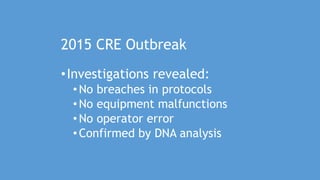
2015 CRE Outbreak
•Investigations revealed:
•No breaches in protocols
•No equipment malfunctions
•No operator error
•Confirmed by DNA analysis
Going back to the basics
Only EtO proves reliable enough to stop the outbreaks
These hospitals are
leading the switch to EtO
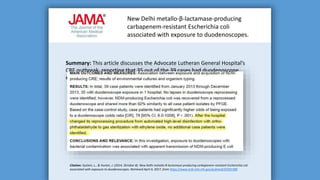
New Delhi metallo-β-lactamase-producing
carbapenem-resistant Escherichia coli
associated with exposure to duodenoscopes.
Summary: This article discusses the Advocate Lutheran General Hospital’s
CRE outbreak, reporting that 35 out of the 39 cases had duodenoscope
exposure in one hospital.
Citation: Epstein, L., & Hunter, J. (2014, October 8). New Delhi metallo-β-lactamase-producing carbapenem-resistant Escherichia coli
associated with exposure to duodenoscopes. Retrieved April 4, 2017, from https://www.ncbi.nlm.nih.gov/pubmed/25291580
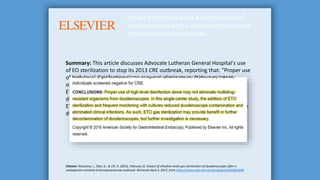
Impact of ethylene oxide gas sterilization of
duodenoscopes after a carbapenem-resistant
Enterobacteriaceae outbreak.
Summary: This article discusses Advocate Lutheran General Hospital's use
of EO sterilization to stop its 2013 CRE outbreak, reporting that: "Proper use
of high level disinfection alone may not eliminate multidrug resistant
organisms from duodenoscopes. In this single center study, the addition of
ETO sterilization and frequent monitoring with cultures reduced
duodenoscope contamination and eliminated clinical infections. As such,
ETO gas sterilization may provide benefit in further decontamination of the
duodenoscopes but further investigation is necessary.
Citation: Naryzhny, I., Silas, D., & Chi, K. (2016, February 5). Impact of ethylene oxide gas sterilization of duodenoscopes after a
carbapenem-resistant Enterobacteriaceae outbreak. Retrieved April 4, 2017, from https://www.ncbi.nlm.nih.gov/pubmed/26855298
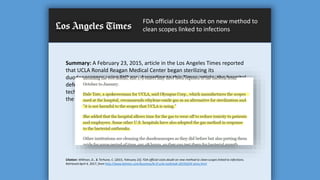
FDA official casts doubt on new method to
clean scopes linked to infections
Summary: A February 23, 2015, article in the Los Angeles Times reported
that UCLA Ronald Reagan Medical Center began sterilizing its
duodenoscopes using EtO gas. According to this Times article, the hospital
defended its decision to use EtO gas, finding that since implementing this
technology for the sterilization of its duodenoscopes, no new infections of
the deadly CRE were identified following ERCP.
Citation: Willman, D., & Terhune, C. (2015, February 23). FDA official casts doubt on new method to clean scopes linked to infections.
Retrieved April 4, 2017, from http://www.latimes.com/business/la-fi-ucla-outbreak-20150224-story.html
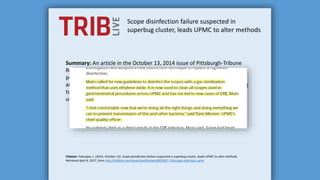
Scope disinfection failure suspected in
superbug cluster, leads UPMC to alter methods
Summary: An article in the October 13, 2014 issue of Pittsburgh-Tribune
Review reported that, according to Dr. Carlene Muto, director of infection
prevention at UPMC Presbyterian, all UPMC hospitals replaced the use of
an AER that achieves high-level disinfection with EO sterilization. According
to this article, Dr. Muto recommends that duodenoscopes be sterilized
using EO gas.
Citation: Fabregas, L. (2014, October 13). Scope disinfection failure suspected in superbug cluster, leads UPMC to alter methods.
Retrieved April 4, 2017, from http://triblive.com/news/healthnews/6955957-74/scopes-infection-upmc
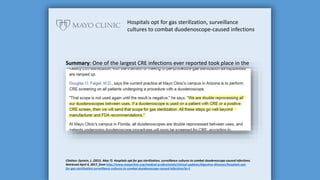
Hospitals opt for gas sterilization, surveillance
cultures to combat duodenoscope-caused infections
Summary: One of the largest CRE infections ever reported took place in the
Chicago area involving 44 patients. The outbreak was investigated by the
CDC and traced back to a contaminated endoscope used in ERCP. In the
hospitals where high-level disinfection was replaced by ethylene oxide
(EtO) sterilization or post-reprocessing quarantine and testing, there have
been no additional cases of multidrug-resistant infections.
Citation: Epstein, L. (2015, May 7). Hospitals opt for gas sterilization, surveillance cultures to combat duodenoscope-caused infections.
Retrieved April 4, 2017, from http://www.mayoclinic.org/medical-professionals/clinical-updates/digestive-diseases/hospitals-opt-
for-gas-sterilization-surveillance-cultures-to-combat-duodenoscope-caused-infections?p=1
FDA recommends EtO for
duodenoscope endoscopes
Source: AAMI News, Sept 2015 // Vol 50 // No. 9
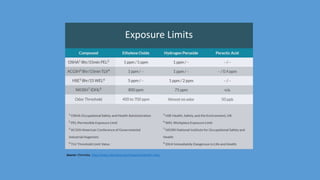
Exposure Limits
Source: Chemdaq http://www.chemdaq.com/resources/health-risks/

Eto when all else fails 001

  • 2.
    Why Now? •What haschanged? •Hospitals respond
  • 3.
    What has changed? TheSuper-bug Era has changed everything
  • 5.
    2015 CRE Outbreak •Investigationsrevealed: •No breaches in protocols •No equipment malfunctions •No operator error •Confirmed by DNA analysis
  • 6.
    Going back tothe basics Only EtO proves reliable enough to stop the outbreaks
  • 7.
    These hospitals are leadingthe switch to EtO
  • 8.
    New Delhi metallo-β-lactamase-producing carbapenem-resistantEscherichia coli associated with exposure to duodenoscopes. Summary: This article discusses the Advocate Lutheran General Hospital’s CRE outbreak, reporting that 35 out of the 39 cases had duodenoscope exposure in one hospital. Citation: Epstein, L., & Hunter, J. (2014, October 8). New Delhi metallo-β-lactamase-producing carbapenem-resistant Escherichia coli associated with exposure to duodenoscopes. Retrieved April 4, 2017, from https://www.ncbi.nlm.nih.gov/pubmed/25291580
  • 9.
    Impact of ethyleneoxide gas sterilization of duodenoscopes after a carbapenem-resistant Enterobacteriaceae outbreak. Summary: This article discusses Advocate Lutheran General Hospital's use of EO sterilization to stop its 2013 CRE outbreak, reporting that: "Proper use of high level disinfection alone may not eliminate multidrug resistant organisms from duodenoscopes. In this single center study, the addition of ETO sterilization and frequent monitoring with cultures reduced duodenoscope contamination and eliminated clinical infections. As such, ETO gas sterilization may provide benefit in further decontamination of the duodenoscopes but further investigation is necessary. Citation: Naryzhny, I., Silas, D., & Chi, K. (2016, February 5). Impact of ethylene oxide gas sterilization of duodenoscopes after a carbapenem-resistant Enterobacteriaceae outbreak. Retrieved April 4, 2017, from https://www.ncbi.nlm.nih.gov/pubmed/26855298
  • 10.
    FDA official castsdoubt on new method to clean scopes linked to infections Summary: A February 23, 2015, article in the Los Angeles Times reported that UCLA Ronald Reagan Medical Center began sterilizing its duodenoscopes using EtO gas. According to this Times article, the hospital defended its decision to use EtO gas, finding that since implementing this technology for the sterilization of its duodenoscopes, no new infections of the deadly CRE were identified following ERCP. Citation: Willman, D., & Terhune, C. (2015, February 23). FDA official casts doubt on new method to clean scopes linked to infections. Retrieved April 4, 2017, from http://www.latimes.com/business/la-fi-ucla-outbreak-20150224-story.html
  • 11.
    Scope disinfection failuresuspected in superbug cluster, leads UPMC to alter methods Summary: An article in the October 13, 2014 issue of Pittsburgh-Tribune Review reported that, according to Dr. Carlene Muto, director of infection prevention at UPMC Presbyterian, all UPMC hospitals replaced the use of an AER that achieves high-level disinfection with EO sterilization. According to this article, Dr. Muto recommends that duodenoscopes be sterilized using EO gas. Citation: Fabregas, L. (2014, October 13). Scope disinfection failure suspected in superbug cluster, leads UPMC to alter methods. Retrieved April 4, 2017, from http://triblive.com/news/healthnews/6955957-74/scopes-infection-upmc
  • 12.
    Hospitals opt forgas sterilization, surveillance cultures to combat duodenoscope-caused infections Summary: One of the largest CRE infections ever reported took place in the Chicago area involving 44 patients. The outbreak was investigated by the CDC and traced back to a contaminated endoscope used in ERCP. In the hospitals where high-level disinfection was replaced by ethylene oxide (EtO) sterilization or post-reprocessing quarantine and testing, there have been no additional cases of multidrug-resistant infections. Citation: Epstein, L. (2015, May 7). Hospitals opt for gas sterilization, surveillance cultures to combat duodenoscope-caused infections. Retrieved April 4, 2017, from http://www.mayoclinic.org/medical-professionals/clinical-updates/digestive-diseases/hospitals-opt- for-gas-sterilization-surveillance-cultures-to-combat-duodenoscope-caused-infections?p=1
  • 13.
    FDA recommends EtOfor duodenoscope endoscopes
  • 14.
    Source: AAMI News,Sept 2015 // Vol 50 // No. 9
  • 15.
    Exposure Limits Source: Chemdaqhttp://www.chemdaq.com/resources/health-risks/

Editor's Notes

  • #2 EO FCS are limited by the size of the sterilization bag. These systems are ideal for smaller loads or items that are very delicate. As load size and volume increases traditional EO systems become more economical.