ETL Development
Learning Path with
Extract Load
Transform
E T L
PowerCenter
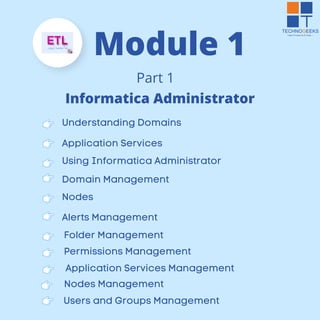
Informatica Administrator
Module 1
Understanding Domains
Application Services
Using Informatica Administrator
Domain Management
Nodes
Alerts Management
Folder Management
Permissions Management
Application Services Management
Nodes Management
Part 1
Users and Groups Management
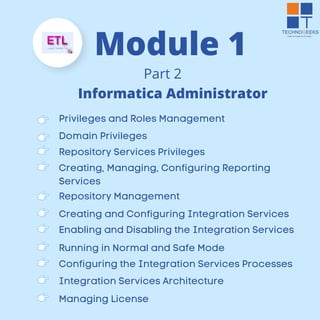
Informatica Administrator
Privileges and Roles Management
Domain Privileges
Repository Services Privileges
Creating, Managing, Configuring Reporting
Services
Repository Management
Creating and Configuring Integration Services
Enabling and Disabling the Integration Services
Running in Normal and Safe Mode
Module 1
Part 2
Configuring the Integration Services Processes
Integration Services Architecture
Managing License
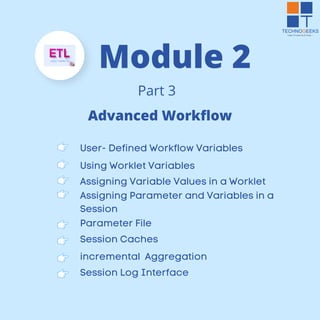
Advanced Workflow
Module 2
Understanding Pipeline Partitioning
Partition Points
Partition Types
Pushdown Optimization
Pushdown Optimization and Transformations
Real-time Processing
Commit Points
Row Error Logging
Part 1
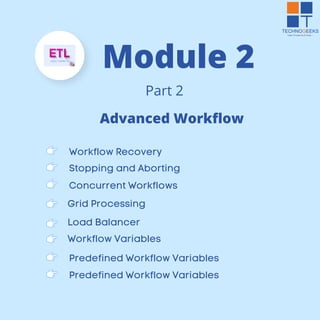
Advanced Workflow
Module 2
Grid Processing
Load Balancer
Workflow Variables
Predefined Workflow Variables
Part 2
Predefined Workflow Variables
Workflow Recovery
Stopping and Aborting
Concurrent Workflows
Advanced Workflow
Module 2
Part 3
incremental Aggregation
Session Log Interface
User- Defined Workflow Variables
Using Worklet Variables
Assigning Variable Values in a Worklet
Assigning Parameter and Variables in a
Session
Parameter File
Session Caches
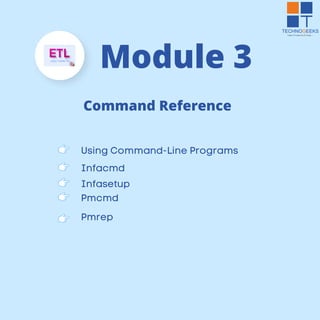
Command Reference
Module 3
Infacmd
Infasetup
Pmcmd
Pmrep
Using Command-Line Programs
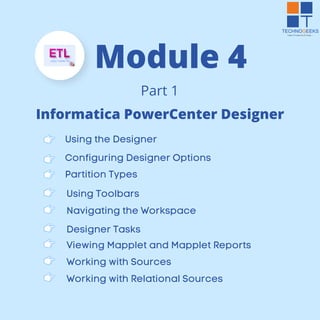
Informatica PowerCenter Designer
Module 4
Using the Designer
Configuring Designer Options
Partition Types
Using Toolbars
Navigating the Workspace
Designer Tasks
Viewing Mapplet and Mapplet Reports
Part 1
Working with Sources
Working with Relational Sources
Informatica PowerCenter Designer
Module 4
Working with Cobol Source Files
Working with Flat Files
Importing Flat Files
Editing Flat Files Definition
Formatting Flat Files Column
Working with Targets
Importing Target Definition
Part 2
Creating Target Definition from Source
Definition
Working with COBOL Sources
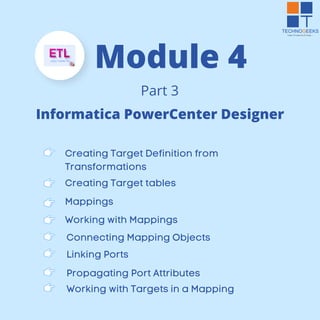
Informatica PowerCenter Designer
Module 4
Creating Target tables
Mappings
Working with Mappings
Connecting Mapping Objects
Linking Ports
Propagating Port Attributes
Working with Targets in a Mapping
Part 3
Creating Target Definition from
Transformations
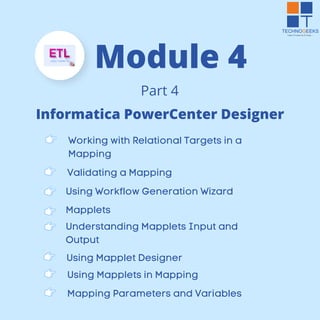
Informatica PowerCenter Designer
Module 4
Using Workflow Generation Wizard
Mapplets
Understanding Mapplets Input and
Output
Using Mapplet Designer
Using Mapplets in Mapping
Mapping Parameters and Variables
Part 4
Working with Relational Targets in a
Mapping
Validating a Mapping
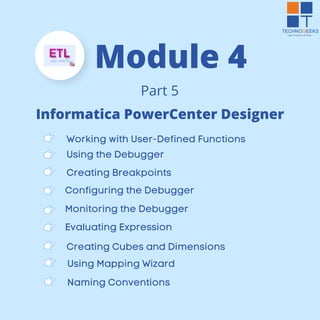
Informatica PowerCenter Designer
Module 4
Configuring the Debugger
Monitoring the Debugger
Evaluating Expression
Creating Cubes and Dimensions
Using Mapping Wizard
Naming Conventions
Part 5
Working with User-Defined Functions
Using the Debugger
Creating Breakpoints
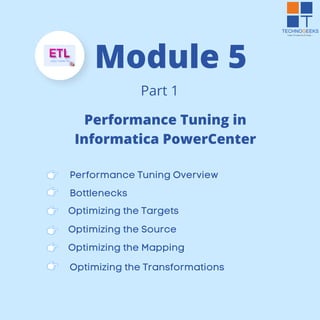
Performance Tuning in
Informatica PowerCenter
Module 5
Optimizing the Targets
Optimizing the Source
Optimizing the Mapping
Optimizing the Transformations
Part 1
Performance Tuning Overview
Bottlenecks
Using Thread Statistics
Using Pipeline Partitions
Performance Counters
Optimizing the Sessions
Optimizing thePowerCenter Components
Optimizing the System
Performance Tuning
Informatica PowerCenter
Module 5
Part 2
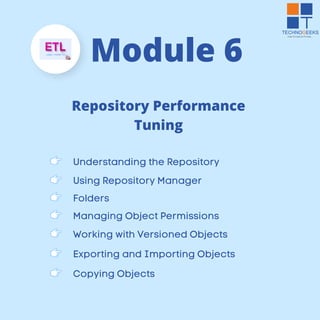
Managing Object Permissions
Working with Versioned Objects
Exporting and Importing Objects
Understanding the Repository
Using Repository Manager
Folders
Repository Performance
Tuning
Module 6
Copying Objects
Reusable Transformations
Aggregator Transformation
Custom Transformation
Working & Configuring with Transformations
Working with Ports
Expression Transformations
Transformation types
Module 7
External Transformation
Filter Transformation
Part 1
Reusable Transformations
Aggregator Transformation
Custom Transformation
Working & Configuring with Transformations
Working with Ports
Expression Transformations
Transformation types
Module 7
External Transformation
Part 2
Joiner Transformation
Java Transformation
Rank Transformation
Router Transformation
Lookup Transformation
Lookup Caches
Normalizer Transformation
Transformation types
Module 7
Part 3
Filter Transformation
Joiner Transformation
Java Transformation
Transaction Control Transformation
Union Transformation
Update Strategy Transformation
Transformation types
Module 7
Sorter Transformation
Source Qualifier Transformation
SQL Transformation
Stored Procedure Transformation
Sequence Generator Transformation
Part 4
Functions
Creating Custom Function
Transformation Language Reference
Module 8
Constants
Operators
Variables
Dates
Transformation Language Overview
Sources
Targets
Workflow Basics
Module 9
Workflow and Worklets
Sessions
Session Configuration Object
Tasks
Workflow Manager
Part 1
Session and Workflow Logs
Transformation Language Reference
Module 9
Scheduling and Running Workflows
Sending Email
Workflow Monitor
Workflow Monitor Details
Validation
Part 2
Connection Objects
Dimension Table
Data Warehousing
Module 10
The need for Datawarehousing
SnapShot
Fact Table & 3 Types of Facts
Datawarehousing Architecture
Introduction to Data warehousing
Different Types of Layers
Attribute
Hierarchy
SCDs, SCD-1, SCD-2, SCD-3
OLAP and OLTP - A Practical Comparison
Call Us Today
+91 8600998107 / 7028710777
https://technogeekscs.com/courses/informatica
Get A of Recorded Live Session
Like Comment Share
Save for Later

ETL Development Learning path

  • 1.
    ETL Development Learning Pathwith Extract Load Transform E T L PowerCenter
  • 2.
    Informatica Administrator Module 1 UnderstandingDomains Application Services Using Informatica Administrator Domain Management Nodes Alerts Management Folder Management Permissions Management Application Services Management Nodes Management Part 1 Users and Groups Management
  • 3.
    Informatica Administrator Privileges andRoles Management Domain Privileges Repository Services Privileges Creating, Managing, Configuring Reporting Services Repository Management Creating and Configuring Integration Services Enabling and Disabling the Integration Services Running in Normal and Safe Mode Module 1 Part 2 Configuring the Integration Services Processes Integration Services Architecture Managing License
  • 4.
    Advanced Workflow Module 2 UnderstandingPipeline Partitioning Partition Points Partition Types Pushdown Optimization Pushdown Optimization and Transformations Real-time Processing Commit Points Row Error Logging Part 1
  • 5.
    Advanced Workflow Module 2 GridProcessing Load Balancer Workflow Variables Predefined Workflow Variables Part 2 Predefined Workflow Variables Workflow Recovery Stopping and Aborting Concurrent Workflows
  • 6.
    Advanced Workflow Module 2 Part3 incremental Aggregation Session Log Interface User- Defined Workflow Variables Using Worklet Variables Assigning Variable Values in a Worklet Assigning Parameter and Variables in a Session Parameter File Session Caches
  • 7.
  • 8.
    Informatica PowerCenter Designer Module4 Using the Designer Configuring Designer Options Partition Types Using Toolbars Navigating the Workspace Designer Tasks Viewing Mapplet and Mapplet Reports Part 1 Working with Sources Working with Relational Sources
  • 9.
    Informatica PowerCenter Designer Module4 Working with Cobol Source Files Working with Flat Files Importing Flat Files Editing Flat Files Definition Formatting Flat Files Column Working with Targets Importing Target Definition Part 2 Creating Target Definition from Source Definition Working with COBOL Sources
  • 10.
    Informatica PowerCenter Designer Module4 Creating Target tables Mappings Working with Mappings Connecting Mapping Objects Linking Ports Propagating Port Attributes Working with Targets in a Mapping Part 3 Creating Target Definition from Transformations
  • 11.
    Informatica PowerCenter Designer Module4 Using Workflow Generation Wizard Mapplets Understanding Mapplets Input and Output Using Mapplet Designer Using Mapplets in Mapping Mapping Parameters and Variables Part 4 Working with Relational Targets in a Mapping Validating a Mapping
  • 12.
    Informatica PowerCenter Designer Module4 Configuring the Debugger Monitoring the Debugger Evaluating Expression Creating Cubes and Dimensions Using Mapping Wizard Naming Conventions Part 5 Working with User-Defined Functions Using the Debugger Creating Breakpoints
  • 13.
    Performance Tuning in InformaticaPowerCenter Module 5 Optimizing the Targets Optimizing the Source Optimizing the Mapping Optimizing the Transformations Part 1 Performance Tuning Overview Bottlenecks
  • 14.
    Using Thread Statistics UsingPipeline Partitions Performance Counters Optimizing the Sessions Optimizing thePowerCenter Components Optimizing the System Performance Tuning Informatica PowerCenter Module 5 Part 2
  • 15.
    Managing Object Permissions Workingwith Versioned Objects Exporting and Importing Objects Understanding the Repository Using Repository Manager Folders Repository Performance Tuning Module 6 Copying Objects
  • 16.
    Reusable Transformations Aggregator Transformation CustomTransformation Working & Configuring with Transformations Working with Ports Expression Transformations Transformation types Module 7 External Transformation Filter Transformation Part 1
  • 17.
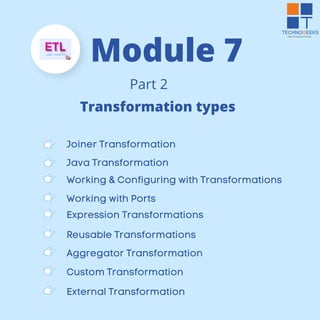
    Reusable Transformations Aggregator Transformation CustomTransformation Working & Configuring with Transformations Working with Ports Expression Transformations Transformation types Module 7 External Transformation Part 2 Joiner Transformation Java Transformation
  • 18.
    Rank Transformation Router Transformation LookupTransformation Lookup Caches Normalizer Transformation Transformation types Module 7 Part 3 Filter Transformation Joiner Transformation Java Transformation
  • 19.
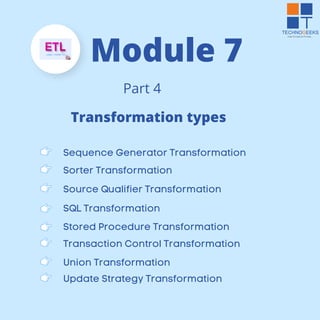
    Transaction Control Transformation UnionTransformation Update Strategy Transformation Transformation types Module 7 Sorter Transformation Source Qualifier Transformation SQL Transformation Stored Procedure Transformation Sequence Generator Transformation Part 4
  • 20.
    Functions Creating Custom Function TransformationLanguage Reference Module 8 Constants Operators Variables Dates Transformation Language Overview
  • 21.
    Sources Targets Workflow Basics Module 9 Workflowand Worklets Sessions Session Configuration Object Tasks Workflow Manager Part 1
  • 22.
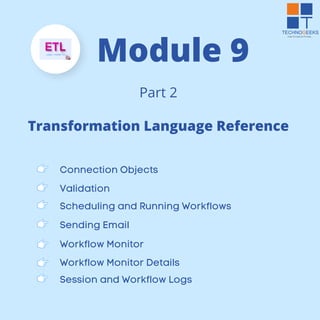
    Session and WorkflowLogs Transformation Language Reference Module 9 Scheduling and Running Workflows Sending Email Workflow Monitor Workflow Monitor Details Validation Part 2 Connection Objects
  • 23.
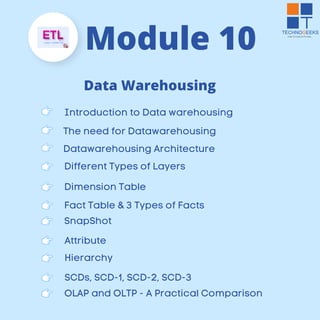
    Dimension Table Data Warehousing Module10 The need for Datawarehousing SnapShot Fact Table & 3 Types of Facts Datawarehousing Architecture Introduction to Data warehousing Different Types of Layers Attribute Hierarchy SCDs, SCD-1, SCD-2, SCD-3 OLAP and OLTP - A Practical Comparison
  • 24.
    Call Us Today +918600998107 / 7028710777 https://technogeekscs.com/courses/informatica Get A of Recorded Live Session
  • 25.